FEATURE: Second Spin: The Cardigans - Long Gone Before Daylight

FEATURE:


Second Spin

The Cardigans - Long Gone Before Daylight

___________

AS a certain Swedish band…

formed in Jönköping, Sweden, in 1992, I am marking that upcoming thirtieth anniversary by including them for the second time in Second Spin. Their fifth studio album, Long Gone Before Daylight, was released in March 2003. I previously included the underrated Gran Turismo (1998) in this series. There are a few albums from The Cardigans (their first three really) that are seen as classic, whereas everything that came after that gets a bit of a mixed response. Whilst not as consistent as, say, Life (1995) or First Band on the Moon (1996), there are some seriously good songs on Long Gone Before Daylight. Where Gran Turismo was more Electronic and Rock-driven, their follow-up was sparser and brought in new sounds. Many people might know Long Gone Before Daylight from the singles, You’re the Storm, For What It's Worth and Live and Learn. For What It’s Worth is classic Cardigans. With lyrics written by Nina Persson and music by Peter Svensson, the album sports the combination of great songwriting and stunning vocals from Persson. I think that Long Gone Before Daylight deserves reappraisal. The band’s most-recent album, Super Extra Gravity, was released in 2005. One suspects that it may be the final release from the Swedish wonders. Maybe the band were finest when they had that irresistible Pop sound early on. One that seemed to mix a sweetness and sound of the 1960s with the esteemed and remarkable songwriting from the band.

Not to say that everything post-1996 lacks the magic The Cardigans are known for. I feel a lot of critics will always hark back to songs like Loverfool (from First Band on the Moon) and want that in subsequent albums. As I do with these features, I am going to bring in some contrasting reviews. Long Gone Before Daylight is much stronger than a lot of its reviews suggest. Perhaps The Cardigans were trying to push away from their early happier sound. Maybe seeing it as a bit twee or lacking substance, I think that a combination of the grit and spunk from Gran Turismo could have paired well with the glee and irresistible sound of Life. All that being said, The Cardigans won three awards at the 2003 Grammis (the Swedish equivalent of the Grammy Awards). They picked up Album of the Year, in addition to winning Rock Group of the Year. I want to start with AllMusic’s rather mixed take of Long Gone Before Daylight:

“If any clue were needed to confirm a new direction for the Cardigans -- that is, other than the music itself -- it's the change of hair color for vocalist Nina Persson. Previously an icy blonde that approached white (best flaunted on the cover of Life), Persson's hair is now jet black, a color that matches her confessional mood and conflicted feelings about love on the Swedish group's fifth studio album.

Produced by Per Sunding (career-long collaborator Tore Johansson left after an initial session), Long Gone Before Daylight is understated and well-designed, a musicians' record, one that sounds more like an MTV Unplugged session than the high-energy chamber pop of their early recordings. Unfortunately, it's also over-produced to within an inch of its artistic life, and lacks the quality songs and exquisite productions that the group had made a hallmark. Persson composed all the lyrics, rewriting the Spector standard "He Hit Me (It Felt Like a Kiss)" into "And Then You Kissed Me" (sample lyric: "Baby you hit me/Yeah, you punched me right in the heart/And then you kissed me...and then you hit me"). Guitarist Peter Svensson took care of all the music, relying on familiar pop archetypes but forswearing the catchy hooks in favor of carefully constructed songs. Still, the Cardigans don't have enough musical personality on their own to carry these songs; they've always been a surprisingly workmanlike band -- their performances here are sympathetic and intricate -- but they simply can't rise above this subpar material. [The American release, which followed over a year after the Canadian and European issues, included a bonus DVD featuring three videos and three live tracks, plus interviews.]”.

To me, Long Gone Before Daylight is a really strong album where The Cardigans do not try to replicate themselves. Maybe the band were a bit dislocated at that time. Between Gran Turismo and Long Gone Before Daylight the members released various solo records. With darker material that included subjects such as domestic abuse and depression, this was a band quite a long way away from their start. Every group progresses and evolves. On its own weight, Long Gone Before Daylight is a great album that boasts many strengths. NME reviewed Long Gone Before Daylight in 2003 and remarked the following:

“Reviving the career of Tom Jones with a song whose video featured a large amount of the colour orange! Soundtracking Leonardo DiCaprio when he became boring! Making solo albums of interest to approximately three people, including oneself! For these heinous acts and various others, it may be hard to forgive the cast of The Cardigans.

For Nina and co it may of slightly more concern that it's been suspiciously easy for us to forget The Cardigans, too. It's been almost half an S Club Junior's life since The Cardigans' last album. Some of this time has been consumed with recording - then rewinding and erasing - a successor to 'Gran Turismo', then starting work all over again on a new album entirely. These things happen, of course. But if we're honest with ourselves the threat of a new Cardigans opus has hardly had the world on the edge of its collective record-buying seat. Even tales of an all-encompassing Swedish new rock supergroup - Pelle from The Hives, Ebbot from Soundtrack Of Our Lives and Nick Hellacopter join the cast at various points across the album - has had difficulty raising a solitary eyebrow. And if you can say anything for The Cardigans, it's that they're good at eyebrows.

As it happens, while there’s not much here of the flog-it-to-a-car-ad variety, ‘Long Gone Before Daylight’ is the band’s best album yet – which is to say that it contains considerably more than three good songs. Where the cold production wedges of ‘Gran Turismo’ were distant and aloof to the point where they ignored the songs themselves, the flourishes here are sparse enough to let them bloom. Best of the bunch are country-tinged opener ‘Communication’ and the Spector-referencing ‘And Then You Kissed Me’; heartbreaking pop with an unstable psyche and a fresh, naked charm. And those guest stars? They’re not even important. This is an album powered by its own radiance – like a solar-powered torch stringed up to a pair of mirrors, driving itself on forever, and still going strong, even by daylight”.

If you are more acquainted with the earlier work of The Cardigans or have not played Long Gone Before Daylight for a bit, I would definitely advise you to get back into it. I do hope that there will be something from The Cardigans this year. On their anniversary year, even if it alum reissues, that would be very welcomed! With great deeper cuts like Couldn't Care Less and Lead Me Into the Night, there is plenty to appreciate when it comes to The Cardigans’ fifth studio album. Nineteen years after it came out, I think this album still…

PACKS a punch.

FEATURE: The Deepest Understanding: Kate Bush’s Famous Fanbase

FEATURE:


The Deepest Understanding

PHOTO CREDIT: Gered Mankowitz 

Kate Bush’s Famous Fanbase

___________

AS I have talked about…

 IN THIS PHOTO: Big Boi/PHOTO CREDIT: Michael Schmelling

Kate Bush’s loving and loyal fanbase before, I wanted to take it in a different direction this time. I am going to discuss Bush’s famous fans. I will come to her 2014 residency, Before the Dawn, and some of the well-known figures who were in attendance through the twenty-two nights. I will finish by including artists who are influenced by Bush and, therefore, are big fans. I know that every artist has a certain degree of popularity. When you think about Kate Bush, she draws in fans from all corners and areas of the world. I love the fact she has such a wide-ranging fanbase that has swelled through the years. This article from a few years back highlights just a few of the big names who are devoted to Bush’s music and exceptional talent:

“This woman’s work has found favour in some far-flung corners of the music industry, gaining her a whole host of celebrity fans. Lily Allen, Holly Johnson and Paul Rutherford from Frankie Goes To Hollywood attended Kate’s comeback shows, as did Lily Allen and Madonna, who also turns 60 next month. Fellow Eighties icons Annie Lennox and Toyah never tire of singing her praises, and Tricky and Sir Bob Geldof swear by her.

Her most famous hip-hop fans are Outkast: “Kate Bush’s music opened my mind up,” the dandyish André 3000 once gushed. “She was so bugged-out, man, but I felt her. She’s so fuckin’ dope, so underrated and so off the radar.” Big Boi went further and once spent a month in England “just to find her”. They eventually met during the Before the Dawn shows. “I talked to her and drank some wine and it was just fucking incredible,” he said. Tupac Shakur was also reportedly an admirer.

Public Image Limited’s John Lydon is similarly enraptured by the idiosyncratic songstress. “Kate Bush is a true original,” the former Sex Pistol once said. “It’s not nice that she’s been imitated by artists like Torrid Aimless, sorry, Tori Amos.” Ouch! Indeed, Lydon went as far as to write a song for Kate in the form of a little number entitled Bird In Hand. The lyrics concerned the illegal exportation of parrots from South America. “I don’t think she understood it,” he said back in 2007. “I think she thought it was a reference to her, which it certainly wasn’t!”

 IN THIS PHOTO: Gemma Arterton

I know that actor Guy Pearce is a big fan of Kate Bush. Not only does he love her voice and unique talent; when two massive anthologies were published compiling letters, photos, interviews and all sort of fan-made tributes to Kate Bush, Pearce talked about his love of one of his favourite artists of all time:

“Homeground: The Kate Bush Magazine, Anthology One Wuthering Heights to The Sensual World runs to 648 pages, while Homeground: The Kate Bush Magazine: Anthology Two: The Red Shoes to 50 Words for Snow runs to 568 pages.

The books are available at Amazon, Play, Barnes & Noble, Waterstones and all online booksellers - or direct from the publishers, Crescent Moon.

Actor Guy Pearce, a longtime fan of the singer, has said of the anthologies: "For a Kate Bush fan there was nothing more satisfying, other than perhaps Kate herself dropping around for a quick cup of tea, than the arrival of a much awaited issue of HomeGround.

"Just as the illusion of being the one and only devotee reaches overwhelming heights a surprise package is delivered as a joyous reminder of Kate Bush's hold over, not just me, but many of us”.

Pearce has been a fan for some time now. Another actor that holds a lot of affection for Kate Bush is Gemma Arterton. In 2010, she revealed how she would like to play Bush in a film someday:

“Gemma Arterton has named 'Wuthering Heights' singer Kate Bush as the musical artist she'd most like to play in a movie.

The Tamara Drewe star told ITN that she would prefer not to play a living musician, fearing that they might not endorse her portrayal.

She said: "Kate Bush, maybe, in the future. There are a few people [I'd like to play], but they're still living. I just think it's weird playing someone who's still alive. If they're rock stars they can be quite scary, people like Courtney Love.

"I love Kate Bush and I reckon I could do a good Kate Bush impression but she's still alive - good!"

On the prospect of starring in a musical biopic, the British actress commented: "I feel like I'm a rock star trapped in an actress's body, I'm just rubbish, but luckily I might play a rock star one time. I don't have to worry about writing music”.

Maybe it is a bit late for Arterton to play Bush. If there is a biopic, maybe they will go for someone a little younger – though Arterton could play Bush from The Red Shoes (1993) onwards. It is so cool that Bush has such amazing fans!

 IN THIS PHOTO: David Mitchell/PHOTO CREDIT: Paul Stuart

Arterton was one of the many who attended Before the Dawn in 2014. I will not double-up here, so I will name-check some of the artists who were there in the section where I mention Bush’s influence on other artists. In terms of Bush’s appeal and influence, she has engaged fans from different generations and professions. Think of authors Neil Gaiman, Jeanette Winterson, David Mitchell (who contributed words to Before the Dawn and wrote the foreword to the book of lyrics, How to Be Invisible, in 2018). Comedian Jo Brand was also there. Other comedic figures who adore Kate Bush include Stephen Fry (who was part of her 2011 album, 50 Words for Snow). Stella McCartney and Kate Moss were at the Before the Dawn shows. Toss in another band of comic including Bill Bailey, old friends Lenny Henry and Dawn French, plus Frank Skinner and Noel Fielding (who dressed as Kate Bush in her Wuthering Heights video for Let’s Dance for Comic Relief in 2011). I have mentioned Gemma Arteton. Other actors at Before the Dawn were Miranda Richardson (who was one of the stars of Bush’s 1993 film, The Line, the Cross and the Curve), Stephen Fry, Jude Law, Keira Knightley, Ian McKellen, Terry Jones and Kirsten Dunst.

 IN THIS PHOTO: Charli XCX/PHOTO CREDIT: Ira Chernova for METAL

Musicians, of course, are going to be massive Kate Bush. At Before the Dawn were legends from the likes of Orbital, Prefab Sprout, Pulp, and Sparks. Another artist who appears on 50 Words for Snow and Bush counts as a close personal friend is Elton John (she was at his wedding to David Furnish). Of course, having celebrity fans is both cool and shows far your influence stretches. It is the music community and the artists who have come through and those who are new that matter most. In terms of the scale of the artists Bush has inspired, there are some seriously impressive names!

“Musicians who have cited Bush as an influence include Beverley Craven, Regina Spektor, Ellie Goulding, Charli XCX, Tegan and Sara, k.d. lang, Paula Cole, Kate Nash, Bat for Lashes, Erasure, Alison Goldfrapp of Goldfrapp, Rosalía, Tim Bowness of No-Man, Chris Braide, Kyros, Aisles, Neil Hannon of The Divine Comedy, Darren Hayes, Grimes, Solange Knowles, and Steven Wilson. Nerina Pallot was inspired to become a songwriter after seeing Bush play "This Woman's Work" on Wogan. Coldplay took inspiration from "Running Up That Hill" to compose their single "Speed of Sound". In 2015, Adele stated that the release of her third studio album was inspired by Bush's 2014 comeback to the stage.

In addition to those artists who state that Bush has been a direct influence on their own careers, other artists have been quoted expressing admiration for her work including Tori Amos, Annie Lennox, Björk, Florence Welch, Little Boots, Elizabeth Fraser of Cocteau Twins, Dido, Sky Ferreira, St. Vincent, Fiona Apple, Lily Allen, Anohni of Antony and the Johnsons , Stevie Nicks, Steve Rothery of Marillion, and André Matos. According to an unauthorised biography, Courtney Love of Hole listened to Bush among other artists as a teenager.

IN THIS PHOTO: Tricky/PHOTO CREDIT: Mustafah Abdulaziz for The New Statesman

Tricky wrote an article about The Kick Inside, saying: "Her music has always sounded like dreamland to me.... I don't believe in God, but if I did, her music would be my bible". Suede front-man Brett Anderson stated about Hounds of Love: "I love the way it's a record of two halves, and the second half is a concept record about fear of drowning. It's an amazing record to listen to really late at night, unsettling and really jarring". John Lydon, better known as Johnny Rotten of the Sex Pistols, declared her work to be "beauty beyond belief". Rotten once wrote a song for her, titled "Bird in Hand" (about exploitation of parrots) that Bush rejected. Bush was one of the singers whom Prince thanked in the liner notes of 1991's Diamonds and Pearls. In December 1989, Robert Smith of the Cure chose "The Sensual World" as his favourite single of the year, The Sensual World as his favourite album of the year, and included "all of Kate Bush" in his list of "the best things about the eighties".

Kele Okereke of Bloc Party said about "Hounds of Love": "The first time I heard it I was sitting in a reclining sofa. As the beat started I was transported somewhere else. Her voice, the imagery, the huge drum sound: it seemed to capture everything for me. As a songwriter you're constantly chasing that feeling". Rufus Wainwright named Bush one of his top ten gay icons”.

I wanted to spend a few moments, not only demonstrating how many artists from various walks of life are inspired by Kate Bush. Like all icons and major innovators, her brilliance and relevance is felt right across the arts! From directors and actors through to journalists like Caitlin Moran and broadcaster such as Mark Radcliffe, she is someone who has such an adoring following. This will only swell and expand when we know…

 IN THIS PHOTO: Robert Smith/PHOTO CREDIT: Andy Vella/The Guardian

WHAT she decides to do next.

FEATURE: Revisiting… Natalie Imbruglia - Firebird

FEATURE:


Revisiting…

Natalie Imbruglia - Firebird

___________

IN November…

it will be twenty-five years since Natalie Imbruglia’s debut album, Left of the Middle, was released. I fondly remember that album coming out. Bolstered by the gigantic hit single, Torn, I was fascinated by an artist so different to her peers. In fact, a couple of weeks ago, Imbruglia announced she was taking the album on an anniversary tour. With so many great tracks and consistently brilliant vocal performances from Imbruglia, that album remains underrated. Her fifth studio album, Male, was released in 2015. Receiving mixed reviews, it was the Australian legend covering songs by male artists. Her interpretations are fine, though 2021’s Firebird sort of announced this revitalised and strengthened artist. Produced by MyRiot (Tim Bran and Roy Kerr), Natalie Imbruglia, Albert Hammond Jr., Gus Oberg, Dave Izumi Lynch and Romeo Stodart in various locations during lockdowns (the album features songs co-written by Albert Hammond Jr., KT Tunstall, Roy Kerr, Tim Bran and others), I think that it ranks alongside her very best work. With her voice sounding as powerful, rich and strong as ever, this is an artist whose work and talent warrants greater acclaim. Although Firebird did receive positivity and some great reviews – some pointed out (the album) was a mixture of rebirth and nostalgia -, there were some that were more mixed. Even though this feature is about repurposing and revisiting albums from  the past five years that are worth another spin, I am listening to some albums from last year that I either overlooked or I feel were not given the dues they should have. Even though there are co-writes on the album, it is Imbruglia who stands out.

She owns every song and inhabits them completely. It is not a case of someone singing other people’s words without her own input and impact. This is her at her most true and personal, I think. Firebird came after a long period of writer’s block for Imbruglia. You can tell how cathartic and satisfying it was for her overcoming that. Firebird is spilling over with terrific tracks and some of Natalie Imbruglia’s most impressive performances. Reaching the top ten in the U.K., Firebird was a success. It bodes well for future recordings. It would be great to think that she may have more than enough material to head into the studio to start work on her seventh studio album. I want to bring in a couple of Firebird reviews that seem to come to the same conclusion: this is the decades-successful artist back in the form of her life. Renewed and inspired, Firebird did win hearts in the media. This is what Albumism said in their review:

“Although its roots stretch back as far as 2006, Natalie Imbruglia’s fourth long player Come To Life wouldn’t make landfall on her native Australian shores until October 2009. Having recruited an impressive cast of writer-producers featuring the likes of Brian Eno, Ben Hillier, Gary Clark and Chris Martin (of Coldplay), the singer-songwriter expanded on an already winning AOR approach with alternative electronic textures. The result was an affair soused in an even richer, dimensional sound that should have taken Imbruglia to the next level. But, as the saying goes, the best-laid plans…

Island Records, Imbruglia’s then-record company, incredulously withheld the album from wider release outside of the Oceania territories it initially debuted in; the United Kingdom wouldn’t receive Come To Life until February 2010. What was worse than its staggered rollout? The lack of any real ground game to promote the record and its two singles, “Wild About It” and “Want.”

Imbruglia did her best to champion this project she’d sunk so much of herself into—Come To Life had been issued via Island and her own Malabar imprint. However, without the mechanisms of a major label in place to ensure its survival, her finest effort fell into obscurity.

What occurred next was a headlong plunge into a debilitating creative dry spell. In the six years following that crisis, Imbruglia kept busy with other personal and professional pursuits before returning to a drastically changed popular music landscape with Male (2015). Her only offering for Portrait Records saw Imbruglia exclusively reinterpret works from artists of the opposite sex such as Daft Punk (“Instant Crush”), Josh Pyke (“The Summer”), Neil Young (“Only Love Can Break Your Heart”), and Modern English (“I Melt with You”)—to name some.

Reviewers mostly took to the LP with affection, commending Imbruglia for her good taste and noting that her voice remained quite the effective tool. And though a year would separate Male from the small-scale European tour it spawned in April/May of 2017, she courted additional acclaim.

Buoyed by the warm reception that greeted her fifth record, Imbruglia started to consider plotting a course for her sixth album, Firebird. Her first collection of original material tendered in over a decade also marks her launch on the BMG label. Their respective commercial fortunes aside, both Come to Life and Male had Imbruglia refining her established aesthetic sensibilities while subsequently pushing them forward.

Does Firebird maintain that momentum? In a word: yes. A core tenet of Imbruglia’s artistic method is collaboration—Albert Hammond Jr., Rachel Furner, Romeo Stodhart, Caroline Watkins, Francis “Eg” White, and KT Tunstall are just some of the tunesmiths and musicians she asked along for this ride. Their contributions lend the stock on Firebird a stately polish that points to the keen songcraft essential to Imbruglia’s output since her debut album Left Of The Middle (1998). But Firebird isn’t solely a showcase for the talent onboarded—there’s a human heart to the material here.

Imbruglia’s frankness about her struggles with writer’s block—a byproduct of the chaotic industry circumstances that sidelined Come To Life—signposts that she has conquered that impediment. Her way with her pen on Firebird certainly suggests so. At 46, having become a mother in 2019, Imbruglia is a woman whose life is rife with experience of all sorts and that is expressed on the album.

From its opener (and lead single) “Build It Better,” to its closing title piece and all the selections in between, the elements of catharsis, release, reinvention, and romance suffuse their narratives. As the lead scribe on all fourteen cuts, Imbruglia’s personal touch is executed with inventive care and detail. Specifically, entries like “Maybe It’s Great,” “Change Of Heart” and “Invisible Things” evince just how well she steers clear of saccharine storytelling and opts for direct, evocative writing instead. In a true demonstration of her skill in this regard, everything contained on Firebird is cast in such a way that listeners not only connect with her, but they can also find themselves in these songs too.

But what are words without music? Imbruglia joins with Tim “myriot” Bran (of Dreadzone)—the principal producer of Firebird—in a co-production capacity to make sure that the lyrical content of the LP is supported by equally ambitious sonic backdrops. Darting between snappy soul (“Nothing Missing”), layered synth-pop (“What It Feels Like”), drive-time rock (“On My Own”) and sprawling adult contemporary ballads (“Dive to the Deep”), Imbruglia’s fealty to engaging, stylish pop is still intact.

Longtime fans familiar with the particulars of her work to date will recognize much of the sounds she employs on this album have been tapped before; this isn’t a bad thing. What is new is the freshness that permeates the overall production of Firebird. Bran and Imbruglia ensure that every programming fleck and instrumental flourish is never out of place—but nothing ever comes across as overly fussy.

Two great examples of the pair’s method manifest with “Just Like Old Times” and “Not Sorry.” The former track is dressed in spicy jazz rhythms, whereas the latter cut is a sun-dappled slice of uptempo guitar-pop—each are excellent vehicles for Imbruglia’s voice. Its emotive tincture reaches a truly resonant peak on “River,” a parcel of gospel-tinged folk that benefits from the vocal punch of Imbruglia's mid-range.

Like any album worth its salt, every composition housed on Firebird is individually compelling, but when the set is taken in its entirety, it is guaranteed to draw in and hold the attention of its audience for the duration of its run-time. Having fielded triumph and difficulty in equal measure, Imbruglia rises like the namesake of her record, stronger and more focused in her artistic aim than ever before.

Welcome back Ms. Imbruglia!”.

If some felt that Firebird lost steam at some point and there was not a great sense of consistency, I would disagree. There is a great mixture of sounds throughout. Every song wins its place on the album, and I feel the songs are sequenced so that we get flow and a great listening experience. The last two tracks, River and Firebird, are among the best on the album. Even if you have not listened to a Natalie Imbruglia album before, I would recommend you giving Firebird a try. This review from the Evening Standard makes for great reading:

“Natalie Imbruglia is sorry she’s late - not to the stage, where she emerges to plinky plonky spa chimes very punctually and launches into her first song with no messing about, but to release an album. It’s been twelve years since her last record of original songs - 2009’s Come To Life - so when she tells the sold out crowd at Lafayette she’s excited to be there “especially after such a long period of writer’s block” she really means it. The joy that emanates from the stage is so pure, it almost doesn’t matter that a lot of the songs are brand new to the audience or that Imbruglia’s having a couple of issues with her throat: the sheer exhilaration of performing filters through. “There’s nothing missing here,” she sings in the set opener, pointing to herself as she does.

I’ll have what Imbruglia is having. She looks and acts as youthful as the wide eyed pop-grunge babe she was in 1997 when her biggest hits came out. Dressed like an 80s goth en route to prom, almost every song sees her twirling around the stage and stomping her boots (during the punk rawk rendition of Big Mistake, her guitarist even head bangs). She treats the audience like old friends and though that illusion is later chipped by the revelation that she has a lot of actual friends at the show, her frequent finger points and knowing grins make us all feel like we’re in the club. There’s a sense that this crowd would do literally anything she asked of them; at one point she manages to get a clap-along going with one single smack of the hands.

Though most of the set list centred on songs from an album that is yet to come out (Firebird is released this Friday), she wisely includes a chunk of 90s hits in the middle and seems as happy to be singing them as anything more recent. A sea of grins broke out during the opening strums of Torn but it was Smoke that slayed, Imbruglia hugging the mic and almost taking a run up at it for the heart-rending chorus.

It was not the only moment when it seemed Imbruglia was really going through something. There was a point during her newer songs at which she stopped the whirligig dancing and stood at the mic, eyes shut, singing the title track to her album. We might as well not have been there. It was a moment of pure feeling: just Imbruglia and her song. A perfect mix of nostalgia and rebirth, even in 2021 Imbruglia deserves her place in the spotlight”.

One of the excellent releases of last year, Natalie Imbruglia’s Firebird is a really strong album with some of her best tracks. I keep thinking back to 1997’s Left of the Middle and how far she has come as an artist. Still so popular and interesting, I hope that we get many more albums from her. Now that things are starting to improve regarding the pandemic, this may translate to a lot more gigs for Imbruglia. I have said how another album would be welcomed…though she will be hoping to get Firebird on the road. If you have not heard the album before, I would say that it is…

WELL worth your time.

FEATURE: BBC Radio 6 Music at Twenty: Songs from the Official Singles Chart Top 100 (3rd – 9th March, 2002)

FEATURE:


BBC Radio 6 Music at Twenty

Songs from the Official Singles Chart Top 100 (3rd – 9th March, 2002)

___________

BECAUSE the hugely popular…

BBC Radio 6 Music turns twenty on 11th March, I wanted to do one more feature. Previously, I have talked about the station and how important it is. To round up before the big day itself, I thought it might be a good idea to compile songs from the Official Singles Chart Top 100 for the week of 3rd to 9th March, 2002. Two days later, on the Monday, a new BBC digital station started life. I realise BBC Radio 6 Music is not a station that has ever really taken its sources and tunes from the charts (not in terms of Pop or the mainstream at least), but it is interesting looking at the songs that were popular in the U.K. in the week prior to BBC Radio 6 Music launching. It shows what was happening in music and why, even in 2002, the station was alternative and quite different to others. I am not sure what is planned for their twentieth anniversary day, but let’s hope they do play a few songs from 2002. As you can see from the selection of songs I have picked from the Official Singles Chart Top 100 twenty years ago, there was a great and broad range of artists and sounds. Once more (ahead of 11th March), a happy twentieth birthday to…

THE incredible BBC Radio 6 Music.

FEATURE: Spotlight: Lime Garden

FEATURE:


Spotlight

 Lime Garden

___________

MARBLES is the recent single…

from the wonderful Lime Garden. I found the band a few months back - I have been helplessly hooked on their music since. I have bit of an affinity for them, as they started their musical life in Guildford, my hometown. Now based in Brighton – which has a more active music scene and more venues -, they are definite ones to watch for 2022. I am not sure whether there is an E.P. coming from the group soon. In terms of gigs, they have a busy year ahead. They have a headline show in London in April, as part of a So Young Magazine showcase. They had a headline show in Brighton (at The Hope & Ruin) recently. One suspects they will have plenty of requests this summer when it comes to venues and stages. Having made a name for themselves in Guildford and Brighton, London is calling for Chloe Howard (vocals/guitar), Leila Deeley (guitar), Tippi Morgan (bass) and Annabel Whittle (drums). I think Lime Garden will be nationwide very soon; a band who can go international and compel audiences around the world. With a sound that is very much theirs, yet there is also a touch of the familiar, they are accessible, extraordinary and refreshing. A tightknit group who clearly have a lot of love for one another!

To give you a better impression of who Lime Garden are, how they have grown and where they are heading, there are interviews where we get some good information and background. The band chatted with The Line of Best Fit last year. The fact they had to change their name (originally LIME), the quartet have exploded fast and found a hungry and dedicated fanbase! Even though lockdown has interrupted their gig plans, it has not been that restrictive in terms of exposure and recognition:

“Name changes can be complicated, even stressful sometimes, but for Brighton based band Lime Garden, it was a sign of success. “It’s the name of another more famous band who still use it and that’s why we had to change it,” explains drummer Annabel Whittle. “We never thought it would be an issue or that we would get big enough to become an issue so we were happy with changing it,” adds guitarist Leila Deeley. Speaking from their Brighton house, the duo join singer, synth and guitar player Chloe Howard as well as bassist Tippi Morgan. The latter was easily enlisted into the band after becoming Whittle and Deeley’s housemate. Now all living in Brighton, Lime Garden are on track to becoming the next genre-bending band.

Forming in 2017, it took two years of jamming and Arctic Monkeys covers for the foursome to hit their stride. “The first couple jamming sessions were…quite bad. We were musically confused. At that point, we all had our own genres,” says Whittle. “We were covering Arabella by Arctic Monkeys - and no shade, great tune - but it didn’t sound good. We all come from quite different musical backgrounds that it took so long to find a sound that really resonated with all of us. For the first two years, it was trial and error and a hodgepodge of everything,” recounts Deeley.

Previously studying music in Guildford, the musical confusion seeped into their gigs in the early days (“We’d play a set with an ‘80s synthpop song then a Cuban sad song and then a rock/heavy track”). The then-named Lime sneaked onto the local scene which gave them the rose tinted glasses of rockstar life long before their now emerging success: “ [Our first gig] was actually really fun because we somehow wrangled our way into [playing with] one of our college friends. They had a more established band at the time and we asked if we could play. They actually let us and it was sold out. We thought ‘that’s it, we’re rockstars. Everyone loves us.’ We literally rehearsed for three months and said ‘I think we’re ready for a gig now.’ I guess we learned on the job and thankfully had our more embarrassing phase in a different city.”

Grimy back rooms in Guildford and London rooms gave the band a real taste of early band life, but after the first two years, things began to fall into place. The experience of gigging combined with experimenting with electronica opened up a common ground of sound between the girls. Then came the first UK Covid-19 lockdown where each Lime Garden member found themselves shut up at home. “Luckily, I think that really helped because we all changed the way that we wrote. We started sending each other different stems and doing it electronically. I think it made it more modern and thought-out because we could spend as much time in our personal dens,” says Deeley. “Rather than jamming something and rushing it and feeling like you have to get it done to gig it,” adds Whittle”.

Riding the final waves of college life, parallels can be drawn between Lime Garden and the iconic new wave scene of the ‘70s but the influences behind the band’s sound are much more varied than that: “Individually we all come from different stuff. Chloe is really into hair metal and pop. Tippi loves psych stuff. I grew up listening to a mix of stuff. I was an emo for a while so I loved my emo music. I like electronic and indie stuff. It’s coming from all these different backgrounds. It adds to the hodgepodge,” explains Whittle. Deeley brings “a lot of indie and ‘70s psych” to the table as well as “the Rolling Stones, Black Sabbath, and dad rock bands”.

I am glad Lime Garden are based in Brighton. It is a friendly and bustling area for music! There are fabulous bands new and old from that area. Blood Red Shoes and other groups who are based there still talk about the importance of Brighton and the support of the people. BN1 Magazine interviewed Lime Garden last year, around the time of the release of their third single, Sick n Tired. The band’s sound is a big reason why they are rising and getting a lot of love. It is hard to categorise and label:

“On first listen, it feels impossible to distil Lime Garden’s sound into one distinct category – it is truly their own. Vocalist Chloe Howard’s confident and sardonic spirit meets Annabel Whittle’s thumping and buoyant percussion. The combination of Leila Deely’s jangly, psychedelic guitars meeting Tippi Morgan’s floor-filling bass lines, creates something of a melting disco-groove. Listeners can also be equally struck by the well-layered production of their tracks, sprinkled with subtle ear-worms from electronic synths to jazzy saxophones.

The band’s energetic debut, Surf n Turf, managed to evoke the spirit of both 60’s garage rock and the playful, laidback tones of lo-fi rockers Connan Mockasin and Courtney Barnett. Their follow up, Fever Dream, is reminiscent of 80’s New York – from the sounds of the Talking Heads to Nile Rodgers.

Their music videos are as memorable as their music, embodying their eccentric sounds and playing an important part in the band’s identity. The humour and avant-garde imagery which prevail can be credited to their collaborations with director Jay Barlett. “Our ideas are usually quite out there. It’s hard to translate for other people what’s in our brains, but he just gets us!” Leila explains.

The group are also enriched by Brighton’s thriving independent music scene. The four originally met while studying at Guildford’s Academy of Contemporary Music, but for them, the scene in Surrey was one they quickly outgrew. “With only one main venue, Guilford eventually became pretty dry, so we had to switch things up for the seaside,” Annabel explains. Based in Brighton since 2019, the four enjoy the energy of gigs at The Hope & Ruin, and take inspiration from their equally eclectic peers from the likes of Our Family Dog, Porridge Radio and Penelope Isles.

When lockdown struck in March of last year, it cast a wave of uncertainty for all rising bands across the UK. Yet in true zestful fashion, the Limes saw the opportunity to flip the situation on its head. “Believe it nor not, lockdown did us good,” recalls Annabel. “We wrote some of the best stuff we’ve ever written during lockdown, hands down.” While initially being in different parts of the country, the pandemic allowed each member of the group to write separately and build their tracks bit by bit. “At first, we had to deal with the reality of sending different files back and forth to each other. But that’s also when we noticed it’s a method that works best when it comes to song writing. As weird as it sounds, not forcing ideas when you’re all in the same room with other people seemed to work really well for us. It felt more productive to be able to just do it by ourselves, and each provide our separate input”.

There are a couple of other interviews that I want to include here before I wrap it up. DORK spoke with the band in August. Tipping them for success, they also pick up on their unique sound. This, alongside a clear sense of intent from Lime Garden has resulted in radio play, big support and a bright future. Since the interview was conducted, Lime Garden have got even more confident, loved and accomplished. They are going to enjoy a very busy year!

“By harnessing nonchalant vocal ambiguity and casting it amongst meticulously crafted incisive melodies, Lime Garden are drawing on their respective music consumption in order to create a sonic landscape that is unique to them. “We’ve always been very into keeping things a bit ambiguous and also letting people decide on their own versions of the song because it’s fun to hear,” Chloe elaborates. “It’s fun to think that when people listen to your music that they’re making a scenario in their head because that’s what I do when I listen to songs.” This open, yet ambiguous, approach is unsurprising with the knowledge that one of her earliest musical memories, and one of the reasons that she picked up a guitar, was because of a girl in her school who would always play ‘Yellow Submarine’ by The Beatles – a band who are well known for their eclectic and often undefinable catalogue.

Lime Garden’s effortless foray into the world of music hasn’t gone unnoticed. The release of their latest single ‘Sick & Tired’ saw them sign with So Young Records, and they’ve already picked up a whole host of radio plays, a sold-out headline tour, and a support slot with Katy J Pearson; it’s undeniable that the band have flourished throughout what has been a confusing time for many. With their upcoming single ‘Pulp’ serving a slice of avant-funk and dizzying post-punk, it’s impossible to say what will come next from the band, but it’s safe to say that they’re going to be completely fine. The future’s bright, the future’s… lime?”.

I am finishing off with NME’s interview from back in June. Already picking up a wave of support then, Lime Garden have accrued a flourishing foundation of fans. They seemingly get stronger and more astonishing with every song they release:

“It’s no secret that the past year hasn’t been great for most bands. The COVID-19 pandemic and subsequent lockdown left many struggling to find ways to carry on; live gigs, often their only real source of income, suddenly went off the table completely. Despite a set of circumstances that would lead most to despair, when NME catches up with Brighton’s Lime Garden via Zoom, they’re looking on the bright side.

“I think the biggest plus for us is that we can actually fill a venue now,” beams lead vocalist and guitarist Chloe Howard, referencing a sold-out London show they played late last year. “London shows used to be so terrifying, because you just didn’t know if anyone would come,” adds guitarist Leila. “We’d play these weird backrooms of pubs and like two people would turn up – and one of them would be your dad. Spending ages telling him how packed out your gigs are and the one that he comes to is just him and one other guy.”

A creative boom appeared unlikely a few months back, with venues crowdfunding to stay afloat and bands postponing already delayed tours, but a flurry of announcements in recent weeks provides a glimmer of hope; perhaps Lime Garden’s optimism isn’t misplaced. The band were just as busy during the pandemic as before it, taking the DIY spirit of their early releases and applying it to the online world, engaging fans on social media and building the kind of community usually only seen in more established acts”.

One of the U.K.’s most original and promising young bands, go and follow the sensational Lime Garden. They are playing The Great Escape in Brighton in May. There are some big gigs before then. I wonder whether they will play Guildford’s Boileroom as a sort of homecoming very soon? Having transcended from smaller venues, I think Lime Garden will be an arena act in years to come. They have a stage presence that is extraordinary. With some immense and hugely memorable songs under their belt, keep your eyes out for future announcements regarding E.P.s and touring. Lime Garden’s brilliant and bounteous roots, fruits and shoots are…

A verdant paradise.

____________

Follow Lime Garden

FEATURE: Spotlight: Dora Jar

FEATURE:


Spotlight

Dora Jar

___________

I am continuing to look…

 at wonderful solo artists for these Spotlight features. Today, here is someone who is relatively new to my ears! I am going to get to Dora Jar’s amazing E.P., Digital Meadow (she also released a charity E.P., swirly ditties, last October), as it is a fantastic release. I am going to come to some interviews and pieces around the E.P. to end. First, here is some biography about the American treasure:

“Dora Jar is an artist who refuses to be defined. Despite having only shared a handful of songs, each track the 24 year old has released has been distinctive, endlessly fascinating and, quite frankly, brilliant. From the hammering guitars on "Multiply" to the ominous "Did I Get It Wrong," they exemplify an artist with a clear artistic vision: to be as expansive, honest and unequivocally herself as is humanly possible.

Born in New York and raised in California, Dora's life has always been linked intrinsically with music. Some of her earliest memories are being with her mother, who is an actress, while she worked. "She was in the Titanic show on Broadway," the singer recalls, "and I can remember the very high ceilings backstage." Likewise, Dora remembers singing along to Stephen Sondheim musicals. "There are a lot of thunderstorms in New York, and I can remember playing the Original Broadway recording of Into the Woods as lightning was outlining the buildings. I loved that feeling of spooky darkness."

While she may have been young, the move to California irked her. "My mom remembers me saying, 'I'm not a Californian! I'm a New Yorker!,'" she laughs. However, the move was important. Dora's sister, Lueza, was born with cerebral palsy and, as a priority, her parents wanted to send her to a school for children with special needs. "It was really hard to have a kid in a wheelchair in New York City. There are so many buildings and elevators; there are too many moving parts," Dora explains. "In California, there's this school called the Bridge School that was started by Neil Young, who has a kid with the same disability my sister had, and my family bought a special wheelchair van and we moved so she could go there."

The Bridge School also expanded Dora's musical world. Each year, the school hosted a weekend-long charity benefit concert, and it was here that she was introduced to artists like the Foo Fighters and Regina Spektor. "Where we were on stage was behind the acts while they were performing," Dora says, "so you'd see the whole audience of 30,000 people. The sound is really different when you're backstage: it kind of echoes because you're not hearing the speakers facing towards you. To this day, I prefer hearing the sound from behind. Hearing it bounce off an audience is just epic."

Dora was sent to a religious school where there were around 19 students in her whole school year. While her parents were not religious, the students went to church four mornings a week. "There's something cool about the sacredness of it," Dora says of it now. "You really feel that it's a space of worship. And what does it mean when you're a kid? It's intense. And then the priest is telling you a story about the devil tempting Jesus. I was in kindergarten and I can remember being really scared of that story. My mom was mad that they told it to us that young."

While Dora isn't religious, she does practice meditation. "I think that must go back to just starting every day quietly and with some opportunity for setting an intention," she says. "I didn't realise it at the time, but I think it did instil this notion to not rush into your day right away. We have this moment to be thankful for the dew on the leaves and the birds. It's deep, but that escapes us a lot of the time."

Someone who taught Dora this sense of gratefulness was her sister, Lueza. While the pair couldn't communicate in a traditional manner due to Lueza's disability, Dora says that they had their own language made up of facial expressions and their deep connection. "She just saw the moment in its full realness," Dora says. "She was very much a big sister to me, even though she couldn't be a typical big sister. She just was. If I was being a brat for whatever reason, she would give me this look that was like, 'Really? You're gonna do that right now?' She was amazing."

The pair would watch movies on repeat together, including lots of Rodgers and Hammerstein films. "People make fun of musicals and how everyone breaks into song all at once, but actually life is kind of like that. I feel like there is a layer of life where even if it's just a mundane moment, there's a song going on. If life is a performance for the angels, which I think it is, there's a layer of performance that I think we don't even know that we're doing," Dora explains. "I think my sister really understood that, too. It's why, when someone was taking themselves too seriously, she would acknowledge that they didn't even know that they were putting on this performance. It's kind of like she was meditating her whole life. She was just watching it all and accepting it all. She had to. She had a hard physical life, but I think she transcended it in a way that most people don't get to as a result. She just witnessed and accepted. I'm still learning from that."

Nevertheless, life with a disabled sibling was complicated, and Dora says that growing up she was often avoidant and would dissociate from the realities of her sister's health issues. She describes compartmentalising her life, never letting on to friends about her emotions, and also feeling undeserving. "A lot of people think, 'Why me?' when something bad is happening. But I think I've asked that question from being fortunate in some ways. I wasn't the disabled kid. I have a body that works and I have a voice that works," Dora says. "Am I using it enough? What am I doing with it that can show that I'm not wasting it. It's a pressure that I put on myself."

When her sister died in April 2011, Dora decided that she needed to get away, heading to a boarding school on the east coast. She wasn't particularly academic, instead spending her time in school theatre productions and playing guitar in her room. She also didn't speak about her sister or her life back in California at all. "Holding so much trauma in I really felt like I was living a lie," Dora admits.

It was a process, she says, to become open with herself and others about what she had been through. But there were also the magic mushrooms. "I did a shit tonne of mushrooms and had a beautiful time for the first couple of hours; I saw the animal kingdom and rainbow dots on my ceiling," she says. "And then it was a kaleidoscope of deities coming at me indescribable shit. But the one thing that I can describe is that I kept on seeing the word 'okay.' It would shift in a good or bad way. I was asking myself, 'Am I okay? Am I not okay? I don't know.'"

Dora had been doing music all through high school, writing songs that she's glad no one can hear today. But after feeling compelled to go to college only to drop out, she found herself babysitting and wondering whether she was squandering her time. Ultimately, she ended up moving to Poland, where her father is from, to stay with her half-brother, who had just had a baby. While Poland was amazing, she was also uploading little snippets of her playing music on to Instagram. One of these videos caught the eye of a producer in London, who said that they should work together. So Dora went to London.

"We ended up making a song together and it was so good," she says. As a result, she relocated to London and began work on her music in earnest. "I was there for a year," she adds. "I'm not a producer, but I know what I want. That was training, I guess, on how to be a boss in the studio and get the sound you want. I also learned how to be efficient with the time because you will have a session with someone and you only have a day. If you want to write a song you can. I guess it was the skill of getting deep fast and getting to the point."

"That whole time in London was me proving to myself that this was what I wanted to do and wanting to know my shit, my vision and take full responsibility for the songs that I write," she continues. In the time since, she has been "finding my people who get it and who I can communicate with," including producer Ralph Castelli and Vron.

The songs that she has released so far definitely demonstrate someone who knows their shit. Her first single, "Did I Get It Wrong," is a claustrophobic trip hop song about doubting your decisions and self-blame that sounds like Portishead meets Mitski. Follow up "Multiply," on the other hand, is the complete opposite, all crunchy guitars and delicate vocals. It's still vivid, though, something that Dora demonstrates again and again on songs like the Fleetwood Mac-esque "Believe" and the haunting "Quiver," which speaks of Dora's first real experience of heartbreak. Demonstrating her innate ability as a songwriter are the tender acoustics of "Look Back," a song that was written nearly a decade ago but which holds its own among even her most recent releases.

"That song is about loss and it sounds like heartbreak, but at the time I had never been heartbroken," she laughs. "So I just wrote what I thought would be heartbreak and really didn't think about that song for five years. When I finally felt that feeling of heartbreak, I was like, 'Oh my God' and I started playing it. I realised why I wrote that song: it was to comfort my future self."

Dora's upcoming project is set to be equally as eclectic. "Musically, the only thing that I want from me is that it's not going to sound like the last thing," she says. "My next project is going to be bonkers. It's nothing like anything I've released. You're not going to get a sound from me. You're going to get me exploring everything I can do. That's my ambition. I want to stay flexible and shape shift."

Part of this is just committing to the first ideas that arrive and being playful with it. "I don't want to say that I'm not taking myself too seriously because I always am. But there is no persona, there is just me," she says. There are also no alternatives. "Nothing really makes sense to me except from making music. There is really no other option. Except, maybe, for babysitting...”.

It is worth getting to some interviews now. W Magazine are among those who have spent some time with the amazing Dora Jar. She talked about a great track from, Scab Song (which was not included on the Digital Meadow E.P.):

“Dora Jar comes up with the best ideas for her songs while walking. If the emerging musician is feeling mixed up, she’ll pop in her headphones and hit the streets. And it was through this process that Jar came up with the “missing puzzle piece,” as she describes it, for one of the songs on her debut EP, Digital Meadow, which blew up on Soundcloud soon after she posted the seven-song collection. A year prior, she’d written the first two verses for “Garden,” a dreamy track with a choir on vocals, but needed one more key component to finish the song. So she went for a walk around the streets of Los Angeles, where she lives. “I saw this dog looking up at this owner,” she says from London, where she’s currently staying in a friend’s attic, ahead of a September 27 show at the West Hackney venue The Waiting Room. “For some reason, it clicked: that feeling of being looked down on. The lyrics that came to me in that moment were, ‘It’s like I’m your puppy love, playing dead obediently. And while you’re up above, looking down on me, you wonder what I’m really thinking.’”

PHOTO CREDIT: Isy Townsend for W Magazine 

Being present, a hugely popular idea among the Gen Z set, is of the utmost importance to Dora, who doesn’t make rigid plans when it comes to songwriting. “That’s a huge truth in creation, is leaving a lot of the connections to be made later and just trusting,” she says. The same ethos can be applied to her trajectory as a musician. Dora’s talent and crystal-clear tone of voice is homegrown—she didn’t attend music school or spend time in a fancy conservatory. She was born in New York City, where she spent the first four years of her life—her mother and father then moved to Northern California's Bay Area (Berkeley and Burlingame, respectively,) which did not sit well with a toddler-age Dora. “My mom told me that I said, ‘I’m not a Californian, I’m a New Yorker!’” Dora's mother was a theater actor and constantly sang show tunes around the house; her father, on the other hand, whistled to no end. “He whistles Puccini and Madame Butterfly, all of those classics. He doesn’t really like music that isn't The Beatles, opera, or jazz,” she says. She honed her vocal skills on road trips between Northern and Southern California with her mother, with whom she made up songs based upon what they saw on the road. As a result, an airy quality to her songwriting persists, which matches the ethereal sound of tracks like “Opening.”

Dora Jar’s sharp musical acumen makes it hard to believe she just released her first single in October of 2020—a time when she was trying to figure out the industry on her own, while friends and family members (her father included) wondered why she wasn’t putting out any work. “I was just so hungry, and I knew that when I started, things would fall into place, but the anticipation of releasing is such an uncomfortable place to be,” she says. “I taught myself to have faith when no one else could see. Then I realized that faith really transcends moods, and if I was in a bad mood and having a moment of self-doubt, I just remembered the bigger picture and that helped me work on a song”.

Prior to getting to more coverage about the E.P., a deep and extensive interview from Lyrical Lemonade grabbed my focus. It is interesting learning how this magnetic artist first caught the bug and started to foster this passion:

“Sam: So, talk to me…Where are you from originally? What was your upbringing like and how did music fit in to all of that.

Dora: Okay, yes. I was born in New York City and then I moved to California when I was 4. There’s a home video of me somewhere saying “I don’t want to be here, I’m a New Yorker”…and I was 4, which says something about me and my personality; But, I don’t know, I feel like the energy of New York just downloads into whoever you are. When you’re born in New York, it’s like, I’m New York…This is who I am.

Sam: Well that makes a lot of sense too, because your melodies are incredible. With that, when was the moment where you maybe picked up a guitar for the first time or you realized that you wanted to do music?

Dora: Yeah, so when we moved to Northern California for my sister, the school she went to had a benefit concert every year…naturally, because Neil Young started the school with Peggy Young and so he would open this two-day, weekend long huge concert at Shoreline Amphitheater which is a big tent outdoors. 30,000 people or something came and he would open the weekend playing acoustic and I’m like 4-years-old at the first one and the crazy thing was, I would push my sister up this wheel chair ramp, well I guess my mom did the first year, because I was too small; But I would stand behind the wheelchair and watch Neil young from behind, looking out to the whole audience and that was the craziest feeling ever and I knew that it was crazy even being that young. I was like “woah, I know I’m behind the stage right now.” And then it started raining and Dave Grohl from the Foo Fighters came out and everyone had to play unplugged and Foo Fighters is usually electric guitar heavy, but he’s playing all of the Foo Fighters songs acoustic and in the rain and I fall in love and I’m four and that was when I was like, I have to find out how to do this; and that’s when I started learning guitar.

Sam: Okay, so now, take me to what it was like transitioning from having fun with music, to moving into a space where you wanted to make it a career.

Dora: There are so may lanes to go in. So many people say, especially when they’re an artist, they say “the only thing I can do is this” and I really feel that. I love babysitting. Thats’s another thing I feel really good at.

Sam: Wow, I have so many questions for you, I want to just pick your brain all day long. But, tell me about “Multiply”. I’d love to hear about that song.

Dora: So its in my dad fad tuning which is one of my faves, actually my guitar here is tuned in it now, so it’s an open chord. I found the riff and I was like “wait a second”, and I remember, the first time I played it, I was wearing theses lacy gloves that I found at my cousins apartment and it was really squeaking and I was like “ooooh”. And I didn’t write anything over it for a month. I just had that riff and I kept playing it. Suddenly, the lyric came to me : “When I lean in, you multiply” and I was thinking about my ex and when our faces were close it would get blurry and he’d become 4 different people, but then it was also kind of deep, like when I get close to you emotionally, I see different versions of you; Like I see different sides of you that I haven’t seen before. So I went from that and I think in the past I would’ve tried to stay very specific with that idea, but I’m glad that I kind of just wrote the emotion, not taking the words so seriously, but letting the melody give meaning to the words. So it just fell out from there and I recorded it with my friend Ralph Castelli who is amazing. His music is amazing, but the way he listens and knows exactly what to do. Not too little not too much, he knows the right amount. He knows the right mic to use and then we just did it in 3 hours. I was impressed because that never happens.

Sam: Well that track is so good. It should have like 20 million streams. And I know we DM’ed about it but these last songs that you just put out, you told me that one of them was like 7-years-old, so tell me about these 3 songs and how the reception has been.

Dora: I’m feeling really good about it. It’s always a relief putting stuff out because it builds up with meaning and then it gets to have new meaning when its out of your hands. But, yeah, the last one, “Look Back”, I wrote back in High School and I wrote it before I felt any type of heartbreak that was romantic, but I definitely had big losses in my life and it was at a time where I actually wasn’t looking back at all.I couldn’t reflect on things that were too painful. I didn’t have the capacity or the tools and ti wasn’t really until I had this crazy shroom trip that allowed me to face certain things and become honest about my emotions, not only with myself but with other people as well. Yeah, so I wrote look back and there’s an old video of me on Facebook playing it and it’s private now because I down want anyone to see it, but maybe I’ll make it public now. But yeah then I finally found a real heartbreak this past year and the song just…anytime I was like really upset, I would just hold my guitar  and I would play the riff that it opens with and just sing it to myself and I was like “Oh my gosh, that’s why I wrote that song. It was to comfort me now.” Like my past was comforting my present which is funny because a lot of people are saying that we should speak to our past self nicely, but that was the opposite for me. Like, I’m here for you and just remember that I gotchu and vice versa”.

Actually, I want to finish with a feature from Loud Women. They chatted with Dora Jar last summer about my favourite song from Digital Meadow, Polly:  

“What’s emerged is Dora Jar’s debut EP, ‘Digital Meadow’ – an assured but remarkably eclectic body of work. The project was introduced by first single ‘Multiply’, which twisted influences of grunge, folk and rawly honest pop to breath-taking effect. Other EP highlights include ‘Opening’ (“caterpillars totally dissolve in the chrysalis before they form into a butterfly; I want to dissolve my sense of every day self everyday so I can fly”) and future alt-pop anthem, ‘Polly’, which is launched alongside the full project today. The results are variously existential – ‘Wizard’ was as inspired by Dora’s Halloween costume from when she was 7 as it was astrophysics – as they are deeply touching: ‘Garden’ faces up to your own toxicity and the search for divinity (“I am an absolute stan for Jung”), whilst ‘Quiver’ is that feeling of someone echoing through you, even if they’re not in your life anymore.

By the time ‘Digital Meadows’ closes on the resounding ‘Voice In The Darkness’, Dora Jar’s status as one of our most exciting new artists is in no doubt – not that she’ll stop there. “I am my truest form when I am changing shape, morphing sounds, and shifting my point of view. This project is an exploration of my impulse to shape-shift. That’s my ambition.”  It’s all there, too, in the alias of Dora Jar itself: her Polish family name spliced in half, it leaves (as does ‘Digital Meadow’) a future open to possibility. “I want to leave the door ajar in my imagination. Let light seep through the crack”.

If you have not heard of Dora Jar before, she is someone whose music I can confidently recommend. There are so many different and incredible artists emerging this past year or so. Make sure you add Dora Jar to your playlists and musical radar! Someone who is going to go far, you will want to put this artist’s work…

IS in your ears and mind.

____________

Follow Dora Jar

FEATURE: The Lockdown Playlist: BandLab NME Awards 2022 Nominees

FEATURE:


The Lockdown Playlist

IN THIS PHOTO: Rina Sawayama is nominated in two categories, including Best Live Act Supported By Grolsch

BandLab NME Awards 2022 Nominees

___________

THIS playlist is a big one…

as I look ahead to the BandLab NME Awards 2022. On Wednesday, 2nd March at the O2 Academy Brixton in London, actress Daisy May Cooper and rapper Lady Leshurr host one of the most important and quality-laden award ceremonies in the music calendar. The nominations were announced on 27th January, 2022. Sam Fender, Rina Sawayama, Griff, Halsey, BERWYN and CHVRCHES with Robert Smith are set to perform. It will be a wonderful event where we will see epic sets, plenty of excess, surprise winners and some of the best newcomers and established artists under one roof. I have already precited the winners in a separate feature. Today, I have compiled songs that have either been nominated on their own, or are from albums of nominated albums – in addition to tracks from artists who shortlisted for other awards. Here is a great playlist of songs from those who will be vying for top honours at the BandLab NME Awards 2022…

 IN THIS PHOTO: BRIT winner Sam Fender is among the nominees at the BandLab NME Awards 2022/PHOTO CREDIT: Mike Lewis Photography/Redferns

ON Wednesday night.

FEATURE: Beyond the Studio Albums… Kate Bush and the Lesser-Heard Live Recordings

FEATURE:


Beyond the Studio Albums…

IN THIS PHOTO: Kate Bush and David Gilmour at Amnesty International Secret Policeman's Third Ball, at the London Palladium on 26th March, 1987

Kate Bush and the Lesser-Heard Live Recordings

___________

HAVING explored her deeper cuts…

 IN THIS PHOTO: Kate Bush during 1979’s The Tour of Life

and some of the tracks that people might not know about when it comes to Kate Bush, I am constantly being surprised because there are songs and performances emerging that I have not heard! Through the years, there have been compilations that unite B-sides and rare tracks. I have asked before whether there will be another Kate Bush greatest hits compilation. Given the sheer love her music commands and the fact she has released so many terrific songs since the 1990s – the last time that any sort of box-set was assembled - there is an argument for an update or a new compilation. This Woman's Work: Anthology 1978–1990 was released in 1990. It was a greatest hits/best of album. It is terrific that there are compilations for new fans and those who want to investigate Bush’s best songs. One of the greatest pleasures is coming across those recordings that are pretty uncommon. A lot of these are live performances. This takes me back to my feeling that Bush’s The Tour of Life of 1979 should be committed to vinyl and Blu-ray. On 18th January, 2002, Kate Bush appeared alongside David Gilmour to sing Comfortably Numb at the Royal Festival Hall in London. It was her first public live performance since 1987. This was a recording new to me. There is video of it and yet the audio is not particularly clean. One imagines the version can be sharpened and mastered so that it is a much higher standard. Such an important stage performance, this is one that needs to be available on physical formats – or at least on streaming services if it can be made available.

The same goes for The Tour of Life and Before the Dawn. The former has some YouTube videos of recordings that many fans would like to see on vinyl or made into a new album. You can hear Before the Dawn on Apple Music and buy it, though I have been thinking about great live recordings and feel a couple of songs from that album are worthy of isolation and fonder exploration. I might finish off with demos and early recordings. It is the live avenue that intrigues me most. Staying with David Gilmour, he and Bush were on stage in 1987 performing her hit, Running Up That Hill (from 1985’s Hounds of Love). This is another terrific recording that needs to be part of a compilation. I have found a recording of Bush’s The Tour of Life from the Manchester Apollo that, again, could have some tracks isolated and put onto an album. In 1979, Bush was part of a Christmas Special where she did live recordings of some of her songs, in addition to the odd cover. Think about her Top of the Pops performances through the years from, say, 1978 to 1994. Maybe this is exclusively about separating live tracks from everything else. Many people, when they consider Kate Bush, think that she did very little live or was this reclusive artist who was in the studio all of the time. Whilst Bush favoured the studio and spent a lot of time there, she has done a lot of live recordings. Some of this is mostly visual – where she pre-recorded a vocal or was miming –, whereas there are others where she in on stage with other artists or performing at award ceremonies.

One can see a bit of this on YouTube, and it might be the case that Bush herself would not favour an official album of performances and recordings that she has not authorised. One of the best things about Kate Bush is how she brings songs to the stage. Whether it is The Tour of Life or the Before the Dawn residency, or it is a T.V. spot where she is promoting a single, there is a lot of joy to be discovered! I love the rare and relatively unknown recordings that would give this bigger impression about Bush’s talent. I suppose this desire and speculation comes from the absence of new music from it. I am sure that will be resolved at some point - although one only need to look on social media to see how much of her music is being shared and played. It is as desirable and relevant as it has ever been. A lot of what is being shared is her better-known material. I do like the idea of a special compilation coming to light that documents her live performances through the years. I agree the visual aspect is important, though I feel one gets an awful lot from the audio alone. As it has been a few years since anything from Kate Bush’s archives has been released and remastered, there is a natural inquisitiveness and demand. Personally, I feel a lot of these great live performances are too good to languish in memory or remain in a grainy and poor quality state on YouTube or wherever. Combining some class and quality Kate Bush live turns through the decades would be…

QUITE a treasure for fans.

FEATURE: Vinyl Corner: Bon Jovi – Slippery When Wet

FEATURE:


Vinyl Corner

Bon Jovi – Slippery When Wet

___________

BECAUSE the frontman…

of Bon Jovi, Jon Bon Jovi, is sixty on 2nd March, I wanted to take an opportunity to spotlight the band’s greatest studio album. You need to get Slippery When Wet on vinyl. The third studio album from the New Jersey band, their standout album was released in 1986. With most of the songs written by Bon Jovi and guitarist Richie Sambora, this is an album that ranks alongside the best of the 1980s. Bon Jovi are one of these bands that divide people. They have a lot of ardent fans, yet some feel the band are a bit cheesy or overrated. I am not a massive fan, though I really love Slippery When Wet, and I wanted to mark the upcoming sixtieth birthday of Bon Jovi – who, to me, is one of the great bands leads of all time. I am going to work my way to a review of the epic album. Before I come to that, there are a couple of features that go into more detail about the making of the album and its impact. Udiscovermusic.com published a feature last year. We discover Slippery When Wet was the album that changed Bon Jovi’s career. Guitarist Richie Sambora recounted how it was the visuals and videos released that helped make it an iconic and hugely popular release:

“From their formation in 1983, Bon Jovi‘s climb to international superstardom was by no means meteoric, at least not for their first three years. Their self-titled debut album of 1984 reached No.43 in the US, producing two modest Hot 100 entries in “Runaway” and “She Don’t Know Me.” The second, 7800° Fahrenheit, peaked only six places higher than its predecessor, and generated two even more minor US chart singles in “Only Lonely” and “In And Out Of Love.”

The album that changed everything for the New Jersey rockers, however, was Slippery When Wet, which made its debut in record stores on August 18, 1986. Fuelled by a series of huge, anthemic singles, it became the record that made Bon Jovi’s name both at home and around the world.

The band had started the month of August on a yacht sailing around Manhattan. They were attending the wedding of their manager Doc McGhee along with members of his other charges, Motley Crüe, and bands such as Ratt. Then in the week leading up to the album’s release, there was great news for Bon Jovi from the all-powerful MTV, who added the video for the irresistible flagship single “You Give Love A Bad Name.”

The song entered Billboard’s Album Rock Tracks chart a week later, then the UK Top 40, and by early September was climbing the Hot 100. “Hard rock, raspy and aggressive,” was the sum total of the magazine’s pithy review. But its critique of Slippery When Wet was much more effusive. “An exceptionally strong album that should take the band all the way,” they wrote, and how right they were.

As Bon Jovi played European shows to big audiences on the Monsters of Rock tour with Scorpions, Ozzy Osbourne, and Def Leppard, the single and album raced up the charts simultaneously. The album began a non-consecutive eight weeks atop the US chart in October, eventually hitting 12-times platinum certification in that country alone. “You Give Love…” hit No.1 in November, the follow-up “Livin’ On A Prayer” did the same in February 1987 (for four weeks), and “Wanted Dead Or Alive” became another substantial Top 10 hit.

Talking to NME about the Slippery success a couple of years later, guitarist Richie Sambora didn‘t underestimate the power of the visuals. “I think it was largely to do with the videos,” says Richie. “At that point, we’d made five videos that didn’t capture who we were as people. People who saw us live knew what we were about, that we were an American rock band, but we had to project that in our videos. We simplified things to get our identity across, wrote some strong hooks, and took control of our own videos”.

A number one album in the U.S. that has been certified twelve-time Platinum, there is no doubting the importance and enduring brilliance of Bon Jovi’s Slippery When Wet. The Observer noted in their 2016 feature how there was dichotomy and contrast in Rock in 1986:

“During the Decade of Decadence, mainstream hard rock, fueled by power chords, sex, and a fair amount of booze, weed, and cocaine, fanned the cult of youth and espoused a party hearty world where teens refused to get old or bow down to authority. Many of these ’80s bands may have been legitimate bad boys offstage, but most of their tunes served up rebellion in a seemingly dangerous but ultimately safe package.

While Sunset Strip glam rockers like Ratt and Mötley Crüe had charged out of the gate with hard-rocking records, they soon softened their looks and hooks to seduce growing legions of female followers. Other than Def Leppard with the guitar-heavy Pyromania, no one had achieved monster success with the formula.

1986 was a year of dichotomy in the rock world. The first wave of debauched hair bands was colliding with the thrash metal ascension, which countered decadent bliss with an antidote of reality during the politically callous era of the Reagan-Bush administration. Bands like Metallica and Anthrax delved into darker realms and broached topics like the ugliness of social inequality and the looming specter of nuclear war. It was the unsexy antithesis to the late Robbin Crosby’s “Pussy Party Paycheck” ethos espoused by his band Ratt and their peers.

The keyboard-laced Bon Jovi found the perfect way to circumvent those two camps. Adored by legions of teen girls for their good looks and infectious hooks, the Jersey Syndicate (as they later came to be known) knew how to sell the fantasy of the rock ‘n roll lifestyle and tell stories of both romantic love and sexual hijinks without the overt crassness of some of their hair-band counterparts. They made it look endearing. Bon Jovi’s two albums were filled with such anthems and ballads: “In And Out Of Love,” “Shot Through The Heart,” “Only Lonely,” “Silent Night,” “Roulette”…

There was one problem. The quintet needed a smash single to rocket them into the stratosphere. The only bonafide hit on their first two albums (Bon Jovi and 7800° Fahrenheit) was the keyboard-propelled rocker “Runaway,” the opening track of their debut album, co-written by George Karak and frontman Jon Bon Jovi. While they had some catchy tracks, the band needed an injection in the songwriting department.

Jon and guitarist Richie Sambora hooked up with songwriter Desmond Child, former member of ’70s pop-rock ensemble Desmond Child & Rouge, through members of KISS, who had achieved renewed success with him on post-makeup albums like Animalize and Asylum.

An initial songwriting session at Richie’s childhood home with Jon, Richie, and Desmond immediately produced “You Give Love A Bad Name,” which Child secretly reworked from a recent flop he had written for Bonnie Tyler called “If You Were A Woman (And I Was A Man)”.

Jon and Richie’s partnership with Desmond would prove to be incredibly fruitful. The man knew how to conjure relatable stories about the common man, an approach that Bon Jovi had always taken. Four songs from their Slippery When Wet writing sessions made the album: “You Give Love A Bad Name,” “Without Love,” “I’d Die For You,” and the monster hit “Livin’ On A Prayer,” the stirring anthem about overcoming adversity that will forever be associated with the band.

All four collaborations were about the bonds of love (in the first case, lust), and “Prayer,” Child’s everyman tale of Tommy and Gina, inspired by himself and an ex-girlfriend struggling to make it as artists, struck a serious chord with working-class rock fans across the country. The chorus has become the band’s ultimate sing-along melody live. Another track, the beloved B-side “Edge Of A Broken Heart,” appeared on the soundtrack to the 1987 Fat Boys movie Disorderlies.

Buoying the rich song selection was the sparkling, booming production work of producer Bruce Fairbairn and engineer Bob Rock (who would later become a successful producer for Mötley Crüe and Metallica). Working at Vancouver-based Little Mountain Sound Studios with the band, Fairbairn and Rock imbued the tunes with the right amount of reverb, sonic gloss and a thick drum sound that would make the pop-rock tunes feel heavier than they were.

David Bryan’s grinding, Jon Lord-like organ intro to the anthemic “Let It Rock” sounded like it was descending from the heavens. Richie Sambora’s charging riffs and six-string squeals were placed front and center on the super catchy “Raise Your Hands,” the closest thing the album had to a rousing metal anthem. On the flip side, the lust-fueled “Wild In The Streets” served up deliciously infectious power pop, and “Wanted Dead Or Alive,” with its moody intro and crystalline acoustic guitar sound, offered a stirring mock cowboy anthem striving for mythical rock significance. It has become a classic of their canon”.

Before wrapping up, there is a review that I want to bring in. One of the best-regarded albums of the 1980s, it is a hit-packed classic that everyone needs to get. This is what AllMusic said in their review of Slippery When Wet:

“Slippery When Wet wasn't just a breakthrough album for Bon Jovi; it was a breakthrough for hair metal in general, marking the point where the genre officially entered the mainstream. Released in 1986, it presented a streamlined combination of pop, hard rock, and metal that appealed to everyone -- especially girls, whom traditional heavy metal often ignored. Slippery When Wet was more indebted to pop than metal, though, and the band made no attempt to hide its commercial ambition, even hiring an outside songwriter to co-write two of the album's biggest singles. The trick paid off as Slippery When Wet became the best-selling album of 1987, beating out contenders like Appetite for Destruction, The Joshua Tree, and Michael Jackson's Bad.

Part of the album's success could be attributed to Desmond Child, a behind-the-scenes songwriter who went on to write hits for Aerosmith, Michael Bolton, and Ricky Martin. With Child's help, Bon Jovi penned a pair of songs that would eventually define their career -- “Living on a Prayer” and “You Give Love a Bad Name” -- two teenage anthems that mixed Springsteen's blue-collar narratives with straightforward, guitar-driven hooks. The band's characters may have been down on their luck -- they worked dead-end jobs, pined for dangerous women, and occasionally rode steel horses -- but Bon Jovi never presented a problem that couldn’t be cured by a good chorus, every one of which seemed to celebrate a glass-half-full mentality.

Elsewhere, the group turned to nostalgia, using songs like “Never Say Goodbye” and “Wild in the Streets” to re-create (or fabricate) an untamed, sex-filled youth that undoubtedly appealed to the band’s teen audience. Bon Jovi wasn't nearly as hard-edged as Mötley Crüe or technically proficient as Van Halen, but the guys smartly played to their strengths, shunning the extremes for an accessible, middle-of-the-road approach that wound up appealing to more fans than most of their peers. “It’s alright if you have a good time,” Jon Bon Jovi sang on Slippery When Wet’s first track, “Let It Rock,” and those words essentially served as a mantra for the entire hair metal genre, whose carefree, party-heavy attitude became the soundtrack for the rest of the ‘80s”.

Because the legend Jon Bon Jovi is sixty on 2nd March, I wanted to go away from doing a playlist and instead look at one of his band’s greatest achievements. Their most-celebrated album, Slippery When Wet still stands up today. Maybe some of the production and songs are a bit dated, but songs like Livin’ on a Prayer and Wanted Dead or Alive are iconic. A very happy upcoming sixtieth birthday to…

THE superb Jon Bon Jovi.

FEATURE: Into My Arms: Nick Cave & The Bad Seeds’ The Boatman's Call at Twenty-Five

FEATURE:


Into My Arms

Nick Cave & The Bad Seeds’ The Boatman's Call at Twenty-Five

___________

I know it is an album…

that Nick Cave  has mixed feelings about. On 3rd March, 1997, Nick Cave & The Bad Seeds released their tenth studio album, The Boatman’s Call. I shall come to an article in a minute where Cave voiced his ‘disgust’ regarding the album. It was definitely a marked shift for the band. The Australian legends shifted from the Post-Punk sound that people were used to and embraced a more piano-driven one. The music on The Boatman’s Call was sombre, romantic and tender. Since 1997, the band have released albums like this. In fact, their two most-recent albums, Skeleton Tree (2016) and Ghosteen (2019) are as revealing, open and, at times, devastating as The Boatman’s Call. One can see how, in the years after their 1997 release, Cave distanced himself slightly. Last year, NME reported the fact that, at one stage, Nick Cave was not entirely proud of an album that many fans consider to be a highpoint for his band:

“Nick Cave has opened up on why he felt “disgusted” by his classic album ‘The Boatman’s Call’ and how, in time, he has developed a greater appreciation for the record.

The 1997 record is widely considered to be one of Cave’s greatest efforts with The Bad Seeds, featuring seminal tracks such as the seminal ‘Into My Arms’ and ‘(Are You) The One That I’ve Been Waiting For?’

Writing in the latest edition of his Red Hand Files, Cave responded to a fan who asked why he opted to play tracks from the album during his recent livestream show at London’s Alexandra Palace.

“After ‘The Boatman’s Call’ came out I experienced a kind of embarrassment. I felt I had exposed too much. These hyper-personal songs suddenly seemed indulgent, self-serving amplifications of what was essentially an ordinary, commonplace ordeal. All the high drama, the tragedy and the hand wringing ‘disgusted’ me, and I said so in press interviews,” Cave explained.
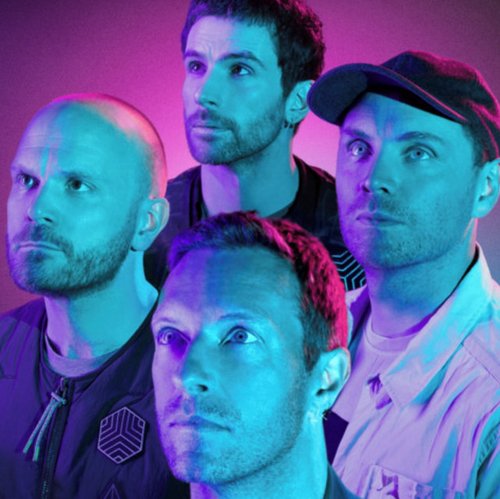
“In time, however, I learned that the disgust was essentially the fear and shame experienced by someone who was swimming the uncertain waters between two boats — songs that were fictional and songs of an autobiographical or confessional nature. A radical change was occurring in my songwriting, despite myself, and such changes can leave one feeling extremely vulnerable, defensive and reactive.”

Cave added: “Of course, I no longer see ‘The Boatman’s Call’ in that way, and understand that the record was a necessary leap into a type of songwriting that would ultimately become exclusively autobiographical — ‘Skeleton Tree’ and ‘Ghosteen’, for example — but, conversely, less about myself and more about our collective ‘selves’. When I sang the ‘The Boatman’s Call’ songs for the Idiot Prayer film, they no longer felt like cries emanating from the small, yet cataclysmic, devastations of life”.

I will, as I do, get to reviews in a second. After 1996’s Murder Ballads – where the band performed new and old murder ballads; talking about crimes of passion -, I guess The Boatman’s Call was a chance to do something that was very different. Purer and more personal, I can understand why The Boatman’s Call is now considered a classic. Into My Arms, perhaps Nick Cave & the Bad Seeds’ best-known song, opens the album. A seemingly natural evolution for a masterful songwriter who adopted different personas and sonic avenues, The Boatman’s Call will get a lot of new focus on its anniversary come 3rd March. Spectrum Culture revisited the album in 2017.
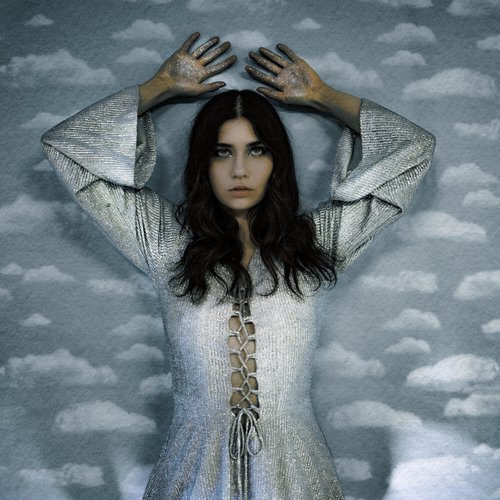
“By 1997, Nick Cave had already traversed numerous guises. He’d been a noisy gutter poet with the Birthday Party, a gothic troubadour in his early solo work, a post-punk genius and, by the mid-1990s, a Springsteen-like figure whose own highway mythos sounded suited to a lane leading to Hell. Yet even by the artist’s own unpredictable standards, few could have anticipated him making a record like The Boatman’s Call. Prior to this, even Cave’s sweetest, most tranquil songs were infused with cynicism, irony and misery, but here is an album of rich, sonorous ballads, unvarnished and vulnerable. It added yet another wrinkle to Cave’s warped self-portrait, so naked as to be confounding in its clashing honesty.

The album opens with “Into My Arms,” which sports one of the greatest first lines to ever usher in an album: “I don’t believe in an interventionist God/ But I know, darling, that you do.” Cave’s wit is still present in the mouthful of a first line, but it nonetheless conveys a bracing sentiment, balancing twin impulses of apostasy and romantic longing that run through the album. “Into My Arms” mines Biblical imagery to make an agnostic’s prayer, a fervent plea to powers that may or may not exist to watch over a lover. It remains Cave’s most beautiful, stripped-down ballad, with nothing but a piano to shape the singer’s muted vocals as he intones to the heavens. Cave’s voice, heretofore filled with sinister menace, is now just somber, admitting weakness in the face of love.

This newfound warmth pervades much of the album. “Lime Tree Arbour” is a tranquil dedication of affection and trust in a partner that nakedly admits to reliance on someone else with lines like “There is a hand that protects me/ And I do love her so.” “Black Hair” is an ode to his lover’s raven locks, with “black hair” factoring into every line, the repetition oscillating between dedication to fixation as an accordion lends a moonlit swell to Cave’s intonations. “Green Eyes” homes in on another body part, with Cave plaintively begging, “So hold me and hold me, don’t tell me your name.” There’s a mournful, sea-shanty quality to the artist’s lovesick ballads, not entirely unlike Tom Waits’s own, and the unorthodox instrumentation that the Bad Seeds bring shows them evolving alongside Cave, modulating their intensity without sacrificing idiosyncrasy.

Yet for all the songs of devotion, there are just as many that drift through the sorrow of heartbreak, often invoking religion for both answers and distraction. “Brompton Oratory,” by contrast, finds Cave indulging his religious inclinations and doubt in equal measure, attending service in the cathedral but finding his mind drifting to the marble statues of apostles frozen away from the sin and temptation of the modern world. Far from feeling invigorated by religion, Cave confesses that he envies the stone images for their impassiveness, not only in terms of his spiritual need but in a hinted-at break-up that pervades the lonely searching of the LP. As Cave croons, an organ swells, a benediction to his doubting declamations. “People Ain’t No Good” puts a new face on Cave’s cynical humor, contrasting initially upbeat, romantic lyrics with the chorus containing the song’s title before drifting into breakup misery.

In retrospect, Cave’s balance of weariness and longing fits seamlessly within his overall body of work and the somber timbre of his voice. Having scored his most successful single in a collaboration with Kylie Minogue, he produced his most consistent LP in the wake of their breakup. It’s Cave’s version of Frank Sinatra’s Only the Lonely, a dejected affair that strips away usual modes to reveal the torn, ragged heart beneath. As far and wide as Cave and his crew had traveled sonically over the years, somehow it was the bare bones eclecticism and raw emotion of The Boatman’s Call that most clearly informed Cave’s career afterward, culminating in his recent, tragic return to bared-soul intensity for Skeleton Tree”.

I want to end with a couple of reviews. Even if Nick Cave has had changing and strange feelings with an album that many people adore, he must recognise that it is so important. The Boatman’s Call is among the greatest and most important albums of the 1990s. In 2011, to coincide with Mute reissuing albums from Nick Cave & The Bad Seeds, Pitchfork gave their thoughts to The Boatman’s Call:

“The Boatman's Call is Cave's plea for redemption, an album every bit as dignified as its predecessor is deranged. After spending much of his career spinning yarns out of other people's misery, Cave-- emerging from a divorce and a highly publicized but short-lived affair with PJ Harvey-- comes clean about his own. On the stirring piano-based hymns "Into My Arms" and "There Is a Kingdom", he looks to religion less as a convenient dramatic device and more as the genuine refuge for the lonely soul. Cave had flirted with tender balladry many times before, but whereas previous turns like "Straight to You" and "The Ship Song" were shot through the Bad Seeds' widescreen lens, here, the atmosphere is so spare and intimate, you feel like you're curled up inside Cave's piano. More than any other album in this batch of reissues, The Boatman's Call is greatly enriched by a remaster that amplifies the magnitude of Cave's loneliness, from the burning-ember ambience of "Lime Tree Arbour" to Ellis' trembling violin lines on the absolutely devastating "Far From Me". But even though The Boatman's Call is Cave's most confessional, open-hearted album, its sense of sorrow and catharsis transcends a strictly personal interpretation. It speak volumes about the album's universality that its songs have soundtracked everything from Michael Hutchence's funeral to Shrek 2”.

Before closing, I want to bring in one more review. A very special and enormously beautiful album, the BBC provided their assessment of The Boatman’s Call in 2011. They acknowledged and saw and album that is undeniably a classic work from a band who, to this day, keep surprising fans with the quality and consistency of their albums:

“For their 10th album – and follow-up to the cheery Murder Ballads – Nick Cave & The Bad Seeds explored more redemptive qualities. Originally released in 1997, gone were the menacing, troubled tunes of yore; instead, here was a selection of graceful, minimal, melancholic numbers that saw Cave reflect on spirituality, loves past and present, and almost atoning for past indiscretions. These are your actual songs of faith and devotion, and by Cave’s own admission his most personal album to date.

The opener is a modern-day classic. Into My Arms is a love song so perfect you wonder why any other composition of its kind bothers to go up against a ballad that all others should rightfully refer to as ‘Sir’. Cave opens his heart from the outset, the song beginning with the stunning line of "I don't believe in an interventionist God / But I know, darling, that you do". It’s such a gorgeous song that Peaches Geldof even has its lyrics tattooed on her (but don’t let that put you off). It’s also the only Bad Seeds tune you’re likely to hear at a wedding

His brief dalliance with Polly Harvey, whom he became infatuated with after their Henry Lee duet on Murder Ballads, is referenced on Green Eyes, Black Hair and the more direct West Country Girl. Comparisons with Dylan and – more on the money – Leonard Cohen are no bad things either. The religious motifs of Brompton Oratory, an album highlight, and There Is a Kingdom lend an air of a man coming to terms with his place in the world, with subtle churchy murmurs over drum machines. The Bad Seeds themselves play a blinder, with gentle and sympathetic elegance throughout.

It’s an audacious task trying to pin down the core essentials in The Bad Seeds’ catalogue, as there’s so much of it, but The Boatman’s Call would be labelled a classic in anyone’s canon. No band on their 10th album should have much more to say, but taking this turn for the reflective helped reignite The Bad Seeds and further secured their legacy. It is, in short, brilliant”.

I shall end here. Among the big album anniversaries this year, the twenty-fifth of The Boatman’s Call on 3rd March is very important. An album that was quite a change of direction for Nick Cave & The Bad Seeds, today it seems less open and emotional than some of their more recent work. With songs such as Into My Arms, People Ain’t No Good, (Are You) the One That I've Been Waiting For?, West Country Girl and Black Hair in the running order, The Boatman’s Call is very special. A quarter of a century after it was released into the world, its songs still have the power to…

STOP you in your tracks.

FEATURE: Paul McCartney at Eighty: Paul McCartney and Me: The Interviews: Dan Rebellato

FEATURE:


Paul McCartney at Eighty

IN THIS PHOTO: Paul McCartney in 1964/PHOTO CREDIT: RA/Lebrecht Music & Arts 

Paul McCartney and Me: The Interviews: Dan Rebellato

___________

AS part of my run…

PHOTO CREDIT: Dan Rebellato

of forty features leading up to Paul McCartney’s eightieth birthday in June, I am interviewing some very special people and asking about their relationship with his music. The iconic McCartney is rumoured to be headlining Glastonbury this summer - so it will be an epic occasion for those who will get to see him on stage after such an awful past couple of years (we do know for definite he is taking his Got Back tour to North America from the end of April through to the middle of June). This time out, I have been speaking with the playwright, teacher and academic, Dan Rebellato. As I am a big fan of Chris Shaw’s I am the EggPod (where a delicious pot pourri of guests discuss Beatles and solo Beatles albums), I know Dan is a big fan of McCartney’s output. He has spoken about The Beatles’ Let It Be (1970), Wings’ final album, Back to the Egg (1979) and, very recently, Paul McCartney’s 1980 album, McCartney II (he also covered Ringo Starr’s underrated Ringo). I ask him about the recent documentary-film, The Beatles: Get Back, and what he took from it, in addition to what Paul McCartney’s music mean to him. The detail and depth Dan provides shows what passion he has for McCartney’s music and unmatched talent! As the legendary and much-adored musician turns eighty on 18th June, it is great hearing what people have to say about his music, legacy and importance. It has been a pleasure discussing with the great Dan Rebellato what Paul McCartney…

 IN THIS PHOTO: Rhythm guitarist-vocalist Denny Laine, lead guitarist Laurence Juber, a playful Paul McCartney, a floral bouquet-brandishing Linda McCartney, and drummer Steve Holley represent Wings’ final line-up circa 25th November, 1979/PHOTO CREDIT: Evening Standard/Getty Images

MEANS to him.

_______________

Hi Dan. In the lead-up to Paul McCartney’s eightieth birthday on 18th June, I am interviewing different people about their love of his music and when they first discovered the work of a genius. When did you first discover Paul McCartney’s music? Was it a Beatles, Wings or solo album that lit that fuse?

I am roughly Lady Madonna years old, so I don’t remember a time where I hadn’t discovered Paul McCartney’s music. It was everywhere in the 1970s, before I was even aware what I was hearing. Live and Let Die, Band on the Run, Let ‘Em In, Mull of Kintyre: these songs were just part of the air we breathed, and The Beatles’ music was the ground we walked on. When I eventually got properly into The Beatles and bought their albums one by one, I was astounded at how many songs I already knew.

Like me, you must have been engrossed by The Beatles: Get Back on Disney+. How did it change your impression of The Beatles at that time, and specifically Paul McCartney’s role and influence on the rest of the band?

I genuinely can’t remember what I expected from Get Back. I was looking forward to it, of course, and I knew it would be interesting, but I really had no clue that I would watch the whole eight hours with my jaw dropped open as I did. The idea that such a thing was possible; that stuck in film cans somewhere was this extraordinary footage; that it was ever going to be so possible to accompany The Beatles as they recorded an album and rehearsed a concert, so intimately, in such vivid detail, with all the tension and all the laughter, the tea and creativity, the interplay of friends and rivals and guests and collaborators. Has there ever been such an intimate portrait of so important a group of artists, capturing so much of their creative process? It feels like possibly the single most important Beatles release since they split up.

I can’t get over it.

In fact, I’ve always been slightly envious of people who were around when The Beatles were releasing their records. What must it have been like to put Sgt. Pepper on for the first time in 1967? But this makes me feel like I’ve finally had that experience. This is as much of a revelation of what The Beatles are like as anything I’ve ever experienced: more thrilling than Anthology, more vivid that the biographies. It’s brought The Beatles back and it’s extraordinary. It feels central and essential to The Beatles. A year ago, if you wanted to immerse yourself in The Beatles, I’d have told you “Just listen to all the albums and all the singles and that’s everything you need”. Now, I’d add “…and watch Get Back”.

It’s transformed my sense of those January 1969 sessions. Like everyone says, these have always been the miserable sessions where The Beatles as good as split up. So vivid was that story that The Beatles themselves seem to have believed it. There’s some truth to that in the Twickenham phase (episode 1) but, if anything, the problem seems to be Twickenham itself. It’s so vast and open, it was evidently very exposing; there was no real chance of having a quiet conversation to sort out problems. It laid bare what would have been fine in a studio: they hadn’t yet got on the same page about what they were doing. It raised the stakes at the point they needed to be lowered, so that people could have been open, creative, free, to try stuff out and fail happily.

The Beatles often stumbled into great ideas (Sgt. Pepper wasn’t a grand plan; just something that evolved), but when you have a film crew and a budget and deadlines and people hanging on your decisions, you can’t busk it, and that heightened the tensions. And once they get into Saville Row, they’re a different band. They’re funny, they’re creative, they’re full of enthusiasm for what they’re doing. Oh lord, when Billy Preston turns up and starts playing with them, it’s out of this world: the looks on their faces, the amazement that this is the missing link they all needed; Billy’s modesty and his funkiness and his grin and his fingers just make everything better. And the rooftop – well, that was always great, even in the original Let It Be movie, but to have it so beautifully restored, looking sharp and joyous, and seeing the lads’ palpable thrill at performing again…honestly it make me cry.

“In fact, I think they all do, but it just underlines what we all knew but which is so remarkable to see laid bare: he was overflowing with great songs – and not just great songs: some of the most beloved songs of all time”.

McCartney comes out astonishingly well from Get Back. In fact, I think they all do, but it just underlines what we all knew but which is so remarkable to see laid bare: he was overflowing with great songs – and not just great songs: some of the most beloved songs of all time. I read once that he wrote Let It Be and The Long and Winding Road on the same day, and I’ve always been slightly sceptical of that. Is it possible that anyone could create two of the most famous rock ballads of all time in a single day? I’m less sceptical now. Songs are pouring out of him and he knows it. And the idea always was that Paul was pushy and arrogant and demanding in these sessions. In fact, he’s in a really difficult position: he’s got a very good idea for the band, that they make a new album but rehearse it and perform it live, but he’s not the leader of the band. It was always - by mostly unspoken agreement - John, but John is no longer interested in being the band leader (he’s more focused on Yoko);. Also, while Paul’s got all these songs, John expended himself on The White Album (1968’s The Beatles), and he is still recovering from the miscarriage, and he is intermittently out of it on heroin. Paul wants to push the live show to happen, but he knows that the more he pushes, the less likely it will be to happen. And – for a twentysomething, working-class bloke in the 1960s – he shows remarkable emotional intelligence and articulacy in navigating how this works.

But then they all come out of it well. George may be a bit sulky and resentful (and has a right to be), but when it’s working, he is completely there: when Get Back appears, he knows it’s great; when Billy Preston arrives, he knows this is fantastic. And even though he didn’t want to go on the roof, once he’s up there, he’s loving it. Ringo is the one they all adore, the one who locks the songs together, the one – I think – who finally gets them to play on the rooftop, but most of all just a relentlessly inventive drummer, in an unflashy, un-self-advertising way. And John, checked out though he is for a while, maybe not coming up with all the songs, but what energy he brings, what humour. Even though he doesn’t want to be the band leader, he is the band leader, and what Get Back made so clear to me is that part of the miracle of The Beatles is that they had a leader who had all the attributes of the person who undermines the leader: he was funny and naughty and mischievous and impulsive and cynical and gullible and lazy and brilliant. This isn’t the character profile of the teacher; it’s the profile of the naughty kid at the back of the class. But he led them and he gave them all permission to be who they were.

And they really were a band. Everyone (including me) has rhapsodised about Paul creating Get Back out of the thin air, but actually the whole band then go to work: George and Ringo adding that chugging, shuffling rhythm; John bringing that great guitar solo; Billy Preston his electric piano lick, the idea to instrumentally fade in, the two-chord crashes that introduce the verses, the cymbal smash on the chorus – these are all worked up by The Beatles as a really great working band.

And bloody hell they looked beautiful, didn’t they?

 Since 2017 (with a fiftieth anniversary release of Sgt. Pepper’s Lonely Hearts Club Band), Giles Martin has brought us reissues and remastered versions of Beatles albums. Although he has made no announcements about any this year, is there a Beatles album you would love to see reissued with extras and demos?

Obviously, the correct answer is all of them. The same technology that Peter Jackson used to lift individual voices and instruments out of mono recordings is getting better and better, and clearly there will be a point when the early records can be given the Giles Martin treatment, and I am here for that.

But the idea I want pitch to Apple is a big fat box-set called The Beatles Live. It would start with John Lennon at Woolton Village Fete, then Some Other Guy from the Cavern, followed by all of the Star Club in Hamburg tapes (finally given an official release). Then we’d have a selection of their early British concerts, then a selection of American gigs - maybe including Ed Sullivan, Hollywood Bowl and Shea Stadium -, selections from Scandinavia, Japan and Australia, and then Candlestick Park.

And finally we’d have the whole of the rooftop gig with no edits at all: just one long continuous and sublime show. All of it spectacularly cleaned up, sharpened, put in stereo and so on. It would probably be 15 discs and cost a fortune, but I need this in my ears.

I thought that 2020’s McCartney III ranked alongside his very best albums. Not many songwriters can produce such good work almost six decades after their first song/album. Why do you think Paul McCartney remains so consistent and enduring?

I don’t know. It’s a mystery – as creativity usually is.

He is just phenomenally talented. A friend of mine said recently that Paul doesn’t need to have a personal crisis to make great music; he just needs to be awake. He seems to have certain personal qualities that keeps him from losing focus: there’s clearly a steeliness to him, a very strong sense of self-possession; he knows exactly who he is. And that balances with an enormous open-heartedness towards the world. People have sometimes mocked his optimism (‘thumbs-aloft Macca’ etc.), but it’s not some bland cheerfulness. He just seems ready to be open to the world and experiences it vividly. The joys as well as the suffering.

A song like Waterfalls (from McCartney II) shows both of those things. It’s a love song, but one at the edge of unimaginable pain.

Maybe an impossible question, but what does Paul McCartney, as a human and songwriting icon, personally mean to you?

This is like the fallacy in the movie Yesterday, which imagines a world which is exactly the same as ours but suddenly everyone has forgotten The Beatles. The fallacy is that our world is unimaginable without them. They didn’t just produce a solid set of songs but, genuinely, they shaped who we are. They wrote pop music, but they also changed entirely what we thought popular music could do; they were at the heart of the Sixties change in social attitudes; they offered an alternative vision of masculinity, so it is impossible to unpick The Beatles from our lives.

And of course I feel the same, personally, about Paul McCartney. There are hundreds of his songs that are part of the fabric of me. I don’t know who Dan is without Get Back and Take It Away and Maybe I’m Amazed and Coming Up and Off the Ground and For No One and Sing the Changes and With a Little Help from My Friends and Jenny Wren…and I could literally go on for pages. I think Paul McCartney is a great artist, an extraordinary pop composer, and a wholly admirable human being…

Will that do?

“There are hundreds of his songs that are part of the fabric of me”.

In 2015, you wrote an article about how the song, The Frog Chorus/We All Stand Together, is used by some to claim McCartney is overrated. You rightly observed that the song is magnificent. Do you think McCartney is underrated or unfairly maligned by some to an extent?

Yes he is – or rather he was.

I think there’s a history to this. Paul didn’t split up The Beatles, but he was the one who announced it; he sued his bandmates (quite rightly, but it must have looked oddly vindictive at the time); and he wrote pop songs. That meant that, in the 1970s, a generation of rock critics – actually the first generation of rock critics – took a dislike to Paul. John was writing painful and personal songs and combative political songs: this is what that very blokey group of writers thought was expressive of the authentic rock attitude: rebellious, cool, aggressive, very male. Paul, by contrast, seemed to be poppy, soppy, uxorious .A craftsman rather than an artist. (Let me be clear: I think these accusations are either untrue or nothing to be ashamed of.) Paul barely got a good review in Rolling Stone throughout the ‘70s. He also had the temerity to sell incredible quantities of records, which for some is proof that his work must be lowest-common-denominator. 

Related thought: one of the symptoms of his genius is his ability to create songs that sound like they’ve always existed. And that means it’s easy for some ignorant people to think they must be derivative or safe or conventional. Take Mull of Kintyre. It sounds like it must be based on a nineteenth-century Scots ballad or something but, incredibly, it isn’t. It is a totally new and fresh song that sounds immediately like a classic. I think of that with the rooftop gig in January 1969. It must have been extraordinary to hear Get Back and I’ve Got a Feeling thundering down from the skies, because this would be the first time anyone outside The Beatles’ circles would have heard it but the public take it in their stride because this is what they do: create music that you never hear for the first time because it already seems familiar.

But then, of course, Lennon was murdered and, in the zero-sum game of rock journalism, Paul became vilified. (Was it Victor Lewis-Smith who said, “The Beatles are dying in the wrong order”? Tell you what. I think Victor Lewis Smith is dying in the wrong order.) It coincided with his only real lapse in sure-footedness, with the sequence of Pipes of Peace, Broad Street and Press to Play (though I think there’s lots of great stuff on all those records individually) feeling a bit aimless as a whole: MOR followed by the curious re-recordings of some of his songs, followed by a record filled with zeitgeist-chasing production. At least that’s how it seemed.

In fact, very few Sixties stars had a great Eighties. Dylan, The Kinks, The Who, The Beach Boys – all of them hit lows in the Eighties (or, perhaps more pertinently, as they reached their forties). And that meant that, really, people stopped listening – or listening superficially and dismissing; sometimes listening only to dismiss. We All Stand Together is a great example: a sumptuous, beautiful children’s song dismissed as if there’s something shameful about the man who wrote Helter Skelter writing a song for kids (and as if no one remembered Yellow Submarine).

Things started to change with the Beatles Anthology I think, and simultaneously with Britpop and McCartney recording Flaming Pie -which gets his first really great reviews since Tug of War. The resurgence of cultural interest in The Beatles meant that everyone seemed to remember how extraordinary they were and how lucky we are that Paul’s still around. (I think it’s a very good record, though I think the main difference is that people listened to it respectfully – I’m not sure it’s actually that much better than Off the Ground, especially the expanded version.) And I’m not sure he’s put a foot wrong ever since. I don’t think he has released a weak album for 25+ years, and some of them have been extraordinary. I think his gentler model of masculinity and his evident love for Linda and his commitment to his kids has also aged very well. And all of that culminates with Get Back, where Paul is this bewildering, astonishing magical fountain of music is laid bare – and looking so utterly fucking gorgeous. I mean, Christ, his hair alone should win an Oscar.

And it does mean that I wonder if we’re now in danger of under-rating John Lennon?

“The resurgence of cultural interest in The Beatles meant that everyone seemed to remember how extraordinary they were and how lucky we are that Paul’s still around”.

The most current Paul McCartney compilation, Pure McCartney, arrived in 2016, and it featured more of his better-known songs. Are there particular deep cuts (from Wings or his solo career) that you would include on your own McCartney compilation?

I was amazed that Take It Away didn’t make it on there. Great lyric, exhilarating arrangement, funky bass line. A truly great single. Paul doesn’t seem to rate Back to the Egg, but I’d add Getting Closer (fantastic power-pop single), Spin It On (Stooges-like pop-punk), Old Siam Sir (thunderous Zeppelinesque rock stormer), and frankly probably To You, After the Ball/Million Miles, Winter Rose/Love Awake and So Glad to See You Here. Back to the Egg is one of my favourite Wings records, and I can’t wait for the long-expected Archive edition.

I’m Carrying from London Town should have been on there. A haunting ballad with great lyrics and a ghostly arrangement. I love the Jon Kelly mix of A Love for You (from the Ram sessions). Daytime Nighttime Suffering (the B-side to Goodnight Tonight) is magnificent. Tomorrow and Some People Never Know from Wildlife and Little Lamb Dragonfly from Red Rose Speedway are beautiful pastoral numbers. I’d put his late Dave Grohl collaboration, Cut Me Some Slack, on there.

Oh. I love Despite Repeated Warnings from Egypt Station. I know some people find Driving Rain hard going, but From a Lover to a Friend and the title track are great examples of McCartney not being relentlessly upbeat, but expressing terrible pain, loss and vulnerability in a way I find endlessly moving.

More happily, I love Ever Present Past and See Your Sunshine from Memory Almost Full – oh, and in similar vein, Keep Under Cover from Pipes of Peace. I’m jumping around the back catalogue, I know, but Mamunia off Band on the Run is heavenly. Check My Machine (B-side to Temporary Secretary), Summer’s Day Song and One of These Days from McCartney II, and the longest version of Secret Friend (an outtake from those sessions) you can find would be good. Two Magpies and Lifelong Passion from Electric Arguments (an album by The Fireman: an experimental music duo consisting of McCartney and producer Youth)? Riding to Vanity Fair from Chaos and Creation? Title song from Off the Ground? This is getting ridiculous. Oh. If we’re allowed to put unreleased songs, Cage and – one of his very loveliest songs and a mystery to me that he’s not put it out – Waterspout. And, hey, what about Givin’ Grease a Ride from the McGear (a collaboration between Paul and his younger brother, Mike McGear) album? That’s got to be at least a double album’s worth of stuff not on Pure McCartney!

You have appeared on Chris Shaw’s superb Beatles podcast, I am the EggPod, and discussed Back to the Egg by Wings, The Beatles’ Let It Be, and Paul McCartney’s McCartney II. If you had to choose, which are your favourite Beatles, Wings and McCartney solo albums?

It genuinely changes all the time, but I think I am Team Sgt. Pepper as the best Beatles album. It’s not necessarily got the best songs, but I find it such a completely joyful experience listening to it from end to end. Favourite Wings? Well, I’m going for Back to the Egg, but it’s a fight out with Band on the Run. I prefer the production on B.T.T.E. Favourite solo album. Ram is the obvious choice, but today I’m going to say Electric Arguments, which was just so startling: completely classic McCartney and completely a 21st-century record without sounding like he’s trying to sound ‘with it’. (Mind you, maybe that’s not a solo album exactly. Hmmm.)

“If you wanted to study songwriting, I don’t know that you could do better than breaking down his songs to see how they tick”.

As an academic, might there be a case to argue that Paul McCartney is an important historical figure that should be taught at schools and universities more? Do you think we will ever see someone with his ability and influence ever again?

Who knows? It’s hard to think the stars will align in quite the way they did when The Beatles appeared. The pop/rock band-as-auteur that the Beatles really embodied and made a model for everyone else no longer seems to be an idea at the centre of the culture anymore…probably because of streaming? But I also think that the culture has so diversified that it’s much harder for a single act to command that national attention the way that it does seem as though when Sgt. Pepper came out. It simply became something everyone had to hear and have a position on.

Should he be taught in schools and universities? Yes, absolutely, and I’m sure he is. If you wanted to study songwriting, I don’t know that you could do better than breaking down his songs to see how they tick. And no one can study post-war British culture and society without at the very least touching on The Beatles. The question is how to study The Beatles and Paul. I’m not sure the narrowly (formalistically) musicological approach is quite right. There’s such a mixture of songwriting, performance, attitude, and context in his achievement that I suspect we still don’t quite understand it.

It was great reading The Lyrics: 1956 to the Present and learning the stories behind the songs. Is there a Paul McCartney song or lyric that has great personal relevance or holds huge significance?

I had a relationship break-up in 2000 which left me quite shipwrecked. I hadn’t expected it and, at that time, had thought it would be my whole future, so it was shattering. But at the same time, I had a huge project on at work, so had very little headspace to process what had happened. And I was at Waterloo Station one morning waiting to get the train to work, and realised I’d brought my Sony Discman™, but not any actual CD to listen to. There used to be a small Our Price record shop on the station concourse, and I went in thinking I might get an album by some new interesting band, but the first thing I saw was The Beatles’ 1 album – the singles compilation. I knew all these songs backwards of course, but I realised it would be comfort food for the soul, so I bought it.

And listening to Hey Jude, probably for the 2000th time in my life, the lyric that I’d always thought of as a meaningless placeholder, “The movement you need is on your shoulder”, suddenly seemed to me absolutely crystal clear, unambiguous, and profound. I didn’t have to just be the passive recipient of the bad news that had happened to me; I could take charge of my life, my feelings, my situation. I remember feeling it was an image of Atlas, bearing the earth on his shoulder; having that power to shift a world with a simple move. And by the end of the journey, I feel like I’d started to process my grief and move towards some kind of reconciliation with what had happened. So, thank you Paul.

IN THIS PHOTO: Paul McCartney captured during a shoot for GQ in 2019/PHOTO CREDIT: Collier Schorr

If you had the chance to interview Paul McCartney now and ask him any one question, what would it be?

What does it feel like, in your body and mind, when you feel a song coming?

If you could get a single gift for McCartney for his eightieth birthday, what would you get him?

John Lennon back.

To end, I will round off the interview with a Macca song. It can be anything he has written or contributed to. Which song should I end with?

Maybe I’m Amazed.

Because when I think of Paul, I have lots of feelings – admiration, perplexity, gratitude – but, more than anything, maybe I’m amazed…

FEATURE: Inspired By… Part Fifty-Two: Lou Reed

FEATURE:


Inspired By…

PHOTO CREDIT: Gijsbert Hanekroot/Getty Images

Part Fifty-Two: Lou Reed

___________

ON 2nd March…

 IN THIS PHOTO: Lou Reed in 1982/PHOTO CREDIT: Waring Abbott/Getty Images

the world marks what would have been Lou Reed’s eightieth birthday. In 2013, we lost the iconic artist and former lead of The Velvet Underground. Releasing twenty solo albums in his lifetime and working with artists like David Bowie, there are few artists as influential as Lou Reed. I am going to come to a playlist of songs from artists/bands who have been influenced by the great Lou Reed. Prior to that, AllMusic provide us a detailed biography of Reed:

“Few rock artists have been more influential without achieving superstardom than Lou Reed. While he flirted with mainstream success between 1970 (when he left the Velvet Underground) and 2013 (when he succumbed to liver disease), he most often played to a large cult following that only occasionally expanded into mainstream visibility. However, his songwriting -- unusually literate and often embracing themes that flouted society's conventions, especially in terms of drugs and sex -- broke fresh ground that other artists would follow, and his willingness to confront his audience made him a vitally important precursor to the punk revolution of the mid- to late '70s. (He often said that his goal was to apply the freedom and creative sensibility of literature to rock music.) Reed was not as celebrated as a guitarist, but the energetic report of his rhythm playing and the noisy grace of his leads and solos made him a hero to musicians who valued passion and feel over chops. And in his catalog, he covered a remarkable amount of stylistic ground -- introspective singer/songwriter (Lou Reed), glam (Transformer), art rock (Berlin), hard rock (Rock N' Roll Animal), noise (Metal Machine Music), confessional proto-punk (Street Hassle), jazz-infused rock (The Bells), upbeat pop/rock (New Sensations), social commentary (New York), and ambitious literary adaptations (The Raven). For all his creative shape-shifting, however, he never failed to sound like Lou Reed, with his ineffable downtown cool and dour outlook informing it all.

Lewis Allan Reed was born on March 2, 1942 in Brooklyn, New York. His family moved to Freehold, New York on Long Island when he was nine years old, and he didn't adapt well to his new surroundings; by the time he was in junior high, he was regularly targeted by bullies. He developed a variety of phobias and anxieties, and at the age of 16 he started to experiment with drugs. Hoping to deal with his problems, Reed's parents followed the advice of a psychiatrist and submitted him to electroconvulsive therapy; many years later, he would write about the traumatic effects of the treatments in his song "Kill Your Sons."

Reed would find solace in music, embracing early rock & roll, doo wop, rhythm & blues, and jazz, and by the time he was in high school, he was playing in bands and gigging professionally. One of his earliest groups, the Jades, cut a single when he was 16 years old, "So Blue" b/w "Leave Her for Me," with Lou playing guitar and singing backing vocals; legendary session musician King Curtis sat in on sax. The single flopped and it was their only release, but Reed kept writing songs, and in 1962, while attending Syracuse University, he cut a pair of tracks for producer Bob Shad, who released the Jades single, "Merry Go Round" and "Your Love." They were not released at the time, but Norton Records would issue them and the Jades single on a 2000 EP titled All Tomorrow's Dance Parties. After graduating from Syracuse, Reed moved to New York and took a job with Pickwick Records, a cut-rate record company who specialized in budget-price compilation albums. To fill out their LPs, Reed wrote and recorded songs following popular trends in music and teen culture. One of his compositions was a noisy would-be dance number called "The Ostrich," which among other things featured him playing a guitar with all the strings tuned to the same note. Pickwick thought the song had commercial possibilities and released it as a single under the group name the Primitives. Pickwick arranged for the Primitives to play some live dates to promote the disc, and while rounding up a band, Reed met John Cale, a Welsh musician who had come to New York on a scholarship from Aaron Copland and was playing in an avant-garde ensemble with LaMonte Young. Cale wasn't much impressed with "The Ostrich," but he was intrigued by Reed's alternate tuning, which was the same as one he was using with Young for his drone pieces, and when Reed wanted to form a band to play his own music that fell outside the boundaries of what Pickwick would release, Cale joined him.

Reed recruited a friend from his days at Syracuse, Sterling Morrison, to play guitar in the new band, with Cale on bass and viola and Reed on guitar and vocals. After briefly working with percussionist Angus MacLise, the group brought in Maureen Tucker to play drums. They adopted the name the Velvet Underground from a sensational paperback about the sexual revolution one of them found on the street, and after they were discovered by Andy Warhol in 1966, he became their manager and made them part of his pioneering multi-media show the Exploding Plastic Inevitable. With an aggressive sound at once primitive and adventurous, and lyrics that boldly dealt with sex, drugs, and the challenges of contemporary life, the Velvet Underground became one of the most controversial and talked-about bands of their day, and they released four studio albums (1967's The Velvet Underground & Nico, 1968's White Light/White Heat with Cale, 1969's The Velvet Underground, and 1970's Loaded with his replacement, Doug Yule) that sold modestly but would be regarded as influential classics in the years after the band broke up. In the summer of 1970, as the band was recording Loaded, they played a residency at Max's Kansas City in New York, and Reed, growing weary with the demands of the group and their lack of success, quietly dropped out of the VU in August 1970; while lineups of the group led by Doug Yule would stagger on until 1973, for most fans Reed's departure marked the end of the band.

Uncertain where to go next, Reed moved back to Long Island, staying with his parents and working as a typist at his father's accounting firm. By 1971, he was ready to make music again, and he landed a contract with RCA Records; he flew to London and cut his self-titled solo debut with a studio band that included Steve Howe and Rick Wakeman from Yes. Lou Reed was dominated by songs he wrote during his days in the Velvet Underground but didn't release, and the album came and went with little notice. He had significantly better luck with his second solo effort; David Bowie, who was in his first flush of superstardom after the release of The Rise and Fall of Ziggy Stardust and the Spiders from Mars, was an outspoken Velvet Underground fan, and he and Spiders guitarist Mick Ronson stepped in to produce 1972's Transformer. With Bowie's support, Reed embraced the trappings of glam rock and came up with a far stronger album that was a commercial success. The song, "Take a Walk on the Wild Side," became an international hit single, and "Perfect Day" would go on to become one of his most beloved songs. Reed used the success of Transformer to persuade RCA to bankroll a far more ambitious and elaborate follow-up. The grandiose Berlin, issued in 1973, was glossy and richly arranged and produced, but the unrelentingly depressing tone of the song cycle about a decadent love affair put off Reed's new fans and the album was a severe commercial disappointment.

Eager to win back his audience's good graces, he assembled a new band centered on the guitar team of Dick Wagner and Steve Hunter, with Reed confining himself to vocals. The new band approached Reed's tunes as crowd-pleasing hard rock, and 1974's Rock N' Roll Animal was a live album that showed off the strength of the material while making it more accessible and thus a success. Reed toured extensively in the wake Rock N' Roll Animal, and later the same year released Sally Can't Dance, a set of half-hearted glam-leaning tunes hardly up to the standards of his best work (except for the savage and personal "Kill Your Sons"). While a weak effort, it became Reed's highest-charting release to date. His next studio album, 1975's Metal Machine Music, was an unrelenting and uncompromised exercise in guitar-generated noise that alienated nearly everyone who came into contact with it and was seen by many as a deliberate act of career sabotage. He did an about face with 1976's Coney Island Baby; except for the unnerving "Kicks," most of the album was warm, gentle rock & roll, with the moving title track informed by the doo wop music he loved as a youth.

Coney Island Baby finished off Reed's deal with RCA, and he signed with Clive Davis' Arista label for 1976's Rock and Roll Heart, a largely upbeat but unremarkable effort that attracted little notice. However, with the rise of punk rock in New York and London, Reed was frequently cited as a hero and inspiration to many acts on the scene (especially his work with the Velvet Underground), and the attention emboldened him to make 1978's Street Hassle, a bitter and often deliberately offensive album in which he took an unblinking look at himself and his music. The album was too harsh to break through to mainstream listeners, but it earned strong reviews and signaled a new commitment to his muse after his uneven work since going solo. Though 1978's Live: Take No Prisoners was devoted more to Reed's acid-tongued stage banter than music, 1979's The Bells and 1980's Growing Up in Public found him dealing with personal issues and demonstrated a growing maturity in his writing. Growing Up in Public closed out Reed's deal with Arista, and it coincided with a period in which he finally overcame a longtime addiction to liquor and drugs, he married his girlfriend Sylvia Morales after years of publicly identifying as gay or bisexual, and moved from New York City to a farmhouse in New Jersey where he had peace and a chance to focus. He began working with former Richard Hell guitarist Robert Quine, who encouraged Reed to recommit himself to playing electric guitar, and after signing a new deal with RCA, they recorded The Blue Mask, an intense, revealing, and literate effort that was his most impressive music in years.

Reed and Quine worked together again on 1983's Legendary Hearts, another critical success, but at the last minute, Reed chose not to use him on 1984's New Sensations, instead multitracking lead and rhythm parts himself. The album was a relatively positive and accessible effort, and included "I Love You Suzanne," which became a minor hit. For the first time since he got clean, Reed toured extensively in support of the album, with Quine returning to his road band; a show from the New Sensations tour was documented on 1984's Live in Italy. He once again handled all the guitars on 1986's Mistrial, an uneven effort that closed out his second run on RCA. However, Reed soon struck a new deal with Sire Records, and rebounded with 1989's New York, an album full of political commentary and observations on his spiritual home town that won rave reviews and earned him a gold record. The final track, "Dime Store Mystery," was written in memory of his late friend and mentor Andy Warhol. Warhol's passing also brought Reed together with John Cale; the two had been on frosty terms since Reed's contentious departure from the Velvet Underground. The former bandmates teamed up to create a song cycle about Warhol's life and work, and 1990's Songs for Drella marked their first work together since 1968's White Light/White Heat. Later that year, Reed and Cale were invited to perform Songs for Drella as part of a celebration of Warhol's life and legacy staged by Foundation Cartier in Jouy-En-Josas, France. Sterling Morrison and Maureen Tucker were also invited to attend the event, and as an encore to the concert, the four original members of the Velvet Underground performed an impromptu version of "Heroin."

1992's Magic and Loss was a somber concept album about the death of two of Reed's close friends that received positive reviews but didn't match New York's sales or acclaim. Since the spontaneous performance in Jouy-En-Josas, rumors circulated that the Velvet Underground would reunite, and in June and July of 1993, Reed and his bandmates staged a tour of Europe that was rapturously received by fans, though reaction from critics was mixed. A string of American dates and an appearance on MTV Unplugged were to follow, but tensions in the band once again boiled over, and by the time Live MCMXCIII (recorded during a three-night stand in Paris) appeared the following October, the group was once again history, which became permanent after the death of Sterling Morrison in 1995. (The following year, the Velvets were inducted into the Rock & Roll Hall of Fame, and Reed, Cale, and Tucker performed a song they wrote in tribute to Morrison, "Last Night I Said Goodbye to My Friend.") Not long after the VU reunion tour, Reed and Sylvia Morales divorced.

Reed returned to duty as a solo artist with 1996's Set the Twilight Reeling, an album that focused on the joys and challenges of relationships; it appeared as Reed and musician/performance artist Laurie Anderson entered into a romantic relationship. (They married in 2008 and would remain together for the rest of his life.) A semi-acoustic appearance at the 1997 Meltdown Festival in London was recorded for the 1998 release Perfect Night: Live in London. That same year, Reed's life and art were celebrated in a television documentary for the PBS series American Masters, Lou Reed: Rock & Roll Heart, which was subsequently released on home video. Reed also collaborated with playwright and director Robert Wilson for his play Timerocker, penning songs for the piece. In 2000, Reed moved from Sire to Reprise Records (both offshoots of Warner Bros.), and released Ecstasy, a set of lyrically challenging, poetically informed songs set to rough rock & roll guitars. Reed collaborated with Robert Wilson again for a show informed by the writings of Edgar Allan Poe, POE-try, and much of the material for the play was revisited on Reed's 2003 album The Raven, which included readings from Willem Dafoe and Steve Buscemi. Reed staged an intimate concert tour following the release of The Raven, and a show at Los Angeles's Wiltern Theater was recorded for the 2004 album Animal Serenade.

In 2006 and 2007, Reed revisited the album Berlin in a series of concerts in which he performed the album in full, with original producer Bob Ezrin leading a small orchestra. Shows at St. Ann's Warehouse were filmed and recorded, and the album Berlin: Live at St. Ann's Warehouse came out in 2008. Reed also took a fresh look at Metal Machine Music when the German avant-garde ensemble Zeitkratzer created arrangements that allowed the LP's soundscapes to be performed on-stage. Reed and his frequent guitar foil Mike Rathke joined the group for several performances of the piece, one of which was released as Metal Machine Music: Live at the Berlin Opera House. And in 2007, Reed brought out Hudson River Wind Meditations, a collection of ambient pieces he created to accompany his tai chi exercises. In 2009, he performed several songs at an event honoring the 25th anniversary of the Rock & Roll Hall of Fame in New York City. He was accompanied by the iconic heavy metal band Metallica, and the collaboration inspired Reed to invite the band to work with him on his next album. Based on the work of playwright Frank Wedekind, 2011's Lulu was an aggressively confrontational and uncompromising work that received largely negative reviews and seemed to rub both Reed's and Metallica's fans the wrong way. A tour in support of the album never came to be, and the following year, Reed, who had been treated for hepatitis in the past, was diagnosed with a severe liver disease. He underwent a liver transplant at the Cleveland Clinic in April 2013, and although he subsequently proclaimed his strength and intention to return to performing and songwriting, he died of end-stage liver disease at the home in East Hampton, New York that he shared with Anderson in late October of that year. In September 2020, Rhino Records brought out an expanded edition of New York; in addition to a remastered version of the original album, it included a bonus disc of rough mixes, work tapes, and alternate versions, as well as a complete live performance of the album from 1989”.

Ahead of the eightieth birthday of one of the most influential and important people in music, I wanted to honour Lou Reed with a playlist featuring artists who have followed his lead. A magnificent songwriter and unforgettable and distinct singer, his influence will be felt for generations to come. Here is a pre-eightieth birthday nod to…

A music icon.

FEATURE: The Lockdown Playlist: Chris Martin at Forty-Five: Coldplay’s Best Cuts

FEATURE:


The Lockdown Playlist

PHOTO CREDIT: James Marcus Haney 

Chris Martin at Forty-Five: Coldplay’s Best Cuts

___________

I first became aware of Coldplay…

when they released their debut album, Parachutes, in 2000. With that successful album and its follow-up, A Rush of Blood to the Head, the band were taken to heart by so many. Identifiable and anthemic songs that still stand up today, the band have said they would release three more albums until 2025. That will be the end of the road for Coldplay by the sound of things. It will be sad for so many people. One of the band’s strengths is their lead, Chris Martin. Fronting the band since the start, he has been their driving force. He turns forty-five on 2nd March. I wanted to mark that with a collection of the best Coldplay tracks since their 2000 debut, through to their 2021 album, Music of the Spheres. Before getting to that, here is some biography of the fantastic lead of Coldplay:

“Who Is Chris Martin?

Chris Martin is a British musician and the lead singer of the popular band Coldplay. He attended University College London, where he met Will Champion, Guy Berryman and Jonny Buckland, who would become his bandmates. With Martin as lead singer, rhythm guitarist and pianist, Coldplay's debut album, Parachutes, topped the charts in the U.K. and won a Grammy Award. Martin is also known for his collaborations with artists like Jay-Z and Avicii.

Early Life

Martin was born Christopher Anthony John Martin on March 2, 1977, in Exeter, Devon, England, the eldest of five children to a teacher and an accountant. His interests in music developed at a young age and he formed his first band, The Rocking Honkies, while he was attending the preparatory Exeter Cathedral School.

After continuing his studies at another independent school, Martin attended University College in London, where he graduated with a degree in Ancient World Studies. During the college's orientation week in 1996, he met guitarist Jonathan "Jonny" Buckland and the two decided to form a band, with the chosen name Pectoralz. By 1997, the band (renamed Starfish by this time) had recruited Guy Berryman on the bass and Will Champion on the drums.

'Parachutes'

In 2000, the band, now known as Coldplay, released their debut album, Parachutes. The album was a commercial success, peaking at No. 1 on the U.K. charts and entering the top half of the U.S. Billboard 200 with hits like "Yellow," "Trouble" and "Don't Panic." The album eventually became certified seven-time platinum. It received the Best British Album Award at the 2001 Brit Awards and won the 2001 Grammy Award for best alternative music album.

'A Rush of Blood to the Head'

The group released their second album, A Rush of Blood to the Head, in 2002. The album proved to be another success with songs including "In My Place," "Clocks" and "The Scientist," and the group went on a nine-month tour to North America, Europe and Australia. The tour was filmed for the Live 2003 DVD. They also picked up two more Grammy Awards: "Clocks" won record of the year and "In My Place" was named best rock performance by a duo or group with vocal.

'X&Y,' 'Viva La Vida,' 'Mylo Xyloto'

Coldplay continued to thrive, as their follow-up efforts, X&Y (2005) and Viva La Vida (2008) — featuring a title track that went to No. 1 in the U.S. and U.K. — both became the top-selling albums of the year in which they were released. Mylo Xyloto became the group's third album to top the Billboard 200 upon its debut in October 2011.

'Ghost Stories,' 'A Head Full of Dreams'

In 2014, Coldplay dropped Ghost Stories, which featured such songs as "Magic" and "A Sky Full of Stars." The following year, Coldplay put out A Head Full of Dreams. The band soon landed one of music's most high-profile gigs, performing as part of the halftime show at Super Bowl 50 in February 2016.

Shortly afterward, the band launched its A Head Full of Dreams Tour. The massively successful tour crossed five continents, logging 114 sold-out performances in 83 venues, before wrapping in November 2017. The undertaking generated a whopping $523 million, making it Billboard's third highest-grossing tour since the publication first started keeping track in 1990.

'Everyday Life'

Four years after their last studio effort, Coldplay delivered the double album Everyday Life in November 2019. This time, in stark contrast to their previous touring schedule, Martin said the band would only perform a few gigs, due to concerns about the environmental impact of undertaking a major tour.

Solo Work and Collaborations

Outside of Coldplay, Martin has written a variety of songs for solo acts including British pop group Embrace and the singer Jamelia. In 2006, he collaborated with Nelly Furtado on the track "All Good Things (Come to an End)" from her album Loose, and worked with Jay-Z on "Beach Chair," from his album Kingdom Come. Martin has also collaborated with rapper Kanye West, pop singers Kylie Minogue and Dua Lipa and electronic music DJ Avicii”.

To mark the upcoming forty-fifth birthday of Chris Martin, below is an assortment of celebrated and awesome Coldplay songs. I personally prefer their older work, though they have released some really strong albums over the past decade. The band have evolved through the years, yet they remain hugely popular. A lot of that is because of their incredible live sets. I would expect them to play quite a few gigs this year. Here are some brilliant Coldplay songs sung by…

THE terrific Chris Martin.

FEATURE: Revisiting... Pearl Charles - Magic Mirror

FEATURE:


Revisiting...

Pearl Charles - Magic Mirror

___________

RELEASED on 15th January last year…

I did put Pearl Charles in my Spotlight feature berceuse of the sheer and utter brilliance of her album, Magic Mirror. I wanted to put it back in the spotlight. My Second Spin feature is reappraising older albums that are underrated. This feature is more about revisiting albums of the past five years that deserve new light and love. Charles is a magnificent talent. The Los Angeles-born artist released one of 2021’s best albums. I am going to come to a couple of reviews for Magic Mirror, as the album did pick up a lot of positive reviews. Before that, there are a couple of interviews that I wanted to include. The first is from January of last year. The Forty-Five quizzed the amazing Pearl Charles about her musical start, and whether her songs are autobiographical:

“Tell us about how you started making music

I was four years old when my older sister started piano lessons and I begged my parents to let me take lessons too. They told me if I still wanted to when I turned five they would let me, and the rest is history! From there I got really into musical theatre and started voice and guitar lessons as well. Eventually I sort of diverted off the path of musical theatre (I got in trouble for smoking pot at a classmate’s house whose father was a famous country singer/songwriter, but that’s a long story for another time!) and went more into the world of rock’n’roll and playing in bands which I do think is where I was meant to be.

 We’re getting some serious ABBA/Fleetwood Mac vibes from your music. What did you listen to growing up?

Though I definitely heard those bands when I was growing up, I didn’t actually really get into Fleetwood Mac or ABBA until I was in my 20s. My introduction to those bands were mostly just as oldies radio hits, so it wasn’t until I got more deeply into discovering and making music myself that I was able to appreciate the level of musicianship and songwriting both those bands exhibit. Growing up I listened to a lot of classic country and singer/songwriters as well as classic rock bands because that’s what my parents exposed me to. The Beatles, Bob Dylan, Leonard Cohen, John Prine and Hank Williams are some of the quintessential ones that come to mind. I remember the first CD I bought for myself was Eagles Greatest Hits.

Your songs have a really great story to them. Are they autobiographical?

Most of my songs are basically autobiographical or at least start out that way. I used to write a lot more about what happened to me, whereas lately I like to turn inward and look to what’s going on inside of me and how I feel to find inspiration on what to write about. Sometimes I’ve also noticed that life can imitate art. It’s almost as if writing certain songs can call that sort of energy or situation into being or that you’re almost psychically predicting what’s going to happen before it does in song.

You have an incredible home in Joshua Tree, California. Many artists before you have headed to the desert to record because they feel it has a mystical energy. What has your experience been as a creative in an environment like that?

Joshua Tree is such a magical place! My first experiences going out there were with my family when they bought a really unique house (it was built by the first Native American Playboy Bunny) in the area about 13 years ago. That was the place where I first felt really drawn to revisit the classic country music my mom had shown me when I was young, some of the artists I mentioned earlier and others like Patsy Cline, Loretta Lynn and Merle Haggard. It was only later that I found out about the significance of Gram Parsons and felt that somehow his spirit had guided me in the right direction. There is just this peaceful, calming feeling out there, you truly feel connected to the earth and surrounded by nature, whether it’s the plants, the animals or the stars. It’s those moments where you feel so small in the world, but in the best possible way, that make Joshua Tree an artistic and spiritual Mecca.

If people are just getting to know you, what song should they listen to first?

That’s a really interesting question! I definitely think listening to my most recent singles and the new album will give you the best insight to where I’m at currently as an artist and what’s closest to my heart at the moment. At the same time, I’d love to be able to be judged on the entire breadth of my work, so I think listening to my entire discography would be a very thorough way to get introduced to my music. Though part of me wants to say to listen from most recent to furthest back because I’m most excited and proud of my newest work, I think listening chronologically would probably also be insightful as to my progression.

And what is one thing you’d like them to know about you?

There’s a lot of celebrity for celebrities sake in today’s world. I’m most passionate about my music and I’d like to be most well known for my musical contributions, so I’d love for people to get to know these songs and I’d be very grateful if they did”.

 PHOTO CREDIT: Dana Trippe

I feel like we might get something from Pearl Charles in the way of an E.P. or album. She is such an amazing artist. Although Magic Mirror was played when it was released, one does not hear it exposed and shared as much as they should. It is an album where the deep cuts are all single-worthy. Before getting to some reviews, Inherent Bummer’s interview is really interesting. I have selected some bits from their chat of June 2021:

“INHERENT BUMMER: Tell me about your new album, “Magic Mirror.” It came out in January, right? How’d that go?

PEARL CHARLES: It’s been continually going well, which is really awesome. I've never had this much love from an album and it's very heartening to see the upward momentum. And you've known me for a very long time and seen the path and it's not an easy one…

I've been watching you grow.

To be honest, I feel like it's a better record [than the last one], but that's just naturally how it's going to be when you get better and improve and hone in on your vision.

What was your vision going into this album?

Well, I used my touring band on this one.

You mean they all played on the album?

Yeah, and on my last record we used session guys, who are great, but there's just something to be said about really spending years on the road, playing songs with people and how much that really gels together. And on the last record I had toyed with the idea of doing an ABBA style thing, but we never got around to doing that. So now I feel like on this record, obviously I really went hard into that vibe, but people seem to really be liking it. So I'm excited about it. Like that song, “Only for Tonight.” It fits in, I feel like, and it really sets the stage for the kind of album that it's going to be. It's fun, it's dancy, but it's also... If you listen to the lyrics, they're introspective, and that's the whole theme of the record.

PHOTO CREDIT: Dana Trippe 

I know the lyrics are incredibly personal to you, and introspective. And revealing. But it gives off this uplifting sound. Was that a subconscious way to make it easier to release the songs?

That's a really great question. Probably. I'd never really considered it like that. I love the concept of “Magic Mirror” as the title of the album because I feel like there's two sides to everything. It's about duality and we are not ever one thing only. Of course, sometimes we feel very deeply one emotion, but I feel like I wanted to put forward something that's a little bit more complex and something that contains the Yin and the Yang just because I feel like that represents me. And I feel like that represents my life experience and hopefully other people can relate, and I think that they can.

Do you feel like this is your ‘coming of age’ album?

Well, I turned 30 two days ago. And it's really funny because I keep saying this, which is a weird thing to say, because it doesn't really mean anything. But if I turned 30 last year, I don't know that I would have been that stoked about where I was in my life. And that’s just partially because of the pandemic. I don't think anyone was that stoked about where their life was at, in May of last year. You know what I mean? Now? I mean, my record was supposed to come out in May of last year. So there was a lot of waiting and a lot of wondering how it was going to go. And then ultimately I think the timing lined up really, really well for me personally, and for the release into the world, because the album does have positivity contained in it. I didn't want to put that out at a time when it might seem inappropriate. I think the world is always going to need [positive] energy, but I didn't want to distract from all of the pain that was happening in the world and put something out that seemed tone deaf.

When it came out and I heard the title, Magic Mirror, I immediately thought of Snow White, and also Alice in Wonderland. But the way you just expressed the journey sounds so much more transformational. Do you feel like you transformed in the process of making this album?

Yes. I definitely do. And I think life is an ongoing transformation or at least I hope for it to be. And I believe it is, if you choose to continue to grow and you don't become complacent and get stuck, which can happen whether you want it to or not. But I think that, yeah, the transformational journey is such a big part of it for me. And I hope... Here I am at this writing retreat thinking about what I'm going to write about next. And I'm like, "Oh, I don't want to go over the same ground." But at the same time, it's just always going to be part of the story.

Do you feel like you expressed what you wanted to say with Magic Mirror?

Yes. I'm very proud of that record and I really think it shed a lot of light on what I wanted to say, at that time. But I do think that the next record is going to have some different content. What it is yet, I'm not sure. It's actually funny, [Magic Mirror] was supposed to have a song on it that ended up getting cut off. I say “fuck” in it. And it's a bit darker. And taking it off really... We switched it out for “Sweets Sunshine Wine,” which we'd released previously as a single, but we wanted to give it a vinyl release. Changing that one song really changed the whole vibe of the album and made it a much more sun-shiney and happy kind of thing, which I think was the right move for this album. But, lurking below the surface, there's some darker stuff that I might have to bring out next time around”.

It is worth getting to some reviews for Magic Mirror so that we can see what the critics had to say. I have not seen anything even slightly negative about an album that is as magic as its title! This is what The Line of Best Fit said in their review:

“Long have protagonists in films stood weary, questioning choices made or journey’s travelled, in front of a decrepit piece of reflective glass. But that's not quite the plan for Pearl Charles’ new outing.

By inviting you to take a peek into her own Magic Mirror, Charles is offering the chance for you to adopt her tales of traversing the emotional potholes and speed ramps that growing and loving can offer.

On her debut, Sleepless Dreamer, the folk-soaked, pedal steel tinged sound felt like a familiar friend knocking on your door. With Magic Mirror, that friend has returned, with some stories to tell while ready to dazzle with a sparkle.

It’s impossible to not connect the Abba-dots on kick-starter “Only For Tonight”. As the melody delivers on all fronts - ear-worm settling in for the long haul - Charles greets us by looking back upon a one night stand, lamenting she “shouldn’t have played this like a man.” By erupting like a confetti canon coming at you the moment you walk into your house, a feeling sweeps over, ready to carry the party onward.

Notably, there’s now echoes of the sun-drenched California sparkle of Fleetwood Mac, Tom Petty et al - motioning to an express reach upwards for Charles and who she, as an artist, is now. No doubt, the romantic realisations within, particularly of “when I see your face it’ll be the last time I do / it’s easier to live this lie than to tell the truth” (“What I Need”) has also contributed to this new gloss - after all, when the truth feels so poignant, let it shimmer to make it more digestible.

Even on her self-titled debut EP, which dug its hands into the world of blues, there was a wish to reflect, and it feels like the steps made between then and now - the living of life, and figuring out her place in this world - has led to an evolution into a ‘70s radio-rock revival sound, featuring more swaying pedal steel and twanging clavichord en masse - with a delectable delivering of harmonies stacking where prudent.

The lack of reference to any of the issues involved in our ‘new reality’ creates the idea of a dream world, where life can once again by led without the ticking of a doomsday clock - especially following a week of (more) erupting political discourse; this glamour-tinged world of Charles’, reaches out and is telling you to ‘live in the past for a bit’ feels welcome.

While Magic Mirror's sparkling-sheen portrays the acceptance of life - Pearl Charles' diary, flinging open its pages to question long-drawn-out loves - the inclusivity means the eyes staring back from Magic Mirror flit between both yours and hers, all aided by her cool and breezy nature”.

Prior to wrapping things up, AllMusic had some nice things to say about Pearl Charles’ magnificent 2021 release. An artist who will grow and continue to put out wonderful albums, she is a talent that everyone needs to be aware of:

“In a pleasing tangle of sun-warmed melodies and 1970s influences, Pearl Charles strikes a confident, if laid-back tone on Magic Mirror, her sophomore album. The Los Angeles native has been bubbling under the radar for nearly a decade, trying her hand in a variety of indie subsets from lo-fi Americana to garage and psychedelia before landing on a more polished amalgam of vintage-flavored country-pop and West Coast soft rock. Her 2018 debut, Sleepless Dreamer, showed plenty of promise and laid the framework for the more fully realized sound she achieves here. As merry a romp as it is, opener "Only for Tonight" sets a bit of a misleading tone as both its boisterous mood and ABBA-inspired disco-pop are never again repeated during the set. After this, Charles finds her groove, turning in a bevy of tightly crafted gems that flirt with various facets of '70s pop, from the Fleetwood Mac stylings of "What I Need" and "Slipping Away" to the sweet "All the Way," which pairs swooping George Harrison-esque guitar leads with bubblegum uplift. "Sweet Sunshine Wine" is another standout whose easy hooks give way to a marvelously campy psychedelic breakdown. The production and arrangements throughout are impeccable, warm, and well-suited to the kind of thoughtful, low-key songwriting at which Charles excels. Neither basking in its vintage flavor nor overplaying its strengths, Magic Mirror is the kind of subtle record that reveals its pleasures through repeated listens. Even Charles' voice is a comfort; after a decade of mainstream mumblers and overwrought affectations, her enunciated vocal style brings a conversational tone to the songs. While similar in feel to her debut, Magic Mirror is a significant step forward for Charles, who really steps up her game here”.

One of my absolute favourite albums from last year, go and check out Pearl Charles’ Magic Mirror if you have not done so already. Songs like Only for Tonight are played, though one does not hear much else nowadays. She released a new track, Givin’ It Up, last month. I wonder whether she is already planning another album. In any case, Magic Mirror is an album to be heard many times over. It is a stunning work from…

A fabulous young artist.

FEATURE: I Stand at the Gates Alone: Why Kate Bush's The Dreaming Should Garner As Much Love and Respect As Hounds of Love

FEATURE:


I Stand at the Gates Alone

IN THIS PHOTO: Kate Bush shot whilst promoting The Dreaming on the Italian T.V. show, Riva Del' Garda '82, on 28th September, 1982/PHOTO CREDIT: Guido Harari

Why Kate Bush’s The Dreaming Should Garner As Much Love and Respect As Hounds of Love

___________

ALWAYS considered her masterpiece…

I can see why people would laud and admire Hounds of Love. Released in 1985, this was Kate Bush’s fifth studio album. I will never not love and adore this album. I think that a lot of time and focus is spent on Hounds of Love, whereas its predecessor is not given as much love. I am writing this because there is a new edition of UNCUT that has a twelve-page feature about the making of The Dreaming, including interviews with people who were involved. I am going to get inspiration for that more when working up to fortieth anniversary in September. For now, I wanted to use this feature to look at The Dreaming and why, in its weird way, it is up there with Hounds of Love in terms of its brilliance. I say ‘weird way’, because that is sort of the way the album is seen. Kate Bush herself, looking back, felt that the period she was recording The Dreaming was a tough one. Eccentric and very different to anything she had committed to tape before, this was an artist free and pushing her music to new limits. Hounds of Love gets more acclaim and celebration because it is less tense than The Dreaming. Even though the album’s second side, The Ninth Wave, is quite epic and anxious at times, the singles on the first half have more space, air and light – even if a lot of the lyrics are not overly-positive. With hues and shades of purples, silvers and greens, Bush wrote songs for the album in the countryside and was in a happier space than she was a few years before.

Look at The Dreaming, and this is an album that Bush produced across different spaces, often performing and recording through the night; not giving herself much time or relief. Because of these conditions, a lot of the material on The Dreaming is seen as either strange or not as good as Hounds of Love. I think there is this conception that Hounds of Love is vastly superior or that an album like The Dreaming is a lot harder to digest. One cannot call The Dreaming underrated, although it is an album that, upon release, was a commercial disappointment and did not really engage in the way one would have hoped. Hounds of Love found some love in America, but it has been a rockier path to recognition for The Dreaming. In September, the album turns forty. I am keen to explore each song and really get into the making of the album, the year or so leading up to its release, and how Bush took massive leaps from 1980’s Never for Ever and made this bold and brilliant statement in 1982. In terms of how good The Dreaming is, I do honestly believe it has songs that match the best of Hounds of Love. Even though Bush was happier and, debatably, even stronger as a producer on Hounds of Love (she solo produced each album), I do think that the sheer intricacy and detail that one experiences throughout The Dreaming should be respected.

In terms of women producing their own albums in the 1980s, one could not point to too many examples. Not only did Kate Bush helm this stunning and quite complex album; one can revisit these songs and find new insights and qualities. The Dreaming is a nuanced album that is absolutely stunning to listen to! From the lead single and opening track, Sat in Your Lap, with its taut and propulsive percussion, to the frantic and fear-laden closer, Get Out of My House, it is a thrill-ride! That is not to say those two tracks are indicative of The Dreaming’s colour scheme, mandate and overall sound. Indeed, There Goes a Tenner and Suspended in Gaffa are much lighter tracks. They put me in mind of what might hear on The Kick Inside or Lionheart (her first two albums). The Dreaming is still an album where Bush was looking back to her earlier work, yet she was pushing bravely forward. That is one of the great strengths of The Dreaming. Even though it is ten tracks in total, the album last over forty-three minutes. Bush manages to pack so much into every song! Like Hounds of Love, Bush worked with a great range of musicians in order to ensure that her album was given as much life, range and depth as possible. A penny whistle, mandolin and bouzouki can be heard in the mix. There is not a weak track in the pack.

I feel The Dreaming is an album that could benefit both from a visual piece and a new release. By the visual piece, I mean its songs can thread together in a short film. You listen to the tracks and project yourself in the action. So scenic, head-spinning and memorable, only a few of the tracks from the album were brought to life through videos. What people would give to see tracks like Get Out of My House, Houdini, Leave It Open and All the Love committed to film. Also, there has not been any re-release of a Kate Bush album with demos and extra material. As the architect of an album where she was working all hours, you know that there are archives and bits in the vaults when she recorded out of Advision Studios, Odyssey Studios, Abbey Road Studios and Townhouse Studios (all in London). Bush definitely had more studio focus on Hounds of Love. Not wanting to go between studios or feel so stressed and tired, that album benefits from an artist more refreshed and happier. Not that the tension and fatigue is part of The Dreaming’s charm. I think Bush’s sheer dedication to taking her music to new levels and pushing the studio is admirable.  

At the time of its release, The Dreaming was seen by some as too experimental, impenetrable, pretentious and odd. Some bemoaned the lack of instantly commercial tracks and dense sound. Hounds of Love, on the other hand, was seen as genius and an instant classic by many reviewers in the U.K. (things were more mixed in the U.S.). The Dreaming is an album that both proved Bush was one of the most fascinating and original artists in the world. She also showed that she was very different to the artist many mocked in the press back in 1978. I think The Dreaming was too ahead of its time, perhaps. There was definitely a perception of what Kate Bush should have been making and what the world got. If she was another artist, I think The Dreaming would have been taking to heart a lot sooner. Artists like Big Boi and Björk have recognised the importance of the album. Sure, there is nothing as radio-friendly and sing-able as Running Up That Hill (A Deal with God) or Cloudbusting. Hounds of Love is nothing short of a masterpiece. I feel it is unfair to either see The Dreaming as a much weaker album or something that Bush had to ‘get out of her system’ before revealing her true genius on Hounds of Love. I do feel that, as it heads towards forty years, The Dreaming warrants reinspection and a wave of new reviews and features.

I will wrap it up soon. I thought it would be worthwhile sourcing parts of a positive review for The Dreaming. Pitchfork reviewed The Dreaming in 2019. Their words and assessments of individual songs show what detail, depth and diversity can be found throughout The Dreaming:

“On The Dreaming, Bush’s self-proclaimed “mad” album, her mind works itself out through her mouth. Her cacophony of vocal sounds—at least four on each track—pushed boundaries of how white pop women could sing. Everything about it went against proper, pleasing femininity. Her voice was too high: a purposeful shrilling of the unthreatening girlish head voice; too many: voices doubled, layered, calling and responding to themselves, with the choruses full of creepy doubles, all of them her; too unruly: pitch-shifted, leaping in unexpected intervals, slipping registers until the idea of femme and masculine are clearly performances of the same sounding person; too ugly: more in the way cabaret singers inhabit darkness without bouncing back to beauty by the chorus in the way that female pop singers often must.

All this excess is her sound: a strongly held belief that unites all of the The Dreaming. Nearly half of the album is devoted to spiritual quests for knowledge and the strength to quell self-doubt. Frenetic opener “Sat in Your Lap” was the first song written for the album. Inspired by hearing Stevie Wonder live, it serves as meta-commentary of her step back from the banality of pop ascendancy that mocks shortcuts to knowledge. A similar track, “Suspended in Gaffa,” laments falling short of enlightenment through the metaphor of light bondage in black cloth stagehand tape. It is a pretty queer-femme way of thinking through the very prog-rock problem of being a real artist in a commercial theater form, which is probably why it’s a fan favorite.

“Leave It Open” is a declaration of artistic independence hinging on the semantic ambiguity of its pronouns (what is “it” and who are “we”?). Here’s the one solid rock groove of the album, and it crescendos throughout while a breathy, heavily phased alto Bush calls and high-pitched Bush responds in increasingly frantic phrases. “All the Love” is the stunning aria of The Dreaming—a long snake moan on regret. Here she duets with a choirboy, a technique she’d echo with her son on 2011’s 50 Words for Snow. The lament trails off with a skipping cascade of goodbyes lifted from Bush’s broken answering machine, a pure playback memento mori.

The other half of the album showcases Bush’s talent for writing narratives about historical and imagined characters placed in unbearable moral predicaments. This is often called her “literary” or “cinematic” side, but it is also her connection to character within the Victorian-era British music hall tradition, a bawdy and comic form of working-class theatre that borrowed from American vaudeville traditions and became the dominant 19th- and early 20th-century commercial British pop art. As much as she’s in prog rock’s pantheon, she’s also part of this very-pre rock‘n’roll archive of cheeky musical entertainment.

When it works, her narrative portraits render precise individuals in richly drawn scenes—the empathy radiates out. In “Houdini” she fully inhabits the gothic romance of lost love, conjuring the panic, grief, and hope of Harry Houdini’s wife Bess. Bush was taken by Houdini’s belief in the afterlife and Bess’s loyal attempts reach him through séances. Bush conjured the horrified sounds of witnessing a lover die by devouring chocolate and milk to temporarily ruin her voice. Bess was said to pass a key to unlock his bonds through a kiss, the inspiration for the cover art and a larger metaphor for the depth of trust Bush wants in love. We must need what’s in her mouth to survive, and we must get it through a passionate exchange among willing bodies”.

Rather than The Dreaming being difficult, too dense, strange or mad, it is a wonderful album from an artist who was pushing boundaries and entering wonderful new worlds. I don’t think the point of The Dreaming was to have hits or be commercial. Bush wanted to make something that challenging but could be appreciated and understood. She loved the music of David Bowie and Peter Gabriel, and I don’t think either of them would have got anything but love if they released The Dreaming in 1982. In fact, the theatre, layers and way Bush pushed away from what she had done before is to be saluted. I love The Dreaming. Such a brilliant writer, innovator, singer, musician and producer, this was such a dominant display of Bush’s endless creativity and talent! When The Dreaming turns forty on 13th September, I hope that it is (finally) given the credit it deserves and it is seen…

IN a whole new way.

FEATURE: Free You Mind: En Vogue's Funky Divas at Thirty

FEATURE:


Free You Mind

En Vogue's Funky Divas at Thirty

___________

LOOKING ahead to 24th March…

that is the day we celebrate the thirtieth anniversary of En Vogue’s Funky Divas. I am going to get to a couple of reviews for an album that, in 1992, did not get an overwhelmingly positive response. Looking back, it is strange critics did not see the wonder and sheer quality of Funky Divas! Following the success of their Grammy Award–nominated debut album Born to Sing (1990), En Vogue reteamed with their founders Denzil Foster and Thomas McElroy to work on the album. With classics like My Lovin' (You're Never Gonna Get It) and Free Your Mind in the pack, it is no wonder En Vogue (Terry Ellis, Cindy Herron, Maxine Jones and Dawn Robinson) inspired acts like TLC and Destiny's Child. With incredibly strong vocal work, I think that En Vogue were one of the strongest groups of the 1990s. All-female bands that would follow often had some vocal weakness. Maybe it was a lack of soul or something quite ordinary. En Vogue were pure class and there was no weakness anywhere at all! Funky Divas is rife with soulful and funky vocals that are sexy, smooth, fierce and phenomenal! Funky Divas became the second album from En Vogue to earn a Grammy Award nomination in the Best R&B Performance by a Duo or Group with Vocals category. With strong songs perfectly assorted through the album, there is no stronger side. You get this consistency the whole way through. Give It Up, Turn It Loose is one of my favourite tracks from the album. Before getting to a couple of positive reviews for a truly iconic album, there are some features worth bringing in.

Albuism marked twenty-five years of Funky Divas back in 2017. A big leap in terms of confidence and sonic range compared to Born to Sing, Funky Divas announced En Vogue as a huge force to be reckoned with:

“Born to Sing had been piloted by the producer-songwriter duo of Denzil Foster and Thomas McElroy, formerly of Club Noveau. The gentlemen had also been the impetus behind founding En Vogue two years prior to Born to Sing. But was that all there was to the ladies? Four women simply singing material placed in front of them? Their second long player Funky Divas suggested that there was much more to the quartet. Though Foster and McElroy's pen and production style set the template for Funky Divas, the material was brought to life by Jones, Herron-Braggs, Robinson and Ellis. A producer is only as good as his or her artist, and En Vogue were never in short supply of personality or talent.

It was understood by the group, Foster and McElroy that a repeat performance of Born to Sing wouldn't make the grade for round two. For them to push through the din of competitive noise coming from their peer group in the R&B girl group market, they needed to innovate. Their second album saw En Vogue continue to mine the contemporary ore of the urban music landscape of the period, but they paired it with unforgettable grooves and melodies to guarantee the songs lasted past the epoch of their creation. There were also a few surprises tucked into Funky Divas too.

However, when En Vogue tapped “The Payback” (by James Brown), an R&B and hip-hop sample touchstone by 1992, it could have felt reductive, especially given that the sample had powered their inaugural charter “Hold On.” But, as always, En Vogue found a way to flip something established and make it work for them. The resulting soul sass of Funky Divas’ lead single, “My Lovin' (You're Never Gonna Get It)” (US #2, US R&B #1, US Dance #8), became another signature hit for the group. Aesthetically, the song seamlessly straddled the medium between classic and modern soul music. “My Lovin' (You're Never Gonna Get It)” was released on March 17, 1992, and Funky Divas arrived the following Tuesday on March 24, 1992.

The record was an immediate smash, commercially and creatively. Following “My Lovin' (You're Never Gonna Get It),” the record produced four more singles between June 1992 and February 1993, including “Giving Him Something He Can Feel” (US #6, US R&B #1), “Free Your Mind” (US #8, US R&B #23), “Give It Up, Turn It Loose” (US #15, US R&B #16) “Love Don't Love You” (US #36, US R&B #31).

Musically and visually, En Vogue were definitely holding their own. Funky Divas evinced that mainstream R&B could continually cross over to white listeners without losing its core constituency. A prime example of this is “Free Your Mind,” one of the album’s aforementioned surprises. A searing rock number that challenged racism, sexism and other social phobias head on was all at once, smart, sexy and provocative. Its Mark Romanek directed video left a lasting impression and contributed to the song's enduring pop culture visibility long after the 1990s concluded.

Their reworking of “Something He Can Feel” as “Giving Him Something He Can Feel” was also a coup. The song was written by Curtis Mayfield and initially rendered by the actresses/vocalists Lonette McKee, Irene Cara and Dwan Smith in the 1976 cult classic Sparkle. But, it found radio affection when Aretha Franklin, controversially, delivered it on the companion soundtrack. En Vogue's version restored the song to its girl group roots and brought it forward into a new decade, reverently, but boldly. They also tackled the Mayfield-penned “Hooked On Your Love” from the same film, again, bringing the song back to its original group approach. The additional non-single tracks fared strongly too, courtesy of the bright, black pop of “This Is Your Life,” hip-hop dance music on the appropriately titled “Hip Hop Lover,” an ambitious cover of The Beatles’ “Yesterday,” and the seductive jazz funk of “Desire.”

In the end, Funky Divas was certified platinum three times over in America and moved over five million copies worldwide. Sadly, behind the scenes of the success of their second album, En Vogue was contending with internal and external pressures that plagued the group as they moved further into the 1990s. Label disputes, in-fighting, and line-up shifts buffeted the three excellent albums that came in the wake of Funky Divas: EV3 (1997), Masterpiece Theatre (2000) and Soul Flower (2004). With Soul Flower, the group welcomed Rhona Bennett―a one-time Mouseketeer, actress and Rodney Jerkins protégé―to the fold. She, along with Terry Ellis and Cindy Herron-Braggs comprise En Vogue today, and the trio is currently putting the finishing touches on their much-anticipated sixth long player, Electric Café, due for release later in the year.

Regardless of the drama that has threatened to subsume En Vogue's legacy, Funky Divas was both an affirmation of the past and (then) present of R&B music. The album still captivates audiences inside and outside of the R&B genre, and stands as a truly classic girl group record that set the standard for others to follow in the years to come”.

Not to use an article so extensively, but a 2012 feature from Soul Culture brought in producers and songwriters Thomas McElroy and Denzil Foster. They gave their recollections and impressions of an album that has definitely been reassessed given its impact on other groups. Funky Divas is such a compelling work:

“After selling over one million copies of their debut album, Born to Sing, En Vogue decided to experiment with their sound for their sophomore effort. Released on March 24, 1992 by Eastwest Records, with Funky Divas they delivered an album for the ages.

Upon releasing their follow up, expectations were elevated due to the instant commercial impact they made with their debut. En Vogue returned to the studio determined to broaden their listening audience and produce another high quality album not only for them, but for popular culture.

As a result, their careers landed them in esteemed company. This album would see En Vogue asserting their dominance over their contemporaries in the Pop and R&B genres respectively.

It was mutually agreed upon to take their sound in a more pop-friendly direction over the heavy R&B/Soul influence from their previous album. Alongside the transcendent production duo, Denzil Foster and Thomas McElroy, En Vogue was able to carve their names in the Mount Rushmore of great female groups of all-time. Funky Divas introduced the concept of an all Black female quartet touching on four different genres of music ranging from R&B/Soul to Rock.

En Vogue’s formula for success was based around the breathtaking beauty of the four group members and their incomparable vocal talents. Cindy Herron, a soprano, Dawn Robinson, Terry Ellis, and Maxine Jones all had five octave ranges that allowed the group to interchange lead and background singers instantaneously. Denzil Foster and Thomas McElroy were influential in the formation of this groundbreaking quartet. And together they ascended to the heights of superstardom.

As the story goes in 1989, En Vogue became a trio before the inclusion of Terry Ellis later on in the assembling process. Initially, the group name was For You then it was changed to Vogue, but after learning another group had claimed that moniker, Foster and McElroy settled on En Vogue as the final name. Under their tutelage and Sylvia Rhone’s influence, En Vogue arrived on the musical scene in 1990. Their debut album only foreshadowed what was to come and two years later they found themselves in a league of their own.

Between the months of May 1991-January 1992, Funky Divas was recorded at Fantasy Studios in Berkeley, California.

SoulCulture recently sat down with Denzil Foster and Thomas McElroy, the executive producers for the album to share their blueprint for creating a definitive record.

Foster and McElroy describe their thought process in formulating the group.

“When Tommy and I were in Club Nouveau, we were talking about what we wanted to do once we started producing,” says Foster. “One thing we kept talking about was there wasn’t a super girl group in the mainstream. There were the Supremes-like groups that had one lead singer and the rest were background singers. I can’t remember an all girl group where they all had powerhouse vocals and could sing lead. So when we left Club Nouveau and finished working with Toni, Tony, Tone! we were able to get another production deal and we were looking for acts to sign. This is when we decided to put the group together.”

“In the era that we’re talking about, girl groups were going out of style like The Labelles, The Pointer Sisters and dance groups like Vanity 6,” says McElroy. “There weren’t any girl groups that were truly singing at that point in time. We wanted to bring back that big girl group. Denny was big on having soulful harmonies and bringing in more lead singers that you could switch around on different songs. It was like a vision of having an all-star group of women that came together. We said, ‘What if you had Gladys Knight, Diana Ross, Patti Labelle and Chaka Khan all in one group?’

“Right at that time when we were putting the group together, we had to make a decision to do a cattle call or do it under the radar,” says Foster. “We ended up choosing the latter and we had 19-20 different submissions of tapes and pictures. From there, we interviewed them because the other part of the group would be their intellectual side. They had to be classy and have the demeanor for the group. It wasn’t just about the singing; it was about how they carried themselves as well.

Of the six girls we had, there was always a combination of two or three that sounded great in the studio together. The auditions were pretty brutal. Not only did they not know it each other, but they had to sit in a room and learn the songs we gave to them in two hours. And they had to listen to me sing the lead and I’m not a singer at all,” he laughs.

“They didn’t get two takes, they only had one take and we kept the tape rolling. If they forgot the lyrics, they had to improvise and make it work. Two hours later, some people started complaining. We had a microphone in one of the rooms where they were at so we could hear what they were talking about. The griping started big time. They were all great singers, but they couldn’t handle the pressure.

He continues. “We were sold on three of the girls after all of this took place. Another one showed up which was Terry and she was late. After she showed up late, she had a demeanor as if she wasn’t going to make the group because of what happened to her at the airport. She had less time than the others, but she tore up all of the songs we gave to her to sing including the background vocals. At that point, we sent them all home.

“Tommy and I went back and forth on our decision. We were sold on Cindy and Max, but we kept going back and forth between Dawn and Terry because both Dawn and Terry were so versatile and had such range with their vocals. One day, Tommy said, ‘Who said it had to be three?’ he laughs. “Then the lights went off and I said, ‘Yeah, you’re right.’ This is how it ended up being the four girls instead of three.

Foster and McElroy discuss their mindset and focus going into the second album

“The approach for their first album was much more of a raw, street approach,” says McElroy. “The grooves were a little bit more serious to me. To me, when we first did ‘Lies’ and ‘Hold On,’ I was thinking about making those tracks more Hip Hop sounding and a little bit grittier. If you listen to some of the ballads we did on the first album, they were a little gritty as well.

“On that album, we were still trying to get familiar with the girls too. Terry and Cindy got a little more play on there because their voices had a little more appeal. It was very concentrated effort to make them a little more pop sounding on the second album. I know for Denny, he wanted to show that not only Cindy and Terry could do leads, but Max and Dawn as well. He definitely wanted to showcase all four of them on the second album.”

“On the second album we had to graduate from our sound on their first album,” says Foster. “We were able to be more diverse because they had an audience and we wanted to expand their audience on the second album. Not only to show that the other girls were powerhouse singers, but they could sing traditional R&B and pop records as well.”

Foster and McElroy recall the techniques they used in the production phases for the album.

“We did a lot of the pre-production work in our heads,” says Foster. “We would go through things and before we decided to do a song; we made sure we were going to complete it. Our process was we didn’t record 50 songs and choose ten. If the songs didn’t make the cut musically for Tommy and me, the girls wouldn’t even hear those at all. Once the music made the cut, we knew that it could be a good song.

After that point, we would go through the process of making sure the lyrics and vocals were tight. On ‘My Lovin’ it was three different songs before it became what you heard. ‘Free Your Mind’ was the same way. There were 11 songs on the album and we had two different versions of each. Sometimes I would have to write new lyrics or a new melody to fit the various versions. We got this process from our days at Club Nouveau. We didn’t have the money to do 30 or 40 tracks for the album. We made it work.”

“We weren’t the type of producers to stay in the studio for a year working on an album,” says McElroy. “It wasn’t ever that serious. Some of the stuff we would work on at home and then take it to the studio. Three or four months in the studio for us is a long time. For that album, we were in the studio for three months. It was one of the longest times we spent in the studio for a group or artist.”

Foster remembers how the lead single “My Lovin’ (You’re Never Gonna Get It)” evolved in stages.

“My Lovin” was one of the most difficult songs to make,” says Foster. “It was three songs before it became one because we kept rewriting it over and over again. The track was always dope to us, but we would say something just wasn’t right. As producers, we would go in to listen and we had no problems about criticizing ourselves. We would be listening to this one song and the both of us would get this look on our face and say something still isn’t right. We would strip down the song and say it wasn’t the drum beat and the bass line was pretty hot.

“We would get to a point where we would add something and say, ‘Yea, now we’re getting somewhere.’ We did this for many of the songs on the second album. But when it came to ‘My Lovin’ it was really a nightmare because we really loved the track, but we felt like everything we would put down on the track sounded whack. It meant that the girls had to get back in and sing it and I had to get back to rewriting the lyrics or change it altogether. Then we went all the way to the mix of the song and we were done with the song, but there was this thing with the breakdown towards the end.

He adds. “It was just the breakdown of the musical chants and what not. The acapella sounds weren’t there yet. At that point, the girls were exhausted and said it was fine,” he laughs. “Tommy and I were talking and we were like yea it sounds good, but there was something about it that kept bugging me. It was the weakest part of the song to me because we took it to this high level and then the track goes into this insignificant breakdown. I felt like we needed to get something else going.

Tommy and I kept going back and forth with ideas. Finally, I said we didn’t have a signature acapella thing going on like we did at the beginning of “Hold On.” Tommy started playing a set of chords and I said, ‘Yea, like that!’ We ran them in the studio and we were still going through the mix. We were in the part of the studio where the piano was and we were going through this part. It sounded so cool and I came up with the lyrics ‘Never Gonna Get It…’ At that moment, I thought yea this is going to set it off really nice. We actually had an alternative version to this song just in case the record company didn’t like the original version.”

“My Lovin’ (You’re Never Gonna Get It)” went on to peak at #2 on the Billboard Hot 100 Chart, #1 on the Billboard Hot R&B Singles Chart and #4 on the UK Singles Chart. It charted in nine different countries and propelled sales for Funky Divas after it was released to music audiences in the early spring of 1992.

En Vogue’s second single from the album was the classic remake of a 1976 hit by Aretha Franklin, “Giving Him Something He Can Feel” and Foster tells a fascinating story of how the song came together with assistance from the movie Sparkle.

“Giving Him Something He Can Feel” was all traditional except for the bass I used on the track,” says Foster. “The horns were played live on the track. The hi-hat was live on there as well. I always liked how it had a nice sound to it because it sounded like the movie version of the song. We heard Aretha Franklin’s version, but I felt like the movie version of the song was more intimate. I told the girls that’s the way we were going to approach the song. They were happy because they weren’t trying to compete with Aretha vocally.

We didn’t know what we were going to talk about on the track. The free your mind part came out of us just writing lyrics down. Then we said to ourselves, ‘Free your mind about what?’ Prejudice. When they started to doing the song, we knew no one was going to accept it. We knew that we were going to get some backlash from the record company. We said to ourselves why are people so prejudice about music because they are. We think certain people should sing certain songs in different genres of music. Prejudice was about more than color so we decided to attack the song that way.”

“When Denny started “Free Your Mind,” he was playing that riff in the song, but neither one of us played the guitar,” says McElroy. “Our engineer at the time, Steve Pounder was a guitar player. He knew a guy named Jinx Jones and he played and overdubbed a bunch of guitar sounds. He was an older rock guy and he knew all of the classic tones. He knew guitars like we knew synthesizers and pianos. He came in and Denny produced all of those guitar tracks with him on there. They layered and stereo them and got all of the tones right. It was a big part of our sound. We got a good mix of the rock sound that he had and the R&B sound that we had. I kind of spruced up the drums a little bit.”

“Free Your Mind” went on to peak at #8 on the Billboard Hot 100 Chart, #23 on the Billboard Hot R&B Singles Chart and #6 on the UK Singles Chart. This song also charted in seven different countries.

The next single to be released would be “Give It Up, Turn It Loose.” Foster and McElroy remember the influences and how easy it was making the record.

“Give It Up, Turn It Loose” was our own version of a Soul II Soul type of beat,” Foster laughs. “We were saying to ourselves that we went a little too far with some of the other records on the album and that it was time to come back home to R&B tones. Soul II Soul was such an influence on the hip-hop part when it came to R&B that all the beats were going in that rhythm. We obviously needed to do that type of song for the album and the girls could sing. So it was a good time to showcase Maxine again and let her basically have her own song. It was fun and easy to do. It didn’t take us long to write the song either.”

“We’re both big Beatles fans,” says Foster. “We had something from the first album where we did the ‘Boogie Woogie Bugle Boy Company’ acapella rendition so we wanted to showcase the girls’ four part harmonies again. We could have gone in a thousand different directions with songs from the Beatles, but the girls and I liked the song ‘Yesterday.’ This song has passionate chords within in it. Something really grabs you about that song.

Once we started working with it vocally, the song allows you room to do whatever because it is so simple. We started working out the quartet parts on it. When they sung it without the drums, the song sounded great! It really didn’t need the music behind it, but then somebody would have said it was dead time on radio space if we didn’t put something behind it. I think Tommy just put some beat behind it and played keyboard.”

McElroy expresses his feelings on the record twenty years later: “If you really listen to the album, you could tell it was a fun album and we were having a lot of fun making it. There was a lot of humor in the way we did the tracks and in the skits we were doing. It was a good time in our lives… If you listen to the first album, we were more serious. On the second album, we had a certain ease about everything and it flowed naturally.”

Funky Divas peaked at #8 on the Billboard 200 Albums Chart and #1 on the Billboard R&B Albums Chart in the spring of 1992 and has went on to sell more than five million albums worldwide. The album has achieved multi-platinum status in three different countries proving its impact and effect on popular culture.

To this day, it’s regarded as the one of the greatest albums from the 1990s and remains the highest selling album of the group’s career. This album earned a plethora of Grammy, American Music Award and Soul Train Music Award nominations and wins. Funky Divas set the standard for other Pop infused R&B records for the remainder of the decade. It will continue to be a bellwether of what quality music sounds like when forces of nature collide to create a piece of art that has never been heard or seen before”.

I am going to finish off with a couple of reviews. This is what the BBC noted when they sat down with Funky Divas. The sense of fun and energy through the album is infectious and timeless:

“By the time of this, their second album, En Vogue were on their way to becoming one of the most successful female vocal acts of all time. The group – Cindy Herron, Dawn Robinson, Maxine Jones and Terry Ellis – represented intelligence, beauty and liberation, with a selection of well-chosen material that showcased both their strength and independence.

En Vogue had been put together in Oakland, California by producers Thomas McElroy and Denzil Foster, who had previously overseen work by Club Nouveau and Tony! Toni! Toné!. They had been looking to update the soul girl-group template, which at that point in the US had remained largely static since Motown.

Born to Sing, En Vogue’s 1990 debut, was immediate and infectious. The group’s vocal blend and succulent choice of songs was designed for maximum commerciality, a silky antidote to the gangsta rap that was then so prevalent in the US. The fact that they looked stunning (Herron was a former Miss Black California) did them little harm, as each single was accompanied with videos devoured by MTV.

McElroy and Foster were magpies of the highest order and Funky Divas revels – in the most creative way possible – in its thievery. It borrows from new jack swing, hip hop, classic soul and, in the case of stand-out track Free Your Mind, heavy metal.  The blend was irresistible. From the smooth old-school groove of Give It Up, Turn It Loose, to the pop sensibility of My Lovin’ (You’re Never Gonna Get It) and the delicious cover of Curtis Mayfield’s Giving Him Something He Can Feel, there is an undeniable zest here.

The only real wrong-foot is the clanking new jack swing version of The Beatles’ Yesterday. Herron’s singing is fair enough, but the world really didn’t need another rendition of the song, and certainly not one with crunching drum machines giving their all.

En Vogue’s strain of soul and sassiness can be seen as a direct influence on both Destiny’s Child and, in the UK, All Saints and the Spice Girls. Aside from a few dated production tics, Funky Divas still sounds as much fun today as it did in 1992”.

Finishing off, AllMusic are among those who have given Funky Divas their acclaim and backing. Such is the depth and variety of material on the album, nobody can deny its class and quality! Almost thirty years after it came out, I cannot think of another R&B album like it:

“The 1990s were a time when hip-hop infused with R&B became pop music, and at the forefront of this movement was En Vogue. Their most commercially and critically successful album, Funky Divas, stands as one of the best pop/R&B albums to emerge from that time, incorporating soul, hip-hop, pop, dance, and rock to create one of the era's most diverse, dazzling, and exciting pieces of work. The album, which is basically free of filler, scored no less than five hit singles, three of which became Top Ten pop hits. Additionally, several other album tracks became dance hits and received considerable airplay as well. These include the unstoppable "My Lovin' (You're Never Gonna Get It)," which combined perfect harmonies, street sass, and 1990s female assertion to create one of the biggest hits of 1992, as well as a catch phrase which became ubiquitous in popular culture. Other hits include their sophisticated, shimmering Top Ten remake of "Giving Him Something He Can Feel," a ghetto love fable initially popularized by Aretha Franklin, the doo wop good-feelin' "Give It Up Turn It Loose," the jazzy "Love Don't Love You," and the hard rock smash "Free Your Mind." The last was a hit which, following the summer of the Los Angeles riots, struck a chord with national audiences by coaxing people to let down their guards about racism and prejudice. Other highlights include the great opener "This Is Your Life," the hip-hop tracks "Hip Hop Lover" and "It Ain't Over Till the Fat Lady Sings," the house track "What Is Love," the sexy, Middle Eastern-influenced "Desire," and their wonderful, should-have-been-a-hit version of Curtis Mayfield's "Hooked on Your Love." Combining sass, elegance, and class with amazing vocals and perfect production, this delightful set stands as one of the 1990s definitive pop albums”.

On 24th March, Funky Divas turns thirty. Not only one of the best albums of the 1990s, I think it ranks up there with some of the best albums ever! It was the last album from the quartet. 1997’s EV3 marked their first album without Dawn Robinson, who decided to leave the group late into the recording of EV3 in favour of a solo recording contract. Funky Divas, therefore, is a moment when the incredible quartet were solid and in unison. It is a shame they could not continue on longer as they were. Listen to Funky Divas and play it loud. Such a remarkable album, it remains stunning and compelling…

THIRTY years on.

FEATURE: Cool McCartney! Paul McCartney at Eighty: Nine: Why the Icon Deserves New Respect

FEATURE:


Cool McCartney!

IN THIS PHOTO: Paul McCartney in the 1980s

Paul McCartney at Eighty: Nine: Why the Icon Deserves New Respect

___________

LET’S get one thing straight…

 PHOTO CREDIT: Capitol Records/Mary McCartney

Paul McCartney is cool! Ahead of his eightieth birthday in June, I am exploring him as an artist and his contribution to the music world. Beyond that, McCartney has given so much to society. As a prominent vegetarian, activist and general legend, the man is the epitome of cool. Whilst there are specific reasons for finding Macca cool, there is a need, I think, to reappraise him. If you saw The Beatles: Get Back and the eight hours of footage, surely one cannot deny the fact Paul McCartney (alongside the rest of The Beatles) is stylish, genius and a great guy. He showed what a prolific, spontaneous and extraordinary songwriter he is. As he has been promoting that, his book of lyrics and the Rick Rubin documentary where some of his songs are dissected, McCartney has been busy! Just shy of eighty, the man is still such a professional and wonderfully cool man! I think there have been periods where Macca has been attacked and seen as a bit square. Maybe the 1980s was not his greatest decade for music. Tie into that the fashions of the time, and there was a generation of journalists who took shots at him or doubted his brilliance. As he has released so many albums – between The Beatles, Wings and solo -, there is no way he would remain so consistent all these years! I love the fact that, today, McCartney is so relevant and exceptional. He has proven his cool through the years. Recently, he urged people to get vaccinated. He is also a very good and successful children’s author. I am sure we will see him perform live this year. Generations of fans come to see him. With his voice in fine form and his stamina not waning, he is one of the most remarkable live performers ever. Throw into the mix the fact he comes across as the nicest guy, and I hope that people respect McCartney for who he is and he is treasured by all.

Rather than being standoffish or jaded, he is enthusiastic about The Beatles and his music. Enthusiastic, constantly inspiring and showing no signs of slowing, I am surprised there was ever any antipathy towards McCartney. Of course, as many felt McCartney broke up The Beatles in 1970 (McCartney himself has said John Lennon was the one who did), he got a lot of sh*t from the press and people in general. Early albums like McCartney (1970) and Ram (1971) received some savage reviews. Almost public enemy number one for a long time, he got a lot of hate that he definitely didn’t deserve! I guess there was reappraisal later in the 1970s. The Beatles were not seen as cool during a lot of the ‘90s (until Britpop brought their sound back to the forefront); there were periods when McCartney was seen as past it or overrated. Maybe things like 1984’s Give My Regards to Broad Street album and film were low points. As such a historic figure and genius, any petty slight or attack on Macca is completely unwarranted. Whether he was being slagged off for dyeing his hair, releasing particular songs or being seen as cheesy at times, that is the charm and brilliance of the man. He is human, despite the fact he has achieved things no other moral being has! So why was it acceptable at one stage to hate one of the world’s greatest people!? This article from 2019 asks why it became fashionable to hate Paul McCartney:

“There’s no denying it: Paul McCartney gets a lot of hate. Not just from outside the Beatles fan community, but within it too. But why? What is it about him that offends certain people so much compared with his bandmates?

In his excellent book, Dreaming the Beatles, Rob Sheffield writes that if you dislike The Beatles, it’s because you dislike Paul. Whatever problem you might have with them, it’s all because of him. I can’t disagree with that, because I’ve come across it so many times. Whenever I encounter people who don’t like The Beatles, they start ranting about how much Paul gets on their nerves. And when I meet people who are huge John Lennon fans in particular, they often tell me they don’t like Paul.

One theory I have, harsh though it may sound, is that some people dislike Paul simply because he isn’t John. We’ve all heard the clichés; John was the Smart Beatle, Paul was the Cute Beatle. John was the sharp, witty, sarcastic one who didn’t care what you thought of him, while Paul was the polite, image-conscious charmer who gave the press what they wanted. John was the rock and roller, and Paul was the purveyor of irresistibly catchy pop tunes. Anyone who has heard Paul channelling his hero Little Richard knows that it’s not as clear-cut as that, but these myths are still gospel for a lot of people.

After John was tragically killed in December 1980, two things happened. He was deified (which is not something he would have been comfortable with), and the anti-Paul hysteria reached its peak. This was prompted in part by Paul’s infamous TV reaction to John’s death, in which he said the words that would haunt him for years: “It’s a drag.” Of course, the man was clearly in shock, and anyone who had reporters in their face looking for an immediate response to the murder of one of their oldest friends would undoubtedly have said something similarly off the cuff. Yet Paul was vilified for supposedly not caring, and it was this single incident which defined his public image for a long time.

When a musician dies before their time, it’s easy to remember only the good things they did and forget that they were human beings with flaws like anyone else. This is certainly what happened with John, and he came to be viewed almost as a saint. As a result the narrative changed, and with John no longer around to set the record straight, it became easier for some to claim that the other three Beatles were lesser talents — and, because there was such an intense rivalry between John and Paul in particular, it was inevitably Paul who became the target of people’s misplaced bitterness. It’s only in the last few years that the general public has come around to the idea that Paul was probably the most experimental one of all.

For a long time, Yoko Ono was viewed as the one who broke up The Beatles. But there were also those who blamed Paul. Although he fought behind the scenes to keep the band together when everyone else was getting fed up with each other, he ended up being the one who announced to the press (via his first solo album) that he was finished with The Beatles. It didn’t matter that the others had been harbouring these feelings for quite a while; to actually come out and say it was over made Paul the bad guy who shattered the dream.

Paul has always had a reputation for being Mr. Enthusiastic. From very early on, he won over the press with his charm and cheerful attitude. But as the years went on, this became one of the things about him that people were most irritated by. Since the ’80s, his ‘thumbs aloft’ shtick has been much parodied, and he has been accused of being so overly conscious of his public persona that he can never let his true emotions show. I once spoke to someone who admitted to being “suspicious” of Paul for being so PR-savvy, but when you’ve been in the game for as long as he has, you’d have to be.

The fact that Paul has very rarely let his guard down in public doesn’t mean he’s unfeeling — in the case of both John Lennon and his late wife Linda, he has preferred to deal with his grief in private, and then when he has felt ready to do so, he has expressed his feelings on those relationships through his music.

Which brings us to another of the most common criticisms levelled at Paul: that he has lost his edge musically. Even before the end of The Beatles, John liked to sneer about what he called Paul’s “granny music”. Songs like ‘When I’m Sixty-Four’ and ‘Ob-La-Di, Ob-La-Da’ typically fit into this category, but those who like to defend Paul will say that they are examples of him experimenting with different musical styles.

He has also been accused of writing too many “silly love songs” (something he brilliantly turned back on his critics by penning the Wings song of the same name, which became a number one hit — no doubt annoying the critics even further). Sentimentality has never gone down too well with music writers, but you just have to admit that a good old-fashioned love song makes you feel better about the world, and where Paul’s career is concerned, there are plenty of them to choose from. Okay, he doesn’t always hit the target, but when he does, there really is nobody better.

As a writer, Paul is so prolific that it’s been said he seems to find it too easy. This has had its advantages, such as when the entire melody for ‘Yesterday’ came to him in a dream. But at other times, people have accused him of having no filter; of being lazy and releasing half-finished songs that don’t really go anywhere. It’s hard to deny that he has done this on more than one occasion, but sometimes a shamelessly catchy melody is all it takes to make you fall in love with one of his songs. Take ‘Let ‘Em In’, for example, a hugely successful Wings hit that he still plays live to this day. Those who hate this song seem to really hate it. They say there is absolutely no substance to it; it’s just a little ditty about people knocking on your door, and letting them in. And they’re right; that’s all it is. But I dare you not to whistle along and think, “Damn, that brass is really great!”.

Not that now is a period where McCartney receives anything like the sort of grief and bitterness he has got in the past. As he approaches eighty, the man should be commended and saluted for everything he has done. Sixty years after The Beatles first broke through, the albums, books, films and everything has put his name to is outstanding! I think that his latest studio album, McCartney III, is among his best. Macca is still so involved with The Beatles and showing his love. He, alongside Ringo Starr, were invested in The Beatles: Get Back. I think Paul McCartney is one of the coolest people in the world. If I have achieved so much, look so good and am so intelligent and funny as him when I am nearing eighty, then I will be very happy indeed! There are still some who are not fans of McCartney or they are a little cold towards him. I am in no doubt that the man is beyond criticism! If you are not a huge fan or have not explored his work, I would recommend spending some time listening through his catalogue. There is s much to enjoy. From the big hits through to the deeper cuts, it is a veritable treasure trove! A genius and legend who the world will come together to celebrate on his eightieth birthday on 18th June, two thumbs up to the man. I don’t think they come much cooler than him – though some may disagree. I think that we are very…

LUCKY to have him!

FEATURE Groovelines: Althea & Donna - Uptown Top Ranking

FEATURE:


Groovelines

Althea & Donna - Uptown Top Ranking

___________

A chart-topping hit…

 IN THIS PHOTO: Althea & Donna in 1977

in the U.K. Uptown Top Ranking is a song that some people might not know about. Recorded by Althea Forrest and Donna Reid, they were only teens when they made it. Seen by some as a one-hit wonder or novelty, I actually think the song is much more worthy and important than that. One of the best tracks of the 1970s, I listen to it now and it still sounds incredible and catchy as hell! A song one cannot help but sing along to, in the track, they are heard ad-libbing to deejay track, Three Piece Suit by Trinity. Penned by Althea & Donna and Errol Thompson, the record was initially meant to be a joke. Something throwaway that was never meant to see the light of day. Whether a case of serendipity and supernatural foresight or a happy accident, BBC Radio 1’s John Peel saw value in the track and played it. In February 1978, Uptown Top Ranking reached the top of the U.K. singles chart. I wonder what would have been were it not for John Peel! Althea & Donna became the youngest female duo to reach the number-one spot on the U.K. chart. Whether a one-hit wonder or not, there is no doubting that the story and success of the song is interesting. I love how it went from a potential lost song to one that topped the charts and stayed around for a long time. The public were clearly compelled by a song that it loose, swaggering, catchy, light and punchy at the same time. It is a wonderful cocktail of sounds and sensations that has endured. Forty-four years after it topped the chart, I wanted to dive deep into Althea & Donna’s classic.

There is not a great deal of information about Uptown Top Ranking. I have found a few pieces. Classic Pop Magazine included the song in their series where they look at one-hit wonders:

“Jamaican singers Althea Forrest and Donna Reid were just 17 and 18 when they cut the track in 1977. Conceived as a mere light-hearted “answer song” to Trinity’s Three Piece Suit, it was an inauspicious beginning. Despite that, Uptown Top Ranking still sounds superb 40 years later.

The track, produced by Joe Gibbs, was essentially based on the 1967 Alton Ellis tune I’m Still In Love, which had already been repopularised by Marcia Aitken as I’m Still In Love With YouBoy. However, it was the Three Piece Suit version – itself a Joe Gibbs production – which sparked the new, improvised lyrics from Althea & Donna.

In another odd twist, Uptown Top Ranking was originally played by John Peel completely by accident (at the right speed for once from Peelie, though), and the legendary taste-making DJ was soon inundated with listener requests to give the record more spins on his show.

The song eventually hit No. 1 in the UK charts in February 1978 after a notable Top Of The Pops appearance. Despite spending 11 weeks on the charts, it enjoyed only a single week at the summit”.

Despite topping the chart for just a week, I hear Uptown Top Ranking on the radio all the time! I guess Britain adopted the song and took it to heart quicker than others. Because the country had a love of Reggae and Ska in the 1970s, perhaps it is no surprise they recognised and embraced a terrific song that was unique but also universal. As this article explains, Althea & Donna are in a rare position of being an act whose only hit was a chart topper:

“Released : 1977

Britain’s love of reggae – a sound first imported by Jamaican immigrants in the fifties and sixties along with their sound systems – peaked in the seventies, Bob Marley & The Wailers No Woman No Cry starting a run of hit singles in late 1975 which continued long after his untimely death.

For the black communities from which it came reggae was also emblematic of the political and social conflicts which they experienced first hand, problems which home grown bands such as Steel Pulse and Black Slate articulated on songs such as Ku Klux Klan. Equally it’s popularity made for opportunities in the mainstream and Kingston teenagers Althea Rose Forrest and Donna Marie Reid would along with Pluto Shervington’s Dub released the year before, join a select group of artists whose only hit was a number one.

Produced by the legendary Joe Gibbs, the song was a tribute to peacocking round town but keeping it real and was supposedly written by the pair as a joke. But Uptown Top Ranking was a gloriously sun dappled skank, the singers locked in tight harmony to rocksteady brass and organ. Like all good stories however it’s success turned on a twist of fate; fabled DJ John Peel gave the song it’s radio debut by accident, playing the wrong side of a Gibbs exclusive platter, after which he found himself inundated with please for a repeat”.

A classic song that people are discovering fresh forty-five years after it came out, Uptown Top Ranking is an unexpected hit. With such an unlikely story and sense of luck, the track is a wonderful listen. Every time you come to it you are left wanting more. It is a shame that Althea & Donna did not record a lot more and have long careers. Anyway. They left the music world with a diamond of a track. To this day, it remains…

AN absolute stunner.

FEATURE: Highway 51 Revisited… Looking Back at Bob Dylan’s Eponymous Album at Sixty

FEATURE:


Highway 51 Revisited…

Looking Back at Bob Dylan’s Eponymous Album at Sixty

___________

RATHER than this being a grab-bag…

 IN THIS PHOTO: Bob Dylan in 1962/PHOTO CREDIT: Joe Alper

of articles about Bob Dylan’s eponymous debut album, I wanted to try and thread together some features that give us some background and details about a hugely important release. Released on 19th March, 1962, it is almost sixty years since a legend of music made his introduction. Even though Bob Dylan is not often ranked alongside Dylan’s best work, its immediacy, simplicity and importance puts it in my top ten Dylan works. With only a couple of originals (including Song for Woody), maybe people feel Dylan is at his best when showing his genius as a songwriter. A young man barely in his twenties making an album that would launch this incredible career, it is just Bob Dylan and producer John H. Hammond. Whereas Dylan would recruit other musicians for future albums, this is a more intimate and stripped-back record. Wikipedia provide some details regarding the recording of Bob Dylan:

“Dylan met John Hammond at a rehearsal session for Carolyn Hester on September 14, 1961, at the apartment shared by Hester and her then-husband, Richard Fariña. Hester had invited Dylan to the session as a harmonica player, and Hammond approved him as a session player after hearing him rehearse, with recommendations from his son, musician John P. Hammond, and from Liam Clancy.

Hammond later told Robert Shelton that he decided to sign Dylan "on the spot", and invited him to the Columbia offices for a more formal audition recording. No record of that recording has turned up in Columbia's files, but Hammond, Dylan, and Columbia's A&R director Mitch Miller have all confirmed that an audition took place.

On September 26, Dylan began a two-week run at Gerde's Folk City, second on the bill to The Greenbriar Boys. On September 29, an exceptionally favorable review of Dylan's performance appeared in the New York Times. The same day, Dylan played harmonica at Hester's recording session at Columbia's Manhattan studios. After the session, Hammond brought Dylan to his offices and presented him with Columbia's standard five-year contract for previously unrecorded artists, and Dylan signed immediately.

That night at Gerdes, Dylan told Shelton about Hammond's offer, but asked him to "keep it quiet" until the contract's final approval had worked its way through the Columbia hierarchy. The label's official approvals came quickly.

Studio time was scheduled for late November, and during the weeks leading up to those sessions, Dylan began searching for new material even though he was already familiar with a number of songs. According to Dylan's friend Carla Rotolo (sister of his girlfriend Suze Rotolo), "He spent most of his time listening to my records, days and nights. He studied the Folkways Anthology of American Folk Music, the singing of Ewan MacColl and A. L. Lloyd, Rabbit Brown's guitar, Guthrie, of course, and blues … his record was in the planning stages. We were all concerned about what songs Dylan was going to do. I remember clearly talking about it."

The album was ultimately recorded in three short afternoon sessions on November 20 and 22. Hammond later joked that Columbia spent "about $402" to record it, and the figure has entered the Dylan legend as its actual cost. Despite the low cost and short amount of time, Dylan was still difficult to record, according to Hammond. "Bobby popped every p, hissed every s, and habitually wandered off mike," recalls Hammond. "Even more frustrating, he refused to learn from his mistakes. It occurred to me at the time that I'd never worked with anyone so undisciplined before."

Seventeen songs were recorded, and five of the album's chosen tracks were actually cut in single takes ("Baby Let Me Follow You Down", "In My Time of Dyin'", "Gospel Plow", "Highway 51 Blues", and "Freight Train Blues") while the master take of "Song to Woody" was recorded after one false start. The album's four outtakes were also cut in single takes. During the sessions, Dylan refused requests to do second takes. "I said no. I can't see myself singing the same song twice in a row. That's terrible”.

I often wonder whether we will see a biopic of the young Bob Dylan recording in 1961. Recorded over two days that year, the sound is Dylan inspired by New York's clubs and coffeehouses Folk musicians. Dylan arranged some of the numbers on the album, and he provided a couple of originals. His debut album did not get huge acclaim at the time. Many felt Dylan could not sing well. Surely one of the most important recordings ever, Bob Dylan received little attention when it came out. I am going to come to a feature that gives us facts about an album that launched a soon-to-be genius. Bob Dylan’s official website gives us the linear notes of an album that, years after its 1962 release, would be seen in a different light:

“Produced by John Hammond

Columbia records is proud to introduce a major new figure in American folk music -- Bob Dylan.

Excitement has been running high since the young man with a guitar ambled into a Columbia recording studio for two sessions in November, 1961. For at only 20, Dylan is the most unusual new talent in American folk music.

His talent takes many forms. He is one of the most compelling white blues singers ever recorded. He is a songwriter of exceptional facility and cleverness. He is an uncommonly skillful guitar player and harmonica player.

In less than one year in New York, Bob Dylan has thrown the folk crowd into an uproar. Ardent fans have been shouting his praises. Devotees have found in him the image of a singing rebel, a musical Chaplin tramp, a young Woody Guthrie, or a composite of some of the best country blues singers.

A good deal of Dylan's steel-string guitar work runs strongly in the blues vein, although he will vary it with country configurations, Merle Travis picking and other methods. Sometimes he frets his instrument with the back of a kitchen knife or even a metal lipstick holder, giving it the clangy virility of the primitive country blues men. His pungent, driving, witty harmonica is sometimes used in the manner of Walter Jacobs, who plays with the Muddy Waters' band in Chicago, or the evocative manner of Sonny Terry.

Another strong influence on Bob Dylan was not a musician primarily, although he has written music, but a comedian -- Charlie Chaplin. After seeing many Chaplin films, Dylan found himself beginning to pick up some of the gestures of the classic tramp of silent films. Now as he appears on the stage in a humorous number, you can see Dylan nervously tapping his hat, adjusting it, using it as a prop, almost leaning on it, as the Chaplin tramp did before him.

Yet despite his comic flair, Bob Dylan has, for one so young, a curious preoccupation with songs about death. Although he is rarely inarticulate, Dylan can't explain the attraction of these songs, beyond the power and emotional wallop they give him, and which he passes on to his listeners. It may be that three years ago, when a serious illness struck him, that he got an indelible insight into what those death-haunted blues men were singing about.

-- His Life and Times --

Bob Dylan was born in Duluth, Minnesota, on May 24, 1941. After living briefly in Sioux Falls, South Dakota, and Gallup, New Mexico, he graduated from high school in Hibbing, Minnesota "way up by the Canadian border."

For six troubled months, Bob attended the University of Minnesota on a scholarship. But like so many of the restless, questioning students of his generation, the formal confines of college couldn't hold him.

"I didn't agree with school," he says. "I flunked out. I read a lot, but not the required readings."

He remembers staying up all night plowing through the philosophy of Kant instead of reading "Living With the Birds" for a science course.

"Mostly ," he summarizes his college days, "I couldn't stay in one place long enough."

Bob Dylan first came East in February, 1961. His destination: the Greystone Hospital in New Jersey. His purpose: to visit the long-ailing Woody Guthrie, singer, ballad-maker and poet. It was the beginning of a deep friendship between the two. Although they were separated by thirty years and two generations, they were united by a love of music, a kindred sense of humor and a common view toward the world.

The young man from the provinces began to make friends very quickly in New York, all the while continuing, as he has since he was ten, to assimilate musical ideas from everyone he met, every record he heard. He fell in with Dave Van Ronk and Jack Elliott, two of the most dedicated musicians then playing in Greenwich Village, and swapped songs, ideas and stylistic conceptions with them. He played at the Gaslight Coffeehouse, and in April, 1961, appeared opposite John Lee Hooker, the blues singer, at Gerde's Folk City. Word of Dylan's talent began to grow, but in the surcharged atmosphere of rivalry that has crept into the folk-music world, so did envy. His "Talkin' New York" is a musical comment on his reception in New York.

Recalling his first professional music job, Bob says:

"I never thought I would shoot lightning through the sky in the entertainment world."

In 1959, in Central City, Colorado, he had that first job, in rough and tumble striptease joint.

"I was onstage for just a few minutes with my folk songs. Then the strippers would come on. The crowd would yell for more stripping, but they went off, and I'd come bouncing back with my folky songs. As the night got longer, the air got heavier, the audience got drunker and nastier, and I got sicker and finally I got fired."

Bob Dylan started to sing and play guitar when he was ten. Five to six years later he wrote his first song, dedicated to Brigitte Bardot. All the time, he listened to everything with both ears -- Hank Williams, the late Jimmie Rodgers, Jelly Roll Morton, Woody Guthrie, Carl Perkins, early Elvis Presley. A meeting with Mance Lipscomb, Texas songster, left its mark on his work, as did the blues recordings of Rabbit Brown and Big Joe Williams. He speaks worshipfully of the sense of pace and timing the great blues men had, and it has become a trademark of his work already. His speed at assimilating new styles and digesting them is not the least startling thing about Bob Dylan.

The future:

"I just want to keep on singing and writing songs like I am doing now. I just want to get along. I don't think about making a million dollars. If I had a lot of money what would I do?" he asked himself, closed his eyes, shifted the hat on his head and smiled:

"I would buy a couple of motorcycles, a few air-conditioners and four or five couches."

-- His Songs --

The number that opens this album, "You're No Good," was learned from Jesse Fuller, the West coast singer. Its vaudeville flair and exaggeration are used to heighten the mock anger of the lyrics.

"Talkin' New York" is a diary note set to music. In May, 1961, Dylan started to hitchhike West, not overwhelmingly pleased at what he had seen and experienced in New York. At a truck stop along the highway he started to scribble down a few impressions of the city he left behind. They were comic, but tinged with a certain sarcastic bite, very much in the Guthrie vein.

Dylan had never sung "In My Time of Dyin'" prior to this recording session. He does not recall where he first heard it. The guitar is fretted with the lipstick holder he borrowed from his girl, Susie Rotolo, who sat devotedly and wide-eyed through the recording session.

"Man of Constant Sorrow" is a traditional Southern mountain folk song of considerable popularity and age, but probably never sung quite in this fashion before.

"Fixin' to Die," which echoes the spirit and some of the words of "In My Time of Dyin'," was learned from an old recording by Bukka White.

A traditional Scottish song is the bare bones on which Dylan hangs "Pretty Peggy-O." But the song has lost its burr and acquired instead a Texas accent, and a few new verses and fillips by the singer.

A diesel-tempoed "Highway 51" is of a type sung by the Everly Brothers, partially rewritten by Dylan. His guitar is tuned to an open tuning and features a particularly compelling vamping figure. Similarly up tempo is his version of "Gospel Plow," which turns the old spiritual into a virtually new song.

Eric Von Schmidt, a young artist and blues singer from Boston, was the source of "Baby, Let Me Follow You Down." "House of the Risin' Sun" is a traditional lament of a New Orleans woman driven into prostitution by poverty. Dylan learned the song from the singing of Dave Van Ronk: "I'd always known 'Risin' Sun' but never really knew I knew it until I heard Dave sing it." The singer's version of "Freight Train Blues" was adapted from an old disk by Roy Acuff.

"Song to Woody," is another original by Bob Dylan, dedicated to one of his greatest inspirations, and written much in the musical language of his idol.

Ending this album is the surging power and tragedy of Blind Lemon Jefferson's blues -- "See That My Grave Is Kept Clean." The poignance and passion of this simple song reveals both the country y blues tradition -- and its newest voice, Bob Dylan -- at their very finest.

-- Stacey Williams”.

It is amazing to think that, on 19th March, 1962, there was not a lot of love for Bob Dylan’s eponymous debut album. Mental Floss published a feature of ten facts concerning Bob Dylan:

“Bob Dylan’s eponymous debut album, released on March 19, 1962, is Dylan before he became Dylan. The 20-year-old folk singer had clocked less than a year in New York City by the time he recorded it. Only two original songs are on the album, alongside 11 recordings of classic folk songs. Here are 10 facts about Bob Dylan, an album that only took two afternoons to record.

1. A POSITIVE NEW YORK TIMES REVIEW HELPED PUT DYLAN ON THE MAP

Robert Shelton, the folk music critic for The New York Times, was impressed by Dylan’s performances at house parties and hootenannies. According to Clinton Heylin’s biography of Dylan, Behind the Shades, the young Minnesota transplant pestered Shelton to write about him, but Dylan didn’t have a gig Shelton saw as worthy of the Times' attention until September 1961, when he opened for the Greenbriar Boys at Gerde’s Folk City. Shelton wrote a glowing review.

“Resembling a cross between a choir boy and a beatnik, Mr. Dylan has a cherubic look and a mop of tousled hair he partly covers with a Huck Finn black corduroy cap,” wrote Shelton. “His clothes may be in need of a bit of tailoring, but when he works his guitar, harmonica or piano and composes new songs faster than he can remember them, there is no doubt that he is busting at the seams with talent.”

Accounts vary about to what degree the review prompted Columbia Records executive John Hammond (who had already had been keeping tabs on Dylan) to offer the artist a five-year contract, but Dylan was signed by the record company shortly after the performance.

2. THE ADVANCE ALLOWED DYLAN TO GET HIS OWN APARTMENT

The singer/songwriter was sleeping on couches and staying with a series of friends in the folk music scene, according to Heylin. He moved to 161 West 4th Street, and the photo for the cover of his second studio album, 1963's The Freewheelin’ Bob Dylan, was shot around the corner.

3. DYLAN WROTE JUST TWO SONGS FOR THE ALBUM

As was typical before Dylan himself helped usher in the age of the singer/songwriter, most of the songs were takes on well-known standards. His own “Talkin’ New York” is a “talking blues” song about his early life in Greenwich Village. The line about “blowin’ my lungs out for a dollar a day” was likely a reference to his gig playing harmonica on Carolyn Hester’s third album. “Song to Woody” is a tribute to his idol, Woody Guthrie, whom he met shortly after arriving in the city.

4. DYLAN WROTE "SONG TO WOODY" IN A BLEECKER STREET BAR

The handwritten lyrics for the song wound up with Bob Gleason and his wife, Sidsel, a New Jersey couple who were friends with Guthrie and often hosted his Sunday get-togethers with emerging folk singers. They include the inscription: “Written by Bob Dylan in Mills Bar on Bleecker Street in New York City on the 14th day of February, for Woody Guthrie.”

5. IT WAS RECORDED OVER TWO AFTERNOONS

Hammond and Dylan used a studio in Columbia’s New York City headquarters and cut the album on November 20 and 22, 1961. Dylan was unaccompanied, musically. Dylan and Hammond recorded 17 songs and did only one take each. “Mr. Hammond asked me if I wanted to sing any of them over again and I said no,” Dylan said in 1962. “I can’t see myself singing the same song twice in a row.”

6. COLUMBIA'S PRESIDENT STOPPED BY, BUT DYLAN WAS MORE CONCERNED WITH IMPRESSING THE JANITOR

Goddard Lieberson, president of Columbia and a longtime friend of Hammond, stopped by and voiced his approval from the engineer’s booth. According to No Direction Home: The Life and Music of Bob Dylan by The New York Times’ Robert Shelton, Dylan found it more important that an elderly African-American janitor stopped his work to listen to him play “Fixin’ to Die,” a song popularized by blues singer Bukka White. According to Shelton, "It impressed [Dylan] more than anything Hammond or Lieberson said."

7. IT SOUNDS BETTER IN MONO

Hammond used just two microphones: one on Dylan’s voice and one on his guitar. Because of this, “[m]any hardcore fans will only listen to the record in mono,” writes Brian Hinton in Bob Dylan Complete Discography. “[T]he stereo separation of this album is brutal, with vocal and guitar each occupying a virtual exclusive zone.”

8. SHELTON HELPED OUT WITH THE LINER NOTES

Hammond enlisted Dylan's first reviewer, Robert Shelton, to write the liner notes for Bob Dylan. “The Times music department had an unwritten code that members should have nothing to do with the production of recordings that they might review,” Shelton wrote in No Direction Home. “But nearly every member earned supplementary income by writing liner notes, anonymously or pseudonymously.” As “Stacey Williams,” Shelton wrote that Dylan’s steel-string playing “runs strongly in the blues vein, although he will vary it with country configurations.”

9. DYLAN'S GIRLFRIEND AT THE TIME DISPUTED A TIDBIT FROM THE LINER NOTES

While Shelton wrote in the liner notes that Dylan's girlfriend Suze Rotolo lent the singer her lipstick holder to use as a bottleneck during the recording sessions, Rotolo disputes this claim. "I didn't wear lipstick," she wrote in her 2008 memoir, A Freewheelin' Time.

10. IT FAILED TO CHART

Bob Dylan flopped, and around the Columbia offices the young singer began to be known as “Hammond’s Folly.” By the time it was released, Dylan had already changed his focus to original material, according to Hinton's Bob Dylan Complete Discography. That April, Bob Dylan sat down in a café and began work on “Blowin’ in the Wind”.

Even though there are some mixed reviews for Bob Dylan, one cannot overlooked how important it is! Listening back, Dylan’s distinct voice gives these songs new gravitas and meaning. He is a fantastic interpreter! Originals like Song for Woody gave us a glimpse of where he would go and what he was capable of. In a positive review for Bob Dylan, this is what AllMusic wrote:

“Bob Dylan's first album is a lot like the debut albums by the Beatles and the Rolling Stones -- a sterling effort, outclassing most, if not all, of what came before it in the genre, but similarly eclipsed by the artist's own subsequent efforts. The difference was that not very many people heard Bob Dylan on its original release (originals on the early-'60s Columbia label are choice collectibles) because it was recorded with a much smaller audience and musical arena in mind. At the time of Bob Dylan's release, the folk revival was rolling, and interpretation was considered more important than original composition by most of that audience. A significant portion of the record is possessed by the style and spirit of Woody Guthrie, whose influence as a singer and guitarist hovers over "Man of Constant Sorrow" and "Pretty Peggy-O," as well as the two originals here, the savagely witty "Talkin' New York" and the poignant "Song to Woody"; and it's also hard to believe that he wasn't aware of Jimmie Rodgers and Roy Acuff when he cut "Freight Train Blues." But on other songs, one can also hear the influences of Bukka White, Blind Lemon Jefferson, Blind Willie Johnson, and Furry Lewis, in the playing and singing, and this is where Dylan departed significantly from most of his contemporaries.

Other white folksingers of the era, including his older contemporaries Eric Von Schmidt and Dave Van Ronk, had incorporated blues in their work, but Dylan's presentation was more in your face, resembling in some respects (albeit in a more self-conscious way) the work of John Hammond, Jr., the son of the man who signed Dylan to Columbia Records and produced this album, who was just starting out in his own career at the time this record was made. There's a punk-like aggressiveness to the singing and playing here. His raspy-voiced delivery and guitar style were modeled largely on Guthrie's classic '40s and early-'50s recordings, but the assertiveness of the bluesmen he admires also comes out, making this one of the most powerful records to come out of the folk revival of which it was a part. Within a year of its release, Dylan, initially in tandem with young folk/protest singers like Peter, Paul & Mary and Phil Ochs, would alter the boundaries of that revival beyond recognition, but this album marked the pinnacle of that earlier phase, before it was overshadowed by this artist's more ambitious subsequent work. In that regard, the two original songs here serve as the bridge between Dylan's stylistic roots, as delineated on this album, and the more powerful and daringly original work that followed. One myth surrounding this album should also be dispelled here -- his version of "House of the Rising Sun" here is worthwhile, but the version that was the inspiration for the Animals' recording was the one by Josh White”.

Ahead of its sixtieth anniversary, I wanted to spend some time looking deeper at Bob Dylan’s eponymous debut album. With a fascinating range of songs reinterpreted by a passionate and wonderful young Folk artist, this is the album that started things. Dylan would follow his debut with 1963’s The Freewheelin' Bob Dylan. This album is much more fondly regarded. Dylan wrote most of the tracks on it. One knows he could have penned more originals for his debut, though I feel he wanted to salute Folk and Blues songs that meant something to him. It is intriguing step between that sparser debut and a follow-up that is bolder, slightly bigger and more of Bob Dylan. I did want to acknowledge his 1962 debut, as sixty years is a big anniversary to mark! Few listening to and reviewing the album on 19th March, 1962…

QUITE knew what was to come!

FEATURE: Spotlight: Tkay Maidza

FEATURE:


Spotlight

Tkay Maidza

___________

IT is remiss of me…

 PHOTO CREDIT: Daniel Dorsa

that I have not yet included Tkay Maidza in my Spotlight feature. Having released her debut album, Tkay, in 2016, and a three-E.P. project, Last Year Was Weird (Vol. 1) in 2018, Last Year Was Weird (Vol. 2) in 2020 and Last Year Was Weird (Vol. 3) in 2021, it is a perfect time to discover this wonderful artist and follow her work. I am going to end with a review of her latest E.P. There are interviews from 2020 and 2021 that I want to mention and include first. Born in Zimbabwe and based in Australia, Maidza’s brand of Hip-Hop is among the most fantastic and promising. She is an artist who released a strong of incredible singles last year. Apologies if there is a bit of randomness regarding the information sourced! There are some great and deep interviews out there. I wanted to include bits from a few of them. I will start with DIY’s chat with her from 2020. Released to coincide with Last Year Was Weird (Vol. 2), it was clear that here is an artist whose influences and sounds is one that instantly catches the eyes and ears:

“Drawing on an impeccable set of influences including Outkast, Janelle Monáe, Janet Jackson and Kaytranada, one moment she can be found exploring soulful funk with Kari Faux (‘Don’t Call Me’), and the next she’s trading bars with JPEGMAFIA over twisted trap beats (‘Shook’). Tkay herself describes this latest installment as “a turbo version” of the first EP, which was more introspective in its outlook but drew from a similarly vast pool of musical inspirations, including gospel and reggae.

Yet though she’s purposely vague about the circumstances surrounding her debut album today, there’s definitely a sense that the whole ‘Last Year Was Weird’ project was born out of a frustration with her previous industry experiences. “Back then, I was more leaning towards dance-pop and whilst I like that, it’s not what I listen to daily or what I draw inspiration from,” she explains diplomatically. “So though what I’m doing now is still eclectic, I feel like the core of it is more true to who I am. It’s more soulful, and if it’s rap it’s really hard-hitting, and if I want to do a pop song, it still has elements that I have more say in.”

In an attempt to reclaim her creative autonomy, Tkay parted ways with her US label and several members of her team following the release of that first LP - an intensely trying period that ultimately inspired the title of this new series of releases, written with LA-based producer Dan Farber. “I just put a magnifying glass on everything,” she sighs, recalling the period. “And that was really stressful for me because then a lot of things started to unravel… It just felt like it was totally out of my control, and I was really upset and, basically, depressed.”

Though entirely inspired by personal circumstances, the title accurately reflects the political and social unease in the world too, and arguably becomes more prescient with each passing year. This coincidence isn’t lost on Tkay, who fully intends to channel wider global events and issues into its final instalment. “I’ve never really been an overly outspoken person politically, and I think that’s just from being really sheltered. But I think now, if you don’t know what’s happening in the world you’re being ignorant,” she nods. “And [with the next EP] there definitely will be moments of me addressing how 2020 has made me feel, because for me it’s brought up a lot of repressed trauma.”

PHOTO CREDIT: Dana Trippe 

Like millions all over the world, the recent Black Lives Matter protests have prompted Tkay to publicly confront her own experiences of racism. In a hugely brave Instagram post shared in early June, she detailed a horrific experience at US immigration while en route to her first SXSW, resulting in an invasive strip search. She was just 19 at the time.

“I didn’t really tell people [then],” she recalls today of the aftermath. “I was just so focused on writing the next song, playing the next show, and building my profile that I almost brushed these events off. I was going along with things like it was normal, but racism is definitely not normal. It’s not OK.

“In Australia there are much fewer [people of colour], and I think a lot of us - especially the ones of us that have been here since the early 2000s - we’ve learned to water ourselves down and blend in, just so we don’t make other people feel uncomfortable. But my tolerance is so low now. I’m happy to call people out if I feel like what they say is ignorant or racist or an uneducated point of view.

“I can definitely relate to the American experience too, because I spend so much time there. Like, there have definitely been times when a policeman has come up to me and I didn’t feel safe. And when you think about the Breonna Taylor and George Floyd stories you think, ‘What if that was me?’ But I feel like people just need to open their eyes, because it’s not about whether you can relate to it or not: people are literally dying.”

This determination to use her platform for good adds even more urgency to Tkay’s quest to break out far beyond the Australian hip hop scene, where she currently sits apart from both a glut of young battle rappers and the old school sounds of established stars Hilltop Hoods. Unsurprisingly, conquering the US is the ultimate goal, but even armed with an EP of weapons-grade bangers, she’s under no illusion that it’s going to be an easy task.

“I think a lot of Americans only want to hear stories from other Americans, so being from Australia you have to convince them that what you have to say is worth listening to,” she says. “But I think it’s doable. And I think what I and a lot of other Australians can do is just offer a different perspective on hip hop. I’m not trying to be an American rapper, I’m just trying to carve my own lane. And that’s what’s so exciting”.

I will come to an interview where we learn more about Maidza’s upbringing and childhood. What I notice from listening to the E.P. trilogy is how she has grown and become more eclectic and stronger between each. i-D spoke to her about her second of the three E.P.s (her third E.P. overall); how her debut album was followed by a somewhat scary and turbulent time:

“What clicks in the second instalment of her Last Year Was Weird trilogy is Tkay’s dizzying versatility. It’s a mix that’s equal parts groovy and intense, with trap-infused tracks like “Awake” featuring JPEGMAFIA, balancing out smooth flows on the cheery “You Sad” or the taunting It Girl manifesto “Don’t Call Again” with Kari Faux. Throughout it all, Tkay swings breezily from blissed out bars to apocalyptic fearlessness, tying it all together with her percussive vocals. If that sounds like a lot, it’s because it is. “I’m a chaotic neutral, for sure,” she laughs. But under the ebb and flow of the EP is a soulful, vivid current that makes for easy listening all day, no matter the mood.

From the outside, it seems effortless, but Tkay’s dealt with her fair share of growing pains to get to a point where she’s happy with her music. Growing up gracefully under the pressure of producing content is a talent in itself, but it’s one that she’s honed since being catapulted into the spotlight at 17 with her first EDM banger, “Brontosaurus,” back in 2013.

Tkay’s not the type to be a one-hit-wonder, though. She managed not only to hold onto that first bit of momentum but to build on it. Almost immediately after pivoting from her studies to a full time music career, she found herself offering up flashy flows on Troye Sivan songs and performing alongside Charli XCX and Mark Ronson at festivals the world over.

PHOTO CREDIT: Morgan Sette 

The natural culmination of all that raw talent and hard work was a record deal and dance pop album all her own, the eponymous TKAY in 2016. But after it dropped, she panicked — branding herself an electro-pop artist prompted a deep existential crisis. “I’m into lyrics and authenticity, and I felt like what I was doing was too easy,” she says. “I was having a bit of imposter’s syndrome because I didn’t have to think too much about what I’m saying. For a while I found that fun, but then after a while I was like, wait, I feel really empty. I’d go into sessions and I didn’t really know what to talk about because I could talk about anything and it didn’t mean anything. It just became really confusing.”

It wasn’t until after months of touring and several sessions with producer Dan Farber that Tkay had the ‘aha’ moment that would change her course. The phrase she used offhand to describe the TKAY era of her life to Farber — saying that last year was really weird — would jumpstart a creative metamorphosis. “It’s normal for people in their early twenties to be like, everything that I was, I kind of hate it and need to become someone else. That’s so normal,” she says, thinking back to that feeling of disconnect. To counter it, she reintroduced herself to artists who had inspired her as a kid, like Lauryn Hill and Janet Jackson, and started laying the groundwork for melodies that meant more to her. With her eyes on then-emerging artists like Teyana Taylor and SZA, Tkay undertook a total artistic transformation. “I wanted to see if I could do that, and I believed I could,” she says of the shift.

The result was a more exploratory and reggae-style sound on 2018’s Last Year Was Weird Vol. 1, a relaxed, smooth EP straining against the pressures of her first electro-pop successes. As she put it in the opening lines of “Growing Up”: “I’m getting a bunch of BS/ Cooked up a cake and they wanted a pie.” That’s how she’d been feeling even up until this latest EP — like the people around her still expected her to be the explosive girl rapper collabing on club hits, instead of an experimental force to be reckoned with in the indie R&B and hip-hop spheres.

But her willingness to be vulnerable in organic flows resisted easy categorisation in a world where women rappers were finding the most success in peddling bad-bitch characters. With Last Year Was Weird, Tkay’s intensely self-aware lyrics and DIY green screen music videos launched her to the forefront of a new realm of alt-rappers, alongside trendsetters like Kari Faux and Tierra Whack. “They’re minding their own business and just want to figure out where they stand,” she says. “You can hear that in the music — we’re confused, but we’re so confident in being lost, if that makes sense. We’re empowered by the idea of admitting that we don’t know everything.”

There’s something fearless about feeling most in your element when you’re overwhelmed by the process of growing up and making a name for yourself. But Tkay is one of those rare artists who finds freedom in total honesty, and now walks into studio sessions for Last Year Was Weird Vol. 3 feeling grounded by whatever she’s about to get off her chest. “If I say something that’s really honest and makes sense, I’m not afraid to say it,” she says. I think that was my biggest problem with my earlier music — if it just didn’t feel like it fully aligned with me, that’s what made me feel worse”.

I want to bring things more up to date. Last year saw the Last Year Was Weird (Vol. 3) E.P. released into the world. The Guardian spotlighted Tkay Maidza back in July. They observed an artist who, musically and personally, has grown in confidence as the years have gone by:

“Gaining comparisons to artists such as MIA and Azealia Banks, Maidza quickly became known for her rapid-fire flow and big EDM tracks. A string of buzzy releases, and a collaboration with pop innovator Troye Sivan, led to her 2016 debut album, TKAY, and what should have been her crowning glory. But something wasn’t right. “I thought: ‘Is this really who I want to be for the rest of my life?’” she says from her new home in LA. “I wasn’t happy with who I was surrounded by and a lot of things were starting to fall apart.”

Stifled by life on a major label and keen to reclaim her creative autonomy, she turned to producer Dan Farber (Lizzo, Dizzee Rascal). “We had so many conversations trying to figure out the best way forward. One day I was like: ‘Damn, last year was so weird’. And it gave me an idea: what if we turned the second album into three EPs? And by the end of it, hopefully everything will make more sense.” It was her way, she explains, to “almost start again, reposition myself”.

The resulting turbo-charged trilogy of Last Year Was Weird EPs finds Maidza relishing her musical freedom. “The way I see it, [my music is] left of anything. It’s alternative hip-hop. Alternative pop. Alternative R&B.” As if to prove her point, last year she found a new home with the revered indie label 4AD, home to the likes of the Breeders and Deerhunter.

With each EP, her confidence has grown. “The first one was: we’re coming out of the ground. The second one was: we’re vibing. And the third one is: we’re flying,” she smiles. “It’s more bratty, more bold, when it’s at its loudest. And then, when it’s more introspective, I’m more confident in what I’m saying.”

The two sides are reflected in part three’s singles; on the one hand you have the brash trap anthem Kim, with a video that sees Maidza take on the identities of Kims from pop culture, from Lil’ to Kardashian; on the other, the fluttering, blissful Cashmere.

Maidza now feels she’s “done the hard work of reintroducing myself” but, as she plots her second album proper, she wants to keep taking chances. “The moments when I have the least fear are when I do my best,” she says. That restless approach to creativity is one quality she can thank her eight-year tennis career for. “My coach would always tell me: ‘If you don’t try to return the ball you never know if you would’ve got it or not”.

I will work my way to a review soon. It is worth coming to NME’s long and great interview with Tkay Maidza back in May. Ensuring that more people in the U.K. were aware of the Australian-based star. Here is an artist who will definitely go on to rank alongside the best Hip-Hop artists of the past few decades:

“In under a decade, Tkay Maidza has emerged as an international phenomenon. Retaining a down-to-earth charm, she commands respect and affection in music industry circles, consistently recognising her peers and warmly interacting with fans on social media. She exudes positivity. “I don’t engage in drama that doesn’t have anything to do with me,” Maidza quips.

Born Takudzwa Maidza in Zimbabwe, Tkay migrated to Australia at five – with her father a metallurgist and mother an industrial chemist, her parents’ qualifications were attractive to the mining sector. They resided in Perth and regional hubs before settling in Adelaide. Throughout, Maidza was surrounded by music: in Zimbabwe, her dad played guitar in bands, and gigs served as family outings (legendary musician Andy Brown is a relative).

Maidza’s folks encouraged commitment and excellence. “The way my parents have always raised me is: if you do something, make sure it’s the best of what it is.” At school she was on an accelerated academic track, graduating at 16. Her initial passion was tennis and she nearly went pro: “I’m just really competitive,” she explains. “I always wanna be a better me.” But she also latched onto hip-hop, cutting remixes, covers (including one of Kanye West’s ‘Power’) and “random demos” using Dad’s recording gear and uploading them to YouTube.

As a teen, she participated in a young artist development program and, linking with beatmaker Bad Cop, introduced her clever wordplay on 2013’s M.I.A.-ish rap-rave ‘Brontosaurus’ – which she posted on triple j’s Unearthed portal, generating industry buzz. Then studying architecture at uni, Maidza withdrew to pursue music. Her parents were “supportive” – but with caveats. “They just said, ‘If you’re struggling and we have to help you or pay for anything, that’s when you know this isn’t the job for you’,” Maidza relays. “I’ve been fortunate to never really be in a situation that bad where they have to help out.”

Bursting out of a male-dominated scene, Maidza was often hailed the “queen” of Australian hip-hop. It may be more accurate to call her one of several women on a new vanguard equipped with new tools – including social media and international networks – to better vault over the sexist parochialism that in the ’90s curbed Australian female rappers like MC Trey, Maya Jupiter and Layla. For her part, Maidza has built herself a global profile, showcasing early at New York’s CMJ Music Marathon and in 2016 earning a BET Awards nomination for Viewers’ Choice: Best New International Act.

Maidza is also bringing that clarity of vision to her music videos for ‘Last Year Was Weird’. Within a year, she went from the confident choreography of ‘Shook’ to the grotesque glamour of ‘Syrup’, establishing herself as a visual auteur with a carefree and nostalgic aesthetic.

 PHOTO CREDIT: Jonathan Weiner/NME

Locked down in Adelaide as the pandemic raged, Maidza had to be resourceful as she shot two “super-DIY” videos. “I felt like I was in my element, ’cause that’s how I started before triple j had discovered me.” She co-directed the Afrocentric clip for ‘Don’t Call Again’ remotely with Jordan Kirk, purchasing a green screen and filming in her old bedroom over FaceTime so they could combine live action and animation (featured artist Kari Faux was shooting Stateside). Maidza was galvanised by the Black Lives Matter movement and discussions about Black women in pop culture, channelling empowered Blaxploitation characters in the tradition of Pam Grier’s Foxy Brown.

“For me, that was a moment where I was like, ‘Oh my God, I’ve never really appreciated who I am’ – and maybe also I didn’t feel connected to my roots, because I was trying to blend in all the time,” Maidza reflects. “If I experienced any discomfort from other people, I would stonewall it or kind of just disassociate from it, but it doesn’t mean what I felt wasn’t real. [But] I was like, ‘I can step into my power and it’ll be super-cool to have another really cool Black girl who’s very outspoken and strong and you can tell that she’s very sure of herself.’ So I was really happy to get Kari on that song.”

Maidza also made her biggest video yet, for ‘Vol. 2’’s blithe bop ‘You Sad’. The avant-garde celebration of Black girl magic, showing the star basking in a “surreal” garden idyll amid obsolete phones, has racked up over 4million views on YouTube. For this one, Maidza liaised online with UK director Jocelyn Anquetil, and located a studio that could accommodate a larger screen. “I had to go to Bunnings,” she laughs. “I actually went by myself to get this two-metre artificial roll of grass.” Maidza and her bestie then ‘dug’ holes for the flowers. “It was a really fun process – because, in that situation, the amount of work I do is what I get out of it”.

Because Last Year Was Weird (Vol. 3) is her most-recent E.P. release, I want to highlight a review. There was a lot of positivity around it. An artist building in stature and reputation, it is her greatest work to date. Pitchfork were among those who had their say:

“Tkay Maidza’s Last Year Was Weird trilogy is an open sandbox, a way for the Australian artist to try out as many genres as she likes without overcommitting. Since the first volume arrived in 2018, she’s paved a fresh, reliable lane: With a dexterous flow and a close ear for wordplay and melody, she infuses her music with a breezy, effortless mix of pop, rap, R&B, and reggae. The new Vol. 3 caps off the EP series with another round of plush, laid-back songs that mingle with some of her toughest rapping yet. Her bright, boastful personality remains front and center.

Vol. 3’s songs are newly tactile: Maidza is soft like cashmere and rich like syrup, comparing a lover’s bond to sticky honey. The lyrical flourishes give way to deeper ideas as she digs into the sense that she’s been overlooked, whether by a former flame or the public at large. “Yes Lord, I been slept on,” she sings over a jittery beat and choral backing vocals on “High Beams.” Maidza, of course, is nonplussed: “They late, can’t cope.” On the leisurely “Cashmere,” she allows a more vulnerable side through: “I disconnected myself,” she sings in a lilting voice before letting loose a haymaker: “And when I wanted your wisdom/You just gave me a reason to put a hole in your chest.” The delicate balance between big talk and forthright emotion colors the EP, closing the distance between Maidza as a person and a performer.

Her regular collaborator Dan Farber serves as executive producer, wiring the new set with bass-heavy undertows. The cheerleader stomp and rumbling buzz of “Syrup” nod to Timbaland and Missy Elliott’s future-shocked collaborations, but Maidza makes it her own, cruising in the pocket as she reels off boasts: “I want it all, can’t apologize/I’ll take the cake and the kitchen knife,” she vows. The standout “Kim” pays homage to the 2000s cartoon show Kim Possible with one of Maidza’s most swaggering hooks: “Bitch I’m, bitch I’m Kim,” she roars over ping-ponging synths and shuddering bass, her voice filtered as though shouting through a speakerphone. Like last year’s stadium-sized “Shook,” it’s electrifying proof of Maidza’s talent for catchy songs that punch above their weight.

Listening back through the entire LYWW series confirms that Maidza has found her artistic footing, evolving past the nondescript dance-pop of her 2016 debut toward a wide-ranging approach that serves both her creativity and her confidence. “Kim” exposes her stealth mission to the top in a springy cadence: “I been going hard and I ain’t slept/And they ain’t even know it, I’m a threat.” Though she has yet to notch a bona fide hit, Vol. 3 gives credibility to the claim. By building steady momentum at her own pace, Maidza has delivered her most bracing music yet”.

A phenomenal artist whose recent singles like Cashmere are among the very best of last year. I cannot wait to see what she comes out with this year! I am writing this on 9th February so, between now and the time this goes live, she could have announced something or released a new song. If you have not heard about Tkay Maidza, then do make sure that you…

KEEP a close eye.

_____________

Follow Tkay Maidza