FEATURE: Spotlight: Alice Glass

FEATURE:


Spotlight

Alice Glass

___________

MOST of the time in Spotlight…

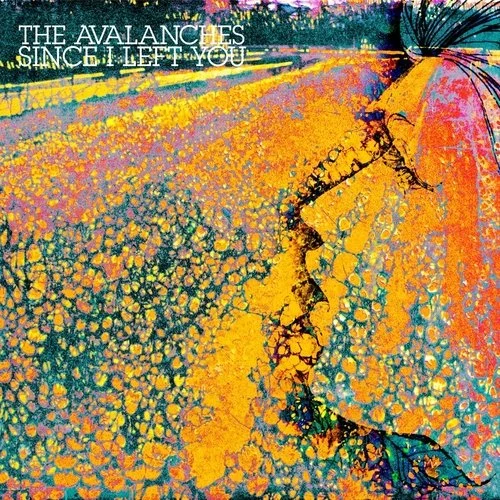
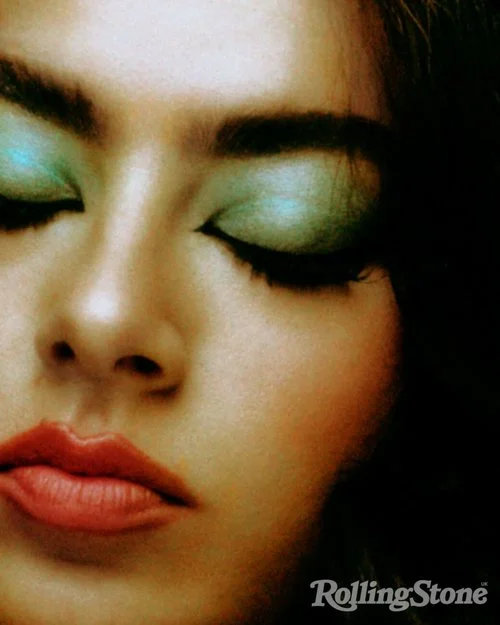
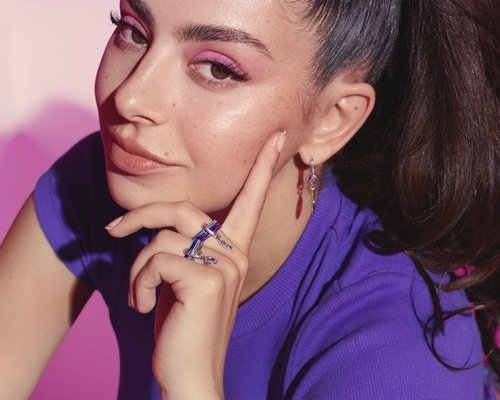
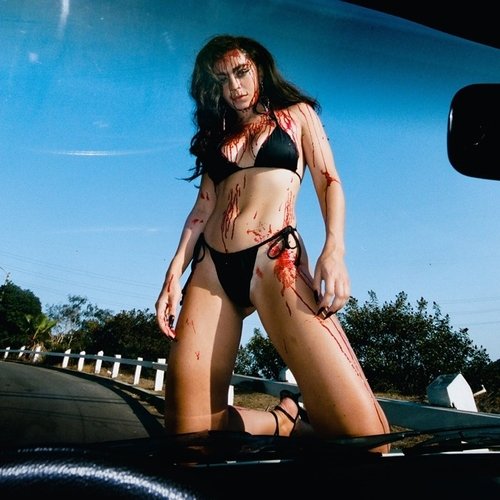
I feature artists that are very new or starting to come through. Alice Glass is a Canadian singer and songwriter. She is the co-founder and former frontwoman of the Electronic band Crystal Castles. She began her solo career in 2014. Her debut solo album, PREY//IV, came out last month. That is the reason why I wanted to highlight her. Such a remarkable artist whose recent interviews have revealed the personal pain and experiences she put into an extraordinary album, I wanted to proffer the brilliance of Alice Glass’ music. One of the most honest and exceptional artists of her time, the release of her debut album confirms Glass as a mesmeric artist who is going to be an icon. I know her story, songs and words have helped and supported a lot of other people. I want to source a few interviews later on. Before that, I have been looking at the interviews Glass conducted around the release of PREY//IV. DIY spoke with Alice Glass last month. She discussed her new work, in addition to her complicated feelings regarding nostalgia:  

For anyone who grew up in the noughties, it goes without saying that Alice Glass has long been a star. A microcosm of the fucked-up Tumblr cool that capitivated young millennials, she was an icon of the Skins generation, topping cool lists and raising awe for her whiskey-chugging, stage-diving antics. It’s painful to realise that she was merely a teenager herself, joining Crystal Castles at the age of 15 and instantly coerced into the fabrication of ‘enigmatic’ PR folklore.

“There was that whole thing of, ‘Oh, it was a mic test’,” she says, recalling the infamous origin story of her ‘Alice Practice’ vocals. “No, it wasn’t. Everything was an allegory; how we met reading to the blind and all this fucking bullshit. None of it matched up; how could I be this fucking feral creature but also be playing hundreds of shows a year all over the world? It just didn’t make any sense. It was hard to keep up, so it was easier to back down.”

The more her ‘damaged’ onstage persona was praised, the further Alice retreated. “When I was crowd surfing, I wasn’t trying to, like, be hype and have fun,” she nods. “Honestly, it was more that I was a bit suicidal that whole time, and it was like, fuck it. If anybody wants to… I don’t know. That was my mentality.” Like a feeling of having nothing to lose, we suggest? “Yeah, exactly. I mean, I was around a bunch of dudes that were all like, at least 10 years older than me, where everybody treats me in a really weird way. It was not very pleasant.”

With the internet abuzz with a so-called ‘indie sleaze’ revival, Alice’s own feelings of nostalgia are understandably complicated, but she remains proud of the musical contributions she made to Crystal Castles and her subsequent growth since. Though ‘PREY//IV’ definitely makes use of the cathartically-dark narrative and ethereal electronics with which she has become well known, a distinct melodic knack shines through her newly-undistorted vocal, breaking down the notion of any ultra-hip pop snobbery.

“Definitely not!” she laughs. “I just did this radio show where I played a Babyshambles song, ‘Fuck Forever’, which I’ve loved for years. I really like Ariana Grande too, the vocal tone on some of her songs. I don’t really like major chord music, you know? Nothing too happy. But the perfect mix is despair, sprinkle a bit of hope in the chorus, and then back to despair again.”

Nowhere does hope hit harder than on recent single ‘FAIR GAME’. Working closely with Jupiter Keyes (previously of HEALTH), she uses spiky synths to reclaim manipulative sentiments once aimed at her by Kath (“Where would you be without me / I’m just trying to help you”), stating them slowly in order to remove their sting. “It sounds silly now, but when I first left and started to talk to a therapist, she said that he treated me as if I was in a cult,” says Alice. “You stay in a situation like that because your self esteem is crushed, but then ironically, the only thing that could make me feel like I was worth anything was writing music and performing. I didn’t think I was going to put it out at all, but Jupe was like no, you should. It was SOPHIE’s favourite song too; SOPHIE was going to remix it. I wanted to do it in respect for her.”

Given Alice’s previous brushes with online trolls, her nervousness was more than understandable, but the response was overwhelmingly kind. “People started writing me back; people who had been gaslit by similar phrases and could relate to it. So now it’s like that song doesn’t really belong to me anymore. And it feels good”.

This Spotlight feature is a chance to highlight an artist who is adored and an astonishing talent. I will return to rising artists soon enough, but I have not featured Alice Glass before. Looking at DORK’s interview, we learn about Glass’ transition from her former band, Crystal Castles, and her experiences leading up to PREY//IV:

Even a decade and a half from her first introduction, Alice Glass might well still be one of the most iconic characters in music. Since she left Crystal Castles in 2014, she’s kept a relatively low profile with a solo EP, sporadic single releases and a burgeoning career as a DJ. This slight step back from the alt-pop spotlight is understandable, though.

After leaving the band, Alice revealed the abuse she experienced while in the group. That part of her life was traumatic and harrowing and inspired her creative and artistic rebirth as a fully-fledged solo star on her debut album ‘PREY//IV’. Happy and creatively energised living in LA, re-emerging into the spotlight is an experience fraught with both excitement and trepidation. “I’m excited and nervous because this is the most personal piece of art that I’ve ever released,” she explains. “I’m nervous about expressing myself for maybe the first time as an artist.”

The last six years have been a period of self-care and self-reflection for Alice. “It’s been intense,” she reflects. “When I started in that band, I left high school. It was like going from not having your frontal lobe developed to being an adult and being in a fucked up situation where you have to start from scratch. I’m lucky that I can pay for a psychiatrist. I’ve been doing a lot of self-help work. I’ve been medicated.”

Moving to LA and finding new friends and collaborators – like the producer Jupiter Io who she worked with on the album – was a catalyst for a new brighter period in her life. “I didn’t really have a circle of people that I trusted, let alone have a group of artists that I trust. It’s been another world to be in LA. Just to have peers and friends who are doing things that are really inspiring. Being able to trust other artists and feel comfortable and confident, like you belong. That’s been really life-changing for me.”

The album she has created is a staggering achievement. Immensely powerful and with a pulsing dark heart, it’s electro-pop full of hooks and memorable bangers, but with a starkly compelling emotional tension. The songs are predominately Alice’s reflection on a bleak time in her life – at once both sad and invigorating but always vital. “I wanted to make sure it meant something to me,” she reveals. “I’ve been writing music this whole time, but I’ve felt the pressure to have a record speak for my experience, rather than having songs and singles here and there that I was working on at the time. I wanted this record to be a statement.”

As she talked more about her experiences, she realised that putting these feelings and emotions into one body of work felt necessary. Frustratingly though, she still had to deal with extricating herself from her past. “I was dealing with things that just kept on happening,” she explains. “It wasn’t like leaving the band, and that was it. It was an intense hurricane of lawsuits and online harassment. There was always seemingly something that would put me back in time and make things harder. I had more to write about then. I think I started talking more about what had happened, and I started to get a lot of messages personally. I never really talked to a lot of survivors and people like me because I was so isolated. It was eye-opening to see that I wasn’t alone and how frequently it happens to all types of people who can find themselves in shitty abusive relationships. Seeing how common this is made me want to put the record out more, and not just for my own artistic reasons. I wanted to have something to comfort people with”.

The album’s title – ‘PREY//IV’ – exemplifies the power imbalances that Alice has previously experienced. Unfortunately, no matter how many progressive steps have been made, they’re also still horrifyingly present today. “Young women are not going to be predators in this cultural ecosystem,” she explains. “They’ve always been told that there are predators and prey, but you can choose to be a predator, and you can choose to stop whenever you want, but you can’t choose to stop being prey. For some people, that’s how they’ll always see you. You might not even realise that you’re being preyed on.”.

The juxtaposition between dancefloor ecstasy and crushing emotion is at the heart of the record. “I really like writing melodies that seem like they’re happy, but once you get deeper and they get stuck in your head, it’s actually pretty dark. I’ve always loved Jupiter’s production. He has an ability to make sounds sound really sad,” she says. “I definitely like sad music, but I don’t listen to it all the time. I like to dance when I’m sad”.

There have been a lot of positive reviews for the Canadian artist’s debut solo artist. PREY/IV is one of the most powerful and important albums of this year. This is what DIY wrote in their review:

Haunted music box twinkles; punishing industrial throbs; glitching, limit-pushing electronics. Before you even begin to dissect the lyrical content (not-so-spoiler alert: it’s bleak) of Alice Glass’ solo debut, there’s little that makes for easy or comfortable listening within the claustrophobic, unsettling world of ‘PREY//IV’. It should come as little surprise both to fans of her work in Crystal Castles - the early ‘10s flag-bearers of the ‘indie sleaze’ era that’s found itself somehow back in the cultural lexicon - and of those who’ve followed her story since leaving the group in 2014, later accusing bandmate Ethan Kath of continued sexual, physical and mental abuse. ‘PREY//IV’ does not shy away from Alice’s story; instead, its imagery is violent and visceral, with portraits of isolation (‘PINNED BENEATH LIMBS’) and self harm (‘BABY TEETH’) riddled throughout an album defined by a sort of constant itchiness, a wish to rid itself of trauma by occupying it so fully. Much has already been made of the lyrics to ‘FAIR GAME’, which repurpose direct quotes from Kath - “I’m so embarrassed for you / I’m so embarrassed for us”, but the scars of the relationship are to be seen all across the record. You just hope that ‘PREY//IV’ has gone some way to exorcising them”.

I guess a lot of people will compare Alice Glass’ solo work to that with Crystal Castles. Glass made a statement about the abuse she has suffered. It adds to the sense of struggle and trauma that one can hear through PREY/IV. CLASH had this to say about such a remarkable album:

It’s almost impossible to listen to Alice Glass’ solo debut without certain expectations – not only musical expectations, but personal ones, in a way that can hardly be entirely helpful even if they’re well-intentioned. In 2014, Glass left the hugely innovative group Crystal Castles which she’d formed with Ethan Kath, and three years later accused him of prolonged abuse throughout the time she’d known him. Other women came forward with similar claims, and the Toronto police confirmed in December 2017 that Kath was under investigation.

But even if those allegations had never been made public, 'PREY//IV' still clearly announces itself as an album about trauma. Over 13 tracks, Glass dissects her experiences from every angle: she sounds alternately enraged, broken, contemptuous, and often surprisingly matter of fact, marking these changes in tone with virtuosic shifts in her vocal performances. In Crystal Castles her voice was frequently semi-audible, buried under distortion and strange effects (including, famously, video game bleeps ripped from an Atari 5200). Here, though, the vocals take a front seat, exposing us not only to the extreme imagery of Glass’ lyrics but to the extreme variation of her delivery.

Nowhere is this more evident than in 'THE HUNTED', where she screams “Watch the hunter be the hunted!” before swooping down to a breathy sigh, confident and unerring. But these polarised lurches can be found all over the album, informing every decision in creatively productive ways. 'LOVE IS VIOLENCE' sets off its fat bass growls and knife-like synths with gaps of vertiginous silence; 'EVERYBODY ELSE' juxtaposes the sound of a music box with imagery of sexual violence (“Tie up my wrists like I’m nothing”); 'ANIMOSITY' doesn’t even stay put for the time it takes to sing the chorus, as Glass howls, then almost whispers, then howls again across three lines.

The effect is to draw attention not only to her voice, but to what she’s using it to say, literally or otherwise. Like Manic Street Preachers’ 'The Holy Bible' or Nick Cave’s 'Skeleton Tree', 'PREY//IV' is not simply music to listen to: it’s an attempt to communicate genuine pain in ways that simply aren’t possible through a written statement posted online. Little surprise, then, that the lyrics go for the jugular on occasion (“You taste like rotten meat”; “Are you picturing my insides outside of me?”).

However, they’re at their most effective when their visceral imagery gives way to narratives of coercion and control, as it does on 'FAIR GAME'. It’s no coincidence that 'FAIR GAME' falls slap bang in the middle of 'PREY//IV', as it's the album’s heart and ambiguous fulcrum, a withering put-down built around the question “Where would you be without me?” That question has echoes of Glass’ allegations: according to her, Kath “often told me how replaceable I was”, and “that all the people that came to our shows were only interested in his instrumentals and that I was ruining the band”. Sung by Glass, though, the words take on a new meaning. Her rebirth as a solo artist has taken almost a decade, but it shows how central she was to Crystal Castles’ success, and how little she needs anyone else to create thrilling music”.

To end, I want to source NME’s review of PREY/IV. Now, if you do not know about Alice Glass, is a time to listen to her music and learn more about an artist who has put so much of her personal experiences into her music. True art, this is an artist whose voice and words will resonate and resound for years to come. NME provided PREY/IV a very positive review:

As well as functioning as a pun, the title of Alice Glass’ debut solo album ‘PREY//IV’ is a strong statement. Continuing with the Roman numeral naming-scheme used on the three albums she released with former electroclash band Crystal Castles, it’s a clear middle finger in the direction of her ex-collaborator Ethan Kath, whom she accused of abuse and manipulation (which he denies).

Kath touted their hit ‘Alice Practice’ as having emerged from an accidental recording, arguably positioning Glass as some kind of unwitting muse, but everything she has done since leaving the band feels incredibly intentional. Though its horror-show cover seems fairly tongue-in-cheek, the relative lightness is deceptive. Pain has been made cartoonish here, and deliberately so.

Here vocals often occupy a menacing high register – see the stuttering ‘Pinning Down Limbs’ or the helium-fuelled ‘Love is Violence’, for instance – but Glass creates an intensity in other ways too. On the cavernous ‘Fair Game’, her speaking voice cuts through the industrial beats as she asks in a near-whisper: “Would you like… another pill?” It’s completely chilling.

Yet there’s deep humanity here, too: as deep as her lyrics dig into shadowy darkness, the record’s unrelenting pulse feels like a cathartic release. Many of these songs are couched in layers of rave, industrial dance and even flickers of upbeat and slightly saccharine contemporary pop (albeit twisted and gnarled pop). Often, Glass’ music recalls hyper-pop as she blends genres, drawing on everything to trap and hip-hop beats to ambient electronica. The LA-based artist’s music also has much in common with the early macabre imagery of fellow Canadians Purity Ring, who blended fairytale with body-horror on 2012 debut ‘Shrines’. “I’ll cut your tongue out your mouth,” Glass warns on ‘Suffer and Swallow’, “and wear your fingers.”

An astoundingly honest, and at times brutal, listen, ‘PREY//IV’ still ends on a note of hope. Far softer-sounding than the rest of the record, there’s a gentleness to ‘I Trusted You’. In the opening verse, Glass is mad at herself for wasting something she doesn’t specify – time, perhaps. As the song reaches a close, her words have softer edges. “I trusted you / are you mad that I wasted it?” she asks. “You know I’d rather be wasting this.”

By the time the album’s closer ‘Sorrow Ends’ – less a conventional song, more a sweeping piece of sound art – drifts off into the ether, it feels like the opening of a new door. Barely comprehensible, Glass’ voice whispers beneath its rich waves of synth, just on the brink of resurfacing”.

An utterly superb artist who will go on to release a lot of albums, this is sort of a spotlight of the start of a new chapter for Alice Glass. Having achieved so much already in her career, who knows how far this future legend will go! Whatever she does, it will be original, daring, uncompromising, spectacular and memorable. Make sure you follow and listen to the music of…

THE mesmeric Alice Glass.

_______________

Follow Alice Glass

FEATURE: An Instinctive and Experimental Producer... Inside Kate Bush’s The Dreaming

FEATURE:


An Instinctive and Experimental Producer…

IN THIS PHOTO: Kate Bush in 1982/PHOTO CREDIT: Steve Rapport 

Inside Kate Bush’s The Dreaming

___________

INSIDE the new edition…

of UNCUT, there is a great spread about the making of Kate Bush’s fourth studio album, The Dreaming. I am going to model features around various things I learned from the piece, as it is fascinating to read. As The Dreaming is forty in September, I will save most of them until nearer the time. One of the things that struck me when looking at the piece is that Bush, as a producer, was so innovative and instinctive. When Bush was playing Sat in Your Lap and beginning to shape it on piano in a small studio at 21 Denmark Street, drummer Preston Heyman noticed a resemblance to Dave Brubeck’s Take Five. He started to drum along. Instead of it hanging in the background, she asked if he could not hit the snare and cymbal. Instead, she suggested using the tom-toms. She wanted the same rhythm and groove, but she could hear that it would sound ideal on tom-toms! It was this sort of sense of taking something promising or ordinary and leading it in a different direction. This one interaction seems to define how Kate Bush approached The Dreaming as a producer and musician. Before continuing down this line – her experimentation and intuition as a pioneering and original producer -, it was clear that Bush wanted to change.

Differing from her previous albums, Bush said in interviews how The Dreaming was a step forward. It is an album that was a real statement:

After the last album, 'Never For Ever', I started writing some new songs. They were very different from anything I'd ever written before - they were much more rhythmic, and in a way, a completely new side to my music. I was using different instruments, and everything was changing; and I felt that really the best thing to do would be to make this album a real departure - make it completely different. And the only way to achieve this was to sever all the links I had had with the older stuff. The main link was engineer Jon Kelly. Everytime I was in the studio Jon was there helping me, so I felt that in order to make the stuff different enough I would have to stop working with Jon. He really wanted to keep working with me, but we discussed it and realised that it was for the best. ('The Dreaming'. Poppix (UK), Summer 1982)

Yes, it's very important for me to change. In fact, as soon as the songs began to be written, I knew that the album was going to be quite different. I'd hate it, especially now, if my albums became similar, because so much happens to me between each album - my views change quite drastically. What's nice about this album is that it's what I've always wanted to do. For instance, the Australian thing: well, I wanted to do that on the last album, but there was no time. There are quite a few ideas and things that I've had whizzing around in my head that just haven't been put down. I've always wanted to use more traditional influences and instruments, especially the Irish ones. I suppose subconsciously I've wanted to do all this for quite some time, but I've never really had the time until now. ('The Dreaming'. Poppix (UK), Summer 1982)”.

I am not sure what it was like for her working with producer Andrew Powell on The Kick Inside and Lionheart in 1978. It is clear that, for 1980’s Never for Ever, she wanted to take more control and do things a different way. Alongside Jon Kelly, she produced an album that was more expansive, daring and forward-looking. Bush was using musicians much the way groups like Steely Dan did in the 1970s. Doing multiple takes to find that perfect sound, she was mixing her hunt and passion with new technology like the Fairlight CMI. Whilst that synthesiser/sampler played a bigger role on The Dreaming, it was being used on Never for Ever. As opposed artists and producers who would do something ordinary or commercial, I feel Bush started to build The Dreaming on the basis that it would be unlike anything that had gone before; nothing like she had ever released. Bush went from recording Sat in Your Lap and immersed herself in The Dreaming (Sat in Your Lap, released in 1981, was the album’s first single). Rather than her employing a more solid and structured band of musicians, she was using a lot more players. There was a core at work, though there were a lot of other musicians who were just playing on the odd song. Employing more accents and tones to her vocals, there was a focus and singularity too. Part of this innovation and instinctive production came from the fact Bush was leading everything.

Rather than quickly recording songs, she wanted no outside influence. Because of that, songs came together more slowly. One of the benefits of this was a dense and more layered sound. The Dreaming is never cluttered or crowded; instead, tracks unfolded and revealed new layers each listen. Aside from Bush working with musicians and coming up with fresh ideas and interesting ways of playing, she understood how something like the Fairlight CMI could be of huge sonic benefit. Peter Gabriel introduced Bush to the Fairlight CMI, and she bonded with it straight away on Never for Ever. As The Dreaming’s producer, Bush used the Fairlight CMI but never overdid things. Knowing what was needed for each song, her drive and long working hours resulted in her most exciting and thrilling songs. Creating soundscapes, sound effects and completely different worlds, she was stepping away from the three-minute Pop songs that were easier to digest and spending time making music that was much more immersive and detailed. Also compelled by Peter Gabriel (when he used it on his song, Intruder; she heard it played at the Stone Room at London’s Townhouse studio), the gated drum sound – that would become widespread from the early-1980s – was another great innovation. Buried into songs rather than dominating and smothering, it showed how smart she was as a producer. Able to identify breakthroughs and interesting sounds, she reminds me of the way George Martin produced for The Beatles.

The lack of guitars was a noticeable change from her previous albums. She was still using her long-time guitarist Brian Bath but, unlike on other albums, his playing was moulded in a new way. For instance, Bush asked him to play like a helicopter for the track, Pull Out the Pin. In fact, that was the only track he was used on for The Dreaming. He recorded parts for other songs on the album, though Bush must have felt that she wanted to go in a different direction. If her first three albums featured guitar and piano prominently, the risks she took almost eliminating guitar and upgraded (not for all of The Dreaming but most) to synthesisers and the Fairlight CMI proved how adaptable and flexible she was. Clearly understanding how, in this new decade, she needed to push her music forward and also take inspiration from different artists and areas of music, few people talk about Kate Bush’s skill and endless hard work as a producer. A further instance of Bush thinking about dynamics, studio set-up and sound came when she recorded Sat in Your Lap. Inspired by seeing Stevie Wonder in concert (following a period of writer’s block for her), she rehearsed the song at KPM. Engineer Preston Heyman was called to Townhouse in May 1981. With mics in the corner of the ceiling able to pick up sound as it circulated the Stone Room (as the mics were heavily gated). One of Bush’s gifts was recognising odd sounds or less-than-perfect takes and realise that they would work – or would sound good when everything came together.

Preston Heyman (in the UNCUT feature) said that, for Sat in Your Lap, there was something missing. He and Bush’s brother Paddy snapped garden canes. Something rhymically different that had a higher register, at one point, Heyman broke the cane and threw it on the floor. That can actually be heard in the mix. No doubt Bush heard it but left it in, knowing that it would sound beneficial in the final mix! Whereas she could be rigorous and demanding when it came to takes, ensuring each musician gave her their best performance, small errors, oddities and experiments were tolerated and featured. Few producers operate this way! Bush, as a person, is very collaborative and kind. Never a producer who only trusted her own methods and was not willing to communicate, she sought suggestions when it came to making her songs as good as they could be. Synth expert Dave Lawson delivered an Edward G. Robinson impression (think Chief Wiggum from The Simpsons for the voice) for There Goes a Tenner. A song about a crime caper was the right place for it. Even though Lawson suggested it jokingly, Bush was keen to leave it in. Bush wanted to move away from the straightforward Pop structure, so it should come as no surprise to her collaborators and musicians that she wanted to take risks and be more explorative. Inspired by musicians like Peter Gabriel and what he did on Melt (1980), Bush was receptive and nurturing of enthusiasm in the studio.

Sonically, you can feel her breaking from her past. Bush also embraced happy accidents. Bassist Jimmy Bain played on several tracks through The Dreaming (including Sat in Your Lap). The two met by chance in a corridor at the studio, and Bush invited him to play. I think there is something paternal when it came to her communal vibe. Almost adopting and fostering a wide array of musicians, she crafted this odd-but-brilliant family. As was apparent on The Dreaming’s follow-up, Hounds of Love, there seemed to be this mantra: the right instrument and the right musician. She travelled to Ireland, as she felt that a celidh band would be just right for the chorus to Night of the Swallow. She would return to Ireland for Hounds of Love (songs like Jig of Life are elevated and defined by Irish instrumentation). The literal lengths she would go to get the right people involved is another facet of her production! Kate Bush’s openness and eagerness was radiant and infectious. Think about the animal noises provided by Percy Edwards for The Dreaming’s title track. Unconventional, eccentric and very different, how many other producers were doing this?! Above everything else, it was Bush’s graft and endless working hours as a producer that led to such an accomplished album. Often in the studio until dawn, Bush was living off the occasional joint, grapes and tea to get through the long hours (her diet was overhauled before she started working on Hounds of Love). Knowing what she wanted, she had say over which monitors and tape decks were in the studio. Preferring the JBL 4350 monitors over the UREI 813 (the former provided better top-end sound), this was a producer who knew the kit and technology. Having learned a lot from her first three albums, she was not going to leave anything to chance!

If Bush building her own studio for Hounds of Love was a reacting to utilising multiple studios and being all over London for The Dreaming, having different spaces benefitted the album. She worked at all three of Abbey Road’s studios. Recording vocals in different booths, rooms and a canteen, one can feel the influence of The Dreaming on an artist like Björk. She recorded the vocal for There's More to Life Than This (from 1993’s Debut) live at the Milk Bar Toilets in London! Whilst a costly process, taking advantage of studios and the potential to capture unique sounds and takes adds so much to The Dreaming. Bush sung a vocal on Leave It Open backwards and then reversed it on the tape. That created a distorted vocal sound. Bush used her father’s tape machine as a child and taught herself how to sing backwards! When the strings were being arranged for Houdini (one section arranged by The Kick Inside’s producer Andrew Powell, another by Dave Lawson), it was clear Bush was trying to create a mood of that era – when Harry Houdini was alive. Lawson was asked to create a picture and image of that time. Bush realised, when she made Hounds of Love, that she needed her own space as she was more and more immersing herself in the songs as a producer. As a producer on The Dreaming, she stepped into unknown territory in the pursuit of releasing something that was true to her. She gave herself license to do whatever she wanted to. No longer following the guidance of another producer, she was fearless and an incredible producer through The Dreaming. Ahead of the fortieth anniversary of The Dreaming in September, I wanted to do some features about the album. Starting with Bush’s obvious talents and innovations as a producer, it paid dividends on a remarkable album! Although The Dreaming got to number there but slipped down the album charts soon after (it slightly underperformed commercially), it is an album that has been reappraised and has connected with a lot of fans. On The Dreaming, Kate Bush showed herself to be…

ONE of the very best producers.

FEATURE: A Buyer's Guide: Part Ninety-Five: Sinéad O'Connor

FEATURE:


A Buyer's Guide

Part Ninety-Five: Sinéad O'Connor

___________

ALTHOUGH she is known as…

 PHOTO CREDIT: Donal Moloney

Shuhada Sadaqat, professionally, she is known as Sinéad O'Connor. One of the most inspiring and wonderful artists we have ever seen, her eleventh studio album, No Veteran Dies Alone, has been announced (though I am not sure when it is being released). To showcase the brilliant work of O’Connor, this A Buyer’s Guide is all about her. Before getting there, AllMusic give us some biography about an incredible artist:

Sinéad O'Connor ranked among the most distinctive and controversial pop music stars of the alternative era, the first and in many ways, the most influential of the numerous female performers whose music dominated airwaves throughout the last decade of the 20th century. Brash and outspoken -- her shaved head, angry visage, and shapeless wardrobe a direct challenge to popular culture's long-prevailing notions of femininity and sexuality -- O'Connor irrevocably altered the image of women in rock. Railing against long-standing stereotypes simply by asserting herself not as a sex object but as a serious artist, she kick-started a revolt that led the way for performers ranging from Liz Phair to Courtney Love to Alanis Morissette.

O'Connor was born in Dublin, Ireland, on December 8, 1966. Her childhood was often traumatic: her parents divorced when she was eight, and she later claimed that her mother, who was killed in a 1985 automobile accident, frequently abused her. After being expelled from Catholic school, O'Connor was arrested for shoplifting and was shuttled off to a reformatory; at the age of 15, while singing a cover of Barbra Streisand's "Evergreen" at a wedding, she was spotted by Paul Byrne, the drummer for the Irish band In Tua Nua (best known as protégés of U2). After co-writing the first In Tua Nua single, "Take My Hand," O'Connor left boarding school in order to focus on a career in music, and began performing in area coffeehouses. She later studied voice and piano at the Dublin College of Music, and supported herself delivering singing telegrams.

Upon signing a contract with Ensign Records in 1985, O'Connor relocated to London; the following year, she made her recorded debut on the soundtrack to the film Captive, appearing with U2 guitarist the Edge. After scrapping the initial tapes for her debut LP on the grounds that the production was too Celtic, she took the producer's seat herself and began re-recording the album, dubbed The Lion and the Cobra in reference to Psalm 91. The result was one of the most acclaimed debut records of 1987, with a pair of alternative radio hits in the singles "Mandinka" and "Troy." Almost from the outset of her career, however, O'Connor was a controversial media figure. In interviews following the LP's release, she defended the actions of the IRA, resulting in widespread criticism from many corners, and even burned bridges by attacking longtime supporters U2, whose music she declared "bombastic."

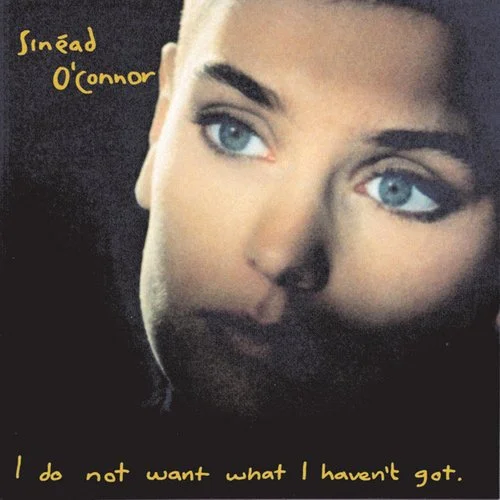
Nonetheless, O'Connor remained a cult figure prior to the release of 1990's chart-topping I Do Not Want What I Haven't Got, a harrowing masterpiece sparked by the recent dissolution of her marriage to drummer John Reynolds. Boosted by the single and video "Nothing Compares 2 U," originally penned by Prince, the album established her as a major star, but again controversy followed as tabloids took aim at her romance with Black singer Hugh Harris while continuing to attack her outspoken politics. On American shores, O'Connor also became the target of derision for refusing to perform in New Jersey if "The Star Spangled Banner" was played prior to her appearance, a move that brought public criticism from no less than Frank Sinatra, who threatened to "kick her ass." She also made headlines for pulling out of an appearance on the NBC program Saturday Night Live in response to the misogynist persona of guest host Andrew Dice Clay, and even withdrew her name from competition in the annual Grammy Awards despite four nominations.

O'Connor also continued to confound expectations with her third album, 1992's Am I Not Your Girl?, a collection of pop standards and torch songs that failed to live up to either the commercial or critical success of I Do Not Want What I Haven't Got. However, any discussion of the record's creative merits quickly became moot in the wake of her most controversial and damaging action yet: after finally appearing on Saturday Night Live, O'Connor ended her performance by ripping up a photo of Pope John Paul II, resulting in a wave of condemnation unlike any she'd previously encountered. Two weeks after the SNL performance, she appeared at a Bob Dylan tribute concert at New York's Madison Square Garden, and was promptly booed off the stage.

By then a virtual pariah, O'Connor's retirement from the music business was subsequently reported, although it was later claimed that she had merely returned to Dublin with the intent of studying opera. She kept a low profile for the next several years, starring as Ophelia in a theatrical production of Hamlet and later touring with Peter Gabriel's WOMAD festival. She also reportedly suffered a nervous breakdown and even made a half-hearted attempt at suicide. In 1994, however, O'Connor returned to pop music with the LP Universal Mother, which, despite good reviews, failed to relaunch her to superstar status. The following year, she announced that she would no longer speak to the press. The Gospel Oak EP appeared in 1997, and in mid-2000 O'Connor issued Faith and Courage, her first full-length effort in six years. Sean-Nós Nua followed two years later, and was widely hailed for its return to the Irish folk tradition as its inspiration.

O'Connor used the press exposure from the album to further assert her pending retirement from music. In September 2003, the two-disc She Who Dwells... appeared through Vanguard. It collected rare and previously unreleased studio tracks, as well as live material culled from a late-2002 date in Dublin. The album was positioned as O'Connor's swan song, though official word was not forthcoming. Collaborations followed in 2005, a compilation of appearances on other artists' records throughout her long career. Later that year, she released Throw Down Your Arms, a collection of reggae classics from the likes of Burning Spear, Peter Tosh, and Bob Marley that managed to reach the number four spot on Billboard's Top Reggae Albums chart. O'Connor returned to the studio the following year to begin work on her first album of all-new material since Faith and Courage. The resulting Theology, inspired by the complexities of the world post-9/11, was released in 2007 through Koch Records on the artist's own imprint, That's Why There's Chocolate & Vanilla.

O'Connor's ninth studio album, 2012's How About I Be Me (And You Be You)?, tackled familiar subjects like sexuality, religion, hope, and despair, all of which were topics that dominated her post-Theology personal and public life. After a relatively quiet period, O'Connor found herself once again embroiled in controversy in 2013 after a personal dispute with singer Miley Cyrus, whom O'Connor wrote an open letter to warning her of exploitation and the dangers of the music industry. Cyrus also responded with an open letter, which seemed to mock the Irish singer's documented mental health issues. O'Connor's tenth album, I'm Not Bossy, I'm the Boss appeared in August 2014. Inspired by Lean In's female empowerment campaign "Ban Bossy," the set was a rock-oriented and melodious affair as heard on the lead single "Take Me to the Church”.

As we await a new album from the magnificent Sinéad O'Connor, have a listen back to her amazing back catalogue. I have recommended the four albums you need to own, one that is underrated and worth a listen, her latest studio album, in addition to a book related to her. This is the lowdown about…

ONE of music’s finest.

_______________

The Four Essential Albums


The Lion and the Cobra

Release Date: 4th November, 1987

Labels: Ensign/Chrysalis

Producers: Sinéad O'Connor/Kevin Moloney

Standout Tracks: Jerusalem/Troy/I Want Your (Hands on Me)

Buy: https://www.discogs.com/sell/list?master_id=51566&ev=mb

Stream: https://open.spotify.com/album/60gQ6EG1JFQWWUcasx7wKc?si=HzAVxjs2SROS3naV6VQjSQ

Review:

The Lion and the Cobra, like all of O’Connor’s albums, requires active participation: a listener on the edge of their seat, a hand near the volume knob, a constant feeling of unease. O’Connor has confessed to furnishing the Irish mountaintop home where she lives alone with “deliberately” uncomfortable chairs: “I don’t like people staying long.” Her albums take a similar approach. They seem to peak with negative space. Even at her most accessible, O’Connor wants you to hear the way she summons this music from the dark, quiet places where it has been buried; it floods and calms and stretches beyond our sight, like the sky after a storm.

In songs like “Mandinka” and “Jerusalem,” the magic is in the interplay between O’Connor’s voice and the bed of cavernous rock music: how she stretches the titles into one-word choruses, weaving the syllables through their knotty arrangements. In the refrain of “Mandinka,” a song about a young woman refusing tradition, the guitar riff rises and falls as drum rolls echo in the right and left channel. Even with these flourishes, her voice, double-tracked and coated in reverb, is the center of everything. The song is delivered like a miniature symphony. You can sing along with every little moment, each placed just so in the soundfield.

O’Connor never considered herself a pop artist, but she immediately had a knack for getting in people’s heads. Before she broke through with a ghostly rendition of Prince’s “Nothing Compares 2 U,” she sought a different thrill in The Lion and the Cobra’s “I Want Your (Hands on Me).” It’s her rare song that feels modeled after hits of the era, an early attempt at blending her blunt-force, hip-hop influence with gentler melodic gifts. At the time, she called it a “tongue in cheek song about sex,” and it would eventually receive a dance remix with a verse from MC Lyte about how, despite the seduction in its title, “When I say no, yo, I mean no.” The hook feels almost preverbal as she finds ways to subvert the directness: “Put ’em on, put ’em on, put ’em on me,” O’Connor sings until the words bleed into the rhythm.

These simple pleasures exist in a different universe than “Troy,” a dark, ambitious ballad with lyrics ranging from Yeats allusion to dragon-killing fantasy, breathless apology to full-throated rage. On the album, her words are backed by a string section responding to each shift in her inflection. In concert, she would sing it with just a 12-string guitar, her voice trembling then crashing like something heavy dropped suddenly from above. It is one of the only songs on the album she admitted to being autobiographical at the time. The lyrics were addressed in part to her abusive mother who died in a car crash when O’Connor was 19, but who would haunt her life and work long after. “I couldn’t admit it was her I was angry at,” she would later reflect, “so I took it out on the world” – Pitchfork

Choice Cut: Mandinka

I Do Not Want What I Haven't Got

Release Date: 20th March, 1990

Labels: Ensign/Chrysalis

Producers: Nellee Hooper/Sinéad O'Connor

Standout Tracks: I Am Stretched on Your Grave/The Emperor's New Clothes/Jump in the River

Buy: https://www.discogs.com/sell/list?master_id=51591&ev=mb

Stream: https://open.spotify.com/album/34hQFIwGTLf03BZQmGL0iy?si=mMmyuuy2TiCJF4DX_eRKMw

Review:

Second albums — especially much-anticipated second albums — are a well-known jinx. And so after her debut two years ago with the sometimes lush, sometimes hard- rocking The Lion and the Cobra, Sinead O’Connor might have given us almost anything. A pop album, a rock album, an impossibly mannered album — anything.

Instead, it’s as if she tore her skin off. ”God grant me the serenity to accept the things I cannot change,” she mutters at the beginning over sober strings, intoning a prayer that serves — however O’Connor might have found it — as a credo for people in 12-step programs. But she sounds tense. Maybe God hasn’t granted her that serenity yet.

Strings keep cropping up on the album, as they did on The Lion and the Cobra. There they sounded passionate; here they seem spiritual, like a musical halo or a continuing prayer.

But then there are songs without strings, songs that blow on a rock & roll wind, even a denunciation of British racism called ”Black Boys on Mopeds,” which balances mainly on a single acoustic guitar. And of course there’s O’Connor’s voice, which, despite widespread amazement at its range and strength, is in no way dependable. It pales and cracks. And through those cracks pours truth, as if O’Connor were strong enough not to be afraid to let herself break.

She sings several songs about how to carry on after losing love, among them the album’s first single, a song written by Prince called ”Nothing Compares 2 U.” But mostly she sings about her quest for serenity. That quest gives the album a large-scale arc, in which the prayer at the start is answered at the end by the title song, ”I Do Not Want What I Haven’t Got.” This O’Connor sings unaccompanied, letting her philosophy, like her voice, stand before us naked. It’s not a polished or nuanced philosophy (O’Connor is only 23), but she does sound as though she earned it, not just picked it up from an inspirational book.

Astounding things happen. There’s one song luridly titled ”I Am Stretched Out on Your Grave.” It’s not the horror-film scenario you might expect; instead, it’s almost like an ancient romance, in which a woman won’t be separated from her lover even by death. O’Connor intones it over a stark but absolutely unexpected accompaniment: a bare-bones dance track, clattered out on what sounds like a drum machine. The result is like a marriage of the 14th and 21st centuries, ancient myth played out against a backdrop of urban decay.

In this way, O’Connor transforms pop-music styles, never doing quite what you’d expect. But will she wander outside pop and fall into clichés in styles she doesn’t know as well? There’s a distantly secondhand smell, for example, in the quasi-classical way she uses strings. But let her confront that danger later. This album continues a journey into unexplored country, a journey whose end I wouldn’t dare try to predict. A” – Entertainment Weekly

Choice Cut: Nothing Compares 2 U

Universal Mother

Release Date: 13th September, 1994

Labels: Ensign/Chrysalis

Producers: Sinéad O'Connor/John Reynolds/Tim Simenon/Phil Coulter

Standout Tracks: My Darling Child/Famine/Thank You for Hearing Me

Buy: https://www.discogs.com/sell/list?master_id=51634&ev=mb

Stream: https://open.spotify.com/album/0zQllKtOtx3i7QFccbAWvL?si=TvTnxbDlQaO7CfpMy9FI0w

Review:

It seems that when pop stars address their own family sagas, they turn to the pop psychology of their times: John Lennon screamed ”Mother!” primal-therapy- style in the ’70s. Now Sinead O’Connor exorcises her inner child on her latest, most reflective album, Universal Mother (Chrysalis). Interweaving meditations on her late mother and her own maternity, O’Connor finds metaphors for religion, reproductive rights, and even the infantilization of Ireland. In the album’s opening, she cleverly probes the contradiction between mother- worshiping and mother-blaming: An excerpt from a speech by Germaine Greer calling on women to change government by finding the ”trick of cooperation” is answered with ”Fire on Babylon,” a song that screams ”What about Margaret Thatcher!” without ever mentioning her name. As usual, O’Connor is uncompromising when on the attack-she has the zeal of religious fervor behind her-although she’s primarily interested in healing and love. ”Fire on Babylon” has flashes of passion, and ”Famine” is an assured rap, but these songs are mostly soft and small; a few are actual lullabies. Happily, her voice is emerging from effects-land, although its tremulous quality still sounds overdone. B+” – Entertainment Weekly

Choice Cut: Fire on Babylon

How About I Be Me (and You Be You)?

Release Date: 20th February, 2012

Label: Shamrock Solutions Republic of Ireland

Producer: John Reynolds

Standout Tracks: Reason with Me/Queen of Denmark/I Had a Baby

Buy: https://www.discogs.com/sell/list?master_id=412190&ev=mb

Review:

Ever colourful and controversial, Sinead O'Connor returns with her ninth album, following her Twitter pleas for a partner, the marriage to a drug counsellor that was almost scuppered by a wedding-night attempt to score weed, and contemplations of suicide. Business as usual then – although the songs address love, hypocrisy and parenthood to surprisingly breezy, even humourous effect, that unscathed stark, crystal voice notwithstanding. The sublime Reason With Me sees her adopt the character of a junkie pleading for redemption, but the album's most startling moments come when the 45-year-old lays herself wide open. Take Off Your Shoes lambasts the Catholic church paedophilia scandal with scathing vigour ("I bleed the blood of Jesus over you"). Very Far from Home is a serene, touching confession of vulnerability. Elsewhere, V.I.P. skewers celebrity culture, materialism, MTV and (surely) Bono in one mighty, pious rage; Old Lady is pure pop, and John Grant's savagely funny Queen of Denmark could have been written for her. The album is a tuneful emotional rollercoaster, and it's thrilling to hear such vitriol and indignation – qualities in short supply in current pop” – The Guardian

Choice Cut: Take Off Your Shoes

The Underrated Gem


Am I Not Your Girl?

Release Date: 22nd September, 1992

Labels: Ensign/Chrysalis

Producers: Phil Ramone/Sinéad O'Connor

Standout Tracks: Bewitched, Bothered and Bewildered/Don't Cry for Me Argentina/Gloomy Sunday

Buy: https://www.discogs.com/sell/list?master_id=51619&ev=mb

Stream: https://open.spotify.com/album/1186Oo3LkL5tauDVEemxGU?si=mWyoeteuRmKrM2ZhQjVNRw  

Review:

Based on Sinéad O'Connor's version of "You Do Something to Me" (a highlight on the Red Hot + Blue album), an album of pop standards performed with a big band might have actually worked. At times, such as on "Success Has Made a Failure of Our Home" and "Don't Cry for Me Argentina," Am I Not Your Girl? does work. However, O'Connor runs into trouble with acknowledged standards and songs heavily identified with other vocalists. She doesn't offer a new perspective on these songs, and her airy voice is buried by overwrought string arrangements. Plus, there's O'Connor's bizarre two-minute rant on love, hatred, herself, and the Catholic Church” – AllMusic

Choice Cut: Success Has Made a Failure of Our Home

The Latest Album


I'm Not Bossy, I'm the Boss

Release Date: 11th August, 2014

Label: Nettwerk

Producer: John Reynolds

Standout Tracks: How About I Be Me/Your Green Jacket/8 Good Reasons

Buy: https://www.discogs.com/sell/list?master_id=718722&ev=mb

Stream: https://open.spotify.com/album/6Fhg99Hdf8ycurebhHq0WD?si=iuWRGckCQ76b8t8c4TnCvg

Review:

Look no further than the title and striking cover photo of Sinead O’Connor’s tenth studio release to understand that this is a remake/remodel.  When she opens the disc with the declaration “I wanna make love like a real full woman, everyday” in a dusky, husky, lioness voice then shifts up a few octaves to continue “I’ve got to find what I’m dreaming of,” it’s clear that the singer-songwriter, never shy to begin with, has hit a feisty, middle aged, sensual I-want-your-hands-on-me swagger.

O’Connor is also upping the volume, even heading into blues rock territory with the crushing, nightmarish “The Voice Of My Doctor” and the swampy “Kisses Like Mine.” She gets Afro-funky and invites Fela’s son Seun Kuti for the groove-a-thon rhythm of “James Brown,” arguably the most fun track she’s done. Her voice has taken on a deeper hue but remains instantly recognizable.

One spin of the mid-tempo “Your Green Jacket” where she smells her boyfriend’s titular coat and wishes her nose was buried in her lover instead will convince even doubters that O’Connor remains one of the most talented and distinctive singers of her generation. Occasionally, as on the album’s first single “Take Me to Church” (“I’ve done so many bad things it hurts”), the old anger takes over, amping up the drama over a throbbing beat. The album’s two ballads, “Harbour” which morphs from a gentle first third to a raucous end, and the closing, piano based “Streetcars” spotlight the shape shifting vocal dynamics that have always been O’Connor’s most striking attributes.  On “8 Good Reasons” she slides from a subtle whisper to a defiant roar as she rails against the industry that both gave her fame and took her down (“you know I love to make music/but my head got wrecked by the business”) with honesty and a bit of reflective introspection.

While O’Connor never really went anywhere, this self-assured and confident release feels like a comeback. It has elements of what made her so strong and startling back on her still dynamic 1987 debut but tempered and matured with the wisdom of a quarter century of experience” – American Songwriter

Choice Cut: Take Me to Church

The Sinéad O'Connor Book


Rememberings

Author: Sinéad O'Connor

Publication Date: 1st June, 2021

Publisher: Penguin Books Ltd

Synopsis:

Outspoken, provocative and enormously talented, singer Sinead O’ Connor has lived her life very much on her own terms and, in this forthright and considered memoir, she reveals all about stardom, motherhood and calling out hypocrisy.

The landmark memoir of a global music icon.

Sinead O'Connor's voice and trademark shaved head made her famous by the age of twenty-one. Her recording of Prince's 'Nothing Compares 2 U' made her a global icon. She outraged millions when she tore up a photograph of Pope John Paul II on American television. O'Connor was unapologetic and impossible to ignore, calling out hypocrisy wherever she saw it. She has remained that way for three decades.

Now, in Rememberings, O'Connor tells her story - the heartache of growing up in a family falling apart; her early forays into the Dublin music scene; her adventures and misadventures in the world of sex, drugs and rock'n'roll; the fulfilment of being a mother; her ongoing spiritual quest - and through it all, her abiding passion for music.

Rememberings is intimate, replete with candid anecdotes and full of hard-won insights. It is a unique and remarkable chronicle by a unique and remarkable artist” – Waterstones.co.uk

Order: https://www.waterstones.com/book/rememberings/sinead-oconnor/9781844885411

FEATURE: Second Spin: Metronomy - Love Letters

FEATURE:


Second Spin

Metronomy - Love Letters

___________

NOT that this album is necessarily underrated…

but I feel it does not get the credit and love that other Metronomy albums have. Love Letters, the band’s fifth studio album, followed The English Riviera of 2011. Their 2014 album is full of brilliant material. I especially love the title track and its ABBA sound. Elsewhere, I'm Aquarius, Reservoir and Month of Sundays provide natural and instant highlights. The band’s latest album, Small World, arrived last month. Looking back at Metronomy’s discography, and I feel all of their albums deserve slightly better than the overall critical reception. Most of the feedback is positive, though I feel albums like Love Letters are not played enough. I have heard the title track on the radio a bit, yet there is so much more on the album to enjoy. Produced by the band’s lead Joe Mount and recorded at London’s Toe Rag, Love Letters is a brilliant album that is worth a revisit. With great performances from the entire band (Olugbenga Adelekan – bass, Anna Prior – drums, Michael Lovett – keyboards and Oscar Cash – piano, keyboards; special props to Anna Prior) and some of Metronomy’s best material, Love Letters is worthy of some fresh evaluation. Away from some more mixed reviews (the sort of three-star range), there was positivity and appreciation for a great album from a band who are among our very best. There was a feeling from the band (Mount especially) that Love Letters could be the last; maybe a couple of other albums. As it stands, Metronomy have released three more albums and show no signs of slowing!

I will get to a couple of great reviews for the excellent Love Letters. Before that, I want to reference an interview from The Guardian in 2014. It is interesting hearing Joe Mount (he was interviewed solo) feel Love Letters lacked commercial appeal. The title track especially is very accessible and has a commercial edge, without it being mainstream or straying from the band’s formula and distinct sound:

People think Love Letters is going to be a big hit but Mount seems blithely indifferent to its commercial chances. On the one hand, he notes, Metronomy played some US arena gigs supporting Coldplay, which came as something of a surprise, given that Mount had publicly expressed his dislike of Coldplay's music ("I think we have to appreciate that Chris and the boys, they've got bigger fish to fry than trawling through our old interviews," he says now), but nevertheless gave Mount an opportunity to watch one of the biggest bands in the world up close.

He thinks there are "moments in the new songs that could accidentally turn into rousing stadium moments, although that was the furthest thing from my mind when I was doing them". On the other, as he points out, "if there had been traditonal music industry pressure to make a big followup, I would have gone into a big studio with [U2 producer] Flood and spent a lot of money recording a very polished kind of radio album, and I did the exact opposite of that."

Instead, Metronomy decamped to East London's famously retro Toe Rag Studios, famed for turning out garage rock records – not least the White Stripes' Elephant – and whose owner, Liam Watson, seemed initially nonplussed by Mount turning up with synthesisers and drum machines: "He was taking us around sort of saying: 'You're going to hate it here.'"

There are plenty of fantastic songs on Love Letters, but it doesn't sound much like The English Riviera's attempt to imagine a genre of music that had grown up in isolation in Torquay – which turned out to be a very English take on Steely Dan's ultra-slick brand of rock – instead offering something influenced by psychedelia and Sly Stone's experiments with a primitive drum machine. But then again, Metronomy's fans have presumably got used to Mount taking sudden left turns: you could never accuse him of having stuck doggedly to a musical blueprint.

He says he always thinks every Metronomy album is going to be their last. "I imagine that one day I will stop doing this and be a producer, I can see that. But with every record, I'm always surprised by the reality of the situation. With every record, I'm so surprised by how viable being a musician is, that I'm like, well, I can put off this idea that I have to become a producer."

But then, he says, Metronomy's recent success has caused him to revise that kind of thinking. "Yeah, I now think I've probably got two more albums left in me," he smiles. "We'll see”.

I want to move on to some love for Love Letters. To show that it is an album that got its share of acclaim. Almost eight years to the day it was released (10th March), it is an album that I am still listening to and being amazed by. This is what AllMusic noted in their review of Metronomy’s Love Letters:

Given the critical and commercial success of The English Riviera, Metronomy could have easily spent another album or two expanding on its polished, erudite pop. However, they're too mercurial a band to do the obvious thing. On Love Letters, they abandon their previous album's sleek precision for fuzzy analog charm. Metronomy recorded the album at London's Toe Rag studio, a fixture of British indie rock, and Joe Mount and company imbue these songs with the room's warmth and intimacy. Musically and emotionally, Love Letters is rawer than what came before it, trading breezy synth pop for insistent psych-rock and soul influences. The main carryover from The English Riviera is the increasing sophistication, and melancholy, in Mount's songwriting. Previously, his best songs were playful and ever so slightly emotional; on Love Letters, he flips this formula, penning songs filled with lost love, regrets, and just enough wit to sting. The album opens with three striking portraits of heartbreak: "The Upsetter" equals its distance with its urgency, capping it all with an achingly gorgeous guitar solo.

"I'm Aquarius" traces the fallout of a star-crossed relationship impressionistically, with girl group-style "shoop doop"s almost overpowering Mount's reasons why it didn't work ("you're a novice/I'm a tourist"), as if memories of his ex crowd out everything else. "Monstrous" turns Metronomy's signature jaunty keyboards Baroque and paranoid, with a doomy organ that closes in when Mount sings "hold on tight to everything you love," and a counterpoint that captures the way loneliness and heartbreak circle each other. These songs set the stage perfectly for the desperate romance of "Love Letters" itself, which updates punchy, late-'60s Motown drama so well that it's easy to imagine the Four Tops singing it. Here and on "Month of Sundays"'s acid rock vistas, Metronomy's nods to the past feel more like footnotes than following too closely in anyone's footsteps. However, they sound more comfortable with their own quirks as well, giving more muscle to "Boy Racers" than their previous instrumentals, and more depth to "Reservoir," which is the closest it gets to a typical Metronomy song (if there is such a thing anymore). Confessional and insular, Love Letters is the work of a band willing to take pop success on their own terms and reveal a different -- but just as appealing -- side of their artistry in the process”.

I will round up very soon. NME’s review is interesting. I hadn’t noticed before but, when we think of an album and its sound, how many mention the studios!? Toe Rag is a studio that deals with older, more basic equipment – so music recorded there has a more stripped sound. The analogue sound might work for a lot of bands, but was everyone prepared for this from Metronomy? NME explain how a more lived-in sound pays off the more you listen:

When last we saw Metronomy, they were strolling rakishly into the golden light of a Torbay sunset, a Mercury nomination in their back pocket and sales of their third album racking up like rows of cherries on a one-armed-bandit slot machine. The success of 'The English Riviera' could hardly have happened to a more deserving band, but anyone expecting ‘Love Letters’ to pick up where its predecessor’s tongue-in-cheek vision of seaside glamour left off will be disappointed. "Back out on the riviera, it gets so cold at night", yelps a forlorn-sounding Joseph Mount on opener 'The Upsetter', a song that drops references to early-’90s cultural touchstones like Tasmin Archer, Whitney Houston and Robin Hood: Prince of Thieves, but whose droning atmosphere of dislocation and anxiety has more in common with David Bowie’s 'Space Oddity' than Archer’s 'Sleeping Satellite'. By the time the ghostly 'Never Wanted' brings things to a close, 40 too-brief minutes later, it's impossible not to picture tumbleweed blowing down a derelict promenade, past stacks of weather-beaten deck chairs, shuttered-up bars and empty arcades. The inference is clear: welcome to the off-season.

Where a more craven artist might have sought to cash in on a sleeper hit like 'The English Riviera' with a big, populist follow-up, Mount has returned with a small, unashamedly personal one, made with an auteur’s ear for detail and disregard for expectation. It's an album about yearning to return to the things you've been dragged away from, be they the landmarks of your childhood (the quaint casiotone melancholy of 'Reservoir') or your children themselves ("Honestly, it's all I'm thinking of", sings a distracted Mount of his baby son on 'Monstrous'). You'll find nothing here as immediate or accessible as 'The Bay', and even among those who were predisposed to love them, the album's first two singles have polarised, not galvanised, opinion: the velvety future-doo-wop of 'I'm Aquarius' served as a curiously moody and minor-key introduction, while the title track came screeching in from the other extreme, as ostentatious and off-puttingly exuberant as a troupe of Redcoats jazz-handing their way through a Wings medley.

This contrarian impulse ultimately makes things more interesting, but Mount's decision to record at Toe Rag – the all-analogue Hackney studio made famous by The White Stripes and Billy Childish – imbues the songs with an archaic, lived-in feel that takes some getting used to, and you'd be forgiven for being underwhelmed by your first listen. Bear with it, however, and that feeling will turn to pleasant surprise. 'Monstrous' and 'Month of Sundays' both recall the airy baroque-pop of Arthur Lee and Love (though the latter ends up sounding like one of Yoko Ono's more angular, New Wave-y efforts), and with the exception of 'Boy Racers' – a lightweight instrumental that doesn't quite feel properly realised – every song, no matter how slight it may initially seem, serves an aesthetic purpose in the grander scheme of things.

In recent interviews, Mount has professed a certain dread about one day reaching the Wembley-conquering enormity of his old tourmates Coldplay, which – even when you take Metronomy’s growing popularity into account – sounds comically premature. ‘Love Letters’ should assuage that angst. While not a ‘difficult’ album per se, it is certainly an obdurate and insular one, whose charms are revealed coyly and across repeat listens. ‘The English Riviera’ was for the tourists; this one needs to be lived in, not just visit”.

I like the fact that Love Letters features ten tracks that run between three and five minutes. It is quite an economic album in terms of the number of songs, through the band allow the songs plenty of time and room. Recording at Toe Rag works in Love Letters’ favour. It creates this nuance that benefits repeated listens. Like love letters themselves, maybe the album does sound oldskool or lacks a modern edge. The production and sound of the album is fantastic. The title track especially sparkles and has such a sleek and glossy sound, though it also has a bit of a live feel to it. With no real weak tracks to be found, Metronomy’s Love Letters is worthy of…

A passionate spin.

FEATURE: Paul McCartney at Eighty: Paul McCartney and Me: The Interviews: Eleanor Gray

FEATURE:


Paul McCartney at Eighty

IN THIS PHOTO: Paul McCartney in 1964/PHOTO CREDIT: RA/Lebrecht Music & Arts

Paul McCartney and Me: The Interviews: Eleanor Gray

___________

CONTINUING my run…

of Paul McCartney features ahead of his eightieth birthday in June, I am interviewing some awesome people about what McCartney and his music means to them. Now, writer and podcaster Eleanor Gray provides her reaction to the documentary-film, The Beatles: Get Back (she recently appeared on Chris Shaw’s excellent podcast, I Am the Eggpod, where she talked about day eight of the documentary), what question she would ask Paul McCartney if she had the chance, what her favourite Beatles, Wings and McCartney solo albums are, and what the beloved songwriting icon means to her. It is an illuminating, passionate and detailed interview from the…

 IN THIS PHOTO: Paul and Linda McCartney in Long Island, New York in August 1995/PHOTO CREDIT: Allen Ginsberg (courtesy Stanford University Libraries/Allen Ginsberg Estate/Getty Images)

WONDERFUL Eleanor Gray.  

____________

Hi Eleanor. In the lead-up to Paul McCartney’s eightieth birthday on 18th June, I am interviewing different people about their love of his music and when they first discovered the work of a genius. When did you first discover Paul McCartney’s music? Was it a Beatles, Wings or solo album that lit that fuse?

I had unknowingly been listening to The Beatles since I was about 3 years old: Ob-La-Di, Ob-La-Da and The Continuing Story of Bungalow Bill featured on my first ever cassette mixtape, Health Hustles. That tape was a copy of one that was used for our aerobics classes at primary school. I would spend most of my childhood obsessively listening and dancing to that tape alongside other songs from Buddy Holly, ABBA, Ottawan, and the Village People. I have since discovered that the Health Hustles aerobics programme and cassette series was an Australian government initiative.

I first developed a proper interest in The Beatles as a band with The Beatles Anthology. I was 10 years old and I had already grappled with Queen fandom for about two years. My parents weren't into popular culture, so it was up to my brother to do most of the in-house education about any modern music. I'm still sometimes surprised by how little I knew about The Beatles. I remember watching the first parts of the Anthology. I can recall that I didn't like their fringes, and I couldn't tell any of them apart.

Against the odds, I got swept up in Beatlemania. I was captivated by the documentary and the breadth of the music that came out of it. More than anything, I was got into the sense of anticipation that came with new material coming out of the vault. I was gripped at the prospect of watching Free as a Bird and Real Love for the first time. I wanted to learn more about the band. Soon my brother would get the Red and Blue albums on vinyl, and I naturally gravitated towards the Blue album...

Like me, you must have been engrossed by The Beatles: Get Back on Disney+. How did it change your impression of The Beatles at that time, and specifically Paul McCartney’s role and influence on the rest of the band? Did you have any favourite moments from the three-part documentary?

There were aspects of the documentary that hit me hard on the first viewing, like George being so harsh about Don't Let Me Down or Paul zoning out when George was talking. It disrupted my own vision of a happy, harmonious Beatles, and I found it hard to register microaggressions between the band. Everyone on the Beatles Twittersphere were agog with awe and joy, and I was just feeling very sad and distressed. I came into it thinking it was difficult period and what I saw was a difficult period.

I believe Paul to be an intensely creative person, but it's another matter to see him jamming out and materialising a song out of nowhere. I really felt for Paul when he said: “To wander aimlessly is very unswinging”. It must have been hard to wrangle his band-mates, to pin them down and motivate them. If you have a similar kind of personality, where you play the motivator among the unmotivated, it can be a bit triggering to watch that dynamic manifest in a group that you love with all your heart.

I really felt for Paul when he said: To wander aimlessly is very unswinging”.

In spite of all that, there are lots of moments that I really love. There are probably too many moments to mention, like Paul asking Mal to get an anvil (cuts to next scene), and then Mal has an anvil. There's another moment where MLH (the director, Michael Lindsay-Hogg) is explaining to Mal, George Martin and others that this intrusive boom mic is designed to surreptitiously record dialogue in the middle of the room. Mal then breaks the fourth wall and broadly grins at the camera.

I also love MLH's confusing code names for the band. This is probably the most slapstick moment of the whole thing. Of course, I love all the teacups. My heart leaps for The Teatles whenever I see a teacup.

Since watching the documentary, have you listened back to Let It Be and explored it in a new way? Has your perception of the band changed since?

I listened to Let It Be Naked again, as I consider it to be the closest to the version that was originally intended in January 1969. I also listened to the new Get Back mixes, but it deviated from my expectations. I spent more time doing a wider sweep of podcasts, books and documentaries on January 1969. I think it was important for me to appreciate that Peter Jackson's film was a crafted interpretation of what happened at Twickenham and Apple. It was important for me to dispel the idea that Let It Be was fake and Get Back was the truth. These are all versions and variations of a history and it was important for me to understand the rationale behind each era of editorial decision-making.

If you had to select your favourite Beatles, Wings and McCartney albums (one each), which would they be and why?

Revolver, for the beauty, complexity and diversity of tracks. Band on the Run, for the epic orchestration and the extraordinary circumstances under which it was recorded. Egypt Station, because it reminds me of attending Paul's secret gig at Abbey Road in 2018.

Maybe an impossible question, but what does Paul McCartney, as a human and songwriting icon, personally mean to you?

I really appreciate Paul's work ethic, curiosity and sense of experimentation. His process of rolling through permutations of melodies and chord sequences particularly resonates with me, because there are no value judgements attached to anything. It's just always moving on until what feels right. It's always fascinating to hear his insights and the way which he describes his own creativity. It makes you feel as if his gift is one that is accessible to everyone. His willingness to be as open as he is, to regale us with his understanding of his own musicality is hugely inspiring to me.

I really appreciate Paul's work ethic, curiosity and sense of experimentation”.

It is difficult to say just how far and wide McCartney’s influence spans across music, culture and the world at large. If you were trying to explain to a child (or someone who had never heard of Paul McCartney) who was unaware of Paul McCartney why they should listen to his music, what would you say?

Words are unnecessary in this case. I would put on Hello Goodbye (or in my case, Ob-La-Di, Ob-La-Da) and dance with the kid. I think it's a really kind thing to be present with another person, to listen to music with someone in real time. This is why people form such attachments to songs they used to listen to in cars with their parents. I think it's a crucial way to fall in love: to spend time and be truly present with another person.

If you had the chance to interview Paul McCartney now and ask him any one question, what would that be?

I want to ask whether we could analyse some dreams he's had about John.

After a hectic and eventful 2021, I wonder what you feel McCartney will embark on in 2022 (he was recently announced as Glastonbury’s Saturday night headliner in June). Do you have any predictions regarding McCartney in 2022?

More cryptic Twitter messages! And extraordinary shows in extraordinary places.

If you could get a single gift for McCartney for his eightieth birthday, what would you get him?

I would like a bus pass so he could ride around Liverpool all day long, or perhaps a kalimba.

To end, I will round off the interview with a Macca song. It can be anything he has written or contributed to. Which song should I end with?

Got to Get You Into My Life. It has this evergreen giddiness and exuberance which makes me fall in love with him again and again.

FEATURE: Vinyl Corner: CHIC - Risqué

FEATURE:


Vinyl Corner

CHIC - Risqué

___________

FOR this Vinyl Corner…

 I wanted to feature a hugely influential CHIC album. Risqué is the third studio from the iconic Disco act. Released on 30th July, 1979, it is one of the defining albums of the Disco age. Risqué has gone on to influence artists across multiple genres. A tremendous album that boasts some of CHIC’s best songs, Risqué is an album people should get on vinyl. I want to work in a couple of reviews for a classic album. Before that, The Guardian published a feature in 2011, where Paul Lester explained why the incredible Risqué was his favourite album:

It was their anonymity – they even called themselves the Chic Organisation – that I liked. It meant I could project my own emotions on to the music. Part of the R&B continuum of behind-the-scenes professionals, Rodgers and Edwards were the Timbaland and Pharrell Williams of their day. They were amazingly prolific. In six years, they wrote and produced more than a dozen albums (for Chic and others, including Sister Sledge and Diana Ross), making a mockery of the idea of the precious artist whose every recorded utterance takes years of struggle.

Rodgers's backstory couldn't have been more "authentic", what with his mother giving birth to him at 14 and his period as a Black Panther. Not to mention the time he flatlined after narcotic overindulgence. God knows Nile 'n' Nard could have sung the blues; instead, they chose to alchemise them. Risqué is an act of sublimation: pure ethereal sorrow. Given Rodgers's past, it could have been the militant missing link between Parliament and Public Enemy rather than this, this … this what? The classically trained Rodgers has likened Chic's idiosyncratic chord structures and complex, sophisticated arrangements to early-20th century French music or jazz. Julie Burchill declared the band better than the Beatles. Just after punk, this kind of posturing provocation was rife in the music press, but it was spot-on. I bought Risqué and Revolver the same day and found the latter unlistenably thin next to the mighty Chic.

The genius of the performances was that you didn't even notice them individually. Edwards's bass creativity, Rodgers's choppy guitar and Tony Thompson's drumming were dexterous but never intruded on the song. As for the singing, there were surely more accomplished vocalists, and ones more demonstrably passionate, than Anderson and Martin, but that's why they were so great. These were object lessons in restraint.

If anything stood out, it was the strings. But the stabbing, staccato violins (Rodgers was a Bernard Herrmann fan) perfectly suited Risqué, a virtual concept album about the agony that people inflict on each other. Opener Good Times seemed positive enough but dropped lyrical barbs every few bars ("You silly fool, you can't change your fate") to signal the irony of the title. No wonder it provided the basis for a new genre whose raison d'etre was the exposition of the notion that the times were anything but good.

There was no precedent for A Warm Summer Night. Only Rose Royce's Love Don't Live Here Anymore came close to this six minutes of longing, with no hope of fulfillment. "It would be … so nice … tonight," one of the Chic girls sang, and you just knew "it" would never happen. She was alone and the gaps in the music captured her isolation. My Feet Keep Dancing, with its tap-dance interlude harking back to the Depression era, was another Chic flight from grim reality. I read it as a song about immersing yourself in hedonistic pursuits to escape the gloom of rejection: abandon as a distraction from abandonment. But that could have just been me.

On side two, My Forbidden Lover was a torrid melodrama whose lyrics were almost haiku-like in simplicity. It was a sort of companion piece to Bowie's Heroes, another song about verboten romance, although here you sense the barrier was racial not cultural. As ever, the rhythms were divine. Can't Stand to Love You was the weakest, and shortest, of the seven tracks, but it held the key to the album's theme of covert unpleasantness: "Little punk do it for me, or I'll number your days." Eat that, Costello.

Will You Cry (When You Hear This Song) was the ultimate title for the ultimate relationship swan-song/affair death-march. Ravishingly beautiful, it made heartache seem appealing, even as its cyclical pattern evoked a Dantean trudge through love's darker chambers. My favourite track on my favourite album, this was the one that contained Risqué's central premise ("love is pain"), with the further threat that "pain could be pleasure if you would have only realised." Realised what? They never said, which added to the glamour and mystery suggested by the 30s-whodunnit scene on the front cover”.

If you have not heard of CHIC’s masterpiece, Risqué, then I would advise and urge people to take a listen. It is an album that is just right for vinyl. That proper listening experience where you can feel the groove in every groove. In their review, this is what AllMusic had to say about the 1979 album:

Chic was very much in its prime when it recorded its third album, Risqué, which contained hits that ranged from "My Feet Keep Dancing" and "My Forbidden Lover" to the influential "Good Times." That feel-good manifesto is one of the first songs that comes to mind when one thinks of the disco era and the Jimmy Carter years, but Chic's popularity certainly wasn't limited to the disco crowd. The fact that "Good Times" became the foundation for both the Sugarhill Gang's "Rapper's Delight" and Queen's "Another One Bites the Dust" tells you a lot -- it underscores the fact that Chic was influencing everyone from early rappers to art rockers. A group that many rock critics were so quick to dismiss was having an impact in many different areas. From hip-hoppers to new wavers in London and Manchester, Risqué was considered primary listening. And Risqué is impressive not only because of its up-tempo cuts, but also because of slow material that includes the lush "A Warm Summer Night" and the dramatic ballad "Will You Cry (When You Hear This Song)." Risqué is definitely among Chic's essential albums”.

Ranked as one of the best albums ever by multiple sites and sources, Risqué’s standout tracks (such as Good Times) are staples. The songwriting and production from Bernard Edwards and Nile Rodgers. Is phenomenal! This is how the BBC assessed an album that stands alongside the greatest of the 1970s:

Chic’s third album, Risqué, is one of the greatest exhibits in the case for disco’s defence. Released in the summer of 1979, it was as integral to the Atlantic label as any of the great rock albums that had taken the imprint out of Black America and into the world in the late 60s. With a budget of $160,000, it was a widescreen record with widescreen ambitions.

Good Times, with its striking, repetitive strangeness, is the greatest track here. It nodded to the Great Depression, with guitarist Nile Rodgers partially recycling the lyrics to the US 1930s standard Happy Days Are Here Again. It’s a masterful song, yet smacks somewhat of a distant desperation, a robotic reminder that if you repeat a mantra of happiness long enough you may finally actually believe in it. All the component parts of Good Times continually surprise: the four-note string refrain alternating on the verse; the almost claustrophobic unison of the vocals; and then the break. Bassist Bernard Edwards’ 20-note riff drives the record forward over Tony Thompson’s crispest snare-crack. It was used on street corners throughout the world as the backing to what disco did next: hip hop

Of the album’s six other tracks, My Forbidden Lover explored the irresistible urge of the forbidden. What About Me centred on 70s selfishness. Can’t Stand to Love You was a dark vignette about sinister love ("Little punk do it for me, or I’ll number your days"), and Will You Cry (When You Hear This Song) is a painfully beautiful ballad, one of vocalist Alfa Anderson’s best performances. My Feet Keep Dancing demonstrates both Chic’s intelligence and sophistication. It underlines how dance is a celebration of life, even with the sound of vaudeville tap dancing as the ‘solo’. Only the beautiful A Warm Summer Night seems to drift by without any deeper agenda.

Risqué is an album that dwells on relationships: bleak, unrequited ones, tinged with sadism and despair; relationships with the past, and, of course, with the dance floor. As a result, it remains Chic’s most sustained artistic statement, a celebration of a 70s that was collapsing under its own excess and hedonism. Risqué is all angular veneers, thrown shapes and dark shadows – it is the disco album as a rock classic”.

An album that I think is an essential vinyl purchase, Risqué stands up and still sounds unbeatable and peerless all these years later. Seven tracks of perfection, go and seek out this remarkable album. You do not need to be a Disco or CHIC fan to appreciate this diamond. Even though Risqué is not wall to wall up-tempo, it is the more spirited moments that stand out. This is an L.P. that should be…

IN everyone’s collection.

FEATURE: Shape of You, deja vu: In Their Own Write… The Ongoing Issue of Plagiarism and Copyright Infringement in Music

FEATURE:


Shape of You, deja vu: In Their Own Write…

IN THIS PHOTO: Ed Sheeran 

The Ongoing Issue of Plagiarism and Copyright Infringement in Music

___________

IT is a tricky subject…

 IN THIS PHOTO: Olivia Rodrigo

when it comes to copyright and potential plagiarism in music. I think back to the 1980s and 1990s when Hip-Hop was in its golden age. The number of samples that artists used then was staggering! A lot of these were used without permissions. Sometimes, there were court cases and claims of copyright infringement or violation. It seemed like a time when artists had a bit more freedom and flexibility in that sense. One could argue they were reckless and taking risks. It is important that, if an artist wants to use a sample of sound from another, that they seek permission. It is expensive for artists to clear songs and samples – this impacts creativity and is a bit of a problem that needs to be addressed. There is another thing that has been prevalent in music for years. As there are so many artists now and more songs in the world than ever before, it is obvious that there will be occasions when some songs bear resemblance to others. Often, a lot of the lawsuits are made against bigger artists. Those who are potentially making a bigger profit from a hit song. I can understand why artists who feel that artist has taken from them feel aggrieved. Katy Perry was accused of plagiarism in 2014; she won her copyright claim in 2020 regarding Dark Horse and its similarities to another track. I want to come to two modern-day British Pop sensations who are in the news because of copyright claims.

 Before that, there is a U.S. teen superstar, Olivia Rodrigo, who released one of the best debut albums of the past decade with 2021’s SOUR. There were various claims that some of the songs bore resemblance to other tracks or there were hooks and parts that were very familiar. As this feature from PAPER back in October states, Rodrigo has addressed copyright and plagiarism claims:

Olivia Rodrigo is speaking out against the plagiarism accusations surrounding her work.

For the past few months, the hitmaker has faced an onslaught of criticism tied to her interpolation of everything from Elvis Costello's "Pump It Up" riff on "brutal" to Taylor Swift's "Cruel Summer" on "déjà vu." Most notably though, Rodrigo was taken to task for her use of the melody from Paramore's "Misery Business" in her No.1 song "good 4 u," even though she eventually amended the songwriting credits to include the band, as well as the credits for "déjà vu," which currently lists Swift, St. Vincent's Annie Clark and producer Jack Antonoff as contributors.

Unfortunately, the accusations are still a hot topic on social media, with many continuing to bring up the Paramore example as proof. Now though, Rodrigo has finally broken her silence on the issue by telling Teen Vogue that "nothing in music is ever new."

"There's four chords in every song. That's the fun part — trying to make that your own," she said, after telling writer P. Claire Dodson that music is "sort of a fun, beautiful sharing process," as "every single artist is inspired by artists who have come before them."

"What's so beautiful about music is that it can be so inspired by music that's come out in the past," Rodrigo said, adding that "writing songs about how I feel has always been easy and fun." But even so, the star also admitted that she's had a "harder time learning" how to handle the business side of stardom, which sometimes makes it hard to remember how much she loves songwriting.

"I've been sort of growing through that this year.... [But] I feel lucky I get to do that and be a songwriter and a performer for a living," she said, before appearing to allude to the plagiarism controversy, saying, "At the end of the day, I feel it doesn't have too much to do with me."

However, Rodrigo said the allegations were still "disappointing" to her, since she believed people were taking "things out of context" in an effort to "discredit any young woman's work." And in a similar vein, she also called out the way young women in the industry are disproportionately pressured into having a spotless reputation

After all, as Rodrigo explained, "It's really toxic for young girls to open their Snapchat app and see the articles about young women who are just sharing their art and existing in the world, and watching them being torn apart for doing absolutely nothing."

Nevertheless, she went on to add that she's still "just really proud and happy to say that my job is being a songwriter" as she reiterated that "all music is inspired by each other."

"Obviously, I write all of my lyrics from my heart and my life first," Rodrigo said. "I came up with the lyrics and the melody for 'good 4 u' one morning in the shower”.

I do think that there needs to be guidelines and limitations when it comes to legal cases. It seems that a lot of the claims and cases are brought about on the flimsiest of evidence! The successful cases of the likes of Perry and Rodrigo not only show how there needs to be definition and stronger evidence to bring about lawsuits. It can also be damaging and tiring for the artists accused. That is not to say that those who bring about cases are in the wrong. I wonder whether new laws need to be drawn. I guess it is not the same thing, but I love sampling as it allows a new song to nod to the past and draw together different sounds and genres. It is harder for artists now to write truly original songs. Especially when it comes to big artists who might have others writing and producing with them. You do get occasions whether, intentionally or not, one song has elements of another. Dua Lipa is a major artist whose 2020 album, Future Nostalgia, is among the best of that year. Recently, she has faced two copyright/plagiarism claims regarding her song, Levitating. The Guardian explains more:

Dua Lipa is facing a second copyright lawsuit over her song Levitating, less than a week after a Florida reggae band sued the singer for alleged plagiarism, Billboard reports.

Songwriters L Russell Brown and Sandy Linzer allege that the opening melody to the hit single, the longest-running Top 10 song ever by a female artist on the US Billboard Hot 100, is a “duplicate” of the melody to their 1979 song Wiggle and Giggle All Night and their 1980 song Don Diablo.

“Defendants have levitated away plaintiffs’ intellectual property,” lawyers for Brown and Linzer wrote in a wry complaint. “Plaintiffs bring suit so that defendants cannot wiggle out of their wilful infringement.”

The songwriters highlighted interviews with Lipa, in which they said she “admitted that she deliberately emulated prior eras” and “took inspiration” from historic music for the “retro” sound of her 2020 album, Future Nostalgia.

Their lawsuit claims that the “signature melody” from the introduction to Levitating copied a similar portion of their songs, and cited the popularity of that section of Levitating on TikTok as key to its success.

“Because video creators frequently truncate the already brief snippets of sound on TikTok, the signature melody often comprises 50% or more of these viral videos.”

The suit named Lipa, her label Warner Music Group and rapper DaBaby, who appeared on a remix of the song, along with other songwriting and production parties. “In seeking nostalgic inspiration, defendants copied plaintiffs’ creation without attribution,” Brown and Linzer claimed.

Last week, Lipa was sued by the Florida band Artikal Sound System, who claimed that Levitating was so similar to their 2017 song Live Your Life that it was “highly unlikely that Levitating was created independently”.

It is especially bad luck for Lipa. Not that it will damage her career, but it will be interesting to see what happens with the cases. If she loses, a large amount of money will be handed to those accusing her. It may be the case she has to add songwriting credits to Levitating. You do wonder whether there is more evidence in this particular case. I cannot see a judge ruling against her, though you never know. It is a blow that she does not need at the moment. Another huge artist, Ed Sheeran, is embroiled in legal troubles. The BBC report how Sheeran is being accused or borrowing ideas from unknown songwriters and using them in his songs. Shape of You is a track that has come under the spotlight for the wrong reasons:

Ed Sheeran has told the High Court he does not "borrow" ideas from unknown songwriters without credit.

The singer-songwriter has been accused by two other songwriters of copying parts of his 2017 hit Shape Of You.

Sami Chokri and Ross O'Donoghue's barrister suggested Sheeran treated lesser-known songwriters differently from famous ones.

Sheeran denied this, telling the court he had cleared parts of songs with "lots" of unknown artists.

Shape of You was number one for 14 weeks in the UK in 2017, becoming the best-selling song of the year around the world.

Chokri and O'Donoghue claim the song's "Oh I" hook is "strikingly similar" to part of their track Oh Why, which was released by Chokri under the name Sami Switch in 2015.

On Friday, their barrister Andrew Sutcliffe QC claimed Sheeran "borrows ideas and throws them into his songs, sometimes he will acknowledge it but sometimes he won't".

But Sheeran denied the claim that he is a "magpie" who lifts other people's work without acknowledgment, pointing out that he has often shared credit with lesser-known artists, including Shivers and Visiting Hours, and a song that sampled an "unknown composer's" work from Buffy The Vampire Slayer.

"All those examples are not famous artists that we've cleared songs with and that's what I have to say on that," he told the court.

Sheeran created Shape of You with co-writers Steve Mac - real name Steven McCutcheon - and Snow Patrol's Johnny McDaid, both of whom were also in court.

After its release, Sheeran added the team behind TLC's 1999 single No Scrubs to the song's writing credits after some commentators pointed out similarities.

On Monday, Mr Sutcliffe told the star: "The evidence is overwhelming that at the time of writing Shape of You, your songwriting process involved collecting ideas."

Sheeran replied: "You say it's overwhelming, I don't agree with that."

'Completely fair'

In written evidence, the singer said the contested element of Shape of You was "very short", and the relevant parts of both songs were "entirely commonplace".

He said: "Even so, if I had heard Oh Why at the time and had referenced it, I would have taken steps to clear it."

He added: "I have always tried to be completely fair in crediting anyone who makes any contribution to any song I write.

"I do refer to other works on occasion when I write, as do many songwriters. If there is a reference to another work, I notify my team so that steps can be taken to obtain clearance.

"I have been as scrupulous as I possibly can and have even given credits to people who I believe may have been no more than a mere influence for a songwriting element. This is because I want to treat other songwriters fairly”.

This is an issue that will intensify. I feel, as more and more cases come about, we will see other artists taken to court. These copyright claims are most likely going to be brought about against major acts. I wonder whether the motive behind the accusers is financial gain more than protecting their own work – how many artists away from the mainstream have been sued!? In any case, it is only fair that songwriters take to task any other artist they feel has lifted their track or taken from them. In many cases, there is no deliberate intent of theft. It does appear that there is a very fine line, and many of the cases are finding in favour of the defendants. I am not sure what will happen for Ed Sheeran and Dua Lipa, but it will spark discussion around plagiarism and ethics. As I said, there will always be accidental similarities and, as so many tracks are coming out, inevitably one will detect similarities in various tracks! These court cases can be truncated and very expensive. People who bring about cases ask for ludicrous amount of money as compensation (rather than songwriting credit) that seems disproportionate in relation to the amount of money the song has made. Also, court cases are draining and can be very harmful to accused artists that are innocent of copyright issues. And, as I said, there are co-writers and producers that are culpable, but it is the artist themselves that get the flak. To me, there must be a better way…

 PHOTO CREDIT: PA Media

TO do things!

FEATURE: Outside Gets inside: The Haunting Impact and Modern Relevance of Kate Bush’s Breathing

FEATURE:


Outside Gets inside

The Haunting Impact and Modern Relevance of Kate Bush’s Breathing

___________

ALTHOUGH I am writing this…

 IN THIS PHOTO: Kate Bush on the set of Breathing/PHOTO CREDIT: John Carder Bush

because the song is forty-two on 14th April, there is another, scarier reason for coming back to Kate Bush’s Breathing. The first single from her 1980 album, Never for Ever (and the last track on the album), it features backing vocals from Roy Harper. The single was released four months before the album was released. It reached number sixteen in the U.K. charts. The other reason why I wanted to write about Breathing is that the song is about imminent war and nuclear possibilities. At a time when the Cold War was raging and there was genuine fear of nuclear destruction, we face something relatively similar in 2022. The circumstances are different to when Bush wrote Breathing, but I wonder what she feels now. A song that she thought would document a terror and situation the world hoped we never see again; it is hauntingly prescient and relevant today. Away from that, it is also one of Bush’s best songs. Perhaps her best-produced (she produced Never for Ever with Jon Kelly) song to that point, it is full of atmosphere, tension and images that etch into the mind! The Kate Bush Encyclopaedia collated interviews where Bush discussed Breathing. I have chosen a few of them:

When I wrote the song, it was from such a personal viewpoint. It was just through having heard a thing for years without it ever having got through to me. 'Til the moment it hit me, I hadn't really been moved. Then I suddenly realised the whole devastation and disgusting arrogance of it all. Trying to destroy something that we've not created - the earth. The only thing we are is a breathing mechanism: everything is breathing.

Without it we're just nothing. All we've got is our lives, and I was worried that when people heard it they were going to think, 'She's exploiting commercially this terribly real thing.' I was very worried that people weren't going to take me from my emotional standpoint rather than the commercial one. But they did, which is great. I was worried that people wouldn't want to worry about it because it's so real. I was also worried that it was too negative, but I do feel that there is hope in the whole thing, just for the fact that it's a message from the future. It's not from now, it's from a spirit that may exist in the future, a non-existent spiritual embryo who sees all and who's been round time and time again so they know what the world's all about. This time they don't want to come out, because they know they're not going to live. It's almost like the mother's stomach is a big window that's like a cinema screen, and they're seeing all this terrible chaos. (Kris Needs, 'Fire In The Bush'. Zigzag (UK), 1980).

From my own viewpoint that's the best thing I've ever written. It's the best thing I've ever produced. I call that my little symphony, because I think every writer, whether they admit it or not, loves the idea of writing their own symphony. The song says something real for me, whereas many of the others haven't quite got to the level that I would like them to reach, though they're trying to. Often it's because the song won't allow it, and that song allowed everything that I wanted to be done to it. That track was easy to build up. Although it had to be huge, it was just speaking - saying what had to be put on it. In many ways, I think the most exciting thing was making the backing track. The session men had their lines, they understood what the song was about, but at first there was no emotion, and that track was demanding so much emotion. It wasn't until they actually played with feeling that the whole thing took off. When we went and listened, I wanted to cry, because of what they had put into it. It was so tender. It meant a lot to me that they had put in as much as they could, because it must get hard for session guys. They get paid by the hour, and so many people don't want to hear the emotion. They want clear, perfect tuning, a 'good sound'; but often the out-of-tuneness, the uncleanliness, doesn't matter as much as the emotional content that's in there. I think that's much more important than the technicalities. (Kris Needs, 'Fire In The Bush'. Zigzag (UK), 1980).

“There was a point in people's lives when the imminent prospect of war was scaring the shit out of them, and that resulted in a lot of anti-war songs. At that time it was worthwhile. When I wrote 'Breathing' it seemed like people were sitting waiting for a nuclear bomb to go off. Nuclear power seemed like... Someone was getting set to blow us up without our consent. I felt I wanted to write a song about it. If it was something that was bothering so many people then yes, I think it was worthwhile. Songs or films or little individuals don't do anything on a big level. Big things need bigger things to change them. (Richard Cook, 'My Music Sophisticated? I'd Rather You Said That Than Turdlike!'. NME (UK), October 1982)”.

A song that, at the time, was the grandest and most epic thing Bush had ever committed to tape, its story of a foetus inside the mother’s womb being shielded (albeit it, precariously) from the dangers and poison outside, aware that there is really no protection at all, is a terrifying image. I was going to write about Breathing because it has an anniversary on 14th April. Considering what is happening in Ukraine, and how war is spreading, and there is this possibility of nuclear weapons being unleashed…it brings a song like Breathing to mind. As I said, Bush wrote that in reaction to what was happening in the world in the late-1970s/into the 1980s. Huge nations hovering over the nuclear button meant everyone was in a constant state of unease and dread. It is horrifying to think that, over forty years later, the same scenario might befall us. Because of that, Breathing has this fresh relevance and additional layer of meaning and potency. A majestic and arresting finale from the wonderful Never for Ever, it was one of the first songs where Kate Bush was thinking bigger in terms of sound and scope - beyond the confines of the traditional Pop song. Almost symphonic and choral at the end, it is a track that builds and builds. The longest song on Never for Ever by some way, it is this epic that I think does not get played enough. Maybe it feels too raw in the current state. Showcasing Bush’s growing talents and ambitions as a songwriter and producer, the mighty Breathing is enormously powerful, thought-provoking and devastatingly real…

OVER four decades after its release.

FEATURE: Modern Heroines: Part Eighty-Six: Tinashe

FEATURE:


Modern Heroines

PHOTO CREDIT: Marcus Cooper 

Part Eighty-Six: Tinashe

___________

AN artist who I feel is both acclaimed and hugely successful…

but also underrated at the same time, Tinashe is someone who is hugely influential and, in my view, will be seen as an icon of the future. This feature is designed to highlight fantastic women in music who are going to be seen as the modern-day elite; go on to become artists we discuss decades from now. Born Tinashe Jorgensen Kachingwe in Lexington, Kentucky, Tinashe is a multi-talented, multidisciplinary artist who I think could get some huge acting roles soon too (she has had an impressive variation of roles so far). An artist who could cross disciplines like Lady Gaga and be nominated for awards, she moved to Los Angeles as a child to pursue a career in entertainment. Last year’s 333, her fifth studio album, is perhaps her best work to date. I have covered 2018’s Joyride (her third) album, explaining how that is underrated as a piece of work. A tremendous R&B/Pop artist with her own sound and an incredible voice, there are a few interviews that I want to bring in. Although I am finishing with a playlist of songs from each of her albums, I want to make the main focus 333. Released through her own label, Tinashe Music, it was the second album released on her label. Splitting from RCA after Joyride, Tinashe has spoken about this in interviews. INSIDER spoke with Tinashe in 2021. Before concentrating on 333, INSIDER discussed Songs for You, and how this was the first release from Tinashe as an independent artist:

This fall was Tinashe's first time touring independently. She released her first album as an independent artist, "Songs for You," just a few months before the novel coronavirus was declared a global pandemic.

When she was forced to cancel her original tour plans and self-isolate, she dived back into music and became "hyper-focused" on her new project.

"I was like, 'OK, I think the best way that I can pivot this is to just create a new body of work that when the world opens up again I can be excited about that and have a fresh energy to perform,'" she said.

"I didn't want to make music that felt the way I was feeling, which was nervous for the future, lethargic, just mopey sitting in the house," she continued. "I wanted to create something that felt the opposite of that and inspired me, and then hopefully it would inspire others."

Self-isolation bred Tinashe's latest project, "333," which she named after the idea that repeating angel numbers provide divine protection and purpose.

On the opening track "Let Go," appropriately named after Tinashe's current mantra, she introduces her album with a line that she spends the next 47 minutes disproving: "Waiting on somebody else to save me."

The sentiment stands in stark contrast to the self-sufficiency Tinashe exhibits elsewhere in her music and that she radiates in real life.

"Within the course of the album, you see moments where I feel liberated. Then sometimes we backtrack, which is a big part of life as well — the cycles that we go through and how we're able to come out of each of those with a little bit more perspective," she said.

For her part, Tinashe alluded to similar struggles for control. She signed to RCA Records in 2012 after releasing two critically acclaimed mixtapes but quickly became disenchanted with her contract's "psychologically limiting" expectations.

The messaging was, she explained, "I'm an R&B artist. I have to make music that my fans are going to expect to sound like this, or vice versa. I'm pop now so I can't make music that's too urban or quote-unquote R&B." She felt pressure to make music that was "trendy," asking, "What do I think my label is going to get behind and push?".

"I was made to feel like I had to choose that I couldn't be who I am, which I do think is somewhere in the middle of genres," she said.

Tinashe severed ties with RCA in 2019. Now she hears stories of younger artists using her as inspiration and taking control of their careers from the jump.

"Not taking any of those pressures into consideration has led me down a much more instinctual creative path, and it's been very liberating," she said. "Those blockages are not issues anymore."

Tinashe described the themes of "333" in terms of liberation and progress. Marcus Cooper

Although Tinashe began making "333" with no expectations, she said the essential themes of self-discovery and empowerment were "somewhere inside from the beginning." She described the creative process as an "excavation."

Listening to the album feels like traversing new terrain, and you're not sure whether it's a simulation, foreign planet, or glitchy version of Oz. ("Let Go" interpolates the melody from "Soon As I Get Home," performed by Diana Ross for "The Wiz," a remake of the classic 1939 musical.)”.

Now that she is releasing music as an independent artist, I can hear this freedom and greater control. She is producing her best music of her career. 333 is her pinnacle in my view. COMPLEX interviewed Tinashe in October. They asked her about the 333 Tour and how she would define her music:

333 has some of the dark R&B that we heard so much of on Nightride, and still manages to deliver the bigger pop bangers with “Undo” or “The Chase.” What do those poppier moments mean to you on a Tinashe record?

That’s who I am, and that’s who I am as an artist, so I think that it just feels really natural. Because I made the records, I don’t know. I don’t like to think strategically and be like, “We need a dark one, and a poppy one.” I just make what feels right to me and it ends up being the outcome.

I’ve read a lot of your older interviews, and early looks with Aquarius had you labeled an R&B star. I know “No Drama” had you calling yourself a pop star, but do you use labels like that at this point in your career?

I hated being called an R&B star. I really, really had a strong aversion to that. I felt that created a ceiling to my art and my artistry that really turned me off in the early days. I didn’t want to be in that box that I felt had some type of inevitable lid on it. I’ve always honestly classified myself as a pop star. That’s always been what I see for myself, and then I think people’s interpretation of what that means is maybe where it gets convoluted, because some people think pop means mainstream. Like, I don’t know, Taylor Swift, Katy Perry, or something. But I think that’s not what that really means. To me, it’s more like what you embody more so than, I think, what it sonically sounds like.

Each music video you put out becomes a moment of its own. Do you think there’s always going to be a space for that level of choreo in music videos

If people keep creating this space for it. I mean, I definitely think when I got in the game, there were not many people that were doing choreography. I mean, people have in the past. But there was an era where people kind of stepped away from that. People used to say it wasn’t cool or it was corny. And it always felt really natural to who I am, and also what I loved about artists that I grew up with. So it was always really important for me to bring that to the next generation. It’s exciting to see so many other people doing it now. But yeah, it’s all up to the artists to continue to bring that into the future.

What’s been the most important takeaway from 333 and this tour so far? 

I’m just trying to really live in the moment and be in the moment now, and appreciate every step of the way. Because I do think that there was some time in the early days of my career—I’ve always been very appreciative—but there were moments where so much was happening. I’m so busy traveling. Just taking a second to really try to take it all in every day, is probably the biggest takeaway. Just being really viscerally in every moment”.

I will lead up to a review of the magnificent 333. In addition to being a superb songwriter and artist, Tinashe is a brilliant actor. In addition to all of this, she starred in a YouTube Originals series, The Outsiders?. It was an opportunity for Tinashe, as a Black artist, to talk about their experiences in the industry. Tinashe talked more about the series to ELLE:

Coming off the heels of her 333 album release, Tinashe stars in new Youtube Originals The Outsiders?, out today. The six-part series, by filmmaker Simon Frederick, profiles young Black talent from around the world shaping entertainment and culture. They include artists and creators like Little Mix’s Leigh-Anne Pinnock, Insecure’s Amanda Seales, and author Chidera. In the series, each talks about experiences of discrimination, racism, and being excluded and marginalized in society and their industries.

“It's important to show stories of Black people, especially Black artists, creatives, from a different perspective,” Tinashe tells ELLE.com. “A lot of times we don't get the chance to tell our stories firsthand. And I love that this was so nuanced. [We] all have different stories but similar things that we go through.”

Now on a nationwide tour for her fifth studio album, the second since going independent in 2019 to form Tinashe Music Inc., the 28-year-old singer, performer, and songwriter says being part of The Outsiders? allowed her to speak about the biased narratives surrounding Black artists in a way that people could understand.

Frederick says the inspiration behind the project came out of frustration with how Black artists like Tinashe are regularly stereotyped and unfairly treated. Especially now against the backdrop of last year, where there were calls for racial parity in the industries covered in The Outsiders? following George Floyd's death, with many companies quick to pledge to change. Yet, little to no measurable shift has been seen in those spaces since.

“A lot of organizations and industries became more socially conscious and culturally aware that they needed to be seen to be doing more regarding racial inequality in their organizations,” Frederick says. “But I honestly believe that a lot of it was knee-jerk and performative.”

So, he set out to change those perceptions and spotlight systematic disparities in the series. “Those of us who are born Black in the western world are considered outsiders even before we are born,” Frederick says of the title. And yet, in making it big, in becoming successful, “the very same people who consider us to be outsiders are the very same people who are telling everybody else that we are now people everyone should be following.”

“I just want people to look at creatives and artists with a little bit of empathy and compassion,” Tinashe says of some of those contradictions she’s experienced. “My particular story has been a real testament to how I've built my career and how I've created what I have for myself. I wouldn't be where I am now, if it weren't for things that I've gone through”.

You talked about building a sense of empathy with viewers when describing why you wanted to be part of The Outsiders? What did you mean by that, and what do you hope people take away from the series?

People assume those in the public eye don’t have struggles because all they see is the glam. They don't think about all the obstacles it's taken or how many glass ceilings we've had to break to reach that position. I wouldn't be where I am now if it weren't for the things that I've gone through, from when I was growing up to when I was on the come up. So, I think it’s important for us to share those difficult moments so people can have empathy. Because with that compassion—by placing yourself in other people’s shoes and feeling what other people are going through, and reflecting on your own life and experiences—you can see aspects of your own story in our struggles.

Part of the series talks about the struggles of being discovered and whether it was worth it in the end. For Black female creators, especially, do you think that fight is more challenging, and is more of that empathy you talk about needed?

Absolutely. There's that stereotypical trope that we have to work twice as hard and be twice as good. But, those stereotypes come from reality, from society. When I talk to Black creatives, we each have had to figure out how to navigate the world and culture to get to the positions we're in now.

And a lot of times, when people look at Black artists, it's easy to dehumanize us because we’re thriving. So with more of these conversations about what we went through and how we felt, maybe people can understand that we're just people too. And that, yes, we've been able to accomplish these amazing things in what we've been able to create, but it's hard out here. It's not an easy journey”.

Prior to coming to a review of 333 from AllMusic, Stereogum gave some background to Tinashe’s fifth studio album in their review. Even though she did split with a major label, as they write, it sort of made sense – and has meant she can step out independently as an artist:

Labels, man. It’s not like they’re completely useless, but damn do they get in the way sometimes. There are so many cautionary tales about promising musical artists whose careers have been irreparably harmed by bumbling record companies. Given the resources, exposure, and presumed expertise a label can provide, you can understand why a musician would link up with one. It can feel like ascending to the next level, a necessary step on the way toward the career you’ve always dreamed of. Often, though, artists end up in limbo, at the whims of executives who don’t understand them nearly as well as the artists understand themselves.

Such was the case with Tinashe. The child actor turned singer, dancer, and producer was clearly on to something with the string of mixtapes that earned her significant buzz in the early 2010s, full-lengths that put a stylish R&B spin on the era’s prevailing cloud-rap sound. At first, a deal with RCA Records seemed to be reaping benefits when “2 On” became a huge radio hit and debut album Aquarius cemented her status as a star. But the disastrous half-decade she spent following it up almost destroyed her career. From the moment in late 2015 when Tinashe leaked her brilliantly tripped-out Young Thug collab “Party Favors” and RCA quickly released a generic club track called “Player” with Chris Brown instead, it became clear artist and label were not on the same page. What followed was an era fraught with flop singles and seemingly endless behind-the-scenes drama. And when Tinashe finally did release Joyride in 2018, it was kind of a mess.

So it made perfect sense when she and RCA parted ways in early 2019 — even more so when her first independent album Songs For You dropped later that year. Songs For You brought back the free-flowing spirit of Tinashe’s early mixtapes, but with the polish and versatility of a major statement album. It affirmed that Tinashe could thrive beyond the aesthetic that initially helped her blow up, but despite the stylistic range — at the time I wrote that it included “low-key house beats, crystalline trap, throbbing proto-dubstep, roller rink disco, dreamy pop balladry, snarling minimalist hip-hop, and more” — it hung together as a unified work. Last year’s low-stakes EP Comfort & Joy was one of the least corny, most enjoyable Christmas releases in recent memory. Now she’s back with 333, a second indie LP on which she continues to thrive on her own terms.

Over the past year Tinashe has been telling interviewers about her distaste for the concept of genre, which she dismisses as restrictive and rooted in racial segregation. There’s something to her critique. Other Black artists such as Tyler, The Creator have similarly wondered why their music can’t just be received as pop; meanwhile a white star like Ariana Grande is considered a pop star by default despite steering her music in an explicitly R&B direction. Clearly there is some value in classification as a way of discussing the styles, trends, and movements that cohere around particular musical characteristics. But Tinashe was not wrong when she told Zane Lowe last week that 333‘s title track — a shapeshifting deconstructed banger influenced by James Blake — “doesn’t fit a particular genre at all… it’s just a sonic experience.”

So it goes throughout 333. It’s not exactly a radically experimental LP, but Tinashe spends most of it sliding across an eclectic landscape of sounds, centered on fluttery impressionistic R&B but just as likely to veer into neon arena anthems (the Stargate-produced “The Chase”), undulating synth-pop (“Undo (Back To My Heart)” with Wax Motif), breathless dance-adjacent hip-hop (the Buddy collab “Pasadena”), or darkly spacious slow jams (the Kaash Paige duet “Angels”). Whereas the similarly diverse Joyride seemed awkwardly stitched together, a result of too many cooks in the kitchen, Tinashe’s post-RCA albums feel coherent no matter how much she experiments because they’re so clearly an outgrowth of her own perspective. She’s the one calling the shots, and she knows damn well what she’s doing”.

333 shows what an amazing artist Tinashe is. In terms of her music, acting and how powerful and insightful her interviews are, she is an idol and someone who is hugely inspiring to so many people out there. I am looking forward to seeing what she does next. I want to source AllMusic’s review of the magnificent 333 before wrapping up:

Tinashe would be justified in hyping 333 as her finest and most artful work. Whereas her previous album, the self-released Songs for You, followed a protracted conflict with RCA and was pieced together -- and despite no shortage of highlights, sounded like it -- 333 sees the singer truly settling into independence. There's a near surplus of the breathy slow jams and midtempo cuts that roll and skitter like the tracks on which she built her reputation. Each one of those songs uniquely tweaks the approach to make it sound fresh. Nestled inside the first batch of them is an indication that 333 has much more to offer than refinements: a speedy and atmospheric drum'n'bass interlude sent aloft by Tinashe's alluring falsetto. Later tracks surprise with changes in tempo, style, and mood. High-tension beats drop out midway and crawl back in mutated form with Tinashe either handling the transitions with elegance or handing off the mike to a compatible featured artist. Any one of three sections in "Small Reminders" could have been separated and developed into a highlight; as a composite, it dazzles, peaking in the middle with funk so bumptious and rubbery that it could turn Anderson .Paak green. "Undo (Back to My Heart)" does the 1983-themed emotional repairment night drive as well as any of Tinashe's contemporaries, while "The Chase" evokes roughly the same era in full-on pop anthem mode. For all its sharp turns, 333 has a fluidity and high level of conviction that Tinashe's previous full-lengths lack”.

Go and listen to the sensational music of Tinashe if you are new or a bit unfamiliar. Such a strong and original talent, she is going to keep growing and putting out amazing work for many years to come! The playlist below is a selection of some of the best songs from the Kentucky-born artist. I admire greatly everything she has put out. Because of that, I was eager to salute and celebrate…

A superstar and idol.

FEATURE: Run Run Run: The Enduring Popularity of a Masterpiece: The Velvet Underground & Nico at Fifty-Five

FEATURE:


Run Run Run

The Enduring Popularity of a Masterpiece: The Velvet Underground & Nico at Fifty-Five

___________

ON 12th March…

 PHOTO CREDIT: Cornell University - Division of Rare Manuscript Collections

the world will mark the fifty-fifth anniversary of the debut album by The Velvet Underground and Nico. The American band, led by the principal songwriter Lou Reed, and the German singer Nico created something extraordinary in 1967! This year is often considered the strongest for music. Not only is The Velvet Underground & Nico seen as one of the best albums of the ‘60s; it is one of the most important albums ever released You can buy it on vinyl, or a relatively recent half-speed remaster. Prior to coming to a couple of reviews for the timeless album (whose iconic cover is courtesy of Andy Warhol), getting some story and background is important. Back in 2012, to coincide with anniversary re-releases of The Velvet Underground & Nico, the band’s website gave details about the various release. We also learn more about the impact the album has made in terms of its popularity and influence:

When The Velvet Underground & Nico album was released in March 1967 on Verve Records, with its Andy Warhol-designed, peel-off banana cover, it was far from a chart-topper. In fact, as the famed quote attributed to Brian Eno famously put it, the album may not have sold many copies, “but everyone who bought it formed a band.” And its reputation as a groundbreaker has only increased over the four-and-a-half decades since its original release.

Universal Music / Polydor  will celebrate the now-iconic album’s 45th anniversary on October 30, 2012, with a multi-format, worldwide release October 29th and 30th that includes stereo and mono versions remastered from the original tapes, as well as previously unreleased recordings of the band’s rehearsals in Warhol’s Factory and the subsequent rare April 1966 Scepter Studios recordings captured on acetate featuring early, alternate versions of songs later issued on The Velvet Underground & Nico.

A limited-edition, Super Deluxe six-CD box set will also feature a previously unavailable November ’66 live concert performed by the Velvets’ original, five-person lineup—Lou Reed, John Cale, Sterling Morrison, Moe Tucker and Nico—at the Valleydale Ballroom in Columbus, Ohio, and Nico’s Chelsea Girl, an album released in October 1967 (seven months after the Velvets’ disc) which included all the members of the band as well as a teenage folksinger named Jackson Browne. It also includes an 88-page booklet featuring a new essay by band biographer Richie Unterberger. All remastering, tape transfers and digital assembly at the prestigious Sterling Sound Studios in New York were overseen by veteran A&R producer Bill Levenson, who has been involved for more than 30 years in previous Velvet Underground reissues like VU and Another VU in the ’80s, the banana-covered box set in the ’90s and UMG’s first expanded, deluxe edition of The Velvet Underground & Nico in 2002.

The six-CD set captures the Velvets in a crucial period in their development, starting with the band’s Factory rehearsals in January ’66, covering the original Scepter recording sessions that April, then a live show in November, leading up to the March ’67 release, almost a year after the album was finished. Nico’s Chelsea Girl, which came out in October seven months later, completes the set’s almost two-year arc, chronicling the band both before and directly after its historic debut.

The Super Deluxe set allows fans to compare the mono and stereo versions of the album. Longtime Velvets aficionados have touted the mono mix because of its lo-fi quality, with the music coming off even tougher as a result of its compression.

The Velvet Underground & Nico album has achieved many honours since its release;. The Observer placed it number 1 in 50 Albums that Changed the World Uncut placed it a number 1 of 100 Greatest Debut Albums and was placed in the top 10 of Mojo’s 100 Greatest albums Ever Made and it continues to consistently top UK polls.

The Velvet Underground and Nico is considered the holy grail around the world. The release earned the original band a slot in the Rock and Roll Hall of Fame. Rolling Stone placed it No. 13 on the list of the 500 Greatest Albums of All Time in November 2003, dubbing it “the most prophetic rock album ever made.” Spin magazine placed it atop its list of the “Top 15 Most Influential Albums of All Time” that same year and the album is one of 225 recordings in the prestigious Library of Congress National Recording Registry.. In Czechoslovakia, the band gave its name to the Velvet Revolution, which overthrew the Communist regime in that country. Globally, the album is seen just like Sgt. Pepper’s and Pet Sounds, as a seminal, influential high-water mark in rock music history”.

How did a band as iconic as The Velvet Underground come together? In understanding the genius of the album – in terms of Lou Reed’s songwriting, the incredible importance of John Cale and Nico, in addition to bandmates Sterling Morrison and Maureen Tucker -, we need to head back. Classic Album Sundays give some superb background in their story of The Velvet Underground & Nico:

The era of the late Sixties usually brings to mind the West Coast, naked hippies cavorting in festival grounds, flower power, psychedelia and LSD. But there was a band that resolutely bucked the trend. They were the anti-‘anti-establishment’ and in contrast to sunny California, they resided within the urban decay of New York City’s Lower East Side, instead of festivals, city dwellers danced to their music at the New York Society for Clinical Psychiatry, and rather than hallucinogens, they celebrated heroin. And even though they were derided by the critics and sold very few albums during their lifespan, they later influenced nearly every indie rock band from Sonic Youth to The Strokes.

The Velvet Underground was founded by two contrarians: Lou Reed, a middle class Jewish kid with a troubled upbringing and a BA in English who churned out pop fodder for Pickwick Records, and John Cale, a Welshman who had performed with La Monte Young’s Theatre of Eternal Music (an ensemble famous for holding a single note for several days and screaming at a plant until it died) and was over in New York City on a Leonard Bernstein scholarship to study classical viola.

Under the moniker The Primitives, Reed had a small hit with a record he quickly penned for Pickwick who wanted to cash in on the dance craze sweeping America in the mid-Sixties. Asked to perform his single ‘The Ostrich’ on television, Reed had to quickly assemble a real band and brought in John Cale with whom he had had a chance meeting. The two bonded over music and also (in Reed’s words) ‘dope’, and started jamming and writing songs that would later appear on The Velvet Underground albums.

With former Syracuse University colleague and intellectual Sterling Morrison and the quiet younger sister of a friend Moe Tucker solidifying the line-up, the Velvet Underground secured a residency at Cafe Bizarre in 1965. They may have faded into obscurity if Andy Warhol hadn’t been in the audience one particular night. Warhol had been working on a multimedia idea for his Film Festival in which he wanted to project the films onto the actors onstage. His Factory denizens then thought it would be a great idea to add music and VU fit the bill.

The Velvets became the nexus of Warhol’s Exploding Plastic Inevitable and around their performance revolved visual media such as films and a relentless light show which forced the band to wear sunglasses on stage, and in the process created even more of a mystique. Warhol also took on managerial duties for VU and after a host of rejections, he managed to secure them a record deal with MGM/Verve. He insisted that they feature the stunning German chanteuse who had wow-ed the uber-cool Factory family with her detached glamour, Nico.

 The band recorded most of the debut album in a few days in Scepter, a decrepit recording studio, for less than $3000. Even though Warhol is listed as the album’s producer, it would certainly be too great a leap to even imagine him sitting at the mixing desk and barking at Reed for another vocal take. John Cale told an interviewer, “Andy Warhol didn’t do anything.”

In 1989, Lou Reed reasoned why Warhol deserved that accolade in an interview with Musician: “He just made it possible for us to be ourselves and go right ahead with it because he was Andy Warhol. In a sense, he really did produce it, because he was this umbrella that absorbed all the attacks when we weren’t large enough to be attacked… and as a consequence of him being the producer, we’d just walk in and set up and do what we always did and no one would stop it because Andy was the producer. Of course he didn’t know anything about record production—but he didn’t have to. He just sat there and said “Oooh, that’s fantastic,” and the engineer would say, “Oh yeah! Right! It is fantastic, isn’t it?””

Warhol did help finance the album along with Norman Dolph, a Columbia Records sales exec who also acted as an engineer along with John Licata. This may partially explain the lack of clarity and overall fuzziness of many of the songs although the few that were recorded in LA have a cleaner sonic. It has later been said that Tom Wilson produced most of it and the feel and arrangement has been put down to John Cale who himself later produced albums for Patti Smith, The Modern Lovers and Squeeze.

The resulting album, The Velvet Underground and Nico, is unlike anything that came before it. There is the stark, deadpan icy beauty of Nico’s vocals on beautifully cultivated pop-like songs “I’ll Be Your Mirror” and “Femme Fatale” and then married with the avant-garde on “All Tomorrow’s Parties”.

Rather than more conventional reviews, there are a couple that caught my eye. The second looks at the guitar sounds and musical contrasts through The Velvet Underground & Nico. I want to start with this Soundlab review. They start by making a fascinating point about success and sales. In units sold, the 1967 opus might be seen as underwhelming or a failure. Given the impact it had on countless people who bought The Velvet Underground & Nico, it is one of the most important and successful albums in history:

What a road this album has traveled! Fraught with technical hassles, ignorance, scorn, and lawsuits, it survived to finally be recognized as one of the most influential albums ever, and for that matter, one of the best. Forget Rolling Stone ranking it as #13 on its “Best Of” list, unless the number is supposed to be symbolic. If it isn’t one of the top five, then just simply skip it!

In almost any recent (re)assessment of it, the first thing that is pointed out is Brian Eno’s comment, so why not repeat it here, because it is absolutely precise: "It (the album) only sold 30,000 copies, but everyone who bought it started a band”. Indeed, it is not a question of who The Velvet Underground & Nico influenced, but rather who it didn’t. From cult acts like The Feelies to absolute greats like David Bowie who even surpassed The Velvet Underground itself; and almost any genre that came after, including glam, punk, lo-fi and drone. Try comparing John Cale’s modified viola sounds on “Venus In Furs” and “The Black Angel’s Death Song” to quite a few sounds produced by Godspeed! You Black Emperor. Musicians even adopted names used in the songs as their own.

It all started with the cards seriously stacked against it. Poor recording conditions (when they started recording, only Lou Reed was able to use headphones in the studio), delays, re-recordings with Dylan’s producer Tom Wilson, lawsuits because of the (back) cover, the album being pulled from the stores for a few months, ignorance from critics, outrage because of the lyrical content, and particularly Andy Warhol’s front cover, which led to just about every radio station in the US refusing to play it at the time.

But, what we all got with The Velvet Underground & Nico is a truly artistic package - musically, lyrically and visually that persisted and only grew through time. Its visions of New York as a symbol of civilizational decadence still rings true, and its combination of Lou Reed’s New York cool, Sterling Morrison’s and Moe Tucker’s punkishness, John Cale’s modern experimentalism, and Nico’s Berlin cool produced a trans-continental view of netherworld at a time when “Cabaret” was still a figment of Bob Fosse’s imagination.

It's all here: the seemingly innocuous balladry of “Sunday Morning” (“Early dawning, sunday morning/It’s just the wasted years so close behind/[Chorus}/Watch out, the world’s behind you”), the drug themes of “I’m Waiting For My Man” and “Heroin,” the kinky sex  of “Venus In Furs,” and the pure punk and dystopia of "European Son” (“You killed your European Son/ You spit on those under twenty-one/But now your blue car is gone/ You better say so long”) - it is all absolutely perfect.

All eleven songs that originally appeared on the album represent a fully formed musical and lyrical vision individually and as a part of the whole. While all the available reissues and remasters have raised the level of the listening experience, even if you put on the murky sounding first issue you are in no way able to discern the time period when this album was made - in 1966 when the recording began, today, more than fifty years later or any time in-between. And all that for simply one reason - it is timeless”.

There are so many reasons why The Velvet Underground & Nico remains so adored and popular. The songwriting from Reed; the way Nico’s voice adds so much to the album (she sadly died in 1988); the sonic and lyrical vividness and contrasts. Others will do greater justice to the album ahead of its fifty-fifth anniversary on 12th March. I wanted to add my comments and work to celebrate a legendary album. An album that started to get huge reappraisal a decade after its release. Perhaps people who reviewed The Velvet Underground & Nico in 1967 did not give it enough time or were too quick in their judgement. I want to finish with a review by Guutar.com. Of course, as a guitar site, they highlight that aspect of the album. They also remark on how every sonic consideration and avenue is covered and explored:

Guitar-wise, every one of the album’s 11 tracks has a burst of invention. On Sunday Morning, Reed’s country-folk guitar break has a luminous, comedown strangeness to it, thanks to its slackened strings (several of the album’s songs were in downtuned standard tuning, perhaps to help accommodate Cale’s viola). I’m Waiting For The Man sees Reed build tension with expressive snarls of open strings driving his train-like, distorted rhythm part behind Morrison’s hypnotic, bluesey cycling lead motif. By way of contrast, Femme Fatale’s intro creates the song’s unresolved feel by using contrasting guitar tones, Reed’s rolled off, claustrophobically bassy Cmaj 7 and F maj 9 chords looming behind Morrison’s trebly, static arpeggio.

While the demonic whiplash of Cale’s electric viola dominates Venus In Furs, alongside it are two guitar parts from Reed, one spelling out the ‘chorus’ section in downstrokes, the other a psychedelic, Middle Eastern-inflected droning chord-melody line resulting from his ‘Ostrich’ tuning – a ‘trivial’ tuning where all of the guitar’s strings are tuned to the same note. This was a trick that Reed had picked up from guitarist Jerry Vance and subsequently “filed away”; it also makes an appearance later on in the album, on All Tomorrow’s Parties.

On Run Run Run – one of rock’s most gloriously out-of-tune songs – Reed introduces us to Margarita Passion, Beardless Harry et al over Morrison’s queasy blues rhythm tuned down to D, before unleashing a feral, freeform solo combining squeals of feedback, John Lee Hooker-esque boogie, buzzy tremolo picking, random string bends and god knows what else. At one point, he even detunes his high E string to B mid-solo, while still frantically picking it, which is surely a first.

Warhol favourite All Tomorrow’s Parties finds Reed scratching out a sitar-like drone melody in his Ostrich D tuning on a Gretsch guitar with the frets removed, while John Cale hammers away at a ‘prepared’ piano with paperclips entwined in its strings to alter the tone – again, all in a day’s work.

Meanwhile, on album centrepiece Heroin, Reed and Morrison show just how much can be done with two chords. Every instrument reflects the subject matter: the rhythm-guitar interplay moves through a cycle of repeated rush and release towards its crescendo, Cale’s electric viola descends to hell and back and Moe Tucker’s heartbeat drum accompaniment temporarily stops and restarts.

PHOTO CREDIT: Alamy 

Even There She Goes Again – the most conventional of the album’s tracks – finds the time to launch into a raunchy rock ’n’ roll lick at 1:54 that a lesser band would’ve happily used as the basis for a whole song, while the guitar interplay at the foundation of Femme Fatale is revamped for I’ll Be Your Mirror, embroidering Nico’s icy delivery with a regal, shimmering melody part shadowed by a restless bassline from Cale.

The Velvet Underground And Nico opens with the saccharine music-box tinkling of Cale’s celesta and closes with a clatter of abused instruments amidst a rumble of feedback, with its 11 tracks covering every sonic possibility inbetween. Few records before or since could accommodate, say, the hushed and fragile capo’d chords of I’ll Be Your Mirror and the ballistic freakout of guitar violence in European Son without blinking: on an album containing many contrasts, arguably the starkest of all is the discrepancy between the brittle and beautiful and the elemental and chaotic in its guitar parts”.

A great work from a legendary group! I think that bands will form decades down the line because of this album. The Velvet Underground & Nico took a while to make its impact on me. I was a bit reluctant to embrace it but, the more I listen and the more I learn, the greater my respect is for it. On 12th March, we get to celebrate a remarkable album that has helped change the course of music history. Here is to the simply stunning debut album…

FROM The Velvet Underground & Nico.

FEATURE: Revisiting… Róisín Murphy - Róisín Machine

FEATURE:


Revisiting…

Róisín Murphy - Róisín Machine

___________

AS a big fan…

of Róisín Murphy, I was excited when her fifth studio album, Róisín Machine, came out on 2nd October, 2020. Another stunning album from the Arklow-born artist, it is one I am keen to revisit. The point of this feature is to look back at albums from the past five years that were received well at the time but, perhaps, need a bit more love and exposure now. An album that had begun life a decade before its release, it was the return of Damian Harris to Skint Records as creative director in 2019 that helped get things moving. Murphy actually signed a contract with Skint Records and its parent label, BMG. This is a one-album deal as, in her words, Murphy wants to leave options open. Who is to say what she’ll produce for her next album?! Featuring blends of Disco, House and Dance, it is a bit of a departure from previous work. The distinct pen and vocal of Murphy are at the forefront, through the textures and compositions are different to, say, 2016’s Take Her Up to Monto (that album has more Electropop and Dance-Pop elements). I am going to come to a couple of huge reviews for Róisín Machine that make an argument for this album being cherished and spun a lot more today. Over the past few years, there has been this fascinating Disco revival. Albums from Jessie Ware, Kylie Minogue and Dua Lipa has taken the genre to original places and brought it to new audiences. Mixing Pop, Electro and other sounds, I hope that we continue to hear the impact of Disco on modern artists. Róisín Machine, let’s hope, gets a follow-up from Murphy.

I wonder whether she will explore Disco more on her next album (if, indeed, there is going to be another album from her). She was involved in a fair few interviews in 2020/2021 to promote the album. There are a couple I wanted to highlight. In this chat with Official Charts, Murphy was asked about Róisín Machine and the fact it fitted in with the current and blossoming Disco revival scene:

What made you decide to sign with a larger label for this record?

“It was all Damian really. He’s probably the best A&R person I’ve ever worked with. BMG also have my publishing, so they’re probably quite interested in solidifying my legacy, and so am I, as it goes. It’s only for the one album - they wanted to sign me for more and I had to play a bit of hard ball and I wanted to keep my options open. It would take me quite a lot to get me away from them now, they’re so nice.

It’s hard to put out a record independently now – people expect a regular flow of content and you sort of have to play the game if you stand a chance of cutting through the noise.

That’s where the machine comes in. The Roisin Machine is in full effect on those levels because I do all the directing and the visuals. I have a very prolific output with or without being on a major label, which I think speaks well for me in this day and age.

Being a solo artist, I’ve got a pretty steady stream of really talented producers coming through my doors wanting to work with me. Every time you work with a new producer you go into a new world – you can almost reinvent yourself every time. You certainly learn so much more when each project is completely different – it’s not like seeing the same three or four band members year after year. That keeps what I do fresh. And I’m still looking good for an old bird as well. Wait until you see the [vinyl] gatefold, whew!

Is it a relief knowing all these songs you’ve worked on for the past decade now have a proper home?

They were all meant to be together initially anyway. After we put out Simulation, we backed off a bit because nothing really went off with it honestly. I got more interested in singing Italian songs, and then I went into making Hairless Toys and Take Her Up To Monto with Eddie Stevens. But this was always in the background – we always knew it would come to some kind of fruition, and so it has.

It wasn’t a difficult record to make because Barratt – who I’ve known all my musical life - is such a focused producer, it’s not a guessing game at all. He’s really like, ‘we’re doing this’, we aim for it and that’s what we achieve. That makes it very relaxing. Barratt can close his eyes and be in the middle of a club at 3am, even though he’s probably not stepped in a club for about 25 years!

The timing of this release is, seemingly by coincidence, timed perfectly for current disco revival. Does that feel strange for someone who usually operates outside of trends?

It does actually, yes! It’s particularly annoying to be shoved in with lots of other girl singers. I don’t feel like them. I feel like it comes out of clubbing all my life, since I was 15.

You know what, it’s nice to be on trend for once, though it’d be lovely if there were some f**king clubs open! I’d be murdering it; I’d be in every club going playing every remix – some of those remix packages Barratt is doing are stories unto themselves and it’d be lovely if they were in the clubs.

I think the album still works, though – there’s such a soulful, solid base to this record that it works outside of the club. Something More really works like that – it’s balearic, but it doesn’t have to be 9 O’clock in the morning after you’ve been raving, though that would be nice. It’s got a feeling you can play it in your garden, in your car, you can certainly exercise to it – there’s various ways you can absorb it. It’s seamlessly put together, but you can also listen to the tracks individually, I have no problem with that. I mean, it’s full of singles anyway. It’s very modern in a way”.

One of the finest albums of 2020, I have a lot of love for Róisín Machine. With most of the songs written by Róisín Murphy and producer Richard Barratt, it is album to get lost in. Perfect for any mood, I love the fact Róisín Machine opens with Simulation – a track that is eight and a half minutes! Bold, brilliant and bright, we hear some of Murphy’s most incredible vocal performances on this album. Amazing writing and productions mean Róisín Machine is an album you can pick up years from now and adore. FADER spoke with Murphy in 2020. They opened by stating that the culture and trend of artists putting out Disco and House albums that evoke nostalgia, futurism (or both) found its queen with Murphy’s Róisín Machine:

A grimy and glamorous pastiche of self-mythologising disco, nostalgic British club music, post-punk iconography and Murphy’s ever-sharp hooks, Róisín Machine — which was started over a decade ago, after the release of 2007’s Gaga blueprint Overpowered, but was pre-empted by the torch-singer techno of 2015’s Hairless Toys and 2016’s Take Her Up To Monto — is relentless and brilliant, serving as both a document of Murphy’s youth exploring the underground clubs of Manchester and Sheffield and a love letter to the transformative power of a dancefloor.

Made largely in collaboration with Murphy’s long-time friend and collaborator Richard Barratt, aka DJ Parrot, Róisín Machine feels like the defining document of Murphy’s solo career so far, casting the 47-year-old as a mysterious, magnetic club denizen, the kind of person you might whisper about obsessively over the course of a lifetime without ever meeting. She switches guises constantly, and yet the record is in thrall of her, obsessed with Murphy as both a musician and a mythological figure almost to a fault. Occasionally an underappreciated or overlooked figure, Róisín Machine fits 20-plus years of overdue idol worship into an hour of tight, bone-rattling club music.

The idea that you determine your own path — do you still live by it now, as much as you did when you were young?

Maybe more. Since Hairless Toys, I’ve kinda surprised myself, in terms of what I’m capable of. I’ve done everything. I’ve discovered that I can direct [videos], and creatively direct, and really be the boss of all of this. And I like being the boss. I can’t be the boss with these music producers, people like Maurice Fulton, DJ Koze, Parrot, Matthew Herbert — I’m not the boss in that situation, in a situation where I’m 50/50, making a piece of music with a guy; I have to be malleable, I have to be open. With the rest, I’m starting to really take over, and I quite surprised myself. But you can’t make all of yourself; it’s only a small part, but it’s an important part. You are stuck with the way you were brought up as well. But if there’s anything you can claw for yourself, do it. It’s right through all my songs, all my music, all the albums — that sense that there’s constraints, and there’s freedoms, and somewhere in-between, you can make something of yourself. Make your own story.

There’s a lot of talk about how the music industry has changed since the 90s and 2000s, but I feel like you more than anyone are more equipped to talk about the material realities of what’s changed. What do you think the biggest differences are for you?

I always get asked this question and it’s really hard for me to answer, because it’s been so incremental and I’ve continued throughout. Much less has changed for me than has not changed, believe it or not. I continue to make music within bubbles of total artistic control. That’s where everything starts, anyway; that’s why I have to be so modest and humble with these fuckin’ mavericks that I work with, because if I get good music, I can throw any image at it, I can throw any visual at it, and it’ll sing. I can go on tour for two years and it’ll be fuckin’ brilliant, because I’m on the back of a great record. So none of that’s changed, and you know, I make music and visuals from the same place I’ve always made them from, which is a place of curiosity and natural will. I just really want to have a go at things. What’s more important is what’s been the same, always. People always assume, perhaps when you’re a girl and you’re a singer, and you’ve worn the odd tight skirt and that, that she’s not had her own way completely. But I’ve had my own way, and I can’t complain”.

I want to finish with some positive reviews for the amazing and staggering Róisín Machine. One of te best-reviewed albums of 2020, it is a shame that more radio stations do not play music from it. Many of the tracks would work in T.V. shows or wider afield. I wonder whether Murphy has been approached in that regard. In any case, here is what DIY noted in their review of the colossus that is Róisín Machine:

Speculating about why disco is having yet another resurgence is something of a fool’s errand. But it must be more than a coincidence that, like with every other resurgence, this one coincides with a new Róisín Murphy project.

And this is her most defiantly disco record to date. Where ‘Overpowered’ or ‘Take Her Up To Monto’ might veer off on prog or avant garde jaunts, ‘Róisín Machine’ is lit exclusively by the glitterball. Ever since ‘Sing It Back’, it’s where she’s felt most at home. But this is Róisín’s idea of disco. Disco, for the most part, is fairly surface level. Good times, bright lights, sweaty bodies. If it makes you move, it’s a winner. If it makes you think too, to Róisín, that’s even better.

Album highlight ‘Incapable’ has all the facets of a disco classic. Soaring synths, funky bass lines, crisp percussion, a hypnotic rhythm. It’s a lose-yourself in-the-smoke-machine kind of tune. But listen closer and her refrain of “Never had a broken heart” strikes less as a celebration of The One and more as a questioning of emotional emptiness. That refrain is sung with a real delicacy, before she flips to a growl with the line “Am I incapable of love?” It’s a blues song disguised as a dancefloor smash. The pining of Glen Campbell remixed by Chic.

It’s a darker, tenser idea of disco that ‘Narcissus’ continues. Fizzing with paranoia and self-doubt, but still eminently danceable; the frantic strings building a restlessness in contrast to the four-to-the-floor beat. ‘We Got Together’, meanwhile, is perhaps the closest Róisín has come to emulating Grace Jones. There’s shades of ‘Private Life’ as though put through a shredder and repurposed for a warehouse rave in the ‘90s.

Much of ‘Róisín Machine’ dates back years, with this album charting a long-term collaboration between Róisín and DJ Parrot. Many have even been singles without a home over the last decade. The ‘Simulation’ that opens the album feels like Róisín duetting with her 2012 single; the delicate vocals of the original rubbing up against her more gravelly 2020 voice.

With this passage of time demonstrated so clearly, it almost feels like there’s never been a right time for Róisín Murphy. The 2012 ‘Simulation’ was never really the smash it deserved to be. But it’s obvious that’s never worried her. “The album is called ‘Róisín Machine’ because I am a machine. I never stop,” she said of the album. Like Grace Jones, it’s clear Róisín isn’t one to follow trends. A maverick at home both in the disco as in the artist’s collective, she’s here to set them”.

The last thing I want to include is a review from Loud and Quiet. Pretty much right across the board, Róisín Machine found fervent and passionate praise. A wonderous album that draws you in and stays in the brain long after you have heard it, I feel it reverberates in 2022. It is an album that we all need to hear and hold onto:

 “The spirit of Róisín Machine is characterized in one simple line: “How dare you sentence me to a lifetime without dancing?” Sung over updated ’70s disco and house, this is Róisín Murphy’s unashamed club record. Its ten tracks are all about being in a sweaty, crowded room and dancing away your heartbreak.

Half of the tracks are already familiar, having trickled out over the last decade, but the former Moloko frontwoman’s collaboration with DJ Parrot – aka Crooked Man – was stalled due to life and small children. The momentum picked up over the last year with a trio of modern classics and has finally tipped into this overdue fifth solo album-cum-singles package.

Despite such a protracted labour, the release’s track-listing is seamless. Production styles and music trends may have changed but the oldest of these singles – 2012’s ‘Simulation’ – still sounds blissfully contemporary. Opening with weepy strings and self-affirming dialogue, it chugs into action with hissing hi-hats, heavy breathing, and funky bassline.

This reduction to the bare essentials, with slowly unspooling deep house and disco grooves, references ’70s disco cuts while mashing in fresh sounds (the wonky synth on ‘We Got Together’; the taut, dramatic strings on ‘Narcissus’). There’s also something of the era in the repeated lyrical theme of ‘I Will Survive’ personal endurance, not least when the “keep on” refrain on ‘Murphy’s Law’ reappears on next track ‘Game Changer’.

These heartfelt concerns offer Murphy the opportunity to display her impressive range. The vaguely psychedelic ‘Kingdom Of Ends’ seesaws between the cool, Grace Jones-esque archness and soulful sincerity. The sparse ‘Game Changer’ combines the staccato delivery of early Moloko with bruised, bluesy tones.

It’s this emotional core that helps make Róisín Machine such a sweaty celebration of the dancefloor, its redeeming power making it well worth its lengthy gestation”.

Last year, Crooked Machine was released. This is remixes of the songs from Róisín Machine. I wonder what will come next for the legendary Murphy. Herr most commercially successful solo album, Róisín Machine reached fourteen on the album chart. There is a lot of love out there for the masterful Róisín Murphy. Go and find her latest studio album, turn the volume up and…

LET it do its work!

FEATURE: Inspired by Shaun Keaveny’s Creative Cul-de-Sac... From the Notebook to the Screen: Imagining a Feature-Length Comedy-Drama for 2023

FEATURE:


Inspired by Shaun Keaveny’s Creative Cul-de-Sac…

From the Notebook to the Screen: Imagining a Feature-Length Comedy-Drama for 2023

___________

AS a big fan of…

the amazing Shaun Keaveny, I love his new podcast, Creative Cul-de-Sac. It was influenced by his rough ideas, ambitions and projects that he has acquired and collected through the years. Whether most of them will see the light of day, I am not too sure. There are rumblings and rumours that a sitcom may come to fruition. Each week, Keaveny speaks with a guest as they look through their notepads and describe creative ideas they have had that, as the podcast’s title suggests, wound up in a cul-de-sac. I think all creative people have ideas that we think are great and then do not get made or go any further. Enjoying his podcast (support it on Patreon), it got me thinking about an idea that came to me just yesterday. I think we can all agree it has been an especially rough last couple of weeks. In the middle of the Devil’s shit-storm of horror and tragedy, we have just gone through two years of a global pandemic and are now looking at a war in Europe that could spread and get much worse. The people of Ukraine are being displaced, destroyed and torn down because of a savage dictator. Russia’s Vladimir Putin is creating genocide for no reason. It is very scary to be alive at the moment. I think, because of that, nostalgia and escapism can be a good thing! Not too much – as, sadly, we cannot go back -, but a little so that we can all cope. Shaun Keaveny’s Creative Cul-de-Sac is providing not only entertainment but inspiration. I think one of the things I have learned from the episodes so far (the next one comes out tomorrow) is that there ideas and half-scraps of things that can turn into something good…

I was looking through my notebooks and Word files of old idea. Some half-formed concepts actually led to a new, feature-length comedy-drama idea. I was born in 1983 and I am old enough to remember the record-collecting clubs that we had in the U.K. and the U.S.. I think the best-known might be the Columbia House club that was big from the 1970s to the 1990s. There were T.V. ads that must have been irresistible to teens and kids! Even adults would have been hooked. Today, when we can get music for free and we can pretty much buy any album we want, we take for granted the limitations decades ago. Maybe physical music meant more, as we did not have the Internet, streaming services and anything like that. Music T.V. and stations like MTV broadcast videos and the biggest names of the day. I owned a Sony Walkman and a Discman. The ability to walk around playing music meant I was compelled to buy more albums and CDs. Friends of mine and my parents bought albums through a record club here. I can’t recall the name of the mail-order service here, but the idea was that you could get eight-ten albums for a very low price. It seemed too good to be true! This mail-order service was tied to a list of albums. You could choose a selection and they would be delivered to your door. From 1963’s Columbia Record Club in the U.S. to a few others that followed, they offered eight albums on CD or cassette for a penny. I think the 1963 club advertised six albums from a little more than that. Even with inflation and variations, that offer was incredibly tempting!

What was the catch? You had to order many more albums at ‘regular club prices’. That meant they weren’t cheap, and then there were the shipping and handling fees. You also had to respond each month to the club selection notice (one of which is below) or else you’d automatically receive the album of the month, and be charged for it. The sound quality of the albums was not the same as the albums from shops. You were sort of buying something that was more like a bootlegged album. That said, it didn’t matter when you thought you were getting a good deal. Even though, long-term and in reality, it was not a great deal, I know there were loopholes and workarounds that meant people could order under different names (they’d make up) and get eight albums or so for a couple of quid. They could then stop payments or cancel membership. This idea of the mail-order record-buying club and ways to exploit it has not really been brought to the screen. I know the U.S. sitcom, The Goldbergs, explored the idea in an episode once. At thirty minutes, it was not fleshed out too much (and the B-plot took up quite a bit of that time). I have Googled to see if there are other dramas, comedies or documentaries around the idea of businesses like Columbia House. I could only find one thing on IMDB, but there was no synopsis detail. I cannot see any videos of it on YouTube, so I am not sure whether the 1995 production was a comedy or whether it was broadcast.

It got me thinking about an idea. It does not have a title yet, but it is/will be a ninety-minute production set in California in September 1985. Based in Venice, Los Angeles in a year when albums from Dire Straits (Brothers in Arms), Kate Bush (Hounds of Love), Tears for Fears (Songs from the Big Chair) and Eurythmics (Be Yourself Tonight) were big. The year before, Madonna released Like a Virgin; Prince and the Revolution put out Purple Rain; Bruce Springsteen released Born in the U.S.A. 1985 was an exciting year when there was definite demand for mail-order services. MTV was in its infancy, whilst the Sony Walkman was also pretty new. Live Aid happened in July 1985, and the biggest films of the year included The Breakfast Club and St. Elmo’s Fire. Whereas the U.K. was dominating music in the 1990s, I feel the U.S. offered the best music from the mid-to-late-1980s. Hip-Hop and Rap would dominate at the end of the decade, whereas Pop was more prevalent and popular earlier on. It is a great setting and period of history to set a feature. We would focus on five teens who attend a high school in Venice. Parodying and bringing in elements of coming-of-age films and comedies from the 1980s, there would be elements of thrillers/suspense, music videos and culture from the decade. The teens would initially start by buying from a mail-order music club based in Los Angeles (very much based on Columbia House). Each come from different backgrounds, and all of them adore music. Restricted in terms of allowance and income, they see the lure of getting their choice of a bunch of popular albums for as little as a penny or two!

They then cotton onto the fact they can con the mail-order club and order a bunch of cassettes for so little money. Not only do they decide to keep a lot of albums for themselves; they start a Breakfast Club-like gang where they take orders and dispatch albums to peers and friends. Also nodding a little to a fairly recent T.V. show, Breaking Bad, there is this darker and suspenseful aspect where the truth is hidden from their parents. Things start to get darker and tenser when the bills come in and the teens realise that they have to find ways to pay the company. After various schemes and some illegal options, they know they are backed into a corner. Eventually, comically, the collectors from the company come after the teens. They also bring along two major artists of the time, Bruce Springsteen and Pat Benatar, to help. Hoping to lure the teens, there starts a chase through Los Angeles. It ends with the teens being corned and a nice twist ending. The five teens consist of a boyfriend and girlfriend, two siblings and the coolest girl from school. The girlfriend character (I have not decided on name yet) is hit by a car and dies. During the chase, the teens loaded all the cassettes they ordered into a car and were going to run. The couple are huge fans of Madonna and her 1984 album, Like a Virgin. ‘Their song’ is Angel. As she lays dying, the two share headphones as the song plays and they hold hands. I cannot give away the ending, but it is both funny and unexpected. There would be this awesome soundtrack throughout that would consist of songs from the albums the teens order. Many would be diegetic (songs played by the characters in various scenes), whereas others would be on the soundtrack. It is a comedy, but there is drama, violence and sexual content.

 IN THIS PHOTO: The amazing musician Billie Eilish (who I think would be perfectly cast as a record store employee in Venice, California during the 1980s-set comedy-drama)

That takes me to the parents of the teens. I am not sure about casting, although one scene takes place in a local record shop, where I want Billie Eilish to play the worker there (she is cool but also a little bit sarcastic). I also would love Florence Pugh to play a version of Madonna. The mothers would, I hope, be played by Rachel Brosnahan, Abby Elliott, Margot Robbie and Keke Palmer (not sure about the fathers, but the excellent Lamorne Morris is a name that instantly comes to mind). I know it is a huge cast and it could get expensive, but they are who came to mind. They are a group of friends who have some great character traits (they are all music fans and especially love The Bangles). Nothing too explicit, but we would focus on the relationships of the four couples and their home lives, running alongside the main storyline of the teens and their mail-order scam. It would be great to have artists like Halsey, Dave Grohl, Daryl Hall and Brandy in minor roles. In terms of humour, there would be a lot of great gags inspired by U.S. comedies. Sight gags and pop cultural references would stand alongside all manner of interesting shots and filming styles. Without it being too disjointed or lacking focus, it would also be a visual mixtape in itself (if that does not sound too wanky!). I think the original concept could speak to various generations and would not be reserved to those who are old enough to remember mail-order record clubs. The young cast and the fact 1980s music and culture will always be popular draws in the younger generation.

 IN THIS PHOTO: The Marverlous Mrs. Maisel’s Rachel Brosnahan is an amazing and versatile comedic actor/PHOTO CREDIT: Dana Scruggs/The New York Times/Redux

I guess the budget is the main problem. Getting clearance to use songs in the film costs a fair bit, so that would be something. As would the cost of hiring the actors. That is not set in stone, though there are a few actors in particular I would definitely love to be involved. I would not write or direct. Instead, I am more keen to develop the story and try and crowd-fund. I think that a lot of the budget might need to be raised through a crowd-funding website. It is unlikely an origination in the U.K. like the BBC would commission a one-off comedy-drama or have the budget. It would be ideal to have Netflix or Amazon finance it though, without having any personal contacts there, it is hard to get it to their desks! I have quite a few of the jokes and plot beats worked out. A few great shot ideas (a couple of 1980s music video parodies and a great one-take, plus a nice split screen at the end); a compelling plot and likeable characters. There are tougher moments to watch (high school bullies that exact punishment to students; a death of a main character and some grittier scenes, plus scenes of drug use and sex), though the emphasis is on comedy, farce and an amazing soundtrack. As we do not really have mail-order clubs now, I don’t think there are legal issues in terms of representing them on the screen – even if the club in the feature is loosely based on Columbia House. I also do not feel the idea is too obscure, as everyone can relate to it and follow along. California is the perfect 1980s setting in terms of politics, music and culture (and the weather). I understand it may be expensive. Whilst, if it ever does happen, it may come later than next year. But a winter 2023 release would be ideal!

IN THIS PHOTO: The stunning and multi-talented Keke Palmer is a successful and hugely respected actor and singer/PHOTO CREDIT: Caitlin Cronenberg for Variety

Usually, when I come up with ideas, I set them aside and lose interest. I am particularly keen on this, as it is not a full series, and there is a chance to focus and put everything into this feature-length (running time between eighty or ninety minutes) comedy-drama. At a time when music is especially distracting and powerful, being able to realise something where music is at the forefront and running right throughout makes it even more appealing! It would be fairly expensive to produce, but I think the concept is strong and, if a great writer(s) and director could be attached, that would lend extra weight. I would also want British actors alongside a predominate U.S. cast. All of this has been influenced by Shaun Keaveny’s Creative Cul-de-Sac and me thinking about old ideas – that, in this instance, have collated into a strong new idea. Definitely go and listen to the podcast and leave a review. I guess I am not the only one who, because of the series, has looked back at our notebooks and old ideas that we have left to collect dust. As I have written, some retrospection and new consideration can result in something productive. I am not sure whether my concept will turn into something (though I would love it to!), but I am glad it came to mind. For the inspiration, I offer my thanks to…

A brilliant podcast.

FEATURE: Her Most Sensuous, Tender and Personal Album? Going Deep with Kate Bush's The Sensual World

FEATURE:


Her Most Sensuous, Tender and Personal Album?

IN THIS PHOTO: Kate Bush in 1989/PHOTO CREDIT: Guido Harari

Going Deep with Kate Bush's The Sensual World

___________

IN my next Kate Bush feature…

I am going to have a look at The Dreaming, as the album turns forty in September. Today, I wanted to focus on an aspect on an album that I have not covered a huge amount through the years. 1989’s The Sensual World followed the hugely successful Hounds of Love (1985). Bush was still in her twenties when that album came out. In her early-thirties in 1989, there is a maturity and new sound on The Sensual World. To me, it is her most tender, open, evocative and sensuous album. It is full of feel, touch and expression. Even when she talks about bonding with technology and computers on Deeper Understanding, there is this tangible sound and sensation of electricity, physicality and a need for connection. I think that desire for personal understanding and belonging comes through on the album. I am going to go into that more later. Before, there are a few more general pieces to source regarding the album. The Sensual World is an album that need to buy, as it is entrancing, hypnotic, erotic, soft, pulsating and the sound of a woman exploring herself and the larger world. Released on 17th October, 1989, The Sensual World reached number two in the U.K. It features some of Bush’s best singles – including The Sensual World and This Woman’s Work -, in addition to some remarkable deeper cuts. Rather than it being conceptual or linked like Hounds of Love, these are distinct songs that stands on their own, yet there does seem to be this overarching theme of exploration of the physical and sensual.

Sandwiched in-between two very different albums (Hounds of Love and 1993’s The Red Shoes), The Sensual World is a treasure trove relatively unexplored by radio stations and casual fans. From the breathy and sensual title track to lesser-known gems like Reaching Out and Between a Man and a Woman, it is an album where I think Kate Bush is at her most startling, desirous, open-hearted and mature. The Kate Bush Encyclopaedia collated some interviews where she discussed the album and what it means to her:

Other people have said to me that they think this album is very dark, although for me I think it's my happiest album really. I find some of the tracks quite funny where other people say they find them scary. Although I have a dark sense of humour, maybe it is a subconscious thing that just goes into my music, because I think when I was writing this album that was perhaps something I was feeling a little - a sense of being a bit scared. Maybe it comes out in the music. I do think it's a very big self- therapy thing now - the more I work on an album the more I think it's almost a process for me to try and heal myself, have a look at myself. Do you know what I mean? Actually a very selfish thing in a way, but I think art is.

I do think what artistic people are trying to do is work through their problems through their art - look at themselves, confront all these things. (...) It's not that the album is written about me, not that it is autobiographical, but it is the most direct process I've used for an album. It's in my own studio and I had a lot of time so as not to be under pressure by outside forces. I've recorded the whole album with Del so it's just myself and Del in a very close relationship working together very intensely and it was hard for me to write this album. To actually write the songs was very difficult, and for the first time really, I went through a patch where I just couldn't write - I didn't know what I wanted to say. (...) Everything seemed like rubbish - you know? It seemed to have no meaning whatsoever. Somehow I managed to get a sense of some meaningfulness, and that's why (...) to me now, albums are perhaps a way of helping myself, but maybe helping other people too. To work through my problems maybe will help other people too. To work through my problems maybe will help other people to work through their problems. Maybe the meaningfulness of art is that once you've got over your selfish work within it, you can give it to other people and hopefully it might at least make them smile or something. (Roger Scott, Interview. Radio 1 (UK), 14 October 1989)

I think this album for me, unlike the last album, say, Hounds of Love, where I saw that as two sides - one side being conceptual - this album is very much like short stories for me. Ten short stories that are just saying something different in each one and it was a bit like trying to paint the pictures accordingly. Each song has a different personality and so they each a need little bit of something here, a little bit of that there - just like people, you know, some people you can't walk up to because you know they're a bit edgy first thing in the morning. So you have to come up sideways to them, you know, and it's kind of like how the songs are too. They have their own little personalities, and if it doesn't want you to do it, it won't let you. (The VH-1 interview, January 1990)”.

That thing about people perceiving The Sensual World as being dark – where as Bush said it is her happiest album. Although a lot of Hounds of Love was less personal and more conceptual, I think that, whether overt or hidden, there is more of Bush and her desires/feelings/hopes/need for connection across the ten songs on The Sensual World. Her words and vocals are so rich and full of emotions. I feel new elements such as the sonic blend and the contributions of the Trio Bulgarka give The Sensual World new depths and this extraordinary power and gravitas. Classic Album Sundays discussed how The Sensual World differed from Bush’s previous work in their feature:

Unlike previous albums, The Sensual World did not follow a single conceptual arc. Instead each track illustrated a vignette, written from the perspectives of far more ordinary people than had previously featured in her songs. The allegories were still vivid and fantastical but at the heart of each story was the existential crises that we all face at some point in our lives. On songs such as ‘Heads We’re Dancing’, Bush deploys her dark sense of humour to imagine a young girl who is charmed onto the dance floor by a man she later learns is Adolf Hitler. The song was inspired by a friend who had spent the evening in the company of a captivating man they later found out to be “father of the atomic bomb” Robert Oppenheimer. Although somewhat ridiculous on the surface, the song speaks to something very real: can you ever really trust your own judgement? And if not, what does that say about you?

The Sensual World’s musical backbone is supported by several distinct influences. An art rock aesthetic still guides the album, with Gilmour’s soaring guitar riffs hyper-charging moments of ecstatic vocal release. Bush’s Farilight CMI makes a return; albeit in a softer, more understated capacity. But it’s the ethnic influences which give the album its particularly unique character. Adding an extra layer of Celtic colour to Nigel Kennedy’s string arrangements, an assortment of Irish folk instruments appear throughout The Sensual World, most notably on its title track in which Davey Spillane fills the middle eight with his uilleann pipes. The folk-inflected influence of her brother Paddy surfaces on songs such as ‘Reaching Out’ and ‘Deeper Understanding’, in which he plays instruments such as the mandolin and the tupan.

Another major influence came from the group of Bulgarian women known as the Trio Bulgarka, whom Bush had asked to contribute vocals on three of the album’s tracks. Painting a rich harmonic backdrop to her lead vocal on songs such as the computer love-affair ‘Deeper Understanding’, the women provide a traditional counterweight to Bush’s technological obsessions. As Bush was more accustomed to working with primarily male collaborators, the trio imprinted an even greater female presence on the album. The Irish-Bulgarian combination spoke to something deeper – as Bush recalled: “Maybe these are two races that have turned to music in times of hardship. Broken hearts singing, in terrible pain, getting help through the music”.

I do feel The Sensual World is a personal album, even if some of the lyrics have some mystique and enigma. Undeniably tender, sensuous, soul-baring and moving, the songs require proper investigation and time. I want to source a review for The Sensual World from the Johns Hopkins News-Letter. They note how, even when Bush is oblique or writes about connection to things that are not human, she is really talking about human touch:

That Kate Bush opens her new album, "The Sensual World," with such provocative declarations signals something of a change in her lyrical outlook. In the past, Bush tended to couch the charged eroticism of her work in metaphors that gave a sense of distance. Her perchant for fantastical settings, musical and lyrical, is less indulged on "The Sensual World": such songs as "Love and Anger", "This Woman's Work", and the title track (quoted above) actually reach a level of realism characteristic of a writer like Elvis Costello.

At age thirty, after five albums of eccentric pop art, Bush seems anxious to abandon the life of the kinky spinster, intent on "stepping out of the page...where the water and the earth caress" and discovering "the powers of a woman's body." While the title track combines sexual liberation with coy come-ons (cleverly paraphrased from the closing pages of James Joyce's "Ulysses"), the album's first single, "Love and Anger," considers contradictory human motivations - the danger of "opening up" to one's lover and the intense desire to do just that. After seducing a man in the previous song, here it's as though Bush is abruptly seized with self-doubt. She conveys the resultant tensions via an array of bristling electric guitar, trap drum kits, hugely ambient Irish hand drums, and massed vocal harmonies, creating a mix more dense and harrowing than anything since 1982's hysteric "The Dreaming".

It's an exceptionally mature (read: confused) perception, especially in contrast with "The God", which, while equally focused, seems something of a lyrical step backward. Featuring some of Bush's most exquisite orchestral writing (arranged by Michael Kamen), the song seems more in the spirit of the childhood themes of her previous album, "Hounds of Love". Indeed, with its Cinemascope-style production and oceanic sound effects, "The Fog" is in essense a very lovely rewrite of that album's "Hello Earth."

A more thematically connected song, "Deeper Understanding," provides one of the album's true high points. One of the three songs featuring the magnificently non-Western harmonies of the Trio Bulgarka -Yanka Rupkhina, Eva Georgieva, and Stoyanka Bovena - "Deeper Understanding" provides an apt insight into Bush's change in attitude. "As the people here grow colder/I turn to my computer/and spend my evenings with it/like a friend," she sings, depicting a character who seems almost the opposite of the one who began the album with such lewd thoughts.

Yet one gets the feeling that the "deeper understanding" the woman seeks won't be found in the architecture of computer software, but in the warmth of the physical - sensual - world. Certainly, it's a leap of logic to make such assumptions; Bush has never abided by any of the programmatic notions common to that 70s' anachronism, the concept album. But the sense of place, mood, and continuity that Bush develops through the album's eleven songs invites the listener to take part”.

I have been thinking about The Sensual World and its qualities. Having past thirty, I am not suggesting Kate Bush was ageing or very different to the artist she was years before. Her perceptions and priorities definitely altered. One could feel something almost motherly and paternal at times. Other songs capture her at her rawest and most tender. Through the album, she produces this incredible passion and soulfulness. In search of something deeper; a truth or affection that she has been longing for, there are so many fascinating lines and moments through The Sensual World that take the breath. Over thirty years after it came out, people are still getting to bottom of one of Bush’s best albums. The listening experience is phenomenal! One has their senses and emotions caressed, moved and transformed. Go and play The Sensual World today and step…

INTO Kate Bush’s magical world.

FEATURE: Groovelines: Sophie Ellis-Bextor – Murder on the Dancefloor

FEATURE:


Groovelines

Sophie Ellis-Bextor – Murder on the Dancefloor

___________

I have covered before…

Sophie Ellis-Bextor’s 2001 album, Read My Lips. Its biggest single is Murder on the Dancefloor. Released on 3rd December, 2001, it is funny to think that it could have been a Christmas chart-topper! In the twenty or so years since Ellis-Bextor’s smash hit was released, she has gone on to release other great albums and achieve a great deal. This weas pretty early into her solo career. Read My Lips was her debut album, and it arrived a year after Spiller’s Groovejet (If This Ain’t Love). That vocal and co-write from Ellis-Bextor sort of introduced her to the wider world. Murder on the Dancefloor was her first real solo single success. It is a song that is still played widely. I have been thinking a lot about the great Dance and Pop single from the late-1990s and early-2000s. I am keen to feature Daft Punk’s Around the World, Modjo’s Lady (Hear Me Tonight), and Stardust’s Music Sounds Better with You down the line. The song was written by Gregg Alexander and Sophie Ellis-Bextor; produced by Alexander and Matt Rowe. An instantly appealing and catchy track, it peaked at number two on the U.K. single chart, remaining on the chart for twenty-three weeks.

I will continue with Murder on the Dance Floor soon. It is interesting thinking about Sophie Ellis-Bextor then. Now, she is part of the music landscape and we are very familiar with her work. When Murder on the Dance Floor was released in December 2001, she was a new artist making her first steps. I have looked at some of the interviews from the time. Rather than this being a diversion, I feel it gives context and background to the time when one of the biggest hits from that time was unveiled. Deborah Ross interviewed Ellis-Bextor for The Independent when Murder on the Dancefloor was released:

Oh, dear. I'm not, I admit, best equipped to meet Sophie Ellis-Bextor, the newest "pop diva" and "chart sensation". In our house, we're either too old for pop (I've lately taken to favouring trousers with elasticised waists and listening to Radio 2), or too young. ("Who is Eileen Minogue?" my nine-year-old son asked recently.) So I put on Sophie's debut album, Read My Lips, which includes her latest single, "Murder On The Dance Floor", expecting little more than having to suffer it for whatever cruel length of time it takes me away from Abba and Jimmy Young, but – and here's a thing – I like it! I listen to it twice straight off, and then again later. It has proper tunes and proper lyrics, and her voice! She has a dazzlingly distinctive singing voice. Now, I'm not saying that I'm going to ditch the elasticised trousers. They're jolly comfy. They're good for eating in. But it's a start, no?

 We meet at a London hotel. She is 22, and divinely and unusually beautiful. Sort of Audrey Hepburn-ish via the oriental angularity of, say, Vanessa Mae, and maybe a clean, shiny, newly minted 50p piece. She has a lot of edges going on, and was even called "rhombus-face" at school. (Private school, where the pupils presumably knew what a rhombus was.) Quite a lot has been made of the fact she's very middle-class, plus the daughter of the former Blue Peter presenter, Janet Ellis. Sophie, though, only went on the show twice. "Once to model a snood, and another time to model a dress made out of dustbin liners, with little yellow bows on it." Obviously, she's a lot more sartorially cool now.

She lives in Swiss Cottage, north London, with her DJ boyfriend Andy Bond. Do you ever hide your purchases from him? "No. He understands I like clothes. I do knock a tenner off the price sometimes, though." Sophie, look me in the eye. Just a tenner? "Ehem... and sometimes a bit more than a tenner."

At 17, while doing her A-levels, she became lead vocalist with an indie band, theaudience, who were critically successful but never commercially so. Still, Sophie had a good time trying to blag freebies from top designers. "I pretended to be my own manager, called myself Anna, and would phone them up saying: 'Would you like to send some things for Sophie?'" Estée Lauder was the best. Estée Lauder sent her a load of creams. "So I phoned them back, as Sophie, to thank them, and do you know what they said?" You sound like Anna? "No, they said that it's the first time a singer has ever phoned personally to say thank you."

Sophie still uses Estée Lauder, "particularly the cleanser". Sophie has beautiful skin. It's like porcelain. I wish I had skin like Sophie's. I wish I, Deborah Ross, who has flatteringly mentioned Estée Lauder quite a lot in this article, could be sent a load of free Estée Lauder stuff. Perhaps I'll get my manager to ring them tomorrow. Spookily, she sounds quite a lot like me.

Storm Franklin news – live: Met Office issues weather warning as UK braces for strong winds and heavy rain

Anyway, when theaudience folded, as it did, Sophie was left at something of a loose end. But then the cult Italian DJ Spiller put together a disco-ish, instrumental track that he sent to Sophie, asking if she'd do the vocals. She played it and disliked it. Then she played it again and again and it grew on her. Finally, she and Spiller produced "Groovejet (If This Ain't Love)", which became the dancefloor anthem of Summer 2000, and a number one. Yes, it was Posh vs Bex, and Bex won. What was your mum's reaction when she heard you were number one? "She cried." And yours? "I felt a bit sick."

I wonder if Sophie feels like a pop star now? "I didn't last year. But I do a bit more this year, although it's all rather tongue-in-cheek." Have you, Sophie, started acting like a pop star yet? Have you started demanding white muslin in your dressing-room and an obscure make of mineral water? "I haven't, but I am getting more confident. I do have the confidence to say 'no' to things now." She said 'no' when she was asked to tour with Robbie Williams. She just didn't fancy it. He, though, didn't take the rejection too well, and later described her face as looking like "a satellite dish". This, it must be said, is not only unkind, but also untrue. Obviously, Robbie didn't go to a private school and doesn't know what a rhombus is. Still, let's not get into all that. Or, as Sophie sensibly says: "I'm not going to say anything about it".

I think that Murder on the Dance Floor is one of the best single of the past twenty-five years. It is instantly catchy; a track that can unite young and older listeners. Play it fresh now and it still stands up and resonates! One of the big strengths of the song is its video. Directed by the legendary Sophie Muller, it revolves around a dance competition. The winner's prize consists of a pair of golden high-heel shoes and a big cash prize. Eager and optimistic of victor, Ellis-Bextor casually and covertly takes out the other competitors with some sneaky injuries and underhand tactics! With various methods of distraction, destruction and disqualification, she whittles down the competition. Pumped up and now with a reduced field, she turns her attention to the trio of judges. By deploying some chloroform, she takes out the only female judge on the panel. This means that she can use her femininity and beauty to wow and woo the male judges. Ellis-Bextor approaches a judge when he is alone at the judging table and seduces him. In awe and smitten, the lead judge succeeds in persuading the remaining judge to have Ellis-Bextor named the winner (this is much to her fellow dancers' chagrin and disapproval). It is a brilliant video perfectly acted by Ellis-Bextor; superb director from Sophie Muller. Murder on the Dance Floor is one of those songs where the video perfectly matches the lyrics and brings out new layers and nuances. Listening in 2022, I can still hear Murder on the Dance Floor and be moved by it. It has not aged or deteriorated like a lot of songs from 2001. Testament to the great writing and production, together with Sophie Ellis-Bextor’s vocal performance, that has turned Murder on the Dance Floor into a classic. If you need some energy and uplift, then put the song on loud and give it…

A proper spin.

FEATURE: Adore: Prince’s Sign o' the Times at Thirty-Five

FEATURE:


Adore

Prince’s Sign o' the Times at Thirty-Five

___________

EVEN though…

 PHOTO CREDIT: Jeff Katz/The Prince Estate

the Deluxe Edition of Sign o’ the Times is quite expensive, I think its expansive nature gives you an insight into one of the greatest albums ever. Prince’s opus was released on 30th March, 1987 in the U.K. (the following day in the U.S.). There is a great book that gives you a lot of information about a classic album that must rank as Prince’s greatest releases. This was part of a golden (or purple?) run of albums from Prince. After 1986’s Parade and before 1988’sLovesexy, he released this masterpiece. A double album that was his first albums since disbanding of The Revolution, there is not a weak spot across the entire thing! Sign o’ the Times is so eclectic and consistent. Containing pearls such as the title track, Housequake, The Ballad of Dorothy Parker, Starfish and Coffee, U Got the Look, If I Was Your Girlfriend, and I Could Never Take the Place of Your Man, there are different moods, approaches and sounds from Prince. Recorded across different studios between March 1986 and January 1987, Sign o’ the Times must have been a massive effort and labour of love! I am going to end with a review of the album. Others will write about the album in the run-up to its thirty-fifth anniversary at the end of the month. I am going to bring together a few features written about Prince’s ninth studio album. Classic Album Sundays discuss how a recently-solo Prince seemed motivated and at his most productive after adapting and getting used to this new state:

Finding himself solo for the first time since 1978 Prince began to feel the pressure of releasing a hit album. Sales had been slowly fading, especially in the USA, and not wanting  people to believe he had been relying on The Revolution to provide the hits, Prince embarked on another never-to-be-released album ‘Camille’. After stumbling into a recording technique of slowing tracks down, recording vocals in real time and then speeding the tracks back up again, Prince had figured out a way to record high pitched vocals and came up with the pseudonym ‘Camille’. An entire album of material was recorded in less than ten days with promos sent out to club DJs, but again the album was scrapped without any clear reason. Perhaps worried about the sales potential of the album and desperate to deliver a hit, Prince moved onto his most ambitious album to date, a triple LP magnus opus named ‘Crystal Ball’.

Twenty-two tracks were recorded in a matter of weeks and the album was ready to go. However Prince’s label Warner Music disagreed and refused to release the album. This would be one of the first major steps towards his huge public fallout with the label and his claim that he was under a slave contract; unable to release the music the way he wanted. Warner refused to budge, as Jason Draper noted in his book Prince: Choas, Disorder and Revolution, “It would be too costly to produce, and too costly for the average fan to want to buy. Already concerned by the rate at which Prince put out new albums – which confused casual buyers and made it virtually impossible to maximize their commercial potential – Warners refused to agree to release an album that seemed to be only aimed at critics and die-hard fans. Chief executive Mo Ostin insisted that Prince’s next album be no more than a double, forcing Prince to cut down his carefully constructed masterpiece.”

Although many would moan about the clipping of Prince’s wings, the artist himself quipped, “I don’t know if it’s their place to talk me into or out of things.” One thing that cannot be argued is the quality of the album that was delivered. Slimming the album down to a double resulted in the song ‘Sign O The Times’ being pushed to the front of the album as the title track with only one new track being recorded for the newly formed double LP, the would be classic ‘U Got The Look’.

Journalist Christopher Monk wrote, “Like all the best double albums, ‘Sign O’ The Times’ makes a virtue out of eclecticism. Listening to it, you feel that all human life is here. Throughout, the record flits expertly between full-blown excess and austere minimalism. Indeed, for a musician whose career has often been floored by his tendency to gild the lily, Prince is a master of minimalism. The title track is ascetic in its simplicity: for the most part, it consists of nothing more than Prince’s rapped voice and a drum machine; additional instruments only appear to illustrate lyrical points. The song also showcases a lyrical acuity that’s all too often neglected in favour of daft innuendo; the opening reference to AIDS (“a big disease with a little name”) is a particularly smart touch.”

The album was released to critical acclaim, Rolling Stone magazine proclaimed “Prince’s virtuoso eclecticism has seldom been so abundantly displayed” and Stephen Thomas Erlewine described the album, “Sign O The Times is the sound of the late ’80s — it’s the sound of the good times collapsing and how all that doubt and fear can be ignored if you just dance those problems away.”  Whilst reviewing the album for it’s 25th anniversary Tom Brielhan noted, “It crystallised all the artistic experimentation of those previous two albums into something huge and tangible, displaying Prince as a musical adventurer without equal. Prince tries out a ton of different musical ideas on the album, and he nails almost all of them. It’s a thing to behold… Sign o the Times is probably Prince’s most complete piece of self-presentation, the best possible example of how he wanted the world to see him. It’s an absolute essential”.

I am stunned that Prince managed to follow on from Parade so soon with a double album! One of the most prolific and industrious artists of his time, it is no surprise special editions were released in 2020 packed with extras and new stuff. He seemed to be someone who recorded an album yet had all of this gold left behind! Sign o’ the Time is a double album, yet it feels so pure and faultless (most double albums have a few weak tracks). This is what Albusim said of Sign o’ the Times when marking its thirtieth anniversary in 2017:

Sign O’ the Times is often regarded as Prince’s magnum opus by fans and critics alike for its high-heeled author’s willingness to examine his own life and engage the world around him like never before. The album cover—seemingly poking fun at the idea of his best years being behind him—signifies a new self-awareness and depth. With 16 songs clocking in at roughly 80 minutes, Sign O’ the Times is a masterclass on how pop music can matter when it needs to.

By the spring of 1986, Prince had been working on two separate projects only days before Parade entered the shops. One was what would have been the final Revolution album (Dream Factory), the other was a solo effort unveiling a female persona with high-pitched vocals (Camille). Prince consolidated material from both shelved projects, including some new songs, into a triple-disc set entitled Crystal Ball after disbanding the Revolution. Warner Bros. Records forced him to trim it down to a double-album since his last two projects failed to reach the commercial heights of Purple Rain. As a result, we’ve got Sign O’ the Times—an album that redefined the way we bond with music: melodically, psychologically, and emotionally.

By 1987, Prince already established himself as a master musical fusionist on his previous efforts, but Sign O’ the Times houses more genres than ever before, putting the listener in motion at both ends of the spinal column. “Play in the Sunshine” blends ‘60s pop, rock, and folk into a sun-up, windows-down delight, inviting anyone to “dance every dance like it’s gonna be the last time.” “Housequake” is a funk firebomb that, if released as a single, could’ve defined any artist’s career. The salacious “Hot Thing” waves its freak flag proudly with its sputtering bassline, frizzy synths, and devilish saxophone riffs courtesy of “Mr. Madhouse” Eric Leeds”

Some people overuse the term “genius,” but Sign O’ the Times alone provides indisputable evidence that Prince is worthy of the label. Largely produced, arranged, composed, and performed on his own, he encompasses all the emotions and struggles of his life into a diverse collection of sounds that continue to echo through many of our favorite albums. “I think what I appreciate most is the record’s sense of mystery,” says Prince biographer Matt Thorne. “You could listen to this album forever and still not make complete sense of it.” If you’ve never heard Sign O’ the Times before, firstly, shame on you. And secondly, play it and experience the delights you’ve missed out on for the past 30 years!”.

In 2020, GQ looked inside an album of death, sex and faith that, to many, remains Prince’s magnum opus. They remark how Prince’s virtuosic musicality and technical skill becomes apparent on 1987’s Sign o’ the Times:

Sign O' The Times is really a record of two instruments. In an act of self-sufficiency and bravado, Prince turned to the defining technology of the period which, for lesser talents would – and did – scuttle their music at the bottom of the 1980s ocean. In his hands they created something more compelling, darker and stranger. Not content with mastering guitar, bass, keyboard and drums, Prince became a virtuoso on the Fairlight CMI sampler and the Linn LM-1 drum machine as well.

What Prince would do with them is clear from the title song that opens the album. He used the stock sounds of the Fairlight, rather than samples, and twisted and burnished them until they became his alone. The famous opening bassline of "Sign O' The Times" deserves its reputation as bleakly beautiful noise – jarring and plastic but full of foreboding. It is one of the only times in his career that he looked outward beyond his immediate kingdom. Prince is rarely talked about as a great lyricist – though he is an underrated one – but the words are as unsettling as his music. Like a dark reflection of "What's Going On" he sings, "A sister killed her baby 'cause she couldn't afford to feed it/ And yet we're sending people to the moon." Aids, heroin, gangs, natural disasters, the Space Shuttle Challenger accident – he is a pop Caravaggio fetishising the apocalypse, as he had before in "1999", "Let's Go Crazy" and "Crystal Ball" and introducing an album layered with the chiaroscuro of sex, death and faith. And it's an opening shot that must have put the fear of God into his rivals.

Of course, this is meant to be the latest album by a global pop star, so Prince brings things back with the upbeat "Play In The Sunshine" and the syncopated call-and-response of Camille in "Housequake". He follows that with the album's second masterpiece, "The Ballad Of Dorothy Parker". Amid the intoxicating, humid lyrics about a man meeting a waitress who tries to seduce him, it's the musical vision that really holds you. Prince manipulates the drum machine with an astonishing deftness and control, effectively playing a continuous drum machine solo. The gnarled keyboard sounds he ekes out of the Fairlight unnerve, while the voices of these characters narrate, whisper and tease their way around this most lugubrious scenario.

Like "Play In The Sunshine" it ends with a "Prince coda", an extra couple of bars in which he drops in some unconnected or unfinished musical line. It may not seem like a big deal, but it shows Prince's commitment to dazzle, attaching seemingly throwaway musical phrases that add layers of value and interest to everything.

On "It" he sings, "I think about it all the time." No shit, Prince. "It" seems little more than a chant to carnality, but he smartly allows space for the song to build without overloading the instrumentation (it contains the classic Fairlight "stab", one of the Eighties most ubiquitous effects). Prince is, as usual, insatiable and ashamed, a push and pull that dominated his work until he became a Jehovah's Witness around the turn of the century. However his feelings about sex evolved (sex as sin or life or both), he had always been a millennialist, a protagonist in a cosmic war between good and evil waiting for the end of days. It might be hokum, but for someone with his volcanic creativity it probably helped him make sense of the world.

"Starfish And Coffee" is a slice of McCartney-esque levity, a nursery rhyme written about a school classmate of Wendy and Susannah Melvoin (one story is that the girl used to sing "starfish and pee-pee"). The big band sound of "Slow Love" further mellows the mood before "Hot Thing", a pounding electro-groove held down by a Fairlight bass sound. This incidental detail shows Prince at his bravest - an entire song anchored by a single atonal note that never changes even when the chords do. It features some suitably filthy saxophone by Eric Leeds and a lot of screaming. Nobody screams like Prince and, even though it seems serious, you feel sure he knew how funny it sounded”.

There will be a tonne of features and new approaches to Sign o’ the Times closer to 30th March. I wanted to explore an album that is a staggering achievement from The Purple One. Here is Pitchfork’s review. They looked at the album in 2016 – not long after Prince’s death:

In 1987, Prince Rogers Nelson was in transition. He’d disbanded the Revolution, the band that had backed him since Purple Rain. He’d toyed with doing a collaborative album with Revolution members Wendy & Lisa, but also abandoned that. He’d put a lot of time into crafting a record around an alter ego called Camille, whose tracks were recorded with his voice pitched to sound even more womanly than his trademark falsetto. But that too had stalled.

The album he released on March 31, 1987 was a Prince solo record that, like his 1980 artistic breakthrough Dirty Mind and his two earlier albums, was essentially a one-man-band recording which relied heavily on the LinnDrum, various samplers, and his remarkable aptitude on every instrument under the sun. Of the 16 songs on Sign o’ the Times, only three have co-writers, and save for one track (“It’s Going to Be a Beautiful Night”), outside musical accompaniment is slight. In a sense, Prince’s major musical collaborator at this point was his engineer Susan Rogers, who recorded him at different studios in Minneapolis, Los Angeles, and even Paris.

But unlike his earlier solo efforts, Sign o’ the Times wasn’t a record by an ambitious kid trying to make impression. At 28, Prince had already made himself into a pop superstar  (and movie star too), and he easily sold out arenas. In one sense, he had nothing to prove. Yet Sign o’ the Times is the most varied, accomplished record of his prime 1980s period, a testament to the range of his gifts and the bold artistic ambition that gave his music shape.

Part of Prince’s drive was that he was keenly aware that hip-hop was rising up and shifting the sound of music. Rap was entering its “golden age,” and its mix of gritty storytelling and dope beats had to be reckoned with. (Michael Jackson would release Bad, his own answer to hip-hop, six months later.) So the title cut, with Prince’s commentary on the issues of the day (“a big disease with a little name,” mentions of crack and gang violence) and minimalist Run-DMC-styled production, made clear that Prince had his ear to the street. The song functions as Prince’s version of “The Message,” and, as crazy as that sounds, it works.

Prince wasn’t just wrestling with fresh energy from the streets on Sign o’ the Times, but with the twin pillars of carnality and spirituality that had defined his career and that of black popular music for decades. For this Minneapolis native, it wasn’t so much a battle between sin and salvation, as it was how the warring desires could become one, synthesized through innovative arrangements, seductive yet fraught lyrics, and that remarkable voice.

“Forever in My Life,” for example, has the sincere melody of early Sly and the Family Stone. It sounds ready made for optimistic sing-a-longs. At first, you think it’s a simple love song, but there’s a devotional quality (“You are my savior/You are my life”) that makes it a chant of piety. At the same time, songs like “Hot Thing” and “It” are aggressively sexual, but in the context of the electronic, oddly-pitched sounds around the words, they seem more like the search for human connection and transcendence rather than a roll in the hay.

The album’s two ballads, “Slow Love” (co-written by singer-songwriter Carol Davis) and “Adore,” are both showcases for Prince’s vocal prowess. The man was an encyclopedia of vocal styles, able to croon like a 1950s pop star on the nostalgic “Slow Love” and do ’60s soul style on “Adore.” Though equally adept at showy vocal riffs and screaming in tune, Prince’s lower, cooler register seems to express his truest self.

Prince’s ability to move between genres made him a unique musical chameleon with Stevie Wonder and Paul McCartney his only peers at the highest levels of pop. While he was often compared to Wonder, especially early in his career, it’s the ex-Beatle who seemed to have the most enduring influence. McCartney’s story-song sketches on The White Album helped define his career. For Prince, they were just one of many tools. His whimsical profiles of an odd elementary school classmate (“Starfish & Coffee”) and a quirky lover with the name of a celebrated New Yorker writer (“The Ballad of Dorothy Parker”) are lovely stories supported by surreal sounds and beats, suggesting you are on psychedelic journey through Prince’s memories.

Sign o’ the Times is difficult to grapple with because there’s so much going on in each track. The up-tempo “Play in the Sunshine” drops in jazz fusion riffs and choral voices just when you think its winding down. “The Cross” starts as a mournful song of devotion to Christ with acoustic guitar and sitar before exploding into a huge rock anthem with military drums and fuzz guitar. “Play in the Sunshine” opens with the sound of kids at play, becomes a rockabilly song, transitions midway into a guitar showcase, and then, with a marimba, a different drum pattern, and cleverly arranged backing voices, it ends a musical world away from where it began.

“Housequake” is, perhaps, the most obvious songs on the album, a funk jam that would have been a hit single if he’d allowed it to be released as such. But the care of the track’s construction belies any shallow analysis. It starts with a cartoony voice (maybe a Camille reference), a synthesized drum heavy with echo, then adds bass, keyboard stabs, and rhythm guitar. The synth drum and snare drum merge while there’s a double-beat on the kick. Live horns come it and the bass line moves as there’s both a synth bass keyboard and a live bass doing playing different lines. Various backing vocals float in and out with Prince doing his James Brown impersonation as singer/MC. Compared to the simple loops of your average club banger, “Housequake” is a symphony of syncopation. The beat moves even as it grooves.

Because Prince played and recorded the album using now-vintage late ’80s technology there are moments when certain sounds, particularly the drums, are clearly of their era. But these sonic distractions don’t last as the scope of the songs, the musicianship, and overall arrangements are just too glorious to nitpick. Sign o’ the Times is a double album made with a restlessness that never allows it to settle into complacency or formula. It’s a soundtrack to a highly charged and specific period, for both Prince and his listeners. I remember partying to “Housequake” in the summer of ’87, laughing along with “Starfish & Coffee,” and playing “Adore” for my girlfriend when it was time to get busy. All these years later, it’s still a vibrant thing, the product of a great artist at the height of his powers”.

A happy forthcoming thirty-fifth anniversary to the magnificent Sign o’ the Times. Even if Prince (arguably) never recorded an album as accomplished and fascinating as this again, he definitely had plenty of other great albums in him. A true genius who is very much missed, go and listen to Sign o’ the Times today. In 2022, the album sounds as staggering and spellbinding as…

THE day it was released.

FEATURE: Spinning Around in Your Eyes: Kylie Minogue and the Evolution of the Pop Video

FEATURE:


Spinning Around in Your Eyes

Kylie Minogue and the Evolution of the Pop Video

___________

THIS will be a rather long feature…

 PHOTO CREDIT: Grant Matthews

that is not linked to any event or anniversary. I think there are very few artists recording today who have been around for decades. In terms of the pioneers and enduring legends, we have the likes of Paul McCartney and Madonna. Kylie Minogue can definitely be added to the list of icons and pioneers. Whilst her music and lyrics have been tackled by a number of writers and producers through the years – with Minogue’s voice very much at the centre; she has written some terrific tracks herself -, I feel the way she brings her songs to life through the videos separates her from other artists. My earliest memories of her music were the videos – Hand on Your Heart and Better the Devil You Know were my favourite. A captivating and compelling visual artist, she has definitely helped evolve the Pop promotional. As her albums became deeper, more sophisticated and varied, the videos match that in terms of concept and execution. To mark her music videos’ impact, I am going to select the twenty-one best. Having released ninety-five singles, it is hard to narrow it down to the best twenty-one! Before I get there, I am going to repeat the text I brought in when I featured Minogue in my Inspired By… feature a while back. This is AllMusic’s biography of the Australian Pop legend:

Kylie Minogue started her career as an actress on an Australian soap, but her charisma and highly adaptable talents as a pop singer soon landed her on top of the music world. The ride was bumpy, with high highs (chart-topping singles and albums, a brilliant collaboration with Nick Cave) and low lows (cancer, being dropped by record labels), but through it all, Minogue's sunny relatability never flagged. During the 1980s, she released effervescent Stock, Aitken & Waterman-produced pop singles like "I Should Be So Lucky" and "The Loco-Motion" and cultivated a cheerful, cheeky persona.

Once she broke away from the SAW machine, she was free to explore music styles and seek out a new, more adult image. She dipped her toes into trip-hop with "Confide in Me," slick dance-pop on "Better the Devil You Know," and pop/rock with guitars on "Some Kind of Bliss." She struck gold in 2001 with the huge electro-pop single "Can't Get You Out of My Head"; the album it landed on, Fever, was her most cohesive yet and kicked off a string of sleekly quirky records that were inspired by synth pop and electronic music. By the 2010s, Kylie had become a major concert draw worldwide and her singles and albums reflected her new status, sounding huge and very poppy while never sacrificing artistic growth or stylistic restlessness. Along the way, she even recorded an album with an orchestra (2012's Abbey Road Sessions) and went pop-country (2018's Golden). In 2020, for her 15th set, she returned to the dancefloor to do what she does best on DISCO.

Born in Melbourne on May 28, 1968, Kylie Minogue began acting in television dramas at the age of 12. Although the small roles brought her a fair bit of exposure, it was her 1986 debut on the insanely popular soap Neighbours that catapulted her to stardom. In Australia, Minogue's role as the tomboy Charlene won her a number of awards, but in Britain, the exploits of that character and her love interest -- played by the actor Jason Donovan -- attracted record numbers of television viewers, and made the Aussie drama one of the most watched shows in the U.K. Understanding Minogue's megastar potential, as well as her ability to vamp and sing, Mushroom Records signed her to a contract in 1987. Her success was immediate, as her debut single, "The Loco-Motion" (a cover of the 1962 Little Eva hit) rocketed to number one and eventually took the globe by storm, hitting the upper reaches of the charts in many countries.

Minogue then headed to England and partnered with the production team of Stock, Aitken & Waterman. The first track the group released with her, "I Should Be So Lucky," dominated the Australian and U.K. charts, did well on a number of charts in Europe, and hit the Top 40 in the U.S. Her pop status was further consolidated with her debut album, 1988's Kylie, which topped the charts in the U.K. and did very well in many other places, including Australia. As the '80s drew to a close, Minogue's stature worldwide only grew. Her duet with Jason Donovan, "Especially for You," sold over a million copies in 1989, even while being critically panned. A second full-length, Enjoy Yourself, was also released that year, along with a handful of singles that managed to further dominate charts in both hemispheres. In the midst of this pop success, Minogue also appeared in her first feature film, The Delinquents.

Many things would change for her in the frenetic decade of the '90s. She began to trade in her cutesy, bubblegum pop image for a more mature one, and in turn, a more sexual one. Her relationship with the late frontman of INXS, Michael Hutchence, and her shedding of the near-virginal facade that dominated her first two albums began to have an effect, not only on how the press and her fans treated her, but in the evolution of her music. Released in 1990, Rhythm of Love, its worldwide hit single, "Better the Devil You Know," and its follow-up, "Shocked," took her out of the stifling world of teen pop and brought her into the more adult world of dance music and nightclubs.

Minogue's career was not without its ebbs, however. As she began to flex a bit more creative muscle, her relationship with Stock, Aitken & Waterman felt restrictive. Their sound had dominated music for a number of years on both sides of the Atlantic, but the scene was beginning to move on, and Kylie's fourth and final album with Mushroom and the production team, Let's Get to It, would sell disappointingly. Freed from the yoke of both a production team and a mainstream pop label, Minogue began a long trend of collaborating with up-and-coming and hot producers and songwriters, which not only allowed her to roll with cultural trends and stay current in an extremely fussy and fickle genre, but allowed her to branch out into new areas of performance unheard of by most pop singers of her style.

Now signed to the dance label Deconstruction, Minogue released a much more mature and stylish dance-pop record in 1994's Kylie Minogue. The singles "Confide in Me" and "Put Yourself in My Place" were slicker and more stylish than anything she had previously recorded. While the record sold well and Kylie made more movie appearances (1994's Street Fighter and 1996's Bio-Dome), the next couple of years were fairly quiet except for the hit single (and unlikely collaboration) with Nick Cave entitled "Where the Wild Roses Grow." A dark ballad about a murder (with a video based on the Millais painting Ophelia) -- the duet featured Cave as the murderer singing his point of view and Minogue as the victim singing hers -- the single was widely successful in Australia and the U.K, earning Kylie a new set of fans and a new sense of respect.

Her eagerness to expand on this collaboration led to the work that would make up her 1997 album, Impossible Princess. While the lead single, the more rock-tinged "Some Kind of Bliss," was the result of working with James Dean Bradfield and Sean Moore of Manic Street Preachers, the rest of the album (for the most part) consisted of further collaborations (with Brothers in Rhythm co-founder David Seaman, for instance) and efforts to expand on the dance-pop that was her bread and butter. The album, soon retitled Kylie Minogue in England due to the death of Princess Diana, was successful, but her attempt at developing her sound met firm resistance critically, with many radio stations and journalists writing her off, figuring her career had run its course. Obviously, this was not the case, as Minogue toured the world for the album, selling out stadiums (as usual) and appearing in a number of specialty concerts over the next two years.

In 1999, having been dropped from Deconstruction but signing to Parlophone, Minogue shed the indie influences that guided Impossible Princess and set about creating dance-pop that was more disco than anything in her catalog. The resulting album, Light Years, and its lead single, "Spinning Around," were huge successes, bringing her critical acclaim and winning a new generation of fans.

Her place in pop music history would be consolidated in 2001, and she would be reintroduced to America after more than a decade. That year's album, Fever, and its massively successful (and aptly titled) single "Can't Get You Out of My Head" were the first to be released in the U.S. since Enjoy Yourself, and the single managed to chart stateside at number three. Even the Grammys began to recognize Minogue, as the first of many nominations (eventually she would win for "Come Into My World" in 2002) finally happened that year. While her next album, 2003's Body Language, was not as big a seller as Fever, it was another successful attempt at broadening her sound, this time with electro and hip-hop influences. A greatest-hits package (her second), 2004's Ultimate Kylie, acted as a catalyst for her worldwide Showgirl tour, but that was to be set aside after her diagnosis with breast cancer.

In 2005, she underwent successful surgery and follow-up chemotherapy, and eventually made a full recovery. She started out slowly, but would eventually finish her Showgirl tour, and in 2007 she released her tenth album, X. It was well-received and sold enough to convince Minogue that 2009 was the time to undertake her first tour of the United States. Although limited to a few dates and select cities, the North American jaunt was a rousing success, and an Internet-exclusive album of the New York show was made available at the end of that year. As X was making waves in 2008, Minogue was also honored by Queen Elizabeth with an OBE (Order of the British Empire) for her services to music. She released her 11th full-length, Aphrodite (a set executive produced by Stuart Price), in 2010. That same year, she guested on songs by Hurts ("Devotion") and Taio Cruz ("Higher"), and released a holiday EP titled A Kylie Christmas.

In 2012, Minogue celebrated her 25th year in the music biz with a greatest-hits collection (The Best of Kylie Minogue), a new single ("Timebomb"), an exhaustive singles collection (K25), and an album of her hits reimagined for a small band and orchestra (The Abbey Road Sessions). She also found time to restart her acting career with an appearance in Jack & Diane and a leading role in the acclaimed Holy Motors. Not one to take a rest, Minogue spent a busy 2013 appearing on Laura Pausini's single "Limpido," signing with Jay-Z's Roc Nation management firm, and recording a new album. In early 2014, she began appearing as a coach on the U.K. version of The Voice. Her 12th album, Kiss Me Once, which featured songwriting and production from the likes of Pharrell, Sia, and MNDR, was released in early spring of 2014. Soon after, she hit the road on an ambitious concert tour that took her from Istanbul to Madrid to Perth, with many stops along the way. The tour was documented on the 2015 CD/DVD Kiss Me Once Live at the SSE Hydro.

Minogue kept up her breakneck pace for the rest of 2015, appearing on Giorgio Moroder's single "Right Here, Right Now" and hitting the top of the dance charts with a spot on Nervo's "The Other Boys." She had roles in the ABC Family show Young & Hungry and the film San Andreas, released an EP with producer Fernando Garibay titled Kylie + Garibay, and finally, in November, ended the year with her first full holiday album, Kylie Christmas. In the summer of 2016, Minogue returned with a contribution to the Absolutely Fabulous movie, the theme song "This Wheel's on Fire."

Minogue signed to BMG in 2017 and began working on a new album, her 14th. Recovering from heartbreak, she took the suggestion from one of her team to try writing and recording in Nashville. For the first time in her career, she co-wrote all the songs and teamed with writers and musicians there (and a team of producers in London including Biffco and Sky Adams) to craft a sound that was a hybrid of modern country and her more traditional dance-pop. The resulting record, Golden, was released in April 2018. The following year saw the arrival of Step Back in Time: The Definitive Collection, Minogue's fifth major greatest-hits album. The compilation featured 42 tracks, including the previously unreleased "New York City," which was recorded during the sessions for Golden.

In 2020, she returned with fresh material for her 15th official album, including the singles "Say Something" and "Magic." These nostalgic throwback tunes landed on the aptly titled DISCO, which returned the pop diva to the dancefloor in a major way. Primarily written and recorded at her London home during the COVID-19 lockdown, DISCO also marked the first time Minogue handled engineering duties herself. In 2021, she released an extended version of the album, Disco: Guest List Edition, which included new collaborations with Dua Lipa, Jessie Ware, Years & Years, and Gloria Gaynor”.

To illustrate not only the timelessness and watchability of Kylie Minogue’s best video, but to show how they have evolved as Minogue has grown as an artist, this is a tribute to an artist who is an extortionary visual presence. Bringing life and something magic to all of her videos, below are the twenty-one videos that I feel are the best – from the simpler earlier promotional to more recent ones. Instead of a ranking, I am taking them chronologically and, in each case, mentioning which album each video/single is from. Here are the best videos from the…

MAGNIFICENT Kylie Minogue.

________________

I Should Be So Lucky

From the Album: Kylie

Album Release Date: 4th July, 1988

Single Release Date: 29th December, 1987

Director: Chris Langman

Label: PWL

Chart Position (U.K.): 1

Producers: Mike Stock/Matt Aitken/Pete Waterman

Hand on Your Heart

From the Album: Enjoy Yourself

Album Release Date: 9th October, 1989

Single Release Date: 24th April, 1989

Director: Chris Langman

Labels: Mushroom/PWL

Chart Position (U.K.): 1

Producers: Stock Aitken Waterman

Step Back in Time

From the Album: Rhythm of Love

Album Release Date: 12th November, 1990

Single Release Date: 22nd October, 1990

Director: Nick Egan

Label: PWL

Chart Position (U.K.): 4

Producers: Stock Aitken Waterman

Confide in Me

From the Album: Kylie Minogue

Album Release Date: 19th September, 1994

Single Release Date: 29th August, 1994

Director: Paul Boyd

Labels: Deconstruction/Mushroom/Imago

Chart Position (U.K.): 2

Producers: Brothers in Rhythm

Breathe

From the Album: Impossible Princess

Album Release Date: 22nd October, 1997

Single Release Date: 16th March, 1998

Director: Kieran Evans

Labels: Deconstruction/Mushroom/BMG

Chart Position (U.K): 14

Producers: Dave Ball/Ingo Vauk

Spinning Around

From the Album: Light Years

Album Release Date: 22nd September, 2000

Single Release Date: 13th June, 2000

Director: Dawn Shadforth

Labels: Mushroom/Parlophone

Chart Position (U.K.): 1

Producer: Mike Spencer

On a Night Like This

From the Album: Light Years

Album Release Date: 22nd September, 2000

Single Release Date: 11th September, 2020

Director: Douglas Avery

Label: Parlophone

Chart Position (U.K.): 2

Producers: Graham Stack/Mark Taylor

Can't Get You Out of My Head

From the Album: Fever

Album Release Date: 1st October, 2001

Single Release Date: 8th September, 2001

Director: Dawn Shadforth

Label: Parlophone Records

Chart Position (U.K.): 1

Producers: Cathy Dennis/Rob Davis

In Your Eyes

From the Album: Fever

Album Release Date: 1st October, 2001

Single Release Date: 21st January, 2002

Director: Dawn Shadforth

Labels: Festival Mushroom (Australia)/Parlophone (Europe)

Chart Position (U.K.): 3

Producers: Richard Stannard/Julian Gallagher

Come Into My World

From the Album: Fever

Album Release Date: 1st October, 2001

Single Release Date: 4th November, 2002

Director: Michel Gondry

Label: Parlophone Records

Chart Position (U.K.): 1

Producers: Cathy Dennis/Rob Davis

Slow

From the Album: Body Language

Album Release Date: 10th November, 2003

Single Release Date: 3rd November, 2003

Director: Baillie Walsh

Labels: Festival Mushroom/Parlophone

Chart Position (U.K.): 1

Producers: Dan Carey/Emilíana Torrini/Sunnyroads

Red Blooded Woman

From the Album: Body Language

Album Release Date: 10th November, 2003

Single Release Date: 1st March, 2004

Director: Jake Nava

Label: Parlophone

Chart Position (U.K.): 5

Producer: Johnny Douglas

In My Arms

From the Album: X

Album Release Date: 21st November, 2007

Single Release Date: 15th February, 2008

Director: Melina Matsoukas

Label: Parlophone

Chart Position (U.K.): 10

Producers: Calvin Harris/Richard ‘Biff’ Stannard

WOW

From the Album: X

Album Release Date: 21st November, 2007

Single Release Date: 17th February, 2008

Director: Melina Matsoukas

Label: Parlophone

Chart Position (U.K.): 5

Producer: Greg Kurstin

All the Lovers

From the Album: Aphrodite

Album Release Date: 30th June, 2010

Single Release Date: 11th June, 2010

Director: Joseph Kahn

Label: Parlophone

Chart Position (U.K.): 3

Producers: Jim Eliot/Stuart Price

Get Outta My Way

From the Album: Aphrodite

Album Release Date: 30th June, 2010

Single Release Date: 27th September, 2010

Directors: AlexandLiane

Label: Parlophone

Chart Position (U.K.): 12

Producers: Cutfather/Peter Wallevik/Daniel Davidsen/Damon Sharpe/Lucas Secon/Stuart Price

Into the Blue

From the Album: Kiss Me Once

Album Release Date: 14th March, 2014

Single Release Date: 27th January, 2014

Director: Dawn Shadforth,

Label: Parlophone

Chart Position (U.K.): 12

Producer: Mike Del Rio

Dancing

From the Album: Golden

Album Release Date: 6th April, 2018

Single Release Date: 19th January, 2018

Director: Sophie Muller

Labels: Darenote/BMG

Chart Position (U.K.): 38

Producer: Sky Adams

Golden

From the Album: Golden

Album Release Date: 6th April, 2018

Single Release Date: 29th May, 2018

Director: Sophie Muller

Labels: Darenote/BMG

Chart Position (U.K., Radiomonitor): 22

Producer: Lindsay Rimes

Say Something

From the Album: DISCO

Album Release Date: 6th November, 2020

Single Release Date: 23rd July, 2020

Director: Sophie Muller

Labels: Darenote/BMG

Chart Position (U.K.): 56

Producers: Jon Green/Biff Stannard

Magic

From the Album: DISCO

Album Release Date: 6th November, 2020

Single Release Date: 24th September, 2020

Director: Sophie Muller

Labels: Darenote/BMG

Chart Position (U.K.): 53

Producer: PhD

FEATURE: Reel-to-Real: Rob Leggatt and Leigh Marling: The Avalanches - Since I Left You (2001)

FEATURE:

Reel-to-Real

Rob Leggatt and Leigh Marling: The Avalanches - Since I Left You (2001)

___________

ONE of my favourite songs ever…

is by the Australian group, The Avalanches. The title single from their 2000 album, Since I Left You, it was released in February 2001. Reaching the top ten in the U.K. I love Since I Left You, as it is a song that mixes samples together. Rather than it being muddled and too busy, the track beautifully incorporates samples and creates this luscious, dreamy song that takes you to the heavens! The main sample is Main Attraction's Everyday (1968). Without too much input from The Avalanches themselves (vocally or any instrumentation), it is them skilfully weaving samples and sounds for a wonderful kaleidoscope. I think that Since I Left You is a song that will never diminish or sound anything other than spellbinding. Its amazing video is one reason why I love the song. Before coming to that, it is worth getting some critical reaction to Since I Left You. In  terms of its legacy and reception, there was a lot of love for this wonderful track:

Since I Left You" received widespread critical acclaim. Sal Cinquemani of Slant Magazine gave the song a positive review, praising it for "allow[ing] the sampled performances to truly glisten." Allmusic's MacKenzie Wilson also spoke favourably of "Since I Left You", remarking that it "leaves listeners spellbound and in a summer dreamscape of lushness and simplicity.” Matt LeMay of Pitchfork Media wrote that the "beauty" of the song "lies in the way that the Avalanches turn obvious sonic mismatches into something all their own". Playlouder named "Since I Left You" the twenty-ninth best single of 2001, calling it "shimmeringly gorgeous" and "much greater than the sum of its parts, and the parts were pretty good to start with." NME and Rockdelux both included the track in their respective year-end best single lists.

Pitchfork Media placed "Since I Left You" at number 40 on their list of the best singles of the 2000s.The song also ranked number 69 on Stylus Magazine's decade-end list, with writer Ally Brown commenting: "A decade in, nothing's come close to matching 'Since I Left You''s distillation of pure joy from a hundred different songs." Q included "Since I Left You" in their lists of the Ultimate Music Collection and the 1,001 Best Songs Ever”.

The video is a hard thing to realise. Such is Since I Left You’s multiple directions and possibilities, there is no definite concept that comes to mind. Directed by Rob Leggatt and Leigh Marling (both are members of the Blue Source video direction team), their concept and execution is beautiful! In my mind, they made a classic music video that stands alongside the very best. With amazing production from group members Robbie Chater and Darren Seltmann, Since I Left You is this dream of a song that directors would love to tackle! Doing the song justice, it is just as well the record label rejected The Avalanches’ concept for the video: set on a cruise liner, it would have synchronised swimmers moving in time to the song. Instead, as Classic Album Sundays wrote, something far more intrigued, original and memorable was created by Leggatt and Marling:

In the opening scene of the music video for The Avalanches “Since I Left You”, two miners are trapped in an underground abyss, surround by dirt and nothingness until they hear the opening notes of the track. The angelic and harmonious intro inspires them to search for the beat’s origin and break through some wooden planks to find a dance studio, where two dancers are performing an interpretative dance of the song for two judges. To embrace the paradise The Avalanches create with the track, one of miners, Arthur, joins the girls in dance, hilariously enough, and disappears into a mysterious flash as their final statement, never to be seen again”.

Multimodal Me, writing in 2013, breaks down the video and discusses the different shots and scenes. I love how it switches from black-and-white to colour; we see one of the miners as an old man recalling the experience at the end:

The music video for The Avalanches Since I Left You, released in 2001, reveals the risks and rewards for two miners who fantastically enter a new world. Directed by Rob Leggott and Leigh Marling, this text would be suitable as related material for the movie Billy Elliot in HSC Standard English Module C Elective 2: Into the World.

Remember to discuss a range of different techniques from the music, lyric and film modes of this rich text. Begin your analysis by writing a topic sentence that refers to a key concept, such as transition between worlds, maturity, choice, consequences of change, risks and rewards of entering a new world. Aim to analyse different techniques than those used heavily in the actual film Billy Elliott.

keyhole shot opens or zooms out to reveal an abstract world that we slowly come to identify as a mine

miners are trapped in a black and white world and begin to dig their way out toward the muffled sounds of music

sound effects of a canary singing reinforces the notion of tradition and suggests the conservative nature of working class practices, such as the masculine attitudes of Billy’s father and brother

single guitar plays an upbeat melody that becomes repetitive, with a layering beat and percussion instruments to suggest a more complex situation

the miners break through the barrier between the worlds and enter the colourful world of a dance audition, seen in the slow upward pan of two female dancers who smile and welcome the men

Arthur is prepared to accept the risk of perfecting a new skill – dancing – which is in stark contrast to his occupation as a miner in terms of socially acceptable expectations. This links with the actions that Billy takes in following his passion by stepping outside the traditional masculinity of his small town

IN THIS PHOTO: Director Rob Leggatt

there is a clear contrast between the two audition rooms: Billy’s audition is unwelcoming with serious judges, whilst the music video shows a more inviting atmosphere, including judges with positive emotions who initially give unintentional feedback by smiling and nodding

Arthur’s friend is unable to make the necessary change into this world, and contemplates the consequences of returning to his mining world as shown in the misty split screen of Arthur with a female dancer. Arthur has clearly established a new relationship of support and friendship in this world

slow motion is used when Arthur makes physical contact with the female dancer, and as he flips over. This practiced skill mirrors Billy’s slow motion leap in the closing sequence and demonstrates his successful transition into the world of professional ballet.

Arthur’s anonymous coal mining partner dissolves into the old world, suggesting that he is unable to make the change, perhaps through his lack of ability. We see this in a point of view shot as he stares at his hand begin to flicker into black and white

the closing sequence is an interview, in colour, with the elderly anonymous coal miner who explains  that he ‘never saw Arthur again’. Even though he remained in his familiar world, he seems content with his choice as the mise en scene reveals a comfortable lounge room with a caged canary and framed photograph of the two miners as young men”.

 IN THIS PHOTO: Director Leigh Marling

Through the course of this series, I am going to take a closer look at some of the best and most innovative videos ever. I will cross genres and time periods, mentioning the director and stating why their video is so special. I think Since I Left You provides a take in the song that nobody else would imagine. It is heart-warming and charming; stunning, emotional and cinematic; lush, cute, eye-opening and endlessly watchable! I keep watching the video, as it gives new angles and joy to a song that is pure ecstasy and wonder. I get new things each time I come back to the video. From the closing scene to the dancing, right through to the way it is edited and shot, it is one of the legendary and all-time best videos. If any filmmakers and artists are reading, a concept like the one for Since I Left You is one that can captivate and stay in the memory! A brilliant concept and a superb match of visual and audio, there are few videos as wonderous and interesting. Credit to Rob Leggatt and Leigh Marling for what they came up with. I am conscious of including videos in this run that were directed by women, as some of the very best have been shot by incredible and talented women. I just had to feature the video for Since I Left You. Not only will this video stun people today: this is a piece of film that will amaze and be picked apart…

FOR the rest of time.

TRACK REVIEW: Charli XCX - Baby

TRACK REVIEW:


Charli XCX

Baby


9.6/10


The track, Baby, is available from:

https://www.youtube.com/watch?v=ggrYaDxyrGM

RELEASE DATE:

1st March, 2022

ORIGIN:

Cambridge/Essex, U.K.

GENRE:

Electro-Pop/Dance Pop

The album, CRASH, is available from 18th March, 2022. Pre-order here:

https://www.roughtrade.com/gb/charli-xcx/crash/lp

TRACKLISTING:

Crash

New Shapes (ft. Christine and the Queens and Caroline Polachek)

Good Ones

Constant Repeat

Beg for You (ft. Rina Sawayama)

Move Me

Baby

Lightning

Every Rule

Yuck

Used to Know Me

Twice

PRODUCERS:

G. Cook/Ariel Rechtshaid/Deaton Chris Anthony/Digital Farm Animals/George Daniel/Ian Kirkpatrick/Ilya/Jason Evigan/Jon Shave/Justin Raisen/Lotus IV/Mike Wise/Oneohtrix Point Never/Oscar Holter

LABELS:

Asylum/Atlantic/Warner UK     

__________

I have included Charli XCX

a few times on this site over the past few weeks. I wanted to include her again, as her fifth studio album, CRASH, is out on 18th March. It is going to be a huge album from the Cambridgeshire-born, Essex-raised artist. One of the most talented, special and compelling Pop artists of her era, this is a moment when we will see Charli XCX hit new heights. A modern-day queen who has legions of adoring fans, Charlotte Aitchison is going to be making the very finest music for years to come. I will refer to her as ‘Charli XCX’ through his review rather than ‘Charlotte Aitchison’. I am going to look back at Charli XCX’s last two albums, just to give a sense of what she was saying in interviews and how she was being seen through the media. Charli was released in 2019. Her greatest album to that point, it marked a real sense of growth and ambition from Charli XCX. Five years after Sucker arrived – an album that I maintain is underrated -, this was a revelation. FADER asked Charli XCX about, what they say is, her most personal album yet:

I want to talk about naming the album Charli. Did you go into it thinking that that was going to be the title?

No. I'm actually really bad with album names. I mean, I named True Romance. I named Sucker. I mean, I named Vroom Vroom. But Pop 2, Tommy Cash actually named Pop 2, because I was like, "What should we call it?" Tommy was like, "Hey, it's future pop. You should call it Pop 2." We were like, "Great, all right, cool." So, with Charli, I was throwing around all these names and nothing felt right. I don't know, I was considering tying in the 3 aspect still of like, Number 1 Angell, Pop 2, something 3. I don't know. Then, I just couldn't figure it out at all, and A.G. was like, "Just call it Charli, because it's you." I was like, "Ah, fuck. I did it again."

So yes, we went for Charli, and it just felt right, and we'd been, I don't know, at the time we named it, I was figuring out fonts for the album and that kind of thing and we were seeing my name a lot, and it just felt right. I guess most unoriginal statement ever, it's like my most personal body of work. So, it does make sense. I think encapsulates everything that I've done. There are elements of True Romance. There are elements of the mixtapes. There are elements of Vroom Vroom. Maybe even elements of Sucker and it's most pop moments. So, it kind of just feels like everything that I've been experimenting with over the past 10 years, whatever it is, however old I am, I can't remember.

This is your 'most personal album yet,' but also there's so many people involved in it. I was thinking about the idea of how the communities around us kind of make us who we are, and that you can be your most vulnerable self on this album. Not because of these people, but I think seeing all these collaborations weave in and out of the album, it kind of has this thread of your peers lifting you up and you being able to get to that place with a little help from your friends.

Yeah. That's actually funny, because the album was going to be called Best Friends. That was a title for a while that we were thinking about, which that's kind of cool you said that. But yeah, it is really that. Like the community that I'm in, and the kind of community that I'm surrounded by, which is basically the LGBTQ community because I really feel like I'm so emersed in that in all aspects of my life. My friends, when I go out, my collaborators, it's really prominent and so important to me. I do feel like I am able to be vulnerable in that space, because I feel so comfortable there, you know? I feel like that is a community that has really embraced who I truly I am and made me feel less afraid to be myself and speak my mind when before I kind of was. So yeah, the collaborators, they really do give me that strength, for sure.

This album would not be possible without them. I'm an artist and I have an ego, for sure, but I can really comfortably say that none of these songs would be possible without the people that I work with, because they are so inspiring to me, and they bring their own worlds and their own flavor and their own insight to the work that I do, and it's really inspiring to me. I never feel threatened. I just feel so ready to learn and listen to people who've had different experiences from me and lived different lives. Yeah, it's really cool. I really love it. The collaborators make me feel very comfortable. Comfortable, but still, I think, allow me to be very progressive at the same time.

Do you have any hopes for how your fans interpret this project, or where you're going to take it from here?

I hope my fans love this album. If they don't, that's okay, but I hope they love it. I hope that they feel inspired and emotional and joy. I hope they party to it. I hope they play it fucking loud. I don't know, I never really think about the hopes. It's just out now. It's out now. I just hope people fucking like it. But also, I don't care if they don't. I don't know. I like it, that's the main thing. I'm really proud of it. I really like it. Honestly, I know I'm not supposed to say this, I'm supposed to be so in it like, "This album's streaming, buy it now." But I'm thinking about the next one. I'm like, it's done. I'm just like, onto the next”.

 PHOTO CREDIT: Katherine Anne Rose/The Observer

I do feel like Charli was a watershed moment when we saw this transition. A promising Pop artist raising the stakes and upping the ante. A terrific album that was followed only a year later by how I’m feeling now. Released on 15th May, 2020, this was one of the first ‘pandemic albums’: artists releasing albums during the time that were more D.I.Y. than normal. With a lot recorded at her home and things being a bit strange, her fourth studio was very different to Charli. Overloaded with killer hooks, personal lyrics and some of Charli XCX’s finest vocal performances, I am surprised that she managed to release such a terrific album so soon after Charli. More than that, during the start of a pandemic, many would have forgiven her for holding the album back. As it was, she gave the fans something wonderful at the start of a very bad time for us all. Stereogum interviewed Charli XCX in April 2020:

The coronavirus pandemic has forced all of us to put just about everything on hold: No matter what you thought your big plans for life in 2020 were, they’re not happening anytime soon. That’s been felt in the music world, too, with festival and tour cancellations and postponements, and with artists delaying their albums to what once seemed like a plausible post-quarantine summer date. But as we move further into this, and as it becomes clearer that normal life isn’t coming back anytime soon, some artists are changing their plans not to hold off but to make things happen in quarantine. Laura Marling and Fiona Apple both already moved their albums up earlier in the year, each feeling like a gift when we could all use new music to distract us from the news. And then there’s Charli XCX, who quickly announced her plans to record and release an album in just over a month.

As New York and LA first settled into the social-distancing/shelter-in-place guidelines, Charli began by sharing a quarantine diary. In the first entry, she admitted that this sort of scenario was daunting for a person like her — a self-professed workaholic accustomed to always being on the move, always having another project in the pipeline. It didn’t take long for her to turn this time into something positive — an opportunity to make an album quickly, at home, during the quarantine and at least partially cataloging her experience with it. She announced she’d release the album, tentatively titled How I’m Feeling Now, on 5/15.

The whole project is, by nature, unplanned and in-the-moment. Charli’s been sending material back and forth with her main producers, BJ Burton and A.G. Cook, as well as other potential collaborators. She’s been uploading snippets of unfinished songs and scattered lyrics from her phone, asking fans to weigh in on what they like and what they want to hear finished next. It’s meant to be an open process — an artist not only working on an album for this time, during this time, but also inviting her fans to take part in it. In a way, it gives everyone something to be involved in.

STEREOGUM: In the beginning when you kind of said this would be more DIY, using the tools in front of you etc., but as these demos are starting to come together and as these tones and themes are cohering, what’s the overall vibe of the album? Obviously it’s going to be a little different than the last one, which was quite big and had all these guest appearances. Do you think this is sonically or aesthetically a thing you might’ve been working on right now anyway, or it feels very specific to this experience?

CHARLI XCX: Before quarantine, around January or February, I was working on a completely different album which I wanted to put out in August or September. That album was probably my most polished, I’ll say, aesthetically and possibly musically, too. I was listening to a lot of Janet Jackson and was quite inspired and leaning into that. This sound was taking quite a different turn for me. But I paused the album when quarantine happened, even though I had written quite a bit for it, just because I knew I wasn’t going to be able to execute the visual side of that album.

 At the beginning of the year I did say I wanted to release two albums this year, so I had actually already begun discussing the idea of doing an album in December, where we would maybe in September go somewhere and really hunker down, me and A.G. and possibly SOPHIE if she was around, and write something in two or three weeks. I already had that idea towards the end of last year, so when this global pandemic arose, I was thinking, “OK, maybe I can do that album now but we won’t be in the same place.” There was no discussion about what that should sound like. Generally I don’t really have a premeditated vision of what each album will sound like. It’s very much like, I make stuff and I feel it out and I see what feels right and run with it. That’s kind of what I’m doing with this one.

STEREOGUM: It’s a bit hard to plan for what comes after all this given we don’t really know when/how we’ll go back to normal life, but do you think you’ll return to these other ideas you had in progress, like the Janet LP and the True Romance anniversary shows?

CHARLI XCX: Honestly it’s kind of impossible to say. The album I was making… I would like to release that at some point. But it really just depends on what feels right. I think another reason why that album wouldn’t feel right for right now, it’s just not the right tone. Revisiting something like True Romance, I would love to do that at some point but it wouldn’t be the right time in the world. I think the reason that this particular album I’m making now, that I do feel comfortable making it, is because it’s so collaborative, because through the creation of the music and artwork I’m also able to support other creatives who are maybe struggling to find work right now, and I’ve always wanted to collaborate with them and now is the time.

There is so much to be done because there are no rules with this project. I can make three artworks for one song if I feel like. It’s about creating as much as possible. The time feels right, because I’m able to give my platform to people who maybe aren’t able to make their work as they usually would. And hopefully through this album we’ll be able to set up some charity initiative, hopefully with LA Alliance. Basically, auction off all the artwork that’s created as originals and rough prints and donate all of that money to charity. It feels like the right tone, whereas doing a big really glossy album within this time period or even planning for that coming later when I don’t know what’s going to be going on, I don’t know that it would feel right for me personally. Who knows”.

 PHOTO CREDIT: Jack Bridgland for Rolling Stone

Bringing things to more recent times, it is great that Charli XCX released how I’m feeling now two years ago. The album is her best so far. She did so much promotion around the release of the album and she has been working really hard since. I do feel there is this pressure on big modern artists like her. I will come to it, but Charli XCX recently has said how she has been getting a lot of sh*t on social media for a number of reasons. A recent track she recorded with Rina Sawayama got some blowback. It must be a constant battle (when it comes to social media) engaging with fans and trying to do the right thing – whilst being true to you –, and also having to face negativity and the darker side of thing. In a recent Rolling Stone interview, we discover more about the real person. It is an interview that reveals a lot about the human and down to earth nature of a super-famous, modern-day sensation:

Charli – whose real name is Charlotte Emma Aitchison – considers this straightforward interpretation of Crash and decides she likes it. It reflects her current state of mind: “I almost just feel like this album title is becoming a self-fulfilling prophecy. I feel very explosive right now. I feel very on the edge, sometimes in a good way, sometimes in a bad way,” Aitchison continues, her voice wavering. “I feel good when I’m rehearsing for tour, when I’m moving my body. I feel safe and at home there. Basically any time I’m not doing that I feel… like a time bomb, I suppose. I don’t really know what I’m saying, sorry…”

 PHOTO CREDIT: Jack Bridgland for Rolling Stone 

You wouldn’t have been able to tell she was feeling turbulent had you met her in north-east London the previous week. Charli XCX arrives at our photoshoot as every transatlantic popstar should: with an indefinable air of importance and like a blank canvas ready to be transformed (sporting a cap, bleached eyebrows over sunglasses and a puffa coat that could sleep two arctic explorers). The self-professed workaholic was professional and polite. In latex pants and skin-tight leotards, she moved through her poses and angles for hours with precision and energy. Once the Rolling Stone UK mic was in hand, she said, with deadpan humour: “Being a pop icon is very turbulent. The highs are high and the lows are low and the iconicness has to stay at such a high level that sometimes you can really get exhausted just from being so, so iconic.”

Fifty minutes after the shoot wrapped, she posted on Twitter that she was leaving the app and would likely draft tweets and allow her team to post them instead. “I’ve been grappling quite a lot with my mental health the past few months and obviously it makes negativity and criticism harder to handle when I come across it,” she wrote, attributing this criticism to song-release choices, the campaign roll- out and what was necessary to fund “the greatest tour” she’s ever planned.

What she had to do was agree to play at an NFT festival called Afterparty. Fans gave her a “lot of flack” for that decision but, as she later explains over a video call with the camera off, it doesn’t matter any more. “I pulled out of the festival. That was my decision that I made and I didn’t feel the need to announce it or let them know or whatever – but I did pull out.

IN THIS PHOTO: Rina Sawayama and Charli XCX 

A minority of fans have been vocally critical of the heavily interpolated ‘Beg for You’ featuring Rina Sawayama. “I’ve been feeling quite low throughout 2022, to be honest. I feel like my mental health has really taken a toll,” Aitchison says, becoming tearful. “I’ve never cared if you like my music or hate my music – don’t listen to it if you don’t like it – but I think at a time when I was already feeling quite low, that kind of rhetoric honestly just really hurt my feelings. There is this misconception that people in the public eye are able to take any shit that you throw at them and yes, we do have to learn how to handle negativity and criticism because it comes with the territory, but at the same time, everyone’s a fucking human being. I guess on that day that I messaged that I felt more human than ever.”

As an extremely online artist, she understands that this is the nature of self-promoting yourself and your work on social media. “The second you see something negative written about yourself, I feel like it’s like survival of the fittest to focus in on that and try to protect yourself from the threat, the negative potential danger, in a really animalistic type of way.” On a macro level, someone like Charli XCX doesn’t care what the average person has to say. With a steely air, she adds: “Honestly, you can either get on my level and enjoy the fucking party or you can just not be invited because I don’t really care, do you know what I mean?” She laughs ruefully because posting her statement on Twitter meant a question about it in an interview and though she didn’t want to dwell on answering it for long, she has inadvertently drawn more attention to the scenario. “Obviously, never address anything publicly, that’s the vibe that I learnt from that”.

 PHOTO CREDIT: Pandora

I want to stick with the theme of online reactions and how that can affect an artist. An artist always pushing boundaries and exploring new ground, this is someone who, I think, has the same sort of sonic and aesthetic transformation and brilliance as Madonna. Unfortunately, like Madonna, Charli XCX has been criticised and seen to be selling out. This DAZED article asked the question about CRASH: “conceptual art, or a bashful embrace of mainstream pop?”:

Charli’s latest Crash single – the Rina Sawayama-featuring “Beg For You” – is a perfect example of this “not very current” approach to popstardom, as a spin on September’s mid-00s dancefloor anthem “Cry For You”, with a thumping UK garage beat. “I felt like Crash wouldn’t really be a truthful representation of what it’s like to be a female pop artist signed to Atlantic Records without doing an interpolation song,” she tells Entertainment Weekly. “So I did it.”

Not everyone is buying into the singer’s nostalgic embrace of chart-toppers from decades gone by, though. While many stans stay dutifully hyped for Crash, others’ reactions range from ambivalence to straight-up outrage. “She is absolutely not staying true to her vision and art,” writes one Twitter user. “She’s making mid songs because the label told her to, which is fine go get that bag but let’s not act like she’s a genius for releasing generic radio garbage.”

“The ‘selling your soul to the label’ thing could’ve been done in such a thought-provoking way,” adds another commenter. “But I’m not really sure what these songs are meant to be subverting besides being standard radio songs.”

In true pop star fashion, however, Charli hasn’t taken the criticism lying down, coming for her online detractors like they’re an unenthusiastic crowd at a German music festival. “People be mad that i’m testing the major label system an art piece (sic) whilst still making bops,” she tweeted last week. “And honestly i love it.”

Unsurprisingly, this statement has only added fuel to the fire, with more fans honing in on the “art” aspect of the new album rollout. Namely: is it actually a conceptual art project, or it it just generic pop with arty pretensions? Internet drama aside, this is a valid question. Of course, any artist is entitled to release inoffensive synth pop and beg for streams, but why do some get to do it under the banner of Interesting Art, while others are called out for pandering and posting cringe? Is Charli’s “art piece” explanation all part of the plan, or an all-too-convenient excuse to dismiss the lacklustre response? Can we write off any ill-advised decisions as Art, and get away with it”.

PHOTO CREDIT: Charlotte Rutherford 

How does a young and experienced Pop artist please everyone and manage to do something fresh and engaging?! It is more challenging now than ever for an artist to come through and succeed. I think that CRASH is going to be one of the albums of the year. Charli XCX is moving in new directions and, rather than pandering to a label, she is putting out music that sounds true to her and that she wants people to hear. The new single, Baby, which I shall come to in a minute when I review it, is a song oozing with fire, energy and sexuality! It has touches of the 1980s but is very modern; upbeat but quite shadowy in places. This is a phenomenal artist who deserves nothing but respect, trust and appreciation. Going back to that Rolling Stone interview, we discover more about the lead-up from how I’m feeling now to CRASH:

For Aitchison to enjoy her new album, she had to surprise herself. The insular, fast-paced construction of how i’m feeling now informed its follow-up: “I knew I had to turn it up to high-octane, ten, pop-star level for it to feel fresh for myself.” Crash should have existed first: ‘New Shapes’, ‘Good Ones’, ‘Every Rule’ and ‘Twice’ were written, at least in part, before the previous album began but the pandemic halted it. She knew she wanted to put her own money into this big, impressive pop album and not being able to travel to collaborate with pop producers or put on her biggest tour yet made the entire venture redundant.

By September or October 2020, a few months after how i’m feeling now was finished and released, Crash became her focus. “This album was originally going to be called Sorry If I Hurt You and I liked that title because that sentence is both past, present and future,” she says. “You can say that sentence to someone as if you hurt them in the past or as if you’re going to hurt them or if you’re about to do it right there and then.”

 Of all tenses, the album is most indebted to the past. While making it, she was listening to Control by Janet Jackson and songs by Cameo (though generally doesn’t consume music while in creation mode because it is a distraction). Inspiration for her retro bombshell look came from watching live performance videos of Madonna, 80s interior design and movies like Faster, Pussycat! Kill! Kill!. You can see the research in the campiness of her humping her own gravestone in the video for ‘Good Ones’ or the bouffant hair with deadness between the eyes on the single covers: the visuals are equally indebted to sexploitation films, Elvira and Pat Benatar.

Lyrically and sonically, Crash conjures up the monumental drama of 80s music: sweeping landscapes, thunderous skies, bold colours and the expanse of a dancefloor half-empty and ready to be met with your misery. This mood is obviously felt in the interpolation tracks, like ‘Beg for You’, which uses September’s 2006 hit ‘Cry for You’, a song which in turn mimicked 80s classic, ‘Smalltown Boy’ by Bronski Beat. “It’s become a trend within pop music these days to be very referential of previous hits, which is cool if you’re into nostalgia, less cool if you’re into pure futurism. I feel like there’s a cool middle ground that can be met, which is hopefully what I’m doing,” Aitchison says. It’s also there in the way the 80s references are heightened by her own overwhelming and staggering emotions. Far from adopting the classic tactic of front-loading an album with hits, Crash builds to feature the best run of Charli songs yet, climaxing with stories about lust, love and heartbreak”.

 Initially, messaging around the album indicated that it was about the destruction of the pop star in a manipulative and damning major label system. Charli XCX was using the spoils of her fifth and final record in her major label deal she signed with Atlantic to make a statement about autonomy and artistic freedom. With its album cover of the singer, bloodied and on the windscreen of a car in a bikini, Crash is an obvious reference to the J.G. Ballard novel of the same name. In the book, former car-crash victims seek sexual thrills from recreating the experience of crashes. In the Guardian, Zadie Smith wrote of the British postmodernist classic, “Crash is an existential book about how everybody uses everything. How everything uses everybody.”

“I’d never actually made a major label album in the way that it’s actually done,” Aitchison explains of Crash. “It felt interesting to me to use moments of that process to make this final album as somebody who has really navigated the major label record system since I was 16 in completely on my own terms.” It’s been a challenge for her. Between pitching to streaming platforms, making sure visuals align, waiting for answers to her questions and for drop dates, she has found it painfully slow: “I’m learning about patience and taking things a little bit slower, which is probably why I have so much time to look at the internet now. There’s a lot more promo and talking about yourself which one would think I’d be good at by now but I actually hate it.”

I like how her previous album had lowercase lettering (for streaming services; it was uppercase for physical releases) and was about how she was feeling now, in 2020. A cover that saw her on her bed looking thoughtful, playful and sexy, CRASH is this bold-type title where Charli XCX is on the bonnet of a car as thought she may go through the windscreen. Maybe the comedown from the past couple of years (a mental ‘crash’ as it were), I can see how Charli XCX wants to embrace a different sound and do something bigger for this album. After such a tough time, CRASH is an album that we all need. In a separate Rolling Stone interview, we get a sense of this artist still fighting to be understood and fully respected:

Charli XCX has long been one of pop’s most galaxy-brained writers and performers, but she’s ready for what she calls her “main pop-girl moment.” With her upcoming album, Crash (due March 18), she presents a brilliant case: It’s an airtight pop project full of top-notch hooks that also functions as a quick tour through the past couple of decades of the genre. Like everything the artist does, Crash is, first and foremost, fun. “I think the people who know me and my work know that 50 percent of the time I’m entirely serious, and the other 50 percent of the time I’m a troll,” she says, calling from the English countryside. Crash follows 2020’s How I’m Feeling Now, an album she made under a tight deadline in Covid lockdown. She’s immortalized that process with a new documentary, Alone Together. Like the album whose creation it captured, the documentary is a deeply personal release, giving a glimpse into her private life and the emotional turmoil caused by the pandemic and a self-imposed deadline for the album. “Sometimes people don’t get it,” she says of her work. “Sometimes people don’t like it. But that’s what I like to do.”

PHOTO CREDIT: Jamie McCarthy/Getty Images 

I just watched the documentary—
Oh, God. . . .

Why “Oh, God”?

It feels like a different time, a different lifetime. Honestly, it’s hard to watch myself be so upset. Also, unfortunately, me and my partner at that time are no longer together. The whole thing is really emotional for me. I probably won’t be watching it again.

That film is a snapshot of your 2020, so I’m curious how your 2021 went.

I had actually begun making Crash prior to How I’m Feeling Now, but I decided to pivot from making that record when the pandemic hit and it was evident what the global state was. It felt quite drastic to get back into that swing after having made something [How I’m Feeling Now] in the most low-fi way I’ve made music since I was 14 and making things in my bedroom, to go from shooting music videos on a rented green screen in my basement to going to Mexico City to shoot with Hannah Lux Davis. But I always wanted projects to feel drastically different from one another.

Crash has a whole concept and narrative: The “evil pop star” who has made a deal with the devil. Was that something you had in mind when you first started the album?

I’ve always been interested in the idea of what a “sellout” is in modern-day pop music and if it even exists. I’ve been signed to a major label since I was 16. I think I’ve had quite an untypical major-label-artist journey, so it’s interesting to operate within that framework. I suppose this record and the imagery is partially a comment on that. It’s also partially a comment on what authenticity is. I think artists feel they need to really prove that they wrote their own songs, that they direct their own music videos, that they are the brain behind everything. As I got older, I began to care less and less about that because I know I can write a great pop song and I know I can communicate my vision.

When did you grow out of the mindset of needing to prove yourself? Was there a particular project or moment that made you start to say “Fuck what people think about pop music, about me, about what I’m doing”?

I think that’s been my mission station since post-Sucker, really when I began working with Sophie and A.G. Cook. From that point on, until now and probably beyond, it’s stayed the same. It’s hard. It’s not super tangible. Also, I’m constantly changing my mind about what I think, so that’s not very helpful either. I felt like that was beginning to become kind of like an expected sound from me, or an expected way that I did things. The reason making Crash felt so right is because I don’t think people expected me to do that. I always feel most myself when I’m challenging people and maybe sometimes confusing people”.

Let’s move to the new single from CRASH. Following songs like Beg for You and Good Ones, Charli XCX has released another gem! There is not refuting or resisting the sexiness of Baby and its video. Charli XCX has said it is one of her sexiest songs - and that were her intention. Having recently performed it on SNL in the U.S., the song starts with racing Disco strings that gets you hooked right away. The video has blue lighting, sort of giving it a cooler and calmer vibe. Charli XCX rises from a bed with this intent and sultry look on her face. In a moment I found quite comedic, as we have this tight shot of a bedroom opens up as Charli XCX is seen with two other women. They form a line and start this alluring and captivating dance. It is a nice shift between the intimate and something bigger. Baby is going to appear as the seventh track on CRASH. It was teased on a livestream on 4th November, 2021. Seeing it realised in a video is brilliant. Without doubt, it is one of the sexiest songs and videos Charli XCX has released! The introduction consisted of the word ‘baby’ and moans. It is sultry and sensuous. The first verse definitely sets out an itinerary and business plan that few could resist – even if it is going to require a bit of cleaning and straightening of the house afterwards!:  “I'ma love you real, I'ma love you raw/I'ma love you in the kitchen/I'ma put you on the floor/Leave you wanting more/I'ma love you real, you might lose it all/I'ma make you my decision/I'ma put you on the floor/Leave you wanting-“. The composition blends Disco pop with higher notes, together with electronics that are a bit lower and more Pop-orientated. The fact the video features two other dancers and not just Charli XCX adds another layer of physicality, sexual rawness and power. The choreography is brilliant! Rather than having a hero in the video who Charli XCX would be directing her lust towards, this is even more intriguing and teasing. It is a message to a non-specific beau. When you watch the video, you are unable to look away!

More than anything, the song itself absolutely slaps! It is a wonderfully fiery, cool and mesmerising track that is just what we need right now. Although there are some similarities to her contemporaries like Dua Lipa, Charli XCX has her own vibe and lyrical personality. The way she sets the scene and takes control... Her narrative and storytelling is excellent: “I can see it in your eyes/You're nervous, but you know just what you want/If you're feeling scared, that's fine (That's fine)/I've got no problem taking full control/Baby”. The chorus bursts into life. In the video, Charli XCX and her two dancer remind me of Destiny’s Child in their movements, formation and power. This mantra and repeated lines of “I'ma make you my—, I'ma make you my—/I'ma make you my—, I'ma make you my— (Baby)” are delivered quickly and punchily. It is catchy right away. One wonders whether Charli XCX wrote the track about a current love or someone she has her visions set on. Although there is a twinkle and sense of fun in the composition – it is one that will raise the spirits and get you moving! -, the post-chorus let’s us know that our heroine means business: “I'ma fuck you up, yeah”. Running in at less than three minutes, Baby is a tight and fairly short song that packs so much in! Charli XCX does not need to put in aimless instrumentals or say too much. She gets her message out there and has concocted a modern-day Pop diamond. It seems like there may be doubts or hesitations from her crush. The second verses findings her singing “Why you tryin' to fight what's right?/(What's right, what's right, what's right)/You know I'm 'bout to change your life for good/You can play pretend, that's fine (That's fine)/I know the truth, you really wish you would/Baby”. Neon-lit, lush, bouncing and reminding me of a Disco cut that might have been heard at Studio 54 back in its heyday, the video has this simplicity that works perfectly. The lighting and dancing puts you in a club; maybe facing Charli XCX as she puts out her message and is starting the seduction. Breathtaking in so many ways, I think that Baby is the best cut from CRASH so far. It is another tantalising offering from an album that is going to be immense! The fact that the song ends with Charli XCX repeating “I'ma fuck you up, yeah” let’s you know that she means it. She is tough and has this edge that gives her work extra depth and resonance. Baby is an incredible track from an amazing artist that we should all…

 LOVE and support.

___________

Follow Charli XCX

FEATURE: Now That's What I Call Music! Bringing the Iconic Compilation Series to Cassette and Vinyl

FEATURE:


Now That's What I Call Music!

Bringing the Iconic Compilation Series to Cassette and Vinyl

___________

THIS may seem…

like a random feature not tied to any anniversary or piece of news. In fact, there are a couple of reasons why I am thinking about the legendary compilation album, Now That's What I Call Music. The first album was released in the U.K. on 28th November, 1983. I am not sure whether Virgin, EMI and the compilers of the album knew what they had started! Still going to this day, the series is a selection of the best Pop of the year. Whilst the series has never been confined to mainstream Pop, I think that it has diversified through the years – even if the main market is still the Pop consumer. The first real reason why I wanted to return to the Now That's What I Call Music series is because one does not really hear greatest hits anymore. I was thinking whether artists release these and whether there is any demand or need at a time when we have streaming services. Because we can compile our own greatest hits collections, is there any market for greatest hits albums? I miss them a lot. Not only is it a great way to get all an artist’s hits in one place; it is incredible to have all those big songs in one place. Now That's What I Call Music is one of the only examples of this nowadays. Even though it is more a greatest hits collection of a particular year, the fact we are still buying the iconic series without irony shows that people are not entirely relying on streaming services and the digitals!

Going back to Now That's What I Call Music, the initial pressings were released on vinyl and audio cassette. To celebrate the twenty-fifth anniversary of the album and series, the album was re-released on C.D. for the first time in 2009. I guess, in terms of the physical form, we can easily get Now That's What I Call Music on C.D. I think it is more than a nostalgic thing. Because C.D.s are starting to go through a slight revival, it is worth hanging on to any Now That's What I Call Music album you have on that format. Many artists are keeping the C.D. alive by releasing their albums this way. I do wonder whether, because vinyl and cassette have their own markets and popularity, there will be reissues of Now That's What I Call Music on these formats. The fortieth anniversary does not occur until next year. I would like to see the compilation series get its own new run. I am not aware whether you can easily get any Now That's What I Call Music on vinyl or cassette. I know some people have found copies through Discogs and other websites, though it can be quite pricey. Given the fact the series has been running almost four decades, you can imagine just how many albums would come out! I have a fondness for Now That's What I Call Music 24 (1993); to have that on vinyl and cassette again would be a dream!

 With an active and busy Twitter account coming out every year, young listeners are being introduced to this wonderful compilation. Although the singles charts are not as important and popular as they were years ago, it is still good knowing which songs are trending and scoring high positions. Having them on an album - at a time when we have streaming - is actually an advantage. It can be a real minefield and struggle trying to get to grips with which songs are the best and most popular of the year. Now That's What I Call Music is a document of that year’s sounds and artists. Having them on formats like cassette and vinyl, I feel, is a great idea. One can listen to the latest Now That's What I Call Music album on streaming services and C.D. As a memento and something more enduring, vinyl would be awesome. Cassettes are coming back now. I (and many others) would love the have a selection of my favourite Now That's What I Call Music on that format! I am not sure whether there will be fortieth anniversary plans in this direction - though I think something could come sooner. Given the fact physical formats are rising and there is a big audience for vinyl and a healthy one for cassettes, Now That's What I Call Music would look and sound brilliant released anew. C.D.s are great, yet vinyl and cassette would see the series brought to new audiences and get fresh attention. It may seem like a pricey and risky campaign and release, but I feel that…

SO many people would snap them up.

FEATURE: Inspired By... Part Fifty-Three: The Smiths

FEATURE:


Inspired By…

Part Fifty-Three: The Smiths

___________

BECAUSE the band formed in 1982…

 PHOTO CREDIT: Max Knight

I wanted to feature The Smiths in this Inspired By… I will do other features to mark forty year since one of the greatest bands ever formed. Their final album, Strangeways, Here We Come, turns thirty-five in September. They are a group have inspired so many others. I shall come to a playlist where I have compiled songs from those who either cited The Smiths as an influence or sound like them. Before that, AllMusic give us some great biography regarding an astonishing band:

The Smiths were the definitive British indie rock band of the '80s, marking the end of synth-driven new wave and the beginning of the guitar rock that dominated English rock into the '90s. Sonically, the group was indebted to the British Invasion, crafting ringing, melodic three-minute pop singles, even for their album tracks. But their scope was far broader than that of a revivalist band. The group's core members, vocalist Morrissey and guitarist Johnny Marr, were obsessive rock fans inspired by the D.I.Y. ethics of punk, but they also had a fondness for girl groups, pop, and rockabilly. Morrissey and Marr also represented one of the strangest teams of collaborators in rock history. Marr was the rock traditionalist, looking like an elegant version of Keith Richards during the Smiths' heyday and meticulously layering his guitar tracks in the studio. Morrissey, on the other hand, broke from rock tradition by singing in a keening, self-absorbed croon, embracing the forlorn, romantic poetry of Oscar Wilde, publicly declaring his celibacy, and making no secret of his disgust for most of his peers. While it eventually led to the Smiths' early demise, the friction between Morrissey and Marr resulted in a flurry of singles and albums over the course of three years that provided the blueprint for British guitar rock in the following decade.

Before forming the Smiths in 1982, Johnny Marr (born John Maher, October 31, 1963; guitar) had played in a variety of Manchester-based rock & roll bands, including Sister Ray, Freaky Part, White Dice, and Paris Valentinos. On occasion, Marr had come close to a record contract -- one of his bands won a competition Stiff Records held to have Nick Lowe "produce your band" -- but he never quite made the leap. Though Morrissey (born Steven Patrick Morrissey, May 22, 1959; vocals) had sung for a few weeks with the Nosebleeds and auditioned for Slaughter & the Dogs, he had primarily contented himself to being a passionate, vocal fan of both music and film. During his teens, he wrote the Melody Maker frequently, often getting his letters published. He had written the biography/tribute James Dean Isn't Dead, which was published by the local Manchester publishing house Babylon Books in the late '70s, as well as another book on the New York Dolls; he was also the president of the English New York Dolls fan club. Morrissey met Marr, who was then looking for a lyricist, through mutual friends in the spring of 1982. The pair began writing songs, eventually recording some demos with the Fall's drummer, Simon Wolstencroft. By the fall, the duo had settled on the name the Smiths and recruited Marr's schoolmate Andy Rourke as their bassist and Mike Joyce as their drummer.

The Smiths made their live debut late in 1982, and by the spring of 1983, the group had earned a small but loyal following in their hometown of Manchester and had begun to make inroads in London. Rejecting a record deal with the Mancunian Factory Records, the band signed with Rough Trade for a one-off single, "Hand in Glove." With its veiled references to homosexuality and its ringing riffs, "Hand in Glove" became an underground sensation in the U.K., topping the independent charts and earning the praise of the U.K. music weeklies. Soon, Morrissey's performances became notorious as he appeared on-stage wearing a hearing aid and with gladioli stuffed in his back pockets. His interviews were becoming famous for his forthright, often contrary opinions, which helped the band become a media sensation. By the time of the group's second single, "This Charming Man," in late 1983, the Smiths had already been the subject of controversy over "Reel Around the Fountain," a song that had been aired on a BBC radio session and was alleged to condone child abuse. It was the first time that Morrissey's detached, literary, and ironic lyrics were misinterpreted and it wouldn't be the last.

"This Charming Man" reached number 25 on the British charts in December of 1983, setting the stage for "What Difference Does It Make"'s peak of number 12 in February. The Smiths' rise to the upper reaches of the British charts was swift, and the passion of their fans, as well as the U.K. music press, indicated that the group had put an end to the synth-powered new wave that dominated Britain in the early '80s. After rejecting their initial stab at a first album, they released their debut, The Smiths, in the spring of 1984 to strong reviews and sales -- it peaked at number two. A few months later, the group backed '60s pop vocalist Sandie Shaw -- who Morrissey had publicly praised in an article -- on a version of "Hand in Glove" that was released and reached the Top 40. "Heaven Knows I'm Miserable Now" reached number ten, becoming their highest-charting single amid a storm of controversy about its B-side, "Suffer Little Children," which was about the notorious Moors Murders. More controversy appeared when Morrissey denounced the hunger-relief efforts of Band Aid, but the group's popularity was not affected. Though the Smiths had become the most popular new rock & roll group in Britain, the group failed to make it outside of underground and college radio in the U.S., partially because they never launched a full-scale tour. At the end of the year, "William It Was Really Nothing" became a Top 20 hit and Hatful of Hollow, a collection of B-sides, BBC sessions, and non-LP singles, went to the Top Ten, followed shortly by "How Soon Is Now," which peaked at number 24.

Meat Is Murder, the band's second proper studio album, entered the British charts at number one in February of 1985, despite some criticism that it was weaker than The Smiths. Around the time of the release of Meat Is Murder, Morrissey's interviews were becoming increasingly political as he trashed the Thatcher administration and campaigned for vegetarianism; he even claimed that the Smiths were all vegetarians, and he forbade the remaining members to be photographed eating meat, even though they were still carnivores. Marr, for his part, was delving deeply into the rock & roll lifestyle and looked increasingly like a cross between Keith Richards and Brian Jones. By the time the non-LP "Shakespeare's Sister" reached number 26 in the spring of 1985, the Smiths had spawned a rash of soundalike bands, including James, who opened for the group on their spring 1985 tour, most of whom Morrissey supported. However, all of the media attention on the Smiths launched a mild backlash later in 1985, when "That Joke Isn't Funny Anymore" was pulled from Meat Is Murder and failed to reach the Top 40.

"The Boy with the Thorn in His Side" revived the band's fortunes in the fall of 1985, and their third album, The Queen Is Dead, confirmed their popularity upon its release in the spring of 1986. Greeted with enthusiastic reviews and peaking at number two on the U.K. charts, The Queen Is Dead also expanded their cult following in the U.S., cracking the Top 100. Shortly before the album was completed, former Aztec Camera guitarist Craig Gannon became the band's rhythm guitarist, and he played with the band throughout their 1986 international tour, including a botched American tour. The non-LP "Panic," which was criticized as racist by some observers for its repeated refrain of "Burn down the disco...hang the DJ," reached number 11 late in the summer. A few months after its release, Marr was seriously injured in a car crash. During his recuperation, Gannon was fired from the band, as was Rourke, who was suffering from heroin addiction. Though Rourke was later reinstated, Gannon was never replaced.

The Smiths may have been at the height of their popularity in early 1987, with the non-LP singles "Shoplifters of the World" and "Sheila Take a Bow" reaching number 11 and ten respectively, and the singles and B-sides compilation The World Won't Listen (revamped for U.S. release as Louder Than Bombs later in 1987) debuting at number two, but Marr was growing increasingly disenchanted with the band and the music industry. Over the course of the year, Morrissey and Marr became increasingly irritated with each other. The singer wished that Marr would stop playing with other artists like Bryan Ferry and Billy Bragg, while the guitarist was frustrated with Morrissey's devotion to '60s pop and his hesitancy to explore new musical directions. A few weeks before the fall release of Strangeways, Here We Come, Marr announced that he was leaving the Smiths. Morrissey disbanded the group shortly afterward and began a solo career, signing with Parlophone in the U.K. and staying with the Smiths' U.S. label, Reprise. Marr played as a sideman with a variety of artists, eventually forming Electronic with New Order frontman Bernard Sumner. Rourke retired from recording and Joyce became a member of the reunited Buzzcocks in 1991.

Rank, a live album recorded on the Queen Is Dead tour, was released in the fall of 1988. It debuted at number two in the U.K. A widely criticized, two-part The Best of the Smiths compilation was released in 1992; the praised Singles compilation was released in 1995. Joyce and Rourke sued Morrissey and Marr in 1991, claiming they received only ten percent of the group's earnings while the songwriters received 40 percent. Rourke eventually settled out of court, but Joyce won his case in late 1996”.

Forty years since The Smiths started out, one can hear their impact across modem music. Having compelled and influenced artists since the 1980s, there are few as importance as The Smiths. I love their music and feel it will continue to influence artists for so many more years. Even if the band’s songwriters Morrissey and Johnny Marr have very much drifted in different directions (especially politically) and it is highly unlikely they will work together again, there is no doubting the influence and iconic relevance…

OF The Smiths.