FEATURE: Paul McCartney at Eighty: Twenty-Eight: The Beatles at the Hollywood Bowl

FEATURE:


Paul McCartney at Eighty

Twenty-Eight: The Beatles at the Hollywood Bowl

__________

ON 4th May, 1977…

 IN THIS PHOTO: The Beatles perform at the Hollywood Bowl in Los Angeles, California on 23rd August, 1964/PHOTO CREDIT: Getty Images

the world received The Beatles at the Hollywood Bowl. It is a live album (in the U.S.; 6th May in the U.K.) by the iconic band, featuring songs compiled from three performances recorded at the Hollywood Bowl in August 1964 and August 1965. It was the band's first official live recording. I am including this as part of my run of Paul McCartney features ahead of his eightieth birthday in June. One reason I am doing so is because the forty-fifth anniversary of the live album is coming. The album does have a reputation as being the black sheep of the band’s catalogue by some. I think it is an important album that contains some of the band’s best live performances. Such a historic set of gigs and live album, I think Paul McCartney was pivotal. Not only in terms of his musicianship and singing. His showmanship and crowd interaction were incredible! Before rounding off, I am going to come to a great insight from the Beatles Bible. They tell the story of The Beatles’ gigs at The Hollywood Bowl:  

The Beatles’ first official live album was recorded over three nights at the Hollywood Bowl in Los Angeles, in 1964 and 1965.

George Martin had originally wanted to record The Beatles’ concerts at New York’s Carnegie Hall on 12 February 1964, during their first US visit. Although Capitol Records agreed, he was denied permission by the American Federation of Musicians.

As the effects of Beatlemania became all pervasive, the label decided to release a live album to capitalise on The Beatles’ US success. During their first full American tour Capitol agreed to record the group’s concert at the Hollywood Bowl on 23 August 1964.

George Martin was at the venue, working with Capitol Records’ producer Voyle Gilmore on the recording. The concert was seen by 18,700 people.

George Martin made such a speech. It sounds like he changed it but I doubt it. There’s not much he could do. It was recorded on three-track machines with half-inch tapes. The Hollywood Bowl has a pretty good stereo sound system so we plugged our mikes right in there. I didn’t do an awful lot. There wasn’t much we could do. They just played their usual show and we recorded it. It wasn’t that bad. I kept thinking, ‘Maybe we’ll get permission to release the tapes.’ So I took them back to the studio and worked on it a while. I worked on the applause, edited it down, made it play and EQd it quite a bit.

The Beatles heard it and they all wanted tape copies. I had five or six copies made and sent over. That’s where the bootlegs must have come from. We had a system at Capitol and we knew where all our copies were. The Beatles said they liked the tapes, that it sounded pretty good, that they were surprised but they still didn’t want to release it.

I thought the first concert was a little better than the second. I don’t know if I would have put them together like they did because doing it that way they have sacrificed an album. They really could have made two albums.

Voyle Gilmore

The Beatles performed 12 songs at the concert: ‘Twist And Shout’‘You Can’t Do That’‘All My Loving’‘She Loves You’‘Things We Said Today’‘Roll Over Beethoven’‘Can’t Buy Me Love’‘If I Fell’‘I Want To Hold Your Hand’‘Boys’‘A Hard Day’s Night’, and ‘Long Tall Sally’.

The Hollywood Bowl was marvellous. It was the one we all enjoyed most, I think, even though it wasn’t the largest crowd – because it seemed so important, and everybody was saying things. We got on, and it was a big stage, and it was great. We could be heard in a place like the Hollywood Bowl, even though the crowds was wild: good acoustics.

John Lennon, 1964
Anthology

George Martin was initially reluctant to tape the concert, and after mixing the tracks on 27 August Capitol decided the quality of the recording was not suitable for release. They did, however, include a 48-second extract from ‘Twist And Shout’ on the 1964 documentary album The Beatles’ Story.

We recorded it on three-track tape, which was standard US format then. You would record the band in stereo on two tracks and keep the voice separated on the third, so that you could bring it up or down in the mix. But at the Hollywood Bowl they didn’t use three-track in quite the right way. I didn’t have too much say in things because I was a foreigner, but they did some very bizarre mixing. In 1977, when I was asked to make an album from the tapes, I found guitars and voices mixed on the same track. And the recording seemed to concentrate more on the wild screaming of 18,700 kids than on the Beatles on stage.

George Martin
The Complete Beatles Recording Sessions, Mark Lewisohn

The Beatles returned to the Hollywood Bowl the following year, playing two further sell-out concerts on 29 and 30 August 1965. Capitol Records again recorded the two shows.

They played the same set on both nights: a truncated version of ‘Twist And Shout’, followed by ‘She’s A Woman’‘I Feel Fine’‘Dizzy Miss Lizzy’‘Ticket To Ride’‘Everybody’s Trying To Be My Baby’, ‘Can’t Buy Me Love’, ‘Baby’s In Black’‘I Wanna Be Your Man’, ‘A Hard Day’s Night’, ‘Help!’, and ‘I’m Down’.

The album

Although they had hoped the 1965 recordings would be better than the previous year’s, Capitol decided that the quality was insufficient for release. The tapes remained in the record company vaults for several years, and in 1971 were given to Phil Spector to see if an album could be prepared. However, Spector’s work came to nothing, and the tapes remained unreleased for several more years.

Capitol called me a few months back and asked if I could help find the tapes in the library and, of course, I knew right where they were. They wanted to get permission to put them out and thought it would be useful if George Martin was involved, since he knew the boys and had made all their other records.

Voyle Gilmore, 1977

In the mid-1970s Capitol president Bhaskar Menon gave George Martin the tapes and asked him to compile an official live album. Although impressed with The Beatles’ performances, he found the sound quality disappointing. Nonetheless, in January 1977 he began working with studio engineer Geoff Emerick to clean up the master tapes and assemble a set of songs for release.

Bhaskar Menon, the president of Capitol Records, is an old friend of mine. He mentioned these tapes to me and asked whether I would listen to them because capitol was thinking of releasing an album. My immediate reaction was, as far as I could remember, the original tapes had a rotten sound. So I said to Bhaskar, ‘I don’t think you’ve got anything here at all.’

There have been an awful lot of bootleg recordings made of Beatles concerts around the world and they’ve been in wide circulation. But when I listened to the Hollywood Bowl tapes, I was amazed at the rawness and vitality of The Beatles’ singing. So I told Bhaskar that I’d see if I could bring the tapes into line with today’s recordings. I enlisted the technical expertise of Geoff Emerick and we transferred the recordings from three-track to 24-track tapes. The two tapes combined 22 songs and we whittled these down to 13. Some tracks had to be discarded because the music was obliterated by the screams.

George Martin

The recordings were transferred to 24-track tapes to be edited, filtered and equalised. No redubbing of voices or instruments took place. Eventually an album was assembled consisting of recordings from all three Hollywood Bowl concerts.

Six songs were included from the 23 August 1964 concert tapes: ‘Things We Said Today’‘Roll Over Beethoven’‘Boys’‘All My Loving’‘She Loves You’, and ‘Long Tall Sally’.

Due to an error, the tracklisting for The Beatles At The Hollywood Bowl lists all the recordings as dating from 1964 or 30 August 1965. However, three of the songs – ‘Ticket To Ride’‘Dizzy Miss Lizzy’, and ‘Help!’ – originated from 29 August 1965. Unfortunately a technical fault left Paul McCartney’s vocals and introductions inaudible during the first four songs of the first 1965 show, rendering a substantial portion of the recordings unusable.

Five songs from 30 August 1965 appeared on The Beatles At The Hollywood Bowl: ‘Twist And Shout’‘She’s A Woman’‘Dizzy Miss Lizzy’‘Can’t Buy Me Love’, and ‘A Hard Day’s Night’. The album version of ‘Dizzy Miss Lizzy’ was a composite edit incorporating parts of the 29 and 30 August performances.

Some of The Beatles’ on-stage announcements were inconsistent when presented in album form. A Hard Day’s Night and Help! are both referred to as their latest albums, owing to the different recording dates.

The release

The Beatles At The Hollywood Bowl was released in May 1977, at a time when Beatlemania was a far cry from current musical fashions. Nonetheless, the public appetite for live Beatles recordings was proven when a set of bootleg recordings from Hamburg’s Star-Club was released in 1977.

Once the technical work had been completed, EMI needed approval from the four Beatles before the album could be released. I had to go to New York anyway, so I rang John Lennon and told him about the recordings. I told him that I had been very sceptical at first but now I was very enthusiastic because I thought the album would be a piece of history which should be preserved.

I said to John, ‘I want you to hear it after I’ve gone. You can be as rude as you like, but if you don’t like it, give me a yell.’ I spoke to him the following day and he was delighted with it. The reaction of George and Ringo was much cooler.

George Martin

The Hollywood Bowl recordings were issued with a gatefold sleeve, inside which was a selection of live photography and memorabilia. The back cover featured sleeve notes written by George Martin.

I have an acetate of it, right from ’64 and I had the tapes in the studio in England a few years ago. The thing is, it’s only important historically, but as a record it’s not very good.

While each of The Beatles was on EMI/Capitol, the LP wouldn’t have been released because we didn’t like it. But as soon as we left, and we lost control of our material, it was released. The sound quality on the album sounds just like a bootleg, but because Capitol is bootlegging it, it’s legitimate.

George Harrison

The album was a commercial success, selling more than a million copies worldwide. It topped the New Musical Express chart in the UK and reached number two on the Billboard chart in the US.

The Beatles At The Hollywood Bowl was reissued in the UK in September 1984 on EMI’s budget label Music For Pleasure. However, it was given minimal promotion and failed to chart, and was deleted the following year.

I haven’t heard it. Geoff [Emerick] keeps telling me to, because he did it. He thinks it’s good, but I’m just not that bothered. I’ve got a lot of those tapes anyway in my private collection. I’ve got original demos and original tapes so I’ve heard a lot of them. But I must have heard it, because I’m on it.

Paul McCartney, 1977

Despite the warm public reception, the album is yet to be reissued digitally. Needle-drop transfers from original pressings of the album have been traders by bootleggers, although the complete recordings from all three concerts are also in circulation.

Other releases

The Hollywood Bowl recordings were also used to bulk up the sound of the film The Beatles At Shea Stadium, and were incorporated into the soundtrack on 5 January 1966.

John Lennon’s spoken introduction to ‘Baby’s In Black’ from 29 August 1965 was also included on the 1996 single ‘Real Love’, along with the full version from the 30 August performance.

In 2006 the Love album included a version of ‘I Want To Hold Your Hand’ which combined the studio version with the live recording from 23 August 1964.

A new album, Live At The Hollywood Bowl, was released in September 2016 to coincide with the Ron Howard documentary The Beatles: Eight Days A Week – The Touring Years. The audio had been remixed by George Martin’s son Giles.

The album contained 17 songs: eight from the 1964 show, two from the first 1965 show, six from the second 1965 show, and a composite version of ‘Dizzy Miss Lizzy’ from the two 1965 recordings (similar to the 1977 album).

Sleevenotes

Over twelve years ago the Beatles appeared for the first time at The Hollywood Bowl in Los Angeles. It was not long after they had made their first impact on the United States, but already two years after I had signed them to a recording contract for EMI. Frankly, I was not in favor of taping their performance. I knew the quality of recording could not equal what we could do in the studio, but we thought we would try anyhow. Technically, the results were disappointing; the conditions for the engineers were arduous in the extreme. The chaos, I might almost say panic, that reigned at these concerts was unbelievable unless you were there. Only three track recording was possible; the Beatles had no “fold back” speakers, so they could not hear what they were singing, and the eternal shriek from 17,000 healthy, young lungs made even a jet plane inaudible.

A year later, in 1965, JohnPaulGeorge and Ringo appeared again at The Hollywood Bowl and again Capitol taped the show for posterity, and there the tapes remained for over a decade. Neither the boys nor I considered they should be used because they consisted of titles that had already been issued as studio recordings, we often spoke of making a live recording, and in fact the ill-fated Let It Be album began as an attempt to make a live record of new material.

It was with some misgivings therefore that I agreed to listen to those early tapes at the request of Bhaskar Menon, Capitol’s president. The fact that they were the only live recordings of the Beatles in existence (if you discount inferior bootlegs) did not impress me. What did impress me, however, was the electric atmosphere and raw energy that came over.

And so, together with my recording engineer, Geoff Emerick, I set to work to bring the performance back to life. It was a labor of love, for we did not know if we could make them good enough for the world to hear – let alone John, Paul, George and Ringo.

We transferred the vintage three track tapes to modern multi-track, remixed, filtered, equalized and generally polished the tapes. Then, by careful editing from the two performances, we produced the performance that you hear now, obviously there has been no overdubbing. All the voices and instruments are the original performance (some of the vocal balances, with three singers on one track are evidence enough). But it is a piece of history that will not occur again.

Those of us who were lucky enough to be present at a live Beatle concert – be it in Liverpool, London, New York, Washington, Los Angeles, Tokyo, Sydney or wherever – will know how amazing, how unique those performances were. It was not just the voice of the Beatles: it was expression of the young people of the world.

And for the others who wondered what on Earth all the fuss was about, this album may give a little clue. It may be a poor substitute for the reality of those times, but it is now all there is.

In the multiplatinum, sophisticated world we live in today, it is difficult to appreciate the excitement of the Beatles breakthrough. My youngest daughter, Lucy, now nine years old, once asked me about them, “You used to record them, didn’t you, Daddy?” she asked, “Were they as great as the Bay City Rollers?’ “Probably not,” I replied. Some day she will find out”.

Ahead of its forty-fifth anniversary, I wanted to investigate and spotlight one of the most important live albums ever. From the iconic The Beatles, I think Paul McCartney was a big reason as to why the shows and songs are so thrilling and tight. It must have been so daunting performing at such a large venue with a huge crowd, even though The Beatles had performed to huge audiences long before 1964. Playing to such a wild American audience relatively new in their careers is quite a task. They handled it expertly and delivered some sensational shows! As part of this run of forty features ahead of Paul McCartney’s eightieth birthday in June, I am highlighting various aspects of his career. Key moments, albums and parts of his personality. As The Beatles at the Hollywood Bowl is forty-five on 4th May, I wanted to spend a bit of time with it now. All of the band were tremendous during the gigs, but I think there was something that extra bit magic about…

PAUL McCartney’s performances.

FEATURE: A Kiss from the Rose of Lee: To Have Been There: The Short-Lived Wonder of the KT Bush Band

FEATURE:


A Kiss from the Rose of Lee

PHOTO CREDIT: Vic King 

To Have Been There: The Short-Lived Wonder of the KT Bush Band

__________

I almost missed the anniversary…

IN THIS PHOTO: The original site of the Rose of Lee pub (on 162 Lee High Road) in Lewisham, where the KT Bush Band performed their first gig in April 1977

but, in April 1977, a bit of history was written. Kate Bush had already recorded songs for her debut album, The Kick Inside, before this. It would be a few months before she stepped back into AIR Studios to finish the album. A useful way of getting live experience (that she would bring into the recordings of her debut album), the KT Bush Band was this short-lived venture that played to small audiences across the summer of 1977. To have been at one of those gigs must have been such an experience! Before moving on, the Kate Bush Encyclopaedia provide background about the formation and success of the KT Bush Band:

Band formed in 1977 by Brian Bath, Vic King, Del Palmer and Kate Bush. After practicing in Greenwich and East Wickham Farm, they made their live debut in April 1977 at the Rose Of Lee in Lewisham. The set list consisted of standards like Come Together, 'I Heard It Through The Grapevine', 'Tracks Of My Tears', but also early versions of Kate Bush songs like James And The Cold Gun, Saxophone Song and Them Heavy People. During the summer of 1977 the band played various venues in and around London, a grand total of 20 gigs.

When Kate Bush started recording her debut album The Kick Inside, she actually recorded versions of 'Them Heavy People' and 'James And The Cold Gun' at De Wolfe Studios in London with the KT Bush Band, but in the end, the band members were not used for the album recordings. Also, an attempt to release a single of the KT Bush Band's version of Johnny Winter's 'Shame Shame Shame', recorded at Graphic Sound studios in Catford was halted either by Kate's family or EMI Records. Although many of the band's gigs were filmed, photographed and recorded, none of these have surfaced.

In 2016, Brian Bath reformed the KT Bush Band together with Vic King and new members Steve Bevan on drums and Jodie May on vocals. They have played various live gigs in the UK”.

 IN THIS PHOTO: Kate Bush in 1977/PHOTO CREDIT: John Carder Bush

I wanted to celebrate forty-five years of a slice of Kate Bush history many might not be aware of. Many see Bush much more as a recording artist rather than a live performer. Although she only conducted one tour (1979’s The Tour of Life) and a residency (2014’s Before the Dawn), she did do a lot of live T.V. performances. Coming before all of that was the modest gigs at in 1977. Starting out as small pub gigs, buzz grew and, before long, the KT Bush band had this giant following! As great as Del Palmer and the rest of the band were, I feel most people were there to see and hear Kate Bush! Whether it was because of her allure and magnetism or the incredible vocals and performance, many people would not have heard anyone like her! We mark album anniversaries and stuff like that, but there are these important occasions like the KT Bush Band coming to life. Although the band are around today, they, obviously, do not include Kate Bush. Brian Bath’s recollections are illuminating:
I had some regular musical friends – Paddy Bush, Vic and Del, and we played together often. One day shortly after a gig at Whitechapel Art Gallery, Paddy said that Kate was looking for some live experience and wanted to join a band, as she was about to record her first album with EMI. I said I would definitely endeavour to sort out a band.

My immediate reaction was to get the old TAME band from school back together. I rushed around to Del Palmer’s house, explaining that tons of gigs would come our way, that Kate was a great singer, had great looks and with her theatrical tendencies she could front a band for sure!

It seems Kate had also approached Vic at the Whitechapel gig, and with us all on board it wasn’t long before we had a rehearsal organised. So, we met up with Kate and she was more than eager to get the band out there. We immediately started work rehearsing a set of songs that would blow the socks off of any competition on the pub circuit. Kate needed a good vocal microphone so we all went with Pa Bush to the Fender Soundhouse in Manchester Square, and from the range available Kate chose the favourite professional mic of the time, a Shure Unidyne.

Rehearsals for the KT Bush Band began in earnest. After a first try in a room at the swimming baths, we cleared out and set up our equipment in the Barn over at Kate’s home, The Farm. It was midwinter and absolutely freezing.

I remember setting my amp up in the old disused fireplace. Maybe if I played loud enough it would warm us up! Things began well. Kate spoilt us all with gallons of tea and biscuits, and fun was had by all.

We needed a gig to try the band out on, so I went to the Rose of Lee pub in Lee Green, London, one evening, and got the guvnor interested in the band. I said we would guarantee 20 people in the first week, bodies up to the bar the second, down to the other end the third, and packed on the fourth! This is precisely what happened.  What a gig it became – dry ice during “James and the Cold Gun” at the end of the evening where Kate went around with a pretend rifle, mock shooting at the audience!

As we were all working at the same time as performing, we juggled late nights, and early starts with exhausting schedules : Up at 7am, home at 5pm, off to gig, home at 2am, back to work – and around it went!”.

Although it was brief, those who got to see the original incarnation of the KT Bush Band will never forget what they heard! I am glad the band continues to this day. Forty-five years ago, Kate Bush and her band started these modest (at first) pub gigs that were designed to give her some live experience. They soon exploded and, demand-wise, she could have kept doing them for years. As it was, Kate Bush would go on to become one of the most loved…

ARTISTS of all time.

FEATURE: Spotlight: Stand Atlantic

FEATURE:


Spotlight

Stand Atlantic

__________

I am doing a few Spotlight features…

but this one is with a band who have been around for a decade. They formed in Sydney, so I am not sure how many people in the U.K. know about them. The band consists of vocalist/guitarist Bonnie. The mighty Stand Atlantic signed with Rude Records in 2017. They released an E.P., Sidewinder, in September 2017. Their debut album, Skinny Dipping, was released in October 2018. Their second album, Pink Elephant, was released on 7th August 2020. There are not that many interviews online with the band from the past couple of years. I am going to concentrate on a couple of great interviews to promote Pink Elephant. This is timely, as Stand Atlantic are preparing to release their new album, F.E.A.R. (Fuck Everything and Run) on 6th May via Hopeless Records. They are a terrific band that are gaining popularity and press in the U.K. and U.S. Dubbing them one of the most interest Pop-Punk bands around, Upset chatted with them in 2020. At a time when the pandemic was in full flight, they were putting out music of the highest order:

Along with a handful of fellow Australians, Sydney pop-punkers Stand Atlantic are ripping up the rulebook, throwing the codes and conventions in the proverbial bin, and bringing a whole new flavour to the genre with their strikingly vibrant second album, 'Pink Elephant'. From its pop-sensible arena-ready sing-alongs to its explosion-of-colour cover, vocalist and guitarist Bonnie Fraser, guitarist David Potter, drummer Jonno Panichi and bassist Miki Rich are done with being down as 'just another pop-punk band'.

"We wanted to show that it's so easy to just stick a label on a band from a certain scene. We wanted to prove that we're more than that. Genres don't exist anymore, and people just do what they want," says Bonnie defiantly, not letting the confines of her hotel room during self-isolation following her return to Australia stop her from taking a stand against the old guard. "We wanted to prove to ourselves that we're not one-trick ponies, and we like writing songs no matter what style that is."

One trick ponies and one-hit wonders, they are not. While 2018's 'Skinny Dipping' was a dazzling debut of pumped-up pop-punk, 'Pink Elephant' rearranges and reinvents their sound. They've spent some time slipping, sliding, and shapeshifting through genres, resulting in experiments in early-era PVRIS electro-rock ('Shh!'), synth-pop ('Blurry'), singer-songwriter acoustics ('Drink to Drown') and late-night laid-back R'n'B-meets-pop-punk vibes ('Silk & Satin'). Like a sponge, they've soaked up the suds of the washing bowl of popular music.

"Music is always changing in terms of trends, and that's not to say that we set out to follow any trend, but there's so much music coming in that it's hard not to get inspired by new sounds and new things.

"I wouldn't say there was any 'we want to sound like this band', it was kind of like, 'yo, this song by this band is really cool'. That song itself might not even sound like the rest of that band; it was just the process of taking little factors of different sounds we've heard. It's just a big conglomeration of everything."

While Stand Atlantic were working on their sound, they were also writing a record in realtime, drawing off of the day-to-day experiences and emotions they were working through. As a result, Pink Elephant is at once a collection of perfectionate, polished pop-punk and a riveting, raw expose of their struggles.

"The whole album is about having tough conversations, whether that's with yourself or somebody else. It's fucking scary to think about needing to talk to someone about something or have someone confront you about something you're doing wrong”.

'Pink Elephant' addresses the elements (and elephants) of Bonnie and her bandmates' lives that they've been brushing under the rug and running away from, bringing them into focus as part of a cathartic process.

"For me, writing lyrics is the only way I can truly express my feelings. I've said this a million times, I'm not very good at talking about my feelings, and I feel like I lose confidence as soon as I start opening my mouth and try talking about something. I don't know why the fuck that is, but when I start writing songs, like, it's kind of the way I wish I would talk about things, but I don't know how so I just sing about them. That's a cathartic experience for sure. It helps me get over things. For example, if I'm angry at my mum or something, I write a song about it, and it's like me putting it to bed and getting over it".

I am going to wrap up in a minute. Before then, it is worth highlighting an interview from Depth Magazine. Their incredible lead, Bonnie Fraser, spoke about the mighty Pink Elephant:

Perhaps the most remarkable thing about Pink Elephant (except maybe just how good it is), is how much personality is contained within the album’s eleven songs. Fraser commented that the intention was to just get weird with it, saying “It’s hard to avoid when you’re writing about your life, the lyrics are coming from my head so they’re going to be a bit weird every now and then because that’s just who I am.”

Along with the weirdness that characterises the band so well, Fraser expressed that it was integral that Pink Elephant also felt like a Stand Atlantic album at heart, despite how much the band changed. “As much as I say we wanted to change and we wanted to try these new things, we were still very aware of our roots and I think we wanted to make sure that we still had that foundation and starting point to bounce off.” Summing it up quaintly, she simply stated “I think that’s good and I think it’s part of the reason we were able to still have it so far away from home and still have it somehow hit home.”

Every song on Pink Elephant defines Fraser’s confrontation with her own ‘pink elephants’ – with just some examples on the album being those in the form of mental illness, personal relationships or the pressure of being in a band. The song “Jurassic Park” talks about the impact of mental illness on family and partners, while the effervescent “DWYW” talks about the claustrophobic pressure of the band having to follow up their first album.

It’s this cathartic release that Fraser says remains her only really way of dealing with these issues outside of her own head. “It’s literally the only way,” she says, continuing by saying, “90% of the time after I write a song about how I’m feeling, I then understand how I was feeling which is super weird because music is such a permanent outlet for your feelings.” Whether or not she believes it’s a good release remains unknown, explaining “At the time of writing I’m still trying to figure out what I’m saying and how I’m feeling, but then once I’m done I realise I have this summation of how I’m feeling and I understand why. Maybe that’s immature emotionally but fuck it, I just know that’s the way I process my feelings.”

With her it comes with the medium, while others confide in those around them she doesn’t find the same comfort in discussing these issues with others. Describing what music means to her she continued, “At this point it’s kind of like a crutch. Having said that, I’ve definitely opened up a lot more in terms of sharing my feelings and all that kind of shit in real life. Songwriting, even since I was a little kid, has just always been the only way that I’ve properly had an outlet.”

While the formation of the lyrics of Pink Elephant followed a similar process to the releases before it, certain aspects of the songwriting process changed drastically. “Things didn’t really change in terms of the core of how we were writing songs, but in terms of location, who was involved and the time it took us to write it all – that was all very different,” she explained.

Recalling the differences between the writing process of Pink Elephant and Skinny Dipping she fleshed out the biggest changes. “With Skinny Dipping we were kinda just in and out of the studio, in three weeks we wrote a whole album and recorded it in four more, but with Pink Elephant it happened over the course of 18 months,” she says. It wasn’t just the time the album took that changed, with Fraser continuing “Some of them I did in LA. Some of them were written on a cliff at Bondi. It was just really random and all over the place, which kinda sums up the album stylistically as well which is weird!”.

Stand Atlantic are a band that everyone should know about. With a new album coming next month, I know the band are going to be busy touring and getting the new music out there. With such a terrific archive already under their belt, the Australian band are destined for huge things. Even if you do not like Pop-Punk or similar sounds, I promise they will captivate you. Here is a band that are…

ONES to watch.

____________

Follow Stand Atlantic

FEATURE: Paul McCartney at Eighty Paul McCartney and Me: The Interviews: Martyn Strong

FEATURE:


Paul McCartney at Eighty

IN THIS PHOTO: Paul McCartney in 1964/PHOTO CREDIT: RA/Lebrecht Music & Arts  

Paul McCartney and Me: The Interviews: Martyn Strong

___________

IN the lead-up to Paul McCartney’s eightieth birthday…

 PHOTO CREDIT: Martyn Strong

in June, I am doing a run of features about the great man. Within this, I am conducting interviews with broadcasters, musicians, people in the media, and McCartney fans and asking what his music means to them. Today, musician Martyn Strong discusses what Paul McCartney means to him. Martyn has been following all things Beatles since he was 10 years old, taking up the guitar at 13 just so he could play Beatles songs. He still plays, but he spends most of his time keeping a local radio station on air and hanging out with his wife and two teenage children. Getting to as many gigs as he can afford in a year. In this very personal and interesting interview, Martyn Strong discusses what the magical, iconic and genius Paul McCartney…

MEANS to him.

______________

Hi Martyn. In the lead-up to Paul McCartney’s eightieth birthday on 18th June, I am interviewing different people about their love of his music and when they first discovered the work of a genius. When did you first discover Paul McCartney’s music? Was it a Beatles, Wings or solo album that lit that fuse?

It was primary school, and a mate asked me what music I was into. I didn’t really have an answer, so when I got home, I rifled through my parents record collection, I discovered this awesome-looking record cover with loads of characters on it. I asked Dad if he’d let me play. I wasn’t allowed, as a 9-year-old, to touch the hi-fi system, and the record blew me away – it was, of course, Sgt. Peppers. We then spent the evening listening to the Beatles albums he had. Then, three or four months later, Paul issued McCartney II and that was it: I was in love with the Beatles and Paul McCartney.

Like me, you must have been engrossed by The Beatles: Get Back on Disney+. How did it change your impression of The Beatles at that time, and specifically Paul McCartney’s role and influence on the rest of the band? Did you have any favourite moments from the three-part documentary?

Yes. I think the Get Back film completely reframes the history of The Beatles; their break-up, their genius, and the love between all four of them. This was a band at the peak of their talents, but they had lost their way a little and were trying to get back (pun intended) to something they had lost, which seemed to be a confidence in themselves. But, like many people who spend a great deal of time together, there were of course tensions and this can be seen. But they were still creating amazing and exciting music.

I think we see Paul’s role was just trying to keep them together as a band, as a gang and as a ‘family’. I think we’d all been told Paul was the over-dominant, over-bearing, dictatorial member getting the rest to play the things he wanted them to play, when in reality he just wanted them to play and make great music. I think the Get Back films really changed our perception of Paul’s role as the one who really tried to keep it all together, rather than being the man to break them up.

Favourite moments. I’ve loads. I loved the footage on the rooftop that was so cool. I loved when Paul says: “It's going to be the most comical thing in 50 years time, they broke up because Yoko sat on an amp”. John saying, just use “cauliflower as a holding word until you get the right word’” to George when writing Something. Paul saying “It’s just us; it’s always been just us, and we’re best when our backs are up against the wall”. And finally, the genius of their songwriting. Seeing Get Back, The Long and Winding Road, Don’t Let Me Down, Two of Us etc. being written was just immense, and I can’t deny there were a few emotional tears shed while watching.

I’ve always really loved the way McCartney never sticks to one specific way of songwriting”.

You are a songwriter. How has McCartney impacted you in terms of what you write? Has he been a big influence on you in that sense?

Oh yes. The way Paul uses words as sounds to make up a lyric has been a massive influence on me. So things like This One, where he uses “The swan is flying” (the song’s line is “The swan is gliding above the ocean”) has shaped my songwriting. The way he and The Beatles never stick to musical convention but add in a chord or melody that really shouldn’t be there but works so well. I’ve always really loved the way McCartney never sticks to one specific way of songwriting. It’s never just ABACAB type writing, but each song has a new element. Whether that’s a big story-style song like Band on the Run or Beautiful Night to the catchy little pop songs like C Moon or We All Stand Together, he gives songwriters the ability to experiment with styles – meanwhile, always coming up with a great hook.

Is it possible to express and explain what McCartney’s music means to you? How impactful has it been in your life?

Paul’s music has been the soundtrack to my life from the age of 9 to now (51). Each album takes me to a place where I was at that time. Tug of War takes me to back my cousins house, as that’s where we first listened to it. McCartney II to a summer in 1980 in my dad’s Cortina. Flowers in the Dirt to my first dates with my now-wife, and also to the first time I saw McCartney live in 1989. I could  go on forever. Paul’s music and the Beatles have been there each step of the way. When I need picking up, it’s there I go to. Even listening to things like Standing Stone and the Liverpool Oratorio take me to places where only Paul and I could ever go to!

If you had to select your favourite Beatles, Wings and McCartney albums (one each), which would they be and why?

I couldn’t really choose a favourite from each, so that’s a really hard question for me, as they all stir emotions in me whenever I listen to them. But, I’ll try…

For The Beatles, I’d probably opt for Rubber Soul, as it’s the first Beatles album I bought with my own money, and an album I spent an entire Christmas playing (annoying my parents). Special mentions for Sgt. Peppers (my introduction), The White Album (The Beatles) and Revolver.

It’s a truly complete album, and the addition of Elvis Costello (I’d choose Spike as my favourite Costello album) just makes it perfect”.

For Wings, this is tougher, but I would probably opt for London Town. I love the vibe of this album, love the songs and, again, it takes me to a special place both musically, emotionally…and it’s about a city I love! Special mentions for Venus and Mars and Red Rose Speedway. Some excellent songs on these.

Solo McCartney, I’d opt for Flowers in the Dirt. It’s a truly complete album, and the addition of Elvis Costello (I’d choose Spike as my favourite Costello album) just makes it perfect. Plus, special mentions for McCartney II, Flaming Pie and Pipes of Peace.

McCartney is confirmed for Glastonbury as a headliner this year. I feel it will be one of the most uplifting and important gigs ever. What do you think we might expect from his Saturday night slot?

I agree. I think this will be one of the gigs of this century. I think we’ll see tributes to John and George. Perhaps even Ringo joining him on stage. I think he’ll do a greatest hits set-list of Beatles/Wings/McCartney songs, but I’d really like him to do some of the more obscure McCartney stuff for the fans who’ve made the trek to Glastonbury and those of us who couldn’t get tickets but will be watching it. I think there will be a few surprises in store from him.

I am not sure whether there are plans for any Beatles. Wings or solo McCartney reissues this year. I would love to see The Beatles’ Please Please Me get the Giles Martin treatment. How about you?

I agree. I thought the Anthology stuff gave us loads of good material, and I absolutely loved hearing the Esher tapes from The White Album. I think any of the early records given a polish by Giles Martin would be great, although I’d love him to take McCartney and polish that up too.

There was a period when the music of The Beatles and McCartney fell out of favour or was seen as uncool. I guess, when Britpop broke, it regained popularity. Did your relationship with McCartney’s music change during that 1980s and 1990s?

No. I was always out of step. At comprehensive school early-‘80s, I was one of only a few true Beatles fans. While others were listening to Heavy Rock or Goth, I was listening to The Beatles and telling others how they’ve been influenced by The Beatles! When they regained their popularity, I was probably a bit like ‘I told you so’. Always been a fan of The Beatles and Paul McCartney, and I have always argued for him. I even love The Frog Chorus.

He creates things some of us can only dream of creating”.

On that point, I think McCartney is one of the most enduring, consistent and surprising artists ever. What do you think the secret to his longevity is?

First and foremost, I think McCartney is a musical genius. He creates things some of us can only dream of creating. He’s also not afraid to take risks and experiment, from big numbers like Jet, Live and Let Die to The Frog Chorus and C Moon through to Liverpool Oratorio and Standing Stone, he tries new things. Even McCartney III sees Paul’s love of trying new things out - and to critical acclaim.  That, and he is a normal working-class guy from Liverpool, family man…and I always feel if I met him he’d shake my hand and have a chat rather than be all super-starry.

If you could get a single gift for McCartney for his eightieth birthday, what would you get him?

It would just be a big heart with ‘thank you’ written through it. I’d love to say thank you for seeing me through the good times, the hard times and those times when we needed him most he’s been there. So anything with thank you written on it.

Were you to have the chance to interview Paul McCartney, what is the one question you would ask him?

Who is the one person he’d like to have worked with but never got the chance to…who would that be.

Will he release Give My Regards to Broad Street on Blu-Ray. I loved the film. And did he ever play the game released on the ZX Spectrum?

To end, I will round off the interview with a Macca song. It can be anything he has written or contributed to. Which song should I end with? 

You Gave Me the Answer. For me, it sums up my relationship with his music. Whatever the question, there is the answer in his music. Thank you, Paul.

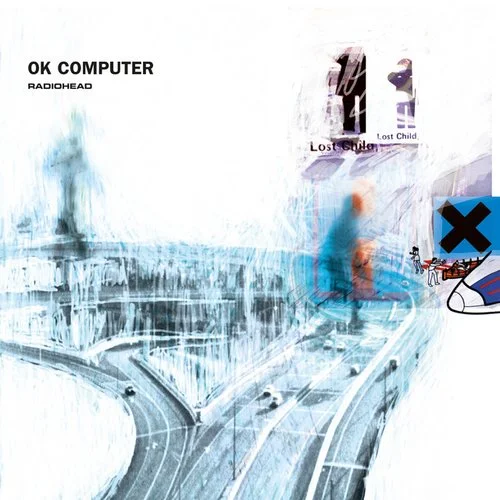
FEATURE: Fitter Happier: Looking Ahead to the Twenty-Fifth Anniversary of Radiohead's OK Computer

FEATURE:


Fitter Happier

Looking Ahead to the Twenty-Fifth Anniversary of Radiohead’s OK Computer

__________

RELEASED on 21st May, 1997…

 IN THIS PHOTO: Radiohead in New York in 1997

Radiohead’s seismic third studio album, OK Computer, celebrates twenty-five years next month. In fact, it was not released in the U.K. until June. OK Computer was released first in Japan. I wonder what the Japanese market made of OK Computer back in 1997! Considered a modern masterpiece and one of the most important albums ever, not all the reaction to OK Computer was positive in 1997. Maybe critics reacted to what Radiohead had done on 1995’s The Bends and felt OK Computer was a move in a strange direction. More Electronic and a bit more experimental, it was a year when there was a lot of pioneering albums released. Radiohead would step further into Electronic music with the follow-up, Kid A (2000). OK Computer is a remarkable album that, since its release, has only grown in its reputation and popularity. In 2009, a Collector's Edition was released. I am going to come to an article that discussed the recording of OK Computer and how the band came to work with Nigel Godrich. In terms of the songs on OK Computer, some of Radiohead’s best and most enduring work can be found. From Paranoid Android to Let Down through to Karma Police, it is a genius album. I know others will write about OK Computer before its twenty-fifth anniversary. Although they will do a better job, I wanted to have a say and draw attention to the anniversary. Before getting to a couple of reviews, there are articles that explore OK Computer in more depth. In November, Audio Media International looked at the recording of the iconic OK Computer:

But back in 1997, computers were still clunky desktop affairs. With their gradual infiltration of our daily lives then a pretty unthinkable idea for most, the rapid development of computing – not least the potential of the internet – led a swelling company of forecasters feeling uneasy, particularly as an unknowable new century ominously loomed.

That foreboding anxiety is central to Radiohead’s critically lauded OK Computer. Via its 12 tracks, Thom Yorke, Jonny Greenwood, Ed O’Brien, Colin Greenwood and Philip Selway anticipated a soulless, tech-saturated future. Yorke’s lyrics alluded to the fast-paced, casual violence of an interconnected world (Paranoid Android), Hordes of faceless, insect-like commuters, heads-down within a sprawling modern city network (Let Down) a resulting sense of social isolation (Climbing Up The Walls) and a prevalent back-watching paranoia – a gnawing fear that a 1984-like authority would deem you cancel-able and bundle you off somewhere unpleasant (Karma Police, Lucky). It’s a vision that, in retrospect, seems eerily prescient.

Prior to OK Computer’s release, Radiohead were mainly regarded as being an angst-ridden guitar band, having only really dented the public consciousness with 1993’s unrepresentative outsider-anthem Creep. While 1995’s The Bends foreshadowed a much more colourful musical scope, it wasn’t until OK Computer that Radiohead’s reputation as sonic frontier-expanding experimentalists was established.

ENLISTING THE RADIOHEAD PRODUCER

The sound of their new album was always intended to be a departure, and while The Bends had featured occasional forays into diverse instrumentation, a greater prevalence of off-the-wall arrangements defined OK Computer, and would shift the perception of Radiohead in the eyes of the world at large. Though the quintet had the desire to self-produce, they enlisted Nigel Godrich to help with the recording sessions, having assisted John Leckie back on the sessions for The Bends. The technically-minded Godrich proved to be an indispensable element to the record’s production, so indispensable in fact, that the band would subsequently use him as the man to helm on all their successive albums. He would become the Radiohead producer.

Though initial sessions took place at Radiohead’s newly constructed Canned Applause studio in Didcot, creeping dissatisfaction with the environment as the right creative space to work up their ideas pointed them towards a much more atmospheric recording location.

Bath’s St Catherine’s Court proved a better fit. A 16th century mansion owned by actress Jane Seymour (and previously used by The Cure to record their Wild Mood Swings album), St Catherine’s Court’s roomy ambience and natural reverberation would impart discernible character into the recordings. A notable example is Exit Music (For a Film)’s gloomy vocal, which was captured half-way up the Court’s stone staircase. “It was the band and me and Peter ‘Plank’ [Clements] who was their roadie.” Godrich told Rolling Stone, “Literally, it was just me [as Radiohead’s producer] on the album. I didn’t have an assistant; I didn’t have any help. Plank had never been in the studio before, but he’d help me lugging the stuff around. It was the seven of us plus the cook and Mango, Jane’s cat. The gatekeeper looked over the cat. He’d say, ‘Don’t let the cat in the TV room since it pisses on the carpet.’”

“I think that’s one of the things that makes this record different is the fact that we managed to capture these old sorts of 15th through the 18th century rooms that we recorded a lot of the album in.” Colin Greenwood told NPR’s All Things Considered. “You set up a bunch of microphones in a room and the ambience is going to be different from room to room.” To further expand the spacious ambience, Radiohead’s producer brought along his EMT 140 Plate Reverb.

Setting up a control room in the house’s library, Godrich and the band recorded most elements live “When you’re recording a band, it’s a bunch of microphones, a mixing desk, and a multi-track tape machine. That’s it. There’s a bit of computer jiggery-pokery if need be. but basically they’re a band, and they play together really well.” Godrich told The Mix. Among the gear that Godrich, Plank and the band installed at St Catherine’s Court were an Otari MTR-90II two-inch tape machine and both MTA series 980 and Soundcraft Spirit 24 mixing desks. While most of the gear was relatively traditional, Godrich used the then-new Pro Tools  software to polish the mixes. Fittingly, further toes would be dipped into computer music-making as the sessions continued.

At this stage, the band were primarily a guitar band. Godrich mic’d up Thom, Jonny and Ed’s guitar amps with a set of fairly straightforward Shure SM57s. Yorke stuck to his Fender Twin Reverb, while Ed and Jonny leaned on a classic Vox AC30 sound for clean tones, with Greenwood’s Fender 85 and O’Brien’s Mesa Boogie Dual Rectifier Trem-O-Verb being unleashed when a crunchier overdrive was needed.

On the bass front, Colin Greenwood’s sunburst Fender Precision bass was output via a malleable Gallien-Krueger 800rb head in tandem with a beefy Ampeg SVT 8×10 cab.

EVERYTHING OK?

The songs that were being crafted at St Catherine’s Court were sounding like the best the band had yet written. Scene-setting opening cut, Airbag was defined by both Greenwood’s soaring riff in A major, and a hypnotic drum loop (captured with an Akai S3000 rack-mounted sampler, later edited on a Mac). Taking cues from the likes of DJ Shadow. While Thom and Phil were responsible for capturing the required loop, Godrich felt its character lacked edge. Running it through Greenwood’s pedalboard, imparted the right amounts of distorted bite, phasing and occasional wah to its sound.

The multi-sectioned Paranoid Android would take a while to find its shape. Starting with an acoustic-oriented arrangement, the track expanded into a head-banging, heavy-riff dominated rocker, before coalescing into an ethereal, haunting mid-section. Though both of the track’s ‘heavy’ sections were pretty similar, they were recorded months apart. This lead Godrich to have to manually merge each element to just one piece of 24-track tape. Trimmed down by Radiohead’s producer from 14 minutes to a more palatable 6 minutes and 30 seconds, the song would become a crucial statement of the band’s innovative intent, bubbling with both off-kilter guitars and synthesiser textures.

Among the synths that were harnessed on the album, there included an original Novation Bass Station (for the cavernous grind of Climbing Up The Walls) a Korg Prophecy – used to create the theremin-like sounds under the surface of Airbag. The analogue sound of a Moog and Mellotron were also called upon, as well as a quirky ZX Spectrum-based synth for the bubbling outro of Let Down.

On that subject, the uplifting Let Down was recorded in the master ballroom at 3am. Yorke had been Inspired to write its nihilistic lyric when sat in a pub one night. Propulsed by Greenwood and O’Brien’s sparkling arpeggiated Fender Starcaster on Rickenbacker riff (played in 5/4, as opposed to the track’s bpm of 4/4 to add a sense of floaty groundlessness) Let Down was perhaps the most optimistic-sounding record on an album that was shaping up to be darker than anything the band had previously written.

That darkness was evident on two other key tracks, the haunting, nursery-rhyme like arrangement of the now-ubiquitous No Surprises and the chilly uncertainty of Karma Police. Despite being recorded as a song in its entirety, Karma Police wasn’t quite working for Yorke. “We went out for a pint and he sort of complained about how he didn’t like the second half. He asked ‘Can we construct something from scratch’.” Recalled Godrich in Rolling Stone, “It was the first time we’d done that. From the middle section to the outro, it’s a completely different technique of building up a song. It’s not like the band playing. It’s just samples and loops and his sort of thing over the top, which sort of was the forerunner of a lot of things to come, good or bad.” Alongside this sonic maelstrom is Ed O’Brien’s self-oscillating delayed guitar, using a DMX 15-80s digital delay.

Karma Police bled into the electronic voice-delivered Fitter Happier. Less a song as such, and more an eerie stream of consciousness list of the travails of modern existence at the end of the 20th century, Fitter Happier’s distinctive voice was actually named ‘Fred’, and originated from a Macintosh’s SimpleText program. “The others were downstairs, ‘rockin, and I crept upstairs and did this in 10 minutes,” Thom told Select. “I was feeling incredible hysteria and panic, and it was so liberating to give the lyrics to this neutral-sounding computer.”

Across the sessions, the band pushed boundaries both sonic and conceptual, yet there was still room for more traditional fare. The squalling riff-age of Electioneering harked back to the likes of The Bends‘ more frenzied guitar freakouts, while the Bosnian war-inspired Lucky originated as Radiohead’s contribution to the Help compilation. While these tracks didn’t require too much left-field engineering, Godrich was keen to capture Yorke’s vocals as clearly as possible, using both a Neumann Valve 47 and Australian Rode Valve mic on Yorke’s vocals across the album. “I haven’t used much processing, just a bit of plate reverb, or a short delay.” Radiohead’s producer told The Mix, “Some singers just have a great tone, and [Thom] is one of them, so it’s not hard work. The vocals haven’t ended up very loud because it’s not a pop record, but it’s something I’m very conscious about. I’m always thinking, can you hear what he’s saying, because his lyrics are so great.”

With the album recorded, string recording took place at Abbey Road Studios, while full mixing took place at both AIR and Mayfair studios. The project then returned to Abbey Road for mastering. From all involved, especially Radiohead’s producer, there was a building sense that something monumental had been achieved”.

The way Radiohead evolved from their 1993 debut, Pablo Honey, to 1997’s OK Computer is amazing! The band started when Grunge was huge. Rather than follow the Britpop sound or stick too closely to Alternative and Rock, OK Computer was the band – and especially Thom Yorke as a lead songwriter – really broadening their horizons. The New Yorker looked back at OK Computer in a feature from 2017:

Yorke was twenty-seven when he started working on “OK Computer,” and just coming off several years of touring. (“I was basically catatonic,” he told Rolling Stone. “The claustrophobia—just having no sense of reality at all.”) Though Yorke insists that “OK Computer” was inspired by the dislocation and paranoia of non-stop travel, it’s now largely understood as a record about how unchecked consumerism and an overreliance on technology can lead to automation and, eventually, alienation (from ourselves; from one another).

The disparity between these two things—the idea that everyone has gone on believing that the record is about the rise of machines, when Yorke keeps telling us it’s about how much he hated touring the world in a dumb bus—is fascinating, and at least partially attributable to the record’s fretful instrumentation. (Its lyrics are abstract enough to suit just about any imagined narrative.)

Radiohead came of age in the public consciousness in the citadel of grunge, an era in which rock was more introspective than ambitious; grunge was, in many ways, a fierce response to the bloat of the seventies and eighties, and indulgence of any sort was quickly sniffed out and vilified. (Nirvana, for example, never felt on the verge of incorporating a glockenspiel.) Radiohead wasn’t a grunge band (if anything, it was in danger of being rolled into Britpop), but its insistence on a kind of brainy largesse—on bringing in unexpected instrumentation, approaching rock from an unapologetically cerebral place—felt almost countercultural.

Musically, “OK Computer” was inspired by Miles Davis’s “Bitches Brew,” an aggressive and beautiful jazz-fusion album from 1970. Davis’s producer, Teo Macero, was a student of musique concrète, an experimental French genre in which tape is manipulated and looped to create new musical structures; much of “Bitches Brew” was pieced together after the band had gone home. Accordingly, its paths are not foreseeable, or even particularly human—navigating “Bitches Brew” remains a heady and disorienting experience, in which it is very easy to forget which end is up, or which way is out. “OK Computer” was made mostly live—it was started in a converted shed in Oxfordshire (the band called the space Canned Applause) and finished at St. Catherine’s Court, a stately stone mansion near Bath, owned by the actress Jane Seymour—but Radiohead and its producer, Nigel Godrich, shared Davis and Macero’s yen for disorientation. The reigning sound of the record is panic: darting, laser-like guitars, shaky percussion, moaning.

“OK Computer” was critically lauded upon its release—Spin named it the second-best album of 1997, calling it “a soaring song-cycle about the state of the soul in the digital age (or something),” and a Times piece marvelled at its ubiquity, noting that “although the band’s first video is six and a half minutes long and features twisted animated sequences in which children are shown drinking in a bar and paying women to flash them, it has been in heavy rotation on MTV.”

Still, I’m not sure that anyone really knew how to metabolize its precise disquiet until exactly this moment—which makes the timing of its reissue feel nearly fated. For me, revisiting some of these tracks now incites a bizarre kind of déjà vu—as if I am barely but finally remembering some whispered warning I received two decades back. The second half of “Paranoid Android,” one of the record’s darkest and most popular tracks, features Yorke singing in a strange, ghostly harmony with himself. “From a great height,” he repeats in his crystalline falsetto, stretching the final word until it sounds like some abstract plea. Meanwhile, a second, feebler voice opines, “The dust and the screaming, the yuppies networking, the panic, the vomit, the panic, the vomit.” Is this terribly dramatic? Sure. But if you have ever glanced around a bar—or a subway car, or a coffee shop—and seen a dozen sentient humans all tapping away on a device, forgoing awkward, fleshy engagement for a more mediated and quantifiable digital experience, and felt a deep and intense terror in your gut, then perhaps you’ve experienced some version of what Yorke’s voice is doing here: splintering, dissociating, freaking out. Many other bands have expressed worry about the proliferation of devices and the strange divisions computers have wrought, but I can’t think of another song that sounds as much like a person getting swept into a black hole”.

OK Computer is an album so majestic and all-conquering; it is hard to ignore or undervalue it. Such a wide-ranging and nuanced album, it still elicits big reactions twenty-five years later. I want to end with a couple of reviews. The A.V. Club wrote this in their review of one of the most important albums ever:

Who could have guessed, when Radiohead's obnoxiously overexposed debut single "Creep" came out in 1993, that the band's two subsequent albums would be such elegant artistic triumphs? The Bends, Radiohead's 1995 sophomore release, was a creative success from start to finish, held together by stunningly dramatic songs like the hit "Fake Plastic Trees." But as good as The Bends is—and it's very, very good—the new OK Computer is on an entirely different level. It isn't necessarily better than The Bends; it's not nearly as instantly accessible, for starters. But it's much more ambitious and far-reaching, packed with meandering, shape-shifting, busy, spaced-out epics that are as unpredictable as they often are beautiful. It's hard to imagine anything here finding a great deal of success in a Hanson-saturated radio world. But OK Computer needs to be heard as a whole anyway: The songs blend together in such a way that they'd seem out of context when heard between Spice Girls and Collective Soul. That isn't to say there aren't marvelous moments spread throughout OK Computer—there's nary a weak spot—but you won't soon forget "Airbag," "Exit Music (For A Film)," "Letdown" or the amazing epic single, "Paranoid Android." You'll discover more the more you listen to it, and that fact alone makes the album downright essential”.

To finish off, I will bring in AllMusic’s take on a masterpiece from 1997. Although Radiohead have released other genius albums, OK Computer, to many, was the first. It was a clear sign that the band were in their own league and had come a long way from their somewhat listless 1993 debut:

Using the textured soundscapes of The Bends as a launching pad, Radiohead delivered another startlingly accomplished set of modern guitar rock with OK Computer. The anthemic guitar heroics present on Pablo Honey and even The Bends are nowhere to be heard here. Radiohead have stripped away many of the obvious elements of guitar rock, creating music that is subtle and textured yet still has the feeling of rock & roll. Even at its most adventurous -- such as the complex, multi-segmented "Paranoid Android" -- the band is tight, melodic, and muscular, and Thom Yorke's voice effortlessly shifts from a sweet falsetto to vicious snarls. It's a thoroughly astonishing demonstration of musical virtuosity and becomes even more impressive with repeated listens, which reveal subtleties like electronica rhythms, eerie keyboards, odd time signatures, and complex syncopations. Yet all of this would simply be showmanship if the songs weren't strong in themselves, and OK Computer is filled with moody masterpieces, from the shimmering "Subterranean Homesick Alien" and the sighing "Karma Police" to the gothic crawl of "Exit Music (For a Film)." OK Computer is the album that established Radiohead as one of the most inventive and rewarding guitar rock bands of the '90s”.

Even though the U.K. release was not until June 1997, next month, on 21st, is when OK Computer was first released. It will provoke a lot of new evaluation and revision of an album that is still without equal. Such a remarkable album that will be discussed and loved for the rest of time, it is hard to believe that OK Computer is…

ALMOST twenty-five years old.

FEATURE: Paul McCartney at Eighty: Part Twenty-Six: Following in His Footsteps…

FEATURE:


Paul McCartney at Eighty

IN THIS PHOTO: George Harrison, John Lennon and Paul McCartney outside McCartney’s Liverpool home at 20 Forthlin Road/PHOTO CREDIT: Keystone Press Agency/Keystone USA via ZUMAPRESS.com 

Part Twenty-Six: Following in His Footsteps…

__________

IN June…

 IN THIS PHOTO: Outside 20 Forthlin Road, Liverpool/PHOTO CREDIT: Steve Hickey/Alamy Stock Photo

we mark the eightieth birthday of the peerless Paul McCartney. Not to say that home and hearth is entirely responsible for how we turn out and approach the world. That foundation and inspiration is very important. For Paul McCartney, his childhood home was vital. Soaking up everything around him, this is where the world’s greatest songwriter started out. One can only imagine a young McCartney penning songs in a Liverpool hallowed space. NME reported how a very important address is being opened for aspiring and unsigned artists:

Paul McCartney is opening up his childhood home for unsigned artists to use as a base to write, perform and gain inspiration from.

The Forthlin Sessions initiative, backed by the former Beatle‘s brother Mike, will see artists chosen by Mike and local partners to write music at the same place where Paul and John Lennon forged their distinguished songwriting partnership.

20, Forthlin Road in Liverpool is where the pair wrote hits including ‘I Saw Her Standing There’ (from 1963’s ‘Please Please Me’) and ‘When I’m 64’ (from 1967’s ‘Sgt. Pepper’s Lonely Hearts Club Band’). The property is now owned by the National Trust.

Mike told Sky News: “This house to me, is a house of hope. And I hope it will be for the young people that come through the doors.

“I would be in the other room learning photography, but whilst I’m doing all that I could hear guitar noises coming from this room,” he said.

“In there were what turned out to be two of the world’s greatest songwriters, McCartney and Lennon. They were rehearsing from a school book on the floor, that’s why this house is so unique.”

Paul and Lennon would play the piano in the living room or rehearse in the bathroom due to its better acoustics.

“I think it’s a brilliant idea,” Mike added. “Inviting young people to this house and giving them the opportunity of doing the same as us, coming from nothing and seeing where it takes them”.

Not to say that anyone who stays at the house and writes will turn into Paul McCartney. It is a rare opportunity for artists to share common space with McCartney. It does make me wonder whether we will ever see another songwriter like him. Maybe not to the same level in terms of musicianship and invention. That is not to say that those early Pop songs Macca wrote cannot be replicated or matched! In any case, I wanted to spend this feature wondering about 20 Forthlin Road. It may seem pretty ordinary from the outside but, over six decades ago, it was home to Paul McCartney. Imagining McCartney and Lennon at a young age thinking of songs and shooting the breeze is a wonderful thought! You can almost hear them talking and imagine what would have happened there! Today, I don’t think it would have been possible for McCartney to be as productive and inspired. With too many distractions and amore developed and busier local community than he grew up in, there wouldn’t have been the room for inspiration. Having McCartney and Lennon playing piano in the bathroom would have been quite a sight! In such a technological and busy age, it seems almost unimaginable how simple and sparse it would have been there!

 PHOTO CREDIT: Paul McCartney

The fact that McCartney is opening up his childhood home shows how generous he is. Although McCartney has been writing songs for over sixty years, he would be the first to admit that his early years were among the most important. Before things got crazy with The Beatles, he was living in Forthlin Road and there was this simplicity. With no technology at his fingers, this was McCartney (and Lennon) working on songs and ideas in their raw state. In 2022, when we are surrounded by tech and crutches, I wonder whether songwriters who got there will be going back to basics. When McCartney turns eighty in June, there will be a lot of celebration and new spotlight. I wonder how many people will spend time discussing and writing about Paul McCartney’s childhood homes. I feel they are as important to his story and legacy as anything else. A crucial and monumental part of Liverpool music history, young artists will get the opportunity to stand in the same space as a young Paul McCartney. I myself – not that I am a songwriter – would love to go to Forthlin Road in Liverpool. The lucky songwriters who will get to spend time at McCartney’s childhood house will share this moment of history. It is unlikely that aspiring artists will…

HAVE that rare access and opportunity again.

FEATURE: Big Love and Wonder: Fleetwood Mac’s Tango in the Night at Thirty-Five

FEATURE:


Big Love and Wonder

Fleetwood Mac’s Tango in the Night at Thirty-Five

__________

ONE of Fleetwood Mac’s greatest albums…

the superb Tango in the Night is thirty-five on 13th April. It was produced by Lindsey Buckingham and Richard Dashut. Although there are a couple of weaker songs on the band’s fourteenth studio album, some of their best material can be found on Tango in the Night. From Lindsey Buckingham’s opener, Big Love, to Stevie Nicks and Sandy Stewart’s Seven Wonders, Tango in the Night gets off to a tremendous start! Christine McVie’s classic, Everywhere, completes one of the strongest opening trio of songs in music history. Elsewhere on Tango in the Night, there is the incredible title track and Little Lies. As Rhino wrote in their article, even though the material on Tango in the Night is superb, Fleetwood Mac were not unified and solid when they started recording:

Fleetwood Mac was in pretty rough shape when the band got together to record what would become the group's 14th studio effort, Tango in the Night. The record was originally conceived as a Lindsey Buckingham solo project; it was Mick Fleetwood who  coerced the guitarist into morphing it into a full Fleetwood Mac release.

"That was in my estimation when everybody in the band was personally at their worst," Buckingham recalled years later. "If you take the whole subculture that existed in the 1970s, and what it led to -- and how it degraded -- by the time we did Tango in the Night, everybody was leading their lives in a way that they would not be too proud of today. It was difficult for everybody."

That included singer Stevie Nicks, who spent most of the laborious 18-month process making Tango in the Night out on the road promoting her third solo album, Rock a Little. Ultimately spending only two weeks at Buckingham's home studio over the course of recording, Nicks customarily got drunk on brandy before singing her vocal takes. Most of them were left on the cutting room floor.

Once the dust settled, Fleetwood Mac released Tango in the Night on April 13, 1987. Much like Rumours, the behind-the-scenes drama was the genesis for hit records. Lead single "Big Love" cruised up the charts, peaking at #5 on the Hot 100 for the week of May 21, 1987. The song was also a hit on the dance floor, with an extended remix of the track twirling all the way to #11 on the Billboard Dance Sales chart in June 1987.

The second single from Tango in the Night was another radio winner: "Seven Wonders." The Stevie Nicks showcase made a formidable chart run, breaking into the top 20 to peak at #19 on the Hot 100 for the week of August 15, 1987.

It was Christine McVie who shined on third Tango in the Night single, "Little Lies." Peaking at #4 on the Hot 100 in November 1987, the song soared all the way to #1 on the Adult Contemporary chart for the week of October 10, 1987.

Christine McVie again took the spotlight with the album's fourth single, "Everywhere." The song followed "Little Lies" up the Adult Contemporary chart, hitting #1 on January 15. 1988. Over on the Hot 100, "Everywhere" broke into the top 20 to peak at #14 in February 1988.

Tango in the Night was a massive success for Fleetwood Mac, reaching #7 on the Billboard 200 chart over the week of May 23, 1987. The #1 album in America that week: U2's The Joshua Tree.

"The album was well received," Mick Fleetwood told Classic Rock in 2013. "Somewhat sadly, the kudos of that was never really fully attributed to Lindsey because he wasn't present... He was coerced and persuaded to do that album - mainly by me. And, to his credit, he put aside everything that he'd dreamt of doing, including making his own album, for Fleetwood Mac; but then realized that he'd made a mistake... Lindsey was not being heard. We just didn't get it."

Tango in the Night is the last Fleetwood Mac studio album to date that features the classic lineup of Mick Fleetwood, Lindsey Buckingham, Christine McVie, Stevie Nicks, and John McVie. Selling more than 15 million copies worldwide, it stands as group's second-most successful release behind Rumours.

Lindsey Buckingham quit Fleetwood Mac after the release of Tango in the Night. The band recruited guitarists Billy Burnette and Rick Vito to make up for his absence on the subsequent tour. It wasn't until 1997 live album, The Dance--released 10 years after Tango in the Night--that Buckingham would return to the fold”.

Receiving a large amount of positive reviews, Tango in the Night is Fleetwood Mac’s  second-biggest-selling studio album (after Rumours). The album was a success in the United States, where it peaked at number seven for three weeks, spending more than seven months within the top twenty. Tango in the Night It was certified 3× Platinum in October 2000 for selling three million copies in the United States. It is a remarkable album that ranks alongside the very best of Fleetwood Mac. Before finishing off, I want to quote a couple of reviews. The second relates to the 2017 reissue. AllMusic underline how strong and consistent Tango in the Night is:

Artistically and commercially, the Stevie Nicks/Lindsey Buckingham/Mick Fleetwood/Christine and John McVie edition of Fleetwood Mac had been on a roll for over a decade when Tango in the Night was released in early 1987. This would, unfortunately, be Buckingham's last album with the pop/rock supergroup -- and he definitely ended his association with the band on a creative high note. Serving as the album's main producer, Buckingham gives an edgy quality to everything from the haunting "Isn't It Midnight" to the poetic "Seven Wonders" to the dreamy "Everywhere." Though Buckingham doesn't over-produce, his thoughtful use of synthesizers is a major asset. Without question, "Family Man" and "Caroline" are among the best songs ever written by Buckingham, who consistently brings out the best in his colleagues on this superb album”.

I don’t think there are too many big plans around the thirty-fifth anniversary, Five years ago, Tango in the Night was re-issued. Pitchfork note that the album is abstract, in terms of the way love is written about, and the fact Fleetwood Mac were falling apart:

Still, it’s McVie whose work is most realized by Buckingham’s impressionism. Her “Everywhere” is the best song on the record. Like “Big Love” it too is about encountering an idea too big to contain within oneself (love, again). But where “Big Love” apprehends it with icy suspicion, “Everywhere” responds with warmth, empathy, and buoyancy, describing a kind of devotion so deeply felt that it produces weightlessness in a person. Its incandescent texture is felt in almost any music that could be reasonably described as balearic. Elsewhere, “Isn’t It Midnight,” McVie’s co-write with Buckingham and her then-husband Eddy Quintela, seems an inversion of the values of “Everywhere,” a severe ’80s guitar rock song that gets consumed by a greater, more unnerving force by its chorus, as if it’s succumbing to a conspiratorial dread. “Do you remember the face of a pretty girl?” McVie sings, and Buckingham echoes her in an unfeeling monotone (“the face of a pretty girl”) while behind him synths chime in a moving constellation, UFOs pulsing in the dark.

This is the essence of Tango in the Night: something falling apart but held together by an unearthly glow. More of a mirage than Mirage, it is an immaculate study in denial (its most enduring hit revolves around McVie asking someone to tell her “sweet little lies”). It’s a form of dreaming where you could touch the petals of a flower and feel something softer than the idea of softness. In this way, Tango seems to emerge less from Buckingham’s pure will and imagination than from a question that haunts art in general: How can one make the unreal real, and the real unreal?

The remaster of Tango in the Night isn’t as topographically startling as last year’s Mirage, where new details seemed to rise out of the mix as if in a relief sculpture; it sounded good on CD in 1987. The reissue does sound warmer and brighter, and the instruments feel less digitally combined, which lifts background elements to the surface, like the seasick drift of the bass notes in “Caroline” and the coordinated staccato harmonies in the title track. The reissue also includes two discs of b-sides, demos, and extended remixes, several of which were previously unreleased. “Special Kind of Love” is described as a demo but sounds like a completely developed Buckingham song, gentle and simple, with every edge expressively filigreed; it could’ve been a potential second sequel to “You and I.” “Seven Wonders” appears in an earlier, more relaxed arrangement, with Lindsey’s guitar warmly swanning between the notes that would eventually be reconstructed in perfect digital isolation by a synthesizer.

The demos also reveal the ways in which the songs could fold into and out of each other. On the “Tango in the Night” demo you can hear Buckingham, at the edge of every chorus, begin to invent the trembling choral part that opens “Caroline.” Nicks’ eventual solo track “Juliet” is present in two of its primordial forms—as the instrumental “Book of Miracles” (credited to both Buckingham and Nicks) and as a five-minute “run-through.” The run-through is especially curious, reducing “Book of Miracles” to a formulaic blues-rock over which Nicks’ voice produces a just-barely musical static, full of wobbles and distortions and exclamations. After the take she says, ecstatically, “I thought that was wonderful! I didn’t play! I did not play because I am so smart!”

Nicks exhibits a strange, dissonant giddiness in this moment that isn’t present in any of the band member’s memories of the recording process. At the time, in his interview with the Times, Buckingham imaginatively described Tango in the Night as a restorative process. “This album is as much about healing our relationships as Rumours was about dissension and pain within the group,” he said. “The songs look back over a period of time that in retrospect seems almost dreamlike.” Twenty-six years later, Buckingham summarized the experience to Uncut in more severe terms: “When I was done with the record, I said, ‘Oh my God. That was the worst recording experience of my life.’”

The jealousy and resentment he felt toward Nicks for the success she experienced in her solo career, and the prevailing feeling that his architectural work on the band’s records went unnoticed and unappreciated, had built to a flashpoint. Later in 1987, the band met up in anticipation of the promotional tour for Tango, for which they had already secured dates and signed contracts. At the meeting, Buckingham announced he was quitting the band. “I flew off of the couch and across the room to seriously attack him,” Nicks told Classic Rock in 2013. “...I’m not real scary but I grabbed him which almost got me killed.” They spilled out of McVie’s house and into the street. Buckingham ran after Nicks and threw her up against a car. She “screamed horrible obscenities” at him, and he walked away, from the moment and the band. What’s left, after these harsh fragments of reality are swept away, is Tango in the Night: a remarkably complete album, a lavish garden growing out of negative space. Just a dream”.

Tango in the Night’s title did almost point to a last dance for Fleetwood Mac. 1990’s Behind the Mask did not feature Buckingham predominantly. It was a bit of a low point for the band. Tango in the Night was this amazing album that was created at a time when things were strained. Like Rumours, out of turmoil and dissolvement, the band created something remarkable and enduring. Maybe not as timeless as 1977’s Rumours, Tango in the Night is full of incredible material. This remarkable album is one of Fleetwood Mac’s…

VERY best works.

FEATURE: Spotlight: Rose Gray

FEATURE:


Spotlight

Rose Gray

__________

ALTHOUGH there are not many new interviews online…

from Rose Gray, she has been involved with some fantastic features through the years. A hugely talented young artist whose music should be in everyone’s rotation, her latest track, Last Song, is among her best. With embers of ‘00s Pop and Electronic together with modern vibes and the huge personality and buzz from the infectious and irresistible Gray, she is an artist who is going to go far. I am not sure whether there is an E.P. coming soon. Before wrapping up and looking to the future for the incredible Rose Gray, there are a few interviews that I want to bring in. A lot of the online promotion and interview surrounded around the release of Drinking, Dancing, Talking, Thinking (2021). It is an amazing and eclectic 1990s-infused and inspired collection of songs from one of the most promising British artists. The London-born Rose Gray is, like me, someone hugely inspired and motivated by the music and characters of the ‘90s. Not that she is beholden to the decade. She is a singular voice who does not wear her influences heavily and too obviously on her sleeve. The first interview I want to quote from is The Forty-Five. In addition to talking about her Drinking, Dancing, Talking, Thinking mixtape, we discover about her childhood and fascinating upbringing:

Born and bred in E17, she only has fond memories of her childhood, and speaks warmly of trips to the market with her parents, and of Sundays spent watching greyhounds speed around the borough’s long-since-closed dog track – the same stadium where Blur famously shot the now-iconic artwork for ‘Parklife’. “I really love my area, but it is quite a confused little place because it’s quite close to Essex,” she smiles. “And at school with you were either one or the other: a real East Londoner or quite suburban with different prospects for your life. I definitely decided that as soon as I possibly could I would be making my way in the city.”

You could argue this desire to make an impact is hereditary: both her mum and stepdad are jobbing actors after all, and – being the oldest of five – much of Rose’s childhood was spent socialising with her parents’ friends, many of whom were also actors or musicians. “I think I just thought that everyone was in the arts somehow?” she shrugs. “Like that’s what everyone did.” But compound that upbringing with the eerie focus that she credits to being a “textbook Capricorn”, and it feels like Rose was always destined to push herself to the fore.

“Seriously, my tunnel vision is almost quite dangerous. I was quite dweeby at school, always wanting to spend hours on projects. And I was sporty as well. I used to train a lot, do cross country and play football for a girls team, so I was quite driven with practise. And I always wanted to win things. So it hit me hard when I left college and I realised I was no longer the little star at school with a really good voice. Suddenly you’re in this massive pool of brilliant people and you need to work out who you are and what you want to do before you can make anything happen.”

PHOTO CREDIT: Eva Pentel

After dropping out of her Performing Arts course, she focused on finessing her songwriting, though it was still to be some time before her epiphany at the Bussey Building. Even looking back on 2019 singles ‘Good Life’ and ‘Blue’, Rose confesses to feeling removed from the pared-back, jazz-influenced sound. “I think I took myself a bit too seriously with the other releases. Because I’ve got a soulful voice it was easy for me to lean into that neo-soul and jazz influence but actually the music I love to listen to, and the music I like to go out to, is quite different. My manager was like, ‘Rose, you want your music to reflect who you are.’ And I feel like this mixtape is 100% me.”

Recorded over the last year and half with long-term collaborator Frank Colucci plus Rob Milton (Arlo Parks, Easy Life) and Mark Ralph (Georgia, Jax Jones), the seven-song collection solidifies Rose’s status as a rising star, and one who isn’t too proud to wear her reference points on her sleeve. Joining the Madchester swagger of ‘Save Your Tears’, the balmy dream-pop of ‘Same Cloud’ channels the swirling rhythms of ‘Screamadelica’ while ‘Easy’ features the sort of rave piano last seen on Strike classic ‘U Sure Do’. And that’s before you even get to her uncannily faithful version of Saint Etienne’s ‘Nothing Can Stop Us,’ her latest release”.

With a foot in the 1990s (musically) and the ’00 (musically), there is that sound and blast from the past. Rose Gray is a very modern artist who, in a sea of competitors, is shining and a real bright spot. I think she will be a massive artist of the future. NOTION confirmed this promise and potential when they spoke with Rose Gray back in late-2020:

Noting Primal Scream, Massive Attack and Saint Etienne amongst her influences, Rose Gray has been building a name for herself as a rather uniquely British pop star. Lacing her music with her own blend of 90s dance melodies and 00s indie-pop vocals, the budding artist has been creating quite a buzz since releasing her first single last year.

Recalling house parties, bus rides, and the highs and lows of relationships, Rose’s music, in her words, “captures the early 20’s experience and all the in-between”.

The Walthamstow musician started her music career young but rebelled against the traditional popstar aesthetic she was being corseted into, instead, choosing to run down her own path.

With six singles under her belt, Rose is gearing up to release her debut mixtape, ‘dancing, drinking, talking, thinking’, due in January 2021.

From singing about a loved one with a cocaine addiction on the stripped-back track “Billy” (“But the powder’s got to you/ It’s got a power over you”) to serving up nostalgic Balearic House vibes on “Easy” and “Save Your Tears”, Rose Gray’s mixtape is the antidote we all need in today’s fun-sapped world.

You’ve just shared the brilliant new song “Save Your Tears”, a homage to 90s dance music. You’ve said that the genre is a big source of inspiration for you – what drew you to it in the first place?

From a young age, I was always in awe of the voice. Soulful pop Queens. From, Aretha, Dusty to Etta..and modern Queens like Amy, Christine Aguilera, and Lauryn Hill. I’ve always loved playing with my voice, and I feel 90’s dance music sets the stage for this exploration. Crazy big voices and soundscapes cushioned by breakbeats, strings, electronic elements live and programmed. It just feels so fun. I found a place that really works for my voice and where I’m at as an artist. Before lockdown going out and partying was a massive part of my life and I wanted this to reflect in my music. I have the freedom to sing and speak all in one song. 90’s dance music does this a lot, someone like Lady Miss Kier (the lead singer of DeeLite) positions herself so perfectly within a dance track. She’s a big inspo for me. There’s also something quite magic that 1990 is now 30 years ago. In the 90’s a massive subculture was psychedelica/ trip rave music.. heavily influenced by the 60’s. Now in 2020, we are 30 years on from the ’90s, it’s like a natural revival of this music. It feels like the right amount of time to be making and recreating these sounds. I also just honestly love this music.

Who are some of your all-time favourite 90s dance artists?

Ok here it goes. Saint Etienne of course. Primal Scream. Opus 111…the lead singer gives me Grimes.  I like listening to quite obscure stuff a little different from the music I’m making like Eris Drew or just ravey mixes. 1998 Madonna, Ray Of Light. I love this era for Madonna. Andy Wetheral mixes of any kind, he remixed ‘Only Love Can Break Your Heart’ its magic. Smoke City. The Grid. Moby of course. Massive Attack and Portishead for slow dancey jams. The list could go on.

PHOTO CREDIT: Freddie Stisted

Your mixtape, ‘dancing, drinking, talking, thinking’ is due in January. What can we expect from the record?

So, ‘Dancing, Drinking, Talking, Thinking’ – is just that. it falls into one of those motions, maybe a few at the same time.

It’s 7 tracks. It’s fun. It’s sad. It’s classic. I’ve cried and danced making every track on it. I hope it captures the early 20’s experience and all the in-between.

Do you have a favourite song from the mixtape?

It’s always different. The mixtape goes through the motions. Some days I feel like I want to dance to some of the songs. Other days I could cry to all of them. I think I have a soft spot on a track called “Interlude, Thinking” – I produced it myself in June. It’s a reflection/realisation that partying and getting involved in fun dark things maybe isn’t what I really want. I love the string arrangement”.

There are a couple of other pieces I want to bring in before closing up. DORK chatted with Rose Gray in February last year. At a strange and stressful time for artists trying to put material out there, they asked as to whether lockdown and the pandemic had altered her approach to music and songwriting:

Hi, Rose. You’re often described as telling sweeping stories with your lyrics, how do you approach writing?

I try not to give myself rules. I do write a lot of my songs as notes on my phone, concepts on my phone, so I do call myself a lyricist. I have a lot of poems and writings that I’ve built myself up, but if I’m at home writing, I do write a lot of my stuff on the spot.

You have a new mixtape coming up, right? How would you describe its sound?

I think it’s really fun, there’s a massive influence of 90s dance music! It’s quite classic with a lot of breakbeats. One thing as well that I feel threads through the whole mixtape is there’s a lot of lyricism, there’s a real story that comes through. It’s about a time of my life where I was partying and going out a lot, and so it feels like it’s going through motion.

Has lockdown changed the way you approach the creative process?

100%. I had a lot of unfinished songs. From the second week of lockdown, I started to figure out the production software Logic. I needed to figure out how to produce, how to make beats, how to finish off the vocals at home, so I’ve learnt a lot. I really love production and playing around, there is something on the mixtape I produced completely.

How has the mixtape changed the way you think about music?

For me now, I feel quite excited about where I can go. It’s the first stepping stone, and there’s so much material, and I feel quite excited. There are no rules, my next EP or album could be completely different. I feel creative freedom, especially for when I can play live again. I have so many ideas. I want to keep being different”.

There is one more feature that I want to include. Fred Perry asked some quick-fire questions about Rose Gray’s favourite music, some of the songs she grew up listening to, and songs that define the teenage her:

If you could spend an hour with anyone from history?

John Lennon. I would love to share poetry or ask John to play something on his white grand piano. I think we could write something beautiful... try and put the world to right.

Of all the venues you’ve been to, which is your favourite?

Brixton Academy in London. I love this venue. The sound and atmosphere, the way the floor is raised so even if you're near the back you have a perfect view.

Your greatest unsung hero or heroine in music?

Of course Amy Winehouse. I grew up loving Amy, her lyricism and honesty had me in awe from a young age. I related to her, I felt like I'd never listened to a female being so honest about love and loss. But also - Melanie. She went pretty under the radar in the '60s/'70s and should have been huge.

The first track you played on repeat?

'F*ck You' - Lily Allen.

Apart from playing the Spice Girls and Christina Aguilera on repeat as a young one, I have a real memory of buying 'It's Not Me, It's You'. I remember breaking up with my boyfriend who was the definition of the guy described in 'F*ck You' so it just became my vent song.

A song that defines the teenage you?

'With Every Heartbeat' - Robyn.

If I listen to this I am 14 again dancing around my room.

One record you would keep forever?

'A Brand New Me' - Aretha Franklin (song - 'Angel' The Royal Philharmonic Orchestra version)

I grew up on Aretha Franklin. She had a true voice of an angel. I think I will love this album for the rest of my life. The Royal Philharmonic version of this record is so beautiful.

The song to get you straight on the dance floor?

'Groove Is In The Heart' - Deee-Lite.

Family parties and or weddings I will leap from my chair for this song. Also 'Green Light' - Lorde.

Best song to end an all-nighter?

'Yes I’m Changing' - Tame Impala.

I played this walking home the other night, the sun was just coming up and it was a special moment, beautiful way to start/end the day”.

I shall wrap up now. Keep an eye out for Rose Gray throughout 2022. With a new track out there, I think we will hear more from her. Whether that is another mixtape, or an album has yet to be seen. Whatever it is, it is going to be a fantastic release. Although she has a deep love of the music she grew up on from the 1990s and 2000s, she is someone who is very contemporary and unique. On the evidence of a song like Last Song, it will not be long until we will see the fantastic Rose Gray…

REALLY take off!

____________

Follow Rose Gray

FEATURE: Inspired By…Part Sixty: Elvis Presley

FEATURE:


Inspired By…

Part Sixty: Elvis Presley

__________

I have not included him yet...

but for this sixtieth part of Inspired By…, I am including the King of Rock & Roll, Elvis Presley. One of the most influential artists ever, I am ending with a playlist of songs from artists influenced by Presley. In August, we will mark forty-five years since the icon died. His legacy and impact are being felt today. Before getting to the playlist, here is some biography about the incredible Elvis Presley:

Elvis Presley belongs on the short list of artists who changed the course of popular music in the 20th century. He may not have invented rock & roll, but he was indisputably its first rock star, a singer whose charisma intertwined tightly with his natural talent for a combination that seemed combustible, sexy, and dangerous when Presley seized the imagination of America in 1956 with four successive number one singles in 1956. Elvis spent the next two decades near the top of the charts, weathering changes in fashion, self-inflicted career missteps, and comebacks as his music expanded and evolved. Throughout his career, Presley never abandoned the rock & roll he pioneered on his early singles for Sun Records, but he developed an effective counterpoint to his primal rockabilly by honing a rich, resonant ballad style while also delving into blues, country, and soul, progressions that came into sharp relief with his celebrated "comeback" in the late 1960s. Some musical nuances were overshadowed by Presley's phenomenal celebrity, a fame maintained by a long string of B-movies in the '60s and extravagant Las Vegas shows in the '70s, elements that were essential in creating a stardom that persisted long after his premature death in 1977. The myth of Elvis grew in his absence, aided by turning his Memphis home Graceland into a tourist attraction, which made him an enormous cultural icon only loosely tied to his rock & roll origins; fortunately, the passage of time helped clarify the depth and range of his musical achievements. He undeniably kick-started the rock & roll era, shaping the sound and attitudes of the last few decades of the 20th century in the process, but he also built a distinctive body of work that reflected the best of what American music has to offer.

Born to a poor Mississippi family in the heart of the Depression, Presley had moved to Memphis by his teens, where he absorbed the vibrant melting pot of Southern popular music in the form of blues, country, bluegrass, and gospel. After graduating from high school, he became a truck driver, rarely if ever singing in public. Some 1953 and 1954 demos, recorded at the emerging Sun label in Memphis primarily for Presley' own pleasure, helped stir interest on the part of Sun owner Sam Phillips. In mid-1954, Phillips, looking for a white singer with a Black feel, teamed Presley with guitarist Scotty Moore and bassist Bill Black. Almost by accident, apparently, the trio hit upon a version of an Arthur Crudup blues tune, "That's All Right Mama," which became Presley's first single.

Presley's five Sun singles pioneered the blend of R&B and C&W that would characterize rockabilly music. For quite a few scholars, they remain not only Presley's best singles, but the best rock & roll ever recorded. Claiming that Presley made blues acceptable for the white market is not the whole picture; the singles usually teamed blues covers with country and pop ones, all made into rock & roll (at this point a term that barely existed) with the pulsing beat, slap-back echo, and Presley's soaring, frenetic vocals. "That's All Right Mama," "Blue Moon of Kentucky," "Good Rockin' Tonight," "Baby Let's Play House," and "Mystery Train" remain core early rock classics.

The singles immediately sold well in the Memphis area, and by 1955 were starting to sell well to country audiences throughout the South. Presley, Moore, and Black hit the road with a stage show that grew ever wilder and more provocative, with Presley's swiveling hips causing enormous controversy. The move to all-out rock was hastened by the addition of drums. The last Sun single, "I Forgot to Remember to Forget"/"Mystery Train," hit number one on the national country charts in late 1955. Presley was obviously a performer with superstar potential, attracting the interest of both bigger labels and Colonel Tom Parker, who became Presley's manager. In need of capital to expand the Sun label, Sam Phillips sold Presley's contract to RCA in late 1955 for $35,000.00; a bargain when viewed in hindsight, but an astronomical sum at the time.

This is the point where musical historians start to diverge in opinion. For many, the whole of his subsequent work for RCA -- encompassing over 20 years -- was a steady letdown, never recapturing the pure, primal energy that was harnessed so effectively on the handful of Sun singles. Presley, however, was not a purist. What he wanted, more than anything, was to be successful. To do that, his material needed more of a pop feel; in any case, he'd never exactly been one to disparage the mainstream, naming Dean Martin as one of his chief heroes from the get-go. At RCA, his rockabilly was leavened with enough pop flavor to make all of the charts, not just the country ones.

At the beginning, at least, the results were hardly any tamer than the Sun sessions. "Heartbreak Hotel," his first single, rose to number one and, aided by some national television appearances, helped make him an instant superstar. "I Want You, I Need You, I Love You" was a number one follow-up; the double-sided monster "Hound Dog"/"Don't Be Cruel" was one of the biggest-selling singles the industry had ever experienced up to that point. His first two LPs, Elvis Presley and Elvis, were also chart-toppers, not just in the U.S., but throughout the world. The 1956 RCA recordings, while a bit more sophisticated in production and a bit less rootsy in orientation than his previous work, were still often magnificent, rating among the best and most influential recordings of early rock & roll.

Presley's (and Parker's) aspirations were too big to be limited to records and live appearances. By late 1956, his first Hollywood movie, Love Me Tender, had been released; other screen vehicles would follow in the next few years, Jailhouse Rock being the best. The hits continued unabated, several of them ("Jailhouse Rock," "All Shook Up," "Too Much") excellent, and often benefiting from the efforts of top early rock songwriter Otis Blackwell, as well as the emerging team of Jerry Leiber and Mike Stoller. The Jordanaires added both pop and gospel elements with their smooth backup vocals.

Yet worrisome signs were creeping in. The Dean Martin influence began rearing its head in smoky, sentimental ballads such as "Loving You"; the vocal swoops became more exaggerated and stereotypical, although the overall quality of his output remained high. And although Moore and Black continued to back Elvis on his early RCA recordings, within a few years the musicians had gone their own ways.

Presley's recording and movie careers were interrupted by his induction into the Army in early 1958. There was enough material in the can to flood the charts throughout his two-year absence (during which he largely served in Germany). When he reentered civilian life in 1960, his level of popularity, remarkably, was just as high as when he left.

One couldn't, unfortunately, say the same for the quality of his music, which was not just becoming more sedate, but was starting to either repeat itself, or opt for operatic ballads that didn't have a whole lot to do with rock. Presley's rebellious, wild image had been tamed to a large degree as well, as he and Parker began designing a career built around Hollywood films. Shortly after leaving the Army, in fact, Presley gave up live performance altogether for nearly a decade to concentrate on movie-making. The films, in turn, would serve as vehicles to both promote his records and to generate maximum revenue with minimal effort. For the rest of the '60s, Presley ground out two or three movies a year that, while mostly profitable, had little going for them in the way of story, acting, or social value.

While there were some quality efforts on Presley's early-'60s albums, his discography was soon dominated by forgettable soundtracks, most featuring material that was dispensable or downright ridiculous. He became largely disinterested in devoting much time to his craft in the studio. The soundtrack LPs themselves were sometimes filled out with outtakes that had been in the can for years (and these, sadly, were often the highlights of the albums). There were some good singles in the early '60s, like "Return to Sender"; once in a while there was even a flash of superb, tough rock, like "Little Sister" or "(Marie's the Name) His Latest Flame." But by 1963 or so there was little to get excited about, although he continued to sell in large quantities.

The era roughly spanning 1962 to 1967 has generated a school of Elvis apologists, eager to wrestle any kernel of quality that emerged from his recordings during this period. They also point out that Presley was assigned poor material, and assert that Parker was largely responsible for Presley's emasculation. True to a point, but on the other hand, it could be claimed, with some validity, that Presley himself was doing little to rouse himself from his artistic stupor, letting Parker destroy his artistic credibility without much apparent protest, and holing up in his large mansion with a retinue of yes men who protected their benefactor from much day-to-day contact with a fast-changing world.

The Beatles, all big Presley fans, displaced him as the biggest rock act in the world in 1964. What's more, they did so by writing their own material and playing their own instruments; something Presley had never been capable of, or particularly aspired to do. They, and the British and American groups the Beatles influenced, were not shy about expressing their opinions, experimenting musically, and taking the reins of their artistic direction into their own hands. The net effect was to make Presley, still churning out movies in Hollywood as psychedelia and soul music became the rage, seem irrelevant, even as he managed to squeeze out an obscure Dylan cover ("Tomorrow Is a Long Time") on a 1966 soundtrack album.

By 1967 and 1968, there were slight stirrings of an artistic reawakening in Presley. Singles like "Guitar Man," "Big Boss Man," and "U.S. Male," though hardly classics, were at least genuine rock & roll that sounded better than much of what he'd been turning out for years. A 1968 television special gave him the opportunity he needed to reinvent himself as an all-out leather-coated rocker, still capable of magnetizing an audience, and eager to revisit his blues and country roots.

The 1968 album From Elvis in Memphis was the first LP in nearly a decade in which Presley seemed cognizant of current trends, as he updated his sounds with contemporary compositions and touches of soul to create some reasonably gutsy late-'60s pop/rock. This material, and 1969 hits like "Suspicious Minds" and "In the Ghetto," returned him to the top of the charts. Arguably, this period has been overrated by critics, who were so glad to have him singing rock again that they weren't about to carp about the slickness of some of the production, or the mediocrity of some of the songwriting.

But Presley's voice did sound good, and he returned to live performance in 1969, breaking in with weeks of shows in Las Vegas. This was followed by national tours that proved him still capable of being an excellent live entertainer, even if the exercises often reeked of show-biz extravaganza. (Presley never did play outside of North America and Hawaii, possibly because Parker, it was later revealed, was an illegal alien who could have faced serious problems if he traveled abroad.) Hollywood was history, but studio and live albums were generated at a rapid pace, usually selling reasonably well, although Presley never had a Top Ten hit after 1972's "Burning Love."

Presley's '70s recordings, like most of his '60s work, are the focus of divergent critical opinion. Some declare them to be, when Presley was "on", the equal of anything he did, especially in terms of artistic diversity. It's true that the material was pretty eclectic, running from country to blues to all-out rock to gospel (Presley periodically recorded gospel-only releases, going all the way back to 1957). At the same time, his vocal mannerisms were often stilted, and the material -- though not nearly as awful as that '60s soundtrack filler -- sometimes substandard. Those who are serious Presley fans will usually find this late-period material to hold only a fraction of the interest of his '50s classics.

Presley's final years have been the subject of a cottage industry of celebrity bios, tell-alls, and gossip screeds from those who knew him well, or (more likely) purported to know him well, but it's enough to note that his behavior was becoming increasingly unstable. His weight fluctuated wildly; his marriage broke up; he became dependent upon a variety of prescription drugs. Worst of all, he became isolated from the outside world except for professional purposes (he continued to tour until the end), rarely venturing outside of his Graceland mansion in Memphis. He even stopped leaving his home for recording sessions, using an RCA Records mobile recording truck to make up the bulk of his final two albums, 1976's From Elvis Presley Boulevard, Memphis, Tennessee and 1977's Moody Blue, At Graceland . (A collection of these final home recordings appeared in 2016, titled Way Down in the Jungle Room.) Colonel Parker's financial decisions on behalf of his client have also come under much scrutiny.

On August 16, 1977, Presley was found dead in Graceland. The cause of death remains a subject of widespread speculation, although it seems likely that drugs played a part. An immediate cult (if cult is the way to describe millions of people) sprang up around his legacy, kept alive by the hundreds of thousands of visitors who make the pilgrimage to Graceland annually. Elvis memorabilia, much of it kitsch, is another industry in its own right. Thousands of singers make a comfortable living by impersonating the King in live performances. And then there are all those Elvis sightings reported in the tabloids, first on a seemingly weekly basis, then less frequently as the decades went on.

Although Presley had recorded a mammoth quantity of both released and unreleased material for RCA, the label didn't show much interest in repackaging it with the respect due such a pioneer. Haphazard collections of outtakes and live performances were far rarer than budget reissues and countless repackagings of the big hits. In the digital age, RCA finally began to treat the catalog with some of the reverence it deserved, at long last assembling a box set containing nearly all of the '50s recordings. This 1992 set, called The King of Rock 'n' Roll, was the first of many serious compilations that focused on particular decades, phases, and collaborators. These archival sets were balanced by sets from Follow That Dream, all targeted at collectors, with the discs aimed at mainstream audiences. The most popular of these was the 2002 compilation Elv1s: 30 #1 Hits, which topped the charts in the U.S. and U.K. on its way to multi-platinum certification, but a pair of albums that grafted original Presley performances to music by the Royal Philharmonic Orchestra -- 2015's If I Can Dream and 2016's The Wonder of You -- went to number one in the U.K. in the mid-2010s; Christmas with Elvis, a seasonal set overdubbed by the Royal Philharmonic Orchestra, debuted at six in the U.K. upon its 2017 release. In 2018, the two-part documentary Elvis Presley: The Searcher premiered on HBO and was accompanied by two soundtracks, one a single disc and one a box set. Later that year, an overdubbed collection of gospel material was released under the title Where No One Stands Alone, as was a box set celebrating the 50th anniversary of his '68 Comeback.

In 2019, the 50th anniversary of Presley's return to live performance, was celebrated with the release of Live 1969, a box set containing 11 full concerts from his first engagement at the International Hotel in Las Vegas

To showcase the impact and influence of The King, below are songs from artists that count him as a guide. Someone they have taken something from, or they have been compelled by him in some way. Influencing artists from multiple genres, Elvis Presley will be inspiring people…

FOR many more years.

FEATURE: Revisiting… Purple Mountains – Purple Mountains

FEATURE:


Revisiting…

Purple Mountains – Purple Mountains

__________

IT may be an uneasy listen..

and an album that has a hard and tragic backstory. It was celebrated upon its release on 12th July, 2019. Purple Mountains is the only album from the Indie Rock band of the same name. It is the final overall album by David Berman before his death on 7th August, 2019, almost four weeks after the album's release. Formerly a member of Silver Jews (in 2009), this was the first new studio album from Berman. A remarkable album throughout, I am not sure how many of the tracks are played a lot on the radio. How well is the album known? Maybe Purple Mountains is spun more in America - though there is awareness in other parts of the world. It is worth spending time with and playing if you have not heard it. Although it is quite emotive and is for particular moods and times, it is a wonderful album that will stay with you. The gorgeous and rich arrangements, together with David Berman’s unique and always-fascinating lyrics, will definitely pull you in. I am going to end with a couple of the many positive reviews Purple Mountains received. Not only was it one of the most acclaimed albums of 2019. It is one of the best-reviewed and adored albums of the past decade. This is what AllMusic said in their review of the sublime Purple Mountains:

After the Silver Jews ended in 2009, David Berman's retreat from music seemed so final that the mere existence of Purple Mountains is somewhat miraculous -- and even more so because it's one of his finest collections of songs. For this go-round, Berman chose a brilliant band name: Purple Mountains is traditional but not obvious, familiar but with more than a hint of eternal mystery. While he's always been an eloquent songwriter, now he's also a direct one -- it's as if these songs are making up for lost time as they let listeners know what's been on his mind during the years he was gone. Within the first few seconds of "That's Just the Way I Feel," the hapless honky tonk that begins Purple Mountains, Berman transports his audience back into his world instantly. Just as quickly, it becomes clear that this incarnation of his music isn't as ramshackle as the Silver Jews were, even at their most gussied-up. He's backed by Woods, who ably handle any challenge Berman throws at them, whether it's the ironically mighty brass that soundtracks his lack of faith on the standout "Margaritas at the Mall" or the velvety vibraphone and pedal steel on "Snow Is Falling on Manhattan."

These timeless sounds mirror the classic tenor of Purple Mountains' songwriting. Over the years, Berman tried to record an album numerous times (with collaborators ranging from Destroyer's Dan Bejar to his old friend Stephen Malkmus), but reportedly couldn't finish his songs' lyrics. Based on how his simple, carefully chosen words let his wit and poetry ring out on Purple Mountains, it's safe to say that they were worth the wait. As he touches on his losses, Berman blends humor and heartbreak more masterfully -- and quotably -- than ever. "Lately, I tend to make strangers wherever I go/Some of them were once people I was happy to know," he sings on "All My Happiness Is Gone," a song with a shuffling beat that echoes Silver Jews' "Trains Across the Sea" and synth strings that feel decidedly Purple Mountains. He's even more eloquent on "Darkness and Cold," where he distills the growing distance between him and his estranged wife, Cassie, with lyrics like "the light of my life is going out without a flicker of regret." That song's flip side, "She's Making Friends, I'm Turning Stranger," boasts a country song title so archetypal that it almost didn't need to be fleshed out into an unflinching mix of self-awareness and jealousy with a bitterly strutting bass line and quietly seething pedal steel -- but fortunately, it was. By the same token, Berman knows when to let a simple "she was, she was, she was" speak volumes on "I Loved Being My Mother's Son." Filled with lonely songs that are as warm as a hug from a long-lost friend, Purple Mountains is a potent, poignant reminder of Berman's gifts -- and how much they, and he, will be missed”.

To finish off, I will source a review from Pitchfork. There is a simplicity and beauty to Purple Mountains that reminds me of Pink Moon. It is debated whether Nick Drake took his own life or died of an accidental overdose, though there is a graveness to his final album. David Berman took his own life in August 2019. Whether there are ‘warning signs’ or haunting messages that point to future tragedy, there is definitely more weight to Purple Mountains than other albums:  

As warm and immediate as the record sounds—heartland harmonica, cantina horns, and pedal steel all guide his words—Berman’s lyrics reveal all the reading that has inspired him. The singalong chorus of “Margaritas at the Mall” alludes to a philosophical text on the capitalist origins of purgatory; a line about treating the world as a “roadside inn” in “Nights That Won’t Happen” echoes a teaching by the second-century Greek Stoic philosopher Epictetus. And the jaunty “Storyline Fever” continues his tradition of whimsical penultimate tracks by considering the span of life as a long narrative with an infinite number of possible outcomes—it reads a lot like an anxiety attack but sounds a little like the Kinks. That Berman has scrounged a college syllabus’ worth of texts for their most human uses is a testament to the enduring, tragic empathy of his writing. Few writers are so willing to submit to their lowest depths to make you feel less alone.

While Purple Mountains is remarkable for affirming what we missed in Berman’s songwriting, it’s equally affecting for what it’s missing. He alludes to crises of faith in both “That’s Just the Way I Feel” and “Margaritas at the Mall,” a song that finds him at his wit’s end looking for answers from “such a subtle god.” His separation from Cassie after two decades of marriage casts a heavy shadow through nearly every song, a thematic and musical absence that gives the album an unsettling starkness. His voice has never been strong, but there’s a new helplessness to his delivery. “The end of all wanting is all I’ve been wanting,” he sings weakly in the opening track. “If no one’s fond of fuckin’ me, maybe no one’s fuckin’ fond of me,” he grumbles in the last. These are the kinds of characters he once observed with self-aware distance; nowadays, he just sounds spent.

The subject matter of Purple Mountains is grim, but he’s still David Berman, and he can still dazzle with the sheer beauty of his writing or wink at the camera to lighten the mood when necessary. Back when he first gained prominence in the ’90s, he was called a slacker, suggesting his unpolished delivery was either an affect or an ethos. Over time, he insisted just the opposite—that it was the striving that was important; that even if you couldn’t hold a note, it was worth showing the effort; that a song was something you spend a lifetime learning to sing right”.

An album that is so moving to listen to, it is not as hard-going or downbeat as one might imagine. Go in with an open mind, though there are songs and moments that will hit you. Purple Mountains runs in at just under forty-five minutes; it is not a huge or epic thing that takes several sittings. As I said, it might be for a particular mood or time of the day. If you do listen to it, you will definitely not regret it. Purple Mountains does deserve more discussion and airplay, as it is the final album…

OF an extraordinary and hugely-missed artist.

FEATURE: Inside Kate Bush’s The Dreaming at Forty: Track One: Sat in Your Lap

FEATURE:


Inside Kate Bush’s The Dreaming at Forty

Track One: Sat in Your Lap

__________

IN September…

Kate Bush’s fourth studio album, The Dreaming, turns forty. It is a way away, but I wanted to spend time investigating various aspects of the album. In the first instance, I wanted to look at all ten tracks from The Dreaming. Going more into detail with each, it is a chance to highlight their individual originality and brilliance. Starting at the top, it is time to look at Sat in Your Lap. The first single from The Dreaming, it was released in June 1981. Over a year until the album came out, I wonder what people thought when they heard the song! Faster and most percussive-heavy than any single Bush had put out before, it was a definite change of direction. Struggling to write, Bush’s writer’s block was unlocked when she went to see Stevie Wonder play in concert at Wembley. Although Sat in Your Lap does not share too much DNA with Wonder (there is more of Bowie in the mix), the fact that am exhilarating performance stirred something inside of Bush resulted in one of her greatest singles. One of the things that will become clear about the singles from The Dreaming is that they did not chart as well as the singles from her follow-up album, Hounds of Love. Sat in Your Lap was the most successful from the album, though it only got to eleven in the U.K.. That is a pretty good position, though I think Sat in Your Lap is worthy of a top ten place. Not a commercial and easily accessible album, The Dreaming’s strengths lie in the fascinating layers and sounds. Relying more on texture and depth rather than instant hooks and catchy choruses, The Dreaming is an album that demands a proper listen and consideration.

Sat in Your Lap is the perfect opening song. It opens the album with so much propulsion and physicality. Not exactly commercial, it is one of the more accessible songs on The Dreaming. With its video filmed at Abbey Road Studios across two days, the editing was a long and difficult job. Even though it sounds like the video was a lot of work, the result was unlike any other Kate Bush video. A nod to the Kate Bush Encyclopaedia who are going to prove invaluable when it comes to getting more detail about the brilliant ten tracks on The Dreaming. Here is what Kate Bush said about the incredible Sat in Your Lap:

I already had the piano patterns, but they didn't turn into a song until the night after I'd been to see a Stevie Wonder gig. Inspired by the feeling of his music, I set a rhythm on the Roland and worked in the piano riff to the high-hat and snare. I now had a verse and a tune to go over it but only a few lyrics like "I see the people working", "I want to be a lawyer,'' and "I want to be a scholar,'' so the rest of the lyrics became "na-na-na"' or words that happened to come into my head. I had some chords for the chorus with the idea of a vocal being ad-libbed later. The rhythm box and piano were put down, and then we recorded the backing vocals. "Some say that knowledge is...'' Next we put down the lead vocal in the verses and spent a few minutes getting some lines worked out before recording the chorus voice. I saw this vocal being sung from high on a hill on a windy day. The fool on the hill, the king of the castle... "I must admit, just when I think I'm king."

The idea of the demos was to try and put everything down as quickly as possible. Next came the brass. The CS80 is still my favourite synthesizer next to the Fairlight, and as it was all that was available at the time, I started to find a brass sound. In minutes I found a brass section starting to happen, and I worked out an arrangement. We put the brass down and we were ready to mix the demo.

I was never to get that CS80 brass to sound the same again - it's always the way. At The Townhouse the same approach was taken to record the master of the track. We put down a track of the rhythm box to be replaced by drums, recording the piano at the same time. As I was producing, I would ask the engineer to put the piano sound on tape so I could refer to that for required changes. This was the quickest of all the tracks to be completed, and was also one of the few songs to remain contained on one twenty-four track tape instead of two! (Kate Bush Club newsletter, October 1982)”.

There is so much to unravel and investigate when it comes to Kate Bush’s The Dreaming. I will discuss Bush producing the album, a lot of the sounds and instruments used throughout, in addition to the way The Dreaming was received and influences people today. A lot of people either do not know about The Dreaming, or they pick a few tracks. In this ten-part feature that looks at each song individually, I am starting out with the lead single. Anyone who felt they have Kate Bush pegged before 1981 would have been in for a surprise when Sat in Your Lap was released. A year later, the extraordinary The Dreaming highlighted the fact that her music would…

NEVER be the same again.

FEATURE: Born in a Storm: Deacon Blue’s Raintown at Thirty-Five

FEATURE:


Born in a Storm

Deacon Blue’s Raintown at Thirty-Five

__________

IT is a shame…

that there is not more available online regarding Deacon Blue’s debut album, Raintown. With the Glasgow band still going strong today, I wonder how they will mark the thirty-fifth anniversary of their remarkable debut. It hits that milestone on 1st May. With Oscar Marzaroli’s iconic cover image of a rainy day in Glasgow’s West End, you are gripped and intrigued by Raintown before you even hear a song. With most songs written by their lead, Ricky Ross, Deacon Blue (Ricky Ross – lead vocals (additional guitar, piano & keyboard on bonus tracks on reissue version), Lorraine McIntosh – backing & harmony vocals, Graeme Kelling – guitar, low voice, James Prime – keyboards, backing vocals, Ewen Vernal – bass guitar, backing vocals and Dougie Vipond – drums, percussion) released a masterpiece in 1987. I was very small when the album came out, but I can only imagine what it was like trying to earn a living and survive. Sadly, there are parallels today. With energy prices rising and the Conservative leadership leading us into Hell, the songs on Deacon Blue’s debut seem strangely fresh today. Before carrying on, the band are releasing a thirty-fifth anniversary edition of Raintown:

To celebrate its 35th anniversary, we’re excited to announce a special release of Raintown. The remastered album will be available on 12″ black vinyl and limited to 2000 copies, each individually numbered. This latest edition also features new liner notes from Ricky, plus the famous cover will feature “Raintown” in gold lettering. It will be released as part of this year’s Record Store Day UK in association with War Child – £1 from each sale will go towards supporting children living in conflict.

Available to buy from your local indie record shop on Saturday 23rd April. More info on #RSD22 and to find your local store, click here. Also see Record Store Day.

From Ricky: “I’m grateful, every day, we got that chance to make an album we still hold up to be the template of what any Deacon Blue album should be. That we are remastering the album for an audience who still want to hear it thirty-five years later is something none of us expected. Thank you for listening”.

One of the best releases from the band (arguably it is their finest album), Raintown contains some classic Deacon Blue cuts. Born in a Storm, Raintown, Loaded, When Will You (Make My Telephone Ring), Chocolate Girl, Dignity are wonderful songs that I fell in love with as a child. I do not know why there have not been more articles written about the mighty and magical Raintown. Glasgow Skyline wrote about the making of a masterpiece:

Raintown was recorded at Air Studios in London between December 1986 and February 1987.

Associated Independent Recording (AIR), an independent recording company, was founded in London in 1965 by Beatles producer George Martin and his partner John Burgess after their departure from EMI.

The studio was on the fourth floor of 214 Oxford Street, over looking Oxford Circus which famously inspired Ricky Ross to write the song Circus Lights.

In 1991 AIR Studios relocated to Lyndhurst Hall in Hamstead, London.

The album was produced by Jon Kelly. One of the 'Great British Producers'. He has produced and mixed legendary albums for an incredible spectrum of artists including Chris Rea, The Beautiful South, Heather Nova, Tori Amos, Paul McCartney, Prefab Sprout and Kate Bush.

Jon Kelly later returned to produce the Four Bacharach And David EP and Fellow Hoodlums.

The band set up live in the studio and recorded together in the same room. This provided a great connection and energy much like their famous live performances.

Dignity is perhaps one of the most striking songs on Raintown, the lead single from the album it was the track that attracted the attention of Gordon Charlton who would later sign Deacon Blue to CBS. Written by Ricky Ross on holiday in 1985, this early Ricky Ross demo, whilst early in it's production shows the clear vision Ricky had for the track, capturing much of the feel of the finished record. Dignity (Demo 1).

By 1986 and now with much of the Deacon Blue line up in place this second demo shows how close the band were to having the final arrangement for the track. Dougie and Ewen's rhythm track is in place and Jim Prime's piano arrangement is also largely complete. Graeme's guitar part is very much to the forefront and there are still no backing vocals. Dignity (Demo 2).

Although Riches never made the final cut for Raintown the song was recorded by Jon Kelly during the Raintown sessions and has always been an important song for Ricky Ross. This early demo has a similar arrangement to the final recording but the inclusion of a drum track give it a more pop laden sound. Riches (Demo).

This demo of The Very Thing recorded circa 1986 was one of the tracks on the cassette that attracted Gordon Charlton to the band. Very similar to the final cut, the most noticable absence once again is Lorraine's backing vocal. The Very Thing (Demo).

Whilst recording Raintown it's said that Ricky Ross was sat at the piano playing this song and Jon Kelly suggested they record the track 'just like that' stripped back, more acoustic and soulful, with less production than Ricky's previous demo. The track was When Will You (Make My Telephone Ring). This classic Deacon Blue song began life sounding very differently as this demo shows. When Will You (Make My Telephone Ring) (Demo).

Songs often first premiere at gigs as the band try them out. This happened a lot with the songs that made it on to When The World Knows Your Name. Sadly very few recordings exist of Deacon Blue concerts before Raintown, in fact there are no known audience recordings in circulation. However on the 20th November 1986 just weeks before Deacon Blue began recording Raintown they played a gig at The Marquee, London. The show was recorded by the band and the tape has been in circulation for a number of years. Some of the tracks have now been officially released on the 2006 Raintown Legacy Edition.

Loaded was performed that night, and like the demo version that appears on the Legacy Edition this live performance features some alternate lyrics and slight differences to the finished arrangement. Loaded - Marquee 86”.

I am looking forward to the thirty-fifth anniversary of Raintown on 1st May. Deacon Blue are on the road at the moment, and I know that fans love to hear songs from their debut played live. They resonate with different generations for different reasons. Such a remarkable album that introduced a band who are so beloved, Raintown summed up a lot of the despondency and depression that would have been evident, not only in Glasgow in 1986 and 1987, but right across the U.K. under Thatcher. Today, as we look back, one wonders of the current government are any better. The relevance of Raintoiwn remains. If you have not listened to the album before or have not heard it in a while, go and spend some time with it. I feel we will be discussing Raintown for decades to come. Such is the quality of the songwriting and the band performances, you are hooked and immersed in the album from start to finish. There is no doubt in my mind that Deacon Blue’s Raintown is…

ONE of the very best debuts.

FEATURE: Second Spin: Dead Kennedys – Bedtime for Democracy

FEATURE:


Second Spin

Dead Kennedys – Bedtime for Democracy

__________

THE final album…

from the San Francisco band, I wanted to shed light on Bedtime for Democracy. Released in November 1986, the album deals with themes such as conformity, Reaganomics, the U.S. military, and critique of the hardcore Punk movement. Maybe not ranked alongside classics such as Fresh Fruit for Rotting Vegetables (the band’s debut), I feel Bedtime for Democracy is an album that deserves new light and appreciation. The band split up as the record was released. Even though Bedtime for Democracy is the last album from the band, they did reform in 2001. The new line-up consists of East Bay Ray, Ron ‘Skip’ Greer, D. H. Peligro and Klaus Flouride. Their former lead, Jello Biafra, split from the band following the release of Bedtime for Democracy. It is like looking back at the former life of a band. I am not sure whether they are going to release another album, but it is encouraging to see there is still life in them! Bedtime for Democracy arrived at a moment in the U.S. when Ronald Regan was President; there was a lot of anger towards his foreign and domestic policies. Whilst some applaud his term as President (between 1981 and 1989), there were many more who felt he caused more harm than good. It is unspringing that artists reacted with albums that were quite political and angry. Dead Kennedys’ Bedtime for Democracy still has relevance today. I want to explore a couple of reviews for an album that definitely requires fresh ears and some new appreciation.

In their review, AllMusic had this to say about one of the strongest albums of 1986. They note how, whilst not their strongest album, the band do go out with a bang and sense of purpose and anger:

The Dead Kennedys go out in a blaze of snarling, defiant glory in their final studio release. They drub a bushel basket's worth of entrenched interests, including scientists, the military, the power hungry, macho attitudes, classicism, lie detectors, Reagan and his economic policies, the press, the entertainment industry, and the commercialization of rock and revolutionary attitudes. The album's manic speed punk style recalls In God We Trust Inc., particularly on the frenetic cover of Johnny Paycheck's hit "Take This Job and Shove It." When the tempo slows, a few songs resemble frantic rockabilly; of these, "Hop With the Jetset" lampoons the privileged classes, "I Spy" savages government agents, and "Where Do Ya Draw the Line" is a plea in favor of anarchy. The quiet, furtive "D.M.S.O." is a highly atypical number strongly resembling the theme to The Pink Panther. The lengthy, anthemic "Cesspools in Eden" is a hard rock number with unusual chord changes and lyrics railing against toxic waste; similarly, "Chickenshit Conformist" alternates slow and hyperfast sections and sports wide-ranging verses that constitute a scathing indictment of the rock music industry. As usual, the rushed hardcore numbers often garble or swallow up the well-written lyrics (if you want people to follow you into revolution, your ideas need to be intelligible). The album cover sports witheringly disparaging artwork; also included in this release are two muckraking newspapers, one containing clip art, and the other written articles about the obscenity trial embroiling the band at that point. While it's not totally successful, at least the Dead Kennedys had the satisfaction of going out on their own terms. It's all well worth hearing”.

I think Bedtime for Democracy is an album people should spend a bit of time with. This is Punk News’ tale on a fitting and fierce final studio album (or is it?) from Dead Kennedys:

By the time their final studio album, Bedtime for Democracy, was released in November 1986, the Dead Kennedys were no longer a band. They announced their breakup in January, and played their final show (at least with Jello on vocals) in February. The title of the album was a play on the 1951 Ronald Reagan film, Bedtime for Bonzo. The album expanded on musical and lyrical themes the band had previously worked in, and would do so successfully.

The opening song, was a cover, of the David Allen Coe song “Take This Job and Shove It” which given the bands dissolution at the start of year, was likely a not so tongue in cheek nod to their decision to no longer be a band. While the song was, and still is, unlikely to appeal to David Allen Coe’s core audience; it was able to become a favorite for some Dead Kennedy’s fans and they certainly were able to show how elements of outlaw country and punk rock can make solid bed fellows. Given the breakdown that occurred between Jello Biafra and the other members of the band in the decades to come, the song now reads like a tongue in cheek statement on Jello’s behalf.

Coming off a trial for obscene album art, for the H.R. Giger insert for Frankenchrist, some may have wondered what the band was getting at with the song “Rambozo the Clown.” As it was a critique of the violent imagery found in many 1980’s action films. This is where the band walked the fine line between punk rock outrage and a more intellectual outlook on issues such as this. The band wasn’t saying these films should not exist, but rather stating films that suggest over the top violent action films being used to help define masculinity were dangerous. As was, and still is, the case with many Dead Kennedys songs the songs would come to reflect the culture and remain relevant in conversations of not only modern punk society, but American society as a whole. And while the term “toxic masculinity” is likely unsettling to some, in contemporary terms that’s what this song was about, when violent or otherwise harmful behavior becomes interchangeable with the term masculine.

The band would also begin to examine punk culture as they made their exit from it. Songs like “Chickenshit Conformist” along with “Anarchy for Sale” would not only touch on the punk scene becoming more intellectually mainstream but also the tourist nature some people coming into the punk scene were taking on. It would be easy to simplify this down to a simple word, such as poser, but that wouldn’t be doing the songs justice. The scene had begun to attract the attention of people who would have previously been at odds with the punks. This isn’t to say jocks, but definitely people who were drawn to the scene not because it challenged societal norms. But, rather they were drawn to the scene because of the nihilism and violence that came with those challenges, without any of the intellectual sacrifices that fueled those feelings.

Jello also goes after his normal targets in the form of Ronald Reagan, Reaganomics, the government as a whole, citizen’s privacy rights, and machismo. Given how accurate the predictive nature of his lyrics were, and the tinges of psychedelia, metal, rockabilly, surf rock, and straight ahead hardcore the band delved into on this album, the fact it ended up being their last proper album, truly is a shame. While Jello Biafra would continue to make strong albums both inside and outside the umbrella of punk, neither Jello nor the band would ever recapture the magic they had when they were playing together.

Even with all that heaping praise in mind, the measure of classic album is that album’s lasting influence and not the band that produced it. Nobody will ever be able to dispute the influence this band had, but when you ask people to name their favorite Dead Kennedys’ songs or you see a band cover one of their songs live. You’ll find those songs are rarely off of this album. Perhaps that’s because the band’s previous albums garnered so much attention. Perhaps, it was a band getting their last gasp of life in and using it to try as many things as they could. Whatever caused, Dead Kennedys will always be a classic punk rock band, however that did not and does not make this a classic punk rock album”.

If you are new to Dead Kennedys or have not heard Bedtime for Democracy, I would urge you to give it a listen. It did not get the strong reviews that it should have (not from everyone at least). Although the band did produce stronger albums earlier in their career, the magnificent Bedtime for Democracy is…

A really solid album.

FEATURE: Paul McCartney at Eighty: Twenty-Five: Is the Legend the Most Musical Person Ever?

FEATURE:


Paul McCartney at Eighty

PHOTO CREDIT: Getty Images

Twenty-Five: Is the Legend the Most Musical Person Ever?

__________

MANY would argue…

 PHOTO CREDIT: Mary McCartney

that the most musical people who have ever lived are Classical composers. When you think of the symphonies and incredible works the likes of Mozart have composed, that must be seen as the most musical things ever?! In terms of range and the sheer breadth of musicality, the masters of Classical are limited. Look to traditional music and who else rivals Paul McCartney?! Look back to the first Beatles albums and he was definitely showing signs of future genius. It is not only the scope of instruments and styles he was blending. It is the intelligence and innovation of his songwriting. I think 1965’s Rubber Soul is the first album from the band when McCartney really started to show his musical genius. The tracks, You Won’t See Me, Michelle and I'm Looking Through You are all magnificent in terms of their melodies and originality. Think about how he broadened his sense of ambition and musicality through Revolver (1966) and Sgt. Pepper’s Lonely Hearts Club Band (1967). Even though it was a George Martin (the band’s producer) suggestion, the strings on Eleanor Rigby are inspired! A haunting song from McCartney, it is very different to Good Day Sunshine, For No One and Got to Get You Into My Life. In terms of genre and sound, this was McCartney reacting to what was happening around him and making it his own. One could say that John Lennon was rivalling him in terms of musicality. Whilst an inventive composer and songwriting, McCartney’s solo career has confirmed that there is nobody who comes close. Even by the end of The Beatles’ career, McCartney had laid down a gauntlet regarding sheer musicality and genius.

McCartney’s songs on The Beatles (1968), I think, are broader musically than that of Lennon’s. Back in the U.S.S.R., Wild Honey Pie, Blackbird and Helter Skelter are all over the place and do not join up. Abbey Road’s amazing medley (most of which was composed by McCartney) was one of the final moments in the band where he was demonstrating his compositional and musical ambition and talent. Look at the recent documentary, The Beatles: Get Back, and you can see McCartney composing these classic songs on the spot! Without any nerves or thought, he was coming up with these melodies, lyrics and compositions that have endured for decades! Into his solo career and work with Wings, that musicality broadened. Wings are very underrated, yet it was a time when McCartney was writing some of his best work. Though McCartney had mixed genres like Musical Hall, Reggae, Rock, Musique Concrète and R&B with The Beatles, this strengthened and expanded with Wings. An album like Band on the Run (1974) is extraordinary in terms of its variety and musicianship. Although Wings was short-lived, it was a chance for McCartney (as the primary composer) to do something aside from The Beatles. A different project and direction, McCartney’s innate tunefulness and curiosity resulted in such a broad musical palette. Not that everything he wrote was gold. His Wings work was great but, like his solo material, some of it was brilliant; other tracks was merely promising or average.

Even though the quality was not always up his impeccable standard, look at the solo work McCartney has produced and all the different styles and genres he has fused! From 2020’s McCartney III, right back to the original McCartney in 1970, there is no doubt that McCartney is in a league of his own! Think about everything he has written and accomplished. From the medleys and beautiful moments to the odd twists and angles, this is an artist who is always innovating and discovering new ground! A forbearer of future genres, though an album like 1980’s McCartney II was negatively reviewed by many, a lot of the experiments and songs that Macca wrote for that album were so far ahead of their time! As he approaches his eightieth birthday (in June), I don’t think there is anyone who will ever match McCartney’s musical vision. Something encoded into him from such a young age, he can play any instrument or write a song in any style. He is so adept when it comes to weaving together interesting lines and melodies. Finding hooks and avenues that his peers could never have dreamt of, there is no doubt in my mind that Paul McCartney is the most musical person ever. Let’s hope that we get to hear the brilliance of McCartney’s musical gifts for many more years. It is clear that there is…

NOBODY like him.

FEATURE: At Her Most Innovative: Kate Bush in the ‘80s: Her Best of the Decade

FEATURE:


At Her Most Innovative

IN THIS PHOTO: Kate Bush in 1989/PHOTO CREDIT: Kevin Cummins 

Kate Bush in the ‘80s: Her Best of the Decade

__________

WHILST Kate Bush…

 IN THIS PHOTO: Kate Bush in 1980/PHOTO CREDIT: Andy Phillips

delivered some exceptional music during the 1970s, 1990s, 2000s and 2010s, it was the 1980s where she was at her most acclaimed and innovative. Classic Pop recently ran a feature about Bush during the ‘80s. It is a fascinating read that documents how she evolved as an artist. The biggest takeaway is how she grew as a songwriter since her first couple of albums. An eventful and successful decade, Bush did not really get full acclaim and respect until 1985’s Hounds of Love. The 1980s was also the time when Bush started to produce her own work. I wanted to keep this short. Whereas I love Bush’s work outside of the 1980s, the music she made during the decade ranks alongside the all-time best. From 1980’s Never for Ever through to 1989’s The Sensual World, Kate Bush demonstrated what a remarkable original and accomplished artist she was. As The Dreaming approaches its fortieth anniversary later this year, I feel people should not only spend more time with that album, but Bush’s entire catalogue. Not only the hits, but the deeper cuts that we do not often hear. When we think about artists who defined the Eighties, we think about the likes of Madonna, Prince and Michael Jackson. The Pop mainstream that deserve acclaim. I feel Kate Bush should be listed among those titans! She produced so much remarkable music during that decade – as you can clearly hear from…

THE playlist below.

FEATURE: Never Torn and Frayed… The Rolling Stones’ Exile on Main St. at Fifty

FEATURE:


Never Torn and Frayed…

The Rolling Stones’ Exile on Main St. at Fifty

__________

EVEN though…

 IN THIS PHOTO: Keith Richards and Mick Jagger on tour in America with The Rolling Stones in 1972

I have written about The Rolling Stones’ 10th studio album, Exile on Main St., before, it is fifty on 12th May. I wanted to look ahead to a huge anniversary. It is unusual for bands to hit a peak ten albums in. The Rolling Stones were on a very hot streak that sort of slowed on the following album, Goats Head Soup (1973). Before that, they put out a string of albums with their best material on. I feel Exile on Main St. is the band’s greatest album. I am not sure whether a fiftieth anniversary release is planned. I am going to source some articles and reviews for an album that took The Rolling Stones to a new peak in 1972. Exile on Main St. is seen as one of the most astonishing albums ever. Udiscovermusic.com told the story of the album in a feature back in 2020:

The celebrated circumstances of the making of this storied double-album were so challenging, and its gestation so drawn-out, that few Stones diehards could have imagined how Exile would claim such an exalted place in their history. It took its name, with knowing irony, for the band’s own, enforced tax exile status from their own country. This started immediately after they finished a UK tour at London’s Roundhouse in March 1971.

“You were very resentful about having to leave your own country, because that’s really what it came to,” said Keith Richards to this writer, in a Sunday Times feature at the time of the deluxe reissue of Exile in 2010. “Yeah, you could have stayed and made tuppence out of every pound,” he joked, of the punishing tax laws that forced the Stones to relocate. “Thanks a lot, pals.”

“It was the only thing to do,” added Charlie Watts. “What do they call it, a break in earnings? It worked out, thank goodness.” Both he and Bill Wyman settled in France. “My family were very happy there, and I was.”

The Stones began sessions for songs that finished on the album at Mick Jagger’s Stargroves estate as early as 1969. They continued at Olympic Studios in London. But Exile was chiefly recorded, with considerable difficulty, at Richards’ Nellcote villa in the south of France. The challenges were myriad, from sheer audiophonic limitations to endless delays caused by the Stones’ lifestyle of the time.

‘It was magical’

The sessions were captured in their celebrated and much-used Rolling Stones mobile truck, but only after certain modifications. Wyman, describing the villa in the Sunday Times piece, said: “It was very Mediterranean, and very beautiful, on top of this point with its own boat. When Keith rented it, the garden was very overgrown, so it was magical.

“It was fantastically exotic, with palm trees. We had to saw a couple of them down to get the truck [the Rolling Stones Mobile] in to record. We ran the cables down into various rooms that we tried sound in.”

“The basement was the strangest place,” Richards said in the same article. “It was large, but it was broken up into cubicles, it kind of looked like Hitler’s bunker. You could hear the drums playing, for instance, but it would take you a while to find Charlie’s cubicle.”

Mick Jagger, remembering the coterie that surrounded the Stones, added: “Everyone’s life was full of hangers-on. Some of them were great fun, they’re all good for a bit, but when you really come down to it, you don’t want them around, because they just delay everything.

‘It’s a rock‘n’roll environment’

“But that was the lifestyle then. It was just another way of living. There’s a lot of people with a lot more hangers-on now than we ever had. There was lots of drugs and drinking and carrying on. But you know, it’s not a factory. It’s not a mill in the north of England. It’s a rock‘n’roll environment.”

But from such unpromising circumstances came a record that continued the Stones’ blinding run of form of the era. Released on May 12, 1972, it went to No.1 on both sides of the Atlantic — their sixth chart-topper in their own, temporarily estranged country —and in many other countries from Spain to Canada. It was certified platinum in the US by 2000, and the chart-topping deluxe reissue went platinum in the UK.

Lenny Kaye, reviewing Exile on its first release, admired its “tight focus on basic components of the Stones’ sound as we’ve always known it, knock-down rock and roll stemming from blues, backed with a pervading feeling of blackness that the Stones have seldom failed to handle well”.

I want to repeat myself a little regarding the chronology. A superb double album that is among the rawest and most electric The Rolling Stones released, it seemed to have this special meaning for Keith Richards. The Guardian nod to this in a 2010 piece (a year when Exile on Main St. was remastered):

As summer turned to autumn, people started drifting away from Nellcôte and, in November 1971, Richards and Pallenberg followed suit. The album was eventually finished in Sunset Sound studios in Los Angeles. In the documentary, Jagger reveals that some of the lyrics were written at the last minute, including the album's first single, "Tumbling Dice", which was composed "after I sat down with the housekeeper and talked about gambling". The words to another gambling song, the frenetic "Casino Boogie", were created by Jagger and Richards in the cut-up mode made famous by William Burroughs, which gives a lie to the notion that the line about "kissing cunt in Cannes" refers to an episode in Jagger's notoriously promiscuous sex life.

Jagger also denied recently that "Soul Survivor" was about his relationship with Keith Richards during the making of Exile. On it, he sings the line, "You're gonna be the death of me".

In places, Exile on Main St does indeed sound, in the best possible way, like an album made by a bunch of drunks and junkies who were somehow firing on all engines. Jim Price and Bobby Keys's horns are an integral part of the dirty sound, as is Nicky Hopkins's rolling piano. Songs such as the galloping opener, "Rocks Off", surely about the effects of a heroin hit, and "All Down the Line" are messily powerful, with vocals fading in and out of focus and the group kicking up a storm underneath. "Tumbling Dice" features one of the greatest opening gear changes in rock'n'roll and a swagger that carries all before it.

In one way, the double album, housed in Robert Frank's contact sheet-style cover, is Keith Richards's swan song of sorts, a final blast of rock'n'roll energy before he descended into a protracted heroin addiction that would often make him seem – and sound – disconnected from the rest of the group during live shows. After Exile, Jagger carried the weight and, despite some great moments on subsequent albums including Goat's Head Soup and Black and Blue, the Stones would never sound so sexy, so raucous and abandoned, so low-down and dirty. Neither, though, would anyone else. By the time punk came and went and indie rock had taken hold, the mix of sexiness and sassiness that the Stones at their best epitomised had disappeared entirely from rock music. So had the kind of survival instinct that the group drew on when the going got tough.

"The Stones really felt like exiles," Richards says. "It was us against the world now. So, fuck you! That was the attitude." You can still hear it, loud and clear, on this messy, inchoate, rock'n'roll masterpiece; the Rolling Stones in excelsis”.

A near-perfect album has, unsurprisingly, received nothing but acclaim since its release. I think Exile on Main St. has got five stars or near right across the board! One of the reasons why it remains so popular is that it keeps fresh and has not dated at all. With the band at the top of their game, you can feel and hear the excitement, energy and inspiration in every track. This is what AllMusic said in their review of a masterpiece:

Greeted with decidedly mixed reviews upon its original release, Exile on Main St. has become generally regarded as the Rolling Stones' finest album. Part of the reason why the record was initially greeted with hesitant reviews is that it takes a while to assimilate. A sprawling, weary double album encompassing rock & roll, blues, soul, and country, Exile doesn't try anything new on the surface, but the substance is new. Taking the bleakness that underpinned Let It Bleed and Sticky Fingers to an extreme, Exile is a weary record, and not just lyrically. Jagger's vocals are buried in the mix, and the music is a series of dark, dense jams, with Keith Richards and Mick Taylor spinning off incredible riffs and solos. And the songs continue the breakthroughs of their three previous albums. No longer does their country sound forced or kitschy -- it's lived-in and complex, just like the group's forays into soul and gospel. While the songs, including the masterpieces "Rocks Off," "Tumbling Dice," "Torn and Frayed," "Happy," "Let It Loose," and "Shine a Light," are all terrific, they blend together, with only certain lyrics and guitar lines emerging from the murk. It's the kind of record that's gripping on the very first listen, but each subsequent listen reveals something new. Few other albums, let alone double albums, have been so rich and masterful as Exile on Main St., and it stands not only as one of the Stones' best records, but sets a remarkably high standard for all of hard rock”.

In finishing, I wanted to drop in Entertainment Weekly’s 2010 review of Exile on Main St. Even if you are not a devoted fan of The Rolling Stones, one has to respect and connect with the quality and importance of the music! It is an album that we will be discussing centuries from now:

The greatest Rock & Roll Band in the World has not always shown the greatest skill when choosing which tunes to put on albums. After all, these are the folks who sat on ”Start Me Up” for years before sticking it on 1981’s Tattoo You.

So fans’ mouths were set a-watering by the news that the group would reissue its classic 1972 album, Exile on Main Street, with 10 previously unheard bonus tracks from the same era. And if the songs — which have been overhauled to varying degrees by producers Mick Jagger, Keith Richards, and Don Was — are of lesser quality than, say, Exile high point ”Tumbling Dice,” there are several that certainly deserve to be heard. ”Pass the Wine (Sophia Loren)” is an excellent piece of loose-limbed funk. ”I’m Not Signifying” boasts a nice bluesy swagger. And lament ”Following the River” is a genuine tearjerker, although its shiny presentation — which includes newly recorded Jagger vocals — is far removed from the atmospheric murkiness of the original collection.

Some other songs, including a Richards-sung version of Exile number ”Soul Survivor,” are of more archaeological interest. It also seems rich that the ”super deluxe edition” features a half-hour film containing footage from the forthcoming documentary Stones in Exile, rather than the doc itself. Literally rich, given that the deluxe version, which also includes the original Exile on vinyl, costs more than $100. But the basic package is an essential purchase that rescues a clutch of terrific tracks from their 38-year Exile exile. Original album: A+”.

Ahead of its fiftieth anniversary on 12th May, I wanted to spend some time with a very special album. It is one of those undeniably faultless albums that should be preserved for all time. Even though The Rolling Stones did not hit the same high on albums after 1972, that is not to say they did not get close before that (albums such as 1971’s Sticky Fingers is another masterpiece) are not worth exploring. Such a staggeringly strong and well-aged album, Exile on Main St. is…

NEVER going to feel torn or frayed.

FEATURE: Paul McCartney at Eighty: Twenty-Four: Thinking Back to Paul McCartney’s 2018 Carpool Karaoke and Carpool Karaoke: When Corden Met McCartney, Live From Liverpool

FEATURE:


Paul McCartney at Eighty

IN THIS PHOTO: James Corden and Paul McCartney/PHOTO CREDIT: Craig Sugden/CBS 

Twenty-Four: Thinking Back to Paul McCartney’s 2018 Carpool Karaoke and Carpool Karaoke: When Corden Met McCartney, Live From Liverpool

__________

WHEN thinking about subjects…

to write about when it comes to Paul McCartney, I have been casting my mind back to his appearance on Carpool Karaoke in 2018. Part of James Corden’s U.S. chat show, there was some scepticism from some when it was announced. Maybe some wondered whether Corden and McCartney would not gel, or they would be an ill fit. It stands out as one of the most important moments of his (McCartney’s) career! The original Carpool Karaoke segment was a real coup. Corden, to that point, had driven around a lot of famous people. It is basically him and a guest singing alongside to songs (it is usually artists). It is this unique and fun interview idea. For someone like Paul McCartney that has had such a long and unmatched career, I guess there was always going to be something extra-special. The reaction to the initial segment was incredibly positive. I love the fact that McCartney was so accommodating. Corden drove McCartney around Liverpool; the songwriting legend revisited his childhood home where he wrote music with John Lennon. James Corden did a great job of bonding with Paul McCartney and bringing the best out of him. Although McCartney has provided countless interviews, there was something more intimate and revealing about this one! A glimpse into his life and a city that he calls home, the original twenty-three-minute segment was shown as a special.

This Deadline article talks about Carpool Karaoke: When Corden Met McCartney, Live from Liverpool. It featured never-seen-before scenes. It is an extended version of the original broadcast:

Saying “Baby, I could drive your car” has proven to be a very good strategy for James Corden — never more so than when he put Paul McCartney into the highly sought passenger seat.

The primetime special “Carpool Karaoke: When Corden Met McCartney, Live From Liverpool” is a contender in five Emmy categories this year, including variety special (prerecorded), plus directing, writing, editing and sound mixing for a variety special. That’s hardly the only impressive stat Corden can claim, though. The late-night host himself is up for seven Emmys, the most for any on-air performer this year, and five of those nods are directly associated with the “Carpool Karaoke” franchise. (The only person with more 2019 nominations than Corden is his executive producer and director, Ben Winston, with eight.)

 “You’ve got to be really careful at times like this to not start to think you might be more of a dude than you really are,” admits the “Late Late Show” host, faced with the abundance of Emmy love (which the Television Academy keeps having to adjudicate upward, having previously undercounted before establishing in late July that he got seven personal nods).

It does not hurt to have an ex-Beatle as a co-dude. “I just always felt he was made for” the segment, Corden says. “Genuinely every day since that went out, somebody somewhere has talked to me about it. It’s rare to have a segment on a late-night talk show that would seep into the public consciousness in that way.”

 McCartney himself brought it up repeatedly on his recent stadium tour, pointing to the single “Come on to Me” (from 2018’s “Egypt Station”) as “one you might have heard” because of “Carpool Karaoke.” Says Corden: “Every few weeks I’ll get a text from a friend saying, ‘Dude, I was just at Paul McCartney’s show, and he mentioned you.’ It’s lovely that he would talk about it in such a way. Paul had not had a No. 1 album in America [since 1982], and he very kindly and publicly credits that segment as being an instrumental thing in that happening. But I also know that he feels very proud of it because it took a lot for him to open up in such a manner.”

It’s not just McCartney who opens up. When Corden recently did a “Carpool” segment with the Jonas Brothers, s— got just real enough for a few minutes that it seemed as if the seemingly frolicsome bit might be the most revealing interview they did as part of their post-contention comeback.

“Obviously people think about the songs when we do these ‘Carpool’ things, but I think the thing I’m proudest of is the interview,” says Corden. “You’re in there for a long time. I mean, the one we shot with Paul was shot over five or six hours. And the Jonas Brothers was, I think, three hours. Everybody just relaxes into that segment. It’s very rare that we use anything that’s shot in the first 10 minutes of those ‘Carpools.’ Then very slowly people start to open up and chat, and you’ve got to let them know that this is a safe place and they can trust you — and then you’re seeing a real version of themselves, because there’s no one else around. It’s blocked off cameras. There’s not a soul there. If you and I were conducting this interview now in front of an audience of people, or with loads of cameras around, or even a crew around, we’d probably be talking very differently than we are right now, and that’s the thing.

Another freeing element, he says, is “there isn’t the construct or the pressure of time. You can go down some dead ends. You can organically find stuff. If you’re in there with, like, Migos… Offset was in the back, and he was carrying something like $200,000 in cash in a bag, which I had absolutely no idea about. That wasn’t set up. They hadn’t told me. I was just like, ‘What?’ And then that just opens up a whole new sort of thing.”

With McCartney, that played out in an unexpectedly emotional way for interviewer and subject. As Corden recalls: “We were going back to Liverpool, telling stories that he had never told before. On the day of shooting, he said, ‘Can I talk to you for a minute?’ We were in this hotel, and we went into this walk-in closet and he said, ‘Listen, I know we’ve talked about this, but I don’t want to go back into my house.’ And I said, ‘Can I ask why?’ And he said, ‘I just feel weird about it. I haven’t been in there in 50 years.’ It’s now a National Trust house. ‘All I ever do when I bring people to Liverpool is I drive up outside and I show them that house, and I show them where John lived …’ And I said, ‘Look, Paul, don’t overthink this. If you don’t want to go in, we’re not going to do anything you don’t want to do. All you have to think about is having a great time, and that’s all that’s expected of you. Nothing else matters other than you and me enjoying this. Just see how you feel. And if you don’t want to go in, just give me a look, and we’ll drive on.’

“That was a moment where I thought, ‘I don’t know what’s happened to my life that I’m standing in a wardrobe giving Paul McCartney a pep talk about enjoying himself.’ But when we pulled up outside the house, I looked at him, and I suddenly realized we probably should have used a word, because what if he’s giving me a look and I don’t know? But he goes, ‘Yeah, let’s do it.’ And it was glorious.”

Obviously only parts of it were played for comedy. “I didn’t expect for it to be quite so moving,” Corden says. “And I didn’t expect to have feelings or thoughts of my grandfather. My grandfather was a musician, my father is a musician, and I remember so vividly them playing me ‘Let It Be’ and ‘Hey Jude.’ And I said to Paul, ‘If my granddad was here, he’d get a real kick out of this.’ Because I know that he would. And there’s a moment where Paul just says, ‘He is.’ And it gives me chills now even thinking about it.”

The McCartney segment wasn’t originally planned to be a primetime special. It originally ran on the late-night show at a mere 23 minutes, but “the reaction to it afterward was so incredible, and we just had so much footage left over, that we spoke to the network and spoke to Paul’s people” about expanding it to an hour for primetime. There was so much content there. Just being with him walking down Penny Lane, it felt closer to something you’d maybe see on ‘60 Minutes’ or something, you know? I mean, we could have made it longer, in truth”.

I love that original Carpool Karaoke and the longer version. It is a celebration of McCartney’s endless significance and popularity. Him showing genuine love and fascination for Liverpool is infectious and touching. I love Corden and McCartney singing along to these iconic songs. Even though, I guess, there was this intention Carpool Karaoke was promoting Egypt Station and it was trying to draw attention to that, it took on a life of its own. I remember seeing Carpool Karaoke at the time, and I was instantly struck by it. Looking back now, it still has this effect. It creates emotion. I wanted to highlight it now, as there may be people who have not seen Carpool Karaoke or the extended version. After the huge wave of acclaim and affection for the original, Carpool Karaoke: When Corden Met McCartney, Live From Liverpool gave us a fuller picture and some great extras. I think, when McCartney is no longer with us, we will watch these specials and understand what a special person he was! Inspiring throughout, it is so much more than an interview. I wonder whether James Corden and Paul McCartney will ever interview again and do something similar. Turning eighty in June, I think his ninth decade of life will bring a lot of new music and memorable moments. Everyone has their favourite Paul McCartney interviews and specials. The Carpool Karaoke and Carpool Karaoke: When Corden Met McCartney, Live From Liverpool specials are among…

THE absolute best.

FEATURE: Second Spin: Kelly Rowland - Talk a Good Game

FEATURE:


Second Spin

Kelly Rowland - Talk a Good Game

__________

IN another Second Spin...

I wanted to spotlight an album from an artist who remains underrated. Formerly of Destiny’s Child, Kelly Rowland’s solo material is exceptional. I think a lot of former band members struggle to adapt solo or create something that is different from their former self but is relatable. Like her former bandmate, Beyoncé, Kelly Rowland releases music that is personal to her. Rowland’s latest studio album, Talk a Good Game, is one I want to talk up. Though she has released E.P.s since that album was released in June 2013 (last year’s K is amazing!), there are many who will ask if a new studio album is planned. An artist I love loads, Talk a Good Game is a great album that did not get the respect it deserves. I will end by sourcing a couple of reviews. Following on from 2011’s Here I Am – another undervalued album -, she put out an L.P. with some of her best solo cuts to that date. Freak and Kisses Down Low epically and beautifully opens Talk a Good Game. Although there are a few producers and writers in the mix, this is very much Kelly Rowland’s album. She wanted to nod to personal heroes like Whitney Houston and Stevie Wonder. Talk a Good Game is a celebration of womanhood. It is a very passionate and powerful album. A commercial and chart success, I love how her Destiny’s Child bandmates Beyoncé and Michelle Williams join her on You Changed. One of many highlights from Talk a Good Game, this is an album that everyone needs to check out!

Her most vulnerable and personal lyrics, Talk a Good Game goes deep. I am surprised that it did not score bigger reviews across the board! That said, there were some positive reviews. People that were listening hard and properly. This is what SPIN said in their review:

The ballad “Down on Love” precedes “Dirty Laundry” on the track list, a sort of prequel to the deep shit, detailing another man with commitment issues and hoping for someone good enough. “Gone” flips a “You don’t know what you got till it’s gone” hook (Janet Jackson via Joni Mitchell) into a sleeper banger with cloudy synths and a snap beat. “Talk a Good Game” is a dating-standard-setting guide for K-Row’s potential suitors; the awesome “Red Wine” makes good use of her breathiness. “Street Life,” featuring Pusha T, has her getting gritty over a summery, ’70s-funk-meets-2070 Pharrell production — the only song here not directly dealing with matters of the heart, it had better be released as a single before August, and should come with subwoofers as a matter of courtesy. Another banger, “I Remember,” is reminiscent of the Jamie xx beat that powered Drake and Rihanna’s “Take Care,” with residual effects of U.K. funky house that make it perfect for Rowland’s British audience, who were holding her down for those first two solo albums when the U.S. was busy gawking at Beyoncé.

Speaking of: Inevitably, Rowland reunites with her girls here, which feels like proof that the jealousy rumors were unfounded. “You Changed” is essentially a classic Destiny’s Child song, but each vocalist gets equal billing: Kelly Rowland, featuring Beyoncé and Michelle Williams. Better than recent trio single “Nuclear,” it’s got a midtempo funk bass line propelling the sisterhood to gang up on an unworthy dude so effectively that it’s the best girl-power break-up song that never dropped in ’99, and that’s no dis: It’s worthy of Destiny Child’s classic catalogue, their chemistry unscathed by time. It also makes sense to put a reunion joint on an album this good: A sliver above 2011’s hit Here I Am, this one shows that even when she’s going through hell, Rowland steps out with sure footing, a girl-next-door who belongs on top”.

Just prior to round off to let people listen to Talk a Good Game, FACT wrote this in regards Kelly Rowland’s amazing fourth studio album. There is definitely appetite for a fifth studio album – or a reunion release with Destiny’s Child:

It’s been a standard story in the post-Destiny’s Child years that Kelly Rowland has some baggage but with Talk A Good Game, it turns out we didn’t know the half of it. Selling upwards of 25 million solo records still hasn’t quelled jokes about her career being a side note to Beyonce’s stratospheric success, and Rowland has repeatedly dismissed rumours of in-fighting as tabloid fodder. They’re the best of friends, sisters if you will, and to suggest otherwise is merely a callous attempt to drive a wedge between them. This is something at the very heart of Talk A Good Game and on lead single ‘Dirty Laundry’, Rowland addresses years of repressed suffering with stark honesty and self-awareness, and in turn shedding new light on an artist that, after nearly 20 years in the game, we still know remarkably little about.

The confessional element is on the one hand a standard R&B trope – tales of being head over heels in lust, unrequited love and the heartache born of it – but Rowland uses ‘Dirty Laundry’ to detail a violent relationship and how it reinforced a sense of inferiority initially born of a faltering solo career with a rawness largely absent from previous work. It’s hard not to take in a sharp breath to lyrics like: “Post Survivor, she on fire, who wanna hear my bullshit? / Meanwhile this nigga putting his hands on me” and “I was battered / He hittin’ the window like it was me, until it shattered / He pulled me out, he said “Don’t nobody love you but me / Not your momma not your daddy and especially not Bey / He turned me against my sister, I missed you.” In laying herself bare, Rowland is as much reflecting on pain and the path it took her down as her desire to reach out to Beyonce from the better place she’s on her way to.

As ‘Dirty Laundry’ closes Bey extend both hands out by introducing ‘You Changed’ with “Ladies, y’all wanna do it again?”, flipping this pain into a slowly forming peace within through a sort of grown woman reflection on solidarity-in-sisterhood jam ‘Emotions’. Over a decade on Kelly, Beyonce and Michelle still sound in good company, and ‘You Changed’ likely follows ‘Dirty Laundry’ as a way of quashing rumours of in-fighting as much as being symbolic of Rowland’s healing process. It’s an interesting doubling that bolsters the albums thematic core of making peace with the past and holding onto the promise of the new, yet also doesn’t make Talk A Good Game a heavy listen overall.

It’s a taut balancing act that is reflected back onto the production. Having worked with The-Dream, Pharrell, Mike Will Made It and Boi 1da amongst others, each with their own signature sound within the R&B sphere, it remains a very cohesive and easy-going listen. It doesn’t stray too far from a palette of restrained and steady percussion and twinkling key arrangements on the bridges and hooks, but there’s still surprises to keep things interesting. The line “Tell Obama about the street life / The recession eating me alive” on ‘Street Life’ comes out of nowhere: because Rowland’s storytelling is almost exclusively confined to romance, it doesn’t pack much of a contextual punch and sticks out awkwardly amongst the rest of the writing. Sonically, a highlight comes in ‘Down On Love’ when Boi 1da sample The Whispers’ ‘Rock Steady’ to glorious effect, turning it into the kind of sultry after hours jam that would be the envy of most female R&B singers working today.

These kind of surprises are minimal, but Talk A Good Game carries itself with the kind of relaxed poise that Rowland’s keen to show us in herself. Mike Will Made It executes super lush romantic R&B on ‘Kisses Down Low’; muffled hi hat crashes and light and loose MPC drum patterns giving plenty of breathing room for Rowland’s well-honed vocals to take centre stage on her most sexual track since 2011’s stellar ‘Motivation’. This is what stands out most on Talk A Good Game overall: Rowland is an excellent R&B singer who has, perhaps for too long, lingered in the shadow cast by Beyonce’s immediately recognisable, stadium-sized vocal range. Considering her career so far, this is super cool, contemporary grown-up R&B that shows just how far Rowland has come”.

If you have not checked out the brilliant Talk a Good Game, I would definitely recommend it. Even if you are not a big Kelly Rowland fan, the 2013 album stands aside as a brilliant listen. I don’t think we really hear R&B like this anymore. Even though Talk a Good Game was nine years ago, it is a nod to a bigger and more visible time for R&B. Packed with amazing material and some of Rowland’s best vocals and songwriting, the stunning Talk a Good Game

LIVES up to its title!

FEATURE: The Need to Break Free: Kate Bush’s The Dreaming at Forty

FEATURE:


The Need to Break Free

Kate Bush’s The Dreaming at Forty

__________

EVEN though...

Kate Bush’s fourth studio album, The Dreaming, is not forty until September, I am writing a few featured about it in the run-up to the anniversary. One think that is clear with the album is that Bush was making a statement. She was fed up with being guided and easily defined. Someone who was loved and had a lot of attention in her corner, maybe that pressure and sense of being crowded comes out in The Dreaming. From record labels and people trying to define her music or guide her too closely, through to that expectation from her family, it would have been intense for Bush. She was only twenty-four when The Dreaming was released. Still so young, you can definitely detect this woman blossoming and striking out. The layered and dense sounds of The Dreaming is this sense of independence and almost rebellion coming out in the music. Producing the album herself and doing things her way, this was not going to be anything like she had produced before! Even though Bush had a sense of pressure and would have wanted to find some space and peace – which is one reason why she built a bespoke studio at her family home for Hounds of Love; getting out of the smog and busyness of London -, there was also a desire to have fun and more pleasure.

Prior to The Dreaming, there was a lot of album promotion. A new artist being pulled pillar to post! Not that things calmed down in 1982 - but you get the sense Bush wanted to branch out and have the option to do other things. In an interview with Company Magazine at the start of 1982, Bush talked about her desire to work on stage and in film:

 “One new song on her next album has Kate talking about herself and her new awareness of life, its goals and inevitable pressures. "The song is called Get Out of My House ," she says, "and it's all about the human as a house. The idea is that as more experiences actually get to you, you start learning how to defend yourself from them. The human can be seen as a house where you start putting up shutters at the windows and locking the doors--not letting in certain things. I think a lot of people are like this--they don't hear what they don't want to hear, don't see what they don't want to see. It is like a house, where the windows are the eyes and the ears, and you don't let people in. That's sad because as they grow older people should open up more. But they do the opposite because, I suppose, they do get bruised and cluttered. Which brings me back to myself; yes, I have had to decide what I will let in and what I'll have to exclude.

"While I was working on this album I was offered a part in a TV series. I've been offered other acting roles, but this was the first totally creative offer that has ever come my way. I had to turn it down--I was already committed to the album. Sadly, I don't think that offer will be made again, but you have to learn to let things go, not to hang on and get upset, or to try to do it and then end up making a mess of everything else. It's like wanting to dance in the studio when I'm recording--I want to but I know that I can't because it will just tire me. I wish I had the energy to do everything," she says, sighing at her limitations, "but at least I'm healthy and fit."

Kate is one of those lucky people who never puts on weight. <Well...> She's a slim, elf-like, five foot three and has been a vegetarian since sixteen because, she says, "I just couldn't stand the idea of eating meat--and I really do think that it has made me calmer." She smokes occasionally--though she admits she shouldn't--and hardly drinks. "Champagne, I love champagne...but I don't really call it alcohol!" She confesses that she doesn't do breathing exercises, though she is very aware of breath control when she is singing. She regards her voice as a "precious instrument: it can be affected by almost anything: my nerves, my mood, even the weather." On stage she's a bundle of energy--a complete contrast to the calm, mature, pretty girl who sits drinking coffee in the elegant farmhouse drawing room.

"My plans for the future..." she muses. "Well, I want to get into films. And I want to do more on stage. I love staging my own shows, working out the routines, designing the whole package, and using every aspect of my creativity." What kind of films would she like to make? "My favourite is Don't Look Now. I was incredibly impressed by the tension, the drive and the way that every loose end was tied up. I get so irritated by films which leave ideas hanging."

Singing, she says, will always be with her. So will songwriting. Never satisfied with her voice or with her work, she strives all the time towards some impossible goal of perfection. "But, I suppose," she says, "that if the day ever came when I was 100 per cent satisfied, that would be the day that I stopped growing and changing--my deatch knell."

Despite her stardom, Kate Bush has remained amazingly gentle and sensitive. She is well aware of how easy it would be to be sucked into the music business, drained of all her natural creativity in and artificial world. To her the most important thing is, "To feel that I am progressing with my own life and my work. I also desperately want to feel some kind of happiness in what I am creating. Not contentment," she pauses, "but pleasure”.

That combination of a young woman who was feeling claustrophobia and definitely reflects some of that tension and strain together with her need to diversify and maybe have a bit of time to work on other projects. The Dreaming was certainly an important moment in her career. It would be three years until she released Hounds of Love. Not that this was a long gap but, after such an intense period, the need to rest and spend building a studio and being closer to home meant that people were asking whether she had disappeared. I am going to investigate and spotlight all of the tracks from The Dreaming closer to its fortieth anniversary. Today, I was eager to highlight how, by the time Bush was recording The Dreaming, she must have felt such pressure! Not that she ever wanted fame, but the glare of the media and the promotional circuit had definitely got to her. Although you can hear some crisis and anxiety in The Dreaming, I also think that it is an album where Bush was taking charge and wanted to change the way her career was conducted. To an extent, that did begin to happen. After the success of Hounds of Love, she was in a more powerful position and had this incredible successful album under her belt. Whether a transition between a sheltered and stressful era and the beginning of a new one, or the sound of a young artist putting all of her emotions into an album, The Dreaming is fascinating and important. I hope that it gets a lot of attention in September when it turns forty. Her 1982 underrated masterpiece is an album where she wanted to…

BREAK free.

FEATURE: Second Spin: Foo Fighters - Echoes, Silence, Patience & Grace

FEATURE:


Second Spin

Foo Fighters - Echoes, Silence, Patience & Grace

__________

ON 25th March...

Taylor Hawkins of Foo Fighters died aged fifty. Their legendary drummer, there is still shock and disbelief in the air! He died whilst the band were on tour in South America. I am not sure whether the band will continue, or whether they will recruit a new drummer once they have had sufficient time to grieve and reflect. A band who have released some classic albums, there are a few in their cannon that did not get as much love as they deserved. One such album is the underrated Echoes, Silence, Patience & Grace. Released on 25th September, 2007, it is the U.S. band’s sixth studio album. With some incredible drumming and backing vocals from Taylor Hawkins, this is not only an album reserved for Foo fans. I am not a big fan of the band, yet I really like Echoes, Silence, Patience & Grace and feel more people should hear it. It is unfortunate that some people and reviewers wrote off the album or did not score it high. There were some positive reviews for a fascinating and varied album. This is what NME observed in their review:

There’s a genuinely heartwarming story about the genesis of ‘The Ballad Of The Beaconsfield Miners’, too – a gentle, spiraling instrumental acoustic interlude that crops up unexpectedly and apropos of nothing towards the end of the album. It goes something like this: following the tragic collapse of the Beaconsfield mine in Tasmania last May, one of the trapped miners requested an iPod fully stocked with Foos tunes to be lowered down to him to get him through the whole harrowing experience. When he heard of the miner’s request, Grohl, being the doyen of decency that he is, sent the two men a note that read, “Though I’m halfway around the world right now, my heart is with you both, and I want you to know that when you come home, there’s two tickets to any Foos show, anywhere, and two cold beers waiting for you.” Some rock stars probably would’ve fobbed them off with an autograph. Via fax.

Of the quieter moments, there are two clear standouts: ‘Statues’ sounds very much like Grohl’s paean to his newfound domestic bliss (“We’re just ordinary people, you and me/Time will turn us into statues/Eventually”). It’s built around cascading piano chords and soaring, country-esque guitar licks that are so gorgeous, they made us weep like a little girl when we drunkenly heard it for the first time. Oh, alright, we weren’t drunk. Meanwhile, the hymn-like ‘Home’ – the album’s closer – begins just as sparsely, only Dave, a solitary piano and his ruminations on wanting to get off the road and back home, before turning into a full-blown, clenched-fist, lighters-aloft anthem. It’s simple stuff, but done incredibly well.

There are take-it-or-leave-it moments, of course; ‘Stranger Things Have Happened’ sounds like a bluesy acoustic afterthought and should’ve been saved for a B-side, while the plodding, aimless stadium-rock-by-numbers of ‘Summer’s End’ is almost as dull and uninspiring as its title. But by and large this is as consistent a record as the Foo Fighters have ever made. Neither as instantaneously radio-friendly as ‘There Is Nothing Left To Lose’ nor as self-absorbed as ‘In Your Honor’, it’s the record the Foo Fighters have always threatened to make. Foo Fighters albums are like a box of Quality Street; everyone has a favourite. This one is ours”.

Featuring two of the Foo Fighters’ best songs, The Pretender and Long Road to Ruin, there are two anthems there. A lot of the deeper cuts are really interesti9ng and worth some time. This is what AllMusic said in a more mixed review:  

It's not quite right to say that the Foo Fighters only have one sound, but why does it always feel like the group constantly mines the same sonic vein? Even on 2007's Echoes, Silence, Patience & Grace -- their sixth album and first with producer Gil Norton since their second, 1997's The Colour and the Shape -- the Foos feel familiar, although the group spends some palpable energy weaving together the two sides of their personality that they went out of their way to separate on 2005's In Your Honor, where they divided the set into a disc of electric rockers and a disc of acoustic introspection. Here, the Foos gently slide from side to side, easing from delicate fingerpicked folk (including "Ballad of the Beaconsfield Miners," an instrumental duet between Dave Grohl and guitarist Kaki King) to the surging, muscular hard rockers that have been the group's modern rock radio signature. Echoes never lingers too long in either camp, as it's sequenced with a savvy professionalism that only veteran rockers have. That sense of craft is evident in all the songs, whether it's the subtly sly suite of the opening "The Pretender" -- after a slow build, it crashes into a crushing riff into a chorus, building to a typically insistent chorus before taking a slightly surprising bluesy boogie detour on the bridge -- or the sweet melodic folk-rock "Summer's End," a song as warm and hazy as an August evening.

"Summer's End" is one of the unassailable highlights here, and all the rest of the truly memorable tunes on Echoes share its same, strong melodic bent, particularly "Statues," a wide-open, colorful anthem that feels as if it's been resurrected from a late-'70s AOR playlist. These songs place the melody at the forefront and also have a lighter feel than the rockers, which are now suffering from a dogged sobriety. For whatever reason, Dave Grohl has chosen to funnel all of his humor out of the Foo Fighters' music and into their videos or into his myriad side projects. When Grohl wants to rock for fun, he runs off and forms a metal band like Probot, or he'll tour with Queens of the Stone Age or record with Juliette Lewis. When it comes to his own band, he plays it too straight, as almost every rocker on Echoes -- with the notable exception of "Cheer Up Boys (Your Make Up Is Running)," a song that has a riff as nimble as those on the Foos' debut -- is clenched and closed-off, sounding tight and powerful but falling far short of being invigorating. They sound a little labored, especially when compared to the almost effortlessly engaging melodies of the softer songs, the cuts that feel different than the now overly familiar Foo signature sound. And since those cavernous, accomplished rockers are so towering, they wind up overshadowing everything else on Echoes, which may ultimately be the reason why each Foo Fighters album feels kind of the same: Grohl and his band have grown subtly in other areas, but they haven't pushed the sound that came to define them; they've only recycled it. Since this is a sound that's somber, not frivolous, the Foos can sometimes feel like a bit of a chore if they lean too heavily in one direction -- as they do here, where despite the conscious blend of acoustic and electric tunes, the rockers weigh down Echoes more than they should, enough to make this seem like just another Foo Fighters album instead of the consolidation of strengths that it was intended to be”.

A great album that I think has not been given the ratings and acclaim it warrants, Echoes, Silence, Patience & Grace is one you need to investigate! Featuring some super playing from Taylor Hawkins, and some great songwriting from the band (Dave Grohl, Taylor Hawkins, Nate Mendel and Chris Shiflett), go and check out Foo Fighters’…

BRILLIANT sixth studio album.