FEATURE: Appetite: Prefab Sprout’s Paddy McAloon at Sixty-Five: Celebrating a Truly Unique and Brilliant Songwriter

FEATURE:


Appetite

PHOTO CREDIT: MOJO

Prefab Sprout’s Paddy McAloon at Sixty-Five: Celebrating a Truly Unique and Brilliant Songwriter

__________

ON 7th June…
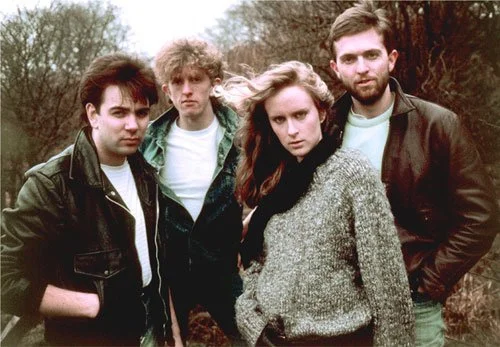
 IN THIS PHOTO: Prefab Sprout

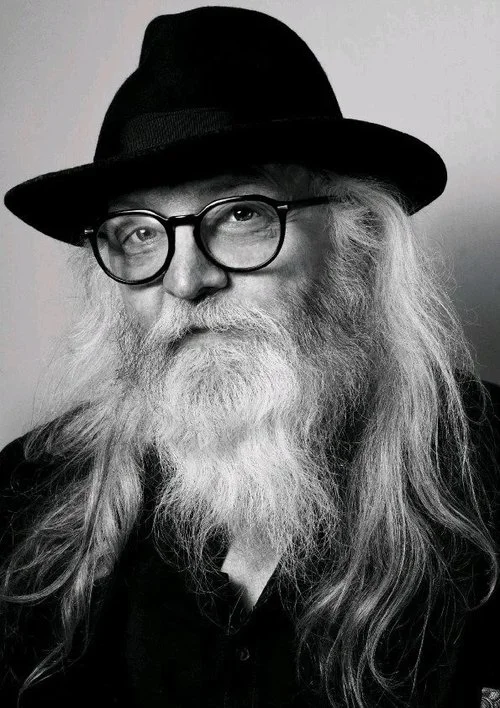
one of the most fascinating and wonderful songwriters who has ever lived turns sixty-five. Prefab Sprout’s magnificent lead, Paddy McAloon, has a pen and mind like nobody else! His songwriting is filled with so much wit, imagination, character and wonder. The legendary band from County Durham formed in 1978. Set up by brothers Paddy and Martin McAloon and joined by vocalist, guitarist and keyboard player Wendy Smith in 1982, they released their debut album, Swoon, to critical acclaim in 1984. I was wondering what the best way was to honour McAloon. I thought, keeping it simple, having a playlist with his greatest songs was best. Although Prefab Sprout are not recording as a band anymore, McAloon released the 2013 album, Crimson/Red, under the band’s name. I am not sure whether there are going to be any further albums. McAloon has faced health challenges over the years, so I can appreciate if he does not want to record anymore. Before coming to the playlist, I want to source an interview Paddy McAloon conducted with Classic Pop Mag last year:

“Having to explain his music to the media is one reason there isn’t more Prefab Sprout music. “If I make something, it kills it stone dead if I spend too long talking about it,” Paddy says.

“So I end up skipping the stage where I actually make the record. I write it and move on – which I know is absolutely mad, because I’m not making a living when I’m doing that.”

This is heartbreaking, not just because the world could always do with hearing more of Paddy McAloon’s music, but also Paddy McAloon is a dream interviewee, both an absolute gentleman and a wise philosopher about music.

Prefab Sprout: Paddy McAloon interview: Unfinished symphonies

Unfinished Prefab Sprout albums include Earth: The Story So Far and a concept album about Michael Jackson. Paddy writes three LPs a year, but doesn’t play them to anyone.

He admits it’s “an obsessional habit”, saying: “I should have made more records and written fewer. I shouldn’t keep so many hidden away in boxes. I’m not lazy, but it’s difficult for the songs I write to satisfy me in the ways they used to.

“You only have so many moves as a writer, no matter how good you are. The thrill is when I surprise myself and think, ‘That’s pretty good, how did I do that?’ You lose that ability as you get older.”

Even the great successes in Prefab Sprout’s canon like Steve McQueen remain something of a mystery to their creator. Their 1985 opus was the subject of a recent Classic Album feature in these pages, but Paddy insists: “You can go to bed thinking you’re quite some guy, because you’ve written all these songs people like.

“But if you talk about them, you start reverse-engineering how those songs were created: you talk about them as if everything was pre-ordained. The truth is, you came up with a few good songs and you were lucky.”

Paddy has long credited Prefab Sprout producer Thomas Dolby as playing a large part in Steve McQueen’s success, confirming now: “I have to give Tom the credit, because he chose the songs we should record. There were only 15 or 16 I played to him, not a huge amount. But in picking the ones he did, he helped shape the album. I wrote the songs, so it can look as if I always have the shape of an album in my head. And that’s not quite true.”

In fact, Paddy was never happier than before Prefab Sprout were even signed. They began with Paddy, his younger brother Martin, and Martin’s drummer friend Mick Salmon in their native County Durham in 1975, seven years before debut single Lions In My Own Garden (Exit Someone) was released.

“The romance all bands have when they can afford their first amp – that’s what it’s all about,” sighs Paddy happily. “That’s when you have the endless possibilities of the world. You make a lot of racket, rehearse endlessly and you’re not so super-tight that anyone else would be impressed, but you’ve got something, and it’s your own something.”

For Paddy, that romance had disappeared once revered debut album Swoon was released in 1984.

“Once you make a living from music, the atmosphere shifts. People around us said after Swoon: ‘That did OK for a record that didn’t cost much. Where’s your next one?’ And suddenly, you’re not bashing out songs in a rehearsal room, it’s me in a room trying to ensure the band’s got a good supply of material. It’s a strange lifestyle, where you’re almost totally dependent on what you create, but musically it’s not actually as intense as when you were amateurs, bashing away every night.”

It was that pressure that meant Prefab Sprout rarely toured. They recorded the albums From Langley Park To Memphis and Jordan: The Comeback in the US, as Thomas Dolby was based there, but the band never actually toured the States.

“I didn’t enjoy being in a band,” summarises Paddy, his Geordie speaking voice as soft and mellifluous as you’d hope from his music. “As a teenager, pop music answers some fantasy part of your mind. And the reality of it – being in the back of a van going to venues – was so far away from the fantasy that I just rejected it.

I retreated to my bedroom mentality, recreating the conditions I had when I was 15, when I could just write and write instead.”

He tried telling bosses at CBS Records that he didn’t want to do promo for Prefab Sprout albums, pointing out that Robert De Niro didn’t do interviews, so why should he? “The reply came back, ‘You’re not Robert De Niro, you’re some scratchy little group from Newcastle.’”

Paddy talks fondly of the artists he saw as his peers – Aztec Camera, The Waterboys, Scritti Politti – but smiles: “I was too shy to talk to people. Everyone would stay at the Columbia Hotel, and my brother Marty could talk to anyone. But when I saw Noddy Holder at the bar, I just thought, ‘That’s Noddy Holder!’ like any fan would and go shy.

I did meet David Bowie, though, in 2000. I said to him, ‘You really used to chop them out in the 80s’, and even as I said it I thought, ‘That’s a very strange analogy to use to The Thin White Duke.’ Bowie thankfully knew what I meant and said, ‘Yeah, I did, I could do two of those albums a year. But nobody would want them now.’”

Prefab Sprout: Paddy McAloon interview: Everybody hertz

One of Paddy’s albums that comes closest to the romantic spirit of Prefab Sprout’s early days is I Trawl The Megahertz. Released in 2003, it was the only long-player out under Paddy’s own name. But its reissue rebrands it as a Prefab Sprout release.

The original Sprout-free identity of I Trawl The Megahertz is because it’s so musically different.

Closer to Shostakovich than When Loves Breaks Down or The King Of Rock ‘N’ Roll, it has a beautiful, neo-classical tranquillity, with two spoken-word passages, based on calls to late-night talk radio phone-in shows which Paddy listened to while recovering from eye surgery for a detached retina. It opens with the evocative 22-minute title track.

“If I released records quicker, my career would be easier able to absorb sudden changes like Megahertz,” admits the 61-year-old. “People would go, ‘Oh, this one is different,’ like Bowie doing Aladdin Sane or Low. But at the time, I went through an agony of thinking, ‘The opening track is 22 minutes and the people who like Cars And Girls might well think, “What the hell is this all about?”’ Over time, those differences in your output just evaporate.”

Of the album’s adventurousness evoking the days before being signed, Paddy muses: “We always had it in us to be a very different band. Me, Marty and Mick liked stuff that wasn’t always song-based, as the 70s had a richness on offer on late-night Radio 1, where you’d hear Tangerine Dream and Captain Beefheart next to Roxy Music.

“If you’re three people jamming in a room, there’s a lot of improvisation and instrumentals. We had those other possibilities, which closed down once I started thinking of myself as a writer of melodies.”

The spoken-word passages were recited by Yvonne Connors, a commodities broker introduced to Paddy via a friend of his wife Vicki. “My wife is in teaching, she has a proper job,” he laughs.

“But her friend Lucy Cuthbertson knew people in theatrical circles and Lucy said, ‘I know someone.’ As soon as I heard this voice on my answerphone’ I thought, ‘There’s something there.’”

Prefab Sprout: Paddy McAloon interview: Battling on

I Trawl The Megahertz is effectively a soft-launch for a full Prefab Sprout reissue campaign, which Sony will begin later this year. Paddy talks excitedly of seeking out contemporary demos to accompany every album, despite Steve McQueen having been given an expanded reissue in 2007.

“I’ve got the Steve McQueen demos that I played Tom Dolby on my guitar,” he reveals. “He wrote the songs he wanted on the back of a cigarette packet. I’ve no idea what those demos are like, but if they’re rubbish people can go, ‘Thomas did a really good job there!’

“There’s a song called Snowy Rents A Dog that I hope will finally make it onto an album. We submitted it for Steve McQueen but Thomas didn’t pick it, so we submitted it for the next album and he still didn’t pick it. It became a running joke between me and Marty – ‘Do you think Snowy will finally make it?’ It’s obvious Thomas didn’t think it was very good.”

Sadly, while Paddy still struggles with bad eyesight, he calls it “small beer” compared to the condition which has significantly damaged his ability to create music.

Since 2006, Paddy has suffered from hearing disorder Meniere’s Disease. He’s had three major bouts, most recently in October 2017, which has left him with seemingly permanent tinnitus in his right ear. “Even as I’m talking to you, it’s constant,” he explains matter-of-factly.

Meniere’s Disease means Paddy is unable to play music with other people, as it’s too loud. Instead, he now composes songs on a tiny two-octave Yamaha keyboard, hitting boxes as noisily as his hearing can tolerate for percussion.

“I can work in batches of an hour-and-a-half,” says Paddy. “My bad ear dominates the good one, which means I can’t judge pitch easily. I keep hoping it’ll recede, but I’m just glad I’m no longer falling over and dizzy like when I had the last major bout. I cherish it now when I can sing.

I didn’t like my singing for such a long time. Maybe there’ll come a time with Meniere’s when I can’t sing at all, and I’ll think, ‘You idiot, you should have sung every day.’ For now, I’m happy in the corner of a room, singing into my cassette player.” He adds that his most recent unfinished LP, Jockey Of Discs, is “The Prefab Sprout dance album.”

Hearing problems, self-doubt, obsessive album delays – it may seem a worrying fate for Prefab Sprout’s leader. But there’s a delight about Paddy, too, the air of someone who can’t believe he got to live out his fantasies, no matter how frustrating some of them proved to be. He has three daughters, aged 15 to 20, and even they think he’s cool.

“They’ll never say it, but I think my daughters think that in some strange way I’m hip,” he laughs. “They’ll intimate to me that people think I’m some sort of deal”.

I shall move on now. Let’s hope that there is more Prefab Sprout music and that magic music from Paddy McAloon! As he is sixty-five on 7th June, I wanted to show just what an astonishing songwriter he is by compiling together songs from the debut Prefab Sprout album in 1984, through to Crimson/Red in 2013.

A genius songwriter and absolute gentleman!

FEATURE: Stranger Things Have Happened… Kate Bush’s 2022: Is It the Time That She Finally Conquers America?

FEATURE:


Stranger Things Have Happened…

IN THIS PHOTO: Kate Bush and dancer Michael Hervieu in the video for Running Up That Hill (A Deal with God)/PHOTO CREDIT: John Carder Bush 

Kate Bush’s 2022: Is It the Time That She Finally Conquers America?

 __________

AT the time of writing this (2nd June)…

 IN THIS PHOTO: Kate Bush performing Running Up That Hill (A Deal with God) in 1985/PHOTO CREDIT:
ZIK Images

Kate Bush’s Running Up That Hill (A Deal with God) is at the top of the iTunes chart. We could very well be looking at Kate's highest ever U.S. chart placing in the Billboard 100, beating her previous best with the same song in 1985. If Bush achieves a singles chart position in the U.K. top twenty later today, she will be the first female artist to have had top twenty U.K. hit singles in six consecutive decades: the 1970s, 1980s, 1990s, 2000s, 2010s and 2020s. This is all down to Stranger Things – the U.S. series on Netflix – featuring her famous Hounds of Love song. It is no surprise that the track is likely to break records and see Bush get a top twenty in the U.K. She has always been loved and supported in her home country. Whilst Bush’s music has been shown and featured on U.S. shows and films, it has not necessarily translated into a renaissance of popularity there. Bush has never been too fussed about ‘cracking America’. Hounds of Love is the album that most Americans associate with her; the one that did well in the charts, even though critical reviews were mixed. There has been a tsunami of focus and love for Kate Bush and her ‘appearance’ on Stranger Things. The song has been used prominently on one of the most popular shows on Netflix. Now sixty-three, Bush is not going to worry too much about commercial success in the U.S. Many young listeners are discovering Kate Bush in America for the first time. A nation that has never really boosted and embraced her as other nations have, the fact that she has thrice been nominated for entry into the Rock & Roll Hall of Fame (the latest time was this year) and denied shows that there is still this barrier and lack of understanding.

Many U.S. artists have covered her songs – in fact, Running Up That Hill (A Deal with God) will get its fair share of new covers now! – and mentioned Bush as influential. Radio stations play her songs, though I suspect they are a reserved few from Hounds of Love. In fact, U.K. stations are rigid regarding which Bush tracks they play. My big hope here is that chart success means stations play deep cuts and do not endless fall back on the ‘hits’. It is great Stranger Things has helped highlight the wonders of Running Up That Hill (A Deal with God), but this is a song already heavily featured on playlists. I do wish that stations would broaden their focus and stop defining Bush as someone whose only accessible and worthwhile work is on her 1985 album! More importantly right now is the fact Generation Z is latching onto her music. I don’t think that chart success will stop in the U.S.. Other tracks from her will get new light and popularity. Other filmmakers will approach Bush to use her music. Given the fact she has been supportive and involved with Stranger Things and Running Up That Hill (A Deal with God) means she might be more open to having her music used this way. I am not sure whether Bush’s opinions on American success have changed but, almost forty-five years since she recorded her 1978 debut, The Kick Inside, she has conquered America!

Not only could a high chart placing here mean that other albums and songs from her are heard and given more airplay there. I also think she will be reassessed by the media. Even when it comes to huge albums like Hounds of Love, The Sensual World, The Dreaming and Aerial, there is still a modicum of bitterness, doubt or cynicism. The chart positions have been either low or lower than in the U.K. Many feel that, as a Kate Bush-esque artist like Tori Amos is making music, then why embrace her? That perception has started to shift recently, but this new wave of success and highlighting could be significant. Of course, when Stranger Things’ fourth season has ended, there will be this dying down of talk about Running Up That Hill (A Deal with God). What happens next month and the months going forward? A new generation and fanbase will ensure that Kate Bush’s televisual explosion is not the end of things. Without new material coming forth, it is hard to say how this 2022 resurgence and chart success will translate. Of course, if there is an album coming this year, I reckon American critics and audiences are going to snap it up like they wouldn’t have done before. It is an exciting time for Bush’s music! My biggest prediction is that there will be cover versions, tributes to her, more artists in American being inspired by her and, therefore, they will make music that has elements of her sound. We might even get new books about her and a magazine article or three about the ‘Stranger Things phenomenon’. Maybe she will not go to the U.S. to do any interviews, but I would not bet against press and radio interviews coming soon. I have been rewatching interviews Bush did in America in 1985 and realising that she was getting respect and being taken seriously – quite right considering the genius of Hounds of Love. As I keep saying, if she does get chart glory and a new generation of fans in the U.S., then it is going to be…

LONG overdue.

FEATURE: The Lockdown Playlist: Charlie Watts at Eighty-One: The Late Drummer’s Best Beats with The Rolling Stones

FEATURE:


The Lockdown Playlist

IN THIS PHOTO: Charlie Watts in 1965/PHOTO CREDIT: George Wilkes/Hulton Archive, via Getty Images 

Charlie Watts at Eighty-One: The Late Drummer’s Best Beats with The Rolling Stones

 __________

2ND June marks what would have been…

 PHOTO CREDIT: Michel Euler/AP

Charlie Watts’ eighty-first birthday. We lost him last year at the age of eighty. It was a sad loss for the music world. Such an iconic drummer, he came to define The Rolling Stones’ sound. An incredible skilful and inventive drummer, I want to mark his eighty-first birthday with a playlist containing some of his best beats. Before then, AllMusic provide some biography about the much-missed Charlie Watts:

“Charlie Watts was world famous as the drummer with the Rolling Stones, a position he held for nearly 60 years, and the subtle yet strong swing of his backbeat and his deceptively simple grooves would become one of the band's audible trademarks. When not busy with the Stones, Watts also enjoyed a celebrated sideline playing jazz, his first love, with a variety of British combos, both large and small. As with the Stones, Watts' jazz work didn't trade in flash, instead displaying a peerless instinct as to where to put the notes to best serve the music. The consistent strength of Watts' performances with the Rolling Stones are borne out on their career-spanning 2002 collection Forty Licks, while among his jazz recordings, 1992's A Tribute to Charlie Parker with Strings is a loving tribute to one of his favorite artists, 2004's Watts at Scott's captures him on-stage at London's premiere jazz venue, and 2017's Charlie Watts Meets the Danish Radio Big Band found him sitting in with a celebrated European ensemble.

Charles Robert Watts was born on June 2, 1941 in London, England. His father drove a lorry, while his mother worked in a factory. Watts grew up in Wembley, Middlesex, and as a youngster he developed a love of music, especially jazz, collecting 78s with his friend Dave Green ranging from Charlie Parker to Jelly Roll Morton. Watts was eager to learn to play an instrument, and in his early teens, he bought a banjo. He soon found he didn't enjoy working out the fingerings for songs, so he removed the neck from the banjo, put the head on a stand, and played it like a snare drum with brushes, following the style of Gerry Mulligan drummer Chico Hamilton. His folks thought he showed promise as a drummer, so they bought him a cheap drum kit in 1955, and his savings were spent on jazz records and upgrading his drum set. After completing secondary school, Watts enrolled at Harrow Art School, and he went on to land a job as a graphic designer and illustrator for an advertising agency. In his spare time, Watts played with a jazz group, but rhythm and blues was becoming the hot new sound in London, and Alexis Korner invited him to join his group Blues Incorporated. Watts took the gig and played out with Korner as his schedule permitted. Watts' tight, tasteful playing and powerful groove caught the attention of another British blues act, who needed a drummer and felt Charlie was the right man for the job. Watts initially opted to stay with Blues Incorporated, but when the Rolling Stones offered to pay him five pounds a week to play with them, he joined the group, playing his first show with them in February 1963. By the end of the year, they had developed a powerful reputation as a live act, and they signed with the British Decca label, with London Records distributing their recordings in North America. Their first single, "Come On," was a moderate hit, and the Stones were on their way. In April 1964, the Rolling Stones released their debut album, and following the success of the Beatles in the United States, they sought to conquer America. "Time Is on My Side" became their first Top Ten hit in the U.S. "(I Can't Get No) Satisfaction," issued in June 1965, became a massive international smash, and the Rolling Stones would spend the next several decades billing themselves as the Greatest Rock & Roll Band in the World.

While debauchery and wild living would be the order of the day for most of his bandmates, Watts was one Stone who was unimpressed with the trappings of fame. He wed his art school girlfriend, Shirley Ann Shepherd, in 1964, and they would stay together for 57 years. Watts rarely partied after a show, preferring to get a good night's sleep and draw pictures of his hotel rooms in his sketchbook. He used his fortune to indulge his taste in vintage suits, thoroughbred horses, and classic automobiles (despite the fact that he couldn't drive). And through the sometimes bumpy road of the Rolling Stones career, Watts would be a beacon of stability, remaining a steady force behind the kit. Watts was also a moderate drinker who avoided drugs until a combination of a midlife crisis and family problems led to him experimenting with hard drugs in 1983, resulting in a dark period that lasted two years. Tellingly, Watts would clean up when he realized his habit was ruining his marriage, and he gave up drugs and alcohol for life.

Despite his busy schedule with the Rolling Stones, Watts never lost his interest in jazz, and in 1964, he wrote and illustrated a children's book inspired by the life of Charlie Parker, Ode to a High Flying Bird. In the late 1970s, during downtime from the Stones, he began performing with Rocket 88, a group specializing in classic boogie-woogie led by Ian Stewart, the Stones' original pianist and longtime road manager. The group put out an eponymous album recorded during a show in Germany in 1979, in March 1981. After kicking his drug habit in the mid-1980s, Watts began indulging his love for jazz in a bigger way, and he formed the Charlie Watts Orchestra. A 33-piece ensemble featuring a number of notable British jazz artists, it toured the United Kingdom, Europe, and the United States.

A March 1986 performance by the Orchestra was recorded and then released later the same year as Live at Fulham Town Hall. 1991 saw the release of From One Charlie, with Watts anchoring a band playing favorites from the Charlie Parker catalog; the package included a version of his Ode to a High Flying Bird book. Watts paid further homage to Parker with his next album, 1992's A Tribute to Charlie Parker with Strings, featuring Peter King on sax and credited to the Charlie Watts Quintet. Watts recruited Bernard Fowler, a vocalist who had become part of the Stones' touring ensemble, for 1993's Warm & Tender, a low-key collection of classic standards. Fowler rejoined the Charlie Watts Quintet, with the London Metropolitan Orchestra lending support, for 1996's Long Ago & Far Away, another set of familiar standards. Watts and well-respected studio drummer Jim Keltner created an unusual effort with 2000's Charlie Watts Jim Keltner Project, which featured nine percussion-based pieces laced with electronics that paid tribute to some of their favorite drummers. Watts was in more traditional form on 2004's Watts at Scott's, with Charlie's new ensemble the Tentet recorded live at Ronnie Scott's, long regarded as London's finest jazz club. With Axel Zwingenberger, Ben Waters, and Dave Green, Charlie became 25% of the ABC & D of Boogie Woogie, an ad hoc quartet devoted exclusively to playing vintage boogie-woogie numbers, and they issued an album, Live in Paris, in 2012. Watts sat in with the Danish Radio Big Band for the 2017 LP Charlie Watts Meets the Danish Radio Big Band, which included jazz arrangements of three Rolling Stones classics as well as several more traditional jazz pieces.

Watts's various jazz projects were, of course, created when the Rolling Stones weren't occupied with touring and recording, and the group kept up a busy schedule in the 21st Century. On August 19, 2019, the Stones played a show in Miami, Florida, the last concert before a touring break, performing the final song as rain poured down. The COVID-19 pandemic forced the band to cancel a number of scheduled dates in 2020, and on August 3, 2021, they issued a press release revealing that Watts would be sitting out the make-up shows set to begin in September, due to health issues, with Steve Jordan (a friend of the band who had played on Keith Richards' solo project) as his temporary replacement. On August 24, 2021, Charlie Watts died at a London hospital, surrounded by family, at the age of 80”.

To celebrate the work of the incredible Charlie Watts, below is a playlist with some of his amazing drumming. Perhaps not the most powerful drummer, Watts managed to fascinate, move and stun with something more skilled, subtle and textured. I don’t think that we have ever seen another drummer quite like Charlie Watts. I honestly don’t think…

THAT is ever going to change.

INTERVIEW: Róisín O

INTERVIEW:

Róisín O

_________

AN artist who I hold a lot of respect…

and affection for, the magnificent Róisín O tells me about her new album, Courageous. It is available to stream (it came out physically on 29th April in Ireland; the official release date for the UK is 1st July), although I would urge everyone to pre-order it on vinyl, as her immaculate, incredible, passionate and unique voice is best experienced on that format! From the songs that I have heard and enjoyed already, it is clear that the Dublin-born artist is one of the finest out there. A stunning talent who is following her 2012 solo album, The Secret Life of Blue, with, what I think is her strongest work yet, it was a pleasure learning more about the one and only Róisín O. As the daughter of Mary Black, it no surprise that music was a big part of her childhood! Róisín O also tells me about what it was like recording during the pandemic (her band, Thanks Brother, came to a natural stop in 2020), why more eyes should be on Ireland and Irish music, and what it has been like getting back on the road and connecting with fans after such a long time. If you have not heard the music and magic of Róisín O, then go and check out (and order) the wonderful Courageous – to me, one of the finest albums of this year so far. Here is a very special and gifted artist…

WITH a hugely exciting future ahead.

__________

Tell me about your new album, Courageous. Writing about dealing with loss, heartache, breakups, letting go, growth and hope, how easy was it to write so openly? Was there a sense of catharsis and clarity writing about these subjects so honestly?

When I first started writing songs on this album, I really didn’t have an album in mind. I wasn’t really thinking about releasing them; they were very much for my own ears. I think, with that weight of ‘what will people think’ off my shoulders, the songs were created much more openly and earnestly. They were extremely cathartic to write, particularly songs like Heart + Bone, Stolen and Courageous. It wasn’t until I wrote those lyrics down on paper did I get certain clarity about some difficult moments in my life.

“I think it’s really important to have light and dark on an album and within each song”.

Even though a lot of the tracks deal with hard subjects and deep emotions, they are also uplifting and fun. How important was it to put this energy and optimism in Courageous?

For me, the sad songs often come easier. I’m too busy being happy to write happy songs when I’m happy, if you get me?! Upbeat songs like 2023 came in the depths of lockdown when the future seemed so grim that I really wanted to write something that had hope and optimism about the future. I think it’s really important to have light and dark on an album and within each song. Songs like Night Stretches Through portray quite dark emotions of seeing someone you love with someone else. But juxtaposed against an upbeat, driving backing track.

Are there particular tracks from the album that are standout or mean a lot to you personally?

Heart + Bones was the first track I released as a solo act in about 5 years - and probably means the most to me. It was the most honest and bare-all song I’d ever written. And the response I got from fans was really mind-blowing. It really connected with people in ways I couldn’t have imagined. And getting that response gave me the push I needed to release the album.

The pandemic must have made it difficult when it came to recording and making plans. Did that sense of disconnection and isolation make you more determined to put this album out?

For me, I honestly feel if it wasn’t for the pandemic I wouldn’t have made this album. Lockdown gave me the time I needed to write these songs and bring them to life with people I really admire. Songwriting and recording always came second and third to me after performing live, and they have been parts of music that I never really felt at ease with. But writing and recording this album was so different. I poured myself into it even more, partly because I was really missing that live music outlet. And it ended up my best recording experience ever.

Courageous sees you working as a solo artist again. You have embarked on various different stages through your career. Why did you decide to come back to working solo in 2021?

My band Thanks Brother came to a natural end in 2020, and to be honest, I was very unsure what I was going to do with my life for a good few months that year. I remember chatting to my now-manager Adelle asking her advice: “Maybe I’ll start a new band; maybe I’ll go by a new name”. She stared me down and asked me: “What the fuck are you on about? People want to hear Róisín O”. I think I needed that kick in the arse. I released a cover of Lose You to Love Me soon after that which blew up online, and it gave me the confidence I needed to think about releasing solo work again.

“But the artist who influenced me most was Joni Mitchell. Her album, Blue, was a turning point for me from when I was about 14”.

You have collaborated with other artists (including working as part of Thanks Brother), and now you are back working as a solo artist. That said, are there any artists that you would really love to work with but haven’t done yet?

I love working with other artists! Just the other day, I was chatting to Faye O’Rourke from Soda Blonde (who I’d love to collaborate with). Their debut album is stunning. Collaborating with some of my idols would be a dream obviously, like HAIM or Arcade Fire!

Take me back to the start. Who were the artists who inspired you growing up? How important was music in your household?

My house was full of music growing up. From my parents, I got really into American Folk like James Taylor, Crosby Stills & Nash, and Fleetwood Mac. My two older brothers got me into bands like Radiohead, Oasis, Blur, and The Cranberries. While my friends got me into Red Hot Chilli Peppers and Muse. At a young age, I was always drawn towards women in all genres, particularly Destiny’s Child, Avril Lavigne, and Celine Dion. But the artist who influenced me most was Joni Mitchell. Her album, Blue, was a turning point for me from when I was about 14.

Your mother is the legendary Folk artist, Mary Black. How supportive has she been when it comes to your music and journey?

She couldn’t be more supportive. She’s the best mam ever.

You have an incredible and distinct voice! How do you think it has changed and developed since your debut as a twenty-four-year-old?

I think my voice has definitely got stronger since then. I feel I’m only scraping the surface now in terms of technique in (regards) what my voice can really do.

“It’s tough as an Irish artist to break through outside home. And it’s not made easier with the huge amount of American and U.K. music that gets played on Irish radio”.

Ireland is a country that, to me, is producing some of the best new talent. Despite that, a lot of the media still focused on England (and London especially). Do you think more eyes should be on Irish music?

 Yes, I do. It’s tough as an Irish artist to break through outside home. And it’s not made easier with the huge amount of American and U.K. music that gets played on Irish radio. It would be great to see that change, and for more up-and-coming Irish artist to be able to build up their careers at home.

You have done some live gigs recently. What is it like being back performing and connecting with fans? Are there plans to come to the U.K. at any point and perform?

I didn’t realise how much I missed performing live until I got back on stage. After that first show, I got off stage and was like, ‘Oh, this is why I’m a musician’. There’s no amount of songwriting or recording or live streaming that can substitute for performing for and connecting with a live audience. I’ll be opening for The Coronas on their U.K. tour, and with another Irish artist’s tour - which will be announced soon. All in September. Keep an eye on my Instagram for dates.

I think that your music would be perfect on the big screen and, in fact, you have this gravitas and personality that would translate to film! Is that an area you have thought about exploring in terms of acting or recording?

It’s something I’d definitely think of in the future. It’s always great for any act to get a sync in T.V. or film. But I suppose I don’t write for that in mind particularly. But I would love to pursue it more in future.

Finally, and for being a good sport, you can pick any song you like to finish with (it doesn’t have to be one of your songs) and I will include it here.

Róisín O - Better This Way.

____________

Follow Róisín O

FEATURE: Kate Bush 3D: Could There Be An Art Exhibit or New Event to Celebrate the Iconic Images of a Legendary Artist?

FEATURE:


Kate Bush 3D

IN THIS PHOTO: Kate Bush at Old Chapel Studios, London in 1978/PHOTO CREDIT: Gered Mankowitz 

Could There Be An Art Exhibit or New Event to Celebrate the Iconic Images of a Legendary Artist?

 __________

ALTHOUGH this was announced…

 IN THIS PHOTO: Kate Bush in 2011 in a promotional photo for Director’s Cut/PHOTO CREDIT: John Carder Bush

a couple of weeks back, I wanted to write about it now, as there has been quite a bit of Kate Bush activity. One thing I didn’t feature is how her music has is being used in the new season of the U.S. show, Stranger Things. It is not unusual a song from Bush should feature on a T.V. show or film. It has happened before, but she is quite selective about who she allows to use her music! Around the fortieth anniversary of The Dreaming in September, there will be things happening. The Kate Bush fanzine, HomeGround, is forty very soon – that is being marked with a special digital edition. I will be looking into her debut album, The Kick Inside, as it was completed in August 1977 (making it forty-five soon). One piece of news that caught my eye came via The Guardian. They reported how English photographer Gered Monkowitz, who shot Bush in the first few years of her professional career, is allowing many of his shots to be turned into 3D works. He took some remarkable photos of Bush. Mankowitz has also shot some huge icons and legends. There is this move to preserve some of his shot (including one of Kate Bush) and turn them into 3D works:

“British photographer Gered Mankowitz has an archive that spans 60 years, capturing an extraordinary array of stars that include Jimi Hendrix, the Rolling Stones, Slade, Elton John and Kate Bush. Now, he hopes that vast treasure trove will be given a new lease of life after selling the lot to a company that plans to use digital technology to turn the images, among other things, into three-dimensional works of art.

Mankowitz is the latest high-profile photographer to sell the rights to his images, after a similar move by well-known musicians: Bob Dylan and Bruce Springsteen are among many who have sold their recording and songwriting rights for large amounts of money.The photographer, who lives in Cornwall, feels that this is about creating a legacy of his work, as well as a multimillion-pound nest-egg in his 76th year. “My work will be taken to new levels that I could never have hoped for by myself,” he said this weekend. “I feel very excited.”

Unpublished shots are among tens of thousands of negatives, transparencies and digital scans he has transferred to Iconic Images, which is owned by the US giant Authentic Brands Group (ABG), owner of the rights to some of the world’s most prominent stars of music, screen and sports.

The worst nightmare of any artist is having their work associated with unfortunate products or causes, said Peter Fetterman, author of The Power of Photography. “Often the heirs of great photographers are completely unable to preserve the legacy or even organise the archive in a professional way. Major museums are not equipped to do it or have no interest in doing it. What is absolutely necessary is to protect the legacy of these great photographers”.

 IN THIS PHOTO: Kate Bush in 1985/PHOTO CREDIT: Guido Harari

Mankowitz has released his photos of Bush in a coffee book. There was a plan a while ago for a book to come out. That did not happen. It makes me think about the photos he took of her; some of the outtakes and general recollections that could form part of an exhibit. Think about other photographers like her brother, John Carder Bush, and the great Guido Harari. There are some stunning press photos, live shots, ones taken during interviews, in addition to more candid ones and childhood photos. Bush is sixty-five next, year, and I think that should be marked with various projects. Maybe some album reissues (with demos and extras), plus a tribute/remix album with some of her best-known songs and deeper cuts. There is room for a new book. I don’t think that would saturate the market or distil he potency and importance. Conversely, it would show just how much love there is for her, and how important she remains after all of these years! I think the visual side of Kate Bush is so captivating and tells as much as her story as the music does. With news that we could see a famous Kate Bush image in 3D, it got me wondering about a wider celebration. A gallery or series of days where Kate Bush was represented through the years. It would intrigue and excite superfans and the more casual alike.

Perhaps her videos could be playing, although I reckon the photos alone are worthy of their own place and space. From the fabulous shots by Gered Mankowitz; the decades-spanning ones from John Carder Bush, plus all the rest that show different sides to Kate Bush, surely next year would be a time to consider housing photos of the iconic Kate Bush. Maybe a special portrait of her or some other visual aids would provide this great interactive exhibition that documents the career and life of one of the most celebrated and loved artists ever! It will be interesting seeing what comes of the Gered Mankowitz/3D plan. Having plans put in motion that collates some of the best images of her would garner plenty of interest. I think that Kate Bush would support it too. Almost forty-five years since she recorded her debut album, there is still nobody like her! Having your photo taken is something that all artists have to get used to through their careers. Some dislike it or are not natural. There are those who radiate and provide something phenomenal with every photo. Legends like David Bowie and Madonna are examples. Kate Bush can be added to that list! When it comes to photos of her, the magnificent and incomparable Kate Bush…

 IN THIS PHOTO: Kate Bush at Old Chapel Studios, London in 1978/PHOTO CREDIT: Gered Mankowitz

ALWAYS captivates and shines!

FEATURE: Paul McCartney at Eighty: Thirty-Nine: When I'm Sixty-Four: Paul McCartney's Memory Almost Full at Fifteen

FEATURE:


Paul McCartney at Eighty

Thirty-Nine: When I'm Sixty-Four: Paul McCartney's Memory Almost Full at Fifteen

 __________

FOR the penultimate part…

 PHOTO CREDIT: Søren Solkær

of my forty-run series on Paul McCartney ahead of his eightieth birthday, I am focusing on an album that turns fifteen on 4th June. My final feature will be about my thoughts and experiences of his music. The reason I wanted to write about Memory Almost Full, is because it remains one of best solo albums – thought it is massively underrated and deserves some fresh listening and reviews. I cannot understand why so many have given it mixed reception, as there are some cracking songs on the album! I have already done a couple of anniversary features – about Tug of War (1982) and Flaming Pie (1997) -, but there is another interesting aspect to Memory Almost Full. A lot of its seems to be about mortality and growing older. There are nods back to McCartney’s past. The Beatles’ Sgt. Pepper’s Lonely Hearts Club Band turned fifty-five last month. One of McCartney’s songs, When I’m Sixty Four, springs to mind. Macca was sixty-four when Memory Almost Full came out. I like the idea of this man who once thought being sixty-four was an old age releasing an album at that age full of vigour, range and life! Now he is almost eighty, I wonder how he thinks about albums like Sgt. Pepper’s Lonely Hearts Club Band and Memory Almost Full. His fourteenth solo album is one of those that people need to hear and spend time with!

 Even if the title reference’s McCartney’s mobile phone saying that its memory was almost full, the album is deep and has some hugely moving songs. Memory Almost Full was produced by David Kahne and recorded at Abbey Road Studios, Henson Recording Studios, AIR Studios, Hog Hill Mill Studios and RAK Studios between October 2003, and from 2006 to February 2007. At this time, McCartney was working with Nigel Godrich on a very different album: the superb and stronger-reviewed Chaos and Creation in the Backyard. I cannot find any press interviews with McCartney around the album. There is some Wikipedia information, sourcing McCartney discussing Memory Almost Full on an official website for the album:

“In the website constructed for the album, McCartney stated: "I actually started this album, Memory Almost Full, before my last album Chaos and Creation in the Backyard, released September 2005. (...) When I was just finishing up everything concerned with Chaos and had just got the Grammy nominations (2006) I realised I had this album to go back to and finish off. So I got it out to listen to it again, wondering if I would enjoy it, but actually I really loved it. All I did at first was just listen to a couple of things and then I began to think, 'OK, I like that track – now, what is wrong with it?' And it might be something like a drum sound, so then I would re-drum and see where we would get to. (...) In places it's a very personal record and a lot of it is retrospective, drawing from memory, like memories from being a kid, from Liverpool and from summers gone. The album is evocative, emotional, rocking, but I can't really sum it up in one sentence”.

Songs like Vintage Clothes, Mr. Bellamy, Ever Present Past, Gratitude and The End of the End makes it essential listening! It is interested how, in AllMusic’s review, they also mention my observation about Memory Almost Full/Sgt. Pepper’s Lonely Hearts Club Band/When I’m Sixty Four:

 “Allusion to the digital world though it may be, there's a sweet, elegiac undercurrent to the title of Paul McCartney's Memory Almost Full, an acknowledgement that it was written and recorded when McCartney was 64, the age he mythologized on Sgt. Pepper's Lonely Hearts Club Band, released almost exactly 40 years before Memory. Certainly, McCartney has mortality on the mind, but this isn't an entirely unusual occurrence for him in this third act of his solo career. Ever since his wife Linda's death from cancer in 1998, he's been dancing around the subject, peppering Flaming Pie with longing looks back, grieving by throwing himself into the past on the covers album Run Devil Run, slowly coming to terms with his status as the old guard on the carefully ruminative Chaos and Creation in the Backyard. But if that previous record was precise, bearing all the hallmarks of meticulous producer Nigel Godrich, Memory Almost Full is startlingly bright and frequently lively, an album that embraces McCartney's unerring gift for melody. Yet for as pop as it is, this is not an album made with any illusion that Paul will soon have a succession of hit singles: it's an art-pop album, not unlike either of the McCartney albums. Sometimes this is reflected in the construction --- the quick succession of short songs at the end, uncannily (and quite deliberately) sounding like a suite -- sometimes in the lyrics, but the remarkable thing is that McCartney never sounds self-consciously pretentious here, as if he's striving to make a major statement. Rather, he's quietly taking stock of his life and loves, his work and achievements. Unlike latter-day efforts by Johnny Cash or the murky Daniel Lanois-produced albums by Bob Dylan, mortality haunts the album, but there's no fetishization of death. Instead, McCartney marvels at his life -- explicitly so in the disarmingly guileless "That Was Me," where he enthuses about his role in a stage play in grammar school with the same vigor as he boasts about playing the Cavern Club with the Beatles -- and realizes that when he reaches "The End of the End," he doesn't want anything more than the fond old stories of his life to be told”.

Reaching the top five here and in the U.S., Memory Almost Full was a commercial success. It showed that, forty-five after he started recorded/working with The Beatles, there was still so much love and demand for McCartney’s music. In terms of the songwriting quality, I feel Memory Almost Full is one of his most nuanced and eclectic albums. The fact so many songs hark back to the past suggest that he was both looking at brighter times – McCartney was experiencing marital issues at the time; his divorce from Heather Mills was finalised in 2008 – and reflecting on ageing and the future. This is what Entertainment Weekly said in their review:

“Paul McCartney isn’t about to let a little thing like a contentious divorce send him on a bleak confessional bender. He opens Memory Almost Full, his 21st solo album, in fancy-free fashion, pulling out the mandolin and inviting pals over to ”Dance Tonight” (an alternative gala to Dancing With the Stars?). Still, now that he’s 64, even rock’s most sanguine superstar is ultimately drifting toward weightier thoughts on mortality and the passing of time. Many of these Memory pieces have Macca taking stock of a pretty cool life that ”went by in a flash” or, in ”End of the End,” serenely anticipating his own final curtain. It’s his version of Bob Dylan’s Time Out of Mind…if Time Out of Mind had cutthroat pop instincts and whistling solos.

Any Starbucks employee who’ll be forced to spin this nonstop — since Memory‘s the flagship release on the chain’s new label — should take heart: McCartney’s ruminating has somehow inspired his zestiest music in eons. ”If fate decreed that all of this would make a lifetime, who am I to disagree?” he yowls in ”That Was Me.” The lyrics are nostalgic, but the music avoids the self-consciously Beatlesque touches of his other recent discs, freeing him up to make the equivalent of a great Wings album (a quality you’ll recognize as soon as you hear ”Only Mama Knows,” a rocker with a distinctly ”Jet” engine). His best record since 1989’s Flowers in the Dirt, Memory is beautifully elegiac and surprisingly caffeinated”.

A terrific Paul McCartney that everyone, fan or not, should check out, I wanted to use this penultimate eightieth birthday/anniversary feature to urge some reappraisal ahead of the fifteenth anniversary of Memory Almost Full. On 4th June, two weeks before Macca’s eightieth birthday, one of his underrated gems of an album is fifteen. I hope that it provokes people to listen to and realise, after so many years as a songwriter, he had this capacity and innate ability to surprise. Maybe it should not be a shock that a then-sixty-four-year-old would release an album with such phenomenal songs. The greatest songwriter who has ever lived, Paul McCartney is so incredibly musical and curious. Ideas and inspiration flow out of him! For any McCartney fans that might not have heard Memory Almost Full, it is an album that I can definitely recommend. Solid and filled with remarkable moments, I am almost now at the end of this forty-feature run to celebrate the master’s birthday on 18th June. One of the most interesting Paul McCartney releases, it only showed that age could never dampen or distil his incredible talents! That is one reason why he is…

SUCH a legend.

FEATURE: Simple Human Nature: Thinking Ahead to Michael Jackson’s Thriller at Forty: The Greatest Album Ever?

FEATURE:


Simple Human Nature

Thinking Ahead to Michael Jackson’s Thriller at Forty: The Greatest Album Ever?

__________

I’M looking ahead to the end of November…

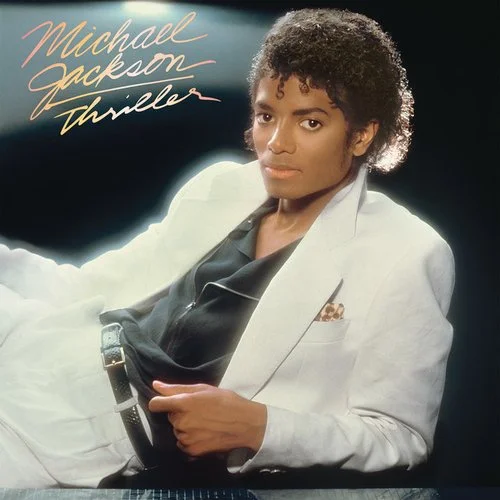
as that is when Michael Jackson’s Thriller turns forty. It is relevant I mention it now, as there is an anniversary edition of the album coming out. I am going to get to some retrospective examination of the album, alongside two of the (many) positive reviews for Thriller. Undeniably one of the very best albums ever, I will ask whether it is the very best. Variety report how there is an anniversary treat coming for fans of Michael Jackson’s sixth studio album of 1982:

“Sony Music and the estate of Michael Jackson will observe the 40 th anniversary of Michael Jackson’s classic “Thriller,” the biggest selling album of all time (by most metrics), with the November 18 release of “Thriller 40”: a double CD set comprised of the original album and a second disc “full of surprises for fans, including never-released tracks which were worked on by Michael for the ‘Thriller’ album,” according to the announcement, which comes on the heels of 10 Tony nominations for “MJ the Musical,” which features several songs from the album.

During its 112th week on Billboard’s album chart, “Thriller” became the first title ever to be certified 20-times platinum by the RIAA (on October 30, 1984), became the first title ever to be certified more than 30-times platinum in 2015, and since has been certified at 34-times platinum.Seven tracks from the album became Top 10 singles, and three, “Beat It,” “Billie Jean,” and “Thriller,” went No. 1. “Thriller” was the first album in history to spend each of its first 80 weeks in the album chart’s Top 10, a feat only reached by one other album in the nearly four decades since.

Mastered from the original analog master tapes, Mobile Fidelity will also make available the original “Thriller” album as a One-Step 180g 33RPM LP, pressed at RTI and strictly limited to 40,000 numbered copies as well as a hybrid SACD . (An UltraDisc One-Step 180g 45RPM 2LP set of “Thriller” will be released at a later date.)

In the U.S., Walmart will have an exclusive version of the original “Thriller” album with an alternate 40th anniversary cover, while Target will have an exclusive version of the original album with a commemorative “Thriller 40” vinyl slip mat.

Several activations are planned for the coming to honor the album, which won eight Grammys, spent more than 500 weeks on the Billboard albums chart and has sold over 100 million albums worldwide since its release on November 30, 1982.  The first such activation is the first drop of new merchandise featuring the special “Thriller 40” logo, which is now available exclusively through the MichaelJackson.com webstore”.

Similar in some ways to 1979’s Off the Wall in terms of the blend of R&B, Disco, Pop and other genres together with Jackson looking confident on the front cover (though he is more serious on Thriller’s cover), Thriller is a more varied and bigger album. Although there are a couple of weaker tracks at the end of the album, Thriller houses some of Jackson’s best songs. Indeed, I do not think any album contains a stronger one-two-three than Thriller, Beat It and Billie Jean. Ending the first side and providing the second side’s first two tracks, it is a great run of wonderful songs! With the late Rod Temperton writing some of the biggest songs (the title track and Baby Be Mine) and Jackson penning some classics (Beat It, Wanna Be Starting’ Something, and Billie Jean), it possesses so much genius! Jackson’s ability and range as a songwriter and performer is realised here. Small wonder that Thriller remains of the the most-popular and biggest-selling albums ever. Before coming to some reviews and wrapping up, The Wrap looked at the legacy of Michael Jackson’s magnum opus:

“Besides those sales, breaking the MTV color barrier with the rock oriented “Beat It,” and creating the measure by which music videos are still judged with “Thriller,” Jackson had a profound effect on modern music. Jackson’s legacy is as wide and broad as Elvis and the Beatles in crossing boundaries of style, fans and even nations.

Before “Thriller,” with the exception of the short-lived multiracial Sly and the Family Stone, radio formats throughout most of the country were, like MTV, rigid — and the barriers between genres were strict. Rock didn’t mingle deeply with funk and white didn’t really dance with black.

The unprecedented transcending synthesis of R&B, funk, rock and almost -Broadway ballads that make up the songs on “Thriller” are the core of Jackson’s musical endurance.

After “Thriller,” hip-hop pioneers Run DMC would duet with rehab rockers Aerosmith; Boy George, a gay white British dance clubber who dressed like Mama Cass and sang like Aretha Franklin, found millions of fans in the UK and the USA; and a prodigy called Prince gained a mainstream following from the beat and guitar heavy “Purple Rain.”

It has sold over 100 million copies worldwide and is, at double what AC/DC’s second-place holder “Back in Black have shipped, the best-selling record of all time. “Anybody and everybody bought his stuff from DJs to people who just like pop music,” Rick Sanchez, manager at L.A.’s Amoeba Records told TheWrap on Thursday evening.

Jackson’s record, as his career begins the inevitable posthumous Elvis and Beatle resurrection and re-releases, is already growing larger just one day after his death. “His albums, from the Jackson 5 stuff to “Thriller” and his solo stuff, has always sold,” Sanchez said. “Since the news has become official today, we’re sold out of everything we have.”

Indeed, just hours after Jackson’s death was announced, his sales soared. Jackson records made up the entire Top 5 of iTunes Top Albums — with "Thriller" at #2 and the "Thriller 25th Anniversary" release at #5. On Amazon.com, the 25th anniversary realease was #1, with other of his albums making up the site’s Top 15 bestsellers.

Then again, success, for better or worse, came early to Michael Jackson. Performing since he was six years old with his brothers in the Jackson 5, Michael, who would later claim he was mentally and physically abused by his manager father, was a star at 11 with number-one hits like “I Want You Back” and “ABC.”

Even those songs, with their infectious Motown charm, showed a different approach to standard pop that was indicative of Jackson. There were bouncy funk melodies, sure — but overtop, young Michael’s vocal was noticeably gritty. The skinny boy sounded like an old soul or saloon singer.

The progression in tone and talent continued on Jackson’s fifth solo album, 1979’s “Off the Wall,” where he successfully stepped into adult contemporary R&B and late night dance clubs. At that point, it was a career less-ambitious artists would have gladly settled for — but not Michael Jackson. The singer, whose voice remarkably smoothed out the older he became didn’t just want to crossover with white and black audiences — he wanted to create the sounds that would overwhelm the world.

Similar to the Beatles cheering up an America depressed by the death of JFK, Jackson’s timing was perfect. The Reagan Era had just begun, a new age of celebrity celebration, after the casual ‘60s and ‘70s, was in and Pop was back.

Working with songwriter Rod Temperton, Jackson would later say his goal with “Thriller” had been to create an album where every song was a Top 10 single. He succeeded. “Thriller,” with “Beat It,” “Billie Jean,” “Human Nature,” “Wanna Be Startin’ Somethin’” and the title track, among others, spun out one hit after another”.

Thriller is wonderfully balanced. Although the album does sort of end with a little bit of a whimper, there is a nice assortment in terms of the bigger songs. Quincy Jones’ production is astonishing throughout. Already considered one of the best albums ever, I think the anniversary edition in November will cement that, in addition to providing a greater insight into Michael Jackson’s songwriting and productivity at the time, it is almost peerless in terms of quality and importance. A near-perfect album, this was the King of Pop at the top of his game. This is what AllMusic had to say in their review:

“Off the Wall was a massive success, spawning four Top Ten hits (two of them number ones), but nothing could have prepared Michael Jackson for Thriller. Nobody could have prepared anybody for the success of Thriller, since the magnitude of its success was simply unimaginable -- an album that sold 40 million copies in its initial chart run, with seven of its nine tracks reaching the Top Ten (for the record, the terrific "Baby Be Mine" and the pretty good ballad "The Lady in My Life" are not like the others). This was a record that had something for everybody, building on the basic blueprint of Off the Wall by adding harder funk, hard rock, softer ballads, and smoother soul -- expanding the approach to have something for every audience.

That alone would have given the album a good shot at a huge audience, but it also arrived precisely when MTV was reaching its ascendancy, and Jackson helped the network by being not just its first superstar, but first black star as much as the network helped him. This all would have made it a success (and its success, in turn, served as a new standard for success), but it stayed on the charts, turning out singles, for nearly two years because it was really, really good. True, it wasn't as tight as Off the Wall -- and the ridiculous, late-night house-of-horrors title track is the prime culprit, arriving in the middle of the record and sucking out its momentum -- but those one or two cuts don't detract from a phenomenal set of music. It's calculated, to be sure, but the chutzpah of those calculations (before this, nobody would even have thought to bring in metal virtuoso Eddie Van Halen to play on a disco cut) is outdone by their success. This is where a song as gentle and lovely as "Human Nature" coexists comfortably with the tough, scared "Beat It," the sweet schmaltz of the Paul McCartney duet "The Girl Is Mine," and the frizzy funk of "P.Y.T. (Pretty Young Thing)." And, although this is an undeniably fun record, the paranoia is already creeping in, manifesting itself in the record's two best songs: "Billie Jean," where a woman claims Michael is the father of her child, and the delirious "Wanna Be Startin' Something," the freshest funk on the album, but the most claustrophobic, scariest track Jackson ever recorded. These give the record its anchor and are part of the reason why the record is more than just a phenomenon. The other reason, of course, is that much of this is just simply great music”.

Another review that I wanted to highlight is from SLANT. They noted how it is not overstating things to say that Thriller is the biggest album of all-time:

“No album, movie, or book should ever have to live up to the expectations attached to the label “biggest selling of all time.” Luckily for Michael Jackson’s Thriller, that moment has passed and it’s just a matter of time before the same is true for James Cameron’s Titanic (the Bible, however, will have to deal with its popularity on its own terms). It seems that moving over 40 million units of an album (that also won a then-record number of Grammies) has had a stifling effect on Jackson’s career. It’s difficult to separate Jackson’s 1983 coronation as the new “King” (or his inevitable descent from that throne) from the music on Thriller. On the other hand, it’s possible these things give a sense of character to what was, like most Quincy Jones productions, just another Epic pop monolith. In fact, perhaps a comparison to one of Q’s other early-‘80s productions is key to grasping the extent to which Jacko’s star persona impacts a Thriller spin.

Take Donna Summer’s self-titled 1982 album, which is comprised of almost the very same ingredients as Thriller. Both are built on a foundation of smooth, L.A. dance-R&B, an uncharacteristic dalliance with the rock idiom (“Protection” for Summer, “Beat It” for Jackson), and a side-one-closing expansive (no, make that cinematic) blockbuster. And of course, both albums are filled with what can be best described as flawless, melodic pop. The lush disco paradise of Jackson’s “Baby Be Mine” and “P.Y.T. (Pretty Young Thing)” both hint that the “death to disco” proclamations were sure to be temporary. The growling stomp-lite of “Thriller” and “Billie Jean,” both marked by Q’s fuzzy synthesized basslines, weaned millions of unsuspecting children onto low-end funk even as Prince was experimenting with bass-deficient funk. The buttery harmonies of “Human Nature” (probably the best musical composition on the album and surely one of the only A/C ballads of its era worth remembering) were so powerful that no less a legend than Miles Davis recorded a studio jazz cover of the song. Summer’s eponymous album is about Donna as much as it is about carrots and lettuce and the mystery of love. But Thriller does more than just announce Michael’s arrival as a pop superstar (he was already there)—it’s about his arrival in the same way his sister’s Control was about the arrival of Janet, period.

With three quick rimshots, “Wanna Be Startin’ Somethin’” is like the court fanfare. What is a seemingly silly fight song is actually a complicated tapestry of colliding hooks and pop references. Jackson starts with his own collection of non-sequiters (“You’re a vegetable,” “My baby’s slowly dying”) and puts them in the context of other borrowed quips. (“Too high to get over, too low to get under” is almost an exact copy of Funkadelic’s opening salvo for “One Nation Under a Groove,” and anyone who loved Manu Dibango’s underground disco hit “Soul Makossa” knows where the holy-rolling “Mama-say mama-sah ma-ma-coo-sah” came from.) By combining the hooks of earlier black pop benchmarks with his own, it’s as if Jackson was suggesting that everything in pop history was setting the stage for his arrival. One wonders if Jackson’s statement in a recent TV Guide interview that he is no longer satisfied with the way “Wanna Be” turned out is less a comment on the quality of the song than it is about the unsatisfactory implications it has for a man whose career afterglow seems scarcely worth a “coo-sah.” Think Norma Desmond watching her own youthful glory in isolation. Thriller is still big, and Jackson’s getting small only serves to highlight its pop (musical and cultural) achievements”.

Whilst one cannot easily argue against the assumption that Thriller is the biggest album ever, maybe calling it the ‘greatest’ album, ever is a harder sell. It is not my favourite album ever, but I think that its sheer quality and depth puts it right near the top of the pile. Maybe The Beatles’ Revolver pips it, though I feel Thriller will continue to grow in reputation. An album that sounds like it could have come from the 1970s, it is timeless and ever-fascinating document from one of Pop music’s true greats. The controversy that has surrounded Jackson for the last few years – and through most of his career to be fair – means that his albums are not being explored and shared how they might have been in the 1980s and 1990s. Prior to the fortieth anniversary release of Thriller, go and listen to the original in a single sitting and acquaint yourself with a remarkable album. Many people consider Thriller to be the best album ever. It is a statement that is…

HARD to argue against.

FEATURE: After Running Up That Hill (A Deal with God) Appeared on Stranger Things... Kate Bush and a Certain Screen Presence

FEATURE:


After Running Up That Hill (A Deal with God) Appeared on Stranger Things…

Kate Bush and a Certain Screen Presence

__________

IT was not too long ago…

that I wrote about Kate Bush’s Running Up That Hill (A Deal with God). I am minded to bring it up because, this week, the track featured prominently in an episode of the Netflix series, Stranger Things. I have not watched many episodes of the horror-drama (the fourth season takes place in 1986; one year after Kate Bush’s Hounds of Love came out). Yet I know it hugely popular and, among the many things it is known for, its epic needle drops are high up there. That is when a great song is played at a perfect moment. Arguably Kate Bush’s defining song, Running Up That Hill (A Deal with God) was employed to great effect! This article that lists the best needle drops in Stranger Things mentioned the recent Kate Bush spotlight:

“It’s a little maudlin, but the idea that music sets you free works in the world of Stranger Things. So much of this franchise is built on the idea that these pop cultural touchstones have served as essential escapes for myriad generations. So, the notion that Kate Bush could save a life in Hawkins isn’t that much of a stretch. If anything, the act is fitting for the anthem in question: “Running Up That Hill (A Deal With God)” is one of the most enchanting pop compositions to ever grace the genre, and if you’re going to use it, you better earn it. They do by pairing the ballad with Max Mayfield, whose own traumatic past with her brother Billy Hargrove grooves to the beat of the song’s lyrical heart: “And if I only could/ I’d make a deal with God/ And I’d get him to swap our places.” The track appears early on in Season 4, but the way Levy wields it at the end of this fourth chapter truly makes a deal with the gods”.

There was a lot of excitement and discussion about Kate Bush online when that episode of Stranger Things was aired. It has also meant that her iconic song has entered number five in the streaming and download chart! I am not surprised Running Up That Hill (A Deal with God) was chosen for inclusion. In fact, as I have written before, it is the songs from Hounds of Love that are used for T.V. and film. I guess it is because that is the most-known and successful album. Especially when it comes to U.S. productions, this is the album that was successful in the country and helped make her more of a name there. Like the very best artists, Kate Bush music holds such power. I think that it has an amazing versatility. In Stranger Things, Running Up That Hill (A Deal with God) was used in a more emotion context. There was this redemptive and uplifting nature to the song that helped resonate with a character. Bush’s music – when brought to the screen – has scored romantic scenes and happier moments. She has a catalogue that holds so much possibility and emotions when it comes to transferring to cinema and television. She must get tonnes of requests for her songs to be used; she chooses carefully and ensures that she does not say ‘yes’ to anything. I am interested to see what the next production is that features a Kate Bush track!

As I have also said previously, bringing Bush’s music into T.V. shows and films gives it wider exposure. It is great for fans to hear one of their favourite songs on a show or film…yet it is even more rewarding if someone discovers Kate Bush this way. This is something about her music that means, when you see it on the screen, it elevates that scene! I think more and more people will want to use Bush’s music, though she will be selective regarding permission. It does occur that the majority of Bush’s songs that provoke the biggest reaction are from Hounds of Love. I can see why filmmakers go to this album. I do feel like there are other terrific songs from other albums of hers that would work well. From The Kick Inside’s Moving, to The Wedding List from Never for Ever, to Get Out of My House off The Dreaming, to The Sensual World’s title track, these are songs that are known by many, though they have not really been utilised for cinematic effect. In the absence of any planned new music, there is proof that Bush’s music still holds incredible importance. Spanning generations, the Stranger Things honour proved that, even though it is not an enormous part of the episode in which it features, it doesn’t need to be. The way Running Up That Hill (A Deal with God) is used and what it symbolises is spectacular and spellbinding! Whilst I hope other albums of Bush’s (aside from Hounds of Love) are used for film and T.V., there is something significant and always-inspiring about her 1985 masterpiece. Running Up That Hill (A Deal with God) is a classic for a reason! It is not the last time that we…

WILL hear it on the screen.

FEATURE: Spotlight: Gretel Hänlyn

FEATURE:


Spotlight

Gretel Hänlyn

 __________

A remarkable young artist…

there is no doubting the promise and potential of the amazing Gretel Hänlyn. The West London artist is somebody that I am fairly fresh to. I wanted to spotlight Hänlyn and their incredible work. If you are new to one of the finest new artists emerging right now, this Fred Perry interview gives some useful overviews and details regarding Gretel Hänlyn’s musical loves and inspirations:

“Name, where are you from?

Gretel Hänlyn, Acton, West London.

Describe your style in three words?

Eclectic, dynamic and grungey.

What’s the best gig you’ve ever been to?

Probably the first one I went to, which was Take That on 'The Circus' Tour when I was about nine. My mum took me and we had to leave at 10pm coz it was a school night. I didn’t understand gigs and what it meant at that point, and it probably wasn’t actually the best gig I’ve been to, but it was the first time I’d experienced anything like that before.

If you could be on the line up with any two artists in history?

Jeff Buckley without a doubt. To be in the same room as a voice like that and to hear it for myself would be an honour, let alone to be in a line up. I’d also say The Stooges coz Iggy Pop is such an outrageously rock n roll performer. Apparently, he used to get his d*ck out a lot and really piss off his crowds. Brilliant.

Which subcultures have influenced you?

Growing up in London, I guess I’ve been influenced by quite a lot of different cultures and subcultures. The most obvious one is probably grunge though, it’s influenced every part of my life, from music to clothing. Not attitude though, I’m still a bit too nice.

If you could spend an hour with anyone from history?

Lou Reed. It’s a hard question coz you never know who is actually going to be interesting and who you’re going to get along with until you meet them, so I’m not dying to meet anyone in particular. I chose Lou Reed though because I love hearing a story. There’s a reason he was such a great lyricist and I think it’s coz he just had so many stories, and he often played storyteller in his songs.

A song that defines the teenage you?

'These Days' by Nico. It’s a song that resonated with me for so many years and I feel it sums up a lot of those years, better than another track could.

One record you would keep forever?

'Cosmogony' by Björk and The Hamrahlío Choir. It might be an odd choice for me but I can’t get tired of it no matter how many times I hear it, it’s so unique and in its own world”.

A genuinely great artist who is going to grow bigger and more successful, there is a lot of love and attention surrounding Gretel Hänlyn. This fascinating article discusses how Hänlyn has been putting out music for a bit, but now (2022) is a time when things are starting to heat up and get this incredible music to more people:

“After three hugely impressive singles, she certainly sounds like the future (baby) and has been picking up plaudits since her debut single “Slugeye” landed.  Released in October 2021 and written & co-produced by Hänlyn alongside music producer, songwriter, multi-instrumentalist and all-around whizz kid Mura Masa, it highlighted her exquisite voice and ear for sombre yet darkly beautiful avant-pop.   It’s a voice that perfectly fits Hänlyn’s oeuvre and her predilection for dark baroque pop-noir, having been raised on the crepuscular poetry of renowned chucklemeister Nick Cave.  Furthermore, she possesses a voice imbued with a timeless quality and captivating depth, one that conjures up black ink being slowly poured into cream, full of doomed grandeur and faded glamour.  Hänlyn has stated that “Slugeye” “is about a ‘low-life’ character that isn’t very liked. He has unfortunate qualities that even the best of us show at times. I guess he became less of a character created in one of my songs and more of an ongoing symbol of all the bad qualities we have and that we shouldn’t be quite so ashamed of*.”  (*unless it was voting for Boris Johnson obvs, right kids ?).

Her next single “It’s The Future Baby” was even better and showcased her ability to utilise her darkly expressive vocals as an instrument to drive her songs forward and to weave compelling goth-pop narratives, as thematically she navigated the path from darkness toward the light. Of the single, she stated, “It’s The Future, Baby is me talking to a part of myself that used to be in a really bad state. I didn’t see much of a future for myself before I started writing music and as I wrote this song, I started to realise that I was living in the ‘future’ that everyone says to wait for, like that light at the end of the tunnel cliche.”

Hänlyn’s first release of 2022  “Motorbike” was a grunge tinged pop rumbler that Wolf Alice would doubtless have been proud to have written. When Hänlyn shouts the line “hey you’re not being loud enough” it’s a genuinely liberating fist in the air moment and you can ‌easily imagine festival crowds bouncing whilst singing along with a life-affirming post covid sense of brio. The video also features a cast of bikers and features a cameo from her Mum and Dad who seem to be enjoying themselves just a little bit too much dressed up as a latter-day Sid And Nancy!  ( Did they ever give the clobber back? :) )

As well as being a fan of Nick Cave, Tim Buckley and Wolf Alice,  Hänlyn was also a fan of Nirvana and initially began performing under the name “Maddy Bean” (incidentally her real name is Maddy Haenleinher) taking inspiration from Kurt Cobain and Courtney Love’s daughter Frances Bean. Whilst it’s highly unlikely she would never be confused with the hapless rubber-faced irritant played by Rowan Atkinson, in retrospect “Bean” probably wasn’t quite the vibe she was going for. As  Lizzie Grant discovered, hitting on a name that kind of encapsulates your music can certainly help. I mean, would Nick Cave really be able to exude the same sort of dark gravitas if he’d release his music under the moniker Gavin Turnip? She finally settled on Gretel Hänlyn, which has just the right sort of dark exotic mystery and is also based on her familial name as well as a great aunt, who was raised on a vineyard in Germany and who, in her youth, bore a striking resemblance to Maddy. With the possibility of fewer Covid related disruptions, and based on her trio of stunning releases, 2022 looks set to be a big year for Gretel Hänlyn. Her debut EP is due to drop and you can get a ticket for her debut gig here if you’re interested, and quite frankly you should be!)”.

I am going to finish up with NME’s recent feature and spotlighting of Gretel Hänlyn. Within their radar, it is evident that here is someone primed for huge success very soon:

“Gretel Hänlyn’s voice isn’t one you’ll forget. Powerful and commanding, her rich, husky vocals dominate whatever soundscape they unfurl across, whether it’s the lo-fi electronics of Mura Masa‘s recent single ‘2gether’ where she takes the lead, or the gnarly alt-rock of her recent solo release, ‘Motorbike’. Her’s is a voice that the 19-year-old artist, real name Maddy Haenlein, is proud of. “No one’s ever said to change it,” she tells NME over Zoom from her parents’ house in Acton, west London: “If they did, I’d tell them to fuck off.”

“My vocals are the thing that if people like my music, it’s usually what draws them to it.” On each of the three tracks Haenlein has released under the Gretel Hänlyn moniker thus far, it’s her ethereal vocals – pitched somewhere between London Grammar’s Hannah Reid and Florence Welch – that’ll stop listeners in their tracks.

Yet it’s not something that’s always been there. “The voice that I sing with now, I don’t know that it’s necessarily the voice that I would have been born with,” she says. Born and raised in Acton, Haenlein’s first love of music came through boy bands like Take That and One Direction. From there, she started to pinch her dad’s records, drawn to the music of Nick Drake, The Killers and Pink Floyd, and took guitar lessons, but never vocal ones. “I kind of just found my own way there,” she says of developing her singing voice.

 In her teens, Haenlein was admitted to hospital with an illness that saw her lose muscle mass, particularly around her diaphragm, which prevented her from singing. “When I regained the muscle and the control I was singing so hoarsely and so differently, and I never actually learned how to sing properly again,” she says.

It was in recovery that she started to write her own songs. “It was the only thing that could console me, you know, and that didn’t feel empty, was when I was trying to sing. It sounded really bad for a long time because I couldn’t sing – but then I got it back.” Singing over a “frog in my throat” and “almost through my jaw,” she relearned the skill and adjusted her style, never feeling the need to correct her tone to a more ‘proper’ sound, drawn instead to the unconventional but appealing new one.

When Haenlein turned 16, she started to gig at places like The Basement Door in Richmond under the name “Maddy Bean”, a pseudonym inspired by Kurt Cobain’s daughter, Francis Bean Cobain. “I very quickly realised that I’ve made a terrible mistake, and literally anything was better than Bean”, she laughs.

The moniker Gretel Hänlyn came later. Set to study physics and philosophy at university, it was her mum who convinced her to sack off the degree and pursue music. “She just said: ‘Quit the day job. Don’t go to school. Just do music, because this is what you’re meant to do’”. Haenlein selected the name Gretel Hänlyn, after her great aunt. The OG Gretel Hänlyn grew up in Germany on a vineyard and bears an uncanny physical resemblance to Haenlein. “She had a really interesting history herself with mental health issues and deranged family members,” she says of her doppelgänger. “I just completely found myself hooked on that name.”

Haenlein is now gearing up to release her debut EP in later this year, a splendid thing that hops from euphoric indie-rock (‘Motorbike’) to Britpop-inspired belters (‘It’s The Future Baby’) and maximalist-psychedelia (‘Generation Game’). On the project, she worked closely with dance don Mura Masa, who co-wrote and co-produced debut single ‘Slugeye’, and returned the favour by lending her vocals to Mura Masa’s wobbly 2021 single ‘2gether’.

A simply awesome and awe-inspiring artist, go and follow Gretel Hänlyn and check out music that is among the best out there right now. I feel this year and next will be very exciting ones for Hänlyn. Here is someone that everyone needs…

TO know about.

__________

Follow Gretel Hänlyn

FEATURE: Second Spin: David Bowie - Heathen

FEATURE:


Second Spin

David Bowie - Heathen

__________

HIS twenty-third studio album…

nodded back to his sound and work during the 1970s. David Bowie’s Heathen was released on 10th June, 2002. Ahead of its twentieth anniversary, I anted to revisit an album that remains quite underrated. I think Bowie’s career was quite mixed in the 1990s and early-2000s. 1995’s Outside, 1997’s Earthling and 1999’s Hours have their moments – though they are weaker compared to Bowie’s classic albums of the 1970s and the stronger material he put out from the mid-2000s until his death in 2016. Bowie supported the album on the Heathen Tour throughout mid-2002, where he performed at several festivals. The album marked a creative and commercial resurgence for Bowie following a period of experimentation in the 1990s. A finer album that many gave it credit for in 2002, Heathen was then followed by 2003’s Reality. It would be a decade until Bowie put out The Next Day. It is interesting looking at Davie Bowie’s career and how he put out this amazing run in the 1970s; a quieter and less successful 1980s and 1990s, before he strengthened again in the 2000s and 2010s. Heathen is worth of another spin. With an extensive promotional campaign, there was a lot of interest and anticipation around the album in 2002. There have been some mixed reviews and criticism around Heathen. Maybe people felt it was quite a dark album and they were expecting something different. In retrospect, Heathen is seen as a commercial resurgence for Bowie.

An important album that announced a return and new stage of his career, I think Heathen contains some classics. I will come to a couple of positive reviews for Heathen. Rather than this being an album, as some said, that was disappointing and had its weak spots, Heathen is Bowie reinspired and reinvigorated. Dig! wrote a fascinating dissection of Heathen. They noted how this was a David Bowie where he was fully-formed and in prime form:

“There had definitely been a shifting of priorities in the period leading up to Heathen’s release. In August 2000, Bowie had become a father for the second time, and caring for his infant daughter became his main focus in the early part of the 2000s. He’d also spent some time looking back at his career while working on Toy, a collection of re-recordings of some of his earliest material with producer Tony Visconti, his right-hand man during his 70s purple patch.

The album never saw the light of day, but the sessions rekindled Bowie and Visconti’s working relationship while also giving rise to three new songs – Slip Away (then called Uncle Floyd), Afraid and Your Turn To Drive, providing the creative spark for Heathen.

Bowie clearly relished working with his old producer, as he revealed in a BowieNet webchat on 16 August 2000, ahead of the Heathen sessions: “What Tony and I always found to be one of our major strengths is the ability to free each other up from getting into a rut. So no doubt there will be some huge challenges, but also some pretty joyous occasions. In short, really looking forward to this.”

“I WAS LITERALLY CRYING WHEN I WAS WRITING”

After demo sessions held across Visconti’s home studio and Looking Glass Studios in Manhattan, New York City, in the summer of 2001, Bowie and Visconti were ready to begin Heathen in earnest. Following a recommendation from guitarist David Torn (Madonna , kd Lang, Tori Amos), the pair settled on Allaire Studios, a new complex nestled among the mountains of upstate New York.

The beauty and remoteness of the location made a big impression on Bowie, as he told Interview magazine in June 2002. “It’s stark, and it has a Spartan quality about it. In this instance, the retreat atmosphere honed my thoughts… I don’t know what happened up there, but something clicked for me as a writer. I’ve written in the mountains before, but never with such gravitas.” He elaborated on this with The Daily Beast, revealing, “I’m in there working at six in the morning, just playing the synthesiser, the piano, and working on what we’re going to do that day – and I’m looking out at the deer and I don’t believe this is happening to me, the serenity and the majesty of it. How beautiful the world is… I reflected with such intensity and it came over me like a wave. It really did. Some mornings I was literally crying when I was writing a song.”

“WE HAD A GREAT DAY, A MUCH-NEEDED DAY”

A routine emerged, with Visconti and drummer Matt Chamberlain (Bob Dylan, Fiona Apple, Randy Newman) joining Bowie in the studio mid-morning to work on the material. They recorded 19 backing tracks in two weeks, before additional musicians were drafted in to flesh out the songs, among them David Torn, Dream Theater keyboardist Jordan Rudess and The Scorchio Quartet.

Towards the end of the Allaire sessions, however, the events of 9/11 shocked the world and Heathen went on hold. Writing on his blog, Visconti reflected on how returning to work became a healing process for all involved: “After a few days we called for The Scorchio Quartet to see if they felt like recording. We had very little left to do. Of course, it was the best thing to do, to try doing something to make life seem normal again. They braved all the checkpoints out of the city, crammed into violist Martha Mooke’s car and arrived a little shaken but anxious to make music.”

Visconti had already written scores for the orchestra, and he and Bowie asked the string players to play through guitar amps. “It all worked so well,” Visconti recalled. “We had a great day, a much-needed day.” By 15 September, everyone “packed up and went back to our respective homes, to take a break” before reconvening at Looking Glass Studios for overdubs, where another old 70s cohort, Earl Slick – who had appeared on the Young Americans and Station To Station albums – recorded parts for Everyone Says ‘Hi’. More guest turns came from Dave Grohl (helping to turn Neil Young’s I’ve Been Waiting For You into a doomy glam stomper) and Pete Townshend (delivering a coruscating solo on Slow Burn).

“I’VE USED A THEMATIC DEVICE SINCE THE 60S”

The end result was one of Bowie’s most rewarding late-period albums. The stark beauty of Allaire informed both the slow-moving, Scott Walker-like opener, Sunday, and the majestic closing track, Heathen (The Rays), but – perhaps inevitably – the album’s lyrics were taken by many to be about 9/11. Bowie later refuted this, claiming they’d been written before the terrorist attacks; though he admitted they seemed uncannily prescient in the aftermath, he pointed out that much of Heathen dealt with subject matter he’d been wrestling with his entire career. “I always write about the same things. I just approach them differently each time, I think,” he told Interview.

“The subject matter is… I’ve got a thematic device, really, that I’ve used ever since the 60s, which is basically the isolation of the human and how he stands in relationship to his universe, and how he struggles to find some connection with that,” Bowie continued. This is borne out on the grandiose gloom of Slip Away, Slow Burn, I Would Be Your Slave and 5:15 The Angels Have Gone.

“I’M ON TOP OF MY GAME AT THE MOMENT”

There were also signs that fatherhood had impacted on his writing – not least on one of Heathen’s stand-outs, the breezy motorik-pop of A Better Future, on which he petitions a nameless higher power for a world without “pain and sorrow”, asking for “sunny smiles” for his children. His way with a cover version hadn’t deserted him, either. Heathen finds Bowie enjoying himself on a suitably spiky version of Pixies’ Cactus while giving The Legendary Stardust Cowboy’s I Took A Trip On A Gemini Spaceship the souped-up Earthling treatment.

Confirming that Bowie was on great form, Heathen reached No.5 in the UK and No.14 in the US, earned a Mercury Music Prize nomination and launched a successful world tour. “All you can do as an artist is do what you can at the time that you’re doing it,” he told Interview. “With Heathen I just feel… I’m pretty much on top of my game at the moment. I think the work that I’m writing at the moment is exceptionally good, and I’m hoping that I’m going to continue like this, in which case I’m going to have an exciting future”.

Before ending, it is worth comparing critical reviews. I am not going to drop in the average or negative ones. The Guardian provided a positive assessment and some real depth when it came to David Bowie’s 2002 gem:  

“The one thing Bowie has consistently failed to do in recent years - and what he apparently did so effortlessly throughout the 1970s - is contain his outre leanings within a crowd-pleasing pop framework. Which is where Heathen, his 27th studio album, comes in. Heathen achieves a balance noticeably lacking in Bowie's output of the past 20 years. At one extreme, it boasts a perplexing "concept" (apparently it involves "One who does not see his world. He has no mental light. He destroys almost unwittingly. He cannot feel any of God's presence in his life. He is the 21st-century man" - that's that cleared up, then), and lyrics that defy explication: "Don't forget to keep your head on, twinkle twinkle Uncle Floyd," runs the chorus of Slip Away. At the other, it features Everybody Says Hi, a lovely song on which Bowie contemplates his son Joe's adulthood in the most prosaic terms imaginable: "I'd like to get a letter, like to know what's what, hope the weather's good and it's not too hot."

Bowie and co-producer Tony Visconti have come up with a string of fascinating arrangements. The title track surges erratically. Pete Townshend contributes noisy scattershot guitar to Slow Burn. I Would Be Your Slave features a string section hovering unsettlingly above a metronomic drum pattern and electronic pulses. Yet the settings never overshadow the songs: strident, confident, lush with melodies. A Better Future is insanely hummable, I Would Be Your Slave romantic and weird in equal measure. If the cover of the Pixies' Cactus tries too hard to capture the spooked intensity of the original, his version of Neil Young's I've Been Waiting for You is subjected to perfect Bowie-isation, the earthiness of the original replaced by other- worldly alienation.

It would be wrong to herald Heathen as a complete return to 1970s form. It lacks the thrilling sense of artistic tumult that marks Station to Station, Low or 1980's Scary Monsters (and Super Creeps), albums on which ideas appear to burst forth, barely marshalled. But those were records made by a decadent gay saxophone-playing cokehead alien pierrot with an interest in fascism and the oc cult. Heathen is the work of a multi-millionaire 55-year-old father of two.

Packed with fantastic songs, liberally sprinkled with intriguing touches, Heathen is the sound of a man who has finally worked out how to grow old with a fitting degree of style. When you consider the state of his peers, that is a unique achievement in itself. It is also a more exciting and adventurous record than anything produced by the bands he has chosen for Meltdown, most of whom are half his age. A backhanded compliment maybe, but a compliment none the less”.

Pitchfork also provided their views on an album that seemed like a reignition and creative rebirth for David Bowie. Twenty years after its release, it remains a little under-explored and undervalued to me:

“This is not a particularly cheery record: "Sunday" is a somber, almost sinister chant that builds into an ascending chorus of warm synths and percussion-- a tense, minimal remix of the best moments of Earthling, if you will. In what will surely be the song most often quoted by record critics, "Slip Away," Bowie muses: "Some of us will always stay behind/ Down in space it's always 1982/ The joke we always knew," a brief moment of smiling recognition at the state of his career, fans, and detractors in the wake of his past glory days. Gorgeous and sad, it evokes the simplicity of the past as Bowie sings of "sailing over Coney Island" to a lone piano melody and a compelling Moog-y electronic refrain.

"Slow Burn" is the strongest of Bowie's original material on Heathen-- a moody, bouncy piece with a bass/sax combo that vaguely elicits a 60s pop undercurrent with guitar work from Pete Townshend (yeah, that Pete Townshend!). Townshend's help here is appreciated, mostly because it means the guitar isn't being played by Reeves Gabrels. If Bowie had considered bringing him in earlier, he could have avoided the horror of a car crash like Hours' "The Pretty Things Are Going to Hell." Fortunately, Townshend's guitar noodling never steps into the realm of being entirely gratuitous, and as with all the best songs on Heathen, Bowie's vocals are wisely left to dominate.

But oddly, it's the covers that are truly the highlight of the album. Bowie tries his hand at the Pixies' "Cactus" (a move which might make the album's title sound ironically appropriate)-- but take a deep breath. Everything's going to be okay. Mercifully, he handles the song very faithfully, and actually does it justice. He's a far cry from Black Francis, but Bowie's voice is so amazingly distinctive that it almost sounds like a different song. He then moves on to Neil Young's "I've Been Waiting for You." I don't know what's caused the current rash of Neil Young covers lately, but at least Bowie's old enough to make this sound a little more natural than most might..

Heathen's piece de resistance, though, is the phenomenal cover of "I Took a Trip In a Gemini Spaceship" by The Legendary Stardust Cowboy. Name-based alter ego issues aside, this song is smooth. It's got a fast-paced electronic rhythm to quicken the pulse, and dulcet tones to soothe the ear-- nothing but laid-back electropop fun from start to finish. It's the kind of thing they'll be playing in the lounge of the International Space Station in about ten years or so, assuming the capsule doesn't get pimped out as an orbiting bachelor pad for N*SYNC or something stupid like that.

Bowie is obviously never going to recapture his trend-setting finesse of yesteryear, but at least he seems okay with that. And that's this record's greatest strength. Back when he was busy reminding everyone how out of it he really was by touring with Trent Reznor, he started to play "The Man Who Sold the World" and I actually heard a kid, maybe only two years younger than me, say, "Oh, cool. He's covering a Nirvana song." If that's not a warning sign, I don't know what is. Yes, David, the music world is moving on without you, but you can't end things with Heathen-- some of us, myself included, are still waiting for that final blaze of glory. Before you go, you've got to let the kids know what they missed out on”.

On 10th June, there will be new pieces written about David Bowie’s twenty-third studio album. Heathen is not up there with its very best, but it was not quite given as much respect as it deserved. In 2002, there wasn’t a huge expectation that he would produce anything a lot stronger than his 1990s albums. Heathen definitely reversed Bowie’s commercial fortunes and started a new…

GOLDEN run of albums.

FEATURE: The Kate Bush Interview Archive: 1990: Daily Mirror (John Diliberto)

FEATURE:


The Kate Bush Interview Archive

IN THIS PHOTO: Kate Bush circa 1990 

1990: Daily Mirror (John Diliberto)

__________

I can’t see too many interviews…

I haven’t covered in this series yet. Thanks to this exhaustive website for leading me to great Kate Bush chats. The one that I want to explore and take a lot from is her 1990 talk with John Diliberto of the Daily Mirror. Promoting her album, The Sensual World, it is clear that it was a moment when Bush was heading more in a personal direction. I am not going to quote the entire interview. There were some sections that were particularly highlight-worthy:

“Bush sweeps into Abbey Road Studios followed closely by her boyfriend/ engineer/bassist Del Palmer. Dressed entirely in black, with loose sweater, jeans and high-heeled boots, Bush is less the erotic exotic and more hip bohemian. Settling into a black leather studio chair in a control room, surrounded by the ghosts of Billy Shears and Eleanor Rigby, Bush is at once revealing and concealing about the nature of her music. In many ways she works in an enclosed world, with the doors carefully guarded and only the appointed few managing to get inside. Since The Dreaming in 1982, she's composed her music almost exclusively on her own, demo-ing tracks with her Fairlight CMI and often playing many of the parts that way. The Sensual World, her first album since 1985's The Hounds of Love <sic> was mostly recorded in her home studio in kent where she works and lives with Palmer. For many, that's a prescription for insularity and self-indulgence. For Kate Bush, it's resulted in her most direct and personal album to date.

"There are personal elements in the other albums, but yes, this is definitely personal, on every level, the process and everything," she avers. "It's a very intimate process I make records in now. We don't have tape operators. I'm producing. So most of the time it's just the two of us, and Del knows the kind of sounds I like. So the communication is very good, and most of the time it's just beating my head against the wall for ideas and things. But all the recording is done very quickly."

Ever since she took over production on the 1980 album Never For Ever, Bush's music has grown increasingly textured and complex, full of eddies and rivulets of sound. She layers line upon line of synthesizer orchestrations with flourishes provided by a small coterie of musicians like Palmer, drummers Charlie Morgan and Stuart Elliott, and her brother Paddy Bush. Kevin Killen, whom she met on Peter Gabriel's So sessions and who has mixed for Elvis Costello and U2, is one of the few to gain entry to Bush's inner sessions and who has mixed for Elvis Costello and U2, is one of the few to gain entry to Bush's inner circle.

But Bush will have to make some changes following the death of long-time guitarist Alan Murphy. He had played with Long John Baldry, Level 42 and Go West. His textures provided the dark undercurrent and pointed punctuation on so many Bush songs since 1979. He died shortly after The Sensual World was completed. "He was a guitarist who I felt used his instrument like a voice," says Bush solemnly. "But also like a chameleon, I guess. He could just change it into anything. 'Al, I want you to be a racing car.' Fine, he'd become a racing car. 'Al, could you be this big panther creeping through the jungle?' You could throw any imagery at him and he would never balk, he would just be with you, you know. Making albums will never be the same again for me without Alan. I'll miss him terribly. I already do, as a person as well as a musician."

Her brother Paddy keeps her abreast of world music sounds, from Celtic music to the aborigines. Her acute sense of orchestration has found ways to interpolate digeridus, bouzoukis, uillean pipes and fiddles along with Celtic harpist Alan Stivell, German jazz bassist Eberhard Weber, string quartets arranged by minimalist composer Michael Nyman, and on her new album the haunting, ecstatic vocals of the Trio Bulgarka.

She approaches this sound palette without the self-consciousness of world-music chic. Instead it's all blended through her dramatic sense of studio space and Fairlight and synthesizer orchestrations. She never loses her own sense of self in a delicate balancing act of assimilation, one that she approaches with deference.

She speaks in awe of all the musicians who support her, but none more so that the Trio Bulgarka, whom she feels are working on a higher plane of creation. "We are talking big music here," she admits. "We are talking real music, that goes back so far. I can't imagine who would have put music like this together. Way beyond me.

IN THIS PHOTO: Kate Bush with the Trio Bulgarka 

"I suppose the main thing was getting up the courage to actually approach the Trio," she reveals. "Cause I wanted to work with them so badly. But I was also very scared that I wouldn't do them justice. Particularly in the context of contemporary music. I really didn't want them to be belittled into pop music. The kind of music that they are working with was in touch with something that I think we've lost touch with. And it's very rarely now that you are affected that powerfully by music, like that. Contemporary music occasionally hits you in the heart and very, very rarely reaches your soul. But music like that is so old, intense, powerful and spiritual--instinctive music, almost. You know, I'd like to see anyone who could stand in the room with those three women singing for more than twenty minutes and not cry."

Smiling behind her wide brown almond eyes, Bush is too modest to concede that there are many who would say the same for her music. Songs like Houdini, Under Ice and Suspended in Gaffa plumb a psychological, emotional range <plumb a range?> that's rarely heard in modern music. It can be frightening in its cathartic nakedness on Get Out of My House, and poignant in its insights on The Fog, from The Sensual World.

Both emotionally and sonically, the Trio fits deftly into Bush's multi-tracked choral vocals. On Deeper Understanding they are the spiritual countervoice in a song about emotional disconnection, where the protagonist finds love in a computer program.

"Yes, it is emotional disconnection, but then it's very much connection ," says Bush, "but in a way that you would never expect. And that kind of emotion should really come from the human instinctive force, and in this particular case it's coming from a computer. I really liked the idea of playing with the whole imagery of computers being so cold, so unfeeling. Actually what is happening in the song is that this person conjures up this program that is almost like a visitation of angels. They are suddenly given so much love by this computer--it's like, you know, just love.

"There was no other choice. Who else could embody the visitation of angels but the Trio Bulgarka?" she laughs.

Yet she also finds an emotional fury in those same voices. On Rocket's Tail she launches Pink Floyd's David Gilmour on a screaming feedback guitar coda intertwined with the Trio. "Well, I'm sure that secretly Dave has always wanted to be Bulgarian," she laughs. "Electric guitar for me has always had that suggestion of a human voice."

Gilmour and Bush's association goes back fifteen years, when Gilmour discovered her, produced her initial demo tapes and shopped them around. "It was such a buzz for me to work with him," she exclaims, "because obviously I've known him for a long time and he's done little things before, like backing vocals. But I've never really had a song where he could just let rip on a guitar--and it was great."

Rocket's Tail is one of those beguiling Bush songs that have a simple story on the surface, about an eccentric strapping a rocket to his back, but you want to know just where it comes from. "I'm not sure if it's meant to be figured out," says Bush, offering little help. "If you want to figure it out, great; but again, songs should exist in their own space. And if they are a curious item, then that's very nice. Some people are, aren't they?"

The Sensual World continues Bush's flirtation with a certain kind of innocent eroticism, with lines sung in a sultry voice: "Then I'd taken the seedcake back from his mouth/Going deep South, go down, mmh, yes." Bush has said that The Sensual World is an album that brings out her more feminine side, although it seems like the feminine side was where she was always writing from anyway.

"I just felt that I was exploring my feminine energy more-- musically ," she insists. "In the past I had wanted to emanate the kind of power that I've heard in male music. And I just felt maybe somewhere there is this female energy that's powerful. It's a subtle difference--male or female energy in art--but I think there is a difference: little things, like using the Trio. And possibly some of the attitudes to my lyric writing on this album. I would say it was more accepting of being a female somehow."

There's an almost motherly quality to some of these songs written by the thirty-one-year-old singer. This Woman's Work, written for the John Hughes film She's Having a Baby, looks at the plight of a man left on the outside during childbirth. The schism between male and female has been a constant theme in Bush's music and professional life. She was initially marketed as a somewhat quirky chanteuse who cavorted in revealing clothes, singing with that high, panting voice. It's an image she's fought to overcome while never giving up the sensual, erotic images she employs in her videos. Given her desire to be taken seriously, and the obvious control she now exerts over her own career, it has always seemed curious that a woman identified as Kate Bush did a nude spread in Penthouse International Magazine (not released in the U.S.) in the 1970s, samples of which have subsequently appeared as bootleg covers. <This is just bad journalism: the Penthouse spread did not identify the woman in question as "Kate Bush", but as "Kate Simmons". Since the woman did not really resemble Kate closely anyway, there is no excuse for dredging up this nonsense again without first checking the facts. Clearly the writer never bothered to see for himself.

"No, I didn't," she says, suddenly drawing up her defenses.

"Well, what was it then?" I ask.

"It was someone who looks like me," she says. "I have never done anything like that. All I know is there is a look-alike who's done spreads in magazines, and I presume this is what you're talking about, because I have never taken my clothes off publicly for anyone. I am offended that you should think it's me," she adds, with a tinge of anger lingering in her voice. "I would not do that."

What marks The Sensual World is the way the electronics and synthesizers are organically integrated into Bush's songs. "When I started to write this album, I was in a situation where we had updated our studio," she says. "We had a new desk, and generally just more equipment. The high-tech quality-level of our studio had gone right up. And I found it quite difficult to write because I felt overwhelmed by the amount of equipment around me. It was quite stifling, and I made a conscious effort to move away from that, and treat the song as a song. I wanted to write songs, and then just use the equipment to do what I wanted. Because otherwise it drags you along behind it if you're not careful”.

I really like The Sensual World - and it was quite a change of direction from Hounds of Love. Entering her thirties and creating this sensual, mature and stunning album, it is no wonder so many people wanted to speak to her about it. I am going to wrap things up. An album that utilised new technology and avenues, The Sensual World is one of finest and most nuanced albums. Although there are a couple of questions from John Diliberto, I think he gets some good answers from Kate Bush. From here, she would start to work on 1993’s The Red Shoes. The Sensual World could have been a disappointment compared with 1985’s Hounds of Love. As it is, her fifth album is among her very best. The more interviews I read around the release of The Sensual World, the more I appreciate it. Her 1989 release is…

A tremendous album.

FEATURE: Many Happy Returns: ABC’s The Lexicon of Love at Forty

FEATURE:


Many Happy Returns

ABC’s The Lexicon of Love at Forty

__________

ONE of the all-time classics…

ABC’s debut, The Lexicon of Love, turns forty on 21st June. It is a few weeks off, but I wanted to come in a bit early and pay tribute to a remarkable album that came at a time when Pop was transforming and shifting. Led by the incredible Martin Fry, the songwriting is so sophisticated, catchy and timeless. Aside from the biggest songs, Poison Arrow and The Look of Love, Pt. 1, there are so many wonderful songs. Leading with the remarkable Show Me, The Lexicon of Love does not have a weak moment. Last year, ABC announced that they were taking The Lexicon of Love on the road to celebrate its fortieth anniversary:

“To celebrate 40 years since the release of their debut album, ABC have announced they will perform The Lexicon Of Love in its entirety across 10 dates in June 2022, including a pit stop back to where it all began.

Sheffield’s finest ABC will return to their hometown, the steel city, for a special anniversary show which will mark exactly 40 years to the day since the album was released on the 21 June 1982.

Tickets are available now via www.gigsandtours.com and www.ticketmaster.co.uk. VIP Packages are also available from https://sjm-vip.com/.

The Lexicon Of Love went straight to No.1 upon release, spawning tracks such Poison Arrow, The Look Of Love, Tears Are Not Enough, and All Of My Heart.

ABC were formed in Sheffield in the 1980s and released The Lexicon Of Love in 1982. To date they’ve have released nine studio albums, following The Lexicon Of Love with Beauty Stab (’83), How To Be A Zillionaire (’85), Alphabet City (’87), Up (’89), Abracadabra (’91), Skyscraping (’97) and Traffic (’08). Thirty-six years since the release of their debut album ABC returned with The Lexicon Of Love II”.

The Lexicon of Love seemed to arrive at a turbulent time for Britain. Offering some relief and sense of uplift, the album went to number one. With amazing production from Trevor Horn and Steve Brown, ABC’s debut still has a freshness that many albums from 1982 do not. Classic Pop Mag told the story of The Lexicon of Love in 2015. I have selected a few parts that provide detail and background of a genius album:

“The summer of 1982 was a difficult time for Britain, with war raging in the Falklands and NHS workers striking for better pay at home. Released against this backdrop, ABC’s debut long-player, The Lexicon Of Love, provided the perfect antidote. Slick, suave and stuffed full of singalong tunes, it was music to let your hair down to.

The album – with the help of its three classic singles, the band’s über-cool image (think futuristic Rat Pack) and a world tour that boasted all the glitz and glamour of a West End show – catapulted ABC to global superstardom. For those four lads with immaculate hair and sharp, shiny suits, it all seemed so effortless – however, in truth, it wasn’t all plain sailing.

Surprisingly for an album so full of life and lustre, The Lexicon Of Love’s roots can be traced back to the dismal, post-industrial landscape of late-1970s Sheffield. As Eve Wood would chronicle in her 2001 documentary, Made In Sheffield, dole and desperation were rife among young people in the city, prompting many to consider a career in music to enhance their prospects.

The “do it yourself” nature of the punk movement had taught kids that anyone could pick up an instrument and dig themselves out of the doldrums. One of the leading lights of Sheffield’s music scene at that time was Stephen Singleton. In 1978, he and his friend Mark White formed a synth-pop group called Vice Versa.

And to get their music heard, Singleton also set up his own label, Neutron Records. As synth-pop goes, Vice Versa were more Throbbing Gristle than Soft Cell, creating an hypnotic groove that somehow gelled with their on-stage kaleidoscope of film and TV projections.

It wasn’t long before the band attracted the attention of Martin Fry, a Manchester-born Sheffield University student who’d set up his own music fanzine, Modern Drugs. Fry arranged an interview with Vice Versa, during which he was invited to join the group. A few gigs (including a supporting slot for fellow Sheffield outfit The Human League) and modestly circulated singles later, Singleton, White and Fry took the decision to head off in an unashamedly melodic and melodramatic new direction.

By now, a new movement was blossoming. Labelled New Romanticism by the media, it was characterised by flamboyant costumes, carefully coiffeured hairstyles and an attitude that could best be described as hedonistic. The soundtrack to this movement was funky, synthetic pop inspired by the disco sound that had emerged from the States a few years earlier.

Vice Versa, now renamed ABC, embraced the movement with open arms. To tie in with their more mainstream direction, Fry took on full-time frontman duties, quickly revealing a talent for lyric-writing that combined dry wit with heart-tugging romance.

In 1981, the new-look band released their debut single, Tears Are Not Enough, on their own label, reaching number 19 in the UK charts. The B-side was Alphabet Soup, which saw Fry introducing one band member in each verse. By this time, White had switched from keyboards to guitar: “Am I right or am I wrong? You’ll find this Mark where the beat goes on. Six strings at his disposal, Sixties soul in his holdall.” And Singleton had moved from keyboards to saxophone: “Now, sax equals sex equal sax. Which makes Stephen pornographic.”

While Poison Arrow had been a huge hit, the band enjoyed even greater success with the follow-up single, The Look Of Love. Matching its predecessor’s UK chart position (number four), it also soared to number one on the US Billboard dance chart, as well as hitting the top spot in Canada and France. Horn and his team pioneered scratching and sampling with a US Dance Mix, while Fry developed his Sinatra-meets-007 style further with a lounge-core B-side, The Theme From Mantrap (Mantrap being the espionage-inspired film vehicle for the band).

Less memorable was The Look Of Love‘s video, an unwatchable mish-mash of vaudeville and Mary Poppins imagery. Perhaps unsurprisingly, Horn chose to be blindfolded for his two-second cameo. While hindsight has elevated The Lexicon Of Love to classic status – and rightly so – upon its release, the music press was by no means unanimous in its praise. Rolling Stone was unimpressed by Fry’s “sordid B-movie romantic manoeuvres and smug sexual wordplay”,  while Smash Hits felt that “songs like Valentine’s Day get entangled in their own smartness and sound studied”.

By the time the album’s third and final single was released – the UK number-five hit All Of My Heart – Fry and his band had perfected their formula. The video was cinematic, the band posed as a string quartet on the front cover, Dudley fused the entire album into a three-minute orchestral overture for the B-side and the group took the show on the road – string section and all – for a world tour. But was this formula contrived? “Well, it is and it isn’t,” Fry said at the time of Poison Arrow’s release.

“It’s not like going up to a vending machine and saying, ‘I’ll have a bit of Billy Fury, a bit of Elvis ‘58 and some Stranded-era Roxy Music.’ It’s just utilising ideas that come from yourself and operating with them. I like the idea of being malleable. It’s not treating yourself as a product, it’s just pushing yourself to a limit and finding out how far you can go”.

I want to finish off this fortieth anniversary feature with a couple of reviews of The Lexicon of Love. Whether you were around when the album was released or have come to it ion the years since, it is something that has something for anyone. Such instantly memorable songs, wonderful production and this concept of Martin Fry reflecting on relationship troubles and the search of love, so many people can identify with The Lexicon of Love. This is what AllMusic wrote in their review:

“ABC's debut album combined the talents of the Sheffield, U.K.-based band, particularly lead singer Martin Fry, a fashion plate of a frontman with a Bryan Ferry fixation, and the inventive production style of former Buggles member Trevor Horn and his team of musicians, several of whom would go on to form the Art of Noise. Horn created dense tracks that merged synthesizer sounds, prominent beats, and swaths of strings and horns, their orchestrations courtesy of Anne Dudley, who would follow her work with the Art of Noise by becoming a prominent film composer, and who here underscored Fry's stylized romantic lyrics and dramatic, if affected, singing. The production style was dense and noisy, but frequently beautiful, and the group's emotional songs gave it a depth and coherence later Horn works, such as those of Yes ("Owner of a Lonely Heart") and Frankie Goes to Hollywood, would lack. (You can hear Horn trying out the latter band's style in "Date Stamp.") Fry and company used the sound to create moving dancefloor epics like "Many Happy Returns," which, like most of the album's tracks, deserved to be a hit single. (In the U.K., four were: "Tears Are Not Enough," "Poison Arrow," "The Look of Love," and "All of My Heart," the last three making the Top Ten; in the U.S., "The Look of Love" and "Poison Arrow" charted Top 40.) ABC, which began fragmenting almost immediately, never equaled its gold-selling first LP commercially or artistically, despite some worthy later songs”.

The final piece I want to source is the BBC’s take on the flawless The Lexicon of Love. I think that it is an album that you can give to anyone and they will bond with it and find something to enjoy:

“ABC appeared at a turning point in pop, as the rough and tumble of post-punk gave way to a more sophisticated, lithesome Brit-funk, expounded by bands like Pigbag and Funkapolitan. Decked out in tailored suits and gold lame, the Sheffield quartet - fronted by the elegant Martin Fry - pounced onto dance floors in October 1981 with the splendid "Tears are Not Enough". "Poison Arrow" kept the blood circulating during the bitter winter of early 1982, before third single "The Look of Love" became their biggest hit. Then came the much-anticipated album, The Lexicon of Love. Now, over two decades later, their definitive statement gets the deluxe reissue treatment.

What a joy to hear this album again. It underpins just what a sharp band ABC were: witty, lyrical and very, very funky. Only Elvis Costello's Imperial Bedroom rivals this album for the smartest lyrics of 1982. And you can't dance to Elvis. Each track is a love affair in miniature: some are touching ("All of My Heart", "Show Me"), others a bitter invective at misplaced passion ("Many Happy Returns"). There is more going on in "2 Gether 4 Ever" than many bands squeeze into an entire album.

 Band and producer Trevor Horn gelled immediately when they met to record : Horn described Fry's songs as "like disco, but in a Bob Dylan way". Dance music had rarely been as literate.

The extra tracks on disc 1 don't add a lot to the 1996 reissue, which expanded the original album with various jazz remixes and B-sides: notably their calling card, the James Brown-inspired "Alphabet Soup", and "Theme from Mantrap", their lounge version of "Poison Arrow". Disc 2 features some early demos and a previously unreleased live run-through of virtually the entire album, recorded during the band's heyday in 1982.

The Lexicon of Love stands as a landmark album in British pop. The synthetic Eighties' drum-thwaks and Chic-esque bass lines sound better now than ever. It gave disco a whole new vocabulary and helped pave the way for the dance movements of the late Eighties and Nineties. "I hold in my hand three letters," announces Fry on "Alphabet Soup". "Vitamin A, vitamin B and vitamin C". No prescription needed; no supplements required. This album replenishes mind, body and soul”.

On 21st June, The Lexicon of Love turns forty. An album ABC clearly hold dear to their hearts, I feel everyone can identify with the songs and what they are saying. There is a universality to the lyrics that resonates and stays with you. A magisterial work that will continue to amaze and fascinate for decades more, The Lexicon of Love is a musical language that we can…

ALL understand.

FEATURE: Inspired By… Part Sixty-Four: Shania Twain

FEATURE:


Inspired By…

PHOTO CREDIT: DFree/Shutterstock.com

Part Sixty-Four: Shania Twain

 __________

IN the latest…

Inspired By…, I am highlighting the influence of Shania Twain. At the end, there is a playlist of songs from artists who have been compelled and inspired by the legendary artist. The Canadian Country artist released her eponymous debut album in 1993. The massively successful Come on Over of 1997 remains her most popular album. In fact, it is recognised the biggest-selling studio album by a solo female artist. To honour the incredible Shania Twain, it is appropriate to spotlight the artists influenced by her. Before that, here is some biography from AllMusic:

“Emerging in the mid-'90s, Shania Twain became the most popular country music artist since Garth Brooks. Skillfully fusing mainstream, AOR rock production with country-pop, Twain and her producer/husband, Robert John "Mutt" Lange, created a commercial juggernaut with her second album, The Woman in Me. The record became a multi-platinum phenomenon, peaking at number five on the pop charts and eventually selling over nine million copies in America alone. Twain might have sold a lot of records, but like other mega-selling acts before her, she earned few good reviews -- most critics accused her of diluting country with bland, anthemic hard rock techniques and shamelessly selling her records with sexy videos. Fans ignored such complaints, mainly because her audience was comprised of many listeners who had grown accustomed to such marketing strategies by constant exposure to MTV. And Twain, in many ways, was the first country artist to fully exploit MTV's style. She created a sexy, video-oriented image -- she didn't even tour during the year when The Woman in Me was on the top of the country charts -- that appealed not only to the country audience, but also to pop fans. In turn, she became a country music phenomenon.

Twain was born in Windsor, Ontario, and raised in the small, rural town of Timmins, Ontario. As a child, she learned to play guitar at an early age and would spend much of her time singing, writing, and playing. Early on in her musical development, her parents pushed her on-stage, making her perform frequently around their little town; often, she would be pulled out of bed around one in the morning to sing at local bars, since as a child she could only appear in the clubs after they had stopped serving alcohol. In addition to bars, she sang on local radio and television stations and community events. When she was 21 years old, both of her parents died in a car crash, forcing her to take responsibility for her four siblings. In order to pay the bills and keep food on the table, she took a job singing at a resort in Deerhurst. With the money she earned at the resort, she bought a house and had the family settle down.

At the resort, she sang show tunes, from George Gershwin to Andrew Lloyd Webber, as well as a little country. Twain stayed there for three years, at the end of which all of her siblings had begun lives of their own. When she was finally independent again, she assembled a demo tape of her songs, and her manager set up a showcase concert in Canada. Twain caught the attention of a few insiders with the concert, and within a few months Mercury Nashville had signed her to their roster. Her eponymous debut album was released in 1993, and although it wasn't a major hit, it performed respectably in the United States, launching two minor hit singles, "What Made You Say That" and "Dance with the One That Brought You"; in Europe, the album was more successful and Country Music Television Europe named her Rising Video Star of the Year.

Shortly after the release of Shania Twain, the singer met and fell in love with Robert John "Mutt" Lange, a hard rock producer known for his work with AC/DC, Def Leppard, Foreigner, and the Cars. Lange had been wanting to move into country music for a while, and after hearing Twain's debut album, he decided to get in contact with her with the intention of working on an album. By the end of the year, the pair had married and begun working on her second record. The two either wrote or co-wrote the material that eventually formed The Woman in Me.

The Woman in Me was released in the spring of 1995. Its first single, "Whose Bed Have Your Boots Been Under?," went to number 11 early in the year, quickly followed by "Any Man of Mine," which became her first number one single in the spring. The album's title track went to number 14 in the fall, while the fourth single, "(If You're Not in It for Love) I'm Outta Here!," rocketed to number one toward the end of the year; early in 1996, "No One Needs to Know" became her third number one hit. By the beginning of 1996, The Woman in Me had sold over six million copies and broken the record for the most weeks spent at number one on the country charts. During the course of 1996, it would rack up another three million in sales. Come on Over followed in 1997. She spent the next two years touring the globe in support of the album; by the end of 1999, Come on Over had sold 36 million copies.

Twain took a sabbatical and returned to her Swiss home for some down time with her husband. The next summer, she and Lange welcomed their first child. A son, whom they named Eja, arrived August 21, 2001. During this time, Twain brainstormed for a fourth album. While balancing a domestic life and a career, the end result was Up!, which appeared in November 2002.

Up! was released to considerable fanfare -- not only was it accompanied by a huge publicity blitz, but it appeared in three different mixes, designed to appeal to country, pop, and international audiences -- and it was initially a big success, selling over 870,000 copies in the U.S. upon its first week and debuting at number one in the Billboard charts, but despite such hits as “I'm Gonna Getcha Good!” and “Forever and for Always,” it failed to have the same kind of staying power as The Woman in Me or Come on Over. Those two albums sold over 10 million copies a piece in the U.S., whereas Up! sold 5.5 million -- an impressive number that only pales when compared to her track record. As Up! worked its way down the charts, Twain released a Greatest Hits album in the holiday season of 2004; the compilation was a great success, going triple platinum in the U.S. where it peaked at number two on the Billboard charts. In the wake of Greatest Hits, Twain released a song called "Shoes" on the 2005 soundtrack to the TV soap opera Desperate Housewives, but otherwise she slowly slid into an extended hiatus.

In 2008, she announced her separation from husband Mutt Lange, and in the following year she wrote an open letter to her fans apologizing for the lack of new music. Despite this, new music wasn't imminent from Twain. She started to return to active status in 2011 via the reality series Why Not? With Shania Twain, which culminated with the release of a new single called "Today Is Your Day"; it peaked at 36 upon its July 2011 release. A few on-record cameos followed -- she appeared on Michael Bublé's 2011 Christmas album and on Lionel Richie's 2012 country album Tuskegee -- before she turned her attention to a three-year residency at Caesar's Palace in Las Vegas, Nevada. Once that wrapped up, she embarked on a tour called Rock This Country in 2015. During 2016, she worked on the album that became Now, teased by the singles "Life's About to Get Good" and "Swinging with My Eyes Closed." Now was released on September 29, 2017, debuting at number one on Billboard's Top 200 and Country Albums charts”.

One of the most successful solo artists of her generation, Shania Twain has definitely had an impact on other artists. A crossover talent whose Come on Over remains iconic, there are no other musicians quite like her. Twain’s fifth studio album, Now (2017), is her latest. Let’s hope that is not her final studio album! To show how influential Shania Twin is and has been, the playlist below features songs from artists…

INFLUENCED by her.

FEATURE: Spotlight: Doechii

FEATURE:


Spotlight

Doechii

 __________

ONE of the hottest and most incredible…

artists coming through right now, the spellbinding and hugely powerful Doechii is someone that should be known to all. Regardless of whether you like Rap and Hip-Hop, her music is not confined or defined by genre. A definite icon of the future, I want to combine some interviews with the Florida-born artist. Last August, XXL introduced a breakthrough artist who was definitely turning heads and dropping jaws:

“A talented Tampa, Fla. kid who grew up in the arts—ballet, tap dancing and acting—and sports—cheerleading and gymnastics—Doechii always had varied interests and different routes of self-expression. While in performing arts school and on track to go to college for classical choral singing, she learned about SoundCloud and the DIY music scene from one of her friends in 2015. Utilizing that same friend's home studio, a then-11th-grade Doechii started cutting school to make music. She dropped her first song, "Girls," online in 2016 under the former moniker Iamdoechii. The track starts out almost like a Ciara deep cut, refashioned into a rap song, but the second half highlights her skills as a rapper. Doechii possesses a clarity and control of flows that illustrates she can fit into any lane she wants.

After a stretch of writer's block, that she cured by reading Julia Cameron's The Artist's Way, Doechii decided to stop limiting herself in her music. The multihyphenate was committed to showcasing how she truly felt with her lyrics. In 2019, she delivered the project Coven Music Session, Vol. 1 Her breakthrough moment came last year, when she dropped "Yucky Blucky Fruitcake" on her EP, Oh The Places You'll Go. The song starts off lightly, then takes a turn as Doechii raps frankly about her childhood, from poverty, emotional anguish, issues with other students and more. "Doechii is a dick, I never fit in/Overly cocky, I'm hyper-ambitious/Me, me, me, me/Bitch, I'm narcinassistic/I am a Black girl who beat the statistics/Fuck the opinions and all the logistics," she raps, switching up her flow mutliple times.

Doechii's true-to-herself lyrics and flair resonated both on TikTok and DSPs. "Yucky Blucky Fruitcake" sits at 24 million-plus Spotify streams and nearly 2 million YouTube views now, convincing the young artist that she really had fans and support. This year, she released the five-track Bra-Less EP including "Girls," the song that started it all.

Nowadays, she's courting record label attention and just dropped a scene-stealing verse—she submitted three—on Isaiah Rashad's Kal Banx-assisted track "What U Sed," featured on the TDE rhymer's The House Is Burning album.

Her recent momentum almost feels like it's blindsiding rap, but she's put many years of hard work and time into this; it's simply preparation meeting opportunity. Check out her story in this week's The Break.

Age: 23

Hometown: Tampa, Fla.

I grew up listening to: "A lotta Lauryn Hill, lotta Kanye West, Pharrell. OutKast, my god. When I got a little bit older, Nicki Minaj, for sure. Lauryn Hill, she showed me that I could rap and sing. Lauryn really raps, but she also really, really sings. So, just seeing her be that brave in her music and that vulnerability inspired me to be vulnerable and brave and not really limit myself on my talent. So, I don't have to just be a rapper or a singer, I can do whatever”.

This year has already been busy and productive one for the wonderful Doechii. This is somebody who is going to join the legends of Rap in years to come. Female Rap Room interviewed Doechii earlier this year and highlighted her awesome new single (at the time), Crazy:

“After signing to TDE, she dropped the promotional single “Persuasive” the same day, a laid-back song detailing her love for marijuana. She effortlessly raps over the chilled beat, to create a perfect song for late night partying, comparable to the works of icon Missy Elliot. The track has amassed over 1.4 million streams on Spotify and over 430,000 views on its official YouTube video.

On April 8, she released her official major label debut single “Crazy”, an explosive declaration of confidence. Reminiscent of works by rappers such as Rico Nasty and Azealia Banks, Doechii manages to both embody styles of some of the industry’s strongest players and carve out her own spot. It has already collected over 1 million streams on Spotify and 450,000 views on its official YouTube video, despite being banned from trending on YouTube due to its nudity and violence.

These two songs, as well as her other previously released material, show her wide range of musical versatility and refusal to fit inside any one box or subgenre. Her songs range widely in sound, from the R&B-tinged “Girls” to the early Nicki Minaj-esque “Spookie Coochie”. Despite this wide variety in style, her charisma and delivery link her songs as uniquely Doechii.

Doechii displays an impressive eye for visuals, between the dance breakdowns in “Persuasive” and the high concept, artistic nature of “Crazy”. Her songs also often feature flow changes both between different songs and internally, with “Yucky Blucky Fruitcake” featuring numerous different switch-ups. However, no matter which style she embodies, Doechii has yet to truly falter.

The Female Rap Room had the privilege of hosting an interview with Doechii on April 15. The interview can be read below.

Let’s talk about your powerful new single “Crazy.” What does it personally mean to you? Did you feel any pressure with the release?

- Recently I’ve allowed myself to perform at my maximum potential and I like the results. “Crazy” is my debut single and I wanted to make a powerful entrance. The message in “Crazy” is clear; sonically and visually I will not be contained, limited or defined. I felt the most pressure I’ve EVER felt with this release because everything has to PERFECTLY embody the feelings of the single. So I was very anal about this process.

What was the recording process like?

- It was suuupppeerrrr fun! A lot of screaming and stomping on tables lol

How does it feel to be the first female rapper to join the TDE family?

- Pressure. I know I’m not here for no reason and I know that I have a lot of growing to do as a business woman and a writer. But I’m here and my brothers are supporting my journey. I believe I have a chance of impacting hip hop in a very positive way.. like Kendrick, Jay rock, Isaiah etc. But I have to open doors they haven’t yet.

How do you view your journey from where you started to where you’re at now in your career?

- I view it in a very positive way. Along side my music is my instinctual need to teach, I’m really transparent about where I come from and what I’ve learned.

How important is it to support other women in music?

- Its important. When you verbalize your support for other women it makes the space/community more inviting and fun. If you support another woman, tell her 🤎”.

I want to end with the recent interview and profile from NME. Not only has Doechii captivated and ignited passionate following in her native U.S. She is also being noticed and appreciated here in the U.K. You only need to listen to her music for a few minutes to know she will be a big festival headliner very soon:

“Doechii is “meant to blow up like the white things and soda rockets”, to quote the dexterous wordplay at the heart of her breakthrough single, ‘Yucky Blucky Fruitcake’. Released two years ago as part of a fantastical, Dr Seuss-inspired EP titled ‘Oh The Places You’ll Go’, it caught the ear of Top Dawg Entertainment; the label that discovered Kendrick Lamar, and is currently home to Schoolboy Q, Jay Rock and SZA.

After signing to the influential rap label in March this year, the artist appeared on stage with Isaiah Rashad during his set at this year’s Coachella. “I was really nervous,” she says, speaking from LA (raised in Tampa, Florida, Doechii relocated to the West Coast last year). “I did two performances and I feel like I harshly critiqued myself about the first one, so I made sure that when I came back for that second one, I ate it up. It’s less often that I get nervous, but when I do, I get really, really nervous: [with] gas and shit,” she adds nonchalantly. “It gets real ugly, girl.“

She also ended up hitting the road with another of her labelmates. “SZA has this sacredness about her which is so freaking cool,” says Doechii. “I love mysterious women who have this sacred feeling about them, because I’m just not that girl. I could never be mysterious,” she laughs. “I talk too much”.

 “You grew up in Tampa. Florida as a whole seems to be in a really strong place at the moment, musically – Mellow Rackz, Nico Sweet, and They Hate Change are three other newer acts heading in really interesting directions right now…

“My experience growing up in Tampa was really colourful, and being from the South, there’s a lot of culture. I think Florida is really evolving [musically] after kind of being at a standstill. Kodak Black was kind of carrying hip-hop in Florida for a long time, but now the sound is starting to evolve, and a lot of artists are finally breaking through. People are really starting to take notice of all the different sounds, which is really beautiful.”

How did signing to TDE come about?

“I had just dropped ‘Oh The Places You’ll Go’ and I was just pushing it by myself, and it got the attention of [the person who would become] my manager – me and her decided to move to New York and follow our dreams, y’know, shit like that. I was sleeping on my dad’s sofa, and got this random call. My manager was like, ‘Bitch: TDE wants to fly us out.’ I went out there [to California], and I told myself, ‘I’m not going home without being signed.’”

“I always thought I would be independent my entire life, but if I was ever gonna sign to a label, it needed to be TDE. That’s what happened. I spent the first night with TDE making ‘Crazy’. It was that type of energy, I was hungry, and I still am. I did end up leaving because they signed me within the week. I’d never even yelled on a track before I did ‘Crazy’, so when I recorded that, it’s a reflection of pure fearlessness. I was like, ‘Fuck that shit, I’m gonna go stupid.’ Now I’ve shown myself I can make a song called ‘Crazy’, I can do anything.”

When people don’t understand something, the knee-jerk reaction is to call it ‘crazy’, and that’s perhaps something that particularly gets angled at women – was that in your head at all?

“100%. I was thinking about and channelling everything that somebody might’ve made me feel crazy about. I realised that everything people made me feel crazy for doing or saying or wearing or whatever was the very thing that freed me, or propelled me. Then I was like, ‘Woah, I am fucking crazy. That’s why I’m here, and you’re still watching me, calling me crazy, you feel me?’”

What does the future look like for Doechii?

“This is my last month to finish my album, so I’m really tunnel vision on that. The album is in an interesting place right now: I’m in this space where I have great songs, and I could put an album out right now, but in my heart I don’t feel like it’s done yet. I’m still writing new music simultaneously, while tightening up the songs I already have. I’m putting a stop on it at the end of May. I’m like, ‘No, girl, whatever you have by the end of May, that’s the fucking album”.

I shall round off now. An artist and incredible human that is making steps and building her empire, I have only recently discovered the music of Doechii. She is a titanic talent and someone who is going to go incredibly far. Do make sure that you go and follow the Florida-born sensation. There is little doubt in my mind that Doechii is primed for…

WORLDWIDE success.

______________

Follow Doechii

FEATURE: Just Like His Wife When She Was Beautiful: Why Kate Bush’s Babooshka Reveals New Layers with Every Listen

FEATURE:


Just Like His Wife When She Was Beautiful

PHOTO CREDIT: John Carder Bush

Why Kate Bush’s Babooshka Reveals New Layers with Every Listen

__________

EVEN though I have recently…

written about Babooshka, I am coming back to it again, as it is a song that continues to draw me in and reveal new layers. On 27th June, the song is forty-two. I am going to repeat some of what I wrote last time in terms of the song’s origins and Kate Bush’s interpretations. I am going to finish by discussing why the song is so alluring, nuanced and special. Before that, and returning to the Kate Bush Encyclopaedia:

“It was really a theme that has fascinated me for some time. It's based on a theme that is often used in folk songs, which is where the wife of the husband begins to feel that perhaps he's not faithful. And there's no real strength in her feelings, it's just more or less paranoia suspicions, and so she starts thinking that she's going to test him, just to see if he's faithful. So what she does is she gets herself a pseudonym, which happens to be Babooshka, and she sends him a letter. And he responds very well to the letter, because as he reads it, he recognises the wife that he had a couple of years ago, who was happy, in the letter. And so he likes it, and she decides to take it even further and get a meeting together to see how he reacts to this Babooshka lady instead of her. When he meets her, again because she is so similar to his wife, the one that he loves, he's very attracted to her. Of course she is very annoyed and the break in the song is just throwing the restaurant at him...  (...) The whole idea of the song is really the futility and the stupidness of humans and how by our own thinking, spinning around in our own ideas we come up with completely paranoid facts. So in her situation she was in fact suspicious of a man who was doing nothing wrong, he loved her very much indeed. Through her own suspicions and evil thoughts she's really ruining the relationship. (Countdown Australia, 1980)”.

There are three different reasons and ways in which Babooshka entrances me. The song, its video and the production combine beautifully. The ambiguity and sense of mystery in the song is something everyone pictures. I listen to the song and have my own visions about what Bush is singing. The video has this incredible power and allure that blows the mind! It is much more than the sexiness of the video. It is a remarkable piece of film (directed by Keef) that stands as one of Bush’s finest videos. Dreams of Orgonon discusses the amazing video, in addition to the depth and layers of the song:

“Observe the extraordinary video Bush produced for “Babooshka.” Simply staged, with Bush performing against a black background, the video relies on its costuming and lighting to provide spectacle. As Bush sings the verses, she is clad in a black bodysuit and veil as she dances with a double bass. She meticulously poses with it, making short, clipped motions, like a prim aristocrat at a royal ball. Placing her hands up and down the bass and spinning it, one gets the impression that this bass is her partner, a sexualized personification of her music. The bass guitar also plays a significant part in the song — Peter Gabriel’s collaborator John Giblin provides the song’s marvelous bassline, the song’s low-mixed backbone. The double bass is as much a part of the dance as her balalaika is — a sturdy, inexpressive partner. She frequently throttles it, ending some performances with a crazed gurn as she strangles its neck. The verse is the restrained part of the song, where Babooshka quietly schemes beneath her veil and lashes out at the bass with small cruel gestures. As Bush screams “ALL YOURS/ BABOOSHKA/ BABOOSHKA/ BABOOSHKA/ YA-YA” while swinging a sword and wearing the tight golden garb of a warrior princess from a fantasy novel (a few Bush aficionados will know that the source of the costume is illustrator Chris Achilleos’ cover for a 1978 sword-and-sorcery novel called Raven: Swordmistress of Chaos, and yes, we’re going down the rabbit hole of kinks for this song), she’s moved into an entirely new dimension from “Wuthering Heights” and The Kick Inside, one where the depravity and glory of the human imagination can do its best and worst. It’s a spectacle of fantastical madness, engaging glam and punk’s raging excess while taking it in oddly classicist directions. It’s almost like Babooshka’s costume is an expression of her true self: a raving madwoman better suited to pulp cover-art than a human relationship.

That Babooshka is something of a madwoman is expressed by the song, and particularly its video. Certainly Kate Bush considers Babooshka a pathetic (if pitiful and tragic) villain who hurts her husband. In an interview, she described Babooshka’s motivations as “paranoia [and] suspicions,” and ascribes the husband’s desire to meet his pen pal to her similarity to “his wife, the one that he loves.” Her perspective of the song is damning of Babooshka and de facto absolves her husband. The story is ultimately one of Babooshka’s downfall, where her preoccupation with retaining control of her life costs her the marriage.

Of course, the song’s moral ambiguity is its most interesting aspect. While there’s an almost reactionary slant to the way “Babooshka” perceives relationships, particularly in the way it treats gender along binary and determinist lines, Bush does push against the grain. She often demonstrates a willingness to interrogate the internal experiences of her characters, particularly women characters. Exploring the ramifications of jealousy is crucial to imbuing her characters with interiority. Bush has Babooshka’s husband failing similarly, even if she doesn’t realize it. Most texts are buzzing with suggestions their authors haven’t considered. In the case of “Babooshka,” Bush enacts a complex meditation on how gendered expectations can poison relationships. Babooshka lets her suspicions and preoccupation with re-becoming young and glamorous overcome her life, and her husband lets his treacherous predilections towards young beauty lead him astray. No party comes out morally in the clear, and yet neither is entirely unsympathetic. They’re trapped in an ugly binary where people are programmed to perform in ways incompatible with human psychology. If there’s a way to use the framework of folklore in a thoughtful and modern way, this is it.

As such, “Babooshka” makes the case that Kate Bush’s songwriting can be multiple things at once and create a conflicting hive of meaning, and that Bush’s love for the archaic is hardly blinded by a nostalgic haze. She demonstrates a consistent willingness to interrogate how stories like these work, how human beings act when plugged into myth and folklore, and the ways in which these situations are incompatible with humanity. Some of the most complex women in fiction are characters in Kate Bush songs. Never for Ever’s status as the first studio album by a female artist to reach #1 in the UK remains significant for a number of reasons. If Dreams of Orgonon has a thesis, it’s that Kate Bush is a traditionally-minded person who can’t stop herself from writing feminist songs. Break the glass. Howl “Babooshka, ya-ya!” The 1980s are here, and there’s a new swordmistress of chaos to herald them”.

 PHOTO CREDIT: Adrian Boot

I love the production by Kate Bush and Jon Kelly. Both light and dense with sound, the instrumental of Babooshka alone is bewitching! Bush’s vocal has this two-prong quality. In the choruses, it seems almost seductive and ripe with intrigue. The rawness and explosion she unleashes on the chorus is so incredibly stunning. I often wonder where Bush was when she wrote particular songs. It would have been amazing watching her think about Babooshka and put it together. The song itself (on Never for Ever, 1980) gives you one view. The video provides another. I find myself listening again and again to Babooshka as, despite articles being written about it, its real truth and power alludes me. Maybe it is a song that has a sense of mystery and something held back. One of Bush’s greatest vocal performances, there is so much to unpick and unpack when it comes to the song. Ahead of its forty-second anniversary next month, I wanted to revisit it once more. On an album as fascinating and strong as Never for Ever, Babooshka stands out. It is one of Bush’s more commercial songs, though it is still so much more original and individual than anything people would have been listening to in 1980! A beguiling and dazzling jewel from Kate Bush, Babooshka is absolutely…

ONE of most spectacular tracks.

FEATURE: Bill of Rights: Why Is There Still Huge Imbalance and Inequality When it Comes to Booking Women and Non-Binary Artists as Festival Headliners?

FEATURE:


Bill of Rights

IMAGE CREDIT: Reading Festival 

Why Is There Still Huge Imbalance and Inequality When it Comes to Booking Women and Non-Binary Artists as Festival Headliners?

 __________

ONE of the most alarming aspects…

 IMAGE CREDIT: Glastonbury Festival

of modern live music is how there is a gender disparity when it comes to festival headliners. Apart from Glastonbury and a few other festivals, the news is still the same: male artists are dominating and taking the majority of the headline slots. There are festivals with gender-balanced line-ups, but there are very few that are providing headline slots to female and non-binary acts. Glastonbury’s booking of Billie Eilish is a seeming island in a sea of male headliners. There is the classic argument that people lean towards when it comes to explaining this sort of imbalance and oversight. They will say that the men are male acts are booked because they are most successful and profitable. I would disagree. Look at the quality of music being put out by women over the past few years. It is not the case that festivals are only booking stadium act. From Little Simz and Taylor Swift, through to Halsey, FKA twigs, Charli XCX, and Wolf Alice, there are so many female artists/female-led artists who are deserving of a headline opportunity! I know there is another issue that many women are defined by their gender and want to be referred to as an ‘artist’ rather than a ‘female artist’. Not to be defined or labelled. Another argument people make is that, if it isn’t broke, don’t fix it. People are going to festivals and not boycotting them because of a lack of women headlining.

There are so many weak and tired arguments as to why the status quo remains. At a time when so many festivals are not doing due diligence and the line-ups are skewed in favour of male artists, there are no excuses! There are plenty of women and non-binary artists who are commercial and can attract punters. When it comes to quality and variation, every festival has options. From marvellous bands led by women to the solo acts, duos and trios who could easily helm a festival, what is holding organisers back!? I could list dozens of artists who could be added to festival bills as headliners this year! Even though there are some female/non-binary artists headlining this summer, there are not many. Those few dozen names are newer acts. Toss in legends and established artists, and there is a veritable database and banquet of waiting artists. Logistically, financially and artistically, no festival can put up barriers and keep booking men as headliners. It seems almost redundant to call on festivals to change their ways, as they seem invulnerable to rationale and the obvious! Although there has been some improvement in terms of the gender balance across festivals in general, there is still a gulf when it comes to headline slots. Some might say that, so long as the gender balance is closer to 50/50, then why would it matter much if men were the headliners. Complete Music Update respond to a new BBC study that shows just how bad the situation is:

“A new study by the BBC has found that just 13% of headliners booked to play UK festivals this summer are a female solo artist or an all-female band.

Critics say that, despite efforts to shift the gender balance of festival line-ups in recent years, this shows that promoters are still not taking the issue seriously enough. Others argue that much has actually changed, especially when it comes to full festival line-ups, even if there is more to be done, especially when it comes to headliners.

 According to the BBC, a study of the UK’s biggest music festivals found that 149 headline acts – or 74.5% – are male solo acts or all-male bands. Meanwhile, 24 headliners – or 12% – are bands featuring a mix of male and female musicians, with just one headline act identifying as non-binary.

It was partly in response to another BBC study in 2017 – which showed that 80% of festival headliners in the UK were male – that the PRS Foundation launched its Keychange initiative.

Since then, more than 300 festivals have signed a Keychange pledge to achieve a 50/50 gender balance on their line-ups by this summer. And while some have now reached that target – or are moving towards it – others still lag behind. And, clearly, any positive moves occurring lower down the festival line-ups are not really being reflected at the top.

In part, this is down to wider systemic issues in the music industry, Keychange Project Manager Francine Gorman tells the BBC: “Women and gender minorities have had access to far fewer opportunities than their male counterparts over the years, and therefore it does take a little bit of time to build artists to the status that they’d be able to take a headline spot”.

 “I think the progress that has been made over the last couple of years is going to pay off”, she adds. “We are going to start seeing a lot more women and gender minority headliners across stages in the future. There does seem to be some myth flying around the live music industry that women artists don’t sell tickets, but I’m yet to see any evidence to support this. In fact, the evidence that I have seen is quite the contrary”.

One festival to meet the Keychange target is Standon Calling, although three of its four main headliners this year are all-male acts.

“When we signed up to Keychange back in 2018, we pledged that we would commit to ensuring 50/50 gender balance on our line-up by 2022”, says Standon Calling founder Alex Trenchard. “At the time this felt like a huge challenge, but we’re delighted to say that we’re on track to exceed that figure with 54% of acts on our 2022 line-up identifying as female or non-binary”.

“Our line-ups are stronger and more diverse than ever”, he adds. “We’re delighted to be leading the way amongst the industry, showing that gender balance in festivals in 2022 is both possible and a key component of curating an exciting line up”.

Responding to the latest BBC study, Paul Reed, CEO of the Association Of Independent Festivals, says: “While gender inequality in music is often easiest to see on festival line-up posters, this is a problem that exists right across the talent development pipeline, with festival main stages at the very end of that process”.

There is not a simple explanation as to why festivals resist women and non-binary artists as headliners – nor is there a simple solution. I would say festivals needs to address things and understand that there is ample quality and range when it comes to non-male headliners. These acts can bring in huge crowds. Even if festivals are always balanced with regards gender, headline slots are important. They are a big reason so many people go to festivals. They recognise excellence. Changes and steps being made (slowly) in terms of a gender equality across festivals, but it is clear that there arer big problems still that should have been tackled and have not yet been. It is simple to book women and non-binary artists to headline. There does not need to be a vote held or any sort of process. It is as easy as inviting them to play. Unless I am missing something obvious?! For all the supposed progress, there is huge ignorance and a wave of tiring and illogical questions and excuses barring equality that could happen very quickly. The lack of women and non-binary artists headlining festivals is shameful! It is entirely the faulty of the industry – and not the artists themselves. Equality needs to happen very soon, as it is perfectly clear that…

IT is long overdue.

FEATURE: Take a Chance on Me: After ABBA Voyage: A Groundbreaking Event Many Artists Are Destined to Copy

FEATURE:


Take a Chance on Me

After ABBA Voyage: A Groundbreaking Event Many Artists Are Destined to Copy

 __________

THIS week…

 IN THIS PHOTO: Benny Andersson, Agnetha Fältskog, Anni-Frid Lyngstad and Björn Ulvaeus of ABBA/PHOTO CREDIT: Dave J Hogan

the much-anticipated ABBA Voyage opened in London at the ABBA Arena. Some were sceptical that avatars of ABBA would not be as good as the real thing. Maybe a bit of an odd experience that would be jarring. The reviews that have come in so far have all agreed that the show was a sensation! I wanted to write about it because, in a few reviews, people asked whether many other acts would follow suit. I think there is something ghoulish when it comes to deceased artists being ‘brought alive’ with avatars and these concerts. Because ABBA are with us, they can give approval, have their say and, importantly, ensure that their representations are as realistic as possible. The buzz and acclaim for ABBA Voyage is still going strong! Of course, fans want to see the real thing perform. That said, there is this debate about the environment and carbon footprints. If it is harder for artists to fly around the world because of their carbon footprint, then a virtual concert like ABBA’s could solve the issue. I also think that avatars gives slightly older artists a chance to be seen. It might be quite demanding for them to perform a long show around the world. This might be a solution. Before carrying on, I want to source The Guardian’s review of ABBA’s Voyage premiere on 26th May:

“The band’s most famously publicity-shy member, Agnetha Fältskog, is in attendance – but it’s one accompanied by a genuine sense of mystery. If the mystery isn’t as all-encompassing as that which surrounded the first night of Kate Bush’s return to live performance in 2014 – you at least have a pretty good idea in advance of what songs will be involved, which certainly wasn’t the case then – the question of precisely how Abba will be brought back to life almost 40 years after their last public performance remains veiled in secrecy.

We’ve all seen the band’s eerily de-aged digital avatars – or Abbatars, as they persist in calling them – but what form they take has remained classified: the only solid clue was that they weren’t holograms, which hasn’t stopped the British media doggedly referring to them as holograms ever since.Whatever they are, the effect is genuinely jaw-dropping. Watching the four figures on the stage, it’s almost impossible to tell you’re not watching human beings: occasionally, there’s a hint of video game uncanny valley about the projections on the giant screens either side of the stage, but your attention is continually drawn to the human-sized avatars.

They gaze sadly into each other’s eyes during The Winner Takes It All, deliver cheesy speeches between songs – “I wasn’t married at the time,” says the figure representing Björn Ulvaeus, explaining the genesis of Does Your Mother Know [that you’re out?], “or was I?” – and protest at the British judges giving them nul points during the 1974 Eurovision song contest. There are even lulls in the performance, just as there are at a “real” gig, usually when the action shifts from the avatars to more straightforward footage: a lengthy animation shown during Eagle providing an opportunity to visit the bar.

Aside from an opening salvo involving 1982’s darkly powerful The Visitors and Hole In Your Soul, a track from 1978’s Abba The Album, the setlist largely sticks to crowd-pleasing greatest hits – Waterloo, SOS, Knowing Me Knowing You – rather than scouring Abba’s oeuvre for deep cuts. This is both smart commercial sense – this is a show designed to run and run, potentially in several countries at once, something you’re never going to achieve if diehard fans are your target market – and probably for the best, given what a treacherous business scouring Abba’s oeuvre for deep cuts is.

You’re as likely to encounter something like Put On Your White Sombrero or King Kong Song – “can’t you hear the beating of the monkey tom-tom?” – as you are anything approaching the sublimity of Lay All Your Love On Me or The Winner Takes It All. Just as the Dolce & Gabbana-designed costumes rework the band’s 70s wardrobe in a tasteful way – evincing a restraint that Abba themselves seldom deployed in their heyday – so the music, performed by a live band, is occasionally faintly tweaked from the recorded versions the vocals are taken from: Voulez-Vous feels punchier and more raw.

By the time the show hits its finale with Thank You For The Music followed by Dancing Queen, any lingering sense that you’re not actually in the presence of Abba has dissolved. It’s so successful that it’s hard not to imagine other artists following suit – you strongly suspect the surviving members of Queen will be on the blower to Industrial Light & Magic before the week’s out.

However, Ulvaeus has already issued a warning to anyone planning on following Abba’s path to resurrect a deceased star: “It is better to do it with someone who is alive because … the measurements in the cranium are the same.” It’s a warning that’s going to go unheeded: access to cranial measurements or not, Voyage is the kind of triumph that’s destined not merely to run and run but be repeatedly copied”.

Maybe the sense of anticipation and that remarkable catalogue means that there is huge excitement and that extra bit of electricity around ABBA putting some avatars on stage. I think that, if an artist like Kylie Minogue or a band such as Radiohead wanted to do their own version of ABBA Voyage, it would prove popular and intriguing. I don’t think it is feasible or wise for virtual concerts to be the new normal or replace the proper live experience. ABBA have shown that they could delight the fans without being on stage themselves! It was a risk. It was one that paid off! I can see a wave of artists designing their own concert experience based on the huge reaction ABBA Voyage has been afforded. At a time when artists need to be mindful of their mental health, the environment and cost, perhaps this does afford them an alternative that means they can deliver a show to the fans and not have to travel a lot. In terms of sheer energy, playing stadium gigs is exhausting. In any case, the ABBA Voyage residency has already been a triumph – and it will continue to be so.! I am not sure what is next for ABBA. After releasing a studio album, Voyage, last year, maybe that will be the end. You can never say never with them. It has been great reading and hearing all this love for ABBA Voyage. It will inspire so many other artists. This revolutionary and enormously successful residency is going to open doors and new worlds for artists. That can only be…

A good thing!

FEATURE: Revisiting… Lizzo - Cuz I Love You

FEATURE:


Revisiting…

Lizzo - Cuz I Love You

__________

FOR this outing of Revisiting…

PHOTO CREDIT: Luke Gilford

I am thinking about Lizzo’s major label debut album, Cuz I Love You. One reason for doing so is because her fourth studio album, Special, is out in July. Her current album is one that everyone needs to hear. A sensational album from the Detroit-born rapper, songs from it are still played - though I don’t think that it gets all the credit that it deserves. I am going to bring a couple of reviews in for it soon. Before that, there is an interview from Vogue from 2019 that caught my eye. It provides more detail about an album that was released to critical acclaim. Lizzo, as an artist, might not have been familiar to many. It is a great insight into a phenomenal talent:

 “Her debut album, Cuz I Love You, out now, is one of the summer’s most-anticipated with standout tracks “Juice” and the one the album takes its name from already proving radio favourites. Listen, sing, dance along – just don’t pigeonhole Lizzo as one kind of artist.

“I didn’t ascribe to a genre for a long time,” she began. “Now, because I remained so true to myself, I finally am getting my time in the sun. I just hope that when people listen to my music, they get the tone of the celebration and conversation.”

The way that we consume music today has impacted the way that musicians now claim genres, Lizzo believes. Spotify Discover proving most influential. “I think it’s almost impossible to say that you’re one type of sound now - streaming and the internet has made music a super accessible thing so for me to claim a genre would be a lie.”

PHOTO CREDIT: Luke Gilford 

Lizzo's debut album isn’t her first foray into music. A classically trained flautist, who has been in rap bands since high school, this star has been waiting for the moment to go from rising to the megastar for some time.

“I’m the most discoverable new artist, always,” she laughs. “I’ve been that artist that someone 'just discovered' since 2012. I’m a new idea to people. I’m not the cookie cutter that you expect from a mainstream pop artist. I’m always going to be a novel idea to people, but that’s what makes me, me and that’s my story and I’m sticking to it.”

And she’s right. When was mainstream music last blessed with the arrival of an artist like Lizzo? A tall, plus-sized black woman who believes that one of life’s “great honours” is being photographed in a diamond thong. She’s fabulous, and not afraid to live it either.

Confidence is a word you could be quick to align with her, but it wasn’t always that way. “[Growing up], I had a lot of confidence in myself as a musician. I wasn’t body confident; I wasn’t confident in my social skills; I wasn’t confident in a lot of things, but I was super confident in the fact that I was good at music,” she explains. “I knew to an extent that there would be some boxes that would have to be checked [to be a musical success] but it was almost impossible for me to check them. I’m not a thin white woman. So how could I be Britney Spears? How could I be a popstar? So, the fact that I didn’t even have access to those prerequisites, I knew I’d have to make my own lane.”

“I didn’t have enough women to look up to and they weren’t given enough space in the industry to carve out a lane for big girls that are brown and black and want to sing and dance without getting shit talked and body shamed. I’m out here and I set my mind to it. I want to be a sex symbol and music goddess and I’m out here trying to make that happen for myself. I’m here for the fantasy but I want to be a part of that fantasy. I’m just as fine as those girls.”

It’s often said that to be a popstar you need to have the full package. And boy does Lizzo have it. In recruiting “the greatest minds” to work besides her on the visuals from fashion to art direction: “We call it playing in the playground,” she laughs. “So, even my look today is playing in the playground.”

“I always thought that everybody was as micromanagey as I am, but it turned out that when I got signed to Atlantic Records, that is not the case,” she explains. “I came with a creative team and a strong vision, and that can be a pain in the ass sometimes because it’s like let’s just get the job done but I’m there on the phone at six o’clock in the morning saying it’s not ready yet.”

The perfectionist in her has released music videos that look to the medium through vintage-tinted glasses: old-school aerobics videos, sacrilegious Madonna-like visuals and major beauty moments that are calling for Lizzo to secure a campaign any moment”.

 An amazing album that everyone needs to dig and spend time with Cuz I Love You is full of incredible tracks! From righteous and undeniable bangers to more emotive and soulful offerings, this is Lizzo’s most complete, varied and focused album. As a songwriter, Melissa Jefferson (Lizzo) is so individual and inspiring. An artist who will go down as one of the greats, there is no wonder Cuz I Love You scooped plenty of praise. This is what AllMusic wrote in their review:

“Since her indie days, Lizzo has been a distinctive and multi-talented artist capable of blending rap, soul, pop, and her classical training with positive messages and a sharp sense of humor. On her major-label debut Cuz I Love You, she takes all of these strengths to the next level, and the results are her most consistent, and consistently joyous, set of songs yet. Working with a creative team that includes producer Ricky Reed -- with whom Lizzo connected shortly after releasing her second album, Big Grrrl Small World -- she continues to embrace her gospel roots and the full power of her voice. It's a journey she began on that album and 2016's Coconut Oil EP, both of which feel like dress rehearsals for what she unleashes on Cuz I Love You. Lizzo wastes no time in showing off her range: The title track kicks off the album with stunning high notes and powerful vocalizing that add new dimensions to her music and lyrics ("I thought I was love-impaired") that prove she's as witty as ever.

As hinted by its other lead singles, Cuz I Love You's musical range is almost as wide as Lizzo's vocal one. The sexy roller disco of "Juice" and "Tempo"'s sleekly rumbling shout-out to thick girls -- which makes equal time for a Missy Elliott cameo and a flute solo -- are wildly different, but share Lizzo's effortless charisma. That charisma also unites all the other twists and turns she throws at her audience over the course of Cuz I Love You. She's unapologetically funky on "Cry Baby," while "Jerome"'s fusion of gospel, soul, and trap is another example of how cleverly Lizzo blends traditional sounds into her songs about love and lust in the late 2010s. She manages the unlikely feat of being raunchy and uplifting at the same time on "Better in Color," and serves up seduction with a wink on the standout closing track "Lingerie," which boasts one of her sultriest vocals as well as the singular double entendre "you make me crescendo." More importantly, when she sings the praises of singlehood on "Soulmate," it sounds like it's the best choice, not second choice. Elsewhere, Lizzo's empowering messages extend to "Like a Girl"'s celebration of powerful women and the importance of being true to your feelings -- whatever they may be -- on the Gucci Mane collaboration "Exactly How I Feel." Fueled by megawatt energy that never lets up, Cuz I Love You is a triumphant showcase for every part of Lizzo's talent, physicality, and sexuality”.

I will end with a review from Rolling Stone. They were stunned and impressed by the talent and conviction evident right throughout the incredible Cuz I Love You:

“Be eternal.” That’s the advice Lizzo got from one of her first high-profile fans, Prince. And she lives up to the Purple One’s words on her legend-making Cuz I Love You, the breakthrough album where she finally claims her baby-I’m-a-star crown as a mega-pop queen. Melissa Jefferson can do it all: she sings, she raps, she plays the flute, she speaks her mind, always ready to dedicate an R.I.P to the memory of her last fuck. Lizzo’s the perfect star for right now — but she also aims for the timeless. Like the lady says: “Ho and flute are life.”

Born in Houston, nurtured in Minneapolis, Lizzo drops Cuz I Love You on the edge of turning 31. (She was born just a few days after Prince dropped “Alphabet Street,” which may help explain her superhuman levels of Paisley Park-dom.) It’s a flawless major-label debut, after she grabbed ears with her indie gems Lizzobangers and Big Grrrl Small World. No filler here—just 33 minutes of twerk-core, hip-hop self-love anthems, torchy soul ballads, plus the occasional moment where she busts out her inner Tull to play flute hero. Lizzo’s woodwind muse, Sasha Flute, has its own Instagram, becoming the most iconic axe to rock the hit parade since guitars like B.B. King’s Lucille or Neil Young’s Old Black.

Cuz I Love You is all about Lizzo’s quest to embrace her inner strength, learning to be her own “Soulmate” (“Bad bitch in the mirror like ‘Yeah, I’m in love’”) and flex feminist body positivity (“If you feel like a girl, then you real like a girl”). She isn’t hung up on her past anymore — as she declares, “Only exes that I care about are in my fucking chromosomes.” In “Lingerie,” she makes lounging around in her underwear sound like a revolutionary act.

Cuz I Love You follows through on the legend she’s been steadily building over the past few years. She’s a punk rocker at heart, like her mentors Sleater-Kinney — many Lizzo fans first heard her as the opening act on the riot-grrrl legends’ 2015 reunion tour. If you watched Someone Great on Netflix this weekend (like most of us), you got blown away by the pivotal scene when Rolling Stone music critic Gina Rodriguez has a self-care moment listening to Lizzo declare, “I just took a DNA test / Turns out I’m 100 per cent that bitch.”

She’s got a sly sense of music history, which is how she can reach so far on Cuz I Love You, mixing it up with producers Ricky Reed, Oak and X Ambassadors. The single “Juice” has the classic Eighties R&B glide of Jimmy Jam and Terry Lewis. (Any basic can imitate Janet Jackson — but it takes nerve to nail the precise vibe of Cherrelle circa High Priority.) “Cry Baby” dips into Prince slow-love mode, though her attitude is more like if Apollonia took over the Morris Day role in Purple Rain. As Lizzo sneers, “A lot of girls have time for this shit.

Honestly, I don’t.”

Lizzo sure does love the hell out of a nice juicy old-school soul weeper, the kind that Etta James, Ruth Brown or Ann Peebles liked to rip apart with their bare hands. Lizzo can do that while simultaneously serving a flute lewk. Case in point: the title track, which begins with a startling soul holler, or “Jerome,” where she tells a lovesick boy-child, “Two a.m. photos with smileys and hearts / Ain’t the way to my juicy parts.”

“Tempo” begins with a snippet of “When Doves Cry”-style guitar, then takes off into a club blast with a manifesto for a chorus: “Slow songs, they for skinny hoes / Can’t move all this here to one of those / I’m a thick bitch, I need tempo.” Guest goddess Missy Elliott sends it through the roof. “Heaven Help Me” is her Aretha tribute, full of gospel piano. And just when you think the song can’t get any bigger? Lizzo moves over and lets Sasha Flute take over.

Lizzo turned heads with the pithy question she once asked in “Truth Hurts”: “Why are men great until they gotta be great?” But it’s not a question she wastes much time on here. When she belts “Cuz I Love You,” it’s obvious her “you” is the star she sees in the mirror. As she testifies all over the album, it was difficult work for Lizzo to learn that she’s her own hero. But it just takes listening to Cuz I Love You to make her yours”.

Go and listen to Cuz I Love You, as I feel it is an album that has not quite got as much attention and play the past year or so that it warrants. Lizzo is preparing a new album for July, so let’s hope that stations revisit Cuz I Love You and play it quite extensively. Three years after its release, it still sounds…

ABSOLUTELY amazing.

FEATURE: Spotlight: MUNA

FEATURE:


Spotlight

MUNA

 __________

A group I have featured before…

but not put them in my Spotlight feature, MUNA are an act that everyone should know about and get behind. The Los Angeles band consists of Katie Gavin, Josette Maskin and Naomi McPherson. They have released two incredible studio albums with RCA Records, About U (2017) and Saves the World (2019). They are now signed to Phoebe Bridgers’ independent label, Saddest Factory Records. The MUNA album is due for release on 24th June, 2022. That album is going to be one of the best and most important of this year. MUNA are going to go stratospheric very soon. It is the perfect time to feature them here. To properly salute them, there are a few interviews that I want to bring in. I will end with some information about their upcoming eponymous studio album. I am going to start with a DIY interview from last year. Given the fact the pandemic was in full flight last year, it was a pretty unsure time for a group who have such incredible and must-hear music in their locker:

“As for many artists - and the general population - 2021 has been a rollercoaster for the LA trio. While the majority of the pandemic was incredibly tough for the band (“Yeah, there have been many days where we have just cried,” guitarist Josette Maskin says, “and many days where we were like, ‘I don’t know if we can keep going’, but we managed to”), this year also marked the start of a new chapter for them: they became the second artists to sign to Phoebe’s new label, Saddest Factory Records.

“I think that it just worked out in terms of timing in a way that felt like it was very meant to be,” explains Katie of how the relationship came to fruition. “In the pandemic, we got dropped by our last label - we were signed to a major - and we were having that important time where we were like, ‘What are we? Why do we do this? Why do we wanna keep going?’ At the same time, [Phoebe] made it clear that she wanted to work with us and it just made a lot of sense for a lot of different reasons. We respect her a lot and thought it would be cool to have her be our boss, so we signed and it’s been pretty fucking great so far!”

“I think the other thing that we find really affirming is to work with someone who is also of a marginalised gender,” adds Josette, of working with not just a peer but someone of the LGBTQ+ community. “I think that makes this experience really validating. To have someone that understands us in that way and isn’t going to pressure us in any way; we just feel very understood and supported and we couldn’t really be happier.”

For their first foray with Saddest Factory, the band have just released effervescent pop gem ‘Silk Chiffon’: “a song,” as guitarist Naomi McPherson describes it, “for kids to have their first gay kiss to.” “I think this is the first time we’ve put out a song where I didn’t feel very worried!” Josette laughs.

An addictive, bubblegum offering that celebrates the queer experience and those heady early days of a crush, it’s little wonder the track’s already been met with so much love. “There was just a moment of levity after finishing ‘Saves The World’ because that record was super heavy,” Katie offers up. “I got to work through a lot of stuff with that record.”

After completing that 2019 second album, a fresh burst of creativity soon followed, and the first steps of ‘Silk Chiffon’ were made. “I came back from a concert and the pre-chorus was the first thing I wrote; I just thought it was really funny, kinda like writing ‘Number One Fan’,” recalls Katie. “It feels like a joy that’s not necessarily hard-earned, but it definitely feels like a new choice to just be at a point in life where I’m choosing to have fun and experience some levity and have that queer joy represented in music. You know, ‘That girl thinks I’m cute, yeeeeah!’”

As for their next move, the trio are still keeping things a little vague (“We’re not ready to reveal all of our cards yet,” nods Naomi), but the sense of joy from their recent single is set to find its way in. “There was a point when we were working on this next project, where I was a little worried because people know us and love us - to a certain extent - for the pain that we put into pop music,” Katie laughs. “I was like, ‘Is it too joyful?!’

“There’s stuff on this next record that’s in that realm of experiencing love and experiencing joy, and also just being comfortable with your own desires, whether that’s in a relationship, or a desire for freedom,” she continues. “But we’re also doing the very typical MUNA thing… It’s not a bunch of songs that sound the same, it’s a lot of different styles because that’s what’s fun for us”.

A sensation and close trio that you have to respect and admire, I would not be shocked to see them headlining huge festivals in the next few years. Under a great label, they are going to have the freedom, leadership and resources that can take their music to new heights. This i-D interview reveals that the sensational MUNA almost called it quits fairly recently:

“There was a moment, in the long timeline of MUNA’s influential lifespan, when the Californian band toyed with the idea of giving up. It came more recently than you might think, in a strange moment of silence, mid-pandemic. At the start of 2020, the group had formally wrapped work on their second record Saves The World, a major critical success. Like their 2017 debut About U, it had spawned songs that captured the miraculous, morose and mentally ill experience of what it means to be queer today. They were, at that time, like a lifeline for their listeners.

As the music industry waded through the pandemic, and pursestrings tightened, the call came from their then-label RCA Records (home to Britney Spears, Brockhampton and Doja Cat) in early 2021, delivering a harsh blow: they’d been dropped, rendered homeless release-wise, and were left with the early parts of a third album that may, in theory, have never seen the light of day.

PHOTO CREDIT: Jheyda McGarrell

They’re up front about how they reacted to it. “Hell yeah we wanted to quit, baby!” the band’s guitarist-slash-producer Josette Maskin says. The three band members are speaking over Zoom on a Wednesday morning, “shredded” by a full-on stint at SXSW the week prior.

Katie Gavin, the band’s lead singer and songwriter, is reflecting upon how they got here. “We were just babies, you know?” she says, looking back to MUNA’s early days, as a band whose ability to crystallise the beauty of queer pain and euphoria into perfect pop music earned them respect in spaces they hadn’t expected. “It can take people — particularly queer people — a long time to figure out what works for them and how they want to represent themselves, especially when you’re in a situation where there’s a lot of voices coming from other directions. People try to fit you into something that is the closest approximation to what your identity is. ”

“Or the closest approximation of what a consumable version of your identity is at that point in time,” Naomi McPherson, self-professed “mixed black genius dyke” and the group’s guitarist-slash-producer says. This isn’t a read of their old label; they understand that machine fully and recognise both their position as outliers within it, and those that supported them through it all. What they learned there, working briefly with Grammy-winning producers and touring with fellow Sony signees, like Harry Styles, were valuable parts of their narrative. What they released was still as magical as the early material that had been made in their college bedrooms pre-signing: heartbreak songs written under their desks (“If U Love Me Now”); massive ‘fuck you’ anthems mastered during their college finals (“Loudspeaker”).

They’ve spent the past year readjusting to life on an indie label — Phoebe Bridgers’ Saddest Factory Records — where the opportunity to return to their roots meant they could make an album how they wanted to. No MOs, no label-led masterplans, no interventions — just pure, unbridled MUNA.

When we talk, they’re still in the “zooming out” period of the record. It was finished in December 2021, after a furious few months spent in the basement studio of Josette’s place, working like they did before fame and fans found them. “I’ve been joking with friends that I don't really know what we made!” Katie says, knowing only that what they’ve made makes them feel intensely vulnerable. “We’ll know more when we have a bit more space from it.”

If the sound-bite understanding of what MUNA’s self-titled third album means to them is still forming, they do appear to have a grasp on what it sounds and feels like on a macro scale. “We joke about [this album] having dyke boyband energy,” Katie says, admitting it’s their most pop endeavour to date, like their major label detachment has made them lean into the sounds most associated with that set up. “There’s something fun about playing into that while we have the freedom of an indie label. It’s a more indie record than Saves the World, in the sense that we really did it on our own with our friends. There’s nobody telling us what to do now.”

PHOTO CREDIT: Jheyda McGarrell

There is an unhinged energy to MUNA’s forthcoming record: restless, massive and undeterred. To pin down its sonic hallmarks is an impossible task, because it’s encyclopaedic: sing-a-long stadium pop segues into floor-filling dance into ruminative Shania Twain-esque country into songs with “90s songwriter chilled makeout” energy. “Part of the process of making the record sonically was having bold moments and making brash contradictions,” Naomi says. “There are songs that lyrically contradict the song before it. I think we were throwing everything at the wall.”

Josette recalls a question they asked themselves a lot in the studio: “What is a song supposed to sound like?” they recall. “That’s what our decisions are based on. That’s been the guiding principle of MUNA.” And in many ways, it makes perfect sense. Katie’s songwriting (she is “very easily one of the best that is alive doing it currently”, Naomi says), and the way it meets the production of her bandmates, feels primal and intuitive, which is perhaps why — despite those sprawling inspirations — pop feels like the most natural label for what they make.

Katie starts crying down the phone line; it’s early, she’s emotional. “I just think that the songs that somebody listens to can change their lives,” she says. “I just wanna help people if they wanna make better choices, but I also wanna help the girlies that just wanna have fun!”.

Busy with a tour of North America this year, let’s hope MUNA have chance to tour Europe soon enough (they did play in the U.K. recently). I am going to end with a link to where you can buy the MUNA album. Before that, there is an interview from Rolling Stone that once more reiterates how MUNA have overcome obstacles and doubts and stood strong and focused. They have been together since 2013 - so the fact they remain together and have this determination and togetherness is awesome to see:

“Muna was stuck. In 2019, the band — lead songwriter and vocalist Katie Gavin, 29, and multi-instrumentalists and producers Naomi McPherson, 29, and Josette Maskin, 28 — was at a rare co-writing session with their new friend Mitski, who was helping them refine an unfinished tune called “No Idea.”

At the time, it consisted only of a verse, a chorus, and a vague, half-joking concept: “It was going to be our dyke boy-band song,” says Gavin,  with her (and the band’s) trademark wit.

Mitski liked the idea, encouraging the trio to home in on Y2K-era Max Martin keyboard sounds and helping them write a second verse, but “No Idea” was still far from complete. Muna cycled through different iterations of the song: disco, funk, electronic. They obsessed over the bass sound, which felt “trapped in a certain groove,” in McPherson’s words.

Eventually, with the help of a few select reference points (LCD Soundsystem’s “Oh Baby,” Charlotte Gainesbourg’s “Deadly Valentine”) and a new, arpeggiated synth riff, Muna arrived at a finished product for “No Idea,” which sounds like a cross between vintage Daft Punk and the Backstreet Boys circa “Larger Than Life,” with a dash of the Ghostbusters theme song — and not quite like anything Muna have released before.

“No Idea” is just a small slice of the freewheeling experimentation and deliberate genre-hopping on Muna, the band’s forthcoming third album, due June 24. The record features a more pronounced and polished display of the mix of textured dance music, moody synth-rock, Janet Jackson-inspired pop-R&B and Shania Twain-indebted anthemic country that the band explored on 2019’s Saves the World. “The sound of this record explodes in a ton of different directions,” Gavin says.

Nearly a decade after forming in 2013, Muna is rapidly shifting from their long-running status as relatively unknown “Los Angeles musicians’ favorite musicians” to a crossover pop phenomenon in their own right. Over the past several years, the band has opened for Harry Styles, appeared on Taylor Swift’s playlists, and earned fans like Tegan and Sara and Demi Lovato.

That rise kicked into overdrive last year, when the band followed its 2020 one-off dance single “Bodies” — which quickly became their second-most played song on Spotify — by signing with Phoebe Bridgers’ indie imprint and releasing “Silk Chiffon,” the even catchier song that kicks off Muna. Due in part to its Bridgers feature, the latter single exposed Muna to entirely new fanbases, giving them their first ever alternative radio hit.

The trio recently wrapped up an arena tour opening up for Kacey Musgraves, where they were received with an enthusiasm and energy typically reserved for headliners. “Half the place was singing along to ‘Silk Chiffon,’” says Musgraves songwriter Ian Fitchuk, who helped craft the Muna single’s chorus with songwriting partner Daniel Tashian. “I was like, ‘How did this happen?’”

Muna have plenty to say about how it all happened: about how their production chops and songwriting prowess has been slowly improving with each album; about how getting dropped from a major-label deal with RCA in 2020 forced a necessary existential reflection; about how briefly shedding their “sad sack” reputation for a pop-sugar rush like “Silk Chiffon” has changed their lives.

When Gavin first brought the rough sketch of “Silk Chiffon” to Fitchuck and Tashian in Nashville in early 2020, she had written the song’s pre-chorus and verses, but wasn’t sure where to go from there.

“She started singing ‘Life’s so fun,’ and I’m thinking, ‘What an odd thing, to sing about rollerskates,’” says Fitchuk, who did not, at that point, know that Gavin is, indeed, an avid roller skater.

When Tashian suggested that the song’s chorus could start by shouting the word “Silk!” followed by a pause, Gavin was thrown at first.

“So I just leaned into it, and that seems to be the case for a lot of the record — we just leaned…” Gavin says, before interrupting herself. “Oh wait, I actually don’t want to use that phrase. ‘Leaning in’ is a girl boss phrase.”

“Yahoo CEO vibes,” says McPherson.

“I’m here for the Muna Inc. era,” says Maskin.

“That should have been the name of the album,” says Gavin.

The origin story of Muna, who met at USC, has been told enough times that Maskin can summarize it in one sentence. “Katie saw me from across the room, said ‘Gay,’ and then we started to play music together,” says Maskin, who grew up in L.A. playing in a series of early bands (Grape Ape, Blue Thunder) before eventually forming a group with Gavin called Cuddleslut.

That band never released any music and performed just one show, at which Maskin wasn’t actually present — she’d fled to attend Coachella, and was replaced by their mutual friend McPherson, who grew up in a family of jazz musicians and spent most of their adolescence resisting the urge to make a life out of music. “You deny the call as much as you can,” says McPherson. “But at a certain point, you realize that the thing you’re best at is maybe the best you should do.”

By the time Cuddleslut played its one and only show, Gavin had already lived out a short-lived solo musical career of her own. After growing up in the Chicago suburbs, she experienced a small rush of fame when, at 17, her 2010 cover of Willow Smith’s “Whip My Hair” went viral on YouTube.

Today, Gavin reflects on that period with a mix of grace and gratitude for the lessons it taught her. “‘Whip My Hair’ was my first experience of having a reckoning with my white privilege, because a couple people called me in about the politics of a white girl with long brown hair doing a cover of a song that Willow Smith made as a child to celebrate Black women’s hair, ” she says. “I had been writing songs for a long time and had wanted a platform, but it was this moment of realizing, ‘Oh, I don’t actually know shit about shit”.

You need to go and pre-order MUNA, because it is going to be one of the albums of this year. A brilliant live act and studio band, the future looks bright and filled with success and new opportunities. Their third album looks like it will be a cannot-miss release:

“Muna is magic. What other band could have stamped the forsaken year of 2021 with spangles and pom-poms, could have made you sing (and maybe even believe) that “Life’s so fun, life’s so fun,” during what may well have been the most uneasy stretch of your life? “Silk Chiffon,” Muna’s instant-classic cult smash, featuring the band’s new label head Phoebe Bridgers, hit the gray skies of the pandemic’s year-and-a-half mark like a double rainbow. Since Muna — lead singer/songwriter Katie Gavin, guitarist/producer Naomi McPherson, guitarist Josette Maskin — began making music together in college, at USC, they’d always embraced pain as a bedrock of longing, a part of growing up, and an inherent factor of marginalized experience: the band’s members belong to queer and minority communities, and play for these fellow-travelers above all. But sometimes, for Muna, after nearly a decade of friendship and a long stretch of pandemic-induced self-reckoning, the most radical note possible is that of bliss.

Muna, the band’s self-titled third album, is a landmark — the forceful, deliberate, dimensional output of a band who has nothing to prove to anyone except themselves. The synth on “What I Want” scintillates like a Robyn dance-floor anthem; “Anything But Me,” galloping in 12/8, gives off Shania Twain in eighties neon; “Kind of Girl,” with its soaring, plaintive The Chicks chorus, begs to be sung at max volume with your best friends. It’s marked by a newfound creative assurance and technical ability, both in terms of McPherson and Maskin’s arrangements and production as well as Gavin’s songwriting, which is as propulsive as ever, but here opens up into new moments of perspective and grace. Here, more than ever, Muna musters their unique powers to break through the existential muck and transport you, suddenly, into a room where everything is possible — a place where the disco ball’s never stopped throwing sparkles on the walls, where you can sweat and cry and lie down on the floor and make out with whoever, where vulnerability in the presence of those who love you can make you feel momentarily bulletproof, and self- consciousness only sharpens the swell of joy”.

Go and follow MUNA and enjoy the joys and depths of their extraordinary music. Even though they have been together a fair while, I think the singing to Saddest Factory Record will bring them to a larger audience. The music they are making now is their absolute best, though you know they can go even further! You do not want to miss out on MUNA, as they are, in every possible way, such a…

REMARKABLE group.

____________

Follow MUNA

FEATURE: I Hear Him, Before I Go to Sleep: Kate Bush’s The Man with the Child in His Eyes at Forty-Four

FEATURE:


I Hear Him, Before I Go to Sleep

Kate Bush’s The Man with the Child in His Eyes at Forty-Four

 __________

WHEN it comes to Kate Bush’s…

biggest songs, I try and mark their anniversaries each year. Tomorrow (26th May), The Man with the Child in His Eyes turns forty-four. Her second U.K. single, it is the fifth track from her debut album, The Kick Inside. One reason why I am concentrating on the anniverssary as, in August, it will be forty-five years since Bush finished recording The Kick Inside. After the success of her debut single, Wuthering Heights (which reached number one), Bush’s second single was always going to do well. Although it did not chart quite as highly (it reached six in the U.K. and three in Ireland), it remains one of her most-loved and covered songs. So many other artists have put their spin on a Kate Bush song that is utterly beautiful. A mesmeric vocal performance from someone who was sixteen at the time – though most of The Kick Inside was recorded in the summer of 1977, The Man with the Child in His Eyes and The Saxophone Song was recorded in June 1975 -, it is amazing to think that this song has been out in the world for forty-four years. Its anniversary, I hope, will provoke new play and interpretation. There is still debate and mystery around the song. Before providing my view, the Kate Bush Encyclopaedia collects Bush interviews where she has talked about the song’s origin. It is fascinating reading how Bush describes the song and what it means.

“The inspiration for 'The Man With the Child in His Eyes' was really just a particular thing that happened when I went to the piano. The piano just started speaking to me. It was a theory that I had had for a while that I just observed in most of the men that I know: the fact that they just are little boys inside and how wonderful it is that they manage to retain this magic. I, myself, am attracted to older men, I guess, but I think that's the same with every female. I think it's a very natural, basic instinct that you look continually for your father for the rest of your life, as do men continually look for their mother in the women that they meet. I don't think we're all aware of it, but I think it is basically true. You look for that security that the opposite sex in your parenthood gave you as a child. (Self Portrait, 1978)

I just noticed that men retain a capacity to enjoy childish games throughout their lives, and women don't seem to be able to do that. ('Bird In The Bush', Ritz (UK), September 1978)

Oh, well it's something that I feel about men generally. [Looks around at cameramen] Sorry about this folks. [Cameramen laugh] That a lot of men have got a child inside them, you know I think they are more or less just grown up kids. And that it's a... [Cameramen laugh] No, no, it's a very good quality, it's really good, because a lot of women go out and get far too responsible. And it's really nice to keep that delight in wonderful things that children have. And that's what I was trying to say. That this man could communicate with a younger girl, because he's on the same level. (Swap Shop, 1979)”.

I am going to round up with my thoughts about The Man with the Child in His Eyes. It would be remiss to overlook an excellent essay from Dreams of Orgonon and their views and thoughts on one of Kate Bush’s finest songs! I have highlighted some parts of the essay that are particularly insightful:

“The Man with the Child in His Eyes” resembles little else Kate ever produced in its content or historical context. It’s one of only three songs in the earliest years of Kate’s career to be professionally recorded, and one of two that wound up as an album track. “Saxophone Song,” the other Kick Inside song whose recording predates 1977, has a straightforward legacy as a non-single album track—a well-liked one, but “Saxophone Song” is rarely hailed as a classic Kate Bush song. “The Man with the Child in His Eyes” is in the tricky follow-up position of being the second follow-up single to “Wuthering Heights,” (the first follow-up being “Moving”). Audiences who’d listened to the album were already familiar with the song. Having been composed much earlier than the other songs as well as already being an established album track, “The Man with the Child in His Eyes” shrugs off the role of “unheard new” single and focuses on being a quiet standalone work, deliberately working on a small, intimate scale. Releasing a polar opposite her smash hit first single was a counterintuitive yet strangely savvy move. And yet it paid off. A song that’s basically another Cathy demo won an Ivor Novello Award for its lyric, peaked at #6 on the UK charts, and spawned decades of covers. Bush is doing strange things, but they’re worth listening to.

So what we’re given with “Child” is that ever-so-rare thing in pop music: a young person’s vision of the world, undiluted by executive interference. In it Kate sings about a strange, wonderful man, older than herself but with an adolescent spirit that’s not unlike hers. The song is somewhat impenetrable, like any artistic work by a young person beginning to navigate the world, and it’s accessible and applicable and gorgeous. It’s rare for artists to pull this off successfully so early on, which may account for the limited amount of in-depth analysis on “Child”—Ron Moy finds little to say on the song in his book Kate Bush and Hounds of Love, and Deborah M. Withers’ classic Bushology text Adventures in Kate Bush and Theory skips the song altogether (frankly the best reading of the song hails from this Tumblr post). The most useful critical take comes from Graeme Thomson’s seminal biography Under the Ivy:

“[Kate] is surely unique among female songwriters in that her canon contains not a single song that puts down, castigates, or generally gives men the brush off. She has never been feminist in the bluntest sense — she wants to preserve and embrace the differences between the sexes and understand the male of the species. Many songs display a desire to experience fully what it is to be a man; she invests them with power,  beauty, and a kind of mystical attraction which is incredibly generous.”

And the singer is at that transition point where the storyteller becomes as much of a point of interest as the story. In part, “The Man with the Child in His Eyes” is about someone learning what it’s like to have a person to themselves for the first time. They’re experiencing that magical feeling of being with someone who understands and who makes sense to them. It’s not clear what their relationship is—there’s an adolescent ambiguity to the song. “Maybe he doesn’t love me/I just took a trip on my love for him,” sings an almost-certainly-stoned 16-year-old in her award-winning lyric. But despite her lack of sure-footedness, there’s no danger here, no exploitative or sexual dimension to this relationship—it’s a mature but innocent dynamic, and a genuine, human, unmanufactured one.

PHOTO CREDIT: Gered Mankowitz 

Musically, MWCIHE is Kate’s most significant accomplishment to date. It’s easy to see why Dave Gilmour wanted it released. It’s the first Kate song to really work melodically—it’s cleanly structured, gorgeous, organic, and uncanny. She manages to balance ethereality and hummable melodies while keeping her more experimental drive. She finally develops a memorable hook, an arpeggiated E minor chord (B-G-E-E). The song continues by displaying Kate’s propensity for unorthodox key changes. The first part of the verse (“I hear him before I go to sleep” through “when I turn the light off and turn over”) in E minor with a progression of i-III-VI-III-iv (E minor-G-C-A minor). The second half of the verse moves to E minor’s dominant key, B minor, before shifting to Bb major, doing some things in G, and shifting to a chorus in C. The song is not static—it’s organic, it breathes like a person.

Andrew Powell’s often hit-or-miss production works here. Usually he’s at his best when he takes a hands-off, simple approach, and that’s what he utilizes on this song. He arranges the orchestra himself, and no instruments are heard outside it apart from Kate’s piano, which leads the way (as it does in all her best early songs). For all Kate’s admitted terror at playing with an orchestra, she shines here, sounding perfectly confident and even outshining the gentle ensemble of strings accompanying her song”.

The penultimate song on the first side of The Kick Inside, The Man with the Child in His Eyes then leads to Wuthering Heights. Such a remarkable and mature song, there is no one ‘man’ that Bush is referring to in the song – in spite of rumours that it was about her former boyfriend, Steve Blacknell (who was six years older than Bush). I think it Bush talking about a type of older man who has this child-like fascination and spirit within them. The way she discusses falling asleep with him as this spirit or thought, rather than him actually being there (“I hear him, before I go to sleep/And focus on the day that's been/I realise he's there/When I turn the light off and turn over”). There is this feeling of a man being in her thoughts and heart, but someone she is not necessarily involved with or can see. This is like a heroine in a novel, thinking about the horizon and sea. This mythical and lost man, maybe (“He's very understanding/And he's so aware of all my situations/When I stay up late/He's always waiting, but I feel him hesitate”). With lyrics that have this literary and poetic quality to them, it makes it more amazing realising she wrote the song when she was thirteen! Such a grasp on the English language, it has been fifty years or so since she wrote it. Yet The Man with the Child in His Eyes endures and continues to be played and covered. It is a shame that the track did not do slightly better as a single here, as it is definitely worthy of a top-five place. It is impossible to listen to The Man with the Child in His Eyes too much! Such a knee-buckling work of art, Kate Bush’s second U.K. single is…

A sublime and spinetingling song.