FEATURE: Driven By You: Brian May at Seventy-Five: His Greatest Tracks

FEATURE:


Driven By You

Brian May at Seventy-Five: His Greatest Tracks

 __________

ON Tuesday (19th)…

the legendary Brian May is seventy-five. Known for his guitar work with Queen, there are few who have a style and power like May. A phenomenal player and songwriter, he wrote classic Queen songs like We Will Rock You and I Want It All. To mark his upcoming seventy-fifth birthday, I have put together a playlist featuring some great Brian May solo tracks, songs he wrote for Queen, in addition to some of his best guitar performances with the band. Before coming to that playlist, AllMusic’s biography of Brian May provides details about a music colossus:

“Few rock guitarists possess a playing style as instantly recognizable as Queen's Brian May. With his orchestrated guitar armies (multi-tracked guitar lines overdubbed on top of each other) and instantly memorable, well-constructed melodic leads, May is in a class all by himself. Born in Hampton, Middlesex, in July 1947, May showed an interest in music at a very early age -- learning to play the ukulele and piano before receiving his first guitar as a present on his seventh birthday. Shortly thereafter, May and his father began to build a custom guitar from scratch. Completed two years later, the one-of-a-kind instrument would become known as the Red Special, a guitar that would later become May's sonic and visual trademark throughout his career.

It wasn't long until May began to pick up a thing or two from such popular rock guitarists as the Shadows' Hank Marvin, Elvis Presley's sideman Scotty Moore, and Buddy Holly. As a student at secondary school, May formed his first group, the instrumental band 1984, playing around London and even opening a 1967 show at the Olympia Theatre for such soon-to-be big names as Jimi Hendrix, Traffic, Pink Floyd, and Tyrannosaurus Rex (later T. Rex). After beginning studies at Imperial College (in the physics/infrared astronomy field) and growing weary of their musical direction, May left 1984 in the spring of 1968.

During his college career, May hooked up with drummer Roger Taylor (via an ad placed on a college noteboard) and a fellow ex-1984 member, bassist/vocalist Tim Staffell, forming the rock trio Smile. Shortly after graduating from college with an honors degree in physics and math, May focused full-time on music when Smile signed to Mercury Records. Despite great promise, Smile only managed to issue one single (titled "Earth") and a few unreleased tracks before Staffell left the group. But it was a friend of Staffell's who would offer his services as the group's new singer -- Freddie Mercury. With the lineup change came a new name, Queen, and a new musical direction -- heavy rock mixed with grand ballads and a flamboyantly glam look.

After going through numerous bassists, Queen found a permanent member in John Deacon -- resulting in a recording contract with EMI/Elektra and a self-titled debut following in 1973. With each successive release (1974's Queen II and Sheer Heart Attack), Queen's musical direction and stage show grew stronger and more popular, until they were one of the world's biggest acts by the mid- to late '70s, due to such mega-hit albums as Night at the Opera, A Day at the Races, News of the World, and Jazz. Unlike other groups where a single member supplied all the songwriting, all four of Queen's members had their own songwriting credits equally, with May writing some of the group's most identifiable hits -- "We Will Rock You," "Fat Bottomed Girls," "Now I'm Here," and "Tie Your Mother Down," among others.

During a short break in 1983, May issued his first solo release, the four-track EP Star Fleet Project (which featured an all-star cast backing him -- Eddie Van Halen, REO Speedwagon drummer Alan Gratzer, and session bassist Phil Chen), and co-produced the debut recording from the obscure heavy metal outfit Heavy Pettin, titled Lettin Loose. Around the same time, an exact duplicate of May's Red Special guitar was issued to the public via the Guild guitar company, and May recorded a video guitar lesson as part of the Star Licks series.

Queen would continue issuing hit albums and sold-out tours throughout the late '80s (as they experimented with a wide range of musical styles), until they became solely a "studio band" during their later years, 1989's The Miracle and 1991's Innuendo (the reason for this was kept under wraps at the time, but it later became known that it was due to health reasons -- Mercury was diagnosed with AIDS). With Mercury's death in 1991, Queen went their separate ways, with May focusing on a solo career and other projects (including hosting and playing at a 1991 Guitar Legends concert alongside Steve Vai and Joe Satriani).

May's first full-length solo album was preceded by the single "Driven by You," which reached the Top Ten in England and was featured in a Ford car commercial -- winning an Ivor Novello Award for Best Theme from a TV/Radio Commercial. 1993 finally saw the release of Back to the Light, an album that was a sizeable hit in Europe, and led to May's first solo tour (which included members Cozy Powell on drums, Neil Murray on bass, longtime Queen sideman Spike Edney on keyboards, Jamie Moses on guitar, plus backing vocalists Shelley Preston and Cathy Porter). A year later, a live document of the tour, Live at the Brixton Academy, was issued, mixing new solo material with Queen classics. It wasn't until 1998 that May would issue a proper studio follow-up, Another World.

In addition to rock music, May retained his interest in astronomy, and in 2006 he returned to his studies in astrophysics, completing his doctoral thesis and earning his PhD from Imperial College London in 2007. May also has a keen interest in 3-D photography, and wrote a A Village Lost and Found, a study of T.R. Williams, a famous stereo photographer of the 1850s, as well as a book on French Diableries.

May has also tried his hand at penning original music for movies (the 1996 version of The Adventures of Pinocchio) and a radio series (a BBC radio special on the Amazing Spiderman), as well as recording the soundtrack for the Red and Gold Theatre Company's production of Macbeth, which was staged at London's Riverside Theatre in the late '90s.

In 2017 May collaborated with Kerry Ellis for the first time since their 2013 record Acoustic by Candlelight. Golden Days was an album of original compositions and cover versions, including a take on Gary Moore's "Parisienne Ways."

May's contribution to rock guitar remains great as his playing has proven to be a huge influence on other renowned rock guitarists past and present, including Billy Corgan (Smashing Pumpkins), Ty Tabor (King's X), Nuno Bettencourt (Extreme), and Phil Collen (Def Leppard), to name but a few”.

Member of the iconic Queen and one of the greatest guitarists ever, a happy seventy-fifth birthday for 19th July. Still touring with the band (Adam Lambert is their lead), I am not sure whether there will ever be any more studio albums from Queen. Regardless, Brian May has been responsible for some of the greatest and most timeless music ever. As a guitarist and songwriter, there is nobody like him! Below is a playlist of solo and Queen work that May either wrote or showed off his phenomenal guitar work. Ahead of his seventy-fifth birthday, I was keen to collect together…

HIS very best work.
FEATURE: You’re Gonna Need Someone on Your Side: Morrissey’s Your Arsenal at Thirty

FEATURE:


You’re Gonna Need Someone on Your Side

Morrissey’s Your Arsenal at Thirty

__________

ALTHOUGH he is a controversial figure…

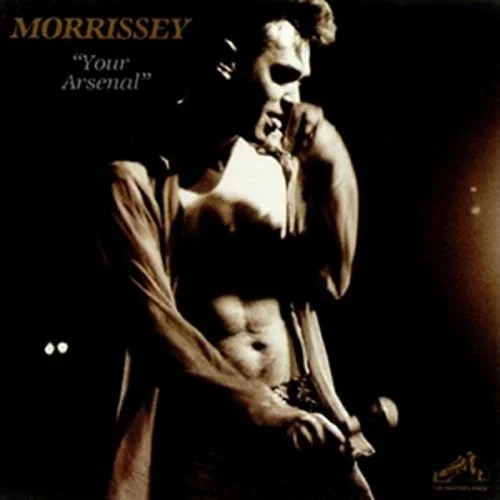
and his political views have got him into trouble a lot, I am concentrating on the positive side of Morrissey. After The Smiths broke up in the 1980s, Morrissey embarked on a successful solo career. Whilst some may say his best solo album is 1994’s Vauxhall and I, its predecessor, Your Arsenal, is my favourite. It turns thirty on 27th July. In spite of one very controversial song, The National Front Disco, and one that may come across as very un-P.C. in today’s scene (You’re the One for Me, Fatty), Morrissey’s third studio album is a hugely strong work that vastly improved upon 1991’s Kill Uncle. With band members like Alain Whyte and Boz Boorer offering more range, a harder sound and swagger, there is a lot of life, depth, and variation across Moz’s 1992 release. Whilst the line of “England for the English” on The National Front Disco can either be seen as Morrissey writing about a misguided character or projecting his own political ideals, I am not too sure. It does slightly sour the album. Elsewhere, there is plenty to love. The confident and swinging opener, You’re Gonna Need Someone on Your Side, races from the gates and announces Your Arsenal as this emphatic and vital album. Whilst his former Smiths songwriting partner Johnny Marr is notably absent in terms of the melodic and musical gifts he brought to the band, there is a consistency on Your Arsenal that keeps you hooked and brings you back for repeated listens. My favourite tracks include Certain People I Know and I Know It's Gonna Happen Someday. The latter is one of two songs co-written (by Morrissey) with Mark E. Nevin (the other being You're Gonna Need Someone on Your Side).

At the moment, Morrissey is performing his residency in Las Vegas. Maybe it signals that he is nearing the end of his recording career or is slowing down. His more recent work has yielded mixed results, though there was this period from Your Arsenal in 1992 through to Vauxhall and I in 1994 where he was near his peak with The Smiths. Albumism looked back at the magnificent Your Arsenal in 2017:

“Produced by Mick Ronson, Your Arsenal was the debut of Moz's new lineup, including former Polecats guitarist Boz Boorer and Alain Whyte, both of whom had toured with him in conjunction with Kill Uncle (1991). Boorer would go on to produce Morrissey's albums from there on out, as well as write several songs alongside Moz. But coming from a rockabilly background, both Boorer and Whyte added a harder sound to Morrissey's music, kicking right off with "You're Gonna Need Someone on Your Side." If you listen closely, you can hear a little bit of "Handsome Devil" in the guitars. But despite the brutal melodies, it's quite a romantic song, an ode to the necessities of friendship (I know, I'm as surprised as you are): "Day or night, there is no difference / You're gonna need someone on your side."

Similarly, the penultimate "I Know It's Gonna Happen Someday" heads into the heartbreak anthem "Tomorrow," and I'm never quite sure if this is a love song or if it's Morrissey being Morrissey, the sarcastic bastard we all love. This also makes use of the sampling that we saw previously on "Rubber Ring" and others.

"I Know It’s Gonna Happen Someday" was covered by David Bowie on 1993's "Black Tie White Noise." Morrissey idolized Bowie, appearing on stage with him in 1991. But during appearances on a tour in 1995, the two had a falling out, which left a bitter taste even after Bowie's untimely death last year.

All of the opening track's generosity is immediately dismissed on "Glamorous Glue," with the House-esque refrain, "Everyone lies, everyone lies" and a heavy-handed slap at both L.A. and London. At his best, Morrissey has always been a cheeky, clever poet. But at his worst, as we see here, he is lazy and dull, repeating the same worn tropes many more before him have used to greater effect. We get it, Morrissey, California is full of polished ugliness. But geez, can't you find something else to bitch about?

And of course, "The National Front Disco" has new, horrifying relevance in the era of Trump and Brexit and the rise of the alt-right. This song, about a young man joining a far-right group, remains controversial—does the anthem warn or celebrate? Of course, Morrissey says it isn't racist, but everyone knows Morrissey is kind of a racist prick and we only let it sort of slide because The Smiths are just so damn good. "England for the English" sounds a little bit like "America First," doesn’t it?

Nevertheless, there are still some remnants of the Morrissey we love, as best evidenced in the bwang-twang lick that opens "Certain People I Know" and even the guilty pleasure "You're The One For Me, Fatty" (I know I should hate this song, but I don't, which makes me feel like a total jerk and I'm sorry)”.

Prior to wrapping things up, I want to bring together a couple of reviews for 1992’s Your Arsenal. Although some were mixed and a bit critical – many highlighting songs like The National Front Disco as a worrying or too-controversial inclusion -, there was ample praise for a extremely solid and enjoyable album. This is what CLASH wrote back in 2014:

“Four years into an unwanted solo career, and lacking the kind of melodies such a wordsmith needs to hang his withered gladioli upon, a reboot was required.

Having assembled a youthful and far-from-virtuoso group around him in order to tour 1991’s limply polished and lyrically unfocused ‘Kill Uncle’, Morrissey wanted that band dynamic on record. With legendary guitarist Mick Ronson on production duties, the glam world the artist had studied and his producer had lived was brought back to life.

Several songs inhabit the personae of challenging characters in typically provocative fashion, whether football hooligans or members of the National Front. The latter is more pitied than condemned across one of the album’s strongest melodies, ‘The National Front Disco’.

‘Certain People I Know’ may be a shameless T. Rex rip off, but it does features a gloriously mannered Moz vocal, while ‘I Know It’s Gonna Happen Someday’ is a grandiose ballad with more than a nod to Bowie’s ‘Rock ‘N’ Roll Suicide’.

As is his want, Morrissey has tinkered with the 1992 original record for this reissue, subbing out closing track ‘Tomorrow’ (original video below) for its mildly more muscular American mix, but otherwise it’s business as usual. The accompanying DVD features an early performance by this line-up, which is a mildly diverting if sonically unspectacular curio alongside a still largely splendid record”.

I am not sure whether there will be much in the way of celebration and coverage on the thirtieth anniversary of Your Arsenal. It is an album that definitely should be explored more. I hear the odd song played here and there. Featuring some of Morrissey’s best lines and vocals, go and listen to the album if you have not heard it. This is Rolling Stone’s take on Your Arsenal from 1992:

“Mope no more. forsaking the cozy glow of cult-hero worship on his fourth solo album, Morrissey hurls himself into the cold cruel rock mainstream. Your Arsenal is the most direct — and outwardly directed — statement he’s made since disbanding the Smiths. Buoyed by the conversational grace of his lyric writing, Morrissey rides high atop this album’s rip-roaring guitar tide.

Just last year, the meticulously obscure Kill Uncle positioned Morrissey as the postpunk scene’s answer to Elvis Costello: an eccentric major talent perfectly content to bask in a stuffy hothouse atmosphere. Your Arsenal admits a blast or two of less rarefied musical air, and it works wonders. “You’re Gonna Need Someone on Your Side” is not only one blitzkrieg bop of an opening cut, it aggressively sets Morrissey’s new interpersonal agenda. The onetime poet-recluse boldly approaches a fellow neurotic (“with the world’s fate resting on your shoulders”), offering pointed and hard-won counsel: “Give yourself a break before you break down.” All the while, two blunt and fuzzy guitars cough up a glam-metal variation on the Bo Diddley beat.

Onetime Bowie foil Mick Ronson produces Your Arsenal to stunning effect. For all the sonic thunder, he imposes a much-needed pop discipline on Morrissey’s grander instincts. His penchant for maudlin balladry held firmly in check by taut arrangements and riff-driven melodies, Morrissey turns his sharp eye to the crumbling world outside his window. This time, the moody slow songs (“I Know It’s Gonna Happen Someday,” “We’ll Let You Know”) really do linger and haunt. The deeply affecting “We’ll Let You Know” (“We are the last truly English people you will ever know”) and the disarmingly uptempo “National Front Disco” peek into the sad, sick world of Britain’s neo-fascist youth movement; Morrissey probes this twisted mind-set with psychological depth and deftness. Rather than preach against the general evils of racism, as most topical rockers would, he puts us inside this hopeless situation for a few revealing minutes.

Not that Morrissey’s a Brit isolationist, by any means. “We look to L.A. for the language we use,” he insists on the raucous media-age anthem “Glamorous Glue.” Spitting out the line “London is dead” a half-dozen times after that, punctuating the psychedelic groan with his own croons and hoots, Morrissey faces down the wildly uncertain New World Order with dark humor and a clear head. Your Arsenal is stockpiled with the rock & roll equivalent of smart bombs: compact missives that zoom in on their targets with devastating precision. The repercussions last long after the rubble is cleared”.

Humorous, edgy, tough, controversial at times, beautiful at others, it is fascinating diving into Your Arsenal. I wanted to shine a light on Moz’s second solo studio album ahead of its thirtieth anniversary on 27th July. There is no denying that it is…

ONE of his greatest solo albums.

FEATURE: Kate Bush’s The Kick Inside at Forty-Five: My Five Favourite Songs from My Favourite Album Ever

FEATURE:


Kate Bush’s The Kick Inside at Forty-Five

My Five Favourite Songs from My Favourite Album Ever

__________

REACHING number three in the U.K…

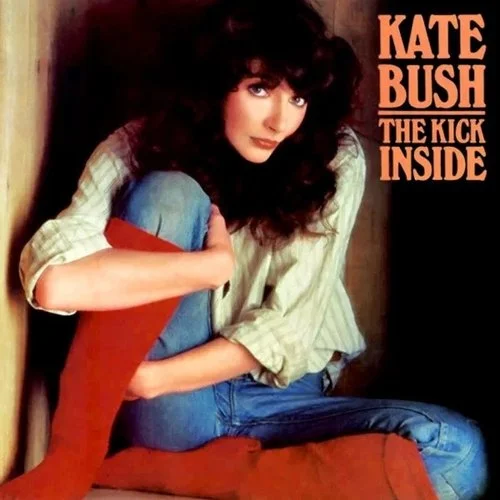
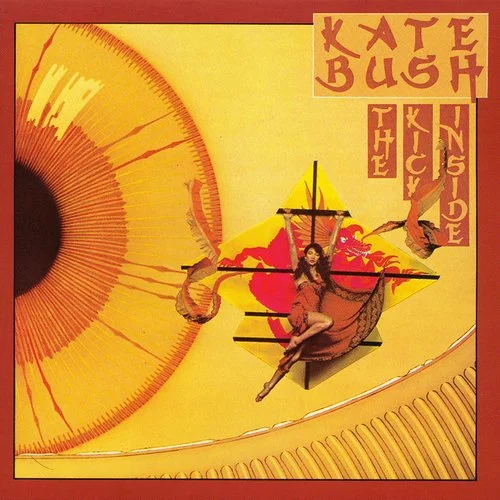
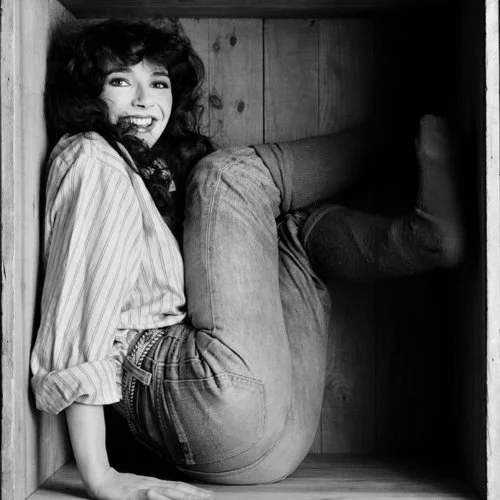
and one in a couple of others, Kate Bush’s debut album, The Kick Inside, was released in February 1978. It was recorded in August 1977. Because the latter date is forty-five years ago, I am running a few features to celebrate the anniversary. The first one will be simple: me selecting my favourite five songs from the thirteen. Produced by Andrew Powell, The Kick Inside is a phenomenal debut from the then-teenager. Bush’s performances and songwriting are spectacular throughout. So original and accomplished at such a young age, people are still listening to and mentioning The Kick Inside. Before I select the five tracks from the album (in chronological order rather than quality ranking), here are a couple of interview snippets of interviews where Bush discussed her debut:

“Hello everyone. This is Kate Bush and I'm here with my new album The Kick Inside and I hope you enjoy it. The album is something that has not just suddenly happened. It's been years of work because since I was a kid, I've always been writing songs and it was really just collecting together all the best songs that I had and putting them on the album, really years of preparation and inspiration that got it together. As a girl, really, I've always been into words as a form of communication. And even at school I was really into poetry and English and it just seemed to turn into music with the lyrics, that you can make poetry go with music so well. That it can actually become something more than just words; it can become something special. (Self Portrait, 1978)

IN THIS PHOTO: Kate Bush in 1978/PHOTO CREDIT: Gered Mankowitz 

There are thirteen tracks on this album. When we were getting it together, one of the most important things that was on all our mind was, that because there were so many, we wanted to try and get as much variation as we could. To a certain extent, the actual songs allowed this because of the tempo changes, but there were certain songs that had to have a funky rhythm and there were others that had to be very subtle. I was very greatly helped by my producer and arranger Andrew Powell, who really is quite incredible at tuning in to my songs. We made sure that there was one of the tracks, just me and the piano, to, again, give the variation. We've got a rock 'n' roll number in there, which again was important. And all the others there are just really the moods of the songs set with instruments, which for me is the most important thing, because you can so often get a beautiful song, but the arrangements can completely spoil it - they have to really work together. (Self Portrait, 1978)”.

My favourite album ever, it is hard drilling down to the best five tracks. The selection below includes some obvious choices, but there are also a few songs that people may not be aware of (thanks go to the Kate Bush Encyclopedia for providing information about the album and songs). I am excited to think back forty-five years when Kate Bush and her band were putting down these incredible tracks. Below are my five favourites from…

A musical icon.

______________

Moving

 “Song written by Kate Bush, included on her debut album The Kick Inside. The song is a tribute to Lindsay Kemp, who was her mime teacher in the mid-Seventies. She explained in an interview, "He needed a song written to him. He opened up my eyes to the meanings of movement. He makes you feel so good. If you've got two left feet it's 'you dance like an angel darling.' He fills people up, you're an empty glass and glug, glug, glug, he's filled you with champagne."

'Moving' opens with a whale song sampled from 'Songs of the Humpback Whale', an LP including recordings of whale vocalizations made by Dr. Roger S. Payne.

Formats

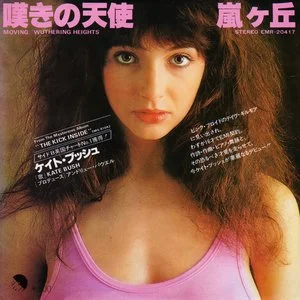
On 6 February 1978, 'Moving' was released as a 7" single in Japan only, featuring Wuthering Heights on the B-side.

Versions

There are two officially released versions of 'Kite': the album version and the live version from Hammersmith Odeon. However, a demo version from 1977 has also surfaced and was released on various bootleg cd's”.

Strange Phenomena

“Kate about 'Strange Phenomena'

['Strange Phenomena' is] all about the coincidences that happen to all of us all of the time. Like maybe you're listening to the radio and a certain thing will come up, you go outside and it will happen again. It's just how similar things seem to attract together, like the saying ``birds of a feather flock together'' and how these things do happen to us all the time. Just strange coincidences that we're only occasionally aware of. And maybe you'll think how strange that is, but it happens all the time. (Self Portrait, 1978)

"Strange Phenomena'' is about how coincidences cluster together. We can all recall instances when we have been thinking about a particular person and then have met a mutual friend who - totally unprompted - will begin talking about that person. That's a very basic way of explaining what I mean, but these ``clusters of coincidence'' occur all the time. We are surrounded by strange phenomena, but very few people are aware of it. Most take it as being part of everyday life. (Music Talk, 1978)”.

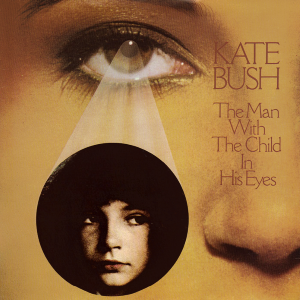
The Man with the Child in His Eyes

 “Song written by Kate Bush, released on her debut album The Kick Inside. Bush wrote the song when she was 13 and recorded it at the age of 16. It was recorded at Air Studios, London in June 1975 under the guidance of David Gilmour. She has said that recording with a large orchestra at that age terrified her. The song received the Ivor Novello Award for "Outstanding British Lyric" in 1979.

Kate about 'The Man With The Child In His Eyes'

The inspiration for 'The Man With the Child in His Eyes' was really just a particular thing that happened when I went to the piano. The piano just started speaking to me. It was a theory that I had had for a while that I just observed in most of the men that I know: the fact that they just are little boys inside and how wonderful it is that they manage to retain this magic. I, myself, am attracted to older men, I guess, but I think that's the same with every female. I think it's a very natural, basic instinct that you look continually for your father for the rest of your life, as do men continually look for their mother in the women that they meet. I don't think we're all aware of it, but I think it is basically true. You look for that security that the opposite sex in your parenthood gave you as a child. (Self Portrait, 1978)

I just noticed that men retain a capacity to enjoy childish games throughout their lives, and women don't seem to be able to do that. ('Bird In The Bush', Ritz (UK), September 1978)

Oh, well it's something that I feel about men generally. [Looks around at cameramen] Sorry about this folks. [Cameramen laugh] That a lot of men have got a child inside them, you know I think they are more or less just grown up kids. And that it's a... [Cameramen laugh] No, no, it's a very good quality, it's really good, because a lot of women go out and get far too responsible. And it's really nice to keep that delight in wonderful things that children have. And that's what I was trying to say. That this man could communicate with a younger girl, because he's on the same level. (Swap Shop, 1979)”.

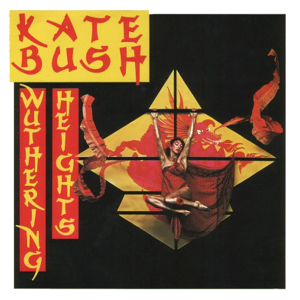
Wuthering Heights

“Song written by Kate Bush, released as her debut single in January 1978. She wrote the song after seeing the last ten minutes of the 1967 BBC mini-series based on the book ‘Wuthering Heights’, written by Emily Brontë. Reportedly, she wrote the song within the space of just a few hours late at night. The actual date of writing is estimated to be March 5, 1977.

Lyrically, "Wuthering Heights" uses several quotations from Catherine Earnshaw, most notably in the chorus - "Let me in! I'm so cold!" - as well as in the verses, with Catherine's confession to her servant of "bad dreams in the night." It is sung from Catherine's point of view, as she pleads at Heathcliff's window to be allowed in. This romantic scene takes a sinister turn if one has read Chapter 3 of the original book, as Catherine is in fact a ghost, calling lovingly to Heathcliff from beyond the grave. Catherine's "icy" ghost grabs the hand of the Narrator, Mr Lockwood, through the bedroom window, asking him to let her in, so she can be forgiven by her lover Heathcliff, and freed from her own personal purgatory.

The song was recorded with Andrew Powell producing. According to him, the vocal performance was done in one take, "a complete perfomance" with no overdubs. "There was no compiling," engineer Kelly said. “We started the mix at around midnight and Kate was there the whole time, encouraging us… we got on with the job and finished at about five or six that morning." The guitar solo that fades away with the track in the outro was recorded by Edinburgh musician Ian Bairnson, a session guitarist.

Originally, record company EMI's Bob Mercer had chosen another track, James And The Cold Gun as the lead single, but Kate Bush was determined that ‘Wuthering Heights’ would be her first release.  She won out eventually in a surprising show of determination for a young musician against a major record company, and this would not be the only time she took a stand against them to control her career.

The release date for the single was initially scheduled to be 4 November 1977. However, Bush was unhappy with the picture being used for the single's cover and insisted it be replaced. Some copies of the single had already been sent out to radio stations, but EMI relented and put back the single's launch until the New Year. Ultimately, this proved to be a wise choice, as the earlier release would have had to compete with Wings' latest release, ‘Mull of Kintyre’, which became the biggest-selling single in UK history up to this point in December 1977.

‘Wuthering Heights’ was finally released on 20 January 1978, was immediately playlisted by Capital Radio and entered their chart at no. 39 on 27 January. It crept into the national Top 50 in week ending 11 February at No.42. The following week it rose to No.27 and Bush made her first appearance on Top of the Pops ("It was like watching myself die", recalls Bush), The song was finally added to Radio One's playlist the following week and became one of the most played records on radio. When the song reached number 1, it was the first UK number 1 written and performed by a female artist”.

Them Heavy People

“Formats

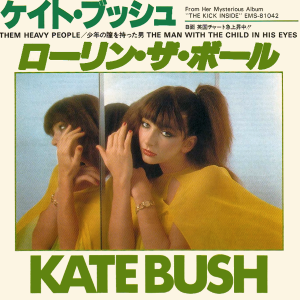
'Them Heavy People' was released as a single in Japan only. This single featured The Man With The Child In His Eyes on the B-side. A Seiko logo appears on the insert's back side, which makes it Bush's only commercial release featuring any kind of product endorsement. A live recording of this song was the lead track on the On Stage EP.

Kate about 'Them Heavy People’

The idea for 'Heavy People' came when I was just sitting one day in my parents' house. I heard the phrase "Rolling the ball" in my head, and I thought that it would be a good way to start a song, so I ran in to the piano and played it and got the chords down. I then worked on it from there. It has lots of different people and ideas and things like that in it, and they came to me amazingly easily - it was a bit like 'Oh England', because in a way so much of it was what was happening at home at the time. My brother and my father were very much involved in talking about Gurdjieff and whirling Dervishes, and I was really getting into it, too. It was just like plucking out a bit of that and putting it into something that rhymed. And it happened so easily - in a way, too easily. I say that because normally it's difficult to get it all to happen at once, but sometimes it does, and that can seem sort of wrong. Usually you have to work hard for things to happen, but it seems that the better you get at them the more likely you are to do something that is good without any effort. And because of that it's always a surprise when something comes easily. I thought it was important not to be narrow-minded just because we talked about Gurdjieff. I knew that I didn't mean his system was the only way, and that was why it was important to include whirling Dervishes and Jesus, because they are strong, too. Anyway, in the long run, although somebody might be into all of them, it's really you that does it - they're just the vehicle to get you there.

I always felt that 'Heavy People' should be a single, but I just had a feeling that it shouldn't be a second single, although a lot of people wanted that. Maybe that's why I had the feeling - because it was to happen a little later, and in fact I never really liked the album version much because it should be quite loose, you know: it's a very human song. And I think, in fact, every time I do it, it gets even looser. I've danced and sung that song so many times now, but it's still like a hymn to me when I sing it. I do sometimes get bored with the actual words I'm singing, but the meaning I put into them is still a comfort. It's like a prayer, and it reminds me of direction. And it can't help but help me when I'm singing those words. Subconsciously they must go in. (Kate Bush Club newsletter number 3, November 1979)”.

FEATURE: Vinyl Corner: Santana - Abraxas

FEATURE:


Vinyl Corner

Santana - Abraxas

__________

FOR this Vinyl Corner…

 IN THIS PHOTO: Carlos Santana/PHOTO CREDIT: Tucker Ransom/Getty Images

I am including a legendary artist that I have not spoken about much. The legendary Carlos Santana is renowned as one of the most influential and important artists and guitarists ever. His band, Santana, have released some sensational albums. Carlos Santana turns seventy-five on 20th July. To honour that, I am featuring the band’s 1970 masterpiece, Abraxas. Go and get the album on vinyl if you can. It is a sublime and extraordinary album that features songs like Oye Cómo Va and Black Magic Woman (a Fleetwood Mac cover). It is an album that I would encourage everyone to listen to. I am going to come to a review of Abraxas soon. Before that, Consequence took a dive into the band’s second studio album in a feature from 2020:

“To fully appreciate Abraxas — that is, to believe it’s some portended, almost-mystical force of nature … or at least a longshot to have topped the charts for six weeks back in 1970 — requires a brief look at how the planets aligned for Carlos Santana and the band’s classic lineup: Gregg Rolie (lead vocals, Hammond organ), Michael Shrieve (drums), Michael Carabello (congas, percussion), and José “Chepito” Areas (timbales, congas, and percussion). A mere two years after famed promoter Chet Helms had told Santana that a Latin-infused rock band couldn’t succeed and that the guitarist should return to his day job as a dishwasher, the band had scored a record deal, cut their self-titled debut, and catapulted into the public’s imagination with an appearance at Woodstock. The now-iconic documentary Woodstock even features an infomercial-length jam session as the band jubilantly sync rhythms with the masses during a sprawling rendition of “Soul Sacrifice”. It’s one of the weekend’s most memorable moments and part of the reason audiences were both hip and open to Santana when their largely instrumental debut came out just two weeks later.

A little more than a year later, Santana found themselves about to release their sophomore album, Abraxas. Their debut, which would go platinum twice over, had been a top-five album, and their hypnotic cover of jazz percussionist Willie Bobo’s “Evil Ways” had scored them a top-10 single and would go on to become a founding staple of modern classic-rock radio. All of a sudden, the unlikely Latin-blues collective from San Francisco were internationally known and sought after. Santana now had to worry about blisters on his fingers rather than dishpan hands, but also how to follow up such unexpected success and handle new levels of expectation. The answers to that dilemma seemed to flow through the guitarist himself.

Abraxas would be its own beast (as the opening track’s title might suggest), flesh adhering to bone through a mix of Carlos Santana’s interests, influences, and a series of serendipitous moments. For instance, the cover art of Abraxas features the 1961 painting “Annunciation” by German-French artist Mati Klarwein. Santana had just happened to have seen the painting in a magazine and made an inquiry. Not only has the album cover gone down as one of the most iconic in rock and roll history, but Klarwein would go on to design for many other artists, including one of Santana’s personal heroes, Miles Davis. These types of whims that turn into the stuff of legend seemed to pile up around Santana in those early years. It makes one begin thinking that we were somehow always destined to be talking about Abraxas 50 years later.

Like so much of Santana’s best work, Abraxas finds its way into our bloodstream. In a band with three percussionists and one of the most innovative blues guitarists of all time, reason stands that the music’s entry point might be to tap into our pulse as it does in the opening, dance-inducing drumming on Santana or to strike a nerve via a melodic guitar groove that manages to be infectiously sweet one moment and sharply penetrating the next. Neither is the case here, though. As Abraxas stirs, and “Singing Winds / Crying Beasts” slowly awakens, the opening song’s titular winds pass through chimes and find passage into our lungs. It’s everything that opener “Waiting” wasn’t just an album earlier. Gone is Gregg Rolie’s swirling, hurricane organ; the percussion’s locked-in, insistent throb; and the incendiary sprint to the finish. Instead we have menacing keys that wander, hushed percussion that sounds like thunder rolling in the distance, instruments mingling and fading out like guests making rounds at a cocktail party, and a tension that builds from restraint rather than a rising. It’s Santana and band breathing through us, demonstrating that they have more than one way to commune with an audience”.

It is worth wrapping up with a review from Rolling Stone. An undeniably huge and vastly impressive albums, I don’t think one needs to be a fan of Latin and Chicano music to vibe to and get involved with Santana’s brilliance. Abraxas is an album that every person can feel something for. The impact of the songs will be felt instantly:

“Carlos Santana is one of the three new guitarists who border on B. B. King's cleanliness. His only two contemporaries are Eric Clapton and Michael Bloomfield, but Santana is playing Latin music and there are no other Latin bands using lead guitars. The paradoxical thing about Santana has been their acceptance by a teenybop audience that digs Grand Funk and Ten Years After when they should be enjoyed by people who are into Chicago and John Mayall.

The heart of Santana is organist Gregg Roli and bassist Dave Brown, who hold the rhythm together over which the percussion unit can jam and bounce. Timbales, congas (Puerto Rican) and drums take off on Brown's rhythm and then Santana himself comes in to make his statements on lead guitar.

Carlos Santana is a Chicano and he loves the guitar, which has always been used heavily in Mexican music. He has perfected a style associated with blues and cool jazz and crossed it with Latin music. It works well, because the band is one of the tightest units ever to walk into a recording studio. Of white bands, only Chicago can equal their percussion, but Chicago is held together by horns, while Santana is held together by timbales and congas.

"Oye Como Va" is the highlight of the album. It's only weakness is that Roli's fine organ has been mixed too low. This is a different trip for Santana, much more into the styles of the younger Puerto Rican musicians in New York, like Orchestra DJ and Ray Olan, and farther from the Sly trip that dominated their first album. Unless you really dig Latin music or some of the middle period work of Herbie Mann and the Jazz Messengers, you may not enjoy this cut or the album at all.

Abraxas is one of the new independent productions for Columbia done at Wally Heider's studio, and bass player Dave Brown did much of the engineering. The album he has helped to come up with may lose Santana some of their younger audience, but is bound to win them respect from people interested in Latin jazz music. On Abraxas, Santana is a popularized Mono Santamaria and they might do for Latin music what Chuck Berry did for the blues.

The major Latin bands in this country gig for $100 a night, and when you see them, you can't sit still. If Santana can reach the pop audience with Abraxas, then perhaps there will be room for the old masters like La Lupe and Puente to work it on out at the ballrooms. But for now, Abraxas is a total boogie and the music is right from start to finish. (RS 73)”.

One of the very finest albums ever, Abraxas is one that sounds brilliant on vinyl. It is one I remember first hearing when I was a child. I adore the songs and the performances from the whole band (though it is Carlos Santana’s guitar work that particularly sticks with me!). If you do not own this on vinyl, then I would steer you towards it, as it is…

WORTH the money.

FEATURE: Spotlight: Queen Kwong

FEATURE:


Spotlight

PHOTO CREDIT: Laura-Mary Carter

Queen Kwong

__________

AN is artist I have known about…

PHOTO CREDIT: Laura-Mary Carter

for a while now, Queen Kwong’s new album, Couples Only, is released on 29th July. It is one that I would urge everyone to check out and order. An amazing artist who has made such a personal and powerful album, the circumstances around the time and what she had to deal with and absorb makes the music truly remarkable and brave:

“Carré Callaway aka Queen Kwong returns for her third and most fiercely visceral album to date. Produced by Joe Cardamone (The Icarus Line) and featuring guest performances by members of Swans, The Cure, and Blood Red Shoes, Couples Only is a truly defiant statement.

A few years ago, Carré Kwong Callaway—aka Queen Kwong—was diagnosed with cystic fibrosis and told she may only have a decade left to live. Couples Only it’s an outpouring of pure feeling and visceral thought that captures every emotion that comes with both the grieving and recovery process. It's a fearless account of facing the worst betrayals and accepting the deepest losses. It's the realisation of one's mortality and the impermanence of everything we know and cherish. But, ultimately, it’s a testament to the endurance of the human spirit. Because while this record is unashamedly about the darkest period of Carré’s life, it doesn’t wallow. It can be accusatory and violent, but there's no time wasted on self-pity.

From the razor sharp midnight swagger of “I Know Who You Are” to the post modern doo-wop of “On The Run” and the Lynch-ian pop hooks of closer “Without You, Whatever" Couples Only is a fearless testament of endurance and survival in the face of betrayal, loss, and mortality”.

I think that Queen Kwong is one of the most amazing artists on the scene. Some people may not have heard of her, so that is why I am including her in Spotlight. To give you more of an idea of what she is about and what went into Couples Only, I am going to source a few interviews from this year. BlackBook spoke with Queen Kwong back in April:

“Existing somewhere between a band and a solo project, Queen Kwong is actually the nom de guerre of Carré Kwong Callaway, the Los Angeles songstress who was thrust into the spotlight in 2005 when Trent Reznor discovered her seventeen-year-old self in a New Orleans recording studio. She suddenly found herself, under her birth name, opening for Nine Inch Nails‘ on their extensive 2005 With Teeth Tour. She disappeared for a spell, then re-emerged as Queen Kwong in 2009, and once again hit the road with NIN.

She released a series of EPs between 2013 and 2019, the last one coming a year after her diagnosis with cystic fibrosis. For those not familiar, it is a particularly horrifying condition, which causes persistent lung infections, significant digestive problems and, well…can cause the sufferer bouts of not actually being able to breath properly.

Many of the songs on Couples Only address how her illness quickly caused the deterioration and eventual breakup of her marriage to a famous rock guitarist, whom she had wed in 2016. The first single, ‘I Know Who You Are’ is an absolute shiver-inducing stunner, with its haunted, slow-build introduction, jarringly jagged grooves, and thundering, industrial-punk sonics.

But most revealingly, in her eerily double-tracked voice, she recites lyrics about a pattern of taking up with toxic people – a stark confessional and catharsis at once. In a way it actually feels like an exorcism…except that the demons are very human ones. Fittingly, the accompanying video is an homage to an infamous Isabelle Adjani scene from the the 1981 film Possession.

We caught up with her to take a deep dive into what it all means, and how music may have just genuinely pulled her back from the brink.

Your new album was inspired by the splitting up of your marriage? Was it difficult to revisit that, or did you find it cathartic?

Both. For a long time, I did everything I could to not feel or think about it, just so I could get through it. By the time I started recording, I had stored all of those feelings inside of me and I was physically and mentally maxed out because of it. So recording the album was a necessary purge. It was freeing.

The lyrics to ‘I Know Who You Are’ seems to be about someone who willingly takes up with toxic people. Is that autobiographical?

Because writing and playing music are such coping mechanisms for me, everything I do is deeply personal and autobiographical in some way. ‘I Know Who You Are’ is an acknowledgment of repeating patterns I found myself in with fake, parasitic people – personally and professionally. People who play a part and get away with bad behavior. People who are enabled by the sycophants who surround them. The song calls out those people and acknowledges how I see them and I know them and I no longer am willing to stay quiet about it.

You chose demonic possession as the touchstone for the video. Is there something you’re trying to tell us?

I chose to use the tunnel scene from the movie Possession as the inspiration for the video because to me, it’s not about being possessed by a supernatural demon but being possessed by the emotions you feel while navigating a toxic relationship, from start to finish. Beginning with the giddiness and the “high” of falling in love, then experiencing the betrayal and disillusionment, the gas-lighting that causes the self-questioning (Am I the “crazy bitch”?), and then ultimately the relief and freedom you feel when you surface at the other side.

Did you actually have fun making the video, or was it a rather unsettling experience?

To be honest, making art isn’t about having fun for me; that’s never been a priority, haha. The intention is always to express myself in a way that challenges me as an artist and that’s cathartic enough to be therapeutic. Though shooting this video was pretty grueling, especially physically, we did it so fast that there wasn’t much time to dwell on what I was feeling. I just entered a flow state and got it done.

There’s a lot going on on the new record sonically. What were some of the things you were inspired by sound-wise during the writing and recording of Couples Only?

Because I don’t pre-write any material before recording, there’s not really a plan when it comes to what I want something to sound like. The only inspiration is whatever emotions surface in the moment. Listening back to the record now, everything is sonically aligned with those emotions. Screaming guitars that sound like screaming voices, modulating synths that cause tension and discomfort, birds chirping in the backyard leaking into the one and only vocal take I could muster before tears got in the way…

What are some of the most meaningful songs for you on the album?

‘Mourning Song’ and ‘Sad Man’ are the highlights for me. The former was the first track I recorded for Couples Only and it’s the most personal. If there’s one song that says everything I needed to say, it’s that one. On the other hand, ‘Sad Man’ is kind of self-deprecating and humorous, which I think is essential to have on a record like this. Both are brutally honest but represent different sides of my life”.

An album that is going to get so much love when it comes out, Couples Only is going to announce Queen Kwong as a huge artist that will go very far indeed. Going back to May, VENTS MAGAZINE spent some time with Queen Kwong. Hearing her answer to a question about how her third album differs from her first two is really interesting:

“Your home label for Couples Only is with Sonic Ritual. What does Sonic Ritual bring to the table for you and your music that no other label can?

They don’t enforce any creative boundaries. That’s huge. Practically unheard of when it comes to a label. They take what I already do and see the potential in that without trying to make it into something else. I couldn’t imagine a better label, especially for this record and the kind of artist I am.  

Can we look forward to seeing you on tour in the weeks and months to come?

Hopefully in the fall/winter I’ll be touring in the UK/EU. Plans are in motion but I think I’m still in the “believe it when I see it” mode just because COVID has really thrown everyone for a loop.
Musically, who inspires you at the moment?

A$AP Rocky and Kendrick Lamar are on repeat at the moment. Both of their latest releases are so good and innovative. Hip hop is the new punk rock.
How did you land on the path of being such an accomplished musical artist? Is there a secret origin story you could share with us?

I’ve had to redefine what success and accomplishment means to me many times. I think focusing on making honest art and not caring about how successful that art is going to be is the key to staying motivated as an artist, because it’s a constant struggle and never-ending slog in one way or another. I’m the kind of person who is never satisfied, always hungry for a challenge and thrives off of pushing boundaries. Those aspects of my personality have definitely helped keep my heart in music.

Couples Only is your third album. How is it similar to the first two? How is it different?

The producer (Joe Cardamone) and our creative process has remained the same for all three records but since this is the third record, I was able to tap into that process more easily and make it more sonically polished. It helped to have Tchad Blake mix it too because he was able to wrangle the chaos a bit. Every song was written on the spot while recording in the studio but this one is less messy and not as lo-fi as the first. It’s a stream of consciousness but the stream has been refined, if that makes any sense. Also, musically, Couples Only has more electronic elements like programmed drums and synths than the previous two”.

Before finishing up, there is another interview that I want to bring in. CLASH chatted with Queen Kwong earlier this month. It is so remarkable and moving hearing what she had to endure and face before and during the recording of Couples Only:

“When considering the circumstances surrounding ‘Couples Only’, it’s shocking that the album was ever even completed. The release touches on Callaway’s divorce, the life-changing impact of a cystic fibrosis diagnosis, and the limbo of being ejected from one’s marital home – as Callaway reels off the details of events that inspired this record, you can’t help but feel something inside of you ache. Speaking on the recording process, Callaway admits that “it was intense.” But her recording approach helped numb some of the possible sting; “luckily I record really fast, so I didn’t have to, you know… linger. It was really emotional, but we kept things moving.”

This quick approach also allowed the tracks to come out as raw as possible; “Joe Cardamone, my producer, has known me since I was 18, so I didn’t feel the need to be ‘careful’; I didn’t try to be poetic or beat around the bush. I just did it, and whatever came out, we just let it be. I didn’t want to go back and edit. There were some songs where I only did one take, I wasn’t able to do it again… But then I have to learn them again properly for shows – learn the lyrics and do all that. So I’m sure that will be… an experience.”

For Callaway, telling the truth was all that mattered. “Going through the divorce and the backlash of it all, it was really important for me to hold on to what the truth actually was,” Callaway notes. “For a couple of years I was being told that I was crazy, or I was lying – this was kind of my only way of speaking my truth. I needed to make a point of, like, ‘I know what happened’, pulling direct quotes like ‘you mean bitch’ on ‘EMDR ATM’, literal lines I had been told. So I think in that way, being blunt was really effective, because it’s just kind of keeping a record of what actually happened, you know?”

‘Couples Only’ doesn’t ask its listener to read between the lines – it forces them to acknowledge the reality of Callaway’s experiences. It’s not a comfortable listen by any means, and Callaway is well aware of this; “It wasn’t comfortable to record, and it’s not a comfortable listen… but, you know, it was uncomfortable for me to go through – coming out of a divorce, with divorce lawyers and people judging me for telling the truth. People kept saying ‘do you really want to talk about that?, ‘why do you want to make trouble?’ or ‘why do you want to stir the pot?’”

“But… these things happened to me,” Callaway takes a moment to emphasise. “This all happened, I had to live through it – but people are always like ‘oh, but you’re making people uncomfortable by talking about it.’ And I think, as a woman, you just get used to living in discomfort for the sake of other people’s comfort levels; you avoid being confrontational, you never make a scene. It just got to the point where I knew I was being quiet for other people’s comfort, and I was about to burst. There was a year or two where I didn’t say anything – but then I was like ‘not anymore.’”

Rather than whimper in fear, Callaway is determined to make as much noise as possible. While Queen Kwong’s style is impossible to pin down, a thread of heavy, jagged rock and experimentation has always been a key element. ‘Couples Only’ takes a different sonic route than previous releases, but that heaviness is still blisteringly clear – and, in terms of lyrical content and emotional drive, the album is her heaviest yet. “On the surface, sonically speaking, this record isn’t as heavy or as aggressive as some of the previous stuff I’ve released. But, by saying the opposite, it means that you actually listened,” Callaway says. “I think, if you just listen, surface level, to the music and not really pay attention, it isn’t as heavy or aggressive as stuff on the previous two LPs, but I think it is a lot heavier in terms of content and themes – and there was no way to get around that.”

Callaway reflects on one of the toughest phases that fed into the creation of this record, harking back to touring in 2018. “There was one show with such bad feedback. It was like the highest pitch – my guitarist actually threw up afterwards. Like, my teeth hurt, that’s how bad it was,” Callaway recalls. “That whole tour was a big blur to me – it was literally when my marriage was ending. I think I really put my bands through a lot on that tour because I was literally like, sobbing all the time. I was a nightmare. They had to carry me – sometimes literally, physically carry me – through that tour.”

“The whole time, I just wanted to go home and save my life – it was like watching my home burning to the ground, but I couldn’t do anything about it,” Callaway admits. “I was on the other side of the world when everything was falling apart. Finding out about all this betrayal, cheating – it was horrendous. I felt like I wanted to save my life, save my marriage, but it wasn’t possible”.

If you have not heard of Queen Kwong and Couples Only is your introduction, go and hear the album (when it arrives on 29th July). Although she has been making music for a while, I just know that we will be hearing from this amazing artist…

FOR many more years.

____________

Follow Queen Kwong

FEATURE: Perfect Synchronicity: The Brilliant Stewart Copeland at Seventy: His Very Best Beats

FEATURE:


Perfect Synchronicity

The Brilliant Stewart Copeland at Seventy: His Very Best Beats

 __________

CONSIDERED to be among…

the greatest drummers ever, The Police’s Stewart Copeland is seventy on Saturday (16th July). Not only confined to the scope and memorability of the band, Copeland is a very successful composer and artist in his own right. That said, his percussion with The Police is one of the main reasons as to why they are so respected, loved and influential. Before getting to a playlist featuring some of Copeland’s best beats (both with The Police and other projects), AllMusic provide biography about the great man:

“After rising to international stardom with the Police, Stewart Copeland largely rejected his pop music past to pursue a career as a composer, authoring a prolific series of film scores, operas, and ballets. Born July 16, 1952 in Alexandria, VA, Copeland -- the son of a CIA agent -- spent his formative years in the Middle East but attended college in California before settling in England in 1975 and playing drums with the progressive rock unit Curved Air. Following the group's dissolution, he founded the Police with singer/bassist Sting and guitarist Henri Padovani (the latter soon replaced by Andy Summers). Beginning with their first hit, 1979's "Roxanne," the trio emerged as one of the most popular and innovative bands of the post-punk era, drawing upon reggae, funk, and world music to create a uniquely infectious yet cerebral brand of pop which generated a series of smash singles including "Every Little Thing She Does Is Magic," "Every Breath You Take," and "King of Pain." While with the Police, Copeland -- who in 1980 issued a solo record, Music Madness from the Kinetic Kid, under the alias Klark Kent -- not only earned wide critical acclaim for his intricate, textured drumwork, but he contributed many of the group's songs as well.

At the peak of their commercial success, the Police disbanded after touring in support of the 1983 blockbuster Synchronicity; by that time Copeland was already established as a film composer, however, earning a Golden Globe nomination for his score to Francis Ford Coppola's Rumble Fish. In 1985 he released The Rhythmatist, the product of his musical pilgrimage to Africa, followed by an ever-increasing number of film scores including a pair of Oliver Stone features, Wall Street and Talk Radio, in addition to acclaimed projects like Ken Loach's Raining Stones, Four Days in September and West Beirut as well as many more mainstream Hollywood productions. Copeland's other work includes a stint with the pop-fusion trio Animal Logic as well as authoring the San Francisco Ballet's King Lear, the Cleveland Opera's Holy Blood and Crescent Moon, and Ballet Oklahoma's Prey.

In 2001, it was announced that Copeland would be touring with former Doors members Ray Manzarek and Robby Krieger and the Cult's Ian Astbury as the Doors of the 21st Century. Copeland later sued the group for breach of contract, claiming they reneged on a promise to use him on tour and in the studio, but the suit was amicably settled with Manzarek and Copeland trading kind words in the press. Next was soundtrack work for the Showtime series Dead Like Me and a guest appearance on guitarist Rusty Anderson's Undressing Underwater. In 2002 he played a short tour in Italy with the percussion quartet Ensemble Bash and a small orchestra. The tour was documented on the CD/DVD package Orchestralli, released by the Ponderosa label in 2005. Copeland then reunited with the Police in 2007, celebrating the band's 30th anniversary with a worldwide tour”.

To mark the seventieth birthday of one of the most important musicians ever, I have compiled songs which show what an individual and spectacular drummer Stuart Copeland is! It only remains for me – as many around the world will also do – to wish the happiest of birthdays to…

A musical colossus.

FEATURE: The Kate Bush Interview Archive: 1978: Donna McAllister (Sounds)

FEATURE:


The Kate Bush Interview Archive

1978: Donna McAllister (Sounds)

__________

I am going to do…

 IN THIS PHOTO: Kate Bush during the Wuthering Heights shoot in 1978/PHOTO CREDIT: Gered Mankowitz

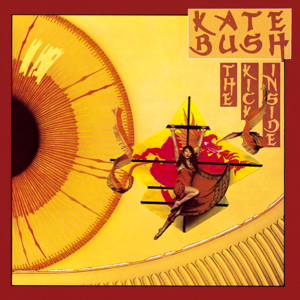
a run of features very soon around The Kick Inside. Kate Bush’s debut, recording of the album completed in August 1977. That is almost forty-five years ago. I wanted to lead into that with an interview from 1978. One of the features I will do for The Kick Inside is around the cover. It is not one of Bush’s best. In this interview with Donna McAllister of Sounds, the album cover was brought up. In one of the last editions of The Kate Bush Interview Archive, this one caught my eye. I am really interested in those early interviews. Bush was new on the scene and people were not quite sure what to make of her. A lot of the interviews revolved around her looks and sexuality. This interview is a bit more balanced, mature and respectful, I think. It opens by asking why there is attention around Kate Bush:

“SOULFUL, SENSITIVE, salubrious. So why all the fuss about Kate Bush's age? Is it the fact that you don't usually get such cohesive intelligence from 19 year old females? Is it that 'child' prodigies are out of our mode? Or is it simply the fact that the journalists are getting older? It wasn't that long ago that the charts were brimmed from 1 to 10 with teen-aged stars. It may seem that only yesterday she was your average unknown person, but in fact, Kate has been developing her unique talents on rinky-dink second hand pianos since she was the ripe old age of 14. Recently she moved into a three storey flat in Lewisham, which is owned by her general practioner daddy-o, and whose other two storeys are occupied by her two older brothers.

The story is not at all as overnight as it seems to be, it was in fact two years ago that Pink Floyd's Dave Gilmour bopped around to Kates' flat with a Revox -- goal in mind to get some of Kates tunes published. She wasn't, at the time, considered a singer but Gilmour, who is genuinely interested in giving undiscovered talent a shot-in-the-arm (with his Unicorn organization) felt that the bubbling under songs should have the opportunity to be heard. They recorded about 15 songs per tape, and took them around to various record companies. The unanimous opinion, then, was 'non-commerical', and after all . . . it's not creative unless it sells, 'eh?

How Kate and Gilmour hooked up is rather a vague 'girlfriends'- boyfriends'- girlfriends friend' sort of rigamaroll, but the fact is that he never did lose interest in her er . . . talents, and decided that the only way to reach a record company's goldlined pocket was to produce finished product. Which is exactly what they did. Gilmour put up the money, and Kate went into Air studios complete with a band, and laid down the three tracks she and Dave both felt were best. This is the tape which eventually landed Kate her contract with EMI Records.

Despite the fact that she has been already wrongly built (no pun intended) in the media to be a mere child, she is surprisingly aware of what is going on around her, and is accepting the entire shindig with a pleased air of disbelief.

"They keep telling me the chart numbers, and I just kind of say 'Wow' (she sweeps her arms) . . . it's not really like it's happening. I've always been on the outside, watching albums I like go up the charts, and feeling pleased that they are doing well, but it's hard to relate to the fact that it's now happening to me..."

'WUTHERING Heights', Kate's self-penned song, inspired by the book of the same title, is literally catapaulting up the UK charts, and looks as though it will be one of those classic world-wide smasheroonies, though it has yet to be released in most other countries. She recently took her first air-bourne flight to Germany for a television appearance, as the single, apparently, has been chosen as whatever the German equivalent of 'pick-of-the-week' might be.

"It was mind blowing," she said euphorically, in reference to flying, "I really want to do more of that . . ." Wonder how she'll feel about in in two years time.

She writes songs about love, people, relationships and life . . . sincerely and emotionally, but without prostituting her talents by whining about broken hearts.

"If you're writing a song, assuming people are going to listen, then you have a responsibility to those people. It's important to give them a positive message, something that can advise or help is far more effective than having a wank and being self-pitiful. That's really negative. My friends and brothers have been really helpful to me, providing me with stimulating conversation and ideas I can really sink my teeth into."

For as long as she can remember she has been toying around with the piano, much, I reckoned, to her parent's chargrin. Can you imagine living with a nine-year-old who insisted on battering away on said instrument, wailing away at the top of her lungs in accompaniment?

"Well, they weren't very encouraging in the beginning, they thought it was a lot of noise. When I first started, my voice was terrible, but the voice is an instrument to a singer, and the only way to improve it is to practice. I have had no formal vocal training, though there was a guy that I used to see for half-an-hour once a week, and he would advise me on things like breathing properly, which is very important to voice control. He'd say things like 'Does that hurt? Well, then sing more from here (motions to diaphram) than from your throat.' I don't like the idea of 'formal' training, it has far too many rules and conventions that are later hard to break out of . . ."

IT IS QUITE obvious from the cover of 'The Kick Inside', her debut album, that Ms. Bush is Orientally influenced, but apparently it was not meant to take on such an oriental feel.

"I think it went a bit over the top, actually. We had the kite, and as there is a song on the album by that name, and as the kite is traditionally oriental, we painted the dragon on. But I think the lettering was just a bit too much. No matter. On the whole I was surprised at the amount of control I actually had with the album production. Though I didn't choose the musicians," (Andrew Powell, producer and arranger did). "I thought they were terrific”.

A great interview from 1978, I always love reading different interviewers’ question and perspectives. Kate Bush handled herself very well and gave terrific answers. In one of the busiest years of her professional career, she was all over the place being interviewed. The Kick Inside is an exciting and original album from a teenage artist who was capturing people’s attention. I am going to start a series of features around that album, forty-five years after it was recorded. There is no other album like it in my mind. Bush, even at the start, was so eloquent, interesting, and kind in interviews. The above is an example of that. The Sounds interview is a great one which fans need to read. Back in 1978, the brilliant Kate Bush came into the music world with…

A stunning debut.

FEATURE: Not Black and White: Should Phones Be Allowed at Gigs?

FEATURE:


Not Black and White

PHOTO CREDIT: @dannyhowe/Unsplash 

Should Phones Be Allowed at Gigs?

__________

IT is not a clear-cut argument…

 PHOTO CREDIT: Paul Hanaoka/Unsplash

when it comes to the issue of phones at gigs. I can understand how people want to record gigs for posterity. It is all well and good saying that and making that argument, but I wonder why people need to get the audio in such bad quality! Photos can document gigs and you get a record of actually being there. The footage you see shared online at gigs is so terrible, I wonder if it does actually serve any benefit or provoke memories and fond recollection! Surely something so lo-fi and hard-to-hear is not really useful or will serve as any impressive and evocative record of a gig years from now. Because of that, I wonder whether phones should be banned at gigs. They can be taken in for emergencies, but no filming allowed perhaps. Watching the gig and providing your full focus will surely deliver a much more rewarding, tangible, and real experience. If you are distracted filming a show and not focusing on the act, then this means you are missing out. Some artists do have a no-phones policy at their gigs. One such artist is Jack White. As this recent NME feature details, he made sure the phones were safe and secure. But nobody could take them in. Whilst many might bridle, a lot seemed to prefer the fact they were not distracted:

“But having survived the show, I have to attest that Jack White has a point. We’re all sick to death of having the person in front of us at a gig decide to film the best bits from overhead or stream the whole show to their dog. It’s not just a distraction and annoyance for us – it’s a waste of a great in-person live music experience for them too.

The pouches themselves opened at the touch of a magnetic button on the way out, so venues could quite easily pepper them along exit routes to let people release their precious zombie boxes themselves, then drop the pouch in the buckets provided – because who the hell wants to steal a straitjacket for a mobile phone (unless you’re planning an intervention on Darren Grimes)? In a world where mankind has realised the impossible dreams of space travel and Deliveroo wine, it must surely be possible to concoct a machine that releases everybody’s phones remotely as the houselights go up, too. Although that might lead to innumerable injuries as people fail to notice all those flying drumsticks.

The entire live experience might be improved, too, if bands feel that they can treat us to previews of new albums without the unreleased songs getting splashed all over social media within minutes. The benefits for improved connection between band and fan could be immense, and they could even make pouches that light up whenever they recognise a ballad starting. Imagine what Coldplay could do with these fuckers.

Whether they’re taken up by the wider music world remains to be seen, but the possibility of phone-free gigs is finally, realistically upon us. And from personal experience, I can tell you – when the screens go dark, the whole room lights up”.

People survived perfectly fine before smartphones. They were able to go to gigs and simply enjoy them. Technology allows us to photograph and record live music, but I can’t see any real advantage of it. Even if it is a once-in-a-lifetime occasion like seeing Paul McCartney at Glastonbury for instance, you do get a feeling that when that person watches the video back months from now, they will either delete it or bemoan its poor sound quality. Actually watching live music and being immersed in the togetherness and connectivity seems to be much richer and more worthwhile. I am not sure why people feel the need to video everything instead of putting their phones down. People video tragedies, accidents, and arguments rather than intervening. It is almost ghoulish and desperate how dependant and glued to phones people are. I feel it is ruining the live music experience. Many would say that each person is entitled to their own take and rules. I have seen on social media many artists thank fans who share videos of gigs. If they are happy and the people seeing the music are too, then is there any real issue? I guess it all comes down to whether the artists want their fans to have phones. One should not be in a position to feel like they are entitled to video gigs. If someone like Jack White wants his audience to be in the moment and watch a gig with their own eyes, then that sounds fair enough to me. It might be more common that we see gigs phone-free. Some would complain about that, but I feel it would not cause too many problems and would return us to a time when people were not distracted or felt the need to look at live music through a phone. It is a debate and question that will rumble and be asked as more artists ask people to put away their phones. I can see advantages for having phones at gigs but, more and more, the idea of leaving them at the front door and simply being at a gig…

 PHOTO CREDIT: @hannynaibaho/Unsplash

SEEMS very sensible.

FEATURE: Spotlight: Wu-Lu

FEATURE:


Spotlight

Wu-Lu

__________

THIS time out…

 PHOTO CREDIT: Guy Gooch for The Line of Best Fit

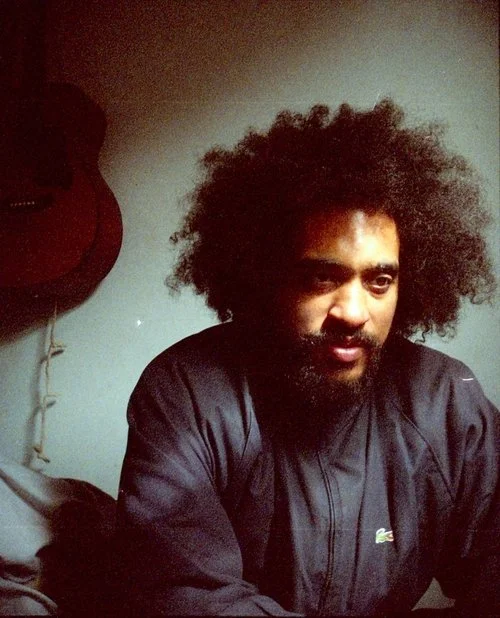
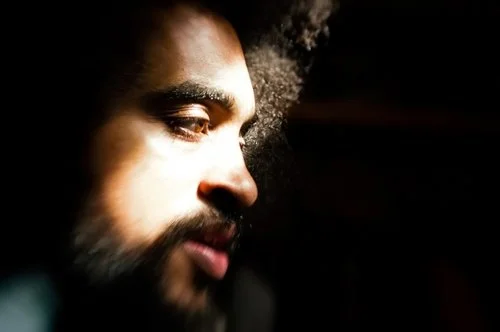
I am spotlighting the remarkable Wu-Lu. Real name Miles Romans-Hopcraft, he released his album, LOGGERHEAD, on Friday. It is a fantastic work from a rising South London artist. I cannot see interviews from this year around the album and its release. Because of that, I am dipping into older interviews. I will come to a couple of good examples from last year. First, gal-dem introduced us to Wu-Lu in 2019. This was to coincide with the release of his E.P., Save Us from Ourselves:

“Based in South London, Miles Romans-Hopcraft aka Wu-Lu is a producer and multi instrumentalist who makes music that swims effortlessly between genres – scuzzy lo-fi, meandering jazz, sweet soul and strange rock all intermingle over everything from boom-bap beats to grungy drums. Wu-Lu has worked with some of our faves as both a producer and collaborator: he can count Poppy Ajudha, Ego Ella May, Nubya Garcia among his past musical colleagues, to name a few.

Wu-Lu is also one of the original members of Touching Bass, South London’s self-described “soulstranauts” collective, also featuring the likes of Shy One, and he’s got a track on Untitled, a forthcoming music project about Basquiat that’s dropping next month.

We caught up with Wu-Lu about family, genres, and the release of his second EP, S.U.F.O.S – which stands for “Save Us From Ourselves”.

gal-dem: Can you tell us a bit about yourself? I read you’ve been into music since you were a kid?

Wu-Lu: I have been around music and the arts my whole life, my dad being a touring musician and my mum a travelling contemporary dancer. I’ve grown up always knowing I would be involved in it, one way or the other.

What does “Wu-Lu” mean?

A while ago I was following the Rastafarian movement and at that time I started to learn Amharic, the language of Ethiopia.I came across the word for water: “wu-ha”. I liked it – but thought people would make the reference between me and Busta Rhymes [who has the song, ‘Woo-Ha’]. So I changed the end so that it would flow better and sound more like a word that represented water to me – so in short it means water, in my own description

One of your songs is called ‘Habesha’, which is a term for Ethiopian and Eritrean people. Is bringing your heritage into your work something you actively try and do? How does that connection manifest for you?

‘Habesha’ is about someone from that part of the world. When I am writing I’m always writing from a place that reflects my surroundings, and I guess culture falls into that category.

Why is the EP called ‘Save Us From Ourselves’?

I think throughout time the human race has made decisions where they haven’t necessarily thought about the future damage of their actions. So, with that in mind, when I’m speaking about relationships it’s just a constant reminder to think before you speak and take time before you act”.

I think Wu-Lu’s upbringing and background explains his choice of career and affects his music. He does have a fascinating story that one can feel blended into his songs. He is someone who will progress and release a series of brilliant albums. Last year, The Quietus interviewed Wu-Lu. It is interesting reading about his parents’ careers and how that impacted him:

“Growing up, Romans-Hopcraft says he was “on two sides of the coin.” His white father and his Black mother were amicably separated, and although they both started out in council housing, “life choices and opportunities” meant his father, a jazz trumpeter, was able to move on to the property ladder while his mother, a dancer, “stayed where she was. It was two different worlds”. Both had an influence on him artistically. When DJ Shadow’s Endtroducing and the 2001 hip hop DJ documentary Scratch emerged as early inspirations, his mother, who herself worked with the charity Youth Music, nurtured a love of turntablism by supplying him with trance and jungle records brought home from work.

“My dad, being ‘the musician’ out of the two, was always saying to me, ‘Music’s really, really hard you know, so get another skill,’ where my mum was more like, ‘Do whatever you want, be creative,” Romans-Hopcraft says. “She was always told when she was growing up, trying to dance, ‘You ain’t gonna be able to do this’ because she was a Black woman in London. With that she was saying you can fucking do it.’ I guess my dad didn’t have as many people saying to him, ‘You can’t do that.’” He recalls an early trio he formed with his brother and a friend. “We were in the front room of my dad’s house and he came in, he must have been pissed off about something [that happened] earlier in the day, and he was like, ‘Listen guys, music’s really hard,’ and gave us this whole long speech. But then when he left the room my brother turned to me and was like, ‘But we’re gonna do it though. We’re gonna be on [the cover of] Kerrang!’”

As well as turntablism, Kerrang!-backed early-2000’s metal, grunge and pop punk bands like Korn, The Offspring, Limp Bizkit, Blink-182 and Slipknot were key influences growing up, as was the soundtrack to the video game Tony Hawk’s Pro Skater 2 (Papa Roach, Rage Against The Machine, Consumed and more). Skate culture was another key strand – the first shows he saw were local punk bands at Stockwell skate park – as was UK hip hop, introduced to him in a chance mention of Rodney P on a graffiti-focussed episode of Channel 4 reality show Faking It, and grime. Then he discovered Gorillaz, who united a number of different strands. “Through the years I realised why that was such a moment in my life, because it had no genre. It had a bit of dub, a bit garage, a bit of hip hop. It spun me. The animation, the punky stuff and the hip hop and baggy clothes. I was like, 'Sick! Sick! This is it!'” Later he drew the links between the afro jazz inspired work of his father with the hip hop he was listening to.

Romans-Hopcraft’s ambition means that any trappings of tradition or genre are secondary concerns at best. “I’m just about trying to keep you on your toes. I’ve got tunes that have a straight up orchestral vibe.” Since he witnessed a Connan Mockasin gig so powerful that he left “feeling different,” more than anything else his aim is to deliver maximum immersion. “I’m trying to make people feel something, good or bad.” Were budget no object, he imagines his work reinterpreted as a Secret Cinema style physical installation”.

  PHOTO CREDIT: Guy Gooch for The Line of Best Fit

I want to finish off with an interview from The Line of Best Fit. Putting together his debut album (which we now have in the world), it is exciting reading press from last year. This promising and very talented artist being covered and tipped for big things! If he is not on your radar, then you need to get involved and check out LOGGERHEAD:

“As we speak, Romans-Hopcraft is in the midst of creating his debut album, which he'll release via his new label - the legendary Warp, home of Aphex Twin, Flying Lotus and Kelela. He struggles to articulate, at first, exactly what it is because everything he writes about is so intrinsic to who he is. “I think I’m just going through an exfoliation of my thoughts and experiences,” he says. “Things I’ve never really spoken about. It’s one giant life puzzle, and this album is about building the first section of it, and all the left-over pieces will set the tone for the future. It’s more of a coming of age thing, with me talking peripherally about my life as person of colour growing up in London, looking back on my younger self. All of my music is just drawn from nostalgia – I mean, you’ve seen my room. It’s like going onto your old iPod and remembering where you were in life when you first heard a particular song. It’s about intangible stuff that brings you back to that space. I’m trying not to forget. I guess it’s about hoarding memories, innit.”

Youth, and the hard-won scars that come with it, has, in many ways, been his muse and motivator. As someone who has worked with kids in everything from youth centres to pupil referral units and community studios, Romans-Hopcraft feels that the essence of his work is about paying it forward. “There was always some older in a space like that who would talk to me on my level, or gave me life advice,” he remembers. “I took more of a liking to that. All of that is worth its weight in gold. Working with young people, you can kind of see a little image of yourself reflected back at you.” He recalls a quote he heard in a documentary. “There was a guy going around close to my age, and he was like: ‘When we were growing up, we thought we were invincible, but now, the kids today are trying to prove it.’”

Now, after a few, cluttered hours, Romans-Hopcraft is lying on his stomach as the tattoo artist is inking Goku onto his lower leg. I sit on the floor and slide my Dictaphone next to him on the table. Considering he’s somewhat hungover as the needle carves out shapes in his skin, he’s only slightly absent-minded as we talk, prone to protracted silences as he forgets a question. I ask if it’s painful. “Yeah. I’m just firming it,” he says. “There have been worse pains. I’ve broken so many bones in my body, man, but it’s calm.” Wrist, finger, arm, leg, toe, he lists them off – most of them from when he got hit by a car, but the rest: “That’s all from too much skating or just being a dumb kid, basically.”

Does he ever wish, sometimes, that he’d chosen an easier life? A life without sleepless nights from the precarity of scraping together a living? A life a little less exhausting from trying to strike the balance between work and play as they merge into one? “Bare times! Bare times!” he laughs. “But I’ve gone way too far. It’s like I chose the picture, I showed it to the tattoo artist, and I’ve started the tattoo. I’ve got to complete it. My dad always said to me when I was younger: ‘Being a musician is hard, man. It’s really, really hard – so find a plan B.’ He gave us this big lecture, but then my brother turned to me and said, ‘But we’ve obviously got to do music, innit?’”.

One of our most remarkable young artists, Wu-Lu is someone who will definitely make a huge mark on the music industry. He is a brilliant talent! Many eyes are on him. I have only recently found his music, but I love what I hear. The future is going to be very bright for the London-based artist. With a growing fanbase and attention from big radio stations, there is no denying this is someone…

WE should all know.

____________

Follow Wu-Lu

FEATURE: Groovelines: Lou Reed – Perfect Day

FEATURE:


Groovelines

Lou Reed – Perfect Day

__________

THERE are a couple of reasons…

why I am thinking about Lou Reed’s Perfect Day. For one, it must form one of the best double A-sides ever (its other being Walk on the Wild Side). The song was the first single from his album, Transformer. Released in November of that year, maybe people best associate Perfect Day with a BBC advert that ran in 1997. After featuring in the 1996 film, Trainspotting, it became known to a wider audience. Perhaps a generation who did not grow up with Lou Reed or his music with The Velvet Underground. The Transformer album is one of Reed’s very best. Its third track in, Perfect Day is the standout for me. I will come on to discuss Perfect Day in the context of the BBC charity single that was released in 1997. That version is twenty-five on 17th November – exactly twenty-five years since the original was released. In terms of its background and origin, I want to start with some information from Wikipedia:

“The original recording, as with the rest of the Transformer album, was produced by David Bowie and Mick Ronson (who also wrote the string arrangement and played piano on the track). The song has a sombre vocal delivery and a slow, piano-based instrumental backing.

The song was written after Reed and his then fiancée (later his first wife), Bettye Kronstad, spent a day in Central Park. The lyric is often considered to suggest simple, conventional romantic devotion, possibly alluding to Reed's relationship with Bettye Kronstad and Reed's own conflicts with his sexuality, drug use and ego.

Some commentators have further seen the lyrical subtext as displaying Reed's romanticized attitude towards a period of his own addiction to heroin. This popular understanding of the song as an ode to addiction led to its inclusion in the soundtrack for Trainspotting, a film about the lives of heroin addicts.[3] However, this interpretation, according to Reed himself, is "laughable". In an interview in 2000, Reed stated, "No. You're talking to the writer, the person who wrote it. No that's not true. I don't object to that, particularly...whatever you think is perfect. But this guy's vision of a perfect day was the girl, sangria in the park, and then you go home; a perfect day, real simple. I meant just what I said”.

The mark of a really great song is one that can succeed and have life as an original, but it can also be transformed and adapted by others. I think a lot of people try and look for darker and more controversial meanings behind songs from edgier artists that do have a heart. By that, Perfect Day seems like this paen to a blissful moment and great love. A man putting his heart out there. Lou Reed has written some beautiful love songs but, with The velvet Underground, drug references were not too far away. Some have interpreted Perfect Day as a song about heroin or being in a drug-induced bliss. In 2020, Far Out Magazine reported how some see Perfect Day to be about drugs:

“The material, upon first listen, sounds like an innocently beautiful effort and, if you were unaware of this theory about the song’s true meaning, then it would never spring to mind. The accusation about the track being centred around heroin is one that has been around since the birth of its inception with Reed even attempting to extinguish the theory all the way back in 1973, but his words fell on deaf ears. “That’s a lovely song. A description of a very straightforward affair,” he told NME a year after the release of Transformer.

Reed’s denial of the track being about heroin is backed up by many who, over time, have claimed that the former Velvet Underground had no reason to lie about what the meaning of the song when, in comparison, he famously released a track titled ‘Heroin’ with his former band—a factor which proves he clearly had no issues with wearing his outside influences on his sleeve.

The theory was given a second wind in 1996 when, in Danny Boyle’s masterpiece Trainspotting, an overdose scene in the British classic film that follows a bunch of heroin addicts in Edinburgh—a collaboration which only added fuel to the fire of the rumour.

However, this interpretation, according to Reed himself, is “laughable”. In an interview in 2000, he stated, “No. You’re talking to the writer, the person who wrote it. No that’s not true [that the song is about heroin use]. I don’t object to that, particularly whatever you think is perfect. But this guy’s vision of a perfect day was the girl, sangria in the park, and then you go home; a perfect day, real simple. I meant just what I said”.

I think that Reed’s lyrics and performance on Perfect Day are beautiful. If you have not heard the song before, then I would suggest you listen to the whole of the Transformer album and see how it fits in. Reed, one of the very best songwriters ever, is at the top of his game on his 1972 album!

If anything, those who sang on the BBC 1997 version of Perfect Day brought new life and meaning from it. In no doubt their version explores and augments love and togetherness, it remains one of the best adverts ever. Featuring a range of artists and personalities, it not only highlighted the diversity and importance of the BBC; it brings tingles and shivers when you hear each person take a line or two from the song. I think that many people went back to Lou Reed’s original when they heard the BBC cover (Reed featured on the BBC version). I like the actual and true meaning behind Perfect Day. Aural Crave gave us more details about what inspired one of the all-time best songs:

“Lou Reed was able to place us all in front of a mirror, in a strong contrast to the hippie rhetoric of peace and free love that raged in California in those years. He was a deeply sensitive artist, who had touched pain with his hand and seen the darkness with his eyes. Reed was afraid of sleep because the darkness and loss of consciousness took him back to the electroshock therapy (a very common therapy back in the days) he had received when he was teenager, that had been administered to “cure” his alleged homosexuality. If you analyse some of his albums, you may come to realise that the sensitivity of his sublime poetry came from the pain.

Perfect Day, the single released in November 1972 from his second album Transformer, is simply the “perfect song”. The song that everyone would like to receive as a love message. The most beautiful song on the album, and perhaps the most beautiful song by Reed.

You made me forget myself

I thought I was someone else

Someone Good

These are the verses that I most adore of this immortal poem. It’s great to think that there is someone in the world who will help you forget who you are and make you feel better. It reminds me of a phrase from Jack Nicholson’s beautiful movie As Good As It Gets, where at some point, Jack says to Helen Hunt: “You make me want to be a better man”. The person to whom Lou Reed is talking in the song is Shelley, one of the most important women in his life since adolescence, the woman who inspired some of the most beautiful songs in his first part of the career (including I’ll Be your Mirror).

Shelley was Lou’s first real love story, which lasted for his whole time at high school. A very complex and psychologically intense story. Reed recalled, in some interviews, how beautiful those meetings were; going to get ice cream, going to the zoo together, seeing a movie. All the while he tells us in the lyrics, that it is wonderful to enjoy the little pleasures in life, because we won’t have a second perfect day, as the sad melody and the cadence of the voice suggest. That day was perfect and had to be perfectly immortalised, forever, in memory and in this song.

The fruits of those moments will continue to be collected for a very long time, as he says in the last verse: “You’re going to reap just what you sow”. Behind a good harvest there is always hard work – simple, but so difficult to put in place. It’s not easy to listen and listen and understand the difficulties, needs and feelings of each other. It is even more difficult to put aside our selfishness, our ego and our fears, to give love, then to learn how to receive it. The concept is deep and extensive; all the books in the world would not be enough to fully explain it, yet Reed expressed and synthesised it in a few, unforgettable verses”.

I will finish there. A tremendous song that sounds touching, haunted, timeless, and pure when Lou Reed sung it. In the hands and mouths of a cast of other artists, the BBC version turned it almost into something hymnal and ethereal. Whichever version you prefer, one cannot argue against the fact Perfect Day has these wonderful lyrics. Lou Reed died in 2013. He would be proud of the success and life the song has enjoyed! The song has featured on other shows and media. The power the song has and how it makes you feel is almost otherworldly. As a piece of music, It is almost…

SOMETHING holy.

FEATURE: Start Me Up: The Rolling Stones at Sixty: Their Greatest Tracks

FEATURE:


Start Me Up

IN THIS PHOTO: The Rolling Stones in 1964: (clockwise from left) Bill Wyman, Brian Jones, Keith Richards, Charlie Watts and Mick Jagger/PHOTO CREDIT: Terry O'Neill—REX/Shutterstock.com

The Rolling Stones at Sixty: Their Greatest Tracks

__________

THERE are some great shows…

on BBC Sounds that marks The Rolling Stones’ sixtieth anniversary. It is amazing to think that they have been going for so long! Although they lost their drummer Charlie Watts last year, the guys are back on the road. Led by one of the ultimate showmen, Mick Jagger, they have recorded one of the most impressive bodies of work ever. Starting out doing mainly covers of their eponymous album of 1964, The Rolling Stones (with Brian Jones and Bill Wyman in the line-up) came in strong. Their first classic album, December's Children (And Everybody's), was released in 1965. Although there were still cover songs in the line-up, originals like Get Off of My Cloud and I’m Free showcased a great songwriting partnership between Mick Jagger and Keith Richards. I know there will be a lot more celebrations and shows dedicated to The Rolling Stones on their sixtieth anniversary. I am not sure whether they will release another album soon or not, but they are still keeping active on the live circuit. They have a longevity and wonderful catalogue like…

NO other band.

FEATURE: In Love with This Woman’s Work: Stranger Things Season 5: If Another Kate Bush Song Featured, Which Would It Be?

FEATURE:


In Love with This Woman’s Work

IN THIS PHOTO: Kate Bush in 1989/PHOTO CREDIT: John Carder Bush

Stranger Things Season 5: If Another Kate Bush Song Featured, Which Would It Be?

__________

THIS will be the last feature for a while…

 IN THIS PHOTO: The main cast of Netflix’s Stranger Things

relating to Stranger Things. The hit Netflix series, as we know, used Kate Bush’s Running Up That Hill (A Deal with God). Because of that, the song has got to number one in several countries and has put Bush back into the spotlight. I know that Hounds of Love track has reached a whole new audience. The success of the song continues, and I feel we might get new records and acclaim for Running Up That Hill (A Deal with God) before long. It may be unlikely but, as season five of the series might be set around 1988 or 1989, might another Kate Bush song be used? Here are details about what we know at the moment regarding the final season. The placement and use of Running Up That Hill (A Deal with God) was excellent. Bush herself has said how she was really impressed and moved. Ensuring that the song got her approval and that she oversaw where and when it was being used, the success the song has accrued since it was seen on the series has taken her by surprise! Of course, The Duffer Brothers (who created the show) might have different ideas when it comes to music for the fifth season. As there is a love of Kate Bush from the crew and characters in the show, you cannot rule against another one of her songs being used.

If there was going to be a song of hers used, it depends on the year the season is set. If it is 1988, then that was a year before The Sensual World was released. A song that was featured on her 1986 greatest hits album, Experiment IV, has a vibe and sound that could fit into Stranger Things. With quite a spooky and eerie sound, maybe this is a track of Bush’s that could be dusted off. One that a lot of people do not know about (and people sort of overlook), it would be great to hear. More likely, 1989 will be a better setting in which to feature Kate Bush’s music. Thinking about The Sensual World, and there are a few songs from that album that would be terrific for Stranger Things. Whilst Running Up That Hill (A Deal with God) was already a big song and one that was a single, maybe, if her music were used in some form again, the producers would look for something as big and known. That would leave This Woman’s Work and The Sensual World. The former seems more likely but, as it was originally written for the film, She’s Having a Baby, maybe it would be too obvious. I was discussing this on Twitter recently with fans. In terms of the more appropriate and resonant songs that are not well-known and could well shine a light on a Kate Bush album some people write off, I think The Fog, Reaching Out and Love and Anger could be in the frame. Let’s think about those three tracks and why they would fit…

I think that The Fog is perfect for Stranger Things. A deeper cut from The Sensual World, it features Kate Bush’s dad doing a bit of dialogue. The sound and lyrics seem to be primed for a scene on Stranger Things. Perhaps they do not want to repeat themselves when it comes to Kate Bush but, when you consider the impact and sensation of The Fog…would you miss out on it? The Kate Bush Encyclopedia collated interviews where Bush revealed details of The Fog:

“It's about trying to grow up. Growing up for most people is just trying to stop escaping, looking at things inside yourself rather than outside. But I'm not sure if people ever grow up properly. It's a continual process, growing in a positive sense. (Len Brown, 'In The Realm Of The Senses'. NME (UK), 7 October 1989)

Again, it's quite a complex song, where it's very watery. It's meant to be the idea of a big expanse of water, and being in a relationship now and flashing back to being a child being taught how to swim, and using these two situations as the idea of learning to let go. When I was a child, my father used to take me out into the water, and he'd hold me by my hands and then let go and say "OK, now come on, you swim to me."

As he'd say this, he'd be walking backwards so the gap would be getting bigger and bigger, and then I'd go [Splutters]. I thought that was such an interesting situation where you're scared because you think you're going to drown, but you know you won't because your father won't let you drown, and the same for him, he's kind of letting go, he's letting the child be alone in this situation. Everyone's learning and hopefully growing and the idea that the relationship is to be in this again, back there swimming and being taught to swim, but not by your father but by your partner, and the idea that it's OK because you are grown up now so you don't have to be frightened, because all you have to do is put your feet down and the bottom's there, the water isn't so deep that you'll drown. You put your feet down, you can stand up and it's only waist height. Look! What's the problem, what are you worried about? (Roger Scott, BBC Radio 1 (UK), 14 October 1989)”.

I keep thinking about some of the lyrics and the way Bush sings them. Almost child-like in its story and narrative, Stranger Things is a series that could place The Fog in a scene and elevate it. These lyrics really jumped out: “This love was big enough for the both of us/This love of yours was big enough to be frightened of/It's deep and dark, like the water was/The day I learned to swim/He said/"Just put your feet down, child/"Just put your feet down child/The water is only waist high/I'll let go of you gently/Then you can swim to me".

The imagery that provoked and moved Kate Bush when she wrote Reaching Out leads me to believe that this is another track that could be featured on a show like Stranger Things. Again, read the way she talks about it. It is one of The Sensual World’s best tracks in my view:

“That was really quick, really straightforward. A walk in the park did that one for me. I really needed one more song to kind of lift the album. I was a bit worried that it was all sort of dark and down. I'd been getting into walks at that time, and just came back and sat at the piano and wrote it, words and all. I had this lovely conversation with someone around the time I was about to start writing it. They were talking about this star that exploded. I thought it was such fantastic imagery. The song was taking the whole idea of how we cling onto things that change - we're always trying to not let things change. I thought it was such a lovely image of people reaching up for a star, and this star explodes. Where's it gone? It seemed to sum it all up really. That's kind of about how you can't hold on to anything because everything is always changing and we all have such a terrible need to hold onto stuff and to keep it exactly how it is, because this is nice and we don't want it to change. But sometimes even if things aren't nice, people don't want them to change. And things do. Just look at the natural balance of things: how if you reach out for something, chances are it will pull away. And when things reach out for you, the chances are you will pull away. You know everything ebbs and flows, and you know the moon is full and then it's gone: it's just the balance of things. (...) We did a really straightforward treatment on the track; did the piano to a clicktrack, got Charlie Morgan [Elton john's drummer] to come in and do the drums, Del did the bass, and Michael Nyman came in to do the strings. I told him it had to have a sense of uplifting, and I really like his stuff - the rawness of his strings. It's a bit like a fuzzbox touch - quite 'punk'. I find that very attractive - he wrote it very quickly. I was very pleased. (Tony Horkins, 'What Katie Did Next'. International Musician, December 1989)”.

Although one of more lyrical simple songs, the chorus has a power and beauty that I think could be translated onto the show: “Reaching out for the hand/Reaching out for the hand that smacked/Reaching out for that hand to hold/Reaching out for the Star/Reaching out for the Star that explodes/Reaching out for Mama”.

Released as a single in 1990 (it got to thirty-eight in the U.K.), this is a track that did not get the credit and commercial success that it deserved. Love and Anger could feature on Stranger Things. It has an interesting history and road to completion:

“It's one of the most difficult songs I think I've ever written. It was so elusive, and even today I don't like to talk about it, because I never really felt it let me know what it's about. It's just kind of a song that pulled itself together, and with a tremendous amount of encouragement from people around me. There were so many times I thought it would never get on the album. But I'm really pleased it did now. (Interview, WFNX Boston (USA), 1989)

I couldn't get the lyrics. They were one of the last things to do. I just couldn't find out what the song was about, though the tune was there. The first verse was always there, and that was the problem, because I'd already set some form of direction, but I couldn't follow through. I didn't know what I wanted to say at all. I guess I was just tying to make a song that was comforting, up tempo, and about how when things get really bad, it's alright really - "Don't worry old bean. Someone will come and help you out."

The song started with a piano, and Del put a straight rhythm down. Then we got the drummer, and it stayed like that for at least a year and a half. Then I thought maybe it could be okay, so we got Dave Gilmour in. This is actually one of the more difficult songs - everyone I asked to try and play something on this track had problems. It was one of those awful tracks where either everything would sound ordinary, really MOR, or people just couldn't come to terms with it. They'd ask me what it was about, but I didn't know because I hadn't written the lyrics. Dave was great - I think he gave me a bit of a foothold there, really. At least there was a guitar that made some sense. And John [Giblin] putting the bass on - that was very important. He was one of the few people brave enough to say that he actually liked the song. (Tony Horkins, 'What Katie Did Next'. International Musician, December 1989)”.

Maybe the least likely of the three to get included on Stranger Things, Love and Anger still has this translatable potency and importance that could score a scene. These lyrics stuck out to me: “Take away the love and the anger/And a little piece of hope holding us together/Looking for a moment that'll never happen/Living in the gap between past and future/Take away the stone and the timber/And a little piece of rope won't hold it together”. Even if The Duffer Brothers have not said Kate Bush’s music will feature again on Stranger Things, it is something that you…

CAN’T rule it out.

FEATURE: Little Child Runnin’ Wild: Curtis Mayfield’s Super Fly at Fifty

FEATURE:


Little Child Runnin’ Wild

Curtis Mayfield’s Super Fly at Fifty

 __________

TOMORROW marks…

fifty years since the release of the Curtis Mayfield album, Super Fly. From the film of the same name, it is one of the greatest albums ever. The third studio album by the late Soul great, it was released on 11th July, 1972. It The soundtrack for the Blaxploitation film of the same name, Super Fly is considered a classic of 1970s Soul and Funk music. A hugely popular and big-selling album, Super Fly was one of the pioneering Soul concept albums, with its socially aware lyrics about poverty and drug abuse meaning that it stood out and resonated. A soundtrack that is as powerful now as it was in 1972, there was not a lot of expectation that Super Fly would be a big hit and sell a lot. A flawless nine-track album, Super Fly did almost instantly fly off the shelves. I guess having two million-selling singles in the form of Freddie's Dead and the title track means Super Fly actually outgrossed the film itself! I am going to conclude with a couple of reviews for Super Fly. As it is a classic and one of the all-time greats, there is hardly anything but absolute praise and respect for Curtis Mayfield’s 1972 masterpiece. Before that, this article from 2018 looked at the remarkable Super Fly:

“Curtis Mayfield’s Superfly stood at the crossroads, ushering in a new bright and infectious sound, one that was all about the ghetto, though with its groove laden background, reached out and captured the hearts and minds of white listeners during the hot summer of 1972, where the record went on to sell more than five million copies.

Alright, in all honesty this album did not encapsulate the black experience in America for everyone, though for an element it rang true, embracing the decline of cities across this country, while those of culturally similar backgrounds began exploiting each other, creating even more despair and disillusion. Yet in the same breath, one can see this song and the full album as the cohesive story of the dispossessed and forgotten strivers, those who didn’t, don’t, or couldn’t believe the American dream … so they created their own, with all of the music brought to life with a sense of ominousness, while the horn arrangements only accentuated that fact seeming to ring out as warning alarms.

As to the music contained in this package, perhaps no other element is more tastefully, yet bittersweetly satisfying than the song “Pusherman,” filled with a nonpareil funkiness that roots ambiguously for the underdog (the dope dealer), even in the face of the destruction he brings. Of course this attitude is easily understood if one remembers that the War in Viet Nam was just drawing to a close, with black men returning to this nation unafraid of overweight white cops sitting in their police cruisers eating jelly donuts, talking of their high school glory days. Of course it wasn’t all the result of Viet Nam, the assassinations of Martin Luther King, Bobby Kennedy and the election of Richard Nixon all played their parts in causing the reality of this soundtrack to ring true.

Superfly was intended to spill from your stereo bigger than life, filled with entanglements that were beyond analyzation, and to that end, Mayfield was no saint, being arrested many times for his abusive behavior toward women, where perhaps our tolerance of this aspect only encouraged others to swagger down the same path, as they were taught that this was how life was lived. So, while Curtis Mayfield may be considered a rare American poet, one who was capable of jabbing social commentary, he certainly lived a contradictory life. Nevertheless, the album was a splendid vehicle for Mayfield, one that’s certainly been attempted since, yet stands as a singular crowning achievement, perhaps because Mayfield was at the right place at the right time with the right skills.

Despite all this, the underlying current was intended not to champion, or revere the seedy underbelly, though it did have that effect, as its intentions were that of anti-drug, self liberation and social awareness, all delivered with musical diversity and fleshed out with perfection … solid grooves laced with adventurous stories, that certainly inspired the likes of Bruce Springsteen”.

One of those albums that anyone can hear and instantly feel moved and affected by, Mayfield composed and wrote every track. One of the most underrated and greatest songwriters of his generation, his endless talent and passion is evident throughout a soundtrack that ranks alongside the very best of them. Maybe Super Fly is the greatest soundtrack album ever. AllMusic reviewed Super Fly and had this to say:

“The choice of Curtis Mayfield to score the blaxploitation film Super Fly was an inspired one. No other artist in popular music knew so well, and expressed through his music so naturally, the shades of gray inherent in contemporary inner-city life. His debut solo album, 1970's Curtis, had shown in vivid colors that the '60s optimist (author of the civil-rights anthems "Keep On Pushing" and "People Get Ready") had added a layer of subtlety to his material; appearing on the same LP as the positive and issue-oriented "Move On Up" was an apocalyptic piece of brimstone funk titled "(Don't Worry) If There's a Hell Below, We're All Going to Go." For Super Fly, Mayfield wisely avoids celebrating the wheeling-and-dealing themes present in the movie, or exploiting them, instead using each song to focus on a different aspect of what he saw as a plague on America's streets. He also steers away from explicit moralizing; through his songs, Mayfield simply tells it like it is (for the characters in the film as in real life), with any lessons learned the result of his vibrant storytelling and knack of getting inside the heads of the characters. "Freddie's Dead," one of the album's signature pieces, tells the story of one of the film's main casualties, a good-hearted yet weak-willed man caught up in the life of a pusher, and devastatingly portrays the indifference of those who witness or hear about it. "Pusherman" masterfully uses the metaphor of drug dealer as businessman, with the drug game, by extension, just another way to make a living in a tough situation, while the title track equates hustling with gambling ("The game he plays he plays for keeps/hustlin' times and ghetto streets/tryin' ta get over"). Ironically, the sound of Super Fly positively overwhelmed its lyrical finesse. A melange of deep, dark grooves, trademarked wah-wah guitar, and stinging brass, Super Fly ignited an entire genre of music, the blaxploitation soundtrack, and influenced everyone from soul singers to television-music composers for decades to come. It stands alongside Saturday Night Fever and Never Mind the Bollocks Here's the Sex Pistols as one of the most vivid touchstones of '70s pop music”.

Prior to wrapping up, I want to quote from Pitchfork’s extensive and detailed review of Super Fly. As impressive as the music and Mayfield’s vocals is, I am especially amazed at how influential Super Fly is. It is an album that will continue to influence people and be talked about fondly:

“The cheesiest of the album’s nine tracks is “No Thing on Me (Cocaine Song)” which feels thrown in to satisfy Mayfield’s desire to ensure that he didn’t glorify drug use, as the film tended to do. But even with his overly cautious, hall-monitor lyrics (“You don’t have to be no junkie”), he never leaves the groove behind, opting this time for something a bit more triumphant and celebratory. He closes it out with “Superfly,” a clear attempt at mimicking the boisterous superhero anthem that Isaac Hayes provided for Shaft the year before. Hayes’ song may be the single most popular track of the blaxploitation genre, but that has as much to do with its being peppered with easily parodied, overtly ’70s slang as it does with the quality of the song (it helped Hayes become the first African-American to win an Academy Award for Best Original Song). “Superfly” aspires to be as big, musically, as “Theme from Shaft,” but it doesn’t sacrifice on the thematic continuity. This is still about hustling, surviving, poverty, blackness, and pain. It is, as Mayfield’s highest falsetto intones at the end of the song, about “Tryin’ ta get over.”

Super Fly inspired imitations in the blaxploitation soundtrack genre, such as Bobby Womack’s Across 110th Street, James Brown’s Black Caesar, and Willie Hutch’s The Mack (not bad imitations, but imitations nonetheless) that didn’t quite capture the tension, despair, and astute political analysis that make Super Fly stand out. Mayfield created the perfect film soundtrack; certainly the best of the blaxploitation genre, and perhaps, outside of Prince’s Purple Rain, the best of any soundtrack written and produced by a single artist.

And while he sang sweetly on record, Mayfield had entanglements with the real women in his life that were much more harsh. According to the Curtis Mayfield biography, Traveling Soul, co-written by his son Todd Mayfield and Travis Atria, around the time of Super Fly’s success, Curtis was abusive toward the woman he lived with, identified only as Toni, and referred as his “spiritual wife.” Todd writes: “On vacation in Nassau in October [1972], right around Super Fly’s ascendance to the top of the pops, he and Toni got into a late-night argument as [his daughters] Tracy, Sharon, and I slept in another room. When the commotion startled me awake, I walked out to find policemen hulking in the doorway and Toni with a black eye. Dad never did these things in front of us, but we’d see the aftermath.”

There is a tendency to celebrate male artist in such an uncomplicated way that obscures, and even rationalizes, some truly abhorrent behavior. This is especially true when it comes to violence against women committed by musicians we celebrate for their political contributions. We have to be willing to complicate the legacies of the men responsible for these acts. Entangled within Mayfield’s life is Super Fly, the ghetto, funky, soulful, political album that was disseminated across America. Maybe the conscious rappers of my youth were right. If Super Fly needed to accomplish all of that to become popular, it’s the exception that proves the rule. It was a moment of fortune”.

Tomorrow is going to be a special day, as so many websites and music journalists will write about Super Fly on its fiftieth anniversary. One of those rare soundtracks that has stood out from the film itself as a work of brilliance in its own right, there is no doubting that the mighty and magnificent Super Fly is…

ONE for the musical history pages.

FEATURE: Revisiting... Cleo Sol - Mother

FEATURE:


Revisiting...

Cleo Sol - Mother

__________

THE second studio album…

from the brilliant Cleo Sol, Mother was produced by her long-time collaborator Inflo. The album was inspired by Sol’s voyage into motherhood. It's reflective, intimate, and private. An album as strong and memorable as her debut, Rose in the Dark. Although it got some attention when it came out, Mother did not really get the reviews and focus that it deserved. Released back in August, it is underappreciated and should get new light. Some gave it a mixed review and were a bit disappointed. I feel it is a really strong and open album that pulls you in and keeps you listening. COMPLEX highlighted the album last year:

“Following last year’s universally adored Rose In The Dark, Cleo Sol is back with an album that challenges its predecessor’s supremacy. Titled Mother, the new project adds to an extraordinarily stellar run from the West London singer-songwriter, who’s been a beacon in British soul (and R&G) since the early 2000s.

This year alone, Sol has made standout appearances on Little Simz’s “Woman” and played a major role in SAULT’s critically acclaimed LPs. Now back on her own path, Mother is a deeply personal collection that explores, as the title suggests, motherhood, as well as the value in finding support networks in tumultuous times.

Cleo’s own mother has been an ever-present influence on her music from day one (even the ‘Sol’ part of her name was taken as tribute to her mother’s Spanish heritage) and that was particularly true on 2019 single “Sweet Blue”. Two years later and Cleo herself has just become a mother, an experience she describes as “the most transformative, uplifting, heart melting, strength giving experience thus far that led me to write this album.”

Bridging the gap between her mother’s lessons, her own experiences and everything she wants to pass on to her own child, all of this is poured into her latest outing. Bringing that to life with the production, her long-standing collaborator Inflo calls on the spirit of ‘70s and ‘80s soul and ties it to the present day for a sound that’s genuinely timeless”.

As part of the band SAULT, Cleo Sol’s voice has scored some of the best albums of the past couple of years. There was a not of negativity from some when it came to her solo album. Not as powerful and experimental as a SAULT album, Mother is worthy of a lot more love and respect. The New Yorker wrote about Mother (and Halsey’s album, If I Can't Have Love, I Want Power):

“In her work as a member of the enigmatic British R. & B. collective Sault, Sol riffs on the dance music of Black diaspora. Her solo music is less groove-oriented: on last year’s “Rose in the Dark,” Sol brewed a slow-burning soul sound. The twelve songs here, produced with Sol’s Sault collaborator Inflo—a decorated musician known for his work with the rapper Little Simz and the singer Michael Kiwanuka—are even quieter, more delicate, and more intimate: the focus is Sol’s voice, in conversation with her history and future. Her voice soothes and reverberates, and the small band constructed around it is designed specifically to amplify its power. The instrumentals are driven by piano, with soft-blended accents of conga drums, strings, and acoustic and electric guitar, tipping with the gentle rock of a cradle.

Sol envisions motherhood as something cyclical: lessons taught, and then unlearned. “Forgive me, I’m not what you want me to be / But I was raised under a roof of unfinished dreams,” she sings on “Build Me Up,” seemingly speaking to her own mother. Dreams, unfinished and not, push the narrative forward. “One Day” and “We Need You” imagine a child going her own way, and acknowledge how doing so might be necessary. “We need your voice, speak your truth / We need you,” the chorus sings on the latter. Motherhood, as Sol conceives of it, is characterized by reciprocity. In many of the album’s most revealing moments, it’s tough to discern the perspective—who is singing to whom, who is giving the lesson and who is receiving its message”.

I want to end with a review from AllMusic. Whilst there were those who were not overly warm and completely positive about Mother, there were strong reviews that saw the full picture and potential. People definitely need to listen to Sol’s incredible 2021 album:

“Cleo Sol's second solo flight in as many years followed the third, fourth, and fifth albums she made with main musical partner Inflo and company as Sault. One of the trio, Untitled (Rise), was shortlisted for the 2021 Mercury Prize. That Mother is an engrossing double album -- and was in the chamber before the June 2021 arrival of Sault's fifth album, Nine -- is yet more evidence of Cleo Sol and Inflo's high levels of productivity and quality control. Like Rose in the Dark, this was written almost exclusively by the duo together and produced entirely by Inflo, with no further information provided. It's essentially another set of out-of-time soul ballads, yet it's somehow both more concentrated and expansive, eliciting comparisons to Roberta Flack and Carole King at their most intimate and inviting, and the concurrent productions of Charles Stepney, whether it's the spirited group choruses or the harp glissandi. That's not to say Mother isn't its own thing. Take how it starts, with Cleo flashing back to a childhood in an abusive home, asking for comfort, and offering some of her own with loving advice -- all over one of the album's several backdrops that takes slight if deliberate turns, gradually advances and recedes in intensity, and folds in elements liable to activate tear ducts. In the second song, Cleo sings of romantic desertion, attesting "I'm still here" with as much steadiness as the drum pattern beneath her voice. Afterward, she sings mostly of gratitude, motherly love, and reassurance, always with tenderness and resolve. While "Sunshine" is worthy of its title with its soft glow and sense of essential renewal, and "Spirit" is a grand finale, the album's emotional apex is located elsewhere. "23" is made of sweet soul that dazzles with a melodious bassline, mallets, harp, and other strings in full effect. The music facilitates Cleo's difficult talk with her mother, in which the singer makes known her pain, frustration, and sympathy without equivocation”.

If you have not heard Mother or did not know about Cleo Sol, I would advise you spend some time with the album. It is a fantastic work with brilliant songs. 23 and Don’t Let Me Fall are among the highlights. Those who did not quite grasp the full promise of Mother missed something special. Mother is an album that is…

WORTH another spin.

FEATURE: Inspired By… Part Sixty-Nine: Paul Weller

FEATURE:


Inspired By…

Part Sixty-Nine: Paul Weller

__________

IN this feature…

where I compile a playlist of songs from artists who are influenced by a legend, I had to include the incredible Paul Weller. Having inspired so many artists and great bands, The Modfather is going to keep on making a mark on the music scene. He is such a prolific musician. His latest studio album, Fat Pop (Volume 1), came out last year. Just over thirty years since his eponymous debut album, the former lead of The Jam and The Style Council shows he is not slowing or showing any signs of decline! Before coming to a playlist of songs from acts that have definitely been influenced by Weller, AllMusic provide a deep and detailed biography:

“Paul Weller began his musical career as an angry teenage punk obsessed with old records. Throughout his long career, he thrived in the place where the past meets the present, creating forward-thinking music with deep roots. When he led the Jam, the most popular British rock band of the punk era, he spun his love of the Beatles, the Kinks, and the Who into vital punk rock, spearheading the mod revival of the late 1970s. During the final days of the Jam, he developed a fascination with Motown and soul, which led him to form the sophisti-pop group the Style Council in 1983. As the Style Council's career progressed, Weller became increasingly infatuated with jazz and house music, interests that helped push the group toward the fringes of pop by the dawn of the 1990s. Weller went solo soon afterward, combining classic soul with the hippie prog rock of Traffic, coloring the margins with tasteful electronica influence. His creative rebirth coincided with the rise of Britpop, a movement rife with rockers who considered Weller a formative influence. Stanley Road, his 1995 album, turned into a multi-platinum blockbuster that gave him popular momentum for another decade, after which time he experienced another artistic renaissance with 22 Dreams. The 2008 double album sparked a series of adventurous records that blended rock, soul, and electronic music, a hybrid that could be as spacy as 2020's On Sunset or as vibrant as 2021's Fat Pop, Vol. 1.

Weller's climb back to the top of the charts as a solo artist was not easy. After Polydor rejected the Style Council's house-influenced fifth album in 1989, Weller broke up the group and lost both his record contract and his publishing deal. Over the next two years, he was in seclusion as he revamped his music. In 1991, he formed the Paul Weller Movement and released "Into Tomorrow" on his own independent label, Freedom High Records. A soulful, gritty neo-psychedelic song that represented a clear break from the Style Council, "Into Tomorrow" reached the U.K. Top 40 that spring, and he supported the single with an international tour, where he worked out the material that comprised his eponymous 1992 solo debut. Recorded with producer Brendan Lynch, Paul Weller was a joyous, soulful return to form that was recorded with several members of the Young Disciples, former Blow Monkey Dr. Robert, and Weller's then-wife, Dee C. Lee. The album debuted at number eight on the U.K. charts, and was received with positive reviews.

Wild Wood, Weller's second solo album, confirmed that the success of his solo debut was no fluke. Recorded with Ocean Colour Scene guitarist Steve Cradock, Wild Wood was a more eclectic and ambitious effort than its predecessor, and it was greeted with enthusiastic reviews, entering the charts at number two upon its fall 1993 release. The album would win the Ivor Novello Award for Outstanding Contemporary Song Collection the following year. Weller supported the record with an extensive tour that featured Cradock as the group's leader; the guitarist's exposure on Wild Wood helped him successfully relaunch Ocean Colour Scene in 1995. At the end of the tour, Weller released the live album Live Wood late in 1994. Preceded by "The Changingman," which became his 17th Top Ten hit, 1995's Stanley Road was his most successful album since the Jam, entering the charts at number one and eventually selling nearly a million copies in the U.K.

By this point, Weller decided to stop attempting to break into the United States market and canceled his North American tour. Of course, he was doing so well in the U.K. that he didn't need to set his sights outside of it. Stanley Road may have been greeted with mixed reviews, but Weller had been re-elevated to his status as an idol, with the press claiming that he was the father of the thriving Britpop movement, and artists like Noel Gallagher of Oasis singing his praises. In fact, while neither artist released a new album in 1996, Weller's and Gallagher's influence was felt throughout the British music scene, as '60s roots-oriented bands like Ocean Colour Scene, Cast, and Kula Shaker became the most popular groups in the U.K.

Weller returned in the summer of 1997 with Heavy Soul, and Modern Classics: Greatest Hits followed a year later. Heliocentric -- which at the time of its release he claimed was his final studio effort -- appeared in the spring of 2000. The live record Days of Speed arrived in 2001, and he released his sixth studio album, Illumination, in 2002. A collection of covers called Studio 150 came out in 2004, followed by an all-new studio release, As Is Now, in October 2005 on Yep Roc. Released in 2006, Catch-Flame! Live at the Alexandra Palace preceded Yep Roc's mammoth Hit Parade box set. It was followed in 2008 by 22 Dreams, a two-disc studio epic that managed to touch on all of Weller's myriad influences. His tenth solo album, Wake Up the Nation, was released in 2010 and it proved another success, earning a nomination for the Mercury Music Prize.

His next album, Sonik Kicks, arrived in the spring of 2012; it debuted at number one in the U.K. and was eventually certified silver. The summer of 2014 brought More Modern Classics, a second solo hits compilation that rounded up the singles Weller released after Heavy Soul. The next spring, he returned with his 12th solo album, the lush, spacy Saturn's Pattern; critically acclaimed, it went to number two in the U.K. and was also certified silver. He added another string to his bow in 2017 with the release of his first motion picture score, for the low-budget drama Jawbone, a biopic of former British youth boxing champion Jimmy McCabe. Not long afterward, Weller delivered his 13th album, the soulful A Kind Revolution, which featured cameos by Robert Wyatt and Boy George.

Paul Weller quickly followed A Kind Revolution with True Meanings, an acoustic-based, orchestrated album that appeared in September 2018. He promoted True Meanings with a series of concerts at Royal Festival Hall, orchestral shows that later became the basis for the 2019 live album Other Aspects. He kicked off 2020 with In Another Room, an experimental four-song EP on the Ghost Box label, then he returned to Polydor for On Sunset, an adventurous soul-electronic hybrid that found him reuniting with Jan Kybert, who had co-produced Saturn's Pattern. Ever industrious, Weller completed his next album shortly after On Sunset's release. That record, the eclectic Fat Pop, Vol.1, featured Weller's daughter Leah, and appeared in May 2021. Right around that time, Weller presented a special concert of classic songs taken from all eras of his long career. Arranged by Jules Buckley and performed by the BBC Symphony Orchestra, along with Weller's longtime guitarist Steve Cradock, the show was first broadcast over the airwaves by the BBC, then released in December under the name An Orchestrated Songbook”.

One of the most influential and important artists ever, Paul Weller has not only put out so much brilliant music into the world through the decades. He has contributed in terms of other artists creating sublime and essential music. As you can hear from the playlist below, Weller has compelled and directed so many others. I wanted to give a salute to…

A musical legend.

FEATURE: Metal and Mystic: T. Rex’s The Slider at Fifty

FEATURE:


Metal and Mystic

T. Rex’s The Slider at Fifty

__________

ARRIVING the year after…

 IN THIS PHOTO: Marc Bolan of T.Rex/PHOTO CREDIT: estate of Keith Morris/Redferns/Getty Images

T. Rex’s iconic album, Electric Warrior, came the mighty The Slider. The third under the T. Rex name, I think some of Marc Bolan’s most captivating and brilliant songwriting and performances can be heard on The Slider. As a child, I was a massive fan of the band (and still am). I remember hearing Metal Guru for the first time. The opening track on The Slider, it brings back so many memories! The other huge track from the album is Telegram Sam. Featuring songs with incredible names (including Baby Boomerang and Ballrooms of Mars), perhaps there are fewer well-known tracks on The Slider compared with Electric Warrior. Johnny Marr has said how influential The Slider was to him. Produced by Tony Visconti, I wanted to mark the upcoming fiftieth anniversary of one of the great albums. Released on 21st July, 1972, this is an album that every person needs to experience. As I do with album anniversary pieces, I will finish off with a couple of critical reviews. There is a feature that I want to introduce first of all. Udiscovermusic.com provided excellent background and details about The Slider for a feature last year. I like the relationship between Marc Bolan and David Bowie. They definitely influenced one another:

“David Bowie gets a lot of credit for popularizing glam, but no one did more to bring the genre to the mainstream than T. Rex frontman Marc Bolan. The two were friends and competitors, both rising to rock stardom in the early 1970s after pivoting from folk-indebted rock to a harder, campier style. (They even shared a collaborator/producer Tony Visconti, and a manager.) But while it took Bowie three or four reinventions over a few years to become Ziggy Stardust, Bolan’s transformation into glam rock warlord was complete within months, from the release of the “Ride a White Swan” single (hailed by some as the first glam rock song) in October 1970 to Bolan’s glittery performance on Top of the Pops in March 1971. By the time Bowie released The Rise and Fall of Ziggy Stardust and the Spiders from Mars, Bolan had already put out one glam rock classic and was a month away from dropping his second.

The definitive glam rock album

Ziggy Stardust casts the longer shadow over rock history, but The Slider may be the more definitive glam rock album, unburdened by overfamiliarity or grandiose narratives about alien rock stars. Opener “Metal Guru” is essentially a perfect song, right from the ecstatic howl at the start: It sounds like Bolan took the chorus of the Monkees’ “Daydream Believer” and made an entire song out of it, piling string arrangements on top of a fat guitar riff that sounds more like a honking saxophone. (There are also backing vocals from the Turtles’ Mark Volman and Howard Kaylan – also known as Flo & Eddie – who sing all over the album.) The lyrics are full of religious overtones, but it doesn’t really matter what the song is supposed to be about. Everything about “Metal Guru” serves that irresistible boogie.

That boogie is the central element in T. Rex’s best songs – it makes you want to clap your hands, stomp your feet, and dance in a way that rock didn’t do anymore. In 1972, Pink Floyd, Todd Rundgren, and Yes were recording some of the most progressive and forward-thinking music of the era, but it was all head music. The Slider is body music, with Bolan emulating the rhythmic pulse of Chuck Berry and Eddie Cochran. “Rock On” and “Baby Strange” practically bounce along on loping drumbeats and indelible guitar riffs, while the goofy strut of “Telegram Sam” (populated by a cast of characters who probably live just up the road from Eleanor Rigby and Polythene Pam) sounds like an early Beatles song plugged into a fuzzbox. And when Bolan added the blues to his boogie, as on the title track and the lumbering “Chariot Choogle” – which hits with the force of a Black Sabbath song – the results are fantastically heavy.

Subverting rock’n’roll tropes

Still, The Slider was a glam rock album from start to finish, and that meant doing more than simply breathing new life into old rock’n’roll tropes. Popular music has no shortage of songs about girls and cars – from Wilson Pickett’s “Mustang Sally” to Prince’s “Little Red Corvette” – but Bolan sang about them in ways that were weird and seductive. It’s unclear whether the subject of “Buick Mackane” is a girl named after a car or an actual car, while Bolan’s line about having “never, never kissed a car before / It’s like a door” on the title track is perhaps his sauciest vehicular come-on, rivaled only by the “hubcap diamond star halo” of “Get It On.” Bolan drew on his acoustic roots, too, creating a sort of glam folk sound that even Bowie couldn’t imitate”.

I want to finish with a couple of reviews for The Slider. One of T. Rex’s defining and greatest albums, it is going to get some new appraisal on its fiftieth anniversary later in the month. This is what AllMusic wrote in their review:

“Buoyed by two U.K. number one singles in "Telegram Sam" and "Metal Guru," The Slider became T. Rex's most popular record on both sides of the Atlantic, despite the fact that it produced no hits in the U.S. The Slider essentially replicates all the virtues of Electric Warrior, crammed with effortless hooks and trashy fun. All of Bolan's signatures are here -- mystical folk-tinged ballads, overt sexual come-ons crooned over sleazy, bopping boogies, loopy nonsense poetry, and a mastery of the three-minute pop song form. The main difference is that the trippy mix of Electric Warrior is replaced by a fuller, more immediate-sounding production. Bolan's guitar has a harder bite, the backing choruses are more up-front, and the arrangements are thicker-sounding, even introducing a string section on some cuts (both ballads and rockers). Even with the beefier production, T. Rex still doesn't sound nearly as heavy as many of the bands it influenced (and even a few of its glam contemporaries), but that's partly intentional -- Bolan's love of a good groove takes precedence over fast tempos or high-volume crunch. Lyrically, Bolan's flair for the sublimely ridiculous is fully intact, but he has way too much style for The Slider to sound truly stupid, especially given the playful, knowing wink in his delivery. It's nearly impossible not to get caught up in the irresistible rush of melodies and cheery good times. Even if it treads largely the same ground as Electric Warrior, The Slider is flawlessly executed, and every bit the classic that its predecessor is”.

The Slider received so much affection and praise when it was released in 1972. Such an astonishing, sexy, confident, and excellently produced, album, I have so much respect for it. Some critics noted how Tony Visconti was the one who helped bring the quality from the tracks. Some also said how there are no other obvious singles beside Metal Guru and Telegram Sam. This is what Pitchfork had to offer when they reviewed The Slider back in 2019:

“Recorded in March and released in July of 1972, The Slider marked both the zenith and imminent approach of the cliff’s edge for T. Rextasy. Recorded in a dilapidated castle in France, it captured Marc Bolan as the King of Glam at the absolute height of his powers. Think Nadia Comăneci in 1976, Prince in the ’80s, or Ronnie O’Sullivan running the snooker table. T. Rex could do no wrong during that span.

As such, every wrist flick and downstroke on The Slider rings out like an act of god. Each cast-off line from Bolan’s notebook transforms into a profound edict from on high. And every cut—be it pop perfection or half-sketched—gets spun into cotton candy by Visconti and the backing vocals of Mark Volman and Howard Kaylan (better known as Flo & Eddie), harmonizing their nasal voices towards new adenoidal highs. The Slider exudes confidence to the point of becoming delirious and drunk on Bolan’s own self-regard, careening between bawdy, brash Little Richard lop-bam-booms, weirdo machismo rock, and ethereal acoustic ballads, while line by line Bolan toggles between profundity and inanity, melancholia and nonsense.

“Metal Guru” opens the album with a gush of guitar and Bolan’s mawkish cry, “Mwah-ahah-yeeeah.” It’s a victory lap as introduction and celebratory whoop-along. At least until each verse detours into stranger terrain: surrealistic upholstery (“armour-plated chair”), rock’n’roll cliché (“you're gonna bring my baby to me”), tongue-twisting meter-buster (“just like a silver-studded sabre-tooth dream”). It’s a glorious amount of gobbledygook.

From his earliest days, Bolan knew his way with the juxtapose of strange, slippery words, drawing inspiration from the poetry of fellow countrymen like John Keats, Lord Byron, and Percy Bysshe Shelley, as well as the fantastical realms of J.R.R. Tolkien and Lewis Carroll. As Bolan pivoted from hippie-folk underground obscurity to mainstream pop star, discarding elves for automobiles, he kept the mood of his words intact. At the start of a new decade, when the gap between rock and pop was beginning to widen, Bolan was content to blur the lines between genres. No longer happy with those weedy full-lengths and favoring instead the concision of a 45, T. Rex’s greatest songs hit like hard candy: crunchy, mouth-tingling sweet, and a little unreal.

He kept remnants of his folksy roots, though. “Mystic Lady” is a keenly sweet and fragile acoustic number, an ode to a sorceress in dungarees set adrift by strummed acoustic guitar and Visconti’s Romantic strings. In one couplet, cliché and stunning surrealism are wed: “Fills my heart with pain/Fills my toes with rain,” Bolan’s clenched-jaw jitter eliciting that visceral sensation.

Visconti would go on to produce iconic albums for the likes of Bowie and Thin Lizzy later in the decade, but you can hear his golden touch across the album. On the three-minute romp of “Rock On,” he weaves together boogie-woogie piano, overdriven guitar, a prancing snare drum, Flo & Eddie’s glorious and grotesque harmonies, and a sax phased and flanged until it’s a streak of stardust.

Even The Slider’s lesser songs—“Baby Boomerang” and “Baby Strange” are as puerile as their titles suggest—are elevated by Visconti’s touch. The string sections of “Rabbit Fighter” form a sweeping anthem from so much hot air. Just as impressive is how a throwaway like “Spaceball Ricochet” can become wholly evocative. “Ah ah ah/Do the spaceball” doesn’t do a damned thing when written out, but with the bowed cello and Flo & Eddie’s uncanny accompaniment of Bolan’s gasps, this trifle transforms into one of the album’s most ethereal moments”.

A wonderful and undoubtably influential album, The Slider turns fifty on 21st July. One of my all-time favourite bands, I really love albums like The Slider. Even though Electric Warrior is my favourite album of theirs, The Slider is a fine work that people (who haven’t heard it) should check out. In September, there are two Marc Bolan anniversaries. We will mark what would have been his seventy-fifth birthday (on 30th), in addition to forty-five years since his death (16th). Lead of a pioneering and hugely popular band, The Slider is a sensational album that still sounds so exciting and magnetic…

FIFTY years later.

FEATURE: Let’s Start with The Red Shoes… Might We See More Kate Bush Merchandise After Her Chart Success and Records?

FEATURE:


Let’s Start with The Red Shoes…

IMAGE CREDIT: Drew Kessel 

Might We See More Kate Bush Merchandise After Her Chart Success and Records?

__________

FANS was of Kate Bush…

have been treated to quite a few words from her over the past month. Not only did she give her first radio interview in six years to Woman’s Hour. Bush has also provided updates to fans based around the ongoing chart success of Running Up That Hill (A Deal with God). That song, after featuring on Stranger Things, has opened her music to so many new young fans. Bush recently said the below about the song’s chart records and success. She also mentioned something about merchandise:

“Whoooo Hoooo everybody!  I just can’t believe it  -  No. 1 for the third week. We’re all so excited!  In fact it’s all starting to feel a bit surreal.

I’ve just watched the last two episodes of Stranger Things and they’re just through the roof. No spoilers here, I promise. I'd only seen the scenes that directly involved the use of the track and so I didn’t know how the story would evolve or build. I was so delighted that the Duffer Brothers wanted to use RUTH for Max’s totem but now having seen the whole of this last series, I feel deeply honoured that the song was chosen to become a part of their roller coaster journey. I can’t imagine the amount of hard work that’s gone into making something on this scale. I am in awe. They’ve made something really spectacular.

I want to let you know about the amount of unofficial merchandise that’s out there. I haven’t seen it myself but I keep getting reports that there’s a huge amount: T-shirts, etc -  some of which is very poor quality, some of which is pretty good and could be mistaken for being official. The only official merchandise is the already existing material that's available through the official websites.

We hope you understand that we want to honour the energy that’s being generated by the audiences right now. An energy that feels very special, unique and quite frankly, bloody moving.

Thanks very much everyone,

Kate”.

I know there is a lot of unofficial merchandise and products that have not been endorsed by Kate Bush. That is the nature of the industry. I think, in the wake of Running Up That Hill (A Deal with God), that problem will become more obvious. Retailers and websites will be marketing stuff off that bears Bush’s name or that of the song. I guess the chances of a new edition of Hounds of Love being released are slim. Not only does it feature Running Up That Hill (A Deal with God), but there is a chance to include a great B-side like Under the Ivy (which was the B-side to this song in the U.K.). It would ne nice to think we may get something like a T-shirt range and clothing. Maybe it would feature Bush in 1985 or lettering for Running Up That Hill (A Deal with God). There would be cool for merchandise of this nature, in addition to posters and totes. Rather than exploiting the song’s success and Kate Bush’s new resurgence, it would update the merchandise already out there. Of course, it would be sold through her website, and all authorised by Bush. I think that there could also be more general T-shirts, bags and posters that would feature Kate Bush through the years. Maybe posters or framed pictures of her album covers. Although there have been books released and various bits, I am sure there is demand and room in the market for new apparel and merchandise. Maybe she will consider it following her post about the unauthorised and fake merchandise she has been told about. Some well-designed and selective merchandise that gets the Kate Bus seal of approval would be…

SNAPPED up!

FEATURE: Who’s That Girl? The Madonna Film and Soundtrack Collection Playlist

FEATURE:


Who’s That Girl?

The Madonna Film and Soundtrack Collection Playlist

__________

ON 21st July…

 IN THIS PHOTO: Madonna in 1987

it will be thirty-five years since the soundtrack for Who’s That Girl was released. Although Madonna only performed four of the nine songs, it is credited as one of her albums. She featured in the Who’s That Girl film in a performance that is quite underrated. Through her career, she has acted in a lot of films. The soundtracks have provided us with some terrific songs. Maybe the most famous is Vogue. That was from the I'm Breathless: Music from and Inspired by the Film Dick Tracy soundtrack of 1990. Through the years, she had delivered some great film performances and incredible songs for the soundtracks. To honour the upcoming thirty-fifth anniversary of the Who’s That Girl soundtrack, I have compiled a playlist featuring some of her best soundtrack songs. I have included some songs that were used in films but not included on the soundtrack (such as A League of Their Own’s This Used to Be My Playground). Although not all of her film roles and soundtrack contributions have been excellent, there are some real highlights. Here are some of her best from…

ACROSS her career.

FEATURE: Dreaming of You: The Coral at Twenty

FEATURE:


Dreaming of You

The Coral at Twenty

__________

ONE of the best and most unusual debut albums…

The Coral is twenty on 29th July. If you do not own this fabulous album on vinyl, then make sure that you get it. Following the release of a single and an E.P. plus two U.K. tours, The Coral began recording their debut album. Recording sessions were produced by Ian Broudie and The Coral. Mixing together Psychedelia, Folk and Rock, The Coral was unlike anything else released in 2002. I know there will be a lot of discussion about the album on its anniversary later in the month. The band’s lead, James Skelly, wrote most of the tracks on The Coral (some were alongside bandmate Nick Power). Although their debut is packed with tremendous tracks, the best-known offering is Dreaming of You. Released as a single in October 2002, this is a song that many associate with The Coral. I love how varied and wide-ranging The Coral is. Here is a band many people did not know about. Rather than (them) conforming to what was around at the time or producing something simple, the Merseyside group threw so much into the mix! Of course, The Coral have gone on to have a very long and successful career. Their latest album, Coral Island, was released last year. Although they are not making music quite as psychedelic as their 2002 debut, the band are still very much in their own league. I listen back to The Coral now and am still blown away!

I am going to round off pretty soon. I think it is important to bring in a couple of reviews for a truly brilliant album. This is what AllMusic had to say when they reviewed one of the very best and most interesting albums of the first decade of this century:

“The Coral's self-titled 2002 debut kicked up quite a flurry of excitement when it washed ashore from the picturesque seaside village of Hoylake, a deep-water anchorage in the borough of Wirral. Not since the Beatles, or perhaps even Echo & the Bunnymen, has a young band from England's blustery western coast caused this much commotion. The album begins with a two-minute psych-rock sea shanty, "Spanish Main," which bursts forth with a frothy and joyous refrain. Along the way, the boys pick their way through somewhat-discarded flotsam and jetsam genres (mostly from the '60s), including 1964-era Merseybeat, horn-driven ska, fuzzed-out acid rock, and Brit-pop psychedelia. Other influences hailed from the West Coast of America -- the Doors, Love, the Beach Boys, Quicksilver Messenger Service, and even the Banana Splits -- and some were even from the big city of London, like Syd Barrett-era Pink Floyd and the Action. "Shadows Fall" is where this adventurous tale really finds its sea legs; the Top 30 U.K. single features a mix of styles and sounds, including barbershop quartet vocals, Madness-style pop-ska, Russian Cossack folk, and a subtle Morricone-esque harmonica. The result is a bit jarring, but there's a fervent originality at work here, despite all of the referencing of the halcyon past. "Dreaming of You" is probably an even better example of what the Coral have to offer, with strong lead vocals, a tough Tamla beat, and suitably vintage organ humming underneath. "Simon Diamond" is effervescent 1967-style British psych, while the rambunctious "Skeleton Key" blends Zappa-esque guitars, serpentine Middle Eastern melodies, and flavorful horns. In addition to a massive heap of critical praise, the Coral also managed to connect with an audience who plunked down enough gold doubloons to help this album land in the U.K.'s Top Ten charts. For a debut, it's self-assured and the band are able to fold in a multitude of influences while in the end coming out sounding exactly like the Coral and no one else”.

The Coral followed up on their eponymous 2002 with 2003’s Magic and Medicine. That album is one of my absolute favourites. I have a lot of fondness and respect for a very accomplished debut. Here is what NME wrote about the spectacular album that is The Coral:

“Dunno how it happened. But thanks to a glitch in the time-space continuum, The Coral's brilliant, bizarre debut album arrives with us in mid-2002, fresh from the British beat boom of 1964. En route they've navigated their way via Country Joe & The Fish, Leadbelly, Motown, The Doors, Russian Cossack music, the (early) The Coral, The Action, Hawaiian instrumentals, WWF wrestling, Scouse luminaries The Stairs and Shack (former drummer Alan Wills, fittingly, is their manager) and, most probably, Captain Birdseye. It's so nautically-inclined you can almost smell the fishing nets. And all the work of six straggly youths from Hoylake, Merseyside - where else? - the eldest of whom, leather-lunged singer James Skelly, weighs in at a wizened 21. Too much.

In The Coral's company, the usual critical shorthand isn't so much made redundant as turned into hieroglyphics. Take 'Goodbye'. Stomping rhythm 'n' blues for two minutes, then suddenly the guitars flip into gonzo-punk overload and then whoooosh, it's turned into that dream sequence bit in 'Wayne's World 2' where Wayne meets Jim Morrison in the desert, before wriggling to a triumphant conclusion in four minutes flat.

Tunes so joyous you thought they only existed on dusty 45s in ancient pub jukeboxes appear regularly through the mist. 'Dreaming Of You' is two minutes and 19 seconds of yearning pop confusion ('I still need you but/I don't want you') to rival both Madness' 'When I Dream' and Frank Zappa' 'My Girl' (told you it was weird); 'Skeleton Key' is a deranged Coral tribute that morphs into a gothic mariachi shuffle and finally, sublime, slippery Grace Jones disco and 'Shadows Fall', as you know, features the first ever marriage of ragtime, Egyptian reggae and barbershop on record. All orchestrated by Joe Meek (sombrero's off, incidentally, to Ian Broudie for an impeccable production).

But The Coral display not the slightest trace of Gomez-ian worthiness, just an insane joy at being able to make an album that, as James has gone on record as saying, sounds 'timeless'. Only the Super Furriesand [/a] would dare show such disrespect for the rulebook, but even they, you suspect, would draw the line at skiffle-driven Gregorian sea shanties.

As a final 'Calendars & Clocks' suggests ('Descendants of joy/ return the father to the boy'), [a]The Coral have ventured into rock's pre-history in their quest for fresh musical plunder and the outcome is the funniest, most”.

On 29th July, The Coral turns twenty. It introduced the band to so many people. Dreaming of You sits alongside other gems like Spanish Main, Shadows Fall and Skeleton Key. A remarkable album that everyone needs to hear, go and seek it out today if you have not heard it before. My love for The Coral has not dimmed through the years. It is, without any doubt…

A remarkable debut.  

FEATURE: Kate Bush and Desert Island Discs: The Song of Hers I Would Take with Me…

FEATURE:


Kate Bush and Desert Island Discs

IN THIS PHOTO: Kate Bush in 1993/PHOTO CREDIT: John Stoddart 

The Song of Hers I Would Take with Me…

__________

MAYBE I have alluded to this before…

but I know a lot of castaways that have appeared on BBC Radio 4’s Desert Island Discs chose a Kate Bush song. I know that some have done podcasts about which Kate Bush tracks they would take to a desert island. Castaways can take eight discs with them to desert island. I would probably not choose all Kate Bush tracks. In fact, I would narrow it to one. I think most people who have chosen Kate Bush on Desert Island Discs go for Wuthering Heights. Either that or something from Hounds of Love. I think there is something unique about Desert Island Discs in terms of the psychology. One can simply choose their favourite eight songs, or the ones they first remember hearing. As you would be alone on an island, it is probably less about your favourite one, and more about the one that makes you feel less alone or is the best company on an island. I can see why Wuthering Heights has been selected so many times. For me and so many other people, that was our introduction to Kate Bush (her debut single of 1978, it went to the top spot in the U.K.). The song remains one of her very best and most important. I know there are a lot of different reasons why Kate Bush has been selected so many times. Given the new success of Running Up That Hill (A Deal with God), that song might well feature in upcoming episodes.

My favourite Kate Bush song is from The Dreaming, Houdini. I think that Wuthering Heights means the most to me. Them Heavy People (both from The Kick Inside of 1978) is one that is also very important from my childhood. I don’t think that I would select any of those tracks. Kate Bush’s music provokes a lot of different emotions. If I were stranded on an island, I think I would want her music to give me strength and a sense of energy. I would also want it to remind me of better times, in addition to keeping me company. That takes me to a song from an album that does not get a lot of love. The Red Shoes was released in 1993. Following on from the successful and acclaimed 1989 album, The Sensual World, there was less critical love for the follow-up. That is a shame, because The Red Shoes has some classics. I think I would take Rubberband Girl with me. The opening track on that album, it has an elasticity, energy, uplift, and sense of motivation that would be very useful. The song reached number twelve in the U.K. Bush re-recorded Rubberband Girl for 2011’s Director’s Cut. I am not overly keen on that version. I think the 1993 original is the best. Even though Bush sees it as a bit of a silly Pop song, it was recorded at a time when she was going through a tough time. I think she was experiencing a bit of strain in her long-term relationship, and the lyrics do seem to point to Bush and her need to bounce back: “A rubberband bouncing back to life/A rubberband bend the beat/If I could learn to give like a rubberband/I'd be back on my feet”. I would love this song to come to life on the stage as part of a Kate Bush gig.

One reason why I love Rubberband Girl is because I remember the song first time around. At the age of ten, it was an early Bush discovery for me. I love the video for it (which was also part of the short film, The Line, the Cross and the Curve). I would remember back to childhood and hearing Rubberband Girl for the first time. A song that not a lot of people know about, I love Bush’s work in 1993. She recorded The Red Shoes from 1990 to 1993, and the album got some positive reviews. Its first single and opening track is one that is very special to me. I would place it high in my list of favourite Kate Bush songs. I think, if I were ever on Desert Island Discs (which will never happen!), this is the song of hers that I would select. As she said in a BBC Radio 1 interview in December 1991:

“This was a troubled time for Bush, who had suffered a series of bereavements including the loss of her favoured guitarist, Alan Murphy, as well as her mother, Hannah, who died the year before the album's release. Bush's long-term relationship with bassist Del Palmer had also ended, although the pair continued to work together. "I've been very affected by these last two years", she remarked in late 1991. "They've been incredibly intense years for me. Maybe not on a work level, but a lot has happened to me. I feel I've learnt a lot – and, yes, I think [my next album] is going to be quite different... I hope the people that are waiting for it feel it's worth the wait”.

I have a lot of love and respect for Bush’s resilience, determination, strength, composure, and professionalism. The Red Shoes is an underrated album and, leading its charge, Rubberband Girl is a terrific song. If I ever was in the position to select one Kate Bush song to take with me to a desert island, then this would…

BE the one.