FEATURE: Go Under the Ivy, Under the Leaves: Kate Bush: The Gardening Playlist

FEATURE:


Go Under the Ivy, Under the Leaves

Kate Bush: The Gardening Playlist

 __________

IT is a shame…

 PHOTO CREDIT: Alamy

that Kate Bush’s Under the Ivy is not available on Spotify. I am putting together a gardening playlist and, to be honest, that song would have been perfect! The reason I am doing this is, back in June when Bush spoke with Woman’s Hour, she mentioned that she is gardening a lot now. Emma Barnett sort of asked what Bush is doing, with a view of seeing whether new music was coming. Bush was emphatic that gardening was her passion and that is what she is busy with. Bush has written about the garden and its beauty before. In fact, the second disc of her double album Aerial, A Sky of Honey, puts you in nature and the surroundings of an English country garden. Whether perfect for getting into the gardening mood, relaxing you, or provoking images of calm or inspiring moods, the songs below is a Kate Bush gardening playlist. Not that Bush listens to her own songs when gardening, but if you are a fan of hers, these songs can accompany you as you do your gardening! Take these with you when you are sat…

UNDER the ivy.

FEATURE: Spotlight: Ezra Collective

FEATURE:


Spotlight

Ezra Collective

__________

ON this outing of Spotlight…

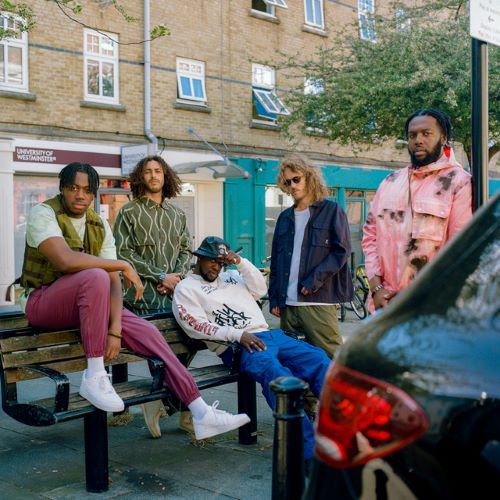
I wanted to concentrate on a group who might not be known to everyone. Ezra Collective are a London five-piece whose sound mixes Jazz with Hip-Hop and Afrobeat. Described by some as distinctly London in origin, Ezra Collective comprises of Femi Koleoso, TJ Koleoso, Joe Armon-Jones, James Mollison, and Ife Ogunjobi. There is this familial bond between the members. This comes through in the very passionate and excellent music. Their current studio album, You Can’t Steal My Joy, arrived in 2019. It was met with critical acclaim. I wonder whether the group have plans for a new album this year. I will come to a fairly recent review with group member Joe Armon-Jones. Before that, I want to look back to an interview from Loud and Quiet. They featured Ezra Collective in 2019:

The strength of Ezra Collective’s music, then, is also testament to the strength of their friendship. The group met just down the road from where we are today, at Tomorrow’s Warriors, a youth jazz programme run by bassist and all-around British jazz icon Gary Crosby. Having initially come together for a competition to play at Ronnie Scott’s, the band became firm friends, and after a few line-up alterations they haven’t looked back since. “It was essentially a school project we fell in love with,” Femi laughs. As such, the group buzzes with that chemistry that’s unique to school mates. Crammed into a booth, they jostle with one another and pick at the remains of lunch as we talk. Our conversation frequently erupts into fits of laughter, drawing a couple of sideways glances from the kind of couples whose romantic ideal is a Pizza Express within walking distance of Waterloo Station. At one point I look across from me and realise that Joe has been covertly rolling a joint under the table.

Like the best of friendship groups, the members of Ezra Collective aren’t afraid to show their appreciation for one another. “Being with these guys, it’s given [me] a chance to be real and comfortable,” says TJ.  “When you’re with your friends you’re comfortable, and there’s no façade that you’ve got to put on.” He admits that while the group have always been close, Ezra Collective hasn’t always been as laidback a project as it is today. “In the early days we tried other things, but they didn’t feel good. We tried to wear suits; it didn’t feel good,” he says, looking around the table at his bandmates who are dressed in a mix of streetwear, afro-centric jewellery and pieces from high street retailers. “It came down to the fact that we just enjoy playing music together, so we took that and ran with it. It was only recently, really, when we realised that we were going against the narrative.”

“The narrative of a young man in London is so often portrayed as negative in every way,” his brother elaborates. “They’re angry; they’re depressed; there are so many issues that surround being a young man growing up in London. Even though most of us are subject to these things that make life difficult, London’s a happy place, I would argue for that. Regardless of what’s happening on a daily basis, the fact we can go to Steam Down freely and have a dance and have fun, or go to Fabric or Wireless, or whatever it is, [makes us happy].”

Having either grown up across London or spent a lot of time in the city thanks to Tomorrow’s Warriors, the members of Ezra Collective are as united by their love for grime, soul and hip hop as they are by their passion for jazz. Femi’s first career break came as a live drummer for veteran rapper Pharaoh Monch, and alongside his duties in Ezra he plays in Jorja Smith’s band, touring the world with the singer. On Twitter and Instagram last summer he shared a picture of himself, along with the rest of her band, chilling backstage with Snoop Dogg.

It’s an approach that underpins not just Ezra Collective’s sound but the sound of London’s young jazz scene as a whole. Moses Boyd, a drummer, friend of the band and fellow Tomorrow’s Warriors graduate, has a residency on Radio 1Xtra. Kamaal Williams teamed up with grime MC Mez for a rework of the Yussef Kamaal track ‘Strings of Light’. Meanwhile, Theon Cross, the tuba player in Sons of Kemet and a respected solo artist in his own right, joined Kano as part of his band for the Made in The Manor tour. Whereas once jazz was seen as stuck-up and over-intellectual, in London, and increasingly further afield, it’s a progressive part of youth culture – increasingly so since Kendrick released ‘To Pimp A Butterfly’ in 2015”.

I think Ezra Collective are drawing more people are becoming aware of the Jazz scene in London because of Ezra Collective. The Jazz community in London is very close and supportive. I want to move onto an interview from HAPPY. In 2020, the group were asked about the wave of affection and attention for the Jazz scene, in addition to how London’s Jazz scene seems particularly tight:

HAPPY: You seem to be on the forefront of this new wave of jazz in London. What do you think primarily caused this surge for the genre?

EC: I think the surge really was down to several things, a boredom of the same things being on a pedestal. We all love DJs, but when it’s all you see on stages, instruments are as exciting as ever. I feel as though that played a part. The use of social media, openness from festival bookers, and then a huge surge of talent in the field sparked it.

HAPPY: London’s jazz community seems to be very close-knit, with crossovers that include Femi on Nubya’s album, Nubya on Ezra’s record, and then other features from members of KOKOROKO and Theon Cross. What contributes to this collaborative community?

EC: I think it’s the love for each other. Everyone wanting to see each other do well. Void from rivalry or ego, I think when it’s just good vibrations at the core of things, it lends itself to an atmosphere of collaboration, advice sharing, inspiration, and so on.

HAPPY: Your second studio album, You Can’t Steal My Joy, defines your ethos of bringing happiness to those who experience it. Do you find the audience reciprocate?

EC: Yes. Definitely. Even the ones we don’t expect it from. The joy is beyond language, age, race, gender. People love joy. And it’s there for everyone if you look hard enough”.

There are not many recent interview from Ezra Collective. I hope that this changes very soon. Joe Armon-Jones chatted with WhyNow last year about working in Ezra Collective, in addition to having his own project. I do hope that we get more insight and interviews from Ezra Collective as we head through the year:

Asked how it feels to be a forefront component of a new jazz wave in London and the UK at large, Joe replies, “It’s definitely special but t’s been going for a while. It’s not new. I don’t consider myself at the forefront so much, there are other guys who’d take that title: Shabaka [Hutchings] is more that kind of figure, the generation above me…”

Joe is 26, Shabaka is 36, “…but it’s been weird not seeing all those guys at this time.” With jazz being such a collaborative form, I wondered how the enforced distance the pandemic required affected his approach, but for Joe, it’s been nice having no commitments, no deadlines, just allowing him to focus on the music.

“It’s still possible, I’m just making music, writing,” he explains. “You can still get people together and make music. I’m working on a project with my housemate, Maxwell Owin, working with my own band, doing lots of things.”

“There are no gigs, so that’s the main difference… It’s been nice having no commitments, no deadlines, just allowing me to focus on the music… so it’s good, really good.”

What’s the difference between writing and recording with his own band and with Ezra Collective? “With Ezra,” Joe answers, “we write together and once we’re finished, we record in one day, two days. But with my band we’ll write and record it in the same kind of time, but then I’m producing and mastering it for a year! It’s a long process.”

Joe’s life before London was murky. Asked where he moved to London from, he replied, “Way out in the middle of nowhere, man,” and little else. He came to London to study jazz and, honestly, why would you leave?”.

A terrific group who are hugely original and influential, go and check out Ezra Collective. A lot of people have still not discovered them, so this is a perfect opportunity to do so. An urge and demand for a new album from them is clear. Let us hope that these wishes are fulfilled before too long. They are an awesome force that…

EVERYONE should know about.

_____________

Follow Ezra Collective

FEATURE: Second Spin: Monica – Miss Thang

FEATURE:


Second Spin

Monica – Miss Thang

 __________

THERE is a bit of…

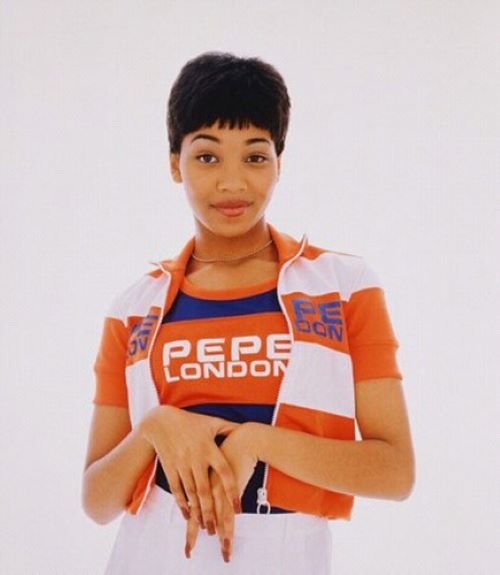
information from Wikipedia regarding the incredible Monica. Whereas many know her from the duet with Brandy, The Boy Is Mine (from Brandy’s 1998 album, Never Say Never), she is so much more than that. A hugely successful R&B artist, I wanted to include her debut album, Miss Thang, in this Second Spin. Before that, Wikipedia provide some information regarding the success Monica has accrued:

Monica has sold 5.3 million albums in the United States and she is recognized as one of the most successful urban R&B female vocalists to begin a career in the mid to late 1990s. According to Billboard, she is the youngest recording act to ever have two consecutive chart-topping hits on the Billboard Top R&B Singles chart, as well as the first artist to top the US Billboard Hot R&B/Hip-Hop Songs chart over the span of three consecutive decades (1990s, 2000s, and 2010s). In 2010, Billboard listed Monica at number 24 on its list of the Top 50 R&B and Hip Hop Artists of the past 25 years.[6] A four-time nominee, she won a Grammy Award for Best R&B Performance by a Duo or Group with Vocals for her contribution to "The Boy Is Mine" alongside Brandy, at the 41st awards ceremony and has been the recipient of one Billboard Music Award, one BET Award, and two BMI Pop Awards”.

An album that received mixed reviews upon its release, perhaps a lack of experience did contribute to that. Monica was only fourteen when the album came out. A remarkably mature and accomplished album from someone so young, Miss Thang was conceived under the guidance of Rowdy head Dallas Austin. He would emerge as a father figure to Monica and serve as Miss Thang's sole executive producer. Miss Thang has sold over three million copies and was a chart success upon its release. Including wonderful singles like Don't Take It Personal (Just One of Dem Days) – which reached number two int the U.S. -, this is an album that won love and support from buyers, but not quite as much from critics. Before moving on, AllMusic wrote this in their review of Miss Thang:

Monica had signed to Arista's Rowdy imprint several years prior to this release, so she had ample time to ensure her debut would be nothing short of successful. The album focuses on hip-hop and contemporary urban cuts, including a pair of R&B chart-toppers. The first is "Don't Take It Personal," also a massive pop hit, propelled by a heavy bottom bass with Monica's indelible vocals ringing as she embraces an introspective lyric. The second, "Before You Walk Out of My Life," is a bittersweet lyric with unwavering vocals. "Like This and Like That" has that pocket beat; the song's flow is dictated by Monica's vocal chorus and an animated rap by Mr. Malik. Monica gives her own rendition on several numbers; while they all are plausible, the blues number "Let's Straighten It Out" is the most engaging, as she shares vocal duties with Usher. In spite of her youthful age, Monica conveys a surprisingly mature sound”.

Gifted with a stunning voice and command of her material, Miss Thang is a triumphant album that was not afforded the credit and respect it deserves. In a more positive and expansive feature, Albumism revisited Miss Thang on its twenty-fifth anniverssary in 2020. On 18th July, 1995, the public were treated to this brilliant album from a truly wonderful young artist:

Nothing prepared us for her Hummer of a voice that summer of 1995. B♭3 isn’t that low a note, but when Monica hit it on the fourth “baby” in the vamp of “Don’t Take It Personal (Just One of Dem Days),” its unique resonance took the listener aback.

How did that little girl do that? Wait. How old is she again? Is there a beer-swilling blues singer named Cleotha hiding in her throat? The same baited hook caught us when we first met Michael Jackson, “Little” Stevie Wonder, LeAnn Rimes, and Shanice Wilson. The public just can’t resist a musical wunderkind with advanced gifts.

Monica’s team played their cards expertly for Miss Thang. They avoided unnecessary comparison to contemporaries Brandy and Aaliyah by delivering Miss Thang while neither artist had big singles splitting the female teen R&B market. Her manager, Queen Latifah, got her a guest role on Living Single in April 1996. By year’s end, she booked the Whitney Houston collaboration “Somebody Bigger Than You and I,” alongside Faith Evans, Ralph Tresvant, Bobby Brown, and Johnny Gill.

Great marketing made her visible and accessible, but Monica became a chart-topper on the strength of her voice alone. Beneath her old soul and short pixie haircut—usually only sported by actually grown women—Monica was still just a kid. That kid threw a hell of a punch with her debut album though. The success of Miss Thang assured that if you ever underestimated Monica from College Park? I bet you won’t do it again.

That introductory single from Monica’s triple-platinum debut Miss Thang charted #2 on the Billboard Hot 100 and #1 Billboard R&B, making her the youngest female artist ever to achieve the latter. That was pretty gutsy to lead with a Jeep-rocker about enforcing personal boundaries when you’re on your monthly cycle. It paid off though, yielding a platinum single right out of the gate.

The next offering, “Like This and Like That,” slid nonchalantly onto radio in the fall. The bassy banger found Monica warning a non-committal beau if their relationship didn’t solidify, “I can’t wait around…I’m gonna move along!” Rapper Mr. Malik laughs off her ultimatum with a melodic 24-bar verse that rides the beat and gives respect to the Slick Rick classic “Mona Lisa” all at once. The single’s All Star Remix rocked even harder, swapping Malik’s verse for a more gutter one from Queensbridge duo Mobb Deep.

On the flipside of that double A-side single was the more chilled-out affair, “Before You Walk Out of My Life.” This singalong favorite came courtesy of Danish team Soulshock & Karlin. They wrote it with Andrea Martin for Toni Braxton’s Secrets album, but it became huge for Monica. Moreover, pairing the hip-hop “Like This” with the pop-friendly “Before You Walk Out” was shrewd. Their combined stats resulted in dual belt-notches for Monica: two Top 10 pop and #1 R&B singles for the marketing push of one.

Monica coasted on those wins until the following summer, when her next hit single revved up at radio: the Darryl Simmons-assisted “Why I Love You So Much.” Even with some “Cleotha” in her voice, she still reaffirms her girlhood on a bridge as sweet as the rainbow swirl-pop on the single’s artwork”.

You may have heard of Monica, but I would urge you to check out her albums. Miss Thang, her amazing debut, has many highlights. Singles such as Tell Me If You Still Care sit beautifully alongside awesome deeper cuts like Angel. I think that Miss Thang was not given enough time and love back in 1995. In years since there has been some kinder retrospection. But it is interesting seeing how commercially successful it is, and yet critics were not fully on board. To me, Miss Thang is a great album. It is certainly worthy of…

ANOTHER spin.

FEATURE: Hardly Dime a Dozen...: The Dreams and Realities of Getting a Music Comedy Feature to the Big Screen

FEATURE:


Hardly Dime a Dozen…

The Dreams and Realities of Getting a Music Comedy Feature to the Big Screen

__________

I have written a couple of features…

about a comedy feature that I am working on. Rather than blowing my own trumpet or being self-indulgent, I have been startled by the realities of trying to get a screenplay to the screen. I have no previous comedy writing experience. As a music journalist, I can write well, but the discipline of screenwriting is very different. Regardless, I have had this idea and been obsessed with it since coming up with it a few months back. The title, Dozen a Dime, has a specific relation to the central plotline. It is set in 1986 in Haight-Ashbury, San Francisco. We look inside the lives of five teens and five adults: the former group is struggling at high school, trying to dodge bullies, whilst also planning a future they are not sure about. The latter threads relate to a group of friends who moved from New York as they struggled financially under the presidency of Ronald Regan (and an L.G.B.T.Q.I.A.+ female couple also felt opressed and discriminated against). They are disillusioned in California. Feeling stifled in their jobs, they devise a scheme that provides financial relief, excitement, and a sense of rebelling against the government. The teens are huge music lovers, and they cemented their friendships when they met at Live Aid in London in 1985 (they were kicked out for heckling Freddie Mercury before Queen’s set). They are trying to find a way to escape the struggles of school and pursue their passion for music.

A spark is lit when they see a T.V. advert for a new music-buying subscription. The company, International Sounds, offers fans twelve albums on cassette for a dime. There is a quick disclaimer at the end of the advert but, intrigued by the seemingly too good to be true offer, they order a dozen albums (a mix of the best from 1985 and 1986). They soon realise that they can order batches of a dozen albums by applying under different identities and sending them to different addresses (so they do not get rumbled). As a way of placating their bullies – who are extorting the teens for money -, they sell albums to their peers for $1 a dozen. The other students want to take advantage of the T.V. deal themselves, but they are too fearful and have parents who do not approve. Seemingly fool-proof, things start to deteriorate when International Sounds discover their scheme and deploy their collection agency, Madonna, and Prince to track down the teens. Through the story arc, Dozen a Dime looks at the romance between two of the female teens, depression and AIDS, economic struggle, bullying, redemption, and bonding. It is a comment that also looks at difficult topics. At the end, the teens find themselves in a chase and showdown with International Sounds – though they manage to get away and, at the very end, set off into the sunset out of San Francisco for the summer.

 IN THIS PHOTO: Gillian Anderson

I have cheekily posted a tweet to this article tagging Gillian Anderson. She will not read this I am very sure, but I have thought about the cast. In the central adult roles, I have in mind Rachel Brosnahan, Keke Palmer and Elizabeth Olsen (there are two male roles I am not sure who will go to). Anderson, in my mind, would be perfect playing the owner of the local record shop the teens visit, Groove Is in the Heart. They are banned from it for trying to steal albums, and Anderson would make a formidable and remarkable fit for the role. She is a brilliant comic actor, but her range (of accents, moods and emotional range) is also phenomenal. I have been watching some of her film and T.V. appearances and writing specifically around her. Within Dozen a Dime, there would be an amazing soundtrack – Prince, Madonna, Peter Gabriel, The Bangles, Run-D.M.C., Dire Straits, and Janet Jackson included -, a title sequence that I think will rank alongside the all-time best, tremendous (I hope) comedy moments, a nightmare sequence based on the Michael Jackson Thriller video, a sequence that replicates some of the video for Peter Gabriel’s Sledgehammer, some incredible set pieces and a twist ending nobody will see coming! I am very proud of the idea and have been working on it for months.

Whilst the budget might be a bit large for a comedy feature – as there would be a fair bit of CGI needed to replicate Haight-Ashbury in the 1980s -, I do think that it has potential. Not only will Dozen a Dime have repeatability and nuance; the soundtrack and its marketing would be brilliant. As the characters in the film would listen to albums on a Walkman, I had an idea of partnering with a company like Sony to remake the Walkman and updating it for this decade (based on a 1986 design, it would have digital elements). I can write some of the script myself, but I am looking for someone else to write it with me. I am keen for a female director to helm the project. I have contacted both Margot Robbie and Rachel Bosnahan, as they run production companies that look to highlight and foster the work of female creatives. I think Dozen a Dime could be a classic modern comedy. It is a mix of the bratpack and coming-of-age films of the 1980s (some of which Dozen a Dime references) and something more complex and cerebral (think Christopher Nolan and films like Memento and Inception). I have only skimmed the surface. There is so much more to the idea in terms of the plot, themes, standout moments and layers. It will be an adult comedy - as thwere are sex scenes, swearing and drug references -, but I hoping it could be a 15 certificate as not to alienate a target audience. I know that, by making this idea visible with its title, someone else can take it on board and make it themselves! With a fantastic cast and the right crew, I do believe that a comedy feature like this could be a success! The realities of getting something like this made, let alone making it onto the screen and turning it into a box office success, are very different.

I am struggling to even get anyone to read the treatment, let alone a script! I have contacted various actors and figures; I have contacted production companies and got nothing back. How do you get something like Dozen a Dime made if you do not already have a foot in the door?! As this would be set in America, it is extra hard for a London-based peep like me to get the idea seen. Getting the film idea to a studio in America seems like an impossibility! Streaming services like Netflix are struggling now, so the option of getting it made for them seems riskier and less likely than make a film for cinemas. I would love, in a couple or few years, to get the script green-lit, have a cast and crew attached, and film it in California. I know countless other people have the same ambitions, but I feel this idea is particularly promising. Comedies don’t always do too well, and they can be divisive and less likely to profit. I feel there is a broadness and relatability to Dozen a Dime that would make it successful. Little revelations like bonding with Gillian Anderson’s body of work adds something to the mix. How do you get actors involved before a production company picks up an idea? I have written to a few already but, again, you hear nothing back. I am not going to let the idea go, as I think the concepts, jokes, characters, and references/parodies would prove popular with a wide age range. You do not have to be around in the 1980s to relate to the film and the soundtrack/politics in the U.S. The realities of turning a passion project into something tangible is getting me down. Even getting someone to develop it or provide feedback is such a challenge. The more I write, the more I love Dozen a Dime. I would like more than anything to get it made one day. I just hope that this dream is…

NOT out of reach.

FEATURE: “1,2,3,4…”: The Five Best Opening Tracks from The Beatles’ Studio Albums

FEATURE:


“1,2,3,4…”

PHOTO CREDIT: Apple Corps Ltd

The Five Best Opening Tracks from The Beatles’ Studio Albums

 __________

I have been thinking about The Beatles…

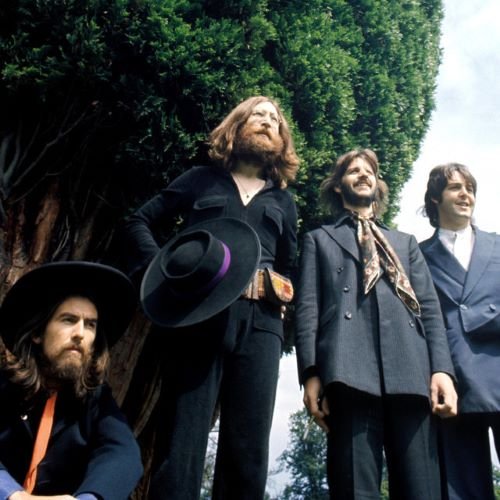
and how they always opened their studio albums with a terrific introductory track. From their 1963 debut, Please Please Me, and I Saw Her Standing There (which opens with the “1,2,3,4…” call), the band have never really let their foot off the gas in that sense. Their albums are events, so ensuring the listener is engrossed and arrested from the first bars is essential. Not many bands would be up to the task! Because of that, I wanted to write a feature where I pick the best five opening tracks. This is only for their studio albums (including soundtracks), rather than compilations, extended/double-E.P.s, or U.S. releases. I will take this chronological. Here are five tracks from Beatles albums that get off to…

A great start!

_____________

A Hard Day’s Night

From the Album: A Hard Day’s Night

Album Release Date: 10th July, 1964

Producer: George Martin

Main Songwriter: John Lennon

Single Chart Position (U.K.): 1

Song Information:

In the studio

‘A Hard Day’s Night’ was recorded on 16 April 1964 in Abbey Road’s Studio Two. It took The Beatles nine takes to complete, just five of which were complete, and was finished in under than three hours.

The backing track – two rhythm guitars, bass guitar and drums – was recorded onto track one of the four-track tape, and Lennon and McCartney’s lead vocals were recorded live on track two.

Track three of the four-track tape was filled with acoustic guitar, bongos played by Norman Smith, more vocals by Lennon and McCartney, and cowbell.

I only ever played on one Beatles song, and that was ‘A Hard Day’s Night’. I played the bongos. Ringo couldn’t do it. I went down to the studio and showed him what to do, but he just couldn’t get that continual rhythm. So I said, ‘Okay, forget it, I’ll do it.’ We overdubbed it, and I left my Tape Op behind upstairs to operate the equipment.

Norman Smith
Recording The Beatles

The recording was finished with a solo, played by George Martin on piano and George Harrison on guitar, on track four, plus an extra bass guitar part after the solo, underneath the line “so why on earth should I moan”.

The only reason he [Paul] sang on ‘Hard Day’s Night’ was because I couldn’t reach the notes. ‘When I’m home, everything seems to be right. When I’m home…’ – which is what we’d do sometimes. One of us couldn’t reach a note but he wanted a different sound, so he’d get the other to do the harmony.

John Lennon, 1980
All We Are Saying, David Sheff
” – The Beatles Bible

Help!

From the Album: Help!

Album Release Date: 6th August, 1965

Producer: George Martin

Main Songwriter: John Lennon

Single Chart Position (U.K.): 1

Song Information:

In the studio

The Beatles recorded ‘Help!’ in a single night, on 13 April 1965. The four-hour session took place from 7pm at Abbey Road’s studio two.

Twelve takes of the song were recorded. The first eight were of the rhythm track only, with vocals appearing for the first time on take nine.

Some discussion at the beginning of take four indicates that George Harrison is having a little trouble executing the complicated, fast riffs; he’s also worried about having to play and sing at the same time, though Paul assures him that won’t be necessary, as there are two voice tracks available.

The Unreleased Beatles
Richie Unterberger

The final attempt was the best, and onto this Ringo Starr overdubbed a tambourine, and George Harrison added the series of descending Chet Atkins-style guitar notes which close each chorus” – The Beatles Bible

Drive My Car

From the Album: Rubber Soul

Album Release Date: 3rd December, 1965

Producer: George Martin

Main Songwriter: Paul McCartney

Song Information:

Paul McCartney‘s first draft of the song featured a chorus based around the line, “You can buy me golden rings”. He and John Lennon reworked the song with some difficulty, eventually discarding the clichés and settling upon the idea of a headstrong woman.

The lyrics were disastrous and I knew it… This is one of the songs where John and I came nearest to having a dry session. The lyrics I brought in were something to do with golden rings, which is always fatal. ‘Rings’ is fatal anyway, ‘rings’ always rhymes with ‘things’ and I knew it was a bad idea. I came in and I said, ‘These aren’t good lyrics but it’s a good tune.’ The tune was nice, the tune was there, I’d done the melody. Well, we tried, and John couldn’t think of anything, and we tried and eventually it was, ‘Oh let’s leave it, let’s get off this one.’ ‘No, no. We can do it, we can do it.’ So we had a break, maybe had a cigarette or a cup of tea, then we came back to it, and somehow it became ‘drive my car’ instead of ‘gold-en rings’, and then it was wonderful because this nice tongue-in-cheek idea came and suddenly there was a girl there, the heroine of the story, and the story developed and had a little sting in the tail like ‘Norwegian Wood’ had, which was ‘I actually haven’t got a car, but when I get one you’ll be a terrific chauffeur.’

Paul McCartney
Many Years From Now, Barry Miles

The song contained clear sexual overtones, from the first verse’s “You can do something in between” to the suggestive promises of “a better time”.

’Drive my car’ was an old blues euphemism for sex, so in the end all is revealed. Black humour crept in and saved the day. It wrote itself then. I find that very often, once you get the good idea, things write themselves.

Paul McCartney
Many Years From Now
” – The Beatles Bible

Back in the U.S.S.R.

From the Album: The Beatles

Album Release Date: 22nd November, 1968

Producer: George Martin

Main Songwriter: Paul McCartney

Song Information:

In the studio

Unusually, the drums on ‘Back In The USSR’ were recorded mainly by Paul McCartney, with contributions from John Lennon and George Harrison, after Ringo Starr had temporarily walked out of the group.

According to Barry Miles, Starr left when McCartney criticised him for messing up a tom-tom fill. With the atmosphere in the studio already often tense, the altercation was enough for the normally amenable Starr to reach his limit. He left London and spent a fortnight on Peter Sellers’ yacht in the Mediterranean.

I left because I felt two things: I felt I wasn’t playing great, and I also felt that the other three were really happy and I was an outsider. I went to see John, who had been living in my apartment in Montagu Square with Yoko since he moved out of Kenwood. I said, ‘I’m, leaving the group because I’m not playing well and I feel unloved and out of it, and you three are really close.’ And John said, ‘I thought it was you three!’

So then I went over to Paul’s and knocked on his door. I said the same thing: ‘I’m leaving the band. I feel you three guys are really close and I’m out of it.’ And Paul said, ‘I thought it was you three!’

I didn’t even bother going to George then. I said, ‘I’m going on holiday.’ I took the kids and we went to Sardinia.

Ringo Starr
Anthology

The recording of ‘Back In The USSR’ was completed in just two days. On the first takes, recorded on 22 August 1968, McCartney played guitar and Harrison was on snare drum. On later takes McCartney switched to piano, and Lennon strummed chords on a bass guitar. They taped five tracks, the last of which was the best.

Paul completely. I play the six-string bass on that. [Sings as he pretends to play bass guitar] ‘Da da da da da…’ Try writing that on your typewriter.

John Lennon
All We Are Saying, David Sheff
” – The Beatles Bible

Come Together

From the Album: Abbey Road

Album Release Date: 26th September, 1969

Producer: George Martin

Main Songwriter: John Lennon

Single Chart Position (U.K.): 4

Song Information:

In the studio

The Beatles began recording ‘Come Together’ on 21 July 1969, recording eight takes in Abbey Road’s studio three. Three of the takes – four, five, and seven – were incomplete, and take six was selected as the basis of the album version.

Take one, with slightly different lyrics and a raw vocal from John Lennon, can be heard on the Anthology 3 album, and take five can be heard on some formats of the 50th anniversary reissue of Abbey Road.

Lennon sang without his guitar, and clapped while singing the line “Shoot me”. The words allegedly referred not to a desire for martyrdom, but to a fix of heroin. They were adapted from the unreleased ‘Watching Rainbows’, a song The Beatles rehearsed on 14 January 1969 during the Get Back/Let It Be sessions.

On the finished record you can really only hear the word ‘shoot’. The bass guitar note falls where the ‘me’ is.

Geoff Emerick
The Complete Beatles Recording Sessions, Mark Lewisohn

Although ‘Come Together’ was conceived as a Chuck Berry-style rocker, The Beatles slowed it down at Paul McCartney’s suggestion.

He originally brought it over as a very perky little song, and I pointed out to him that it was very similar to Chuck Berry’s ‘You Can’t Catch Me’. John acknowledged it was rather close to it so I said, ‘Well, anything you can do to get away from that.’ I suggested that we tried it swampy – ‘swampy’ was the word I used – so we did, we took it right down. I laid that bass line down which very much makes the mood. It’s actually a bass line that people now use very often in rap records. If it’s not a sample, they use that riff. But that was my contribution to that.

Paul McCartney
Many Years From Now, Barry Miles

The Beatles began recording ‘Come Together’ on four-track tape. The initial takes had McCartney’s bass guitar on track one; George Harrison’s guitar on track two; Ringo Starr’s drums on track three; and Lennon’s vocals, handclaps and tambourine on track four.

‘Come Together’ changed at a session. We said, ‘Let’s slow it down. Let’s do this to it, let’s do that to it,’ and it ends up however it comes out. I just said, ‘Look, I’ve got no arrangement for you, but you know how I want it.’ I think that’s partly because we’ve played together a long time. So I said, ‘Give me something funky,’ and set up a beat, maybe, and they all just join in.

John Lennon, 1969
Anthology
” – The Beatles Bible

FEATURE: Inspired By… Part Seventy-Two: Gloria Gaynor

FEATURE:


Inspired By…

Part Seventy-Two: Gloria Gaynor

__________

FOR this outing…

I wanted to include the legendary Gloria Gaynor in Inspired By… An iconic artist who is best known for her 1978 hit, I Will Survive, she has undoubtedly influenced so many other artists. I am ending with a playlist of songs from artists who have been inspired by Gaynor. One can definitely feel her essence and sound in other artists. Before coming to that playlist, AllMusic provide a biography of the sensational and timeless Gloria Gaynor:

There are many reasons why Gloria Gaynor is synonymous with "I Will Survive." The 1978 single topped Billboard's disco and pop charts, went platinum, and won Best Disco Recording the only year the Grammys recognized the subgenre. A belter if there ever was one, it set the standard by which all subsequent perseverance anthems have been measured. Its eternal appeal has been recognized by the Grammy Hall of Fame and the National Recording Registry. The inextricable links, however, obscure the depth and range of Gaynor's career. A soul singer through and through, Gaynor wasn't an overnight success. When she went supernova, her debut recording was 13 years old, and she had hits including a 1974 version of "Never Can Say Goodbye" that topped Billboard's first club chart and crossed into the Top Ten of the pop chart. Although she has recorded infrequently since the early '80s, her number one club hits span almost 30 years, through the early-2000s singles "Just Keeping Thinking About You" and "I Never Knew." She releases new material occasionally, including the 2019 gospel LP Testimony, and remains an active performer.

Gloria Fowles grew up in a Newark, New Jersey household attuned to a wide range of music. During childhood, she had a desire to become a singer to herself, and eventually followed her father as a performer. In her mid-teens in 1965, she debuted as Gloria Gaynor with "She'll Be Sorry," a low-profile single produced and released by Johnny Nash (who had suggested the name change). Gaynor was a seasoned performer at nightclubs and other small venues by the time she was signed by Clive Davis to Columbia, the label that released her second single, 1973's "Honeybee," a sweet and sweeping proto-disco number arranged by Norman Harris and produced by Paul Leka.

Following Columbia's dismissal of Davis, Gaynor was scooped up by MGM, which re-released "Honeybee" (as "Honey Bee") and steered it into Billboard's R&B chart in April 1974. Gaynor soon followed up with "Never Can Say Goodbye," popularized by the Jackson 5 for Motown. The driving cover gained traction in clubs. That October, it appeared at the top of Billboard's first Disco Action chart, and in a survey of New York City club DJs conducted by Tom Moulton, who noted in the accompanying column that the number one entry had been the hottest club record since mid-September. "Never Can Say Goodbye" entered the pop chart in November and peaked at number nine the following January, around the release of the like-titled album. Side one of Never Can Say Goodbye consisted of "Honey Bee," the title track, and a remake of another Motown hit, the Four Tops' "Reach Out, I'll Be There," mixed continuously for dancefloors by the inventive (and uncredited) Moulton. The suite almost topped Disco Action, and "Reach Out, I'll Be There" peaked on the pop chart at number 60.

Dust had yet to settle on Never Can Say Goodbye -- a number 25 hit on the Billboard 200, about to be nominated for a Grammy in the R&B field, and on its way to platinum status in the U.K. -- when MGM eagerly released Gaynor's second album. Experience Gloria Gaynor was cranked out during the third quarter of 1975. Like the breakthrough LP that preceded it by only eight months, Experience contained a nonstop side-one sequence courtesy of Moulton, and a ballad-heavy side two with some material written by Gaynor. This set reached number 64 on the Billboard 200 and number 32 on the R&B chart, while its first side crowned the disco chart. Still moving quickly, Gaynor made a lateral shift to Polydor. The singer had continued commercial success, primarily in the club sector, with I've Got You, Glorious, and Gloria Gaynor's Park Avenue Sound, released from 1976 through 1978. A cover of the Righteous Brothers' "Substitute," the first single from a second 1978 album, Love Tracks, didn't fare as well, but DJs found much to like in the B-side and album cut "I Will Survive." The theatrical dancefloor epic, written and produced by Dino Fekaris and Freddie Perren, truly took off once it was converted to an A-side. It debuted on the pop chart in December 1978, topped it early the following year, and was awarded a Grammy for Best Disco Recording. Love Tracks consequently became the biggest full-length of the singer's career -- number four pop and R&B, a platinum-certified million seller in the U.S., and an international smash to boot.

As the disco era continued to play out and fizzle in the early '80s, Gaynor released three additional Polydor albums: 1979's I Have a Right, 1980's Stories, and 1981's I Kinda Like Me. The second of these was her seventh and final LP to register on the Billboard 200, peaking at 178. Three LPs for as many labels followed throughout the rest of the decade. Gaynor best adapted to the increasingly electronic sound of dance music with her 1983 version of "I Am What I Am" (from La Cage aux Folles), a number three hit on the club chart. During this period, she also re-recorded "I Will Survive," revising the lyrics to reflect her born-again Christianity. Her studio sessions then became limited, typically balancing R&B and electronic dance music with elements of gospel. In 2000, she published I Will Survive: The Book, a memoir that revealed how much she has needed the message of her most popular recording throughout her life, and shortly thereafter topped the club chart two more times with "Just Keep Thinking About You" and "I Never Knew." The enduring cultural relevance of "I Will Survive" was recognized in 2012 when it was inducted into the Grammy Hall of Fame. Synchronized with a like-titled album, Gaynor's second book, We Will Survive, followed the next year. Its audio version was up for a Grammy in the Best Spoken World Album category. "I Will Survive" entered the Library of Congress' National Recording Registry three years later. Busy as a performer all along, Gaynor resumed studio work later in the decade, and in 2019 released the full-fledged gospel album Testimony”.

With a remarkable body of work, Gloria Gaynor will continue to influence artists for decades more. Her latest album, 2019’s Testimony, won the Grammy Award for Best Roots Gospel Album at the 62nd Annual Grammy Awards. Below is a playlist of songs from a collection of artists who either count Gaynor as an influence or have been compared with her. As you can see, there are some huge acts…

IN the mix.

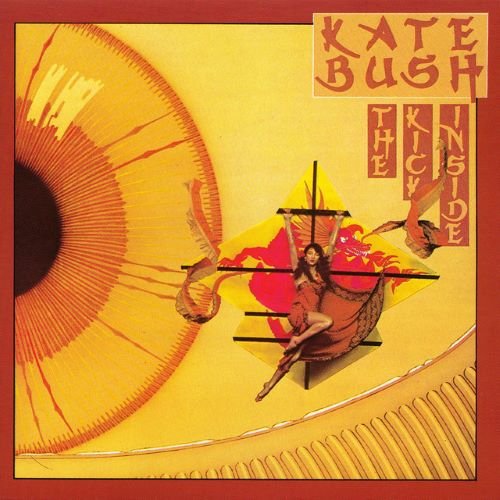
FEATURE: Kate Bush’s The Kick Inside at Forty-Five: Why She Deserved Bigger Success in the U.S. Market

FEATURE:


Kate Bush’s The Kick Inside at Forty-Five

IN THIS PHOTO: Kate Bush in 1978/PHOTO CREDIT: Gered Mankowitz 

Why She Deserved Bigger Success in the U.S. Market

__________

NOW she is a success in the U.S…

but it has, arguably, taken her whole career to get there! Even if Kate Bush was never really concerned about success in America, that is not to say it was undeserved. As I have written before, Bush’s first real wave of appreciation and recognition there was in 1985 following the release of Hounds of Love. Her biggest album, it was impossible to resist and deny the genius of it! Even if there wasn’t a massive push to get The Kick Inside to U.S. markets, I do wonder why it was not taken to heart. In August 1977, Bush completed recording of her debut album. One that she dreamed about for a long time. I don’t think it is the case that The Kick Inside is too eccentric or English. I am going to continue on. First, as I am really invested in the album and its origins, the Kate Bush Encyclopedia provided interviews where Bush spoke about her debut album:

Hello everyone. This is Kate Bush and I'm here with my new album The Kick Inside and I hope you enjoy it. The album is something that has not just suddenly happened. It's been years of work because since I was a kid, I've always been writing songs and it was really just collecting together all the best songs that I had and putting them on the album, really years of preparation and inspiration that got it together. As a girl, really, I've always been into words as a form of communication. And even at school I was really into poetry and English and it just seemed to turn into music with the lyrics, that you can make poetry go with music so well. That it can actually become something more than just words; it can become something special. (Self Portrait, 1978)

There are thirteen tracks on this album. When we were getting it together, one of the most important things that was on all our mind was, that because there were so many, we wanted to try and get as much variation as we could. To a certain extent, the actual songs allowed this because of the tempo changes, but there were certain songs that had to have a funky rhythm and there were others that had to be very subtle. I was very greatly helped by my producer and arranger Andrew Powell, who really is quite incredible at tuning in to my songs. We made sure that there was one of the tracks, just me and the piano, to, again, give the variation. We've got a rock 'n' roll number in there, which again was important. And all the others there are just really the moods of the songs set with instruments, which for me is the most important thing, because you can so often get a beautiful song, but the arrangements can completely spoil it - they have to really work together. (Self Portrait, 1978)”.

I do wonder how Bush’s career would have changed and taken off were she embraced in America from 1978. It was hard enough for Bush to win favour from critics here. Maybe America had not seen anyone like her before, so they had no frame of reference. In years since Bush launched onto the scene, there are female artists in the U.S. who have been compared with her (such as Tori Amos). In 1978, imagine hearing Wuthering Heights at a time when artists like Devo, Bruce Springsteen, and Elvis Costello were being championed and popular. Thinking about the market in 1978, Kate Bush’s music was not too out-there or peculiar. Groups like Kraftwerk were well-known and respected, but there was something about Kate Bush that did not penetrate the U.S. I hope, forty-five years after the album was recorded, The Kick Inside is better known and listened to. Maybe EMI should have been more proactive in promoting their teenage star. Bush was not going to tour or perform live in the U.S., but there should have been more singles for the U.S. market. Japan got two singles in the form of Moving and Them Heavy People. Going on the strength of Wuthering Heights, any chart disappointment could have been reversed with two more accessible singles.

Even if Wuthering Heights made no dents, that is not to say Bush would have been ignored or brushed aside with other singles and promotion. If distance and a lack of physical engagement with American press hindered her chances of popularity there, songs like James and the Cold Gun, Moving, and Feel It could have done more. Maybe things were just a bit too original and unexpected. I still wonder why there was resistance to her music in America. This year, Stranger Things took Running Up That Hill (A Deal with God) to the top of the charts. I hope there is an opportunity for a song or two from The Kick Inside to get a big feature and new investigation. Thinking about how accessible the album is compared to some of Bush’s later work, it definitely does not sound too strange today. Was it too peculiar in 1978?! There are some obvious reasons why The Kick Inside did not get as much traction in the U.S. as other countries, but the sheer strength of the material should have secured high chart placement and interest. Regardless, Bush has been reassessed in the U.S. this year. If Hounds of Love is verry much the album of the moment there, I hope the forty-fifth anniversary of The Kick Inside’s recording means it gets heard more. Certainly, plenty of U.S. critics have reappraised the album in the years since and seen its true depth and worth. In 2022, The Kick Inside is…

DUE a revival.

FEATURE: Spotlight: Beach Bunny

FEATURE:


Spotlight

PHOTO CREDIT: Zachary Hertzman 

Beach Bunny

__________

THERE are two big interviews…

 PHOTO CREDIT: Artimio Blackburn

that were conducted this year that perfectly introduce Beach Bunny and their work. Even though they formed in 2015, I still think that a lot of people do not know about them. Their second studio album, Emotional Creature, was released on 22nd July. Formed in Chicago, Beach Bunny were founded by Lili Trifilio (vocals, guitar, songwriter, and lyricist). She is joined in the group by Jon Alvarado (drums, 2017–present), Matt Henkels (guitar, 2017–present) and Anthony Vaccaro (bass, 2019–present). I will finish with a review for the amazing Emotional Creature. Before that, I will start with a Stereogum interview that was published back in March. I am a very new convert to the band, so this interview made for fascinating reading. I have selected some segments of the interview that I feel are especially important and illuminating:

After recording all day, Beach Bunny are taking a break with a dozen warm beignets. Lili Trifilio opens a paper bag to share them with everyone in the room — guitarist Matt Henkels, drummer Jon Alvarado, bassist Anthony Vaccaro, producer Sean O’Keefe, and me — and a cloud of powdered sugar poofs into the air. It’s a suspiciously warm spring day for Chicago, but they’re happily holed up indoors to track their sophomore album, Emotional Creature, which will be released July 22 on Mom+Pop Music. While everyone bites into a pastry to fuel another six hours in the studio, O’Keefe wheels around in his chair with an excited look on his face. “I posted a story of you on Instagram and Butch Vig just messaged saying he loves Beach Bunny!” It’s the fifth response O’Keefe has gotten like that today from his music industry peers, including one from Johnny Minardi, the Vice President of A&R at Elektra Records. O’Keefe seems a little taken aback, as if he knew Beach Bunny’s appeal is hard to resist, but that their reach is something he hasn’t seen in a while.

PHOTO CREDIT: Nina Corcoran

“Oh wow, that’s cool!” Vaccaro says, and the rest of the band nods in agreement. O’Keefe pauses for a moment, one hand on the mixing board. It looks like he’s unsure what the best way to drive home how huge that compliment is. “You know who he is, right? Garbage drummer? Produced Nevermind?” he continues.

“Yeah! That’s really nice of him!” says Trifilio in her usual cheery voice. There’s no disinterest or air of coolness clinging to these responses. It just comes across like Beach Bunny themselves don’t quite know what to do with their fame. To be fair, they’re situated at an interesting place: big enough to be well-liked by just about everyone, from preteens to their parents, but small enough where the fact they can even make a living off their art still comes as a shock. That’s the weird part about being a DIY band that suddenly blows up.

Trifilio formed Beach Bunny as a solo project back in 2015. After wanting to give music a whirl for years but hesitating due to the intimidating nature of the industry, she finally decided to record an EP of original indie-pop songs, Animalism, from the comfort of her childhood bedroom in Chicago. Trifilio was just 18 at the time, but the fact she pulled it off by herself excited her. She set to work recording follow-up EPs in college, 2016’s Pool Party and 2017’s Crybaby. Eventually Trifilio scouted three musicians to join her under the moniker so she could enter a local battle of the bands, which denied entry to solo acts. They spent three months rehearsing for the contest, and their ensuing collaborative spirit convinced Trifilio to turn Beach Bunny into a proper band. The quartet sat down to record their 2018 EP Prom Queen shortly afterwards, and they became a local tour-de-force in the process, with most everyone in Chicago rooting for them. By the time Trifilio was about to graduate with a journalism degree, Beach Bunny had stepped into the studio with Joe Reinhart of Hop Along to record their excellent debut album Honeymoon, overflowing with sugary vocal hooks and alt-rock tinged guitars. Anyone who wasn’t previously won over finally caved.

It helps that BeachBunny make it easy to cheer for them. Trifilio sings candidly about personal struggles and teenage insecurities that are timelessly relatable, and her bandmates bring the revved up flair that makes otherwise simple power-pop feel so energetic and polished. Beyond the music, all four members are unpretentious kids who grew up paying their dues and expecting nothing for it. Trifilio was a cashier at her local pizza shop Armand’s; Henkels worked behind the counter at Panera Bread; Alvarado flipped Whoppers as a fry cook at Burger King; and Vaccaro, who joined the band in 2019 following original bassist Aidan Cada’s departure, landed jobs at Best Buy and his local record store. From day one, Beach Bunny have captured the everyday joy, misery, and awkwardness of youth — particularly that of your average teenager — with surprising grace. Their songs are confessional without the usual melodrama, honest without the accompanying cringe, level-headed without getting preachy.

It’s easy to imagine their surprise, then, when Beach Bunny became TikTok-famous thanks to “Prom Queen,” the titular EP’s lead single about learning to ignore unrealistic beauty standards. Thousands of teenagers were filming themselves grappling with self-hatred, body fat, and acne to the song’s simple refrain: “Maybe I should try harder/ You should lower your beauty standards.” The song’s music video racked up 20 million views. Beach Bunny were launched into the pages of The New Yorker and Paper Magazine, where they were lauded with praise. They landed sets at festivals like Lollapalooza and Pygmalion. A sea of fans started populating every social media account the band had, responding to each Instagram picture and tweet Trifilio posted. Someone even started a Beach Bunny subreddit and Instagram fan account to archive their every move.

Listen to any Beach Bunny record and it’s obvious Trifilio has an innate knack for melody and lyrics, but the extent to which she’s grown over the past two years also highlights how much more she has to offer that she hasn’t revealed yet. “Lili is a decisive, creative person and one of the best songwriters I’ve worked with,” says O’Keefe. “She knows exactly what she wants. If something is not right, we keep searching till we find it. And when it’s found she moves on without second guessing. That’s something you don’t see very often. And then on top of all of that, she has an extraordinary voice. It’s a hard combo to beat. I know that Lili writes songs about topics that are personal and meaningful to her. When you’re in her position, there can be a lot of pressure to steer your writing in other directions to satisfy outside people, and I never once saw her entertain those ideas. As a music fan, those are the types of songs I want to hear.”

Trifilio’s vision is so clear that she even has a full-blown sci-fi aesthetic plotted for the album rollout. She’s been indulging in everything from older classics like Star Trek and Barberella to newer staples like Dr. Who and Watchmen. (Note the Dr. Manhattan lookalike sweeping Trifilio through space on the “Oxygen” single art.) In the studio, she’s busy jotting down ideas and drawing possible renderings for artwork, merch, and music videos. “I’m training to become the first jedi to write pop bangers,” she later jokes on Instagram. For Trifilio, visuals aren’t a way to explain her lyrics or sell the music. Instead, she’s taking after some of her biggest pop idols — Marina And The Diamonds, Charli XCX, Grimes — by prioritizing visuals as an exercise in fun. “None of these songs are about outer space or aliens or anything. It’s just fun to have an excuse to explore a new style because you’re changing along with the music you’re writing and so are your interests beyond music,” she says. “There’s definitely a degree of escapism there, especially compared to Honeymoon, which was based in reality”.

The entire group are wonderful and compelling, but I think there is something about lead Lili Trifilio that is especially fascinating. A wonderful songwriter and voice, this interview from The New York Times is one I would recommend people read in full. It seems that the pandemic has been responsible for each Bunny’s music reaching a much wider and larger audience:

One morning last August, Lili Trifilio was feeling emotional.

“I’m honestly so nervous,” the singer-songwriter, then 24, admitted, her voice rising as she shook her head. It was the day before her indie-rock band Beach Bunny would headline a sold-out show at the Music Hall of Williamsburg in Brooklyn. Beach Bunny’s recent success had seemed abstract to Trifilio, since most of it had happened during lockdown, on the internet, but the group’s biggest New York show to date would make it tangible.

“Over the pandemic, Beach Bunny has grown like 200 percent,” Trifilio continued, between sips of an iced Nutella mocha latte at a cafe not far from the venue, “and I don’t know what to expect.”

Trifilio has a wide, toothy smile and a choppy bobbed haircut that she likes to dye different colors — magenta, lilac, rust — though that day it was a naturalistic blonde. Onstage, she’s known for her bubbly, earnest positivity; at a recent Beach Bunny show, she gave an enthused recommendation for a local vegan restaurant, urged the audience to get their Covid-19 booster shots and led the entire crowd in singing “Happy Birthday” to a fan. On albums she’s known for the emotional lucidity of her songwriting, which seems to trap fleeting feelings in shimmery amber.

 Beach Bunny’s music has plenty of admirers outside of the TikTok demographic, too. The actor Bob Odenkirk discovered the band several years ago while flipping through The Chicago Tribune, and he “immediately dug them,” he wrote in an email, because he found their sound to be “connected to the indie rock that I loved from the days of yore,” like Pixies, Sebadoh and the Cavedogs. He’s since become a vocal fan and even made a cameo in Beach Bunny’s recent “Star Wars”-spoofing video for the song “Entropy.”

“I’m an older white guy, and her lyrics are about longing and written from a female perspective,” Odenkirk added. “But I still feel very connected to the pain and estrangement of my 14-year-old self, and I always will.”

On the new album, piercing pop-punk tunes like “Gone” and “Deadweight” challenge emotionally ambivalent partners to wear their hearts on their sleeves. “You’re a diamond/Wish you could see you the way I see,” Trifilio sings on the mid-tempo rocker “Weeds,” during a chorus that offers loving advice to a heartbroken friend — or perhaps the singer herself. Writing the album, she said, helped her to confront her history of “shame around feeling big emotions.”

“That was, like, a therapy moment,” she said. “‘Wow, you have a lot of shame around being an emotional person, even though every human has feelings.”’

Trifilio has since come around on TikTok, too. “There is definitely a young girl audience, mostly coming from TikTok, with very little experience of even attending shows,” she said. “They tell me, ‘This is one of my first shows,’ and I’m like, ‘That’s amazing. I hope you go to so many more’”.

I want to finish things off with a review from Rolling Stone of Beach Bunny’s new album, Emotional Creature. If you have not heard their 2020 debut, Honeymoon, then I would definitely advise that you do. It is an amazing introduction, but I feel Emotional Creature is an even stronger work. This is what Rolling Stone had to say about it:

‘Cause somebody’s gonna figure me out / It’s what I am, it’s what I was, It’s what I wanna become,” Beach Bunny’s Lili Trifilio sings with resignation on “Entropy,” the opener of the band’s striking sophomore album. The line has a double meaning: She yearns for the liberation that will come from no longer needing to hide a clandestine relationship, but it also underscores the bandleader’s confidence in knowing exactly what she wants. The song is the epitome of Trifilio’s growth as both a person and a songwriter—and representative of the power she’s found in embracing her emotions. And it’s what fuels Beach Bunny’s latest effort Emotional Creature.

For the past few years, the Chicago indie rockers have skyrocketed to fame in part as TikTok darlings —thanks to tracks like “Prom Queen” and also “Cloud 9” from their critically-acclaimed 2020 debut Honeymoon. For most artists, finding a large audience on the platform can be a mixed bag. It’s easy to be written off as another internet band because of “the algorithm,” but sometimes it’s the launching pad needed for hard-earned recognition. With Honeymoon, and now Emotional Creature, Beach Bunny has shown that they more than deserve to be taken seriously, but also that their cathartic connection to TikTok teens has been invaluable.

 Trifilio’s overwhelming empathy has become a hallmark of her work, as she’s navigated teen trauma like longing, heartbreak, body image and ghosting through twee garage-pop songs. And on Emotional Creature (their second release for Mom + Pop Music), she ascends beyond those themes with even more of an open-hearted approach, delivering plainspoken missives of quarter-like crises that include crippling anxiety, toxic relationships and self-discovery.

Emotional Creature is Nineties rom-com core at its finest. Barreling through the album’s 12 songs, it’s easy to envision Trifilio’s equally ebullient and wistful vocals soundtracking the ups and downs of romantic entanglements in everything from 10 Things I Hate About You to Never Been Kissed. It’s not surprising when you consider that Beach Bunny’s jangly power-pop evokes the sweet but biting timbre of Letters to Cleo’s Kay Hanley—particularly when she’s cosplaying Josie from Josie and the Pussycats—as well as vulnerable contemporary bands like Charly Bliss and Camp Cope.

As a bird’s eye view of Trifilio’s heightened emotional states, Emotional Creature kicks off with all-consuming highs with the euphoric “Oxygen,” fueled by Trifilio’s soaring serotonin-boosted vocals. “Suddenly everything is easy/ I’ve never felt something so deeply/ ‘Cause with you, with you, I breathe again,” she exhales over raucous guitar fuzz. anthems like the bombastic “Fire Escape” and heart-fluttering “Karaoke” capture the intoxicating beginnings of a new relationship, detailing precious moments like carving your names into a subway seat and radio sing-a-longs on hometown drives. On the downtempo rock cut “Love Song,” a starry-eyed Trifilio is finally self-assured about her partner for what feels like the first time. “It’s funny how we move through space and time/Sometimes I think I’ve known you all my life,” she sings with a dreamy lilt.

Trifilio particularly shines on the heavier points of the record, such as “Eventually,” where she paints an unfiltered portrait of a panic attack. Those lows could be purely defeating, but she turns them into moments of resilience. On the sticky tune “Weeds,” there’s a newfound emotional maturity in the way Trifilio realizes how she deserves to be treated. “I’m tired of giving, giving, living like a lady in distress/But I don’t need someone to save me/Not your polly pocket in your lover’s locket/You can’t hold me down/I’m a bursting bottle rocket,” she asserts. Likewise, there’s a silent confidence in Trifilio’s apathetic attitude toward a difficult partner on the glittery pop-punk cut “Deadweight.” “You always get what you want/But I’m not someone who waits to feel love/Because I think I’ve waited enough,” she delivers like a kiss-off.

“Scream” is Emotional Creature’s Eighties synth-tinged centerpiece—and the standout of the record—where you can envision Trifilio fully letting go, driving in a convertible with the top down, the breeze gently blowing through her hair. “I feel confused by, what I’m ashamed for/I feel ashamed by, my human nature/Choose to adapt new outward behavior,” she declares, shaking off the shame of her feelings over a swirl of psychedelic guitar riffs.

It’s empowering to see Trifilio own the full spectrum of her emotions, and it’s what cements Beach Bunny’s latest record as a masterclass in confessional rock and roll”.

A brilliant American band who are coming to the U.K. later in the year, I am excited to see where they head next. Everyone should have them on their radar, as I predict they will be huge very soon. Emotional Creature is one of the best albums of the year so far. If you have not followed and heard Beach Bunny, then make sure that you…

CORRECT that now.

_____________

Follow Beach Bunny

FEATURE: Vinyl Corner: Morcheeba – Big Calm

FEATURE:


Vinyl Corner

Morcheeba – Big Calm

__________

I don’t think that…

 IN THIS PHOTO: Morcheeba in 2013

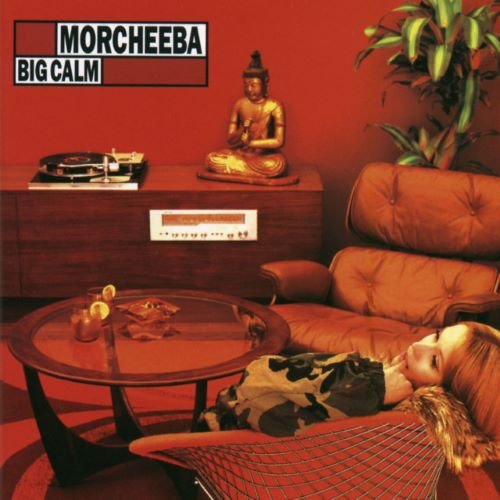
I have included a Morcheeba album on my site before. One that I have been listening to a lot recently is Big Calm. Their second studio album, it begins with the gorgeous track, The Sea. Made irresistible by the vocals of Skye Edwards, I think that this is the group’s best album. The recording of Big Calm started on Christmas Day 1995, as Morcheeba members Paul and Ross Godfrey as they were awaiting the release of Who Can You Trust?. After demos had been laid down at their home studio, the Godfreys brought in vocalist Skye Edwards and a number of guest performers to complete the record. I think that one of the secret ingredients of Big Calm’s sensuality and hypnotic nature is Edwards’ voice. Although she featured on the 1996 debut, Who Can You Trust?, I think her voice is richer and more impressive on Big Calm. It is a terrific album that you should get on vinyl if you can. Big Calm reached the top twenty in the U.K. and won a raft of positive reviews upon its release. I will get to one of those reviews at the end. Prior to getting to a review, Music Radar published a feature about Morcheeba’s Big Calm in 2014. They spoke to Paul Godfrey about the making of the album. He gives a track-by-track recollection. I have selected The Sea because it is my favourite song from Big Calm:

It's Christmas Day 1995, and Morcheeba brothers Paul and Ross Godfrey are sacking off any idea of a follow-up course of mince pies, and instead heading to the studio right next to the bedsit they share, pissed as newts, to make their second album. In one day. Sozzled. Before the first album has even come out. Hic!

The two bros headed up the garden path, armed with the Christmas booze, to fire up the samplers. All they needed now was a plan of attack...

"Let's make a song every five minutes!" shouted Paul, thrusting a triumphant finger in the air to further signal the drama of the idea. It's at that point that a brother is legally allowed to slap you firmly across your chops and demand that you "get a grip". But no, the drink makes you the king of the world and, in good company, these types of demented brain children are given permission to run riot.

So, they looped up beats, waffled lyrics into a dictaphone and laid down the foundations for what would be a trip-hop masterpiece and a massive worldwide commercial success. From little pissed up acorns, eh?

"My main memories from that period are just ones of intense panic. We were out of our minds all the time on various things, and the fact that we were making such peaceful music was bizarre."

Paul Godfrey

"We had to do something," says Paul Godfrey, the beats and lyrics guy from Morcheeba. "We were waiting for our first album to drop, and we'd worked really hard on it and got the record deal and everything, but we were just sat there in limbo, panicking about the whirlwind that was about to follow..."

Paul and his more musically-inclined guitar-strumming, slightly younger brother Ross hadn't been

in London that long before they suddenly got a record deal, you see. "Before we knew it we were out in Hollywood playing to celebrities," says Paul. "We really kind of lost our minds a little bit. There was no kind of 'big calm' surrounding our lives at all. My main memories from that period are just ones of intense panic. We were out of our minds all the time on various things, and the fact that we were making such peaceful music was bizarre. It's probably because we were so hungover most of the time."

The album was a runaway success - their little drunken Christmas present to us all and, more importantly, themselves. It was the album that shook off the Portishead comparisons from their debut, and set out a stall for the more intricate and mature sound (AOR-cheeba?) that they would further develop across the early 2000s with the next three long players. What was to follow may have stormed further up the charts on both sides of the Atlantic, but they owe everything to this one Big Calm that came before it.

The Sea

"This was one we wrote in five minutes on that drunken Christmas Day. It was just drums to start with, then we added a guitar after we came back from the pub. We used to go to the pub every night. We came back hammered and Ross put it down in one take. Then we DI-ed it into the Mackie desk through a wah-wah peddle, and when we mixed it I rolled all the top off it to give it that smooth sound.

"The strings were arranged after by Steve Bentley-Klein, who I met when I was DJing at a party his string quartet were playing at. I didn't know anything about strings in those days so just said, 'Err, can you do some strings for us?'

"[Morcheeba main vocalist] Skye Edwards came up with the melody and gave it that blissed-out feel. The Sea went on to be our biggest song".

A Trip-Hop classic that still sounds amazing and engrossing to this day, I have a lot of affection for Big Calm. Morcheeba are one of these groups that many know about, but I don’t think they got the mainstream attention that their music deserved. Their latest album, Blackest Blue, was released last year. The A.V. Club provided their take on Big Calm in 2002:

It's amazing how just a few years differentiate innovation from imitation. As soon as Portishead made "trip-hop" a part of pop-music parlance, sneaky slow-beated neophytes began to sprout up like weeds, unable to resist the lure of the cool new cash cow. Morcheeba initially seemed like one of those pale copycat usurpers, but listening to the band's 1996 debut Who Can You Trust? made you quickly realize that it's the real deal. In fact, in some ways, Morcheeba is superior to Portishead: Where Geoff Barrow and Beth Gibbons create bloodless, gothic soundtracks, Morcheeba (brothers Paul and Ross Godfrey and singer Skye Edwards) approaches its music from an acoustic standpoint, utilizing samplers and turntables as embellishment, but primarily building upon a bed of live instrumentation. In this way, Morcheeba isn't worlds apart from the silky soul of Sade; it's just hipped up for contemporary consumption. The group's new Big Calm is even more song-oriented than its debut. "Shoulder Holster" uses sitar and Indian percussion to great effect, bolstering an already sublime hook, while "Blindfold" explores the darker side of Morcheeba's quiet storm. "Friction" is a nice take on reggae that refuses to be pigeonholed as such, and "Over & Over"—a subdued folk song far more reminiscent of Nick Drake than Sneaker Pimps—even abandons beats entirely. All these songs reveal Morcheeba's impressive versatility, stressing songwriting over DJing, and thus ensuring its continued creative success beyond passing fads”.

An album that I was keen to include in Vinyl Corner, the brilliant Big Calm is one that you should own. I was fourteen when the album came out and I remember loving it right away. Aside from The Sea, tracks like Part of the Process stuck in my mind. I listen to the album in its entirety today and it still elicits reactions and emotions. Morcheeba’s 1998 gem of an album is one you need to hear if you are not familiar with it. Just put it on, drop the needle and…

SWIM inside of it.

FEATURE: Pour Some Sugar on Me: Def Leppard’s Hysteria at Thirty-Five

FEATURE:


Pour Some Sugar on Me

Def Leppard’s Hysteria at Thirty-Five

 __________

A classic album…

that is coming up to its thirty-fifth anniversary, Def Leppard’s Hysteria is in my thoughts. The fourth studio album from the Yorkshire band, it was released on 3rd August, 1987. Def Leppard's best-selling album to date, it went on to sell over twenty million copies worldwide, including 12 million in the U.S. It hit number one in the U.S. and U.K. It is good that Hysteria did sell so many copies as it was an incredibly expensive album to make! Running in at over an hour, Hysteria is a long album. Not that one gets bored listening to it. I feel it is a rightful classics whose singles – such as Animal and Pour Some Sugar on Me – rank alongside some of the best from the 1980s. I will get to a couple of reviews for Hysteria. Before that, there are features that explain and explore the making of the album. Loudwire investigated Hysteria on its thirty-fourth anniversary on 3rd August, 2021:

They were one of the first bands the British press categorized as part of the NWOBHM (New Wave of British Heavy Metal) movement, but by the time Def Leppard released their fourth record, Hysteria, on Aug. 3, 1987, they had completely shattered the mold and discovered a sound based on catchy melodies, heavily processed drums, layered, shimmery walls of guitar and clean, crisp vocals. If 1983’s Pyromania marked Def Leppard’s toe-dip into pop, Hysteria was a cannonball off the deep end. Then again, guitarist Phil Collen says they never liked being categorized with British metal bands.

“Even when we were grouped as part of the New Wave of British Heavy Metal, we didn’t think we were at all like the other bands people were talking about [including Iron Maiden and Diamond Head],” he told me in 1999. “We never wanted to be a metal band, ever. We're about as close to metal as we are to Madonna.”

Despite their disenchantment with metal, Def Leppard still had a slew of commercial metal fans and glam rock fans who didn’t bail on them, and with radio hits like “Pour Some Sugar on Me,” “Love Bites,” “Animal” and “Rocket,” Def Leppard attracted a new fan base from fans of U2 and Prince to kids who had just one or two hard-rock records in their collections.

“We’ve always wanted to be a band for the people,” Collen says. “When we started working on Hysteria we had just sold eight million records with Pyromania so we knew we had a fanbase. We weren’t necessarily trying to top that because you can’t go into something saying, ‘Okay, yeah, this one’s going to sell more than 8million copies.’ That’s a lot of records. We just wanted to make a record with good songs that we really liked and that were maybe a little more polished and more modern sounding. Even when we finished Hysteria we had no idea how it was going to do, but it felt like a triumph for us.”

Within days of its release, it was clear that others viewed it as a triumph as well. Hysteria reached No. 1 on both U.S. and UK album charts and went on to sell over 12 million copies in the States and over 20 million copies worldwide. And it proved that after a four-year wait for a new album, the public was still eager to embrace Def Leppard’s heavily processed sound.

Hysteria wasn’t an easy record for the band to make, and came to life only after some serious drama and soul-searching. By the time it was released, Def Leppard’s drummer Rick Allen had lost his arm in a near-fatal car crash and the level of stress they were under while writing the songs made the band consider breaking up. Then, after they toured for Hysteria, guitarist Steve Clark died from an overdose.

“People talk about ‘The Curse of Def Leppard,” and that’s so strange to me,” Collen said. “We’ve been a band since 1977. We’ve been like a family, and things happen in any family. People have accidents, people die. You enjoy the good times, and you stick together and help each other through the bad times.”

There were both good and bad times while producer Mutt Lange -- who had been with Def Leppard since their second album, 1981’s High ‘n’ Dry -- worked on Hysteria. From the start, his goal was to help create the most commercial hard rock album of all time, and reaching that goal put everyone in a pressure chamber, from the engineers to the band members. “His blueprint for Hysteria was Thriller,” recalled Collen. “He figured, ‘Well, that album's got six or seven hit singles on it. Let’s make a rock version of that.’ Talk about a challenge. And to be honest, Hysteria was a difficult record to make. Nothing came easily. We worked on it for a long time and it cost lots of money, but eventually we got there.”

To give Hysteria a sound that would stand out from the rock records flooding the marketplace, Lange used a variety of technology. All of the guitars were recorded on a Rockman amplifier and dozens of tracks were recorded and layered for every take. Then the drums were sampled individually and played through a Fairlight digital sampling synthesizer. Finally, the takes were saturated with echoey reverb, giving the songs a stadium rock vibe, even without the low, booming tones of most hard rock”.

In a year where harder-edged acts like Gun N’ Roses were releasing sweaty and sleazy albums (Appetite for Destruction), Hysteria might have seemed a bit soft and effete in comparison! That is no bad thing. I actually respect and prefer albums like Hysteria compared to some of the so-called ‘best’ of 1987. Guitar World wrote about Hysteria in 2012 and its making of. Def Leppard guitarist Phil Collen revealed and shared some of his thoughts:

Not that everyone was receptive to it at first. “When Hysteria first came out, a lot of people went, ‘Dude, this is lame. This isn’t rock. It’s pop. It’s wussy,’ ” Collen recalls of the reaction from certain corners of the hard rock and metal world. “But actually it had the absolute effect it was supposed to have had. Because the point was to not just play to the rock audience but rather to play to everybody. And we achieved that.”

Indeed, Hysteria was a huge crossover success, and its cross-format appeal was due in large part to the creative vision of producer Robert John “Mutt” Lange, who had helmed Def Leppard’s two previous albums, High ‘n’ Dry and Pyromania, and entered into the new project with the band with the express intent of making what Collen calls “a hard rock version of [Michael Jackson’s] Thriller.” Says the guitarist, “The fact that with Thriller you had an R&B artist who crossed over not just into pop but into everything, even rock, with Eddie Van Halen playing on ‘Beat It,’ that really appealed to Mutt, and to us. But I think without Mutt’s vision the record would have been a more standard-sounding thing. He definitely pushed it.”

Just how far Lange and the band—which at the time also included singer Joe Elliot, bassist Rick Savage, drummer Rick Allen and guitarist Steve Clark, who passed away in 1991—would ultimately push things could not have been anticipated. Over the years, in fact, some of the more outlandish details of the recording sessions have seemingly passed into rock and roll mythology.

From the outset, did Mutt Lange explicitly state that with Hysteria he wanted to create something that could be as successful and have as much crossover appeal as Thriller?

Absolutely he did. That was it in a nutshell. But I think even more than that, Mutt wanted to make something that was unique. With rock bands in general, they’re usually not very open-minded; they’re kind of genre-specific and like to stay in their little boxes. I think the whole thing with Mutt was he wanted to open it up and do a hybrid thing, which obviously he’s amazing at. Just listen to all the stuff he did with Shania Twain later on, which basically brought country to the masses. It was the same with us: it was all about crossover appeal. Because, you know, I hear a lot of people say, “High ’n’ Dry is my favorite Def Leppard album.”

And it’s like, yeah, but that sound was kind of borrowed from AC/DC, which in some ways was a Mutt thing as well [Lange had produced three AC/DC albums, including Highway to Hell and Back in Black]. It very much had that vibe. To me, Def Leppard didn’t start to sound unique until Pyromania, which crossed over, and then Hysteria, which really crossed over.

Perhaps the most enduring guitar legend surrounding Hysteria is that Lange had you and Steve record many of your parts by breaking chords down into single notes and then building the chords back up by layering the tracks. But the truth is you only used this technique on the title song, correct?

Yes. I’ve heard the rumors taken as far as people saying we did the entire album one string at a time, which is crazy! [laughs] We really only did it on the bridge in “Hysteria”—the part that begins, [sings] “I gotta know tonight…” If I remember correctly it was just Mutt and me, sitting in a little jingle studio in Dublin, with me playing the part on one string, then stopping and doing it again on the next string and so on.

What was Mutt’s reasoning for having you do it this way?

He heard a certain sound in his head and he knew he wanted it to be a guitar and not a keyboard, but he also didn’t want there to be any sort of arpeggiation to it. And when you strum a chord on a guitar there’s always a certain amount of that. He wanted all the notes to hit right on the nose, so that everything about the sound hit the listener at the same time. And it worked.

What do you consider the legacy of Hysteria?

To me, it sounds like a classic rock album. And not classic in the sense of classic rock but in the sense of one of those albums that you put on and it takes you somewhere. People always talk about the production element and how long it took and all the tracks and all these things, but at its heart the music means something, and it achieves what it sets out to achieve. Even though it’s got all this stuff going on, it’s very real sounding. And I think over the years people have started to appreciate it for what it is. But you know, I remember when the record was just finished and Steve and I were first sitting there listening to the whole thing. We were so happy. We figured it was a masterpiece, and we felt that even if everyone else thought it sucked, that was okay. We said, “Even if only our mothers buy this album, we’ll be cool with it because we’re so proud of it.” [laughs] Of course, a few other people bought it, as well”.

I will round off with a couple of reviews for Hysteria. Press for the album has been largely positive. As it spawned a host of singles, there was no escaping Def Leppard’s fourth studio album! As Wikipedia explains, Hysteria has been placed high in critical ranking lists (“In 2005, Hysteria was ranked number 464 in Rock Hard magazine's book of The 500 Greatest Rock & Metal Albums of All Time. Hysteria got the same placement on Rolling Stone's list of the 500 best albums of all time, the magazine also ranked the album atop its list of the 50 greatest hair metal albums. Loudwire placed the album at No. 2 on their list of the top 30 hair metal albums”). This is what AllMusic had to offer about the hugely acclaimed Hysteria:

Where Pyromania had set the standard for polished, catchy pop-metal, Hysteria only upped the ante. Pyromania's slick, layered Mutt Lange production turned into a painstaking obsession with dense sonic detail on Hysteria, with the result that some critics dismissed the record as a stiff, mechanized pop sellout (perhaps due in part to Rick Allen's new, partially electronic drum kit). But Def Leppard's music had always employed big, anthemic hooks, and few of the pop-metal bands who had hit the charts in the wake of Pyromania could compete with Leppard's sense of craft; certainly none had the pop songwriting savvy to produce seven chart singles from the same album, as the stunningly consistent Hysteria did. Joe Elliott's lyrics owe an obvious debt to his obsession with T. Rex, particularly on the playfully silly anthem "Pour Some Sugar on Me," and the British glam rock tribute "Rocket," while power ballads like "Love Bites" and the title track lack the histrionics or gooey sentimentality of many similar offerings. The strong pop hooks and "perfect"-sounding production of Hysteria may not appeal to die-hard heavy metal fans, but it isn't heavy metal -- it's pop-metal, and arguably the best pop-metal ever recorded. Its blockbuster success helped pave the way for a whole new second wave of hair metal bands, while proving that the late-'80s musical climate could also be very friendly to veteran hard rock acts, a lead many would follow in the next few years”.

I want to round up with Rolling Stone’s view on Hysteria. A big success in the U.S. and well as their native U.K., it was a worthy follow-up to their 1983 release, Pyromania. In fact, I think Hysteria might be Def Leppard’s defining statement. The band released their latest album, Diamond Star Halos, in May (which gained a load of love from critics):

This album sounds terrific. Every track sparkles and burns. There is no filler. That is not to say, however, that the Leppards are actually great songwriters (as opposed to consummate riff-smiths). Because here, as on Pyromania, producer Mutt Lange gets full credit as a cocomposer. He is, in fact, the sixth Leppard — the one who takes their riffs and choruses and assembles them into spectacular tracks. A veteran producer of such metal superstars as AC/DC and Foreigner, Lange is a genre master, and this LP is thick with his trademarks: the deep, meaty bass sound; the fat, relentless drums; the dazzling guitar montages; the impeccable sense of structure and separation; the preternatural clarity. Lange also brings a certain ironic wit to the record: one suspects it was he who dreamed up the whispered intro to “Excitable” — an aural pun on an old Mothers of Invention track — although no doubt the band had a hand in fashioning the rap-chant vocals that turn “Pour Some Sugar on Me” from a good-natured Aerosmith salute into a more complexly admiring tribute to Aerosmith and Run-D.M.C.

None of which is to suggest that Lange could have made this album on his own. Def Leppard is a sharp, hot and dedicated stage band that really delivers live. Steve Clark and Phil Collen are a two-man guitar firestorm in the best metal — or any kind of rock — tradition (note the pulsing slabs of sound they pump into “Rocket” and the keening leads on “Don’t Shoot Shotgun” and “Love and Affection”). Drummer Allen (despite his accident) and bassist Rick Savage remain a formidable rhythm section, and singer Joe Elliott, this time out, has convincingly deepened his range (avoiding the castrato effect that so amuses most nonmetalheads).

So what’s wrong — or should we say, not quite right — with this picture? Def Leppard seems primed to burst out of the metal ghetto. The band has shed most of the genre’s more irritating stylistic tics, and it can rock with the best of today’s young bands, categories be damned. But in terms of songwriting — which is the key to any future growth — the Leppards remain trapped within metal’s tired old socio-sexual paradigm. It’s not simply that women are portrayed here as mere lifestyle accessories (“One part love, one part wild/One part lady, one part child” — or, as Elliott bluntly sings, “You got the peaches, I got the cream”). What’s most dismaying is that when the Leppards attempt to communicate more subtle emotion, as in “Love and Affection” or the title track, they inevitably fumble it. (The former tune actually boils down to “Don’t give me love and affection,” and “Hysteria” — a near ballad, despite its title — reduces love to mere carnal hysteria, then shrugs it off, lamely, as “such a magical mysteria.”) Is this all they want to say? Or is it, more sadly, all they’re capable of saying?

The lyrics throughout Hysteria are undistinguished at best. But nobody in his right mind ever assessed a metal album on the basis of its poetic integrity — it’s not the point. This is head-banging music of a very high sonic order, executed with great élan by what remains the most exciting metal-pop band on the scene. Where they’ll be able to go from here remains anybody’s guess. For now, here is a pretty impressive place to be”.

As it will be thirty-five on 3rd August, I wanted to spend a bit of time with the sensational Hysteria. Because the production and sound is quite dense at times, I think Hysteria is still revealing layers. It does not sound that dated to me, despite the fact it has some very ‘80s-sounding tracks – which, in a lesser producer’s (Robert John ‘Mutt’ Lange) hands could have been overly-naff; as it is, Hysteria never comes off as weak, cheesy or too commercial. Because it is coming up to a big birthday, go and seek out Def Leppard’s Hysteria and…

TURN it all the way up!

FEATURE: Do You Remember the First Time? The 2023 Reformation of Pulp: Revisiting Three Iconic Studio Albums

FEATURE:


Do You Remember the First Time?

The 2023 Reformation of Pulp: Revisiting Three Iconic Studio Albums

__________

IN exciting news last week…

 PHOTO CREDIT: Christie Goodwin/Redferns

Jarvis Cocker announced that his band, Pulp, were hitting the road in 2023. Their debut album, It, came out in 1983. Maybe as a fortieth anniversary nod, I am not sure this reformation will lead to new material. That said, the sight of having Pulp back on stage and performing their classics is tantalising! This is how The Guardian reported news of a great reunion:

Britpop legends Pulp are to reform and play gigs again in 2023, the band have announced.

After posting a cryptic caption to Instagram last week referencing their sixth album, This Is Hardcore, frontman Jarvis Cocker confirmed the reunion during a Guardian Live event on Monday night.

“Next year Pulp are going to play some concerts!” he said, to huge cheers from the audience.

Speaking to BBC Radio Sheffield on Tuesday, drummer Nick Banks – who confirmed the reunion was “a couple of months” into the planning stage – said the band had a list of “potential” dates and venues but that nothing was confirmed as yet.

He also posted about the reunion on Twitter, asking fans to “stay calm” and hug their Pulp records.

This isn’t the Sheffield band’s first reunion. After splitting in 2002, after the release of seventh album, We Love Life, the five-piece reunited in 2011 for a series of festival dates.

While new music was rumoured nothing emerged, with Cocker telling Q magazine the band were “cruising off into the sunset”. They split again in 2013”.

In order to celebrate news that a hugely important band are coming back to the stage, I am highlighting three of their albums that have stood the test of the time and are iconic. The band’s seventh studio album, We Love Life, was released in 2001. Although things are still in the planning stage, a 2023 Pulp series of gigs would be just what we need. It seems a long shot that we will get an eighth Pulp studio album, but you never know…

WHAT comes next.

_________________

His 'n' Hers

Release Date: 18th April, 1994

Producer: Ed Buller

Label: Island

U.K. Chart Position: 9

Buy: https://www.roughtrade.com/gb/pulp/his-n-hers-8d371b33-105d-406f-a2ba-61e0f9ce0b18

Key Cuts: Lipgloss/Have You Seen Her Lately?/Do You Remember the First Time?

Standout Track: Babies

Review:

Pulp had been kicking around since 1981, but for all intents and purposes, their 1994 major-label debut, His 'n' Hers is their de facto debut: the album that established their musical and lyrical obsessions and, in turn, the album where the world at large became acquainted with their glassy, tightly wound synth pop and lead singer Jarvis Cocker's impeccably barbed wit. This was a sound that was carefully thought out, pieced together from old glam and post-punk records, assembled in so it had the immediacy (and hooks) of pop balanced by an artful obsession with moody, dark textures. It was a sound that perfectly fit the subject at hand: it was filled with contradictions -- it was sensual yet intellectual, cheap yet sophisticated, retro yet modern -- with each seeming paradox giving the music weight instead of weighing it down. Given Pulp's predilection for crawling mood pieces -- such effective set pieces as the tense "Acrylic Afternoons," or the closing "David's Last Summer" -- and their studied detachment, it might easy to over-intellectualize the band, particularly in these early days before they reached stardom, but for all of the chilliness of the old analog keyboards and the conscious geek stance of Cocker, this isn't music that aims for the head: its target is the gut and groin, and His 'n' Hers has an immediacy that's apparent as soon as "Joyriders" kicks the album into gear with its crashing guitars. It establishes Pulp not just as a pop band that will rock; it establishes an air of menace that hangs over this album like a talisman. As joyous as certain elements of the music are -- and there isn't just joy but transcendence here, on the fuzz guitars that power the chorus of "Lipgloss," or the dramatic release at the climax of "Babies" -- this isn't light, fizzy music, no matter how the album glistens on its waves of cold synths and echoed guitars, no matter how much sex drives the music here. Cocker doesn't tell tales of conquests: he tells tales of sexual obsession and betrayal, where the seemingly nostalgic question "Do You Remember the First Time?" is answered with the reply, "I can't remember a worst time." On earlier Pulp albums he explored similar stories of alienation, but on His 'n' Hers everything clicks: his lyrics are scalpel sharp, whether he's essaying pathos, passion, or wit, and his band -- driven by the rock-solid drummer Nick Banks and bassist Steve Mackey, along with the arty stylings of keyboardist Candida Doyle and violinist/guitarist Russell Senior -- gives this muscle and blood beneath its stylish exterior. The years etching out Joy Division-inspired goth twaddle in the mid-'80s pay off on the tense, dramatic epics that punctuate the glammy pop of the singles "Lipgloss," "Babies," and "Do You Remember the First Time?" And those years of struggle pay off in other ways too, particularly in Cocker's carefully rendered observations of life on the fringes of Sheffield, where desperation, sex, and crime are always just a kiss away, and Pulp vividly evokes this world with a startling lack of romanticism but an appropriate amount of drama and a surplus of flair. It's that sense of style coupled with their gut-level immediacy that gives His 'n' Hers its lasting power: this was Pulp's shot at the big time and they followed through with a record that so perfectly captured what they were and what they wanted to be, it retains its immediacy years later” – AllMusic

Different Class

Release Date: 30th October, 1995

Producer: Chris Thomas

Label: Island

U.K. Chart Position: 1

Buy: https://www.roughtrade.com/gb/pulp/different-class-bd7678dd-9056-4be3-914d-6ed5cd083bf7

Key Cuts: Mis-Shapes/Common People/Sorted for E’s & Wizz

Standout Track: Disco 2000

Review:

Class is far from the only theme bubbling away in this album, though. At least half the songs continue the love ‘n’ sex preoccupations of His ‘N’ Hers, tinged sometimes with the yearning nostalgia of earlier songs like “Babies.” The treatment on Different Class ranges from saucy (“Underwear”) to seedy (“Pencil Skirt,” the hoarsely panting confessional of a creepy lech who preys on his friend’s fiancé) to the sombre (“Live Bed Show” imagines the desolation of a bed that is not seeing any amorous action). “Something’s Changed,” conversely, is a straightforwardly romantic and gorgeously touching song about the unknown and unknowable turning points in anyone’s life: those trivial-on-the-surface decisions (to go out or stay in tonight, this pub or that club) that led to meetings and sometimes momentous transformations. Falling somewhere in between sublime and sordid, the epic “F.E.E.L.I.N.G. C.A.L.L.E.D. L.O.V.E” exalts romance as a messy interruption in business-as-usual: “it’s not convenient...it doesn’t fit my plans,” gasps Cocker, hilariously characterizing Desire as “like some small animal that only comes out at night.”

Sex and class converge in “I Spy”—a grandiose fantasy of Cocker as social saboteur whose covert (to the point of being unnoticed, perhaps existing only in his own head) campaign against the ruling classes involves literally sleeping with the enemy. “It’s not a case of woman v. man/It’s more a case of haves against haven’ts,” he offers, by way of explanation for one of his recent raids (“I’ve been sleeping with your wife for the past 16 weeks... Drinking your brandy/Messing up the bed that you chose together”). Looking back at Different Class many years later, Cocker recalled that in those days he thought “I was actually working undercover, trying to observe the world, taking notes for future reference, secretly subverting society.”

“I Spy” is probably the only song on Different Class that requires annotation, and even then, only barely. Crucial to Cocker’s democratic approach is that his lyrics are smart but accessible: He doesn’t go in for flowery or fussy wordplay, for poetically encrypted opacities posing as mystical depths. He belongs to that school of pop writing—which I find superior, by and large—where you say what you have to say as clearly and directly as possible. Not the lineage of Dylan/Costello/Stipe, in other words, but the tradition of Ray Davies, Ian Dury, the young Morrissey (as opposed to the willfully oblique later Morrissey).

Cocker’s songs on Different Class are such a rich text that you can go quite a long way into a review of the album before realizing you’ve barely mentioned how it sounds. Pulp aren’t an obviously innovative band, but on Different Class they almost never lapse into the overt retro-stylings of so many of their Britpop peers: Blur’s Kinks and new wave homages, Oasis’ flagrant Beatles-isms, Elastica’s Wire and Stranglers recycling. On Pulp’s ’90s records, there are usually a couple of examples of full-blown pastiche per album, like the Moroder-esque Eurodisco of “She’s a Lady” on His ‘N’ Hers. Here, “Disco 2000” bears an uncomfortable chorus resemblance to Laura Branigan’s “Gloria,” while “Live Bed Show” and “I Spy” hint at the Scott Walker admiration and aspiration that would blossom with We Love Life, which the venerable avant-balladeer produced.

Mostly though, it’s an original and ’90s-contemporary sound that Pulp work up on Different Class, characterized by a sort of shabby sumptuousness, a meagre maximalism. “Common People,” for instance, used all 48 studio tracks available, working in odd cheapo synth textures like the Stylophone and a last-minute overlay of acoustic guitar that, according to producer Chris Thomas, was “compressing so much, it just sunk it into the track.... glued the whole thing together. That was the whip on the horse that made it go” – Pitchfork

This Is Hardcore

Release Date: 30th March, 1998

Producer: Chris Thomas

Label: Island

U.K. Chart Position: 1

Buy: https://www.roughtrade.com/gb/pulp/this-is-hardcore

Key Cuts: Party Hard/This Is Hardcore/A Little Soul

Standout Track: Help the Aged

Review:

1995’s Different Class was Pulp’s breakthrough but a tough act to follow. After a three-year wait Pulp finally delivered, This Is Hardcore. Mercifully, frontman, Jarvis Cocker didn’t resort to the cliché of bitching about his newfound fame and celebrity. Instead, we got something far darker and deeper. While some may see Hardcore as a decline from the dizzying heights of Class, to these ears it bookmarks the end of their classic period which began with 1994’s His ‘n’ Hers.

More than anything, Hardcore is about addiction. Addiction in its many forms. Addiction to drugs. Addiction to sex. Addiction to adoration. Addiction to misery. Addiction to revenge. While it deals with more personal and dour subject matter, Hardcore perversely remains as irresistibly accessible as the two pithy albums that preceded it. For all its doomy guitars, confessional self-loathing and paranoia, ‘The Fear’, is still a damn fine Pop song with one hell of a catchy chorus. “This is the sound of someone losing the plot,” Cocker insists but Hardcore is the sound of anything but. ‘The Fear’ is a bold, grandiose start to a dark ride but one that is not devoid of Cocker’s sharp wit. “Now you all know the words to song, it won’t be long before you’re singing along.”

‘The Fear’ is offset by the kitchen sink drama of, ‘Dishes’. Its narrator a mousy wallflower whose sense of self-deprecation is deceptive. “I am not Jesus, though I have the same initials.” Here, no miracles happen and the simple soul we’re greeted with becomes increasingly more sinister as the song progresses. While Cocker is never explicit, I can't shake the nagging feeling the person he’s addressing might just be trussed up in the attic. “Aren’t you happy just to be alive?” He asks. Suddenly, the claims of not being Jesus hint at megalomania that is absolutely bone-chilling.

‘Party Hard’ finds Cocker sparring with drug use, wearing blood-stained kid gloves. Vocally, he's clearly channeling his hero, Scott Walker. Nor is Cocker’s tongue all that firmly in cheek with bon mots like, “I don’t need to hear your stories again, just get on the floor and show me what you’re made of.”  Musically, it bears warped traces of the last days of disco. And then, there’s Cocker’s asides, muttered under the influence of robotic vocal effects.

‘Help The Aged’ deftly mixes satire and genuine compassion. In terms of single cuts, it’s one of Hardcore’s finest offerings. “You can see where you’re heading and it’s such a lonely place oh, in meantime we try to forget nothing lasts forever.” Beneath any claims of altruism for the elderly, lies a jealous, aging lothario bitterly opining, “When did you realize its time to take another lover, baby?”

As for Hardcore’s title track, it manages to combine Burt Bacharach pastiche and chilling, cinematic strings. “I want to make a movie, let’s star in it together, don’t make a move until I say action.” Suddenly the mad swirl of cocaine and champagne fall like a curtain, revealing a bleak tenement world of isolation and obsession. “What exactly do you do for an encore? Cos’ this hardcore,” Cocker croons sarcastically.

In reply, Cocker strips things down to a battered acoustic guitar for the start of, ‘TV Movie’. “Without you, my life has become a hangover without end,” he confesses, “A TV movie with no story or sex”.  While one would suspect a dreary drama to follow, ‘TV Movie’ is irresistible Pop. In spite of being a rather sordid confessional of self-inflicted heartbreak and loss.

‘A Little Soul’ settles on the therapist’s couch for a session about parental abandonment. Suddenly a narrative begins to reveal itself. If what preceded is the rise and fall of addiction, here are the first steps of recovery. When Cocker finally tracks down the father who left, he's met with, “I got no wisdom that I want to pass on, just don’t hang round here, no, I’m telling you son, you don’t want to know me.” The party is indeed over. Time to bend down and pick up the pieces.

Just when you think Hardcore is going to be a bum trip, ‘I’m A Man’ jogs in to “Wonder what it takes to be a man.” A song that brings XTC to mind at their most infectious. It’s the album’s most buoyant and bittersweet moment.

If there’s one misstep on Hardcore it’s that the eight-plus- minute, ‘Seductive Barry’ overstays its welcome. If it’s a song about over-indulgence, it isn’t shy about imbibing. One of Hardcore’s B-sides (‘Cocaine Socialism’ or ‘Like A Friend’) would have made for a more concise album. It’s the one track I skip over. At the very least, it wastes some time before we’re hit with the album’s soaring, ‘Sylvia’. This is the power Pop anthem you’ve been waiting for. “Her beauty was her only crime,” Cocker laments.

‘Sylvia’ would have made for a magnificent send-off and yet Hardcore has two more parting shots. In ‘Glory Days’, if the present is slightly less than glorious, its at least stable. “If you want me, I’ll be sleeping in throughout these glory days,” Cocker quips. The credits roll, however, with the rousing, ‘The Day After The Revolution’. “No anger, no guilt, no sorrow, it sounds unlikely, I know, but tomorrow you’ll wake up to find your whole life changed, a revolution took place,” Cocker passionately bellows in parting. “The revolution was televised, now it’s over, bye bye” – Soundblab
ALBUM REVIEW: Fable - Shame

ALBUM REVIEW:


Fable

Shame


10/10


The album, Shame, is available from:

https://open.spotify.com/album/36q8JTWPQ2bAHMYUNtDxsk?si=1Q8g_FNuQzGQ8G5trl9VDA

RELEASE DATE:

29th July, 2022

LABEL:

Naim Records

WRITTEN BY:

Holly Cosgrove (Fable)/Jonas Persson

TRACKLIST:

Fall Away

Womb

Guilt of the Act

Sandcastle

Heal Yourself

Shame

Orbiting

The Reaper

Unequal

Thirsty

Swarm 

Onion Brain

__________

I have a few things…

to sort of get out of the way before coming to a review of, in my view, one of the finest albums of this year by any artist. Forgive any sloppiness or oversights in this review but, yesterday, BBC Two dedicated their evening schedule to shows about Kate Bush (or those featuring her music) on what was her sixty-fourth birthday. It was a joy to see so much love for an artist who is an iconic genius who commands such huge respect! I am an obviously massive fan of hers and, to the best of my knowledge, write about her more regularly than anyone else in the world. Not to say that as a way of patting myself on the back. The reason I am so compelled by and dedicated to Kate Bush is because her music keeps revealing new layers. There are always fascinating avenues unexplored that one can write about. It excites me when I see an artist come along that has elements of her, or I can see them reaching similar peaks. Fable is an artist who I am in awe of (and who I recently interviewed). The moniker of the phenomenal Holly Cosgrove, I predict so much success in her future. For a start, I think that she genuinely has an album inside her as mesmeric as Hounds of Love (incidentally, listen to this 2020 documentary about Hounds of Love at thirty-five). I feel she could pen a sweeping and spellbinding suite like The Ninth Wave. Someone who can project the same sort of beauty and awe, everyone needs to keep their eyes on her (I have put Fable’s social media links at the bottom so you can follow and support her). I also know she is a big fan of David Bowie. Like Bowie, I can also imagine Fable adopting new personas and recording albums that explore different sounds and genres. Bowie was masterful when it came to switching guises and landscapes. This is something that I can also see Fable doing. Even if it is hard (and practically impossible) to match legends like Bush and Bowie, there are artists today that can combine the two and add their own stamp and sound (St. Vincent springs to mind).

I am awed by Fable because I can see limitless potential. I am not sure whether she (Cosgrove) has considered it, but she has enormous presence. Many artists go into acting, whether on the small or big screen. I am writing a screenplay myself, and I am currently searching for musicians to act. Sorry to ramble slightly, but as I said to musician Iraina Mancini recently, she is someone who could have a drama or short film specifically written with her in mind. I could see Fable (or Holly Cosgrove) either acting in something phenomenal or putting together a short film. Also, she seems like someone who would compose an arresting, innovative and immerse soundtrack for a film. Not to put pressure on her, but there is this potential adjacent career that could see her head to America and be a success here. Undoubtedly stunning and blessed with a unique and huge talent, Shame is an album that she is very proud of – and rightfully so too! It has been a challenging past week or so for me with various things. Flat-hunting with little success in London, a spell (still ongoing) of quite bad depression, and a general feeling of being directionless and a bit lost has weighed very heavy on my shoulders. Music an act as a remedy and source of stability in our darkest and most unsure and frightening moments. If it simply provides carapace or escapism, that can balm us in the short-term; maybe long enough so we can get our feet back on solid ground. The most remarkable and affecting music can give us guidance, strength and a real sense of purpose and place in the world. One reason why Shame has affected me so deeply is because it sounds like a modern classic. There isn’t an award ceremony in place, but I feel there should be a Mercury equivalent where newer or growing artists only are selected. Shame is an album that would walk away with the prize!

If this all sounds a bit gushing and lovestruck, you only need to listen to Shame and know Fable even a tiny bit to realise what a special and wonderful person and artist she is. In that way, she reminds me of Kate Bush. With beauty of soul, sweetness of heart and almost inexplicable level of talent and ability, one is helpless but to fall for her. I can’t remember the last time I reviewed an album – I normally write single reviews -, but I am going to write a bit about each of the twelve tracks on Shame, in addition to a closing paragraph about the sensational, future-legend that is Fable. I have looked at press and reviews for Shame (and, as not to steal anyone else’s voice, I will not quote those reviews). Fable has been compared with the likes of Portishead (there are Trip-Hop sounds through Shame; though Portishead resented being called ‘Trip-Hop’), and Kate Bush. Set aside any comparisons and understand that Fable is so respected and promising because she has her influences, yet her sound and music is distinctly from her bones and mouth. This is someone who is behold or reliant on nobody! I am going to get down to reviewing soon. Before that, here is some information about Fable and the mighty, majestic, magnificent and moreish Shame:

The Devon-born singer-songwriter will be performing songs from the twelve track collection at a headline show at London’s iconic venue The Lexington on 6th August - full tour listing below.

Shame is rooted in the present, but draws from the past, taking inspiration from the likes of Portishead and Kate Bush, whilst being acutely aware of the challenges Fable’s generation faces. “Being human is more complicated than it has ever been,” Fable explains.

“I’ve seen so many young people just spinning in information, feeling like they have all the knowledge but none of the power. I think I’m here to say 'Look, keep it simple, fuck all of this hype, delete your social media, empower your own experience, compare notes with your child self. What would they think? Being happy doesn’t make you ignorant to the world's problems. Love yourself and the everyday shit.’ It's all here.” 

Turbulent new single ‘Swarm’, also out today, began one grey-skied Welsh morning in lockdown, listening to Radiohead and strumming the same two chords for an hour. Speaking on the single, Fable says: “I had the lyric ‘Where do I end, where does the world begin?’ scrawled in my notepad. It’s making a stab at a difficult subject: What is I? These are the things that go through your mind when you start self-isolation, before the pandemic’s even begun.” 
Having last year relaunched an impressive fledgling career that had already included performing at Glastonbury and collaborating with Orbital, Fable’s second coming has been met with enthusiasm from tastemakers, including NME, 6 Music, CLASH and The Independent, notably for the trip hop and neo soul blending ‘Orbiting’, which has racked up over a million streams, the emotionally introspective ‘Womb’, and the 6 Music-playlisted  title track ‘Shame’. Signed to Naim Records, the label wing of the award-winning premium audio brand, and an ambassador for mental health charity My Black Dog, she has recorded a debut album of genre-fluid, searingly honest and darkly beautiful music that spans from urgent post punk to introspective electronica, whilst posing questions that are both timely and personal, yet timeless”.

On Facebook, Fable thanked Andy Hollis for being the world's most supportive manager; Jonas Persson for fire production and co-writing; Andy Baldwin and Metropolis insane mastering, and Kenny McCracken and Keith Davey for this beautiful artwork. She has a wonderful team around her. One that will see her share the stage with some of the biggest artists in the world before too long. There are two bits of housekeeping to do before starting. Tomorrow, Fable can be heard on Chris Hawkins’ BBC Radio 6 Music early-morning show. She provides an audio tour of her favourite place: her grandfather’s home in Torquay. Also, if you can get to London and see Fable play The Lexington on Saturday (6th August), then there are tickets available. A debut album to be truly proud of, I feel very touched to add to the incredible kudos (including some five-star reviews!).

Fall Away opens Shame. A gorgeous and tender piano line instantly hooks you in and gets into the head. Such a beautiful and passage is soon joined by Trip-Hop and Neo-Soul colours and layers. Fable’s vocals are extraordinary! From strong and resolute to quivering and emotional, you do actually go on a journey in the song. I love Fall Away’s composition. If it were not for the truly mesmeric vocals and the fact Fable can buckle the knees, you could provide an instrumental version of Shame. Such is the power and depth of them, they show she is an artist who cares about texture, resonance, nuance and every single facet of a song. I think that a lot of modern music puts the vocals to the front and there is not much consideration when it comes to writing an original and interesting composition. Something operatic, choral and almost classical, there is this modern symphony playing out. In fact, Fable has revealed the story behind the truly wonderful Fall Away:

“It’s always been important for me to live in the present, and to make peace with the idea of my own death, explains Fable. “Fall Away tries to accept that all things will come to an end, and that to resist this idea is like swimming upstream. The line ‘long may the grass grow’ is a recognition that even if humanity doesn’t survive, consciousness in other forms will continue,” Fable adds”.

I keep going back to the song for various reasons. I love Fable’s vocals and lyrics. Lines like “Hiding your heart from your head” resonate because they can mean something different to every listener, and yet everyone can relate and understand that line – even if it means something personal and unique to Fable herself.

Womb’s title instantly got me thinking about birth and bringing new life into the world. Maybe the birth of an idea or revolution. Showing her incredible vocal dexterity and emotional range, Fable’s voice is sultry and hugely soulful. Reminding me of Amy Winehouse and Adele, layered backing vocals and this great bass rumble gives Womb such richness and nuance. You come back to the song because it demands repeated listens. I normally try and interpret songs and dive deep but, as there are twelve tracks, the word count would be astronomical! Yet another phenomenal and multi-layered composition perfectly marries with a pure and chocolate-hued vocal that swims in the soul. A very different song to Fall Away, Fable ensures that Shame boasts this variation and sense of movement and journey. That said, each song is distinctly her. There are too many artists who are limited and struggle to find a singular voice. Fable’s incredible vocal and writing gifts fuse with magnificent production values. Womb is an early standout for me. I talked about Fable (Holly Cosgrove) acting very soon because her songs have this cinematic quality. You listen to the composition and it almost has its own life and promise. Whether something quite stirring or gentler, one could see Shame being turned into a short film. In any case, a video was released in May last year. It is a simply brilliant video directed by Matt Hutchings. Credit too to Jonas Persson for his co-writing. I especially admire and love the wordless vocal chant that takes the song down. After two songs, you are already stunned by Shame – excited to hear what comes next…!

One can hear some classic ‘90s Trip-Hop with the cutting-edge today on Guilt of the Act. Again, some marvellous bass gives the song such groove and push. If our heroine doesn’t wanna be selling any dreams to ya, my dream is actually that we get a music video for this song! An insanely catchy and awe-inspiring song, I would love to see what Fable and her team would do with this in video form. You almost get something classic and vintage with the backing vocals. Maybe a classic girl group like The Andrews Sisters. I have seen some media outlets mention the 1990s influences in Fable’s music. She was born in the middle of the decade – making me feel really old! -, so it is natural that music from that time were part of her growing up. She’ll forgive me (I hope) for misquoting any lyrics or misconstruing the inspiration behind tracks. With a lyric video online, the listener can read the words and get a sense of where Fable is coming from. Look what I mean about vocal dexterity and flexibility. Still able to be immensely powerful and soulful, this is a brighter and faster song that, again, keeps the sense of flow, evolution and change firm. “Can’t walk in these shoes, I’m giving them back” is another statement that can be understood by everyone but can mean different thing to different people. Not to compare an innovator and unique artist to anyone else, but I get pleasing tastes and notes of some of the great girl groups from the 1990s. Those who were superior to other artists because of the beauty of their vocals and their innate ability to  produce these life-affirmingly and bright choruses. Although you get the feeling of sunshine, the lyrics do point to something a little more anxious or darker (“But the money keeps holding us back”). It is a remarkable song. Possibly my favourite cut from Shame.

Sandcastle has this woozier and dreamier vibe. Taken us down from the buzz and rush of Guilt of the Act, this is one of the finest vocal turns from Fable! Whispered, sweet, soulful, strong, and so full of emotion, I know that artists will be lining up to have her feature on their songs very soon. Like when Elizabeth Fraser (Cocteau Twins) collaborated with Massive Attack on Teardrop (from 1998’s Mezzanine), I can see Fable being drafted into a huge collab. That said, she is sort of Elizabeth Fraser and Cocteau Twins (and others) rolled into one extraordinary package, so she does not need anyone else! I do feel like, the more exposure Shame gets, the more attention she will garner from producers and other artists – realising this insane talent who has created an album where each song has a different palette, yet everything hangs together and connects seamlessly! “We want the same/Let’s walk together” Fable sings, her voice imbued with spirituality, a hugging heart and this beautiful smile. You get these visions when hearing a song like Sandcastle. A standalone song that could fit into a film, save someone’s day or soundtrack spontaneous passion, I would be interested to see how this song translates to the stage. Another addictive and memorable song you will be singing to yourself and spinning over and over again, it was at this point that it struck me just how strong and limitless Fable’s voice is. I am not sure how vast and eclectic Holly Cosgrove’s record collection was as a child and teen. I have been reading this about Cosgrove and what she has had to face in her past – and how inspiring she is now and what important work she’s doing. I bring that in here, because Sandcastle seems like a blend of this dream of someone gone or imagined and a call to a departed loved one. Maybe that is way off of the mark, but I get a sense of Fable calling out and reaching beyond the tangible here and now. Again, like all of her songs, everyone has their interpretation and takeaway.

We are about to get to two songs that are very well-known and loved already. Heal Yourself is a track many might not have heard. With a skiffling and almost skeletal beat teaming with moonlight electronics, I get visions of dusk on this song. Meditative and incredibly soulful (a word I have used a lot but applies here), the pace changes and a beat bounces in. Bassy and heartbeat-heavy, Fable’s voice rises. I have listened back to this song over and over. It grows more intriguing and stunning the more I hear it. Another modern classic, as I have said a few times, this could soundtrack a dramatic scene or some cinematic standout moment. Fable’s voice is near its peak. She never lets the heavy and growing beat drown her out. Instead, her voice seems to ride on top of it like a surfer cresting a wave. She doesn’t need to amplify her voice to be heard and make an impression. It is the conviction of her words; the prowess she displays, and the natural talent she has that means her voice is another instrument that can weave between the notes; contrast with the beat and also stand on its own. From the more twilight opening, we get this burst of light and heat. One of modern music’s greatest songwriters and voices adding another chapter to a genius debut album. I have not heard a finer debut album this year – nor do I expect to by the time 2023 hits. The two most-streamed songs from Shame appear in the middle of the running order. The title track comes next…

Shame has been written about a little bit. Its video is wonderful! I get visual vibes of Kate Bush and Lady Gaga (with a bit of Beyoncé) but, with Matt Hutchings directing once more, this is very much an original and incomparable video. I hope Fable won’t mind, but I got some tones (the chorus of, perhaps) of St. Vincent’s Pay Your Way in Pain (from her epic 2021 album, Daddy’s Home). Although, as wonderous as that song is, Shame is on a whole other level! The vocal trips and swaggers. This is one of the coolest and toughest vocals on the album. Almost like it is wearing a leather jacket and bossing the night, this song kicks and slaps! Woozy, weird, wonderful and utterly sh*t-hot, the backing vocals (which chime “shame” and “pain”) are almost ghostly and taunting. I think many have interpreted Shame as a lament of the modern day and what the young generations have to face in terms of reality and struggle. Rather than it being a gloomy and angry song, Fable manages to write such an evocative and stirring song that makes you think but also has this grooviness, ‘60s vibe and a trippy quality that feeds into its stunning and unbeatable video (which has scary similarities with Soundgarden’s Black Hole Sun at times!). It is hard to distil the essence of the title track into a few words. This is a song that took my breath when I first heard it - as it continues to do so. I know BBC Radio 6 Music’s Chris Hawkins was a very early champion and lover of Shame. I heard the song on his show and, by the time the chorus came in, I followed Fable and was a confirmed fan!

As the song has been out there for a while, it is no shock that Orbiting has been streamed more than any other song that appears on Shame. Taking us into a different direction altogether, the video is another perfect accompaniment to the song. Matt Hutchings and Fable are a tight and natural creative partnership! Giving the Devon-raised artist the best visual platform for her songs, I love the mix of beats, bass and Fable’s voice on this track. Taking things down a bit into soulful and sensual territory, she can pretty do anything that she wants! The chorus struck me with these lines: “And we're isolated/But we're connected/Because we are one under the surface”. Snarling guitars and a wonderful blend of the old and new, you get invested in the lyrics. The second chorus is one of the most thought-provoking on the album: “It's a lonely life/But I'm still spellbound by the world/And all these lies/Are certain to blow up/So I'm gonna go where no one's ever been before/And it's time to go where you have never been before”. The fact I am writing fewer words about Orbiting than most of the other tracks is because I would recommend people simply listen to it. There is this mood and vibe that you get from the track that is hard to put down on the page. Now past the half-way point, the listener is transfixed and transformed by Shame! I was so hungry to hear what came next.

The Reaper is another song that many might not have heard about. I love the sequencing of Shame. The bigger songs are organised and distributed evenly so that you get this consistent listening experience. Neither top of bottom-heavy, Shame is such a balanced listen in terms of those tracks you know and the ones new. In terms of the best of the best, I think every song is so strong that it is impossible to rank them. Even so, the two most popular songs appear as tracks six and seven – reminding me of the fact that tracks five and six of Kate Bush’s The Kick Inside are The Man with the Child in His Eyes and Wuthering Heights. The Reaper sort of tiptoes and creeps. There are electronic beeps that mix with a thudding beat. Fable’s voice is almost hiding and watching from the shadows. It is an amazing song! You are caught my surprise by it almost. “It can’t stay the same” our heroine sings, as she knows that things are going to change. The composition pulls in ghostly electronics, different beat patterns and an orchestra of spirits, ghouls, clicks, rushes and waves that all swell together to score this head-spinning song. This is a cut that would sound amazing on vinyl. (More on that later). This is an album track whose video could be really interesting. I am not sure whether any further singles will come from Shame, but fans will definitely have one or two suggestions. Such is the – as I have said – cinematic quality of the song, you naturally project videos and all manner of visions!

Four tracks left on Shame. Once more, the mood and direction changes. A more consistent and faster beat fuses clicks and electronic pulses. Almost rising from a slump or the dead, Unequal is a gem that warrants a lot of love and investigation. An artist who can inhabit any song and set of lyrics and completely stun the listener, Fable sings of a sickness that is growing and pooled at her feet. Almost tribal-like, the chorus emphasises how we are not equal. Whether she is referring to our Government and how society is skewed to the rich and privileged, it is another one of those hypnotic songs where you almost lean into the speakers so you can sit inside of it. Unequal has this constant sense of rhythm and dance that swirls and sways. You nod your head, sing along and click your fingers with it. The shortest track on the album, Unequal packs so much in! There is some cool electronic guitar that is subtle to start with. We then get a pause before it comes back in with teeth and attack. Bouncing, bold and physical as hell, you are almost moved off your feet with its power! The guitar and beat stomp their feet as Fable leads a charge. One of the many things about Shame that impresses is how no two tracks sound the same. In terms of their lyrics and sound, you get a completely new experience. Even so, the way the album is programmed and ordered means that things naturally flow and take the story forward. I wonder whether Fable had an idea of making Shame a concept album. In a way one can feel a narrative arc and common thread. Two big songs appear in the final three.

The first is Thirsty (released back in October 2020). With another amazing Matt Hutchings video (that puts me in mind of Kate Bush and Bjork), I get sounds of Alanis Morissette and Jagged Little Pill here. Rather than it being overpowering, it is a nice side to Fable’s voice. Ruling all is her incredible personality and talent…that makes the song her own. One of the finest and biggest choruses on the album, she is utterly jaw-dropping in the video! This song deserves so many more views on YouTube. In all honesty, it is one of the best songs that I have heard in years! It reminds me of a ‘90s classic without it being too indebted. Not many modern songs can match the best of that decade. Thirsty can! Like the most seductive kiss, you will keep coming back for a taste. It is intoxicating and so irresistible in its brilliance. The choruses rises and rushes before a slight down and then another rise. A phat Trip-Hop beat backs Fable’s voice. She throws in so many different sounds and accents in this masterful number! The video helps bring the words to life. At around the 2:20 mark, when you expect the chorus to come back in, the song changes course and this rousing, epic and symphonic rise comes. The guitar claws and strikes; there are layered vocals and a spectral wind that bring the song to close. No shi**ing. This is a modern classic and song that I cannot shake! If Fable doesn’t think she has the same genius as artists like Kate Bush and David Bowie, Thirsty is early proof that she very much does!

I needed a bit of a break before Swarm arrived! Smiling, exhausted and almost post-coital after the sensation of Thirsty, Swarm does not start how you’d expect. A rare line of acoustic guitar delivers something tender and soft. Following a song that burst like fireworks, Swarm has this gentility and purity that shows Fable at her soothing and beautiful best. Of course, a simple acoustic layer would probably need something added to it. We get strings and a great beat that comes and goes. Not a crowded song at all, there is this sparseness and openness that takes the listener to the mountains and river. This is almost like the heroine, at this point of the story or short film, escaping into the wide-open morning. Embracing something more natural. Elegant strings play. I almost heard Swarm as a James Bond theme. Maybe a modern-day one similar to Billie Eilish’s for No Time to Die. I did hear the song with a Bond title sequence moving in my brain. It has that combination cocktail or the sexy and sensual together with the potent and pure. Apologies to Fable is she doesn’t want too many comparisons, but I think Swarm is a song that could have fitted onto Madonna’s 1998 album, Ray of Light. Not because they sound alike as artists – Fable is a much stronger writer and singer -, but I get that sort of vibe. Like William Orbit has produced the track. Shame is an album with variations and so many different types of songs. Even if you have particular tastes, you will find something to love on this album. Swarm does not repeat what goes before or tries to duplicate or mimic. Instead, it is the natural talent of Fable unfurling and shining bright once again. I got to the final track thinking about how others will perceive Shame. It is not an easy album to make. There are so many different ingredients added to each song, this is the result of tireless work and passion! Throw into the fact that the pandemic delayed and slowed things, and the fact that this wonderful artist would have been fearful, doubtful and stressful at times. Shame is out in the world, which means we can hear this debut which would have been in her mind for a very long time. I am very protective of it because of how much work and herself Holly Gosgrove has put into it.

Onion Brain is another recent release from the album. Shame’s swansong is a one that stands as a favourite for Fable. As you can read here, Onion Brain has a fascinating history:

Onion brain’ came to be one of my personal favourite tracks on the album.” Fable says of the track. “The main theme is the acceptance of loss, and the inseparable relationship of life and death. I titled the track ‘Onion Brain’ with a hint to the Buddhist idea that the suffering we perceive is caused by there being a sufferer, a noun. We believe ourselves to be nouns, static and separate, but as we peel away the layers we realise we are but verbs – living, breathing, digesting our experience, always flowing and affected by the world around us.

“I wanted to capture a feeling of helplessness in the opening line, ‘tied to a lamppost barking at strangers’; a metaphor for how little free will we actually have in our lives. But it’s not about trying to fight this, instead the song breathes a sigh of contentment with the worst to come. Coupled with a musical nostalgia for the Beatles and maybe a little flash of Fiona Apple, I wanted the music to invoke a kind of lugubrious joy. I wrote the track on an upright piano in my producer’s second bedroom. If you listen closely you can hear an Amazon van reversing in one of the verses, but the take had so much truth in it, we kept it in”.

I wonder whether we will see a music video for Onion Brain. It is one of the best songs on Shame. A perfect way to end a pretty perfect debut album. Compare this song to something like Thirsty, and you would swear you were hearing another artist! With a gorgeous vocal that reminds me of Fiona Apple and Norah Jones, there is a nudity and vulnerability to the song which gets your heart racing. Fable’s voice is crystal and breathy. It also has this conversational aspect and so much nuance. A truly remarkable vocalist and interpreter, I love the fact that Onion Brain is quite stripped and leaves the album with a sort of calmer note. Such an intelligent and deep writer, you feel like every song on Shame is from Fable’s soul (I should say ‘Gosgrove’s’, but it is hard to separate artist and the person in some cases!). You close your eyes as you listen to Onion Brain. Almost imagining you are in a room with Fable and holding her as she sings this song, every listener will get that physical sensational and need for embrace. Almost up there with Jazz legends like Sarah Vaughan and Ella Fitzgerald, I am intrigued whether we might get more Jazz-influenced songs on the next album. I am thinking about Lady Gaga and Tony Bennett duetting classic tracks. Fable reinterpreting these standards maybe? She is such an amazingly versatile artist that she could do anything in music! I listen to Onion Brain and picture a smoky 1940s/1950s bar and this incredible singer holding the room in the palm of her hands. If Onion Brain does deal with some pretty tough themes, you do get this immaculate vocal performance that sort of lets you know that everything will be okay – and what more powerful message can a song deliver?!

I love Shame (if that wasn’t clear already!). I love Holly Cosgrove. She is an amazing and inspiring human who, through Fable, has gifted the world this very special debut. And I mean ‘gifted’. So many new artists come and go. Many release a debut album that is merely promising. Shame is a debut album impossible to improve upon! That is not to make things daunting and suggest she has peaked. Indeed, being such a wonderful talent who will continue to improve, I think her future material will be even stronger. If that is even possible! There are no boundaries to her limits and talent, so Fable will not have any problems writing (alongside Jonas Persson again, perhaps) a second studio album. Listen to her on Chris Hawkins’ BBC Radio 6 Music show tomorrow morning (you can listen back on BBC Sounds if it is too early for you); go and see her perform as soon as you can. I have reviewed these tracks listening through headphones. I have no idea how they sound live. Getting to experience Guilt of the Act, Thirty or Onion Brain surrounded by other fans; witnessing these songs up close and personal. That is going to be an incredible and unforgettable experience! I wonder whether we might get some new Fable merchandise. I would love to buy Shame on vinyl and cassette. I think you’d get this warmer and richer experience on a physical format. I am not sure if this is an option already, but I cannot see any links. Fable plays Bristol’s Golden Lion this evening; London’s The Lexington on 6th August. There will be so much love for her in those rooms! I would urge everyone to listen to the faultless Shame. Looking at Fable social media channels, and I know how proud she is of the album. She should be, as it is absolutely stunning! In a really crappy week for me (with no end in sight quite yet), I have been lifted and kept stable by Shame. It is an album that ranks alongside the best I have heard in many years. I cannot wait to see and hear what comes next from…

A future icon.

_______________

Follow Fable

FEATURE: The Lockdown Playlist: Weekend Chillout Tunes

FEATURE:


The Lockdown Playlist

PHOTO CREDIT: @haleyephelps/Unsplash

Weekend Chillout Tunes

__________

A while back…

 PHOTO CREDIT: @cblack09/Unsplash

I put out a playlist of the best summer-ready songs. The weather was getting pretty hot! It is still at the moment. Rather than focus on something more upbeat and energised, I want to go into a more chilled territory. I am actually inspired by Angela Griffin’s new series on BBC Radio 2, where she selects the best tunes for connection, companionship, and positivity. Here, I have put together a weekend assortment of chill-out songs that will get you calmer and more serene. There is some energy in there to make sure that you are in the right frame and mood to approach whatever comes. Mixing some awesome tracks, this should set you into the weekend suitably chilled and on a great vibe. If it is hot where you are and you need some cool cuts to keep you going, then the playlist below…

 PHOTO CREDIT: @boxedwater/Unsplash

SHOULD help out.

FEATURE: Lee Mavers at Sixty: Revisiting The La’s’ Eponymous 1990 Masterpiece

FEATURE:


Lee Mavers at Sixty

Revisiting The La’s’ Eponymous 1990 Masterpiece

__________

EVEN though the band…

 PHOTO CREDIT: Clare Muller/Redferns

were unhappy about the version of the album that was released in 1990, The La’s’ eponymous debut is highly influential and phenomenal. I am going to spend some time with the album because The La’s’ leader and songwriter, Lee Mavers, is sixty on 2nd August. A controversial, perfectionist figure, he is also responsible for writing songs on one of the best albums ever. A great tragedy is that the band only released one album. The La’s went into a hiatus in 1992. The group later reformed briefly in the mid-1990s, 2005 and 2011. However, no new recordings have been released. I have tried to find a copy of The La’s on vinyl for a reasonable price. Let’s hope that it gets reissued soon. Mavers’ songwriting is genius. Most people associate The La’s with the single, There She Goes. The second released from the album (on 31st October, 1988), it is the album’s most-famous song. I want to introduce a few features and a couple of reviews for the incredible The La’s. In October last year, Udiscovermusic.com revisited an album with some of Indie’s most memorable melodies:

A classic debut album

Attracting attention from major labels, The La’s signed with Go! Discs during 1987. By this time, Badger had left, leaving Mavers in sole charge center-stage, but with a pool of fantastic songs to draw upon – most of which had already been demoed to his satisfaction in local four-track studios during the latter half of 1986.

Over the next couple of years, The La’s cemented their reputation as one of the UK’s best live bands. They also released a couple of appetite-whetting singles, with the infectious, folk-flavored “Way Out” followed by the sublime jangly-pop classicism of “There She Goes.” Though only minor hits, both releases hinted at the quality of Lee Mavers’ songcraft and offered glimpses of a classic debut album that would surely arrive imminently.

Behind the scenes, however, Mavers’ attitude to his art meant that capturing The La’s’ album proved elusive and time-consuming. His obsessive desire to improve upon the magic of his band’s earliest demos resulted in the group limping away from aborted sessions with renowned producers such as John Leckie, Bob Andrews, and Mike Hedges between 1987 and ’89. To the frustration of all concerned, the Hedges-helmed sessions had even garnered well over an album’s worth of material, apparently to everyone’s satisfaction – until Mavers decided otherwise.

“The songs were absolute diamonds”

This ongoing uncertainty also affected the band’s personnel, with a string of lead guitarists and drummers (the latter including future Oasis sticksman Chris Sharrock) joining and then departing. The La’s’ line-up finally steadied in 1989, with Mavers and Power joined by guitarist Peter “Cammy” Camell and Mavers’ brother Neil on drums when they convened with Steve Lillywhite for the final attempt to record their album.

Lillywhite – whose production credits also include U2, The Pogues, and Siouxsie And The Banshees – teamed up with The La’s at London’s Eden Studios in late 1989. Looking back at these lengthy sessions which finally resulted in The La’s’ album, he now has mixed feelings.

“I knew the songs were absolute diamonds, but getting them on tape wasn’t so easy,” he told MusicRadar in 2011. “We’d record six songs that were fantastic, but if there was one thing wrong on the seventh song, [Lee] would be convinced that everything else was terrible and we’d have to start everything all over again.

“But that said,” he continued, “I would put Lee right up there with any of the singer-songwriters I’ve ever worked with. He’s an amazing talent, and the album we made is sort of timeless.”

Totally unique

Listening to The La’s now, one can only agree. Finally cracking the UK Top 20 on reissue, the band’s shimmering signature hit, “There She Goes,” is largely singled out as the album’s high point, but really it’s just one of the record’s many glistening pop gems. The La’s kicks off with an almighty hat trick courtesy of the wistful “Son Of A Gun,” the pile-driving rocker “I Can’t Sleep” and the aptly-titled “Timeless Melody,” and simply never looks back. Indeed, those with any lingering doubts in relation to Lee Mavers’ talent need just one listen to the audacious, Bertolt Brecht-esque “Freedom Song” or the record’s epic, psychedelic torch song, “Looking Glass,” to hear what really might have been.

Perplexingly, though, The La’s’ frontman was his own most hostile critic when the album was finally released, even famously describing it as “like a snake with a broken back” in a 1990 NME interview. Mavers’ negative reaction seems all the more mystifying as most critics heard nothing but genius when weighing up the album’s contents.

In a contemporary review, The Village Voice’s Robert Christgau wrote, “Once in a blue moon, somebody with the gift comes along, and [La’s] frontman Lee Mavers is that somebody,” while confirmed fan Noel Gallagher told The Quietus in 2011, “Even though [The La’s] is a standard form of guitar rhythm’n’blues, it’s totally unique – nobody has done it as good as him since”.

I am interested hugely in Mavers’ songwriting – as I am writing this to mark his sixtieth birthday -, but I am intrigued how the band came together and how their eponymous album came to be. Classic Pop also wrote about The La’s in 2021. They talked about the mythology of the album, the fact Lee Mavers was a perfectionist (who was quite hard to work with at times), and how, despite that, the band created a timeless album in 1990:

The band were formed in 1983 by Liverpool songwriter Mike Badger, with Mavers joining a year later, the pair uniting over a love of Captain Beefheart. A full family tree would take up the remainder of this article, but the highlights are as follows: Bassist John Power and drummer John Timson arrived in 1986, the latter soon replaced by future Oasis member Chris Sharrock.

The band signed to Go! Discs in 1987, by which time Badger, too, had departed, leaving Mavers in charge.

Badger was replaced by guitarist Paul Hemmings, with Mavers’ brother Neil taking over from Sharrock on drums. Keeping up? With the core lineup settled, the band continued writing their debut album in a stable owned by the new guitarist’s mother.

“It was a wonderful time to be in the band,” remembers Hemmings, who went on to join The Lightning Seeds after lasting less than a year on the good ship Mavers, “because Lee had to write material and we had to finish it. There was no deliberating. Every single day there was me, John and Lee in the stables, working.”

Two singles on Go! Discs followed – the Stonesy waltz-time Way Out, produced by Gavin MacKillop, in November 1987, and the initial version of There She Goes, produced by Bob Andrews in October 1988, the latter reaching No.59 on the UK singles chart.

Mavers’ excruciating perfectionism was already causing widespread exasperation, though. Sessions with Smiths producer John Porter, John Leckie, Andrews and Mike Hedges all failed to meet the singer’s approval. Hedges alone claimed to have recorded 35 songs, the master tapes for which later went missing. At one point, Mavers even reportedly knocked on Pete Townshend’s door, hoping to persuade the legendary Who guitarist to take over.

Delicious urban myths surround Evertonian Mavers, with one tale having it that the songwriter vetoed a studio because the console wasn’t coated in the right “60s dust” – another, since debunked, claimed the perma-stoned songwriter carried round a bag of the genuine article that he’d harvested from vintage guitar amplifiers.

“At some point you have to say, ‘That’s it, I’m finished!’ and move on to something else,” says Hedges. “I’ve never been 100 per cent on anything I’ve ever done. I don’t think you ever can be, because how do you measure perfection?”

The band’s door continued to revolve, guitarist Peter “Cammy” Cammell joining the lineup that recorded what would prove to be the finished album in 1989. Steve Lillywhite, who’d produced The Pogues’ Fairytale Of New York and worked with U2, Siouxsie And The Banshees and The Chameleons, was entrusted with seeing the project over the line, a last roll of the dice from Go! Discs. The La’s entered London’s Eden Studios in December 1989, but things inevitably began to unravel.

“I knew the songs were absolute diamonds, but getting them on tape wasn’t so easy,” Lillywhite told MusicRadar. “We’d record six songs that were fantastic, but if there was one thing wrong on the seventh, [Mavers] would be convinced that everything else was terrible and we’d have to start everything all over again”.

Before coming to a couple of positive reviews, there is another feature that I want to source from. In 2020, PASTE discussed a contrast. The fact that the band hated their only album, and yet they released something that was loved, commercially successful and has influenced countless other groups. It would be interesting to think what The La’s would sound like had Mavers, John Power and the rest of the band got their way and released the album that they wanted:

The album itself was just as important to the Britpop movement as records like The Kinks Are the Village Green Preservation Society or My Generation. Their songs were rooted in the British Invasion’s tuneful pop, as well as that era’s burgeoning psychedelia and even its skiffle origins. Some of their music, especially b-sides and rarities, also evoke Jamaican, Indian and African music. Veering between dramatically straightforward and fascinatingly offbeat, Mavers’ songs were melodically intuitive and easy on the ears. Even in live performances, Mavers would introduce ticks of brilliance like vocalizing guitar solos, which sounded better than the actual guitar playing. “There She Goes” was the obvious pop hit that still shows up in movies and commercials (even though there’s a lyric about heroin), but other songs were haunting like a sad Irish pub tune (“Freedom Song”), utterly hypnotizing (“Looking Glass”) and almost punk-esque (“I Can’t Sleep”).

The La’s might not have been crucial influences to bands like Suede or Pulp, but their spirit and pop structures certainly resemble songs from groups like Oasis, Supergrass, The Coral and Ocean Colour Scene. And their reach goes beyond Britpop—you can even hear Mavers’ textured, snarling vocals and their classic guitar lines in the catalogue of experimental rock artist Amen Dunes.

Although album sessions from previous producers have since come to light, the band never released another original album and eventually split. Years later, notable musicians and producers like Johnny Marr tried to convince Mavers to work on new material with them, but Mavers was still hellbent on re-recording his 1990 album before moving on to something new. Though according to Matthew Macefield’s book In Search of the La’s, Mavers does apparently have new songs laying around, including one called “Raindance,” which he played for Macefield, who described it as “one of the best I have ever heard.” Marr also told Q about the existence of other Mavers originals, “Coco Daddy” and “On The Rebound,” but neither have seen the light of day. No matter how many additional collaborators or longtime fans think they can crack the code, no one can decide whether the elusive Mavers returns besides the man himself. However, The La’s did reform for several shows over the years, including a 2005 set at Glastonbury, and Mavers has occasionally come out from under his rock to perform solo, most notably a surprise gig under the name Lee Rude & The Velcro Underpants”.

A flawless album that, over thirty years since its release, is influencing new bands and being played around the world, I wonder what Lee Mavers thinks of it now. He turns sixty on 2nd August, so I wanted to celebrate The La’s and his phenomenal gift for melody and hugely nuanced and compelling music. The reviews for The La’s are tremendously positive. It made a big impression on the media and music fans alike in 1990. In their 1991 review, this is what Entertainment Weekly wrote about an album that is now considered a classic:

If you asked average Americans what kind of rock music they like best in all this world, nine-tenths of them would reply without hesitation, ”The Beatles.” Why that very same audience has subsequently rejected the overtures of every band that has successfully aped the Beatles since 1970 remains a total mystery. Big Star, the dBs, the Shoes: all Beatlesque beyond belief, all unknown beyond a tiny smattering of true believers. Honestly, it seems as if the world would rather listen to rap, disco, opera, punk — anything, so long as it’s not mere pop music full of pretty melodies, clean rock guitars, and Liverpudlian accents. That’s why the La’s, a Liverpool band whose sound closely mimics all the best bits of the Beatles, the Kinks, and the Who (check out ”There She Goes” for an earful of the most exquisite pop you’re likely to hear this side of ”Penny Lane”) haven’t got a chance. A+”.

I will end with AllMusic’s take on the genius The La’s. Although There She Goes is the best-known track, there are many other songs on the album that reach the same heights. I think that we will be discussing this rare and complicated one-off for decades more. It is such a pity that we will never get a follow-up:

Some albums exist outside of time or place, gently floating on their own style and sensibility. Of those, the La's lone album may be the most beguiling, a record that consciously calls upon the hooks and harmonies of 1964 without seeming fussily retro, a trick that anticipated the cheerful classicism of the Brit-pop '90s. But where their sons Oasis and Blur were all too eager to carry the torch of the past, Lee Mavers and the La's exist outside of time, suggesting the '60s in their simple, tuneful, acoustic-driven arrangements but seeming modern in their open, spacy approach, sometimes as ethereal as anything coming out of the 4AD stable but brought down to earth by their lean, no-nonsense attack, almost as sinewy as any unaffected British Invasion band. But where so many guitar pop bands seem inhibited by tradition, the La's were liberated by it, using basic elements to construct their own identity, one that's propulsive and tuneful, or sweetly seductive, as it is on the band's best-known song, "There She Goes." That song is indicative of the La's material in its melodic pull; the rest of the album has a bit more muscle, whether the group is bashing out a modern-day Merseybeat on "Liberty Ship" and bouncing two-step "Doledrum," or alluding to Morrissey's elliptical phrasing on "Timeless Melody." This force gives the La's some distinction, separating them from nostalgic revivalists even as their dedication to unadorned acoustic arrangements separates them from their contemporaries, but it's this wildly willful sensibility -- so respectful of the past it can't imagine not following its own path -- that turns The La's into its own unique entity, indebted to the past and pointing toward the future, yet not belonging to either”.

I hope that a lot of people mark Lee Mavers’ sixtieth birthday on 2nd August. It is the perfect excuse – if one were needed! – to play The La’s’ eponymous (and sole) album. Let’s hope that a new vinyl pressing does occur in the future, as it would introduce the album to a whole new generation. Whilst it was revolutionary and instantly popular back in 1990, The La’s sounds…

SO fresh today.

FEATURE: The Peerless Skin at Fifty-Five: Her Best Skunk Anansie and Solo Cuts

FEATURE:


The Peerless Skin at Fifty-Five

Her Best Skunk Anansie and Solo Cuts

__________

WITHOUT doubt…

one of the most powerful and commanding group leaders there has ever been in music, the incredible Skin celebrates her birthday on 3rd August. As she will be turning fifty-five, I wanted to use the occasion to collate the best of her Skunk Anansie and solo tracks. A pioneering and remarkable songwriter and performer, I discovered Skunk Anansie when they released their 1995 debut, Paranoid & Sunburnt. It featured Charity and Weak. I was instantly hooked. I also bought 1996’s Stoosh which has, arguably, the band’s best song on it. The incredible Hedonism (Just Because You Feel Good) was a high school anthem for me. I also love 1999’a Post Orgasmic Chill. The band’s latest album, Anarchytecture, was released in 2016. I hope that we hear more from them. The band actually played this year’s Glastonbury, so that shows that they are still incredibly popular and relevant. They have also released two singles in 2022: Piggy and Can’t Take You Anywhere. If you have not bought the 2020 book, It Takes Blood and Guts, that Skin co-wrote with Lucy O’Brien, then it is well worth getting. Here are some details about it:

Charting the Skunk Anansie singer’s fascinating musical journey as well as her role as a trail-blazing social and cultural activist and a champion of LGBTQ+ rights, It Takes Blood and Guts is an extraordinary read from a unique talent.

'It's been a very difficult thing being a lead singer of a rock band looking like me and it still is. I have to say it's been a fight and it will always be a fight. That fight drives you and makes you want to work harder . . . It's not supposed to be easy, particularly if you're a woman, you're black or you are gay like me. You've got to keep moving forward, keep striving for everything you want to be. It's been a fight, and there has been a personal cost, but I wouldn't have done it any other way.'

Skin, the trail-blazing lead singer of multi-million-selling rock band Skunk Anansie, is a global female icon. As an incendiary live performer, she shatters preconceptions about race and gender. As an activist and inspirational role model she has been smashing through stereotypes for over twenty-five years. With her striking visual image and savagely poetic songs, Skin has been a groundbreaking influence both with Skunk Anansie and as a solo artist.

From her difficult childhood growing up in Brixton to forming Skunk Anansie in the sweat-drenched backrooms of London's pubs in the '90s, from the highs of headlining Glastonbury to the toll her solo career took on her personal life, Skin's life has been extraordinary. She also talks powerfully about her work as social and cultural activist, championing LGBTQ+ rights at a time when few artists were out and gay. Told with honesty and passion, this is the story of how a black, working-class girl with a vision fought poverty and prejudice to write songs, produce and front her own band, and become one of the most influential women in British rock”.

Such a remarkable songwriter and voice, I know that a lot of artists are inspired by Skin. Having been responsible for some huge anthems and incredible songs, it is only right that I salute Skin on her birthday. From the big hits with Skunk Anansie to some deeper cuts, these are songs either written by or performed (as lead vocalist) her. As you can tell below, whether she is solo or with Skunk Anansie, Skin has created such…

AN amazing catalogue.

FEATURE: Kate Bush’s The Kick Inside at Forty-Five: The Exquisite and Heartbreaking Title Track: A Perfect Ending

FEATURE:


Kate Bush’s The Kick Inside at Forty-Five

The Exquisite and Heartbreaking Title Track: A Perfect Ending

 __________

BECAUSE Kate Bush’s…

 IN THIS PHOTO: Kate Bush in 1978 in Japan/PHOTO CREDIT: Koh Hasebe/Shinko Music/Getty Images

debut album, The Kick Inside, was recorded in August 1977, I am marking its forty-fifth anniversary with a series of features. I could not continue the series without mentioning its remarkable title track. The Kick Inside is one of the album tracks that I think could have been released as a single. It is also a track that could not appear anywhere else on The Kick Inside but the very end. The song is heartbreaking and tragic. Bush reads the lyrics almost like a suicide note. At the end, there is this ellipsis where her voice hangs in the air and the listener fears the worse. Based on a traditional Folk ballad, Lucy Wan, Kate Bush’s brother Paddy said there were experiments in the recording where they were using actual sections from the song. They were deploying it in quite an unusual way. It would have been interesting to hear that version on the album! Before continuing on, the Kate Bush Encyclopedia collected interviews where Bush discussed the origins of The Kick Inside:

The song The Kick Inside, the title track, was inspired by a traditional folk song and it was an area that I wanted to explore because it's one that is really untouched and that is one of incest. There are so many songs about love, but they are always on such an obvious level. This song is about a brother and a sister who are in love, and the sister becomes pregnant by her brother. And because it is so taboo and unheard of, she kills herself in order to preserve her brother's name in the family. The actual song is in fact the suicide note. The sister is saying 'I'm doing it for you' and 'Don't worry, I'll come back to you someday.' (Self Portrait, 1978)

That's inspired by an old traditional song called 'Lucy Wan.' It's about a young girl and her brother who fall desperately in love. It's an incredibly taboo thing. She becomes pregnant by her brother and it's completely against all morals. She doesn't want him to be hurt, she doesn't want her family to be ashamed or disgusted, so she kills herself. The song is a suicide note. She says to her brother, 'Don't worry. I'm doing it for you.' (Jon Young, Kate Bush gets her kicks. Trouser Press, July 1978)”.

I wonder whether Bush thought of the album title before writing the song, or whether she wrote the title track and then used it as the album name. A few tracks on The Kick Inside discuss childbirth and procreation. As a teenager, it would have been unusual for an artist to write about that in 1978. The Kick Inside is an album that explores themes that other musicians were not at the time. Mature, bold, honest, deeply feminine but also (an album) that has a lot of sympathy and empathy for men, I think the title track is among the very strongest cuts. Incredibly beautiful and sad at the same time, I feel it could have been a success if it had been released as a single. Like every song on The Kick Inside, the lyrics are wonderfully idiosyncratic and original. My favourite passage from the title track is this: “You and me on the bobbing knee/Didn't we cry at that old mythology he'd read!/I will come home again, but not until/The sun and the moon meet on yon hill”. Bush’s performance is so tender and powerful throughout. A stirring and memorable song that lingers in the mind when the album has ended, go and listen to the song if you have never heard it. In my view, The Kick Inside is a perfect ending to…

A deeply impressive debut album.

FEATURE: Groovelines: Dire Straits – Money for Nothing

FEATURE:


Groovelines

Dire Straits – Money for Nothing

__________

I have not included…

Dire Straits on my site for a while now. I wanted to spotlight one of their biggest hits, Money for Nothing, as it has a significance regarding MTV Europe. On 1st August, 1987, MTV Europe was launched. The first video played being Money For Nothing. It contained the appropriate line “I want my MTV”. The song itself was released on 28th June, 1985. Taken from the band’s legendary fifth studio album, Brothers in Arms (1985), it is a song that will go down in history. Although there are some problematic lyrics (even though it is from the point of view of a character in the song, the word ‘faggot’ is said three times), the song cannot really be faulted easily. Some might feel the track is overproduced (it was produced by Neil Dorfsman and Mark Knopfler). I feel it sounds perfect for what is this big anthem that was very much made for MTV. From its largely animated video (as Knopfler did not like appearing in videos) to the incredible riff by Knopfler, Money for Nothing is a gem! The track is Dire Straits' most commercially successful single. It reached number one for three weeks on both the US Billboard Hot 100 and Top Rock Tracks chart and number four in the U.K. I have seen footage of Dire Straits perform Money for Nothing with Sting (who features on the song delivering the iconic MTV line) at Live Aid. At the 28th Annual Grammy Awards in 1986, Money for Nothing won Best Rock Performance by a Duo or Group with Vocal and was nominated for Record of the Year and Song of the Year as well. At the 1986 MTV Video Music Awards, the music video received eleven nominations, winning Video of the Year and Best Group Video.

I want to go a little deeper into the song before rounding up. It does divide people. Money for Nothing is viewed by some diehard Dire Straits fans as being too commercial or lacking the sound of their earlier work. Yes, the song is a little overproduced and it does sound more mainstream than a lot of the earlier tracks. What is the story behind the classic Money for Nothing? How were the more controversial lyrics perceived? There are a couple of articles I want to source that reveal the details and history of Dire Straits’ 1985 track. Ultimate Classic Rock wrote about Money for Nothing in 2020:

The tune originally began with the guitar riff,” the song’s producer, Neil Dorfsman, explained to Sound on Sound, admitting that the band was “going for a sort of ZZ Top sound.” Still, the “Money for Nothing” guitar part ended up taking on its own life by accident.

"One mic was pointing down at the floor, another was not quite on the speaker, another was somewhere else,” Dorfsman recalled of the recording session. “It wasn't how I would want to set things up — it was probably just left from the night before, when I'd been preparing things for the next day and had not really finished the setup. Nevertheless, whether it was the phase of the mics or the out-of-phaseness, what we heard was exactly what ended up on the record. There was no additional processing on that tune during the mix.”

Dorfsman loved the guitar sound so much, he suggested Knopfler embrace more solos. “He wasn't into that idea,” the producer revealed. “I remember him asking 'Do you mean like a rock guy?' I think he's one of the greatest soloists ever, so I really wanted to hear more of that. He'd kept saying 'ZZ Top, ZZ Top,' and in my mind I imagined that we hadn't nailed the part he was after on the basic track.”

It turns out, Knopfler had actually gone directly to the source for advice. In a 1986 interview with Musician magazine, Billy Gibbons admitted the Dire Straits frontman had asked how to replicate the ZZ Top guitar sound. "He didn't do a half-bad job, considering that I didn't tell him a thing!" the bearded rocker joked.

For lyrics, Knopfler took the perspective of a blue-collar worker. The words were inspired by an actual appliance store employee who was making off-color remarks while staring at a wall of televisions playing MTV.

“I wrote the song when I was actually in the store,” the Dire Straits singer confessed to Bill Flanagan in the book Written in My Soul. “I borrowed a bit of paper and started to write the song down in the store. I wanted to use a lot of the language that the real guy actually used when I heard him, because it was more real. It just went better with the song, it was more muscular.”

Exactly what video the store employee happened to be watching has never been revealed, though at least one rocker believes it was about his band. “Dire Straits’ ‘Money for Nothing’ was about Motley Crue,” bassist Nikki Sixx insisted to Blender magazine in 2007. “‘Money for nothing and the chicks for free … that little faggot got his own jet airplane.’ They were in a store that sells televisions, and there was a row of TVs all playing Motley Crue — and that’s where it came from.”

Knopfler decided to drive home the MTV-ness of his song by actually incorporating the network’s jingle into its lyrics. For the part, he recruited friend and fellow rocker Sting.

“Mark asked him to sing on 'Money for Nothing,' lifting the tune from 'Don't Stand So Close to Me,’ Dorfsman recalled. “I knew Mark had already written the line 'I want my MTV,' but I wasn't sure if he had the melody of 'Don't Stand So Close to Me' in mind. It was one of those things where Sting just sort of did it in three passes, I comped the thing, and then I walked around thinking 'There's something amazing about this.' It was done in about an hour”.

I will wrap up with a feature from Society of Rock. They looked at the song from a couple of angles. Whilst it was a commercial hit (a number one in America is not too shabby!), it is also a controversial songs. Some of its lyrics would not be accepted today, that is for sure! Regardless, Money for Nothing has endured and will continue to be played and celebrated for many decades more:

Commercially Successful But Controversial

The Dire Straits single “Money for Nothing” was a huge success for the band. It topped several charts in the US and was also a hit in the UK and other countries. It earned them a Grammy Award for Best Rock Performance by a Duo or Group with Vocal and MTV VMAs Video of the Year.

In 1985, ZZ Top’s music videos received heavy airplay on MTV and Dire Straits guitarist Mark Knopfler drew inspiration from Billy Gibbons’ trademark guitar tone. In fact, Knopfler actually sought Gibbons’ help. In 1986, Gibbons admitted, “He didn’t do a half-bad job, considering that I didn’t tell him a thing!”

The lyrics were from the POV of two working-class men who watched videos and gave their commentaries. Knopfler got the idea while he was at an appliance store in New York City. They had a bunch of TVs displayed on a wall and tuned in to one channel – MTV. As he stood there and watched, another man dressed in work clothes stood beside him and started commenting on what they saw. Knopfler immediately grabbed a pen and paper to write some of the things he said and used them for the song.

Knopfler told Bill Flanagan in 1984: “The lead character in “Money for Nothing” is a guy who works in the hardware department in a television/​custom kitchen/​refrigerator/​microwave appliance store. He’s singing the song. I wrote the song when I was actually in the store. I borrowed a bit of paper and started to write the song down in the store. I wanted to use a lot of the language that the real guy actually used when I heard him, because it was more real…”

While they were recording in the studio, Sting came to visit and listened to the demo. He was immediately impressed and so Knopfler challenged him to add something. Sting ended up contributing the line “I want my MTV.”

While “Money for Nothing” was commercially successful, it wasn’t without its share of controversy. The lyrics were deemed homophobic and so when they performed it live, Dire Straits would replace some of the words with something less vulgar.

Speaking to Rolling Stone magazine in 1985, Knopfler addressed the issue and said: “I got an objection from the editor of a gay newspaper in London – he actually said it was below the belt. Apart from the fact that there are stupid gay people as well as stupid other people, it suggests that maybe you can’t let it have so many meanings – you have to be direct. In fact, I’m still in two minds as to whether it’s a good idea to write songs that aren’t in the first person, to take on other characters. The singer in “Money for Nothing” is a real ignoramus, hard hat mentality – somebody who sees everything in financial terms. I mean, this guy has a grudging respect for rock stars. He sees it in terms of, well, that’s not working and yet the guy’s rich: that’s a good scam. He isn’t sneering”.

In spite of its more controversial aspects and, maybe, the fact it is a bit overplayed, Dire Straits’ Money for Nothing is a brilliant track that launched MTV Europe on 1st August, 1987. It must have been thrilling to see the video thirty-five years ago! From its singalong lyrics and mighty introduction riff to its relevance to MTV, Dire Straits’ Money for Nothing is…

IMPOSSIBLE to resist.

FEATURE: Kate Bush’s Running Up That Hill (A Deal with God) at Thirty-Seven: Her Most Iconic Video?

FEATURE:


Kate Bush’s Running Up That Hill (A Deal with God) at Thirty-Seven

IN THIS PHOTO: Kate Bush and Michael Hervieu in the video for Running Up That Hill (A Deal with God)/PHOTO CREDIT: John Carder Bush 

Her Most Iconic Video?

__________

I have covered…

the video for Kate Bush’s Running Up That Hill (A Deal with God) in a feature before but, as 5th August marks thirty-seven years since the single was released, I wanted to return to it. Of course, the original release saw the song reach number three in the U.K. This year, Running Up That Hill (A Deal with God) went to number one. The song has topped one hundred million views on YouTube. I think one reason because of this is the video itself. Regardless of the exposure the song has got because of Stranger Things – the Netflix show featured the song prominently -, what makes Running Up That Hill (A Deal with God) is the video is so outstanding! I think it may be one of Bush’s very best. I did want to return to it, in small part because of that YouTube milestone. I have seen the video countless times, but I am always impacted. Before getting into the video a bit more, the Kate Bush Encyclopedia (who I will reference again when it comes to the video itself) collected interviews where Bush talked about the meaning behind Hounds of Love’s first (and most successful) singles:

I was trying to say that, really, a man and a woman, can't understand each other because we are a man and a woman. And if we could actually swap each others roles, if we could actually be in each others place for a while, I think we'd both be very surprised! [Laughs] And I think it would be lead to a greater understanding. And really the only way I could think it could be done was either... you know, I thought a deal with the devil, you know. And I thought, "well, no, why not a deal with God!" You know, because in a way it's so much more powerful the whole idea of asking God to make a deal with you. You see, for me it is still called "A Deal With God", that was its title. But we were told that if we kept this title that it wouldn't be played in any of the religious countries, Italy wouldn't play it, France wouldn't play it, and Australia wouldn't play it! Ireland wouldn't play it, and that generally we might get it blacked purely because it had "God" in the title. Now, I couldn't believe this, this seemed completely ridiculous to me and the title was such a part of the song's entity. I just couldn't understand it. But none the less, although I was very unhappy about it, I felt unless I compromised that I was going to be cutting my own throat, you know, I'd just spent two, three years making an album and we weren't gonna get this record played on the radio, if I was stubborn. So I felt I had to be grown up about this, so we changed it to 'Running Up That Hill'. But it's always something I've regretted doing, I must say. And normally I always regret any compromises that I make. (Richard Skinner, 'Classic Albums interview: Hounds Of Love. Radio 1 (UK), aired 26 January 1992)”.

There are so many brilliant Kate Bush videos. From her debut single, Wuthering Heights, to Babooshka (Never for Ever) to Experiment IV (The Whole Story), she has helped create more than her fair share of timeless vids. There is something about the hypnotic dance of Running Up That Hill (A Deal with God) that stays in the mind. Not only has it helped propel the song on YouTube. It stands the test of time and will remains adored and watched for generations more. In its simplicity and power, it beautifully conveys the messages of the song. I always love watching Kate Bush videos where she is dancing. More physical and sensual than, say, the video for Wuthering Heights, David Garfath’s direction for Running Up the Hill (A Deal with God) is wonderful. Here is what the Kate Bush Encyclopaedia said:

Music video

'Running Up That Hill' was intended as a fond farewell to dance, at least as far as Kate's video appearances were concerned. The music video, directed by David Garfath, featured Bush and dancer Michael Hervieu (who won an audition after Stewart Avon-Arnold was not available due to other commitments) in a performance choreographed by Diane Grey. The pair are wearing grey Japanese hakamas. The choreography draws upon contemporary dance with a repeated gesture suggestive of drawing a bow and arrow (the gesture was made literal on the image for the single in which Bush poses with a real bow and arrow), intercut with surreal sequences of Bush and Hervieu searching through crowds of masked strangers. At the climax of the song, Bush's partner withdraws from her and the two are then swept away from each other and down a long hall in opposite directions by an endless stream of anonymous figures wearing masks made from pictures of Bush and Hervieu's faces. MTV chose not to show this video (at the time of its original release) and instead used a live performance of the song recorded at a promotional appearance on the BBC TV show Wogan. According to Paddy Bush, 'MTV weren't particularly interested in broadcasting videos that didn't have synchronized lip movements in them. They liked the idea of people singing songs'”.

I wanted to nod to one of Kate Bush’s greatest songs ahead of its anniversary on 5th August. It is hard to believe that, nearly thirty-seven years ago, people were hearing Running Up That Hill (A Deal with God) for the first time! Now, it seems almost synonymous with Bush. Now her most popular and streamed/viewed songs, many people have gravitated towards YouTube to see the truly iconic video. I wonder whether there is going to be a visual documentary about the song. There might be some rehearsal footage for the video you would imagine. People would love to discuss the song and, as it has been covered so many times, artists could discuss why the song means so much to them. I also think that an HD version of the video could come to YouTube. Also, it surely shows there is a demand for Bush’s videos. Could a long-awaited DVD of her videos see the light of the day?! As the song has taken on new life, there would be an audience waiting if there was to be a documentary. The video we have on YouTube looks great, but many artists re-release HD/remastered versions. I think Running Up That Hill (A Deal with God) could benefit from that. For one thing, Bush and Michael Hervieu are transfixing and wonderfully in-sync through the video. Great videos perfectly represent a song and bring new things from the lyrics. That is the case with Running Up That Hill (A Deal with God). Is its video the most iconic Kate Bush ever released? I used to think that Wuthering Heights is the best and most iconic but, the more I watch Running Up That Hill (A Deal with God), the more it…

INCHES towards the top spot.

FEATURE: The Lockdown Playlist: I’m Like a Bird: The Best of Nelly Furtado

FEATURE:


The Lockdown Playlist

PHOTO CREDIT: Michael Graf

I’m Like a Bird: The Best of Nelly Furtado

__________

I have been listening…

to Nelly Furtado’s amazing 2000 debut album, Whoa, Nelly!, a lot recently - and also dipping further into her catalogue. The Canadian artist is someone with few equals in terms of her songwriting and vocal prowess. An amazing talent who I have been a fan of since her debut arrived, I wanted to put out a playlist featuring her best cuts. Before I get to that, I am keen to include some biography about the wonderful Furtado. For that, I turn to AllMusic:

When Nelly Furtado appeared with her neo-hippie, multiculti debut Whoa, Nelly! in 2001, a dance-diva makeover seemed like an impossibility, but the singer/songwriter revived and sustained her career with the sexually charged Loose in 2006, and in the process, consolidated her position as one of the most unpredictable artists of her decade. Furtado always proudly displayed her Portuguese heritage, a distinction that separated her from legions of emerging female singer/songwriters in the early days of the new millennium, but her uniqueness didn’t end there: she had an ear for elliptical yet memorable melodies, and a taste for Brit-pop balanced by an immersion in modern R&B and hip-hop. All this surfaced on Whoa, Nelly! and its hits "Turn Off the Light" and "I'm Like a Bird," but she really pushed her rhythmic influences to the forefront on Loose, resulting in "Promiscuous" and "Maneater," her biggest hits yet, suggesting that Furtado had many avenues yet to explore.

A native of the Canadian city of Victoria, Furtado was a musically precocious child, learning to play a variety of instruments and singing in choirs, spending as much time listening to modern R&B like Mariah Carey and TLC as she did Brit-pop, eventually winding her way toward hip-hop and Brazilian music. Upon her high school graduation, she headed to Toronto, soon joining the hip-hop duo Nelstar. Not long afterward, the duo of Brian West and Gerald Eaton, core members of the Philosopher Kings, produced the Furtado demo that led to her contract with DreamWorks.

Whoa, Nelly!, her first album, appeared in late 2000 and DreamWorks built the album gradually, capitalizing on strong reviews and a supporting slot for Moby, with the record truly taking off when "I'm Like a Bird" turned into a hit on a road that led to a Grammy for Song of the Year. This was one of four Grammy nominations and several hits including "Turn Off the Light," which displayed her rhythmic roots in a way "I'm Like a Bird" did not.

Furtado had a daughter as she was working on her second album, and her new role as a mother was evident on Folklore. Released in November 2003, it was an ambitious album with a world music aesthetic that garnered some good reviews along with some negative notices, and it failed to generate a hit. The album also suffered from under-promotion due to DreamWorks' acquisition by Universal Music Group, a situation that eventually led to Furtado landing at Geffen Records. Nonetheless, Folklore garnered some positive attention, with the single "Força" used as the theme to the 2004 European Football Championship.

Perhaps the under-performance and troubled release of that album pushed Furtado toward the musical makeover of Loose, the 2006 effort produced largely by hip-hop superstar Timbaland. Heavy on grooves and overtly sexual, Loose had a pair of smash singles: "Promiscuous," which was a chart-topper in the U.S., and "Maneater," which performed the same feat in the U.K. Both singles set the soundtrack for 2006 around the world, helping the album shift seven million copies internationally. Her star status fortified, Furtado took her time delivering a follow-up, releasing her first Spanish-language album, Mi Plan, in September 2009. A collection of remixes from Mi Plan appeared a year later, followed just a few weeks later by The Best of Nelly Furtado.

Her fifth studio album, the largely positive and upbeat The Spirit Indestructible, was released in fall 2012. Executive produced by Furtado, the album also showcased collaborations with a bevy of studio heavy weights, including Darkchild, Salaam Remi, Bob Rock, Fraser T. Smith, John Shanks, Tiësto, and others. The album produced several singles, including "Big Hoops (Bigger the Better)," and while it failed to match the commercial success of Loose, it garnered favorable attention, including a nomination for Pop Album of the Year at the Juno Awards in 2013.

Furtado continued to make live concert appearances over the next several years, including singing the Canadian National Anthem at the 2016 NBA All-Star Game in Toronto. Also in 2016, she severed ties with Interscope, announced her sixth studio album The Ride, and released the moody, synth-inflected single "Pipe Dreams." Produced by John Congleton, The Ride appeared in early 2017”.

To show my appreciation and love for Nelly Furtado’s music, below is a playlist featuring her best tracks. From her incredible 2000 debut album, Whoa, Nelly!, to 2017’s The Ride, she has given thew world so much great music! I hope that she has another album coming along soon. Such an accomplished and amazing artist, Nelly Furtado is…

A true treasure.

FEATURE: Vinyl Corner: Midnight Oil – Diesel and Dust

FEATURE:


Vinyl Corner

Midnight Oil – Diesel and Dust

__________

AS Midnight Oil’s…

 IN THIS PHOTO: Midnight Oil on 29th May, 1988 in Ghent, Belgium (from left: Rob Hirst, Peter Garrett, Martin Rotsey, Bones Hillman and Jim Moginie/PHOTO CREDIT: Gie Knaeps/Getty Images

sixth studio album, Diesel and Dust, turns thirty-five on 2nd August, I am featuring it here in Vinyl Corner. You can buy it here. I would recommend that you do pick up a copy, as it is a classic album that everyone needs to hear! The Australian band (Peter Garrett – vocals, Peter Gifford – bass, vocals, Robert Hirst – drums, vocals, Jim Moginie – guitars, keyboards, vocals, string arrangements and Martin Rotsey – guitars) delivered a hugely important work. Diesel and Dust is a concept album about the struggles of Indigenous Australians and environmental causes. These issues were very important to the band. I am going to come to a couple of reviews for the mighty and supreme Diesel and Dust. Undoubtedly one of the greatest albums ever, it will soon celebrate its thirty-fifth anniversary. HAPPY wrote an article last year as to why Diesel and Dust matters:

The band sacrificed nuance yet maintained authenticity, so social concerns like the government’s mistreatment of Indigenous Australians could spark conversation. This is exactly what they achieved on Diesel and Dust, also fulfilling drummer Rob Hirst’s vision to “write Australian music that people overseas could get into and understand, which would enlarge their whole vision of Australia past Vegemite sandwiches and kangaroo hops”.

The LP kicks off with the band’s biggest track to date, Beds Are Burning, a song that was colossal in every conceivable way. The jarring subject matter, the percussive, metallic instrumentation, the silhouetted film clip, Garret’s sporadic dance moves.

The track saw the band break their way into the US charts, an incredible feat for any Australian act at the time, especially one that didn’t pander. From the opening brass to the chugging bassline, a sense of urgency engulfs the listener, perfectly soundtracking Garret’s plea: “It belongs to them. Let’s give it back.”

The anthem’s lyrics have become unanimous with First Australian land rights. Sovereignty is yet to be seeded. The Oils didn’t shroud these lyrics in mysticism, like other political performers of the past, such as Dylan. Instead, they made their intentions crystal clear, performing the hit at the 2000 Sydney Olympics, donning shirts spelling out the cardinal word John Howard wouldn’t say: “Sorry”.

The Dead Heart was another huge moment for the Oils. Its guitar/vocal call and response was pop hook magic, grabbing ears all around the globe. They were commissioned to pen the track for a documentary about Uluru being handed back to the local Pitjantjatjara Aboriginals.

Once more, the band used their musical talents to raise awareness of Australia’s Stolen Generation. The ethereal gallop of Dreamworld was another standout on the record, as the band mourned the loss of Cloudland Dance Hall, a Queensland cultural hotspot that was demolished in favour of an apartment complex.

What do all these tracks (and the rest of Diesel and Dust) have in common? They’re about cultural preservation. The Oils particularly focused on spotlighting the Government’s negligence of First Australians. It didn’t sound out of touch, because it wasn’t. For most of 1986, the band toured the Northern Territory, performing in remote towns for Aboriginal Australians. They explored these settlements with open ears and hearts, learning and listening to the locals.

The band observed harrowing poverty, determination from elders, freezing desert nights, and everything in between. They carried these experiences with them into the studio, resulting in 11 tangible, direct songs straight from the outback.

That’s why Diesel and Dust matters. A practised rock band took their musical strengths and made it a mouthpiece for the neglected. Midnight Oil’s messages still ring true today, stronger than ever”.

I want to finish up with a couple of reviews. An album that raised such important issues, it does so in such a compelling and intelligent way, it is no surprise that Diesel and Dust won huge critical acclaim and went to number one in Australia. A chart success in the U.K. and U.S., Midnight Oil’s 1987 masterpiece remains such a moving listen. Pop Matters wrote this in their review of Diesel and Dust:

In 1987, you simply couldn’t escape U2’s The Joshua Tree. Bono’s croon poured out of college dorm rooms, the band’s videos camped out on MTV, and the album’s songs took turns nesting on the charts, propelling The Joshua Tree to sales of more than ten million copies in the United States and more than twenty million worldwide. It was also, up to that time, the band’s least strident album. Gone was the flag-waving militancy of “Sunday Bloody Sunday” or “New Year’s Day” in favor of soul-searching introspection like “I Still Haven’t Found What I’m Looking For” and “Running to Stand Still”.

Midnight Oil’s Diesel and Dust, however, easily filled the void that, at the time, we didn’t know U2 was permanently leaving. Diesel and Dust found Midnight Oil, like U2, dropping the harder edges from its sound, but without diluting the lyrical venom. So while U2 explored the politics of the self, Midnight Oil frontman Peter Garrett roared about reparations and labor injustice in his native Australia. While U2 added elements of Americana to their sound and dressed like turn-of-the-century immigrants, Midnight Oil looked out across the Australian landscape and saw exploitation so profound that it permeated the soil. It wasn’t just for show, either. By this time, lead singer Peter Garrett had already begun his political career with a Nuclear Disarmament Party bid for a seat in the Australian Senate. Many years later, he’s now Minister for Environment, Heritage and Arts, although the apparent softening (in what some have called a pragmatic compromise, and others have called a betrayal) of his beliefs as a member of the Labor Party has earned him criticism.

Back in ’87, however, there was nothing soft about Garrett’s opinions. Diesel and Dust, inspired by the band’s Blackfella/Whitefella tour of indigenous areas with the Warumpi Band, bluntly calls for reconciliation and reparations over the land rights of indigenous Aborigines. The album’s flagship song, “Beds Are Burning”, immediately establishes itself as an anthem with dirt road rhythms, blaring horns, Garrett’s pointed vocals, and a top-notch singalong chorus. “Sell My Soul” tackles the issue of involvement with America through lyrics like “America’s great now / If you don’t talk back / You hide your face / Crawl in rubble and smile and scorn / At that snail-paced creature / Going up and down walls”. “The Dead Heart”, like much of the album, conveys sentiments that feel all too relevant in today’s globalized economy: “Mining companies, pastoral companies / Uranium companies / Collected companies / Got more right than people / Got more say than people”. In fact, despite the album’s deep Australian roots, much of it comes across like a very modern protest record, applicable to pretty much any modernized country. This Deluxe Edition‘s inclusion of “Gunbarrel Highway”, left off of prior American and Canadian pressings, closes the album with an ominous sense of apocalypse.

It’s all delivered with a punk-informed fire (by way of a little R.E.M. jangle and incredibly catchy choruses) that bears little, if any, hint of the often dated decade from which it came. On this Deluxe Edition, celebrating the album’s 20th anniversary, the songs and the band sound as fresh and vibrant as ever. Garrett’s nasal sneer would seem to offer a sharp counterpoint to the pop sensibilities that Midnight Oil integrated into their sound (the guitar interplay on “Sell My Soul” is worthy of the Church), but the combination actually works to convey the message more effectively than ever.

In addition to restoring “Gunbarrel Highway”, this reissue also includes the Blackfella/Whitefella documentary. The film, which captures the band on their tour of Aboriginal settlements, mixes performance footage with powerful scenes of modern Aboriginal life marked by poverty. More than just a Midnight Oil concert film, Blackfella/Whitefella gives the Warumpi band nearly equal time, presenting them as a bridge between the Aboriginal listeners and the modern rock ‘n’ roll that accompanies Midnight Oil. At a little more than an hour, it’s not able to go into any real detail about the issues at hand, but does convey a sense of how the band came face to face with the realities of the Aboriginal villages. Those experiences and realities would become the lifeblood of Diesel and Dust, which still stands as a watershed moment in the band’s career”.

I am going to end with a review from AllMusic. I hope that Midnight Oil’s Diesel and Dust gets a lot of new coverage on its anniversary on 2nd August. It is an album that I have loved for many years now. It is one I will love for many years to come:

Midnight Oil frontman Peter Garrett has long been active in elective politics in Australia, and like any good politician, he knows that sometimes the most important thing is to get your message out to the masses, even it means speaking with a bit less force than might be your custom. While the hard edges and challenging angles of 10, 9, 8, 7, 6, 5, 4, 3, 2, 1 and Red Sails in the Sunset made Midnight Oil bona fide superstars in Australia, they were little more than a rumor in most of the rest of the world, and for their sixth album, Diesel and Dust, Midnight Oil made some changes in their approach. On Diesel and Dust, there's less in the way of bruising hard rock like "Best of Both Worlds," nothing as eccentric as "Outside World," and very little as esoterically regional as "Jimmy Sharman's Boxers," while the production favors the tuneful side of the band's songwriting (which, truth to tell, was always there) and buffs away some of the group's harsher edges. As a result, Diesel and Dust isn't an album for hardcore Oils fans, but as a bid for a larger audience, it was both shrewd and well executed -- it was the group's first real worldwide success, going platinum in America and spawning a massive hit single, "Beds Are Burning."

While the album lacks the kick-in-the-head impact of their earlier work, Diesel and Dust also makes clear that the bandmembers could apply their intelligence and passion to less aggressive material and still come up with forceful, compelling music, as on the haunting "The Dead Heart" and the poppy but emphatic "Dreamworld." And as always, there was no compromise in the band's forceful political stance -- most of the album's songs deal openly with the issues of Aboriginal rights (hardly an issue pertinent only to Australians), and one of Midnight Oil's greatest victories may well be writing a song explicitly demanding reparations for indigenous peoples, and seeing it top the charts around the world. And the closer, "Sometimes," may be the finest and most moving anthem the band ever wrote ("Sometimes you're beaten to the core/Sometimes you're taken to the wall/But you don't give in"). Diesel and Dust is that rarity, a bid for the larger audience that's also an artistic success and a triumph for leftist politics -- even the Clash never managed that hat trick this well”.

I was keen to include Diesel and Dust in Vinyl Corner because of the approaching thirty-fifth anniversary. Not only one of the best albums of the 1980s, but this is also one of the very best albums ever. If you have never heard Diesel and Dust, then it is the perfect moment to go and explore it. With classic tracks like Beds Are Burning together with exceptional songwriting and performances from the entire band, this is a classic that needs to be cherished! There is no doubt that Midnight Oil’s Diesel and Dust will be preserved and loved…

THROUGH the ages.