FEATURE: Madonna at Sixty-Four: My Favourite Track from the Queen of Pop: The Majestic Take a Bow

FEATURE:


Madonna at Sixty-Four

My Favourite Track from the Queen of Pop: The Majestic Take a Bow

__________

I didn’t intent…

to do a series of features about Madonna ahead of her sixty-fourth birthday on 16th August. I am not doing many, but there were a few things I wanted to explore. One of them is my favourite song of hers. From the 1994 album, Bedtime Stories – one that isn’t considered her best or most essential -, Take a Bow is a sophisticated, emotional, and accomplished song from an artist sounding a million miles away from what we heard in 1992’s Erotica. Many feel her 1994 album was an apology to people after the more explicit and sexual Erotica and the book, Sex. Not that she needed to apologise to anyone. There was a need to create a more commercial album that had hits and was less evocative and provocative than its predecessor. It would take until the follow-up album, 1998’s Ray of Light, until Madonna released something both challenging, deep and true to who she was. Not that Bedtime Stories is a compromise or an album where we do not hear the Queen of Pop shine. It contains some of her best material. My favourite song closes the album. A stunning swansong, Take a Bow is only really marred by its video (where Madonna, looking like a prototype for Eva Perón (who she would play in the 1996 film Evita) is involved in a rough break-up with a bullfighter). I am not sure whether the video was meant to depict Madonna like a bull: something being played with and teased before being tortured and killed. I am a bit uncomfortable that a real bull was used, but the song itself is beyond fault. Stunning songwriting from Madonna and Babyface (who also provides vocals and co-produced with Madonna) has turned Take a Bow into an ageless and sublime song.

Although Stereogum did not rate Take a Bow among Madonna’s best songs when they covered it for their The Number Ones (the single, released in December 1994, went to number one for seven weeks) feature earlier this year, they did provide some interesting context:

Madonna could tell which way the wind was blowing. For the longest time, this was her superpower. Part of the reason that Madonna maintained her place near the top of the hierarchy for so long was that she could recognize shifts in fashion and aesthetic. She could see those changes coming in real time, and she could adjust her style to meet those changes. Often, Madonna made those adjustments artfully. Sometimes, though, you just need to go out and get yourself a hit. That’s what Madonna did when she made “Take A Bow.”

Bedtime Stories, the album that Madonna released in 1994, was Madonna’s version of a clear, unambiguous commercial move, a blatant attempt to get back in the good graces of the American record-buying public. In the years before Bedtime Stories, Madonna had tested our collective patience. After she reached #1 with the soundtrack ballad “This Used To Be My Playground,” Madonna’s next few artistic statements — the Erotica album, the Sex book, the movie Body Of Evidence — all came off as try-hard attempts to be risqué. Erotica is a pretty good album, but that didn’t really matter at the time. Erotica sold half as much as Like A Prayer, Madonna’s previous album, and it yielded no chart-topping singles. That’s not a career-killing reception, but it’s not great, either.

But the big hit from Bedtime Stories was the one that Madonna made with Babyface, who was the final boss of the Hot 100 in 1994. That’s when Babyface wrote and produced Boyz II Men’s “I’ll Make Love To You,” an absolute monster record that happened to be sitting comfortably at #1 when Bedtime Stories came out. That year was also when Babyface reached his peak as a solo artist, getting to #4 with his tender ballad “When Can I See You.” (It’s an 8.) Madonna loved that song.

When Babyface got the call to meet with Madonna, he was surprised to find that she was a relatively low-key presence with no big entourage. Madonna and Babyface were both pros, and they had a relatively easy time working together. Maybe that was a mutual-respect thing. Madonna had made a lot of songs with a lot of collaborators, but she hadn’t worked with a superstar producer on a #1 hit since she and Nile Rodgers made “Like A Virgin” together a decade earlier. Madonna drove to Babyface’s house, and they wrote a couple of songs together.

Madonna wrote most of the “Take A Bow” lyrics to a track that Babyface had already written. The song is all about an affair with an actor who blows a relationship by taking Madonna’s narrator for granted: “All the world is a stage/ And everyone has their part/ But how was I to know which way the story’d go?/ How was I to know you’d break my heart?” The whole actor bit isn’t necessarily literal; it could be a metaphor for a partner who’s way too concerned with personal image. But given Madonna’s own dating history, there’s always been speculation that the song is about a particular movie star.

Specifically, rumor has it that “Take A Bow” is a song for Madonna’s ex Warren Beatty. At least in theory, this could mean that Beatty directly inspired two #1 hits that came out decades apart from each other, “Take A Bow” and Carly Simon’s “You’re So Vain.” That’s a pretty wild swing for one man. Of course, by the time “Take A Bow” came out, Madonna’s dating life had taken its own twists and turns; she’d already had public flings with Dennis Rodman and future Number Ones artist Tupac Shakur. That’s some serious range. Madonna ain’t got no type.

Although Take a Bow only reached sixteen in the U.K., the chart success she experienced in the U.S. and around the world turned her into a record-breaking artist. Why I love Take a Bow is that it is a different sound. A sweeping and mature ballad with Madonna’s voice near its peak, this was a perfect response to anyone who had written her off, condemned her as being too explicit and controversial or felt that she was too attention-seeking. Showing her heart and soul throughout Take a Bow, it ended an album that deserves more praise. Indeed, the next studio album (four years later) opened with Drowned World/Substitute for Love. Both are bookends that have this sort of core of Madonna embracing and wanting love rather than fame and attention. An artist who was not to be taken for granted or written off. I want to end with a Wikipedia article that combined critical reaction to Take a Bow. Her strongest single since, arguably, Like a Prayer in 1989, Take a Bow was met with a lot of respect:

Upon release, "Take a Bow" received general acclaim from critics. Peter Calvin from The Advocate praised the lyrical flow of the song, saying that the "effect is truly heartbreaking. The song... shows that ultimately Madonna... is just like you and me". Stephen Thomas Erlewine of AllMusic referred to "Take a Bow" as "tremendous", listing it as one of the best songs from Bedtime Stories and stating that it "slowly works its melodies into the subconscious as the bass pulses". He goes on to say that it "offer[s] an antidote to Erotica, which was filled with deep but cold grooves". Louis Virtel, from TheBacklot.com, placed "Take a Bow" at number 27 of his list "The 100 Greatest Madonna Songs". 

 He wrote; "Madonna's most successful single to date is a melancholic evisceration of a lover's artifice, and its hopeless plain-spokenness makes it one of the finest examples of 90s balladry". J. D. Considine of The Baltimore Sun stated that the song, about "innocent romance" has a "gently cascading melody". In his review of Bedtime Stories, Billboard's Paul Verna called it a "holiday feast for Top 40, rhythm crossover, and AC". Reviewing the single, Billboard gave the single a particularly positive review; "The follow-up to the top five smash 'Secret' [...] is as perfect as top 40 fare gets. This single has a delightful, immediately memorable melody and chorus, engaging romance-novel lyrics and a lead vocal that is both sweet and quietly soulful. A lovely way for [Madonna] to kick out '95".

PHOTO CREDIT: Patrick Demarchelier

In his 2011 review of Bedtime Stories, Brett Callwood of the Detroit Metro Times called the song "spectacular". Writing for Entertainment Weekly, Chuck Arnold called it "one of the most elegant, most un-Madonna-sounding things she’s ever done". While ranking Madonna's singles in honor of her 60th birthday, Jude Rogers from The Guardian placed the track at number 38, calling it a "compellingly cinematic orchestral drama". Matthew Jacobs, from The Huffington Post, placed it at number 19 of his list "The Definitive Ranking Of Madonna Singles", calling it her "most poetic ballad". Bianca Gracie from Idolator noted it as a "timeless ballad", adding that it "has warm strings and soaring harmonies with a hint of tragedy from Madonna’s somber vocals, which makes the end result all the more beautiful."

Music writer James Masterton said it is "arguably one of Madonna's best records for ages". Pan-European magazine Music & Media deemed it "an elegant ballad, a perfect alternative to prosaic lullabies." They added, "The intro could be mistaken for jingle bells and fits in well with the season." A reviewer from Music Week gave it five out of five, calling it "an old-fashioned ballad, full of sweeping violin and vaguely oriental sounds. A natural single for Christmas." John Kilgo from The Network Forty described it as "sexy and smooth”. NME's Alex Needham, opined it was a "gorgeously constructed song by any standards". NPR Multimedia senior producer Keith Jenkins gave a positive review of the song, stating that it "washes over you and gets your blood boiling. You may not walk on water after hearing it, but you may want to get your focus back by walking on broken glass".

Ahead of her sixty-fourth birthday on 16th August, I wanted to feature Madonna in a few pieces. Take a Bow, released in 1994, arrived in the world when Britpop was raging here, and orchestral Pop/R&B was perhaps not as dominant as other genres. A lot of people did not expect a song like this to come from an artist who, a couple of years previously, was stirring up a lot of attention because of more sexually challenging and risqué songs. It is the mark of a true great that she weathered undue criticism and judgement and reacted with a song as beautiful as this (from an album that more than holds its own). Bedtime Stories has many highlights. I don’t think there is a finer song than Take a Bow. A song whose title could very much apply to Madonna. Such a gorgeous and heartbreaking gem, Take a Bow is a song that always elicits a reaction from me. It is a phenomenal Madonna track that proves…

WHAT talent she has!

FEATURE: Revisiting… Jenevieve - Division

FEATURE:


Revisiting…

Jenevieve - Division

__________

AN album…

 PHOTO CREDIT: Universal Music Group

that passed a lot of people by, Jenevieve’s debut album, Division, is well worth another spin. Released on 3rd September last year, it is an album that signals a promising and bright new artist. The Miami artist has an incredible sound that fuses R&B and Soul. Although she has a diverse range of influences, her music and sound is very much her own. I am going to end with a review of Division. Before that, okayplayer. spoke with Jenevieve last year about her amazing debut album:

In 2020, the LA-based rising artist garnered traction when she dropped her first single “Medallion,” an emo cut that prepared new listeners for the expansive sound that was set to come. A month after dropping her debut single she shared “Baby Powder,” a track that showcased the singer’s knack for crafting catchy choruses. Both tracks reveal Jenevieve’s fixation with creating music that relies on themes. She isn’t afraid to address past relationships, lost love, gun violence, and other moments of her life through her music. For that reason, her fanbase remains loyal and unwavering.

After spending some time adjusting to a new record deal with Universal, Jenevieve unleashed Division on Friday. Executive produced by her frequent collaborator Jean Benz, the 11-track album has a retrospective feel throughout. It’s also majorly influenced by neo-soul, a genre of music Jenevieve has an affinity for.

Her taste in music stems directly from her mother, who constantly played artists like Erykah Badu, India Arie, Joe, and Zhane in their home during Jenevieve’s younger years.

“Watching their videos and seeing how cool they looked, and the catchy melodies and sound always made me feel good,” she shared in an email. “Their vibe alone was so cool to me and that inspired me as a child.”

Division, her first full-length, derives from her creative partnership with Jean Benz. The two met in 2019 after she picked up her life and moved to Los Angeles. She shared that the duo started creating music for fun upon meeting and that their chemistry was instant, so much so that not even a hot summer day working in a tiny room with no AC could deter them”.

Jenevieve is hopeful that fans leave their listening experience of Division feeling encouraged.

“I hope people find joy in the music,” she said. “If it inspires or motivates someone to follow their dreams or do good, then that would be my most rewarding feeling. I just want to make music that people can connect with and make them feel good.”

Division is an impressive debut, and if Jenevieve continues staying true to herself, the sky is the limit for the singer”.

I am new to Jenevieve, but I am impressed and hooked on Division. I am looking ahead to see what comes next. She has released music recently, so it does seem like we may get another album before too long. It is a shame that her debut album did not get more focus and reviews. Maybe people do not know about her in the U.K. Her music definitely warrants more exposure here. SPIN chatted with Jenevieve early this year about the reaction to her album and how things were getting on:

I’ve heard my songs enough in stores, just shopping. There was somebody driving and then they were playing it,” she recalls. “But you know, just the fact that people are listening, that’s great. But radio’s like, you know, that’s like a whole other thing.”

Radio may very well become the next home for Jenevieve’s vast musical IQ, which is thanks in part due to her childhood roots and early love for dance, in no time. As she’s shared, she began dancing the moment she could walk and credits much of her music taste–which began with a draw to acts like Sade–to those formative years surrounded by everything from flamenco to hip-hop.

“There was a lot of Cuban music around me growing up,” Jenevieve says. “So it was like the live music and feeling of music with dance as well. It was just a mixture of like, you know, hip-hop, Britney Spears, or like Michael Jackson. And then like, I’ll go to salsa class, or just hear the instrumental flamenco music.”

As for the Jacksons, the comparisons have certainly been tossed around over the last couple of years. Some of the poppier cuts off Division have seen nods to Michael or Janet, and Jenevieve’s music video for “No Sympathy” has a similar pop-arty animated flair as Jackson’s 1987 track “Leave Me Alone.” She credits Al Jarreau for inspiring that visual in particular, too, and says plenty of what you see on the screen is also a reflection of her admiration of cinema.

“A movie definitely has inspired me to get emotional to write a song. Or, like, sometimes a song will remind me of a movie,” she says. “And I’m trapped in the feeling that maybe that movie reminded me of something in my life or like. If I’m watching a movie, and I’m feeling a certain way, maybe I’d want to put that feeling that I felt in a song.”

Visuals aside, Jenevieve’s future is looking bright in the months ahead. Not just in terms of her upcoming headlining gigs, but for her own artistic growth following the release of her debut. Division may have established her as a hidden gem of sorts for some fans this past year, but for her, it’s time for more listeners to discover that box in the park.

“I still feel like I have more to show,” she says. “So it is a good introduction. But I still feel like I

have more to introduce”.

Before wrapping up, I would say that people need to check out Jenevieve’s Division. One of the best debut albums of last year, go and check it out! Pitchfork were among the few who had their say. Although they hinted at some minor flaws, they were positive about Division:

Division, her debut album, plays out like a tribute to her parents’ collection of burned CD mixes, time-traveling through decades of music with carefully selected references filtered through producer Jean Benz, who also serves as Jenevieve’s songwriting partner. “Medallion” is a slinky hip-hop soul vow of protection; the walking bass of the swooning “No Sympathy” recalls an ’80s Whitney Houston; the aqueous “Exit Wounds” might sound indebted to Miguel or Marvin Gaye depending on the age of whoever’s listening. Rather than aesthetic-scraping gestures, these songs come off as modernized interpretations of the music the Miami singer grew up idolizing. R&B artists continue to mine the late ’90s and early 2000s for inspiration when they aren’t making smoky Trap&B or sliding on slick Soulection-inspired production. Division doesn’t completely escape those trappings, but by looking beyond that timespan, Jenevieve finds a set of sonic textures that shake things up.

Jenevieve learned how to talk about love from the past, but she finds ways to add modern flourishes to her songs and tweak established formulas. On the swaying post-chorus of “No Sympathy,” flashes of Doja Cat appear when she coos “Don’t cry.” When she cuts herself off from rhyming “over” with “Rover” on “Nxwhere,” it’s done with a rapper’s mischievous smirk—she doesn’t want her writing to be that predictable. Mainly, her vocal tone is reminiscent of Syd’s untempered cool. The album opens in the middle of a misty daydream where she sings of a sky on fire, riding into Atlantis, and eternal love. Then the grooving bassline of “Midnight Charm” breaks that dream sequence to talk about something more realistic, like “celestial vibes.”

Jenevieve moves through her satisfyingly consistent debut album with a sense of self-assurance that doesn’t allow her to look into the rearview at missteps. Following up a song as arresting as “Baby Powder” has to be a little intimidating, but Jenevieve doesn’t seem to be fazed by it. Her whimsical songwriting isn’t as interested in replicating that moment as it is in creating new ones. She sees doves in bright black skies, soulless souls, and mellow eyes that hypnotize, not exes she’s lovesick over. “I have emotions/I can’t describe,” she laments on the lullaby-like closing track, which functions as a sort of ode to the misunderstood and ignored. “It’s hard to see it through these eyes.” Jenevieve spends much of Division lost in her own mind, writing about emotions she’s experiencing at the same time she’s processing them. When given enough time to wipe her eyes, Jenevieve leaves no room for misinterpretation”.

If you have not heard Division, I would say Jenevieve is an artist that is well worth backing and getting invested in. I love her debut album, and it is one that I have spun a few times lately. An artist with a long future ahead, let’s hope more critical eyes and ears turn her way for album number two. Jenevieve is someone that…

EVERYONE should get behind.

FEATURE: Madonna at Sixty-Four: Celebrating the Queen of Pop: The Ultimate Playlist

FEATURE:


Madonna at Sixty-Four

IN THIS PHOTO: Madonna in 1987

Celebrating the Queen of Pop: The Ultimate Playlist

__________

ONE of the most influential artists ever…

 PHOTO CREDIT: Madonna

who changed the face of Pop music, this year marks forty since Madonna was signed (to Sire Records). Forty years since her debut, Everybody, was released. On 16th August, Madonna turns sixty-four. Many other people will write about her to celebrate that fact. I am going to cheat a bit and put out an ultimate playlist. I also have a few other Madonna features coming out before her birthday. I don’t think there has been a greatest hits collection released for a while. I have assembled a playlist with hits and deeper cuts. Before I get to that, I wanted to source AllMusic’s biography of the Queen of Pop:

Madonna changed the trajectory of popular music not long after "Borderline" became her first Top Ten hit in 1984. Fusing post-disco dance with effervescent pop, "Borderline" seemed unexpected and fresh, a trick that soon became her signature. Over a career that lasted for decades, Madonna ushered underground sounds into the mainstream, specializing in trends percolating in dance clubs. As she arrived at the dawn of the MTV era, she seized the possibilities of music videos, creating a series of sexy, stylish clips that earned her the reputation of a provocateur while also establishing the network as the bastion for hip culture in the 1980s. Madonna recorded many of the pop anthems that defined that decade -- "Like a Virgin," "Material Girl," "Live to Tell," "Papa Don't Preach," "Open Your Heart," "Like a Prayer," "Express Yourself" -- and, in the process, she created the archetype of a modern pop star: one whose music was inextricably tied with its visual representation, and one who was loathe to trade upon past glories. As Madonna entered her second decade of stardom, she continued to take artistic risks; she delved into modern R&B for 1994's Bedtime Stories and electronica for 1998's Ray of Light. During the 2000s and 2010s, Madonna continued to be driven by that restless artistic spirit, a move that may not have resulted in as many hits, but helped put the entirety of her body of work into perspective, emphasizing the common threads and consistency that run throughout her music.

She moved from her native Michigan to New York in 1977 with dreams of becoming a ballet dancer. She studied with choreographer Alvin Ailey and modeled. In 1979, she became part of the Patrick Hernandez Revue, a disco outfit that had the hit "Born to Be Alive." She traveled to Paris with Hernandez, and it was there that she met Dan Gilroy, who would soon become her boyfriend. Upon returning to New York, the pair formed the Breakfast Club, a pop/dance group. Madonna originally played drums for the band, but she soon became the lead singer. In 1980, she left the band and formed Emmy with her former boyfriend, drummer Stephen Bray. Soon, Bray and Madonna broke off from the group and began working on some dance/disco-oriented tracks. A demo tape of these tracks worked its way to Mark Kamins, a New York-based DJ/producer. Kamins directed the tape to Sire Records, which signed the singer in 1982.

Kamins produced Madonna's first single, "Everybody," which became a club and dance hit at the end of 1982; her second single, 1983's "Physical Attraction," was another club hit. In June of 1983, she had her third club hit with the bubbly "Holiday," which was produced by Jellybean Benitez. Madonna's self-titled debut album was released in September of 1983; "Holiday" became her first Top 40 hit the following month. "Borderline" became her first Top Ten hit in March of 1984, beginning a remarkable string of 17 consecutive Top Ten hits. While "Lucky Star" was climbing to number four, Madonna began working on her first starring role in a feature film, Susan Seidelman's Desperately Seeking Susan.

Madonna's second album, the Nile Rodgers-produced Like a Virgin, was released at the end of 1984. The title track hit number one in December, staying at the top of the charts for six weeks; it was the start of a whirlwind year for the singer. During 1985, Madonna became an international celebrity, selling millions of records on the strength of her stylish, sexy videos and forceful personality. After "Material Girl" became a number two hit in March, Madonna began her first tour, supported by the Beastie Boys. "Crazy for You" became her second number one single in May. Desperately Seeking Susan was released in July, becoming a box office hit; it also prompted a planned video release of A Certain Sacrifice, a low-budget erotic drama she filmed in 1979. A Certain Sacrifice wasn't the only embarrassing skeleton in the closet dragged into the light during the summer of 1985 -- both Playboy and Penthouse published nude photos of Madonna that she'd posed for in 1977. Nevertheless, her popularity continued unabated, with thousands of teenage girls adopting her sexy appearance, being dubbed "Madonna wannabes." In August, she married actor Sean Penn.

Madonna began collaborating with Patrick Leonard at the beginning of 1986; Leonard would co-write most of her biggest hits in the '80s, including "Live to Tell," which hit number one in June of 1986. A more ambitious and accomplished record than her two previous albums, True Blue was released the following month, to both more massive commercial success (it was a number one in both the U.S. and the U.K., selling over five million copies in America alone) and critical acclaim. "Papa Don't Preach" became her fourth number one hit in the U.S. While her musical career was thriving, her film career took a savage hit with the November release of Shanghai Surprise. Starring Madonna and Penn, the comedy received terrible reviews, which translated into disastrous box office returns.

At the beginning of 1987, she had her fifth number one single with "Open Your Heart," the third number one from True Blue alone. The title cut from the soundtrack of her third feature film, Who's That Girl?, was another chart-topping hit, although the film itself was another box office bomb. The year 1988 was relatively quiet for Madonna as she spent the first half of the year acting in David Mamet's Speed the Plow on Broadway. In the meantime, she released the remix album You Can Dance. After withdrawing the divorce papers she filed at the beginning of 1988, she divorced Penn at the beginning of 1989.

Like a Prayer, released in the spring of 1989, was her most ambitious and far-reaching album, incorporating elements of pop, rock, and dance. It was another number one hit and launched the number one title track as well as "Express Yourself," "Cherish," and "Keep It Together," three more Top Ten hits. In April 1990, she began her massive Blonde Ambition tour, which ran throughout the entire year. "Vogue" became a number one hit in May, setting the stage for her co-starring role in Warren Beatty's Dick Tracy; it was her most successful film appearance since Desperately Seeking Susan. Madonna released a greatest-hits album, The Immaculate Collection, at the end of the year. It featured two new songs, including the number one single "Justify My Love," which sparked another controversy with its sexy video; the second new song, "Rescue Me," became the highest-debuting single by a female artist in U.S. chart history, entering the charts at number 15. Truth or Dare, a documentary of the Blonde Ambition tour, was released to positive reviews and strong ticket sales in the spring of 1991.

Madonna returned to the charts in the summer of 1992 with the number one "This Used to Be My Playground," a single featured in the film A League of Their Own, which featured the singer in a small part. Later that year, Madonna released Sex, an expensive, steel-bound soft-core pornographic book that featured hundreds of erotic photographs of herself, several models, and other celebrities -- including Isabella Rossellini, Big Daddy Kane, Naomi Campbell, and Vanilla Ice -- as well as selected prose. Sex received scathing reviews and enormous negative publicity, yet that didn't stop the accompanying album, Erotica, from selling over two million copies. Bedtime Stories, released two years later, was a more subdued affair than Erotica. Initially, it didn't chart as impressively, prompting some critics to label her a has-been, yet the album spawned her biggest hit, "Take a Bow," which spent seven weeks at number one. It also featured the Björk-penned "Bedtime Stories," which became her first single not to make the Top 40; its follow-up, "Human Nature," also failed to crack the Top 40. Nevertheless, Bedtime Stories marked her seventh album to go multi-platinum.

Beginning in 1995, Madonna began one of her most subtle image makeovers as she lobbied for the title role in the film adaptation of Andrew Lloyd Webber's Evita. Backing away from the overt sexuality of Erotica and Bedtime Stories, Madonna recast herself as an upscale sophisticate, and the compilation Something to Remember fit into the plan nicely. Released in the fall of 1995, around the same time she won the coveted role of Evita Peron, the album was comprised entirely of ballads, designed to appeal to the mature audience that would also be the target of Evita. As the filming was completed, Madonna announced she was pregnant and her daughter, Lourdes, was born late in 1996, just as Evita was scheduled for release. The movie was greeted with generally positive reviews and Madonna began a campaign for an Oscar nomination that resulted in her winning the Golden Globe for Best Actress (Musical or Comedy), but not the coveted Academy Award nomination. The soundtrack for Evita, however, was a modest hit, with a dance remix of "Don't Cry for Me Argentina" and the newly written "You Must Love Me" both becoming hits.

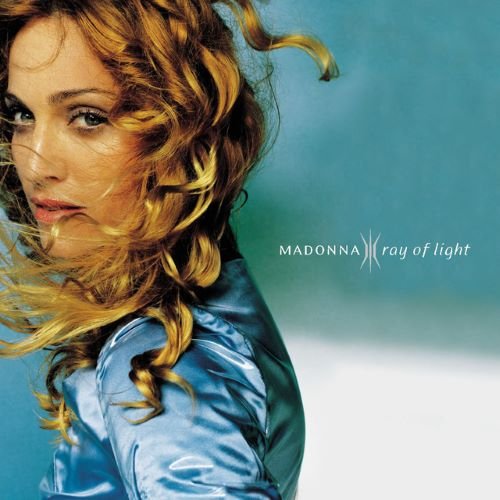
During 1997, she worked with producer William Orbit on her first album of new material since 1994's Bedtime Stories. The resulting release, Ray of Light, was heavily influenced by electronica, techno, and trip-hop, thereby updating her classic dance-pop sound for the late '90s. Ray of Light received uniformly excellent reviews upon its March 1998 release and debuted at number two on the charts. Within a month, the record was shaping up to be her biggest album since Like a Prayer. Two years later she returned with Music, which reunited her with Orbit and also featured production work from Mark "Spike" Stent and Mirwais, a French electropop producer/musician in the vein of Daft Punk and Air.

The year 2000 also saw the birth of Madonna's second child, Rocco, whom she had with filmmaker Guy Ritchie; the two married at the very end of the year. With Ritchie as director and Madonna as star, the pair released a remake of the film Swept Away in 2002; the movie didn't fare well with critics or at the box office. Her sober 2003 album, American Life, debuted at number one on the Billboard charts but it didn't generate any hit singles in America; it did produce two hit singles in the U.K., "Nothing Fails" and "Love Profusion." That same year also saw the release of Madonna's successful children's book, The English Roses, which was followed by several more novels in future years.

Confessions on a Dance Floor marked her return to music, specifically to the dance-oriented material that had made her a star. Released in late 2005, the album topped the Billboard 200 chart and was accompanied by a worldwide tour in 2006, the same year that I'm Going to Tell You a Secret, a CD/DVD made during her Re-Invention Tour, came out. In 2007, Madonna released another CD/DVD set, The Confessions Tour, this time chronicling her tour of the same name.

She inched closer to the completion of her Warner Bros. contract with 2008's Hard Candy, featuring collaborations with the Neptunes and Timbaland. As poorly received as it was, the bold album boasted a Top Five hit in "4 Minutes," and it was supported with the Sticky & Sweet Tour, which concluded in September 2009 (a month prior to her filing for divorce from Ritchie) and produced yet another CD/DVD package, released in 2010. It was her final Warner Bros. release and set the stage for her long-term recording deal with Live Nation.

Madonna began work on her 12th album midway through 2011, with the goal of releasing it early in 2012. The subsequent full-length, MDNA, featured production from French electronic musician and DJ Martin Solveig, as well as longtime collaborator Orbit. The album's title, an abbreviation of Madonna's name, appeared on the heels of her performance at the 2012 Super Bowl. Preceded by the Top Ten single "Give Me All Your Luvin'" (featuring Nicki Minaj and M.I.A.), MDNA debuted at number one across the world, including the U.S. and U.K. Her MDNA Tour took up the rest of the year, as she performed in Europe, the Middle East, North America, and South America. She filmed a concert special, and also released the live album MDNA World Tour in September 2013. At the beginning of 2014, Madonna announced that she was starting work on her 13th studio album. Taking to social media to capture the process, she revealed that recording sessions with the likes of Avicii, Diplo, and Kanye West had taken place. Excerpts from the sessions leaked toward the end of 2014, forcing Madonna to release a digital teaser EP by the end of the year. The full release of Rebel Heart came in March 2015; the album peaked at number two in the U.S. and U.K. She toured from the fall of 2015 to the spring of 2016, playing more than 75 dates in North America, Europe, and Asia.

In April 2019, Madonna began to issue singles leading up to the June release of her 14th album, Madame X, starting with "Medellín," a collaboration with Colombian reggaeton singer Maluma. The album featured co-production by Mirwais, Mike Dean, Diplo, and Jason Evigan, as well as collaborations with guest artists including Brazilian singer Anitta and rappers Swae Lee and Quavo.

Upon its June 14, 2019 release, Madame X debuted at number one in the U.S. and number two in the U.K.”.

Sill without peers when it comes to Pop music and sheer innovation in the field, let’s hope there are more albums from Madonna. Her most-recent, 2019’s Madame X, ranks alongside one of her best latter-day efforts. Maybe it is unlikely she will perform big tours like she has done before, but we will hear more music from her for sure. An icon who has inspired countless artists through the decades, there is a biopic in the works (Madonna is directing and Julia Garner plays her). Who knows what comes next. All I do know is that Madonna has given the world…

A stunning body of work.

FEATURE: I Traded Fame for Love Without a Second Thought… Madonna’s Drowned World / Substitute for Love at Twenty-Four: Ray of Light’s Perfect Opening Track

FEATURE:


I Traded Fame for Love Without a Second Thought…

 Madonna’s Drowned World / Substitute for Love at Twenty-Four: Ray of Light’s Perfect Opening Track

__________

WHEN I feature…

a Madonna song or album, it is usually on a big anniversary. There are a few smaller anniversaries in August. One of them, on 24th, is the twenty-fourth anniversary of Ray of Light’s opening track, Drowned World / Substitute for Love. Written by Madonna, William Orbit, Rod McKuen, Anita Kerr and David Collins, it is one of Madonna’s best opening tracks. It is the perfect way to introduce Ray of Light – an album that stunned critics and saw a huge evolution (after 1994’s Bedtime Stories, the Electronica and Trip-Hop was unexpected!). On 16th August, it will be Madonna’s sixty-fourth birthday. I am writing other features around that. I wanted to do a sort of double bill and mark the anniversary of this track – one that many might not be aware of. I am going to come to some Wikipedia information about its critical reception. Drowned World / Substitute for Love was the third single from Ray of Light. It reached number ten in the U.K. It is a fantastic song but maybe a surprise single. I love the video for the song, where Madonna is seen running from the paparazzi until she gets home. Maybe referencing her fame and how she can get no privacy or respect, maybe it is about running from an old way of life and embracing motherhood and spirituality. Since 1996, Madonna’s life changed hugely. She gave birth to her daughter Lourdes, invested herself in Eastern mysticism and Kabbalah, and was enlisted for the title role on the film adaptation of the musical, Evita (1996). It is only natural that she would want the opening song of this new album – which was a huge return and massive change of direction – to reflect her spirituality and new life. Drowned World / Substitute for Love was produced by Madonna and William Orbit. Madonna had been a fan of Orbit's work for a while. It is an inspired hook-up. You can hear Orbit’s magic touch throughout Ray of Light.

Frozen was the first song released from Ray of Light. That came out in January 1998, a month before Ray of Light. Rather than this being an upbeat or Pop-orientated opening track that we may have seen on earlier Madonna albums, it is clear that there was a lot of re-evaluation and growth following albums like Erotica (1992) and Bedtime Stories. The former courted attention from the press because of its sexual nature. The book, Sex, was released with the album and raised more than a few eyebrows. Whilst Bedtime Stories was not a reversal or a retreat into a safer sound and set of lyrics, Ray of Light was a rebirth and redirection. More positive, spiritual, and less sex/relationship-based than previous albums, this was a Pop queen who was a mother, embracing something different. Mixing something deeper with a real rush and sense of occasion, Drowned World / Substitute for Love earned positive press. Wikipedia collated some of the response:

Kenneth Bielen, author of The Lyrics of Civility declared the record as a "slice of Madonna's autobiography", praising the lyrics for forecasting what the singer's life could become. Allen Metz wrote in the book, The Madonna Companion, that the lyrics did not give an impression of "sophisticated wordplay", but was commendable for telling the truth about Madonna's life and career. Stephen Thomas Erlewine from AllMusic labelled the song as a "swirling" and "meditative opener". David Browne from Entertainment Weekly described the track, along with "Frozen" from the album, as "breathtaking", complimenting its beats. Sal Cinquemani from Slant Magazine found Madonna's belting to be the most "emotionally candid" she has been since Like a Prayer (1989).

Other critics complimented the different nature of the song and its production. Reviewing the album for The Michigan Daily, Lark said, "['Drowned World/Substitute for Love'] [creates] a brilliant, ecstatic pop catharsis that all but eclipses every mistake she's ever made, including the virginal writhing, gold-tooth sporting and naked hitchhiking of her sordid past", the last part referring to Madonna's antics during her fifth studio album, Erotica (1992) era. Rob Sheffield from Rolling Stone found it to be the "perfect opener" for Ray of Light and its various contradiction filled tracks. Noting the different musical elements, including drum loops, strings, computer bleeping as well as jungle snares, Sheffield compared them to a person's shopping experience and unpacking of the bags after the activity ends. The reviewer ended by saying that the track came off as "loud, tacky and ridiculous", but still exuded emotion in the music. In a review of Madonna's hits album GHV2 (2001), Charlotte Robinson from PopMatters commended Orbit's production work on the track along with others from Ray of Light. She added that the songs are "a testament to his ability to use gadgets and electronic wizardry not to alienate listeners, but to draw them in".

'Substitute for Love', Stuart Maconie wrote in a Q review of Ray of Light, "emerges languorously from a fog of enigmatic samples and the low-key burbling that are Orbit's forte… prayer bells tinkle and snare fills skim the surface tension of the song in a nod to drum 'n' bass." In 2003, fans voted for their top 20 Madonna singles in Q, and awarded "Drowned World/Substitute for Love" the number 17 spot. In a retrospective review of Ray of Light, Idolator's Stephen Sears described the track as "the first chapter of a great novel" setting the tone for rest of the record. Rolling Stone placed the track at number 20, on their ranking of Madonna's 50 Greatest Song in 2016, describing it as "a ballad exploring epiphanies about fame and family". While ranking Madonna's singles in honor of her 60th birthday, The Guardian's Jude Rogers placed the song at number 12, calling it "majestic, reflective and sung in a subdued style for Madonna [...] this meditation on fame with a Ballardian reference in its title soars quietly and gorgeously".

A brilliant song from Madonna, I was eager to explore ahead of its anniversary on 24th August, Drowned World / Substitute for Love opened one of her finest and most important albums. It announced an artist who was not only back, but one who was near the peak of her creative powers! Not talked about as much as other Ray of Light songs like Frozen, Ray of Light, The Power of Good-Bye and Nothing Really Matters, the majestic, uplifting, and evocative Drowned World / Substitute for Love is...

A masterful song.

FEATURE: Kate Bush’s The Kick Inside at Forty-Five: An Album That Deserves Much Greater Respect and Retrospection

FEATURE:


Kate Bush’s The Kick Inside at Forty-Five

An Album That Deserves Much Greater Respect and Retrospection

__________

EVEN though…

IN THIS PHOTO: Kate Bush in 1978/PHOTO CREDIT: Chris Walter—WireImage/Getty Images

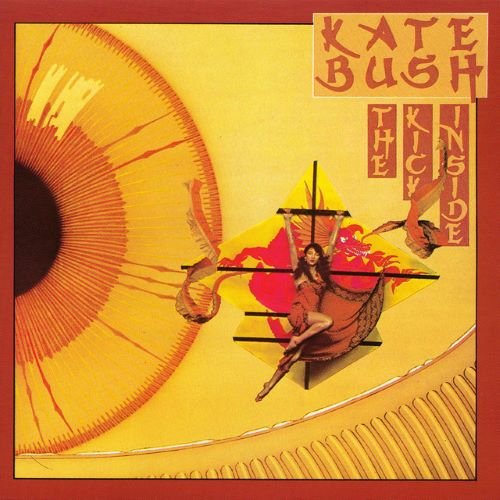
I have covered this topic before, because Kate Bush’s The Kick Inside was completed in August 1977, I am using the opportunity to mark its forty-fifth anniversary. The subject I am referring to is the fact that Kate Bush’s 1978 debut album is underrated and sort of overlooked in favour of others. I will produce other features about the album but, if you have not heard The Kick Inside, then make sure that you do! I have been thinking why Bush might have felt a little disappointed by the album in years since its release. She would probably have preferred to choose her own band and have more of a say in how the songs were produced and performed. The sheer quality and originality of the songwriting makes it an essential listen. It is where it all started for one of the most remarkable artists the world has ever seen. I am going to bring in a couple of reviews for The Kick Inside, to try and get people who don’t like it much to rethink. When it comes to ranking Bush’s albums, whilst The Kick Inside is often placed high, I still think it does not get the credit it deserves. Before moving on, the Kate Bush Encyclopedia sourced interviews where Bush spoke about The Kick Inside. I have chosen a couple:

Hello everyone. This is Kate Bush and I'm here with my new album The Kick Inside and I hope you enjoy it. The album is something that has not just suddenly happened. It's been years of work because since I was a kid, I've always been writing songs and it was really just collecting together all the best songs that I had and putting them on the album, really years of preparation and inspiration that got it together. As a girl, really, I've always been into words as a form of communication. And even at school I was really into poetry and English and it just seemed to turn into music with the lyrics, that you can make poetry go with music so well. That it can actually become something more than just words; it can become something special. (Self Portrait, 1978)

There are thirteen tracks on this album. When we were getting it together, one of the most important things that was on all our mind was, that because there were so many, we wanted to try and get as much variation as we could. To a certain extent, the actual songs allowed this because of the tempo changes, but there were certain songs that had to have a funky rhythm and there were others that had to be very subtle. I was very greatly helped by my producer and arranger Andrew Powell, who really is quite incredible at tuning in to my songs. We made sure that there was one of the tracks, just me and the piano, to, again, give the variation. We've got a rock 'n' roll number in there, which again was important. And all the others there are just really the moods of the songs set with instruments, which for me is the most important thing, because you can so often get a beautiful song, but the arrangements can completely spoil it - they have to really work together. (Self Portrait, 1978)

I think it was probably the least experimental of all the albums. I'd written, say, two hundred songs from which we chose the thirteen songs that went on that. And it was recorded very quickly, there was very little time for experimentation. It was something that had a lot of forethought gone into it. (Profile 6, 1985)”.

What doesn’t help is how the media perceived her back in 1978. People focused on her image and sexuality. Perhaps trying to define her by Wuthering Heights. The feeling that she was witch-like, high-pitched or someone trying to be strange. In truth, this was just a song and the way she needed to express it. Although this NME interview from March 1978 has a lot of positives, there is this fixation on her looks:

On the posters it's a coy, soft-focused Kate showing enough breast to--well, at least titillate the passing passengers. Face to face Kate Bush is an impish hippy girl who belies her much touted nineteen years.

Her debut "Top of the Pops" appearance gave rise to Kate being described as "a dark-haired Lyndsay De Paul," but she is neither doll-like nor petite, though hardly tall. Her faded jeans are mostly concealed under a pair of sheepskin-lined thigh-high reddish suede boots, and are in marked contrast to her very feminine fringed top.

Without much time to scurry home to the South East London house she shares with her two brothers to wash her carefully dishevelled hair for an appearance on BBC's "Tonight," Kate's in a hurry. Still, she remains charming and unflustered.

For a girl still in her teens, she's exceptionally self-possessed--especially since in recent weeks she's shot from nowhere to becoming a household name, courtesy of "Wuthering Heights", her first single. The song was inspired by Emily Bronte's romantic novel of the same name and is sung in a voice not unlike that of a newly-neutered cat letting the world know of his predicament.

To compound her mercurial success, her first album "The Kick Inside" is also high on the chart. Kate is amazed at the way things gone. "If you think of it in terms of people and not the money--'cause that's not relevant--it makes me feel very humble," she squeaks in her sing-song voice.

She was signed to EMI three years ago, given a 3,000-Pound advance and a four-year contract with options after the second and third years; i.e., if EMI wanted to drop Kate after either two or three years they could. Last year they re-signed her and it seems certain the company will retain her throughout this year too.

Amongst the credits on "The Kick Inside" is the Floyd's guitarist Dave Gilmour. It was, she says, largely because of Gilmour that she got a record deal. Kate had played piano since she was eleven, starting to write her own songs shortly after. A friend of the Bushes had offered to take some home-made tapes she'd recorded during her early teens round the record companies, but his endeavours were abortive--until he contacted Gilmour, an old friend from Cambridge.

<Note: Each of these tapes are described by Peter FitzGerald-Morris as containing "thirty songs." The friend was Ricky Hopper.>

Gilmour liked what he heard and offered to finance the recording of some professional demo tapes. It was also Gilmour who introduced Kate to arranger Andrew Powell (known for his work with Alan Parsons), who subsequently produced "The Kick Inside". The Gilmour-sponsored tapes received a warm welcome at EMI's A&R department. <This was after an earlier (second) demo tape, recorded at Gilmour's house, was submitted to EMI without success.>

Things couldn't have worked out more perfectly for the sixteen-year-old doctor's daughter. Fresh out of school with an armful of O levels, 3,000 Pounds in her bin and with no immediate pressures from EMI, Kate was free to pursue her ambition to dance. She applied to an ad in London's "Time Out" magazine and enrolled at Lindsay Kemp's mime school.

So why did EMI keep you under covers for so long?

"They were worried about me not being able to cope with things. And I was worried 'cause I didn't feel capable of coping with it either."

So Kate spent her days at Kemp's school with barely an interruption from her record company. "Oh, it was great," chirps Kate."I really got into the discipline. I had so much time and I could use it. For an artist that's such a delightful situation to be in.

"I came in to EMI on a friendly basis and that was good for me, because it meant that I could meet people there as people, and not as a big vulture business where they're all coming in and pulling your arm out. Also, I could learn about the business, which is so important, because it *is* a business."

The daily lessons with Kemp--50p a throw--were very informal. "He taught me that you can express with your body--and when your body is awake so is your mind. He'd put you into emotional situations, some of them very heavy. Like he'd say, 'Right, you're all now going to become sailors drowning, and there are waves curling up around you.' And everyone would just start screaming.

"Or maybe he'd turn you into a little piece of flame..."

Waiting for EMI to click its fingers did have its drawbacks, though. "Artistically, I was getting so frustrated at not being able to get my art to people."

Kate says that EMI did have a go at image-building and at persuading her to write more commercial songs ("Not so heavy--more hook lines"), but when Kate finally went into the studio last summer with half of Pilot and half of Cockney Rebel as her backing band, it was on her own terms. "Wuthering Heights" was originally scheduled for release last November, but was shelved at the very last moment because of--according to her--delays with artwork. By the time everything was right, the Christmas rush was on so Kate's debut was stalled a second time.

EMI had, however, already mailed out some copies of the single, one of which reached Capital Radio's Tony Myatt. Despite EMI's requests to the contrary, Myatt played the record before it was actually on sale. Ironically, Kate feels that Capital's championing "Wuthering Heights" is the key reason for its success.

So is it natural to sing that high, Kate?

"Actually, it is. I've always enjoyed reaching notes that I can't quite reach. A week later you'll be on top of that note and trying to reach the one above it.

"I always feel that you can continually expand your senses if you try. The voice is like an instrument. The reason I sang that song so high is 'cause I felt it called for it. The book has a mood of mystery and I wanted the song to reflect that."

That she sings in different voices on her album is not, claims Kate, due to an identity crisis--to evoke each song's particular mood she has to alter her pitch.

Kate insists that she isn't exploiting her sexuality: "That's a very obvious image. I suppose the poster is reasonably sexy just 'cause you can see my tits, but I think the vibe from the face is there. The main thing about a picture is that it should create a vibe. Often you get pictures of females showing their legs with a very plastic face. I think that poster projects a mood”.

I don’t think The Kick Inside got the true respect and love it was due. It got to three in the U.K. and was a chart success around the world. Although America did not take to Kate Bush or understand her, I think that there was this split between fans and critics. The album was a success and made her a star. It seems a pity that Bush herself created some distance from The Kick Inside. That media perception of Bush did not change for many years. I feel, as such, many people know The Kick Inside for a couple of songs and nothing else. Forty-five years after the album was recorded, there needs to be this celebration. I want to source a couple of positive reviews. The Young Folks wrote this on the album’s fortieth anniversary (2018):

That primitive quality to her music is foreshadowed in the first few seconds of the album, which feature a selection of whale song. The song that follows, “Moving,” is written in tribute to the emotion and freedom Bush felt through her interpretive dance and mime lessons with Lindsay Kemp. As Bush described in a 1980 Sounds magazine interview, Kemp “fills people up, you’re an empty glass and glug, glug, glug, he’s filled you with champagne.” In the same interview Bush explained her reasoning for including the whale song, claiming that whales “say everything about ‘moving’… [they] are pure movement and pure sound, calling for something, so lonely and sad.” The song works as a good introduction to the rest of her album, and to Bush as an artist that we’re getting to know on her debut album. Here her voice cuts above the surprisingly bold piano and drums, while moving in a way that feels flexible and rhythmic.

The follow-up track, “Saxophone Song,” is simple but in a way that indicates Bush knows how to efficiently communicate an idea without meandering unnecessarily. It’s a song from a fan of a musician – who plays the titular instrument –singing about how she is moved by his music. This track, as well as “Moving” and several others illustrate how Bush can write about things in her life, that are true to her young experience such as taking dance lessons, reading Brontë, and being an awed fan of a musician, and she can turn them into songs that feel adult and general enough to appeal to a listener of any age, as well as stand the test of time.

The next track “Strange Phenomena,” ponders the odd coincidences and synchronicities of life that make you feel connected to something larger and part of a powerful intuitive system. It’s an introduction to Bush’s tendency to write about relatively intellectual subjects, which comes up a few times on this album alone.

Bush’s most conventional tracks are “Kite” and “James and the Cold Gun.” They’re the most pop-rock and boisterous sounding of the 13 songs, and relatively conventional in their lyrics and delivery. Sandwiched between those two songs, however, are the first two singles and two of Bush’s biggest hits, “The Man with the Child in His Eyes” and “Wuthering Heights.” The former song was written by Bush at age 13, and recorded at age 16. The music on the track is straightforward, and Bush’s vocals are the most clear and unaffected here, allowing us to hear every word. The “child” in the title can simultaneously be applied to who the man is looking at and, as Bush has said, the “little boy within” most men. It’s an astonishingly mature song to imagine a 13-year-old writing, which adds a sort of haunted quality to it. The single made it to #6 in the UK, and won Bush the 1979 Ivor Novello Award for Outstanding British Lyric.

“Wuthering Heights,” the album’s first single at Bush’s insistence, went to #1 on the UK charts, making it the first time a female singer-songwriter topped the charts with a self-penned song – and it remains Bush’s only number one single. The song was written at age 18 after Bush watched a mini-series adapted from the Emily Brontë novel of the same name. In the song she sings from the dead character Cathy’s perspective as a ghost, begging to be let inside and back into her love Heathcliff’s arms, perfectly capturing the wild and uncontainable emotions depicted in the novel. This song and its videos also brought to a wider audience Bush’s incorporation of movement to her performances. The UK video features Bush in a white dress surrounded by white mist and other dancing projections of herself. The more well-known video was made for the US and has Bush in a bright red dress, dancing among the woods and hills.

The second half of the album features a trilogy of songs about sex and sensuality – “Feel It,” “Oh to Be in Love” and “L’Amour Looks Something Like You.” They’re great examples of Bush’s ability to evoke mood and imagery through her voice, such as when her voice soars in the second half of the phrase “oh to be in love – and never get out again” to mimic the euphoric mindset the singer is in.

The final songs return to the more intellectual and metaphysical inspirations. “Them Heavy People” is about Bush enjoying the opportunity to learn as much as possible to expand her mind, extolling the pains and joys of pushing yourself and “opening doors you thought shut for good” to become the best version of yourself and find the “heaven inside.” “Room for Life,” is an appreciation of the power of women. Bush sings “like it or not, we keep bouncing back, because we’re woman.” The final track “The Kick Inside,” is similar to “Wuthering Heights,” in that it’s an adaptation of an existing work – in this case a “murder ballad” called Lizie Wan – and sung from the perspective of the female character. In this case, however, it’s a girl who is impregnated by her brother who then kills her because of it. It’s a bitterly ironic song to come after “Room for the Life,” which celebrates how woman has “room for a life… in your womb.” It’s a dark end to a strange album, but it’s a fitting end. It underlines that Bush is a fresh talent who is interested in plumbing the depths of human experience and psychology in her music and is not afraid of any source of inspiration”.

The BBC shared their thoughts about Kate Bush’s The Kick Inside in 2008. It does seem odd that The Kick Inside is not talked about more and ranked alongside Bush’s best work. Forty-five years later and it still sounds like nothing else in the world:

The tale's been oft-told, but bears repeating: Discovered by a mutual friend of the Bush family as well as Pink Floyd's David Gilmour, Bush was signed on Gilmour's advice to EMI at 16. Given a large advance and three years, The Kick Inside was her extraordinary debut. To this day (unless you count the less palatable warblings of Tori Amos) nothing sounds like it.

Using mainly session musicians, The Kick Inside was the result of a record company actually allowing a young talent to blossom. Some of these songs were written when she was 13! Helmed by Gilmour's friend, Andrew Powell, it's a lush blend of piano grandiosity, vaguely uncomfortable reggae and intricate, intelligent, wonderful songs. All delivered in a voice that had no precedents. Even so, EMI wanted the dullest, most conventional track, James And The Cold Gun as the lead single, but Kate was no push over. At 19 she knew that the startling whoops and Bronte-influenced narrative of Wuthering Heights would be her make or break moment. Luckily she was allowed her head.

Of course not only did Wuthering Heights give her the first self-written number one by a female artist in the UK, (a stereotype-busting fact of huge proportions, sadly undermined by EMI's subsequent decision to market Bush as lycra-clad cheesecake), but it represented a level of articulacy, or at least literacy, that was unknown to the charts up until then. In fact, the whole album reads like a the product of a young, liberally-educated mind, trying to cram as much esoterica in as possible. Them Heavy People, the album's second hit may be a bouncy, reggae-lite confection, but it still manages to mention new age philosopher and teacher G I Gurdjieff. In interviews she was already dropping names like Kafka and Joyce, while she peppered her act with dance moves taught by Linsdsay Kemp. Showaddywaddy, this was not.

And this isn't to mention the sexual content. Ignoring the album's title itself, we have the full on expression of erotic joy in Feel It and L'Amour Looks Something Like You. Only in France had 19-year olds got away with this kind of stuff. A true child of the 60s vanguard in feminism, Strange Phenomena even concerns menstruation: Another first. Of course such density was decidedly English and middle class. Only the mushy, orchestral Man With The Child In His Eyes, was to make a mark in the US, but like all true artists, you always felt that Bush didn't really care about the commercial rewards. She was soon to abandon touring completely and steer her own fabulous course into rock history”.

Forty-five years since it was recorded, I feel The Kick Inside has yet to find a massive audience. It resonated and was a success in 1978 but, in the years since, it has not gained the sort of traction as Hounds of Love (1985) or other albums from her. On the forty-fifth anniversary of its release in February, more people will be become aware of The Kick Inside. I hope that this month, some forty-five years since Kate Bush and her band completed recording of the album, that is talked about more. The Kick Inside is loved by many, but many others have not really embraced it. I hope that more exposure and attention of The Kick Inside

RECTIFIES that.

FEATURE: Vinyl Corner: Dusty Springfield – Dusty in Memphis

FEATURE:


Vinyl Corner

Dusty Springfield – Dusty in Memphis

__________

AS I say…

PHOTO CREDIT: Redferns

on a few of these Vinyl Corner features, there are some albums that will cost a little bit more on the format. You can buy it more cheaply but, if you are a fan of Dusty Springfield, then I would urge you to get her classic album, Dusty in Memphis, on vinyl. It is an all-time great album that sounds as astonishing and moving now as it always has. It is hard to believe that an album as timeless and astonishing as Dusty in Memphis only reached ninety-nine in the U.S. Springfield’s fifth studio album, the early sessions were recorded at American Sound Studio in Memphis; Springfield's final vocals and the album's orchestral parts were recorded at Atlantic Records' New York City studios. Even though the album did feature one of her best cuts, Son of a Preacher Man, Dusty in Memphis sold poorly. In 2020, the album was selected by the Library of Congress for preservation in the National Recording Registry for being culturally, historically, or aesthetically significant. It is a case of an album growing over time and getting recognition long after it was released. It was released on 18th January, 1969. I am not sure why record buyers did not show Dusty in Memphis more love. It is an album that everyone needs to own and, if you can get it on vinyl, then it is well worth the money! There are a couple of reviews that I want to highlight.

First, back in March, Udiscovermusic.com told the strange story of an undeniable classic album that has been ranked as one of the best albums ever by so many different sources. It has not aged a day since it was released:

The record that’s widely held to be the greatest album in the distinguished catalog of Dusty Springfield – in fact, for many, one of the greatest albums, period – was released on March 31, 1969. Despite being surprisingly unsuccessful at the time, Dusty In Memphis has thankfully become a monument to the unique soulfulness of one of Britain’s finest-ever voices.

The album was Dusty’s fifth, some five years into her hitmaking career. It marked a new era, as it was the first time that she had recorded an LP outside the UK. Masterfully overseen by three of the all-time giants of American soul and rock music production, Jerry Wexler, Arif Mardin, and Tom Dowd, it had a famously difficult birth. Happily, what endures is the brilliant quality of the songs and performances.

After massive international success for Dusty in 1966 with “You Don’t Have To Say You Love Me,” and despite her beloved status with her audience, the following year produced a blank in terms of UK Top 10 singles or albums. Dusty had been known for years as a vociferous UK champion of soul music, and of Wexler’s work at Atlantic in particular. Now she and her friend and future manager, Vicki Wickham, agreed that the time was right for a change of direction, both creatively and geographically.

And so to Memphis

Dusty remained on on Philips in the UK, but signed her dream deal for the US with Atlantic, and travelled to “Chips” Moman’s American Studios in Memphis. This was one of the two southern locations that Atlantic had been using, along with Muscle Shoals, in its great soul output of the day.

With Dusty’s usual meticulous attention to detail, a bespoke song list was drawn up. It included material from such A-list songwriters as Barry Mann & Cynthia Weil (“Just A Little Lovin’”), Randy Newman (“Just One Smile”), Burt Bacharach & Hal David (“In The Land Of Make Believe”), and no fewer than four songs by Gerry Goffin & Carole King (“So Much Love,” “Don’t Forget About Me,” “No Easy Way Down,” and “I Can’t Make It Alone”).

Recordings got under way with Wexler, Dowd and Mardin all in the control room at American. The great session players known collectively as the Memphis Cats added their studio expertise. But for all her vocal greatness, Springfield’s insecurities (and a certain uneasiness in these new surroundings) made the Memphis sessions difficult for all concerned. Notwithstanding the authentic Southern flavour of the tracks, the album’s title belied the fact that Dusty’s final vocals for it were recorded at later sessions in New York.

The upcoming LP release appeared to be given a great early boost by the release in November 1968 of the first single “Son Of A Preacher Man.” The fine lyric and memorable melody of writers John Hurley and Ronnie Wilkins were matched by a great, slow-burning groove and suitably sensual vocals by Dusty. The result was a Top 10 single on both sides of the Atlantic.

An inexplicable anti-climax

Then came the album release — and a huge anti-climax. Dusty In Memphis struggled to No.99 on the US chart and, almost unimaginably, didn’t make the bestsellers back in her own country at all. One of its subsequent American singles, “The Windmills Of Your Mind,” did become a US Top 3 adult contemporary hit, but Noel Harrison had already bagged the UK glory with his version of this theme from the movie The Thomas Crown Affair the year before”.

I want to bring in Rolling Stone’s review of Dusty in Memphis. The reviewed the album in November 1969. It must have been quite an experience hearing the album fresh in a year that didn’t really have anything else like this:

Dusty started out with a nice little rocker called “I Only Want to Dance With You,” her first hit, riding in on the heels of Beatle boots in 1964, and then scored with, some of us anyway, a monster, “Wishin’ and Hopin.'” As opposed to Leslie Gore’s great single, “You Don’t Own Me,” Dusty’s song was the ultimate anti-Women’s Liberation ballad: “Wear your hair, just for him …” We used to turn it up loud on double-dates. Dusty had this way with words, a soft, sensual box (voice) that allowed her to combine syllables until they turned into pure cream. “AnIvrything’inboutH’greeeaaate true love is …” And then a couple of years later she hit the top with “The Look of Love” and seemed destined to join that crowd of big-bosomed, low-necked lady singers that play what Lenny Bruce called “the class rooms” and always encore with “Born Free.”

It didn’t happen, and Dusty in Memphis is the reason why. This album was constructed with the help of some of the best musicians in Memphis and with the use of superb material written by, among others, Jerry Goffin & Carol King, Randy Newman, and Barry Mann & Cynthia Weil. Now Dusty is not a soul singer, and she makes no effort to “sound black” — rather she is singing songs that ordinarily would have been offered by their writers to black vocalists. Most of the songs, then, have a great deal of depth while presenting extremely direct and simple statements about love. Unlike Aretha, who takes possession of whatever she does, Dusty sings around her material, creating music that’s evocative rather than overwhelming. Listening to this album will not change your life, but it’ll add to it.

There are three hits on this LP, and they are representative of the rest of it. “Son of a Preacher Man” is as down-home as Dusty gets; it has an intro that’s funky, a vocal that’s almost dirty. The bass gives the song presence and Dusty doesn’t have to strain to carry it off. No one has topped her version of this yet and no one’s likely to. “Don’t Forget About Me” is to my ears the best cut here — it opens with a counterpoint between bass and vibrating guitar that’s tremendously exciting, and then Dusty enters, her voice almost like another instrument. The song picks up Gene Chrisman’s woodblock and the Sweet Inspirations and it’s a fast race home. Piano cues Reggie Young’s sizzling guitar (and it’s a crime that Atlantic mixed Young down from the version used on the single) toward the end, and it’s his show from then on. Better musicianship is not to be found, and I include Dusty as one of those musicians.

Finally, there’s “The Windmills of Your Mind,” a slick song that served as the soundtrack for the slickest movie of recent years, The Thomas Crown Affair. The rest of the album falls somewhere in between this cut and the other hits, but not to be missed are superb versions of “No Easy Way Down,” “So Much Love,” and “Just a Little Lovin”.

I will round off with the BBC’s take on an album with very few equals. Even if you are not a fan of her work or know too much about it, then Dusty in Memphis will still wow you. It is such a strong album that one cannot help but be affected and stunned by it:

Despite its status as a classic record, Dusty in Memphis had less than auspicious beginnings. By 1968 La Springfield had scored a string of chart successes with what she called 'big ballady things' and her decision to make an album in Memphis, home of hard edged R 'n' B grooves, was viewed with puzzlement by many.

Teaming up with the crack production/arrangement team of Jerry Wexler, Tom Dowd and Arif Mardin (responsible for Aretha Franklin's Atlantic classics) also proved a bit much initially for Springfield, whose confidence in her vocal abilities was never very high. Worried that the session musicians would think she was a sham and unnerved by singing in the same vocal booth as used by Wilson Pickett, Dusty's relationship with her producers became strained, with Wexler claiming he never got a note out of her during the initial sessions in Memphis.

You'd never know this from the recorded evidence though. Springfield unsurprisingly resists any temptation to do an Aretha, instead relying on understatement, timing and delivery rather than vocal firepower. The songs (all by Brill building denizens) are all top notch, and Springfield's interpretation of them is peerless, almost to the point that it's tempting to slap a preservation order on them to stop any attempts at future covers from the likes of Sharleen Spiteri. Likewise Mardin's sensitive blend of Bacharach poise and Memphis funk provides the perfect frame for Dusty's blue eyed soul.

'Son of A Preacher Man' and 'Breakfast in Bed' hum with a potent mix of vulnerability and knowing desire; though both songs are pretty much ingrained in the psyche of anyone of a certain age, they still retain a hefty emotional charge. On the other hand, Randy Newman's 'I Don't Want to Hear It Anymore' and 'I Can't Make It Alone' must rank amongst the finest ballad performances you're likely to hear, and Springfield even makes the cod psychedelic inanities of Michel Legrand's 'The Windmills of Your Mind" seem almost meaningful.

The cover boasts a sticker proclaiming that this record made it into Rolling Stone's Coolest records of All Time Top 10. Don't let that put you off; if you have ears, you need this album…”.

I hope that younger generations know about Dusty Springfield and albums like Dusty in Memphis. It is an essential purchase that everyone should have. If you are not familiar with the album or only listen via streaming, consider spending some money and getting this 1969 diamond release on vinyl! From start to finish, it is…

A breathtaking listen!

FEATURE: Inspired By… Part Seventy-Three: Sam Cooke

FEATURE:


Inspired By…

Part Seventy-Three: Sam Cooke

__________

AN artist…

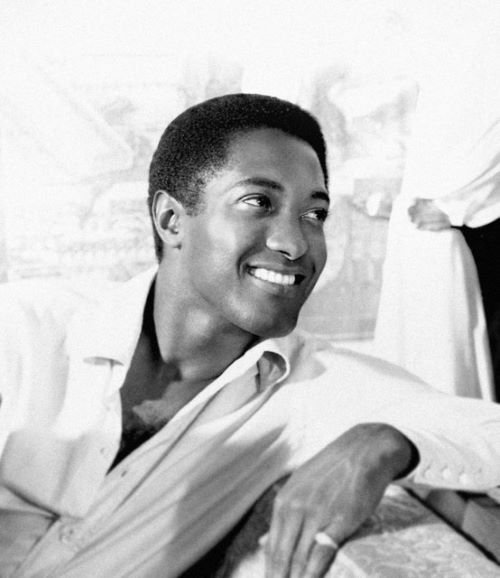
that I have overlooked in Inspired…, few artists are as influential and important as Sam Cooke. If we talk about Soul music, its forefather and pioneer, I feel, is Cooke. He is definitely one of the most important Soul artists ever. I am going to end with a playlist of songs from artists that are inspired by Sam Cooke or they have been compared with him. Before then, AllMusic provide a deep and detailed biography of the iconic Cooke:

Sam Cooke was the most important soul singer in history, its primary inventor, and its most popular and beloved performer in both the Black and white communities. Equally important, he was among the first Black performers and composers to attend to the business side of the music business, founding both a record label and a publishing company as an extension of his careers as a singer and composer. Still, business interests never prevented him from engaging in topical issues, including the struggle over civil rights. The pitch and intensity of that battle followed an arc which paralleled Cooke's emergence as a star; his career bridged gaps between Black and white audiences that few had tried to surmount, much less succeeded at doing. Much like Chuck Berry or Little Richard bringin Black and white teenagers together, James Brown selling records to white teenagers and Black listeners of all ages, and Muddy Waters getting young white folkies and older Black transplants from the South onto the same page, Cooke appealed to all of the above, and the parents of those white teenagers as well -- yet he never lost his credibility with his core Black audience. In a sense, his appeal anticipated that of the Beatles, in breadth and depth.

He was born Sam Cook in Clarksdale, Mississippi, on January 22, 1931, one of eight children of a Baptist minister and his wife. Even as a young boy, he showed an extraordinary voice and frequently sang in the choir in his father's church. During the middle of the decade, the Cook family moved to Chicago's South Side, where the Reverend Charles Cook quickly established himself as a major figure in the religious community. Sam and three of his siblings also formed a group of their own, the Singing Children, in the 1930s. Although his own singing was confined to gospel music, he was aware and appreciative of the popular music of the period, particularly the melodious, harmony-based sounds of the Ink Spots, whose influence was later heard in songs such as "You Send Me" and "For Sentimental Reasons." As a teenager, he was a member of the Teen Highway QCs, a gospel group that performed in churches and at religious gatherings. His membership in that group led to his introduction to the Soul Stirrers, one of the top gospel groups in the country, and in 1950 he joined them.

If Cooke had never recorded a note of music on his own, he would still be remembered today in gospel circles for his work with the Soul Stirrers. Over the next six years, his role within the group and his prominence in the Black community rose to the point where he became a star, possessing his own fiercely admiring and devoted audience, through his performances on "Touch the Hem of His Garment," "Nearer to Thee," and "That's Heaven to Me." The group was one of the top acts on Art Rupe's Specialty Records label, and he might have gone on for years as their most popular singer, but Cooke's goal was to reach audiences beyond the religious community, and beyond the Black population, with his voice. This was a tall order at the time, as the mere act of recording a popular song could alienate the gospel listenership in an instant. Singing for God was regarded in those circles as a gift and a responsibility, while popular music, rock & roll, and R&B were to be abhorred, at least coming from the mouth of a gospel singer. (The gap was so great that when blues singer Blind Gary Davis became "sanctified" -- that is, found religion -- as the Rev. Gary Davis, he had to devise new words for his old blues melodies, and never sang the blues words again.).

He tested the waters of popular music in 1956 with the single "Lovable," produced by Bumps Blackwell and credited under the name Dale Cooke so as not to attract too much attention from his existing audience. It was enough, however, to get Cooke dropped by the Soul Stirrers and their record label. Granted, that freed him to record under his real name. The result was one of the biggest selling singles of the 1950s, a Cooke original entitled "You Send Me," which sold over two million copies on the tiny Keen Records label and hit number one on both the pop and R&B charts. Although it seems like a tame record today, "You Send Me" was a pioneering soul record in its time, melding elements of R&B, gospel, and pop into a sound that was new and still coalescing at the time.

Cooke was with Keen for the next two years, a period in which he delivered some of the prettiest romantic ballads and teen pop singles of the era, including "For Sentimental Reasons," "Everybody Loves to Cha Cha Cha," "Only Sixteen," and "(What A) Wonderful World." These were extraordinarily beautiful records, and in between the singles came some early album efforts, most notably Tribute to the Lady, his album of songs associated with Billie Holiday. He was unhappy, however, with both the business arrangement that he had with Keen and the limitations inherent with recording for a small label. Equally to the point, major labels were knocking on Cooke's door, including Atlantic and RCA Records. Atlantic was the top R&B-oriented label in the country, and Cooke could have signed there and found a happy home, except they wanted his publishing, and Cooke was well aware of the importance of owning his copyrights.

Thus, he signed with RCA Records, then one of the three biggest labels in the world (the others being Columbia and Decca), even as he organized his own publishing company (Kags Music) and a record label (SAR), through which he would produce other artists' records. Among those signed to SAR were the Soul Stirrers, Bobby Womack (late of the Valentinos, who were also signed to the label), former Soul Stirrers member Johnny Taylor, Billy Preston, Johnnie Morisette, and the Sims Twins.

Cooke's RCA sides were a schizophrenic body of work, at least for the first two years. He broke new ground in pop and soul with the single "Chain Gang," a mix of sweet melodies and gritty, sweaty sensibilities that also introduced something of a social conscience to his work. A number two hit on both the pop and R&B charts, it was his biggest hit since "You Send Me" and heralded a bolder phase in his career. Singles like the bluesy, romantic "Sad Mood"; the idyllic romantic soul of "Cupid"; the straight-ahead dance tune "Twistin' the Night Away" (a pop Top Ten and a number one R&B hit); and "Bring It on Home to Me" all lived up to this promise, and also sold in huge numbers. But the first two albums that RCA had him do, Hits of the Fifties and Cooke's Tour, were among the lamest LPs ever recorded by any soul or R&B singer, comprised of washed-out pop tunes in arrangements that showed almost none of Cooke's gifts to their advantage.

In 1962, Cooke issued Twistin' the Night Away, a somewhat belated "twist" album that became one of his biggest-selling LPs. He didn't really hit his stride as an LP artist, however, until 1963 with the release of Night Beat, a beautifully self-contained, dark, moody assembly of blues-oriented songs that were among the best and most challenging numbers that Cooke had recorded up to that time. By the time of its release, he was mostly identified through his singles, which were among the best work of their era, and had developed two separate audiences, among white teen and post-teen listeners and Black audiences of all ages. It was Cooke's hope to cross over to the white audience more thoroughly, and open up doors for Black performers that, up to that time, had mostly been closed. He had tried playing The Copa in New York as early as 1957 and failed at the time, mostly owing to his inexperience, but in 1964 he returned to the club in triumph, an event that also yielded one of the most finely recorded live performances of its period. The problem with The Copa performance was that it didn't really represent what Sam Cooke was about in full; it was Cooke at his most genial and non-confrontational, doing his safest repertory for a largely middle-aged, middle-class white audience. They responded enthusiastically, to be sure, but only to Cooke's tamest persona.

In mid-1963, however, Cooke had done a show at The Harlem Square Club in Miami that had been recorded. Working in front of a Black audience and doing his real show, he delivered a sweaty, spellbinding performance built on the same elements found in his singles and his best album tracks, combining achingly beautiful melodies and gritty soul sensibilities. The two live albums sum up the split in Cooke's career and the sheer range of his talent, the rewards of which he'd finally begun to realize more fully in 1963 and 1964.

The drowning death of his infant son in mid-1963 had made it impossible for Cooke to work in the studio until the end of that year. During that time, however, with Allen Klein now managing his business affairs, Cooke did achieve the financial and creative independence that he'd wanted, including more money than any Black performer had ever been advanced before, and the eventual ownership of his recordings beginning in November of 1963; he had achieved creative control of his recordings as well, and seemed poised for a breakthrough. It came when he resumed making records, amid the musical ferment of the early '60s. Cooke was keenly aware of the music around him, and was particularly entranced by Bob Dylan's song "Blowin' in the Wind," its treatment of the plight of Black Americans and other politically oppressed minorities, and its success in the hands of Peter, Paul & Mary. All of these factors convinced him that the time was right for songs that dealt with more than twisting the night away.

The result was "A Change Is Gonna Come," perhaps the greatest song to come out of the civil rights struggle, and one that seemed to close and seal the gap between the two directions of Cooke's career, from gospel to pop. Arguably his greatest and his most important song, it was an artistic apotheosis for Cooke. During this same period, he had also devised a newer, more advanced dance-oriented soul sound in the form of the song "Shake." These two recordings heralded a new era for Cooke and a new phase of his career, with seemingly the whole world open to him.

None of it was to be. Early in the day on December 11, 1964, while in Los Angeles, Cooke became involved in an altercation at a motel, with a female guest and the motel's night manager, and he was shot to death while allegedly trying to attack the manager. The case is still shrouded in doubt and mystery, and was never investigated the way the murder of a star of his stature would be today. Cooke's death shocked the Black community and reverberated far beyond; his single "Shake" was a posthumous Top Ten hit, as were "A Change Is Gonna Come" and the At the Copa album, released in 1965. Otis Redding, Al Green, and Solomon Burke, among others, picked up key parts of Cooke's repertory, as did white performers including the Animals and the Rolling Stones. Even the Supremes recorded a memorial album of his songs, which later became one of the most sought-after of their original recordings.

His reputation survived, at least among those who were smart enough to look behind the songs, to hear Redding's performance of "Shake" at The Monterey Pop Festival, for example, and see where it came from. Cooke's own records were a little tougher to appreciate, however. Listeners who heard those first two RCA albums, Hits of the Fifties and Cooke's Tour, could only wonder what the big deal was about, and several of the albums that followed were uneven enough to give potential fans pause. Meanwhile, the contractual situation surrounding Cooke's recordings greatly complicated the reissue of his work. Cooke's business manager, Allen Klein, exerted a good deal of control, especially over the songs cut during that last year of the singer's life. By the 1970s, there were some fairly poor, mostly budget-priced compilations available, consisting of the hits up through early 1963, and for a time there was even a television compilation, but that was it. The movie National Lampoon's Animal House made use of a pair of Cooke songs, "(What A) Wonderful World" and "Twistin' the Night Away," which greatly raised his profile among college students and younger baby-boomers, and Southside Johnny & the Asbury Jukes made almost a mini-career out of reviving Cooke's songs (most notably "Having a Party," and even part of "A Change Is Gonna Come") in concert. In 1986, The Man and His Music went some way to correcting the absence of all but the early hits in a career-spanning compilation, but during the mid-'90s, Cooke's final year's worth of releases were separated from the earlier RCA and Keen material, and was in the hands of Klein's ABKCO label. Finally, in the late '90s and beyond, RCA, ABKCO, and even Specialty (which still owns Cooke's gospel sides with the Soul Stirrers) issued combined and comprehensive collections of their portions of Cooke's catalog”.

In order to show how influential Sam Cooke is, I am finishing up with a long playlist of tracks from artists who have been linked with him. A Soul master who has made such an impact on generations of artists, he will always be remembered as one of the all-time greats. This playlist certainly shows just how many great artists…

OWE a lot to Sam Cooke.

FEATURE: Greatest Love of All: Remembering an Icon: Whitney Houston at Fifty-Nine

FEATURE:


Greatest Love of All: Remembering an Icon

Whitney Houston at Fifty-Nine

__________

ON 9th August…

 PHOTO CREDIT: Paul Drinkwater/NBCU Photo Bank/NBCUniversal via Getty Images

it will be Whitney Houston’s fifty-ninth birthday. We lost the legend in 2012. I have written about her before but, as she is someone whose music I love and deserves to be marked, I wanted to showcase her amazing work. I am going to finish with a playlist of some of her best tracks. Before, and as I have done before, AllMusic give a fulsome biography of a musical icon:

Whitney Houston was inarguably one of the biggest pop stars of all time. Her accomplishments as a hitmaker were extraordinary. Just to scratch the surface, the mezzo-soprano powerhouse became the first artist to have seven consecutive singles hit number one, from "Saving All My Love for You" (1985) through "Where Do Broken Hearts Go" (1988). Her version of Dolly Parton's "I Will Always Love You" (1992) became nothing less than the biggest hit single in rock history. Whitney Houston and Whitney, her first two albums, each went diamond platinum, followed by a string of additional multi-platinum LPs including the likewise diamond-earning soundtrack for The Bodyguard. Houston was able to handle big adult contemporary ballads, effervescent, stylish dance-pop, and slick contemporary R&B with equal dexterity. The result was an across-the-board appeal that was matched by few artists of her era, and helped her become one of the first Black artists to find success on MTV in Michael Jackson's wake. Like many of the original soul singers, Houston was trained in gospel before moving into secular music. Over time, she developed a virtuosic singing style given over to swooping, flashy melodic embellishments. The shadow of Houston's prodigious technique still looms large over nearly every pop and R&B diva who has followed. A six-time Grammy winner, Houston was inducted into the Rock and Roll Hall of Fame in 2020, eight years after her tragic death.

Whitney Elizabeth Houston was born in Newark, New Jersey, on August 9, 1963. Her mother was gospel/R&B singer Cissy Houston, and her cousin was Dionne Warwick. By age 11, Houston was performing as a soloist in the junior gospel choir at her Baptist church; as a teenager, she began accompanying her mother in concert (as well as on the 1978 album Think It Over), and went on to back artists like Lou Rawls and Chaka Khan. Houston also pursued modeling and acting, appearing on the sitcoms Gimme a Break and Silver Spoons. Somewhat bizarrely, Houston's first recording as a featured vocalist was with Bill Laswell's experimental jazz-funk ensemble Material; the ballad "Memories," from the group's 1982 album One Down, placed Houston alongside Archie Shepp. The following year, Arista president Clive Davis heard Houston singing at a nightclub and offered her a recording contract. Her first single appearance was a duet with Teddy Pendergrass, "Hold Me," which reached number five on the R&B chart in 1984.

Houston's debut album, Whitney Houston, was released in February 1985. "You Give Good Love," its second single, became Houston's first hit, topping the R&B chart and hitting number three on the Hot 100. Houston's next three singles -- the Grammy-winning romantic ballad "Saving All My Love for You," the brightly danceable "How Will I Know," and the inspirational "The Greatest Love of All" -- all topped the Hot 100, and a year to the month after its release, Whitney Houston hit number one on the Billboard 200. It eventually sold over 13 million copies in the U.S., making it the best-selling debut ever by a female artist. Houston cemented her superstar status on her next album, Whitney. It became the first album by a female artist to debut at number one, and sold over ten million copies in the U.S. Its first four singles -- "I Wanna Dance with Somebody (Who Loves Me)" (another Grammy winner), "Didn't We Almost Have It All," "So Emotional," and "Where Do Broken Hearts Go" -- all hit number one, an amazing, record-setting run of seven straight. In late 1988, Houston scored a Top Five hit with the non-LP single "One Moment in Time," recorded for an Olympics-themed compilation album.

Houston returned with her third album, I'm Your Baby Tonight, in 1990. A more R&B-oriented record, it immediately spun off two number one hits in the title track and "All the Man That I Need" and sold over four million copies. Houston remained so popular that she could even take a recording of "The Star Spangled Banner" (performed at the Super Bowl) into the Top 20 -- though, of course, the Gulf War patriotism had something to do with that. Appeal across mediums fueled Houston as she began focus on an acting career, which she hadn't pursued since her teenage years. Her first feature film, a romance with Kevin Costner called The Bodyguard, was released in late 1992, just after she married singer Bobby Brown. It performed well at the box office, helped by an ad campaign that seemingly centered around the climactic key change in Houston's soundtrack recording of the Dolly Parton-penned "I Will Always Love You." In fact, the ad campaign undoubtedly helped "I Will Always Love You" become one the biggest singles in pop music history. It set new records for sales (nearly five million copies) and spent weeks at number one (14), later broken by Elton John's "Candle in the Wind 1997" and Mariah Carey and Boyz II Men's "One Sweet Day," respectively. Meanwhile, the soundtrack eventually sold an astounding 18 million copies, and also won a Grammy for Album of the Year. "I Will Always Love You" itself won Grammys for Record of the Year and Best Pop Vocal Performance, Female.

Once Houston had stopped raking in awards and touring the world, she prepared her next theatrical release, the ensemble drama Waiting to Exhale. A few months before its release at the end of 1995, it was announced that she and Brown had split up; however, they called off the split just a couple months later, and rumors about their tempestuous relationship filled the tabloids for years to come. Waiting to Exhale was released toward the end of the year, and the first single from the soundtrack, "Exhale (Shoop Shoop)," topped the charts. The album sold over seven million copies. For her next project, Houston decided to return to her gospel roots. The soundtrack to the 1996 film The Preacher's Wife, which naturally featured Houston in the title role, was loaded with traditional and contemporary gospel songs, plus guest appearances by Houston's mother, as well as Shirley Caesar and the Georgia Mass Choir.

In 1998, Houston finally issued a new full-length album, My Love Is Your Love, her first in eight years. Houston worked with pop/smooth soul mainstays like Babyface and David Foster, but also recruited hip-hop stars like Missy Elliott, Wyclef Jean, Lauryn Hill, and Q-Tip. The album went quadruple platinum and received Houston's most enthusiastic reviews in quite some time. Moreover, it produced one of her biggest R&B chart hits (seven weeks at number one) in the trio number "Heartbreak Hotel," done with Faith Evans and Kelly Price. Additionally, it yielded the Grammy-winning "It's Not Right But It's Okay." She also duetted with Mariah Carey on "When You Believe," a song from the animated film The Prince of Egypt.

Arista released the two-disc compilation Greatest Hits, a multi-platinum anthology that featured one disc of hits and one of remixes and included new duets with Enrique Iglesias, George Michael, and Deborah Cox, in 2000. It was also announced that year that Houston had signed a new deal with Arista worth $100 million, requiring six albums from the singer. The self-styled comeback album Just Whitney arrived in 2002, followed by One Wish: The Holiday Album in November of the following year. Two years later, her private life became more public through the 2005 reality television series Being Bobby Brown. She eventually divorced her husband and went into intense rehabilitation for drug addiction.

An album of new material was initially set for release by the end of 2007, but delays pushed it -- titled I Look to You, featuring collaborations with Alicia Keys and Swizz Beatz, R. Kelly, Akon, and Diane Warren -- back to September 2009. It became Houston's first number one album since the Bodyguard soundtrack. She toured the world in 2010, and talked about beginning recording for her next album, but entered outpatient rehab in the summer of 2011 for continuing drug and alcohol problems. That fall, Houston filmed a role in a remake of the 1976 musical film Sparkle, starring alongside Jordin Sparks. In early 2012, rumors swirled that Simon Cowell was courting Houston for a mentor spot on The X Factor, but before anything came of it, tragedy occurred. On February 11, the day before the 2012 Grammys, Houston was found dead in her bathroom at the Beverly Hills Hilton. The cause of death was found to be accidental drowning caused by heart disease and cocaine intoxication. The Grammy ceremony paid tribute to her life with a Jennifer Hudson performance of "I Will Always Love You." Houston was posthumously inducted into the Rock and Roll Hall of Fame in 2020”.

On what would have been her fifty-ninth birthday (on 9th August), the music world will think about the great Whitney Houston. Even though she is not with us anymore, her legacy and huge influence lives on! To celebrate her incredible power and importance, the below is a selection of…

HER best tracks.

FEATURE: Spotlight: Dylan

FEATURE:


Spotlight

Dylan

__________

WHEN it comes to young artists…

 PHOTO CREDIT: Phoebe Cowley for NOTION

who deserve a load of success and a long career, Dylan is right up there. She has been putting out music for a few years now, but I think her work post-pandemic (if this is what you can call it?!) is lifting her to new heights. The No Romeo EP and latest single, Girl of Your Dreams, show that Dylan is releasing some of her best material this year. I know there will be a lot of talk and interest around a studio album. I have seen on her Twitter feed how she has been noticed in America and her music is making waves there. An international success story who is going to go on to be a legend, I wanted to use this opportunity to spotlight Dylan. To do that, it is worth sourcing a few interviews. Most of them are from a couple of years ago (as I cannot see any recent ones). It gives us a chance to know more about a sensational artist. F WORD introduced Dylan in an extensive chat. I have chosen a few questions and answers that caught my eye:

R.E Hey Dylan! Is your real name Dylan? D: No it’s Tash - Dylan is what my parents were going to call me if I was a boy... and I really didn’t want to be called Tash! They still call me Tash but everyone in the industry calls me Dyl or Dylan. I’m so used to having two names now!

RE: How did you get here today? D: I drove miles to get here!

R.E: Where’s home? D: Suffolk. I was in London last year but I moved home just because it was getting a bit expensive and there’s no real reason for staying in London if no work is going on!

R.E: How has it been? D: It’s been really good - I’m not angry at the whole corona thing because it’s given me so much time to find my real sound and discover what really feels like me. I’m so happy with how it’s all sounding and where it’s going and the music that’s about to come out!

R.E: What would you say the biggest lesson you’ve learned since being in the industry is?

D: Don’t expect anything to happen overnight! I used to think that all of the people who were doing well at the moment were just overnight successes but after getting to know a lot of them I realised that they’ve been doing it for years.

R.E: Do your family listen to your music in the house a lot? D: Oh yeah, we have listening parties with wine! I stand on the table and perform - lipsyncing my own songs! It’s so embarrassing because I like this music so much that I will just sit and listen to it”.

I am going to move onto an interview from NOTION. In 2020 (when the interview took place), we were at the start of the pandemic. Dylan, a relatively fresh artist then, was in the position so many others were: charged with promoting herself and getting music out without being able to play gigs or see people. Despite that, she was gaining success and adulation:

The 20-year-old musician from Suffolk in England notes AC/DC and Guns N’ Roses as some of her musical heroes, as well as Flume. With her sights set on a Wembley show in the future, DYLAN isn’t afraid of putting in the work to get results. It’s an approach that’s obviously paid off as she’s just been selected as one of Virgin Money’s Emerging Stars.

As part of Virgin Money’s exciting programme, DYLAN joins a number of up-and-coming artists heading for the stars. The music initiative, supported by ambassador Laura Whitmore, aims to identify, encourage and amplify the best emerging talent in the UK.

Thanks to the programme, DYLAN will be putting her Virgin Money bursary development fund back into recording new music and playing live shows. “I think those are the two most important things for me because they’re my favourite parts of the job and they’re what I really want to develop, and where we’ve been slightly saving before so definitely going to progress the live show,” she explained.

DYLAN’s already been getting airtime on BBC Radio 1 and has had gigs at legendary venues such as London’s Electrowerkz. Her performance at the venue has become a treasured memory “because it was the first time that I heard anyone sing my songs back to me.”

PHOTO CREDIT: Phoebe Cowley

How does it feel to be one of the first Virgin Money Emerging Stars?

It’s crazy to me because Virgin Money is quite a big company and I’m a very small artist so having them believe in me is insane.

What is the highlight of your career so far?

Maybe “Sour Milk” getting BBC Radio 1’s track of the week because it was my second single ever and something like that was slightly ridiculous and out of reach at that point, but it happened.

If you could be on the line up with any two artists in history?

Tough one, I’ve got to say Flume because I’m obsessed with him. And then maybe Nina Simone as she was a massive part of my upbringing.

What is the best thing about being in the music industry?

That you’re allowed to do what you love, and no one tries to change you for it. It’s being able to write for a living, like writing is just the thing I love most in the world and for it to be a job is insane.

How has music helped you get through lockdown – have you been listening to and/or creating/writing/producing more music than you typically would have before lockdown?

Definitely writing more, despite having a massive lack of inspiration. I’ve been writing a lot more and almost going further into my problems that I’d written about before than I ever had – getting deep into them and writing more emotional, more vulnerable songs than I normally would.

But then also I’ve been going into writing happy songs which has never happened. I’ve written my first happy song that I actually like”.

Before coming to something more recent, Wonderland. chatted with one of the finest artists in this country. There is no doubt that Dylan is going to be a major artist and make a lot of tremendous albums. If you have not discovered her, then go and follow her now:

What was the moment you realised you wanted to go into music?

I don’t remember ever not wanting to do it. It’s been the only real constant in my life. I think if I had to pinpoint a moment it would be playing on stage for the first time. I was 11, in a band called Clueless, and we wrote all our own songs cause none of us could read music. Looking back at it now, we sounded horrific, but it was the biggest adrenaline rush. And the feeling hasn’t been any less than what it was since.

Who did you listen to growing up?

I was introduced to a weird mix of music as a kid. Mum loved jazz and musicals, and Dad was obsessed with rock’n’roll. I very quickly became a wannabe rock god and listened to a lot of AC/DC, Guns and Roses, and Aerosmith. I spent most of my childhood on the kitchen table singing stupidly loudly practising the air guitar.

At this time of uncertainty why do you think music is important – and how do you think your music is playing a part in the dialogue?

Music ties everyone together. It’s the only thing we’ve got right now so I think continuing is incredibly important. It’s certainly not going to stop me; weirdly because we’ve all been shut inside I’ve been more productive than ever. If this is going to last a while then at least I’ll be playing a part in giving people something new to listen to.

What’s next for you/what are you excited about?

Everything and anything to keep me entertained. I’m working on my master plan to take over the world”.

Girl of Your Dreams is an amazing new song from Dylan. It is among her best songs to date. When the Horn Blows featured it recently. I love the new track and I cannot wait to see what comes next from the magnificent Dylan:

The Suffolk-born singer-songwriter released her first song ‘Sour Milk’ in 2019. Since then, DYLAN has brought out 3 EPs, with the latest being her ‘No Romeo EP’,  which features the hit track ‘Nineteen’, and has gained over 40 million Spotify streams. With recognitions from Dork, Clash, and Notion, the 22-year-old has received support from a variety of music platforms. This year alone, DYLAN has toured with Bastille, Tate McRae, and recently Ed Sheeran, where she has been playing her new single ‘Girl Of Your Dreams’ in stadiums across the UK.

The much-awaited track gained widespread attention even before its release, after a clip of the song went viral on TikTok and amassed over 1 million views. DYLAN describes how the concept for ‘Girl Of Your Dreams’ came from the frustration of wanting someone to like her back, as she pitches herself as the ideal girlfriend. The song combines catchy guitar hooks and steady drum beats with DYLAN’s impressive vocal range, to create a feel-good summer anthem that is perfect for festival season. The studio version of Girl Of Your Dreams was premiered on BBC Radio 1 on 13th July, just ahead of its release, after being selected as Jack Saunders’ ‘Power Play’.

With various festival appearances over the summer, her sold-out UK tour in November, and a headline show scheduled for 20th February 2023 at Shepherd’s Bush Empire, it seems that DYLAN has a lot of plans for the coming months”.

Someone primed for the big time, Dylan is an original and seriously impressive talent who is her forging her own path and making her music. I think that the next year r two will see her play big stages and get big recognition. She is already known in the U.S., but I feel like there are no limits when it comes to her music. Some artists have limits and they are restricted. When it comes to Dylan, you just know that she will go…

ALL the way.

_____________

Follow Dylan

FEATURE: Feel Your Feet Start Kissing the Ground: The Title Track of Kate Bush’s The Red Shoes

FEATURE:


Feel Your Feet Start Kissing the Ground

The Title Track of Kate Bush’s The Red Shoes

 __________

I am going to focus on a track…

that does not get a lot of love. There are a few reasons why I am concentrating on The Red Shoes. From the 1993 album of the same name, the single was released on 5th April, 1994. It was one of the first Kate Bush songs that I remember hearing when I was at school. Ten at the time, it definitely caught me unaware! The lead track of the movie The Line, The Cross and the Curve, the film premiered on the same day as the single’s release. Reaching twenty-one in the U.K., many people are divided. The short film scored mostly negative reviews. A feeling that it was a missed opportunity and just not that good, Bush distanced herself from the project soon enough. I do love a lot of The Line, The Cross and the Curve, and I think The Red Shoes and its video is excellent. The Red Shoes as an album is very strong and remains underrated. Maybe it is a little top-heavy when it comes to the best songs but, opening the second side, the title track really strikes you! One of Bush’s best vocal performances on the album, I also really love the lyrics. About a girl who puts on a pair of enchanted ballet slippers and can't stop dancing until she breaks the spell, it was inspired by a character in the Michael Powell and Emeric Pressburger film, The Red Shoes. The whole album needs to be reappraised. The first album where Bush did not appear on the cover, it is a pair of feet in the red shoes. A shot taken by her brother, John Carder Bush, there is a sense of mystery and romance I feel. Bush re-recorded some of the songs from The Red Shoes for 2011’s Director’s Cut. Included was The Red Shoes. I think I prefer the original.

I cannot find any interviews where Bush goes into depth about that song. I can vaguely remember The Red Shoes being released as a single. It was exciting. The Red Shoes was released in the U.K. as a 7" single, a cassette single and two different C.D. singles. On the B-side for the 7" single and cassette was the excellent You Want Alchemy. C.D. single one had on it Cloudbusting (Video Mix) and This Woman's Work. I really dig the composition. The Red Shoes sees mandola, whistles, musical bow and vocals by Paddy Bush (Kate’s brother), valiha by Justin Vali, and a brilliant performance by the rest of the band. Kate Bush draws you into the world of the song instantly! With this huge energy and excitement, one cannot help but resist The Red Shoes. The opening verse sets out the stall: “Oh she move like the Diva do/I said "I'd love to dance like you."/She said "just take off my red shoes/Put them on and your dream'll come true/With no words, with no song/You can dance the dream with your body on/And this curve, is your smile/And this cross, is your heart/And this line, is your path”. Without a real or distinct chorus, instead the story flows and you get this development. Bush, as the dancer/narrator, puts on the shoes. This once-dream is now really happening. There is something child-like about putting on a pair of red shoes and having this magic flow through your feet. It is like a fairy-tale. In some ways, The Line, the Cross and the Curve affords the story a more gothic twist.

It does seem like the shoes are possessed and sort of lure you in: “She gotta dance, she gotta dance/And she can't stop 'till them shoes come off/These shoes do, a kind of voodoo/They're gonna make her dance 'till her legs fall off”. The way Kate Bush thinks and writes is like nobody else. On tracks such as The Red Shoes, there is something filmic and theatrical. Rather than her writing an ordinary song about love, we get this captivating tale of a woman (Bush or a heroine) putting on these coveted and magical red shoes and dancing almost to her feet fall off. It is a reason why I think more people need to hear and love this song. The track never really lets the energy and sense of sensation fade. Beguiling to the very end, Bush ensures that the listener is deeply involved in the story: “Feel your hair come tumbling down/Feel your feet start kissing the ground/Feel your arms are opening out/And see your eyes are lifted to God/With no words, with no song/I'm gonna dance the dream/And make the dream come true/I'm gonna dance the dream/And make the dream come true”. As someone who trained as a dance before she released her debut album, it is only natural that she would keep it close to her heart. Some of Kate Bush’s greatest and most moving moments have come about where dance is very much at the centre. I am thinking of the video for Running Up That Hill (A Deal with God). The way she moves and tells a story is like nobody else! Even if some do not like 1993’s The Red Shoes, its brilliant 1994 single…

IS well worth your time.

FEATURE: Second Spin: N-Dubz - Love.Live.Life

FEATURE:


Second Spin

N-Dubz - Love.Live.Life

__________

AS N-Dubz are back…

and experiencing this resurgence, I wanted to include their latest studio album in Second Spin. Back in May, they released their first single after eleven years. There is a reunion tour and, who knows, they may be back in the studio. An album I first heard when it came out on 29th November, 2010, Love.Live.Life received a lot of positive reviews from critics. There were also some mixed ones in the pack. Maybe not as revered as 2009’s Against All Odds, Love.Live.Life is n album that has its strengths. I have listened to it again recently and it is far finer than most critics gave it credit for. After Against All Odds became such a success, N-Dubz embarked on a trip to the United States in an attempt to secure a record deal for themselves there. That was hindered because of Visa issues. Eventually, they got a five-album, deal with Island Records. I guess the group will be back with a new album and a new label. In August 2011, it was reported N-Dubz parted ways with Island, feeling unhappy about the way the label was trying to change them for the worse (in their view). In addition, Tulisa was a judge for season eight of The X Factor. Dappy released a solo single, No Regrets, and an N-Dubz gig on 18th September, 2011 was their last before this hiatus. Some reunions have been talked about for as long time. That is the case with N-Dubz. Now, in 2022, it has happened!

There were some positive reviews for Love.Live.Life. I want to highlight one from AllMusic that, whilst constructive in some criticisms, also had some good things to say about N-Dubz’s third studio album. This is an album that I think more people should hear – even if they are not aware of Tulisa, Dappy and Fazer:

Whereas U.K hip-hop artists previously struggled to compete with their American counterparts, the last few years has seen the likes of Tinie Tempah, Dizzee Rascal, and Tinchy Stryder more than hold their own. While they may not be able to match the glamor, super-expensive videos, and star-studded collaborations of Jay-Z, Kanye West, or Eminem, their unique home-grown sound has resonated with audiences able to relate to their tales of everyday British life. Three-piece R&B/rap trio N-Dubz have enjoyed a transformation in their fortunes perhaps more than anyone else, after breaking out of their underground London-centric roots to become one of the biggest and most controversial urban acts in the U.K., scoring several platinum albums, Top Ten singles, and MOBO Awards in the process. But following their slow-burning debut, Uncle B, and their breakthrough second album, Against All Odds, which included the aptly named chart-topper "Number One" and a track written by pop maestro Gary Barlow, 2010 has reversed their steady rise toward commercial and critical respectability, thanks to several tabloid scandals involving drugs, paintball guns, and a death threat sent to a radio listener by outspoken member Dappy.

Their third album in three years, Love.Live.Life, therefore, is their opportunity to wisely let the music do the talking. Having secured a five-album deal with influential label Def Jam, it's no surprise that several of its 15 tracks have one eye firmly on the U.S. market, with songs co-produced and co-penned with the likes of Jim Jonsin (Usher), Soundz (Ciara), and Salaam Remi (Nas). It's certainly their most polished offering to date, thanks to the likes of "Took It All Away," based around a Michael Jackson-esque rock guitar solo, their reworking of Compton rapper YG's "Toot It and Boot It," and the military-styled dancehall of "Love Sick." However, despite the slick production, much of Love.Live.Life is still quintessentially British. "Scream My Name" is a synth-led slice of grime which harks back to their street beginnings, "Skit" is a frenetic jargon-filled tale which is surely unintelligible by anyone outside their native North London, while "So Alive" is a squelchy, bass-driven collaboration with former Boy Better Know MC, Skepta. Thankfully, the unintentionally comedic Dappy doesn't dominate proceedings as much as he did on their previous two albums. His irritating "Na Na Niii" catch phrase is still ubiquitous throughout, but instead it's Tulisa, an undeniably gifted singer who's more than a match for any X-Factor warbler, who shines, particularly on the techno, dancefloor-filler title track and the bouncy, Dr. Dre-inspired "Living for the Moment." Of course, with their macho bravado, immature lyrical content, and occasional early-'90s console-game-soundtrack instrumentation (particularly on the dreadful "Girls"), Love.Live.Life is still undoubtedly an acquired taste, and despite its slightly more commercial leanings, it's difficult to see how it can possibly translate outside the U.K.. But its unrelenting upbeat and infectious nature, several potential hit singles, and uncompromising attitude make it impossible, however begrudgingly, not to admire”.

I leave N-Dubz in the midst of the private airfield in France. They clamber on and off the jet they've hired for this scene, in line with the director's instructions, hefting the Louis Vuitton luggage, singing the hook to "Best Behaviour". They wave me off and thank me for coming; they are a fantastically courteous bunch of celebrities, perhaps the most civil I've met. "You've got to be polite, in't you darling?" Dappy told me, back in London. "You've got to have manners."

You have, Dappy, I thought at the time. You really have. Now, I think: you wouldn't necessarily turn to N-Dubz first for life lessons. And yet N-Dubz are grafters and also dedicated, loyal, authentic, unspoiled by success, ingenuous, unexpectedly kind, inadvertently funny and, yes, really very polite. All in all, you could do a lot worse”.

I think we will see more albums from N-Dubz. Whether you are new to the group or have been a fan for a while, I would advise you spend a moment with 2010’s Love.Live.Life. I like the group’s performances throughout, but I always feel that Tulisa is the standout in terms of her talent and sheer command and strength. She released a solo album, The Female Boss, in 2012. It wasn’t overly well-received, and I feel she deserved more! There were a lot of collaborators and producers, muddling an overcrowding the album. Let’s hope she comes back with an album that is much more hers; one where she talks about her world now and the decade since her last solo album. Both a new Tulisa album and one from N-Dubz would be interesting! In the meantime, go and check out the London trio’s…

UNDERRATED Love.Live.Life.

FEATURE: Only You: Yazoo’s Upstairs at Eric’s at Forty

FEATURE:


Only You

Yazoo’s Upstairs at Eric’s at Forty

 __________

WHEN a classic album…

comes up to a big anniversary, I do like to write about it. In the case of Yazoo’s amazing debut, Upstairs at Eric, it is forty on 20th August (23rd in the U.S.). Vincent Clarke and Alison Moyet created something truly timeless and breathtakingly beautiful. Know for the two huge hits, Only You and Don’t Go, Upstairs at Eric’s succeeds and endures because all its consistency. Most of the songs were written by Clarke. But a couple of the highlights, Bring Your Love Down (Didn't I) and Midnight, were written by Moyet. With Clarke’s innovative and remarkable instrumentation and songwriting alongside Moyet’s staggering and uniquely brilliant vocals (and her amazing songwriting), Yazoo’s debut sounds like nothing else that was released in 1982. The fact that Only You and Don’t Go sound completely different yet both sound completely natural on Upstairs at Eric’s is testament to its genius. From the iconic and perfect cover to the fact the album never drops a step, a lot of people will discuss Upstairs at Eric’s ahead of its fortieth anniversary. I want to highlight a couple of reviews in order to give you a critic’s-eye view of a 1982 diamond. In their feature from 2012, The Quietus took a look back at an undeniable classic. I have selected parts from the feature that especially caught my eye:

In 1982, at my rundown grammar school in a grey suburb of Manchester, musical battle lines had been drawn - you either liked Japan or The Human League. You couldn't like both and had to display an allegiance. It was akin to Bloods versus Crips or Montagues versus Capulets but with a penchant for Roland synths and lots of floppy hair. I loved both bands but in an early display of shameful social fence-sitting, I hid this decadent truth and publicly sided with Japan.

Very little united us: Soft Cell were a tad too edgy and The Smiths were still a few months away. As pre-pubescent 12-year-old boys, we defended our choices with a bullish swagger and a vast ocean of ignorance. Then, in the springtime, a single was released that comfortably straddled the great divide. Every last one of us loved 'Only You' by Yazoo. While the electronics were familiar, the stark ballad offered something very different – soul.

Yazoo were a duo from Basildon, comprising of synth-king Vince Clarke and singer Alison Moyet. They quickly followed 'Only You' with a storming second single – 'Don't Go' was a belting synth-pop anthem which showcased a bouncing Clarke melody and Moyet's rich and glorious voice. Then, in August of 1982, the pair released their debut album Upstairs At Eric's; a record that married a number of strikingly simple melodies to dark lyrics and Moyet's extraordinary vocal range.

In 1982, we already knew about Vince Clarke. He'd been in Depeche Mode when they'd released the singles 'New Life' and 'Just Can't Get Enough'. The tough Human League lads at school thought Depeche Mode were too weedy but I (again) quietly liked them. In November 1981, Clarke had quit the Mode citing a combination of touring boredom and a disdain for pop stars' goldfish bowl existence. However, he'd written a new song and wanted to find someone to record the vocals.

Weeks later, Clarke responded to a Melody Maker advert looking for someone to form a "rootsy blues band”. The ad had been placed by fellow Basildon resident Alison Moyet, who he knew from the local post-punk pub circuit. The new song was 'Only You' and when the pair agreed to meet up, Moyet instantly nailed the vocal and Yazoo were up and running. They quickly wrote a batch of songs and recorded them on the first floor of Blackwing Studios in London with engineer Eric Radcliffe – hence the album title Upstairs At Eric's.

Three decades on, Upstairs At Eric's remains a fascinating listen. Packaged in Joe Lyon's iconic cover photography, there is a simplicity in the compositions – perhaps born out of Clarke and Moyet's technical naivety at that time – which swathes the record in an uncluttered charm.

What were your first impressions of Alison?

Vince Clarke: By the time Alison and I started working together I did kind of know her. I'd seen her perform in a couple of local R&B bands and a punk band [The Vandals], so I knew she had a great voice. When I finally got to meet her I found her to be incredibly shy, which was opposite to her personality in this particular punk band.

What was it about Alison that made you want to work with her?

VC: Well, I only had one song, 'Only You', which I wanted to demo and that was the sole purpose of hooking up in the first place. I knew that she could sing with a lot of emotion and this particular track was a love ballad. I was looking for someone who could put that across.

What's your favourite song on Upstairs At Eric's?

VC: It's probably 'Only You' just because it was the first song that was written and I remember the song coming together really easily. Other than that, my favourite would be 'Midnight', a song that Alison wrote. She had it already and at the time I thought it was a real challenge to orchestrate and write music for. I didn't appreciate it at the time, and I certainly didn't appreciate her vocal performance on that track. Now I do.

Do you think Upstairs At Eric's has aged well?

VC: The sound of the album has stood up well, even if some songs have aged better than others. When we did the recent [2008] tour, I hadn't played that stuff for 20 years or even listened to it. When I started analysing the tracks I was amazed at how simple they were and how straightforward the arrangements were. There wasn't anything complicated going on; it was just the singing and the tune”.

Seen as one of the best albums of 1982 and one of the finest from the decade, Upstairs at Eric’s reached number two in the U.K. Although Yazoo’s second and final studio album, You and Me Both, was released a year later and hit number one in the U.K., I still feel their debut is their peak and crowning glory. I knew about Yazoo as a child and, as a fan of theirs, I was especially interested in Alison Moyet’s solo career. There is nobody in music quite like her. The same goes for Vincent Clarke. An amazing duo who released a wonderous debut album, it is no wonder so many critics lined up to give it praise at the time. Since its release, Upstairs at Eric’s has gained a lot of respect and inspection. This is what AllMusic said in their assessment:

Vince Clarke can claim involvement in two stunning debuts in only two years: Depeche Mode's Speak and Spell and Yaz's Upstairs at Eric's. While Speak and Spell is, by far, the more consistent record, Upstairs at Eric's is wholly more satisfying, beating the Depeche record on substance and ambition, and is light years ahead in emotion. "Don't Go" and "Situation" are absolutely killer with Clarke's bubbling synth and singer Alison Moyet's bluesy and powerful delivery. They're both rightful dance floor staples, and have since undergone numerous remixes, both official and bootleg. "Bring Your Love Down (Didn't I)" is just as good a thumper, adding a wonderful mumbled bridge that shows how much Clarke enjoyed messing with pop music. The softer "Only You" would have sounded silly and robotic if it had appeared on Speak and Spell, but Moyet's vocals makes it bittersweet and engaging. The clumsier experimental tracks make most people head for the hits collection, but to do so would be to miss the album's great twist. The loony tape loop of "I Before E Except After C," the skeletal "Winter Kills," and a disruptive phone call in the middle of the naïve "Bad Connection" offer up more complex and intimate moments. Like its curious cover, Upstairs at Eric's presents a fractured, well-lit, and paranoid urban landscape”.

I am going to end by sourcing Sputnikmusic’s impassioned take on Upstairs at Eric’s. They labelled it a classic in their review from back in 2011:

Vince Clarke was never one for remaining static for very long, shifting from immediate success with Depeche Mode's first album (Speak & Spell) in 1981, to Yazoo (or 'Yaz' as the duo is known in the US, due to legal reasons), to a short lived project called 'The Assembly', before ultimately settling with Andy Bell to form 'Erasure' in 1985. Whichever formation garners the most pleasure from listeners is a matter of subjectivity, but when regarding objectivity, i.e. which of his projects, in hindsight, has produced the highest level of innovation and influence, Yazoo's debut (Upstairs at Eric's, 1982) makes for a very strong contender.

The Basildon boy with an obsession for analogue synthesisers made important groundwork with innovating Depeche singles like 'Just Can't Get Enough' and 'New Life', but for the most part 'Speak & Spell' sounded like a clumsy sonic experiment, ending in mixed results. Clarke's early toying around with synths finally came into full fruition on 'Upstairs at Eric's', and he managed to grow from rather awkward, misguided efforts like 'Boys Say Go!', into touching and observed, synth-pop ballads like 'Only You'.

'Only You' is a perfect summation of why 'Upstairs at Eric's' remains so acclaimed and adored, as it showcases the curious blend of danceable synth-pop and powerful, bluesy vocals the duo is remembered for. Alison Moyet's consistently sublime purr gives Clarke's robotic beats and rhythms a human touch, providing listeners with songs that are as equally danceable as they are heartfelt. On paper it doesn’t work, but in reality it's most definitely satisfying. Take, for example, the iconic opener 'Don't Go', beginning with what has to be one of the most memorable and infectious synth riffs of all time, it finds its sprightly electronic melody getting warmed up by Moyet's aggressive, emotional delivery.

There's an abundance of other concise, synth-pop classics on the album, including (on most versions) 'Situation' with its low, bubbling melody and 'Bad Connection' with its undeniably cheesy, but utterly charming chorus, "Can you hear me? Can you hear me at all? Gotta get the operator, make a telephone call" - it's just one of several instances of pure, synth-pop perfection to be heard on 'Upstairs at Eric's'. Clarke's love of experimenting with early synth technology finds it's home on the instrumental 'I Before E Except After C', whose 4 minutes and 43 seconds length is comprised of a repeated loop of a voice reading out the same 3 or 4 sentences, spliced with scarce blips and beeps in the background. 'Winter Kills' (one of Moyet's few lyrical efforts, the others being; the soulful 'Midnight', the energetic 'Goodbye 70's', and the anthem that should’ve been, 'Bring Your Love Down (Didn't I)') changes the flavour, with an icy cold piano melody and airy wailing, floating behind Moyet's deliberate vocals.

Yazoo have influenced many in the years subsequent their 1983 break-up, evidenced by the astonishing amount of times tracks like 'Don’t Go' and 'Situation' have been remixed or referenced as an influence. After listening to 'Upstairs at Eric's' it's not difficult to understand why. Each track just nailed what it needed to achieve, producing songs that were perfectly accessible and hooky, whilst simultaneously managing to be contemporaneously groundbreaking and innovating. Yazoo would sadly call it a day a year later, and although it's expected (seeing as the restless Vince Clarke was at the helm) it's part of what makes this record so special. If Yaz carried on they'd inevitably become tiresome, but the point is they didn't. The duo only released 2 albums so they never had a chance to lose momentum, and Clarke's ideas and energy didn't get a chance to rest and become stale, leaving fans with an immediate blast of uncluttered and catchy synth-pop classics”.

On 20th August, Upstairs at Eric’s turns forty. A classic 1980s record, it has this amazing legacy and stands alongside some of the greatest albums ever! I know that there will be a lot of love for this album on its anniversary. There is no doubt that Upstairs at Eric’s affected me greatly when I first heard it as a child. There is also no doubt that is…

MOVES me still.

FEATURE: Go Under the Ivy, Under the Leaves: Kate Bush: The Gardening Playlist

FEATURE:


Go Under the Ivy, Under the Leaves

Kate Bush: The Gardening Playlist

 __________

IT is a shame…

 PHOTO CREDIT: Alamy

that Kate Bush’s Under the Ivy is not available on Spotify. I am putting together a gardening playlist and, to be honest, that song would have been perfect! The reason I am doing this is, back in June when Bush spoke with Woman’s Hour, she mentioned that she is gardening a lot now. Emma Barnett sort of asked what Bush is doing, with a view of seeing whether new music was coming. Bush was emphatic that gardening was her passion and that is what she is busy with. Bush has written about the garden and its beauty before. In fact, the second disc of her double album Aerial, A Sky of Honey, puts you in nature and the surroundings of an English country garden. Whether perfect for getting into the gardening mood, relaxing you, or provoking images of calm or inspiring moods, the songs below is a Kate Bush gardening playlist. Not that Bush listens to her own songs when gardening, but if you are a fan of hers, these songs can accompany you as you do your gardening! Take these with you when you are sat…

UNDER the ivy.

FEATURE: Spotlight: Ezra Collective

FEATURE:


Spotlight

Ezra Collective

__________

ON this outing of Spotlight…

I wanted to concentrate on a group who might not be known to everyone. Ezra Collective are a London five-piece whose sound mixes Jazz with Hip-Hop and Afrobeat. Described by some as distinctly London in origin, Ezra Collective comprises of Femi Koleoso, TJ Koleoso, Joe Armon-Jones, James Mollison, and Ife Ogunjobi. There is this familial bond between the members. This comes through in the very passionate and excellent music. Their current studio album, You Can’t Steal My Joy, arrived in 2019. It was met with critical acclaim. I wonder whether the group have plans for a new album this year. I will come to a fairly recent review with group member Joe Armon-Jones. Before that, I want to look back to an interview from Loud and Quiet. They featured Ezra Collective in 2019:

The strength of Ezra Collective’s music, then, is also testament to the strength of their friendship. The group met just down the road from where we are today, at Tomorrow’s Warriors, a youth jazz programme run by bassist and all-around British jazz icon Gary Crosby. Having initially come together for a competition to play at Ronnie Scott’s, the band became firm friends, and after a few line-up alterations they haven’t looked back since. “It was essentially a school project we fell in love with,” Femi laughs. As such, the group buzzes with that chemistry that’s unique to school mates. Crammed into a booth, they jostle with one another and pick at the remains of lunch as we talk. Our conversation frequently erupts into fits of laughter, drawing a couple of sideways glances from the kind of couples whose romantic ideal is a Pizza Express within walking distance of Waterloo Station. At one point I look across from me and realise that Joe has been covertly rolling a joint under the table.

Like the best of friendship groups, the members of Ezra Collective aren’t afraid to show their appreciation for one another. “Being with these guys, it’s given [me] a chance to be real and comfortable,” says TJ.  “When you’re with your friends you’re comfortable, and there’s no façade that you’ve got to put on.” He admits that while the group have always been close, Ezra Collective hasn’t always been as laidback a project as it is today. “In the early days we tried other things, but they didn’t feel good. We tried to wear suits; it didn’t feel good,” he says, looking around the table at his bandmates who are dressed in a mix of streetwear, afro-centric jewellery and pieces from high street retailers. “It came down to the fact that we just enjoy playing music together, so we took that and ran with it. It was only recently, really, when we realised that we were going against the narrative.”

“The narrative of a young man in London is so often portrayed as negative in every way,” his brother elaborates. “They’re angry; they’re depressed; there are so many issues that surround being a young man growing up in London. Even though most of us are subject to these things that make life difficult, London’s a happy place, I would argue for that. Regardless of what’s happening on a daily basis, the fact we can go to Steam Down freely and have a dance and have fun, or go to Fabric or Wireless, or whatever it is, [makes us happy].”

Having either grown up across London or spent a lot of time in the city thanks to Tomorrow’s Warriors, the members of Ezra Collective are as united by their love for grime, soul and hip hop as they are by their passion for jazz. Femi’s first career break came as a live drummer for veteran rapper Pharaoh Monch, and alongside his duties in Ezra he plays in Jorja Smith’s band, touring the world with the singer. On Twitter and Instagram last summer he shared a picture of himself, along with the rest of her band, chilling backstage with Snoop Dogg.

It’s an approach that underpins not just Ezra Collective’s sound but the sound of London’s young jazz scene as a whole. Moses Boyd, a drummer, friend of the band and fellow Tomorrow’s Warriors graduate, has a residency on Radio 1Xtra. Kamaal Williams teamed up with grime MC Mez for a rework of the Yussef Kamaal track ‘Strings of Light’. Meanwhile, Theon Cross, the tuba player in Sons of Kemet and a respected solo artist in his own right, joined Kano as part of his band for the Made in The Manor tour. Whereas once jazz was seen as stuck-up and over-intellectual, in London, and increasingly further afield, it’s a progressive part of youth culture – increasingly so since Kendrick released ‘To Pimp A Butterfly’ in 2015”.

I think Ezra Collective are drawing more people are becoming aware of the Jazz scene in London because of Ezra Collective. The Jazz community in London is very close and supportive. I want to move onto an interview from HAPPY. In 2020, the group were asked about the wave of affection and attention for the Jazz scene, in addition to how London’s Jazz scene seems particularly tight:

HAPPY: You seem to be on the forefront of this new wave of jazz in London. What do you think primarily caused this surge for the genre?

EC: I think the surge really was down to several things, a boredom of the same things being on a pedestal. We all love DJs, but when it’s all you see on stages, instruments are as exciting as ever. I feel as though that played a part. The use of social media, openness from festival bookers, and then a huge surge of talent in the field sparked it.

HAPPY: London’s jazz community seems to be very close-knit, with crossovers that include Femi on Nubya’s album, Nubya on Ezra’s record, and then other features from members of KOKOROKO and Theon Cross. What contributes to this collaborative community?

EC: I think it’s the love for each other. Everyone wanting to see each other do well. Void from rivalry or ego, I think when it’s just good vibrations at the core of things, it lends itself to an atmosphere of collaboration, advice sharing, inspiration, and so on.

HAPPY: Your second studio album, You Can’t Steal My Joy, defines your ethos of bringing happiness to those who experience it. Do you find the audience reciprocate?

EC: Yes. Definitely. Even the ones we don’t expect it from. The joy is beyond language, age, race, gender. People love joy. And it’s there for everyone if you look hard enough”.

There are not many recent interview from Ezra Collective. I hope that this changes very soon. Joe Armon-Jones chatted with WhyNow last year about working in Ezra Collective, in addition to having his own project. I do hope that we get more insight and interviews from Ezra Collective as we head through the year:

Asked how it feels to be a forefront component of a new jazz wave in London and the UK at large, Joe replies, “It’s definitely special but t’s been going for a while. It’s not new. I don’t consider myself at the forefront so much, there are other guys who’d take that title: Shabaka [Hutchings] is more that kind of figure, the generation above me…”

Joe is 26, Shabaka is 36, “…but it’s been weird not seeing all those guys at this time.” With jazz being such a collaborative form, I wondered how the enforced distance the pandemic required affected his approach, but for Joe, it’s been nice having no commitments, no deadlines, just allowing him to focus on the music.

“It’s still possible, I’m just making music, writing,” he explains. “You can still get people together and make music. I’m working on a project with my housemate, Maxwell Owin, working with my own band, doing lots of things.”

“There are no gigs, so that’s the main difference… It’s been nice having no commitments, no deadlines, just allowing me to focus on the music… so it’s good, really good.”

What’s the difference between writing and recording with his own band and with Ezra Collective? “With Ezra,” Joe answers, “we write together and once we’re finished, we record in one day, two days. But with my band we’ll write and record it in the same kind of time, but then I’m producing and mastering it for a year! It’s a long process.”

Joe’s life before London was murky. Asked where he moved to London from, he replied, “Way out in the middle of nowhere, man,” and little else. He came to London to study jazz and, honestly, why would you leave?”.

A terrific group who are hugely original and influential, go and check out Ezra Collective. A lot of people have still not discovered them, so this is a perfect opportunity to do so. An urge and demand for a new album from them is clear. Let us hope that these wishes are fulfilled before too long. They are an awesome force that…

EVERYONE should know about.

_____________

Follow Ezra Collective

FEATURE: Second Spin: Monica – Miss Thang

FEATURE:


Second Spin

Monica – Miss Thang

 __________

THERE is a bit of…

information from Wikipedia regarding the incredible Monica. Whereas many know her from the duet with Brandy, The Boy Is Mine (from Brandy’s 1998 album, Never Say Never), she is so much more than that. A hugely successful R&B artist, I wanted to include her debut album, Miss Thang, in this Second Spin. Before that, Wikipedia provide some information regarding the success Monica has accrued:

Monica has sold 5.3 million albums in the United States and she is recognized as one of the most successful urban R&B female vocalists to begin a career in the mid to late 1990s. According to Billboard, she is the youngest recording act to ever have two consecutive chart-topping hits on the Billboard Top R&B Singles chart, as well as the first artist to top the US Billboard Hot R&B/Hip-Hop Songs chart over the span of three consecutive decades (1990s, 2000s, and 2010s). In 2010, Billboard listed Monica at number 24 on its list of the Top 50 R&B and Hip Hop Artists of the past 25 years.[6] A four-time nominee, she won a Grammy Award for Best R&B Performance by a Duo or Group with Vocals for her contribution to "The Boy Is Mine" alongside Brandy, at the 41st awards ceremony and has been the recipient of one Billboard Music Award, one BET Award, and two BMI Pop Awards”.

An album that received mixed reviews upon its release, perhaps a lack of experience did contribute to that. Monica was only fourteen when the album came out. A remarkably mature and accomplished album from someone so young, Miss Thang was conceived under the guidance of Rowdy head Dallas Austin. He would emerge as a father figure to Monica and serve as Miss Thang's sole executive producer. Miss Thang has sold over three million copies and was a chart success upon its release. Including wonderful singles like Don't Take It Personal (Just One of Dem Days) – which reached number two int the U.S. -, this is an album that won love and support from buyers, but not quite as much from critics. Before moving on, AllMusic wrote this in their review of Miss Thang:

Monica had signed to Arista's Rowdy imprint several years prior to this release, so she had ample time to ensure her debut would be nothing short of successful. The album focuses on hip-hop and contemporary urban cuts, including a pair of R&B chart-toppers. The first is "Don't Take It Personal," also a massive pop hit, propelled by a heavy bottom bass with Monica's indelible vocals ringing as she embraces an introspective lyric. The second, "Before You Walk Out of My Life," is a bittersweet lyric with unwavering vocals. "Like This and Like That" has that pocket beat; the song's flow is dictated by Monica's vocal chorus and an animated rap by Mr. Malik. Monica gives her own rendition on several numbers; while they all are plausible, the blues number "Let's Straighten It Out" is the most engaging, as she shares vocal duties with Usher. In spite of her youthful age, Monica conveys a surprisingly mature sound”.

Gifted with a stunning voice and command of her material, Miss Thang is a triumphant album that was not afforded the credit and respect it deserves. In a more positive and expansive feature, Albumism revisited Miss Thang on its twenty-fifth anniverssary in 2020. On 18th July, 1995, the public were treated to this brilliant album from a truly wonderful young artist:

Nothing prepared us for her Hummer of a voice that summer of 1995. B♭3 isn’t that low a note, but when Monica hit it on the fourth “baby” in the vamp of “Don’t Take It Personal (Just One of Dem Days),” its unique resonance took the listener aback.

How did that little girl do that? Wait. How old is she again? Is there a beer-swilling blues singer named Cleotha hiding in her throat? The same baited hook caught us when we first met Michael Jackson, “Little” Stevie Wonder, LeAnn Rimes, and Shanice Wilson. The public just can’t resist a musical wunderkind with advanced gifts.

Monica’s team played their cards expertly for Miss Thang. They avoided unnecessary comparison to contemporaries Brandy and Aaliyah by delivering Miss Thang while neither artist had big singles splitting the female teen R&B market. Her manager, Queen Latifah, got her a guest role on Living Single in April 1996. By year’s end, she booked the Whitney Houston collaboration “Somebody Bigger Than You and I,” alongside Faith Evans, Ralph Tresvant, Bobby Brown, and Johnny Gill.

Great marketing made her visible and accessible, but Monica became a chart-topper on the strength of her voice alone. Beneath her old soul and short pixie haircut—usually only sported by actually grown women—Monica was still just a kid. That kid threw a hell of a punch with her debut album though. The success of Miss Thang assured that if you ever underestimated Monica from College Park? I bet you won’t do it again.

That introductory single from Monica’s triple-platinum debut Miss Thang charted #2 on the Billboard Hot 100 and #1 Billboard R&B, making her the youngest female artist ever to achieve the latter. That was pretty gutsy to lead with a Jeep-rocker about enforcing personal boundaries when you’re on your monthly cycle. It paid off though, yielding a platinum single right out of the gate.

The next offering, “Like This and Like That,” slid nonchalantly onto radio in the fall. The bassy banger found Monica warning a non-committal beau if their relationship didn’t solidify, “I can’t wait around…I’m gonna move along!” Rapper Mr. Malik laughs off her ultimatum with a melodic 24-bar verse that rides the beat and gives respect to the Slick Rick classic “Mona Lisa” all at once. The single’s All Star Remix rocked even harder, swapping Malik’s verse for a more gutter one from Queensbridge duo Mobb Deep.

On the flipside of that double A-side single was the more chilled-out affair, “Before You Walk Out of My Life.” This singalong favorite came courtesy of Danish team Soulshock & Karlin. They wrote it with Andrea Martin for Toni Braxton’s Secrets album, but it became huge for Monica. Moreover, pairing the hip-hop “Like This” with the pop-friendly “Before You Walk Out” was shrewd. Their combined stats resulted in dual belt-notches for Monica: two Top 10 pop and #1 R&B singles for the marketing push of one.

Monica coasted on those wins until the following summer, when her next hit single revved up at radio: the Darryl Simmons-assisted “Why I Love You So Much.” Even with some “Cleotha” in her voice, she still reaffirms her girlhood on a bridge as sweet as the rainbow swirl-pop on the single’s artwork”.

You may have heard of Monica, but I would urge you to check out her albums. Miss Thang, her amazing debut, has many highlights. Singles such as Tell Me If You Still Care sit beautifully alongside awesome deeper cuts like Angel. I think that Miss Thang was not given enough time and love back in 1995. In years since there has been some kinder retrospection. But it is interesting seeing how commercially successful it is, and yet critics were not fully on board. To me, Miss Thang is a great album. It is certainly worthy of…

ANOTHER spin.

FEATURE: Hardly Dime a Dozen...: The Dreams and Realities of Getting a Music Comedy Feature to the Big Screen

FEATURE:


Hardly Dime a Dozen…

The Dreams and Realities of Getting a Music Comedy Feature to the Big Screen

__________

I have written a couple of features…

about a comedy feature that I am working on. Rather than blowing my own trumpet or being self-indulgent, I have been startled by the realities of trying to get a screenplay to the screen. I have no previous comedy writing experience. As a music journalist, I can write well, but the discipline of screenwriting is very different. Regardless, I have had this idea and been obsessed with it since coming up with it a few months back. The title, Dozen a Dime, has a specific relation to the central plotline. It is set in 1986 in Haight-Ashbury, San Francisco. We look inside the lives of five teens and five adults: the former group is struggling at high school, trying to dodge bullies, whilst also planning a future they are not sure about. The latter threads relate to a group of friends who moved from New York as they struggled financially under the presidency of Ronald Regan (and an L.G.B.T.Q.I.A.+ female couple also felt opressed and discriminated against). They are disillusioned in California. Feeling stifled in their jobs, they devise a scheme that provides financial relief, excitement, and a sense of rebelling against the government. The teens are huge music lovers, and they cemented their friendships when they met at Live Aid in London in 1985 (they were kicked out for heckling Freddie Mercury before Queen’s set). They are trying to find a way to escape the struggles of school and pursue their passion for music.

A spark is lit when they see a T.V. advert for a new music-buying subscription. The company, International Sounds, offers fans twelve albums on cassette for a dime. There is a quick disclaimer at the end of the advert but, intrigued by the seemingly too good to be true offer, they order a dozen albums (a mix of the best from 1985 and 1986). They soon realise that they can order batches of a dozen albums by applying under different identities and sending them to different addresses (so they do not get rumbled). As a way of placating their bullies – who are extorting the teens for money -, they sell albums to their peers for $1 a dozen. The other students want to take advantage of the T.V. deal themselves, but they are too fearful and have parents who do not approve. Seemingly fool-proof, things start to deteriorate when International Sounds discover their scheme and deploy their collection agency, Madonna, and Prince to track down the teens. Through the story arc, Dozen a Dime looks at the romance between two of the female teens, depression and AIDS, economic struggle, bullying, redemption, and bonding. It is a comment that also looks at difficult topics. At the end, the teens find themselves in a chase and showdown with International Sounds – though they manage to get away and, at the very end, set off into the sunset out of San Francisco for the summer.

 IN THIS PHOTO: Gillian Anderson

I have cheekily posted a tweet to this article tagging Gillian Anderson. She will not read this I am very sure, but I have thought about the cast. In the central adult roles, I have in mind Rachel Brosnahan, Keke Palmer and Elizabeth Olsen (there are two male roles I am not sure who will go to). Anderson, in my mind, would be perfect playing the owner of the local record shop the teens visit, Groove Is in the Heart. They are banned from it for trying to steal albums, and Anderson would make a formidable and remarkable fit for the role. She is a brilliant comic actor, but her range (of accents, moods and emotional range) is also phenomenal. I have been watching some of her film and T.V. appearances and writing specifically around her. Within Dozen a Dime, there would be an amazing soundtrack – Prince, Madonna, Peter Gabriel, The Bangles, Run-D.M.C., Dire Straits, and Janet Jackson included -, a title sequence that I think will rank alongside the all-time best, tremendous (I hope) comedy moments, a nightmare sequence based on the Michael Jackson Thriller video, a sequence that replicates some of the video for Peter Gabriel’s Sledgehammer, some incredible set pieces and a twist ending nobody will see coming! I am very proud of the idea and have been working on it for months.

Whilst the budget might be a bit large for a comedy feature – as there would be a fair bit of CGI needed to replicate Haight-Ashbury in the 1980s -, I do think that it has potential. Not only will Dozen a Dime have repeatability and nuance; the soundtrack and its marketing would be brilliant. As the characters in the film would listen to albums on a Walkman, I had an idea of partnering with a company like Sony to remake the Walkman and updating it for this decade (based on a 1986 design, it would have digital elements). I can write some of the script myself, but I am looking for someone else to write it with me. I am keen for a female director to helm the project. I have contacted both Margot Robbie and Rachel Bosnahan, as they run production companies that look to highlight and foster the work of female creatives. I think Dozen a Dime could be a classic modern comedy. It is a mix of the bratpack and coming-of-age films of the 1980s (some of which Dozen a Dime references) and something more complex and cerebral (think Christopher Nolan and films like Memento and Inception). I have only skimmed the surface. There is so much more to the idea in terms of the plot, themes, standout moments and layers. It will be an adult comedy - as thwere are sex scenes, swearing and drug references -, but I hoping it could be a 15 certificate as not to alienate a target audience. I know that, by making this idea visible with its title, someone else can take it on board and make it themselves! With a fantastic cast and the right crew, I do believe that a comedy feature like this could be a success! The realities of getting something like this made, let alone making it onto the screen and turning it into a box office success, are very different.

I am struggling to even get anyone to read the treatment, let alone a script! I have contacted various actors and figures; I have contacted production companies and got nothing back. How do you get something like Dozen a Dime made if you do not already have a foot in the door?! As this would be set in America, it is extra hard for a London-based peep like me to get the idea seen. Getting the film idea to a studio in America seems like an impossibility! Streaming services like Netflix are struggling now, so the option of getting it made for them seems riskier and less likely than make a film for cinemas. I would love, in a couple or few years, to get the script green-lit, have a cast and crew attached, and film it in California. I know countless other people have the same ambitions, but I feel this idea is particularly promising. Comedies don’t always do too well, and they can be divisive and less likely to profit. I feel there is a broadness and relatability to Dozen a Dime that would make it successful. Little revelations like bonding with Gillian Anderson’s body of work adds something to the mix. How do you get actors involved before a production company picks up an idea? I have written to a few already but, again, you hear nothing back. I am not going to let the idea go, as I think the concepts, jokes, characters, and references/parodies would prove popular with a wide age range. You do not have to be around in the 1980s to relate to the film and the soundtrack/politics in the U.S. The realities of turning a passion project into something tangible is getting me down. Even getting someone to develop it or provide feedback is such a challenge. The more I write, the more I love Dozen a Dime. I would like more than anything to get it made one day. I just hope that this dream is…

NOT out of reach.

FEATURE: “1,2,3,4…”: The Five Best Opening Tracks from The Beatles’ Studio Albums

FEATURE:


“1,2,3,4…”

PHOTO CREDIT: Apple Corps Ltd

The Five Best Opening Tracks from The Beatles’ Studio Albums

 __________

I have been thinking about The Beatles…

and how they always opened their studio albums with a terrific introductory track. From their 1963 debut, Please Please Me, and I Saw Her Standing There (which opens with the “1,2,3,4…” call), the band have never really let their foot off the gas in that sense. Their albums are events, so ensuring the listener is engrossed and arrested from the first bars is essential. Not many bands would be up to the task! Because of that, I wanted to write a feature where I pick the best five opening tracks. This is only for their studio albums (including soundtracks), rather than compilations, extended/double-E.P.s, or U.S. releases. I will take this chronological. Here are five tracks from Beatles albums that get off to…

A great start!

_____________

A Hard Day’s Night

From the Album: A Hard Day’s Night

Album Release Date: 10th July, 1964

Producer: George Martin

Main Songwriter: John Lennon

Single Chart Position (U.K.): 1

Song Information:

In the studio

‘A Hard Day’s Night’ was recorded on 16 April 1964 in Abbey Road’s Studio Two. It took The Beatles nine takes to complete, just five of which were complete, and was finished in under than three hours.

The backing track – two rhythm guitars, bass guitar and drums – was recorded onto track one of the four-track tape, and Lennon and McCartney’s lead vocals were recorded live on track two.

Track three of the four-track tape was filled with acoustic guitar, bongos played by Norman Smith, more vocals by Lennon and McCartney, and cowbell.

I only ever played on one Beatles song, and that was ‘A Hard Day’s Night’. I played the bongos. Ringo couldn’t do it. I went down to the studio and showed him what to do, but he just couldn’t get that continual rhythm. So I said, ‘Okay, forget it, I’ll do it.’ We overdubbed it, and I left my Tape Op behind upstairs to operate the equipment.

Norman Smith
Recording The Beatles

The recording was finished with a solo, played by George Martin on piano and George Harrison on guitar, on track four, plus an extra bass guitar part after the solo, underneath the line “so why on earth should I moan”.

The only reason he [Paul] sang on ‘Hard Day’s Night’ was because I couldn’t reach the notes. ‘When I’m home, everything seems to be right. When I’m home…’ – which is what we’d do sometimes. One of us couldn’t reach a note but he wanted a different sound, so he’d get the other to do the harmony.

John Lennon, 1980
All We Are Saying, David Sheff
” – The Beatles Bible

Help!

From the Album: Help!

Album Release Date: 6th August, 1965

Producer: George Martin

Main Songwriter: John Lennon

Single Chart Position (U.K.): 1

Song Information:

In the studio

The Beatles recorded ‘Help!’ in a single night, on 13 April 1965. The four-hour session took place from 7pm at Abbey Road’s studio two.

Twelve takes of the song were recorded. The first eight were of the rhythm track only, with vocals appearing for the first time on take nine.

Some discussion at the beginning of take four indicates that George Harrison is having a little trouble executing the complicated, fast riffs; he’s also worried about having to play and sing at the same time, though Paul assures him that won’t be necessary, as there are two voice tracks available.

The Unreleased Beatles
Richie Unterberger

The final attempt was the best, and onto this Ringo Starr overdubbed a tambourine, and George Harrison added the series of descending Chet Atkins-style guitar notes which close each chorus” – The Beatles Bible

Drive My Car

From the Album: Rubber Soul

Album Release Date: 3rd December, 1965

Producer: George Martin

Main Songwriter: Paul McCartney

Song Information:

Paul McCartney‘s first draft of the song featured a chorus based around the line, “You can buy me golden rings”. He and John Lennon reworked the song with some difficulty, eventually discarding the clichés and settling upon the idea of a headstrong woman.

The lyrics were disastrous and I knew it… This is one of the songs where John and I came nearest to having a dry session. The lyrics I brought in were something to do with golden rings, which is always fatal. ‘Rings’ is fatal anyway, ‘rings’ always rhymes with ‘things’ and I knew it was a bad idea. I came in and I said, ‘These aren’t good lyrics but it’s a good tune.’ The tune was nice, the tune was there, I’d done the melody. Well, we tried, and John couldn’t think of anything, and we tried and eventually it was, ‘Oh let’s leave it, let’s get off this one.’ ‘No, no. We can do it, we can do it.’ So we had a break, maybe had a cigarette or a cup of tea, then we came back to it, and somehow it became ‘drive my car’ instead of ‘gold-en rings’, and then it was wonderful because this nice tongue-in-cheek idea came and suddenly there was a girl there, the heroine of the story, and the story developed and had a little sting in the tail like ‘Norwegian Wood’ had, which was ‘I actually haven’t got a car, but when I get one you’ll be a terrific chauffeur.’

Paul McCartney
Many Years From Now, Barry Miles

The song contained clear sexual overtones, from the first verse’s “You can do something in between” to the suggestive promises of “a better time”.

’Drive my car’ was an old blues euphemism for sex, so in the end all is revealed. Black humour crept in and saved the day. It wrote itself then. I find that very often, once you get the good idea, things write themselves.

Paul McCartney
Many Years From Now
” – The Beatles Bible

Back in the U.S.S.R.

From the Album: The Beatles

Album Release Date: 22nd November, 1968

Producer: George Martin

Main Songwriter: Paul McCartney

Song Information:

In the studio

Unusually, the drums on ‘Back In The USSR’ were recorded mainly by Paul McCartney, with contributions from John Lennon and George Harrison, after Ringo Starr had temporarily walked out of the group.

According to Barry Miles, Starr left when McCartney criticised him for messing up a tom-tom fill. With the atmosphere in the studio already often tense, the altercation was enough for the normally amenable Starr to reach his limit. He left London and spent a fortnight on Peter Sellers’ yacht in the Mediterranean.

I left because I felt two things: I felt I wasn’t playing great, and I also felt that the other three were really happy and I was an outsider. I went to see John, who had been living in my apartment in Montagu Square with Yoko since he moved out of Kenwood. I said, ‘I’m, leaving the group because I’m not playing well and I feel unloved and out of it, and you three are really close.’ And John said, ‘I thought it was you three!’

So then I went over to Paul’s and knocked on his door. I said the same thing: ‘I’m leaving the band. I feel you three guys are really close and I’m out of it.’ And Paul said, ‘I thought it was you three!’

I didn’t even bother going to George then. I said, ‘I’m going on holiday.’ I took the kids and we went to Sardinia.

Ringo Starr
Anthology

The recording of ‘Back In The USSR’ was completed in just two days. On the first takes, recorded on 22 August 1968, McCartney played guitar and Harrison was on snare drum. On later takes McCartney switched to piano, and Lennon strummed chords on a bass guitar. They taped five tracks, the last of which was the best.

Paul completely. I play the six-string bass on that. [Sings as he pretends to play bass guitar] ‘Da da da da da…’ Try writing that on your typewriter.

John Lennon
All We Are Saying, David Sheff
” – The Beatles Bible

Come Together

From the Album: Abbey Road

Album Release Date: 26th September, 1969

Producer: George Martin

Main Songwriter: John Lennon

Single Chart Position (U.K.): 4

Song Information:

In the studio

The Beatles began recording ‘Come Together’ on 21 July 1969, recording eight takes in Abbey Road’s studio three. Three of the takes – four, five, and seven – were incomplete, and take six was selected as the basis of the album version.

Take one, with slightly different lyrics and a raw vocal from John Lennon, can be heard on the Anthology 3 album, and take five can be heard on some formats of the 50th anniversary reissue of Abbey Road.

Lennon sang without his guitar, and clapped while singing the line “Shoot me”. The words allegedly referred not to a desire for martyrdom, but to a fix of heroin. They were adapted from the unreleased ‘Watching Rainbows’, a song The Beatles rehearsed on 14 January 1969 during the Get Back/Let It Be sessions.

On the finished record you can really only hear the word ‘shoot’. The bass guitar note falls where the ‘me’ is.

Geoff Emerick
The Complete Beatles Recording Sessions, Mark Lewisohn

Although ‘Come Together’ was conceived as a Chuck Berry-style rocker, The Beatles slowed it down at Paul McCartney’s suggestion.

He originally brought it over as a very perky little song, and I pointed out to him that it was very similar to Chuck Berry’s ‘You Can’t Catch Me’. John acknowledged it was rather close to it so I said, ‘Well, anything you can do to get away from that.’ I suggested that we tried it swampy – ‘swampy’ was the word I used – so we did, we took it right down. I laid that bass line down which very much makes the mood. It’s actually a bass line that people now use very often in rap records. If it’s not a sample, they use that riff. But that was my contribution to that.

Paul McCartney
Many Years From Now, Barry Miles

The Beatles began recording ‘Come Together’ on four-track tape. The initial takes had McCartney’s bass guitar on track one; George Harrison’s guitar on track two; Ringo Starr’s drums on track three; and Lennon’s vocals, handclaps and tambourine on track four.

‘Come Together’ changed at a session. We said, ‘Let’s slow it down. Let’s do this to it, let’s do that to it,’ and it ends up however it comes out. I just said, ‘Look, I’ve got no arrangement for you, but you know how I want it.’ I think that’s partly because we’ve played together a long time. So I said, ‘Give me something funky,’ and set up a beat, maybe, and they all just join in.

John Lennon, 1969
Anthology
” – The Beatles Bible

FEATURE: Inspired By… Part Seventy-Two: Gloria Gaynor

FEATURE:


Inspired By…

Part Seventy-Two: Gloria Gaynor

__________

FOR this outing…

I wanted to include the legendary Gloria Gaynor in Inspired By… An iconic artist who is best known for her 1978 hit, I Will Survive, she has undoubtedly influenced so many other artists. I am ending with a playlist of songs from artists who have been inspired by Gaynor. One can definitely feel her essence and sound in other artists. Before coming to that playlist, AllMusic provide a biography of the sensational and timeless Gloria Gaynor:

There are many reasons why Gloria Gaynor is synonymous with "I Will Survive." The 1978 single topped Billboard's disco and pop charts, went platinum, and won Best Disco Recording the only year the Grammys recognized the subgenre. A belter if there ever was one, it set the standard by which all subsequent perseverance anthems have been measured. Its eternal appeal has been recognized by the Grammy Hall of Fame and the National Recording Registry. The inextricable links, however, obscure the depth and range of Gaynor's career. A soul singer through and through, Gaynor wasn't an overnight success. When she went supernova, her debut recording was 13 years old, and she had hits including a 1974 version of "Never Can Say Goodbye" that topped Billboard's first club chart and crossed into the Top Ten of the pop chart. Although she has recorded infrequently since the early '80s, her number one club hits span almost 30 years, through the early-2000s singles "Just Keeping Thinking About You" and "I Never Knew." She releases new material occasionally, including the 2019 gospel LP Testimony, and remains an active performer.

Gloria Fowles grew up in a Newark, New Jersey household attuned to a wide range of music. During childhood, she had a desire to become a singer to herself, and eventually followed her father as a performer. In her mid-teens in 1965, she debuted as Gloria Gaynor with "She'll Be Sorry," a low-profile single produced and released by Johnny Nash (who had suggested the name change). Gaynor was a seasoned performer at nightclubs and other small venues by the time she was signed by Clive Davis to Columbia, the label that released her second single, 1973's "Honeybee," a sweet and sweeping proto-disco number arranged by Norman Harris and produced by Paul Leka.

Following Columbia's dismissal of Davis, Gaynor was scooped up by MGM, which re-released "Honeybee" (as "Honey Bee") and steered it into Billboard's R&B chart in April 1974. Gaynor soon followed up with "Never Can Say Goodbye," popularized by the Jackson 5 for Motown. The driving cover gained traction in clubs. That October, it appeared at the top of Billboard's first Disco Action chart, and in a survey of New York City club DJs conducted by Tom Moulton, who noted in the accompanying column that the number one entry had been the hottest club record since mid-September. "Never Can Say Goodbye" entered the pop chart in November and peaked at number nine the following January, around the release of the like-titled album. Side one of Never Can Say Goodbye consisted of "Honey Bee," the title track, and a remake of another Motown hit, the Four Tops' "Reach Out, I'll Be There," mixed continuously for dancefloors by the inventive (and uncredited) Moulton. The suite almost topped Disco Action, and "Reach Out, I'll Be There" peaked on the pop chart at number 60.

Dust had yet to settle on Never Can Say Goodbye -- a number 25 hit on the Billboard 200, about to be nominated for a Grammy in the R&B field, and on its way to platinum status in the U.K. -- when MGM eagerly released Gaynor's second album. Experience Gloria Gaynor was cranked out during the third quarter of 1975. Like the breakthrough LP that preceded it by only eight months, Experience contained a nonstop side-one sequence courtesy of Moulton, and a ballad-heavy side two with some material written by Gaynor. This set reached number 64 on the Billboard 200 and number 32 on the R&B chart, while its first side crowned the disco chart. Still moving quickly, Gaynor made a lateral shift to Polydor. The singer had continued commercial success, primarily in the club sector, with I've Got You, Glorious, and Gloria Gaynor's Park Avenue Sound, released from 1976 through 1978. A cover of the Righteous Brothers' "Substitute," the first single from a second 1978 album, Love Tracks, didn't fare as well, but DJs found much to like in the B-side and album cut "I Will Survive." The theatrical dancefloor epic, written and produced by Dino Fekaris and Freddie Perren, truly took off once it was converted to an A-side. It debuted on the pop chart in December 1978, topped it early the following year, and was awarded a Grammy for Best Disco Recording. Love Tracks consequently became the biggest full-length of the singer's career -- number four pop and R&B, a platinum-certified million seller in the U.S., and an international smash to boot.

As the disco era continued to play out and fizzle in the early '80s, Gaynor released three additional Polydor albums: 1979's I Have a Right, 1980's Stories, and 1981's I Kinda Like Me. The second of these was her seventh and final LP to register on the Billboard 200, peaking at 178. Three LPs for as many labels followed throughout the rest of the decade. Gaynor best adapted to the increasingly electronic sound of dance music with her 1983 version of "I Am What I Am" (from La Cage aux Folles), a number three hit on the club chart. During this period, she also re-recorded "I Will Survive," revising the lyrics to reflect her born-again Christianity. Her studio sessions then became limited, typically balancing R&B and electronic dance music with elements of gospel. In 2000, she published I Will Survive: The Book, a memoir that revealed how much she has needed the message of her most popular recording throughout her life, and shortly thereafter topped the club chart two more times with "Just Keep Thinking About You" and "I Never Knew." The enduring cultural relevance of "I Will Survive" was recognized in 2012 when it was inducted into the Grammy Hall of Fame. Synchronized with a like-titled album, Gaynor's second book, We Will Survive, followed the next year. Its audio version was up for a Grammy in the Best Spoken World Album category. "I Will Survive" entered the Library of Congress' National Recording Registry three years later. Busy as a performer all along, Gaynor resumed studio work later in the decade, and in 2019 released the full-fledged gospel album Testimony”.

With a remarkable body of work, Gloria Gaynor will continue to influence artists for decades more. Her latest album, 2019’s Testimony, won the Grammy Award for Best Roots Gospel Album at the 62nd Annual Grammy Awards. Below is a playlist of songs from a collection of artists who either count Gaynor as an influence or have been compared with her. As you can see, there are some huge acts…

IN the mix.

FEATURE: Kate Bush’s The Kick Inside at Forty-Five: Why She Deserved Bigger Success in the U.S. Market

FEATURE:


Kate Bush’s The Kick Inside at Forty-Five

IN THIS PHOTO: Kate Bush in 1978/PHOTO CREDIT: Gered Mankowitz 

Why She Deserved Bigger Success in the U.S. Market

__________

NOW she is a success in the U.S…

but it has, arguably, taken her whole career to get there! Even if Kate Bush was never really concerned about success in America, that is not to say it was undeserved. As I have written before, Bush’s first real wave of appreciation and recognition there was in 1985 following the release of Hounds of Love. Her biggest album, it was impossible to resist and deny the genius of it! Even if there wasn’t a massive push to get The Kick Inside to U.S. markets, I do wonder why it was not taken to heart. In August 1977, Bush completed recording of her debut album. One that she dreamed about for a long time. I don’t think it is the case that The Kick Inside is too eccentric or English. I am going to continue on. First, as I am really invested in the album and its origins, the Kate Bush Encyclopedia provided interviews where Bush spoke about her debut album:

Hello everyone. This is Kate Bush and I'm here with my new album The Kick Inside and I hope you enjoy it. The album is something that has not just suddenly happened. It's been years of work because since I was a kid, I've always been writing songs and it was really just collecting together all the best songs that I had and putting them on the album, really years of preparation and inspiration that got it together. As a girl, really, I've always been into words as a form of communication. And even at school I was really into poetry and English and it just seemed to turn into music with the lyrics, that you can make poetry go with music so well. That it can actually become something more than just words; it can become something special. (Self Portrait, 1978)

There are thirteen tracks on this album. When we were getting it together, one of the most important things that was on all our mind was, that because there were so many, we wanted to try and get as much variation as we could. To a certain extent, the actual songs allowed this because of the tempo changes, but there were certain songs that had to have a funky rhythm and there were others that had to be very subtle. I was very greatly helped by my producer and arranger Andrew Powell, who really is quite incredible at tuning in to my songs. We made sure that there was one of the tracks, just me and the piano, to, again, give the variation. We've got a rock 'n' roll number in there, which again was important. And all the others there are just really the moods of the songs set with instruments, which for me is the most important thing, because you can so often get a beautiful song, but the arrangements can completely spoil it - they have to really work together. (Self Portrait, 1978)”.

I do wonder how Bush’s career would have changed and taken off were she embraced in America from 1978. It was hard enough for Bush to win favour from critics here. Maybe America had not seen anyone like her before, so they had no frame of reference. In years since Bush launched onto the scene, there are female artists in the U.S. who have been compared with her (such as Tori Amos). In 1978, imagine hearing Wuthering Heights at a time when artists like Devo, Bruce Springsteen, and Elvis Costello were being championed and popular. Thinking about the market in 1978, Kate Bush’s music was not too out-there or peculiar. Groups like Kraftwerk were well-known and respected, but there was something about Kate Bush that did not penetrate the U.S. I hope, forty-five years after the album was recorded, The Kick Inside is better known and listened to. Maybe EMI should have been more proactive in promoting their teenage star. Bush was not going to tour or perform live in the U.S., but there should have been more singles for the U.S. market. Japan got two singles in the form of Moving and Them Heavy People. Going on the strength of Wuthering Heights, any chart disappointment could have been reversed with two more accessible singles.

Even if Wuthering Heights made no dents, that is not to say Bush would have been ignored or brushed aside with other singles and promotion. If distance and a lack of physical engagement with American press hindered her chances of popularity there, songs like James and the Cold Gun, Moving, and Feel It could have done more. Maybe things were just a bit too original and unexpected. I still wonder why there was resistance to her music in America. This year, Stranger Things took Running Up That Hill (A Deal with God) to the top of the charts. I hope there is an opportunity for a song or two from The Kick Inside to get a big feature and new investigation. Thinking about how accessible the album is compared to some of Bush’s later work, it definitely does not sound too strange today. Was it too peculiar in 1978?! There are some obvious reasons why The Kick Inside did not get as much traction in the U.S. as other countries, but the sheer strength of the material should have secured high chart placement and interest. Regardless, Bush has been reassessed in the U.S. this year. If Hounds of Love is verry much the album of the moment there, I hope the forty-fifth anniversary of The Kick Inside’s recording means it gets heard more. Certainly, plenty of U.S. critics have reappraised the album in the years since and seen its true depth and worth. In 2022, The Kick Inside is…

DUE a revival.

FEATURE: Spotlight: Beach Bunny

FEATURE:


Spotlight

PHOTO CREDIT: Zachary Hertzman 

Beach Bunny

__________

THERE are two big interviews…

 PHOTO CREDIT: Artimio Blackburn

that were conducted this year that perfectly introduce Beach Bunny and their work. Even though they formed in 2015, I still think that a lot of people do not know about them. Their second studio album, Emotional Creature, was released on 22nd July. Formed in Chicago, Beach Bunny were founded by Lili Trifilio (vocals, guitar, songwriter, and lyricist). She is joined in the group by Jon Alvarado (drums, 2017–present), Matt Henkels (guitar, 2017–present) and Anthony Vaccaro (bass, 2019–present). I will finish with a review for the amazing Emotional Creature. Before that, I will start with a Stereogum interview that was published back in March. I am a very new convert to the band, so this interview made for fascinating reading. I have selected some segments of the interview that I feel are especially important and illuminating:

After recording all day, Beach Bunny are taking a break with a dozen warm beignets. Lili Trifilio opens a paper bag to share them with everyone in the room — guitarist Matt Henkels, drummer Jon Alvarado, bassist Anthony Vaccaro, producer Sean O’Keefe, and me — and a cloud of powdered sugar poofs into the air. It’s a suspiciously warm spring day for Chicago, but they’re happily holed up indoors to track their sophomore album, Emotional Creature, which will be released July 22 on Mom+Pop Music. While everyone bites into a pastry to fuel another six hours in the studio, O’Keefe wheels around in his chair with an excited look on his face. “I posted a story of you on Instagram and Butch Vig just messaged saying he loves Beach Bunny!” It’s the fifth response O’Keefe has gotten like that today from his music industry peers, including one from Johnny Minardi, the Vice President of A&R at Elektra Records. O’Keefe seems a little taken aback, as if he knew Beach Bunny’s appeal is hard to resist, but that their reach is something he hasn’t seen in a while.

PHOTO CREDIT: Nina Corcoran

“Oh wow, that’s cool!” Vaccaro says, and the rest of the band nods in agreement. O’Keefe pauses for a moment, one hand on the mixing board. It looks like he’s unsure what the best way to drive home how huge that compliment is. “You know who he is, right? Garbage drummer? Produced Nevermind?” he continues.

“Yeah! That’s really nice of him!” says Trifilio in her usual cheery voice. There’s no disinterest or air of coolness clinging to these responses. It just comes across like Beach Bunny themselves don’t quite know what to do with their fame. To be fair, they’re situated at an interesting place: big enough to be well-liked by just about everyone, from preteens to their parents, but small enough where the fact they can even make a living off their art still comes as a shock. That’s the weird part about being a DIY band that suddenly blows up.

Trifilio formed Beach Bunny as a solo project back in 2015. After wanting to give music a whirl for years but hesitating due to the intimidating nature of the industry, she finally decided to record an EP of original indie-pop songs, Animalism, from the comfort of her childhood bedroom in Chicago. Trifilio was just 18 at the time, but the fact she pulled it off by herself excited her. She set to work recording follow-up EPs in college, 2016’s Pool Party and 2017’s Crybaby. Eventually Trifilio scouted three musicians to join her under the moniker so she could enter a local battle of the bands, which denied entry to solo acts. They spent three months rehearsing for the contest, and their ensuing collaborative spirit convinced Trifilio to turn Beach Bunny into a proper band. The quartet sat down to record their 2018 EP Prom Queen shortly afterwards, and they became a local tour-de-force in the process, with most everyone in Chicago rooting for them. By the time Trifilio was about to graduate with a journalism degree, Beach Bunny had stepped into the studio with Joe Reinhart of Hop Along to record their excellent debut album Honeymoon, overflowing with sugary vocal hooks and alt-rock tinged guitars. Anyone who wasn’t previously won over finally caved.

It helps that BeachBunny make it easy to cheer for them. Trifilio sings candidly about personal struggles and teenage insecurities that are timelessly relatable, and her bandmates bring the revved up flair that makes otherwise simple power-pop feel so energetic and polished. Beyond the music, all four members are unpretentious kids who grew up paying their dues and expecting nothing for it. Trifilio was a cashier at her local pizza shop Armand’s; Henkels worked behind the counter at Panera Bread; Alvarado flipped Whoppers as a fry cook at Burger King; and Vaccaro, who joined the band in 2019 following original bassist Aidan Cada’s departure, landed jobs at Best Buy and his local record store. From day one, Beach Bunny have captured the everyday joy, misery, and awkwardness of youth — particularly that of your average teenager — with surprising grace. Their songs are confessional without the usual melodrama, honest without the accompanying cringe, level-headed without getting preachy.

It’s easy to imagine their surprise, then, when Beach Bunny became TikTok-famous thanks to “Prom Queen,” the titular EP’s lead single about learning to ignore unrealistic beauty standards. Thousands of teenagers were filming themselves grappling with self-hatred, body fat, and acne to the song’s simple refrain: “Maybe I should try harder/ You should lower your beauty standards.” The song’s music video racked up 20 million views. Beach Bunny were launched into the pages of The New Yorker and Paper Magazine, where they were lauded with praise. They landed sets at festivals like Lollapalooza and Pygmalion. A sea of fans started populating every social media account the band had, responding to each Instagram picture and tweet Trifilio posted. Someone even started a Beach Bunny subreddit and Instagram fan account to archive their every move.

Listen to any Beach Bunny record and it’s obvious Trifilio has an innate knack for melody and lyrics, but the extent to which she’s grown over the past two years also highlights how much more she has to offer that she hasn’t revealed yet. “Lili is a decisive, creative person and one of the best songwriters I’ve worked with,” says O’Keefe. “She knows exactly what she wants. If something is not right, we keep searching till we find it. And when it’s found she moves on without second guessing. That’s something you don’t see very often. And then on top of all of that, she has an extraordinary voice. It’s a hard combo to beat. I know that Lili writes songs about topics that are personal and meaningful to her. When you’re in her position, there can be a lot of pressure to steer your writing in other directions to satisfy outside people, and I never once saw her entertain those ideas. As a music fan, those are the types of songs I want to hear.”

Trifilio’s vision is so clear that she even has a full-blown sci-fi aesthetic plotted for the album rollout. She’s been indulging in everything from older classics like Star Trek and Barberella to newer staples like Dr. Who and Watchmen. (Note the Dr. Manhattan lookalike sweeping Trifilio through space on the “Oxygen” single art.) In the studio, she’s busy jotting down ideas and drawing possible renderings for artwork, merch, and music videos. “I’m training to become the first jedi to write pop bangers,” she later jokes on Instagram. For Trifilio, visuals aren’t a way to explain her lyrics or sell the music. Instead, she’s taking after some of her biggest pop idols — Marina And The Diamonds, Charli XCX, Grimes — by prioritizing visuals as an exercise in fun. “None of these songs are about outer space or aliens or anything. It’s just fun to have an excuse to explore a new style because you’re changing along with the music you’re writing and so are your interests beyond music,” she says. “There’s definitely a degree of escapism there, especially compared to Honeymoon, which was based in reality”.

The entire group are wonderful and compelling, but I think there is something about lead Lili Trifilio that is especially fascinating. A wonderful songwriter and voice, this interview from The New York Times is one I would recommend people read in full. It seems that the pandemic has been responsible for each Bunny’s music reaching a much wider and larger audience:

One morning last August, Lili Trifilio was feeling emotional.

“I’m honestly so nervous,” the singer-songwriter, then 24, admitted, her voice rising as she shook her head. It was the day before her indie-rock band Beach Bunny would headline a sold-out show at the Music Hall of Williamsburg in Brooklyn. Beach Bunny’s recent success had seemed abstract to Trifilio, since most of it had happened during lockdown, on the internet, but the group’s biggest New York show to date would make it tangible.

“Over the pandemic, Beach Bunny has grown like 200 percent,” Trifilio continued, between sips of an iced Nutella mocha latte at a cafe not far from the venue, “and I don’t know what to expect.”

Trifilio has a wide, toothy smile and a choppy bobbed haircut that she likes to dye different colors — magenta, lilac, rust — though that day it was a naturalistic blonde. Onstage, she’s known for her bubbly, earnest positivity; at a recent Beach Bunny show, she gave an enthused recommendation for a local vegan restaurant, urged the audience to get their Covid-19 booster shots and led the entire crowd in singing “Happy Birthday” to a fan. On albums she’s known for the emotional lucidity of her songwriting, which seems to trap fleeting feelings in shimmery amber.

 Beach Bunny’s music has plenty of admirers outside of the TikTok demographic, too. The actor Bob Odenkirk discovered the band several years ago while flipping through The Chicago Tribune, and he “immediately dug them,” he wrote in an email, because he found their sound to be “connected to the indie rock that I loved from the days of yore,” like Pixies, Sebadoh and the Cavedogs. He’s since become a vocal fan and even made a cameo in Beach Bunny’s recent “Star Wars”-spoofing video for the song “Entropy.”

“I’m an older white guy, and her lyrics are about longing and written from a female perspective,” Odenkirk added. “But I still feel very connected to the pain and estrangement of my 14-year-old self, and I always will.”

On the new album, piercing pop-punk tunes like “Gone” and “Deadweight” challenge emotionally ambivalent partners to wear their hearts on their sleeves. “You’re a diamond/Wish you could see you the way I see,” Trifilio sings on the mid-tempo rocker “Weeds,” during a chorus that offers loving advice to a heartbroken friend — or perhaps the singer herself. Writing the album, she said, helped her to confront her history of “shame around feeling big emotions.”

“That was, like, a therapy moment,” she said. “‘Wow, you have a lot of shame around being an emotional person, even though every human has feelings.”’

Trifilio has since come around on TikTok, too. “There is definitely a young girl audience, mostly coming from TikTok, with very little experience of even attending shows,” she said. “They tell me, ‘This is one of my first shows,’ and I’m like, ‘That’s amazing. I hope you go to so many more’”.

I want to finish things off with a review from Rolling Stone of Beach Bunny’s new album, Emotional Creature. If you have not heard their 2020 debut, Honeymoon, then I would definitely advise that you do. It is an amazing introduction, but I feel Emotional Creature is an even stronger work. This is what Rolling Stone had to say about it:

‘Cause somebody’s gonna figure me out / It’s what I am, it’s what I was, It’s what I wanna become,” Beach Bunny’s Lili Trifilio sings with resignation on “Entropy,” the opener of the band’s striking sophomore album. The line has a double meaning: She yearns for the liberation that will come from no longer needing to hide a clandestine relationship, but it also underscores the bandleader’s confidence in knowing exactly what she wants. The song is the epitome of Trifilio’s growth as both a person and a songwriter—and representative of the power she’s found in embracing her emotions. And it’s what fuels Beach Bunny’s latest effort Emotional Creature.

For the past few years, the Chicago indie rockers have skyrocketed to fame in part as TikTok darlings —thanks to tracks like “Prom Queen” and also “Cloud 9” from their critically-acclaimed 2020 debut Honeymoon. For most artists, finding a large audience on the platform can be a mixed bag. It’s easy to be written off as another internet band because of “the algorithm,” but sometimes it’s the launching pad needed for hard-earned recognition. With Honeymoon, and now Emotional Creature, Beach Bunny has shown that they more than deserve to be taken seriously, but also that their cathartic connection to TikTok teens has been invaluable.

 Trifilio’s overwhelming empathy has become a hallmark of her work, as she’s navigated teen trauma like longing, heartbreak, body image and ghosting through twee garage-pop songs. And on Emotional Creature (their second release for Mom + Pop Music), she ascends beyond those themes with even more of an open-hearted approach, delivering plainspoken missives of quarter-like crises that include crippling anxiety, toxic relationships and self-discovery.

Emotional Creature is Nineties rom-com core at its finest. Barreling through the album’s 12 songs, it’s easy to envision Trifilio’s equally ebullient and wistful vocals soundtracking the ups and downs of romantic entanglements in everything from 10 Things I Hate About You to Never Been Kissed. It’s not surprising when you consider that Beach Bunny’s jangly power-pop evokes the sweet but biting timbre of Letters to Cleo’s Kay Hanley—particularly when she’s cosplaying Josie from Josie and the Pussycats—as well as vulnerable contemporary bands like Charly Bliss and Camp Cope.

As a bird’s eye view of Trifilio’s heightened emotional states, Emotional Creature kicks off with all-consuming highs with the euphoric “Oxygen,” fueled by Trifilio’s soaring serotonin-boosted vocals. “Suddenly everything is easy/ I’ve never felt something so deeply/ ‘Cause with you, with you, I breathe again,” she exhales over raucous guitar fuzz. anthems like the bombastic “Fire Escape” and heart-fluttering “Karaoke” capture the intoxicating beginnings of a new relationship, detailing precious moments like carving your names into a subway seat and radio sing-a-longs on hometown drives. On the downtempo rock cut “Love Song,” a starry-eyed Trifilio is finally self-assured about her partner for what feels like the first time. “It’s funny how we move through space and time/Sometimes I think I’ve known you all my life,” she sings with a dreamy lilt.

Trifilio particularly shines on the heavier points of the record, such as “Eventually,” where she paints an unfiltered portrait of a panic attack. Those lows could be purely defeating, but she turns them into moments of resilience. On the sticky tune “Weeds,” there’s a newfound emotional maturity in the way Trifilio realizes how she deserves to be treated. “I’m tired of giving, giving, living like a lady in distress/But I don’t need someone to save me/Not your polly pocket in your lover’s locket/You can’t hold me down/I’m a bursting bottle rocket,” she asserts. Likewise, there’s a silent confidence in Trifilio’s apathetic attitude toward a difficult partner on the glittery pop-punk cut “Deadweight.” “You always get what you want/But I’m not someone who waits to feel love/Because I think I’ve waited enough,” she delivers like a kiss-off.

“Scream” is Emotional Creature’s Eighties synth-tinged centerpiece—and the standout of the record—where you can envision Trifilio fully letting go, driving in a convertible with the top down, the breeze gently blowing through her hair. “I feel confused by, what I’m ashamed for/I feel ashamed by, my human nature/Choose to adapt new outward behavior,” she declares, shaking off the shame of her feelings over a swirl of psychedelic guitar riffs.

It’s empowering to see Trifilio own the full spectrum of her emotions, and it’s what cements Beach Bunny’s latest record as a masterclass in confessional rock and roll”.

A brilliant American band who are coming to the U.K. later in the year, I am excited to see where they head next. Everyone should have them on their radar, as I predict they will be huge very soon. Emotional Creature is one of the best albums of the year so far. If you have not followed and heard Beach Bunny, then make sure that you…

CORRECT that now.

_____________

Follow Beach Bunny