FEATURE: Spotlight: Madison Cunningham

FEATURE:


Spotlight

Madison Cunningham

__________

ONE cannot call…

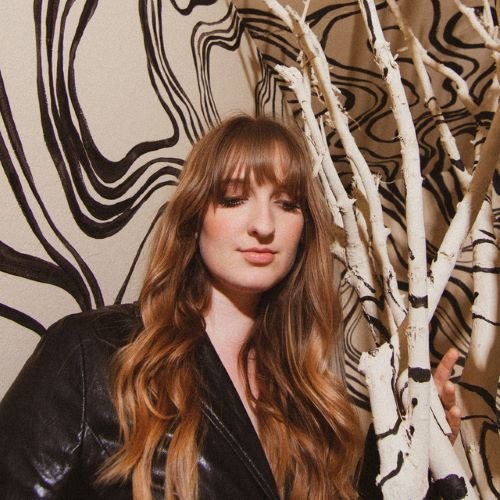
Madison Cunningham a new artist, as she released her debut album, Authenticity, in 2014. I wanted to spotlight her, because she is someone a lot of people might not know about. Her new album, Revealer, came out earlier this month. The Californian artist and guitarist takes West Coast Folk and injects Jazz, Classical, electric guitars and Alt-Rock to create something new and interesting. I think she is an artist that more people should know about. Revealer is a fantastic artist. I want to come to a couple of interviews that revolve around her new album. Before that, here is some information and background to an incredible new work from an amazing artist:

As its title suggests, Revealer—the new album by Madison Cunningham—is full of confessions, intimations, and hard truths the Los Angeles singer-songwriter-guitarist might rather have kept to herself. It’s a warts-and-all self-portrait of a young artist who is full of doubt and uncertainty, yet bursting with exciting ideas about music and life, who has numerous Grammy nominations but still feels like she has far to go, who turns those misgivings into songs that are confident in their idiosyncrasies. It’s also a rumination on music as a vehicle for such revelations, what’s gained and what’s lost when you put words to your innermost feelings. “There’s a sense of conflict about revealing anything about yourself—not just what to reveal, but whether you should reveal anything at all,” she says. “When you have to vouch for yourself and present a true picture of who you are, that can get confusing very quickly. This record is a product of me trying to find myself and my interests again. I felt like somewhere along the way I had lost the big picture of my own life.”

Reassembling that picture resulted in songs full of odd turns of phrase, skewed imagery, and witty asides; Cunningham writes to figure things out, and she doesn’t settle for easy answers or pat platitudes. Instead, more often than not she pulls the rug out from under herself, playing both straight man and comic relief. “I’m not immune to a piece of bad news, I just do what I must to move on,” she sings on the percolating opener “All I’ve Ever Known.” If it sounds like a cry of determination and fortitude, Cunningham immediately undercuts herself: “Give me truth but put me under so I don’t feel a thing.”

These are dark, funny songs for dark, not-so-funny times. “I wanted this work to reflect how I was taking in the world at that moment, and I promised myself I wouldn’t withhold the good or the bad from this self-portrait. I couldn’t have planned for the startling range of emotions a pandemic would bring on — sorrow, depression, anger, anxiety, fear, apathy. Much less writing during one. While I could take some comfort in knowing other people were experiencing those very things, I had yet to understand how many conflicting emotions a person could carry at once.” The confusion she shared with the rest of the world, however, was compounded and complicated when her grandmother died unexpectedly. Suddenly, the pain became unbearably personal. Revealer became a way for her to work through all of those overwhelming emotions. With rich strings eddying around her measured guitar strums, “Life According to Raechel” is a catalog of missed opportunities and lost time, all the visits she never made to her beloved grandmother, all the important details that make up a life. “There’s always something left unsaid,” Cunningham sings. “Were your eyes green? Were they blue? What was it that I forgot to ask you?”

She offers no resolution, no closure, no comfort at all—which is exactly what makes the song so honest about grief. “You’ve got this wound that’s never really going to heal,” she says, “because you’re going to feel the absence of that person for the rest of your life. It’s never going to be resolved. When I realized that, I turned a corner I knew I wouldn’t come back from. When I was able to finally be honest about what it felt like to grieve her, I was able to properly grieve the state of the world and the other things I had lost. Like earning your first gray hair. You could pluck it, but it would just keep growing back.”

The rest of Revealer didn’t come easily, but the songs did come. “Songwriting wasn’t this romantic outlet. It was not fun. It was a constant reflection of how poorly I was doing as a human being. I didn’t want it to be true, because it’s such a humbling thing to admit to needing help.” To capture the rawness of those emotions and the urgency of these new songs, Cunningham recorded as she wrote, finishing a song and then taking it to the studio within a matter of days. She worked once again with Tyler Chester, her longtime producer and collaborator, who manned her debut, 2019’s Who Are You Now and her 2020 covers EP Wednesday, and she also brought in producers Mike Elizondo (Fiona Apple, Regina Spektor, Mastodon) and Tucker Martine (Neko Case, Sufjan Stevens).

Cunningham has already proved herself to be a deft and imaginative guitar player, but Revealer foregrounds her spry staccato playing so that it becomes a musical signature. “I’ve always been interested in different ways of approaching the guitar that challenges the way I think I should play it. I tried to explore that more fully and intentionally on this record. I pulled some inspiration from non-Western styles, like Afropop and South American music. I wanted to make the guitar sound more integral to the song structure and less like, ‘now here comes Mr. Electric Guitar.’”

While experimenting in the studio, Cunningham found ways to make familiar instruments sound unusual and unsettling. On the hard-driving “Your Hate Could Power a Train”—which directs its most withering observations inward rather than outward—she transforms a simple ukulele into something dark and menacing, drawing out the song’s darker undercurrents. “I plugged it in and detuned it an octave with a pedal, so it has this wild, undefinable sound. I used that as the main instrument on that song because I wanted it to feel out of control, frantic, and angry. There were so many moments like that, when I felt liberated to stop and take a deep dive and explore sounds. I used to think there’s no use in messing around. But actually there’s only use in messing around. You have to explore, because the best ideas come from childlike curiosity.”

Eventually she emerged with a set of songs prickly with emotions and revelations, an album full of contradictions that somehow speak to a unified truth. Revealer reckons with her recent past, but also defines her future. Hoping that she would be singing these songs for many years to come, she planted secret messages to her future self: promises and reminders that she believes might continue to reinforce the lessons she learned during the writing process. “No one’s holding you back now!” she exclaims on “In From Japan,” which she recorded with Martine. “That statement wasn’t true when I wrote it or when I sang it, but I chose to keep that line. That’s a very beautiful part of the songwriting process: Sometimes you write things for your future self to grab onto. You write some idea or sentiment that you hope you can eventually find meaning in.”

As Cunningham learned while making this album, the songwriting process is just as open-ended as the grieving process. That idea is at the heart of Revealer, which is more than simply a document of a dark time in her life. It’s a survival guide, a chronicle of growth and change written by the artist who finds joy in the process and beauty in the mistakes. “Doesn’t it feel strange when you say it out loud?” she asks on “Who Are You Now.” “Time to act your age, no one’s gonna show you how”.

The first interview, from Tidal highlighted a remarkable songwriter, singer and guitarist. Madison Cunningham discussed her Christian faith and wrestling with depression. It is clear that Revealer is a very honest album. One that everyone needs to listen to:

Cunningham did hew to one sturdy rock ’n’ roll tradition: She grew up singing in church, in her case an evangelical congregation in her hometown of Costa Mesa, Calif. A prodigy on multiple fronts, she was playing guitar and writing songs at 7, experimenting with alternate guitar tunings at 15 (she rarely plays in standard tuning) and directing her church choir at 17 (which didn’t always sit well with choristers three times her age).

Her new album, Revealer, bristles with spiky, crunchy guitar riffs that stick in your brain. It also showcases a voice that, over time, reveals unexpected textures and shadings and runs the full emotional gamut, from tenderness to exasperation. Revealer’s predecessors, Who Are You Now (2019) and Wednesday (2020), were both Grammy-nominated, for best Americana and folk album, respectively. To the extent that genre means anything, I would reach back to a ’70s rubric attached to the likes of Elvis Costello, Nick Lowe and Todd Rundgren, and call Cunningham’s sound power pop. And for all her individuality, Cunningham is becoming an in-demand accompanist; her tasteful playing and singing have popped up on recent albums by Sara Bareilles, Andrew Bird and the Watkins Family Hour.

PHOTO CREDIT: Claire Marie Vogel 

You worked on Revealer with some high-profile producers: Chester, Mike Elizondo, Tucker Martine. How has Chester’s influence changed your craft?

Tyler pushed me to record live, singing and playing at the same time. On Who Are You Now, we recorded everything live, the whole band, and put in some overdubs later. I’d say 80 percent of that album is live. Maybe 90. That’s how I record. It makes you a better performer, too, obviously.

Does Revealer have a central set of concerns?

It does. To me, the word “revealer” is neither positive nor negative; it means unveiling truth. It was really hard making this record. There was a deadline, but there were also things happening in me that I was having trouble expressing. It needed to reach a fever pitch. These songs are me going, “Alright, fuck it. I’m not going to hide the truth, no matter how ugly.”

A lot of it deals with depression and anxiety. I do struggle with depression. The more I talk to people, I see that it’s not a novel thing, that everyone struggles with it to different degrees. And the more I talk about it, the more liberated from it I feel.

What impact has your Christianity had on your music?

There’s so much that I’m still sorting through. I think the impact is that, singing in front of a congregation, there’s this sense of singing through something higher than yourself. I’ve carried that into my own music. You’re putting yourself and your instrument in the service of something bigger than your ego. For me today, that’s the song, or playing to the moment or to the audience: something that takes you outside of yourself. I really try to stay grounded in that mindset, because I think it’s the breeding ground for beautiful music. You’re the conduit, just letting it pass through you”.

I am going to round off with a great interview from Guitar.com. One of the most obvious and remarkable aspects and assets of Madison Cunningham’s music is his guitar work. An amazing player, this comes through on Revealer:

The buzz surrounding Madison Cunningham is getting increasingly harder to avoid. Hot off the heels from a European tour, a debut appearance on NPR’s critically acclaimed Tiny Desk, and a punchy performance on The Late Show with Steven Colbert, comes her new sophomore album, Revealer – showcasing her rapid and startling development as both musician and songwriter.

We last spoke to Cunningham at the very start of the pandemic, when it felt like the momentum generated from her first Grammy nod in 2020 (for debut album Who Are You Now) might be lost amid a year of cancelled tours and industry uncertainty, but the 25-year-old has shown no signs of slowing down.

Earlier this year she received a second Grammy nod, for her EP Wednesday – a record derived from the weekly covers she uploaded to her YouTube page during lockdown. It’s a record that displays not only her impeccable taste in music, with renditions of Radiohead’s No Surprises and The Beatles’ In My Life, to name a few, but also a steely drive to keep going.

And all the while, in the background, a her second LP was percolating, waiting for the right moment to arrive into the world.

“I worked on this new record for two years and there is this part of me that feels relief in thinking about it being out into the world,” Cunningham explains as she sits in her Michigan hotel room in early August, “but there’s another part of me that tenses up and gets nervous about people hearing new music”.

“It’s such a weird sensation when you only listen to the music you and your immediate team, and then its just available for the world. I think I’m a little bit split, and have nerves around it a little bit, like I always do.

“I’m not going to start to say to people, ‘Hey guys, check out my shit, it’s cool’. I do still and hopefully always will think that there’s a necessary piece to staying humble.”

PHOTO CREDIT: Noah Torralba 

Taking grief by the horns

Cool, that shit undoubtedly is, however – Revealer showcases a confidence that betrays not a hint of the dreaded second album syndrome. In reality though, she admits that the experience of making album number two was “daunting”, while the well-trodden superstitions surrounding a sophomore record resulted in a lot of pressure from the people around her, and especially herself – not an ideal situation to mix with the stress and pressure of a global pandemic and the world shutting down.

“I just felt paralysed for a long time under those circumstances,” she confesses. “There wasn’t anything true or anything I wanted to talk about, and I just felt stuck in the state of the world and our city at the time. The last thing I wanted to do was write a song. I truly felt that way”.

The passing of her grandmother in mid-2020 was what allowed Cunningham to find the clarity she needed to fuel her writing. “It’s not the case that when something hard is happening I’m not usually able to internalise it and process it and write a song about it at the same time, and this time for whatever reason, it made a way for it to happen,” Cunningham reveals. “That’s when I started to get back into the writing cycle again, after her passing. It felt like there was a lot of perspective that I had to write with.

“Grief, I think is the impetus. I think grief is shining this light on everything else that’s living underneath. In this modern age we can all create this perfect distorted image of ourselves, and we have the tools to actually make people fall for that believe that and hitch their wagon to that. I wanted to challenge myself to give the honest portrait of myself, no matter how ugly it was going to be. Writing the record was hard for that reason because it was me grappling with those things about myself in real time, and it wasn’t fun.”

Colouring outside the lines

Cunningham has always been a guitarist first and foremost, with a dextrous and angular style that sets her apart from the singer-songwriter set, but taking on some of the production duties on Revealer pushed her into thinking more outside of just the guitar in a way she found hugely rewarding.

“It was so fun to be able to put on the producer hat and be in that position,” she explains. “It just felt liberating to know that I didn’t have to think about just guitar on every single song and I can actually colour outside of the lines a little bit. It’s good to take risks on your second record as it sets a precedent of what you’re trying to do and where you’re trying to go. I don’t want to just be the guitar player that writes guitar player songs, I want to be the songwriter that involves the instruments that it calls for.”

Extending her guitar capabilities is still at the front of Cunningham’s mind, however. The percussive fingerpicking that made guitarists take notice on her statement single, Pin It Down is still present and correct on Revealer, but there’s new textures and moods, such as the swirling guitar journey undertaken on newest single In From Japan.

“It’s exciting to flip it on its head, and to know It’s not rooted in any tradition, it just sounds cool,” the guitarist gleefully states. “There were a lot of records I was listening to at the time that was very experimental and that was my favourite thing to do and to just use whatever walks across my path and feels great. I will use it and run with it and not think, ‘Am I using my Jazzmaster, is this me?’ I want to expand what is possible for the guitar, I don’t want it to just sound like a guitar all the time”.

A truly amazing artist that is growing in popularity, go and follow Madison Cunningham. I am looking forward to seeing what comes next and where she heads. Having released the sensational Revealer, there is a big future ahead for her. If you do not know about Madison Cunningham, then I would urge you to check out…

THIS incredible artist.

______________

Follow Madison Cunningham

FEATURE: Bad Seeds and Wild Roses: Nick Cave at Sixty-Five: The Ultimate Playlist

FEATURE:


Bad Seeds and Wild Roses

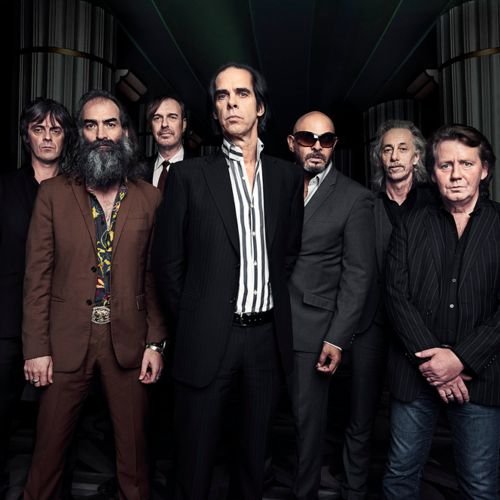
PHOTO CREDIT: Anton Corbijn for GQ 

Nick Cave at Sixty-Five: The Ultimate Playlist

__________

IT is almost impossible…

to narrow down all the brilliant songs that Nick Cave has recorded with The Bad Seeds and other projects. He is one of the most consistently brilliant songwriters there has ever been. As he turns sixty-five on 22nd September, I felt it only right to include some of his best songs in a playlist. Having lost two of his sons and experienced so much tragedy, Cave recently said how his fans have saved him. The Australian-born legend is a real treasure that has been responsible for some of the all-time greatest songs and albums. Before coming to a playlist celebrating his long career, AllMusic provide us with some detailed biographical information:

Since the late '70s, Australian singer and songwriter Nick Cave has proved to be one of the most enduring talents to emerge from the post-punk era. In addition to being a remarkably consistent recording artist, his songs have been covered by everyone from Josh Groban, PJ Harvey, and Johnny Cash to Arctic Monkeys, Metallica, and Chelsea Wolfe, to name a few. However, his often dramatic, romantic, and/or harrowing tomes sound best on his own recordings. Accompanied by his ubiquitous backing band the Bad Seeds, Cave's style is inimitable as it ranges across a spectrum that includes noisy, clattering, but extremely musical rock -- equal parts mutant rockabilly, garage, indie, post-punk, and cabaret -- as well as striking romantic balladry and broken blues, sometimes all on the same recording (1986's Your Funeral, My Trial). Other early albums, in particular 1985's The Firstborn Is Dead, melded John Lee Hooker-esque stomp blues to unhinged, menacing post-punk. Later dates, including 1990's The Good Son, 1996's Murder Ballads, and 2013's Push the Sky Away tempered his ferocity in favor of moody soundscapes for his bent yet resonant storytelling. Still others, including 1997's The Boatman's Call, found him focusing his considerable talent on love songs. And 2019's Ghosteen was a minimalist but emotionally devastating meditation on grief and loss. Cave and his longtime colleague Warren Ellis (musical director the Bad Seeds) are also award-winning film composers with more than a dozen scores to their credit, and collaborated on 2021's sparse and atmospheric studio album Carnage.

After goth pioneers the Birthday Party called it quits in 1983, singer/songwriter Nick Cave assembled the Bad Seeds, a post-punk supergroup featuring former Birthday Party guitarist Mick Harvey on drums, ex-Magazine bassist Barry Adamson, and Einstürzende Neubauten guitarist Blixa Bargeld. With the Bad Seeds, Cave continued to explore his obsessions with religion, death, love, America, and violence with a bizarre, sometimes self-consciously eclectic hybrid of blues, gospel, rock, and arty post-punk, although in a more subdued fashion than his work with the Birthday Party. Cave also allowed his literary aspirations to come to the forefront; the lyrics are narrative prose, heavy on literary allusions and myth-making, and take some inspiration from Leonard Cohen. Cave's gloomy lyrics, dark musical arrangements, and deep baritone voice recall the albums of Scott Walker, which also obsess over death and love with a frightening passion. However, Cave brings a hefty amount of post-punk experimentalism to Walker's epic dark pop.

Cave released his first album with the Bad Seeds, From Her to Eternity, in 1984, which contained a noteworthy cover of Elvis Presley's "In the Ghetto," foreshadowing much of Cave's style and subject matter on the follow-up The Firstborn Is Dead. Kicking Against the Pricks, an all-covers album, broke the band in England with the help of "The Singer," which hit number one on the U.K. independent charts. The album also strengthened Cave's reputation as an original interpreter and a vocal stylist of note. Following 1986's Your Funeral...My Trial, Cave took a two-year hiatus from recording -- partially to appear in Wim Wenders' 1987 film Wings of Desire -- and then returned with Tender Prey, which featured Cramps guitarist Kid Congo Powers and Cave's strongest vocal performance up to that point.

Cave's productivity picked up immensely over the next two years after he kicked a heroin habit. He had two books (1988's King Ink, a collection of lyrics, plays, and prose, and 1989's And the Ass Saw the Angel, a novel) published; appeared in the 1989 Australian film Ghosts...Of the Civil Dead as a prisoner; recorded a soundtrack to the film with Harvey and Bargeld; and released 1990's The Good Son, his most relaxed, quiet album. Cave received his due as one of the leading figures in alternative rock when he was invited to perform on 1994's Lollapalooza tour to promote his Let Love In album. Early in 1996, he released Murder Ballads, a collection of songs about murder. Murder Ballads became Cave's most commercially successful album to date, and, with typical perversity, he followed it with the introspective and personal The Boatman's Call in early 1997. A spoken word release, Secret Life of the Love Song followed in 1999.

Two years later, a rejuvenated Cave teamed up with the Bad Seeds once again for the piano-laden No More Shall We Part. Nocturama was released in 2003, and the double-album Abattoir Blues/The Lyre of Orpheus followed at the end of 2004. After touring in support of the album throughout 2005, Cave embarked on a new project called Grinderman with Bad Seeds members Warren Ellis, Martyn Casey, and Jim Sclavunos. The group's self-titled debut was released in 2007, the same year Cave was inducted into Australia's ARIA Hall of Fame. In 2008, Nick Cave & the Bad Seeds released Dig!!! Lazarus Dig!!! It was followed by a second Grinderman recording -- entitled Grinderman II -- followed by a world tour and the band's breakup, announced by Cave on-stage in December of 2011. Cave penned the screenplay for director John Hillcoat's 2012 bootlegging film Lawless, which also featured a score composed by Cave and Warren Ellis. The duo had previously collaborated on scores for The Proposition, The Road, The Assassination of Jesse James by the Coward Robert Ford, and Days of Grace. In February of 2013, Cave and a streamlined Bad Seeds broke their five-year silence with the release of Push the Sky Away.


Cave and Ellis scored French director David Oelhoffen's 2014 feature Loin des Hommes (Far from Men). The soundtrack was issued a year later when the film achieved a wider release. In mid-2016, it was announced that Cave and the Bad Seeds would release a new album in September 2016, Skeleton Tree. A documentary about Cave and the making of Skeleton Tree, One More Time with Feeling, was scheduled for theatrical release the same week as the album. In May 2017, Mute Records issued Lovely Creatures: The Best of Nick Cave and the Bad Seeds, a three-CD/one-DVD set that collected Cave's career highlights from 1984 to 2014. Cave and the Bad Seeds returned in 2019 with Ghosteen, a double-album that closed out the group's trilogy with Push the Sky Away and Skeleton Tree. In 2020, as the COVID-19 pandemic forced Cave and the Bad Seeds to cancel their scheduled touring, Cave staged a concert in an empty hall, with him performing a career-spanning set accompanied only by his own piano. The performance was filmed and recorded, and the album Idiot Prayer: Nick Cave Alone at Alexandra Palace was released in November 2020. Two weeks later, Decca Records brought out L.I.T.A.N.I.E.S., the premiere recording of an operatic piece by composer Nicholas Lens with lyrics by Cave. In 2021, Cave and Ellis collaborated on the Grammy-nominated studio album Carnage, a spare and brooding set that relied on cinematic atmospheres and Cave's always intense lyrical presence”.

A truly remarkable and strong human, Nick Cave’s The Red Hand Files are essential reading, as is his Stranger Than Kindness autobiography/memoirs. One of the most beloved artists of his generation who has inspired so many others, below is merely a selection of songs that showcase his genius. Prior to his sixty-fifth birthday on 22nd September, here is my salute to…

THE remarkable Nick Cave.

FEATURE: Kate Bush: The Deep Cuts: Kashka from Baghdad

FEATURE:


Kate Bush: The Deep Cuts

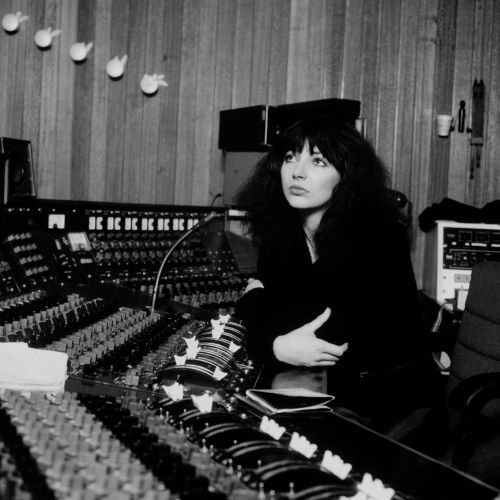
IN THIS PHOTO: Kate Bush in an outtake from the Lionheart album cover shoot/PHOTO CREDIT: Gered Mankowitz

Kashka from Baghdad

__________

THIS is a new (short) run of features…

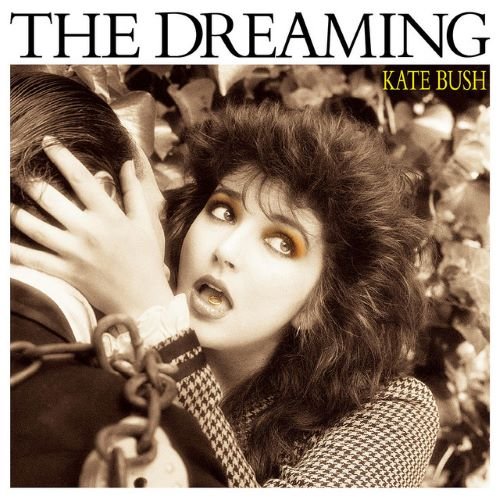
where I explore the deeper cuts from Kate Bush. One might say that most of her songs are deep cuts. That is quite true. With all but her most obvious and successful singles widely known and played by radio stations, I have long-campaigned for deeper investigation and exposure of Bush’s music. That would provided truer representation of an artist whose deep cuts are as compelling and interesting as singles like Running Up That Hill (A Deal with God). Not that there is anything wrong with the big hitters, but I do wonder how many people are conscious of songs like Kashka from Baghdad. It is no surprise that a song like this has not been heard. Whereas Bush’s debut album, The Kick Inside, is well-known and was better reviewed, Lionheart also came out in 1978. It was quite a rushed album in many ways, so Bush could not dedicate too much time to writing new songs – especially as she was promoting The Kick Inside all around the world. I am thanking the Kate Bush Encyclopedia ahead of time, as I am going to be using them when it comes to some references and interview archives around the songs I highlight. Let’s start off with Kate Bush explaining where Kashka from Baghdad came from:
That actually came from a very strange American Detective series that I caught a couple of years ago, and there was a musical theme that they kept putting in. And they had an old house, in this particular thing, and it was just a very moody, pretty awful serious thing. And it just inspired the idea of this old house somewhere in Canada or America with two people in it that no-one knew anything about. And being a sorta small town, everybody wanted to know what everybody what else was up to. And these particular people in this house had a very private thing happening. (Personal Call, BBC Radio 1, 1979)”.

In future editions, I will explore cuts from her albums that, whilst excellent and worthy of widespread love, are either unknown, underrated, should have been singles, or are tracks that are unconventional or not exactly the most obvious radio hits – which, to be fair, could apply to most of Kate Bush’s catalogue! I love Kashka from Baghdad because of its inspiration and unusualness. Not only is the title quite intriguing; the fact that the song is really about two homosexual lovers. It is a bold and wonderfully original song that also has a beautiful composition. Right from the start, we are taken into a song with an unusual scenery, scent and situation: “Kashka from Baghdad/Lives in sin, they say/With another man/But no one knows who/Old friends never call there/Some wonder if life's/Inside at all/If there's life inside at all”. Giving the song an exotic flavour, Paddy Bush (Kate’s brother) supplies strumento da porco, mandocello and panpipes. Andrew Powell (who produced Lionheart) plays joanna strumentum. I guess Wow (which was released as a single) is the song people associate with Lionheart. Some of the remaining nine tracks are known, but I have not heard Kashka from Baghdad played that much. It is a beautiful song that Bush performed live a couple of times.

 IN THIS PHOTO: Kate Bush in the ‘Hollywood’ shot/PHOTO CREDIT: Gered Mankowitz

Another point of these features, aside from illuminating songs that are either not known or rarely talked about, is to showcase and demonstrate the sheer breadth and depth of Kate Bush’s talent and creative imagination. On her second studio album, she included Kashka from Baghdad. This was not one of the new tracks she wrote especially for the album, so this one dates back quite a bit. I think 1976. Amazing to think that, aged eighteen or nineteen, Bush was writing music that nobody else around her was. A singularly spectacular songwriter who created her own universe, it is a shame that there is not more awareness of her deeper cuts. I am only assuming, but I do feel there is a tendency for people to gravitate towards big songs from albums like Hounds of Love. I hope, through this series, to direct people to great songs they may not have known about and, in the process, acquire a deeper knowledge and appreciation of Kate Bush. Lofty aspirations, but we can but hope! Kicking off this deeper cuts feature with a brilliant song from the underrated Lionheart album, Kashka from Baghdad is a remarkable track. Lines through the song demonstrate Bush’s almost poetic approach to songwriting: “They never go for walks/Maybe it's because/The moon's not bright enough/There's light in love, you see”. If you have not heard the beautiful Kashka from Baghdad, then I would recommend that you do. It is a song that is…

WELL worth your time.

FEATURE: Celebrating a Remarkable Debut Single: Madonna’s Everybody at Forty

FEATURE:


Celebrating a Remarkable Debut Single

Madonna’s Everybody at Forty

__________

I have looked at this before…

 IN THIS PHOTO: Madonna in a Lower East Side apartment, New York City, 1982/PHOTO CREDIT: Richard Corman

but, as Madonna’s debut single Everybody, was released on 6th October, 1982, I wanted to mark forty years of a hugely important song. For many, this was their introduction to the Queen of Pop. Taken from Madonna’s eponymous album of 1983, Everybody is a one of the great debut singles. Written by Madonna and produced by Mark Kamins, I love the fact that Madonna had this songwriting talent right from the start of her career! She would develop her lyrical voice and musical visions but, on her debut single, we hear that promise and potential. An infectious and fun song that fitted nicely on her accomplished and underrated debut album, Everybody’s fortieth, I am sure, will be marked by Madonna herself. Whilst the song would have been heard and played before 6th October, the official release as a single as an important event. In 2020, Australian Rolling Stone ranked Everybody as the forty-third best debut singles of all time:

The obvious standout from a four-song demo that the extremely ambitious young singer was shopping around in 1982, “Everybody” caught the ear of a DJ friend, who slipped into his sets at New York’s famed Danceteria. She’d quickly go on to bigger things, and sharper material, but the song patterned the ebullient electro-pop sound of her early classic hits, eventually landing in the Top Five of the Billboard dance charts after Sire Records put it out as her debut single. As Sire founder and President Seymour Stein later recalled, “I would’ve gone down to the bank and withdrawn my own money to sign her if I had too.” J.D.”.

With its quite basic and budget-friendly video, I wonder whether anyone had an inkling of who Madonna would become and how she would grow as an artist! A phenomenal talent who would soon go on to become one of the biggest Pop artists of her generation, her debut should be studied and enjoyed. I am going to round off in a minute. Even though not all critics are fans appreciated it, Everybody is definitely one of Madonna’s most interesting and catchy songs I feel:

Author Rikky Rooksby, in his book The Complete Guide to the Music of Madonna, noted that the song closed the Madonna album on a flat note. He called the music artificial, repetitive and uninspired. Don Shewey from Rolling Stone commented that "At first, it ["Everybody"] doesn't sound like much at all. Then you notice its one distinguishing feature, a girlish hiccup that the singer uses over and over until it's irritating as hell. Finally, you get hooked, and you start looking forward to that silly little catch in her voice." Author J. Randy Taraborrelli in his biography on Madonna commented that the song was a rhythmic call to party.

Author Santiago Fouz-Hernández in his book Madonna's Drowned Worlds, complimented the chorus of the song, saying that "Everybody" and "Music" are the two Madonna singles which define her artistic credo – that music has the power to overcome divisions of race, gender, and sexuality. Matthew Lindsay of The Quietus praised the song, calling it "spectacular" and "hard to resist." Lindsay added "with its breathy spoken word passages and invitation to dance, Madonna's debut single was a template that would be revisited throughout her career." In 2012 Louis Virtel of The Backlot listed "Everybody" at number two on his list of "100 Greatest Madonna Songs," commenting that the song is an example of Madonna's undeniable talents. Virtel goes on to say through the song Madonna shows she is "a commander, the Baryshnikov of pop chutzpah, and a rightful disco empress." In 2006, Slant Magazine ranked as the 18th greatest dance song of all time”.

Some debut singles are forgettable or are the start of a pretty short career. In the case of Everybody, it launched Madonna into people’s lives. She would soon grow as a talent and become a huge artist. Her 1983 debut is one of the best albums of the 1980s. Everybody reached three on the US Dance Club Songs (Billboard) chart. It is a simple and universal song that implores people to come together and dance. Future Madonna singles like Music and Into the Groove would use dance or music metaphors and images as a call for togetherness and passion. The lyrics and pictures Madonna paints definitely takes you inside the song: “Let the music take control/Find a groove and let yourself go/When the room begins to sway/You know what I'm trying to say/Come on take a chance/Get up and start to dance/Let the DJ shake you/Let the music take you”. On 6th October, Madonna fans around the world will mark forty years of an amazing debut. Burning Up was the next single from Madonna. That was released on 9th March, 1983. Everybody, to me, is certainty part of music history. The fact that the single sleeve does not include Madonna caused confusion. Some believed that she was a Black artist (also due to the R&B sound of the song) when the single was released. An artist that would become the face of the ‘80s, there is a sense of mystery when you look at the Everybody sleeve. Listening now, there is no mistaking this is a Madonna song! Even though Madonna would release stronger and more popular singles, the incredible and hugely impressive Everybody is…

A spectacular start.

FEATURE: The Kate Bush Interview Archive: 1994: David Sinclair (Rolling Stone)

FEATURE:

The Kate Bush Interview Archive

IN THIS PHOTO: Kate Bush in 1992/PHOTO CREDIT: Phil Dent

1994: David Sinclair (Rolling Stone)

__________

I dip in and out of this feature…

IN THIS PHOTO: Kate Bush in 1993/PHOTO CREDIT: John Stoddart

where I highlight great interviews Kate Bush has been involved with through her career. The reason I am returning to this is that I found on via Gaffweb and their excellent resource of archived interviews. The one I am featuring is with David Sinclair of Rolling Stone. It was published in February, and it is entitled Dear Diary: The Secret World of Kate Bush. Bush released The Red Shoes in 1993 alongside the short film, The Line, the Cross and the Curve. Neither were particularly well received, but the film especially was subject to some unkind feedback. To be fair, Bush herself dismissed it soon after it was released. I never associate Bush and the year 1994. My favourite year for music, she was still active on the scene, though it would be 2005 when she came back with another studio album. Reading interviews from 1993 and 1994 is fascinating. I will include a 1993 one perhaps when I write an anniversary feature about The Red Shoes too. That was released in November 1993. Although not among Bush’s best albums, it is fantastic and very underrated. I want to drop in this interesting interview from 1994. Of course, like so many interviewers Bush has had to face, she has been misperceived and labelled. Calling her a “control freak” is not really what we associate with Bush. The chat is more of a career-spanning look back, rather than focusing on The Red Shoes. Regardless, it is interesting reading how Bush addresses subjects like touring and her past work:

A control freak who was already overruling her record company's decisions when Madonna was still playing drums in her first group, Bush writes and produces her albums, has her own publishing company and recording studio and is self-managed. Right down to the post-production tasks of editing and sound dubbing her movie, she maintains a strict hands-on policy. The effect can be draining.

"I don't have enough hours in the day," Bush readily concedes. "I don't do everything myself. I have people working with me who are wonderful. But I've managed for so long without a manager, I'm not sure there are a lot of things I'd want a manager for. I suppose I feel that at least the decisions I make are coming from me, and I'm not put into a situation that I wouldn't want to be in."

But another, unspoken reason why Bush subjects herself to interviews so rarely is her singularly English reluctance to dwell publicly on herself or her private affairs. Gracious but guarded, she will cheerfully burble on about her artistic motivations. But try to pin her down on a matter of emotional substance and her expression goes blank, a shutter descends -- clunk! --and that's the end of that.

"Albums are like diaries," Bush says. "You go through phases, technically and emotionally, and they reflect the state that you're in at the time. This album has been a very big transition point for me. Right from the beginning of writing there was a different energy coming out. It probably sounds a bit silly. But I do believe that the people who are in the studio exude an energy into the tape which is very much to do with what they feel. It's a very emotional process, really. And when you get these close working relationships with people, you start to get this weird communication."

Apart from Bush, the person who has contributed most to the album has been bassist and studio engineer Del Palmer, her partner both musically and romantically since the earliest days. But despite his continuing involvement on a professional level, is it true that they are no longer a couple?

"We have an extremely good working relationship," says Bush, "and I'd like to think that the album reflects that. I tend not to talk about my relationships, really. That's quite a personal thing." Clunk!

The Red Shoes also features an unusual array of high-profile guest musicians: Eric Clapton on the smoldering, bluesy "And So Is Love"; Jeff Beck on a stately ballad called "You're the One"; and Prince, who contributes guitar, keyboards, backing vocals and a very Princely arrangement to "Why Should I Love You?"

"If started off as a bit of a laugh, a game that turned into reality," Bush says of those star turns. "The sort of people that I would have dearly loved to have played on the album, I actually got up the nerve to ring them up and ask them if they would like to come and play on the track. I don't feel they've been used for their names. I'd be very unhappy to think that they weren't being shown off properly. But I do feel honored that all of these people were so responsive."

Bush's surprise at finding such luminaries so willing to participate (even the famously negotiable "fee-paid-will-play" Beck) may not be false modesty. She has collaborated with one or two close friends in the past, notably Peter Gabriel on "Games Without Frontiers" and the affecting "Don't Give Up." But Bush hasn't spent much time fraternizing with the rock community since the whirlwind success of her debut single, "Wuthering Heights," which topped the U.K. chart for four weeks in 1978.

In many ways, Kate Bush has had a privileged -- some would say cosseted --ride, having been elevated from an early age above the general rough and tumble of rock & roll. She was still a schoolgirl when Ricky Hopper, a family friend and wanna-be talent scout, financed a demo tape of her songs, which he passed on to David Gilmour, a guitarist with Pink Floyd (who, she says, neither sought nor received any financial reward for his efforts), Bush was signed to EMI Records in Britain in 1974 at the tender age of 16.

Supported financially, but otherwise left to her own devices, she spent the next three years honing her talents and developing material at her own speed. It's a habit that has yielded diminishing commercial returns in later years as gaps between albums have grown steadily longer. "Wuthering Heights" is still her biggest single worldwide. In America, 1985's Hounds of Love is her only album to have even dented the Top 40, although The Red Shoes has become a current college-radio favorite.

Bush has toured only once, a multi-costume-changing, singing and dancing extravaganza that played for 28 dates in Europe in 1979. It was a trailblazing show, so much so that it was Bush's sound engineers who first hit on the idea of the microphone headset, developing a prototype made out of a wire coat hanger, which she used in the early shows.

"I did enjoy it," Bush says of her touring experienced, "but I was really physically exhausted. Eventually, I got nervous about performing live again, because I hadn't done it for so long, and I think I actually started losing a lot of confidence as a performer. I felt that I'd become a writer in a very isolated situation, just working with a small group of people.

"The more I got into presenting things to the world, the further it was taking me away from what I was," Bush says, "which was someone who just used to sit quietly at a piano and sing and play. It became very important to me not to lose sight of that. I didn't want my feet to come off the ground."

Does she worry that she is missing out, that she is, to use her own word, in danger of becoming too isolated?

"Touring is an incredibly isolated situation," Bush argues. "I don't know how people tour for years on end. You find a lot of people who can't stop touring, and it's because they don't know how to come back into life. It's sort of unreal."

For Bush, the trick seems to be shutting out as much of the background blare as possible. She rarely reads the papers or listens to the radio or goes to see shows or buys albums. She claims no knowledge of the notoriously Bushlike singer Tori Amos -- "I heard one track and I thought it was very ... uhh, nice" -- and cites as her own primary influences the English and Irish traditional music that her piano-playing father, her singing mother and her older brothers played and sang in the house when she was growing up”.

After a very busy 1993, Bush was still being interviewed and featured in the press. After that, there would be a fair gap before she was back in it. I am also marking Aerial’s seventeenth anniversary in November, so I will include more about that nearer the time. Keeping this run of features alive, it has been illuminating spotlighting David Sinclair’s interview with Kate for Rolling Stone. Even if The Red Shoes was not he most successful or best-reviewed albums, there was still a load of interest around her. It goes to show that, when it comes to the incredible and beloved Kate Bush, she is someone who could…

NEVER fall out of favour or fashion.

FEATURE: D’You Know What I Mean? The Legendary Liam Gallagher at Fifty: The Ultimate Playlist

FEATURE:


D’You Know What I Mean?

PHOTO CREDIT: Greg Williams 

The Legendary Liam Gallagher at Fifty: The Ultimate Playlist

__________

AS I tend to do…

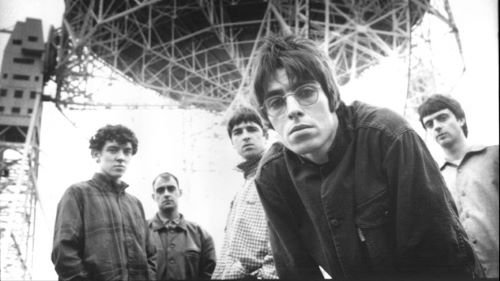
 IN THIS PHOTO: Liam Gallagher with Oasis in 1994/PHOTO CREDIT: Photofest

when it comes to writing features about artists who have big birthdays coming up, I am going to turn to AllMusic. They have great details and biography about the brilliant Liam Gallagher. On 21st September, he marks his fiftieth birthday. The former lead of Oasis (and Beady Eye), he is now enjoying a fruitful solo career. His latest album, C'mon You Know, is up there with his best work! An amazing artist, lead, and songwriter, I wanted to show his talent through a playlist. These are songs he has either song and/or written/co-written. Prior to getting there, here is some detailed biography about the Manchester-born legend:

Liam Gallagher achieved both fame and notoriety as the lead singer of Oasis, the band who defined Brit-pop in the 1990s. By the early 2000s, Gallagher began stepping out of the shadow of his brother Noel (the songwriter who penned most of Oasis' hits), contributing original tunes to the band starting with the 2003 single "Songbird." The siblings split in 2009, leading Liam to take the remaining members of Oasis to form Beady Eye. Once that group ran its course, Gallagher launched a solo career in 2017 with As You Were, a number one hit in the U.K. Gallagher remained at the top of the British charts with 2019's Why Me? Why Not (along with its accompanying 2020 MTV Unplugged set) and 2022's C'Mon You Know, records that found him collaborating with a wide range of musicians including Greg Kurstin, Ariel Rechtshaid, Vampire Weekend's Ezra Koenig and Dave Grohl.

Gallagher was born in Burnage, Manchester, in 1972 to Irish parents Thomas and Peggy Gallagher. Liam, the youngest of three, had two older brothers, Noel and Paul. Having suffered abuse at the hands of their father, both Liam and Noel went on to have troubled teenage years. Although Liam displayed little interest in music early on, in his late teens he began listening to the Beatles, the Who, the Stone Roses, and the Kinks. It was at this time that his lifelong admiration for John Lennon developed (he later named his son Lennon as a tribute to the late Beatle).

Gallagher joined his school friend Paul McGuigan's band the Rain as the lead singer, along with guitarist Paul Arthurs. Meanwhile, Liam's brother Noel had been touring the U.S with Inspiral Carpets as their roadie, and upon his return, he guided Liam's fledgling band toward a more successful future. Featuring Noel as chief guitarist and songwriter, the newly renamed Oasis went on to secure a record deal and make their debut album, Definitely Maybe, in 1994. Upon its release, it became the fastest-selling debut album in Britain to date. As the band's music began to make headlines, so did Liam, as the tabloid press speculated about his drug use and volatile behavior, which included seemingly endless spats with his brother. Just a year later, the band released (What's the Story) Morning Glory?, which eclipsed their debut's staggering popularity. That same year, Oasis went head to head with fellow Brit-poppers Blur when both bands released singles on the same day. Blur emerged victorious with "Country House" while Oasis' "Roll with It" languished in second place. The chart war, along with the tabloid press, fueled the rivalry between the groups, pitching them as opposing forces within the Brit-pop scene -- working-class northerners Oasis versus middle-class southerners Blur.

All the while, Liam continued to dominate the press on his own, which included an assault charge while on tour in Australia. Oasis' fourth record, 2000's Standing on the Shoulder of Giants, would feature Gallagher's songwriting debut. "Little James" was an ode to his then-wife Patsy Kensit's son with Simple Minds frontman Jim Kerr. It was a trend that would continue, as over the band's final three albums -- 2002's Heathen Chemistry, 2005's Don't Believe the Truth, and 2008's Dig Out Your Soul -- Gallagher emerged from his brother's songwriting shadow to contribute more of his own compositions, like "Songbird" and "I'm Outta Time." Along with an increased input to the band's records, Liam continued to make headlines with his extracurricular activities, including a 2002 fight in a Munich bar that left him with several broken teeth. Relations between Liam and Noel continued to be fractious, and in 2008 they reached a nadir that resulted in Noel leaving the band.

The following year, Gallagher announced he had formed a new group with former members of Oasis. He also launched his own clothing brand, Pretty Green, named after a track by the Jam, and featuring the by-then-classic Gallagher getup of parkas and desert boots. By 2010, the brand had its own flagship store on London's celebrated Carnaby Street. In 2011, Beady Eye's debut record, Different Gear, Still Speeding, was released. The band headlined a Japan tsunami relief concert at London's Brixton Academy, and also supported the Stone Roses in 2012. Beady Eye presented their second record, BE, in 2013 and toured in support of the album, but by 2014 Gallagher had announced via Twitter that the group had disbanded. In the interim, he very publicly pursued the ongoing feud with his brother by trashing Noel's High Flying Birds project, making an Oasis reunion ever more unlikely.

Having previously dismissed any suggestion of a solo career via his Twitter account, Gallagher made a U-turn in 2016 and announced he would in fact be releasing a solo record. "Wall of Glass," the first single from the album, arrived in May 2017. Following the terrorist bombing at an Ariana Grande concert in Manchester, the singer organized a benefit concert at Old Trafford Cricket Ground and Gallagher made a surprise appearance, playing Oasis classics "Live Forever" and "Rock 'n' Roll Star" alongside Coldplay's Chris Martin and Jonny Buckland. Gallagher continued an intensive promotional campaign leading up to the October release of his first solo full-length, As You Were. The album debuted at number one in the U.K. and hit the Top 30 on the Billboard 200. In June 2019, Gallagher returned with "Shockwave," the first single off his sophomore follow-up, Why Me? Why Not., which was released that September. Three other singles -- "Once," "One of Us," and "Now That I've Found You" -- were pulled from the album, and during its promotional tour, Gallagher recorded an MTV Unplugged, which wound up getting released in June 2020. That November, he issued "All You're Dreaming Of," a Lennon-inspired, piano-driven ballad as a stand-alone single. It became the biggest-selling vinyl single of the year in the U.K., with all profits going to the charity, Action for Children.

For much of 2021, Gallagher stepped away from public view, only rearing his head on an October duet with Richard Ashcroft: a reworked take on the former Verve frontman's solo track, "C'mon People (We're Making it Now)." However, in February 2022 he returned with "Everything's Electric," co-written with Dave Grohl & Greg Kurstin. The Foo Fighters frontman also drummed on the track, which reached the U.K. Top 20, becoming Gallagher's highest-charting single to date. It was the first material to be issued from his third studio LP, C'mon You Know, which appeared that year alongside Down by the River Thames, a December 2020 live set recorded on a London barge. Featuring contributions by Vampire Weekend's Ezra Koenig, Ariel Rechtshaid, and Andrew Wyatt, C'mon You Know debuted at the top of the British charts upon its release”.

An artist that I first heard as a child when Oasis came through with their seismic debut, Definitely Maybe, in 1994, I have followed his career ever since. A remarkable and electric frontman who has been a part of these historic and timeless songs. There is nobody like Liam Gallagher! Such a compelling, honest, and funny person who has a legion of fans behind him. I know they will all wish him a very happy half-century on the big day on 21st September. One of the true Rock stars and genuine figures, it is clear that they…

DON’T make them like him anymore!

FEATURE: Your Sister I Was Born… A Love Letter to Paddy Bush

FEATURE:


Your Sister I Was Born…

IN THIS PHOTO: Paddy and Kate Bush during a live performance of Army Dreamers (from 1980’s Never for Ever

A Love Letter to Paddy Bush

__________

IN December…

 IN THIS PHOTO: Kate and Paddy Bush alongside Peter Gabriel during Bush’s 1979 Christmas special/PHOTO CREDIT: Getty Images

Kate Bush’s brother, Paddy, turns seventy. She has two brothers. Her other, John, is her eldest brother. Kate Bush is the youngest of the three children. I have written about the bond between Paddy and Kate before. They go way back in terms of their music simpatico. Obviously, as brother and sister, they had this closeness from a very young age. Paddy Bush was five when his little sister came into the world. As I have observed before, Paddy was responsible for fostering his sister’s passions. He would help her hide when she tried to get out of violin lessons. He would also have been the member of the family who she felt closest to in terms of her particular musical tastes, ambitions and curiosity. Of course, her entire family did and gave so much when it came to the loved Kate Bush. From her dad, Robert’s endless encouragement, patience and piano (one gets the sense that her watching her father play the piano gave her the bug), to her mother’s music tastes, eccentricity and legendary hospitality, and John’s poetry and photography, all of this combined into Kate Bush’s unique and stunning brew.

I think it is Paddy who has had the most direct and obvious impact when it comes to her albums. The sheer breadth of his talent is outstanding! It is amazing hearing all of the textures and sounds he put into Kate’s music. Before carrying on, here is some biography and information about the amazing Paddy Bush:

Paddy Bush was born on 9 December 1952. He is an English musician, instrument maker, music critic, producer and artist. He is also the older brother of Kate. His best-known works are his collaborations with her on all of her studio albums up to the 2005 release Aerial. He wrote many contributions to the Kate Bush Club newsletter during the 1980's. Bush often plays standard instruments such as the guitar, mandolin, and harmonica, along with more exotic and unusual instruments, such as the balalaika, sitar, koto, and digeridoo. Bush is the sole European musician who has mastered playing - and making of - the Marovany, a traditional Malagasy instrument related to the Valiha. He undertook a number of extensive trips to Madagascar for filming and radio recording purposes. On one of these, Bush presented the widely screened television documentary 'Like A God When He Plays' which also features popular Malagasy musician Justin Vali. Bush was an original member of the KT Bush Band. In 1993, Bush collaborated with Colin Lloyd-Tucker to form the band Bushtucker”.

Close to Paddy Bush’s seventieth birthday, I will do another feature. I am ending this one with a playlist featuring songs he has appeared on through his sister’s long career (when it comes to the songs he plays on, you may need to check Wikipedia to see exactly which instrument(s) he featured and where his vocals crop up). I think I said before, but I hope the two play together again. He did not appear on her most recent album, 50 Words for Snow (though he does feature through 2011’s Director’s Cut, as these are re-worked songs from The Sensual World (1989) and The Red Shoes (1993) where some backing tracks have been kept from the original tracks). Whether plucking, crooning, or playing some unusual instrument, he has always been there! I am going to save some quotes from Graeme Thomson’s biography, Kate Bush: Under the Ivy. In it, he talks about their relationship and how Paddy played this huge role. Such an admirer of his sister’s talent and passion for music. Last year’s feature was more about Paddy’s instrumental and musical input. There are interviews with Paddy Bush, though there is not a lot of information and stuff online. I would urge you to read this, because he is a fascinating musician and innovator. I feel that, were it not for him, Kate Bush might not have broadened her musical palette in the way she did so early.

IN THIS PHOTO: Paddy Bush very much in the zone in 2017/PHOTO CREDIT: Forum Schlossplatz/Nadine Schneider

Definitely, it was Paddy’s natural affinity for unconventional instruments that influenced his sister. As a huge music lover, I can imagine him coming to his sister with a record and getting her to listen! A rock and constant support through her early albums, 1979’s Tour of Life, right through to now (he also can be heard briefly on Waking the Witch during the 2014 Before the Dawn residency), Paddy is a crucial part of the Kate Bush story. I love listening to his backing vocals and his playing on Kate Bush songs. The rare interviews there are with him – I will drop in the full Nationwide documentary that was made around the time of The Tour of Life, as Paddy can be seen in that – are truly fascinating. In fact, before concluding, this article actually started with a quote from the Nationwide documentary from way back. We get some more snippets and archive interview bits where Paddy discussed his time as an artist and aiding and supporting his sister:

You're kate's brother aren't you.

Paddy: [Smiles] yeah, afraid so.

Is it a sort of a bit of a family business, really?

Paddy: Um, well yes and no. I mean like, kate and I have been making music together for years and years, on different levels, you know. But I mean, there's always been music in our family. My older brother john, he played. And I was in a band with him when I was about thirteen or fourteen. (1979, Kate Bush on Tour)

On different album tracks you've featured not only irish musicians but also an array of other ethnic sounds. Does this betray a lot of your own listening? Are you listening to a lot of pretty far-out stuff, music for example of aboriginal, oriental, or comparable ethnic origin, and deliberately seeking to integrate that into your own music?

No, I don't think I am really. There was a period when I used to listen to certain ethnic music. But I don't think I was ever really an avid listener. Paddy is much more of an avid listener to ethnic stuff, he listens to it nearly all the time.

Paddy: Yes, I take ethnic music very seriously and collect the instruments and the music.

And is it then you who's responsible when you add one of those instruments to one of kate's tracks, is it you who's conceived of what is possible there?

Paddy: Normally, yes, when it comes to unusual or ethnic instruments. Because that is what I am interested in. I come in with the suggestion for such and such an instrument. Kate then listens to it in the context of the track and if she likes it, it stays; If she doesn't I try and find something different.

Paddy, maybe you'd give a quick sketch of your career as a musician prior to your involvement with your sister.

Paddy: Well, I suppose it all started off initially because there's always been so much music in our family. Our mother comes from a very musical family, all her brothers, I.e. Our uncles, played on accordians and fiddles and stuff. So music was something we were always exposed to as young kids and we were always hearing irish dance music, which has been very special to me ever since. But my initial involvement in music came when I used to play for an english morris dance team. I used to play the concertina, and the anglo-chromatic concertina. I did that for a very long time and worked for the english folk dance and song society. The society's image is one of lady dance-teachers sat at pianos with children prancing about. But, basically, at that time, it was the only source of broad-spectrum information concerning folk music.

 So I used to play for their morris dance team, not a very big nor a very popular team really, but that was where my earliest experience of performing came from. We used to work a lot in folk clubs and, at that particular time in the sixties, the folk revival was happening in england and out of it came several thousand lps that are almost all unavailable and forgotten by now, but some of the stuff was just incredible, and that was our source material until I started getting involved in irish dance music. It's crazy! I happened to go to school, here in england, with a guy called kevin burke, who's considered the best fiddler in ireland. I was just walking past this classroom one day, and there was this geezer in there doing this absolutely incredible sligo fiddle playing. I'd never heard anything like it, I mean, it was a delirious kind of music! And then, from all that, my interest in musical instruments just grew and grew to the point where I tried to seek an apprenticeship with a musical instrument maker, actually with a harp maker at that particular time, 'cause I was interested in learning how to play all the things. So I looked for an apprenticeship for nearly two years - that would have been when I was between about eighteen and twenty - but I couldn't find anybody at all interested in taking me on. But then eventually, towards the mid-1970s, I discovered a place in london that was offering a course in musical instrument technology, not just on one instrument, but on everything. I mean literally, piano tuning, violin making, harpsichord building, keyboards, ethnic musicology with jean jenkings, and so on. And it seemed too good an opportunity to miss. So I went and studied at this college, the london college of furniture in shoreditch, for three years and became a musical instrument technologist specializing in mediaeval musical instruments.

And you were still playing around folk clubs during those years?

Paddy: Oh, yes, certainly. Folk music - it's very, very hard to give any sort of adequate description of what folk music can mean to you if you're not yourself completely involved in it. It's more like a way of life. It can't stop. It's like swimming, once you've learned the art you can't go and forget how to do it. You know, somebody goes ``dum-dee-diddle-dee-dum-dee-da'' (paddy breaks into an irish jig) and you're off! It instantly makes sense! If you're born into a tradition of playing some particular kind of music, you can branch out into all kinds of other music. But the tradition is something that's always there and just never, never falls apart. So, in my case, the folk tradition was constantly there. but my major interest in broad-spectrum musical instruments just grew and grew and grew. And being at that college was the perfect place to pursue it...

So then you came out of that into helping kate?

Paddy: Well, I struggled by myself for a time as an artist, an artist of weirdness. I had a couple of exhibitions of some things that I'd made during that time. You see, towards the end, my course in musical instrument making became very curious and strange, I started making instruments with arms and legs and out of very unorthodox materials; And instruments that didn't play and which demonstrated other sorts of principles. I had an exhibition at the whitechapel art gallery and sold a couple of things, there was a great deal of interest, but not much success! Then one day kate said, ``do you want to join the band?'' (1985, Musician)

Even from your lionheart album days there's been a noticeable interest in unusual instruments: Panpipes, mandocello, strumento da porco, sitar, koto, balalaika, harmonica, recorders, and musical saw.

Yes, that's because Paddy Bush, who has played on my albums, has made a lot of instruments since he studied at the London College of Furniture, specializing in mediaeval instruments. Whenever he finds an instrument that doesn't appear to exist that he likes - he'll make one, and learn to play it. Consequently, it ends up on one of my tracks!

Sounds are very important to me, and I think there are a lot of standard instruments that don't actually sound that emotional or that interesting, which is why it's really nice to have the flavours of these other instruments. In so many cases they are not used any more, and that means people don't recognize them, giving an air of mystery to the music. (1982, Electronics Music Maker)”.

I think there will be something posted on Kate Bush News in December to mark Paddy Bush’s seventieth birthday. It is a big occasion. John Carder Bush was born in 1944, but I am not sure of his exact birth month. Luckily, we know when Paddy’s birthday is! I am going to wrap up now. Finishing with a collection of songs Paddy appeared on, you can tell what a difference he has made! From his advice and musical exploration to his playing and singing on Kate Bush albums, through to performing live with her through T.V. appearances and during The Tour of Life, he has been a constant rock, companion and supporter of his sister. I will write again in December before his seventieth birthday. Kate Bush may be the star and one we all know, but her brother Paddy is a big reason why she followed the musical path she did. You can hear, feel and sense their…

VITAL love and connection.

FEATURE: Find the River: R.E.M.’s Automatic for the People at Thirty

FEATURE:


Find the River

R.E.M.’s Automatic for the People at Thirty

__________

THE eighth studio album…

 PHOTO CREDIT: Getty Images

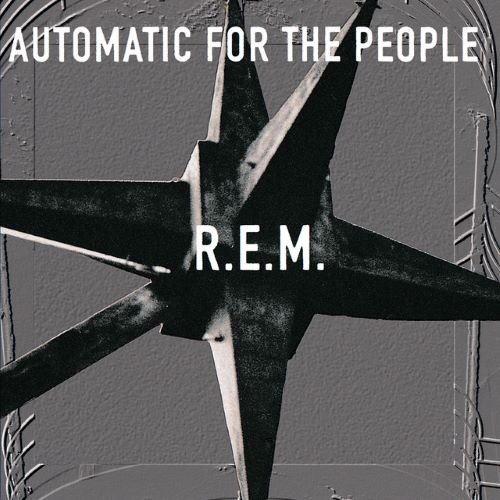
from R.E.M. was released on 5th October, 1992. Earning huge reviews upon its release, the staggering and iconic Automatic for the People has sold more than eighteen million copies worldwide. I wanted to mark the upcoming thirtieth anniversary of one of the greatest albums ever. The band from Athens, Georgia were not exactly shy when it came to putting out phenomenal albums. Fans might have their own ordering but, in general, I think the feeling is that Automatic for the People is at the top of the tree. A year after they released Out of Time, the band went in a different direction. Not as guitar-driven and with the same pace and spirit, Automatic for the People is slower, has string arrangements from John Paul Jones and focuses on themes such as mortality, loss, mourning and nostalgia. I am going to round up this feature with a couple of reviews for the stunning Automatic for the People. Before then, Classic Albums Sundays told the fascinating story of Automatic for the People. I have chosen some highlights from the feature:

Their fifth album, 1987’s Document was a real turning point for the band as it featured their biggest mainstream hit yet, ‘The One I Love’. Like many indie rock heads, my younger self grappled with our own prejudices of the us against them nature – the non-commercial vs commercial music and radio formats. Looking back that was a bit unfair as the song is damn good and the remainder of the album included many deeply socio-political songs like ‘Welcome to the Occupation’ and ‘Exhuming McCarthy’ which made explicit parallels with then president Ronald Reagan.

And then the following year, R.E.M. did the unthinkable – they signed to a major label, Warner Brothers. I can’t even being to explain what a big deal this was indie-die-hards. Were R.E.M. selling out? Again, looking back it was unfair to think that way as now this incredible Georgian quartet had more infrastructure and money to get their music out to a wider audience. And the band remained steadfastly political, choosing the American release date to coincide with the 1988 presidential election, and using their increased profile to criticise Republican candidate George H. W. Bush. So ‘Green’ still had underground appeal with the highest accolade of Nirvana’s Kurt Cobain naming it as one of his top 50 favourite albums.

Their next record didn’t feature political commentary as Michael Stipe explained to Spin Magazine, “You can only go so far writing songs like that and get away with it. I can’t do it all the time, and I don’t want to pigeonhole myself into being a political folk singer in a rock band. Every song on this record is a love song.”  Out of Time became their big breakthrough and topped both the US and UK charts and garnered a worldwide hit with ‘Losing my Religion’. And it won R.E.M. seven Grammy nominations – more than any other artist that year. They eventually won three including Best Alternative Music Album.

The ‘Alternative Music’ labelling was significant. It was around this time when Dinosaur Jr., Sonic Youth and most famously Nirvana left their independent label homes and migrated to the major labels. Simultaneously, commercial radio formats were beginning to catch up with college radio where these bands had germinated. But you couldn’t call it ‘indie’ anymore and hence, the label ‘Alternative Music’ was born.

Again, this development was mirroring my own career. My first proper job after university was as a host/programmer/writer and sound engineer for an interview-based radio show called Music View that was syndicated on over 200 college radio stations throughout the country. Once Nirvana’s ‘Nevermind’ broke to the mainstream, commercial radio stations began adopting the Alternative Music format and I started producing another interview-based radio show called New Music Exclusives that went out on 50 commercial radio stations who had just changed their format.

With regards to R.E.M., it was possible that the pressures of becoming an arena-playing band and the added scrutiny that comes with being in the public eye, as they decided not to tour after releasing Out of Time, their highest selling album to date. Instead, Buck, Miles and Berry headed to the studio without Stipe as they found it worked better when they presented him with more solid instrumental backing tracks before he started adding lyrics.

They enlisted Scott Litt who had been producing their albums since Document, and produced some of the new record in Athens and then in various places throughout the country and the resulting album, Automatic for the People, became a career highpoint, selling 15 million albums, topped US and UK charts and produced three hit singles: ‘Drive’, ‘Man on the Moon’ and ‘Everybody Hurts’.

Initially, the band intended to have a harder rocking sound for the album, but it turned out quite different the overall the record had a much more sombre feel. They did enlisted legendary Led Zeppelin bassist John Paul Jones, but not for his heavy rock skills – instead he was brought in for string arrangements and they are beautiful – majestic and melancholic.

The opening song Drive sets the reflective tone for the album Drive seemed to be aimed at the young telling them to take charge of their own lives.

‘Everybody Hurts’ direct lyrics were aimed for teenagers and perhaps this is why it’s one of their most popular singles. It was mostly written by drummer Bill Berry (although the band always equally split song-writing credit) and the band tried to approach it using a Stax / Otis Redding ‘Pain in My Heart ‘ vibe which you can hear if you listen closely. And you may also hear the 10cc ‘I’m Not In Love’ influence in ‘Star Me Kitten’.

‘Man on the Moon’ was about controversial comedian Andy Kaufman. In an interview with Mat Snow in Q, (accessed via Rocks Back Pages) Buck revealed,  “It’s a funny little song about two people who are dead but are supposed to be alive: Elvis, and Andy Kaufman, a comic who tested the boundaries. One of his routines was to read from The Great Gatsby for 45 minutes while the audience threw things at him. A lot of people think he’s still alive.”

The song does have one stand-out rocker and the only politically driven song on the record, ‘Ignoreland’ of which Buck said,  “We live in America: look around – we’re pretty much able to ignore reality. We have this great ability to pretend there’s nothing wrong, that we’re still a superpower and it doesn’t matter if we kill a couple of hundred thousand people. Oh, and Reagan lowered taxes. In fact, taxes were raised 12 times during his reign. He lowered rich people’s taxes – he and George Bush made me rich, but my mom’s taxes went up. She’s a secretary. Most people are able to ignore all that and vote overwhelmingly for these guys who just out and out lie to you.”

In retrospect, Automatic for the People was a strange album to release in 1992. R.E.M. were no longer the darlings of college radio but arguably the biggest and most important band in America, yet they still didn’t quite fit in. Here was an album that was full of introspective ruminations on mortality, an album that wore its vulnerability on its sleeve, but was also empowering – connecting with people who felt they were on the outside”.

I am excited to see how the world reacts to the thirtieth anniversary of Automatic for the People. I remember the album coming out in 1992 and, as a fan of R.E.M., I was interested to hear it. Singles like The Sidewinder Sleeps Tonight and Everybody Hurts are songs that became part of the soundtrack of my life from that point. Bill Berry, Peter Buck, Mike Mills and Michael Stipe created a masterpiece with Automatic for the People. In 2017, NME spoke with Mike Mills about the legacy of R.E.M.’s eighth studio album:

To celebrate the 25th anniversary of REM‘s seminal ‘Automatic For The People’, we sat down with bassist Mike Mills to talk about the album’s legacy, politics and the chances of the band ever getting back together. Watch our full ‘In Conversation’ interview above.

Last week saw the release of the 25th anniversary edition of the art-rock veterans’ classic 1992 record – featuring the likes of ‘Man On The Moon’, ‘Drive’ ‘Everybody Hurts’, ‘The Sidewinder Sleeps Tonight’ and ‘Nightswimming’. Speaking to NME about what made the record stand out and stand the test of time, Mills said that it was created ‘in their own little space’ while ‘not trying to sell a tonne of records’. The band were uncertain as to whether anyone would even listen – let alone like it.

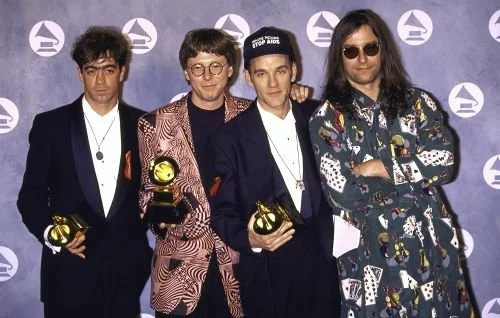
IN THIS PHOTO: R.E.M. at the 1992 GRAMMYs 

“I think it had a consistency,” Mills told NME. “When we made records, we always saw them as a journey. You’re inviting the listener to go on a 40-45 minute trip with you. If a mood is sustained for that trip, unless you’re trying to jerk from one place to the next which is fine, but if you’re trying to achieve a flow, then this record has that – in a way that I don’t think that any of our records other than maybe ‘Murmur’ or ‘Collapse Into Now’ had.

“As someone who loves the format of an album, who loves going somewhere with an artist or musician for a length of time, then this record succeeds in that way much more so than any of our own records or anyone else’s records. You have to go to Miles Davis or Joni Mitchell – they’re just two out of a million I’m sure, but the fact that this one maintains some kind of continuity for the entire trip of the journey is really important to us.”

Speaking of the political overtones of the record, particularly on ‘Ignoreland’, Mills said that he never foresaw such themes ringing even more true today some 25 years later. However, he said that this sadly appears to be the case in the wake of the election of President Donald Trump and the Brexit referendum”.

I will round off with a couple of reviews. Pitchfork reviewed Automatic for the People in 2017 and looked at its twenty-fifth anniversary reissue. They make some really interesting observations about the direction the band took in 1992 and how Automatic for the People fitted with what else was happening around them in the music scene:

With the release of Automatic for the People, R.E.M. firmly entered their elder-statesmen phase, just as the next wave of alternative rock was cresting. R.E.M.’s career up to that point had represented the platonic ideal of a left-of-center rock band infiltrating the mainstream—a step-by-step process that saw the band turn bolder and its audience get bigger with each album, culminating in the multi-platinum, MTV-saturating success of Out of Time. Ironically, Automatic for the People arrived in a post-Nevermind world where all that careful groundwork was being razed by overzealous major labels desperately seeking the next Nirvana. At the same time, the amped-up, aggressive nature of grunge threatened to make R.E.M.’s increasingly refined, mandolin-plucked pop seem, well, out of time.

The knee-jerk response would’ve been to let Peter Buck pounce on the distortion pedal and reassert the band’s post-punk bona fides (a back-to-basics strategy they hinted at during the Out of Time press cycle), but R.E.M. wisely opted to step aside and let the flannel-clad kids have their moment. Rather than attempt to compete in a world where teen angst was all the rage, R.E.M. set about crafting a rueful response to the onset of middle age—and remind us that life goes on even after your slam-dancing days are over. (If Kurt Cobain had survived into middle age, he probably would’ve wound up making a record that sounded like this.) The video for the album’s haunting acoustic opener, “Drive,” gamely adopts Seattle-scene aesthetics—a never-ending mosh pit rendered in flickering black-and-white—like a Charles Peterson photograph come to life. But when Stipe crowd-surfs atop a sea of hands belonging to fans several years his junior, he’s not trying to ride a trend, but starkly illustrate just far from the alt-rock zeitgeist R.E.M. had drifted in the Year of Grunge. When he sings, “Hey kids, where are you?/Nobody tells you what to do,” it’s with a combination of awe and envy.

“Drive” doesn’t just establish Automatic for the People’s patient pace and nocturnal atmosphere (spun off from Out of Time’s hazy highlight “Country Feedback”); it sets its emotional tenor as well. This is an album fixated on the past, but its nostalgia is stripped of all sentimentality. “Drive” quotes both Bill Haley’s “Rock Around the Clock” and David Essex’s glam-era hit “Rock On,” but Stipe’s stern, menacing delivery seems to mock their calls for carefree kicks in a time of national turmoil. Automatic for the People came out a month before Bill Clinton won his first presidency, but it bears the weight and scars of what came before it: namely, 12 years of Republican neglect concerning AIDS, poverty, and the environment.

Automatic for the People contains only one explicitly political song—the Crazy Horse-cranked “Ignoreland,” the most seething, spiteful track R.E.M. ever produced. But the whole album feels as though it’s in recovery from, or preparing for, some great trauma: “Sweetness Follows” renders its funereal scene of family dysfunction with church-organ sounds clashing against dissonant drones; the gentle sea-shanty sway of “Try Not to Breathe” frames an ailing elderly person’s desperate pleas for a quick death. Even the album’s karaoke-ready sing-alongs cast dark shadows: The traffic-stopping soul ballad “Everybody Hurts” is either the most depressing song ever about trying to stay optimistic or the most sanguine song about coping with depression. And the luminous country-rock reverie “Man on the Moon” centers on a subtly subversive chorus line—“If you believe they put a man on the moon”—that effectively presents conspiracy theory as fact and truth as a matter of opinion, an unwittingly ominous harbinger of the info wars that would eventually be waged in U.S. politics.

“Man on the Moon” has since become the official theme song for the Andy Kaufman enigma-cultivation industry, but the late comedian is just one participant in a parade of icons that includes Mott the Hoople and 1960s wrestling star “Classy” Freddie Blassie; elsewhere on the record, we hear an elegy for 1950s screen heartthrob Montgomery Clift cross-wired with allusions to “Let’s Make a Deal” host Monty Hall (“Monty Got a Raw Deal”), and Dr. Seuss turns up in a spin on “The Lion Sleeps Tonight” (i.e., “The Sidewinder Sleeps Tonight,” a tune that threatens to join “Stand” and “Shiny Happy People” in the R.E.M. silly-song sweepstakes, but manages to stay on just the right side of the charming/cloying divide). They’re the sort of references that, back in 1992, seemed as adorably antiquated as a “Dragon’s Lair” scene does on “Stranger Things” today—but rather than simply deploy old pop-cultural artifacts as a means to activate our pleasure centers, Stipe uses them as decayed, dust-covered totems to gauge the distance between an idealized idea of America and the turbulent reality that colored the album’s creation. That critical sensibility bleeds right into the cover art. The phrase “automatic for the people” is the satisfaction-guaranteed slogan posted at a popular diner in the band’s native Athens; it also speaks to the pressures of a band that had just sold 10 million albums and needed to serve up more hits. And that striking cover photo is actually a close-up of a star ornament found on an old motel in Miami, but, rendered in brutalist grey, it appears as fierce and fearsome as a medieval cudgel. The image bluntly reinforces the notion that while Automatic for the People isn’t a loud album, it’s certainly a heavy one.

Automatic for the People arrived a mere 18 months after Out of Time—a swift turnaround time for a sequel to a blockbuster album that still seemed ubiquitous well into 1992. But then the early 1990s were to R.E.M. what the late ‘60s were to the Beatles—a period where the band took a break from touring to immerse itself in the possibilities of the studio, breaking down traditional instrumental roles in the process. The star-lit lullaby “Nightswimming”—essentially a demo embellished by John Paul Jones’ wondrous string arrangements—features Stipe accompanied only by bassist Mike Mills on piano; “Everybody Hurts,” a song largely without traditional percussion, was crafted by drummer Bill Berry. Even as Stipe’s celebrity skyrocketed in the wake of “Losing My Religion” getting played nonstop on MTV, R.E.M. remained an intensely democratic unit, a quality that’s emphasized in the outtakes on this 25th-anniversary reissue. Many of them reveal that Stipe’s melodies and lyrics were often the final pieces of the puzzle to be set into place, as he hems and hums his way through otherwise structurally sound versions of “Find the River” (once known as “10K Minimal”) and “Ignoreland” (née “Howler Monkey”). They also reveal that the sessions for R.E.M.’s darkest album did yield moments of playful release, like the self-explanatory “Mike Pop’s Song” (which could’ve been the sunny flipside to Mills’ Out of Time standout “Texarkana”) and “Devil Rides Backwards” (a would-be companion to “Man on the Moon,” had Stipe ever finished writing its lyrics), not to mention an early draft of “Sweetness Follows” bearing the Gulf War-aftershocked title, “Cello Scud”.

I will end with a 1992 review of Automatic for the People from Rolling Stone. They note how, in spite of the fact the album deals with darker themes and big subjects, the music and compositions adds this beauty, spirit and range that means it is a classic all of these years later:

R.E.M. has never made music more gorgeous than “Nightswimming and “Find the River,” the ballads that close Automatic for the People and sum up its twilit, soulful intensity. A swirl of images natural and technological – midnight car rides and undertow, old photographs and headlong tides – the songs grapple, through a unifying metaphor of “the recklessness of water,” with the interior world of memory, loss and yearning. This is the members of R.E.M. delving deeper than ever; grown sadder and wiser, the Athens subversives reveal a darker vision that shimmers with new, complex beauty.

Despite its difficult concerns, most of Automatic is musically irresistible. Still present, if at a slower tempo, is the tunefulness that without compromising the band’s highly personal message, made these Georgia misfits platinum sellers. Since “The One I Love,” its Top Forty hit from 1987, R.E.M. has conquered by means of artful videos, surer hooks and fatter production and by expanding thematically to embrace the doomsday politics of Document, the eco-utopianism of Green and the sweet rush of Out of Time. Brilliantly, the new album both questions and clinches that outreaching progress; having won the mainstream’s ear, R.E.M. murmurs in voices of experience – from the heart, one on one.

In a minor key, “Drive” opens Automatic with Michael Stipe singing: “Hey kids/Where are you?/Nobody tells you what to do,” a chorus that wryly echoes David Essex’s glam-rock anthem “Rock On.” In its imagining of youth apocalypse, “Drive” upsets the pat assumption that the members of R.E.M. might still see themselves as generational spokesmen. The group then further trashes anyone’s expectation of a nice pop record with “Try Not to Breathe.” Alluding presumably to “suicide doctor” Jack Kevorkian (“I will try not to breathe/This decision is mine/I have lived a full life/These are the eyes I want you to remember”), the song ushers in a series of meditations on mortality that makes Automatic as haunted at times as Lou Reed‘s Magic and Loss. Relief comes in the form of whimsical instrumentation (such low-tech keyboards as piano, clavinet, accordion); political satire (“Ignoreland”) that suggests a revved-up Buffalo Springfield; and, on the catchy “Sidewinder Sleeps Tonight,” some of Stipe’s niftier faux nursery rhymes (“A can of beans/Of black-eyed peas/Some Nescafe and ice/A candy bar/A falling star/Or a reading from Dr. Seuss”). Yet, without a single “Shiny Happy People” among its twelve songs, Automatic is assuredly an album edged in black.

Famous ghosts are tenderly remembered. The calypsolike “Man on the Moon” fantasizes holy-fool comedian Andy Kaufman in hip heaven (“Andy, are you goofing on Elvis?”), and a paean to Montgomery Clift, “Monty Got a Raw Deal,” exhorts Hollywood’s wrecked Adonis to “just let go.” Hard grief inspires “Sweetness Follows” (“Readying to bury your father and your mother”), yet compassion wins out: The sorrows that make us “lost in our little lives,” the song says, end in an inscrutable sweetness.

A homespun ditty, “New Orleans Instrumental No. 1,” and the woozy jazz of “Star Me Kitten” (featuring the weirdest love lyrics imaginable: “I’m your possession/So fuck me, kitten”) lighten Automatic somewhat, but the darker songs boast the stronger playing. Guitarist Peter Buck dazzles, not only with the finger picking that launched a thousand college bands but with feedback embellishments and sitarlike touches. As always, the rhythm section of bassist Mike Mills and drummer Bill Berry kicks; on about half the numbers, Led Zeppelin bassist John Paul Jones crafts string arrangements that recall, in their Moorish sweep, his orchestral work for the Rolling Stones’ Their Satanic Majesties Request.

If “Nightswimming” and “Find the River” are R.E.M. at its most evocative, “Everybody Hurts,” the album’s third masterpiece, finds the band gaining a startling emotional directness. Spare triplets on electric piano carry a melody as sturdy as a Roy Orbison lament, and Stipe’s voice rises to a keening power. “When you’re sure you’ve had too much of this life, well, hang on,” he entreats, asserting that in the face of the tough truths Automatic for the People explores, hope is, more than ever, essential”.

On 5th October, we look back thirty years to the release of the legendary Automatic for the People. In 1994, R.E.M. followed the album with Monster. Featuring loud, distorted guitar tones and simpler arrangements, it was a shift from the more lush and softer Automatic for the People. Michael Stipe's lyrics at times concerned the nature of celebrity, and some are sung from the viewpoint of a character. Whether you are a fan of R.E.M. or not, you will be familiar with songs from Automatic for the People. In some way, they are part of your life. Drive, Nightswimming, Man on the Moon. All classics from a band who broke up in 2011. Age has not dulled or dented the beauty and arresting wonder of Automatic for the People. In my opinion it is…

A perfect album.

FEATURE: Revisiting... Teyana Taylor - The Album

FEATURE:


Revisiting...

Teyana Taylor - The Album

__________

I am recommending an album…

PHOTO CREDIT: Daniel Sannwald

from an artist who is bowing out of music. The amazing Teyana Taylor recently played the O2 Brixton Academy as part of a farewell tour. At thirty-one, she is retiring from music. Ground down and exhausted by the industry, it is sad to say goodbye to a true R&B great. Following the release of her second studio album, K.T.S.E. (2018), Taylor announced that she would be updating the album and re-releasing it in June or July. That never came to pass. In October 2019, Taylor revealed that she was working on a new album titled The Album. Not feeling happy with the previous album, Taylor revealed that she took more creative control on the album. This is a release where she has not compromised her artistic vision. It is such a shame that it is her final album. It seemed that, back then, Taylor was keen to release even more music and enter this new phase of her career. Rather than dwell on the retirement of a fantastic artist who we are going to miss, let’s focus on 2020’s The Album. I am going to bring in a couple of interviews before getting into the reviews. NPR spoke with Teyana Taylor about The Album and her regaining artistic control:

Now, Taylor's out with her third record, simply called The Album. It features guest appearances from a slew of big names like Lauryn Hill, Missy Elliott and Erykah Badu and she chose an important day for the album's release: Juneteenth. It's a day for observing the end of slavery in Texas, the last state to free its slaves.

Celebrating Juneteenth: A Reading Of The Emancipation Proclamation

"I personally felt like it was only right," Taylor says, "because it's a celebration for my culture and my people, to show that no matter what we go through, we always pull through."

But we started our conversation where the album starts, with the birth of her first child. Taylor didn't have time to get to the hospital, and she uses the recording of the 911 call in which her husband, NBA star Iman Shumpert, is learning how to help deliver their baby.

"Everything happened so fast," Taylor recalls. "I pushed one time, she came out. It felt like a movie."

Taylor says she wanted to have that 911 call on her last album, K.T.S.E., which was produced by Kanye West. She's been public about being really unhappy with her lack of creative control on that project. She says this new album is quite different.

"When people hear the album, they will understand what my frustration was with K.T.S.E.," she says. "Trying to put a lot of emotions through seven songs is tough. So now to have a full album, 23 songs, you get to literally express yourself and every single part of you”.

The Album was released on 20th June, 2020. That week, i-D spoke with an artist who was becoming a superstar. Something that she had always wanted to be or worked towards. It reinforces the sense of loss we are going to feeling knowing there will not be another Teyana Taylor album:

It’s been nearly four years since Teyana Taylor gyrated her perfectly toned body across our screens in the tantalising music video for Kanye West’s Fade. More than 100 million YouTube views later, the Harlem born 29-year-old still has our full attention as she continues to push her creativity into every possible avenue.

Over the past few months alone, Taylor has done everything from drop her sensual Kehlani-assisted single Morning and direct a colourful music video for Wale’s Love… (Her Fault) to sign with IMG models and front the Jordan brand’s first ever-women’s capsule collection. Not to mention, she’s done it all while raising her four-year-old daughter Junie alongside her NBA-star husband, Iman Shumpert. When she declared “I do everything” in her 2018 song Rose In Harlem, she was speaking the truth.

Teyana wears cape Maison Margiela. Top Maison Alaïa. Bikini briefs Lido. All jewellery worn throughout model’s own.

PHOTO CREDIT: Mario Sorrenti

Inspired by the creative energy of Harlem, where she was born and raised, Teyana began performing at a young age. Dancing in the streets at neighbourhood block parties and singing along to the soulful R&B hits of Teena Marie and Tony! Toni! Toné! “My mom would play all these records, the greatest hits of the 90s, 80s and 70s,” she explains over the phone from Miami, where she spends most of her time these days. “And while the kids would play, I would literally have my ear against the wall just singing all the songs.”

It was during those years growing up in Harlem that she “got the swag, my aura, my vibes,” she says proudly. Teyana’s talent landed her a record deal with Pharrell’s Star Trak Entertainment at 15 years old. But even though she spent her teen years doing everything from teaching Beyoncé how to do the Chicken Noodle Soup dance to starring in her own episode of MTV’s My Super Sweet Sixteen, it feels like Taylor is just now becoming the superstar she was born to be.

“I had to grow up really, really fast,” Teyana says. “I sacrificed my social life as far as high school, prom, graduation and different things like that go. I learned so much, but there were definitely ups and downs.”

It wasn’t until 2014 that the world really got a true taste of her talent. After a decade of grinding, she finally released her debut album VII. The R&B record, released under Kanye West’s G.O.O.D Music imprint, showcased the Harlem-native’s powerful vocals, captured her soulful 90s-inspired sound, and climbed to number one on Billboard’s hip-hop and R&B chart.

But it was her long-awaited 2018 album K.T.S.E. (Keep That Same Energy) that really affirmed Teyana’s status as one of the most eclectic and compelling singer-songwriters in music today. In just 22 minutes, Taylor jumps from crooning slow jams to upbeat dance tunes. She manages to reflect on her role as both a mother and wife, without ever compromising her sexuality.

“When I first came out, I was a virgin. All I knew was bikes and skateboards. Boys were yucky,” she explained. “I went from a girl to a woman, to a mom, to a wife. I literally just recorded that journey. I always wanted to be an artist that really felt what I was singing, which is the reason why I work off of emotion. If it’s not something I’m going through at the time, then it has to be something that I went through before.”

PHOTO CREDIT: Mario Sorrenti 

In the years leading up to K.T.S.E.’s release, the multi hyphenate also found success outside of music, designing a collaboration with adidas, walking the runway at New York Fashion Week for Philipp Plein, and launching her all-female run production company The Aunties, which has been behind videos for everyone from Megan Thee Stallion to Schoolboy Q.

“Sometimes I love creating for others more than I love creating for myself,” Teyana – who goes by the nickname “Spike Tee” in honour of the Oscar-award-winning director Spike Lee – says. “With directing, I get to actually sit behind the lens and really help our artists bring a vision to life.”

Despite what some would view as setbacks, Taylor won’t let anything come between her and her creative vision. This year she’s set to appear in the upcoming Coming 2 America reboot and release her third record, The Album, following on from her incredible Lauryn Hill featuring new single, We Got Love. “I realised that I started to see the success that I worked for when I started to trust myself before I trusted other people,” she said. She shares this sentiment on her track Never Would Have Made It, where she sings, “Made a lot of decisions based on everyone but me. But now, I’m strong enough to let it go. I’m wise enough to take control…” Her words make it clear that even though she’s worked at this nearly half her life and reached some incredible heights, she’s barely even started”.

 PHOTO CREDIT: Mario Sorrenti

A remarkable album where you can hear this R&B great coming to life and producing her very best work, I cannot recommend The Album highly enough.. A twenty-three-track opus that went to the top ten in the U.S. and features collaborators such as Missy Elliott and Ms. Lauryn Hill, The Album is one of 2020’s best – and a powerful and accomplished send-off from the incredible Teyana Taylor. This is what AllMusic said in their review:

K.T.S.E. yielded a gold-certified, Top 20 R&B/hip-hop hit in the form of "Gonna Love Me." Despite those significant firsts for Teyana Taylor, the singer and songwriter had misgivings about the 2018 LP, the last in a sequence of five like-sized G.O.O.D. Music titles inevitably branded as an installment in the Kanye West-guided "Wyoming sessions." Taylor hits the reset button with The Album. Its title effectively brushes aside both K.T.S.E. and her fine 2014 debut, VII. Almost 80 minutes in duration, this set even dwarfs the aggregate of the two preceding releases as if to leave no doubt that it's her definitive and unrestricted work. Taylor furthers the notion by starting The Album with recordings of husband Iman Shumpert's marriage proposal and his 911 call in response to the unexpected natural birth of their daughter Junie. Soon enough, Junie -- a few years older -- introduces the misty "Come Back to Me," and then the tranquil "Wake Up Love" floats past with Taylor's husband the provider of a devotional guest verse.

After she revamps Erykah Badu's elusive-temptation tale "Next Lifetime" with a featured appearance from the originator, Taylor closes out the romantic segment with the Guy-interpolating bliss-out "Let's Build," duetting with Quavo in sincere and mellifluous style. Next is a grip of bedroom slow jams. None eclipse "Request" off VII, but the Kehlani collaboration "Morning" is a seductive delight, while the snaking (and accurately titled) "Boomin" is a treat for lovers of late-'90s R&B with explicit references to Blaque and much of the Swing Mob (plus an appearance from the latter's Missy Elliott). Confident diversions into breezy Afro-pop and underwater dancehall lead to a half-hour stretch covering various romantic woes. Taylor confronts, pleads, departs, regrets, and more, delivering a couple of her most riveting performances on "Concrete," all toxicity and torment, and "Still," a strong contender for the surrogate Jazmine Sullivan ballad of 2020. The Album is rounded out by an up-tempo trifecta that with each verse and chorus, all the way through Lauryn Hill's closing words of wisdom, increases in power”.

I am going to finish off with a review from CLASH. Although not all the reviews for The Album were hugely positive, most of them were. I think this is an album that everyone needs to hear. It is a remarkable swansong from a modern-day icon:

This month of June belongs to one woman and woman only, and that’s Teyana Meshay Jacqueli Taylor.

Undeniably flying the flag for Harlem, Teyana has kept us on our toes this month leading up to the release of her third studio album 'THE ALBUM'. From announcing her collaboration with M.A.C Cosmetics for the launch of a 90s inspired make-up collection to the unveiling of her second pregnancy with husband Iman Shumpert and daughter Junie, G.O.O.D Music’s fiercest alumni has been patiently waiting to release her anticipated album.

Descending on Juneteenth (June 19th), a day of celebration and commemoration at the end of slavery for Black people in the United States, the album comes at an essential time across the globe with the #BlackLivesMatter movement playing a significant part in today’s climate for justice.

Following the release of her 2018 second studio album 'K.T.S.E.', 'THE ALBUM' is a vibrant and stalwart symbolism of Teyana’s unapologetic, bold blackness. From the hard-hitting ode to Grace Jones on the cover to the troupe of Black artists she recruited for the album, Teyana has delivered her most sonically solid album to date.

From Erykah Badu to Missy Elliott to Lauryn Hill, 'THE ALBUM' accouches '23' lyrically soothing and engaging tracks that fulfil all your fantasies and appreciation for Black womanhood. The intro delineates the mood with recorded audio clips from Teyana’s life, including her marriage proposal and a 911 emergency phone call of a frantic Iman during the home birth of Junie. 'Come Back To Me' featuring Rick Ross and Junie and 'Wake Up Love' featuring husband Iman serves a personal love story from Teyana to her nearest and dearest.

There’s a profusion of standout tracks that invite you into Teyana’s world of emotions, sex and vulnerability starting with the track four 'Lowkey' – a partnership with the First Lady of Neo-Soul Erykah Badu. The soulful silky track samples lyrics and elements from Badu’s 1997 single’ Next Lifetime’. Teyana’s tale of love from a horny perspective takes you on the first journey of passion as she sings “I want it but this ain’t the right time the damage is so fine so take me tonight… and I’m horny, a lot on the night, please don’t play with my mind ooh I gotta decline. What if I see you next lifetime? I’m fucking wid you; I promise you’ll be mine”. The ear-pleasing delivery of 'Lowkey' carries a continuous theme of sampling throughout the album.

From Mase’s 'What You Want' to Lauryn Hill’s 'Doo-Wop (That Thing)' to Blaque’s '808', you can hear the evolution in her creativity as an artist. Teyana’s trajectory in R&B thus far has been a reliable performance. Tracks like '1-800-One-Nite', 'Mornin’ and '69' carry her effortless vocals well allowing her more libidinous side to take centre stage while being accompanied by crisp drums and light guitars.

Other tracks like 'Killa', which features Afrobeats artist Davido sees Teyana dig deep into her roots, giving us an African beat with muted modern hip hop elements. Much like 'K.T.S.E.', 'THIS ALBUM' features substantial producing from Kanye West as well as MIKE DEAN, Seven Aurelius, Hitmaka, Cardiak, Boogz, Bizness Boi, Johan Lenox, E*Vax, NinetyFour, NOVA WAV, Baruch “Mixx” Nembhard, Tune Da Rula, and Miguel Jimenez.

'THE ALBUM' is full of themes and statements. Tracks like 'Wrong Bitch' are clear cut reminders that her womanhood, blackness and common sense is not a political playground. “You got the wrong, wrong bitch; you got the wrong bitch yeah” she lightly sings as she reminds you “baby you could be replaced, that’s where you’re making a mistake if you don’t think I won’t skate on you”.

The motivational spoken word outro provided by Ms Lauryn Hill at the end of 'We Got Love' will leave with goosebumps as she preaches self-love, the significance of family, her definition of success and how happiness is the most important thing to her. In Bare Wit Me, she does that actually by showing her more vulnerable side. “I never let my guard down, but you steady trying to wife it oh, don’t you see that I got baggage, my hearts way hard to manage”.

My only critique for the album is its length. Twenty-three songs seemed a bit excessive to me. However, it’s clear from the first listen that this album serves as Teyana’s most personal steady project yet. Teyana has been marching to the beat of her drum since her introduction to the world back in 2006, and she’s kept her foot on our necks ever since. This album is Black Woman Magic at its finest, and it’s become even more apparent since 'K.T.S.E.' that she has left the tutu and the cotton candy from 'My Super Sweet Sixteen' in her past.

This a grown woman ready to continue her reign over R&B. We have no choice but to stan.

9/10”.

Such a remarkable artist whose final release, The Album, is a real treasure. If you have not heard it before, then go and listen to this amazing album. I can appreciate why Teyana Taylor has had to retire. She leaves behind three incredible albums. As a successful actor, we will definitely be seeing more of her on T.V. and film. Sadly, The Album is Taylor’s goodbye to music. And what a goodbye it is! For those who have not heard her 2020 release, and go and check it out. The Album is something that…

EVERYONE should hear.

FEATURE: Kate Bush and the Sexism She Faced: Were People Intimidated By Her Talent and Originality?

FEATURE:


Kate Bush and the Sexism She Faced:

ILLUSTRATION CREDIT: Priscila Vergara

Were People Intimidated By Her Talent and Originality?

__________

I think some of the attitude…

 IN THIS PHOTO: Björk/PHOTO CREDIT: Vidar Logi

persisted will into her later albums but, certainly, Kate Bush faced sexism and dismissal early in her career. This is something that (sadly) a lot of women face in music. In 1978, when she released Wuthering Heights and her debut album, The Kick Inside, there was a lot of awe and wonder and fascination. Stupendously strange, new, original, and astonishing, this teenager was releasing music that was incomparable to anything else! Whereas a male artist would have gained a lot of kudos from critics at a time when genres like Punk offered something angrier and simpler, producing this mesmeric, otherworldly, and unusual music would have been seen as a great balance and remedy to a lot of the more aggressive and less nuanced music around at the time. As it was, many slated and parodied Bush because she was a young woman. As I have discussed in previous features, Bush had a sense of humour when it came to people lampooning her. She was very strong-willed and able to go on the defensive concerning interviewers and the media. When she released albums like Aerial (2005) – when she was in her forties – and 50 Words for Snow (2011) – when she was in her fifties -, there were many who pigeonholed her or felt she was past her sell-by date. I read quite a bit (from mostly male journalists) who were very reductive and insulting towards Bush and her relevance now. Maybe harking back to glory days such as in 1985, when she released Hounds of Love, this idea of a genius artist being past it or lacking any importance was insulting to her legacy and talent!

I mention this subject, because Björk has mentioned Kate Bush in her new podcast series, Sonic Symbolism. Here is an artist who has always been a big fan of hers. Björk has named The Dreaming (1982) as one of her favourite albums. You can definitely trace a line between the artists. In a future feature run, I may compare Bush with artists who have followed her and been inspired by her eclectic catalogue. As Far Out Magazine recently reported, Björk discussed Kate Bush and the reason why many were sexist towards her in an interview with The Guardian:

If you wish to point to two women who have done more for the progression of music in the last 40 years, you probably can’t do any better than Kate Bush and Björk. Although both have unique qualities that make them distinct, both are critically acclaimed, commercially successful boundary pushers who have led the charge in progressive pop music for decades.

On one side is Bush, the classically trained former dance student turned intellectual pop star. Bush is the first woman to ever score a solo number one hit in the UK with a song she wrote and sang herself. This year, Bush nabbed another historic first: the longest gap between number ones, with ‘Wuthering Heights’ hitting the top of the charts in 1978 and ‘Running Up That Hill’ doing the same in 2022, a solid 44 years between number one singles.

On the other side is Björk, the incredibly futuristic genre-blender who has taken on everything from traditional Icelandic rhythms to grime beats to orchestral arrangements, sometimes within the same song.

In an interview with The Guardian, Björk opened up about how Bush’s reception was inherently misogynistic. “It was kind of sexist. People thought that Kate Bush was insane. People were embarrassed about admitting that they actually liked her and I think that is something, actually, one good thing about feminism nowadays is that she is not a threat at all”.

Björk doubled down on her fandom of Bush in an interview around the time of her album Debut. She called Bush “one of my heroes” and referred to her as “one of the biggest pioneering producers. Everybody just says, ‘Oh, she’s just a singer. She’s just a chick’. But they forget all the other work she’s done, that woman. She’s very, very, very gorgeous”.

I have been thinking about Kate Bush and her earliest days in music. The fact that she has survived and managed to build this incredible reputation and amount of respect is testament to her strength, incredible abilities and unmatched talent and evolution. I wonder whether part of the reason why Bush did progress in terms of her sound so quickly was because of a certain backlash and mockery from the media. Whilst not all entirely sexist, you get this feeling that here was this eccentric young woman making something weird to provoke people. I think Björk is half-right when she theorised how a lot of the sexism might have been making an actual respect and admiration for her work. Like male journalists and others would rather attack and belittle because they’d be embarrassed admitting they liked Kate Bush! I think one big reason why Bush faced a lot of sexism in the earliest years and had to face it for a very long time after, is because her talent and sound was so unlike anything else. Rather than conceding they didn’t understand it or they couldn’t adapt, there was this rather sexist and belittling attitude. I have been reminded of an article from The Guardian from 2014 (when she announced and performed her Before the Dawn residency dates) as to why Kate Bush matters:

Going to see Kate Bush live isn’t remotely like that. In a world built on fake exits and stage-managed yearning, she left everybody genuinely wanting more. She has been a hermit, as far as performing is concerned, for 35 years; she’s a one-off, a prodigy, a creative heatball, an experiment of the species – dazzlingly successful but unreplicable. Her lyrical romanticism is questing and ambivalent, rather than needy and predictable. Her voice is wild, her melodies only make sense when you submit to them. Her physical world is perhaps the greatest of her idiosyncrasies, abandon and urgency at its poles, creating the magnetism that one would once have called “sexy”, but for the fact that the word now means “identikit gyrating in hotpants”. She is what music sounds like when it is the authentic creation of its author, and there are no strings being pulled by marketing guys or Svengalis.

Taking her as a creative ideal, I realise I’ve been having the wrong conversation about female pop stars. I spend a lot of time wondering about female creativity as it’s represented in music. What does it actually mean when Miley Cyrus leaps around faux-masturbating all the time? Could that ever be called a genuine expression of her sexuality? When Lady Gaga makes a video with R Kelly that looks like a slickly produced advertisement for date-rape drugs, is that collusion with the patriarchy or a subversion of it? Can Beyoncé, through sheer force of will, emancipate herself from the craven re-domestication agenda of her lyric: “If you liked it then you should have put a ring on it”?

The pattern with mainstream music is that a young woman is fashioned into an image of sexual desire concocted by some sleazy 50-year-old guy (or, more likely, a focus group full of them). She is then rounded on by feminists from the left and social conservatives from the right for being naked or (this is worse) naked and too thin.

She says, “What are you talking about? I’m doing what I want. Isn’t that what feminism is supposed to be all about?” And just as you’re about to explain – to Geri Halliwell, or whomever are her successors – that what she’s doing has nothing to do with her own imagination, and she’s just a cipher for someone else’s, it dawns on you how ridiculous it is to tell a woman what you think her self-expression should look like, on the basis that she shouldn’t be letting other people tell her what her self-expression should look like. If you say that Britney Spears was just the unwitting victim of the quasi-pederasty of her early oeuvre, then you’re infantilising her as much as the first guy who dressed her in school uniform and used her virginity as a calling card. Absurd! It’s all so circular and self-defeating”.

A remarkable artist who has gained fresh popularity and attention in 2022, I think back to 1978 and the years after when many were so sexist and disrespectful of Bush. It ranged from sort of blokey mocking to casual sexism in reviews and features. She had to endure that for a long time (and still does), but the fact that she has influenced legions of artists and is being name-checked by the likes of Björk proves how influential and important she is. Even though Bush had to endure sexism and misogyny for a long time, I feel attitudes started to change when she became more successful and released albums such as Hounds of Love. It was about time that such an innovator and wonderful artist/producer got..

THE respect she deserves.

FEATURE: Saluting The Hitmaker: Nile Rodgers at Seventy: Songs That Demonstrate His Writing and Production Brilliance

FEATURE:


Saluting The Hitmaker

PHOTO CREDIT: NRK P3

Nile Rodgers at Seventy: Songs That Demonstrate His Writing and Production Brilliance

__________

ON 19th September…

 PHOTO CREDIT: David Yeo/The Guardian

the legendary Nile Rodgers turns seventy. The co-founder of CHIC, Rodgers has written, produced, and performed on records that have sold more than 500 million albums and 75 million singles worldwide. In addition, Rodgers is a Rock & Roll Hall of Fame inductee, a three-time Grammy Award–winner, and the chairman of the Songwriters Hall of Fame. One of the most influential and successful musicians, producers and songwriters ever, I wanted to tip to his upcoming birthday with a playlist. Containing songs that he has produced or written /co-written, it shows what an immense and inventive talent Rodgers is! Before I get there, AllMusic have some biography about one of the all-time giants of music:

Nile Rodgers' contribution to popular music has been extremely significant, so much more than the signature "chucking" style he developed as a brilliant rhythm guitarist. The musician penned some of the most progressive and popular songs of the disco era with Chic, who topped the Billboard Hot 100 with "Le Freak" and the hip-hop catalyst "Good Times," and released platinum albums such as C'est Chic (1978) and Risqué (1979). He has since produced dozens of hits, over several decades, for a wide variety of other artists, including Diana Ross' "Upside Down," David Bowie's "Let's Dance," Madonna's "Like a Virgin," and Daft Punk's "Get Lucky," and has remained an inspiration for aspiring musicians born long after disco's supposed death. Rodgers continued to lead Chic 40 years after the band's debut, even after he and partner Bernard Edwards became Songwriters Hall of Fame members. Revitalized in the late 2010s as the main attraction at festivals as diverse as Essence and Glastonbury, Chic returned to the studio for It's About Time (2018).

Born September 19, 1952 in New York, New York, Rodgers clearly possessed exceptional musical talent early on, and by the age of 19, he was playing guitar as part of the house band for the world-famous Apollo Theatre (alongside the likes of Aretha Franklin and Funkadelic). He was probably the lone member of the Sesame Street house band with a prior Black Panther Party affiliation. Rodgers soon grew tired of his status as a backup musician, however, and sought to put together a band of his own. He found a like-minded musician in another New York City resident, bassist Bernard Edwards, during the early '70s. For the next few years, Rodgers and Edwards collaborated while playing in such obscure bands as the jazz fusion-based Big Apple Band, and the new wave-based Allah & the Knife Wielding Punks. But the duo's love remained in dance music, and their next musical project, Chic, put them on the map. With drummer Tony Thompson and singers Norma Jean Wright and Alfa Anderson rounding out the lineup, Chic quickly grabbed a record deal with Atlantic.

Almost immediately, Chic became the kings and queens of the dance/disco domain, scoring such hit albums as 1977's Chic, 1978's C'est Chic, and 1979's Risqué, the latter two of which went platinum. The band's uptempo, infectious hit singles became dancefloor standards, including "Dance Dance Dance (Yowsah Yowsah Yowsah)," and especially a pair of chart-toppers, "Le Freak" and "Good Times." With the dawn of the '80s came the disco backlash. Chic's albums sold less and less, resulting in the group's split in 1983, but Rodgers' music career was just beginning. Toward the end of his tenure in Chic, he and Edwards had begun producing and writing for other artists, including hits for Sister Sledge ("We Are Family") and Diana Ross ("I'm Coming Out"). So with Chic no longer occupying most of his time, Rodgers was free to focus solely on working with others. What followed was a string of the post-disco era's biggest albums and singles. First up was Let's Dance, one of David Bowie's all-time best-selling albums. From there, offers from others flooded in, as Rodgers scored further hits -- INXS' "Original Sin," Duran Duran's "The Reflex" and "Notorious," Madonna's "Like a Virgin," Mick Jagger's "She's the Boss," Jeff Beck's "Flash," the B-52's' "Cosmic Thing," and the Vaughan Brothers' "Family Style," among many others.

Additionally, Rodgers found time during this hectic period to issue a pair of solo albums, 1983's Adventures in the Land of the Good Groove and 1985's B-Movie Matinee, and scored films such as Coming to America, Earth Girls Are Easy, and Beverly Hills Cop III. Rodgers and Edwards put together a reunited version of Chic in the early '90s (with an all-new supporting cast), which toured and even issued an album, 1992's Chic-Ism. Rodgers was saluted with his own tribute show in Japan on April 18, 1996 that found him joined on-stage by his old pal Edwards, as well as Sister Sledge, Steve Winwood, Simon LeBon, and Slash. After the celebration, Edwards tragically passed away from pneumonia. Rodgers continued to be active, founding the We Are Family Foundation, and produced Duran Duran's Astronaut. Rodgers also operated a national music distribution company, Sumthing Distribution, which specialized in video game soundtracks.

Rodgers was as active as ever during the 2010s. At the beginning of the decade, he and Rhino France compiled the excellent four-disc box set The Chic Organization Box Set, Vol. 1: Savoir Faire. Despite being diagnosed with prostate cancer the same year, Rodgers kept moving as much as he could. He published the ceaselessly entertaining memoir Le Freak: An Upside Down Story of Family, Disco, and Destiny, continued touring, and worked with Daft Punk on the Grammy-winning Random Access Memories, including "Get Lucky," a number one pop hit in dozens of territories. Shortly after the song's release, he announced that his doctor had given him a secondary "all clear" regarding cancer. Rodgers subsequently worked with Disclosure, Duran Duran, and Laura Mvula, and continued to perform with Chic, including a headlining spot at the 2014 Essence Festival. In 2016, while a new Chic album was in the works, Rodgers and Edwards were inducted into the Songwriters Hall of Fame, and Chic headlined the Pyramid Stage of the 2017 Glastonbury Festival. It's About Time, the ninth Chic album, arrived the following year”.

On 19th September, the world will salute the brilliant Nile Rodgers on his seventieth birthday. Such a phenomenal successful and important pioneer and wonder, here are songs that Nile Rodgers has produced or written/co-written. Someone who has made such an enormous impact on the music world, let’s hope that the hitmaking machine continues his fine work…

FOR many more years.

FEATURE: Coming Back Down From That Hill: Looking Ahead to 2023: How Best to Honour Kate Bush?

FEATURE:


Coming Back Down From That Hill

IN THIS PHOTO: Kate Bush received the Editors Award at the Evening Standard Theatre Awards in the Palladium, London, on 30th November, 2014/PHOTO CREDIT: Alan Davidson/Rex/Shutterstock

Looking Ahead to 2023: How Best to Honour Kate Bush?

__________

I have just finished…

 PHOTO CREDIT: Clive Arrowsmith

a slew of features around three Kate Bush albums. Never for Ever (8th), The Dreaming (13th) and Hounds of Love (16th) all have September anniversaries. The next anniversaries will come around November, as quite a few of her albums have anniversaries (including Lionheart and The Red Shoes). This year is not yet done, and you never know what could happen regarding Kate Bush. As I have said before, Bush is likely to put out a Christmas message on her official website. She did in 2020 and, after an unexpectedly busy and successful year, she will want to reflect and thank her fans. Part of the reason why she will be grateful is the chart-busting success of Hounds of Love’s Running Up That Hill (A Deal with God). I have written these words countless times over the past couple of months, but it has defined her 2022. It has won her a new generation of fans. Rather than making her relevant again, it has reminded the world what a tremendous artist she is – and what an important song Running Up That Hill (A Deal with God) is too. Bush gave an interview to Woman’s Hour (her first real interview since 2016), and there have been a few great updates on her official website. Nobody could have predicted what would have unfolded this year at the end of 2021! Just knowing that Kate Bush was okay and not being too impacted by the coronavirus pandemic was okay by us! Instead, much like the sun coming out Hounds of Love’s Cloudbusting, something good has definitely happened!

Where it has accelerated hopes and questions as to whether we will get an eleventh studio album – her latest, 2011’s 50 Words for Snow, is extraordinary -, I think it should diffuse them and put pause to that speculation and intensity. The reason I say that is because, if you look back over the past five or so years, there has been a lot of activity! We got the album of her 2014 residency, Before the Dawn, in November 2016 (another anniversary I will be marking soon!). She remastered her studio albums in 2018, and we got her first lyrics book, How to Be Invisible, in 2018.  If you take that all into account, it is not a bad total since 2016! Bush was heavily involved regarding the placement and use of Running Up That Hill (A Deal with God) on Stranger Things this year with the Duffer brothers (producers Matt and Ross Duffer). I don’t think we will get too many shocks in terms of album announcements or any new projects from Bush herself. It is getting late into the year, so she will want to wind it down and look to 2023. In terms of outside stuff and features, MOJO recently highlighted Hounds of Love. Tom Doyle has a Kate Bush book coming next month. As mentioned, there have been more than enough cover versions of Running Up That Hill (A Deal with God)enough already music world! -, and I suspect that there will be lots of social media buzz about Kate Bush’s music for different reasons…or for no reason at all!

I wanted to re-examine Kate Bush’s 2023, as I have sort of asked if we will get an album. That would be magnificent though, the more I think about, the less likely it becomes. I think that is okay. In fact, I suggest that 2023 should be a year where a number of things should happen. Given the new success of Running Up the Hill (A Deal with God) and the records she has broken in the process, we should give the rest of her catalogue fresh respect and time. I am pleased Hounds of Love has been receiving so much praise, and The Dreaming is going to get a lot of new insight on its fortieth anniversary now. 2023 is a chance to augment and dissect her other studio albums. Bush is sixty-five in July, so fans and new converts can build up to that by throwing themselves fully into the music. Whilst there have been too many recent covers of Running Up That Hill (A Deal with God) – and none get close to the original -, it would be good to hear artists new and established look beyond the more obvious and currently popular. I do worry, in spite of a wave of new Kate Bush fans coming onboard, there is too much focus on Hounds of Love – not such a bad thing, though it is at the expense of other albums. The fact songs such as Oh to Be in Love (from 1978’s The Kick Inside) have been boosted on Spotify show there is curiosity around! Who knows what next year holds when it comes to Kate Bush and those who love her music. She could provide some more updates and news via her official website. I am sure we will get at least one new book; there are likely to be magazine spreads.

As I look ahead to October, when I will be starting features about all the albums marking anniversaries in November, it makes me realise how important this work is and how much it means to me. That is the case with so many other people too! I do feel there is still a need to get albums that are underrated and under-explored more fully into people’s consciousness. Maybe it is incumbent on people like me to do podcasts and spread the word that way. Going through albums and periods of her career in a sort of forensic detail that would provide this push and access point for others. I have asked before whether Kate Bush will be made a Dame. Will she get a music award. A legend or icon honour? Maybe something around Running Up That Hill (A Deal with God). Given her eventful and historic 2022, something needs to come off of the back of it. I am not sure whether Running Up That Hill (A Deal with God) has been put in the Library of Congress or some hallowed place reserved for the most important and significant songs ever. Even though there is no new music, she has given us so much and enriched and bettered so many people’s years just by being her and letting a song like Running Up That Hill (A Deal with God) feature in such a powerful and memorable way. More than that, 2023 is a year when Bush turns sixty-five. It got me thinking about ways to properly recognise her influence. In other features, I have mooted the idea of a tribute album (artists covering her songs), documentaries, podcasts and books. That would all be brilliant ways to honour her.

I guess, as I have done in so many features this year, I am tiptoeing around the question of another studio album. I don’t think next year should be one where we look at Kate Bush with those puppy dog eyes and expect her to put music out! As we know, she can not be rushed or predicted. Maybe it is a question for 2024 but, in a year (2023, in February) when her debut album, The Kick Inside, turns forty-five, we should be celebrating her full body of music and work, and what she has given the world. There is so much to discover, and I wonder whether new fans and even some long-time ones are aware of just what is out there when you go exploring! It would be good if there was a programme or documentary next year that celebrates Kate Bush. The BBC did dedicate a night to her on her birthday this year, including Kate Bush at the BBC. Listening back to the Woman’s Hour interview from earlier this year, one thing that touches me is how happy Kate Bush sounds! She is enjoying gardening and she seems quite relaxed. Genuinely thrilled at the attention Running Up That Hill (A Deal with God) and her music has got this year, it shows that she does not take things like this lightly. Someone who loves her fans and is glad to have them on board. At the moment, with the climate crisis, the cost of living terror, and everything going on in the world, there is not a whole lot to look forward to! It is quite grim! Music is definitely helpful and soothing against the impossibility of the modern world. It is one reason why Kate Bush has been taken to heart and bosom by so many people. I think that somehow, in some way, this should be honoured next year. Her music is more assuredly going to make…

A potentially bad year quite a bit better.

FEATURE: The Oxford Comma: Seen the Light: Supergrass' Life on Other Planets at Twenty

FEATURE:


The Oxford Comma: Seen the Light

Supergrass' Life on Other Planets at Twenty

__________

I wonder whether…

 IN THIS PHOTO: Supergrass in 2019

Supergrass’ fourth studio album, Life on Other Planets, is seen as one of their best by fans. In terms of reviews, it seemed to fare better than 1999’s Supergrass. The Oxford band’s first two albums, I Should Coco and In it for the Money were released in 1995 and 1997 respectively. The first album that includes Rob Coombes as an official member of the band, there was a slight sense of revival and return on Life on Other Planets. I think many critics expected Supergrass’ eponymous album to be similar to their first two albums. More mature and slightly less urgent, there are a few filler tracks on the album. Though not exactly the same as their first two albums, Life on Other Planets does contain a lot of the rawness, fun and anthems that some felt went missing in 1999. On 30th September, Supergrass’ fourth studio album turns twenty. Reaching number nine in the U.K. and spawning one of their most popular songs in the form of Grace, I wanted to look ahead to the twentieth anniversary of an album that I really love. It is surprising that not a lot has been written about the 2002 album. So many revere I Should Coco and In it for the Money, but Life on Other Planets didn’t get huge praise from everyone. Perhaps there was a feeling that they needed to fully return to their roots. But having grown as a band, that was not a wise move. They could not recreate the past.

Despite the fact there are a couple of tracks that are a bit half-formed or do not really hit home (Prophet 15 and Run ends the album on a slightly damp note), there is more than enough to love! From the wonderful opener of Za to the thrill of Rush Hour Soul and the catchiness of Grace, Life on Other Planets was Supergrass showing they were one of the best bands of their generation – even though some doubted them when they put out their eponymous album in 1999. I want to round off with a couple of reviews for the album. Pitchfork had this to say about the magnificent Life on Other Planets:

Supergrass have always offered a pretty fresh take on the grand traditions of UK rock (big guitars, big melodies, sly humor, caricatured self-confidence), from their early days as three-chord ruffians, to their brilliant sophomore effort In It for the Money, to the Stonesy swagger of their self-titled third album. Their fourth, Life on Other Planets, is a 40-minute tour of 70s British rock, but more to the point, it's a summary of Supergrass' own career, merging all of the band's many mutations into one decisive sound, for better or worse. On the one hand, there's an abundance of energy and some great songwriting; on the other, there's less focus here than on either of their previous two releases.

This is clear from the outset, when the disc opens with a brief BBC-ish synth intro (could have fallen out of the back pocket of Rick Wakeman's flared, embroidered hip huggers, for all I know), before launching into the flashy, piano-pinned strut of "Za", a traditional Supergrass rocker stuffed with big, crashing Mick Ronson riffage, but backed by strange, wordless vocals. From there, we smash headfirst into "Rush Hour Soul", an unpredicted blast of musclebound guitar and thunderfingered bass with heavy eyeliner and a sequined jean jacket, before being faced with "Seen the Light", which features a questionable Elvis impression on the hapless line, "I'm a rock 'n' roll singer in a rock 'n' roll band," compensated for with a great melody.

So far, we've got a handful of strong showings from the shag-headed Londoners, and no actual cohesion. Then again, stability can only count for so much when tracks like the full-throttle murder melodrama of "Brecon Beacons" and the Moog-slathered "Grace", with a melody sticker than a sun-melted Baby Ruth, come bursting from the fray. Ahh, if only the whole album were that consistent. The thing is, their 100%-of-everything approach has its drawbacks, and nowhere is this more clearly evident than on "Evening of the Day", which-- though it nails a perfect balance between Small Faces-style Brit-rock and straight-up B.B. King blues-- isn't all that engaging, content to devolve into a kind of aimless music hall thing that sounds like it was recorded several beers after tipsy”.

I do think that Life on Other Planets should be better known and played. It is one of Supergrass’ best albums, and it should be revisited as it is twenty very soon. I do not know if the band are releasing an anniversary edition or not. In a more positive review, AllMusic wrote the following:

Supergrass makes music so effervescent and so effortlessly joyous that it's easy to take them and their skills for granted. Surely that was the case around the release of their third album, 1999's eponymous effort, which in its labored fun and weary ballads illustrated just how much hard work it was to craft records as brilliant as I Should Coco and In It for the Money. It suggested the group might have burned too bright and flamed out, but, happily, 2002's Life on Other Planets is a smashing return to form, an album giddy with the sheer pleasure of making music. What makes this all the more impressive is that this is the record that Supergrass attempted to be -- a perfect balance of the sensibility and humor of I Should Coco with the musicality and casual virtuosity of In It for the Money. Where that album felt labored and a little weary, Life on Other Planets is teeming with life. The tempos are sprightly, the hooks tumble out of the speakers, the band mixes up styles and eras, and they never, ever forget the jokes (Gaz's fleeting Elvis impression on "Seen the Light," an allusion to Spinal Tap's "All the Way Home," or the chorus of "Evening of the Day").

 Sure, it's possible to spot the influence all the way through the album -- most clearly T. Rex on "Seen the Light" and "Brecon Beacons," where Gaz's warble is uncannily like Marc Bolan's -- but it never sounds exactly like their inspirations -- it all sounds like Supergrass. And Supergrass hasn't offered such pure, unabashed pop pleasure since their debut; there hasn't been an album that's this much fun in a long time. Since they've been away for a while and have never broken in the States, Supergrass has been curiously overlooked, even though they're better than 99 percent of the power pop and punk-pop bands out there (plus, their everything-old-is-new-again aesthetic can be heard in such albums as the Strokes' Is This It?). But, as this glorious record proves, there are few bands around these days who are as flat-out enjoyable as this trio. The world is a better place for having Supergrass in it”.

On 30th September, Life on Other Planets turns twenty. It seems hard to believe! I was at university when the album came out. I had been following Supergrass since their 1995 debut, and I was not disappointed by what I heard in 2002. I play the album now. It still sounds fresh to me. I do not love every song on it, but Life on Other Planets has more than enough to keep you hooked and coming back. Now that Supergrass are reformed and touring together, fans get the chance to see Gaz Coombes, Mick Quinn, Rob Coombes and Danny Goffey perform tracks from the album in the flesh. That must be exciting! For those critics who were a bit mixed towards Life on Other Planets in 2002, I hope now that they have finally…

SEEN the light.

FEATURE: Let's Exchange the Experience: Why It Is Time to Put Together a Modern-Day Kate Bush Zine or Fan Club to Mark Her 2022 Success

FEATURE:


Let's Exchange the Experience

Why It Is Time to Put Together a Modern-Day Kate Bush Zine or Fan Club to Mark Her 2022 Success

__________

THAT top line…

IN THIS PHOTO: Kate Bush in her hotel room in Tokyo in June 1978/PHOTO CREDIT: Koh Hasebe/Shinko Music/Getty Images

is a lyric from Kate Bush’s Running Up That Hill (A Deal with God). One of her best-known songs, it has become more known and quoted because the track was featured in Netflix’s Stranger Things. Not that Bush was in the wilderness at all, but there has definitely been this refocusing and (long-overdue) new attention her way. I am not sure what the result of all this is. Of course, Running Up That Hill (A Deal with God) topped charts and has still been hanging around. It is a song that has this immediate power and has created ripples and echoes. I think that the song and the album it is from, Hounds of Love, will get new respect ahead of the anniversary (of Hounds of Love) on 16th September. I have talked about how there should be a Kate Bush convention or something to mark her popularity. I can’t remember when I put a feature out, but I think I have mooted the possibility that there could be a new fan club. Tantalisingly, the creators of the Kate Bush fanzine HomeGround suggested we may see it resurrected. It celebrated forty years in 2022 and, having collated fan letters, drawings, Bush news and everything else for decades, it came to a sad end around the time of the release of 50 Words for Snow in 2011 – the following year I think it closed its doors. Maybe it was a case of everything going digital. There is a great Kate Bush official website and a news website that keeps us abreast of all the latest happenings. As you can appreciate, the site has been a lot busier this year than most years!            

Social media is a great way to share Kate Bush news, views, and conversation. It is such a wide-ranging and scattershot thing, you are always going to miss out on a great fan, piece of joy or something that you would get in a fanzine or fan club. Maybe, especially now with the cost of living and everything going on, printing a fanzine, or having anything old-skool might be too expensive or difficult. Considering the number of fans who would join, sending out fanzines and goodies for fans could cost a pretty penny! It makes me think there should be a digital hub. One that would act as both a fan club and a fanzine in one. You could register and there would be regular videos and podcasts. Fans getting together to discuss her work. The Kate Bush News website has its own podcast, but there could be conventions, events and a whole library of archives and features. 2022 is a year when this is something that could really work. Not only is it a house and haven for existing Kate Bush fans to share their thoughts, get together and continue the spirit of HomeGround. A new generation are discovering her music. They can express their love through TikTok or Twitter. But bringing that to a website or Kate Bush museum would be awesome. Maybe a separate page or tab with daily TikTok videos or stuff would work.

I would like to see a whole menu where new stuff is uploaded. It could combine news, Bush videos, fan memories, podcasts, articles, and a whole host more. A digital fanzine, nothing really like this exists right now. Conventions do happen, and you get some smaller events that gather fans together. Maybe having a bigger one in London on Bush’s sixty-fifth birthday (next 30th July) would be a nice idea. With so many different smaller websites and conventions, joining them together means we all have a single place where we could communicate and commune. I have been thinking about album discussions, a portal where fans could upload their own articles; a tab where all Kate Bush-related books can be. 2022 has taken her music to new heights and an even wider audience. Her fanbase unites those who were following her before her debut album in 1978, through to new followers who have come on board very recently. It is sad there is not a fanzine or club like we had years ago. Not one that is well-known and regular. A physical resurrection may not be best and possible now, but we could do something online. This year has not been a good one (and it seems to get worse by the week!), and one of the bright spots has been this resurgence and fresh success for Kate Bush. Proving she is an icon and can touch multiple generations and lives, a reward and community based off of that would give sanctuary and connection at a difficult time. There is a definitely desire and opportunity to…

JOIN the fans together.

FEATURE: The Smiths’ Extraordinary Farewell… Strangeways, Here We Come at Thirty-Five

FEATURE:


The Smiths’ Extraordinary Farewell…

Strangeways, Here We Come at Thirty-Five

__________

ON 28th September, 1987…

The Smiths released their fourth and final studio album, Strangeways, Here We Come. There is a lot of debate among fans of the legendary Manchester group as to which album of theirs is the greatest. In this feature, rather than look at the post-Smiths career and discuss Morrissey’s politics etc., this is very much about the band’s final album. I guess most would say 1986’s The Queen Is Dead is the ultimate album by The Smiths. Maybe Strangeways, Here We Come would be third (ahead of Meat Is Murder). Johnny Marr and Morrissey have said their favourite album is Strangeways Here We Come. Not because it was the end and they were keen to get rid of! Rather, this was the genius lyricist (Morrissey) and composer (Marr) combining to deliver some of their very best music. I will come to some features and reviews for a swansong masterpiece. I agree with many who say there are flaws with the album. A couple of weak tracks in the form of Unhappy Birthday and Paint a Vulgar Picture lack wit and depth that we come to expect. That said, there are four or five songs on the album that are peak Smiths. I adore Girlfriend in a Coma, as it is the perfect unity of a funny and tragic Morrissey tale (as the title suggests, he is wondering whether she will make it. We do not know how she got to be in a coma but, as the singer recalls times he could have murdered her, maybe it was him that caused it) and Marr’s upbeat and rousing composition.

I Started Something I Couldn’t Finish is tough and swaggering. As the track fades, Morrissey asks the other Stephen, Street (who co-produced the album), is he wants another take. Death of a Disco Dancer is another humorous song with some rare Morrissey musical input – albeit some rather off-kilter and undisciplined (yet perfectly fitting and great) piano playing. Stop Me If You Think You’ve Heard This One Before, again, is the best of Morrissey and Marr when it comes to wit and great storytelling. I think it is the more emotional songs that hit hardest. I Won’t Share You seems to look at life after The Smiths and the almost brotherly connection between Morrissey and Marr. Even though the band was divided, there is that dependence and respect. The track that I feel should have ended the album (I Won’t Share You does; it would have been perfect just before this) is the epic, sweeping, gorgeous and heart-breaking Last Night I Dreamt That Somebody Loved Me. With a brilliant intro and build of voices and shouts combining, there is this stabbing of strings as Morrissey delivers one of his most affecting, beautiful and heartfelt vocals. The idea of dreaming someone made him safe and put their arms around him only for it to be just “another false alarm” leaves one with questions. Is it literally about being lonely and wanting love? Is it his desire to have safety rather than see The Smiths dissolve? Is it a song about Marr and their strained relationship? I think the favourite song of Morrissey and Marr, this would have been the perfect way to say goodbye!

Morrissey, Marr, Andy Rourke and Mike Joyce bowed out with a wonderfully rich and superbly produced album that offered superb variation and nuance. I think that Strangeways, Here We Come is very underrated. Maybe not as consistent as The Queen Is Dead or The Smiths, the strongest songs of the band’s 1987 swansong are unbeatable and timeless! I want to get to a couple of features about Strangeways, Here We Come. In 2012, HUFFPOST talked about the legacy of the album and The Smiths twenty-five years later:

"I'll see you sometime, darling." With these low-key words, and a last caress of Johnny Marr's guitar, the final song on The Smiths' final album ends, dropping the curtain on an extraordinary career. Released 25 years ago today, the last seconds of Strangeways, Here We Come are still enough to make me teary over the loss of one of the most distinctive and beautiful bands in all music, so God knows how it felt for besotted fans when they first heard it in 1987.

Of course, we would see Morrissey again - his solo career was triumphantly launched within an almost indecent six months - but it was indeed the last we would hear from The Smiths. This is one major reason why their legend has grown so vast. While other revered contemporaries have disastrously re-united (hello, Happy Mondays!), or sullenly cashed in (hey, Pixies!), The Smiths - always the stubborn exceptions - have left their legacy untouched.

As a near-lifelong fan, this delights me. No, I'll never see the band perform live, but - having been front row for Morrissey's increasingly erratic solo career, and seen the embarrassment the reformed Sex Pistols heaped upon themselves, eyes wide with pound signs and shame - this is probably a mercy. Besides, The Smiths' passion, originality and beauty are still with us every day, in the extraordinary records they left behind.

Take Strangeways itself. Popular wisdom crowns The Queen Is Dead as their masterpiece, but Strangeways is The Smiths' most ambitious and exciting record. Musically, the band stepped out of the narrow confines of indie pop, starting the album with an entirely guitar-free song before leaping to swaggering glam rock, sinister psychedelica and swirling orchestral epics.

If Johnny Marr was attempting a musical revolution, Morrissey's idiosyncratic worldview remained unshaken: as he sighs during the heartbreaking coda of Last Night I Dreamt That Somebody Loved Me, "this story is old, I know, but it goes on". Yet his romantic desperation has never been as painfully expressed as on this song, nor his sexual frustration so lewdly captured as on I Started Something I Couldn't Finish. Nor was eighties materialism ever skewered more enjoyably than on Paint A Vulgar Picture: "Best of! Most of! Satiate the need!"

Far from a muted epilogue, Strangeways is The Smiths turned up to 11: more heartbroken, witty, lascivious and adventurous than ever before. The explicit politicking may be absent, but this was never as central to The Smiths as the sloganeering album titles suggested: Morrissey was always more preoccupied with romantic than political malaise. There are hundreds of reasons why The Smiths are more loved than the heavily politicised The The (for whom Marr famously moonlighted) but one of them is that Morrissey's lovelorn lyrics were a key which unlocked hearts. Fans admire the furious title track of The Queen Is Dead, but it's "There Is A Light That Never Goes Out" which owns their souls.

In addition to their radiant romanticism, The Smiths won over millions through their ideas (for more on this, go to our current Smiths-celebrating at Pop Lifer). Like all great bands, The Smiths widened our understanding of what pop could be. Morrissey's bedroom-bound years helped him develop a language which is still unique, stitched together from scraps of poetry, sixties kitchen sink melodrama and the deadpan aphorisms of Northern England.

His ambiguous sexuality was also revolutionary: while Duran Duran wielded their heterosexuality like a battering ram and Frankie Goes To Hollywood launched a furious gay counter-attack, Morrissey stayed on the sidelines, a sexual Switzerland. Most Smiths love songs are genderless: of those that are pronouned, they divide fairly evenly between male and female. Arguments still rage over whether Morrissey's disdain for "labels" was helpful to gay teenagers growing up in the awful AIDS era, but his fluid sexuality meant that no-one nursing an aching heart felt excluded from The Smiths' embrace.

Another defining Smiths idea was rejection. From the start they scorned the excesses and materialism that would define the eighties. Where many peers were walking blizzards of hairspray, The Smiths were smartly sculpted, Morrissey's quiff almost architectural. While other bands piled mountains of synths and booming percussion onto every available surface, The Smiths usually pared down, letting Morrissey and Marr's astounding songwriting do the peacocking.

And - amazingly - it worked. By the time Strangeways was released The Smiths had existed for just five years, recording four albums and 73 songs. Of these, only two or three are bad, while most are perilously close to perfect. This unlikeliest of bands had hijacked the UK's charts and were making bold advances into America. More lastingly, they had conquered millions of hearts. And by resisting the fat cheques and desperate pleas to re-unite, they have ensured that no matter what ugly things Morrissey says today, no matter what ordinary music Marr may dabble in, The Smiths' light not only hasn't gone out, it remains undimmed and unsullied”.

The Quietus looked back at Strangeways, Here We Come in 2017. Rather than it being an end, they feel it could have been the start of a new chapter. I wonder what a fifth Smiths studio album would sound like. Perhaps one released in 1989. It would fascinating to think what the band could have produced if they remained stable and got back to how things were in the earlier days! As it is, their final studio album came out on 28th September, 1987:

But on Strangeways, The Smiths looked forwards, not back, determined to prove their sound was far more nuanced and varied than just Stratocasters and Rickenbackers. That’s why I’ve come to cherish it most of all: it’s my favourite Smiths studio album because it’s the least traditionally Smiths-like, and if the appeal of this band has always partly lain in their obstinacy, then it’s the sound of them blowing a big fat raspberry at their former selves. Whenever history tries to recast them as a bunch of tutting Miss Havishams, it’s the more experimental and ambitious Strangeways that shows their refusal to stay in the past. As Marr later told Goddard: “I wanted us to shed that [old] skin and find a different direction.”

Given that they split before it was even released, it’d be easy to assume the making of Strangeways was plagued by bickering and backstabbing. In truth, their common adversaries at the time were Rough Trade, who they believed had held them back with their lacklustre promotional skills (“Rough Trade cannot quite produce enough testosterone in matters of big business, and they will hold The Smiths back,” was one of Morrissey’s withering assessments of their prowess in his memoir Autobiography). They’d tried, and failed, to finagle themselves out of their deal while working on The Queen Is Dead, leaving them locked in a standoff that delayed its release; by 1986, they’d agreed to jump to EMI, on the proviso they delivered one last album for their old label.

It would be reasonable, too, to think their split was the result of dwindling creativity, but they were making some of their most inventive music yet. Their willingness to try new things on Strangeways, consequences be damned, can even be tracked back to the non-album single ‘Shoplifters Of The World Unite’. Released nine months earlier, it took a typical Smiths motif – an anthem for the downtrodden, a call-to-arms for the oppressed – and gave it an unexpectedly histrionic twist, with Marr’s heavy metal-inspired guitar solo splitting the song in two. By that point, he was unfussed about any potential backlash. “I just went ‘fuck it’, to be honest,” he told tQ ed John Doran in an interview for Noisey in 2013.

There are similar ‘fuck it’ surprises lurking everywhere on Strangeways, just waiting to confuse anyone blithely expecting business as usual. Just listen to the opening songs from their previous albums: the gentle swoon of ‘Reel Around The Fountain’, the familiar jangle of ‘The Headmaster Ritual’, the giddy rush of ‘The Queen Is Dead’. And then listen to the mystical, otherworldly ‘A Rush And A Push', a track that doesn’t ease you in gently but rattles your defences instead: Marr’s piano is eerie and unsettling, and Morrissey’s voice a faint, ghostly wail that echoes like he’s singing through a seance. “Oh hello, I am the ghost of Troubled Joe/ Hung by his pretty white neck some 18 months ago,” he moans.

A couple of lines later, he undercuts the spell by jumping from the unnerving to the humdrum: “There’s too much caffeine in your bloodstream/ And a lack of real spice in your life.” There are Smiths-like tells to be found within its odd, chamber music-like notes: its title, for one, pays homage to Morrissey’s hero Oscar Wilde by lifting a phrase from a pro-Irish editorial published by his mother Lady Jane under her pen name Speranza. And for all its spookiness, it’s the familiar dread of unrequited desire that’s plaguing Morrissey – “Oh don’t mention love/ I’d hate the strain of the pain again,” he sings, only to accept it’s too late by the outro, when he glumly repeats “Oh, I think I’m in love.” But its outright strangeness – the obscure references, the allusions to time travel, the jarring clash between the uncanny and the banal – make it feel like nothing else in their canon. It comes on like a hazy dream or an out-of-body experience; a weird vision that’s already blurry around the edges before it starts slipping out of reach.

Its more experimental tendencies are outdone, though, by the stealthy, slithering electronics of ‘Death Of A Disco Dancer’, a song more magnificently creepy and menacing than anything they’d done before. So many of The Smiths’ most beloved tracks, the ones people typically first fall for, have blistering starts: one of the common threads linking ‘What Difference Does It Make?’, ‘Still Ill’, ‘Never Had No One Ever’, ‘Panic’, ‘This Charming Man’ and ‘There Is A Light That Never Goes Out’ is how quickly they grab you by the gilded beams. But ‘Death’ takes its sinister time, with a slow, dangerous build that imbues Morrissey’s cynicism (“Love, peace and harmony?/ Very nice… but maybe in the next world”) with foreboding. “I don’t talk to my neighbour, I’d rather not get involved,” he sings, and the threat of violence and fear hangs so heavy he doesn’t even need to finish his warning: and if you’ve got any sense, neither will you. Eventually, all its terrible elements – the menacing guitar, the whirring, haunted house-like synth, the crashing drums and Morrissey’s rudimentary, rinky-dink piano (his only instrumental contribution to a Smiths album) – come together in one giant churn of droning, overwhelming noise.

Even some of the album’s more traditional-sounding singles have strange kinks to them: familiar ideas and noises presented in new ways, as if The Smiths have been replaced by doppelgangers who know the old notes but don’t play them in quite the same manner. Marr produced the big “doings” that start ‘Stop Me If You Think You’ve Heard This One Before’, for example, by dropping a metal-handled knife on his Telecaster, getting a strange new sound from a trusty old instrument. Its frantic rhythm and Andy Rourke’s rubbery bass barrel along at the same breathless pace as Morrissey’s gabbered tales, with the singer only occasionally stopping to suck wind before resuming his messy anecdote of sunken pints, broken spleens and shattered promises. By design, its narrator is so slippery it’s hard to pin down exactly why he’s in hospital, but there’s still a perverse thrill in hearing Morrissey, who’d sworn to NME a year previously he’d never do anything as vulgar as have fun, make his voice wobble and waver like he’s half-cut as he unsteadily recalls: “And so I drank one/ It became four/ And when I fell on the floor, I drank more.”

‘I Started Something I Couldn’t Finish’, meanwhile, makes its case not only with Marr’s serrated guitar, but with glammy handclaps and the blaring of a synthesised saxophone. It’s a peculiar stomping beast, full of tight coils of tension and sudden blasts of noise, and made even odder by Morrissey’s performance. In so many Smiths songs, he’s unloved and uncertain, too tongue-tied and limb-locked to take a chance. Here, he’s the clumsy, sweaty pursuer, growling his way into the chorus and forced into repentant retreat when he senses he’s made a mistake. “And now 18 months’ hard labour/ Seems… fair enough,” he shrugs, as if he should have known better, that of course this was bound to happen once he dared to be bold (his punishment is also another nod to Wilde, who received a similar two-year sentence for ‘gross indecency’ in 1895).

It’s the unexpected flourishes that make Strangeways so strong, elevating those songs which might not otherwise have stood out – the bitter barbs and understated semi-acoustic strum of ‘Unhappy Birthday’, for example, are given poignancy by the deep, gorgeous swoon of Marr’s harmonium. There is, in fact, only one track truly beyond redemption, and that’s ‘Girlfriend In A Coma’: the whimsical, unfunny elephant in the room, the one you heartily wish would stop trumpeting its inane jokes. One of the reasons it’s so disappointing is that such a one-note gag feels beneath a band so cunning; the played-for-laughs contrast between the jaunty melody, froggy bass and Morrissey’s wink-wink melodrama as he whispers his last goodbyes is so obvious, it’s like being tricked into sitting on a whoopee cushion by Noel Coward. But it also rankles because whenever people are desperate to prove The Smiths weren’t depressing, it’s songs like these they cling to; the ones so frivolous and farcical you can practically picture Morrissey mugging at you after each line, like he’s in an episode of Miranda. As Simon Reynolds wrote in Melody Maker after their split, The Smiths’ humour worked best when it was “black, scornful, scathing”. Without the piss and vinegar, the biting misery and sourness, it falls flat”.

I am going to finish with a couple of positive reviews for the mighty Strangeways, Here We Come. Thirty-five years after its release, I feel this album warrants retrospection and greater praise. It is a magnificent album from a wonderful group who we lost too soon. This is what AllMusic wrote in their review for Strangeways, Here We Come:

Recorded as the relationship between Morrissey and Johnny Marr was beginning to splinter, Strangeways, Here We Come is the most carefully considered and elaborately produced album in the group's catalog. Though it aspires greatly to better The Queen Is Dead, it falls just short of its goals. With producer Stephen Street, the Smiths created a subtly shaded and skilled album, one boasting a fuller production than before. Morrissey and Marr also labored hard over the songs, working to expand the Smiths' sound within their very real boundaries. For the most part, they succeed. "I Started Something I Couldn't Finish," "Girlfriend in a Coma," "Stop Me if You Think You've Heard This One Before," and "I Won't Share You" are classics, while "A Rush and a Push and the Land Is Ours," "Death of a Disco Dancer," and "Last Night I Dreamt That Somebody Loved Me" aren't far behind. However, the songs also have a tendency to be glib and forced, particularly on "Unhappy Birthday" and the anti-record company "Paint a Vulgar Picture," which has grown increasingly ironic in the wake of the Smiths' and Morrissey's love of repackaging the same material in new compilations. Still, Strangeways is a graceful way to bow out. While it doesn't match The Queen Is Dead or The Smiths, it is far from embarrassing and offers a summation of the group's considerable strengths”.

The final review I want to include is from Punknews.org. They highlight a couple of flaws but, quite rightly, note how Strangways, Here We Come is magnificent and legendary. I have been revisiting the album a lot preparing this feature. It still moves me now as it did when I first heard it as a teenager:

In 1986, the Smiths released their best album, The Queen is Dead. This is a scientific fact. It has their best political tune (the title track), their best love song ("There is a Light and It Never Goes Out") and their best song period ("I Know It's Over"). Carried by Morrissey's beautiful, lacerating lyrics and Johnny Marr's shimmering guitar, The Queen is Dead is a great record.

Which is probably why Strangeways, Here We Come, the group's 1987 follow-up, doesn't always get the credit it's due. It's good, but it's not the best Smiths album. It isn't even the best Smiths release from its given year; for us Yanks, that would be the singles collection Louder Than Bombs. Compared to Queen, it's a maudlin, even goofy record. Here is where Morrissey started telling dark stories with a newfound love of camp, either intentionally ("Girlfriend in a Coma," "Death of a Disco Dancer") or not ("Last Night I Dreamt That Somebody Loved Me"). It was a radical shift after Queen's earnest assertions of heavenly ways to die. Indeed, Strangeways is the one Smiths release that could possibly be called "underrated."

I say "possibly" because, well, it's still well-thought of. It's just not quite as celebrated. But at just 36 minutes, it's a thrillingly quick listen. "A Rush and a Push and the Land is Ours" is a haunting opener, all ominous upstrokes and ghosts. "I Started Something I Couldn't Finish" amps up the glam rock undercurrents that Morrissey would cultivate a few months later on his first solo record, Viva Hate. If you wanted to reduce Moz's solo career to a single track, this Smiths cut might do, from the braggadocio, sarcastic vocals to the big, strutting drumbeat.

The record is not without its surprises, though, and the first one is "Death of a Disco Dancer." A solid chunk of the songs on Strangeways are proto-Morrissey solo songs ("I Started…", "Stop me If You Think You've Heard This One Before," "Paint a Vulgar Picture"), but "Death of a Disco Dancer" is a thunderous tune that builds into a synth-laden frenzy. Morrissey goes on a tangent lyrically ("Love, peace and harmony? / Oh very nice… but maybe in the next world"), but it's Marr who dominates here, laying down guitar, synth and piano lines that create a heavenly discordance. No wonder Morrissey still trots this one out live. That the album can then turn to the cheery, airy "Girlfriend in a Coma" makes that noise that much more apparent.

Strangeways is an album of big rock moves. These songs are among the group's catchiest. They even trot out studio tricks like strings for fun. But the album also packs some pleasing left turns. "Stop Me If You Think You've Heard This One Before" is the most Smiths-y, as its driven by Marr's trademark jangley guitar work, but it's pleasantly out of place here. Same for "Unhappy Birthday."

Ah, but the best track is the last one. "I Won't Share You." It's the simplest song, driven primarily by Marr on autoharp. It's the most haunting, especially when the reverb kicks in. And it also, in a way, feels like the one completely genuine track on the record. Morrissey doesn't mask his intentions in camp and sarcasm. Oh sure, it's still got some of his wit ("Has the Perrier gone straight to my head?") and ego ("I won't share you / With the drive / And the dreams inside / This is my time"), but it's such a beautifully performed song.

Strangeways has a lot going for it, and a lot of baggage to bear. Because it followed The Queen is Dead. Because it's the last Smiths record. Because "Last Night I Dreamt That Somebody Loved Me" is kind of cheesy. Despite these things, it's still a phenomenal record”.

The lush, funny, bittersweet and incredibly brilliant Strangeways, Here We Come is thirty-five on 28th September. An album that, to me and many others, ranks there with the best of The Smiths, I hope it gets love and celebration when we mark thirty-five years of its existence. Kudos to Stephen Street for some phenomenal production work, at a time that must have been quite tense! Maybe we misperceive The Smiths’ final days like we used to with The Beatles, but it would have been a less harmonious studio environment compared to Earlier work from the band. Maybe Johnny Marr and Morrissey felt they needed another producer to help keep things together. Maybe someone to act as a buffer when needed. Regardless, Strangeways, Here We Come is a classic that should get all the respect in the world. Maybe it would have been impossible for The Smiths to continue, but their splendid fourth studio album suggests they could have continued. It is a classic case of…

WHAT could have been.

FEATURE: One for the Record Collection! Essential October Releases

FEATURE:


One for the Record Collection!

Essential October Releases

__________

NEXT month is a pretty busy time…

 IN THIS PHOTO: Arctic Monkeys/PHOTO CREDIT: Zackery Michael

for great new albums. I am going to recommend the ones that you will want to pre-order and add to your collection. On 30th September, Björk's tenth studio album, Fossora, is released. The week after that, you wonder whether any other artists can top or equal that sense of expectation and gravitas. Actually, there are some really great albums due on 7th October. In terms of one that I would advise you pre-order, that would be Alvvays’ Blue Rev. A terrific album that you need to get a hold of. I am a fairly recent convert to Alvvays, but I love their music and can recommend the gems that are likely to be found on Blue Rev:

What a time to be alive - Alvvays return with an album that keeps up their hot streak and we are here for it. Classic Indie Pop dynamics meet sweetly dark lyrical turns for an album that improves listen on listen. Welcome back Alvvays, we've missed you!

Alvvays never intended to take five years to finish their third album, the nervy joyride that is the compulsively lovable Blue Rev. At least the five-year wait was worthwhile: Blue Rev doesn’t simply reassert what’s always been great about Alvvays but instead reimagines it. They have, in part and sum, never been better. There are 14 songs on Blue Rev, making it not only the longest Alvvays album but also the most harmonically rich and lyrically provocative”.

A terrific album from an artist that you may not be aware of, Loraine James’ Building Something Beautiful for Me is an essential purchase. One of this country’s best young talents, I am excited to see this album come out and discover how people react to it. Maybe you have not heard of James, but I would recommend you investigate and pre-order a copy of Building Something Beautiful for Me:

Celebrated UK producer Loraine James joins Phantom Limb for breathtaking homage to vital NYC composer Julius Eastman, reinterpreting, reimagining and responding to key works for a brand new album.

In 1990, the composer Julius Eastman quietly passed away, out of the spotlight, a young man. By his death substance-addicted, homeless and broke, he was unforgivably overlooked in his lifetime. Still, the legacy of creative work he leaves is far more befitting to celebration than destitution. Only a portion of his music remains - a deeply regrettable sidenote to an already heartbreaking story - but this work represents a glorious and beautifully hued depiction of a composer totally in step with any modern great we could name.

Phantom Limb are long-term fans of both Eastman and Loraine James. Using their rare, fortuitous connection with Julius’ surviving brother Gerry, the label began this new project in summer 2021, hoping to continue the current tide of efforts to reinstate Eastman’s rightful place in 20th-century composition. Loraine was offered a zip drive of Eastman originals (courtesy of Gerry Eastman), Renee Levine-Packer & Mary Jane Leach’s illuminating biography Gay Guerilla (University of Rochester Press, 2015), and transcribed MIDI stems (courtesy of Phantom Limb A&R James Vella), and the resulting album Building Something Beautiful For Me carries the Eastman torch with finesse and sensitivity. Loraine employs samples, melodic motifs, themes and imagery, and inspiration from Eastman’s canon, slicing, editing, pulling apart and playing samples like instruments to craft a stunning album that venerates Eastman’s genius while adhering to her own.

Speaking in similar tongues as young, gay, Black, independent creatives in a challenging environment, the two musicians are bound closely together, despite a six-year gap between their lives ever intersecting. James includes the original Eastman title in many of her tracks, appending the source material in parentheses to mark the lineage of the work - a clear, traceable thread from the heavenly to the sublime.

Album opener “Maybe If I” riffs on Eastman staple Stay On It. Its arrestingly pretty central melody is reshaped into a living, undulating canvas on which James’ IDM-inspired beat production flickers and swirls. A repeated vocal line pulls Eastman’s towering work of modern minimalism towards reclassification as a “song”. Next follows “The Perception of Me (Crazy N–)”, channelling Eastman’s righteous anger and knowing reclamation of the brutally charged N-word into a quasi-ambient exploration of Eastman piano samples set to skittering beats. Elsewhere, opening side B, “Enfield, Always” acts as a creative response to our past master. While Eastman purposefully, slyly intermingled Uptown NY’s stuffy professionalism with Downtown’s loose fervour, Loraine is a London artist, bound into her locale with the same honour and justified sentimentality as Eastman was with his. And like Eastman, the track’s heady percussion and ecstatic arpeggios contrast intentionally with its austere backdrop.

In keeping with key Eastman codes, Phantom Limb engaged Black creatives to complete the record, including acclaimed designer Dennis McInnes for the album packaging, which is inspired by Eastman’s marginalia on his own (surviving) manuscript pages: “we sought to visually convey the complexity of what we may see as beautiful, how beauty is misunderstood and often lies beneath the surface”.

Maybe another act that may be new to you, Sorry prepare to release their album, Anywhere Be Here on 7th October. Go and pre-order an album that is shaping up to be among this year’s most promising. Sorry are a North London band consisting of Asha Lorenz, Louis O'Bryen, Lincoln Barrett, Campbell Baum and Marco Pini. Definitely go and add this L.P. to your collection for October, as you will not regret it:

London once again features as a prominent character on Sorry’s second studio album, Anywhere But Here. ’If our first version of London in 925 was innocent and fresh-faced, then this is rougher around the edges. It's a much more haggard place,’ Louis says. Earwigged conversations, text messages, snatched speech recorded underground; the city’s discarded words fed into the lyrics which map the experience of urban life on a young and frustrated generation. Produced alongside Portishead’s Adrian Utley in Bristol, the result is an angular, acerbic, bittersweet triumph”.

There are some fantastic albums due out on 14th October. There is another out on 7th October that you definitely need to know about. One of the best albums due next month, The Orielles’ Tableau is going to get a host of love and positivity. I am going to check the album out, and I would also urge others to pre-order it. A tremendous band whose music is among the very best out there, I am very keen to see how Tableau is received:

The Orielles release their new album Tableau, a genuinely contemporary record which voyages far beyond the musical limits reached on their previous albums Silver Dollar Moment (2018), Disco Volador (2020) and La Vita

Olistica (2021). The album was self-produced in collaboration with Joel Anthony Patchett (King Krule, Tim Burgess). As well as the adoption of contemporary 21st century production, the Orielles used concepts from the world of art and minimalism in creating Tableau. Sidonie had researched the graphic scoring method of Pulitzer Prize nominated trumpeter and composer Wadada Leo Smith. They also utliised Oblique Strategies - the playing cards designed to aide creativity created by Brian Eno and artist Peter Schmidt in the early 1970s.

The result is a double album that rewards serious immersion, as complex as it is diverse. Though Tableau is likely to challenge preconceptions, this is something the band suggest they have been doing for quite some time anyway. “All through our whole career we’ve had to prove ourselves so, so much” explains Henry. “You can’t disconnect the age and the gender thing either” adds Esmé, “People belittle your age because they see women in the band. Whereas lad bands, if they’re eighteen it’s apparently exactly what people want to see.” Being from a small town in West Yorkshire may have added to that also, but Sidonie counters that “being from Halifax has also been a blessing, it’s kept our egos in check.”

Perhaps more than any of this, though, Tableau is also simply the product of the unique telepathy between three singular musicians that have grown in symbiosis for over a decade now - simply the three of them in a room.

If you want a taster of how great the album is go straight to 'Beam/s’ a gorgeous 7-minute-53-second piece of constantly shapeshifting celestial dream pop that heralds the truly extraordinary Tableau”.

The first album due on 14th October that you need to investigate is Meet Me at the Gloaming by A.O. Gerber. Her second studio album is one that will garner a lot of interest. Do go and pre-order it, as the L.A. artist is a sensation that everyone should know about:

Meet Me at the Gloaming is the long-awaited second album from Los Angeles indie artist A.O. Gerber. Following-on from her acclaimed 2020 album Another Place To Need, the new LP showcases Gerber's knack for subtly infectious indie-pop, crunching, atmospheric alternative-rock and classic acoustic songwriting.

Across Meet Me at the Gloaming, A.O. Gerber carefully grapples with the constraints she was taught as a child to reach for the flourishing that comes when we look past the black and white, and into the grey gauze of the in-between. “I was thinking about how damaging it can be to exist in that binary space of good and evil,” Gerber explains. “When we see everything in either/or’s, we lose the nuance and complexity that make life rich enough to be worth living.” By interlocking memory and imagination, Gerber crafts a gleaming future, where the light and the dark don’t just coexist - they create a new colour entirely”.

I am really pump by the upcoming arrival of Stay Close to Music by Mykki Blanco. Their new album is going to tremendous, and you will definitely want to go and pre-order this one. I have been a fan of Blanco’s for a bit now, and I love everything they put out. It looks as though Stay Close to Me is going to be a must-buy:

All versions with a limited Tattoo Sheet. Stay Close To Music the new studio album from Mykki Blanco, is unlike anything they have released before. Adventurous and expansive, it shatters any previously held assumptions about Mykki’s artistry, leaving them free to define their sound for themselves.

Throughout their evolution, poet, artist, musician Mykki Blanco has continuously blurred genres - pulling rave, trap, grunge and punk influences into a swirling pool of experimental hip hop that celebrated queer and trans experiences.

The songs spun together through numerous jam sessions, with writing taking place in Lisbon, Paris, New York, Chicago and Los Angeles. By 2019, Mykki realized that they were working on two different records concurrently. The first became 2021’s lauded mini-album Broken Hearts and Beauty Sleep and now Mykki readies the second collection of the sessions via Stay Close To Music.

Stay Close To Music features from Michael Stripe, Saul Williams, ANOHNI, Dianna Gordon, Devendra Banhart, Jónsi and more.

Mykki Blanco is an artist revered for their fearless ability to evolve, placing their creative exploration at the forefront of their career. With Stay Close To Music, Mykki Blanco is leveling up. By stepping into unchartered territory untethered and free, they have fulfilled their ambitions and created a rich, complex and accomplished sound that belongs entirely to them and which only solidifies their status as one of the world’s most innovative musical pioneers”.

There are a few more albums out on 14th October that I want to point you in the direction of. The prolific and legendary Red Hot Chili Peppers are releasing Return of the Dream Canteen. A band I have been a fan of since my teenage years, they are still pretty reliable and solid after all of these years. It is worth pre-ordering an album that could well see them get to number one on the U.K. chart. Decades after they formed, there is still so much love out there for Red Hot Chili Peppers:

Red Hot Chili Peppers release their brand new studio album, Return of the Dream Canteen on Warner Records. The release marks the band’s second album of 2022, hot on the heels of the platinum-selling chart topper Unlimited Love which was released in April debuting at #1 in the UK. It is also be the band's second Rick Rubin produced album of 2022, and reinforces their reputation as a band at their absolute peak, riding the crest of an undeniable creative wave”.

Let’s focus on The 1975’s Being Funny in a Foreign Language. The 1975 are one of the biggest bands around, and every album of theirs is an event! I think that their fifth studio album is going to be really superb. I would urge anyone to go and seek out and pre-order Being Funny in a Foreign Country. I am interested in seeing what the band come up with and what direction they head in:

The 1975 return new album, Being Funny In A Foreign Language via Dirty Hit.

The band’s fifth studio album was written by Matthew Healy and George Daniel and recorded at Real World Studios in Wiltshire, United Kingdom and Electric Lady Studios in New York.

Formed in Manchester in 2002, The 1975 have established themselves as one of the defining bands of their generation with their distinctive aesthetic, ardent fanbase and unique sonic approach.

The band’s previous album, 2020’s Notes On A Conditional Form, became their fourth consecutive No. 1 album in the UK. The band were named NME’s ‘Band of the Decade’ in 2020 after being crowned ‘Best Group’ at the BRIT Awards in both 2017 and 2019. Their third studio album, A Brief Inquiry Into Online Relationships, also won ‘Mastercard British Album of the Year’ at the 2019 ceremony”.

There are four more albums that I want to highlight from this week. Betty Who is a sensation and icon of the L.G.B.T.Q.I.A.+ community who is set to release BIG! If you want to discover a new talent or order an album that will lift the spirits, then go and check out BIG! A real trailblazer and superb talent with many years ahead, there is a lot of excitement around Betty Who’s upcoming album:

If you need to know anything about Australian-American pop trailblazer Betty Who, it’s that she is a survivor and an LGBTQ+ icon due to her infectious, always-inclusive artistry. Moving from the rigid major-label machinery to rediscovering her power as an independent artist, Betty Who is primed to kick off her latest, most triumphant chapter on her fourth studio album BIG!

Betty sings with as much pop exuberance as ever on the most open-hearted and personal work she’s ever produced. BIG explores many topics including self-love and acceptance, as well as career perseverance”.

Available on spring green vinyl, ILYSM will release Wild Pink on 14th October You need to go and pre-order this album. I am intrigued and I will definitely look out for Wild Pink. Again, if you have not heard of this band, then I would point you in the direction of ILYSM:

The fourth full-length from Wild Pink, ILYSM unfolds with all the fractured beauty of a dreamscape. Over the course of 12 chameleonic tracks, the New York-bred rock band build another world inhabited by ghosts and angels and aliens, inciting a strange and lovely daze as the backdrop shifts from the mundane (subdivisions, highways, hotel parking lots) to the extraordinary (deserts, battlefields, the moon). But within its vast imagination lies a potent truth-telling on the part of singer / guitarist John Ross, whose lyrics closely examine his recent struggle with cancer. The follow-up to 2021’s A Billion Little Lights — a critically acclaimed effort praised by the likes of Pitchfork, NPR, Vulture, and Stereogum, who named it “one of the prettiest rock records of the past decade”—ILYSM emerges as a truly revelatory body of work, transforming the most painful reflection into moments of transcendence”.

Even though the biggest October albums are due from 21st, there are actually a few more from 14th that I want to include. Ashe’s Rae is a terrific upcoming album that I would encourage every music fan to get a hold of. Ashe is a simply tremendous and multi-talented artist that should be on your radar:

Like a character out of your favourite movie or a novel you can’t put down, Ashe possesses her own mystique rooted in quiet wisdom, yet amplified with vibrance and spirit. For as much as she embodies timeless California cool (northern or southern, take your pick), she’s got enough gusto and moxie to hang on the East Coast or down South. Musically, she slides untouchable hooks over dusty instrumentation, connecting Laurel Canyon eloquence with UK rock scope. 

After an injury sidelined her future as a gymnast, she immersed herself in music as a kid. Teaming up with Finneas as producer, she reached critical mass on 2019’s Moral of the Story: Chapter 1 EP. The single “Moral of the Story” appeared in Netflix’s To All the Boys: P.S. I Still Love Youand exploded on streaming platforms, going platinum in the US and Silver in the UK. Her 2021 full-length debut, Ashlyn, arrived to widespread critical acclaim from Variety, Nylon, Billboard, and more.

Now, she turns the page on another chapter of her story on her second full-length album - Rae, which was produced by Leroy Clampitt (Jennifer Lopez, Justin Bieber), mixed by Manny Marroquin (Kanye West, Alicia Keys, Rihanna) and mastered by Michelle Mancini (Kid Cudi, Camila Cabello, Halsey)”.

I am keen to move on a week, but there are two albums I need to address before I do that. The Big Moon’s Here Is Everything is one that you need to pre-order. Rough Trade provide more details about the album:

The Big Moon return their new album, Here Is Everything and it's theme is motherhood, parenthood, birth, lockdown, friendships and love.

Like so many records landing in store and on streaming services right now, Here Is Everything was conceived during the weight and worry of lockdown in a pandemic. Worlds were turned upside down and inside out. Lives became seismically different, whilst every day a carbon copy of the last. So, whilst Covid pulled the duvet tightly up over our heads and sat on it whilst we muffle-screamed that we could not breathe, it was also the unlikely backdrop to welcoming new life. Vocalist Juliette Jackson might have started lockdown teaching fans how to play guitar on Zoom to help pay the rent (including, to her eternal bemusement, one Courtney Love), she ended it as mother to a super little human being.

Here is Everything documents the arrival of that fragile but mighty baby in real time, and the excitement and fear felt by this fragile but mighty mother. Meanwhile, the rest of the band doubled-down in the studio, taking Jules’ embryonic song frameworks and stepping forward as one, revelling in an innate, giddy togetherness and with a clutch of genuinely fantastic tunes.

The record was introduced by Wide Eyes, a pure, uplifting song of collective jubilance. It sounds like a band in the form of their lives, having the time of their lives, and against all the odds. It sounds instantly like The Big Moon whilst sounding unlike any of the music that’s gone before it.

Here Is Everything was mostly self-produced, with the expert guidance and expertise of Adam Cecil Bartlett (Self Esteem, Jehnny Beth, PJ Harvey) and the Grammy Award winning producer Ben Allen (Gnarls Barkley, Deer Hunter, and the producer of Walking Like We Do)”.

I am going to finish off with an album from a band releasing a new album after a decade away. The Lightning Seeds are one of my favourite groups. See You in the Stars is a great album that everyone needs to pre-order. I am really glad the band are back, and we are getting new music from them. There is not a lot of information out there about See You in the Stars, but here is what we know so far:

The Lightning Seeds make a most welcome return with See You In The Stars, their first new album in over ten years. This intoxicating 10 track collection kick starts a soundtrack to summer with the feel good warmth of ‘Sunshine’. Most of the songs are written by Ian Broudie. One of the album highlights, ‘Emily Smiles’, was co-written with Terry Hall while ‘Great to Be Alive’ is a co-write with James Skelly (the Coral)”.

I am going to end with the three biggest albums from 21st October. There are none from 28th October I will highlight, because there are so many terrific albums due the week before. Let’s build up to the big three with Pip Millett’s When Everything Is Better, I’ll Let You Know. An absolutely phenomenal artist, go and pre-order her upcoming album:

Future R&B super star Pip Millett releases her highly anticipated debut album When Everything Is Better, I’ll Let You Know. The singer and songwriter takes one step further into the global spotlight with an album full of her soulfully sombre vocals

CD - Folding cardboard pocket pack contains 1CD. Slipped inside a bespoke protective brown bag. All printed on 100% recycled board using plant based inks. Finishes are water-based and contain no toxins. Packaging and booklet are recyclable and has been manufactured in an environmentally friendly way. Protective brown paper back is printed using plant based inks.

2LP - Wide spine 12" sleeve containing 2 black vinyl with inner sleeves. Printed on 100% recycled card using plant based inks. Finishes are water-based and contain no toxins. Packaging and inner sleeves are recyclable and has been manufactured in an environmentally friendly way. Vinyl is made from 100% recycled black PVC, with labels printed on FSC-certified paper using traditional inks. Protective brown paper back is printed using plant based inks.

2LP+ - Wide spine 12" sleeve containing 2 colour vinyl with inner sleeves. Printed on 100% recycled card using plant based inks. Finishes are water-based and contain no toxins. Packaging and inner sleeves are recyclable and has been manufactured in an environmentally friendly way. Vinyl is made from 100% recycled multi-coloured PVC, with labels printed on FSC-certified paper using traditional inks. Each vinyl is unique in its colour composition. Protective brown paper back is printed using plant based inks”.

Loyle Carner’s hugo is a huge album due on 21st October. Sporting one of the most striking album covers of the month, Carner always delivers something truly extraordinary and memorable. I have no doubt in my mind about recommending people go and pre-order the stunning hugo:

In hugo, there’s a central question that Loyle Carner keeps coming back to: “I’m young, Black, successful and have a platform - but where do I go next?” The answer is explored in this epic scream of a third album. With urgent delivery and gloriously widescreen production, Carner confronts both the deeply personal (“You can’t hate the roots of a tree, and not hate the tree. So how can I hate my father without hating me?) and the highly political (“I told the black man he didn’t understand I reached the white man he wouldn’t take my hand”).

By continuing to write in these tumultuous times with a renewed clarity and sense of artistic freedom, Carner reached deeper beneath the surface than he ever had before. The result is his most cathartic and ambitious record yet, a coruscating journey into the heart of what it means to be alive in these tumultuous times, and one which looks set to neatly cement his position as one of the most potent and vital young talents around today. Working alongside renowned producer kwes. (Solange, Kelela, Nao), Carner leaves no stone unturned on this album, in both its sound and its stories.

In a 10-track album that moves from gorgeous neo-soul moments to thundering hip hop, with immediate, infectious bangers and sampled interludes from non musicians (mixed-race Guyanese poet John Agard and youth activist and politician Athian Akec) Carner shifts seamlessly from micro to macro, confronting everything from strained relationships with family to the societal tears caused by class stratification. It also lays bare bruises in his personal life that he has never revealed before – often in painful, deeply uncomfortable ways, focusing on Carner's experience of becoming a father in the context of growing up without contact with his biological father. Cognizant of the immense pain and fear and confusion that we are faced with everyday, Carner has thrown down the gauntlet, defying us not to rise above the fray, wake up each day and be ambitious. Ambitious in building strong personal relationships. Ambitious in our pursuit of our goals. Ambitious in never refusing to back down against injustice. Rejecting the title of leader, Loyle Carner sees himself “as holding up a mirror”, and that clearly translates into the album's universal messages”.

In contrast to Loyle Carner’s awesome album cover, Dry Cleaning’s Stumpwork is one that I am not overly eager on! Regardless, the mighty Dry Cleaning are one of the most original band around. Growing in popularity with every release, go and pre-order this gem:

Stumpwork, the follow-up to 2021’s New Long Leg. The South London-based group’s first studio album, recorded in just two weeks with producer John Parish at the iconic Rockfield Studios, became a huge critical and commercial success reaching #4 in the UK Album Charts and featuring in best-of-2021 polls across the board. Buoyed by its success, Nick Buxton (drums), Tom Dowse (guitar), Lewis Maynard (bass) and Florence Shaw (vocals) returned to rural Wales in late 2021, partnering once more with Parish and engineer Joe Jones. Working from a position of trust in the same studio and with the same team, imposter syndrome and anxiety was replaced by a fresh freedom and openness to explore beyond an already rangy sonic palette, a newfound confidence in their creative vision. A longer period in the studio afforded the time to experiment, improvise, play, sharpen their table tennis skills.

Stumpwork was inspired by a plethora of events, concepts, and political debacles, be they represented in the icy mess of ambient elements reflecting a certain existential despair, or the surprising warmth in celebrating the lives of loved ones lost through the previous year. Surrealist lyrics are as ever at the forefront – but there is a sensitivity now to the themes of family, money, politics, self-deprecation, and sensuality. Furious alt-rock anthems combine across the record with jangle pop and ambient noise, demonstrating the wealth of influences the band feed off and their deep musicality. With the pressure of their debut album behind them, Dry Cleaning have crafted an ambitious and deeply rewarding new work that marks them out as one of the most intelligent and exciting acts to come out of the UK.

The album and single artwork were conceived and created by multi-disciplinary artists Rottingdean Bazaar and photographer Annie Collinge. James Theseus Buck and Luke Brooks of Rottingdean Bazaar first worked with Dry Cleaning directing the official video for ‘Scratchcard Lanyard’ and as their creative partnership with the band continues to flourish, they have fashioned a brilliantly unique visual identity for Stumpwork”.

Prior to getting to three giant releases from 21st October, there is another album that you need to know about. The stunning Goat are delivering the cheerily titled Oh Death. This is an album from a tremendous and incredibly interesting band that you will want to pre-order:

Formidable psychic warriors, channelers of the mystic and proponents of a spiritual quest that transcends this realm, Goat remain a band shrouded in mystery. Travelling from their inscrutable origins in the Swedish village of Korpilombo across the stages and festivals of the world in the last decade, this band has created their incendiary music entirely according to their own co-ordinates.

With all this in mind, the casual observer might have guessed from its title that Requiem, their beatific and melancholic album of 2016, was to be their last. Yet the ancestral spirits summoned by their art are always restless. Thus the eternal cycles of rebirth have triumphantly produced Oh Death - a ceremonial conflagration as powerful as any this band has made. Invigorated by forces we can only guess at the origins of, Oh Death is a party to which all are welcome. Blithely waving away easy classification, these heat-hazed serenades are just as comfortable in the headspace of vicious ‘70s funk as they are in zesty ZE records post-punk.

Folk-haunted incantations and free jazz skronk here find common ground, buoyed by relentless forward motion and raucous energy. Yet all of the above is locked into a delirious gnostic groove that threatens to throw the whole shebang spiraling into orbit. Oh Death is driven by a supernatural charge that unifies, invigorates and transcends borders, whether geographical, musical, or between this world and the next. In the hands of these sages and soothsayers, this is just the beginning. Goat Is Oh Death, Long Live Goat”.

Okay, let’s get to a very different but huge trio of magnificent albums due out on 21st October. The first, Carly Rae Jepsen’s The Loneliest Time, is going up against a new Taylor Swift album. It is an interesting head-to-head between two huge American artists. I really like Jepsen’s music, so I can recommend The Loneliest Time with confidence. Go and pre-order the album:

Grammy, Juno- and Polaris Prize-nominated singer / songwriter Carly Rae Jepsen releases her massively anticipated new album, The Loneliest Time. Her most introspective body of work to date, The Loneliest Time expands on the emotionally potent songwriting and effervescent sound that Jepsen has showcased on past work like 2015's critically lauded and culture-shaping E*MO*TION. In bringing her new album to life, Jepsen worked with collaborators Tavish Crowe, Rostam Batmanglij (who helmed production on The Loneliest Time's acclaimed lead single "Western Wind"), Bullion, Captain Cuts, John Hill, Kyle Shearer, and Alex Hope among others”.

I have mentioned Taylor Swift. After releasing folklore in 2020 and evermore later in the year, she is putting out her third album in as many years with Midnights. With a range of covers and options for fans, this is an album that I think will convert those who have not always been sold on her music. Even though there are not many details out there and songs that I can drop in, more will come to light before 21st October. Undoubtably one of the biggest albums of this year, Swift has to be one of the most popular and important artists of her generation. I really love the photo from the cover of Midnights and what it will offer:

As previously stated, “Midnights” will have 13 tracks, ironically Swift’s favorite number, with two sides, Side A and Side B. Side A will consist of six tracks, while Side B will have seven. While the song titles have not been announced yet, the tracklist is shorter than usual compared to the singer’s last re-recording, “Red (Taylor’s Version).”

Fans have already begun proposing theories on what Swift will address within the album, with some thinking the songs will hold the same themes as past works such as “mirrorball,” “Forever Winter (Taylor’s Version),” “evermore (feat. Bon Iver)” and “hoax.”

Other fans believe the tracks are the sister accompaniment to “Lover,” as the album was originally supposed to be named “Daylight” until Swift changed the title. Some think that “Midnights” tracks will be the ones that were slated from “Lover,” with many referencing her Jimmy Fallon interview as the first Easter egg for the album.

In the interview, Swift said, “How far is too far in advance? Can I hint at something three years in advance? Can I even plan things out that far?” With this quote in mind, Swifties believe this album has been in the works since before the COVID-19 pandemic.

Additional “Midnight” theories

On TikTok, Swift’s followers have also suggested what her new aesthetic may look like with “Midnights.” One fan posted a video proposing that Swift’s new project will be within the “indie-sleaze” genre, as the singer on the album cover is rocking a minimalistic look.

The video goes on to compare Swift’s website to clothing brand American Apparel’s, as they both use the same font and colors. Even more exciting, the fan believes the singer will be collaborating with the alternative band The 1975 since her producer-turned-best friend, Jack Antonoff, recently worked with the group on their upcoming album. Swift even stated she’s listened to the band’s new album in a recent interview with Pitchfork.

Likewise, other fans took to Twitter to say Swift will tell a story in two parts because of the two sides on the album. Similar to the fictional character crossovers the singer created on albums “folklore” and “evermore,” Swifties think the same will happen on “Midnights.” Some even say the first side of the album will be ‘sweet dreams,’ while the other will be ‘terrors,’ as the singer mentioned in her Instagram post.

Lastly, many fans also have voiced their worries on TikTok that this could be Swift’s last album for a while once the “Midnights” era is over since the singer has been releasing back-to-back projects since 2020. Let’s hope this is not the case, but also let’s be real, Ms. Swift has continued to stay busy for the last three years!”.

The final album, and perhaps the most anticipated for years, is Arctic Monkeys’ The Car. The Sheffield band are going to cause tremors and a hell of a lot of chat when they release The Car on 21st October. Following the incredible and underrated 2018 album, Tranquility Base Hotel & Casino, I cannot wait to get The Car. With Alex Turner at the front, we have this poet and wonderful frontman who is among the finest voices and writers of his generation. This will come out in The Car:

The Car is the seventh studio album from Arctic Monkeys. Featuring ten new songs written by Alex Turner, produced by James Ford and recorded at Butley Priory, Suffolk, La Frette, Paris and RAK Studios, London.

Following 2018’s Tranquility Base Hotel + Casino, The Car finds Arctic Monkeys running wild in a new and sumptuous musical landscape and contains some of the richest and most rewarding vocal performances of Alex Turner’s career”.

I have recommended the very best from next month. There are many more albums due in October, but the ones above are the ones that I think that you need to pre-order and add to your collection. From Arctic Monkeys and Taylor Swift through to Loyle Corner and The Big Moon, there is plenty to choose from – hopefully something for everyone. If you need some guidance as to which albums you should get next month, then I hope that…

THE featured selection helps you out.

FEATURE: If These Walls Could Sing: Kate Bush and Abbey Road Studios

FEATURE:


If These Walls Could Sing

IN THIS PHOTO: Kate Bush at Abbey Road Studios 

Kate Bush and Abbey Road Studios

__________

I am writing this feature…

 PHOTO CREDIT: Abbey Road Studios

on Saturday, 10th September. It has been suggested by Big Boi that, on Thursday (15th), we may get a collaboration between him and Kate Bush. It will be confirmed one way or the other very soon. There has been a good bit of news when it comes to Bush and hearing her voice in a forthcoming documentary. One might not associate Kate Bush and Abbey Road Studios. Naturally, one links The Beatles with the studios, but Bush has actually recorded there a few times. Some of her very best work has been made there. Someone who has had a long fascination with its walls and hallowed spaces, one feels she would have recorded there more were it not for the expense and the fact that, as an exacting and experimental artist and producer, the bill for EMI could have cost quite a bit more than it actually did! Regardless, here the Kate Bush Encyclopedia give us details about when Bush worked in and was associated with the great Abbey Road Studios:

Kate worked at Abbey Road Studios on the albums Never For Ever, The Dreaming, and Hounds Of Love in Studio 2, and the orchestral parts for the albums The Sensual World and The Red Shoes. On 17 June 1981, the music video for the song Sat In Your Lap was recorded in the cavernous Studio 1, a huge space about half an acre in size. On 12 November 1981, Kate attended a 50th anniversary party for the studio, and cut the birthday cake alongside singer Helen Shapiro. In March 1986, she recorded a performance of the song Under The Ivy for the 100th broadcast of The Tube.

Kate about Abbey Road Studios

Being on your own in Studio 2 is a fascinating experience. I felt like there were at least ten other people there with me... I think it's a combination of all the people who have performed there over the years and their combined creativity. (Brian Southall, Abbey Road, 2002. ISBN 978-0711991118)”.

I don’t think that anyone expected Kate Bush to be involved in a new documentary about the studios. As a fan of The Beatles and especially Paul McCartney, I wonder whether the fact that Paul’s daughter, Mary, swayed her. She is directed the documentary-film, and it is coming to Disney+ soon. Kate does not appear on film I understand, but we do get audio input. Kate Bush News explains more about If These Walls Could Sing:

Filmmaker Mary McCartney has debuted her film about the legendary Abbey Road Studios, If These Walls Could Sing, at the Telluride film festival. The documentary includes interviews with members of Pink Floyd, Elton John, Kate, Ringo Starr and Mary’s father, Paul McCartney. From classical to pop, film scores to hip-hop, “If These Walls Could Sing” explores the breadth, diversity, and ingenuity of Abbey Road Studios. Intimate interviews with leading artists, producers and composers paired with vivid archive footage and session tapes give exclusive access to these famously private studios. From Elton John to Jacqueline Du Pre to Jimmy Page, from Kate Bush to Paul McCartney to Celeste, all found their musical language in Abbey Road Studios. Audiences will experience the creative magic that makes it a revered and sacred space that still produces many of the most recognised records today and makes Abbey Road the most famous and longest-running studio in the world.

Director Mary McCartney

Variety writes: “Kate Bush makes a rare modern appearance in the documentary, albeit audio-only. “It’s amazing having Kate in there because she produced her third album there, directed her video in there… I kind of made contact with her. I know she doesn’t do interviews, but I know she feels real affection for Abbey Road, so over time she kindly agreed to do an audio piece that she wrote and sent to me. Just having her voice talking about the space is pretty special as well.” In the Variety review of the film, they note that “resurgent star Kate Bush talks about the studio’s historic reluctance to repaint, lest even the slightest alteration affect the sound…”

If These Walls Could Sing will be streaming on Disney+ at a date to be announced”.

 IN THIS PHOTO: Director Mary McCartney

Ninety years after the studios opened, it is long overdue that a documentary/film should come out about it. I love the fact that Kate Bush is one of the contributors. Not only is it rare to hear her voice – apart from the Woman’s Hour interview this year -, but we also get to hear her recollection and reflections about the iconic studios. I have never visited myself, but I know a lot of the artists and albums associated with the great studios. I think that a film like If These Walls Could Sing will give us intimate access and provide revelations and history. I was just thinking about the fact that Abbey Road Studios opened in November 1931. A year later, the BBC was founded. Quite a seismic time in terms of British culture! It has been an unexpectedly busy and broad year in terms of Kate Bush news this year! Few would have expected much at all but, with Stranger Things catapulting Running Up That Hill (A Deal with God) to the top of the chart, books and magazines revolving around her, a Woman’s Hour interview and now this inclusion in If These Walls Could Sing, it has been very interesting. A whole new generation of fans have discovered Bush and her music. Documentaries, magazines and books allow greater understand of her. I think If These Walls Could Sing is especially important to Bush, as she will have fond memories of her time working within Abbey Road Studios. It will be fascinating to hear her feelings and memories. It is another unexpected, welcomed and wonderful bit of news. Let us hope that 2022 and 2023 gives us a lot more of…

THE legendary Kate Bush.

FEATURE: Second Spin: Fountains of Wayne - Utopia Parkway

FEATURE:


Second Spin

Fountains of Wayne - Utopia Parkway

__________

WE sadly lost…

 IN THIS PHOTO: Fountains Of Wayne in 1997: Jody Porter, Chris Collingwood, Brian Young, and Adam Schlesinger (from left)/PHOTO CREDIT: Gie Knaeps/Getty Images

Fountains of Wayne’s lead singer Adam Schlesinger in 2020. He died from complications of COVID-19. Whilst it was a great tragedy for the world and a big loss, it did get people who might not have heard the New York band dig them out. I was one of those who had not heard them for a while. Whilst not as celebrated as the band’s eponymous debut, 1999’s Utopia Parkway is a great album that I think we should cast in a new light. Maybe not as celebrated as it should be, Utopia Parkway definitely deserves a second spin. I love an album names after an area. Whether a concept album built around the area or simply name-checking that place, Chris Collingwood and Adam Schlesinger of the band wanted to follow albums with a strong thematic story inspired by its surroundings like Muswell Hillbillies by The Kinks. The band were big fans of The Kinks. Collingwood and Schlesinger definitely nodded to the legendary London band when making Utopia Parkway. That point of their lives where they were maturing and wanted to show respect to where they live. Not shying away and feeling like they needed to write about a more glamorous area they have no connection to, Utopia Parkway is named after a major street that connects the neighbourhoods of Utopia and Beechhurst in the Queens borough of New York City. In 2020, RHINO named Utopia Parkway their album of the day:

When we were teenagers, we liked listening to Kinks records because we'd never been to England, and we got a sense of what it was like to live there,” said the late, great Adam Schlesinger of Fountains of Wayne's second album. Named after a Queens, N.Y. thoroughfare, UTOPIA PARKWAY revels in the people, places and music of Schlesinger and fellow singer-songwriter Chris Collingwood's '70s/'80s suburban youth. Such originals as “Troubled Times,” “Red Dragon Tattoo” and “Denise” are filled with memorable melodies and telling lyrical details leavened by a sense of humor. Adding a little muscle to the band, touring guitarist Jody Porter and drummer Brian Young joined the line-up to ensure the 1999 Atlantic collection had just the right ratio of power to pop. Crank this one up and enjoy a virtual ride down UTOPIA PARKWAY”.

I would advise people who might not be familiar with Fountains of Wayne to go and check out Utopia Parkway. It is a fabulous album from a band like no other. It makes it so tragic that we will never see the band perform the songs live again. Punk News provided their take on Utopia Parkway in 2019:

Formed in New York City in the mid-90’s, Fountains of Wayne were masters of power pop throughout their fairly brief career. Their 1996 self-titled debut album was barely changed from the demo that founders Adam Schlesinger and Chris Collingwood handed Atlantic Records. That record spawned the single “Radiation Vibe”, which has perhaps the catchiest pop rock chorus ever written, and led to extensive touring. Schlesinger was also tapped to write the title song to the Tom Hanks film That Thing You Do!, for which he received an Oscar nomination, and continued working with his other band, the criminally overlooked pop/dance act Ivy.

FOW’s follow up album was 1999’s Utopia Parkway. While not really a concept album per se, the foundation of everything here is rooted in the sprawling, monotonous desert that is American Suburbia. What FOW does best on Utopia Parkway is to take of all the dull, everyday minutiae of suburban life, and package it into a sound that is so bright and so refreshing, it’s as if pure sunshine is leaping out of your speakers. Now a quartet, there is much more fullness here than on their debut, which was arranged and mixed so barebones that it sounds like a punk record dressed as power pop. Nothing gets too complex or layered; other than the usual strings and sticks, there is just enough sprinkling of warm keyboards to compliment Collingwood’s dreamy croon. We get the pop craftiness of the Monkees, delivering tales of suburban boredom with the urgency of The Clash.

It’s all here, too. Trying to track down the girl you like, chain travel agencies, holiday parades, venturing to not just a mall, but a whole valley of them (probably referencing an actual area of northern New Jersey with 8 major shopping malls in a 20 mile radius), and when going to the planetarium is the ultimate night out. Even the crucial rite of passage that is the senior prom gets it’s own ballad. And true to the FOW formula, it’s all from an insider’s perspective, which makes for touching genuineness, and is served with such an enjoyably biting snark that we embrace laughing at each trite idiosyncrasy the band calls us out on.

Fountains of Wayne weren’t satisfied with Atlantic’s marketing efforts for the album; an argument which led to the label dropping the band, and a few years of inactivity for the band. After some side projects and production work, the band came back in 2003 with Welcome Interstate Managers, an album which finally made the band a household name thanks to the inescapable single “Stacy’s Mom”. While the band is now gone, 20 years later Utopia Parkway is their benchmark; the best achievement from a band whose touch can be heard today on bands like Vampire Weekend, the New Pornographers, and Sheer Mag. Their DIY debut may have turned heads in its own brilliant way, but it was Utopia Parkway’s jangly, summery sound and the honest telling of the stories of so many millions of us that still makes it as relatable and enjoyable today”.

Just to round up, I am going to bring in a review from AllMusic. A reliable go-to when it comes to interesting assessments, they have a lot of praise for Utopia Parkway – even if they note it lacks necessary depth and maturity at times:

There's no denying that Fountains of Wayne know how to craft a great pop record. They know how to write a hook, they can pull of mild rockers and sweet ballads with equal aplomb, and they write melodies that feel like half-forgotten favorites. They have all the elements of a classic power pop band but they suffer from that peculiar '90s ailment -- detachment. For all their flair, talent, and craftsmanship, the band don't really dig deeper than the surface. Of course, that doesn't mean they make bad records, and their second album, Utopia Parkway, is, if anything, every bit as good as their fine debut. All the songs immediately make a connection and all of their melodic attributes simply strengthen with repeated listens. However, those repeated listens reveal that Fountains of Wayne don't have a lot to say. That's not a cardinal sin in guitar pop, since most bands simply recycle the same lovelorn themes, but Fountains choose to have fun with clichés, throwing in goofy asides even in their ballads. Throughout the record, they seem like the well-read, pop culture-saturated kids who sat in the back of the classroom, cracking jokes that only they can understand. Depending on your view, this either enhances the fun or keeps the record at a distance, because if you don't share their disdain for hippies, laser shows, proms, malls, and bikers, it will be a little hard to sing along with those glorious melodies. For some, this may be a minor point, but consider this: emotional depth is what lifted Matthew Sweet's Girlfriend to classic status and what keeps Utopia Parkway from truly soaring, despite its many virtues”.

A lot stronger than many people give it credit for, listen to the brilliant second album from Fountains of Wayne. Released in April 1999, Utopia Parkway is worthy of deeper investigation. If some see the album as devoid of depth and substance, others have declared it as a masterpiece. To be fair, Utopia Parkway sort of falls between the two poles. It is definitely a very strong album that warrants repeated listens, even if there are some weak spots. Anyone who is dubious or have avoided the album, I would advise that you…

SPEND some time with it.

FEATURE: Spotlight: Been Stellar

FEATURE:


Spotlight

Been Stellar

__________

I did say I was going to move away…

 PHOTO CREDIT: Naz Kawakami/Press

from female artists exclusively for Spotlight. I will return soon but, in an effort to feature more groups, I wanted to include the incredible Been Stellar. The New York band have been in my radar before, but I have not yet included them. I shall come to their eponymous E.P. soon, as it is a phenomenal release. I would urge everyone to check them out. I want to bring in a few interviews from this year. They are a wonderful group who should be shown a lot of support and love. DIY spoke to the incredible Been Stellar back in June:

Think of guitar bands from New York and still, 21 years after their debut album was released, your mind will likely jump straight to The Strokes. Within the city’s musical history books, Julian Casablancas and co’s shadow looms large, and it’s a burden that Bushwick’s Been Stellar are all too aware of - yet they’re shrugging it off brilliantly with a refined new sound and a strong sense of confidence.

“Being in a band in New York isn’t cool anymore,” explains singer Sam Slocum nonchalantly from one side of a table in central London pub Ye Olde Cheshire Cheese (“We’re getting a real Charles Dickens experience!” they joke). “If someone asks me what I do, I won’t tell them I’m in a band.” To most people, that might sound like there’s a shame attached to the group’s endeavours but, the frontman says, it’s quite the contrary.

“That’s really liberating,” he suggests. “It’s hilarious to be a band [in NYC], but it’s just the format we enjoy making music in,” agrees guitarist Skyler St. Marx. “Coming over [to the UK] and seeing how much people care about guitar bands makes us realise that New York doesn’t have that same industry infrastructure.”

Been Stellar began life when Sam and Skyler started playing together in high school in Michigan. When they moved to New York for university, the band slowly evolved into the five-piece we speak to today, completed by guitarist Nando Dale, drummer Laila Wayans and bassist Nico Brunstein. Having first started gaining attention locally around four years ago, their early sound might have been a little more indebted to those famous forefathers but, now, they’re moving forward and coming into their own. You certainly won’t find them clinging onto the city’s past, “wearing leather jackets and hanging out in Tompkins Square Park”, as Skyler laughs.

The quintet’s sonic evolution can be heard on ‘Kids 1995’ - their latest single (and first for label So Young) which arrived in April as a rush of noisy shoegaze and the commanding hook of, “So when the time is right / You just have to take it / Jesus Christ, it’s like time is naked.” First written a few years ago, the song has since morphed to fit the band’s current vision. “The pandemic gave us time to reflect and rethink how we want to be perceived,” Nico explains. “It felt like what we were making [before] wasn’t being honest to what we felt or how we wanted to sound.”

Although their latest release nods to Kids, the Larry Clark-directed, Harmony Korine-written movie that follows a group of lawless teens around NYC, it’s less about the film itself, instead tying into a new mood of honesty. “I wrote it after I saw the movie for the first time about three years ago,” Sam shares. “I used it as kind of a jumping-off point for these reflections on my life and internal struggles, and topics like loss of innocence.”

Despite a film being the launchpad for the single, the band say movies aren’t really a typical source of inspiration for their music. “I prefer to write about my own experiences and things I see around me,” their frontman says, while Skyler adds that they do see themselves as “writing the soundtrack for a movie that doesn’t exist yet”. “Nando has some great descriptions,” he adds, referring to the imagined scenes they’re trying to accompany. The whole band looks at their other guitarist expectantly, as he digs one up from his memory. “One was meerkats staring into the setting sun,” he grins as laughter rings around him”.

Just before getting to NME’s take on the Been Stellar E.P., there is something else I want to include. It is one of the best E.P.s of this year I think. It will be exciting to think and imagine whether we will get an album from the New York group next year. DORK featured the tremendous Been Stellar last month:

While they tread that fine journey, the New York five-piece continue to discover their own sound – something they initially found difficult while stepping out of The Strokes’ shadow and finding their own identity, but it doesn’t haunt them any longer. “Personally, I don’t think we sound much like them,” Skyler shrugs. “We get that a lot more here than in the US, and it is easy to contextualise us in that way, but it’s not something we’re consciously replicating in any way at this point.” Instead, he points to more niche, albeit still extremely successful influences: “Sonic Youth, My Bloody Valentine, Ride… we like noisy and melodic music. That’s what interests us all. It’s a difficult thing to do – some people do noisy and very harsh stuff well, and some people do pop music well, but it’s a delicate balance trying to merge the two.”

Considering their signing to UK indie label So Young, it makes sense that the band also appreciate many current artists: “Lime Garden, VLURE, Humour, Gently Tender… they really are tastemakers,” Laila nods. Artists like these all embody something that Been Stellar try to take on board; using your current surroundings to define your path forward.

PHOTO CREDIT: Holly Whitaker 

“We like music that can only exist in one place,” Skyler clarifies. “If you’re not fully letting your environment influence your songwriting, you’re going to be making compromises. There’s a lot of artifice and dishonesty in that behaviour.” He continues: “It’s one thing to see a band and think, ‘they sound like x or y’, but it’s another thing to realise they’re saying something pertinent to the present day; that’s what is pushing music forward.”

Enabling this progression within their notorious neck of the woods has been a consideration always on his mind, too. “There’s a lot of give and take while doing that in New York – you get to have the New York identity, which is interesting in its own way, but you need to keep contributing to that identity if you’re also going to be taking from it. That’s something we take really seriously; we want to add to the lineage.”

Aside from all this talk, the band have been able to form a solid release to tee up their ambitions – the ‘Been Stellar’ EP reveals their first steps towards defining their post-pandemic goals. “It’s a really good mission statement for what we are going to become,” St. Marx summarises. “It’s a very diverse EP. There are a lot of different sounds and directions, but each song contains an element that we want to blend into one on the album. The directness of ‘Manhattan Youth’ combined with the boldness of closing track ‘Ohm’ is what we envision us reaching for next.” Speaking of, the aforementioned album is in the works as we speak. “We have a load of shades of blue, and a load of shades of red; but we want the album to be purple. A big bunch of purple,” he grins. “That sounded better in my head”.

Go and check out the Been Stellar E.P. if you have not done so already. It is a fantastic work. A very distinct and promising band, I am keeping my eyes on Been Stellar to see where they head. This is what NME had to say about a fascinating E.P. that everyone needs to listen to and embrace:

The band’s self-titled debut EP often feels an enchanting love letter to their adopted stomping ground, but on their own terms. Flickering brilliantly between shoegaze and dream-pop, its gripping closer ‘Ohm’ packs a skyscraping tonal quality as Sam Slocum’s piercing vocal arrives: “Floating through Avenues / Just a place to be, be a part of / Alone again with you.” Come the end of the five-minute anthem, you’re thrown into poetic snapshots of a post-lockdown city from the “line snaking around Katz’s Deli’‘ to “soda cans sweating in the August heat.”

Their nuanced portrait of the city doesn’t overlook its darker side. Opening with punchy riffs, ‘Manhattan Youth’ takes a swipe at rose-tinted views of their home, a place that can be as gruesome and heartbreaking as it is magical. Slocum shreds out his vocal about how the social system can easily distort its youth: “​​He takes his time / And holding out his hand waiting for a guide / His street is cold / His mothers old / Pace past the garbage and repeat.”

Their tonal palette is as thrilling as their lyrical takes. The EP ebbs and flows between spiky grunge and melody drenched guitars. The cinematic ‘Kids 1995’ is a standout moment that hits upon the kind of soul-striking perfection most bands could spend a lifetime chasing.

Though they’ve managed to carve their own angle, the mystique and raw sense of youth that has so often defined the greats of NYC’s guitar greats cuts through the surface at all times here. In capturing this, it’s a release that proclaims them as one of their city’s brightest new hopes”.

One of the great bands coming through, Been Stellar have many years ahead of them. Their self-titled E.P. is exceptional. I only discovered them earlier in the year, but I was instantly impressed by Been Stellar. Go and follow them on social media and chart their progress. Though some might not know about them at the moment, this will all change. They are definitely…

ONE of the bands of the moment.

_________________

Follow Been Stellar

FEATURE: As the Title Says… Kate Bush’s The Dreaming at Forty: All the Love and a Stunning Emotional Maturity

FEATURE:


As the Title Says…

IN THIS PHOTO: Kate Bush in 1982/PHOTO CREDIT: Steve Rapport Photography  

Kate Bush’s The Dreaming at Forty: All the Love and a Stunning Emotional Maturity

__________

THIS will be the final…

anniversary feature regarding Kate Bush’s The Dreaming. Her fourth studio album was released on 13th September, 1982. I have been eager to examine the album and show it some love. It is well-regarded by many, yet it still splits folk. Many see it as too weird and experimental. Critics at the time were divided. The Dreaming reached number three in the U.K. Its legacy is strong. It has been seen as a head-spinning album that was a brilliant predecessor to Hounds of Love (1985). Bush has said how she was surprised by the angrier tones of the album, but I think this is her stamping out a point and making it clear that this is an important work from a serious artist. Even if I have written about this song before, I had to dedicate the final anniversary feature to All the Love. Although my favourite song on The Dreaming (and my favourite Bush cut) is Houdini, I think that All the Love is the one song I would actually recommend people who want a way into the album or a place to start. I think that there is a nice sort of emotional shift on the second half of The Dreaming. After the title track opens up the side with a real sense of purpose and drama, you get the gorgeous Night of the Swallow. All the Love takes things down even further and provides this very touching and emotional song.

We then lead into Houdini. The track has an eeriness and rawness to it that then leads to the epic and demented closing song, Get Out of My House. Firmly and violently shutting the door on The Dreaming, I think of it as this swansong from a producer and artist who, near the end of recording, must have felt tense, exhausted, and slightly possessed herself (inspired By Stephen King’s The Shining, it is about a possessed house warning people away). In terms of the emotional and sonic spectrum, All the Love seems as far removed from Get Out of My House as you can. Maybe not specifically based on Kate Bush’s feelings and situation, I do read something into the song and lyrics and think All the Love reflects something of what she was going through recording The Dreaming – maybe not spending too much time with family; feeling a little emotionally detached or distant when she was throwing herself into work. The interview below is Bush speaking about All the Love and what it means:

Although we are often surrounded by people and friends, we are all ultimately alone, and I feel sure everyone feels lonely at some time in their life. I wanted to write about feeling alone, and how having to hide emotions away or being too scared to show love can lead to being lonely as well. There are just some times when you can't cope and you just don't feel you can talk to anyone. I go and find a bathroom, a toilet or an empty room just to sit and let it out and try to put it all together in my mind. Then I go back and face it all again.

I think it's sad how we forget to tell people we love that we do love them. Often we think about these things when it's too late or when an extreme situation forces us to show those little things we're normally too shy or too lazy to reveal. One of the ideas for the song sparked when I came home from the studio late one night. I was using an answering machine to take the day's messages and it had been going wrong a lot, gradually growing worse with time. It would speed people's voices up beyond recognition, and I just used to hope they would ring back again one day at normal speed.

This particular night, I started to play back the tape, and the machine had neatly edited half a dozen messages together to leave "Goodbye", "See you!", "Cheers", "See you soon" .. It was a strange thing to sit and listen to your friends ringing up apparently just to say goodbye. I had several cassettes of peoples' messages all ending with authentic farewells, and by copying them onto 1/4'' tape and re-arranging the order, we managed to synchronize the 'callers' with the last verse of the song.

There are still quite a few of my friends who have not heard the album or who have not recognised themselves and are still wondering how they managed to appear in the album credits when they didn't even set foot into the studio. (Kate Bush Club newsletter, October 1982)”.

One of my favourite things about All the Love is those answerphone messages. People saying goodbye to Bush. On Hounds of Love, the album’s second side, The Ninth Wave, is about someone stranded at sea who is almost having to say goodbye. I have mentioned before, but there is a song called Waking the Witch where voices are heard trying to wake the woman up (who, at this point in the narrative, has drifted off or is exhausted). Among the voices in there is Kate Bush’s brothers, Paddy and John; her mother and father, plus Del Palmer (who was her boyfriend at the time) Family on her mind then and, on All the Love, friends and family providing a driving force. The fact this malfunctioning answerphone squashed together goodbyes from people Bush knew and maybe had not spoken too in a while inspired one of her greatest songs. It is so beautifully composed. We get these very real and different voices from her machine. A heavenly choir vocal from Richard Thornton, together with some beautiful piano from Bush (not discounting the other musical elements; the piano just stands out to me) gives chills and shiver to a gorgeous song! One of Bush’s most emotive, aching, and impassioned vocal performances, I really admire All the Love. The words really dig into the heart: “Only tragedy allows the release/Of love and grief never normally seen/I didn't want to let them see me weep/I didn't want to let them see me weak/But I know I have shown/That I stand at the gates alone”.

The Dreaming is forty on 13th September. I have been writing about it in different ways. It is important to highlight just how good and important the album is. Bush’s production is absolutely brilliant throughout! Ten very full and different tracks, she brings all the songs to life. There are so many separate and varied sounds working alongside one another. One of her least commercial albums, it is a little unfair that it has taken a long time for people to appreciate The Dreaming. There are many still who do not understand it or put it aside. Let’s hope that changes on its anniversary. Recorded between September 1980 (the month her previous album, Never for Ever, came out) and May 1982, Bush the everything into this album. Recorded at various studios, it must have been quite nerve-wracking and sweaty for EMI when it came to the cost of the album and the time it took. Maybe they were disheartened by some of the mixed reviews, but the fact The Dreaming was a chart success showed that Bush was right in her approach – and the fact The Dreaming is a terrific album. Big Boi and Björk have named it among their favourite albums. Songs such as All the Love highlight what an extraordinary songwriter Bush is. Her lyrics hit hard, and the way she weaves together different musical and vocal strands into this beautiful song is amazing! Ahead of 13th September, I wanted to wish The Dreaming...

A happy fortieth anniversary!