FEATURE: I Feel Free: Celebrating Belinda Carlisle's Heaven on Earth at Thirty-Five

FEATURE:


I Feel Free
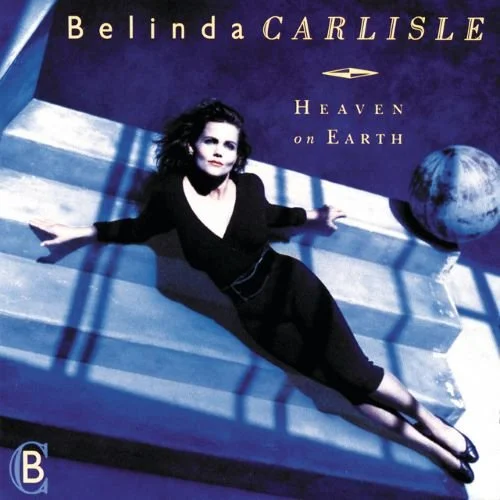
Celebrating Belinda Carlisle's Heaven on Earth at Thirty-Five

__________

AN album…

 IN THIS PHOTO: Belinda Carlisle in 2021/PHOTO CREDIT: Nick Spanos

that fared better in the U.K. than the U.S., Belinda Carlisle’s second solo album, Heaven on Earth, is one packed with hits and great deeper cuts! The Go-Go’s’ lead entered the solo market with 1986’s Belinda. It is a great album that spawned hits like Mad About You and I Feel the Magic. Her third studio album, Runaway Horses, came out in 1989. Another astonishing album, big hits like Leave a Light On, Summer Rain and (We Want) The Same Thing are classics. Between those two very different albums is the amazing Heaven on Earth. One of my most treasured memories of childhood is hearing Heaven Is a Place on Earth for the first time. Something about it instantly resonated. An addictive and phenomenal song, it was the first song from the album. Released in 1987, it was a number one hit. In fact, like many awesome albums, Heaven on Earth was a commercial success but has not got too much press from critics. Not that many retrospective reviews highlighting how strong it is. Whilst it may be front-loaded, the second side boasts more than enough to sustain interest. It is such a confident and accomplished album. I think there was a lot of snobbery and expectation regarding Belinda Carlisle after she went solo. The Go-Go’s had that harder and cooler edge. Maybe feeling her solo material was more mainstream and sweeter – without the rawness and attitude -, they failed to realise she was not trying to continue where The Go-Go’s left off. There is plenty of depth and nuance through Heaven on Earth.

The album was released on 5th October, 1987. I wanted t mark thirty-five years of a stunning album. There was a thirtieth anniversary edition. Carlisle toured Heaven on Earth in 2017. It was a celebration of a classic. It is no surprise that the anniversary edition sold out. There is no thirty-fifth anniversary edition, so try and get a copy on vinyl or CD if you can now. Stream the album if not. Songs from Heaven on Earth like Heaven Is a Place on Earth, I Get Weak, Circle in the Sand and I Feel Free have translated to today and I think still feel fresh. Not overly-dated and of its time, you still hear these songs played on the radio now. In terms of contemporary Carlisle, there is her eighth studio album, Wilder Shores, that came out in 2017. The Go-Go's documentary came out in 2020, and the classic and legendary band did put out new music. They were also inducted into the Rock & Roll Hall of Fame. I feel 1987’s Heaven on Earth is a brilliant album that deserves a lot of love on its anniversary on 5th October. When Classic Pop were running through Belinda Carlisle discography back in 2020, they highlighted the merits and wonders of her second studio L.P. Heaven on Earth is an undeniable smash:

“If Carlisle’s debut solo album was characterised with a tentative uncertainty about its musical direction, the 1987 follow-up was its mirror image.

Everything about Heaven On Earth oozes confidence. The album is front-loaded with killer tracks but even lesser cuts mark Carlisle out as a force to be reckoned with.

Near-title track Heaven Is A Place On Earth was an irresistible call to arms and topped the charts in the UK and US. Key to the success of the new album were the songwriting chops of Rick Nowels whose gutsy pop-rockers wrung every last drop of emotion out of Carlisle, who was now making the most of her sexy vibrato. Nowels explained: “Since Belinda was not a writer, it was my responsibility to come up with the songs. I asked my friend Ellen Shipley to fly out from Brooklyn to help me write. In the first week we wrote Heaven… and Circle In The Sand. I was looking for a Go-Go’s beat with an anthemic inspirational lyric.”

Carlisle added: “Rick and Ellen knew I didn’t like lyrics that were too literal, they knew I liked lyrics that were more romantic and poetic.”

More than 200 takes were needed to nail Heaven Is A Place On Earth’s master vocal and Nowels also came up with the masterstroke of changing the verses from minor to major key – an 80s anthem was born. Michelle Phillips from The Mamas And The Papas is among the backing vocalists.

The ethereal Circle In The Sand, with an electric sitar chiming away in the background and Thomas Dolby on keyboards, is further proof of this new-found thoroughgoing confidence.

And as if to fully assert her rock credentials, the choice of covering Cream’s iconic I Feel Free feels perfect. The guitars don’t crunch quite as hard as Clapton’s and his solo is replaced by a spooky sci-fi synth but Carlisle sounds feisty here; it’s a nod to rock’s past and a simultaneous jump into the future.

Go-to hit-maker for the stars Dianne Warren serves up a typically lovelorn ballad (World Without You), which smoothes off Carlisle’s rough edges and the more engaging I Get Weak features the singer’s vibrato in full effect.

By now, Nowels had hit upon a winning formula; We Can Change is a tick-box of Carlisle song tricks; the instantly memorable chorus, a wibbly guitar solo and, most pertinently, a key change in the final third to raise the emotional intensity up another notch.

Fool For Love tips its hat to Bruce Springsteen’s Dancing In The Dark on a Bon Jovi-esque chugger but there’s a winning gear change for the most aggressive cut on the album, the punky Nobody Owns Me. It’s another example of Belinda asserting her new-found independence – almost. “Nobody owns me, nobody but you.” That kicker muddies the waters somewhat.

The rather predictable lighters-in-the-air anthem Love Never Dies closes an album which was already making all the right noises, but MCA weren’t taking any chances.

Heaven On Earth remains Belinda’s biggest seller of her career; a multi-platinum behemoth. Six singles were culled from the album, the first three – Heaven…, I Get Weak and Circle In The Sand – were Top 10 hits in multiple territories. Belinda had arrived”.

In 2017, this interview with Belinda Carlisle looked back at her illustrious and successful career thirty years after the release of Heaven on Earth. With successful singles from the album and a big and celebratory thirtieth anniversary tour completed, you cannot doubt the popularity and place this album has! Carlisle was asked about the hectic period in 1987 and all the success she accrued. It must have been such a strange, happy, and also tiring period for her:

“Heaven is a Place on Earth was the first of her 10 top-20 solo UK hits. How does Belinda view that whole period of mega-success now? It must have been mad busy.

“Well, it went really fast, and once you’re on that treadmill … I was pretty much on it until age 40, with an album out every two years. That’s what record companies did to you back then. It was pretty much non-stop. You go to the studio, you make an album, you do press, you go on tour, then back to the studio … That’s how it was for me for the period from the first album, my Belinda album, through to Live Your Life Be Free … pretty much.”

I am going to wrap it up now. I wanted to nod to a magnificent album that ranks alongside the best of the late-1980s. I hope that we hear more from Belinda Carlisle and The Go-Go’s. She is one of the most important artists in the world. A tremendous and influential singer who has released some true diamonds through her career, maybe her strongest solo outing was 1987’s Heaven on Earth. Whilst I feel Runaway Horses comes close, there does tend to be more critical acclaim for Heaven on Earth. Its semi-title track is a big reason why the album sold so well. It is one of those songs that, once heard, imbeds itself in the mind and will not shake. Not that you would want it to! Maybe you have not heard Heaven on Earth or know too much about Belinda Carlisle. I would definitely urge you to listen to her second solo studio album. Instantly uplifting and incredible, the non-hits have strength and their place. Heaven on Earth has been certified triple Platinum in the United Kingdom and Platinum in many countries, including the United States. That does not surprise me at all. Bursting at the seams with quality music, this remarkable album…

STILL sounds great today.

FEATURE: Kate Bush’s The Sensual World at Thirty-Three: Returning to the Magnificent Deeper Understanding

FEATURE:


Kate Bush’s The Sensual World at Thirty-Three

Returning to the Magnificent Deeper Understanding

__________

IN a series of features…

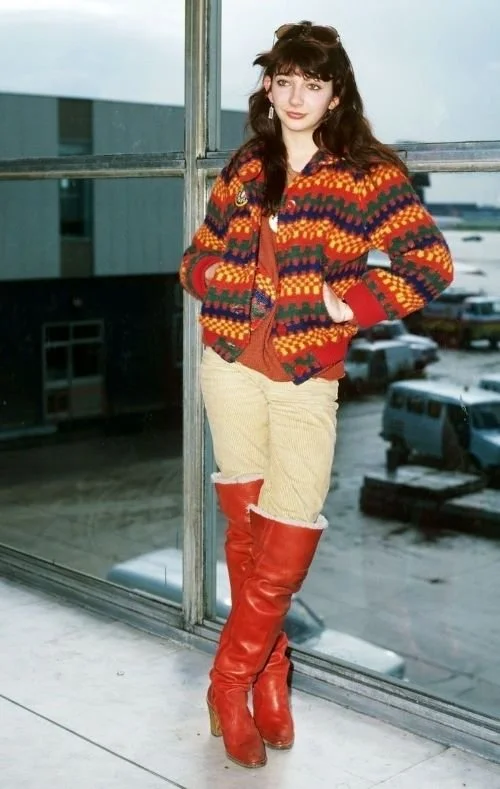
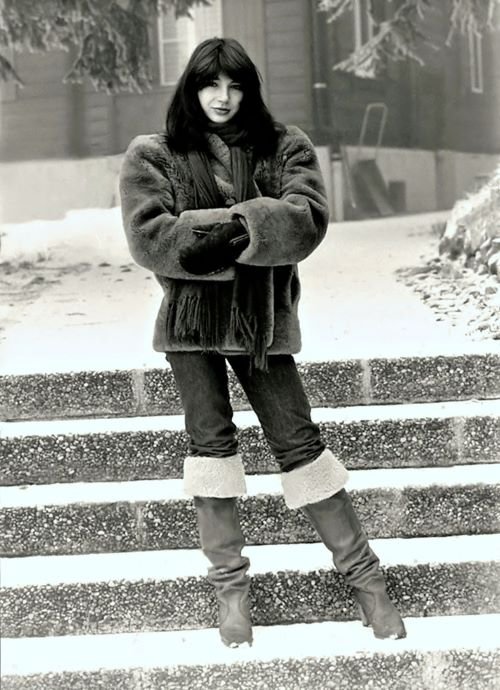
IN THIS PHOTO: Kate Bush in 1989/PHOTO CREDIT: John Carder Bush

I am going to look inside The Sensual World. In future pieces, I will take a look at songs like This Woman’s Work. When Bush rerecorded and reworked tracks from The Sensual World and The Red Shoes (1993) for Director’s Cut in 2011, Deeper Understanding was one of those included. It was actually the only single from the album. I am not sure why the song was not selected as a single in 1989. I forgot to mention that these are anniversary features ahead of The Sensual World turning thirty-three on 17th October. I have already marked the three September anniversaries. Never for Ever, The Dreaming and Hounds of Love all marked their birthdays. The Sensual World is one of the most important, must-hear and acclaimed of Bush’s albums. I may cover old ground here, but I wanted to look back at the amazing side two opener from The Sensual World. It is a fabulous track and, as I say regularly, apologies if I repeat myself when it comes to sourcing information. One of the defining songs of Bush’s sixth studio album, let’s not forget that this was the album that followed Hounds of Love. In terms of expectation from fans and critics, I can only imagine what Bush was thinking when she started recording in September 1987. Having had a slight break from recording and promoting, she was afforded adequate time to make an album that was to her satisfaction.

Of course, we most also commend Bush as a producer. The third of her studio albums that she solo produced (1982’s The Dreaming was the first), the compositions and performances are simply stunning. Boasting one of her finest compositions and most remarkable set of lyrics, Deeper Understanding was Kate Bush in full-on psychic mode. In the same way David Bowie predicted the Internet would dominate our lives as early as 1999, Bush was right on the money a decade earlier when it came to the grip computers would have on us! With added vocals from the Trio Bulgarka (a Bulgarian Folk vocal ensemble, Bush worked with them for The Sensual World and The Red Shoes), there is something almost heavenly about Deeper Understanding. Thanks to the Kate Bush Encyclopaedia for collating interviews where Bush discussed The Sensual World’s diamond that is Deeper Understanding. I have chosen a couple of particular interest:

“This is about people... well, about the modern situation, where more and more people are having less contact with human beings. We spend all day with machines; all night with machines. You know, all day, you're on the phone, all night you're watching telly. Press a button, this happens. You can get your shopping from the Ceefax! It's like this long chain of machines that actually stop you going out into the world. It's like more and more humans are becoming isolated and contained in their homes. And this is the idea of someone who spends all their time with their computer and, like a lot of people, they spend an obsessive amount of time with their computer. People really build up heavy relationships with their computers!

And this person sees an ad in a magazine for a new program: a special program that's for lonely people, lost people. So this buff sends off for it, gets it, puts it in their computer and then like , it turns into this big voice that's saying to them, "Look, I know that you're not very happy, and I can offer you love: I'm her to love you. I love you!" And it's the idea of a divine energy coming through the least expected thing. For me, when I think of computers, it's such a cold contact and yet, at the same time, I really believe that computers could be a tremendous way for us to look at ourselves in a very spiritual way because I think computers could teach us more about ourselves than we've been able to look at, so far. I think there's a large part of us that is like a computer. I think in some ways, there's a lot of natural processes that are like programs... do you know what I mean? And I think that, more and more, the more we get into computers and science like that, the more we're going to open up our spirituality. And it was the idea of this that this... the last place you would expect to find love, you know, real love, is from a computer and, you know, this is almost like the voice of angels speaking to this person, saying they've come to save them: "Look, we're here, we love you, we're here to love you!" And it's just too much, really, because this is just a mere human being and they're being sucked into the machine and they have to be rescued from it. And all they want is that, because this is "real" contact. (Roger Scott, BBC Radio 1 interview, 14 October 1989)”.

IN THIS PHOTO: Kate Bush in 1989/PHOTO CREDIT: Kevin Cummins 

It's like today, a lot of people relate to machines, not to human beings, like they hear telephone [Makes ringing noise] and think "Is that for me?" I guess it playing with the idea of how people get more and more isolated from humans and spend a lot more time with machines. I suppose America's a really good example where there are some people who never go out, they watch television all day, they're surrounded by machines, they shop through television, they speak to people on the phone; it's just distant contact. The idea of the computer buffs who end up going through divorce cases because their wives can't cope with the attention the computer gets. They have an obsessive effect on people, and this track's about one of those types.

I was playing with the juxtaposition of high tech and spirituality. I suppose one inspiration was a program I saw last year about a scientist called Stephen Hawking who for years had been studying the universe, and his concepts are like the closest we've ever come to understanding the answer. But unfortunately he has a wasting-away disease, and the only way he can talk is through voice process. It was one of the most moving things I've ever heard. He was so close to the answers to everything, and yet his body was going on him - in some ways it was the closest I'd ever come to hearing God speak! The things he was saying were so spiritual, it was like he'd gone straight through science and come out the other end. It was like he'd gone beyond words, and I do think that there is this possibility with computers that we really could learn about ourselves on levels that could take us into much deeper areas. With my music, I like to combine both the old and the new, the high tech and the compassion from the human element, the combination of synths and acoustic instruments.(Will Johnson, 'A Slowly Blooming English Rose'. Pulse, December 1989)”.

IN THIS PHOTO: Kate Bush in 1989/PHOTO CREDIT: John Carder Bush

This is a song that I would have loved to have seen Kate Bush perform live. This can be said of a few tracks on The Sensual World. I am not such a massive fan of the 2011 remake and its video. Nothing against Bush’s instinct and direction, but the song itself is powerful and impressive because of its prescience and incredible sound. Not only does a 2011 song about computers consuming out lives seem out of date; the new version with addition elements and voices (including the late great Terry Jones as ‘Professor Need’) makes the song too crowded and lacking in the same atmosphere and soul of the 1989 version. It makes me wonder why Bush felt the need to reversion the song. How could she possibly be disappointed with the original?! In my view, it features some of her greatest production work. That idea that human relationships were being replaced by machinery is such a visionary and perspective thought from Bush in 1989! Having that thought alone is amazing. Managing to put it into a song as incredible as Deeper Understanding is another thing! Whilst The Sensual World, This Woman’s Work and Love and Anger were released as the singles from The Sensual World, I wonder why Deeper Understanding was not considered. I think it could have been a chart success (the 2011 version only reached eighty-seven in the U.K.). One of the greatest things that Kate Bush ever put her name to, Deeper Understanding is…

A magnificent and future-predicting song.

FEATURE: Cowboy Style: An Amazing Reinvention and Legacy: Kylie Minogue’s Impossible Princess at Twenty-Five

FEATURE:


Cowboy Style

An Amazing Reinvention and Legacy: Kylie Minogue’s Impossible Princess at Twenty-Five

__________

I recently…

wrote a feature about Mariah Carey’s 1997 album, Butterfly. That was a real revelation and evolution for her. An album where she took more control of her career and, in the process, released a classic that has inspired artists decades later. Another icon of the ‘90s, Kylie Minogue, released her most experimental and boldest album to date with Impossible Princess. Released on 22nd October, 1997, this was a Pop treasure taking her music to places it has never been before. Whilst her fifth studio album, her eponymous release of 1994, was a step away from the more manufactured and commercial Pop sound, Impossible Princess was this big leap! Almost shedding that skin entirely, there was this clash and mix of sounds that included Dance and Experimental. Impossible Princess is a departure from Minogue's previous work. There is this intriguing blend of Trip-Hop, Electronica, and Rock. I want to mark the twenty-fifth anniversary next month for two reasons. For one, it is a great Kylie Minogue album where we get an anniversary vinyl (more on that soon). Also, Impossible Princess divided critics and fans. A real departure for Minogue, perhaps people wanted something more in keeping with her earliest work. Many were not too sure of the more intimate and confessional lyrics and the new sound palette. Commercially, the album reached the top ten in Australia, Scotland and the United Kingdom. Minogue’s audience and fans, whilst not exclusively, did not connect wholeheartedly with ‘IndieKylie’.

Maybe feeling the new sounds and sonic directions were trend-chasing and trying to fit in with the sounds of 1996/1997 – which was more Electronic and darker than Britpop sounds of the year or two before -, I think Impossible Princess is a gem. Paving the way for two of Minogue’s most successful albums, 2000’s Light Years and 2001’s Fever, Impossible Princess has some terrific tracks and hardly any filler. Madonna was similarly experimental and bold during 1998’s Ray of Light. That album was widely praised, so I wonder there was not that love for Kylie Minogue’s 1997 album. In years since, there has been reinspection and a fonder sense of appreciation. A lack of promotional activity, the three-year gap since her last album, the constant delays and title changes, and the change of musical direction resulted in an album that hardly made a dent in Europe. It reached ten in the U.K., though there were hopes of a more successful and acclaimed album. That idea that Minogue was Indie. She was not going Indie-Rock and picking up guitars. Rather, she was breaking from the Pop past and trying other sounds and evolving. Maybe it was something that was more common to female artists, but if they try and move on and grow and experiment, there is this backlash.

Fortunately, it seems like Kylie Minogue is fond of the album. There has been more warmth in years since. Seen now as a necessary detour and hugely underrated album, Impossible Princess still unfolds and unfurls all sorts of colours, revelations and treasures twenty-five years later! As mentioned, there is a vinyl release coming. Rough Trade explains more:

“Originally released in 1997, Impossible Princess is Kylie’s sixth studio album and her second for Deconstruction / Mushroom after 1994’s Kylie Minogue. The album marks a further departure for Kylie from her PWL pop beginnings and reflects a more experimental, darker style influenced by late 1990s trip hop, Brit-pop, rock and electronica. As well as co-producing the record (with Brothers In Rhythm, Dave Ball and the Manic Street Preachers’ James Dean Bradfield), Kylie wrote the majority of the lyrics, conveying an intimacy and a freedom of expression inspired by her relationships and travels around the world.

This limited anniversary edition celebrates 25 years of Impossible Princess, and is the first time the album has been officially available on LP, making it much anticipated by Kylie fans”.

There were some harsh reviews for Impossible Princess in 1997. I want to focus on a couple that were more positive and actually appreciated the album on its own terms, without comparing it to what they think Kylie Minogue should sound like in 1997. That refusal to see her as an artist with her own mind and path. Minogue was twenty-nine when Impossible Princess came out, so you could hardly expect her to repeat what she did in the 1980s and early part of the ‘90s! When Light Years came out in 2000, she sort of nodded back to the catchier Pop days, but did so in a much more mature, raunchy, exciting and nuanced way. These alluring, instantly catchy, distinct and accomplished songs were definitely Kylie Minogue, but they were a step ahead of her first few albums. Albumism revisited Impossible Princess for its twentieth anniversary in 2017:

“August 1994. Australian actress turned pop vocalist Kylie Minogue releases “Confide in Me,” the launch single from her self-titled fifth album. The metamorphosis from Stock-Aitken-Waterman figurehead to credible singer was complete. Kylie Minogue (1994) was an album tempered by musical intelligence and artistic awareness. Its intention to be a cosmopolitan resurfacing of the face of Minogue’s music? Successful.

Appropriately, the only other place to go from the outside was inside one’s self to further ascend to next level status, creatively. Along the way, other signifiers, like Minogue’s 1995 murder ballad pairing with alt-ghoul Nick Cave (“Where the Wild Roses Grow”) and a transformative romance with French music video auteur Stéphane Sednaoui, helped this change actuate as Impossible Princess, Minogue’s sixth LP. The record’s title was indebted to Billy Childish’s 1994 book “Poems to Break the Hearts of Impossible Princesses,” gifted to Minogue by Mr. Cave himself.

For the first time, Minogue was writing for an entire project, even leading in co-writing alliances. The production principals behind Kylie Minogue―Steve Anderson and Dave Seaman, a.k.a. Brothers in Rhythm―returned to Minogue’s side, impressed by her wherewithal. Most of the record’s production was furnished by them, but there was new blood too. Manic Street Preachers onboarded to compose and (sonically) thrash with Minogue on Impossible Princess. Dave Ball (of Soft Cell and The Grid fame), Ingo Vauk, Dave Eringa and Rob Dougan rounded out the remaining co-writing and knob twisting on the LP.

Two years passed as the confessional long player was erected. Minogue, aged 29 by its conclusion, articulated her story of self-discovery accordingly.

Lyrically torrid, “Too Far,” “Did It Again” and “Dreams” see Minogue examining and (sometimes) attacking her own identity. The songs show a woman acknowledging her frailties and failings, but leaving the door open for personal renewal. Musically, these stories are channeled through a polychromatic prism of electronic and guitar based sounds. These sounds could be called “techno” or “Britpop,” but those terms are too small for the explosive unification of the Phil Spector symphonica and rock vigor of “Some Kind of Bliss” and “I Don’t Need Anyone.” “Techno” and “Britpop” cannot outline the bristling, electro-panic of “Drunk” or the Gaelic tribalism of “Cowboy Style.” “Cowboy Style,” like the synth-pop of “Breathe,” temporarily free Minogue from her contemplative spell long enough to muse on her affectionate liaison with Sednaoui.

Vocally visceral, Minogue’s instrument imbues “Tears” and “Love Takes Me Over,” album leftovers cast as B-sides to the eventuating singles for the record, with the dichotomous emotions of jubilation and aggravation. This singing approach is implemented throughout the record. As 1996 ended, Impossible Princess was teeming with energy across its 12 tracks, spring-loaded and ready to take on the world. But, the path to its unveiling was fraught with turmoil.

Two labels determined the album’s fate―Mushroom Records in Australia and BMG/deConstruction Records in Europe. Market uncertainty delayed Impossible Princess through much of 1997. But the most damning blow? The tragic death of England’s Diana of Wales on August 31, 1997. The United Kingdom was gripped by grief and it was decided that Mingoue’s record title could be misconstrued as disrespectful. Subsequently, it was rechristened as Kylie Minogue in the British and European territories, causing confusion. Its real moniker was restored in those areas by way of its deluxe reissue in 2003. Staggered release dates followed: October 22, 1997 (Japan), January 12, 1998 (Australia), March 28, 1998 (Britain).

Starting on September 8, 1997 and ending on October 5, 1998, four singles were formally released to sustain interest in the LP: “Some Kind of Bliss” (UK #22, AU #27), “Did It Again” (UK #14, AU #15), “Breathe” (UK #14, AU #23), and “Cowboy Style” (AU #39). Critically and commercially, Impossible Princess was championed on Australian shores. The British press and public on the other hand were unnecessarily vicious in their assessment.

Twenty years on, Impossible Princess received its flowers through numerous positive retrospective evaluations, especially in the United Kingdom where the record was never given a fair shake. Irrefutable was the record’s enduring influence―and that of the deConstruction epoch altogether―in how it closed the book on Minogue’s pre-fab past to allow her to re-write her future. But was Minogue ever as intimate and experimental again? Yes and no. That hunger to challenge herself wasn’t wholly absent from her output in the following decade, but commercial concerns occasionally subdued Minogue”.

On 22nd October, I know Kylie Minogue will post on Twitter her reflections and thoughts about her sixth studio album. 1997 was one of the most interesting and broad years in music history. After Britpop, many Pop artists – both in the U.K. and other countries – maybe felt they needed to get more serious of embrace the new waves of Experimental, Electronic and Dance music that was coming through. I really admire the direction Minogue took with the underrated and exceptional Impossible Princess! This is what AllMusic noted about an album that very much was fitting in with the altering and shifting music scene of 1997:

“By 1997, much of the pop music landscape had changed. The music papers were declaring the "Techno Revolution" was on, Oasis and Manic Street Preachers were ruling the charts, and simple dance-pop seemed to be the domain of teenage girls. So what does the dance-pop diva of the '90s do? She recruits Manic Street Preachers' James Dean Bradfield, Sean Moore, and Nicky Wire, starts writing unaided, and completely changes musical direction. Enter Kylie Minogue's Impossible Princess (the title was changed to Kylie Minogue after the death of Princess Diana). From the trippy cover art to the abundance of guitars and experimental vocal tracks, this was her "great leap forward." The move got her in the papers, but, unfortunately, critical acclaim was lacking (and so were sales). Critics called it a mistake, and the public was less than impressed. Which is sad, because this is a pretty damn good record. Unlike her early work, this album sounds stronger and has a more natural feel. Her songwriting abilities have come a long way, and Impossible Princess actually flows together as an album. Worth another look”.

I want to end with SLANT’s thoughts and take on one of Kylie Minogue’s most important albums. Impossible Princess was a needed revolution and reinvention from a growingly ambitious and successful artist who could not repeat herself and wanted to break away from the more manufactured and factory-written Pop many associated her with. It cleared the way for hugely successful albums like Light Years and Fever a few years later:

“Kylie Minogue’s Impossible Princess bears a striking resemblance to Ray of Light, that other worldwide pop queen’s landmark album. Both are deeply personal efforts. Both feature tons of guitars. And both were considered risky efforts by firmly established artists to update their respective pop sound. Madonna’s excursion into electronica may have saved her from imminent irrelevance. In Kylie’s case, however, Impossible Princess garnered harsh reviews and barely made a blip on the European radar—strange for an artist whose every style-change and lip-lock is reported feverishly in the U.K. tabloids. But trying to hypothesize why the album didn’t resonate with critics, or the public (her fans either love it or hate it, and are passionate about their opinions either way), is a moot point. What’s important is the music, and Impossible Princess is easily Minogue’s best album to date.

Inspired by both the Brit-pop and electronica movements of the mid-‘90s, Minogue enlisted Welsh rockers Manic Street Preachers and techno gurus Brothers in Rhythm to helm the project, but the singer had a hand in writing every song, giving the album a starkly personal and unified cord. From the get-go it’s clear this isn’t the same girl who sang “The Loco-Motion.” The opening track, “Too Far,” mixes crisp breakbeats with a Moby-style piano progression and lush strings, while the very next track, “Cowboy Style,” features a tribal percussion break and a string quartet that sounds more celtic than country. Like Madonna, Minogue acknowledges the limitations of her vocal range by never venturing outside of her comfort zone. But Impossible Princess finds Minogue stretching herself way beyond anything she had done before—or anything she’s done since. The album isn’t a spiritual revelation in the vein of Ray Of Light—this is the voice of hurt and searching. “I ache for great experience…I’m not happy/Waste till I’m wasted,” she sings on “Drunk,” one of many anthemic trance tracks littered throughout the album.

Impossible Princess runs the gamut of styles, but manages to remain cohesive and fresh, even six years later. The sleek trip-hop of “Jump” and the deliriously spacey “Say Hey” fit like puzzle pieces next to the Chemical Brothers-style techno/rock hybrid “Limbo” and the frenetic “I Don’t Need Anyone.” Minogue fiercely declares her independence, but admits to her innate vulnerability: “I don’t need anyone/Except for someone I’ve not found.” Co-produced by former Soft Cell synth-master Dave Ball, “Through the Years” evokes Björk’s “Venus As a Boy,” but creates its own smoky atmosphere with muted horns, experimental vocal tracks and elegiac lyrics: “Too many a twisted word was said/My body was porous/I savored every drop of you.”

Maybe Minogue overestimated her audience and her critics. Like the impossible princess of “Dreams,” the album’s cinematic final track, perhaps she simply wanted it all: creative freedom and her throne. But Impossible Princess is the work of an artist willing to take risks, not a pop queen concerned with preserving her reign”.

On 22nd October, Impossible Princess is twenty-five. Some may say it is dated, but I think that it sounds fresh and exciting today. It has aged well! I am tempted to get the album on vinyl when it is released next month. Another step forward on onwards from the incredible Kylie Minogue of 1994, 1997’s Impossible Princess was this midway point between the first signs of Minogue growing as a Pop artist and someone who sort of return to Pop with Light years. I don’t think this album is a retreat. Instead, it is Minogue, again, fitting with the Pop sounds of 2000 (the early-‘00s) and adding Disco, Dance and other strands to ensure that she remains fresh, evolving and exciting. Many might see Impossible Princess as this unusual and experimental one-off that did not work - and left Kylie Minogue to return to her Pop-based roots a few years later. I disagree. Impossible Princess is an excellent album in its own right, and it should be celebrated! On 22nd September, Light Years turns twenty-two. I am excited looking ahead to 22nd October and Impossible Princess reaching twenty-five. A marvellous and enormously broad and unexpected album from a Pop pioneer and treasure, I would advise any fan to re-explore Impossible Princess. It is an album that has been recast and given a fresh taken years later. It just a shame critics and the public did not see its purpose, potential and excellence…
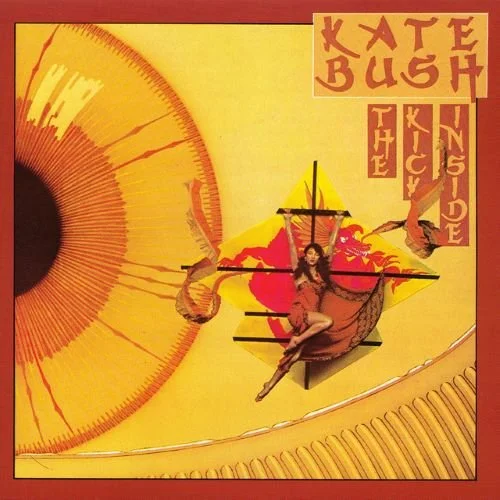
BACK in 1997.

FEATURE: Bad Girl: Madonna's Erotica at Thirty

FEATURE:


Bad Girl

Madonna’s Erotica at Thirty

__________

THERE is a lot to…

 IN THIS PHOTO: Madonna shot for the Deeper and Deeper single cover in 1992

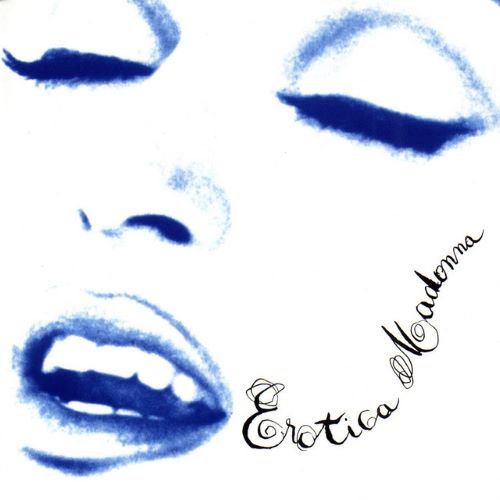
unpick, unpack, and uncover when it comes to Madonna’s Erotica. Her fifth studio album, it was released on 20th October, 1992. I am doing a few features ahead of its thirtieth anniversary. Following the acclaimed and hugely successful Like a Prayer album of 1989, Erotica was a completely different sound and album. A concept album about sex and romance, incorporating her alter ego Mistress Dita (inspired by actress Dita Parlo), there is something bolder, more open, riskier, and more sexual on Erotica. She was taking her music to a new level. Erotica was released alongside her infamous Sex book. I think Madonna had this confidence and need to push her music and image even further. A mistress of reinvention, I love Erotica and this stage of her career. Many critics saw the album as too risqué and cold at the same time. In future features, I am going to look at particular songs. I will also look at the Sex book, in addition to the legacy of Erotica. I will come to a positive reviews for an album that set the blueprint for Pop that followed – including artists such as Christina Aguilera and Britney Spears. For its twenty-fifth anniversary in 2017, Billboard ran an oral history of one of the most controversial albums of the ‘90s. They spoke to some key figures involved with the album. It is a compelling read, but I have selected a few sections that interested me.

“Erotica occupies a watershed place in the pop pantheon, setting the blueprint for singers to get raw while eschewing exploitation for decades to come. For its 25th anniversary, Billboard spoke to the players involved in Madonna’s most creatively daring release. Here’s what producer-writer Andre Betts, backup singer Donna De Lory, producer-writer Shep Pettibone, co-writer Tony Shimkin and Living Colour bassist Doug Wimbish recall of the writing and recording of Erotica, the insane release party for the LP and book, and the collective societal pearl-clutching that followed.

The seeds of Erotica trace back to 1990’s The Immaculate Collection, which included two new songs: “Rescue Me” from Shep Pettibone and his assistant Tony Shimkin, and “Justify My Love” from Andre Betts and Lenny Kravitz. The gospel-house of the former hit No. 9 on the Billboard Hot 100, while the hip-hop-inflected latter – which scandalized the world with its leather-clad, ambisexual music video — reached No. 1. For Erotica, Madonna reteamed with Pettibone and Shimkin for 10 tracks, and Betts for four.

Tony Shimkin: After doing The Immaculate Collection and “Rescue Me,” she let us know she was working on a new album and wanted us to be involved in the writing. Seeing I was a musician and writer and Shep [Pettibone] was more of a DJ and remixer, we collaborated on the writing of the tracks for the Erotica album. We went up to meet with her in Chicago, post-“Vogue,” when she was filming A League of Their Own. So we met with her and started to get to work on some music, and sent it to her as we were working our way through it. She would come into New York and have a book full of lyrics and melody ideas and we started working together in Shep’s home studio. I believe the first time she was in New York for an extended period, we were working on “Deeper and Deeper” and “Erotica” and “Bye Bye Baby.” She’s very driven. There’s was never a period of feeling it out — it was diving in headfirst.

Doug Wimbish: I remember Madonna when she used to go to the Roxy before she got really put on. I’d see her at the Roxy when Afrika Bambaataa was down there or [Grandmaster] Flash, and she was down there jamming out. And not just being a spectator, but being engaged in the scene. Madonna’s association with the dance music and the gay scene and the hip-hop scene merging in the downtown clubs in New York City, and her coming from Michigan, she got it…. And she knew Dre had something special. A song like “Where Life Begins” is right up his alley. She had a relationship with Dre for his rawness and realness. You gotta be around someone in this business who tells you, “No, I’m not digging that, that’s why.” And also keep the window open to listen. I think that’s what Dre did.

The first single and title track, “Erotica,” set the tone for her album and the Sex book (a Middle Eastern-flavored version entitled “Erotic” was included on a CD with copies of Sex). But unlike many of the other tracks on Erotica, “Erotica” underwent numerous radical changes during the album sessions.

Shep Pettibone: “Erotica” was four different songs throughout the process. She loved the groove. She would sing it one way, background vocals harmonies and all, then decide to erase everything and start over again. Every version was very good. Shame she made me erase stuff.

Erotica wasn’t all libido and leather, though. The reflective, regretful “Bad Girl” is one of her most affecting lyrics, and “In This Life” is Madge at her most existential. Meanwhile, songs like “Bye Bye Baby” and “Why’s It So Hard” find her experimenting with filtered vocals and reggae, respectively, and on her cover of Peggy Lee’s “Fever,” she marries chilly club music to a torch song of yesteryear. Taken together, the album shows Madonna’s growing willingness to expand her horizons in terms of subject matter and studio techniques.

Shimkin: “Why’s It So Hard” is really funny, because it was midpoint writing the record, and we were all a little burnt out. Everybody went on vacation, and Shep happened to go to Jamaica and I happened to go scuba diving in the Cayman Islands, and both places are heavily reggae-based culture. That’s what we came back having listened to, so we decided out of nowhere to do a reggae track. And then my vocals appeared on it. Going to see the Girlie Show live and see my vocals lip synced and coming over the loudspeakers at Madison Square Garden was surreal for me.

De Lory: The song “In This Life” was very serious. It was just nice to go into the studio and share our own voices on that, which we could all relate to with what was going on, losing friends to AIDS.

Shimkin: “In This Life” had a really deep personal attachment to her, and [it has an] uncluttered nature to allow her vulnerability to come through. Obviously [“Bad Girl” was] a highly personal lyric. There’s a raw element and simplicity that lends itself to a vulnerable vocal and lyric that she puts through. You really hear the emotion in her voice”.

I am going to keep it quite general and brief at the moment. I think I will do another three features about the album, because it remains misunderstood and underrated by some. Completely evolved from the catchy and light Pop of her very early career, this is the sound of the Queen of Pop stepping into the 1990s with one of her best albums! Even though some have slated it or felt it is unengaging, Erotica has so many standout songs. Rain, Bad Girl, Erotica, Deeper and Deeper and Bye Bye Baby are fantastic! In their review, SLANT said this of the fantastic and revelatory Erotica:

“Speaking of little red corvettes, Madonna waxes erotic on the perks and pleasures of oral sex on “Where Life Begins,” the album’s most overtly sexual track but also the only one to reference safe sex: “I’m glad you brought your raincoat/I think it’s beginning to rain.” Both “Where Life Begins” and “Waiting,” which draw heavily from Motown, were produced by Andre Betts, who cut his teeth as associate producer of “Justify My Love.” But Erotica’s chief producer was Shep Pettibone, who remixed Madonna’s singles for half a decade before graduating to studio collaborator with the seminal dance hit “Vogue” in 1990. “Deeper and Deeper,” with its juxtaposition of swirling disco synths, of-the-moment Philly house beats, and the aforementioned flamenco guitar (insisted on by Madonna, according to Pettibone, who objected), is both a product of its time and a timeless Madge classic. (The track even borrows a lyric from “Vogue,” as if she’d come anywhere close to running out of ideas by 1992.)

Madonna’s rarely acknowledged harmonies glide atop the frosty beats, thunder-claps of percussion, and skyward drone of the sonorous “Rain,” while her speaking voice cuts through the inventive but busy beats of “Words” even as her singing is subsumed. Madonna could have more successfully achieved the gritty, raw sound she wanted had she completely handed the reins over to Betts; time hasn’t been kind to Pettibone’s often-suffocating productions, while Betts’s jazzy piano parts and hip-hop beats still sound fresh.

Regardless of the producer, however, Erotica is sonically seamless, and almost every song is about a minute too long—an orgy that seemingly never ends. And then there’s “Did You Do It?,” which, aside from the supremely over-the-top but ridiculously fun “Thief of Hearts,” is the pockmark on Madonna’s otherwise flawless, 35-year-old posterior. It’s the houseguest who stayed the night and who looks much less desirable in the light of day. She could burn her sheets and sanitize the bedroom, she could write it out of her memory, issuing a “clean” version of the whole story without a parental advisory sticker—and she did, because Madonna wanting to get her pussy eaten isn’t as offensive as a rapper talking about actually having done it. But the stink remains anyway. “Did you do it?” She knows she did, but she really just wants to get wifed and have a baby, feminism be damned.

Which brings us to, perhaps, Erotica’s most personal, revealing moment, the unexpected jazz-house closer “Secret Garden,” another Betts production. Most critics and fans are split between two camps: those who think Like a Prayer is Madonna’s greatest album and those who believe Ray of Light is. (I happen to belong to the former.) And then there are those who claim Erotica is her best effort. Had Betts produced more tracks like “Secret Garden,” it may very well have been. Way ahead of its time, the track sets Madonna’s yen for a child to shuffling drum n’ bass, atmospheric synths, and a distant saxophone beckoning like an alley cat. Ever the control freak, and with motherhood still a few years away, she tries to dismiss her ticking biological desire: “I just wish I knew the color of my hair.” It’s unexpectedly the album’s sexiest song.

Erotica’s irrefutable unsexiness probably says more about the sex=death mentality of the early ‘90s than any other musical document of its time. This is not Madonna at her creative zenith. This is Madonna at her most important, at her most relevant. Pettibone’s beats might be time-stamped with the sound of a genre that ruled a decade of one-hitters before being replaced by commercialized hip-hop, and Madonna’s voice might sound nasal and remote, but no one else in the mainstream at that time dared to talk about sex, love, and death with such frankness and fearlessness, and, intentional or not (probably not), the fact that she sounds like she has a cold only adds to the claustrophobic stuffiness of the record. The drums of “In This Life” tick away like Stephen Hawking’s Doomsday Clock, which, coupled with tension-building keyboard intervals inspired by Gershwin’s blues lullaby “Prelude No. 2,” creates a sense of dis-ease rarely found in a pop ballad.

Whatever words one chooses to label the album with—cold, artificial, self-absorbed, anonymous—Madonna embraces those qualities and makes it part of the message. “Why’s it so hard to love one another?” she asks on the reggae-hued “Why’s It So Hard?,” knowing the answer lies within the dark fact that a society that won’t even allow two people to love each other freely can’t possibly be expected to love and care for perfect strangers unconditionally. Sexually liberated, for sure, but Madonna is a liberal in every other sense of the word too, and you didn’t have to hear her shout, “Vote for Clinton!” as she was being whisked past the cameras at the album release party to know that. It could be argued that Madonna lost her rebel relevance right around the time Reagan’s regime ended; the waning of her popularity certainly coincided with the arrival of Bill Clinton’s “Don’t Ask, Don’t Tell” policy. But looking back from the vantage point of an administration far more sinister than Reagan’s, it’s clear that Madonna, her messages, and her music are more relevant now than ever”.

I wanted to get a bit of an early start on a hugely important album from Madonna. Erotica has this enormous and vital legacy when it comes to inspiring other artists. It was also influential in terms of Madonna’s reinventions and development as an artist. Even though 1994’s Bedtime Stories was a move back towards more R&B, Pop and soulful songs, 1998’s Ray of Light was another huge revolution in terms of sound and direction. I feel Erotica deserves so much respect and credit. Reaching number two in the U.S. and U.K., I have some more fond retrospection for this album. I think a lot of the mixed reaction to Erotica might have something to do with Sex and the fact that Madonna was grabbing headlines. Some viewed her as too controversial and provocative. Erotica was not given adequate time and investigation by many. On 20th October, we mark thirty years of a remarkable album. If you have not heard the album or only listened to the singles, then go and spend some time with it and go…

DEEPER and deeper.

FEATURE: I'll Always Be True: An Iconic Moment in Music History: The Beatles’ Love Me Do at Sixty

FEATURE:


I'll Always Be True

An Iconic Moment in Music History: The Beatles’ Love Me Do at Sixty

__________

IT may sound quite simple…

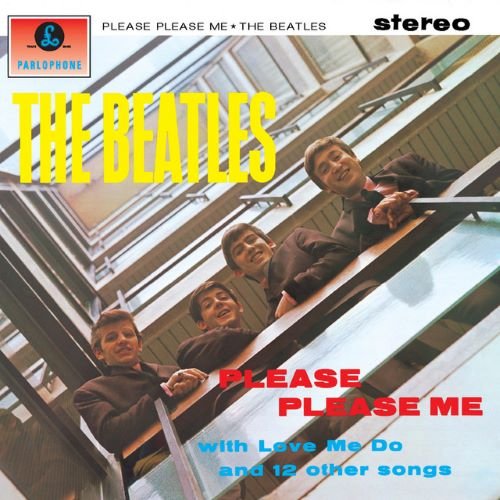
compared to their later work, but The Beatles’ Love Me Do was a seismic moment in Pop! In fact, you can argue that the Liverpool band’s debut single changed the world. Indeed, if people rank The Beatles’ best singles, maybe Love Me Do comes low. It charted outside the top ten so, in context, it could be seen as minor and a merely promising start. That is not the case. Love Me Do is undoubtedly one of the most important songs ever. The song turns sixty on 5th October. It reached number one in the U.S. in 1964, yet it only got to seventeen here in the U.K. I think people did not know too much about The Beatles in 1962, and it was before Beatlemania. The band’s debut album, Please Please Me, was released in March 1963 and reached number one. Love Me Do is essentially a Paul McCartney song (with John Lennon contributing the middle eight), but it was a case of the young songwriters sitting together and working on this hit. I will come to a couple of features that celebrate and highlight the importance of Love Me Do. One of the most interesting aspects of the song is its percussion and how Ringo Starr fits in. Although the standout instrument on Love Me Do is Lennon’s harmonica, there are three recorded versions of the song, each with a different drummer. The first attempted recording from June 1962 featured Pete Best on drums. A second version was recorded three months later with Ringo Starr. This was used for the original Parlophone single. The third version, featuring session drummer Andy White, was included on Please Please Me.

I am going to bring in a couple of features. This Day in Music went deep with Love Me Do (apologies for recycling any information that I used in the last feature about the song). They consider it to be a moment that changed history and the course of music. It is hard to argue against that:

“On the evening of 5th October 1962, with its powerful transmitter broadcasting to the UK on 208 Meters on the Medium Wave band (AM to our US readers) Radio Luxembourg played a new song, a simple song, in which the singers sang the word ‘love’ a total of 23 times. It was raw, it was sexy, and an almost complete rebuttal of the saccharine, over-produced pap prevalent at the time.

It was “Love Me Do”.

Beatles producer George Martin said when The Beatles “Love Me Do” was released, on Friday 5th October 1962, it was the day the world changed, and the world has consistently agreed with him ever since.

Liverpool, in the North West of England, was approaching the winter of 1962 with rocketing unemployment rates and the worst slums in Europe, and yet it was also the world’s biggest port. Even as the deadly game of bluff, played with nuclear weapons, was enacted as The Cold War between East and West, some of Liverpool’s’ youth had been reaching out across the oceans to pursue the rock ‘n’ roll dream, inspired by the groundbreaking efforts of Elvis Presley in the USA, and, closer to home, the example of do it yourself music as led by British singer / banjo player Lonnie Donegan.

 Amidst a bleak economic backdrop, five young men from Liverpool had been slowly learning their craft in Hamburg, Germany as a rock ‘n’ roll band (they left one behind). The unbeatable Hamburg apprenticeship of 4-hour sets, 7 days a week, meant that when the leaner, and certainly hungrier, quartet returned to their home city, they were able to whip up excitement in audiences inspired by their musicianship, showmanship and sheer enthusiasm.

Label head and producer George Martin wasn’t initially bowled over by the lads’ musicianship or compositions, but he was impressed with their self-confident insouciance, and something in his gut told him to take a chance.

Even when the band had signed, they were determined to be individual, refusing to release a song suggested by George Martin, even though he assured them it would be a hit. (It was – the song was ‘How Do You Do It?’, a chart-topper in 1963 when recorded by Gerry & The Pacemakers. History shows that The Beatles’ instincts were correct, though).

George Martin does deserve credit for his control of the recording session for ‘Love Me Do’, in which he made a vital change to the arrangement. It was a very early Lennon–McCartney composition, principally written by the 16-year old Paul McCartney while playing truant from school, with John Lennon later adding the middle eight section (starting with “Someone to love…”) to complete the song, Their practice at the time was to scribble songs in a school notebook, and, in their dreams of future respect as professional songwriters, to always write “Another Lennon-McCartney Original” at the top of the page.

Having been promised a deal by George Martin in the spring, The Beatles formally signed to Parlophone on June 4th 1962 and had their first recording session at London’s EMI Studios in Abbey Road on 6th June with Pete Best on drums. After Martin expressed concern over Best’s level of technique, The Beatles returned to London three months later, on 4 September, with their new drummer, Ringo Starr, formerly of Rory Storm and the Hurricanes. A controversial decision at the time in Liverpool, since Best had his own coterie of personal fans, the band’s decision has been more than vindicated by the excellent rhythm parts of Ringo since then, but also by a perusal of the original recorded version of ‘Love Me Do’: Ringo adds the final ingredient to The Beatles’ mix of originality, the swinging new version sounding like a completely new song.

“Love Me Do” kicks off with John Lennon playing a bluesy dry harmonica riff, having learnt to play as a child after his Uncle George introduced him to the instrument. The actual harmonica being used at this time was one stolen by the light-fingered Lennon from a music shop in Arnhem, the Netherlands, in 1960, as the Beatles first journeyed to Hamburg. It has been much reported that Delbert McClinton, who supplied the distinctive harp riff on Bruce Channel’s ‘Hey Baby’, taught Lennon to play, but this isn’t strictly accurate. ‘Hey Baby’ was already in the Beatles’ repertoire, and The Beatles did open for Bruce Channel when he appeared at Liverpool’s Tower Ballroom, but that was on June 21st, so McClinton merely gave Lennon a few pointers.

The song features Lennon and McCartney on joint lead vocals, in their best Everly Brothers style, harmonising during the beseeching “please” before McCartney sings the unaccompanied vocal line on the song’s title phrase, ‘Love Me Do’. Lennon had previously sung the title sections, but this change in arrangement was made in the studio under the direction of producer George Martin when he realised that the harmonica part encroached on the vocal, allowing McCartney’s solo voice to act as a contrast to the harmony work elsewhere.

After first checking into their Chelsea hotel on September 4th, The Beatles arrived at EMI Studios early in the afternoon where they set up their equipment in Studio 3 and began rehearsing six songs including: “Please Please Me”, “Love Me Do” and “How Do You Do It?”.

Maybe a bit more basic and less complicated than some of the band’s songs, Love Me Do is a vital piece of music history that introduced the iconic band. On 5th October, the world marks the U.K. release of the single. It turns sixty and, all these years later, it sounds incredible and soulful. This is what The Guardian wrote int their fiftieth anniversary feature from 2012:

“In contrast, Love Me Do is, once you get past the primitivism, is soulful and bluesy. There is a swing and drive to the harmonica playing and the harmonies that belie the impression of tentativeness. The lyric, while entirely within period romantic cliches, is both slightly awkward – "love me do": who ever says that when they're chatting someone up? – and direct ("someone like you"). Which makes it a pretty faithful expression of teen courting rituals, with their mixture of uncertainty and desire.

As the first Beatles' hit, this unassuming but forceful record has had a long after-life. The second version was included on several best-selling UK EPs and LPs and went Top 5 when rereleased in 1982 as a single. Right at the end of the first flush of Beatlemania, in late May 1964, it hit No 1 in the US – a strange turn of events for an 18-month old song. This in turn ensured its place as the opening track on the 1 album, which has sold over 31 million copies during this century”.

Undoubtably one of the most important songs in history, The Beatles’ Love Me Do is a song that is historic but also underrated. I think that we will be talking about it on its hundredth anniversary too, such is its significance and impact. It did not worry the charts too much when its release on 5th October, 1962, but Love Me Do soon…

CHANGED the course of popular music.

FEATURE: Ten Stories High… Building The Kate Bush Album Club

FEATURE:


Ten Stories High…

IN THIS PHOTO: Kate Bush in September 1985/PHOTO CREDIT: Dave Hogan/Getty Images 

Building The Kate Bush Album Club

__________

PERHAPS I have…

 IN THIS PHOTO: Kate Bush at the 1987 BRIT Awards

mentioned or covered this in some form before but, in this feature and a couple of others, I shall conclude my dissection of the Classic Pop special that was dedicated to Kate Bush. A whole magazine covering her career and best moments, they also selected a few of her albums for special praise and highlighting. Ten very different and magnificent studio albums, I do tend to find that they are written about when there is a big anniversary, or in relation to one of the songs from the album achieving something (how Hounds of Love has been back in focus after Running Up That Hill (A Deal with God) got to number one). I have said it many times:  there is not enough awareness, deep diving and acknowledgement of Kate Bush’s albums as a complete work. Singles are still largely played on the radio in place of deeper cuts. Music is not physically shared as much as it used to, so I wonder what people are listening to when it comes to Kate Bush. From streaming suites, you can see how streams each track has, but that does not mean that people have listened to the whole album. In fact, as there is such a gap in terms of streams-per-track, it leads me to believe most are picking tracks they like and not spinning an entire album. It seems a shame that these complete works are being picked apart.

 IN THIS PHOTO: Kate Bush in 1982

I know I have talked generally about Kate Bush’s albums as complete pieces, but it would be great if something more concrete was established. Tim Burgess runs a Listening Party for albums regularly. A Kate Bush album has not been featured yet. Of course, Bush herself would not take part, but there are musicians and people associated with the albums who could lend their memories and commentary. There is also a 33 1/3 book series that dedicates a book to a classic album. I think, at one point, Ann Powers wrote one about The Dreaming. I cannot see that in print anymore. Even Hounds of Love has not had a book like that written about it. Artists such as The Beatles and Madonna have had books about them that goes through the albums and, when it comes to documentaries and podcasts, there is a scarcity. General fan podcasts do relate to the albums, yet there are not specific podcasts about the albums or something regular. Laura Shenton has written a book about The Kick Inside, and one about The Dreaming. There are song-by-song books like this one and this. There are biographies and photobooks, but there are albums left untouched. In terms of podcasts, you can search on Spotify, yet there is nothing really that explores albums specifically. I have been trying to get my own podcast going, but I need to find a suitable space to record it. It does seem like there is a gap and real need to let people know about Bush’s albums.

She herself has said how she records with the intention people listen to albums in full. She favours physical music, so that you can listen to albums all the way through. Her albums do have singles, but she never really consciously wrote with that in mind. She approaches albums as single works, and there are naturally songs that are more commercial or radio-friendly. It would be great if there was a podcast, documentary or books that gave proper credit to the albums. Ten studio albums, the live album of Before the Dawn (her 2014 residency), the greatest hits collection, The Whole Story, and maybe some compilations and rarities (such as 2018’s Remastered IV box-set which included B-sides and rarities). In terms of books, there are a few Kate Bush one out there. I feel there is gap in the market for an albums book that goes one by one, talks about dates, the stories and stats. Giving diehards and casual fans a real glimpse into these albums and how they came together would find a ready audience. I do like the idea of a multi-part podcast series that covers all the studio albums and beyond. Even in 2022, so many people know Kate Bush and her biggest songs, but they have very little awareness of anything else. That is something that she herself would not be overly happy with.

There is a passionate and burgeoning fanbase of all ages. A podcast series or maybe something visual that goes inside the album or an actual club – online I guess – is something I’d like to see. In the same way people discuss books in a club, diving into the albums could open people’s eyes to the truth depth and brilliance of Kate Bush’s work. That might have to be something that is on YouTube. I know there are fifteen-minute videos from fans that do look at the albums, but nothing deep enough or has that sort of explorative and complete/professional sense about them. In any case, one can scour YouTube, Spotify and book sellers’ website and, collectively, there is a lot out there pertaining to Kate Bush. When it comes to the albums, books by Laura Shenton and a biography by Graeme Thomson, Under the Ivy: The Life & Music of Kate Bush, do actually give you good detail. Audio and visuals bring these albums to life (although there is going to be an audiobook version of Thomson’s biography soon!). It seems like a market that could garner a lot of devotion and interest. How many fans know about the stories, songs and events around 1980’s Never for Ever? How many consider Aerial and 50 Words for Snow in detail? Do fans understand why The Red Shoes (1993) is such an important album in terms of Bush’s career and the decisions she would make? I am not too sure. To counteract this, an album club or something online where famous and non-famous fans could also interact and contribute is the least that Bush’s…

PHENOMENAL albums deserve.

FEATURE: Revisiting… Lou Hayter – Private Sunshine

FEATURE:


Revisiting…

Lou Hayter – Private Sunshine

__________

RELEASED last year…

Lou Hayter’s Private Sunshine is an album that I really love. One of the best of last year, you should grab a copy of it. A blend of beautiful sounds run through a terrific record that got its share of acclaim upon its release. Hayter is one of the most underrated artists around. An exceptional artist and songwriter with one of the most distinct and stunning voice sin music, Private Sunshine is a wonderful album that needs to be heard. I am going to finish off with a couple of reviews for a magnificent album. Formerly of New Young Pony Club, I do hope we hear more music from her soon. Before coming to an interview and a couple of reviews, here is some detail about the incredible Lou Hayter and her magnificent debut, Private Sunshine:

“Effortlessly hopscotching between vintage acid and 80s Rn’B, insouciant Francophone pop and twinkling electro house, Lou Hayter has delivered something at once utterly unique and defiantly timeless with her much anticipated debut solo LP, released next year on Skint Records.

It has been a long time coming for London native Hayter, who first made her mark professionally as keyboardist for New Young Pony Club, one of THE bands at the epicentre of the white hot day-glo nu rave scene alongside the likes of the Klaxons and Test Icicles in 2006. But, to fully place her debut album in context, it is necessary to rewind a little bit – to the very beginning in fact, with Hayter growing up on a diet of Bowie, Prince, Human League and Jellybean-era Madonna while concomitantly learning classical piano from the age of five. The flames of this deliciously varied musical palette were further stoked by trips to record shops in Soho with her brother (Soul Jazz was a particular obsession), but it was while studying in Cambridge that the match was well and truly struck – she used her student grant to buy a set of Technics and started putting on club nights, before moving to London and working at Trevor Jackson’s seminal Output Recordings, placing Hayter smack bang in the middle of all the action, with disco punk fever hitting full force and bands like the Rapture and LCD Soundsystem first breaking out.

The hugely successful, Mercury-nominated New Young Pony Club followed shortly after, but it’s through her subsequent output that she started to distil and refine her idiosyncratic tastes. And certainly, you can hear hints of both the New Sins, the 80’s New Wave duo she formed with Nick Phillips, and Tomorrow’s World, the swooning Gallic pop act she fronts alongside Air’s JB Dunckel, in her remarkable debut. Full to bursting with evocative electro-soul love letters to her home town of London alongside addictive disco torch ballads, it’s like Kylie meeting Mr Fingers or, Jam & Lewis producing Jane Birkin – something beautiful and melancholic yet sharply modern and new.

From the warm, woozy, lysergic harmonies of opener “Cherry on Top”, which sound like a beloved old cassette unravelling, to the fizzy, infectious “Cold Feet”, which calls to mind Lisa Lisa & Cult Jam at their most heartworn, taken in toto the album perfectly nails the essence of gorgeously nostalgic synth-pop with a twist; crisp, stylish and sophisticated music which heralds the next chapter of Lou Hayter quite nicely, actually. Her retro-futuristic results will give 2021 the pop fix it so desperately needs”.

Even though there was love for Private Sunshine, I think that the album was underrated and did not get all the love it deserved. I would encourage people to listen to it, as it transports you somewhere else. Lou Hayter is such a compelling artist that you can’t help but listen to and follow! Less related specifically to Private Sunshine and more to do with her creative process, 15 Questions asked her about songwriting and how she approaches it. I have chosen some of the questions that caught my eye:

“What do you start with? How difficult is that first line of text, the first note?

I actually love coming up with ideas, for me finishing the tune is the hardest part. Things just literally pop into my head or I hear a snippet of conversation that I think is catchy and write it in my phone or a sample that I like and take it from there. Other times I just hear melodies or basslines and sing them into my phone.

When do the lyrics enter the picture? Where do they come from? Do lyrics need to grow together with the music or can they emerge from a place of their own?

I get lyrics from all over the place. Sometimes conversation or books or films. Or things that I'm thinking and feeling. Then I write down good snappy lines in my phone and when I get a piece of music that needs lyrics I pull out the lines that are in my phone to make a song out of them. Or sometimes the whole song just pops into my head out of no-where, that happened with "Cherry on Top". Especially once I'd got on to the theme of sugar and honey, then it was easy to get more ideas.

What makes lyrics good in your opinion? What are your own ambitions and challenges in this regard?

I'm not really someone who studies lyrics. The ones that I really listen to are usually Joni Mitchell, Steely Dan, Prince and The Smiths. I love them cause they're always telling stories and they're funny and engaging and clever. But apart from that I'm usually into the overall vibe of a song.
But with my own lyrics I try to find lines that are snappy and rhythmic and honest. The rhythm of the words along with the music is quite important to me. I like to find little snippets or lines that interest me and also things that move me.

Once you've started, how does the work gradually emerge?

I just keep working away at it. If it's in it's early stages where I just have certain elements I think of it a bit like a jigsaw puzzle: I know the answer is there but I just have to keep chipping away until it fits into pl

Many writers have claimed that as soon as they enter into the process, certain aspects of the narrative are out of their hands. Do you like to keep strict control over the process or is there a sense of following things where they lead you?

No I just let things flow into my brain, I think overthinking doesn't help so I just try to be free when I make stuff. No rules. Sometimes people in the studio tell you you can't do certain things and I never understand why - cause there aren't any rules, if there are, they're just made up.

Often, while writing, new ideas and alternative roads will open themselves up, pulling and pushing the creator in a different direction. Does this happen to you, too, and how do you deal with it? What do you do with these ideas?

Yeah I really encourage accidents and see where they take me because sometimes they’re meant to be and they open up something new and amazing. That's one of Brian Eno's concepts that he encourages too.

Especially in the digital age, the writing and production process tends towards the infinite. What marks the end of the process? How do you finish a work?

Finishing is often the hardest part but I think I’m getting better at knowing when something is ready to go out there. Sometimes I play it to a friend that I trust or Damian Harris. He's my A&R man at Skint, my label. Otherwise I might never stop chipping away at it.

Once a piece is finished, how important is it for you to let it lie and evaluate it later on? How much improvement and refinement do you personally allow until you're satisfied with a piece? What does this process look like in practise?

I usually just listen to something over and over to work out what it needs. Sometimes it involves taking a break from it and coming back to it. Also listening on headphones usually gives me more clarity than the loud speakers in the studio. So sometimes it isn't until I get home after working on something and listen in the cab home that I realise what's missing because sometimes you're too caught up in things in the studio and you need a bit of distance”.

I will wrap it up with a couple of reviews for the brilliant Private Sunshine. This is what The Forty-Five had to say about a real gem from last year. I am really keen to hear more from Lou Hayter as I really love her music. Her voice is one that I cannot get enough of! I have been spinning Private Sunshine again in research for this feature. I have been falling for the songs all over again:

“‘Private Sunshine’ often pretends to be elsewhere – whether poolside, or someplace sunnier, or the hot hum of the pre-pandemic city – offering immediate transportation to a world many of us currently crave. The album seems encased in aspirational, diamond-hard gloss, from the disco slink of ‘Pinball’ to the way ‘Cold Feet’ runs down your back like cool water.

At times, it’s almost too glacial, too remote – saved by a litany of openhearted pop refrains, the kind that have united humans on dancefloors across the past forty years. Love fuels the album, in all its yearning iterations. The songs are populated by absent lovers (“Well I went to the club and I thought saw your face” / “This city was never as good without you” / “Now I’m walking in the rain without you”), jealous lovers (“In the days of you and I, she was always hanging around”), long-time lovers (“As the leaves on the trees turn red, they mark three years since we first met”).

 But even without that lyrical emotion, Hayter’s devoted attention to the music that always gets hearts beating pays off. The album channels Gwen Guthrie, ‘Elysium’-era Pet Shop Boys, and the Hall & Oates of ‘Out Of Touch’ and ‘I Can’t Go For That (No Can Do)’. A chic Moroder beat links arms with Mr Fingers’ ‘Mystery Of Love’ on ‘This City’, a tantalising hark back to covid-free life – the album was mostly finished before 2020.

And though ‘Private Sunshine’ isn’t the only record to pay homage to Steely Dan this year – St Vincent’s latest owes plenty to the band – Hayter transplants their song ‘Time Out Of Mind’ to the disco dancefloor. She completely recasts the song, the same way Poolside took on Neil Young’s ‘Harvest Moon’, or Saint Etienne adopted his ‘Only Love Can Break Your Heart’.

Perhaps ‘Private Sunshine’s best example of a pop song drawn out and looped for the floor is ‘Still Dreaming’, an impeccable blend of pathos and propulsive beats, showered in eighties synth. “Why do I still dream of you?” Hayter wonders. Maybe because, as pop doyennes Blondie once reminded us, “dreaming is free” – no matter what the forecast says”.

The final thing I will bring in is a more positive review from The Line of Best Fit. Private Sunshine is one of those albums that you need to spend time with and play several times. It is one of last year’s finest releases. I hope people pick up the album reading this, as Lou Hayter is a hugely talented artist who is shining as a solo act:

“Primed with copious party-ready peppiness and pitch-perfect production values, Private Sunshine feels very much a product of the era its modelled upon, rendering a retro-gilded bubblegum world alongside turn of the century house music nods. Hayter recalibrates her sound, to an extent, on a tracklist governed by pure ephemerality - an escapist sophisto sheen, strident in tapping the spirit of the age it emulates; echoes of Madonna’s breakthrough phase joining the carefree charisma of other post-disco contemporaries.

Hayter plasters the record with coolly nonchalant vocals alongside lavish electronic segments, flaunted with a panache that translates into addictive shots such as "My Baby Just Cares For Me", recalling the Hi-NRG of Stacey Q, and “Still Dreaming”, leaning towards early Bananarama and recent French disco revivalists such as Jupiter. The string of influences informing the album are at the forefront, pinpointing a specific style with discerning affection and attention. Particular tribute is paid, in this respect, to icons Steely Dan, with Hayter applying vivacious Pointer Sisters energy to a cover of Gaucho-era number “Time Out of Mind” - fitting neatly, in its updated garb, amongst the electro-pop abundance. Elsewhere, the title-track's Grace Jones-esque synth score zones in on the hyperrealism of a decade famed for its extravagance, capturing the emerging creative buzz at the dawn of the ‘80s, an exuberance gifted more room to develop with additional standout “You Again".

Pushing forward on a path marked by synth-toting songwriting, Private Sunshine appears a natural progression. Rather than deal a glib homage to an oft-imitated decade, Hayter orientates around its nuances with a sense of finer detail – one that easily stands as a credible time capsule, rather than a well-trodden form of mimicry”.

If you are not aware of Lou Hayter and the magnificent Private Sunshine then you need to get on it now! Such a brilliant album from an artist I am sure we will be hearing a lot more from, this is one of those releases from last year that got attention and praise, yet it warrants a new spin and some fresh love. Lou Hayter has always produced awesome music but, on Private Sunshine, she takes it to a new heights. She is an artist to…

BE very proud of.

FEATURE: All I Need: Radiohead’s In Rainbows at Fifteen

FEATURE:


All I Need

Radiohead’s In Rainbows at Fifteen

__________

I am excited…

 IN THIS PHOTO: Radiohead’s Thom Yorke performs during the V Festival in Hylands Park on 19th Aug, 2006 in Chelmsford/PHOTO CREDIT: Jo Hale/Getty Images

because, on 10th October, we mark fifteen years of Radiohead’s seventh studio album, In Rainbows. One of the reasons why it was such an important album was that the band made it a pay-what-you-want download initially. I don’t know if any other artist had done this before. In Rainbows was Radiohead’s first release after their recording contract with EMI ended with their album Hail to the Thief (2003). Less political than that album, the gorgeous and near-career-best In Rainbows started life in early-2005. I am not sure why Radiohead decided to work with producer Spike Stent rather than their usual rock and go-to, Nigel Godrich. Eventually common sense was restored but, after some fruitless sessions with Stent, Radiohead toured new material and then reconnected with their long-time producer. In Rainbows blends a range of sounds and genres. There is a mix of the more conventional Rock-based sound and instrumentation of their earliest work, combined with electronics that would come in from Kid A (2000) onward. Unlike anything they had ever released, In Rainbows is one of Radiohead’s most-loved and successful albums. A number one success here and in the U.S., the reviews for In Rainbows were hugely positive. Hail to the Thief got mostly positive feedback, through it wasn’t as unanimous as Radiohead were used to. I am going to come to a couple of reviews for the majestic and all-conquering In Rainbows. There are some features that explore the making of and creation of one of Radiohead’s most important albums.

Rolling Stone published a making of feature about In Rainbows in 2012. I did not realise what a struggle and tough process it was for Radiohead getting an album made. And how frustrating it was at times for them:

“MAKING AN ALBUM has never been easy for Radiohead. “We think too much,” frontman Thom Yorke once told Rolling Stone. But 2007’s In Rainbows may have been their toughest. “It was very difficult in a way we had never experienced before,” says the band’s longtime producer, Nigel Godrich. “The material was great, and we knew it. The difficulty was actually, physically doing it.”

The rushed, contentious sessions for 2003’s Hail to the Thief left Radiohead in no mood to hurry back to the studio – and they’d just ended their 12-year relationship with EMI, meaning no label demanding new material. They spent most of 2004 in limbo; Radiohead’s five members, who began playing together as teens, were now well into their thirties with young children to raise. The band finally got back to work in early 2005, recording on their own and later with producer Mark “Spike” Stent, who’d had hits with Madonna and the Spice Girls. But the sessions – their first in a decade with a producer other than Godrich, a crucial collaborator on the art-rock advances of 1997’s OK Computer and 2000’s Kid A – were a dead end. “Everyone had lost…not interest, but momentum,” Yorke told Rolling Stone. “We’d all stopped to have kids. When we got back into the studio, it was just dead.”

Frustrated, Radiohead hit the road in May 2006, unleashing new tunes like the all-out rock attack “Bodysnatchers” and the tricky, riff-layering fugue “Weird Fishes/Arpeggi” at theaters across Europe and the U.S. That fall, the band scrapped their work to date and called Godrich. “Nigel thought we needed an adventure,” guitarist Ed O’Brien told Rolling Stone. The producer dragged them to Tottenham House, a formerly stately Georgian home 45 miles outside their hometown of Oxford. “It was really old and literally crumbling,” Godrich says. “Like a Scooby Doo mansion.”

Camping in trailers beside the weathered hall, the band spent three weeks starting again from scratch. A breathless run through “Bodysnatchers,” cut in Tottenham House’s spacious library, appears virtually untouched on the album – a potent call-back to the guitar-driven charge of Radiohead’s Nineties LPs. They went deeper into that rich, immediate sound during subsequent stints at another country mansion scouted by Godrich and proper studios in London and Oxford. The icily seductive single “Nude,” which the band had attempted unsuccessfully at their first-ever session with Godrich in 1995, suddenly bloomed back to life when bassist Colin Greenwood added a slow-swinging new low end. The iridescent dream ballad “Reckoner,” meanwhile, grew out of a joyful jam: “People all over the house, shaking things and getting this groove going, then chopping it up into little pieces and putting it back together,” Godrich recalls. “It was a lot of fun.”

By the spring of 2007, Radiohead was done with In Rainbows – a lean 10-song set whose warm, pristine production showcased Yorke’s thrilling melodies and the band’s renewed bond. The album’s release was fittingly unorthodox: Fans could buy it online at whatever price they chose. What began in turmoil ended in an act of rebellious reinvention. “It took a lot of time and energy to do this stuff justice, but we got there,” Godrich says. “Between them, it was an opportunity to reconnect. Most people are not really friends with the people they went to school with by this point in their lives, you know? But they have a particular kind of chemistry. Like a family”.

Billboard provided a fitting and superb tenth anniversary tribute to In Rainbows in 2017. An ageless and awe-inspiring album, I hope that there are new tributes and features in the coming weeks. It is clear that there is a lot of love out there for this masterpiece:

“That In Rainbows sounded this way was nearly as unexpected as its method of release. Here was their poppiest, most guitar-based collection of songs in more than a decade, a pronounced swerve away from the chilly electronics and crushing paranoia that had been a hallmark of their sound since OK Computer and swallowed it up completely on Kid A and Amnesiac. In hindsight, the group had already edged back toward guitars on 2003 career overture Hail To The Thief, an album that begins with the hard-rocking “2+2=5” and includes the soaring career highlight “There There” among other six-string excursions. But those were part of a wide-ranging patchwork, whereas this album largely nudged electronics into the background in favor of an upbeat, organic sound, frequently accented by Jonny Greenwood’s orchestral arrangements but firmly grounded in the sound of a guitar-driven rock combo.

More profound than their choice of instruments, though, was the way the band seemed to shake off the global-scale despair and horror that had become their calling card, trading them for a look at the battle between hope and pessimism in Yorke’s own personal life. In Rainbows presented Radiohead with an unprecedented warmth as it found their singer exploring a more mature version of the sad sack from “Creep.” There are bittersweet tracks, like the fatalistic torch song “Nude,” the brisk yet self-loathing schoolyard chant “15 Step” and the clattering power ballad “Reckoner,” a treatise on facing down death. And there are angry tracks, like the powerhouse rock rave-up “Bodysnatchers” and the acoustic-orchestral pocket suite “Faust Arp.” No song ever fully gives into its darker impulses, though. The feeling when the band queues up “15 Step” or rips into “Bodysnatchers” in concert is pure visceral elation, and the lingering memory of “Nude” and “Faust Arp” and especially “Reckoner” is not ache so much as aching beauty.

And then there are the love songs. Most of my favorite tracks on In Rainbows are the ones on which Yorke risks an emotional wipeout by giving himself over to entirely to breathless affection, songs that revel in real or imagined romantic bliss even as they acknowledge life’s bitter realities. “Weird Fishes (Arpeggi)” gorgeously captures the feeling of being possessed by attraction only to be left unsatisfied yet again, its plaintive guitar needlework building to a transcendent climax then careening off a cliff and into the depths. The darkly swooning “All I Need” traces similar paths; as Yorke professes his unrequited desire for a woman who seems to be missing him in plain sight, the song’s remarkably straightforward structure culminates in an overwhelming wave of melancholy.

“House of Cards,” Radiohead’s idea of a sexy slow jam, is probably the tenderest song in Yorke’s catalog. “Jigsaw Falling Into Place” details the flickering passion of a barroom flirtation against a locomotive backbeat that very much recalls a bar band. And as In Rainbows draws to a close, the deconstructed piano ballad “Videotape” returns to the themes of fleeting ecstasy and creeping death. The lyrics are basically Yorke putting a morbid twist on Lou Reed, realizing this “perfect day” with a friend or lover will be part of the highlights montage when his life flashes before his eyes.

Many of us have had a similar epiphany while listening to In Rainbows. One last surprise to consider is how well this album holds up 10 years later. It felt like a private gift at first, overflowing with delights but too minor in scale and conservative in style to qualify as the latest Radiohead masterpiece. Yet I return to it more than any other Radiohead album and its track list is as stunning front to back as any of the group’s other elite LPs. For many people a few years younger than me, it’s the first Radiohead album they ever loved. For me and countless others, it was an affirmation that our favorite band in the world was not just operational but still capable of kicking out vital, exhilarating music. A decade down the line, with two more albums in the rearview, it’s becoming increasingly clear that In Rainbows deserves to be in the conversation when discussing Radiohead’s finest work. Revisit it today; it just might surprise you all over again”.

Before coming to the reviews, HAPPY detailed the sound of engineering process of In Rainbows for a feature in 2021. It is true that this album almost finished Radiohead off. It is such a relief that In Rainbows came out so well, and that Radiohead have continued on and made other albums. We are very lucky to have such a consistent, strong and enduring band in our midst:

“Close The The Edge

When reflecting on the legacy of In Rainbows a decade down the track, the consensus seems to be that it near destroyed the band as we know it. Ed O’Brian has been quoted saying that recording the album “almost killed” them, and Godrich admitted to Rolling Stone in 2012 that it “was very difficult in a way [they] had never experienced before.” Thom Yorke, ever candid and self-deprecating, summed up the recording process with four words: “We think too much”.

No song better exemplifies the near breaking point the band teetered on while recording the album than the tender closer, Videotape.

To start, the track is bare, simple, and, in a way, mundane. However, upon the entrance of Phil Selway’s marching drum beat, it is revealed that the piano’s four opening chords are actually syncopated, falling right behind the beat. The band reportedly spent hours arguing where the ‘one’ actually was.

The painstaking process resulted in a tone eerily similar to the haunting, twisted Kid A closer, Motion Picture Soundtrack. But where that song falls into a dreamlike ending close, with cascading harp strings, Videotape breaks apart into nothing.

Phil’s march gives way to an almost drum machine-like hi-hat rhythm, while Jonny introduces a very subtle synth. But as these elements depart, it is Yorke’s piano that closes the album, not really resolving anything so much as pulling everything back to the centre. A grounding of sorts.

The syncopated piano not only closes the album but also underscores the essence of In Rainbows. Despite success having rocketed them to the moon and back, the band was able to return from the brink of having lost all momentum by simply grounding their sound and stripping back to what they are at their core: five madly talented musicians arguing about where the first beat of a song is”.

I am going to round up with a couple of reviews from U.S. sources. The A.V. Club were pretty blown away by In Rainbows when they sat down to review it. I don’t think it is actually humanly possible to dislike or find fault with this album! It is such a remarkable thing:

“Any new Radiohead album pointedly raises an age-old question: Does it make sense to judge a band by what it’s done in the past, or should each release be viewed in a cultural vacuum? For a band in Radiohead’s situation—though there are virtually none—it’s borderline unfair to place recent discs next to the glowing light of The Bends or OK Computer, especially considering that Radiohead has been so mindful about not pandering to its own past, sometimes to the point of frustration. But it’s almost impossible not to compare, because that’s simply how people talk about music: “Is it better than the last one? What does it sound like?”

To answer those questions: It’s about the same, and whether that’s positive or negative depends on how you feel about Kid A, Amnesiac, and Hail To The Thief, a trio of albums that, for a band whose capacity for change is well-documented, feel very much of a piece. Add In Rainbows to that grouping. (Throw in Thom Yorke’s electronic solo outing, The Eraser, as well.) This is still the Radiohead that finds straight-ahead pop structures gauche or just plain tired, even though those structures made the group famous, from “Creep” through “Paranoid Android.” Which infuriates those who know how powerful the band can be at its poppiest, and delights those happy to see Radiohead follow whatever experimental paths its collective muse provides.

That said, In Rainbows takes tenuous steps back toward more straightforward territory, though with nothing as obvious as a verse-chorus-verse to speak of. “Bodysnatchers” serves as a pleasant reminder that there’s still a guitar player in the band, capable of playing a lead without a computer-assist, and the chorus (such as it is) offers a nice sing-along: “I’ve no idea what I am talking about!” Similarly, the album-opening “15 Step” sounds like a more reasoned version of “Sit Down, Stand Up” from Hail To The Thief; it’s clicky and busy, with a sense of looming dread that’s nicely mitigated by a chorus of children shouting, “Yeah!”—a rare sense of pure joy in the Radiohead catalog. There are even moments of near-romanticism, a strange injection for a band that’s examined clinical emotional distance so well. “All I Need” uses an ‘80s synth vibe to explore love’s dreadful side, and “House Of Cards” gets almost sexy, though with rumbling guitars signaling darkness on the horizon.

Elsewhere, it’s business as usual—mostly amazing business, to be sure, but never entirely unexpected. Tracks from this album and the three prior could almost be mixed and matched with little interruption. That said, Rainbows ends spectacularly with the unusually gorgeous “Videotape,” a slow-burning, piano-led elegy that death-marches to a syncopated, woodpecker-like drum loop before drifting into silence. The lyrics are some of the most powerful, affecting lines Yorke has written in ages, and the words wouldn’t cut half as deep without such strange, perfect sonic clothing. Maybe Radiohead is making a great leap forward here after all, but just doing it so slowly that it’s difficult to ascertain in real time”.

I am going to finish things up with a review from Entertainment Weekly. They recognised how much speculation and interest there was buzzing around In Rainbows before it was released. Unlike some albums, we were definitely not disappointed at all:

“Perhaps not since The Jazz Singer marked the end of the silent-film era has a popular artwork’s format occasioned as much hubbub as Radiohead’s In Rainbows, which debuted on an untold number of hard drives in the wee hours of Oct. 10. It’s not just that the set is download-only; it’s that the band, now a free agent, is offering a pay-what-you-will policy on the album website (inrainbows.com), accepting the inevitability of file sharing while appealing to the conscience of its sizable and unusually devoted fan base. (A boxed set, including expanded vinyl and CD versions of Rainbows and priced around $80, will be available later this year.) The strategy’s success, despite unconfirmed reports of a million-plus downloads, remains to be seen. However things shake out, it’s making for the music-biz Story of the Year.

So what about the music? Despite some dressing up compared with live versions (fans know many of these songs from concerts), Rainbows‘ 10 tracks are among Radiohead’s most straightforward. The electronic swarms that marked 2000’s Kid A and 2001’s Amnesiac are either gone or folded seamlessly into arrangements. There’s empty space here: On parts of the multifaceted opener ”15 Step” and the quietly unnerving ”Nude,” you hear just drums and an undistorted guitar, with maybe a modest bass line, behind Thom Yorke’s plaintive warbling. Elsewhere, synthesizer washes provide ambient backdrops. And despite a few aggressive bursts — ”Bodysnatchers” is a flailing rocker that has Yorke wailing ”I’m alive!” — Rainbows may be the gentlest, prettiest Radiohead set yet.

That’s not to say the band’s vision has gotten sunny, though the gang of children shouting ”Yay!” in the middle of ”15 Step” might give that impression. Many songs are about love and desire, double-edged swords by definition. And the themes cut both ways. ”I love you, but enough is enough,” Yorke murmurs on the delicate ”Faust Arp,” which, like ”Nude,” might refer to an artist’s relationship to his fans as well as to a lover. The ballad ”House of Cards” is that old soul-man trope, the adultery invitation — though in Yorke’s hands it becomes something more complicated, as he intones the word denial (in a strange echo of ”Smells Like Teen Spirit”) amid brooding strings and rapturous falsetto.

Some critics have geekily quibbled over the fidelity of the MP3 format, which is slightly less than CD quality. But through decent earbuds on an iPod, or on a burned disc in my car, Rainbows sounds great, well worth the $10 I chose to pay for it. Using the full musical and emotional spectra to conjure breathtaking beauty, the collection is well named. It may have arrived via computer, but the vision is timeless. A”.

One of the great albums of the ‘00s, the supreme and utterly amazing In Rainbows is fifteen on 10th October. It is another beautiful evolution from Radiohead. If you had to rank their studio albums, you’d put In Rainbows up there with The Bends, OK Computer and Kid A as their absolute finest. Those four albums are all vastly different. Testament to the incredible curiosity, seamless range, and incredible talent of the band! Fifteen years later, I am discovering new treats and colours on In Rainbows. From the manic rush of Bodysnatchers to the gorgeous and swimming Weird Fishes/Arpeggi, through to the heartbreaking Videotape, this is a band who had nothing to prove – they seemed to prove and underline that they are the greatest band of their generation! I don’t think, being its fifteenth, there will be an anniversary release. We may need to wait another five years to get an expanded edition. Go and get In Rainbows on vinyl. I would love to see it reissued in different rainbow colours; maybe Radiohead launching some sort of innovation like the pay-what-you-want they introduced back in 2007. For those who have not heard In Rainbows for a while (or at all), you definitely need to put it on and explore every single track. This is a phenomenal album that you need to…

GIVE your full attention and time.

FEATURE: The Man with the Child in His Eyes: The Treasured, Rare and Fascinating Cathy by John Carder Bush

FEATURE:


The Man with the Child in His Eyes

ALL PHOTOS: John Carder Bush 

The Treasured, Rare and Fascinating Cathy by John Carder Bush

__________

THE title of this feature…

refers to Kate Bush’s second U.K. single. From her debut album, The Kick Inside, it seems apt when referring to John Carder Bush photographing his young sister. The legendary and rare photobook, Cathy, captures photos of Kate Bush when she was eight years old (and around that time). Just over a decade later, this curious musician would spring into the music world with some of the most remarkable and original music ever heard. Carder Bush recently featured on The Kate Bush Fan Podcast . In a two-part special, it was remarkable access to someone who has been in Kate Bush’s life and career as long as anyone else alive! Alongside his brother Paddy, the two have known and supported Kate Bush since she was a young child. There are some of those early childhood photos in the excellent and must-own KATE: Inside the Rainbow. That takes us up to 2011. Amazing to think that John Carder Bush has been photographing since and before 1966 (maybe even the early-’60s). I am not sure how many recent photos he has taken of her but, if there is to be another Kate Bush album, I’d like to think he’d take some promotional images! Looking at the black-and-white images of a young Kate Bush are so inspiring and moving. Seeing her at the piano or at the family home at East Wickham Farm. Little did she, her family and the world know that she would enter the music industry with such force and magic not that many years later! I am writing about Cathy, as it is one of those expensive and iconic books that I’d love to own.

It is quite expensive getting hold of a copy. At the moment, you can get a copy on eBay for not that much money, but most of those advertised are around £600 or £700. An artefact and piece of Kate Bush fandom and history, Cathy is an extraordinary volume. It is bound and looks like an old family photo album, and you look inside and see these glorious and personal photos that John Carder and Kate Bush have allowed the world to see. First published as a run of just five-hundred copies in 1986, Cathy is a collection of photographs by John Carder Bush of his sister Kate as a young girl, with accompanying text. Cathy is comprised of twenty-eight cut out pages featuring the text, with full-page photographs revealed on a separate page beneath. There are few Kate Bush fans who would not treasure this and add it to their collection. In 2014, AnOther presented an extract from Carder Bush's lyrical introduction to Cathy, alongside a gallery of images featuring Cathy (Kate Bush):

“My name is John Carder Bush. My father comes from rural Essex, and my mother comes from County Waterford. I have a brother eight years younger than me and his name is Patrick, I have a sister fourteen years younger than me, her name was Cathy. She is famous now, and her name is Kate.

Much has changed since these photographs were taken, some almost twenty years ago, and we in her family have changed. The sudden introduction of fame into a human unit forces decision and action, and they change people. But still in the photographs is the “now” as well, and for those that know the later images of Kate there is much to recognise.

 "But still in the photographs is the “now” as well, and for those that know the later images of Kate there is much to recognise" — John Carder Bush

The photographs were not meant for any purpose, for me they were just a way of realising the emotional observations that charged around my head at the time. Our lives were filled with trappings of the Celtic Twilight, its poetry and its music. The Pre-Raphaelites and the turn of the century book illustrators were an obsession for me long before the fashion machine born in the sixties plastered Beardsley all over Europe, the Brotherhood into every home.

Most of the costumes she is wearing came from jumble sales and were many sizes too big for her. Under the costumes is my eight year old sister, companionable little friend, loved by us all who was absorbing it all through her quiet, unobtrusive intelligence. Still at the age when she believed that Gandalf lived in a rock garden in Old Bexley, in love with her pets and just beginning to discover that lonely world of self-to-be.

The finding and arranging of each negative has changed my perspective of that part of the past. My memory tells me that certain events happened at a certain point in time – the printed photograph often shows me an inaccuracy in my recall that I fight against accepting; after all, the memory has been unchallenged for many years, but in the face of my disbelief the photo must win. Even with a detailed diary so much is left out; a photograph gives more in a moment and then offers all the titbits of detail – fences that have gone, walls that have been painted, animals that are dead, people that have grown up. The memory grabs for them like something starved”.

I know there will be these very personal photos in John Carder Bush’s possession that he does not want released to the public. Those shots at home with the young Cathy studying or enjoying quiet time. What we have in Cathy is a real gift. I wonder, to make it more accessible and affordable for fans, whether a new issue could be release. Keep the original binding and design concept but do a reissue that is priced under £100. That would offer a window into the early life of one of the world’s most popular and spectacular artists. You can get copies on auction sites and book sellers’ websites, but they do tend to range in terms of price. If you’re lucky, you can get away with a couple of hundred quid, but that does go up to £700 and beyond! This is one of these Kate Bush-related items that I am so keen to own! I am not sure whether I can budget but, looking at the photos available online, it is so heart-warming that the older brother, John Carder Bush, dedicated that time to photographing his sister. I wonder if he knew, even when she was eight years old, that she was going to be a star. Did he know that Catherine/Cathy would become Kate and go on to sell millions of albums? I think that he did! I have been thinking about Cathy recently, as John Carder Bush appeared on The Kate Bush Fan Podcast. I wonder if he can recall those days when he was at the family home snapping these shots of his sister that, over fifty years later, would still be talked about and admired. If you can afford Cathy or  are lucky enough to own it already, then spend some time with it. This slice of photographic and Kate Bush gold is…

SUCH a wonderful collection.

FEATURE: Inspired By… Part Eighty: Taylor Swift

FEATURE:


Inspired By…

Part Eighty: Taylor Swift

__________

IN the eightieth part of this feature…

 PHOTO CREDIT: Arturo Holmes/Getty Images

I want to include and spotlight a modern-day icon, Taylor Swift. She recently took to TikTok to announce the tracklist for her upcoming album, Midnights. Her tenth studio album is out on 21st October. Ahead of that, I wanted to show the influence of the hugely prolific Swift. There are a lot of upcoming artists who have been completed and inspired by her. Before coming to that playlist, AllMusic’s biography of Taylor Swift tells us a lot about one of the most talented artists of her generation:

“Taylor Swift is that rarest of pop phenomena: a superstar who managed to completely cross over from country to the mainstream. Others have performed similar moves -- notably, Dolly Parton and Willie Nelson both became enduring pop-culture icons based on their 1970s work -- but Swift shed her country roots like they were a second skin; it was a necessary molting to reveal she was perhaps the sharpest, savviest populist singer/songwriter of her generation, one who could harness the zeitgeist, make it personal and, just as impressively, perform the reverse. These skills were evident on her earliest hits, especially the neo-tribute "Tim McGraw," but her second album, 2008's Fearless, showcased a songwriter discovering who she was and, in the process, finding a mass audience. Fearless wound up having considerable legs not only in the U.S., where it racked up six platinum singles on the strength of the Top Ten hits "Love Story" and "You Belong with Me," but throughout the world, performing particularly well in the U.K., Canada, and Australia. Speak Now, delivered almost two years later, consolidated that success and moved Swift into the stratosphere of superstardom. Her popularity only increased over her next three albums -- Red (2012), 1989 (2014), Reputation (2017) -- and found her moving assuredly into a pop realm where she already belonged. Even when she scaled back her approach with 2020's stripped-down sibling releases folklore and Evermore, she remained atop the pop world, a position she maintained with re-recordings of her back catalog in 2021.

This sense of confidence had been apparent in Taylor Swift since the beginning. The daughter of two bankers -- her father, Scott Kingsley Swift, worked at Merrill Lynch; her mother, Andrea, spent time as a mutual fund marketing executive -- Swift was born in Reading, Pennsylvania, and raised in suburban Wyomissing. She began to show interest in music at the age of nine, and Shania Twain wound up as her biggest formative influence. Swift started to work regularly at local talent contests, eventually winning a chance to open for Charlie Daniels. Soon, she learned how to play guitar and began writing songs, signing a music management deal with Dan Dymtrow; her family relocated to Nashville with the intent of furthering her music career. She was just 14 years old but on the radar of the music industry, signing a development deal with RCA Records in 2004. Swift sharpened her skills with a variety of professional songwriters, forming the strongest connections with Liz Rose. Taylor's original songs earned her a deal with Sony/ATV Music Publishing, but not long after that 2004 deal she parted ways with Dymtrow and RCA, all with the intent of launching her recording career now, not later.

Things started moving swiftly once Swift came to the attention of Scott Borchetta, a former DreamWorks Records exec about to launch Big Machine Records. Borchetta saw Swift perform at a songwriters showcase at the Bluebird Cafe and he signed her to Big Machine in 2005; shortly afterward, she started work on her debut with producer Nathan Chapman, who'd previously helmed demos for Taylor. Boasting original song credits on every one of the record's 11 songs (she penned three on her own), Taylor Swift appeared in October 2006 to strong reviews and Swift made sure to work the album hard, appearing at every radio or television event offered and marshaling a burgeoning fan base through the use of MySpace. "Tim McGraw," the first song from the album, did well, but "Teardrops on My Guitar" and "Our Song" did better on both the pop and country charts, where she racked up five consecutive Top Ten singles. Other successes followed in the wake of the debut -- a Grammy nomination for Best New Artist (she lost to Amy Winehouse), stopgap EPs of Christmas songs -- but Swift concentrated on delivering her sophomore set, Fearless.

Appearing in November 2008, Fearless was certified gold by the RIAA in its first week of release, and the record gained momentum throughout 2009, earning several platinum certifications as "Love Story," "White Horse," "You Belong with Me," "Fifteen," and "Fearless" all scaled the upper reaches of the country charts while "You Belong with Me" nearly topped Billboard's Hot 100. Along with the success came some headlines, first in the form of an infamous appearance at the 2009 MTV Video Music Awards where her acceptance speech was interrupted by Kanye West, who burst on-stage to declare that Swift's rival Beyoncé deserved the award more, but her romances also started gaining attention, notably a liaison with Twilight star Taylor Lautner, who appeared with the singer in the 2009 film Valentine's Day.

Her flirtation with the silver screen proved brief, as she then poured herself into her third album, Speak Now. Released in October 2010, Speak Now was another massive first-week smash that refused to lose momentum. Hit singles like "Mine" and "Mean," which won two Grammy Awards, played a big factor in its success not just on the country charts but on pop radio as well. Following a 2011 live album called World Tour Live: Speak Now, Swift turned toward following a pop path on her fourth album, hiring such mainstream musicians as Dan Wilson, Butch Walker, and Britney Spears producer Max Martin. This mainstream pulse was evident on "We Are Never Ever Getting Back Together," the first single from Red. Upon its October 2012 release, Red shattered expectations by selling over a million copies in its first week, a notable achievement that was doubly impressive in an era of declining sales. Once again, Swift's album had legs: it was certified platinum four times in the U.S. and its international sales outstripped those of Speak Now. She supported Red with an international tour in 2013 and more hits came, including "I Knew You Were Trouble" and "22."

As Swift geared up for the release of her fifth album in 2014, she made it clear that 1989 was designed as her first "documented, official" pop album and that there would be no country marketing push for the record. "Shake It Off," an ebullient dance-pop throwback, hit number one upon its August 2014 release. When 1989 appeared in late October 2014, it once again shot to number one and became her third straight album to sell one million copies in its first week (a new record for any artist).

Swift gathered many awards during the subsequent year, including Billboard's Woman of the Year, the Award for Excellence at the American Music Awards, and a special 50th Anniversary Milestone Award from the CMAs. Her 1989 World Tour crossed Asia, North America, and Europe during the last half of 2015, and she won three Grammy Awards at the 2016 ceremonies, including Album of the Year, Best Pop Vocal Album, and Best Music Video for "Bad Blood." At the end of 2016, she released "I Don't Wanna Live Forever," a duet with ZAYN from the soundtrack for Fifty Shades Darker. The single reached the Top Five across the world. Swift returned with her sixth album, Reputation, in November 2017. Preceded by the number one hit single "Look What You Made Me Do," Reputation debuted at number one, and while it didn't replicate the success of 1989, the album did help underscore her popularity while also pushing her toward mature musicality.

Reputation was Swift's final record for Big Machine. In November 2018, she signed with Universal Music Group, which distributed her new albums under its Republic Records banner. The first album in this contract was Lover. Released in August 2019, Lover was preceded by two singles, "Me!" and "You Need to Calm Down," which both reached number two on the Hot 100 and helped push the album to number one. The acclaimed LP and two of its singles received a total of three nominations at the 62nd Grammy Awards.

Swift's plans to support Lover with a tour in 2020 were scrapped due to the COVID-19 pandemic. With some unexpected time on her hands, she wrote and recorded a new set of songs, many in collaboration with Aaron Dessner of the National; Bon Iver and longtime Swift associate Jack Antonoff also contributed. The resulting album, folklore, was released on July 24, 2020, and went straight to the top of the Billboard 200. Less than five months later, Swift released a companion album to folklore called Evermore. Featuring many of the same collaborators as its predecessor, the Grammy-nominated Evermore debuted at number one upon its December 11, 2020 release. Altogether, the sibling LPs planted Swift atop the U.S. charts for a combined 11 weeks, and folklore became the best-selling album of 2020.

In 2021, she began the process of re-recording her back catalog after her Big Machine masters were sold off in 2019, starting with 2008's Fearless. The first of these tracks -- "Love Story (Taylor's Version)" -- arrived that February, with Fearless [Taylor's Version] arriving in April. The new version of Fearless contained cameos from Colbie Caillat, Keith Urban, and Maren Morris, along with several previously unheard tunes originally written during the same time period; it debuted at number one on Billboard upon its release. Swift next revisited Red, releasing Red [Taylor's Version] in November 2021. This revamp of the 2012 album featured new duets with Phoebe Bridgers, Chris Stapleton, and Ed Sheeran, along with a ten-minute version of the ballad "All Too Well." Another re-recording, "This Love (Taylor's Version)" (originally off 1989), arrived in May 2022 and was included in the soundtrack to the coming-of-age drama The Summer I Turned Pretty”.

So many people are looking forward to the release of Midnights. Through the album, Swift will document sweet dreams and terrors. It is a concept album, but one loosely based around dreams and fears. It will be really interesting to hear. A hugely influential artist who is making a mark when it comes to young artists coming through, there is no telling how far Swift can go. As an artist, songwriter, actor, director and philanthropist she is going to keep giving to the world for decades to come. There is no denying the fact Taylor Swift is one of the most spectacular artists…

IN the world.

FEATURE: Saluting an Iconic Music Show: Later…with Jools Holland at Thirty

FEATURE:


Saluting an Iconic Music Show:

 Later…with Jools Holland at Thirty

__________

I hope this show…

gets written about ahead of its thirtieth anniversary on 8th October. One of the longest-running music T.V. shows ever, Later…with Jools Holland has featured some real legends through the years! At a time when there are really no other music shows around, it is essential that we keep Jools Holland’s Later… continuing strong! He features a mix of newer artists and established greats. It is quite simple in the sense you get live performances and interviews. Holland, always an enthusiastic presenter, still has that passion for the show after nearly three decades. On 18th October, the BBC turns one hundred. As part of their BBC 100, they highlighted the incredible Later…with Jools Holland:

“The first edition of Later... with Jools Holland aired on 8 October 1992. It featured The Neville Brothers, The Christians and D-Influence. Each week several bands from across the spectrum of popular music crammed into the studio, and performed live. It began life as one strand of the arts magazine The Late Show, but outlived and outgrew it, and is still going strong 20 years later.

Jools Holland was a musician who had proved to be a natural presenter on Channel 4's pioneering music show The Tube. He brought his relaxed style to Later, either accompanying the guests on boogie-woogie piano, or leading everybody in a loose jam at the start of the show. Producer Mark Cooper ensured that the programme featured a wide range of musical styles, writing "it is not intended to be rock or chart orientated, although we do hope to feature some mainstream artists".

Later... with Jools Holland

Later has added an extra show on Tuesday evenings in 2008, broadcast live after the recording of the main programme, which goes out on Friday. Every New Year the programme celebrates Jools's Annual Hootenanny, which has become an institution and Later... continues to bring familiar and unfamiliar sounds to its loyal audience”.

On 5th October, there is a special event being filmed at Hammersmith’s Eventim Apollo to mark thirty years of the wonderful Later…with Jools Holland. Although tickets have already gone on sale, here are some more details:

“30 years, 60 series and over 450 episodes since it all began back on 8th October 1992, Later… with Jools Holland at 30 shifts to the iconic Eventim Apollo in West London for one night only, to be broadcast later this year.

The special line-up, which will be kept under wraps until the night, will include a typically exciting blend of artists from different eras and musical worlds who have appeared on the show over the years as well as one or two newer acts in line with the tradition of the show. They all will give us an unforgettable evening of live performances, interviews and musical magic, all steered as ever by Jools himself.

Jools says: "It’s unbelievable that this year sees my show reach its thirtieth birthday. It’s a testament to the great power of music that we are still going strong , and are now the longest running international music show on earth . I’m delighted and honoured that we’re going to celebrate this monumental milestone with a special one off event in the fabulous Eventim Apollo, Hammersmith, the scene of so many legendary musical moments”.

If you have never watched the show, you can catch up and get information about the legendary Later…with Jools Holland. I have been watching the show since the ‘00s, and it has been wonderful watching it evolve. Seeing all the terrific artists who have appeared on it. Maybe my favourite group who have been on it are The White Stripes. One of the jewels in the BBC crown, let’s hope the series runs for decades more. It is useful to be able to see some of the most interesting and promising new artists perform live. Aside from streamed gigs, there is no way for people to get a taste of an artist this way. It seems so odd that, at a time when there is so much great music around, that there is only really one music T.V. show on. Some might say the Internet and social media negates the need for this type of show. I would disagree. This article from 2021 salutes Later…with Jools Holland, but it also highlights how Holland has brought in artists from all walks of life:

“Holland’s upbringing was a pivotal step towards his global success, his upbringing brought him the pleasures of sociability, as his grandparents often hosted a variety of different people venturing in and out of his house. Musicians of all kinds would come and go due to his uncle being in a semi-professional band known as The Planets. Jools’ uncle was actually the person to teach him the iconic Boogie Woogie on the piano, which has become Jools trademark song on the piano. Holland explains his upbringing and his sociability skills have been critical in his line of work, allowing him to build rapport with many different types of people when out on the road, and when conversing with a diverse range of artists when presenting his shows.

Moreover, as a bandleader, Jools tries to pass on the same family values that he grew up with: help people, hang on to your sense of humour, be tolerant, and keep your judgments to yourself. Skills that have established Jools as one of the most well-respected musicians and host of musicians in Europe.

His magical fingers and wonderful presenting skills make him the man we all know today, but there is a lot more to the man than what lies behind the piano. Jools was an original member of the band Squeeze playing on the keys. Squeeze were incredibly successful during the 1970s and 80s, and achieved millions of record sales. Following his exit from the band, Jools pursued a solo career. Jools Holland worked with many artists, including some of the biggest names in music history. Artists such as Sting, Eric Clapton, Mark Knopfler, George Harrison, David Gilmour, Magazine, and Bono, all whilst hosting an array of the most incredible talent all over the world on his prestigious shows”.

Watching live performances and having a show that brims and overflows with passion is so important. It would be a shame if T.V. stations ignored the need for even more shows like this. There is such an opportunity. I have included a few videos in this feature. A selection of performances on Later…with Jools Holland, it is a phenomenal achievement to make it to thirty! It goes to show that there is a willing and dedicated audience. People discover new music and artists through Later…with Jools Holland. On 8th October, 1992, this brand-new music show came onto the BBC. Not knowing how it would fare and how long it would last, it has gone on to become one of the BBC’s most popular series! Thirty years on and it is still going strong. As we look ahead to its thirtieth anniversary, we give thanks to Jools Holland the amazing crew and team behind it. Such a wonderful and must-watch music T.V. show, I hope that it carries on…

FOR many more years.

FEATURE: Kate Bush: The Deep Cuts: A Coral Room

FEATURE:


Kate Bush: The Deep Cuts

A Coral Room

__________

THIS run of features…

 IN THIS PHOTO: Kate Bush in 2005/PHOTO CREDIT: Trevor Leighton

casts a light on the deep cuts that get overlooked when thinking of Kate Bush. Most of the songs of hers played on radio are better-known singles and bigger hits. It is quite rare that something deeper and less-known is spun. I aim to focus about twenty songs or so before concluding. Maybe overlooking 2011’s Director’s Cut (as that is reworked songs from The Sensual World (1989) and The Red Shoes (1993), I might time songs from Lionheart, The Red Shoes, Aerial and 50 Words for Snow until closer to November (when they all celebrate anniversaries). I might publish those features in October, so I am going to look at deep cuts from other albums before then. Today, I will actually take a song from Aerial. Released on 7th November, 2005, Bush’s eighth studio album arrived twelve years after The Red Shoes. Many didn’t know whether there would be another Kate Bush album or not. An album that was embraced and loved by critics, Aerial combines Folk, Renaissance, Classical, Reggae, Flamenco, and Rock. Thinking back to her classic 1985 album, Hounds of Love, Aerial is divided into two thematically distinct collections. The first disc (as Aerial is a double album), A Sea of Honey, features a series of unconnected songs. The second disc, A Sky of Honey, consists of a single suite of music (nine tracks in total) that is about a single summer day, beginning in the morning and ending twenty-four hours later with the next sunrise. Like Hounds of Love, there is this concept and series of wonderful songs connected that tell this bigger story.

A song from the first disc, A Coral Room, is a gem that doesn’t really get talked about that much. Maybe I have heard it on the radio a couple of times, but when it comes to songs that are better known or played, this is very low down the list. It is a shame, as Aerial is one of Kate Bush’s best albums. Aside from the single, King of the Mountain, the rest of the tracks are relatively unexplored. I think that Hounds of Love still has this dominance when it comes to radio play and hegemony. A few singles from other albums, but it is a shame the deeper cuts do not get a good showing. In terms of the tale of A Coral Room, this is what Bush said about its origins and intention:

“There was a little brown jug actually, yeah. The song is really about the passing of time. I like the idea of coming from this big expansive, outside world of sea and cities into, again, this very small space where, er, it's talking about a memory of my mother and this little brown jug. I always remember hearing years ago this thing about a sort of Zen approach to life, where, you would hold something in your hand, knowing that, at some point, it would break, it would no longer be there. (Front Row, BBC4, 4 November 2005)”.

The purpose of this run of features is to throw light on songs that showcase Kate Bush’s full talents. I have nothing against the singles, but these deeper cuts are where we see those weirder and wonderful moments. Songs that unfold over time or have something about them that takes you somewhere else. A Coral Room is one such song. With Michael Wood providing the male vocal and Bush on vocal and piano, A Coral Room is one of the simpler tracks from Aerial. I have looked at this song before, and I noted how the lyrics are among Bush’s very best and most evocative. The first verse alone take you to another place: “There's a city, draped in net/Fisherman net/And in the half light, in the half light/It looks like every tower/Is covered in webs/Moving and glistening and rocking/It's babies in rhythm/As the spider of time is climbing/Over the ruins”. Bush sings the song so emotionally and tenderly! It is a wonderful track that should be on everyone’s radar. The verse where she references her mother is especially stirring and touching: “My mother and her little brown jug/It held her milk/And now it holds our memories/I can hear her singing/"Little brown jug don't I love thee"/"Little brown jug don't I love thee"/Ho ho ho, hee hee hee”. A Coral Room is magnificent and one that maybe only the big Kate Bush fans know about. The deeper cuts are fascinating songs. Kate Bush’s are among the most diverse, unique and varied. It is definitely…

WHERE some of her best moments lie.

FEATURE: Metal Guru: The Iconic Marc Bolan at Seventy-Five

FEATURE:


Metal Guru

The Iconic Marc Bolan at Seventy-Five

__________

ON 30th September…

 PHOTO CREDIT: Ron Howard/Redferns

we will remember the late Marc Bolan. He was born on that day in 1947 so, ahead of his seventy-fifth birthday, I wanted to mark his legacy and brilliance with a playlist of his best songs. The iconic and influential lead of T. Rex, Bolan was a pioneer of the Glam movement. Inspired artists as popular and acclaimed as David Bowie, one cannot underestimate the importance of this remarkable musician. Bolan was posthumously inducted into the Rock and Roll Hall of Fame in 2020. In the late-1960s, Bolan rose to fame as the founder and leader of the psychedelic folk band Tyrannosaurus Rex. Like I do with my Inspired By… feature, I am going to put in some biography about Bolan before getting to music. In this case, it will be a playlist of the best work from Tyrannosaurus Rex and T. Rex. On 16th September, we remembered Bolan on the forty-fifth anniversary of his death. The T. Rex legend died two weeks before he would have celebrated his thirtieth birthday. Even though he was not with us long, he influenced so many other artists through the years. I am going to end with a definitive playlist of Bolan’s best work. Firstly, AllMusic provide us with biography about the remarkable Marc Bolan:

“Singer/songwriter/guitarist Marc Bolan was one of the major glam rock figures of the early '70s, especially in England. After releasing his debut solo single, "The Wizard," and its follow-ups, "The Third Degree" and "Hippy Gumbo," on Decca Records in the U.K. in 1965-1966, he joined the band John's Children in 1967. The same year, he and percussionist Steve Peregine Took formed Tyrannosaurus Rex, an acoustic duo. They made three albums, My People Were Fair and Had Sky in Their Hair but Now They're Content to Wear Stars on Their Brows (1968), Prophets, Seers and Sages, the Angels of the Ages (1968), and Unicorn (1969), then split, with Bolan retaining the band name and teaming up with Mickey Finn on the electric Beard of Stars (1970).

By the end of 1970, with the name abbreviated to T. Rex, Bolan and Finn scored a U.K. hit with "Ride a White Swan," the first of ten straight Top Ten hits, and the album T. Rex. Adding bass player Steve Curry and drummer Bill Fifield, T. Rex expanded into a full-fledged rock & roll band, and scored a number one hit with "Hot Love" and another with "Get It On." (Under the title "Bang a Gong (Get It On)," the song became T. Rex's only substantial U.S. hit, making the Top Ten in 1972.) This was followed by the landmark album Electric Warrior (1971), which topped the U.K. charts and included the single "Jeepster." Then came "Telegram Sam," T. Rex's third U.K. number one. "Metal Guru" became T. Rex's fourth number one in May 1972. (During this period, with T.Rextasy hitting Britain, numerous reissues also charted.) The next new T. Rex album, The Slider, became a Top Ten hit in July 1972. T. Rex's seventh straight Top Ten single, "Children of the Revolution," peaked in the charts in September, followed by "Solid Gold Easy Action" in December. In March 1973 came "Twentieth Century Boy," the ninth T. Rex Top Ten single, and the Top Ten album Tanx. In June, "The Groover" became the band's tenth and final Top Ten single.

In August, Bolan tested the waters for using his own name on records, issuing the non-charting "Blackjack" single credited to Marc Bolan with Big Carrot, but then he retreated to the T. Rex rubric, though the original group was fragmenting. Bolan and T. Rex's commercial and critical fortunes declined afterwards, as they released Zinc Alloy and the Hidden Riders of Tomorrow (1974), Bolan's Zip Gun (1975), Futuristic Dragon (1976), and Dandy in the Underworld (1977). Bolan died in an automobile accident in 1977, and his work has been reissued frequently in the U.K.”.

On 30th September, fans of Marc Bolan will mark the late pioneer’s seventy-fifth birthday. It is hard to distil his essence and impact in a playlist, but below are some of his great songs, from his earliest days with Tyrannosaurus Rex to the final T. Rex work, this is the incredible music from…

THE remarkable and deeply missed Marc Bolan.

FEATURE: It’s Me, Cathy! Kate Bush and the Signing of the Deal

FEATURE:


It’s Me, Cathy!

IN THIS PHOTO: Kate Bush in a Tokyo hotel in June 1978/PHOTO CREDIT: Getty Images/Koh Hasebe

Kate Bush and the Signing of the Deal

__________

I am once again…

referring to the pages of Classic Pop and their recent special dedicated to Kate Bush. I have been getting a lot from it, and it has definitely influenced me and provoked new features and ideas. One that I have sort of covered before but want to return to is when Kate Bush signed her record deal. Born as Catherine and known as Cathy, I like the fact that Kate Bush seems more like a professional name. This separation from the teenager who was at home and making music and the woman who would release one of the most outstanding and original debut singles, Wuthering Heights, when she was nineteen. I am fascinated about the earliest days and planting the seeds. Bush signed with EMI in July 1976, shortly after her eighteenth birthday. In terms of getting from her home to a record label, I have covered this before, suffice to say that David Gilmour was a big reason for her signing. He paid for her to have professional recordings in 1975 of The Man with the Child in His Eyes, The Saxophone Song and Humming (the first two appeared on her debut album, The Kick Inside), and he acted as Executive Producer. Bush had about fifty songs (culled from hundreds), and Gilmour selected three to record. Bush could have excelled academically and gone into another field. Her father Robert was a doctor she could have followed suit. Maybe into psychology or something adjacent. There were options.

 IN THIS PHOTO: Kate Bush in Japan in 1978 (she performed live there, made a commercial for Seiko and released two singles, Moving and Them Heavy People)

Instead, with the £3,000 advance given to her by EMI (together with £500 with EMI Publishing), and a small inheritance from her aunt, Bush had the money so she could work on her music and develop her career. Amazing to think that, leaving school before her A-Levels, she then moved to a property in Lewisham with her brothers John and Paddy. They all lived in the same property and had their own flats! I get comedic images of them each on a floor and hanging out in the evenings. Quite a cute and idyllic view! It would have been helpful and of great comfort that Bush, the youngest sibling, had her brothers around for support. Both were musical (especially Paddy, who played on her debut albums and throughout her career), and they had her back. That support was invaluable at a time when she was relatively unknown and there was no guarantee when her debut would be recorded and what would happen. Bush took up dance lessons with Arlene Phillips and Robin Kovac (who choreographed the routine for Wuthering Heights (the white dress version), and mine with Lindsay Kemp and Adam Darius. Useful tools that would feed into her music, live performances and even her songwriting. It was a busy time before she went into the studio in 1977 to resume recording of The Kick Inside. It is that signing of the deal and the soft approach of EMI that is encouraging.

Most record labels would have signed Bush and then, as they had paid an advance or she was paid, they’d expect an album within months. This is sort of what happened after Bush released her debut album. She was given months to follow it up. Though Lionheart is excellent, the fact it was released in 1978 meant she was so busy promoting her debut that she did not have sufficient space and creative impetus and freedom to write an album that satisfied her. As it was, she only wrote three new songs for Lionheart. Anyway, EMI saw Bush as a long-term artist so, when she signed the deal, she was free to write and to work at her own rate. Little did they know that Bush would become an artist who took quite a while to complete albums! Whilst some see that as procrastinating and a negative, it actually means that she can make the albums sound as she wants them. Bush has expressed some unhappiness with The Kick Inside, in the sense she did not get as much say as she would have liked and was more of a bystander rather than the architect. I think the album would have sounded poor if it was rushed and EMI raced her into the studio. EMI knew that, if they were trying to sell a fifteen or sixteen-year-old, then it would be quite a hard pitch! They knew she was a promising and growing talent who they could market easier a while down the line. Although Bush was still nineteen when her debut album came out, she had matured and was at an age where she could handle the demands.

It is interesting reading Classic Pop, as David Gilmour had a different version of events. Rather than EMI claiming they wanted Bush to mature and have space before they called her into the studio, it seems like there was delay and dispute about which producer should helm the album. Gilmour contacted Andrew Powell before Bush headed to record in June 1975. Gilmour handed a tape to Powell and control of the project. With Geoff Emerick engineering, Powell was naturally the right producer as early as 1975. With EMI perhaps feeling he was wrong or not the right fit, perhaps The Kick Inside could have come to fruition earlier than it did. I am not sure what course of events would have taken place had a different producer been selected! Gilmour insists that EMI felt that Bush didn’t have enough good songs and the ones they had been given were a fluke. Feeling Powell was a dud, this quest to find various producers circled back around to Gilmour’s insistence that Powell was the right choice. I don’t think Bush had too much say or was caught in the dispute, but it must have been a little unsettling for her. It is true that EMI had a lot of faith in her but, as a unique voice and special talent, there were no comparisons out there. No protocol when it came to how to proceed and what to do with her!

Bush was an accomplished pianist and singer, but she was still developing and has no live performance experience. Her brother Paddy graduated from a musical instrument technology course, and he wanted to put on a performance at a gallery in Whitechapel. A band was put together – not dissimilar to the KT Bush Band that would tour pubs and clubs around London and beyond before Bush recorded The Kick Inside -, that featured Barry Sherlock, Vic King and the two Bushes. Kate Bush did not sing then. Instead, she danced in a woolly, tight-knit outfit and mimed this sort of trumpet thing. It has been compared with the Blue Meanies from The Beatles’ Yellow Submarine film. I think that transformation from Cathy to Kate Bush happened when the KT Bush Band did their demo on 5th April, 1977. That line-up comprised Vic King, Del Palmer (who Bush was in a relationship with until the ‘90s) and the Bush siblings (Paddy and Kate). Bush would record The Kick Inside in July and August 1977, where the full transformation from the aspiring artist who lived at the family home at East Wickham Farm in Welling, to the teen who moved to London and made her first steps into an industry that, before long, were fascinated by this once-in-a-generation talent. Those early months really compel me. Learning more about Bush signing with EMI and, interestingly, the struggle between EMI and David Gilmour when it came to securing and accepting Andrew Powell as the producer (he would also produce Lionheart but would not continue from Never for Ever, her third album, onward). Planting those seeds and laying the groundwork is such an important time. It is really interesting learning how Bush was discovered and EMI’s approach to her. I wonder if anyone at the label or watched the KT Bush Band in 1977 were quite aware of…

WHAT Kate Bush would unveil to the world!

FEATURE: (I Love You) Just the Way You Are: Billy Joel's The Stranger at Forty-Five

FEATURE:


(I Love You) Just the Way You Are

 Billy Joel's The Stranger at Forty-Five

__________

I have been doing a lot of features…

 PHOTO CREDIT: Michael Putland/Getty Images

that mark legendary albums celebrating big anniversaries. One that almost passed me by is Billy Joel’s sensational fifth studio album, The Stranger. It was a commercial and critical breakthrough for him. Maybe the fact was because it was the first of Joel's albums to be produced by Phil Ramone (with whom he would work for five subsequent albums). Joel’s previous album, 1976’s Turnstiles, sold poorly and was not overly-loved. It is a great album, but the sense of resurrection and revelation on The Stranger is amazing! Consider the fact this album came a year after his previous one makes the quality on it that much more remarkable. It is Joel’s band that help to define and make The Stranger. The band consisted of drummer Liberty DeVitto, bassist Doug Stegmeyer, and multi-instrumentalist saxophonist/organist Richie Cannata. Spending six weeks at number two on the US Billboard 200, The Stranger is a masterpiece. You can see a track-by-track guide of the album. Featuring some of Joel’s defining songs – including Just the Way You Are, She’s Only a Woman and Scenes from an Italian Restaurant -, there will be a lot of new love around The Stranger ahead of its anniversary on 29th September. I wanted to pull in first Pitchfork’s review of The Stranger. They provide us with some useful background:

“The Stranger is the reason we know who Billy Joel is. Before the album, his fourth for Columbia and fifth as a solo artist, Joel had two Top 40 songs: “Piano Man,” about a guy (Joel) who got stuck playing bar tunes to a bunch of drunks, and “The Entertainer,” about a guy (Joel) who got stuck playing music for a fickle audience and whose label cut that other song in half just to fit on the radio. Joel was raised in Hicksville, Long Island, classically trained on the piano, and giddily admired the real rock’n’roll of the 1950s. He was something of an anomaly on the label of Bob Dylan and Bruce Springsteen, not an impassioned poet, prophet, or star, just a guy with a choir boy’s tenor who loved melody and technique and when songs sounded good. He wasn’t his label’s priority and he wasn’t much of a name, but then he went ahead and made an album filled with classics.

Joel says he didn’t make The Stranger like it was his last shot at success, but it’s hard to see it any other way. Famously, Joel likes to say that he didn’t want to put the biggest song on the album. “That’s one of the greatest songs I’ve ever heard,” Linda Ronstadt apparently told Joel after hearing “Just the Way You Are” in the studio. A lot of people have since agreed with her, including those at the Recording Academy, which gave Joel the Grammys for Record and Song of the Year.

The success of The Stranger did a lot to erase, or at least ameliorate, Billy Joel’s reputation as an aggrieved musician who made a point of despising the dog and pony show of music promotion. He cut his teeth as a young musician, playing on three albums before his 1971 solo debut: The Hassles and Hour of the Wolf, with his bar band the Hassles, and the proto-metal Attila, with his buddy and fellow former Hassle Jon Small. The albums weren’t notable enough even to call them failures. His debut, however, was a failure and objectively fucked up. For some reason, Artie Ripp, who produced the album and signed Joel despite his commercial track record, simply didn’t notice or care that the mixing machine was set incorrectly, leaving Joel’s vocals on Cold Spring Harbor pitched up “like Alvin and the Chipmunks.” Joel smashed his test pressing, and still claims to hate the album.

After Cold Spring Harbor, Joel drove across the country to Los Angeles with his girlfriend Elizabeth Weber and her 5-year-old son Sean. (The hiccup was that Weber was married to Jon Small, who figured his wife and son were kidnapped and went West to locate them and bring them back to Long Island. Weber later married and managed Joel.) In Los Angeles, Joel struck a deal with Columbia and made two albums, Piano Man and Streetlife Serenade. While the former had its champions, not many people liked Streetlife Serenade. Stephen Holden, who eventually wrote glowingly about Joel for The New York Times, opened his Rolling Stone review, “Billy Joel’s pop schmaltz occupies a stylistic no man’s land where musical and lyric truisms borrowed from disparate sources are forced together.” Joel returned to New York in 1975 and made Turnstiles, which Village Voice critic Robert Christgau called “more obnoxious.”

The secrets to The Stranger’s success, however, are scattered across Joel’s first four albums, unfortunately buttressed by a lot of unremarkable songs that lack their own punch. Take “James,” from Turnstiles, inspired by Joel’s high school friend and bandmate Jim Bosse. Joel lightly excoriates James for pausing his artistic ambitions to go to college and “living up to expectations.” The melody is not particularly gripping and the chiding doesn’t feel particularly deserved. Now turn to The Stranger, which opens thrillingly with another mild diatribe against middle class professional ambition, “Movin’ Out (Anthony’s Song).” As soon as the needle drops, Joel is smashing on his piano and the bass is kicking up the groove, playing with gusto and rhythm.

Also from Turnstiles is “Summer, Highland Falls,” my favorite pre-Stranger Joel song. His piano chords are enchanting, and he coins his greatest phrase from a non-hit: “It’s either sadness or euphoria.” As charming as “Summer, Highland Falls” is, it’s also absurdly wordy: “How thoughtlessly we dissipate our energies/Perhaps we don’t fulfill each other’s fantasies.” Again, fast forward to 1977 and “Only the Good Die Young,” Joel’s cleverest Stranger song lyrically: “You didn’t count on me/When you were counting on your rosary,” and, “You say your mother told you all that I could give you was a reputation.” It’s a hoot.

Joel made The Stranger with his road band, largely the same group who played on Turnstiles. The big difference was that Joel produced Turnstiles himself but brought in the well-regarded Phil Ramone for The Stranger, with whom he struck a long-term relationship. Joel claims that he chose to work with Ramone—known for work with Paul Simon and Phoebe Snow and co-producing Barbra Streisand and Kris Kristofferson’s A Star Is Born—instead of the legendary Beatles producer George Martin because Martin wanted the pianist to record his album with session musicians, which Joel attempted to poor results on Streetlife.

Ramone liked Joel’s band—most importantly comprised of bassist Doug Stegmeyer, drummer Liberty DeVitto, and multi-instrumentalist Richie Cannata—and wanted to bring their live energy to life in the studio, where things had rarely clicked for Joel. One of the most frequent criticisms in his early career was his inability to translate the magnetic personality of his live performances onto his records. An early 1977 concert preview from the Los Angeles Times read: “A common question about the 27-year-old New Yorker is why such a scintillating performer hasn’t become a star.” Later, as if to prove the point, Joel gathered his unheralded songs on the 1981 live compilation Songs in the Attic where the early material absolutely soars and the crowds erupt.

With Ramone behind the boards and the band intact, Joel made an album with a verve and attitude he’d never achieved, sounding like an actual rock star, one who’s sardonic but hopeful. Almost every song on The Stranger has one accusatory line or another, a facet of his lyricism that Joel is quick to attribute to the general unhappiness of a person whose father, a Jewish refugee of Nazi Germany, purportedly told him as a little boy, “Life is a cesspool.” I’d be naïve, however, to try to argue that Joel made depressing songs, no matter how depressed he was while he was making them. Joel is a straightforward, often simplistic lyricist, and he composed primarily in the major key. And it’s that tension, the meeting of bombast and the mundane, that makes The Stranger the greatest success in his catalog.

The juxtaposition bursts open on The Stranger’s centerpiece “Scenes From an Italian Restaurant.” Across seven and a half minutes, Joel tells the superbly ordinary tale of Brenda and Eddie, high school sweethearts turned divorcées reuniting for dinner. The music tells another story, as Joel and his piano are accompanied by a carnivalesque swirl of accordion, saxophone, tuba, and the works, and it’s all for lines of unadulterated chitchat, such as, “Things are OK with me these days/Got a good job, got a good office/Got a new wife, got a new life/And the family is fine.” The music, understandably, is most jubilant when it soundtracks Brenda and Eddie’s good ol’ days, but those yesteryears aren’t exactly exceptional: “Nobody looked any finer/Or was more of a hit at the Parkway Diner”.

I will finish off with a couple of positive reviews for a classic. AllMusic highlight how there appears to be a thematic thread or concept running through The Stranger, although I don’t think that is what Billy Joel intended:

“Billy Joel teamed with Phil Ramone, a famed engineer who had just scored his first producing hits with Art Garfunkel's Breakaway and Paul Simon's Still Crazy After All These Years for The Stranger, his follow-up to Turnstiles. Joel still favored big, sweeping melodies, but Ramone convinced him to streamline his arrangements and clean up the production. The results aren't necessarily revelatory, since he covered so much ground on Turnstiles, but the commercialism of The Stranger is a bit of a surprise. None of his ballads have been as sweet or slick as "Just the Way You Are"; he never had created a rocker as bouncy or infectious as "Only the Good Die Young"; and the glossy production of "She's Always a Woman" disguises its latent misogynist streak. Joel balanced such radio-ready material with a series of New York vignettes, seemingly inspired by Springsteen's working-class fables and clearly intended to be the artistic centerpieces of the album. They do provide The Stranger with the feel of a concept album, yet there is no true thematic connection between the pieces, and his lyrics are often vague or mean-spirited. His lyrical shortcomings are overshadowed by his musical strengths. Even if his melodies sound more Broadway than Beatles -- the epic suite "Scenes From an Italian Restaurant" feels like a show-stopping closer -- there's no denying that the melodies of each song on The Stranger are memorable, so much so that they strengthen the weaker portions of the album. Joel rarely wrote a set of songs better than those on The Stranger, nor did he often deliver an album as consistently listenable”.

Before ending this feature, I want to highlight SLANT’s excellent review of a masterpiece from 1977. Joel would follow The Stranger a year later with the brilliant 52nd Street. This was the start of a new and successful phase for him:

“Billy Joel’s seminal 1977 release The Stranger is a concept album of sorts, an ode to the singer’s native New York underscored by his paranoid obsession (and resistance) to change. The album begins with “Movin’ Out (Anthony’s Song),” which decries the popular ‘70s notion that moving out to the suburbs and starting a family is the means to a better life—“Who needs a house out in Hackensack?” he asks, “Is that all you get for your money?” While Joel’s music has always been patently “American,” The Stranger is, in many ways, a rejection of the American Dream. (It’s a proud

Billy Joel’s seminal 1977 release The Stranger is a concept album of sorts, an ode to the singer’s native New York underscored by his paranoid obsession (and resistance) to change. The album begins with “Movin’ Out (Anthony’s Song),” which decries the popular ‘70s notion that moving out to the suburbs and starting a family is the means to a better life—“Who needs a house out in Hackensack?” he asks, “Is that all you get for your money?” While Joel’s music has always been patently “American,” The Stranger is, in many ways, a rejection of the American Dream. (It’s a proud New York record without the obviousness of “New York State Of Mind,” and it’s purely American without using slogans like “born in the U.S.A.”)

Joel’s struggle to keep things constant is apparent on “Just The Way You Are,” an uncharacteristically gooey ballad (for this early in his career) that, like most of his songs, displays an underlying sadness: When he says “I just want someone that I can talk to,” you get the impression that the “you” he’s singing to could be any woman at all. Joel’s pessimism peeks in atop the bouncy piano of the Broadway-style “Scenes From An Italian Restaurant” (his “A Day In The Life,” if you will, albeit from the perspective of a bitter New Yorker); it’s the tale of Brenda and Eddie, the prom king and queen who moved out the suburbs to start a new life together but, as Joel poignantly narrates, “just didn’t count on the tears.” Other songs are downright cynical (“Only The Good Die Young,” which explains a girl’s Catholic blues by way of the greaser down the block), while others are thinly veiled in optimism (“She is frequently kind/And she’s suddenly cruel,” Joel sings along to the classic, delicate melody of “She’s Always A Woman”). The Stranger might not carry the weight of Albert Camus’ famous novel of the same name, but its title track certainly finds the singer in an existential crisis, unable to completely expose his true self to his lover or himself: “Well, we all have a face/That we hide away forever/And we take them out and show ourselves/When everyone has gone.” As proof of this seemingly eternal loneliness, most recently displayed by a public announcement that he was actively searching for a new wife (the hunt ended when he met Kate Lee, now 23, in 2003), the album’s cover finds Joel alone on a bed looking down at his mask on the pillow beside him”.

On 29th September, I hope that Billy Joel himself thinks about The Stranger and recalls how it was received and what it was like making the album. Arguably his greatest ever album, you can play it today and it still holds so much power and genius. Since its release, The Stranger has featured in lists of the best albums ever. Few could argue against the assertion that The Stranger is…

AMONG the best albums ever.

FEATURE: Revisiting... Bebe Rexha - Expectations

FEATURE:


Revisiting...

  Bebe Rexha - Expectations

__________

I think that…

Better Mistakes was one of the more underrated albums from last year. The work of the New York-born artist Bebe Rexha, I do feel that this album warrants another spin. This feature re-examines and spotlights great albums from the past five years. Rexha’s solid 2018 debut, Expectations, is an album that did not get hugely positive reviews across the board, though there were a few positive reviews. I think that it deserved a lot better, as it is a really strong album. Many praised the album’s production and Rexha's vocal performance. Some highlighted the lyrics as being a little weak, generic or impersonal. Expectations debuted at number thirteen on the US Billboard 200 chart. On 23rd October, 2020 the album was certified platinum by the Recording Industry Association of America (RIAA) for combined sales and album-equivalent units of over a million units in the United States. I think that it is a bit strange that only three singles were released from Expectations. Many great or established Pop artists may put out four or five singles from an album. I Got You came out in 2016, Meant to Be in 2017, and I’m a Mess in 2018. That one single a year thing seems unusual! It would have been great to have one or two more singles released in 2018. That said, Rexha only put out four single from Better Mistakes. Regardless, I want to come to a couple of positive reviews for Expectations.

I am going to start off with an interview from NME. They chatted with her in 2018 around the release of her anticipated and brilliant debut album. In interviews, Bebe Rexha comes across as very personable and interesting. Definitely an artist who will go on to big things:

“‘Expectations’ is quite a loaded title. What does it mean?

“Oh man! I just think life is very unexpected. You expect to fall in love this way, to be successful this way… this is how you plan your life to go – you’ll get married and have kids and this and that – but life is always kinda like: ‘Na ah ah, I’m going to do it the way I want to!’ It’s good to keep your expectations kinda low so that you never know what to expect, and just go with the flow.”

It follows two quite different EPs – what can we expect from the album?

“Everything that’s ever inspired me and that I’ve put out – I think it will all make sense. The first song I put out on Spotify or on any streaming services was ‘I’m Going to Show you Crazy’ – it was like this pop/rock song and I was touring it on Warped Tour. It was all these rock, emo and screamo kids, and this was a pop/rock record based on mental health care, really raw and in-your-face. Later, I slowly went into dance records, and then did the G-Eazy song. So I’m taking all of my favourite things and combining it so that people understand how that all came from me.

Quite an eclectic album, then?

“It feels cool, it’s eclectic. I take ’90s guitar sounds that I love – I was inspired by No Doubt – and then I love hip hop music, but obviously I’m not a rapper. So I thought: ‘How can I combine that with urban and rhythmic?’ So I took rhythmic drum patterns and 808s and put them underneath a cool guitar, and just write super-real songs on them.”

You recently held a dinner for women in the music industry, right?

“It was called ‘Women in Harmony’. I don’t know, I just feel like nobody ever does anything for girls in LA, especially in the music business. It was basically just a dinner to celebrate women in music who can write songs and sing. So many people showed up, it was cool – like Avril Lavigne and Ester Dean and Charli XCX and all these massive songwriters. It was really cool.”

Did anything big go down?

“I did do a speech, but I don’t know what I said, I didn’t practice it. I was like: ‘We’re all bad bitches’. I was in the moment. It was cool – I was really nervous though, I wanted everyone to be happy. Have you ever hosted a dinner or something? I wanted to make sure everybody got food. At one point it got so packed because I didn’t expect so many people to show up. I had no more room at the table, I had to pull chairs out and give up my seat.”

You’ve written songs for big names like Rihanna and Nick Jonas. What’s it like giving songs to other people as opposed to releasing them yourself?

“A lot less stressful. You write the song, but it’s not going out under your name. When you put something out under your name, it takes a lot of time and work to really promote it. But if the song fits for either me or another artist, it’s fulfilling in both ways. It really is”.

With some great hooks and a tracklisting that means there is balance in terms of quality and sound, Expectations is an album that should have got more props and love back in 2018. There were those who provided praise and positivity towards Bebe Rexha’s debut. In their review, this is what NME observed:

“According to the second sentence of her Wikipedia page, Bebe Rexha is “best known for her collaborations with other artists”. This observation may sound like a Drag Race-style sass, but it’s hardly misleading: Rexha’s biggest hits have been team-ups with EDM star David Guetta (‘Hey Mama’), rapper G-Eazy (‘Me, Myself & I’) and country duo Florida Georgia Line (‘Meant To Be’). But while she’s also jumped on less glittering singles like Louis Tomlinson’s boring electro bop ‘Back To You’, Rexha is no ropey rent-a-vocalist. If this hard-working New Yorker adds vocals to a banger, chances are she’s written it too, and her distinctive songwriting style shines through this debut album.

To put it mildly, Rexha’s lyrics are a bit bleaker than those you get from Jess Glynne. “Nobody shows up unless I’m paying – have a drink on me, cheers to the failing,” she sings on ‘I’m A Mess’, which re-imagines the chorus from Meredith Brooks’ ‘Bitch’ as: “I’m a mess, I’m a loser, I’m a hater, I’m a user.” The just-a-tad melodramatic ‘Ferrari’ sees Rexha compare herself to a “Ferrari pulled off on Mulholland Drive” because “living in the fast lane’s getting kind of lonely”. On ‘Sad’, she simply shrugs, “Maybe I’m just comfortable being sad.” If this makes Rexha sound kind of emo, that’s because she is kind of emo: before going solo, she was a member of Pete Wentz’s short-lived side-project Black Cards.

Though Rexha works with a range of producers here, ‘Expectations’ is generally pretty cohesive, with many tracks built around tropical or trap-influenced beats and guitar lines inspired by No Doubt. Recruiting Migos’ Quavo to rap about private jets on ‘2 Souls On Fire’ feels incongruous, and her cute country hit ‘Meant To Be’ ends the album with a loved-up smile rather than its typically gutsy grimace. But these slight aberrations are outweighed by catchy but anguished pop songs like ‘Steady’, about a toxic relationship, and ‘Shining Star’, on which she rhymes “fucked up ways” with “drunken gaze”.

‘Expectations’ isn’t flawless, but it’s a compelling re-introduction to an underrated artist – one capable of putting her own stamp on current pop sounds. On this evidence, Rexha’s Wikipedia page will soon be due an update”.

I am going to round off with a good review from Rolling Stone. One of the best upcoming Pop artists of the time, I think that Expectations fulfills its promise and delivers results. Rexha does stand out as having an original and personal voice, in spite of some heavy reliance on Auto-Tune in places. I am glad that Expectations was a commercial success from a very underrated artist:

“BEBE REXHA’S VOICE makes a quirky, squirmy sound that may not be your cup of squeak. But if it is, then it’s crazily irresistible and, given the right melody, unstoppable. Her serpentine wail is the precious ingredient in some of today’s biggest hits, the factor that’s turned otherwise bland songs like Louis Tomlinson’s “Back to You” and Florida Georgia Line’s “Meant to Be” into body-rocking and chart-topping gold.

But after years hustling in the shadows of other people like Nicki Minaj, Lil Wayne, David Guetta, G-Eazy and more (she also wrote Eminem and Rihanna’s 2013 hit “Monster”), the 28-year-old singer’s first album has next to no guests. She is pop’s Giving Tree no more. And, judging by the lyrics, Rexha has been feeling rather raked over. “Maybe I’m just comfortable being sad,” she sings with a dark quaver on “Sad.” As the song and its title suggest, Expectations is full of sexy songs and a cornucopia of self-esteem issues.

“I’m A Mess” updates Meredith Brooks’ 1997 classic “Bitch”: “I’m a mess, I’m a loser/ I’m a hater, I’m a user/ I’m a mess for your love it ain’t you/ I’m obsessed, I’m embarrassed.” “Don’t Get Any Closer” also goes hard on the Nineties diva fandom, nailing the Gwen Stefani power squeal when she threatens to share “all the things I’ve been hiding” over the crackle of a record player she’s tooling with in her attic of secrets. On the other side of the spectrum, there’s the lusty romp “Self Control,” which is more like Hey Baby-era No Doubt, with its dancehall vibes and lyrics about giving into an obsession: “And I don’t mean cigarettes and alcohol,” Rexha sings.

On Expectations, Rexha paints herself as a heroine trapped in an ivory tower of her own making. But her cat-scratching upper register suggests sensitivity more than vengeance. She turns an Ed Sheeran-esque ballad like “Knees” into a firecracker of desperation, singing “I’m praying for closed doors and open windows … Don’t be scared to leave.” She does even better on “Ferrari” by enunciating the hell out of “Mulholland Drive” as she slams on the accelerator because “living in the fast lane’s getting kind of lone-lay.” As Brittney Spears, the ultimate Nineties queen, said on her own debut 20 years ago, Rexha’s lone-lay-ness is killing her”.

Released back on 22nd June, 2018, Bebe Rexha’s Expectations is an album you should all check out. Recently scoring chart success in Australia with David Guetta on I’m Good (Blue), here is an artist who I hope we hear a lot more from. A terrific talent who should be better known and played, go and check out 2018’s Expectations. Never as adored and praised as it should have been upon its release, I feel that it should get a whole new audience…

FOUR years later.

FEATURE: Kate Bush Blows Away the Blues: The Fun and Incredible Atmosphere of Recording Never for Ever

FEATURE:


Kate Bush Blows Away the Blues

IN THIS PHOTO: Kate Bush in London on 15th June, 1980/PHOTO CREDIT: Hulton Archive via Getty Images 

The Fun and Incredible Atmosphere of Recording Never for Ever

__________

I didn’t bring this up…

when I wrote a series of features around the anniversary of Kate Bush’s third studio album, Never for Ever. Released on 8th September, 1980, there had been a lot of change and progression in her songwriting and production. In fact, Never for Ever was the first time Bush has taken the production reins. Producing alongside Jon Kelly – who was an engineer on The Kick Inside and Lionheart -, these two young and ambitious minds seemed to have a ball! I can only imagine how hectic Bush’s 1978 and 1979 were. 1978 consisted of her recording two albums, promoting around the world and barely getting a moment to enjoy her career. The Tour of Life in 1979 was a chance for Bush to tour the albums but do so more on her own terms. She had to put up a lot of her own money to stage and realise her visions. She lost quite a bit of money, yet the tour was a big success. Draining as that was, Bush was already working on Never for Ever by September 1979. A year before it came into the world, she was concocting new sounds and pushing her work to the next level. I will come to something I recently read in Classic Pop’s special about Kate Bush. They talked about Never for Ever and what the recording atmosphere was like.

Before coming to that, I want to bring in some quotes from Kate Bush, where she discussed the album. These were taken from the Kate Bush Club newsletter of September 1980. It is clear that, as a producer, she wants to distinguish her songs and give them all their own character and shape. Perhaps she felt her first two albums were homogenous or lacked any distinction and development:

“Now, after all this waiting it is here. It's strange when I think back to the first album. I thought it would never feel as new or as special again. This one has proved me wrong. It's been the most exciting. Its name is Never For Ever, and I've called it this because I've tried to make it reflective of all that happens to you and me. Life, love, hate, we are all transient. All things pass, neither good [n]or evil lasts. So we must tell our hearts that it is "never for ever", and be happy that it's like that!

The album cover has been beautifully created by Nick Price (you may remember that he designed the front of the Tour programme). On the cover of Never For Ever Nick takes us on an intricate journey of our emotions: inside gets outside, as we flood people and things with our desires and problems. These black and white thoughts, these bats and doves, freeze-framed in flight, swoop into the album and out of your hi-fis. Then it's for you to bring them to life. (Kate Bush Club newsletter, September 1980).

Each song has a very different personality, and so much of the production was allowing the songs to speak with their own voices - not for them to be used purely as objects to decorate with "buttons and bows". Choosing sounds is so like trying to be psychic, seeing into the future, looking in the "crystal ball of arrangements", "scattering a little bit of stardust", to quote the immortal words of the Troggs. Every time a musical vision comes true, it's like having my feet tickled. When it works, it helps me to feel a bit braver. Of course, it doesn't always work, but experiments and ideas in a studio are never wasted; they will always find a place sometime.

I never really felt like a producer, I just felt closer to my loves - felt good, free, although a little raw, and sometimes paranoia would pop up. But when working with emotion, which is what music is, really, it can be so unpredictable - the human element, that fire. But all my friends, the Jons, and now you will make all the pieces of the Never For Ever jigsaw slot together, and It will be born and It will begin Breathing. (Kate Bush Club newsletter, September 1980)”.

Paul Lester wrote in Classic Pop about Never for Ever. Whilst I knew about the songs and a lot of the finer details, I was not aware of the atmosphere and sense of fun that was being created in the studio. I think one of the reasons why the album took as long as it did was that there was a lot of joy among the hard work! Recording would often run into the small hours. Whilst Bush was quite exacting as times as a producer, she was also a real joy to be around. Recording moved into Abbey Road’s famous Studio 2. A space that The Beatles made famous, Bush had a notepad, where she dedicated a page to each of the tracks. On the page, she would write out requirements for instruments, effects, and harmonies. She definitely took to producing, but it is also something that she was very serious about. Quite methodical, diligent and focused, there was also a great amount of fun. If there has been too serious and work-focused vibes from Bush, you would have heard that sense of strain and lack of joy in the music. As it is, one can hear a sense of something special in the notes. The musicians, trusting Bush and given this fantastic environment, almost sound happy playing. That may seem weird, but you can feel a positive energy.

 IN THIS PHOTO: Kate Bush at the British Rock and Pop Awards, February 1980/PHOTO CREDIT: Mirrorpix

Never for Ever was completed with tender and caring hearts. Bush, somewhat modestly and self-deprecating, was a little dismissive of her own strength and value. “I am only little, a female, and an unlikely producer!”, she said. Appreciative of the musicians for their dedication, understanding and patience, Bush said how they all stood patience as she “squirmed and contorted” her way through explanations of the visuals and audio aspects. Jon Kelly had fond memories of the time recording. Although it would have been expensive to record at places like Abbey Road, Never for Ever was made a real home record. Decking the studio with flowers, plants and friends. Making that spaces warm, welcoming and homely, it is said that Bush’s tipples of choice were chocolate, cigarettes with a little bit of Courvoisier! Quite an interesting mix, one can almost smell and sense the vibe and aroma of the studio! I can picture Bush, after recording a track, sitting with her musicians smoking a cigarette, chocolate nearby, surrounded by some flowers and a jolly atmosphere. Although Never for Ever is a serious album, there is a sense of fun and frivolity in it. To get the glass sound effect we hear on the opening track, Babooshka, glasses were smashed on the stairs and fed into the Fairlight CMI – a groundbreaking technology that opened up so much for Kate Bush and her music. You can hear Never for Ever and feel and sense the respect and affection between the musicians and Kate Bush. Someone who always created a great environment to record in, I did not know about some of the little moments and details about Never for Ever.

I wanted to briefly revisit Never for Ever because of the fun that was evident during the recording. As a body of work, it ranks alongside Bush’s best. Going to number one in the U.K., Bush was the first female solo artist to enter the chart at number one with a studio album. It was also Bush’s first number one album. It went to show that, to an extent, if she struck the right balance between fun and focus and that was heard in the songs, the public would detect that. Also, by 1980, Bush was growing in terms of popularity and awareness. Bush was excited to produce. She said how “the freedom you feel when you’re in control of your music is fantastic”. She also observed that “as soon as you get your hands on the production, it becomes your baby”. Bush noted that you would do anything for your child and so she was incredibly committed to doing everything to ensure Never for Ever was not only as good as it could be. She took care of her musicians, and, in turn, they gave her a lot of respect, extra time and input. I thought I knew almost everything about Never for Ever, but Classic Pop’s new spread and deep dive into Kate Bush’s work taught me new things! It makes me appreciate the album even more and Bush’s work and methods as a producer. Alongside Jon Kelly, they shared laughs, cigarettes, long hours and good times. In a studio of flowers and home comforts, the magical and marvellous Never for Ever was created! An album that must have been a blast to be involved in, I think thew happy experience of producing inspired the musicians around her. It is most definitely…

SO rewarding and delightful to learn.

FEATURE: Give It Up, Do As I Say! Madonna's Erotica at Thirty: Going Deep with Its Iconic Title Track

FEATURE:


Give It Up, Do As I Say!

 Madonna's Erotica at Thirty: Going Deep with Its Iconic Title Track

__________

I discussed the title track…

back in March as part of a series where I highlighted iconic music videos. This is a feature that I need to get back to! Anyway, as Madonna’s Erotica is thirty on 20th October, this feature about it concerns its amazing title track. Released as the album’s first single on 29th September, 1992, I can see why she wanted to lead with it. Erotica is a title track that defines the album in my view. Announcing this new-look and sounding Madonna, it was the introduction to her alter ego, Mistress Dita, and it was also one of the most sensual and controversial tracks. Wanting to announce this new album with one of her defining cuts, the singles from Erotica started off quite raw and sexual – Deeper and Deeper and Bad Girl -, whilst Rain announced something more sensitive. Reaching number three in the U.K. and U.S. upon its release, Erotica is considered to be one of Madonna’s best singles. I am going to come to a Wikipedia article, where they list the reaction to the song. Having had so many remixes through the years, this is a track that has endured and evolved in various forms. I think, when the video premiered in 1992, there was this more negative reaction. Many felt Madonna was repeating herself and that the sexualisation of her image and music was old hat. Perhaps feeling she was trying to be provocative and shocking rather than artistic or credible, the Sex book (which came out the same day as Erotica) and Erotica album definitely cemented the fact that this was a bold and liberating phase for Madonna.

It is a shame that she experienced a lot of blowback and criticism in 1992. Having triumphed and released this acclaimed album with Like a Prayer in 1989, 1990 saw the release of Vogue, in addition to the greatest hits album, The Immaculate Collection. In the lead-up to Erotica, Madonna was definitely an artist going from strength to strength! Not that Erotica took her down, but it was definitely a more difficult period when it came to winning over critics. The title track, now, is seen as stunning and one of Madonna’s best releases. It is interesting thinking about Erotica and the first taste of the album of the same name. In a feature from Billboard in 2017, they spoke with Here’s what producer-writer Andre Betts, backup singer Donna De Lory, producer-writer Shep Pettibone, co-writer Tony Shimkin and Living Colour bassist Doug Wimbish recall of the writing and recording of Erotica. One part of the interview was about the release of Erotica. Similar in tone and sound to Justify My Love (released as a single in 1990 around the release of The Immaculate Collection), the second single. Deeper and Deeper, took her back to House and Disco roots:

“The first single and title track, “Erotica,” set the tone for her album and the Sex book (a Middle Eastern-flavored version entitled “Erotic” was included on a CD with copies of Sex). But unlike many of the other tracks on Erotica, “Erotica” underwent numerous radical changes during the album sessions.

Shep Pettibone: “Erotica” was four different songs throughout the process. She loved the groove. She would sing it one way, background vocals harmonies and all, then decide to erase everything and start over again. Every version was very good. Shame she made me erase stuff.

Shimkin: The original version of “Erotica” wasn’t as slinky and sexy and grimy and dirty sounding until we were in the mixing process of the record, [which was] more toward the final stages. It was experimentation. When we realized it was going to be the first single and started working on the remix, it took on a different, darker vibe. That’s when the character emerged, this Dita, when she ad-libbed the speaking parts. Then the character became something that took over.

Pettibone: At one point this was a finely tuned album. She scrapped that and wanted it dirty, murky and not polished.

De Lory: She was more grown up; she was more mature. She had her statements to make and you were there supporting her.

IN THIS PHOTO: Madonna in 1992/PHOTO CREDIT: Steven Meisel 

If “Erotica” was a bold sonic departure for Madonna, the second single, “Deeper and Deeper,” found her in more familiar disco and house territory – it even featured a lyrical shout-out to her No. 1 hit “Vogue,” which  “Deeper and Deeper” producers Pettibone and Shimkin also worked on.

Shimkin: The music [for “Deeper and Deeper”] was fairly complete when we handed it to her, with the exception of the middle break bridge section, which took on this Spanish flamenco feel. It had the disco-y feel, the chorus and the melody was all intact, but when we were in the studio transferring the demo elements and adding new elements and getting ready for the mix, I was sitting on the couch in the control room with a guitar and started futzing around with the guitar line in the flamenco guitar section. And she was like, “Yeah, let’s do that.” Then Shep came up with the idea, “If we’re going to go for it, let’s go for it – let’s add castanets and really take it there.” It was an odd thing — it’s not what you normally think of doing in a disco song or club song. But it was a creative process and a lot of fun. [Ed. note: Originally, “Deeper and Deeper” was Shimkin’s only credited co-write on the album; he’s since been officially credited as co-writer on six other tracks.]

De Lory: All the records with her, you’d show up at the session and you just couldn’t wait to hear what she was doing now. By then I’d gotten to know the fans really well, and I thought “the fans are going to love this,” especially when we did “Deeper and Deeper.” Niki and I loved those songs because we wanted to belt it out. We had so much fun. I remember the brilliance of her vocal arrangements, how she’d wait ’til the end to bring something new in, and you don’t want it to fade out, but it is fading.

Shimkin: We were in the process of adding background vocals [to “Deeper and Deeper”]. Most of the vocals came from a Shure SM57 and a quarter inch tape from the demo session, but we did recut some of the vocals. And Shep, while recording, was singing the “Vogue” line over “Deeper and Deeper.” She heard it and emulated it, and it just made it. It’s happenstance when the melody and key of an original song meld with another one. I think Shep may have suggested [keeping the “Vogue” reference] as a joke and she did it, and we decided to keep it.

Pettibone: Yes [that’s what happened]”.

You can actually get a special picture disc vinyl or Erotica to celebrate the thirtieth anniversary. I will finish off in a little bit. I can imagine what it was like seeing the video for Erotica and hearing this song for the first time in 1992. Many Pop artists since have taken Erotica to heart and helped to reshape Pop. The title track and album definitely gave confidence to a lot of women in music coming through in terms of expressing themselves. Here is Wikipedia’s collation of the changing and varied reaction to Madonna’s Erotica:

“Upon release, "Erotica" was generally well received by music critics. For Billboard, Larry Flick referred to it as a "sensual slice of aural sex" that "twists the vibe of 'Justify My Love'", and highlighted the "deep and complex" arrangement. From the same magazine, Joe Lynch named the song a "bold sonic departure" for the singer. Writing for AllMusic, Jose F. Promis classified it as one of the "darkest, most sinister, and most interesting" singles in her catalog. Rolling Stone's Arion Berger wrote that, unlike "Justify My Love", which gathered its "heat from privacy and romance", "[The Madonna of] 'Erotica' is in no way interested in your dreams [...] [the song] demands the passivity of a listener, not a sexual partner". Berger concluded his review by referring to "Erotica" as "insistently self-absorbed — 'Vogue' with a dirty mouth, where all the real action’s on the dance floor". Slant Magazine's Sal Cinquemani deemed it "brilliant". J. Randy Taraborrelli, author of Madonna: An Intimate Biography, pointed out that "['Erotica'] wasn't a surprise for anyone who had been paying attention to [Madonna's] recent music. She had shown her hand earlier with Breathless when she sang 'Hanky Panky', the song about spanking [...] then there was her single 'Justify My Love' [...] 'Erotica' though, was the full-blown music exploration, an exhibition, of what we were to believe was Madonna's sexual reality." The New York Times' Stephen Holden praised the singer's "foggy growl [that] contrasts dramatically with the shrill little-kid voice from [her] earliest records". For Gavin Martin from The Seattle Times, the singer's voice "sounds as though it's coming from somewhere dark and menacing: as far as you can tell it sounds like a man".

Allen Metz and Carol Benson, authors of The Madonna Companion: Two Decades of Commentary, said the track was "a bondage update on 'Justify My Love'". Similarly, while reviewing GHV2, Cinquemani called it a sequel to "Justify My Love", that is "as distantly icy as it was erotic", and a "creative high for a career on the verge of public turmoil". At Blender, Tony Powers considered the song one of the album's standout tracks. In less favorable comments, Anthony Violanti from The Buffalo News said the track was the album's weakest, and dismissed it for being a "carbon copy" of "Justify My Love". Cashbox's Randy Clark said that, musically, the single did not offer anything new, and called it a "melody-less 'Vogue'". Charlotte Robinson of PopMatters was also negative on her review; she felt the song did not age well, and referred to it as a "cold, dispassionate sexual fantasy" with "adolescent" lyrics intended to shock. Jude Rogers, writing for The Guardian, opined "Erotica" is an "oddly sexless Sex-era single, not helped by awkward synthesised sighs". Finally, Entertainment Weekly's David Browne panned it as "depressingly trite [...] between its frigid melody and your scary 'My name is Dita' spoken bits, it’s about as sexy as an episode of the Shelley Hack-era Charlie's Angels".

Retrospective reviews have been positive. In 2011, Slant Magazine placed the song at number 34 on their list of "The 100 Best Singles of the 1990s"; Ed Gonzalez praised Madonna's "throaty" vocals for making the song's "taunting, aggressive lyrics —an elaborate exploration of sex, from seduction to disease— feel unmistakably honest". Matthew Jacobs from HuffPost placed the song at number 23 of his ranking of Madonna's singles, calling it a "a period of innovation for the singer". On Gay Star News' ranking, the single came in at number 17; Joe Morgan called it "daring, sexy, and unabashed". Entertainment Weekly's Chuck Arnold considered "Erotica" Madonna's 10th greatest song, and PinkNews' Nayer Missim her sixth; the former opined it was "the boldest move she could have made at the height of her career", while the latter said the song was among the "most carefree, unpretentiously sexy music ever released". Arnold also pointed out that with "Erotica", the singer "introduced the pop-diva alter ego: Before Mariah gave us Mimi and Beyoncé gave us Sasha Fierce, [Madonna] gave us the dominatrix Dita".] This opinion was shared by Louis Virtel, writing for The Backlot, who named the song Madonna's eight best, and a "hot, smutty grind of a dance anthem". For Idolator's Mike Wass, the song is Madonna's seventh best lead single, and one of her most "wildly experimental" and interesting. Morgan Troper, for Portland Mercury, named "Erotica" an example of "scary-sexy" Madonna, and one of her "five sexiest songs that aren't 'Like a Virgin'".

 Scott Kearnan from Boston.com wrote that, "No pop star of her fame has been this sexually transgressive before or since [...] Rihanna sings about 'S&M' like it’s a song about My Little Pony, but [Madonna] dishes on pain, pleasure, and power with the conviction of a whip crack"; he named "Erotica" the singer's sixth best. The song came in the 22nd position of Billboard magazine's list of Madonna's singles, with Lynch hailing it "the boldest, riskiest reinvention in a career full of them [...] An icy declaration that it was time to kick open the doors on kinks and own them without shame". For The Tab's Harrison Brocklehurst, it's "one of the sexiest songs of all time". El Hunt from NME wrote: "Defined by sleazy Shep Pettibone beats, orgasmic gasps, and choice lyrics [...] ['Erotica'] makes 50 Shades of Grey look tamer than a fully-domesticated alpaca".[49] From the Official Charts Company, Justin Myers considered the Sex version of "Erotic" to be one of Madonna's "hidden gems". Finally, WatchMojo's Lisa Yang placed "Erotica" among Madonna's most underrated songs, adding that it "has aged gracefully thanks to its progressive lyrics and seductive sound".

I think that there should be a lot of new respect and focus on Erotica’s title track on its thirtieth anniversary on 29th September. I also think that the, when it turns thirty on 20th October, warrants fresh inspection and re-evaluation. Its title track has split people, but I think that it is one of Madonna’s best and most defining moments! On 29th September, the world will mark thirty years of Erotica. There is no denying that Erotica’s title track was…

A historic moment in music history.

FEATURE: Rumours/Will Anything Happen? Revisiting My Dream Two Music Biopics

FEATURE:


Rumours/Will Anything Happen?

IN THIS PHOTO: Blondie’s Debbie Harry in 2019/PHOTO CREDIT: Ann Lawlor 

Revisiting My Dream Two Music Biopics

__________

I have written about this…

IN THIS PHOTO: John McVie, Christine McVie, Stevie Nicks, Mick Fleetwood, and Lindsey Buckingham of Fleetwood Mac circa 1977/PHOTO CREDIT: Richard Creamer/Michael Ochs Archives/Getty Images

a few times but, as I think more and more about it, there are a couple of music biopics and films that I would love to see. I know that Blondie’s lead, Debbie Harry, has supported the idea of a Blondie biopic. She has even imagined who might play her. Whilst some artists might be a bit too precious and guarded about themselves to allow a film to be made, that is not the case with Blondie. The legendary band are still touring, and Debbie Harry remains this icon. One of the most compelling and influential artists ever, having any film where she is being portrayed and is at the centre would be essential viewing. There have been Blondie documentaries and related films, though there has not been a biopic or anything that revolves around their music as far as I know. It seems like the perfect time to capitalise on the fact that Blondie have been touring and there is news that they are making new music. I cannot wait to hear the New York band’s follow-up to 2017’s Pollinator. Blondie’s third studio album, Parallel Lines, recently turned forty-four. In terms of time period, I am not sure whether there would be a biopic or film about the band’s origins and them playing around New York up until their eponymous album of 1976. In terms of the most successful era of Blondie, I guess the 1977-1978 era of Plastic Letters and Parallel Lines would be a good focus.

I guess it is hard to paint a picture of Blondie’s legacy and brilliance in a single film. I think focusing on a certain period would be good. Maybe it would be the early days and a look at how the band got together and rose. At the height of their popularity at Parallel Lines, it would be fascinating looking inside their world. Titles sort of suggest themselves. Sunday Girl (from Parallel Lines) or Atomic (from 1979’s Eat to the Beat). I think that a biopic around the band in general could work, but it is clear that Debbie Harry would be at the front. That said, Clem Burke, James Destri and Chris Stein would be integral. It is their chemistry and connection that makes the music unique and timeless. There is also the possibility of putting Debbie Harry as the subject. Making a film about her. Possibly based around her memoir, Face It, it could be a life/career-spanning film that portrays her at different times with a different actor taking on different ages, if you see what I mean? That would be something fascinating to watch! I do not know whether she would want something so personal on the screen, but the subject and narrative arc would be fascinating. There is a third option when it comes to Blondie’s music. Similar to what happened with Bruce Springsteen’s work on Blinded by the Light, the music can be used as a soundtrack to a larger and different story.

 IN THIS PHOTO: Hayley Williams/PHOTO CREDIT: Lindsey Byrnes

By that, I mean there could be a fictional romance or anything that is scored by Blondie. Apologies if I am repeating what I have written before but, with such a rich catalogue, a Blondie musical film would also be interesting. Classics like Rapture, Heart of Glass, Call Me, and Dreaming could score a coming-of-age film or something similar. It would be interesting to imagine! As much as anything, I do feel there is a demand and desire to see something like a Blondie biopic. The fact that Debbie Harry would not be adverse means that the band could give it their blessing and backing. Maybe something is in the works, but I would like to think there is an opportunity for someone to write something now. As I say, the band are working on new material. In fact, there is an interview with the band in the new Classic Pop. Always relevant and popular, the mighty Blondie warrant a big screen salute. It is exciting who could play the band members. I mooted before how Margot Robbie would be a great Debbie Harry, but I am not sure whether Robbie is too tall or looks similar enough – though resemblance is not as important as getting the role right. Maybe Elizabeth Olsen or, if you want an artist, then Hayley Williams (Paramore) seems to stand out! Maybe Taylor Swift, Billie Eilish or Rebecca Lucy Taylor (a.k.a. Self Esteem)? I think Williams would fit in terms of age/height and looks, but actors like Robbie and Olsen would also fit. In terms of casting, getting Harry right is perhaps the most important thing. Madonna is directing her own biopic and Julia Garner will play the Pop queen. Maybe Blondie would audition the actors to play them!

Moving onto another biopic or film that I would love to see, I have talked about Fleetwood Mac’s classic 1977 album, Rumours. We all know the tracks from the album, but the story of its recording is as compelling and interesting. The band were at loggerheads and divided. Stevie Nicks and Lindsey Buckingham were splitting and not on good terms. Christine McVie and John McVie were also parting and going through struggles, and Mick Fleetwood was in the middle and facing his own problems. There was not great communication during recording, plus there was excess in terms of drug-taking. It is a wonder that the album got made at all! Not only did it get made, but it is an undeniable classic that ranks alongside the all-time best! I would love to see this come to the big screen. I am not sure whether the band would authorise it. Buckingham was fired from the band, and I am not sure whether they are remaining active. Their last tour date was a while ago, plus I do not think they have plans to record another album. That wouldn’t be an obstacle. They do not need to be an ongoing concern to generate interest and connect. Everyone knows who Fleetwood Mac are, and the Rumours album is one of the best-known. In fact, when it comes to vinyl sales, Rumours is always on the chart. People cannot get enough of this classic! The songs are all superb and the album as a whole is one that should be preserved for all time. Seeing the recording of it dramatised would be so fascinating!

It would need the band approval so, unlike the Blondie biopic, maybe it would be more difficult to get green-lit. Regardless, you never can bet against it. It is rare that an album recording gets made for the big screen, but Rumours is unlike anything else. It would not only be about the controversies and tensions. Looking inside the studio and hearing those songs come to life would hook Fleetwood Mac fans and new converts alike. There is triumph and success alongside the more difficult times. Maybe calling the film Dreams or Don’t Stop (two of the best songs on the album) would be a good fit here. I think that there would be demand and popularity. If the tone was right and the story was honest and balanced, then you could get a great film that would win critics and fans. I am not sure who could play the band but, like Blondie, you could either have existing musicians or actors filling the roles. If the band were supportive of the idea, then I could imagine they’d be invested in the casting. Such a standout and timeless album, the story of Rumours’ recording and release is one that could make for such a brilliant film. Let us see what happens and whether that is a possibility.

There are always going to be music biopics and films, and they can be good and bring people in, or they hide the truth and tend to be a bit flat. Of course, getting the tone right and finding the right actors is always difficult. Fleetwood Mac are a band that I don’t think have been portrayed on the big screen. Going inside Rumours and seeing that portrayed would really draw in the crowds I think. Similarly, a Blondie biopic seems long overdue. Consider some of the artists who have been put on the big screen, and I feel few could argue against a Blondie biopic! Actor-wise, it is tough to narrow down who could play the iconic Debbie Harry. Both of these legendary bands have made such a difference in music and they are both very different but hugely popular. Neither band are niche or have had their time, and their music will influence and inspire artists for years to come. With such remarkable and fascinating musicians in both bands, there could be these electric and memorable biopics. Both would be set in the 1970s, I guess. Unless you did a career-spanning Blondie biopic, each would have an American setting in the late-1970s. That is such an interesting time in general but, like I mentioned with Blondie and a film that uses their music as a soundtrack, you could have Rumours scoring a fictional film – though I think one set around the making of the album would be better. I am not sure whether there are plans to make films about Blondie or Fleetwood Mac, but I love the fact that Debbie Harry would be quite invested in who plays her and what comes about! Nothing is rumoured at the moment but, when it comes to these two classic bands and their wonderful music, biopics need to come to the big screen…

ONE way or another.

FEATURE: The Deepest Understanding of This Woman’s Work: A Thank You to Seán Twomey and the Kate Bush News Website

FEATURE:


The Deepest Understanding of This Woman’s Work

IN THIS PHOTO: Kate Bush in a promotional photo for 2011’s Director’s Cut/PHOTO CREDIT: John Carder Bush

A Thank You to Seán Twomey and the Kate Bush News Website

__________

THIS will not be a long feature…

 IN THIS PHOTO: The Kate Bush News website founder and Kate Bush Fan Podcast host, Seán Twomey/PHOTO CREDIT: Kate Bush News/Seán Twomey

but I wanted to react to something that I saw in Classic Pop’s special magazine dedicated to Kate Bush. One section was given up to the Kate Bush News website. I am going to come to the interview that its founder Seán Twomey. He has been running the Kate Bush News website since 1998. Peter and Krys Fitzgerald-Morris and Dave Cross are the editors of HomeGround (the Kate Bush Magazine), the world’s longest-running Kate Bush publication, since 1982. They The final edition was in 2011 (though a special digital edition was published this year to mark their fortieth anniversary). HomeGround magazine joined forces with Twomey in 2011. I am writing this on 24th September. The site marked forty years of The Dreaming on 13th September. Last week, the Kate Bush Fan Podcast’s fifty-second episode was given over to discussing this summer. One of the only Kate Bush fan podcasts out there, it is a cornerstone of Kate Bush News. There are a few other podcasts – I am going to do an albums one soon -, but none have the knowledge of Bush’s music that Seán Twomey has! He has been reporting about Kate Bush for so many years. He even met her at her old family home of East Wickham to celebrate Paddy Bush’s fiftieth birthday. He developed a friendship with Kate’s brother through the site. The Kate Bush Fan Podcast is the go-to podcast. In the same way the Kate Bush News website is the portal you need to refer to when it comes to all things Bush. In fact, they were given exclusive access by EMI to announce the release of Aerial in 2005. No small honour when you consider this was Bush’s first album in twelve years!

Anyway. The latest podcast explores the magnificent and eventful summer. One where Kate Bush has been deeply in focus. Stranger Things featured her Hounds of Love hit, Running Up That Hill (A Deal with God), in a key scene. There was rumours and whispers before that, as Winona Ryder (who features in the series) wore a badge of Kate Bush (I think it was a photo of Bush in her Lionheart period). People wondered what it could mean. Few could have guessed that an iconic song would feature and then go on to hit number one in the U.K. and around the world! That was Bush’s second U.K. number one. Her first, Wuthering Heights, was in 1978. Breaking records all over the place, the classic song got new attention and life. Lots of artists covered the song (most were pretty average; Rita Ora’s abysmal version was the final straw and showed why you need to stay away from a song only Kate Bush can perform with any memorability!). Bush’s music found a new audience and, to top it off, she gave a rare interview to BBC radio’s Woman’s Hour! I have included that at the end of this feature. Bush explained how grateful she was that people responded to the song and Stranger Things in the way they did. She also revealed how she was gardening a lot; the fact she has an ancient mobile phone, and how happy she was right now. It was a wonderful interview that few could have anticipated! Bush also provided several updates to fans on her official website.

Making sure that fans were aware of all the latest happenings, Twomey and his team have been covering everything with passion and dedication. It has been such a wonderfully busy and exciting year for Kate Bush! Her fans have rejoiced. Bush has provided her thoughts and insights to a new documentary, If These Walls Could Sing, directed by Mary McCartney about Abbey Road Studios (where Bush recorded at several times). PROG magazine had a Kate Bush cover and provided a poster. Classic Pop dedicated an entire issue to Bush. Credit to the magnificent website for keeping abreast of everything! I am not sure how they are made aware of the news, but I am guessing it is a combination of getting first-look access and being told the news before other sources. Fans will send in links and news and, together, there is this updated and essential site for all things Kate Bush! I think 2023 will be quieter than this when it comes to Bush and developments/news! But 2022 is not over yet. There is a new book, Running Up That Hill: 50 Visions of Kate Bush, by Tom Doyle coming out late next month. I suspect that Bush will send out a Christmas message on her official website before the big day. Who knows what other news we might get between now and then. Maybe some cover versions, another magazine spread or, as everyone in the world hopes (but seems unlikely) some new albums news!

 IN THIS PHOTO: HomeGround’s Peter and Krys Fitzgerald-Morris and Dave Cross with Kate Bush (and a half-hidden Del!) at the 1990 Kate Bush Club/HomeGround Convention (photo via the Kate Bush News website)

I am going to wrap up by selecting a few parts of that interview Seán Twomey gave to Classic Pop recently. I hope to speak with Twomey for a Kate Bush podcast in the future. There are some big anniversaries next year. My favourite-ever album – and Bush’s magnificent debut, The Kick Inside - is forty-five in February. Bush is sixty-five on 30th July. Plus, one of her really underrated albums, The Red Shoes, is thirty in November. I know there will be more books, magazines and articles written about this timeless icon. She is someone who seems to be more popular now than she has ever been. That is no mean feat when you consider the fact that her most recent studio album came out in 2011! That was the year that Seán Twomey and HomeGround joined forces to create this website that is the most essential resource for Kate Bush information. It was only right that, in a magazine special (from Classic Pop) concerning Kate Bush’s career and music, that they should get some words from one of the world’s leading authorities about Kate Bush. Twomey himself has modestly said how there are others out there who know more about Bush than himself. I am not too sure! Who is the Mark Lewisohn (the world’s leading authority on The Beatles) of the Kate Bush universe!? Even though I claim to have written more Kate Bush features than anyone alive, Twomey has deeper love and wider knowledge than me! There were a few questions that caught my eye. The first one concerned his reaction to hearing Kate Bush for the first time…

I think that this experience is one many of us share when tracing our love of Kate Bush. Twomey recalls that the ‘white dress’ version (the original U.K. video that was rejected by America because it was too intense and weird. A second, with Bush in a red dress, was filmed for the U.S. The single did not make an impact there) was “constantly present”. He told how her “high-pitched register and swooping arm moves were unlike anything else on telly at the time”. That is how I felt! That was my first experience of Kate Bush. The video for her amazing debut single was so unconventional. Not choreographed like Pop videos (it was choreographed by Robin Kovac) I was used to seeing, I was about four when I first witnessed it. The family had a copy of the 1986 greatest hits album, The Whole Story, on VHS. The Wuthering Heights video was strange and almost theatrical. Differing from the somewhat conventional music of the 1980s and 1990s, this was a revelation! Twomey revealed how he became invested in Kate Bush at the age of sixteen. This was a time when he was listening to a lot of Indie bands. Quite a refreshing break from that rather tooled and unsurprising sound, Bush’s diverse and original music was a revelation. Stating that it was when he discovered the HomeGround fanzine that his casual and growing love turned into a passion, this was the way artists like Bush were discovered in the pre-Internet age. Bush herself contributed to the fanzine and wrote about her creative process and working. She even attended some fan conventions so, for someone finding out about Bush’s music, having this unique and invaluable information was crucial. Fanzines bonded fans and was this community in itself. I almost envy Twomey’s experience! I turned into a diehard later on, at a time when social media was existent and fanzines like HomeGround were in their final moments.

The origins of the Kate Bush News website can be traced to 1997. Twomey told Classic Pop that, this year, he wanted to have a go at building a site. Kate Bush seemed a natural choice! Noting how existent sites were galleries and almost surface without saying much about what makes Bush special and who she is as an artist, it seemed a no-brainer to counteract that with something informative and deep. Launching the site in January 1998, Twomey said how people thought he was crazy “doing a news site in the middle of what turned out to be her epic 12-year gap between albums!”. 1998 was the year Bush gave birth to her only child, Bertie/Albert. She had already written songs for Aerial by then, but giving birth put a halt to that and also changed the way she wrote and what she wrote about. It seems almost symbolic that the leading Kate Bush website was born the same year as something life-changing and momentous came into Bush’s life! I shan’t quote every answer, but I shall skim each of them. Twomey explains how his objective for the Kate Bush News website is to be informative and up-to-date. Bringing HomeGround into the digital realm was a good move by Twomey, as it means that they can continue on in a different form. It is fitting that the classic and adored fanzine should team with the founder of the number one Kate Bush website. I know that Kate’s brother John (Carder Bush) will be on an episode of the podcast soon. Bush’s other brother Paddy has been in touch (he is seventy in December). Del Palmer – Bush’s former boyfriend and someone who has worked with her before The Kick inside; he was the engineer for 2011’s 50 Words for Snow – has also been very supportive.

When asked what significant things about Kate Bush have been learned since he started the site, Twomey said how he put her on a pedestal and was almost worshipping at her altar.  “I quickly appreciated just how down-to-earth and completely disinterred with being famous Kate is”. That is something that strikes me. Deified in the sense that she has heavenly talent and ability, Kate Bush is also completely normal. Not the reclusive and spooky woman that tabloids and idiots have labelled her as for years, she is one of the most well-adjusted and kindest people in all of music! Twomey noted how, what is remarkable about Kate Bush, is that no matter what mood he is in, there is a song that can fit that – whether he needs to be lifted or kept in a good mood. Rocket’s Tail and Among Angels were among the tracks he singled out. The final question Twomey was asked was how he sees the Kate Bush News website developing. He is going to keep the podcast and, of course, stay on top of all the news and Kate Bush adjacent bits (books influenced by her or an artist covering one of her songs etc.). He also said how he might get into video podcasts too. This is something I have written about for a future feature. Namely, how there should be a video series or podcast that explores each of Kate Bush’s albums. To the best of my knowledge, there is not a Kate Bush channel on YouTube that discusses albums, has interviews and is similar to the Kate Bush News website. I think fans can really get behind a Seán Twomey-created video podcast or channel!

I will end things there. I wanted to quote from the fascinating and revealing interview in Classic Pop. It was great hearing when Kate Bush came into Seán Twomey’s life and how her music affected him. We almost take her music for granted. I wonder how many fans think back to that first discovery of her music and how they reacted to it. If you did, I reckon you would be quite moved! I think that the Kate Bush News website is the most authoritative and informative source when it comes to the beloved pioneer from Kent. There are great books about Bush. There is the odd podcast (away from the Kate Bush Fan Podcast), together with magazines and special spreads. When it comes to the online sources, the Kate Bush News website is the one! Kate Bush’s official website posts announcements from the icon, but as that does not happen regularly, where does one find out about what is happening with Kate Bush? That is taken care of by Seán Twomey, Peter and Krys Fitzgerald-Morris and Dave Cross. Lots of love to the website – and long may they continue to shine, inform and keep us all included and embraced!

PHOTO CREDIT: The Kate Bush News website

2022 has been an unexpectedly hectic and successful year for Kate Bush’s music! Breaking records, topping charts and featuring on one of Netflix’s biggest series, Stranger Things, it is amazing that she remains so popular and adored nearly forty-five years after her debut album was released. Who knows what is next for Kate Bush. Will we ever hear that teased track that Big Boi seems to suggest features Kate Bush?! Will Bush release an eleventh studio album? Will we get album reissues, new books or will Bush be made a Dame (if you ask me, that is long overdue!)? Indeed, will the legend be finally inducted into the Rock & Roll Hall of Fame next year (she has been nominated three times and lost out on each occasion), or will she do something special for her sixty-fifth birthday next year?! All we know is that the magnificent Kate Bush News website will let us know! For all they have done since 1998 – 2011 if you see that as the date when the website was truly born because of the unity with HomeGround’s editors –, and especially throughout this busy and brilliant year for Kate Bush, fans all around the world offer…

THEIR sincere thanks and love!