FEATURE: Inspired By… Part Eighty-Nine: Christina Aguilera

FEATURE:


Inspired By…

 PHOTO CREDIT: Bethany Vargas

Part Eighty-Nine: Christina Aguilera

__________

AMONG other reasons…

 PHOTO CREDIT: Coliena Rentmeester

as to why I am including Christina Aguilera in this Inspired By… is the fact that she was a big winner at the Latin Grammys recently. This year’s Aguilera is a Spanish-language album from one of the voices of her generation. The New York-born legend has inspired so many artists through her career. Her eponymous album was released in 1999, and her amazing (if underrated) fourth studio album, Stripped, turned twenty this month. I think that Aguilera is one of the finest artists we have ever seen. I have been checking through the old features from this series, and I can’t believe I have not included Christina Aguilera yet! From her Spanish-language albums to Pop and R&B, Aguilera has released this inspirational music that many other artists have latched onto and followed. I am going to end with a playlist of songs from artists influenced by Aguilera. First, and as I do in this series, AlMlusic provide a biography:

With her dynamic four-octave vocal range and genre-bending instincts, Christina Aguilera has garnered critical acclaim and chart-success, balancing uplifting ballads with sexually liberated anthems all delivered with her iconic voice. A leader in the parade of Mickey Mouse Club veterans who stormed pop music at the turn of the millennium, Aguilera was the brassy diva of the bunch -- the Rolling Stones to Britney Spears' Beatles, as it were. Initially, it was difficult to see Aguilera outside of the prism of Spears, whose 1999 success launched the new millennium's teen pop boom, but Aguilera's early hits ("Genie in a Bottle," "What a Girl Wants," "Come on Over") more than held their own with "...Baby One More Time," while also revealing a vocalist with considerably more power and range than many of her contemporaries.

Soon, Aguilera distanced herself from the rest of the pack, beginning with her carnal sophomore set, Stripped, a heavy R&B album from 2002 that found its greatest success with the ballad "Beautiful." She may have emphasized her maturation with Stripped singles like "Dirrtty," but by the time of 2006's retro-swing-inspired Back to Basics, it was clear that Aguilera was the most musically ambitious, and reliable, pop diva of the boom. She has continued to push the boundaries of her career, exploring indie electronic sounds on 2010's Bionic, as well as acting and singing alongside Cher in the film Burlesque. She also appeared as a judge on The Voice and even scored a hit alongside her fellow judge Adam Levine with Maroon 5's "Moves Like Jagger." Through all of these changes, contemporary dance and R&B remains the through-line of her career, as on 2012's Lotus and 2018's

Born on Staten Island on December 18, 1980, Aguilera spent her early childhood in Rochester and Wexford, Pennsylvania, suburban towns just outside of Pittsburgh. At age six, she began performing regularly in local talent shows, working her way up to an appearance on the nationally televised competition Star Search. This was the true beginning of Aguilera's professional career, leading her to joining the Disney Channel's reboot of The Mickey Mouse Club in 1992. Aguilera joined a cast that also featured future stars Britney Spears, Ryan Gosling, Justin Timberlake, JC Chasez, and Keri Russell. The New Mickey Mouse Club lasted for two years and after its cancellation, Aguilera began working behind the scenes of the pop industry, cutting a duet with Japanese pop singer Keizo Nakanishi called "All I Wanna Do," then representing the U.S. three years later in the Golden Stag International Festival. Her first big break arrived in 1998, when she recorded "Reflection" for the soundtrack of Disney's Mulan, a performance that led to a contract with RCA Records.

RCA released the album Christina Aguilera late in the summer of 1999, several months after Spears' "...Baby One More Time" began the teen pop boom. Aguilera's debut reached the top of the U.S. charts on the momentum of the number one single "Genie in a Bottle," which was followed in short order by another chart-topper in "What a Girl Wants" (the latter happened to be the first number one of 2000). Aguilera racked up recognition in a number of ways, playing the Super Bowl half-time show and winning the Grammy for Best New Artist, as "Come on Over Baby (All I Want Is You)" gave her a third number one single. Aguilera kept new music flowing, too, releasing the Spanish-language Mi Reflejo -- she didn't speak the language, so she learned the lyrics phonetically -- and My Kind of Christmas by the end of the year, while other labels attempted to cash in on her success via an unauthorized collection of old demos called Just Be Free. She stayed in the spotlight in 2001 via her participation of a remake of Labelle's "Lady Marmalade," the chart-topping hit from the soundtrack of Baz Luhrmann's Moulin Rouge that also recruited P!nk, Mya, and Lil' Kim.

When Aguilera resurfaced with new material in 2002, she began using the appellation Xtina, which was not the only "X" on her sophomore effort, Stripped. A carnal collection of risqué R&B largely produced by Scott Storch, Stripped was a defiant break from her teenybopper past, and Aguilera promoted it by flashing lots of skin on the covers of her album, Rolling Stone, and Maxim. Such striking sexuality was evident on Stripped's lead single, the Redman-featuring "Dirrty," but the album's biggest hit was "Beautiful," a Linda Perry-penned ballad that turned into an anthem and peaked at number two on the Top 100.

Aguilera took another left turn for her next album, 2006's Back to Basics. The title suggested something simple but the album was anything but, spilling out over two discs and running the gamut from brassy swing to modern dance. The album topped the Billboard 200 and its lead single, "Ain't No Other Man," was another blockbuster and Grammy winner for Aguilera. Her Back to Basics Tour was also her most ambitious to date. In 2008, she released her first hits collection, Keeps Gettin' Better, which featured two unreleased songs and newly recorded electropop versions of her two biggest singles ("Genie 2.0" and "You Are What You Are [Beautiful]"). The futuristic vibe from those reworkings hinted at the direction of her next effort, which arrived the following year.

After a four-year break, Aguilera returned with her fourth album, Bionic, in the spring of 2010. The electronic-heavy Bionic debuted at three in the U.S. and number one in the U.K., with its first single, "Not Myself Tonight," peaking at 22 on the Billboard charts. The album featured appearances by Nicki Minaj and Peaches, as well as songwriting by M.I.A., Sia, Le Tigre, Ladytron, and Linda Perry. Next up was Burlesque, Aguilera's first starring role on the big screen, which was accompanied by a soundtrack featuring original music by Christina and her co-star Cher.

In the spring of 2011, Aguilera signed onto NBC's televised singing competition The Voice. As one of the four celebrity judges -- the others being Cee Lo Green, Blake Shelton, and Maroon 5's Adam Levine -- Aguilera found herself on a hit show that elevated her profile and gave her another hit single as Levine's duet partner on Maroon 5's 2011 chart-topper "Moves Like Jagger." The Voice retained its popularity in its second season in early 2012, and Aguilera spent much of the year prepping her fifth album, Lotus, which was released in November 2012. Lotus peaked at seven on the Billboard charts; its lead single, "Your Body," peaked at 34 in the Top 40. She scored a hit in late 2013 with A Great Big World's "Say Something." The aching duet topped multiple charts and was certified multi-platinum around the globe.

Aguilera took a leave from The Voice in 2014 and 2015, concentrating on working on her eighth studio album; she also began a recurring role on ABC's prime-time soap Nashville. In 2016, she released "Change" -- a charity single for the families of the victims of a tragic shooting in an Orlando nightclub -- and sang "Telepathy" for Baz Luhrmann's Netflix series The Get Down. In 2018, Aguilera returned with her eighth album, Liberation, which included the single "Accelerate" featuring 2 Chainz, Ty Dolla $ign, and production by Kanye West. The album peaked at number six on the Billboard 200. Also included on the album was the single "Fall in Line" featuring Demi Lovato. With the 2020 release of Disney's live-action version of Mulan, Aguilera revisited the franchise that helped break her career over two decades earlier. In addition to singing the new song "Loyal Brave True" for the film, she released an updated version of "Reflection," which she first sang back in 1998 for the animated version of the movie.

In 2022, Aguilera returned to her roots with the Spanish-language La Fuerza, the first of a trilogy of EPs that included appearances by Ozuna, Becky G, and others. La Tormenta landed in May, just a day before the full-length Aguilera, which came bundled with the third installment of the series La Luz. Nominated for Album of the Year at the 2022 Latin Grammy Awards, the set paid homage to her Latin American heritage, tapping into urbano, cumbia, tango, reggaeton, and more”.

To celebrate and honour one of the greatest Pop artists ever who is an award-winner and philanthropist (Aguilera has frequently donated money to charities and supported various bodies), it is about time that she was included in Inspired By… This is proof that so many other artists owe her a nod of thanks. If it were not for Christina Aguilera, the artists you will hear below would be different, weaker and lacking a certain something! Still going strong and releasing wonderful music, Christina Aguilera will influence artists around the musical globe…

FOR decades more.

FEATURE: Revisiting... Confidence Man - Confident Music for Confident People

FEATURE:


Revisiting...

Confidence Man - Confident Music for Confident People

__________

I am a big fan of…

Janet Planet (Grace Stephenson) and Sugar Bones (Aidan Moore). They are the lead duo of the Brisbane band, Confidence Man. I want to come back too their excellent debut Confident Music for Confident People, as their second studio album, TILT, is one of the best of this year. I may well do a feature for this year where I list some of the very best albums. TILT is definitely among them! Confidence Man are touring the U.K. at the moment, and I hope they manage to get home before Christmas! Even if TILT is better-received and a fuller exploration and expansive of Confidence Man’s songwriting – and particularly Janet Planet’s incredible vocals and talents -, Confident Music for Confident People is a terrific work. It did get a lot of positive reviews, but I think that it is still underrated. I feel a lot of critics might upgrade their assessments given the success of the group. There are great interviews from this year, but I am going to come to one from 2018. NME spoke with Janet Planet about the band’s rise and start, in addition to what Confidence Man had planned for 2018:

You say dorkiness – it seems like your main aim is being really fun. Is that why you’ve had such a fast rise?

Definitely, I think you can just kind of be free. That’s what I’m doing on stage as well, I’m not a professional dancer, I’m not a particularly good dancer, but when I get up on stage I just kind of do my own thing and lay down really hard so the audience feels like they can do the same, and that in itself is the best part about the band for me, just getting up there and everyone thinking that what I’m doing is intentional but actually, like, I’m not very good. People just love that and they find it really freeing. There’s not enough dork in dance music these days, and I think that’s what we bring a bit of.

You were all in different projects and living together when you formed, right?

Reggie, Sugar and I were in another psych-rock band and Clarence was doing his own thing, and the three boys were also in another band together. It was always a bit mishmash of bands, but this one’s the main one now. It’s the funnest one to write with, because we’re all best friends, so the writing process is just us getting drunk and doing stupid shit, and then the live aspect of it is so much fun, just touring with four of your best friends and cutting out all the mediocre people – it’s like the best thing ever.

What was your Glastonbury like?

It was a pretty deep time. I’ve never fallen asleep on the wall before but that happened to me at the airport afterwards. We had our first show at the Crow’s Nest, then William’s Green, then our last was the Rabbit Hole. We played there at like 3am and then straight from there we had to go to Bristol Airport and fly to Amsterdam and drive out to Down The Rabbit Hole Festival and play there at 11pm, so it was awesome – but I was an absolute mess.

The Glastonbury shows were sick. The Crow’s Nest was so hilarious. It’s on a slant and there’s like two of us dancing, I kept falling down, and then our drummer literally fell off the stage, he couldn’t fit, and his entire drumset fell off, people were trying to hold him on, like everyone’s putting hands out to get him back on the stage. I have no idea how King Gizzard would fit on there, but they did it somehow.

Who would you say are your biggest inspirations?

I like a lot of ’90s dance, like Fatboy Slim, Groove Armada, that kind of era. And then obviously the more recent obvious ones like LCD Soundsystem, a lot of Talking Heads, particularly with lyrics – I love David Byrne’s lyrics, he’s fucking awesome. I think what people say when they talk about us is that it’s all a big mush of all these influences, that it’s clear where our references come from. I’m happy with that anyway because creating art and using references is just a really good way of creating something that you like.

Do you think anything on the album is going to surprise people?

Definitely, one song on there is the most different. It was the last one we finished, ‘Out The Window’. With the first record we wanted to create a vision and portray ourselves in a certain way and have all the music going for the same purpose, which was creating what we were. And ‘Out The Window’ was where we’d go with the next record, it has probably a little bit more musical variation. It’s a bit more of a Primal Scream-y kind of vibe, which we love.

You mentioned lyrics there – do you think your personas change the way you write lyrics?

Yeah, in certain songs we actually started writing I wouldn’t know if my character would say that, so we have to keep it within a certain box we’ve created for ourselves, but I think that’s only temporary. Second album, we’re going to have to extend that because there is only so much you can do with that small-minded character. I can’t be ‘Janet’ forever. It’s expanding those characters, changing it up a bit, that’s the plan for the next record”.

Undoubtedly one of 2018’s best debuts and most exhilarating and fresh albums, I feel that people should revisit the brilliant and hugely enjoyable Confidence Man. Confident Music for Confident People is a stormer that everybody needs in their life! In their review, this is what NME had to say:

Now then: Confidence Man. It’s a sound somewhere between the synth- and cowbell-driven electro-punk abandon of early LCD Soundsystem and Le Tigre, elevated by a sense of Beck’s genre-remixing spirit and Hot Chip’s knack for a hook, drenched in the sweet psych glaze of Jagwar Ma. Let’s not fuck about, there’s no time for that now. This four-piece from down under didn’t come here to be analysed, they didn’t come here to get heavy – they came here to get down.

If you’ve been blessed enough to see the summer’s greatest festival band live, then you’ll be chuffed to hear that their debut ‘Confident Music For Confident People’ is every bit as hedonistic and balls-out daft as the choreographed Eurovison nightmare you’ve witnessed. From opening house banger ‘Try Your Luck’ and the tongue-in-cheek, Right Said Fred brilliance of ‘Don’t You Know I’m In A Band’, Confidence Man set out their manifesto: leave your inhibitions at the door and raise the fucking roof.

“He tries to make me breakfast but I hate bacon and eggs,” mourns singer Janet Planet on the irresistible earworm of ‘Boyfriend (Repeat)’. It would sound dumb if it wasn’t carried off so shamelessly. ‘Catch My Breath’ is the best ‘90s banger that Ibiza hasn’t heard yet, and ‘Bubblegum’ does exactly what it says on the tin. Further surprises come in the form of the Madchester baggy bounce of ‘Out The Window’ and ‘Fascination’, and the devious constant crescendo of devious fucker ‘Better Sit Down Boy’.

It won’t change the world, but it will cheer you up: the comedown never comes. With a Balearic pulse and horizontal attitude throughout, this record is ready-made sunshine – MDMAzing pretension-free fun for the masses. This is the album we need in these hard times, even if we don’t deserve it. Put this record on, dance until sunrise, gurn through Brexit and rave until war is over. Now stop reading. Get the fuck down”.

This feature is dedicated to great albums from the past five years that need fresh examination now or are worth picking up again. This year’s TILT is a magnificent album from a group that are growing in statute and confidence. Their incredible 2018 debut is intoxicating and full of life and colour! I think that Australian artists and groups have an ingredient or extra component that artists from other nations do not. It is hard to explain, but the music of Australia definitely stands out from the pack. Drowned in Sound awarded Confident Music for Confident People 9/10 when they reviewed it:

Sometimes it only takes one listen to a particular song for it to make an immediate impact. 'Anarchy In The UK', 'I Feel Love', 'Dog Eat Dog', 'You Trip Me Up', 'Pearly Dewdrops Drop', 'You Made Me Realise', 'Motorcycle Emptiness' all fall into that category, and so did 'Boyfriend (Repeat)' the first time I heard it nearly 18 months ago. A booking agent friend played it prior to a Christmas night out insisting both song and band would dominate the following summer's music festivals. With a handful of highly entertaining and totally unforgettable shows at The Great Escape and Glastonbury in the bag, he wasn't far wrong either, and by the close of 2017 Confidence Man had become many people's favourite new band.

Having signed to Heavenly Recordings at the tail end of 2016 only the most obtusely negative soul would bet against them delivering an album that will be held as a standard bearer for the year. It's probably no coincidence that many of the greatest pop records were made in the most adverse of times and Confident Music For Confident People is no different. As a means of escape it's second to none. But as with the best of its kind, it also leaves an impression that's built to last, and more importantly outlast the competition.

They say genius steals whereas talent borrows and while such a lofty appraisal might be slightly premature for a band still in their embryonic phase, Confidence Man take the best bits from some of your favourites and at times, manage to construct something even better. The four-piece - better known by their respective pseudonyms Janet Planet, Sugar Bones, Clarence McGuffie and Reggie Goodchild - have channeled those aforementioned influences and ideas into an album that aims to be this generation's Sound Of Silver or Screamadelica. No, really.

Sure enough, there are reference points galore from the moment 'Try Your Luck' kickstarts the record into a dizzying mix of Peaches style sleaze ("I must confess, I was sleeping with your ex cos I heard he was the best") topped off with beats straight out the DFA stable. Indeed, go through every one of Confident Music For Confident People's eleven tracks and something will appear instantly recognisable. But then that's the whole point. Confidence Man don't aim to reinvent the wheel. Instead they've replaced the spokes and inflated the tyre on the existing one and it works an absolute treat.

The aforementioned 'Boyfriend (Repeat)' bears all the hallmarks of The B-52s, LCD Soundsystem and Deee Lite thrown into a blender and mixed for one of the 21st century's most insatiable musical moments. Imploring all and sundry to "GET DOWN!" to the point where it's now become a catchphrase synonymous with all things Confidence Man. While 'Don't You Know I'm In A Band' is Right Said Fred's 'I'm Too Sexy' for the iPad generation. Sugar Bones taking the lead vocal with a song mocking every self-important "Do you know who I am?" wannabe you've ever met.

'C.O.O.L. Party' celebrates hedonism like The Waitresses celebrate Christmas while 'All The Way' and 'Catch My Breath' take us back to a time when rave culture made it okay to wear oversized hoodies and 40 inch flared jeans with acieeed patches sewed on the pockets. The album's coup de grace belongs to 'Out The Window', a song that encapsulates the highs and lows of an early morning comedown from the night before. Starting off like The Breeders' 'Cannonball', it eventually mellows out into something Andrew Weatherall would undoubtedly be proud to call his own before the enormous "I only want a good time, time to free my mind!" refrain takes it into Screamadelica territory. It's certainly an eye opener for those still unconvinced whether Confidence Man are little more than a novelty act that if anything, elevates the band into learned waters.

'Bubblegum' and 'Better Sit Down Boy' up the pop ante once more, while album closer and live favourite 'Fascination' once more delves into a time when the Hacienda was the central hub for music. Confident Music For Confident People is exactly what it says on the tin. It's also the most unashamedly addictive record you'll hear all year. Get Down!”.

A sensational debut album from a remarkable group led by Janet Planet and Sugar Bones, they are currently wooing the U.K. They have a huge and loving fanbase here, so let’s hope they play again here in 2023. I am not sure when more music is due, but I know Confidence Man are enjoying touring and delivering their music to the fans. If you are a new follower of the mighty Brisbane group then I can thoroughly recommend…

THEIR dazzling delirious and delightful debut.

FEATURE: A Great Stage Return: Darkness Before the Dawn: Kate Bush’s Stunning Live Album at Six

FEATURE:


A Great Stage Return: Darkness Before the Dawn

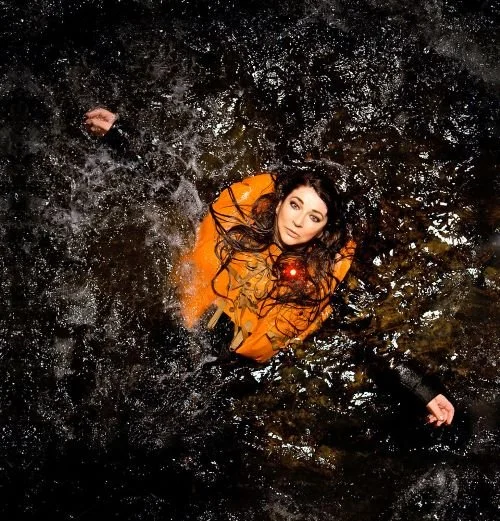
IN THIS PHOTO: Kate Bush was suspended for six hours in a tank of water at Pinewood Studios filming visuals for And Dream of Sheep on The Ninth Wave

Kate Bush’s Stunning Live Album at Six

__________

IN spite of there being some bootlegs…

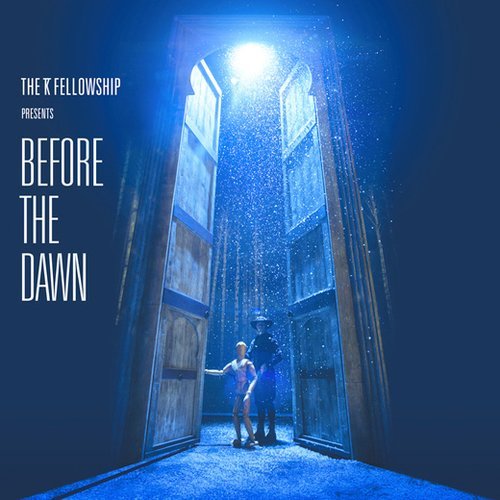
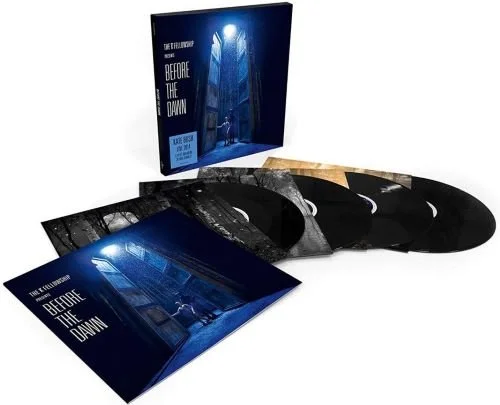
available, the official release of Before the Dawn captures three acts of live perfection from Kate Bush (or The KT Bush Fellowship to be more precise) in Hammersmith in 2014. I know that there are also some low-quality videos fans took during one of the twenty-two nights at the Eventim Apollo. In terms of official and authorised output, the live album is the thing we have. There has not been any news regarding any DVD release. I don’t think there will be. As the Before the Dawn live album was released on 25th November, 2016, I wanted to mark its sixth anniversary. It is not for a while, but I think that people should be aware of it. The latest album in Bush’s discography, you can get the vinyl here. I have written about the residency itself, and I will do so again next year. As I did not get to see Before the Dawn, the live album is my window into what must have been such a wonderfully moving experience! As I did with my previous feature about the album, I will bring in a review. Apologies for repeating anything from that previous piece, but I want to end with an angle around Bush as an innovator in terms of her live work. To start, Kate Bush’s official website says this about the remarkable Before the Dawn:

In March 2014 Kate announced plans to perform 15 shows in London in August and September that year, her first live shows since 1979. The shows sold out so quickly that a further 7 were immediately added, with all shows selling out in 15 minutes. This very website crashed with the demand.

The first night of the shows prompted a complete media frenzy with the Evening Standard declaring that the show was "an extraordinary mix of magical ideas, stunning visuals, attention to detail and remarkable music – she was so obviously, so unambiguously brilliant, it made last night something to tell the grandchildren about."

Later that year the show won the special Editor’s award at the highly prestigious London Theatre Awards, the only contemporary music show to do so.

On November 25 2016 the live album "Before The Dawn" was released on CD (3 CDs) and vinyl (4 vinyl) and digital download. The conceptual heart of the show is reflected in the CD format, which is split over 3 discs centred around the two integral pieces – 'The Ninth Wave' and 'A Sky Of Honey'.

CD1 ends with the pivotal track 'King Of The Mountain' which bridges into 'The Ninth Wave' suite of songs on CD2.

The album was produced by Kate Bush. Nothing on the record was re-recorded or overdubbed”.

I am not going to include them here, but Bush did give some interviews and press around the live album, where she talked about her nerves returning to the stage. The Independent have an interview, whereas The New York Times have one here. She had performed various live performances since 1979, but that year was when she delivered her first live spectacle: the awesome and groundbreaking The Tour of Life. Thirty-five years after Bush helped produce one of the more remarkable and important debut live tours in history, she returned to the same venue that she performed on the final night of The Tour of Life’s run. It is interesting reading the linear notes to Before the Dawn and hearing Bush’s feelings about the show:

It was an extraordinary experience putting the show together. It was a huge amount of work, a lot of fun and an enormous privilege to work with such an incredibly talented team. This is the audio document. I hope that this can stand alone as a piece of music in its own right and that it can be enjoyed by people who knew nothing about the shows as well as those who were there.

I never expected the overwhelming response of the audiences, every night filling the show with life and excitement. They are there in every beat of the recorded music. Even when you can’t hear them, you can feel them. Nothing at all has been re-recorded or overdubbed on this live album, just two or three sound FX added to help with the atmosphere.

On the first disc the track, Never Be Mine, is the only take that exists, and was recorded when the show was being filmed without an audience. It was cut because the show was too long but is now back in its original position. Everything else runs as was, with only a few edits to help the flow of the music.

On stage, the main feature of The Ninth Wave was a woman lost at sea, floating in the water, projected onto a large oval screen - the idea being that this pre-recorded film was reality. The lead vocals for these sequences were sung live at the time of filming in a deep water tank at Pinewood. A lot of research went into how to mic this vocal. As far as we know it had never been done before. I hoped that the vocals would sound more realistic and emotive by being sung in this difficult environment. (You can see the boom mic in the photo on the back of the booklet. This had to be painted out of every shot in post-production although very little of the boom mic recording was used. The main mic was on the life jacket disguised as an inflator tube!) The rest of the lead vocals on this disc were sung live on stage as part of the dream sequences. The only way to make this story work as an audio piece was to present it more like a radio play and subdue the applause until the last track when the story is over and we are all back in the theatre again with the audience response.

Unlike The Ninth Wave which was about the struggle to stay alive in a dark, terrifying ocean, A Sky Of Honey is about the passing of a summer’s day. The original idea behind this piece was to explore the connection between birdsong and light, and why the light triggers the birds to sing. It begins with a lovely afternoon in golden sunlight, surrounded by birdsong. As night falls, the music slowly builds until the break of dawn.

This show was one of the most exciting things I’ve ever been involved in. Thank you to everyone who made it happen and who embraced the process of allowing it to continually evolve. (Album liner notes)”.

I will come to talk about The Ninth Wave and that coming to the stage. Given the fact the residency was so celebrated and sold-out, the reviews for the live album were going to be pretty good. That is not always the case. If the sound is mixed wrong or there is something out of place, it can ruin a live album. It is not a case of grabbing recordings from one of the nights and leaving it there! Bush herself produced the live album and took a lot of care to ensure that it was as good as it could be. I remember buying Before the Dawn and being blown away by the sound and atmosphere. Such a beautifully mixed and produced album, you are transported to Hammersmith and imagine yourself in the audience! This is what Consequence said in their review of the mesmeric Before the Dawn album:

When we think of musicians, fear isn’t usually the first emotion that comes to mind. Even when the stakes are high — say, the first run of shows in nearly four decades — audiences usually assume artists will still have a cool, controlled demeanor. Kate Bush, despite the absolute wealth of accomplishments she has secured over her decades of musicianship, however, felt deep fear.  Her surprise reappearance on the live circuit caught many off guard; perhaps, even herself. In a recent interview with BBC 6, Bush admitted that calming her nerves proved to be a challenge every single night of the tour. Nevertheless, in the grand span of her career, fear has always been the least of her concerns.

As a woman struggling to make her mark in an industry controlled by men, Bush’s journey was never easy. Still, she was a force to be reckoned with, and her whip-smart intelligence, passion, innovation, and creative genius have ensured her a spot in Britain’s cultural pantheon. The tour that spawned her new live album, Before the Dawn, then, was one of the last hurdles Bush had to overcome. She had not toured at all since “The Tour of Life” in 1979, when Bush pushed herself to the point of exhaustion. The stress of bringing together a theatrical production of that scale, coupled with the death of a crew member midway through, would prove to be too much. While a handful of false starts and rumors persisted throughout the years, nothing would materialize until 2014’s “Before the Dawn”, and with it a string of twenty-two shows.

Beyond that engaging backstory, Before the Dawn remains fascinating despite a lack of focus on Bush’s greatest hits. “Hounds of Love” and “Running Up That Hill (A Deal With God)” are relegated to the first of three discs, rather than acting as the thunderous ending that they could have been. While “Cloudbusting” acts as an appropriate finale, the show’s emphasis is firmly placed on two of Bush’s more experimental and ambitious works: “The Ninth Wave” (side two of Hounds of Love) and “A Sky of Honey” (side two of Aerial). That means there is no “Wow”, no “The Man With the Child in His Eyes”, and sadly no “Wuthering Heights”.

Bush, as always, never takes the easy way out. Much like “The Tour of Life”, the “Before the Dawn” tour is an amalgamation of concert, theater, and dance; without that multimedia extravaganza, the resulting album is a little awkward. Throughout “The Ninth Wave” and “A Sky of Honey”, extended versions of songs carry along a plot and dialogue that, without any visuals, sometimes lack for impact.

While “The Ninth Wave” was conceived with a narrative in mind, the subtlety of its studio counterpart’s story made it all gel as a listening experience. “Waking the Witch” still crackles with energy, but the additional two minutes of dialogue add little to the song. Dialogue-only tracks, such as “The Astronomer’s Call” and “Watching Them Without Her”, are interesting distractions that are safe to skip upon a second listen.

The transition from stage to disc is a bit smoother for “A Sky of Honey”, perhaps due to the fact that it was presented as one, extended piece of music on the studio album. While Bush’s songwriting isn’t as direct or attention-grabbing as it in “The Ninth Wave”, the simpler narrative of “A Sky of Honey” solidifies quickly and allows Bush to stretch out into her more atmospheric tendencies. The story revolves around an outdoor summer adventure, and its charming to hear Bush chirp with the birds in “Aerial Tal” and revel along with a jubilant crowd at the ending jig of “Sunset”.

Of course, this would all be for naught if the main attraction wasn’t up to par — but despite the time away, Bush still sounds absolutely astounding. A full 31 years after releasing Hounds of Love and her vocals still tug and tear at the heartstrings. It’s a glorious display of passion empowered by a tight and focused band. (The album’s press release proudly proclaims that “nothing on the record was re-recorded or overdubbed.”) While some of the heavier ’80s guitar crunch may sound a bit silly and outdated, Bush’s complex arrangements and knack for implementing uncommon, international instruments keep things sounding fresh and relevant.

With her usual keen eye for storytelling, a coda of “Among Angels” and a triumphant closing “Cloudbursting” act as a magnificent link between “The Ninth Wave” and “A Sky of Honey” — as well as tying up Before the Dawn rather nicely. Despite the 20-year difference between the two medleys, Bush’s overarching vision is all the more apparent in this grand merging.

While it’s tempting to look at this as an endpoint — a final and well-deserved victory lap — Bush has described this album as “a rather big comma.” This isn’t the end, apparently, and nor should it be. If anything, Before the Dawn is living, breathing proof that Bush still has the creative prowess and unique sensibilities that made her a superstar in the first place. Like most live albums, this is not essential listening for new or casual fans. However, for dedicated fans, both those who could and could not attend the run of shows, it is a reminder of the still very potent lust for life that Bush has always exhibited in her music, art, and personality. It’s a reminder that fear can be conquered in the most ambitious and uplifting way, that fear does not define who we are”.

Some reviewers noted how, if Bush had not performed the suite from Aerial, A Sky of Honey, she could have put some more hits in the mix. One of the reasons for Bush performing that suite was so that it could pair with Hounds of Love’s, The Ninth Wave. The Tour of Life was a brilliant event, as it combined songs from her first two albums, The Kick Inside and Lionheart (1978). In fact, one of the alternate names is The Lionheart Tour. A lot of the brilliance came from the staging and the combination of mime, theatre and different artforms into a live show. Rather than it being conventional and rather static, there is so much movement and sense of concept and cinema throughout. One of the great losses is the fact Bush had not yet brought the mighty The Ninth Wave to the stage. That changed in 2014. When it comes to live innovation, the staging and execution of The Ninth Wave takes some beating. As such an important and loved aspect of Hounds of Love, getting the visuals and story right was a must. With Astronomer’s Call opening the suite, and ending on The Morning Fog, Bush’s 1985 odyssey was recreated for twenty-two nights. If you do not know the story of The Ninth Wave, it involves a woman adrift at sea in need of rescue. She slips in and out of dreams and nightmares.

She loses hope and then regains it. The suggestion is she makes it out though, if you read between the lines, it seems more likely that she did not make it out – and any suggestion of rescue was a dream or her looking on from the skies. In the stage version, Bush did make it out and to safety. The thrill of seeing her winched from the water must have been otherworldly for old and new fans. That said, as Bush herself said, what we see filmed is real. That would be And Dream of Sheep. Everything that is on stage is a dream. It makes me wonder whether, again, what was on stage was part of a dream - and Bush’s heroine ever actually made it out. It is such an intriguing and inscrutable scenario. I think Kate Bush would like to say that everything worked out (to please fans who saw her perform), but I think something darker and less hopeful is the actual reality! Few people who know and love Hounds of Love would ever think they’d get to see its creator bring its suite to life on stage! Of course, other songs from Hounds of Love are included in Before the Dawn. I think The Ninth Wave was one of the major reasons why Bush did come back to the stage. On 25th November, its live album turns six. Aside from remastering her studio albums in 2018, Before the Dawn is the latest album from Kate Bush. I guess the future is open, so you can never say what Bush will do. I do love that she came to the stage and gave fans such a phenomenal show! The live album is absolutely wonderful to hear. It makes me wonder whether we will ever get a live album of The Tour of Life. Maybe not. Back in 2014, before going on stage for that first date of Before the Dawn on 26th August. One can imagine how Bush felt! The live album did relatively well internationally. Except for the U.S. (where it charted very low), it made the top forty in more than a few countries. Reaching four here in the U.K., Before the Dawn got to number two in New Zealand! One of the all-time great live albums, it is something that…

EVERY Kate Bush fan needs.

FEATURE: Spotlight: Jade Novah

FEATURE:


Spotlight

Jade Novah

__________

I would love to see and read…

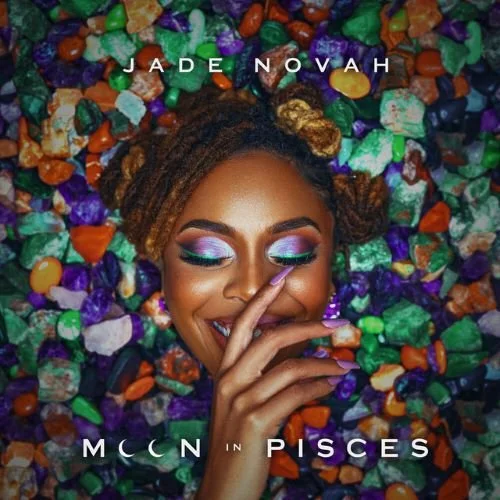
more interviews with the remarkable Jade Novah. A sensational songwriter-singer from Ohio, she may not be known to some people. That is why I want to put the spotlight on her. This feature is designed to highlight rising talent and artists established that may not be in everyone’s consciousness. In the case of Jade Novah, she is definitely established, and yet I think her best days are ahead of her. A wonderous musical force with a voice like no other, she is someone that I want people to know more about. Her recent E.P.,  Moon In Pisces, was released back in August. It is a sensational work! I will finish off with an interview related to that and based around it. There was a lot of anticipation around that E.P. I wonder what Novah has in store for 2023. Seeing her in the U.K. would be a real treat! I know she has some U.S. dates at the moment. There will definitely be a third studio album at some point. Her remarkable 2018 debut, All Blue, was followed by 2020’s Stages. The latter album was released at a time when there was change in the world. The pandemic meant it was not possible to tour widely, and it must have been an odd time. It is a staggering album from an artist who keeps growing stronger. I will come to a 2020 with her. First, and if you do not know about Jade Novah, AllMusic have some biography about the truly sensational and captivating artist:

Versatile contemporary R&B singer and songwriter Lindsay Fields combines her love of both music and acting under the alias Jade Novah. After working as a backup singer and a songwriter-for-hire, she made her recording debut as Novah with the Shades of Jade mixtape in 2012. She is also known for her musical sketch comedy videos and her fully produced cover videos, including a version of Rihanna's "Diamonds" that got over ten million views on social media. Novah's first official album, All Blue, saw release in 2018. Her 2022 EP Moon in Pieces included a duet with Kenyon Dixon.

Born Lindsay Fields in Cleveland, Ohio, Novah was influenced by her father's love of rock music and her mother's affection for musical theater. She sang in church from a young age, eventually moving on to female vocal groups. After a random meeting, Missy Elliott flew her to Miami to sing backup on her 2003 album This Is Not a Test! Later, Fields earned a spot as a backing singer on tour for the Tyler Perry show Madea's Big Happy Family. Deciding to focus on songwriting, she began attending writing camps while networking as a songwriter in New York and L.A. She eventually landed a publishing deal, and wrote songs for the likes of Mya, Melanie Fiona, and Christina Milian as part of the writing group the PenUp Dolls.

Fields returned to singing in 2012, and adopted the pseudonym Jade Novah before releasing the Shades of Jade mixtape later that year. In the meantime, she garnered attention for both a sketch parody of Beyoncé and several cover videos, culminating in millions of online views for her versions of the Rihanna hits "Stay" and "Diamonds" in 2013.

Over the next few years, Fields continued to find work as a songwriter and touring vocalist (Rihanna, Lady Gaga), all the while continuing to work on her own music. More videos appeared on her video channel, including a parody ad for a Christmas album that saw her impersonating Beyoncé, Erykah Badu, Shakira, and others. Fields and her husband, singer/musician Devin Johnson, teamed up on a separate series of covers in 2017 that spanned such well-known artists as Kendrick Lamar, Whitney Houston, and Ed Sheeran. Jade Novah's official debut album, All Blue, followed in mid-2018 on Let There Be Art/Empire. That year, she appeared as a vocal coach on the Fox series The Four: Battle for Stardom, and in 2019, she was nominated for an NAACP Image Award in the category of Outstanding New Artist.

Novah's second full-length, Stages, appeared on Let There Be Art in 2020. It featured collaborations with Eric Bellinger and Jared Brady. She returned in 2022 with an EP titled Moon in Pieces. The six-track set included the song "Rollercoaster" featuring Kenyon Dixon”.

Grammy chatted with Jade Novah back in 2020. Whilst All Blue was a solid and original debut, there was something even more amazing about 2020’s Stages! It is an album that took her to an even wider audience. I have been playing the album a lot the past couple of weeks, in addition to her new E.P. Jade Novah is one of the best artists out there without a shadow of a doubt:

Following the release of her debut offering All Blue, which focused on the multi-faceted artist grounding herself in positivity and elevation, Novah’s life as a singer/songwriter, comedian and social influencer took a complete turn. Recognized by both fans and critics alike, All Blue is one of the most lyrically and vocally focused R&B debuts in recent memory. The project not only helped launch Novah into ventures as a voice actor work and a hosting gig at an Atlanta-based morning radio show, but it also earned her a nomination for the Outstanding New Artist NAACP Image Award last year.

Where All Blue did well to create the colorful foundations of Novah's sound, her sophomore Stages follows in even more evolved fashion. Though, as she notes, the album is not necessarily a sonic departure from her previous release, Stages brings new vigor and intensity to the very aspects of Novah's musical charisma and allegiance to touchstone R&B and hip-hop.

For Novah, Stages represents vulnerability on a completely new level. The project is anchored in genuine emotion that shines through songs written and performed with relatability and authenticity. Inspired by her own life's journey, each song takes on a character and narrative of its own to create an intimate mosaic of personal growth and creative progression.

Songs like lead single "Somebody Son" and "Lay It Down" tout soul and airiness against Novah's silky vocals, while others like "Lifestyle" see Jade opting for heavier hip-hop sensibility, floating over 808s and trap-leaning beats with relative ease.

On the album's opener "Stages," Novah sings of past issues and experiences: "I had food stamps in my Louis Vuitton, felt like a star but couldn’t keep the lights on." Letting listeners into her world may not always be easy, but it’s clear that Novah has committed to being open and honest in her songs for the sake of connecting.

Following the album’s release, the Recording Academy caught up with Novah to discuss the inspirations behind her project, the roadblocks of being an independent artist and how being a "Jane of all trades" has helped her evolve musically.

Can you talk a little bit about your new album Stages? How does it compare to your debut All Blue in its nature and what kind of themes were you trying to present with it?

Stages is my second album, my second full project. I don't want to say it's a departure from my last project. My last project was All Blue, and this project Stages I think is just unique in that each song has its own original character. Literally its own persona, its own vibe and on the record, I’m going through all these stages that I've been through as a woman, as a single mother at one point to now being a wife, just that journey from the beginning to this point in my life. I feel like every song has something that everyone can relate to, everyone who’s finding or going through their own stage with this album. I’m pretty excited about it.

You had a pretty big year in 2019 following the release of All Blue, including a nomination for Outstanding New Artist at the NAACP Image Awards. How did all of that feel and where did it put your headspace going into the recording of Stages?

As far as last year, it was definitely a year of transition. In addition to working on the project, I was voicing all these characters for a cartoon called "Sugar & Toys!" and I was hosting a morning show in Atlanta during the day. As you mentioned, some of the awards and accolades that happened in the midst of all those transitional things was just confirmation. You know, it’s one thing to be respected amongst yourself and your peers, but it’s another thing to reach that level of respect in the industry, to even be nominated. Especially, considering the independent artist part. The journey has been that much more difficult kind of doing things on your own and realizing all of the feelings and roadblocks that you have to deal with when you don’t have a machine behind you, so that was sort of a payoff for anyone that was a naysayer or even taking more of the road less traveled to maintain my creative control, my musical integrity and my masters, just thinking of the long run.

Those things starting to happen last year helped inspire this new project because in those roadblocks I realized, okay, there’s more of a story to be told here. I feel like I've lived a million different lives, between the morning show, the cartoon, being a mom, all these hats that I’ve had to wear. I thought that it was important to tell a story as a woman that look, you can do it all. I remember there was a point when I was doing a lot of comedy and then also trying to create music for my first project and be taken seriously for both. In the beginning of my career, people would be like just pick one. "What do you do?" But I feel like in 2020 with social media we’re in such a beautiful space to be able to do multiple things. Stages is not only a musical project for me, but it’s also storytelling, which I love to do, and showcasing all these different factors of myself to say we really can do it all, don’t box me in.

Everything has its own sound too which is super unique because the common thread in the project is really just the fact that it's telling my stories. Sonically it's everything from hip-hop to '90s R&B. It’s really kind of a nod to that. Being in that space of feeling like I can do whatever I want to do, unapologetically.

One thing I noticed about Stages in listening is that it’s lyrically very personal. Why is sharing that way important to you as an artist and how are you able to open up so much through your songwriting?

Well, I think authenticity is really the only way to connect. If you're making art, why wouldn’t you make art that's honest and genuine? I’ve always been an open book and I think that helps to strengthen the bond with my supporters or the people who are connecting with my music. For me to be vulnerable, it allows them to deal with their emotions or reflect on the things that they’ve been through so that when we do it live, it’s that much more impactful.

The last tour that we did for All Blue, it was hearing other people’s stories and them coming up to me and saying "Time" touched me and it made me feel. I'm not 25 anymore either but I still got time. Putting yourself out there makes it comfortable for everybody else to do the same and I think the more vulnerable we all are, the more we can realize that we’re not that different and we're all connected. That's really the most powerful thing I think about being an artist and being a musician, in particular, is being able to tell stories that everyone can really relate to and all just being on the same wavelength.

What were some of your influences and inspirations? You mentioned that the album has a lot of different sonic range, so who were you listening to at the time of recording?

I love 90’s R&B! I feel like everyone in my generation does, but I really really have an appreciation for it. Just because there was integrity with vocals that I don’t know is still as present today. I grew up loving Whitney Houston, Toni Braxton, Mariah Carey—artists who really understood the importance of vocal excellence.

As far as hip-hop, Left Eye and Missy Elliott. Female MCs who weren't afraid to take risks and who didn't necessarily always lean towards hypersexuality. Which, again, is a beautiful thing and I do touch on it in this album as well, but I could only listen to certain artists when I was younger so I naturally gravitated to the more creative and resourceful hip-hop artists. And also Lil' Kim! I know she got down and dirty but no one was out-rhyming her.

What inspired me to tell those specific stories, I’ve been journaling since I was a little kid. Literally, since I was about eight years old, I have stacks of journals from eight years old all the way until now. I was going through this transitional space in my life and figuring out what are the things that I want to focus on moving forward in my career? Doing a lot of self-reflecting and looking back at old journal entries, looking at the things that I wanted and seeing the things that finally manifested. That realization of "Woah, there was a journey from point A to point B that I don’t think I really highlighted."

All Blue was all about positivity and elevation, which is a beautiful thing but I think that it’s not realistic to promote only that one sort of story since in order to get there, you have to go through some sh*t. Even sometimes when you’re in a space of positivity you backslide or sometimes you have a bad day. Last year was the most up and down year for me that I had ever felt. Especially being an artist on the independent level because for example, I went from my tour and selling out eleven cities, but I was still doing the morning show to make ends meet. That realistic portrayal of what it really means to be an artist inspired this project.

Do you think doing so many things—the morning show, background singing, acting, voiceovers, building and maintaining a social media audience—has helped you evolve in your music?

Yeah, it has. Especially the morning show, because I got to interview my peers and artists that I look up to. Everyone from Lil Nas X to storytellers like Issa Rae, getting a chance to hear their stories. Nick Cannon specifically was one of the most amazing interviews that I did because he is someone that has mastered the art of literally doing it all. He’ll go from hosting shows to putting out a rap song to doing a woke-ass podcast to dominating social media. That definitely inspired me, hearing everyone’s stories and realizing, wow, we have a lot in common. I think that the average person who doesn’t necessarily create also has those experiences too. But yes, doing all of those things has definitely helped.

So what’s next for Jade Novah?

We’re getting ready to take it on the road, the Stages tour. It starts March 20 and we’re doing 17 cities. I’m doing it with my husband Devin Johnson, who also executively produced the album. He's Lizzo’s musical director and he's done so many amazing things. He’s also my music director so I’m really excited to bring that story to life on the stage”.

I am going to round things up soon. Rated R&B talked with Jade Novah earlier this year about the excellent Moon in Pisces E.P. If you have not heard the E.P., then I would very much urge people to hear it now. There is something about the songs and Novah’s vocals that ensure every moment stays with you. Such a heartfelt and stunning singer. I know she has done some acting but, honestly, I think that she would be a very natural actor who could star in a wide range of fascinating projects. Just a bit of a side-note there!

Jade Novah is many things — a singer, songwriter, a Beyoncé impersonator, but she is decidedly a woman madly in love with her man. The multifaceted entertainer made it hard to deny at Amos’ Southend in Charlotte, North Carolina, as part of her Moon in Pisces Tour.

Novah embarked on a national tour with her husband Devin Johnson as her sidekick, playing drums and keys. He also served as her muse for most of the setlist, relentlessly bouncing between tempos and moods that chronicled aspects of their relationship and where she’s at right now.

The songs on Moon in Pisces, her most recent EP, showcase their durable bond. “It’s a full musical journey where we navigate our ups and downs in love while healing and self-reflecting,” Novah said in a press statement.

Featured songs on Moon in Pisces include the lead single “I Just Wanna Know” and the current focus track “Trip.” She just released a music video for the latter, which Rafael Gutierrez directed.

Although she just released Moon in Pisces, Novah is already in album mode for the follow-up to 2020’s Stages. “It’s just the beginning,” she tells Rated R&B.

Following Novah’s extraordinary hour-long set and special performances by Dondria and Jared Brady, she invited Rated R&B to her green room for wine and conversation. She reflected on touring the new EP with her husband, collaborating with Kenyon Dixon and more. Check out Rated R&B’s interview with Jade Novah below.

You wrote and recorded Moon in Pisces with your husband, Devin Johnson, and toured it with him. What’s the energy been like performing the songs you created together?

The live show is such a reflective experience. It’s a healing experience for both of us because when we created the concept for the project and the tour, we both relived a lot of moments. I was telling a story [on stage], some of it was about us, but some was about our past relationships. So telling those stories and talking to each other about those things, we were able to get this stronger bond and this stronger appreciation for the connection that we have. Living it every day, performing it, and just telling this story through art together has been some sort of transformation that has gotten us even deeper in our love in our relationship just from doing all these things together. It’s been beautiful.

You’ve been out on the road for most of the summer. How does performing on tour affect what to do next in your music?

For this tour specifically, it was the first time we really used all of my gifts of storytelling, comedy, and music because the variety show is ultimately what I’m trying to create. Seeing the reactions and energy from people is just affirming.

You’ve mastered diva impersonations of Beyoncé, Toni Braxton, and Cardi B, among others. What’s another diva impersonation that you’d like to include in the future?

I’ve been working on Doja Cat (laughs). I’m going to work that one out. I’d love to incorporate Megan Thee Stallion. Hopefully, those ladies come on soon.

FOR years to come.

_______________

Follow Jade Novah

FEATURE: To Have Been There on the Night… Kate Bush’s Before the Dawn Live Album at Six

FEATURE:


To Have Been There on the Night…

Kate Bush’s Before the Dawn Live Album at Six

__________

A couple of Kate Bush albums…

 PHOTO CREDIT: Getty Images

celebrate anniversaries in November. In fact, that is not true. What I mean is a couple of non-studio albums celebrate anniversaries. I wanted to include and highlight them, as they are important. One is her greatest hits album, The Whole Story. I wanted to spend some time today looking at the live album of her 2014 residency, Before the Dawn. I have talked about that twenty-two-date series of shows many times though the years. The live album is incredible to listen to. Before the Dawn is an amazing album that Bush spend a long time helping to mix and get right. I do love when artists get involved with the final sound of a live album. There has been no DVD of the show, so the live album is the only documentation those who did not go have. I did not get a ticket, so I can only imagine what it would have been like in Hammersmith at the Eventim Apollo watching in 2014. The live album was released on 25th November. I am going to publish another feature about the live album nearer to the anniversary. There was a series of unofficial releases called Before the Dawn from Apollo. In fact, a few bootleg and unofficial releases are there that were recorded during the first few nights of the residency. It is a shame that these are available, because the official album is one that fans need to buy and treasure – though I can appreciate these unofficial releases are cheaper.

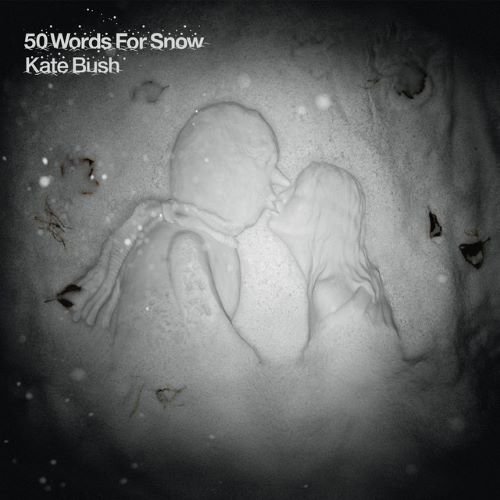
Before the Dawn was released on a four-L.P. set, a double-C.D., and a digital download. Reaching number four in the U.K., this album is very important. Not only is it another that has reached the top ten – all of her studio albums have reached the top ten, as did The Whole Story -, but it is technically the latest album from her. 2011’s 50 Words for Snow is the latest studio album – and Bush remastered her albums in 2018 -, but this is the latest album with original vocals and performances. Because Before the Dawn is six on 25th November, I wanted to approach it from different angles. Released on Kate Bush’s Fish People album, it is a phenomenal recording from The KT Fellowship (the name she gave to her band). Go and get the album on vinyl if you can afford it, as it is such an immersive and jaw-dropping experience! Sourced from the Kate Bush Encyclopedia, here are the linear notes from the extraordinary album:

It was an extraordinary experience putting the show together. It was a huge amount of work, a lot of fun and an enormous privilege to work with such an incredibly talented team. This is the audio document. I hope that this can stand alone as a piece of music in its own right and that it can be enjoyed by people who knew nothing about the shows as well as those who were there.

I never expected the overwhelming response of the audiences, every night filling the show with life and excitement. They are there in every beat of the recorded music. Even when you can’t hear them, you can feel them. Nothing at all has been re-recorded or overdubbed on this live album, just two or three sound FX added to help with the atmosphere.

On the first disc the track, Never Be Mine, is the only take that exists, and was recorded when the show was being filmed without an audience. It was cut because the show was too long but is now back in its original position. Everything else runs as was, with only a few edits to help the flow of the music.

On stage, the main feature of The Ninth Wave was a woman lost at sea, floating in the water, projected onto a large oval screen - the idea being that this pre-recorded film was reality. The lead vocals for these sequences were sung live at the time of filming in a deep water tank at Pinewood. A lot of research went into how to mic this vocal. As far as we know it had never been done before. I hoped that the vocals would sound more realistic and emotive by being sung in this difficult environment. (You can see the boom mic in the photo on the back of the booklet. This had to be painted out of every shot in post-production although very little of the boom mic recording was used. The main mic was on the life jacket disguised as an inflator tube!) The rest of the lead vocals on this disc were sung live on stage as part of the dream sequences. The only way to make this story work as an audio piece was to present it more like a radio play and subdue the applause until the last track when the story is over and we are all back in the theatre again with the audience response.

Unlike The Ninth Wave which was about the struggle to stay alive in a dark, terrifying ocean, A Sky Of Honey is about the passing of a summer’s day. The original idea behind this piece was to explore the connection between birdsong and light, and why the light triggers the birds to sing. It begins with a lovely afternoon in golden sunlight, surrounded by birdsong. As night falls, the music slowly builds until the break of dawn.

This show was one of the most exciting things I’ve ever been involved in. Thank you to everyone who made it happen and who embraced the process of allowing it to continually evolve. (Album liner notes)”.

You can pick up memorabilia of Before the Dawn if you were not lucky enough to be there. I think that the album is one that every Kate Bush fan should have in their collections. I want to get to a couple of reviews for the 2016 live album. Before that, FADER were one of the lucky few who interviewed Kate Bush to promote it. It is interesting hearing what she said about the shows – and the fact she ranks Before the Dawn as one of her greatest achievements:

You really dug into the archives for your 2014 live shows. How has your relationship with your older material evolved?

Well, part of the decision to do the live shows was because it was such an interesting challenge to work with the two narrative pieces [“The Ninth Wave” and “A Sky of Honey”], rather than just doing a bunch of single tracks.

It was within such a specific context, because [the setlist] was very much put together for a live event. Through that process, the songs naturally evolved because I was working with a band, a lot of whom I never worked with before. I just chose tracks that I wanted to do, that really worked with the band, and to keep it really focused in a rhythmic way.

Although the music was always kept as the lead, I didn't want the visuals to feel separate. What I had hoped was that what had been created was an integrated piece of theater that worked with the music — that it wasn't just music that had theatrics added to it — that there was a real sense of it being something that worked as a whole.

As a performer, do you get lost in the moment or do you focus on the technical intricacies?

I had to stay really focused as a performer because I'm quite nervous, and I wanted to make sure I was really present when I was performing so that I could try and deliver the character of the song. And actually, the first set was the most difficult part to perform for me, because almost each song is from a completely different place.

Before the 2014 shows you hadn’t toured since 1979. When your return to the stage was so well-received, did you wish you’d done it sooner?

I don't know really. The original show was of the first two albums that I’d made, and I had hoped that to do another show after I had another of two albums’ worth of material. And as I started getting much more involved in the recording process, it took me off into a different path where it was all about trying to make a good album. It became very time-consuming, so I moved into being more of a recording artist. And every time you finish an album, there's the opportunity to make visuals to go with some of the tracks. So I became very involved in that, as well.

 IN THIS PHOTO: Kate Bush during her Before the Dawn residency in 2014/PHOTO CREDIT: Ken McKay

Are you currently working on new music?

No, I'm not. I've been tied up with this project for a really long time. And right now I'm tied up with the promotion and other elements that go with getting ready to release the album. I'm looking forward to being in the space where I can think about what's next.

Do you have a technical achievement that you're most proud of in your career?

I'm really proud of what we did with those live shows, because it was very ambitious and I didn't know if it would work. It was a very complex technical show that involved the most incredible team of people. The most intelligent, sensitive people. Fantastic band, actors, everybody there had something so special to bring to that show, and I think the response that we got was more than you could ever wish for. I'm so pleased that we did it.

It was a very humbling experience, really. Every night you had a completely different audience, and every night they were so warm. It really meant so much that they liked it. It was very moving, because it felt like the audience came on that journey with us, and, each night, it was a slightly different journey”.

I want to round off with a couple of reviews for Before the Dawn. The reviews were largely positive for this live extravaganza. You can tell that Bush and the entire crew and team put their all into every show! The live album is an amazing documentation of something we will never see again. You can hear Bush’s happiness radiating throughout. Although nervous, there is no doubt she was feeling the love from the crowd each night! The Guardian said this in their 2016 review of the Before the Dawn album:

A pressing question looms over Kate Bush’s new live release, her first since Live at Hammersmith Odeon in 1994, an album drawn from her then most recent live shows, some 15 years before. That question being: what’s the point? Live albums can only ever hope to give the faintest flavour of the multi-sensory experience of attending a gig, and Bush’s 2014 shows at the Hammersmith Odeon were about as multi-sensory an experience as gigs get. The subsequent album isn’t credited to Bush but the K Fellowship, presumably in recognition of the vast ancillary cast of musicians, technicians and actors required to bring Before the Dawn to fruition – but it obviously doesn’t capture most of the results of their work. You get a vague sense of the crackling excitement in the audience, but despite the plentiful photos in the CD booklet (“Note the parked helicopter at the top,” reads one caption) it can’t give you any real sense of the overwhelming visual spectacle of the shows, which the DVD that was mooted to appear last year, but never did, might have done. There are moments on the album when the audience break into spontaneous applause during a song. If you were there, you find yourself scrolling through your memory to work out what provoked it – not an easy task, given that audiences frequently seemed to be so overwhelmed to be in Bush’s presence that they applauded pretty much everything she did. If you weren’t, it’s doubtless even more frustrating.

Meanwhile, it’s hard to work out whether the original show’s solitary misstep – the clunky, ostensibly comedic playlet by novelist David Mitchell inserted in the middle of The Ninth Wave – is amplified or minimised by appearing on an album. Divested of the accompanying action, its dialogue sounds even more laboured, even more like a particularly spirit-sapping scene from perennially unfunny BBC1 sitcom My Family. On the other, well, there’s always the fast-forward button, although long-term fans might suggest that it wouldn’t really be a Kate Bush project unless an array of dazzling brilliance and original thinking was offset by at least one moment where she felt impelled to follow her muse somewhere you rather wish she hadn’t. You can file the playlet alongside The Dreaming’s Australian accent, dressing up as a bat on the back cover of Never for Ever, and The Line, The Cross and the Curve, the short film that accompanied The Red Shoes, later appraised by its author as “a load of bollocks”.

Clearly a degree of tinkering has gone on with the music. A beautiful take on Never Be Mine, from 1989’s The Sensual World, seems to have mysteriously appeared in the middle of the initial act, which never happened during the actual concerts, raising the tantalising prospect that far more material was prepared than made it to the final show. Perhaps they were off in a rehearsal studio somewhere, trying out versions of Suspended in Gaffa and Them Heavy People after all. But the really arresting thing about Before the Dawn – given that Bush is an artist whose perfectionism has led her to make a grand total of three albums in the last 22 years, one of them consisting of pernickety rerecordings of old songs – is how raw it sounds.

Of course, raw is an adjective one uses relatively, when considering an album that features a band of blue-chip sessioneers, celebrated jazz-fusion musicians and former Miles Davis sidemen: you’re not going to mistake the contents of Before the Dawn for those of, say, Conflict’s Live Woolwich Poly ’86. But, unlike most latterday live albums, it actually sounds like a band playing live. There’s a sibilance about the vocals, a sort of echoey, booming quality to the sound, the occasional hint of unevenness: it doesn’t feel like a recording that’s been overdubbed and Auto-Tuned into sterility. Given their pedigree, you’d expect the musicians involved to be incredibly nimble and adept, but more startling is how propulsive and exciting they sound, even when dealing with Bush’s more hazy and dreamlike material. It’s a state of affairs amplified by Bush’s voice, which is in fantastic shape. On King of the Mountain or Hounds of Love, she has a way of suddenly shifting into a primal, throaty roar – not the vocal style you’d most closely associate with Kate Bush – that sounds all the more effective for clearly being recorded live. Furthermore, there’s a vividness about the emotional twists and turns of A Sea of Honey, A Sky of Honey – from the beatific, sun-dappled contentment associated with Balearic music to brooding sadness and back again – that just isn’t there on the studio version, great though that is.

That answers the question about what the point of Before the Dawn is: like 2011’s Director’s Cut, it’s an album that shows Bush’s back catalogue off in a different light. And perhaps it’s better, or at least more fitting, that her 2014 shows are commemorated with an album rather than a film or a Blu-ray or whatever it is that you play inside those virtual reality headsets people are getting so excited about. They were a huge pop cultural event, as the first gigs in four decades by one of rock’s tiny handful of real elusive geniuses were always bound to be, but they were shrouded in a sense of enigma: almost uniquely, hardly anyone who attended the first night had any real idea what was going to happen. Even more unusually, that air of mystery clung to the shows after the 22-date run ended: virtually everyone present complied with Bush’s request not to film anything on their phones, and the handful that didn’t saw their footage quickly removed from YouTube. Before the Dawn provides a memento for those who were there and a vague indication of what went on for those who weren’t, without compromising the shows’ appealingly mysterious air: a quality you suspect the woman behind it realises is in very short supply in rock music these days”.

I am going to end with Pitchfork’s take on Before the Dawn. Perhaps it is not a shock to see positive reviews for the album as the live show itself was lauded so highly! Not available on streaming services (just Apple Music), I hope that it does come there one day – as it would provide greater accessibility to new fans. The vinyl and C.D. versions are well worth the cost:

Live albums are meant to capture performers at their rawest and least inhibited, which doesn’t really apply to Before the Dawn. Bush is a noted perfectionist best known for her synthesizer experiments and love of obscure Bulgarian choirs, but her recent work has skewed towards traditional setups that reunite her with the prog community that fostered her early career. With marks to hit and tableaux to paint, the 2014 shows were more War of the Worlds (or an extension of 2011’s Director’s Cut) than Live at Leeds. But never mind balls-out revamps of Bush’s best known songs; with the exception of tracks from Hounds of Love, none of the rest of the setlist had ever been done live—not even on TV, which became Bush’s primary stage after she initially retired from touring. These songs weren’t written to be performed, but internalized. Occupying Bush’s imagination for an hour, and letting it fuse with your own, formed the entirety of the experience. Hearing this aspic-preserved material come to life feels like going to sleep and waking up decades later to see how the world has changed.

 PHOTO CREDIT: Ken McKay

“Jig of Life” is the midpoint of Before the Dawn, and its crux. It forms the part in “The Ninth Wave” where Bush’s character is exhausted of fighting against drowning, and decides to succumb to death. A vision of her future self appears, and convinces her to stay alive. “Now is the place where the crossroads meet,” she chants, just as her (then) 56-year-old voice channels her 27-year-old one. Despite her alleged taste for burning one, Bush’s voice has gained in power rather than faded with age. It’s deeper now, and some of the songs’ keys shift to match, but it’s alive and incalculably moving, still capable of agile whoops and tender eroticism, and possesses a newfound authority. When she roars lustily through opener “Lily” and its declaration that “life has blown a great big hole through me,” she sets up the stakes of Before the Dawn’s quest for peace. In Act One, she’s running from the prospect of love on “Hounds of Love” and “Never Be Mine,” and from fame on “King of the Mountain,” where she searches for Elvis with sensual anticipation. She asks for Joan of Arc’s protection on “Joanni,” matching the French visionary’s fearlessness with her own funky diva roar, and sounds as if she could raze the world as she looks down from “Top of the City.”

Rather than deliver a copper-bottomed greatest hits set, Bush reckons with her legacy through what might initially seem like an obscure choice of material. Both Acts Two and Three take place in transcendent thresholds: “The Ninth Wave”’s drowning woman is beset by anxiety and untold pressures, with no idea of where to turn, mirroring the limbo that Bush experienced after 1982’s The Dreaming. That suite’s last song, the cheery “The Morning Fog,” transitions into Aerial’s “Prelude,” all beatific bird call and dawn-light piano. The euphoric, tender “A Sky of Honey” is meant to represent a perfect day from start to finish, filled with family and beautiful imperfections. “Somewhere in Between” finds them atop “the highest hill,” looking out onto a stilling view, and Bush’s eerie jazz ensemble anticipates the liminal peace of Bowie’s Blackstar. “Not one of us would dare to break the silence,” she sings. “Oh how we have longed for something that would make us feel so… somewhere in between.”

Purgatory has become heaven, and in the narrative Bush constructs through her setlist, “A Sky of Honey” represents the grown-up, domestic happiness that staves off the youthful fears explored on Hounds of Love. For her final song, she closes with a rendition of “Cloudbusting,” a song about living with the memory of a forbidden love, which is even more glorious for all the hope that it’s accumulated in the past 30-odd years. Bush’s recent life as a “reclusive” mother is often used to undermine her, to “prove” she was the kook that sexist critics had pegged her as all along. These performances and this record are a generous reveal of why she’s chosen to retreat, where Bush shows she won’t disturb her hard-won peace to sustain the myth of the troubled artistic genius. Between the dangerous waters of “The Ninth Wave” and the celestial heavens of “A Sky of Honey,” Before the Dawn demystifies what we’ve fetishized in her absence. Without draining her magic, it lets Bush exist back down on Earth”.

Such an amazing album, Before the Dawn is six on 25th November. With Bush fully involved in the mix and sound for the album, it does make me sad that this might be the last live recording we hear from her. Those who attended one of the twenty-two nights in Hammersmith back in 2014 were treated to a remarkable and rare spectacle! In part persuaded to return to the stage by her on Bertie, the public definitely missed her! Listening to Before the Dawn transports you to that space. The songs come alive and, although we cannot see what the audience saw, you can imagine what is happening. It is a powerful and memorable live album from…

THE sensational Kate Bush.

FEATURE: Dreaming, Nightmares and Reawakening: Kate Bush 1982-1983: Her Most Transformative Career Period?

FEATURE:


Dreaming, Nightmares and Reawakening

IN THIS PHOTO: Kate Bush and her mother Hannah in the video for Suspended in Gaffa, 1982/PHOTO CREDIT: John Carder Bush and Little Brown Book Group (from KATE: Inside the Rainbow)

Kate Bush 1982-1983: Her Most Transformative Career Period?

__________

I have written about Kate Bush…

 IN THIS PHOTO: Kate Bush at Abbey Road Studios on 15th October, 1982/PHOTO CREDIT: Steve Rapport/GI

and the year 1983 before. I will come back to that. I am writing a run of features around albums of hers that have anniversaries this month. One of them is 2005’s Aerial. That year and double album was a real revelation. Many did not think there would be another Kate Bush album after 1993’s The Red Shoes. Many might think that both 1993 and 2005 are crucial years and transformative periods for Bush. The former was a busy year where Bush reached a point where she could not really carry on how she was. Perhaps exhausted and not at her peak, she would step away and was growing weary of being seen as weird and reclusive. Perhaps still being labelled and judged, she need time away. Not that she had a breakdown or was ground down. You could tell that this was a time in her career when she needed an extended time away without demands. In 2005, Bush came back to music seemingly renewed. With a different sound and type of music, this was a very different artist to the one that the public heard in 1993. After the birth of her son Bertie in 1998, you get the sense Kate Bush was reinvigorated and given fresh purpose and inspiration. It is arguable to say 1993 and 2005 were pivotal times in her career. I would say, in terms of transformation and revival, looking at 1982 and 1983 are the most crucial two years.

I shall not revisit 1982’s The Dreaming too much, as I did so when writing features for its to mark its fortieth (which happened in September). I am thinking back forty years and what Kate Bush’s world must have felt like. Consider the fact she was immersed in recording and promoting The Dreaming in 1982. The album seemed to be most exhausting for Bush. The first she produced solo, Bush threw everything into it. From the density, depth, and originality of songs, through to the amazing sound, use of the Fairlight CMI and the breadth of the compositions, this was her most compelling, layered, and innovative album to that point. The effort, attention and time committed to getting it finished did not gel too well with EMI – who wanted to something sooner (her previous album Never for Ever, came out in 1980) and commercial -, and there was a slight sense of confusion from some critics. In retrospect, one might see 1982 (and the period from September 1980 when she started recording) as a year when Bush burned out or, in an effort to have autonomy and prove herself as a serious artist, pushed herself beyond the limit. I actually think it was a moment when Bush wanted to follow music heroes and innovators like David Bowie and release something almost artistic. A record that would last for decades. I have raved about The Dreaming and how important it is. Acclaimed now and considered one of her best albums, there were repercussions and effects.

Before getting to that, Frieze recently looked at The Dreaming and ended with some profound and thought-provoking words (…“the transmutation of her sweet (if ‘kooky’) aesthetic into something rambunctious and resistant. But a description, too, of how we ought to behave as belated adepts of such a creation. The icon, no matter how loved or venerated, is not the artist – let alone a substitute for the waywardness of the work. Before and after The Dreaming, and likely for different reasons, Bush shied from her wildest instincts, or directed them to more melodic or commercial ends. But here, for a moment, all is suspended, all is possible. Am I doing it? Can I have it all?”). There are some sections of the article that really caught my eye and are relevant to this feature:

In some ways, The Dreaming – Bush’s first commercial failure following three hit albums – is very much an artefact of 1982. It was the year that avowedly primitive, if futuristic, synth pop gave way to something more lush, wild and expansive. ABC’s The Lexicon of Love, The Associates’ Sulk, Prince’s 1999: like The Dreaming, these are records on which the rigours of inherited forms – pop, funk or post-punk – are thrown to the wind and all whims indulged, whether recording in an abandoned swimming pool (Bush) or filling the drum kit with water (Associates). The new technologies of digital synthesis and (especially) sampling began to recast mainstream pop as pure aural adventure, everything suddenly vaster than it had sounded months before.

Of course, some versions of this moment were more extreme than others, but the shift, which lasted until the middle of the decade, was towards a kind of digital psychedelia, distinct from the one then emerging in dance music of the same period – more sheerly strange new sounds on the radio than anyone had heard since 1967. In 1982, nobody expected Bush to be at or near the hard edge of a new aesthetic. From her first hit, ‘Wuthering Heights’ (1978), onwards, the combustion was all in her melodies and skyrocketing voice.

By contrast, the instrumental texture of her records sometimes sounded as if confected by the house orchestra of a 1970s chat show. But Bush had lately become fascinated by the potential of the Fairlight CMI: a digital synthesizer, workstation and sampler she’d employed sporadically on her 1980 album Never for Ever. And she was impressed by the huge, gated-reverb drum sounds attained on recent albums by Peter Gabriel and Public Image Ltd. Bush engaged the recording engineers Hugh Padgham and Nick Launay, who’d worked on those records, but produced The Dreaming herself; the result, as Richard Cook wrote at the time in New Musical Express (1957–2018), is an album on which ‘at any one moment, everything is going on’.

“After The Dreaming, Bush retreated, built her own studio, went deeper with her machines and returned on Hounds of Love with a sleeker sound for the album’s four singles, while also establishing a simple division between these and the record’s eerie, conceptual second side, titled The Ninth Wave. Suddenly, she was perceived as a mature artist, an avant-gardist of the hit parade, a pioneer of a modern, studio-bound version of female independence in the music business. All of which is in play now when we speak of her legacy among artists since: Björk, Fever Ray, FKA Twigs, Lorde, Joanna Newsom, Caroline Polachek, SOPHIE and Tricky. Such lists, and regular interview namechecks, can feel dutiful and obvious, pointing to superficial resemblances. Whereas the actual influence (if that is at all the word) of a work like The Dreaming is more fleeting, submerged, a matter of textural spectre or unlocatable atmosphere”.

How bad, transformative, and challenging was 1982? It was definitely a busy year. I think, in terms of media perception and what she was being asked in interviews, there was still a feeling that she was not a serious artist. Perhaps too kooky to be considered relevant and serious. Before wrapping up the 1982 section with a sense of how she was feeling and how essential 1983 was, I want to quote from the BREAKTHROUGH 5 interview that Abby Sheffield conducted circa 1983:

Home for Kate Bush means both her parents' house in Kent and the place that she and her brothers, Paddy and John, have bought about seven miles away. The location of the new house is a closely guarded secret <no longer where Kate herself lives> and they bought it so that trips up and down to London would be easier. Home also means seeing her friends--some new ones from the music business, some old ones from school days and from her brother's old band, with whom Kate used to sing before going solo. Finally, home means being with her boyfriend, about whom she is understandably secretive.

"It's hard because my life is so unpredictable. He's an artist, by the way, but not in the music business.<This is a rare instance where Kate has made an outright lie to the press.> It's the one area of my life that I really do consider private. And I can't keep it private unless I keep it close."

 IN THIS PHOTO: Kate Bush in 1983/PHOTO CREDIT: Brian Griffin

Have three years as a superstar changed her at all? "Yes," she admits; "I've become a perfectionist, for one thing." Although not a lonely teenager, she did spend a lot of time on her own, singing, reading and writing the poetry which forms the basis of her songs. "I wasn't a daydreamer," she says. "Writing songs and poetry is putting into words and music my real feelings. Without being too critical of Wuthering Heights, I do think that it was a bit misleading; it seemed to suggest too much fantasy and escapism"

Kate wants to dispel the notion that she is someone who writes about fantasy. "I think my lyrics have a far tougher edge to them now. I always thought that ultimately I would be super tough...presuming that as I gathered experiences I would learn to accept situations for what they are. That has worked in some ways, but in others I'm far more vulnerable."

One new song on her next album has Kate talking about herself and her new awareness of life, its goals and inevitable pressures. "The song is called Get Out of My House ," she says, "and it's all about the human as a house. The idea is that as more experiences actually get to you, you start learning how to defend yourself from them. The human can be seen as a house where you start putting up shutters at the windows and locking the doors--not letting in certain things. I think a lot of people are like this--they don't hear what they don't want to hear, don't see what they don't want to see. It is like a house, where the windows are the eyes and the ears, and you don't let people in. That's sad because as they grow older people should open up more. But they do the opposite because, I suppose, they do get bruised and cluttered. Which brings me back to myself; yes, I have had to decide what I will let in and what I'll have to exclude.

"While I was working on this album I was offered a part in a TV series. I've been offered other acting roles, but this was the first totally creative offer that has ever come my way. I had to turn it down--I was already committed to the album. Sadly, I don't think that offer will be made again, but you have to learn to let things go, not to hang on and get upset, or to try to do it and then end up making a mess of everything else. It's like wanting to dance in the studio when I'm recording--I want to but I know that I can't because it will just tire me. I wish I had the energy to do everything," she says, sighing at her limitations, "but at least I'm healthy and fit."

Kate is one of those lucky people who never puts on weight. <Well...> She's a slim, elf-like, five foot three and has been a vegetarian since sixteen because, she says, "I just couldn't stand the idea of eating meat--and I really do think that it has made me calmer." She smokes occasionally--though she admits she shouldn't--and hardly drinks. "Champagne, I love champagne...but I don't really call it alcohol!" She confesses that she doesn't do breathing exercises, though she is very aware of breath control when she is singing. She regards her voice as a "precious instrument: it can be affected by almost anything: my nerves, my mood, even the weather." On stage she's a bundle of energy--a complete contrast to the calm, mature, pretty girl who sits drinking coffee in the elegant farmhouse drawing room.

"My plans for the future..." she muses. "Well, I want to get into films. And I want to do more on stage. I love staging my own shows, working out the routines, designing the whole package, and using every aspect of my creativity." What kind of films would she like to make? "My favourite is Don't Look Now. I was incredibly impressed by the tension, the drive and the way that every loose end was tied up. I get so irritated by films which leave ideas hanging."

Singing, she says, will always be with her. So will songwriting. Never satisfied with her voice or with her work, she strives all the time towards some impossible goal of perfection. "But, I suppose," she says, "that if the day ever came when I was 100 per cent satisfied, that would be the day that I stopped growing and changing--my deatch knell."

Despite her stardom, Kate Bush has remained amazingly gentle and sensitive. She is well aware of how easy it would be to be sucked into the music business, drained of all her natural creativity in and artificial world. To her the most important thing is, "To feel that I am progressing with my own life and my work. I also desperately want to feel some kind of happiness in what I am creating. Not contentment," she pauses, "but pleasure”.

1982 was a year where Bush released the album she had always wanted to make. In retrospect, maybe she put too much into it and needed to balance the experimental and esoteric with more commercial and accessible. Also, one cannot deny how influential The Dreaming was. As a female artist in 1982, there were not many peers releasing music like this, let alone writing it themselves and producing it! Consider 1982 was the year Madonna released her debut single. Worlds away from The Dreaming, there are a tiny amount of other female artists I could compare to Bush – maybe Laurie Anderson is close in terms of brilliance and the type of music she was making. Working tirelessly, not eating a balanced diet and sleeping far less than would be recommended, there was a degree of mental and physical draining. Throw into the mix the promotion and barely having time to have a day off, and it took its toll! I know Bush liked a certain amount of buzz and activity. In May 1982, The Dreaming is completed after a combined work period of more than sixteen months. Bush goes off to Jamaica for a holiday. It was not a chilled and relaxed bliss-out. The quiet and lack of noise, busyness and bustle was almost deafening! That inability to relax and recharge was due to the way she was living before that point. Suffering mental fatigue this year, her father, Dr. Bush, diagnosed nervous exhaustion and recommended bed-rest. Bush signed copies of The Dreaming in Oxford Street, London, on 14th September (1982). On 21st September and 1st October, she made T.V. appearances. This continued into November. Changes needed to be made…

There is a useful timeline here that shows what was happening with Bush in 1982 and 1983. Interestingly, in May 1983 (the month I was born), Bush’s book, Leaving My Tracks, was shelved indefinitely. I was not even aware of this! Bush released Hounds of Love in 1985. In January 1984, she had pretty much finished constructing a studio bespoke for her and was ready to get going. 1984 was the year when work resumed full-scale and there was this new period of intensity. A different method and experience with 1982 (1980-1981) with The Dreaming, this was defined by more space, family, nature, countryside, rest, and health. Even if Hounds of Love was quite demanding to record at times, lessons had been learned. It is clear there was this instant shift from the end of 1982 to 1983. There was a U.S. mini-album in 1983, and further attempts to get Bush noticed and her profiled raised there. An interesting exert from that timeline site takes us to November 1983:

To continue the buzz in the U.S., EMI conceive the idea of touring the Live at Hammersmith Odeon video around the American colleges. 32 venues are set up, with a competition for the college radio programmers for the best presentation. The prize will be a trip to the U.K. to interview Kate. One college hires an art gallery and combines the event with a wine tasting. Another invites 700 guests, including the local state Senator, and the then Speaker of the House of Representatives "Tip" O'Neil. The debut date of the tour is held on the fourth floor of the Danceteria in New York, where the College Media Society are meeting”.

Go back to September 1983, and Bush started to demo material for the future album. Under a year after she released The Dreaming, Bush was now working on her fifth studio album. It is the period between the end of 1982 – when Bush would have been spent and unsure of her next move -and before September 1983 that interests me. Unlike some albums where singles were released the year after the album and there was still a lot of press and attention (Hounds of Love being a perfect example), that was not really the case with The Dreaming. There Goes a Tenner (in the U.K.) and Suspended in Gaffa (in continental Europe and Australia) were released on 2nd November, 1982. The only other single from The Dreaming, Night of the Swallow, was released in November 1983. As buzz was growing in America, this single was released for Ireland only. Closer to home, Bush needed rest. I think there was this click in the mind and a big moment when Bush moved away from London briefly (she would live there again) and had to take stock. Rather than recording at several studios, the next album would be recorded in her own one for the most part. She spent a lot of the summer of 1983 relaxing with friends and her boyfriend Del Palmer (her engineer and band member). Pursuits like gardening, driving her car and going to the cinema. It was a normalisation and more modest life that did usher in a more natural-sounding and relaxed Kate Bush. Someone less anxious and paranoid in her music. Hounds of Love is expansive and embracing of the elements. The Dreaming had a haunted house, cigarette smoke, a drowning escapologist, bungled robberies, regret, explosion, anger and personal introspection. One could definitely paint a portrait of Bush’s mind and creative angle in 1982!

 IN THIS PHOTO: Kate Bush (with her dogs Bonnie and Clyde) in an outtake from the Hounds of Love cover shoot, 1985/PHOTO CREDIT: John Carder Bush

1983 was a chance for her to find the space and loving bosom to both rest and also rebuild in a different setting. If 1982 was pivotal and transformative in terms of Bush achieving goals and producing a masterpiece, it also burned her out and highlighted how something needed to go. What went was this working method - and her spending countless hours in small studios and intensely working. 1983 did see her make plans and start work, but it was a year where not too much happened in terms of promotion and media rounds. In fact, for the most part, Bush was building foundations and taking things slower. It would pick up in 1984. If The Dreaming was a nightmare in some senses, Hounds of Love also had a title one could take in another direction. Bush has mooted that it could be about hounds of love chasing someone away. It could be a positive force. You only need to look at the cover of both albums to sense a difference. The monochrome/duller-coloured cover of The Dreaming shows Bush with a key in her mouth. Playing Houdini’s wife, Bess, it seems to be about a woman herself looking for escape or sensing deeper psychological questions. It is based on a song on the album, Houdini, and is based on how Bess Houdini would pass a key to Harry Houdini by a kiss so he could escape from peril. The cover of The Dreaming, to me, is more about Bush and that need to escape.

 IN THIS PHOTO: Kate Bush in October 1983/PHOTO CREDIT: Sunday Mirror/Mirrorpix/Getty Images

By contrast, Hounds of Love sees Bush in a gorgeous purple swathe with her hounds, Bonnie and Clyde, in her sleepy embrace. Both photos were taken by John Carder Bush, but they are dramatically different. 1983 was a year that, in some ways, transformed Bush’s life and introduced a new colour palette. Some would say years like 1987, 1993 and 2005 are the most important, transformative, and important in Bush’s career. To me, the years 1982 and 1983 were the most crucial and impactful. It was the end of one way of working and phase of life and the ushering in of a new one. Whilst I love The Dreaming, if Bush continued working how she was, we may have lost her from music. In 1983 and 1984, she started work on Hounds of Love. It culminated in a triumphant 1985. I am glad that Bush did revive and find the strength, support, and determination to build her own studio and produce an album that was very different to The Dreaming. EMI did not want her to produce another album after a relative commercial downturn. Thank God she prevailed. The fact that she came back stronger than ever is…

A huge relief.

FEATURE: Second Spin: Adam and the Ants - Prince Charming

FEATURE:


Second Spin

Adam and the Ants - Prince Charming

__________

I featured the title track…

IN THIS PHOTO: Adam and the Ants in 1981/PHOTO CREDIT: Allan Ballard/Scope Features

from this album not too long ago. Adam and the Ants were formed in London in 1977. The group existed in two stages and lives. Both fronted by Adam Ant over the period 1977 to 1982. The first, were founded in May 1977 and known simply as The Ants until November of that year. The final line-up of this incarnation - Dave Barbarossa, Matthew Ashman, and Leigh Gorman - left the band in January 1980 at the suggestion of manager Malcolm McLaren to form Bow Wow Wow. The second stage and period of Adam and the Ants featured guitarist Marco Pirroni and drummer/producer Chris Hughes. This group lasted from February 1980 to March 1982. I want to focus on the band’s final album, Prince Charming. The third album from the group is their most underrated. Perhaps a little patchy, I think that it warrants another spin. Released on 6th November, 1981, it featured classics Prince Charming, Stand and Deliver and Ant Rap. I also think many of the deep cuts are superb. Adam Ant released his debut solo album, Friend or Foe, in October 1982. Maybe personnel change and a sense of creative fatigue led some critics to feel that Prince Charming was a slump or weaker album from the awesome band. Even though the album reached number two in the U.K., it placed low in the U.S. It wasn’t a great commercial showing, despite having some really strong singles.

I am going to bring in a couple of reviews. The first is a bit of a mixed review from AllMusic. Some critics bemoaned a perceived lack of depth and the sort of good songs and hooks that defined earlier albums like Kings of the Wild Frontier (1980):

Kings of the Wild Frontier brought Adam and the Ants massive popularity in England, and it brought enormous pressure for Adam and guitarist Marco Pirroni to stand and deliver another slice of dynamite. The first single, the punchy horn-laden "Stand and Deliver," suggested that they were up to the task, but when Prince Charming appeared in late 1981, it was pretty much universally panned and it still stands as the weakest record from Ant's classic period. With its ridiculous song titles and cover photos, which suggest that the Ants were moving away from Native Americans and toward pirates, it's hard not to view it as a descent into camp, yet Adam claims in the liner notes for Antbox that he believes that Prince Charming is "a very serious record based on very classical, historical themes." That may be true on certain tracks, but it's hard to see where "Mile High Club," "S.E.X.," "Mowhok," and "Ant Rap" fit into that scheme, but he's right about the intent -- this is a markedly different record than Kings, intentionally so. The group have not only moved on in image, they've also left behind their signature Burundi beats while upping the cinematic qualities inherent in their music. So, "Five Guns West" and "Mowhok" are given neo-spaghetti western backdrops, while eerie guitars, mariachi horns, and trilling vocals underpin "That Voodoo." There are a lot of little details like that to dwell on in the production -- "Picasso Visita el Planeta de los Simios" sounds absolutely terrific -- but apart from "Scorpios," "Stand and Deliver," and the cheerfully ludicrous "Ant Rap," the songs just aren't there. Kings had style, sound, and songs, while Prince Charming simply has style and sound -- which, in retrospect, isn't all that bad, but it's also not hard to see how it sparked a backlash at the time”.

I want to finish off with Louder Than Wars deep investigation and look back at Prince Charming. A real lost album that has plenty of highlights, I do think that this 1982 album warrants a second spin and more respect:

In November 1981 Adam And The Ants released their third album, Prince Charming. Despite being a big hit, the album has spent years being looked on as the hangover after the huge success of the preceding Kings Of The Wild Frontier album and by some as that album’s lesser cousin. But as the decades roll past and the context changes Prince Charming unveils itself as another quirky work of art rock genius that justifies more than just a revisit.

By 1981 Adam Ant was like a combination of Trextasy and Beatlemania rolled into one. The dark star of the undergound debut album ‘Dirk Wears White Sox’ had gone supernova and into the mainstream. The hipsters had turned on him but he was still dealing an off kilter music that managed to combine a poptimism with a dark energy.

On release, Prince Charming was a big hit slamming into the charts at number 2 but compared the astonishing success of the number one for months of the Kings Of The Wild Frontier album it felt like a flat success, the reviews were lukewarm and the band’s younger fan base were starting to move on to less interesting pop pastures. There was still enough petrol in the tank though to propel the band’s to two preceding single releases and album cuts to massive number hits with Prince Charming and Stand And Deliver but the album has spent years being looked on as a disappointment.

The pop genius of Adam was still there though and years later like a team of archeologists discovering a golden city under the ruins of a rubbled ancient settlement decades later we find an album that is as bizarre, brilliant and beautiful as Kings.

Prince Charming has moved on from Kings whilst retaining some of its hallmarks. It’s full of odd rhythms, strange songs and a perfect art-house pop that needs to be celebrated and makes it one of the great lost albums of the period despite its then big chart status.

We have already the staggering moment when Adam And the Ants went from underground freaks to mainstream Antmania and it was always going to be difficult to replicate that shock of the new value.

It’s still quite staggering how such a strange band managed to turn themselves into pure pop with a thrilling dark undertow, sex and an art school obliqueness. That whiff of cordite danger is what makes the greatest of great pop and Adam understood that and that fine line between the weird and the toppermost of the poppermost has stood his music in good stead for decades.

The narrative is now set in stone…his debut Dirk album was a monochromatic cult oddity beloved by his kung fu slippered Ant fans and the remnants of the freak fierce punk scene who gathered around the band after the Sex Pistols imploded.

Adam was the sound of the early punk squats and the freak scenes up and down the UK – those strange post-punk dark disco songs of sex and violence and post-modernism were perfect for the time. His breakthrough album Kings Of The Wild Frontier was a glorious technicolor masterpiece that was the gateway album for a whole new generation of fans.

In that early eighties pomp Adam, like Bowie, was the gateway artist who opened the doors for all kind of underground artists, musicians and authors that Adam was referencing. Goth would never have been as big with Adam or even industrial and even Britpop and beyond with many of the later generations of musicians retaining a huge affection for him. Dealing his fantastical pop and an esoteric culture hinterland he took his fans on a trip. Kings was huge and it glorious Burundi pop was carved into shape by his band of merry like the wonderful Marco and into one of the great British pop records.

Where do you go from there? Prince Charming was the swift follow-up after the brief regal reign of the banD and is yet another gem that needs revisiting. If it lacks those thrilling Burundi drums of songs like Kings Of The Wild Frontier and Dog Eat Dog off the preceding album it was because it had moved on into yet another brave and exotically strange collection of rhythmical pop perfection.

The visual themes were less piratical and were now about the dandy highwayman – the outlaw was still being celebrated as well as that glorious tradition of the English dandy. The album’s biggest hit and the biggest hit of the band’s reign was Stand And Deliver which embraced these themes – themes that hark back deep into the heart of Malcolm and Viviene and the Sex shop – that  combination of Dickensian waifs, rubber wear, dandys, pirates and outlaws – Adam was perhaps the only musician who took these themes and really ran with them – his art school background connecting perfectly with Maclolm’s themes and obsessions. He also had the charisma to pull off the genius of ridiculous – Adam understood that ridiculous is a key part of pop culture vision – those who dare win!

Stand and Deliver itself is a romping rush and the closest to the classic Ants tribal sound as it gallops along like Dick Turpin taking the loot whilst flirting with the occupants of the carriages as they took the hazardous route into London. The handsome outlaw as a combination of Robin Hood and james Dean – the outsiders outsider raiding pop’s gilded palace. The album’s other huge hit was Prince Charming which is arguably the weirdest sounding number one of all time. A mid-paced ooze of the song, it’s a tribal reaffirmation of self respect and warrior pride that Adam was so genius at. The empowering anthems that were part and parcel of his oeuvre. The classic lyrics have been tattooed onto the minds of so many of that generation who were grappling with the early teenage complexity and insecurity of life and needed that pop empowerment. The song itself, which is borrowed from Rolf Harris’s War Canoe is an example of the sheer breathtaking scope of influences Adam and Marco were dealing with – they were not hamstrung by snooty snobby cool and were as likely to be treasuring a Rolf b sides album as much as they loved the Velvets and Roxy Music. The song has huge drums and a dark heavy undertow and was driven by a strident acoustic guitar and the avalanche of sparse tribal drums – its a magnificent work.

After the debut’s astonishing success the musical themes had to be a style switch – pop gets bored quickly but somehow you have to retain the hallmarks that made you. The album kicks off with Scorpios which swiftly deals with this – ditching the Burundi beat but embracing a more Samba type percussive feel – it’s like a street party in Rio transposed to rainy day UK and it sees an even more full colourful Ants emerging musically and sartorially. Scorpios is a perfect fusion between the new Ants – the dandy full colour glam highway men as first seen in the album photo and this stretching out of their sound. The song is perfect embrace of world rhythms and a chorus that is pure Adam that harks back to the Dirk period – it also sounds like the theme tune from one of those sixties detective shows that also informed the band’s aesthetic.

Picasso Visita El Planeta De Los Simios is my favorite track on the album and one of the great Adam and the Ants songs – again it seems to fuse the dark warped humour of the Dirk period of the band and is a comfy bedfellow to older wonk songs like Puerto Rican or Young Parisians – those quirky off-kilter pop songs that the band always dealt in but with a new improved version. The song itself comes from this earlier period and the chorus is sublime and the subject matter bizarrely and beautiful barmy. There are even the deep tribal aaaahs in the backing vocals and a nice guitar line from Marco – this is such a fantastic song.

Contemporary reviews of the album complained about the lack of melodies on the album – maybe they were listening to another record? songs like Picasso are pure melody albeit unconventional. 5 Gun West is another of those hang them high western workouts like that the band loved and all the better for it. That fantasy of the Wild West was such a huge cultural shadow in post war UK. It seemed like a fantasy place full of cool clothes and big country soundscapes. Of course the cool kids like Adam quickly worked out that that native Americans were the heroes but retained a love for the twangy outlaw theme.

That Voodoo brings the pace down like Human Beings did on Kings Of The Wild Frontier. It hangs on a yearning feedback drenched guitar line switching to a big Glitter glam groove and is a song that could have fitted perfectly onto the preceding album with its updating of glam to a post tribal eighties. Mile High Club is another lost track – it features some of those fantastic layered Adam singing – vocal lines that come with so much detail as he builds up his layers that some still leave breathing space in the song. This is a trick that is really hard to pull off and adds to the quirky originality of the song that is full of great sounds and off kilter textures. It sounds like the very early demos from Kings when Adam and Marco were trying to make sense of the new ideas of combining African music, rhythms and chants into western pop – those demos are fascinating with the African chants being sung by Adam as he seeks whole new vistas and spines for songs – could Mile High Club be a hangover from that fascinating and fantastic period of pop experimentation?

Ant Rap is the song that is singled out for the most critical beating but still hit number 4 as the post album single release. Its cod rap is kinda goofy but no more goofy than Blondie’s wonderful Rapture. The sparse song is full of clattering and propulsive rhythm from the samba drumming workout the twists the then proto hip hop beat into different spaces the bands. The vocal roll call is funny and the lines ‘From the naughty north to the sexy south’ have become iconic. You can understand why Mowhok would have confounded critics at the time – it’s more like a piece of film soundtrack and a nod to the sounds and atmospheres of Native American cultures who Adam had already written to to ask for permission for their influence. It underlines just how far away Adam And The Ants were from their pop contemporaries like  Duran Duran and is classic Adam weird wonk . From its tribal chants and marimbas and lines of guitar filth and native American leanings, its Kings Of The Wild Frontier Adam reworked and reinvented for Prince Charming. It’s vocal layers are spellbinding and that marimba is a great flavour and is a welcome reminder of the kooky side of the band and a fantastic track. In the hands of another band it would have been a much hallowed John Peel session track – an example of the experimental rhythmic experiements that were going on in late night radio land at the time. The song being wedged towards the end of what was considered a teenybop record had somehow lost its true audience! It’s another high point from the album.

S.E.X.  closes the album and is return to Adam’s favourite theme in one of those sparse pieces that is constructed from a collection of great Marco guitar feedback drenched lines interspersing with a grinding disco groove creating space for Adam to build the tension towards the chorus that is like a yodel jamming with classic Syd Barret – perfect weird English pop. It’s yet another fantastic oddity and a seductive addictive slice of perfect weird pop. I’m not sure anyone else could ever make this work but the hands of The Ants it’s a perfect and weirdly downbeat end to the album and the end to the band’s glorious pomp.

There would be great records after this and bigger worldwide hits but the tribal Ants and their wam bam glam outlaw tribal pirate pomp was over after, like the band after Prince Charming.

To signify the end of this period, Adam ended the band and future releases were as as Adam Ant singular. The most bizarre period and journey of any band in British pop was now over leaving a fascinating legacy of fantastically off records to unpick for decades after”.

The final studio album from Adam and the Ants, rather than it being a damp squib or far past their best, there are a couple of forgettable songs, but I think Prince Charming is very strong and worth better than it got from critics. Fans in the U.K. bought it, but there were lower chart places elsewhere in the world. If you have not heard Prince Charming, then I would suggest that you listen to this fantastic and…

UNDERRATED farewell.

FEATURE: Spotlight: Georgia Cécile

FEATURE:


Spotlight

 Georgia Cécile

__________

ONE of the most remarkable young artists…

in any genre of music today, the amazing Scottish Jazz artist Georgia Cécile is someone whose music I adore. Her remarkable, passionate, hugely beautiful, and soulful voice has elements of Jazz and Soul legends of the past, but her accent and distinct sound comes through. It is a magnificent and intoxicating blend of sounds that makes her an artist that people need to know about. I think that certain genres do have an issue crossing into the mainstream or getting wider exposure. Stations like Jazz FM are great sources to discover the best new and classic Jazz, but artists like Georgia Cécile should be spun and championed by national radio stations and everyone else. A wonderful artist who has a great future ahead, I want to bring in some interviews and bio about Georgia Cécile. She has been nominated for the Scottish Jazz Awards for the Best Vocalist. It is well deserved when you hear her beautiful and hugely powerful voice. Such a remarkable artist! I will start off with Jazzwise’s introduction back in 2020:

Upcoming Edinburgh singer-composer Georgia Cécile almost became a lawyer, but fortunately for jazz, the lure of music proved too strong, and she is about to record her all-originals debut album. Peter Quinn talks to her about carrying on a family tradition

“I would expect the clarity of her tone, her creativity and ability to sing with genuine emotional depth to take her a long way”. The prophetic words of 606 club owner and musician, Steve Rubie, quoted in the ‘Who to look out for in 2019’ column in the Dec2018/Jan2019 edition of Jazzwise.

With an acclaimed 2019 London Jazz Festival debut under her belt and a ‘Best Vocalist’ gong at last year’s Scottish Jazz Awards, it would be fair to say that the Edinburgh-based vocalist Georgia Cécile hasn’t disappointed.

As well as being shortlisted for Vocalist of the Year in the Jazz FM Awards 2020, the singer was due to perform at both Cheltenham Jazz Festival and Love Supreme this year – the pandemic sadly put paid to that. Cécile appears sanguine about lockdown.

“I’m grateful to be well and safe,” she tells me. “I teach vocals with Napier University one day a week at the moment, and that's been supplementing my income. I'm lucky enough to live with my partner, Fraser [Urquhart], who's an amazing piano player, and we've been doing some livestream shows and people have been very generous.”

Just as the great Kurt Elling may have been lost to the world of academe, Cécile looked set to follow a legal career after signing up for a law degree at Strathclyde University. But the pull of music was too strong: she dropped out after a year and switched to a four-year BA Hons in Popular Music at Edinburgh Napier University. Cécile traces her love of jazz back to her childhood. Her grandfather, Gerry Smith, was a jazz pianist in Glasgow who toured in the 1950s and 60s, while her Aunt Ann was a jazz singer.

“Unfortunately they’ve both passed away now so they haven't lived to see me carry the baton,” she notes.

Napier represented a formative experience for Cécile, a time when she not only started to write songs but also met her co-writer, the pianist and composer Euan Stevenson.

“We've had a long-term collaboration now, over 10 years,” she says. “We have very similar influences in terms of our upbringing in music, that was apparent right away: Steely Dan and Stevie Wonder, but also Gershwin, Ellington, Cole Porter. He’s a real jazzer at heart.” Anyone who’s heard the duo’s 2019 single ‘Blue Is Just A Colour’ will know just how good a songwriting partnership this is.

In terms of her own musical aesthetic and what has influenced her both as a writer and singer, Cécile’s ‘Game Changer’ track which she chose for BBC Radio Scotland’s ‘Jazz Nights’ programme – Duke Ellington and Mahalia Jackson’s performance of ‘Come Sunday’ from Black, Brown and Beige – was telling.

“I feel like music is a gift for me and it's my duty to share that gift,” she says. “I think Duke Ellington and the performance of that song – there's nothing egotistical about it, it’s just for pure love, and to make other people feel that love. When I first heard it I just felt safe and comforted. It's very powerful but in a subtle and dignified way. And that's the power of Duke Ellington's music. It touches me on such a deep level.”

The choice of ‘Come Sunday’ also provides deeper insights into the elements of music which Cécile values most highly as an artist.

 PHOTO CREDIT: Rianne White

“Certainly, the first thing I feel and admire is that unveiling of true self and honesty, and authentic emotion and storytelling. For me, whether it's an instrumentalist or a singer, they have to be telling a story, they have to be purely in it to connect with the listener and open themselves to let that magic, that music, flow from them. I think you are the vessel. And you have to let go of worry and stress and just let that thing flow from you. And that's what I try and do when I sing.”

In terms of artists on the scene today that she particularly admires for having that storytelling quality, Cécile namechecks the aforementioned Elling (“he's got that ability to put himself aside and just give to the music”) and Cécile McLorin Salvant (“she isn't just a song stylist, she's an artist”).

When lockdown ends, Cécile’s thoughts will immediately turn to finishing her debut album (all originals), which was tantalisingly close to being done and dusted, with a band that features bassist Mario Caribé and drummer Max Popp, in addition to Stevenson on keys.

“I feel I’ve found my family – they've always got my back, they know my voice, they know what I'm going to do on a live gig and they follow me. We’ve lived with these songs for two, three, four years and we’ve played them live a lot, which has been a blessing because we’ve realised what works.”

This next step on the singer’s journey will, you feel, surely be worth the wait”.

I have been a fan and follower of Georgia Cécile for a while now. I will come onto her debut album soon, but I have put her social media links at the bottom. Please go and check her out and follow this sensational artist. Discover Gigs ad Tours spoke with Georgia Cécile in October 2021. Having released her Only the Lover Sings album, it was getting a lot of praise. You do not have to be a fan of Jazz to appreciate her music and fall in love with her:

How does it feel to have topped the UK Jazz charts with your new album, ‘Only the Lover Sings’? Tell us all about it!

This album has been a long time in the making, we started writing some of these songs around five years ago, so to finally see it out there in world, and for it to be received so positively is wonderful. It’s an album of 10 original songs, all of which I write with my pianist Euan Stevenson. We’ve got a telepathic songwriting relationship, where we both know what the end goal should be. Sometimes we don’t even speak, we just sing and play until it’s right. Every song is different to the next and no two songs sound the same.  This album is the result of 10 years of growth, both personal and musical. I think you can really hear that in the music. You can tell I’ve lived these songs… so I’ve been told.

For people that haven’t seen you perform live before, what can they expect?

Lyrically, I like taking people on an emotional journey through my music, where each song takes a step through a different doorway of the heart.

Sonically you can expect sweeping cinematic piano and strings with cool vivacious horns, all framing the intimate lyrics.

Jazz and soul music are at the centre of our sound, so groove and improvisation are another big element. We’ll be playing all the new music from my debut album.

If you had to file your sound next to some big names in the industry, who would you be filed next to?

I’m mostly inspired by artists from days gone by – Duke Ellington, Stevie Wonder, Aretha Franklin, Nina Simone, Donny Hathaway. But I would say my music is relative to that of modern day artists such as Celeste, Laufey, Norah Jones, Gregory Porter. I actually just found out I’ll be supporting him on his next tour which is absolutely wild.

Which track are you most excited to perform and why?

Harpoon. It’s my favourite song on the album! It started off as a love poem so the music has a sensual old school Latin flavour. The dramatic slow build up to a fortissimo crescendo ending reminds me of something from a 1960’s Bond movie. It always shocks people! Maybe it could be the next Bond song, who knows?”.

I am going to wrap up fairly soon. There is so much to explore when it comes to Georgia Cécile and her fabulous body of work. One of the most moving and naturally talented artists I have heard in years, who knows just how far she can go! Square Mile interviewed Georgia Cécile in October 2021 too. I love the fact she mentioned how she’d love to write a Bond theme. I could see her knocking that out of the park if she is ever asked:

SCOTTISH JAZZ SINGER Georgia Cécile not only has a beautiful voice but also a wise head on her shoulders.

Take her perspective on social media. "There is a lot of pressure to keep up a presence on social media," notes Cécile. "Some days we just don’t feel like sharing every aspect of our lives."

However she also embraces its benefits – such as showing off cute animals. "I recently gave my kitten an Insta account because the world needs to see how beautiful she is, so I can't complain, really..."

Nobody can complain about additional kitten pictures in the world. Nor can anyone complain about more music from the extravagantly talented Cécile – she supports Gregory Porter at the Royal Albert Hall this week and released her latest album Only The Lover Sings last month.

What upcoming project(s) are you most excited about?

I have known that I’m going to be singing at the opening gala of the London Jazz Festival with the Guy Barker Orchestra for almost a year now, so the excitement and build up has been excruciating.

It has always been a dream of mine to sing at the Royal Festival Hall with a live orchestra; the fact I will be singing one of my own songs with them too, feels like a real milestone moment.

What is your proudest professional accomplishment?

I would say completing my debut album to the standard I had always hoped is my proudest accomplishment so far. Myself and my co-writer Euan Stevenson worked hard for many years towards the goal of creating a classy, timeless body of work.

It was not without struggle, and I had to push past a lot of people who thought they knew better. I think when you have something that appears to people as a product on the outside, it can be easy to let others determine what you are going to do with your art and how you are going to market it. Finishing this album has been an opportunity for me to be courageous and learn to trust myself.

I am proud of the obstacles I overcame to present something that is authentic and true. To hold the finished record in my hand was actually the best feeling ever.

If you could change one thing about your career, what would it be?

Having a career in music is extremely fulfilling and rewarding, but you can't be afraid of hard work. Singing on stage and connecting to audiences is where I feel most alive and I wouldn’t change it for the world.

If there was something though, I would say there is a lot of pressure to keep up a presence on social media, and because we are only human, there are some days we just don’t feel like sharing every aspect of our lives.

I’m intrigued by other creatives like Saoirse Ronan and Lea Seydoux who have never used social media at all, yet somehow achieve and maintain mainstream success in their art forms.

Still, I love sharing new music and connecting to fans on social media, and I recently gave my kitten an Insta account because the world needs to see how beautiful she is, so I can't complain, really...

What do you hope to achieve that you haven’t yet?

I want to write and sing on the next Bond movie song – let's bring back the real Shirley Bassey glamour and sophistication!

Outside of your family, who is / was your biggest inspiration?

Besides my family and musical heroes, I am inspired by the great poets and writers!

My album title ‘Only The Lover Sings’ was inspired by a book by the German philosopher and author Josef Pieper who wrote about the idea that music can open doors of the heart, and that through music-making and listening, we can discover, know and love the darkest and furthest corners of our souls.

This sentiment deeply resonated with me and so it was crowned album title.

Tell us something nobody knows about you…

Contrary to what my confident nonchalant persona might present externally, I am actually very sensitive and take things all too personally at times. I care so much about hurting others, sometimes at the expense of my own progress.

That being said I am becoming more aware of my feelings and try not to take criticism too personally, especially on my art.

Before coming to a fairly recent interview, it is worth getting in a review for Only the Lover Sings. Jazzwise had some very positive things to say about Georgia Cécile’s wonderful debut album. I have been listening to the album a lot. There is something transformative about it that puts you in this particular headspace when you hear it. Such is her brilliance and command, I keep coming back to Only the Lover Sings are am moved by it:

2021 was definitely something of an annus mirabilis for the vocalist and songwriter, Georgia Cécile. She won a host of new fans supporting Gregory Porter on his four dates at the Royal Albert Hall, made her Ronnie Scott's debut, delivered a standout performance at the EFG London Jazz Festival's opening gala, Jazz Voice, and released her debut album, Only The Lover Sings, which scooped ‘Best Album’ at the 2021 Scottish Jazz Awards.

With 10 superbly-crafted original songs, outstanding arrangements courtesy of Cécile's long-standing songwriting partner – pianist and composer Euan Stevenson – plus a central vocal performance which mixes passion, power and playfulness, this debut is an astonishing achievement. Cécile kickstarted proceedings at ‘Jazz Voice’ with her fine original – and album opener – ‘The Month Of May’. It's one of several songs (‘He Knew How To Love’ and ‘Goodbye Love’ are two more) which possesses a Bacharach-like richness both in terms of its arrangement and its harmonic journey. The moving ballad ‘Come Summertime’ showcases Cécile's ability to sustain and really sing through the melodic line. Tempos and textures are nicely varied, with ‘the radio-friendly ‘Always Be Right For Me’ shifting easily through the gears, while the pulsating ‘Blue Is Just A Colour’ emphasizes what an incredibly tight band this is”.

I am going to bring things fairly up to date. In August, Jazzwise spoke to Georgia Cécile again. They are huge supporters of her work! I feel that she will pique the interest of some of the most popular newspapers and music magazines very soon. No doubt about the fact Georgia Cécile will be a major star of the future:

The release of a truly stunning debut (Only The Lover Sings) which garnered ‘Album of the Year’ at the 2021 Scottish Jazz Awards; supporting Gregory Porter at the Royal Albert Hall on four consecutive nights; a sold-out debut at Ronnie’s; part of an all-star gala concert at the Cheltenham Jazz Festival; as well as airplay aplenty across BBC Radios 2 and 3, 6Music and Jazz FM… It would be fair to say that, since we last chatted on Zoom during the first UK lockdown in 2020, things are most definitely on the up for vocalist and songwriter Georgia Cécile.

“A lot of people have said how much they love the songwriting,” Cécile notes regarding the phenomenal response to the debut, “which is the biggest thing for me – take away the arrangement, take away the window dressing – the actual songs themselves, the melodies and the lyrics, what Euan [Stevenson] and I have crafted and worked on for so long. To be acknowledged for that and to be recognised as a serious writer is such a big thing to me.

“When you put out your first album, there's a lot of pressure and a lot of anxieties about how it's going to do, but what I've realised is that it's out in the world now and it’s got its whole life ahead of it.”

While you might be forgiven for thinking that being offered a last-minute support slot for the aforementioned Gregory Porter in one of London’s most iconic venues would faze even the most seasoned of singers, Cécile clearly took it all in her stride.

“It was amazing, being on that stage where all my heroes have stood and sang. I felt like I had arrived home. I was a little nervous, but it felt very natural. I felt ready – the band, the songs, everything had been building up to that moment over the last however many years. When the opportunity came, literally within a week of the date, I felt ready for that.”

Of her Ronnie’s debut, she notes that “the audience was amazing – so warm, so enthusiastic, loved the music and queued up to buy the CD afterwards. It was a great night.”

Since we last spoke, singer and band have also made their debut appearance on US stages as part of the SXSW festival in Austin, Texas.

“PRS Foundation, a great supporter of emerging artists, gave us the opportunity to go,” Cécile tells me. “We had two showcases, one at a really cool jazz club called Elephant Room, the other on a stage for UK artists. We had a great time and checked out loads of other bands, there was something like 16,000 gigs on! We got to meet a lot of other artists from the UK and from the US, other agents, other industry people, so it was a really good networking opportunity.”

Watching the vocalist perform live at last year’s Jazz Voice, the EFG London Jazz Festival’s opening night gala concert, it was clear that the storytelling and stagecraft elements of her artistry were both things that she highly values.

“That's something I’ve always worked at and included as part of what I do. I have literally spent hours and hours on YouTube studying people like Nancy Wilson and Tony Bennett – I’ve watched all of his concerts with Ralph Sharon on piano – seeing what they do, how they join songs in a set, how they communicate, and just really studying that, practising it, and building on it. All these little tips and tricks that I've picked up from watching the greats, but keeping the real focus on the song and the story and honouring that at all costs and making the audience feel part of that journey.

“For me, it's not enough to just get up and play songs back-to-back. People are paying money to watch you, when times are hard, and I want to leave them with something that they will remember forever and make them feel transported, uplifted or moved in some way. Taking them on that journey through the ebbs and flows of the music and the stories behind the songs – and presenting that visually as well – is really important.”

Cécile reunited with Guy Barker to perform on the opening night gala concert with the BBC Concert Orchestra and Barker’s big band at this year’s Cheltenham Jazz Festival, where she reprised ‘The Month of May’ from Jazz Voice and also sang Duke Ellington's ‘Prelude to a Kiss’. Originally broadcast on BBC Four, you can still watch the concert on the BBC website (‘Jazz All Stars: Cheltenham Jazz at 25’).

 PHOTO CREDIT: Jordan Hare

Even on first listen, the 10 superbly-crafted songs on Only The Lover Sings sound like future standards. Songs such as ‘Harpoon’ possess an almost Ellingtonian elegance of construction, and it comes as no surprise that Cécile and her pianist Stevenson share a huge love of the Duke’s music.

Other songs such as ‘Blue Is Just A Colour’ nod to the influence of US soul greats. “I've spent a lot of time listening to Aretha Franklin, Stevie Wonder and Marvin Gaye. For ‘Blue Is Just A Colour’, I came up with rhythmical ideas that go against the groove or against the piano, singing in all the gaps and the offbeats and coming at it from a more percussive position. ‘Love The Stars You’re Under’ started off as a metre-based poem which was inspired by the Don McLean song, ‘Vincent’. We wanted to write something that sounded like a stream of consciousness. I think we just sat outside one day under a tree in the park and I started writing down these things that I was seeing – the birds, the trees. I'm always really inspired by nature”.

I am going to leave things there. Someone whose live shows are always so memorable. A recording artist that is unique, and yet you can feel elements and influences of others weaved into the mix, I know that Georgia Cécile has a passionate online following already. This is going to expand and increase through 2023. Her must-hear music has a…

BEAUTIFUL heart and soul.

_____________

Follow Georgia Cécile

FEATURE: Chart Positions, Interviews…and What Comes Next… Kate Bush’s 50 Words for Snow at Eleven

FEATURE:


Chart Positions, Interviews…and What Comes Next…

IN THIS PHOTO: Kate Bush in a Creating 'Lake Tahoe’ shot in promtion of 50 Words for Snow in 2011 

Kate Bush’s 50 Words for Snow at Eleven

__________

AS it turns eleven…

on 21st November, I wanted to do one more feature about Kate Bush’s most recent studio album, 50 Words for Snow. I have already done some features that are a bit more specific in terms of songs. I wanted to use this final one to be a bit more general and give an overview of the album. What I want to start out with is a snippet on an interview from The Quietus. There were some great print interviews with Bush around the release of 50 Words for Snow. What I shall move onto, and something that is quite irksome, is that there were some brilliant BBC radio interviews that were uploaded to YouTube and subsequently removed. Without the BBC putting them back on their site, many will never hear these brilliant chats! In terms of promotion, Bush was very generous with her time. After completing and releasing two albums in a year – the first, Director’s Cut, came out in May 2011 -, maybe she was glad to have got all that done. She desperately wanted 50 Words for Snow out in 2011, otherwise she would have waited until winter 2012 to put it out – as the album is very much wintery and would not suite a release at any other point of the year. Here are some exerts of the interview from The Quietus:

Kate Bush's abilities as a songwriter just get better and better with age. The keen eye that saw a couple’s sex life writ large in their entwining clothes drying on a line in the breeze on ‘Mrs. Bartolozzi’ (Aerial) is at evidently hard at work on every song here. She sees the erotic poetic potential in places other song writers wouldn’t dare look for it. ‘Misty’ is the story of a love affair or one night stand between a snowman and a girl and she has no problem taking this to its soggy but bittersweet conclusion. She inspires a powerful performance out of Elton John on ‘Snowed In At Wheeler Street’, as the pair play disembodied lovers, trying to be together for all time despite corporeal disaster constantly wrenching them apart.

Kate Bush: I’m sorry I’m late phoning but I’ve been caught up in another interview that went on for much longer than it should have.

That’s fine. That’s not a problem.

KB: How are you?

I’m great thanks, how are you?

KB: [indecisively] I’m good… [decisively] Yeah! I’m good thanks!

I’ve got a five-month-old boy, he’s my first child so sleep’s at something of a premium. I say this to everyone at the moment because I'm half asleep.

KB: Awwwww!

So obviously looking at the artwork, the track listing, the title, and the lead single ‘Wild Man’ from your new album 50 Words For Snow, it's pretty clear what the theme is. Now culturally snow is really interesting stuff. It can symbolise birth, purity, old age, death, sterility… I was wondering what it means to you.

KB: [laughs derisively] Well, I’ve never heard of it in terms of old age or death… [laughs] That’s quite an opening line. Well, I think it’s really magical stuff. It’s a very unusual, evocative substance and I had really great fun making this record because I love snow.

What are your memories of snow like from childhood? Was playing in the snow something you really looked forward to?

KB: Well… yeah. Do you know any children who don’t look forward to playing in the snow?

I know what you’re saying but there are some who like it more than others…

KB: …

Er…

KB: … Are you knackered?

Yeah.

KB: Have you been up all night?

Yeah, I have.

KB: [laughs uproariously and good naturedly] Well John do you like snow? Don’t you think snow is a thing of wonder and beauty?

I think that if I lived outside of London, maybe in the countryside where it doesn’t turn to a mixture of slush and hazardous black ice, I might like it more. Also, I’m very tall and for whatever reason I just fall over when it’s icy, I always have done. It’s very dangerous I think.

KB: [laughs] Are you a kind of glass half empty kind of guy?

My glass used to be completely dry. Now it’s half empty but I’m working on making it half full… No, I’m joking, of course I like snow, it’s simply marvelous stuff. But obviously there’s been a great thematic shift between Aerial and this album.

KB: Yeah.

So Aerial is full of images of clear skies, still water, warm days and it’s full of the bustle of family life and an easy domesticity. 50 Words For Snow is a similarly beautiful album but there is a chill to it - it lacks the warmth of its predecessor. I wondered if it represented another switch from an autobiographical to a narrative song writing approach?

KB: Yeah, I think it’s much more a kind of narrative story-telling piece. I think one of the things I was playing with on the first three tracks was trying to allow the song structure to evolve the story telling process itself; so that it’s not just squashed into three or four minutes, so I could just let the story unfold.

I’ve only heard the album today so I can’t say I’m completely aware of every nuance but I have picked out a few narrative strands. Would it be fair enough to say that it starts with a birth and ends with a death?

KB: No, not at all. Not to my mind anyway. It may start with a birth but it’s the birth of a snowflake which takes its journey from the clouds to the ground or to this person’s hand. But it’s not really a conceptual piece; it’s more that the songs are loosely held together with this thread of snow.

Fair play. Now some of your fans may have been dismayed to read that there were only seven songs on the album but they should be reassured at this point that the album is 65 minutes long, which makes for fairly long tracks. How long did it take you to write these songs and in the course of writing them did you discard a lot of material?

KB: This has been quite an easy record to make actually and it’s been quite a quick process. And it’s been a lot of fun to make because the process was uninterrupted. What was really nice for me was I did it straight off the back of Director’s Cut, which was a really intense record to make. When I finished it I went straight into making this so I was very much still in that focussed space; still in that kind of studio mentality. And also there was a sense of elation that suddenly I was working from scratch and writing songs from scratch and the freedom that comes with that”.

 PHOTO CREDIT: Ken McKay

There are a lot of interesting things about 50 Words for Snow. Whilst Bush has deployed themes and narratives through other albums, I don’t think she has specifically dedicated a whole album to a subject like snow. Across seven tracks, we get everything from a tryst with a snowman (Misty), Elton John playing Bush’s love who is separated from her through time in various scenes (Snowed in At Wheeler Street), a literal list of fifty words for snow (the title track), and a ghost who rises from a lake in the U.S. (Lake Tahoe). Aside from the final track, Among Angels, there is this snow-themed atmosphere, environment and world that Bush creates. Released in a chilly November in 2011, fans were stunned that Bush released her second album in a year! After almost clearing the snow and re-recording older tracks for Director’s Cut, she was free to plough ahead with fresh endeavour. No surprise that 50 Words for Snow was a chart success in the U.K. Not that any of her studio (or greatest hits/live albums) have charted outside of the top ten, but her tenth studio album got to five. As I have said with albums such as The Sensual World, you would have thought 50 Words for Snow would be embraced more heartily by other nations. To be fair, it reached ten in Netherlands, eight in Finland, and twelve in Switzerland. It also got to the top twenty in Belgium and Ireland. Other counties did not take to the album quite as hard as those I have mentioned. Not that this signals any sort of failure with the album. Quite the reverse! In fact, it is amazing to see that Bush’s music resonates so much and widely so many years after her debut.  

The final part of the final feature for 50 Words for Snow ahead of its eleventh anniversary on 21st November. Sixty-five minutes of bliss, this is the current Kate Bush studio album. She released the live album of her 2014 residency, Before the Dawn, in 2016, but 50 Words for Snow is the latest studio album. I have raised the question many times, but it does provoke fans to ask when, if at all, we might get an eleventh studio album from our favourite artist. There has been activity in terms of Bush’s music being used on Stranger Things earlier this year. Because of the Netflix series, 2022 has actually been on her most successful and busiest. We have seen so many news features, and she even provided an interview to Woman’s Hour. Nobody knows for sure but, as 50 Words for Snow was such a phenomenal album right up there with her best week, of course there is huge appetite for more music! In terms of what it would sound like, one would not expect it to vary too much from 50 Words for Snow. It is not as though Kate Bush is going to go back years and give us an album similar to The Dreaming! I think, as much as anything, Kate Bush fans around the world wish her health and happiness in 2023! That said, it would be a wonderful treat if something, anything, were to come from her music-wise. With quite a few of her albums celebrating anniversaries this month, 50 Words for Snow’s eleventh on 21st is one of the most significant. Kate Bush has produced so many remarkable albums through the years. The sublime, dreamy, wonderous and hugely moving 50 Words for Snow is…

AS brilliant as you’d imagine.

FEATURE: Live and Let Die? A Potential Decline in Live Music and Exodus of Artists from the Industry

FEATURE:


Live and Let Die?

IN THIS PHOTO: Little Simz/PHOTO CREDIT: Jamie Hawkesworth for The Gentlewoman

A Potential Decline in Live Music and Exodus of Artists from the Industry

__________

IT is a hard time for everyone…

 PHOTO CREDIT: djswingkid/Unsplash

and, because of a combination of things, people are struggling more and having to budget in a way they have never done. This extends to energy bills, food, and non-essentials. There are reasons why things are so bleak, especially in the U.K. The invasion of Ukraine has caused impact regarding energy prices/supply and food. This Government has mishandled things and they are leading the country into darkness (perhaps literally come the winter!). For everyday people, life is a lot harder than it has ever been. Of course, this extends to music. There are a couple of recent articles from The Guardian that show the damage that is being done to the industry. For many artists, touring is the only way they can make money. Album sales and merchandise and important sources of revenue but, if they cannot afford to tour and travel, this means that their livelihoods and futures are at risk. After the woe of the pandemic and the damage that did to live music – what with artists and fans unable to see one another -, there is a new tsunami that threatens to do irrevocable damage! For many, live performance now is for exposure. Many artists are touring and losing money; perhaps doing the thing they love to give something to fans at the detriment to their own pockets and welfare. That is a huge sacrifice at a time when live music should be supported and giving a big lifeline. It helps to many people and provides community and connection when we sorely need it! The Guardian reported worrying news and testimonies for their feature last month:

There was no single last straw that caused Santigold to pull the dates behind her new album, Spirituals. “It was a buildup of factors over the last 10 years,” she says. The rise of streaming was a key issue: a stressor that forced musicians to find other ways to make money. “All of a sudden you constantly had to do social media to keep marketing yourself, find out what you can sell, get branding deals, do private gigs,” she says. “It’s almost undoable.”

Then came the pandemic, which stopped gigs and heightened the demand for artists to self-promote. Once restrictions lifted, musicians resumed touring rabidly. “You rush back out and everyone’s rushing out,” says Santigold. “So I had a tour that had me making no profit – and possibly a loss – and the only incentive was to stay in the public eye. And that’s the biggest fear for any musician: if you are not constantly in people’s faces you will not last.”

 IN THIS PHOTO: Santigold

For years it has been apparent that stresses in the live music industry needed to be addressed. The constant gripes about ticket prices suggested the finances were not working for anyone: from fans feeling they were being taken advantage of, especially with the introduction of dynamic pricing, to artists seeing ticket spend lining the pockets of touts and resellers. During the pandemic, some promoters I spoke to hoped that the pause in live performance might lead to a conversation about lowering artists’ fees. No one is winning.

The situation now is even grimmer, given the lifting of restrictions and the current economic crisis. British acts are facing the costs of Brexit on European touring, while Britain, always the short straw of the international touring circuit, with its low fees and mediocre artist support, is less appealing than ever for visiting acts. Audiences are feeling the pinch and the cost of touring utilities and infrastructure has risen.

“The supply is much more limited because so many people went out of business during the pandemic,” says Sumit Bothra, managing director of ATC Management, Europe, which has PJ Harvey and Katie Melua among its roster. “On top of that, a lot of venues closed, and a lot of promoters went out of business, so there’s increased demand there. A 20-date tour might now have to be a 10-date tour. And you need talented crew to put a show together, and a lot of crew left the business during the pandemic.” (It’s impossible to overstate how deep the effects of the pandemic run: earlier this year, the head of one arena show production business told me there was a real problem with finding the correct-sized bolts to construct a stage.).

 IN THIS PHOTO: The Anchoress/PHOTO CREDIT: Lily Warring

The bottleneck of artists returning to the road has also made it challenging to route tours sensibly, one key way to keep a tour viable. It’s not just about the geography making sense – driving from London to Glasgow via Manchester rather than Southampton – but ensuring that days off are minimal since the crew still have to be paid and the artists still need per diems. With venues booked up, that is much harder now, says Mike Malak, an agent with Wasserman Music, who books Billie Eilish, Kelis and Pusha T, among others. “If you’re trying to put together a tour in Europe, if you don’t plan a year in advance, you can’t get the beautiful routing you want. A lot of artists are now accepting they might have to go a couple of days off or go longer distances between shows, which might mean two drivers – another cost.”

Artists’ fees, meanwhile, have remained the same, or worse. Catherine Anne Davies, who tours and records as the Anchoress, says she has had offers that were half the pre-pandemic level, despite acclaim for her 2021 album The Art of Losing. “When I toured my first album, every show made a loss,” she says, “but you’re building something and you think, next year we might do better. We’re not even starting from zero now, though. We’re starting from minus 20.” Maybe she could make it up by working her merch table harder, she says, but then she exposes herself to an increased risk of catching Covid – which would mean cancelling more shows, with no insurance to make up the shortfall”.

 IN THIS PHOTO: Billie Eilish/PHOTO CREDIT: Kelia Anne MacCluskey

There are still issues when it comes to streaming platforms paying artists fairly. This is not a sustainable or realistic source of income for most artists. Where do artists get their money so they can keep touring and play live? Is the Government willing to let live music die?! It is shocking to read! Things will recover at some point, yet there needs to be more injection of money to the industry than has been suggested. I am sure there is an instant support package in place, but there is an urgency and need for realistic and sustained financing to ensure that artists can perform live. Of course, things are not as simple as that. It is an almost impossible situation now where artists are in the same boat as everyone else and are struggling to stay afloat. Another article from The Guardian this week heaped more misery on music fans. Not only is live music under threat, but thee is a possibility that so many artists will leave the industry! In spite of some bad news and potential disaster, there is potential light at the end of the tunnel:

About 98% of musicians are worried about how the cost of living crisis will affect their career, new research shows. The study, by charity Help Musicians, reveals that half of the 525 UK artists surveyed are “extremely” or “very” concerned they’ll be forced to leave the industry.

As living costs soar, 91% say they are unable to afford music equipment and 90% of UK musicians are worried about affording food with their current income. Meanwhile, the hike in energy and fuel costs is making travelling to gigs and heating rehearsal spaces difficult for many.

The issue of rising costs has compounded with the ongoing effects of Brexit and the pandemic, according to Help Musicians CEO James Ainscough.

 IN THIS PHOTO: Animal Collective/PHOTO CREDIT: Hisham Bharoocha

“Musicians came into 2022 with quite an uphill battle,” he says. “As they rebuild their careers, what they’re finding is not only rampant inflation driving up the cost of working, but also the whole other set of factors that have stacked against them: they can still get ill with Covid and have to cancel shows, audiences haven’t all returned to pre-pandemic levels, there are touring challenges thanks to the Brexit deal, which makes it harder to build your career with audiences outside the UK. All these things together create a really brutal environment.”

The research shows that 60% of musicians say they are earning less than they were a year ago, while eight in 10 have reported earning less than before the pandemic.

“It’s a set of circumstances I don’t think musicians have ever seen before,” Ainscough says.

The new financial pressures are affecting musicians across the world. Last month, Animal Collective cancelled their UK and Europe tour dates due to increased costs. “From inflation, to currency devaluation, to bloated shipping and transportation costs … we simply could not make a budget for this tour that did not lose money even if everything went as well as it could,” the band wrote in a statement.

Animal Collective is just one in a series of bands and musicians cancelling upcoming tours for this reason. Metronomy also cited costs when cancelling their US dates; earlier this year, Mercury prize winner Little Simz said it made no sense financially for her to tour the US.

 IN THIS PHOTO: Metronomy

Independent venues and fans are also experiencing barriers due to rising costs. Faced with growing bills, the country’s smaller institutions are having to downscale operations and contemplate redundancies, while rising ticket prices to account for losses mean that listeners are getting “priced out” of live music.

The implications for the economy and culture more generally could be pronounced, says Ainscough: “Music is a highly successful industry in the UK. Pre-pandemic, it was worth well over £5bn a year to our economy. As an industrial sector, as something that represents Britain, we need to make sure that we don’t see it wither from the grassroots up.”

He adds: “We need music: it lifts our souls, it brings people together. It’s in everybody’s interests to make sure that we don’t have a whole bunch of highly talented musicians leave the profession over the next six to 12 months. The impact could last years and years.”

Help Musicians’ data shows that derailed careers and financial stresses are also having a knock-on impact on wellbeing. Of those surveyed, 68% say their mental health is worse than before the pandemic and Help Musicians has seen a 34% increase in calls to its support services this year.

In response to the findings, the charity has pledged to invest £8m into services that will support musicians this year, including 24/7 mental health support, mentoring, funding for touring and debt management services.

Ainscough hopes that these efforts, along with sector-specific support from the government and increased public uptake in live music will make a difference. “We can not only save the music scene but leave it in great health ready for 2023 and beyond”.

 IN THIS PHOTO: Wet Leg/PHOTO CREDIT: Parri Thomas for NME

In the same way as financial aid helped venues and artists during the pandemic, a similar pledge and effort needs to come into effect – as it seems like it will – to safeguard venues and artists again. It is worrying to hear that so many are thinking of leaving because they cannot afford to make music and get so little back. Having to work regular jobs and maybe so music more as a hobby, it is devastating to consider what impact that will have wider afield. I also feel that the state of live music – whereby artists are not earning enough to sustain themselves – and it being more of a chance for exposure rather than earning money is another troubling fact! There is a definite disparity between mainstream artists and newer acts. Even so, big acts like Little Simz are feeling the strain. Artists are also pushing themselves and touring more than normal to make ends meet and pleaser their fans. This has a troubling effect on mental health. Earlier this year, artists including Wet Leg and Sam Fender announced they would be cancelling gigs to focus on their mental health. In the same way it shouldn’t be the case artists are having to quit what they love because they can’t afford to keep going, they also shouldn’t be struggling as they are in terms of mental health and gigs. There are bodies that provide mental health support, but it is worrying that the industry is seeing artists push themselves so much. I hope that 2023 offers greater stability and hope. There will be damage, as many artists will quit the industry and many will scale down their gigs. Let’s hope that financial assistance will mean that there is hope for live music and the industry at large next year! So much troubling news is coming out at a time when we need musicians and their talent now more than ever! Musicians are so vital to all of us, and live music is so important! Let us hope that we do not…

LET it die.

FEATURE: Best Days: Hailing the One-Off Return of the Mighty Blur: A Playlist of Their Great Hits and Awesome Deep Cuts

FEATURE:


Best Days

PHOTO CREDIT: Kevin Westenberg

Hailing the One-Off Return of the Mighty Blur: A Playlist of Their Great Hits and Awesome Deep Cuts

__________

SOME wonderful news broke yesterday…

that caused a great deal of excitement. The fabulous Blur release their latest studio album, The Magic Whip, back in 2015. There has been no news of a new album or anything further from the band. However, they are going to reunite for a one-off show at Wembley Stadium next year. You can find more details on their website. Pitchfork were among those who provided more details about a gig that is already among the most anticipated and excited of 2023:

Blur will return to the stage for a headline show at London’s Wembley Stadium on Saturday, July 8, 2023. Watch a trailer for the show below. “We really love playing these songs and thought it's about time we did it again,” said Damon Albarn in a press release. Jockstrap, Slowthai, and Self Esteem will support the show.

The concert is billed as Blur’sr first headline show in 8 years, though the band regrouped to play a few songs at a 2019 Afrika Express show in London. Blur’s reunion album, The Magic Whip, came out in 2015. Last year, Damon Albarn released an LP called The Nearer the Fountain, More Pure the Stream Flows. He has a new Gorillaz album on the way in 2023.

Read about “Song 2” and “Girls and Boys” in Pitchfork’s rundown of “The 250 Best Songs of the 1990s.”

To celebrate the magnificent Blur coming together for an amazing and must-see gig next year, I have compiled a playlist featuring their biggest songs and some great deeper cuts. I may have included this biography before but, to give background and chronology, AllMusic tell the story of one of the all-time great bands:

Initially, Blur were one of the multitude of British bands that appeared in the wake of the Stone Roses, mining the same swirling, pseudo-psychedelic guitar pop, only with louder guitars. Following an image makeover in the mid-'90s, the group emerged as the most popular band in the U.K., establishing itself as heir to the English guitar pop tradition of the Kinks, the Small Faces, the Who, the Jam, Madness, and the Smiths. In the process, the group broke down the doors for a new generation of guitar bands that became labeled as Brit-pop. With Damon Albarn's wry lyrics and the group's mastery of British pop tradition, Blur were the leader of Brit-pop, but they quickly became confined by the movement; since they were its biggest band, they nearly died when the movement itself died. Through some reinvention, Blur reclaimed their position as an art pop band in the late '90s by incorporating indie rock and lo-fi influences, which finally gave them their elusive American success in 1997. But the band's legacy remained in Britain, where they helped revitalize guitar pop by skillfully updating the country's pop traditions.

Originally called Seymour, the group was formed in London in 1989 by vocalist/keyboardist Albarn along with guitarist Graham Coxon and bassist Alex James, with drummer Dave Rowntree joining the lineup shortly afterward. After performing a handful of gigs and recording a demo tape, the band signed to Food Records, a subsidiary of EMI run by journalist Andy Ross and former Teardrop Explodes keyboardist Dave Balfe. Balfe and Ross suggested that the band change its name, submitting a list of alternate names for the group's approval. From that list, the group took the name Blur.

"She's So High," the group's first single, made it into the Top 50 while the follow-up, "There's No Other Way," went Top Ten. Both singles were included on their 1991 Stephen Street-produced debut album, Leisure. Although it received favorable reviews, the album fit neatly into the dying Manchester pop scene, causing some journalists to dismiss the band as manufactured teen idols. For the next two years, Blur struggled to distance themselves from the scene associated with the sound of their first album.

Released in 1992, the snarling "Pop Scene" was Blur's first attempt at changing their musical direction. A brash, spiteful rocker driven by horns, the neo-mod single was punkier than anything the band had previously recorded and its hooks were more immediate and catchy. Despite Blur's clear artistic growth, "Pop Scene" didn't fit into the climate of British pop and American grunge in 1992 and failed to make an impression on the U.K. charts. Following the single's commercial failure, the group began work on its second album, Modern Life Is Rubbish, a process that would take nearly a year and a half.

XTC's Andy Partridge was originally slated to produce Modern Life Is Rubbish, but the relationship between Blur and Partridge quickly soured, so Street was again brought in to produce the band. After spending nearly a year in the studio, the band delivered the album to Food. The record company rejected it, declaring that it needed a hit single. Blur went back into the studio and recorded Albarn's "For Tomorrow," which would turn out to be a British hit. Food was ready to release the record, but the group's U.S. record company, SBK, believed there was no American hit single on the record and asked them to return to the studio. Blur complied and recorded "Chemical World," which pleased SBK for a short while; the song would become a minor alternative hit in the U.S. and charted at number 28 in the U.K. Modern Life Is Rubbish was set for release in the spring of 1993 when SBK asked Blur to re-record the album with producer Butch Vig (Nirvana, Sonic Youth). The band refused and the record was released in May in Britain; it appeared in the United States that fall. Modern Life Is Rubbish received good reviews in Britain, peaking at number 15 on the charts, yet it failed to make much of an impression in the U.S.

Modern Life Is Rubbish turned out to be a dry run for Blur's breakthrough album, Parklife. Released in April 1994, Parklife entered the charts at number one and catapulted the band to stardom in Britain. The stylized new wave dance-pop single "Girls and Boys" entered the charts at number five; the single managed to spend 15 weeks on the U.S. charts, peaking at number 52, but the album never cracked the charts. It was a completely different story in England, as Blur had a string of hit singles, including the ballad "To the End" and the mod anthem "Parklife," which featured narration by Phil Daniels, the star of the film version of the Who's Quadrophenia.

With the success of Parklife, Blur opened the door for a flood of British indie guitar bands that dominated British pop culture in the mid-'90s. Oasis, Elastica, Pulp, the Boo Radleys, Supergrass, Gene, Echobelly, Menswear, and numerous other bands all benefited from the band's success. By the beginning of 1995, Parklife had gone triple platinum and Blur had become superstars. The group spent the first half of 1995 recording its fourth album and playing various one-off concerts, including a sold-out stadium show. Blur released "Country House," the first single from their new album, in August amidst a flurry of media attention because Albarn had the single's release moved up a week to compete with the release of "Roll with It," a new single from Blur's chief rival, Oasis. The strategy backfired. Although Blur won the battle, with "Country House" becoming the group's first number one single, they ultimately lost the war, as Oasis became Britain's biggest band with their second album, (What's the Story) Morning Glory?, completely overshadowing the follow-up to Parklife, The Great Escape. While The Great Escape entered the U.K. charts at number one and earned overwhelmingly positive reviews, it sold in smaller numbers, and by the beginning of 1996, Blur were seen as has-beens, especially since they once again failed to break the American market, where Oasis had been particularly successful.

In the face of negative press and weak public support, Blur nearly broke up in early 1996, but they instead decided to spend the entire year out of the spotlight. By the end of the year, Albarn was declaring that he was no longer interested in British music and was fascinated with American indie rock, a genre that Graham Coxon had been supporting for years. These influences manifested themselves on Blur's fifth album, Blur, which was released in February of 1997 to generally positive reviews. The band's reinvention wasn't greeted warmly in the U.K. -- the album and its first single, "Beetlebum," debuted at number one and quickly fell down the charts -- as Blur's mass audience didn't completely accept their new incarnation. However, the band's revamped sound earned them an audience in the U.S., where Blur received strong reviews and became a moderate hit, thanks largely to the popularity of the single "Song 2." The success in America eventually seeped over to Britain, and by the spring, the album had bounced back up the charts. 13 followed in 1999.

Albarn stepped out with the hip-hop/pop cartoon group Gorillaz in 2000, a collaboration with artist Jamie Hewlett that soon eclipsed the popularity of Blur internationally. Coxon departed during the recording of Blur's next album, with Albarn stepping in on guitar. One last album, Think Tank, appeared in 2003 but the bandmembers went their separate ways after its release, with Albarn turning toward Gorillaz and other creative projects. Blur wound up reuniting for a tour of the U.K. in 2009, preceded by the career retrospective Midlife.

From there, Blur pursued a halting reunion. They played a number of high-profile gigs in 2009, including headlining Glastonbury, then in 2010 a documentary of the band's history called No Distance Left to Run appeared. Along with it came "Fool's Day," a limited-edition single timed to coincide with 2010's Record Store Day. 2011 turned out to be quiet, but 2012 was a bustling year for Blur, with the band delving deep into their past for the exhaustive box set Blur 21, which contained double-disc reissues of all of their seven studio albums plus four discs of unreleased material and three DVDs. Along with this box came "Under the Westway/The Puritan," a single to support the box and the group's headlining spot at the closing Olympic ceremonies in August 2012. That concert at Hyde Park was released digitally the following week as Parklive; it later came out as a physical release that year.

Blur continued to play shows into 2013; one of these included a gig in Hong Kong that was cancelled. The band used the downtime to record a bunch of material that lay unused until Coxon started working with producer Stephen Street to turn them into completed tracks in November of 2014. Soon, a full album came into shape. Blur announced the release of this record, now entitled The Magic Whip, for April of 2015”.

It will be an emotional time seeing Blur on stage next year in London. There is the hope they will record another album. I am not sure whether we will see that, as the members are releasing their own work. Damon Albarn especially is prolific and doing his own thing. They left us on a high with The Magic Whip, so maybe we should just keep things as they are! The playlist below proves why Blur are so popular. The fact they are so consistent, versatile, and original. From decade-defining albums like Parklife, though to incredible later work like Think Tank, they have given us all so many happy memories and genius songs through the years! I know thousands of people will order tickets for Wembley Stadium for next year so that they can see and pay their respects to…

A truly iconic and legendary band.

FEATURE: If Those Walls Could Talk... Kate Bush and Her Bond with Abbey Road Studios

FEATURE:


If Those Walls Could Talk…

IN THIS PHOTO: Kate Bush in Abbey Road Studios whilst working on Never for Ever (1980) 

Kate Bush and Her Bond with Abbey Road Studios

__________

I am doing a couple of features…

 IN THIS PHOTO: Kate Bush at Abbey Road Studios in 1985/PHOTO CREDIT: Steve Rapport

that tie into the upcoming Mary McCartney documentary, If These Walls Could Sing. The filmmaker and photographer is the daughter of Paul McCartney. There are few better and more qualified to make a film about the iconic studios! It is a space that Kate Bush recorded in. Somewhere some of her best music came to fruition. I am going to come to that. First, and as Bush appears in the documentary in an audio-only interview, here are some more details:

We’re excited to announce If These Walls Could Sing, Mary McCartney’s new Disney Original Documentary on Abbey Road Studios is coming to Disney Plus soon after making its debut at Telluride Film Festival.

The culmination of years of research, the film is Mary’s personal love letter to a place which not only fostered her dad’s creative work, but also countless numbers of the most talented artists from around the globe.

Featuring stories from the likes of Jimmy Page, Kate Bush, Noel Gallagher, John Williams, Celeste, Elton John, Giles Martin, Shirley Bassey, Liam Gallagher, Pink Floyd, Paul McCartney and even our microphone custodian of over 50 years, Lester Smith.

If These Walls Could Sing is a passionate account of the world’s first purpose-built recording studio spanning 91 years. From our beginnings recording the greats of classical music, to hosting dance hall and big band stars, witnessing the birth of British rock & roll, producing a prolific string of hits in the 1960s, facilitating Oscar-winning film scores and seeing the rise of hip-hop idols. Mary’s film brings to life the magic that continues to echo within the walls of No. 3 Abbey Road.

 PHOTO CREDIT: Grace Guppy

“I want to make it an emotional experience as a documentary, rather than doing all the historical points. I didn't want it to feel like a lesson. I really, really hope the viewer falls in love with it.

Yes, there were some tense moments, or they're talking about some creative differences, or sometimes maybe they were a bit naughty in the studios. But I think ultimately there's a real love for the place. And I find that really interesting that people feel that way about a building still.”

- Mary McCartney in Vanity Fair

Mary's initial inspiration for the film was an image of her mother and father walking across the zebra crossing in 1977. Watch Paul McCartney relive the moment in this clip from the film:

“Abbey Road Studios have been a part of my life for as long as I can remember. I grew up around the corner and have early memories of going to visit my parents while they were recording. The studios felt like a family. The people who worked there had also grown up there, staying years to be trained and nurtured by the generation above them. This family had also produced the music I loved; iconic, original, pioneering records that have inspired and moved me and millions of others.

A photograph of my mum leading our pony Jet across Abbey Road’s zebra crossing sparked these memories again. Walking by the studios and watching people gather on the crossing to have their photos taken, people who had made the journey from all over the world, made me realize the significance of Abbey Road. There is something truly special about this place; it is much more than a building — it’s a shrine to creative, original thinkers and a treasure-trove of stories.

I have always been drawn back to the studios, and when Abbey Road opened its archives — a huge collection of stills, session tapes and footage — this film began. Covering 90 years of recordings, I realized I could never include everything. I looked to find moments where artists felt comfortable to dare to push themselves and create something new. I knew Abbey Road was a trailblazing institution, but I wanted to really unpack why and how and find emotional, personal moments of self-belief and creativity.

This process surprised and revealed so much. I was familiar with the ‘60s recordings, The Beatles of course, but filling in the gaps revealed immense breadth and diversity and how each period of music built upon the next, paving the way for the next generation to continue to push the envelope. From Elgar to Shirley Bassey to Ye, I found each artist embraced the space, its staff, equipment and possibilities in their own way, with an awareness of what came before and a desire to push further. I had always seen instruments lying around in the corridors, and my dad had told me stories about how the Beatles would pull in anything lying around to use on their recordings, like the comedy sound effects cupboard. But looking at Abbey Road’s history in detail, the cumulative effect of the studio’s building on its music history was astounding.

As a photographer, I wanted to capture the spirit of the studios visually. Being able to invite artists back to the space created intimate, emotional interviews and revealed so much for me and the subject. While gathering memories, I wanted to open the studio up to people who had never had the chance to experience it. I see this film as an opportunity to make the magic of the world’s most famous studio accessible to engage with a younger audience and surprise people.

Abbey Road was a space I thought I knew, but I continue to discover new things every time I go in. For me, this process has underlined why shared creative spaces like Abbey Road Studios matter. I hope this film will carry that message.”

– Mary McCartney, September 2022”.

The fascinating documentary comes to Disney+ on 16th December. This is another feature inspired by Tom Doyle’s new book, Running Up That Hill: 50 Visions of Kate Bush. I have been reading through that book and learning so much about her. It is a fascinating read that I would urge anyone to buy. Many might not associate Kate Bush with Abbey Road Studios. Until 2005’s Aerial, Bush recorded at various different studios. It was only really by 2005 that she recorded from her home studios more and more. Although Bush did not really like recording at these studios dotted around, she was in awe of Abbey Road. A huge fan of many of the artists that came before her – including The Beatles -, it was an expensive treat setting up and recording out of these hallowed spaces. It will be interesting hearing what Bush has to say about Abbey Road Studios. There has been an article or two that quotes from it. Bush remarked how the studios were reluctant to repaint as it might affect the acoustics and overall sound. Hardly anything was touched in that sense, lest the magic of the studios be impacted! Whereas I have discussed Kate Bush and Abbey Road Studios before, Tom Doyle’s new book has given me new inspiration. Doyle opens his chapter about Kate Bush and Abbey Road by saying how the echoes of the past can still be heard and felt. Holding these memories and spiritual audio memories, Bush would have felt this when she entered Abbey Road for the first time in 1980.

 IN THIS PHOTO: Kate Bush in 1980/PHOTO CREDIT: John Carder Bush

Bush has always believed in the supernatural and things spiritual and cosmic, so it is not surprise that she would feel a certain chill and presence when she recorded at Abbey Road Studios. Contributing to Brian Southall’s 1982 book, Abbey Road, Bush said how she felt there was at least ten other people with her there. Maybe not spirits or literal feelings, but the impression that the walls hold those memories, scents, and sounds. I think one of the big reasons why Bush recorded here more than once was because of the inspiration and sheer wonder of Abbey Road Studios. One cannot help but be moved and pushed to create terrific work in such an important and legendary place. I don’t think she was ever really intimidated being there. Not only influenced by the Beatles, Bush was also a fan of so many other artists who recorded there. When Bush spoke to Tom Doyle in 2005 about Abbey Road Studios, she chatted about the St. John’s Wood studios. Built on ley lines, Bush felt negative and positive forces when she recorded there. She actually told that to Brian Southall. Doyle noted how, when he spoke with Bush, she felt this spiritual home from home was fascinating. She noted how Elgar and The Beatles recorded there – Elgar opened the studios (then EMI Studios) on 12th November, 1931. Bush was intrigued by the old equipment like valve desk and valve microphones. She first visited Abbey Road Studios was in 1975  during Pink Floyd’s sessions for Wish You Were Here. That was the year Bush recorded The Man with the Child in His Eyes and The Saxophone Song with David Gilmour in AIR (Oxford Circus). Both songs would later appear on her debut album, The Kick Inside (1977). Bush, as a sixteen-year-old then, was staggered by the place. A head-spinning and unforgettable experience, she knew that she wanted to go back!

When Bush was booked into Abbey Road’s Studio 2 in early 1980 to record Warm and Soothing, she was not sure whether it would be the right fit for her, sonically. That song has family memories at heart, and it appeared as the B-side to her 1980 Christmas track, December Will Be Magic Again. With just her alone at the piano, any doubts and concerns were dispelled when she heard the recorded version. Studio 2, whilst not as epic as Studio 1, had echoes in the walls. Unsurprisingly, Bush felt sanctuary and inspiration here. She considered setting up in the space and using it as a writing room, but wisely that plan was aborted when she realised how extortionate that would prove! One particularly interesting angle Tom Doyle explores in Running Up That Hill: 50 Visions of Kate Bush, is that there was not particular reverence from Bush when was settled in. As she finished recording of Never for Ever there in 1980, things got a bit more ‘relaxed’ and childish. Aside from glass smashing for Babooshka – the sound of breaking glass was created (messily) at Abbey Road Studios) and then programmed into a Fairlight CMI -, the two young producers (Bush and Jon Kelly) were definitely having fun! Making themselves at home, they would play a game when they world spin round fast in their revolving chairs…the idea to see which one would remain on their feet or keep their stomachs full! Bush would win most of the time by focusing on a single spot in the distance to keep her focus. Rather than the two disrespecting the studio, it was the giddiness of being there! As I have written before, the atmosphere of recording Never for Ever was very fun and chilled, in part because of the fact Abbey Road provided this incredible awe-inspiring space. If Bush was nervous stepping into the studios for the first time in 1975, she was definitely more relaxed five years later!

Even though Abbey Road was expensive to record in, Bush became a fixture of the place. As Doyle writes in his book, there was this giant black-and-white photograph of her positioned at the bottom of the stairs leading to Studio 2. Honoured to be there and very much at home here, I do wonder whether she will ever return there. Doyle had originally planned to interview Kate Bush at Abbey Road Studios in 2005 when he spoke to her about Aerial. Maybe it would have been quite expensive. To preserve some privacy and keep things quite quiet and small-scale, the interview took place at her Berkshire home. All the experiences she had at Abbey Road Studios explain why she was asked to contribute to Mary McCartney’s If These Walls Could Sing documentary. In fact, when a big party was held there to mark the studios’ fiftieth anniversary on 12th November, 1981, Bush was asked to cut a huge cake. Perhaps not quite comfortable being front and centre she recalled how it was hard to move through the assorted people - “But, with a cream cake aimed at their party clothes, the room practically cleared like the parting of the waters”. Although Bush’s time recording at Abbey Road Studios was brief, she did use it after Never for Ever. She recorded there (in addition to other studios) for Never for Ever’s follow-up, 1982’s The Dreaming. Pushing the studio to its limits, that was not the last time her music would come together there. Strings have been recorded there from The Sensual World (1989) to 50 Words for Snow (2011). Michael Karmen arranged and scored sessions.

Bush did get into Studio One in June 1981. Filming the video for Sat in Your Lap (The Dreaming). Alongside two dancers, she roller-skated around the studio – in the same space the likes of The Beatles and Elgar performed. The single was released in June 1981 and got to eleven in the U.K. In the video, Bush can be seen sitting on the parquet floor in tutu. In another scene, she was in a dunce’s cap. Bush acknowledged how she was thinking of all the dancers and singers who had performed there. Bringing history and that legacy to the present day. It was clearly important that Abbey Road Studio One became the setting for a video whose song talks about the quest for knowledge. Clearly, after just a short time at Abbey Road Studios, Kate Bush had both fulfilled a dream and gained so much knowledge and experience – that she would then bring to her own home studio for 1985’s Hounds of Love. Although only orchestral sessions were recorded at Abbey Road Studios for Hounds of Love, Bush did make a very special appearance in 1986. Under the Ivy is one of the great overlooked Bush songs. A song written quickly as a B-side to Running Up That Hill (A Deal with God), Under the Ivy has been overshadowed by its number-one (in 2022) B-side. To mark the one-hundredth episode of music show The Tube, Bush recorded a live version of Under the Ivy from Abbey Road Studio. It was a pre-recorded film that was introduced by Paula Yates.

Filmed at Studio One, Tom Doyle notes how it was a suitable setting to film her live performance. Under the Ivy is about finding a safe space and this sanctuary and romance in the garden. Studio One was a space where Bush would often sneak and hide in! An engineer sometimes would lead Bush through a secret tube out of Studio Two and into the rafters of Studio One. Whether that was a getaway or as a shortcut, one can picture the scenes! The excitement and almost child-like wonder of Bush having this sort of very advanced and historic playground! The performance for Under the Ivy is gorgeous and completed with a big smile from Bush. That was the first and last time Bush performed Under the Ivy live. It is a shame she did not revive it for 2014’s Before the Dawn. Bush’s experiences with Abbey Road Studios are not as extensive as some artists, but I do like the fact that they clearly impacted the way she pushed technology and thought about her own work. Surely being in the incredible studios in 1975 gave her the ambition and impetus to record there in a more extensive capacity soon enough. In 1980, when she was in that position, she expanded her production ambitions and curiosities. With that sort of atmosphere and glorious history around her, I feel she grew as a producer and singer just by being there. Indeed, the fact that she kept recording strings and orchestration at Abbey Road Studios up until her most recent albums shows that it is a studio that she has a deep and affectionate connection with. We will hear more from Bush about her feelings about Abbey Road Studios during Mary McCartney’s If These Walls Could Sing on 16th December. It has been said she discussed the lack of painting or refurbishments, but I know she’ll explore how she felt in the studio and what it meant to her. Thanks to Tom Doyle and Running Up That Hill: 50 Visions of Kate Bush, I now know how this iconic artist entered Abbey Road Studios in 1980 and, before too long, she…

MADE it her own.

FEATURE: Revisiting… MARINA - Ancient Dreams in a Modern Land

FEATURE:


Revisiting…

MARINA - Ancient Dreams in a Modern Land

__________

THE wonderful and underrated…

fifth studio album from the Welsh singer-songwriter MARINA (Marina Lambrini Diamandis), Ancient Dreams in a Modern Land was released on 11th June, 2021 by Atlantic Records. MARINA began writing music for the record in August 2019, a mere five months after the release of her fourth studio album, Love + Fear. Ancient Dreams in a Modern Land was produced by (Marina) Diamandis, Jennifer Decilveo and James Flannigan, and the album tackled themes such as feminism, global warming, misogyny, heartbreak, and racism. It reached the top twenty in the U.K. In spite of that, I feel it is an album that passed many by. Recorded in Los Angeles and London, I think that Ancient Dreams in a Modern Land is a fantastic album that is among the best of last year. I am going to get to a couple of the positive reviews for MARINA’s fifth studio album. Following 2019’s conceptual LOVE + FEAR, Ancient Dreams in a Modern Land had a slightly different feel and set of themes at the forefront. Billboard asked MARINA about the creative process and some of the standout songs:

When did you start writing these songs?

In August 2019. I wrote “Man’s World” first, and then I think just like a month before the pandemic, I wrote “Pandora’s Box.” And then everything after that was in the middle of the pandemic.

How did that affect your creative process?

I mean, when I look back on “Purge the Poison,” it’s such a frenetic song — and it makes sense, because we were all just trying to catch up with these really extreme life events and social events. A lot of social problems have been unveiled for exactly what they are in the pandemic, and that’s definitely mirrored in some of the songs. “New America” was written after the murder of George Floyd. I started it, I think, around that time, and then didn’t really touch it again for six months.

I just felt like it’s such a sensitive topic — particularly being a non-American, but still commenting on racism, which is a problem everywhere still. I wanted to be sure that I was coming from a place that was hopefully not taken as preachy, but we were just as exploratory. So yeah, in short, it has affected my writing a lot. It’s really hard not to — I’m an artist who’s always gained a lot of inspiration from culture and pop culture since the start.

When you have such a visceral reaction to everything that was going on in the news last year, is it hard to organize your thoughts around topics as loaded as what you touch upon in “New America”? Just in terms of sitting down, thinking about verses and choruses and being able to be succinct with those ideas.

Yeah, it is. And, you know, sometimes I’m not succinct, but maybe that’s not the point. Like with “Purge the Poison,” I was trying to give snapshots from the past 20 years of pop culture, and how we’ve treated certain people and also how we’ve treated our environment, our planet. All of these problems are now becoming really distressing. So organizing my thoughts on that was much weirder than some of the other songs. [Laughs.] But with “New America,” I’ll be interested to see how people respond to that, because I think whenever you put out a semi-political or political opinion in a song, you are like putting yourself out there to be criticized.

Even with “Purge the Poison,” they’re saying lines back at you and being like, “Well, you’re privileged, why are you writing this?” And the thing is — someone has to write about it, you know? Particularly with racism, white people have to talk about this as well, and I’m never coming from a place of like, pointing fingers. We’re all involved in this. Songwriting has always been a vehicle for me to explore things that challenge me, and things that upset me. So it’s definitely tricky to organize thoughts on really important subjects, and at the end of the day, whatever people think, that’s just how I’ve been able to deal with that at the time. So you can only hope that it’s received in the way that it was intended.

This obviously isn’t your first album that has approached issues from a sociological perspective. But listening to it, it does feel like you’re holding back less than ever. Does that just come with time and experience?

Yeah, I do feel very free on this record. And one of the good things about me is that, when I write, I don’t worry about anything that other people are going to say. That happens later in the process. [Laughs.] But when I’m actually making a song, I never feel any censorship.

I guess it depends what kind of album you’re making, too. Love + Fear did touch on a few of those topics, on songs like “To Be Human,” but it was generally a different type of album. And I felt different as an individual at that time in my life, whereas this time, I just felt like I didn’t have anything to lose artistically.

You touch upon the world at large, climate change and the crisis we’re all living in. Is that something that you’ve been thinking about, and wanting to write about, for a long time? Was there something that recently triggered wanting to hone in on that in your songwriting?

I mean, I think there’s a lot to be said for what’s happening collectively, and I’m just like everyone else where climate change is at the back of my mind, all the time. I’m sure you feel the same. It’s like this gnawing thing that has steadily gotten stronger over the years. And I think with COVID, with the pandemic and being able to step back and see what kind of situation we’re living in socially and politically, it just feels like there’s nowhere for those issues to hide anymore. And that’s why they’ve come out in the songwriting. So it’s not I haven’t thought about it before, to put it in songs. But I think everything just reaches a tipping point, sometimes.

On “Purge the Poison,” you sing about the idea of a sisterhood reshaping society that has failed, in part due to misogyny. There’s a line about Britney Spears: “Britney shaved her head, and all we did was call her crazed.” Was that inspired by the recent documentary?

No. Weirdly, that was written last April, and completed then. I think it’s really interesting how we are able to look back on that. And I just think it’s a really brave thing for journalists who reported on her at the time to be able to look back and say, “You know what? We didn’t treat her in the right way.” And that was linked to a wider problem: At the time, we didn’t understand mental health in the same way. We saw someone who was evidently having a nervous breakdown, and who had led a really high-stress life, and basically made fun of her for it. I mean, that’s not what “Purge” is about, but it was worth mentioning her in this commentary about femininity.

As a pop artist, have you felt the discourse around your own art — and around pop itself, around women in the music industry — evolve over the course of your career? Are things better now since when you debuted, or still too much the same?

That’s such a great question. I think it’s definitely changed for the better. Female artists are given a lot more space to experiment and to become more commercial if they choose to be. At the time, it was very difficult to switch over to pop if if you had alternative roots. It was like, I always felt like my authenticity was questioned if I wasn’t doing these albums where I’m totally writing on my own, or using live instruments. But also, women were judged by how they looked a lot more, and shamed for that.

But now, the main difference that I’ve seen just online as an artist — I feel like the media are potentially kinder to artists, but the fan-artist relationship has changed, I think. In a positive way, fans have become a lot more analytical and use critical thinking more, but they’re also hyper-critical — to the point where I think it has the capacity to dent that artist-fan relationship, because it’s just so hard to read negativity about yourself, every day”.

The second interview is from Vogue. It is interesting reading the interviews MARINA gave around the release of Ancient Dreams in a Modern Land. I think Purge the Poison is the one that track that seems to stand out above all of the rest in terms of the impact and lyrical weight:

Vogue: The first song you wrote for the album was “Man’s World,” in which you sing, “I don’t wanna live in a man’s world anymore.” Would you say the album is deliberately feminine?

Marina: Femininity has been such a negative trait for so long. It’s shameful to be feminine, whether you’re a man or woman. That’s dating back hundreds of years, and I think it’s really to the detriment of society because we’ve all had to try and be more masculine in order to succeed or to be accepted. We all have masculine and feminine traits. Masculinity is being goal driven, disciplined, forceful; femininity is what your relationship with nature is, being nurturing and intuitive. There’s a huge connection [between] what’s happening with our planet right now and the lack of femininity in the world. On a personal level, I really wanted to embody more of that [femininity] and to work on that in myself. That’s really the main theme of the whole record.

Do you feel the music industry is still very much a man’s world?

I’ve experienced it in that there aren’t many women employed in the labels. My record label is one of the few that has a woman at the top, both in the U.K. and the U.S., but that’s still quite rare. With studios and production, it’s predominantly male still. Sometimes it’s boring to discuss, but we do need to keep talking about it until that changes. Five years ago, we still weren’t really having these discussions.

Let’s talk about “Purge the Poison,” one of my favorite tracks. You reference Britney Spears in it, and there’s been a lot of talk around the music industry’s treatment of her. Did you connect with her in that kind of way?

I think about her a lot because I’m such a big fan. The way we have treated women growing up and the way that you and I grew up with the tabloids—that all contributes to how I’ve felt as a woman growing up in this music industry. I’m happy to see how things are changing. Britney, unfortunately, has become this symbol for a very specific treatment of women. I really hope that things are going to change for her; she’s got such a magic quality. We didn’t have the same understanding of mental health that we do now. It’s very clear that she was having a nervous breakdown, and the only response people should have had is compassion. But it was pretty much the opposite—just being completely disrespectful and making fun of her. And in a way, that’s still continued online, even with my own fan-base experience. [It’s still popular] to make fun of artists.

On “New America,” you really go in hard on America’s dark history, with references to both stolen land and systemic racism. Was there a specific event that got you thinking about doing that song?

George Floyd’s murder, definitely. I wrote some of the song the day after that happened, and then I realized that I shouldn’t be writing this right now. I needed to understand, on a much deeper level, what was happening. [American history] is mine, but it’s not mine: I’m not American, and I haven’t lived my whole life here. The U.K. certainly doesn’t have a clean track record, nor does Greece, and these are the places where I’ve grown up. But America has been this empire—it’s like the world’s superpower—and we all have looked to America for how to progress and evolve. I feel like there’s been a feeling of relief after the past year, that we can at least be truthful about what the United States is and what the social problems are here—as opposed to just continuing as if they don’t exist.

Your work span genres, but do you think the pop genre is changing in that artists can now explore these darker themes?

We have a really healthy landscape now compared to 10 years ago. Now, anything goes! It’s so much more freeing and healthy. Teenagers and people in their 20s need to hear songs about what they’re actually going through. We don’t need 90% of songs to be about partying in the club—though we do need those songs too. We need a balance.

Another song that really struck me was “Venus Fly Trap.” You sing, “Why be a wallflower when you can be a Venus flytrap.” You don’t strike me as a wallflower.

I think I’m in between! I have periods of being a wallflower. It doesn’t really relate so much to being flamboyant or extroverted; it’s more about how you feel internally about yourself. It’s a celebratory song. I’ve carried a lot of shame in my life that didn’t belong to me, and I’ve only recently really been able to liberate myself from that. As a result, I’ve been able to look at my career and feel proud of the fact that I haven’t had to compromise that much. All artists have to compromise a little, but it’s amazing that I’ve had the creative freedom to write the records that I want. You don’t have to conform in order to see success in your creative life.

Speaking of creativity, I’ve been digging the fashion you’ve been wearing in your new music videos. What’s been inspiring you in the realm of style lately?

I’ve been doing very feminine, structured stuff. I’ve been working with a designer called Olima. He made this vampy, widow’s-peak corset for the album cover—we did them in metallic pink and baby blue. He also did the outfits for “Man’s World” and “Venus.”

You also write a lot about love and heartbreak on this record, like in “I Love You But I Love Me More.” Did this stem from personal experience?

All of those songs stemmed from a breakup. I was in a relationship for five and a half years. It was my longest relationship to date; I loved and still love the person dearly. I use songwriting as a way to work out how I feel about something because my brain covers up loads of stuff, and it takes me a while to sift through the layers of detritus to figure out what decision to make and how I actually felt about this. When you’re in a relationship, there’s a very normal tendency to cover your own feelings up in order to maintain the health of the relationship, but that doesn’t work for anyone in the end. The truth is, the thing that holds people together is authenticity”.

I am going to conclude with some reviews. There were some who were mixed. Others said that Ancient Dreams in a Modern Land did not match the best of MARINA (formerly Marina and the Diamonds). Froot, the last album under Marina and the Diamonds, is an album that many consider to the gold standard. This is what CLASH said about MARINA’s most recent album:

In every interview that Marina Diamandis gave in 2019 – her most recent to date, except for one that she gave to Vogue in late 2020 and the one that she managed to sneak in the New York Times last week – she talks about feeling like she was ready to quit the music industry. Cue the devastation, the burning buildings, the twitter outrage.

As it turns out, Marina didn’t altogether quit the music industry: she dropped the Diamonds moniker and spent the past year reclaiming her sense of self. A wise choice, given her natural instinct for songwriting and her lion-like resilience (we’ve heard a great story that involved a Virgin Records ad, a search for the next One Direction, and a girl dressed in drag). For her first act of self-reclamation, Marina released ‘Love + Fear’ in 2019, a dual-part record inspired by the elemental philosophy of psychiatrist Elizabeth Kübler-Ross.

Now, Marina returns with her fifth studio album, ‘Ancient Dreams In A Modern Land’, a 10-track wonder that is a more mature and eclectic take on her gloriously femme and thundering electro-pop. The record opens with the carnivalesque and neo-classical: title-track ‘Ancient Dreams…’ is infused with dry, desert landscapes and sounds that are earthy and elemental. Marina attributes these colour compositions, her choice of rich magentas and blossoming greens to classical portrait artist John William Godard, a strong inspiration on the visual element of this project.

‘Venus Fly Trap’, ‘Man’s World’ and ‘I Love You But I Love Me More’ lyrically revive the Marina from the days of Electra Heart (“I’ve got the beauty, got the brains, got the power, hold the reins. I should be motherfucking crazy.”), a project that in its prime, was wildly defiant and wonderfully juvenile. At its peak is sensory ephemera ‘Purge the Poison’, with remix featuring Pussy Riot, and a heady, visual world of chains, leather and female power.

We are brought back down to earth with ‘Flowers’ and ‘Goodbye’ two ballads dominated by piano and Marina’s spiraling vocal twangs. These tracks certainly change the momentum of the record, but in a way that doesn’t feel unnatural or forced. Marina makes a strong case for embracing a change of trajectory: in life, music and art. There is something to be said for the Art Of Quitting. Or at least detaching ourselves from the things in life that no longer bring us joy.

8/10”.

I am finishing with the review from The Line of Best Fit. They noted improvement and sharpening in terms of the sound, ambitions, and impact. Songs like Man’s World and Purge the Poison are among the best of MARINA’s career. Ancient Dreams in a Modern Land is sorely undervalued in my view:

Harking back to 2010’s The Family Jewels, MARINA’s self-penned Ancient Dreams In A Modern Land does away with the lowest common denominator electro inflections that marred her last full-length body of work.

The result reads more like a follow-up to the personal Froot (2015) than it does the collaborative Love + Fear, and finds MARINA emboldening her trademark theatrical glam with sharper edges.

A whirlwind of an opening, and also setting the tone for the albums first half, the title track is a re-actualization of Muse’s "Uprising" - sharing thunderous percussion and a sense of urgency with the former. MARINA’s voice soars across a rambunctious bass line, her angelic soprano launching into orbit as she senses the advent of a revolution. A sense of hard-earned confidence rises to the surface: the ebullience of the first track and the fruits of its introspection are echoed in the second, a sassy self-empowerment call to arms that only grows more hectic with time. “Why be a wallflower when you can be a Venus flytrap?”, MARINA ponders in jest.

Her vocal dynamism translates particularly well in rock-leaning settings, where her leaping registers make their way through enthralling kicks and mean guitar riffs. She flies across second single “Purge The Poison”, confronting turbulence with ease and getting her every word in despite the constant menace of being overthrown by an instrumental neurosis.

It’s precisely those moments of maximalism across Ancient Dreams that glue the collection of tracks together. The relentless "New America" is the hymn of a country ready to confront its demons: anthemic and critical at the same time, it pushes the idea that the social reckonings of last year should amount to more accountability and action at a systemic level. MARINA spells the end of an era of willful naivete: “America, you can’t bury the truth / It’s time to pay your dues”.

Despite a relatively short runtime two distinct albums seem to be vying for the listener’s attention: a socio-politically charged alternative pop rock epic on one side and a more tender intimate narrative following heartbreak on the other. It's the ballads of Ancient Dreams that bear the brunt of this slight schizophrenia. "Highly Emotional People" might be rooted in a specific past relationship with Clean Bandit’s Jack Patterson but it’s hard not to hear it as a broader statement about masculinity, even more so considering the track’s placement–wedged in between the intense "Purge The Poison" and "New America". There’s a disheartening simplicity in lyrics like “people say men don’t cry” that only scratch the surface of a topic that’s become a touchstone of popular culture.

But, some good comes from personal musings getting turned into grander ideas - whether intentional or not. Pandora becomes a feminist icon, reclaiming control over her own fate in "Pandora’s Box". The ancestral representative of the world’s woes transcends the misogyny of the original myth into a symbol of power and independence in MARINA’s hands. The track proves that somewhere amongst the ruins of Ancient Dreams lies a path to merging the album’s twin souls into one”.

A brilliant album that is one of the most underrated of 2021, I wanted to put MARINA’s Ancient Dreams in a Modern Land back into the spotlight. I know a sixth album is being worked on at the moment. That will be interesting to hear what comes about! 22nd May, Marina Diamandis announced Ancient Dreams in a Modern Land would be her last album with Atlantic Records. She had been signed to the record label for the past fourteen years. It seems a new era is ahead. Whether you are a fan of MARINA or new to the music, then go and check this amazing album out. She is an independent artist now, and her next chapter is going to be interesting. Marina Diamandis is truly…

A wonderful artist.

FEATURE: The Lockdown Playlist: Songs from the Best Albums of 2022 (So Far)

FEATURE:


The Lockdown Playlist

IN THIS PHOTO: Taylor Swift/PHOTO CREDIT: Beth Garrabrant

Songs from the Best Albums of 2022 (So Far)

__________

WHILST it is not…

the most reliable guide and source when it comes to the very best albums of the year, Metacritic keep a track of the collated reviews for various albums and then put an average score out of 100. One of the issues is that Metacritic does not take in all reviews, and it can be a little selective about which reviews it counts. As an example, I think Taylor Swift’s recent Midnights must be one of the most-acclaimed of the year – even if Metacritic put it at thirty-fifth. That is why I have included an image of Swift as the lead. Regardless, I wanted to combine songs from the top-forty albums of this year according to the metrics of Metacritic (as of 6th November). There is still a bit of a way to go until the end of the year, so there might be an album or two that could challenge the top-forty. I think that the albums included in the playlist below are a fair representation of the finest albums of 2022. As you can hear from the music included, it has been…

SUCH a strong year.

FEATURE: Revisiting… Megan Thee Stallion - Traumazine

FEATURE:


Revisiting…

Megan Thee Stallion - Traumazine

__________

I have featured Megan Thee Stallion…

 PHOTO CREDIT: Jamie Nelson

on my blog a few times. I think I included her amazing debut, Good News, in Second Spin. I know that I have celebrated it and the Texan rapper’s incredible talent. One of the most influential and important women in Rap and Hip-Hop, I want to head back earlier this year for Revisiting… It may seem strange to revisit an album that was released in August! The reason why I want to be very current when it comes to this week is because I think Megan Thee Stallion’s second studio album, Traumazine, was overlooked by some. Maybe not quite as remarkable as her debut, Traumazine is still a wonderful album with some of Megan Thee Stallion’s best moments. With eighteen tracks – half of which feature collaborations –, perhaps some felt that there was a bit too much material on the album and too many other artists in the mix. I do think that the collaboration tracks are balanced nicely so that there are not too many together. Whilst they are great, the best moments are when Megan Thee Stallion is solo and in the spotlight. Even though Traumazine did not chart high in the U.K., it reached four in the U.S. and has sold very well. Different in tone and sound to Good News, there are insecurities and darker themes explored more heavily throughout Traumazine.

Before coming to some reviews, I want to bring in an interview where Megan Thee Stallion discussed her latest album. The Cuts Traumazine interview makes for fascinating reading. As they highlight, it is Megan Thee Stallion’s most vulnerable album to date. I have selected parts of the interview that are particular interesting:

The Megan on her latest album, Traumazine, which will be released the following week, isn’t exactly brand new — it’s more her. The Megan in front of me today, though, laughing wearily, says she is on hour 44 of her workday: “I feel like we’ve been up for a week straight.” Aside from her being a bit quiet, it would be hard to tell if she were tired. Her mood sets the tone of the room, and when she smiles, which she does often, so do all the people watching her. Everyone is watching her.

On top of doing radio spots, late-night interviews, and photo shoots like this one, Megan is still tinkering in the lab with her team to get the album’s visuals just right. “I wanted everything to be black-and-white because that’s how plain I’m making it,” she tells me.

It’s true that the album’s lyrics leave little to no room for guesswork. It’s hard to imagine Megan being any clearer about what she’s trying to say and to whom she’s speaking. Consider “NDA,” the first track: “Sick of bein’ humble / ’Cause you bitches don’t respect that.” It’s a warning; two tracks later, “Not Nice” is a threat: “I’m on my fuck-you shit, bitch / I’m done bein’ nice / And when it come to cuttin’ people off / I don’t think twice.” In other words, if loyalty isn’t a skill you possess, you’re better off staying away from Megan.

 PHOTO CREDIT: Campbell Addy

“When you are nice for so long,” she tells me, “and you don’t really ever give too much back talk and nobody’s ever seen you step out of character, they assume what your character is.” Her hair, a curtain of ink, touches the backs of her thighs, and her hands move rapidly as she explains, her long, painted nails gleaming under the studio lights. “They assume you’re not going to stand up. That’s when people start to try you.” Black girls are taught how to seem unthreatening and accommodating to others in order to stay safe in a world that doesn’t tolerate us being much of anything else. Fortunately for you, me, and our headphones, the rapper born Megan Pete isn’t particularly interested in being accommodating anymore.

In the past several years, Megan has climbed the charts with hits like “Savage” and “Hot Girl Summer”; won three Grammys; collaborated with Dua Lipa, Cardi B, and Doja Cat; and somehow also found time to graduate with a bachelor’s degree in health administration from Texas Southern University. But the heights have been paired with unthinkable hardships, especially for an artist whose career is just beginning. In 2019, Megan’s mother died of a brain tumor, and the grandmother who helped raise her died soon after. Finding herself parentless in her mid-20s (her father passed away when she was 15), she has navigated fame and success largely on her own.

 PHOTO CREDIT: Campbell Addy

Then, in the summer of 2020, she was injured in a shooting that led to surgery, physical therapy, and the sort of losses that come with betrayal. The assault trial for rapper Tory Lanez, who is accused of shooting at Megan’s feet as she walked away from an argument, is set for September. It’s not her only legal battle: She has spent years suing and being countersued by 1501 Certified Entertainment — the independent record label she signed with in 2018 and whose contractual obligation she says she has fulfilled — and recently accused it of leaking from Traumazine before its release. (Lanez has pleaded not guilty, and 1501 has denied any wrongdoing.)

At 27 years old, Megan is too young to be so alone in the world, yet here she is sharing the story of her growing up and leaning not away from but into her grief. She’s relearning how, and whom, to trust, starting with herself. As she raps on “Flip Flop,” “Ever since my mama died, 2019 / I don’t really know who I can trust / I was looking for anything, anybody / Looking for something to feel like something / I was hanging with bitches I thought really loved me / Whole time they was jealous and judging.” She is determined to protect, and perhaps parent, herself, the way her mother taught her. Holly “Holly-Wood” Thomas was also a rapper and managed Megan’s early years in the music business. “Me and my mom had this good-cop, bad-cop thing going on,” she tells me of how they’d approach industry meetings. “So she would come in the room like, ‘This what we ain’t doing. Fuck that.’ And I’d be like, ‘Okay, so, guys, she means …’ ” She pantomimes a sweeter, calmer approach, showing me how she would translate her mother’s assertiveness into something more palatable for the tender egos in the room. “But now I don’t have the luxury of having somebody who could be my bad cop. Now I have to be both.”

“I’m taking control of the reins,” she says. It makes sense that she wants to, even if it is all but impossible. Megan is an artist, but she’s something else, too. She’s a household name with all the baggage that comes along with it; the narrative of her life no longer belongs to her alone. And as much as people like to watch, they like to talk even more. It would be foolish to try to control industry gossip, and I don’t believe Traumazine is an attempt to do the impossible. It is her most vulnerable writing to date, and it’s clear from the lyrics that she is not afraid of listeners knowing what’s happened; she just wants to tell it herself. “I can’t just let everybody tell me what they think about me,” she says. “I have to tell my own story the way I feel like it should be told. I can’t leave my fate in anybody else’s hands.

Megan has defined the album’s title as “the chemical released in the brain when it is forced to deal with painful emotions caused by traumatic events and experiences.” She went through a few others first, swapping one mood for another, she says. “I might have been pissed off one month and so the name of the album was something angry, and I might have been super-sad another month so the name of the album was something sad,” she explains. But when she considered “this person I am right now,” she realized she needed a new word for everything she was feeling everywhere all at once.

But the word isn’t hers alone, she says. “Everybody has gone through their own trauma in their own way, and to me, Traumazine is me facing the things that I’ve been running from about myself.” She thinks the album can help others do it too: “It’s comforting to know that other people are going through the same thing that you might be feeling. When something happens to people, they feel like, Oh my gosh, this is only me. This is not normal, or I’m probably the only person in the world that feels like this. But to hear somebody else talking about something that you’re probably feeling, it’s more comforting and more familiar. That’s why people resonate with hearing other people’s stories.”

And the 18 tracks on Traumazine are full of those stories. Listening to it doesn’t sound like walking with her through something — it feels like driving around with her through her hood, going back and forth between laughing and letting each other into our innermost thoughts. It’s like meeting up with a friend whose day started all wrong and finding ways to remind them who they are, who they’ve been, and that you’re both going to make it to the other side”.

I want to round off with some positive reviews, as I don’t think that Traumazine gained all the love and attention it deserved. One of the best albums of this year, I hope that people revisit a relatively new release from a rising icon who is such a hugely important voice in music. This is what CLASH observed in their Traumazine review:

No more Ms. Nice Bitch – it’s time for Ms. Nasty. After cover art and track leaks, and in the midst of her ongoing battle with 1501 Certified Entertainment, hip hop superstar Megan Thee Stallion is no longer playing it by the rules; with a surprise drop of sophomore album ‘Traumazine’ hitting last night, the record serves as a middle-finger to those trying to control her art, her voice and, her body. This is her dominion. In a blaze of cutting take downs and melt-in-your-mouth hooks, Megan has constructed a multi-layered exercise in empowerment – as well as unveiling an entirely new layer of vulnerability. Sharp-tongued and bold as ever, this record asserts Megan as “That Bitch”.

‘Traumazine’ is a warning. Opening track ‘NDA’ immediately asserts that Megan is “sick of being humble cuz you bitches don’t respect me”, while Key Glock-feature ‘Ungrateful’ is equally as cutting, venomously cutting loose all the “fake-ass bitches”. This slick, no-nonsense attitude permeates throughout, bolstered by a quest for self-preservation. ‘Not Nice’ does it best, embracing a smooth, cruise-control flow as the rapper cries out “fuck it bitch, I’m not nice…I know that I’m that bitch.”

The personal and sonic growth from 2020 debut ‘Good News’ is evident. Every track is pointedly self-assured; Megan knows her worth and refuses to let anyone get in her way. Lucky Daye feature ‘Star’ and the ‘Her’ both emphasise Megan’s newly embraced superstar status; the latter’s muted club minimalism in particular absolutely drowns in blissful self-love as she raps: “I’m Her, Her, Her…take a pic, it’s me.”

Sexual empowerment is also part-and-parcel when it comes to Hot Girl Meg, so it makes sense that ‘Traumazine’ dials up the raunch. Standout anthem ‘Sweetest Pie’ oozes aphrodisiac magic, the glittering Dua Lipa feature a dazzling, disco-pop delight. ‘Consistency’ also takes on Jhené Aiko’s beautifully sexy R&B flow, resulting in a rich, deeply seductive track. ‘Red Wine’, ‘Ms. Nasty’ and ‘Pressurelicious’ also rile with Dionysian pleasure, Megan’s femininity smouldering throughout. ‘Gift & A Curse’ also snarls at recent shift in abortion laws in light of Roe V. Wade, Megan embracing sexual freedom and bodily autonomy with the siren cry: “my motherfuckin’ body, my choice”.

Beneath the grandeur, however, there is a seething layer of honesty as ‘Traumazine’ unfolds. ‘Flip Flop’ explores the aftermath of Megan’s life after the passing of her mother; heartfelt and vulnerable, the bruised softness is a welcome respite. ‘Anxiety’ also takes a detour, a striking confessional exploring Megan’s wavering metal health. Name-dropping the likes of Marilyn Monroe, Britney Spears and Whitney Houston only adds to the potency of her message; beneath the lavish lifestyle and media-trained visage, there’s a tragic, seedier reality to infamy.

Yet not all of the vulnerability is delicate. ‘Plan B’ is a ferocious diss track. Undoubtedly aimed at ex Tory Lanez, the track luxuriates of the glory of plan b – the weightless relief of not being forever tied to someone capable of such damage. The track is a cathartic snarl, heightening the punch of earlier track ‘Gift & A Curse’; creative and bodily freedom continue to play integral roles in her artistry.

By the time the record comes to a close, one thing is clear: ‘Traumazine’ is a deeper excavation of who Megan Jovon Ruth Pete is. While the glossy persona of “That Bitch” Megan Thee Stallion is able to roam free, introspective uncertainties linger beneath the surface. ‘Traumazine’ abounds in empowering affirmations but, beneath it all, this is a release that starts to unpack Megan the human.

8/10”.

Rolling Stone were among those that poured praise on Megan Thee Stallion’s Traumazine. I am surprised this album did not get a load of five-star reviews and bigger love. Such is its brilliance, it should be reassessed. Maybe one or two of the collaborations do not hit that hard or linger in the memory as long as they should. However, at eighteen tracks, there is more than enough consistency.

MEGAN THEE Stallion verse is not unlike a bag of salt and vinegar chips—there’s something classic and quaint and straight-up hood about the sharp and improbable flavors packed inside every one of them. There were always going to be some quirky juxtapositions with Meg. The twenty-something spitter is an old soul who swears by Pimp C and Biggie and Juicy J. While other rappers her age couldn’t point out Pete Rock in a police lineup, nearly every time Meg spits a freestyle in one of her many viral clips, it’s over a classic instrumental from some raw Nineties hit.

Mentored by no less an eminence than Q-Tip, one of our first introductions to Megan Thee Stallion came courtesy of a clip of her riding around with the Abstract Poetic and turning up to a Max B song. In her world, cool classicism and waviness and the stripper pole all somehow make sense. She’s so gifted with it that she can effortlessly slip an analogy about baptism (and cunnilingus!) into a song (”Plan B”) about birth control.

For a while now, Megan Thee Stallion has hinted that she has many dimensions that she’d like to unveil for us. (In her interviews she’s said that her iconic “Hot Girl” alias touches on only one aspect of her persona.) The rangy wordsmith—with a passion for the Gorillaz, anime, and around-the-way seafood—insists that her earlier projects, for all their kooky amiability, don’t tell her full story. Megan’s latest studio album, Traumazine, is a thrill ride of a listen, a motley mix of slick bops and searing confessionals that wonderfully encapsulate all of her various vibes.

On opener “NDA,” Megan comes clean about the drawbacks that came with her quick rise to fame. And there’s a caustic pressure-cooker intensity to her tone, as she confesses, over the dramatic strings and steely percussion, “Going through some things, so I gotta stay busy/Bought a Rari, I can’t let the shit I’m thinking catch up with me.” Megan has rarely been upfront about her struggles in her songs (except for the emo chorus to her 2019 cut “Crying in the Car”). So it’s refreshing to hear her rap about feeling vulnerable and having to grind it out through her day-to-day trials. But those witty bars still pop up out of nowhere. When, at the end of the song, she scoffs, “Matter fact, wait, stop, bitch, I really rap/I be quick to check you pussy bitches like a pap,” Meg could be one of the characters in the series Rap Sh!t playfully freestyling to herself in the mirror instead of eating her feelings.

Meanwhile, “Anxiety” chronicles Megan’s hold-it-together-in-the-elevator thought bubbles—affably splitting the difference between self-deprecation and legit Talkspace freakouts. There’s a lucid humanistic feel to the song—enhanced by loopy pianos and a wailing vocal sample—that makes it somehow feel both insular and grand, like the tragic rich people’s plights in a Sophia Coppola flick. But along with Megan’s gracious confessions that “bad bitches have bad days, too,” there’s some real talk about loss (”It’s crazy how I say the same prayer to the Lord and always get surprised by who he take”) that hits you right in the heart.

Some of the ratchet fun we’ve come to expect from Meg is embodied in songs like the humid soon-to-be strip-club anthem “Budget,” and the punchline-packed “Scary.” The former, which features Georgia queenpen Latto, conveys big make-it-rain energy, with a quotable bar about how “I like my hair to my ass and my niggas down on they knees.” The Latter—all ghoulish synths and loud 808s—comes on like some aural equivalent to an MJ-eating-candy-corn GIF. It’s a whole Chiller subscription of hair-raising bars, wherein Meg refers to herself as a “thick-thigh nightmare,” then threatens to pop up on the opposition like she’s Candyman. “Scary” is destined to inspire some creative riffs on that immortal Halloween staple, the sexy nurse’s outfit this coming Hot Nerd Fall.

Though the sappy hook on “Red Wine” seems a bit contrived, the song boasts some introspective asides (”All of these shots turning me into a masochist/Happiest when everybody attacking me”), and, in typical Meg fashion, an out-of-left-field gag line (”Treat this pussy like an opp—shoot it up—keep busting” belongs on the Mount Rushmore of sexual invites). The candy-paint-car-show-appropriate “Southside Freestyle” bristles with hometown pride and gives this cleverly sequenced, well-balanced LP the rugged hood-famous feel of a must-have mixtape. Traumazine is truly a whole mood”.

One of the finest albums of this year, I wanted to head back only a couple of months to shine a spotlight on Traumazine. I am winding up this feature soon enough, but I will go back further for the next edition. So many terrific albums have come out this year that have not been given quite the acclaim they warranted. The stunning Traumazine is a great follow up to Good News. There is no doubt that Megan Thee Stallion is…

A major star of the future.

FEATURE: Can’t Beat It: Michael Jackson’s Thriller at Forty

FEATURE:


Can’t Beat It

Michael Jackson’s Thriller at Forty

__________

THIS is the second and final…

feature I will write about Michael Jackson’s Thriller. As it is one of the best-selling and most popular albums ever, it is worth noting its upcoming fortieth anniversary. Released on 30th November, 1982, even though the anniversary is not for a while, there will be a lot of build-up when it comes to this historic album. Thriller became Jackson's first number-one album on the US Billboard Top LPs & Tapes chart. It spent thirty-seven non-consecutive weeks at number one. A titanic release where seven singles were released - The Girl Is Mine, Billie Jean, Beat It, Wanna Be Startin' Somethin', Human Nature, P.Y.T. (Pretty Young Thing), and Thriller. I do not think there will be as much reverie and celebration around Thriller as there might otherwise have been. Given allegations and controversy around Michael Jackson, there has been some tarnish applied to his catalogue. One cannot deny the important and influence of Jackson’s sixth studio album. Opening with the remarkable and hypnotic Wanna Be Startin’ Somethin’ and ending with The Lady in My Life, Thriller is wall-to-wall quality! Perhaps the three best-known songs on Thriller are the title track, Billie Jean, and Beat It. There is also the great duet with Paul McCartney, The Girl Is Mine. Undoubtedly one of the most influential albums ever, I am going to come to some information about the importance and sheer stature of the remarkable Thriller. Before that, in 2017, Albumism looked inside a mighty and timeless work of brilliance:

But before all that. Before the awards and the accolades. There was simply Thriller, the follow up to Jackson’s landmark 1979 album Off the Wall. Jackson, no longer just considered the twirling Wunderkind of The Jackson 5 had proven himself as a viable solo artist with his disco-defying breakout. Now with Thriller, Jackson wanted to continue to push his creativity and was intent on creating an album that wouldn’t be restricted to the racially drawn classification of genre or radio play.

So as Jackson reconvened with producer Quincy Jones and engineer Bruce Swedien in Westlake Studios on April 14, 1982 they set about recording Thriller. Sessions would last until November 8th and would see the team whittle down a collection of thirty songs (since inflated to numbers in the hundreds by Jones) to the final nine that would make up the album.

When Thriller debuted on November 30, 1982 the echoes of Off the Wall and the more current Jacksons album Triumph (1980) fueled the expectations of the album buyer. The only hint of what was to come was the lead single, the decidedly MOR “The Girl Is Mine” duet with Paul McCartney. Dumbfounding many, “The Girl Is Mine” by itself is a pleasant enough song with Jackson and McCartney trading barbs as they try to lay claim to a mutual object of affection. But as the first salvo for a new album it confused many. Was this the direction Jackson was taking?

One thing was for certain this wasn’t the “Don’t Stop ‘Til You Get Enough Part II” many were expecting. As the first song recorded for the project, “The Girl Is Mine” might have been the sacrificial first single to get the big duet on the air and out of the way, making space for what was to come.

So as the needle dropped on Thriller, a rapid-fire triplet of hits ushered in a new era for Jackson. Any fears as to whether he was abandoning the funk were soon forgotten as the driving beat and hypnotic bass line of “Wanna Be Startin’ Somethin’” filled the air.

If ever there was a quintessential Michael Jackson song it would have to be the sonic masterpiece that is “Billie Jean.” The crispness of the opening beat is something to marvel at. Just a simple one step beat, but the way it hits has such energy and propulsion it is almost irresistible. And then the bass kicks in. A mix of strut and stalk, the bass walks its way through the track and is so fat in its sonic value, it literally hums through the speakers. For most songs, those two elements alone would be enough to make it an instant classic. But musically, Jackson brings so many little hooks to the track that it transcends it from being one of the best songs he ever recorded to being one of the best songs anyone has ever recorded, period.

From the percussive lyrical delivery, to the rich harmonies, to the countering backing vocals, to the myriad of tantalizing musical flourishes, “Billie Jean” is as close to musical perfection as you are ever likely to come across. There is something in every phrase and every note to catch the ear and keep it entertained.

It also fleshes out what would become a familiar, and somewhat telling, lyrical motif casting Jackson’s interactions with women in a femme-fatale trope. Who knew questioning paternity could be so catchy? But that is one of Jackson’s lyrical talents. To have you singing a song so catchy in its rhymes and delivery that it’s not until much later that you end up investigating the meaning behind it all.

Together with “Beat It” and “Wanna Be Startin’ Somethin,’” “Billie Jean” shows a growing maturity in Jackson’s songwriting both musically and lyrically, and sees his voice forming into the signature delivery he would be known (and often mimicked) for.

It’s easy to forget the power of Thriller when the majority of the songs have become standard listening through the ages. But revisiting the hauntingly seductive and intimate “Human Nature” constantly reveals its beauty. With the dreamlike introduction of trickling synths and seductive guitar, the heart of “Human Nature” lays in the mystery of the lyrics and the sweet floating vocal delivery Jackson brings.

Penned by Toto alum Steve Porcaro and lyricist John Bettis, “Human Nature” has an airy melodic quality that cushions Jackson’s vocals as they float and swirl before taking flight with those oh-so-perfect (and unscripted) extended exclamations of “Why?”

It seems counter-intuitive that a song so heavily based in electronic instrumentation with sweeping and bubbling synth runs resonates with such a rich organic warmth. This feat is thanks mostly to Jackson’s vocal delivery (especially in the often missed backing vocals) that keeps the track still feeling fresh and current, and the intoxicating melody that feels as though it has been plucked from the future.

With a spring in its step, “P.Y.T. (Pretty Young Thing)” is the designated infectious party jam. There is a sweetness embedded into the track that has kept it from aging, and while not overly complex musically, nor vocally challenging, it has the ability to improve moods and place a smile on the face of any listener. It’s a moment of fun dance-pop that isn’t meant to change the world, but will undoubtedly shuffle your feet.

Dripping with old school soul, “The Lady in My Life” is another slice of perfect production. Seductive and smooth, the song slowly builds with Jackson’s sublimely pure vocals and enticing melodies, and delivers dual peaks in the shape of the amazing bridge and the extended break down just past the mid-point of the song. Originally recorded with extra verses, timing constraints on vinyl forced the song to be trimmed back. Thankfully, the verses were sacrificed to save the more than 2 minutes of Michael’s ad-libs in the extended outro that showcases the brilliance of Jackson as a vocalist.

When you’ve heard the songs on Thriller so many times as standalone tracks, it’s easy to forget how brilliantly they work as a collective whole. The production is second to none and Jackson is in his prime vocally as he gives each track life in a way that is captivating and enchanting. Whether it set out to be the album for everyone or not, Thriller ended up being just that. So powerful and popular, it obliterated the color lines of radio airplay and placed music, not race, at the center of playlists and turntables the world over. And 35 years later, the rewards of spinning this masterpiece have yet to cease”.

I will come now to a couple of reviews for Thriller. One of the most important albums ever released, we will be talking about it decades from now. In their review, this is what AllMusic observed about Michael Jackson’s adored Thriller:

Off the Wall was a massive success, spawning four Top Ten hits (two of them number ones), but nothing could have prepared Michael Jackson for Thriller. Nobody could have prepared anybody for the success of Thriller, since the magnitude of its success was simply unimaginable -- an album that sold 40 million copies in its initial chart run, with seven of its nine tracks reaching the Top Ten (for the record, the terrific "Baby Be Mine" and the pretty good ballad "The Lady in My Life" are not like the others). This was a record that had something for everybody, building on the basic blueprint of Off the Wall by adding harder funk, hard rock, softer ballads, and smoother soul -- expanding the approach to have something for every audience. That alone would have given the album a good shot at a huge audience, but it also arrived precisely when MTV was reaching its ascendancy, and Jackson helped the network by being not just its first superstar, but first black star as much as the network helped him.

This all would have made it a success (and its success, in turn, served as a new standard for success), but it stayed on the charts, turning out singles, for nearly two years because it was really, really good. True, it wasn't as tight as Off the Wall -- and the ridiculous, late-night house-of-horrors title track is the prime culprit, arriving in the middle of the record and sucking out its momentum -- but those one or two cuts don't detract from a phenomenal set of music. It's calculated, to be sure, but the chutzpah of those calculations (before this, nobody would even have thought to bring in metal virtuoso Eddie Van Halen to play on a disco cut) is outdone by their success. This is where a song as gentle and lovely as "Human Nature" coexists comfortably with the tough, scared "Beat It," the sweet schmaltz of the Paul McCartney duet "The Girl Is Mine," and the frizzy funk of "P.Y.T. (Pretty Young Thing)." And, although this is an undeniably fun record, the paranoia is already creeping in, manifesting itself in the record's two best songs: "Billie Jean," where a woman claims Michael is the father of her child, and the delirious "Wanna Be Startin' Something," the freshest funk on the album, but the most claustrophobic, scariest track Jackson ever recorded. These give the record its anchor and are part of the reason why the record is more than just a phenomenon. The other reason, of course, is that much of this is just simply great music”.

I first heard Thriller when I was a child. The title track and its epic and genius video (directed by John Landis) stunned me. Perhaps my favourite song from the album is Beat It. Jackson wrote that song and Billie Jean – two of the biggest songs of the 1980s. I like BBC’s 2010 review of Thriller. They make an interesting observation about the release schedule when it came to singles. It was unusual to release The Girl Is Mine as the first single when it should have been either Wanna Be Startin’ Somethin’, Beat It, Billie Jean, or Thriller:

It’s hard to believe now, but when Michael Jackson’s Thriller was released in the UK in time for Christmas 1982, there was an initial sense of misfire. In choosing the album's most lacklustre track, The Girl Is Mine, as its lead single, the postcard delivered was mildly disappointing. The playful duet with Paul McCartney, chosen no doubt to emulate the success McCartney had had earlier the same year with Stevie Wonder on Ebony and Ivory, was simply not what the listeners were expecting. It reached number eight on the UK chart, and the album sold well, but certainly not in the manner that the man who’d delivered Off the Wall should have done.

By the following Christmas, Thriller had become the phenomenon it remains to this day. Singles kept dropping off the album like golden fruit from a platinum bough: the precision snap of that snare on UK number one Billie Jean; the raucous Eddie Van Halen guitar on Beat It; the groove-driven frenzy of Wanna Be Startin' Something. It became apparent that this was a remarkable, ever-yielding pop jukebox.

By 1984, the album got an extension on its lifecycle with the John Landis-directed video for Thriller, which took the album from successful pop record to cultural icon. Casting the then-clean cut, scandal-free singer as a werewolf in a 15-rated short film was a risk, but one that truly paid off. Soon enough Thriller had become a greatest hits package – seven of its nine tracks were issued as singles.

Love it or hate it, Thriller is pop's great, immovable Everest. Marketing departments realised that more and more singles could be pulled from a record to prolong its shelf life, and Michael Jackson became the King of Pop with the whole of the recording industry at his investiture.

It was, of course, never the same for Jackson after Thriller. All that followed was a long, gradual downhill slope that culminated in some forgettable records and a tragic early death. But this view from the summit remains unparalleled”.

I am going to finish off with information from Wikipedia. The legacy of Thriller is varied and huge. From its influence on other artists to the way Jackson helped break barriers for Black artists, I hope that there is a lot of celebration of Thriller on 30th November:  

Following the release of Thriller, Jackson's immediate success led to him having a standing of cultural significance that was not attained by a Black-American before him in the history of the entertainment industry. Blender described Jackson as the "late 20th century's preeminent pop icon", while The New York Times gave the opinion that he was a "musical phenomenon" and that "in the world of pop music, there is Michael Jackson and there is everybody else". Richard Corliss of Time hailed Thriller as "the greatest pop album of all time". Jackson changed the way the industry functioned: both as an artistic persona and as a financial, profitable entity. His attorney John Branca observed that Jackson achieved the highest royalty rate in the music industry to that point: approximately $2 (US$5.22 in 2021 dollars) for each album sold.

As a result, Jackson earned record-breaking profits from compact disc sales and from the sale of copies of the documentary, The Making of Michael Jackson's Thriller, produced by Jackson and John Landis. Funded by MTV, the film sold over 350,000 copies in its first few months. In a market then driven by singles, Thriller raised the significance of albums, yet its multiple hit singles changed preconceived notions as to the number of successful singles that could be taken from an individual album. The era saw the arrival of novelties like the Michael Jackson doll, that appeared in stores in May 1984 at a price of $12 (US$31 in 2021 dollars). Thriller retains a position in American culture; biographer J. Randy Taraborrelli explains, "At some point, Thriller stopped selling like a leisure item—like a magazine, a toy, tickets to a hit movie—and started selling like a household staple".

Thriller was released at around the peak of the album era, which had positioned full-length records ahead of singles as the dominant form of recorded-music consumption and artistic expression in the industry. The success of Thriller's singles, however, marked a brief resurgence in the sales of the format. At the time of the album's release, a press statement from Gil Friesen, the then President of A&M Records, read that, "The whole industry has a stake in this success". Time magazine speculated that "the fallout from Thriller has given the [music] business its best years since the heady days of 1978, when it had an estimated total domestic revenue of $4.1 billion". Time summed up Thriller's impact as a "restoration of confidence" for an industry bordering on "the ruins of punk and the chic regions of synthesizer pop". The publication described Jackson's influence at that point as, "Star of records, radio, rock video. A one-man rescue team for the music business. A songwriter who sets the beat for a decade. A dancer with the fanciest feet on the street. A singer who cuts across all boundaries of taste and style and color too".

The '80s were when stars replaced artists as bearers of significance... When art is intellectual property, image and aura subsume aesthetic substance, whatever exactly that is. When art is capital, sales interface with aesthetic quality—Thriller's numbers are part of its experience.

—Robert Christgau in Christgau's Record Guide: The '80s (1990

When Thriller and "Billie Jean" were searching to reach their market demographic, MTV and cable TV had a smaller market share than the much larger reach of broadcast television stations in the United States. A national broadcast TV audience on ABC, NBC and CBS affiliate stations, as well as major independent TV stations, was desired by CBS/Epic Records to promote Thriller. The national broadcast TV premiere of the Thriller album's first video, "Billie Jean", was during the week of Halloween in October 1984 and was the idea of Video Concert Hall executive producers Charles Henderson and Jerry Crowe. Video Concert Hall, the first nationwide music video TV network, taped the one-hour special in Hollywood and Atlanta, where the TV studios of Video Concert Hall were located. The Thriller TV special was hosted by Thriller video co-star Vincent Price, distributed by Henderson-Crowe Syndications, Inc. and aired in the top 20 TV markets and much of the United States, including TV stations WNEW (New York), WFLD (Chicago), KTTV (Los Angeles), WPLG (Miami), WQTV (Boston) and WXIA (Atlanta), for a total of 150 TV stations.

Thriller had a pioneering impact on black-music genres and crossover. According to ethnomusicologist Miles White, the album completely defined the "sound of post-disco contemporary R&B" and "updated the crossover aesthetic that had been the holy grail of black popular music since Louis Jordan in the 1940s". Noting its unprecedented dominance of mainstream pop music by an African-American artist, White goes on to write that "the record's song selection and sound aesthetics played to soul and pop sensibilities alike, appealing to a broad audience and selling across lines of race, gender, class and generation", while demonstrating Jackson's emergence from Motown as "the king of pop-soul crossover". Entertainment Weekly writer Simon Vozick-Levinson has considered it "the greatest pop-soul album", Included in their list of The 40 Most Groundbreaking Albums of All Time, Rolling Stone wrote, "It's hard to imagine the present-day musical landscape without Thriller, which changed the game both sonically and marketwise. The album's nervy, outsized blend of pop, rock and soul would send seismic waves throughout radio, inviting both marquee crossovers (like Eddie Van Halen's guitar solo on "Beat It") and sneakier attempts at genre-meshing. The album's splashy, cinematic videos — from the John Landis-directed short film that promoted "Thriller" to the West Side Story homage accompanying "Beat It" — legitimized the still-nascent form and forced MTV to incorporate black artists into its playlists. Its promotional strategy, which led to seven of its nine tracks being released as singles, raised the bar for what, exactly, constituted a "hit-laden" LP. Beyond breaking ground, it broke records, showing just how far pop could reach: the biggest selling album of all time, the first album to win eight Grammys in a single night and the first album to stay in the Top 10 charts for a year".

An immense album that many think is the peak of Michael Jackson’s career – though some would argue 1979’s Off the Wall or 1987’s Bad are better -, we are going to be discussing Thriller’s music for generations. Such is its cultural impact, I don’t think you can say a bad word about Thriller. Maybe Michael Jackson’s reputation and the allegations against him for sexual abuse means some will distance themselves from his work. I wanted to concentrate on the album itself and not conflate it with accusations surrounding Jackson. As an album, it is almost unparalleled. People around the world will be playing the awesome Thriller

FOR the rest of time.

FEATURE: Swimming in the Wonder of Lake Tahoe: Kate Bush’s 50 Words for Snow at Eleven

FEATURE:


Swimming in the Wonder of Lake Tahoe

Kate Bush’s 50 Words for Snow at Eleven

__________

ON 21st November…

 IN THIS PHOTO: Kate Bush in a publicity photo for 50 Words for Snow, creating Lake Tahoe

Kate Bush’s most recent studio album, 50 Words for Snow, is eleven. Bush has done stuff since in terms of live performance and remastering her studio albums but, essentially, when we hear Among Angels on 50 Words for Snow, that is the latest and last song from her. Let’s hope that we hear something else from Bush in the future. In the final feature ahead of the album’s anniversary, I am going to be a bit more general. Today, and because it is a track that I have a lot of love for, I am going top explore the extraordinary Lake Tahoe. The second-longest track on 50 Words for Snow – behind Misty at 13:32 -, Lake Tahoe is 11:08. Even though Bush said this was one of her quickest albums (it took her about a year), the seven tracks are longer pieces that are akin to odysseys and classical pieces, rather than traditional songs. Whether a sign of her work to come or a deviation, songs like Lake Tahoe are unlike anything she has done in terms of scope and form. Although the song is not an official single, a video was made for Lake Tahoe. Bush wrote and directed a short video, Eider Falls at Lake Tahoe, featuring shadow puppetry. It is understandable that Bush only released one single from the album (Wild Man), because of track lengths and the fact there would have to be severe radio edits!

Before concentrating on one of Kate Bush’s very best songs, it is worth taking an aside and discussing the commercial performance and reviews. It gained hugely positive reviews across the board. 50 Words for Snow reached five in the U.K. In terms of chart positions in other countries, it was very random indeed! Impressively, it got to eight in Finland and thirteen in Poland. It got to forty-nine in Japan and was in the top one-hundred in the U.S. Maybe less accessible than many Kate Bush albums, a lot of the public streamed 50 Words for Snow rather than buying it. This is an album that people need to play on vinyl, as it is such a rich and extraordinary work where you are captivated by each song. There are many reasons to love and admire Lake Tahoe. First, as Bush explained to The Quietus in 2011, there is an interesting story behind her writing a song about Lake Tahoe:

It was because a friend told me about the story that goes with Lake Tahoe so it had to be set there. Apparently people occasionally see a woman who fell into the lake in the Victorian era who rises up and then disappears again. It is an incredibly cold lake so the idea, as I understand it, is that she fell in and is still kind of preserved. Do you know what I mean? (John Doran, 'A Demon In The Drift: Kate Bush Interviewed'. The Quietus, 2011)”.

Lake Tahoe is a freshwater lake occupying a fault basin on the California-Nevada border in the northern Sierra Nevada, U.S. It is a thing of wonder and outstanding natural beauty, but I can imagine the allure of this story that Bush was told. As someone always intrigued by the gothic and slightly dark – the fact she gave approval for Stranger Things to use her song, Running Up That Hill (A Deal with God) highlights that! -, she beautifully tells a story of a spectral woman who drowned in the lake all those years ago, resurfacing now and then.

The combination of Bush’s extraordinary lyrics and vocals with quite a bare band (featured vocals from Stefan Roberts, Michael Wood mix with Steve Gadd’s subtle and atmospheric percussion; Bush is on piano), Lake Tahoe would have been perfect brought to the stage. I am not sure whether more songs from 50 Words for Snow were considered for her 2014 residency, Before the Dawn (as it was only Among Angels was included). Such is the scale and incredible atmosphere and vistas that one gets listening to 50 Words for Snow, it would be breath-taking translated for the stage! As it is, Lake Tahoe is one of Bush’s greatest songs. Linking to the album’s opening song, Snowflake, Lake Tahoe is the second track. I like the little call-back to the opener with some of the lyrics: “They say some days, up she comes, up she rises, as if out of nowhere/Wearing Victorian dress/She was calling her pet, "Snowflake! Snowflake!"/Tumbling like a cloud that has drowned in the lake/Just like a poor, porcelain doll.../Her eyes are open but no-one's home/The clock has stopped/So long she's gone”. Even though Lake Tahoe is inspired by a woman who is a ghostly figure inhabiting the water, the song is more about the dog she left behind. It is fascinating when Bush addresses the domestic, mundane, and homely. Blending the widescreen and the intimate, her lyrics and composition blend beautifully in an epic song.

 PHOTO CREDIT: John Carder Bush

The lyrics project very clear images in the mind: “Here's the kitchen - There's your basket/Here's the hall - That's where you wait for me/Here's the bedroom - You're not allowed in there/Here's my lap - That's where you lay your head”. Even though the lake may look inviting and alluring, Bush does warn us at the start of the song not to go in there: “Cold mountain water. Don't ever swim there/Just stand on the edge and look in there/And you might see a woman down there”. 50 Words for Snow, Bush’s second studio album of 2011 following Director’s Cut, saw her give a lot of interviews and talk fondly about the songs. I am especially fascinated hearing her discuss Lake Tahoe. Bush can hear stories and get half-ideas and turn them into these spectacular songs that stay with you for such a long time. 50 Words for Snow is eleven on 21st November. It shows that, no matter what genre she explored and what her albums discuss, Bush is one of the most consistent and inventive artists ever. 50 Words for Snow earned her some of the best reviews of her career. Among the seven glorious songs is a real jewel in the form of Lake Tahoe. I often listen to the song and imagine I am by the lake and watching things happen. Because of Kate Bush’s vocal, songwriting and playing, you are overcome with its power and beauty. The listener imagines that she is…

RIGHT there with you too.

FEATURE: Spotlight: Jaguar Jonze

FEATURE:


Spotlight

PHOTO CREDIT: SHE IS APHRODITIE

Jaguar Jonze

__________

WHEN I do these Spotlight features…

I try to include artists from a broad spectrum of genres. I realise that, mostly, I highlight solo female artists. Maybe I should feature more bands, but I feel that women are creating the best music around. That has been the case for years now – and I know that will carry on through 2023. Someone who I have followed for a little while now and respect hugely, Jaguar Jonze should be better known here. The Taiwanese-Australian based in Brisbane is a sensation! I really love Jonze’s music and admire her hugely as an artist and pioneer. Real name Deena Lynch, she has additionally worked as a visual artist and a photographer under the pseudonyms Spectator Jonze and Dusky Jonze respectively. There has been this period of recovery, transition and growth for the thirty-year-old. Born in Yokohama, Japan to a Taiwanese mother and Australian father, she moved to Australia at age seven. As a child, she experienced abuse and was later diagnosed with complex post-traumatic stress disorder. By 2009, she was located in Brisbane. Come 2012, Lynch released her first album, Lone Wolf, as ‘Deena’. In 2015 came the second album, Black Cat. I wanted to include those difficult and upsetting personal details and her past professional releases to show where she has come from. As Jaguar Jonze, I feel we have this new stage and phase from a truly remarkable artist. I have so much respect and admiration for Jonze. Such an incredible inspiring and unbelievably talented artist, she (or Deena Lynch) is such a strong human being. Not to skip some key interviews and details, but there is a lot out there in the form of interviews. Jonze is such a fascinating and compelling figure. I discovered her music a few years ago. With BUNNY MODE, she released one of this year’s best albums.

Before coming to some interviews and reviews for the amazing BUNNY MODE, Primary Talent provide some details and biography about the truly wonderful Jaguar Jonze. This is an artist that everyone around the world should know and bond with:

Life-changing serendipity happens only to a chosen few, and that moment took musician-artist Deena Lynch by surprise while playing an Iggy Pop tribute night in her native Brisbane, Australia. After witnessing the unhinged performance of a guy emulating Iggy, she knew she had to up her game. “So, I cracked down two tequila shots,” she recalls, and then transformed into a bona-fide banshee. “Everything I ever suppressed came spilling out. My shame and inhibitions broke down. I wasn’t afraid.” After that primal performance, she earned the nickname-turned-stage name Jaguar Jonze.

Signed to Nettwerk Records, Jaguar Jonze has released “You Got Left Behind,” “Beijing Baby,” and “Kill Me With Your Love” from her 2020 debut EP. At home in Australia, Jaguar Jonze has garnered the attention of The Music, Fashion Journal, Industry Observer and Tone Deaf, who writes "to sum up the creative explosion that is Deena Lynch into a neat little elevator pitch would have even the most qualified of journalists in tears." Jaguar Jonze was named by Cool Accidents as an “Artist To Watch” for BIGSOUND 2019 and was also named in Richard Kingsmill’s (Triple J) “Top 5 Artists from BIGSOUND 2019.” Deena is also a Triple J “Unearthed Feature Artist,” and made her performance debut on “Like A Version” for a cover of Nirvana’s “Heart-Shaped Box,” alongside friends Hermitude. Jaguar Jonze also competed in Eurovision Australia Decides 2020 with her own original song “Rabbit Hole.” Abroad, after features on Spotify and Apple Music playlists, FLAUNT Magazine deemed her “nothing short of a manifold visionary.”

Jaguar Jonze’s music is multi-dimensional, representing her multicultural roots with her Taiwanese mom and her Australian Dad. Ultimately, Jaguar Jonze—and its adjacent projects, her narrative illustration project Spectator Jonze and her gender-subverting photography project Dusky Jonze—would become powerful ways in which Deena could process her most intimate vulnerabilities and traumas, while also using it to empower those around her to do the same. Her art in all facets, whether it be her music, visual art or photography is a logical extension of these vulnerabilities with each project mining depths of her personality”.

The pandemic was a tough time for everyone but, for Jonze, it was especially challenging. Even though 2021 was a fraught one that brought some definitely obstacles and darker moments (this is an interview I would advise people to watch), she did release some of her most important work to date. Refinery29 spotlighted Jonze in 2021 and talked with her about a tumultuous and eventful past eighteen months:

To say that the past year-and-a-half has been tumultuous for Jaguar Jonze would be an understatement. The Australian musician, born Deena Lynch, recovered from a positive COVID-19 diagnosis, broke her silence about a sexual assault experience, and continued creating her art at a time when the music industry is struggling during the pandemic.

"[It's] worthy of a soap opera, I think," Jonze described how her life has panned out over the last 18 months, during an interview with Refinery29 Australia.

"It wouldn’t even rate that well as a TV show," she back-pedalled. "It sounds ridiculous and so much wouldn’t normally happen in such a short space of time."

But the hardships that have tested Jonze as a person have also led to some of her most important work across anti-harassment and racism advocacy, fashion and of course, music. And she's proud that she carried herself "with grace and fortitude through each obstacle."

It's all brought Jonze to the current moment, where she's eager to celebrate the release of her new short film, titled ANTIHERO. The film features a visual collection of five songs from her latest EP of the same name, where she sports bright outfits and uses "apocalyptic-cyberpunk anime" imagery to convey the wave of emotions she recently rode.

Jonze began recording, designing and conceptualising the EP after contracting COVID-19 in New York in March 2020. During her 40-day hospital stay, she said she "felt like my whole world crumbled around me". Creating music for the EP was "a way to escape my excruciating pain, anxiety and uncertainty around my health, the music industry and the world," she said.

As she remained unwell for five weeks straight, Jonze struggled with the prospect of her music career being cut short. "I was told that not being able to return to the music industry after surviving COVID-19 was a real possibility," she explained. "I wasn’t able to sing like I used to, I suffered from shortness of breath and chronic fatigue, not to mention loneliness from being in solitary confinement for so long."

This experience inspired the powerful imagery we see in her short film. "I escaped into worlds of apocalyptic-cyberpunk anime and incorporated it as fantastical symbolism into the visuals of ANTIHERO," she explained. "ANTIHERO and its encompassing visuals are all in the mind and are not to be taken literally”.

PopMatters published an extensive interview with her earlier this year to promote BUNNY MODE. The debut full-length as Jaguar Jonze, I am not going to include it all. There are some sections that I want to highlight:

The Taiwanese-Australian singer-songwriter, multi-instrumentalist, and multimedia maven reveals a lot about her harrowing past. She’s a survivor of childhood abuse and, as an adult, was diagnosed with complex PTSD as a result of those experiences.

“The music is the opposite of blocking out traumatic childhood memories — that’s what I was doing my whole life and what was eating me up from the inside out,” she explains in response to a question about how the art form has helped change her life. “Music showed me how to take it out of my body and place it into a vessel outside of it — in song, melody, and lyrics. It allowed me to process what I had been through; instead of continuing to use the energy to suppress and deny it, I was able to heal, learn and move on.

“Music and art are important to me as it’s a way for me to have an honest dialogue with myself internally and with others in the world. I’ve spent my whole life being small and quiet, but now I have a voice. I hope others who have been through similar obstacles that I have, or feel isolated, or fighting for something bigger than they are, can connect with BUNNY MODE and know that they are not alone and that we can claim our power back.”

The album title is taken from a survival tactic she called “going bunny mode” during her youth, learning to stay silent instead of making herself heard by crying as a reaction to being threatened physically, emotionally, and psychologically. “This album is a journey of saying goodbye to that ’bunny mode,’” Lynch said in an April release announcing her upcoming LP. “Making this album has been this process of saying [to that tactic], ‘Thank you for saving me and allowing me to survive up until this point, but I don’t need you anymore.’”

 PHOTO CREDIT: SHE IS APHRODITIE

From Deena to Jaguar

Persevering despite facing personal and professional obstacles, Lynch has been forthright about the perilous trip she has taken. Born in Yokohama, Japan, on 12 January 1992, she was raised by her single mother, who is Taiwanese, and moved to Australia (her father’s homeland) while approaching the age of seven.

Since then, Lynch has lived primarily in Brisbane, where she currently resides and also has spent time in Melbourne, Sydney, and Orange County. In elementary school, the youngster met Brisbane’s Joseph Fallon, who would later re-enter the picture as her guitarist, leading the way for the musical late bloomer.

Lynch’s education background included studying engineering at the University of Melbourne and business at Bond University. “I fell into writing music and playing guitar late in life, and it wasn’t really something I had in mind,” Lynch admits. “I was walking home one day from university and passed a garage sale, saw a guitar, and decided to buy it. I had just lost a close friend of mine and struggled a lot with the grief, and the guitar and songwriting became my catharsis. They weren’t great songs, but it was an important part of my life where I finally found a way to express myself and found passion in that. … At first, I just wanted the music to be a part of my life, and over time I wanted it to be my whole life.”

 PHOTO CREDIT: SHE IS APHRODITIE

Initially using just her first name professionally, Deena was 20 in 2012 when she released the first of two independent albums — Lone Wolf. In February 2015, Black Cat followed, with Fallon on electric guitar and organ while Lynch sang and played acoustic guitar, keyboards, and organ.

“The guitar gives me the most joy to play, and I still write many songs on the acoustic guitar that I built myself,” Lynch notes. “I still don’t quite know how to play the guitar, I don’t know chord names or scales, but I always found the guitar to be so freeing because I can go with what sounds good and what sound I want to make on it.”

NAME GAME: So how did you decide to use Jaguar Jonze as your stage name/alter ego? Were you drawn more to the car, the cat or something else?

Deena: Ha ha, I’m definitely very similar to a cat in personality, and I have always been into cars growing up — but it is neither. Jaguar Jonze came about over time as a nickname that fans and friends gave me for how different I was on stage from real life. I’m like a big cat on stage — mysterious, ferocious, and dark, so it became this almost like a nothing name with alliteration. When it came to finding a name for my project, all the names I came up with felt so contrived, and I fell back on Jaguar Jonze. It was given to me, it meant something to me, and it suited the music I was creating, so I went with it.

 PHOTO CREDIT: SHE IS APHRODITIE

UNDER THE INFLUENCE: Among the artists you loved growing up, whose songs motivated you to take the plunge?

Deena: Artists like Jeff Buckley, Johnny Cash, City and Colour, Portishead, Bryan Adams, Chris Isaak, and Paramore were artists I listened to growing up. Still, I loved a lot of different genres — R&B, K-pop, J-pop, heavy metal, indie rock, pop, folk, country, classical, and … anime soundtracks.

SUPPORT GROUP: Who have been your biggest supporters during not only your musical journey but also your courageous decision to advocate for change in the music industry?

Deena: My band — Aidan Hogg (bass/co-producer/synths), Joseph Fallon (guitar/string arrangements), and Jacob Mann (drums) — have been the biggest supporters of my musical journey and my decision to advocate for change in the music industry. They have always believed in me as an artist and have been by my side through thick and thin. That didn’t change through the advocacy and my decision to stand up to the industry. It also meant that they were at risk of those consequences too. The media and the public only see a certain side to the advocacy; my band has been there for me for the lowest moments and made sure I always had a support network through the ups and downs. I can never thank them enough — plus, they’re all talented human beings, and it’s a joy to write music and create any experience with them.

LABOR OF LOVE: If you weren’t making music for a living, what would you be doing?

Deena: I also love art — I love drawing, painting, photography, fashion, and film. At the bottom of everything, I feel like I am a storyteller, and my passion is in expression, no matter the medium.

JUST FOR FUN: What activities/hobbies do you enjoy the most when you’re not making music?

Deena: I love riding motorcycles both on the road and dirt. It’s a meditative space in my helmet where I can be present with my body and mind. And I love food way too much … not cooking, just eating. So I love discovering new restaurants and new flavors”.

Hard to put into words how exceptional Jaguar Jonze is as an artist and how amazing and utterly inspiring (as I have said earlier) Deena Lynch is as a person! I would advise you follow the Jaguar Jonze’s social media channels, watch all the music videos and interviews out there, and do some further reading. This is an introduction to an artist that some might not know about. BUNNY MODE is the album where she is set free and let loose. It is among the most essential and powerful albums released this year, that is for sure! The Guardian wrote this in their four-star assessment:

I’m not gonna sleep below the glass ceiling,” Jaguar Jonze sings on her debut album, her voice barely a whisper.

Then, moments later with the volume turned right up: “You could’ve destroyed me, but then I got loud.”

This defiance is at the heart of Bunny Mode, an 11-track juggernaut that is cutting in its specificity. Its title refers to a survival tactic that the artist employed as a survivor of childhood abuse: a freeze response to any safety threats, like a frightened rabbit. The record is a middle finger to oppressors and abusers, as the artist – real name Deena Lynch – breaks free of their chokehold, rising anew.

The Brisbane musician, who released two EPs under the Jaguar Jonze moniker in 2020 and 2021, leans into an esoteric sound across Bunny Mode, fortified by the unbridled anger in her lyrics. Sonically and thematically, the record bears similarities to Halsey’s 2021 album If I Can’t Have Love, I Want Power – both take cues from industrial music, building unapologetically feminist narratives and rebuttals upon glorious walls of sound. Despite the experimentation and boundary-pushing, it’s all still underpinned by pop and a knack for melody, as on the passionate slow-builder Little Fires, which Lynch performed as part of Eurovision’s Australian decider in February.

While there’s much to like musically – Bunny Mode moves away from the loopy spaghetti western sounds of Lynch’s early work to experiment with darker, heavier sounds, and the singer’s vocal chops are, as always, impressive – the album’s real power is in the lyrical details. It’s another piece of the activism puzzle for Lynch, who has spent much of the last two years on the forefront of fighting for change as a leader in the Australian #MeToo movement, shining a light on misbehaviour in the music industry. It also explores the more personal process of healing and recovery following trauma.

These many facets are visible through different threads of the album: on one of the more downbeat tracks, Drawing Lines, Lynch sings silkily of the importance of setting boundaries. The fury is more evident on tracks such as Who Died and Made You King, all angular guitars and punchy electropop beats, as Lynch spits, almost mockingly: “You’re sick and a victim of your own disease.” It’s thrilling to hear the tables turned on the powers that be in this way – a reclamation of space, a bold statement of self-sovereignty.

The highlight is Punchline, which turns a sharp eye on to tokenism and racism within the entertainment industry. In a similar fashion to Camp Cope’s The Opener, the Taiwanese Australian artist regurgitates box-ticking sentiments from corporate bigwigs to reveal their hollowness: “We love culture but make sure it’s to our very liking / Make it milky, make it plain and not too spicy.” Over wailing guitars and layered vocals, Lynch makes herself in her own image, rejecting the condescension of the white-centric industry that still sees artists of colour as an exotic other.

Lynch’s cohesive world-building across the album makes for a compelling, absorbing and often intimate listening experience. Her many creative personas – musically as Jaguar Jonze, visually as Spectator Jonze and photographically as Dusky Jonze – swirl through the record, but she emerges as a singularity: a woman who has, despite everything, survived.

After all the noise and the rage, the fire and the passion, it’s barely a whisper, again, that ends the record. The instrumentals cut out for Lynch’s controlled vocals to deliver their final, stinging words to the patriarchy and all that enable it: “It’s always been a man-made monster only a woman can destroy”.

 PHOTO CREDIT: SHE IS APHRODITIE

I am going to round things off with a feature/review from Atwood Magazine. They went especially deep with BUNNY MODE (and Jaguar Jonze). I am predicting some really incredible things in 2023 for the Brisbane artist:

Released June 3, 2022 via Nettwerk Music Group, BUNNY MODE is a radiant and raw experience – not to mention a jaw-dropping introduction to Brisbane’s Jaguar Jonze. The musical moniker for Taiwanese-Australian singer, songwriter, and multi-instrumentalist Deena Lynch, Jonze has been actively releasing music (and therefore, enchanting audiences) since early 2019; her 2020 debut EP Diamonds & Liquid Gold set a high bar with its cinematic scope, inescapably intimate lyricism, and seamless blend of alternative rock and indie pop influences. 2021’s smoldering follow-up ANTIHERO EP revealed the darker side of Jonze’s artistry, with heavier electronic influences and haunting lyrics (“I’ve never seen wrong be done right… It’s a bit of a twist for me to be a masochist, giving in to be blind“) dwelling in a space of turmoil and upheaval.

Those themes are still present throughout BUNNY MODE, yet there’s a reclamative aspect to Jaguar Jonze’s debut album that goes beyond the reckoning and into a space of healing, empowerment, ownership, and renewal.

“It’s been a long and turbulent journey behind this record, from being a sexual assault survivor to then being thrown into the spotlight as a figurehead of the #MeToo movement within the Australian music industry,” Jonze tells Atwood Magazine. “The trauma, obstacles, and pressure I’ve had to overcome have been overwhelming. I’m so grateful to have music as a cathartic outlet for what has been one of the most testing chapters of my life. I’m also so proud of how that journey translated through each song; I have found my voice, found my confidence, sought my own justice, and I’ve grown so much as a person and as an artist.”

“My vision going into this record was to create a safe space for all survivors to seek refuge, but it changed over the course of recording BUNNY MODE. It’s also about giving yourself permission to feel anger, not be silenced, speak up, fight, and show what incredible things are achieved when we work together to heal and be at peace,” she adds.

“I’m proud of what I’ve created. Every decision on this album and the visual world around it has had so much purpose and intention. I care so much about everything because I need it to have meaning.”

 I hope ‘BUNNY MODE’ introduces me as a passionate person who wants to build worlds for us all to escape into and connect with.

Once a person who would become “still and quiet instead of crying out,” BUNNY MODE sees Jonze actively refusing to remain silent; in fact, the album is emphatically, undeniably loud in the best of ways as the artist wields wit, charm, stadium-sized pop, and searing punk energy to unveil her world and tell her stories. “This is a message to cut out the talk you do,” she feverishly sings in the assertive, explosive “Swallow.” “This is a message to dogs who said, ‘What?’… Go back home and swallow your own comedown.”

“BUNNY MODE was the name I gave to my symptoms of suffering from Complex PTSD, a condition I’ve been working through from a lifetime of trauma,” Jonze explains. “At the time, I didn’t know how to talk about it, and ‘bunny mode’ explained that it is when my survival mechanism kicks into freeze (rather than fight or flight). Like a bunny in the wild, I would act like prey, play dead and freeze when threats jeopardized my safety. This album is about thanking that survival mechanism for allowing me to survive until this point into adulthood, but also a farewell as I don’t need it anymore.

 This album is a journey of saying goodbye to that ’BUNNY MODE.’ Making this album has been this process of saying – thank you for saving me and allowing me to survive up until this point, but I don’t need you anymore.

I can’t swallow your pride

I can’t swallow your lies

I can’t swallow your ego

You don’t turn me on

You don’t turn me on with your paradise

Go back home and swallow your own comedown

From start to finish, BUNNY MODE sees Jaguar Jonze finding strength in her vulnerability as she assumes full control over the narrative.

Her music is catchy, captivating, clever, and cathartic all at once. From the high-energy charge in songs like “SWALLOW,” “WHO DIED AND MADE YOU KING?, “PUNCHLINE” and “CUT,” to the more tender nuance in songs like “DRAWING LINES,” the stunning eruption “LOUD,” and her breathtakingly beautiful Eurovision 2022 entry, “LITTLE FIRES,” Jonze leaves a lasting, lingering mark through each of these eleven emotionally potent, deeply expressive songs.

Keep your head up, dry your eyes

I know the world can feel unkind

Think about what we’ve survived

We shouldn’t have to compromise

I’m not gonna sleep below the glass ceiling

I don’t need to hear another bad reason

History won’t get a chance to repeat

You can’t take this from me

So I’m gonna be noisy and I’m gonna be proud

You could’ve destroyed me but then

Then I got loud, loud, loud

– “LOUD,” Jaguar Jonze

While she’s a proven expert at employing colorful metaphors and larger-than-life imagery to get her point across, several of these songs find Jonze shedding all pretense in order to be as explicit, blatant, and uncompromisingly direct as possible. “This body’s mine and not for you to touch,” she sings in the self-assured “NOT YOURS,” with lines like “What made you think that it would be okay?” and “What life and stories did you live to make my choices dissipate?” driving her message home with calm conviction and blistering bluntness.

“I didn’t think this song would ever be released, but it was the first song I wrote after my sexual assault by two producers three months before writing it,” Jonze says of that track. “It was a cry to claim back my body”.

Go and follow and support the magnificent Jaguar Jonze. She has a worldwide fanbase, and there is a lot of love for her in the U.S. and U.K., in addition to Australia. I think that, when she tour internationally, her music will reach even more fans. There is no doubting the fact that she is…

ONE of my favourite artists.

_____________

Follow Jaguar Jonze

FEATURE: Inspired By… Part Eighty-Eight: Destiny’s Child

FEATURE:


Inspired By…

 Part Eighty-Eight: Destiny’s Child

__________

I don’t think…

that I have included any girl groups (or not many) in Inspired By… One always assumes they are influenced by a lot of other artists, but do they have an impact on artists that follow them. Whether solo or a group, it is clear that they do! One of the most influential girl groups of their generation, Destiny’s Child’s final and current line-up comprises Beyoncé Knowles, Kelly Rowland and Michelle Williams. Rowland’s debut solo album, Simply Deep, was twenty last month. Beyoncé released Renaissance this year, and William’s debut, Heart to Yours, was twenty earlier this year. Destiny’s Child’s debut single, No, No, No, was twenty-five last month. The line-up for that single (from the Destiny’s Child album) comprised Knowles, Rowland, LaTavia Roberson and LeToya Luckett v(in the photo above). There has been a lot of talk lately about Spice Girls, as their second album, Spiceworld, turned twenty-five. Formed in the same year as that massive album came out, I always think Destiny’s Child were the leading girl group of that time. Much punchier, soulful, talented and varied, you can hear it through the five studio albums. By the time the final album, Destiny Fulfilled, arrived in 2004, all of the trio had released a solo album. In fact, Michelle Williams released her second studio album, Do You Know, in 2004! The iconic group have performed together since they split/disbanded in 2006. The last time they performed live together was for the 2018 Coachella festival (Beyoncé headlined, but she did numbers with Williams and Rowland). One of the most successful trios and greatest girl groups of all-time, I wanted to put out a playlist at the end of this feature with songs from artists who have followed Destiny’s Child or have been compared to them.

First of all, it is worth getting to AllMusic’s assessment and biography of the wonderful and hugely inspiring Destiny’s Child. The power, chemistry and connection they had – especially the trio of Beyoncé, Rowland and Williams – led to some of the best music of the ‘90s and the early-’00s:

Destiny's Child rose to become one of the most popular female R&B groups of the late '90s, eventually rivaling even TLC in terms of blockbuster commercial success. Their accomplishments came in spite of several abrupt personnel changes, which were accompanied by heated, well-publicized feuds in the media and the courts. In fact, for a time, Destiny's Child were known for that drama just as much as their music. Once the group stabilized again, though, they emerged with even more hitmaking power than ever before.

Destiny's Child were formed in Houston, Texas, in 1990, when original members Beyoncé Knowles and LaTavia Roberson were just nine years old; the two met at an audition and became friends, and Knowles' father Mathew set about developing an act based on their singing and rapping, taking their name from a passage in the Book of Isaiah. Beyoncé's cousin Kelendria "Kelly" Rowland joined the group in 1992, and shortly thereafter they landed an appearance on Star Search, where they performed a rap song. The quartet's lineup was finalized (for the time being) when LeToya Luckett joined in 1993, and they spent the next few years working their way up from the Houston club scene, eventually opening for artists like SWV, Dru Hill, and Immature. Finally, in 1997, Destiny's Child were offered a recording contract by Columbia.

The group made its recorded debut on 1997's "Killing Time," a song included on the soundtrack of the blockbuster Men in Black. Their self-titled debut album was released in early 1998, featuring production by Wyclef Jean and Jermaine Dupri, among others. Its lead single, the Jean-produced "No No No," was a smash hit, selling over a million copies and topping the R&B charts. The follow-up singles -- "With Me" and "Get on the Bus," the latter of which was taken from the soundtrack of Why Do Fools Fall in Love? -- didn't quite duplicate the success of "No No No," although Destiny's Child would eventually go platinum (after the group's later success). Destiny's Child reentered the studio quickly, bringing in producer Kevin "She'kspere" Briggs to handle the majority of their next record. Lead single "Bills, Bills, Bills" became the group's first number one pop hit (and second R&B number one) in the summer of 1999 and, paced by its success, the accompanying album, The Writing's on the Wall, entered the charts at number six upon its release.

That was just the beginning of the group's breakout success. The second single, "Bug a Boo," didn't perform as well, but the third single, "Say My Name," was another massive hit, their biggest so far; it hit number one on both the pop and R&B charts for three weeks apiece in early 2000, and made Destiny's Child a pop-cultural phenomenon. However, at the peak of "Say My Name"'s popularity, the group splintered. In December 1999, Roberson and Luckett attempted to split with manager Mathew Knowles, charging that he kept a disproportionate share of the band's profits, attempted to exert too much control, and unfairly favored his daughter and niece. While they never intended to leave the group, relations naturally grew strained, and when the video for "Say My Name" premiered in February 2000, many fans (not to mention Roberson and Luckett) were surprised to find two new members -- Michelle Williams and Farrah Franklin -- joining Knowles and Rowland. Infuriated, Roberson and Luckett took legal action in March, suing both Knowles and their former bandmates for breach of partnership and fiduciary duties. A war of words followed in the press; meanwhile, the next Destiny's Child single, "Jumpin' Jumpin'," hit the Top Ten, and The Writing's on the Wall went on to sell a whopping eight million copies.

The personnel-turnover drama still wasn't over; in July 2000, just five months after joining, Farrah Franklin split with the group. The official reason was that Franklin missed several promotional appearances and concert gigs, although in later interviews she spoke of too much negativity and too little control in the group environment. Now reduced to a trio, Destiny's Child was tapped to record the theme song for the film version of Charlie's Angels; released as a single in October, "Independent Women, Pt. 1" raced up the charts and spent an astounding 11 weeks at number one. Destiny's Child were now indisputable superstars, the biggest female R&B group on the scene, and they quickly began work on a new album to capitalize. In the meantime, toward the end of 2000, Roberson and Luckett dropped the portion of their lawsuit aimed at Rowland and Knowles in exchange for a settlement, though they continued to pursue action against Knowles' father; as part of the agreement, both sides were prohibited from ripping each other publicly.

Beyoncé had long since emerged as the group's focal point, and on the third Destiny's Child album, she assumed more control than ever before, taking a greater hand in writing the material and even producing some of the record herself. While recording sessions were going on, Rowland released the first Destiny's Child solo track; "Angel" appeared on the soundtrack of Chris Rock's Down to Earth. Former members Roberson and Luckett also announced the formation of a trio called, coincidentally, Angel, and Farrah Franklin set about starting a solo career.

Survivor -- whose title was reportedly inspired by a DJ's crack about Destiny's Child members voting one another off the island, much like the popular CBS reality series -- hit stores in the spring of 2001, and entered the charts at number one. The first two singles, "Survivor" and "Bootylicious," were predictably huge hits, with the latter becoming the group's fourth number one pop single. A cover of Andy Gibb's "Emotion" was also successful, albeit less so, and Survivor sold well -- over four million copies -- but not as well as its predecessor. Toward the end of the year, the group released a holiday album, 8 Days of Christmas, and announced plans for a series of side projects, including solo albums from all three members (to be staggered over the next year and a half, so as to avoid competition). In early 2002, shortly after This Is the Remix was released to tide fans over, Roberson and Luckett sued the group again, claiming that some of the lyrics in "Survivor" made reference to them (in violation of the earlier lawsuit settlement).

The first Destiny's Child solo album, Michelle Williams' all-gospel project Heart to Yours, was released in April and featured a duet with gospel legend Shirley Caesar. Meanwhile, Beyoncé won a leading role opposite Mike Myers in the third Austin Powers film, Goldmember, playing blaxploitation-style heroine Foxy Cleopatra; her first solo single, the Neptunes-produced "Work It Out," appeared on the soundtrack, and her full solo album, Dangerously in Love, became a huge hit upon release in mid-2003. Despite much critical speculation, the trio reunited the following year and released Destiny Fulfilled in November 2004. In October 2005, the #1's compilation was issued, followed by the Live in Atlanta DVD and CD sets in 2006 and 2007. The members continued solo careers. Rowland had considerable success with Ms. Kelly and Here I Am, both of which reached the Top Ten. Meanwhile, Beyoncé, who married Jay-Z in 2008, solidified her status as the planet's biggest pop star with the platinum albums B'day, I Am...Sasha Fierce, and 4. The group reunited in 2012 to record a new song, the Pharrell-produced "Nuclear," for the Love Songs compilation, which was released in January 2013 -- just prior to their halftime performance at Super Bowl XLVII”.

I don’t think we have heard the last of Destiny’s Child. There were rumours recently that an album might be in the works or they are coming back together. Great solo artists, I think, Beyoncé, Michelle Williams and Kelly Rowland are at their best when together! I think that Destiny’s Child could produce something epic for a sixth studio album. Let’s hope that this dream…

BECOMES a reality.

FEATURE: The Lockdown Playlist: Twenty-Five Years of the MOBO Awards: The 2022 Nominees

FEATURE:


The Lockdown Playlist

IN THIS PHOTO: Cat Burns is among the nominees for the MOBO Awards 2022 (she is nominated in the Newcomer field), ahead of its twenty-fifth anniversary/PHOTO CREDIT: Adama Jalloh for DAZED 

Twenty-Five Years of the MOBO Awards: The 2022 Nominees

__________

BECAUSE the MOBO Awards

 IMAGE CREDIT: MOBO Awards

is celebrating its twenty-fifth anniversary at the OVO Arena on 30th November, I wanted to look ahead to London ceremony by compiling a playlist of artists nominated in the various categories. This very special year, the strength of the artists nominated is at an all-time high! It is a magnificent field. Keep abreast of nominations and news via the MOBO Twitter account. In Wembley on 30th November, a very special night will happen! Go and also check out the official MOBO Awards website. If you do not know about the MOBOs and what the award ceremony represents and why it is so important, here is some history about one of the most impressive and essential award shows:

Since its inception in 1996, the MOBO Awards has truly become one of Europe’s biggest Music Award ceremonies, and perhaps the most important and influential event for music makers and fans. Celebrating excellence in music for more than 20 years, MOBO continues its rich legacy and ongoing growth as the premiere outlet for recognising and honouring the artistic and technical achievements of exceptional British and international talent in the musical fields of Hip Hop, Grime, RnB/Soul, Reggae, Jazz, Gospel, and African music.

Global artists attending over the years have included Janet JacksonBeyonceDiddyJay ZLauryn HillRihannaTina TurnerSadeLionel RichieUsherSam Smith and Amy Winehouse, just to name a few. 

From the outset MOBO has played an instrumental role in the careers of numerous UK artists such as StormzyCraig DavidRita OraMs DynamiteKrept and KonanChip and Kano - giving them their very first big platform at the start of their journey to global success.

Beyond the awards, MOBO supports undiscovered talent in music via MOBO UnSung, and across the wider creative industries via the MOBO Season and MOBOvation Talks, alongside our newly established charity, MOBO Trust, which aims to support young people in the creative industries via a MOBO Fund and an all-new MOBO Academy”.

To honour all the nominees that were announced at the end of this week, I want to put their music together in a MOBO Awards playlist. From newcomers like Cat Burns nominated alongside Miraa May and Knucks, there is going to be a lot of competition this year. On its twenty-fifth anniversary, it goes to show that the influential award body and organisation is as crucial and impressive today as it has always been. The songs from nominees this year…

PROVES that in spades!