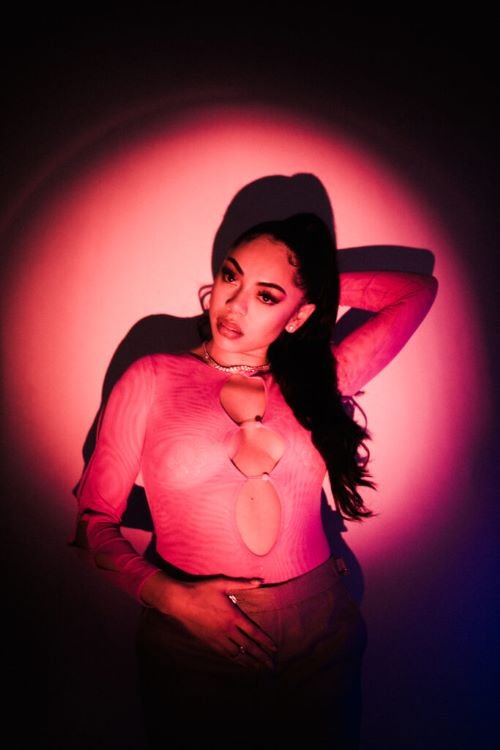
FEATURE: Spotlight: Jaz Karis

FEATURE:


Spotlight

Jaz Karis

__________

I am stepping up my Spotlight features…

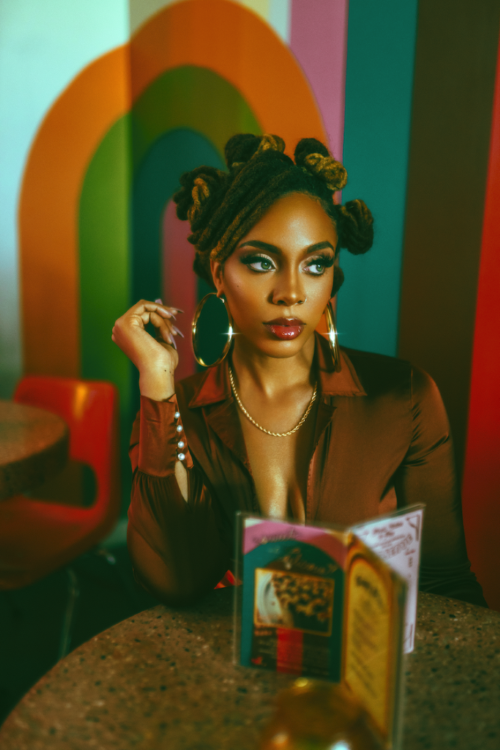
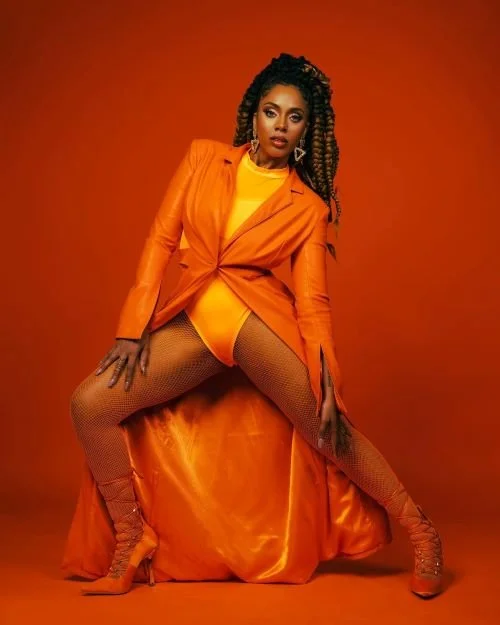
as there are so many great artists to look out for next year. One that has been in my thoughts for a while is Jaz Karis. She has been making music for a while, but I feel 2023 is going to be a massive year for her. The Dear Jaz E.P. was released last week, and it shows what a tremendous talent she is – and why we should all keep an eye out for her next year. The South London BRIT School alum blends Soul, Jazz and Hip-Hop. With a voice that is smooth and luscious but also full of power and raw emotion, you fall for her so fast! Her debut E.P., Into the Wilderness, released on all female-run independent label Salute The Sun Records, featured collaborations with Sillkey, Blue Lab Beats, Mike Musiq, Tinyman and Zulu. Having released a spectacular E.P. that ranks alongside the best of this year, many new fans will flock the way of Jaz Karis. She is such a remarkable artist! I think one of the things is that there is so much choice out there. One can easily miss a wonderful musician. Karis has a big following, but she is one of Britain’s finest young artists, so I think many others should be aware of her wonderful music. Dear Jaz is a testament of her stunning talent. I wonder whether there is going to be an album next year. There are a few interviews that I want to bring in, so that we can find out more about Karis. At the time of writing this feature (18th November), I couldn’t see any reviews for Dear Jaz, but I know there has already been so much love for it on social media!

Earlier in the year, FL spoke with Jaz Karis about the music business, and where she gets her inspiration from. Having been a fan of her music for a while, I know about her start and background, though there are things in the interview that taught me more about the wonderful Karis:

“Raised on a mixture of ‘everything’ from gospel to funk, as well as ‘soca playing through the house’ when it was time for the weekend clean, Jaz Karis was always surrounded by music, but it was her piano lessons that first took her love as a listener to an interest as a creator.

‘I had piano lessons really early before I ever sang and I think that was really when I was like “oh I really love music’’. I like listening to music, because there was music always playing in my house… but piano lessons from young is what sparked my love for it’.

Pulling on her earliest memories elicits a youthful enthusiasm that dances in and out of the conversation, as she recalls the childhood gift that led to her first song. ‘My mum gave me this toy when I was younger; it had this CD block but it was a pink round disc and it had different loops on it. I remember that’s when I made my first ever song, I don’t know how old I was… I had my favourite loop and I wrote to that. That was my favourite thing.’

With an increased interest in singing, Jaz’s love for music deepened, taking part in church choir, school talent shows and later attending BRIT school – an experience that broadened her musical knowledge and taste, and built significant relationships.

‘The majority of my band when I perform live is from BRIT, so I made some really good friendships and connections there. It allowed me to try different things, to be ok not liking different things and then kind of find my voice a bit.’

Soul constantly presented itself within the different sounds Jaz experimented with, and it was only a matter of time before she found a home within the genre itself. It possessed a versatility that appealed to Jaz, allowing her to maintain her own distinctive style while adapting to other sounds – something she realised when recording Soweto Blues, which opened the ears of many who had not yet tapped into the sound that had taken over South Africa.

Soweto Blues unlocked the experience of hearing her own music in clubs, and provided access to ‘a different world’. Interlacing amapiano grooves with freestyled mellow vocals, the collaboration with Juls and Busiswa created a summer anthem, and one of the first amapiano-influenced songs to gain popularity across the UK.

From the likes of Soul II Soul and Sade to Floetry, the UK is no stranger to successful soul artists, but there has been lack of consistency in its reach and longevity, in comparison to other genres. Recognising the market and interest here for R&B/soul singers, audience appreciation doesn’t seem to be the main barrier, rather it’s the limited resources employed to nurture homegrown R&B/soul talent in the UK.

‘Massive R&B stars from America or any other international artist, they couldn’t come here and sell out the way they sell out if there was no interest’ says Jaz. ‘A lot of labels are not really willing to put in the risk or take that risk at the moment… as a business decision it doesn’t make sense to them‘.

Where social media now plays an integral role in the music industry and at times cuts out the middleman, soul music does not fit the fast paced culture of trends and viral videos that has taken over, and establishing its own place within the UK scene seems even harder.

Although optimistic for the future of soul music, Jaz acknowledges its current position. With the genre having started in America, it’s no surprise it receives more appreciation and support in the States.

Ella Mai is a prime example of finding success overseas, but she was not the first. West London’s Estelle, known for her hit single American Boy, spoke of having similar challenges solidifying her place as an R&B artist in the UK.

‘I’m going to America this year. I think they just have a lot more time and appreciation, and a lot more people that really take us seriously and respect what we do. [It’s] really sad that we have to go to another place other than our home to do that’”.

Before going on, I actually want to take things back a bit further to the 2020 E.P., All Eyes on U. Released during the pandemic, it is interesting charting the course form 2020 to now and how Karis’ music has changed and what her ambitions are now. I was intrigued by the F Word Mag interview. Introducing a simply incredible artist with so much talent, soul, heart and promise under her belt:

“Singer, songwriter, manager, you name it, Jaz Karis is the multifaceted creative that if you haven’t already, you should have on your radar. Jaz’s newly released EP, ‘All Eyes On U’ is a beautiful body of work. All written in her bedroom during lockdown, Jaz adopts a stripped back, no strings attached approach to creating music, where her raw, reminiscent and reflective song-writing takes centre stage.

Each track on the EP transports its listener on a unique journey and it is here that Jaz’s impeccable versatility as an artist shines through. Take the opening track ‘Garden Rain’, which favours some smooth saxophone, gentle guitar strums, and field recordings as a backdrop. Through to snappier R&B rooted tracks such as ‘Issues’ along with rich, free-flowing Reggae, as she brings back Afro Beats producer JULS for the finale ‘Let Me Down’.

A vocal artist, not only through her silky, soulful singing voice like butter but through providing a rich and real insight into some of the challenges she has faced being a black female in a predominantly male-dominated industry. F Word had the joy of chatting with Jaz about all of this, along with the making of the EP, performing live, musical typecasting and much more.

Maisie Daniels: Heya Jaz, how are you today, have you had a nice morning?

Jaz Karis: Yeah, it’s been very busy but I’m all good!

MD Are you enjoying the glorious sunshine?

JK: I’m sitting in it right now, it’s so nice!

MD: And are you coming to us from London?

JK: South London – Croydon.

MD: Nice, so first and foremost congratulations on the new EP! It’s a great body of work- your voice is like butter, super smooth! How does it feel to have released it into the world?

JK: Thank you! I think it’s the best release I’ve done so far, it’s wicked. I haven’t had anything but great responses.

MD: Amazing! How long have you been working on this?

JK: I started putting this together during lockdown. So not long at all!

MD: I guess you’ve had more time on your hands during lockdown?

JK: Yeah, exactly! There were other things to do but I don’t think we will ever go through a time like this again, so I wanted to put out whatever I made during this period to represent it.

MD: Absolutely, this will be a piece of history. How have you found your creativity has been affected during the pandemic, whilst creating this EP?

JK: My biggest hindrance was always working in my bedroom because having that same space to relax in, work in, and workout in, is too much in one space. And sometimes that made me feel really uninspired. Also, I’m the kind of person that never stays at home; I’m usually always out doing something.

MD: I guess with a lot of creatives you find inspiration from your surroundings. So if you’re just placed in one space, for a long time, that must be a struggle?

JK: Exactly! It has been hard.

MD: Your sound comes with a big smack of soul and emotion. When did you realise this was the musical route you’d like to go down, and how would you characterise your sound?

JK: I would consider myself more Soul than R&B. I’m often characterised as R&B but I have definitely grown up listening to a lot of Soul, R&B, old Motown, and Gospel. I knew initially I wanted to get involved when I joined the choir really young and played the piano. From there I went to the Brits school.

MD: Was the Brits school intense?

JK: Yeah but then it wasn’t as intense as I think people make out. It’s your own little bubble, which I really appreciated, and it’s scary leaving there and going into the big, wide world of music. It’s a good school, I wouldn’t know what I know now, or the people I know now, if I didn’t go there. I really credit them for that.

MD: Back to the EP, ‘All Eyes on U’ takes us on a journey of you exploring your emotions through your beautiful song writing. Am I right in guessing this is a very personal body of work to you?

JK: Definitely, I think it’s a very genuine project for me- I didn’t try to make it perfect- and it’s a bit rough around the edges. To me, this was the least scared I’ve been for a release and I think that’s because of how naturally it came. There was no big team behind it making sure it’s finished in a certain, perfect way. This time has been so questionable – we didn’t know what was around the corner – which is why I wanted to release this, and every song has a different vibe.

MD: Is there a narrative that ties it all together? I feel essences of heartbreak?

JK: You know what, I think this is the first project that isn’t overly emotional – laughs- but it is outwardly reflecting, so that might be why you think this. And as I felt a bit trapped, I was reminiscing a lot.

MD: By creating this during such a turbulent time in lockdown, and the element of reminiscing, has this been a release for you? A kind of musical therapy and self-care?

JK: 100%. Instead of bottling it all up, I needed to release something and this is what came out.

MD: I love how stripped back it is, you’ve gone with the flow, and that shines through.

JK: Yeah, no rules! And those are the tracks that I love the most. Even down to the artwork, I wanted it to reflect me sitting in my bedroom. That’s literally how it was!

MD: I love the artwork for the EP! I can spot a poster of Freda Kahlo in the background- is she an inspiration to you?

JK: Yeah definitely! I think that was a lovely touch. I don’t actually have the picture in my bedroom but I think with art, that’s what you can get away with, and just make the best room ever- laughs.

PHOTO CREDIT: Eddie Cheaba

MD: Who else inspires you?

JK: Beyoncé – obviously! I mean, I guess she’s an inspiration to everyone! Nelson Mandela – I do actually have a photo of him in my bedroom and my cat is called Nelson.

MD: Love it, and is that Nelson (the cat) who also features in the cover art as well?

JK: Yeah- he was a big part of my quarantine life! There are so many people that tie into who I am, and who I’ve grown up watching and listening, so that was a nice little touch that I wanted to put in there.

MD: And the aquatic scene throughout our bedroom window? I’m sensing some symbolism?

JK: When I was making a mood board for my artwork, I came across an image of a room under water, and I loved it so much and really wanted that in my bedroom. Water is a part of being free, which is why I wanted to put that in the project.

MD: And due to the Covid-19 pandemic, the music industry has been shaken up a lot, how have you had to adapt when releasing new music?

JK: I feel so happy to have released it but I also feel a lot of pressure. When I released the EP, pressure came away for a few days and then it came straight back. For me, I think it’s the pressure to produce at the rate I was producing, and because I’m not going to the studio physically, it doesn’t feel like I’m working as much. In fact the reality is that I’m maybe working a bit more.

PHOTO CREDIT: Eddie Cheaba

MD: And normally when you release an EP, I guess the next step is going out and performing that to people. How have you felt not being able to share your music this way?

JK: That is the worst part because I love performing live. I miss my band. My guitarist and I have done a few intimate recording performances – a teaser of an actual performance. I don’t know when things will start to allow us to perform live again properly but I can’t wait to dive back into it. It’s been the biggest thing I’ve missed! Instagram live is not the same!

MD: It isn’t, is it! And I think for a lot of musicians, performing live is the heart of the job. When we are finally allowed to go to gigs and festivals, how do you think people are going to respond?

JK: I think it’ll be great! Fingers crossed everyone will be so excited to see all this stuff again. Sometimes you don’t know how much you miss things, until you see them again. The little taster we got from our live recording, we were like ‘yeah- we can.

MD: It’s going to be all the more special, right?

JK: Yeah! I also don’t mind that it may have to start off more intimate; I really like those kinds of performances!

MD: When was the last time you performed live?

JK: It would have been last year when I opened up for Sinead Harnett in November, and I did a small show in December

MD: Back to the EP! Do you have a track that you’re most proud of?

JK: Yes! The first track on the EP ‘Garden Rain’. Out of all the songs I’ve ever written, that’s my favourite”.

I would encourage everyone to go and check out the new Dear Jaz E.P. I am going to finish with a NOTION interview. They chatted with an artist who has been making big strides since her debut E.P. in 2017. This year has been a wonderful one for Jaz Karis! With a fresh E.P. and a growing and loving fanbase behind her, things are looking so promising for 2023:

“Is there anyone you’d like to work with in the future?

Oh, I’ve got a whole list of dream collaborations. I don’t want to reveal too much too soon. But yeah, I have a list, there’ll definitely be more collaborations, even some revisits that I’ve done in the past as well.

And who is on that bucket list then?

I think the top one for me would be Frank Ocean. There’s literally a whole list, I would just go down my childhood dream list.

Over lockdown, you wrote, recorded, and engineered your EP ‘All Eyes On U’ by yourself in your bedroom. How did you find that experience? What were the challenges and rewards?

I found it very fun. I’m a control freak, so it was quite nice to know everything that’s going on. Obviously, I had help from friends. I think the challenges were that I was new to it, it was my first time. One thing I was very cautious of getting was demo-itis, when you get used to how [a song] sounds, you can’t then hear a mix because you’re used to the demo. I think I was struggling to separate the two because I was in my head the whole time, more than I’ve ever been before. But then at the same time, the perks were the fact that I can actually do this and I can record on my own time, whenever I want, however I want. Now a lot of my songs I’ve done, I’ve just recorded myself. I don’t know if there’s a downside, but now I’m more comfortable doing that than going to the studio because I know how I like it. And it’s a lot easier when I just do it myself. But then I think I also have to bear in mind, that there are a lot more professionals that have been going been a lot longer, so I have to keep my mind open to that as well. I’m so grateful I learned to do it then, and now I can do it all the time. It’s just about that balance. Sometimes you get better quality instead of just doing it yourself.

PHOTO CREDIT: Jai Toor

It must feel so liberating to be able to, if you wanted, use that skill set in the future.

Yeah, definitely. I think it’s weird because you still get people shocked, like, you do that? Maybe not so many people actually sit down and record themselves. To me now, it’s like, how did I even survive without doing this? Because I get so much more done.

You also co-direct your own music videos. Why is it so important to have creative autonomy over your work?

I think it’s very important as an independent and young female artist that you get the kind of story that you want across properly. I love to write, that’s my life. It was very important to me that visuals were a part of that process. Because I just didn’t want to regret anything. It’s a lot of hard work, it’s very expensive. I want to make sure that it’s 100% what I want it to be the vision I see in my head. And sometimes it gets to the point that a video might not even come out because it’s not come out the way it was supposed to. I think in the future, I will always want a bit of creative control when it comes to visuals, 100%.

As well as releasing your own music, you have worked as a songwriter for other artists, such as JusFne. How does the process of writing for someone else challenge you but also benefit you as an artist?

I’ve written songs as if they were for myself, and then someone has liked it, and then they’ve taken it. And then there’s the other side of things where you’re in a room writing specifically for someone. I think I definitely prefer the first because it’s easier, just to speak for yourself. But then it’s interesting when you get a brief or when you get a challenge to write for someone. I think it’s easier to know as much information and backstory as possible, like how do you want it to sound? I think that’s when it becomes a bit more of a task, a freedom of skill. Some people are so great at executing a brief, whereas I much prefer writing freely, or having a conversation with someone and then it coming like that. They’re very different. Both of them can create amazing songs.

Some artists feel pressure to consistently drop music in order remain in playlists. Have you been affected by this? Do you think this poses a problem for artists?

That’s such a hard question. I think this generation is genuinely about stats, more than music, in fact. I don’t know when it will pass, but I’ve had to play the game you if you want to stay relevant. It is about good music, but at the same time I just think stats speak louder these days, unfortunately. I hope it changes because I genuinely think like classic music that we still listen to now, that our parents grew up on was not created by stats, it was created by making room for really good artists and allowing them to put out music that is real. It’d never pop off here or make 100,000 streams a day. And there’s not much you can do about it except for trying to make great music, but at the same times, still try have great stats. So it’s a hard game to play, but hopefully it will come full circle, because otherwise we’re not going to have new music forever instead of old music anymore. Which I think is really sad.

If your music were a flavour, which would it be?

When you said that I immediately came to prawn cocktail! I don’t know why. But going off that, probably because I think it’s a bit of everything. It’s a bit random. And it warms your soul”.

If you have not heard Jak Karis, then go and investigate her beautiful and hugely impressive music. I can see her going into acting, touring internationally, and joining forces with some huge artists and featuring on their songs. It is an exciting time for Karis. After a busy year, I hope she gets time to chill over Christmas. If you are looking for brilliant artists to follow, then I can thoroughly recommend…

THE sensational Jaz Karis.

____________

Follow Jaz Karis

FEATURE: Second Spin: Ladyhawke – Wild Things

FEATURE:


Second Spin  

Ladyhawke – Wild Things

__________

I wanted to include this album…

 PHOTO CREDIT: Cybele Malinowski

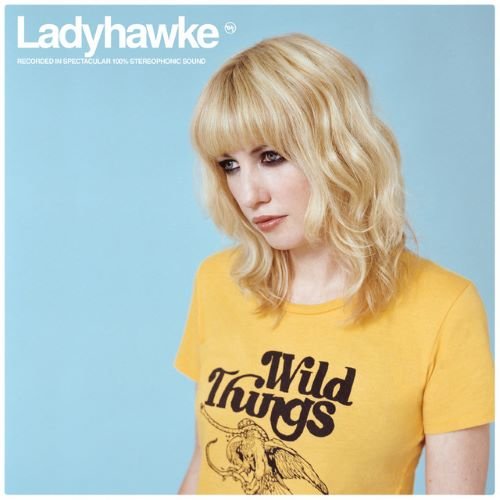
as I am a big fan of Ladyhawke. Real name Pip Brown, her most recent album, Time Flies (2021), is full of typically fantastic moments. The New Zealand artist is someone I am really compelled by. I don’t think her albums have ever really got the full and proper credit they deserve. That is definitely the case with her third studio album. Wild Things was released on 3rd June 2016. It is one of my favourite Ladyhawke albums, and it is one that warrants another spin! I am going to come to a couple of the more positive reviews Wild Things received. 2016 was an odd year in general for music. We lost two icons unexpectedly in the form of David Bowie and Prince. In the middle of this, Ladyhawke released an album. Maybe not a superfan of either, it was still a weird time for artists and fans alike. I remember when Wild Things came out, and I was a bit muted at the time. I have grown to love the album more outside of 2016 and as time has passed. Maybe the general mood and shock of the year affect some of the reviews. In any case, six years later, Wild Things is an interesting listen with some incredible songs. I am going to start by bringing in an interview from The Guardian. They spoke with Ladyhawke (Pip Brown) in promotion of Wild Things:

“In 2016, when pop has never sounded moodier or more austere, Ladyhawke continues to operate outside of the norm, her album an unabashed explosion of colour and joy written in the aftermath of a dark period.

While many of her previous songs were caught up in hedonism and emotional turmoil, Wild Things is full of love songs, many of which were written about her wife, the actor Madeleine Sami. The pair were introduced at an awards ceremony by Lucy Lawless – best known for being Xena: Warrior Princess and Battlestar Galactica’s Number Three – who was presenting a prize to Brown, and had brought Sami as her plus-one. Seven years later, the pair were married.

“She was going to get a celebrant license and marry us,” Brown says of Lawless, who couldn’t make it to the wedding in the end. “I’m actually an ordained minister in America – I’ve married my friends. I’m called Minister Ladyhawke. That’s my official name.”

Guitars are notably muted on the new record, in contrast to the glam stomp of her last album. She says the guitar was something she hid behind, especially while playing live, which she has always found traumatic. Brown was diagnosed with Asperger’s syndrome in her 20s, and it has prevented her from enjoying the intensity of being on stage. She would often drink to overcome the discomfort.

“I was always quite drunk on stage, and I used to go quite hard and rock out. That was my way of hiding it. It became a crutch for me – I was dependent on my guitar. Unhealthily so. I would never put it down. It was always there and it almost became a symbol for my stage anxiety.”

Another liberating aspect of her new life has been setting up her own label. Her 2008 debut, Ladyhawke, performed well, reaching No 1 in New Zealand and No 16 in the UK, but 2012’s Anxiety sold significantly fewer copies. She has since got out of all her old deals and licensed her album to various labels around the world. She now feels unshackled from the bureaucracy. “It’s the most freeing experience for me,” she says.

She feels the music industry doesn’t know how to support artists who might be vulnerable, who might seek crutches. “It encourages … drinking and partying. You don’t have to pay for alcohol ever, it’s always free. You get given anything you want, really. Especially when you get to a certain level. Everything is there for taking, so why not? You’re so used to being poor, scraping by, and the second you get free stuff, you take it all. The unfortunate thing is that mental illness and creativity seem to go hand in hand. So many of my musician friends have depression and anxiety – it’s getting talked about more, but there’s no support network”.

A terrific album that people should give their time and attention to, it is curious listening to Wild Things after reading interviews like the one above. I think it provides more context and gives the songs and themes more shape and depth. What is great is that Wild Things, as the title suggests, is about a hedonistic and slightly reckless time. One that Ladyhawke emerged from and manager to make positive changes. It seems moving to Los Angeles and marrying Madeleine Sami helped Ladyhawke sober up so that she could record a new album. As one might expect, most of the songs written about Sami. I think that there is that sense of new purpose and energy in Ladyhawke after a difficult time. The transition and transformation from 2012’s Anxiety to 2016’s Wild Thing is clear. This is what DIY said in their review of one of the best albums of 2016:

“Back after four years away, Pip Brown packs more of a punch than ever. From the kitschy slogan tee on the front cover, to the loomingly gigantic synth-pulses of title-track ‘Wild Things,’ Ladyhawke’s third album sets out with the words ‘brilliantly good fun’ practically scrawled across its mood board in bright gold glitter pen.

Everything on this record is turned up to technicolour ten. ‘Sweet Fascination’ – the first new music to land ahead of the record’s announcement - hits on a joyful abandon somewhere between Yazoo at their most garish, and CHVRCHES in stadium-bothering mode. It’s a pursuit that continues to coarse through the pop-propelled veins of stand-outs ‘Golden Girl,’ ‘Dangerous’ and ‘Hillside Avenue’. It’s just a bit of a bummer that ‘Sweet Fascination’ isn’t on the record; it’d feel more at home than Peggy Mitchell (may she rest in eternal soap opera peace) behind the bar of EastEnders’ Queen Vic.

That’s more or less the only downside to this album, mind. Witty and quick-smart, Ladyhawke’s lyrics consistently take on infectious lust and undeniable infatuation, getting straight to the point with little faffing. Occasionally, she serves up rejection with a wry smile, too. “Her dollar bills come with Benjamin’s name,” quips Ladyhawke on the brilliantly wry ‘Money To Burn,’ - a pop jam dedicated to idiots with more hundred dollar bills than sense.

Ladyhawke has always had an ear for gigantic writing like this – just take one look at ‘Paris Is Burning’ for ripe evidence. ‘Wild Things’, though, sees her step up to another new level of ace. Her most consistent album to date, and let-loose like never before, blimey it’s good to have her back”.

The final review I am bringing in is from Back Seat Mafia. They  pointed at some slight weaknesses but, overall, they were impressed by a fantastic album that needs to be revisited and given some love and celebration. I think that Ladyhawke is a terrific songwriter with a voice that hooks you into every song. Go and check out the incredible Wild Things:

“Ladyhawke is back and celebrating life with an album as sugar-coated and colourful as a pack of party ring biscuits.

Ladyhawke, aka New Zealand songstress Pip Brown, has gone all synthesised on us with third album ‘Wild Things’ (out now via Mid Century Records). Her self-titled debut album was a delicious slice of indie pop that blended electro influences with a Stevie Nicks-esque rock attitude. Her 2012 follow-up, ‘Anxiety’, was as brooding as the title suggests. ‘Wild Things’ is pure pop that can only be interpreted as a sonic demonstration of her current mindset – joyous. Brown confirms this, saying “I feel good for the first time in 10 years. I have a clear mind! I have a wife. I feel stable. That is what I’m celebrating.”

While ‘Wild Things’ may sound a bit throwaway in places, Brown has actually taken her time in crafting this poppier sound. The album began life back in 2013, but Brown decided to scrap the full album of material that she wasn’t proud of before taking a year to create what we hear now. It has obviously been a labour of love, and about love, but was it worth the wait?

In short – yes. Do I miss indie-rock days of her debut album? A bit. Are there other artists producing better electro-pop right now? Maybe. But these songs still get in your head and, most importantly, are as moreish as ice cream on a hot day.

‘A Love Song’ is a perfect opening track with its blistering pace and pounding bass line. The lyrics are as delirious with good old-fashioned romance as suggested by the title – “You’ve opened my eyes to the oldest tale of time. This is what a love song sounds like”. ‘The River’ shifts us from 80s influenced electro to something more akin to pure radio-friendly summer pop with the singalong backing vocals of “na na nah”. ‘Let It Roll’ is dominated by a dirty bass line and the infectious chorus of “let it roll like a newborn soul”.

‘Chills’, ‘Golden Girl’ and ‘Wonderland’ all have the bubblegum pop sound that is reminiscent of Gwen Stefani’s solo debut. ‘Wild Things’ and ‘Hillside Avenue’ seem to directly channel Chvrches (the latter beginning with a similar sound to ‘Never Ending Circles’). There are sure to be negative comparisons made regarding jumping on the bandwagon, but why should that be a problem when an album is this much fun?

I think Brown is at her best on this album when she channels some attitude. ‘Sweet Fascination’ is a song about infatuation – “I know you’re watching me, but it could never be”- that refreshes your ears with Brown’s icy vocals cutting into the darker synth undercurrent. ‘Dangerous’ is the standout track of this album, despite being left until last, with a beginning that sounds like it’s about to kick into ‘Block Rockin’ Beats’ before Brown’s vocals take hold.

Celebratory albums aren’t always easy to relate to lyrically – they naturally sound like they lack the depth associated with struggle and pain – but ‘Wild Things’, feels like Ladyhawke at her most engaged with the music. Where on her debut she sounded almost detached, here she is vibrant.

Most importantly, if you’re looking for an album packed full of summery tunes (and who isn’t right now?), ‘Wild Things’ delivers. It’s a sugary treat to be savoured”.

Released in June 2016, I really like Wild Things. I hope that there is more music coming from Ladyhawke following last year’s Time Flies. The New Zealand artist is a remarkable talent and someone whose music warrants a lot of love. Go and seek out Wild Things and…

GIVE it a spin.

FEATURE: Up Above, Down Under: Awesome Australian Albums from 2022

FEATURE:


Up Above, Down Under

IN THIS PHOTO: Julia Jacklin/PHOTO CREDIT: Nick Mckk 

Awesome Australian Albums from 2022

__________

I am going to get around to…

 IN THIS PHOTO: Body Type/PHOTO CREDIT: Jack Saltmiras

a feature that collates the best debut albums of this year. It has been a busy and very exciting time for music. I wanted to do something a little more specialist. I love Australian artists, and I think the nation still does not get enough attention. Maybe being so far away, and it being difficult for many artists there to tour the U.K. and U.S., I wonder whether people consider the brilliant music coming out of the country. There have been some brilliant Australian albums this year. By that, I mean albums from Australian artists, not necessarily artists based there (though I think most of the artists I am going to include live in Australia). Whether Australian-born or based, below are some incredible albums that people need to have a listen to. It shows the sheer breadth and quality that is coming out of the country. I am a fan of all of these albums, and I do hope that the artists who made them get to tour next year and maybe come to the U.K. That would be awesome. Below are, in my view, the best Australian albums…

 IN THIS PHOTO: Jaguar Jonze

FROM this year.

______________

Confidence Man - TILT

Review:

“Confident Songs For Confident People’, the debut album from Melbourne’s Confidence Man, was aptly named given its dancefloor-friendly anthems full of come-ons, self-aggrandisement, and put-downs of crap boyfriends. For the follow-up, ‘Tilt’, they’ve lost none of their front, but have taken the sound back to early 90s house and big beat. Stand-out track, ‘Feels Like A Different Thing’, has the kind of huge vocals you remember from classics by acts like Black Box or Dr. Alban, and ‘Break It Bought It’ sounds like it should be on the soundtrack to seminal NYC ballroom flick Paris Is Burning.

Their signature humour is also here in abundance. ‘Toy Boy’ – described by vocalist Janet Planet as a “J-Lo slut jam” – contains the couplet “Rub you down in butter and serve you on a plate / They say there’s seven wonders but my toy boy makes it eight.” ‘Kid A’ it ain’t, but the feeling ‘Tilt’ will leave you with is unbridled joy. Each of its dozen tracks is expertly engineered to make you move your feet and transport you to an illegal warehouse rave on the outskirts of a provincial town.

Unapologetic bangers with tongue firmly cheek and a furious, feminist bent, ‘Tilt’ is the album you need in your life.

9/10” – CLASH

King Gizzard & the Lizard Wizard - Ice, Death, Planets, Lungs, Mushrooms and Lava

Release Date: 7th October

Label: KGLW

Buy: https://www.roughtrade.com/gb/product/king-gizzard-and-the-lizard-wizard/ice-death-planets-lungs-mushrooms-and-lava

Standout Tracks: Magma/Lava/Iron Lung

Key Cut: Ice V

Review:

“Born out of jam sessions where the band went into the studio with no preconceived notions other than preselected tunings and rhythms, King Gizzard & the Lizard Wizard prove yet again on Ice, Death, Planets, Lungs, Mushrooms and Lava that they haven't run out of ideas even after releasing more records per year than most bands do in a lifetime. Despite its origins as a freeform workout, the final product actually has structure and purpose thanks to the editing job the band's Stu MacKenzie did and the overdubs that the rest of the gang added later. It's definitely not as directed as some of their concept albums; the main point seems to be getting loose and loud while delving into the vagaries of nature and their standby concern: global catastrophe. The songs are long, but don't meander much -- the guitars have more bite than a pit-full of snakes and MacKenzie made sure to add dynamic shifts and the occasional chorus as he went. It's nothing new for a band that has displayed no fear when it comes to stretching out past the ten-minute mark; they've never been tied to any rules and that's what makes them so freeing and inspiring to listen to. If they want to dip into some reggae-adjacent grooving ("Mycelium") that's totally cool. If they want to veer into cop-show jazz with wah-wah pedals, staccato bass runs, and silky flutes, more power to them. Murky Afropop blues jams -- "Magma" -- that unspool over nine tightly scripted minutes? Yes, that works. Heavy prog-jazz doom rockers -- "Gliese 710" -- that combine Brubeck-on-downers piano chords with blown-out, amp-inflaming guitars, and far-out sax blowing? Perfect! Also on point are rippling funk rockers ("Iron Lung") and ("Hell's Itch") that have the feel of Santana, -- if they were beach rats from Australia. The latter song really lets loose with some fret-melting guitar dueling that escapes being indulgent thanks to the sheer intensity of the playing. When the song ends after 14 sweaty minutes, the first instinct isn't to faint from exhaustion, it's to rewind the song to the beginning and jump back into the magical world they created. That's the feeling the whole album engenders. Unlike some of their efforts, which can wear out their welcome in spots, there isn't a moment of boredom or repetition here. Amazingly, it's another fresh start for the band that's on par with career high points like Butterfly 3000, Nonagon Infinity, or Flying Microtonal Banana. King Gizzard are restless and brilliant and listeners must follow everything they do like a hawk because they might unleash something classic, just like they did with Ice, Death, Planets, Lungs, Mushrooms and Lava” – AllMusic

Jaguar Jonze – BUNNY MODE

Release Date: 3rd June

Label: Nettwerk Music Group

Buy: https://jaguarjonze.bandcamp.com/album/bunny-mode

Standout Tracks: KNOWN MY NAME/LOUD/PUNCHLINE

Key Cut: TRIGGER HAPPY

Review:

“I’m not gonna sleep below the glass ceiling,” Jaguar Jonze sings on her debut album, her voice barely a whisper.

Then, moments later with the volume turned right up: “You could’ve destroyed me, but then I got loud.”

This defiance is at the heart of Bunny Mode, an 11-track juggernaut that is cutting in its specificity. Its title refers to a survival tactic that the artist employed as a survivor of childhood abuse: a freeze response to any safety threats, like a frightened rabbit. The record is a middle finger to oppressors and abusers, as the artist – real name Deena Lynch – breaks free of their chokehold, rising anew.

The Brisbane musician, who released two EPs under the Jaguar Jonze moniker in 2020 and 2021, leans into an esoteric sound across Bunny Mode, fortified by the unbridled anger in her lyrics. Sonically and thematically, the record bears similarities to Halsey’s 2021 album If I Can’t Have Love, I Want Power – both take cues from industrial music, building unapologetically feminist narratives and rebuttals upon glorious walls of sound. Despite the experimentation and boundary-pushing, it’s all still underpinned by pop and a knack for melody, as on the passionate slow-builder Little Fires, which Lynch performed as part of Eurovision’s Australian decider in February.

While there’s much to like musically – Bunny Mode moves away from the loopy spaghetti western sounds of Lynch’s early work to experiment with darker, heavier sounds, and the singer’s vocal chops are, as always, impressive – the album’s real power is in the lyrical details. It’s another piece of the activism puzzle for Lynch, who has spent much of the last two years on the forefront of fighting for change as a leader in the Australian #MeToo movement, shining a light on misbehaviour in the music industry. It also explores the more personal process of healing and recovery following trauma.

These many facets are visible through different threads of the album: on one of the more downbeat tracks, Drawing Lines, Lynch sings silkily of the importance of setting boundaries. The fury is more evident on tracks such as Who Died and Made You King, all angular guitars and punchy electropop beats, as Lynch spits, almost mockingly: “You’re sick and a victim of your own disease.” It’s thrilling to hear the tables turned on the powers that be in this way – a reclamation of space, a bold statement of self-sovereignty.

The highlight is Punchline, which turns a sharp eye on to tokenism and racism within the entertainment industry. In a similar fashion to Camp Cope’s The Opener, the Taiwanese Australian artist regurgitates box-ticking sentiments from corporate bigwigs to reveal their hollowness: “We love culture but make sure it’s to our very liking / Make it milky, make it plain and not too spicy.” Over wailing guitars and layered vocals, Lynch makes herself in her own image, rejecting the condescension of the white-centric industry that still sees artists of colour as an exotic other.

Lynch’s cohesive world-building across the album makes for a compelling, absorbing and often intimate listening experience. Her many creative personas – musically as Jaguar Jonze, visually as Spectator Jonze and photographically as Dusky Jonze – swirl through the record, but she emerges as a singularity: a woman who has, despite everything, survived.

After all the noise and the rage, the fire and the passion, it’s barely a whisper, again, that ends the record. The instrumentals cut out for Lynch’s controlled vocals to deliver their final, stinging words to the patriarchy and all that enable it: “It’s always been a man-made monster only a woman can destroy” – The Guardian

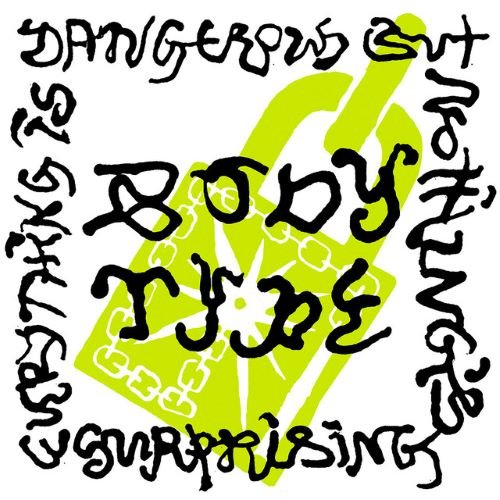
Body Type - Everything Is Dangerous But Nothing’s Surprising

Release Date: 20th May

Label: Poison City Records

Producer: Jonathan Boulet

Buy: https://bodytypemusic.bandcamp.com/album/everything-is-dangerous-but-nothings-surprising

Standout Tracks: A Line/Buoyancy/Everything Is Dangerous But Nothing’s Surprising

Key Cut: The Charm

Review:

“Body Type’s debut album should have come out two years ago, right behind a pair of buzz-generating EPs. But of course the pandemic intervened, dividing the Sydney quartet by geography and scuttling tour plans. That’s a common enough tale, but there’s nothing common about this album: It’s a self-possessed statement of intent and one of the best Australian debut albums in recent memory.

Everything appealing about those early EPs is refined on ‘Everything Is Dangerous But Nothing’s Surprising’, from sudden tempo shifts and the conversational push and pull of guitars to alternating lead singers and biting, feminist lyrical commentary awaiting. A sharply honed post-punk unit that’s often more reflective of British forebears like Electrelane and The Long Blondes than specific Australian touchstones, Body Type balance thrilling abrasion and propulsion with layered melodicism and wonky internal twists and turns.

Body Type’s urgency on this record might come down to the fact that it was recorded in just eight days, with Party Dozen’s spontaneity-friendly Jonathan Boulet at the helm. But it’s also the rotating cast of vocalist and songwriters that keeps the listener somewhat unbalanced from song to song, always anticipating a dramatic scene change. Guitarists Sophie McComish and Annabel Blackman and bassist Georgia Wilkinson-Derums all contribute on that front, with drummer Cecil Coleman holding the fort with range and finesse.

Blackman opens the album with ‘A Line’, whose chewy bass line and deadpan repeated vocals evoke current UK bands like Dry Cleaning and Wet Leg (though the song predates the latter’s debut). Inspired by a visualisation technique designed to bypass obsessive thinking, it re-introduces the rippling exchanges between all four players. Wilkinson-Derums’ punkier ‘The Brood’ takes a surprisingly bouncy approach to its David Cronenberg-inspired vision of a woman’s anger materialising as violence.

Equally acidic is McComish’s account of the music industry’s condescending treatment toward women on ‘The Charm’. Against back-and-forth guitars worthy of Sleater-Kinney, she turns an unwelcome piece of advice into a snarky rebuttal, drawing out the chorus refrain “I’ve got charm” with obvious relish.

From there, the album continues to hold attention across no shortage of contrasts. It’s rare for a band so relatively new to command so much control across those stark shifts, often within a single song. Case in point: after a bright and jangly start, ‘Futurism’ grows eerily slow before accelerating to exit with a palpable head rush. Meanwhile, Blackman’s poem-based interlude ‘Hot Plastic Punishment’ earns a frenetic answer in Wilkinson-Derums’ gnashing anthem ‘Buoyancy’, speaking to how naturally the band members’ creativity feeds each other. 

The record finishes with another spiky array of approaches, including the more danceable but no less withering ‘Flight Path’, about an encounter with someone who deemed #MeToo unfair to men. Named after Eve Babitz’s influential 1979 novel, ‘Sex & Rage’ applies lurching, Pavement-esque hooks to lyrics about appreciating life and art in the moment. It fits in neatly with the following ‘An Animal’, a darker entry that gradually builds portent via overlapping vocals from McComish and Wilkinson-Derums.

It’s the equal showcasing of these distinctive singers and personalities within one band that makes this debut album so engaging. Maintaining an intuitive bond throughout so many swerves and feints, Body Type are locked into a formidable connection indeed” – NME

Hatchie - Giving the World Away

Release Date: 22nd April

Label: Secretly Canadian

Buy: https://hmv.com/store/music/vinyl/giving-the-world-away?gclid=CjwKCAiAyfybBhBKEiwAgtB7foRVztr-56EjWBNJ2kJJ5K2X81ste2QDYb4PK-R-cJTZUPLxcQEkHBoCQ1gQAvD_BwE&gclsrc=aw.ds

Standout Tracks: The Rhythm/Quicksand/Thinking Of

Key Cut: Enchanted

Review:

“The music of Hatchie is less a genre and more a mood. The project of Brisbane-based Harriette Pilbeam, Hatchie creates cinematic, sweeping dream-pop that evokes the longing of the Cranberries and melancholy of Cocteau Twins. While Harriette’s first full-length album as Hatchie, ‘Keepsake’, was all about the ins and outs of romantic love, this follow-up is more inquisitive and self-exploratory, and just a touch darker - while still building on her signature nostalgic sound. Lead single ‘This Enchanted’ is classic Hatchie, an earworm drenched in wistful reverb and fuzzed-out vocals, but ‘Giving the World Away’ transcends past dream-pop into more adventurous territories. The daring ‘The Rhythm’ recalls ‘90s trip-hop and psychedelia, while ‘Quicksand’, co-written with Olivia Rodrigo producer Dan Nigro, has her somberly looking inwards: “I used to think that this was something I could die for / I hate admitting to myself that I was never sure,” she sings. “I’m trying, but what’s the use in trying when I’m left with all this disillusionment?” But Harriette doesn’t let herself get too mournful, even when she is asking questions of her own self and reclaiming her self-confidence. Album highlight ‘Thinking Of’ is a journey into the scary world of love, and how it’s worth a leap anyway: “How do you know?” she sings. “So you wanna be in love? I wanna be in love.” ‘Take My Hand’ was inspired by a Red Hand Files entry by Nick Cave, where he writes to a young woman struggling with her body image. “Trust what you fear, use it to your advantage,” she sings. Later on, she laments: “You don’t have to change.” It’s good advice” – DIY

Rolling Blackouts Coastal Fever - Endless Rooms

Review:

“The third Rolling Blackouts Coastal Fever album might have been written and recorded under unusual lockdown-enforced conditions, but the result is of a piece with their other recordings. Endless Rooms is a shimmering, searching album built on graceful guitar interplay, hooky melodies, and often breathtaking songs that threaten to whirl the listener away into a world where jangle pop reigns supreme. It feels like they could crank this stuff out in their sleep, but they have too much invested in their art to do that. It's clear from how fierce the guitars sound and how committed the vocals are that they are putting their hearts into the music and it's impossible as a listener not to feel that. The power of the rhythmic section is also something that's hard to ignore, and they are as rock-solid as ever here with the guitars glimmering and flashing around them. Something does sound a little different on Endless Rooms, though. The guitars have a little more bite to them, especially on tracks like "My Echo" or "Tidal River," where the band intentionally push the recording meters into the red and keep the fidelity pegged around the middle area. After Sideways to New Italy, the band could have decided to get slicker and grow their sound to arena-size dimensions. That they kept it small and slightly scuffed up is something to celebrate. They certainly sound energized and that's no small part of the reason why. The state of the world as they were writing the album is another reason, and many of the songs feature the band reacting and reflecting on the social upheaval around the globe and in their native Australia. It never gets too heavy, though, and the guitars are so transporting that one doesn't even need to hear the words to get a sense of the feeling behind them. Endless Rooms is another strong outing from the group, definitive proof that they are still gleefully exploring their sound and are more than willing to take whatever approach is needed to put the songs across” – AllMusic

Mallrat - Butterfly Blue

Release Date: 13th May

Label: Nettwerk Music Group

Buy: https://www.roughtrade.com/gb/product/mallrat/butterfly-blue

Standout Tracks: Surprise Me/Your Love/Rockstar

Key Cut: Butterfly Blue

Review:

“From debut EP ‘Uninvited’ to breakout singles ‘Charlie’ and ‘Groceries’, Mallrat has developed a knack for constructing trip hop-tinged earworms that throb with the dull ache of navigating modern dating as a young adult.

On ‘Butterfly Blue’, though, the Brisbane-based songwriter takes steps towards a bigger amalgam of influences. Gentle acoustic ballads ‘It’s Not My Body, It’s Mine’ and ‘Arms Length’ touch on twangy country stylings, while the airy production and buzzy electronics on ‘Your Love’ feel vaguely reminiscent of hyperpop and the aptly-titled ‘Rockstar’ sees lethargic, bleary-eyed vocals and gauzy instrumentals descend into a doomy zenith of fuzzy, reverb-laden guitars.

The album doesn’t see a complete betrayal of her roots though, and ‘Surprise Me’ - a laidback and strutting hip hop-tinted cut with an efficacious guest spot from Azealia Banks - takes an already assured record to some of its highest heights, before the hazy and distorted ‘Love Guitar’ ramps up the anxiety with guttural guitars and fluttery instrumentals that tremble like the inner linings of a stomach awaiting a reply to a risky text.

Title track and pop noir closer ‘Butterfly Blue’ then comes as a bit of a curveball, combining stripped-back strumming guitars with a simple and circling chorus line, but its placid pop hooks serve to affirm Mallrat’s breadth in scope, and her flair for fashioning disaffected bedroom pop anthems for anyone with a habit of crying in the kitchen at parties.

Just as butterflies can retain some memories of life as a caterpillar while their brains and bodies undergo a total rewiring, ‘Butterfly Blue’ sees Mallrat emerge as somewhat of a transformed entity, one that is fully-grown and glimmering” – DIY

The Lazy Eyes - Songbook

Release Date: 21st April

Label: The Lazy Eyes

Buy: https://www.roughtrade.com/gb/product/the-lazy-eyes/songbook

Standout Tracks: The Island/Tangerine/Fuzz Jam

Key Cut: Where’s My Brain???

Review:

“Amid endless political turmoil and an adolescence tainted by restriction, The Lazy Eyes emerge with a coming-of-age record drenched in wide-eyed optimism. Within their euphoric debut, the chaos of modern life is disintegrated through a distinctively Australian concoction of sun-soaked psychedelia.

An inherently Gen-Z take on psych-rock, ‘Songbook’ chooses to nudge the genre into the future, rather than imitate its past. Lead single ‘Fuzz Jam’ is a sprawling delight of colourful riffs propelled by an intense baseline, while the frantic energy of ‘Where’s My Brain’ draws subtle comparisons to King Gizzard and Post Animal. ‘Tangerine’ sees the full force of their experimentation, with fuzzed guitar, aerated vocals, and even glockenspiel, all anchored by animalistic drumming and the occasional sweet harmony.

Lyrically, it’s charmingly unsophisticated, with simple tales of making tea, sleeping late, and getting high accentuated by a cohesive sonic universe that expands on each listen. Steeped in nostalgia yet hopeful for the future, they depart on ‘Cheesy Love Song’, a woozy declaration of infatuation which carefully imparts innocent anecdotes of desire.

On ‘Songbook’ The Lazy Eyes are showing off, offering the full kaleidoscope of their insane talent. It’s an invitation into a dreamy utopia of their own invention – and you’ll want to stay.

9/10” – CLASH

Daniel Johns - FutureNever

Release Date: 22nd April

Label: BMG Music Australia

Producers: Beau Golden/Casey Golden/Daniel Johns/Dave Jenkins Jr/Jake Meadows/Louis Schoorl/MXXWLL/Peking Duk/Sam La More/Slumberjack/This Week in the Universe/What So Not

Buy: https://www.roughtrade.com/gb/product/daniel-johns/futurenever/vinyl-lp-pink?channable=409d92696400313135303834322d474222&gclid=CjwKCAiAyfybBhBKEiwAgtB7fo_ckckAhItAUyElBJfiZoQCImpONGwn3Uvu4Q91W6mw_RTfyJ8rwBoCV34QAvD_BwE

Standout Tracks: Where Do We Go?/I Feel Electric/Those Thieving Birds, Pt. 3

Key Cut: Mansions

Review:

“I know I have a tendency to go missing – but I’m back now,” Daniel Johns told fans when announcing his second solo album ‘FutureNever’. The elusive, enigmatic and often unknowable former Silverchair frontman has spent much of the past year trying to show us the real him. His hit podcast, Who Is Daniel Johns?, went in deep on unraveling the mythology around his years as a teen grunge sensation wrestling with fame, public mental health battles, musical ambitions outrunning a blinkered world’s expectations, marriage to Natalie Imbruglia, Silverchair’s demise, and his troubled, tabloid-dodging years since.

Now, no longer running from his history, he’s looking to celebrate his chameleonic legacy. As his letter to fans continued: “‘FutureNever’ is a place where your past, present and future collide – in the ‘FutureNever’ the quantum of your past experiences become your superpower.”

Opener ‘Reclaim Your Heart’ is for the fans of the blockbuster whimsy found on ‘Diorama’. This mode, complete with a sick and wailing guitar solo, makes an almighty but welcome return. In that ‘Diorama’ flight of fancy, we also have the euphoric ballad ‘When We Take Over’ and ‘Emergency Calls Only’. The latter is a collaboration with Van Dyke Parks, who added the celestial orchestration to ‘Diorama’ and the more soaring parts of Silverchair’s last album ‘Young Modern’. The release of ‘FutureNever’ was delayed to make room for this song, and it makes for a true album highlight as an operatic baroque gem that follows in the lineage of ‘Across The Night’, ‘Tuna In The Brine’ and ‘All Across The World’ – but delivered with a chrome finish and proggy cyborg Beatles flourishes.

In that spirit of moving Johns’ past along, the record even comes with a couple of sequels. ‘FreakNever’ rips the teenage angst from Silverchair’s 1997 grunge smash ‘Freak’, shifts the tense, and translates the song’s societal dread into a sombre, West End horror epilogue of Johns’ trauma from the time. As guest vocalist Purplegirl chillingly narrates: “No more maybes, the world stole a baby, took his soul on tour, and made a deal with the devil – he didn’t want to be different, but fame’s a disease.”

Another follow-up comes in ‘Those Thieving Birds (Part 3)’ picking up the mantle from its two swooping ‘Young Modern’ predecessors. It furthers the series in a more controlled but no less cinematic manner, Johns dramatically declaring: “No more big lies, no more goodbyes… As long as you and I are together”.

Johns shows off his range on the rest of ‘FutureNever’. ‘Mansions’ and ‘Where Do We Go’ take the street-smart, slick pop-meets-R&B of his solo debut ‘Talk’ but lift it with some genre-defying classicism. ‘Cocaine Killer’ featuring Peking Duk sees Johns successfully dabble in FKA Twigs-esque arty trip-hop, there’s an industrial rock edge to ‘Stand ‘Em Up’ featuring What So Not, and ‘I Feel Electric’ carries some of that Prince-meets-garage-rock danceability from ‘Young Modern’ – albeit a little freer. Freedom is certainly the vibe: Hell, the blissed-out psych trip of ‘Someone Call An Ambulance’ wouldn’t sound out of place in a Wayne Coyne fever dream. 

While there’s a lot of Daniel Johns at his best here, this isn’t ‘The Best Of Daniel Johns’. There’s rock bravado throughout, but you won’t get a whiff of ‘Frogstomp’. Styles and eras clash, but ‘Neon Ballroom’ it ain’t. There is, however, a vulnerability, curiosity and adventure that makes ‘FutureNever’ unmistakably Johns. That kid who once asked you to wait for tomorrow is living in it today” – NME

Julia Jacklin – PRE PLEASURE

Release Date: 26th August

Labels: Polyvinyl/Transgressive

Producers: Julia Jacklin/Marcus Paquin

Buy: https://www.roughtrade.com/gb/product/julia-jacklin/pre-pleasure

Standout Tracks: Lydia Wears a Cross/Love, Try Not to Let Go/I Was Neon

Key Cut: Too in Love to Die

Review:

“Singer and songwriter Julia Jacklin's second full-length, Crushing (2019), was a devastatingly raw and nuanced breakup album that broke her into the Top Ten in her native Australia. For the follow-up, she entered the studio with her third different producer in as many albums, Marcus Paquin (the Weather Station, the National), who helped open up her sound with assistance from a backing band that includes members of the Weather Station and, in a few cases, an orchestra featuring string arrangements by Owen Pallett. Another change-up on the resulting PRE PLEASURE, a record that seems to dwell in relationship(s) limbo, is that Jacklin wrote much of it on a Roland keyboard with built-in band tracks instead of on guitar. In the end, these differences, while notable, are somewhat subtle, as the songs still sound distinctively and intimately hers. The track list's sequencing loads the front end with midtempo soft rockers, including opener "Lydia Wears a Cross" ("I'd be a believer/If I thought we had a chance"), which employs some of those canned drums, at least to start. Songs like "Love, Try Not to Let Go" and the elegant "Ignore Tenderness" ("I've been thinking back/To when things went offtrack") continue to dig into underlying emotions and motivations while introducing minimal strings. The distortion-fueled, uptempo "I Was a Neon" then leads into the heart of PRE PLEASURE, the stark and vulnerable "Too in Love to Die," a Jacklin all-timer with only organ, acoustic guitar, and ghostly voice accompaniment, which is paired with the spare folk entry "Less of a Stranger." While the mood lifts for the remaining tracks, PRE PLEASURE never stops being affecting, with songs such as "Moviegoer," a slinky, evocative narrative about films ("Someone thin is smoking/With a look all-knowing"), their fans, and filmmakers ("40 million dollars/Still nobody loves you") that incorporates breathy, atmospheric woodwinds. Poignant closer "End of a Friendship" brings together expansive strings, a relaxed rhythm section, shimmery guitar delay, a tender, lyrical melody, and eventual squealing feedback before ending on the opener's mechanical drums. Although Crushing is a hard act to follow, Jacklin pulls it off gracefully here, with an album whose dramatic arc and songs hold their own” – AllMusic

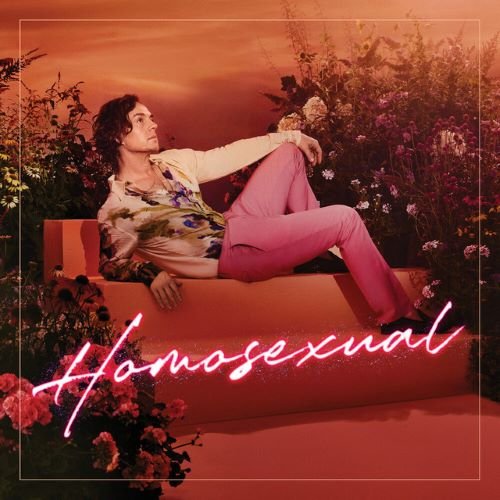
Darren Hayes – Homosexual

Release Date: 7th October

Labels: Powdered Sugar/Absolute

Producer: Darren Hayes

Buy: https://www.roughtrade.com/gb/product/darren-hayes/homosexual

Standout Tracks: Let’s Try Being in Love/Do You Remember?/Poison Blood

Key Cut: Feel Like It’s Over

Review:

“Darren Hayes rose to fame as one half of the hugely successful Australian duo Savage Garden in the late 90s. With two multi-platinum albums under their belt, it came as a surprise to fans when they split in 2001. Hayes went on to forge a solo career starting with his debut album ‘Spin’ in 2002, which saw him take elements of what made Savage Garden successful and push his own musical boundaries. Second album ‘The Tension and the Spark’ was the beginning of Hayes really experimenting with his sound, something that continued through 2007’s ‘This Delicate Thing We’ve Made’ and 2011’s ‘Secret Codes and Battleships’. Incredibly it’s been 11 years since Hayes’ last solo record but today he’s finally back with fifth album ‘Homosexual’.

‘Homosexual’ is an important record for Hayes and it’s one that confronts a lot of trauma from the singer-songwriter’s past. In the closet until 2006, Hayes was married to a woman at the beginning of Savage Garden’s rise to fame, and he’s said in interviews recently that being signed to a major label limited his ability to be open about his sexuality. In many ways, ‘Homosexual’ is rectifying those experiences with Hayes fully embracing his sexuality and his history, while celebrating love in all its forms. From the colourful artwork through to the attention-grabbing title, it’s clear that Hayes is in a good place when it comes to self-acceptance.

The music across the 14-track set delves deep into pop and dance territory drawing influence from the ‘80s, ‘90s and ‘00s. Lyrically it’s Hayes’ boldest work to date and it’s worth noting that he has written, produced, mixed and performed every song on the record. Opening with lead single “Let’s Try Being In Love”, Hayes sounds fresher and freer than he’s ever sound. That jaw-dropping falsetto that always been his showpiece is on display as the track builds from a low-key dance track into a euphoric celebration of being out and proud.

Every track on ‘Homosexual’, with the exception of ‘Poison Blood’, runs for over 5 minutes with a couple – ‘Hey Matt’ and ‘All You Pretty Things’ – clocking in at closer to 10 minutes. In an age where pop songs are getting shorter (2 and a half minutes in the norm these days), it’s refreshing to hearing a body of work that’s allowed to breathe. Hayes is afforded that opportunity by being free from major labels. The two-part title track – ‘Homosexual (Act One)’ and ‘Homosexual (Act Two)’ – provide stark contrasts with one another. The first is a bouncy carefree-sounding pop gem exploring self-discovery while the second has a darker electro-pop feel with lyrics suggesting that perhaps God is a homosexual.

Elsewhere on the record Hayes unflinchingly explores depression on the dark beat-driven ‘Hey Matt’, ‘Music Video’ uses an interesting vocal effect to make Hayes sound like a youngster as he reminisces about growing up and coming to grips with what made him different, and ‘Euphoric Equation’ is an intriguing mash-up of the Pet Shop Boys and Madonna that tackles domestic violence with Hayes taking aim at his father (something he explores even further on ‘Nocturnal Animal’).

The highlight on the record is the heartbreaking ‘Feel Like It’s Over’, which sees Hayes singing about a relationship where the passion has fizzled out and been replaced by unspoken words and a feeling of loss. The album’s closing track, ‘Birth’, is the set’s most experimental moment as Hayes explores his lower range as he battles with his true self showing itself.

‘Homosexual’ is a cohesive body of work from Hayes that ranks amongst the best material he’s put out to date. You can choose to groove to the beats or delve deep into the personal lyrics, or do both at the same time, and you’ll be rewarded. Hayes deserves to be held high among the best pop artists in the music industry and his work is certainly far more interesting than the cookie cutter pop that clogs up the charts these days. ‘Homosexual’ is a triumph and it’s a direction that suits Hayes down to the ground” – Entertainment Focus

Camp Cope - Running with the Hurricane

Release Date: 25th March

Label: Run for Cover Records

Buy: https://www.roughtrade.com/gb/product/camp-cope/running-with-the-hurricane

Standout Tracks: Blue/Jealous/The Mountain

Key Cut: Running with the Hurricane

Review:

“Camp Cope know that it is all too easy to get swept away by a storm bigger than yourself. Since emerging from Melbourne’s punk scene in 2015, the trio—composed of vocalist and guitarist Georgia Maq, bassist Kelly-Dawn Hellmrich, and drummer Sarah Thompson—have vehemently opposed the misogyny that is all too common in the music industry. “The Opener,” a breakout single from 2018’s How to Socialise & Make Friends, transformed the band’s own experiences with sexism into a defiant feminist anthem: “It’s another man telling us to book a smaller venue… Now look how far we’ve come not listening to you!” In the four years since “The Opener,” some systems have evolved while others remain frustratingly intact. But Camp Cope have changed and their third album, Running With the Hurricane, has a secret to share: There’s stability to be found within the squall.

Camp Cope started working on Running With the Hurricane in 2019, but the onset of the pandemic forced them to pause. Over the next couple years, as COVID and environmental catastrophes ravaged the planet, the bandmates refocused their priorities; Maq returned to her prior career path, nursing, and helped vaccinate fellow Australians. When the band finally began recording in 2021, they embraced the twangy lightness of the pop-country tunes that Maq turned to for comfort. Songs like the title track or “Blue” could be lost mid-2000s Chicks cuts—Australian and Southern accents alike stretch vowels like taffy. Shifting away from the gnawing, emo-inflected power-pop of their first two albums, Camp Cope ask: Can softness be as invigorating as fury?

Running With the Hurricane answers this question with a collection of songs that focus on matters of the heart and mind. “We could have gotten even angrier and even harder,” Maq told NPR. “But we didn’t. We went the opposite way because we refused to let the world harden us.” Their emotional range has broadened with them. “Now I pull the sound around me and I sing myself to sleep, you’ll see how gentle I can be,” Maq sings on “The Mountain,” one of several songs about finding a newfound peace in vulnerability. But she doesn’t pretend that this growth completely frees her from uglier inclinations. There’s plenty of anxiety in the form of unanswered texts and casual sex, and on the jangly “Jealous,” Maq compares her own attention-seeking behavior and longing for affection to a love interest’s pet dog.

Running With the Hurricane is at its strongest when Camp Cope harness the swirling turmoil and ride it towards self-awareness. On the twangy “Blue,” Maq explores how the same loneliness that feels so isolating in one’s head can become a means of connection: “It’s all blue, that’s why I fit in with you.” The sentiment returns later on “The Mountain,” a gorgeous anthem of self-determination. “I climbed the mountain blind, I turned around to find a heart as complicated as mine,” Maq sings, perhaps pulling inspiration from the same Fleetwood Mac ballad the Chicks once did. The title track is one of the band’s best: Maq reckons with her self-doubt atop a galloping melody and layered harmonies that bring to mind the blooming self-realization of Waxahatchee’s Saint Cloud. “There’s no other way to go,” she exuberantly proclaims. “The only way out is up.”

Just a few years ago, Camp Cope were determined to barrel through the hard parts; now, they’ve opened themselves to life’s chaos, ready to cruise alongside it. This shift from outward-looking protest to inward-facing resolve comes to a glorious climax on the album’s closer, “Sing Your Heart Out.” Featuring additional guitar from Courtney Barnett, it begins as a slow-building piano ballad in which Maq pledges herself as a vessel of love, in service to herself and others. “You are not your past, not your mistakes, not your money, not your pain, not the years you spent inside,” she proclaims, as her bandmates fall into place alongside her. “You can change and so can I.” As the song explodes into fireworks, they repeat the final verse like a mantra. It’s hard not to believe in its truth” – Pitchfork

Partner Look – By the Book

Release Date: 4th February

Label: Spunk Records

Buy: https://www.roughtrade.com/gb/product/partner-look/by-the-book

Standout Tracks: Partner Look/Speed Limit/Grasshopper

Key Cut: Rodeo Tragic

Review:

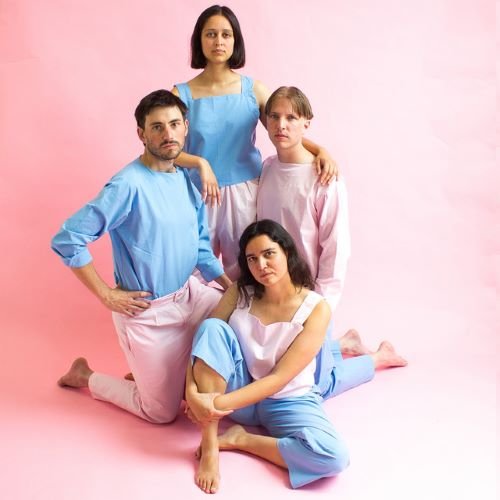
“Brandishing matching outfits, simple lyrics, and even a theme song, Partner Look make a fairly lightweight first impression. But there’s surprising staying power to the Melbourne quartet’s soft-stepping indie pop, which gets loopier and more askew over the course of this debut album.

That would-be theme song, ‘Partner Look’, opens the proceedings, playfully unpacking the German term for when partners begin to dress like each other. That’s all too fitting for this band, who are two sets of partners: German sisters Ambrin and Anila Hasnain, and Dainis Lacey and Lachlan Denton. It’s also a perfectly catchy introduction, a pure slice of daydreamy bubblegum.

Formed in 2018 as a wedding gift for a friend in Germany, Partner Look easily convey the sense of eavesdropping on a charming four-way hang. That instant feeling of compatibility and comfort comes not just from them being partners (or siblings), but also from playing together elsewhere. Ambrin and Lacey both appear in Cool Sounds, and Anila and Denton in Studio Magic. All four take turns at lead vocals here, adding to the casual, conversational flow.

Fans of Denton’s work in The Ocean Party, Pop Filter and his collaborative albums with Emma Russack will appreciate his low-key pop instincts here, beginning right from that opening track. And Lacey’s cracked, plaintive vocals carry over nicely from Cool Sounds. But it’s especially a treat to hear the Hasnain sisters come to the fore, starting with Ambrin’s horse-inspired single ‘Rodeo Tragic’. It sounds like something that Pavement’s Stephen Malkmus would sneak onto one of his later solo albums, when the stakes were lower and he was just enjoying himself. Anila’s song ‘Water’ follows suit, unfolding with endearing lightness.

But there are more anxious turns, too, like the mesmerising post-punk of ‘Speed Limit’, which borrows its mantra-like chorus (“Only sleep cures fatigue”) from a well-known Victorian road campaign. Evoking the sinewy pop minimalism of Young Marble Giants, it’s more tense and absurd than breezy. Likewise, ‘Grasshopper’ starts out sounding like a children’s song but instead tells the stranger story of an insect accidentally crushed beneath someone’s sandal.

Other songs poignantly return to a theme of dislocation that’s perhaps inevitable when half of the band members have been separated from their homeland during the pandemic. ‘Deutschland’ is in fact Denton’s love letter to the Hasnains’ native Germany – complete with some German lyrics – while ‘Geelong’ describes seeing Melbourne friends leave the capital city in favour of the title’s mellower regional centre on the coast.

That idea of home as a malleable concept comes out most in the closing ‘Endless Plains’, on which Denton absorbs an ocean-top sunrise while aboard an aeroplane from Singapore. That inspires him to muse about his relationship to Australia, lamenting the country’s colonial history while admitting the appeal of its wide-open geography. “It’s bigger than a name, or any political game,” he sings.

On an album that starts off dissecting the winsome in-joke of the band’s name, that parting track might just be the song that inspires someone to hit play again and listen more closely for such quieter, meaningful moments. They’re very much there on ‘By The Book’, nestled between the perky pop gems swapped gamely between four intertwined souls” – NME

FEATURE: A Very Long Rap Sheet: Are Male Artists Leaving a Black Mark on the Genre?

FEATURE:


A Very Long Rap Sheet


IN THIS PHOTO: Saweetie/PHOTO CREDIT: G L Askew II

Are Male Artists Leaving a Black Mark on the Genre?

__________

PERHAPS this issue and question…

 IMAGE CREDIT: Christine Kim / Daily Nexus

requires deeper psychological probing, as I am not sure there is an easy answer. What I am referring to is how, decades after Rap was invented as a genre, it is still being marred by violence, disrespect, and offense. Perhaps not as homophobic and misogynistic as it has been in previous years, there is still a bad taste that is being left! I would not confine it to an entire genre, but it is male artists are the major culprits. This should not come as a shock. Look through the history of Rap, and how many women (compared to men) are producing the sort of shocking and downright aggressively nasty or purely disrespectful songs as their male counterparts?! Sure, female rappers have recorded diss tracks and taken a shot at a rival. They have to hold their own and retaliate. They can be sexually confident and boast about their talent, but that is all good! They are showing a confidence and command that sets them aside. I know – as you have to stipulate when applying something quite secret to men in terms of judgement – it is not all male artists that are guilty. Some of the best Rap albums of the year have not been defined by and awash with offensive lyrics. I am thinking of hugo by Loyle Carner and Mr. Morale & the Big Steppers by Kendrick Lamar – which are, perhaps, two of the best albums of 2022 in any genre. What has provoked this line of thought is a remark by U.S. rapper Saweetie. One of the best rappers in the world, she said in a recent interview how male rappers are creating quite a toxic environment. Women are ruling because they are not building their music around disrespect, sexism and misogyny:

“Saweetie says that women are on top in hip-hop because of the prevalence of “violence and disrespect in male music.” The “Best Friend” rapper discussed the situation on the Bootleg Kev Podcast, earlier this week

“I mean, L.A. and other cities, it just goes to show that this is the reason why women is running rap and Hip Hop,” she said. “Because there’s just so much violence and disrespect in the male music.”

Afterward, she cited several artists who were on top only a few short years ago.

“You gotta think, like, remember, what was it, like ’16/’17,” Saweetie continued, before adding, “Remember when like YG, Tyga, Chris [Brown], Big Sean, TeeFlii was out? It was fun, party music.”

She just promoting her project lol but there is too much death and disrespect in mainstream hip-hop. That ain't nothing new, though. It does need to change nonetheless. Got kids looking up to artist talking about drugs and murder and disrespecting women and people in general and wonder why they're running around acting wild.

Later, she added: “It wasn’t like, ‘I’ma do this to you, and this, and this,’ you know? I feel like we gotta raise the vibration with the music and get back to having a good time. [I feel like there’s definitely a lack of] empathy and love, for real.”

Saweetie’s comments come shortly after the death of Migos rapper, Takeoff. The 28-year-old was shot and killed in Houston, earlier this month. Speaking with Complex about his passing, Saweetie recently described him as a “wonderful human being.”

“I mean wonderful, like hella dope,” she said of Takeoff. “My heart, my condolences go to his family. It’s just really surreal. I feel like Hip Hop is in a really eerie state right now.”

Saweetie is fresh off of the release of her latest project, The Single Life. The EP was released on November 18 and featured “Bo$$ Chick” as well as “P.U.S.S.Y.” The EP comes ahead of her highly-anticipated debut studio album, Pretty Bitch Music”.

Indeed, Saweetie’s forthcoming debut album, Pretty Bitch Music (which is out next year after some delay) is design to make people have fun and feel sexy. She released the escellent new E.P., THE SINGLE LIFE, last week. I think there has always been a split in Rap. Think back to the 1980s when there were more political groups like N.W.A. and Public Enemy and the more positive and less aggressive/political sounds of De La Soul. I think that there does seem to be a gender split. Not to lazily label, but the music from women does tend to be more empowering and positive. Whilst they have gained more footing and focus in a genre that has always had a problem with gender imbalance and sexism, I think there is still an attitude prevalent that sees them as inferior. That is not the case. I would agree with Saweetie that it is women ruling Rap! From Megan Thee Stallion and Bree Runway through to Little Simz and Rico Nasty, they are producing the finest and most memorable music. Newer names like Flo Milli, DreamDoll and Rubi Rose are showing that the future of Rap is very much going to be dominated by women. Still, in 2022, there is inequality in terms of women headlining Rap festivals and stages. They do not get the same sort of press attention as the men, though I think that this is starting to change. Misogyny and disrespect towards women has been inherited from Rap artists of the past and is (sadly) not going anywhere on the modern scene. Recently, Drake was called out for his misogyny and almost casual hatred and toxicity (though Varsity wrote a feature last year to question whether women have helped or hindered improve the issue of misogyny in Rap).  

In 2020, this article explored misogyny in Hip-Hop and what women have to face. They looked at a case where U.S. rapper Megan Thee Stallion reported being shot multiple times. She suffered ridicule on social media for it. I am tying Hip-Hop with Rap as they are very similar in terms of their sound and cultures. Saweetie has been criticised for suggesting misogyny in Rap is a new thing. Not at all. Think back to artists like Eminem in the ‘90s and ‘00s (and now!), and it has been pretty unrelenting. Maybe it is more visible and widespread now because of social media and how misogynistic lyrics and messages can catch fire and spread rapidly. It is a fire that needs to be snuffed out. One would think that some male artists would speak out. Other genres are not as afflicted as Rap. Think about Pop, Folk or even Rock and Metal, and there is not the same degree of issue and controversy. Maybe male artists feel it is a code of conduct or club rule that their music is relevant and powerful if they attack women. It is not the entirety of the male Rap sphere, but I think many women are being highlighted and celebrated is because they offer a more refreshing, positivity and inclusive message. If they take jabs at their male peers, then it seems quite deserved! Why are bigger Rap artists not speaking out against this? I don’t think I have seen any male rappers make a statement that matches what Saweetie has recently said?! It does seem to be the same old story: women highlight the issue and not getting sufficient support or acknowledgment. I know that many male rappers are positive and have a respect for women, but there are far, far too many that are misogynists and are leaving a black mark on the genre. It is a great genre that should be a tool for good. From messages of body positivity and empowerment to address political and social ills, why use a platform so big to degrade women?! Saweetie’s comments, let’s hope, opens some high-profile eyes and something can be done. Men responsible for their misguided and plain vile lyrics need to take stock and be accountable. Saying that it does not apply to all male rappers is simply…

NOT good enough!

FEATURE: Q & A: A Return to Kate Bush and a Wonderful 2001 Double

FEATURE:


Q & A

IN THIS PHOTO: Kate Bush at the Q Awards on 29th October, 2001 

A Return to Kate Bush and a Wonderful 2001 Double

__________

BECAUSE I am engrossed…

 IN THIS PHOTO: Kate Bush in 1993/PHOTO CREDIT: John Stoddart

in Tom Doyle’s book Running Up That Hill: 50 Visions of Kate Bush, there are new ideas forming! I have been re-reading various sections and learning new stuff. One of the interesting sections concerns 2001. This is a year when, in terms of Bush’s music, she was working on Aerial. It had been years since put out any albums or singles, and it will be another four years until Aerial came out. Rather than coming out of the wilderness and this being a shock return, I think that Bush was in a place when she felt more settled, and she was happy to be seen. There is a good reason for it. There was a double event/honour that happened in 2001. The now-defunct Q interviewed Bush in 2001, and she was also being honoured at their annual award ceremony. Rather wonderfully, as Tom Doyle sets the scene, Kate Bush was interviewed in Harrods in October 2001. The writer John Aizlewood was worried he would not be able to recognise Kate Bush. After all, the last time she appeared on T.V. was in 1994 when she performed a rather tired version of The Red Shoe’s final single, And So Is Love. Bush would actually perform on the stage in 2002 in a rare live appearance. She did star in the video for Aerial’s single, King of the Mountain, but there were to be no live performances or T.V. interviews for that album. She has done a lot of media interviews, but most have been conducted in a secret location or one of her homes. For Q in 2001, Bush agreed to be interviewed in quite a public place. One where a lot of London natives, tourists and people who know her music could have clocked her! I guess years had past and many might not have instantly been able to place her. The potentially embarrassing task for Aizlewood was, perhaps, having to shout ‘Kate!’ across a busy department store!

Many who mythologise Bush or feel she is a recluse who lives in a castle on a gothic hill would imagine she’d stand out in some black cloak or shrouded in weird colours. Perhaps emerging from some smoke in the corner! In actuality, she was dressed down in jacket and trousers. This was, after all, someone who three years early had become a mother. Her son Albert (Bertie) was a big reason that Aerial took a while to come out. And it also impacted the sound of the album and the general mood I feel. I like the fact that Bush spotted Aizlewood scanning around. Bush waved in his direction and the two sat down for a pot of tea. Although this was a public setting, it seemed that time away (and people shopping and concentrating on other things) meant that Bush could be interviewed in Harrods. It is not something she did again. Her post-2001 interviews were a lot more private and had fewer members of public around her! Thinking about the date, and this was about a month after the terrorist attacks in the U.S. 9/11 had rocked the world so, a month later, it still must have been weird for Bush or any artist to speak or do any promotion. Bush’s old friend Peter Gabriel accidentally let slip in 2000 that Bush had become a mother. Of course, this sparked a tonne of media hysteria and rumours. The sense that this ‘secret’ child was being hidden away. It was the sadly predictable and ridiculous rumours Bush had had to deal with since 1978. This sense of her being weird or some reclusive figure.

Bush had heard that she was being given a special honour at Q’s 2001 award ceremony. Perhaps wanting to clear up rumours or speak about her family, this was also a chance for her to pre-promote an album, or at least let people know she was not retired and was working on stuff. EMI definitely would have favoured this approach, and it probably bought her more time to get her double album completed. There were no terrific revelations or surprises from the interview. The biggest shock was the location of the interview, and the fact Bush was sort of back in the spotlight (however briefly) after her last interview in 1994. Bertie and Danny McIntosh (Bush’s partner, he also has played with her since The Red Shoes) were at Harrods. They said a quick ‘hello’ before heading off shopping. As Tom Doyle explains in his book, Bush told John Aizlewood that she was delighted being a mother: “People say that magic doesn’t exist, but I look at him, think, “I gave birth to him,”, and I know magic does exist. I don’t want to miss a second”. One could not imagine a less family-orientated artist in 1993 when Bush was promoting The Red Shoes. Her own mother died in 1992, and I think the exhaustion Bush felt meant she just wanted to take time out and focus on herself. She told Aizlewood how she was fatigued after her (then) current album. Recuperating by resting, watching a lot of bad T.V. and not making music, prior to giving birth, she had lived in central London.

Revealing that she was working on new music, Bush was cagey when it came to more details and plans. She explained how she can’t really talk about something that isn’t complete. This interview came a week before Bush arrived at the Park Lane Hotel on 29th October, 2001. Just over four years to the day later, Bush would release Aerial to the world. On this particular night, she was to collect an award and rub shoulders with a lot of musicians that admired her work and were excited to see her. One thing I did not know is that Bush had been booed when she arrived at the ceremony! Rather than posing on the red carpet for snaps and autographs etc., she walked down without pause – as any normal person would. That provoked a chorus of boos from the press, rather than any fans waiting there. Bush was deflated – as John Aizlewood was there with her -, but it was a bad start to what should be a magical night! One reason why I wanted to write about this particular week/event in Bush’s life is because it showed how relevant she always has been. Many might have written her off in 2001. Suggesting she was done for after a lacklustre response to The Red Shoes and her short film, The Line, the Cross and the Curve, did people expect her to make any more music? Elvis Costello was in attendance and, upon encountering Kate Bush, was reduced to jelly-like levels of fanboy blushing and humbleness! Bush had made her way down the red carpet for the same reason she did not get the fuss that some were paying her: it never occurred that her peers would be pleased to see her after so long away.

Bush was here to receive the Classic Songwriter Award. Midge Ure presented the award. Upon reaching the stage and the podium Bush, with typical humour, delivered a line from The Fast Show: “Ooh, I’ve just come!”. Four years after the legendary comedy had ended, perhaps people may not have got the reference. The laughter in the room suggested that people did! An unexpected first few words to say at such a lavish event, it was very much in keeping with Bush’s humour, normalness and her adding a bit of edge and excitement to an award ceremony that very much needed it! A big fan of Bush’s John Lydon had his photo taken with her. The two were old friends, and he sung her praises at the event. Noting that Bush faced the same sort of criticism that he did when in thew Sex Pistols, they were kindred spirits in many ways (although their musical paths and personalities were quite different!). Lydon, when faced with Kate Bush, was very much more subdued and schoolboy-like. Rather than this being a snarling Punk icon, he was just like everyone else: completely in awe and unsure quite what to say. Producer Nigel Godrich (Radiohead, Beck, Paul McCartney) met Bush too and suggested (in the main room as he spoke to reporters) he’d jump at the chance to work on Bush’s new material. That is a collaboration that could be interesting, though Bush producers her own work and has an engineer (Del Palmer). John Aizlewood caught some final words, where Bush revealed that the last record she’d bought for Bertie was Bob the Builder’s Can We Fix It? She had also quit smoking (which she took up as a child pretty much), and that there was some after-party drinks happening – whose exact location and guest list was withheld.

 IN THIS PHOTO: Kate Bush with Sir Tom Jones in 2012 at the South Bank Sky Arts Awards/PHOTO CREDIT: Richard Young/Rex Features

Having arrived at the Q ceremony and it starting very badly, it then progressed and ended wonderfully! The birth of Bertie was a key component when it came to Bush writing more music and wanting to put an album out. The 2001 award also cemented the fact that there was demand and this fascination after so many years. It was clear that there was a split in perception. The tabloid press would write her off, create these lies and always see Bush as some weird person who kept to herself. Her peers and the respectable press held her in high esteem and were always on her side! It would be four years until the public got an album, but that 2001 honour and night of celebration definitely had an impact! One wonders whether an award honour now would have the same effect on Bush. Of course, we’d rather not wait another four years for an album. Some say that the fact Running Up That Hill (A Deal with God) was featured on Stranger Things and topped the charts will provide a catalyst for new material. Let us hope! Very few people expected Bush to appear like she did in 2001. First, giving this interview with Q at Harrods. A week later, she followed that by collecting a Classic Songwriter Award, surrounded by fans and peers. In 2012, Bush was back on the award stage because of the South Bank Sky Arts Awards. Being honoured for 50 Words for Snow, papers like The Daily Mail proclaimed that Kate Bush was back after fourteen years. I am not sure what maths they were doing, as 1998 was not a year where she retreated or released a new album. It was a ‘return’ to the award stage after eleven years or so. Bush won a few awards in 2012 for 50 Words for Snow; the Ivor Novello Awards bestowed her the Outstanding Contribution to British Music gong. She would also pick up an award for Before the Dawn (her twenty-two-date live residency in London) in 2014 on behalf of the Evening Standard. In any case, her 2001 interview with Q and the subsequent award win was such…

 IN THIS PHOTO: Kate Bush with John Lydon at the Q Awards in October 2001

A pivotal moment in her career.

FEATURE: Second Spin: Joni Mitchell – Travelogue

FEATURE:


Second Spin

Joni Mitchell – Travelogue

__________

THIS is a rare Second Spin…

 PHOTO CREDIT: Joni Mitchell gave a rare interview to Elton John on his Rocket Hour show/PHOTO CREDIT: Apple Music

where I cannot include the Spotify album at the bottom. The reason is that Joni Mitchell removed her work from the platform because of controversial comments made about the COVID-19 pandemic by Joe Rogan. I will drop in YouTube videos and, if you want to hear 2002’s amazing Travelogue, I have dropped in the album via Apple Music. 2007’s Shine was Mitchell’s final studio album, but I wanted to look ahead to the twentieth anniversary of Travelogue on 19th November. There are other reasons why I want to cover this album. You can buy it if you fancy, and I would urge any Joni Mitchell fan to add it to their collection! Travelogue is a double album by  featuring orchestral re-recordings of songs from throughout her career. The follow-up to 2000's Both Sides Now (which had a similar format). Upon release Mitchell announced that it would be her last album, but she later recorded one further studio album. Another reason why I wanted to include Travelogue here is that, recently, Mitchell gave an interview to Elton John on his Rocket Hour show. The Guardian explains more. There was exciting news announced by Mitchell:

“Joni Mitchell has announced a new live album of her recent surprise Newport Folk festival performance. Speaking to Elton John on his Apple Music radio show Rocket Hour in a rare, wide-ranging interview, Mitchell confirmed that she and her team are “trying to” release an album of the show, a collaborative performance with US Americana singer Brandi Carlile which featured guests including Blake Mills, Marcus Mumford, Wynonna Judd and more. It was Mitchell’s first full performance in more than 20 years, and found the iconic folk artist singing from an onstage throne; at one point, during Just Like This Train, she stood to perform a guitar solo. “I couldn’t sing the key, I’ve become an alto, I’m not a soprano any more,” Mitchell told John of the rendition. “I thought people might feel lighted if I just played the guitar part … it was very well received, much to my delight.”

Elsewhere in the interview, which airs in full at 5pm today (12 November), Mitchell discusses the original reception to much of her work, which she says “made people nervous”: “People thought it was too intimate. It was almost like Dylan going electric. I think it upset the male singer-songwriters … It took to this generation, they seem to be able to face those emotions more easily than my generation.” She also expresses her “outrage” at wars (“I guess it’s an old hippy thought like make love, not war … you’d think we’d wise up and take care of the ecology situation instead of starting wars”) and describes Chuck Berry as the “goat”, an acronym for greatest of all time.

Mitchell has struggled with her health in recent years, suffering an aneurysm in March 2015. In the years since, she has made rare public appearances – she attended a Chick Corea concert a year after her aneurysm, and attended Joni 75, a 2018 birthday tribute concert in Los Angeles. Last year, she addressed her health issues in a rare public speech at the Kennedy Center, saying: “I’m hobbling along but I’m doing all right.” Earlier this year, she pulled her music from Spotify in solidarity with Neil Young, who had removed his music from the service due to its hosting of a popular anti-vax podcast. “Irresponsible people are spreading lies that are costing people their lives,” she said in a statement at the time. “I stand in solidarity with Neil Young and the global scientific and medical communities on this issue.”

Next June, Mitchell will perform her first headline concert in 23 years at Washington’s Gorge Amphitheatre as part of a two-night event called Echoes Through the Canyon – the second “Joni Jam” after the Newport Folk festival”.

As opposed an original studio album, a reworking and revisiting album like Travelogue is always going to divide people. It was the same when Kate Bush released Director’s Cut in 2011, where she tackled older songs from 1989’s The Sensual World and 1993’s The Red Shoes. People questioned the purpose of this album; others whether the new versions are any stronger than the originals. I love Travelogue, as Mitchell brings something new to these songs. It is a remarkable collection that everyone needs to hear. There were some mixed reviews for Travelogue. Rolling Stone were a bit puzzled and miffed. I think there were some unfair assessments. I want to bring in a more mixed review from the BBC before coming to one that is closer to the truth:

“Its hard to approach a double CD that tracks a whole songbook, re-cast as orchestral pieces, with anything but a sense of trepidation. And when bassist, co-producer and ex-partner Larry Klein tells you that: "...we have tried to maintain the same challenging spirit of adventure that has always been a part of [Joni's] music...take the time to let these versions of Joni's songs slowly wash over you'', you know that Travelogue isn't going to be an easy ride. You'd be right, too. Mitchell professes to be disgusted with the contemporary music scene and this is a supposed swansong. In summing up her career, this icon of cerebral West Coast songcraft has produced a substantial body of work without one iota of sentimentality.

One look at the musicians on offer here - Herbie Hancock, Wayne Shorter, Billy Preston, Billy Blades - gives one a distinct message: this is not music for idiots. This turns out to be both the album's strength and weakness. For all of her heavy friends, Travelogue can make for some heavy going. As on the previous Both Sides Now, Joni pitches her wonderfully matured (as in a fine wine) voice against an orchestra and becomes an interpretive singer; but this time of her own work. From Song To A Seagull all the way to Turbulent Indigo, songs are re-tooled and re-contextualized.

In most cases the results take a while to sink in, approaching a cumulative ambience that resists analysis. However, once the finer points are exposed it's plain that there's much to appreciate. Subtle arrangementsframe Mitchell's lyrics in a new light, making more recent work such as ''Sex Kills'' and ''Borderline'' seem even more like the tone poems she's obviously keen to move towards. Her jazz leanings are easily catered for by the stellar cast and one can't help but be impressed by tracks that swing as well as ''Be Cool'' or ''You Dream Flat Tires''.

It's when the Mitchell classics are attempted that listener tolerance is put to the test. Songs as historically contextualized as ''Woodstock'' or ''The Circle Game'' would probably be safer in the hands of others. Under her they merely turn from pointillistic snapshots into abstract expressionism. Vast swathes of strings add little to the original impact of the song.

As a touchstone of musical intelligence Joni's position is beyond question. However her stance over the last few years has veered towards the specious philosophy that older forms such as jazz or classical equate to more serious vehicles for her dissections of modern America. The fact remains that by the time of Hissing Of The Summer Lawns she was beyond this need for critical validity and, as such, Travelogue often smacks too much of revisionism. That said it's still head and shoulders above anything her contemporaries have offered us recently. And that's something we really should be grateful for. Let's hope it's not the last...”.

I am going to end with a more positive assessment from AllMusic. I think they drill down to the heart and purpose of Joni Mitchell’s Travelogue. It is a very perceptive and interesting review for an album that I think should have got a better reaction:

“According to Joni Mitchell, Travelogue is her final recorded work, and if that is so, it's a detailed exploration of moments in a career that is as dazzling as it is literally uncompromising. Over 22 tracks and two CDs (and as stunning package featuring a plethora of photographs of Mitchell's paintings), Travelogue is a textured and poetic reminiscence, not a reappraisal, of her work -- most of it from the 1970s through the 1990s. A 70-piece orchestra, as well as jazz legends Herbie Hancock, Wayne Shorter, and Kenny Wheeler, drummer Brian Blade, bassist Chuck Berghofer, producer Larry Klein, and organist Billy Preston, among others, accompanies her. It's true that Mitchell dabbled in this territory in 2000 on Both Sides Now, but that recording only remotely resembles this one. Cast in this way it is true that this is no easy cruise, but given the nearly 40 years of her sojourn in popular music, Mitchell's work, particularly from the mid-'70s on, has been difficult for many to grasp on first listen and always gives up its considerable rewards, slowly making her records age well over time; they are not disposable as much of the music from her peers is. These completely recast songs cover the entirety of her career, from her debut, Song From a Seagull, to Turbulent Indigo (with certain albums not being represented at all).

It's true there aren't high-profile cuts here except for "Woodstock," which is radically reshaped, but it hardly matters. When you hear the ultrahip, be-bopping "God Must Be a Boogie Man," there is an elation without sentimentality; in the scathing and venomous "For the Roses" and "Just Like This Train," the bitterness and aggression in their delivery offers the listener an empathy with Mitchell's anger at the recording industry -- and anyone else who's crossed her. But while there is plenty of swirling darkness amid the strings here, there is also the fulfillment of prophecy; just give a listen to this version of "Sex Kills" that bears its weight in full measure of responsibility and vision. Her voice, aged by years of smoking, is huskier and is, if anything, more lovely, mature, deep in its own element of strength. The restatement of W.B. Yeats, "Slouching Toward Bethlehem," is more stunning now than ever before as is "Hejira." In "The Circle Game" and "Slouching Toward Bethlehem," you hear the ambition in Mitchell's musical direct as she has moved ever closer to the tone poem as a song form. Though it may not be as easy on first listen as Court and Spark, Travelogue will continue to unfold over time and offer, like her best work, decades of mystery and pleasure”.

The lack of well-known Joni Mitchell tracks explored on Travelogue shouldn’t put you off. It is a remarkable album from an artist who was thinking of ending her career. It has that sadness and sense of finality but, fortunately, Mitchell made one more studio album. Now that she is better (after suffering health issues over the fast few years or so) and there is news of a live album, I wonder whether she will record more music. It would be sad to think that this is it. I would recommend anyone who likes the music of Joni Mitchell to listen…

TO the wonderful Travelogue.

FEATURE: Kate Bush: The Deep Cuts: Violin

FEATURE:


Kate Bush: The Deep Cuts

Violin

__________

IN this deep cuts series…

I am picking album tracks that many people might not know about. Many Kate Bush fans might not know too much about these songs too, so under-discussed and overlooked are they. I have visited Bush’s third studio album, Never for Ever, before for this series. Released in 1980, one can say that most of the tracks are deep cuts. I guess Babooshka is the one we connect with that album. Army Dreamers and Breathing, whilst singles, are not that known to everyone. What those three songs show is how much Bush’s ambitions, voice and lyrics had grown and expanded since her debut album two years earlier. In terms of the themes she was exploring, the technology being used and the stage she was in her career, Never for Ever is the sound of an artist fresh from an international tour who was ready to step things up and take her work to new places. Actually, though I have mentioned Bush’s debut album (The Kick Inside) and how her sound palette and repertoire was broader, I actually want to link to it in a positive way. I love The Kick Inside more than any other album, but my point is that Never for Ever is more eclectic. On The Kick Inside, there is a number called The Saxophone Song. Bush wrote that because she loves the instrument and felt that is was very mellow, rich, and interesting. Like a woman.

A definite deep cut from Never for Ever has an instrument at its heart. Violin is one of those songs that many people have never heard. I am not sure whether Bush played the saxophone or ever thought about it but, as a child, she did learn the violin. Not as enjoyable as the piano, Bush did at least commit a song to record that celebrated the violin! Whereas the saxophone is mellow and has this romantic and sensuous quality, Bush notes how the violin is wilder and has this intense energy. Indeed, listen to the vocal performances on The Saxophone Song and Violin and they are vastly different! One reason why Violin should be better know as it sees Bush deliver a more Rock-orientated vocal. Something graveled, ecstatic and blood-rushing, maybe some people who reviewed Never for Ever felt Violin stuck out. If Bush would top that intensity on her next album, The Dreaming, with the incredible Get Out of My House, Violin was not what people were used to with regards her music. It always scores quite low when music sites and magazine rank the tracks from Never for Ever. I would argue Violin is worthy of fresh ears and affection. There are so many Kate Bush songs that very rarely get played on the radio or are given short shrift. Such an eccentric and brilliant intoxicating song, let’s hope that new fans of Bush’s work are hearing songs like Violin and enjoying it!

IN THIS PHOTO: Kate Bush performing Violin during her 1979 Christmas special

Before I carry on, the Kate Bush Encyclopedia provide information about the different versions of the song. I like the fact that Bush did perform the song live during The Tour of Life and her underrated 1979 Christmas special. I don’t think I have heard the demo version of Violin. As the album version is quite fulsome and layered, it would be intriguing to hear the demo and how this wonderful song started life:

“Versions

The studio version is the only officially released version. However, a demo version of 'Violin' has also surfaced. It appears on the bootleg 7" single 'Cathy Demos Volume Three' and various bootleg CD's.

Performances

'Violin' was premiered during the Tour of Life, when it was performed as the eighth song of the first act. At the end of 1979, Kate performed 'Violin' during the Christmas Special, after which she never performed the song again”.

Credits

Drums: Preston Heyman

Electric bass: Del Palmer

Electric guitar: Brian Bath

Electric guitar and solo: Alan Murphy

Violin: Kevin Burke

Banshee: Paddy Bush”.

Violin is an interesting song. Bush did perform is quite a bit, but after her Christmas special, that was that for this terrific song. I guess there was no call or opportunity to do it live after that. Not one of the singles from Never for Ever, I think a lot of people have passed this song by. It is not one of her best songs, but neither is it filler or something half-formed. Always an extraordinary lyricist, things are interesting, original, and memorable right at the start: “Four strings across the bridge/Ready to carry me over/Over the quavers, drunk in the bars/Out of the realm of the orchestra/Out of the realm of the orchestra”. Accompanied by Kevin Burke on the violin – who is a standout on this song -, I love the images that Kate Bush summons. My favourite verse is this: “Paganini up on the chimney/Lord of the dance/With Nero and old Nicky/Whack that devil/Into my fiddlestick!/Give me the Banshees for B.V.s/Give me the Banshees for B.V.s”. My hope is, with this run of features, to alert existing Kate Bush fans to songs that they might have forgotten about. For those new to her work, tracks like Violin demonstrate the depth and originality that Bush has. Every album has so many different moods and sounds. I love Never for Ever and its bigger songs, but cuts like Violin are also amazing. An impassioned song that has never quite got the credit it deserved, the stunning vocals, lyrics, and layers of this Never for Ever beauty proves that the incredible Kate Bush has many…

STRINGS to her bow.

FEATURE: Spotlight: Kilo Kish

FEATURE:


Spotlight

Kilo Kish

__________

BECAUSE she released…

one of this year’s best and under-reviewed albums, I want to feature the magnificent Kilo Kish in this Spotlight. Whilst not brand-new and fresh to the music world, she is definitely still coming through I feel. An artist who is both confidently realised yet not quite near her creative peak yet, this is an exciting time for the Florida-born songwriter and visual artist. Many will know her work already, she released her debut over ten years ago now. Her debut album, Reflections in Real Time, arrived in 2016, although I think American Gurl is her finest work. I have only seen a few reviews for the album. I will bring in a couple shortly. In spite of the fact there are few reviews for AMERICAN GURL and the music media shamelessly seemed to overlook such an incredible album that ranks alongside the best of 2022, there were quite a few interviews to promote it. Some big-name publications and sites too! A hugely respected musician with limitless talent, I want to set the scene and explore more of Kilo Kish’s year. Although she has been making magnificent music for over a decade now, I am going to drop songs from AMERICAN GURL through this feature, as it is her recent album and one that I think is overlooked and should be celebrated and talked about more. There are some really interesting interviews that I have found that tell us more about Kilo Kish and the phenomenal AMERICAN GURL.

The first interview I want to source from is Okayplayer. I was interested reading about Kilo Kish’s upbringing in Orlando and how she feels she has progressed in the past decade. Even though it has been a busy and successful decade, I think her best days and work still lie ahead. She is such a compelling person to read about. Such a raw talent with a very long future in the industry. Barely in her thirties, we are going to see Kilo Kish grow and produce sensational albums for years to come:

“Kilo Kish has never wanted to fit in. For the past 10 years, music has been the connecting factor between all the creative spaces the multi-hyphenate exists in. But before she became known as the alternative Black artist behind music projects like her 2012 debut Homeschool EP and the recently-released American Gurl (as well as a visual artist whose work has been displayed at The Getty Center and The Hammer Museum), Kish was Lakesha Robinson, a kid from Orlando, Florida.

From a young age, Kish felt different from those she grew up with because of her interests: listening to Bjork, cutting up and creating clothes, and reading Vogue. But she found camaraderie in a group of close friends she did everything with when she started to attend Winter Park High School, as well as friends she met in church.

“[High school] was pretty chill, it was also kind of crazy. When I was in high school, I just also smoked weed a bunch and did drugs,” she said. “It was weird because it was this dichotomy of having all this academic stuff and then also exploring.”

Let’s start at the beginning, what was it like growing up in Orlando?

I painted a lot. I was really into graffiti and I was trying to learn how to do spray paint and graffiti. I would always cut up clothes and try to make clothes. So yeah, I was creative. I tried to be on the step team. That didn’t really work out that well. I was really a part of my church as well. I was always at church because my mom was super religious, which was fun. I felt like I could be who I wanted to be, but I definitely felt different. People were like, “She’s a little bit weird, that one.”

 PHOTO CREDIT: Ray Brady

Hip-hop was poppin’ in the South at that time but people weren’t listening to hip-hop from the North, at least that’s my experience. So it was just very interesting. My parents are from up here.

Mine, too. My mom, it was like she would always be like, “You’re from up North.” She would always try to say that. And I [would tell her], “I actually was born here and I’ve been living here this whole time, so I’m pretty much Floridian.” She’s like, “You spent time in New Jersey. You’re from up north.” It’s like, it was this weird thing of not wanting to be “country” or that kind of vibe.

It’s been ten years since your first SoundCloud project. How does that feel?

I feel good about the last 10 years. I feel like, obviously, some things did not go as planned but that’s just the nature of life and learning a whole industry — a hard industry as well. I feel like I have created a space for myself that’s mine, that’s unique, and that’s all that I really wanted to do. Be as honest and truthful as I can about who I am and explore it and learn more about myself, and learn more about my world and dissect it.

I also feel like in the last 10 years, so much of my time was spent trying to fit into music. And it’s like — from the very get-go, I wasn’t interested in the same things that my music artist peers were interested in, and I fought against that for so many years. It’s just not my personality. I like to work by myself. I like to be insular. I like to be heady and think about things, and then I like to share them and present them at the end and give context and all of that, as opposed to being a personality that’s constantly in your face and people are constantly seeing.

 PHOTO CREDIT: Ray Brady

What was the driving force behind your new album American Gurl?

I was super, super, super burned out. And I was frustrated with all the things that I was talking about before. I was frustrated by [the] industry and teams and trying to do all of these different things. I mean, being alternative — alternative black artists in general — it’s a weird kind of space that people don’t really always know where to [put us]. It’s much more well-received now, but I think sometimes people are like, “Well, can’t you just do it like this? Or can’t you just do it like that?” I think this project was like me detoxifying myself from all of the stuff that I heard all the time and the people that I was around, and the scenes and the conversations and just the sugarcoated nature of everything.

I don’t know why, I just started thinking about McDonald’s in this way — like sugary candy and Coca-Cola. I just started thinking, “What if I made an album that feels really bright and really kind of like pop on the surface, but then it’s really diving into some themes?” It’s kind of more like Reflections in Real Time, where it’s something that’s very near and dear to me but it’s coated in this plastic. That’s the theme of American Gurl — exploring that I am a product of my environment and these are the things that have been put on me in this time so far”.

AMERICAN GURL is an album I have been playing a bit since I heard it earlier in the year. Each time I pass through it, a different song jumps up and me and reveals something new. I have detected a definite shift and evolution in Kilo Kish’s sound since her earliest work. I am fascinated to see where she goes next. Teen Vogue spoke with Kilo Kish earlier in the year. It seems that it has been an intense period of work for her. Putting her all into the creative process, rather than AMERICAN GURL sounded burned out and tired, it is an album that is full of incredible lyrics, wonderful performances, nuanced songs and fresh incentive and energy:

“Teen Vogue: It’s been six years since your last album. What have you been doing in that time span?

Kilo Kish: Between Reflections and now, I’ve done a couple of EPs and toured a little bit and had two solo art shows and one group show. I’ve just been working the whole time. It doesn’t really feel like it’s been six years. It’s just been like continually doing things because once the album’s come out, I also then do all the creative for the rest of the album. Then there’s video, and I direct those. Then there’s merch and touring and then I’m directing and figuring that out, so it doesn’t feel like that much time has gone by, but it totally has.

I think what set up this particular album is that I was just working a lot, and I felt really just tired and strained by the process of going, going, going and doing, doing, doing. It kind of made me dissect what our culture is a bit. I started writing this album in 2019, and I wrote REDUX [Kish’s 2019 EP] in between that, then I toured [for] REDUX. When the pandemic happened, it really gave me time to think about what I had been doing for the past years, my workload and if I was happy in the life that I created for myself…it really just was dissecting a lot of like, what it means to have to make your own way, and I think the values that people preach in America are a lot of that. I really wanted to use Americanism as an umbrella to dissect some of these things that I was dealing with. Am I where I want to be financially? Did I do enough? Am I working hard enough? Am I pretty enough? Am I good enough?

TV: Did you learn anything about yourself in the process?

KK: I guess I’m just always looking for freedom. Whatever the purest form of freedom is, I’m always trying to find it. I don’t know if it’s fully attainable, but I think by figuring out the places that you don’t necessarily feel free, you’re able to kind of get a sense of what would make you happier. This project is basically unburdening myself a little bit from the things that I thought I had to care about or the things that I thought I needed to do to be happy and be successful, and dissecting what is success today because it’s not what it was five years ago. It’s not what it was 10 years ago.

TV: You always take a detailed, interdisciplinary approach when creating art, music and fashion. How does that come to you?

KK: I'll come up with a theme first. Then, I will personally craft each thing to fit into that theme and to tell an overall story of the project. And then that's what I do on the music side. And then I do it on the visual side. And then I do it all across the creation of the project, so that there's layers of depth alluding back to that same central theme and asking questions in all of the different spaces. Sometimes I can do installations around, you know, the projects themselves and music project, so it's more of a multi-layered approach than generally focusing on making an album to only be digested as an album.

TV: AMERICAN GURL is orchestrated conceptually as a video game. The album starts with characters deciding to play the game “American Gurl” and ends with them being annoyed that the game abruptly ends. What made you think of implementing that for the album?

KK: Initially, the album was kind of dissecting the entertainment game that people essentially are always referencing, so I thought it would be fun to actually make a real game that you could play. so I might try to do something like that. I want to still make that for this project, but games take a long time. I was like. maybe I can play on past memories and things and mesh it all together. I also grew up in New Jersey for a part of my life and we would always go down to the shore and we’d go to the boardwalk, so the memory of arcades just in general and the sounds of coins, the sound of commerce — the brightness and richness of sound in an arcade — it just reminds me of industry. All of these things are bright and shiny, and I think sometimes that’s kind of what art is like and how artists are marketed. We’re all for sale, we’re all bright and shiny, we’re all loud and we’re all intense, so it’s a good introduction to the things I’m discussing, which is my relationship to the music game or the game of trying to make it as a working artist”.

There are a couple of other interviews I want to drop in before getting to some reviews. Reading this interview from NYLON, and it is interesting learning what direction she intended to take AMERICAN GURL in first – compared to how it actually sounded in the end:

“The majority of American Gurl came together in 2019, the concept spawned from a conversation where she was discussing the perceptual limitations of Blackness. She doesn’t remember specifics, but recalls questions she asked herself: “Who would want to see me doing [conventional pop]? Why can’t I be an American girl?” Its release kept getting pushed off by the unraveling of the outside world — the pandemic’s onset, the murder of George Floyd. Similar to the way a social media feed can change in the blink of an eye, the context in which American Gurl was written has completely evaporated. Now, as we speak on her brief trip to New York, Russia wages war on Ukraine putting us on the edge of another world war. Kish can’t help but laugh: “This is the wildest time to try and dissect this part of our culture.”

She says that she intended to go the route of Lenny Kravitz or Gnarls Barkley for this album’s sound but states that the final result was a “Kilo Kish record, but a strange one.” Produced by Ray Brady, American Gurl’s fourteen tracks are a mash of new wave industrial pop, disco, dance punk, and trip hop while Kish dances with national and personal ego. The resulting whiplash concoction of pop is the background for her trying on different roles in order to understand herself further in relation to our warped, overstimulated reality. “What will it take to satisfy?” she asks on the robotic ballad “Distractions III: Spoiled Rotten.” The track pokes at her frustrations with consumerism by stepping into an exaggerated character whose insatiable hunger for things is never satisfied.

 PHOTO CREDIT: Ray Brady

“I’d like to think, ‘Oh I’m a purist. I do things purely for the sake of art and making and giving,’” she says in a mocking tone. “But that way has been tainted through the worlds that I’ve gone through and through the seasons that I’ve lived through and through these years in this industry. Even if I was pure or if anybody was, it’s really hard to stay that way given what you need to do to survive and what is the name of the game. You go to a magazine shoot or you go to a fashion shoot and they’re like, ‘We want authentically you but actually can it be like this and can you put this on and can you say that exact thing you just said but like this?’”

It’s easy to get sucked up into American Gurl’s momentum without immediately recognizing its dark underbelly. Like a lollipop with a vitriolic center, the poppiest moments contain insidious sentiments. That fine balance not only mirrors this world’s current contradictions, but is evidence Kish is honing her craft. “The older I get and the better I get at what I do, it's like I'm able to juxtapose it better versus hitting you over the head [with] brain dumps,” she says, noting that American Gurl is more nuanced than Reflections. “If you don't want to go there with me you don't have to.

Kish is not an artist who wants to supply an answer, and she’s aware that the questions she’s asking don’t have a definitive response. So why bother to even ask these questions? Why make art that probes knowing there won’t be an explanation? “I’m restless, obviously,” she laughs. “I have a lot of energy. If it doesn’t go somewhere then it’s in me being anxiety. It’s a healthy way of getting out my fears and worries and confusion about the general nature of living.” As she continues, it seems that asking questions is her source of personal freedom. “It’s a part of my personality to constantly be wondering what’s deeper,” she concludes. Without that curiosity, she wouldn’t know who she would be”.

Maybe not directly connected to the music, I found an article and interview that discussed the ‘AMERICAN GURL style’. A connection between fashion/looks and various songs. Vogue’s feature helped bring new angles and light to the album. It made me think differently about it and, in the process, taught my new things about the incredible Kilo Kish:

“The album concept and look are Kish’s exploration of herself as she tries to understand who she is without the gaze of others. “It was me dissecting where I’ve been up until this point, my upbringing, the different subcultures that I’ve been a part of, and some of the tropes and identities associated with those,” she says of the album. “I realized that by 30, I have been indoctrinated in so many different ways of being within the music industry, then modeling, doing fashion stuff, and all of that. I was feeling, ‘Okay, what of all of this, if any, is me?’ ”

Kish’s searching isn’t a surprise: She moved to New York more than a decade ago at 18 and found herself smack-dab within the city’s scene, influenced by each social group’s styles and the larger trends at the time. Kish, who attended the Fashion Institute of Technology, recalls the “indie sleaze” era of the late to mid-’00s in which she’d wear ripped tights with jean shorts, baggy shirts, and Lacoste cardigans, which she describes as “art clothes.” Later on, in the early-’10s, she ventured into modeling and wore all black. While making music more professionally in 2012, she began to pull designer pieces and references items from the now-defunct label Elizabeth & James (founded by the Olsen twins). Eventually, Kish began to morph into the sartorial shapeshifter she’s known as today. She went through her big-suit David Byrne era around 2016 during her Reflections in Real Time album, and even wore a tutu “for a month straight.”

For her American Gurl album, Kish chose to wear American designers. Rodarte was a special influence, and allowed her to pull archival gowns for the images promoting her songs, which are designed like retro postcards and show Kish in different characters. On one, she’s wearing a frill-trimmed pink dress, superimposed on the photo of a resort with the kitschy text “Spoiled Rotten” and in another, which reads “Attention Politician,” in an ’80s-style fuchsia dress floating in front of a cityscape. “It was playing different characters in that world and then we used their different gowns to play different Americana characters," she says, noting her dress on the “Bloody Future" and “New Tricks” covers. “I have a yellow dress with all the bows on it where I am playing the character of a Southern belle.” Another special piece through this album process was, of course, that aforementioned American flag dress by Batsheva. “[Without] having that dress, would it have driven home the images much? Not really,” she says. “In some ways, it really can drive home the message that you’re trying to portray with the song”

Kish finds a kinship with the label Batsheva, which is known for—depending on your perspective—its frumpy-chic flair and its subversive qualities. Kish sees the dresses as layered and sublime, something that speaks to Kish’s own style. “It’s the juxtaposition of two things, which I like about [designer Batsheva Hay’s] designs,” says Kish. “When you go to her show, the models are having blue wigs and wild makeup and big hair. But then, the dresses themselves are quite conservative. It’s really the person wearing the dress more than the dress itself. It comes out punk in a way still, even though they’re not leather and all these things. It’s really buttoned up, but also going to rip your face off in a way, which is why I like her designs.”

Ultimately, Kish may have not cracked the code to who she is–but who has? Don’t expect her latest look to be permanent either. “I’ve been trying to accept that I am a mixture of these things and I am a product of all these things. Just because part of me as an artist always wants to be pure and not sell out and try to do the best possible work I can do, doesn’t mean that I also don’t want to be frivolous at times,” she says. “I think it’s really accepting that there’s more than duality to people. There are all of these different layers at play, and just really being accepting of, ‘Okay, today I want to be a fashion girl.’ It is what it is. That doesn’t preclude me from being something else in another moment”.

Let’s finish off with some positive reviews from an astonishing 2022 release. AMERICAN GURL is the latest chapter and big step from an artist whose music warrants wider exposure. I have heard a song or two of hers played on U.K. radio, but I don’t think she is as widely known here as she is in the U.S. In any case, go and follow her on social media and acquaint yourself with her work so far. Vinyl Chapters were among the few that gave AMERICAN GURL a spin and afforded it a deep and impassioned review:

“Kilo Kish’s AMERICAN GURL is an all killer, no filler album that interrogates the entertainment industry.

The clinking of coins in slots and the cheerful blips and beeps of arcade machines set the scene for AMERICAN GURL—a clever choice of backdrop for an album which, in visual artist and musician Kilo Kish’s words, explores ‘the American game’. Clocking in at 40 minutes and 14 songs, the American singer’s first album since 2016’s Reflections in Real Time brings forward a smorgasbord of variations on her usual dark art-pop sound.

The album makes it clear that if the public eye is going to be watching Kilo Kish, she’s going to stare straight back. AMERICAN GURL manages to be at once more experimental and more refined than Kish’s previous work, successfully performing the delicate balancing act between lyrics and musicality without compromising one for the other.

Each track is a carefully-crafted interrogation of the themes of fame, success and identity that run through the album; it’s a dissection of Kish’s personal image just as much as of the entertainment industry on a larger scale. “Who are you, baby? / Who are you keeping around?”, she asks over bright synths on title track AMERICAN GURL, introducing the key questions that lie at the album’s core. ATTENTION POLITICIAN is full of apathy, from its warped, dissonant synths to Kish’s unapologetic, attitude-packed delivery (“Ring my telephone / What, what, what / I’m in another zone / What, what, what”). NEW TRICKS: ART, AESTHETICS, AND MONEY has a similar dystopian aesthetic: “Congeniality is a basis for content / Peddling narcissism wrapped in self-love and progress / You want it, I got it / This soul is a bargain (I know you want it)”, Kish teaches to the students in her classroom, her monotone voice set over a mechanical instrumental.

Each track brings along a change in tone and style, making clear that Kish’s exploration of breaking down and remaking her image isn’t only limited to her lyrics. Once-bright synths turn subterranean on tracks like DEATH FANTASY, where they’re complemented by dull stabs of percussion and a shift to a more raspy vocal style. Behind these elements, you catch clips of ethereal falsetto from Californian R&B singer Miguel, without which the track wouldn’t have quite the same effect. It’s these careful sound design choices that separate Kish and her album from her contemporaries.

DISTRACTIONS III: SPOILED ROTTEN is a glitchy cut that features the beeping of machines, the dialing sounds of a telephone, and a repeated bridge (“Gimme, gimme, gimme, gimme,”) that dissolves into a fake laugh. BLOODY FUTURE brings in a twinkling electronic Baroque motif, while NEW TRICKS features writing on a blackboard, a siren blaring, and ticking, clock-like percussion. All of these background sounds—including the occasional ‘levelling up’ sound (as at the end of ATTENTION POLITICIAN) that cleverly reminds us we’re still in the arcade—transforms the album into something closer to an experience.

But all experiences, whether good or bad, must eventually come to an end. “Is that it? That can’t be it,” the party of arcade-goers asks on the outro track, CONTINUE?, a sentiment likely shared by anyone who reaches the end of AMERICAN GURL. It’s an undoubtedly original album, maybe an acquired taste for some—and while the girls bashing the game machine might be unsatisfied, it’s unlikely the listener will finish the album feeling the same way.

Score 4.5/5”.

I am going to finish off with a review from The Line of Best Fit. One of the few British reviews I have seen, their promotion and word would have helped introduce Kilo Kish to a new audience here. I do think that AMERICAN GURL stands up against the best albums of this year. The Line of Best Fit were especially impressed by the video game-based concept of the album:

“The “we live in a society” record, which is more commentary on life than guilt-free pop collection, is a high risk, high reward career move. Janet Jackson provided grooves and commentary in equal measure with Rhythm Nation 1814 and produced a career-defining work, but Madonna took herself too seriously with American Life. Recently, MARINA’s Ancient Dreams In A Modern Land was a welcome sonic reprieve from past efforts, it still dawdled with superficial observations. With electro-alternative artist Kilo Kish’s AMERICAN GURL, however, she masters the formula of how to make pop music with a message, one that doesn’t make you feel bad listening to it.

The album is bookended by two skits – “PLAY” and “CONTINUE?” – which set up the project and explain the video game effects littered through the album. On the intro, two women enter an arcade and the “AMERICAN GURL” game catches their eye and decide to play. The album that follows is essentially the game, an incredibly smart move – every idea, concept, or theme is delivered with a wink in Kish’s eye. It’s all just part of the bit… Or is it?

The title track is the most straightforward pop song on the album –featuring a catchy beat and horn-like synths, Kish questions, “Who are you, baby? / Who are you keeping around?” Then declares, “I’m changing places / So I can’t see you anymore.” Her ambitions are simply too much for everyone else; her satirical worldview posits herself as enlightened, above it all. And she’s not sorry about it either – “NO APOLOGY!”, which comes later, is all about the absence of remorse.

“NEW TRICKS: ART, AESTHETICS AND MONEY”, the best song on the album, is a braggadocious banger delivered in the smartest, most polite way possible. Other rappers get to the point – I have so much money! – but Kish’s intelligent, even poetic lyricism comes through with “A Linx, a platinum leash / Affixed to my wallet / My hand, my stone-laced hand / Affixed to my pocket.” Frequent collaborator Vince Stapes is a feature on this track, but just ad-libs; he knows the focus is on Kish and her allegories of dogs, control, and obedience. “Man, you’re yanking my collar / Can’t dance for your dollar again,” she croons over the harsh beat.

The penultimate track, “INTELLIGENT DESIGN” seems like a reference to artificial intelligence, the future, and dystopian visions; The “Hello! Hello!” chants on the chorus bring to mind the “Hello, World!” output programs of AI. “I get up just to say / ‘I still want what this is now,’” Kish says on the pre-chorus, jaded by the onslaught of future technical progress”.

An artist I am keen for more people to know about, Kilo Kish’s AMERICAN GURL is proof of her incredible talent and vision. She has looked back and celebrated a decade of releasing music. It is interesting hearing her thoughts about how she has evolved as an artist. There is no doubt that the wonderful Kilo Kish has…

A lot more to say.

_____________

Follow Kilo Kish

FEATURE: All I Want for Christmas… A Stocking of Seasonal Classics and Modern Gems

FEATURE:


All I Want for Christmas…

IN THIS PHOTO: Mariah Carey 

 A Stocking of Seasonal Classics and Modern Gems

__________

IT be a bit early to go in…

 PHOTO CREDIT: Rodion Kutsaiev/Unsplash

but, as it is almost December, I have put together a playlist of Christmas classics to get you in the mood. At the moment, we are hearing Christmas songs played on the radio. Before Christmas Day, I will suggest a music gifts-related feature for those who need ideas for Christmas presents for the music lovers in their lives. Whether you are ready for Christmas songs over a month before the big day or need to hold off until closer the time, the playlist is available and can be played whenever you like! There are some obvious choices in the mix, but there are also some modern Christmas songs to sprinkle in there. Even if the modern Christmas songs do not match the brilliance of the classics, they are still pretty good! There is going to be something in there for everyone. If you need some early Christmas cuts, then the playlist below should…

 PHOTO CREDIT: Hert Niks/Unsplash

PUT you in the mood.

FEATURE: Tom Doyle’s Running Up That Hill: 50 Visions of Kate Bush: Kate Bush on Multi-Coloured Swap Shop, 20th January, 1979

FEATURE:


Tom Doyle’s Running Up That Hill: 50 Visions of Kate Bush

IN THIS PHOTO: Noel Edmonds posing for a promotional photo for Multi-Coloured Swap Shop

Kate Bush on Multi-Coloured Swap Shop, 20th January, 1979

__________

THERE are a few T.V. appearances from Kate Bush…

that could be written about in detail. I love the time she was on The Kenny Everett Video Show in 1978. One of the most fascinating parts of Bush’s career is her interaction with young fans. Most people would assume adults were the only fans of Bush’s music in the early years. There were a lot of children and teens who loved her music and wanted to know more. This clip of her on Razzamataz discussing her track, Sat in Your Lap, in July 1981 is one of my favourite things. The album it is from, The Dreaming, was released in 1982. Perhaps an album not many of her young fans would have been able to digest or fully understand, it is fascinating seeing the way she interacted with the eager children who were in the studio for that interview. I always associate her interviews with adults and one-on-one. There were times when she had a bit of an audience. I am returning to Tom Doyle’s excellent new Kate Bush book, Running Up That Hill: 50 Visions of Kate Bush. He dedicates an entire chapter to Bush appearing on the fabulous Multi-Coloured Swap Shop. I shall share some of Doyle’s words soon. First, the Kate Bush Encyclopedia give us some details about a unique Kate Bush promotional experience:

“The show was hosted by Noel Edmonds and his associates were Keith Chegwin, John Craven and, from 1978, Maggie Philbin. Also featured was Posh Paws, a stuffed toy dinosaur. Edmonds once explained that his name was actually spelled 'Pohs Paws', because that is 'Swap Shop' backwards as suggested in the phone in by 5 year old Duncan Beck. The content of the programme included music, visits from celebrities, competitions, and cartoons. There was also coverage of news and issues relevant to children, presented by John Craven, building on his profile as the presenter of John Craven's Newsround.

The cornerstone, however, was the Swaporama element, hosted by Chegwin, who was very rarely in the studio. An outside broadcast unit would travel to different locations throughout the country where children could swap their belongings with others. This proved to be one of the most popular aspects of the show, often achieving gatherings of more than 2,000 children. Generally, the primary purpose of the BBC OB unit was to broadcast a sporting event at that Swaporama venue later that day. This allowed Swap Shop to use the same unit and save programming costs which would otherwise be prohibitive.

On 20 January 1979, Kate Bush was a guest in the programme. She was interviewed by Noel Edmonds and answered phoned in questions.

Swap Shop was a success, attracting substantial ratings not only among its target audience of children, but also students and parents. It ended in 1982, to allow the presenters to move on to other projects — notably Edmonds, who became one of the highest-profile TV presenters in the UK. It was replaced by a series of similar programmes, most notably Saturday Superstore, Going Live! and Live & Kicking.

The programme didn't survive in the BBC archive. Every edition of Swap Shop was recorded in full every week onto two 90-minute Quad tapes. These tapes were held by the BBC until the late 1980's, at which time the Deputy Head of Children's Television, Roy Thompson, allowed many of them to be wiped and sold to Australia as recycled stock. Although Quad tape was considered obsolete in the UK, Australia was still using it extensively at that time, and as the Swap Shop tapes had no physical splices in them, they were considered ideal for re-use. As a consequence, no archive of Swap Shop exists and subsequent archive reissues of in-studio appearances had to be taken from domestic video recordings that had survived in private hands”.

 IN THIS PHOTO: Kate Bush in 1978/PHOTO CREDIT: Shutterstock

On 20th January, 1979 (prior to The Tour of Life and after the release of Lionheart, a couple of months before she released Wow), Bush was willing to answer the fan to young fans. They would call the famous 01 811 8055 number. I have dropped in what can be found on YouTube. It is a shame that there is not a better-quality version of her appearance. I am fascinated by Kate Bush’s interviews and feel they should be remastered and all available on a website as a series of videos. Organising them by year, her Multi-Coloured Swap Shop jaunt is wonderful! It is brilliant that Tom Doyle spends a chapter transcribing the interview for his book. Clearly, it is an experience and moment of Kate Bush history that means a lot to him. It is certainly one of my favourite Kate Bush T.V. moments. Released the year before, Noel Edmonds launched in and asked Bush about her debut single, Wuthering Heights. Bush confirmed how she always wanted to be a singer and how great it is to finally being able to do that. Even early in 1979, Edmonds put it to Bush that she was dubbed the ‘voice of 1978’. Her explanation is that people associate her with one song. Maybe the unusualness of the song led people to highlight Bush in this way. Rather than silly questions being asked, it was quite a serious interview - though there was a lot of fun had.

Before Bush picked up the phone to callers, Noel Edmonds discussed him working with Bush on Top of the Pops. He was there for her second performance on the series. It was not without issues and problems, as there were plastic orchids. The fear being they would all go up in flames! Less than a year after being thrust into the T.V. limelight, Bush was recalling performance nerves and technical problems that she experienced at such a huge time. By the time she was on Multi-Coloured Swap Shop, she had released two studio albums and had an international tour at the back of her mind. Rather than quote all the calls Bush took for Multi-Coloured Swap Shop, there are a few questions that caught my eye and ear. David Lang wanted to know what The Man with the Child in His Eyes is all about. From her debut album, The Kick Inside, it was the second and final single released in the U.K. (the first being Wuthering Heights). Quite a mature question from such a young fan! Bush explained – which got laughs from the crew – that men are grown-up children. She felt that this man (the hero) of the song “can communicate with a young girl because he is on the same level”. If an adult journalist had asked about The Man with the Child in His Eyes, I think they might have had a different reaction to the answer! A child asking Bush the same question is different. Bush never talks down to the children. She gives them her full attention and respect.

Aside from a question from a child who asked Bush what she’d be doing if she weren’t an artist (Bush, half-jokingly, suggested she’d work at Woolworths!), Sarah Tooley got the opportunity to ask Bush a couple of questions. Tooley asked which of Bush’s records was her favourite. Bush said it was Oh England My Lionheart (from Lionheart). Comically, the young girl gave a befuddled ‘oh’…perhaps not expecting Bush to choose a song like that! Even if Bush since distanced herself from that song, it was clear she chose that song as it was from her latest album. Maybe Bush felt on the spot too, but I am quite surprised she chose that particular number! Before wrapping up, there was a question a bit earlier that was interested. Monique Vinson asked where Bush got her clothes from. She explained from antique shops, as she bought them for the songs she sung and preferred older clothes. Perhaps less expensive and in a less public space than high street outlets, that was something I was not aware of! At the end of the interview, Bush posed a question for the listeners so they could win a bundle of prizes, including a bomber jacket from New Zealand and some shorts from Italy! Quite an international and unusual range of goodies, I wonder if they were specifically aimed at children or more for their parents?! Noel Edmonds asked Bush whether she was going to bring her skills and passion into a tour. Bush said things were sort of in air and that she would like to. Edmonds, knowing Bush was a dancer, asked if she would like to do that on tour. She was not sure whether she could leap into the air and sing and combine dance and singing in the way she wanted.

That is interesting, as it would be a short time after that interview when Bush was planning The Tour of Life. In fact, she probably already started to plant things by the time she appeared on Multi-Coloured Swap Shop! Bush read out the competition winner from the question asked in the previous week’s Multi-Coloured Swap Shop. Sadly, as Tom Doyle notes in his chapter, we never got to know who won the Bush bundle of prizes – lost as it is in the mists of time! I’d like to think whoever it was still has the items and preserves them. It is a shame that such a fun, interesting and important T.V. appearance from Kate Bush is not really available in a good form. Bush had a hectic 1978 and did a load of interviews, There were not many that were fun or had that playful vibe. After releasing Lionheart in November 1978, at the start of 1979, she was looking ahead to a third album (Never for Ever) and that all-important sole tour. I can see why Doyle dedicated a whole chapter to this one interview, as it was so much more than that! A rare opportunity to see Bush on kids T.V. and fielding questions via phone, it is sort of a one-off! It is special because it stands out from the tsunami of interviews and appearances Bush made through 1978. 1979 is a year when she was on tour and, although there were interviews, most of her time was dedicated to The Tour of Life and recording Never for Ever. Looking back at the video and seeing Bush smiling answering the phone to young fans during an edition of Multi-Coloured Swap Shop in January 1979 is…

A very interesting and fun T.V. slice of gold.

FEATURE: The Great Escape 2023: The First Batch of Incredible Artists

FEATURE:


The Great Escape 2023

IN THIS PHOTO: Maisie Peters 


The First Batch of Incredible Artists

__________

A festival jam-packed…

PHOTO CREDIT: The Great Escape

with terrific upcoming artists, I always look forward to seeing the line-up for The Great Escape. Held in Brighton each year, there has been a batch of names announced for 2023. The festival will be held between 10-13th May, and they have announced the Spotlight Shows. You can see Arlo Parks or Maisie Peters. On Friday, 12th May, Maisie Peters will headline the Brighton Dome Concert Hall. On Saturday 13th May, Arlo Parks will headline her own Spotlight Show, also at Brighton Dome Concert Hall. In addition to their Spotlight sets, there is another batch of names:

“The 2023 festival season starts here!! The Great Escape’s FIRST FIFTY live launch is back to showcase some of the hottest new artists around. The acts announced will give a first glimpse of the exciting talent lined up to play TGE 2023 next May.

This year’s First Fifty live launch will consist of a day of live showcases in and around East London on Tuesday November 15th, celebrating the announcement of the first acts playing at next year’s festival”.

To mark the incredible artists who have already been invited to play The Great Escape next year, I have included a song from the wonderful acts (those on Spotify). There will be more names coming soon enough, but those already confirmed are tantalising! Such an eclectic and fantastic range of talent, there are some future legends in the pack! Helmed by Arlo Parks and Maisie Peters, they join a range of phenomenal artists that will ensure next year’s The Great Escape is…

A huge triumphant!

FEATURE: Chancing in the Dark: Major Artists and the Issue of High Ticket Prices

FEATURE:


Chancing in the Dark


IN THIS PHOTO: Bruce Springsteen 

Major Artists and the Issue of High Ticket Prices

__________

THERE have bene a couple…

 PHOTO CREDIT: Giorgio Trovato/Unsplash

of high-profile cases involving major artists and high ticket prices through Ticketmaster. I know it is not the fault of the artists, but Bruce Springsteen and Taylor Swift are a two artists where this has applied. Where some fans are charged or have been expected to pay extortionate figures to go and see them. At a time when many artists cannot afford to tour because of costs – more on that later -, is it fair that bigger acts should charge fans so much to come and see them?! Maybe costs are humungous for major artists to mount a shot and take it arou8nd thew world, but one would think that they could cap prices to around $100 tops for any gig. Most fans shouldn’t have to pay more than that, as that is a lot on its own! As this NME reports, Bruce Springsteen fans are finding some eye-watering ticket prices to go and see him and live:

“Bruce Springsteen has responded to the backlash surrounding the ticket prices for his forthcoming tour.

An outcry ensued a few months ago when tickets for Springsteen’s first tour with the full E Street Band since 2017 went on sale, with reports that some tickets were priced at $5,000 (£4152) each thanks to Ticketmaster’s “dynamic pricing” model. This system allows the ticketing site to charge more for tickets when they first go on sale, with the price increasing or decreasing depending on demand and in line with what a “scalper” – someone who resells tickets for profit – would sell them for, enabling the money to go to the artist and the in-house team.

Rolling Stone asked Springsteen about the controversy in an interview about his new album of soul covers, ‘Only The Strong Survive’. The Boss said that while he usually tries to charge “a little less” than peers, this time around, he wanted to do “what everybody else is doing”.

“What I do is a very simple thing. I tell my guys, ‘Go out and see what everybody else is doing. Let’s charge a little less.’ That’s generally the directions,” Springsteen said. “They go out and set it up. For the past 49 years or however long we’ve been playing, we’ve pretty much been out there under market value. I’ve enjoyed that. It’s been great for the fans.”

He added: “This time I told them, ‘Hey, we’re 73 years old. The guys are there. I want to do what everybody else is doing, my peers.’ So that’s what happened. That’s what they did.”

He did, however, acknowledge that “ticket buying has gotten very confusing” for both fans and artists. “And the bottom line is that most of our tickets are totally affordable. They’re in that affordable range,” he continued. “We have those tickets that are going to go for that [higher] price somewhere anyway. The ticket broker or someone is going to be taking that money. I’m going, ‘Hey, why shouldn’t that money go to the guys that are going to be up there sweating three hours a night for it?’”.

IN THIS PHOTO: Taylor Swift/PHOTO CREDIT: Getty Images 

It does seem like artists could step in and avoid this sort of thing! It is only right they should earn money and get quite a bit in addition to their crew and crew. Consider how many people will see Springsteen on the tour and how much some people will have to pay, and they will get an extortionate amount! I know venues take a large slice, but they are still left with a lot of money. There needs to be something put in place so that fans desperate to see their favourite artists are not having to shell out more money than they can afford. Taylor Swift is another artist who is in the news for similar reasons to Springsteen. She has taken again what Tickermaster have done regarding presale prices. The Guardian reports of developments between Swift and Ticketmaster:

“Taylor Swift: accidental antitrust avenger?

Move over Karl Marx, it looks like Taylor Swift just radicalized the masses. Over the past few days there has been a lot of bad blood between Ticketmaster and enraged Swift fans over the disastrous rollout of tickets for the singer’s “Eras” tour. During the pre-sale process, which was only supposed to be open to around 1.5 million verified Swift fans, 14 million people, including bots, tried to get tickets. Pandemonium and heartbreak ensued. Things got even more heated on Thursday, the day before sales were meant to open to the general public, when Ticketmaster announced it was scrapping further sales due to “extraordinarily high demands on ticketing systems and insufficient remaining ticket inventory to meet that demand”. According to Ticketmaster, demand for Swift “could have filled 900 stadiums”.

This story isn’t really about how many fans Swift has, however, although she certainly has a lot. This story is more about how much power Ticketmaster has. The entertainment company merged with Live Nation in 2010 to create the parent company Live Nation Entertainment, and, since then, there have been concerns about how dominant it is in the space. Last year, for example, five Democratic House representatives sent a letter to the justice department asking it to look into Ticketmaster and Live Nation. “Ticketmaster has strangled competition in live-entertainment ticketing and harmed consumers and must be revisited,” the lawmakers said in their letter.

While concerns about Ticketmaster’s dominance aren’t new, it looks like the collective power of millions of irate Swifties means something might now be done about it. A number of politicians have chimed in to express their concern about the situation in the last few days. Tennessee’s attorney general, for example, said he was launching a consumer protection investigation into the company after his office was bombarded with complaints from Swift fans. The Democratic senator Amy Klobuchar, chair of the Senate antitrust committee, wrote a letter to Ticketmaster voicing “serious concern about the state of competition in the ticketing industry and its harmful impact on consumers”. The Pennsylvania attorney general, Josh Shapiro, announced he wanted to hear from people who had had trouble securing Swift tickets. Alexandria Ocasio-Cortez also chimed in to express her displeasure. “Daily reminder that Ticketmaster is a monopoly, its merger with Live Nation should never have been approved, and they need to be reined in,” the congresswoman tweeted. “Break them up.”

It looks like the justice department may agree with AOC’s assessment. On Friday afternoon, the New York Times reported the DoJ had opened an antitrust investigation into the owner of Ticketmaster, focused on whether Live Nation Entertainment has abused its power over the multibillion-dollar live music industry. According to the Times the investigation predates the Swift brouhaha, but it is certainly getting a lot more attention now.

Let’s hope that attention is sustained: the Swift ticketing debacle is just one high-profile example of the fact that the US has a major monopoly problem. Across numerous industries, monopolies are preventing healthy competition, which hurts consumers and lines the profits of a few chief executives. Remember the baby formula shortage earlier this year? That was partly due to the fact that just two companies – Abbott and Reckitt Benckiser – control about 80% of the US market. The US’s extortionate broadband and phone bill prices are another example of how monopolies hurt the average American. Here’s a statistic that will shock any European reader who is used to being able to choose from a number of broadband providers: a 2020 study found that 83.3 million Americans have only one broadband option. I live in a major US city and I only have two broadband options: both of which offer basically the same prices and services”.

Essentially, it is an issue with the very biggest artists and sites like Ticketmaster. One cannot necessarily blame artists like Bruce Springsteen and Taylor Swift, but it does seem that whilst Swift has acted, artists like Springsteen are content enough to let things be. It is not fair on fans in any situation but, without outrage and condemnation by more in the industry, the practice will continue. With demand so high for tickets for major artists, the presale prices are extraordinary! This is not a new thing or U.S. thing. Ticket prices have been rising because of cost of living and supply chain issues, and it will only get worse. I know that a lot of artists are exempt and they can provide gigs that are affordable for most, I worry that things will get worse. It is getting harder to afford basic necessities, and does that mean live music will suffer because of it? It is rather shocking to see what has happened with Ticketmaster and this monopoly. Wider afield, so many big artists do charge a lot of money for tickets. I know they have a lot of overheads and costs, but I do think that so many tickets are overpriced. Some might say this has always been the way, though I don’t think that ticket price rises are necessarily in line with inflation. As this article explores, many artists have to cancel tours because of a drop in ticket sales coupled with rising costs:

“Musicians are cancelling concerts and entire tours because the rising costs of staff and materials coupled with a drop off in ticket sales is making them too expensive to run.

Earlier this month, US band Animal Collective cancelled forthcoming European dates as “not sustainable”. Within days, the UK downtempo producer Bonobo called time on future live shows in America, describing them as “exponentially expensive”. Then electronic musician Tourist rescheduled a US stint, saying “sometimes tickets just don’t get sold”.

IN THIS PHOTO: Little Simz/PHOTO CREDIT: JM Enternational/Getty Images 

These announcements follow cancellations from acts including Santigold, Demi Levato, Poppy Ajudha and Mercury prize winner Little Simz. While some, such as Caroline Polachek, have rescheduled to spend more time in the studio, others, including Justin Bieber and Arlo Parks, have cited mental health.

“Every week we see another act cancelling a tour. It’s not a decision people take lightly,” says Sybil Bell, founder of Independent Venue Week. “It’s such a tough time and the production world is being decimated.” Kelly Wood, national organiser for live performance at the Musicians’ Union, agrees. “Artists are painfully cancelling shows. It’s a really big thing to do and there is no other option.”

The main issue is skyrocketing costs. It is easier for artists to pull dates rather than exposing themselves to expensive, empty gigs. For Annabella Coldrick, chief executive of the Music Managers Forum, it is a perfect storm. “Ticket sales are slow, people are worried about money, there is a massive labour shortage and the cost of hiring vans and trucks has gone up dramatically. On top of that, there is a currency devaluation and a fuel crisis. It’s absolutely horrible.”

It is getting harder to predict which acts will sell tickets. Many promoters use streaming figures and social media numbers to gauge interest. But does a million streams on Spotify mean people want to see an artist live? “Not necessarily,” says Elijah, artist manager at Make The Ting. “Some tracks are bigger than the artists themselves, and don’t convert well into tickets”.

There does seem to be a gulf between huge artists and everyone else. Whilst Ticketmaster are exposing some real problems and scandals, how many mainstream acts are ensuring their ticket prices are reasonable enough for most fans? Is there greater outrage from artists regarding what is happening with ticket sites? At a time when everyone is struggling, can prices be capped so that artists and crew earn what they deserve, venues get a fair cut, and fans are happy? What about the smaller artist that have to cancel gigs? It is a complex and larger issue, but I have been shocked by those recent stories about hugely inflated ticket prices. Something definitely needs to be done. So many fans are either paying too much and suffering or they are unable to buy tickets because they are out of their range. Also, many talented and rising acts are cancelling gigs because ticket demand is decreasing. The situation regarding the cost of living is different here to the U.S., but there is a growing issue in live music that is impacting fans and artists alike. Live music has been a lifeline for so many. From huge artists like Taylor Swift to smaller like Caroline Polachek, it is a pity to see what is happening. Let’s hope that there is progress and improvement…

 IN THIS PHOTO: Caroline Polachek/PHOTO CREDIT: Scott Dudelson/Getty Images

IN 2023.

FEATURE: Celebrating an Iconic and Complex Debut Album: Dr. Dre’s The Chronic at Thirty

FEATURE:


Celebrating an Iconic and Complex Debut Album

Dr. Dre’s The Chronic at Thirty

__________

THERE are a couple of things to note…

 PHOTO CREDIT: Jeff Kravitz/Filmmagic/Getty Images

when it comes to Dr. Dre’s The Chronic. His groundbreaking debut studio album was released on 15th December, 1992. I wanted to mark thirty years of a Hip-Hop classic. It was not always regarded as the iconic and hugely influential album it is today. The Chronic was Dr. Dre's first solo album after he departed N.W.A and its label Ruthless Records. The departure was due to a financial dispute. The Chronic features insults towards Ruthless and its owner, the former N.W.A member Eazy-E. Also controversial because of its glamorisation of street life and its provocative and sometimes sexist and homophobic lyrics, the album has been given retrospective acclaim and focus. I can appreciate that some would dislike the album because of the way it glorifies hood life and objectifies women at various points. Some could argue that this was the sound of West Coast Rap in the early-1990s. Indeed, at the start of the 2000s, Eminem was producing far more controversial and explicit Rap. There is no doubting the influence of the Compton-born pioneer. Not only a celebrated Hip-Hop figure, Dr. Dre is a renowned and brilliant producer who has worked with the likes of Snoop Dogg, and Mariah Carey. A diverse and hugely respected and innovative producer, businessman and artist, there were a lot of eyes on Dr. Dre after he departed N.W.A. He confidently stepped out on his own and produced a magnificent debut that stands as one of the best of the ‘90s! Another controversy is that The Chronic is executive produced by Suge Knight. He was convicted for voluntary manslaughter in 2018 for a hit-and-run. Also, The Chronic is not available on streaming services like Apple Music and Spotify.

As Screen Rant states in this interview, one of Dr. Dre’s protégé’s, Snoop Dogg, is partly responsible for a Hip-Hop masterpiece being elusive across streaming platforms:

“While some people may have hoped this was just a temporary glitch, it appears to be a conscious decision from Death Row Records — the record label that owns The Chronic and Doggystyle. Snoop Dogg purchased Death Row Records in February 2022. Shortly after the acquisition, he announced that he'd be turning Death Row into "an NFT label." And those NFT plans are already well underway. On March 14, Snoop Dogg launched the Death Row Mix: Vol. 1 NFT on the Sound XYZ marketplace. Only 1,000 versions of the NFT were available, with Snoop Dogg describing Death Row Mix: Vol. 1 as, "some bits and pieces from my friends and family for you to enjoy. Even a couple minutes for you to throw your own verse in there."

What does all of this have to do with The Chronic, Doggystyle, and the other Death Row albums no longer available on streaming services? The general consensus is that Snoop Dogg is planning to re-release them exclusively as NFTs. While nothing's been confirmed about this just yet, Snoop Dogg's made his interest in the NFT space very clear — at one point saying, "Just like when we broke the industry when we were the first independent to be major, I want to be the first major in the metaverse."

As for the future of The Chronic and Doggystyle on streaming services, it may be a while before you can listen to them again. Billboard claims that The Chronic may not come back to Spotify, Apple Music, and other platforms until 2023 (with no mention of a return for Doggystyle). The NFT focus from Death Row could be a win for hardcore fans of its albums, but for everyone else, it could be a pretty annoying future”.

I am going to bring in just a couple of the retrospective reviews for The Chronic. Released into the world thirty years ago on 15th December, there are some great articles about this cornerstone of 1990s Hip-Hop. The Ringer celebrated The Chronic in 2020, as it was available for streaming for the first time ever – but has obviously since been removed.

“Born Andre Romelle Young in Compton, California, Dr. Dre found himself at a crossroads in 1992. Seven of the eight albums he’d produced for Ruthless Records between 1983 and 1991 had gone platinum, including his group N.W.A’s most recent opus, Efil4zaggin, which hit no. 1 on Billboard. But he wanted out, badly: His royalty payouts were too low, and he felt N.W.A founder Eazy-E and manager Jerry Heller were taking advantage of him. (Heller, who died in 2016, disputed these claims.) Desperately wanting to start a new label, he enlisted the help of Suge Knight, a former UNLV defensive end and the bodyguard of Dre’s confidant the D.O.C. Knight, who had famously hung rapper Vanilla Ice over a balcony to get him to sign over the rights to his hit song “Ice Ice Baby,” demanded Eazy-E release Dre, D.O.C., and several others from their Ruthless contracts. When he threatened to hurt Eazy’s mother and Heller if that didn’t happen, the diminutive rapper reluctantly signed the papers.

Dre was free of his contractual obligations, but legal problems still loomed. The most high profile of those was the civil suit brought by Dee Barnes, host of the Fox hip-hop show Pump It Up, who said that Dre brutally assaulted her in 1991 because of the way a segment on the show involving N.W.A and departed group member Ice Cube had been edited. After confronting her at an industry party, Dre “began slamming her head and the right side of her body repeatedly against a wall near the stairway,” kicked her in the ribs and stepped on her hands, and followed her into a bathroom to continue the assault after she tried to escape, Barnes said at the time. Dre, who pleaded no contest to misdemeanor battery charges stemming from the incident in August 1991, would eventually settle the suit out of court.

Against this backdrop, Knight, the D.O.C., record producer Dick Griffey, and a 27-year-old Dre founded Death Row Records with the help of seed money from Michael Harris, a businessman who was serving a sentence for drug charges and attempted murder. Soon, Dre and a horde of collaborators began working on what would become the label’s first release, which would double as Dre’s first solo album and a showcase for Death Row. The sessions for the project, which took place at the newly christened Death Row Studios in Hollywood and Dre’s Calabasas home, quickly became smoke-filled affairs—quite the change for someone who rapped four years earlier that he “don’t smoke weed or sess / ’Cause it’s known to give a brother brain damage.” Through that haze, a title emerged: The Chronic.

With the new studio, new freedom, and new botanical muse, Dre began crafting a sound that would redefine rap, both for his coast and the genre at large. It started with the spirit of George Clinton: “At the same time [Dre and I] were like, ‘We need to do some P-Funk–sounding shit,’” Dre’s Chronic cowriter, multi-instrumentalist Colin Wolfe, told Wax Poetics in 2014. “We wanted to make a real Parliament-Funkadelic album.” The influence is apparent on “Let Me Ride,” which samples “Swing Down, Sweet Chariot” on its hook, and especially on “The Roach,” a Mothership homage bordering on parody updated for 1992 Los Angeles. But Parliament had been sampled plenty of times before—the flower children in De La Soul scored their biggest hit with a flip of “(Not Just) Knee Deep” three years earlier, and Dre himself had mined George Clinton records for N.W.A’s albums.

What changed in The Chronic sessions was Dre’s approach. Hip-hop music at the time was largely beholden to production techniques created by its East Coast practitioners: jazzy samples from dusty records that sounded analog even as they were pumped through digital mixers. While Dre later said The Chronic was inspired in part by A Tribe Called Quest’s 1991 classic The Low End Theory, he would largely forgo direct sampling on his solo debut, instead asking musicians to replay melodies and bass lines. This came at a time when live instrumentation in hip-hop was seen as a gimmick at best and a faux pas at worst. But the undeniably thumping grooves gave the naysayers little ammo; “Nuthin but a ‘G’ Thang” doesn’t get its full-bodied sound by Dre simply running a Leon Hayward record through an S900.

Crucially, Dre added one signature element to many of the tracks: a high-pitched Moog synth line, à la the Ohio Players’ “Funky Worm.” Dre had previously attempted something similar on songs like N.W.A’s “Alwayz Into Somethin’,” and while Cold 187um—the producer from Ruthless Records group Above the Law—has repeatedly said he invented the sound, it took on addictive properties on The Chronic. Beats like the one on “Deeez Nuuuts” were meticulous blends of melody, bass, and pounding drums; they could blow out subwoofers while also worming themselves into a listener’s ears. Others sounded as suspenseful as any horror movie score, but the underlying groove drew the audience in. It’s not that the music on The Chronic was pop—it was undeniable.

The sound also had a name—G-funk—and suddenly, the man who desperately needed 1992 to break his way professionally had an aesthetic that would become the platonic ideal of West Coast rap for the rest of the decade”.

It’s likely the album flops, or at least fails to reach such lofty heights, without Snoop to ground it. Dre has always been better served as a director than a leading man, and while his rhymes aren’t quite as stilted as some contemporary reviews made them out to be, he’s missing a certain charisma. (“Let Me Ride,” one of the few songs on the album that Dre lyrically anchors, was The Chronic’s lowest-charting single.) It also didn’t help matters that he didn’t write many of his own lyrics—when he shouted-out D.O.C. by saying “no one could do it better” on “‘G’ Thang,” he was actually reciting lines his buddy penned for him.

The contrast between Dre and his deputy is clearest on “Lil’ Ghetto Boy,” a Donny Hathaway–sampling song that opens with clips from Birth of a Nation 4-29-92, a low-budget documentary that captured the Los Angeles Riots that occurred seven months before The Chronic’s release. As Dre clumsily recounts a fictional botched robbery, Snoop offers a plaintive meditation on the cyclical nature of violence and consequence, culminating in the lines: “And we expose ways for the youth to survive / Some think it’s wrong but we tend to think it’s right.” Amid all the garish violence, Snoop’s verses are the closest The Chronic has to a message.

But elsewhere, Snoop puts a smooth voice to some of the uglier moments on the record: the homophobic “Dre Day” disses aimed at Eazy-E, “Fuck Compton” rapper Tim Dog, and 2 Live Crew’s Uncle Luke, for some reason; the comically regressive posse cut “Bitches Ain’t Shit,” where Snoop debates killing his cheating girlfriend. The Chronic is sometimes cited as the first major album to make gangsta rap fun, and while it’s impossible not to get swept up in its more fantastic elements, it’d be tougher to swallow with Dre as its only leading voice, especially given his history with Barnes and other women who said that he assaulted them. And unlike our present day, when discussions over an artist’s actions play out in real time on social media, The Chronic was created in a world before mass internet access. If you weren’t reading Rolling Stone or paying attention to Kurt Loder’s MTV News updates, you likely didn’t know about Dre’s history of violence.

The controversy over the lyrical content, however, ultimately became a selling point. The early ’90s were something of a heyday for moral panics over rap music, a time when a soon-to-be president could score political points by repudiating Sister Souljah, when a metal band fronted by Ice-T was the most dangerous group in America, and when Rev. Calvin Butts steamrolled albums he deemed to be of questionable moral standing. C. DeLores Tucker, a former civil rights activist, took aim directly at the genre’s treatment of women: “I am here to put the nation on notice that violence perpetuated against women in the music industry in the form of gangsta rap and misogynist lyrics will not be tolerated any longer,” she said in 1993. “Principle must come before profit”.

 IN THIS PHOTO: Dr. Dre in New York in 1992/PHOTO CREDIT: Al Pereira/Michael Ochs Archives/Getty Images

Vinyl copies of The Chronic are expensive, but I would urge people to get it on CD if they can. Also celebrating this wonderful album making its way to streaming services in 2020, NME produced a deep dive. There are parts of the feature that are especially interesting and illuminating:

“America had become aware of the tensions brewing in LA following the shocking case of Rodney King, a black construction worker who was badly beaten up by several LAPD officers in 1991. After the court acquitted the participating officers in 1992, finding them not guilty of police brutality, riots, fires and looting broke out all over the City Of Angels.

‘The Chronic’ was recorded while all of this was going on in Dre’s own backyard. Providing an audio depiction of the injustices taking place, it referenced several of the incidents on ‘Lil Ghetto Boy’ and ‘The Day The N****z Took Over’, noting the change in their environment, where it seemed like both gangbangers [US slang for gang members] and the police were quicker than ever to pull their triggers.

‘The Chronic’ might not have invented gangsta rap, but it was certainly the first to transform it into the dominant soundtrack of America’s party scene. Together with Snoop, Dre captured the state of mind of a gangsta, even though he wasn’t a gangsta himself per se. He romanticised the gangbanging lifestyle on tracks like ‘Nuthin’ But A G Thang’ and ‘Let Me Ride’, presenting it in the context of an eclectic and uncompromising body of work that established the west coast as a commanding mainstream musical force.

“It was the first time in the history of rap music that New York artists and producers had to ride in the proverbial passenger seat,” explains UK rap legend Rodney P. “N.W.A. had started the trend but it was ‘The Chronic’ that opened the floodgates, giving regional artists the belief that they could succeed in making music that was hip-hop. The Dirty South, Atlanta, Houston, St. Louis, they all owe a little something to ‘The Chronic’ and to Dr. Dre for removing the limitations on what hip-hop could and should sound like.”

But it wasn’t just about artists from other regions being inspired to describe and celebrate their own lives, scenes, experiences and cities. Listeners from other regions and other countries were given an insight into what it was like to live in South Central Los Angeles in that turbulent time.

“I can imagine how educational ‘The Chronic’ was for people living in other cities or in other countries around the world,” Thomas notes. “Whether you lived in Africa, London, France, or even another city like Detroit, ‘The Chronic’ was like an educational road map on what South Central LA and the west coast was all about. Dr. Dre was able to paint a picture for all of those who weren’t from South Central.”

On thinking about the impact of ‘The Chronic’, the thing that is probably the most overlooked is the shockwave it sent through the industry for years to come. It was the bedrock of one of the most dominant record labels in the history of music. At the height of its powers, Death Row Records was pulling in $100 million a year – and proving that hardcore rap could power a hit machine in pop music. In time it would inspire label powerhouses such as Cash Money Records, Top Dawg Entertainment and more.

IN THIS PHOTO: Snoop Dogg and Dr. Dre/PHOTO CREDIT: Getty Images

In a more linear sense, ‘The Chronic’ provided a springboard for many to flourish. While Snoop Dogg is an obvious one to point out, Daz and Kurupt had a pretty successful run as Tha Dogg Pound, as did Nate Dogg before his death in 2011, featuring on songs by 50 Cent, Fabolous and Ludacris, with many considering him one of the greatest hook singers of our time.

Then there’s Warren G. Aside from him having a mammoth hit in his own ‘Regulate’, an iconic tale of LA street life, he played a huge role in keeping the lights on at legendary hip-hop label Def Jam Records after sales of his debut album ‘Regulate…G Funk Era’ injected some much needed revenue into the then financially struggling industry giant.

“A lot of people owe their career to this album,” Sway points out. “There would be no Kendrick Lamar if it wasn’t for ‘The Chronic’. There would be no Game, no YG, no Nipsey Hussle.”

Dre shaped LA’s present and future with ‘The Chronic’. But more than that, he made the naysayers who thought hip-hop lacked substance sit up and take notice, alerting them to a simple fact: this was no passing fad”.

A seminal album that impacted and infused the Hip-Hop and Rap genres soon after its release, its influence is still being felt thirty years later! In their review, this is what AllMusic said about the staggering and reappraised classic, The Chronic:

“With its stylish, sonically detailed production, Dr. Dre's 1992 solo debut, The Chronic, transformed the entire sound of West Coast rap. Here Dre established his patented G-funk sound: fat, blunted Parliament-Funkadelic beats, soulful backing vocals, and live instruments in the rolling basslines and whiny synths. What's impressive is that Dre crafts tighter singles than his inspiration, George Clinton -- he's just as effortlessly funky, and he has a better feel for a hook, a knack that improbably landed gangsta rap on the pop charts. But none of The Chronic's legions of imitators were as rich in personality, and that's due in large part to Dre's monumental discovery, Snoop Doggy Dogg. Snoop livens up every track he touches, sometimes just by joining in the chorus -- and if The Chronic has a flaw, it's that his relative absence from the second half slows the momentum. There was nothing in rap quite like Snoop's singsong, lazy drawl (as it's invariably described), and since Dre's true forte is the producer's chair, Snoop is the signature voice. He sounds utterly unaffected by anything, no matter how extreme, which sets the tone for the album's misogyny, homophobia, and violence. The Rodney King riots are unequivocally celebrated, but the war wasn't just on the streets; Dre enlists his numerous guests in feuds with rivals and ex-bandmates. Yet The Chronic is first and foremost a party album, rooted not only in '70s funk and soul, but also that era's blue party comedy, particularly Dolemite. Its comic song intros and skits became prerequisites for rap albums seeking to duplicate its cinematic flow; plus, Snoop and Dre's terrific chemistry ensures that even their foulest insults are cleverly turned. That framework makes The Chronic both unreal and all too real, a cartoon and a snapshot. No matter how controversial, it remains one of the greatest and most influential hip-hop albums of all time”.

I will finish off with Pitchfork’s review of The Chronic. At least part of it. They gave the album a perfect 10 when they sat down to review it in 2019. It is an ageless album that, whilst possibly not for those easily offended, is such a powerful, personal, and transformative listening experience:

“The confrontational machine gun funk of “Rat-Tat-Tat-Tat” and the sinister squeal of the creeping “High Powered” were emblematic of a territorial mentality. Both Dre and Snoop rapped as if on standby, calm yet poised to strike at a moment’s notice. Many of the album’s best sequences are just them standing their ground. In Daryl Gates’ Los Angeles, this was radical. “Old buster ass nigga talking bullshit/Don’t know that I’m the wrong nigga to fuck with,” Dre barks on “A Nigga Witta Gun.”

At Solar, Dre produced on a cutting edge SSL mixing console that producer Rhythm D likened to the Starship Enterprise, which felt particularly fitting since they were making beats by reworking about a dozen Parliament-Funkadelic songs in their sessions. A connection with the Mothership had yielded a magnificent and funky new subgenre. They were building songs from the ground up, according to Wolfe, “drums, bass, keys, guitar, in that order,” with drums and bass being fundamental to their hydraulic, shock-absorbent bounce. Instead of sampling records, as he had for N.W.A, Dre had his live musicians channeling the deep alien grooves of Bernie Worrell and George Clinton.

Dre helped to reshape the sound of the West using whining Moog synthesizers. The initial wave of West Coast gangsta rap was (naturally) still indebted sonically to hip-hop’s birthplace, New York City. N.W.A songs sampled Big Apple rappers Whodini and Beastie Boys. AmeriKKKa’s Most Wanted was produced by Public Enemy’s team the Bomb Squad, and Cube was “obsessed with” Run-DMC. Many of the West Coast rappers that had come before Dre brought an undeniable California flavor to rap, but there wasn’t yet a distinctive sound separating them from their East Coast predecessors. The Chronic was instrumental in changing all that. The album’s reinterpretation of ’70s P-Funk, dubbed G-Funk, was altogether different. Dr. Dre’s songs moved more leisurely, a tonic for the hustle and bustle of East Coast rap.

It’s an oversimplification to say Dre beats sound good, but the man did sell a line of high-performance headphones to Apple for $3 billion on the strength of his music’s supreme fullness and fidelity. He is a production genius. “I used to spend all my time trying to make my beats be mixed as good as Dr. Dre,” Kanye West recently admitted. Q-Tip called Dre the bar for producing A Tribe Called Quest’s The Low End Theory. Dre, in turn, was pushed to match that classic’s resonant bass, and The Chronic set a new mark.

In addition to launching Dr. Dre into rarified air, the album launched about a half dozen successful solo careers. It is the nexus of an entire chunk of rap history. Death Row peaked with the February ’96 Vibe cover, more an endnote on an era than anything else; Dre left the company a month later, and by that fall Tupac was dead. In the end, the label Dre built with Suge was just as combustible as the one he left to start it. But The Chronic lives on as a timeless show of strength when the stakes couldn’t have been higher, and as the herald of a tectonic shift in rap. Without it, or Dre, there is no Game, no YG, no Kendrick Lamar or To Pimp a Butterfly, no Nipsey Hussle. Dre gave shape to L.A.’s present and future. His dispatch from inside a city in transition not only furthered its sense of place in the world beyond but helped affect the place it was becoming”.

It is unsurprisingly Dr. Dre is such in demand as a producer given albums like The Chronic. The voice for so many emerging rappers, The Chronic will get new inspection ahead of its thirtieth anniversary on 15th December. Songs about police corruption and racism are, sadly, still relevant in 2022. So many of the songs and messages still pack such a punch and hold so much truth and urgency to this day. It is hard to believe that one of the greatest Hip-Hop albums turns thirty…

TEN days before Christmas Day.

FEATURE: Spotlight: Kali Claire

FEATURE:


Spotlight

Kali Claire

__________

I did mention the wonderful Kali Claire…

last year, because Amazon Music recommended artists for this year to watch out for. As yet, I have not put her into a Spotlight feature. Here is a truly remarkable talent from East London. An amazing producer and artists, even though she has an impressive range of unique singles and E.P.s to her name, there are some that have not just discovered the wonders of Kali Claire. 2022 has been a busy one for her. Recently having supported Miraa May in London, she was just part of The Ultimate Seminar this year. Announcing the news earlier in the week, Music Week reported the following:

“The Ultimate Seminar has announced further names for this year's London event on November 19.

The event aims to inspire and engage with the next generation of music professionals. It follows the first ever live regional event last year hosted at Liverpool’s Philharmonic Hall.

Free to attend subject to availability and registration, the London event this month takes place at 1 Wimpole Street - registration is open here.

Latest additions to the London line-up include producer and artist Steel Banglez, singer, songwriter and producer Kali Claire, artist, songwriter and producer Hamzaa, rising star Lost Girl, producer NK-OK, singer, songwriter and producer Daecolm, songwriter Taneisha Jackson, and rapper Ms Banks.

Speaking on her involvement in the Ultimate Seminar, Ms Banks said: “If I could just help one person with my experience I’d be happy, so when the opportunity shows itself why not speak?”

This year's Ultimate Seminar will include discussions on the music business with the Knowing Your Business, Major Mindset, Cre8ive Breakers, Scoring A Hit, Marketing & A&R Xchange, and Artist Breakthrough panels. The event will provide attendees with the opportunity to learn from top industry execs as well as artists, songwriters and producers.

Last year’s London event saw emerging artists Jaz Karis, Bellah, Dreya Mac and Cat Burns join the PPL Artist Breakthrough panel.

Following the success of fully subscribed 1:1 consultations, the London attendees will have the opportunity to book 1:1 consultations with top execs to gain insight into their chosen field.

The Ultimate Seminar is sponsored by Island Records, Warner Records UK, Atlantic, Parlophone, EMI/ Capitol, Columbia, RCA, Ministry of Sound, Virgin, TikTok, PPL, PRS, BMI, YMU, Darco Recordings, Hipgnosis and Sentric”.

I am going to drop in some of Kali Claire’s incredible songs from 2020 and 2021 through this feature. I feel 2023 is going to be the year when she goes on world tours, releases some of her best material and produces for some major artists. There is a lot of excitement around her. And rightfully so! I will work my way to an interview from this year. A lot of sites and journalists were keen to speak with Kali Claire last year. Having been tipped for great things, she has definitely fulfilled that promise! The Line of Best Fit featured her as one of the artists that we need to look out for:

“Just over a year ago, the Audio Engineering Society revealed a somewhat alarming statistic concerning the gender gap within the recording industry. Women, global research showed, only accounted for 5% of all audio engineers and producers currently working in the industry.

For Claire, that statistic didn’t come as any great surprise. Spending every available minute learning her trade in professional recording studios, or at home hunched over her laptop mastering the ways of Logic Pro, she’s someone who proudly obsesses over those finer – and sometimes overlooked - sonic intricacies.

And yet, during those studio apprenticeship years, she routinely felt like the lone female voice.

“When I first started out, it was hard finding the confidence in a studio environment, especially as you’re completely surrounded by men,” she explains from her East London home. “Men are the producers, the engineers, the mixers, the owners. I’m quite a shy person so it took me a long time to get to where I am now, where I’m more assertive and can say what I mean when I’m in the studio. That’s the reality of it: it’s a very male-dominated world. So if I can add to that small percentage of women involved in engineering or mixing, I want to contribute. It would be nice, occasionally, to look around in a studio and see more female representation. It’s something I’m really passionate about. It all comes down to accessibility, and making women more aware that these roles are available to them.”

Kali Claire, it’s safe to say, is someone you underestimate at your peril. When she first emerged two years ago, the 22-year-old could have been easily filed away as another budding starlet from British music's inexorable R&B diva production line. On closer inspection, however, she has revealed herself to be an artist of many wonderful facets.

Over a string of acclaimed EPs and singles, her songwriting, which is far from cookie-cutter, has pin-balled seamlessly between R&B, futurist pop and soulful, cinematic balladry. A fervent collaborator, she's worked with everyone from Not3s to Unknown T to Alicia Keys. Whether she’s addressing the aspirations of London’s working class communities or kicking back against chauvinist attitudes within the music industry, Claire’s resistance to glass ceilings is what firmly sets her apart.

Reflecting on her early experiences as a young woman in the industry, on being routinely undermined for her gender, Claire responded with a gutsy, pugnacious statement of empowerment and self-worth on her recent single “Disrespekt”. Patriarchy-smashing has never sounded so dancefloor-attuned, nor so edifying.

“’Disrespekt’ was kind of my letter to the music industry,” she says defiantly. “I’ve been in certain rooms where I’ve been made to feel like a lesser person. That my opinions don’t matter, I don’t know what I’m doing, that I can’t even operate a computer. All because I’m a woman. ‘Disrespekt’ is probably my favourite release so far because of what it means. It’s me expressing my power.”

Born in South London, Camberwell, but raised in the east of the capital, Hackney, Claire’s powers of expression were nurtured from an early age. Encouraged by her single-parent mother, Claire’s passion for music was both voracious and wide-ranging: an introduction to Bob Marley (“I got one of his albums for my fourth birthday”) was followed by a nineties hip-hop phase, then a deep, enduring love affair with Beyonce and Destiny’s Child.

Beyond her immediate family, Claire’s east London community was equally as important in her artistic appreciation. She talks with immense pride about the “opportunities, if you’re young, to create and express yourself” in her native Hackney. For the teenage Kali Claire, those opportunities arrived at the Hackney Empire and Twist Music Theatre, with whom she became a regular participant in their artists' development programmes. Tasked with writing, developing and eventually performing original pieces on the Hackney Empire stage, Claire was instantly bitten by the writing bug.

“I feel like that was my introduction to writing,” she enthuses. “The idea that you can create something, entirely from scratch, then perform it to an audience. There’s just something magical about making something that didn’t exist before. I love that feeling of starting a day, opening my laptop, opening Logic, and there’s a blank cloud. But, by the end of the day, I’m leaving the studio with a song I can send to my friends, to other producers. That love for creating something out of nothing, that definitely started from those youth theatre workshops. Just feeling inspired and letting your imagination run free”.

As part of their Women’s Series, New Wave Mag asked the brilliant and inspiring Kali Claire about her experiences in music and plans going forward. As I said, next year is going to be a massive year for her but, since last year, she has been busy working and creating some amazing music:

“How would you describe your music/sound?

“I would say my sound was a mismatch of everything I listened to growing up and listen to now Rnb, but pop but singer songwriter.”

What's been the biggest influence on your music  and yourself as a woman?

“Being in the music industry. Surprisingly being around men 24/7 makes me most aware that I’m a woman.”

What has had the largest contribution in your life towards your music?

“I do this thing where I freestyle melodies, so off the top of my head. I feel like everything in my being contributes, because nothing is premeditated- it’s what’s already in me.”

Have you found it harder to find your voice as a woman in the music industry and what are some of the challenges you feel you've overcome?

“Yeah, but I’m the type of person who always has to be right .So It pushes me to prove everyone wrong. That I can produce, that I can engineer, that I can write my own songs.”

 PHOTO CREDIT: Joseph Clarke

What advice would you give a younger woman, that perhaps you knew when starting out in music?

“ Be true to you, all the time. Then you won’t regret much.”

What facilities/types of support are needed for more representation for women in music?

“Studios! We need studios where young women can be introduced to the equipment, how it works, how sessions work. Just getting more girls in more rooms!”

What are some women that inspire you in life? Can be within music or out of it

“Every woman inspires me, every person intact. Life is tough and definitely much harder over the lockdowns.”

Do you feel there are enough support networks for women in music?

“Male or female there’s not enough support for creatives. The industry revolves around the creation, but the creatives are way too often not getting what they need or deserve.

What can we expect from Kali Claire in the future?

“In the very near future I’m going to be releasing a lot more music, and honestly I’m just excited”.

I would urge everyone to check out the phenomenal Kali Claire. Music Week featured her as part of their The Legacy Series: Gifted & Black - Women In Music x YouTube present feature. It is clear that she is someone who is going to blow up next year and take her wonderful music and production talent around the world. She is attracting the attention of some major names in music to boot:

“It looks like 2022 has been a busy year for you in terms of making music. What can you tell us about how your new project is shaping up? 

“Since the start of the year I've just been writing. I've had time to think, I’ve had time to get out all the stuff that I want to say and just refine. Because I've been travelling this year, I've been able to work with so many different people. I love collaborating because it brings out a different side of me. [I’ve been] finding a sound that I want to focus on and making sure that every song has a story behind it – whether it’s whoever I made it with, or where I've made it, or just the actual meaning of the song. I'm liking it. It's kind of sad, dance alone in your room [music], but you could also be out on a walk, or on a late-night drive.”

You went to Diddy’s songwriting camp and met him – how was that?

“It was like a movie. I went to Los Angeles for a couple of days and there were so many different creatives solely there to work on his project, and the energy was amazing. I met Jermaine Dupri, Ty Dolla $ign and an amazing producer who did loads of stuff for [Kanye West and Jay-Z’s] Watch The Throne album. I don't really get starstruck but seeing people in the studio, doing what they've made a name for and gained respect for? That’s the part that makes me starstruck.”

And the Alicia Keys project you worked on?

“That was a couple years ago. I wrote at a Rihanna writing camp in 2018, or 2019. P2J called and invited me, he's just an amazing person and creative. Whenever I'm in the room, I’m grateful to be there. I never pass up on opportunities. I got there, they had already started an idea, I jumped on the mic, and we came up with Wasted Energy – and that was on Alicia Keys’ album [2020’s Alicia]. I feel like when you have a good song it travels to wherever it’s supposed to be or to whoever’s ears need to hear it.”

What’s your personal experience of the music industry been like? What’s been the biggest challenge?

“From a very early age, I was going to workshops and getting advice from people in the industry. I worked a lot at Hackney Empire, I did a project with Levi's and Skepta. I guess I was networking but didn't really know it at the time. I feel like the music is what ties everyone together – I feel so safe in a studio, or in a session, or when I'm collaborating with another creative. [The challenge is] having to know everything: making sure you're not being taken for a fool, that you're on top of what you're doing, making sure your songs are registered, that you're signed up to PRS and PPL. If you're going on a tour [you need to make sure that] you're registering where you played, if you're shooting a video it’s knowing what you need for that, and also finding people to mix and master and do artwork. And, as a songwriter, being able to figure out percentages with other people – the business, general communication and emails. There's a lot that is not music in the music industry, I feel like that’s my biggest challenge.”

You were breaking before Covid hit – you had celebrated releases, features, a support slot with Mabel. I know the pandemic affected all artists, but for new acts that threat seemed greater. How was it for you?

“It was really crazy because it was the polar opposite of what I’d just been experiencing. I literally came off a two-and-a-half-month-long tour with Mabel [in the] UK and Europe, and then a week after everyone was in lockdown. I went from meeting new people every day and travelling everywhere to staying at home. Mentally, it was crazy. Musically it didn't hinder me because I engineer myself. I built a little home studio to invest in myself when I first signed my publishing deal with Tinie Tempah in 2017, and it really came to [good] use in lockdown. I made a whole project via email, Dropbox and Google Drive links and recorded songs at home here, then sent them off for mixing. There's this crazy website where you can hear exactly what someone else is hearing on their end, so we mixed online, and I dropped a lockdown project. I felt like everyone was figuring it out at the same time. Some artists pushed releases back, but I didn't stop making music, so I didn't want to stop releasing music. I was in a creative space.”

You're still at the start of your career, but how do you want to impact the music industry?

“I want to make workshops available for anyone who wants to go, whether you're rich, poor, pink, black or white. My mum put me through drama school with the help of my auntie, I wouldn't have been able to experience something like that if they hadn't sacrificed. I'm really passionate about women in music because the facts and figures are just shocking to me – there's less than 5% female engineers in the whole of this industry. I learned to engineer by myself out of necessity, because I didn't have money to pay for studio time by the hour. No one really tells you how. I wouldn't say it's easy, but it's not super hard. If you put your mind to it, anyone could learn.”

Finally, what are your biggest ambitions as an artist? 

“One of my biggest ambitions is to go on some sort of global tour, experience the world and create music on the journey. And do a session in every city that I visit because everywhere is so different in the way they create music. My biggest goal as an artist would be a debut album, it’s a big thing for me. [I’d love to] be able to work with all the producers, writers, instrumentalists, and the best engineers that I've met along the way, and all collaborate with no ego in one space, that would be amazing”.

One of the finest producers and artists round, I have been a fan of Kali Claire for a little while now. I am not sure whether this feature can do her full justice! Check her music out via Spotify and YouTube. I will keep a watchful eye out, as Kali Claire is going to go stratospheric. There is no doubting the fact that she is…

A true sensation.

______________

Follow Kali Claire

FEATURE: Let It Be: Kate Bush and Paul McCartney: Will the Two Ever Collaborate?

FEATURE:


Let It Be

IN THIS PHOTO: Kate Bush with Paul McCartney in 1980/PHOTO CREDIT: Mirrorpix

Kate Bush and Paul McCartney: Will the Two Ever Collaborate?

__________

THROUGH November and December…

IN THIS PHOTO: Kate Bush with Paul and Linda McCartney, Victor Spinetti, Phil Lynott and Leo Nocentelli

I am doing a selection of Kate Bush features. Of course, with it being Christmas next month, there will be an assortment of snow-tinged pieces. I am keen to write about her 1979 Christmas Special. Also, because 2022 has been so successful and busy regarding all things Kate Bush, there will be a round-up of all the news and happenings. I will also look ahead to 2023. Also, because there is a new Kate Bush book out by Tom Doyle, Running Up That Hill: 50 Visions of Kate Bush, then there will be a few more articles based on that book and things that have caught my eye. I have spent a lot of time last month and this celebrating album anniversaries. A few of Bush’s albums have anniversaries this month – 50 Words for Snow is eleven later this month (21st) -, so that has taken up a lot of my time. Rather than focus on an album or a song, I wanted to use this feature to return to a subject that I have touched on before. In a previous feature, I looked at the link between Kate Bush and The Beatles. There are parallels that can be drawn for sure. Although the acts are very different, Bush definitely loved The Beatles and drew inspiration from them. I am going to end with a dream collaboration. I love the fact that, early in her career, Bush did cover The Beatles.

She’s Leaving Home, Let It Be, The Long and Winding Road and Come Together were songs that she sung at various point. She also mentioned in an interview that Magical Mystery Tour was one of her favourite albums. That 1967 album is fifty-five this month (it was released in the U.S. in November 1967 and as a double E.P. in the U.K. the month after), and it got me thinking about Paul McCartney. I mused before how McCartney seems like the one Beatle that Bush identified with the most. In some ways, you could say she has traits of each member, and that George Harrison might be closer to her personality – in terms of the spirituality and his musical sensibilities. In terms of songwriting and sound, I feel The Beatles did play a vital role; McCartney seemed to spark something in her. Consider The Beatle songs Bush has covered, and McCartney was lead songwriter on most of them. I feel Magical Mystery Tour is a McCartney-led album – he came up with the concept for the film and, when it came to Sgt. Pepper’s Lonely Hearts Club Band (1967), he was the driving force there -, and a sense of silliness and the whimsical comes through in that album and a lot of Bush’s work. Aside from at an award ceremony in 1980, Bush met Paul McCartney on a few occasions. Abbey Road Studios connected both of them. The Beatles pretty much lived in those studios, and McCartney recorded there a bit post-Beatles. Bush also recorded there. I think one of the big reasons for that is Paul McCartney.

Last year, both led the call for streaming payments and laws to change, so there is a connection and respect between them. There is a song on a 1975 Wings album, Venus and Mars, that is called Spirits of Ancient Egypt. I wonder whether Bush got any impetus from that title for her song, Egypt (for her 1980 album, Never for Ever). I can imagine Bush was a bigger Beatles fan, but she would have also followed McCartney through Wings and his solo career. This unearthed and minor chapter in Bush’s career fascinates me! It is obvious that there was a lot of different music in the Bush household when the songwriter was very young. Bush was about four or five when The Beatles broke through but, in 1967, I think this was a year when McCartney’s role in The Beatles started to make an impression. By the time Let It Be came out in 1970, Bush was eleven. It is a formative age when it comes to musical digestion and fascination. She could not have helped but be swept up in what was happening with The Beatles and the impact they were having. Whereas one cannot draw too many parallels between the solo careers of Kate Bush and Paul McCartney, I like the fact that the two have met and no doubt swapped stories and conversations. It is telling that, in 1977 and 1978 when Bush was starting out, she did perform some McCartney-penned Beatles songs.

There are a few Kate Bush songs and ideas that I can trace back to Wings and Paul McCartney, whether it is the sound and inspiration or the title. I like the fact that both, in their solo careers, had similar approaches. Whilst both have collaborated with other musicians across various studios, each have also recorded at home and had this D.I.Y. approach. I sort of think about McCartney recording McCartney II (1980) and doing everything himself. A strange and wonderful album that is quite experimental and underrated, I think about Bush’s The Dreaming of 1982. Here, although there were other musicians, Bush took control and it is also quite an experimental and out-there album. I have been thinking about the medley on The Beatles Abbey Road – which McCartney led and wrote most of – and the song suite on Hounds of Love, The Ninth Wave. Although not a medley, that idea of a suite and flow of songs I think had an impression on Bush. There is something about the working ethics and ambitions that ties the two together. In terms of musical exploration and the span into different genres, you know that Bush has been influenced by McCartney. Indeed, I am sure that it works the other way around: McCartney would surely have been influenced by Bush and albums like Hounds of Love (1985) and Aerial (2005).

This all takes me to something I have been thinking about for a while. Bush has collaborated with musical legends like Prince and Elton John, but never Paul McCartney. I think about an album like McCartney III (2020) and it seems like an album Bush might make today. In the sense of being holed up alone and doing something quite personal and without too much distraction. That farm and barn connection. Bush’s family lived at East Wickham Farm, and Bush built her own studio there for Hounds of Love. McCartney recorded at his Scottish farm for Ram (1971), and at Hogg Hill Mill, Icklesham for McCartney III. That combination of having family around but having this dedicated and rural recording space is another connection between the two. I would love to think that these two music icons would record together. To think of them either recording at McCartney’s space in East Sussex or at Bush’s home studio would be magnificent. Perhaps that common connection of Abbey Road Studios? Going back to song connections, and McCartney wrote Hands of Love as part of a medley for Wings’ Red Rose Speedway (1973). Did Bush think of that song when writing Hounds of Love?! I think that the two would be perfectly blended. Maybe McCartney is thinking of a studio album to follow McCartney III. Many hope Bush will release her first new studio album since 2011’s 50 Words for Snow. Paul McCartney and Wings released the iconic Wonderful Christmastime in 1979. Bush performed December Will Be Magic Again during her 1979 Christmas special and released it as a single in November 1980.

The notion of the two of them releasing a Christmas song. They have appeared on record together. In 1987, for the Ferry Aid charity single, Let It Be was performed by a cast of musicians including Paul McCartney and Kate Bush. I think the two would be so electric in the studio together. Some of the collaborations between Bush and other artists have not quite resulted in terrific songs, but I feel there is a natural chemistry and love between her and Paul McCartney that fans would love to see. Also, as a sidenote, Bush is lending her voice and memories to a forthcoming documentary about Abbey Road Studios, If These Walls Could Sing. Made by Paul McCartney’s daughter Mary, it is another connection between Bush, Paul McCartney, and Abbey Road Studios. There is a lot of connected and disconnected history and similarities that I think should be explored. The two are entering stages of their careers where they are perhaps making more introspective or ‘calmer’ music. Though McCartney III has some edgier moments, I feel Bush and McCartney’s music has a similar wavelength. To hear them sing together over something conceptual or calming. Maybe a beats-driven song or something else. The possibilities are tantalising! I have been thinking about the connection and relationship between Paul McCartney and Kate Bush and feeling the two not recording together for a studio album track is a missed opportunity. Though neither have made plans or announcements for a new album, let’s hope that if they do, that they will come together. Won’t you please, please, please…

 PHOTO CREDIT: Gered Mankowitz

LET it be.

FEATURE: Voodoo Child: The Iconic Jimi Hendrix at Eighty: His Greatest Tracks

FEATURE:


Voodoo Child

The Iconic Jimi Hendrix at Eighty: His Greatest Tracks

__________

I think I have…

 PHOTO CREDIT: Roger-Viollet

used this biography before from AllMusic for a previous feature about Jimi Hendrix. I am reusing this excellent insight as, on 27th November, it would have been his eightieth birthday. One of the most iconic guitarist and musicians of any generation, he left behind so much history, genius and timeless music during his brief life and career. I am going to mark his upcoming eightieth birthday with a playlist with his best cuts from Jimi Hendrix/Band of Gypsys and The Jimi Hendrix Experience. One of the greatest ever instrumentalists and most influential musicians, here is more about the man born Johnny Allen Hendrix:

“In his brief four-year reign as a superstar, Jimi Hendrix expanded the vocabulary of the electric rock guitar more than anyone before or since. Hendrix was a master at coaxing all manner of unforeseen sonics from his instrument, often with innovative amplification experiments that produced astral-quality feedback and roaring distortion. His frequent hurricane blasts of noise and dazzling showmanship -- he could and would play behind his back and with his teeth, and set his guitar on fire -- have sometimes obscured his considerable gifts as a songwriter, singer, and master of a gamut of blues, R&B, and rock styles.

When Hendrix became an international superstar in 1967, it seemed as if he'd dropped out of a Martian spaceship, but in fact he'd served his apprenticeship in numerous R&B acts on the chitlin circuit. During the early and mid-'60s, he worked with such R&B/soul greats as Little Richard, the Isley Brothers, and King Curtis as a backup guitarist. Occasionally, he recorded as a sessionman (the Isley Brothers' 1964 single "Testify" is the only one of these early tracks that offers even a glimpse of his future genius). For the most part, his bosses didn't appreciate his show-stealing showmanship, and Hendrix was straitjacketed by sideman roles that didn't allow him to develop as a soloist. The logical step was for Hendrix to go out on his own, which he did in New York in the mid-'60s, playing with various musicians in local clubs, and joining white blues-rock singer John Hammond, Jr.'s band for a while.

It was in a New York club that Hendrix was spotted by Animals bassist Chas Chandler. The first lineup of the Animals was about to split, and Chandler, looking to move into management, convinced Hendrix to move to London and record as a solo act in England. There a group was built around Jimi -- featuring Mitch Mitchell on drums and Noel Redding on bass -- that was dubbed the Jimi Hendrix Experience. The trio became stars with astonishing speed in the U.K., where "Hey Joe," "Purple Haze," and "The Wind Cries Mary" all made the Top Ten in the first half of 1967. These tracks were also featured on their debut album, Are You Experienced?, a psychedelic masterwork that became a huge hit in the U.S. after Hendrix created a sensation at the Monterey Pop Festival in June of 1967.

Are You Experienced? was an astonishing debut, particularly from a young R&B veteran who had rarely sung, and apparently never written his own material before the Experience formed. What caught most people's attention at first was his virtuosic guitar playing, which employed an arsenal of devices, including wah-wah pedals, buzzing feedback solos, crunching, distorted riffs, and lightning-quick liquid runs up and down the scales. Hendrix was also a first-rate songwriter, melding cosmic imagery with some surprisingly pop-savvy hooks and tender sentiments. Are You Experienced? was psychedelia at its most eclectic, synthesizing mod pop, soul, R&B, Dylan, and the electric guitar innovations of British pioneers like Jeff Beck, Pete Townshend, and Eric Clapton.

Amazingly, Hendrix would only record three fully conceived studio albums in his lifetime. Axis: Bold as Love and the double-LP Electric Ladyland were more diffuse and experimental than Are You Experienced? On Electric Ladyland in particular, Hendrix pioneered the use of the studio itself as a recording instrument, manipulating electronics and devising overdub techniques (with the help of engineer Eddie Kramer in particular) to plot uncharted sonic territory.

The final two years of Hendrix's life were turbulent ones musically, financially, and personally. He was embroiled in enough complicated management and record company disputes (some dating from ill-advised contracts he'd signed before the Experience formed) to keep the lawyers busy for years. He disbanded the Experience in 1969, forming Band of Gypsies with drummer Buddy Miles and bassist Billy Cox to pursue funkier directions. He closed Woodstock with a sprawling, shaky set, redeemed by his famous machine-gun interpretation of "The Star Spangled Banner." The rhythm section of Mitchell and Redding were underrated keys to Jimi's best work, and Band of Gypsies ultimately couldn't measure up to the same standard, although Hendrix did record an erratic live album with them. In early 1970, the Experience re-formed and disbanded again shortly afterward. At the same time, Hendrix felt torn in many directions by various fellow musicians, record company expectations, and management, all of whom had their own ideas of what Hendrix should be doing. Almost two years since Electric Ladyland, a new studio album had yet to appear, although Hendrix was recording constantly during that period.

While outside parties did contribute to bogging down Hendrix's studio work, it also seems likely that Hendrix himself was partly responsible for the stalemate, unable to form a permanent lineup of musicians, unable to decide what musical direction to pursue, unable to bring himself to complete another album despite endless jamming. A few months into 1970, Mitchell -- Hendrix's most valuable musical collaborator -- came back into the fold, replacing Miles in the drum chair, although Cox stayed in place. It was this trio that toured the world during Hendrix's final months. With them, and many guest musicians, he had been working intermittently on a new album, tentatively titled First Ray of the New Rising Sun, when he died in London on September 18, 1970, from a drug-related overdose.

Hendrix recorded a massive amount of unreleased studio material during his lifetime. Much of this (as well as entire live concerts) was issued posthumously; several of the live concerts were excellent, but the studio tapes have been the focus of enormous controversy for over 20 years. These initially came out in haphazard drabs and drubs (the first, The Cry of Love, was easily the most outstanding of the lot). In the mid-'70s, producer Alan Douglas took control of these projects, overdubbing many of Hendrix's tapes with additional parts by studio musicians. In the eyes of many Hendrix fans, this was sacrilege, destroying the integrity of the work of a musician known to exercise meticulous care over the final production of his studio recordings. Even as late as 1995, Douglas was having ex-Knack drummer Bruce Gary record new parts for the compilation Voodoo Soup. After a lengthy legal dispute, the rights to Hendrix's estate, including all of his recordings, returned to Al Hendrix, the guitarist's father, in July of 1995.

With the help of Jimi's step-sister Janie, Al set up Experience Hendrix to put Jimi's legacy in order. They began by hiring John McDermott and Jimi's original engineer, Eddie Kramer, to oversee the remastering process. They were able to find all the original master tapes, which had never been used for previous CD releases, and in April of 1997, Hendrix's first three albums were reissued with drastically improved sound. Accompanying those reissues was a posthumous compilation album (based on Jimi's handwritten track listings) called First Rays of the New Rising Sun, made up of tracks from the Cry of Love, Rainbow Bridge, and War Heroes.

Later in 1997, another compilation called South Saturn Delta showed up, collecting more tracks from posthumous LPs like Crash Landing, War Heroes, and Rainbow Bridge (without the '70s overdubs), along with a handful of never-before-heard material that Chas Chandler had withheld from Alan Douglas for all those years.

More archival material followed. Radio One was basically expanded to the two-disc BBC Sessions (released in 1998), and 1999 saw the release of the full show from Woodstock as well as additional concert recordings from Band of Gypsies shows entitled Live at the Fillmore East. 2000 saw the release of the Jimi Hendrix Experience four-disc box set, which compiled remaining tracks from In the West, Crash Landing, and Rainbow Bridge, along with more rarities and alternates from the Chandler cache.

The family also launched Dagger Records, essentially an authorized bootleg label, to supply hardcore Hendrix fans with material that would be of limited commercial appeal. Dagger released several live concerts (of shows in Oakland, Ottawa, Clark University in Massachusetts, Paris, San Francisco, Woburn in Bedfordshire, and Cologne) and a collection of studio jams and demos called Morning Symphony Ideas.

Mainstream Hendrix reissue activity continued during the 2000s and 2010s, spotlighted by major live albums originally recorded at the Isle of Wight (2002), Berkeley (2003), Monterey (2007), Winterland (2011), and the Miami Pop Festival (2013). In 2010, Sony issued a four-disc set titled West Coast Seattle Boy: The Jimi Hendrix Anthology, which offered a full disc of recordings from Hendrix's time as a backing guitarist.

That same year, Legacy, an imprint of Sony, released Valleys of Neptune. The compilation contained 12 previously unreleased tracks, and was the first of further such releases. In 2013, a second compilation appeared. People, Hell and Angels again contained 12 never-before-released songs, which in this case were recorded while Hendrix was working on the follow-up to Electric Ladyland. The final release in this series was put out in 2018, and its ten unreleased tracks also featured guest appearances from Stephen Stills and Johnny Winter”.

To mark Jimi Hendrix’s eightieth birthday on 27th November, below are some of his finest songs and performances. A masterful and virtuosic guitar player, and a hugely underrated singer and songwriter, Hendrix’s importance in transforming music and the electric guitar cannot be overstated. We lost him at the tragically young age of twenty-seven - though his legacy will live on forever. Whether you are a huge Hendrix fan or a little less devoted, below are some of the best tracks…

FROM the master.

FEATURE: Inspired By… Part Eighty-Nine: Christina Aguilera

FEATURE:


Inspired By…

 PHOTO CREDIT: Bethany Vargas

Part Eighty-Nine: Christina Aguilera

__________

AMONG other reasons…

 PHOTO CREDIT: Coliena Rentmeester

as to why I am including Christina Aguilera in this Inspired By… is the fact that she was a big winner at the Latin Grammys recently. This year’s Aguilera is a Spanish-language album from one of the voices of her generation. The New York-born legend has inspired so many artists through her career. Her eponymous album was released in 1999, and her amazing (if underrated) fourth studio album, Stripped, turned twenty this month. I think that Aguilera is one of the finest artists we have ever seen. I have been checking through the old features from this series, and I can’t believe I have not included Christina Aguilera yet! From her Spanish-language albums to Pop and R&B, Aguilera has released this inspirational music that many other artists have latched onto and followed. I am going to end with a playlist of songs from artists influenced by Aguilera. First, and as I do in this series, AlMlusic provide a biography:

“With her dynamic four-octave vocal range and genre-bending instincts, Christina Aguilera has garnered critical acclaim and chart-success, balancing uplifting ballads with sexually liberated anthems all delivered with her iconic voice. A leader in the parade of Mickey Mouse Club veterans who stormed pop music at the turn of the millennium, Aguilera was the brassy diva of the bunch -- the Rolling Stones to Britney Spears' Beatles, as it were. Initially, it was difficult to see Aguilera outside of the prism of Spears, whose 1999 success launched the new millennium's teen pop boom, but Aguilera's early hits ("Genie in a Bottle," "What a Girl Wants," "Come on Over") more than held their own with "...Baby One More Time," while also revealing a vocalist with considerably more power and range than many of her contemporaries.

Soon, Aguilera distanced herself from the rest of the pack, beginning with her carnal sophomore set, Stripped, a heavy R&B album from 2002 that found its greatest success with the ballad "Beautiful." She may have emphasized her maturation with Stripped singles like "Dirrtty," but by the time of 2006's retro-swing-inspired Back to Basics, it was clear that Aguilera was the most musically ambitious, and reliable, pop diva of the boom. She has continued to push the boundaries of her career, exploring indie electronic sounds on 2010's Bionic, as well as acting and singing alongside Cher in the film Burlesque. She also appeared as a judge on The Voice and even scored a hit alongside her fellow judge Adam Levine with Maroon 5's "Moves Like Jagger." Through all of these changes, contemporary dance and R&B remains the through-line of her career, as on 2012's Lotus and 2018's

Born on Staten Island on December 18, 1980, Aguilera spent her early childhood in Rochester and Wexford, Pennsylvania, suburban towns just outside of Pittsburgh. At age six, she began performing regularly in local talent shows, working her way up to an appearance on the nationally televised competition Star Search. This was the true beginning of Aguilera's professional career, leading her to joining the Disney Channel's reboot of The Mickey Mouse Club in 1992. Aguilera joined a cast that also featured future stars Britney Spears, Ryan Gosling, Justin Timberlake, JC Chasez, and Keri Russell. The New Mickey Mouse Club lasted for two years and after its cancellation, Aguilera began working behind the scenes of the pop industry, cutting a duet with Japanese pop singer Keizo Nakanishi called "All I Wanna Do," then representing the U.S. three years later in the Golden Stag International Festival. Her first big break arrived in 1998, when she recorded "Reflection" for the soundtrack of Disney's Mulan, a performance that led to a contract with RCA Records.

RCA released the album Christina Aguilera late in the summer of 1999, several months after Spears' "...Baby One More Time" began the teen pop boom. Aguilera's debut reached the top of the U.S. charts on the momentum of the number one single "Genie in a Bottle," which was followed in short order by another chart-topper in "What a Girl Wants" (the latter happened to be the first number one of 2000). Aguilera racked up recognition in a number of ways, playing the Super Bowl half-time show and winning the Grammy for Best New Artist, as "Come on Over Baby (All I Want Is You)" gave her a third number one single. Aguilera kept new music flowing, too, releasing the Spanish-language Mi Reflejo -- she didn't speak the language, so she learned the lyrics phonetically -- and My Kind of Christmas by the end of the year, while other labels attempted to cash in on her success via an unauthorized collection of old demos called Just Be Free. She stayed in the spotlight in 2001 via her participation of a remake of Labelle's "Lady Marmalade," the chart-topping hit from the soundtrack of Baz Luhrmann's Moulin Rouge that also recruited P!nk, Mya, and Lil' Kim.

When Aguilera resurfaced with new material in 2002, she began using the appellation Xtina, which was not the only "X" on her sophomore effort, Stripped. A carnal collection of risqué R&B largely produced by Scott Storch, Stripped was a defiant break from her teenybopper past, and Aguilera promoted it by flashing lots of skin on the covers of her album, Rolling Stone, and Maxim. Such striking sexuality was evident on Stripped's lead single, the Redman-featuring "Dirrty," but the album's biggest hit was "Beautiful," a Linda Perry-penned ballad that turned into an anthem and peaked at number two on the Top 100.

Aguilera took another left turn for her next album, 2006's Back to Basics. The title suggested something simple but the album was anything but, spilling out over two discs and running the gamut from brassy swing to modern dance. The album topped the Billboard 200 and its lead single, "Ain't No Other Man," was another blockbuster and Grammy winner for Aguilera. Her Back to Basics Tour was also her most ambitious to date. In 2008, she released her first hits collection, Keeps Gettin' Better, which featured two unreleased songs and newly recorded electropop versions of her two biggest singles ("Genie 2.0" and "You Are What You Are [Beautiful]"). The futuristic vibe from those reworkings hinted at the direction of her next effort, which arrived the following year.

After a four-year break, Aguilera returned with her fourth album, Bionic, in the spring of 2010. The electronic-heavy Bionic debuted at three in the U.S. and number one in the U.K., with its first single, "Not Myself Tonight," peaking at 22 on the Billboard charts. The album featured appearances by Nicki Minaj and Peaches, as well as songwriting by M.I.A., Sia, Le Tigre, Ladytron, and Linda Perry. Next up was Burlesque, Aguilera's first starring role on the big screen, which was accompanied by a soundtrack featuring original music by Christina and her co-star Cher.

In the spring of 2011, Aguilera signed onto NBC's televised singing competition The Voice. As one of the four celebrity judges -- the others being Cee Lo Green, Blake Shelton, and Maroon 5's Adam Levine -- Aguilera found herself on a hit show that elevated her profile and gave her another hit single as Levine's duet partner on Maroon 5's 2011 chart-topper "Moves Like Jagger." The Voice retained its popularity in its second season in early 2012, and Aguilera spent much of the year prepping her fifth album, Lotus, which was released in November 2012. Lotus peaked at seven on the Billboard charts; its lead single, "Your Body," peaked at 34 in the Top 40. She scored a hit in late 2013 with A Great Big World's "Say Something." The aching duet topped multiple charts and was certified multi-platinum around the globe.

Aguilera took a leave from The Voice in 2014 and 2015, concentrating on working on her eighth studio album; she also began a recurring role on ABC's prime-time soap Nashville. In 2016, she released "Change" -- a charity single for the families of the victims of a tragic shooting in an Orlando nightclub -- and sang "Telepathy" for Baz Luhrmann's Netflix series The Get Down. In 2018, Aguilera returned with her eighth album, Liberation, which included the single "Accelerate" featuring 2 Chainz, Ty Dolla $ign, and production by Kanye West. The album peaked at number six on the Billboard 200. Also included on the album was the single "Fall in Line" featuring Demi Lovato. With the 2020 release of Disney's live-action version of Mulan, Aguilera revisited the franchise that helped break her career over two decades earlier. In addition to singing the new song "Loyal Brave True" for the film, she released an updated version of "Reflection," which she first sang back in 1998 for the animated version of the movie.

In 2022, Aguilera returned to her roots with the Spanish-language La Fuerza, the first of a trilogy of EPs that included appearances by Ozuna, Becky G, and others. La Tormenta landed in May, just a day before the full-length Aguilera, which came bundled with the third installment of the series La Luz. Nominated for Album of the Year at the 2022 Latin Grammy Awards, the set paid homage to her Latin American heritage, tapping into urbano, cumbia, tango, reggaeton, and more”.

To celebrate and honour one of the greatest Pop artists ever who is an award-winner and philanthropist (Aguilera has frequently donated money to charities and supported various bodies), it is about time that she was included in Inspired By… This is proof that so many other artists owe her a nod of thanks. If it were not for Christina Aguilera, the artists you will hear below would be different, weaker and lacking a certain something! Still going strong and releasing wonderful music, Christina Aguilera will influence artists around the musical globe…

FOR decades more.

FEATURE: Revisiting... Confidence Man - Confident Music for Confident People

FEATURE:


Revisiting...

Confidence Man - Confident Music for Confident People

__________

I am a big fan of…

Janet Planet (Grace Stephenson) and Sugar Bones (Aidan Moore). They are the lead duo of the Brisbane band, Confidence Man. I want to come back too their excellent debut Confident Music for Confident People, as their second studio album, TILT, is one of the best of this year. I may well do a feature for this year where I list some of the very best albums. TILT is definitely among them! Confidence Man are touring the U.K. at the moment, and I hope they manage to get home before Christmas! Even if TILT is better-received and a fuller exploration and expansive of Confidence Man’s songwriting – and particularly Janet Planet’s incredible vocals and talents -, Confident Music for Confident People is a terrific work. It did get a lot of positive reviews, but I think that it is still underrated. I feel a lot of critics might upgrade their assessments given the success of the group. There are great interviews from this year, but I am going to come to one from 2018. NME spoke with Janet Planet about the band’s rise and start, in addition to what Confidence Man had planned for 2018:

“You say dorkiness – it seems like your main aim is being really fun. Is that why you’ve had such a fast rise?

Definitely, I think you can just kind of be free. That’s what I’m doing on stage as well, I’m not a professional dancer, I’m not a particularly good dancer, but when I get up on stage I just kind of do my own thing and lay down really hard so the audience feels like they can do the same, and that in itself is the best part about the band for me, just getting up there and everyone thinking that what I’m doing is intentional but actually, like, I’m not very good. People just love that and they find it really freeing. There’s not enough dork in dance music these days, and I think that’s what we bring a bit of.

You were all in different projects and living together when you formed, right?

Reggie, Sugar and I were in another psych-rock band and Clarence was doing his own thing, and the three boys were also in another band together. It was always a bit mishmash of bands, but this one’s the main one now. It’s the funnest one to write with, because we’re all best friends, so the writing process is just us getting drunk and doing stupid shit, and then the live aspect of it is so much fun, just touring with four of your best friends and cutting out all the mediocre people – it’s like the best thing ever.

What was your Glastonbury like?

It was a pretty deep time. I’ve never fallen asleep on the wall before but that happened to me at the airport afterwards. We had our first show at the Crow’s Nest, then William’s Green, then our last was the Rabbit Hole. We played there at like 3am and then straight from there we had to go to Bristol Airport and fly to Amsterdam and drive out to Down The Rabbit Hole Festival and play there at 11pm, so it was awesome – but I was an absolute mess.

The Glastonbury shows were sick. The Crow’s Nest was so hilarious. It’s on a slant and there’s like two of us dancing, I kept falling down, and then our drummer literally fell off the stage, he couldn’t fit, and his entire drumset fell off, people were trying to hold him on, like everyone’s putting hands out to get him back on the stage. I have no idea how King Gizzard would fit on there, but they did it somehow.

Who would you say are your biggest inspirations?

I like a lot of ’90s dance, like Fatboy Slim, Groove Armada, that kind of era. And then obviously the more recent obvious ones like LCD Soundsystem, a lot of Talking Heads, particularly with lyrics – I love David Byrne’s lyrics, he’s fucking awesome. I think what people say when they talk about us is that it’s all a big mush of all these influences, that it’s clear where our references come from. I’m happy with that anyway because creating art and using references is just a really good way of creating something that you like.

Do you think anything on the album is going to surprise people?

Definitely, one song on there is the most different. It was the last one we finished, ‘Out The Window’. With the first record we wanted to create a vision and portray ourselves in a certain way and have all the music going for the same purpose, which was creating what we were. And ‘Out The Window’ was where we’d go with the next record, it has probably a little bit more musical variation. It’s a bit more of a Primal Scream-y kind of vibe, which we love.

You mentioned lyrics there – do you think your personas change the way you write lyrics?

Yeah, in certain songs we actually started writing I wouldn’t know if my character would say that, so we have to keep it within a certain box we’ve created for ourselves, but I think that’s only temporary. Second album, we’re going to have to extend that because there is only so much you can do with that small-minded character. I can’t be ‘Janet’ forever. It’s expanding those characters, changing it up a bit, that’s the plan for the next record”.

Undoubtedly one of 2018’s best debuts and most exhilarating and fresh albums, I feel that people should revisit the brilliant and hugely enjoyable Confidence Man. Confident Music for Confident People is a stormer that everybody needs in their life! In their review, this is what NME had to say:

“Now then: Confidence Man. It’s a sound somewhere between the synth- and cowbell-driven electro-punk abandon of early LCD Soundsystem and Le Tigre, elevated by a sense of Beck’s genre-remixing spirit and Hot Chip’s knack for a hook, drenched in the sweet psych glaze of Jagwar Ma. Let’s not fuck about, there’s no time for that now. This four-piece from down under didn’t come here to be analysed, they didn’t come here to get heavy – they came here to get down.

If you’ve been blessed enough to see the summer’s greatest festival band live, then you’ll be chuffed to hear that their debut ‘Confident Music For Confident People’ is every bit as hedonistic and balls-out daft as the choreographed Eurovison nightmare you’ve witnessed. From opening house banger ‘Try Your Luck’ and the tongue-in-cheek, Right Said Fred brilliance of ‘Don’t You Know I’m In A Band’, Confidence Man set out their manifesto: leave your inhibitions at the door and raise the fucking roof.

“He tries to make me breakfast but I hate bacon and eggs,” mourns singer Janet Planet on the irresistible earworm of ‘Boyfriend (Repeat)’. It would sound dumb if it wasn’t carried off so shamelessly. ‘Catch My Breath’ is the best ‘90s banger that Ibiza hasn’t heard yet, and ‘Bubblegum’ does exactly what it says on the tin. Further surprises come in the form of the Madchester baggy bounce of ‘Out The Window’ and ‘Fascination’, and the devious constant crescendo of devious fucker ‘Better Sit Down Boy’.

It won’t change the world, but it will cheer you up: the comedown never comes. With a Balearic pulse and horizontal attitude throughout, this record is ready-made sunshine – MDMAzing pretension-free fun for the masses. This is the album we need in these hard times, even if we don’t deserve it. Put this record on, dance until sunrise, gurn through Brexit and rave until war is over. Now stop reading. Get the fuck down”.

This feature is dedicated to great albums from the past five years that need fresh examination now or are worth picking up again. This year’s TILT is a magnificent album from a group that are growing in statute and confidence. Their incredible 2018 debut is intoxicating and full of life and colour! I think that Australian artists and groups have an ingredient or extra component that artists from other nations do not. It is hard to explain, but the music of Australia definitely stands out from the pack. Drowned in Sound awarded Confident Music for Confident People 9/10 when they reviewed it:

“Sometimes it only takes one listen to a particular song for it to make an immediate impact. 'Anarchy In The UK', 'I Feel Love', 'Dog Eat Dog', 'You Trip Me Up', 'Pearly Dewdrops Drop', 'You Made Me Realise', 'Motorcycle Emptiness' all fall into that category, and so did 'Boyfriend (Repeat)' the first time I heard it nearly 18 months ago. A booking agent friend played it prior to a Christmas night out insisting both song and band would dominate the following summer's music festivals. With a handful of highly entertaining and totally unforgettable shows at The Great Escape and Glastonbury in the bag, he wasn't far wrong either, and by the close of 2017 Confidence Man had become many people's favourite new band.

Having signed to Heavenly Recordings at the tail end of 2016 only the most obtusely negative soul would bet against them delivering an album that will be held as a standard bearer for the year. It's probably no coincidence that many of the greatest pop records were made in the most adverse of times and Confident Music For Confident People is no different. As a means of escape it's second to none. But as with the best of its kind, it also leaves an impression that's built to last, and more importantly outlast the competition.

They say genius steals whereas talent borrows and while such a lofty appraisal might be slightly premature for a band still in their embryonic phase, Confidence Man take the best bits from some of your favourites and at times, manage to construct something even better. The four-piece - better known by their respective pseudonyms Janet Planet, Sugar Bones, Clarence McGuffie and Reggie Goodchild - have channeled those aforementioned influences and ideas into an album that aims to be this generation's Sound Of Silver or Screamadelica. No, really.

Sure enough, there are reference points galore from the moment 'Try Your Luck' kickstarts the record into a dizzying mix of Peaches style sleaze ("I must confess, I was sleeping with your ex cos I heard he was the best") topped off with beats straight out the DFA stable. Indeed, go through every one of Confident Music For Confident People's eleven tracks and something will appear instantly recognisable. But then that's the whole point. Confidence Man don't aim to reinvent the wheel. Instead they've replaced the spokes and inflated the tyre on the existing one and it works an absolute treat.

The aforementioned 'Boyfriend (Repeat)' bears all the hallmarks of The B-52s, LCD Soundsystem and Deee Lite thrown into a blender and mixed for one of the 21st century's most insatiable musical moments. Imploring all and sundry to "GET DOWN!" to the point where it's now become a catchphrase synonymous with all things Confidence Man. While 'Don't You Know I'm In A Band' is Right Said Fred's 'I'm Too Sexy' for the iPad generation. Sugar Bones taking the lead vocal with a song mocking every self-important "Do you know who I am?" wannabe you've ever met.

'C.O.O.L. Party' celebrates hedonism like The Waitresses celebrate Christmas while 'All The Way' and 'Catch My Breath' take us back to a time when rave culture made it okay to wear oversized hoodies and 40 inch flared jeans with acieeed patches sewed on the pockets. The album's coup de grace belongs to 'Out The Window', a song that encapsulates the highs and lows of an early morning comedown from the night before. Starting off like The Breeders' 'Cannonball', it eventually mellows out into something Andrew Weatherall would undoubtedly be proud to call his own before the enormous "I only want a good time, time to free my mind!" refrain takes it into Screamadelica territory. It's certainly an eye opener for those still unconvinced whether Confidence Man are little more than a novelty act that if anything, elevates the band into learned waters.

'Bubblegum' and 'Better Sit Down Boy' up the pop ante once more, while album closer and live favourite 'Fascination' once more delves into a time when the Hacienda was the central hub for music. Confident Music For Confident People is exactly what it says on the tin. It's also the most unashamedly addictive record you'll hear all year. Get Down!”.

A sensational debut album from a remarkable group led by Janet Planet and Sugar Bones, they are currently wooing the U.K. They have a huge and loving fanbase here, so let’s hope they play again here in 2023. I am not sure when more music is due, but I know Confidence Man are enjoying touring and delivering their music to the fans. If you are a new follower of the mighty Brisbane group then I can thoroughly recommend…

THEIR dazzling delirious and delightful debut.

FEATURE: A Great Stage Return: Darkness Before the Dawn: Kate Bush’s Stunning Live Album at Six

FEATURE:


A Great Stage Return: Darkness Before the Dawn

IN THIS PHOTO: Kate Bush was suspended for six hours in a tank of water at Pinewood Studios filming visuals for And Dream of Sheep on The Ninth Wave

Kate Bush’s Stunning Live Album at Six

__________

IN spite of there being some bootlegs…

available, the official release of Before the Dawn captures three acts of live perfection from Kate Bush (or The KT Bush Fellowship to be more precise) in Hammersmith in 2014. I know that there are also some low-quality videos fans took during one of the twenty-two nights at the Eventim Apollo. In terms of official and authorised output, the live album is the thing we have. There has not been any news regarding any DVD release. I don’t think there will be. As the Before the Dawn live album was released on 25th November, 2016, I wanted to mark its sixth anniversary. It is not for a while, but I think that people should be aware of it. The latest album in Bush’s discography, you can get the vinyl here. I have written about the residency itself, and I will do so again next year. As I did not get to see Before the Dawn, the live album is my window into what must have been such a wonderfully moving experience! As I did with my previous feature about the album, I will bring in a review. Apologies for repeating anything from that previous piece, but I want to end with an angle around Bush as an innovator in terms of her live work. To start, Kate Bush’s official website says this about the remarkable Before the Dawn:

“In March 2014 Kate announced plans to perform 15 shows in London in August and September that year, her first live shows since 1979. The shows sold out so quickly that a further 7 were immediately added, with all shows selling out in 15 minutes. This very website crashed with the demand.

The first night of the shows prompted a complete media frenzy with the Evening Standard declaring that the show was "an extraordinary mix of magical ideas, stunning visuals, attention to detail and remarkable music – she was so obviously, so unambiguously brilliant, it made last night something to tell the grandchildren about."

Later that year the show won the special Editor’s award at the highly prestigious London Theatre Awards, the only contemporary music show to do so.

On November 25 2016 the live album "Before The Dawn" was released on CD (3 CDs) and vinyl (4 vinyl) and digital download. The conceptual heart of the show is reflected in the CD format, which is split over 3 discs centred around the two integral pieces – 'The Ninth Wave' and 'A Sky Of Honey'.

CD1 ends with the pivotal track 'King Of The Mountain' which bridges into 'The Ninth Wave' suite of songs on CD2.

The album was produced by Kate Bush. Nothing on the record was re-recorded or overdubbed”.

I am not going to include them here, but Bush did give some interviews and press around the live album, where she talked about her nerves returning to the stage. The Independent have an interview, whereas The New York Times have one here. She had performed various live performances since 1979, but that year was when she delivered her first live spectacle: the awesome and groundbreaking The Tour of Life. Thirty-five years after Bush helped produce one of the more remarkable and important debut live tours in history, she returned to the same venue that she performed on the final night of The Tour of Life’s run. It is interesting reading the linear notes to Before the Dawn and hearing Bush’s feelings about the show:

“It was an extraordinary experience putting the show together. It was a huge amount of work, a lot of fun and an enormous privilege to work with such an incredibly talented team. This is the audio document. I hope that this can stand alone as a piece of music in its own right and that it can be enjoyed by people who knew nothing about the shows as well as those who were there.

I never expected the overwhelming response of the audiences, every night filling the show with life and excitement. They are there in every beat of the recorded music. Even when you can’t hear them, you can feel them. Nothing at all has been re-recorded or overdubbed on this live album, just two or three sound FX added to help with the atmosphere.

On the first disc the track, Never Be Mine, is the only take that exists, and was recorded when the show was being filmed without an audience. It was cut because the show was too long but is now back in its original position. Everything else runs as was, with only a few edits to help the flow of the music.

On stage, the main feature of The Ninth Wave was a woman lost at sea, floating in the water, projected onto a large oval screen - the idea being that this pre-recorded film was reality. The lead vocals for these sequences were sung live at the time of filming in a deep water tank at Pinewood. A lot of research went into how to mic this vocal. As far as we know it had never been done before. I hoped that the vocals would sound more realistic and emotive by being sung in this difficult environment. (You can see the boom mic in the photo on the back of the booklet. This had to be painted out of every shot in post-production although very little of the boom mic recording was used. The main mic was on the life jacket disguised as an inflator tube!) The rest of the lead vocals on this disc were sung live on stage as part of the dream sequences. The only way to make this story work as an audio piece was to present it more like a radio play and subdue the applause until the last track when the story is over and we are all back in the theatre again with the audience response.

Unlike The Ninth Wave which was about the struggle to stay alive in a dark, terrifying ocean, A Sky Of Honey is about the passing of a summer’s day. The original idea behind this piece was to explore the connection between birdsong and light, and why the light triggers the birds to sing. It begins with a lovely afternoon in golden sunlight, surrounded by birdsong. As night falls, the music slowly builds until the break of dawn.

This show was one of the most exciting things I’ve ever been involved in. Thank you to everyone who made it happen and who embraced the process of allowing it to continually evolve. (Album liner notes)”.

I will come to talk about The Ninth Wave and that coming to the stage. Given the fact the residency was so celebrated and sold-out, the reviews for the live album were going to be pretty good. That is not always the case. If the sound is mixed wrong or there is something out of place, it can ruin a live album. It is not a case of grabbing recordings from one of the nights and leaving it there! Bush herself produced the live album and took a lot of care to ensure that it was as good as it could be. I remember buying Before the Dawn and being blown away by the sound and atmosphere. Such a beautifully mixed and produced album, you are transported to Hammersmith and imagine yourself in the audience! This is what Consequence said in their review of the mesmeric Before the Dawn album:

“When we think of musicians, fear isn’t usually the first emotion that comes to mind. Even when the stakes are high — say, the first run of shows in nearly four decades — audiences usually assume artists will still have a cool, controlled demeanor. Kate Bush, despite the absolute wealth of accomplishments she has secured over her decades of musicianship, however, felt deep fear.  Her surprise reappearance on the live circuit caught many off guard; perhaps, even herself. In a recent interview with BBC 6, Bush admitted that calming her nerves proved to be a challenge every single night of the tour. Nevertheless, in the grand span of her career, fear has always been the least of her concerns.

As a woman struggling to make her mark in an industry controlled by men, Bush’s journey was never easy. Still, she was a force to be reckoned with, and her whip-smart intelligence, passion, innovation, and creative genius have ensured her a spot in Britain’s cultural pantheon. The tour that spawned her new live album, Before the Dawn, then, was one of the last hurdles Bush had to overcome. She had not toured at all since “The Tour of Life” in 1979, when Bush pushed herself to the point of exhaustion. The stress of bringing together a theatrical production of that scale, coupled with the death of a crew member midway through, would prove to be too much. While a handful of false starts and rumors persisted throughout the years, nothing would materialize until 2014’s “Before the Dawn”, and with it a string of twenty-two shows.

Beyond that engaging backstory, Before the Dawn remains fascinating despite a lack of focus on Bush’s greatest hits. “Hounds of Love” and “Running Up That Hill (A Deal With God)” are relegated to the first of three discs, rather than acting as the thunderous ending that they could have been. While “Cloudbusting” acts as an appropriate finale, the show’s emphasis is firmly placed on two of Bush’s more experimental and ambitious works: “The Ninth Wave” (side two of Hounds of Love) and “A Sky of Honey” (side two of Aerial). That means there is no “Wow”, no “The Man With the Child in His Eyes”, and sadly no “Wuthering Heights”.

Bush, as always, never takes the easy way out. Much like “The Tour of Life”, the “Before the Dawn” tour is an amalgamation of concert, theater, and dance; without that multimedia extravaganza, the resulting album is a little awkward. Throughout “The Ninth Wave” and “A Sky of Honey”, extended versions of songs carry along a plot and dialogue that, without any visuals, sometimes lack for impact.

While “The Ninth Wave” was conceived with a narrative in mind, the subtlety of its studio counterpart’s story made it all gel as a listening experience. “Waking the Witch” still crackles with energy, but the additional two minutes of dialogue add little to the song. Dialogue-only tracks, such as “The Astronomer’s Call” and “Watching Them Without Her”, are interesting distractions that are safe to skip upon a second listen.

The transition from stage to disc is a bit smoother for “A Sky of Honey”, perhaps due to the fact that it was presented as one, extended piece of music on the studio album. While Bush’s songwriting isn’t as direct or attention-grabbing as it in “The Ninth Wave”, the simpler narrative of “A Sky of Honey” solidifies quickly and allows Bush to stretch out into her more atmospheric tendencies. The story revolves around an outdoor summer adventure, and its charming to hear Bush chirp with the birds in “Aerial Tal” and revel along with a jubilant crowd at the ending jig of “Sunset”.

Of course, this would all be for naught if the main attraction wasn’t up to par — but despite the time away, Bush still sounds absolutely astounding. A full 31 years after releasing Hounds of Love and her vocals still tug and tear at the heartstrings. It’s a glorious display of passion empowered by a tight and focused band. (The album’s press release proudly proclaims that “nothing on the record was re-recorded or overdubbed.”) While some of the heavier ’80s guitar crunch may sound a bit silly and outdated, Bush’s complex arrangements and knack for implementing uncommon, international instruments keep things sounding fresh and relevant.

With her usual keen eye for storytelling, a coda of “Among Angels” and a triumphant closing “Cloudbursting” act as a magnificent link between “The Ninth Wave” and “A Sky of Honey” — as well as tying up Before the Dawn rather nicely. Despite the 20-year difference between the two medleys, Bush’s overarching vision is all the more apparent in this grand merging.

While it’s tempting to look at this as an endpoint — a final and well-deserved victory lap — Bush has described this album as “a rather big comma.” This isn’t the end, apparently, and nor should it be. If anything, Before the Dawn is living, breathing proof that Bush still has the creative prowess and unique sensibilities that made her a superstar in the first place. Like most live albums, this is not essential listening for new or casual fans. However, for dedicated fans, both those who could and could not attend the run of shows, it is a reminder of the still very potent lust for life that Bush has always exhibited in her music, art, and personality. It’s a reminder that fear can be conquered in the most ambitious and uplifting way, that fear does not define who we are”.

Some reviewers noted how, if Bush had not performed the suite from Aerial, A Sky of Honey, she could have put some more hits in the mix. One of the reasons for Bush performing that suite was so that it could pair with Hounds of Love’s, The Ninth Wave. The Tour of Life was a brilliant event, as it combined songs from her first two albums, The Kick Inside and Lionheart (1978). In fact, one of the alternate names is The Lionheart Tour. A lot of the brilliance came from the staging and the combination of mime, theatre and different artforms into a live show. Rather than it being conventional and rather static, there is so much movement and sense of concept and cinema throughout. One of the great losses is the fact Bush had not yet brought the mighty The Ninth Wave to the stage. That changed in 2014. When it comes to live innovation, the staging and execution of The Ninth Wave takes some beating. As such an important and loved aspect of Hounds of Love, getting the visuals and story right was a must. With Astronomer’s Call opening the suite, and ending on The Morning Fog, Bush’s 1985 odyssey was recreated for twenty-two nights. If you do not know the story of The Ninth Wave, it involves a woman adrift at sea in need of rescue. She slips in and out of dreams and nightmares.

She loses hope and then regains it. The suggestion is she makes it out though, if you read between the lines, it seems more likely that she did not make it out – and any suggestion of rescue was a dream or her looking on from the skies. In the stage version, Bush did make it out and to safety. The thrill of seeing her winched from the water must have been otherworldly for old and new fans. That said, as Bush herself said, what we see filmed is real. That would be And Dream of Sheep. Everything that is on stage is a dream. It makes me wonder whether, again, what was on stage was part of a dream - and Bush’s heroine ever actually made it out. It is such an intriguing and inscrutable scenario. I think Kate Bush would like to say that everything worked out (to please fans who saw her perform), but I think something darker and less hopeful is the actual reality! Few people who know and love Hounds of Love would ever think they’d get to see its creator bring its suite to life on stage! Of course, other songs from Hounds of Love are included in Before the Dawn. I think The Ninth Wave was one of the major reasons why Bush did come back to the stage. On 25th November, its live album turns six. Aside from remastering her studio albums in 2018, Before the Dawn is the latest album from Kate Bush. I guess the future is open, so you can never say what Bush will do. I do love that she came to the stage and gave fans such a phenomenal show! The live album is absolutely wonderful to hear. It makes me wonder whether we will ever get a live album of The Tour of Life. Maybe not. Back in 2014, before going on stage for that first date of Before the Dawn on 26th August. One can imagine how Bush felt! The live album did relatively well internationally. Except for the U.S. (where it charted very low), it made the top forty in more than a few countries. Reaching four here in the U.K., Before the Dawn got to number two in New Zealand! One of the all-time great live albums, it is something that…

EVERY Kate Bush fan needs.

FEATURE: Spotlight: Jade Novah

FEATURE:


Spotlight

Jade Novah

__________

I would love to see and read…

more interviews with the remarkable Jade Novah. A sensational songwriter-singer from Ohio, she may not be known to some people. That is why I want to put the spotlight on her. This feature is designed to highlight rising talent and artists established that may not be in everyone’s consciousness. In the case of Jade Novah, she is definitely established, and yet I think her best days are ahead of her. A wonderous musical force with a voice like no other, she is someone that I want people to know more about. Her recent E.P.,  Moon In Pisces, was released back in August. It is a sensational work! I will finish off with an interview related to that and based around it. There was a lot of anticipation around that E.P. I wonder what Novah has in store for 2023. Seeing her in the U.K. would be a real treat! I know she has some U.S. dates at the moment. There will definitely be a third studio album at some point. Her remarkable 2018 debut, All Blue, was followed by 2020’s Stages. The latter album was released at a time when there was change in the world. The pandemic meant it was not possible to tour widely, and it must have been an odd time. It is a staggering album from an artist who keeps growing stronger. I will come to a 2020 with her. First, and if you do not know about Jade Novah, AllMusic have some biography about the truly sensational and captivating artist:

“Versatile contemporary R&B singer and songwriter Lindsay Fields combines her love of both music and acting under the alias Jade Novah. After working as a backup singer and a songwriter-for-hire, she made her recording debut as Novah with the Shades of Jade mixtape in 2012. She is also known for her musical sketch comedy videos and her fully produced cover videos, including a version of Rihanna's "Diamonds" that got over ten million views on social media. Novah's first official album, All Blue, saw release in 2018. Her 2022 EP Moon in Pieces included a duet with Kenyon Dixon.

Born Lindsay Fields in Cleveland, Ohio, Novah was influenced by her father's love of rock music and her mother's affection for musical theater. She sang in church from a young age, eventually moving on to female vocal groups. After a random meeting, Missy Elliott flew her to Miami to sing backup on her 2003 album This Is Not a Test! Later, Fields earned a spot as a backing singer on tour for the Tyler Perry show Madea's Big Happy Family. Deciding to focus on songwriting, she began attending writing camps while networking as a songwriter in New York and L.A. She eventually landed a publishing deal, and wrote songs for the likes of Mya, Melanie Fiona, and Christina Milian as part of the writing group the PenUp Dolls.

Fields returned to singing in 2012, and adopted the pseudonym Jade Novah before releasing the Shades of Jade mixtape later that year. In the meantime, she garnered attention for both a sketch parody of Beyoncé and several cover videos, culminating in millions of online views for her versions of the Rihanna hits "Stay" and "Diamonds" in 2013.

Over the next few years, Fields continued to find work as a songwriter and touring vocalist (Rihanna, Lady Gaga), all the while continuing to work on her own music. More videos appeared on her video channel, including a parody ad for a Christmas album that saw her impersonating Beyoncé, Erykah Badu, Shakira, and others. Fields and her husband, singer/musician Devin Johnson, teamed up on a separate series of covers in 2017 that spanned such well-known artists as Kendrick Lamar, Whitney Houston, and Ed Sheeran. Jade Novah's official debut album, All Blue, followed in mid-2018 on Let There Be Art/Empire. That year, she appeared as a vocal coach on the Fox series The Four: Battle for Stardom, and in 2019, she was nominated for an NAACP Image Award in the category of Outstanding New Artist.

Novah's second full-length, Stages, appeared on Let There Be Art in 2020. It featured collaborations with Eric Bellinger and Jared Brady. She returned in 2022 with an EP titled Moon in Pieces. The six-track set included the song "Rollercoaster" featuring Kenyon Dixon”.

Grammy chatted with Jade Novah back in 2020. Whilst All Blue was a solid and original debut, there was something even more amazing about 2020’s Stages! It is an album that took her to an even wider audience. I have been playing the album a lot the past couple of weeks, in addition to her new E.P. Jade Novah is one of the best artists out there without a shadow of a doubt:

“Following the release of her debut offering All Blue, which focused on the multi-faceted artist grounding herself in positivity and elevation, Novah’s life as a singer/songwriter, comedian and social influencer took a complete turn. Recognized by both fans and critics alike, All Blue is one of the most lyrically and vocally focused R&B debuts in recent memory. The project not only helped launch Novah into ventures as a voice actor work and a hosting gig at an Atlanta-based morning radio show, but it also earned her a nomination for the Outstanding New Artist NAACP Image Award last year.

Where All Blue did well to create the colorful foundations of Novah's sound, her sophomore Stages follows in even more evolved fashion. Though, as she notes, the album is not necessarily a sonic departure from her previous release, Stages brings new vigor and intensity to the very aspects of Novah's musical charisma and allegiance to touchstone R&B and hip-hop.

For Novah, Stages represents vulnerability on a completely new level. The project is anchored in genuine emotion that shines through songs written and performed with relatability and authenticity. Inspired by her own life's journey, each song takes on a character and narrative of its own to create an intimate mosaic of personal growth and creative progression.

Songs like lead single "Somebody Son" and "Lay It Down" tout soul and airiness against Novah's silky vocals, while others like "Lifestyle" see Jade opting for heavier hip-hop sensibility, floating over 808s and trap-leaning beats with relative ease.

On the album's opener "Stages," Novah sings of past issues and experiences: "I had food stamps in my Louis Vuitton, felt like a star but couldn’t keep the lights on." Letting listeners into her world may not always be easy, but it’s clear that Novah has committed to being open and honest in her songs for the sake of connecting.

Following the album’s release, the Recording Academy caught up with Novah to discuss the inspirations behind her project, the roadblocks of being an independent artist and how being a "Jane of all trades" has helped her evolve musically.

Can you talk a little bit about your new album Stages? How does it compare to your debut All Blue in its nature and what kind of themes were you trying to present with it?

Stages is my second album, my second full project. I don't want to say it's a departure from my last project. My last project was All Blue, and this project Stages I think is just unique in that each song has its own original character. Literally its own persona, its own vibe and on the record, I’m going through all these stages that I've been through as a woman, as a single mother at one point to now being a wife, just that journey from the beginning to this point in my life. I feel like every song has something that everyone can relate to, everyone who’s finding or going through their own stage with this album. I’m pretty excited about it.

You had a pretty big year in 2019 following the release of All Blue, including a nomination for Outstanding New Artist at the NAACP Image Awards. How did all of that feel and where did it put your headspace going into the recording of Stages?

As far as last year, it was definitely a year of transition. In addition to working on the project, I was voicing all these characters for a cartoon called "Sugar & Toys!" and I was hosting a morning show in Atlanta during the day. As you mentioned, some of the awards and accolades that happened in the midst of all those transitional things was just confirmation. You know, it’s one thing to be respected amongst yourself and your peers, but it’s another thing to reach that level of respect in the industry, to even be nominated. Especially, considering the independent artist part. The journey has been that much more difficult kind of doing things on your own and realizing all of the feelings and roadblocks that you have to deal with when you don’t have a machine behind you, so that was sort of a payoff for anyone that was a naysayer or even taking more of the road less traveled to maintain my creative control, my musical integrity and my masters, just thinking of the long run.

Those things starting to happen last year helped inspire this new project because in those roadblocks I realized, okay, there’s more of a story to be told here. I feel like I've lived a million different lives, between the morning show, the cartoon, being a mom, all these hats that I’ve had to wear. I thought that it was important to tell a story as a woman that look, you can do it all. I remember there was a point when I was doing a lot of comedy and then also trying to create music for my first project and be taken seriously for both. In the beginning of my career, people would be like just pick one. "What do you do?" But I feel like in 2020 with social media we’re in such a beautiful space to be able to do multiple things. Stages is not only a musical project for me, but it’s also storytelling, which I love to do, and showcasing all these different factors of myself to say we really can do it all, don’t box me in.

Everything has its own sound too which is super unique because the common thread in the project is really just the fact that it's telling my stories. Sonically it's everything from hip-hop to '90s R&B. It’s really kind of a nod to that. Being in that space of feeling like I can do whatever I want to do, unapologetically.

One thing I noticed about Stages in listening is that it’s lyrically very personal. Why is sharing that way important to you as an artist and how are you able to open up so much through your songwriting?

Well, I think authenticity is really the only way to connect. If you're making art, why wouldn’t you make art that's honest and genuine? I’ve always been an open book and I think that helps to strengthen the bond with my supporters or the people who are connecting with my music. For me to be vulnerable, it allows them to deal with their emotions or reflect on the things that they’ve been through so that when we do it live, it’s that much more impactful.

The last tour that we did for All Blue, it was hearing other people’s stories and them coming up to me and saying "Time" touched me and it made me feel. I'm not 25 anymore either but I still got time. Putting yourself out there makes it comfortable for everybody else to do the same and I think the more vulnerable we all are, the more we can realize that we’re not that different and we're all connected. That's really the most powerful thing I think about being an artist and being a musician, in particular, is being able to tell stories that everyone can really relate to and all just being on the same wavelength.

What were some of your influences and inspirations? You mentioned that the album has a lot of different sonic range, so who were you listening to at the time of recording?

I love 90’s R&B! I feel like everyone in my generation does, but I really really have an appreciation for it. Just because there was integrity with vocals that I don’t know is still as present today. I grew up loving Whitney Houston, Toni Braxton, Mariah Carey—artists who really understood the importance of vocal excellence.

As far as hip-hop, Left Eye and Missy Elliott. Female MCs who weren't afraid to take risks and who didn't necessarily always lean towards hypersexuality. Which, again, is a beautiful thing and I do touch on it in this album as well, but I could only listen to certain artists when I was younger so I naturally gravitated to the more creative and resourceful hip-hop artists. And also Lil' Kim! I know she got down and dirty but no one was out-rhyming her.

What inspired me to tell those specific stories, I’ve been journaling since I was a little kid. Literally, since I was about eight years old, I have stacks of journals from eight years old all the way until now. I was going through this transitional space in my life and figuring out what are the things that I want to focus on moving forward in my career? Doing a lot of self-reflecting and looking back at old journal entries, looking at the things that I wanted and seeing the things that finally manifested. That realization of "Woah, there was a journey from point A to point B that I don’t think I really highlighted."

All Blue was all about positivity and elevation, which is a beautiful thing but I think that it’s not realistic to promote only that one sort of story since in order to get there, you have to go through some sh*t. Even sometimes when you’re in a space of positivity you backslide or sometimes you have a bad day. Last year was the most up and down year for me that I had ever felt. Especially being an artist on the independent level because for example, I went from my tour and selling out eleven cities, but I was still doing the morning show to make ends meet. That realistic portrayal of what it really means to be an artist inspired this project.

Do you think doing so many things—the morning show, background singing, acting, voiceovers, building and maintaining a social media audience—has helped you evolve in your music?

Yeah, it has. Especially the morning show, because I got to interview my peers and artists that I look up to. Everyone from Lil Nas X to storytellers like Issa Rae, getting a chance to hear their stories. Nick Cannon specifically was one of the most amazing interviews that I did because he is someone that has mastered the art of literally doing it all. He’ll go from hosting shows to putting out a rap song to doing a woke-ass podcast to dominating social media. That definitely inspired me, hearing everyone’s stories and realizing, wow, we have a lot in common. I think that the average person who doesn’t necessarily create also has those experiences too. But yes, doing all of those things has definitely helped.

So what’s next for Jade Novah?

We’re getting ready to take it on the road, the Stages tour. It starts March 20 and we’re doing 17 cities. I’m doing it with my husband Devin Johnson, who also executively produced the album. He's Lizzo’s musical director and he's done so many amazing things. He’s also my music director so I’m really excited to bring that story to life on the stage”.

I am going to round things up soon. Rated R&B talked with Jade Novah earlier this year about the excellent Moon in Pisces E.P. If you have not heard the E.P., then I would very much urge people to hear it now. There is something about the songs and Novah’s vocals that ensure every moment stays with you. Such a heartfelt and stunning singer. I know she has done some acting but, honestly, I think that she would be a very natural actor who could star in a wide range of fascinating projects. Just a bit of a side-note there!

“Jade Novah is many things — a singer, songwriter, a Beyoncé impersonator, but she is decidedly a woman madly in love with her man. The multifaceted entertainer made it hard to deny at Amos’ Southend in Charlotte, North Carolina, as part of her Moon in Pisces Tour.

Novah embarked on a national tour with her husband Devin Johnson as her sidekick, playing drums and keys. He also served as her muse for most of the setlist, relentlessly bouncing between tempos and moods that chronicled aspects of their relationship and where she’s at right now.

The songs on Moon in Pisces, her most recent EP, showcase their durable bond. “It’s a full musical journey where we navigate our ups and downs in love while healing and self-reflecting,” Novah said in a press statement.

Featured songs on Moon in Pisces include the lead single “I Just Wanna Know” and the current focus track “Trip.” She just released a music video for the latter, which Rafael Gutierrez directed.

Although she just released Moon in Pisces, Novah is already in album mode for the follow-up to 2020’s Stages. “It’s just the beginning,” she tells Rated R&B.

Following Novah’s extraordinary hour-long set and special performances by Dondria and Jared Brady, she invited Rated R&B to her green room for wine and conversation. She reflected on touring the new EP with her husband, collaborating with Kenyon Dixon and more. Check out Rated R&B’s interview with Jade Novah below.

You wrote and recorded Moon in Pisces with your husband, Devin Johnson, and toured it with him. What’s the energy been like performing the songs you created together?

The live show is such a reflective experience. It’s a healing experience for both of us because when we created the concept for the project and the tour, we both relived a lot of moments. I was telling a story [on stage], some of it was about us, but some was about our past relationships. So telling those stories and talking to each other about those things, we were able to get this stronger bond and this stronger appreciation for the connection that we have. Living it every day, performing it, and just telling this story through art together has been some sort of transformation that has gotten us even deeper in our love in our relationship just from doing all these things together. It’s been beautiful.

You’ve been out on the road for most of the summer. How does performing on tour affect what to do next in your music?

For this tour specifically, it was the first time we really used all of my gifts of storytelling, comedy, and music because the variety show is ultimately what I’m trying to create. Seeing the reactions and energy from people is just affirming.

You’ve mastered diva impersonations of Beyoncé, Toni Braxton, and Cardi B, among others. What’s another diva impersonation that you’d like to include in the future?

I’ve been working on Doja Cat (laughs). I’m going to work that one out. I’d love to incorporate Megan Thee Stallion. Hopefully, those ladies come on soon.

FOR years to come.

_______________

Follow Jade Novah