FEATURE: Kate Bush: The Deep Cuts: Oh to Be in Love

FEATURE:


Kate Bush: The Deep Cuts

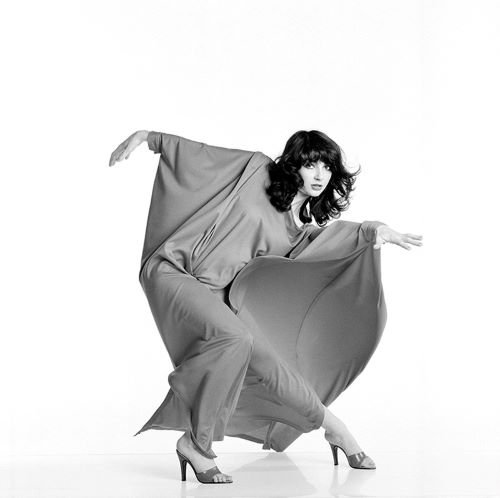
IN THIS PHOTO: Kate Bush in 1978/PHOTO CREDIT: Patrick Harbron 

 Oh to Be in Love

__________

PERHAPS I will wrap this feature up…

but, as there has been a general insistence for magazines, radio stations and people in general to gravitate to the best-known and most-played Kate Bush songs, it means that there is a whole raft of Bush songs that are either overlooked or not known about. That is a real shame! As I say all the time, some of her best songs are the deep cuts. Because of that, I want to highlight another one. I am going to plump for a B-side or rarity in the next instalment. Today, and as I am thinking about her 1978 debut album, The Kick Inside, I wanted to come back to one of its best songs. The album is forty-five in February, so I will write a slew of features around that closer to the time. I do not think I have written exclusively about the majestic Oh to Be in Love. I think that The Kick Inside is talked about because of its two U.K. singles, Wuthering Heights and The Man with the Child in His Eyes. Recorded first as a demo in 1976, this amazing song does not have a lot of information around it. I cannot find any interviews where Bush has spoken about the song or discussed its origins and story. That might be another reason why it is not known by many people outside of the Kate Bush fandom. There are several love songs on The Kick Inside that are quite intense, adult (considering Bush was a teenager when she recorded the songs) and incredibly original.

Not copying what her peers were doing or discussing love as tragic or necessarily heartbreaking, there is a lot of curiosity, lust, awakening and searching from the bold and wonderful Kate Bush. Not that the love songs are particularly explicit or graphic, but I think there is a suggestiveness and playfulness where you can picture Bush as the heroine in very erotic and sensual situations! Bush talks about attraction like no other lyricists I have encountered! The way she sings Oh to Be in Love is amazing too. Her voice to reach very high notes in the chorus, yet there is a control and tremulous sense of anticipation in the verses. Before getting to the lyrics and its place on The Kick Inside, there are a couple of interesting distinctions when it comes to Oh to Be in Love. The studio version is the only officially released version. A demo version is available, and it appeared on the bootleg 7" single, Cathy Demos Volume Two, in addition to various bootleg CDs. Whereas Bush performed the tracks from The Kick Inside and Lionheart (1978) in her 1979 The Tour of Life, Oh to Be in Love was not included. Bush premiered new tracks like Violin and Egypt, so why did this song from The Kick Inside lose out? Maybe there was literally no more room, or perhaps there was something about the song that would not translate to the stage too well? I think Oh to Be in Love has another distinction, in the fact it is finding a modern audience. It is definitely a deep cut one will very rarely hear on the radio or talked about by Kate Bush fans. I definitely think this is one of the stronger tracks on The Kick Inside.

In terms of the most-streamed songs from The Kick Inside, obviously, there is the obvious one-two of Wuthering Heights and The Man with the Child in His Eyes. The former is ahead by miles, and it is one of Bush’s most-streamed songs. In terms of the other tracks, Oh to Be in Love outranks nearly everything else. Even Moving, the better-known opening track, has fewer streams. The third-most-streamed song on The Kick Inside, that is amazing! I am not sure why this particular track has been boosted and gathered new attention in 2022. Of course, because of Stranger Things propelling Running Up That Hill (A Deal with God) up the charts and making its sister album, Hounds of Love, a success all over again, other songs and albums have been discovered. People are going back to The Kick Inside, by what is it about Oh to Be in Love? So far as I can tell, there has not been a slew of cover versions. The song has not appeared on any shows or films, so is there something else that people gravitate towards? I shall get to the lyrics next, as maybe there is something in there that resonates. Oh to Be in Love was included in a four-track E.P. called 4 Sucessos, released in Brazil. It is sad there is not wider exposure of Oh to Be in Love because, clearly, there is this curiosity and magnetism that means it is one of the most-streamed songs from The Kick Inside.

A wonderful vocal from Kate Bush, her lyrics also have that blend of vague and direct. This is some of Bush’s best early lyric writing: “I could have been anyone/You could have been anyone's dream/Why did you have to choose our moment?/Why did you have to make me feel that?/Why did you make it so unreal?”. With Paddy Bush (her brother) supplying mandolin, and Ian Bairson doing backing vocals in the chorus alongside David Paton, it is such a beautiful song! Producer Andrew Powell provides some synthesiser too. A remarkable track that is worthy of a lot more love than it gets, Oh to Be in Love is a real treasure! Here is another of my favourite lyrical sections: “All the colours look brighter now/Everything they say seems to sound new/Slipping into tomorrow too quick/Yesterday always too good to forget/Stop the swing of the pendulum! Let us through!”. Delightful, delirious and distinctly the work of Kate Bush, I hope that the increased streaming figures means that Oh to Be in Love gets more airplay and exposure! The Kick Inside’s thirteen tracks are beautiful, but not too much is known about most of them. When it is forty-five in February, I hope songs such as Oh to Be in Love get more acclaim and spotlight. If you have not heard this magnificent song, then go and listen to it…

RIGHT now!
FEATURE: Revisiting... Santigold - Spirituals

FEATURE:


Revisiting...


Santigold - Spirituals

__________

FOR the last Revisiting…

 PHOTO CREDIT: Frank W. Ockenfels III

features of 2022, I am looking back at albums from this year that didn’t get the complete positivity and love that they deserved. One is Santigold’s exceptional fourth studio album, Spirituals. The album was recorded largely throughout the COVID-19 pandemic, between 2020 and 2021 with lyrics inspired in part by the present time in the U.S. Santigold described the writing as a cathartic process, as she was creating light so that she could move forward. An album about human resilience, it moves through various genres stunningly. One of the best releases from the Philadelphia-born artist, Spirituals is an album that warranted more spotlight and respect than it got I think. There are a couple of Spirituals reviews I want to get to, as it is a magnificent album that is among the best from this year. I will get into some interviews first. Santigold gave a selection of interviews to promote Spirituals. In this one from W Magazine, they revisit her 2008 debut album, Santigold, and put focus on the brilliant Spirituals:

The musician Santi White, known by her artist moniker, Santigold, was sitting on a deck in Jamaica when her phone started blowing up. Beyoncé had just released “Break My Soul (The Queens Remix),” which revamps the verse full of name drops from “Vogue,” replacing Madonna’s creative heroes with her own. Instead of “Greta Garbo and Monroe/ Dietrich and DiMaggio,” Beyoncé opens with “Rosetta Tharpe, Santigold/ Bessie Smith, Nina Simone.” In the following lines, Santigold is revealed to be in the company of other legends, including Aretha Franklin, Diana Ross and Grace Jones. I asked White how it feels to win the pop cultural equivalent of a Lifetime Achievement Award. “I was obviously honored to be among those names!” she told me over the phone earlier this month. “The coolest thing about it to me is that Beyoncé is using her platform to educate people. Often, Black musicians—particularly Black women musicians—never get the recognition they deserve.”

Conversations about White’s icon status have been building for the last year. Thanks, in part, to the launch of the Instagram account @Indiesleaze, the internet has been brewing with nostalgia for the "alt" sounds and styles of the mid-to-late aughts—many of which were cultivated in New York’s Lower East Side and Brooklyn. While there is a great deal of silliness (think: shutter shades) and smuttiness (American Apparel) associated with this chapter in history, among the most meaningful and impactful cultural products of this era is Santigold’s music.

In 2008, the Philadelphia native’s debut album, the critically acclaimed Santigold, hit the indie music scene like a meteor. In a recent podcast for The Fader, Mark Ronson described himself as “gobsmacked” after listening to the record. “It felt as if she had dropped down to earth a fully formed, genre-spanning superstar,” he said. Building off of her foundations as a punk musician, White’s solo work fused the best of new wave and post-punk with dancehall, Tropicália and trip-hop. She engineered an edgy new sound, punctuated by sassy lyrics and enhanced by the flexibility of her piercing, inimitable vocals.

While White’s earliest music chronicles her coming of age in a creative utopia, her most recent body of work narrates the harrowing realities of life in a political dystopia, with the same gripping lucidity. On September 9th, Santigold will release her fourth studio album, Spirituals—the title of which references the genre of Christian music sung by enslaved people in America. Created mostly during the lockdown periods of the pandemic, the production of Spirituals allowed Santigold to find “transcendental freedom” in the absence of physical freedom. Sonically speaking, the record is a strong nod back to her first—it's uplifting, danceable and ferocious in a good way. Lyrically, it's moving. White is grappling with the most pressing issues of our time, with the intimacy and nuance she's well known for. “California was on fire, we were hiding from a plague, the social justice protests were unfolding. I’d never written lyrics faster in my life,” White shared.

The record is attuned to a new zeitgeist, one largely shaped by Black Lives Matter. The empowering messaging in tracks about the Black experience, such as “High Priestess,” “No Paradise,” and “Ain’t Ready” bring to mind Maya Angelou’s poem, “Still I Rise.” In a short video promoting the single “Shake,” White plays the tambourine while being sprayed with a water hose, referencing the Birmingham riot of 1963. “I talk a lot about personal power on the record,” she said. “It’s about being able to create change by going inward, and then upward.”

For White, music and social commentary have always gone hand in hand. “Growing up, the music I was exposed to at home was all topical music. Everyone that my Dad was listening to was singing about change.” She rattled off a list of household favorites (Burning Spear, Joni Mitchell, Public Enemy) before revealing that she wrote her first song, “City Streets," at age nine. Between belly laughs, she recited her first-ever lyric: “People need our help out there/ and there’s no one to listen!” In the wake of Trump, the pandemic and BLM, White lamented that popular music nowadays is overwhelmingly apolitical. “I think of the job of an artist as being a bridge to the future, to progress. Maybe by being a mirror to society and allowing people to take a real look at themselves, we help find a way forward”.

A tremendously innovative artists who has undoubtably inspired so many others, I am looking forward to seeing what the future holds for Santigold. Rolling Stone asked Santigold about releasing Spirituals on her own label, and what the future held for her and her music:

Spirituals is the first release from your own label, Little Jerk Records. What’s the story behind the title

Santigold: Spirituals is a nod to the traditional Negro spirituals. These contained songs that when sung and performed got Black people through the “un-get-through-able”. That’s what this record did for me. I wrote it in survival mode in LA and produced it in a little studio in the middle of the forest in western Canada during Covid. Social justice protests were unfolding, fires were burning up California, and people were being shot by the police. I had little kids and had to be a mom, wife, human and artist. There wasn’t time to feel. It wasn’t until I made the space to create that I realised these songs were a lifeline and a way to connect to a higher version of myself and go deeper. I’ve never written lyrics faster in my life; they were pouring out of me.

Is there a track that stands out over the rest?

Santigold: This album is a celebration of human resilience. Each song holds a similar place in my heart. ‘Ain’t Ready’ is my battle cry. It’s about internal struggle, picking yourself up when you get knocked down, and trusting that you’re going to get to where you need to get too. It’s about perseverance and stepping into your own power. When I first sang the lyrics, I was alone in that studio in the woods and started crying. I collaborated with Canadian producer Illangelo, and I wanted the production to sound tough and mirror the grit of the battle many of us were going through.

You’ve continually blazed your own path in the world of pop music and beyond for others to follow. Have you seen change for the better in the industry, and what still needs to evolve?

Santigold: I started out in the 90s. I worked as an A&R at Epic Records in 2000. Business and technology-wise, the music world is 100 per cent different. But honestly, if you ask me whats changed for the better as a female in this industry, my answer would be, still not nearly enough. I don’t think we’ve made that much progress on that tip. There’s this tiny little box, that if you want to be a pop star you have to fit into. Lazy comparisons like myself and M.I.A., or Lauryn and Erykah or Jill Scott, are still being made.

As far as major players in the studio, I know that technology has made it so much more accessible for women to hone their skills and become producers and engineers at home. But I’m looking forward to when those up and coming women step forward and come into the limelight. Because at the moment it’s still not on the scale that it should be.

Throughout your career, you’ve been fiercely innovative. Your music has appeared on car commercials with Karen O of the Yeah Yeah Yeahs, you sang background vocals for Tyler, the Creator’s IGOR and you’ve acted on The Office. What does the future hold?

Santigold: I’m really excited to let my music take me to new places. I want to continue branching out into all forms of art. I created Spirituals as a multi-sensory experience. I have a small batch of natural skincare products and a tea collection coming out bearing the same name. I’m writing a book tracing back four generations of phenomenal women in my family in Mississippi as well as my own journey. I’m working on a film. I’m releasing a new podcast series interviewing other artists and brilliant thinkers. Currently, in London, I’m also in a video installation as part of the exhibition, In the Black Fantastic, at the Hayward Gallery.

When I was making Spirituals, there was so much that I wanted to express. When you put out a new project, sometimes your message gets condensed to “Santigold is finding her power”, but for me, it’s so much deeper than that. I’m only getting started”.

An album that was not necessarily overlooked, I do think that it was underrated. A phenomenal album that moves through genres and sounds expertly and charts rage, loneliness and triumph, Spirituals is a revelation that definitely proudly stands alongside the finest of this year. Santigold is someone who is in a league of her own. This is what AllMusic said of a staggering album:

Motherhood, writer's block, and the COVID-19 global pandemic all contributed to Santi White taking a longer hiatus from music than she expected. Spirituals, her fourth album as Santigold, also upends expectations. Instead of the playful cultural critique of 99 Cents or the sunny vibes of I Don't Want: The Gold Fire Sessions, this time Santigold offers music made in and for difficult times. She brings her focus inward, crafting hypnotic, often moody songs about building and showing resilience; as always, they're expertly crafted, with ear-catching production choices aplenty. With its warping, metallic synth tones, "Witness" is equally melancholy and mechanical, while the tantalizingly brief SBTRKT collaboration "Shake" provides Spirituals' clearest connection to its namesake with a nervy, soulful pulse that feels like a 21st century update on the galvanizing traditional songs of the Black community. Santigold also excels at bridging the past, present, and future of her own music. "High Priestess" taps into the searching, hard-to-pin-down energy that made Santogold songs like "L.E.S. Artistes" and "Creator," but on this track and the rest of the album, there's a world-weary undercurrent that adds depth and urgency. White delivers a bona fide anthem in "No Paradise," a lilting command to seize the moment that culminates in an empowering chant, and steels herself for whatever her comes her way on "Ain't Ready," which features assists from SBTRKT and Illangelo. On songs like this and "Fall First," a punky collaboration with Rostam Batmanglij, she sounds indomitable, but more importantly, she lets listeners know what it's like when she doesn't feel that way. She shares her worries as freely on Spirituals as she shared her joy on her earlier albums, and it's just as compelling. "My Horror," a deceptively sweet lullaby of stasis that unleashes its dread slowly, is one of the album's greatest creative achievements, as is the haunting desperation of "The Lasty." Spirituals pushes Santigold's music forward while shoring up its strengths -- and for perhaps the first time since her debut, it feels like art that she had to make for herself”.

I will wrap it up with a review form CLASH. They gave a positive review to an album with so many highlights and songs that linger in the memory. A hypnotising listen (as some reviewers have noted), this is what CLASH observed in their review:  

It’s been far too long since we got an album proper from Santigold. While 2018’s warmly received ‘I Don’t Want’ mixtape gave fans some energetic bangers to tide us over, it’s been a whole six years since ’99¢’ lit up stereos. In her absence, the genre-mashing of indie and rock with dub, reggae, dancehall, and everything in between has almost become the norm. In this pick and mixafaction age of streaming, it’s sometimes hard to remember what impact the arrival of the likes of Santigold and M.I.A made. Now fourteen years from her debut, Santigold stands in a (thankfully) more inclusive and exciting music scene, filled with many artists who owe her and her peers a debt of gratitude. So what does this restorative lockdown album have to say?

We can happily report that the same level of energy and urgency that Santigold always brings to her work remains shining bright. ‘Spirituals’ is a bold and sometimes brooding beast, crammed full of first-class beats and sonic textures. Ever the collaborator queen, this fourth full-length sees old hands Rostam, and Nick Zimmer get involved in the fun, in addition to Doc McKinney, SBTRK, and P2J, to name just a few. The result is a slick and modern-sounding record that still keeps some of the grit of old. It’s as perfect sounding a Santigold record as you could want for 2022.

Openers such as ‘My Horror’ see Rostam bring that old Vampire Weekend whimsical energy to Santogold’s claustrophobic tale of pandemic anxiety. It’s a classic contrast of dark lyrics and bouncing beats to create something danceable yet memorable. ‘High Priestess’ can comfortably join ‘Disparate Youth’ and ‘L.E.S Artistes’ as a certified BADASS tune, all swagger, and spiritual empowerment layered over electro synths and pissed-off drums. Exploring the other end of the spectrum is the joyous ‘Shake.’ With the album’s title referring to the use of song to help the black community get through unimaginable hardships, the song drips with an almost manic joy while still containing a palpable sense of resilience.

While ‘Spirituals’ boasts many bold flavours over its ten tracks, it still feels slight. At just thirty minutes in length, the album is the shortest of Santigold’s career, and while it’d be a push to describe any of the songwriting as lightweight, it does feel as if too much fat was trimmed. Half of the album’s numbers don’t even hit the three-minute mark, often pulling the plug just as you’re ready for more. Digesting the album in one setting is like repeatedly snacking on something sweet but not substantial. Pleasurable, sure, but you never feel full. In this day and age of short attention spans and TikTok-friendly runtimes, these succinct snapshots might be good business sense but seem slightly scattershot when presented as a whole.

Still, wanting more of something is hardly the worst criticism to be leveled at an album. With this long-awaited release, Santigold has once more shown the world she’s one of the game’s most unique, imaginative, and fun creators. It’s good to have her back.

7/10”.

Go and listen to the wonderful Spirituals. Always sensational and different, Santigold is an artist I have respected and followed for a long time. I hope that she gets to put a tour together next year to promote Spirituals. Go and listen to an album from an artist that is…

SIMPLY amazing.

FEATURE: Spotlight: Anna B Savage

FEATURE:


Spolight


Anna B Savage

__________

HERE is an exceptional artist…

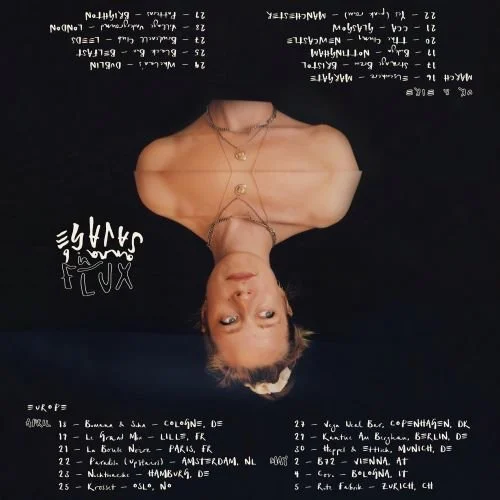
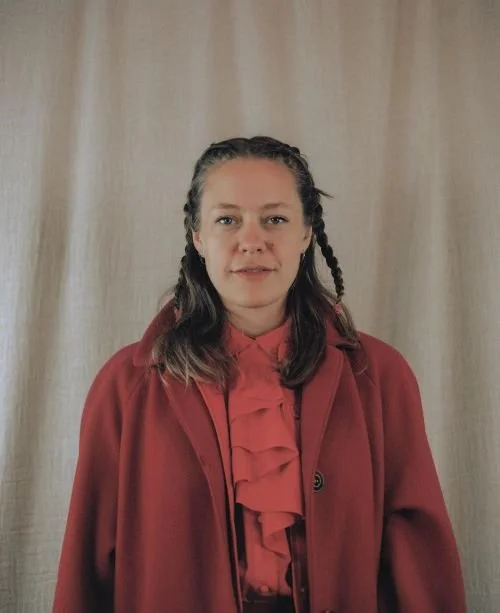
who is releasing the in|FLUX album on 17th February. Although not brand-new on the scene, I think she is an artist that some might not know about. The upcoming album will definitely take her music to a new audience. I am looking forward to it coming out, because the songs from it that have been released so far are remarkable! You can pre-order in|FLUX. Anna B Savage is someone who everyone should know about and listen to. I will come to a couple of interviews with Savage in a bit. First, here is some brief biography:

Anna B Savage studies our MA course in Popular Music Practice. She’s a London-born, Dublin-based singer-songwriter who has toured with Father John Misty after her debut 2015 EP caught his attention. She later toured with Jenny Hval and received praise from press internationally, including NPR and The Guardian.

In January 2021, Anna released her debut album A Common Turn via City Slang records. The album caught Rolling Stone Magazine’s attention, and Anna was subsequently named in their ‘Artists to Watch’ list 2021.

Apart from being named one of Rolling Stone’s ‘Artists to Watch’, Anna has been extremely busy. Not only has she released a short film to coincide with the album, but she also embarked on a UK and European tour at the end of 2021”.

I can’t find any print/online interviews from Savage from this year – I am sure that will change closer to the album release -, so I am forced to go back a little further. In any case, there are some great past interviews that chart the career and growth of the sensational Anna B Savage. Prior to her 2021 debut album, A Common Turn, Savage was interviewed by Loud and Quiet. In fact, this interview is from 2020. There is an interesting ‘angle’ to the interview which you will discover from the opening lines:

It’s the next step from Anna’s breakthrough EP, that came out in 2015 followed by an abrupt silence. “Yeah I kind of disappeared,” she says. “I wasn’t having the best time in my own brain – that was the first thing that happened. People were nice about my first EP and I just wasn’t expecting it. I just thought I am never going to be able to write anything as good as that ever again. It’s quite funny as I released a single yesterday and people have been saying this is so great but my brain is already saying, ‘you’re never going to write anything as good as that again’, so I am like, ‘oh no not you again, shut up!’. I am better at batting my brain away today – that’s the difference between now and then.”

Back in 2015, Anna’s fragility echoed throughout her frank and honest debut; listening back now, it’s a startling collection of songs that earned her tour slots with the likes of Father John Misty and Jenny Hval before cataclysmic life changes halted her progress. “After the EP I broke up with someone and moved back to London. How can I put this, I was small and timid and just so uncomfortable in my own skin so I had to build everything back up. There were building blocks put in place right from the bottom, I had loads of different jobs and I was just following things that I love. I was always desperately trying to write music, but I was thinking everything I am writing is shit, it felt like pulling teeth, it was so painful. I was just thinking, why can’t I do this anymore?”

As if Anna’s new single, ‘Chelsea Hotel #3’, wasn’t shocking enough in its scream for female autonomy and pleasure, it ends with a glorious lyric about Tim Curry in lingerie. Anna smiles in recognition.

“I think it was the first time that I ever felt something downstairs and thought, ooooh what is going on? I was watching Rocky Horror Show for a first time when I was 10 or 11 and I remember that being the moment where I thought what is happening down there!” Anna gleefully namechecks influences like these throughout every song she’s written, almost as if she can’t help it.

“These are the things peppered through my album – there is Spice by the Spice Girls, Funeral by Arcade Fire, films like Y Tu Mama Tambien; I literally namecheck all of them. I don’t know if I do it on purpose so much, but I know that it’s very important to me that there are streams and rivers and to know what stuff is flowing in from where. I spent so long when I couldn’t write, and when I was finding it so hard to create anything I was struggling with the idea of people plucking this amazing stuff from out of thin air and they were just able to do it, wake up one day and just do it.”

PHOTO CREDIT: Sophie Barloc

It’s clear Anna takes pride in her body of work – the first EP in 2015 was a solo labour of love; for the album she enlisted the help of William Doyle, an artist in his own right who was looking to develop his production skills. “It was a dream,” she says. “I had spent nearly 3 years up until he got involved, where I had tried different things but ran out of money, but he put out a thing on social media saying I am looking to produce things and if anyone is interested please get in touch. Within twenty seconds I was typing away to him. I knew the kind of audio world that I wanted it to be in – really intricate and with tiny metallic audio things going on – I didn’t know how to do it. He understood the world that I was trying to create – it was perfect.”

I ask what it was like to suddenly find yourself in a room with another headstrong musician. “William is such a joy,” says Anna. “I tend to go off on red herrings – oh shiny things. He is very good at not doing that, saying, you know, maybe we should do a bit more work now. Just spending 2 or 3 days with him for over 6 months was great. I was embarrassed though, not knowing all the terms. I would say I want it to be earth and mud with sparkles, so he was very patient.” The pair finished the album before sending it to City Slang, a much-admired label who quickly signed Anna to their roster. After years of toil it was a moment to cherish.

“Yes, it’s totally cemented the hard work, but having done the album before I was signed, with just Will and then presenting the album, that was where the pride comes from. I have spent years honing this. So, City Slang saying yes was also very nice”.

I think I first heard about Anna B Savage when she released A Common Turn. A simply magnificent album, it rightly garnered a lot of praise and attention. As The Skinny observed in their interview from 2021, Savage distanced herself from recognising and embracing the praise that was levied at the album:

The only person involved with A Common Turn who is still unaware of the praise that has been lavished upon it is its creator, Anna B Savage. The London singer-songwriter’s debut album has rightly been hailed as a provocative, grandiose and authentic first statement, but Savage herself refuses to engage with people’s reactions to it.

“I think it’s very unhealthy to be able to read what people think of you all the time,” she says. “My curiosity doesn’t dominate my self-protection. If people don’t like my album, it’s like, 'OK, you don’t like me as a person.' As a perpetual people pleaser, the worst thing in the world is for people not to like me.”

It is a policy that dates back to her debut EP in 2015. That release also got more than its fair share of positive feedback, including from the likes of Jenny Hval and Father John Misty, but Savage struggled to process the compliments. “The main thing was just having incredibly low self-esteem at that point in my life,” she reflects. “And then people having a positive reaction to it, it was a split between thinking, ‘they do not understand how shit I am’ and also, ‘well if they think it’s good, then I’m a piece of shit and I’m never going to be able to write something as good as that ever again’.”

Savage entered a period of radio silence as an artist for five full years following that EP. It was a difficult period of introspection, but after periods of therapy and “working really fucking hard” to like herself again, she found herself working on the set of songs that would become A Common Turn. Looking back, she accepts that she could never have given up making music for good, but at the same time, she never dared to expect that the album would be the success that it has been.

“There’s a difference between wanting it to happen, expecting it to happen and hoping it will happen. I was definitely in the want and hope categories, but I just didn’t see a way that it would. My main thing was getting the album done just for me.”

It is not altogether surprising that Savage would be so affected by outside opinions of her work, given the amount of her true self that is buried into the tracks. Her songs tell refreshingly honest tales of growth, self-doubt and sexuality, always striking a treacherous balance between fragility and defiance, all the while maintaining a wry, darkly comic worldview. Take Chelsea Hotel #3, an eye-wateringly frank account of a sexual encounter that finds her resorting to mental images of 'Tim Curry in lingerie' or Y Tu Mama Tambien for satisfaction.

With the album having been out since January, Savage recently completed her first run of live dates in over five years and is now gearing up to play at The Great Eastern Festival in Edinburgh on 27 November. “They were fucking amazing!” she says about her return shows. “I was quite nervous about it, but I feel like it really went incredibly well”.

I will round off with an interview from Atwood Magazine. As the incredible Anna B Savage prepares to release her second studio album, with new songs garnering a lot of love and support, I want to spend a bit more time nodding back to A Common Turn:

ATWOOD MAGAZINE: THIS ALBUM IS SO VIVID, AND THERE IS SO MUCH OF YOU IN IT. SO MANY ARTISTS ARE PERSONAL WITHOUT GIVING YOU THAT CONFIRMATION THAT THEY’RE THE SPEAKER – BUT YOUR NAME IS RIGHT THERE IN THE LYRICS. WHAT IS YOUR WRITING PROCESS AND WHY IS IT SO IMPORTANT TO YOU TO HAVE YOUR TRUE VOICE THERE?

Anna B Savage: My writing process is a little bit painful. I find it really hard to write generally, I think because I’d seen it so much in popular culture that songs just appear and that you don’t have to work for them. That is absolute bullshit. It’s such hard work. I don’t think enough people talk about the intense craft that goes into it. For me, I feel like one of the reasons my [experiences] are so front and center is because it’s one of the only things that I feel qualified to talk about. I don’t know if qualified is the right word. But I’m always amazed when artists come out with something that’s super political and very broad. I’m like, how do you feel confident enough to talk about that? I don’t even trust my own feelings [laughs]. And that’s what I’m trying to talk about. No one’s gonna tell me that I fucked up because I’m just trying to express myself as best I can.

“BABY GRAND” SEEMS TO BE VERY MUCH ABOUT THAT FEELING.

Anna B Savage: I basically wrote that song after a specific night that happened. And I mean that it’s literally laid out almost exactly as it happened. I think one of the reasons why it’s so precise, and why I decided to include so many very specific things like the Edwyn Collins owl mug, or the specific albums that we listened to, was because I wasn’t able to understand what I was feeling in the moment. I thought that at least if I have these touchstones that are real, then I have something to move between – I can ricochet off of them inside my head, if that makes sense.

The guy who directed the video for “Baby Grand” is the guy [Jem Talbot] who I’m talking about in the song. And there is footage from that night in the video. He was my first boyfriend, and we’ve made a film together. The video basically acts as kind of a trailer for this film that we’ve spent the last three years making. The album and the film have had similar timelines, so the two projects are kind of in constant conversation with each other, even though they’re completely separate. “Baby Grand” was written about one of the first nights that me and Jem had been filming together. It feels difficult to explain, because there was so much uncertainty. There were so many question marks and so much not wanting to be presumptuous. As a way of not being presumptuous, I was like, “Okay, I’ll just calcify this into a song.”

PHOTO CREDIT: Ebru Yildiz

I SAW A DAVID LYNCH QUOTE WHILE I WAS PREPARING FOR THIS INTERVIEW WHERE HE SAID “WHEN YOU FINISH ANYTHING, PEOPLE WANT YOU TO THEN TALK ABOUT IT...A FILM OR A PAINTING – EACH THING IS ITS OWN SORT OF LANGUAGE AND IT’S NOT RIGHT TO TRY TO SAY THE SAME THING IN WORDS. THE WORDS ARE NOT THERE.” WHAT’S YOUR TAKE ON THAT? DO YOU FEEL LIKE TALKING ABOUT THIS ALBUM IS REDUNDANT IN SOME SENSE?

Anna B Savage: It’s fucking weird, I’m not gonna lie. Especially feeling like I worked so hard lyrically to make it feel complete and to feel like it was doing all of the things that I needed it to do. Talking about the album has put me in a really weird headspace. I’m already really self-reflexive, as you can probably tell, and adding that extra layer on top is kind of bizarre. I think this is where I always got stuck when I spent five years trying to write this album. I felt like every interview that I read where a musician was talking about their craft, it was kind of like, “Oh, it’s a slightly magical thing that just kind of happens.” Yeah, that can be true sometimes. But it’s only true if you’ve spent the six weeks before that working on a song every single fucking day and thinking about it just before you go to sleep and thinking about it when you first wake up in the morning.

Every time I write a song, I think, “I’ll never write a song ever again. Like that was a completely bizarre experience. How did that happen?” So to go back into my kind of memory bank and try to articulate like, “What was I thinking about? Why did I put those next to each other?” Maybe my subconscious was kind of explaining it to me more than I knew. I totally agree and completely disagree with that quote, because yeah, it’s really weird to talk about stuff when it’s all there. But equally, [talking about] it does afford something else.

DO YOU THINK THINKING ABOUT THINGS RETROACTIVELY LIKE THIS HELPS YOU TO UNDERSTAND YOUR OWN WORK MORE IN A WAY? OR IS IT MORE FOR OTHER PEOPLE'S BENEFIT THAT YOU’RE CONNECTING THESE THINGS?

Anna B Savage: I think it helps me a bit. I also think it’s quite fun to just run with what other people say. If people are like, “Oh, birds are symbolic of your emotions,” it’s like, “Yeah, yes they are!” [laughs] I’m going to try and work out a way to make that true for both you and me. If that’s what someone’s getting from it, then that’s fucking great. These [songs] are now living a life that’s outside of my own brain. Someone else can put their own stuff on it and that is so joyous to me that, yeah, I’ll run with it.

IN THIS GENRE, THERE IS THIS VERY COMMON DECISION TO MAKE A SINGER’S VOICE FEEL ALMOST BURIED IN THE MIX WITH A LOT OF REVERB. FOR MOST OF THIS ALBUM, YOUR VOICE IS SO PRESENT AND SO DRY. CAN YOU TALK ABOUT THIS PRODUCTION CHOICE?

Anna B Savage: I would say it was definitely a conscious choice. William Doyle, who also did my first EP, produced it and I remember him saying to me at some point, “You don’t need reverb on your voice at all. That’s ridiculous.” He is one of my favorite musicians in the world, so I was like, “Okay, I will never use reverb.” [laughs] I actually don’t love reverb because I do think that a lot of the time it hides and dampens stuff, and it makes everything a bit washy. Lyrically, I like things to be as clear as possible and vocally, I feel the same way. [William] was so sensitive to how he thought my stories and my voice would be best presented. I’m so grateful to him for fighting me on the couple of things that he did.

WHAT DO YOU WANT PEOPLE TO TAKE AWAY FROM THIS RECORD?

Anna B Savage: I did this therapy course where you had to boil down what you hoped that you gave to the world. Mine was in relation to other people; I want to create and facilitate things that feel like they could be companions for feelings that are often difficult to express, but that I, for some reason, feel more comfortable expressing. I want my art to be a companion for people.

Looking ahead to the release of in|FLUX on 17th February, I was keen to highlight Anna B Savage. An artist I have loved for a long time, tracks like The Ghost and in|FLUX are among my favourite from the year. A breathtaking talent, next year is going to be a really exciting one for her. For anyone who has not discovered her music yet, make sure that you get on it…

RIGHT now.

______________

Follow Anna B Savage

FEATURE: A Mighty Wave of Talent… BBC Radio 1’s Sound of 2023 Longlist Playlist

FEATURE:


A Mighty Wave of Talent…

IN THIS PHOTO: Rachel Chinouriri  

BBC Radio 1’s Sound of 2023 Longlist Playlist

__________

IT is the time of year…

 IN THIS PHOTO: Dylan

when there are lists of the names to watch in 2023. FLO just won the BRITs Rising Star award, and the BBC will publish their list of the artists to look out for next year. I wanted to put together a playlist of incredible artists, because BBC Radio 1 have confirmed their longlist for 2023. The artists they feel are going to dominate and define the year ahead. I am going to end with a playlist of songs from the ten artists listed. It is an incredibly strong field or diverse artists. I am a particular fan of Rachel Chinouriri, and the three artists listed as the BRITs Rising Star (FLO, Nia Archives and Cat Burns) are in the field. Here are more details:

The longlist for BBC Radio 1’s Sound of 2023 has been unveiled, tipping ten new artists for success next year.

This year’s longlist has been chosen by a panel of over 130 industry experts and artists, including Elton John, Dua Lipa, Sam Smith, Celeste and more.

The acts are (in alphabetical order):

Asake

Biig Piig

Cat Burns

Dylan

FLO

Fred again..

Gabriels

Nia Archives

piri & tommy

Rachel Chinouriri

IN THIS PHOTO: piri & tommy/PHOTO CREDIT: Patrick Gunning

Last year PinkPantheress was crowned the winner ahead of a strong longlist featuring the likes of Wet Leg, Central Cee and Tems. Artists named on the list over the years include Stormzy, Adele, Jorja Smith, Billie Eilish and Lewis Capaldi.

The countdown of the Top 3 will kick off across Radio 1 on Tuesday 3 January 2023. The winner will be revealed on Thursday 5 January 2023 on Radio 1.

Chris Price, Head of Music for Radio 1, says: “This year’s Sound Of longlist is one of the strongest and most diverse we’ve ever published. The most striking thing about it is the breadth of genres represented. Every single artist on the list has been incubated on Radio 1’s playlist and specialist output; whoever wins, we can be sure that 2023 will be a vintage year for new Pop, Dance, R&B, Soul, Drum & Bass, Afrobeats and Indie.”

The list was compiled using recommendations from 136 influential music experts, including artists, DJs, radio and TV producers, journalists, streaming experts and festival bookers. All were asked to name their favourite three new acts, who could be performers from any country and any musical genre, whether or not they are signed. They cannot have been the lead artist on a UK top five album or three UK top ten singles before 31 October 2022. They also must not already be widely known by the UK general public (for example, a member of a hit band going solo or a TV star) or have appeared on the Sound Of… list before.

Further details of the panel and how the list was compiled are available on BBC Radio 1’s Sound Of 2023 website”.

I think that BBC Radio 1 remains one of the most important sources when it comes to discovering the best new talent. We shall find out in January who is crowned the winner but, to be honest, the longlist is so strong that it is impossible to call! If you need an idea of the artists who are going to be big next year, then the ten including in the playlist…

 IN THIS PHOTO: FLO

GIVE you a good idea!

FEATURE: Present and Modern Love: Kate Bush and David Bowie

FEATURE:


Present and Modern Love

 IN THIS PHOTO: Kate Bush in 1979/PHOTO CREDIT: Gered Mankowitz

Kate Bush and David Bowie

__________

I think I have written about…

 PHOTO CREDIT: Mick Rock

Kate Bush and her relationship with David Bowie - and the effect he had on her music. Sadly, Bush and Bowie never worked together on any songs. It would have been magnificent to hear them come together for a piece of music! I have recently written about Kate Bush and Paul McCartney and how, through the years, the two have met. I hope that they get opportunity to collaborate before too long. One reason why I wanted to come back to David Bowie is because he was so important to her. Bush grew up around a lot of different music, and she had a wide array of tastes. When Bowie died in 2016, Bush paid brief but loving tribute to an artist that definitely impacted her music:

David Bowie had everything. He was intelligent, imaginative, brave, charismatic, cool, sexy and truly inspirational both visually and musically. He created such staggeringly brilliant work, yes, but so much of it and it was so good. There are great people who make great work but who else has left a mark like his? No one like him”.

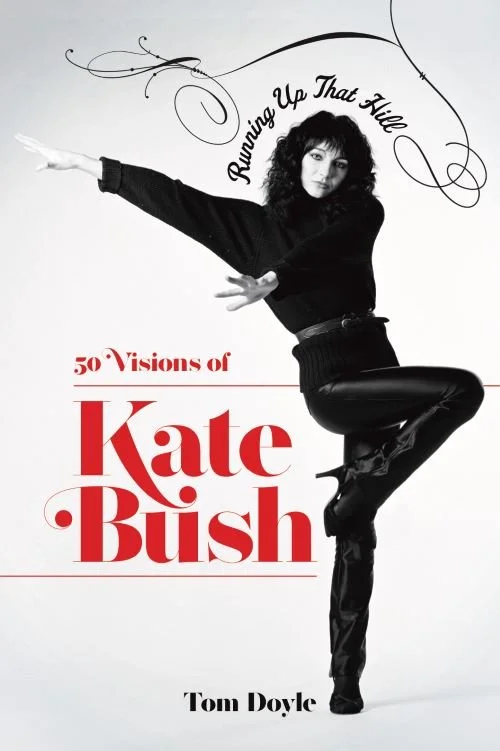
I have a few more features to come that take from Tom Doyle’s new book, Running Up That Hill: 50 Visions of Kate Bush. It is a fascinating new biography of the wonderful Kate Bush. I am going to write about early songs, Wuthering Heights, and a couple of other things before putting the book to bed. It is such a revealing read. There are a couple of chapters where Bowie is mentioned.

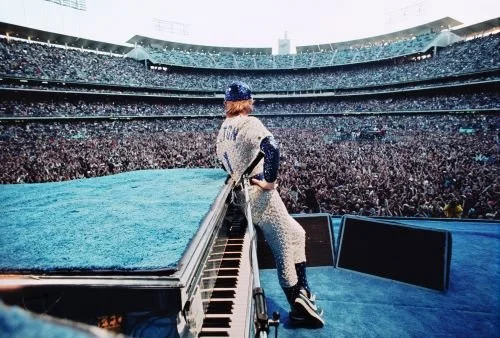
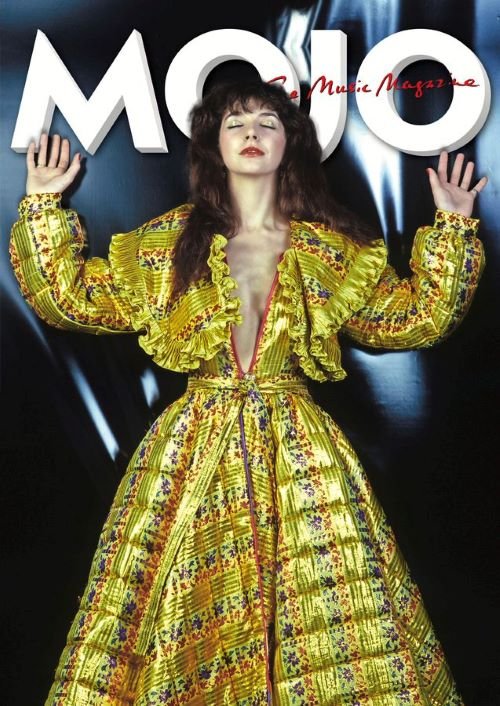
At an age where Bush wrote the magnificent The Man with the Child in His Eyes (that appeared on her 1978 debut album, The Kick Inside), a then-thirteen-year-old in 1972 was lying in the bath listening to Bowie. His latest song, Starman was playing. Bowie, in 1972, was seen as a bit of a flop and one-hit wonder (for Space Oddity). Little did people know that he would soon become an icon and one of the most innovative and loved artists of his generation! For Bush, there was an instant appeal. As I have said before, David Bowie does not really get a lot of credit when it comes to Kate Bush and her music. Of course, Bush is an original and does not wear too many of her influences too heavily. I think that Bowie and his early music was hugely influential when it comes to a young Kate Bush (or Cathy as she was then) and her fearlessness and exploration. She would write about love, but there was something more ambitious, unusual and Bowie-esque in many of her songs. As it is just over fifty years since Bush saw Bowie on Top of the Pops – performing Starman on 6th July, 1972 -, I wanted to return to him. Of course, in January, we mark two sad occasions. On 8th January, it would have been Bowie’s seventy-sixth birthday. On 10th, it will be seven years since he died. Bowie’s influence is still being felt today. As Tom Doyle writes in his book, and as Bush wrote for a Bowie MOJO special in 2002, Bowie struck her as so theatrical and unusual. What was he wearing? Was it a dress?! “His picture found itself on my bedroom wall next to the sacred space reserved solely for my greatest love, Elton John”. I think seeing Bowie on her wall as a pin-up and icon was motivational.

I can imagine early songs and material on The Kick Inside being affected by Bowie and his career. By then (1977), Bowie was on a different plain and one of the most recognisable artists in the world. It is interesting that her two idols, John and Bowie, would not get along and have this odd relationship. It was the subject of space travel that caused friction. Bowie felt John’s 1972 song, Rocket Man (which Kate Bush covered), was a pale pastiche of 1969’s Space Oddity. John and Bowie did meet in Los Angeles, but not having much in common, it was a tense affair! If Bush was more influenced by Elton John’s music than David Bowie’s (maybe John’s affiliation and love of piano was a deciding factor), I feel she took a lot from Bowie in terms of his dress, stage manner and songwriting diversity and originality. Maybe a teenage Kate Bush was not engaged in the music rivalry and fall-out. An odd cold war between two very different artists, she could love them independently without choosing sides. A pivotal moment occurred on 3rd July, 1973. This was the final gig for one of one Bowie’s alter egos, Ziggy Stardust. Many might have assumed this was Bowie retiring from music, but it was him retiring this incarnation. A few weeks short of her fifteenth birthday, Bush was in attendance (with Del Palmer, her future boyfriend, band members and engineer). That gig was at the Hammersmith Odeon. I don’t think it is a coincidence that this was the venue Bush performed the final dates of her run of shows, The Tour of Life in 1979. It is also the place where she held her 2014 residency, Before the Dawn (which had been renamed the Eventim Apollo by that time).

A member of the Sex Pistols, Steve Jones, stole some of Bowie and his band’s equipment earlier than morning - no doubt encouraged and emboldened by alcohol. Nobody in the audience on 3rd July, 1973 were aware of the announcement Bowie would make regarding the death of Ziggy Stardust. This must have hit Bush hard, as I can see parallels in terms of the way both were seen as unusual. Even if you cannot compare them too heavily, Bowie was undeniably an important role model and artists for the teenage Bush. Unaware of what was the come next, she would have been crestfallen and deeply saddened to think that a musician she looked up to might not play again! Bowie was crying when he delivered the news – so too was Cathy Bush, not sure of what was happening. So many of Bush’s early songs and creative bursts were propelled by David Bowie. A song which made it into the studio in 1975 but was not released on an album, Humming, started in 1973. The year she fell for David Bowie and was at a historic gig, she opened the song with the words “Oh, Davy”. That song started life as Maybe. It was professionally recorded in ’75, yet Pink Floyd’s David Gilmour – who helped to discover Kate Bush and introduced her to producer Andrew Powell (who produced her first two album -, recorded it at East Wickham Farm, Bush’s family home, two years prior.

From here, Bush would work with Gilmour and he would help ensure that she was brought into the studio to record her debut album (one cannot forget the fact that Ricky Hopper tipped Gilmour off to Bush’s abilities and emerging talent). By the time Humming/Maybe got rid of the ‘Davy’ reference in 1975, it is clear that she was speaking about David Bowie. He compelled her to write, even if he was not necessarily at its heart. In terms of the sound and overall vibe, Tom Doyle notes that it is probably closer to Elton John than Bowie. Regardless, Bowie’s genius and unconventional look and music impinged on Bush’s own creativity and ambitions. The 1975 Bowie-nodding song was played on Radio 1 in 1979 but, aside from that, it is not widely known. Bush included it on The Other Sides, and it is one of the great ‘lost’ tracks. There were a couple of times where Bush and Bowie. Although they sadly never got to the studio, there were encounters. Although the date is not known for sure, when recording at Abbey Road Studios in the 1980s – possible whilst working on Never for Ever (1980) -, Bush saw Bowie in another room and said a shy ‘hello’. Having to leave the room and collect her breath, it shows the magnetism and importance he played! Such a huge artist as Bush was by then, she was humbled and awed by Bowie. I think, right through the 1980s, she was looking at his past and present work for guidance. There were aspects of Bowie that definitely resonated and were absorbed into her consciousness. Even if the two are very different artists, Bowie’s reinventions, the fact he made every album different, and explored uncharted territory and subjects is something you can detect in Bush’s work.

 PHOTO CREDIT: Gered Mankowitz

In 1994, at the Flowers East gallery in Hackney, the two crossed paths again. It is unclear how this meeting went and whether there was much interaction, but I can imagine Bush was still struck by Bowie, even if they were both at different points of her career. This was a year after she released The Red Shoes (and would not release another studio album until 2005); Bowie  put out the patchy The Buddha of Suburbia in November 1993. This private event at the gallery saw celebrities contribute their own artwork, of which Bush offered two sea-themed works. The following morning from the event, Bowie and Brian Eno appeared at the gallery and were interviewed for GMTV. Bowie actually loved Bush’s pieces. He intended to make a bid, but something happened and he didn’t. Bush’s artwork sort of referenced her 1985 masterpiece, The Ninth Wave. From Hounds of Love, perhaps Bowie got the connection or was a fan of someone being lost at sea. In 1976, Bowie starred in the film, The Man Who Fell to Earth. In it, Thomas Jerome Newton (David Bowie) is an alien who has come to Earth in search of water to save his home planet. Aided by lawyer Oliver Farnsworth (Buck Henry), Thomas uses his knowledge of advanced technology to create profitable inventions. Was Buh influenced by that film when thinking of The Ninth Wave (where a heroine is adrift in the ocean and is rescued after a turbulent night struggling to stay afloat)? Bowie and Bush met several times in the years after, and she had become more accustomed and could compose herself enough to chat! Finding Bowie pleasant and friendly, you can see why she was moved and shocked by his death in 2016.

Bush and Bowie had a few connections. Bowie collaborated with the late great Lindsay Kemp. Undoubtedly someone who brought something out of Bowie when it came to his personas and artistic direction, he has a similar impact on Bush years later. In a 1982 interview with Electronics & Music Maker, she said this about Kemp: “Once I'd left school I tried to get into a dance school full-time, but no one would accept me as I had no qualifications in ballet. I had almost given up the idea of using dance as an extension of my music, until I met Lindsay Kemp, and that really did change so many of my ideas. He was the first person to actually give me some lessons in movement. I realized there was so much potential with using movement in songs, and I wanted to get a basic technique in order to be able to express myself fully. Lindsay has his own style - it's more like mime - and although he studied in many ballet schools and is technically qualified as a dancer, his classes and style are much more to do with letting go what's inside and expressing that. It doesn't matter if you haven't perfect technique”. I have probably missed a few other Bush-Bowie connections, but I was struck when reading Tom Doyle’s Running Up That Hill: 50 Visions of Kate Bush and the Bowie sections. From her eyes being opened by Space Oddity and Ziggy Stardust, through to their meetings and the fact he clearly moved, I wanted to write about…

A much-missed master and innovator.

FEATURE: New Beginnings… An Amazing Year for Shaun Keaveny and Community Garden Radio

FEATURE:


New Beginnings…

An Amazing Year for Shaun Keaveny and Community Garden Radio

__________

IT was epically emotional last year…

when Shaun Keaveny departed the airwaves at BBC Radio 6 Music. He was one major reason why I discovered the station and have been devoted to it for years. In fact, I got a tattoo of the station’s logo a few years back. Now, it sort of seems like a tattoo of your ex-wife when you are with your new girlfriend! Even though Keaveny was definitely not given the respect and opportunity he deserved after so many loyal years (fourteen!) at BBC Radio 6 Music, it has sort of been a mixed blessing. The final song he played as he bade an emotional farewell to his listeners was Carpenters’ We've Only Just Begun. It was a song that was devastating in its beauty and raw emotion. Reaching deep into our hearts and tear ducts at such a raw and upsetting moment. In fact, there was wisdom and truth in the song. The lines “Before the risin' sun, we fly/So many roads to choose/We'll start out walkin' and learn to run/(And yes, we've just begun)” seemed not to suggest this was something morbid or a full stop. In fact, there was this opportunity for new horizons. I must admit that it is not the same without Shaun Keaveny on BBC Radio 6 Music weekday afternoons. He was a definite and unmatched highlight! I will explore more of Keaveny’s 2022 and why he has made such a difference in the lives of so many people.

It was quite a hard transition moving from an established and high-profile afternoon show to essentially being in the wilderness for a bit. Unsure of what the next venture would be, Community Garden Radio was sparked. Beginning (I think) a radio revolution, it is a station backed by Patreon supporters (or ‘gardeners’). Rather than languishing and dwelling on a deep loss, Keaveny did begin this revolution. As we can hear from this interview from The Guardian from April, there were modest beginnings. Although the weekly show (that starts at 1 p.m. with a mix prior to that) now comes from a space in Fitzrovia, Keaveny was broadcasting from his top room in his North London home at the start:

Once a leading light at the BBC with his much-loved 6 Music show, Shaun Keaveny is now presenting from a cramped studio to a much smaller audience. But he wouldn’t have it any other way…

Shaun Keaveny is broadcasting to a couple of thousand people from a forgotten back room in a shabby Soho office that’s all glass and no insulation. The ambience is more knackered 1970s comp than radio studio.

“If I was me 18 months ago looking at what I’m doing now, I’d be thinking, ‘Ah, that’s a shame, isn’t it? He used to have this massive platform and now look at what he’s doing,’” says Keaveny who, until September last year, was used to six-figure audiences and the BBC Radio 6 Music studios where things, you know, worked.

PHOTO CREDIT: Dean Chalkley/The Observer 

“It’s taken me ages to get my head round, but when you drill down into what we’re doing here it’s phenomenal,” he says. And what he’s doing is of interest because it may possibly be the future of radio in the same way that YouTube was once the future (now the present) of video: a live, independent radio show broadcast via Patreon, the digital platform that lets supporters subscribe to projects and give creators a steady income. In this case, £4 a month to access Shaun Keaveny’s Creative Cul de Sac, a weekly Friday radio show, a podcast and daily written and recorded missives.

It adds up to quite a lot of Keaveny (“To be honest, I’m knackered, I took on a lot when I left 6 Music because I thought half of it was going to fail. But things started working straight away.”)

But before we get to the future, we have to deal with the past, and the reason why the 49-year-old has been forced into DIY radio rather than remaining a beloved 6 Music presence. In June last year, after a 14-year run, first on breakfast and then afternoons, he announced he was leaving. “Things change, places change, people change and it’s time for a change,” he said at the time”.

On 20th December, 2021, the first tests and sounds from that top room were broadcast. Almost a year later, you can get some CGR merchandise, and join the growing and loving base of gardeners. In the space of a year, the exciting-yet-tentative venture has flourished and blossomed into  something wonderful. I shall wrap up talking about the recent Christmas special that came from the 100 Club in Oxford Street, London. There are so many reasons why I am featuring various broadcasters before the year is through. Radio has been such a continuing and powerful source of comfort and company that bonds people around the world. Having met many of the ‘gardeners’ on Monday, they come from all walks of lives and backgrounds. It is a community that has so much love and commitment the Community Garden radio. I may be repeating myself and may miss a few things out, but I was keen to pay thanks to Shaun Keaveny on a remarkable 2022. Not only has Community Garden Radio delivered some excellent live broadcasts from around London, but the man himself has been very busy on other networks. In addition to covering from Liza Tarbuck, he has stood in for Robert Elms on BBC Radio London, done a series of shows for Greatest Hits Radio, and he is standing in for Johnnie Walker on BBC Radio 2 from 6th January. It is clear that there is a lot of demand for someone who can transition and adapt with ease. Keaveny is such a flexible and excellent broadcaster that he can make any station his home!

I think, in years to come, there will be a genuine offer from a station like BBC Radio 2 for a permanent show. Maybe feeling freer and happier with Community Garden Radio, it would not be a shock if he was made a regular face back at the BBC. I forgot to mention the fact Keaveny has appeared on podcasts through 2022, in addition to continuing The Line-Up. As a ‘festival genie’, he grants guests the chance to chooser their own festival line-up and name it. It is a great series that will run for years. He also hosts Your Place or Mine with Shaun Keaveny on BBC Radio 4. There is a new series planned I understand. It is a wonder Keaveny has any time to rest or breathe, but I am glad that he has been offered so much and made so many opportunities for himself! It is clear how much he loves broadcasting and how much it means connecting with listeners. I think that we might see more of him on the small screen in 2023. More associated with his broadcasting, I would love to see some documentaries and T.V. shows featuring Keaveny (surely one on Dire Straits is overdue?!). On 20th December, it will be quite impressive looking back on the last year! From the nervous first tests and runs to this burgeoning and extraordinary station, it has been one hell of a year! Thanks must also go to Community Garden Radio producer, Ben Tulloh. Keaveny’s much-trusted and remarkable friend and colleague has been as instrumental in making Community Garden Radio what it is. Also props to Clive Tulloh and Kitty and everyone on the team, but there is this strong bond and chemistry between Keaveny and Tulloh. Their closeness has helped to turn Community Garden Radio into such a success.

I was at the Christmas live show from the 100 Club on Monday. It was the first time I had seen CGR live (they have held some at Spiritland before), and it was one of the highlights of my year. Not only did I laugh so hard and feel surrounded by my tribe and people who wanted to show their love to Shaun Keaveny, but it felt amazing seeing this acorn of a radio station explode into a tall and proud tree (or, as it is a garden, maybe some beautiful flowers)! Community Garden Radio will definitely inspire others to start their own station. Those who want some independence and are not sure whether they can reach a really large audience. I am not sure whether even someone as established as Shaun Keaveny thought, almost a year ago, that those test sounds and first broadcast would lead to what he has now! He has humbly said how he is in awe of legends like Johnnie Walker and Liza Tarbuck. I would place him alongside them. At the age of fifty, we are going to hear decades more from the Leigh-born legend! It has been an even more challenging year than the past couple in many ways, and there has been little in the way of light or positivity. Community Garden Radio has been a beacon for thousands of people! In addition to CGR work, Keaveny has interviewed Joe Lycett (who has been a fan of Keaveny’s for a long time), presented on BBC Radio 2, BBC Radio London, BBC Radio 4 and Greatest Hits Radio, and has also shown BBC Radio 6 Music what an enormous asset he was – and what a loss to the station his departure was! At the end of a tough 2022, I think Shaun Keaveny can be very proud of all that he has achieved. He is most certainly…

ONE of the all-time great broadcasters.

FEATURE: Don’t Worry Baby: Imagining a Florence Pugh Album

FEATURE:


Don’t Worry Baby


Imagining a Florence Pugh Album

__________

I cannot say enough great things…

about the wonderful Florence Pugh. Alongside some end-of-year pieces, Spotlight features, Kate Bush stuff and some Christmas bits, I want to put in some more ‘random’ articles. Pugh is, without doubt, one of the greatest actors of her generation. I would go as far to say that she is the very best! Stealing every scene she is in from Don’t Worry Darling, The Wonder and Lady Macbeth, her range is phenomenal! With one of the most wide-ranging filmography under her belt, Pugh is an absolute sensation! At only twenty-six, she will be owning the screen for decades more. In addition to picking up Oscars and maybe directing films herself, I think Pugh will be compared to screen icons from the 1940s and 1950s. Undeniably one of the world’s most beautiful women and someone who always gives such compelling and intelligent interviews, she is one of the world’s great treasures! The best thing in every film she acts in, it is fascinating to see where her career will head. At the moment, The Oxford-born actor divides her time between the U.K. and U.S. I can imagine she will make a permanent move to the U.S. and lay roots down there as her career explodes. Pugh did perform With You All the Time in the Olivia Wilde-directed film, Don’t Worry Darling. Pugh has an amazing voice, and I think that her deeper speaking voice means that, as a singer, she would produce such an intoxicating, smoky and remarkable solo album. I titled the feature ‘Don’t Worry Baby’ because, not only is it a play on Don’t Worry Darling, but I think Pugh would cover that Beach Boys song exceptionally. It seems ready-made for her. I am going to go on a brief tangent before coming to my main point. I don’t think Florence Pugh has been in any music videos yet. She has also not directed, but I think she is so naturally gifted that she would make for a remarkable and hugely innovative director.

Pugh has revealed before some of her favourite music. As an actor capable of nailing any accent she needs to and inhabiting this vast array of very different characters so beautifully, I think that she would make an awesome and hugely respected artist. She has filmed cover versions as Flossie Rose a way back now, so she has that experience. I am not sure whether Pugh would write songs herself but, when it comes to actors crossing into music, there have been plenty of success stories. Suki Waterhouse and Maya Hawke are just two examples of actors who are equally talented as artists. From Jazz and Folk classics through to Rock anthems and Pop, I don’t think there is anything Pugh could not sing. Whilst it may be easier to see her more as a Jazz singer, I actually feel Pugh’s natural vocal range means she could dominate any genre. It seems that, in 2023, we may well see a Florence Pugh album. Digital Spy explain more:

Don't Worry Darling and Marvel Cinematic Universe star Florence Pugh has revealed plans to record and release her debut album.

The actress performed cover songs on YouTube under the name Flossie Rose before finding fame for her performance in Lady Macbeth.

Appearing on BBC Radio 4's This Cultural Life, the actress talked about how she's let music fall by the wayside a bit, but intends to dive back into it big time.

She has written a few songs for an upcoming film project, former boyfriend Zach Braff's A Good Person, and intends to use that momentum going forward.

"A few songs I'll release first [and] I intend to continue that relationship with the producers and I intend to release music," she told host John Wilson.

"It's something that I have been so conscious of ever since my acting career kind of [took off]. I do miss it and I do miss performing. I've lost confidence in it because I haven't been doing it. And I know that if I don't do it, the lack of confidence will only get worse and I just need to give it a go."

Pugh added that she would have actually "put money on being a singer-songwriter way before being an actor", before adding: "To me being an actor was so far away. I knew that I could do it, but I didn't know how to get there.

"Whereas me with my guitar being recorded and going on YouTube, and performing on stage and doing gigs was way more accessible. That was always the thing that I thought I was going to do and then I did this leaflet audition and it just completely went 180 [degrees]."

Coming up, Pugh will be appearing in Dune: Part Two, Christopher Nolan's Oppenheimer and an adaptation of East of Eden”.

Someone who could also go into musical theatre and belt out these amazing and moving songs, there are so many possibilities ahead of Florence Pugh. I am excited to think that she will release an album, as her voice is so beautiful. Such expression, depth and soul, so many people will be interested to see how that extends to music. Maybe it will be covers or original songs, but a mixture of the two would be interesting. Pugh clearly has an eclectic mix of tastes, and she has mentioned Wonderwall as an important track (and she has covered it previously). I would love to see what she would do with the Oasis classic! From what we have heard so far of her singing, people are in for a treat! Someone who had desires to be a singer-songwriter before acting, she could genuinely make a very successful career of it. As she is very much in demand, I wonder whether she could balance the two. As I say, actors like Maya Hawke manage to do it, and you know Florence Pugh would put her heart into something she is deeply passionate about. Whether putting her stamp on songs like Wonderwall or Don’t Worry Baby, doing originals or hopping between genres, I am so excited to picture this first Pugh solo album! As it is at least eight years since Pugh released videos to YouTube as Flossie Rose, her voice has developed and she has that acting experience under her belt. Phenomenal at everything she does, I think a Florence Pugh album would be…

SIMPLY wonderful.

FEATURE: With the Mice at East Wickham Farm… Kate Bush and Her Earliest Songs

FEATURE:


With the Mice at East Wickham Farm…

PHOTO CREDIT: John Carder Bush (taken from his book, Cathy

Kate Bush and Her Earliest Songs

__________

I realise I am sort of serialising…

Tom Doyle’s new book, Running Up That Hill: 50 Visions of Kate Bush. It is such a fascinating read, I have been compelled to write another piece. I am going to come back to the book once more when writing about Wuthering Heights. Kate Bush’s debut single is forty-five in January. Doyle writes beautifully about the song, and there are some observations and angles I want to incorporate in a feature or two. One I want to do now literally takes us back to the start of Bush’s music fascination and bond with the piano. I am particularly interested in the earliest songs from Bush. Dating as far back as 1969 – when she would have been ten or eleven -, the remarkably prolific and prodigious Cathy had this key moment in the bran at East Wickham Farm. An old and slightly discarded harmonium was housed in the barn. Tom Doyle opens a chapter about Bush’s early songs by asking whether Bush could play and bond with the harmonium before its bellows had been gnawed by mice! There is something romantic and rustic about this barn having mice running around it chewing at this and that! One would almost imagine Bush would write a song about it! In any case, this old Mustel pump organ (which was one of five-hundred Victor Mustel had made before his death in 1890). The young Cathy would spend hours figuring out chord patterns until “her ankles ached”.

I know her father, Dr. (Robert) Bush, would play piano and she would have watched him in wonder as a young child. I wonder what compelled her to venture into the barn and tackle the harmonium! Quite an unconventional instrument, maybe she was attracted to its age or the fact it was quite lonely. Perhaps the unique sound or the fact that it was being eroded by mice and a spot in the barn at East Wickham Farm that could have seen much light or heat! I almost get these visions of Bush animated like she is in The Snowman. Waking up and running to the barn and shutting the door behind her. Instruments offer no instruction or voice, so everyone who approaches them has to figure them out and almost unlock a puzzle. As Doyle writes, Bush “learned that she moved one finger in a three-note cluster to another key, it opened up doors leading to other doors”. I imagine the young Bush smiling as these amazing sounds came out because of her! She told Doyle that the chord was the most exciting thing in her life. Able to change and defining a song, I think these very early experiences with the harmonium directly feeds through her music to now. If there is anything animated to Kate Bush’s music, I hope we go right back and to her childhood where she was in the barn and had this solace and quiet.

One of the most important moments in her life, Bush couldn’t read or write music (and had no interest in learning), so she was doing this all by feel and instinct. Sadly, the mice did defeat the Mutsel. She then had to go back into the farmhouse and resume piano. I do feel that a lot of her early songs and demos can be traced back to what she learned in the barn. The size and shape of the harmonium itself directed and influenced the notes she played and her fascination. The piano has a different timbre and personality, and yet both played their parts. Even if she was writing songs as early as eleven, by her own admission, they were not brilliant. By thirteen or fourteen, Bush took songwriting to the next level. Taking a poetic approach to her lyrics, she would spend hours at the piano in search of that perfect sound or a score to words she had written. Let us not forget that Bush was thirteen when she wrote The Man with the Child in His Eyes – which appeared on The Kick Inside in 1978 -, so you could see how much she’d developed and honed her remarkable talent. If the young Bush’s vocal style was acrobatic and very high-pitched on some of her very early songs, you can hear more depth, control, and range on many of the songs through The Kick Inside. Those short-sighted and ignorant critics who defined Bush as witch or banshee-like after her debut came out clearly were not listening to songs like The Saxophone Song and The Man with the Child in His Eyes! An early hero of hers, Elton John, put out Your Song in 1971. That thing about subdued intensity changed everything for Bush!

Elton John was particularly important and motivational regarding Bush’s voice and the piano. Her family provided a lot of support. Her brother Paddy would accompany her at various times (probably on mandolin), and the Bush family were agog at how the youngest sibling could summon up stanzas, verses, and whole songs just like that! Her rate of progress was astonishing! Even though Bush was this emerging songwriter with a clear desire and passion, she did not have ambitions to go on stage and perform at school. Family friend (and someone who played with Bush on her albums) Brian Bath recalled in 1972 how he heard a then-thirteen-year-old sounding really incredible. By 1972, Bush had fifty original compositions. She would be in a great position when her name and music was being passed closer towards David Gilmour and EMI not long after. One of the great tragedies is that there are some wonderful early songs that were either recorded in demo form or made it to the studio but were never released. I think the earliest recordings that exist and can be heard online date back to 1973. Tom Doyle wrote in Running Up That Hill: 50 Visions of Kate Bush about his favourite five songs from the many early offerings. There have been bootlegs and unofficial releases of these early songs, but no official release or compilation from Bush and EMI. It is a shame, because we can hear this fast-developing talent who was blossoming. Two songs that Doyle picks out, Something Like a Song and You Were the Star, are also among my favourite of the earliest songs.

Bush would have been keen to keep her earliest recordings private, but they did make their way into the Internet in the 1990s. Perhaps anything pre-debut album was her personal recordings and cannot be considered cannon or for anyone else to hear. You can hear so many Cathy Bush songs on various websites, so there would be a demand to have a selection included on an album. I am not sure whether Bush, now sixty-four, would be too fond for people to hear songs that she recorded as a child. I realise there is a quality control issue. Maybe feeling these songs do not represent her best work, it is one of those sad things. But fans will understand! I am endlessly intrigued by her recordings from 1972 and before and what she was writing about. That chapter where Tom Doyle writes about some of those songs is brilliant. But he also discussed the harmonium in the barn where Bush used to play. That is so vivid and wonderful to imagine! To think of Bush playing the harmonium and piano at such a young age and her mind and horizons being widened. The way he eyes would have widened and she would have had this huge smile! Although some of the early songs are patchy or do not warrant repeated listens, so many of them are brilliant. So talented and assured at such a young age, this would only heighten and solidify by the time Wuthering Heights came out in January 1978. I will write about that song closer to its forty-fifth anniversary but, for now, another dip back into Tom Doyle’s essential Running Up That Hill: A Deal with God. Every time I pass through the book, I learn something new about…

 IN THIS PHOTO: Kate Bush poses at East Wickham Farm in September 1978/PHOTO CREDIT: Chris Moorhouse/Evening Standard/Hulton Archive/Getty Images

THE beguiling Kate Bush.

FEATURE: Revisiting… Joss Stone – Never Forget My Love

FEATURE:


Revisiting…

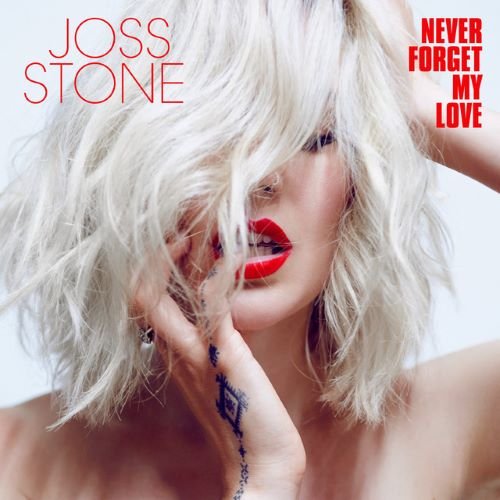
Joss Stone – Never Forget My Love

__________

INCLUDED in the final Revisiting…

features of 2022, I am focusing on albums from this year that either passed some by or deserve a fresh look before we wrap up. I will also look further back at great albums from the past five years that are strong but are deserving of bigger love. One album that is particularly good and some might not have heard is Joss Stone’s Never Forget My Love. Released on 11th February – a few days before an appropriate holiday -, her eighth studio album is among her very best. Not that she ever lost form, but many liked a return to the more powerful R&B sounds of her third studio album Introducing... Joss Stone. That gem was released in 2007. I will bring in a couple of reviews for Never Forget My Love. I thought that it should have got more reviews and coverage. Stone was involved in quite a few interviews and talked about motherhood and her personal life, but I am not including that. I am more concerned about her album and all things musical. Before getting to a couple of reviews – one that is a bit mixed and the other positive -, Smashing Interviews chatted with Joss Stone. I will include one bit about COVID-19, as Stone was affected and struck by it. For someone synonymous for her solid and incredible voice, she must have been worried that it would be damaged by the virus:  

Smashing Interviews Magazine: Yes, indeed. Are you completely recovered from COVID?

Joss Stone: Not really. You know, I don’t have COVID anymore, so that’s good. We tested the other day. But I still feel like absolute shit (laughs). M cough is still there. I was told it lasts about three weeks afterwards, so I’m trying to be patient. But I want my voice to come back now.

Smashing Interviews Magazine: So the virus affected your singing voice?

Joss Stone: Oh, yes. That’s how I knew I had it. I was on stage in Savannah, Georgia, and my voice just completely refused to work. I’ve never had that before. I was so confused. I was going to the side of the stage and saying to Chris, my sound engineer, “I don’t know what to do. It’s just gone.” I had to tell the audience, “I’m so sorry. My voice is just not doing it.” I was so embarrassed, you know. Oh, it was the worst. The worst. Oh well, shit happens. We move on. I have to reschedule that gig and go back and redeem myself (laughs).

Smashing Interviews Magazine: Since you couldn’t resume the tour, what have you been doing at home?

Joss Stone: I’ve just been home cuddling my baby and watching British Bake Off. I’m obsessed with that show. It’s a baking competition, and I think I’ve watched every episode now.

Smashing Interviews Magazine: The new album is wonderful. Wow, it’s been over five years since Water for Your Soul was released.

Joss Stone: Has it? Oh, gosh. It’s such a long time, isn’t it? It didn’t feel like that, I think, because I was so busy that I didn’t really notice it. But, yeah, it’s been a while. I’m really glad that I had time to do it.

Smashing Interviews Magazine: Before you got together with Dave Stewart, what kind of sounds and songs were you thinking about for Never Forget My Love?

Joss Stone: I had this experience with Burt Bacharach. He had come to the United Kingdom to play some shows, and he asked if I would sing some songs for him. I guess there were about seven or eight. I’m in awe of him because I’ve been listening to his music since I was a kid. There are some really special ones that I have been influenced by without even knowing it was Burt, to be honest. But then later on, I learned who created those songs.

Then when I was asked to sing with him, I felt very nervous. So I wanted to really, really do a good job. I practiced them and practiced them, and whilst I was practicing them, I realized how beautifully they were put together and how deliberate they are and well composed and just classy, you know. So I don’t know. From that moment, I thought, “I want to make a record like that.” I was talking to Dave Stewart about that. I was just telling him what I’m telling you now. I said, “I love Burt’s style, and I don’t know where to begin with that. I’ve been trying to write songs like that, but I don’t know how to achieve it.” Dave said, “I know how. Let’s do it.” And he picked up his guitar and started to play something. I was like, “Oh, my God. Okay. Are we doing this?” He said, “Yeah. Let’s write the album right now. We can do it.”

So we started writing, and we came up with amazing ideas. And I was like, “I think this is it.” Then we went into the studio, and it all just came together. When the strings came on, that is when I knew we had achieved the goal. I just feel really weirdly proud of it more than normal. I was proud of it in a weird way because I felt like I couldn’t do it. Now, I’m just like, “Oh, my God. I made a really adult record.” (laughs) Without Dave, I couldn’t have done it. I just tried, and I couldn’t. He’s great.

Smashing Interviews Magazine: Is the title track, “Never Forget My Love,” based on a true story?

Joss Stone: You know what? I suppose when I do sing it, I think sometimes of individual moments. But really I was thinking about unfortunately, I’m one of those people that didn’t find the love of my life when I was in high school. I had to kiss a few frogs, shall we say, before I found my prince. I have had moments in those relationships that passed that have been lovely. That’s why you get in the relationships. But in the end, you end up hating each other, making each other cry, making each other feel like shit and just disrespecting each other. That is how a relationship ends. In order for them to end in a clean way, it’s probably best you don’t talk anymore. That can be really sad, and you can end up grieving that person as though they died, and they haven’t. They’ve only died to you. It’s sad. In order to get over that grieving, we just think of the bad stuff because the second you think of the good stuff, you’re going to grieve again. So you just keep that bad stuff in the front of your mind, and that’s how you walk on. I think that’s a terrible shame.

When I think of how my past boyfriends think of me, I don’t want them to have a bad feeling. I want them to think of the love because it was real. It’s just so sad to hold that up there. So that’s what I’m really trying to say. Like, I know we shouldn’t have broken up, and we shouldn’t have been together, but think of me because I think of you. It is what it is, and that’s just the truth. It’s not the truth that my partner now likes to hear, but it is what it is. It’s the truth. We must try and think of the good.

Smashing Interviews Magazine: Many of us find our true loves later in life. It happens more than you think, so there’s absolutely nothing wrong with that.

Joss Stone: Oh, really? Oh, that’s good. So we’re not alone. I don’t think we’re alone. When I got to 30, and I definitely wasn’t with the right guy then, I started to think, “Oh, God. Am I ever going to find the right one?” You start to lose hope a bit. Then one day, they just turn up, and it’s so beautiful.

Smashing Interviews Magazine: Absolutely. What’s your favorite song on the new album?

Joss Stone: My favorite one, I think, is “Love You Till the Very End.” That one just gives me goosebumps when I hear it. I just feel like crying every time I hear it. It’s a similar concept as “Never Forget My Love,” but it’s a very specific one because I’m just a deep, deep feeler, and I don’t let things go easy (laughs). So yeah. “Love You Till the Very End.” That one was heavy for me, but I love it. I’m glad how it turned out.

Smashing Interviews Magazine: You have been compared to Adele and Amy Winehouse, and that’s a great compliment. But do you ever think that comparisons to other artists maybe lessens your own standing as an artist?

Joss Stone: I know what you mean. I think it’s a good question because it’s natural to imagine if you were compared to somebody you don’t think is any good. That would be really worrying (laughs). But luckily, the people they compare me to, I actually think are really great. I take that as very lucky. Thank God they still think that I’m worth mentioning in the same sentence as Amy Winehouse or Adele because that makes me feel like it’s a good thing. But in the same kind of vein, we are not the same people. So of course, we’re going to have different thoughts and ideas and different ways of approaching a song. So I think it’s just a way of being able to discuss music. As long as the standards of comparison are good, I think I can always take it as a compliment”.

With incredible and consistently good songwriting from Joss Stone and David A. Stewart, Never Forget My Love is a satisfying album that pleased existing Stone fans and is accessible and will draw in new followers. I have known about her work since her debut album, and I think Never Forget My Love ranks alongside her very best work. Reaching number one on the UK R&B Albums (OCC) chart, I would recommend people to listen to a superb album. I am going to get to a pretty impassioned review. First, this is what AllMusic observed about Joss Stone’s eighth studio album:

Strange as it seems, Never Forget My Love is Joss Stone's most R&B-oriented set of original material since Introducing Joss Stone (actually her third album), released 15 years earlier. Stone works again with Dave Stewart, her producer and writing partner on the rock and soul hybrid LP1 (actually her fifth album). As with that 2011 full-length, these songs come across as deliberately crafted in a way that differentiates them from the much greater volume of comparatively off-the-cuff material in Stone's catalog. The singer sounds more comfortable than she has in some time, whether she's referencing prime Burt Bacharach (with whom Stone performed in 2019), classic Memphis soul, or the Staple Singers, or bringing to mind a cross between Betty Wright and Bill Withers (specifically on the title song, a highlight). For the most part, this is full-tilt Stone -- a delight for those who want to hear her let it all out, even when the song doesn't necessarily call for it. She eases up only to tango on "The Greatest Secret" and jubilate on "When You're in Love," a sweet finale with all the elegance and casual grooving energy of an early-'80s Ashford & Simpson or Luther Vandross production”.

Old Grey Cat were impressed by Never Forget My Love. They noted how the songs are authentic Soul and R&B. A collection of ten amazing songs that will keep you coming back. I wonder whether she and David A. Stewart will collaborate again on Stone’s next album, as they have a writing partnership that yields big results:

All the mistakes I’ve made/I wish they would all go away/It’s as if they/were tailor made for me.” Thus opens Joss Stone’s eighth album, Never Forget My Love. Though she’s singing about love and broken hearts, in some respects she could well be singing about her career to date, which—though she’s sold, according to Wikipedia, 14 millions albums worldwide—has never lived up to the promise of her stellar 2003 debut, The Soul Sessions.

Until now, that is.

Partnering with Dave Stewart for the first time since their 2011 collaboration on the flawed but worthwhile LP1, she’s crafted an album that’s accented by one sublime song after another. As a whole, as I tweeted yesterday, it channels Dusty Springfield circa her classic mid-‘60s period, though the production flourishes sometimes conjure Isaac Hayes and Minnie Riperton (“la, la, la, la”), too. “Breaking Each Other’s Heart,” the lead track, is a good example of the Dusty vibe. Strings support a seductive groove that sounds plucked from the past, though it’s not, while Stone emotes with the finesse of a veteran prizefighter who knows when to jab and when to throw a knockout blow. Like the album as a whole, a larger-than-life, timeless quality emanates throughout; it’s a fabulous song.

“No Regrets,” another highlight, both echoes and confirms that sentiment. It sounds like a long-lost Bacharach-David composition, just about, though—like the other songs here—it’s a Stone-Stewart cowrite. In short, it balances old-school pop with old-school soul, with the former coming by way of the Herb Alpert-like horns and the latter coming from Stone’s vocals. It also sports a subject, of casting out a negative force from one’s life, that’s as old as time yet, sadly, always timely. As with the other tracks, if you squint your ears you’ll almost hear Dionne Warwick, the 5th Dimension and Duffy singing backup beside Dusty. It’s the type of tune that takes up residence in the brain long after the music has faded.

The same’s true for the other tracks, which also take their stylistic cues from the songs of long ago. “You’re My Girl,” a catchy ode to friendship, could well be an Allen Toussaint-penned Irma Thomas outtake, while I wouldn’t be surprised if “Does It Have to Be Today,” about longing for one more day with a departing lover, was borrowed lock, stock and barrel from a previously unknown Stax/Volt collection unearthed in a used-record shop in Memphis; about the only thing missing from the track is the pops and clicks that are part and parcel of dusty vinyl. The same is true for “You Couldn’t Kill Me,” a dramatic tour de force about escaping an abusive relationship.

Nothing quite beats the addictive and joyous “Oh to Be Loved by You,” however, which at this stage is my favorite track. Accented by an infectious melody that’s equalled by Stone’s light-filled vocals, it’s a surefire mood-turner. It’s guaranteed to take that frown and turn it upside down, in other words.

The mention of Duffy up above came for a reason, I should add. Never Forget My Love is very much a stylistic throwback akin to Duffy’s timeless (to my ears, at least) 2008 debut, aka the “bag of songs” known as Rockferry. Unlike her past albums, in which Stone tried to meld her influences with a more modern sound, here she’s fully embracing the old—and, in so doing, is actually making it new again. (Or something like that.) Which is all to say, as I’ve noted above, echoes of the past can be discerned throughout, but that’s all they are—echoes. The 10 tracks aren’t pastiches, homages or appropriations, but the real deal. These are soulful and dramatic wonders sure to pull you—or, at least, me—back time and again”.

A fantastic album from Joss Stone, Never Forget My Love is well worth a spin. There have been so many albums released this year, it is hard to keep track of them all! If you have some time free, then I would recommend that you…

REVISIT this one.

FEATURE: Inspired By… Part Ninety: Pretenders

FEATURE:


Inspired By…

Part Ninety: Pretenders

__________

FOR this outing…

I want to include the mighty Pretenders in Inspired By… Led by the phenomenal Chrissie Hynde, the American band have released some of the best albums ever. Their first two eponymous albums are among the best of the late-1970s and early-1980s. The band have a new album, Relentless, out next year. I am going to end with a playlist of songs from artists influenced by the incredible band. First, AllMusic provide this biography of Pretenders:

Over the years, the Pretenders became a vehicle for guitarist/vocalist Chrissie Hynde's songwriting, yet they were a full-fledged band when they formed in the late '70s. With their initial records, the group crossed the bridge between punk/new wave and Top 40 pop more than any other band, recording a series of hard, spiky singles that were also melodic and immediately accessible. Hynde was an invigorating singer who bent the traditional male roles of rock & roll to her own liking, while guitarist James Honeyman-Scott created a sonic palette filled with suspended chords, effects pedals, and syncopated rhythms that proved remarkably influential over the next two decades. After Honeyman-Scott's death, the Pretenders became a straightforward rock band, yet Hynde's semi-autobiographical songwriting and bracing determination meant that the group never became just another rock band, even when their music became smoo9ther and Pop-orinesdtated

Originally from Akron, Ohio, Hynde moved to England in the early '70s, when she was in her twenties. British rock journalist Nick Kent helped her begin writing for New Musical Express; she wrote for the newspaper during the mid-'70s. She also worked in Malcolm McLaren's SEX boutique before she began performing. After playing with Chris Spedding, she joined Jack Rabbit; she quickly left the band and formed the Berk Brothers.

In 1978, Hynde formed the Pretenders, which eventually consisted of Honeyman-Scott, bassist Pete Farndon, and drummer Martin Chambers. Later in the year, they recorded a version of Ray Davies' "Stop Your Sobbing," produced by Nick Lowe. The single made it into the British Top 40 in early 1979. "Kid" and "Brass in Pocket," the group's next two singles, were also successful. Their debut album, Pretenders, was released in early 1980 and eventually climbed to number one in the U.K. The band was nearly as successful in America, with the album reaching the Top Ten and "Brass in Pocket" reaching number 14.

During an American tour in 1980, Hynde met Ray Davies and the two fell in love. Following a spring 1981 EP, Extended Play, the group released their second album, Pretenders II. Although it fared well on the charts, it repeated the musical ideas of their debut. In June of 1982, Pete Farndon was kicked out of the band due to his drug abuse. A mere two days later, on June 16, James Honeyman-Scott was found dead of an overdose of heroin and cocaine. Pregnant with Davies' child, Hynde went into seclusion following Honeyman-Scott's death. In 1983, two months after Hynde gave birth, Farndon also died of a drug overdose.

Hynde regrouped the Pretenders in 1983, adding former Manfred Mann's Earth Band guitarist Robbie McIntosh and bassist Malcolm Foster; the reconstituted band released "2000 Miles" in time for Christmas. The new Pretenders released Learning to Crawl early in 1984 to positive reviews and commercial success. Ending her romance with Ray Davies, Hynde married Jim Kerr, the lead vocalist of Simple Minds, in May of 1984.

Apart from a performance at Live Aid, the only musical activity from the Pretenders in 1985 was Hynde's appearance on UB40's version of "I Got You Babe." Hynde assembled another version of the Pretenders for 1986's Get Close. Only she and McIntosh remained from Learning to Crawl; the rest of the album was recorded with session musicians. Get Close showed the Pretenders moving closer to MOR territory, with the bouncy single "Don't Get Me Wrong" making its way into the American Top Ten in 1987. Hynde recorded another duet with UB40 in 1988, a cover of Dusty Springfield's "Breakfast in Bed."

Hynde's marriage to Kerr fell apart in 1990, the same year Packed! was released, although it failed to ignite the charts in either America or Britain. Hynde was relatively quiet for the next few years, re-emerging in 1994 with Last of the Independents, which was hailed as a comeback by some quarters of the press. The album did return the Pretenders to the Top 40, with the ballad "I'll Stand by You." In the fall of 1995, the live album Isle of View was released, then the group remained silent for a few years. Hynde finally returned in 1999 with an album of new material, Viva el Amor. Three years later, the Pretenders left their longtime label for Artemis. The reggae-tinged Loose Screw appeared in November and a tour followed in January 2003. In March 2006, the band released their first-ever box set, Pirate Radio, via Rhino. The four-disc package included over five hours of music and a DVD of rare performances. Two years later, the Pretenders released Break Up the Concrete, their first album in six years; it debuted at 32 on the Billboard charts and 35 in the U.K.

Following the release of Break Up the Concrete, the Pretenders spent the next few years touring, but after 2012, Hynde put the band on hiatus. In 2014, she released Stockholm, her first-ever solo album, which was followed in 2015 by her memoir Reckless: My Life as a Pretender. In 2016, Hynde revived the Pretenders to record a new album with Black Keys guitarist Dan Auerbach as producer. Alone emerged in October 2016. 2019 saw the belated release of The Pretenders with Friends, a CD, DVD, and Blu-ray package that documented both sound and images from a 2006 concert in which Hynde and her bandmates were joined on-stage by Iggy Pop, Shirley Manson of Garbage, and members of Incubus and Kings of Leon. The Pretenders reunited with producer Stephen Street for 2020's Hate for Sale, which also was the first album since Loose Screw to feature Chambers on drums”.

To show the influence of Pretenders, below are artists who have definitely taken a page from their book. Whether it is a sonic influence or something else, there are some tremendous artists who have found influence from Pretenders. Here is a playlist of songs from…

SOME truly amazing artists.

FEATURE: Spotlight: Fousheé

FEATURE:


Spotlight


Fousheé

__________

MAKING a late bid…

for album of the year, softCORE is an extraordinary release from Fousheé. Breaking through this year, I must admit I am a little new to her brilliance. Making her debut and big first impression during the pandemic and lockdown, I think this year has been the first where she has been able to have the freedom and space to make music and promote it. Real name Britanny Fousheé, here is a magnificent and hugely innovative singer-songwriter and guitarist from New Jersey. I am going to end this feature with a review for softCORE, as it is a mesmeric and stunning album/project. Before that, there are a few interviews I want to draw in. Apologies for bouncing around regarding time period and narrative flow, but I want to start with a recent interview from NME. A sensation and artist that is gaining traction in the U.K., everyone needs to tune their radar the way of the magnificent Fousheé. She released the time machine album last year and, it seems, has made strides in such a short time:

In the near-18 months since ‘Time Machine’ was released, Fousheé has been angry. Her new project ‘Softcore’ is bristling with a heavier sound: while it retains some of the soft acoustic moments and touching openness found in ‘Time Machine’, it’s much more influenced by post-punk, metal and hardcore than any of her previous work. It’s a record that treads the line between pure unbridled and terrifying anger and the raw, painful hurt it stems from, like poking a bruise so much that it spreads. “This record is about my anger towards men,” Fousheé tells NME with a laugh from her LA home. “In relationships and in the [music] industry. I would find myself mad at this role I have to play as a woman, and I raged about it.”

‘Softcore’ is expansive, and flips perceived power dynamics on their head. “When it comes to music, people assume that I would make a different type of record — not one where I’m being as aggressive or vulgar,” she says. “Just make pretty music and appear really pretty — it reminds me of Snow White, but I don’t feel like a little Disney princess. I felt like I wanted to reap the benefits that men get to reap by making the music that they make.”

On ‘Die’, Fousheé cusses out an imaginary male other, screaming enticingly about her groupies and drugs and daring him to go faster. On ‘Bored’, she is enticingly sardonic, drawling: “I’m bored / Wanna be my boyfriend?” She tells “everybody [to] suck my dick” on ‘Stupid Bitch’, convincingly claiming masculinity as a state of mind. Though angry, it’s still fun, inviting Fousheé’s audience to let everything out with light-hearted catharsis — or, as she puts it, “we don’t have to choose, both can exist in one place”.

This is the first time that Fousheé has seen any of her fans in real life, as her viral moment happened during lockdown. She says the effects of that have felt “like insanity”, with everything happening so fast that she hasn’t yet had the time to take it all in. It’s the culmination, though, of years of hard work that has always prized music and creativity above all else: “I didn’t create a back-up plan, and I’m like, ‘Damn, what else am I gonna do?’ There’s nothing. The main thing is making music and creating things that I love, and I commit to that.”

That commitment has opened numerous doors for Fousheé, who has collaborated in recent times with the likes of King Princess, Lil Wayne and Lil Uzi Vert. But what shines through in all of her solo and collaborative work is her integrity and core belief in her art. This lack of a back-up plan has worked for her so far — she’s been able to create her path from nothing and make it fully her own. ‘Softcore’ may be a departure from her previous work, but Fousheé’s instincts are clearly worth trusting”.

I am going to wind back to 2021. EUPHORIA. spoke with, as they described, “New Jersey-bred songstress and Apple Music’s Up Next Artist Fousheé”. It was an exciting year for an artist that was coming through with the most incredible sound. Even though I only discovered Fousheé this year, I have been listening back to her previous work and am blown away by it. She is someone who is going to have a truly massive career without a doubt:

Fousheé, for the entirety of her life, has been a sonic sponge. Along with Billie Holiday tonalities, she picked up her rhythmic sensibility from her mother who was a drummer for a reggae band during her youth. “She had a big influence on my love for music,” Fousheé expresses about her. “She was a drummer and she always played Bob Marley. I think I unintentionally followed that blueprint because Bob was a singer-songwriter-guitarist who spoke up about what was going on in the world.”

Fousheé also soaked up her mother’s passion and drive. “She used to tell us we can’t say, ‘I can’t,’” Fousheé says. “She was a single mom and she worked as an immigrant in this country to put us in a good neighborhood. If she can do that on her own, I can stand on my own too.” 

Jump ahead 15 to 20 years and this woman with her guitar is singing all over New York City trying to craft a career in music. “Alternative rock was a big inspiration for me at that time,” Fousheé says. “It made me want to include more electric guitars in my music. It made me drawn to certain chord combinations.”

Thus, with jazz, singer-songwriter, reggae, and alt-rock all in her arsenal, Fousheé just needed to craft the perfect tone in her voice that would organically connect all of her influences. “I had to develop a sense of my voice because people wanted me to sound a certain way, or I used to be frustrated that I couldn’t sound like certain singers. But that ended up being an advantage,” Fousheé recalls about this crucial stage in her development. “I used to try to sound like Beyoncé or try to belt, but I was shy, so I would practice quietly, and I ended up with a very strong falsetto voice. I realized I could play with those textures and try to create my own sound.” Though she was still developing, this discovery would prove to act as a sort of glue for her artistry overall.

During this period, Fousheé not only drew more musical inspiration but also garnered a thick skin attached to her unwillingness to fail. She performed at a plethora of live music venues in The Village to new crowds each evening as the area drew everyone from locals to tourists to industry people. “It was interesting because you could sing the same song (repeatedly), but every night is unique,” she explains. “You have to go in and win people over. It was tough, but helped a lot with how I perform now.”

One of the toughest gigs she ever had, though, was at Harlem’s legendary venue The Apollo Theater. The success of that show would fuel her self-confidence in an everlasting way. “Some people come to The Apollo just to boo,” Fousheé proclaims. “The day I went, two people got booed in front of me so I was very nervous. New York is the toughest crowd you can find. If you can perform and impress a crowd in New York, you can do it anywhere.”

As for many artists, though, talent, sense of a musical self, and relentless pursuit alone were not enough. Fousheé’s life flipped when a sample hook she’d made for the website Splice was used in a beat for a track by Brooklyn drill rapper Sleepy Hallow. The song “Deep End Freestyle” went viral on TikTok and sent fans on a search for the mystery vocalist on the ruminating loop in the instrumental. Eventually, this made its way to Fousheé, who was met with a bit of a conundrum. The samples one submits and sells on Splice, according to Fousheé, are known as “royalty-free sample packs.” This means if someone purchases the sound they don’t need to credit the artist who sold them the sample.

“So going about getting credit is not only rare, but it usually ends up as a lost cause,” Fousheé explains. “I felt like my scenario was different because it wasn’t a discreet addition to the song. People were gravitating towards the voice and seeking the person singing but didn’t know where to find me.” Fousheé mustered up her now-learned success drive (with still a little extra push from her mother) and made a TikTok video discussing it and coming forward as the singer. “I was hoping that [Sleepy Hallow] would hear me out, but I ended up just doing it on my own terms,” she says. Then once her TikTok video also went viral, she ended up with credit as well as high demand for her own full version of the song. “I was surprised that a lot of people cared so much,” Fousheé says. “A lot of people were just happy to have found the singer and were surprised it wasn’t some old ancient sample. It was the perfect storm of events to build suspense. That’s what made people excited to hear my version.”

It was crunch time. She’d gone from 5-year-old Fousheé singing about a bathroom line with only her family as the audience, to now having a huge chunk of the digital sphere waiting for her to deliver. She had to craft verses that matched the impact her hook loop had created. “I felt like people were gonna expect something similar. But I wanted to do that while still staying true to myself,” Fousheé explains. “So I knew it had to be a mix of both. It was a lot of pressure ‘cause the song that ended up going viral from the sample was a lot different from my music. But I like Brooklyn drill and I knew it had to have a little of that in there.”

Yet again, Fousheé was a sponge to sonic influence, but this time she adopted the sounds that propelled her into the spotlight. She also had the self-awareness to realize that if she brought along the rest of the tones she’d already grasped, it could really elevate the song. “I brought my original self to it with the guitar,” she says. “I think that gave it a more alt singer-songwriter feel. Then the drums made it more hip-hop, uptempo, and something you could dance to. That’s what the music is anyway, blending things you wouldn’t normally mix. I think that was a big appeal to the record.”

The finishing touch was bringing not just the plethora of sounds she’d garnered, but the Bob Marley-like sentiment she learned from her mom early on. She opens the track with the lyrics, “I been trying not to go off the deep end / I don’t think you wanna give me a reason / Had to come and flip the script / Had a big bone to pick / Got the short end of sticks, so we made a fire with it.”

“I wanted it to reflect what was going on in the world. It was a heavy time,” Fousheé explains. “But I didn’t want people to feel sad when they listened. I wanted them to feel empowered. I wanted it to be like an anthem. It was a lot of pressure. I was walking around my house in circles. I wrote like seven different versions. I was living with a roommate at the time and she was hearing me creating throughout the week, and this particular version stuck in her head and she was singing it back to me. That’s when I knew this might be the one.”

 “Deep End” was in fact “the one,” and it propelled Fousheé to this moment prepping for her first project’s release atop an Apple Music-certified stage. The track has amassed over 100 million worldwide streams to date. The song’s success also cemented the reach of her musical mentality. “I would’ve never released a song like ‘Deep End’ (before). It made me more open to trying different sound mixtures and playing with textures,” she explains. “When I made it, I was scared that people wouldn’t get to hear me as who I felt I was as an artist and just hear a specific version of me. But I think it made me realize I’m still gonna be in the song regardless of the genre. There’s still ways to bring me to it.”

Adding this final hip-hop element blossomed into a whole new world of possibilities, one being multiple collaborations with rap legend Lil Wayne. On her track with him “Gold Fronts,” Fousheé sings over minimal guitar about how shimmering teeth jewelry is a symbol for putting expression and culture on display unapologetically. Wayne fused with her in a way we haven’t heard him. Over just acoustic plucks and other sparse sounds, he smoothly ties his perspective to her concept. On “Deep End,” Fousheé brought her world to hip-hop, then with “Gold Fronts” brought hip-hop to her world.

That collaboration worked so well Wayne even had Fousheé feature on his ultra-personal track “Ain’t Got Time.” The song is about the stress and anxiety surrounding Wayne as he awaited a potential prison sentence he’d eventually be pardoned from. “I was anxious, so I can’t imagine how he must’ve felt,” Fousheé says about the experience. “It was a mix of emotions ‘cause I was concerned about him, but when I’d speak to him, he’d act like he had no cares in the world. It was a cool song ‘cause I think he addressed what he needed to address. I was just glad to be a part of his moment.”

On her second single for her debut, Time Machine, Fousheé uses a classic “Weezy-ism” in its title “my slime.” She builds off those two words to make a rhyme pattern that tells a unique story in the video she is about to premiere after our conversation. “In the lyrics, I say “You’re my slime, my partner in crime,” so it’s a literal take on that and we rob a bank,” Fousheé says about the story depicted. “I wanted to make it the cutest, most adorable robbery. The balance of really cute versus very dangerous. Skipping with a 21 (Magnum Rifle) and my cute little teddy bear bookbag. It’s a balance of so many things and a love story.”

Balance is a theme and intention Fousheé uses consistently throughout this track and the rest of Time Machine. “I wanted to take a classic love-feeling indie song and add the contrast of lyrics you wouldn’t normally hear,” she says about finding sonic equilibrium. “On this project, it’s all about mixing. Hearing that term in my daily life and bringing it to a place you wouldn’t normally hear it”.

A huge musical force who caught a lot of love and praise this year, I want to come to an interview from April. Alternative Press explore how she was uncredited for her part on Sleepy Hollow’s Deep End Freestyle. She released a song called deep end, which addressed the issue:

Fousheé has been writing music since childhood, but her path to stardom has been unexpected. After appearing on The Voice in 2018, she made 250 song samples for the online music platform Splice, which allows musicians to purchase and use samples royalty-free. One of Fousheé’s samples was used in Sleepy Hallow’s “Deep End Freestyle,” which went viral on TikTok. But Fousheé’s part was uncredited, and the mystery of who sang that hook remained. Fousheé’s family encouraged her to come forward, so she did, in a TikTok that now has 2 million likes. Fans asked her to make a full song, which Fousheé created and released, called “deep end.”

“Without that push, I don’t think I would have done any of those things,” she says now. “But why? I think I deserved credit for the song. The song deserved to be connected with people and to get out there. Wanting more for yourself and not settling and the importance of it was the lesson that I learned.”

In a rewarding twist, “deep end” reached the top 10 on alternative radio — making it the first song by a Black woman in over 30 years to do so, since Tracy Chapman’s “Crossroads.” “When I found out it had been 32 years, it just felt long overdue,” she says. “I was a little confused because as a music lover, there’re a lot of Black artists that I listen to. It just made me question why it hadn’t hit on a mainstream level yet.”

And Fousheé’s planning on going even further into the alternative side of her sound on her as-yet-unannounced upcoming project, which takes a lot of influence from punk. The first song, “double standard,” which came out April 8, has a deceptively summer-y feel that contrasts its sharper lyrics: “Boys don’t play by the same rules that the girls do.” It’s just a taste of what she has brewing, especially when it comes to the themes of the project.

PHOTO CREDIT: Alondra Buccio

Your music doesn’t fit into any one genre — it takes from all these different types of music. How did you develop that style?

I think it’s a reflection of my taste. I get really bored very easily, so the music that I listen to is all over the place and a reflection of my personality. If I’ve been writing a lot of sappy love songs, eventually I’ll feel this urge to revolt and then write something polar opposite to that. I love variety. It keeps me entertained.

You write your own songs, and you direct your own music videos. Why is it so important to you to have that level of ownership and control over your work?

When I write, I’m a very visual person. That’s the most exciting part of it for me because in school, I was not that lit kid who could write a thousand-page paper. I’m very not wordy. I hated reading. But I love to imagine things. So when I write a song, I usually already have a visual idea. I feel a little uncomfortable unless I’m able to fully express that vision, from writing the song to making the visual. It goes hand in hand for me. Especially since I wrote it, I know what I wrote it about, I know how I felt and I know how I want the visual to feel. I don’t think anyone else has that relationship with the song besides the songwriter. So it’s an equally important form of expression and just as equally important as writing the song for me.

Did you find that because you already have such a broad spectrum of musical influences, it was easy for you to navigate that? Your upcoming song “i’m fine” is a little different from your other music in that the other songs had a drumbeat from one genre, or a guitar that sounds like another genre, whereas this one starts out as indie rock and then all of a sudden, it switches to heavy music, and then it goes back to indie rock.

No, it wasn’t hard at all, surprisingly. It was exciting for me knowing that I’d never heard a song like that. I feel like part of my job as an artist is to create things that haven’t been created before. So it was a really, really cool moment, finding that niche and realizing that these two things can work together as one. It’s experimenting. That could have easily been a terrible song. Or maybe some people will view it as terrible, but it makes you uneasy, it makes you listen, it makes you think. And that’s really why I do it. So it wasn’t hard at all. I love both of those genres. So why not put it in one? I’m such a fan of folky songwriting, just me and guitar. And that was mostly what the first project was, so this one I wanted to be more dynamic”.

I will end with a review from Variety for the phenomenal softCORE. Perhaps one of the best albums of the year that has not had widespread assessment and attention, it is reason enough that you should follow and listen to the majestic Fousheé:

You might know Foushee from the songs she’s done with Steve Lacy — including the ubiquitous “Bad Habit” — or the ones with Lil Wayne and Vince Staples, or (most likely) the TikTok hit “Deep End,” although she wasn’t credited on it at first.

But just forget about all of the above, because “softCORE” is something else. It’s the kind of kaleidoscopic, multi-genred, disruptively creative album that makes you feel like the artist was hiding something, or at least holding back.

“softCORE” is definitely more CORE than soft: There’s punk rock, hyper-pop, alt-rock, oddball Tierra Whack-style hip-pop, and there are a couple of the vaguely alt-R&B songs that she released on her debut album, last year’s “Time Machine.” The lyrics are bonkers — “I looked so good he died,” “You’re so cute but you’re dumb,” “I got frenemies/ I got mini-me’s” — and the songs have titles like “Die,” “Bored,” “Stupid B—h,” “Scream My Name” and the blistering rifffest opener, “Simmer Down,” which does anything but that (except in its soft, piano-driven middle section). There’s screaming, screaming guitars, blast beats, soaring harmonies, wildly looped and altered vocals — a lot of the songs would be classified as rock, but a really disruptive strain that recalls ’90s digital hardcore acts like Atari Teenage Riot. Most of the soft moments are abruptly interrupted with blast beats or screaming, or the obverse: “Stupid B—h” ends with a string quartet and an almost nursery-rhyme-like outro.

It sounds chaotic and it is, but what makes Foushee truly different is her songcraft: She’s a Grammy-nominated songwriter and a powerful and distinctive singer, but here those talents are mostly in the service of treading the line between beauty and noise.

Until the album’s end, at least: The closing “Let U Back in” is such a calm, pretty, yearning song that it almost seems more deranged than what came before.

Yes, it’s all over the place and some songs seem like they could be by a totally different artist, but there’s a cohesion and unity of vision that transcends the head-spinning diversity; also, the tracks all clearly are sung by the same person, even though she may have distorted, sped up or warped her voice nearly beyond recognition. And it’s over almost before you know it — all of that happens across 12 songs in 24 and a half minutes; only one passes the three-minute mark. There’s a battery of collaborators — most often Philly-spawned producer BNYX (Lil Uzi Vert, Yeat, Ty Dolla $ign) and Zach Fogarty (Jean Dawson, Denzel Curry) — and Lil Uzi guests on one song. But the beautifully twisted vision here is clearly Foushee’s.

And what a vision it is. “softCORE” is a jarring blast of melody and chaos that adds up to one of the year’s best and most exciting albums”.

A brilliant and essential artist that everyone needs to know about, spend some time investigating and diving into the incredible music of Fousheé. I have recently discovered her but, after just a few minutes of her music, I have been hooked in and will stay with her…

FOR years more.

____________

Follow Fousheé

FEATURE: Stay in the Sun: A Future Broadcasting Icon: The Incredible Work of Lauren Laverne

FEATURE:


Stay in the Sun

IN THIS PHOTO: Lauren Laverne at the 2021 Audio & Radio Industry Awards (The ARIAS) at The May Fair Hotel on 26th May, 2021/PHOTO CREDIT: Getty Images Europe

A Future Broadcasting Icon: The Incredible Work of Lauren Laverne

__________

I couldn’t really find…

 IN THIS PHOTO: Lauren Laverne with actor Paul Mescal/PHOTO CREDIT: BBC

a title for this feature that was a pun on a song or suitable for Lauren Laverne. For that reason, I have been a bit direct with the naming (well, the top line refers to a Kenikie (her former band) song from their second and final studio album, Get In (1998). I sort of do as yearly feature about Laverne, and I have no idea whether she ever sees them (I can’t imagine so!). It is coming up to Christmas, and I wanted to look back and salute (once more) one of the nation’s broadcasting giants. This is not that random. An upcoming Desert Island Discs special is a big reason why I am returning to the shore of Sunderland’s proud daughter. Before getting to specifics and something approaching a constructive flow, I wanted to muse and put a few things out there. I have probably raised this a couple of times. I am sure Laverne has an executive or P.A. handling all her affairs and hectic schedule, but I would imagine that to be a dream job, as she seems not only to get busier and take on so many cool projects and things; there is also this honour of being involved with a mighty talent. I also wonder whether there will be an official Lauren Laverne website at any point. She is on Twitter and Instagram, but there is so much to unpick and store. She has presented award shows, been on T.V. shows, done a load of Desert Island Discs episodes on BBC Radio 4 (as she is the host), some great stuff on her BBC Radio 6 Music breakfast show, in addition to the odd podcast here and there (though I feel she is someone who should be invited on a lot more podcasts). She is also the Music For Dementia ambassador and wrote a thought-provoking and brilliant feature about the power of music.

I can see from her Instagram feed that Laverne is filming something for the BBC about iconic music institutes. She has been pictured outside Abbey Road Studios and the BBC’s Maida Vale studios. She recalled how she was there thirty years ago with her band, Kenickie (she was the lead and one of the principal songwriters for the Sunderland quartet). I have often wondered when there will be an alternative music T.V. show like Jools Holland’s Later… on BBC. That show is legendary - though it has been going thirty years without much competition. I feel Lauren Laverne would make a perfect host/co-host! Maybe something on BBC or Amazon, it could have a mix of huge artists and newcomers, with some features and interviews. There is not really too much like that. Combining the feel of classic music T.V. shows of the past with something current, it would be something perfectly suited to her. That said, I doubt that she has any free time in her schedule! Various music audio/visual documentaries spring to mind when I think of Lauren Laverne. I imagine her writing another novel or an autobiography. A more regular podcast or a specially commissioned project also seems like a possibility. Again, how does she fit that in?! It brings me back to the idea of a website (so that this can all be listed and categorised) and a darned good P.A. (though I guess her agents take care of a lot and help with a schedule). I am just about to get to a few specific points relating to stuff that has happened this year – plus some exciting things on the horizon.

I am intrigued by the project Laverne has suggested on her Instagram feed. She has such a varied T.V. career. From hosting the Mercury Prize to a couple of presenting stints on Pointless with Alexander Armstrong, she is so natural and varied! She was at this year’s Glastonbury but, due to the unexpected death of her mother, had to pull out. I know that she will be there next year as Elton John headlines the Sunday night in his final U.K. gig! Laverne also joined Sky Arts series, The Big Design Challenge. As much as I love her T.V. work, it is her twin presenting roles on BBC Radio that has made such an impact in 2022. In many ways, this year has been even tougher and scarier than the past couple. The pandemic is not really over, but events elsewhere, coupled with economic crisis and environmental concerns has really hit people hard. Lauren Laverne, alongside her dutiful, passionate and phenomenal colleagues at BBC Radio 6 Music, have been exceptional. She is always such a warm and energetic broadcaster. I may have written it before, but she is a broadcaster I can see being on the airwaves for decades more (maybe moving to BBC Radio 2 or another station in years to come).

PHOTO CREDIT: Lauren Laverne via Instagram

Such a calm, cool and collected presence, her humour, kindness and intelligence make her weekday breakfast show a must-hear. 2023 is not guaranteed to be an easy year by any means, so many listeners will continue to listen to her show as a source of balm, safety and companionship. Her radio shows on 6 are always so wonderful! Whether speaking with Professor Hannah Fry for The Maths of Life, launching House Music (where she invites listeners to share occasions where household items imitate songs), putting out the weekly People’s Playlist or speaking with a guest, it is essential listening! I have so much respect for her commitment to the station and how she can always lift the mood. She has faced challenges and loses in her personal life, but she always remained so professional, dignified and composed. Someone who will go down as one of the great radio idols and icons up there with Annie Nightingale. I think my favourite moment of her show from this year is when she chatted with the legendary Jeff Goldblum. They even duetted during a rendition of Moon River (first performed by Audrey Hepburn during 1961’s Breakfast of Tiffany’s). It was beautiful! I genuinely do hope that Lauren Laverne provides some vocals for a future album by Jeff Goldblum and The Mildred Snitzer Orchestra.

This all brings me to something that is happening on Desert Island Discs over Christmas. There are a few special castaways, but the big news is that Kirsty Young is a guest. This is special for two reasons. For one, her career, story and music choices will be fascinating to hear. Young was the host of the series before she had to step down because she was diagnosed with secondary fibromyalgia. Laverne took over in 2019 and has been an exceptional host. I guess it is strange hearing Laverne’s predecessor talk with her, but it will be a very respectful and must-hear conversation. In addition to Christmas specials, Desert Island Discs is also eighty! That anniversary is being marked (Baz Luhrmann has recently appeared), as The Guardian explain:

The turntables will be turned on Kirsty Young this Christmas Day, the BBC has revealed, when the former Desert Island Discs presenter is to be asked to choose eight of her favourite pieces of music as a castaway on the famous show.

Young, who has marooned almost 500 other guests on the fictional island in her time, revealed this weekend that she found it strange to be at the other end of the famous Radio 4 format: “It was a slightly discombobulating and thoroughly enjoyable experience,” she said, adding: “Although making anyone narrow down their favourite discs to just eight is frankly unreasonable. It’ll never catch on.”

Young, who stepped down permanently from the role due to ill-health in 2019, has admitted that she found it too upsetting to listen to the interview show because she had been forced to leave before she was ready to go. “I don’t want to overstate that or be melodramatic about it, but that’s how it felt – it was like, ‘I’m sad I’m not doing my job right now’, so it would’ve been uncomfortable to listen,” she revealed in May.

IN THIS PHOTO: Lauren Laverne with Kirsty Young on Desert Island Discs/PHOTO CREDIT: Amanda Benson

In a pre-recorded interview, the 54-year-old, who is married to Nick Jones, the founder of the international Soho House club chain, will be heard telling Lauren Laverne, her successor as host on the programme, about the key achievements of her journalistic career, which began in news and led her to a news anchor role on Channel 5 and then to the presenting job on BBC One’s Crimewatch.

Most recently, Young returned to broadcasting as the face of the BBC’s coverage of the Queen’s platinum jubilee in the summer. She was then called upon to preside over the BBC’s presentation of the late monarch’s funeral in September. Young is to tell Laverne about the emotion she felt when she ended the live broadcast after the service at St George’s Chapel, Windsor, choosing the closing words that moved many of the millions who were watching.

The presenter will also discuss the challenge of interviewing radio guests on the show with Laverne, who initially took over her job temporarily in 2018. Young was struggling with the debilitating symptoms of the condition fibromyalgia. The Scottish journalist had been misdiagnosed at first and suffered from extreme pain and fatigue.

IN THIS PHOTO: Cate Blanchett

Among Young’s favourite encounters during her years in the job were the programmes with Dawn French, who spoke movingly about her mother’s hopes of joining her late father when she died, and with the surgeon David Nott, who discussed his work in war zones.

Laverne’s interview with Young is a highlight of the station’s festive programming but is also designed to mark the end of the 80th year of the prestigious radio show, and so it comes as the finale to a particularly starry lineup of guests. This Sunday’s episode features the Australian film director Baz Lurhmann, who is candid about the way his colourful movies, including Moulin Rouge and Romeo and Juliet, have often divided critics and audiences, and about how frustrating this can be.

“It’s not [about] me but all the people I’ve led down the road,” he says, “particularly a new actor or even the financiers – they’ve believed in you and they’ve gone out on a limb so I have to go out and do hand-to-hand combat to make sure that the film is not beaten to death like a baby seal.”

Luhrmann adds: “It’s up to history to decide whether the underlying notions or the underlying big ideas have relevance or presence, or resonance.”

Also talking to Laverne next month will be Steven Spielberg and Cate Blanchett. On Sunday 11 December, Blanchett will discuss a career which has brought her two Oscars, three Baftas and three Golden Globes, and which saw her rise to international attention with the starring role in the acclaimed 1998 film Elizabeth.

IN THIS PHOTO: Steven Spielberg

Spielberg, the most famous living film director, will be the guest the following Sunday when he reflects on a lifetime behind the camera, dating back to the childhood mini-movies he filmed and which gave him power over the popular kids who had once ignored him.

The Hollywood giant will also recall the first big impact he made on cinema audiences, with the tense truck-chase drama Duel. He tells Laverne why the child’s perspective has always been important to him, steering him to make films such as ET, Close Encounters of the Third Kind, The BFG and, most recently, The Fabelmans”.

I am going to write a couple of other features before the year is done saluting and recognising brilliant broadcasters who have made this year much brighter and more palatable. I think artists get a lot of credit and fandom, but that is not always the case with broadcasters, presenters and D.J.s. I have been listening to Lauren Laverne’s radio shows for years. I was a fan of Kenickie and her subsequent music collaborations and projects, but it is her radio work that I find is so amazing and inspiring. I hope 2023 provides a lot of happiness, stability and opportunity for Laverne! I know she’ll be presenting at Glastonbury and continuing her fine work across BBC Radio 6 and BBC Radio 4, but I feel like there will be some huge T.V. projects and honours. Whether that is awards or something like a new podcast, I know there will be this incredible, wonderful year! I may have to move out of London soon – due to impending redundancy -, and it will be a real shame.

Rather than this being a feature designed to complement Lauren Laverne for no real reason at all, I wanted to recognise an awesome and much-loved broadcaster, D.J., presenter and writer. So many people have had a very challenging year made much better because of her. It is such a hard job broadcasting and delivering these terrific radio shows each morning. Lauren Laverne is consummate and assured, she makes it look so effortless. One of the very best in her field, I know that so many people out there would like to send their love and thanks. She is a very special human, and one that has guided us through a very tricky and unpredictable year. I hope, after such a busy 2022, that she gets time to relax over Christmas and eases into the new year. I am sure 2023 will be a packed and eventful one! I have said it once (or more), and I will say it again: she is very much…

A national treasure.

FEATURE: ‘The Kate Bush Effect’ in 2022 and Beyond: Can Shows like Wednesday Follow the Footsteps of Stranger Things?

FEATURE:


‘The Kate Bush Effect’ in 2022 and Beyond 

IN THIS PHOTO: Jenna Ortega as Wednesday Addams in Netflix’s Wednesday 

Can Shows like Wednesday Follow the Footsteps of Stranger Things?

__________

THIS is very much a Kate Bush feature…

 IN THIS PHOTO: Kate Bush performing on Peter's Pop Show on 30th November, 1985/PHOTO CREDIT: ZIK Images/United Archives/GI

but it is a springing board to something wider and deeper. In a couple of features about Bush that I will include before the end of the year, I am discussing her 2022. Going into this year, people didn’t really expect much to happen in terms of her music and popularity. Sure, there was always an outside chance an album could have come out – as it has now been eleven years since her current, 50 Words for Snow. Books and articles have been written about her, because she is always relevant and a fascinating source of influence and motivation. A complex and genius artist with so many layers and sides, there’s been an impressive smattering of things written about Bush. I suspect that will continue in 2023, as the tension and anticipation rises regarding new material. Surely Bush has been working on something given the love she has received this year?! Maybe it is a cheap and easy term, but there is something called ‘The Kate Bush Effect’. I do not think it is a new phenomenon, but Bush’s year has been defined by her song, Running Up That Hill (A Deal with God) appearing on the Netflix smash show, Stranger Things. It is quite a dark and gothic show in many ways, and I think many people associate Bush with things dark, witch-like and suspenseful. There has been this perception of her from many since she released her 1978 debut single, Wuthering Heights. Taken from Hounds of Love (1985), Running Up That Hill (A Deal with God) was brought to a new audience thanks to a pivotal and powerful scene in Stranger Things. It played quite a big part, and Bush was involved with its placement and giving it a green light.

I am going to discuss Running Up That Hill (A Deal with God) more when I look back at her 2022 and the fact that this event and song was so important. Because the track appeared on Stranger Things, it finally got to number one in the U.K., set records in the proves (including the longest time between number one songs, as Wuthering Heights hit the top in 1978), and saw the streaming figures for the track skyrocket! I am going to end with an article that suggest older music like this has been more prominent in 2022 than new music. I don’t agree artists like Kate Bush have taken money and focus away from other artists. In fact, this year has been more stuffed with great and diverse talent than any other! Also, it is not often that this sort of thing happens for her! The fact this song has connected with people who (for some weird reason) had never heard it before is a good thing! It has resulted in Bush getting a new generation of fans behind her, and they have discovered her catalogue in the process! I am getting to an article that suggests Sony resurrected Kate Bush’s 1985 single:

Which brings us to Kate Bush’s “Running Up That Hill,” which was released in 1985 and ends 2022 as the 12th most-consumed song of the year. How did the song end up sitting alongside hits by Drake and Dua Lipa 37 years after its original release? “Stranger Things” happened. Season 4 specifically, which used “Running Up that Hill” as a musical theme connecting to the character Max, and repeated it on multiple episodes in its original form and as an orchestral version.

The road to clearing the song’s use on the Netflix hit was a long one, and started with convincing the elusive Kate Bush to agree to its placement. On this episode of the Strictly Business podcast, Sony Music Publishing’s VP of Creative Amy Coles, who Variety has named its Hitbreaker of the Year for 2022, took us through the process of a successful sync and explains the unique role she plays in the music for screens ecosystem”.

I would agree strongly against any assertion Sony or any person resurrected Running Up That Hill (A Deal with God). It is not an obscure song by any long stretch. Bush is one of the most popular artists in all of music. Her music is played around the world! Maybe the U.S. have not fully embraced or understood her, though Hounds of Love was an album that did well there and finally got her the success and attention she deserved. Prior to 2022, this song was one of Bush’s best-known and most-played. It is a massive song that has not gone anywhere - and is one of those tracks people instantly associate with Bush or pick when asked to name one of her songs. Rather than this non-obscure song being ‘resurrected’, it was simply brought to a new audience who, in turn, helped make it a chart success. Regardless, this effect was created. An older song that was maybe not hugely fashionable or relatable to the young generations now, Running Up That Hill (A Deal with God) is now cool and powerful because of the association with Stranger Things. In the context of the song being played on a show during such intense and amazing scenes has led to people speculating which other legacy artists might have their music brought to the fore in the same way. This takes me to another Netflix show with a more gothic and darker feel, Wednesday. Starring the magnificent Jenna Ortega in the titular role, there is a song by The Cramps that has featured in an especially memorable scene that may get the same sort of focus as Kate Bush’s song – though ‘The Cramps Effect’ does sound a bit wrong! Stereogum explain more:

This past summer, something remarkable happened. Kate Bush’s 1985 single “Running Up That Hill” appeared prominently in Stranger Things, becoming a plot point on the show, and the song suddenly became a hit among kids who weren’t born when it first came out. Thanks to Stranger Things, “Running Up That Hill” topped the UK singles chart, and it reached #3 in the US — a whole lot higher than any Kate Bush song had previously gone. Later that summer, something similar happened, on a smaller scale, with Metallica’s “Master Of Puppets.” Now, let’s all cross our fingers that another teen-oriented Netflix show will give some long-deserved shine to the Cramps.

Last week, Netflix released the first season of Wednesday, the new TV show that reboots The Addams Family as a kind of teen-detective series. Tim Burton directs four of the eight episodes. Jenna Ortega, from Ti West’s X and the most recent Scream sequel, plays Wednesday Addams, while Christina Ricci, who played Wednesday in Barry Sonnenfeld’s ’90s Addams Family movies, plays a different character. Catherine Zeta-Jones is Morticia. Luis Guzmán is Gomez. The whole thing is pretty much Veronica Mars, except even more deadpan and now set at a boarding school for monster teenagers. My daughter and I mowed through the whole season over Thanksgiving, and there’s some bad CGI in there, but we had fun.

The highlight of first Wednesday season goes down at a school dance, and it has virtually nothing to do with the plot. It’s just Jenna Ortega doing a kind of face-frozen berzerker zombie frug to the Cramps’ “Goo Goo Muck.” It’s got to be the best thing that Tim Burton’s directed since what? The part of Sleepy Hollow where Casper Van Dien gets murked? I’m not all caught up on recent Burton, and there’s a reason for that. But when Ortega wilds out to the Cramps, it’s like: Oh right, that guy directed Beetlejuice and Batman Returns.

Originally, “Goo Goo Muck” was an obscure 1962 single written and recorded by Ronnie Cook And The Gaylords. It belongs in the all-time canon of songs about being a horny teenage monster. The Cramps, the great rockabilly ghouls of the early New York punk scene, were always on the lookout for old songs about being horny teenage monsters. They covered “Goo Goo Muck” on their 1981 sophomore album Psychedelic Jungle, and they turned it into a classic. The Cramps were always a cult band, and they never got properly famous. They played their last live show in 2006, and frontman Lux Interior died of a sudden heart issue in 2009. They deserve to be remembered, and “Goo Goo Muck” deserves to be some kind of posthumous hit.

Thus far, I haven’t seen “Goo Goo Muck” shooting up any streaming charts. “Human Fly” and “I Was A Teenage Werewolf” remain the Cramps’ most-streamed songs by a significant margin. But Wednesday has been the #1 show on Netflix since its release, and there’s been a lot of talk about that dance scene. Jenna Ortega — who, it must be said, comes off as a total star on the show — choreographed that dance herself, and she and Burton chose “Goo Goo Muck” together. Ortega tells Vulture, “I just pulled inspiration from videos of goth kids dancing in clubs in the ’80s, Lene Lovich music videos, Siouxsie And The Banshees performances, and Fosse”.

 IN THIS PHOTO: The Cramps

I don’t think The Cramps are likely to get the same sort of reaction as Kate Bush. For a start, the band are far less popular and known. The song is more obscure and less played, and Wednesday is on its first season, whereas Running Up That Hill (A Deal with God) featured during the fourth season of Stranger Things. I do think that Goo Goo Muck will get The Cramps’ music new light and fans. Again, it featured in a great scene and was instrumental. Many people have never heard this track, and so they will go and see what else The Cramps have done. As I said earlier, this possible ‘Kate Bush Effect’ is not a new thing. It is simply using a sound in a soundtrack in a diegetic way. This has been happening for decades in film and T.V., though the way Running Up That Hill (A Deal with God) took on a new light and even got Kate Bush herself thanking fans and blown away makes it all the more remarkable. The Cramps Goo Goo Muck might well get back into the charts and earn the band a new generation of fans. It would be cynical to think shows would use some older songs to get artists up the charts or get themselves linked to Stranger Things. Kate Bush has definitely started something. Whether she has shown that songs from the past can still connect today and have a timeless quality, or that her music in general deserves to be heard and played more, I definitely feel that other songs will blow up next year because they feature on a big T.V. show or film. I hope that The Cramps earn a bit more investigation and love after one of their songs appeared on Wednesday. There is another things that ‘The Kate Bush Effect’ has created: people asking whether old music has dominated and taken over and buried a lot of new artists. As GQ wrote, Bush’s music is not the only recipient of Generation Z and young listeners taking it to their bosoms. Platforms like TikTok have provided great awareness, access and conversation to and around legacy and older music:

In 2022, old music was everywhere again. Kate Bush had her first number one in 44 years when 1985’s “Running Up That Hill” was featured on Stranger Things in April. The track ended up in the top five most listened to songs in the UK in Spotify Wrapped 2022. In the recent Netflix series Wednesday, ‘80s track “Goo Goo Muck” by The Cramps, which features in the big dance sequence in the show, has since been spun into a TikTok challenge. It’s not the only retro track to become a hit again thanks to the social media platform, with songs including Fleetwood Mac’s 1977 “Dreams” and Bill Withers’ 1980 “Just the Two of Us” trending this year. Whether on the dancefloor, radio or bar playlist, old music is the new new music.

The reasons for this shift are wide-reaching. The average age of the person streaming music has gone up, as the technology we listen to music with becomes more widely adopted. In 2018, 60% of Apple Music listeners were above 34 while on Spotify over-34s accounted for 46% of subscribers in 2021. Some of these listeners might have been waiting with bated breath for the Taylor Swift's Midnights, but a 2018 study found that we stop listening to new music around 30. Analysis of the relationship between age and music taste by Seth Stephens-Davidowitz in the New York Times in the same year suggests we have a “loved it as a teenager, love it forever” rule of thumb.

This kind of music nostalgia may account for the growth of vinyl in recent years. Vinyl sales were at their highest level in 20 years in 2021, despite issues with backlogs and manufacturing delays. This is a market where rereleases dominate. Amazon’s Vinyl of the Month service, launched last year, focused on music from the ‘70s and ’80s, while nearly half of the albums currently sold by Urban Outfitters could be described as classics. Revivals of other tangible formats - cassettes, and CDs - are also on the cards, at least partially perhaps because they look cool in an Instagram upload. While nostalgia is a potent drug for those who lived through the first time these songs were released – Abba's Voyage, to coincide with their new immersive show, was the biggest selling vinyl of last year –  the statistic that 15% of those aged 16-25 bought vinyl in 2021 suggests some customers are nostalgic for a time before they were born.

The TV series soundtrack, which in 2022 was heavy on nostalgic deep cuts, has a lot to answer for on this front. In addition to Kate Bush and Metallica climbing the charts thanks to Stranger Things, Euphoria turned its young viewers onto Gerry Rafferty after “Right Down the Line” was weaved into several episodes of season two this year, later trending on TikTok and amassing 150 million streams on Spotify. Euphoria – the Sam Levinson series about a group of fashionably dressed hedonistic high school students – is (aside a few backstory episodes) firmly planted in the here and now, but has boasts eclectic soundtrack featuring music from ‘80s and ’90s acts like INXS, Brandy, En Vogue and Ministry. Music Supervisor Jen Malone says this directly influences what Euphoria’s viewers are listening to. “In season one, the day after the finale aired, Donny Hathaway was trending on Twitter,” she says.

Choosing music for TV is primarily about what works for the story, but it's more than that. “It’s very much like we're making a mixtape for the younger generation,” says Malone. She compares it to the role of an older brother or sister back in the day. David Mogendorff, the Head of UK music operations at TikTok, sees it as a step up from that. “To get deep [into music] was much more limited,” he recalls. “Now the full catalogue is there. I've got a 20 year old nephew, who's become an expert on jazz from American jazz at the '50s. There's no stigma of old music – everything is new music.”

Nearly 48% of TikTok users are between 10 and 29, and the app, and its sound library, has its own part to play in this trend. Mogendorff says its not just household names like Fleetwood Mac. He points to Life Without Buildings, a ‘00s indie band whose song “The Leanover” is popular on the app. “Most people I know have never heard of them, and suddenly out of nowhere, this whole new generation is using multiple songs and going, ‘Oh, my God, I love this band.’”

Even if you were too young to remember, say, 1978’s “Rasputin” by Boney M (another biggie on TikTok), the familiarity of a nearly 50-year-old hit is strangely comforting. It can also be revitalising – something like Talking Heads “This Must be The Place”, as heard in Industry earlier this year, sounds completely different to when your dad played it in the car all those years ago. Brian d’Souza, the founder of playlist company Open Ear (who create playlists for restaurants, bars and shops), thinks the pandemic has a part to play in these songs becoming popular again. “When businesses came back, clients would often want stuff we all recognise to get customers to leave the house,” he says. “Whether it was a shop, restaurant, bar, they wanted back-to-back winners.”

With the dominance of older music there are some losers – namely, new musicians, and d’Souza himself is somewhat mystified by this trend. “I’m less interested what's happened in the past, he says. “I personally like to buy new music.” This may, theoretically at least, become harder. With catalogue music becoming increasingly popular, record companies’ attention could become focused on guaranteed classics rather than looking for fresh talent. “The big music companies don’t want to take risks, and the safest bet is to stick with proven artists and familiar songs,” says journalist Ted Gioia, who dedicated a dispatch of his popular Substack to this subject. “As a result, they invest more in buying up rights to old song than developing the next generation of artists. This can't be healthy for our culture”.

I will end things there. There is a lot to discuss when it comes to Kate Bush and her ‘effect’ this year. Definitely, she has shown that songs first released decades ago can have such an impact all this time later. Not that Running Up That Hill (A Deal with God) was ever obscure, but it has certainly had this revival and new injection of life and purpose. Because of Netflix’s Wednesday, perhaps The Cramps will be the latest artists to get a similar boost. Who knows. It just goes to show that, even in 2022, Kate Bush’s incredible music is as influential and important…

AS it has ever been.

FEATURE: Revisiting… Koffee - Gifted

FEATURE:

Revisiting…


Koffee - Gifted

__________

FOR the last few…

Revisited… features of 2022, I am going to look at albums from earlier this year that might have passed some people by. There have been some underrated or under-discussed ones for sure! One that I really love is the first full-length debut from Jamaican Reggae icon-in-the-making, Koffee. The alias of Mikayla Victoria Simpson, Gifted is a superb album that people need to acquaint themselves with. An artist who has been tipped for big things ever since her debt 2019 E.P., Rapture, arrived and went to the top of the U.S. Reggae chart. I don’t think Gifted got as many plaudits and reviews as it deserved. Some felt that, at twenty-eight minutes, there was not enough on the album to satisfy fans. I think it is a tight album, but one that delivers plenty and keeps you coming back! At ten tracks, there is no filler or fat to be trimmed. It is an accomplished and worthy album from an artist who has been getting a lot of hype the past few years. Blissful and full of energy and uplifting vibes, there were some positive reviews for one of the best debut albums of 2022. I want to source a couple of interviews with Koffee, where she discusses a long-awaited album. There is no denying (in my mind) that Gifted is true to its word. Its creator is gifted for sure, and it is a pity that many did not tune into the album or give it its just dues!

Earlier in the year (Gifted came out in March), Koffee was interviewed by ELLE. They rightly declared that Koffee’s optimism is what we all need right now. I have selected a few bits from the interview that give us more background to a truly incredible artist:

Koffee had a lot of time on her hands, sheltered from the violence that afflicts the Jamaican community that would typically urge any idle kid to wander the streets—she picked up the guitar instead. Koffee (who received her nickname from her classmates after refusing to drink soda like the rest of them) unwittingly joined her school's talent contest in 2016 and won, steadily building a fan base that would explode the following year when her tribute song to famed Jamaican Olympic sprinter Usain Bolt went viral.

Upsetta Records happened to be watching and invited the rising star to hop on the 2017 Ouji Riddim compilation album—a common practice in Jamaican culture in which various artists create different songs using the same instrumental—along with reggae royalty like Jah Vinci, Busy Signal, and more. “Burning” was Koffee’s contribution and the debut single—a vibe-y, old school reggae-inflected track fueled by one-drop drums and a rootsy guitar. These embellishments became the hallmarks of Koffee's musical formula, packaged neatly on 2019’s Rapture, which references the religious event.

“I chose ‘rapture’ as the name to represent the impact my music had on the industry in such a short time,” she explained. “Picture the rapture, how everybody is going up in the sky; I came on the scene and the way the music comes in, it just lifts everybody up—that's what I want my music to do.” With all her youthful exuberance, on Rapture, Koffee tackled Jamaica's political strife and poverty with wisdom well beyond her years.

PHOTO CREDIT: Nwaka Okparaeke

It goes back to her influences, especially Chronixx, who she calls “a positive example of reggae music and somebody I look up to,” and who trades the typical dancehall braggadocio for uplifting consciousness and social commentary. “His lyrics and musicianship show his dedication to his craft. I learn something all the time from him; he’s a teacher to me.”

When she isn't calling out the Jamaican government's negligence, she's dancing—or at least making “world reggae” music that people can dance to (like “Toast”), since she admits she's not the best dancer.

On Gifted, Koffee flips between the two themes, melding her rootsy traditional reggae rhythm with a touch of Afrobeats. “This product is my gift to the world. I'm trying to inspire everyone who is gifted, because many people don’t realize it but you can’t take anything for granted,” she says. This album is her reminder to fans to step into their purpose.

“What are you doing with your talents? Everybody has a gift, and it’s up to you to tap into your gift,” she adds. Sticking to her formula, Gifted opens with a tribute to the late Bob Marley on “x10,” a two-minute bite about gratitude that feels like a more intimate extension of “Toast,” which samples Marley’s “Redemption Song.” In between Marley’s faint wails in the background, Koffee takes stock of her accomplishments before addressing the crime, poverty, and police corruption of her native Jamaica on “Defend” and“Shine.” By the time we hit the nub of the 10-track album, it’s dance time: “Lonely” is Koffee’s lovers rock submission that inspires a slow, easy sway while “Gifted,” “Run Away,” and “West Indies” can easily soundtrack slow whines at a late-night bashment party.

She soars across each track solo, without features, a decision she says wasn’t deliberate but authentic to the tone of the album. “The project came together pretty naturally. I found whenever it comes to me doing a collaboration, I would write the song, and then afterward I would listen to the song and see if this person would be fitting for this song. But the way I put it together, it just worked. We're great already,” she explains. Collaborations are a great way to expand into other genres—take for instance her linking up with Atlanta rapper Gunna on “W” in 2019—but Koffee wants to choose her team-ups wisely. She has a wishlist of dream collaborators that includes Young Thug and of course, Burna Boy.

She and the self-proclaimed “African Giant” convened in the studio the night before the 2020 Grammy Awards Ceremony to record a yet-unreleased collaboration that fans have been clamoring for. Following Koffee's blistering interpretation of Burna's smash “Ye,” she has remained tight-lipped with details of their joint song, but a previous Twitter video of the two stars singing over a flute-and-bass-heavy groove hinted to a strong contender for song of the summer—whenever it materializes.

“I can't give you updates just yet, because I think something is brewing, and I don't want to spill the beans, you know?” she assures me”.

I want to move onto an interview with THE FACE. I also love the photos taken for the shoot, as you get this radiance and joy from Koffee. That is reflected in her magnificent music. Gifted is full of songs that bring a smile to your face:

She wrote her first song, Legend, at 17. Inspired by Jamaican sprinter Usain Bolt, Koffee’s words, sung in her poetic patois, glowed with admiration: ​“In Beijing when you got that gold/​Mih seh di stadium stand up when yuh run/​When di times get quicker and it start unfold/​You seh ​‘The sky is no limit, go beyond’/You’re a legend”.

When she released the acoustic guitar-based song under her birth name in 2017, Bolt reposted it. The result: instant virality in the year she left high school. Soon after, she adopted her childhood nickname, Coffee (because she brought coffee to school on a hot day), switching the ​“C” to a ​“K” to better mirror her given name. Her first hit came almost immediately. Burning, released on island label Upsetta Records, was an international success, making serious inroads at American radio. In 2018 she signed with Columbia Records and in December that year released Raggamuffin, on which she directed lyrical fire at gun violence and the Jamaican government’s treatment of the country’s youth.

PHOTO CREDIT: Jackie Nickerson

A little over a year later, on 26th January 2020, she was onstage at the Staples Center in Los Angeles, picking up that Grammy.

“It felt unreal because just a few years ago I was sitting in a classroom,” she remembers. ​“It was a very proud moment, especially for such a small country like Jamaica to bring home a trophy like that for my people, it was an amazing feeling.”

Almost two years on from that win, and a few days before our Zoom chat, I’m at the London headquarters of Koffee’s label to hear a preview of Gifted. When she walks in, the five-foot star lights up the room with her infectious, braces-covered smile. She’s dressed comfortably in another tracksuit and white Nike Air Force Ones, perching herself on the sofa to address the room. Saltfish fritters and chicken skewers are on offer, and Wray and Nephew rum punch is, obviously, the liquor of choice. I tell her that only the Magnum was missing.

“Toniccccc wiiiiiine!” she erupts, laughing. ​“You’re funny!”

As the tracks boom from the speakers, she breaks down Gifted for me, beginning with X10, which incorporates the opening guitar line of Bob Marley’s Redemption Song.

“This is where you wake up and you’re very grateful, you’re about to start your day and saying your prayers, then you tap into the likkle love song, then the party vibe, so it’s a journey. Gifted, for me, speaks to this life, the cycle of it, the wholeness of it. Once you have life, you have everything.”

PHOTO CREDIT: Jackie Nickerson

Then comes Pull Up, a track steeped in Afrobeat influence (“I love the genre so much”). Then, Runaway, a melodic, upbeat track, and Lonely, an homage to British reggae don John McLean and lovers rock, the rocksteady and soul genre which grew out of London in the late 1960s.

“London was one of the first places I came when I started doing music. It’s like my second home. It’s such a cold place but I receive so much warmth when I’m here,” Koffee says, adding that she’s a big fan of drill, Notting Hill Carnival (“I’ve never been because I’ve always missed it but it always looks so fun!”) and how Black culture in the UK is celebrated.

Koffee is already deep into the writing of her second album. ​“Yeah, hopefully you guys won’t have to wait too long,” she says, teasing. If the rumours are true, she’s also a writer on Rihanna’s forthcoming reggae album, R9. ​“You guys are crazy with the sources!” she laughs. ​“It’s been ages and I still can’t talk about that… but I’m very proud of you for asking.”

PHOTO CREDIT: Jackie Nickerson 

Even if she’s keeping mum on the RiRi connect, there are other star collabs she’s happy to discuss. In the talent-stuffed The Harder They Fall, the recent revisionist Western directed by British-Nigerian filmmaker Jeymes Samuel and co-produced by Jay‑Z, Koffee had the honour of performing the title track written by the pair.

“I saw that film being promoted a while ago before they actually hit me up for the song. I was thinking: this is huge! Jeymes really captured the Jamaican essence so well. I’m so proud to see that the culture is appreciated.”

Visuals, clearly, mean a lot to Koffee – as does the UK. Her video for Pull Up was shot during a rainy day in Manchester but she managed a tangential nod to Caribbean culture by riding in a Lada, the Soviet-era Russian car that can be found all over Jamaica’s busy streets.

So: does she drive herself?

“Listen, I’m grown,” she replies, beaming. ​“I be driving. I have a licence and everything. I love to hit the road. You should drive with me. You should experience driving with me.”

Judging by the road Koffee is taking, we’ll gladly hitch a ride”.

I am going to round up with a couple of the positive reviews for the sensational Gifted. If there were a couple of reviews a little bit unsure or mixed, there was more than enough love for the album. One of the best of 2022, Pitchfork had some very nice things to say about an album that is impossible to ignore and dislike. If you have not heard this amazing album, then you need to get on top of it now:

Midway through summer 2020, the young Jamaican reggae artist Koffee released her single “Lockdown” and dreamed of life after the pandemic. “Where will we go/When di quarantine ting done and everybody touch road?” she sang over an Afrobeats-tinged riddim, imagining a relationship’s future once she and her boo could finally progress past FaceTime. Its video was similarly optimistic: Koffee at home, relatably, in sweatpants; then Koffee hitting the beach with a crew of friends, blessedly communing out in the world. “Me ah go put you pon lockdown/Put yuh body pon lockdown,” she crooned—pandemic stasis begging to become summer spontaneity. As the Delta variant spread, though, the anticipated end of isolation deflated like a party balloon. Rather than languish in her jammies, Koffee got to work: Gifted, her first album and the follow-up to her Grammy-winning Rapture EP, is by definition a pandemic album, imbuing the ennui and uncertainty of this epoch with a positivity it could surely use.

The relatively short career of Mikayla “Koffee” Simpson is a feel-good story about a rising star: A YouTuber from Spanish Town, Jamaica, discovered at 17 after Usain Bolt posted her tribute to him, “Legend”; collaborating with millennial reggae heroes like Chronixx and Protoje and signing to a major label at 18; winning the Grammy for Best Reggae Album at 19, for a five-song dancehall EP, her first, making her the youngest person and only woman to earn such a distinction. Her accomplishments and accolades are well deserved, but it’s also the kind of uplifting trajectory the music industry loves, and the narrative tends to flatten Koffee’s message. Her joy is rightly celebrated, but she also tells real stories about her life, including critiques of the Jamaican government’s complicity in structural poverty and gun violence (most explicitly on 2019’s crunchy dub “Raggamuffin”). And so Koffee’s COVID-era album, upbeat as it sounds on its face, is not a spiritual turnaround—in March she told Zane Lowe that her writing process was in part a way of encouraging herself out of her low points—and belies that she’s had any cheerier of a pandemic than many of us. She ultimately lands on a gratefulness that reads as hope, simply because to do otherwise doesn’t seem much in her nature.

Gifted veers from the contemporary dancehall of her prior acclaim and into the breezier realm of roots reggae: Low-end edges are burnished in favor of a trebly midtempo that centers guitars and the surety of her voice, a clarion tone about which she once sang, “Inna mi zone/Alto to baritone.” The last two years focused her thoughts inward—as they have for many of us—and Koffee, now a sage 22, is surer in both her talent and what matters most to her. As the title track, “Gifted,” suggests, she’s contemplative about her upbringing in Spanish Town, and the album is full of paeans to her single mother, a Seventh Day Adventist who raised her daughter in the church choir. (“I just try to make [my mom] feel the impact of what she’s done for me,” Koffee told The Gleaner in March.)

In combining traditional influences like acoustic guitars in major keys with the contemporary diaspora—the Afroswing experimentation of the British musician J-Hus, with whom Koffee has collaborated, comes to mind, and they share a producer in Jae5—Koffee bridges history with her Zoomer present. She references Jah and her mom, ’Raris and Rovers, Babylon and Benzes, sometimes in the same stanza. (If there is a person who can describe wearing Prada and Balenciaga without sounding ostentatious, Koffee is it.) The juxtaposition, meted out easily in Koffee’s genial alto, is a meditation on where her life has taken her so far. Several tracks take on the intimate patina of prayer. On “Gifted,” for instance, she invokes an oft-decontextualized Black American spiritual: “Pray to di Father, seh, ‘Kumbaye’/Full up mi plate and bruk my tray, yeah.”

Koffee’s humble wisdom underpins her songwriting, with songs like “Defend” and “Shine” contemplating gun violence and poverty with that same peaceful aspiration, her voice strong and true as she recounts sociopolitical realities and offers herself as a bulwark against them. “Koffee defend them case,” she sings on “Defend,” and on “Shine,” she beseeches the youth to “just stay alive… I’ve got to shine, you’ve got to shine.” The relaxed pace of “West Indies,” with its screwed-down outro, feels like the joyous memory of a party replayed in slow motion, a romantic counterpoint to the slow-grind lovers rock of “Lonely.” There’s a proud and pure undertone to her music, not least because of her inviting vocal timbre, which gives the impression that she’s open-hearted and open-minded too. For the churlish among us, uplifting music can tend to grate rather than inspire, but Koffee hits a satisfying midpoint, free of didacticism and never forced; she’s simply inviting us into her world. It’s sunny there, and I, for one, could use it”.

NME also gave Gifted a really strong review. I want to finish with The Guardian’s opinions of Koffee’s debut. I wonder where she will go next and what we will get. It is likely to follow Gifted in terms of its tones and overall sound. Its positivity is a big selling point:

The first voice you hear on Mikayla Simpson, AKA Koffee’s debut album belongs not to the 22-year-old singer, but to the late Bob Marley. Echoing samples from 1980’s Redemption Song weave around the sparse instrumentation on opener X10. His appearance shouldn’t be taken as some kind of benediction: the Marley estate has never been terribly selective when it comes to promoting the late Tuff Gong’s legacy, slapping his name on everything from skincare products to socks to Ben & Jerry’s ice-cream, and his oeuvre has been sampled and interpolated by everyone from the Beastie Boys to Bad Bunny, but nevertheless, a Jamaican reggae artist opening their album with the sound of Jamaica’s most famous and revered musical figure is quite a ballsy move.

Like the lyrical nods to Sister Nancy’s Bam Bam and Althea & Donna’s Uptown Top Ranking on her 2019 EP Rapture, it’s presumably intended to say something about Simpson’s deep connection to reggae’s history. While her teenage friends in Spanish Town tended to like whatever was big at the time, she told Rolling Stone magazine in 2021, she “took to reggae and just made my own path”. Perhaps evoking the biggest crossover reggae star of all says something about the commercial ambitions behind Gifted. Jamaica hasn’t produced a huge mainstream pop star since Sean Paul, whose peak was 20 years ago, but Koffee sounds determined: “Might get caught up in a new wave,” she suggests on the title track, before offering to “chop the track up in a new way if it helps me get a few plays”.

Her career has developed a striking momentum. Two years ago, she became the first female artist ever to win the Grammy for best reggae album, despite the fact that Rapture clearly wasn’t an album: whichever way you sliced it, it was a distinct improvement on the previous year, when the Grammys deemed the best reggae album a collaborative work by Sting and Shaggy. She has been the recipient of a succession of high-profile co-signs: from Harry Styles, who asked her to support him on tour; to John Legend, on whose 2020 album Bigger Love she appeared; to Jay-Z, who tapped her to perform the theme song to the acclaimed western The Harder They Fall. Rumours abound that she’s working with Rihanna on the latter’s forthcoming reggae album: certainly, the singer’s beauty brand Fenty gets a namecheck among the torrent of high-end labels mentioned in Gifted’s lyrics.

In the past, Koffee has talked about the influence of Protoje on her work. If her brand of Rastafarianism and her politicking is noticeably gentler in its approach than that of her idol – you get a light sprinkling of references to Jah and a few snappy lines about gun violence on Gifted – she’s definitely taken on board the eclecticism of the reggae revival movement’s leading light. Gifted covers a lot of musical ground in less than half an hour, from the sweet, harmony-laden lovers rock of Lonely to Shine’s dabbling in the kind of easygoing acoustic reggae beloved of beach bars the world over, albeit underpinned by an immense electronic bass. The brief Defend veers close to trip-hop, and, with J-Hus collaborator Jae5 among the album’s producers, Koffee has a strong line in tracks influenced by Afrobeats: the title track melds a filtered sample of kids singing with a rhythm that shifts from sounding organic, as if it’s being banged out on congas and the body of an acoustic guitar, to fully electronic.

At its least inspired, the desire to appeal to a broad audience causes the album to stumble. Run Away is basically homogeneous AutoTune pop with a Jamaican accent. It may do the trick commercially but it undersells Koffee’s individuality. She’s better suited to the brand of laid-back party music that consumes the album’s final tracks. On Pull Up, Jae5’s production occupies a hugely appealing space somewhere between Afrobeats, dancehall and pop: it comes complete with a 1980s soul sax and a hook that’s impossible to dislodge from your brain. As her voice flips from toasting to smooth singing, the lyrics of West Indies evoke Lionel Richie’s All Night Long, with which it shares a certain dusk-settling, party-slowly-starting atmosphere, albeit via entirely different musical means.

Lockdown, meanwhile adopts an intriguingly ambiguous attitude to the end of Covid restrictions, Koffee’s desire for freedom tempered by the fear that a romance that’s bloomed over FaceTime may not work out “when di quarantine ting done and everybody touch road”. “Where will we go?” she asks, a line that seems simultaneously goggle-eyed at the thought of getting out and troubled by the prospect of where the relationship is heading. It’s smart and inventive, its sound commercial without doggedly following current trends: everything you might want in a crossover pop star, which Gifted may well make of Koffee”.

If you can afford the vinyl copy of Gifted, then I would suggest that. You can buy it on CD or stream it. A magnificent album that should be mentioned alongside the finest of this year by critics, I do think that it deserved more reviews and even bigger attention than it got. Spend some time now immersing yourself in…

SUPERB debut album.

FEATURE: Try a Little Tenderness: Remembering the Great Otis Redding

FEATURE:


Try a Little Tendrnss

IN THIS PHOTO: Otis Redding in 1967/PHOTO CREDIT: Michael Ochs Archive  

Remembering the Great Otis Redding

__________

I have included Otis Redding

on my blog before. An enormously influential artist, I am thinking about him again, as 10th December marks fifty-five years since he died. Born in Georgia, U.S.A., ‘The Big O’ died at the age of twenty-six in a plane crash. It was an astonishing and horrible loss for the music world. Defining the Stax sound, Redding is seen as one of the most influential Soul artists ever. His incredible power and passion defined his recordings. I am going to end with a playlist of Redding’s best cuts. Fifty-five years after he was taken from us, I still think that his magical and influence lives on and is everywhere. His music is timeless and still holds this immense gravity! One of the most astonishing singers ever. Prior to coming to that playlist, I am going to come back to AllMusic’s biography of the missed and legendary Otis Redding:

Otis Redding was one of the most powerful and influential artists to emerge from the Southern Soul music community in the '60s. A bold, physically imposing performer whose rough but expressive voice was equally capable of communicating joy, confidence, or heartache, Redding brought a passion and gravity to his vocals that was matched by few of his peers. He was also a gifted songwriter with a keen understanding of the creative possibilities of the recording process. Redding was born in 1941, and he hit the road in 1958 to sing with an R&B combo, Johnny Jenkins & the Pinetoppers. In 1962, Redding traveled to Memphis, Tennessee with Jenkins when the latter scheduled a recording session for Stax Records. When Jenkins wrapped up early, Redding cut a song of his own, "These Arms of Mine," in 40 minutes; Stax released it as a single in May 1963, and the song became a major R&B hit and a modest success on the Pop charts. Over the next four years, Redding would cut a handful of soul classics: "Mr. Pitiful," "That's How Strong My Love Is," "I've Been Loving You Too Long (To Stop Now)," "Respect," "Tramp" (a duet with Carla Thomas), and "Shake." In 1967, Redding seemed poised for a major breakthrough with a legendary set at the 1967 Monterey Pop Festival that solidified his status with hip rock & roll fans. Sadly, Redding would not live to see his greatest triumph: his most ambitious single, "(Sittin' on The) Dock of the Bay," was released little over a month after his death in a place crash, becoming his first number one Pop hit and his signature tune. Redding would become a bigger star in death than in life, and his recordings would be regularly re-released and repackaged in the years to come, as his legend and his influence lived on into the 21st century.

Otis Ray Redding, Jr. was born on September 9, 1941 in Dawson, Georgia. His father was a sharecropper and part-time preacher who also worked at Robins Air Force Base near Macon. When Otis was three, his family moved to Macon, settling into the Tindall Heights housing project. He got his first experience as a musician singing in the choir at Macon's Vineville Baptist Church, and as a pre-teen, he learned to play guitar, piano, and drums. By the time Redding was in high school, he was a member of the school band, and was regularly performing as part of a Sunday Morning gospel broadcast on Macon's WIBB-AM. When he was 17, Redding signed up to compete in a weekly teen talent show at Macon's Douglass Theater; he ended up winning the $5.00 grand prize 15 times in a row before he was barred from competition. Around the same time, Redding dropped out of school and joined the Upsetters, the band that had backed up Little Richard before the flamboyant piano man quit rock & roll to sing the gospel. Hoping to advance his career, Redding moved to Los Angeles in 1960, where he honed his songwriting chops and hooked up with a band called the Shooters. "She's Alright," credited to the Shooters featuring Otis, was Redding's first single release, but he soon returned to Macon, where he teamed up with guitarist Johnny Jenkins and his group the Pinetoppers; Redding sang lead with the group and also served as Jenkins' chauffeur, since the guitarist lacked a license to drive.

In early 1962, Otis Redding & the Pinetoppers issued a small label single, "Fat Gal" b/w "Shout Bamalama," and a few months later, Jenkins was invited to record some material for Stax Records, the up-and-coming R&B label based in Memphis, Tennessee. Redding drove Jenkins to the studio and tagged along for the session; Jenkins wasn't having a good day and ended up calling it quits early. With 40 minutes left on the session clock, Redding suggested they give one of his songs a try, and with Jenkins on guitar, Otis and the studio band quickly completed a take of "These Arms of Mine." Stax wasted no time signing Redding to their Volt Records subsidiary, and "These Arms of Mine" was released in November 1962; the single rose to number 20 on the R&B charts, and crossed over to the pop charts, peaking at number 85. Redding's follow-up, "That's What My Heart Needs," arrived the following October, and peaked at 27 on the R&B charts, but a stretch of singles released in 1964 failed to make much of impression.

Redding's luck changed in 1965. In January of that year, he released "That's How Strong My Love Is," which hit number 2 R&B and 71 Pop, while the B-side, "Mr. Pitiful," also earned airplay, with the song going to 10 R&B and just missed hitting the Pop Top 40, stalling at 41. Redding's masterful "I've Been Loving You Too Long (To Stop Now)," issued in May 1965, shot to number 2 R&B, and became his first single to make the Pop Top 40, peaking at 21. Redding landed another crossover hit in September 1965, as his song "Respect" hit number four R&B and 35 Pop. By this time, Redding was becoming more ambitious as an artist, focusing on his songwriting skills, learning to play guitar, and becoming more involved with the arrangements and production on his sessions, helping to craft horn arrangements even though he couldn't write sheet music. He was also a tireless live performer, touring frequently and making sure he upstaged the other artists on the bill, as well as a savvy businessman, operating a successful music publishing concern and successfully investing in real estate and the stock market. In 1966, Redding also released two albums, The Great Otis Redding Sings Soul Ballads and Otis Blue: Otis Redding Sings Soul; he miraculously wrote and recorded most of the latter in a single day.

In 1966, Redding released a bold, impassioned cover of the Rolling Stones' "Satisfaction" that was yet another R&B and Pop hit and led some to speculate that perhaps Redding was the true author of the song. That same year, he was honored by the NAACP, and played an extended engagement at the Whisky A Go Go on Hollywood's Sunset Strip; he was the first major soul artist to play the historic venue, and the buzz over his appearances helped boost his reputation with white rock & roll fans. Later that year, Redding and several other Stax and Volt Records artists were booked for a package tour of Europe and the United Kingdom, where they were greeted as conquering heroes; the Beatles famously sent a limousine to pick Redding up when he arrived at the airport for his London gig. The British music magazine Melody Maker named Redding the Best Vocalist of 1966, an honor that had previously gone to Elvis Presley for ten consecutive years. Redding released two strong and eclectic albums in 1966, The Soul Album and Complete and Unbelievable: The Otis Redding Dictionary of Soul, which found him exploring contemporary pop tunes and old standards in his trademark soulful style, and a cut from Dictionary of Soul, an impassioned interpretation of "Try a Little Tenderness," became one of his biggest hits to date and a highlight of his live shows.

In early 1967, Redding headed into the studio with fellow soul star Carla Thomas to record a duet album, King & Queen, which spawned a pair of hits, "Tramp" and "Knock on Wood." Redding also introduced a protege, vocalist Arthur Conley, and a tune Redding produced for Conley, "Sweet Soul Music," became a million-selling hit. After the release of the Beatles' Sgt. Pepper's Lonely Hearts Club Band took psychedelia to the top of the charts and became a clarion call for the burgeoning hippie movement, Redding was inspired to write more thematically and musically ambitious material, and he solidified his reputation with what he called "the love crowd" with an electrifying performance at the Monterey Pop Festival, where he handily won over the crowd despite being the only deep soul artist on the bill. He next returned to Europe for more touring, and upon returning began work on new material, including a song he regarded as a creative breakthrough, "(Sittin' On) The Dock of the Bay." Redding recorded the song at the Stax Studio in December 1967, and a few days later he and his band set out to play a string of dates in the Midwest. On December 10, 1967, Redding and his band boarded his Beechcraft H18 airplane en route to Madison, Wisconsin for another club date; the plane struggled in bad weather and crashed into Lake Monona in Wisconsin's Dane County. The crash claimed the lives of Redding and everyone else on board, except for Ben Cauley of the Bar-Kays. Redding was only 26 when he died.

"(Sittin' On) The Dock of the Bay" was released in January 1968 and quickly became Redding's biggest hit, topping both the Pop and R&B charts, earning two Grammy awards, and maturing into a much-covered standard. An LP collection of single sides and unreleased cuts, titled The Dock of the Bay, followed in February 1968, and it was the first of a long string of albums compiled from the material Redding cut in his seven-year recording career. In 1989, Redding was inducted into the Rock & Roll Hall of Fame, he was granted membership into the BMI Songwriters Hall of Fame in 1994, and he received the Grammy Lifetime Achievement Award in 1999”.

On 10th December, the music world will remember Otis Redding, fifty-five years after his death. He did leave us with some of the finest Soul songs ever. I have included a lot of his best-known songs, with a selection of tracks that people might not know about. It shows the endless breath and unbelievable brilliance of…

THE great man.

FEATURE: Goodbye Yellow Brick Road: Elton John and Glastonbury 2023: An Emotional Final-Ever U.K. Gig

 FEATURE:


Goodbye Yellow Brick Road


Elton John and Glastonbury 2023: An Emotional Final-Ever U.K. Gig

__________

YESTERDAY was an exciting day…

 PHOTO CREDIT: Getty Images

where the first headliner for next year’s Glastonbury was announced. Elton John is embarking on his farewell tour, and will have his final dates in Europe next summer. It had been teased, but it was confirmed that he will play the Pyramid Stage at Glastonbury on 25th June. That Sunday headline slot is going to be more an emotional affair! It is strange to think that Elton John will not perform again after next year! Before carrying on, the BBC were among those who reported on the surprise and momentous Glastonbury announcement:

Sir Elton John is to headline the Glastonbury Festival next summer, playing what will be the last UK date of his farewell tour.

The star will top the bill on the Pyramid Stage on Sunday, 25 June, and has promised a spectacular farewell.

"There is no more fitting way to say goodbye to my British fans," he said in a statement announcing the show.

"I can't wait to embrace the spirit of the greatest festival in the world. It's going to be incredibly emotional."

The show will come more than five years after Sir Elton announced his 350-date Farewell Yellow Brick Road tour.

It was originally due to wrap up in 2021, giving the 75-year-old more time to spend with his young family, but multiple dates had to be rescheduled due to both the Covid pandemic and a hip injury the singer sustained in a fall.

He recently wrapped up the US leg of the tour with a three-night stand at LA's Dodger Stadium - where, in 1975, he cemented his superstar status with two historic gigs, bedecked in a sequinned Dodgers Baseball uniform.

IN THIS PHOTO: Elton John at Dodger’s Stadium in 1975/PHOTO CREDIT: Terry O’Neill 

That kit appeared again at his last US concert, as he played hits including Rocket Man, Tiny Dancer, Your Song and Philadelphia Freedom.

He was also joined by star guests Brandi Carlile, Kiki Dee and Dua Lipa, who duetted on the Pnau remix of Cold Heart - a song that introduced Sir Elton to a new generation of fans last year.

His Glastonbury set will undoubtedly contain similar surprises.

The star teased the announcement on Thursday, posting an Instagram photo captioned: "One final date to announce... the Rocket Man is incoming."

Around the same time, the BBC's Glastonbury webcam featured an image of a rocket ship in the sky above the Pyramid stage.

The hint dropped 24 hours before the official announcement of Sir Elton's Glastonbury performance

Confirming the news on Friday morning, festival organiser Emily Eavis said: "It gives me enormous pleasure to let you know that the one and only Elton John will be making his first ever Glastonbury appearance, headlining the Pyramid Stage on the Sunday night next year.

"This will be the final UK show of Elton's last ever tour, so we will be closing the Festival and marking this huge moment in both of our histories with the mother of all send-offs."

Sir Elton added that he "couldn't be more excited" to play at Worthy Farm.

"Every week I speak to new artists on my radio show and Glastonbury is often cited as a pivotal moment in launching their careers," he said.

 "The festival's genuine, enthusiastic support for the best emerging talent is something I've long admired."

By the time his tour wraps up, Sir Elton will have spent more than 50 years on the road, playing 4,000 shows in 80 countries

The show will come at the end of the UK leg of Sir Elton's farewell tour, which kicks off in Liverpool next March.

After Glastonbury, he only has seven dates left to play in Europe before he retires from touring.

However, the star has not completely ruled out the possibility of one-off concert dates in the future - telling the BBC in 2018 that his "dream thing" would be a theatrical residency where he could play lesser-known tracks like Amoreena and Original Sin instead of hits like I'm Still Standing and Candle In The Wind.

"I've sung these songs nearly 5,000 times, some of them, and although they're wonderful songs, and I'm very appreciative of them, I've sung them enough," he said.

Sir Elton is the first headliner to be announced for next year's Glastonbury festival - for which tickets have already sold out.

Other rumoured performers include Arctic Monkeys, Taylor Swift and Guns N' Roses”.

We all hope that Glastonbury can go ahead next year without any hitches or lockdowns. Not least because it will be historic seeing Elton John give his last-ever U.K. date. I am not sure who will be joining him as a headliner in June, though I suspect that Taylor Swift will be announced soon enough. There was an outpouring of love and excitement when it was confirmed that Elton John would play Glastonbury. He has never played the festival before, so it is high time that he is involved now! Not only will it be a fantastic festival experience for everyone attending, but it is also going to be a night where John says goodbye to his U.K. fans in a live capacity. Maybe we will get more albums from him but, at seventy-five, you can understand why he is not going to play live again. I have been thinking about his album, Goodbye Yellow Brick Road, as it turns fifty next year. I sort of feel like the title can be applied to his touring career. The end of something magical. One wonders which song Elton John will perform at Glastonbury. It is this massive gig that means so much! With one of the best catalogues in music to select from, it will definitely be a challenge. I don’t think there is any danger of people being disappointed! Such is the spectacle and energy of his live shows, the headline set is sure to go down in history as one of the very best.
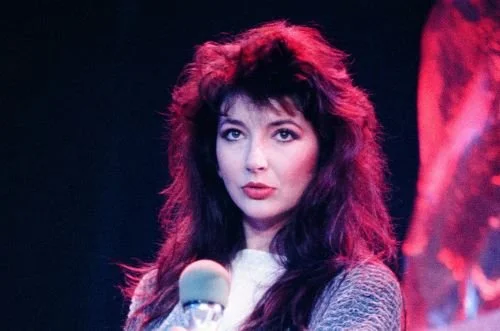
More than the music and those hits that we all know and love, the Glastonbury date has resonated and hit people, because it is a field of thousands of people singing along and giving fans to a legend. I first heard John’s music back in the 1990s when I was a child. He has always been a part of my life, and I know that this is the case with countless people around the world. Having toured since 1970, the man has done his due and thrilled millions! I am sure the performance will be recorded for a separate release but, as this is the last U.K. gig from Elton John, it is going to be so charged and iconic. When he bids farewell and bows at the end of the set, you can imagine the emotion that will come from him! I love his music, so it will be wonderful seeing John perform at Glastonbury for the first and last time. I hope that the new announcement compels people who may not know about his work to listen to his albums. There is such a rich and varied body of work. It is such a treat exploring his music and diving into the albums. I think that my favourite is either 1973’s Don't Shoot Me I'm Only the Piano Player or its follow-up, Goodbye Yellow Brick Road. That was an especially fertile period for Elton John. Whatever your experiences with his music, one cannot deny that the Sunday night closing headline set at Glastonbury will be one of the most important ever. It will be a very special chance for fans there to thank Elton John…

FOR all he has given us.

FEATURE: The Woman with the ‘Very Recognisable Nose’: Revisiting Tom Doyle’s 2006 Interview with Kate Bush

FEATURE:


The Woman with the ‘Very Recognisable Nose’

Revisiting Tom Doyle’s 2006 Interview with Kate Bush

__________

ONE thing I am keen to do…

is present a few features based on Tom Doyle’s exceptional new book, Running Up That Hill: 50 Visions of Kate Bush. I have a few more to do. I am going to write about Kate Bush’s debut single, Wuthering Heights, and her amazing debut album, The Kick Inside. Doyle has written about both of those. I also want to talk about Bush’s early songs. Going back to the earliest days, then. For this feature, I want to highlight Doyle’s 2006 chat with Bush. He spoke with her at length the year before when Bush released Aerial. The longest interview Bush has given anyone to that point (about four hours I think), Aerial’s promotional campaign involved fairly few interviews, but she did give a few very long ones (Mark Radcliffe’s interview with her was also quite deep and detailed). Maybe, as this was a double album and a sort of return after twelve years away, Bush felt she wanted to be quite accommodating with her time. To be fair, Bush appeared on Top of the Pops for the final time in 1994 performing The Red Shoes’ final single, And So Is Love. She also made public appearances, including her picking up a Classic Songwriter award on behalf of Q in 2001. In any case, it was nerve-wracking for Tom Doyle to speak with her in 2005, as Bush’s music and life had changed significantly since 1993. She had a new son (Bertie was born in 1998). Aerial was very different to anything she had ever released.

Doyle’s interview with Kate Bush in 2005 opens his book. A year later, he spoke with her on the phone to discuss the past twenty years. That was the year (1986) her greatest hits album, The Whole Story, came out. The reason Doyle wanted to know about her past twenty years was because he was writing for Q on their twentieth anniversary (you can see a couple of pages from that published interview at the top of this feature). The sadly-now-defunct magazine put together twenty different artists featuring twenty different artists. On 28th May, 2006, Bush was happy to be called. I guess the promotion for Aerial had all been done and the album has been out there for six months. I shall not quote all of the questions but, as it is such an important and interesting interview – to mark a significant occasion –, there are some exchanges that caught my eye. Typically, when Doyle asked what Bush was doing now, she said having a cup of tea! Quintessentially British in her fondness for tea, I like that she was there enjoying a brew and catching up with someone that she first met the year before for such a deep and remarkable interview. It was sort of like these new friends catching up. In 2001, Bush did receive an award from Q and was given a rapturous round of applause from the likes of Brian Eno and Radiohead. She said she was taken aback because musicians can be snobs in this country. They can give each other a hard time so, to get such warmth, was remarkable. Also, as she said, “It was a fantastic thing for me too because at that point I was still struggling away with making this album (Aerial)”. Fearful that people would forget her as an album had not been out for a long time, that validation and confirmation that she was very much loved and missed hit her hard!

Bush was asked what she was doing twenty years ago. The ‘some guy’ at the record company (EMI) is a bit of a hero, as he persuaded her to release a greatest hits collection. As I have written about, Bush was reluctant and thought it was a naff idea. She was won around when the representative brought figures and projections to her. With that research, Bush was won over. As she said it is just as well, as The Whole Story became her biggest-selling album and went to number one twice. “How brilliant that he persuaded me to do it, because I was so against it”. Bush discussed Hounds of Love. That went top thirty in the U.S., but she didn’t promote it endlessly. She did do some promotion and signed the album at Tower Records in New York. She observed how her and America had never seen eye to eye. Maybe a bit cliché to ‘crack’ the country, it is a long way away. For someone who grew to dislike travel and flying especially, spending time on the road would have been tiring. Bush was afraid that it would take her soul away. Bush went to America to do “my version of what I considered “pushing it”. That was because the 12” version of Running Up That Hill (A Deal with God) did well in the U.S. Going to America after The Tour of Life in 1979 was suggested, but she was exhausted. The prospect of touring so far away was not appealing. Whereas it was hard enough carting her set and crew around Europe, imagine have to do it in America!

Tom Doyle asked Kate Bush what car she was driving in 1986 (A little red convertible Golf); what the high point of the past twenty years has been (having her son, Bettie, as you are in no doubt about). There were some interesting revelations. When it came to the songs of the past twenty years she wish she’d written, a classic from Paul Simon’s 1986 album, Graceland, came up. The Boy in the Bubble was Bush’s selection, because she loved Paul Simon - and his real forte was poetry. That resonated with her. I could see Bush doing a great cover of The Boy in the Bubble! One funny exchange was when Doyle asked about her favourite artist of the past twenty years. Anthony and the Johnson’s Anthony (now ANOHNI) was who Bush chose. To imagine them collaborating! That would be something to witness! Doyle cheekily suggested Tori Amos (who has been called the ‘American Kate Bush’ and is clearly influenced by her). Bush laughed and said she took a deep breath, less she be dismissive or not seem egotistical by highlighting an artist who very much follows her lead and sound. Few would expect her to pick Shaggy as an artist that really stands out. She seemed to like his work, strangely! Bush was asked about fame and whether she is recognised in the street. I guess, around her hometown, there is some recognition. She explained how she wraps up and disguises herself a bit, but the problem is that “I obviously have a very recognisable nose”. I had not thought about it before, but I guess that is true!

Bush’s favourite drug of the past twenty years is caffeine. As a bit of a tea addict, she professed to sometimes getting through twenty cups a day. Not a fan of decaf, some of her best moments since 1986 were fuelled by gallons of tea! One of the things Kate Bush has had to contend with since she started out was people assuming she lives in a dusty mansion with cobwebs on some hill by a forest. Perhaps not aware that Wuthering Heights was fiction and she actually wrote that in her parents’ home at East Wickham Farm must have been confusing! She resided in various flats and houses around London, but she has lived on the coast and in Berkshire. All of the time, not a whiff of the Gothic or reclusive. Bush’s life, when interviewed in 2006, consisted of the school run and watching films. Quite homely and ordinary! We know that it would be five years after that interview that Bush released 50 Words for Snow (November 2011). She put out Director’s Cut in May of that year. It was quite a gap, but Bush said she was tired post-Aerial but it excited her that something not related to that album could start a new chapter. Aerial came twelve years after The Red Shoes. The fact Aerial got to number three and King of the Mountain (the only single from it) went to four in the U.K. That is quite remarkable, and it goes to show that her appeal and popularity will never wane, regardless of how long she is away for.

Bush was a bit shocked when it was revealed she had released three new albums in the past twenty years (Aerial, 2005; The Red Shoes, 1993; The Sensual World, 1989). A double album like Aerial is two albums, so I sort of think of it like she released one album every six years since The Red Shoes. Something that she says often in interviews is how long it takes to make albums. Bush always sits down with the intention they will be quick, and yet something in life happens that sets things back. With The Red Shoes, her mother Hannah was ill and died (in 1992). Aerial was slowed (or delayed a bit) by Bertie being born. Putting out two albums in 2011 took a lot of work and effort in the years before, but now it has eleven years since 50 Words for Snow came out. I wonder, if Tom Doyle spoke to Bush today, would she still react the same when that fact is highlighted?! Doyle asked Bush in 2006 if we could expect to wait twelve years for another album (which would be 2018 from the point of that interview). It was only just under six, but we are approaching twelve years since her latest album. Bush has been quite busy doing various bits since 2011 – including her 2014 residency, Before the Dawn -, but you imagine she is acutely aware people want an eleventh studio album from her! Doyle ended the 2006 interview by asking Bush where she’ll likely be in twenty minutes: “Probably in the toilet because of all the tea”. An insightful and interesting talk between Tom Doyle and Kate Bush to celebrate twenty years of Q magazine in 2006. It is a shame that the magazine is now no more and, indeed, that the two have not sat down for another interview since 2006. In 2018, some of Doyle’s four-hour chat with Kate Bush in 2005 was used in a feature for MOJO. I would hope that the two can get together for another lengthy interview, as the 2005 interview is amazing! His 2006 ‘catch up’ is brilliant too. If you want to read the full transcript, then go and buy Tom Doyle’s…

RUNNING Up That Hill: 50 Visions of Kate Bush.

FEATURE: Spotlight: Bellah

FEATURE:


Spotlight


Bellah

__________

I actually interviewed Bellah

back in 2019, but she is someone I am minded including now. Whereas she is not brand-new on the scene, she is a rising artist who I have seen grown and put out the most exceptional music for a few years now. I think 2022 is a year when Bellah (Isobel Akpobire) has put out some of her best music – someone looking to new and bigger horizons in 2023. I have loved her music for years now, and I am so pleased she is getting credit and dues! Who is this immense and truly wonderful artist? She has been compared to American artists like SZA, Summer Walker and Kehlani, yet the London-born artist is someone standing out alone. Growing up doing musical theatre, Bellah developed a love for music and the arts from there. She started writing and creating her own music when she was seventeen. There are some amazing young artists based around London (I think Bellah is in Essex) that are helping to mould and shape the sound of music’s future. In terms of genre, I guess R&B is where you might place Bellah – though she crosses genre and has this unique sound. Adultsville is her new E.P. I shall end with a review  of that. She played a headline show at London's The Lower Third last Wednesday (23rd). It shows that there is a lot of love and demand for this amazing artist. I had my love for Bellah cemented around the time of the release of In the Meantime. That 2020 E.P. is amazing. I want to bring in some interviews this year, as so many press sources have been showing their respect and affection for one of our greatest artists.

To start, I want to bring in a review for In the Meantime. This is what was being said about a sensational E.P. from someone who, even in 2020, was showing herself to be fully-formed, assured! Bellah was hitting huge highs:

London-born Nigerian singer-songwriter Bellah has been quietly building her rep as an R&B star on the rise for a couple of years now, but music has been the love of her life for far longer. The 22-year-old artist got a taste for the limelight and musical performance from attending theatre school in her childhood. She continued to hone her craft and perform throughout her teens and at seventeen, she began to create her own music. Gifted with an effortlessly silky-smooth voice, Bellah also displayed raw musical talent that impressed the people around her. In turn, their encouragement gave her the confidence to pursue her passion for music professionally.

Bellah’s new EP ‘In The Meantime’ is her second project following her first album ‘Last Train Home‘, which was released September of last year. The EP offers four uncomplicated yet fabulous R&B jams that seamlessly blend together to create one blissfully chilled-out listen. Casually intimate and oozing with sexy R&B sparkle, ‘In The Meantime’ tells the story of a relationship as it develops in a way that feels like we’re reading pages from a diary. As Bellah breezily guides us through her innermost thoughts and feelings, her velvety vocals take centre stage. The lyrics are honest, conversational and without pretence and addressed to the object of Bellah’s affections (or dissatisfaction), simply referred to as “you”.

The opening track ‘Stand’ is a grooving introduction to Bellah’s luxuriant voice and melodic chatty vocals, as she sings about the joys of part-time love. It’s R&B pop perfection, driven by a buoyant guitar melody and enriched with subtly vocal layering and plush harmonies. The instrumentals are low-key but the song builds nicely, before it breaks down into a heavier beat as the final chorus runs into the outro. Bellah is direct in describing how happy she is to be in an easy-going relationship, singing, “I couldn’t love you everyday / I’m so tunnel vision baby / You’d get in the way”. Reading it cold, it almost sounds harsh but the warmth in Bellah’s voice conveys such a sense of ease and contentment that her sometime lover should really take it as a compliment. There’s a possibility that ‘Stand’ actually represents Bellah attempting to convince herself of her satisfaction with the arrangement however, the overwhelmingly mellow mood of the track suggests that their sexy situation suits her just fine.

‘Good Thing’ represents a shift in perspective, describing that relatable scenario of remaining guarded and restrained in a relationship out of fear of it ending. In the verses, Bellah suggests that she and bae should slow things down. Far from having the enviably chill attitude she displayed in ‘Stand’, her desire to grind things to a halt instead comes from a place of vulnerability. With a light beat and soothing electric guitar melody, Bellah belies the emotional conflict she expresses.

 Track three entitled ‘Easy’, feels like a major scene change. Things have developed and Bellah has a lot to say and sonically, things have shifted too. A sparkly, trilling piano keeps the beat while Bellah’s voice shines through, clear and bright, backed-up by angelic choral harmonies. The dreamy sonic atmosphere makes it sound like Bellah’s delivering a divine verdict, admonishing her lover (or is it herself?) for falling in love when she, “made it easy, easy to walk away, far away”. It’s a beautiful track, rounded off by a clip of dialogue where a young woman, most likely Bellah is reassured by a motherly figure, who tells her she wants to rescue people because she wishes someone had been there to rescue her in the past. It’s a sweet, intimate feature that makes the record feel authentic and reflective of Bellah’s genuine experiences.

‘Easy’ rolls perfectly into ‘Need Me’, the fourth and final chapter of this sped-up love story. With typical honesty, Bellah describes how she’s accepted the duplicity of her feelings, admitting, “truth is I don't love you, I love the way that you need me”. Her bright swooping vocals sound phenomenal against the song’s slow heavy beat and jaunty guitar riffs which lends the song a slightly mischievous tone.

Listening to ‘In The Meantime’ feels like watching a close friend have an epiphany about a dead-end relationship. Though it explores feelings of confusion and uncertainty, thanks to Bellah’s warm, honeyed vocals and her dynamic, uplifting melodies, the record is steadfast in its (seriously) good vibes. Bellah may be a new voice in R&B, but watch this space, she’s on the rise and has just announced that new music is coming soon”.

Hyperbae featured Bellah in August about the amazing Adultsville. I know she was a bit nervous about releasing the E.P. into the world. She needn’t be! It is a remarkable and instantly work from someone who is going to a massive name before you know it:

Tell us a bit about how you got started in the music industry.

My mom put me in musical theater when I was younger, so I’ve always had a love for music. I also remember going to a Beyonce concert once and feeling like “well, now I’ve got to do that.” Everything else I wanted to do seemed really insignificant in comparison to what I’d just seen. I performed at a local festival and I found management there on the spot and honestly, the rest is history. They put me straight into artist development, helped me write songs, helped me grow as a songwriter and then in 2019 I started putting out music.

What was the turning point for you or the moment where you started to really feel like an artist?

I don’t know whether I even feel like an artist now. I feel like an artist in terms of the characteristics, like I’m an artist and a creative but in terms of really sitting back and being like “Wow, this is my job and this is what I do for a living and this is what I do full time,” it’s still a bit of a weird concept to grasp. Especially with things that I would have done for free that I’m starting to monetize. Sometimes it feels a bit like you’re not doing anything but you’re doing everything at the same time.

How would you describe your sound to those who haven’t heard you before?

Fluid R&B and smooth-inspired R&B. Sometimes I go into one genre and sometimes another but at the core of it, it’s R&B.

Who are some of your influences, past and present?

Brandy, Abba, Michael Jackson, Luther Vandross, Lauryn Hill, SZA, Frank Ocean, Drake and Daniel Cesar. There are actually so many people.

That’s a long, impressive list! What can you tell us about your creative process, how does it start?

It starts with a prayer, like “God help me to be creative today.” Then some good food and some good conversation. I like to write from a place of reality and a place of experience because I think those are the songs that people relate to the most. Good conversation always helps with that. Usually, I’m sat with a producer and a songwriter and we’ll have a conversation and someone will say something and it’ll be like “That’s it, that’s the song. That’s the tagline. How do we say that in the song?” Sometimes I’ll be at home and think “this would be good to write about,” and then I can go into the studio with someone I trust and love and be like “I really want a rap song that sounds like this, or that encapsulates this feeling.” More often than not, it’s just about getting in the studio and praying that today’s the day the creativity runs wild. Sometimes, there are days we just don’t get it and that’s okay, there are on days and there are off days.

 How do you deal with your off days?

I say to myself “Let’s stop here. Let’s not force it,” because when you force it, it’s not that you can’t write a song, it’s just that it might not be a good one. I’d rather not waste that time because sometimes the vibe is off or you’re just not in the mood. Sometimes your mental health is in the bin and sometimes that works for songs but sometimes it really doesn’t work. You just have to be flexible and know your limits and everybody else’s limits, too.

You’ve said before that one of your aims is to be a frontrunner for R&B in the U.K. Why is that important to you?

I want to be a frontrunner for R&B because I’m a Black woman. I see that as a prime representation of an actual success story. I want to be all that I want to be so that I can say, despite what was supposed to be endurance, I still made it. I would love to be able to say, “Yeah, I’ve seen this work for somebody that looks like me,” but right now I wouldn’t really say that and I want to, I want that to be the change. I want the 13 or 14-year-old who wants to sing right now to look at Bellah and go “Yeah, that’s what I’m gonna do.”

What’s it about?

It’s called Adultsville and it’s about what it means to be in this weird capsule of time. This weird coming of age period where you’re becoming an adult and an autonomous human being and having to do sh-t by yourself that you never thought you’d have to until you got there. It’s about learning things and unlearning things and just being without any relation to anybody else. I’m an adult now, so in a sense, I am no longer somebody’s child. (I am, but you get what I mean, I’m just learning to be Bellah without being Bellah, the oldest daughter or the cousin Bellah.) Just Bellah that exists in the world and eventually will become somebody’s mom, somebody’s wife. What does that look like? What does that sound like? How do I process that? And how confusing is all of this? The album talks about relationships, general life and how lost I seem to be in all of it.

That sounds pretty powerful and vulnerable, which often makes for the best music, doesn’t it? It’s almost like the era of you right now, where you are discovering yourself.

Yeah, I’m at that bit in between making a definitive decision for your life and when you weren’t allowed to make those decisions. That gap, that little dash in between is where I’m at right now. I’m balancing career and love and family and friends and finances and all that weird stuff that they didn’t teach us about”.

I am going to move onto an interview from COMPLEX. One of Adultsville’s singles, Prototype, is among my favourite singles of the year. I was keen to know why Bellah selected that as a release. This is a particularly great and interesting interview:

Since 2019, Bellah has been consistently giving us heat: the singer-songwriter’s debut EP, Last Train Home, had the critics on their toes, with many not sure if she was actually from the UK or the States based on her R&B output being on the level of greats from the jump. A year later, in 2020, Bellah dropped The Art Of Conversation EP, which she says “let the world know that I was getting sick of doing what I was doing, so that I could grow.” But the real catalyst of her current trajectory is the COLORS live session she did last year for her song “Evil Eye”, which led to co-signs from the likes of SZA, Tems, and BBC 1Xtra’s Nadia Jae.

On Adultsville, her third and latest project, Bellah explores what it means to transition from a girl to a woman in this day and age. Reflecting on her life and career as a whole, it’s the inner page of a diary she says is her “most transformative, painful, eye-opening, beautiful and shitty chapter of my life.”

“I was in the studio with [Grammy-winning songwriter for Beyoncé, Wizkid and more] Ari PenSmith when he asked me, ‘What do you want this project to be about?’ I expressed that I’d been going through a weird time, where the people I thought would be in my life forever were no longer there. Some of the people I’ve met more recently have a bigger place in my heart than some I have known for years. My position in life is changing, so many things are changing for me, and I wanted to talk about it. Ari actually gave this EP the name Adultsville; we created this space where I was at peace, a safe space for me to truly express my thoughts, my doubts, my fears—and the rest.”

PHOTO CREDIT: Narcography 

Bellah: the artist, and Isobel: the person—what’s the difference, if any?

Bellah: the artist, is a force to be reckoned with. Bellah aims to become a household name, and she executes her plans with precision and caution. Isobel is sentimental, soft, sensitive, and pretty much still a little girl, one who wants to inspire greatness. I consider her to be my inner child. For Bellah to thrive, Isobel does everything in her power to help her, and Bellah does everything in her power to fulfil Isobel’s dreams. Despite Isobel’s responsibilities, Bellah sometimes protects her, and sometimes neglects her.

Powerful. You just released your third project, the brilliant Adultsville EP. That title is quite striking—how did it come to you?

I wanted to create a project that fully represents me. I was in the studio with Ari PenSmith when he asked me, “What do you want this project to be about?” I expressed that I’d been going through a weird time, where the people I thought would be in my life forever were no longer there. Some of the people I’ve met more recently have a bigger place in my heart than some I have known for years. My position in life is changing, so many things are changing for me, and I wanted to talk about it. Ari actually gave this EP the name Adultsville; we created this space where I was at peace, a safe space for me to truly express my thoughts, my doubts, my fears—and the rest. I want this to be the soundtrack to people’s lives.

“Prototype” and “In The Moment”—is there a particular reason why those songs were chosen as the project’s first two singles?

The process was a three-day camp and it was the third day those songs came. The “Prototype” track kinda came when I was angry with people treating me like I’m a child, or belittling me, so I just put all the energy into the song. “Prototype” was the first single because it’s me telling my fans there’s a shift happening and I’m evolving. Everyone’s heard one version of me, but there’s another version of me that I want people to embrace. It’s all about evolving. “In The Moment”, funnily enough, was a song I didn’t believe in at first. I had some serious self-doubt at the time. You know when you have a weird moment in your creative process when everything isn’t enough? I felt I wasn’t producing the best version of myself. One day, I shared the song with Ari and he told me it was one of the best hooks I’d written, but that made me look at myself and wonder why I didn’t have the discernment to hear that. I feel like these two songs gave the audience a glimpse of what the project was going to be like. It’s a very introverted EP and the singles are very extroverted, so it’s the perfect balance.

You’ve had some serious co-signs from the likes of Tems and the aforementioned SZA. How did those seals of approval make you feel?

A lot of the snowball effect came from the COLORS video of “Evil Eye”. It’s a blessing to have people I look up to rate my work. I’m aspiring to be like them, so to have them give that co-sign just shows me that I’m doing the right thing. The words of encouragement I got from SZA really gave me hope, and everyone else has been so kind and lovely. It all still feels so unreal that they know and appreciate my work.

Do you feel like your voice is appreciated within British R&B?

You can lose what you want rather than what you have. Objectively, do I feel like my voice is appreciated? Not necessary, but are people showing me love and am I heavily supported by the people? Yes, and I’m forever grateful for that support. Am I on my way to building a community? Most definitely.

How do you feel about the Black British music scene in general right now?

I feel like there are so many of us doing incredible things. We won’t be seen until we realise we don’t need to fight each other and we need to fight against the common enemy for all of us to win. We fight unbelief, which is the common enemy. I do feel like we are a hundred steps ahead in terms of where the scene was before. There’s so much range, vocalists and talent within the scene today—it’s growing, but there’s still so much to do. I’m just happy to be where I am at this stage”.

Before getting to a review, there is one more interview I feel is worth bringing in. The Line of Best Fit recently featured Bellah as an artist on the rise. Someone whose music will definitely move you and stay in your head, 2023 is going to a massive year for her! I cannot wait to see what comes her way:

Though adulthood comprises of many elements, Akpobire believes it is accepting your own personal philosophy that truly marks an adult. “You basically have to be okay with the way you decided to live. And if you're not, you have to change it yourself. That's kind of where I was, where so many things that happened to me. I can sit down and take it the way it's been given to me, or I can make this work in my favour. And I believe that this is what adulting is”

This has been challenging for Akpobire, who has found herself initially resistant to change amongst friendships evolving, kids being born, and careers starting. She uses the idea of a video game to explain how she copes with the hectic nature of her world. “My life is a video game and you're going to repeat the same levels unless you learn the lessons to learn this level.”

“Life gives very bully vibes,” she jokes. “But I have to be like, What? What's the lesson here? What do I, what do I need to change? I have to really look at the lesson I need to learn because I don't want to be here. So let me learn this lesson and go. Change is so important. It’s hard, but it's important.”

PHOTO CREDIT: Garry Jones

What was the hardest thing to change about herself? Though Akpobire disclaims that she is still this person – “to say I was this person is a very big lie” – she believes it’s being a “pushover”, or “too nice”.

“I would let anything slide for other people's peace and I will never take into consideration my own,” she admits. “That is the part of me where I've recently been making decisions that have been solely me. I've felt guilty about them, but they are my decisions. Becoming a little bit more selfish has been the greatest thing for me, because people have been really getting themselves into spaces being selfish and that's how you do it. Like you cannot carry everybody on your back. That is the one thing that I'm really holding on to, not to become a selfish person, but to be more selfish.”

Akpobire has spent a lot of time thinking about how to progress to the next level in her life, and she’s willing to let her audience into the uglier parts of this process. “I wanted this project to be a soundtrack to our lives,” she says. “As long as someone else can relate to what's going on, I'll be so happy because I know I'm not alone in these experiences. I think when people sit down and listen and hear the growth, they'll be surprised”.

I will finish with a review of Adultsville from CLASH. A hugely strong release with so many highlights – and some of Bellah’s best work -, this is an E.P. that everybody needs to wrap their ears around! She wraps up a successful and impressive year by showing that she is a brilliant and bright talent:

It’s a strange one leaving your youth and stepping into adulthood – it feels like everything comes falling down at once. You’re taught – or should I say conditioned – to think you’ll have everything in place from the moment you leave education. I mean, some people do but the majority of us are still figuring it out. The feeling of losing control, the overwhelming pressures that come with just simply living; friendships, relationships, family, bills, navigating your career whilst exploring self-love, making something of yourself, trying not to get warped by standards set by the internet (scary, I know) and attempting to get off TikTok before 12am – girl, it’s a lot. Bellah’s opening line “Just got evicted from my youth didn’t even get a notice” has never felt more real. Journeying through the ups and downs that come with growing up ‘Adultsville’ is an honest and open account of a young woman who’s finding her feet in a world of chaos. Laced with Bellah’s reputable caramel tones and irresistible harmonies, this seven-track EP is a slice of British R&B heaven.

Featuring pre-released tracks ‘Prototype’, ‘Garden’, and ‘In The Moment’, not to mention the extended version to her most prominent release ‘Evil Eye’, the one-to-watch songstress has unveiled a selection of songs that are bursting with vulnerability and integrity. Housing production from the likes of Ari Pensmith (executive producer), Sons Of Sonix, Sensei Bueno, Edgar ‘JV’ Etienne, Jonah Christian, and more, this project is laced with a selection of dream-like and hypnotic beats.

Setting the tone with the title track ‘Adultsville’ Bellah buckles us up for the train journey that is ‘adulting’ ahead. Gently reminding herself and others not to get lost in things that aren’t worth fussing over the title track is the beginner’s manual not to panic; “When something bothers me, gotta freak out responsibly”, Bellah sings. Moving into ‘Prototype’ an infectious listen delving into the trials and tribulations that come with love, tracks like ‘Garden’ and ‘In The Moment’ form a sense of honesty and accountability before the grooves of ‘Evil Eye’ take over. Closing out the project with ‘Stuck’ and ‘Always Something’ – a personal favourite – Bellah talks on the struggles that come with self-love, the effects of social media, nurturing friendships, growth, and confronting childhood wounds.

Going on a journey of love and loss, ‘Adultsville’ is a quality project from the promising star; unravelling a more vulnerable side of herself this EP is a hug from a friend and a pause amidst the chaos that reassures us to keep on going.

7/10”.

Go and follow Bellah and check out her amazing music. Such a beautiful person who has this insane amount of talent, she is helping to elevate and highlight British R&B. I have been a follower and fan for a while now, so I thought it was long overdue that I include her in this feature. She has achieved so much in her career so far, but I think that some really good things will come her way…

NEXT year.

____________

Follow Bellah

FEATURE: Second Spin: Kylie Minogue - Fever

FEATURE:


Second Spin

Kylie Minogue - Fever

__________

IT seems hard to believe…

PHOTO CREDIT: Vincent Peters

that an album with classics like Can't Get You Out of My Head, In Your Eyes, Love at First Sight and Come into My World was given mixed reaction by many critics! That is not to say that the rest of Kylie Minogue’s eighth studio album, Fever, is up to that standard! Released on 1st October, 2001, it was a few weeks after the terrorist attacks in the U.S. Perhaps there was a sombreness and fear in the air that meant an album that is largely upbeat and celebratory sounded out of step or misplaced. Many who have written retrospective reviews argue that it was what was needed at such a scary and awful time for us all. You can read about Fever here. I am going to bring in some features and reviews. With the four singles evenly scattered through the album, there is this nice consistency and balance! Even many of the deeper cuts are up there with her best work of the early-2000s. Fever, Love Affair and Burning Up are all tremendous tracks that could have been singles in their own right! Thirty-three when Fever was released, this was a more mature Kylie Minogue. Still filled with appropriate youthful energy and confidence, there is something incredible sultry and sexual running through many of the songs. One of the great Pop icons who reinvented herself for Fever, I think it is one of her best albums. On 22nd September, 2000, Minogue released Light Years.

Perhaps better reviewed than Fever, it was this big and triumphant return after the misunderstood Impossible Princess of 1997. That album was seen as more experimental and out of Minogue’s comfort zone. Light Years provided more accessible and commercial Pop/Dance, but there is something more sophisticated working away. Relentlessly fun and captivating, singles like On a Night Like This and Spinning Around confirmed that Minogue had lost none of her charm, brilliance, and pull. A slick and quality-rich album that reached number one in many countries (the U.K. included), Fever still sounds fresh and eminently listenable twenty-one years after its release! The album had a distinct meaning and context in 2001 so soon after a huge international tragedy and seismic event. In years since, I think there has been more fondness and retrospection. It is a shame there were some poor and mixed reviews in 2001. I want to bring in a few features about the amazing Fever. PopMatters revisited one of Kylie Minogue’s greatest releases last year to mark its twentieth anniversary:

Kylie Minogue is an interesting study in contradiction. Despite having sold over 70 million albums worldwide, she’s remained a niche artist in the United States, never achieving the kind of coronation that Madonna or Janet Jackson enjoy. Outside of America, though, Minogue is a massive pop star. She—like Olivia Newton-John—is a national treasure in her native Australia. Likewise, she blazed a trail of hit singles in the UK that earned a ubiquity rivaling that of even Madonna herself.

She was christened “a legend” in 2017 when she performed in the coveted Legends Slot at the Glastonbury Festival. Up until 2001, however, she managed only three Top 40 hits in the States (her HI-NRG cover of Little Eva’s “The Loco-Motion” from 1987’s self-titled debut went to number three). That changed in the autumn of 2001 when she released “Can’t Get You Out of My Head”, the lead single from her eighth studio album, Fever. It landed in the Top 10—peaking at number seven—thereby re-introducing Minogue to American audiences outside of her devoted gay followers (who’d been supporting her since the mid-1980s).

Though Minogue was a triumphant pop diva in the UK when “Can’t Get You Out of My Head” reached number one on the UK charts, the single and album came after her 2000’s Light Years (a sparkily retro disco album that proved to be a comeback for the singer). Previously, she’d found herself in a commercial limbo for several years, starting with her move away from the cookie-cutter bubblegum pop of the ’80s and into the deeper house and club culture in the early ’90s. This shift in her sound meant that Minogue was making some of her best music, but popular radio wasn’t as enthusiastic (and neither were buyers). Light Years married Minogue’s musical maturation with her sparkly pop past; with Fever, she consolidated her renewed success while finally finding a broader audience in America, too.

What Fever did was show mainstream American listeners something that the rest of the world already knew: Kylie Minogue is a fantastic pop diva. She is the epitome of camp. A ridiculously over-the-top and extravagant singer, Minogue approached her music with a heavy wink and tongue-in-cheek. Unlike Madonna or Janet Jackson, she didn’t take herself too seriously (well, aside from a brief spell in the ’90s that resulted in middling success), and she leaned hard into her queer aesthetic.

The other thing is that Fever and its singles offered listeners a much-needed salve during one of the most challenging moments in contemporary history. In particular, “Can’t Get You Out of My Head” was released on 8 September 2001, three days before 9/11. Pop culture responded to the tragedy in three significant ways: diving deeper into patriotism, going back to nostalgia, and offering mindless escapist fun. “Can’t Get You Out of My Head” definitely exemplifies the third option. It’s a pop trifle that’s lighter-than-air and packs an extremely hooky earworm (the “La la la la” chant that wriggled its way into the brains of everyone who listened to pop radio at that time)”.

 PHOTO CREDIT: Vincent Peters

Twenty years after its release, people were approaching Fever from different directions and angles. Still struck by its hooks, incredible choruses, memorable songs and committed and stunning performances from Minogue, the album definitely requires a second spin! Far stronger than most gave it credit for, it was a defining moment in the career of one of the music world’s most celebrated and admired artists. This is what Albumism said when they looked back at Fever twenty years after it came into the world:

Unveiled in the fall of 1997, Minogue’s sixth studio album Impossible Princess (initially self-titled in the UK & Europe) found the singer venturing away from her signature dance-pop sound, and instead experimenting with new sonic directions, as inspired by the mid-90s ascendance of British rock and electronic music. With Minogue co-writing all of the LP’s songs for the first time in her career, the album incorporated live instrumentation and even featured collaborations with Manic Street Preachers’ James Dean Bradfield on two songs. Unfortunately, her openness to experimentation and commendable refusal to stick to her status quo sound proved divisive among critics and fans alike. Outside of her native Australia, the album suffered from poor reviews and lackluster sales.

Perhaps inevitably, 2000’s Light Years found Minogue reclaiming her—or more appropriately, her fans’—comfort zone of more whimsical dance-pop, but with a notably more sophisticated sexuality attached to the sonic sheen. A return to critical acclaim ensued and a collective sigh of relief could be heard among her supporters across the globe, now that she had revived her proven musical pedigree. The not-so-guilty pleasures of singles “Spinning Around,” “On a Night Like This,” and “Your Disco Needs You” augured the electro-pop perfection that was to come by way of Minogue’s next album the following year.

Mind you, while Minogue continued to experience success worldwide throughout the ‘90s, her career trajectory took a completely different turn stateside during this period. In 1990, Geffen Records released Minogue’s sophomore album Enjoy Yourself in the US, but the album’s poor commercial performance subsequently led to the label parting ways with her. Rather astonishingly, for the next eleven years, none of Minogue’s five albums would see the light of day in the US, as the few singles she released here—including 1990’s “Better the Devil You Know” and 1994’s “Confide in Me”—failed to produce meaningful sales and labels remained wary of supporting full album releases.

So although Minogue’s popularity had not just remained intact, but had actually proliferated across Australia, Europe and beyond, she had faded to relative obscurity in the states, arguably relegated—at least among her more fair-weather followers—to the undesirable one-hit wonder association thanks to the “The Loco-Motion.” Thankfully, the glaring dichotomy between her stature overseas and her marginalization here in the US would come to an end in September 2001, with the arrival of the dazzling dance-pop brilliance of “Can’t Get You Out of My Head.”

Co-written and produced by Rob Davis and Cathy Dennis, who you’ll recall from her early ‘90s hit singles “Touch Me (All Night Long),” C’mon and Get My Love, and “Just Another Dream,” Minogue’s midtempo ode to obsession, replete with the unforgettable “La La La / La La La La La” chorus that lodged itself firmly in millions of minds upon first listen, proved instantly memorable. And the song ultimately became her most successful single of her career, placing her squarely back on US fans’ collective radar after her extended 11-year “hiatus.” “Can’t Get You Out of My Head” topped the charts in more than 40 countries, peaking at number 7 on the Billboard Hot 100 in the US. “It kick-started a whole different phase in my career,” Minogue explained to The Quietus in 2012.

While its ubiquitous lead single is what most people still remember from Fever, her eighth studio album and third released in the US, the rest of the album showcases more than its fair share of standout songs. Most of the songs stick to the same house music meets euro-pop sonic template complemented by Minogue’s yearning, seductive vocals. And the songs seldom stray too far from the thematic script of the pursuit and realization of love, accentuated by a more overtly sexual energy than can be heard on Minogue’s previous albums. So while variety is in short supply here, anyone expecting anything else from Minogue obviously isn’t familiar with her musical modus operandi, which she and her production team execute to flawless effect across Fever’s twelve tracks.

Finest among these, according to my ears, is the hypnotic “Come Into My World,” the other of the two Davis & Dennis penned/produced compositions and the final single released from the album. Sounding like the sonic and vocal extension of “Can’t Get You Out of My Head,” albeit with a faster tempo, the song finds Minogue extending a straightforward invitation to her lover, encouraging him in the second verse to “Take these lips that were made for kissing / And this heart that will see you through / And these hands that were made to touch and / Feel you.” “Come Into My World” rightfully won the 2004 GRAMMY Award for Best Dance Recording, triumphing over competition that included Madonna’s “Die Another Day” and further solidifying Minogue’s career resurrection in North America.

The other two officially released singles are sublime slices of dancefloor-designed effervescence as well. Featuring a nod to her aforementioned 2000 single (“Ohh, is the world still spinning around?”), the infectious “In Your Eyes” highlights Minogue at her most seductive. On the jubilant, melodic ballad “Love at First Sight,” Minogue floats on cloud nine after falling in love upon first blush, conjuring “Love to Love You Baby” era Donna Summer in the song’s outro with the repeated refrain of “it was love / it was love / it was love.”

Among the non-singles, a handful of highlights emerge, including the house-imbued groove of album opener “More More More,” the irresistibly catchy exploration of vulnerability “Fragile” (which could very well have been the fifth single), and “Dancefloor,” an ode to the escapism one invariably finds blanketed by the comforting shimmer of disco lights. While not filler fare by any stretch of the imagination, the trio of songs that close out the album—“Love Affair,” “Your Love,” and “Burning Up”—may not quite measure up to the bona fide stunners that precede them, but they nevertheless reinforce that Fever is an exquisitely executed dance-pop affair from beginning to end.

A surprise to no one, Fever took the global charts by storm, including a peak position of number 3 in the Billboard 200. And while the album was critically applauded, the media’s preoccupation with her undeniable status as an international sex symbol, as well as her personal life, often diverted focus away from her music. In fact, in my research for this tribute, I was hard-pressed to find many interviews that contained more than a passing remark or two about her music, with most interviewers more than content to discuss her public persona and a whole host of topics unrelated to her songs”.

I will finish with a couple of reviews. Many gave Fever three stars and sort of hinted at the strengths of the album (mainly the singles), but they suggested that there was not enough depth and nuance. Maybe too samey and surface, rather than there being songs that dug deep and kept you coming back. AllMusic noted the following in their review of one of the biggest albums of 2001:

Fame can be a fleeting mistress, and nowhere more so than in the land of dance-pop divas. Many are lucky enough to have a hit album, much less two or three. What usually takes a one-hit wonder from the singles charts to career diva lies less in catchy hooks than in a combination of talent and the choice of collaborators. Obviously, the master of this technique is Madonna, whose talent and eye for talent in others has made her not only a worldwide pop sensation, but a worldwide icon. Arguably, running a close second is Kylie Minogue. Starting off as not much more than a female voice for the massively successful Stock, Aitken & Waterman hit factory, she moved on to work with some of the most prominent dance producers of the early '90s, making her one of the most visible pop stars outside of the United States. By 1997, she moved on to working with writers outside the genre.

While this may have translated into poor record sales, her motives were in the right place. With 2001's Fever, Minogue combines the disco-diva comeback of the previous year's Light Years with the trend of simple dance rhythms which was prevalent in the teen dance-pop craze of the years surrounding the album's release. While on the surface that might seem like an old dog trying to learn new tricks, Minogue pulls it off with surprising ease. The first single, "Cant Get You Out of My Head," is a sparse, mid-tempo dance number that pulses and grooves like no other she's recorded, and nothing on Light Years was as funky as the pure disco closer of "Burning Up." And while it's hard not to notice her tipping her hat to the teen pop sound (in fact, on this record she works with Cathy Dennis, former dance-pop star and writer/producer for Brit-teen pop group S Club 7) on songs like "Give It to Me" and "Love at First Sight," her maturity helps transcend this limiting tag, making this a very stylish Euro-flavored dance-pop record that will appeal to all ages. Not one weak track, not one misplaced syrupy ballad to ruin the groove. The winning streak continues. [The U.S. version, released in early March of 2002, included the hidden tracks "Boy" and "Butterfly" -- a B-side and Light Years album track, respectively”.

I want to finish with Stereogum’s twentieth anniversary feature about Fever. They discuss some highlights and strengths on an album that I feel is still so impactful and thrilling. Ranging from insanely catchy to something more emotive and deeper, Fever is defined with a distinct sense of fun and frivolity designed to fill club floors:

Though repetitive at times in production and lyrical content, Fever was an ultra-sleek turn into the wonders of millennial pop futurism. The aesthetic was best reflected by Fever’s rhapsodic lead single “Can’t Get You Out of My Head,” the song that sent the dance-pop world into Minogue mania. Co-produced and co-written by former Mud glam-rock guitarist Rob Davis and British pop singer-songwriter Cathy Dennis, “Can’t Get You Out of My Head” began in Davis’ garage-turned-makeshift studio in South East England. They initially offered it to former British pop group S Club 7 and indie pop singer Sophie Ellis-Bextor, both of whom passed on the demo. It thus serendipitously landed on Minogue, who wanted the song within 20 seconds of hearing it.

Balancing in-your-face ubiquity with a more elusive seduction as it built to an infectious “la la la” refrain, “Can’t Get You Out of My Head” launched Minogue into icon status. The song became her biggest hit in the US since “The Loco-Motion,” peaking at #7, and her bestselling single overall, with worldwide sales of over five million copies. The visual for “Can’t Get You Out of My Head” looked just as glossy as the song sounded — Minogue’s razor-sharp jawline stole the show alongside robotic choreography by an army of clones with cutout tops that would give Mean Girls‘ Regina George a run for her money.

There was more where that came from. Veering towards discotheque futurism, Fever arguably made Minogue the global queen of nightclubbing. Opening track “More More More” throbbed with a rapturous, tech-y hotline tone and a deep house bassline courtesy of British producer Tommy D. Second track (and third single) “Love At First Sight” pulsated with an adrenaline rush of optimism as Minogue cooed about passionate reverie. The title track was an alluring, flirtatious escapade that brought the steamy album cover full circle.

Breathy vocals ran rampant throughout Fever, notably on the lush, nearly-inebriated sounding “In Your Eyes” and “Come Into My World,” which won Best Dance Recording at the Grammys three years later. (It was released as a single in November 2002, placing it within the eligibility window for the February 2004 ceremony.) “Come Into My World” was a follow-up collaboration between Davis and Dennis, who spun it out into a hallucinogenic disco utopia, paving the way for releases decades in the future like Dua Lipa’s Future Nostalgia.

Later tracks like “Love Affair,” “Your Love,” and “Burning Up” opted for more analog instrumentation, but the legacy of Fever lies within its synth-powered Europop menagerie. Those electronic dance hits were the songs that pushed Fever to a #3 debut on the Billboard 200 and helped it sell 6 million copies worldwide. It remains Minogue’s highest-selling album and a testament to her eternal nu-disco appeal. All these years later, I still can’t get it out of my head”.

Twenty-one years after Kylie Minogue followed up the brilliant Light Years of 2000, Fever kept the brilliance and hot streak going. In 2020, she released her most recent album, DISCO. In some ways, it nodded back to some of the sounds and colours on Light Years and Fever. It is baffling that there were quite a few mixed reviews for an album that packs such a punch and has a load of excellent songs! That is why I wanted to ensure that people give a second spin to…

THE sensational Fever.

FEATURE: Spotlight: Daisy the Great

FEATURE:

Spotlight

PHOTO CREDIT: Shervin Lainez 

Daisy the Great

__________

I really do hope…

that the brilliant Daisy the Great come to the U.K. and perform next year! The Brooklyn duo of Kelley Nicole Dugan and Mina Walker are among my favourite emerging acts. I have been listening to them for a while, and their remarkable new album is out. All You Need Is Time follows 2019’s excellent I'm Not Getting Any Taller. I hope that anyone reading this will follow Daisy the Great and support their music. “Fifteen” Questions sat down with Daisy the Great and went deep. I have selected a few that caught my attention:

Name: Daisy The Great
Members: Kelley Nicole Dugan, Mina Walker
Occupation: Singers, songwriters
Nationality: American
Recent release: Daisy The Great's new single "Cry In The Mirror" is out via Hollywood Records.

Recommendations: Mina: I’ve been reading Alice Munro short stories. Literally anything by her is so good and sad. I’ve been having a pretty difficult brain time recently, and her stories are really hitting it.
Kelley: I’ll recommend Leith Ross’ album Motherwell.

When did you start writing/producing/playing music and what or who were your early passions and influences? What was it about music and/or sound that drew you to it?

Kelley: My mom is an opera singer so she was - of course - my first influence, along with all of the music that she introduced me to! I loved to sing and was always trying to copy her as a kid, so she taught me a lot really early on, like harmonizing or finding the time signature of a piece of music and we would always sing together in the car.

My earliest faves as a kid were the Beatles, Rodgers & Hammerstein and Tony Bennett. I loved it initially because it was so joyful.

Mina: My mom is a jazz singer who is obsessed with musicals. Growing up we would watch the Wizard of Oz and Singing in the Rain on repeat on VHS. My dad was a painter and he and my mom were always painting together, so I think from a young age I was kind of raised to be a creator of some sort.
When I was five I would make up songs on my porch and sing to whoever was walking by.

Tell me a bit about your sense of identity and how it influences both your preferences as a listener and your creativity as an artist, please.

Kelley: One of the earlier songs that I wrote when I started writing music more seriously was “The Record Player Song”, which is ironically about feeling like you have no idea who you are yet, and I think sharing that feeling of being unsure and being in the process of finding yourself, while vulnerable, was really important for me to share as an artist.

It’s easy to imagine that you’re supposed to write music from a place of fully cooked wisdom, but I think the reality is that your identity and understanding of yourself and the world is always moving and growing and changing, and that potentially the most beautiful and powerful part of the process is to share your questions with the world rather than the answers.

Mina: It has been interesting tracking the music I’ve listened to over time and how it has informed my identity. Something that I’ve learned is that there’s always more, that I’m always in some kind of a transition and will never “arrive” at my truest self, but that my truest self is something that is always evolving.
Recently I’ve been listening to pretty intense hyper pop music and punk music that I never really thought I was interested in but it has really been hitting the spot and feels like what I need at the moment. A few months ago, the only music I could listen to was country music from the 60s, before that it was jazz standards, before that it was top 40 pop and sad indie ballads. I think it’s cool to find new pieces of self unlocked in so many different types of music and know there is so much more to explore”.

Listening can be both a solitary and a communal activity. Likewise, creating music can be private or collaborative. Can you talk about your preferences in this regard and how these constellations influence creative results?

Mina: This is something very important to us as we are a very collaborative project. A big question is always, how can we make a song personal and vulnerable and truthful when two or more people are writing it?

I think this is always a fun puzzle to figure out because it is possible. Kelley and I really trust each other and sometimes one of us will write a whole song and be like, sorry I just need this song to be this, and then the other will be like, cool, how can I contribute to your vision of this song, and then we make it.
Other times, one of us will have a seed of an idea that we came up with in a solitary moment or want to write about and we will brainstorm together.

Kelley: I agree and I also feel like songs will often let you know if they’re meant to be written privately or with someone else as you start writing them.
Some songs will literally never be heard by anyone else because they’re just for me. And in the other direction there’s something so beautiful about letting a vulnerable piece of writing go and grow and change in the hands of others.

How do your work and your creativity relate to the world and what is the role of music in society?

Mina: I think we can only really write from where we’re at so I think our work reflects the world as we know and understand it over time.
Music has many roles in society. I think it is something that brings people together. It is a language that can be understood when words aren’t the best form of communication
”.

PHOTO CREDIT: Eva Smittle

This year has been a great and busy one for Daisy the Great. Currently on a tour of the U.S., I know there will be international demand. There is a lot of love for them in the U.K. Atwood Magazine spoke with Daisy the Great about All You Need Is Time. It is an album that shows they are a duo that everyone needs to watch:

HOW DO YOU FEEL COVID HAS AFFECTED FESTIVALS AND FESTIVAL CROWDS?

Mina Walker: With festivals in terms of safety, I feel like I was more nervous about inside shows than outside shows, so I think there’s something about having fresh air that is nice. There’s also something about dedicating your whole day to music. It’s different from going to a show.

Kelley Dugan: Coming out of a time where there was so much isolation and anxiety everyone missed going to shows. A lot of people will be excited to gather with a community, celebrate and feel that freedom and joy that comes from a festival.

LET'S TALK ABOUT THE UPCOMING ALBUM AND TOUR…

Mina Walker: We’re releasing an album on October 28 called All You Need Is Time, and I’m excited because we’ve been playing a lot of the songs on the album before they are out, so I’m excited to release the album and then go on tour and play songs that people have actually heard before.

Kelley Dugan: We’re going on tour November 8th with The Happy Fits, for about a month and a half playing really cool rooms like Webster Hall in New York, The Fonda in L.A., so those shows I’m really excited about. We’ve been playing a lot of the singles, so I’m excited to play some of the deep cuts of the record that are kind of a sneaky hit.

PHOTO CREDIT: Eva Smittle

WHAT ARTISTS INSPIRE YOU?

Mina Walker: I really admire Big Thief, Moses Sumney. It seems like they create very sacred spaces and respectful spaces and I hope as our shows grow that we have a respectful, engaged and dedicated audience and that comes from the artist and audience sharing energy. It feels like a very respected and artistic space that I would love to get to.

People like Mitski and Fiona Apple feel like they really take their time and their work is very thoughtful. I like the idea of making art and putting it out when it feels like the right time for YOU.

Kelley Dugan: I went to the same school as Lady Gaga and growing up have always looked up to her drive and endless creativity. I saw some of her shows growing up and it seemed like she had such a strong vision of what she wanted her show to be. Every record goes to a different place. She seems to be really in control.

WHO ARE YOUR ARTIST PEERS AND WHAT IS YOUR RELATIONSHIP LIKE?

Kelley Dugan: Our band mates have their own projects and we have a really lovely relationship with them and so respect their individual projects and honestly we learn from each other.

Mina Walker: Our friend Joey in the band Sipper is one. I’ve sat with him in a park for hours as he’s picked my brain.

ON THE ALBUM… IS IT A SEPARATION… DID IT FEEL CREATIVELY DIFFERENT?

Mina Walker: It’s an evolution I think. We started with a rock band base and added stuff to accentuate the vocals. We recorded everything in Greenpoint, Brooklyn.

Kelley Dugan: It definitely represents our live sound better than our other stuff that is out. In performing we found a different energy and freedom in our sound and the size of it. We were coming from a place of asking ourselves what we wanted to play live. We wrote the songs wanting the moment to feel big. A lot of the stuff we had out was super delicate.

DO YOU DRAW INSPIRATION FROM THE SURROUNDING PHYSICAL ENVIRONMENT?

Kelley Dugan: Our song “Cry in the Mirror” was recorded on this great 1940s broadcast mic, just because there was one there! [laughs]

WHAT WOULD BE YOUR DREAM ARTIST COLLABORATION?

Mina Walker: I really want to do a collab with Sleigh Bells, Mitski, Lucy Dacus. I would love to do a collab with every ‘90s punk band.

Kelley Dugan: I would love to collab with Remi Wolf, someone with super high energy. I feel like it would be fun”.

I am going to finish off with things with The Indy Review. They chatted with Daisy the Great about an album that shows they have grown and expanded in terms of their music and lyricvs. Everything that the duo put out is wonderful. You can get their new album on vinyl, but you may need to go via a U.S. site. Investigate and listen to the magnificent Daisy the Great:

The Indy Review: First, I want to say how much I enjoyed hearing the new album. The songs on it show such a great amount of growth both musically and lyrically. What were the most memorable highlights and challenges of recording it?

Daisy the Great: Thank you so much! We had a few main recording days at Studio G in Brooklyn that we look back on very sweetly! One of our favorite memories from the recording days is when we were trying to record a scratch vocal for “Smile Pretty Girl” while Nardo was recording guitar, and for some reason Mina and I were absolutely losing it and couldn’t stop laughing. The song is not funny…but we just couldn’t get through it. Poor sweet Nardo was fighting the laughter so hard but he eventually broke. We’re pretty sure the guitar take that we ended up using is one where Nardo just barely made it through without laughing too. Another true highlight is recording the “claps” on “Time Machine”. We all stood in a circle and started clapping but eventually we realized the sound was better if we all smacked our own butts instead….so that’s what’s in the song. On a very heartfelt note, that time was just really special to us in general because we were recording this album with our best friends and feeling really lucky and grateful to be able to make music. One of the challenges of making the record was definitely recording it during the pandemic. We had obviously not been performing and really didn’t know what was going to happen next. In the middle of recording Min was also dealing with a lot of personal stuff that was making it hard to focus, but we were able to take time when we needed to and allow that space for grief and rest when it was needed. We are a band of best friends, ok?!! :’)

IR: It sounds like you really took advantage of having a full band for this album – the songs certainly rock a bit harder and ones like “Time Machine” have a Beatles-esque orchestral pop sound. How has it been learning to play and record with a full band as opposed to just the two of you?

DtG: We’ve recorded most of our music with a full band actually, but we set out to record this album with a bigger sound that really matched the feeling and size of our most rocky live shows. We have the best band members too, they are so kind and so talented and it is always a huge honor to collaborate with them on the recordings. This was definitely the most monstrous undertaking to date, though, and we learned a lot about building up and stripping back the instrumentation during the process.

IR: As I mentioned above, the lyrics showed a strong maturity, especially in songs like “Easy”, where you describe coming to grips with dealing with a heartbreak. How much did you draw from your own lives the last couple years when writing the narratives of the songs?

DtG: “Easy” was such an interesting song to write because we then sat with it for a few years before recording it for the album. We wrote the song based on a relationship that really did feel easy to let go of at the time. By the time we came back to the song to record it, we had gone through a couple of intense heartbreaks that really did not feel easy at all – and singing the song from a new vantage point led the meaning of the song to morph a bit. We started to interpret it as being about the moments of relief you feel after a breakup within the more heart wrenching, complicated waves of emotions. In our worst moments, it feels like it’s completely ironic. So, this song really feels like it can show up for you how you need it to, and be a hug in a tough moment. In general, all of the songs are inspired by our own lives, and it’s really interesting to write songs with each other because there’s a little bit of both of us in all of the music. We usually will start writing about a feeling, and then draw from both of our own experiences around that idea.

IR: Since having “Record Player” go viral and hitting the pop charts, what new experiences and lessons have you taken from this entrance in the music mainstream?

DtG: We were so lucky during this time to be able to have our music reach a much wider audience. We were able to perform on some really incredible stages, and tour with really amazing bands. We got to hear our songs on the radio, we performed on ABC’s New Year’s Eve show and Kelly Clarkson’s show. We would never have been able to predict all of this happening. All of the touring definitely taught us a lot about performing on a big stage and really being brave enough to take up that space and have fun. On the other hand, we also learned a lot about creating that intimacy with the audience, even when the room feels giant.

IR: How involved have you been with the roll-out of the coming album? Do you enjoy the marketing and promotion side of the business, figuring out singles, album artwork, and planning ways to get fans excited, or do you prefer to just write and play the music and have your team handle those aspects of the release?

DtG: We like to be very very involved in all aspects of the creative and planning of the project. There’s also a lot of stuff that we can’t handle on this scale, and we are really grateful to our team for being there for us too. For instance, we planned our own DIY tour in 2019 that was amazing and honestly very epic, but it is so so nice to have our lovely agent and management and label helping us organize and schedule everything now. That said, we definitely try to have a big hand in whatever we possibly can. We are deeply invested in the roll out of the album; Mina does all of the single art, we try to direct or co-direct and edit as many of the music videos as we can, and generally really enjoy driving the metaphorical car of the band – though, Mina does not have a driver’s license.

IR: You found great success working with AJR on the single “Record Player”. Are there any other dream collaborations you would like to make happen?

DtG: Ohhh yes there are so many artists we would love to work with. A handful are: Fiona AppleParamoreMitskiRemi WolfMoses SumneySleigh BellsBlondieBeach BunnyAvril LavigneJapanese BreakfastLady Gaga…the list is long !! but we’ll cap it there for now.

IR: The album is coming out on October 28th (just before Mina’s birthday). Any plans for how you’re going to celebrate the dual occasions?

DtG: We will probably have some kind of party to listen to the album with our best friends and celebrate Mina’s birthday and then go out for a drink after 

IR: You’re touring the rest of the year. What are your plans for 2023?

DtG: We are planning a big album tour in 2023!! Stay tuned!! Can’t wait to play the new album for everyone 

IR: Finally, If you could make one lasting impact or change to popular music as it is now, what would it be?

DtG: There is something about the way that music is circulating now that I’m still trying to figure out. Often with social media playing a large part of music getting heard, it’s only a small part of a song that makes the rounds and reaches the bigger audience, rather than being able to hear the full song. I think that can be a blessing and a curse, and I hope that people listen to full songs and full albums and seek out the opportunity to listen to the music as the artist intended it to be heard. Eat the whole cake”.

I have been a fan of Daisy the Great for a while, so this is a sort of recruitment drive! I can attest at how amazing the duo are. With a tour ongoing and a new album courting a lot of good reviews and praise, things are getting better and better for them. Make sure Kelley Nicole Dugan and Mina Walker are part of…

YOUR musical rotation.

____________

Follow Daisy the Great