FEATURE: Second Spin: Paul McCartney - Off the Ground

FEATURE:


Second Spin
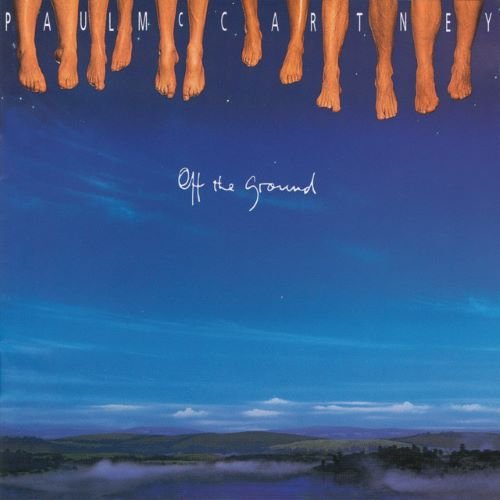
  

Paul McCartney - Off the Ground

_________

THIS might be a…

contentious one, but I think that Paul McCartney’s ninth studio album, Off the Ground, is underrated and deserves another spin. It was released on 2nd February, 1993, so I wanted to highlight it ahead of its thirtieth anniversary. You can find out about Off the Ground here. It has received some negative feedback through the years. As McCartney’s first studio album of the 1990s, it is also the follow-up to the well-received Flowers in the Dirt (1989). Some saw it as a weak follow-up. The two albums are pretty different in terms of sound and material. I really like both, and I feel Off the Ground is underrated and stronger than it has been given credit for. Reaching number five in the U.K., it was a commercial success. I have seen quite a few mixed reviews. My first taste of the album was the single, Hope of Deliverance. I heard that in 1993, and it instantly became one of my favourite Paul McCartney songs! Listening to the rest of Off the Ground, and there are more than enough strong cuts. Singles C’Mon People and Biker Like an Icon are great. I love deeper cuts such as Peace in the Neighbourhood and Get Out of My Way. I would urge people to give the album a spin ahead of its thirtieth anniversary. I want to bring in a few reviews. The first one, from AllMusic is one of the more mixed reviews:

Flowers in the Dirt did earn good reviews but perhaps more important was its accompanying tour, McCartney's first full-fledged world tour in years. Given the tour's enthusiastic reception, McCartney could wait until 1993 to deliver the album's proper sequel, Off the Ground. Though it isn't as consciously ambitious, Off the Ground certainly picks up where Flowers left off, as McCartney feels no shame in making an album that doesn't aim for the charts (though success would certainly be welcomed), yet is still classy, professional, and ambitious. Two key differences appear: it's a leaner production (making the midtempo numbers seem less cloying and giving the rockers real kick), and McCartney's social conscience dominates the record (which is easily his most politically active, as he rails against animal testing and pleads for world peace several times). He doesn't leave love or whimsy behind ("Biker Like an Icon" is easily his worst, most studied stab at whimsy), and he still has a pair of fine McCartney/MacManuss songs ("Mistress and Maid," "The Lovers That Never Were") to pull out. This all results in a record that has its virtues -- it's clean and direct, where many of his solo albums are diffuse and meandering, and it's serious-minded where many rely on cutesiness -- but, overall, Off the Ground feels like less than the sum of its parts, possibly because the seriousness is too studied, perhaps because the approach is a bit too stodgy. Nevertheless, this has nearly as many successful moments as Flowers in the Dirt, standing as a deliberately serious comeback record by an artist who spent too much time relying on his natural charm, and who feels no shame in overcompensating at this stage of the game”.

I want to come of the more positive reviews for Off the Ground. I know McCartney has received a lot of detractors through his solo career. Whilst he has released some average albums, I feel Off the Ground is one of the stronger efforts. The 1990s was not his best decade for albums, but 1997’s Flaming Pie (the next solo studio album after Off the Ground) is one of McCartney’s genius works. This is what the Chicago Tribune wrote about McCartney’s 1993 album:

Paul McCartney's new album, "Off the Ground" (Capitol), will be out Tuesday, and it's easily his best studio work in a decade.

That's not exactly lavish praise, given the paucity of punch in McCartney's recent albums, but "Off the Ground" is a solid, sometimes inspired, work of pop craftsmanship.

It uses the same key personnel (bassist Hamish Stuart, guitarist Robbie McIntosh, drummer Blair Cunningham, keyboardist Wix Wickens) and uncluttered production aesthetic that made McCartney's 1991 performance on MTV's "Unplugged" so energizing.

Not everything works: "Biker Like an Icon" sounds half-finished, "Golden Earth Girl" and "Get Out of My Way" are awfully slight and there are far too many clumsy lyrics.

Yet there's pop dazzle aplenty, beginning with the first single, "Hope of Deliverance," in which the brush-stroked Latin rhythms echo the Beatles' "And I Love Her."

And there's also unexpected toughness. Hamish's slide guitar adds grit to the buoyant title track, and his crunching riffs drive the animal-rights anthem "Looking for Changes," one of McCartney's angriest and most convincing performances in recent years.

That veracity carries through much of the album. McCartney has made a career out of making everything seem easy, sometimes too easy, but his cutie-pie propensities are now balanced by emotional grit.

His vocal technique and command on the bridge of "The Lovers That Never Were" are a marvel, and the whole of "Winedark Open Sea" is captivating, as McCartney's voice works a simple lyric for every drop of resonance.

These songs elaborate on the album's central themes of hope in the face of strife and enduring love as a balm against suffering.

If not exactly a new message, McCartney makes it at least seem like a necessary one-and that makes all the difference”.

I’ll end with a 2007 review from Rolling Stone. In the U.S., Off the Ground peaked at seventeen on the Billboard 200. Its first-week sales were only 53,000 copies. It was certified Gold by the Recording Industry Association of America. Even if the sales were lower in the U.S. and U.K. than expected, it fared better in other key markets such as Spain. In Japan:

In addition to copiloting the greatest bands in rock & roll history, Paul McCartney and Mick Jagger have something else in common: Both have watched their solo careers sputter. McCartney hasn't placed an album or single at the top of the charts in nearly a decade, and only one album, an "unplugged" MTV concert, has broken the Top Twenty. Jagger waited until 1985 to test the solo waters and has thus far found them icy. His last album, Primitive Cool (1987), stalled at Number Forty-one, while its would-be anthem "Let's Work" logged one lonely week at the tail end of the Top Forty.

No acts will ever rule the rock realm so completely for so long as the Beatles and the Stones. Times have changed; attention spans have shortened, owing to video overexposure (resulting in careers with the trajectory of a Roman candle), rigid radio formats, the corporate trivialization of rock's mission and the sheer accumulated mass of music, old and new, being thrust at listeners. These days the sales go to the likes of Michael Bolton, Garth Brooks, Boyz II Men and Kris Kross, while living legends like McCartney, Jagger, Bob Dylan, Van Morrison and arguably even Bruce Springsteen are consigned to an elder rockers' Valhalla, where they bask in critical favor and do good tour business while watching their new work hobble and fall off the charts.

So why suffer the ignominy of being outsold by artists of far less luster? Why not stay home counting royalties and tending investments? For both Jagger and McCartney, pride and ego figure in, certainly; but there's also the matter of creative viability. There's plenty of ambition, not to mention craft, to be found on both Wandering Spirit and Off the Ground. McCartney, fresh from dabbling in light classical with his Liverpool Oratorio, imparts a mock-orchestral grandeur to his pop sensibility on Off the Ground. While occasionally slow-moving (McCartney could use a boot from an aggressive producer), Off the Ground contains some fine songs and sustains a guardedly optimistic mood that conveys a faith in the future. Jagger manages to paint in the primary hues of an inveterate rock animal on Wandering Spirit while decorating the margins with some left-field material that recalls the fervid eclecticism of the Between the Buttons-era Stones. If Wandering Spirit gets the nod over Off the Ground, it's because Jagger sounds livelier and more welded to the present than McCartney.

The differences between the two can be illustrated by their lyrics. Whereas McCartney sings, "I feel love for you now" in "Winedark Open Sea," Jagger growls, "I don't ever wanna see your picture again" in "Don't Tear Me Up." McCartney is a family man whose idealism springs from his commitments; Jagger remains a realist and, true to the title, a wandering spirit whose blood runs hot. Wandering Spirit rises to a rousing boil, while Off the Ground maintains a mannerly simmer. They're about as different as day and night, and as it was in the early days, when people were either Beatles fans or Stones fans, you'll probably prefer one to the exclusion of the other.

Poking their heads above the manicured surface of McCartney's song cycle are "Hope of Deliverance" and "Peace in the Neighbourhood." The first is one of those perfect little tunes McCartney plucks from his songwriter's subconscious like a pearl from a shell. Deceptively wispy, effortlessly catchy, it finds McCartney breezily proffering a positive attitude toward the days ahead: "When it will be right, I don't know/What it will be like, I don't know/We live in hope of deliverance from the darkness that surrounds us." "Peace" is a cheerful, dreamlike vision of a halcyon world; its sunny, casually funky groove recalls odes to brotherhood by the likes of Sly and the Family Stone and War.

Elvis Costello rejoins McCartney as a songwriting collaborator on two numbers: "Mistress and Maid," in which fanciful flourishes provide a Sgt. Pepper-style spin, and "The Lovers That Never Were," a gorgeous, lushly arranged vocal showcase also taken at a swaying waltz tempo. McCartney falters when he tries to rock out on "Looking for Changes," a literal-minded animal-rights broadside, and "Biker Like an Icon," a quixotic character study. At this juncture, he doesn't seem able to rock with authority, and he under-mines his effort by applying a sugary glaze, such as the inappropriately tame chorus to "Biker Like an Icon." A clutch of longish songs – "Winedark Open Sea," "C'mon People," "I Owe It All to You," "Golden Earth Girl" – seems calculated to cast an ambient stargazing spell, and McCartney closes the album with an Aquarian Age reminder to remain "cosmically conscious." While the sentiments are commendable and the music pleasurable, Off the Ground is a tad undercooked – a souffle that doesn't quite rise to the grand heights its creator envisioned.

Jagger, on the other hand, rocks with a willful, desperate abandon on Wandering Spirit, the most purposeful and assured of his three solo discs. With Rick Rubin coproducing, the album has a live, knife edge feel to it, from Jagger's counting off the bristling opening cut, "Wired All Night," on through to the reckless declaration of independence of the title track. While Wandering Spirit possesses a rock-solid backbone that will please Stones fans, Jagger adroitly tosses a few curves – a pure-country foray, some hard-hitting urban funk, a courtly overlay of harpsichord and Mellotron – to keep things interesting. And though not everything works – particularly problematic are "Handsome Molly," a dire foray into Celtic folk, and a starchy retread of Bill Withers's "Use Me" – Jagger communicates both laser-focused directness and far ranging versatility.

Jagger, who will turn fifty this year, seems determined to cede nothing to age, dismissing the idea of mellowing out as anathema: "I'm as hard as a brick/I hope I never go limp," he rages from the center of the cyclonic fury of "Wired All Night." His brashness and swagger are well intact on numbers like "Put Me in the Trash" and the doggedly relentless cover of James Brown's "Think." The first single, "Sweet Thing," finds him applying a "Fool to Cry" falsetto to a danceable, "Miss You"-style track. On "Out of Focus," a churchy piano-vocal intro segues into reggae-accented gospel-funk as Jagger deals squarely with a harsh comeuppance that tempts with autobiographical overtones: "Maybe I lied a little bit too much.... I saw the future just shatter like glass." "Don't Tear Me Up" is another sadder-but-wiser reflection bolstered by echoes of "You Can't Always Get What You Want." The title song spells out his rootless dilemma with forcible resolve: "Yes, I am a restless soul/There's no place that I can call my home," he sings as the band ensnares him in a tight jump blues.

But Jagger isn't content to let matters rest there. From this defiant perch he reveals the cracks in a vulnerable façade with three remarkable songs near the album's end. "My cards are on the table/You can get up and walk away/Or stay," he importunes in the country-flavored ballad "Hang On to Me Tonight." Tart Memphis-soul guitar and a solid backbeat buoy Jagger's bittersweet plaint in "I've Been Lonely for So Long." "Angel in My Heart" closes this trilogy with a heartbreaking plea – "Stay with me till night turns to day/Let me in your dreams" – set to an exquisite melody reminiscent of "Lady Jane." Wandering Spirit, then, illuminates the varied aspects of a complex personality. But best of all, it rocks like a bitch”.

I am a big fan of Paul McCartney’s solo work, and I feel that Off the Ground has not been talked about in overly-positive tones since its release in 1993. It has a few weak tracks, but there is a lot to love about it. My attachment to Hope of Deliverance means it will always have a special place in my thoughts. If you have been wary about tackling the album or have never heard it, then give Paul McCartney’s underrated 1993 gem…

A bit of time.

FEATURE: The Digital Mixtape: Thirty Years On: Great Tracks from 1993

FEATURE:


The Digital Mixtape

IN THIS PHOTO: Salt-N-Pepa/PHOTO CREDIT: Michael Putland 


Thirty Years On: Great Tracks from 1993

_________

I might do a couple of playlists…

 IN THIS PHOTO: Sheryl Crow/PHOTO CREDIT: Karjean Levine

compiling songs from important years. I have explored 1993 before but, in 2023, these tracks are thirty. It was an essential  year for me. Aged nine/ten, I was really starting to discover music and bond with it in a very real way. I bought my first album, NOW That's What I Call Music! A compilation of great and popular hits from that year (and some older), I remember 1993 very fondly. To mark that, I have selected some popular singles and incredible tracks from albums released in 1993. It is hard to believe that these tracks are thirty this year! They seem so timeless and fresh to me. Maybe you know some of these tracks, but there might be some that are new. If you need a reminder of what variety and quality was around thirty years ago, these songs should…

 IN THIS PHOTO: Beck

GIVE you a reminder.

FEATURE: Spotlight: Somadina

FEATURE:


Spotlight


Somadina

_________

IT is hard to keep a track…

of all the amazing talent that will define and mould this year. One artist I am a fan of and love the music of is Somadina (Somadina Onuoha). The Nigerian artist is absolutely phenomenal! I have out her social media links at the bottom. Make sure you keep abreast of what is happening and all her latest musical offerings. In November, she released the stunning album, Heart of the Heavenly Undeniable (HOTHU). I am going to wrap up with a review for that album. First, there are a few interviews with Somadina I want to bring in. New Wave Magazine introduced this incredible talent:

Still sticking on the topic of growing up, we asked Somadina on her influences and prominently through her music career. For her, her father was a person who allowed her to do whatever she wished to do through the lens of admiration; as she bears that given love from her father to champion herself through the music industry. Another inspiration is the Ghanaian songstress Amaarae, an artist that organically exudes the embodiment of black femininity. Somadina quickly mentions how she attended her writing camp - “Going to the camp was quite unplanned because I met her before but we never really spent time together. When I went to LA last year, she happened to be there at the same time so coincidentally, someone invited me to dinner. From then on, everything was so organic with her! At the camp, I was somewhere comfortable with producers, songwriters and singers and her. It was so cool and she makes incredible music. Seeing that and also the way she worked, it was so inspiring.”

In 2018, IHY was Somadina’s first studio produced song. Highlighting how much better off you are from that man/woman, we experience first hand from her discography her extraordinary ability to display her voice and her lyrical composition to the world. From then on, songs such as the punk-rock coated ‘SUPERSOMA’ and sensual ‘Kno Me’ have received international appreciation. When making music, being genre restricted contains Somadina within a box. Experimenting with new sounds, feelings and emotions allows her to really showcase her motto of being free and, through her own words, “Always be fearless, throw yourself into the deep end, and never give up.” When I had asked the question of what difficulties she had faced in her career, and what song highlighted that, I heard a response that was refreshing to hear:

Her response demonstrated that Somadina is using her patience to shape herself into a better musician because she is working with it. We get an insight of an icon, and we can't wait to see what she comes up with next. Being versatile includes everything that you do with patience mastered.

Christianity and Somadina go hand in hand as she mentions that “artistry to me is about growing as a person only and growing spiritually, mentally, physically”. Growing up in a predominantly Christian environment and family, she uses her religion to channel her artistry. “Making music and Christianity are both important to me. I make every effort to pray and talk to God on a personal level. It is the root of my foundation of affections, and I feel really blessed by him, so I don't take that relationship for granted, and I believe it keeps me grounded”.

In August, prior to the release of her album, Raydar Magazine spoke with Somadina. An artist that has been taking the scene by storm for years now, I think that 2022 was her biggest year. It was definitely one when her music found a larger audience:  

Nigerian-based artist Somadina bleeds talent. The young artist has been taking the industry by storm for some time now. Starting with her 2018 single “Ihy”, which set the tone for the singer. Shortly after, her popular single “Lay Low” ft Nigerian artist Orinayo, was released in 2019. A duet-themed R&B ballad consisting of heart-felt lyrics wrapped in boundless emotion. Following the fast-moving artistic progression of Somadina came a 5 track EP titled, Five Stages, which was released in 2020. She was brave enough to share her painful journey with the world, a journey that was an offspring of heartbreak.

The project takes the listener through the same lows and highs that the singer experienced in her young adulthood. She emphasized the fact that pain is not forever and that “acceptance is the most blissful part of grief.” Acceptance is an important component of growth, which Somadina indeed continued to do. Later that year, she also showcased a different, more wild side of herself and released her popular single “Kno Me” featuring the well-known Nigerian-based artist SGaWD.

The single would lay the groundwork for her building enough confidence to release her latest single “SUPERSOMA,” showcasing a more provocative and raunchy nature of the artist. Now, Somadina is looking to break through sonic barriers. The alternative rock-themed song hints at some influences from the brit-pop and 70’s Afro-rock era. The dexterous artist does a great job mixing the rock/punk-based production with a dominant Nigerian top line. A unique combination that has all the formulas for success. “SUPERSOMA” is not a regional record by any means.

The record has been spotted on stations all around the world, including my city Washington, DC. Nigeria is proving to be a breeding ground for top talent in the music industry, and she’s proof that the apple does not fall far from the tree. Furthermore, we got a chance to sit down with Somadina and talk about her upbringing, creative process, beliefs, and more. Check out the full interview below.

 Tell us a bit about where you are from?

I’m from Nigeria. I was born in Nigeria then I moved to the Netherlands when I was about one or two. I lived there for nine years. So, I grew up in the Netherlands then I moved back to Nigeria. When I was back in Nigeria, I was about 10 years old, continued living in Nigeria for a couple more years. I went to secondary school here then I went to school in London for six years. Yeah, I’m from everywhere. I currently live in Lagos, Nigeria – a fun city.

Your music displays different facets of your personality. It ranges from sweet and gentle to raunchy and provocative, is your music a direct reflection of who you are as a person?

My music is a reflection of the stages I have experienced in life. More than just me. I think I always have periods where I’m making a certain type of music or discovering a certain type of sound. It just reflects the period in time in my life. I believe I’m capable of making anything and everything. I’m inspired by so much music.

It also has to do with the way I grew up. I’ve heard so many things. I’ve listened to music in so many different languages. So I just feel like it’s periodic. I’m making a lot of rock music right now, but I started as an R&B girl.  I had a whole phase last year where I was just rapping and it’s just always very periodic.

How involved are you with the production process?

My new project will have songs that are mostly executive produced by me. I’ll ask producers to play certain sounds I’ve thought about. I also like giving people a lot of space to create with me because I don’t want to start ‘over-creating’ with just myself in my mind. So, like when I was in LA working with producers and writers, I would have an idea of a melody but then be like, “okay do what you want with that” and they will just take it to another dimension. It’ll be something new. Overall, I’m very, very intentional with everything I make but  I like exploring with people and trying new things, having new ideas and input. I’m very particular about that too.

As an artist should be?

I don’t even know what to say,  I don’t see myself past anything. I don’t think that one thing ever changes. I want to always be so connected to the music and I want it to be so intentional, like, it doesn’t have to be fake deep. Do you know what I mean? At the end of the day, a lot of my lyrics are just very passive and you know, you make what you can make what you want from it. Everything has to have an intention and has to have some type of perspective.

Even when I was making this new song “SUPERSOMA” I suppose, I was just listening to a lot of afro-rock from the 70s, a lot of psychedelic rock music. I wanted a lot of Nigerian culture to be inspired by that new song but I wanted it to sound very evolved, where you could listen to it globally.

What kind of music inspired you growing up?

So my dad was a music head growing up, he played a lot of music on Sunday mornings. I heard a lot of gospel growing up. I think that’s where a lot of the actual singing styles came from. My dad used to play John Legend. My dad’s in love with John Legend. I like Fela Kuti! My dad never played him for us, I found him on my own when I went to boarding school. I started listening to Fela Kuti, a lot of afro-rock and psychedelic rock. So like William Onyeabor, Lijadu Sisters. Just a lot of these older artists and those guys were phenomenal.

Like nobody was doing that, they were some other shit. I don’t know if it was all drugs but they were so good.  And you know, that was Nigeria in the 70s. So, I got a lot of inspiration from that type of music, but I had to search for the type of music. I listened to a lot of rock, like just normal rock music. I listen to a lot of Avril Lavigne. I guess everybody can tell and  I listened to a lot of old bands. One of my favorite bands is called Shampoo,  They’re amazing. I love their visuals as well. Yeah, just so many bands. I listen to a lot of band music. Maybe I should be in a band”.

I am going to round up soon. Before getting there, Wonderland. asked Somadina about her upcoming work, and the importance of working alongside other female artists. It is clear that she is firmly on the radar now and is primed for massive things this year:

Somadina is emerging as one of Nigeria’s freshest talents. Her new EP “Heart of the Heavenly Undeniable” marks a turning point in her sound, and there’s no looking back. Banding together with a group of Nollywood, punk inspired girls – Somadina is calling on women to revel in their power. This is the very core of the artist’s new EP, through which an undeniable energy burgeons and flourishes – which is exactly what makes her an intriguing prospect.

The project traverses effervescent soundscapes, employing the production prowess from the likes of the Grammy-nominated producer Soft Glas. Somadina also joins forces with a repertoire of up-and-coming artists, like neo-soul talent Chi Virgo, the singer-songwriter L0la, and the critically acclaimed highlife band The Cavemen. While the tracks oscillate and meander between different genres and sonic qualities, Somadina’s unparalleled vocal talent is the glue holding each song together.

At the tender age of 22, the young artist is a globetrotter of sorts. Flitting between Nigeria, The UK, and The Netherlands while growing up – Somadina’s musical talent is a testament to her shapeshifting identity, wherein she can express herself through a range of genres with ease. With a UK festival performance at The Great Escape 2023 on the horizon, and another performance at London’s illustrious venue KOKO under her belt – this new EP is fuel to the already flaming fire.

 Congrats on your new EP “Heart of the Heavenly Undeniable!” It’s an intriguing title. How did that come about?

Making the EP has been quite the journey. The title changed over time. Just like I’ve changed and evolved after each new song. When the journey was concluding, I started realising a lot more about myself. I found a greater purpose in my faith, and the title is really just a reflection of me finally accepting that purpose and seeing the bigger vision.

Can you talk us through the writing process of the EP?

I write based on life experiences, memory, fantasy- at times. The process has never been set in stone for me. I just do what comes naturally. I sing from my soul. Sometimes I freestyle or write in my bedroom. Other times, I’ve collaborated with dope writers in sessions. The EP was made across LA, Nigeria, Ghana and London. Each experience was special and memorable to each song.

It’s your first fully fledged project. Did you find it daunting at all?

Not really. I’m quite chill about it if I’m being honest. I’ve been working on the project for the last 2 years and I believe in the sound a lot. I think many people will resonate with it. It’s fresh and kind of tickles your brain a bit. Especially its bridge between future and nostalgia. I’m sure it’ll find the right home. I’m not worried, I just have to be patient.

There’s a lot of feminine energy on the EP, with features from Chi Virgo and L0la – what’s the significance of female representation to you?

Honestly, I just really love both artists. There are Nigerian artists right now really breaking the status-quo and I think that’s super important and relevant to our sonic history, especially as women. Both features came about so organically. I don’t even think we knew we were working towards music for the project. It all kind of just… happened”.

I will end with a review from Pulse. They provided their thoughts on the incredible Heart of the Heavenly Undeniable (HOTHU). Although I have seen it called an E.P., it is definitely an album. It is one that I would recommend to everyone. I keep coming back to it time and time again:

“H.O.T.U.H is rich in exportable potential amongst a lot of young European and American fans, who will be transported to new realms when they hear some of these songs performed live.

When Somadina was 20, she released Five Stages, a picture-esque conceptual, diaristic depiction of the infamous ‘Five Stages of Grief.’ It was a sad album, illuminated by the brilliance of detail and the occasional moments of reminiscent luster.

In certain moments on ‘Five Stages,’ Somadina looked like a young woman, robbed of her innocent admiration of life’s warmth. It felt like she was being stripped of the final vestiges of her psychological naivety - the kind that makes human beings believe in good things; the kind that keeps the inner child alive.

Since then, she has matured and continues to school in the United Kingdom. Now 22, her new 11-track album, Heart of the Undeniable Heavenly [HOTUH] loses all the admirable innocence and grief. In its place lies a more aggressive and seemingly mature edge.

The lyrical content of Somadina's latest project is such a rude awakening, that the prayer at the end of ‘Dreams’ - presumably from Somadina’s mom - feels like a necessary intercession. Don’t laugh, this is serious, please.

H.O.T.U.H is a show of range, and a sharp left from R&B. At its root, it explores desire, self-discovery, sexuality, cravings, liberation/freedom, rebellion, growth exploration, the growing pains of early adult angst and the emotional rollercoaster that comes with it, but that’s all covered by Somadina’s pungent indifference.

Across the album lies Gen Z liberal tendency for emotionless attraction barring the retributive tendencies of ‘Citrus Tears,’ where she chases a dude, like someone chased her on ‘Everybody Bleeds.’

Before then, even when she gets a little vulnerable with passive amorous longing on ‘Dreams,’ she mires it in vagueness.

But underneath all the ‘maturity,’ there lies an undertone, that this phase has reactive and momentary coming-of-age tendencies.

Perhaps, the more mature, less emotional feel to ‘H.O.T.U.H’ is a reaction to the pains of ‘Five Stages,’ as Somadina tries to forge a way towards healing in her own way, while she also grapples with the oft-overwhelming happenings, desires and tendencies of early adulthood, in a liberal world as a Gen Z woman, affected by the internet and the alluring tendencies of the contemporary values like sexual liberalism, which nurture her.

And those values can be addictive because they offer a sense of power, and even dominance.

Perhaps, that is why Somadina transforms from a lovestruck teenager, into a young woman, who is bold enough to cop a young man who suits her taste into a tryst, but without the usual emotional baggage or trappings that come with it - just sex, as they say.

‘I Saw An Angel On The Rooftop and Wept’ and ‘Everybody Bleeds’ typify this mindstate. To put an exclamation point on the casual nature of the said tryst, she sings, “I don’t give a f**k about you” on ‘Everybody Bleeds.’

But this type of life also comes with pressure, which Somadina aims to dispel on the self-explanatory, ‘WDYWFM' or 'Imagine Give A F**k,' just like the atypical mid-2000s Teen Pop/Teen Rock song, pulled from a mid-2000s soundtrack to a High school/coming-of-age flick. Think Joan Jett’s ‘Bad Reputation,’ with a Brookes Brothers remix, ‘In The Summer.’

There was also a nod to an exploration of sexuality on ‘Crzy Girl,’ where Somadina embodies a character, who appears to be convincing a girl to leave her boyfriend for her.

The Sound

All of these themes were canvassed on a markedly different sound as well. The sonic theme of the album seems to be "Emotional Psychedelia."

Somadina explores Teen pop/Teen Rock with grown topics, Alt-pop, Plastic Afro-soul, Synth Pop, Soul, Sophisti-Pop, Neo-Soul, Techno, Reggaeton and mid-2000s Kylie Minogue Post-Pop sounds.

In fact, if sped up Nelly Furtado, Gym Class Heroes Pop, Kid Cudi, Lorde’s slurp but with a heavily alternative edge, mid-2000s Kylie Minogue Post-pop and Paramore had a baby, delivered by Madonna’s 80’s Pop vocal manipulations and intentionally dexterous blandness, and was raised in 70’s Psychedelic Rock-obsessed post civil war South Eastern Nigeria, but grew up on 2000s Teen Pop Disney songs, it would sound like this album.

Standout tracks

It’s not all doom and gloom either. The album’s sonics excels in its detail and throwback tendencies. The Rock elements of the album were perfected, and songs like ‘Everybody Bleeds,’ ‘I Saw An Angel On The Rooftop and Smiled,’ ‘Small Paradise’ and ‘Citrus Tears’ stand out.

In fact, ‘Small Paradise’ is the most judicious and most exciting use of a Cavemen feature in over 18 months. It is an amazing Psychedelic Soul piece, by way of ChillWave”.

One of the most important artists of this year, I think that the years of incredible work Somadina has put in is paying off now. The Nigerian artist is going to be a massive name very soon. Her music is for everyone. Go and spend some time with Somadina. I know that she will be busy touring on working on new music. I can only imagine how incredible her songs sound on the stage! It is an experience that I want to have…

VERY soon.

____________

Follow Somadina

FEATURE: #OneTrack: A Valentine’s Day Music Viral Campaign for Worthy Causes

FEATURE:


#OneTrack

 PHOTO CREDIT: Tyler Nix/Unsplash


A Valentine’s Day Music Viral Campaign for Worthy Causes

_________

I have been trying to get something going…

 PHOTO CREDIT: Mercedes Mehling/Unsplash

on social media that turns into a viral campaign. There are so many worthy causes and charities doing amazing work. From organisations working in the music industry to those fighting discrimination, raising awareness for L.G.B.T.Q.I.A.+ equality, to battling sexism and discrimination, there are so many causes I feel passionate about. I know there are great bodies and charities that raise money and do good work, but I think a viral campaign would bring more financing and support their way. Years ago, we have seen viral campaigns that have raised money for a single cause. I remember the Ice Bucket Challenge a while back. That involved people filming themselves pouring a bucket of cold water on them. Launched in 2014, it was to raise money and awareness for the ALS Association. There has not really been one for a long time. I like the idea of people anywhere being able to share a video, post it to social media, add the hashtag, and then donate to the charity. There were problems with some not donating money after posting the video. Others felt campaigns like the one for ALS did not really address the seriousness of the disease. I guess it is hard to do a video or post something that does connect personally if you are not impacted by the disease. I don’t think it cheapened anything or was insincere. At the very least, it raised a lot of money and awareness.

 PHOTO CREDIT: Katie Rodriguez/Unsplash

I think that is the most important thing. I have a number of causes dear to my heart. From climate change to L.G.B.T.Q.I.A.+ rights, to homeless and gender equality in music, it would be a way of joining people together through music, and also bringing to light worthy and vital causes and areas to tackle. I was hoping to launch something on Valentine’s Day. Not only is love being shared between couples, but it extends wider. Showing love to charities and causes, without all the commercialism. I was thinking of the hashtag #OneTrack. People would post a link to the charity they have donated to (tagging them in too), but the concept would not involve people filming videos. Instead, it would be a song that means a lot to that person. Whether a new song or a classic, each person would post that instead of a video. I have been wondering it there could be a challenge or video. My area is music, so it needs to be related to that. Posting a song would be the easiest thing, but I would definitely be open to options. Something simple enough that it would draw in big names and stars around the world. If there was anything too complicated, it might put people off. I look online and social media, and so many people talk urgently and passionately about causes and ways we can come together.

 PHOTO CREDIT: Samsung UK/Unsplash

I am aware people can donate to charities themselves, but causes can be brought to light and a wider audience through something viral. The central theme of that one track. A single song that is around the theme of love and togetherness. In posting a song that means that much to someone, one also gets to donate to a cause that has that importance. I guess the songs could be posted from YouTube, so there is still that video element. I am not sure why there hasn’t been a viral initiative that has captured the worldwide imagination over the past few years. This year is one for change, activation and togetherness. We all have causes that we want to fight for, so this is why the concept came to mind. If very few people see this post, then I don’t think it can take hold. That might be an issue. I might have to poll and campaign beforehand, ensuring that I can get some traction. I have been trying for a long time to start something that could catch on like the Ice Bucket Challenge. So many charities and causes need greater exposure and funding, so this would help. It would also bring great music to people too. On a day of love (14th February), it would be nice for people to spend some money and time to get involved with something I feel would be worthy and important. There is no doubt that 2023 is…

 PHOTO CREDIT: Pavel Anoshin/Unsplash

A year for change and joining together.

FEATURE: Spotlight: Crawlers

FEATURE:


Spotlight

PHOTO CREDIT: Em Marcovecchio fort DORK

Crawlers

_________

TIPPED by the likes of…

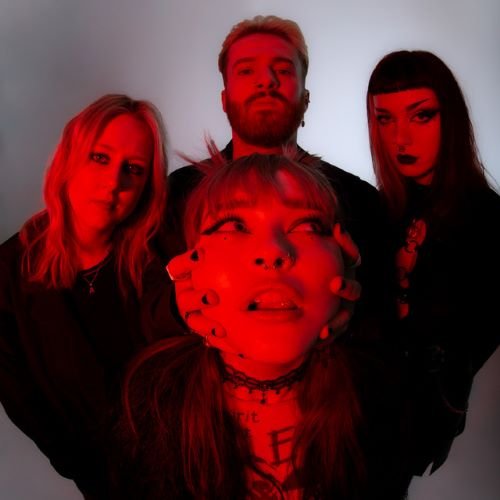
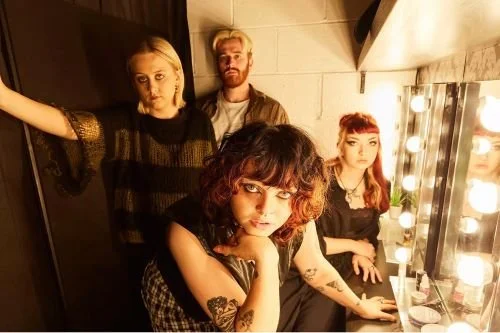
NME and DIY as part of their wave of 2023 artists who are going to hit hard, I couldn’t well ignore the majesty and sheer dominance of Crawlers. The Liverpool band released the incredible mixtape, Loud Without Noise, last year. They are one of the most promising bands I have heard in years. I think they are also one of the most important bands around. Everybody needs to tune into them. It is no wonder they are being tipped as an act to watch his year. I love their sound. It is cool that they name-check Queens of the Stone Age as an influence. No that you can hear that clearly on their sleeves, but they do channel elements of the Josh Homme-led band. In actuality, Crawlers are a hugely original band primed for festival headline slots. I am going to source some interviews with the band from last year. Getting into the minds and hearts of many music websites, The Forty-Five featured a compassionate young Rock band whose powerful message in their coming-of-age music was hitting the masses and singling them out as an amazing force:

As a band, we’re constantly trying to strive [to create] a safe space,” Crawlers’ singer Holly Minto says firmly. That’s an attitude that’s key to everything the Merseyside band does – from their live shows to their compassionate, captivating rock songs – and why they’re quickly becoming the new band to believe in right now.

Although they’re still relative newcomers – Minto co-founded the group with guitarist Amy Woodall and bassist Liv Kettle in late 2018, cementing their line-up with drummer Harry Breen in 2021 – they’ve swiftly scored a legion of loyal fans thanks to their commitment to tackling the issues affecting themselves and their peers in their music. Whether they’re singing about social justice on 2021’s blisteringly urgent ‘Statues’ or the sexualisation of female-presenting people on the dark stomp of ‘Monroe’, they don’t claim to have all the answers but invite you to join them on their journey to figuring it – and themselves – out.

‘Fuck Me (I Didn’t Know How To Say)’, their electrifying and important new single, is no different. Over searing rock riffs, it broaches the sensitive but perennially timely subject of consent and sexual assault in a way that makes you look at the topic from a new angle and makes your own experiences feel seen. “You deserve better so I gave you my body,” Minto whispers on the track, later adding: “The kisses that led to sex were close enough.”

The song’s chorus tackles not knowing how to tell a sexual partner what you want – or don’t want – and the pressure that can come from intimate situations. “I said it was fine in your defence,” Minto acknowledges. “But I didn’t know how to say I don’t want you to touch me.” They’re lyrics that highlight some of the complexities of consent and the fact that it’s not always black and white.

With such a nuanced issue, it can be hard to know how to improve education and awareness around it, but she suggests consent being taught in schools “not just in a sexual way” as a step in the right direction. “‘No means no’ applies in every kind of circumstance and respecting your boundaries from a young age is what it’s about,” she explains. “Teaching that and what that means from a young age is so important. It’s still very hard to teach those things because there are such blurred lines, but I’m hoping that as we grow, that becomes more of a considered thing.”

‘Fuck Me’ will not only spark conversation around that topic but will also raise awareness for charities working in that area. The band are partnering with Brook, an organisation that offers sexual health, education and wellbeing services to young people across the UK, and will be fundraising for them via merch and other avenues. “Doing a single with such a hard topic, we’re gonna do it as sensitively as possible and make sure that now we have a label [Crawlers are signed to Polydor] and financial support, we do it in a way that’s safe for our listeners,” Minto says.

Beyond that, Crawlers will be spending 2022 sharing yet more inventive and inspiring music with the world. Where ‘Fuck Me’ takes influence from hip-hop beats, their upcoming tracks delve even deeper into their “no rules” approach to mixing genres. “We’ve got a pop song in drop C tuning, very pulled back acoustic songs with trumpet swells [in the vein of] Neutral Milk Hotel,” Minto lists off. “We’ve also been playing around with influences like The Cure, Bauhaus and Fleetwood Mac, which we’ve not really explored before. It’s nice to not feel boxed in – it’s gonna confuse some listeners but we’re actually making what we like and that’s a great place to be.”

That assessment of their position right now feels largely applicable to the world in general as the band continue their ascent. Life might be a struggle with countless trials to get through but, with Crawlers around to help us all on the way, it’s an infinitely better journey to be on”.

I love the interview with NOTION. Crawlers discussed their creative process, the new mixtape/project, Loud Without Noise, and who they would like to collaborate with. I think that, as they are taking off right now, the band are going to be commanding some big support slots and traveling around the world. I think that they are the band this year that will dominate and get recognition and love in America and beyond. They are a sensational and hugely exciting proposition:

Hey, your debut mixtape is out this Friday, firstly congrats! Can you give me a quick intro to the project for fans who might not have come across Crawlers yet?

Amy Woodall: So Crawlers are a band from the northwest, we make alternative rock music. We’re just about to put out a new mixtape, there are a lot of different genres in it, but that’s the purpose of a mixtape!

Harry Breen: It’s ​​the last opportunity where we can dabble in whatever genre we want before we have an album out, which will probably be a little bit more concise. But at the moment, we’re sort of doing whatever we want.

How long was this mixtape in the making?

AW: We recorded it all over two months ago. But some of the songs have been written for a few years now. “Hang Me Like Jesus”  was actually written two, or three years ago. Whereas “I Don’t Want It” was written in a week, then we recorded it and two weeks later it was on Spotify.

HB: We’ve been sitting on the majority of them for a while now, so it’s about time that they started coming out. We spent a lot of time trying to get the mixes right, to the point where people started getting frustrated with us, but it ended up sounding good in the end.

PHOTO CREDIT: Morrigan Rawson

Would you say you’re quite speedy with the production side?

AW: It just depends song by song really. Sometimes, we have a really clear vision and other times we don’t and we have to work a bit harder.

Yeah, that makes sense. Throughout the project you explore themes of sex, love and drugs and make a point of the importance of gaining autonomy over your body, sexuality and emotions. Why is it important to you to spread this message.

AW: I think a lot of our lyrics are really personal, and mostly our own experience. So you know, of course, we’re going to write music that is from our lives.

HB: I think with any kind of music or art, you have to dig down to your own personal feelings in order to provide something unique. You can obviously still have generic lyrics or generic conventions of the music, but if you want it to stand out, it has to come from deep down. Everyone has their own story to tell.

One of the main things about Crawlers is that you’re determined to create a safe space for misrepresented groups. Can you explore why this is important to you and how you wish to use your platform to help spread the message of the importance of safe spaces?

HB: It’s always been an important thing, literally from our first day, we’ve always made sure that people knew our gigs are safe spaces. Especially when most of the people that come to our shows are around 14 years old, it could well be their first ever gig and we don’t want them to have a bad impression of what a gig entails. We want them to feel like they’re welcome, and that not all gigs are raucous, sweaty, or heavy. We’ve got a proper community going on and we just want to incite that message that you can always come to our gigs, and you will be safe, and you will be comfortable, and you don’t have to worry about anything. We don’t want people to think that they can’t enjoy a live show.

Lastly, what’s next for Crawlers?

HB: So we’ve got this mixtape coming out, and once that’s done, the next year I guess we’ll just be prepping for the album songwriting. We want to make sure that our debut album blows up and that everyone knows us. That’s what we’re aiming for. We want to spend a lot of time in the new year songwriting and recording to make sure it’s perfect within the first few months. Then we just want to do everything that’s necessary to make sure it reaches the right people and the right ears”.

I will end with DIY’s interview from December. I have gained a lot of guidance from them, as their Class of 2023 names are incredible. Even the Liverpool four-piece are quite new and still taking their earliest steps, they have a huge army of fans and millions of streams. It is like they are an already-established band that have been playing huge venues for years. It bodes very well for the amazing Crawlers:

And while their music admittedly does sit nicely alongside the current renaissance of emo - after their stint supporting My Chemical Romance in Warrington this May, they “had a lot of elder emos” coming to shows, says Liv - it’s also their ability to open up conversations around the very present concerns of young people that’s become an appeal. Their openness isn’t just resigned to their songs; the band also use their social platforms - most often, TikTok - to discuss everything from identifying as queer, experiencing panic attacks and misogynistic industry rumours, through to highlighting outfits fans have chosen to wear to their gigs.

Hoping to use all of their outlets to create a community of their own (“a scene we never had,” Liv says. “It’s really, really special to us that more and more people are finding it and can carve out their own little space in it”), their message of acceptance and overcoming trauma is one that seems to be truly resonating with those listening. “We’ve been meeting fans a lot recently, and hearing how many of them connect to our songs because of what they’re about,” Holly says. “[We] write about what we’re feeling, whether that’s an observation or whether that’s something we’re going through all the time, and [having] people who relate and carry their own stories with our songs is the most important thing.”

PHOTO CREDIT: Ed Miles 

With their crowds growing bigger with every show (“Over the summer, we’ve noticed different people are starting to pay attention to us,” Liv comments), it seems little wonder that Crawlers’ list of objective outside achievements is beginning to increase too. And while, of course, few bands ever release something with the hope of charting well, there was a certain level of satisfaction that came with their mixtape’s success.

“It was pretty mad,” Amy admits. “We make the music for ourselves, but when we were told that it could chart, we were like, ‘Well, if we’re gonna go for it, then we’ll really go for it’.” It paid off, not only landing them the aforementioned Rock & Metal Chart top spot, but also reaching Number 22 in the Official Albums Chart too. “We didn’t realise it was Number One in Rock & Metal until later in the evening,” laughs drummer Harry Breen. “Someone texted me and I was like, ‘…guys, apparently, we’re actually Number One! What the fuck?!” To celebrate the achievement, his mum has promised to get a tattoo. “She didn’t specify whether it had to be the Official Chart,” he jokes, “and this said Number One so… that’s good enough!”

Harry’s mum wasn’t the only woman keeping a watchful gaze over the record’s success, either. On release week, the band took to their TikTok channel to share a special ritual, in which they lit candles around a printed photo of Charli XCX and chanted the chorus of her iconic single ‘Vroom Vroom’ while holding hands, in an attempt to summon the chart spirits. “She actually commented on our TikTok!” exclaims Holly. “I was so ill yesterday and I couldn’t play the show. I had no voice, and I was in the middle of Subway just checking my notifications, and I saw that she’d commented: ‘I’ve done this ritual before - it defo works’. She is our motivation for getting up in the morning, no joke! So seeing that, I was like, ‘What is going on in my life right now? Like, what the fuck?’”

An act of higher power, or just all of the band’s hard work starting to pay off, it seemed to do the trick. Now, with their debut album on the horizon - “We’re working on [it] currently and can’t say more than that,” Holly tells us - let’s hope Chaz is keeping a guardian eye on Crawlers for the foreseeable future too”.

Go and acquaint yourself with the sensational Crawlers. Both heavy and compassionate, they are a band who put their heart and soul into every song. Projecting powerful messages that will resonate with a lot of their fanbase, I know what an impact they have made to people already. After releasing a successful and amazing mixtape last year, they will look ahead to dates, festivals and maybe an album. I think the mixtape title, Loud Without Noise, is apt. Not needing to be raucous or too explosive to be powerful and heard, Crawlers are definitely here…

FOR the long-run.

____________

Follow Crawlers

FEATURE: Spotlight: Hemlocke Springs

FEATURE:


Spotlight

PHOTO CREDIT: Michelle Li


Hemlocke Springs

_________

SHE may have put out a new song…

before I publish this feature. I am writing this on 27th December, so we might get another Hemlocke Springs track soon (I think one is due on 13th January). One big reason to love her is the fact she counts Kate Bush as a heroine. Compared to the legend, Springs has named The Dreaming (Bush’s 1982 album) as important to her. More on that later. In the space of a short time and with a couple of tracks under her belt, there is already this huge buzz and excitement around Hemlocke Springs. A lot of the attention centres around the viral smash, girlfriend. A song that has connected with a huge audience, it is an exceptional offering from an artist that instantly seduced me, I want to source a few of the interviews that Hemlocke Springs gave last year. Rolling Stone looked at the background and swift rise to prominence of an artist you will hear a lot more from this year:

BECOMING A PROFESSIONAL singer was not Hemlocke Springs’ plan. Born Isimeme Udu in Concord, North Carolina, the budding star had more academic plans for her future: After getting a biology degree from Spelman and thinking about a career in the medical field, her interest in bioinformatics led her to the Master of Science degree from Dartmouth.

“In my first couple months here, I was starting to think med school is not for me,” she says with a laugh. She’s speaking to Rolling Stone from her current apartment near Dartmouth’s campus before she moves back home to North Carolina. “My thing was like ‘I’m gonna do medical research, maybe get some papers in, and then I can do my PhD somewhere.”

But music lingered in the background of Udu’s life. She did choir in middle school and was introduced to GarageBand by a friend in high school. She toyed around with the program, eventually investing in Logic while in college.

“It was kind of a stress mechanism,” she explains. “Whenever I just wanted to get things out, I was just like ‘I’ll just go on Logic.’ But it was never anything concrete. Just a hobby.”

Around the time she started making songs on GarageBand and Logic, Udu became obsessed with Eighties music. She had grown up loving EDM like Cascada and Calvin Harris as well as K-pop groups like BTS and EXO, but a Spotify recommendation of Tears for Fears’ “Everybody Wants to Rule the World” sent her into a nostalgia-fueled synth-pop rabbit hole that reshaped her taste and musical inspiration.

As she was beginning her program at Dartmouth, Udu began to wonder if she should let people hear the songs that were becoming more fully formed realities. She would put a song up on SoundCloud only to immediately delete it soon after. Then, one day, she got tired of giving up so quickly.

“I’ve always been reticent about revealing that I sing and do Logic on the side,” she explains. Around the start of this year, she made a resolution to own it and start even telling her friends. “I just wanted to get rid of that feeling of embarrassment.”

In the spring, Udu, under the name Hemlocke Springs, released a demo called “Jacob” that was then followed by “Gimme All Ur Luv,” an indie romance of a song with one of the year’s dreamiest choruses. It was written during a time she was really depressed, taking three of her hardest classes. She was avoiding an assignment for one of those classes and recovering from a bout of Covid when she stayed up late one night to write out the track. It ended up changing her life.

“I was just kind of getting into TikTok,” she says. She saw how independent artist promoted their own songs on there and thought that she might as well try it herself. “I posted it. And I went to sleep. And I woke up and it got more views than I thought it was going to get”.

@hemlockesprings even better fun fact: girlfriend was on my “bad songs” list (yes, I have a list of songs I’ve written that i consider to be bad) …I went thru a time i absolutely ABHORRED the song, and it was never going to see the light of day. People who hate the song will NEVER hate it the way I did lol 😂 #hemlockesprings #newindiemusic2022 #newmusic #fyp #fyppppppppppppppppppppppp ♬ girlfriend - Hemlocke Springs

This year is going to be the one where Hemlocke Springs explodes and puts more of her amazing music out there. She has gained press interest in the U.K. too. Many are sniffy when we say someone is a ‘TikTok artist’, but it is a valuable platform that means artists like Hemlocke Springs can find a willing and supportive audience. NME spoke with the U.S. artist when she was visiting North Carolina. I have selected a few parts of the interview. It is interesting what she says about Kate Bush and The Dreaming:

But following the viral smash of ‘Girlfriend’ – which has already racked up over 10 million plays on Spotify since its early November release – the self-described musical “hobbyist” has put any immediate plans for a medical career on ice. And it’s easy to see why, even if the recorded output has been limited: on both ‘Girlfriend’ and ‘Gimme All Ur Luv’, Hemlocke Springs displays a rare gift for making percussive pop music with an intimate and deeply emotional core, not unlike Prince during his ‘Purple Rain’ peak.

Between trips to New York, Los Angeles and Asheville, NME caught up with Hemlocke Springs during a rare visit home to Concord, North Carolina, a suburb a few miles outside the city of Charlotte. All her music to date has been recorded in this home on the outskirts of the city, where she resides with her brother and her parents. Inside, she gives us a brief tour, including the bedroom where she recorded ‘Girlfriend’ to her phone in a matter of hours. “I recorded the vocals under a blanket so I wouldn’t wake my brother,” she says.

There are no instruments to be found in her bedroom, and she readily admits she has no formal musical training of any kind. “I wanted to learn the piano, but I took sewing lessons instead,” she quips at one point. The only real hint that we’re in the home of a musical artist comes once we’re seated in Hemlocke Springs’ living room and she opens her computer. We’re greeted by a sprawling document with various working song titles, and her wallpaper: a picture of BTS. “I went through a big K-Pop phase in college,” she says by way of introduction.

 So now that you are doing music full-time, have you started to give any thought to what your live show will look like?

“I’m really looking forward to it. I’ll admit that the few times I’ve been on stage I don’t remember much. I know I was probably anxious, but the way I look at it, you either keep feeling that way or you put on a show. I don’t think I’ve shared this with anyone, but I definitely want to incorporate dance, even though I don’t consider myself a dancer. I was watching a video where Kate Bush was performing ‘Babooshka’ and she was doing all these amazing choreographed dance moves. It didn’t even seem like the kind of song you could really dance to, but she was doing it anyway. That’s what I want to do, but so far, it’s just been me and my hairbrush.”

Is Kate Bush a hero of yours?

“Totally. ‘The Dreaming’ completely changed my perspective on what music could be. The way she expresses her emotions vocally is so cool. I also like that it was a polarizing album when it first came out, but now so many artists name it as one of their favorites. I hope I can do that – put out an album and people are like, ‘What in the world?’, but then years later they’re like, ‘She was onto something.’”

Do you think that’s the reaction you’ll get with your debut album?

“I hope so. I do think people are going to be surprised. If I just heard those two songs [‘Gimme All Ur Luv’ and ‘Girlfriend’] before listening to the rest of the album, I’d be like ‘Oh.’ I’ve always had this fear of being boxed in, so I have a tendency to go in the opposite direction. Maybe not a 180, but let’s call it a 165.

“It’s weird to me the only two songs I have out are both under three minutes because I don’t usually like short songs. Those two just sounded complete. The rest are over three minutes and there’s probably going to be one on the album that’s over 7 minutes. It reminds me a bit of the Eurythmics and Depeche Mode”.

I don’t think anyone can overstate the importance of girlfriend. A song that has taken on a life of its own, there is no doubt that Hemlocke Springs is a sensation. Someone who has considered a life outside of music, I think she will have to accept the fact that music is now where she belongs. The Times wrote about the runaway success of the incredible girlfriend:

On an app brimming with established stars pushing new music and small musicians trying to make it big, Hemlocke Springs stood out almost immediately — no dance, trend or gimmicks required.

Isimeme Udu — who also goes by Naomi — is the 24-year-old medical student behind the viral TikTok hit “girlfriend.” The pop newcomer created her musical alias with the help of a random name generator, following in the footsteps of artists like Childish Gambino and Post Malone. (The addition of the “e” in “Hemlocke” was Lorde-inspired.)

The day before Halloween, Udu teased the bridge of her single “girlfriend” while dressed as Dionne from Clueless. She was about to leave for a party when she thought to herself, “You know what? You’re just going to do a quick running man dance and then call it a day.”

The following afternoon, the video hit a million views.

After sharing the catchy bridge, which has now been used in over 60,000 TikToks, the North Carolina native quickly amassed a loyal following and landed on the radar of musicians like Khalid before the track even hit Spotify, where it has garnered over nine million streams since its Nov. 2 release.

The undeniable earworm quickly became an “awkward Black girl anthem,” a title Udu says she saw on TikTok and immediately embraced: “I’ve gotten a lot of support, particularly from a lot of Black women saying, ‘This is tapping into my awkward high school phase,’ or saying, ‘Where were you during high school?’”

“To be in such a space and to be regarded in such a way, it’s just amazing,” Udu tells PEOPLE. “I’m so honored.”

@hemlockesprings #duet with @hemlockesprings this will probably be one of the last vids I make before teasing the new single saturday #hemlockesprings #musicvideo #fyp #fyppppppppppppppppppppppp ♬ girlfriend - Hemlocke Springs

Months before “girlfriend” was even written, Udu laid the foundation for her TikTok fame with her first single “gimme all ur luv.” The Grimes-esque tune grabbed the attention of celebrities like Bella Hadid, who used it in a mini vlog, and Grimes herself, who called it “good.” The dreamy track kickstarted Udu’s popularity — but it almost didn’t make it out of the vault.

“On my SoundCloud, I would go and I would post a song and I would immediately remove it literally one minute later,” the singer confesses. “That was just a thing that I did.”

Udu still isn’t sure why she formed this habit — her exact words are “I have no clue” — but, ultimately, she had a change of heart. About six months ago, she decided to leave some of her songs up under the impression that “nobody is going to listen or see it anyway,” and one of them was “gimme all ur luv.”

Hemlocke Springs.

Michelle Li

The singer says she’s “still confused” about why “girlfriend” blew up and, to echo the song, it wasn’t really in her plans. Though the budding pop star has been making music secretly for seven years now — a statistic that shocked her to hear out loud — she’s been working toward a career in medicine for much longer.

As her song captivated TikTok, all that stood between Udu and the ability to become Hemlocke Springs full-time was two weeks of school. Motivated by her newfound notoriety, the Dartmouth master’s student powered through her “hellish” final semester, and says she’s ready to exchange her microscope for a microphone — at least for now.

“Multitasking is just not my thing,” she says with a laugh.

The rising star says that her family, particularly her mom and brother, are supportive of her career change, but her father still doesn’t know about her “music side”: “It’s always just been like, ‘I’m gonna go and I’m going to be a doctor. That’s been the path and that’s still what he thinks.”

Now signed to Good Luck Have Fun Records, Udu says that she’s working on an album and “would love to perform live” in the near future — something she’s previously only done in high school productions and talent shows.

“I’ve been practicing in my room with a hairbrush,” the TikTok star admits. “I don’t know if I should have said that out loud, but I have”.

Undoubtably one of the most original and exhilarating artists around, the brilliance of Hemlocke Springs is clear. This wonderous and exceptionally innovative artist already has so many fans behind her. When a debut album does come, I think it will be among the best and most interesting in years. A new song, stranger danger, looks like it may drop on 13th January. Everybody needs to be aware of…

THIS amazing musician.

_____________

Follow Hemlocke Springs

FEATURE: Mesmerized: The Susanna Hoffs Birthday Playlist: Her Essential Cuts

FEATURE:


Mesmerized


The Susanna Hoffs Birthday Playlist: Her Essential Cuts

_________

ON 17th January…

 IN THIS PHOTO: The Bangles on the Champs Elysees T.V. broadcast in 1987/PHOTO CREDIT: Bertrand Rindoff Petroff/Getty Images

one of my favourite ever artists, Susanna Hoffs, celebrates her birthday. The Los Angeles-born legend is one of the most iconic artists ever. Co-founder of The Bangles, Hoffs founded them (originally called the Bangs) in 1981 with Debbi and Vicki Peterson. The Bangles enjoyed a successful career and released some truly memorable songs. They did go on hiatus, but they came back in 2011 with Sweetheart of the Sun. I wonder whether the group will release another album. Hoffs did start a solo career after The Bangles disbanded in 1989. Her first solo album, When You're a Boy, came out in 1991. She has worked alongside Matthew Sweet, and also appeared in the faux-1960s band, Ming Tea with Mike Myers. Someone who has appeared in different acting roles, I also wonder whether we’ll see her on the screen again. She would naturally fit a comedy film I think. It would be intriguing to see her in a bigger role. To mark the birthday of a music great, I want to end with a playlist of essential Susanna Hoffs songs. These are either tracks she has sung on or written. Before that, I want to bring in AllMusic’s biography of the great Hoffs:

Susanna Hoffs is best-known as the lead singer and guitarist with the well-known pop group the Bangles, but Hoffs has also enjoyed an impressive career as a solo artist and a collaborator with a wide range of artists. Hoffs was born in Newport Beach, California on January 17, 1959; her father, Joshua Hoffs, was a physician, while her mother, Tamar Simon Hoffs, was a screenwriter and film director. Susanna was the second of three children, and she and her siblings learned to play guitar from their uncle, a folk musician who also built dulcimers. Hoffs grew up on classic AM radio pop and literate, folk-influenced artists such as Joni Mitchell and Bonnie Raitt; she enjoyed singing with family and friends, but was more interested in pursuing acting or dance as a career (she played a small role in the 1978 film Stony Island, an acclaimed independent feature co-written by her mother) until she enrolled as a ballet student at UC Berkeley.

After her big brother passed along albums by the Ramones, Blondie, and Talking Heads, and Susanna saw Patti Smith perform in San Francisco, she became a quick convert to the new wave, and formed an informal band with her brother and David Roback, a friend from the neighborhood who played guitar. While the trio proved short-lived, Hoffs and Roback, who were a couple for a while, recorded some living-room demos that emboldened her to form a band. (Echoes of these unreleased recordings can be heard on the 1984 album Rainy Day, coordinated by Roback after he became leader of the acclaimed Paisley Underground band Rain Parade; Hoffs contributes striking lead vocals to versions of the Velvet Underground's "I'll Be Your Mirror" and Bob Dylan's "I'll Keep It with Mine.")

Looking for like-minded musicians, Hoffs answered an ad in an L.A. weekly newspaper, The Recycler, in late 1980 and met guitarist Vicki Peterson and her sister Debbi Peterson, who played drums; the three shared a fondness for '60s-influened pop/rock and the Petersons were impressed with Hoffs' vocal abilities. The three formed a band called the Colours that would quickly evolve into the Bangs, and became the Bangles after a threat of legal action from another group called the Bangs. The Bangles would become bone fide superstars in the '80s, scoring two multi-platinum albums (1986's Different Light and 1988's Everything) and a handful of hit singles (including "Manic Monday," "Walk Like an Egyptian," and "Eternal Flame"), but as their fame rose, so did tensions within the group, compounded by the media's focus on Hoffs as the "star" of the act. Though all four members wrote and sang, Hoffs received the lion's share of the press as the principle lead vocalist, and when she was cast in The Allnighter, a comedy written and directed by Tamar Simon Hoffs, Susanna was made the focus of the film's advertising and publicity campaign, which unwittingly helped upset the balance of the band. By the end of 1989, the Bangles broke up.

In 1991, Hoffs released her debut solo album, When You're a Boy (the title comes from the David Bowie tune "Boys Keep Swinging," which Hoffs covered), but while the song "My Side o the Bed" fared well as a single and received steady MTV play, the album was a commercial and critical disappointment, and Hoffs subsequently took several years off to focus on her personal life. In 1993, Hoffs married film director Jay Roach, and they welcomed their first child two years later. In 1996, Hoffs' self-titled sophomore album was released to enthusiastic reviews, though once again it failed to sell as well as expected. In 1997, she teamed up with Matthew Sweet, Christopher Ward, and Mike Meyers to form Ming Tea, a fictive British rock band who appeared in Jay Roach's comedy Austin Powers, International Man of Mystery, and they recorded a tune for the film's soundtrack, "BBC." Ming Tea gained something of a cult following after Austin Powers became a hit, and they also appeared in the film's two sequels.

In addition to covering "The Look of Love" and "What's It All About, Alfie" for the Powers' films, Hoffs reunited the Bangles to record the song "Get the Girl" for 1999's Austin Powers: The Spy Who Shagged Me; the group subsequently set out on tour, and returned to the studio to record a new album, 2003's Doll Revolution. (The title came from Elvis Costello's song "Tear Off Your Own Head [It's a Doll Revolution]," and Costello apparently approved of Hoffs' vocal on their cover, inviting her to sing it at a concert released on his 2011 live album Return of the Spectacular Spinning Songbook!!)

In 2006, Hoffs and her Ming Tea cohort Matthew Sweet teamed up to record a duet album, Under the Covers, Vol. 1, in which they interpreted 15 ‘60s pop classics. The album earned rave reviews, and in 2009 the pair returned with Under the Covers, Vol. 2, which focused on songs of the '70s. Sweet and Hoffs also toured together as Sid ‘n' Susie, the name being a play on Sweet's Ming Tea character name, Sid Belvedere. (Hoffs' Ming Tea name was the far more British Gillian Shagwell.) Sweet and Hoffs crossed paths in the studio again when he was tapped to produce a new Bangles album in 2011, Sweetheart of the Sun. In 2012, Hoffs released her third solo album, Someday, a collection dominated by songs she wrote in collaboration with guitarist and tunesmith Andrew Brassell. The following year, Hoffs re-teamed with Sweet for another collection of covers; for Under the Covers, Vol. 3, the duo tackled pop songs from the '80s”.

In order to properly salute Susanna Hoffs, below is a playlist featuring some of her best work. An amazing songwriter and artist that I have loved since I was a child, there is nobody like her in music! Let’s hope there is more from her in the not-too-distant future. There is so much love out there for. With one of the finest voices in all of music, here is someone who is…

ABSOLUTELY hypnotising.

FEATURE: Spotlight: Chappell Roan

FEATURE:


Spotlight


Chappell Roan

_________

I know I am highlighting…

PHOTO CREDIT: Ryan Clemens

a lot of American artists at the moment. I will focus on other nations soon but, as there is so much talent coming out of the U.S., I cannot ignore the likes of Chappell Roan. Her is an exceptional singer and songwriter based in Los Angeles. Someone who describes her music as dark Pop with ballad undertones, I think Roan is going to go a long way. Maybe not the most opportune period but, in summer 2020, she released the track, Pink Pony Club. One of the songs of that summer, Chappell Roan is now an independent artist. I know there will be big labels out there bidding for her. I wonder whether Phoebe Bridgers’ Saddest Factory Records label. Maybe that match will happen! As Roan released quite a bit of music last year, I suspect an album or E.P. will arrive soon. She is one of the most impressive young artists out there. I want to source a few interviews so that we better know a wonderful artist. Illustrate Magazine asked Chappell Roan about her musical upbringings and what the key elements of her music are:

Did you have any formal training or are you self-taught?

Chappell Roan: I took piano lessons for a few years, but refused to learn theory because it was boring and learned by ear and copying my piano teachers hands. I also took vocal lessons for a couple years, but not classically. She taught me how to really belt and sing with confidence. It was more of a pop approach to vocal lessons.

Who were your first and strongest musical influences and why the name ‘Chappell Roan’?

Chappell Roan:  My strongest influence is definitely 80’s synth pop. I love weird sounds. I love dance and anthemic pop. Queen and Madonna Vibes. But, my biggest idol is definitely Alanis Morisette. She’s so so amazing. Everything about her I love.

As for my name, Chappell was my grandfather’s last name. I told him I would be Cahppell in his honor because we both knew he wouldn’t make it to see my career because of his brain cancer. His favorite song was “The Strawberry Roan” which is this old country wester song about a pinkish horse. It took me YEARS to find a last name, but Chappell was always 100%.

What do you feel are the key elements in your music that should resonate with listeners, and how would you personally describe your sound?

Chappell Roan: Queerness, acceptance, nostalgia, and sparkle.

I always describe my music as slumber party pop, because it’s fun and anthemic, but also heavy and somber at times. Just like when you’re all lying there talking.

For most artists, originality is first preceded by a phase of learning and, often, emulating others. What was this like for you? How would you describe your own development as an artist and music maker, and the transition towards your own style, which is known as INDIE?

Chappell Roan: I definitely wanted to imitate the witchiness of Stevie Nicks and Lorde in my first EP “School Nights”. I was also just in a much darker spot in my life. Now, I’m in a much better place and I want to write pop and party on stage.

What’s your view on the role and function of music as political, cultural, spiritual, and/or social vehicles – and do you try and affront any of these themes in your work, or are you purely interested in music as an expression of technical artistry, personal narrative and entertainment?

Chappell Roan:  I think you should use music and say whatever you want to say. Regardless if it’ll ruffle some feathers. I definitely try to approach sex in a positive open way in my music, and queerness. I don’t mind making listeners uncomfortable. I’m definitely not a technical artist haha. I just like singing fun pop songs and creating different aesthetics and makeup and outfits to go along with them. It’s like playing dress-up and arts and crafts”.

Rolling Stone profiled and interviewed an amazing artist who left her home for Los Angeles, one assumes, to make it big in music. Although that will happen, there were setbacks along the way. Her incredible talent, vision and perseverance will turn her dreams into a reality very soon:

WHEN RISING POP star Chappell Roan left Missouri for Los Angeles, she thought she hit the jackpot.

Born Kayleigh Rose Amstutz in the town of Willard, Missouri, she’d grown up feeling stifled by her small, conservatively Christian upbringing.

“I felt so out of place in my hometown,” the now-24-year-old recalls. “I wish it was better. I wish I had better things to say. But mentally, I had a really tough time.”

Discovering the likes of Katy Perry and other pop heavyweights of the 2010s opened up her worldview and inspired her to start writing songs of her own. She quickly caught the attention of major labels and was signed to Atlantic Records when she was 17, choosing a stage name inspired by her late grandfather (Dennis K. Chappell) and his favorite song (“The Strawberry Roan”).

“I had no idea what was going on and neither did my parents or my parents’ friends. It was so messy… I felt very unprepared. I didn’t know the consequences of how much I had to sacrifice. I didn’t do my senior year. I didn’t go to prom. I didn’t go to graduation. I missed a lot of what would have been the end of my childhood to do this job,” she says.

Up until she released her debut EP School Nights in 2017, Roan’s supportive parents would fly with their teen daughter back and forth from Missouri to LA or New York. Eventually, Roan flew the coop on her own, moving to LA in 2018. In LA, she discovered a new, free life as well as a second shot at adolescence. She was able to dress how she wanted without fear of standing out in the wrong ways. And she was able to live out and proud as a queer woman, for the first time in her life: “I feel allowed to be who I want to be here. That changed everything.”

After moving to the west coast, Roan started meeting with new producers and songwriters. One of them was Dan Nigro, the former lead singer of indie rock group As Tall As Lions who re-emerged in 2011 as a brilliant, edgy pop writer and producer with credits on albums like Sky Ferreira’s Night Time, My Time and Carly Rae Jepsen’s Emotion.

“I am really picky when it comes to writers,” Roan admits. “I like it when people push me and tell me that my lyrics or the performance is not good enough. That’s not really the case for most co-writers out here that I’ve worked with. Until I met Dan.”

They translated Roan’s L.A. puppy love into the neon bright “Pink Pony Club,” a slice of pop fantasia about wanting to be a go-go dancer at famed West Hollywood gay club The Abbey. The song was released in spring 2020, as the world was shutting down, making it increasingly more difficult for new artists to build their audiences without an immediate viral moment. “Pink Pony Club” gained some traction and attention, but not enough for Roan to be a profitable addition to her label, who dropped her in 2020.

“I burst into tears,” Roan says. She was fond of her team but understood that her project wasn’t making much money. “As time has gone on, I realized that no matter how hard that label experience was for five years, it was the biggest blessing ever. And being independent has taught me I can do it by myself”.

I am going to move onto an interview from Earmilk. They revolved their interview around the sensational Chappell Roan song, Femininomenon. It is an anthem and wonderful cut that seems to be her most personal and confident song yet. As she says, it is the song she has been trying to make her whole career:

Her new song "Femininomenon" is a mouthful, and the production reflects that chaos. Starting off with the roar of a dirt bike in the background, the song somehow goes in a million different ways but fits together so well. The little voice notes before the chorus hits when Chappell cheekily screams, "Can someone give me a fucking beat." It's all so fun and loud but so intricate.

"I've been dreaming of releasing a song like this my whole career. It took years to build up the confidence to even sing in that style," Roan tells me. She worked with her trusted producer Dan Nigro, writing sections of the song on different days, putting it together like a puzzle. Even though this song feels like a completely new direction from her previously released music, it still has that thread that ties it all together into what she describes as a "slumber party pop world."

"I always try to push myself and how I write pop music. I want to see if I can get away with being as ridiculous as I possibly can," she says, "I wanted a dance song. Something people could do drag to. A Queer anthem that had a sad undertone of what really happened to me, but with a beat." Roan is truly a master at turning something heartbreaking into a shimmering pop song, it's the reason her music resonates with so many people

For an independent artist, visuals are one of the first ways to draw in an audience, and Roan knows her audience and sets the stage perfectly. "It's definitely a character and a performance piece," she says, "I'm pretty particular about everything because I want it to be cohesive and believable." She plans everything in her costumes and videos down to the last rhinestone. Having a hand in all aspects of her career helps her perfectly curate that image”.

I want to end with a Billboard interview from the end of last year. It was a chance for Chappell Roan to reflect on a very busy but successful year. I don’t know what her expectations were heading into 2022, but she has achieved soi much and set herself aside as an artist who will conquer the music world. Everyone needs to follow her:

Unencumbered by label expectations, the singer-songwriter finally began bringing her full creative vision to fruition in 2022. The first step, as she tells it, was nailing her presentation: Gone was an attempt at presenting a clean-cut facade, now replaced by a more effortless deconstruction of style. “Once I let go of trying to be this very well-managed, put-together pop girl, it felt like everything just fell into place,” Roan explains. “I leaned into the fact that my looks were tacky, and very obviously using fake diamonds and Gucci knockoffs. I leaned into my queerness for the first time. When I did that, the songs got easier to write, the shows got easier to design, and my aesthetic was finally there.”

While putting together a rapid-fire rollout schedule of singles throughout the year (including “Naked in Manhattan,” “My Kink Is Karma” and “Femininomenon”), Roan quickly began accruing a fiercely loyal following on TikTok. According to Roan, while she was promoting the release of “Naked in Manhattan” in January 2022, she gained over 30,000 followers in one month, with fans anxiously wondering when the song would come out.

Roan doesn’t see herself as a “TikTok artist” — not necessarily due to fears of pigeonholing, but rather out of a healthy dose of skepticism. “I go so back and forth with TikTok,” she says. “I gained a lot of speed at the beginning of the year with TikTok because I wasn’t busy; I had time to post twice a day, go live once a day, repeat. It doesn’t work when you’re busy.”

The singer knows that because she has, in fact, been busy — along with unveiling her new set of singles, Roan filled the latter half of her year with plenty of touring. After opening for Olivia Rodrigo in May at her San Francisco Sour Tour stop, Roan caught the attention of fellow queer singer-songwriter Fletcher, who offered Roan the opening spot on the second half of her Girl of My Dreams Tour. Embarking on 10 dates with Fletcher, Roan honed her live show in real time while her song “Casual” began to pick up steam online.

“I don’t even know what I discovered, besides the fact that this is incredibly hard,” Roan says with a laugh, looking back on her time opening for Fletcher. “If I’ve learned anything, it’s that the live show is where the heartbeat of the project is. Luckily, it’s my favorite part of what I do — I like touring, but a lot of people hate it because it’s horrible and hard.”

The singer likes touring enough that she’s embarking on her own headlining tour in 2023. Spanning 20 dates through February and March, Roan will be traveling coast to coast with an ambitious performance goal — every show, she says, will be themed. “It’s already really hard to do that on an independent budget — but also coming up with that many different themes is insanely hard,” she says. “But, if the live show rocks, then everything else will trickle down.”

It’s also important to her to create a show worthy of the very queer fan base she’s garnered — that means making tickets affordable (“College kids don’t have money!” she says with a giggle), keeping her concert spaces safe and donating $1 of every ticket sold to For the Gworls, a Black, trans-led organization dedicated to helping Black trans people pay for their rent and gender-affirming care. “If I can create a space where people can afford to come into a mostly queer space, and dress up and feel good and meet other queer people in a town where maybe there’s not a lot of other places to meet queer people — aka my hometown — then that is great,” she says”.

With much more music arriving this year from the jaw-dropping Chappell Roan, it just shows what exciting, hugely inventive and strong artists are out there! I have been spotlighting a few, but the scene is so busy and varied. It is an amazingly inspiring time for music. Among the sea of great new artists, Chappell Roan surely ranks…

AMONG the very best.

_____________

Follow Chappell Roan

FEATURE: Up on Those Wiley and Windy Moors: Kate Bush’s Wuthering Heights at Forty-Five

FEATURE:


Up on Those Wiley and Windy Moors

IN THIS PHOTO: Kate Bush in 1978/PHOTO CREDIT: Gered Mankowitz


Kate Bush’s Wuthering Heights at Forty-Five

__________

I have more to say about…

 IN THIS PHOTO: Kate Bush in 1978/PHOTO CREDIT: Gered Mankowitz

the masterful and iconic debut single from Kate Bush, Wuthering Heights. The song turns forty-five on 20th January. Ahead of that, I am writing pieces that explore the song in different ways. The first feature is a more general look at why Bush wrote the song and the impact it has. Before continuing on, the Kate Bush Encyclopedia has collated interviews where Bush discussed the song and its inception:

I wrote in my flat, sitting at the upright piano one night in March at about midnight. There was a full moon and the curtains were open, and every time I looked up for ideas, I looked at the moon. Actually, it came quite easily. I couldn't seem to get out of the chorus - it had a really circular feel to it, which is why it repeats. I had originally written something more complicated, but I couldn't link it up, so I kept the first bit and repeated it. I was really pleased, because it was the first song I had written for a while, as I'd been busy rehearsing with the KT Band.

I felt a particular want to write it, and had wanted to write it for quite a while. I remember my brother John talking about the story, but I couldn't relate to it enough. So I borrowed the book and read a few pages, picking out a few lines. So I actually wrote the song before I had read the book right through. The name Cathy helped, and made it easier to project my own feelings of want for someone so much that you hate them. I could understand how Cathy felt.

It's funny, but I heard a radio programme about a woman who was writing a book in Old English, and she found she was using words she didn't know, but when she looked them up she found they were correct. A similar thing happened with 'Wuthering Heights': I put lines in the song that I found in the book when I read it later.

I've never been to Wuthering Heights, the place, though I would like to, and someone sent me a photo of where it's supposed to be.

One thing that really pleases me is the amount of positive feedback I've had from the song, though I've heard that the Bronte Society think it's a disgrace. A lot of people have read the book because of the song and liked it, which I think is the best thing about it for me. I didn't know the book would be on the GCE syllabus in the year I had the hit, but lots of people have written to say how the song helped them. I'm really happy about that.
There are a couple of synchronicities involved with the song. When Emily Bronte wrote the book she was in the terminal stages of consumption, and I had a bad cold when I wrote the song. Also, when I was in Canada I found out that Lindsay Kemp, my dance teacher, was in town, only ten minutes away by car, so I went to see him. When I came back I had this urge to switch on the TV - it was about one in the morning - because I knew the film of Wuthering Heights would be on. I tuned in to a thirties gangster film, then flicked through the channels, playing channel roulette, until I found it. I came in at the moment Cathy was dying, so that's all I saw of the film. It was an amazing coincidence.

Kate Bush Club Newsletter, January 1979”.

Until this year – when Running Up That Hill (A Deal with God) reached the top of the chart – Wuthering Heights was her only number one single. In 2020, The Guardian ranked it the fourteenth-best U.K. number one single ever:

Had the teenaged Kate Bush listened to the wishes of her record label, Wuthering Heights would not have been her debut single. EMI preferred the pop-stomp of James and the Cold Gun to the eerie, circular song that introduced her to the world. But by her late teens, Bush clearly knew herself and wisely pushed for Wuthering Heights instead. When it saw the light of day, in early 1978, it was a hit. By March that year, it had become a No 1 hit, the first single written and recorded by a female artist to top the British charts. It replaced Abba’s Take A Chance on Me, and remained at the top for a month.

It is sometimes worth remembering the incredible fact that Bush wrote Wuthering Heights when she was 18 years old, though perhaps its keen ear for adolescent angst is part of what makes it so special. She had been inspired by an old television adaptation of Emily Brontë’s novel, which led her to seek out the book. Written from the perspective of the ghost of Catherine Earnshaw, a young woman pleading with the brutal Heathcliff, whom she loves and hates, to let her soul into the house, the song is a gothic melodrama that builds until it is thick with intensity. It is a magnificent achievement, though the writing of it was seemingly painless. “Actually, it came quite easily,” Bush recalled later, telling the story of a single moonlit night at the piano. The vocal was said to have been recorded in a single take. Bush found out that she and Brontë shared a birthday, and the fates were aligned.

The casual story of its creation belies the odd unwieldiness of the song itself. The piano gently heralds the arrival of this haunted tale of lost love and longing, then that tight, high melody reels you in. It loops and lilts, ascending, descending, as Bush’s vocal urges the story on, like Catherine striding across the moors. In the BBC’s 2014 documentary The Kate Bush Story, artist after artist recalls hearing it on the radio for the first time, thinking some variation of: what on earth was that? “You can hear one note of a Kate Bush song or one note of her voice and know what it is,” said Annie Clark, AKA St Vincent, and it has been that way from the start.

The spectacle of Bush as a performer inspired similarly wowed and unsettled reactions. She made two videos for the song, and appeared on Top of the Pops with it five times in 1978, cementing her public image as an ethereal spirit, embodying the essence of Cathy through a combination of wide eyes, floaty fabrics and wild choreography, still fondly mimicked and parodied today. Wuthering Heights turned Bush into a pop star, the rules of which she continues to bend to her own will: her individuality was set in stone from the very beginning”.

Wuthering Heights still sounds like nothing else in Kate Bush’s catalogue. Such a unique and spellbinding song, there are a number of reasons why it resonates and endures. Bush’s heightened vocal (so that she could embody Catherine Earnshaw and this ghostly figure) and the fact she recorded the vocal in a single take gives it this that extra bit of urgency and magic. It is a wonderful single that introduced so many people to Kate Bush. I was a small child when I first saw the video for Wuthering Heights. It was a very special moment that opened my eyes in so many ways. As it turns forty-five on 20th January, this is the first part of a small run of features that I will do about the amazing Wuthering Heights. I have bene rewatching the music videos (the U.K. and U.S. versions), the live performances of Wuthering Heights, in addition to new vocal; Bush recorded in 1986. It is a song that, in each performance and iteration, is like nothing else! A remarkable song and one of the most impressive debuts of all time, I wonder how many critics of Kate Bush thought we would be talking about her forty-five years after her debut single was released. One of the most enduring and phenomenal artists ever, Wuthering Heights is a masterpiece! I hope, on its forty-fifth anniversary, Kate Bush debut single reaches…

A whole new generation.

FEATURE: Spotlight: Ice Spice

FEATURE:


Spotlight

PHOTO CREDIT: Trinecia Amor


Ice Spice

_________

THE past week or so…

has seen me doing a wide range of Spotlight features looking at artists who will be defining this year. Ice Spice is someone who has already been tipped for big things. The New York-born Bronx Drill artist is someone who should be known to all. Real name Isis Gaston, because her parents were frequently busy working, she spent much of her time with her grandparents and cousins growing up. It was at age seven that Gaston formed a love of Hip-Hop after listening to rappers like Lil' Kim. She started rapping in 2021 after meeting producer RiotUSA while the two were attending SUNY Purchase. I will end this feature with all the social media links for the amazing Ice Spice. First, and as I do with these features, there are interviews that I need to bring in. The first, from DJ Booth was a chat from one of the rawest and realest artists from The Bronx:

In March 2021, the two released their first song, right after Ice went viral for doing Erica Banks’ “Buss It” challenge. Since then, they’ve dropped four more tracks and have garnered a significant buzz very quickly; some skeptics have even deemed Ice Spice an industry plant. But after seeing where she grew up and studying her appeal, I can assure you she’s not. Ice Spice simply has all the tools for success and knows how to use them.

The 22-year-old pairs her appearance with the cleanest and catchiest production coming out of the Bronx, grabbing listeners' attention before she even speaks. (She and RIOT found a formula in “Name Of Love” and “No Clarity,” sampling popular EDM earworms to soften the traditionally menacing drill production.) Once her vocals come in, listeners’ interest is solidified—she’s a natural who raps with an attitude shaped by the bustling borough she was raised in. She walked us through her old stomping grounds, leading us to the steps of her childhood apartment complex so we could speak in the shade.

This is my first time in the Bronx. What are some things I need to know? The rules of thumb, if you will.

Mind your business, that’s number one.

Number two, you gotta really stay on your toes, you always gotta look over your shoulder—just be very aware. Don’t always be on your phone; look behind you, look around you.

Third, don’t be too flashy, unless you’re ready to fight or tryna get robbed.

And lastly, you gotta be tough. You can’t be pussy. You gotta just put on your gangsta face, especially if you’re by yourself.

“Bully” is the first song you dropped. Was it also the first song you ever recorded?

Yeah, so actually it was both. I got the beat from my producer RIOT. We met in college and he had been giving me beats for a while, but I wasn’t feeling them yet. But once I heard the beat for “Bully” I was like, “Nah, this is the one.” I listened to it for about a month before recording to it. I was just trying to find the vibe, just waiting, waiting.

But then, I did the Erica Banks “Buss It” challenge and it got a million views. So after that, I was like, “Nah, I gotta hurry up and put this song out.” So we recorded and finished the song the same week that it went viral, then we released it a bit later in the month. So I waited until I had a little moment to put it out.

Since then, you’ve built a pretty big buzz with just five songs. Did you expect things to move this fast for you?

I expected things to move faster, to be honest. I just believe in myself so much. But I think things are moving at a good pace.

Your dad was a rapper, right?

Yes, but he was an underground rapper. I wanna make that clear, ‘cause they tryna say that I’m a plant, and I’m not.

Has he given you any wisdom about the game?

He just basically tells me to continue to be myself and to be careful, ‘cause it can get grimey.

Why do you think Bronx drill is so hot right now?

Because Cardi B put the Bronx on the map AGAIN, especially for females. But also because it’s the last authentic borough. I think people are interested in how it truly is, in how everybody from here is really from here. Our parents are from here, our grandparents are from here, you know? People are just really interested in our culture. They’re fascinated by how raw it is.

Other than drill, what types of music do you wanna explore in your career?

I wanna do Latin music at some point. I’m actually working on some Spanish songs right now. I wanna get into more pop stuff, just fun vibes, but later on down the line when that makes more sense.

What would you say to the people who think you’re a plant, or are just riding the drill wave?

That I don’t really care, ‘cause I know what it is. I know what it took to get me here, and I know how much work I’m putting in. I also feel like when they say stuff like that, they don’t really mean it. I truly feel like they know I’m not a plant. I think they just say stuff like that ‘cause they’re mad that I’m going up faster than their fave… If anything I would say stream your fave more”.

I am quite new to American Drill. I think the best examples are coming from New York. It seems that Bronx Drill is particularly fertile and innovative. I feel Ice Spice is going to hit the big leagues before too long. Someone who can join her Hip-Hop heroines. For Interview Magazine Ice Spice and the legendary Erykah Badu (who were joined by Badu’s daughter, Puma Curry) were in conversation. Among other things, they discussed the state of female Rap:

BADU: Speaking of school, can you tell me a little bit about your up bringing? What was your home life like?

SPICE: My parents would be at work a lot so I spent a lot of time with my grandparents. I have so many cousins, and after school, we’d all link up at my grandparents’ house. We’d chill, eat, laugh, watch TV. I went to after-school a lot, too. Actually, I shot the “Munch” video at the park that I went to after school. Then when I finally went to Catholic school, things started changing. I didn’t go to church a lot at home growing up, I was never even baptized. But I’m still religious in the sense where I strictly pray every day, all the time.

BADU: Yeah.

SPICE: My parents were separated when I was two, and I have five siblings. I’m the oldest. It’s all separated. My parents had me and then they split up and had their own kids.

PHOTO CREDIT: Richard Kern

CURRY: I can relate to that. I have five siblings and I’m the only baby my mom and dad had together. What does that feel like?

SPICE: Growing up I would get jealous that my other siblings had siblings that came from the same mom and dad, but now that I’m older I just feel special. Don’t you feel special?

CURRY: Yeah.

BADU: She’s pretty amazing. Gen Z is just very mature. I’ll segue into hip-hop. You’re from New York, the birthplace of hip-hop. Do you consider yourself a rapper?

SPICE: I consider myself an artist. I know a lot of people try to categorize me but I just like to create things.

BADU: What you’re doing, the spoken word, is in the category of rap, which originated from hip-hop. Are you familiar with or do you have any ties to New York hip-hop? Do you know the history of it?

SPICE: I think it’s important to remember where everything started, but I don’t have a direct connection to the first people to do certain things. I do know about Roxanne [Shanté] and other legendary people. I just met the person that invented the scratch at the 50th hip-hop anniversary Nike shoot that I did.

PHOTO CREDIT: Richard Kern

BADU: Grandmaster Flash?

SPICE: Yeah.

BADU: [Laughs]

SPICE: [Laughs] Thank you for that. He was cool. And I just met Crazy Legs.

BADU: Even in hip-hop we, as B-boys and B-girls, consider ourselves artists. The teacher from the Boogie Down Bronx, KRS-One, he’s kind of like the prime minister of hip-hop. He keeps the culture informed and the guidelines in place. He once said, “Rap is something you do and hip-hop is something you live.” Hip-hop was break dancing, graffiti art, backpacking, DJing, MCing. And it came up out of a necessity. We didn’t have the entertainment industry to back that art. It was just something that we loved and did. What motivates you to keep expanding as a creative and an artist?

SPICE: It’s the urge that I have to impact the culture. I want to leave a cultural footprint like you did. I want a girl to want me to interview her years from now and just be like, “You’re the GOAT.” The crown you’re wearing, I want a crown, too.

BADU: What kind of imprint do you want to make?

SPICE: I want to make girls feel confident. Like the Marilyn Monroe impact or the Rihanna impact, the Erykah impact. You have a way of hypnotizing people, you cast a spell on them. I want to do the same thing”.

A new sound and sensation to my ears, so far Ice Spice has released singles. I am not sure whether a mixtape, E.P. or album is coming along this year. With huge momentum behind her, it is only a matter of time before this future titan releases something more explorative and expansive. Last year saw her drop some amazing singles. Billboard spoke to Ice Spice last year and asked her about women in drill her influences, and what it has been like playing some big festivals:

What was your path to music like?

What’s funny is my mom sent me a video the other day – and I don’t even remember this of course, because I was like four. But I’m singing in the video. And I’ve never seen this video my whole life, I was shocked by that. So I was singing since [age] four, but I didn’t actually take music seriously until I was older. I was writing poems and little freestyle raps in my notes throughout all of elementary and high school. Once I got to college, I went viral on Twitter for the “Buss It” challenge. So then I was like, “Nah, I gotta take it seriously,” and I started putting out music.

Did you always go by Ice Spice?

Yeah, my name is Isis, so my nickname always been Ice my whole life. And the spice came from Instagram, I was just trying to come up with a username when I was like, 14.

You recently did two festivals, what was that like for you?

It was very fun. [Rolling Loud NY] was a little messier, but it still worked out. They showed mad love. I can’t wait for the next Rolling Loud. I never had a soundcheck for none of my performances, they just throw you out there. Everybody thinks that like you go in all prepared and s–t with your own mic, but you don’t get that until you’re like G.O.A.T. level.

My first performance ever was back in May at a college in New Jersey. That was lit, the crowd was actually pretty big. It’s hard to perform. Practice makes perfect for real. I’m sure in a year from now, my performance is going to look drastically different. I can’t wait to pop out and prove everybody wrong that’s been talking a lot of s–t.

You’ve been teasing a new song “Bikini Bottom” on socials. Tell us about that.

It’s called “Bikini Bottom” because it kind of gives a SpongeBob vibe. I was just having fun with that one. I was addressing a couple of things that’s been going on, you’ll hear it more in the second verse. But I feel like it’s a good follow up after “Munch.” I made it last week.

Why do you think there aren’t more women getting mainstream looks in the drill space?

I don’t know, honestly. I feel like there are a lot of girls coming up in the drill space and rap in general. Right now feels like the time for the ladies. Drill is such a new sub-genre that I feel like it just needs time for more girls to enter.

Are there any women artists whose careers you look up to?

I’m inspired by Nicki, Lil Kim, Cardi B. All of the greats. I’m definitely inspired by Lauryn Hill and Erykah Badu. But I definitely want to like have my own lane. Where like, it’s just it’s mine. And not like really copying somebody. With Nicki, Cardi and Kim, it’s them being from New York of course. That New York swag and aggression and bad bitchness. [Laughs.] When it comes to Lauryn and Erykah, they give a graceful angelic vibe of timeless beauty. All of them are icons.

You mentioned you’re half Dominican. Are we getting that dembow collaboration anytime soon?

Oh my gosh. Yes. You know what? I’ve actually been talking to a lot of Latin artists and I’m figuring it out. And I got this Spanish type of beat that I’ve been plotting on. I’m probably gonna lay that down soon.

What piece of advice would you give aspiring artists?

I feel like being independent is super lit, especially when you get the hit independently, like I did with “Munch.” I wrote that by myself, just me and my producer. That would be like my advice to any up-and-coming artists, definitely stay independent as long as you can”.

A fierce and insanely talented artist with a stellar career ahead, I would recommend anyone to dive into her music. Even though it is Drill, it is accessible and has this lasting impression. Someone I am hugely interested in, you will be hearing a lot of Ice Spice through this year. With her best days ahead, it will be exciting seeing this artist make big steps. Just sit back and…

WATCH her conquer!

__________

Follow Ice Spice

FEATURE: Revisiting… Sudan Archives - Natural Brown Prom Queen

FEATURE:


Revisiting…


Sudan Archives - Natural Brown Prom Queen

_________

THE amazing second studio album…

 PHOTO CREDIT: Edwig Henson

from Sudan Archives is one I want to highlight for Revisiting…. Brittney Parks’ alter ego released her debut, Athena, in 2019. A brilliant debut and one of the best albums of that year, Sudan Archives’ second album, Natural Brown Prom Queen, I think is even finer! It did get great reviews last year, but I think it should have been placed higher in many end-of-year lists. Definitely a top-five album of 2022, I want to put it back in the Spotlight. Released in September, this is an album that everyone needs to discover and embrace! I will come to a couple of reviews for the staggering Natural Brown Prom Queen. There are a couple of interviews around the release of Natural Brown Prom Queen that I want to bring in. Women in Pop back in September. It is clear that, even though her debut was amazing and ambitious, she has stepped up a few gears on her second studio album:

Today she releases her second album Natural Brown Prom Queen. It is arguably her most ambitious work to date, eighteen tracks long and taking everything back to the very foundation of who she is – a celebration of home and of family and relationships, all through the eyes of ‘Britts’, the character she inhabits for the album.

Again, Parks creates a wide range of sounds on the album. There is a R&B foundation to much of the album, but there are also plenty of intriguing sonic twists and turns. ‘Home Maker’ is a funky, disco infused track that conjures up the 1970s music scene, while ‘Selfish Soul’ is a booming track that brings together rap, pop, R&B  and violin in one euphoric track. ‘Homesick (Gorgeous & Arrogant)’ is an intimate ballad, while latest single ‘OMG BRITT’ is a sultry, sensual hip-hop track. ‘NBPQ (Topless)’ barrels along with a pulsing beat that morphs into a electronic experimental track with Parks switching between rapid fire rapping and beautifully sweet vocals before ending on classical violin. The raw lyrics discuss Parks’ life long struggle with racism: “Sometimes I think that if I was light-skinned / Then I would get into all the parties,” she sings.

Natural Brown Prom Queen is personal, candid and raw, confronting difficult issues including race, self-worth and gender inequality, but also the joy and love embedded in family, friends and where we come from. It is quite possibly Parks’ greatest work to date and an album to savour from beginning to end as a complete body of work. We recently caught up with Sudan Archives to chat more about the creation of the album.

Hi Brittany, it is an absolute joy to grab some time with you today. How are things in your  very talented musical world?

They are pretty good. I’ve just been performing the new songs at all of these festivals and that's been fun and new. It's just nice doing some new stuff. I feel like I was playing my older stuff for like years! It makes touring way more fun being like, ‘oh, what new song am I gonna play today?’

Absolutely. I'm imagining the crowd is completely eating it up. How has the reaction been from the crowd? They're dancing, which is what I want!

Beautiful. Your new album Natural Brown Prom Queen is such an incredible album. You make joyful music but at the same time you talk about such incredibly important issues. What was your motive going in to Natural Brown Prom Queen?

I don't really know what the motive was, but  I made everything in my basement, which I've never done before. I usually would have to record in my bedroom or in other people's studios, but because COVID happened, I made the studio. I was able to finally come down here and figure out how to make it liveable. I feel like that was like the biggest motive of the album, to make it homemade and to make everything in-house.

You're such a multi talented taskmaster when it comes to creating music anyway. Did you feel that making it in house it increased your confidence as an artist, to be able to go ‘do you know what? I can do all of this.’

I always knew I could do all of it, but for some reason I feel like my writing levelled up. Probably because since my first EP I always have been feeling  very rushed to put out more material. But COVID slowed everything down and made me realise that I don't really need as many hands on the project, but I just need time.

It's such a different album to Athena. How did you balance your desire to still be experimental alongside what I imagine is the pressure to create something just as good?

Well, I kept this area [in the basement] as the experimental zone and kept an open mind. I let other people collaborate remotely, so it didn't interfere with what I was doing down here. That's the biggest difference, because before I was taking what I was doing here, putting it on my computer, and taking it to other studios, and then having to like build it with them in person. And I don't really think I work best that way. It worked out better just to keep everything here, stay here and never leave and always be in the experimental zone. And then just checking my email for people's contributions and being like, ‘I like that, I don't like that’, or ‘Oh, I like both of those things, let's make that the verse and make that the hook’. I was doing a lot of things I would have never even done before if I was in the studio with each person separately. Instead of working with one person on one song, three people would do something to one song. That's kind of how I feel like I've beat what I did previously, because the more people you have, that are talented, working on one thing, the better”.

I am going to come to an NME from November. It was a point when Sudan Archives was touring Europe. NME saluted an artist, violinist and Pop songwriter who had released one of the defining albums of that year. A truly inspiring artist, there is nobody in music like the amazing Sudan Archives:

She set up a home studio in the house she shares with her partner, All City Jimmy aka James McCall. It felt like a long overdue objective she finally got to accomplish which, in turn, allowed her to focus primarily on her music. “I spent more time in the studio than at home,” she says. Situated in the basement of her house, it has a separate entrance, allowing Parks to build out a studio full of plants.

“I always knew I wanted a studio in my house, but it worked out perfectly where I live now,” she explains. “It’s a cute little small space where I have all seven different instruments hanging up on the walls. It’s like my little cave.”

Bunkering down in her studio allowed Sudan Archives to create an album that, for her, was a reflection of her abilities. “As I began the creative process, I knew I didn’t want to work with people I didn’t know, like strangers,” she says. “I would rather work with people I have relationships with, But at the same time, if someone were to come along, who has a great idea, and they want to put it on the album, I’m not going to say no. At the end of the day, I want the songs to be the best they can be.”

PHOTO CREDIT: Ally Green

With an original title of ‘Homesick’, the album ended up being a mirror of Parks’ upbringing with her use of the violin throughout a natural incorporation of how she demystifies the traditional way of using the instrument.

“[Cat] was saying how on this album I’ve learned how to incorporate my violin in different ways,” Parks explains. “I didn’t even realise that when I started making the album, as I’m not even aware of what I’m doing. I’m just going with the feeling or what I’m feeling. I started off with looping and layering instruments, vocals and melodies until there was a song created.”

The violin plays an influential part in what is an indisputably effortless pop record. It’s confident and steadfast in its authenticity. With lines like, “Sometimes I think that if I was light-skinned / Then I would get into all the parties / Win all the Grammys, make the boys happy / Fuck lookin’ sassy, they think I’m sexy,” she peppers the album with uncompromising lyrics all seamlessly underpinned by infectious melodies.

PHOTO CREDIT: Ally Green

“Melodies have always come really naturally to me,” she says. “Even growing up, when I listened to the radio, I would always be humming along, but to a higher octave. I think I’ve had to learn how to hone in more on my production skills and growing to incorporate the violin.”

With the release of ‘Natural Brown Prom Queen’, Sudan Archives has certified itself in contemporary culture. Her talent isn’t just for the underground to celebrate, but for everyone to witness what is a generational talent coming into full bloom. The release of the album sees all the coiled energy of her entire life exalted onto a project that is the perfect marriage between vulnerability and honesty whilst being overwhelmingly infectious.

Though she may miss Goldie the python, her home studio, and the comforts of being in Los Angeles, Brittney Parks now gets to play the record to crowds across Europe who have been awaiting her presence for years, and it feels natural. “This feels a lot different than when I was just doing a couple of songs. I’m not used to playing for over an hour on stage, but I’m so grateful I get to do that”.

I am going to come to a couple of glowing reviews for the mighty Natural Brown Prom Queen. It is an album that Pitchfork named their second-favourite of 2022. The New York Times placed it at four. I think that it passed some by, and some reviews were a little underwhelming. Natural Brown Prom Queen deserves five-star reviews across the board. This is what CLASH noted in their review:

Los Angeles-based singer, songwriter, producer and violinist Sudan Archives, real name Brittany Denise Parks, has returned with her long-awaited sophomore effort, ‘Natural Brown Prom Queen’. This sophomore album has come nearly three years after Sudan Archives’ critically acclaimed debut, 2019’s ‘Athena’, with little output in-between aside from a pair of remixes in 2020.

‘Natural Brown Prom Queen’ is a shapeshifting sonic endeavour through flashes of pop, electronica, R&B and hip-hop, but still feels a facilely coalesce and coherent experience. A prime example of Sudan Archives’ multi-genre skills is opener ‘Home Maker’ which is introduced with a drawn out, ambient-tinted intro, with foundations laid by a droning synth. Instruments drop in and out, creating an unpredictable atmosphere only glued together by vintage cinematic instrumental moments. Track two, ‘NBPQ (Topless)’ works in a similar format; frantic hand claps and wobbly riffage lead into a head-on flow from Parks’.

‘Yellow Brick Road’, the penultimate track on the record, dives into the pop element with crystal clarity. But even here, the listener is treated to a delightful instrumental passage, complete with natural textures, ambient swells and jangling bells – as well as the trumpet leitmotif teased on the opening track. ‘ChevyS10’ sits at the halfway point of the record track-wise, and is a six-minute electronica epic, culminating in a club ready house-meets-afrobeat breakdown. Across the record Sudan Archives’ vocal range is prevalent, whether it be softly crooning or spitting raps. ‘Milk Me’ is a moment on the album laced with heavenly vocal harmonies, layered over a rich backbone over percussive breaks and glittery melodies. The entire project shifts and morphs so much it is never boring, an incredible achievement considering the hefty eighteen-tracks. Even the short interludes throughout are interesting, and remain on the experimental wavelength of the tracks they are sandwiched between.

While ‘Athena’ ­focused in on Parks’ ability as a violinist, and rightfully so, this sophomore LP clearly wants to be a distinct step forward from the debut. ‘Natural Brown Prom Queen’ opens up dozens of auditory avenues, with glitch leaning cuts like ‘Copycat (Broken Notions)’ exemplifying that perfectly. Sudan Archives is proving that she is an artist who knows no bounds, and projects like this one are what is going to propel her further into acclaim and stardom.

8/10”.

The Line of Best Fit had their say about an album that seems to reveal new things every time I listen to it. There is no doubt Sudan Archives is among the finest artists in the world. This is more than evident throughout Natural Brown Prom Queen. If you have not heard the album, then please spend some time with it:

Opener “Home Maker,” for example, shows Parks transitioning from an avant/ambient jazz intro (reverb-dabbed horns and sharp snare beats) to a funk-inflected R&B groove. Facilitating radical pivots and segues unprecedented in earlier work, Parks offers a supple and well-nuanced vocal, conjuring a moody Beyoncé.

“I’m not average,” Parks insists on the title song. Bolstered by bouncy synths and manic beats, along with a classically toned bridge that would get a grin from Brian Wilson, Parks shifts between self-glorification and hurling shade at those who get conned by player types. “Copycat,” meanwhile, points to Parks’ affinity for the hip-hop playbook, her smooth sprechstimme unfolding amidst a welter of synthy dashes and spry beats.

The album’s most memorable chorus unfurls in “Freakalizer,” Parks’ vocal fusing the chic house-party vibe of FKA Twigs’ Caprisongs and the more mercurial intonations of Rihanna circa Anti. “ChevyS10” is a percussive foray that similarly puts Parks’ vocal skills on center stage, the singer providing dynamic and interwoven lead, back-up, and harmony parts.

“Homesick (“Gorgeous & Arrogant)” features Parks as she navigates a mix of loungey horns and noirish synths. As the piece progresses, however, it veers toward a darkwave gestalt, echoey beats merging with sonorous bass notes. In this way, Parks again demonstrates her ability to maneuver various stylistic shifts.

Over Natural Brown Prom Queen’s 53 minutes and 18 tracks, the Cincinnati-born Parks displays her compositional skills, penchant for winning melodies, and versatility as a performer. Most strikingly, the set documents Parks as she integrates myriad approaches, balancing discipline and the hedonistic impulse”.

One of the best albums of last year, I wanted to revisit Natural Brown Prom Queen. Maybe Sudan Archives is an artist some do not know about, so I do hope those unaware or new listen to her new album. It is absolutely stunning. After a successful 2022 for Sudan Archives, it is going to be thrilling to see…

WHAT this year holds.

All of which helps Jones in her mission to be intimate and direct with listeners. Her confessional style began turning ears with 2018 single “Just My Luck,” a clapback against the entertainment industry: “Does my confidence offend you?” she wonders. “Cookie-cutter enough for you? Is my melanin offensive?” The video has resonated, amassing over 3 million views on YouTube. And these days, newer songs like “Love Is War” brim with vulnerability and intensity as she sings about the challenges of a fractured relationship: “I know you’ve got scars, I’ve got ‘em too.”

While Jones released music in her younger years, she’s now stepping into the rich R&B career she deserves, signing with High Standardz / Def Jam and hitting the studio with Grammy-stacking heavy-hitters like Bryan-Michael Cox, Darkchild, Eric Hudson, Bongo, Camper, Lil Eddie Serrano, Full Circle, and Rockette—folks whose credits span the panoply of modern R&B, from Whitney to Mariah to Beyoncé to Summer. To put it bluntly: these are people who place their chips on winners.

Of course, for Jones, it’s not about success so much as connection. Ultimately, she wants to use her voice as an instrument for change on a broad scale, a tool for growth on a personal level, and as a method to bring her fans closer to her—and, in turn, inspire growth in them.

“I’ve learned that the more I open up to them, the more I discover that I’m heard and supported,” says Jones. “I want to bring transparency to my music so my music can be relatable. You can fit yourself into this song. My journey and your journey are the same. You get me; I get you”.

Maybe people know Coco Jones more for her acting and role as Hilary Banks in Bel-Air. As she told VIBE in April, she has this thriving music career. I think that this is her main passion. You can tell that her heart and soul is put into every musical moment. I think that she will join the legends that she looks up to very soon:

Do you feel pressured to present yourself in any certain way? Is there any of that in your mind when you create?

Sometimes I do get apprehensive thinking that I’m not raunchy enough to keep up with what sells, but I always remind myself that talent started off selling at first and talent will continue to be what sells. If I have to give a gimmick, then the song is not good enough for me. If I have to put all these words in it to catch people’s attention, then my lyrics just aren’t hitting. For me, it’s more of a challenge to continue to captivate people without having to do anything for show.

Do you think that “Caliber” sets the appropriate tone for everything else that you have coming? What other themes or topics are going to be explored by you musically?

I think “Caliber” has a lot of the key ingredients that are going to make up my album. The vibe makes you want to dance and there will be some full choreography, some five, six, sevens, and some eights, okay! Towards the end of the song, I’m doing some more vocal acrobatics because I want people to know that I be singing! I can sing. And my album will, of course, give some even bigger singing moments as well. But really that balance to me of classy, sexy, grown, and authentic. I do feel like “Caliber” has all of those elements and that will be the theme of my album whenever it comes.

Who are some of the people who have inspired you musically?

Well, growing up I listened to a lot of powerhouse singers, Aretha [Franklin], CeCe Winans, Mariah [Carey], Jennifer Hudson, Whitney [Houston]. Of course, I learned those bigger notes and that passion from them. As I got older, PartyNextDoor, SZA, Summer Walker. I love Alex Isley. Masego is dope… I like the way their songs feel. I want to make my songs feel the way that I feel when I listen to them.

On that note, how do you want people to feel when they listen to “Caliber?”

I hope that they love the lyrics. I hope that they get some IG captions up out of it. And I hope they want to hit a five, six, seven, and eight, because, in the music video, it’s going to give that. And I’m going to need all the girls to make a little TikTok with a dance routine and also remember the choreo. When the concert comes, we can all hit it together. Let’s all sweat our laces out”.

In November, You Know I Got Soul spoke with Coco Jones about her new E.P., What I Didn't Tell You. One of the interesting observations is how Jones might have started out leaning more on Pop, but she always set out to make authentic R&B. I think this is evident when you listen to What I Didn’t Tell You:

YouKnowIGotSoul: Obviously that was a different time from you, so take me back to a young Coco Jones and how she would be reacting to this recent success you’ve been experiencing.

Coco Jones: It would be similar in the fact that it just feels surreal that all of things that you worked for are materializing, but my prayers have kind of changed. Now it’s more like “Help me maintain this and stay grounded and grateful” instead of “Make this happen please!”. I think surreal would be the main emotion, but also I think 2015 me would be less surprised because so much has happened since that year that humbled me and grounded me that I feel like I’m just more shocked that things have turned around so much.

YouKnowIGotSoul: Talk about that journey for you. What was it like finding your sound and discovering yourself as an artist? Back in 2015, you had just left Disney and quickly transitioned into being an independent artist.

Coco Jones: It was hard. I think that because I was a child in the industry, I didn’t know my identity. When kids are in high school figuring it out and having all these real life experiences and going through things way beyond their years, I was on set working. My worth ethic was way beyond my years and business mindset, but personally I feel like I was a little delayed in figuring out my identity. I think that tying into me being an artist made it more difficult to try to categorize what I am because I didn’t know what I wanted to sing or write about because I’m still figuring out who I am. I was still living life, but I think there’s good and bad to that. The tenacity that I gained from being a child actor made it so that I was going to get to this place regardless. Sometimes I look back and I’m like “Wow, I can’t believe I stuck it out”. Some of these days were really scary, but I think because I learned so much about rejection through these auditions and keeping my faith until I got to a yes, it kind of helped me go through this process of finding my artist identity no matter how long it took.

YouKnowIGotSoul: We really loved that we could press play and get into this new EP. There were some songs that made me wish I was a girl! *Laughs* Talk about the title of the EP “What I Didn’t Tell You” and if there was a certain message you had about the whole project.

Coco Jones: Well thank you! Happy that you want to be in the community, you’re welcome to join. *Laughs* I think “What I Didn’t Tell You” is really just my real life stories as I was figuring out who I am. I think people a lot of people that recognize me from “Bel-Air” are completely surprised that I sing well and they just don’t know enough about me. These are stories that are off-screen that were part of my life and journey of figuring out myself. I was turning up, being crazy adventurous and being in my feelings. These are stories that are off camera that I wanted to share.

YouKnowIGotSoul: When we spoke previously, you talked about the type of music you wanted to make. You said that you still wanted to make Pop music but you really wanted to make authnetic R&B. When we listen to a song like “ICU”, it feels like something that you’ve been wanting to make your whole life.

Coco Jones: “ICU” is more of a record that chose me more than I chose it. Like you said, I did want the bops that I could think in my mind like “This could chart!” but that’s not me being authentically me. That’s me being strategic and a hustler. When I heard the music for “ICU”, I couldn’t skip the track and go to the next song that would do numbers. I had to follow the music that called me. That was one of the times where I was being the most authentically an artist because I didn’t care how popular the song was going to be. I just wanted to express myself and match that beauty the music presented to me.

YouKnowIGotSoul: You’re really a busy person on the acting side as well as your singing career. How do you balance all of that?

Coco Jones: It’s a hard thing to do because I have two employees. One is my show and one is my music. They don’t care about each other and they both want me there. It’s hard, I’m not going to lie to you. I’m getting what I prayed for and now it’s like “Oh crap!”. But for me, I know what I want at the end of the day, I knew when Hilary was all over the place, I didn’t want people to not have music to listen to. That means I have to be able to compartmentalize and be present when I’m on set and forget of those characters and lines. I need to be me, find me and make music that’s timeless and classic. I do that until I can’t anymore. That day, if I’ve been in the studio for 15 hours, I may not be able to in the studio for 8 hours, but for those 3-4 hours it’ll be like “Let’s do something meaningful”. If it’s not different or authentic, let’s stop and restart or I’ll see you guys tomorrow because I can’t not give my full self to this if I give my full self to my show. It’s about what’s important to me and figuring out ways to do what’s important to me to the best of my ability. There’s no balance to that though, it looks different every day”.

Before getting to a review for the fantastic E.P., What I Didn't Tell You, I want to get to a December interview from Edition. In the interview, Coco Jones mentions a music titan who she would love to collaborate with. Let’s hope that this comes to fruition this year, as it would be magnificent to hear the two of them on the same track:

How did you land on the title for your What I Didn't Tell You EP?

So let me tell you! [laughs] I told the team I want to tell stories about things people don't know about me. So while I was trying to be all artsy, they stopped me in my tracks and said, "What about What I Didn't Tell You?" All I could do was say yes because they helped me bring the most authentic version of my intentions to life.

I noticed you're listed as a songwriter on a lot of your songs. How important is it for you to pen your music?

I think it depends on the artist because half of a hit song is who's selling that product. If I see a dishwashing sponge and a Spongebob sponge, I'm buying the Spongebob one because I like him. If I can, I like to have creative input on the songs because I want to be able to sell them to the best of my abilities. How can I sell it the best if I'm not actively involved in the creative process?

That goes back to what you said earlier about working with Babyface. The collaboration process is optimal.

Correct. Unless Beyoncé says, "Here's a song," because I'm not changing anything! I'm singing it exactly how she told me to sing it! [laughs]

That sort of answers my next question. Who do you want to collaborate with that you haven't?

Well, Beyoncé, I'm speaking this into existence because I want to be here for the long run, have power behind my name so I can do good in this world, and because I'm here for abundance in the high-caliber of quality that follows my name. I love Lucky Daye! I think he's so dope! Do a really hot and powerful girls' anthem with Alex Isley, Summer Walker, Chloe x Halle, SZA, Ella Mai and all the R&B girls! I want to do something with Calvin Harris because I love EDM, so if he wants me to sing on something, I'm singing on it. I don't want to be stuck in any genre because I'm into any and everything creative.

I'd be remiss if I didn't ask about Bel-Air. Knowing the difference between Courtney and Coco, how much of yourself goes into playing Hilary Banks and other characters you play?

Hilary is very much like me. She's very goal-oriented, brutally honest, charismatic, funny, and gives off boss energy. To be honest, I haven't played a character who is too far away from who I am.

Is that something you want to change?

Absolutely! It's a goal of mine to play a completely menacing character, be in an action-adventure or play a tomboy”.

After releasing, in my view, her best E.P. yet, things look very promising for Coco Jones. A magnificent R&B artist who is going to keep on making the absolutely finest music, I was very eager to spotlight her. I hope people check out what she is doing. Soul Bounce were among those to have their say about the stunning What I Didn’t Tell You:

That chick. That girl. It girl. Princess of R&B. Those are just a few of the monikers fans have bestowed upon Coco Jones in recent months. The singer/actress has had a breakout year and made major waves from starring in Bel-Air (as the iconic character Hilary Banks) to working with Babyface (on their duet "Simple" from his Girls Night Out album). Perhaps her greatest achievement, though, is the release of her Def Jam Recordings debut with her EP What I Didn't Tell You.

The seven-song collection dives deep into a more personal side of Coco's life, giving us a peek behind the curtain of stardom as she details what happens after everyone leaves and the lights go out.

The EP opens with the sassy bop “Crazy For Me,” where Coco describes the lengths a man is willing to go to get and keep her attention. It sets up the lead single “Caliber,” in which Coco instructs romantic interests on how to shoot their shot with her. The enticing track unveiled a grown and sexy version of Jones fans hadn’t seen prior to its release.

Throughout the project, Jones brilliantly bridges R&B's generation gap with her sound, style and fresh takes on beloved classics. On “Double Back,” producer London On Da Track tactfully samples SWV’s “Rain,” including lead singer Coko's distinctive vocals in the background. The song is a standout moment on the EP, showcasing the strength of both Coco’s vocals and songwriting ability, conveying the rollercoaster of emotions that arise when attempting to rekindle an old flame.

We next get Jones at perhaps her most vulnerable on the EP's second single “ICU.” A stripped-down version of the leading lady appears as she reflects on the difficulties of growing apart from someone you deeply love but honestly aren't ready to move on from yet.

An allusive side of the singer-songwriter emerges over an upbeat track on “No Chaser.” The lyrics, production and vocals are deliciously crafted as Coco gives flirtatious femme fatale while flipping Ginuwine’s “Pony,” tucking in another Easter egg for listeners.

The next song, “Headlines,” is a warning call. Coco cautions her no-good man that she's on to his games and lies, and she's not the one, the two or the three to be played with.

Babyface repays the favor of Coco Jones blessing "Simple" by lending his genius pen to the song “Spend It,” which closes the EP and ends it with a sweet sentiment. Coco may not have a lot of time or money to spend, but she is willing to go the distance for what – or rather, who – she wants.

What I Didn’t Tell You confirms what we knew all along: Coco Jones is the ONE. Having already earned respect for her acting chops, this dazzling project puts her at the head of R&B's current class. One of the most talented artists of her generation, Coco Jones is the total package, making it impossible to want anything but to see her win”.

In addition to be a terrific actor, Coco Jones is a hugely exciting artist whose music is among the best I have heard for years. I love her new E.P., and many will wait with bated breath for an album. I hope that she gets to come to the U.K. at some point in the year, as there are many who would love to see her play live. If you have not heard Coco Jones’ music, then make sure that you…

DO not miss out.

__________

Follow Coco Jones

FEATURE: Her 21st Century High: The Year of the Amazing RAYE

FEATURE:


Her 21st Century High

PHOTO CREDIT: Sebastian Kapfhammer

The Year of the Amazing RAYE

_________

I wrote a feature…

about RAYE last year. That came at a time when there was talk of a much-anticipated debut album. Now we know there is one – more on that later -, I wanted to write about her once more. I think that this year is going to be one where RAYE rules and releases one of the most important debut albums of the last couple of decades. Recently, RAYE celebrated getting her first number one single with Escapism:

Pop star Raye has claimed her first number one single, 18 months after splitting from the record label that refused to release her debut album.

The five-time Brit nominee has topped the chart with the hard-hitting, drink-the-pain-away club anthem Escapism

"As someone who writes for a living, I have no words," she told the BBC on Friday. "I've been crying all day."

"It just shows that you should back yourself, no matter what people tell you."

She added: "And we've done it independently - that's just crazy.

Escapism had already been riding high in the charts, but was held off the number one spot by a succession of Christmas songs over the festive period.

As those tracks dropped away this week, Escapism rose to the top with 5.6 million streams, the Official Charts Company said.

Raye had previously reached number three in the UK Singles Chart twice, first as a guest vocalist on Jax Jones's You Don't Know Me in 2016, then on last year's Joel Corry and David Guetta collaboration Bed.

But after her solo material failed to reach the same heights, she publicly parted ways with record label Polydor in 2021, saying she was being treated as a "rent-a-vocal" dance artist.

"Imagine this pain," she wrote in an open letter in June 2021. "I have been signed to a major label since 2014… and I have had albums on albums of music sat in folders collecting dust, songs I am now giving away to A-list artists because I am still awaiting confirmation that I am good enough to release an album.

"I've done everything [Polydor] asked me, I switched genres, I worked seven days a week. I'm done being a polite pop star."

Vindication came with the release of Escapism late last year. A juddering, powerful song about dulling the pain of a break-up with a night of hedonism, it went viral on TikTok before crossing into the mainstream charts.

"The crazy thing is, you can see the statistics," she said. "One in two people who heard the song on TikTok went and added it [to their library] on a streaming platform.

"Substance abuse isn't a pretty subject for a woman to express so boldly, but maybe it was important to be so visceral because there are clearly a lot of heartbroken people out there, blowing off steam in the wrong way."

The singer, who previously came third in the BBC Sound Of 2017, admitted the song's unusual structure and shifting tempos made it an unlikely hit.

Major labels who heard the song after her split from Polydor were sceptical about it's chances.

"I was reluctant to ever get involved with a major again, but I took some meetings just in case," she said. "And the people who heard the song were like, 'Yeah, this is cool [but] it's just something Raye needs to get out of her system'.

"It's just brilliant when you get to prove people wrong," she added. "This music wasn't about charts or numbers, it was just about passion."

Even so, getting to number one "is the most beautiful affirmation I could ever ask for as a musician", she said.

The 25-year-old will finally release her debut album, My 21st Century Blues, on 3 February”.

I wanted to use this opportunity to put together some interview with RAYE from last year. Looking ahead to this year, it was a time when she was (and is) an independent artist and looking forward to finally being able to release her debut album. My 21st Century Blues is out next month, and it is one that I would advise everyone to get. I wasn’t to start off with an interview from NME, where RAYE discussed the fact she was this ‘rent-a-verse’ songwriter. People knew her lyrics, but they did not know about her music. A hugely respected artist and songwriter, it must have been devastating for RAYE to have her debut held back. Polydor must hang their head for treating one of their best artists so shabbily:

A year ago, RAYE called out her record label, Polydor, for delaying her debut album. Again. “I’ve done everything they asked me, I switched genres, I worked 7 days a week,” she wrote on Twitter. “Ask anyone in the music game, they know. I’m done being a polite pop star. I want to make my album now, please that is all I want.”

RAYE’s public expression of her intense frustration – “I’m sick of being in pain” – sent shockwaves through the music industry. How could an artist who’d been signed since 2014 and scored nine UK Top 40 singles be feeling so stifled? The situation became even more baffling when you factored in RAYE’s side hustle as an in-demand songwriter who’s written for Beyoncé (‘Bigger’), Mabel (‘Let Them Know’) and Charli XCX (‘After The Afterparty’).

At the time, RAYE was riding high in the charts with ‘Bed’, an inescapable dance collaboration with David Guetta and Joel Corry that has now amassed 350 million Spotify streams. But according to RAYE, this wasn’t enough: her euphoric follow-up single ‘Call On Me’ needed to “do well” for the album to get a green light.

it’s fair to say the shit hit the fan, and three weeks later, RAYE announced that she had and Polydor had parted ways. “Polydor are an incredible infrastructure power house team,” she wrote graciously. “Unfortunately we have had different goals artistically and I am very grateful to them for giving me a graceful smooth exit to start my next chapter as an artist.” After eight years on a major, RAYE found herself navigating unchartered and potentially choppy waters as an independent artist.

“It’s weird,” she tells NME today as we sit in the kitchen of her south London home, a few miles from Croydon, where she grew up. “When you sign with a record label, technically they work for you: you’re signing to a company for them to work for your career and take you to that next level. But as a woman, it just doesn’t feel like that. It feels like you’re working for them. And you know, some of the things I had to put my body through to even be able to that… it’s really quite sad.”

‘Hard Out Here’ isn’t the first song RAYE has released as an independent artist. In March, she teamed up with Disclosure for the catchy, UK garage-flavoured ‘Waterfall’. It added to her already impressive roll call of club-ready collabs that includes 2016’s ‘You Don’t Know Me’ with Jax Jones, 2017’s ‘Decline’ with Mr. Eazi, 2020’s ‘Secrets’ with Regard and last year’s ‘Bed’ with Joel Corry and David Guetta.

But ‘Hard Out Here’ represents a very deliberate change of lane. The lyrics are a world away from “I got a bed, but I’d rather be in yours tonight.” On the final verse, RAYE alludes to suicidal thoughts, addiction issues and a possible experience of abuse. “What you know about systems? / About drugged drinks, fucking nearly dying from addictions,” she sings. “You start to wonder why I’m Christian / Without the Lord I’d take my life.”

RAYE knows what it takes to push through this discomfort and call out deeply toxic behaviour. If ‘Hard Out Here’ is fundamentally cathartic, her next single ‘Black Mascara’ is very much a flex. “Try to understand what you’ve done to me, what you’ve done to me,” she sings over percolating club beats. It’s a song that doesn’t just bring to mind tears on the dance floor, but also rage and retribution aimed at the “selfish man” she refers to in the lyrics.

“The dance community is super male-dominated, super male-led, and a lot of the people in the dance industry don’t even make their shit. It’s wild,” she says. “So I think for me to be releasing a dance song on my own, in a slightly unique way, is super-empowering.” It’s also “a little nod” to fans who love her dance bangers. “I love dance RAYE too, but it’s not the only thing I am,” she says. “And that’s really been the issue.” She goes on to explain the creative compromise of “switching genres” at her label’s behest, something she mentioned in her 2021 tweets”.

One of the great single from My 21st Century Blues, Hard Out Here, was released last summer. It starts with lyrics deeply personal. Ones that reflect RAYE’s frustration and sense of anger at being ignored and pushed aside by her label: “After years and fears and smiling through my tears/All I ask of you is open your ears/'Cause the truth ain't pretty, my dear/It's been dark, been hard out”. DIY spotlight an artist who was grabbing independence and bravely stepping out on her own in order to live and achieve the career goals and autonomy that she needs:

Though RAYE might have been the one to speak out, she insists her frustrations aren’t unique. “Every woman I’ve crossed paths with has shared experiences in every single sense of the word,” she says. “Not to be dramatic, but there’s this underlying thing when you’re a woman that you’re to be controlled and sculpted and guided. The treatment with male artists is chalk and cheese.”

Coming into the industry as a young teenager, initially RAYE thought it was a lack of experience that was making it hard for her to be heard. “I was 14 when I started doing sessions. I assumed it was because I was a child that every time I would walk into a room, there’d be this huge fight that has to take place in order to prove yourself. That was a daily occurrence,” she recalls. “But I thought, surely once I’ve got some accolades or credits, then that changes? But if anything, it got worse. It was just this uphill battle to be heard and be respected. Sadly every woman I know relates to that. But you know, we move and we keep going!”

This ability to pick herself up and go again is quite astounding considering what the singer has been through. Next single ‘Black Mascara’ - the only electronic track on the album - addresses a particularly dark moment. “The overall theme [of the record] is being a woman in this world and taking a step back to process all of the shit that’s actually been done to me, things that I’ve had to hide behind the scenes,” she explains. “I wrote that song specifically about a time when I got my drink spiked by a man I really liked. I trusted him. I’d got to a good place where I found some sobriety and peace of mind, and then this happened and I immediately went to the darkest place.”

The incident left RAYE broken and, when the label put further delays on her album, she found herself heading down a bad path. Creating ‘Black Mascara’ helped her heal. “I went into the studio and played the weird chords on the piano and said to the guys I was working with, ‘Guys, you need to not argue with me’,” she recalls. After recording “500 different vocal layers,” she was done. “It was perfect. I listened to it a lot and it was real medicine for me. The good thing about music is that you can put your pain somewhere beautiful.”

As for what else we can expect from the album: it’s anyone’s guess. RAYE insists it’s as diverse as she is. “I’m a mixed-race woman. I’m British-Swiss-Ghanaian. I’m a mix up, you know? From my childhood, it’s been a walking identity crisis for me.”

In a system that pressured her to be one thing (“Who are you? Nobody knows who you are. Can’t you just pick a flipping style?” she narrates back of previous questioning voices), RAYE could never deliver. “I was like, ‘What the fuck? That’s not me. That’s not who I am.’ I wish I could be that way so bad, but I wasn’t born that way.”

Now free to experiment, we’re promised a long-awaited debut album that pulls from different genres and moods and reflects the many different facets of her personality: facets that don’t fit comfortably in one box. “The throughline is the stories and the things that I’m talking about,” RAYE says. “I’m a Scorpio. I’m very open - as you can tell from this fucking interview… I can’t lie, which is why I’ve had such a problem in my career. I’ve got so many opinions on things that I’ve been suppressing. But yeah, sonically it’s very fucking exciting. Very liberating. And I think it will shock a lot of people”.

There are a couple of other interviews I want to source, as they lead up to this year and the approaching release of My 21st Century Blues. I think RAYE is one of those artists who effortlessly marries Dance and Pop. There is still sexism in Dance, where men are holding power and women are not being promoted or given platforms. I think that RAYE is going to help to shift the narrative and bring about change. Her upcoming album is going to infuse various sounds and genres, all brought to life by her incredible talent. The Line of Best Fit asked RAYE last year what her nine favourite songs were. I have chosen a few of her selections, as these artists/songs may, in some way, influence the sounds of My 21st Century Blues:

Gettin’ in the Way” by Jill Scott

I discovered Jill Scott when I was about 10 or 11. My uncle José, my mom's brother, put me on to this and said, ‘You need to listen to Jill Scott.’ I'd started writing songs from the age of about seven, which is ridiculous, but I caught the bug super early. He was like ‘She's a songwriter and you need to listen to her songs and how she writes.’

The first song I heard from her was “A Long Walk”, which is one of her most popular ones. I was so blown away by all the stuff that was on the radio or that you get exposed to as a kid, outside of what your family shows you. Especially at the time, all the music was 'Put your hands up', 'Dance on the floor', or 'I feel in love, I'm in love', but in “A Long Walk” Jill Scott goes “Let's take a long walk around the park” in the chorus. And I'm like, wait, what? This goes against everything I know is a song.

I instantly fell in love with the album, Who Is Jill Scott? Words and Sounds Vol. 1. I know every single word, ad lib, beat from every single song on that whole album, it’s incredible. It is raw, unfiltered stream of consciousness songwriting from the heart. It doesn't feel forced or manipulated, it feels like someone's talking to you about the way they feel, like talking to a friend.

In “Gettin' In the Way”, Jill Scott’s talking to another woman about how she's getting in the way of her and her man's relationship. I just love the sass, I love the energy, I love the colloquialisms. [Raye sings] "Sista girl / I know you don't understand, but you're gonna have to understand / he's my man now." I also thought this was a really cool perspective to hear from a woman at that time. Nowadays you have artists such as SZA coming along and doing songs like “The Weekend” - which was so amazing, getting to hear a new perspective from a woman: "You like nine-to-five, I'm the weekend".

There's this thing, being a woman, that you have to always be this correct, lovely girl - you can't have any flaws, or you can't expose them, you can't do the wrong thing. But I think showing those traits or emotions as women... We have so many colours and sides to us. I've definitely done things in the past that I regret, but at the end of the day it's still honesty. I love that energy and I really felt that from “Gettin' in the Way”, it was a woman saying, ‘Don't come for my man!’, d'you know what I'm saying! Like, obviously the politically correct thing or the right way to be is “Yes, girl power! I love women'', but we've all been in that position where we felt threatened.

It's so refreshing, so beautiful. I love the melodies and the way the song makes me feel; the timbres, the textures of the sounds used. It's so relaxing, but the concept is the opposite. I think it's such a vibe.

“You’re Bigger” by Jekalyn Carr

I was raised in a Christian household and I think I had quite a difficult relationship with it all in the early days. But there was a moment where I really found God, in the time that I really needed it and it saved my life, to put it pretty bluntly.

This is the song that I used to play during the toughest, toughest times to put life into context for myself; to remind myself that God is bigger than any of the problems and any of those feelings that burden me and come my way.

It's so empowering. Almost every time I listen to “You’re Bigger”, I finish the song in a flood of tears, it makes me feel so much better. Gospel music is a big part of where I learnt to sing, I learnt to sing in church. I feel gospel singers and gospel artists have this way of singing. Some of my favourite vocalists grew up in church: Whitney, Mariah, even Britney, even Katy Perry, which is crazy.

There's something about gospel music, I can't explain it, I guess I'd use the word 'anointed'? Where you tap into a power higher than yourself. I really owe my life to my faith, it's kept me going and it's kept me okay, it's given me strength. Whenever I'm having a tough day or I lose perspective, I play this song. I scream it in the mirror at the top of my lungs and I feel better again. Jekalyn Carr's voice is unmatched. She is so flipping incredible. She's an absolute powerhouse, a force of nature, who is very inspiring.

I think it could have been Normani who put me onto this song, I'm not a thousand percent sure, but I think it was her. That's something we discussed a lot when we were writing music together. She's a really lovely girl, she would always send me empowering quotes. It's a tough industry but our faith definitely held us both in. Either way, when I did discover “You're Bigger” it became my favourite gospel song.

“Lay All Your Love On Me” by ABBA

It took me a very long time to understand ABBA. I rejected them in my youth. Despite the big ABBA songs that would come on at the school disco, I was only exposed to the entire ABBA catalogue when I watched Mamma Mia. I don't particularly love musicals, which is going to upset some people, but I don't like overly cheesy things or that style of singing, typically.

I didn't appreciate ABBA until I’d really studied my craft as a songwriter - through experience, through working hard, through travelling around different places, spending a lot of time in Sweden, understanding symmetry. Understanding what makes a big pop song? What makes a big dance song? What makes something stick? You know, learning the craft. It was only maybe five years ago that I discovered ABBA properly and thought ‘How have I missed this genius?!’ Because what ABBA do is soak up their influences from all over the world and pour it into their music, into the most complex, intricate designs of the most perfectly crafted pop songs possible. It's the reason that they connected in the way they did.

“Lay All Your Love On Me” is just a fucking incredible flipping song. They integrated the most insane hooks and musically, every section of the song went to new chords. When the repetition occurred, it was genius, just insane artistry and the way “Lay All Your Love On Me” goes from a minor to a major... it makes me feel something in my heart, so deep. Yo, I will play the song loud in my car and feel it.

I fell in love and studied everything ABBA created. I've even been getting into the new album; it's different, but it's still them and it's really exciting, I've still got more to get into. But Björn and Benny, who write the songs and do all the production, they're geniuses”.

I will finish off with a Glamour interview. With excitement building around the release of My 21st Century Blues, it was a transition period where RAYE was dealing with the dislocation from her label. She was looking ahead to a new and freer stage of her career. Glamour asked the London-born artist whether she got any flack and blow-back from standing up to her label:

Your album My 21st Century Blues is a long time coming! How do you feel about finally releasing your own music?

So excited! Part of me feels like it's a dream, and someone will wake up tomorrow and be like, 'Oh, we're pushing it two more years, do you know what I mean? I'm so proud of the fact that it's an album I've created where I haven't had to compromise at all on what my vision is. I'm fully in control of my career for the first time in my life, and I'm fully in control of this music, and that has just been the most rewarding feeling. This is my first body of work, and it's just the beginning for me of an amazing journey. I know it, and I'm so excited.

We're so excited for you, too! You've been vocal about your experiences in the industry so far, from being a young woman and a woman of colour. When was the first time you realised that many things were working against you?

I mean, I've been a professional songwriter since I was 14 years old, and I was immediately thrown into rooms with a bunch of usually 30-year-olds. I'm just a little 14-year-old me navigating things, trying to be taken seriously, and earning respect. Then for you to even be able to suggest ideas or take the lead in a room is hard. For a long time, you're like, 'Oh, it's just because I'm young, it's because I'm a child'. And then you become a woman, and you're like, 'Oh, it's not because I'm a child, it's because I'm a woman, this is interesting'. I think I began feeling these things intensely once I'd signed my deal when I was 17, and I realised even though contractually I had control, I did have very little control. Not the control that you would hope to have over your own career.

Did you get any backlash from putting your foot down in the music industry and sticking up for your right?

Recently, I've been speaking out about songwriter rights because it's so wrong and because the general public has zero idea what really happens or how it works, and they don't even realise that songwriting is a career. Songwriters are the most unprotected and disrespected community in the entire music industry - especially for an industry based on songs. It's been something I've been speaking passionately about, and the industry absolutely hates it! I know, through word of mouth, countless people who are condemning and ridiculing me for putting my foot down on behalf of this community, and it's just hilarious. It's just like, 'I will never stop fighting.' It's literally what you hear in my song Hard Out Here. I will never stop fighting for things that I believe are wrong.

What do you want your fans to know about your upcoming album and new music?

Well, I know people are going through some of the things I've gone through, and sometimes, especially for the way that I've written some of these songs is very on the nose, it's very direct. The way I address things... there's no holding back. It's crystal clear, spelt out, this is what the song is, this is what I'm feeling. You just hope that through the music that was my medicine and my therapy, it will provide the same for one person or a few people who have gone through a similar thing and needed a song to just process their emotions.

Finally, what advice would you give to other young females starting out in the business?

What would I tell them? Wow. I would tell them, first of all, to keep people around. Take someone with you if you're going somewhere new for the first time. Don't put yourself in positions of vulnerability unnecessarily. I would also say to have people around you that you trust and people that keep you grounded and humble. If you're ever acting like an idiot, they would bring you back down to Earth. That's really important because it's a weird industry where people fill you up with smoke, and you've got to figure out where to blow that steam, so to speak. Surround yourself with people who keep you human.

I would say make sure you get a brilliant lawyer. If you are going to sign anything, do not rush it! That process before you sign something is like the schmoozing period where everyone is so lovely and feeds you with all flattery in the world, and the second pen to paper hits, reality kicks in. You know what I mean? Don't rush these processes. And as cheesy as it sounds, trust your gut. We have in us an innate feeling that gives us a sense if something isn't right. But it's really tricky. I've had it in the past when I felt a kind of way about a song or a person, and I felt like, 'Oh, this doesn't feel right, but I've just gone against it anyway because everyone around me thought otherwise.' No, you've got to trust your gut, especially if you are an artist”.

I think that this year is going to be RAYE’s. Her debut album will get huge reviews, and there will be new singles, international touring, and maybe new label interest. Her album is coming out through the distribution label, Human Re Sources, on 3rd February. My 21st Century Blues may nod to a period of depression and struggle for the magnificent artist but, after dealing with so much sh*t from her label and being cast aside, the amazing RAYE is going to experience…

A rare and intense high.

FEATURE: Celebrating a Broadcasting Icon: The Legendary Tony Blackburn at Eighty

FEATURE:


Celebrating a Broadcasting Icon

PHOTO CREDIT: BBC/Ray Burmiston 


The Legendary Tony Blackburn at Eighty

__________

I wanted to look ahead…

 IN THIS PHOTO: Tony Blackburn at the opening of BBC Radio 1 in 1967/PHOTO CREDIT: Evening Standard/Getty Images

to 29th January. That is when the iconic and legendry broadcaster Tony Blackburn turns eighty. You can follow him on Instagram and Twitter. I don’t think there is a time in my life when I wasn’t aware of Blackburn. One of the most recognisable voices in radio, I hope that there is a huge bash and celebration for his eightieth later in the month. You can listen to his Sounds of the 60s show on BBC Radio 2, and his Golden Hour. Check out his incredible Soul on Sunday show on BBC Radio London. Blackburn first achieved fame broadcasting on the pirate stations Radio Caroline and Radio London in the 1960s, He then joining the BBC as part of the BBC Light Programme. Importantly, his voice was what was heard on 30th September, 1967 at the launch of BBC Radio 1. During his illustrious career, Blackburn has also worked for Capital London and Classic Gold Digital. I’ll always hold a special love for The Move's Flowers in the Rain, as that was the song Tony Blackburn played to launch BBC Radio 1 in 1967. I have so much affection and respect for Blackburn’s career. One of the all-time greats, his heart definitely seems to resound with the unique sounds and timelessness of the best of the 1960s. It is a testament to his dedication to radio and the respect he has from his listener – and he in turn has for them – that means he is a staple of the airwaves. Lets hope there are many more years of Tony Blackburn’s wonderful voice on the airwaves!

I am going to round up soon but, as this titan of broadcasting is eighty on 29th January, I wanted to write a bit more. I hope more interviews with Tony Blackburn come about in the next year or two, because his background and story is fascinating! I have found a few from three different years that I want to bring in. In 2017,  Blackburn was interviewed by The Guardian. I was intrigued to learn about his family and upbringing. The support he got from his parents when he said he wanted to go into radio – at a time when it might have been considered frivolous and not viable as a career – is particularly touching to read:

The veteran radio DJ talks about his strongly supportive parents, his sister’s disability and why it’s hard work being a silly grandfather

I don’t have a hard-luck story because I had a wonderful upbringing by the sea in Poole, Dorset with my parents, Pauline and Kenneth, and younger sister Jackie. My parents were good, decent people and brought me up to be kind to others. They weren’t strict and I never wanted to rebel because I had nothing to rebel against. They instilled strong moral values in me.

My father was a GP with a wonderful sense of humour. His patients would say, “What a great doctor your father is.” He was one of those old-fashioned doctors who would come out to see you if you rang him in the middle of the night. He’d even perform minor operations such as for an in-growing toenail. He was a big soul music fan and he introduced me to it – in particular Jackie Wilson’s Reet Petite, which was the only soul record he had. We played it non-stop. He could also be serious and he followed news of what was happening in the world, which affected him because he served in the merchant navy during the second world war.

My parents met at the hospital where my mother worked as a nurse. She gave up work to look after us. She was always there when I got home from school and she was a mother to us.

I went to a good boarding school, which I didn’t like and left after three years. Dad sent me there because he attended Rugby school and he thought he was doing me a favour. Many years later, I told him how much I’d disliked it. He said it was a shame and that I should have told him at the time because he never intended to send me away. I just wanted to spend that time with my family.

I didn’t want to go into medicine, because I can’t stand the sight of blood. But my parents supported me from the word go when I wanted to go into broadcasting. They said: “Great – as long as you’re happy.” My father even erected a massive great mast in the garden so they could hear my show on Radio Caroline because the reception in Poole was awful.

Jackie was born with infantile paralysis and she’s always been in a wheelchair. When my parents were alive, I said to them: “I’ll always look after Jackie.” My father built her a bungalow in the garden so she could get to everything. She’s got an electric wheelchair and she’s fine – except her eyesight isn’t too good. When my parents died, I asked Jackie to come and live with my wife, Debbie, and myself, but she chose to remain in Poole where she has lots of friends. Jackie never complains. Her attitude to her life has altered my outlook on life. I have so much admiration for Jackie and I’m very close to her.

It was great becoming a father. My daughter, Victoria, 20, is an actress and dancer and she’s been with me all the way through life; Simon, 44, who works in advertising, was three when his mother and I divorced. He lived with her and I saw him every weekend. It was tough taking Simon back on Sundays and I always put him first for the 17 years between my two marriages. Victoria and Simon are both good and thoughtful people. I never caused my parents any problems and my children have been the same with me. I’ve passed on the values my parents gave me to them. All I said was try to get a job where you’re happy, don’t get involved with drugs, avoid smoking and don’t get a tattoo! I love my children”.

In 2019, Tony Blackburn took his Sounds of the 60s show on tour. It was due to go through to summer 2020, but the pandemic cut it short I think. The Yorkshire Times talked with Blackburn about the show and whether life and music was simpler back in the ‘60s. I do hope Blackburn gets take the tour back on the road this year. I have tuned into his long-running BBC Radio 2 show, and I am always blown away by his infectiousness and passion for the music:

The Sound of the Sixties show hosted by Radio 2’s Tony Blackburn is coming to Bradford in January. A live band and singers will recreate the songs and hits from this classic period in pop music.

What is the show all about?

It is all about the 60’s and the music that made it such a great time. We have been on tour since March and the tour was due to finish before Christmas, but it has been so successful that we are now going through to June in 2020. The show lasts around 3 hours and 20 minutes. It is not me playing records, we have a live 8 piece band, a couple of singers, with the band led by Leo Green who has just done the Beverley Knight tour. I talk about the 60’s in between the songs – there are over 100 hits, we do a Motown melody, cover the Flower Power period, Pirate radio which was where my career started.

It was a great time for music – it must have been thrilling to be involved in it all?

It was a great time for music. Tony Hatch was a great songwriter – he wrote so many good songs for artists like Petula Clark which we feature in the show. There was a lot of rubbish though which came out, but we do not feature them in the show.

Do you think the world seemed a simpler place then?

It was such a special time in such a short period of time, Beatle mania kicked off the 60’s vibe, it was just a terrific era. Everyone these days seems to cater to a younger audience, we cater for an older audience on the tour. I still do my Radio 2 show but I also do a show on BBC Radio Berkshire playing up to date tracks, so I am not stuck in the 60’s as people might think.

What do you think about the state of Radio in the UK today?

Commercial radio stations all seem to play the same records. In the 60’s we pioneered American radio with DJ’s who had personality. Now the presenters on most radio stations are not allowed to have a personality which is a shame. If you think back to DJ’s such as Kenny Everett and the like, where are those DJ’s now?”.

 PHOTO CREDIT: David Levene/The Guardian

I will round off with an interview from last year with The Big Issue. Blackburn took a look back at his career. It must have been challenging broadcasting on pirate radio in the 1960s! But the wonder and excitement of opening a new radio station (BBC Radio 1) in 1967 – at a time when The Beatles were ruling the world – is hard to put into words:

I used to love the idea of DJing as a child. I had a set-up at home – a loudspeaker linked up to a record player – and I used to do radio programmes for my mum and dad. When I got older I wanted to be a singer. I loved radio, DJs like Alan Freeman, when I was at school, but I didn’t have any thoughts of being a disc jockey. To break into anything like radio or television or anything like that was really difficult.

Then in 1964, when I was with the dance band, I saw a documentary on ITV about pirate radio. And I thought that might be a good way to get into the music business, by DJing. So I sent a tape off to Radio Caroline with me introducing a few records, and they replied saying would you come to do an audition?

So on July 25 1964, on Radio Caroline, I walked into the studio and found it a most relaxing, very, very natural thing to do. I left Bournemouth, went to the pirate ships and spent most of my time on the North Sea for the next three years. I just loved it, and 58 years later I’m still doing it and still loving it.

When I joined Caroline, just three weeks after it started, we were in territorial waters. So we flew under the Panamanian flag, which meant, of course, that nobody in authority from Great Britain could come out and go on the ship and we could do whatever we wanted. Then about two years later, another ship came along called Big L, Radio London, an American-owned ship. That’s the one I really loved. Kenny Everett was on board that one. I eventually left Caroline and went there.

They were all about American commercial radio and that’s what I’ve based my career on ever since. It was a wonderful radio station, the best we’ve ever had in this country.

The government was making it very difficult for the pirate ships, bringing in new offences, not allowing food to be supplied to them, really making it illegal to work there. I met an agent called Harold Davison, the biggest agent in the country. He handled people like Frank Sinatra and all the big names for America, and he told me the BBC were going to open up a popular music service. He said, if you sign with me, I can make you the top disc jockey in the country in three months. So I thought about it… for about two seconds. Harold and I got on like a house on fire; he became like my second father really. And I joined what became Radio 1 and it was a really, really happy time.

I had a sister [Jackie] who was disabled, which was unfortunate. She was never able to walk. She had infantile paralysis, she was always in a wheelchair, but she was fine, and she was lovely. I was always aware that I had so much, and she didn’t have as much as I did. But she lived in a nice place and she had lots of friends.

Having a disabled sister has always affected my outlook on life. I can’t stand people who are continually moaning about their life. My sister had a really tough time, but she never moaned once. I can’t understand all these wars and all the problems we have. Because people are so lucky really, just to have their health.

If I could go back to re-live just one moment, it would be the day I opened up Radio 1 [he presented the very first show on the station, at 7am on September 30, 1967]. I don’t suffer from nerves when I’m on air. I enjoyed every moment of it. I love studios, I love broadcasting. And that moment when I opened up Radio 1 was very special. Somebody said to me, it wasn’t just any other radio station, it was the start of a career. And it’s proved that way. I realised the history of it, and it felt magical”.

On 29th January, one of the absolute legends of radio and broadcasting turns eighty. Such a beloved voice, I know his listeners will give him a lot of love on the day! As he looks towards his ninth decade of life, I hope that Tony Blackburn has no plans to retire! At such a difficult time in the world, broadcasters like Blackburn are definitely making a difference. Ahead of such a big and important day, I wanted to give a salute…

TO radio royalty. 

FEATURE: Spotlight: Renée Rapp

FEATURE:


Spotlight

Renée Rapp

_________

A lot of great upcoming artists…

 PHOTO CREDIT: Erica Hernández

released E.P.s or albums late last year. I think that this will translate to incredible success and growth this year. Among the artists I have included are a few actors-turned-musicians. Renée Rapp is an acclaimed actress but, at heart, music is her driving passion. I am going to comer to a few interviews from last year, as she released new music and put out the album/long-E.P., Everything to Everyone, in November. I think Rapp is going to be among the artists to watch closely this year. MTV provide us with some biography about Renée Rapp and a bit about her music:

You might know Renée Rapp from her role as the iconic queen bee Regina George in Broadway’s Mean Girls musical or the affluent teen Leighton in the HBO Max series The Sex Lives of College Girls. Her acting gigs have given her the opportunity to perform on stage, but she yearned for the opportunity to sing her own songs to the world. “I have always known that this was exactly verbatim on what I was gonna do,” she said. “There was no question in my mind on whether I was gonna do it.” This past year, she debuted her first EP Everything to Everyone, composed of seven R&B cuts and pop ballads. And now, she is the MTV Push Artist for December 2022.

Born in Huntersville, North Carolina, and raised in Charlotte, Rapp fell in love with singing by listening to P!nk and Beyoncé. Queen Bey, in particular, became a major influence on her voice. “I still think she is one of my favorites, if not, like, god to me,” she said. “So I would basically listen to her on repeat and really try to sing like that. So I feel like, in a lot of ways, that taught me how to sing, looking up to a lot of really, really powerful female vocalists of the 2000s. It definitely shaped who I am.” At 7 years old, she delivered her first performance at her grandmother’s funeral. She jokes that she wished she was the real center of attention. “I was like, ‘I’m so sorry, can we make this about me?’” she added with a laugh. “I was so young, bro.” But she knows her grandma would’ve been proud nevertheless.

Rapp has always been writing songs forever, but growing up, she struggled to complete projects, never feeling her songs were good enough. She was unaware that she had undiagnosed ADHD, which she suspects may have been a contributing factor. “I was like, “Why can’t I get through a song? I must be a terrible songwriter,” she said. Upon entering the world of Broadway, Rapp was pressed to fit into its rigid body standards, which took emotional and physical tolls on her. “I became a lot like a mold that I should fit,” she revealed. “I got really sick. I had an eating disorder and I was like, ‘I gotta do this thing, and be this thing.’ It was a really terrible time for me mentally.”

Now, the pop-R&B singer knows all the negative things she thought about herself were untrue; writing and creating Everything to Everyone functioned as a healing form of self-reflection. “The EP was the craziest thing because I learned everything about myself,” she said. “I’ve taken seven moments where I feel like I’m at my lowest and turned those to the best moments of my entire year, which is so cool and I feel so grateful to be able to say that.” This is the first year when she’s felt she can truly be herself — “not dimming myself down to make anybody smaller or make somebody comfortable. I’m just really out here existing for me and solely for me.”

Shedding happy tears over how far she has come, she is overjoyed that there are people out there who want to listen to her music. “I feel like this is all I've wanted to do my whole life,” she said, “and I’m so excited that I get to do it”.

I’m just detouring slightly before focusing on her music. I was gripped by an interview from Glamour Magazine from November. It was a very honest and open interview from Rapp. There were some parts of the interview that were particularly striking and impactful:

Male validation is like crack to me, and I hate it. I can be out and want nothing to do with men at all. But I still want that validation.” Like so many of us, she knows that this impulse runs deep, but is confident she can shift it with time.

“I don't know what I need to do to reframe my mind,” she says. “I think it'll help as I get older.”

Rene Rapp talks writing break up songs queer identity and fighting the patriarchy

Renée is also completely aware of the darker recesses of her mind, and the importance of looking after it. “My mental health was weaponised against me when I was a kid,” she explains. “The conversation surrounding therapy, it was shameful. I was always the emotional one, and got made fun of for it. I was never emotionally stable – people called me a ticking time bomb.”

After being diagnosed with a mood disorder and advised on ways to manage it, she describes feeling empowered by understanding her own mind better.

 “I have reclaimed [my mental health] in the sense that I sought out help,” she explains, admitting she was afraid of medication for a long time, but now takes it when she needs it. “I go to therapy, I’ve figured out what kind of workouts calm my mind, and I honestly value having lots of friends and people in my life," she says.

"You literally are who you surround yourself with, but it’s always an ongoing journey with mental health.”

As she navigates both Hollywood and the music industry, Renée is insistent on commending the people who have fought for her generation to occupy space. But she is quick to point out the continuing problems with representation.

“I think a lot of people preach ‘we want inclusive casting, we want diverse companies, we want queer artists, we want Black artists, yada yada yada,” she says. “It’s very much preached, but I don't think it's necessarily practiced.

“It's still the same white 60-year-old men or women that are controlling the entire thing. So let that not be lost, that we still live in that – you know what I mean?”

Really, Renée Rapp actually does give a f*ck. About all the most important things, including – above all – her own heart and inner peace”.

I want to flip to an interview from InStyle from November. Although there is always emphasis on acting (as it is what Renée Rapp is best known for), it is clear that music is the most important to her. Her new E.P., Everything to Everyone, is a remarkable releaese. It made a big impression on me the first time I heard it:

As someone with a large social media presence, how do you think this public acceptance of yourself has strengthened your relationship with your followers?

I feel like the reason that I started doing music and now acting is literally just because I wanted to make friends — I feel like I'm fans of my fans. We all just have this connective tissue in a way. Whether they're queer or not, there's something that we all just see each other on.

And I think, for me, I try to be very open about the fact that I’m imperfect, but not in the sense that people are like, "Social media is all perfect and frou-frou. Don't believe everything." No. The things I fucking preach are things I also need to be preaching to myself. I can be so publicly queer and so publicly not give a fuck. But those are also things I need to be doing in practice.

PHOTO CREDIT: Erica Hernández

Between singing and acting, is there one you prefer over the other?

Music is the only thing I’ve ever wanted to do. My two biggest insecurities growing up were, I thought I was a horrible songwriter and I thought I was a terrible actor. So, I don't think I ever thought about acting as being a feasible thing for me, really, so it wasn't really in my view. I thought, ‘OK, I'm going to have a music career and then hopefully it'll blow up and then one day I might do a movie.’

But music has always been the only thing that I love like that, so I don't even know if it's a preference. It's just more so what I am supposed to be doing and I'm very fortunate to also be able to act in that regard.

Which of your singles has been your favorite to release?

“In the Kitchen.” And it was also the one that I was most nervous for … my first song, “Tattoos,” had pre-saves already and had numbers and had done things that felt at least metaphorically tangible for myself and people in music, but I was really nervous for “In The Kitchen,” because it was my second single, and it didn’t have the same gusto around it online that “Tattoos” did, and I was genuinely fucking terrified of that.

But luckily, “In The Kitchen” is my most streamed song now. It's also the song that's so special and important to me because it's one of — I've said this so many times before, but I really still mean it just the same — that's the song that baby Reneé wished she could have written. It just has every facet of music that I love in it. It's really bittersweet lyrics that don't really lean too much into lending away power or power to the relationship, but it's just this very sweet, "OK, got it. Fuck you”.

I will finish off with an interview Rolling Stone. I am fascinated by Renée Rapp’s music. As I have said with other actors releasing music, I think they have an advantage in terms of the disciplines and skills they can bring into their music. That is definitely the case with Renée Rapp:

Reneé Rapp is stressed. Her debut EP, Everything to Everyone, is out today, and she’s been worried “no one’s going to fuck with it.” “I had a nightmare that I was playing the Hollywood Bowl and when I came onstage, everyone left,” she tells Rolling Stone a few days before the EP’s release. “And the only people that stayed were my parents, my best friend, and my manager.”

Talking to Rapp, who joins a Zoom call in her PJs not long before Everything to Everyone is out, you understand why she’s hella nervous: Everything she’s done in her career — from skipping college and briefly joining a girl group to playing Regina George on Broadway’s Mean Girls and Leighton Murray on HBO’s Sex Lives of College Girls, the second season of which debuts next week — has led up to this moment. “Basically, my whole life has been scheming to be right here,” she says. “Music was all I ever wanted to do.”

Everything to Everyone serves as an excellent introduction to the complex inner workings of a young woman who finally has “something to say,” as she puts it. Now, fans get to see the person behind Regina and Leighton — and Rapp wants her listeners to feel something when they listen. In fact, she wants them to “be fucking wrecked.”

Lead single, “In The Kitchen,” puts Rapp’s powerhouse vocals on full display as she mourns lost love, and tracks like “Colorado” and “Too Well” are sonically upbeat but lyrically honest about her mental health and how she sometimes “can’t stop overthinking.” “Not that I would ever wish someone to be sad, but if you’re going to listen to my music, you’re either queer, sad, or both,” she says, describing the record as a “bittersweet hug.”

From her pinky promise with Tina Fey and Lorne Michaels to her love for Beyoncé, Rapp breaks down her swirling journey to Everything to Everyone.

How did you get into music?

Music was all I ever wanted to do. My two biggest insecurities, as a kid growing up, were acting and songwriting. I was like, “I can’t act, and I can’t write songs.” But I wanted to be Beyoncé. I used to watch the award shows for music, and just cry after, because it was the greatest night of my life. But I was also filled with such FOMO and envy. I couldn’t watch it anymore. I was that jealous. My mom would turn American Idol on, and I would get viscerally angry. I’d be like, “We can’t watch this. Because if I watch it, I’m going to be jealous.” Music was the only thing I ever wanted to do, and it was the only thing that ever made sense to me. And I don’t even know why.

And now we have this EP! What inspired it, and what was that songwriting process like?

I got out of a really tough relationship last December. And the first person I called when it ended was my manager, Adam. And he was like, “How are you?” And I was like, “This is going to be the best year of my life.” And he was like, “But are you good?” And I was like, “Honestly, no. But I can feel something in my body, that this was supposed to happen. And now I feel like my own individual and I don’t have to make myself smaller. And now I have something to say.” So the second that happened, I started writing in a different way and recording with a ton of people in January of this year.

Through all of it, I’ve been really trying to fix my mental health. Not fix it in the sense to make everything perfect. But “Colorado” specifically is a song that is only about mental health. And it doesn’t say, “I am sad, I am sick.” It’s like, “I want to fucking move to Colorado ’cause I want to literally get the fuck away from everybody, even the people who I love most and are so good to me. Because I can’t possibly be happy with myself right now. And I don’t fucking know why. So I’m going to move to a state where I no longer have a job like this.” So like that.

It wasn’t even until about a month ago, or two months ago, when I wrote the intro that I was like, “Oh yeah, this is what the project is.” I feel like I constantly am trying to be everything to everyone. And that doesn’t mean that I’m the perfect friend — half the time, I’m so unreliable it’s ridiculous — but that concept bleeds through the whole project.

Who were some of your inspirations in songwriting and sound?

So it’s interesting because my favorite artists of all time are Frank Ocean, Kacey Musgraves, and SZA. But my favorite singers are Jazmine Sullivan and Beyoncé. So in this last year, it was such a fucking weird process of finding my sound because I don’t make music like any of my favorite artists I listen to. But there’s nods to all of those people in my music.

Finding the sonic palette for this project was quite difficult. I think where we ended up is I just needed everything to feel good. So I don’t even know how to describe it. But I was an absolute cunt going through mix passes because I was like, “No, this has to be turned down and this has to be turned up.” I was just like, “I just know how this should feel on my body. And until it feels like that, it’s not right.” So we got the songs to a place that, for whatever reason, just feels good in every little fiber of me. I don’t even know if I can really describe it using words, except that they fucking feel good. Everything just ended up feeling like a hug.

I like that. It has to feel right for you in order for it to resonate with everybody else. Is there a song on the project you connect with most?

I think “What Can I Do” is the first openly gay song that I ever wrote. Though I’ve been out for many, many years, I never ever wrote songs about my queer relationships. I only wrote them about my hetero relationships. And it was wild because I really wanted to; I just didn’t know how. I honestly think, looking back, that’s a touch of internalized homophobia. But when I wrote “What Can I Do,” it was just about really, really, really falling super hard for a close friend of mine who is straight, but every now and again flirts with me and was in a relationship that was so not suited for her.

And so it was just me enviously and innocently watching her go through this relationship and not be treated properly. And selfishly, I was like, “I literally love you. I would never want you to feel like that.” It’s really just this feeling of yearning for somebody where you don’t know if you’re just friends or not. For me, that song is so important because it is the first queer song that I wrote that I was really proud of. And as somebody who’s bisexual, I think a lot of times it’s very easy for me to just exist in queerness as a bisexual person who only speaks on the hetero parts of my life. That song made me feel so good about the really colorful and gay parts of my life”.

I am really invested in Renée Rapp’s music, and I will follow her progress through this year. She is an incredible artist who I hope releases more E.P.s and an album. I hope you have learned more about Rapp and are compelled to check out her music. She is someone tipped for success and a lot of focus this year. No wonder! Everything to Everyone is an E.P. I have been listening to a lot recently. The North Carolina-born artist (and actor) creates…

SUCH amazing music.

______________

Follow Renée Rapp

FEATURE: Scuse Me: The Problem of Colorism in Rap and Hip-Hop – and the Women Fighting Against It

FEATURE:


Scuse Me

IN THIS PHOTO: Flo Milli/PHOTO CREDIT: Munachi Osegbu for COMPLEX 


The Problem of Colorism in Rap and Hip-Hop – and the Women Fighting Against It

_________

AS a massive fan of Rap and Hip-Hop…

 IN THIS PHOTO: Rico Nasty/PHOTO CREDIT: Katie McCurdy for British Vogue

I have always grown up admiring the incredible innovation and wonder from the genres. Perhaps the most powerful form of music there is, artists have produced these amazing political anthems and hugely powerful statements. Growing up, I listened to a mix of male and female artists. I always admired most the women of Hip-Hop and Rap. Whether that was Queen Latifah, Salt-N-Pepa, or Ms. Lauryn Hill, they were responsible for so many of my favourite musical memories. Those formative years twix ages eleven and sixteen (1994-1999) saw me dig out classic Hip-Hop and embrace the new. Today, I think the balance has skewed even more in favour of women. Sure, there are some great male Hip-Hop artists I love. From Loyle Carner to Kendrick Lamar, there is this wealth of genius and innovation. From the Hip-Hop queens of the past to the modern day titans, I think that it is the women of the genre speaking loudest. Some of my favoruites – including Bree Runaway, Little Simz, and Rico Nasty – are destined to rank alongside the all-time greats. I have written about this several times before, but the genres are already so tough and brutal for women. Hardly progressing music since the 1980s and 1990s, there is rampant misogyny and sexism. Maybe the industry has become more inclusive over recent years, but we are still hearing about women tell of their experiences. Whether that is the way they are portrayed in Hip-Hop lyrics, or missing out on radio play and festival slots because of their gender, I think there is still too much power and influence in the hands of men in the genres. Able to help bring about renaissance and parity, there doesn’t seem to be much activation and evolution from the higher ranks. I am not sure how many male artists in Hip-Hop and Rap are fighting for women and giving them respect. It does seem to be, as often is the case, the women themselves fighting their corner and asking to be heard.

I never considered it deeply until fairly recently, but there is also another struggle that many women across Hip-Hop and Rap face: the complicated debate around colorism, and whether lighter-skinned artists get more attention and acclaim than darker-skinned. Maybe not something that afflict men as much, but there does still seem to be this perception and ideal that lighter skin tones are more favoured and more accessible/marketable. It is an issue that blights other genres. Look at R&B and Pop. Major artists like Beyoncé and SZA are being heard and embraced, but it is clear that there is a struggle of colorism here too. It seems more pronounced and problematic in Hip-Hop and Rap. Genres already unwilling to sufficiently tackle sexism and misogyny, colorism means that a lot of hugely talented artists are being overlooked or having to fight much harder. Recently, as you can hear above, Monaleo was interviewed. She is an amazing rapper, and someone I have already written about and tipped for success this year. She said how it is easier for light-skinned female rappers to make it in the industry. Colorism is something that is worldwide and extends to every corner of life. From beauty magazines to the acting industry, through to music, there has always been this misguided and ignorant standard. Darker-skinned women have always been seen as inferior to lighter-skinned women. It is definitely harder for darker-skinned Rap artists (mostly women) to get the same acclaim and opportunities as their peers.

I am probably not best placed to give expert insight and authenticity to this feature (as a white male), but it is something that upsets and angers me. So many of the artists I admire and adore right now are from Hip-Hop and Rap. They are, almost exclusively, darker-skinned women. They are getting noticed and finding fans, but I think the industry at large is failing them. I want to bring in an article from last year. In it, we learn how colorism is prevalent, and how festivals are letting down darker-skinned women. The article ends by declaring "Black women continue to break the highest and thickest glass ceilings in the rap game”:

There's no question that Black female rappers receive more criticism than male rappers of any race. Since the explosion of hip–hop and R&B in the 1980s, male artists and white male executives have dominated this sector of the music industry, leaving Black women as the underdogs of the rap scene. The student response to Alabama–based rapper Flo Milli as a headliner for Penn’s 2022 Spring Fling is a harsh reminder that there is much progress to be made in tackling colorism and misogyny in the rap industry.

On April 9, Penn’s Social Planning and Events Committee (SPEC) released the lineup for Spring Fling, a community–coveted social event in our own backyard featuring artists students are dying to see live. This year features Milli and the electronic music group Cheat Codes. In the past, dozens of notable musicians have taken the Penn Park stage, including Chance The Rapper, Passion Pit, and Janelle Monáe.

Despite excitement at the “Revival of the Fling,” not all Penn students were satisfied with this year’s headliners. On the same day that SPEC announced the Spring Fling headliners, the admin of the Barstool UPenn Instagram account turned to the platform to deliver a controversial message. The account posted a slideshow of two screenshots of Google searches—one search reads, “who is flo milli?” and the other says, “how to sell spring fling tickets.”

The caption of this post is what transitions an innocent opinion into a statement of prejudice: “Well maybe next year we’ll get @jackharlow.” Jack Harlow, the up–and–coming Louisville–based rapper, is famous for his freestyle talent and swarm of Twitter suitors, and was recently named the headliner of Temple University’s OWLCHELLA. Harlow is a well–versed talent, but he's also a white man.

This is far from the first time a Black, especially darker–skinned, female rapper has been deprecated for her artistry. When the BET Hip Hop Awards released their nominations for the 2021 Best Female Hip Hop artists category, only one dark–skinned woman was nominated: Megan Thee Stallion. Among the group were mostly light–skinned female rappers, including Cardi B and Coi Leray. Colorism runs rampant in the music industry, leading Black women to believe that lighter skin equates to success.

In addition to colorism in the music industry, female rappers are taken far less seriously by rap fans. The earliest Black female rap influences, such as Ms. Lauryn HillQueen Latifah, and Missy Elliot, were often produced by male–led agencies. Contemporary Black female acts like Nicki Minaj and Beyoncé began to normalize “provocative” lyricism with themes of sex, partying, and drugs. This hasn’t always been well received, shielding female artists from empowerment and comfortable creative outlets.

IN THIS PHOTO: Megan Thee Stallion (courtesy of Revlon

The Washington Post shames the public's reception of sex talk in female rap, claiming that when male artists rap about the same vulgar topics, their work is praised and acclaimed. For example, when Megan Thee Stallion and Cardi B collaborated on the 2020 smash hit “WAP,” an acronym for “Wet–Ass Pussy,” the song quickly became mainstream news—and not for its musical value.

In a since–deleted tweet, 2020 Republican congressional candidate DeAnna Lorraine writes, “Cardi B & Megan Thee Stallion just set the entire female gender back by 100 years with their disgusting & vile ‘WAP’ song.” Lorraine’s internalized misogyny is just a glimpse into the female rapper experience. Only in an alternate music universe will women be allowed to rap about sex without being berated by faceless media figures.

In terms of our Spring Fling, there's much to celebrate about Milli. At just 22 years old, she's already an esteemed rap talent. She was signed by RCA Records and released her debut EP Ho, why is you here ?, and she also earned a nomination for the 2020 BET Hip Hop Awards Best New Artist category—all in the span of two years. All this after Flo Milli first gained the attention of the rap world after releasing “Beef FloMix”—her spin on Playboi Carti and Ethereal’s “Beef”—on Instagram in 2018.

Milli has been performing and writing lyrics since she was 9 years old, participating in church choirs and rapping with her friends at school. “I think my younger self would definitely be proud of me right now because I’ve reached a lot of my goals that I have for myself as a kid,” Milli says to Billboard.

As we witness the rise of more Black female artists in the music industry, it’s essential to acknowledge the experience of the Megan Thee Stallions and Flo Millis of the world. Despite their misrepresentation and underappreciation, Black women continue to break the highest and thickest glass ceilings in the rap game”.

There is another article I want to end up with. Also, in the course of researching, I came across a VICE piece from 2021. It reacted to a song by artist DaniLeigh. Her song, Yellow Bone, sparked controversy. As a lighter-skinned Dominican woman, her song called for an anthem for lighter-skinned women. No surprise, it did not get sympathy or much respect from most:

"Colorism is the elephant in the room that the music industry continues to ignore. This week, DaniLeigh faced backlash for her song "Yellow Bone," which she described as a song for light-skinned women. "Yellow bone that's what he want," she sings in a teaser she released on her Instagram.

To no one's surprise, except maybe DaniLeigh's, the snippet didn't go over so well. Fans questioned why the singer, who identifies as Dominican—which often comes with its own very complicated relationship with Blackness—felt that light skinned women needed an anthem to begin with. "Why can't I make a song for my light skinned baddies ??" she asked under the post. "Why y'all think I'm hating on other colors when there are millions of songs speaking on all types.. Why yall so sensitive & take it personal.. gahhhh damn.”

Except, there's a lot to take personally. The legacy of being a "yellow bone" isn't rooted in a preference, but instead is the result of decades of color bias placing lighter skin, which is closer to whiteness, as superior to darker complexions. Despite the country's complicated relationship with race, colorism doesn't just exist in America. Its effects can be felt globally, and Latin American countries, like the Dominican Republic, and communities experience the impacts to this day. When confronted on Twitter about her ethnicity she wrote, "I'm Dominican, I'm Spanish.. I'm black, I'm white.. leave me alone." A huge part of the problem with not only DaniLeigh's song, but her response, is that by trying to separate her Dominican identity from Blackness, she is erasing Afro-Latinx who identify as both and fails to understand that difference between race, ethnicity, and nationality. Being Dominican doesn't absolve you from perpetuating anti-Black rhetoric, regardless of your skin color.

We haven't heard "Yellow Bone" in its entirety, but the preview is definitely cringeworthy. "Said he need a lit bitch, so he had to switch, switch," she sing-raps on the song. Considering the song is about a man's preference for lighter women, the implications of these lyrics get even more messy when you realize DaniLeigh is dating DaBaby, whose on-again-off-again North Carolina sweetheart MeMe is brown skinned.

It doesn't take much to deduce how the Black community, and particularly Black women, could find the song offensive. For centuries, light skinned women have been the default because of their proximity to whiteness. Brown paper bags were used as a litmus test to hinder social mobility, barring Black people with darker skin from institutions and organizations because of their complexion. This history is well-documented and with the world still reeling from the effects of white supremacy, like an insurrection and police brutality, how does a song as tone deaf "Yellow Bone" even get created in 2021? That decision doesn't just fall on DaniLeigh, but on everyone who approved the song.

In the days following the backlash, she continued to speak out against the outrage, saying that "only God could 'cancel' her" and "I'm sorry if I offended u." It felt like an empty apology, and her official statement, released in a video on Instagram, didn't do much to change that. "I think people twisted it into thinking that I'm trying to bash another woman, another skin tone like, that was never my intention," she said in the video. DaniLeigh is the only one who can truly say what her intentions were, but her confusion as to why "Yellow Bone" made people upset is jarring.

"I see brown skin women flaunt their skin tone all the time in music," she continued in the video. "Why can't I talk about mine?" I'm not a colorist. I'm not a racist. I date a whole chocolate man. I have beautiful dark skinned friends. Skin isn't something that I even see. It's not something that I look at."

DaniLeigh's hiccup isn't the only time colorism has manifested in the music industry in recent memory. This week, a clip from VH1s 2017 reality talent show Signed resurfaced where two women, Just Brittany and Kaiya, remade Rick Ross's "Aston Martin Music" and received vastly different responses from judges The-Dream, Rick Ross, and Lenny S. "Your future bright, shorty, your future bright," Ross said to Just Brittany, who is lighter skinned. Kaiya, who is darker skinned, was clearly the better vocalist—but received harsher criticism”.

I am going to end with an article from 2021 that still very much applies to this year. Even if some powerhouse rappers like Flo Milli and Bree Runway fought against colorism and are taking hugely powerful strides, the question remains: Are dark-skinned female rappers overlooked and underappreciated? There are some interesting insights:

In today’s society, women have cemented their place in the music industry, many are flourishing at the very top of their game. However, if we dig deeper, we can see that many Black women, especially rappers who are at the top of their game, are more than likely going to be light-skinned. This makes me think that success has everything to do with the shade of your skin.

I believe dark-skinned female rappers are certainly overlooked and underappreciated. As a society and, in the music industry in particular, we are programmed to believe that the lighter your skin the better you are, or the more successful you will be. This narrative is so damaging and it affects dark-skinned female artists every day trying to navigate through a misogynist and colourist industry. Black women rappers face a double glass ceiling, and something must be done to break this ceiling forever.

Colourism in the music industry is not new. But it has become more prevalent in recent years and now conversations about the topic are more frequent, which is a good step towards making change. Colourism is pushed by major music corporations, however it is done insidiously. This is why when the BET Awards released the list for Best Female Hip Hop artist, I was shocked to see the lack of diversity. The whole list was full of light-skinned female artists. It was shocking as it was so very explicit to see the disregard and the overlooking of the dark-skinned talent that is prevalent.

The list included new rappers such as Coi Leray and Saweetie, but these female rappers have been sometimes accused of lacking a certain substance in their music and - to put it blankly - they have come under fire, especially Coi Leray, as having no talent and that they merely get by with ‘light skin privilege’. Light skin privilege is simply when you get by in the entertainment industry because your skin is lighter and has more European features and therefore the establishment deems you tolerable.

This idea of 'the lighter you are the better you are' has stemmed from Slavery days, where slave owners would sexually mix with the African-American slaves and have children. These children were known as 'Mullato' and although they were still slaves and suffered punishment, they were immediately viewed in higher regard than the darker skin slaves. For example, instead of having jobs working long hours on the cotton fields, the Mullatos would be able to work in the houses on the plantation and have that luxury over the darker skin slaves.

So, the issue of colourism has always been there but the difference is that it was created by the oppressor, the European. But now in the music industry, this message is spread by fellow dark-skinned male rappers. Kodak Black famously articulated that dark-skinned women are “too gutter” while light skin women are “more sensitive”. One could argue that this is just a personal issue and one of self-hatred, however we have seen this narrative pushed so many times before, mainly by Black artists, and nothing has been done to stop this.

Although colourism in the music industry is toxic and can be disheartening,  dark-skinned female rappers are slowly breaking this glass ceiling and are making moves. Rappers such as Bree Runway unapologetically showcases her raw black beauty and her artistry and the numbers speak for themselves: she has 1.8M monthly listeners and constantly rewrites what is conventional. Furthermore, Little Simz was awarded Best British Album at the NME Awards, a great achievement that just goes to show the underappreciation of dark-skinned female rappers is soon coming to an end”.

Colorism is an issue that does not seem to be going anywhere. Considering the amazing amount of inspirational darker-skinned female rappers emerging and making the most insanely electric music, you do wonder whether they will be able to ascend to the heights they deserve because of the discrimination evident and unyielding in the genres. Rap and Hip-Hop have this massive problem with sexism and misogyny. On top of this, colorism means that there are so many women who have yet another hurdle to battle. There is sign of hope. If the industry seems to have this preconception and false ideal of light and dark-skinned women, the fact is artists like Little Simz and Bree Runway show that there is this huge commercial love and demand. They are dominating streaming platforms, gigs and the charts! They are paving the way for their sisters and women coming through. As I said before, it is (but shouldn’t be) women who are having to rectify an issue imposed and made healthy by men. I know it is not solely men responsible for colorism and discrimination. No doubt, the best Hip-Hop and Rap is being made by women. In spite of all the crap and limitations thrown at them, they have overcome and struck – though so many are being overlooked and ignored by the industry. We all hope that colorism soon becomes…

A thing of the past.

FEATURE: Our Futures: Billie Eilish’s Climate Activism, and An Opportunity for Artists to Address a Major Concern

FEATURE:


Our Futures

IN THIS PHOTO: Billie Eilish 


Billie Eilish’s Climate Activism, and An Opportunity for Artists to Address a Major Concern

_________

SOMEONE who has always…

 IN THIS PHOTO: Sir David Attenborough/PHOTO CREDIT: Alex Board

been concerned about environmental impact and making changes to the way she tours, Billie Eilish is deeply concerned about climate change and raising awareness. Obviously, this is not an isolated thing. She has been fighting climate change on tour for a while now, and other artists are raising concerns and amending the way they tour. Whether this is traveling less or using greener options, few have any excuses anymore. I guess, if you need to tour and get your music out there, it can be hard to reduce your carbon emissions or be more environmentally aware in an impactful way. I think that voicing concerns and discussing this through interviews and music is important. This takes me to something I want to address in the next part of this feature. First, Billie Eilish was featured in Vogue recently. She discussed subjects including a new relationship and self-acceptance. The main theme of the interview was climate activism – and how Eilish, along with eight young activists, talked about climate, community and hope in 2023:

The first single from Eilish’s genre-defying second album, Happier Than Ever, “My Future” is about self-love but lends itself to broader interpretation—I’m in love with my future / can’t wait to meet her, goes the chorus. When we sit down, Eilish has just finished pre-recording a performance of the track with her older brother, Finneas O’Connell, for the Earthshot Prize telecast the following week—an environmental honor, conceived by Prince William and Sir David Attenborough, given annually to five innovators who are working to “repair and regenerate our planet.”

The song’s dual meaning also describes where Eilish finds herself this November afternoon, a month before her 21st birthday. Case in point: The relationship Eilish wants to discuss isn’t the one with Jesse Rutherford—the frontman of indie-pop outfit the Neighbourhood whom she introduced as her boyfriend last October—but with herself. Specifically, her new connection to her body. “Going through my teenage years of hating myself and all that stupid shit,” the native Angeleno says, “a lot of it came from my anger toward my body, and how mad I was at how much pain it’s caused me, and how much I’ve lost because of things that happened to it.” The most significant loss resulted from a growth plate injury in her hip, dashing her dance ambitions at age 13.

“I got injured right after we made ‘Ocean Eyes’”—the song Eilish uploaded to SoundCloud in 2015 that, as anyone who’s vaguely followed her career knows, started it all—“so, music kind of replaced dancing,” she says. Years of subsequent lower body injuries, and just as many misdiagnoses, increased the alienation Eilish felt in her own skin before she discovered, through her movement coach, Kristina Cañizares, that she has a condition called hypermobility.

“Stuff that you and I could do that would help us,” Baird explains, bundled in a black parka in this tiny, cold room lined with guitars and speakers, “like, certain kinds of massage or chiropractors, could actually hurt her.”

“I felt like my body was gaslighting me for years,” Eilish says. “I had to go through a process of being like, My body is actually me. And it’s not out to get me.”

Billie wears this newfound self-acceptance lightly, projecting not so much the emo angst of her early career as a kind of childlike joy. “I love you!” she tells 17,000 screaming fans over and over—many of them young women who see themselves in Eilish—at the first of her sold-out end-of-year performances in Los Angeles. It so happens that this mood shift comes as the seven-time Grammy winner has set her sights forward—on the greater goal of saving the planet.

“I’ve spent all of my effort trying not to be in people’s faces about it,” she says, her speaking voice assertive and unwavering. “Because people don’t respond well to that. It makes the causes that you believe in look bad, because you’re, like, annoying the shit out of everybody.” But she has tried to educate people. During 2022’s Happier Than Ever world tour, Eilish set up Eco-Villages at her concert venues in partnership with Reverb, a nonprofit that has “greened” the tours of other acts and artists like Maroon 5 and Harry Styles. Inside those spaces, fans could fill their water bottles for free, register to vote, and learn about environmental nonprofits, with an emphasis on BIPOC- and women-led organizations. “I’m still not shoving information down people’s throats,” she says. “I’m more like, I’m not going to tell you what to do. I’m just going to tell you why I do this.” She pauses, then offers a staccato laugh. “But you’re also a bad person if you don’t do it.”

“I’ve spent all of my effort trying not to be in people’s faces about it,” Eilish says, her speaking voice assertive and unwavering. “Because people don’t respond well to that”

Eilish hasn’t limited her commitment to the environment to her live shows. She famously secured a guarantee from Oscar de la Renta’s creative directors, Fernando Garcia and Laura Kim, to stop selling fur when she wore their design, a voluminous tulle Old Hollywood gown with a 15-foot train, to her first Met Gala in 2021, which she co-chaired with fellow Gen Z stars Timothée Chalamet, Naomi Osaka, and Amanda Gorman. “What was most inspiring to me from the creative side was to see this 19-year-old powerhouse look us in the eye and say, ‘I want to do something that scares me,’” Garcia recalls, referring to Eilish’s decision to wear a dress with pronounced corseting. “She inspired me to think outside the box and do things that scare me, too, because it usually means we’ll grow from it.” To last year’s Met Gala, Eilish wore upcycled Gucci, with whom she collaborated to make a limited edition of Happier Than Ever out of vinyl scraps from the original pressing, packaged in a box designed by former creative director Alessandro Michele.

“I don’t want to be parading around like, Look at me! I’m making a difference,” she says, sipping from a reusable blue water bottle. “I just want to be making the difference and shutting the fuck up about it.” Despite her good works, Eilish will be the first to tell you how unimpressed she is with herself. “I shouldn’t be making any products. I shouldn’t be selling anything. It’s just more shit to go into the landfill one day. I know that.” She shakes her head. “But no one’s going to stop wearing clothes. No one’s going to stop making stuff. So I just do it in the best way I possibly can.”

True to her word, Eilish used a series of concert dates last year at London’s O2 arena to stage a simultaneous six-day climate-awareness event called Overheated, named after another song from her last album. (A track that’s also about one thing—body-shaming—but can signify so many others.) Although Eilish and Finneas hosted the conference, which included a Youth Activist Zone and screenings of an Overheated documentary, the brother-and-sister team let other musicians, sustainable fashion designers, and activists take center stage. Hong Kong native and Overheated speaker Tori Tsui, 29, likens what Eilish did in London to a Trojan horse. “I’m sure the majority would rather have seen Billie speak,” says Tsui, who has been featured in a Stella McCartney campaign and whose book on the climate crisis and mental health, It’s Not Just You, will be published later this year by Simon & Schuster. “But can you imagine how powerful it is to use your platform to draw an audience who knows about the climate crisis but isn’t yet fully engaged? And then use that to shed light on some of the issues that don’t get as much attention?”

Eilish was eager to organize an event like Overheated for Vogue’s January cover, inviting Tsui and a group of young activists and organizers to join her in conversation about the climate, filmed by Academy Award–nominated writer-director Mike Mills (20th Century Women, C’mon C’mon). This mini climate summit takes place a few days before our interview, inside a soundstage in another industrial Eastside pocket of the city, where the Los Angeles River, the 5 freeway, and the Amtrak-Metrolink train tracks almost converge. It’s worth mentioning that the 51-mile-long LA River was covered over with concrete after a disastrous 1938 flood and has come to symbolize the myriad and interconnected consequences of climate change: flood risk, community displacement, social inequity, extinguished ecosystems, pollution, and drought—essentially the same issues Eilish’s assembled group has sought to remediate”.

I have seen some scepticism online regarding Eilish’s interview and passion. Some say it is a popular artist chiming in and not really committed. It is inspiring that Eilish is addressing climate change and is active in helping raise an important issue that affects everyone on Earth. I know that many artists are making changes to help do their part, but how often is it addressed more widely? Artists do use their platform to tackle and highlight important issues and subjects, but I do not often read or hear climate change brought up. There is the odd song here and there but, at a time when we are seeing extreme weather and climate emergency, I do wonder whether this year is one where there is greater exposure and conversation. It is not cynical for Eilish to engage in the debate. She has been fighting for years and making sure she sets an example! By engaging with climate activists and young voices, I hope that it gives inspiration to others. On hugely important and influential sites like TikTok and Instagram, how often do you see anything like climate change mentioned?! Huge subjects such as sexism, abuse within the industry and discrimination are vital topics that need to be addressed, but is climate change ranked as important? It is clear things are desperate when it comes to climate change, and I wonder if there is a channel or series where important figures discuss the environment. I thought a long time about a YouTube series or channel where big issues are discussed. Artists getting together with experts in the field to bring these to light. I admire Eilish hugely and think that she is using her voice and opportunities to focus not on something shallow or commercial – like so many artists would -, but to actually talk about something that is devastating.

 IN THIS PHOTO: Greta Thunberg/PHOTO CREDIT: Michael Campanella/The Guardian

I think social media is still not be utilised to engage fans and followers in terms of deeper issues. It is important artists promote their music and do not make things too heavy, but there is this huge opportunity to engage with a young audience about something that is threatening the planet. As I say, maybe a weekly interview series or channel where this could be explored more widely? Incredible activists like Greta Thunberg are standing alongside Sir David Attenborough and others in keeping the message at the forefront. Eilish has discussed climate change for years now, and I do hope that the recent Vogue interview and video of her sitting with other young climate activists provokes wider action and debate. I also hope that other artists and figures in music not only do similarly and engage in the debate through interviews and on social media, but also think about making changes this year. Whether that is trying to use fewer aeroplanes or making sure they have a greener and less environmentally damaging set, everyone can do their part. We have come to the point in history where we are almost beyond salvation or any sort of preservation. It makes it even more pressing that everyone in the industry does their part. It is not just Billie Eilish fighting and talking - but she is among a handful of artists activating and engaging others on the issue of climate change. This is not something that only impacts the few. Climate change is something that will shape and affect…

ALL of our futures.

FEATURE: King of the World: The Genius Donald Fagen at Seventy-Five

FEATURE:


King of the World


The Genius Donald Fagen at Seventy-Five

__________

I have not done any birthday features…

 IN THIS PHOTO: Steely Dan in 1973 (Donald Fagen is pictured far left, Wlater Becker center)

for quite a while now. I am returning by marking the upcoming seventy-fifth birthday of Donald Fagen. One of the co-founders of Steely Dan (with Walter Becker), he has also had a successful solo career. A truly original songwriter and musician, Fagen is still touring with Steely Dan. Becker died in 2017, but the new line-up, The Steely Dan Band, are bringing that brilliant and ageless music to fans old and new. Fagen’s latest solo album, Sunken Condos, was released in 2012. This year sees two Steely Dan albums celebrate anniversaries. Their second, Countdown to Ecstasy, is fifty in July. Their last, Everything Must Go, is twenty in June. Donald Fagen’s genius as a writer, singer and musician is going to endure for decades. I will mark that with a playlist of some of his best songs with Steely Dan and as a solo artist. Prior to that, AllMusic wrote a biography on the legend and genius that is Donald Fagen:

As one of the co-leaders of Steely Dan, Donald Fagen developed a smooth, sophisticated blend of jazz, R&B, pop, and rock, a fusion that relied on lyrical wit, technical acumen, and smooth groove. Along with his partner Walter Becker, Fagen honed this style over the course of the 1970s, a journey culminating with 1980's Gaucho. The pair parted ways after its release and while they'd reunite a decade later -- first on each other's solo records, then on-stage, and then ultimately in the studio with 2000's Grammy-winning Two Against Nature -- their 1980s hiatus gave Fagen the opportunity to establish himself as a solo artist with The Nightfly, a 1982 album that generated the hits "I.G.Y." and "New Frontier" on its way to platinum status and a Grammy nomination for Album of the Year. Instead of delivering a sequel, Fagen spent the 1980s writing a column for Premiere magazine, stepping away from this task to compose the score for the 1988 film adaptation of Jay McInerney's Bright Lights, Big City. Not long afterward, he delivered his second solo album Kamakiriad in 1993, Steely Dan returned to active duty. While the band remained on the road over the years, Fagen would step away from the group to release such solo albums as 2006's Morph the Cat and 2012's Sunken Condos, as well as teaming with Michael McDonald and Boz Scaggs in the touring revue the Dukes of September. After Becker's death in 2017, Fagen continued to tour with Steely Dan, unofficially dubbing this incarnation the Steely Dan Band.

The son of an accountant and homemaker, Donald Fagen was born on January 10, 1948 in Passaic, New Jersey. His family settled in the suburb of Kendall Park, a move that made the young Fagen bristle. He soothed himself with records and radio, eventually gravitating from rock & roll to jazz, spending his adolescence making the trek into Greenwich Village to attend gigs at the Village Vanguard. Fagen began to expand his musical palette in his late teens, captivated by soul, R&B, and funk, obsessions that dovetailed with his love of beat poetry.

Upon his high school graduation in 1965, he attended Bard College. A few years later, he happened to hear Walter Becker playing guitar at a local cafe. Impressed with what he heard, Fagen struck up a friendship with Becker that soon turned collaborative. They wrote songs together and launched bands, including the Bad Rock Group, which featured the future Saturday Night Live breakout star Chevy Chase on drums. Once Fagen graduated from Bard, he and Becker moved to New York with the intention of becoming Brill Building songwriters. They amassed demos, composed the soundtrack of the low-budget film You've Got to Walk It Like You Talk It or You'll Lose That Beat, were an integral part of a touring incarnation of Jay and the Americans, then had several of their songs cut on I Mean to Shine, an album produced by Gary Katz for Linda Hoover.

Katz became a staff producer for ABC Records, signing Becker and Fagen as staff songwriters. Once these songs proved too idiosyncratic for other artists, Katz encouraged Fagen and Becker to form their own group. Taking their name from a dildo in William S. Burroughs' Naked Lunch, the duo formed Steely Dan along with guitarists Denny Dias, Jeff "Skunk" Baxter, drummer Jim Hodder and singer David Palmer. Their first single, "Dallas" -- which featured Fagen singing its flipside "Sail the Waterway" -- didn't go anywhere in June 1972, but "Do It Again," which followed that November, climbed into Billboard's Top Ten, with "Reelin' in the Years" nearly matching that achievement in 1973. Both songs were pulled from Can't Buy a Thrill, the full-length debut that established Steely Dan as a dextrous, clever rock band.

For a while, Steely Dan attempted to act as a normal rock band, recording the flinty Countdown to Ecstasy and supporting it with an extensive tour in 1973, moves that shored up their support in the FM-oriented album rock scene. Pretzel Logic consolidated their status as hitmakers once "Rikki Don't Lose That Number" went to number four in 1974 but during the album's supporting tour, Fagen and Becker found themselves exhausted with live performance, so they decided to retreat to the studio for 1975's Katy Lied. With that record, the duo began to rely on skilled session players, a trait they'd emphasize on 1976's The Royal Scam and Aja, the 1977 album that became their best-seller on the back of the singles "Peg" and "Deacon Blues."

Gaucho found Fagen and Becker slide into a gilded groove but its smooth surface camouflaged its tumultuous creation. After its release in 1980, the pair separated, with Becker retreating to Maui to tend to personal problems, while Fagen launched a solo career of his own. Loosely based on his childhood and picking up the sonic threads left from Gaucho, The Nightfly was a smash upon its release in 1982, generating the Top 40 hit "I.G.Y. (What a Beautiful World) and earning a platinum certification from the RIAA along with a Grammy nomination for Album of the Year. The Nightfly also produced another minor hit in "New Frontier," whose knowingly nostalgic video received some play during the early days of MTV.

Fagen seized opportunities provided by the success of The Nightfly, such as signing up to write a regular column for the movie magazine Premiere, yet he avoided making another collection of original material. During the rest of the 1980s, he released only one additional new composition: "Century's End," which appeared as part of the score he composed for James Bridges' 1988 adaptation of the Jay McInerney novel Bright Lights, Big City, which starred Michael J. Fox. At the close of the decade, Fagen made an unexpected return to the stage with the New York Rock and Soul Revue, a collective that also featured his old Steely Dan cohort Michael McDonald, Boz Scaggs, Phoebe Snow, and Libby Titus, who would later marry Fagen. This ever-evolving band was captured on the 1991 live album The New York Rock and Soul Revue: Live at the Beacon.

During the mid-1980s, Fagen had a quiet reunion with Becker, with the pair both appearing on Zazu, a 1986 LP by Rosie Vela that was produced by Gary Katz. The two had a few tentative songwriting reunions before landing upon the idea of having their partner produce their own solo album. Becker helmed Fagen's 1993 Kamakiriad, which earned a Grammy nomination for Album of the Year, while Fagen co-produced 11 Tracks of Whack, the 1994 solo debut by Becker. To support these two records, along with the comprehensive box set Citizen Steely Dan, they launched their first tour in twenty years, a jaunt documented on the 1995 album Alive in America.

This reunion reached its fruition with the 2000 release of Two Against Nature, Steely Dan's first album in twenty years. Winning four Grammy Awards, including Album of the Year, Two Against Nature helped turn Steely Dan into an active band again. Although they'd release only one additional album--Everything Must Go, which appeared in 2003--they'd stay on the road through Becker's death in 2017. Between these tours, Fagen occasionally stepped away from the band, releasing Morph the Cat in 2006, then Sunken Condos in 2012, the same year that the keyboardist launched the Dukes of September, a revue featuring Michael McDonald and Boz Scaggs. Fagen published his memoir, Eminent Hipsters, in 2013, then returned to the road with Steely Dan, The band played shows with Elvis Costello in 2015, the same year they played the Coachella festival, and Steve Winwood in 2016.

Following Becker's death on September 3, 2017, Fagen honored several previous Steely Dan concert commitments. By the end of the year, he claimed that he would've retired the Steely Dan name but promoters convinced him that the group's name remained a bigger concert draw, so he continued to tour as Steely Dan into the 2020s, unofficially calling the new lineup "The Steely Dan Band”.

On 10th January, one of my favourite musicians is seventy-five. I know there will be articles written about him. Fagen was involved in some great interviews from last year. I have included a couple above. I wanted to mark and highlight the music, which is so layered, beautifully produced and timeless. You will hear from yourself…

IN the playlist below.

FEATURE: A Pledge and Much-Needed Promise in 2023: Addressing and Tackling Sexual Misconduct, Abuse and Assault in the Music Industry

FEATURE:


A Pledge and Much-Needed Promise in 2023

PHOTO CREDIT: kj2018/Unsplash 


Addressing and Tackling Sexual Misconduct, Abuse and Assault in the Music Industry

_________

ONE of the most angering and depressing…

things you hear in the music press is how sexual abuse and harassment is rife in the music. Sexism and misogyny are still prevalent and not going away at the pace it should. Even darker and more disturbing, cases and reports of sexual assault, harassment and abuse are still high. I have seen in Hollywood, there are measures on various film sets to protect women (and men) against assault. It has not widely being rolled out, but essentially actors and crew would be background checked. Before they are hired, there would be this security coming from the fact producers and filmmakers are ensuring that the sets are as safe as possible. The acting industry is also blighted by incidents of sexual assault. Although there are cases of men being assaulted and abused in music, the vast majority of cases relate to women. I still don’t think they are being heard, protected and made to feel safe. Every year, we seem to hear of a male artist who has been accused of sexual assault. There are countless other cases of sexual assault at festivals and gigs. I am going to come to a proposal or thought that suggest music does need to implement structures similar to what is happening on some film sets. It is harder to implement, but there do need to be measures. Organisations like the Musicians’ Union published a report that laid bare the number of cases of sexual abuse and harassment across the industry. Naomi Pohl, the Musicians’ Union’s Deputy General Secretary provided a shocking truth in the introduction:

The results of our research are clear, sexual harassment is widespread in the music industry. In 2018, the Musicians’ Union (MU) set up a Safe Space service for musicians to confidentially report instances of sexual harassment in the music industry. Through logging and responding to the hundreds of reports we have received, primarily from women, we have learned that harassment occurs in a wide variety of workplaces and that the freelance nature of the workforce in music, late night working and informal working environments such as tour buses, pubs and bars, means our members are particularly at risk. There is also a significant power imbalance in many working relationships in the industry which can be abused.

In 2019, the MU decided to conduct a survey of its members to more accurately assess the factors that contribute to this problem. Almost 800 musicians reported their experiences to us, revealing that sexual harassment is an all too frequent occurrence for musicians at all levels of their careers. Our detailed research exposes the barriers that musicians face when reporting their experiences and how harassment can limit or in some cases end the career of the survivor. The most shocking part of the research was how sexual harassment has become a normalised, almost expected, part of working as a musician. One member described sexual harassment as being an “occupational hazard”. We need the Government to listen to the experiences of our members and strengthen laws, so that all musicians are explicitly protected from sexual harassment. Sexual harassment should not be an accepted part of a freelance musician’s working life. As uncomfortable as it might be, we need to be able to speak about sexual harassment openly and discuss industry wide interventions and strategies to make sure no musician’s career is damaged because they’ve experienced or spoken out about sexual harassment. Improving protections in the law would also assist the thousands of employers and engagers of musicians who receive reports and want to take action but currently cannot adequately do so. Preventing sexual harassment remains a challenge for all of society. What’s needed is wholesale cultural change. It won’t happen overnight but we are encouraged that the industry is adapting and that inappropriate behaviour is far more likely to be challenged now than it was two years ago. We look forward to a brighter future for our members. Naomi Pohl Deputy General Secretary, Musicians’ Union”.

Sexual harassment, assault and abuse are endemic. There are wonderful bodies and organisations raising awareness, publishing data and looking to end a toxic working culture. From those working in P.R. and behind the scenes to female musicians, so many are being driven out of the industry. It is hard enough for music. The cost of touring and the lack of revenue many are receiving means too many great artists are being lost. We all need music so badly in our lives but, if people quit or are afraid to come into the industry, then that will have a devastating effect. I do understand all genders are impacted and affected by sexual misconduct and assault, but I do want to focus mostly on women. In terms of percentages, they are by far most at risk. In dire need of restructuring and rehabilitation, there are men in the music industry who are creating this incredibly dangerous reality. The stark truth is that many women feel that nothing has changed. Who can blame them?! I also feel male musicians and those in the industry are not doing enough to voice their concerns. To highlight the issue on a larger stage. Not that they are complicit or culpable if they remain silent, but all of the articles highlighting sexual misconduct are from women. One might say that, as they are affected and it is happening to them, there is an authenticity and urgency that you would not get from men. If they are not the ones being harassed or assaulted, does it seem shallow, ineffectual and inauthentic if they talk about it or write articles?!

It is not a case of only those who are being abused and harassed should speak and write about it. We are talking about highlighting facts and plain truths. In doing so, the aim is to help dimmish and eradicate a vile and relatively under-discussed problem. I would urge everyone to read articles, testimony and stories from women. Every day, sadly, I hear about cases of discrimination, harassment, abuse and assault. There does need to be change and pledges made this year – in the hopes that women are made to feel safer and feel like they are being listened to. Not only are women leaving the industry because of their experiences. The impact on their mental health is heartbreaking! I want to quote large chunks of an article from VICE that was published last July. The article was part of Open Secrets, a collaboration between gal-dem and VICE that explored abusive behaviour in the music industry – and how it has been left unchecked for too long. You can read gal-dem’s Open Secrets articles here, and read VICE’s Open Secrets articles here:

When DJ Rebekah read about the allegations of sexual assault surrounding fellow DJs Erick Morillo and Derrick May in 2020, she saw the same instances of sexism and harassment that she experienced early in her career. “I just realised shit, this stuff hasn't changed,” Rebekah told me. “I've been around this industry for over 20 years and nothing's changed.”

As a survivor of sexual abuse in the industry herself, Rebekah set up #ForTheMusic, a campaign to expose the music industry’s sinister underbelly and was inundated with stories from people who left the industry. “I've had many women contact me and say their experience has pushed them out and they've lost so much confidence,” says Rebekah. “There's cases of women DJs having residences in clubs and bars and suffering from harassment, and then they've just stopped their residences.”

The cases Rebekah found align with industry reporting that points to an alarmingly widespread issue that has yet to be fully dealt with. In a 2019 report, the Musicians’ Union, which represents 31,000 musicians in the UK, found that 48 percent of respondents said they had experienced workplace harassment, and the union were aware of cases where artists left the industry completely after experiencing sexism or abuse. The prevalence of abuse in the industry was so widespread that according to John Shortell, Head of Equality, Diversity and Inclusion at Musicians’ Union, many people saw sexual harassment as an “occupational hazard” that was “part and parcel of the job”.

Many in the industry believe these figures are a lowball estimate. “I think it's higher,” says Sarah Hildering, the Director of Dance & Electronic at Ingrooves Music Group. In 2020, she helped write the code of conduct on sexual harassment for the Association for Electronic Music. “Women discount sexual harassment for themselves, because they know there will be repercussions.”

Over the last few years, music fans have had to come to terms with allegations of sexual misconduct and abuse directed at some of the biggest names in the industry. These include the late Morillo, who was accused of sexual assault by numerous women; techno DJ May, who was accused of assault by four women and Def Jam co-founder Russell Simmons, who has numerous allegations of sexual misconduct against him detailed in the HBO Max documentary On The Record. In 2021, actor Evan Rachel Wood and four other women named Marilyn Manson as their abuser; in 2022, multiple women came forward to accuse former BBC Radio 1 DJ Tim Westwood of sexual misconduct. Westwood, Manson, Simmons and May have all denied the allegations against them.

Women may be starting to come forward, but the music industry still seems behind the times when it comes to tackling abuse. Why are people leaving the industry and what can be done to stop this exodus?

PHOTO CREDIT: PeopleImages/Getty Images

Stories of artists who quit music after being harassed are commonplace at Good Night Out, an organisation that helps bars and venues better respond to sexual harassment – so much so that many have questioned the mark such a loss has made on the industry. “You mourn the lost potential of the survivors who've been harmed to the extent that their creativity just ended there,” says Kai Stone, the head of communications and partnerships at Good Night Out. “All of those records and gigs that didn't happen because of somebody else's abusive choices and us not having the set up in place to either prevent that or respond to that.”

Many see the problem of abuse in the music industry as a gendered issue. Shortell tells me anecdotally that around 95 percent of reports of harassment or abuse to the Musicians’ Union are from women. Calls for more women in leadership positions have been touted as a key way to end this toxic work culture, but the experiences of some show how important it is to view the issue through an intersectional framework.

When former musician and gig promoter Alex spoke about an assault they experienced at a venue, they were expelled by their community and their identity as a queer, non able-bodied person made them feel even more of a target. Their name has been changed to protect their identity. “All these people that I was involved with were cis, able-bodied white people. I'm not cis or able-bodied. There were all these guys against me, telling everyone that I was crazy now.”

Louise, a woman of colour who has worked in music PR since she was 21, describes the toxicity of the industry as “like high school” and stressed that racism, along with sexism, played a huge part in the abuse she received in her job. Like Alex, she is speaking anonymously to protect her identity. “One thing I've really experienced is abuse from white women,” she tells me. “That translates into repetitive personal attacks, bullying, and gaslighting. Every person of colour that works in my sector of the industry has mental health problems and that's exacerbated by all these various types of abuse”.

I think that many would heartedly commend and applaud every organisation that is helping to end sexual harassment and abuse within music. The bravery of the women who share their experiences should also be congratulated. This bravery is not being rewarded with change. It needs to go right up to governmental levels. I am not sure how things differ in nations like the U.S., but there is an industry-wide problem. Similar to that VICE article, D.J.s, those in P.R. and every level are being subjected to simply appalling abuse and assault. I opened by saying that Hollywood, in a small but promising start, is trying to turn the tide when it comes to the occurrences of sexual harassment, abuse and assault. By ensuring that sets and productions start off by background checking actors and crew makes sure that they are doing their best to detect any warning signs or potential issues. Some may say that seems radical and extreme but, as it is a job and this is for the protection of women, then why would any man on a film set object?! If they have nothing to hide, then this formality should not irk or inconvenience them. I know there are cases where false accusations are made and cases are dropped, but they are very rare. In music, Marilyn Manson has just been cleared of sexual assault - but you wonder why this was and whether it was because of a lack of evidence. He is someone who has been in the news more then once for sexual assault accusations.

Many bands and artists have been dropped by their band or label because something unseemly and nasty has come to light. From Arcade Fire’s Win Butler to R. Kelly, there is this horrific and seemingly unending stream. I know Rex Orange County was accused of sexual assault, but any charges were dropped against him. There are incidences of cases being dropped, but that is not to say that this is common. I am not in a position to say why certain cases are not brought to trial and whether it is evidence-based or something else. What we do know is of the hundreds (and possibly thousands) of reported cases. It takes me back to that idea of structures and checks in music. I also think men across the industry need to do more. I am not accusing them of being uncaring, but it is not a good look when it is women alone fighting for their own safety. It is almost like they are not being taken seriously. I know the acting and music industries are different, in the sense it might be easier to regulate and police the former. A lot of assault and abuse cases come at festivals and live gigs, and that is so tough to monitor. Unless you make every ticket-holder go through checks, you are always going to get incidents. I would say a lifetime ban for anyone accused or sexual assault is a no-brainer. Regardless of circumstance or excuse, they should not be allowed to attend live gigs. I know artists who are accused or convicted of sexual assault do have their music removed from streaming sites. That is not true right across the broad. It should be. Th same goes for sites like YouTube. They should not be able to profit or benefit in any way.

Beyond that, what cane be done to help tackle and (hopefully) extinguish the year-in-year-out problem of sexual abuse, assault and misconduct? Extending bans to social media. I think any user who jokes or makes light of sexual abuse and assault should be banned. Anyone seen to promote sexual misconduct should be made accountable and removed from social media! I think venues and festivals are doing a lot to try and make their spaces safer for women. I know there are some festivals that have safe spaces/areas for women where they can go during gigs if they need to or feel threatened. It is tough to stop all incidents but venues can definitely increase security and vigilance to ensure anyone who attacks or abuses a woman is removed, banned and prosecuted. Also there can be more campaigns online. I have said how many male musicians and those in the industry seem inactive or silent. That is not a lack of concern or support. I know there have been podcasts and interviews where men have got together to see what they can do. A wider campaign on T.V. or social media where there is a concentrate effort to raise awareness and help to stamp it out should happen his year. It is appalling having to read on a daily basis women who feel unsafe going to gigs or share these harrowing stories of being assaulted. The fact many are leaving the industry because of it proves that action needs taking. Aside from some wonderful organisations helping to highlight the problem alongside brave women speaking out, there are opportunities for more. That thing about sexual misconduct not going anywhere. It is not good enough! Let us hope that, through this year, there are…

DEFINITE steps forward.

FEATURE: The Lockdown Playlist: Body Positive Anthems

FEATURE:


The Lockdown Playlist

IN THIS PHOTO: Lizzo/PHOTO CREDIT: Bethany Mollenkof for The New York Times 


Body Positive Anthems

_________

FOR this playlist…

 IN THIS PHOTO: Self Esteem (Rebecca Lucy Taylor)/PHOTO CREDIT: Michael Powell

I wanted to put together a selection of body positive anthems. Not something I have done before, I still think there is a lot of body-shaming in music. Still a perception that women should look a certain way or conform to an ideal. There have been a wave of body positive songs from artists putting out these empowering messages. No doubt these songs have helped many women in terms of their confidence and the way some perceive them. Not only that, these songs are also anthemic and have a timeless potency and importance. I am going to get to a playlist with some terrific body positive songs. Before that, I found an article from 2020 that asks whether listening to a single song can make you feel better about your body. Of course, this is not confined to women – but they do seem to receive a lot of the worst judgement and shaming:

The body positivity movement appears to be growing in strength and is a direct response to the stereotypical ways that media represents women. Messages in popular music and videos, for example, often focus on the importance of appearance and present a very specific, unobtainable view of beauty. Not surprisingly, research has demonstrated a direct link between the way that media objectifies and sexualizes women’s bodies and the development of poor body image in women.

Fortunately, body positivity is becoming more common on social media (with the hashtag #bopo), and women tend to feel better about their bodies after viewing positive posts regarding healthy body image. This body positivity is more than acceptance of one’s current physical state; it involves appreciation for the body, including a focus on how the body feels and functions and what it can do. This trend led Sarah M. Coyne, Emilie J. Davis, Wayne Warburton, Laura Stockdale, Imogen Abba, and Dean M. Busby to ask the question: Does listening to body-positive music influence body positivity?

The authors published results of three studies that examined this question in the journal Psychology of Popular Media. First, one group of women watched Colbie Caillat’s music video, Try, which has a body-positive message; others viewed Selena Gomez’s video, Good for You, which is about looking good for a man. Not surprisingly, women felt better about their own bodies after listening to Colbie Caillat”.

With modern artists releasing albums like Prioritise Pleasure that celebrate the body and body positivity, there are these incredible women coming through that are providing this voice to so many other women. Of course, many female artists get attacked and vilified on social media because of their lyrics and the fact they are promoting a healthier image. Whether it is an expectation that women need to conform to an ideal regarding their image and weight or need to look a certain way in general, the songs below are about embracing who you are and being proud in your skin. It is such a shame that there is still this misogyny and shaming that is harming so many women. Let us hope that, soon enough, things change…

FOR the better.