FEATURE: The Digital Mixtape: Romantic Cuts, L.G.B.T.Q.I.A.+ Love Anthems, and Sexy Songs

FEATURE:


The Digital Mixtape

PHOTO CREDIT: Melanie Lehmann 


Romantic Cuts, L.G.B.T.Q.I.A.+ Love Anthems, and Sexy Songs

_________

AS Valentine’s Day…

 PHOTO CREDIT: Juliette F/Unsplash

is coming soon, I wanted to get a jump and put together a playlist featuring a selection of love songs. Here, I have assembled some traditional love songs and ballads together with some L.G.B.T.Q.I.A.+ anthems. I also put in some slightly sweatier and sexier songs. Together, there is a nice blend. Before 14th February, I will assemble some of the best love songs from last year. Here, to get the ball rolling as it were, is a range of songs about love and sex. I am not a big fan of Valentine’s Day myself, but I do like a good love song. I hope that you find something in the playlist that you like. Sit back, relax and enjoy some pre-Valentine’s Day songs that should…

 PHOTO CREDIT: Tirza van Dijk/Unsplash

GET you in the mood.

FEATURE: Kate Bush’s The Kick Inside at Forty-Five: Feel It: Introducing the Band…

FEATURE:


Kate Bush’s The Kick Inside at Forty-Five


Feel It: Introducing the Band…

_________

I think people forget…

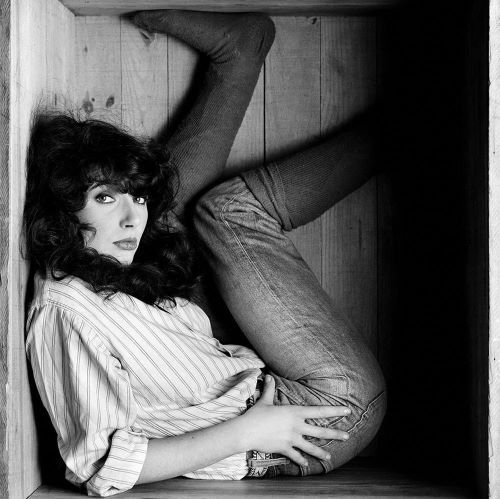
 PHOTO CREDIT: Gered Mankowitz

the acclaim that The Kick Inside received after its release into the world on 17th February, 1978. The debut album from Kate Bush, in years since its release, it has stood the test of time and is still talked about. I think that most people associate Kate Bush with Hounds of Love. That 1985 album remains her most-famous, but The Kick Inside is one that should be celebrated and talked about more. It is the ninth biggest-selling album of 1978. It includes Wuthering Heights – her timeless debut single that became the first self-composed song by a female artist to top the U.K. chart. The Kick Inside went to three n the U.K., and it was a success around Europe and Australia. Japan bonded with it. The Dutch and Portuguese charts took it to number one so, from the very start, Bush had a number one album and single (a feat that she would not achieve on Hounds of Love). America is one of few nations that didn’t get the album at all. A commercial flop there, I think a lack of promotion and interviews there accounted for its relative anonymity. Bush was not an artist setting out to crack America and be a big name there. She did promote The Kick Inside around Europe and further afield. 1978 was an intense year where Bush committed to making sure her music was being heard and talked about. The album itself is simpler than future Bush albums, but it remains one of her most beautiful and boldest.

In terms of the themes she was discussing, I think that is the biggest takeaway. She did not need varied and challenging compositions. No need to explore too many genres to start. Recorded largely between July and August 1977, the songs are piano-based and fairly simple in structure. She was singing about complex and mature themes for a teenage artist – with no peers of her age covering the same topics in her music. Of course, it is not just Kate Bush on the album. I think the band also help bring the songs to life. There was always a bit of a personal vs. label pull as to who would play on The Kick Inside – and something that would intensify dramatically for the follow-up, Lionheart (1978). Not that there were major falling outs but, as Bush recently toured with the KT Bush Ban prior to being called into the studio, she might have wanted to work with Del Palmer, Brian Bath and Vic King. Del Palmer and Brian Bath would appear on Kate Bush albums (Palmer has remained Bush’s engineer to this date), but The Kick Inside is an anomaly. It is the album without any of Bush’s chosen players appearing. She was a new artist, so I am not sure whether she was in the position to request her own band and judge how they would translate from the pubs to the studio. Relatively inexperienced, producer Andrew Powell wanted a more experienced band behind her. Maybe Bush’s guys would have given The Kick Inside a looser and less studied and narrow sound. That may have been a good move…but it might have backfired!

To be fair, The Kick Inside does have a broader musical spectrum than most people realise. Even if the core instruments of percussion, guitar, bass and piano form the base, they are deployed with emotional and sonic ambition and range. There are other instruments in the mix too. Bush would play the tracks through for the musicians, then the songs would develop from there. Even if Bush fought for the KT Bush Band for her debut, she was in awe of the musicians who played with her on The Kick Inside. Producer Andrew Powell played on The Kick Inside (he took the bass part for Wuthering Heights). The core of the band consisted of Duncan Mackay, Ian Bairnson, David Paton and Stuart Elliott. Experienced studio and touring musicians, they added that weight and professionalism to the album. Two members of the band Pilot, Ian Bairnson and David Paton, are among the most prominent musicians on The Kick Inside. Bush recognised both from Pilot, and there was a lot of respect and admiration between them all. Bairnson is responsible for the winding, evocative and powerful guitar solo that ends Wuthering Heights. David Paton’s bass work is full of character and emotion. Paton and Bairnson also provided backing vocals. I can imagine how much fun it would have been doing overdubs with Bush. A lot of fun was had through the recording sessions. Even if Andrew Powell’s production does not really allow some songs to breath and move as naturally as they should, the performances are exceptional. The chemistry between Bush and her band makes The Kick Inside such a timeless and brilliant album. The band and Bush have this wonderful link and connection that brings the songs to life. When we think about The Kick Inside on its forty-fifth anniversary on 17th February, we think about the band and the incredible musicians who helped bring this iconic debut album to life! Whilst the band were stunned and amazed by Bush and her talent, it must have been so exciting for her to be around…

THEM heady people.  

FEATURE: Live to Tell: Why the Scrapped Madonna Biopic Needs to Be Revived

FEATURE:


Live to Tell

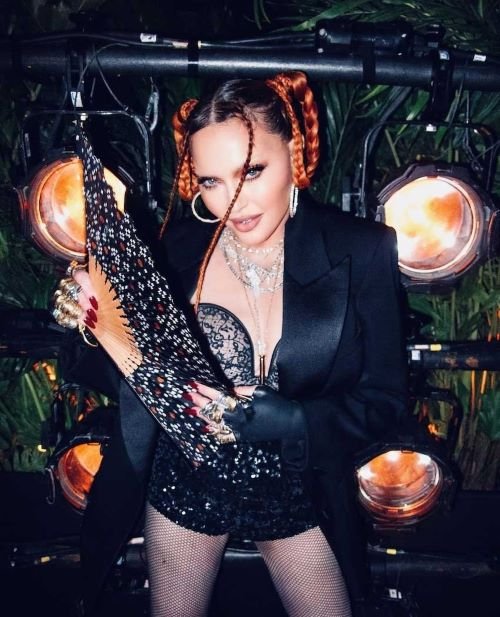
IN THIS PHOTO: Madonna in the cover shoot for 1984’s Like a Virgin/PHOTO CREDIT: Steven Meisel


Why the Scrapped Madonna Biopic Needs to Be Revived

_________

THIS broke last week…

 PHOTO CREDIT: Ricardo Gomes

but, as I have been talking about Madonna a lot recently, I wanted to keep the momentum going. It has been a busy and changeable start to 2023 for the Queen of Pop. One of the most exciting music biopic possibilities of this year was going to be the one from Madonna. The as-yet-untitled project would have featured Julia Garner as Madonna. Directed by the iconic musician, it would definitely have been interesting to see what angle the film took. In terms of setting and period, there is so much to choose from. Looking at Julia Garner, and one thinks of Madonna in 1986 – around the time she released True Blue. After so much years of speculation and rumours, it was a chance for a long-awaited biopic to come to our screens. As this article reports it seems like the biopic has been scrapped (or it is on hold at least):

The Madonna biopic that was to be directed by Madonna is no longer in development at Universal Pictures, The Hollywood Reporter has confirmed. The news comes after the singer announced a massive world tour, though multiple sources say the movie actually was put in turnaround late last year, before the announcement of the tour.

Universal had no comment.

The project, which was first announced in 2020, was going to chronicle the singer’s career, which spans almost four decades and has gone far beyond music as she has made forays into art, movies, fashion and charity. She burst onto the 1980s music scene and established herself as the Queen of Pop with best-selling albums such as Like a Virgin, True Blue and Like a Prayer. She eventually segued into a career in Hollywood, including directing and starring in feature films.

IN THIS PHOTO: Julia Garner

As of last year, Julia Garner was the frontrunner to play Madonna after a long audition process that saw many young stars of a certain age — including Florence Pugh and Odessa Young — go out for the role. According to sources at the time, the hopefuls participated in intense — sometimes up to 11-hour-a-day — choreography sessions with Madonna’s choreographer, after which there were choreography sessions with Madonna, herself. Callbacks consisted of readings with Madonna, as well as singing auditions with the superstar.

Amy Pascal was set to produce the movie, which was co-written by Secretary writer Erin Cressida Wilson and Madonna. (Diablo Cody was previously set to pen the project.

Development was always a struggle for the movie. None of the many drafts of the scripts was ever under 180 pages, according to one source. That led to conversations about perhaps splitting the movie into two or perhaps making it into an event miniseries. “You have 40 years of success, and it’s very hard to put that into one movie,” said the source.

As for Madonna, she said at the time of the project’s announcement in 2020, “I want to convey the incredible journey that life has taken me on as an artist, a musician, a dancer — a human being, trying to make her way in this world”.

It must have been an impossible task trying to hone a script. As Madonna has a forty-year career, it is a bit of a tricky thing. This year is going to see so many music biopics come to life. They are always some of the hardest films to get right. As you are dealing with a real person, there is that extra pressure to get things right. From the casting to the script, scrutiny and judgment awaits. There is also that question as to whether it is appropriate to put that artist/band onto the screen. Also, you have to consider whether the story you are telling is truthful and open, or whether it is too exploitative. With Madonna directing, you wonder if there would be more variety and exaggeration than openness and balance. I think it would have been a good biopic, so it is a shame that it has been scrapped. Madonna is embarking on a world tour and celebrating forty years in music. I guess it would have been impossible to do the tour and make the film but, if someone else was directing, it could have been realised. Not only is it a shame for fans who were looking forward to the biopic. I also feel it would have made a great anniversary release. In July, Madonna’s eponymous album turns forty. It is rare that we get a biopic about a Pop colossus where they themselves have say and creative control. Maybe it would have been a strange experience for Julia Garner, but the end result would have been worth it!

As much as anything, that catalogue is one of the best in music. Probably focusing more on her 1980s work, that period in American culture is so rich and vibrant. A 1980s-set film where we follow Madonna was definitely tantalising. The ‘80s has always been popular for filmmakers, but there seems to be this vogue (no pun intended!) for the decade now. There have been so many other attempts and approaches to get a Madonna biopic made. Having an authorised biopic would have united young and older fans alike. I know other actors were in the frame to play Madonna. Including Florence Pugh, I do wonder if there will be a recast if another biopic is made. Whether it will be Madonna’s original or someone else making one, we will have to see. After the world tour and celebration around the fortieth anniversary of her debut album, there is going to be such an appetite to see a biopic. The studio could have at least pushed back the biopic to next year. It does seem like a waste if we are not going to see it after all! I do feel like there is going to be an explosion of Madonna interest this and next year. New books are sure to come out and, as there have been some excellent music documentaries made through the years, surely a fresh and career-spanning one is required?

I also feel like Madonna is a major artist whose biopic could have inspired other projects. A Michael Jackson biopic is coming, but think of other artists like Prince and potential projects that could be kickstarted following a Madonna biopic success. I know it is speculative saying it would do well at the box office and critics but, with Julia Garner leading and a career that transformed Pop, hope would have been pretty high! I am hopeful that something will come to light soon regarding reigniting the biopic. As much as anything, Madonna herself is really invested and eager to bring her story to the big screen. After a world tour, you’d imagine she’d want to concentrate on a film. Maybe she might want to do a new album instead. It is a shame that the biopic is not going to happen, as it would have introduced her music to new fans. It also would have underlined how she is one of the most important artists there has ever been. An artist always evolving and producing amazing work, I am especially fascinated by her ‘80s period and how she released four remarkable and very different albums through that decade. With Julia Garner as Madonna, there would have been this incredible and devoted lead (considering how intense the audition process was, it is a shame Garner will not get to star). Regardless, Madonna is going to have a very busy year. Perhaps, when the tour is over and things settle down, it will be the time to bring the biopic back to the table. I think it is what fans around the world want. Whether Garner returns has yet to be seen. If the script and direction are just so, it would lead to a huge success. Let’s hope that the biopic…

HAPPENS next year.

FEATURE: Spotlight: J. Maya

FEATURE:


Spotlight


J. Maya

_________

AN artist who I am fairly new to…

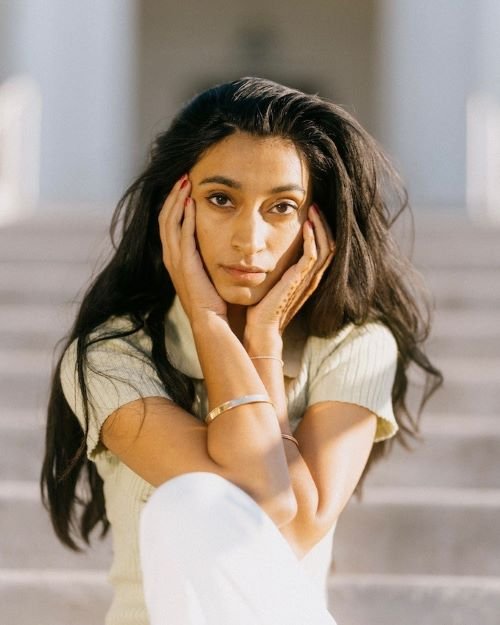
 PHOTO CREDIT: Max Christiansen

the terrific J. Maya is one of the most original and smartest musicians I have heard in years. Crowned the international championships' MVP aged seventeen, she became the youngest pun championships award-winner in history. It is a remarkably interesting and unusual fact about an artist whose music is truly stunning and inspiring! J. Maya has a deep love and fascination with language, which one can hear weaved through her remarkable music. Her E.P., Poetic License, was released in December. It is a magnificent E.P. from someone who is most definitely among those you need to watch closely this year. There are a few interviews with her available online. I wanted to highlight sections from a couple, as we learn more about her background, the Poetic License E.P., plus the incredible and wonderfully ingenuous single, Crossword Puzzle.  I am going to start with a recent interview from The New Nine. They followed Maja’s arc from her start in music, through to her graduating from Harvard, through to the making of her E.P. It is a fascinating interview with a truly exceptional artist that everybody needs to hear and follow:

How did you get started in music?

J. Maya: I actually initially got my start in music learning South Indian classical (Carnatic) music! IT’s still one of my favorite art forms to this day; Carnatic music is so rich in tone, modulation, and improvisation, and really gave me the musical building blocks I needed at a young age. From there, I experimented on my own with jazz (which shares a shockingly high amount of similar music elements with Indian music, actually), learning how to sing standards, scat, and fiddle, and studied classical violin, eventually joining the Peninsula Youth Orchestra. While I’ll be forever grateful for these foundational skills, I will say my mind was fully blown when I eventually discovered pop music. I became obsessed in my teenage years with the big pop girls – Beyonce, Ariana Grande, Katy Perry, etc. – and, specifically, how big pop songs were written. Every moment I could find, I was deconstructing the songs, playing with chord structures, and developing a passion for songwriting. When I was 16, I wrote my first full song, and the rest is history!

There are so many tremendous and hugely inventive artists coming through right now. I don’t think I have heard anyone quite like J. Maya. Nobody with the same story and incredible talent. I am hoping that there is opportunity for her to come to the U.K. this year and perform. An artist who is definitely going to be a big name and go on to huge success, it has been a pleasure discovering her music. Before wrapping up, Pop Nerd Lounge spoke with J. Maya. It is clear that fine details and beautiful touches go into her music in addition to her lyrics. Here is someone who wants her music to stimulate the mind but also provoke and stir the heart and soul. It definitely does that! Sunday Crossword might be my favourite song of Maya’s to date:

Your latest single, “Sunday Crossword” is ingenious wordplay that’s also emotionally relatable. We’ve all wondered at one point or another if someone liked us back. If a young person is listening to this song in their bedroom wondering if that one person likes them back, what do you hope they resonate with in the record?

These are such kind words – thank you so much! In both its sonics & lyrics, I wanted “Sunday Crossword” to convey the simultaneous anxiety & exhilaration of attempting to untangle someone’s feelings. With the power of hindsight in my corner, I am able now to reminisce fondly on my first crushes growing up; there’s something so thrilling about being a young person and dipping your toes into the rushing river of romance for the first time, often with no clue of what you’re doing. If someone reading this were to take a message from this song, I would hope it would be this: cherish those butterflies. It might feel nerve-wracking now, but you will savor these moments & this excitement for years to come, both in your relationships and in your general life. Sometimes, while you’re growing up, your feelings will be too big for your words, and that’s not a bad thing. In fact, it’s quite the opposite.

I love that nat sound you have in the beginning over the guitar of a couple doing the crossword together. Do you add fine details like that to elevate to the storytelling?

Thank you so much! I absolutely adore including small details in my music to deepen the stories within my songs & immerse the listener in a different world. For example, my fourth song “Library Card,” written about the experience of growing up a maladjusted bookworm, starts with a chorus of whispers over violin strings. When I originally had the idea to incorporate a spoken element into the introduction of the song, I asked my incredible social media followers to send me book quotes about love and life that skewed their expectations for real life. Each whisper represents one quote that was sent in. With both “Library Card” and “Sunday Crossword,” I love how these organic moments weave with the musical elements to continue the story at the heart of the song. As a songwriter, storytelling is always my utmost priority.

What characteristic do you most admire in other creative women?

I am constantly in awe of women who create out of a primal & unfettered love for art, women who build each other up and who don’t let the world’s negativity pollute their passions. It’s taken me a long time to be able to create without the fear of judgment; I am always learning from the women before me who paved the way for others to express themselves as authentically & wholly as they can”.

I am stunned by all the simply amazing and different artists that are going to make this year truly incredible. I want as many people as possible to know about J. Maya. If you have not found her or know much, then follow her on social media and listen to music – and also check out interviews with her. There is no doubt that she will take huge strides…

THROUGH this year.

_____________

Follow J. Maya

FEATURE: Search and Destroy: Iggy & The Stooges’ Raw Power at Fifty

FEATURE:


Search and Destroy


Iggy & The Stooges’ Raw Power at Fifty

_________

ARRIVING three years after…

 PHOTO CREDIT: Michael Ochs Archives/Getty Images

their second studio album, Fun House, Iggy & The Stooges’ Raw Power was released on 7th February, 1973. It was a much-needed return from a band who were on the point of collapse prior to that. Less groove-oriented than their first two albums, this was a more direct and Hard Rock-influenced album that lives up to its title. It is raw and powerful throughout! This direction was inspired by new guitarist James Williamson, who co-wrote the album with Iggy Pop. It is no wonder Raw Power is seen as a forerunner to the Punk era. One of the most influential albums ever, it influenced everyone from the Sex Pistols, Johnny Marr of the Smiths and Kurt Cobain of Nirvana. Co-produced by David Bowie, the original was given a remaster by Iggy Pop in 1996. There has been some controversy about the 1973 original, and the fact that it does not really have that much grit and venom. Pop’s remaster rectified that and gave fans something they had been waiting on for years! There is no denying that, ahead of its fiftieth anniversary, Raw Power remains this colossal album that changed the face of music. I will end with a review for the album. First, there are a couple of features that explore Iggy & The Stooges 1973 masterpiece. Guitar.com wrote about an album that received huge praise from critics. Although some were not a fan of David Bowie’s mix, nobody can deny the incredible legacy and importance of Raw Power:

By the time the Michigan band regrouped in England to record Raw Power they’d already hit rock bottom, splitting in 1971 due to a combination of Iggy’s voracious appetite for heroin, extreme poverty, dangerously violent gigs and the lukewarm response to their first two albums. David Bowie came to the rescue, finding Iggy a label and management deal and setting up the recording sessions in London.

Recording and mixing Raw Power was a suitably shambolic affair, with at least one member of the band by that point lucky to be alive. Unlike the first two Stooges albums, it was self-produced, resulting in a clueless Iggy mixing the whole band on one channel, the lead guitar on another and his vocals on a third of the 24-track desk. Handing the tapes to Bowie to sort out was the ultimate hospital pass. “He said ‘See what you can do with this’,” Bowie later recalled. “I said, ‘Jim, there’s nothing to mix’.” As Williamson remembers, “The fact of the matter is, when we made Raw Power, we really didn’t know what we were doing.”

In the circumstances, Bowie did a commendable job. Among his tweaks was feeding the guitar track on Gimme Danger through the Cooper Time Cube, a garden-hose based delay unit devised two years earlier, and of the several mixes of the album, Bowie’s is still widely regarded as the definitive version. Iggy was finally given the opportunity for some closure when he was invited to remix the album at New York’s Sony Music Studios in 1996, modern studio technology and all. While that incarnation has been dubbed “the loudest album ever made”, with every fader pushed deep into the red, it did little to halt the arguments, with Williamson complaining it “sucked” and Bowie saying his version had more “wound-up ferocity and chaos”.

Raw Power was a commercial flop, peaking at 182 in the Billboard Chart, but the reviews were positive, Rolling Stone’s Lenny Kaye praising the “ongoing swirl of sound that virtually drags you into the speakers”. It didn’t stop Iggy being dropped by both his label and management company, but the record’s legend has grown exponentially over the years. Kurt Cobain said Raw Power was his favourite album of all time, British rock critic Nick Kent called it “the greatest, meanest-eyed, coldest-blooded hard rock tour de force ever summoned up in a recording studio” and Ted Maider of Consequence Of Sound “by far the most important punk record ever”.

In 1973, Iggy Pop may have been, unjustly, the world’s forgotten boy, but today The Stooges’ influence looms large over a generation of guitar bands. When a topless Iggy and the surviving Stooges tore wantonly through Search And Destroy at their induction into the Rock & Roll Hall of Fame in 2010, it felt like long-overdue recognition of the ultimate rock’n’roll album. Raw power indeed”.

Boasting one of the most incendiary and impactful opening tracks in history, Raw Power opens fire with the magnificent Search and Destroy. Whilst I prefer the original (with Bowie’s mixing and production), I can appreciate why others lean towards Iggy Pop’s mix. Albumism looked inside some of the remarkable songs. I don’t think Raw Power will ever be forgotten. Its influence will continue to weave through the music of artists for generations more:

The opening track “Search and Destroy” remains in the pantheon of the greatest rock songs ever recorded. A lyrical pastiche of Time Magazine buzzwords, Pop aims at the establishment, growling the chorus, “I'm the world's forgotten boy / The one who's searchin', searchin' to destroy.” From the first guitar licks, the song is an urgent manifesto, rejecting the party line. Though not explicit in politics, the message is strong, a battlecry for the anti-Vietnam War movement and an examination of the fallout of a generation awash with the damage of combat.

“Gimme Danger” is one of the tracks that feels dramatically different on the Iggy Pop mix. On the original album, it is quiet and creepy, a song The Rolling Stones wished they had written. The Iggy Pop mix is brash and American, literally titled the “violent” mix. The contrast is especially dramatic post-bridge, Pop’s version with frenzied guitars, Bowie’s a muted solo.

“Your Pretty Face Is Going to Hell” is a hip-shaking rock and roll anthem, rooted in Chuck Berry. “Penetration” is dirty and raw, even on the cleaned up Bowie mix (with silly bell tones in the background). The lyrics are sparse, and the opening lines are delivered with a rasping Jim Morrison-quality. There are echoing hums, backing the yelps and sighs Pop delivers writhing around until the end of the track.

The title track “Raw Power” is fun and jangling, a tribute to Pop’s beloved heroin. The thrill of addiction and living a dose or two away from death gets a glamorous send-up. The drug held a tight grip on most members of the band, contributing to their erratic behavior and “rock and roll lifestyle.” They were all fortunate to shake it (eventually), though its devastating effects would keep the band from releasing new music or performing together for several years to come.

“I Need Somebody” brings The Stooges back to their bluesy roots, full of twang and vibrato. When Pop sings “I’m only living to sing this song,” you feel his listlessness, the blues guitar wailing loud enough to keep him alive for another line. Throughout the thinly-veiled drug metaphors, you understand the dire circumstances around the band’s health. But it’s also made clear that they just really loved drugs. There’s no desire to find a different path, just resignation to their new master. Armed with the knowledge of their lives post-Raw Power, it’s easier to listen to the album, but the darkness is still often acute and overwhelming.

A wild, groovy track, “Shake Appeal” would later be described by Pop as his as a way to “get to my dream of being Little Richard for a minute.” The howling intensity and double time drumming feels incredibly punk—it’s a track you can feel in the DNA of The Ramones or The Clash years later. “Death Trip” closes the album out with a winding guitar solo, a flashy signature from Williamson leaving his mark. It captures the ferocity of a live Stooges performance, Pop screaming to the point where his voice fries and fades”.

I will finish up with a review from AllMusic and their take on the masterful and explosive Raw Power. I am not sure whether anything is planned for its fiftieth anniversary, but it would be nice if there was a new vinyl release or something special! It is the least such an incredible and important album deserves:

In 1972, the Stooges were near the point of collapse when David Bowie's management team, MainMan, took a chance on the band at Bowie's behest. By this point, guitarist Ron Asheton and bassist Dave Alexander had been edged out of the picture, and James Williamson had signed on as Iggy's new guitar mangler; Asheton rejoined the band shortly before recording commenced on Raw Power, but was forced to play second fiddle to Williamson as bassist. By most accounts, tensions were high during the recording of Raw Power, and the album sounds like the work of a band on its last legs -- though rather than grinding to a halt, Iggy & the Stooges appeared ready to explode like an ammunition dump. From a technical standpoint, Williamson was a more gifted guitar player than Asheton (not that that was ever the point), but his sheets of metallic fuzz were still more basic (and punishing) than what anyone was used to in 1973, while Ron Asheton played his bass like a weapon of revenge, and his brother Scott Asheton remained a powerhouse behind the drums.

But the most remarkable change came from the singer; Raw Power revealed Iggy as a howling, smirking, lunatic genius. Whether quietly brooding ("Gimme Danger") or inviting the apocalypse ("Search and Destroy"), Iggy had never sounded quite so focused as he did here, and his lyrics displayed an intensity that was more than a bit disquieting. In many ways, almost all Raw Power has in common with the two Stooges albums that preceded it is its primal sound, but while the Stooges once sounded like the wildest (and weirdest) gang in town, Raw Power found them heavily armed and ready to destroy the world -- that is, if they didn't destroy themselves first. [After its release, Iggy was known to complain that David Bowie's mix neutered the ferocity of the original recordings. In time it became conventional wisdom that Bowie's mix spoiled a potential masterpiece, so much so that in 1997, when Columbia made plans to issue a new edition of Raw Power, they brought in Pop to remix the original tapes and (at least in theory) give us the "real" version we'd been denied all these years. Then the world heard Pop's painfully harsh and distorted version of Raw Power, and suddenly Bowie's tamer but more dynamic mix didn't sound so bad, after all. In 2010, the saga came full-circle when Columbia released a two-disc "Legacy Edition" of the album that featured Bowie's original mix in remastered form]”.

One of the all-time great albums, I have been listening back to Raw Power a lot over the last few days. This historic work from Iggy & The Stooges has lost none of its spark and edge! The glorious Raw Power is fifty on 7th February. Considering the fact The Stooges dislocated and there was this reformed and rebuilt Iggy & The Stooges, Raw Power could have been a mess. As it is, it is one of the best albums of the ‘70s. I first heard Raw Power when I was a teenager, and it impacted me heavily then. It still blows my mind years later. To me, this phenomenal 1973 album…

HAS few equals.

FEATURE: Love Me More: Creating a More Open and Accepting Environment for Trans Artists

FEATURE:


Love Me More

IN THIS PHOTO: Sam Smith came out as genderqueer in 2017 and non-binary in 2019/PHOTO CREDIT: Joel Palmer for GQ


Creating a More Open and Accepting Environment for Trans Artists

_________

OVER the past few years …

 IN THIS PHOTO: Celebrated and hugely influential Queer artist, girl in red/PHOTO CREDIT: Hanifah Mohammad for GAY TIMES

there has been a lot more visibility of great L.G.B.T.Q.I.A.+ artists on the scene. Once was the time where artists had to hide their sexuality – if they were not heterosexual that is. Change was gradual, but there is a lot more openness when it comes to sexuality. Although the music industry is not fully integrated and as supportive as it could be, things are a lot better. Artists themselves are putting out incredibly honest songs that do not hide or obscure. This is very powerful, and it means that L.G.B.T.Q.I.A.+ fans feel seen, heard and spoken for. Let’s hope that, soon enough, L.G.B.T.Q.I.A.+ artist receive as much opportunity as any other artist. The same cannot be said when it comes to trans artists’ rights. One might argue there are far fewer trans artists (than L.G.B.T.Q.I.A.+). This is true, though there are many great trans artists that are being overlooked. Maybe they feel like it would be taboo or career-killing to reveal they are trans. It is a corner of the industry that needs addressing. I do think there needs to be a lot of education and discussion about transgenderism. Still a lot of ignorance pervades. This article from 2020 shows that, whilst many L.G.B.T.Q.I.A.+ artists are receiving recognition and the credit they deserve, there are trans artists who are being ignored or sidelined:

Over the last few years, LGB artists have been gaining a lot of recognition in the music industry. From Troye Sivan and Years and Years frontman, Olly Alexander, to Hayley Kiyoko and the up and coming singer-songwriter Girl in Red, queer artists have deservedly been celebrated and incorporated into pop-culture. But what about transgender musicians? Why are trans and non-binary artists failing to break into the mainstream when they are no less talented than the cisgender members of the LGB community?

Perhaps the best example of a mainstream trans musician is pop artist Sam Smith. The British singer has gained immense popularity since their debut album in 2014, winning numerous awards—including four Grammys and three Brit Awards—and composing the theme song for the 2015 Bond film, ‘Spectre’. However, despite their achievements, Smith (who identifies as non-binary), has been repeatedly mis-gendered in the media since coming out. An Associated Press article attracted widespread criticism for repeatedly using he/him pronouns to describe the singer whilst reporting on Smith’s decision to use they/them, and though the news outlet later fixed this error, many other publications failed to do so. The issue highlights a lack of understanding towards the trans community, potentially a factor in why there aren’t as many trans artists in the mainstream and demonstrates the need to support trans people in the music industry.

There are loads of great trans and non-binary musicians working across a wide range of music genres, so there is guaranteed to be something for everyone. If you like pop music then I would highly recommend Dorian Electra, a genderfluid singer and performance artist whose music focuses on intersectional feminism and queer acceptance. Both their songs and music videos play with gender roles, questioning the idea of a binary and advocating for self-expression. They have also collaborated with Charli XCX and 100 Gecs and both songs are well worth checking out.

If R&B is your thing, check out Shea Diamond, whose soul infused music is incredibly powerful. The trans activist originally wrote the song ‘I Am Her’—which celebrates and advocates for trans women—whilst she was incarcerated in a men’s prison, where she faced discrimination for her identity. Her music is a testament to her experiences and displays great emotional and musical depth.

For a more folk style artist, Skylar Kergil is a singer-songwriter who explores his experience as a trans man in his acoustic tracks, which also contain undertones of country and western. Kergil also has a YouTube channel (skylarkeleven) where he has documented his transition and uploads trans activism related content. Similarly, Joanna Sternberg also creates folk music, though with a far darker and more gritty tone. Their debut album Then I Try Some More explores mental health issues and suicidal ideation, making it a difficult listen but well worthwhile”.

IN THIS PHOTO: Kim Petras/PHOTO CREDIT: Jason Al Taan/The Guardian

It is sad that things have not really opened up or changed since 2020. Kim Petras is a trans artists who has had to experience prejudice from her label. As a trans artist, there was this feeling that it was difficult to market her. As this MTV article from 2019 explains, the artist (who released Clarity that same year) was in a position where the label had to ask whether it was lucrative and commercial being a transgender artist:

Kim Petras's debut album, Clarity, which she released this past June, received high praise from critics. Reviews of the LP compared her to a range of notable acts, from Robyn and Lorde to Britney Spears and Christina Aguilera. But if you're not very familiar with the 27-year-old rising artist, you may not know that she's actually unsigned. And yes, there's a reason for that. In a recent interview with V magazine, Petras opened up about her issues with major labels and her experience shopping for deals as a transgender artist.

First and foremost, the "Broken" singer takes issue with labels because she says, they tend to transform their artists into someone else completely. For her, that's always been a big fear. "I see so many unique and amazing people slowly become the 'LA pop girl group' that everyone becomes," she told the mag. "I'm really scared of that."

It became abundantly clear that she didn't want to attach herself to a label when she was first shopping around for deals. Petras called these industry meetings "really annoying," describing them as "a room full of people discussing, how do we market it? How do we keep it a secret? Debating if it's possible to be transgender and lucrative." Part of that, for Petras, was that being a woman in the music industry can be difficult. "I think only 10 percent of last year's nominees were women," she said. And on top of that, being trans meant she faced an additional set of challenges. "I've had a lot of meetings with labels where the only thing they're able to talk about is me being transgender, not even the music," she said.

The transphobia continued when music labels refused to work with her and implored others to do the same. "It was maybe two years ago when I was shopping for deals," she said. "Really religious people at major labels in LA have said: 'You're going to hell if you work with Kim Petras.'" Fortunately, she didn't need them to become the success that she is today. "I think this is the first time doing this independently would even be possible," she said. "Being a transgender artist wouldn't have been possible 10 years ago. Now is the time”.

If artists like Kendrick Lamar have brought the subject of transitioning into their music, how many other non-trans artists are talking about it? How much support is there from the industry at large? I am not sure what the situation is like in other countries, but it does seem that there is a lot of transphobia and discrimination around. Sam Smith recently discussed their experiences with transphobes and abuse. NME explain more:

To celebrate the release of their fourth album, ‘Gloria’, Smith sat down with Apple Music’s Zane Lowe for an exhaustive interview; in addition to the album itself, the pair dove deep into topics like mental health, Smith’s recent trip to the White House, their appearance on Saturday Night Live, and their return to the touring circuit.

At one point in the chat, Lowe asked Smith how they’ve felt since their coming out; the singer first opened up about their transness in 2017, identifying theirself as genderqueer in an interview with The Sunday Times, before later coming out as non-binary (and updating their pronouns to they/them/theirs) in 2019.

Explaining how their life has changed since coming out, Smith told Lowe: “We’ve got two sides, really: my personal life and then my public life. And in my personal life, there’s not one negative. My family can communicate with me; they always did, but they communicate with me now in an even better way. My love life has become better from it – I feel loveable, I feel comfortable my skin, I wear what I want to wear.”

Smith went on to say they’ve ultimately felt “joy in abundance” as an openly non-binary person, and described coming out as “a coming home”. Nodding to a history with gender dysphoria, they continued: “I wish I knew what the words were when I was in school, because I would have identified as that in school because it is who I am, and it’s who I’ve always been”.

The International Transgender Day of Visibility happens on 31st March. The Transgender Day of Remembrance (TDoR) is on 20th November. The latter was founded 1999 by transgender advocate Gwendolyn Ann Smith as a vigil to honour the memory of Rita Hester, a transgender woman who was killed in 1998. I do hope that reading stories like Sam Smith’s compels greater action from the music industry. Great awareness and acceptance from people. Learning how so many trans artists (and people) are attacked and abused should shock enough to open up conversations. The industry needs to hear the stories of trans artists and promote their music more. I am not sure how difficult it is for trans artists to get a record deal and ensure that they are marketed effectively. I know the experience of Kim Petras is not isolated. In March, on International Transgender Day of Visibility, let’s hope that there is a drive towards greater inclusiveness. So many incredible trans artists out there are having to struggle to be heard and receive the same sort of spotlight as other artists. Music is weak when it is divided and artists cannot fully express themselves. Music is only at its absolute best and most inspiring…

 PHOTO CREDIT: Lena Balk/Unsplash

WHEN there is total acceptance and inclusiveness.

FEATURE: An Alternative Take: Could Kristen Stewart Directing boygenius Videos Lead to More Actors Directing Artists?

FEATURE:


An Alternative Take

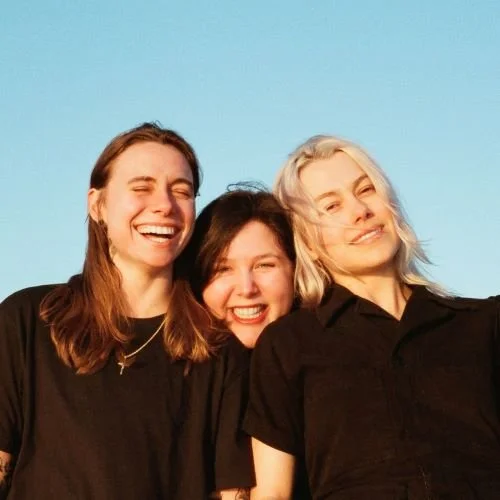
IN THIS PHOTO: boygenius (Julien Baker, Lucy Dacus and Phoebe Bridgers)/PHOTO CREDIT: Harrison Whitford


Could Kristen Stewart Directing boygenius Videos Lead to More Actors Directing Artists?

__________

ALTHOUGH it has happened in the past…

IN THIS PHOTO: Kristen Stewart/PHOTO CREDIT: Arturo Holmes

I am fascinated by famous actors directing music videos. Plenty have appeared in videos before, but the idea of them stepping behind the camera is really intriguing. I will round off with a few thoughts about whether we will see more of this in 2023. The excellent boygenius (Phoebe Bridgers, Lucy Dacus and Julien Baker) released a few new tracks recently - $20, Emily I’m Sorry and True Blue are part of the upcoming album, The Record. The hugely celebrated and extraordinary Kristen Stewart (Twilight, Spencer) is directing a few boygenius videos. There is no word which videos she’ll direct, but it will be fascinated they are the three songs dropped from the album. Maybe they will be new singles. I suspect that she will direct at least one or two of the videos from the trio that are already out. Variety provided more details:

One week ago, Boygenius — the indie-rock “supergroup” consisting of Phoebe Bridgers, Lucy Dacus and Julien Baker — announced the impending arrival of their highly-anticipated debut full-length, “The Record,” set for release on Interscope Records March 31.

With no advance warning, last week a three-song teaser dropped, along with the reveal of the album’s 12-song tracklist in a Rolling Stone article that is shaping up to be the gift that keeps on giving. On Thursday, the publication released a string of outtakes from their conversations with the band, including the revelation that Kristen Stewart has been tapped to direct at least three of their upcoming music videos.

No further details were provided, and the status of the group’s friendship with Stewart is not well-known, however, Bridgers once famously tweeted, “I like to release music on sacred days such as Kristen Stewart’s birthday.” That same day, Bridgers released “Kyoto,” the hit single from her 2020 record of the same name.

Along with the directorial reveal, the band also said revealed who they would like to have as their fourth member, listing Big Thief’s Adrianne Lenker and Mitski. “Those two writers keep me up at night about what is good and right in the world and art,” said Bridgers.

They also shared that it was Bright Eyes’ Mike Mogis who was the first to suggest that the three get together and play in 2018. “Out of all people, he probably said it first and was the least annoying,” Dacus said. “It was coming from a music perspective, and not a marketing perspective.”

Although Boygenius is scheduled to play Coachella on April 15 and 22, no additional live dates have been announced likely due to Bridgers’ opening stint between May 5-28 for Taylor Swift’s massive “Eras” stadium tour”.

I don’t think music video directors get enough credit. You think about music award ceremonies, and there is not a lot of focus on those who directed the videos. I think we take for granted the great videos that support these amazing songs. There are so many inventive and interesting ones released each year, it would be nice for directors to get kudos and more exposure. I am not sure whether there will be a lot more association between Kristen Stewart and boygenius, but I do hope that we see more big actors directing artists. The potential pairings are tantalising. So many actors discuss their love of music, but how many cross from acting to music? Florence Pugh has an album coming later in the year, but seeing a music video directed by her would be great. Olivia Wilde, Margot Robbie, Colin Farrell…the list could go on and on! It is not only a good grounding and experience for actors who want to direct films. It also brings artists and bands’ music to a wider audience (through asociation). Maybe boygenius’ music could feature in an upcoming film. I have often felt that artists like Phoebe Bridgers would be great actors. Similarly, other artists might want to collaborate with Kristen Stewart when it comes to a video – or have her appear in a video for one of their songs. I do think that Stewart will direct a lot more, but I feel music and acting and natural bedfellows. Plenty of actors record their own albums, and many musicians act on the big and small screen. There has been less coverage and crossover when it comes to the directing side of things.

Whether directing an alterative group or a decades-running legend, I don’t think it is just fashionable or ‘cool’ to have an actor helm your video. It is clear that actors can bring something really special to a music video. The experience they have of being directed and appearing in various productions can be a real bonus. I am looking forward to seeing what comes about from the Stewart-boygenius partnership. Throughout this year, let’s hope we get more news of this sort. Everyone has their dreams about artists they’d like to see hook up with actors (to direct). There are so many possibilities to consider. Usually, I would have let a story like the one we have – Kristen Stewart and boygenius working together – slide and not consider it further. The reason I wanted to expand on it is because of the fact the great boygenius are back. It is brilliant to have this amazing trio putting more of their distinct music into the world! Having the wonderful Krsietn Stewart on board for some videos will be insane. Maybe she will appear in one or two. Whilst not a phenomenon yet, maybe a few more actors stepping behind the camera to direct music videos will create something large and ongoing. Many will be waiting for interest to see what Kristen Stewart offers boygenius with her..

DISTINCT takes.

FEATURE: Shout Out to My Ex… The Power of the Modern-Day Break-Up Song

FEATURE:


Shout Out to My Ex…

IN THIS PHOTO: Miley Cyrus


The Power of the Modern-Day Break-Up Song

_________

ALTHOUGH it is not a new phenomenon…

 PHOTO CREDIT: Marcell Rév

there is something about the break-up song that is empowering and memorable. They take different forms. There are songs of recrimination and blame following a break-up. These can be quite angry and accusatory, and they have been providing direction, strength and comfort to people for generations. What is more intriguing are break-up songs that have a strong message. Those that see the protagonist moving on and enjoying a better life. From 2016 hits such as Little Mix’s Shout Out to My Ex, to Dua Lipa’s 2020 song, Don’t Start Now, there have been these anthems that have made a big impact. I am especially interested in the female empowerment anthem. A recent article from The Guardian talked about the rise and importance of these songs. Miley Cyrus’ new track, Flowers, is about her getting over a divorce and being able to do fine alone. “Yeah, I can love me better than you can” is a mantra that will inspire a lot of women around the world. It applies to men too but, in terms of gender, The Guardian note how there is a difference in tone and direction. Cyrus’ Flowers sees the heroine reveal that she did not want things to end (she and Liam Hemsworth divorced), but she then remembers how she can do all of these great things. Pay attention to herself and felt loved. Whether the performance has guts and a huge chorus or lyrics that come from deep down, there is a positivity to them that shows resolve and a sense of rebirth.

Miley Cyrus can buy herself flowers, she can write her name in the sand. She can take herself dancing, and she can hold her own hand.

That’s the message the pop star imparts in her new single, Flowers, which smashed Spotify’s one-week streaming record with more than 96m streams last week, and topped charts around the world including in the UK, Australia, Canada and China.

The song, reportedly about Cyrus’s divorce from the Australian actor Liam Hemsworth, has become an anthem for female empowerment after heartbreak. Cyrus even released it on her ex-husband’s birthday, spawning countless headlines, TikToks and memes about Hemsworth’s rumoured shortcomings.

What’s most fascinating, he added, was the “gender divide” in the songs. “Breakup songs sung by men are [often] in the noble blues tradition of ‘my baby she left me’ as they sit feeling sorry for themselves. But while there are plenty of heartbroken women, there are just as many songs about a woman picking herself up and moving on. Both Gaynor’s I Will Survive and Cyrus’s Flowers are essentially feminist anthems. The women are empowered by their breakup, not destroyed by it. No wonder it turns out to be such a rich seam of songwriting.”

Alex Goat, the chief executive of the youth culture specialists Livity, said: “If Lewis Capaldi’s Someone You Loved and Forget Me sit firmly in the depression phase, Flowers feels like you’re coming out the other side, alongside Dua Lipa’s Don’t Start Now, which brings a sense of acceptance and empowerment to ‘owning your breakup’”.

The Guardian also noted how Miley Cyrus’ new track is part of a larger body of break-up songs from women which are empowering and have this huge power. Shakira found great success with a diss track against footballer Gerard Piqué. Made in collaboration with DJ Bizarrap, it earned enormous views on YouTube. Whilst different to Miley Cyrus’ song, Shakira’s has a definite sense of retaliation and attack. It is clever and witty, but the Spanish-language song has a huge punch. This article delves deep into a song that has picked up a lot of attention:

The song has been praised for its excellent wordplay and double entendres. In the second verse, Shakira says, “I only make music; sorry if it splashes you.” The Spanish word for “splashes” is “salpique” (sal-pique). In the pre-chorus, Shakira remarks, “She [Pique’s mistress] has the name of a good person; clearly, it’s not how it sounds.” Clara, the name of Pique’s mistress, etymologically means “brilliant and pure” and was popularised by Santa Clara de Asis in the 13th century. The Spanish word for “clearly” is “claramenta” (clara-mente).

During both of these references, Shakira appears in low-angle shots, implying that the pair are beneath her. After all, the chorus contains the line, “I was out of your league that’s why you’ve settled with someone just like you.”

At 2:22 minutes, Shakira says, “I’m worth two 22 year olds”, at which point she displays peace signs on each finger. Ostensibly, it’s a mere reference to Piqué’s mistress’ age, but it’s also an appropriation of the iconic gesture which Piqué used to dedicate his goals to Shakira, for both he and Shakira were born on February 2nd (2/2). A further numerical reference can be seen with the length of the song: it lasts 3:33 minutes. Pique’s favourite number and his Barcelona FC shirt number? You guessed it – three!

This line is followed by a pair of lyrics that have taken the world by storm: “You traded in a Ferrari for a Twingo; you traded in a Rolex for a Casio.” Whilst this might appear to be an hilarious, simple mention of luxury brands compared to cheap brands (Shakira vs. Clara), Shakira does not do random. Indeed, Piqué is known for his love of watches and cars; he has million-dollar collections of both. Hilariously, Pique attempted to clap back at Shakira by announcing a partnership with Casio, only for Casio’s stock market to plummet – whilst Rolex’s rose and the dis track broke records – before Casio revealed that Piqué lied. Piqué then arrived to work in a Twingo – attempting to embarrass Shakira but merely proving her point”.

There is a distinct gender divide when it comes to break-up songs. For male artists, I think there is more downbeat and defeated spirit. I guess there are male empowerment songs, but most post-break-up songs from male artists are more sorrowful and pained. Sure, female artists also release songs like this, but that idea of moving on and doing better alone is growing in popularity. At a time when social media promotes false and idealised images of women, it can be quite dangerous and damaging. I think empowering break-up songs promote self-care and self-acceptance. Sending out the message that there is light at the end of a relationship. Whilst you do not hide the pain, rather than dwelling and letting it defeat you, there this resolve and attitude that sticks in the mind. Not only does it show positivity and prioritising the self. Part of a larger narrative, think about Self Esteem (Rebecca Lucy Taylor) and her album, Prioritise Pleasure. The title track has this incredible and strong message: “So I'm breathing in/One, two, three/Prioritise pleasuring me/No need to wait for bended knee/I'm free”. It is amazing that these songs of freedom, determination and self-love are out there in the world. Shakira has created this viral diss track that sticks it to her ex. Miley Cyrus is seeing the positives in a single life, whilst Lana Del Rey has put billboards up in her ex’s hometown ahead of the release of her new album. Rather than this being (the 2017 film) Three Billboards Outside Ebbing, Missouri, it is more a couple of billboards outside Tulsa, Oklahoma. Wonderful to hear and see, these songs and acts of independence, takedown and self-love are going to inspire so many other people. It will be interesting to see what comes form Miley Cyrus’ forthcoming album, Endless Summer Vacation (out on 10th March). Like her latest single, her music and life is…

IN full bloom.

FEATURE: Spotlight: Tyla

FEATURE:


Spotlight

 PHOTO CREDIT: Anthony Bila for Breakroom Africa


Tyla

_________

I know there will be a slew of interviews…

soon with an artist who broke through during the pandemic. Getting onto the radar in 2020, 2021 was a very busy year for her. I think this year is one where Tyla puts out her best work. Perhaps her most prolific year so far. Tyla Seethal is a South African singer who first found fame on TikTok. After finding a huge fanbase and popularity on the platform, she released the huge song, Getting Late, with Kooldrink. Since then, she has put out other material. I don’t think I have included many South African artists in my blog. Perhaps not as renowned as the U.K. and U.S. when it comes to artists, it is clear that 2023 is a year when Tyla will attack and gain a huge footing. She is definitely someone you should know about. As there are not any interviews (that I can find) from last year, I will go back to 2021. It was the year when Tyla came to prominence and was getting noticed. 1883 Magazine asked Tyla about Getting Late and how the song came together. She was also asked about breaking out as an artist during the pandemic:

So, first of all, congratulations on the single. What would you say was the initial journey to making this song happen?

Ever since I was little whenever anybody asked me what I wanted to be when I grow up I always said that I wanted to be a singer. I would say that I started taking it seriously at the end of high school, I posted covers and original songs on Instagram and I got discovered by my now manager in 2019. And that was a total change with everything I started exploring my sound it was my first time I had ever recorded anything in general and that was when I met Kooldrink who is the producer of my single. We recorded multiple songs and tried multiple genres and when we came across Getting Late we knew that was the one we wanted to break out with. It was my first time I tried Amapiano it was the first time Kooldrink had ever done Amapiano, we knew that it was something we wanted to do and the fact that my voice is more poppy and his production tends to be more electronic so we managed to find a balance in between and that’s how we came up with Getting Late.

PHOTO CREDIT: Flourish and Multiply

You worked with Kooldrink who was the producer on the song, how did that initial meeting happen

When my manager discovered me, he brought me and my parents to meet and I was told that we were going to record that same day. That night I was staying up trying to write a random song to this beats I was sent. I then went in and we met Kooldrink and I recorded that same day for the first time ever.

With him being a new producer himself what has that collaboration process like for the both of you

Kooldrink taught me a lot of the basics. I came into really knowing nothing about recording and all these technical things. I was just a singer that sang in the room, and he taught me things like mic control, harmonisation a lot of the things that I know now. Initially it was difficult because we were both trying to meet in the middle and get to know each other sounds and how to work together. However, when we got into the groove it was just great and that’s how the song came together because we were both just being very creative and giving it our all and things just started flowing from there. It was a very natural process.

The song came out at the end of 2019 and so just with everything that has happened since then what has that been like?

It has been crazy, its been so exciting for me and for my whole team. A lot of work came from the team so its an excitement that we are all sharing right now because although we were hoping for a good response we were never expecting one lik this. We are just truly blessed and excited for the future.

You mentioned this is your first venture into Amapiano with both yourself and Kooldrink is this an area you see yourself going into or are you still exploring your sound?

As a singer I’d say that my voice is more on the pop and R&B side if you had to ask me but as an artist, I would love to be able to explore as many genres as I can. I would love to be able to make fusion type music mixing my voice with other genres and making it my own, which was basically what we did with the song. Although its Amapiano it’s a different type of Amapiano so I feel like that’s something I want to do with different types of genres, just try make it my own and add something fresh into the music scene.

As a new artist yourself what has it been like breaking out during this time?

So initially after we released the single last year was supposed to be the “breakout” and then COVID happened and shook all of us. It very difficult because I wasn’t able to do the things I would’ve liked to do, so it was very difficult for me especially because I’m very ambitious and I dont like sitting and not doing anything. It was very frustrating, and then as soon as things started lifting I just straightaway started working again with my team, recording, finishing the music video and we did as much as we can just ready for this year because we knew if last year wasn’t the year then this year is going to be the year that we take everyone for a ride. And although it was difficult it was worth the wait”.

I do think that this year is going to be an exciting one for Tyla. She has already been tipped by some sites as a name to watch through 2023. We will definitely get more singles from her – and maybe an E.P. would not be out of the question. I want to come to an interview from Metal Magazine, where we learn more about her upbringing and her path to becoming an artist. Someone who is inspired by the artists and visuals of the 2000s American R&B scene, I wonder whether this will be explored more in future singles and videos:

Could you tell us a bit about your upbringing and what led you to want to become a singer and performer?

Ever since I could say the word ‘singer’, it was all I told people I wanted to be. I grew up listening to almost every genre and I come from a very musical family. My love for music started very early in my childhood. I remember watching Michael Jackson and Rihanna concerts, music videos and just imagining myself in that space. Nothing else ever felt right and I truly believe it’s my calling.

I read that you have been really inspired by 2000’s American R&B music and music videos from artists like Aaliyah and Cassie, in what ways did they inspire you?

American R&B is the music I grew up on. Boyz II Men, Kem, Tevin Campbell, Aaliyah, Cassie and the list goes on and on. I love the groove of the music and how it can make you feel so many different emotions. I listened to Aaliyah and Cassie dreaming I could also be a superstar one day. Them being young Women of Colour was something that motivated me and kept my dreams strong.

Coming from the music scene in South Africa, what can you tell us about it and how has it shaped the way you approach your music?

The music scene is South Africa and Africa in general is so evident in the culture. I can confidently say that Africa is the continent of music. The music scene here is huge and I’m super excited to see more of a global audience pay attention to what we have going on out here. The music scene has been dominated by the genre Amapiano and I am in love with it. It is a genre that originated here, and I fused it with pop to make my single Getting Late. In SA we love to dance so I keep that in mind when creating my music.

You have talked about how much you love singing and dancing, but you also enjoy acting, drawing and writing – outside of music, what kind of things inspire you artistically?

I genuinely just enjoy the arts and everything that falls under it. In South Africa, we are so rich in culture so there is always space to be inspired. Whenever I see or hear something I like, it is an inspiration to do more and just be present in every space I can.

TikTok and other social media platforms are good for getting exposure as an artist; how do you approach social media and how does it feel having such a large following already?

Social media is an amazing tool for artists as it helps me engage with my supporters and share my work with millions of people all around the world. I genuinely enjoy creating content and have been for a long time. I don’t take social media too seriously but it has become a part of my job and something I have to keep up with. The following grew gradually so I’ve gotten used to it over the years. I choose not to comprehend the number and just act as if it’s a value on the screen. I’m super grateful for my supporters and audience. It feels great knowing they have my back”.

I will round things off with a recent feature from Out Now. After a little bit of a gap between releases, it was great to hear news that put out the incredible To Last in November. It does seem to signal that we will get more new tracks from the brilliant Tyla very soon. She is a sensational talent who is going to be among the brightest and best young artists to watch. I love her sound and vibe, and I do feel she is going to be around for many years. If you have not heard Tyla, then go and follow her and familiarise yourself with her awesome sound. She is very much primed for stardom. It is exciting hearing these early sound and footsteps:

African superstar singer and songwriter Tyla unleash a new dreamy single “To Last” via FAX Records/Epic Records

It notably marks her first release since 2021.

She leans into this soundscape with confessional lyrics such as “You never gave us a chance, it’s like you never wanted us to last.” Taking a left turn, the momentum spirals into a dancefloor-ready bounce uplifted by her vocal echoes.

Last year, Tyla made waves with “Overdue” [feat. DJ Lag & Kooldrink]. In addition to piling up over million streams, it soundtracked the Season 2 trailer for NETFLIX’s Blood and Water.

Tyla initially broke through with the 2020 smash “Getting Late” [feat. Kooldrink]. Beyond generating over 5 million streams and counting, it inspired widespread praise from PAPER, i-D, and more.

Tyla spent countless hours honing her voice at home, singing with her siblings every Sunday as part of a weekly tradition. At the same time, dad introduced her to R&B and soul, encouraging her to eventually experiment with styles and cultures. By high school, she began posting covers on Instagram before catching the attention of her Creative Director Garth Von Glehn. She wrote and recorded “Getting Late” with Kooldrink in 2020.  Upon the video release in January 2021, it resounded around the globe, reeling in millions of views and notching tastemaker praise”.

Go and spend some time with the incredible Tyla. There are so many artists coming through right now being spotlighted for success. I think some of them will not be able to compete with the best of the best and endure. That is not the case with Tyla. She is someone who is definitely going to be in the top leagues, guaranteed to be around for a very long time. The South African musician is going to make this year…

SUCH a great one.

_____________

Follow Tyla

FEATURE: Second Spin: Muse – Simulation Theory

FEATURE:


Second Spin


Muse – Simulation Theory

_________

MUSE released…

 PHOTO CREDIT: Jeff Forney

the amazing Will of the People last year. They are a tremendous and legendary band, but I think that their music can divide people. Maybe some feel they peaked around 2006’s Black Holes and Revelations, but the Devon band have been producing excellent albums since. One that is underrated and warrants more love is 2018’s Simulation Theory. Unlike some of their more Rock-based albums, their eighth took in influences from Science Fiction and 1980s pop culture, with a much greater use of synthesisers. I think that the album deserved much bigger acclaim from critics. That said, Simulation Theory got to number one in the U.K. and twelve in the U.S. I will get to a couple of the more positive reviews for this excellent Muse album. I really love Simulation Theory, so I wanted to shed positive light on it. Before coming to some reviews, the BBC spoke with the band’s lead, Matt Bellamy, in December 2018 ahead of live shows to promote Simulation Theory:

This album riffs on the sounds of the 80s. What led you down that path?

When I started making the album, I purchased a virtual reality headset and gaming system. I've never really been much of a gamer - but it blew me away, the feeling of transportation into an alternate world. I found that really fascinating. That correlated with my interest in the TV series Black Mirror and my love of sci-fi - and so it triggered memories of my childhood in the 80s.

What sort of things?

When I was eight or nine, I watched a few films that perhaps I shouldn't have watched at that age - Aliens or The Thing or Blade Runner. And those films had a bigger impact on me than I realised. So the first song on the album, Algorithm, is my invented sound track to a sci-fi film from the 80s.

Then I also got interested in my memories of family films such as Star Wars and Back To The Future and Teen Wolf and I thought to myself, "On the videos for this album, why not create our own little virtual world, where we can go back and visit some of our favourite things from our early childhood?" So it's all linked together.

You can't have been expecting that when you bought a games console...

I think simulated reality is something that'll become more common in the coming decade. We'll soon be able to live in these online gaming surroundings.

The other thing that fascinated me while I was playing these computer games was that I could talk to random strangers in Russia, Korea or somewhere in America. There was a whole social aspect - and I think that really influenced the sound of the album and gave it the mixture of nostalgia and that futuristic feel.

I immediately thought of Back To The Future when I listened to the album. It was like you'd taken Doc Brown's DeLorean and gone back to the 80s. Especially on a song like Propaganda where it sounds like you're trying to connect to the soul of Prince.

Yeah, basically! And this isn't the first time. We did that on Supermassive Black Hole, too.

But the thing is, I think nostalgia not the same as it used to be. That's a strange thing to say. But when we were in the 90s and 2000s, looking back wasn't something I did very often. But I feel in this decade, nostalgia gives you this funny feeling - you can bring something back but also make it feel like it's for the future. So the feeling is like, "Oh, actually this thing isn't dead. I'm bringing it back to life".

The album seems a lot more optimistic than the dystopian nihilism of Drones and Second Law. Have you changed your mind?

For sure. It might be age, getting slightly older, but there have always been songs of hope buried in Muse albums. Some of our most popular songs, like Uprising, have a positive message for strength and resistance against oppression. Perhaps its been buried under the dystopian nightmares - but on this album, that positive side is definitely coming through”.

I will get to a couple of the more positive reviews for Simulation Theory. LoudWire where Impressed by the new sonic direction and the way the album captures the listeners’ imaginations. Compared to the colder and more political Drones (2015), Simulation Theory is definitely brighter and broader. It is an album that I would recommend everyone to listen to:

This is not a test. We encourage you to find a pair of headphones and escape into Muse's world of high stakes heaviness known as their Simulation Theory album. The trio of Matt Bellamy, Chris Wolstenholme and Dominic Howard have continually pushed boundaries, becoming more and more theatric with each album and Simulation Theory continues that trend, taking listeners into a world that feels both nostalgic and futuristic at the same time.

For their latest effort, Muse employed a different release strategy, initially choosing to go the "singles" route, offering the first taste of new music -- the ominously heavy and slinking rocker "Dig Down" -- way back in May 2017. The better part of a year passed before "Thought Contagion" followed, with the dynamic rocker challenging listeners not to get caught up in the party line that often comes with news reporting. While both tracks were issued initially as stand alone singles, they eventually became the building blocks for a new album.

And build is exactly what Muse did, employing all sorts of musical gadgetry to capture the imagination of listeners while thematically attempting to hold on to humanity in an increasingly technologic world. It feels like a bit of a musical playground at times, with bluesy slide guitars, scratching, church organs, pianos, robotic vocals and more joining the kitchen sink in the mix, but the guitars, synths and drums still power most of what the band does and does well.

The album opening "Algorithm" is not what you might consider a traditional song structure, starting with an instrumental bit that employs tension-building synths and strings and a bit of classical piano that Bellamy once likened to "'80s synth computer game music." A minute and a half passes before the opening vocal, but the lyrics are worth waiting for, setting a very visual tone for what's to come -- a war with a creator as humans are viewed as more of a simulation. That seemingly falls in line with the videos for "Dig Down" and "Thought Contagion," which teased a virtual world that has played out as more videos have been released from the album.

Bellamy and the band have created an album that flows together musically and creatively, while delivering songs feel like they come with high stakes. "Break me out / break me out / Let me flee / Break me out / break me out / set me free," begs Bellamy with impassioned intent, while later showing some insane falsetto on "The Dark Side."  "Life is a broken simulation, I'm unable to feel / I'm searching for something that's real / I am always seeking to see what's behind the veil," later offers the singer in "Blockades," showcasing a bit of what lies at stake in the driving, "Knights of Cydonia"-esque rocker. Meanwhile, the album closer, "The Void," finds the band at one of their most defiant moments, with Bellamy proclaiming, "They'll say, no one can see us / That we're estranged and all alone / They believe nothing can reach us / And pull us out of the boundless gloom / They're wrong / They're wrong / They're wrong."

While the lyrics may paint a picture of isolationist angst, the music drives home the point. Howard shines on this highly percussive collection of music, bringing some heavy beats to the more intense tracks on the album, while keeping things swinging and catchy on songs like "Pressure" and "Break It to Me." Other highlights include the radio ready single "Something Human" and the triumphant "Get Up and Fight."

Though Muse have made their name in the alt-rock world, Simulation Theory ups the ante on heaviness and intensity, making it well worth checking out for those who prefer something a little heavier in their sound. Invest in some headphones and enjoy this journey”.

It is a shame that there were some mixed reviews for Muse’s brilliant Simulation Theory. Singles such as Pressure and The Dark Side are some of the band’s best, and it is an album that you come back to time and time again. Pressure is my favourite song from the album. It is such a funky and banging song that stays in the head! In their review, this is what NME had to say about one of the best albums of 2018:

In a bid to escape boredom in the early ‘90s, three awkward teens from Teignmouth, Devon, wearing Ned’s Atomic Dustbin and Nirvana t-shirts, channelled their adolescent angst – and the drive to be as weird as possible – to form what would become the institution and stadium powerhouse that is Muse.

In those early interim days of artsy grunge experimenting, they went by the names Carnage Mayhem, Gothic Plague and Rocket Baby Dolls. Muse geeks will have experienced a titter of gleeful fandom when the band adopted ‘Rocket Baby Dolls’ as their moniker in the ‘80s pastiche-themed video for recent single ‘Pressure’. Given this self-referential nod, are we to assume that Muse are looking to rekindle their past?

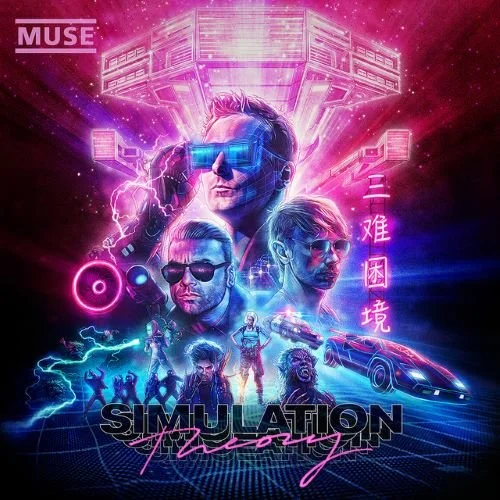
With the artwork of ‘Simulation Theory’ designed by Stranger Things artist Kyle Lambert, and each of the videos so far showing them entering virtual reality recreations of different times and realms, Muse are very much decamping to the imaginations of their childhood bedrooms. Following the blacker-than-black war-mongering dystopia of 2015’s ‘Drones’, they have found an escape from the mire of the here and now.

Opener ‘Algorithm’ carries all the pomp and promise of the best Muse album openers (see ‘Newborn’, ‘Apocalypse Please’ and ‘Take A Bow’), questioning the reality of a world “caged in simulations”, “rendered obsolete” by “evolving algorithms”. It’s the stuff of Charlie Brooker’s Black Mirror nightmares, right down to the Tron-esque ‘80s computer game meets John Carpenter soundscape. The neon escapism flows through the Depeche Mode stomp of ‘The Dark Side’, the George Michael balladry of ‘Something Human’ and eight-bit battlecry of ‘Blockades’.

As is the case with anything Muse do, there are plenty of eyebrow-raising moments on ‘Simulation Theory’. With long-time collaborator Rich Costey on production duties – he’s been leant a hand from pop and hip-hop dons Mike Elizondo (Dr Dre, Eminem), Shellback (Taylor Swift, Britney Spears) and Timbaland (Missy Elliot, Justin Timberlake) – the band have altered the route of their bombast, stepping away from operatic prog. Instead, they indulge their guiltiest pleasures.

There’s the space-age rockabilly delirium of ‘Pressure’, while ‘Propaganda’ is Muse taking the piss to the Nth degree; it’s a vision that sees Matt Bellamy attempting to sound sexy atop EDM machine gun beats and Prince-esque liquid R&B. You’ll be too ashamed to tell anyone just how much you love it. Same goes for ‘Break It To Me’, which is the sound of KoRn covering the Pussycat Dolls. Who knew we needed that? Driven by a sugary hook akin to Ann Lee’s 1999 bubblegum hit ‘Two Times’, ‘Get Up And Fight’ floats with a lightness that Muse aren’t always credited for, before clobbering you with a shameless, monolithic Eurovision-style chorus.

“They’ll say the sun is dying, and the fragile can’t be saved,” Bellamy croons on the shimmering, cinematic closer ‘The Void’, an album highlight, before seeing the light at the end of the tunnel: “But baby, they’re wrong”. Muse have found hope in another world.

Overall, no, ‘Simulation Theory’ is not blessed with the madcap class of their 2001 masterpiece ‘Origin Of Symmetry’, or the pure rock abandon of ‘Drones’. Actually, though, it’s wrong to compare this record to the band’s back catalogue. Yes, this is still Muse, but here they’re trying to be something else – well, everything else. They are avatars in a ridiculous simulation of teenage nerdery, inviting you to steal away from the nightmare, and into an electric dream”.

A brilliant album that did not get the love from critics that it deserved, I think that Simulation Theory should be given another spin. A wonderful album with some of Muse’s best material on, if you have not heard it (or done so in a while), then make sure that you do. From the opening of Algorithm to the end of The Void, it is…

AN epic work.

FEATURE: Kate Bush’s The Kick Inside at Forty-Five: Where the Magic Begun…

FEATURE:


Kate Bush’s The Kick Inside at Forty-Five

IN THIS PHOTO: Kate Bush in 1978/PHOTO CREDIT: Alamy/ABACAPRESS.COM


Where the Magic Begun…

_________

I did a run of features…

about The Kick Inside last year. The album was recorded over the summer of 1977, so I marked forty-five years of its completion. The official release date for Kate Bush’s stunning debut album is 17th February, 1978. I wanted to acknowledge the approaching forty-fifth anniversary by having a look an album peaked at number three in the U.K. album charts and has been certified Platinum by the British Phonographic Industry. It is my favourite album ever – as I have said many times -, and whilst it is not Bush’s most experimental or ambitious album, I think it is her most beautiful. In terms of the themes she was addressing, it was a lot more daring and original than most other albums around in 1978. A teenager who came onto the scene with the spectacular and unusual Wuthering Heights, The Kick Inside explores love and passion, philosophy and menstruation, death and incest, and a lot more besides! Never a conventional or predictable album, Bush worked alongside experienced musicians like Duncan MacKay, David Paton and Ian Bairnson and producer Andrew Powell. For those who adore her 1985 album, Hounds of Love, need to go back to the start and see where Bush came from. This remarkable and hugely gifted songwriter, I don’t share the opinion The Kick Inside was great but it was not Bush’s true voice and talent coming to the fore. Her debut album is as arresting and spectacular as any in her catalogue!

If it is not as weird and wild as The Dreaming (1982) or as ambitious and accomplished as Hounds of Love, it has different qualities and an alternate purpose. It is beautiful and hugely feminine. It has a potency and nuance that means songs unfurl new layers with each level. It is the documentation of a young and eager artist who was realising a dream. I wonder whether Bush, on 17th February, will think about The Kick Inside, forty-five years after it was released into the world. Before moving on, there are a couple of interview snippets from the archives I want to include where Bush discusses The Kick Inside:

There are thirteen tracks on this album. When we were getting it together, one of the most important things that was on all our mind was, that because there were so many, we wanted to try and get as much variation as we could. To a certain extent, the actual songs allowed this because of the tempo changes, but there were certain songs that had to have a funky rhythm and there were others that had to be very subtle. I was very greatly helped by my producer and arranger Andrew Powell, who really is quite incredible at tuning in to my songs. We made sure that there was one of the tracks, just me and the piano, to, again, give the variation. We've got a rock 'n' roll number in there, which again was important. And all the others there are just really the moods of the songs set with instruments, which for me is the most important thing, because you can so often get a beautiful song, but the arrangements can completely spoil it - they have to really work together. (Self Portrait, 1978)”.

As far as I know, it was mainly Andrew Powell who chose the musicians, he'd worked with them before and they were all sort of tied in with Alan Parsons. There was Stuart Elliot on drums, Ian Bairnson on guitar, David Paton on bass, and Duncan Mackay on electric keyboards. And, on that first album, I had no say, so I was very lucky really to be given such good musicians to start with. And they were lovely, 'cause they were all very concerned about what I thought of the treatment of each of the songs. And if I was unhappy with anything, they were more than willing to re-do their parts. So they were very concerned about what I thought, which was very nice. And they were really nice guys, eager to know what the songs were about and all that sort of thing. I don't honestly see how anyone can play with feeling unless you know what the song is about. You know, you might be feeling this really positive vibe, yet the song might be something weird and heavy and sad. So I think that's always been very important for me, to sit down and tell the musicians what the song is about. (Musician, 1985)”.

I think The Kick Inside is one of the most important and impactful debut albums ever. It was released at a time when Punk and Disco were popular. Not really fitting into any scene or sound, the fact that it was a chart success around the world and saw two huge U.K. singles released shows that it is a wonderful record! There was a lot of positivity around The Kick Inside when it was released, but many others were confused by the lyrics and this unconventional artist. Maybe expecting something basic and similar to Pop albums of the time, that is not what you get with The Kick Inside. It is such a deep and compelling album that is heightened and made classic by Kate Bush’s stunning voice and musicianship. She would bring more instruments, angles and experiments into her music when she started to produce (for 1980’s Never for Ever), but her 1978 debut is one I would recommend to everyone. The Skinny provided a fortieth anniversary retrospective in 2018, where they made some interesting observations:

The song that gets the most attention on The Kick Inside is, of course, Wuthering Heights. Now a bona fide classic, endlessly gushed over as an exemplar of 70s art pop (against the grain of the then-ubiquitous disco and punk). It's also destined to be forever remembered for its equally famous visual of Bush dancing in a white dress with cheesy post-production effects (or the 'red dress' American version, with equally theatrical dancing on some real-life moors), still a few years before MTV would make the music video a mainstream creative medium.

Wuthering Heights was the first self-penned number one for a female artist in the UK, written when Bush was 18 (released a year later). Bizarrely, EMI had decided that James and the Cold Gun would be the first single from the album, but Bush was determined that Wuthering Heights should be the first release and – amazingly for a young woman in the music industry in the 70s – she got her way. This imperturbable drive towards her own creative vision is something that Bush would continually exhibit throughout her career.

Lyrically, the song deals with the ghost of Catherine (Cathy) Earnshaw – from Emily Brontë's novel Wuthering Heights – pleading to be released from her purgatory and let back in from her post-death wandering on the moors. Despite the novel's ambiguity when it comes to Cathy's affections (for either Heathcliff or Edgar), Bush asserts that Cathy longs for Heathcliff, 'I'm coming back to his side to put it right / I'm coming home to wuthering, wuthering, wuthering heights' – i.e. the wild, passionate side of her character that she supressed during her lifetime. As a mission statement for an artist unmoored from conformity, social mores or traditional expectations, it's more or less perfect.

The Kick Inside was unafraid to dip its toe into more experimental waters. While it held sure-fire hits like The Man with the Child in His Eyes and Wuthering Heights, it also dealt frankly with sexuality and eroticism (Feel It, L'Amour Looks Something Like You), throws in a little reggae on Kite and doubles down on the gothic occultism that peppers the album on Strange Phenonema (a song once described by The Guardian as a “frank paean to menstruation”).

Listing all those who've been influenced by Kate Bush is a near-impossible task and her impact on contemporary music is impossible to deny. The most obvious current touchstone is Lorde, another artist who came to prominence as a teenager writing pop music that veers away from the norm, similarly fearless in her imaginative musicality (not to mention a predilection for interpretative dance moves). But her influence can also be glimpsed in the avant-garde compositions of Jenny Hval, the eclectic experimentation of Charli XCX and the bombastic future-pop of St. Vincent.

40 years ago, The Kick Inside began a musical journey that continues (hopefully) to this day. Kate Bush did not arrive fully formed – she has used constant renewal and rebirth as the tenets of her artistic evolution – but her auspicious debut album did showcase an artist with enough conviction, confidence and creativity to more than warrant her position as a once-in-a-generation musician”.

In future features (I will another couple), I want to explore different sides, songs and aspects of The Kick Inside. I wanted to use this feature to highlight how brilliant, bold and original this magnificent 1978 debut is. I know that Bush’s music has connected with a new generation thanks to Stranger Things, and I do hope that people are listening to The Kick Inside and not limiting themselves to Hounds of Love. I wasn’t alive when The Kick Inside was released, but I did hear it at a young age and I was transfixed by how gorgeous and different the album was. It introduced me to the fact music was able to transform you and take you to different places. It had this instantly transfixing quality. I was moved and seduced by The Kick Inside when I first heard it – and I am every time I play it. Once Bush’s debut was released, she began this whirlwind of promotion that took he through most of 1978. It was an exciting (if exhausting) time for this artist who almost instantly became this star. Someone who was unlike anyone around her. The power and transcendence of her debut is still being felt to this day! It was the start of a career that has now lasted more than forty-five years. From the beautiful and spellbinding whale song that opens the album (and Moving) to the lingering and haunting final words of The Kick Inside’s title track, Kate Bush’s debut is full of magic and mystique. Released on 17th February, 1978, this amazing album is…

WHERE it all began.

FEATURE: Fields of Gold: Remembering the Great Eva Cassidy at Sixty: Her Essential Tracks

FEATURE:


Fields of Gold

PHOTO CREDIT: Norman Watkins/Blix Street Records 


Remembering the Great Eva Cassidy at Sixty: Her Essential Tracks

_________

IT is safe to say…

 IN THIS PHOTO: Eva Cassidy’s January 1996 Blues Alley show was recorded less than a year before her death/PHOTO CREDIT: Matthew Dols/The Washington Post

that the music world has not seen an artist like Eva Cassidy since her sad death in 1996. We lost her at the age of thirty-three of melanoma. Born on 2nd February, 1963, Cassidy was renowned and celebrated because of her wonderful Jazz, Folk, and Blues music, her immaculate soprano voice gave new life to a range of incredible songs. Known more for her interpretations as opposed original recordings, her versions of Fields of Gold, Over the Rainbow and Autumn Leaves are breathtaking and timeless! Her debut album, The Other Side, came out in 1992. It is a shame Cassidy was not known outside of her native Washington, D.C. until after her death. British audiences became aware of her remarkable talent as Fields of Gold and Over the Rainbow were played by D.J.s such as Terry Wogan. There have been numerous Eva Cassidy compilations since her death in 1996. I think the most known and popular is 1998’s Songbird. That got to the top of the album chart in the U.K. I wanted to end with a playlist of Eva Cassidy songs because, on 2nd February, it would have been her sixtieth birthday. There have been various plans and aborted attempts to bring Cassidy’s life and story to the big screen. I think that it is a time that a film should be made that shows what a remarkable artist she was. Before getting to a playlist, I want to bring in some biography from AllMusic:

The heart-tugging story of Eva Cassidy reads almost like the plot of a "Movie of the Week" tearjerker. A native of the Washington, D.C., area, the painfully shy Cassidy earned a local reputation as a masterful interpreter of standards from virtually any genre, blessed with technical agility and a searching passion that cut straight to the emotional core of her material. Despite the evocative instrument that was Cassidy's voice, record companies shied away from her, unsure of how to market her eclectic repertoire; for her part, Cassidy adamantly refused to allow herself to be pigeonholed, prizing the music above any potential fame. In 1996, just when she had begun to record more frequently on a small, local basis, Cassidy was diagnosed with cancer, which had already spread throughout her body and rapidly claimed her life. But her story didn't end there; her music was posthumously championed by a BBC disc jockey, and amazingly, the anthology Songbird became a number one million-selling smash in England.

Cassidy was born February 2, 1963, in Oxon Hill, Maryland, and grew up (from age nine on) in Bowie, Maryland. She loved music from an early age, particularly folk and jazz (as a girl, her favorite singer was Buffy Sainte-Marie), and learned guitar from her father Hugh. At one point, Hugh put together a family folk act featuring himself on bass, Eva on guitar and vocals, and her brother Danny on fiddle; Eva and Danny also played country music at a local amusement park, but Eva's sensitivity eventually made performances too difficult on her. Something of a loner during her teens, Cassidy sang with a pop/rock band called Stonehenge while in high school. After graduating, she studied art for a short time, but soon grew dissatisfied with what she was being taught, and dropped out to work at a plant nursery. She sang occasional backing vocals for friends' rock bands around Bowie and Annapolis, but was never comfortable trying to overpower the amplification. In 1986, longtime friend Dave Lourim persuaded Cassidy to lay down some vocals at a recording session for his soft pop/rock group Method Actor. (The results were eventually reissued in 2002.) At the studio, Cassidy met D.C.-area producer Chris Biondo, who was immediately struck by her voice and agreed to help her put together a demo tape she hoped would get her more backup-singing work.

Cassidy became a regular presence at Biondo's studio, where he recorded a wide variety of music; incongruously enough, Cassidy performed backing vocals on D.C. go-go funksters E.U.'s Livin' Large album (singing all of her own harmony parts to give the illusion of a choir) and, later, on gangsta rapper E-40's "I Wanna Thank You." At Biondo's urging, Cassidy formed a backing band to play local clubs, where her singing began to win a following in spite of her discomfort. In 1991, Biondo played Cassidy's demos for Chuck Brown, the originator of D.C.'s swinging go-go funk sound (which never really broke out to a national audience). Brown had been wanting to record an album of jazz and blues standards, and found his ideal duet partner in the sophisticated yet soulful Cassidy. Their collaborative album, The Other Side, was released in late 1992, and in 1993, the two began performing around the D.C. area together; helped by Brown's outgoing showmanship, Cassidy finally began to lose some of the insecurity and intense fear that usually kept her away from live performance. Several record labels showed interest in signing her, but her recorded submissions always covered too much ground -- folk, jazz, blues, gospel, R&B, pop/rock -- for the marketing department's taste (or limited imaginations), and the labels always wound up passing.

In September 1993, Cassidy had a malignant mole removed from below her neck and neglected her subsequent checkup appointments. Shortly thereafter, she broke up with Biondo, who'd been her boyfriend for several years, but they continued their professional relationship. In early 1994, the Blue Note label showed some interest in teaming Cassidy with a jazz-pop outfit from Philadelphia called Pieces of a Dream; they recorded the single "Goodbye Manhattan" together, and Cassidy toured with them that summer, but didn't really care for their style. She returned to D.C. and began playing more gigs on her own, though she still made the occasional appearance with Brown. At the end of the year, she won a local music award for traditional jazz vocals.

Cassidy remained unable to secure a record deal, and Biondo and her frustrated manager decided to put out an album themselves. In January 1996, Cassidy played two gigs at the D.C. club Blues Alley; despite her dissatisfaction with the quality of her performance, the album Live at Blues Alley was compiled from the recordings and released that year to much acclaim in the D.C. area. Sadly, it would be the only solo album to appear during Cassidy's lifetime. She moved to Annapolis and took a job painting murals at elementary schools; during the summer, she began experiencing problems with her hip, which she assumed was related to her frequent use of stepladders at work. However, X-rays revealed that her hip was broken, and further tests showed that the melanoma from several years before had spread to her lungs and bones. Cassidy started chemotherapy, but it was simply too late. A benefit show in her honor was staged in September, and Cassidy found the strength to give her last performance there, singing "What a Wonderful World." She died on November 2, 1996. Cassidy virtually swept that year's Washington Area Music Awards, and the album she'd been working on with Biondo prior to her death, Eva by Heart, was released by Liaison in 1997.

D.C.-based Celtic folk singer Grace Griffith finally found some interest in releasing Cassidy's music at the label she recorded for, Blix Street. 1998's Songbird was a compilation culled from Cassidy's three previous releases, and when BBC Radio 2 disc jockey Terry Wogan started playing the version of "Somewhere Over the Rainbow," Songbird started to sell in the U.K. The British TV show Top of the Pops aired a home-video clip of Cassidy performing the song, quite intensely, at the Blues Alley, and were deluged with requests for further broadcasts. Thanks to all the exposure, Songbird steadily grew into a major hit, climbing all the way to the top of the British album charts and selling over a million copies. In 2000, Blix Street followed Songbird with Time After Time, a set of 12 previously unreleased tracks (eight studio, four live) that proved an important addition to Cassidy's slim recorded legacy. The same year saw the appearance of No Boundaries, an unrepresentative set of adult contemporary pop released by the Renata label over strenuous objections from Cassidy's family. Subsequent collections like Wonderful World (2004) and Simply Eva (2011) included more studio demos and live recordings, further cementing Cassidy's posthumous reputation, along with 2012's The Best of Eva Cassidy and 2015’s expanded and remastered edition of Nightbird, a collection of all 31 songs that Cassidy performed at the Blues Alley in 1996”.

Looking ahead to what would have been the sixtieth birthday of Eva Cassidy, below are a selection of songs that show just what an artist she was. Much-missed and one of a kind, I hope that her music gets a bigger audience and people pick it up. With such a beautiful and soulful voice, the memory and brilliance of Eva Cassidy will resonate…

THROUGH all time.

FEATURE: Spotlight: TiaCorine

FEATURE:


Spotlight


TiaCorine

_________

A hugely exciting artist…

 PHOTO CREDIT: Brianna Alysse

who has been making music since she was in the third grade, North Carolina’s TiaCorine is someone that should be on everyone’s list of who to watch this year. A huge fan of Quentin Tarantino’s filmmaking, and someone who combines Anime and Trap in a dazzling and cinematic way, this is an artist that is going to keep on rising and rule. I will come to some 2022 interviews with TiaCorine. First, heading to 2020, she was promoting her debut eight-track E.P., 34Corine. Coming from North Carolina, one can only imagine how hard it is to get noticed and progress. I recall hearing her name mentioned when her When her 2018 single Lotto caught up and founds fans in A$AP Rocky, SZA, and Rico Nasty. She delayed the E.P. from then, perhaps feeling she was not ready or it was not the right time. Around the time of 34Corine’s release, Interview Magazine spoke with the rapper. It is great to know that her hometown inspired her music and drove her:

On 34Corine: “[The title] comes from my hometown, Winston-Salem. We call Winston-Salem the tre-fo, so the 3 and 4. A lot of people in our city look at me as the city hero, because no one has made it out of Winston and gotten this far. It’s like I’m carrying my city on my back right now. And everybody here believes in me. And they’re like, ‘You’re going to get people to pay attention to Winston-Salem.’ I’m like the city’s savior.”

On getting praise: “When you see the cover [of 34Corine], you see people handing me my flowers. There’s a saying where people are like, ‘Oh, let me give my flowers to SZA, because she’s just an amazing artist,’ and things like that. So I feel like for a while, a lot of people have avoided giving me my credit. So I feel like when I drop this project, it’s like, ‘You don’t have a choice but to give me my flowers. You have to show me more respect.’ This is the time where everybody is just going to be like, ‘Wow. She is just great! We don’t have no choice but to respect this.'”

On North Carolina: I do feel like my hometown has inspired the music I make. I really think it’s a mixture of my hometown and my parents. My mom was playing ’80s and ’90s music, and then my dad was playing more hip-hop, like The Sugarhill Gang and things like that. My favorite part about my hometown is the fact that I can be anywhere in the city within 15 to 20 minutes. With no traffic. I’m always late and somehow I still get there on time.”

On social media: “It’s a love-hate relationship. I do love it because you get to meet so many people, and you can get connected so fast. You just see so many different and creative things, and it just is inspiring. But at the same time, you have to watch what you say. It’s just so toxic sometimes. It leads people to think you have to live your life a certain way, and it’s just a lot of smoke and mirrors. I don’t really care for it. If I didn’t have to use it, I wouldn’t”.

The stunning I Can’t Wait was released year. A remarkable album (or mixtape) from one of the most talented and phenomenal artists in the world. I feel this year will be another tremendous one from the North Carolina native. TiaCorine has transformed Rap and Drill and taken it to a whole new audience. Pioneering and in a league of her own, Swindlife spoke with an artist who, with regards to her new album, wanted to make it undeniable - and leave people in no doubt that she was hard and a force to be reckoned with:

TiaCorine, the immersive North Carolina-born artist’s road to stardom, has allowed her to reach a goal most independent artists dream of. After crashing on the scene with her 2018 hit “Lotto” (16m+), Tia has proven her ability to push the boundaries of contemporary rap with her versatile flow, commanding cadence, and vibrant personality. Her unique artistry and storytelling have allowed her to carve her musical path in an era where it’s hard to stand out. With accolades that continue to put her in the limelight, through it all, Tia stays grounded and lets her music do the talking because every time she drops, she makes it her priority to make a statement—and she did just that with her new album “I Can’t Wait.”

At 15-tracks, Tia displays her undeniable talent and how versatile she can be as an artist throughout “I Can’t Wait.” There are songs like “FreakyT” produced by legendary Honorable C.N.O.T.E., where Tia shows she has the swagger to ride any beat. But at the same time, a track like “Kite” with vibrant hyper-pop production proves Tia is expanding her sound and refuses to be stagnant as an artist. Everything about this release backs up my theory. Tia doesn’t have anything else to prove to doubters, yet she’s still determined to make an example of them and succeeds on this project.

I have to talk about the concept. How did this album come together?

I just put it together because I record many different sounds and songs. I wanted to do something where there’s at least one song for you if you don’t like the whole project. I tried to put different genres on there because I’m a genre-bending artist. I didn’t want it to be just one thing. A lot of times, I see artists make one sound, and later in their careers, they want to do something else. Then people are like, “I want the old you.” So I wanted to make sure I gave them every flavor so they know always to expect something different when it comes to me.

What is the meaning behind the Kingdom Hearts-themed artwork?

It was a collaboration of Kingdom Hearts, mixed with Wizard of Oz and Final Fantasy. It all goes with the theme of “I Can’t Wait.” If you’ve ever played the Kingdom Hearts series, you know how they tell a story and ask you to choose what you want to do in your life—I have the first Kingdom Hearts on PS2, so it asks what direction you would like to go in your life. That was the reason why I had the pink trail. I feel like throughout my music career, I’ve been through a lot of stuff. I wouldn’t say I’ve been fighting demons [laughs], but I have been through many negative things and dark times. I feel like now I’ve reached that point where I have seen the light, and I could see the “land of Tia,” the “land of Oz,” the “land of everything I always wanted,” and what I actually am. And not just this grey area between being underground and being mainstream. So this was my way of saying, “I can’t wait to get there.”

That’s fire that you kept the NC connection. What was the hardest part of the journey working on the project?

Probably picking the songs to go on there. I have so many, and choosing them and putting them in the right order was tough. Usually, when I do a project, I want to add transitions and sounds. But this time, because I had so many different songs, I just wanted to make sure that it vibes. Like it goes up, then it goes down, like a rollercoaster. I wanted to keep people in. So making the tracklist and picking the songs were hard for me”.

I am going to wrap things up soon. I wanted to finish up with an interview from Alt Press. As so many were keen to find out more when it comes to I Can’t Wait and TiaCorine, I wanted to highlight this great interview. It shows where TiaCorine has come from and how, as a teenager, you could tell that the seeds had been planted. A determined and hugely talented artist who has now evolved into a powerhouse who is going to influence a generation of women:

Tia found her sauce when she first entered the booth at 16 years old. Surrounded by aspiring rappers as friends, Tia was a singer known for her childhood Aaliyah karaoke sessions at neighbors’ houses and love for everything from Usher to Queen. When it came time for her to do her thing in a makeshift studio at her friends’ mom’s house, her peers were already impressed with her abilities.

Hip-hop came to Tia easily thanks to her affinity for Minaj, Weezy and Juelz Santana, and while most people in her circle applauded her and her Auto-Tune-laced early cuts, not everyone was on board with the TiaCorine movement at first.

Back when she was working at a clothing store at her local mall in Winston-Salem, North Carolina, Tia stumbled into work 10 minutes late one morning after a late-night recording session. Her boss at the time wasn’t too thrilled.

“He always got on my ass. He's like, ‘You won’t get paid for that shit. You ain’t shit. You ain’t nobody.’ Like going in on me,” Tia remembers. “Now he be in my messages. He be like, ‘What’s up?’ It’s like, ‘Bruh, you really said I wasn’t gonna be shit. Fuck you.’”

Tia didn’t enter the position to curse out her former employers until around 2020, when her 2018 track “Lotto” (which Drake may or may not have infamously bit off of) began to pick up some momentum nationwide. At the time, she was wrapping up a degree in exercise physiology, which made focusing on music a little tricky. And even on the same day of her college graduation, Tia traveled eight hours to Ohio to perform at yet another college. “I was nervous. I only had three songs out,” she remembers. “And it was going crazy. I couldn’t believe it.”

Since “Lotto” amassed its current 6.9 million streams on Spotify and since the release of her 34Corine project in 2020, Tia’s made it her mission to show fans just how different her stuff can get. Case in point: her 2022 single “FYK,” which not-so-secretly stands for “fuck your kids.” Of course, Tia loves her own child, but the song was made during a time when she was outright pissed at someone else entirely, and that’s when she freestyled the lines “I don't give a fuck about shit/ I'm not your bitch/I just get money, ho, fuck yo' kids.” It was jarring at first, but explosive.

“I had a Mike’s Hard Lemonade and a fucking vape, and I go in there," she says. "That was real. I just thought, ‘I can’t believe I said that.’”

The video for “FYK,” a track that she effectively screams on, portrays her showing off a dangly choker, bob hairstyle complete with a knife on top and two active middle fingers. She knows it’s punk as hell, too. “I just do what I want, how I feel,” Tia says. “And you can like it or you can not. I don't care. It's just letting loose, like that feeling of walking around naked. You know when you walk around naked at your house and be like, ‘Hell yeah, it’s my house.’ Like that”.

I am going to end here. Go and check out the brilliant and stunning TiaCorine. I think we will get a lot of magnificent music from her this year. Following the sensational and hugely memorable I Can’t Wait, all eyes are aimed the way of the North Carolina Rap/Trap artist. The future is hers for the taking. Make sure that you follow this…

WONDERFUL artist.  

____________

Follow TiaCorine

FEATURE: Revisiting… Darren Hayes - Homosexual

FEATURE:


Revisiting…


Darren Hayes - Homosexual

__________

I wanted to revisit…

Darren Hayes’ fifth studio, Homosexual, for a few reasons. I missed it the first time around and did not give it a proper spin. My first experience of Hayes as a performer is through Savage Garden. The Australian duo has massive success in the 1990s, and he and Daniel Jones parted ways in 2001. I was not a massive fan of the duo, but I was always impressed by Hayes’ vocals and songwriting. I think his solo work is much more personal and rewarding. Perhaps his most important album to date, Homosexual was met with critical acclaim. Although not a lot of mainstream sites and papers in the U.K. reviewed it, it did make number six in the UK Independent Albums chart. With all songs on the album written composed and produced by Hayes, this is a real bid for independence. It is liberating and the sound of an artist claiming freedom. Released through Hayes’ label, Powdered Sugar, I think this is an album not just for Darren Hayes fans. Even though it is deeply personal and important to Hayes, it is broad and accessible enough so that it will appeal to a wide spectrum of music fans. I have dipped in and out of Hayes’ solo discography, but Homosexual struck me, not only because of the quality of the music, but because you can feel and hear how much it means to Hayes. He has thrown his heart and every ounce of his soul into making the album what it is.

I am going to come to a couple of positive reviews for an album that can be included among the best of last year. Released back in October, I want to start out by quoting sections of an interview with Rolling Stone Australia. Trigger warning to those who read the whole thing, as it might be upsetting for survivors of trauma – so do proceed with caution if this applies to you. I wanted to know more about Hayes’ career prior to Homosexual and how the album came about. Aside from the reader sympathising with the struggles Hayes has gone through and what he has wrestled with, the sense of relief and pride Hayes expresses having composed and played everything on his finest solo album to date is hugely satisfying:

Savage Garden went on to become one of the most successful pop groups Australia has ever produced, selling over 12 million copies of their self-titled debut album – an album that just last year ranked at no. 9 on Rolling Stone AU/NZ’s ‘200 Greatest Albums of All Time’.

Darren Hayes was in his early 20s, married to his childhood sweetheart, and living in a cramped one-bedroom apartment in Sydney’s Kings Cross writing that seminal Savage Garden album when his life changed irrevocably.

“Innocent, naïve Darren Hayes picked up a street mag that was like a gay magazine, and I remember just looking at the images and being simultaneously turned on and horrified that I was turned on by the images,” he recalls. “One day I remember venturing into a porn theatre, and I saw gay porn for the first time in my life. And somewhere in the shadows, people were having sex.”

Mortified, Hayes ran from the theatre to a nearby phone booth, where he called Lifeline to ask a phone counsellor for advice.

“Thankfully it was a gay person, and the person just said, really frankly and in the most Australian way: ‘Look, love – you need to go home and tell ya wife you’re gay’,” Hayes says.

By the time Savage Garden released that now-iconic music video for “I Want You”, he had told his wife, Colby Taylor, that he thought he might be gay.

“My coming to terms with my sexuality were completely shrouded in – honestly – suicidal thoughts,” Hayes admits. “If you listen back to the album Affirmation, there’s a song on there called “I Don’t Know You Anymore” – that’s because I came out to my wife, and I came out to both of our families, and I’d never even held a man’s hand.”

Flash forward to now, and at 50, Hayes is truly comfortable in his own skin, confident with his sexuality, and has begun his first album release cycle in a decade. The music video for Homosexual’s first single, “Let’s Try Being in Love”, is the visual representation of the anguish 24-year-old Hayes had felt coming to terms with his sexuality.

“I felt so aware that in one way there was this doorway to a possible future for me that was a way to be happy and to love myself and to be my true self,” Hayes explains. “But at the same time, I was going to have to destroy something I loved.”

Although Hayes didn’t truly come out to the rest of the world until he announced his marriage to husband Richard Cullen in 2005, he had spent years dropping clues into his music.

Hayes has composed, produced, performed and arranged everything on this album. He has released it on his own label, Powdered Sugar Productions, and although he is the first to admit he isn’t a Grammy-award winning producer – he doesn’t care.

“It means so much to me that every single sound that you hear on this record: I did that,” he explains. “Every lyric. Every synthesiser. Every guitar lick. Every EQ. Every decision was made by me with love, and I pored over it. And everything is symbolic; everything has a meaning and it all is like a hard wire from my brain straight to the person that’s going to listen to it.”

Hayes says there isn’t anything on Homosexual that is untrue, which, as a music fan himself, is something he expects from all artists.

“It’s so obvious when someone’s phoning it in,” he says. “And there’s been a couple of moments in my career – and I only mean a couple of songs – where I’ve phoned it in, and I cringe. I was phoning it in because I was depressed. I felt like I had a barrier up. because you don’t want someone to touch that place in you that’s so vulnerable.”

Hayes’ intention with this record was to make music that he loved first and foremost that hopefully people could connect to.

“It’s been fun seeing some really hardcore fans freak the fuck out, to be like, ‘Is there going to be a ballad?!’” Hayes laughs. “Because I love everyone and I love my fans, but I also subscribe to the idea that you can’t give people what they want – you have to give them what they need. And what they need is an artist that’s happy and is telling the truth”.

I am going to wrap things up with a couple of reviews. As much as it is liberating and personal, Metro Weekly noted how Homosexual is a celebration. It is an album that should be thought of as uplifting and powerful as much as it is revealing and soul-bearing. You do not have to identify with Darren Hayes and his struggle to be able to appreciate and bond with Homosexual:

Hayes opens the album on a bright note with the thumping synths of lead single “Let’s Try Being In Love,” a song. His soaring falsetto reflects his stated purpose in the song: to “love the feminine” within himself. He gets more literal with the second single, “Do You Remember,” a straightforwardly lustful nostalgia trap of a song that frames desire for another body around some cheekily on-the-nose Gen-X reminiscing. “No cell phones/if you want to meet someone you had to leave your home,” Hayes sings.

With an upbeat pop sound and fun disco elements, the album’s production underscores the cathartic sense of nostalgia that Hayes indulges. With lyrics like, “It’s not a blessing and not a curse,” the peppy “Homosexual: Act One” and its coda “Homosexual: Act Two” sound almost like relics of the recent past when bouncy viral songs emphasizing the basic humanity of gay people proliferated. The lyrics are full of self-indulgent corniness, but somehow, in Hayes’ hands, it works. The grinning flippancy with which he tosses out lines like, “It’s not correctable/It’s homosexual!” is absolutely infectious.

Hayes avoids the prudish reluctance around sex and the sanitized view of the gay experience that marked so much of the straight-facing material he nods toward in the two title tracks. Notwithstanding his 17-year marriage to the man who was the muse for “Let’s Try Being In Love,” Hayes is no stranger to gay sadness, and nowhere is this more apparent than on “Hey Matt.”

Hayes drops his voice and indulges in over nine minutes of tortured angst, replete with self-aware reflections on the damage that can be done by repressing desire. The sentiment is driven home in the standout line, “My daddy issues still ache.”

The runtime of “Hey Matt” sets it apart as a bit of an outlier, but not by much. “All You Pretty Things” and “Birth” clear the 8- and 7-minute mark, and are incidentally two of the strongest tracks in an album that has few lackluster moments.

He is a seasoned pop artist, after all, and is at the top of his game on Homosexual, stretching the register of his voice between his bright, well-known falsetto and the low, maudlin register he adopts on “Hey Matt” and again on the latter half of the album.

Captivating as it is, the upbeat tone Hayes strikes on the album does not prevent him from exploring some dark places, taking a scalpel to the origins and nature of trauma on “Nocturnal Animal” and indulging in some visceral imagery over some tense industrial pop riffs of the album’s closer, “Birth.”

His dedication of disco-inflected “All You Pretty Things” to the victims of the Pulse massacre is a sobering reminder that the issues of the past are still the issues of the present — the fight for rights is far from over, and winning them is not a foregone conclusion.

The practice of quietly closeting artists will probably remain too prevalent in the music industry and in entertainment writ large for a while. But the proud, endearing gayness of Homosexual feels like a refreshing middle finger to a self-congratulatory entertainment industry complex that still has a lot more catching up to do than it lets on.

Hayes is well aware he is far from the first artist to reclaim a word used as a slut against him, but in his capable hands, the album succeeds beautifully as a full-throated celebration of what it means to him to be a raging homosexual”.

I will end with another review. Renowned for Sound also had their say about an album from last year that should have got more attention from the press in the U.K. I think, on a musical level, it is a wonderful album that has true standalone moments. Singles like Let’s Try Being in Love and non-singles Hey Matt and All We Are Alchemists keep you coming back again and again:

“Darren Hayes first album in over a decade, Homosexual, sets to re-write the gay-shaming trajectory of his life by reclaiming his homosexual identity with pride. Hayes laces the fourteen-track record with upbeat pop melodies and synthesisers right out of the eighties, to tell a heartbreakingly honest account of his past struggles with his sexuality, self-identity and homophobia.

It is known that during Hayes’ well-celebrated Savage Garden years and beginning of his solo career he was forced to hide his true sexuality by music execs, even being made to re-shoot his debut solo single Insatiable, back in 2002 for fear of being too ‘gay’. Fast forward to 2022, and Hayes is taking back control of his music on Homosexual, with him impressively producing, composing, arranging and playing every instrument on the record.

Hayes draws inspiration from 80s icons such as George Michael, Madonna and Prince to create a nostalgic album featuring fun pop and disco elements. This can be especially seen on the Prince-inspired track Music Video, which features a classic Prince-style guitar solo and varispeed vocals. Hayes even references popular eighties song titles throughout the track such as Billie Jean and Love is a Battlefield, really helping to successfully evoke the eighties.

To begin with, Hayes opens the album in a light-hearted place with Let’s Try Being In Love, full of 80s synths and falsettos, before moving into darker territory throughout the record. On Hey Matt, Hayes lives out his dark suicidal fantasy, matched by his much deeper vocals, and touches upon his childhood trauma on Nocturnal Animal over pop riffs. What keeps the listeners engaged is Hayes’ unique style of contrasting his sad tales of despair with cool eighties-sounding grooves that could be played in clubs.

A highlight of the album is Hayes’ special tribute on All You Pretty Things for the victims of the Pulse Nightclub shooting. Throughout the track Hayes can be heard repeating ‘Dance to remember them’ as a way to celebrate and honour the lives of the lost. Hayes then cleverly turns the second half of the track into an 80s dance beat which could be mistaken for a Patrick Cowley and Sylvester collab. The song helps to create a safe space for individuals to dance and celebrate club culture, a fitting way to honour those that have passed in such a positive way.

Hayes has really gone above and beyond for his first album in over a decade, from creating the record all by himself to covering his past trauma with his most authentic, genuine lyrics. Hayes avoids any downbeat, sad melodies and puts his efforts into creating a modern dance album which celebrates the eighties and his sexuality. However, it is a sad realisation learning about what Hayes has gone through his life because of his sexuality, especially when Homosexual comes at a time when LGBTQ+ artists are now celebrated for their queerness, such as Lil Nas X and and Sam Smith. Hopefully Homosexual has allowed Hayes to find peace with his past, which he truly deserves”.

An album that I think people should check out, Darren Hayes’ Homosexual is the sound of an artist truly happen in his own skin – and someone who has reached a place he has tried to get to for many years now. It was a risk writing and producing all the songs, as the weight of responsibility falls solely on his shoulders of the album is a failure. As it is, Homosexual is a triumph! As we are now in 2023 – and following the success of Homosexual -, it will be interesting to see…

WHERE Hayes heads next.

FEATURE: Spotlight: Tommy Lefroy

FEATURE:


Spotlight

  PHOTO CREDIT: Chelsea Balan


Tommy Lefroy

_________

BUILDING from the incredible…

 PHOTO CREDIT: Chelsea Balan

Flight Risk EP of 2021, Tommy Lefroy had a storming 2022. There is so much promise and hope for thus year. A duo who have been tipped for success and riches this year, everyone needs to go and check them out. I am actually going to go back to an interview from last year, before hopping back to 2021, then coming back to last year - before finishing on an interview from this year. I wanted to start with Tongue Tied, as they sort of introduced the transatlantic duo; speaking with them around the time of the single release for Dog Eat Dog. It couldn’t have been easy for the duo to build and record music during the pandemic (2020-2020), and sort of rebuild and adapt coming out of it:

Composed of singer-songwriters Tessa Mouzourakis and Wynter Bethel, Tommy Lefroy found its footing as a quarantine project turned success story. The duo initially met in Nashville in 2017 working as songwriters for others, and when COVID hit, they found themselves split between London and LA with nothing to do. Instead of sitting complacent within the world’s isolation, Tessa and Wynter found themselves writing and producing music over zoom, eventually finding themselves releasing their debut EP Flight Risk in November of 2021 and putting Tommy Lefroy on the map as an emerging artist to watch out for. Now that they’ve reveled in their own exploration of love, loss, and exploring their new artistry, Tommy Lefroy is back with their newest single “Dog Eat Dog”, out today. I got the chance to catch up with Tessa and Wynter pre-release to chat about “Dog Eat Dog” and the new era of Tommy Lefroy.

 Creating music in the same city is a new experience for the COVID-created Tommy Lefroy, who previous to “Dog Eat Dog” had created almost all of their music virtually over zoom. Having the ability to be in the same place has granted Mouzourakis and Bethel a variety of benefits in their creation process, between the ability to bounce ideas more readily off each other, collaborate in real time, or even just be in the same time zone, but their unique DIY beginnings still affect their process even now.

“Writing is such a big part of how we process our experiences, so with Tommy, it's been just a pretty safe space to bring that first instinct stream of consciousness of what we're going through, how things feel, or what we want to say. On this next project, we've challenged ourselves even more to let go with our writing. We would literally just sit at my kitchen table in LA and just write a stream of consciousness for like 30 minutes and then go back and pick out what we like from it. I think we needed that type of release because of everything that's happened. We have an audience which we're so grateful for, and we wanted to make sure that we didn't overthink these songs  because we are overthinkers. It’s really important to us that the writing for the project just stays this sort of protected thing, this safe space that we can return to that isn't affected as much by expectations, whether it be our own, or the team, or the fans. It really is important that there's just a purity to it, so that's what we've tried to keep and protect.” - Wynter Bethel of Tommy Lefroy, for Tongue Tied Magazine”.

I think so much of the process of making Flight Risk was very apprehensive. We had to work through a lot of insecurity and imposter syndrome to just prove to ourselves that we could do it at all. With the year that we've had and the trajectory that the music has taken, everything has completely blown our minds. Now we're no longer fighting as many of those roadblocks of if we even have a right to tell a story, because there is an audience and people are excited to see what we have to say. We’re able to tell our stories without that entry barrier, but now our lives are totally different. When we wrote a lot of the songs of Flight Risk, we weren't living in the same city, but now we've had a lot more shared experiences. So much is informing this next season, and I I think it feels a little bit more grown up. It's more reflective and more, we say, taking accountability because yeah, there's a difference between an early experience of heartbreak versus looking back on a situation two years later and processing it. Looking back, what did you gain from that heartbreak that you're taking forward with you into the next step and the next relationships? We're kind of growing up and figuring out as we go, and all of the music is reflective of that.” - Wynter Bethel of Tommy Lefroy, for Tongue Tied Magazine

“The biggest feeling I have looking at this upcoming body of work is it feels a little bit more empowered. I think we're just really coming into ourselves in being Tommy through this process. And I think these songs are reflecting that sort of ownership we're taking. I like to say it's kind of like taking back the narrative in a sense. It's like. Someone actually on the Discord server we have was asking me a question about the meaning behind the lyric “hopeless wordsmith” from “The Cause”. Looking at this new song, I'd like to think this era is a little less hopeless, a little more wordsmith.” - Tessa Mouzourakis of Tommy Lefroy, for Tongue Tied Magazine”.

I have focused a lot on solo artists for the Spotlight series, so I wanted to correct that by speaking about a duo. You get that closeness and connection, in addition to focus. Bands can be quite unwieldy or seem a little disconnected at time. Solo artists have to burden everything themselves and are naturally limited when it comes to vocals and songwriting. A duo offers that perfect blend that you can hear with Tommy Lefroy. They are definitely going to endure and be around for a very long time. I do want to hop back to 2021, as Guitar Girl Mag wanted to know about the single, Vampires, but we got to discover some background and influences of the amazing duo (whose name derives from Jane Austen, whose former lover was the infamous, original ‘fu*kboy’, Thomas Lefroy):

What inspired your new song, “Vampires?”

W – My roommate and I walked to the grocery on Halloween morning of 2019, in LA. He was actually nursing a cold and bought garlic. I think I bought a Reese’s. I was having a hard season and was so grateful for him that morning. He was navigating a challenging relationship at the time and was really down about himself. I recorded a voice memo in my phone later that day, literally in the walk-in fridge of my day job, “You can fall in love a thousand times, I just want for you to love your life”

I brought the idea to Tessa a couple of weeks after when she was visiting in LA, and we were writing at our friend Justin Lucas’s quaint garage studio in Venice Beach. We knew we needed to write a song for our friends, as they have shaped us so much as people. We had so often seen them through situations where they doubted themselves, but we never once did. The second verse came from conversations with a couple of our best friends, about big life transitions and recoveries from losses.

What’s your songwriting process? Melody first, or lyrics?

Most often, both come at the same time. When we write for Tommy, we usually start with a verse one of us has or a title that feels relevant to what we’ve been experiencing lately. We write a lot of poems, and we love to reference other writers, history, and myths in our lyrics. We usually start with a concept and then really dig into it.

What do you hope your fans/listeners take away with them when they listen to your music?

T – I want them to feel heard. It’s so special when people reach out and say they resonate with something we wrote.

W – Definitely. Want to offer a bit of relief and solidarity haha.

T – That’s also one of my favorite parts of performing – watching people sing the lyrics back to us, and with just as much conviction haha.

W – Totally. I hope the music can provide listeners a space to feel their feelings fully. Producing the music ourselves allows us to cultivate that space, to build a world that a listener could spend time in. If these songs can be the soundtrack to a thoughtful time in just one person’s life, I’ll feel like we’ve succeeded haha. Writing-wise, this project has become such a safe space for us, to tell our stories both bluntly and cheekily. I hope people feel the humor in it because that is such a coping mechanism for us. It allows us to talk about some really heavy experiences while also laughing at ourselves a bit.

How did you get started in music? What’s the backstory there?

W – My parents and my dad especially are huge fans of music. One of my first coherent memories is listening to Fleetwood Mac’s ‘Rumors.’ I’ve always been coming up with little stories and I started doing musical theater when I was 5. My sister was an artist and a songwriter, and I grew up watching her. I started my first band in the 8th grade and played with the same few friends throughout high school. We toured around Michigan in a GMC van. Then I got a degree in music business, in Nashville where Tessa and I met.

T – I’m not sure how or why I fell into music, neither of my parents were especially musical, but I’ve been obsessed ever since I was a kid. I was always writing, I loved making up poems and stories, and started keeping a notebook of songs I’d “written” when I was 8. I taught myself to play guitar when I was 12 (Taylor Swift’s ‘Teardrops On My Guitar’ was the first song I learned) and spent the rest of my teenage years gigging around my hometown of Vancouver, BC. Eventually, I landed in Nashville.

What kind of guitar do you play?

T – I play a black HSS American Fender Strat.

W – I play a white fender jaguar. It’s an American Reissue from like 2016. I replaced the pick guard with a pearl one”.

Before coming relatively up to date, I actually want to squeeze in an interview NME. Chronologically, this came in 2022, before the release of Dog Eat Dog. The duo were speaking about their latest track, The Cause. I was interested to know more about that track, in addition to how their name came about:

NME: Your band name Tommy Lefroy comes from Jane Austen’s love interest. Why did you settle on that name?

Wynter: “It started as a joke. A friend of mine was genuinely joking and said you should call it Tommy Lefroy. We were contemplating it for a while, but that was the name that we kept coming back to.”

Tessa: “I love Jane Austen and I love that era, but the other thing I loved about the name is that it’s a boy’s name: it’s like our own nom de plume. A lot of female writers from that era were  initially published under boy’s names, like the Brontes and George Elliot. There’s a history there, so it felt like a nod to that as well. The Austen era was such a man’s world and she was giving a voice to the experiences of women. She’s also an author who was quite radical within the constraints of the time. She wrote strong female characters who were just living their lives, and that’s what we’re trying to do as well.”

‘The Cause’ is a criticism of the men you have dated with “god complexes and liberal arts degrees“. Is songwriting in this humorous tone a way to process the hurt of your past relationships?

Tessa: “Totally. Our sense of humour is very similar. It’s quite self-deprecating. We know that we have similar tastes to these men that we’ve dated. We don’t want to pretend like we also haven’t read Jack Kerouac because we have. We also listen to Elliott Smith. I personally deal with a lot of grief and sadness through humour.”

Wynter: “We need humour. Life is so heavy. For us, humour has been a really foundational aspect of survival. With this project, even the name started as a joke. We are serious people, but, also, we laugh at ourselves all the time. When you get your heart broken it is funny, especially when you consider the person who broke your heart. They have so much power and you’re looking at them like, how did this happen? What is this sorcery?”

Having divided your time between London and LA, how do you deal with not letting the pressure of living in big cities affect you as artists?

Tessa: “My experience of London has been very positive, because I feel like there’s a lot of community here looking to help and lift each other up. People are really interested in the music: if they like what you’re doing, they will talk to you and you can get their respect.”

Wynter: “Compared to other cities we’ve been in, London, for us, is less of a music city because I have friends here who don’t work in music. In other places I’ve lived, everyone I knew was also working in music, and that’s when it can get a little hard. Finding good, grounded people has been so helpful in remembering that there’s so much more than this. At the end of the day, we care very much about the project, but we’re also just making silly little songs.”

When you played at The Lexington recently, the crowd were singing the songs back to you word-for-word. How did that feel?

Tessa: “Surreal. The first time the crowd screamed the lyrics I was completely taken aback. I felt like I was in a fever dream.”

Wynter: “It feels like you can’t believe it’s happening. I have to try really hard to stay in it and focus on playing. Like, ‘Don’t cry!’. It’s really special. It makes me realise it’s bigger than us. The songs are so important to us, and we never could’ve imagined that they would also have so much importance to others. The songs have a life outside of us now. We say that we’re just writing silly songs, but people are listening to us and we want to be there for them”.

I will finish off by highlighting section of a great new interview from The Forty-Five. A big hope for this year, Tommy Lefroy are growing with every song release. They put out the single, Worst Case Kid, recently, and it is another gem from a duo should be known by all. I would love to see them live this year, so I will keep an eye on their social media sites to see where they are heading off to. I suspect there will be an E.P. later this year. Maybe an album:  

You guys got together after Tessa posted a boygenius cover online. What was it about their music that resonated with you?

Wynter: We saw them live on the same tour. For me it was a pivotal moment because I grew up playing in bands with boys. No one outright told me that I was less entitled to making rock music as a woman, but there was always this subversive feeling that it would be harder because there were more barriers to entry. Seeing boygenius solidified this idea of women not only making raw and emotional rock music, but also being individual songwriters with awesome things going on in their own rights coming together to make this supergroup. We were both writing for other artists at the time, so we wanted to have this project that was a culmination of that whilst continuing to be individual writers and producers.

Tessa: It was also an emblem of friendship in the industry. They came together as friends and that was a huge part of their story that I found inspiring.

What do you guys think of the “sad girl” trope? Do you find it reductive at all?

Wynter: I love the sad girl trope, but I can see how it might be reductive, especially since we both struggle with our mental health. We don’t want to diminish it by playing into a reductive stereotype, but it’s been an interesting era of music. I think those key artists in the genre have opened a lot of doors for us to make the kind of music we make.

Tessa: There’s a special community there as well, of people finding company in that sadness. If you do too much of anything it feels overdone, but it’s integral to our experience so it feels true to us.

Wnyter: From my experience, it’s often up to women to start conversations. Our generation is moving towards having open conversations about mental health, and I think the sad girl trope is just women leading the conversation as they usually would.

 There’s a lack of female producers in the industry in general. Do you have any advice for women starting out that might lack confidence because of how male-dominated it is?

Wynter: Don’t be afraid to start. Growing up, all my guy friends were audio nerds and I had this subversive feeling it was something for them and not for me. I was hesitant to start because I felt like I had to do it well. But you have to start, because you have to be a bad producer before you can be a good producer. One of the hardest things about making this project was that we’d spend days pouring over these songs and they’d still sound like shit, but we just had to keep going. Some of the best advice I was given was that “your skillset might not always align with your tastes, so you have to work up to it”. Have patience with yourself throughout the journey.

Where do you see Tommy Lefroy’s place in the pop landscape, and what are your goals for 2023?

Tessa: For next year we’re hoping to play more shows in the States. We’re doing a support tour for Samia, who we’re huge fans of, so that’s a real full-circle moment. Hopefully writing more songs and releasing more music too.

Wynter: It’s funny, we never intended Tommy to feel like a pop project. It’s fun to be friends with and collaborate with pop artists whilst staying on the fringes of it. We want to exist in the indie landscape because we love the community so much. People are cooler and more lowkey – we can meet a fan and have a real conversation because there’s not hype in the same way.

Tessa: We’ve found an amazing community with the music so far. Everyone we’ve been meeting after shows have been so thoughtful and kind. It’s been one of my favourite parts of the tour”.

A terrific duo who I absolutely love and know will be a huge act to watch through this year, Tessa Mouzourakis and Wynter Bethel’s Tommy Lefroy is amazing! Go and follow them and check the music out. Such a brilliant act who are going to be with us for many years, I am really interested to see…

WHAT comes next.

____________

Follow Tommy Lefroy

FEATURE: Like a Fine Wine: The Agelessness of Kate Bush’s Voice

FEATURE:


Like a Fine Wine

PHOTO CREDIT: Steve Rapport/Photoshot/Getty Images 


The Agelessness of Kate Bush’s Voice

_________

THERE are a couple of reasons…

 IN THIS PHOTO: Kate Bush in 2011 for 50 Words for Snow/PHOTO CREDIT: John Carder Bush

why I wanted to spend some time speaking about Kate Bush’s voice. I have explored it many times before but, as a singer, I think few in history have had the same dexterity and versatility. One reason why I have been compelled is because Rolling Stone recently published a feature about the greatest singers ever. Listing the best two-hundred Bush came in at sixty. She came ahead of George Michael, but she was beating by the likes of Lady Gaga. These polls always provoke discussion and division. I would objectively state Bush should be placed much higher. I would put her in the top forty without question. You never look at the artists below (lower positions) her do you? It is always those who are deemed ‘better’. The fact that Ariana Grande and others are seen as better is a bit perplexing. I am not sure what they are baseing things on! This is what Rolling Stone wrote about Kate Bush:

Kate Bush was only 15 when she recorded a demo tape that made its way to Pink Floyd’s David Gilmour, who helped her get her first record deal. “I definitely thought she was a true original and a great talent,” he said. With no traditional label expectations tethering her, she performed acrobatic feats with her voice in the explosive ardor of “Wuthering Heights,” the determination of “Cloudbusting,” and the sense of feminine humanity of “This Woman’s Work” and “Running Up That Hill.” Even on “Wild Man,” a song she recorded in her 50s, after her voice deepened, she pushed herself into brilliant contortions in the chorus. “You have to break your back before you even start to speak the emotion,” she once said. —K.G.”.

I suppose there are a number of factors considered when deciding on the best singer ever. Contemporary popularity, emotional range, power etc. The Rolling Stone publication is subjective of course, but I think the fact Bush is still not properly understood in America results in a lower placing. They still know her for Hounds of Love and a certain vocal range. I do think, if you look at her albums, her voice is vastly different on each. From the ghostly and beguiling Wuthering Heights in 1978, through to the deeper register of 2011’s 50 Words for Snow, she has this ageless vocal brilliance. Listen to albums like 1980’s Never for Ever, and she captures so many moods. Her voice has grown and expanded by then, and there is the ethereal beauty of Blow Away (For Bill) paired to something more guttural and dramatic in Breathing. Her Irish accent on Army Dreamers, and the superb acting performance through The Wedding List. The Dreaming – which followed Never for Ever in 1982 – is her most extreme set of vocals to that point. Inhabiting so many characters and shades, there is almost a different artist on Sat in Your Lap compared to Get Out of My House. That latter song is one of Bush’s most fierce and dramatic readings ever. Listen to the nuance in her voice on Pull Out the Pin. She does accents in The Dreaming (Australian) and There Goes a Tenner (cockney). Hounds of Love (1985) is almost her tour de force in terms of the pure power and expanse of her voice. There is determination and passion on Running Up That Hill (A Deal with God); joy and jubilation on The Big Sky, and something chilling on Mother Stands for Comfort. We then have the suite, The Ninth Wave, which runs an emotional gamut from surrender, fear, hope and salvation. It is so full of wonderful moments, all held together, elevated and made spellbinding by Bush’s voice!

If her voice matured and was more controlled on subsequent albums, it did not lose its power and brilliance. Heartbreaking on The Sensual World’s This Woman’s Work, and huskier on Aerial’s King of the Mountain in 2005, each performance and album has their own skin. Look at the most recent album, 2011’s 50 Words for Snow, and it is a deeper register. With longer songs, Bush is given more space to explore and let her voice work like an instrument or character. From the teen who made songs like Moving (The Kick Inside) so intoxicating, to the woman in her fifties epic and stunning through Snowed in at Wheeler Street (50 Words for Snow), this is an artist whose voice has aged sublimely. I think there are few who match her flexibility and range. Able to go from a whisper and gentle call to something almost deranged and frantic, her gift for accents and different vocal tones is a big reason why she is such a beloved and groundbreaking artist. I cannot be mad Rolling Stone placed her at sixty in their recent poll. That is a high position, but I feel thew American publication still has a lot of work to do when it comes to recognising Kate Bush. Whether you see or hear her live performance on The Tour of Life (1979) and Before the Dawn (2014) or listen to her studio albums, I think it is her voice that defines everything! Her lyrics and production are magnificent, but it is the way Bush inhabits songs and puts so much soul, passion and commitment into the material that marks her out as an all-time great singer. In my mind, she is up there with the absolute best! We may well get to hear her voice on an album again. I do think a lack of deep diving and proper explorotion means many do not understand what a brilliant singer Kate Bush is. Go and listen to her back catalogue…

AND see for yourself.

FEATURE: Make Dreams a Reality: Can Margot Robbie’s Comments About Playing Stevie Nicks Lead to a Fleetwood Mac Biopic?

FEATURE:


Make Dreams a Reality

IN THIS PHOTO: Fleetwood Mac’s Stevie Nicks in Rotterdam in 1977/PHOTO CREDIT: Barry Schultz


Can Margot Robbie’s Comments About Playing Stevie Nicks Lead to a Fleetwood Mac Biopic?

__________

I am on a bit of…

 IN THIS PHOTO: Margot Robbie/PHOTO CREDIT: Mario Sorrenti for Vanity Fair

a music biopic kick at the moment! I have written about Michael Jackson, and Amy Winehouse recently. Both sadly-missed artists have biopics about them coming soon. I have also, as I often, been musing as to whether we will ever get a Blondie biopic. This is a drum I like to beat quite a lot! I am not sure what other music biopics are planned this year, but there are not too many big ones on the horizon. I guess more will come to light but, as I say when writing about music biopics, it is not as easy as writing a script, casting your lead(s) and off you go. Whether that artist is alive or not, you need to get permission and approval. I do know there is a Carole King biopic coming where the lead, Daisy Edgar-Jones, seems like an interesting choice. I am sure she will be fantastic but, as a non-Jewish actress, there is a bit of criticism towards the makers of Beautiful in terms of their casting. I have mentioned this before, so I shall not cover old ground. What I mean is casting and getting the tone right is tricky. Also, in terms of the artists you bring to the screen. It can be unpredictable when it comes to box office and whether that film will make a lot of money. Some biopics, such as Bohemian Rhapsody fly, whilst others, such as the recent biopic, Whitney Houston: I Wanna Dance with Somebody, struggle.

 IN THIS PHOTO: Fleetwood Mac circa 1977/PHOTO CREDIT: Mick Hutson/Getty Images (via Rolling Stone)

Everyone has their dreams of biopics that do not exist (or have done in the past but need to be redone). For me, I would say Blondie, Jeff Buckley, Public Enemy, and Beyoncé would be in the top places. One biopic I have talked about relates to Fleetwood Mac. Seeing as one of their members, Christine McVie, recently died, it would be a remarkable tribute to have a biopic where she features! Such a pivotal member and exceptional songwriter, I think there would be desire and demands for a Fleetwood Mac biopic. With such a long career (and line-up changes), it is hard knowing where to start or focus on. I do feel the period leading up to and after Rumours (1976-1978) would be fascinating. Such a time of turbulence, genius and change, a well-balanced biopic could be a massive hit. Fleetwood Mac are a band with a wide and loyal fanbase, so it would make a lot at the box office. I also feel the reviews could be really good if they cast well. My favourite member of Fleetwood Mac is Stevie Nicks. There are a few potential choices when it comes to who should play her. An actress I keep suggesting should play Debbie Harry in a Blondie biopic has inadvertently put her name in the frame to play Stevie Nicks (who is soon embarking on a solo tour). Margot Robbie would be a wonderful choice. Even though she is taller than Stevie Nicks and is not a dead ringer, they are similar in looks. Robbie is such a versatile actress, she could portray Nicks with nuance, warmth and remarkable skill.

Far Out Magazine are among those who documented recent news. Robbie talked about playing Nicks in a potential biopic about Fleetwood Mac – and she also suggested another fascinating music biopic idea that should come to life:

Margot Robbie is interested in playing Fleetwood Mac singer Stevie Nicks in a biopic.

The actor, whose big break came in Martin Scorsese’s The Wolf of Wall Street alongside Leonardo DiCaprio, has recently been promoting her newest film, Babylon. Directed by La La Land’s Damien Chazelle, the movie is an epic period comedy-drama which charts the rise and fall of an ensemble cast of characters during Hollywood’s transition from silent to sound cinema.

Robbie plays aspiring actor Nellie LaRoy alongside Brad Pitt, Diego Calva, Jean Smart, Li Jun Li, and Tobey Maguire. So far, the film has received mixed reviews, criticised for being overstuffed and excessive.

During a recent interview with NME, the star, also known for her roles in I, Tonya and Suicide Squad, was asked which musician she’d most like to play in a musical biopic. With the success of recent films such as Elvis, Bohemian Rhapsody and Rocketman, it seems likely that Hollywood will churn out another big-budget biopic soon, and who better to play the leading role than one of the industry’s current biggest stars?

Robbie responded: “Stevie Nicks would be fun. I think everyone has been trying to do a Janis Joplin [biopic] for a long time too.” Fleetwood Mac have not been portrayed in a biopic before, although there were rumours in 2011 that Lindsey Lohan would be playing the singer, which Nicks later denied.

In the same interview, Robbie’s co-star Calva suggested the creation of a Frank Zappa biopic: “Can you imagine a biopic of Frank Zappa? I don’t know if I’m the guy, but that would be a cool movie. I’d have to grow the ‘tache”.

I like the fact Robbie also mentioned a Janis Joplin biopic. That would be a really great project and, as someone who I think has her heart in the late-1960s/early-1970s, you can see Robbie embodying Joplin and turning in a stunning performance! I am piqued by the idea of Robbie as Nicks. I am not sure who would play Mick Fleetwood, Christine McVie, John McVie, and Lindsey Buckingham. Maybe Paul Mescal (with a wig and facial hair) could play Buckingham? I think that dynamic between Nicks and Buckingham is important, as they were splitting and very tense recording Rumours. So too were Christine and John McVie. Mick Fleetwood was also experiencing relationship troubles, so it was a very boiling and tense camp to be part of. To me, Nicks’ Dreams is the standout of Rumours. I can picture Margot Robbie as Nicks writing that song and then nervously taking it to Buckingham. It is a beautiful song that has compassion and positivity at its heart – whereas Buckingham’s songs about Nicks were a lot crueller and spiteful. I love Nick’s compassion and incredible talent! She was also quite troubled and struggled with addiction to cocaine. The entire band were doing a lot of it during Rumours, but it seemed to impact Nicks more. A complex, compelling and one-of-a-kind human, the fact that she is still with us and recording music (she will appear on Dolly Parton’s forthcoming album). I am not sure whether rumours and any speculation will result in a Fleetwood Mac biopic (or one featuring just Stevie Nicks), but it has lit a bit of a spark. I can well see it coming together, with Margot Robbie playing Nicks. With that timeless and remarkable soundtrack backing the action, I think a biopic would be…

A huge success.

FEATURE: Celebrating a Modern-Day Music Queen… The Brilliant Arlo Parks, and Why My Soft Machine Will Be Another Award-Nominated Album

FEATURE:


Celebrating a Modern-Day Music Queen…

PHOTO CREDIT: Alex Kurunis

The Brilliant Arlo Parks, and Why My Soft Machine Will Be Another Award-Nominated Album

_________

I remember when Arlo Parks

won the Mercury Prize back in 2021. Her debut album, Collapsed in Sunbeams, was released in January of that year. In fact, on 29th, it will be two years since that album came out. It is no wonder it won such a coveted prize. With shortlisted artists including Laura Mvula, Parks triumphed over some seriously amazing talent that night! I will come to an interview with Parks from last year where she discussed the moment her name was read out at the Mercury ceremony. I wanted to celebrate and highlight one of our great artists. The London-born twenty-two-year-old is still early in her career, but I feel she is already a sensational and icon-in-the-making. With lyrics that are personal and yet seem to speak for and to so many people, her music has been taken to heart by so many people. A record both versatile and vulnerable, Collapsed in Sunbeams announced an artist who is going to be on the scene for years to come. I wanted to tie this feature into the fact that her second studio album, My Soft Machine, arrives in May. Here are some more details about the album – and you can also pre-order your copy today:

Twice Grammy-nominated, Mercury Prize and Brit Award-winning artist Arlo Parks is returning with her second album, My Soft Machine on Transgressive Records. My Soft Machine is a deeply personal body of work; a narration of Parks’ experiences as she navigates her 20’s and the growth intertwined. Explained ever-articulately in her own words below...

“The world/our view of it is peppered by the biggest things we experience - our traumas, upbringing, vulnerabilities almost like visual snow. This record is life through my lens, through my body - the mid 20s anxiety, the substance abuse of friends around me, the viscera of being in love for the first time, navigating PTSD and grief and self sabotage and joy, moving through worlds with wonder and sensitivity - what it’s like to be trapped in this particular body. There is a quote from a Joanna Hogg film called the Souvenir, it’s an A24 semi-autobiographical film with Tilda Swinton - it recounts a young film student falling in love with an older, charismatic man as a young film student then being drawn into his addiction - in an early scene he’s explaining why people watch films - “we don’t want to see life as it is played out we want to see life as it is experienced in this soft machine.” So there we have it, the record is called....My Soft Machine.” - Arlo Parks”.

I am going to wrap up in a bit, but there is an interview with THE FACE from last year that I think adds some context. Arlo Parks was among many artists last year who announced they would take a break from touring because of exhaustion. Sam Fender, and Wet Leg were also among those who needed time to concentrate on their mental and physical well-being. Parks, understandably, needed a break after such extensive touring. After a fun yet grueling time on the road, she announced that things had to change. Parks discussed this with THE FACE, but she also mentioned what the Mercury win for Collapsed in Sunbeams means to her:

So Arlo Parks toured, and toured some more, and did that all over the world. By summer this year she was back home(ish), supporting Billie Eilish and Harry Styles (“uhhhhh im playing a stadium tomorrow…” she tweeted, ​“the last time i played in Dublin it was in a pub…thank you Mr Harry Styles”). And she was smashing it at Glastonbury – amongst other appearances at the festival’s own glorious, post-pandemic comeback, she and Clairo joined Lorde for the New Zealander’s Pyramid Stage performance of Stoned at the Nail Salon.

Then, on 16th September 2022, one year and one week since we’d published her tour diary and she’d sung the praises of her first ever tour bus, the wheels fell off. ​“I am broken,” Arlo said in a lengthy post on Twitter and Instagram.

PHOTO CREDIT: Ásgeir Helgi

“I’ve been on the road on and off for the last 18 months,” she wrote, ​“filling every spare second in between and working myself to the bone. It was exciting and I was eager to grind and show everyone what I was capable of, how grateful I was to be where I am today. The people around me started to get worried but I was anxious to deliver and afraid to disappoint my fans and myself.

“I pushed myself unhealthily, further and harder than I should’ve. I find myself now in a very dark place, exhausted and dangerously low. It’s painful to admit that my mental health has deteriorated to a debilitating place, that I’m not OK, that I’m a human being with limits.

“I don’t take decisions like this lightly but I am broken and I really need to step out, go home and take care of myself.”

Her team (who call her Isa, a tangential nod to her birth name, Anaïs Oluwatoyin Estelle Marinho) cancelled gigs in Boston, Minneapolis, Milwaukee, Denver and Salt Lake City, giving her a week’s respite, with the tour resuming at The Crystal Ballroom in Portland, Oregon on 26th September.

“Touring can be beautiful and restorative as much as it can be spiritually and physically taxing. Conversations with friends about the energy touring saps, and the headspace it can drive you into, has made me feel like something has to change in terms of the pacing of shows, mental health support and general pressure cooker culture around touring.

“My hope for the future is that we, as artists, find balance, that people are protected from burnout, that health is put first before all else. I think a gentler, more empathetic approach to artists and their limits would re-infuse touring with the joy it so naturally contains.”

You inspire intense devotion from the fans because of your lyrics – there’s a fundamental relatability to what you do. Has that been nourishing for you, seeing how much fans get from what you’ve written about?

Mmm, definitely. That’s honestly been my happiest thing. It’s my favourite thing about doing shows: seeing people, especially young people, their faces light up, and the community-building aspect of music. Getting messages from young kids who I’ve given the courage to start writing poetry. Or they’re young black kids who love the Pixies but they were like: ​“OK, I didn’t think I was allowed to enjoy this [music]. But I want to make indie-rock music, and I see you, and you inspire me.”

That chain of inspiration is why I do all of this. It truly feels like my purpose is to make music that feels true to me, but then is also a gift that I can pass on to younger people.

Your first album was based on thoughts from your bedroom, at home in West London, and on teenage experiences, school experiences. Now you’ve had, literally and figuratively, a world of experiences. Will that sense of travel and exploration and interaction with fans all around the world feed into the songs you write for the second record?

There’s no way it couldn’t. The context leads into what I write. Especially going to countries and cities that I’ve never been to before, [for example] spending time in Tokyo. When I visit a country, I dig into the subcultures a little bit. That also opens my musical horizons.

And having conversations with fans, spending more time in the States, talking to people within my peer group and making new friends [there] – all those experiences do subconsciously feed into the music that I make.

The Mercury Music Prize win: how meaningful and impactful was that?

I remember doing Christmas carol services at the church where we did the press [for the award] when I was seven. I did some reading that I probably completely butchered because I was nervous. I cycled past that church on the way to school every day for years!

The Mercury Prize especially has always represented and celebrated just how eclectic and profoundly good British music is. That’s why it was always a prize I followed super-religiously. I would check out the longlist and download it and listen to everything.

For that reason, I would say that has been the highlight of my career. Now it’s sat in my parents’ house, and I still walk past it slightly disbelieving that it happened to me”.
There is no doubt that Arlo Parks is a truly phenomenal artist who will release many more albums. I know that she is feeling a bit more reinvigorated and energised than she did last year – following such a long run of live shows. Her latest single, Weightless, is the first real taster of what we can expect from My Soft Machine (which is a great title!). I think it will be quite similar in lyrical tone compared to Collapsed in Sunbeams, but there are signs that there will be an expansion in terms of Parks vocals and compositions. Of course, the album will have a huge amount of love thrown its way! Parks will doubtless tour the album around the world, and there are going to be awards coming her way. I do think that My Soft Machine will get another Mercury nod. I also feel it will be even bigger. Her debut is a remarkable and rich release, but I feel Parks’ second studio album will be a step up in terms of its revelations, insight and visionary scope. I am excited to hear what is to come from the amazing Parks. She has a voice that has this natural warmth, yet it is so deep in terms of its emotional spectrum. The songwriting reflects that. One of the best lyricists in music today, I think that My Soft Machine is going to be a revelation. Go and pre-order a copy. Arlo Parks is a treasure and phenomenal musician who is going to be a legend in the future. I think we should all…

HAIL her brilliance.

FEATURE: Spotlight: Elanor Moss

FEATURE:


Spotlight


Elanor Moss

_________

WITH the fantastic…

Cosmic E.P. out in the world, it is a perfect time to focus on the tremendous Elanor Moss. There is a beauty, power and atmosphere about Moss’ music that draws you in. It creates and inhibits its own world. New single, Catholic, is from Cosmic. It was co-written with The Howl & The Hum’s Sam Griffiths. It is a gorgeous and potent song that lingers in the mind. As DORK documented:

On the track, Elanor explained: “’Catholic’ isn’t truly a song about being Catholic, or leaving the Catholic church… not really. It’s a song about grappling with your identity and realising you’ve relied on validation from others most of your life, whether that’s friends, family, or romantic partners. It’s also about realising you have the power to change and doing that.”

“It’s cathartic to play and sing live, and I felt like I was tapping into something new in my writing. We tried recording it a bunch of different ways; acoustically, more lounge-y, slower… it didn’t feel right until it was big and loud. It was an interesting moment for me in my writing and sound. I wanted to be loud for once and see what it was like to be in an indie-rock band. I love it”.
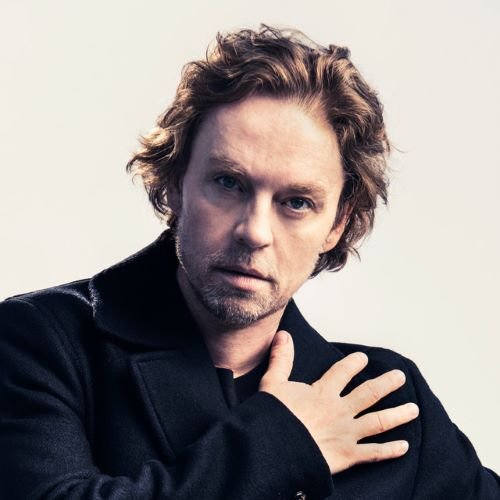
I would urge everyone to go and get the new E.P. from the wonderful Elanor Moss. She has not given too many interviews over the past year, but there are a couple that I wanted to bring in, so that we can find out more about her. I think that Moss is someone who is going to have big success through this year.

Early last year, ourculture spotlighted and spoke with the wonderful Elanor Moss. They asked her about the pandemic and whether it had changed the way she writes and approaches music. I was interested in Moss’ response when she was asked when she started writing songs. I do think that she is one of our very best artists. One that you need to watch very closely:

Elanor Moss, a singer-songwriter originally from Lincolnshire, started crafting her first body of work while living between York and Leeds as an undergraduate in Medieval Literature. Although she grew up in a musical household, it wasn’t until university that she began writing and performing her own songs as well as collaborating with artists including Benjamin Francis Leftwich, The Howl & the Hum, and Rosie Carney. Ahead of the release of her debut EP, Citrus, last Friday, she had only shared one song, ‘Soundings’, a devastating track that showcased her ability to evoke powerful emotions against spare acoustic instrumentation. As a whole, the 5-track collection, which was co-produced by Brooklyn producer Oli Deakin, further highlights Moss’ knack for intricate, resonant storytelling, dealing with themes of depression, substance abuse, and violence that are offset by lush arrangements and delicate melodies. As dark as her songs can be, Moss always seems aware of achieving that balance – not just in an effort to make them lighter, but also to carve out space for hope and catharsis.

Have the past couple of months changed your perspective on the songs you’ve written or making music in general?

The past year since making the EP, I’ve focused on writing. I haven’t had much time to write recently, I wrote a little bit while I was in isolation but the COVID brain fog is so thick you can barely string sentences together. But the past year, really, was all about craft. The Citrus EP, a lot of it was stream-of-consciousness-y, they’re some of my earliest bits of writing. At that point, it was entirely what I would call instinctual songwriting. But the focus over the past year has been on the craft of it. I think the songwriting that’s on the next record is a little bit more finessed, and trying to find that balance between that instinctive sort of writing that is entirely feeling and the more crafted writing that is a little bit more intentional. I think that’s probably the main difference. I’ve collaborated with a bunch of people, I work a lot with my friend Sam Griffiths of the Howl & the Hum. He helped me write some of the songs that are coming out on the next record. I just feel like I’ve been learning a lot about writing.

Was there a specific moment that made you realize you were interested in writing songs?

I don’t think there was ever like an aha moment. I think that music has always been a form of play, and it’s always been playful in its nature to me. It was always so natural that it never felt like a big reveal. I wrote my first full song when I was in university, I actually came to it some might say relatively late. I started writing songs when I was 18 whilst I was studying English. Before that, I performed a lot and I played guitar a bit and sang. And I’d written – I’d written short stories and scraps of poetry and things like that.

Why do you think songwriting specifically came later on?

That’s a really good question. I’m not sure. I think that songwriting is a very different discipline to short stories and any other kind of writing. And I think that the musical element means that you can communicate something beyond words. For me, that’s the magic of it. As a tool for storytelling, it’s kind of unmatched. There’s a level of, you don’t necessarily need to be explicit to effectively tell a story with a song. And I think that for the sort of confessional vignettes that I was doing at the time, it helped me communicate things that were almost too difficult to say completely explicitly, perhaps. I think it came when I needed it. I don’t know if that sounds weird, but like I said, it’s always been a form of play that is quite natural, the musical aspect of it. Writing songs themselves came a bit later but I think it was necessary at the time, and it was something that had captured my imagination. I was doing it because it was new and exciting, but also a tool for expressing myself at a time when I needed it.

What appeals to you about making music that’s intimate and vulnerable while also focusing on the female gaze?

I think that in the kind of music that I make, the way I’ve described it before, as a woman you don’t often control how men look at you. How you are gazed at determines an awful lot, and there isn’t a lot that you can do about that. But a form of subversion is inviting people to look at you, and inviting people to look at you on your terms, and in a certain way, and in your own words, as it were. And I feel like the kind of music that I make invites you in to look at me in a certain way. And I think that being vulnerable and trying to tell the truth in some ways is a quiet act of resistance and quietly telling your story. Sometimes a whisper is just as effective as a shout, but I think that you need both things. We need Self Esteem to be doing what she’s doing,  we need other women who are doing it brashly and loudly – and brash is a word that I’m using in a reclaimed sense. But I also think that there’s room for whispering your truth as well”.

I hope to see Elanor Moss perform live this year. She is playing St Pancras Old Church on 13th February, so that is going to be a wonderful date. In March, For the Rabbits interviewed Moss and asked her about live performances. I can only imagine how magical and evocative her performances are:

FTR: What can you remember about your first show?

Uhhh… I think it was really terrible. I can’t remember it that well because I was drinking wine out of a plastic bottle backstage to fight the nerves! This must’ve been about five years ago now. I only had about three original songs and I was shaking like a leaf. But, y’know, it’s how you learn! I’m grateful people were willing to take a chance on me to help me get more experience and grow in confidence.

FTR: Why do you make music? Why not another art form?

I’ve always been a storyteller; when I was a kid I loved painting and drawing, and I’ve loved to sing my whole life. I used to write whole-ass short stories as a kid, too, and get my Dad to edit them. For me, though, songwriting, and putting chords together, and creating sounds feels impulsive. Personally, as a storyteller, songwriting is the easiest channel to the “other side”: it’s the easiest way to lift the veil and connect with something bigger than myself. As far as I understand it, every art form offers a way to connect with the commonality of human experience, and in that common experience I think we experience something larger than all of us together, too. If dancing, or painting, or sculpting came to me as naturally as singing and composing and writing did, then I’d do that! But it doesn’t. The combination of writing and music composition together creates something that both forms can’t achieve in isolation of one another. For me, it’s the most effective storytelling tool.

FTR: What can people expect from the Elanor Moss live show?

At the moment, they can expect just me and a guitar, my songs, and some stories from my life that I hope speak to something we have all experienced. Between songs I talk a lot of rubbish and crack a lot of bad jokes. It’s still really early days for me, and in the future I’m looking forward to workshopping a bigger live set-up with some band members”.

As the Citrus E.P. proved, Elanor Moss writes songs that invite you in. Her voice has this ability to buckle the senses. Although her sound has changed slightly since that E.P. was released, many of the elements that made Citrus so wonderful are in Cosmic. On her Bandcamp page, we learn more about the background to the new E.P. from one of our finest voices:

A follow up in the truest sense of the word, ‘Cosmic’ picks up where ‘Citrus’ left off - finding Moss in a more secure place amidst the aftermath of the events ‘Citrus’ documented. Here the candid autobiographical writer charts her movements through the world, recovering, healing and interrogating some uncomfortable truths.

Decamping to Brooklyn to record the EP with frequent collaborator Oli Deakin (Lowpines, CMAT), with ‘Cosmic’, Moss has delivered a second astounding collection of songs. More assured and complex both musically and lyrically the songs & production are more ambitious as Moss not only explores more musical space but widens the scope of emotions present in the music. Humour & joy sitting just as much at the heart of this EP as introspection and melancholy”.

I am excited to see where Elanor Moss’ career takes her. I think we will get an album maybe later this year, and there is going to be touring demand. A stunning songwriter and artist, here is someone primed for a very long and fruitful career. Go and listen to Cosmic and discover why Elanor Moss is an artist…

WITH very few equals.

______________

Follow Elanor Moss

FEATURE: Spotlight: Meet Me @ The Altar

FEATURE:


Spotlight


Meet Me @ The Altar

_________

I feel like I am…

 PHOTO CREDIT: Meet Me @ The Altar in Orlando, November 2020/PHOTO CREDIT: Lindsey Byrnes for Rolling Stone

late to the party. Or should that be late to the wedding?! Maybe not as well-known in the U.K. as their native U.S., that is going to change very soon. The inspiring and wonderful Meet Me @ The Altar are a Pop-Punk band who formed back in 2015. I think that they have really broken through the past year or so. I wanted to spotlight them, as they are going to be a mighty force through this year. The trio consists of Edith Victoria, Téa Campbell, Ada Juare, with their members hailing from Florida, Georgia and New Jersey. Go and pre-order their album, Past // Present // Future. It is out on 10th March, and it will confirm that Meet Me @ The Altar are one of the most important and exciting groups around. I love a trio. I am not sure what it is but, whether it Meet Me @ The Altar or HAIM, there is something about the chemistry and configuration that makes the music that much stronger! I am going to bring in a few interviews with the trio. I will start by going back to 2021. It must have been hard for artists to make a name and headway during the pandemic. Whilst Meet Me @ The Altar have been on the scene for a few years now, I think that 2020 and 2021 were years when they were especially busy. They were definitely being noticed but, unable to tour much, it must have been frustrating! Rolling Stone spoke with them in 2021. Revising and updating a genre that was at its peak in the ‘90s and early-’00s, it is no surprise that they have captured a large and loving audience:

SINCE POP PUNK broke through in the Nineties, the genre’s most prominent faces have been largely white (not unlike dozens of other scenes). But as the music industry begins waking up to its history of race and gender inequality, one band is ready to rewrite that unspoken rule: Meet Me @ the Altar, one of 2021’s most exciting new rock acts.

Guitarist-bassist Téa Campbell, 20, and drummer Ada Juarez, 22, met online in 2015 after Campbell stumbled upon Juarez’s drum cover of a Twenty One Pilots song. Despite living in different states (Florida and New Jersey, respectively), the two became fast friends and decided to start a band. They held online auditions, where Edith Johnson, 20, tried out by singing Paramore’s “All I Wanted”; the Georgia native wasn’t chosen at first, but she was persistent.  “Edith supported us throughout the two years that she wasn’t in the band,” Campbell says. “She was literally texting me every day [asking]: ‘Are you guys looking for another singer?’” In 2017, Johnson got the gig.

Last year, the trio signed with Fueled by Ramen, the Warner Music-backed label responsible for launching some of the band members’ biggest influences — including both Paramore and Twenty One Pilots, as well as A Day To Remember and Fall Out Boy —  and re-released the single “Garden.” An exhilarating blast of sticky-sweet vocals, fluttery electric riffs, and a dangerously catchy chorus (“Your flowers will finally grow!”), it’s all but guaranteed to have you longing for the days of black eyeliner and studded belts. “I don’t think any of us have fully wrapped our heads around [the record deal] yet,” Campbell says. “We grew up idolizing these people our whole lives, and now we’re on the same label as them.”

The band first caught the attention of Elektra Music Group vp of A&R Johnny Minardi after some supportive tweets from All-Time Low’s Alex Gaskarth and The Wonder Years’ Dan Campbell (“I remember screaming when I saw all the notifications,” Johnson says). The members have also benefited from Halsey’s Black Creators Fund, which offers financial support and resources for black artists in need.

Still, their rise to success hasn’t been without challenges. On many occasions, they recall feeling like they had to prove themselves worthy while booking small gigs. “We would have to play with the local bands, but they’re all white dudes who didn’t really want us there,” Campbell recalls. “They were never explicit about it, but you can just tell. So it isn’t fun. But at the same time, we had to go through it for it to pay off the way that it did.”

When it hit in May 2020, “Garden” and its uplifting spirit provided many pop-punk fans with some much-needed comfort during quarantine’s peak. “It’s OK to not be OK, and you have people who are there for you,” Campbell says. “We wanted to get that message across to everyone. We didn’t know coronavirus and protests were going to happen, but it was a message that the world really needed to hear throughout all of that.”

The band members weren’t too fazed by the new ways of communication that quarantine required: In MM@TA’s early stages, the Gen Z musicians created songs over voice notes. “We grew up with technology,” Johnson says. “So it’s just like texting normally, but having the idea, recording it, and being like, ‘What do you think about this?’”

One of their biggest hopes for 2021 is to continue shattering boundaries so that more artists of color get a platform. “When shows come back, venues need to book diverse bands,” Johnson says. “Pay attention to your scene — and make sure your show lineup is not just all white, straight cis men”.

Even though I have said Meet Ne @ The Altar are largely known in the U.S., they are actually getting a lot of taction in the U.K. For that reason, I do hope that they come and play here throughout 2023. There is definitely going to be demand for them. DIY featured the tremendous trio back in December. Completing a successful and awesome year for Meet Me @ The Altar, there is that excitement and anticipation around an album. It is clear that the group are not planning on applying the brakes anytime soon:

Having packed in their day jobs to take the band full time, and with global tours and festival appearances under their belt, Meet Me @ The Altar have no plans to slow it down. In fact, their frustration at a current limbo between touring and the release of their debut album - due in the spring - is palpable. “We want to be a household name!” Téa exclaims with infectious ambition. “We want to be one of the greats. We fully believe with our entire being that we’re going to get to that place we want to be. We know we are going to get exactly what we want.”

That their moment has come seven years after forming doesn’t deter them either. “If anything, we’re stronger than ever before,” Edith says, mirroring Téa’s self-belief. “Once you get a little taste of something, you want a lot more. It’s definitely stronger, and very much here. You want to keep going and going and going.” “That’s literally the secret,” Téa laughs. “That’s how we got here. You have to be delusional as fuck and you have to do the work.”

PHOTO CREDIT: Ben Bentley

Their new music looks to continue that trajectory, and finds Meet Me @ The Altar still working very much on their own terms. Self-described as in the world of rock but a softer step away from easy-core, it’s set to propel them onto new stages in front of diverse audiences. They’ve recently completed shows with queer alt-pop powerhouse MUNA and are heavily inspired by Taylor Swift’s recently announced shows with Paramore, Phoebe Bridgers, HAIM, Beabadoobee and more - breaking boundaries and celebrating women in music, regardless of genre.

“I feel like artists and bands confine themselves too much in a certain box sometimes because it’s comfortable and that’s what they’re used to,” Téa expands. “I feel like you can only grow so much if you are stuck with the same thing. It’s cool to branch out.”

It’s all part of the band’s subtle mission to change the face of rock, and to show the world that music can stretch beyond and embrace all. “There’s a lot of beauty in thinking about when people will just see any band like how they see a bunch of white dudes up there,” Edith concludes. “A lot of our fans that really ride or die for us, they just see a band and we just happen to be who we are. The act of just being us is really enough”.

 PHOTO CREDIT: Jonathan Weiner

I am going to end with a very recent interview from NME. They mentioned how the debut album, Past // Present // Future, marries upbeat tunes with deep messages about empowerment, representation and a brighter tomorrow. It is the kind of music that I think that we all need to hear and learn from. There is no doubt that, when Meet Me @ The Altar on embark on their headline U.S. tour in March, they will receive so much adulation and electricity from the crowds. They, in turn, deliver absolutely incredible live performances:

Meet Me @ The Altar’s history goes back to 2015, when Campbell commented on bandmate Ada Juarez’s Twenty One Pilots drum cover on YouTube. The two started talking, eventually coming to the decision to form a band, and they held auditions on YouTube for a singer. Lead vocalist Edith Victoria submitted a cover of Paramore’s ‘All I Wanted’ and ended up joining the band in 2017. With all three of them spread across the East Coast of the US – Campbell in Florida, Juarez in New Jersey and Victoria in Georgia – the band wrote songs remotely, meeting up to play shows whenever they could.

After years of grafting across their local touring circuits, the band went viral over the summer of 2020. After Halsey named them recipients of their Black Creators Fund, Meet Me @ The Altar’s streams skyrocketed, as audiences sought to diversify their listening following the Black Lives Matter protests in response to the murder of George Floyd. “It’s been great, but it’s also really bittersweet and a little sad that it happened this way,” Victoria told NME previously.

Simultaneously, pop punk was experiencing a revival at the time, and Meet Me @ The Altar became part of a cohort of artists, including Pinkshift, KennyHoopla and De’Wayne, that formed a newer, more diverse, incarnation of the traditionally white and male genre. Meet Me @ The Altar have since worked tirelessly to create space for women and people of colour in alternative music. “It’s really important for us to be able to make people feel comfortable in a space that they normally wouldn’t have and to be able to actually see the diversity in the crowd,” Campbell says today. “When we went to [rock] shows [as teenagers], we never experienced that. So for us to be bringing these people together is so cool. It just drives us to keep going.”

They hope to encourage future generations of alternative musicians to pursue their dreams  as well. “We are running so other people can walk,” Juarez says. “We wanted to show all of these little girls that they can do [music] too. There’s so many different ways to get to where we are today – and I feel like it’s just so inspiring”.

A trio that I cannot recommend highly enough, I think that this year is going to be the biggest year for them. Go and follow them on social media, and ensure that you pre-order your copy of Past // Present // Future. As you can hear from the songs I have included in this video, they are a monumental talented group that are going to conquer the music world! Edith Victoria, Téa Campbell, Ada Juare are truly wonderful musicians and songwriters. If you have a few moments today, check out their music and make sure that you…

SHOW them some love.

____________

Follow Meet Me @ The Altar