FEATURE: Kate Bush’s The Kick Inside at Forty-Five: On the Promotional Trail

FEATURE:


Kate Bush’s The Kick Inside at Forty-Five

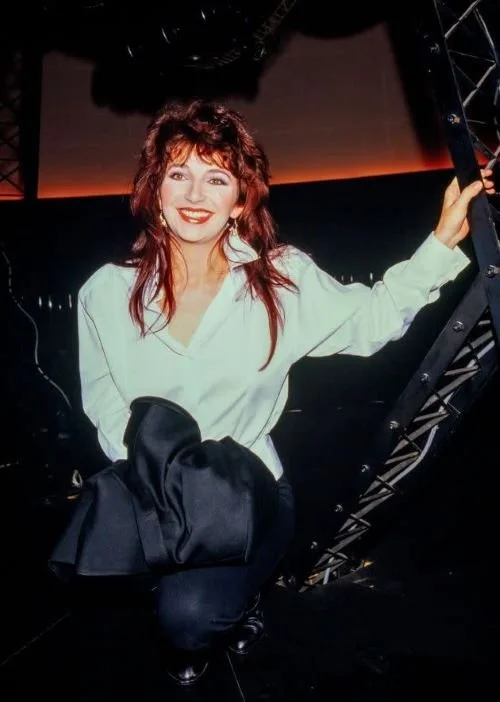
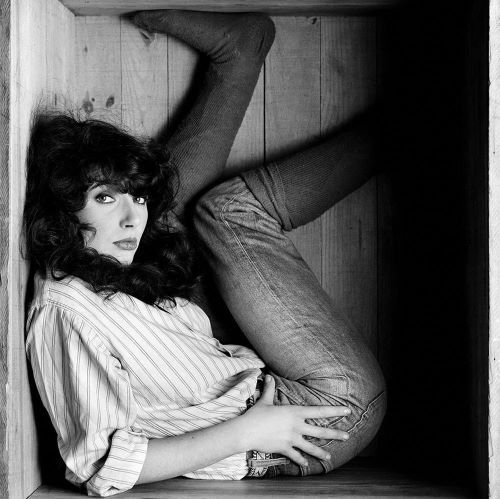
IN THIS PHOTO: Kate Bush photographed in a London hotel room in October 1978/PHOTO CREDIT: Steve Emberton


On the Promotional Trail

_________

AS 17th February marks…
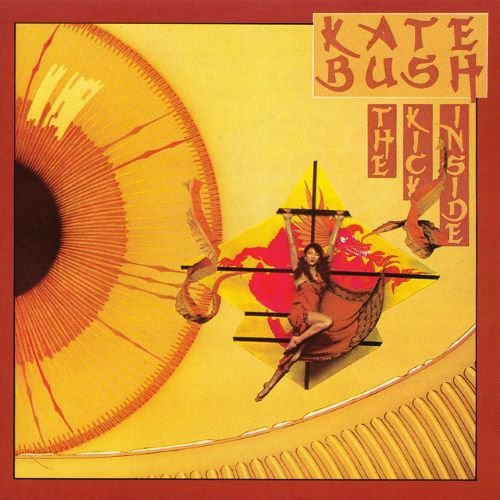
the forty-fifth anniversary of Kate Bush’s debut album, The Kick Inside, I am dedicating quite a few features to the album. It is my favourite of all-time, so it has that very special place in my heart. As I have said many times before, 1978 was a manic year for Bush. She released Wuthering Heights, her debut single, on 20th January. There was pretty much no let-up when it came to the work Bush put in to promote her first album. I can understand how excited she was to release a debut album, though she must have been exhausted come Christmas! That relief at being home with the family to rest and reflect on 1978. Even so, Bush managed to achieve so much that year. Not only did she release a debut album that was a huge chart success, gained a lot of positive reviews and put her firmly on the map. She performed live around the world in promotion of the album (some T.V. performances for the most part), and there was a lot of mystery around who Bush really was. From the start, Kate Bush got labelled as someone who was quite witch-like and strange. Too many people got caught up with Wuthering Heights and assuming that was who Kate Bush was. I don’t think too many understood her music or really got to know the real her. Even though Bush had these different musical personas and voices, a lot of interviews with her were quite samey and predictable. I might have covered these before but, as I am very interested in the vast promotional trail of 1978, I want to bring in a few interview from the year.

Going from country to country to talk about The Kick Inside, the magnificent Kate Bush hardly let her foot off of the gas! There are some interesting interviews that are worth sourcing. First, in March, Bush was featured in Sounds. Donna McAllister spoke with an artist who was taking people by surprise. With Wuthering Heights delivering this debut single smash, it was an exciting time to know more about a hugely talented artist:

SOULFUL, SENSITIVE, salubrious. So why all the fuss about Kate Bush's age? Is it the fact that you don't usually get such cohesive intelligence from 19 year old females? Is it that 'child' prodigies are out of our mode? Or is it simply the fact that the journalists are getting older? It wasn't that long ago that the charts were brimmed from 1 to 10 with teen-aged stars. It may seem that only yesterday she was your average unknown person, but in fact, Kate has been developing her unique talents on rinky-dink second hand pianos since she was the ripe old age of 14. Recently she moved into a three storey flat in Lewisham, which is owned by her general practioner daddy-o, and whose other two storeys are occupied by her two older brothers.

The story is not at all as overnight as it seems to be, it was in fact two years ago that Pink Floyd's Dave Gilmour bopped around to Kates' flat with a Revox -- goal in mind to get some of Kates tunes published. She wasn't, at the time, considered a singer but Gilmour, who is genuinely interested in giving undiscovered talent a shot-in-the-arm (with his Unicorn organization) felt that the bubbling under songs should have the opportunity to be heard. They recorded about 15 songs per tape, and took them around to various record companies. The unanimous opinion, then, was 'non-commerical', and after all . . . it's not creative unless it sells, 'eh?

How Kate and Gilmour hooked up is rather a vague 'girlfriends'- boyfriends'- girlfriends friend' sort of rigamaroll, but the fact is that he never did lose interest in her er . . . talents, and decided that the only way to reach a record company's goldlined pocket was to produce finished product. Which is exactly what they did. Gilmour put up the money, and Kate went into Air studios complete with a band, and laid down the three tracks she and Dave both felt were best. This is the tape which eventually landed Kate her contract with EMI Records.

Despite the fact that she has been already wrongly built (no pun intended) in the media to be a mere child, she is surprisingly aware of what is going on around her, and is accepting the entire shindig with a pleased air of disbelief.

"They keep telling me the chart numbers, and I just kind of say 'Wow' (she sweeps her arms) . . . it's not really like it's happening. I've always been on the outside, watching albums I like go up the charts, and feeling pleased that they are doing well, but it's hard to relate to the fact that it's now happening to me..."

'WUTHERING Heights', Kate's self-penned song, inspired by the book of the same title, is literally catapaulting up the UK charts, and looks as though it will be one of those classic world-wide smasheroonies, though it has yet to be released in most other countries. She recently took her first air-bourne flight to Germany for a television appearance, as the single, apparently, has been chosen as whatever the German equivalent of 'pick-of-the-week' might be.

"It was mind blowing," she said euphorically, in reference to flying, "I really want to do more of that . . ." Wonder how she'll feel about in in two years time.

She writes songs about love, people, relationships and life . . . sincerely and emotionally, but without prostituting her talents by whining about broken hearts.

"If you're writing a song, assuming people are going to listen, then you have a responsibility to those people. It's important to give them a positive message, something that can advise or help is far more effective than having a wank and being self-pitiful. That's really negative. My friends and brothers have been really helpful to me, providing me with stimulating conversation and ideas I can really sink my teeth into."

For as long as she can remember she has been toying around with the piano, much, I reckoned, to her parent's chargrin. Can you imagine living with a nine-year-old who insisted on battering away on said instrument, wailing away at the top of her lungs in accompaniment?

"Well, they weren't very encouraging in the beginning, they thought it was a lot of noise. When I first started, my voice was terrible, but the voice is an instrument to a singer, and the only way to improve it is to practice. I have had no formal vocal training, though there was a guy that I used to see for half-an-hour once a week, and he would advise me on things like breathing properly, which is very important to voice control. He'd say things like 'Does that hurt? Well, then sing more from here (motions to diaphram) than from your throat.' I don't like the idea of 'formal' training, it has far too many rules and conventions that are later hard to break out of . . ."

IT IS QUITE obvious from the cover of 'The Kick Inside', her debut album, that Ms. Bush is Orientally influenced, but apparently it was not meant to take on such an oriental feel.

"I think it went a bit over the top, actually. We had the kite, and as there is a song on the album by that name, and as the kite is traditionally oriental, we painted the dragon on. But I think the lettering was just a bit too much. No matter. On the whole I was surprised at the amount of control I actually had with the album production. Though I didn't choose the musicians," (Andrew Powell, producer and arranger did). "I thought they were terrific.

"I was lucky to be able to express myself as much as I did, especially with this being a debut album. Andrew was really into working together, rather than pushing everyone around. I basically chose which tracks went on, put harmonies where I wanted them . . . I was there throughout the entire mix. I feel that's very important. Ideally, I would like to learn enough of the technical side of things to be able to produce my own stuff eventually."

Kate has a habit of gesturing constantly with her hands, and often expressing herself with unspellable sounds and grimaces. Though this make tape transcriptions difficult, it does accentuate something which is very much a part of her, 'movement expression'. She has studied under the inimitable Lindsay Kemp, mime artiste, an experience shared with Kate's favourite musician, David Bowie.

"I admire actresses and actors terribly and think it's an amazing craft. But singing and performing your songs should be the same thing. At this point I would rather develop my music and expressing it physically, as opposed to having a script. I think I'm much better off as a wailer. . ."

She is, indeed a beautiful woman. Carved ivory, with nary a nick. So obviously there is no way she can avoid becoming the target for sexist minds. Although she does not advocate this reaction, she's not flustered by it. After all, it is a compliment.

"As long as it does not interfere with my progress as a singer/songwriter, it doesn't matter. I just wish people would think of that first, I would be foolish to think that people don't look. I suppose in some ways it helps to get more people to listen . . .”.
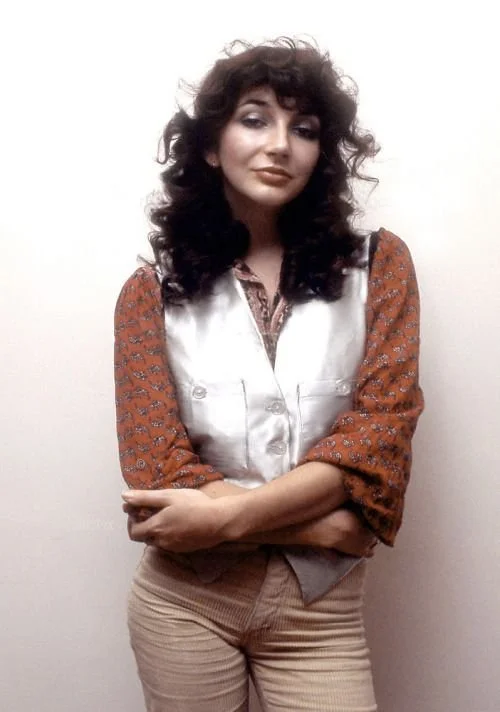
 IN THIS PHOTO: Kate Bush photographed in a London hotel room in October 1978/PHOTO CREDIT: Steve Emberton

I want to take it to October 1978. Bush sat down with Tim Lott of Record Mirror. Right at the top of the article, it is highlighted how human and grounded Bush is. Rather than being a prima donna and someone who is all about stardom, Bush is a proper musician who is here for the music – rather than making money and seeking fame. It is refreshing how grounded Kate Bush has been. Since the start, she has differed and distinguished herself from so many other artists:

The rock and roll business usually brings up its fair share of prima donnas, ready to grab what they can and cast off their friends and roots. The hit singles and fame happened very quickly for KATE BUSH but she remains a human being.

Enough of her flesh, her bones, her erogenous zones. Physical obsession has become redundant. Kate Bush is, as she never tires of emphasising, a member of the human race, not a musical hybrid of the girlie mag fantasy woman. She's clinging onto that humanity with obsessional determination despite her circumstances sliding further and further away from that "normality" she holds desperately and dearly.

Her abnormality has never been more apparent than in this setting: a L100 at night, two floor leather-and-flowers suite at the Montcalm Hotel, Marble Arch.

She has just been interviewed by "Ritz" and "Vogue". Attended by two press officers, she is, despite her protestations, a star, a true star, by virtue of her immense success, her pink skin and her Page 3 curves.

A number one single (an international hit) a number one album and immense publicity: Kate Bush is a phenomenon. The fate that befalls such animals - arrogance, self-indulgence, mania - has yet to manifest its symptoms, partially because this particular phenomenon is dedicated to the preservation of her personal reality.

Nervous

"I'm not really aware of being subjected to any starmaking machine."

She tap her fingers on the chrome and glass table in the only nervous gesture she possesses.

"I know that might sound odd, but I've really no idea about it. The record company thought this hotel would be practical. I thought it would be nice. It's quite a trip for me to be here.

"I didn't walk in here and say 'where are the flowers? Where is my champagne?'

"I hope I haven't become a prima donna yet. I really mean that. I really, really resent that a lot.

"It's nice if you're on the road that you should have somewhere nice to sleep. But I'm not into the 'Oh, Dahling!' bit, and everybody having a Rolls Royce."

It sounds almost defensive, but one subject that Bush is totally convincing about is how critical she considers her grasp on her own situation.

She has reached a point already of being such a valuable property to EMI Records that she is at the point of being able to control her immediate destiny.

The interviews she does are her own choice - "I want to get into as many areas as I can. So I did the fashion magazines and "Vegetarian" and "The Sun". I'm testing the water.

She says that she is, quote, into people. People, of course, reciprocate, and therein lies the danger. A surfeit of attention killed Janis Joplin and, more lately, put Ply Styrene into a mental home.

"I have some person principles I stick by, though they are pretty free. They don't just apply to the press. They are my way of living.

"I have tried to avoid an 'image'. If you have an image you intend to maintain, it's going to be very difficult, because you're going to get holes in your image. I may be that animal 'Kate Bush' a bit when I'm offstage, but mostly, I'm me."

Kate spends most of her time with a smile on her face that look straight at you, but she looks away and almost shutters for a moment.

"The things I don't like doing is... is... going to these sort of parties that you hear about. I don't go to parties. I find that sort of thing very unhealthy. In fact I find them disgusting."

She pronounces the word 'parties' like you or I might pronounce some vile disease or weird sin.

"It's not me. I'm basically a quiet person. When I get the time, I like to go home. I clean up the flat - which is a mess, because I'm never there. And I get some friends around that maybe I haven't seen for a long time.

"It's not a question of insulating myself. This is something that is extremely important to me - I'm very much a human being, and I don't want to lose that.

"You don't have to believe all the sycophants. I am aware that in my position I am both vulnerable and very powerful. People are always trying to grab a piece of your pie. But it can only be down to you to get yourself out of... er... a vulnerability situation."

This tiny vision is both unusual and predictable; the first because she is so damn scientific, the second because she is so blatantly optimistic.

She takes a relentlessly practical approach to her career - "I have to look at it in a realistic way" - and admits that she trusts no-one at all. On the other hand she believes like many before her, that she can have her cake and eat it, that she can be a star and not a star, that she can somehow escape the pre-requisite of her job - to give, and give, and still give, at the expense of, at the very least, a part of her personality.

"People might call me it, but I'm not a star," she says, and I think she almost believes it. "I'm just a person who writes songs that, at the moment, people happen to like.

"They might not like anything on the next album: in which case I'll still be the same."

Except that she'll be a failed star. Kate has yet to reach the point of acceptance that things will never be the same. Her family, her friends will inevitably take second place and some will disappear. The blue-print is there, and inescapable.

Or maybe I'm wrong, and Kate has more strength of mind than I dare hope. Maybe. She is certainly convinced, and that's half the battle.

"You don't have to make yourself an island. In your head, you know what you are”.

 IN THIS PHOTO: Kate Bush shot the U.S. cover of The Kick Inside/PHOTO CREDIT: Gered Mankowitz

There is one more interview I want to get to. The Music Journal’s Robert Henschen interviewed Bush in December. A U.S. publication, maybe the audience was not as large or aware of Bush as in other countries. Even though The Kick Inside was not a success in America, it is wonderful that she was being discussed there! Concluding an itinerant and hectic year, I wonder how she feels about that time now:

Released in the U.S. several months ago, Kate's album The Kick In-side has not achieved overwhelming success in the States as of yet, but that may soon change. The album has been reissued with a new album cover, and impressive AOR radio support has been building for Kate's remarkable music. Almost every cut on the debut record is equal to, or even better than, Wuthering Heights . There's an impish quality to Kate's singing on the quasi-reggae Room For the Life, she almost sounds like a munchkin on Oh To Be in Love, her voice soaring above the wicked witch's guardsman...And she reveals more dramatic profiles on the near-jazz Saxophone Song or the serious, moving Man With the Child in His Eyes .

This latter piece, about the relationship developed between a young girl and an older man, is a showcase for the singer's subtle and sensitive imagery. "She sees this man as an all-consuming figure," explains Kate. "He's wise, yet he retains a certain innocent quality. The song tells how his eyes give away his 'inner light'. He's a very real character to the girl, but nobody else knows whether he really exists."

Appearances on European television programs like Top of the Pops, Saturday Night at the Mill and Tonight helped launch Bush, still new to performing, into a sudden spotlight...and more than a little controversy. Her act is a sensual combination of dance and dramatic vocal presentations, her body not exactly hidden in a flesh-colored body stocking, and some viewers apparently found Kate to be erotically shocking or in bad taste. Even Kate cringes at the thought of those first, unpracticed attempts at visual communication. She has since learned to handle live performing more effectively, touring England to widespread acclaim. <This is not a reference to her Tour of Life, but to earlier promotional tours abroad.> Ms. Bush is something stunningly different to see...as well as hear.

With or without the sensationalism surrounding her good looks and offbeat performing style, Kate writes music of incredible depth. Just as her dawning public image comes up displaying the physical woman, so do her amazing lyrics bespeak 100% twentieth-century female. Seldom, if ever, has the feminine standpoint been more boldly and beautifully stated, and songs like Room For the Life, Strange Phenomena or Feel It penetrate directly to new depths of corporeal and spiritual realization.

Some of the poetry herein is unexpurgated and erotic; other portions take an inanimate pose to evoke new feelings from the listener.

For instance, Kate creates a flying feeling for Kite, a song that exhibits her songwriting knack for approaching a subject in some refreshingly original way: "In the song the character starts to feel that he is rooted to the ground, but there is a force pulling him up to the sky. A voice calls out, 'Come up and be a kite,' and he is drawn up to the sky and takes the form and texture of a kite. Suddenly he's flying 'like a feather on the wind,' and for a while he enjoys it, but the longing for home and the security of the ground overtake these feelings." Just as Kate becomes Cathy Earnshaw in Wuthering Heights she assumes the role of a young sister in The Kick Inside (inspired by the traditional folk song Lucy Wan ) who, after a tragically incestuous relationship with her own brother, leaves this incredibly sad and hopeful farewell note. Intriguing song-poem ideas.

How did Kate Bush learn to write brilliant songs of such unnerving emotionalism and intelligence at such an early age? "I just grew up with music all around me. When I was about eleven I just started poking around at the piano and started making up little songs. I never played Beatle songs or anything like that. I was always just exploring the instrument. Then, when I was fourteen, I started taking it seriously and I began to treat the words to the songs as poetry. I'd always been keen on poetry at school and it was lovely to put the poems together with the music.

"I have two older brothers and they were very keen on musical instruments. One day, along comes this friend of my brother's <Ricky Hopper>. He worked in the record business himself, and thought he might be able to make contacts. Well, he knew Pink Floyd from Cambridge, and he asked Dave Gilmour down to hear me. Since then, I've been singing, playing and writing until we made the album." Originally the album was to be released in late 1977, but it kept getting delayed, and finally appeared on Harvest in early '78. Now The Kick Inside has come out a second time on EMI-America, distributed by Capitol, and Kate Bush is finally available throughout North America.

Shortly after her phenomenal success with Wuthering Heights, Kate celebrated her financial windfall by picking up a $13,000 Steinway baby grand. "I feel as though I've built up a real relationship with the piano. It's almost like a person. If I haven't got a particular idea I just sit down and play chords, and then the chords almost dictate what the song should be about because they have their own moods." Kate may be working on new songs for another album, but she seems content to let her career evolve without outside interference or commercial pressures: "I'm really not sure how I'm going to develop from now...what direction my music will take. I just want to carry on exploring”.

I will leave it there. I am always excited to re-read Kate Bush interviews, and 1978 has a fair few of them. In terms of the places she visited and the promotion undertaken, few artists had such a busy start to their careers! Testament to her passion and stamina, Bush was always professional and interesting in interviews. A truly magical debut album, The Kick Inside certainly garnered world-wide interest. People wanted to know more about Kate Bush. Nobody like her had come into music. No wonder there were some perplexed, awed and dumbstruck interviewers! There are many other great 1978 interviews. I have selected a few of my favourite to mark the upcoming forty-fifth anniversary…

OF the spectacular The Kick Inside.

FEATURE: Spotlight: Samara Joy

FEATURE:


Spotlight

 PHOTO CREDIT: Meredith Truax


Samara Joy

_________


AS she won the GRAMMY…

 PHOTO CREDIT: Meredith Truax

for Best New Artist on Sunday, I could not ignore the truly phenomenal and wonderful Samara Joy (Samara McLendon). I have known about her music for a while but, as I have been pretty busy, I have not got around to featuring her yet. I am glad I get to spend time with an amazing musician. The Bronx-born twenty-three-year-old Jazz artist won the Sarah Vaughan International Jazz Vocal Competition in 2019, and she was named Best New Artist by Jazz Times for 2021. Samara Joy, her debut, album came out in 2021. She followed that with last year’s Linger Awhile. Samara Joy also won the Best Jazz Vocal Album GRAMMY for Linger Awhile. It is definitely one of the most remarkable and powerful albums of last year. The incredible and soul-shaking vocals are truly unforgettable! It is a shame that, like many Jazz artists, Samara Joy’s music has only been reviewed by Jazz publications. Maybe there are one or two more mainstream publications that have reviewed it, but Linger Awhile did not get a spread of reviews from outside of the Jazz community. I will come to one of the reviews at the end, as it is clear that Samara Joy double GRAMMY win will change things! Not only will it open more eyes to her brilliant music. I hope that it will mean more people explore Jazz. As a New Artist winner at the GRAMMYs, more and more people will explore her music.

I want to bring in a few interviews with Samara Joy. Even though she has not been singing Jazz for that long, she really has established herself as one of the most important and remarkable voices in the genre. It was a real achievement winning Best New Artist at the GRAMMYs. Nominated alongside Anitta, Domi & JD Beck, Latto, Måneskin, Molly Tuttle, Muni Long, Omar Apollo, Tobe Nwigwe, and Wet Leg, the competition weas diverse and fierce! I’ll start with an interview from W Magazine from January, who wrote about Samara Joy being nominated for GRAMMYs. I love how the news was broken to her:

When the nominations were first announced, Joy says she was on an Amtrak train returning to New York from D.C. “My family and the label team texted me around 12:30 p.m.: ‘You got nominated.’ I totally forgot,” the musician recalls with a laugh. “It’s not like I wasn’t watching it on purpose—I just wasn’t thinking about it.” Despite her nonstop touring, recording, and releasing Linger Awhile in the same year, Joy evokes a calm kind of composure, which she attributes to her close-knit family.

“Making sure that I’m always talking to [my family] keeps me grounded—FaceTiming with them all the time and keeping them in front of me. Because with everything that’s happening, it is easy to lose track of that,” she says. “The days keep going by, and my time with them—in person, at least—is lost.”

Her bond with her relatives is far more than just familial, as her lineage closely aligns with her chosen career path. Joy’s paternal grandparents, Elder Goldwire and Ruth McLendon, founded the Philadelphia gospel group The Savettes. And her father, Antonio McLendon, is a bassist and singer who toured with the late gospel singer Andraé Crouch, plus has worked with Gladys Knight, Patti LaBelle, and Donna Summer, among others (Joy’s last name is McLendon). She learned from her father that her grandmother started the mobile church ministry in Philadelphia. “They rented a van, and my grandparents, my dad, and his siblings would ride around, pick a corner, and just have church. My aunts and uncles would sing, and my grandmother or grandfather would preach.”

PHOTO CREDIT: Meredith Truax

Surprisingly, Joy didn’t start out singing right away. “My mom said I was very quiet when I was young—I only [ever] talked or was loud when I cried,” she recalls. Being surrounded by music, however, Joy soon realized the church, music, it was all a part of her. She decided it was time to sing, and began participating in choirs during middle school and musical theater in high school. During that time, Joy became a worship leader at her church for the next two years, which she says was crucial to her development as an artist and musician.

“All of a sudden to be put in the position of [having] to lead a song and lead a set of music—it was new to me,” she says. “People were coming up to me, like, ‘You sound good, but don’t blink when you’re up there; we can tell [that] you’re nervous.’ I was forced to get out of my comfort zone. It’s like, ‘You accepted this opportunity, and now you have to work at it. You have to develop this confidence and get away from the shyness.’”

While taking home a Grammy at the upcoming 65th ceremony would undoubtedly be a feather in her cap, for Joy, accolades are not the endgame. “This will be a long journey that, hopefully, lasts for a while,” she says. “Thinking about all this stuff now is overwhelming. I’m not going to get a big head about it because I’m aware of all the things I want to improve. And I always want to be like that. I want to celebrate the wins, but also think about what I can do to move forward, elevate, get better, learn, and just be a better artist and a better person. I’m not necessarily reaching for one mountaintop moment”.

NPR profiled the incredible Samara Joy earlier this month. An artist who, with Linger Awhile, has created one of the most soulfully beautiful and engrossing albums I have heard in years, she is primed for superstardom:

Awards-season campaigning is more of an Oscars thing, but Joy's cheerful ubiquity, and the unforced glow of her ability, have conspired to make her perhaps the closest thing to a frontrunner in this year's best new artist race. Which is remarkable, given that Samara Joy sings jazz and songbook standards in a straight-ahead style that was last broadly popular in the 1950s and early '60s. Unlike late 20th-century platinum torchbearers Harry Connick Jr. and Diana Krall, she's finding mainstream success at a moment of extreme atomization in the music business, let alone pop culture at large. So her breakout moment comes with an inevitable burden of accountability for the art form.

"I feel it, and I understand it," Joy says about that weight on her shoulders, speaking recently from her apartment in Upper Manhattan's Washington Heights neighborhood. Name-checking some influences, starting with Betty Carter and Sarah Vaughan, she points out that those affinities come with a natural point of departure. "I couldn't do this without that foundation that they've laid," she says. "But I am 23, and I'm singing jazz in 2023, and I come from a different background than all of those artists. So I think that carrying on the tradition is progressing as you grow, and not being in a singular box."

So it's worth restating one of the more startling talking points around Samara Joy: She's only been singing jazz for the last five years. After dipping a toe into the tradition at Fordham High School for the Arts, she received a full baptism at Purchase College, whose Jazz Studies faculty includes noted players like trumpeter Jon Faddis and drummer Kenny Washington. "Everybody was really supportive, but I still had this feeling like, 'I don't know if I belong,' " Joy now recalls. "Because I didn't have this preconceived notion of what it's supposed to sound like. But as it turns out, that allowed me to be a sponge and just soak everything in."

Her father, Antonio McLendon, is a singer and bassist who toured for years with gospel star Andraé Crouch, extending the legacy of his parents — Elder Goldwire and Ruth McLendon, who sang in the lauded Philadelphia group The Savettes. (A highlight of the Ardmore Music Hall show was a cameo by Elder Goldwire McLendon, who is 92.) While this was the tradition into which Samara was born, Antonio didn't balk at her musical pivot. "When she came into contact with jazz, she immediately developed a respect for it," he says. "I've watched her study for hours, puzzling over things: 'How does Ella Fitzgerald scat like that?' I would hear her in the middle of the night practicing horn lines, because she learned that's something Ella would do."

Considering Joy's familial foundation in gospel, soul and R&B, it's striking that her Grammy-nominated album, Linger Awhile, hews so faithfully to straight-ahead acoustic jazz. Even within those parameters, there's no cover of, say, a Lauryn Hill or Stevie Wonder song. This speaks to Joy's relationship with the jazz canon, which is still in the act of formation. But it also capitalizes on what you might call a market opportunity. Jazz hasn't been hurting for exceptional vocal talent lately, but all of the artists who broke through to a mainstream audience within the last dozen years — Gregory Porter, esperanza spalding, Cécile McLorin Salvant, José James, Jazzmeia Horn — have moved on from a traditional mode, delving into other forms and approaches. Joy has stepped all the way in to fill the void.

Joy could go that route if she so chooses, just as she's begun to alter the public dimensions of her style. This week, as part of a best new artist tie-in with Spotify, she released a luxuriously intimate cover of Adele's blockbuster ballad "Someone Like You" — backed only by Shedrick Mitchell on organ, just as she'd been at the outset of "O Holy Night" in Ardmore. Joy's performance on the track is a study in gradual build and unguarded emotional connection, and it's a testament to her supreme self-confidence that she had the nerve to tackle the song.

She's scheduled to perform at the Grammy Premiere Ceremony on Sunday, and what happens beyond that is a matter of conjecture. For the whole spectrum of her fan base, which is probably about to get bigger and broader, this feels like a pivotal moment. Joy sees it, purely and simply, as a blessing. "The goal is to be as true to myself as I can be," she says, "while continuing to grow and stretch the boundaries of what I think I can do”.

Before getting to a review for Linger Awhile, I want to finish with an interview from Forbes. It is a fascinating and deep read. Here, Sage Bava (she is a nomadic artist with unique music that falls into the R&B and dark Folk categories) – talks with Samara Joy about her start and songs that influenced her:

Sage Bava: I can't believe that you said you only started singing jazz when you were 18. I saw that in an NPR interview. And I know that you were probably singing since you were born with all of these different genres. What was that like to find jazz at 18?

Joy: Towards the end of high school, I was a part of a jazz band. It was an elective more than it was a part of the curriculum and everything. The teacher over the band program asked me if I wanted to sing a couple of songs for the jazz band. So I agreed. I was like, "I don't really know anything about this, but I love to sing." Like you said, I've been surrounded by singers and musicians all my life through my family and through their influences. But it was time to go to college, and I wasn't sure what I wanted to do. I wasn't sure if music would have been a stable choice for me to pursue. And I love gospel, I love R&B, I love soul, maybe I could see myself in those genres. But still I hadn't found something that I felt like I could do, where I could tell my story in a unique way. We all have our own voices, and so I can't copy anybody or imitate anybody as much as I would like. So I auditioned. I was in this program, and we were required to apply at the end of our high school career for six state schools. SUNY Purchase was one of the schools that I chose, and I auditioned, I saw they had a wonderful jazz voice program, I knew two jazz songs and I used that one to audition and get in. And the head of the Conservatory at the time, his name is Pete Malinverni, he was really kind to me during the audition and the whole process. He emailed me later on saying, "Thank you so much for your audition, we would love for you to be a part of this program." And I was like, "I don't know. The next four years determine the rest of my life, and I have to make the right choice, or else everything's doomed from here." At least that's the way that it felt. It turned out to be the best decision for me. So that's how it happened.

Baltin: Was there that one song early on for you where you realized that it had relevance and that you could make it speak to you in 2021, 2020?

Joy: That's a good question. One of the songs from that assignment that we ended up choosing was Nancy Wilson, singing "Save Your Love For Me," with Cannonball Adderley. And I remember listening to her and of course it's a beautiful song on its own. But when you hear the original recording versus hers, which are years apart, you're like, "Yeah, it really depends on who the interpreter is. It brings the song off paper and brings it to life." And so that's why it's fun with jazz. Of course we sing the melody, but then the second or third chorus of us singing it, we experiment with it and we add changes or we change the phrasing up. So it's not exactly as written. Because if we sing it exactly as written, there's nothing more being done about it to make it contemporary at all. So you take the good foundation of a song, but then you put it in the hands of a Nancy Wilson or Sarah Vaughan and it comes to life. It's the same song, but they bring it to life in different ways and add their own emotional fuel to connect with the audience and make it real.

Bava: I'd love to know what artists right now, in the contemporary space, that you love, whether they be singer/songwriters or in jazz.

Joy: Well, I definitely have a lot of love for Cécile McLorin Salvant and Jazzmeia Horn, who I both have the pleasure of knowing personally or at least getting to know personally. But I admire both of their approaches to jazz and approaches to expressing themselves through their own music, through standards, but also through their original compositions and their arrangements. They're the whole package as far as artists go. I admire their artistry, their musicianship, their performance style, the way that they are, the way that they present themselves, everything”.

I will end with a review for the stunning Linger Awhile. I think that it is one of the best albums from last year. It is clear that, after a double GRAMMY win, Samara Joy is going to be a major festival name. Her music will be picked up by people who may not have heard it until now. Jazz Wise were full of praise for Samara Joy’s spectacular second studio album:

Released last year on Whirlwind, Samara Joy McLendon's debut album announced the arrival of a remarkable new talent, a vocalist who possessed timing, timbral richness and emotional power in abundance.

On this follow-up album, released on the iconic Verve label, the winner of the 2019 Sarah Vaughan International Jazz Vocal Competition pays homage to one of her most important touchstones on opener ‘Can’t Get Out Of This Mood’, which Vaughan recorded in 1950 with George Treadwell and his All Stars. Containing echoes of the version recorded by the great Carmen McRae on her 1957 album After Glow, ‘Guess Who I Saw Today’ is a standout. In addition to dusting down ‘Social Call’, written by Gigi Gryce with lyrics by vocalese legend Jon Hendricks, the singer presents two stunning additions to the genre in the shape of Fats Navarro's ‘Nostalgia (The Day I Knew)’ plus ‘I'm Confessin’ (That I Love You)’, the latter based on Lester Young's solo from the album Lester Young with the Oscar Peterson Trio recorded in NYC exactly 70 years earlier in 1952. With outstanding support from guitarist Pasquale Grasso, pianist Ben Paterson, bassist David Wong and drummer Kenny Washington, the title track – first recorded almost 100 years ago in 1923 by Bailey's Lucky Seven – blazes like an exploding star. Augmented by horns (trumpeter Terell Stafford, trombonist Donavan Austin, tenorist Kendrick McCallister), there's a wondrous take on Monk's ‘Round Midnight’ (in the version with lyrics by Hendricks) while, accompanied solely by Grasso, the singer's incredibly beautiful timbre is heard to best effect in the Gershwins’ ‘Someone To Watch Over Me’, which brings this staggeringly fine album to a close”.

With one of the most unforgettable voices in music, everyone needs to hear and experience the music of Samara Joy! It is going to be exciting seeing where she goes next and how she follows Linger Awhile. Although her style is rooted in Jazz of the 1950s and before, there is this contemporary edge and diversity that will appeal to a wide audience. This wonderful musician will have such…

A busy year!

____________

Follow Samara Joy

INTERVIEW: Collette Cooper

INTERVIEW:

PHOTO CREDIT: Blake Ezra


Collette Cooper

_________

FOR this interview…

PHOTO CREDIT: Rankin

I have been speaking with the amazing Collette Cooper. Cooper is multi-talented singer, writer, performer and critically acclaimed artist who has been championed by BBC Introducing, BBC Radio 2, BBC Radio 6 Music, Soho Radio, and Jazz FM. Her inspirations go back as far as Bessie Smith, Sister Rosetta Tharpe, Nina Simone, Kurt Weill, Billie Holiday and Mozart. Cooper discusses her stunning recent album, Darkside of Christmas, and her starring role in Tomorrow May Be My Last: The Janis Joplin Story. The hugely acclaimed show channels the true essence of the 1960s legend. It soon starts a residency at the Old Red Lion Theatre in Angel, London (between 14th February and 6th May). I would urge people to grab a ticket, as it is an experience you will not want to miss out on! The brilliant and mesmeric artist also reveals whether we will get new material this year. It has been a huge pleasure know more about…

THE fantastic Collette Cooper.

____________

Hi Collette. How are you? What has your 2023 been like so far?

Literally, on another-level busy (laughs). We started rehearsals for the show again (Tomorrow May Be My Last: The Janis Joplin Story), which opens on the 14th of February in the Old Red Lion Theatre in Angel. Then we plan to take it to the West End later in the year, so it is very much about the play this year. So, yeah, pretty full-on, but great at the same time.

You had quite a busy 2022. What were your personal highlights?

My favourite things to do are to walk on the heath with my lovely dog, Billy, and my partner, Mike. But highlights? I guess. I’ve got so many highlights. Personal highlights. We won our netball league finals (laughs). However, I’ve got a dodgy knee, so I sat on the bench a lot. I have to mention too Matthews Dukes’ Jukes Cordialities, who sponsored our netball team. I had quite a good year actually. I loved doing the Christmas album (Darkside of Christmas). That was great. Working with such amazing musicians. Ray Winstone being the star of the album, really. That was brilliant. I voiced a great children’s book called The Heavy Bag, which is a beautiful story by Sarah Surgey. It’s about children coming to terms with death, and how to teach them about that. It's a really beautiful book. I loved voicing that. Recording the book for Amazon, and the money going to the children of Ukraine.

Also, performing at the Roundhouse alongside Chrissie Hynde, Bob Geldof and other amazing musician to raise money for Ukraine. That was a real highlight, definitely, to be asked to do that. Such a huge audience. And, again, the play and winning that great award, which was brilliant. And the album and recording at Abbey Road. Working with Rankin, the photographer, who did the album cover. I was on the front cover of Darkus Magazine as well, which and I’d never been on the front cover of a magazine before, so that was really special. And they had their own little award ceremony, and the awarded me Best Musician of the Year. It’s really kind of them to give me an award, so that was really lovely. Performing our Christmas concert in the most beautiful chapel with thirteen incredible musicians.

I really loved your Darkside of Christmas album from December! Do you have a favourite song from the album at all? What was it like recording it?

A lot of blood, sweat tears….and snow went into that album! (Laughs). Do I have a favourite song from the album? (Pondering). I like them all for different reasons. I loved Silent Night, because I loved our version on there, and Rochard Harwood is an amazing, amazing cellist. He’s the principal cellist for the Royal Philharmonic Orchestra, and so it was a real honour to work with him on that because it was just me and him. And the most amazing gospel choir, Kings Voices. For all different reasons I love Santa Baby; it’s a fun song, really fun to perform. Quite poignant…and kind of done in an ironic way, I guess. Ain’t Necessarily So. I love how we mix that with Carol of the Bells (a popular Christmas carol which is based on the Ukrainian song called Shchedryk (Ukrainian: Щедрик). The song uses the original melody from Shchedryk, written by the Ukrainian composer Mykola Leontovych in 1914). I came up with that idea a couple of years ago. I wanted to record that, but I wanted to do it so differently, and I thought that this was a perfect way to do this as different as possible.

I loved performing It’s a Wonderful World with Liam Stevens, who’s an incredible pianist and great fun to work with. I loved that for so many reasons, because it was literally an old out of tune piano, you know? And we were in the studio and, anyway, and I just said “Oooh, shall we just ‘ave a go?”. And we literally, in one take, recorded it. And that’s how it sounds. With all its flaws. We just did it there and then. Very spontaneous. I love it for those reasons, and because me and Liam always crack up laughing.

I never say that I am a ‘Jazz singer’ or a ’Blues singer’. I don’t put myself into any box. I don’t think I like to define my vocals by any genre

Yeah, and I guess when you’ve heard the songs over and over a million times (chuckles) it’s nice to maybe leave it until this year, this Christmas, when you can have a fresh listen to it with fresh ears. I think definitely Ray Winston’s voice was the highlight for me. Him reciting the poem that I had written. And I just think…he made it really magical. So I guess, you know, the songs that he performed on like Silent Night and Darkside of Christmas. I think they’re the standout ones for me as well.

Before we look ahead, take me to the start. When did music come into your life? Which artists and albums inspired you when you were growing up?

Well, I’m a really huge fan of Bessie Smith. I my dad introduced me to her when I was really, really little. And she just blew me away. I loved her rawness. I loved her rawness and her ballsiness. And her truth. And her power. And…her distinctive vocals. And she just really had an affect on me. And I loved all the greats, you know: Billie Holiday, Nina Simone, Big Mama Thornton, Sister Rosetta Tharpe. I really love those guys. You know, the Bluesy guys. I think I’m really influenced by Blues and Jazz, so I’ve never classed myself. I never say that I am a ‘Jazz singer’ or a ’Blues singer’. I don’t put myself into any box. I don’t think I like to define my vocals by any genre. So I like to sing what I like to sing, but I’m definitely influenced by Blues ands Jazz, that’s for sure.

I loved Johnny Cash, David Bowie, Kate Bush when I was all little. I have a really eclectic taste. I’m a huge fan of Mozart. I LOVE Mozart. Yeah, I’d say I’m influenced by many, many great artists, and I admire all those guys.

Obviously, Janis Joplin is a huge inspiration. You have starred as her in the play, Tomorrow May Be My Last: The Janis Joplin Story. What is it about Joplin and her life that speaks to you?

It’s funny you say that about Janis Joplin, because I didn’t know much about her before I started the play. It was mentioned in a couple of reviews that I was like Janis Joplin-meets-Edith Piaf. And really weirdly, neither of those amazing artists were my influences. I knew a lot more about Edith Piaf, in the sense that my dad played a lot more Edith Piaf around the house. So maybe my subconscious…maybe she got into my DNA somehow somewhere. But Janis Joplin. I knew (Me and) Bobby McGee, Piece of My Heart. But I really didn’t know much about her. So I was always surprised when they said, you know, “You’re like Janis Joplin-meets-Edith Piaf”.

And, so what attracted me to her life when I started doing the research is because she was just such an open, honest, lovely, beautiful soul. A real pioneer for women in music. And politically. You know, she was a pioneer

Anyway, to cut a long story short, a West End producer came to see my show at the 100 Club back in 2018, and he said to me that you’d be great doing a one-woman show. Maybe of Edith Piaf. Or of Janis Joplin. And I thought, well I’m not going to do Edith Piaf with all that French I’ve got to learn. Forget that (laughs). So I thought, Janis Joplin, okay. I did research on her and I realised we had more in common than I ever realised. There were a lot of parallels between us and the fact that she absolutely adored Bessie Smith. Which was like a sign.

I read every book. I watched every documentary. I grew my hair. I wanted to be a bit more voluptuous like her. She had a beautiful, voluptuous figure. I was this skinny little thing. So, I was able to put on some weight and kind of mould myself into her whilst doing the play. Because the play. It is a play, first of all, driven by music. She tells a story backstage in her dressing room. It’s set in a Woodstock-style festival. And, so what attracted me to her life when I started doing the research is because she was just such an open, honest, lovely, beautiful soul. A real pioneer for women in music. And politically. You know, she was a pioneer  She came from a very backward kind of town, and she had to fight to get out of there. She was ahead of her time, and she was an old soul. She was deeply bullied growing up, and she, you know, felt very unloved. She was just a misfit, and felt very…like she didn’t fit in. I felt like that growing up at times. So I related, you know, quite a lot. I felt that we had a lot of similarities. So, I’m really enjoying playing her. But it’s like a marathon every night. I say this: Janis Joplin could not play Janis Joplin every night. It’s full-on (laughs), so I’m going to be knackered at the end of it. But it’s enjoyable and it’s going to worth it.

PHOTO CREDIT: Robin Pope

I understand the play is restarting, and it has been nominated for an Offie Award! What was your reaction when you heard the news? What has the reception been like from the audiences that have watched the play?

Yeah, it’s starting up again for three months. We start on February the 14th until May the 6th. And then we have a break; and then we aim to go into the West End, finding a suitable theatre. Yeah, we were thrilled. You know, when you work so hard on  something and you literally put blood, sweat and tears into it, which we did. And it’s gone through a lot of changes. I wrote the treatment in 2018. Started developing it, started doing all the research in 2019. Did the first read-through in March 2020 before we went into lockdown. And then we performed it for as small audience just as we were coming out of the first lockdown. When we could perform it with an audience of the third of its capacity with masks. So we used that to develop it. It went through a lot of changes, and developing it to a point where I wanted. I got the script to where I wanted it, and performed it. Premiered at the Old Red Lion Theatre in Angel, which is a legendary theatre! It’s an amazing theatre. It’s one of the oldest theatres in London. You know, it’s an incredible theatre. Perfect space for it to grow. The band have been with us from day one. Incredible musicians. I mean, they make me sound good, let’s put it that way (laughs).

It is a sad story, but there’s a lot of hope in there

They are absolutely brilliant. So when we heard the news we’d been nominated for five Off West End Awards (Offies), and we won the Standing Ovation Award, it was just brilliant. It’s just nice to be recognised for your hard work. But you know, more than ever what was so important was the audience reaction. And how it moved them. And it was really nice that we touched so many people on so many levels and they really enjoyed it. It’s a really uplifting play. It’s a sad story, you know. It is a sad story, but there’s a lot of hope in there. There’s a lot of messages in there. So, yes, we’re very, very, very, very pleased about that.

I know climate change is a cause dear to your heart. You performed for the late Vivienne Westwood’s Cool Earth charity. A few high-profile musicians and actors are becoming involved in this fight and talking about climate change. How important do you think this is with regards engaging people and affecting action?

It couldn’t be more important, relevant than today. We’ve just got to try and do our bit. It’s beyond recycling. It’s our carbon footprint. Trying our best to become a vegan. I’m a vegan. I have been because I’m a huge animal lover. Another thing that is close to my heart is animal rights. And we’ve got to try and do our best. Do anything we can do to help save the planet. Less clothes. Less washing. Less buying. Don’t need to collect a lot of things. We need to downsize. We need to get rid of stuff. Recycle, recycle, recycle. It’s really important. Just little things you can be aware of. Just turning off the lights even (laughs). Using less water. Just trying to use less.

This year is shaping up to be a remarkable and fascinating one for emerging artists. Are there are any particular artists you would recommend we check out?

Luca Manning. They are amazing.

Might we get a Collette Cooper E.P. or album this year? Is there any new music in the works?

Yes, there’s definitely going to be new music this year once I finish my play in May. I’m actually releasing the title song of the play, Tomorrow May Be My Last, in March, which we recorded last year but didn’t officially release it. 2nd March that will come out.

Finally, you can pick any song you like to finish. It can be an old favourite or a new song. What should we play?

Me and Bobby McGee by Janis Joplin.

__________

Follow Collette Cooper

FEATURE: Revisiting… Harry Styles – Harry’s House

FEATURE:


Revisiting…


Harry Styles – Harry’s House

_________

WHETHER a great album overlooked…

 PHOTO CREDIT: Lillie Eiger

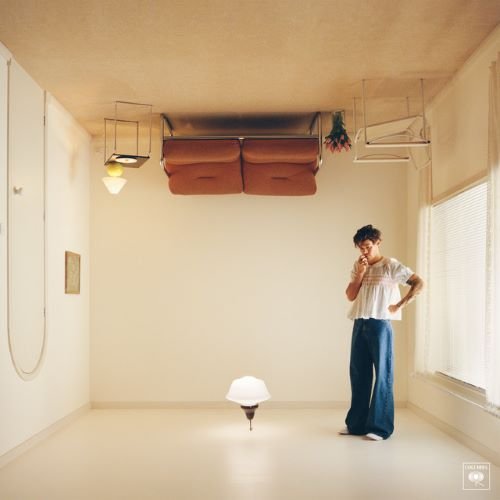
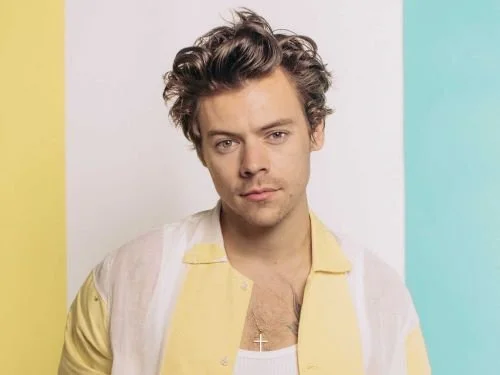
or a terrific album that people might not know about now – or it is not played widely -, I wanted to use at least the next couple of Revisiting… features to explore some of the best of last year. As I say, there were albums overlooked that are worthy of praise. Some that were not given their dues but are definitely stronger than that. The third group is strong albums that were acclaimed but maybe not everyone has heard of. Maybe some people feel Harry Styles is a niche taste or a Pop artist that is reserved for a certain demographic. That is definitely true with a lot of boyband alumni. Styles was a member of One Direction and, unlike many who have been part of a boyband (who were mainly aimed at younger listeners), Styles is a very mature and eclectic artists whose debut album, Harry Styles, only hinted at what potential he had. 2019’s Fine Line was a real step up. An award-winning and acclaimed album, this was followed by his third. Nominated for, among other things, the Mercury Prize, it is by far the most revered and fine example of Styles’ Pop craft and huge diversity. Taking in a range of styles and influences, Harry’s House was released on 20th May, 2022. With, again, songs co-written by Styles, Harry’s House was named as one of the best albums of last year. It won the GRAMMY for Album of the Year last night (6th February).

I do get the feeling that, as his music is still not as widely played as it should be, many may have missed out. He gets love here from heavyweights such as BBC Radio 1 and 2 but, perhaps, some of the more alternative stations still do not play music they consider too commercial. Harry Styles’ music is much broader and more appealing than you got with One Direction (even though they were stronger than many of their peers). Developing as a very strong and distinct solo artist, Harry’s House was worthy of its positive reviews and award nods. I am going to finish with a couple of the positive reviews for this incredible work. First, I want to quote parts of a very deep and fascinating interview from Better Homes and Garden, where we get background to Harry’s House, and an insight into the fact that, although he is a huge name, he is very grounded and ego-free:

Two years on, Styles and I are meeting because that album, titled Harry's House, is about to be announced to the world. (Styles actually finished it before he finally held his much-delayed Fine Line tour in September 2021, the first full indoor arena concert run in the U.S. since COVID hit.) The day before we meet, I listened to the album in a room at Sony's London headquarters under the watchful eye of a company executive. Only a handful of people knew then about its existence, and, overwhelmed by the pressure of secrecy, I briefly freaked out when I found myself audibly humming one of the songs on the train home. Harry's House is, as you can probably guess, about home. Not just home in the sense of a physical space—though there are plenty of references to kitchens and "sitting in the garden" and "maple syrup, coffee, pancakes for two"—but also to home "in terms of a headspace or mental well-being," as Styles put it. "It sounds like the biggest, and the most fun, but it's by far the most intimate," he said of the album.

PHOTO CREDIT: Tim Walker

At this point, Styles and I were sitting with a coffee on a patch of grass outside the pool, and I had begun to realize that I had kept him in the cold water way, way too long. He was visibly shaking. "Two lengths was too much," he agreed. I think we were both trying to show off—me, nonchalance to a popular heartthrob, and him, hardiness to another committed cold water swimmer. I became worried I had incapacitated him, something that would get me into great trouble, as a member of his team reminded me by text later, as he was due to perform at Coachella in a few weeks. "If you killed me, it would make for a good story," Styles said, eager to see the sunny side. We set off in search of heat.

Almost anyone who meets Styles will tell you how polite, breezy he is. Few interviews go by without mentioning his charm. Indeed, it is hard not to describe his boyish enthusiasm in the same campy, knowing cheesiness that enlivens his songs ("strawberries on a summer evenin'" or the exquisitely saccharine, "If I was a bluebird, I would fly to you; you be the spoon, dip you in honey so I can be sticking to you," from "Daylight" on Harry's House). Styles is teddy bears on your teenage bed, perfect handwriting on thank you cards, picked flowers on Sunday morning, puppies running on fresh-cut grass, Grandma's favorite homemade cake. At points, he is almost daffily nice, too attentive, as if held in the throes of a decade-long bout of imposter syndrome (he confirmed that he does, sometimes, expect that someone will tap him on the shoulder and say, "The jig is up. You're done now"). Surely a mask, you are thinking. No one that fancied can be that sweet. I asked Styles this myself: Is he actually pleasant, normal, sane? "My producer keeps asking me when I'm going to have my big breakdown," he said, laughing. "The most honest version I can think of is, I didn't grow up in poverty by any means, but we didn't have much money, and I had an expectation of what I could achieve in life. I feel like everything else has been a bonus, and I am so lucky."

Styles told me that he sees Harry's House as a similar watershed. "Finally, it doesn't feel like my life is over if this album isn't a commercial success," he said. "You've never felt that way before?" I asked. He said, "Honestly, I don't think I have." With his first album, he explained, he was terrified to make fun music, "because I'd come out of the band, and it was like, if I want to be taken seriously as a musician, then I can't make fun music." He called it "bowling with the bumpers up, playing it safe." While the second album was "freer," he became concerned with making "really big songs," an objective he now questions. Now his goals are, on the surface, smaller but, to him, far greater: "I just want to make stuff that is right, that is fun, in terms of the process, that I can be proud of for a long time, that my friends can be proud of, that my family can be proud of, that my kids will be proud of one day," he said. We hugged goodbye, and he set off through North London on foot—a sex symbol, a fashion darling, a very modern rock star, weaving his way back home”.

I want to end up with reviews for Harry’s House. AllMusic had some interesting things to say about one of the best albums of last year. Styles’ most complex and memorable album to date, it is the real first peak of his solo career. I think that the songs from Styles’ third studio album should be played more widely now. It is a hugely rewarding body of work:  

Welcome to Harry's House, where host Harry Styles will join you for a drink (or more), lend a comforting ear, and make you breakfast the next day. His third full-length, the smooth set is his most consistent and immediately accessible to date, a craveable experience that comforts with warmth, familiarity, and just enough emotion to make his enviable lifestyle relatable. Once again helmed by Kid Harpoon and Tyler Johnson, the '70s-inspired pop production is a pure Los Angeles vibe, touching down everywhere from hip Hollywood haunts to contemplative Laurel Canyon overlooks. That throwback spirit echoes the work of similarly nostalgic contemporaries like Mark Ronson, Tame Impala, and Bruno Mars, especially on tracks like "Music for a Sushi Restaurant," where joyous horns, thumping bass, and explosive energy are matched by skibbity-boop-bap scat playfulness, and the slowly unfolding "Daylight," which bursts to life with clashing drums, buzzing guitars, and swirling harmonies. "Late Night Talking" is a massive hit-in-waiting, a breezy, synth-heavy dose of fresh love and big promises, while the surprising "Satellite" puts a beautifully evocative spin on getting high with one of the best payoffs on the entire album.

Throughout, Styles' charisma is matched by equally alluring production, whether he's charming pants off to the bedroom digi-funk of the horny "Cinema," a John Mayer-featuring highlight that channels Random Access Memories; getting drunk on the good stuff while paying homage to McCartney/Wings on "Grapejuice"; or ramping up the energy on the funky "Daydreaming," which pairs a perfectly executed sample of the "padiya pa pa pa pa pa" from the Brothers Johnson's "Ain't We Funkin' Now" with rousing horns and Pino Palladino's elastic bass. Even on the chart-topping single "As It Was," Styles' bittersweet ruminations on change and growth are masked by driving synths and a propulsive beat. In the softer wing of Harry's House, a trio of tender, guitar-plucked tracks connects the artist to the listener, as if Harry was having a chat with a fan on the sofa. The hazy "Little Freak" drips with bittersweet longing, while the Blood Orange-backed "Matilda" reveals a deeply personal tale of a hard-knock youth, and "Boyfriends" finds Ben Harper on guitar as Styles offers a shoulder to cry on for anyone wronged by a lackluster partner. Beyond the catchy melodies, lines of white powder, and sweaty sheets, he subtly reveals himself in these vulnerable moments, continuing his maturation from boy band survivor to one of the biggest stars of his class. While predecessor Fine Line was all belting dramatics and showmanship fit for the grand stage, Harry's House is what happens when Styles steps out of the spotlight to live his life. And despite the fact that there's nothing as immortal as "Watermelon Sugar" to be found, this album, as a whole, has solid bones and is sturdy enough to last”.

The final thing I will source is DIY’s take on the excellent Harry’s House. I think I heard singles like As It Was when they came out. It is only fairly recently that I have sat down with the whole album. Harry’s House got to number one both here and in the U.S. Rolling Stone placed Harry’s House fifth in their list of the best albums of 2022:

Please come inside my most intimate space,” invited an early teaser for ‘Harry’s House’, as if to hint that Harry Styles’ third solo album might be the one in which the global superstar gives a little more of his day-to-day existence into song. For while we know a lot of facts about Harry the human - he’s grown from boy to man in the public eye, after all - we don’t actually really know very much about him either. Even the most cursory questions are often answered with a shrug; his much-referenced 2014 “not that important” response [brushed off in answer to whether he’d like a potential partner to be female] applied to just about everything. Harry Styles is Mr. Ambiguity.

And, at first glance, maybe on ‘Harry’s House’ we are learning something. We’re surely not supposed to take giant leaps with ‘Cinema’ and its refrain “I bring the pop / You got, you got the cinema”. Similarly, all at HSHQ knew precisely whose Wikipedia entry was about to be checked on once the couplet “Leave America / Two kids follow her” was deciphered in single ‘As It Was’. Moreover, we also hear of sneaking away in hotel rooms with “the one that got away” (‘Love Of My Life’), a regrettable hookup (‘Little Freak’) and, in ‘Keep Driving’, a long list of oddly-specific scenarios, from an amorous breakfast (“Maple syrup / Coffee / Pancakes for two / Hash brown / Egg yolk / I will always love you”) to whatever “Cocaine / Side boob / Choke her with a sea view” happens to be.

Yet, as ever, while with one hand he’s exploring vivid lyrical micro-vignettes (‘Matilda’ is a gorgeous, bittersweet third-person tale and, perhaps, where the theme of ‘Harry’s House’ could have begun), he’s still obfuscating with the other. From the off, Harry switches the narrative enough to question all that follows: “I don’t want you to get lost / I don’t want you to go broke”, for example, becomes “I’m not going to get lost / I’m not going to go broke” on opener ‘Music For A Sushi Restaurant’. ‘Grapejuice’ could just as easily be a tale of falling in love with a person as with a bottle of vino (“There’s just no getting through / Without you / A bottle of rouge / Just me and you”), and in context, ‘Boyfriends’ - of which much was made following its Coachella debut - could merely be Harry throwing mud at himself. In essence, he’s probably begging never to be a lyricist who’s deciphered forensically.

Where his 2017 self-titled debut saw Harry begin to carve out his solo voice, and ‘Fine Line’ two years later showcased him flexing his big studio wings, in ‘Harry’s House’ lives a songwriter confident enough in both to start playing with convention. Hooks are frequently courtesy of instrumentals (see ‘Daylight’, or the clanging, near-industrial guitar loop of ‘Grapejuice’) or barely-there vocals (‘Daydreaming’). Samples are used as percussion (‘Satellite’, which also echoes its thematic ‘spiralling out’ with a cacophonous mid-point climax) or, in the case of closer ‘Love Of My Life’, looped to smartly echo the pulse of a dancefloor and contradict the song’s otherwise soft acoustic guitar and piano. And it’s only when ‘As It Was’ - itself one of the most straightforward numbers on the record - kicks in that he gets close to belting anything out. He might be a natural born pop performer of the highest order, but Harry Styles is also not scared of being secondary to the song; a lesson it’s taken many others far longer to learn”.

If you have not heard Harry’s House or not investigated Harry Styles’ solo work, then I would encourage you to spend time doing so. Even though he is a major artist who could be considered mainstream, his latest album has that depth and inventiveness that stands it out from pack. It got a lot of love last year, but I do feel that some missed out on a terrific album. If you have not heard it yet – or not spun it for a while -, then go and investigated Harry’s House

AS soon as possible.

FEATURE: The Artist Formerly Known As… If I Was Your Girlfriend: Exploring the Upcoming Cancelled Prince Album, Camille

FEATURE:


The Artist Formerly Known As…

PHOTO CREDIT: Jeff Katz/The Prince Estate

If I Was Your Girlfriend: Exploring the Upcoming Cancelled Prince Album, Camille

_________

A fascinating feature…

 PHOTO CREDIT: Jeff Katz/Alamy/Warner Brothers/Everett Collection

was published by The Conversation last month. In June, the world will mark what would have been Prince’s sixty-fifth birthday. The legend left the world in 2016. It was such a shock to hear. Such a tragic and humungous loss, it took from the world one of the greatest innovators in music. Someone always pushing boundaries and transforming himself, Prince’s influence is enormous. He will inspire artists for generations to come. As Prince was so prolific and productive, he has an archive of unreleased material in a vault. Managed and handled by his estate, we have seen albums and songs released pretty steadily since 2016. An album that was cancelled in 1987 but will now see the light of day is Camille. Many artists have alter egos. That is no different with Prince. What makes Camille so special and important is the fact that it is Prince switching genders. The Conversation argues that Prince’s Camille character fits into the “wider narrative and rediscovery of the hidden histories of queer and trans people”. Pop has always featured gender-bending and artists subverting gender stereotypes:

Pop has long been a rich space for subverting gendered stereotypes and Prince consistently challenged the rigidity of binary gender roles. At once hyper-masculine and delicately feminine, he cuts a distinctive and enigmatic figure within queer pop history.

Now, a cancelled 1987 album that explores all these elements is finally about to see the light of day.

The tracklist and songs that make up this lost release have been available in various guises for several decades, some existing on compilations, albums, and unofficial leaks. We have analysed all the available evidence and musical fragments ahead of their much anticipated reunion to present the most accurate picture possible of this elusive work.

Dearly beloved, we are gathered here to introduce Camille.

The story of Camille fits into the wider narrative and rediscovery of the hidden histories of queer and trans people, mapping the blank spaces where they were erased from history. Many examples spring to mind, but perhaps soul singer Jackie Shane’s slow rediscovery over the past decade is a perfect example of the treasure trove of music and figures that have been obscured from music history. When shared, these histories can empower marginalised groups within broader society. Imagine the potential impact had Camille been released and received as a queer persona in 1987. What would have happened if “His Royal Badness” had been “Her” four decades ago?

In many ways it is futile to speculate around lost impact. Yet it is worth reflecting on what it would have meant to have an artist of colour – who was also a bastion of male sexuality – playing with gender, femininity and sexuality. Would it have pushed further aspects of queerness into popular culture? After all, Prince was a mainstream megastar, selling millions upon millions of records throughout the 1980s.

Conversely, imagine pop without the gender-bending and provocatively queer moments that we now hold up as legendary. What would our history be if we lost David Bowie and Mick Ronson’s shocking “oral guitar solo”, the winking audacity of the I Want to Break Free video, Frankie telling us to “relax”, or Lil Nas X offering the devil a lapdance? Camille should have been among this list of cultural touchstone moments that make up our collective conception of popular music.

If I Was Your Girlfriend is one of the songs which survived and made it on to Sign ‘O’ The Times, and in some early releases is even credited to Camille. The song is perhaps where the combination of lyrics and artificial vocal manipulation are most striking. Opening with six bars of falsetto sighs and screams, the song introduces us to a more vulnerable Camille. This vulnerability soon gives way to something more urgent.

The meaning of “girlfriend” is as ambiguous as we have come to expect from Prince. The opening verses describe our narrator and the addressee doing arguably platonic activities, like choosing outfits and swapping stories about those who have wronged them. It is not long, however, until Camille sings of the sexual gratification that might result from such closeness and promises of long baths and kisses “down there, where it counts” soon follow.

The shifting perspectives of the narrator make it difficult to work out who is being addressed and who does the addressing in this song. Camille makes reference early on to having been the former “man” of the person she sings to and suggestions of children occur in the spoken section. Yet her pleas to girlfriend status make up the majority of the song. All elements are sung in Camille’s distinctive timbre. Jumping between male and female signifiers throughout, Camille could be said to occupy an ambiguous space here, leaving us little in the way of explanation”.

I think The Conversation do a brilliant job discussing Camille and why it is so significant. Contextualising Camille into Prince’s discography and queer/gender-switching albums and history, I wanted to bring the article to people who may have missed it, but also think about what could have been if it had been released. In 1986, Prince released Parade through Paisley Park/Warner Bros. This was a golden run for Prince. In 1987, he would put out the imperial and all-conquering Sign o' the Times. If Camille was released in the same year, would it have been too much of a departure. Even though songs like If I Was your Girlfriend did make it onto Sign o' the Times, it would have been fascinating having Camille in the world in 1987. Look at the best albums from the year, and there is nothing like it around. Containing strong material and revealing this new and fascinating persona, I don’t think it would have alienated fans. How would critics react to Prince as Camille? Whilst artists of the time were changing personas and reinventing themselves – Madonna being the most famous example -, would Prince’s perhaps more radical shift have been embraced? I feel Camille would have been well-received and got praise, but maybe 1987 was the wrong year to release it, considering the fact Sign o' the Times is so different in scope and themes compared to Camille.

It is brilliant that Camille will see the light of the day. It is a shame that Prince will never get to see it or tour it. I feel it will be his finest posthumous release to date. At a time when transphobia and discussions around gender identity swirl and are making headlines in music, it will be empowering and timely. Not many artists of today gender-switch or create these alter egos that are so different to themselves. There are debates as to whether there is acceptance and understanding of trans and queer artists. Whilst things are more open and there has been progression, I think there is still this discrimination and prejudice. When Sam Smith recently released a video of their latest single, the fact that it was steamy and risqué provoked more complaint and backlash than it would against other artists. Smith identifies as non-binary, and he has received transphobia abuse. I feel having an album like Camille in the world will open up conversations and break some barriers. Inspire other artists who might be hesitant about experimenting with gender to come out and release similar albums. The masterful Prince is still inspiring people nearly seven years since he died. I am not sure what would have become of Prince’s career trajectory if Camille did come out in 1987. I think it would have bene a brilliant sister to Sign o' the Times. Fitting into that purple patch and golden period, it definitely would have gained a lot of press and fan interest. Whether Camille was scrapped back then because of potential criticism or issues, I am not too sure. We are all very grateful that this lost masterpiece will finally…

ARRIVE in the world.

FEATURE: Revisiting… Lady Wray - Piece of Me

FEATURE:


Revisiting…


Lady Wray - Piece of Me

_________

AN album I have heard discussed…

 PHOTO CREDIT: Sesse Lind

on social media a lot the past few months but not really played much on the radio, Lady Wray’s third studio album, Piece of Me, is one that everyone should hear! I have featured a few great R&B albums from last year in Revisiting…, as I think the genre is still underrated and warrants greater exposure. Lady Wray is the moniker of Californian-born Nicole Monique Wray. Her debut album, Make It Hot, came out in 1998. She then returned in 2016 with the sublime Queen Alone. I think that Piece of Me might be her finest work yet. Before getting to some positive reviews for an album that, whilst acclaimed, has not been shared and played as much as it should, I want to get to some interviews. Released on 28th January of last year, Piece of Me made an early bid for album of the year. Just over a year later, it still making impressions. Rated R&B spoke with Lady Wray last January about one of her most personal albums yet:

Where Queen Alone brought triumph, Piece of Me brings healing. “I wanted to give people something from me so that they can feel like, ‘Wow, everything’s gonna be okay. We’re gonna take this ride together,” she explains.

“At the end of the day, what we want as normal human beings in this pandemic world is something we can hold onto and enjoy. I didn’t know at the time that that’s what I was doing. Now, looking back on it and listening to the songs off the album and the journey, that’s exactly what happened organically.”

On Piece of Me, Wray opens up about some of her real-life experiences hoping that people who listen will find comfort in hearing relatable stories. “I just kind of gave everybody my life. I’m praying that it hits hard and people can take a piece of this and say, ‘Wow, I understand. I’m here with her. And, get it.'”

“Through It All” is about embracing the imperfections of a relationship. She sings in the first verse, “We don’t always get it right / We’re not even perfect friends / I hate when people love pretend.”

PHOTO CREDIT: Mike Colletta

The gospel-inspired “Beauty in the Fire,” which features her father Kenneth Wray Sr., is an uplifting tune that sends a gentle reminder to hang on to any light you come across during difficult times.

“Under the Sun” is the epitome of a feel-good anthem, as Wray sings about the joys of summer. She previously told Rated R&B, “When I first heard the production, I immediately thought of warm weather and partying with my friends — just letting go and having a good time.”

Then, there’s “Where Were You,” a confrontational tune directed at those who only show up when things are going well. She sings in the chorus, “(Where were you) When I was just sleeping in cars? / (Where were you) When I should’ve been reaching for stars?”

In our interview with Lady Wray, the Virginia native talks more about Piece of Me, shares how motherhood changed her world, and how she views herself today as an artist.

Piece of Me is your second album as Lady Wray. In the past, we saw you as Nicole Wray make attempts to release a follow-up to Make It Hot. However, in multiple instances, it didn’t pan out. How does it feel now to be able to reach a proper sophomore album?

I think that is why today it feels really good to be able to stay consistent — to be able to work with musicians and producers that believe in me to the point where we’re writing and releasing albums for my fans. I’m still out here moving and shaking and trying to stay above waters and trying to give people something new. It’s been a long ride. I’m just happy that I’m still here and to be able to pump out music.

You were first introduced to the world as Nicole Wray. You later changed your stage name to Lady Wray. Do you see those as two separate identities or an evolution of one to the other?

I’m still Nicole Wray — 1998 or 2022. I just took on the name Lady Wray because I was in a group called Lady, and I liked what we were doing. I love that live sound. I was like, “What if I just put Wray on the end of it?” I’m older and wiser. But I’m still that girl that was eager and believed when people were like, “You can’t. You’re not going to be this.” I didn’t want to let go of dreaming. As a kid, I would look at the magazines, look at Mariah Carey and Mary J. Blige, and hope one day to do music. Nicole Wray and Lady Wray are the same person.

You’re now a wife and a mother. Did either influence the direction of Piece of Me?

When we first started this journey of this new album [a few years back], I had no idea that I was about to be a mother. This album was kind of done in stages. When I went to the beautiful city of Rhinebeck, New York, to work with Leon [Michaels], I was about seven months pregnant. We had a great time. We jammed. He had some records. We put the mic up, we talked and we ate. It was like a family gathering in the same breath. I just started singing and writing about things that were on my mind. When I came to New York to finish the album, the pandemic was going on.

What impact or impression do you want Piece of Me to make on listeners?

I want people to realize that we’re in this together. We’re going through this pandemic together. I’m a mom. I’m a wife. I get up in the morning with my bonnet on. I’m making some pancakes for my daughter. I might be listening to Anita Baker. I’m not just on the stage all the time. I’m doing real f**king shit. I want people to hear these songs and not feel like I’m singing songs from the moon. I’m singing to you. I want people to feel great about what’s happening in the journey that they’re about to embark on, whether it be confusing. We can all do this together”.

Looking back at February, Bandcamp sat down with an artist who, almost twenty-five years since her debut album came out, was still surprising and releasing music of the highest order. Piece of Me is a wonderful album that people need to have in their lives. I heard it first last year but, the more I hear it, the more I discover (and love):

When Wray cut the title track in 2018, she was eight months pregnant, and therefore unsure of how her next album would come together. “I had all these hormones, and a lot of stuff was happening around me,” she says. “Families have ups and downs, and one of my friends had a lot of drama going on, and I was just like, ‘I’m not going to deal with this.’” To those who wanted a piece of Wray, she said, “I hope you get the piece you need”—and turned that into a lyric.

Then positive feedback for “Piece of Me”—and by extension, Wray’s vulnerability—began flooding in. Her husband’s best friend’s wife, who Wray had just met, texted her: “I’m on my way to work, and I’m bawling.” A fan in New York, in the midst of a divorce and custody battle for their child, felt seen. So did Wray, for that matter.

“Let’s be relatable,” she says. “Let’s sing about something that everybody can understand. I’m about to be a mom. I have real life happening before me. And I’m not the only one going through that in this world.”

Wray invited two family members to join her on Piece of Me on songs that eye the horizon. On “Beauty in the Fire,” inspired by the deaths of Ahmaud Arbery and Rayshard Brooks in Wray’s current homebase of Atlanta, her father recites a King James Bible verse (“Upon the wicked he shall rain snares, fire and brimstone, and an horrible tempest: This shall be the portion of their cup.”) The song is a ballad honoring perseverance, and Wray couldn’t think of a better testament to survival than Kenneth Wray Sr.—former church singer, recovered drug addict, and just-retired welder. “I see people today that are just getting started in that fire,” Wray told her dad. “I want you to be part of this, because I’m proud of you.”

“Melody” honors (and features) Wray’s three-year-old daughter; her mother’s voice literally lights up and flutters at the mention of her name. “I know every new mom feels like this,” Wray says, “but for me, it’s always been about career. Career is number one, number two, number three. Back in the day I could have had kids, but it was taboo: Don’t get tattoos, and don’t have children. I’d just like to say that you can be a working mom and have it be glorified. You got Cardi B, you have Summer Walker. Lauryn Hill had Zion by Miseducation.”

But in order to move forward with her life completely, Piece of Me also had to help Wray find closure. In 2019, after filming a “where are they now” interview for BET, Wray headed to the studio the next day to record the song ”Where Were You.” Over scuzzy guitars, Wray flashes back to that period of boardroom meetings, where she was surrounded by the adults with whom she entrusted her future.

“I worked with many great producers and songwriters who gave me the courage to be amongst this industry, take the torch and keep going,” Wray says. “But—and I’m not going to name any names—I felt like a lot of the people I worked with didn’t understand that I was a young girl, who had dreams like maybe they had dreams. It really woke me up, to know that I can’t trust everyone and that not everyone is going to be my friend. I was thinking back to when I was 16, 17, coming into the business and getting a record deal right out of high school and remembering all the people who said they believed in me, but just dropped the ball.”

To all that, she sings, “Just a thought/ Should have invested in me, but you’re not smart.” For longtime followers trying to piece together where happened to Nicole Wray, that lyric is long-awaited confirmation that she and Lady Wray are one and the same. As for the singer-songwriter herself, it’s the final word on her past, merged with a sound that is finally hers”.

Among those who spent time with Piece of Me were The Guardian. Maybe one of those albums that passed people by, they actually reviewed it in December. A case of discovering a gem after they should have done. I think a lot of people were guilty of that. Lady Wray is an artist that warrants much more attention and love:

Never mind just the albums we missed this year, Lady Wray has had a career of them. The American singer was the first artist that Missy Elliott signed to her label, The Goldmind Inc, back in 1997. But after a promising start – including guesting on Elliott’s gamechanging debut Supa Dupa Fly – Wray’s second album got scrapped. Subsequent signings to hip-hop heavyweight labels Roc-A-Fella, then Def Jam ended in another shelved release. In 2012, she formed a duo with British vocalist Terri Walker, who quit during their album tour. Now this, Wray’s sublime third solo turn, has been sparsely covered.

It’s a true crime. Piece of Me is classy retro-soul shot through with the gospel of her southern churchgoing childhood and the delicious boom-bap thwack of 90s R&B – where Mary J Blige meets Bill Withers. Through It All is a roll-the-windows-down head-nodder of the highest order; a song so sweetly triumphant and glowy that they should install it in sunrise alarm clocks. And her formerly homeless father features on more dramatic, redemptive Beauty in the Fire. None of it is overblown, the production still raw enough to crackle off the vinyl.

Piece of Me is an album in the classic sense: it’s got range. It might have been the one Wray has always wanted to make, but it’s also one she could only have written now, steeped as it is in experience, familial warmth and overcoming heartbreak. Next time, for album four, hopefully we’ll be ready for all of her”.

I am going to round up in a minute. AllMusic had their say about an album that is among the very best of last year. The mighty Lady Wray is someone who, I hope, will continue putting out albums. She is sensational. Produced by Leon Michels and Thomas Brenneck, most of Piece of Me was recorded at Michels' home studio. Ensure that you do not miss out on this remarkable album:

Nicole Wray has been making music beside Leon Michels and his crew dating back to six songs she co-wrote for Lee Fields' 2012 album Faithful Man. In addition to the self-titled album by Wray and Terri Walker's short-lived Lady, and Wray's first Lady Wray LP, Queen Alone, she has been part of Michels' productions for Charles Bradley and El Michels Affair, and also co-wrote and fronted an effervescent '83-ish boogie throwback under the punning group alias Synthia. Wray's lengthy route to Piece of Me began in 2019, the year of Synthia's appearance, with the release of the chin-up, tear-stained title song, backed by another ballad, the alluring "Come On In." When Piece of Me was released -- in January 2022 -- two-thirds of it had been released physically on 7" and/or digitally, making its arrival somewhat anti-climactic, but it ultimately adds up to a satisfying Queen Alone follow-up that's somehow both a little darker and more welcoming. This is all original material that doesn't stray all that far from Queen Alone, coming across like muscular, expertly detailed revamps of deep Curtom, Invictus, and Atlantic sides from the late '60s and early '70s. (On that note, it should be said that "Games People Play" is not a Spinners cover, if similar in its resignation.) Wray again balances the ups and downs -- the most romantic scenes are not picture perfect, while the turbulent moments are tempered by a sense of optimism. The set peaks sweetly on "Through It All," made unforgettable for its chorus -- Wray's voice is pitched up to a coo -- and seduces most potently with the slow-twisting "Joy & Pain." The previously unheard cuts aren't throw-ins. "I Do," a somewhat regal and dubwise opener, sets the album's poised tone with Wray declaring that "nothing can trouble these waters." "Where Were You" stings and seethes, though she remains composed despite her distress. The remaining two contain the album's featured appearances, with Wray's father imparting wisdom on the resolute "Beauty in the Fire" and her daughter speaking on the eponymous acoustic lullaby "Melody”.

An album that gained some plaudits last year, I do feel that many missed Lady Wray’s third studio album, Piece of Me. It is a wonderful work from a legendary artist. I am looking forward to seeing what comes this year. Starting off 2022 with this mesmeric album, Lady Wray definitely gave us a treat! She is someone that everyone should discover and listen, as she is such…

A majestic artist.

FEATURE: Speak to Me: Pink Floyd’s The Dark Side of the Moon at Fifty

FEATURE:


Speak to Me


Pink Floyd’s The Dark Side of the Moon at Fifty

_________

ONE of the most important…

and acclaimed albums in music history, Pink Floyd’s The Dark Side of the Moon turns fifty on 1st March. Released in the U.S. on that date, it was released in the U.K. on 16th March. The eighth studio album by the band, The Dark Side of the Moon was conceived as a concept album that would focus on the pressures faced by the band during their arduous lifestyle, and partly deal with the apparent mental health problems of former band member Syd Barrett (he departed the group in 1968). It is definitely one of the most atmospheric and best records ever released. I first heard it as a child, and it was like nothing else I had ever discovered. I am going to come to features and reviews for the mighty and ageless The Dark Side of the Moon. If you are a big fan of the band and the album, there is a fiftieth anniversary edition that you can pre-order:

One of the most iconic and influential albums ever, Pink Floyd’s The Dark Side Of The Moon celebrates its 50th Anniversary.

The album was partly developed during live performances, and the band premiered an early version of the suite at London’s Rainbow Theatre several months before recording began. ‘The Dark Side Of The Moon’ is the eighth studio album by Pink Floyd, originally released in March 1973.  The new material was recorded in 1972 and 1973 at EMI Studios (now Abbey Road Studios) in London. The iconic sleeve, which depicts a prism spectrum, was designed by Storm Thorgerson of Hipgnosis and drawn by George Hardie. ‘The Dark Side Of The Moon’ has sold over 50 million copies worldwide.

The new deluxe box set includes CD and gatefold vinyl of the newly remastered studio album and Blu-Ray + DVD audio featuring the original 5.1 mix and remastered stereo versions.  The set also includes additional new Blu-ray disc of Atmos mix plus CD and LP of ‘The Dark Side Of The Moon - Live At Wembley Empire Pool, London, 1974”.

I want to go into a feature from Louder Sound that charts and documents the making of one of the finest albums ever. Still so remarkably evocative and moving to this day, I would urge people to read the entire article. By all accounts, an album as huge and almost as cinematic as The Dark Side of the Moon had quite a modest start:

The album's story starts in a poky studio in west London in 1971, when the band embarked upon 12 days in a rehearsal room at Decca Studios in Broadhurst Gardens, West Hampstead, London. They were working on a suite of music under the title Eclipse – which would, in due course, evolve into Dark Side Of The Moon.

"It began in a little rehearsal room in London," said David Gilmour of the album's early days. "We had quite a few pieces of music, some of which were left over from previous things."

"I think we had already started improvising around some pieces at Broadhurst Gardens," confirms Roger Waters. "After I had written a couple of the lyrics for the songs, I suddenly thought, I know what would be good: to make a whole record about the different pressures that apply in modern life."

The album slowly began to take shape. By the time 1972 rolled around, rehearsals had moved to the Rolling Stones’ rehearsal facility; a disused Victorian warehouse at 47 Bermondsey Street, South London. A grand enough setting for a creative project which would eventually come to eclipse Floyd's previous output in terms of both its scale and ambition. "We started with the idea of what the album was going to be about: the stresses and strains on our lives," says Nick Mason.

"We were there for a little while, writing pieces of music and jamming," adds Gilmour. "It was a very dark room."

Two weeks later, Pink Floyd began a 16-date UK tour at The Dome, Brighton, which included the first live performance of Eclipse, now renamed Dark Side Of The Moon – A Piece For Assorted Lunatics. Naturally, the band decided their new material required an ambitious, demanding new stage set up to match. However, it was a move their technical teams weren't quite ready for yet. The performance was cut short midway through Money due to tech problems.

"In those days we didn’t understand how to separate power sufficiently between sound and lights," explains former Floyd roadie Mick Kluczynski. "It was the very first show any band had done with a lighting rig that was powerful enough to make a difference. So we had this wonderful situation where the fans were actually inside the auditorium, and we had [sound engineers] Bill Kelsey and Dave Martin at either side of the stage screaming at each other in front of the crowd, having an argument."

"A pulsating bass beat, pre-recorded, pounded around the hall’s speaker system. A voice declared Chapter five, verses 15 to 17 from the Book Of Athenians," wrote former NME journalist Tony Stewart at the time. "The organ built up; suddenly it soared, like a jumbo jet leaving Heathrow; the lights, just behind the equipment, rose like an elevator. Floyd were on stage playing a medium-paced piece… The Floyd inventiveness had returned, and it astounded the capacity house… The number broke down thirty minutes through."

Not to be deterred, Floyd continued on their tour well into February, playing Dark Side Of The Moon in a nascent stage of completion by this point. "The actual song, Eclipse, wasn’t performed live until Bristol Colston Hall, on February 5," says Waters. "I can remember one afternoon rolling up and saying: “I’ve written an ending.” Which was what’s now called Eclipse, or Dark Side. So that's when we started performing the piece called Eclipse. It probably did have Brain Damage, but it didn’t have ‘All that you touch, all that you see, all that you taste.’

"It was a hell of a good way to develop a record," says Mason. "You really get familiar with it; you learn the pieces you like and what you don’t like. And it’s quite interesting for the audience to hear a piece developed. If people saw it four times it would have been very different each time."

However, as February drew to a close, work on the recording of DSOTM was derailed by the obligation to record Obscured By Clouds, the soundtrack to the film La Vallée, followed by sporadic touring. The sessions eventually resumed at Abbey Road studios in May. Working titles for existing songs included Travel (eventually Breathe), Religion (The Great Gig In The Sky) and Lunatic (Brain Damage).

"Recording was lengthy but not fraught, not agonised over at all," says Mason of the sessions. "We were working really well as a band."

"I was definitely less dominant than I later became," agrees Waters. "We were pulling together pretty cohesively. Dave sang Breathe much better than I could have. His voice suited the song. I don’t remember any ego problems about who sang what at that point. There was a balance."

This balance, and the ease the band felt with one another, was reflected in the finished product. A harmonious record which flowed from beginning to end, it captured a rare snapshot of a band working at the peak of their creativity. Though it was a complex body of work, much of its success came from its deceptive lyrical simplicity. "Roger tried, definitely, in his lyrics, to make them very simple, straightforward, and easy to understand," says Gilmour. "Partly because people read things into other lyrics that weren’t there”.

On 1st March, there will be celebration of an album that has more than its fair share of classics songs. From Money to The Great Gig in the Sky, to Speak to Me and Brain Damage, it is a work of genius. Two years later, Pink Floyd would releasee an album that, perhaps, is even more revered and better-reviewed than The Dark Side of the Moon: the immense and wonderful Wish You Were Here. Albumism had this to say about the 1973 work of wonder:

Pink Floyd's The Dark Side of the Moon is nothing short of a psychedelic eargasm to the nth degree. Some rock groups make history, others become a part of it. With The Dark Side of the Moon, they transcended the history books and came to reside among the stars, as well as in the hearts and minds of avid fans and listeners.

The Dark Side of the Moon encapsulates the early ‘70s; it's a mixture of mind-bending rhythms, lucid lyrics and probing vibes. It spawned a following unlike anything ever seen before for an album. While groups like The Beatles and Led Zeppelin had concertgoers mesmerized, Pink Floyd's The Dark Side of the Moon took on a mystique of its own.

Inspired by their preceding live performances and recordings, the album explores themes of greed, conflict, the passage of time, and mental illness. Original lead singer and guitarist Syd Barrett had started to suffer from the latter, which compelled his bandmates to remove him from the band and replace him with David Gilmour five years earlier in 1968, which greatly influenced bassist/vocalist Roger Waters’ songwriting on both The Dark Side of the Moon and Wish You Were Here (1975).

Upon its March 1, 1973 release, the album smashed all kinds of records, remaining on the charts for an unprecedented 741 weeks. Two singles were released from the album, "Money" and "Us and Them," with "Money" becoming their first legitimate hit single. The theme of money was prevalent in music throughout the end of the ‘60s and the early ‘70s, with The O'Jays’ "For the Love of Money" and The Beatles’ "You Never Give Me Your Money" hitting on the insidious quality of money. Regarding The Beatles, "Us and Them" definitely has a similar tone and notes to "Sun King" (from 1969’s Abbey Road), which also has a dreamy, kaleidoscope feel.

The ten tracks featured on The Dark Side of the Moon are cohesive, like the spokes of a wheel. This particular combination of songs is a musical ethos that has kept spinning in the audio universe, propelled by its brilliance. Opening track "Speak to Me" is really only complete when followed by "Breathe," and so it is with all of the tracks on the album. Individually they all have different tones and meanings. "The Great Gig in the Sky" is about coming to terms with the afterlife. It's a serious song, elevated by the song that proceeds it, "Time," which riffs on the passage of time.

On the 45th anniversary of this abiding classic, put your headphones on, relax and lift off. Better yet, go to a Pink Floyd laser light show with The Dark Side of the Moon as the soundtrack, and you’ll be transported to another world”.

There are a couple of reviews I want to come to before wrapping things up. Rolling Stone reviewed The Dark Side of the Moon when it came out in 1973. I can only imagine how stunning it must have been to hear the album from the first time. It still has this incredible pulls and sense of majesty that blows the mind wide open:

ONE OF BRITAIN’S most successful and long lived avant-garde rock bands, Pink Floyd emerged relatively unsullied from the mire of mid-Sixties British psychedelic music as early experimenters with outer space concepts. Although that phase of the band’s development was of short duration, Pink Floyd have from that time been the pop scene’s preeminent techno-rockers: four musicians with a command of electronic instruments who wield an arsenal of sound effects with authority and finesse. While Pink Floyd’s albums were hardly hot tickets in the shops, they began to attract an enormous following through their US tours. They have more recently developed a musical style capable of sustaining their dazzling and potentially overwhelming sonic wizardry.

The Dark Side of the Moon is Pink Floyd’s ninth album and is a single extended piece rather than, a collection of songs. It seems to deal primarily with the fleetingness and depravity of human life, hardly the commonplace subject matter of rock. “Time” (“The time is gone the song is over”), “Money” (“Share it fairly but don’t take a slice of my pie”). And “Us And Them” (“Forward he cried from the rear”) might be viewed as the keys to understanding the meaning (if indeed there is any definite meaning) of The Dark Side of the Moon.

Even though this is a concept album, a number of the cuts can stand on their own. “Time” is a fine country-tinged rocker with a powerful guitar solo by David Gilmour and “Money” is broadly and satirically played with appropriately raunchy sax playing by Dick Parry, who also contributes a wonderfully-stated, breathy solo to “Us And Them.” The non-vocal “On The Run” is a standout with footsteps racing from side to side successfully eluding any number of odd malevolent rumbles and explosions only to be killed off by the clock’s ticking that leads into “Time.” Throughout the album the band lays down a solid framework which they embellish with synthesizers, sound effects and spoken voice tapes. The sound is lush and multi-layered while remaining clear and well-structured.

There are a few weak spots. David Gilmour’s vocals are sometimes weak and lackluster and “The Great Gig in the Sky” (which closes the first side) probably could have been shortened or dispensed with, but these are really minor quibbles. The Dark Side of the Moon is a fine album with a textural and conceptual richness that not only invites, but demands involvement. There is a certain grandeur here that exceeds mere musical melodramatics and is rarely attempted in rock. The Dark Side of the Moon has flash-the true flash that comes from the excellence of a superb performance”.

I will actually leave it there. I would encourage everyone to experience The Dark Side of the Moon in full ahead of its fiftieth anniversary on 1st March. Even if some argue Pink Floyd have released better albums, there are few as important and influential as The Dark Side of the Moon. Seek out the album, play it loud and let it take you away. There is no doubt that it is one of the greatest albums…

EVER released.

FEATURE: The Digital Mixtape: GRAMMY Nominees 2023

FEATURE:


The Digital Mixtape

IN THIS PHOTO: Beyoncé


GRAMMY Nominees 2023

_________

EVERY music award ceremony…

 IN THIS PHOTO: Harry Styles/PHOTO CREDIT: Helene Marie Pambrun

creates some sort of controversy or division. People arguing names that are not including and debating those that are. The GRAMMYs are no exception. Taking place tomorrow (5th February), it could be a big night for Beyoncé. I am going to include parts of an article from The Guardian. They also made their predictions when it comes to the big categories. With so many categories to get through, it will definitely be a long night! That said, it is an award show that spreads across genres and fields so that it recognises a wide range of people in the recording industry. I will end with a playlist featuring some of the artists who have been nominated this year. First, The Guardian wrote about some of the performances and logistics of the GRAMMYs. It will be a big night tomorrow:

It’s days before the curtain rises on the 65th annual Grammy awards ceremony and producer Ben Winston is putting the finishing touches on the production.

“I was doing the table plans last night, which is always a funny thing,” Winston said during a brief respite in between his obligations at the Crypto.com Arena in Los Angeles. “It’s like a bar mitzvah or a wedding, only you’re plotting where people like Beyoncé, Adele and the Rock are going to sit. Who’s Cardi B gonna be next to? It’s really fun.”

Because of myriad logistical considerations, Winston, the mastermind of the production alongside producing partner Raj Kapoor, calls it one of the hardest shows in television to put together.

IN THIS PHOTO: Lizzo/PHOTO CREDIT: AB+DM

“You’ve got 19 performers or so – and all of them are A-list with dancers, choirs, orchestras – and then how to work out how to build Harry Styles’s set in three minutes, which then has to clear the way for Lizzo’s set,” he said.

According to Winston, work doesn’t begin until after the nominations are released in November, which is when artists begin to commit. This year, all eyes are on Beyoncé as she could become the most awarded artist in Grammy history with nine nominations this year, with Kendrick Lamar, Adele and Brandi Carlile all competing in multiple categories.

“From the day the nominations are announced, that gives us eight weeks to put this together,” says Winston, adding with a laugh: “A school play wouldn’t even be made in eight weeks.”

This year’s performers reflect the strong commercial slate of nominees after a year of blockbuster records, major comebacks and sold-out tours. Styles is slated to sing his song As It Was, the longest-running No 1 song by a UK act in the history of the US charts, and the fourth-longest in general. Bad Bunny, the world’s most streamed artist whose Un Verano Sin Ti became the first Spanish-language album of the year nominee, is also set to take the stage. Joining them include the likes of Mary J Blige, Sam Smith and Brandi Carlile.

Tributes include Kacey Musgraves honoring the late Loretta Lynn, while the rapper Quavo will take part in a performance for his late Migos counterpart Takeoff as well. There will also be a salute to the 50th anniversary of hip-hop, curated by LL Cool J and featuring a who’s who of the genre’s brightest stars and innovators, among them Missy Elliott, Busta Rhymes, Big Boi and DJ Jazzy Jeff”.

To mark the GRAMMYs tomorrow, below is a playlist featuring songs from many of the artists nominated. You can see who is nominated in each category and make your own predictions. Whatever your tastes and predictions, it is likely to be a big (and potentially historic) occasion. It is a night where we celebrate…

SOME phenomenal music.

FEATURE: A Diamond Kite: Kate Bush’s The Kick Inside at Forty-Five: Imagining an Expanded Edition

FEATURE:


A Diamond Kite

IN THIS PHOTO: Kate Bush in an outtake from the cover shoot of The Kick Inside/PHOTO CREDIT: Jay Myrdal

Kate Bush’s The Kick Inside at Forty-Five: Imagining an Expanded Edition

_________

ON 17th February…

 IN THIS PHOTO: Kate Bush in 1978/PHOTO CREDIT: Gered Mankowitz

Kate Bush’s debut album, The Kick Inside, turns forty-five. It is an album I am going to keep on writing about because, with every passing year, I discover something new about it. One of the things I have suggested or hoped for is an expanded or anniversary edition. It may be too late this year but, as it is such an important debut, surely there is scope and demand for a new release? The Kick Inside has been remastered before, but it still consists of the thirteen tracks from the 1978 original. Bush is someone who does not put out unused or unreleased material. That said, there is curiosity about the start of Bush’s career and that period leading to The Kick Inside. I know there are early recordings that are in demo form, but there are also photos and other things that mark a very important time in the career of one of the greatest artists ever. I have been thinking about this because, recently, Madonna announced she was embarking on a greatest hits world tour to promote her single, Holiday, which is forty this year. I suspect that there will be anniversary reissue of her eponymous debut album (which is forty in July), and there will be other bits too. As it stands, the two singles from The Kick Inside, Wuthering Heights and The Man with the Child in His Eyes, have not yet been remastered to HD.

A 4K rendering of each of these videos would be a compromise at least, plus the same for the video for the Japanese single, Them Heavy People. My last feature about this idea led me to talking about Kate Bush’s lack of retrospection. It would not be a case of every demo and early recording coming onto a new release. She herself cannot deny that her music has reached new fans recently, and any special release will be met with affection and respect. Of course, anything she was not happy with would not be included, but a vinyl reissue with six or seven unreleased tracks, plus special linear notes with a bit of history about the album. I don’t think there exists any photos from inside the studio when The Kick Inside was being recorded. Perhaps there are in Bush’s possession, but one of the great tragedies is the lack of visual documentation concerning the making of the album. We do have some great songs that are exceptional in terms of their beauty and quality. The forty-fifth anniversary of The Kick Inside is a big thing. After all these years, it is an album that still connects with people and holds this very special power. It is wonderful as it is but, of all Kate Bush albums, I feel this is the one that really deserves opening up and building on. Rather than raid the archives and go against the wishes of Bush, it would be an affectionate exploration of a classic album.

I know it was a hard task cutting down all the songs Bush had and just focusing on ones for the album. Producer Andrew Powell selected those that fit together. That is not to say songs left behind lacked quality. As I have said many times, Bush had already written songs like Wow (which would appear on the 1978 follow-up, Lionheart). This is what Bush said when it came to picking the thirteen songs that would form her debut album:

There are thirteen tracks on this album. When we were getting it together, one of the most important things that was on all our mind was, that because there were so many, we wanted to try and get as much variation as we could. To a certain extent, the actual songs allowed this because of the tempo changes, but there were certain songs that had to have a funky rhythm and there were others that had to be very subtle. I was very greatly helped by my producer and arranger Andrew Powell, who really is quite incredible at tuning in to my songs. We made sure that there was one of the tracks, just me and the piano, to, again, give the variation. We've got a rock 'n' roll number in there, which again was important. And all the others there are just really the moods of the songs set with instruments, which for me is the most important thing, because you can so often get a beautiful song, but the arrangements can completely spoil it - they have to really work together. (Self Portrait, 1978)”.

I do like the fact there were certain specifications and dynamic considerations when it came to The Kick Inside. You can hear there had been a lot of thought regarding the flow and overall sound. If there was a new release – that would not necessarily tie to an anniversary; it would be simply to celebrate The Kick Inside’s importance – a new vinyl or C.D. could have a hand-picked selection of songs either recorded shortly before 1977/1978 or some slightly older ones. Also, in terms of photos, there are press images from when Bush was promoting The Kick Inside, alongside ones taken by her brother John Carder Bush from years earlier. Some would say all Bush albums are worthy or expanded editions, and I would agree. If there was only one that could be re-released to vinyl, C.D. (and even cassette), then the majestic The Kick Inside should be it. I wanted to expand on the feature I previously published about a Deluxe or anniversary edition. Having a clearer story and wider impression of The Kick Inside (forty-five on 17th February), would be a much-needed salute to…

A phenomenal introduction.

FEATURE: Take Two… A Return to Florence Pugh and Her Debut Album

FEATURE:


Take Two…

PHOTO CREDIT: Liz Collins for ELLE


A Return to Florence Pugh and Her Debut Album

_________

RATHER than redo or edit…

 PHOTO CREDIT: Amy Sussman/Getty Images

the post I did recently regarding Florence Pugh, I am going to provide a second take. When I was writing last year, there was talk and speculation that Pugh would release a debut studio album. She has recorded videos to YouTube years ago and, when you read interviews, it is clear that music is a passion of Pugh’s. She did reveal in an interview back in 2020 that her favourite song is Southern Sun by Boy & Bear. I have always imagined Pugh in a music biopic. As I said recently, playing Debbie Harry in a Blondie film – a subject I do go on about! – would be some superb casting. I have more to say on Pugh’s potential musical direction and actors stepping into music. First, PAPER recently wrote about Pugh’s desire to release an album later this year:

Florence Pugh is dropping new music for her next movie project.

Pugh recently appeared on an episode of Vogue's The Run-Through podcast to discuss her favorite roles and upcoming projects. Amidst filming for Dune: Part Two, the 27-year-old actress shared that she's also been working on original music that will be featured in the upcoming comedy-drama A Good Person, written and directed by her ex, 47-year-old Garden State actor Zach Braff.

"I’ve actually got music being released this year," Pugh revealed in response to a question about upcoming projects. "I wrote music for [A Good Person] and that’s been a whole exciting experience that I’ve been desperate to do for years."

Pugh plays the film's young protagonist, Allison, who has her whole world turned upside down suddenly and unexpectedly, and eventually finds friendship with her father-in-law, played by Morgan Freeman. The Dune actress explains the film's script motivated her to get back into music.

“[Music] is one of those things that can mean so much to you, and the less you do it the less confidence you have and you end up losing your heart in it,” Pugh said. "For years I was so scared of how to do it. And eventually, this opportunity arose and I read Zach's script and I said 'I've been inspired to write a song.' And we put them in the movie."

Braff and Pugh started dating in 2019, but broke up quietly in 2022. The former couple has spoken highly of each other in interviews, with Braff telling Entertainment Weekly of the experience, "There's not a single thing Florence did that isn't correct, in my brain as the one who wrote it."

Pugh is no stranger to music: she once recorded Youtube covers under the moniker Flossie Rose, and also appeared on a 2021 song with her musician brother Tony Sebastian. And it's not the first time Pugh is releasing music for a film, having recently collaborated with co-star Harry Styles on a tune in the recent Don't Worry Darling.

A Good Person stars Florence Pugh, Morgan Freeman, Molly Shannon, Alex Wolff, Chinaza Uche, and more. The film is scheduled to be released in the United States on March 24”.

I am particularly compelled by Florence Pugh and music. For a lot of actors, music is actually their biggest passion. There is no shortage of cross-pollination when it comes to actors making their own albums. In turn, many artists go into films. As one of the world’s best actors, I feel Pugh’s album is going to be truly commanding, striking and versatile. She is someone who has this incredible range. A natural ability to step into any role and own it, I do feel her musical approach will be similar. I have said before how it can be tough for a well-known actor to release an album. There is an expectation and, perhaps, judgment aimed their way that you would not get for a new artist. Maybe people expect something terrific or a disaster. As actors like Paddy Considine have shown (he fronts the band Riding the Low), if you have that passion and commitment, you can be as successful in a music career as your acting one. I do like the fact that there are these great actors that bring their skills and natural ability to music. I think there are a lot of ‘hidden artists’ in film. Those that have a great singing voice or musicianship that we have not seen.

 PHOTO CREDIT: J. Crew/ELLE

Many actors sing in films, but is rarely progresses beyond that. I think that Pugh’s debut album is going to be mostly original numbers, as opposed a collection of her favourite songs done her way. I did speculate as to what genres and styles will be covered. The reason I am writing once more about Florence Pugh is that I think a truly magnificent album will come about. I am not sure whether it will be followed by a lot of other releases, but I see no reason why there shouldn’t be a series of other albums. There is always something different and special hearing an album from someone we primarily associate with acting. Although Florence Pugh’s recording and love of music pre-dates her acting career, most associate it with her film work. You will definitely hear the passion come through on her debut. It is as-yet-untitled, but we will hear more news regarding the title and the songs that will appear. Not only will it be exciting for Florence Pugh fans. It will be intriguing for all music fans to hear what comes from the acclaimed and remarkable actor. Whilst there is a lot of anticipation regarding known musicians and anticipation around their albums, I feel that Florence Pugh’s debut will be among the best…

OF the year.

FEATURE: The Next Chapter… Saluting the Amazing IAMDDB

FEATURE:


The Next Chapter…


Saluting the Amazing IAMDDB

_________

THERE are a few reasons…

why I am writing about the magnificent IAMDDB. Not only is the Manchester-based artist someone I really love and feel has this phenomenal aura, energy, passion and talent. She releases the new single, Where Did The Love Go, on 14th February. It is so easy to be intoxicated by her remarkable music. She is someone I have been a fan of for years now. Evolving as an artist, she will put out her album, Volume 6/Vol. 6, soon. Go and follow IAMDDB on Instagram and Twitter. This week, IAMDDB spoke with YouTube (the video is below). A captivating chat, she explained how she cannot be defined as an artist and that there is this change coming. An evolution of one of the most extraordinary talents from this country is coming. Watching the interview, it seems like she is in a really inspiring place. I am going to bring in a few interviews involving IAMDDB, as I want people to know more about this incredible human. The moniker of Diana De Brito, she was born in Lisbon, and moved to Manchester. Of Angolan and Portuguese ancestry, there is this great and unique mix in her music. IAMDDB put out the Hoodrich, Vol. 3 mixtape in 2017. Flightmode, Vol. 4 arrived in 2018. Swervvvvv.5 came out in 2019. I think this next chapter will be the most important, potent and spectacular one from an artist that everyone should know about. This fluid and uncategorisable artist who should be headlining stages, she is a mesmeric artist. Go and check out her music and dig out as many interviews as you can find.

I want to source a few interviews, so we can learn more about IAMDDB and how she has progressed and moved as an artist through the years. I discovered her music way back, but I really got into it 2021. Singles like JGL resonated and struck me. She has always been this wonderful and inspiring artist, but you can hear something magical and so rich in her more recent tracks. RAYDAR spoke with IAMDDB in 2021. They asked about her then-new song, Silver Lines:

What initially inspired you to start creating your own music?

My papa. He is my all-time inspiration, he was in a band in his day called “Afra Sound Stars”, toured Africa, Europe, and other places with other huge artists from Angola and Portugal. Having that legacy run in the family made me realize I had to maintain a high level of achievements and global reach to make him proud. It was in 2016 I began taking music seriously and full time. Since then, God has allowed me to wake up and do what I love every single day. I am so grateful for this journey, and to have people around me who nurture me and inspire me to be the best version of myself.

As we know, the single is an ode to women empowerment and you express the importance of sisterhood and self-love in the track. Tell us about how your song “Silver Lines” was created

“Silver lines” was created with the intention of being a feel-good lift your mood type of vibe, a song that will make you feel lifted no matter where you are. I feel like we all have grey days and all need that go-to song that will always put us in a good mood – that is what “Silver Lines” is. Mike Brainchild is on production and we have great synergy in our process and it shows in the outcome. This song was made to remind people that not all that glitters is gold but just because it isn’t gold doesn’t mean it won’t be a life lesson you need.

Your music is clearly not one-dimensional. Some say you are a jazz artist, Neo-soul artist, even a trap soul artist. Would you put your music in a certain genre?

I would never box myself into a genre, the only genre I stick to is Urban Jazz, because urban jazz is what I am. I am multi-dimensional, I bring jazz elements into every other genre that exists and make it my own. That is the beauty of urban jazz, it is whatever the creator makes it. I have been tapping into so many new dimensions within my sonics that I do not think people will expect what’s coming…

An artist in 2021 can be bittersweet at times but very rewarding. It requires a lot of dedication and work! How much does your team contribute to your success?

I am only as good as my team. 2020 was a real year for me! You can’t build with people who make a profit off of keeping you naive and in an unhealthy environment. Now that I am surrounded by beautiful energy, I am flourishing at God speed, and it is reflecting in every aspect of my career and business. I am in full control of every business move I am making and it feels so good to have clarity and control. I highly advise artists to empower themselves this way, it’s not just about the art, the business and relationships matter a whole lot!

Can we expect a new release in 2021?

Debut Album is on the way, I have some amazing collaborations coming up! Also, the sickest merch line dropping and so much more but as always I would rather show you than tell you. We are also on tour OCTOBER – DECEMBER 2021 so make sure you grab your tickets for this experience – it’s going to be mental”.

As she prepares to release her first single of this new year, I wanted to spend some time reflecting on the past. It has been over five years since IAMDDB broke through. I feel she has decades left in music, and it is  compelling watching her path and career unfold. I do feel like this year is going to be one where she commends some huge stages and gets her music even wider around the world. COMPLEX interviewed IAMDDB in 2021. They featured someone who was very much on a high:

Musically, mentally and spiritually, 25-year-old IAMDDB is in the form of her life right now.

The Manchester-hailing singer, songwriter and rapper, born Diana Adelaid Rocha De Brito, is probably best known for her ability to switch pockets and genres in a way that seems way more natural than the average performer. After bursting onto the scene with her debut single, 2016’s “Leaned Out”, she then went onto capture the masses with her biggest single to date in “Shade” a year later. She has since delivered consistent lo-fi R&B jams, such as “Give Me Something”, along with ‘urban jazz’ cuts like the self-explanatory “Urban Jazz”.

Following a collection of well-received projects, such as Swervvvv.5, Flightmode Vol. 4 and Hoodrich Vol. 3, it’s easy to see why the 0161 native has acquired such a dedicated following. Not only is she bringing a super refreshing sound to her cult-like following, but IAMDDB is self-assured, confident, and moves with an aura that isn’t only compelling, it’s incredibly contagious too.

The daughter of popular Angolan musician De Brito, IAMDDB moved from Lisbon, Portugal, to Manchester as a child and grew to become one of the most recognised and sought-after names from the rainy city. But it’s not just the streams and views that have brought her all the attention. After coming third in the BBC’s Sound Of 2018 list, she supported Lauryn Hill and Bryson Tiller on their global tours, this all as an independent artist with a small, close-knit team.

Your 2017-released single, “Shade”, really put you on the map as an artist we should all be tapping into, and you pretty much had the whole Manchester music scene behind you. What does that track mean to you today?

I feel that every song is different. It depends on how you feel emotionally, physically, mentally, spiritually—all of that. But I definitely look back at “Shade” and think about the feeling I had when I was creating it and the vibration it has when it translates to people. It’s a feel-good anthem! People just want to sing to it and feel great and turn up! I always think about how what I’m creating is going to make people feel and what message I want people to be singing back to me. You have to remember: music is a mantra, so you always have to make sure that the music aligns with positivity and raising the vibrations, because if it ain’t that then why are we doing it?

You came third in the BBC’s Sound Of 2018 list, which was a great look for you at the time. Since then, how do you think that you have progressed, both as a musician and personally?

I’m tuned into myself a lot more these days and give less of a fuck about what everyone else thinks and what they’re doing. At the end of the day, I’ve got to where I am because I’ve stayed true to myself. The core of myself is that I’ve always been comfortable with who I am and being true to who I am, that whatever I put my fingers into or create or delve into, I know it will always be a part of who I truly am—apart from what the world wants. It took a while to get to that point and find that balance, to differentiate what I want and what the world wants, but when you find that balance, you understand how to play the game and how to maneuver through situations better. I feel like, when I was younger, I was very erratic and impulsive. I didn’t really think my actions through. Now, I’m at a stage where I’ve experienced so much and seen so much—up close and personal—lost and won so much, that I am now comfortable in my own skin and I’ve taken my time! I know what’s for me, so there’s no rush. I would rather take my time and know what I’m doing, than rush and be blind-sided on the route. That’s not the vibe.

After moving to Manchester at a young age and growing up here, how important is the city to you now when it comes to creating?

I feel like we don’t get the opportunities that we deserve. I feel like Manchester is one of the waviest cities in the UK, but at the same time, it forces you to push harder and test how hard you can go and do things that people don’t think you can do. Like, even with “Shade”, that video cost me, like, £100 to make! Then, you watch it now, and you think it’s one big production. No! Manchester makes you embrace the nothing that you have and create. I think we have a hustler’s spirit and we go hard for what we want here. I think people in London might be a bit more privileged when it comes to opportunities and the attention that they can get, but I definitely think that Manchester—as a musical hub—has a different flavour”.

I am going to finish with something more recent. Even though Sneaker Freaker were speaking with IAMDDB about footwear, there are segments from the interview that caught my eye. The fact that she puts out such honest and direct music that intends to lift the mood and vibrations, IAMDDB also mentioned how she intends to focus on ‘the womb of each female listener’. She is such a magnificent and inspiring person! Someone who, I feel, is going to be a global superstar very soon:

How would you describe your music? What’s it all about?

My music is my truth, my therapy, the place I go to dissect my emotions, the place I go to create and manifest my dreams and desires, the place I go to heal, the place I go to foretell what’s to come, a place of peace, beautiful chaos. But most importantly, a place I go to express the life form and the emotions of the life I embody.

How has your heritage influenced your sound?

The fact I am Angolan and grew up listening to so many different genres has definitely influenced my musical palette. I hear music in different rhythms and tones. I hear layers that my ancestors would have been chanting back in the day in their village. I feel like my culture has helped me cultivate a sound that is only mine, unique to me and every sound I jump on.

Whether it’s music, fashion or another industry, who are your heroes and why?

I don’t have heroes, but someone I look up to highly is Bob Marley, Miles Davis and Nat King Cole. They were all divine masculine and were so regal, raw and vulnerable when it came to their artistry. I aim to one day reach just 10 per cent of that level of vulnerability and greatness. I think this is what the music industry is lacking. Real, Raw Vibes straight from a FULL soul.

Do you aim to empower women with your music? If so, how?

One hundred per cent with every song – whether I am talking about how men ain’t worth it or shaking our nyash, my music’s true intention is to raise the vibration of the womb of each female listener. If I can influence every female listener to activate that fire within and live a life without fear of the unknown or judgement, I can say I have done a good job!”.

With a new single out 14th February, and Vol. 6 coming soon, this is an exciting time. As IAMDDB stressed in the YouTube interview, she is someone who is evolving and people have to accept and handle that. In sonic and lyrical terms, whether that signals a dramatic shift or something that departs from her earlier work, I am not too sure. She is always moving and staying fresh. Someone I have so much respect and love for, you miss out the wonderous IAMDDB…

AT your peril.

FEATURE: Spotlight: Nemahsis

FEATURE:


Spotlight


Nemahsis

_________

I think that the eleven achers E.P…

is one of the most important from last year. Coming from the Palestinian-Canadian singer-songwriter Nemah Hasan, a.k.a Nemahsis, it is a remarkable, open, moving, and hugely powerful work. I am going to come to a few interviews with Nemahsis but, first, here are some more details regarding an E.P. that everyone needs to hear:

Burgeoning Canadian artist Nemahsis shares her highly-anticipated eleven achers EP. To celebrate her debut project, Nemah also reveals the music video for ‘i’m not gonna kill you’.

With Nemah’s superb vocals at the forefront, ‘i’m not gonna kill you’ details the adversity she faced onboard a flight from Toronto to LA. She says, “A middle-aged 6’3 man threatened by my existence. 5 foot nothing girl with a cloth over her head.“ The young Canadian decided to use this harrowing experience and transform it into art.

Reuniting with creatives Crowns & Owls, the compelling visual for ‘i’m not gonna kill you’ follows Nemah as she shares a passionate performance of her song amongst the bustling cityscape established in the ‘dollar signs’ video.

A beautiful body of work, eleven achers comprises over 6-tracks, encapsulating Nemah’s vulnerability and innermost thoughts towards her religious heritage and complex cultural upbringing. She highlights pivotal moments in her life to date through her thought-provoking lyrics, which are becoming her musical signature.

When speaking about the inspiration behind her EP title, Nemah says, “I’ve watched every sibling leave our home at one point or another trying to “find” the part of themselves that wasn’t written by my parents. I was the only one to remain. I wasn’t curious because I observed enough to know this world is full of heartache and false hope. I wasn’t scared of being “boring” by finding happiness between these walls. slowly as we grew up, one by one, each sibling found their way back home, to our 11-acre farm. it hurt to see everyone leave what was once so natural to us… to just leave behind the foundation & relationships we built together for something foreign.”

Alongside the lead single ‘i’m not gonna kill you’, Nemah’s debut EP includes new tracks ‘immigrant’s tale’, ‘suicide’, ‘hold on to me’ as well as previous releases, ‘dollar signs’, and ‘paper thin’.

Hailing from the outskirts of Toronto, Nemahsis began paving the way for her musical career last year. Her debut single ‘what if i took it off for you?’, which is approaching 2 million Spotify streams, defines so much of what she does as an artist; she stands up for what she believes in and what is right by her community. As a young Muslim woman, Nemah claims, “I’m not going to be anybody’s token Hijabi girl”.

There was a lot of interest around Nemahsis last year. An artist tipped for success in 2022, that momentum and promise is going to continue through this year. There will be people who do not know her music, so go and follow Nemahsis on social media and keep your eyes open for updates. NME put this amazing artist on their radar last year. I think that platforms like TikTok and Instagram are incredibly important, not only for launching music, but for raising awareness of different causes, concerns and cultures. It is instrumental when it comes to bringing artists like Nemahsis to a wider audience:

With Nemahsis, 27-year-old Nemah Hasan wants the world to know that what you see is not what you get. When the Palestinian-Canadian singer-songwriter – who began her career on Instagram, making videos about beauty and modest fashion, and posting Adele covers – released her rich and introspective debut single ‘What If I Took it Off For You?’ in 2021, she started a vital conversation.

The track saw Hasan seeking justice after she was exploited by a major company, who offered her no compensation after she shot an advertising campaign with them. It was a galvanising moment that positioned the Ontario native as a gateway artist, encouraging other Muslim women to use TikTok to talk about their experiences of discrimination over the song’s delicate instrumentation. Across the app, the song has soundtracked thousands of uplifting videos of women discussing their relationship with the hijab, and how wearing it empowers them.

NME: On ‘Dollar Signs’, you tackle the representation of POC and Muslim women in the media – do you think that’s a topic that needs to be addressed more widely in music?

“A lot of my peers that are Muslim don’t necessarily want to do what I’m doing. But I feel like I can’t just sing easygoing songs without airing out the obvious. With my music, I’m trying to share more about the lives of Muslim women with people, so that you guys can help us, and become more aware. There’s definitely both a therapeutic side and an educational side to my music; the only way for us to learn is to share these stories instead of bottling them up.”

You have gone from starting out as a social media influencer to being celebrated more widely for your music. What new challenges have you had to face?

“A lot of people deliberately don’t want to like my music because I have a platform and I’m an influencer, or started out that way at least. But then people click on one of my songs and their minds are changed. Most of the comments I get are like, ‘Damn, I really didn’t want to like this song, but you blew me away.’ Seeing how well my music has been received has been a real confidence boost.”

Since you are so vulnerable in your music, is it difficult when fans also expect that level of openness from you online?

“I’ve put so much of myself on social media, through the covers I’ve shared to the outfits I’ve put together; I didn’t grow my audience so that I could eventually make music, I grew it as an outlet to be creative. If people are following me for the right reasons, they know that I’m honest in what I write. I’m a transparent person and I think people appreciate that, I’d never want to come across as mysterious.”

How does it feel knowing that Elton John is a fan of yours?

“When Elton played the song [on the radio], I finally had something to call my dad about. He’s super religious and doesn’t know a lot about popular culture – but you’d have to live under a rock to not know who Elton John is! My dad thought it was amazing that one of the most iconic pop stars ever shared my music, he was so proud.

“Elton understood the assignment to the point of knowing what the song was even about. He clearly took time to try and understand the message on a deeper level; he really understands the importance of having a significant story behind a song. To have someone as influential as Elton John hear my music and then want to find out what it means is crazy, it absolutely blew my mind”.

 PHOTO CREDIT: Aria Shahrokhshahi

Back in March, HUNGER spoke with Nemahsis ahead of the release of eleven achers. I shall not source the entire conversation, but I would urge people to read it, as there are a lot of fascinating answers to the questions. It is clear that Nemahsis wants to inspire young women. An artist who wants to start conversations and tackle misconceptions and important subjects through her songs, there is something essential about her music. It holds this special power that is hard to deny and shake:

What kind of power do you think TikTok has now beyond being able to turn up-and-coming artists into megastars?

I think it really shows people that personality matters. You see a lot of people come from Instagram and try to do it, but think that someone was going to be different. Just like how pictures paint a thousand words, I think people were picking those words based on the person that they thought they would be. On TikTok, it’s so easy to win someone over, but it’s also so easy to lose an audience.

Is it through ‘airing the obvious’ that you hope to inspire young women? Or through the melody, feeling or meaning?

I do hope to inspire other women so they don’t take as long as I did to do what they want to do. When I came into this, we already had models on the runway that were wearing hijabs, now we have actors that are wearing hijabs, so why not another musician? So I do hope it will inspire women to come forward and realise that they can also be the fairy princess, you know what I mean? But I also hope that I can be a voice for anybody who thinks that their voice hasn’t been spoken yet. Even just the words on What if I took it off for you? It’s very taboo to talk about your insecurities about hijab. Most people would take it off and go hide, and it’s not a proud thing or anything like that, but I think airing it out and making it a safe space so it’s not as taboo anymore, I think it will help empower a lot of women.

There’s a lot of personal experiences that you put into your music, and then on the other side of that you have the social media side with a hefty following. Do you ever worry that you there’s parts of you that you want to hold back for yourself?

That was the hardest thing ever. After I released my first song, I was like, ‘what am I doing?’ I went back and said I didn’t want to release any of my EP. Ask my parents, I’m a very reserved person. I don’t like when people see me vulnerable or when I cry, they barely even see that. So, it was so easy to get stuck into channelling these emotions that needed to be said, and then on the other hand having to release it to the world and everyone will know how vulnerable you are… it was scary. I almost went back and said that we’re not doing it.

Has that change happened through making music and having a social media presence?

I think what happened was that in middle school I put on the hijab and I started wearing the headscarf. I hid it from my mum because I had so many issues in school, I couldn’t make any friends, I was super bullied and my grades weren’t great because I wouldn’t participate in class. And my mum said, ‘you’re literally the bottom-feeder. Why are you going to put on the hijab and give them another reason to not invite you to birthday parties?’ I said that I needed to do it. I put it on and came into school and hid it from my mum, and I thought that it was my chance at a new start and that I could be a whole different person. I became an entertainer – I used to be called ‘Robo-Girl’ because I used to dance. I would perform and turn on a show for everybody, night and day. The teacher reached out a couple of weeks in and said, ‘we have seen a tremendous increase in Nemah’s friends at school, in her grades, and we want to know what the change was. We think the hijab might have contributed to it’. My mum was like, ‘what do you mean?’ I came home and my mum was crying, and she said that she didn’t think that I understood it or that I was ready for it, but it turns out that it was the best decision for me. I got to hide a part of me and keep something for myself, and by holding that for me — my hair and my body — I could show other parts of me that I couldn’t before. That was the biggest change. And slowly, every year, I got even more confident and I became very stylish with my hijab because now that I was covering so much and not revealing parts of me for the world to see, I was able to shine through my clothing, my self expression, my voice, my dancing.

You did ask earlier about how it felt to put yourself out there… I told my manager that I don’t dance anymore, dancing is for me now. That’s something that I decided now that I’m putting my voice out there and my music, dancing is just for me. So anybody that got to see me dancing in high school and stuff, nobody is going to see it again, I think… we’ll see”.

I am going to end things with an interview from COMPLEX. Published after the release of eleven achers, Nemahsis’ name and music definitely reached new people. I do feel this year is going to be the best yet for the Palestinian-Canadian treasure. Someone I discovered fairly recently, I am now compelled to watch her closely and see where her career goes. After being stunned by eleven achers, I am now excited for the next chapter. Nemahsis is going to inspire so many other artists. Because of that, she should be celebrated and loved – and there is already so much love out there for her:

Obviously, your EP is out, so congratulations on that. I would love for you to share a little bit about the journey to get there and what the process was like recording it and putting it together.

So it was a long process to [get] to a place where I felt emotionally ready to really execute everything. I would say the build-up was a little over a year to actually [figure] out what I wanted to say as a new artist, basically. But then once I had figured it out, a year later it all came together.

So in a matter of months, basically, it came together so quickly that it felt so right. Every vocal take on every song is the demo vocals.

What!

Yeah. So usually I’ll write a song and then because I’ve been writing all day, sometimes [lasting] two days long, or 14 hours or 10 hours, I’ll just lay down a demo thinking I can go home, come back and perform it better. But every time I try to record vocals for every song, it was almost like the emotion wasn’t there because it had channelled out of the writing experience for that song.

 “I think with songwriting, being as vulnerable as I am on this project, it’s such a scary territory because I let people see me and all of my insecurities in a way that I’ve never before with anybody, let alone like millions of people that stream [me].”

I feel like I’ve never heard that ever. I talked to so many musicians that I don’t think I’ve ever, ever,  heard that. So, I mean, that’s very impressive.

So going into that and the fact that I mean, as you just said, with your emotions being so raw, I feel like that rawness and you being so candid is such a big part of your music because you can look to any number of your songs like “what if i took it off for you?” and “dollar signs”—I’m wondering, do you ever find it challenging to be so vulnerable in your songwriting?

Yeah, I think it might be the worst feeling to date I think, because growing up in an Arab household you’re kind of taught that showing your emotions is kind of weak, and a lot of people can relate to that. So growing up it was like, don’t ever show your tears, don’t ever show that you’re scared, even if there’s a guy rolling behind you, you’re supposed to act oblivious so that they don’t know that they’re anticipating it.

So I think with songwriting, being as vulnerable as I am on this project, it’s such a scary territory because I let people see me and all of my insecurities in a way that I’ve never before with anybody, let alone like millions of people that stream [me]. I think it’s it’s scary to know that I’ve revealed my weaknesses to the world in a way, because now there’s no place for me to be mysterious or take back what I’ve shown to the world, if that makes sense. So that’s just scary. But once you get past that, it is definitely very beautiful. But I’m still going through that. It’s a rollercoaster.

What you just described sounds like some form of catharsis. I also really wanted to talk about “immigrant’s tale” specifically. I personally love that track. It really resonated with me—my mom’s an immigrant who came to Canada, so I just really thought it was so beautiful. I would love for you to chat about that one.

Yeah, that was the last addition to the EP. I wrote that like two months before it came out. I was going to the sessions to write “hold on to me” part two, so I was in album mode at this point. I thought the EP was done. And then on my way there, my sister had left me a voicemail and she was like, “Hey, mom doesn’t want to bug you but I was with her yesterday and she said she misses you. She didn’t want to bug you, she’s waiting for you to call her.” And then before she ends the call she was like, “You know, there’s a little part of her that’s living through you because you’re doing everything she couldn’t do, like, travel and write and do art and meet people.”

PHOTO CREDIT: Cheb Moha

So branching off of that a little bit, actually, you posted on TikTok about your dad and how you sort of had to hide your music for the first 20 years of your life, but that he’s come around now. So tell me a little bit about that.

Honestly, I think him not knowing about my music was obviously… not his fault, but I think that because he told us music was such a sin and he painted it in such a way, I was scared to show him for so long that it’s a big part of me because I was scared to let him down. He’s given up so much. He sacrificed so much so that we could get an education that he never got, and do all of those things that he didn’t get to do because he had to sacrifice so much to feed his family. I think to be like, “Hey you told me not to do this, but I love this,” is a very scary thing to admit because you don’t want to let them down.

And I think one of my biggest regrets was not trusting that he would understand how something that isn’t important to him could be important to me. And I wish I had opened up a bit sooner about it because I think he and I would have had the connection that we have now a lot sooner. Honestly, I think that’s it, because the moment he found out, it was like he knew nothing and then knew everything the next night.

And then it was finally [clear]. He didn’t really understand me as a person—me and him didn’t connect on a lot of things. He… likes to build things, shoot things, [and] be a man. And I was very much introverted. I didn’t like to talk. I was very quiet. And then now, for the first time ever, he was able to see me as Nemah his daughter and all the missing pieces. And so and he was like, ‘Ah-ha, she’s just a creative,’ which he isn’t. He’s the opposite. He does construction. So he blueprints out job [sites] and then works [for weeks on jobs]. I’m creatively chaotic and we’re just polar opposites. But the parts he didn’t know about me are the things that we connect on now. So yeah, he’s super supportive and I don’t think it’s about him coming around, because he didn’t even know about it. I didn’t give him a chance to really know if he needed to come around or not. I think it’s more just that the secrets that I was kind of ashamed of, I finally allowed to come to the surface so that he can embrace the person [I am].

It’s interesting that you mention that because this is something I’ve noticed more and more [in recent years] is all of these women of colour who, you know, maybe they’re winning an award in something for the first time, these people are saying, “I don’t ever want to be first because that’s too much pressure.” And it’s very interesting because I feel like there was a period of time where people went from feeling you need to be so grateful to be the first one. But it’s also a double-edged sword, because who wants all of that pressure?

So I think the reason why there’s also pressure on that is because as artists, we’re very insecure. And I think I don’t want to be known just because I was the first to do it. I want to be known because I did it well. So I think when you’re the first one to do it, it’s like… I’m putting in all this energy to be the best, but nobody’s even going to notice if I’m the best. I’m just going to always be [seen] as the first, and that’s a label [that’s hard] to have as a Black woman [or] as a hijabi woman, a Palestinian woman or as a trans woman. And it just sucks, because if you look at all the work we put in, we have [more to offer] than a title like that. So I do feel that”.

An artist I have not been able to get out of my head since I first heard her, Nemahsis’ music is utterly unforgettable. I just know she will be in the industry for years to come. Small wonder she has already been heralded as an artist to watch. Go and follow her on social media and check out everything she has done. This amazing artist has many years ahead because what we have heard so far is…

JUST the beginning.

_____________

Follow Nemahsis

FEATURE: The Revolution Will Be Televised: Fight the Power: Hip-Hop and Rap’s Social and Political Importance in 2023

FEATURE:


The Revolution Will Be Televised

PHOTO CREDIT: Scott Rodgerson/Unsplash


Fight the Power: Hip-Hop and Rap’s Social and Political Importance in 2023

_________

I am still …

 IMAGE CREDIT: BBC

enjoying and learning so much from the BBC’s documentary series, Fight the Power: How Hip Hop Changed the World. A movement that began humbly fifty years ago this year, it came from New York and took over the world. One of the broadest and most important genres, Hip-Hop, alongside Rap, has changed lives and created some seismic moments. With different sub-genres and scenes, there is something for any music lover to explore and learn from. I love the brief Daisy Age wave that saw the likes of Del La Soul reign. Although I love modern-day Hip-Hop greats like Cardi B, Kendrick Lamar, and  Little Simz, I think it is the groups of the past that excite me most., My favourite are probably Public Enemy. I think the more political Hip-Hop groups have made the biggest mark and left a huge impression. Through sampling, incredible and direct lyrics and that inter-band chemistry, forces like Public Enemy are still causing shockwaves today. Influencing the new generation with their wisdom, rage and brilliance! So much of the fuel for Public Enemy’s lyrics came from injustice and racism. Same goes for N.W.A. and, in fact, so many Hip-Hop acts. In the 1980s and 1990s, when police brutality against the Black community was not making news for the right reasons, their music incite the need for change. The fire and explosions that reigned from their phenomenal albums is still relevant today. In fact, the manslaughter of Tyre Nichols by police in the U.S. is, sadly, nothing new.

Police brutality and extreme violence is not going anywhere. Excessive and brutal violence against an innocent motorist. This is not the first time that sentence has been written in the past few years. In fact, go back to last March, and read articles that highlight how little has changed since the murder of George Floyd. The number of fatalities caused by police in the U.S. are alarming, but you look at the Black community and the fact that so many needless deaths are caused by police, and it does chill the blood. The Guardian wrote about the shocking death of Tyre Nichols:

A group of Tennessee police officers punched and kicked Tyre Nichols –delivering at least a half-dozen blows – as he languished on the ground, crying out for his mother, during a 7 January beating that would result in his death, surveillance footage released on Friday night revealed. The deadly attack on Nichols reportedly unfolded about 80 yards from his mother’s home.

The disturbing video, which was released in four parts by the Memphis police department, included both body-camera and street lamp-mounted camera video showing the attack on Nichols, who is Black. While Nichols’s injuries were clearly severe, and his physical condition in obvious decline, the video indicates that an ambulance did not arrive for more than 20 minutes after the vicious beatdown.

The four videos made public provide a rough chronology of the fatal encounter between Nichols and the five Black police officers. The incident started when two Memphis police officers pulled him over in a traffic stop.

“Get the fuck out of the car!” one officer shouted several times. An officer pulled him out of the car.

Nichols replied: “I didn’t do anything”. An officer said, “Get on the fucking ground” and warned that he would “Tase” Nichols.

Nichols, 29, tells them: “I’m on the ground.”

“You guys are really doing a lot now,” Nichols also said. “I’m just trying to go home.”

Nichols, who was brought to the ground, wound up running from the officers. “I hope they stomp his ass,” one of the officers could be heard saying. The fatal beating unfolded when other officers later apprehended him at an intersection.

Some of the chaotic footage shows officers punching and kicking Nichols. One officer shouted that he would “baton the fuck outta you”.

 IN THIS PHOTO: Megan Thee Stallion is one of the most important Hip-Hop artists of her generation/PHOTO CREDIT: Future Publishing/Getty Images

I think that reform and change will be very slow in the U.S. Riots and protests will break out. You wonder whether Hip-Hop should react to the violence and police corruption in the U.S. Classic Hip-Hop acts reacted to it, and you may say they were unable to change much. I think that their words should be revived and taken to heart now. There are not as many Hip-Hop groups today, but I do think that artists need to put their focus towards a great injustice and evil. Hip-Hop is brilliant today, but there is more of a move to the personal rather than political. As Hip-Hop turns fifty later this year, I wonder whether there needs to be a return to the roots. It is outrageous and horrendous to read stories about innocent people being murdered by police. There is activation online, and protests definitely will help to bring about change. Whether that is harsher sentences for police officers culpable of brutal crimes or defunding, something needs to happen! Potent and worldwide, a great Hip-Hop song that calls to attention corruption and brutality in the forces can definitely make a difference. I do feel that yet another senseless and racist murder has opened eyes to the fact that, soon enough, there will be nationwide riots across the U.S. Once was the time this would provoke Hip-Hop artists to highlight the insanity around them and ask what is to be done. To be fair, Public Enemy are still recording - but there is a young wave of Hip-Hop artists who should react to what is happening in the U.S. Mass killings and gun violence in general has been in the news. There is an ocean of horrific and mindless violence that is so upsetting to see. Ahead of music’s greatest genre turning fifty, I hope that we get many songs and albums that hit back at…

POLICE violence in the U.S

FEATURE: Running Up That Hill: Why Kate Bush Finally Deserves a Place in the Rock & Roll Hall of Fame

FEATURE:


Running Up That Hill

IN THIS PHOTO: Kate Bush promoting Hounds of Love at the London Planetarium on 9th September, 1985/PHOTO CREDIT: Dave Hogan/Getty Images 


Why Kate Bush Finally Deserves a Place in the Rock & Roll Hall of Fame

_________

AWARDS aren’t everything…

 PHOTO CREDIT: Guido Harari

and being inducted into the Rock & Roll Hall of Fame, to some, is irrelevant. This year’s field is incredibly strong. In years where there have been one or two suspect choices, this year is the most remarkable for a very long time. Recognising artists across various genres who have made an impact and proved to be hugely influential, it is a way of recognising those who have made a difference. I know that, when the nominees was announced yesterday (1st February), many sniffed and felt that a corporate American body like this was worthless. Why would it matter if an artist was included or not?! With A Tribe Called Quest, The White Stripes, and Missy Elliott in the running, it is going to be tough predicting who will make it in. Pitchfork had their say on the 2023 nominees:

The Rock and Roll Hall of Fame announced its 2023 nominees today, and they were surprising in a good way. Most of the nods went to artists who have never appeared on the ballot before: Missy Elliott, the White Stripes, Cyndi Lauper, George Michael, Willie Nelson, Sheryl Crow, Warren Zevon, and, in a rare combo, Joy Division/New Order. Kate Bush has already been nominated three times without being voted in (shameful!) but she’s clearly a shoo-in this year with her “Running Up That Hill” redemption arc. And A Tribe Called Quest are on the ballot once more, after not making it into the Hall last year (also shameful!).

There must be a Gen-X faction of the nominating committee that keeps trying to make Rage Against the Machine happen, because this year’s nom marks their fifth time at bat. (Related: Soundgarden are nominated for a second time.) I see the logic: Rage are the only band to make political rap-rock sound fun, you know? Meanwhile, Philly Soul and Motown legends the Spinners are nominated for the fourth time since 2012. Also: Iron Maiden are longlisted for a second time, as a little treat for the metalheads.

As for those exciting first-timers: Somebody must have marked their calendar long ago, counting down the days until Jack White would be eligible, ready to anoint their next International Ambassador of Rock, a la Dave Grohl, because the White Stripes’ first single—a home-recorded 7-inch of “Let’s Shake Hands” with a Marlene Dietrich cover as the B-side—was released in the first few months of 1998. This follows the Rock Hall rules, which states that an artist can be inducted 25 years after their first record—but you kinda have to do the math: The inductees are typically announced in the spring, with a ceremony happening months after that (last year the ceremony was held in November, other years it has been earlier). By this logic, Missy Elliott, whose groundbreaking debut Supa Dupa Fly was released in July of 1997, would have technically been in the clear for the 2022 class. Better late than never, though!

I kid, but there is actually a (cruel, unjust) reality where Missy Elliott isn’t a first-ballot inductee. Rock purism runs in the institution, which was originally dreamed up in the early ’80s by Atlantic Records founder Ahmet Ertegun and a slew of industry insiders including Rolling Stone’s Jann Wenner. The voting body today is composed of musicians, producers, historians, journalists, and the like, supposedly in the range of 1,000 people; the nominating committee has been rumored to include folks like Grohl, Questlove, Steven Van Zandt, DMC from Run-DMC, songwriter Linda Perry, Springsteen manager Jon Landau, and Tom Morello (lol).

IN THIS PHOTO: Missy Elliott/PHOTO CREDIT: Getty Images

The main consideration of outside genres seems to relate back to how they have influenced the development of rock’n’roll. That conversation is a bit easier to have when it comes to genres that are fundamental or concurrent to rock’s founding, like R&B and soul, but when the music becomes sample-based, electronic, or less focused on guitars and singing, that’s where the generational divide seems to come in. What is rock when you strip away the core sonic elements or modes of creation? It’s an attitude, one of youth and rebellion, and it’s one that hip-hop not only embodies but rewrote the rules of decades ago. How do you look at a movement through the lens of the one that it replaced in the zeitgeist?

Rappers get nominated to the Rock Hall every year, and at least one commercially successful artist from the hip-hop world is typically embraced in each class (Eminem last year, JAY-Z and LL Cool J in 2021, Biggie in 2020, none in 2019 and 2018, Tupac in 2017, N.W.A in 2016). This is the kind of voter base that thinks Eminem is more important than A Tribe Called Quest, and to be fair, Eminem’s shocking white anger touched at a raw nerve that is sometimes equated with rock. Tribe, meanwhile, quietly rewrote the rules of sampling and swagger in early ’90s rap, and their sound has transcended generations and genres.

Confession time—I am a Rock Hall voter. And like any diligent voter, I’m happy to critique the institution at hand. I have five votes to give (assuming this blog doesn’t get me booted from the mailing list!), and this is probably the best long list I have seen in my five or so years of voting. It is surprisingly progressive—the Rock Hall finally met some women?—and delightfully gay. New Order, George Michael, Kate, Missy, Cyndi—the club kids and quirky divas are invited to the party. Also, shoutout to Willie Nelson, a man who helped invent outlaw country and is everyone’s stoned grandpa now, and Sheryl Crow, who is lowkey one of the best pop-rock singer-songwriters of the late ’90s. There are a lot of ways for voters to get it right this year.

Anyway, here’s a gut reaction to how I might fill in my own ballot: Kate Bush, because… duh. Joy Division and New Order, because post-punk would look different without them, and I am intrigued by the two-for-one bargain. There’s a spot I am still deciding on, and it’s between either George Michael and Cyndi Lauper, for more of a vocal and pop songwriting vote, or Tribe, for everything. And because you need the new generation for an organization to evolve, Missy Elliott and the White Stripes make my ballot. It’s the first time a small quorum of artists more associated with millennials than boomers and Gen-Xers have a legitimate shot, and damn if this 34-year-old doesn’t feel the generational pull. I’m actually excited: Will Meg show up?!”.

Of course, I am here for Kate Bush! She is someone who has won various awards through her career. Including thirteen BRIT nominations (winning for Best British Female Artist in 1987), she has been nominated for three Grammy Awards. In 2002, Bush was recognised with an Ivor Novello Award for Outstanding Contribution to British Music. She was appointed a CBE in the 2013 New Year Honours for services to music. She became a Fellow of The Ivors Academy in 2020. Crucially, Bush has been nominated four times for induction into the Rock & Roll Hall of Fame: 2018, 2021, 2022 and now. Some artists have been nominated more (and not inducted), but the fact that this is the third year in the row proves a couple of points. It shows that she is still incredibly relevant and is as popular in American now than she has ever been. Many have asked whether, as the Rock & Roll Hall of Fame is American, whether she is likely to get in. I wrote about this last year but, until last year, she was still not as celebrated in the U.S. as she should be. A country that has not got behind her music as much as others – Bush did not visit the nation too much through her career -, the fact that Running Up That Hill (A Deal with God) featured in Stranger Things last year helped. That Hounds of Love classic not only introduced her music to a new generation but, as that was a U.S. show, it meant that her music was being heard and watched by millions in the country.

Bush has been nominated again because she deserves to be there, but I don’t think it is just the momentum of Stranger Things that accounts for a 2023 shout. Sure, that show took Bush to number one in many countries (including the U.K.), helped her break records, and allowed her to connect with her fans through updates posted to her official website. Bush also spoke with Woman’s Hour in her first audio interview (about her own work) since 2016. The fact is that, now, Kate Bush is perhaps more important and influential than she has ever been. This is not a legacy or older artists being dusted off, having her work rediscovered and getting one last stab at glory. She is still working and, let’s hope, another album will arrive. Bush is keeping busy and is very much still around. Her lyrics book, How to Be Invisible, is being republished. It originally came out in 2018, but this is a special edition that has a uniquely Kate Bush touch! Whether wishing everyone a Happy Christmas, or reacting to the sad news of Jeff Beck’s death (Beck appeared on Bush’s 1993 album, The Red Shoes), she is keeping in touch quite frequently now. Not only is Hounds of Love receiving fresh love and a resurgence of attention. The rest of her calendar is being uncovered. Last year saw more than its fair share of Running Up That Hill (A Deal with God) covers. My favourite being the one Halsey performed live. So many artists are clearly inspired and moved by Bush.

IN THIS PHOTO: Halsey/PHOTO CREDIT: Daniele Venturelli/WireImage

She has so much love from American artists. For that reason, it would be fitting to celebrated and consecrate that with induction into the Rock & Roll Hall of Fame! Bush clearly won’t attend the ceremony or perform live. Neither is a possibility for various reasons – including the fact she does not like flying and has not performed live since 2014. She might well provide a video or audio message, and she will definitely be grateful! Bush is not one of these artists who will snub the honour or feel like it is irrelevant. With every award she has won, she has always been gracious and humbled. This will be no different. Joining such illustrious company, she is shortlisted this year alongside greats like Soundgarden. It will be a tough contest, but I can see Bush being inducted this year. I am not sure whether her absence will count against her, but there are posthumous nominations for George Michael and Soundgarden (their lead Chris Cornell died in 2017). A video can be played of Running Up That Hill (A Deal with God), and the last barrier to induction should be a lack of physical presence at the ceremony!

Kate Bush is at a point in her career where her popularity and phenomenal body of work has reached more people than is possible to imagine. It would be foolhardy to ignore that! Also, is she is not inducted this year, does she get shortlisted next year? Does she get overlooked in the future? She has been denied three times already, so you feel like she needs to be in there. The award will be flown to her, and the others that are inducted this year will be there to perform and make a speech. Looking at social media and articles reacting to the nomination, the general feeling is that Bush should be inducted. It seems like she is an odds-on favourite. That said, she was lauded last year and she lost out in the fan vote. That is the crucial difference this year. I think, because her music has exploded recently, the vote will be a lot tighter. I do feel like George Michael and Missy Elliott will be inducted, but it will be a tough decision when it comes to other places (you can read more here). We all have our fingers crossed but, when it comes to queen Kate Bush, I think that…

THIS will be her year!

FEATURE: See Her Voice: An Award Show or Documentary Celebrating the Great Women of Music

FEATURE:


See Her Voice

PHOTO CREDIT: Malik Skydsgaard/Unsplash


An Award Show or Documentary Celebrating the Great Women of Music

_________

I am looking ahead…

 PHOTO CREDIT: Laura Chouette/Unsplash

to International Women’s Day on 8th March. It is an important day next month, as women across industries and walks of life are recognised. Although it is a day to recognise women, the theme of this year’s IWD will “explore the impact of the digital gender gap on widening economic and social inequalities. The event will also spotlight the importance of protecting the rights of women and girls in digital spaces and addressing online and ICT-facilitated gender-based violence”. That is such an important mission and crusade. Even though, in music, there are small steps regarding equality and recognition, I still think that are bit gaps, gulfs and divides. In terms of award shows and how they represent women, there seems to be one step forward and two steps back. The same is true of festivals. Some festivals are committing to a gender-equal line-up, but most aren’t - or they are hiding behind flimsy excuses! There are more women in management and top positions in the industry but, again, there is not enough down from the ground level to ensure that things change a lot more quickly and visibly. It is important to highlight the incredible women in music who are making changes. Maybe I am not the best at articulating this, but there is a clear sexism and inequality through music. Even radio playlists are too imbalanced and skewed towards male artists. Even though the statistics are a little better, so few women are signed to big labels. I know a lot of female artists are independent but, as we have seen with an artist such as RAYE, labels struggle to market women or even treat them with any respect.

Look at the amazing, inventive and impressive music that women have been making for years, and you wonder why there are blocks and hurdles. It is not the case that change will take years and festivals can’t book women as they are not popular enough or recording enough. I think, when the BRIT awards made headlines for an all-male and non-inclusive Artist of the Year shortlist this year, it confirmed that there is a major problem. Although it is not all the fault of men in boardrooms, it is evident that questions need to be asked. Sexism and a lack of recognition extend to industries like filmmaking too (the Oscar shortlist this year included no women in the Best Director category). For every festival like Glastonbury that has an equal bill, or an award ceremony like the Mercury Prize that recognises great female artists (though it is still bent hugely towards London), there are calamities like the BRITs or festivals like Reading and Leeds. For both cis and trans women, there is underrepresentation. As we are now in 2023, one would think that we’d no longer to have these conversations so regularly. I know there are festivals entirely comprised of female artists, and there are amazing labels run by women. Rather than it being non-inclusive and muddying the waters, I wonder when we will get award ceremonies exclusively for women.

So many great albums, live performances, songs and wonderful moments of music to choose from. An award ceremony that is just for cis and trans women. Recognises their immense contribution to music. The same goes for festivals. There are smaller festivals that are just for women but, in terms of the artists who appear (rather than those who are allowed to attend), a major festival featuring women only would be welcomed. There are still so few female headliners booked, so it would be a much more positive experience. Many might say it is sexist against men or makes things more complex. Until there is improvement across the board, then having a festival where hundreds of women/female acts can perform together would be amazing. The figures and research speaks for itself. As much as anything, it is a very visible way of proving the kind of talent there is through all genres. In terms of an award show, one that has categories like Best Producer, Best Electronic D.J., Best Album, Best New Artist, Icon Award etc. would be just for women. It is not a deliberate exclusion on men. It is a way of ensuring that there is parity and long-overdue recognition. Again, if there is a push towards something like this, it forces award ceremonies to make changes and bring about representation. As much as anything, I would welcome a documentary or series that salutes the amazing women in music, both established and new.

There have been a few through the year but, from innovators in Pop and Hip-Hop to great new producers, inspiring teenage artists, legends, and innovators in business and at venues, I am not sure whether the music industry properly recognises how crucial women are. In terms of the artists themselves, there are so many wonderful rising artists that everyone should know about. I think, in time, there will be parity and very notable progress in terms of how women are represented and acknowledged in music. We should be there already – and it could take years more to do what needs to be done. There is still major inequality, and it is not because there are a lack of talented women. As I said, there does need to be a look at the very start and bottom. Education. How women are marketed. How labels are run. An overhaul that makes it easy to bring about equality right through the industry. As we head towards International Women’s Day, we will celebrate women in music. Questions will be asked once more about equality and sexism. So many brilliant artists, producers and songwriters get overlooked each year. Whether it is a festival with all women on the bill, an award ceremony that included only female acts, or a series of documentaries that salute the innovators, queens, and the stunning new artists coming through, I think this is owed. It will surely open eyes I think. I hope this year is one where there are bigger steps towards gender parity. Without the amazing women through the industry, music wouldn’t be half as powerful and important…

AS it is.

FEATURE: The Digital Mixtape: Romantic Cuts, L.G.B.T.Q.I.A.+ Love Anthems, and Sexy Songs

FEATURE:


The Digital Mixtape

PHOTO CREDIT: Melanie Lehmann 


Romantic Cuts, L.G.B.T.Q.I.A.+ Love Anthems, and Sexy Songs

_________

AS Valentine’s Day…

 PHOTO CREDIT: Juliette F/Unsplash

is coming soon, I wanted to get a jump and put together a playlist featuring a selection of love songs. Here, I have assembled some traditional love songs and ballads together with some L.G.B.T.Q.I.A.+ anthems. I also put in some slightly sweatier and sexier songs. Together, there is a nice blend. Before 14th February, I will assemble some of the best love songs from last year. Here, to get the ball rolling as it were, is a range of songs about love and sex. I am not a big fan of Valentine’s Day myself, but I do like a good love song. I hope that you find something in the playlist that you like. Sit back, relax and enjoy some pre-Valentine’s Day songs that should…

 PHOTO CREDIT: Tirza van Dijk/Unsplash

GET you in the mood.

FEATURE: Kate Bush’s The Kick Inside at Forty-Five: Feel It: Introducing the Band…

FEATURE:


Kate Bush’s The Kick Inside at Forty-Five


Feel It: Introducing the Band…

_________

I think people forget…

 PHOTO CREDIT: Gered Mankowitz

the acclaim that The Kick Inside received after its release into the world on 17th February, 1978. The debut album from Kate Bush, in years since its release, it has stood the test of time and is still talked about. I think that most people associate Kate Bush with Hounds of Love. That 1985 album remains her most-famous, but The Kick Inside is one that should be celebrated and talked about more. It is the ninth biggest-selling album of 1978. It includes Wuthering Heights – her timeless debut single that became the first self-composed song by a female artist to top the U.K. chart. The Kick Inside went to three n the U.K., and it was a success around Europe and Australia. Japan bonded with it. The Dutch and Portuguese charts took it to number one so, from the very start, Bush had a number one album and single (a feat that she would not achieve on Hounds of Love). America is one of few nations that didn’t get the album at all. A commercial flop there, I think a lack of promotion and interviews there accounted for its relative anonymity. Bush was not an artist setting out to crack America and be a big name there. She did promote The Kick Inside around Europe and further afield. 1978 was an intense year where Bush committed to making sure her music was being heard and talked about. The album itself is simpler than future Bush albums, but it remains one of her most beautiful and boldest.

In terms of the themes she was discussing, I think that is the biggest takeaway. She did not need varied and challenging compositions. No need to explore too many genres to start. Recorded largely between July and August 1977, the songs are piano-based and fairly simple in structure. She was singing about complex and mature themes for a teenage artist – with no peers of her age covering the same topics in her music. Of course, it is not just Kate Bush on the album. I think the band also help bring the songs to life. There was always a bit of a personal vs. label pull as to who would play on The Kick Inside – and something that would intensify dramatically for the follow-up, Lionheart (1978). Not that there were major falling outs but, as Bush recently toured with the KT Bush Ban prior to being called into the studio, she might have wanted to work with Del Palmer, Brian Bath and Vic King. Del Palmer and Brian Bath would appear on Kate Bush albums (Palmer has remained Bush’s engineer to this date), but The Kick Inside is an anomaly. It is the album without any of Bush’s chosen players appearing. She was a new artist, so I am not sure whether she was in the position to request her own band and judge how they would translate from the pubs to the studio. Relatively inexperienced, producer Andrew Powell wanted a more experienced band behind her. Maybe Bush’s guys would have given The Kick Inside a looser and less studied and narrow sound. That may have been a good move…but it might have backfired!

To be fair, The Kick Inside does have a broader musical spectrum than most people realise. Even if the core instruments of percussion, guitar, bass and piano form the base, they are deployed with emotional and sonic ambition and range. There are other instruments in the mix too. Bush would play the tracks through for the musicians, then the songs would develop from there. Even if Bush fought for the KT Bush Band for her debut, she was in awe of the musicians who played with her on The Kick Inside. Producer Andrew Powell played on The Kick Inside (he took the bass part for Wuthering Heights). The core of the band consisted of Duncan Mackay, Ian Bairnson, David Paton and Stuart Elliott. Experienced studio and touring musicians, they added that weight and professionalism to the album. Two members of the band Pilot, Ian Bairnson and David Paton, are among the most prominent musicians on The Kick Inside. Bush recognised both from Pilot, and there was a lot of respect and admiration between them all. Bairnson is responsible for the winding, evocative and powerful guitar solo that ends Wuthering Heights. David Paton’s bass work is full of character and emotion. Paton and Bairnson also provided backing vocals. I can imagine how much fun it would have been doing overdubs with Bush. A lot of fun was had through the recording sessions. Even if Andrew Powell’s production does not really allow some songs to breath and move as naturally as they should, the performances are exceptional. The chemistry between Bush and her band makes The Kick Inside such a timeless and brilliant album. The band and Bush have this wonderful link and connection that brings the songs to life. When we think about The Kick Inside on its forty-fifth anniversary on 17th February, we think about the band and the incredible musicians who helped bring this iconic debut album to life! Whilst the band were stunned and amazed by Bush and her talent, it must have been so exciting for her to be around…

THEM heady people.  

FEATURE: Live to Tell: Why the Scrapped Madonna Biopic Needs to Be Revived

FEATURE:


Live to Tell

IN THIS PHOTO: Madonna in the cover shoot for 1984’s Like a Virgin/PHOTO CREDIT: Steven Meisel


Why the Scrapped Madonna Biopic Needs to Be Revived

_________

THIS broke last week…

 PHOTO CREDIT: Ricardo Gomes

but, as I have been talking about Madonna a lot recently, I wanted to keep the momentum going. It has been a busy and changeable start to 2023 for the Queen of Pop. One of the most exciting music biopic possibilities of this year was going to be the one from Madonna. The as-yet-untitled project would have featured Julia Garner as Madonna. Directed by the iconic musician, it would definitely have been interesting to see what angle the film took. In terms of setting and period, there is so much to choose from. Looking at Julia Garner, and one thinks of Madonna in 1986 – around the time she released True Blue. After so much years of speculation and rumours, it was a chance for a long-awaited biopic to come to our screens. As this article reports it seems like the biopic has been scrapped (or it is on hold at least):

The Madonna biopic that was to be directed by Madonna is no longer in development at Universal Pictures, The Hollywood Reporter has confirmed. The news comes after the singer announced a massive world tour, though multiple sources say the movie actually was put in turnaround late last year, before the announcement of the tour.

Universal had no comment.

The project, which was first announced in 2020, was going to chronicle the singer’s career, which spans almost four decades and has gone far beyond music as she has made forays into art, movies, fashion and charity. She burst onto the 1980s music scene and established herself as the Queen of Pop with best-selling albums such as Like a Virgin, True Blue and Like a Prayer. She eventually segued into a career in Hollywood, including directing and starring in feature films.

IN THIS PHOTO: Julia Garner

As of last year, Julia Garner was the frontrunner to play Madonna after a long audition process that saw many young stars of a certain age — including Florence Pugh and Odessa Young — go out for the role. According to sources at the time, the hopefuls participated in intense — sometimes up to 11-hour-a-day — choreography sessions with Madonna’s choreographer, after which there were choreography sessions with Madonna, herself. Callbacks consisted of readings with Madonna, as well as singing auditions with the superstar.

Amy Pascal was set to produce the movie, which was co-written by Secretary writer Erin Cressida Wilson and Madonna. (Diablo Cody was previously set to pen the project.

Development was always a struggle for the movie. None of the many drafts of the scripts was ever under 180 pages, according to one source. That led to conversations about perhaps splitting the movie into two or perhaps making it into an event miniseries. “You have 40 years of success, and it’s very hard to put that into one movie,” said the source.

As for Madonna, she said at the time of the project’s announcement in 2020, “I want to convey the incredible journey that life has taken me on as an artist, a musician, a dancer — a human being, trying to make her way in this world”.

It must have been an impossible task trying to hone a script. As Madonna has a forty-year career, it is a bit of a tricky thing. This year is going to see so many music biopics come to life. They are always some of the hardest films to get right. As you are dealing with a real person, there is that extra pressure to get things right. From the casting to the script, scrutiny and judgment awaits. There is also that question as to whether it is appropriate to put that artist/band onto the screen. Also, you have to consider whether the story you are telling is truthful and open, or whether it is too exploitative. With Madonna directing, you wonder if there would be more variety and exaggeration than openness and balance. I think it would have been a good biopic, so it is a shame that it has been scrapped. Madonna is embarking on a world tour and celebrating forty years in music. I guess it would have been impossible to do the tour and make the film but, if someone else was directing, it could have been realised. Not only is it a shame for fans who were looking forward to the biopic. I also feel it would have made a great anniversary release. In July, Madonna’s eponymous album turns forty. It is rare that we get a biopic about a Pop colossus where they themselves have say and creative control. Maybe it would have been a strange experience for Julia Garner, but the end result would have been worth it!

As much as anything, that catalogue is one of the best in music. Probably focusing more on her 1980s work, that period in American culture is so rich and vibrant. A 1980s-set film where we follow Madonna was definitely tantalising. The ‘80s has always been popular for filmmakers, but there seems to be this vogue (no pun intended!) for the decade now. There have been so many other attempts and approaches to get a Madonna biopic made. Having an authorised biopic would have united young and older fans alike. I know other actors were in the frame to play Madonna. Including Florence Pugh, I do wonder if there will be a recast if another biopic is made. Whether it will be Madonna’s original or someone else making one, we will have to see. After the world tour and celebration around the fortieth anniversary of her debut album, there is going to be such an appetite to see a biopic. The studio could have at least pushed back the biopic to next year. It does seem like a waste if we are not going to see it after all! I do feel like there is going to be an explosion of Madonna interest this and next year. New books are sure to come out and, as there have been some excellent music documentaries made through the years, surely a fresh and career-spanning one is required?
I also feel like Madonna is a major artist whose biopic could have inspired other projects. A Michael Jackson biopic is coming, but think of other artists like Prince and potential projects that could be kickstarted following a Madonna biopic success. I know it is speculative saying it would do well at the box office and critics but, with Julia Garner leading and a career that transformed Pop, hope would have been pretty high! I am hopeful that something will come to light soon regarding reigniting the biopic. As much as anything, Madonna herself is really invested and eager to bring her story to the big screen. After a world tour, you’d imagine she’d want to concentrate on a film. Maybe she might want to do a new album instead. It is a shame that the biopic is not going to happen, as it would have introduced her music to new fans. It also would have underlined how she is one of the most important artists there has ever been. An artist always evolving and producing amazing work, I am especially fascinated by her ‘80s period and how she released four remarkable and very different albums through that decade. With Julia Garner as Madonna, there would have been this incredible and devoted lead (considering how intense the audition process was, it is a shame Garner will not get to star). Regardless, Madonna is going to have a very busy year. Perhaps, when the tour is over and things settle down, it will be the time to bring the biopic back to the table. I think it is what fans around the world want. Whether Garner returns has yet to be seen. If the script and direction are just so, it would lead to a huge success. Let’s hope that the biopic…

HAPPENS next year.

FEATURE: Spotlight: J. Maya

FEATURE:


Spotlight


J. Maya

_________

AN artist who I am fairly new to…

 PHOTO CREDIT: Max Christiansen

the terrific J. Maya is one of the most original and smartest musicians I have heard in years. Crowned the international championships' MVP aged seventeen, she became the youngest pun championships award-winner in history. It is a remarkably interesting and unusual fact about an artist whose music is truly stunning and inspiring! J. Maya has a deep love and fascination with language, which one can hear weaved through her remarkable music. Her E.P., Poetic License, was released in December. It is a magnificent E.P. from someone who is most definitely among those you need to watch closely this year. There are a few interviews with her available online. I wanted to highlight sections from a couple, as we learn more about her background, the Poetic License E.P., plus the incredible and wonderfully ingenuous single, Crossword Puzzle.  I am going to start with a recent interview from The New Nine. They followed Maja’s arc from her start in music, through to her graduating from Harvard, through to the making of her E.P. It is a fascinating interview with a truly exceptional artist that everybody needs to hear and follow:

How did you get started in music?

J. Maya: I actually initially got my start in music learning South Indian classical (Carnatic) music! IT’s still one of my favorite art forms to this day; Carnatic music is so rich in tone, modulation, and improvisation, and really gave me the musical building blocks I needed at a young age. From there, I experimented on my own with jazz (which shares a shockingly high amount of similar music elements with Indian music, actually), learning how to sing standards, scat, and fiddle, and studied classical violin, eventually joining the Peninsula Youth Orchestra. While I’ll be forever grateful for these foundational skills, I will say my mind was fully blown when I eventually discovered pop music. I became obsessed in my teenage years with the big pop girls – Beyonce, Ariana Grande, Katy Perry, etc. – and, specifically, how big pop songs were written. Every moment I could find, I was deconstructing the songs, playing with chord structures, and developing a passion for songwriting. When I was 16, I wrote my first full song, and the rest is history!

There are so many tremendous and hugely inventive artists coming through right now. I don’t think I have heard anyone quite like J. Maya. Nobody with the same story and incredible talent. I am hoping that there is opportunity for her to come to the U.K. this year and perform. An artist who is definitely going to be a big name and go on to huge success, it has been a pleasure discovering her music. Before wrapping up, Pop Nerd Lounge spoke with J. Maya. It is clear that fine details and beautiful touches go into her music in addition to her lyrics. Here is someone who wants her music to stimulate the mind but also provoke and stir the heart and soul. It definitely does that! Sunday Crossword might be my favourite song of Maya’s to date:

Your latest single, “Sunday Crossword” is ingenious wordplay that’s also emotionally relatable. We’ve all wondered at one point or another if someone liked us back. If a young person is listening to this song in their bedroom wondering if that one person likes them back, what do you hope they resonate with in the record?

These are such kind words – thank you so much! In both its sonics & lyrics, I wanted “Sunday Crossword” to convey the simultaneous anxiety & exhilaration of attempting to untangle someone’s feelings. With the power of hindsight in my corner, I am able now to reminisce fondly on my first crushes growing up; there’s something so thrilling about being a young person and dipping your toes into the rushing river of romance for the first time, often with no clue of what you’re doing. If someone reading this were to take a message from this song, I would hope it would be this: cherish those butterflies. It might feel nerve-wracking now, but you will savor these moments & this excitement for years to come, both in your relationships and in your general life. Sometimes, while you’re growing up, your feelings will be too big for your words, and that’s not a bad thing. In fact, it’s quite the opposite.

I love that nat sound you have in the beginning over the guitar of a couple doing the crossword together. Do you add fine details like that to elevate to the storytelling?

Thank you so much! I absolutely adore including small details in my music to deepen the stories within my songs & immerse the listener in a different world. For example, my fourth song “Library Card,” written about the experience of growing up a maladjusted bookworm, starts with a chorus of whispers over violin strings. When I originally had the idea to incorporate a spoken element into the introduction of the song, I asked my incredible social media followers to send me book quotes about love and life that skewed their expectations for real life. Each whisper represents one quote that was sent in. With both “Library Card” and “Sunday Crossword,” I love how these organic moments weave with the musical elements to continue the story at the heart of the song. As a songwriter, storytelling is always my utmost priority.

What characteristic do you most admire in other creative women?

I am constantly in awe of women who create out of a primal & unfettered love for art, women who build each other up and who don’t let the world’s negativity pollute their passions. It’s taken me a long time to be able to create without the fear of judgment; I am always learning from the women before me who paved the way for others to express themselves as authentically & wholly as they can”.

I am stunned by all the simply amazing and different artists that are going to make this year truly incredible. I want as many people as possible to know about J. Maya. If you have not found her or know much, then follow her on social media and listen to music – and also check out interviews with her. There is no doubt that she will take huge strides…

THROUGH this year.

_____________

Follow J. Maya

FEATURE: Search and Destroy: Iggy & The Stooges’ Raw Power at Fifty

FEATURE:


Search and Destroy


Iggy & The Stooges’ Raw Power at Fifty

_________

ARRIVING three years after…

 PHOTO CREDIT: Michael Ochs Archives/Getty Images

their second studio album, Fun House, Iggy & The Stooges’ Raw Power was released on 7th February, 1973. It was a much-needed return from a band who were on the point of collapse prior to that. Less groove-oriented than their first two albums, this was a more direct and Hard Rock-influenced album that lives up to its title. It is raw and powerful throughout! This direction was inspired by new guitarist James Williamson, who co-wrote the album with Iggy Pop. It is no wonder Raw Power is seen as a forerunner to the Punk era. One of the most influential albums ever, it influenced everyone from the Sex Pistols, Johnny Marr of the Smiths and Kurt Cobain of Nirvana. Co-produced by David Bowie, the original was given a remaster by Iggy Pop in 1996. There has been some controversy about the 1973 original, and the fact that it does not really have that much grit and venom. Pop’s remaster rectified that and gave fans something they had been waiting on for years! There is no denying that, ahead of its fiftieth anniversary, Raw Power remains this colossal album that changed the face of music. I will end with a review for the album. First, there are a couple of features that explore Iggy & The Stooges 1973 masterpiece. Guitar.com wrote about an album that received huge praise from critics. Although some were not a fan of David Bowie’s mix, nobody can deny the incredible legacy and importance of Raw Power:

By the time the Michigan band regrouped in England to record Raw Power they’d already hit rock bottom, splitting in 1971 due to a combination of Iggy’s voracious appetite for heroin, extreme poverty, dangerously violent gigs and the lukewarm response to their first two albums. David Bowie came to the rescue, finding Iggy a label and management deal and setting up the recording sessions in London.

Recording and mixing Raw Power was a suitably shambolic affair, with at least one member of the band by that point lucky to be alive. Unlike the first two Stooges albums, it was self-produced, resulting in a clueless Iggy mixing the whole band on one channel, the lead guitar on another and his vocals on a third of the 24-track desk. Handing the tapes to Bowie to sort out was the ultimate hospital pass. “He said ‘See what you can do with this’,” Bowie later recalled. “I said, ‘Jim, there’s nothing to mix’.” As Williamson remembers, “The fact of the matter is, when we made Raw Power, we really didn’t know what we were doing.”

In the circumstances, Bowie did a commendable job. Among his tweaks was feeding the guitar track on Gimme Danger through the Cooper Time Cube, a garden-hose based delay unit devised two years earlier, and of the several mixes of the album, Bowie’s is still widely regarded as the definitive version. Iggy was finally given the opportunity for some closure when he was invited to remix the album at New York’s Sony Music Studios in 1996, modern studio technology and all. While that incarnation has been dubbed “the loudest album ever made”, with every fader pushed deep into the red, it did little to halt the arguments, with Williamson complaining it “sucked” and Bowie saying his version had more “wound-up ferocity and chaos”.

Raw Power was a commercial flop, peaking at 182 in the Billboard Chart, but the reviews were positive, Rolling Stone’s Lenny Kaye praising the “ongoing swirl of sound that virtually drags you into the speakers”. It didn’t stop Iggy being dropped by both his label and management company, but the record’s legend has grown exponentially over the years. Kurt Cobain said Raw Power was his favourite album of all time, British rock critic Nick Kent called it “the greatest, meanest-eyed, coldest-blooded hard rock tour de force ever summoned up in a recording studio” and Ted Maider of Consequence Of Sound “by far the most important punk record ever”.

In 1973, Iggy Pop may have been, unjustly, the world’s forgotten boy, but today The Stooges’ influence looms large over a generation of guitar bands. When a topless Iggy and the surviving Stooges tore wantonly through Search And Destroy at their induction into the Rock & Roll Hall of Fame in 2010, it felt like long-overdue recognition of the ultimate rock’n’roll album. Raw power indeed”.

Boasting one of the most incendiary and impactful opening tracks in history, Raw Power opens fire with the magnificent Search and Destroy. Whilst I prefer the original (with Bowie’s mixing and production), I can appreciate why others lean towards Iggy Pop’s mix. Albumism looked inside some of the remarkable songs. I don’t think Raw Power will ever be forgotten. Its influence will continue to weave through the music of artists for generations more:

The opening track “Search and Destroy” remains in the pantheon of the greatest rock songs ever recorded. A lyrical pastiche of Time Magazine buzzwords, Pop aims at the establishment, growling the chorus, “I'm the world's forgotten boy / The one who's searchin', searchin' to destroy.” From the first guitar licks, the song is an urgent manifesto, rejecting the party line. Though not explicit in politics, the message is strong, a battlecry for the anti-Vietnam War movement and an examination of the fallout of a generation awash with the damage of combat.

“Gimme Danger” is one of the tracks that feels dramatically different on the Iggy Pop mix. On the original album, it is quiet and creepy, a song The Rolling Stones wished they had written. The Iggy Pop mix is brash and American, literally titled the “violent” mix. The contrast is especially dramatic post-bridge, Pop’s version with frenzied guitars, Bowie’s a muted solo.

“Your Pretty Face Is Going to Hell” is a hip-shaking rock and roll anthem, rooted in Chuck Berry. “Penetration” is dirty and raw, even on the cleaned up Bowie mix (with silly bell tones in the background). The lyrics are sparse, and the opening lines are delivered with a rasping Jim Morrison-quality. There are echoing hums, backing the yelps and sighs Pop delivers writhing around until the end of the track.

The title track “Raw Power” is fun and jangling, a tribute to Pop’s beloved heroin. The thrill of addiction and living a dose or two away from death gets a glamorous send-up. The drug held a tight grip on most members of the band, contributing to their erratic behavior and “rock and roll lifestyle.” They were all fortunate to shake it (eventually), though its devastating effects would keep the band from releasing new music or performing together for several years to come.

“I Need Somebody” brings The Stooges back to their bluesy roots, full of twang and vibrato. When Pop sings “I’m only living to sing this song,” you feel his listlessness, the blues guitar wailing loud enough to keep him alive for another line. Throughout the thinly-veiled drug metaphors, you understand the dire circumstances around the band’s health. But it’s also made clear that they just really loved drugs. There’s no desire to find a different path, just resignation to their new master. Armed with the knowledge of their lives post-Raw Power, it’s easier to listen to the album, but the darkness is still often acute and overwhelming.

A wild, groovy track, “Shake Appeal” would later be described by Pop as his as a way to “get to my dream of being Little Richard for a minute.” The howling intensity and double time drumming feels incredibly punk—it’s a track you can feel in the DNA of The Ramones or The Clash years later. “Death Trip” closes the album out with a winding guitar solo, a flashy signature from Williamson leaving his mark. It captures the ferocity of a live Stooges performance, Pop screaming to the point where his voice fries and fades”.

I will finish up with a review from AllMusic and their take on the masterful and explosive Raw Power. I am not sure whether anything is planned for its fiftieth anniversary, but it would be nice if there was a new vinyl release or something special! It is the least such an incredible and important album deserves:

In 1972, the Stooges were near the point of collapse when David Bowie's management team, MainMan, took a chance on the band at Bowie's behest. By this point, guitarist Ron Asheton and bassist Dave Alexander had been edged out of the picture, and James Williamson had signed on as Iggy's new guitar mangler; Asheton rejoined the band shortly before recording commenced on Raw Power, but was forced to play second fiddle to Williamson as bassist. By most accounts, tensions were high during the recording of Raw Power, and the album sounds like the work of a band on its last legs -- though rather than grinding to a halt, Iggy & the Stooges appeared ready to explode like an ammunition dump. From a technical standpoint, Williamson was a more gifted guitar player than Asheton (not that that was ever the point), but his sheets of metallic fuzz were still more basic (and punishing) than what anyone was used to in 1973, while Ron Asheton played his bass like a weapon of revenge, and his brother Scott Asheton remained a powerhouse behind the drums.

But the most remarkable change came from the singer; Raw Power revealed Iggy as a howling, smirking, lunatic genius. Whether quietly brooding ("Gimme Danger") or inviting the apocalypse ("Search and Destroy"), Iggy had never sounded quite so focused as he did here, and his lyrics displayed an intensity that was more than a bit disquieting. In many ways, almost all Raw Power has in common with the two Stooges albums that preceded it is its primal sound, but while the Stooges once sounded like the wildest (and weirdest) gang in town, Raw Power found them heavily armed and ready to destroy the world -- that is, if they didn't destroy themselves first. [After its release, Iggy was known to complain that David Bowie's mix neutered the ferocity of the original recordings. In time it became conventional wisdom that Bowie's mix spoiled a potential masterpiece, so much so that in 1997, when Columbia made plans to issue a new edition of Raw Power, they brought in Pop to remix the original tapes and (at least in theory) give us the "real" version we'd been denied all these years. Then the world heard Pop's painfully harsh and distorted version of Raw Power, and suddenly Bowie's tamer but more dynamic mix didn't sound so bad, after all. In 2010, the saga came full-circle when Columbia released a two-disc "Legacy Edition" of the album that featured Bowie's original mix in remastered form]”.

One of the all-time great albums, I have been listening back to Raw Power a lot over the last few days. This historic work from Iggy & The Stooges has lost none of its spark and edge! The glorious Raw Power is fifty on 7th February. Considering the fact The Stooges dislocated and there was this reformed and rebuilt Iggy & The Stooges, Raw Power could have been a mess. As it is, it is one of the best albums of the ‘70s. I first heard Raw Power when I was a teenager, and it impacted me heavily then. It still blows my mind years later. To me, this phenomenal 1973 album…

HAS few equals.