FEATURE: An Early Temperature Check: Possible Mercury Prize Shortlisted Albums

FEATURE:


An Early Temperature Check

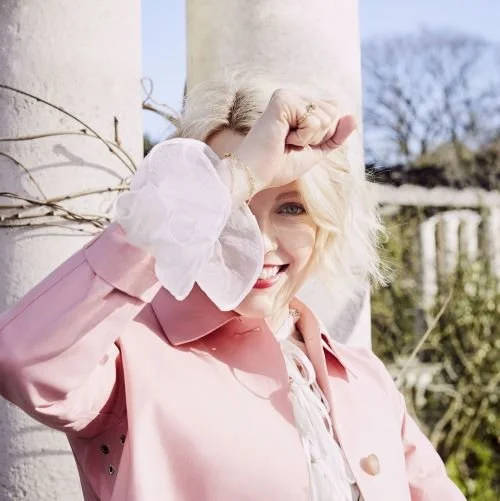
IN THIS PHOTO: RAYE/PHOTO CREDIT: Callum Walker Hutchinson


Possible Mercury Prize Shortlisted Albums

_________

I do this around this time of the year…

 IN THIS PHOTO: Billy Nomates (Tor Maries)

where I look around at the best British and Irish albums from the past few months. There is argument as to whether award ceremonies are valid and whether people care about them anymore. That argument has recently applied to the Oscars. In the music world, I think it is important to acknowledge great artists and music. The Mercury Prize was held back in October, and it was won by Little Simz for her album, Sometimes I Might Be Introvert. It was a worthy winner, and it makes me wonder who might be in the frame this year. I like the fact that the prize awards diversity – in terms of the artists shortlisted and the sounds of the albums. One of the only criticism is that the prize has gone to a London-born or based artist for the past few years. In fact, the last artist that won the prize who was based out of London is Young Fathers. The Scottish band won in 2014 for Dead. It is a pity that worthy non-London artists have been denied. I hope that there is a move to recognise the fact that the capital is not the only place in the U.K. and Ireland that produces sensational music. That said, I wanted to look at albums released since the last ceremony that could be in the frame this year. The eligibility in terms of release date is usually from July to July. So, albums released from July 2022 to this coming July will be eligible. I wanted to cast my thoughts back and see which albums released up to the date I am writing this (16th March) might be in with a shout. I know it has been a little quiet in terms of big album releases so far this year – and many of the best albums each year come out from March onwards -, but there have been some crackers! Below are albums that I think will be shortlisted for this year’s Mercury Prize. They are all worthy of winning…

THIS prestigious prize.

______________

Arctic MonkeysThe Car

Release Date: 21st October, 2022

Label: Domino

Producer: James Ford

Standout Tracks: There'd Better Be a Mirrorball/Sculptures of Anything Goes/The Car

Key Cut: Body Paint

Review:

It is these musicians, as much as the band themselves, who provide ‘The Car’ with the vivid textures that this record’s predecessor. The grandiose funk-rock of ‘I Ain’t Quite Where I Think I Am’ soars in comparison to the version first played live this summer, and ‘There’d Better Be A Mirrorball’ is the band’s first real tear-jerker since ‘Cornerstone’, stirring strings soundtrack a relationship that’s gone off the boil. Del Schwartz, a not-so-secret Spotify playlist that AM fans have attributed to Turner (despite an unconvincing recent denial), provides ample clues to the frontman’s sonic inspirations this time round: The Rolling Stones producer Andrew Oldham, Brazilian rockers Os Mutantes and an array of French composers, including Francis Lai, all feature.

‘Hello You’ is where it all comes together most effectively. Resurrecting the swirling guitar riff of ‘AM’s slinky cut ‘Knee Socks’, Helders’ percussion pushes the band forward as dramatic strings dance around Turner’s vocals. It’s immediate and playful, and as alluring as anything on Steely Dan’s 1980 classic ‘Gaucho’. Though more sedate, ‘Jet Skis On The Moat’ and ‘Big Ideas’ conjure colourful scenic images of The Talented Mr Ripley and ’60s James Bond flicks, a clear contrast to the art-house black-and-white cinema of ‘TBH&C’.

The characters that Turner assumes in his songs here are more nuanced and compelling than before. For all the costumes he uses as “writing tools” on ‘Body Paint’, he can’t help but admit that his “teeth are beating and my knees are weak” at the altar of romance, while on ‘There’d Better Be A Mirrorball’ he gives it the “old romantic fool” to little avail. Every moment of triumph is tempered by his own flaws: the faux-luxury of “the Business they call Show” (‘Hello You’) appears increasingly hollow, and by ‘Perfect Sense’, the record’s gorgeous Dion-nodding swansong, “a four-figure sum on a hotel notepad” is all it takes for him to realise the charade is up. There’s a ‘your mum’ joke on ‘Sculptures Of Anything Goes’, too.

‘The Car’ is almost overwhelming in terms of its ambition and scope, but provides ample motive to revisit this record over and over again. Whether it’ll be enough to reach across the divide and convince the naysayers is yet to be seen, but given they’ll be playing in stadiums up and down the UK and beyond next year seems to suggest a rapprochement is in motion. For now, though, Arctic Monkeys stand alone like the abandoned saloon on the rooftop: the last – and greatest – band of their generation still operating at their highest level” – NME

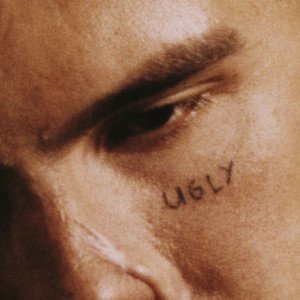
slowthai - UGLY
Release Date: 3rd March, 2023

Labels: Method/Interscope

Producers: Jacob Budgen/Dan Carey/Kwes Darko/Ethan P. Flynn/Zach Nahome/Sega Bodega

Standout Tracks: Selfish/Fuck It Puppet/Wotz Funny

Key Cut: Feel Good

Review:

Historically, when a beloved artist has announced something of a swerve in direction, the response from long-term fans is split. When Alex Turner opted to open the lounge door into Arctic Monkeys’ suave era, a decent portion of indie diehards checked out of the Tranquility Base Hotel; when Bob Dylan dared plug in his guitar for the first time, he was famously booed by supporters who hadn’t signed up for this sort of newfangled tomfoolery. And though Northampton boy slowthai has always had a punk side to him - his pair of collabs with Mura Masa (2018’s ‘Doorman’ and the following year’s ‘Deal Wiv It’) and Gorillaz team-up ‘Momentary Bliss’ providing some of his most memorable moments - until now he’s been largely associated with the hip hop world.

In the run up to third LP ‘UGLY’, however, Ty has been heralding the release as his ‘alternative’ album. “This album was me trying to emulate the spirit of the brotherhood ethos that bands have,” he declared upon its announcement. ‘UGLY’’s cast of co-conspirators cement the idea: where 2021 predecessor ‘Tyron’ featured the likes of Skepta, A$AP Rocky and Deb Never, ‘UGLY’ brings in Fontaines DC, Jockstrap’s Taylor Skye and Beabadoobee guitarist Jacob Bugden. If there was any last question over slowthai’s intent, omnipresent producer and Speedy Wunderground head honcho Dan Carey is helming the desk.

Clearly, it’s an itch the musician has been wanting to scratch but, more than that, his new embrace of throbbing punk bile and melodic melancholy is the perfect vehicle for an album rooted in neuroses and introspection. Undoubtedly, the delivery might not be all his old fans’ cup of tea, but ‘UGLY’ arrives as slowthai’s most exploratory, varied and exciting body of work yet. Opening with the juddering electronic panic attack of ‘Yum’ - all heavy breathing, stream-of-consciousness lyrics about therapy and pulsing, PVA-like beats - it sets the scene for an album of bold choices. ‘Fuck It Puppet’ is a paranoid, twitchy conversation with the devil on his shoulder and ‘Wotz Funny’ comes on like ‘I Wanna Be Your Dog’ 2.0, whereas ‘Falling’ is an epic slowburn of catharsis; ‘Never Again’, meanwhile, begins with the crackled croon of Ethan P Flynn before Ty reflects on the jarring 180-turn his life has taken like a next-gen Mike Skinner.

Indeed, if there’s a holy trinity of influences that seem to preside over ‘UGLY’, it’s Skinner, Ty’s pal Damon Albarn and the people’s poet Jamie T. ‘Feel Good’’s sing-song irony feels like something Gorillaz would get animated about, while the album’s Fontaines-featuring title track builds the band’s shoegazey guitars around meditative, lyrically-dextrous verses and a pained howl of a climax. But really, slowthai’s newest is the work of an artist clearly more excited than ever about what he himself can do now he’s booted his own doors wide open. ‘UGLY’ is a beautiful thing to behold” – DIY

Jockstrap - I Love You Jennifer B

Release Date: 9th September, 2022

Label: Rough Trade

Standout Tracks: Jennifer B/Glasgow/50/50

Key Cut: Concrete Over Water

Review:

Vocalist, violinist and songwriter Georgia Ellery is perhaps one of London’s most sought after creatives right now. As a member of experimental rock outfit Black Country, New Road, she has created two Top Five albums and earned a Mercury Prize nomination in the process. However, her own personal creative spirit is best sampled via her collaborative project with producer Taylor Skye, Jockstrap.

Together, the duo have been testing the waters of experimental, electronic fusion, blending somewhat abstract textural production with Ellery’s naturally crisp vocal tones in a dynamic comparable to Laura Marling’s LUMP project. Now, after four years in the making, the pair have released their debut album ‘I Love You Jennifer B’, a cohesive and comprehensive collection of tracks that lay down the Jockstrap manifesto; to never stay static, forever keep moving forward and to subvert sonic expectations at every opportunity.

They stick to that idea pretty firmly throughout the album, constantly changing atmospheres so that the listener can never get too comfortable or perhaps to keep themselves on their toes, so that they never allow their performance to drop due to familiarity.

The early moments of the album lay out the extent of their sonic tapestry. The album’s opener ‘Neon’ merges melancholic grunge tendencies with abrasive electronic textures, the title track ‘Jennifer B’ creates a more cinematic, string-laden atmosphere while ‘Greatest Hits’ develops into a funky, groove-driven rhythm that shows the first early signs of the album’s dance influence.

At the album’s mid-point ‘Concrete Over Water’ journeys into new realms. It is anthemic at its biggest moments and heartwarmingly intimate in the moments of tranquillity. Beginning with a stripped back vocal performance that radiates a raw vulnerability, the track then grows with a dance sensibility, building towards a euphoric climax with huge backing harmonies and rousing electro pulses that boast the same empowering feeling of Self Esteem’s ‘Prioritise Pleasure’. Yet, before this climax hits, the intense production completely disappears, leaving you alone to mull over Ellery’s poignant vocals once more.

The single ‘Glasgow’ is another example of this technique and is a definite highlight that encapsulates all the best elements of the album as a whole. Starting with cascades of somewhat detached harp notes and a sharp, piercing vocal, it is easy to become slightly disoriented at first. As much as Ellery’s vocals captivate your attention, you can ever fully settle in her blissful aura as your attention is constantly diverted by the off-kilter production.

This finale fantastically summarasies the ever-changing, abstract approach to genre and form that the album offers. As a whole ‘I Love You Jennifer B’ consistently impresses with its sharp turns, diverse array of atmospheres and bold sonic blends. Together, Ellery and Skye manage to combine soft, ethereal beauty and twisted electronic textures to create a sound that never relaxes. Ellery is audibly comfortable drifting between gentle vocal caress and sharp, soaring performance while Skye seems completely devoid of fear in his choice of production. A successfully adventurous debut that bears countless relistens.

9/10” – CLASH

Young FathersHeavy Heavy

Release Date: 3rd February, 2023

Label: Ninja Tune

Standout Tracks: I Saw/Tell Somebody/Sink or Swim

Key Cut: Geronimo

Review:

For Young Fathers, "back to basics" assuredly has a meaning that differs from that of a fading rock band with a renewed interest in all-analog recording or a pop singer following up a flop made with a dozen production teams. Heavy Heavy was pitched that way, the sound of the Scottish trio sequestered in their basement studio with what gear was on hand. Kayus Bankole, Graham Hastings, and Alloysious Massaquoi conversely weren't self-sufficient, bringing in co-producer and multi-instrumentalist Iain Berryman (Florence + the Machine, Beabadoobee), ancillary musicians for strings and additional percussion, and a few extra voices. Moreover, they continue here to hone their rich hybrid sound -- gospel, soul, folk, dub, and hip-hop recombined with punk energy -- and reaffirm that deeply physical music can have a psychedelic quality. There is a key difference. Where their previous LPs up through Cocoa Sugar could seem impenetrable, or require no small amount of mental exertion to make a connection, this one is much more inviting, if not instantly so. It's something like approaching a raucous uprising or celebration that seems forbidding until the glimpse of a hand extended from the mass. Heavy Heavy pulls in the listener with an empathetic lust for life that, whether brimming with optimism, steeling for a threat to survival, or reckoning with a perceived futility of existence, somehow never wavers. It's lowest in spirit on "Geronimo" with sung-spoken remarks about "hell on earth" and the pointlessness of being "dressed up just to go in the dirt," but the stammering percussion develops into battle drums, and the men's overlapping voices intensify, resolving to "survive and provide" as "a son, brother, uncle, father figure." "Tell Somebody" expresses inner turmoil but sounds practically epiphanal, like it was recorded in a cathedral instead of a cellar. It's one of few songs with space. The rest are packed with sound inducing continuous movement and thought with unrelenting drums that grind and throttle, handclaps, and high-energy group vocals, all layered with whirling noise that seems to be emanating from a large echo chamber. Release is achieved through dance on most of the highlights. "Drum" more than any other song encapsulates Young Fathers' perspective. Built on a rapid bass thrum, it implores to "Hear the beat of the drums and go numb" because "They're gonna get ya anyway." Hardened glam shuffle "I Saw" starts with "I want your shield, I want your weapon," and remains all righteous defiance expressed with clenched teeth. Young Fathers add to the sense of community by handing the mike to friend Tapiwa Mambo on "Ululation," appropriately enough the album's most jubilant moment” – AllMusic

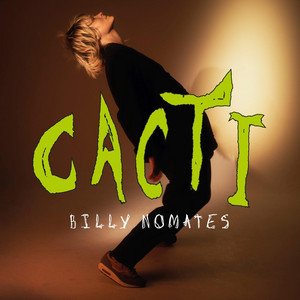
Billy NomatesCACTI

Release Date: 13th January, 2023

Label: INVADA Records

Standout Tracks: balance is gone/roundabout sadness/vertigo

Key Cut: CACTI

Review:

Billy Nomates sounds like a character in a Viz comic strip or a dyed-in-the-mohair-wool punk rocker. She is actually Tor Maries, a Bristol-based singer-songwriter whose stage name points with tongue in cheek to the lonely nature of her trade. She plays most of the instruments on her recordings, whose tracks she programmes and co-produces. She performs alone when she tours.

“Anyone can do it,” she sang in her solo debut, 2020’s Billy Nomates. Its punchy tracks told of dead-end jobs in dead-end towns where boredom and rancour vie for supremacy. There were flashes of Viz-like satire, such as the mocking portrait of male lechery in a song crudely entitled “Fat White Man”. In Maries’ hinterland lay years slogging around the Bristol circuit in bands and a period when she quit music for office work. Punk’s DIY ethos runs through her solo songs, allied to a punk-like snarl. But there is more to her Billy Nomates persona than the spirit of ’77 reincarnated.

Cacti is her second album. Like the plant, it has a spiky, cussed quality, although the music is fuller-sounding and less abrasive than before. “Spite” opens with a fuzzy squall of guitar riffing and proceeds to deliver a brutal slapdown to an antagonist whom Maries curtly refers to as a “little boy”. But after its initial flurry of guitar distortion, the song turns into a driving rock anthem with a nagging hint of Fleetwood Mac, heightened by the mid-Atlantic twang in Maries’ voice.

The lyrics dial down the social commentary and black humour of Billy Nomates. “Balance Is Gone” introduces a theme of psychological struggle. The drudgery of the dead-end jobs in her older songs is replaced by a more introspective type of ennui. “I just go round and round,” she choruses. The title track sets feelings of alienation to a brooding electronic backdrop.

Tough basslines run like a spine through the album, performed by Billy Fuller. The only other accompanist is Portishead’s Geoff Barrow, who plays cymbals on the inventively downcast fairground music of “Roundabout Sadness” (Maries is signed to Barrow’s record label). James Trevascus co-produces with Maries. The songs’ world-weariness is offset by double-tracked singing and decorative touches like the piano and synthesiser vamps in “Same Gun”. The results are nuanced, involving and not at all cartoonish” – Financial Times

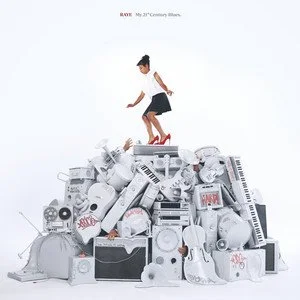
RAYE - My 21st Century Blues
Release Date: 3rd February, 2023

Label: Human Re Sources

Producers: Rachel Keen/Mike Sabath/Punctual/BloodPop/Di Genius

Standout Tracks: Hard Out Here./The Thrill Is Gone./Worth It.

Key Cut: Black Mascara.

Review:

It’s taken the best part of a decade for RAYE to reach this point. Signing to Polydor in 2014 aged just 17, the relationship ended in 2021 in a thunderous mix of contradictory statements. RAYE, frustrated at making repeated attempts to get the label to allow her to record an album in vain, called them out with a poignant attack on industry misogyny. High-profile collaborations and songwriting credits for some of the world’s biggest artists were set aside; “ALL I CARE ABOUT is the music,” the London born singer tweeted. “I’m sick of being slept on and I’m sick of being in pain about it.”

Stepping out on her own has undoubtedly worked: starting 2023 with her affirmative 070 Shake-featuring trip hop-infused ‘Escapism.’ sitting at the top of the UK singles chart, the sweet irony of the track’s fan-led viral success isn’t lost. For RAYE at least, major label prioritising can’t compete with the power of a truly great song and a dedicated audience.

With her long-overdue ‘My 21st Century Blues’ finally coming into the world, it’s a chance for RAYE to exorcise her demons and reclaim her power once and for all.

With confidence, ‘My 21st Century Blues’ pushes against the boundaries previously placed on her music. There’s an empowered defiance on display, the record’s opening tracks cementing this moment as all her own. “I’m a very fucking brave strong woman,” she demands on powerful midpoint ‘Ice Cream Man’, a fact that underpins the record’s blend of soul, hip hop, blues and a multitude of other styles. Even its occasional musical inconsistency makes complete sense, mirroring RAYE’s desire to explore all facets of herself, and it is autobiographical to its core, whether touching on heartbreak, discrimination, or distorted self-image. Fundamentally, this is her through and through.

“I’ve waited seven years for this moment,” she exhales on outro ‘Fin.’. The pain and frustration of that time bleeds throughout the record, ultimately underpinned by her eventual cathartic freedom. With the emotionally charged beats of ‘Black Mascara’, the candour of ‘Body Dysmorphia’ and the unfiltered soul of ‘Buss It Down’, it would be impossible for anyone to sleep on RAYE anymore” – DIY

Gaz CoombesTurn the Car Around

Release Date: 13th January, 2023

Label: Hot Fruit Recordings

Standout Tracks: Don’t Say It’s Over/Feel Loop (Lizard Dream)/Sonny the Strong

Key Cut: Long Live the Strange

Review:

It’s 30 years since Gaz Coombes formed Supergrass, the teen rock band who sold millions of their debut album, 1995’s I Should Coco, and still draw big audiences for their reunion tours. So the genial Englishman has spent some two-thirds of his life being a rock star, and this fourth solo album proves he’s still pretty good at it. While Coombes isn’t keen on trying to recapture Supergrass’s sylvan magic in the streaming era – their final album, Release the Drones, remains unfinished and unreleased – he sounds as youthful and engaged as he did in those cassette tape days.

Much of the baroque experimentalism that powered Matador (2015) and World’s Strongest Man (2018) has been dialled down, but the band’s intoxicating, questing spirit throbs through the strongest suite of music Coombes has assembled in 20 years. Gorgeous, heartfelt pieces dedicated to his wife and kids (Don’t Say It’s Over, Not the Only Things) nestle up next to heartfelt, gorgeous songs about lizard metamorphosis and murdered middleweight boxing champions. The latter, Sonny the Strong, brings the sharp edge of sadness and regret that has often studded his songs fully to the fore, and is one of the best things he’s ever done” – The Guardian

Sleaford Mods - UK GRIM

Release Date: 10th March, 2023

Label: Rough Trade

Standout Tracks: On the Ground/Right Wing Beast/Tory Kong

Key Cut: UK GRIM

Review:

Sleaford Mods have to be one of the most consistent music acts out there. When it comes to their sonic approach for their latest album ‘UK GRIM’, the Nottingham duo continue their winning formula of irascible yet sagacious insights on life in the UK.

Sleaford Mods are no strangers to holding back and this certainly rings true when it comes to ‘UK GRIM’, their twelfth studio album. Naturally, there’s an abundance of scathing anger, punk puissance and formidable energy, but there’s also poignant introspection and subtly too which can be found on tracks like ‘Apart From You’ with its enigmatic bassline which sounds almost Depeche Mode-esque which talks of trying to navigate your way in life when times are tough and “the waiting rooms are cold”.

There’s also insight into Williamson’s childhood Christmas with his “Superman sweatshirt” on watching his “wooden TV” and seeing Santa Claus with a “bag of chips” on ‘I Claudius’, but there’s also the quintessential Sleaford Mods humour in there with the pertinent question “Does he eat though, Dad?!”

When it comes to tracks like ‘Tory Kong’ and ‘Right Wing Beast’, it’s a case of less subtlety and more of a sledgehammer approach with a flurry of furious and scathing observations about the political establishment with pithy lines like “You are all getting mugged by the aristocracy…”

With delectable punchy, acerbic soundbites from vocalist Jason Williamson fused with the stark, minimalistic production from Andrew Fearn with an absolute sucker punch with an immersive fusion of samplers and synths, ‘UK GRIM’ delivers some of the most eminent and vital social and political commentaries of their career so far.

Despite the wearying subject matter, Jason Williamson serves his lyrics up sagely and with urgency in the most succinct, punchy and slightly surrealist manner.

The album features collaborations with Perry Farrell from Jane’s Addiction on ‘So Trendy’ which talks about the UK’s obsessions with their mobile phones and Florence Shaw from Dry Cleaning on ‘Force Ten From Navarone’ which poses the question “why does the darkness elope?” whilst you are encouraged to “hang on to the cable car Force Ten From Navarone.”

The eponymous title track comes in like a juggernaut with Fearn’s menacing beats and foreboding bass lines whilst Williamson snarls lines like “tanks that boil in a bag… Vladimir’s got his top off”. Jason Williamson with his astute and discerning delivery is compelling and electrifying, especially with the ultimate line “In England no one can hear you scream, you’re just fucked lads!”

Instinctual, acerbic and erudite, ‘UK GRIM’ is stark and enthralling all in one.

9/10” – CLASH

Rozi Plain - Prize

Release Date: 13th January, 2023

Label: Memphis Industries

Standout Tracks: Complicated/Conversation/Standing Up

Key Cut: Prove Your Good

Review:

Listening to Rozi Plain is like searching for shapes in the clouds. In her mirage-like lyrics and mix of gently warped folk and nomadic jazz, you can stumble on moments of sharp recognition. A former art student, Plain is a longtime member of Kate Stables’ luminous folk band This Is the Kit and a fixture of the Cleaner Records collective, which she founded with fellow folk artist Rachael Dadd. All the while, she has nurtured her own ambitions. Prize, her fifth record, is a document of her evolution over the past 15 years, and, with its sprawling supporting cast, a tribute to the collective spirit that has defined her career.

Plain’s lyrics are simple, but their meaning remains just beyond a listener’s grasp – as if she is trying to articulate the depth of a dream. On Prove Your Good, subtle word shifts tempt a thousand meanings: “Prove you did, prove you do / Proving it to who?” Her thicket of riddles would almost be frustrating were it not for the clarity brought by her vibrant music, aided by her many collaborators, such as Stables, jazz musician Alabaster DePlume, and harpist Serafina Steer.

On Help, familiar instruments behave in curious ways: a saxophone mimics strings; guitars masquerade as accordions. Steel drums ripple sweetly on Complicated as synths hum like a heart tremor. The effect is as communicative as any words, elevating the emotion in her uncomfortable inquiries such as “What is it if it’s not? / Is it love when it stops?” on Conversation. Moving far beyond the cotton-soft folk of her previous records, with Prize, Plain chooses to lean into her eccentricities – and the risk pays off” – The Guardian

Little SimzNO THANK YOU

Release Date: 12th December, 2022

Labels: Forever Living Originals/AWAL

Producer: Inflo

Standout Tracks: Silhouette/X/Who Even Cares

Key Cut: Gorilla

Review:

LITTLE SIMZ IS like a hood BBC anchor. Her songs come off like quiet but spicy broadcasts, as if she checked in for a soothing afternoon chat if that somehow involves a soul-scorching read. Pleasant but snarky, Simz combines Queens Gambit cordiality with Top Boy aggression to marry well-bred flows to blistering bars. Appropriately, the London-born MC (and skilled actress) flaunts a thespian’s remarkable range: she gives us humor, charisma, and a lot of feels.

Emotion is Simz’s secret weapon. She has a knack for sharing heartfelt tales with marked conviction that settles deep in your sternum. She’s a bona fide technician, no doubt. But the sheer technicality of her rhymes is not at odds with her natural ability to craft poignant songs that make you laugh, cry, and silently rage. On No Thank You, the follow-up to her excellent 2021 breakthrough Sometimes I Might Be Introvert, Simz gives us 10 choice cuts (showcasing her brilliance and breadth) that convey the whole emoji board of riveting emotions.

Those battle-ready bars distinguish “Gorilla,” where Simz, over loping bass and crisp percussion, spits, “I’m cut with a different scissor/From the same cloth as my dear ancestors.” And it’s captivating to hear her effortlessly unpack a couplet that floors you as she skillfully pivots to the next bruising punchline.

But “Broken” is a boon of self-reflection, and it’s arguably Simz’s most powerful song to date. Buoyed by the strains of a choir, Simz describes how racism afflicts her, wasting her time, energy, and agency. “It shouldn’t be a norm to live your life as a tragedy/To live your life in a state of confusion and agony,” she sighs. And you’re reminded that being Black means being in a constant state of rage.

On “No Merci,” Simz kicks caustic bars (“I’m a human landmine/I am not a human being you can gaslight”), indicting lames that want her “stuck up in the matrix.” Meanwhile, “Heart on Fire,” with its blithe hook asserting that “my life is a blessing,” is her stirring manifesto. But the soulful “Sideways” is the obvious standout. Here, Simz embodies snappish warrior energy, confirming her calm sovereignty: “Walkin’ in my light, my shadow is protectin’ me/Never movin’ sideways, I done this shit my way.” We’re forever thankful for Simz’s bold originality” – Rolling Stone

Loyle Carnerhugo

Release Date: 28th October, 2022

Labels: AMF Records/Caroline Records/Virgin EMI

Producers: Earl Saga/Kwes/Nick Mills/Jordan Rakei/Madlib/Rebel Kleff/Alfa Mist/Puma Blue/Zento/Loyle Carner

Standout Tracks: Georgetown/Homerton/HGU

Key Cut: Hate

Review:

An artist that has carved a niche into stark honesty, Carner has always been one to set himself into retrospective mode, asking questions of himself and his surroundings. On previous projects, he has questioned his own mental wellbeing, his current position as a young, successful artist and what is next for him – but on his latest venture, the retrospect has been amplified, toying between the roots in which he grew from and the roots he is laying out.

Lyrically, the album is sublime. Latest single “Ladis Road (Nobody Knows)” is genuinely awe striking, with lyrics such as “You can’t hate the roots of the tree / and not hate the tree / So how can I hate my father / without hating me?” detailing the strained relationship with Carner’s biological father and the effect it has had. “Blood On My Nikes” is a very real tale of London’s knife crime epidemic, personified by youth activist Athian Akec’s speech demanding politicians to act up. The closing line “Never has so much been lost by so many, because of the indecision of so few” poetically putting them in their place. Album closer “HGU” sees Carner forgiving his father, in a heartfelt commitment to his son.

On a production level, the album is some of Carner’s most far-reaching, wide-ranging work to date. Swaying between gorgeous neo-soul and thumping hip-hop, the album paves the way for some electrifying and effortless bangers. “Speed Of Plight” and “Homerton” combined fit nicely together – a free flowing grace accents them both as the marvellous production temporarily distracts from the deeper themes the album promotes.

Overall, hugo demonstrates some of Carner’s finest and best work. Expanding on his empire of authentic and intimate feelings with added clarity and artistic freedom, the album digs deeper, questions harder and reaches further. A clear cut statement on what it feels like to be alive in these troubling times from an artist who is carefully cementing himself as one of the most compelling and earnest young talents” – The Line of Best Fit

FEATURE: The Digital Mixtape: The Kinks at Sixty

FEATURE:


The Digital Mixtape


The Kinks at Sixty

_________

EVEN though…

 PHOTO CREDIT: Dezo Hoffman/Shutterstock

their debut album, Kinks, was released in 1964, The Kinks formed the year before. This year marks sixty since the Muswell Hill band started life. One of the most important groups ever, I am going to end with a playlist featuring some of their best work. Led by songwriter Ray Davies, classics like Waterloo Sunset are timeless in their beauty and genius. Having inspired a huge number of artists that have followed, I know there are going to be celebrations this year. Today is an important day in terms of those celebrations. A terrific album is out that every fan of The Kinks will want to own:

The Kinks have announced plans for a two-part special anniversary anthology release in celebration of the band’s 60th anniversary.

Titled The Journey, the first part will be released on March 24 via BMG. Details for the The Journey – Part 2 will follow later this year.

The Journey – Part 1 features tracks from the band’s early years between 1964 and 1975 and have been handpicked by Ray Davies, Dave Davies and Mick Avory. These include hits “You Really Got Me”, “Waterloo Sunset”, “All Day And All Of The Night” and more.

The Kinks formed in North London’s Muswell Hill back in 1963, with founding members Ray Davies, Dave Davies and Pete Quaife being joined by Mick Avory the following year. Over the past 60 years, they have sold over 50 million records worldwide, had 22 UK Top 20 singles and were inducted into the UK Music Hall of Fame in 2005.

Speaking about the anthology, Ray Davies said: “Ask yourself the question, is this journey really necessary?…….Yes!.” Dave Davies continues, “I’m delighted with what I think is an inspiring selection of timeless and magical Kinks music.”

You can pre-order The Journey – Part 1 on double black vinyl now”.

To mark sixty years of The Kinks’ formation, I have assembled a career-spanning playlist featuring their greatest hits, plus some deeper cuts that you might not know. Having influenced artists such as Ramones, The Clash, Blondie, The Jam, Van Halen, Oasis, Blur, and Pulp, there is no denying their importance! Below are remarkable songs from The Kinks that show why they are…

SO loved.

FEATURE: The Songs Remains the Same: Led Zeppelin's Houses of the Holy at Fifty

FEATURE:


The Songs Remains the Same


Led Zeppelin's Houses of the Holy at Fifty

_________

MAYBE not as celebrated as…

 PHOTO CREDIT: Globe Photos/REX Shutterstock

Led Zeppelin II (1969), IV (1971), or Physical Graffiti (1975), I think that Houses of the Holy should rank alongside the best of Zep. Released on 28th March, 1973, Houses of the Holy falls between the spectacular and immense Led Zeppelin IV and Physical Graffiti. Maybe less accessible in places as the former and not quite as diverse as the latter, Houses of the Holy is a terrific album that sports Led Zeppelin classics like The Song Remains the Same, The Rain Song and No Quarter. The world-class songwriting of Robert Plant and Jimmy Page remains. Epic drumming from John Bonham, and the overall musical genius of John Paul Jones. I am going to end with a couple of positive reviews for the titanic Houses of the Holy. A number one success in the U.S. and U.K., everyone should check out this legendary album. Houses of the Holy benefited from two band members installing studios at home, which allowed them to develop more sophisticated songs and arrangements and expand their musical style. With all instrumentation by the band, and incredible production from Jimmy Page, Eddie Kramer’s mixing takes the album to another level. The notorious album cover was based on a photograph taken at Giant's Causeway in Northern Ireland. It did cause a bit of controversy and, today, a band might not be able to get away with it!

There are a couple of feature I want to lead with before getting to those reviews. Classic Album Sundays celebrated Houses of the Holy’s fortieth anniversary in 2013. They discussed how Led Zeppelin rose in confidence and were on this new level when they made their fifth studio album. It is an album that does not get the acclaim it deserves but, when you consider it has gained a lot of retrospective acclaim since 1973, it is worthy of new inspection and appreciation:

Rock Gods

In 1972 Led Zeppelin were Rock Gods. Their 1971 album (known as “Led Zeppelin IV”) was a behemoth slab of vinyl, taking the band to new dizzying heights with its commercial success and becoming one of the best-selling albums of all time. Zepp had also become the world’s biggest live act, outselling The Rolling Stones who were on their “Exile on Main Street” tour and Zepp would soon break The Beatles’ attendance records, flying to and from shows on their own private jet, The Starship. In between the legs of their worldwide tour, they recorded their fifth album and the first one with a proper title, “Houses of the Holy”, a term they used to describe the huge venues and stadiums where their fans partook in the Led Zeppelin sacrament.

Lightening Up

As they were now ‘The Biggest Band in the World’, the band members were now fairly confident in their musical abilities, and with this confidence came the freedom to pursue their own musical interests. Their first two albums were heavy-duty rock n’ roll fuelled by turbo-charged blues but as the band matured, so did their music. “Houses of the Holy” is distinguished by its humour and willingness to play with other forms of music such as the James Brown tribute “The Crunge” and the reggae and 50’s pop influenced “D’yer Mak’er”. They were unabashed in showing their admiration for other music forms, Robert Plant telling the NME that he wished he could write something as superb as Mendelssohn’s “Fingal’s Cave”. And as one of the 60’s most eminent session players, Jimmy Page was well-versed in many forms of music including folk, Indian, flamenco, classical and more. “Houses of the Holy” was their chance to experiment and to have a little fun. Good on ‘em.

The Cover

For their album cover, the band commissioned top art design group Hipgnosis. Pink Floyd album cover designer Storm Thorgerson first came up with an idea which involved a tennis court and tennis racquet, but Page didn’t take too well to Storm calling their music a racket. Then Aubrey Powell took over with an idea inspired by Arthur C. Clarke’s novel “Childhood’s End” where they photographed two naked children (siblings Stefan and Samantha Gates) climbing Giant’s Causeway in Ireland. The cover caused quite a stir and Atlantic Records added a paper wrapped around the album with the band and album title and also to cover the children’s buttocks. Page didn’t understand the controversy and stated, “Children are houses of the holy; we’re all houses of the holy – I don’t see how that’s naughty.”  Instead, for Page, the cover “denoted the” feeling of expectancy for the music contained within”.

I want to move on to a feature from Far Out Magazine. They wrote about how Houses of the Holy ripped up the Rock rulebook for their piece of 2021. Fifty years after its release, and there is still something utterly compelling, new, and strange about this wonderful album. If Led Zeppelin did change things and go in another direction for Physical Graffiti, I have plenty of time for the lesser-loved songs such as The Crunge. They help make Houses of the Holy a true classic:

Houses of the Holy was both inevitable and miraculous. The band were most likely expected to blow it with their fifth effort; one can almost hear the music press at the time, thinking to themselves: ‘this is where they fall flat on their faces’. Not only did Zeppelin create something very different from that, but they exceeded expectations and created something that was distinct from their original musical DNA of blues-rock.

Houses of the Holy proved to the world that Led Zeppelin had combined all their elements: blues, mystics, science-fiction, fantasy, and general other-worldliness into a compact package of refined solipsism. The band on this record possessed progressive rock elements that entailed non-standard signatures; with their sustained success, Led Zeppelin had nowhere else to go but to dive even deeper within themselves.

One key ingredient to the success of this formula was a newly found chemistry of writing together. Whereas on their prior records, Jimmy Page did the bulk of the writing with Robert Plant providing his ethereal crooning melodies and Lord of The Rings-inspired lyrics; with their fifth record, there was a newfound sense of cohesiveness. “When we first went down there, we had no set ideas,” Jimmy Page noted to biographer Ritchie Yorke. “We just recorded the ideas each one of us had at that particular time. It was simply a matter of getting together and letting it come out,” Page added.

John Paul Jones played a significantly larger role on the album as well. John Paul Jones, the band’s bass player, organ player/keys, was their secret weapon in many regards. His sense of composition, arrangement, and overall technical proficiency was paid more attention to and utilised. Jimmy Page was the black magician who dabbled in deep mysticism to unlock the sub-conscious and provide the spark for many of their songs. Robert Plant was the fairy leader with a gorgeous voice and an incredible magnetic presence. John Bonham was the loose cannon and the rocker who provided powerhouse percussion, and John Paul Jones was the technician, the loner nerd who works in the proverbial IT department of Led Zeppelin.

When they were looking to start the recording process for Houses of the Holy, as they did with their last records, Jimmy Page wanted to really inhabit the album; he didn’t want the band to go to a recording studio for a few hours and then return home; he wanted the band to live within the process itself. As their usual choice of location, Headley Grange had been unavailable in the Spring of 1972, they chose, instead, Stargroves; none other than Mick Jagger’s manor in a place called East Woodhay.

It had a certain je ne sais quoi about the energy — this is where The Rolling Stones recorded Exile On Main Street and Sticky Fingers. The Who also recorded Who’s Next here. This idea of living within the recording studio was initially inspired by Music From Big Pink from The Band, in which they employed this strategy.

“I didn’t know for sure if they had, but I liked the idea. I thought it was definitely worth a shot to actually go someplace and really live it, rather than visiting a studio and going home. I wanted to see what would happen if all we did was have this one thing in sight – making music and just really living the experience of it,” Jimmy Page said in an interview with Guitar World”.

I shall come to reviews for Houses of the Holy. They were quite mixed in 1973, as many critics might have been expecting something akin to Led Zeppelin IV. Every great band evolves and changes things, and that always takes critics by surprise. Rather than repeat themselves, they created something very special with Houses of the Holy. This is what Classic Rock offered up when they tackled the album in 2013 prior to its fortieth anniversary:

The album featured styles and sub-genres not heard on previous Led Zeppelin albums, such as funk, reggae, and doo-wop. The album is an indirect tribute to their fan base, who were showing up in record numbers to their live shows.  It perfectly straddles the band’s early, more blues-based period from their later work, which consisted of more richly produced studio albums that tilted more towards pop and modern rock. Bass player and keyboardist  John Paul Jones temporarily left the band for a few days during this album’s recording but soon returned and stayed with the band until the end.

The fact that this album features different sounds is evident right from the top with “The Song Remains the Same”. This song is odd on several fronts, from the pitch-effect vocals of Robert Plant to the extremely bright multi-tracked guitars of Page. Still, the song is great and is set up as a sort of journey, not a rotation. The song is a jam that feels loose yet does not get lost for one second, due mainly to the steady and strong drumming of John Bonham. The song was originally an instrumental which was given the working title “The Overture”, before Plant added lyrics and the title to it. It was originally going to be an intro for “The Rain Song”, and these songs were often coupled together in concert. “The Rain Song” Is an extended piece with eloquent acoustic and electric guitars weaved together. The song also features a long mellotron section (some would say too long) played by Jones, adding a surreal orchestral effect above Page’s guitar before returned to the climatic final verses and soft and excellent guitar outtro.

Parts of “Over the Hills and Far Away” written by Page and Plant during the 1970 sessions at the Welsh cottage Bron-Yr-Aur for the album Led Zeppelin III. The song is mostly acoustic throughout but works into a harder rock section during the middle, making it one of the most dynamic Led Zeppelin songs ever. Jones and Bonham add a tight rhythm to Page and Plant’s etheral dynamics. The song was released as a US single, but failed to reach the “Top 40”, faring much better on classic rock radio through the decades. Over the Hills and Far Away single“The Crunge” is a funk tribute to Wilson Pickett, Otis Redding and James Brown and evolved out of a jam session built around Bonham’s off-beat drums and a bass riff by Jones. This song features an overdubbed VCS3 synthesizer to replicated the funk “horn” section, which gives it a totally unique sound of its own. During the jam Plant calls for a “bridge” (imitating Brown’s habit of shouting instructions to his band during live recordings). When no such section materializes, the song (and first side) uniquely ends with the spoken “Where’s that Confounded Bridge?”

The closest Led Zeppelin ever came to writing a pure pop song, “Dancing Days” was actually inspired by an Indian tune that Page and Plant heard while traveling in Mumbai. The guitar overdubs are simply masterful in this upbeat song about summer nights and young love. It was played live as early as November 1971 and, although not officially released as a single, it received heavy radio play in the UK. “D’Yer Ma’ker” was released as a single and became the band’s final Top 40 hit (although they didn’t have many of those). The song has a unique sound with Bonham’s exaggerated drum pounding backing a reggae-inspired riff by Page and Jones and Plant’s bubblegum pop vocals. The distinctive drum sound was created by placing three microphones a good distance away from Bonham’s drums, giving him much natural reverb to make the banging sound more majestic. The name of the song is derived from an old joke about Jamaica, and was often mispronounced as “Dire Maker” by those not privvy to the joke.

John Paul Jones centerpiece “No Quarter” provides a great contrast with a much darker piece about viking conquest, with the title derived from the military practice of showing no mercy to a vanquished opponent. The song features a distinct, heavily treated electric piano throughout with an acoustic piano solo by Jones in the long mid-section. Page doubles up with electric guitars and a theremin for effect, while Plant’s voice is deep and distorted. The album concludes with the upbeat rocker “The Ocean”, which refers to the “sea of fans” at the band’s concerts. Launching from a voice intro by Bonham, the song returns to the heavy riff-driven anthems that were popular on their earlier albums. But this song does contain its own unique parts, including an overdubbed vocal chorus, performed a Capella, by Plant in the middle and a doo-wop outro section that contains a boogie bass with strong guitar overdubs, bringing the album to a climatic end”.

I shall finish with Back Seat Mafia’s 2018 reappraisal of Houses of the Holy. They revisited the album on its forty-fifth anniversary. On 28th March, fans around the world will share their memories of Houses of the Holy. Those new to it will have different experiences. Let’s hope there is a lot of new revision and investigation of this wonderful album on its fiftieth anniversary. It definitely deserves that at the very least.

On the release of Houses of the Holy in 1973, there simply wasn’t a bigger band on the planet than Led Zeppelin. Over their first four albums they had perfected blues rock, invented heavy metal, and then fused that folk influences, released a fourth album that was so anticipated that it required neither a title, nor the band’s name on the artwork to sell it. Having already eclipsed the solo careers of all four former members of The Beatles and Bob Dylan, Led Zeppelin were the new yardstick by which rock and roll success and excess was measured.

But having pretty much nailed down heavy rock, what new sonic territory was available to explore? Well what else was out there selling albums in eye watering numbers? 1973’s Houses of the Holy was the moment where Page, Plant, Jones and Bonham went all in at having a crack at this progressive rock thing, thereby neatly sidestepping the unenviable task of following up Led Zeppelin [IV] with something bigger and better, by just going ‘Hey, we can do this stuff too you know!’.

The tone of Houses of the Holy is quickly set with the opening pairing of “The Song Remains the Same”, “Rain Song”, and “Over the Hills and Far Away”, a trio of dramatic epics that confirmed that this album was the sound of Led Zeppelin showing that they could do extended song structures at least as well, if not better than, the likes of Yes or Emerson, Lake & Palmer. Of course, Zeppelin weren’t exactly strangers to the multi-part epic, as a little number called “Stairway to Heaven” had previously demonstrated. Houses of the Holy would prove to be chock full of them though, and was the album where the band took full advantage of John Paul Jones knowing his way around a keyboard and his talent for lush arrangements. Of course, this meant there was precious little room for a straight forward rocker in the mould of “Communication Breakdown”, “Whole Lotta Love”, or “Black Dog”, so there was no obvious single on the album outside of maybe “Dancing Days” or album closer “The Ocean”, but hey, Led Zeppelin didn’t release singles, so that just didn’t matter. Led Zeppelin were Led Zeppelin and could do what the hell they wanted when they wanted to do it. No album expected every twelve months for these guys!

Of course Houses of the Holy wasn’t just Led Zeppelin getting the prog out of their system, as “D’yer Mak’er” was a committed, if somewhat clumsy attempt at assimilating a reggae influence into their sound, and “The Crunge” was a slightly more successful stab at going all funky on us. You can hear Page and Jones getting into their grooves, but John Bonham’s skin pounding remains unmistakably heavy rock (though admittedly, his drumming on “D’yer M’aker” is one of the best things about that song), and Plant pleading for directions to the bridge is just forcing the point.

Houses of the Holy closes in a similar manner to the way it starts, with Zeppelin demonstrating they can do progressive rock with the best of them. “No Quarter” finds John Paul Jones making a bid for a place among the organ bothering greats of the decade, backed up by one of Page’s most iconic riffs, while “The Ocean” finds Led Zeppelin celebrating themselves and their fans with one of their best rock epics, another stand out riff, an outstanding closing 75 seconds (hell they even manage to crowbar some doo wop into it), and maybe, just maybe, one of the greatest hard rock singles never released. Oh, and Bonham’s elephantine drumming.

Houses of the Holy is the sound of Led Zeppelin demonstrating that they were much more than the sound and style that they themselves had established, by expanding their range and experimenting with other styles of music that were proving popular at the time. For a lesser act it might have proved a disaster, but for some, myself included, Houses of the Holy is one of Led Zeppelin’s most curiously under-appreciated albums, along with Led Zeppelin III, simply because it is one of the albums on which they sound the least like Led Zeppelin.

Houses of the Holy is an album with a tremendous amount of replay value, but it might not be the best place for the newcomer to Led Zeppelin to start. Instead it is an album that adds depth to their catalogue rather than an all out crowd pleaser. It is an album which is subtle, nuanced, and complex, which is a hell of a thing for Heavy Metal to achieve”.

On 28th March, Led Zeppelin’s Houses of the Holy turns fifty. With epics such as No Quarter and shorter blasts like Dancing Days offering up variation and satisfaction, this is an album that everyone needs to spin. It is a tremendous work from the iconic band. One of the great things about Houses of the Holy is that it still sounds incredible and has not aged at all. In that way…

THE songs remain the same.

INTERVIEW: Kate Bush and Me: Maggie Boccella

INTERVIEW:

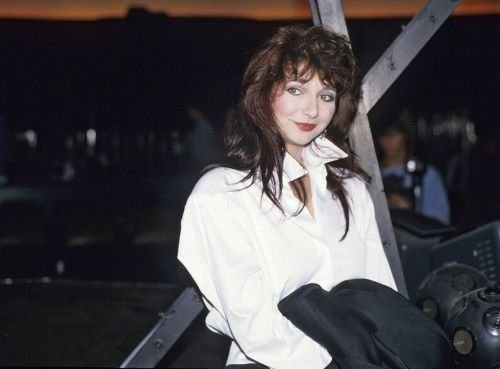
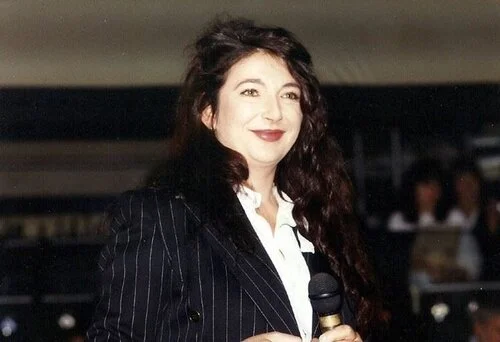
IN THIS PHOTO: Kate Bush in 1985


Kate Bush and Me: Maggie Boccella

_________

IN such a fascinating, deep…

 PHOTO CREDIT: Maggie Boccella

and remarkable interview, writer, journalist, and editor Maggie Boccella discusses her love of Kate Bush’s music. Based out of Pennsylvania, U.S.A., it is interesting getting the perspective from someone who lives in a nation that has a different relationship with Kate Bush than us in the U.K. Go and follow Boccella on Instagram and Twitter. Her work is amazing! I ask her about how Bush has impacted her as a woman and feminist, what she feels about the recent controversy concerning the Rock & Roll Hall of Fame omitting women when it comes to their inductees, Bush largely being associated (especially in America) with one song, Running Up That Hill (A Deal with God), and whether the media need to broaden their scope, what new material from her might sound like were we lucky enough to receive any, and which album of Bush’s Boccella has a special place in her heart for. Clearly someone who has a deep passion for and special relationship with Kate Bush’s music, it has been a pleasure to find out what this icon’s work means to Maggie Boccella. She has taught me quite a lot, given me new perspective and understanding regarding a few subjects and concerns I had, and also opened my minds to aspects of Kate Bush’s remarkable career and legacy I had not considered. Sit down and have a read of this interview from…

 IN THIS PHOTO: Kate Bush on the German T.V. show Rock Pop on 13th September, 1980 performing Babooshka

A true Kate Bush superfan.

____________

Hi Maggie. To start, tell me when Kate Bush first came into your life. Can you recall the moment or song that opened your eyes to her music?

Admittedly, the first time I came in contact with Kate’s music, it was almost a fluke. I was a senior in high school studying Wuthering Heights in AP (Advanced Placement ) English, and when I admitted to my then-stepmother that I was really enjoying the book (morbid taste in classic lit, I know), she showed me the music video for Kate’s eponymous song, specifically the red dress version that’s become so iconic. I was so captivated (and admittedly, confused) that I showed it to my teacher, and it became a bit of a running joke for the rest of the unit.

But it wasn’t until I moved to London to study abroad in the spring of 2019 that I really took a full deep dive into her work, inspired by my new surroundings and the fact that she showed up in some capacity practically everywhere — record shops, conversations, even my Shakespeare professor being in love with her work. I happened to be on a New Wave kick at the time too (though I’d argue that Kate doesn't necessarily fit the genre the way some people think she does), and the obsession seemed to hit me all at once, starting with Hounds of Love and then spiraling out from there.

As someone who is young and did not experience most of her albums the first time around, how did you approach tackling her catalogue? How did it compare to everything else you were listening to at the time?

Any time I find a new artist, particularly someone like Kate with such a large discography, I tend to take advantage of the blessing that is Spotify and work my way back to front, oldest work to newest, album by album. That’s the approach I took with Kate: once I’d heard her tentpole songs and knew I wanted more — it’s the approach that allows me to engage with B-sides and songs that might get blown off as filler for an album rather than just the massive stuff, and I credit that as the reason why songs like Violin and Get Out of My House are some of my favorites of hers.

Bush’s lack of success in America (at least comparably to her success in Europe) is likely another major factor at play here; most people here are not familiar with her work beyond ‘Stranger Things’…”

Like I said, at the time I was listening to what I can only describe as a metric f*ck ton of New Wave, Punk, and British artists from the ‘80s — full immersion, right? Adam Ant, Siouxsie and the Banshees, Duran Duran, you name it, it was either on my playlists or in the ever-increasing pile of vinyl records I was collecting. So Kate wasn’t too far out of that ballpark, nor was she too far away from a lot of the contemporary female singers I was listening to at the time as well. (I would argue she laid the groundwork for a lot of them.) I was raised on loads of David Bowie and Lady Gaga, so both Kate’s sound and her aesthetic seemed like they fit in perfectly with what I knew and loved, which is perhaps why I grew to love her work so much, among other reasons. She was a natural addition to the catalogue.

There has been a lot of recent controversy around the Rock & Roll Hall of Fame and the lack of female inductees. Courtney Love Cobain took to Twitter to voice her disgust – including the ignorance when it comes to Kate Bush’s value and legacy. Why do you feel the Rock & Roll Hall of Fame has ignored Bush until now?

There’s been a systematic ignorance and oppression of women in music essentially since the business became commercialised the way it is now — we all know Elvis “borrowed” his biggest hits from Black singers like Sister Rosetta Tharpe, etc. etc. The Hall’s lack of female inductees in general can largely be credited to that, and to the fact that what the Hall of Fame considered “Rock” for a very long period of time was an incredibly specific genre of music, defined by hair Metal bands like Def Leppard and Poison and established by men like Jim Morrison and Syd Barrett in the 1960s. It’s only relatively recently (especially since the Hall itself was only founded in 1986) that they’ve begun to broaden the scope of what they consider to be impactful music, and therefore the artists that make those kinds of music. (See: Whitney Houston, Eminen, and Dolly Parton, all inducted in the last three years.)

Bush’s lack of success in America (at least comparably to her success in Europe) is likely another major factor at play here; most people here are not familiar with her work beyond Stranger Things (more on that later), and as the foundation is largely concerned with the kind of music/musicians that have made a significant impact on American culture (because we, naturally, see ourselves as the pinnacle of Western culture, vain as we are), Bush thereby goes ignored. This is especially true when you factor in the fact that Hall inductees are (at least in part, and at least made out to be) chosen by public vote — if no one knows her name when someone like, say, Cyndi Lauper is on the list, what reason do they have to vote for her?

I’d say that, largely, the Rock Hall is a popularity contest more than it means anything for the cultural impact of an artist. Chic, a band I would argue is even more important to the history of music as we understand it than Bush (we wouldn’t have Let’s Dance without Nile Rodgers!), has been nominated a whopping eleven times to Bush’s four, and have never made it in. Female artists and artists of color will always be ignored for the T. Rex-es and Bon Jovis of the world, much as I love them.

“…so I’d say she’s found a better hold with contemporary American listeners much more than she did in her “prime,” so to speak

What is America’s relationship with Kate Bush now? It was only after Hounds of Love came out in 1985 that she was being noticed/successful there. She has struggled to get a foothold or much recognition. Why do you think this is? Have things changed now that we are in 2023?

As far as I understand, when Bush was most active, charting in America was significantly more difficult than it was in the U.K. and Europe, for reasons beyond my understanding that have to do with a lot of math that I purposefully avoided when I got a comms degree. We are, pardon my French, a f*cking huge country, and getting a foothold’s tough even now, with the advent of TikTok and streaming making it easier to find an audience. Her work was and is experimental, for a female artist or an artist in general, and the way she fits into a space that isn’t quite Pop, isn’t quite New Wave, isn’t quite Folk makes her unique, and sometimes that uniqueness can hurt your ability to make a mark when it comes to radio.

In 2023, I think the musical landscape’s changed significantly since her debut in the late 1970s; kids can reach out to find whatever music fits their soul best, so I’d say she’s found a better hold with contemporary American listeners much more than she did in her “prime,” so to speak. I remember seeing a big trend on TikTok of people dancing to Wuthering Heights, specifically those on “witchtok,” which embraces the kind of experimental sound Kate is known for, alongside other artists like Stevie Nicks, and it brought me so much joy.

I find it infuriating that, when one mentions the name ‘Kate Bush’ people only say the one song: Running Up That Hill (A Deal with God). For someone so popular, only knowing one of her songs seems very poor and inexcusable! Does the media and radio stations need to do more to go deeper, thus avoiding such narrow accusation?

I’m a little biased, as I keep a SiriusXM subscription in my car, meaning I have more access to Kate Bush in the wild because of the kinds of programming on those shows. I hear her probably once a week on Walmart trips or going out to the mall, so it’s hard for me to judge the state of radio as it exists in the moment. But Top 40 is Top 40, and there’s only so much a D.J. can do unless they’re on a specialized content show like the ones on Sirius. (And the fact that she made it onto a lot of Top 40 stations last summer with the premiere of Stranger Things season four is insane, considering the song’s almost forty years old.) Really, it’s a generational thing, combined with what we discussed about her not hitting as big in America as some of her contemporaries. People have access to her catalogue through streaming, but if their parents, friends, co-workers aren’t talking about her, there’s no reason to dig.

I’d argue that people also know Wuthering Heights as much as they know Running Up That Hill, especially if they studied the novel the way I did, but it still feels like a massive credit to her legacy to me that so many more people are familiar with Running Up That Hill than they were just a year ago. The inclusion of that song in Stranger Things introduced her work to so many people, which, for a song released twenty, thirty years before most of the show’s audience was born, feels utterly massive to me. Not a single person I knew was familiar with her prior to that season four needle-drop, and now, I see her work being hailed by people even younger than me as something massively important, particularly in queer spaces.

Really, people knowing Running Up That Hill is a win I’ll take. If a little girl hears that song in Stranger Things and it changes her life the way Hounds of Love did for me, that’s one more person on this train. One more world changed for the better.

IN THIS PHOTO: Kate Bush in 1993/PHOTO CREDIT: John Stoddart

Kate Bush has changed Pop culture in so many ways. As a young woman living in America, how has she impacted you or inspired you as a writer and journalist, or as a feminist?

There’s something about her work that makes me feel like I can accomplish anything, as basic as that sounds. I feel like she ought to be lauded as a feminist icon more than she should, considering the power she was able to wield over her own career in a way not many women in her time were — or even female artists now, for that matter. She never compromised her own, singular vision for the sake of anyone or anything, and it shows in a body of work that goes beyond simply Pop, both lyrically and from a production standpoint. There’s a kind of power in letting work like that influence you as an artist, both overtly and entirely subconsciously. I’ve written whole pieces about how much Kate’s works mean to me and to pop culture, but the things I’ve learned from her, the strength her work has imbued in me, fits in everywhere else where she’s not named, peeking in in the way I phrase things or the kinds of metaphors I use.

To run up that hill, to dance in the rain, to create in whatever way my mind will allow

For me, she’s a large part of the web of influences that make me the woman I am, as  writer and a feminist and a human being in general, alongside the hundreds of other women who dared to strike out as artists the way she did. I often find myself returning to a lyric from Cloudbusting that gave me comfort when I originally discovered her, in a time when the future was terrifying and nothing made sense: “I just know that something good is gonna happen / I don't know when / But just saying it could even make it happen”. To me, Kate is the sound of hopefulness, the knowledge that the future is huge and intimidating, but also mine for the taking, and the only way to take it is to do. To run up that hill, to dance in the rain, to create in whatever way my mind will allow.

My favourite Kate Bush album is The Kick Inside. What is your favourite of hers and why?

It’s a cheesy answer, but it has to be Hounds of Love. I remember listening to the title track of that album for the first time and feeling like I’d been punched in the chest emotionally. The themes of that album, especially when you consider the entire B-side suite, hit deeper for me as a young woman, an artist, a feminist more than any of her other work. I’m partial to The Red Shoes too, and Aerial as well, but nothing will compare to the unique sound of Hounds of Love — so very ‘80s, fitting into the kind of production that I love from that era, but also outlasting anything that might make it dated, particularly thematically, with her use of themes that I’m sure fans of artists like Hozier, with his mythical lyrics and general European folkiness, would appreciate.

I have a feeling we may get new music from her soon. What direction do you think her music might change, and what sort of themes do you feel she might tackle?

There’s something unique about older women in music, the perspective of years and years of experience dealing with things far more complex than any male artist ever has. While I’ll happily take anything I can get from her, because I know whatever she’s going to offer is going to maintain the special kind of experimental sound and oeuvre she’s known for, I’d love to see songs from that perspective, about getting older and the world changing faster than you can keep up with. Because even at twenty-five, that’s a feeling I’m starting to understand, but that no one seems to want to talk about. Everyone’s afraid of women once they turn thirty.

While I can’t really speak to what direction I think the work will turn in if we get any, because she’s so notoriously private that there’s little to no detail about her current life (as it should be — good for her!), I’m interested to see what production techniques she’ll employ. She’s always been on the cutting edge of things, ever since 1979, and while I don’t work in music enough to really articulate the kinds of things I love about her work musically, I know that if we do get new music, it’s gonna change my life the same way getting new Bowie music in 2013 did after a lifetime of growing up on Let’s Dance.

We’re brilliant, complex creatures, and her music is the only music that’s ever been able to fully express that for me

Bush turns sixty-five in July. She is without doubt one of the most important artists ever. What does she personally mean to you?

She’s an artist who opened me up to a world of possibility I was never even aware of. I discovered her in a time that was incredibly tumultuous for me emotionally, and her treatment of womanhood both in her lyrics and performance, as well as her general outlook as an artist, are unique from every other female artist I’ve ever encountered, and really changed my perception of artistry and being a woman in today’s climate. Her femininity is her strength, and she is not beyond embracing that and saying that a woman can be feminine, but also strange and powerful and all kinds of complex at the same time. She’s the godmother of all the “weird girl” artists I grew up on, opening up doors for women in production as a headstrong, take no sh*t woman who also happens to be soft-spoken, like someone’s lovely aunt or neighbor next door, proving that women aren’t just one mythical pillar of a thing. We’re brilliant, complex creatures, and her music is the only music that’s ever been able to fully express that for me.

To finish, you can select any Kate Bush song (one available on YouTube, Spotify, or Apple) and I will play it here. What shall we go with?

Rubberband Girl, from 1993’s The Red Shoes. An underrated bop, imo.

FEATURE: Spotlight: Heartworms

FEATURE:


Spotlight

 PHOTO CREDIT: Camille Alexander

Heartworms

_________

I am featuring an artist…

who has not released a tonne of material yet, but this is someone that people are excited about and tipping for big success. Jojo Orme is Heartworms. Even though many have labelled Heartworms as a band, it is essentially a solo project. Last year’s single, Consistent Dedication, and this year’s Retributions of an Awful Life are signs and proof that Heartworms is one of the most exciting acts of this year. Her new E.P., A Comforting Notion, is out today via Speedy Wunderground, and has gained some incredible reviews. Before getting to interviews that look at Heartworms’ music inspiration and direction, and the military-inspired and themed look that Jojo Orme adopts, I wanted to get a feature from Fred Perry. We get some quickfire questions and answers with the brilliant Heartworms:

Name, where are you from?

My name is Jojo Orme aka Heartworms, from North London.

Describe your style in three words?

Gothic Military Fairy? Rather indecisive…

What’s the best gig you’ve ever been to?

Let’s see… too many to choose from, I’ve decided to go with one I went to by myself on a whim at Water Rats in Kings Cross a few years ago. One of my most treasured bands The Jacques were playing and two other bands supporting them were Damefrisør and Jean Penne. It was the first time I saw all three bands live. I fell in love with them all, being on my own made it so much more electric, I was so taken by Damefrisør’s set, the performance was beyond compare, powerful with a touch of reassurance, I left smiling so hard and gazing at all the photos I took on the way back home. I was too shy to talk to any of them that evening though so tell them how much they made my evening.

If you could be on the line up with any two artists in history

Definitely Interpol and PJ Harvey. Interpol because I feel we would have similarity in the audience but also Mr Banks and I would get on very well in a room, share cool lyrics with each other, maybe have a jam or two… maybe become best friends… I nominate 'Leif Erikson' by Interpol, top-notch lyrics, truly besotted. PJ Harvey of course, need another powerful female artist other than myself to rule a line up right? She’s a huge influence on my aesthetic and confidence in being a female songwriter and the brainchild of what I do.

A song that defines the teenage you?

'I Might Be Wrong' by Radiohead.

One record you would keep forever?

'Wincing The Night Away' by The Shins.

A song lyric that has inspired you?

"Ich möchte ein Eisbär sein im kalten Polar"

From 'Eisbär' by Grauzone.

The song that would get you straight on the dance floor?

'The Devil Ain’t Lazy' by Pokey LaFarge.

A song you wished you had written?

'Working for The Man' by PJ Harvey.

Best song to turn up loud?

'Der Telefon Anruf' by Kraftwerk.

A song people wouldn’t expect you to like?

'Men Awel Marah' by Amr Diab”.

Even if Heartworms is not a great name, the music is definitely not! There are a couple of older interviews with Heartworms, but most of the focus was from last year. I am going to end with sections of an interview from this year. Last year, Loud and Quiet spoke with an artist who finds a lot in military history and aesthetics that makes her feel very grounded. It is a fascinating aspect of someone whose music has such an amazing power and impact:

Heartworms’ ‘Consistent Dedication’ music video is a black-and-white gothic tableaux; Jojo Orme, the musician at the heart of the project, performs to the song hypnotically, concealed coldly behind a pair of sunglasses. The project’s only officially released single so far, the track writhes with a tense post-punk backing and twisted imagery. But the Heartworms name isn’t just nightmare for the sake of nightmare; I had assumed it was chosen to fit in with the rest of the project’s macabre imagery, but it’s actually derived from the name of the sunny 2017 album by The Shins, a band Orme holds close to her heart. It’s a nice analogue to the dark, cryptic exterior that belies an open friendliness at Orme’s centre – when we chat over Zoom, I’m surprised that she speaks dreamily and earnestly, exuberant with passion. This is a person who leaps out of her seat several times during our interview to show me the things in her room related to my questions, from Post-Its of her poetry to her drawings of Spitfires. When I ask her about her obsession with the latter, she answers, in sincerity, “I’ve been struggling with a lot for a very long time. And I found something [military imagery and history] that makes me feel very grounded.”

Choreographically, Orme’s live performance style is inspired by Prince and Michael Jackson, but she also mentions that she often tries to channel Aldous Harding, especially in terms of eye contact. I wouldn’t have expected Orme to name a folk singer rather than some gothic rock icon – but there’s that paradox behind the Heartworms name rearing its head again.

“[Harding] makes you feel quite uncomfortable, but you can’t stop looking at her,” Orme says admiringly. When I posit that there might be a connection between this and her lyrical fixation on eyes, Orme stops to consider it. “Maybe,” she muses. “I never thought about it. I like eye contact; there’s something quite nice about it. You’ll get to know a person in more depth if you actually look them in the eye. Some people just like to look around when they’re face to face with you.” I can’t help but suddenly recall her performance in ‘Consistent Dedication’s video, and how she manages to balance the clashing edges of darkness, playfulness and confrontation”.

 PHOTO CREDIT: Camille Alexander

Last year, The Quietus also spoke with the amazing Heartworms. Following the release of her Speedy Wunderground debut, Consistent Dedication, Jojo Orme talked about the influence of everything from Scissor Sisters to Spitfires. I think that the rest of this year will see a couple of other tracks released. And maybe there will be announcement of an album. This is an artist/act that so many people are talking up and predicting massive things. I am relatively new to Heartworms’ music, but I am already hooked and really invested:

2022 has been an amazing year for Heartworms. You signed to Speedy Wunderground, gave your inaugural Great Escape performance and released your official debut single, ‘Consistent Dedication’. How are you feeling?

Jojo Orme, Heartworms: I can’t even begin to put it into words, really. I’ve been manifesting all this in my head for so long. Speedy Wunderground was always my first choice of label to be with and I’d wanted to work with Dan Carey for a long time. I had all these things on my list of goals and I can’t believe they’ve actually happened! It’s overwhelming but I’m so happy and excited.

What’s left on that list?

JO: Playing shows in America, I’ve never been there before.

You’ve mentioned Interpol and PJ Harvey as some of your favourite artists. Listening to ‘Consistent Dedication’, however, I immediately heard echoes of The Cure.

JO: I like loads of different styles of music. When I sit down to write a song, I haven’t just listened to something and gone, ‘right, I’m going to do this’. I’d say it’s more that I’ve been listening to a lot of music and then be like, ‘ok, I’m feeling creative now. I want to write something’.

Everything I’ve listened to and loved over the years, is all just in my brain. That’s how I’ll have a particular sound or riff that’s similar to say Interpol or The Cure. Pornography by The Cure is one of my favourite albums of all time; it’s completely ingrained in my brain. Naturally then, something like that comes through in my music.

With ‘Consistent Dedication’, I was actually inspired by a funk guitar tone throughout ‘The Skins’ from the Scissor Sisters’ first album. When I heard that I was like, ‘I need to write a song with a funk guitar line’! That was one of the main influences for that song.

Military history is an integral component to the Heartworms aesthetic and your personal interests. You’ve been volunteering at the RAF Museum in London. When did your fascination for this strand of history begin and how’s it been going at the museum?

JO: I’m not there as much because of my music and everything that’s happening with it. The first thing I did with them was for The Queen’s Jubilee, which was quite fun! I worked in the kid’s tent and had my full military gear on. Being in the RAF Museum is perfect for me; to be surrounded by all the history.

My interest in military history began when I read The Code Book by Simon Singh and learned about the history of code breaking, like Alan Turing and the Enigma. From there I watched loads of documentaries and came across one called Spitfire [directed by David Fairhead and Anthony Palmer] which made me sob so much. I immediately fell in love with the Spitfire itself, that’s when aviation came into it and I learned all about all the World War II aircrafts. I went to Fairford with my mum for the Air Tattoo, or air show, and it was amazing.

I also collect loads of military clothes, proper 1940s pieces. I just get really excited about that stuff. I guess we all have something we love, don’t we? People do say that my aircraft obsession is particularly niche, though. There’s not too many people that share it. But yeah, I love it so much”.

I am going to end with a brilliant 2023 interview from DORK. I would urge everyone out there to go and check out Heartworms. I could not find an Instagram or TikTok, but there is a Twitter account. You can access the music via Spotify and YouTube, and I hope that more radio stations around the U.K. will play Heartworms’ music. BBC Radio 6 Music introduced me to her. North London’s Jojo Orme wants to play in America. I think there will be a lot of American dates very soon. Keep your eyes peeled for an artist who is going to go a very long way:

With control over everything, from all aspects of the music through to the black-and-white colour aesthetic, Heartworms is very much a solo project for Jojo (the name was taken from the title of a record from The Shins). “I’m a solo artist,” she says. “I have my band, and they’re all close friends. Because I like it that way and we respect each other. But I want it to be solo for as long as possible because I enjoy it really, and I know that I can do it.” She laughs as she describes previous projects, including one called, wait for it, ‘Gloomy’. “Oh my god!” she remembers. “It’s so embarrassing, but when you’re young, you’re just like, ‘oh I want to be something cool’.” The name Heartworms jumped out at her, she says, a perfect name for something that could be both fun and dark. Pretty spot on, then.

Jojo has spoken in previous interviews about her experience at college in Stroud, where she studied Production and Performance. Today, she describes that time in her life as a form of “a systemic kind of sexism”, one where she was undervalued by the men on her course. “Coming from a small town, there wasn’t a lot of understanding or respect,” she explains, “I don’t blame anyone for it, but to experience it was very annoying because I knew what I was capable of, the music I could write.” Thankfully her tutors could see the potential too, and she was eventually awarded Student of the Year. “That was crazy because all of the guys were like…” she says with a side-eye before laughing. “If I can’t get something, then I make sure I fully get it, no matter how painful it is.”

PHOTO CREDIT: Jamie MacMillann

Looking back on it now, she says that it trained her “not to depend on anything or anyone around me when it comes to reaching my goal”, an attitude that she still carries with her today. Eventually, London came calling as she describes waking up one morning and just knowing that it was time to move out of the small-town world.

Inevitably finding herself spinning around the South London scene, The Windmill in Brixton soon reared into view. “I remember going there for the first time and meeting Declan McKenna there,” she grins. “I used to listen to him all the time going to work on my bike, and there he was just pissed out of his face. I was like, The Windmill is SICK!” That first gig, with The Murder Capital and Italia 90 on display, lit a fire. “The South London scene got close to me, and I got closer and closer to South London,” she says. “And from then on, I was just obsessed with all the new music that was coming out.”

Writing the EP began just after lockdown ended, a period where anything and everything was poured into song. For example, ‘Consistent Dedication’ has a Rottweiler barking over a snare drum, to add some ‘bark’ to the song – Dork is trusting that this actually happened and isn’t a ‘and then Phoebe Bridgers walked into Shame’s studio’ type scenario. The title track began life as a poem that was itself inspired by the Communist Manifesto.

PHOTO CREDIT: Jamie MacMillann

“Not that I believe in it,” she states quickly as she explains where inspiration strikes from. “The original guitar line to ‘Retributions’ reminded me of a weird Playstation game called ‘Dynasty Warriors’,” she says. “But the songs themselves are all from my personal life and then things like historical metaphors. I do want to grow from the kind of military attire that I wear, though. I love it, I’m obsessed, but it can cause problems…”

As we move on, she talks about how inspiration can strike at all times, describing it at one point as like a sensory overload. She is about to move to the seaside for a writing period, so can we expect some peaceful beachside vibes to the next Heartworms material? The happy sound of a carousel, perhaps? “Yeah!” she nods. “But with someone screaming on it. And it’s going really fast!” Oh. Already inching towards her debut album, plans are slowly forming. As we chat, she brainstorms out loud to nobody in particular what she wants the record to sound, to feel like (classy, black and white, clean, but also messy – if you’re interested, which you very much should be). That mix of clean and messy is the perfect example of the contradiction that makes Heartworms so exciting. It’s present in how Jojo laughs her entire way through our chat (and later, the photoshoot), before instantly turning into the fearsome stage presence that has lit up so many shows (and again, the photoshoot). Taking her lead from people like Black Honey’s Izzy and Aldous Harding, it is a conscious act of making “the crowd feel something they wouldn’t feel if they met me for real”.

An artist who has released some amazing music and is getting heads turning, Heartworms is an absolute sensation! Fascinating and very different to anything out there, this is in no small part down to Jojo Orme. The London-based songwriter is so compelled to listen to and read about in interviews. A fantastic new E.P. has just arrived, and it is sensational! I am so many other people are anxious and excited to hear…

WHAT comes next.

____________

Follow Heartworms

FEATURE: With New Music Brewing… Why 2023 Will Be Among Madonna’s Most Important Years

FEATURE:


With New Music Brewing…

 PHOTO CREDIT: Madonna


Why 2023 Will Be Among Madonna’s Most Important Years

_________

ON Monday…

Madonna announced that she is working on new music. Her latest album, Madame X, was released back in 2019. One of her strongest late-career albums, it will be interesting to see what direction a fifteenth studio album might take. I write about Madonna a lot. With good reason. The Pop icon is always relevant and inspiring artists around the world. I think that this year will be among her most important. I will go into more detail. Before that, here are details from Billboard that reveal a heavyweight producer:

The Queen of Pop took to social media on Monday (March 20) to share a photo of herself writing in the studio with lauded music producer Max Martin. “When in Doubt go to Work,” she captioned the post. “Nothing shuts Down the Noise or the Naysayers More then being in the Creative Process.”

Madonna’s most recent studio album was 2019’s Madame X, which topped the Billboard 200 albums chart dated June 29, 2019. She also released a remix album, Finally Enough Love, in 2022.

Madonna is gearing up to head out on a global tour this year, and the massive Celebration Tour — which will honor her four decades of hits — is set to span from July 15 all the way through Dec. 1.

Last month, the iconic superstar shut down haters who criticized her appearance at the 2023 Grammy Awards, accusing the “Vogue” singer of botched plastic surgery. “Many people chose to only talk about Close-up photos of me Taken with a long lens camera By a press photographer that Would distort anyone’s face!!” she wrote on Instagram. “Once again I am caught in the glare of ageism and misogyny That permeates the world we live in. A world that refuses to celebrate women pass the age of 45 And feels the need to punish her If she continues to be strong willed, hard-working and adventurous.”

Madonna went on to note that she has “never apologized” for her appearance, and she’s “not going to start,” before referencing Beyoncé’s Renaissance hit, “Break My Soul.” “I have been degraded by the media since the beginning of my career but I understand that this is all a test and I am happy to do the trailblazing so that all the women behind me can have an easier time in the years to come,” she wrote”.

There is no title or further information regarding what the album will be called or when it is out. I think that this year is going to be extremely busy. So far, Madonna has announced that will be a massive world tour. Madonna: The Celebration Tour runs between 15th July and 20th January. Not only marking forty years of the single, Holiday, and her eponymous debut album, it is also a year where we will probably get new music. There is always activity from her camp. Whether it is a remixed song or Madonna popping up on Instagram, she is always busy and engaging. Recently, Madonna has faced a lot of hatred online because of appearance. Not that it has anything to do with anyone else, but she has had procedures done on her face. I am not sure the reason why (nor do I need to know) but, naturally, the press have called her ‘unrecognisable’ and thrown a lot of misogyny and general insults her way. She is not unrecognisable at all. She looks amazing, and it is nobody’s business what she has had done. Madonna has had to face press sh*t since she started out and, the more she expresses herself and goes beyond the image of her many have – a fresh-faced Pop artist whose 1983 debut was quite innocent and fun -, then the more they heap on. It is a shame that a woman who changed Pop music and has impacted popular culture in such a hugely meaningful way has to face so much vitriol and toxicity – though, as this is Madonna, she always comes back with a middle finger aloft!

There was meant to be a biopic that Madonna was directing. Julia Garner was selected as the actress who would play Madonna, but the project was scrapped. Madonna said the script was not real and gritty enough. Perhaps too clinical and formulaic, I do hope that the film will come to light one day. Garner would be brilliant, and this is a biopic that has been discussed and attempted before. In terms of what she is doing this year, of course the tour is going to take up most of her time. Preparations, rehearsals, and plans are already underway. There has not been an announcement of setlists and what the set itself will look like. Madonna’s tours are always huge and have incredible production values. Alongside being in the studio and working on new material, she is doubtless auditioning dancers, crew and backing singers. There is a lot of work to be done before the tour gets rolling in the summer. Madonna: The Celebration Tour is going to be more like a greatest hits event than one that promotes a new album. Because of that, we might see early hits mingle alongside stuff from Madame X. Holiday will be in there one would imagine, so it will be an album-hopping and decades-spanning set that will resonate with older and younger fans alike. Maybe there will be a new tune or two in the set! In any case, eyes will be on the Queen of Pop.

Some (in the press) criticised the tour and felt it was sad and a bit tragic that someone in their sixties was trying to ‘recapture the past’. Madonna is doing her job and is as inspired and energised as ever. In terms of the physicality of the tour, she is going to be training and exercising hard. It will be tough, but she is definitely up for it. Get away from all the misogyny and spite, and this is a massive year for her. The Madonna album is forty on 27th July. The phenomenal Holiday is forty on 7th September. I am not sure whether there is going to be an anniversary edition of the single or a remaster of the video. Maybe we will see remixes of the song, but I hope there is a reissue of Madonna with some extra tracks or some extras. Alongside that anniversary, there are other albums that have big anniversaries. Ray of Light turned twenty-five earlier in the year, but American Life is twenty on 21st April; Hard Candy is fifteen on 19th April. Also, Rain (from Erotica) is thirty on 19th July. Her fourth concert tour, The Girlie Show, is thirty on 25th September. There is a lot to look forward to. You get the feeling that something in the way of a tour will come about. Thinking about it, whilst there is not going to be a biopic, how about a documentary or film? Moonage Daydream brought David Bowie to life in such a colourful, mind-blowing, and arresting way. Given all the music, concert footage and behind the scenes footage from throughout the years, a film or documentary series that mixes visual styles (including animation) and has a similar impact would be fitting.

2023 will be a year of new music and shoots, but also one where Madonna celebrates forty years since her debut album. A chance to connect with fans around the world. In terms of cementing her icon status and confirming her place in musical history, the tour and everything around it will do that. Let’s hope (though I doubt) there is far less hate aimed at Madonna. She has already proved why she is one of the most important artists who has ever lived. When she hits the road later in the year, this is going to be evident. Anniversary celebrations around her debut album and Holiday will also do that. It is interesting that there is new music being written - and she is clearing a path to a new career phase. When 2024 starts, it will be fascinating to see what direction Madonna takes. Of course, I forgot one event. On 16th August, Madonna turns sixty-five! She has a day off then, but her previous tour date is 14th August in the Scotiabank Arena Toronto, Canada. I am sure that, on 19th August, she will get a huge ovation when she plays at the Bell Centre in Montreal. It is a shame that she will not be in America for her sixty-fifth birthday, but you know there will be some announcement or special post from Madonna. Perhaps the most exciting and important year of all for Madonna, this is a moment when she looks ahead to a mighty and busy summer. Could Madonna have imagined in 1983 that her music would still be played, watched, and celebrated…

IN such a massive way?!

FEATURE: Not OK Computer: Is the Rise of AI Damaging to Music?

FEATURE:


Not OK Computer

IMAGE CREDIT: Freepik


Is the Rise of AI Damaging to Music?

_________

NOT that it is a new phenomenon in music…

 IMAGE CREDIT: Electronic Beats

but there has been more discussion around AI (artificial intelligence). From production to vocals, through to stage performances, artists can be replaced. It is possible to create AI vocals and music. Whilst it has been a help and breakthrough in many ways, others are concerned that it may replaced skilled professionals and take something away from music. I am going to come on to that. I want to go back to 2020, when Time, where they highlighted a shocking realisation: that there might a day when human art is replaced:

In November, the musician Grimes made a bold prediction. “I feel like we’re in the end of art, human art,” she said on Sean Carroll’s Mindscape podcast. “Once there’s actually AGI (Artificial General Intelligence), they’re gonna be so much better at making art than us.”

Her comments sparked a meltdown on social media. The musician Zola Jesus called Grimes the “voice of silicon fascist privilege.” Majical Cloudz frontman Devon Welsh accused her of taking “the bird’s-eye view of billionaires.” Artificial intelligence has already upended many blue collar jobs across various industries; the possibility that music, a deeply personal and subjective form, could also be optimized was enough to cause widespread alarm.

But there are many musicians who feel that the onset of AI won’t end human art, but spur a new golden era of creativity. Over the past several years, several prominent artists, like Arca, Holly Herndon and Toro y Moi have worked with AI in order to push their music in new and unexpected directions. Meanwhile, a host of musicians and researchers across the world are developing tools to make AI more accessible to artists everywhere. While obstacles like copyright complications and other hurdles have yet to be worked out, musicians working with AI hope that the technology will become a democratizing force and an essential part of everyday musical creation.

“It’s provided me a sense of relief and excitement that not everything has been done — that there’s a wide-open horizon of possibility,” Arca, a producer who’s worked with Kanye West and Björk on groundbreaking albums, told TIME in a phone interview.

Artificial intelligence and music have long been intertwined. Alan Turing, the godfather of computer science, built a machine in 1951 that generated three simple melodies. In the 90s, David Bowie started playing around with a digital lyric randomizer for inspiration. At the same time, a music theory professor trained a computer program to write new compositions in the style of Bach; when an audience listened to its work next to a genuine Bach piece, they couldn’t tell them apart”.

It is that debate and perspective between AI hindering or replacing human creativity and enhancing and aiding it. It is a balancing act but, the more I hear it about it reported, it seems musicians are genuinely worried. It is certainly taking something away form a natural performance, production or voice. Whilst it can be useful accompanying vocals and creating new layers and nuance to music, replacing the artist altogether is a slippery slope. In 2021, Forbes wrote how AI is helping musicians unlock creativity. A couple of years later, do fans and those across the industry feel the same?

Many artists feel we’re about to enter a “golden age” of creativity, powered by artificial intelligence, that can push music in new directions.

Let’s look at some of the newest ways artificial intelligence is transforming the music industry from top to bottom.

Creating New Songs with the Help of AI

For 30 years, musician and composer David Cope has been working on Experiments in Musical Intelligence (EMI). EMI originally began in 1982 as an effort to help Cope overcome "composer's block," and now his algorithms have produced a large number of original compositions in a variety of genres and styles.

AIVA uses AI and deep learning algorithms to help mainstream users compose their own soundtrack music and scores. It’s the perfect tool for content creators on Youtube, Twitch, Tik Tok, and Instagram who need a steady supply of music but don’t have an endless budget for royalties.

Grammy-nominated producer Alex da Kid used IBM Watson to analyze five years’ of hit songs, as well as cultural data from films, social media, and online articles to figure out a theme for an AI-generated song that fans would enjoy. The final song, “Not Easy,” reached number four on the iTunes Hot Tracks chart within 48 hours after its release.

Composers Drew Silverstein, Sam Estes, and Michael Hobe were working on music for big-budget movies like The Dark Knight when they started getting requests for simple background music for television and video games. They worked together to create Amper, a consumer-friendly online tool that helps non-musicians and online content creators make royalty-free music – using their own parameters – in a few seconds.

Creating Virtual Pop Stars

One thing is clear: Since the start of the pandemic, fans miss going to concerts.

To fill the void, Authentic Artists has introduced a large collection of AI-powered virtual artists who can deliver new music experiences.

Authentic Artists’ animated virtual musicians generate all-original compositions to play on screen, and also respond to audience feedback by increasing or decreasing the tempo or intensity, or even fast-forwarding to the next song in the set.

Finding the Next Big Artists

Audio-on-demand streaming like Spotify totaled $534 billion in the United States alone, according to Buzz Angle Music’s 2018 report.

So how do promising new artists get discovered, with all that competition?

Artificial intelligence helps the music industry with A&R (artist and repertoire) discovery by combing through music and trying to identify the next breakout star.

Warner Music Group acquired a tech start-up last year that uses an algorithm to review social, streaming, and touring data to find promising talent. In 2018, Apple also acquired Asaii, a start-up that specializes in music analytics, to help them boost their A&R.

AI Complementing Creativity

AI technology is transforming the music industry in a myriad of ways, but creatives shouldn’t be worried about losing their jobs and being replaced by computers. We’re still a long way from artificial intelligence being able to create hit songs on their own.

But as tools develop and the music industry learns how to use AI as a supplement to human creativity, our world will continue to sound sweeter and sweeter every year”.

 IN THIS PHOTO: Peter Gabriel

I am going to come to a recent article from NME. Peter Gabriel is one of the most forward-thinking and innovative artists ever. You can understand why he is worried. As he is still recording music, he is worried that AI could replace humans. In the same way David Bowie precited the impacted of the Internet back in 1999 and was mocked by Jeremy Paxman, Peter Gabriel has predicted AI having an impact to rival the Industrial Revolution. Could something that was once seen as an aid or way or helping music and enabling greater creativity take over and have a negative impact? It is fascinating to hear both sides of the story:

In a discussion with Yahoo! Music about his tech company Reverberation, Gabriel discussed the need to anticipate what AI technology could be capable of. “I’m probably just as scared [of AI] as everybody else, but I like to jump in the river rather than talk about it. … I do think about it quite a lot, and I think not enough people are thinking about it,” he said.

“And it would be great to get ahead [of it]. You know, this is something that’s going have way more impact than the Industrial Revolution and the nuclear bomb. So, if we don’t start anticipating what it might do, it’s going to be too late, because it’s very fast.”

Gabriel then turned to the topic of whether music generated by AI could ever have the emotional effect of songs written by human artists. “Most people argue no; I would say they just need better algorithms,” Gabriel said, adding that there will probably be algorithms for human spirit one day.

“So, we might as well just grab the algorithms and dance with them, rather than fight them. Unfortunately, I don’t think my job or anyone’s job is safe from AI,” he added.

“The way to look at it, though, is this amazing toolkit is just coming into our possession and we could do all sorts of extraordinary things, including perhaps – and I do say ‘perhaps’ – protecting our future.”

In February, Gabriel released a new song titled ‘The Court (Dark-Side Mix)’. The single was the second to be taken from his upcoming album ‘i/o’, and features contributions from Brian Eno as well as backing vocals from his daughter, Melanie Gabriel”.

There are a couple of other features I want to include before finishing up. For Music Week, George Garner wrote a feature this month that highlighted AI is not the only technology challenge when it comes to artist expression. The fact that one cannot easily differentiate between artists’ vocals and simulated and replicated versions via AI is concerning. What Garner argues is how there is concern around machines and computers sounding like humans. Programmed to mimic and replace. He raised the issue that, also, we need to be more concerned with singers and humans programmed and directed to sound like machines. It seems like there will be this moment in music where so much humanity and personality has been diluted and lost:

From press outlets dissecting articles written entirely by ChatGPT to David Guetta deploying a deepfake Eminem verse in a new song, it’s been impossible to ignore the headlines surrounding artificial intelligence of late.

Now, as someone whose childhood years were partly defined by watching Terminator 2 a very healthy three or four times a day, I should be predisposed to fear any innovation that could one day lead to our annihilation at the hands of our robot overlords.

While I still vividly remember the curdling feeling in my stomach the first time I heard Drowned In The Sun – an AI programme’s attempt at writing a Nirvana song in 2021 – oddly, I’m not especially fearful of the changes we’re seeing right now. And no, ChatGPT did not write that last bit for me.

What’s been occupying my thoughts lately is not so much what human artistic expression may be surrendering to AI, but rather what has already been lost without even taking it into account. Over many years we’ve all heard artists, songwriters, managers, executives, producers, cultural critics and more – and at all ages and levels of experience – airing their grievances about some of the perceived strictures on creativity these days.

If you buy into these regular criticisms, you soon start to question what the real difference is between a machine learning how to sound like a human, and a human learning to sound like an algorithm.

At least from my own personal experience of interviewing people from all sides of the music industry, many establish a common ground in bemoaning how many chart hits sound so similar, so beholden to the sonic dictates of the ruling algorithms or social media consumption habits. Others cite how cloyingly pristine every mix is now, with all rough edges and vocal quirks Auto-Tuned into an inoffensive sheen. Where, they ask, are the imperfections? Where is the humanity in the actual sounds being produced?

You may agree with some of those recurring critiques. You may well vehemently disagree with all of them. Either way, it’s a discussion that’s been put into sharp focus in an age of AI artists getting signed to record labels and deepfake tracks from dead superstars.

Yes, a lot of people will spend time worrying if AI technology is stripping the humanity out of music in the coming months. But for now at least, I think we need to be less focused on computer programmes imitating our artists, and altogether more concerned about artists being conditioned to behave like machines”.

I will offer some personal thoughts, but it is intriguing reading various points of views and examinations. At the moment there is not this huge wave of AI that is noticeably replacing what we have now. This feature opinions there are benefits for sure inherent in AI. Many fears about it conquering and dominating music seem to be largely unfounded. We will see more AI come into music and performance but, actually, there are reasons why we should be more open-minded and less fearful:

Artificial Intelligence: Impact on the music industry for years

In fact, the impact of AI music is a visionary, but no longer an absolutely new topic. Rather, artificial intelligence has already been showing its impact within the music industry for years. AI-generated mindfulness ambient music, rights-free music generation for content creators, and automated mixing and mastering have matured into significant industries for about half a decade.

Similarly, streaming services’ recommendation systems are based on AI algorithms. For example, artificial intelligence is used to analyze music and its specific characteristics, identifying patterns and rolling out personalized music recommendations based on them. AI and machine learning have long since changed the face of the music industry. Never before has it been so easy to create and listen to pleasing music.

Concerns are understandable, but fears tend to be unfounded

For sure, there are potential risks. Among the main fears is that AI-powered music could render human musicians and songwriters obsolete, replacing them and thus sending them into unemployment. These fears should be taken with a grain of salt, however. After all, there’s one thing AI can’t do: Being creative like a musician. The concern that AI music could lead to oversaturation among listeners due to repetitive sounds or styles also seems rather unfounded. After all, everyone still decides for themselves about their own musical taste. If a genre is potentially flooded with monotony, consumers automatically turn away, but do not reject music altogether. Against this backdrop, AI music could, at best, lead to an oversaturation of itself.

As with every new topic since the invention of sliced bread, it remains imperative to use artificial intelligence ethically and morally, as well as legally. A copyright infringement by AI remains a copyright infringement; a song forged by artificial intelligence remains a forged song. Such scenarios are not created by AI in the first place. The given legal space is unaffected.

AI: Trying to decode Mozart’s genome

In the meantime, there are various reference examples of how interesting projects have been implemented through the use of artificial intelligence. In 2021, for example, the music of the composer was visualized in several projects for the 100th Mozart Festival, which set out to track down the musical genome of the genius. A research team from the University of Würzburg had developed an AI with the appropriate name “Mozart Jukebox” as well as an app for augmented reality (AR). It was shown that there is not just one AI, but that it develops based on the actions of the users. Humans are therefore by no means left out in the cold.

Artificial intelligence resurrects musicians

Also from 2021 is the reincarnated release of “The Lost Tapes of the 27 Club.” The only thing that was “real” about the recordings was the vocals. The vocals, however, did not come from the original artists, but from musicians from cover bands who had specialized in imitating their idols. Songs by Kurt Cobain with Nirvana, Jim Morrison with the Doors, Amy Winehouse and Jimi Hendrix were (re)composed with the Google AI Magenta. Then the music was created with digital instruments controlled by computers. The “Lost Tapes” was by no means the first musical AI project. There had already been music in the style of the Beatles, Bach or Beethoven”.

I did like the fact that AI can work alongside humans and create more than its share of its benefits. From royalty-free music and samples through to analysing trends and tastes to create playlists and recommendations. This is of benefit. It is worrying that artists like Peter Gabriel have voiced their concerns regarding how AI will dominate and maybe replace artists one day. If there is a balance as there is now then that is okay. The more AI is used, the more it will be normalised. That is a day that…

WE do not want to see.

INTERVIEW: Kate Bush and Me: Mark Binmore

INTERVIEW:

 IN THIS PHOTO: Kate Bush in 1985


Kate Bush and Me: Mark Binmore

_________

I was keen to resume…

 PHOTO CREDIT: Mark Binmore

this Kate Bush interview series, as there is more love and focus on her than there has ever been. I follow a lot of people on social media who are massive Kate Bush fans. Someone who has loved and been following her music a lot longer than me is author Mark Binmore. Check out his Twitter and official website. Mark speaks to me about when he first experienced Kate Bush music, what he feels regarding her ‘resurgence’ following Stranger Things’ use of her Hounds of Love classic, Running Up That Hill (A Deal with God), which album of hers he counts as his favourite, his thoughts about Courtney Love Cobain calling out the Rock & Roll Hall of Fame regarding the lack of female inductees and their tin ears when it comes to Kate Bush being omitted, and whether he feels Bush will release new music soon. It has been fascinating hearing the insights and memories from an author and superfan who has been a diehard, loyal and passionate fan of Kate Bush’s since the beginning. I have learned new facts and perspectives after chatting with…

THE superb Mark Binmore.

___________

Hi Mark. To start, tell me when Kate Bush first came into your life. Can you recall the moment or song that opened your eyes to her music?

I was there at the beginning. Seven years old, clutching a £1 record token, holding a 7” Wuthering Heights in John Menzies. The song was unlike anything I had heard. I grew up in a house filled with music - ABBA, ELO, Queen, Dusty Springfield. There was always music. But it wasn’t just the music that I loved but the actual vinyl covers, which to this day I still treasure and sometimes dig out to look at the pictures and read the sleeve lyrics and credits. I could look at them for hours. Wuthering Heights just captured me as a kid - the words, the shrieking high-pitched vocal and that Kick Inside sleeve; the eye looking at you. It was looking at me.

To me, Bush is almost a theatre direction or author in the way she writes and comes up with song. Never conventional. As an author, how to do you view the way she finds inspiration and how deep her lyrics go?

My first editor gave me sound advice when I started. The audience needs to be held by the end of the first chapter, sometimes even by the first or second paragraph. If it doesn’t grip them, they will leave. But also, let the reader find their own journey. I find inspiration by watching people, sitting still, observing. In my novel, Beautiful Deconstruction, there was a whole section of life unravelling in a French village. All of what I wrote was true because I sat watching it happen before me. But what was interesting was the feedback from people who believed what I was writing about was actually about something else. Kate sometimes give a brief insight into her songs, but usually it’s up to the listener to interpret what is being expressed.

Take Big Stripey Lie from The Red Shoes. A great, quirky cookie song. Why is love so difficult? It is sacred, idealistic, but people don't acknowledge that. Instead they subscribe to superficial aspects of relationships, cheating, deception, coming up behind: big stripey lies. Mrs. Bartolozzi is a beautiful one to examine. On first listen, you believe it’s about a woman doing the domestic chores of the house but, watching the washing machine, she begins to daydream about a day on the beach and her thoughts all entwined like the jumbled tumbling blouse and trousers. But listen to the song again. Time telescopes when you’re encased in grief. After a grievous loss, days blur into days, moments prolong into agonizing hours, and the only way to endure the pain is to suspend time, to simply exist moment to moment and wait for the pain to ease. Did Mrs. B lose her husband? This song is pure BBC2 drama right there.

I like to imagine Kate sat at home wondering what was going on!” 

Bush experienced new resurgence last year because of Stranger Things and Running Up That Hill (A Deal with God). What was your reaction when everything was unfolding through 2022?

Nostalgia can be a dangerous thing. I believe sometimes we would be better off valuing progress and modernity over the rose-tinted view that old stuff is somehow better. But, like all my thoughts and rules, they are made to be broken. It felt strange hearing young people say, “Oh I love this, who is Kate Bush?” and having her entire catalogue re-examined by new blood. For some reason, I felt protective. Kate was my era. Find your own path. Nonsense of course. I like to imagine Kate sat at home wondering what was going on! The last few years have been a kind of pause and re-set. At the start of lockdown, I was in France and couldn’t leave the country, so I wrote and wrote, four books in total. There was nothing else to do. Then 2022 arrived and the world started to open again, but it also felt reflective, a nostalgic feeling, the looking back. Running Up That Hill in 1985. I was 14, that difficult age, and Kate was seen then by many as that reclusive odd person who had disappeared (remember those rumours, 18 stone and living in France). And yet in 2022 Kate made front page news, loved by the nation, a proper national treasure. No wonder she felt bemused.

My favourite album of hers is The Kick Inside. Which one of her studio albums would you class as the absolute finest?

I remember hearing The Dreaming for the first time. I was 11. The beating drums of Sat In Your Lap were known, but what else I discovered was magical. The helicopter backdrop to Pull Out The Pin, the answer phone messages in All The Love (such an underrated gem), and the album ending with a baying donkey. This was 1982. It was the season of Bucks Fizz, Dollar, and Duran Duran, and yet here was Kate Bush singing cockney. At the time, it was a sinister album but looking back, '81 and '82 were dark times, so I guess the backdrop of an angry country played into the conscience of the album. But it is a disc to play with headphones on so you can hear the gentle sounds beyond the vocal. Hounds of Love/The Ninth Wave (the conceptual second side of Hounds of Love) played into that: the morse code, seagulls, astronauts, a submarine. Who doesn’t do a jig when Jig of Life is played? But The Dreaming. I can still play this album 40 years on and get thrilled by it. I also believe music improves with age. The Sensual World album I found stale when it was first released. A let-down from the brilliant Hounds of Love. But then you should never expect a big sister to a previous release. The Sensual World has grown fonder in my heart since. 

IN THIS PHOTO: Kate Bush in 1989/PHOTO CREDIT: Guido Harari

There has been a lot of recent controversy around the Rock & Roll Hall of Fame and the lack of female inductees. Courtney Love Cobain took to Twitter to voice her disgust – including the ignorance when it comes to Kate Bush’s value and legacy. Why do you feel the Rock & Roll Hall of Fame has ignored Bush until now?

For some awards, they insist you have to be there, to adhere to their terms and conditions. Wasn’t that why she turned down a BRTTs achievement award, because it came with a load of terms and conditions…you will perform, you will do these interviews? Is Kate bothered that she has been ignored. I don’t she think she is at all. Nice to be nominated; matters not if you win. But I am reminded of a Pet Shop Boys lyric: “You're another major artist on a higher plane/Do you think they'll put you in the Rock & Roll Hall of Fame?/Tell me baby how you generate longevity/Tell me baby how you really hate publicity/How can you expect to be taken seriously?”.

For anyone new to Kate Bush’s music who might only be familiar with Running Up That Hill (A Deal with God) and Hounds of Love, where would you say they should start/go next?

The Whole Story is a simple 12-song starter pack. It gives a brief introduction to her music. Even though her all-important debut number-one single is not here, but substituted for an eighties new vocal mix (should have stayed a B-side in my opinion). But it does omit some great songs like The Big Sky. Probably the closest to a traditional Pop song that Kate has ever done. And it’s such a hand-clapping, happy track. Then start at the beginning. Hunt out The Kick Inside with its gorgeous English storyboard and feel what it must have been like for a young Kate to commit lyrics to music. The journey had begun…

But you know now she has the freedom to create and produce what she likes” 

I get the feeling we will get some new music from Bush this year. Based on what we heard on 2011’s 50 Words for Snow, where do you think her music might head next?

I love it when the rumour mill whirls into action. I remember when, in 1987, folk said ‘the album is ready’, then we waited two more years. But I think the time is right now. I would love Kate to return to a standard ‘I can still do it’ ten, three-and-a-half-minute Pop songs. But you know now she has the freedom to create and produce what she likes. The conceptual visual production is where she suits best; where she can let her imagination and time go. The Secrets of the Fish People would make a great album title. I think she has recently had a slight moment of looking back. But it’s always what happen next that counts. Of course, a greater expanded ‘hits’ album makes marketing sense, but then Kate has never followed the rulebook. She tore that up in 1978.

She turns sixty-five in July. She is without doubt one of the most important artists ever. What does she personally mean to you?

Someone who has been there throughout my life. As a child, a teenager, a young adult, a home-maker, and now in my fifties. I play a song and I am instantly back where I first heard it. Doing Wow dance routines in the school playground, hunting out the Japanese 12” sleeves in HMV back in '85, watching the Experiment IV video for the first time at the video party in '86, carrying a huge The Sensual World cardboard cut-out in '89. That’s the great thing about music: it never leaves you. But for me, when I saw her live in 2014 it finally felt I had come full circle. I remember being at the KBC Convention in 1990 and a tour was hinted at but never happened. And here years later, Kate tiptoed on to the stage barefoot to a standing ovation. A ten-minute ovation, and she had not sang one note. There was a smile (was it a smirk? I like to think so), then the hands were raised. “Sssh please”. The production began. And at the end, Kate returned to what she was at the beginning: a simple vocal and piano, Among Angels. Perfect.

To finish, you can select any Kate Bush song (one available on YouTube, Spotify, or Apple) and I will play it here. What shall we go with?

Night of the Swallow from The Dreaming. A sweeping Irish tune. “Let me, let me go…”.

FEATURE: There’s a Home for You Here: The White Stripes’ Elephant at Twenty

FEATURE:


There’s a Home for You Here


The White Stripes’ Elephant at Twenty

_________

I have a lot of features coming…

that celebrate big anniversaries for important albums. One of the biggest comes in the form of the twentieth anniversary of The White Stripes’ Elephant. Released on 1st April, 2003, it was produced by Jack White and recorded at Toe Rag and Maida Vale in London. The use of Toe Rag in Hackney is particulate key to the lo-fi brilliance of Elephant. A studio with oldskool equipment, the duo (Jack and Meg White) wanted to go back to basics. You get hints of their eponymous 1999 debut album, but one with stronger and more complex songs. One of the best albums of the first decade of the twenty-first century, Elephant went to number-one in the U.K. and six in the U.S. There is an anniversary edition that you can pre-order. I am going to come to a couple of reviews for the mighty Elephant. An album that was recorded on equipment that pre-dates 1963, it is a wonderful blend of a modern duo doing vintage Blues and Rock in their own style. They would follow Elephant with 2005’s Get Behind Me Satan – where they did produce something more modern-sounding and polished. If you look at the Elephant album cover, Jack and Meg are elephant ears in a head-on elephant. It’s a side view of an elephant, too, with the tusks leading off either. I am not sure why the title was selected, but it seems very apt in terms of the immensity of the album, and perhaps something deeper in terms of an elephant’s routine, habits, and nature.

There is no denying the genius, brilliance and important of an album that took The White Stripes’ previous work and momentum and turned it into something next level. Many fans consider the 2003 album to be their very. In 2009, The Guardian voted Elephant as their seventh-best album of the decade. I would place it even higher perhaps, as its influence and legacy now are huge. It still sounds so fresh, thrilling, and wonderful:

The cricket bat on the cover, along with utterances about cups of tea and the Queen, announced that the White Stripes were a long way from Motor City for their fourth album. They also seemed, at times, a long way from the decade in which this was made. Elephant was laid down in east London's Toerag Studios for just £5,000, on analogue equipment built before 1963, whereas the sleeve notes boasted that it was recorded and mastered without using a computer. This stripped-back approach to rock'n'roll influenced countless Stripes imitators at the start of the decade, but nobody matched Jack and Meg when it came to creating a colossal sound out of such basic ingredients. Elephant, after all, was the release that banished preconceptions about the White Stripes' self-consciously limiting format and affirmed that they were consistently and swaggeringly magnificent.

Their first recording for a major label, the 14 tracks had a gritty truculence that was still accessible enough to transform them from a cult act to a global concern. Meg White's guileless, tick-tock drumming style was the perfect anchor for the mangled blues and squalls of noise Jack White wrung from his guitar. Beneath the seismic grumble of Seven Nation Army or the caterwauling helium chorus of There's No Home for You Here were pithy specimens of songwriting craft.

At its heart was Jack's hankering to be born in an age when men were gallant and women swooned with feminine modesty. It was subtitled The Death of the Sweetheart and was rife with thwarted love affairs, boiling sexual tension and declarations of desire. More often than not, however, Jack came across as a rascally old-school chauvinist. Along with his mannered vocal style and the ludicrous insistence that he and Meg were siblings, fans gobbled it up as part of the White Stripes' theatrical intrigue. This was the occasion when the Detroit odd couple triumphed on their own irresistible terms. Righteous fury, melodramatic wit, hookline-and-sinker choruses – it was all here, in one brilliant package”.

Opening the album is The White Stripes’ best-known song, Seven Nation Army has gone on to be a chant that is heard at sporting occasions. Such is the addictiveness of the riff (which sounds like a bass but is a guitar through a pitch shift effect), it is a stone-cold classic. One of the all-time best album opening tracks, people hearing this track for the first time must have been blown away! It is distinctly The White Stripes, but bigger and more anthemic than anything they had ever released. In 2018, Albumism celebrated fifteen years of the Detroit duo’s masterpiece:

Did you know that Elephant has more than six different versions of its cover with Jack and Meg positioned to create the shape of an elephant? 

The legend of The White Stripes is fascinating—the rumors, the truth, and the personality (a loud, chatty, definitive frontman and a silent drummer). Add the concept—strict dress code and design only using the colors black, white, and red—and we haven’t even gotten to the music yet.

Sonically the concept is simpler: they were a blues band. Everything revolves around the guitar. The drums are overtly basic, which has caused naysayers and critics to perpetually roll their eyes at Meg’s drumming. But what those people don’t want to give into is that the elementary drums are on purpose, and that purpose serves the guitar. Meg’s modest drumming allowed for Jack’s guitar to speak and spit in many languages. The White Stripes’ music is innovative inside these boundaries. They were designed that way, in concept.

Because we are able to look at The White Stripes as a whole, complete discography, it’s easy to pinpoint Elephant as their magnum opus. When introducing the band to a new listener, it’s where to begin if only because it contains their most famous song, album opener “Seven Nation Army”—a perfect earworm riff (that has since become an international stadium chant) you know even if you live under a rock. 

But Elephant is more than its fame. Between tracks are the different sides of Jack White as a songwriter, and his techniques as a guitarist and producer. The preceding White Stripes’ records—their self-titled debut The White Stripes (1999), De Stijl (2000), and White Blood Cells (2001) —all released one year after another are fabulous lessons in sound and color, sound that melts the mind and color that pokes the eye. But it’s Elephant where The White Stripes’ ethos proves the devil is in their details—slide guitar on “I Want To Be The Boy To Warm Your Mother’s Heart,” twisted guitar on “There’s No Home For You Here,” and muddy, dense guitar on “The Air Near My Fingers.”

For me it’s always the sheer volume of the band. The louder it goes, the calmer I am. “Black Math” is a death rattle wall of muscle, as Meg keeps steady on the cymbals. Until the bridge and the squealing and moaning of Jack and his guitar are so loud they’re soothing.

Alternatively “You’ve Got Her In Your Pocket” is an acoustic track, just Jack and six strings. It’s nearly romantic if he wasn’t singing about how he’s worried she’ll leave for someone better, “like she’s threatened before.” It’s a song savoring what you have but feels like a heart has already been broken. There’s a depth to “You’ve Got Her In Your Pocket” even in its track placement—a soft piece of wonder in the middle of a record that pumps your blood around their veins like a damn water slide.

Then the crescendo rises again, taking its time on “Ball and Biscuit,” the longest studio track the band recorded. The lyrics to the song are so one-dimensional—a blues song repeating its story of woe over and over—they don’t really matter. It’s the freedom of the guitar we’re here for, and Jack even uses the lyrics to talk to it: “I can think of one or two things to say about / alright listen” before he shreds enough electricity to power a record plant in Detroit’s Cass Corridor. The truth in this song always gets me: Jack White is actually the seventh son (and youngest of nine) and eventually became the “third man.”

Everything The White Stripes did was on purpose and another code the band lived by was to keep things in three’s (Jack’s favorite number and symbol “III”). The supreme success of “Ball and Biscuit” is three little things: guitar, drums, and voice.

A month before the album was released Jack and Meg confirmed to The New York Times that the theme of Elephant is “the death of the American sweetheart.” Everything was made, they said, and written in response to how kids live today: because they listen to hip-hop, smoke a bong, and play on a Sony Play Station. (The album was recorded in two weeks on “pre-1960s recording equipment” including an eight track.) Jack then directly claims not to be a Luddite, which is a hard sell. He then goes on to talk about creating a box to live inside as an artist, to make sure nothing is easy.

The only direct attack on youth and the 2003 status quo, and this is pure speculation here, is the blues and the band’s minimalism. And if that’s actually it, then it worked. Elephant has become so beloved that it’s now a benchmark in indie and alternative rock catalogs everywhere. It even won the duo a Grammy for Best Alternative Music Album”.

I want to jump to 2020 and a feature from Guitar. They celebrated the brilliance of Elephant. A wonderful guitar album that features some of Jack’s best playing, I also think it is one where Meg demonstrates her percussion genius. A sensational chemistry was created in London when The White Stripes made Elephant. Ahead of its twentieth anniversary, I know there will be a slew of articles written that delve into a remarkable album. It is one that everyone should add to their collection and play as much as they possibly can:

Whammy mammoth

Jack White referred to Elephant as his “guitar album”. Even leaving aside that riff for a minute, the rest of Elephant is teeming with wild, combative guitar playing courtesy of White’s Airline ‘JB Hutto’ Res-O-Glass through an EHX Big Muff Pi then a DigiTech Whammy, and Fender Twin and Silvertone 1485 amps: some of it smuggling evil intent behind a sheen of disarming innocence, some of it unvarnished and confessional; yet more channelling the demons of the Delta.

Black Math is unadulterated, greasy sleaze; its solo is satisfyingly batshit crazy. On There’s No Home For You Here, White’s guitar delights in vandalising the song’s comically overwrought Queen-like vocal harmonies with a six-string spraycan of feedback and fuzz.

Even in gentler moments, rage is never far away: I Just Don’t Know What To Do With Myself’s string rakes and split-second howls of feedback are like a ball of barely suppressed anger, finally released in a frenzy of dirty fuzz in its final minute.

But Ball And Biscuit’s backdrop of out-and-out blues bravado is where Jack White finally succumbs to the lure of full-fledged guitar solos, peeling off three startlingly chaotic, animalistic soundscapes that foreshadow the abrasive Whammy-smeared soloing antics of his later records.

Contrasts abound as the album stretches out: where The Hardest Button To Button’s clever riff is a perfectly formed, precision-tooled earworm (with Michel Gondry’s video turning its rhythm into a playful stop-motion-style movie), Little Acorn is a slab of dumb-downed edge-of-breakdown riffery ushered in by a self-help story about a determined squirrel: “Give it a whirl, be like the squirrel,” White urges us, before Girl, You Have No Faith In Medicine’s stuttering killswitch-mimicking solo offers a final shot of his relentless, manic lead style”.

An album credited with kickstarting the 2000s Garage Rock revival; Elephant is one of the most important albums of its generation. Now Jack White has a solo career, and I am not sure whether Meg is playing still. It would have been good for them to briefly get back together for a twentieth anniversary performance or chat, but I think the dust of The White Stripes has settled and they have both moved on since the split in 2011. I am going to round off with a couple of reviews. This is what AllMusic had to say about Elephant:

White Blood Cells may have been a reaction to the amount of fame the White Stripes had received up to the point of its release, but, paradoxically, it made full-fledged rock stars out of Jack and Meg White and sold over half a million copies in the process. Despite the White Stripes' ambivalence, fame nevertheless seems to suit them: They just become more accomplished as the attention paid to them increases. Elephant captures this contradiction within the Stripes and their music; it's the first album they've recorded for a major label, and it sounds even more pissed-off, paranoid, and stunning than its predecessor. Darker and more difficult than White Blood Cells, the album offers nothing as immediately crowd-pleasing or sweet as "Fell in Love With a Girl" or "We're Going to Be Friends," but it's more consistent, exploring disillusionment and rejection with razor-sharp focus. Chip-on-the-shoulder anthems like the breathtaking opener, "Seven Nation Army," which is driven by Meg White's explosively minimal drumming, and "The Hardest Button to Button," in which Jack White snarls "Now we're a family!" -- one of the best oblique threats since Black Francis sneered "It's educational!" all those years ago -- deliver some of the fiercest blues-punk of the White Stripes' career. "There's No Home for You Here" sets a girl's walking papers to a melody reminiscent of "Dead Leaves and the Dirty Ground" (though the result is more sequel than rehash), driving the point home with a wall of layered, Queen-ly harmonies and piercing guitars, while the inspired version of "I Just Don't Know What to Do With Myself" goes from plaintive to angry in just over a minute, though the charging guitars at the end sound perversely triumphant. At its bruised heart, Elephant portrays love as a power struggle, with chivalry and innocence usually losing out to the power of seduction. "I Want to Be the Boy" tries, unsuccessfully, to charm a girl's mother; "You've Got Her in Your Pocket," a deceptively gentle ballad, reveals the darker side of the Stripes' vulnerability, blurring the line between caring for someone and owning them with some fittingly fluid songwriting.

The battle for control reaches a fever pitch on the "Fell in Love With a Girl"-esque "Hypnotize," which suggests some slightly underhanded ways of winning a girl over before settling for just holding her hand, and on the show-stopping "Ball and Biscuit," seven flat-out seductive minutes of preening, boasting, and amazing guitar prowess that ranks as one the band's most traditionally bluesy (not to mention sexy) songs. Interestingly, Meg's star turn, "In the Cold, Cold Night," is the closest Elephant comes to a truce in this struggle, her kitten-ish voice balancing the song's slinky words and music. While the album is often dark, it's never despairing; moments of wry humor pop up throughout, particularly toward the end. "Little Acorns" begins with a sound clip of Detroit newscaster Mort Crim's Second Thoughts radio show, adding an authentic, if unusual, Motor City feel. It also suggests that Jack White is one of the few vocalists who could make a lyric like "Be like the squirrel" sound cool and even inspiring. Likewise, the showy "Girl, You Have No Faith in Medicine" -- on which White resembles a garage rock snake-oil salesman -- is probably the only song featuring the word "acetaminophen" in its chorus. "It's True That We Love One Another," which features vocals from Holly Golightly as well as Meg White, continues the Stripes' tradition of closing their albums on a lighthearted note. Almost as much fun to analyze as it is to listen to, Elephant overflows with quality -- it's full of tight songwriting, sharp, witty lyrics, and judiciously used basses and tumbling keyboard melodies that enhance the band's powerful simplicity (and the excellent "The Air Near My Fingers" features all of these). Crucially, the White Stripes know the difference between fame and success; while they may not be entirely comfortable with their fame, they've succeeded at mixing blues, punk, and garage rock in an electrifying and unique way ever since they were strictly a Detroit phenomenon. On these terms, Elephant is a phenomenal success”.

The final review comes from NME. They reviewed Elephant when it came out in 2003. On 1st April, we will mark twenty years of one of the very best albums. A huge statement from a duo who we felt hit a peak with 2001’s White Blood Cells. They outdid themselves a couple of years later. I have not heard many albums as good as Elephant since 2003 – such is its consistency and sheer quality:

For one who talks so much about honesty, Jack White is a difficult man to trust. When last we hear him on 'Elephant', he is hanging out on what sounds like Lee Hazlewood's porch, but is actually Toerag Studios in Hackney, engaged in a giggly menage a trois with Holly Golightly and his beloved sister Meg. Holly is pushy, loving Jack "like a little brother". Meg opines, "Jack really bugs me". Jack is cagey, but eventually succumbs. "Well Holly I love you too," he admits, "But there's just so much that I don't know about you."

And just so much, Jack, that we don't know about you. Even after 'It's True That We Love One Another', Track 14 of the fourth White Stripes album, all remains deliriously unclear in the world of Jack and Meg White. Here are devious confusions between romantic and maternal love, a neurotic approach to the wiles of women, numerology, infantilism and, not least, some of the most obliteratingly brilliant rock'n'roll of our time.

In other words, business as usual at Camp White Stripe. Improbable success, old marriage certificates in the public domain, the New Rock Revolution - nothing has adversely affected the way they conduct their business. There are cosmetic changes, with longer hair and outfits fit for Grand Ole Opry goths. But, still, they look more suited to a night out in Detroit's ruins rather than restyled for celebrity.

In the recording studio, too, not much has altered. The location's shifted from Detroit to London, though only the presence of Holly Golightly and Jack brandishing a cricket bat on the cover signal it. 'Elephant' remains the work of champion Luddites, recorded onto eight-track tape using equipment built before 1963 - guitars, Meg's drums, the odd keyboard. The bristly frequencies that open the album aren't a bass, but Jack's guitar fed through an octave pedal. Review copies are exclusively vinyl. Jack and Meg still address one another as brother and sister. How sweet. How determined. How treacherous.

Musically honest - as in untainted by those hussies, computers - it may be. But Jack's definitions are slippery. The White Stripes' music has always existed in a fabricated reality, defined by Jack in his first NME interview. "I like things as honest as possible," he conceded, "even if sometimes they can only be an imitation of honesty."

If The White Stripes hadn't become superstars, 'Elephant' would probably sound pretty much like this. It stretches their musical parameters without betraying the tenets of rawness and immediacy. It sounds massive, but intimate: between Jack's slide runs, you can virtually hear the air moving round the studio. And it reminds us that, of all the bands we've embraced from Detroit and beyond in the two years since 'White Blood Cells', none can match the depth of The White Stripes.

So from the start, 'Elephant' is breathtaking. 'Seven Nation Army' begins with that faked bass, heartbeat drum, and Jack snarling through a distorted mic. The one obvious diatribe against fame, it finds him paranoid, hemmed in by intrusive questions, and pondering a move to a Wichita farm. Confusion remains his most effective security blanket. The brother and sister legend still diverts attention from when he really exposes himself, and it's now augmented by a recurring smudge between sexual and motherly love. 'The Air Near My Fingers' is typical, painting Jack as chronically nervous of a girl, longing for the security of his mom.

Is this Jack White at his most truthful? As a man unnerved and bewildered by women, who yearns for the certainties of childhood? He'd certainly like us to think so, although the attentions of Marcie Bolen may suggest different. 'Elephant' is full of songs that sound like their subject is sex and read like it's actually inadequacy. 'Hypnotize' - a belting evolution of 'Fell In Love With A Girl' - sees Jack trying desperately to control a woman, before he collapses into meek chivalry and pleads, "I want to hold your little hand if I can be so bold." On 'I Want To Be The Boy', all his attempts at courtly dating rituals end in failure. "It feels like everything I say is a lie," he mopes, pointedly.

If only girls behaved the way he wanted them to. 'There's No Home For You Here' finds him so frustrated with yet another volatile woman that the trivia of their affair becomes despicable. At times, this stereotyping of women becomes faintly unsavoury. But it smells like fiction, especially when the sentiments come couched in such histrionic music. 'There's No Home. . .' takes grisly instrospection and the tune of 'Dead Leaves And The Dirty Ground' and makes vast melodrama out of them, with multi-tracked choral howls, theatrical pauses and the kind of shrill, compressed guitar solos that pockmark the whole album.

Within his valve-driven little universe, Jack White is an extravagant drama queen. Surpassing 'Jolene', on Bacharach & David's 'I Just Don't Know What To Do With Myself' he replaces Dusty Springfield's forlorn grandeur with spluttery exasperation. But when he gives Meg a song to sing, 'Cold, Cold Night' is unambiguous in its carnality, a calm come-on pitched somewhere between Brenda Lee and Moe Tucker. Perhaps all those apparent flaws of fickleness and duplicity lie in the minds of men, not women.

It's easy to get lost in the vivid, unstable emotional tangle of 'Elephant'. But consistently, the brilliance of the music acts as a compass. When Jack bitterly resolves to study the rules of attraction on 'Black Math', he does so to juddering garage punk that recasts 'Let's Build A Home' in corroded metal. When he practices more dark algebra by comparing his status as his girl's "third man" to that as his mother's "seventh son" on 'Ball And Biscuit', he streamlines the epic crunch of Led Zeppelin in the album's most overt nod to the blues.

That said, the strongest influences on 'Elephant' are the three albums which preceded it. But it's a heavier one than they've made before, less immediately pop-friendly than 'De Stijl', especially, and with a nasty undercurrent that battles for prominence with Jack's romantic anxieties. He's a fabulist and a showman. But he can also voice sweetness and torment with an intensity that most conventionally emotional songwriters would kill for. Critically, he can make you believe in his songs, at the same time as you don't believe a word of them. This, perhaps, is what great songwriters do.

And always, there's the implication that he can do more. Right now, the eloquence, barbarism, tenderness and sweat-drenched vitality of 'Elephant' make it the most fully-realised White Stripes album yet. All the excitement we want from rock'n'roll is here, and miraculously few of the cliches. But there's a sense, too, that Jack White is still grappling with adolescence: explicitly in his lyrics; metaphorically in the astonishing, still rudimentary punch of the music. The prospect of his finally reaching adulthood - with or without Meg - is explosive, and not a little terrifying.

John Mulvey

9 out of 10”.

1st April marks twenty years since the release of Elephant. If The White Stripes never quite hit that peak after the album was released, they did give us two more studio albums (their last, Icky Thump, came out in 2007). Whereas a lot of albums from 2003 and the years around it have dated and were very much relevant during their time, Elephant remains so compelling and relevant all these years later. Although Elephant arrived in 2003 – and some other classics came out that year – it is still one of the greatest albums…

OF that decade.

FEATURE: One for the Record Collection! Essential April Releases

FEATURE:


One for the Record Collection!

IN THIS PHOTO: Jessie Ware


Essential April Releases

_________

THERE are some terrific albums…

 IN THIS PHOTO: Billie Marten

due next month that I want to guide people towards. These are ones you should pre-order and add to your collections. With a dozen or so albums to get through, let’s start with 7th April. This is a strong week, and there are a few albums that I want people to think of. Billie Marten’s fourth studio album, Drop Cherries, comes out this week. A remarkable artist who makes such beautiful and enduring music, you need to pre-order this album:

Billie Marten releases her fourth record Drop Cherries via Fiction Records. Recorded entirely on tape in Somerset and Wales late last summer, Drop Cherries marks the very first time that Billie Marten has both written and co-produced (with Dom Monks) one of her records; following critically-lauded 2021 album Flora Fauna, Feeding Seahorses by Hand (2019) and Writing of Blues and Yellows (2016).

The title is taken from a tale she heard from a friend just before she was starting to create songs for the album, and the title track came soon after. It’s a metaphor where the gift of cherries stands for offering someone your love; doing anything you can to make them happy. “Dropping cherries,” she begins, “is such a strong, visceral image that I tried to channel throughout recording in Somerset and Wales, to capture the vibrancy, unpredictability, and occasional chaos one experiences within a relationship”.

An incredible new artist that everyone should know about is Blondshell. An amazing artist that has definitely caught my ear, I would recommend that everyone pre-order the debut album, Blondshell. The stage name of L.A.-based singer/songwriter Sabrina Teitelbaum, I am excited to see how this is received by critics. It is fairly early into her career, but you already know that Blondshell is going to be a huge name and someone who will be releasing music for many years to come. There is something truly special about her music that just hits you and stays in the memory for a long time:

In the past few years, 25-year-old Sabrina Teitelbaum has transformed into a songwriter without fear. The loud-quiet excavations that comprise her hook-filled debut as Blondshell don’t only stare traumas in the eye - they tear them at the root and shake them, bringing precise detail to colossal feelings. They’re clear-eyed statements of and about digging your way toward confidence, self-possession, and relief. Sabrina shed her previous, pop-leaning project, Baum, and the process emboldened her. Subtracting self-consciousness became a catalyst for the lucid songs of Blondshell, on which her experiences all coalesce to form her truest expressions of self yet. “It was me, as a person, in my songs,” she says. When she showed a few to producer Yves Rothman (Yves Tumor, Girlpool, Porches), he encouraged her to write an album, joining a chorus of friends saying, “This is you”.

A group that I am a fan of is Daughter. I have been following them for a few years, so it is great that a new album is coming on 7th April. Called Stereo Mind Game, I would urge those who have not heard of Daughter to pre-order their album. It is a decision that you will not regret! The group’s latest album is shaping up to be something very different from their previous work. It is clear they have embarked upon a new phase in their career:

Returning with their first studio album for seven years, Stereo Mind Game is a new chapter for Daughter. The group’s third record follows Not to Disappear (2016) and soundtrack Music from Before the Storm (2017). After more than a decade spent depicting the darkest emotions, the trio of Elena Tonra, Igor Haefeli and Remi Aguilella present their most optimistic record yet.

The album’s lead single, ‘Be On Your Way’ is accompanied by a video created by Tiff Pritchett. The track is a longing but resilient song about an enduring connection that is also indefinable. The romantic figure Tonra addresses in the song is someone she met in California while writing the record. They shared a significant connection but she knew the Atlantic lay between them. The video for ‘Be on Your Way’ evokes a collection of memories, with footage of Tonra superimposed with images of beautiful passing moments – the flight of a bird, a field of flowers. ‘Be On Your Way’ is not a loss of hope but a confidence in and acceptance of the passage of time.

Connection and disconnection permeate Stereo Mind Game’s twelve songs literally and figuratively. In the intervening years since the Ivor Novello-nominated Music from Before the Storm (2017), the band has moved away from their initial London base – Aguilella relocated to Portland, Oregon, Haefeli to Bristol, England – and spent time on their own projects (including Tonra’s debut solo album under the moniker Ex:Re in 2018). However, despite the physical distance – further exacerbated by the pandemic – Daughter continued to meet and write together. Produced by Haefeli and Tonra, Stereo Mind Game was written and recorded in various locations including Devon, Bristol and London, England, San Diego, California, and Vancouver, Washington.

For the first time, Tonra’s is not a lone voice. Haefeli lends vocal lines on ‘Future Lover’ and ‘Swim Back’ and on ‘Neptune’ a choir appears. Voice notes from friends and family feature on ‘Wish I Could Cross The Sea’ and ‘(Missed Calls)’. London-based string orchestra, 12 Ensemble, feature throughout the album, with orchestration by Josephine Stephenson, and a brass quartet brings warmth to ‘Neptune’ and ‘To Rage’. While Daughter’s previous work found power in emotional honesty, Stereo Mind Game welcomes opposing feelings. “It’s about not working in absolutes,” Haefeli says”.

I will move on to an album from a major artist. There is a nice bundle of option for Ellie Goulding’s Higher Than Heaven. Even though Rough Trade has a later release date, Goulding’s official website states that you can buy her new album from 7th April. It is one that I would recommend that people pre-order, as it is sounding like one of Goulding’s best albums yet. Maybe it is not your taste, but I think that Higher Than Heaven is going to offer up some treats. She has brought on board some collaborators that are sure to give the album extra layers and levels:

Pop megastar Ellie Goulding releases her highly anticipated fifth studio album, Higher Than Heaven. Some of pop music’s finest were enlisted to craft the album with her including Greg Kurstin (Sia, Maggie Rogers, Elton John), Jessie Shatkin (Charli XCX, Years and Years), Koz (Sam Ryder, Madonna, Dua Lipa) and Andrew Wells (Halsey, Yungblud). The record sees Ellie put her own spin on modern pop music. Higher Than Heaven is jam packed with infectious hits that see Goulding’s signature vocals take center stage, with top notch production, stomping basslines, soaring synths and euphoric melodies”.

Before moving to albums from 14th April worth pre-ordering, there is one more from 7th that I would point people in the direction of. The brilliant Heather Woods Broderick is releasing the incredible Labyrinth on that date. You may not have heard of her, but I can promise you will be mesmerised by her music. I would encourage everyone to pre-order this album:

On Labyrinth, Heather Woods Broderick serves as our reflective host, subverting expectations of conventional songcraft with impressionistic language and quietly relentless explorations of the human experience that’s at once light and dark, more circular and less linear. “Many of us yearn for stillness and peace, as an escape from the movement all around us,” she explains when asked about the themes of the album. “Yet movement is perpetual, happening all the time on some level. It’s as wild as the wind, yet eternally predictable in its inevitability. It is linear in part, but infinite in its circuitry. Our lives just punctuate it.”

Broderick began crafting Labyrinth in March 2020, when most forms of movement were brought to a creeching halt. The Maine-born, Los Angeles-based songwriter who, in addition to her work as a solo musician, built a life playing and touring with acts such as Sharon Van Etten, Beth Orton, Damien Jurado, and Efterklang was suddenly forced off the road for the first time in her career. She used this disruption as an opportunity to pare down her creation process and construct the scaffolding for Labyrinth in her apartment. Employing only the most crucial tools at her disposal, Broderick found herself opening different artistic doors as she focused on sharpening her recording skills, capturing the majority of the album on her own before finishing the remainder with co-producer D. James Goodwin.

For all of Broderick’s sage lyricism and vocal authority, Labyrinth never provides the listener with any easy answers. If the image of the labyrinth represents the enormity of modern life and the difficulty of navigating it, Heather Woods Broderick provides a guide to its endless kinetic wonders of being present, aware, and  connected despite its disconnects. She describes the texture of its walls, its indifferent rhythms, and the inherent poeticism of feeling lost amid the dead-ends and unexpected turns. At this point in our history, perhaps that’s all we need to keep moving”.

Let’s move on to 14th April. There are a few albums from this week that need to be on your radar. The first of four that I want to highlight is from the remarkable Feist. The stunning and hugely talented Canadian artist prepares to release Multitudes. It is bound to be another world-class album from Feist. I would definitely urge people to pre-order the upcoming album from one of music’s very best:

Multi-Award winning, hugely influential musician Feist returns with Multitudes, her sixth solo album and first since 2017’s Pleasure. Multitudes was produced by Feist with longtime collaborators Robbie Lackritz (The Weather Station, Bahamas, Robbie Robertson) and Mocky (Jamie Lidell, Vulfpeck, Kelela). Blake Mills (Bob Dylan, Fiona Apple, Perfume Genius) and Joseph Lorge came in to mix, with Mills as a co-producer in the final stages.

Multitudes took shape soon after the birth of her daughter and sudden death of her father, a back-to-back convergence of life-altering events that left the Canadian singer / songwriter with “Nothing performative in me anymore.” As she cleansed her songwriting of any tendency to obscure unwanted truths, Feist slowly made her way toward a batch of songs rooted in a raw and potent realism which is touched with otherworldly beauty.

Largely written and workshopped during an intensely communal experimental show of the same name through 2021 and 2022, the songs on Multitudes developed in parallel with and were deeply influenced by the mutuality of the unconventional experience. The production, developed by Feist with legendary designer Rob Sinclair (David Byrne’s American Utopia, Peter Gabriel, Tame Impala) was formulated to bring people together as they re-emerged from lockdown while providing an outlet for connection between artist, art, and community”.

The next album from 14th April that I want to recommend to people is from the exceptional Fenne Lily. Sporting one of the most striking album covers of the year, do check out Big Picture. This is an album that I can confidently and wholeheartedly recommend people go and pre-order and spend some time with. It is going to be superb:

A gorgeous and gripping portrait of Fenne’s last two years, Big Picture was pieced together in an effort to self-soothe. Tracked live in co-producer Brad Cook’s North Carolina studio, the album delineates the phases of love and becomes a map of comfort vs claustrophobia. Though its creation took place amid personal and global turmoil, the ruminative yet candid Big Picture is Fenne’s most cohesive, resolute work to date, both lyrically and sonically. “This isn’t a sad album — it’s about as uplifting as my way of doing things will allow,” she says. “These songs explore worry and doubt and letting go, but those themes are framed brightly.” With confidence and quiet strength, each track provides an insight into Fenne’s ever-changing view of love and, ultimately, its redefinition — love as a process, not something to be lost and found. While the album was written alone in Fenne’s Bristol flat – a fact intentionally reflected in its compact sonic quality – Big Picture was transformed from a solitary venture into a unifying collaboration during the recording process when she was joined by her touring band, Melina Dutere of Jay Som (mixing), Christian Lee Hutson (guitar and co production), and Katy Kirby (vocals). Notably, these 10 songs are Fenne’s first and only to have been written over the course of a relationship; 2018’s On Hold and 2020’s Breach both confront the pain of retrospection, saying goodbye to a love that’s gone. Big Picture does the exact opposite -  rooted firmly in the present, it traces the narrative of two people trying their hardest not to implode, together. “This album is an observation of the way I think about love, the self[1]examination that comes with closeness and the responsibilities involved in being a big part of someone else’s small(er) world,” summarizes Fenne. “It was written in a place of relative emotional stability – stability that felt unstable because of its newness, but also because of the global context. 2020 was the year of letting go, but we’d all already let go of so much and nothing felt like mine anymore. Writing always did, though, so that’s what I chose to do”.

Before the final suggestion from 14th April – with two more packed weeks ahead -, I want to change musical tastes. Metallica release 72 Seasons. It is going to be the eleventh studio album of original music from the Metal legend. I am looking forward to this one, and I would urge anyone who is a fan of the American band to go and pre-order 72 Seasons. It is going to be a huge and important album from the band by the sound of things. It is amazing that they continue to release such important and powerful music so many years since their formation:

72 Seasons is heralded by first single “Lux Æterna,” a short, sharp blast that distills 40 years of Metallica into three and a half minutes!

Speaking on the concept of the album title, James Hetfield said: “72 seasons. The first 18 years of our lives that form our true or false selves. The concept that we were told ‘who we are’ by our parents. A possible pigeonholing around what kind of personality we are. I think the most interesting part of this is the continued study of those core beliefs and how it affects our perception of the world today. Much of our adult experience is reenactment or reaction to these childhood experiences. Prisoners of childhood or breaking free of those bondages we carry”.

There are about seven or so more albums after this one that I want to bring to your attentions. Before that, and round off 14th April, The Tallest Man on Earth’s Henry St is one that I would definitely recommend people pre-order and check out. I am particularly looking forward to this album coming out, that is for sure. It is going to be a sublime and beautiful work from an incredible songwriter:

Kristian Matsson has never remained in one place for very long.

Having spent much of the last decade touring around the world as The Tallest Man on Earth, Matsson has captivated audiences using, as The New York Times describes, every inch of his long guitar cord to roam the stage: darting around, crouching, stretching, hip-twitching, perching briefly and jittering away. Mr. Matsson is a guitar-slinger rooted in folk, and his songs are troubadour ballads at heart.

Now, Matsson returns as The Tallest Man on Earth with Henry St., his sixth studio album following 2012's There's No Leaving Now, full of vivid imagery, clever turns-of-phrase, and devastating, world-weary observations (Under The Radar) and 2015's Dark Bird Is A Home, his most personal record surreal and dreamlike (Pitchfork). Henry St. notably marks the first time he recorded an album in a band setting. My entire career I’ve been a DIY person mostly fuelled by the feeling that I didn't know what I was doing, so Id just do everything myself. But now, longing for the energy that's only released when creating together with others, Matsson invited his friends to come and play. Nick Sanborn (of Sylvan Esso) produced Henry St., which includes contributions from Ryan Gustafson (of The Dead Tongues) on guitar, lap steel and ukulele, TJ Maiani on drums, CJ Camerieri (of Bon Iver) on trumpet and French horn, Phil Cook on piano and organ, Rob Moose (of Bon Iver, yMusic) on strings and Adam Schatz on saxophone”.

Let’s get to 21st April. There are some exciting and interesting albums out this week. The first I want to spotlight is Everything But the Girl’s Fuse. Forty years after their formation, the legendary duo of Tracey Thorn and Ben Watt give us their first studio album in over two decades. This is one that you will definitely want to pre-order and hold close:

Everything But The Girl formed in 1982 by singer-songwriter-musicians Tracey Thorn and Ben Watt. Their debut single was a stark jazz-folk cover of Cole Porter's Night and Day. Acclaimed for their tender-tough lyrics, Thorn’s unique voice and Watt’s arrangements, they released a string of UK gold albums throughout the 1980s experimenting with jazz, guitar pop, orchestral wall-of-sound and drum-machine soul.

1990 saw their breakthrough in America with the radio hit, Driving. In 1992 their world tour was abandoned when Ben was dramatically admitted to hospital with a life-threatening auto-immune disease from which he nearly died. The story is captured in his acclaimed memoir, Patient.

The pair returned with the million-selling ardent folk-soul of Amplified Heart (1994). The album includes their biggest hit, Missing, after New York DJ-producer Todd Terry’s remix unexpectedly made the leap from heavy club play to global radio success (#2, US Hot 100; # 3 UK Top 40).

It was followed by the sparkling Walking Wounded (1996, #4 UK Album Chart), brimming with sounds and grooves from the mid 90s electronic scene. Spawning four UK Top 40 hits, it became the band’s first platinum album.

After Temperamental (1999), the duo chose to quit on a high. Tracey focused on family life away from the spotlight before returning with a run of solo albums and best-selling autobiographical books. Ben moved into DJing and remixing, and launched the respected electronic label, Buzzin' Fly. He returned to his singer-songwriter roots with a trilogy of solo albums from 2014-2020.

Now Everything But The Girl return with a new studio album - the first for over two decades”.

An acoustic version of The Mars Volta’s celebrated eponymous album of last year, Que Dios Te Maldiga Mi Corazon is one that you will want to get a hold of. Many artists do release acoustic versions of studio albums or they do a remix version with other artists and producers reworking songs. This is going to be very interesting. The Mars Volta are always keeping things fresh when it comes to their work. Even if you are not overly-familiar with the band, I would recommend that you check out what Que Dios Te Maldiga Mi Corazon has to offer up:

After the successful worldwide release of the studio album The Mars Volta, the band also releases the album as an acoustic album. The harmonic album Que Dios Te Maldiga Mi Corazon.

The Mars Volta plays a similar game: it is subtly subversive – end- lessly inventive, but never at the cost of the song. Many of the same val- ues that made The Mars Volta’s previous albums so ground-breaking, so acclaimed, are still present here, but they are employed in different, adroit ways. The Caribbean rhythms that powered their blistering earlier records still flourish across The Mars Volta – they aren’t the foreground now, but they ripple underneath each of these tracks.

Similarly, the big rock moves and proggy complexities of their landmark releases have given way for more sonic subtlety, for immediacy and directness. But while The Mars Volta shies away from Grand Guignol flourishes, it remains a dark, powerful and affecting listen, mature and deeply satisfying in its restraint”.

The first album due on 28th April is actually released digitally that day, before the physical release in May. Baby Rose’s Through and Through is available digitally from 28th April, but I would also accompany that with the physical release. The reason I say that is because Baby Rose is an exciting rising talent who is going to be a major artist. Someone to watch very closely:

One of today’s most essential singer/songwriters, Baby Rose with her highly anticipated new album, Through and Through. In celebration, Rose shares her most explosive song to date, ‘I Won’t Tell’ ft. Smino, and an electrifying visual to match which includes smouldering new song ‘Paranoid’ at the end of the film. The insatiable track captures the daring essence of Through and Through, a dynamic body of work that is rooted in bold authenticity and Rose’s newly found sense of self. Directed by Audrey Ellis Fox, the visual chronicles an opulent heist gone wrong with Rose stepping fully into her own as a thrilling new actress. Through and Through will show Baby Rose like we have never seen or heard her before. Sonically, the album see’s Rose carving out a lane for herself that is unrestricted by genres and showcases her extraordinary range as a skilled singer, songwriter and executive producer. Paired with her once-in-a-lifetime voice, Through and Through will exist like nothing else in music right now”.

There are a few albums from 28th April I want to finish off with before ending. The first is from Indigo De Souza, and it is the brilliant All of This Will End. If you are looking for an artist new to your ears, or something that is quite different, then I would recommend that you pre-order this album. De Souza is an amazing artist that everybody needs to check out and follow:

Indigo De Souza releases her new album All of This Will End, the anticipated follow-up to her acclaimed 2021 breakthrough album Any Shape You Take via Saddle Creek.  All of This Will End marks a warmer and unmistakably audacious era for her. It’s a statement about fearlessly moving forward from the past into a gratitude-filled present, feeling it all every step of the way, and choosing to embody loving awareness. Across 11 songs, the album is a raw and radically optimistic work that grapples with mortality, the rejuvenation that community brings, and the importance of centering yourself now. These tracks come from the most resonant moments of her life: childhood memories, collecting herself in parking lots, the ecstatic trips spent wandering the Appalachian mountains and southern swamps with friends, and the times she had to stand up for herself. “All of This Will End feels more true to me than anything ever has,” she says”.

The penultimate album due next month is possibly the best and most anticipated. Jessie Ware’s That! Feels Good! Is one you are sure to want to get a hold of. Go and pre-order this beauty from one of our greatest artists. I am excited to see what Ware’s new album offers up. She is always exceptional and sensational, so I feel her upcoming album is definitely going to be no exception:  

Jessie Ware releases her fifth studio album That! Feels Good! via EMI Records. Lead track Pearls sees the dancefloor diva back where she belongs. Thumping with 70’s funk infused basslines and infectious grooves towed by sonic synthesisers, the track was co-written and produced by Coffee Clarence JR, Sarah Hudson and legendary British producer Stuart Price. The track is riding high on captivating energy that seems like it could’ve emerged straight from a mirror ball.

“Pearls is a record that doesn’t take itself too seriously but demands you to have a dance. It’s inspired by divas like Donna Summer, Evelyn Champagne King, Teena Marie and Chaka khan and I guess attempts to show - in lightness - all the hats I try to wear (usually at the same time). It’s the second song you will hear from my collaboration with Stuart Price and Coffee - with the wonderful addition of Sarah Hudson - and hopefully gives you a taste of the fun we have working together. “ Jessie also added, “That! Feels Good! stems from over 10 years of understanding who I am, and who I enjoy being as an artist and the thrill of performance. “ That! Feels Good! is the follow up album to 2020’s What’s Your Pleasure?, which proved her status as one of the UK’s most influential artists and became her highest charting album to date”.

Let’s end with the intrudingly named Hardly The Same Snake from Skinny Pelembe. This is an album that I would urge people to pre-order, as Pelembe is a wonderful artist who always releases the very best music. If you have not heard of him or the album, then Rough Trade provide more information and insight. I am looking forward to hearing what Hardly The Same Snake has to offer:

Visceral yet inherently soulful, Hardly The Same Snake is the sound of the Johannesburg-born, Doncaster-raised artist Doya Beardmore finally finding his voice – both literally and figuratively. In practical terms, that involved finding the courage to foreground his gravelly baritone in these gloriously genre-agnostic productions. But it also meant branching out beyond his safety net to figure out the artist he truly wanted to be. As Skinny puts it today, “This album is what I would have created the first time round had I rated my own voice.” The idea of forging your own path – and shedding skin, so to speak – is integral to 'Hardly The Same Snake'. Begun pre-pandemic and completed in the spring of 2021, it’s a defiantly outward-looking record contemplating family, religion and major life milestones, from parenthood to death. Where previously Skinny relied on dream diaries as his primary lyrical resource, this time he took notes at design exhibitions, using these unfiltered observations as a jumping off point for songs. If this superb second album proves anything, it’s that it doesn’t matter how much Skinny errs on the side of self-deprecation – he remains one of the UK’s most fearlessly original voices. Skinny Pelembe's second album Hardly The Same Snake is released on Partisan Records”.

If you need some guidance as to which albums due next month are worth getting, then I hope the above is of some use. There is a good range in terms of genres covered, so there should be something in there that takes your fancy. I think that there is…

PLENTY to look forward to.

FEATURE: Seductive Barry in the TV Movie: Pulp’s This Is Hardcore at Twenty-Five

FEATURE:


Seductive Barry in the TV Movie


Pulp’s This Is Hardcore at Twenty-Five

_________

IT is a little hard…

 IN THIS PHOTO: Pulp in 1998/PHOTO CREDIT: Martyn Goodacre

looking ahead to and celebrating the twenty-fifth anniversary of Pulp’s This Is Hardcore. The band’s bassist Stephen Mackey died earlier this month. It is a huge shock and loss for the music world. As Pulp are embarking on reunion gigs this year, it is an especially devastating loss for the Sheffield legends. I wanted to look ahead to 30th March, and the twenty-fifth anniversary of one of the most anticipated albums of the 1990s. The band’s sixth studio album, it came three years after their breakthrough, Different Class. Reaching number one in the U.K., This Is Hardcore received mostly positive reviews. Though not as celebrated as Different Class, their 1998 album is one that contains some of the band’s best material. Definitely some of Jarvis Cocker’s most thought-provoking lyrics and most moving vocal performances are evident here. There are a few features that I want to bring in before getting to a couple of effusive reviews. Quite a few publications revisited This Is Hardcore for its twentieth anniversary in 2018. I am sure the same will be true later this month prior to its twenty-fifth anniversary. If Different Class fitted into Britpop in 1995, albeit adding an erudite, wittier, and more sophisticated alternative, This Is Hardcore brought it to an end. It was a year when Pulp flipped things and released one of the most serious and less jubilant albums. This is what Treblezine had to say in 2018 about an album that still sounds shattering:

If these three events happened in consecutive order instead of decades apart, you’d have a fairly concise, if terribly ineffective, model of a coping mechanism: grieving, debauchery and commoditization. But what if Morpheus from The Matrix told you, “What if I told you they were all on the same album that some believe killed Britpop?”

The album was This Is Hardcore from Sheffield band Pulp, fronted by one of Britain’s best lyric-writers of the ‘90s, Jarvis Cocker. That “killed Britpop” part comes courtesy of Matthew Horton of NME, who ran the theory up the flagpole in 2013: “Jarvis Cocker had achieved everything he wanted. The spokesman for a generation tag was on his lapel and huge fame was his, but it encircled him like a cloying trenchcoat, every fibre wanting a piece of him. This Is Hardcore… is a sloughing-off of fame’s skin, a rejection of the Britpop monster. That monster could have been him, could have been the moribund wasteland around him.”

It’s not a bad theory. But it’s not enough. It doesn’t explain how shattering Pulp’s This Is Hardcore remains 20 years hence.

Still, let’s run with Horton’s theory for the moment: Britpop, which produced a handful of golden moments, was suffocated by its own grandiloquence, helped along by a British tabloid culture not especially known for being the model of temperance in a frenzy. While Oasis unveiled unifying anthems a la Beatles and Blur pecked out more locally-based portraits a la Kinks, Cocker and Pulp worked the inside game and questioned everybody’s motives.

Although they never implicated any of the bands they were told to be rivals of, Pulp’s albums served as reality checks for the sovereign hysteria of Britpop. What interested Cocker were the sexual and class politics of the people who bought the records.

Pulp earned their conjectures the hard way. Breaking out after a decade of recording with 1994’s surprise hit His ’n’ Hers, Pulp made their biggest and maybe best album, Different Class, in 1996. Songs like “Common People” and “Disco 2000” were more concerned with interactions that spoke to caste-definted roles in society—accounts that recast the Swinging London stories of Colin MacInnes in the last days before the Internet.

Examined strictly in context of its time, This Is Hardcore isn’t just Cocker taking the piss out of Britpop: It’s a full-on urological drain with spillage and bits of liver. NME would have you believe Cocker was shedding his status as the form’s most trenchant figurehead. He does so by ego-reduction in “Dishes” (“I am not Jesus, though I have the same initials”), or by becoming a con man (“Help the Aged,” “Seductive Barry”) or a monster (half the fucking album). Then he declares the whole thing dead (“The Day After the Revolution”). Regimes are supposed to fall when this much demystification’s at play.

Since it came after Britpop’s peak, it’s reasonable to suggest the style was in Pulp’s crosshairs on This Is Hardcore. But if that’s all it was, the album wouldn’t hold up as well as it does now. Cocker had more than champagne supernovas, whatever the hell they are, in his sights. The demise he sensed was an entire conception, a global shift out of a program that looked nice on paper but couldn’t sustain itself, like on There’s a Riot Goin’ On (“You can’t leave cause your heart is there/But, sure, you can’t stay cause you been somewhere else”). Managing one’s distress with such failure could require absolution through mechanistic, outwardly sensuous activities with no guilt, like in Less Than Zero (“There are some guys sitting at tables who all look at this one gorgeous girl, longingly, hoping for at least one dance or a blow job in Daddy’s car and there are all these girls, looking indifferent or bored, smoking clove cigarettes…”). As for the dopey president, sit tight, we’ll get to him.

Pulp lays out the premise right up front as Cocker introduces the newest dance craze, “The Fear.” After a prolonged adolescence full of youthful sexual and social dramas, the terrible angst of middle age sets in—and that terror is just as seductive as powdered smart drinks and having back-seat sex with “Parklife” on the stereo: “A monkey’s built a house on your back/You can’t get anyone to come in the sack/And here comes another panic attack.” Forget fishnets, stiletto heels or buckle restraints: Fear is the new fetish in town. The gothic-lite chorus is a parody of the catchall singalongs that unified warring factions in the ‘80s; it’s like “We Are the World” with all the singers’ joined hands fastened together with thumbscrews.

At first Cocker tries to bargain with humility in “Dishes.” He’s just the help, really. He’s not the Britpop hero he’s made out to be, nor Jesus, not Willem Dafoe as Jesus, nor Liam Gallagher on one of his rare lucid days. “I’d like to make this water wine, but it’s impossible/I’ve got these dishes to dry.” It’s both touching and absolutely insincere. Of course he’s no miracle worker, but why did he even consider that was a possibility?

Cocker starts recusing himself on “Party Hard,” with the hysterically funny one-liner “Entertainment can sometimes be hard.” These are the last vestiges of meaningful inquiry we get for a few songs, as he’s about to abandon all hope that his date’s going to be as inquisitive as he is: “Before you enter the palace of wisdom/You have to decide: Are you ready to rock?” The wonderfully pathetic “Help the Aged”—Cocker was a ripe old 33, remember—reframes May-December lust as a charitable contribution, or a smashingly awful pickup strategy. “When did you first realize/It’s time you took an older lover, baby?/Teach you stuff, although he’s looking rough.” It’s a more sinister version of “When I’m Sixty-Four,” minus grandkids, plus unsolicited groping.

The title track, among so many other things, marks the first of a few repeated mentions of mass media on the album. “This Is Hardcore” kickstarts the album’s moral and empathetic decline with undulating brass. Cocker’s character is working off the simulated ecstasy that he’s seen in porn, having taken notes on the lighting and blocking, imagining that this sporting round of fornication is going to be fucking amazing. But by the end, for some reason, he reverses track and disparages the act: “That goes in there/Then That goes in there/And that goes in there/And that goes in there/And then it’s over.” It’s not satisfying in the least. But it’s hardcore. It’s a process. It’s escalation, not satisfaction”.

If some were not willing or ready to embrace a darker Pulp, then there were plenty who appreciated the evolution. This Is Hardcore might not have the legacy and same reputation as Different Class, but it is just as important, I think. Playing like a film or concept album, some of the band’s most daring and beautiful music is on This Is Hardcore. I think the album sounds a bit like something from Scott Walker. That is no surprise, as he would co-produce their 2001 follow-up, This Is Life. This Is Hardcore – in the way Different Class summed up 1995 perfectly – brilliantly reflects the changing sound of music in 1998. Britpop had been replaced by a scene that was more diverse, bolder, and embracing of other sounds. This is what Stereogum wrote in 2018. Tom Breihan provided his take on This Is Hardcore at twenty:

This Is Hardcore’s title track is like an elegant, sprawling, very British take on Weezer’s “Tired Of Sex.” When the album came out, Cocker would talk in interviews about watching porn in hotel rooms, but it also sounds like he’s talking about sex, reducing it to absolute tedium: “Oh, that goes in there / And that goes in there / And that goes in there / Oooh, and then it’s over.” And that same fatalism extends outside of personal relationships, into grander narratives. “Glory Days” might be the one moment on the album where Cocker willingly adapts the whole generational-voice thing, and it’s simply to tell us that everything sucks: “Oh, we were brought up on the space race / Now they expect us to clean toilets / When you’ve seen how big the world is / How can you make do with this?” With some minor adjustments, a millennial could’ve written that exact same line, and it would be just as cutting and true now.

Still, for all its darkness, This Is Hardcore is an uncommonly gorgeous album. The band never turned “TV Movie” into a single, but it’s a perfect song, a tender and elegant lament from a dumped man. It might be the most soulful, controlled, masterful vocal performance in Cocker’s entire career, and the climactic moment — “why pretend any llllllooooooonnnngaaaaa” — is one of things I wish I could inject directly into my cerebral cortex. Between April 1998 and whenever I stopped being able to buy cassette tapes in Rite-Aid, I put “TV Movie” on pretty much every mixtape I made. (I made a lot of them, too. Never adapted to the CD burner era.)

“TV Movie” is, for me at least, the album’s greatest moment, and probably the greatest moment in Pulp’s career in general. But you’ll find that kind of transcendent beauty all over This Is Hardcore. “A Little Soul” flutters and tingles. “Dishes” has a sweetly assured lope to it. “I’m A Man” has a tiny bit of glam-rock strut, but it’s soft and considered. Even the endless synth-drone that ends album closer “The Day After The Revolution” is pretty enough that I rarely cut it off early. The album’s production is warm and pillowy and inviting. Usually, when bands make knowing and conscious career-suicide albums, they do it by either making everything into a noisy, discordant scrape or by throwing in 15 different genre left-turns per song. Pulp did it by making the most outright gorgeous album of their career. It was all in the attitude.

And that beauty, more than the perfectly rendered darkness, is what’s kept me coming back to This Is Hardcore for the last 20 years, why I still rank it as the best Pulp album. This Is Hardcore wasn’t especially influential, and it didn’t sum up a moment in time. But it’s a stark and complete and beautifully realized personal statement. It’s the deepest, heaviest distillation of a remarkably deep and heavy band’s worldview. Two decades after it first confused me, I still get lost in its perversity”.

I am going to finish with a couple of reviews. In a retrospective examination, AllMusic made some interesting observations about Pulp’s sixth studio album. This Is Hardcore was certified Gold by the BPI in April 1998 for sales of 100,000. I think This Is Hardcore has gained more appreciation since its release compared to how some reviewed it in 1998:

"This is the sound of someone losing the plot/you're gonna like it, but not a lot." So says Jarvis Cocker on "The Fear," the opening track on This Is Hardcore, the ambitious follow-up to Pulp's breakthrough Different Class, thereby providing his own review for the album. Cocker doesn't quite lose the plot on This Is Hardcore, but the ominous, claustrophobic "The Fear" makes it clear that this is a different band, one that no longer has anthems like "Common People" in mind. The shift in direction shouldn't come as a surprise -- Pulp was always an arty band -- but even the catchiest numbers are shrouded in darkness. This Is Hardcore is haunted by disappointments and fear -- by the realization that what you dreamed of may not be what you really wanted. Nowhere is this better heard than on "This Is Hardcore," where drum loops, lounge piano, cinematic strings, and a sharp lyric create a frightening monument to weary decadence. It's the centerpiece of the album, and the best moments follow its tone. Some, like "The Fear," "Seductive Barry," and "Help the Aged," wear their fear on their sleeves, some cloak it in Bowie-esque dance grooves ("Party Hard") or in hushed, resigned tones ("Dishes"). A few others, such as the scathing "I'm a Man" or "A Little Soul," have a similar vibe without being explicitly dark. Instead of delivering an entirely bleak album, Pulp raise the curtain somewhat on the last three songs, but the attempts at redemption -- "Sylvia," "Glory Days," "The Day After the Revolution" -- don't feel as natural as everything that precedes them. It's enough to keep the album from being a masterpiece, but it's hardly enough to prevent it from being an artistic triumph”.

I am rolling it back to 1998 and a review from Rolling Stone. Even though This Is Hardcore was not a massive commercial success in the U.S., it still gained quite a bit of press there. I do hope there are new articles and features written about the album before it tuns twenty-five on 30th March:

Pulp's "This Is Hardcore" is arguably the first pop album devoted entirely to the subject of the long, slow fade. This is a bold move because it breaks one of rock's oldest songwriting taboos. Rockers have always fled from the prospect of aging and ignored the mundane details of survival. Even when the Beatles took on the subject, they did it as a lark: "Will you still feed me when I'm sixty-four?" Pulp, on the other hand, dive right in. "Help the aged," Jarvis Cocker sings on the album's first single, "one time they were just like you."

So far, Pulp's chief impact in the United States has been as the band whose leader (Cocker) disrupted a Michael Jackson performance at a British awards ceremony. But Pulp have been at it since 1983, when they were mere teens out of working-class Sheffield, England. It took them a decade to make much of a splash, but their 1995 breakthrough, Different Class, sounded like nothing else on the Brit-pop landscape. With flamboyantly catchy tunes and wry lyrics that commented on everything from rave culture to social snobbery, the album was a defining moment in U.K. pop.

On This Is Hardcore, the band expands on that promise with an album that is less bright and bouncy but that is even more daring and fully realized. From the doorstep of middle age, midthirtyish singer and lyricist Cocker looks to his future with a mild case of nausea, even as drummer Nick Banks, keyboardist Candida Doyle, bassist Steve Mackey and guitarist Mark Webber keep the pop champagne fizzing. Cocker writes songs about aging nightclubbers driving themselves to the brink of exhaustion to feel more "alive" ("Party Hard"), a father shamed by the example he has set for his son ("A Little Soul") and the recognition that the singer has become "the man who stays home and does the dishes" ("Dishes").

And yet Hardcore manages not to be a self-absorbed downer. Instead, it plays like a movie, a series of scenes from a life in which the touchstones are the subversive, theatrical glam-pop of Hunky Doryera David Bowie, Mott the Hoople and Roxy Music. Pulp's cinematic songs tuck their hooks inside dramatic, constantly shifting sonic scenery, from the tambourine-guitar-piano sparseness of "A Little Soul" to the lavish orchestral grandeur of the title track. Cocker wallows in campiness, but no self-respecting lounge would hire this guy: Unsentimental lyrics, unexpected musical juxtapositions and disruptive noises make even Pulp's silkiest musical passages sound unsettling.

Behind the ridiculously overwrought "Bohemian Rhapsody" chorus of "The Fear," two sustained guitar notes swing back and forth as though mounted on a rusty hinge until the listener is left contemplating the sound of someone laboring for oxygen. Smokey Robinson's poignant "The Tracks of My Tears" echoes through "A Little Soul," as if to amplify how hollow and soulless the singer has become: "I did what was wrong," sings Cocker, "though I knew what was right." On "Seductive Barry," Pulp sail on a sea of strings to Barry White Island, only this time the land of sexual intimacy has become a porn movie: "When I close my eyes, I can see you lowering yourself to my level."

Cocker's deeply flawed characters flail around in the limbo between youth and the geriatric ward. But look deeper and the mood turns strangely hopeful. In echoing Peggy Lee's immortal midlife question, "Is that all there is?," Cocker isn't just throwing up his hands in surrender. Even as he describes his inertia in a world defined by fast cars and strong alcohol in "I'm a Man," he sounds determined to overcome it, his high-pitched vocals machine-gunning his disdain – "Ma-ah-ah-ah-ah-an!"

"Help the Aged" is the wake-up call; it suggests that the folks to be pitied aren't the ones in the retirement village but those trying to deny the possibility of someday winding up in one. Pulp reach out to the inevitable with a mixture of resignation, compassion and humor, and package it all in a mirror ball of florid strings, helium-enriched vocal harmonies and shimmering guitars. "The Day After the Revolution" suggests a long look in the mirror to cure all that midlife angst. Its closing litany – with Cocker mumbling, "The rave is over, Sheffield is over ... men are over, women are over, cholesterol is over" – pays homage to and slyly mocks John Lennon's clearing-the-decks, post-Beatles manifesto in "God."

"Bye-bye, bye-bye," Cocker burbles, like a flight attendant with a bad hangover. In midlife oblivion, Pulp have found a strange kind of liberation. Desperation never sounded quite so entertaining”.

A magnificent album from  band who suffered a huge loss recently, I wanted to spend time with 1998’s This Is Hardcore. Because it is twenty-five on 30th March, it will be looked on with fresh eyes. If it was a big departure form 1995’s Different Class, it definitely cannot be seen as disappointing. In fact, This Is Hardcore is seen by many as one of the best albums of the ‘90s. A work of brilliance from Pulp, go and play it now if you have not heard it in a while. It is an album that is…

IN a class of its own.

FEATURE: Strange Associations: Why the Media Needs to Broaden Their Knowledge and Understanding of Kate Bush

FEATURE:


Strange Associations


Why the Media Needs to Broaden Their Knowledge and Understanding of Kate Bush

_________

I am writing this…

 IN THIS PHOTO: Kate Bush at the London Planeterium in 1985 promoting the album, Hounds of Love/PHOTO CREDIT: imago/Future Image/Reuters/File

because it seems that every time an article about Kate Bush is written and published, she is labelled as the ‘Wuthering Heights singer’ or ‘As featured on Stranger Things’. There are these limited and lazy associations that, I guess, are designed to make sure people know who they are on about! If they were to list one of her deeper cuts or broaden their horizons, then people might be a bit confused! It is not something I see happening with a load of other singers. I never see Paul McCartney associated with a single song or best-known hit. Sure, he is always labelled as the ‘former Beatle’, but Kate Bush has had a varied career that has lasted near five decades! It is great that a recent article reported how Bush visited an Oxfordshire pub and shared drinks with John Bishop and Ian McKellen. They (McKenna and Bishop) are in a production together and, as Bush lives close enough by, she went and saw it and was seen there. After the production of Mother Goose, it must have been weird for people who also saw it not expecting a special visit from Bush! She is always labelled as a ‘recluse’, but actually she goes out as much as anyone else. Of course, people would have tried to take photos and share them but, as she is private and it was not about her, I guess it was requested not been published. One thing that bothered me is how Bush is so defined by Stranger Things. I have written in length about how the show helped bring her to a new audience. The fact they used Running Up That Hill (A Deal with God) reignited a resurgence of affection for her. The single finally went to number one around the world, Bush broke records in the meantime, and it afforded us a very rare audio interview (that she conducted with Woman’s Hour). No doubt it was a marvellous thing, but many sort of feel like that is her defining moment, and that is what people will know her for.

It is not only an issue with the press. When I meet people now and I say I am a big Kate Bush fan or introduced as such, their reaction is always the same. They sort of muse and try to recall her work and then they say: “Oh, the Running Up That Hill singer?!”. Either that or they name Stranger Things. I think so many people’s memories and knowledge of Kate Bush is directed by her being pigeonholed or defined by the press. Maybe Running Up That Hill (A Deal with God) is now her best-known song, but she is not an obscure artist who has only done one good song! Indeed, over the course of ten studio albums, she has had more than her share of hits. People don’t mention This Woman’s Work (The Sensual Work), Wow (Lionheart), Army Dreamers (Never for Ever) or King of the Mountain (Aerial). I can appreciate many younger people may only know that one song and the show it is now associated with, but it sort of distils her essence. Like a T.V. show is responsible for her being heard, and that is the only thing she will be remembered for. I can understand how the media needs a headline/sub-header that lists some of her work, but does it always need to be Stranger Things and Running Up That Hill (A Deal with God)?! Bush is sixty-five in July, and I think she has earned a little more than lazy and predictable reduction. It gets me thinking again as to whether the associated success of Hounds of Love (1985) is narrowing focus too much. Listen to radio stations and those that play Kate Bush’s music and, more often than not, a song from that album is played.

I can sadly guess which one or four or five choices stations will go to when they announce they’re playing a Kate Bush song – and at least two of them are from that album. Deep cuts are rarely played or known, and we are in a situation where one of the world’s most original, influential, and important artists is almost seen as a one-hit wonder. It is wonderful that 2022 saw new success and love come her way, but can we get rid of the Stranger Things tags! It has had its moment and did what it needs to do. My fear is that, if Bush announces a new album, headlines will lead with that Stranger Things/Running Up That Hill (A Deal with God) tag. If we want greater awareness and appreciation of her full body of work, then I guess it needs to start with the media and radio. By trotting out the same songs – even if they are genius! – and referring to Bush as the singer of/artist whose song appeared in…then you are in danger of that being all the new generations know her for. I realise people can dive deep when it comes to streaming, but are they going to dip into the album fully and navigate away from a song that has almost defined her legacy? This year needs to be one where stations and the media open up their eyes, eyes and minds to Kate Bush’s full work. Going beyond obvious and overused labels and associations. I think that is a way to get people looking beyond the one song/album. It also gives her proper respect and credit. Sadly, I think the next Kate Bush-related article will mention Stranger Things and/or Running Up That Hill (A Deal with God). If they could swap places with Bush, they would have a better understanding. Do a deal with a goddess. If only…

THEY could.

TRACK REVIEW: Ailbhe Reddy – Bloom

REVIEW:


Ailbhe Reddy

PHOTO CREDIT: Niamh Barry 

Bloom


9.6/10


The track, Bloom, is available via:

https://www.youtube.com/watch?v=Q0XWRvgyRwg

 Endless Affair is available here:

https://ailbhereddy.bandcamp.com/

RELEASE DATE:

17th March, 2023

LABEL:

MNRK UK

PRODUCERS:

Ailbhe Reddy + Tommy McLaughlin

TRACKLIST:

Shitshow

A Mess

Damage

Inhaling

Bloom

Last to Leave

Shoulder Blades

I'm Losing

Good Time

You Own the Room

Pray For Me

Motherhode

_________

AN artist that…

 PHOTO CREDIT: Barry Cronin for The Sunday Times

I interviewed six years ago now, I do feel this attachment to Ailbhe Reddy. A remarkable artist who I am keen to catch up with again soon, I loved her Personal History album. That came out in 2020. Released at the real height of the pandemic, it was an unfortunate time for an amazing artist who would have hoped to tour the album quite widely. It did give us a treat, comfort and something beautiful to listen to when we were all going through such a tough and uncertain time! The London-based Irish artist is someone who I knew, even back in 2017, would be a huge proposition! She will be back in the U.K. soon, but she is currently playing in the U.S. It is wonderful (though not surprising) American audiences have embraced her. I am not sure whether we in the U.K. look at Irish music as deeply as we should. Great artists from there such as Fontaines D.C., and Sinead O’Brien are definitely showing what stunning and original music is coming from there. So too are the majestic Pillow Queens. In fact, I could go on and on. Ailbhe Reddy is thrilling and seducing American audiences at the moment, and I know soon enough she will be playing huge venues in the country. I would be fascinated to see a Reddy video diary or documentary where we see her on the road as she goes from city to city. I am going to approach this review in a slightly different manner to previous ones. It has been a while since I have done a review (when I looked at Fable’s astonishing debut, Shame, in July 2022). The brilliant Endless Affair is out now. I wanted to review a single track from it, as I don’t think I can do true justice to the album without writing about 6,000 words – and how many people have the patience to read that?! Suffice it to say, it is a sensational work from an artist who grows stronger with every release. Being someone very fond of Ailbhe Reddy, it is heartening and uplifting reading how people have taken to the album. It is already one of the best albums of the year. I would not be surprised to see it nominated for a Mercury Prize later in the year!

I am going to source from a few interviews with Ailbhe Reddy soon, just so we can get to better know this incredible artist. Before then, I would advise everyone to go out and get her new album. It is gathering so much love from social media, and critics are showing their respect for Endless Affair. Here are some details from Rough Trade:

A much needed aural tonic for an extended emotional hangover, Irish alt-folk artist Ailbhe Reddy releases her highly anticipated second album, Endless Affair. Inspired by her romantic relationships and her fractured memories of many a fun night spent partying in her early 20s, the record is a tender exploration of emotional resilience that sees Reddy embrace the fact that - in her own words - she's "an absolute melt" when it comes to letting things go.

Written and recorded between January 2019 and October 2020, Reddy paired up with producer Tommy McLaughlin - who also worked on her debut album Personal History - to co-produce the new album. She relished the opportunity to have more input and create a truly rounded sound on Endless Affair, which maintains the raw spirit of her debut, but showcases a development in her intuitive talent for writing songs that continue to tap into both a personal and universal vein. Ultimately, Endless Affair is a poetic reflection on personal growth, and a heartening reminder that we're all just "amateurs", trying to make sense of the bruises that mysteriously materialise on our bodies the morning after we've had too much of a good time. Reddy taps into our need to be with others, to soak up the experience as much as possible, and to remind listeners that they're not missing out - even if they have to leave the party early”.

 PHOTO CREDIT: Niamh Barry

Ailbhe Reddy is such an important voice. As a Queer artist, I think that she is giving strength, voice and inspiration to some many in the L.G.B.T.Q.I.A.+ community. Someone who speaks up against transphobia, injustice, homophobia and inequality, Reddy knows the power of Queer songwriting. She recently spoke with GCN (Gay Community News) about Endless Affair, and how bands like Pillow Queens opened her eyes and ears:

It looks so cool. And queer! In an earlier GCN interview, you talked about how it felt to perform a love song with she/her pronouns for the first time. I’m wondering how your experience as a queer artist has evolved since then?

Oh, wow! Interesting question. I was 23 during the Marriage Referendum in Ireland and I remember feeling like doing that was the bravest thing I ever could have done. Now I would put “she” in the song absolutely anytime. But it felt huge to me. Ireland has changed so much over the last 10 years, 15 years. It’s such a different place.

What’s cool is, when you talk to younger artists now, they wouldn’t bat an eyelid at that.

Yeah, that is something I’ve noticed with the younger queer community. Even talking about how I was nervous about holding a girl’s hand in public is unrelatable.

Yeah, that’s so fucking cool. I’m so glad that they don’t have to go through that. I’m delighted for them, and that’s why we did it. We had an easier time than the generation before us. There’s been so much progress in the last 10 years.

Hearing that quote from myself back is kind of mind-blowing because sometimes I even forget it.

I remember when it felt so cool and edgy to hear any female artist singing about a woman in a song. It was so rare.

I remember hearing a Lucy Dacus song years ago called ‘Night Shift’. She had such a great song and she says, “call you a bitch and leave”, and it’s like, oh my god, she’s talking about breaking up with a woman. And it was this feeling of just like – this thing is for me. So much popular culture at the time was for everyone else.

Bands like Pillow Queens changed the game. Imagine having a band like that to look up to and you were like, 16, and you see them being so successful and strong and cool.

Totally. Pillow Queens was one of the first queer Irish things that I discovered when I moved here and the experience of growing up with them sounds amazing.

I remember being 16, and I used to watch this YouTube channel called BalconyTV which was filmed in Dublin. They used to get artists in to play a little acoustic song on a balcony; I loved it.

Wallis Bird was on it and there was something in me when I was just like, “I know, she’s gay”. And I immediately became obsessed with her music. It’s not just that she was queer and a musician, she was Irish as well. This person feels like they’re from the same world I am”.

Ailbhe Reddy has spoken about how we need as many voices out there as possible representing the L.G.B.T.Q.I.A.+ umbrella. I want to quickly move to an interview with HOTPRESS before changing the subject slightly. It is fascinating ready interviews and promotion around Endless Affair. If Personal History was a great debut with no real linking narrative or theme, the fact Endless Affair is fresh and has more of a concept shows that there is no confidence emerging. An artist always exploring, evolving, and growing:

Having earned a major domestic and international following with the release of her 2020 Choice-nominated debut, Personal History, alt-folk singer-songwriter Ailbhe Reddy is back with a raw new single ‘Inhaling’. Her current offering is shared via Ailbhe’s new label MNRK Music Group, an independent outfit that’s home to 50 labels, including world class music brands like Dualtone, Death Row, Last Gang, Indieblu and more.

‘Inhaling’ is about the sense of emptiness felt during the last two years, nostalgically looking back at times of freedom and fun.

“It’s all about being stuck inside all the time,” Ailbhe explains, “feeling bored and wishing you were out being an absolute idiot like you used to be (laughs). It’s the need for liveliness, which we’ve all missed. There was no spontaneity in life. Even when things opened up a little bit, restaurants and pubs had to be booked ahead of time. You’d be doing antigen tests non-stop.

"We’re not out of the woods yet, but it’s nice to have some of those fun moments back. ‘Inhaling’ is about yearning for that again. Now seems the opportune time to share it. I’m sure a lot of people can relate to the emotions and vulnerability within the lyrics.”

PHOTO CREDIT: Bridie Monds-Watson (SOAK)

Ailbhe enjoys working with Tommy McLaughlin of SOAK, Villagers and Pillow Queens production fame.

“Tommy’s really great at getting the best out of everybody,” she nods. “He’s really easy to work with and listens to what the artist wants. I’m co-producing my next batch of tunes, which we’ll release every two months this year. ‘A Mess’ is out in June. I worked super-closely with Tommy on those tracks, but they’ve been finished since February 2021, before Bridie Monds-Watson and Pillow Queens recorded their albums.

“I signed with MNRK, which is great. I’m so excited for everyone to hear the new music. ‘A Mess’ is about not feeling good enough. It’s not like someone is making me feel that way, it’s just my own self-worth. There’ll be a video to go with that.”

Ailbhe is Dublin-based now – and looking forward to the summer months.

“I’m feeling really excited and positive,” enthuses Ailbhe. “I went on tour with Bridie and Tommy at the beginning of the year when things were just getting back to normal, which was amazing. We hadn’t booked flights or accommodation until about 10 days before, because we had no idea if it was going ahead or not, which is mad. It was a beautiful, intimate way to return to shows. To travel with two friends is a total blessing – working with them is just lovely”.

I think things are changing in Ireland, but there has been talk from bands like Fontaines D.C. about how bad it can be. In terms of higher rent and creatives not being supported. So many artists from there are migrating to the U.K. and U.S. We are seeing wonderful Irish artists come over here…but I wonder what the situation is like for homegrown Irish acts that are hoping to break through now. Ailbhe Reddy is someone who shows what can happen for aspiring Irish talent. She will give that hope and focus to so many. I do think that her success should spur the government and culture secretary there to think about how artists are supported. Making it more affordable to live in cities like Dublin and ensure that there are opportunities at home. In 2018, Reddy touched on this when she spoke with Ireland’s District Magazine:

Would you like to weigh in on the ‘Ireland doesn’t support it’s creatives, so they’re all leaving’ argument that we hear all too often these days? Why do you think this is? Do festivals like Hard Working Class Heroes help combat it?

I think that criticism is levelled towards the lack of funding for modern music from the Department of Culture. It’s also a criticism that isn’t just from creatives, but plenty of young people in other fields too. Rent is impossible in Dublin (yet we need to be in Dublin to avail of opportunities), creative spaces are few and far between. There’s not a lot of support for young Irish people in general, and it’s even worse for creatives as they are often going down the road less travelled.

With regards HWCH, the opportunities are there for you to take. I did it in 2015 when I didn’t really have my act together and didn’t gain much traction. However, in 2016 I had released an EP, had a tight band together and I went to all the industry meet and greets and benefitted massively. Through that I got to go to The Great Escape, and through that I signed my publishing deal, which was my most important career moment to date. First Music Contact in Ireland is an incredible support system that facilitates artists working together, as well as educating us all on how to navigate the industry.

You’re quite open about having to juggle a job and music, this seems to be such a common problem for our country’s top musicians. How do you think this could be combatted?

More funding, which is something Angela Dorgan of First Music Contact has been fiercely fighting for.

Which Irish artists are impressing you at the moment?

I’m sure you’re more than aware of everyone I will name: Maria Kelly, LAOISE, Pillow Queens (I like to act like I’m their honorary fifth member), Bitch Falcon, Basciville, Rosa Nutty… I could name heaps!”.

 PHOTO CREDIT: Niamh Barry

Prior to coming to a song review, I want to focus on a couple of new interviews where Ailbhe Reddy talks about the inspirations and ideas that go into the wonderous Endless Affair. I know that she will be looking ahead to a third album already. I can only imagine how great it has been like bringing this material to American audiences – many of whom are discovering her for the first time. I will try and catch her when she is in London. One of the most striking and notable aspects of Reddy’s music is her lyrics. Every song she writes seems to be about love in some way. Whether that is romantic love or that for a family member. When she spoke with Guitar.com this month, Reddy explained her lyrical process:

Lyrics-first

Going through the ringer of solo acoustic gigs also informed Ailbhe’s direct, lyrics-forward songwriting approach. “I’m totally just hiding behind music to get my thoughts across. That’s what I love in songs, you know, it can sound really good. But if the lyrics are throwaway, I don’t like it. I’m the lyrics-first kind of person.

“I usually come at a song with a concept rather than a riff or a chord progression. Like Last To Leave, for example, had the concept of being the last to leave a party, what that feels like, that kind of arrogance almost going in thinking ‘I know I’m going to be a total pain in the ass.’ I normally try to approach it by just building a track out from lyrical ideas.”

Sometimes this means building sounds that balance out the tone of the lyrics. “For I’m A Mess, I had all of these hangover lyrics I had written on my little receipts. But sonically, I definitely wanted to start with that weird tch, tch, tch, tch snare hit. I just thought it was such a weird way to start a song. And that descending guitar line was so central to the song – it’s so goofy, especially a song like that, where you read the lyrics and it’s this serious thing, like ‘oh, god…’.

“It’s kind of meant to be a bit petulant – I don’t actually believe what’s said in those lyrics, they’re just stupid little insecurities being levelled at somebody else. You kind of need the music to balance that out. So I tried to figure out the dorkiest guitar sound I could possibly get away with.”

But writing concept-first isn’t a hard-and-fast rule. “Every once in a while you get a song that just comes out – it’s not planned. Those are the lovely ones like Pray For Me. That, I just sat down one day, and I was noodling on guitar, and that song just came out in 20 minutes. And that’s special, because it’s not heavily edited or contrived.”

Not all of Endless Affair is as stripped-back and raw as Pray For Me. Like so many great indie-folk records, it’s peppered with extra instrumentation, with horn and synth lines augmenting acoustic and electric guitar parts. “I guess that comes from the people I was listening to when I wrote the album, from 2019 to early 2020. A lot of Julia Jacklin, and Andy Shauf, he has loads of brass in his stuff. And Villagers, another Irish band. I had a friend who played trumpet, and I was like ‘would you ever think of doing something for me on some demos, just to try it out?’”

“So we ended up doing that on a few of the demos for this record. On the more playful songs, the ones I felt were tongue-in-cheek, they same space was filled out by a synth sound – and for the songs that were more earnest, we had the trumpet. So it’s balancing interesting production elements, while also not losing the bones of the song. The best thing about this style of music is – if you take away all those elements, you still have the song. I would never put a song on an album that I don’t think I could get away with just playing a guitar and me”.

For the Rabbits also chatted with Ailbhe Reddy this month (she has had a busy promotional cycle!). There is a lot of fascination around her and Endless Affair. I would urge people to check the entire interview out as, among other things, Reddy discusses her time making music in the wilds of Donegal. I have chosen a few questions that are particularly relevant:

FTR: What did you do differently with this record compared with your debut record?

I co-produced this record so I was a lot more hands on with the sound.  I had demoed almost all the songs very precisely by the time we went in to record and we actually kept some of the original recordings I did at home on the record because they were impossible to replicate in studio.  There was more of a clear narrative running through this album too, because my debut was made up of songs that spanned a few years, this record had more of a clear concept.

FTR: There’s a real narrative running through Endless Affair, do you consider it a concept album?

I do sort of.  It’s very personal but concept is learning to let go, and coming to understand oneself.  The first half is about chaos and wildness and parties, the second half is more about relationships and the final two tracks are about the people who ground me.

FTR: I was struck by how eclectic the record is, were you conscious of trying to showcase every aspect of your songwriting?

It’s truly not a conscious effort, but I like having a few different styles going. I think they are all tied together by a consistent sonic palette, but certainly sound quite different.  Some songs are quite rocky and heavy, and others are very much soft folk.

FTR: Who were the influences on Endless Affair? What were you listening to when you were writing the album?

Andy Shauf, Courtney Barnett, Julia Jacklin, Big Thief.

FTR: I love the artwork for the album, where did the idea come from?

I had a pinterest board full of old film photos of people’s parties from the 60’s and 70’s.  So I wanted something that was staged to look like one of those, where only I was addressing the camera, sort of breaking the 4th wall.  I discussed it with Ruth Medjber who took the picture, and she had big ideas to make it happen.  She wanted to pack the image full of people which I loved. It was also cool to have so many friends in the artwork!”.

I have selected a few interview, as we know more about Ailbhe Reddy and the extraordinary Endless Affair. An amazing songwriter and producer, the album is such a rich listen. I have found myself revisiting it after the first couple of listens. As I said, it may well be in with a shout when we find out who is shortlisted for the Mercury Prize later in the year. That is how good Endless Affair is! I wanted to focus on Bloom, as it is one of my favourite tracks from the album and, as track five, it is in the middle of the album. It nicely nestles between Inhaling and Last to Leave. It is a beautiful track that definitely struck me the first time I heard it. It is also a new single from the album. The song is so vivid. In the middle of this party – as part of the concept of Endless Affair, we seem to be taken inside the album cover; that revelry at a party -, this song takes shape and finds its muse. Boasting one of the most beautiful introductions on the album, the guitar has this hypnotic quality. It seems to carry age, emotions, and story. That sounds silly, but you are already transported into the song without any words being sung! It is deep yet bubbling. It flows and carries you along. Reddy’s voice has a note of caution and sadness. The title could refer to a relationship blooming and blossoming, but it seems to pertain to something that could have bloomed or did once, but it has died or stopped. The vocals and guitar summon something riverside and calm, whereas the lyrics take us into something headier and more teenage. There is this wonderful contrast of quite traditional and beautiful Folk sounds mixing with a very modern aesthetic and lyrical palette. Ailbhe Reddy’s voice is soaked in wine and whiskey.

PHOTO CREDIT: Todd Owyoung

There are so many scents and sensations that she summons. Importantly, you cannot compare her to anyone else. She is one of the most original vocalists I have heard. That applies to her songwriting too. Consider the opening verse: “Met you in the bathroom queue/Thought that I'd seen you before/Singing songs that I thought that I knew/But I guess I was wrong/You were so rootless then/And it seemed romantic/But I guess that we all have to learn/I guess that we all have to learn”. Reddy’s voice has a slight weariness and sense of defeat, but there seems to be this longing or regret. It is such a compelling and nuanced song. I do wonder whether there are plans to film a video for this song, as I would love to see what concepts are considered. It is a new single, so this might already been in production or planned soon. In the chorus, Reddy’s voice lifts. There is this passion and declaration, but also a sense of realisation: that this potentially great thing is not going to go anywhere. I am not sure whether Reddy based the song on someone she was involved with or was hoping would be ‘the one’, but you do wonder as the chorus comes in: “To bloom where we're planted/Take love where it's handed/I could still want you could still want you/But my heart's not in it”. The production is incredible throughout Endless Affair. Crystal clear but with a touch of weariness, each song has so much atmosphere and gravitas. On Bloom, Ailbhe Reddy’s voice and guitar are right at the front. It is like you are hearing her play this song live, right next to you in fact. It gives extra weight and vulnerability to a song where you hear her voice almost shiver and crack in the chorus. I can imagine what it is like hearing this song performed on the stage!

Such an immaculate, unique, and superb storyteller, you listen to the three-minute song and want to hear more. You wonder what the aftermath was. If the lyrics give you the sense of a house party or a pretty hectic night, there is a soberness from the vocal. Soft and arresting at the same time, I get more and more intrigued when I hear the lyrics. Was this based on a specific event/woman that Reddy was once in her life? The second verse adds more explanation and answers: “The last time I saw you/We were standing in a crowd/Pills and cold water curing your hangover/Wonder how you're doing now/We were so restless then/And it all felt tragic/But I guess that we all have to learn/Guess that we all have to learn”. When the chorus come back round after that verse, it seems even more powerful and affecting. One of the most stirring and heartbreaking parts of the song comes at the end. The lines “We've all got to choose/A life and live with it” raises so many questions and interpretations – beyond the simple case of a relationship that could have gone places but never bloomed. Reddy did perform this track as early as 2020. It goes back quite a way, and it is obviously one that is important to her. A real gem from the awe-inspiring Endless Affair, I wanted to go into a bit more depth when it came to Bloom. This year is going to be the busiest and most successful of Ailbhe Reddy’s career so far. When she has come back from America, there are dates and appearances in the U.K. She will be welcomed with a lot of love and adoring fans! I am a big fan of her Personal History debut, but Endless Affair moves her story on and is her strongest release. I encountered her music over six years ago, and I am so glad I got to speak with this icon-in-the-making…

BACK in 2017.

___________

Follow Ailbhe Reddy

FEATURE: Inspired By… Part Ninety-Four: Rage Against the Machine

FEATURE:


Inspired By…


Part Ninety-Four: Rage Against the Machine

_________

ANOTHER act…

that has been nominated for entry into this year’s Rock & Roll Hall of Fame, this legendary Rage Against the Machine released their eponymous album in 1992. They are still officially together, but recent tour plans were put on hold because their lead, Zack de la Rocha, was unwell. Let’s hope we see Rage Against the Machine taking to the stage again soon. I am going to end with a playlist of songs from artists inspired by the band. Before that, AllMusic provided a detailed biography of the irresistible and potent force that is Rage Against the Machine:

Outspoken firebrands and activists Rage Against the Machine educated masses of heavy music fans by injecting their bombastic Molotov cocktail of rap, hardcore punk, funk, and metal with a sobering dose of fiercely polemical, politically charged urgency. Crashing the mainstream in 1992 with "Killing in the Name" -- their sonic protest against police brutality and systemic racism -- the band planted their flag in the scene with their triple-platinum debut, Rage Against the Machine, which courted controversy with its graphic cover of a protesting, self-immolated Buddhist monk. For the remainder of the decade, Rage continued to push this anti-authoritarian and revolutionary message, extending their platinum streak with subsequent chart-topping Grammy winners Evil Empire (1996) and The Battle of Los Angeles (1999). At the turn of the millennium, it seemed like they would show no signs of relenting, balancing sales and chart success with headline-grabbing demonstrations (like shutting down the New York Stock Exchange for a video shoot). However, in late 2000, the band imploded and decided to take a break. After issuing a covers album, Renegades, members went on to pursue other projects, with vocalist Zack de la Rocha going solo and the rest of the group forming Audioslave with Soundgarden frontman Chris Cornell. Into the 2010s, a rumored comeback album never materialized, but the band remained a fixture on the cultural landscape, performing shows and working on side projects such as Prophets of Rage. At the turn of the next decade, Rage made another official comeback, charting a global reunion tour in 2020 that was sidelined by the outbreak of the COVID-19 pandemic. That same year, in the midst of international protests against police brutality, their seminal debut struck a chord with demonstrators, reentering the U.S. charts as every one of their albums hit the Top 30 on streaming services.

Taking aim at corporate America, cultural imperialism, and government oppression, Rage Against the Machine formed in Los Angeles in the early '90s out of the wreckage of a number of local groups: vocalist Zack de la Rocha (the son of Chicano political artist Robert de la Rocha) emerged from the bands Headstance, Farside, and Inside Out; guitarist Tom Morello (the nephew of Jomo Kenyatta, the first Kenyan president) originated in Lock Up; and drummer Brad Wilk played with future Pearl Jam frontman Eddie Vedder. Rounded out by bassist Tim Commerford, a childhood friend of de la Rocha's, Rage debuted in 1992 with a self-released, self-titled 12-song cassette featuring the song "Bullet in the Head," which became a hit when reissued as a single later in the year. The tape won the band a deal with Epic, and their leap to the majors did not go unnoticed by detractors, who questioned the revolutionary integrity of Rage Against the Machine's decision to align itself with the label's parent company, media behemoth Sony.

Undeterred, the quartet made their official major-label debut with Rage Against the Machine, scoring hits with singles like "Killing in the Name" and "Bombtrack." After touring with Lollapalooza and declaring their support of groups like FAIR (Fairness and Accuracy in Reporting), Rock for Choice, and Refuse & Resist, Rage spent a reportedly tumultuous four years working on their follow-up. Despite rumors of a breakup, they returned in 1996 with Evil Empire, which entered the U.S. album charts at number one and scored a hit single with "Bulls on Parade." The track "Tire Me" went on to win a Grammy for Best Metal Performance. In 1997, the band charted a summer tour with rap group Wu-Tang Clan (the Wu later dropped off the tour and the Roots replaced them) and remained active in support of various leftist political causes, including a controversial 1999 benefit concert for death-row inmate Mumia Abu-Jamal. Third album The Battle of Los Angeles followed in 1999, also debuting at number one and going double platinum by the following summer. Album single "Guerrilla Radio" scored Rage a second Grammy, this time for Best Hard Rock Performance. A live set from the era -- The Battle of Mexico City -- was recorded for a documentary of the same name and released in 2001 (it finally appeared on vinyl on its 20th anniversary in 2021).

In early 2000, de la Rocha announced plans for a solo project and the band performed an incendiary show outside the Democratic National Convention in August (and months later stirred things up outside the Republican National Convention). In between, bassist Commerford was arrested for disorderly conduct at MTV's Video Music Awards following his bizarre disruption of a Limp Bizkit acceptance speech. Plans for a live album were announced shortly thereafter, but in October, de la Rocha abruptly announced his departure from the band, citing breakdowns in communication and group decision-making. Surprised but not angry, the remainder of Rage announced plans to continue with a new vocalist, while de la Rocha refocused on his solo album, which was slated to include collaborations with acclaimed hip-hop artists including DJ Shadow and El-P of Company Flow. December 2000 saw the release of de la Rocha's final studio effort with the band, the Rick Rubin-produced Renegades; it featured nearly a dozen covers of hip-hop, rock, and punk artists like EPMD, Bruce Springsteen, Devo, the Rolling Stones, the MC5, and more. By 2001, Morello, Wilk, and Commerford had formed Audioslave with Soundgarden frontman Chris Cornell, and the group released an eponymous album by the end of 2002. With a de la Rocha solo album still not announced, Epic finally released the long-promised concert album Live at the Grand Olympic Auditorium on CD and DVD in time for Christmas 2003.

Over the next few years, rumors of a Rage Against the Machine reunion always swirled but never came to fruition. Two Audioslave albums followed in 2005 and 2006 before the group split, then the next year Morello began releasing protest folk-punk as the Nightwatchman. That year also brought the long-anticipated Rage Against the Machine reunion. First, the band played the closing day of 2007's Coachella festival, then in 2008 several other gigs followed, usually coinciding with major festivals in Europe and the U.S. No new studio work from Rage Against the Machine materialized, but de la Rocha collaborated with former Mars Volta drummer Jon Theodore in a group called One Day as a Lion, releasing an EP that year.

The next burst of Rage activity came in 2009 when there was an Internet campaign to get "Killing in the Name" to the top of the U.K. charts, all in the hopes of thwarting an X Factor winner from taking the pole position. The viral campaign worked and Rage played a free celebratory concert at Finsbury Park in the summer of 2010. Despite all these gigs -- including a summer 2011 appearance at L.A. Rising, a festival the band arranged -- and word of a new album, no recordings appeared. In 2013, their debut album received a deluxe reissue and, two years later, the 2010 Finsbury Park gig was issued as a CD/DVD release. The next year, Morello, Wilk, and Commerford joined forces with Public Enemy's Chuck D and Cypress Hill's B Real to form the supergroup Prophets of Rage, releasing a self-titled album in 2017.

As 2019 came to a close, Rage kicked off a new decade with more reports of a comeback. Coachella appearances were later confirmed, the start of a global trek that would pair the veteran band with like-minded rap duo (and frequent de la Rocha collaborators) Run the Jewels. However, plans were halted by March, when the COVID-19 pandemic forced cancellations of most live music for 2020. That June, as protests against police brutality broke out around the world following the death of George Floyd, Rage's albums returned to Billboard and streaming charts”.

Before we discover whether Rage Against the Machine make it into this year’s Rock & Roll Hall of Fame, I wanted to include them here in inspired By… It is clear they have influenced a lot of other artists. That legacy and influence will continue through the years. A spectacular group who have made some of the most important and incendiary music ever, we give thanks for everything they have done. Here are some artists that owe a nod to…

THE Los Angeles legends.

FEATURE: Groovelines: Radiohead - How to Disappear Completely

FEATURE:


Groovelines


Radiohead - How to Disappear Completely

_________

IT is the strange thing…

 IN THIS PHOTO: Radiohead’s Thom Yorke

when it comes to Radiohead’s 2000 album, Kid A. It did get some mixed reviews. There were those who saw it as an inspired and necessary evolution for the band. Different from their 1997 album, OK Computer, Kid A is more Electronic in terms of its influence. Perhaps less Rock-based, some critics were disappointed. Maybe seeing the 1997 album as a high watermark, anything new or unlike OK Computer was unwelcomed. In years since, Kid A has been seen as one of Radiohead’s best albums. Maybe some were confounded, but Kid A progressed Rock and Electronic music. Over twenty-two years since it was released, Kid A still sounds remarkable, bold and like nothing else. One of the greatest tracks Radiohead ever recorded is on that album. With strings and composition largely guided by Jonny Greenwood, Thom Yorke’s lyrics makes How to Disappear Completely sound utterly haunting and beautiful. Radiohead did not release any singles from Kid A, which is quite a shame. Songs like The National Anthem, Everything in Its Right Place, and Kid A would have benefited from some incredible videos. That is definitely true of How to Disappear Completely. Yorke began writing it in June 1997, in Toronto. Later that month, Radiohead performed a huge show at the RDS Arena in Dublin. There was a lot of wind and rain that night. Yorke was terrified and anxious, recalling that he dreamt of being swept up by a tidal wave.

That feeling and fear featured in a dream that led to the creation of the song. It sounded like a tense show, as there were technical issues that almost pushed Yorke to leaving. It was a really hectic and pressured time for Radiohead following OK Computer’s release and enormous success. The lyrics were partly inspired by R.E.M.’s Michael Stipe. At such a draining and unhappy time for Yorke, he rang Stipe up who offered some advice. Stipe said (to Yorke) to pull the shutters down and say to himself “I’m not here, this isn’t happening”. Although a video has been made for the track (by David Herrera) and it has been viewed over nine million times on YouTube, it is sort of okay. It is interesting in places - although I feel that something a bit different could have been created. I imagine a Kid A Visualised concept, where directors come and provide music videos to tracks on the album. The ten-track album has so many wonderfully vivid and arresting songs. It would benefit each of them if they got their own treatment and look. I always picture something in black-and-white for a How to Disappear Completely video. Maybe similar in look and feel to the Jonathan Glazer-directed video for Street Spirit (Fade Out) (from their 1995 album, The Bends), it would feature an actor in the lead role. Thom Yorke and the band would not appear, but it would be awesome to see a new visualisation and interpretation of one of Radiohead’s best songs. Yorke has said in interviews how it was the most beautiful thing the band recorded. It is among the fans’ favourites from the band…and How to Disappear Completely still sends shivers to this day!

Before wrapping up, I wanted to bring in something from Wikipedia, where they have collated reception to the amazing How to Disappear Completely. There is no denying the power and transcendence of this incredible and ethereal song. One that is very personal to Thom Yorke:

How to Disappear Completely" was released as the fourth track on Kid A, released on 27 September 2000. The music press predicted that the song would be released as a single due to its potential to be a hit, but Radiohead eventually did not release singles from the album. However, "How to Disappear Completely" was released in 2000 as a CD promotional single in Poland on Parlophone and in Belgium on EMI Belgium. In the US, it was released as a double A-side promotional single with "Idioteque" on Capitol Records. Along with "Idioteque", "How to Disappear Completely" was included on the compilation album 2001: A Sound Odyssey, released in the US in 2000 on Capitol. The song was included on the special edition of the greatest hits album Radiohead: The Best Of (2008) and the Kid A Mnesia reissue.

In a 2000 article published prior to the release of Kid A, Melody Maker's Andre Paine described "How to Disappear Completely" as "several minutes of music that sounds like the Smiths produced by DJ Shadow". Reviewing Kid A in 2000, NME's Keith Cameron wrote that the song sees Radiohead's "return to the big ballad template, as massed strings swoon and Yorke's voice soars transcendentally for the first time". The Rolling Stone critic, David Fricke, wrote that the song "moves like an ice floe: cold-blue folk rock with just a faint hint of heartbeat.” Brent DiCrescenzo of Pitchfork stated that the song "boil[ed] down [OK Computer tracks] 'Let Down' and 'Karma Police' to their spectral essence", claiming it "comes closest to bridging Yorke's lyrical sentiment to the instrumental effect. [...] The strings melt and weep as the album shifts into its underwater mode."

Billboard called "How to Disappear Completely" "haunting", noting that "vocalist Thom Yorke is as tortured as ever, proclaiming 'I'm not here/This isn't happening' [...] as if he'd already vanished long ago."  Cam Lindsay of Exclaim! described the song as "a moody acoustic number" and "the most radio compatible track" on Kid A, comparing it to the OK Computer track "Exit Music (For a Film)". The Uncut journalist, Simon Reynolds, described the song as a "missing link" between Scott Walker's orchestral music and the "swoonily amorphous" ballads on My Bloody Valentine's album Isn't Anything (1988). He also likened it to a Walker ballad composed by Penderecki, in an article for another magazine, The Wire. The Morning Call likened the song's "haunting and calming" sound to the sound of the ocean. The author Greg Kot wrote it sounds like a lost soundtrack to Alfred Hitchcock's 1958 film Vertigo. The author Steven Hyden believes that the song could have been on OK Computer if Walker had produced it. He also compared the acoustic guitar, which "slowly builds to an operatic emotional climax", to previous Radiohead songs such as "Fake Plastic Trees" and "Exit Music".

The mesmeric How to Disappear Completely was released as a promotional single in the U.S., Poland, and Belgium. Radiohead first performed the track in 1998 whilst on tour. An early soundcheck performance features in the 1998 documentary, Meeting People Is Easy. During the Kid A sessions in 1999, Radiohead recorded some demos for the song around various studios, before they recorded it at their Oxfordshire studio at the end of January 2000. In early February, strings were recorded and performed by the Orchestra of St John's in a church near to the band's studio, which were arranged by the brilliant Jonny Greenwood. I love the fact that How to Disappear Completely inspired Michael Stipe to write the R.E.M. single, Disappear. That song appears on their 2001 album, Reveal. Stipe did phone Yorke in 2004 to apologise for ‘stealing’ the concept for Disappear from Radiohead’s song. Yorke in turn revealed that it was Stipe who inspired lyrics for How to Disappear Completely! I hope that another video for the song is made one day. It is a sensational song that ranks alongside the very best from Radiohead. Out of a time of depression and anxiety from Thom Yorke came this…

UTTERLY beguiling moment.

FEATURE: Still So Young: Suede’s Eponymous Debut Album at Thirty

FEATURE:


Still So Young


Suede’s Eponymous Debut Album at Thirty

_________

IF 1994’s Dog Man Star

 PHOTO CREDIT: Suede/Pat Pope/John Cheeves/Phillip Williams

is seen as their masterpiece and greatest work, then Suede’s fantastic eponymous debut album is a close second. I actually think that Suede is their most important album. It turns thirty on 29th March, so I wanted to spend some time with it. An album that is credited with starting Britpop, we do not think about Suede when we look back on the movement. Blur and Oasis get credit for popularising this genre – music that emphasised Britishness; it had Pop and grittier Rock mixed alongside one another -, but many do not consider bands like Suede and Pulp. I think there is a consistency and confidence from Suede that makes it a classic. With incredible songwritintg by their lead Brett Anderson and guitarist Bernard Butler, the band were completed by bassist Mat Osman and drummer Simon Gilbert. Produced by Ed Buller, I know there will be celebration around Suede turning thirty. I feel Dog Man Star is not as commercial or accessible as Suede. That 1994 reached number three in the U.K. and is a bit darker in feel, I think. Suede was a number one in the U.K., and iconic singles such as So Young and Animal Nitrate are still fresh and captivating to this day! I shall get to a couple of reviews for the 1993 debut album. Before then, there are a couple of features that are worth exploring, as they give us some background and context to Suede. Far Out Magazine revisited the album last year on its twenty-ninth anniversary:

On March 29th, 1993, London alt-rock group Suede ostensibly kicked off the Britpop era with their eponymous debut album. The album has gained attention over the past three decades as one of the landmark releases of the 1990s, but at the time of its release, it wasn’t as impactful on a global scale as it perhaps should have been. It is generally noted that the failure of the album to push the group to international acclaim and recognition was due to the non-starting American tours of the early 1990s. The first tour in the US was impacted by internal conflicts in the group leading to early cancellation. Shortly thereafter, the second run of live shows in the US was cancelled following the death of guitarist Bernard Butler’s father.

In their stead, Blur and Oasis seemingly took the Britpop flame and ran with it hurriedly towards a distant finish line. All the while, Suede were somewhat sidelined as one of the background heroes of the Britpop era, competing with the likes of Elastica and Sleeper until the success of their 1996 LP Coming Up. Despite the failure to make an early impact in the US with their masterpiece debut album, it was a success in the UK. Suede entered the UK Albums Chart at number one and observed the biggest initial sales for a debut album since Frankie Goes to Hollywood’s Welcome to the Pleasuredome a decade before. The album even won the band the 1993 Mercury Prize, and the group subsequently donated the entire £25,000 prize money to Cancer Research.

The album’s enduring importance and appeal comes from the unique, androgynous and yelping vocal style of Brett Anderson. The throwback to Ziggy Stardust era androgyny was fortified by the bold and memorable cover art featuring an androgynous couple kissing. The image was taken from the 1991 book Stolen Glances: Lesbians Take Photographs, collated by Tessa Boffin and Jean Fraser. The cover art provoked some controversy in the press and prompted Anderson to comment: “I chose it because of the ambiguity of it, but mostly because of the beauty of it”.

The group’s sound came as a modernised take on the early 1970s glam style that David Bowie championed. The lyrical and vocal prowess was given its updated sound with Butler’s intricate guitar stylings that appeared to take inspiration from the Smiths legend Johnny Marr. Conceptually, the music depicted the darker side of life in London in the 1980s and ’90s, with references to poverty and drug abuse throughout”.

I will come to The Quietus’ examination of Suede in 2018. Twenty-five years from its release, they observed how the period in which it was recorded and released was very different to the Britpop era from 1995 to around 1998. The early-’90s was still lumbered with a Tory government, music that was not at its peak, and high unemployment. The swagger and glory days were a little way off! Suede helped to at least set off a movement that would ignite during more optimistic days. They were ahead of their time in some respects but, as you listen to the lyrics of Suede, they were very much reflecting the times too:

In his autobiography Coal Black Mornings Anderson maintains that he was “documenting Britishness” all along, and it’s a claim that stands up: “The feeling of ‘Britishness’ that we were developing in our words and in our music and in our style was something exciting that we felt we had stumbled upon, and as such it felt brave and raw and beautifully out of step.” Contemporaries Pulp were doing something similar but weren’t attracting much attention at that time, and of course the Pet Shop Boys had already projected a Cowardian Englishness onto the pop landscape which had influenced Suede. When Bernard Butler answered Brett and Mat's ad for musicians in NME, the guitarist recalled his interest had been piqued by the diversity of the influences - the Smiths, the Pet Shop Boys, Lloyd Cole and the Commotions - which perhaps don’t look as variegated in the internet age as they might have when music fans were more tribal.

At another point in the book, Brett notes: “The point was to reflect the world that I saw around me and that world just happened to be Britain: a cheapened, failed world that had nothing to do with the laddish, jingoistic and frankly patronising interpretation that would follow”. Blur’s edgy sense of irony raised eyebrows a few months after Suede was released when they posed for the questionable “British Image 1” photoshoot with photographer Paul Spencer, featuring Damon in skinhead attire handling a dog. In the context of the moment it could have been construed as flirting with fascism, especially after Morrissey had brazenly brandished a Union Jack at Madstock in Finsbury Park the year before. Right wing imagery of any kind was anathema in alternative rock and the music press was hypersensitive to it. Suede would inadvertently play a part in changing that perception.

The notorious Select cover with Brett mounted on the national flag with the indefensibly xenophobic “Yanks Go Home!” strapline certainly caught the eye when it appeared in newsstands. It’s reasonable to suggest it’s where the patriotic bombast of Britpop all began, and yet the bands being championed within were far more diffident about what it meant to be British. “I don’t think there’s anything great about Britain as such,” said Luke Haines of the Auteurs. “I don’t have any great feelings of love towards this country. And I particularly hate all this kitsch retrospective stuff about Carry On films and the like, which were definitely not great. There’s not a lot to be patriotic about in a country that’s put up with the Tories for 14 years.” Jarvis Cocker from Pulp spoke of being ashamed of “hooligans: leftover from the days of Empire. People who really do believe that we rule the world or ought to. People who go to other countries and think it’s OK to be rude to the people there.” Lawrence from Felt meanwhile noted that the Union Jack was “just a flag like any other flag, a piece of cloth you hoist up a poll when you’ve won a war”, and St Etienne’s Bob Stanley declared, “I prefer France myself.”

The concept for the magazine campaign had come from Stuart Maconie, who’d recently jumped ship from NME, partly because he was tired of all the grunge coverage. Select’s cover feature was designed as a riposte to Uncle Sam, although not everyone was happy with the layout. “Suede, while enjoying the acclaim and publicity, were peeved with me, perhaps understandably, at being associated with a flag that at that point was seen as the preserve of the far-right,” wrote Maconie in The Mirror in 2014. “But within a few years, it was everywhere, from Noel Gallagher’s guitar to Geri Halliwell’s mini-dress.” Maconie justified it all by saying what came after was “about confidence in being British, a celebration of British life and a new-found love of our past, rather than slavish worship of America.” Brett for his part was happy to go along with the yank bashing: “I still don’t understand why people dress like that. Why English bands persist in Americanising themselves. I don’t understand why American music has to be so military and aggressive. Look at Henry Rollins; he’s like a Sergeant Major or something."

Suede really did bring sexy back to white guitar rock, and not in a straight or misogynist or objectifying way like, say, the Rolling Stones. Some might point out the fact Brett’s experimentation with gay sex only went as far in reality as being playful with his pronouns, though it still gave empowerment to many and moved the conversation on (it stands at no.27 in Attitude’s Top 50 Gay Albums of All Time). What’s more, it opened up a glorious portal that, via songs like ‘The Drowners’ and ‘Metal Mickey’, could transport you back to the heady glory of glitter rock. There were no three-day weeks or energy cuts, but it felt just as shit to be alive in 1993 as it did in 1973. Like the creme of early glam rock, and almost as a reaction to the coiffured prissiness of American hair metal, Suede brought with them a riot of drug fuelled escapism, and celebrated the bad teeth and the deviant sexuality, the androgynous pop and the glorious failures that make us proud to be British. It’s just a shame somebody brought along a Union Jack”.

I don’t think there are any plans for a thirtieth anniversary reissue of Suede. You can buy the original album on vinyl, but I am not sure what else is planned. The band are still going strong. Bernard Butler left the band after Dog Man Star. The legendary band released their ninth studio album, Autofiction, last year. The winner of thew 1993 Mercury Prize, Suede is seen as one of the all-time greats. Whilst it was successful in the U.S, it struggled in terms of sales compared to the U.K. Pitchfork  revisited Suede when they reviewed the Deluxe edition of the album that came out in 2011:

There is music on these albums. Obviously. The reason I'm saying that up front is that discussion of the first two Suede albums is invariably framed in a discussion of the bigger picture, both in terms of what was happening in British rock in the early 1990s and in terms of the discord within the band, particularly during 1994. There are good reasons for this. Suede were at the center of the conversation that gave us the Britpop narrative that so dominated the UK in the mid-90s. They were the band on the cover of the issue of Select that invented Britpop as a concept, they were massively hyped before they even released anything, and their debut album was the fastest-selling in British history. They were ignored in the United States and ridiculously had to change their name in this country to the London Suede after a lawsuit by an obscure lounge singer.

This stuff is all important to understanding who Suede were-- the music they made, especially on their first three albums, is tied closely to their story as a band-- but I really want to make sure that as I make my way through that story, the music doesn't slip to the side of the conversation. Stories and meta-cultural narratives aside, the music is what we have to listen to now, and there is a lot of great music spread over these elaborate reissues. The whole band, including once-estranged original guitarist Bernard Butler, was involved in putting together these packages, each of them a 2xCD/DVD featuring the original album, demos, unreleased outtakes, every contemporary B-side (plus one non-album A-side), music videos, interviews and live performances. The band's entire output, with the notable exception of three early unreleased tracks, "Be My God", "Art", and "Wonderful Sometimes", is now available on five very well-done reissues that include all of the original artwork for both the albums and the singles. They have curated their past well.

Consider the arena this band was entering when it debuted in May, 1992 with "The Drowners". The British rock world was dominated by two waning trends, shoegaze and Madchester, both of which emphasized sound and vibe over personality and pomp. And here Suede were, with a very bold, direct, and sexually charged song that had the swagger of glam rock and was focused on the voice of Brett Anderson, who was powerful and distinctive. Anderson's vocals had a little of Bowie and a little of Morrissey, but there was a lot more there than a simple swirling of influences. Here was a guy who could sing frankly about drug abuse and rough sex without plasticizing it or stylizing it-- actions had consequences in the world he created, and wild nights had mornings after, but he was careful not to tell you the moral of the story.

It wouldn't always be like that, but during the brief years Butler was still in the band, Anderson was at his best as both lyricist and vocalist. The band had a good rhythm section, too. Bassist Mat Osman is a subtle force in the band, playing melodic lines that keep the songs light on their feet, even when Simon Gilbert's drumming locks in on a stomping and otherwise heavy beat. When they matched up with Butler's guitar, they were nearly as charismatic as a trio as the guy who was singing for them. "The Drowners"-- which for all the early hype around the band (they were on the cover of Melody Maker a month before its release under the headline "The Best New Band in Britain") only charted at #49-- has a destructive energy to it that I can understand hearing as a clarion call in the musical climate of Britain in the early 90s. The opening drum stomp, soon joined by Butler's crunching, metallic riff, seems to announce the band as something different and exciting. It drips with sex before Anderson even opens his mouth”.

I wanted to spotlight Suede ahead of its thirtieth anniversary on 29th March. An album that introduced one of the great British acts to public attention, its importance and genius is clear. So influential in terms how it shaped and changed British music, I don’t think it is reserved to that time and place. Because of Suede’s unique and compelling songs, it is a lot more enduring and relevant that a lot of albums released around the time. Take some time out today to listen to…

A mighty debut.

FEATURE: Stay Tuned/Stay Where You Are: An Early Happy Birthday Salute to the Mighty Lauren Laverne

FEATURE:


Stay Tuned/Stay Where You Are

PHOTO CREDIT: Rachell Smith for Red

An Early Happy Birthday Salute to the Mighty Lauren Laverne

_________

BECAUSE I have a big birthday coming…

 IN THIS PHOTO: Lauren Laverne with PP Arnold/PHOTO CREDIT: BBC

up myself on 9th May, I have been thinking about a particular inspiration of mine who has a ‘big’-ish birthday approaching. I have written about Lauren Laverne a few times through the years. I know she probably will not welcome attention being brought to her age but, on 28th April, she turns forty-five. Given she is a broadcaster, D.J., musician and journalist, I like the fact forty-five is a music-based number. Not that she will be writing about her favourite about her 45 (RPM) records on the big day, but I did want to write about her one more time ahead of quite a big day. Another reason was that she has had quite a busy and eventful last year or two. There have been some downs and losses, but there has also been a lot of success and acclaim. Hosting the breakfast show on BBC Radio 6 Music weekdays, she has made this slot her own. Taking over from her erstwhile colleague Shaun Keaveny (who I hope joins her for a broadcast of some kind in the future), it is essential morning listening. I don’t think there is anyone like Laverne on the airwaves. I will come to it, but I think it is her experience as a musician that really helps drive her passion. Supporting new artists and displaying such a huge knowledge of many genres and deeper cuts, all of this comes together with a warmth, incredible wit and dedication that means we in the BBC Radio 6 Music family hopes she stays with them for years to come!

As the former lead of the band Kenickie, you have this former artist now supporting the next generation. The band’s second and final album, Get In, is twenty-five in August. Next year marks thirty since the band formed. Laverne has also recorded with the likes of Mint Royale, and The Divine Comedy. I and so many others have found amazing new artists thanks to her. I think I first heard Billie Marten on her former mid-morning BBC Radio 6 Music show. I know her schedules is mega-busy, but I can envisage Laverne presenting a podcast or series where she interviews new artists or puts together a selection of tracks from rising artists across the music map. There is so much to love about her BBC Radio 6 Music show; I would recommend it to anyone. There are great regular features and a combination of the playlist, unexpected selection and listener-chosen tracks.

Laverne is effortlessly charming, and always so invested in everyone she speaks with

From the 6 Music Salutes feature, where a special person, event or thing is soundtracked, to the daily Cloudbusting segment – where a series of listener-mixed uplifting tracks helps boost us after 8 a.m. -, the listeners are very much included and heard. I have written regularly about Laverne’s personality and professionalism. As an experienced and skilled broadcaster, she brings this energy, slickness and incredible command to every show. Such a safe pair of hands. There are a variety of features and sort of interviews done each week. Laverne is effortlessly charming, and always so invested in everyone she speaks with. It is no surprise she is so admired, trusted, loved and respected by her colleagues, those in the industry, and the ever-growing station family. In fact, I feel that Sunderland’s proud daughter is one of the major reasons why BBC Radio 6 Music is not only safe – at one stage, there was a threat and real possibility it was being scrapped -, but it is growing into an empire.

I am going to move on to other things but, as I hit forty in May, I have been freaking out about it! Whether life would get worse or slow down. Whether the best days are behind me. As Laverne stated in an interview with Red in 2019: “Your 40s are bananas. Everything is happening. You know the sound of an orchestra tuning up, where it’s just bonkers? That’s what your 40s are like. It’s fascinating. You realise there are all sorts of different, brilliant ways to live your life. And hooray for that”. There is no doubting that the past five years have been among the most successful, satisfying and interesting in her career. I have known about her music since I was a teenager. I have known about her broadcasting talent since pre-BBC Radio 6 Music days, and I have followed her work on the station since, I think, about 2015. I think the past few years have seen her not only become the station’s most valuable and exceptional asset. It makes me believe she will join radio icons like Annie Nightingale. There is no doubting the fact Lauren Laverne is inspiring so many people to get into broadcasting and radio. So many young women in fact. There was a time when there were fewer women on BBC Radio 6 Music – and across the industry in fact -, and I think she is a pioneer in terms of opening doors and ensuring there is greater parity. I know forty-five is not really a ‘big birthday’ but, as it is kind of big and Laverne is five years into a decade that she has embraced wholly, I wanted to salute her and highlight her incredible work. You can follow her on Instagram and Twitter. I have said before, but I wonder whether there will be an official Lauren Laverne website, as it will be a one-shop and central hub that archives her previous work and keeps people updated as to what is coming up.

Laverne is in demand as a presenter too. As someone who has hosted award shows (including the Mercury Prize), I hope that she gets to cover the Mercury Prize later in the year. She regularly co-hosts The One Show, and she has also regularly hosts the BBC’s coverage of Glastonbury. I also hope that, again, she gets to go to Worthy Farm and host this year. We are only in March, but I do think that this will be a really exciting and busy one for one of our most-loved and inspiring broadcasters! Apart from some awful interviews (not her fault!) and some ridiculous opinions when it comes to her presenting BBC Radio 4’s iconic Desert Island Discs, she is considered to be a magnificent host. She definitely is! You can listen and find that out yourself but, having taken over from Kirsty Young in 2018, Laverne has added her stamp to the decades-running series. Already, she has interviewed legends like Kate Moss, Ian Wright, and Steven Spielberg (and Kirsty Young herself, in a weird-but-delightful multiverse-cum-parent-teacher sort of radio event!). From helping put the mighty Lizzo on the map here in the U.K., to the way she has inspired so many artists and broadcasters, I thought it was appropriate to give Lauren Laverne a digital hug. Before wrapping up, I am going to do a bit of lazy journalism (which has never stopped me before!). It is a shame there are not many interviews with and features from Lauren Laverne, as I think that she has had one of the most eclectic and amazing careers!

I often bemoan the lack of really interesting British comedies that we see in the cinema. We can do charming, uplifting and warm, but the envelope is rarely pushed in terms of originality and themes. Doing something as bold as you might get from an American studio. I am not sure whether it has been done, but I would love to see a Britpop/’90s-set comedy that features central characters and them bonding through music and culture of the time. Musicians and figures of the day would be portrayed too. Maybe a Lauren Laverne-like actress to play a central role or, indeed, representing the pretty awesome lead from Kenickie! In terms of casting, as she revealed in a 2022 interview with The Guardian, Laverne had her actress cast:

When were you happiest?

There are different flavours of happy, but I think my favourite is the quiet contentment when several generations of family are sitting together watching a crowd-pleaser like Harry Potter on the telly.

What is the trait you most deplore in yourself?

Deflection – what about you?

What is the trait you most deplore in others?

Unkindness, meanness. People who could make the world better and choose to make it worse.

Aside from a property, what’s the most expensive thing you’ve ever bought?

A caravan. I was brought up going on caravan holidays – but we quickly realised that a double-axle caravan was too much of a commitment and sold it.

Describe yourself in three words

Hopeful, curious and thoughtful, in the sense that I am always thinking about things.

Sign up to our Inside Saturday newsletter for an exclusive behind the scenes look at the making of the magazine’s biggest features, as well as a curated list of our weekly highlights.

If you could bring something extinct back to life, what would you choose?

The concept of polite disagreement.

What makes you unhappy?

I find it very difficult when the people I care about are unhappy.

Who would play you in the film of your life?

Evanna Lynch who plays Luna Lovegood in the Harry Potter films”.

I have probably not done full justice to everything awesome about Lauren Laverne. This wasn’t, as I have said in various features about her before, a chance to blow smoke or praise her for no reason. It seems, with every passing year, she sets the bar higher. She would just say she’s doing her job and it is no big deal, but I see the love out there for her. She has this ear and eye for great new music that means artists who might not have otherwise been discovered get this big platform. One of the all-time great broadcasters, the soon-to-be-forty-five-year-old has at least several more decades of broadcasting in her. It is scary just what she can achieve in that time – whether it is with BBC Radio 6 Music, BBC Radio 2, Greatest Hits Radio or, if life plans change, a station in America or somewhere else. Maybe there will be a novel or autobiography. Perhaps she will front a music T.V. show akin to The Old Grey Whistle Test that could accompany BBC’s Later… with Jools Holland (and, Lord, do we need one!). Perhaps podcasts, music documentaries or anything she wants. I think it is music and its universal and remarkable power that gives her that desire and passion. As a musician and someone who found music very young, she knows how it can affect your life. Last year for Stylist, the Music For Dementia ambassador wrote about the power of music and what it means to her:

But music doesn’t just take you back, it can take you forward too – into a new mood or a new frame of mind. It can soothe or revive, offer celebration or catharsis. Music can change your day, and if it does that often enough, it will change your life. Even better, music can connect us with other people – friends, family, and lovers of course, but also strangers. In 1912, French sociologist Émile Durkheim coined the term “collective effervescence” to describe the powerful human ability to come together as a group and share the euphoric experience of (temporarily) forsaking our individuality to become part of something “sacred”. At the time, he was looking at the role of religion in society. He saw collective effervescence as a valuable escape from the drudgery of day-to-day life, and as a vital means of bonding a community”.

I am feeling a little less worried and cliché about turning forty soon. That said, I feel positively inadequate when someone five years older than me has achieved so, so much! I have creative ambitions I am desperate to fulfil and have not yet done. They include music journalism/interview dreams (including interviewing Kate Bush; something Lauren Laverne did beautifully in 2011), and film/script writing-related. She gives me that push and inspiration because, as she has said and proven, entering your forties is not something to be feared or seen as a time to reign things in. Because one of broadcasting’s very best queens and finest humans has a semi-big birthday that I know so many people will celebrate, I wanted to mark it early. I am a classic French exit guy when I do go to parties and events, but I do turn up early and put the effort it. When it comes to Lauren Laverne, I will definitely raise a glass on 28th April.

I think the next five or so years will be among her most successful, fulfilling, and (hopefully) happiest in broadcasting

It is more than that. I have a platform where I can write stuff like this. Offering thanks to someone who is an amazing talent and enormously respected human. We love our Loz! I shall leave it there. A (very early) happy birthday to Lauren Laverne. For anyone who has not heard her shows on BBC Radio 6 Music and BBC Radio 4, then go and investigate. From the way she was at the station helping us get through the pandemic, to the amazing job she is doing right now, her indefatigable bond with her listeners has been reciprocated with so much love and gratitude. I think her next five or so years will be among her most successful, fulfilling, and (hopefully) happiest in broadcasting. This week, Lizzo shouted out BBC Radio 6 Music (and Laverne) for getting her name and music heard in the U.K. Here on tour at present, that is just one of the many artists she has brought to wider attention. Our very own Lauren Laverne is…

GOOD as Hell!

FEATURE: Temptation Waits? Why I Hope There Is a Version 2.0 at Twenty-Five Reissue from Garbage

FEATURE:


Temptation Waits?


Why I Hope There Is a Version 2.0 at Twenty-Five Reissue from Garbage

_________

ONE of my favourite albums of the '90s…

 IN THIS PHOTO: Garbage circa 1998/PHOTO CREDIT: Maryanne Bilham Photography/Redferns

turns twenty-five on 11th May. Released two days after my fifteenth birthday, I was mesmerised by Garbage’s Version 2.0. Led by the legendary and iconic Shirley Manson, the band’s second album followed Garbage of 1995. Whilst many favour the debut, I think that Version 2.0 is a stronger effort. Maybe because I came to it having loved singles like Push It. Maybe it is a premature thing, but I hope something happens for the twenty-fifth anniversary. Such a classic album that reached number one in the U.K. and if often see as one of the greatest albums of the 1990s, Garbage wanted to expand on the ideas and sounds they put into their 1995 debut. I will end with a few thoughts, but I wanted to combine some features and reviews to give you an idea of how people perceive and have reacted to the spectacular Version 2.0. This is what BrooklynVegan said about it on its twentieth anniversary in 2018:

This all comes across on Version 2.0, which, again, starts out with three out-of-this-world songs and stays on that level. Those three songs show off Garbage's various styles -- "Temptation Waits" has the trip-hop influence, "I Think I'm Paranoid" is probably the best grunge/industrial song they've ever written, and "When I Grow Up" is about as good as their pop side gets -- yet they all flow together perfectly. After that overwhelming one-two-three punch, Garbage calm things down by successfully trying their hand at a ballad ("Medication"), and from there we get deeper dives into experimental electronics ("Hammering In My Head"), laid-back '90s-style psychedelia ("The Trick Is To Keep Breathing"), a sex-fueled late-night jam ("Sleep Together"), and a "Don't Worry Baby" interpolation that rivals the original ("Push It"). The album really never lets up -- Version 2.0 was Garbage firing on all cylinders, it was the album where everything fell into place.

Version 2.0 had just enough of the early '90s left over (as you probably know, drummer Butch Vig had a role in a pretty major grunge album), and just enough foresight to see where rock was headed. It came out about a month before The Smashing Pumpkins went in an electronic direction on Adore, and a few months before Radiohead's Thom Yorke began his deep dive into electronic music with his appearance on Unkle's "Rabbit in Your Headlights." It's not that electro-rock didn't exist before 1998 (elements of it are on the first Garbage album too), but 1998 was a pivotal year for this kind of thing, and Garbage were a big part of that turning point.

The new expanded reissue comes with ten b-sides/rarities from the Version 2.0 era, and though most of them have been pretty easy to come by over the years, it's nice having them all in one place. With the Version 2.0 era being such a creative peak in Garbage's career, even the b-sides are on the level of the songs that did make the initial cut for the album. If I could go back in time to when Garbage were sequencing Version 2.0 and talk to the band, I'd suggest fitting the dark, orchestral "Afterglow" on the record. It's the last track on the 20th anniversary edition, and it's a gorgeous closer that doesn't sound like much else on Version 2.0. There's also a handful of great, classic-sounding songs that are closer to the general vibe of Version 2.0 (like "13 x Forever" and "Lick the Pavement"), and a few cool gems in there too. They included their psychedelic cover of The Seeds' "Can't Seem to Make You Mine" ('60s-style vocal echo included) and a cover of Big Star's "Thirteen" that they basically made sound like a '90s Garbage song, plus an acoustic version of "Medication" that's even more heartbreaking than the original”.

I think that Version 2.0 is the most confident album to that point. In terms of the songwriting, there is more ambition and depth I feel. It still sounds such a wonderful and fresh album today. You can play the songs to someone who does not know about Garbage and they would bond with it. The Line of Best Fit had their say about Version 2.0 in 2018. I do hope there is a slew of new features and examinations ahead of the twenty-fifth anniversary. The incredible band performances and the hugely strong and peerless vocals of Shirley Manson makes the album impossible to ignore or better. I still have so much affection and respect for this incredible album:

The first was at an audition for the role of Garbage’s lead singer while Manson was still in Anglefish. The audition didn’t go well, though Manson got another chance after Anglefish’s disbandment when she got back in contact with the rest of the band in 1994. Their first release, the self-titled record from 1995, went on to become a critical and commercial success. Lauded for its embracing of the new digital opportunities of the day, it went on to become a classic from the ‘90s, and continues to resonate with modern audiences. Just as important as its success in the public domain, however, was something that it gifted internally; namely, Shirley Manson her confidence.

Version 2.0, released in 1998, was the sonic embodiment of that new-found belief. In interviews from the time Manson discusses how she had become increasingly self-assured following the success of the first record. No longer fronting a super-band of rock producers, a position which to be fair she refuted despite the fact it was seemingly constantly suggested of her, she had grown to be a much greater musician and lead singer than that early audition suggested.

Manson quickly made a name for herself as an iconic provocateur in rock, a position aided no end by the lyrical content of Version 2.0. From the opener "Temptation Waits’’ ("I'll tell you somethin', I am a demon/Some say my biggest weakness’’) to the raunchy "Sleep Together’’ (‘’If we sleep together/Will I like you better/If we come together/Prove it now or never’’), Manson is anything but discrete. She stares the camera in the face and discloses her desires and intentions, never daring to look away and challenging her listeners to do the same. It’s a brazen approach that doesn’t always work ("Happy hours, golden showers/On a cruise to freak you out’’ on "When I Grow Up’’ is one to forget), though when it does it adds real-life intrigue to the digital influences, resulting in what is often considered to be the quintessential Garbage sound

This new confidence in Manson’s lyrics and approach however is balanced against, even at times emphasised by, an ongoing vulnerability and volatility. An acoustic rendition of "Medication’’, one of the b-sides included here on the reissue, is the clearest example of the softer side to Manson, though elsewhere on tracks such as "I Think I’m Paranoid’’ and ‘’The Trick Is To Keep Breathing’’ her instability is obvious. Again, however, she takes on these topics direct, never scared of facing her demons and in the process developing her songwriting further.

The additional b-sides are mixed between those heavily influenced by the digital influences of the time and those that are more stripped back, such as the aforementioned "Medication’’ and the Velvet Underground-esque "Can’t Seem To Make You Mine’’. The record proper however very much embraces the new sounds available to the band. At times comparable with another album from the same year that adorned tales of love in dark electronica, Smashing Pumpkins’ Adore, Version 2.0 is a step forward from their debut into the increasingly digital world.

The trio of drummer and co-producer Butch Vig, Duke Eriksen on guitar and keyboards and guitarist Steve Mark also worked to successfully produce a futuristic and eccentric backing for Manson. The excellent "Hammering In My Head" is a prime example, the most perfect expression here of Garbage’s ability to marry the best of pop and rock with a nod towards the next phase of popular music.

The intention behind Version 2.0 has been described by Vig as to "take everything we learned from our debut album and filter it through the new digital technology we were grappling with’’. The development of their sound perhaps is what is most clearly alluded to by the record’s title. The development of Manson as well, however, and the new sense of confidence she approaches Version 2.0 with is undoubtedly another. An updated version that, for all of her faults, resulted in a master provocateur and an icon for many who continues to resonate, twenty years down the line”.

Before wrapping up with a few thoughts, I want to get to AllMusic’s review of Version 2.0. This is an album that has brought different reactions and interpretations from critics. I like what AllMusic had to say about a release that had a certain level of expectation on its shoulders in 1998. I think that Garbage released a tremendous sophomore album:

Unveiling the new model of a machine that made its debut three years prior, alternative rock outfit Garbage polished the raw grind of their hazy first album with the sparkling digital sheen of 1998 sophomore effort Version 2.0. Emerging from the eerie trip-hop and bleak grunge of the critically acclaimed, multi-platinum Garbage, the quartet expanded their vision, going into overdrive with a futuristic sound that blended their inspirations both classic (the Beach Boys, the Beatles, and the Pretenders) and contemporary (Björk, Portishead, and the Prodigy). While Garbage retained the sleaze and effortless cool of their debut -- hinted on early tracks "As Heaven Is Wide" and "A Stroke of Luck" -- they infused Version 2.0 with deeper electronic layering, improved hooks, and an intimate lyrical focus courtesy of iconic vocalist Shirley Manson, who seized her place as the face and voice of the band with authority and confidence. On the propulsive "When I Grow Up" and the bittersweet "Special," Garbage took cues from '60s girl groups with "sha-la-la"s and stacked vocal harmonies, grounding them with a delivery inspired by Chrissie Hynde. Elsewhere, the hard techno edges of Curve and Björk cut through the frustrated "Dumb" and the lusty "Sleep Together," while Depeche Mode's Wild West years received tribute on the stomping "Wicked Ways." Beyond the blistering hit singles "I Think I'm Paranoid" and "Push It," Version 2.0 is also home to Garbage's most tender and heartbreaking moments, from the pensive "Medication" to the trip-hop-indebted "The Trick Is to Keep Breathing" and "You Look So Fine." Balanced and taut, Version 2.0 is a greatest-hits collection packaged as a regular album, not only a peak in Garbage's catalog, but one of the definitive releases of the late '90s”.

I have not seen anything online that says we will get a twenty-fifth anniversary release of Version 2.0. There was one for the twentieth…but I feel another huge anniversary deserves something. Maybe some podcasts or a documentary. One of the defining albums of a wonderful decade, it put Garbage on the world stage and made their stand out from their peers. There will be a generation who might not know about the album. I hope that the band do an anniversary tour or there is something in the way of demos or something from that time. On 11th May, fans of the band will show their love for an album that gave us epic songs such as Temptation Waits and When I Grow Up. I love all of the band, but I have reserves of love and appreciation for Shirley Manson. Her vocals and words define the songs and makes the album such a nuanced, arresting and fascinating thing to listen to. I can’t believe it is coming up for twenty-five years. In one of music’s greatest years, 1998 was treated to a second studio album from Garbage. The splendid Version 2.0 is never going to lose its edge, genius and popularity. We get songs from it played on the radio to this day, and I have not heard another album like it since. I wonder if we will get a new release or something put together that celebrates twenty-five years of Version 2.0. I adored it back in 1998, and it still hits me the same way all of these years later. When I was fifteen and first heard the album, I did not know that the world would be celebrating and cherishing it…

WHEN I grew up.

FEATURE: Greatest Day: The Fabulous Beverley Knight at Fifty: An Ultimate Playlist

FEATURE:


Greatest Day


The Fabulous Beverley Knight at Fifty: An Ultimate Playlist

_________

I have written about…

 PHOTO CREDIT: Simon Frederick/National Portrait Gallery

Beverley Knight before. I also think I have assembled a career-spanning playlist too. Because she is fifty on 22nd March, I wanted to celebrate with an ultimate playlist. This features her best-known hits, plus some deeper cuts. She is one of the all-time great singers, and a musician who has released some phenomenal albums (one of the best, 2002’s Who I Am, leaps to mind!). Before I get to a playlist of songs from the R&B icon, AllMusic are at hand with a detailed biography of the stunning and much-adored Beverley Knight:

Neo-soul diva Beverley Knight channeled the sound and spirit of classic R&B to emerge as one of Britain's biggest new pop stars of the '90s. Born Beverley Anne Smith to Jamaican parents in Wolverhampton, England, on March 22, 1973, she grew up in a strict Pentecostal environment and sang in her church choir throughout adolescence. Raised on a steady diet of gospel music and forbidden to listen to its secular counterpart, she nevertheless discovered crossover legends Sam Cooke and Aretha Franklin and began writing her own original songs at age 13. By 17, Knight was headlining local nightclubs and singing advertising jingles for a local radio station; the exposure earned her a recording contract offer, but she declined, instead studying religious theory and philosophy at the University of Wolverhampton. In late 1994, Knight signed to the independent label Dome, teaming with London production trio 2BE3 to cut her debut LP, The B-Funk. A critical smash that earned plaudits for its adherence to old-school soul production and sensibilities, the album won a number of media and industry awards but failed to translate into commercial success.

The single "Flavour of the Old School" nevertheless cracked the U.K. Top 40 following a 1996 re-release, but soon after, Knight split with Dome in the wake of creative tensions and signed with EMI's Parlophone subsidiary to release Prodigal Sista in the summer of 1998. The album generated five Top 40 smashes, chief among them "Greatest Day" and "Make It Back '99," a collaboration with U.S. rapper Redman, and was well on its way to winning Best Album honors at the annual MOBO (Music of Black Origin) Awards. The chart smashes "Get Up!" and "Shoulda Woulda Coulda" anticipated the spring 2002 release of Knight's third LP, Who I Am, a Top Ten hit and Mercury Music Prize nominee celebrated as the singer's most deeply personal effort up to that point. She next teamed with pop producers Guy Chambers and Peter-John Vettese for 2004's Affirmation, which boasted a polished, mainstream sound that alienated a significant segment of her urban audience. The record still became Knight's biggest-selling release yet, buoyed by the hits "Not Too Late for Love" and "Keep This Fire Burning," while the singer also picked up a lifetime achievement award that year at the Urban Music Awards in London. Affirmation was profoundly inspired by her relationship with platonic soulmate Tyrone Jamison, host of the BBC program The Gay Show, who lost his battle with HIV in 2003.

Knight would become an ambassador for charities including the Stop AIDS Campaign, Christian Aid, and the Terrence Higgins Trust, and in 2006 was honored as a Member of the Order of the British Empire (MBE) by Queen Elizabeth II for her creative and charitable contributions. That same year, Knight co-starred in the BBC1 music showcase Just the Two of Us and issued the retrospective Voice: The Best of Beverley Knight, enjoying a Top 20 hit with her cover of Erma Franklin's soul classic "Piece of My Heart." Beverley Knight's fifth album, Music City Soul, then appeared in 2007, peaking inside the Top 10 of the U.K. Album Charts. Featuring the single "No Man's Land," the record once again won Knight critical acclaim. Two more albums -- 100% (2009) and Soul UK (2011) -- followed before Beverley Knight performed at the 2012 Summer Paralympics opening ceremony in London, which coincided with the release of The Collection 1995-2007. After a lengthy stint in the theater -- first playing the role of Rachel Marron in a stage adaptation of The Bodyguard, and then the starring role in the musical Memphis in the West End -- Knight returned to the studio for her 2016 album Soulsville. Recorded in the famous Royal Studios in Memphis, the album also featured appearances from Jamie Cullum, Jools Holland, and Memphis' own Sam Moore of Sam & Dave fame. Celebrating her 25-year career thus far, 2019 saw Knight release BK25, an orchestral re-imagining of many of her classic tracks, recorded with the Leo Green Orchestra at the Royal Festival Hall”.

Looking ahead to the fiftieth birthday of one of the music world’s best talents, I have compiled a playlist featuring her hits and deeper cuts that are well worth a listen. Lots of love to Beverley Knight ahead of her birthday. Her last non-live album was 2016’s Soulsville. Let’s hope that we hear more from her, as her music is incredible, powerful, and hugely memorable! There is nobody in the music industry…

QUITE like her.

FEATURE: Kate Bush: The Deep Cuts: The Man I Love

FEATURE:


Kate Bush: The Deep Cuts


The Man I Love

_________

THIS is not a Kate Bush original…

 IN THIS PHOTO: Kate Bush at a fan convention in 1994

but it does show that she could take an existing song and very much make it her own. Like Elton John’s Rocket Man (which she covered for a tribute album in 1991), her reading of The Man I Love by George & Ira Gershwin is sublime and very different. Here, she provides a smoky, sensual, and chocolate-rich rendition of song written back in 1927. A song that could very much be included in The Great American Songbook in terms of its quality and legacy, with lyrics by Ira Gershwin and music by his brother George, The Man I Love was included in their government satire, Strike Up the Band. Bush recorded the song for Larry Adler’s The Glory of Gershwin album. The song was released as a single on 18th July, 1994. It reached twenty-two in the U.K. There is a bit to discuss when it comes to her cover. The song features Larry Adler on harmonica, and the album was released to coincide with the late great’s eightieth birthday. The B-side of the 7" single was an edited version of Adler and George Martin's (who produced the album) rendition of Rhapsody in Blue. Before getting to my thoughts around the cover, here is what Kate Bush said about being involved with the tribute album:

This romantic song was written by George and Ira Gershwin and when Larry Adler put an album together of their songs, called The Glory of Gershwin, he asked me to sing this beautiful song. The album was produced by George Martin. I was very fond of George - such a special talent and creative spirit, a really gentle man, very kind and incredibly interesting. It was a great honour to work with him and Larry.  George and Larry were very different personalities (Larry was a real character), but they made a great creative combination.

It was released as a single and Kevin Godley directed the video. I loved working with Kevin -  so imaginative and great fun. I’d worked with him and Lol Creme when they directed the video for Peter Gabriel’s song, Don’t Give Up. Kevin chose to present the video in a very traditional way which suited the song extremely well.  Godley and Creme are huge talents who left their mark not just in the music industry with their intelligence and wit in the band 10CC but also in the visual world with their groundbreaking videos, working with an impressive list of diverse artists”.

It is great that Bush got to add to her repertoire! Thinking about her studio albums, and there is not a lot like this on them. In terms of the vocal and the sort of compositional elements. That is a shame. Recorded after The Red Shoes in 1993, and way before she released Aerial in 2005, there could have been this album in the middle that maybe were covers. Thinking about Bush tackling more songs with the same beauty and smokiness would have been tantalising! I was not aware she was a Gershwin fan, so it was great that she was approached. Also, she got to work with George Martin. Bush was a huge Beatles fan, but she never got to record with any of the surviving band members – though there is time of course! As someone who recorded at Abbey Road Studios, it must have been a thrill for Bush to meet George Martin. Someone whose work she admired deeply. I also love the vocal direction! She could have done anything with it, but her reading is as mesmeric as anything in her catalogue. Bush brings so much emotion and passion to every word. The black-and-white video features Bush and Larry Adler. She is spellbinding throughout. The Man I Love is not known far beyond Bush’s most accessible and commercial work. Many people have not heard it, and I don’t think the 1994 single is played much on the radio. I have written about it before but, as this shows a whole new side to Bush, it needs to be focused on more.

The last point I want to make about Bush’s version of The Man I Love relates to Bush’s interpretative talents. Through her career, she did cover others’ music. Although her studio albums feature original compositions, there are B-sides and singles where she has taken on somebody else’s track and made it her own. All of her covers are so different. She never lazily stuck to the original or did anything stale. Instead, she takes the text and imagines it as her own. Think about her covering Rocket Man and giving it a Reggae twist. Very different to the stage version from the 1920s, Bush’s version sort of sounds like it could have appeared in a Jazz club in the 1950s or ‘60s. It is so engaging and mature. Listen to the songs on The Red Shoes and Bush’s vocal register. It is higher than it is on The Man I Love. Thirty-five when the song was released, you would swear you were hearing someone older singing in. Such an utterly entrancing vocal performance, it is a pity that we never got to hear Bush perform this live! Many have noted how her vocal on The Man I Love is a revelation. Why was it not explored more? I guess, as she was not recording her own music, opportunities would have been scarce. Still, one fans would have basked in the glory and wonder of Bush recording another track with that particular vocal sound! Definitely a Kate Bush deep cut, let’s hope that her staggering rendition of George & Ira Gershwin’s The Man I Love gets played on the radio more. It would help introduce this classic song and revelatory vocal performance…

TO a new generation.