FEATURE: Never Too Cool for Spool: What Is the Reason Behind the Rise in Cassette Sales?

FEATURE:


Never Too Cool for Spool

IMAGE CREDIT: brgfx via freepik


What Is the Reason Behind the Rise in Cassette Sales?

_________

YOU can never really predict…

 PHOTO CREDIT: freepik

what will trend and have a resurgence when it comes to music! In terms of technology and hardware, this is especially true. There has not been any real development or push forward when it comes to devices to play physical music on. The record player/turntable remains pretty standard and not needing any changes. Think about the compact disc. This is a format still widely bought, but I think it will decline as the years go on. The packaging is still plastic, and there needs to be a shift to a more environmentally friendly way of packaging them. Fewer people play C.D.s in cars, and people don’t really keep hi-fis and devices on which to play them. An older generation do, but there are a lot of compact discs bought merely to support artists and nothing more. I love a C.D., and I hope that they are produced for generations more. You do not portable physical music, as we cannot solely rely on vinyl. If devices can be made to play them or, then that would be more attractive to a younger generation. At the moment, there is this thing where C.D. sales are holding but not booming, but I do feel like there is a split in terms of the age groups buying them and who exactly is buying them. I would be interested to read research and statistics that breaks this down. One format that one would assume would be dead and buried is the cassette.

 PHOTO CREDIT: Florence + The Machine

There are a number of reasons for this grave prediction. For a start, they are problematic. The magnetic tape that goes between the two spools would often come out and spill everywhere. You’d have that problem of winding the tape back into the cassette and hoping, it if it did go back in, that the album would play. It often didn’t! Also, they could damage easily anyway, so you needed kid gloves when playing them. They are still packaged and made of plastic. Now, there is a general drive towards limiting our use of plastics. Also, as I have said in many features before – including a couple of fairly recent one -, where are the devices to play cassettes on?! I wrote a future recently that asks when we will get a new physical format. There is a desire to hold music and have that connection. There are flaws and limitations with what we have at the moment so, if something can be created that is easily playable, portable, rugged, and environmentally sound, would that not be a better option?! Perhaps that is not on the table anytime soon. What is amazing is that the cassette seems to have had this resurgence. New figures were published earlier this week. I will come to my thoughts regarding that soon. Music Week were among those that reported the rise of a decades-old format:

Artists including Arctic Monkeys, Florence + The Machine and Harry Styles lifted UK cassette sales to their highest level in nearly two decades last year.

The figures are based on new analysis from the BPI for the trade body’s yearbook, All About The Music 2023.

Based on Official Charts Company data, sales of the format grew for a tenth consecutive year in 2022, reaching annual totals not seen since 2003, when the year’s two most popular titles were Now That’s What I Call Music compilations and Daniel O’Donnell had the top artist album.

While sales of cassettes remain lower than vinyl, having grown by 5.2% year-on-year to 195,000 units in 2022, the format is playing a significant role in the sales mix of some brand new album releases. On 10 occasions last year, the format accounted for over 10% of the chart sales of the No.1 album on the weekly chart.

Some of these chart-topping albums sold more copies on cassette than on vinyl when they debuted at No.1, including Florence + The Machine’s Dance Fever and 5SOS5 by 5 Seconds of Summer. More than a fifth of each album’s first-week chart sales were claimed by cassette.

For some new albums, a cassette version went on sale when a vinyl release was not available, as was the case with Central Cee’s 23, Digga D’s Noughty By Nature and Blackpink’s Born Pink, which all reached No.1 last year.

Sophie Jones, BPI chief strategy officer and interim CEO, said: “For many of us growing up, cassettes were a rite of passage as we listened to our favourite artists. So it’s heartening that this once much-loved format is back in vogue, even if still a tiny part of music consumption overall. Like vinyl, a number of contemporary artists are warmly embracing the cassette as another way to reach audiences and on occasions it has even helped them to achieve a No.1 album. While streaming is by far the leading format, the renewed popularity of cassettes and vinyl highlights the continuing importance of the physical market and the many ways fans have to consume music.”

The renewed popularity of cassettes and vinyl highlights the continuing importance of the physical market

Sophie Jones

Drew Hill, MD Proper Music Group and VP, distribution at Utopia Music, said: “While cassettes comprise only a small percentage of the UK album market, the format’s continuous growth over the last decade speaks to the ongoing fan demand for a myriad of ways to listen, collect and value music. We reside in a golden era of choice, where music fans are looking to labels and artists to offer a broad spectrum of physical options to complement digital streaming.”

Arctic Monkeys had the year’s biggest-selling cassette with The Car, finishing ahead of Harry Styles’ Harry’s House, which was the top album across all formats.

The top five cassette sellers were completed by releases from Florence + The Machine (Dance Fever), Muse (Will Of The People) and Central Cee (23), while artists including Blackpink (Born Pink), Machine Gun Kelly (Mainstream Sellout), Robbie Williams (XXV) and The 1975 (Being Funny In A Foreign Language) also finished in the year’s Top 10.

PHOTO CREDIT: Iron Maiden

All but two of the Top 10 sellers sold more than 5,000 cassettes during the year, while there were 40 occasions in 2022 when an album sold over 1,000 cassettes over the course of a week. This compares to 34 titles doing the same the year before.

Every one of the Top 10 cassette sellers was released in 2022, as were the entire Top 20, which included releases by Avril Lavigne (Love Sux), Jamie T (The Theory Of Whatever), Knucks (Alpha Place) and Blossoms (Ribbon Around The Bomb).

The top catalogue seller was Iron Maiden’s The Number Of The Beast, which was reissued on cassette in March last year to mark its 40th anniversary.

Another popular catalogue title was the original soundtrack to the 2014 Marvel Studios film Guardians Of The Galaxy, which includes vintage tracks by 10cc, David Bowie and Marvin Gaye & Tammi Terrell. Sub-titled Awesome Mix Vol. 1, the album was one of the earliest titles to be released on cassette since the format’s revival and is one of the biggest sellers over the last 10 years.

A decade of growth for cassettes marks a turnaround in fortunes for a format which, between 1985 and 1992, led the UK albums market before being overtaken by CD. However, by 2012 its total annual sales had dropped below 4,000 units.

Since then purchases have risen every year, but its revival picked up markedly in 2020 when it grew from just over 80,000 units the year before to nearly 160,000 units, almost doubling in size in 12 months. It surpassed 185,000 units in 2021, while the 195,000 units it sold last year took it to a level not seen since before Apple launched its iTunes Music download store in the UK.

OFFICIAL CASSETTE ARTIST ALBUMS CHART 2022 – Official Charts Company

1. Arctic Monkeys – The Car

2. Harry Styles – Harry’s House

3. Florence + The Machine – Dance Fever

4. Muse – Will Of The People

5. Central Cee– 23

6. Robbie Williams – XXV

7. 5 Seconds of Summer – 5SOS5

8. Blackpink – Born Pink

9. The 1975 – Being Funny In A Foreign Language

10. Machine Gun Kelly – Mainstream Sellout”.

When I shared that Music Week article on Wednesday, I asked who was still buying cassette and how were they being played. To start, I love cassettes and always have. I owned a Walkman when I was a child, and I also had a cassette player that was great for socialising. It is only natural that they dwindled and were replaced by other forms of physical music. While the MiniDisc (MD) seemed like a compromise and middle ground between a C.D. and cassette, they are not really bought or played anymore. With the move towards streaming and digital music, it is hugely positive news that we are still buying something like a cassette. The thing is, there are not really devices to play them on. One reply I got on Twitter was from someone who had a stereo. A proper unit with tape decks. In terms of the average household, I am not sure that many people do nowadays. That is especially true for younger consumers. Portability-wise, there are no devices that people play them on. I don’t think anyone has a Walkman kicking around and, so far as I know, there has not been a newer design of that classic to play cassettes on. The resurgence in cassette sales should prompt manufacturers to design something that could play them. You wonder what the reasons are behind the increased sales. For one, it is that tangibility. The more streaming dominates and does not compensate artists, the more people will react and buy physical music. That ability to hold an album in your hands is a feeling that never dims. It is a real sensation!

It might be something as simple as wanting to hold an album and feel like they are making a difference. You can stream an album, but there is that feeling it is ephemeral and transitory. It does not have that physical connection. Also, you can keep tapes and pass them down through the generations. They are always going to be with you. I think that there is something about wanting to keep the format alive. Music lovers of all ages want to ensure that cassettes live on. Many artists offer cassettes as part of an album bundle, so that could be one reason why sales have increased. That said, so many albums are released on cassette without being part of a bundle. Whether a classic album like De La Soul’s 3 Feet High and Rising comes to cassette or it is a new release like Arctic Monkeys’ The Car, there is something very special about owning a cassette. There is fascination and that retro charm for younger fans who might not remember or have bought cassettes decades ago. Cassette cases are more compact than C.D.s, and I would like to think there are collections forming around the country. I do feel like, in many cases, artists are offering people as many physical music options as possible so that there is choice. It also means that they have that extra potential revenue stream. It can only be a matter of time before devices are manufactured to react to the unexpected renaissance of cassettes – a format was almost written off and dismissed as recently as a year or two ago.

It is encouraging that cassette sales are on the upswing. I worry that there is still too much plastic involved and, with a device out there we can play them on, I think that will encourage growth and long-term survival of the treasured and essential format. One reason why people still buy cassettes is that they cool as hell! I love the fact you have to rewind and forward the thing to get to particular tracks. It is small and compact, and there is something trendy about owning a cassette. They look great! It sort of transports you back to the past when you hold a cassette. Ensuring that artists are supported, a whole generation of music listeners are discovering this super-cool hardware. I am glad I get to talk about cassettes so soon after the previous feature. Vinyl will always be the leading physical format but, as compact discs have an unsure future, the humble and incredible cassette has this new lease of life. I would be interested to know why people buy albums on cassette and whether they feel there should be a Walkman-like device you can play them on. Whatever developments do or not happen, it is so encouraging to see physical music thriving. It doesn’t really matter why people are buying cassettes, I guess. Whether you love their cool and retro appeal, or you are playing them and listening to an album the whole way through, it is providing artists with that physical format option. Expanding beyond vinyl and cassette, we have that opportunity for fans to help support an artist they love. This week’s new cassette sales are rising is heart-warming and wonderful. Given how essential physical music is…

 PHOTO CREDIT: drobotdean via freepik

LONG may that continue.

FEATURE: The Digital Mixtape: The Ivor Novello Awards 2023 Nominees Playlist

FEATURE:


The Digital Mixtape

IN THIS PHOTO: Florence Welch (Florence + The Machine)


The Ivor Novello Awards 2023 Nominees Playlist

_________

ONE of the most prestigious…

 IN THIS PHOTO: Harry Styles/PHOTO CREDIT: Amanda Fordyce for Rolling Stone

events in the music calendar, the Ivor Novello Awards happens on 18th May. Selected by the Ivors Academy, this honours the best songwriters from Britain and Ireland. To win an Ivor is a real privilege! Because the nominees have been announced, I wanted to put together a playlist of songs from those featured. Before I go on, The Guardian reported when the nominees were announced (18th April). There are some wonderful composers and artists in the pack:

Harry Styles, Little Simz, and Arctic Monkeys’ Alex Turner are among the 72 nominees for this year’s Ivor Novello awards, which honour the best in British and Irish songwriting.

At three apiece, the most nominations are given to Harry Styles and his co-writer Kid Harpoon after the huge success of Styles’ third studio album Harry’s House; and to Cleo Sol and Dean “Inflo” Josiah Cover, for their work with rapper Little Simz and soul collective Sault.

In 2021, Styles won his first Ivor Novello for most performed song, eight years after Noel Gallagher praised the awards “because clowns like One Direction aren’t invited”.

Styles is nominated for the same award this year, for his track As It Was, alongside Ed Sheeran who makes history for being the first artist to have a song nominated two years in a row, for Bad Habits, which won the category in 2022. Sheeran’s track Shivers is also nominated, alongside Glass Animals’ Heat Waves.

Rounding out the category is Kate Bush’s Running Up That Hill, 37 years after it was nominated for best contemporary song. The 1985 hit had a remarkable resurgence after being featured in Netflix show Stranger Things, and reached No 1 in the UK charts – something that Kate Bush called “extraordinary”.

Nominated alongside Styles and Kid Harpoon for songwriter of the year are Florence + the Machine, Wet Leg, The 1975, and Central Cee (plus the rapper’s producer Young Chencs).

Styles is also nominated for best song musically and lyrically, for As It Was, alongside singer Tom Odell’s Best Day of My Life, Scottish musician Katie Gregson-Macleod’s Complex, Sault’s Stronger and Florence + the Machine’s King.

In the running for best contemporary song are Stormzy, Knucks, Raye, Kojey Radical and Wesley Joseph. London rapper Knucks, who released his debut album Alpha Place in May 2022, has two songs listed in the category, one for his track Leon the Professional and another for his feature on Kojey Radical’s Payback.

Best album nominations are earned by Little Simz, Fontaines DC, Sault, Obongjayar and Arctic Monkeys, who released their seventh studio album The Car last year.

This is the second year in a row that Dean “Inflo” Josiah Cover has dominated the listings for his songwriting and production. Last year he was nominated for four awards for working with Little Simz on her album Sometimes I Might Be Introvert and Adele on 30.

54% of the 72 nominees are receiving their nomination for the first time. They include the nominees for the Rising Star award: Cat Burns, who rose to prominence with her multimillion-streaming single Go, plus pop songwriter Ines Dunn, R&B singer Tendai, drum’n’bass hitmaker Venbee and pop balladeer Victoria Canal.

The awards also honour film, TV, and video game scores, with the likes of Avatar: The Way of Water, Don’t Worry Darling and Gotham Knights all being nominated.

Tom Gray, chair of the Ivors Academy, heralded “the power and range of British and Irish songwriting and screen composing.” The awards take place on Thursday 18 May at London’s Grosvenor House”.

To celebrate those nominated for an Ivor, I have compiled a playlist of songs from artists in the running. These are some of the greatest artists in the world right now. I am glad that Kate Bush is nominated, as she has won her first in 1979 for Outstanding British Lyric of The Man With the Child in His Eyes. She became a Fellow of the Ivors Academy in 2020. It will be excited who walks away with the awards…

ON 18th May.

FEATURE: Indent Right: Is True Gender Equality and Headline Recognition Taking Steps Forward?

FEATURE:


Indent Right

 IMAGE CREDIT: Book More Women


Is True Gender Equality and Headline Recognition Taking Steps Forward?

_________

THIS is a complex debate…

  IMAGE CREDIT: Book More Women

but, as festivals are starting soon, one issue remains. The fact is that, when women have been releasing the best music for many years, they are not equal on the bills. If you look at most festival posters, there may be something close to a fifty-fifty split on some - but many are struggling to balance things. Also, many festivals do not feature a female headliner. You might get a female artists on the second of third line of the poster, but there are clear gaps and repeated oversights. If you think about all the terrific albums released by women over the past year – including Beyoncé, boygenius, Caroline Polachek, Lizzo, and female-fronted Paramore -, then there are definite options for headliners. I am going to come to reasons why progress might not be happening that fast. In terms of a glimmer of light, there are organisations and campaigns that highlight women and female-fronted acts that festivals could book. I have mentioned The F-List several times. The #BookMoreWomen campaign was set up to ensure festivals are more inclusive. They note that all-male acts account for 64% of all major U.S. festival line-ups. The statistic might be even more damning in the U.K. Progress is happening in the U.S. and U.K. regarding bills being more equal and diverse. Not only including more women, but non-binary artists and L.G.B.T..Q.I.A.+ acts. That being said, women included as headliners and high up the bill are still a minority. If one step is being taken forward, another is being taken back. Can it be too long before the headline narrative is reversed?

I titled this feature ‘Indent Right’, because to indent something means taking it away from the margins. If you are writing a headline, indent right would bring text closer to the centre. Rather than it me trying to be clever, it applies to how there are organisations that are  being proactive and not only highlighting the statistics; they are writing about ways the industry can react and improve. Rolling Stone asks whether the Book More Women Campaign has made a difference:

ABBEY CARBONNEAU WAS staring at the lineup poster for the Firefly Music Festival back in 2018 when she noticed something that pissed her off: of the first 23 artists named on the poster of the seven-stage, three-day Delaware festival, only one was a woman.

Carbonneau, a Massachusetts native, sat down at her computer determined to call out the imbalance. With a little effort, she redacted the names of the all-male acts from the poster — and without all those young dudes, the lineup suddenly looked mostly blank. She saved the poster, opened Instagram, and shared it from a new account she called Book More Women, tagging Firefly.

“I saw a problem that is way bigger than I am, but I used what I had — social media, basic photo editing skills, and a little anger — to attempt to start a conversation about it. It felt like a tiny push of a big, complicated, frustrating rock, but maybe that’s all it takes sometimes to get things moving,” Carbonneau tells Rolling Stone.

IN THIS PHOTO: Brandi Carlile

As of 2022, Carbonneau has posted more than 400 different doctored festival posters to Book More Women, blacking out any act that does not include at least one woman or non-binary musician as a permanent member. Many of the posters have gone viral for their striking visual representation of how few of these acts are booked on festival stages. In the process, Book More Women has amassed a passionate online following, including artists like Brandi Carlile, Margo Price, and Lucius, who have praised the account for bringing attention to the issue. Carlile was even inspired to launch her own all-women festival, Girls Just Wanna Weekend, now in its fourth year.

Still, while online movements for social equity like Book More Women have gained steam, social media activism has also been criticized for breeding “slacktivism” — where support for a cause is signaled by likes and retweets but not through meaningful action. And social-media shaming to hold an individual or organization accountable has been hotly debated for its tendency to ostracize, rather than reform.

So, with the 2023 festival season approaching, what impact has Book More Women made when it comes to gender equity on stages, and has that impact gone beyond mere retweets and putting men on the defensive?

This speaks to how music festivals are just the tip of the iceberg when it comes to women and non-binary representation in the industry. In fact, the industry often drives out underrepresented artists long before they make it to the festival level. According to folk singer Maya Elise, who has yet to play many festivals, misogyny, both subtle and overt, from bookers, sound engineers, and male audience members is commonplace at her gigs. “You just get him over and over again,” she says. “Some guy [who comes] up after a show like, ‘Hey, that was a lot better than I thought it was going to be.’”

IMAGE CREDIT: Book More Women

At the same time, women and non-binary artists are out there in search of festival slots, and by affording them opportunities to perform, festivals can help lower the barrier of entry and improve their experience in the industry. Which is why Book More Women remains committed to highlighting booking blind spots as a way to bring diversity and inclusion to festivals. The industry is taking notice.

“It wasn’t that there was no awareness, I just don’t think we were really keeping a tally on it,” Stephanie Mezzano, a promoter with AEG and founder/director of Firefly Music Festival, says. When Mezzano first saw how few women acts were on their 2018 poster via Book More Women’s call-out, she was surprised, particularly because she says she considers Firefly to be a diverse event.

“We thought we’re obviously booking artists that fit our genre and fit our festival in our hopes that they would sell tickets, [but] I think for her to put our poster out there the way she did really made it clear that there was a lack of representation,” Mezzano says.

Powell, who says he’s long strived to make Lollapalooza’s lineup diverse, found the breakdown of the festival’s 2018 lineup on Book More Women illuminating.

“Sometimes you think you’re hitting all your diversity…goals, but you might not be,” he says. “I never really thought about what the actual end number was on a given show and I think that Book More Women was kind of a reality check”.

 IMAGE CREDIT: Glastonbury Festival

I do think that it is disturbing and appalling that there is this pipeline issue. Women who are starting out and breaking through have to overcome so much. Whether that is a lack of booking opportunities because they are a women, harassment, and abuse, or not being marketed and promoted correctly or as heavily as male counterparts, there is a lot of potential that does not make it to the radars of festival organisers. Look at posters for smaller festivals around the U.S. and U.K., and they are showing that equality is possible. Even though it is not the case at every small/medium-sized festival, they are booking more female headliners and striving to make their bills fifty-fifty. Larger festivals like Coachella in the U.S. and Glastonbury in the U.K. and still struggling. The Book More Women website features posters from festivals of 2022 and this year. They have taken out all the male-only acts and left the women. There are a lot of gaps! They include acts that include women, so you might have bands that are still male-heavy. Regardless, if you take the male artists away from the bills, there are not many female acts and women to be found! It is getting a little better, although the headline slots are still the ones where women are not being included as much as they should! I think it will be the case where 2024 is the year all festivals need to adapt and improve.

 IN THIS PHOTO: Miley Cyrus/PHOTO CREDIT: Vijat M

If Glastonbury was criticised for having no female headliners this year – I know Guns N’ Roses has a female member in the touring band and Lizzo is sort of ‘co-headlining’ -, then they should not be singled out. Even if there are pipeline issues and maybe not the stock of potential female headliners that was hoped for, a couple of things need to be remembered. As I have said before, festivals make their own rules as to who constitutes a festival act. There is no bar or strict requirement in terms of album sales and years in the business. If Glastonbury booked Billie Eilish to headline last year – making her the youngest solo headliner ever , then they could well book a female artist like Lizzo, Lana Del Rey, Beyonce, Miley Cyrus, or Paramore. It is also not the case festival headliners need to be Rock, Indie or ‘heavy’. Ed Sheeran has headlined Glastonbury (in 2017), so there is not a minimum decibels qualification. Also, there is ample choice when it comes to names and availability. If Taylor Swift was unavailable for Glastonbury this year, there are more than enough names to take her place. I know there is a similar problem in the U.S. Statistics show that improvements are happening when it comes to the overall bill, if not the headline slots. It is important that festivals ensure 2024 is the final year where we are talking about gender inequality. Even if the Rolling Stone report from February says there is a long way to go until there is equality, then champions, social media posts and the likes of the #BookMoreWomen campaign do offer…

A glimmer of hope.

FEATURE: The Digital Mixtape: Try Me: A Jorja Smith Playlist

FEATURE:


The Digital Mixtape

PHOTO CREDIT: Dior


Try Me: A Jorja Smith Playlist

_________

AS she released a new single…

 PHOTO CREDIT: Rashid Babiker for FADER

recently in the form of the wonderful Try Me, it makes me wonder whether we will get a new Jorja Smith album soon. The Walsall-born artist released her debut album, Lost & Found, in 2018. She has released E.P.s since, but there is a lot of desire for a new album from someone who ranks alongside our finest young artists. Her third E.P., Be Right Back, came out in 2021. Smith is an incredible talent, so I wanted to combine some of her best tracks into a playlist. Before getting there, AllMusic provide some details and biography about a future icon:

Jorja Smith is an English singer and songwriter whose heartfelt and streetwise R&B has invoked comparisons to the likes of AlunaGeorge, Rihanna, and Amy Winehouse, the latter of whom she cites as her biggest influence. The Walsall-born artist experienced a swift emergence in the latter half of the 2010s. Shortly after she hit the U.K. indie chart with her moody, MOBO-nominated debut single, "Blue Lights" (2016), she nearly cracked the Top Ten of the U.K. dance chart with "On My Mind" (2017), and after three additional MOBO nominations, she crossed into the Top 40 with the ballad "Let Me Down" (2018). During this time, Smith also contributed to Drake's More Life playlist and the soundtrack for Black Panther, audience-expanding appearances that intensified anticipation for her own Lost & Found (June 2018). Smith's album debut, a Top Five U.K. hit, was acknowledged with three Brit Awards nominations and a Grammy nomination for Best New Artist. She has continued to build on her success with Be Right Back (2021), an EP preceded by the Top Ten U.K. hit "Be Honest."

Raised on reggae, soul, and hip-hop, Jorja Alice Smith was encouraged to pursue music by her musician father. She started performing at the age of eight, and shortly thereafter began writing original songs, later earning a music scholarship. After she completed her studies, she made her recorded debut in 2016 with "Blue Lights," a hip-hop soul single inspired by racist police motives. The song, issued through her own FAMM label, reached number 22 on the U.K. indie chart and was nominated for a MOBO award in the category of Best Song. By the end of 2016, she also added the Maverick Sabre collaboration "A Prince," the powerful "Where Did I Go?," and the five-track EP Project 11 to her discography.

Smith's international profile was elevated in 2017 with contributions to Drake's playlist More Life. Both of the songs on which she appeared, "Jorja Interlude" and "Get It Together," charted in multiple territories. A handful of additional solo singles, beginning with "Beautiful Little Fools" and "Teenage Fantasy" and concluding with "On My Mind," arrived throughout 2017. The last of the batch reached number five on the U.K. indie chart and peaked at number 54 on the pop chart. MOBO nominations followed for Best Female, Best Newcomer, and Best R&B/Soul Act.

In early 2018, Smith released the conflicted ballad "Let Me Down," which featured grime artist Stormzy and eventually peaked at number 34 on the U.K. chart. Just as notably, she appeared on the Black Panther soundtrack with "I Am," a collaboration with album orchestrator Kendrick Lamar. This activity neatly set up the June arrival of Lost & Found, Smith's first album. A number three U.K. hit, it prompted Brit Awards nominations for Album of the Year, Breakthrough Act, and Female Solo Artist. In the U.S., it reached number 41, and Smith was nominated for a Grammy Award in the category of Best New Artist. She returned in August 2019 with the track "Be Honest," featuring Burna Boy, a number eight hit in the U.K. Several other singles and stray tracks preceded the June 2021 arrival of Be Right Back, an eight-track EP”.

As we await a second studio album from someone whose voice transports you to another plain, listen back to the best tracks and most interesting deep cuts from the stunning Jorja Smith. If you have not heard her music before, then I can thoroughly recommend that you support and check out this wonderful artist. The twenty-five-year-old is going to enjoy a…

GOLDEN career.

FEATURE: Kate Bush: The Deep Cuts: Why Should I Love You?

FEATURE:


Kate Bush: The Deep Cuts

IN THIS PHOTO: Kate Bush in 1993/PHOTO CREDIT: John Stoddart


Why Should I Love You?

_________

THIS is a Kate Bush track…

that will divide fans. There are a few reason I wanted to come to The Red Shoes. For a start, its title track celebrated its twenty-ninth anniversary on 5th April. The fourth single from the 1993 album, it is terrific and underrated. I feel that the first side to The Red Shoes boasts some of Bush’s best material. One of the problems with The Red Shoes in terms of how it was reviewed is the sequencing. Even if the production suffers some of the worst issues of the '90s in terms of a slightly tinny and compressed sound, I do think that Bush’s production and instincts through out are good. A lot of the songs are not too crowded in terms of instruments and vocals. The Red Shoes’ title track is joyful and spirited. The Red Shoes is the brightest spot from the second half of the album. In the first, we have four of the singles: Rubberband Girl, And So Is Love, Eat the Music and Moments of Pleasure. There is a top-heavy aspect to The Red Shoes. That is not to say that the second half is weak or does not have memorable moments. A deep cut I want to explore has other meaning and huge relevance too. I have written about this before, but Kate Bush and Prince had a mutual respect and similarities. They were both born in 1958. The late legend’s sixty-fifth birthday is in June – just a month before Bush’s. Both released several albums in the same year, including their 1978 debuts.

In terms of musical gifts, originality, and work rate, they had shared D.N.A. I love the fact that they got to work with each other more than once. Even if they never shared a studio, Prince included Kate Bush on his 1996 album, Emancipation. I did not know this until now, but she provided backing vocals for many of the songs on that album. I think it is one of his best albums of the ‘90s. The track, My Computer, is a full collaboration with Bush. Prince had a lot of respect and love for her. Three years prior to her appearing on a Prince album, the Paisley Park icon was included on The Red Shoes. I think that Why Should I Love You? should have been the final track. Rather than the slower and more emotional You’re the One, the bigger and bolder Why Should I Love You? would have been better. Even if that song does have some emotional weight, it does seem more like an album closer. A deep cut that you do not hear played much, there are some wonderfully odd things about the song. Apart from Prince featuring. Lenny Henry also provides some backing vocals! Because Bush and Prince were in different countries and neither got to meet and share a studio, Bush asked Prince in 1991 to contribute backing vocals. Recording the song at Abbey Road’s Studio One, I think her original idea was him just to do some vocals.

Not only are Prince and Lenny Henry in the vocal mix. Trio Bulgarka are in there. They first worked with Bush on her previous album, 1989’s The Sensual World; they were asked back for The Red Shoes. The Bulgarian trio are a bit low in the mix. I think that Prince sort of took the song more in a direction he wanted. Maybe that struggle between something similar Bush needed and the complex and layered that Prince made, some have noted how Why Should I Love You? is a mess. It is not the strongest song on The Red Shoes, but I do really like it! The song should be played more, if only to attract more attention to an album that turns thirty in November and deserves a reissue. With some interesting B-sides such as Show a Little Devotion, and some other deep cuts like Big Stripey Lie and Top of the City, it is a fascinating work. I hope there is something done for the thirtieth anniversary. Bush did perform songs from The Red Shoes for Before the Dawn in 2014. Why Should I Love You? was not among them but, as Prince was still with us (he died in 2016), he could have provided a guest vocal. As it is, Prince invested in the song and added vocals and instruments at his Paisley Park Studios. When Kate Bush and Del Palmer (who engineered and mixed the track, and also played on it too (he and Bush were in a long-term relationship until 1993) listened to Prince's returned track, they weren't sure what to do with it! They worked on it on and off for two years to try to make it more of a Kate Bush song. Regardless of a difficult history and completion, I still think the final track is epic.

It is lush and has a huge chorus. I would be interested to see what the ‘Prince version’ sounded like! The fact the two appeared on The Red Shoe is a reason to celebrate. Why Should I Love You? I previously wrote about Prince and Kate Bush and I did quote from this VICE. Written after Prince’s death, the fact is Bush had a lot of love for him and deeply missed him when the world lost the genius:

Bush was in a strange place when she met the Purple One. Her close friend and guitarist Alan Murphy had just died of AIDS-related pneumonia, she was going through the motions of a relationship breakdown, and was teetering on the cusp of a break from music, which, when it came, would actually last for 12 years. Prince, on the other hand, was going through one of his many spiritual rebirths. He had just emerged from the murky shadows of The Black Album, a creation he withdrew a week after release because he was convinced it was an evil, omnipotent force. He vaulted out of that hole, into a period of making music that was upbeat, pop-tinged and pumped up. In essence, the two artists’ headspaces could not really have been in more opposite places; Prince, artistically baptised and ready to change the world, and Kate Bush, surrounded by a fog of melancholia and disarray.

Prince had been a huge Kate Bush admirer for years. In emails exchanged in 1995 between Prince’s then-engineer Michael Koppelman and Bush’s then-engineer Del Palmer, Koppelman says that Prince described her as his “favourite woman”. But despite both artists being active since the 70s, it wasn’t until 1990 that they actually met in real life. Bush attended a Prince gig at Wembley during his monumental Nude Tour, asked to meet him backstage, and the rest is God-like genius collaboration history.

Perhaps it was the sheer distance between their headspaces at the time that led to what happened. Bush asked Prince to contribute a few background vocals to a song called “Why Should I Love You”, which she had just recorded in full at Abbey Road Studios. But when Prince received the track, he ignored the intructions and dismantled the entire thing like a crazed mechanic taking apart old cars on his backyard. He wanted to inject himself into the very heart of it, weaving his sound amongst her sound, giving it a new soul entirely. As Koppelman explains, “We essentially created a new song on a new piece of tape and then flew all of Kate's tracks back on top of it… Prince stacked a bunch of keys, guitars, bass, etc, on it, and then went to sing background vocals.”

IN THIS PHOTO: Prince in 1993/PHOTO CREDIT: Lynn Goldsmith

Despite being the lovechild of two of humanity’s greatest music minds, the resulting track is not often mentioned on your average BBC3 pop retrospective presented by Lauren Laverne. It’s startlingly brilliant, with sometimes bizarre, musical depths. It begins as a typical Kate Bush creation; her stratospheric vocals rising across a strange organ melody and tumbling drums. But then, about a minute through, it mutates like an unstable element being dropped into boiling water. Prince invades in a huge wave of gospel sound, the pair singing in unison: “Of all of people in the world, why should I love you?” By the time it reaches the 2-minute mark, it has been completely permeated with that Paisley Park flavour; smatters of electric guitar and rich walls of vocals spilling over its borders. The purple sound arrives like a tsunami, seemingly too vivid to suppress.

Even today, the track is divisive, with some heralding it as a slice of profound art, and others filling fan forums with long rants that essentially boil down to: “It’s tripe.” But two decades later, we can look upon the final version with something resembling objectivity. It’s an endlessly fascinating creation that continues to sparkle with strangeness, forever flitting between blissfulness and an almost painful sadness upon every listen. Even the lyrics reveal an inner turmoil: “Have you ever seen a picture of Jesus laughing? Mmm, do you think he had a beautiful smile?” Kate Bush’s soaring voice wavers, as if she’s asking Prince to convince her”.

A great song that I think should be played more and known more widely, I was thinking about it because I have been writing about Prince. He died in April 2016, so it is sad to think it is almost seven years since we lost him. Kate Bush’s The Red Shoes turns thirty in November, and one of its underrated songs is a deep cut that…

YOU need to hear.

FEATURE: Nothing Compares 2 U: Will We See a Prince Biopic or Musical Film?

FEATURE:


Nothing Compares 2 U

 PHOTO CREDIT: Jeff Katz Photography/©Paisley Park Enterprises, Inc.


Will We See a Prince Biopic or Musical Film?

_________

BECAUSE Prince…

 PHOTO CREDIT: Jeff Katz Photography/©Paisley Park Enterprises, Inc.

would have been sixty-five on 7th June, I am thinking about projects and things related to his music and legacy that have not been released yet. Also, on 21st April, it will be seven years since he died. A huge shock, there has been plenty of unreleased music from the icon’s vault and estate. So many artists have had a biopic made about them, but there has not been one that charts Prince’s career and his influence. Maybe a biopic that focuses on a particular period, or one that charts his pre-fame career and goes through to 2016 (when he died). His friend and former bandmate Sheila E announced a film that would look at her relationship with Prince. This feature was from 2021:

Legendary drummer Sheila E has announced a new biopic set to detail the “beautiful story” of her relationship with Prince.

Sheila took to Facebook to reveal the name of the upcoming film, as well as hint at its imminent release date.

“Coming soon…Sheila E. to release Girl Meets Boy, a film telling the beautiful story of her time with Prince. Stay Tuned,” she wrote.

Sheila and Prince met back in the late 1970s and first collaborated years later during the recording sessions for Purple Rain.

From there, Sheila and her band went on to support Prince during the ‘Purple Rain’ tour, during which the pair developed a short-lived romantic relationship.

In 1987, she appeared in his Sign “O” The Times film, and she continued to intermittently join him on stage until his passing in 2016.

Last year, Sheila released a song dedicated to Prince on the fourth anniversary of his death called ‘Lemon Cake’.

Sheila also told The Guardian that they had worked on hundreds of unreleased songs.

“Since I met him, we started jamming and never stopped until a couple of years before he passed,” she said.

“There was so much music. There were years and years and years of being in the studio with him all the time.”

“He was inspired by the people he hung around and that’s what was so cool, he didn’t hang around the same type of people all the time… the point of growing as an artist and as a person is opening yourself up to other things”.

I am not sure when that film is coming. I know there have been documentaries about Prince and films relating to his life, but there has not been an awful lot! Considering his influence and staggering career, you’d think more would be out. Prince broke boundaries and appeared in films. He is someone who will live forever as this genius and pioneer. Maybe there is a sense of intimidation and trepidation approaching a biopic. I don’t think the Prince estate have refused to green-light any biopic. Perhaps it is about waiting for the right idea to come along. It can be hard to make a biopic work and get the balance right. I do think that, with the cooperation and guidance from Sheila E, the estate, and those close to Prince, there could be this incredible and authoritative biopic. The reason why I want to see it happen is to bring those amazing songs to life. I am not sure who would play Prince, but when you think about all he went through and how important his career was, it seems a waste that this story has not been brought to a biopic. Maybe a fear of the script not being right or it somehow watering down his legacy could be a concern. As he turns sixty-five in June, there will be many fans looking back at those classic albums and timeless Prince moments. I know that there is a lot of demand for a Prince biopic, but it is important not to rush or do it for the wrong reasons.

If there is not a biopic coming soon, I think something relating to Prince would be good. A documentary series about his album or how he influenced different communities. Another thing that occurred is a Prince musical film. One that does not need to be a biopic, it would use Prince songs around a storyline. Maybe connected stories from those in the Black community, the common thread and connection would be Prince. It could bring together elements of classics like West Side Story, Moonlight and Waiting to Exhale (quite a broad church, I know), something set in Los Angeles either present day or during the '90s would have a series of stories or be a single narrative that uses Prince’s songs to soundtrack moments throughout. If artists like David Bowie have had biopics, dazzling documentaries, and films made about them, there are certain artists that have not. Madonna is an example. Her planned biopic was scrapped recently, as she felt the script was wrong. In terms of new documentaries, we have not seen anything. Prince is undeniably one of the most influential musicians ever. Exploring that through film, whether a biopic or musical/music-led film, would help introduce him to a new generation. It is also a tribute to someone whose remarkable music, words and example will continue to compel and inspire. I hope that the Sheila E film idea arrives soon, as there is a notable glut of Prince films! It would be awesome to see a small screen documentary series, but the diminutive genius deserves his music and life to be up there…

ON the big screen.

FEATURE: Dearly Beloved… The Epic Let’s Go Crazy, and the Possibilities of a Purple Rain Fortieth Anniversary Release

FEATURE:


Dearly Beloved…

IN THIS PHOTO: Prince in 1984


The Epic Let’s Go Crazy, and the Possibilities of a Purple Rain Fortieth Anniversary Release

_________

I realise that I have…

used the title of this Prince song in two consecutive features. I put together an ultimate playlist titled ‘Let’s Go Crazy’. The epic opener from 1984’s Purple Rain, I wanted to spend some more time with my favourite Prince song. There are a couple of reasons. I will do some further Prince features ahead of what would have been his sixty-fifth birthday in June. On 21st April, it will be seven years since we lost the legend. One of the most gifted and influential musicians ever, I was eager to pay tribute to him. I wanted to explain and explore my love of Let’s Go Crazy, but I also wonder whether there will be a fortieth anniversary edition of the Purple Rain album next year. Logically, there were two songs that could have opened Purple Rain. When Doves Cry would have been the other choice. It is great that Let’s Go Crazy leads us in. I think the opening words are the perfect way open it. Almost a prayer and sermon, Prince is almost a pastor when he says “Dearly beloved/We are gathered here today/To get through this thing called life/Electric word life/It means forever and that's a mighty long time/But I'm here to tell you/There's something else/The afterworld/A world of never-ending happiness/You can always see the sun, day or night/So when you call up that shrink in Beverly Hills/You know the one Dr. Everything'll Be Alright/Instead of asking him how much of your time is left/Ask him how much of your mind, baby…”.

The running order was going to be different to what actually appeared in 1984. A November 1983 configuration had Father's Song closing the album. Purple Rain’s title track opened the second side. Thinking about it, how could any song follow Purple Rain?! It is the natural swansong; in the same way nothing could get close to Let’s Go Crazy as the opening song! In my final Prince feature marking seven years since his passing, I will speculate and wonder whether we will get a biopic or musical film about his life and incredible legacy. There was one announced in 2018, but I don’t think it ever saw the light of day. There have been documentaries, but nothing like a huge film or multi-part tribute to the great man. Before I move to Purple Rain, I am going to drop in some information about a song that, to me, is the ultimate Prince cut. The Prince Vault website provides details about this spellbinding and explosive Purple Rain introduction:

Let’s Go Crazy is the first track on Prince’s sixth album Purple Rain, the first album to be credited to Prince and the Revolution. One month after the album’s release, Let’s Go Crazy was released as the album’s second single, becoming his second US number one single (following When Doves Cry). The track is also featured in the movie Purple Rain.

The basic idea for the song/riff (that according to Prince photographer and friend Allen Beaulieu was something he came up with while jamming with Prince in the fall of 1982) was committed to tape in a session on 18 May 1983 at the Kiowa Trail Home Studio in Chanhassen, Minnesota.

Before a proper studio recording was made, Prince and the Revolution recorded the song live on 3 August 1983 at First Avenue in Minneapolis, Minnesota (at the same concert where I Would Die 4 U, Baby I’m A Star and Purple Rain were also recorded).

Basic tracking of the version released on Purple Rain, took place on 7 August 1983 (four days after its live-recording at First Avenue, Minneapolis, Minnesota, a day before Computer Blue) at the The Warehouse in St. Louis Park, Minnesota. This version would be edited down for the album (the full version was released on the 12" version of the single). In 1993, the track was included as the eighth track on Prince’s first compilation album The Hits 1 (also included as the first disc of The Hits / The B-Sides).

In 2001, the track was included as the fifth track on the compilation album The Very Best Of Prince.

In 2006, the Special Dance Mix (in fact the non-edited, full length track) was included as the first track on the second disc of the compilation album Ultimate.

On 31 March 2013 a slowed down, 6:37 studio rehearsal of Let’s Go Crazy was streamed on Madison Dubé Vimeo account and promoted by 3rdEyeGirl Twitter account.

The full-length version was included as the first track on the 7 November 1983 and 23 March 1984 configurations of the album, but this was edited down for the final 14 April 1984 configuration to make room for the inclusion of Take Me With U.

The Special Dance Mix was included as the seventh track on the first disc of an early configuration of the compilation album Ultimate before the album was reworked for release”.

Apocalyptic, loose, sexy, electric, and mysterious, in terms of lyrics, there is a bit of everything in Let’s Go Crazy. Some of the imagery Prince summons does make you wonder! Some of my favourite lines are “Let's go crazy/Let's get nuts/Let's look for the purple banana/'Til they put us in the truck, let's go”. What is the story behind the biblical Let’s Go Crazy? Far Out Magazine investigated last July:

When we think of Prince, we think of a multi-disciplined genius who could write, produce, play all manner of instruments and dance just as good as any of his backing entourage. Bringing Prince to the forefront of our minds, so too we undeniably think of sex, given his overtly sexual style; we think of bedroom-friendly music, and we view the man, in his own famous words, as a ‘Sexy Motherfucker’.

Yet despite the unmistakable sexual themes found in Prince’s music, not to mention within the man himself, we also find something else that has historically conflicted with sex: religion. Yes, sex and religion have something of a troubled relationship, so much so that the Catholic church had for so long found the subject taboo.

Yet, for an artist so undeniably sexy, Prince has always had an unshakeable faith in God. “I like to believe my inspiration comes from God. I’ve always known God is my creator. Without him, nothing works,” he once said. Prince’s faith must have surely come from an early illness. He was born epileptic, yet miraculously his condition was cured. As a child, Prince allegedly told his mother that an angel had told him he would be cured, though Prince has on occasion stated that he cannot remember having that conversation with his mother.

Prince was raised a Seventh-day Adventist, though he later became a Jehovah’s Witness. Both religions are often viewed as being just outside the actual Christian church, though Prince’s undying belief in God is undeniable, especially when we take a closer look at some of his music.

One particular track on which Prince’s faith in Christ is evident is the opener of 1984’s Purple Rain, which opens with the sermon-like line, “Dearly beloved, we are gathered here today to get through this thing called life,” as well as a funeral procession-esque organ solo to boot.

Prince revealed in 1997 that the track served as a metaphor for the battle between Christ and Satan. However, it was indeed a metaphor rather than an unobscured reference to his faith, as radio stations did not favour songs which contained religious themes.

“As I wrote it, ‘Let’s Go Crazy’ was about God and the de-elevation of sin,” Prince said. “But the problem was that religion as a subject is taboo in pop music. People think that the records they release have got to be hip, but what I need to do is to tell the truth.”

“I had to change those words up, but the elevator was Satan. I had to change the words up because you couldn’t say God on the radio. And ‘Let’s Go Crazy’ was God to me. It was: Stay happy, stay focused, and you can beat the elevator. Are we gonna let the elevator bring us down? Oh no let’s go!”.

 IN THIS PHOTO: Prince performing on stage at the Joe Louis Arena in Chicago on 11th November, 1984/PHOTO CREDIT: Mike Maloney/Mirrorpix/Getty Image

There is always debate as to which album is the ultimate Prince release. Many might say 1987’s Sign o' the Times. That contains classics like the title track, and U Got the Look. That double album is hard to beat. Many might favour 1982’s 1999. I think that Purple Rain is the masterpiece. It was released on 25th June, 1984. It is forty next summer. I wonder whether there are plans already for an anniversary edition. I know that the Deluxe version came out in 2017. Prince died the year previous, but he did see Purple Rain remastered at his Paisley Park Studios in 2015. In 23rd June, 2017, a two-C.D. version came out, augmented with a From the Vault & Previously Unreleased disc. It featured eleven previously unreleased songs or versions, recorded between April 1983 and September 1984. One of the Deluxe Expanded Edition options had a third disc - Single Edits & B-Sides with B-sides, extended versions, and edits from the Purple Rain era. We also got a DVD release of the concert Prince and The Revolution gave on 30th March, 1985 in Syracuse, N.Y. The 1984 album’s legacy is hard to deny. It changed Pop and cemented Prince’s status as a genius and superstar. Purple Rain is ranked among the greatest albums of all time. It was inducted into the Grammy Hall of Fame, and it was added to the Library of Congress' National Recording Registry list of sound recordings that are "culturally, historically, or aesthetically significant".

Purple Rain is a staggering achievement. It was the peak of a particularly impressive run and fertile period for him. Two years after 1999, he released Controversy in 1981. So, in three years, he released three very different and astonishing albums! Maybe we have seen everything from the vaults relating to Purple Rain. As next year is the album’s fortieth, it would be great to have a boxset. A new vinyl set with B-sides, maybe live performances, and the DVD of the film. There must be memories from musicians and those who worked on the album. To celebrate arguably his greatest achievement, I’d like to think that there will be an anniversary reissue. That is a way off. As we have a bittersweet day on 21st April where we remember Prince’s passing seven years to the day; we also remember what an incredible and original artist he was. Even if there have been recordings released from his well-stocked and legendary vault, you know there is a lot more to come. I have been thinking about Let’s Go Crazy and Purple Rain. A magnificent opening track from a faultless album, I think it should get a special anniversary release to mark forty years. It is strange Prince has been gone almost seven years. His brilliance will live on forever. His music is timeless and will always be played and loved. Virtuosic, prolific and hugely important, the powerful and much missed Prince will..

NEVER be equalled.

FEATURE: If You Go Down (I’m Goin’ Down Too): The Artists Supporting Trans Rights and Speaking Out Against Anti-L.G.B.T.Q.+ and Drag Laws

FEATURE:


If You Go Down (I’m Goin’ Down Too)

PHOTO CREDIT: Greta Hoffman via Pexels

The Artists Supporting Trans Rights and Speaking Out Against Anti-L.G.B.T.Q.+ and Drag Laws

_________

IT shouldn’t be a conversation…

 PHOTO CREDIT: Barcelos_fotos via Pexels

that we need to have in 2023. The issue around the trans community and their rights has been a source of division online. Whereas they should have equal rights and be admired and huge respected, there has been a lot of hate. A lot of conversation in the U.S. at the moment. Here in the U.K., there are prominent figures (including J.K. Rowling and Graham Linehan) who hold hate and ignorance towards the trans community. The L.G.B.T.Q.+ and drag communities have also been coming under fire. I will come to that soon. I know there are artists in the U.K. who are fighting back against those who attack and demonise these communities, but there is particular activation and engagement in the U.S. A little bit of modern context, before I briefly nod back. Late last year, this article explained how Tennessee was looking to pass the first anti-L.G.B.T.Q.+ law:

Just one day after the midterm elections in the United States, lawmakers in Tennessee filed bills to ban gender-affirming health care for children in next year’s state legislative session.

The bill would prohibit medical providers from prescribing puberty blockers, which delay puberty to allow children who are transgender or grappling with their gender to determine their gender identity. The bill would also prohibit gender-affirming hormones and surgery. While gender-affirming surgeries for children are not recommended under prevailing standards of care and are exceptionally rare, interventions to delay puberty are more common and are critically important for the mental and physical health of many transgender people. The American Medical Association and other leading professional groups have strongly opposed restrictions on gender-affirming care.

The Tennessee legislature has been particularly hostile to lesbian, gay, bisexual, and transgender (LGBT) young people. In 2021, it enacted laws requiring parental notification and opt-outs when schools use LGBT-inclusive curricula and preventing transgender children from participating in sports alongside their peers. It previously banned pre-pubertal hormonal interventions for children, puzzling critics who pointed out that this is not a standard element of gender-affirming care. The state has also failed to take positive steps to protect LGBT children, and it does not have inclusive antidiscrimination laws or antibullying laws to defend LGBT children’s rights.

Tennessee’s bill is the first anti-LGBT bill filed for state legislative sessions in 2023 following the midterm elections”.

 IN THIS PHOTO: Participants attend the Nashville Pride parade in June last year, but new legislation has put a question mark over future events/PHOTO CREDIT: Mickey Bernal/Getty Images

It seems like attacks on the drag and L.G.B.T.Q.+ communities are continuing unabated this year. There is a wave of anti-drag bills sweeping the U.S. right now. NPR wrote how that this is taken straight from history’s playbooks. Hardly a new occurrence, there has been subjugation against drag performance for years now. Those scared that drag performance are damaging to children and are morally wrong are gaining a lot of ground in the U.S. Where some say the bills might not go anywhere and are vague, others argue that this is yet another attack against the L.G.B.T.Q.+ community:

It turns out that even 150 years ago, legislators wanted to police gender expression in public spaces.

Who are they? LGBTQ Tennesseans. Advocates worry that recently-passed legislation restricting drag performances in public spaces in Tennessee could be used to discriminate against them, and fuel the slew of similar laws being proposed in other states.

  • The bill that passed in Tennessee last week restricts "adult cabaret performances" in public or in the presence of children, and bans them from occurring within 1,000 feet of schools, public parks, or places of worship.

  • This was passed alongside separate legislation that bans transgender minors in Tennessee from receiving gender-affirming care like puberty blockers, hormones, and surgery.

  • As of a month ago, at least 9 GOP-led state legislatures were pushing similar anti-drag bills.

  • Those found violating the anti-drag law face misdemeanor charges in the first instance, punishable by a fine up to $2,500 and/or up to a year in jail. Those found for subsequent violations face a felony charge, punishable by up to six years in jail.

What's the big deal?

  • Laws restricting gender expression in public and in private have been around in the U.S. for more than 100 years, with one in New York only just being repealed in 2021.

  • Critics say the Tennessee bill is so constitutionally vague there is little clarity about what falls under the jurisdiction of the ban, making business owners, performers and others uncertain of what could come next.

  • Others say the laws will be used to target queer Tennesseans everywhere: "It's ... this subtle and sinister way to further criminalize just being trans," ACLU of Tennessee's Henry Seaton told NPR earlier this month.

  • Tennessee Senate Majority Leader Jack Johnson, the drafter of the state's drag show bill, told NPR in a statement, "Just as current law prohibits strip clubs from admitting children, this legislation would also prohibit sexually suggestive drag shows from being performed on public property, or on any non-age-restricted private property where a minor could be present”.

 IN THIS PHOTO: Miley Cyrus/PHOTO CREDIT: Sony Music via British Vogue

Whilst there is a lot of outrage and protest across all sectors and the arts, musicians have always been engaged and keen to speak out. In 2017, Billboard highlighted eight artists who spoke out for trans rights. This followed then-President Donald Trump's announcement that the U.S. military would ban transgender individuals from service from 26th July, 2017 - which sent a furore through the L.G.B.T.Q.+ community:

Tegan & Sara

The tragic massacre of 49 people at Orlando gay club Pulse last June prompted many artists to speak out — among them, indie-folk sisterly duo Tegan and Sara. The singers, who are both openly gay, took a moment backstage at the iHeartRadio MuchMusic Video Awards that month to explain that legalizing gay marriage is merely the beginning of the LGBT rights battle.

“We have a huge civil-rights movement happening right now with transgender people in America, and I think the worst thing that could happen to our community is we could become apathetic and we could think that everything has changed — everything has not changed,” Tegan said. “We are still a minority group and a lot of people still hate us, and that was proven last weekend.”

Miley Cyrus

Miley Cyrus is a known LGBTQ ally, whether through her frequent posts on social media speaking out for trans rights or her music’s overarching message of self-love and personal truth. But her commitment to supporting the transgender community is perhaps most concrete in her work with the Happy Hippie Foundation, a nonprofit the “Malibu” singer launched in 2015 with the joint goals of helping homeless and LGBTQ youth. For one of the foundation’s first campaigns, Cyrus partnered with Instagram to create “InstaPride,” a two-week photo shoot series (shot by Miley herself) to highlight and celebrate transgender individuals.

Beyoncé

Just after performing in Raleigh, North Carolina, as part of her Formation World Tour last summer, Beyoncé posted a note on her website condemning the state’s controversial HB2 law, a bill that would restrict transgender individuals’ public restroom use. The bill presented a debacle for many artists scheduled to perform in the state — while Bruce Springsteen, Ringo Starr and others opted to cancel their North Carolina concerts in response, Bey used her Raleigh concert to bring attention to organizations working to promote trans rights.

“We think it is important for us to bring attention to those who are committed to being good and carrying on the message of equality in this core of controversy,” the note says, directing readers to Equality NC, “among the many organizations doing the good work to get this bill overturned.”

Demi Lovato

Performing her hit “Cool for the Summer” at the Billboard Music Awards in 2016, Demi Lovato let her attire do the talking. Lovato donned a mesh shirt adorned with an all-inclusive, gender-neutral bathroom symbol, a subtle stand against trans-discriminatory “bathroom bills.” Earlier that summer, Lovato canceled the North Carolina stops of her tour with Nick Jonas as a response to the state’s HB2 law. An Instagram post explained her decision, telling her fans, “We trust that you will stand united with us against this hateful law”.

Let’s come back to the here and now. There is a lot of suppression aimed at the L.G.B.T.Q.+ community., Trans rights are being blocked and attacked. The drag community is once more under fire and being seen as an evil. Forbes highlighted how Country artists are taking sides when it comes to trans and drag rights. Whereas the likes of Kid Rock, Travis Tritt and Ted Nugent spoke out against Bud Light partnering with transgender social media influencer Dylan Mulvaney. They have vowed that Anheuser-Busch products will be banned from their tours. Other artists like Shainia Twain, Kelsea Ballerini and Orville Peck have voiced their support and love of the trans and drag communities. Tennessee issued a ban on public drag shows recently. It has sparked a lot of debate at a time when we should be supporting drag shows and not stigmatising the L.G.B.T.Q.+ community:

TOPLINE

Country musicians have generated significant social media attention in recent weeks for their comments—positive and negative—on transgender rights and drag performances following a slew of bills in Tennessee and other Southern states targeting the LGBTQ community, and Bud Light’s partnership with a trans TikTok star.

KEY FACTS

Dylan Mulvaney, a transgender TikTok star, has been the target of conservative outrage over the past week after she modeled women’s sportswear for Nike and partnered with Bud Light, prompting high-profile musicians, athletes and media commentators to slam the companies as “woke” and attack Mulvaney.

Bills targeting transgender people and drag performers have flooded state legislatures this year, most often targeting various gender-affirming care for minors and aiming to prevent drag artists from performing in public or where minors could be present, the latter often based on false claims that these events sexualize children.

IN THIS PHOTO: Dylan Mulvaney/PHOTO CREDIT: Getty Images

CHIEF CRITICS

Kid Rock went viral for a video he posted of himself shooting Bud Light cans and yelling profanities about the company and its owner Anheuser-Busch. His video has been liked more than 212,000 times and retweeted more than 44,000 times. Country star Travis Tritt announced he would no longer carry Anheuser-Busch products in his tour hospitality rider last week and blasted Jack Daniels for a years-old campaign that featured drag performers. Singer John Rich, one-half of country duo Big & Rich, asked his 900,000 Twitter followers last week what beer brand he should replace Bud Light with at his Redneck Riviera bar in Nashville, and separately tweeted a false claim that drag artists “dirty dance” for children.

CONTRA

Country singer Zach Bryan defended Mulvaney’s Bud Light partnership to his 400,000 Twitter followers on Saturday, stating “insulting transgender people is completely wrong,” while clarifying he means no disrespect to Tritt (and that he’d drink enough Jack Daniels for the both of them). Some notable country stars also came out in support of drag artists: Reba McEntire said she was “disappointed” in a Tennessee law (which was temporarily blocked by a judge) that would restrict drag performances in public spaces or where minors are present in a March interview, urging attention for more pressing issues like homelessness. At the CMT Music Awards on April 2, co-host and country star Kelsea Ballerini performed her “If You Go Down (I’m Goin’ Down Too)” with four performers from RuPaul’s Drag Race, which many interpreted as a rebuke of anti-drag bills (including bills in Texas that would bar drag artists from performing where minors are present).

I have a couple of articles to bring in before finishing off. It seems that Tennessee is particularly anti-drag and trans/L.G.B.T.Q.+ rights. In the music community, there are some big names calling for change and going after those who are determined to alienate and dehumanise those that they feel do not fit in; those who seem amoral or are setting a bad example. Rolling Stone reported on musicians who are rallying against ridiculous and vile bills in the U.S. Let’s hope that there are support concerts and even more love from artists:

LIZZO AND MADONNA have both taken stances in calling out the recent rash of anti-LGBTQ bills like the Tennessee drag ban and laws aimed at trans healthcare.

Earlier this month, Lizzo shared a series of tweets about getting to the root of the hate. “I’ve never heard a person say why they’re racist… Or fatphobic.. I’ve never heard a reason why someone is transphobic.. I think if we knew ‘why’ these people felt this way there would way less support for these ideals. Because the ‘why’ is more insidious than we realize,” she wrote before adding later: “Don’t get it twisted— I don’t care why people are bigoted. That’s a waste of my imagination. I feel like there’s a lot of complicit silence and apathetic participation going on that wouldn’t fly if people knew more.”

In the same vein, Madonna won’t allow the hate spiel to alienate her from her audience in Tennessee. The singer recently added a Nashville stop to her tour schedule, with proceeds from the show benefiting trans-rights organizations.

“The oppression of the LGBTQ+ is not only unacceptable and inhumane; it’s creating an unsafe environment; it makes America a dangerous place for our most vulnerable citizens, especially trans women of color,” Madonna said in a statement. “Also, these so-called laws to protect our children are unfounded and pathetic. Anyone with half a brain knows not to fuck with a drag queen. Bob and I will see you from the stage in Nashville where we will celebrate the beauty that is the queer community.”

The B-52’s also took aim at the laws targeting trans healthcare. “We, The B-52’s, are deeply concerned about the numerous new bills that promote transphobia and discrimination against transgender individuals and drag artists, which have been introduced in the United States,” the band wrote on Twitter Wednesday.

“We strongly denounce these bills and stand in solidarity with our LGBTQ+ community. It is unacceptable that in the 21st century, we are witnessing such blatant attempts to undermine the rights of individuals based on their gender identity and sexual orientation. These bills not only violate the fundamental human rights of the affected individuals but also perpetuate a toxic culture of hate and intolerance that has no place in our society.”

Nashville’s own Hayley Williams of Paramore previously wrote of the Tennessee laws aimed at the LGBTQ+ community, “Once again our state has passed two regressive and unfathomably harmful bills. We stand in solidarity with our LGBTQIA+ family and local LGBTQIA+ orgs in this fight, not only for inclusion for our friends and family in the queer community, but for radical acceptance and empowerment for each of them. Drag is not a crime. Gender-affirming healthcare for all, including our youth, is a necessity”.

 IN THIS PHOTO: Phoebe Bridgers, Lucy Dacus, and Julien Baker of boygenius perform during Coachella/PHOTO CREDIT: Getty Images for Coachella

It does not seem like there is chance of reform or common sense in states around the U.S. that look to castigate L.G.B.T.Q.+ people. From anti-trans rhetoric to anti-drag bills and an assault on people who should be embraced, supported, and shown nothing but respect and love, the music world is showing their support and anger. Rolling Stone reacted to boygenius’ Coachella set from the weekend, where the super-trio had their say about what is happening in some U.S. states. From Florida’s restriction of transgender care for minors to Missouri spreading that ban to adults too, boygenius had something to say on the matter:

Boygenius didn’t hold back at their first “proper” show in five years. The supergroup — made up of Phoebe Bridgers, Lucy Dacus, and Julien Baker — took the stage at Coachella on Saturday night and immediately charmed the crowd by coming out to “The Boys Are Back in Town,” something that’s become an ongoing joke since they announced they were going on tour.

They were playful throughout the performance, tackling each other during “Salt in the Wound” and cracking jokes. However, their set was also a moment to take a stand: Dacus took a few seconds after introducing the band to speak up for trans rights. “I want to say before we keep going, I don’t know if you’ve been checking the news and seeing the tomfoolery that’s going on in Florida, Missouri, and so many other places, but trans lives matter, trans kids matter,” she said. “We’re going to fight it, and we’re going to win”.

It is great that artists are taking a stand and speaking out. I have said before how it is a shame that more artists do not use their time on stage to protest against issued and discrimination. Some do, but I feel that others hold back. To be fair, as is the case when it comes to gender equality and other issues, it is mainly women standing up. I do not want to make this about gender division, but it would be nice to see more male artists join the likes of boygenius, The Linda Lindas, Shania Twain and the many others who have shown support for drag acts and the L.G.B.T.Q.+ community. A lot of the negativity and hate has come from male artists, so some balance and outcry from male artists would be encouraging. Let’s hope that many more artists take a stand against the appalling bands and laws being passed across the U.S. For a nation that stands for freedom and democracy, a lot is being done to…

GO against that.

FEATURE: X: Why Abusive and Controversial Male Artists Should Not Be Given a Festival or Recording Platform

FEATURE:


X

IN THIS PHOTO: Chris Brown


Why Abusive and Controversial Male Artists Should Not Be Given a Festival or Recording Platform

_________

I have specified gender here…

 IN THIS PHOTO: Rihanna/PHOTO CREDIT: Fenty Beauty

as one very rarely hears of female and non-binary artists accused of domestic abuse, sexual assault or other forms of abuse and discrimination – including racism and homophobia. The statistics are glaringly skewed against men. Whilst it applies to a very small minatory, there are relatively regular cases of a solo artist or band member accused of abuse, assault or discrimination. Whether that is misogyny and sexism or physical or sexual abuse, it is not good enough for them to offer an apology - after being called out - and expect to slide right back into the industry like nothing has happened. This feature was inspired by tweets posted by broadcaster Emily Pilbeam, in which she highlighted how artists like Chris Brown and Tom Meighan (formerly of Kasabian) are on festival bills, in spite of the fact they have both committed domestic abuse. Brown has been accused on more than one occasion; he assaulted Rihanna in 2009. In spite of the fact Brown has been falsely accused of assault in years since, one only needs to do their research to know that the horrific assault on Rihanna was not a one-off in terms of offesnive or abusive behaviour. Someone with millions of fans and followers, his abusive behaviour should not result in him being given slots at festivals and appear on other artists’ music. Streaming sites will not take down his music but, as someone who has a history of controversy and abuse, why are festivals and artists engaging with him still?! It is reported that Brown has an untreated mental-health disorder, severe sleep deprivation, inappropriate self-medicating and untreated PTSD. According to the court documents, Brown was formally diagnosed with both Bipolar II and PTSD at the unnamed rehab facility. This is never an accuse to explain behaviour or diminish it!

Unfortunately, there are other artists who will want to work with Brown. Chlöe (of Chloe x Halle), released her debut solo album, In Pieces, last month. One of its singles, How Does It Feel, features Chris Brown. She is entitled to be a fan of his work but, as an artist with a lot of young girls and women as fans, it seems like a bad and ill-advised move. To give him that platform and exposure to an audience that will also be fans of Rihanna. Brown has been booked at festivals such as Lovers & Friends in the U.S., in addition to Wireless in the U.K. Brown was banned there for thirteen years for assaulting Rihanna, but why is there this statute of limitations where now he is clear to perform? He is still making headlines for unseemly, controversial and abusive behaviour, so why are festivals still associating with him? The fact he featured on a very prominent album recently is bad enough, but Brown is also being given literal platforms around the world. He can tour his own music though, when it comes to festivals, it is troubling artists who have abused women in the past should be allowed back. If the situation was reversed and a woman abused a man, you feel they would be given a lifetime ban!

I have seen people say he has paid his dues and he is popular, and so why should he not be able to perform? Are festivals doing this to make headlines and drum up attention? It seems like they are courting controversy and discussion to draw attention to themselves rather than making any logical booking decision. With so much choice out there, why Is Chris Brown even on the agenda?! Prisoners serve their sentence and are allowed back into society, but the music industry is completely different. Artists have to set an example and have this incredible commercial and creative influence. It sends a very bad and troubling message that abusive men are allowed onto festival bills. Brown is not the only male artists who have been abused women or been accused of sexual assault or misogyny. Not by a long shot! It is a rather long and horrifying list that includes Marilyn Manson, Arcade Fire’s Win Butler, Dizzy Rascal (who is booked to play Margate Summer Series), The Bluetones’ Mark Morriss – most of whom continue to get gigs, festival bookings, and whose music is readily available online. Tom Meighan is another prime example. On 6th July, 2020, it was announced that Meighan was stepping down from Kasabian by mutual consent due to personal issues. The next day, he pleaded guilty to assaulting his ex-fiancée on 9th April, 2020. NME reported on the backlash the festival’s organisers have been receiving:

Organisers have defended their decision to book Tom Meighan as the headline act for a Sheffield festival, following his domestic abuse conviction in 2020.

The former Kasabian frontman was announced over the weekend to be performing at this year’s Be Reyt Festival – which will take place in Sheffield on May 6. However, the decision has sparked backlash from a number of acts and artists, with an online campaign to boycott the festival reportedly been launched.

Meighan was convicted of abusing his partner, Vikki Ager, in 2020 and sentenced at Leicester Magistrates Court to carry out 200 hours of unpaid work after pleading guilty.

Around the time of the conviction, he parted ways with Kasabian – the chart-topping band he co-founded in 1997 – and explained that he had struggled “for many years with alcohol addiction” as well as seeing the events as a “wake-up call”. He and Ager went on to be married, with Meighan diagnosed with ADHD and saying that he was “deeply ashamed” of his abusive actions.

Now, three years on, Meighan – having launched his solo career – has been booked as the headline act for Sheffield’s Be Reyt festival, in a decision that the organisers deemed a “second chance”. The store and venue Record Junkee along with festival organisers Network issued a statement, explaining why they booked Meighan as a headline act, and encouraged fans to support the artist as he is “working hard to better himself”.

While speaking of their dedication to supporting multiple genres, subcultures, backgrounds and the LGBTQ+ community within Sheffield, they wrote that “equally important to us is mental health”.

 IN THIS PHOTO: Tom Meighan

 It is laughable that, because Meighan has mental-health issues, that this someone exonerates him! It does not exculpate. Many of us (me included) have mental-health issues. I do not abuse and assault people! It is horrible that anyone has to experience mental-health struggles, but millions of people around the world manage to control their temper and do not abuse women. Is his (rather meagre and spent) cache and celebrity a reason why seemingly all has been forgiven?! Again, think about the way a female artists would be treated if they assaulted their partner. They would get longer bans, receive much more vile and consistent online hate, and the repercussions and judgment would be more severe. It doesn’t matter that the Meighan and Ager are married. It doesn’t matter – and I cannot underline this hard enough – that it was a ‘one-off’. Abusing a woman once still makes you an abuser, so it should not be downplayed because they had a ‘slip’ and let their temper get the better of them. Good if they can reconcile and recover, but it sends another horrible message that men can get away with this sort of thing and headline festivals for something as severe as domestic abuse. Men who have been accused of and committed sexual assault still perform and play festivals! Artists are allowed to continue their careers and cannot be banned from releasing music. It is a murky area, but whereas artists like Michael Jackson have been blacklisted on certain radio stations, others who have been accused of sexual abuse or assault continue to be played.

What I come against is that the likes of Chris Brown being invited to play on other artists’ albums. Festivals almost celebrating them booking him, in spite of the fact history cannot erase the memory of what he is done. Someone hardly reformed and evangelic, it sends out a message that you can commit domestic abuse and the repercussions will not be too strict. In fact, there will be a few festivals out there happy to put you on the bill! Same for Tom Meighan. A one-off or not, it does not explain why he assaulted his now-wife, and why a festival would want anything to do with him. Is this going to continue?! It is not the case that these are isolated occurrences. Emily Pilbeam tweeted that she’d like to think people wouldn’t engage with abusers in any way. She asked that, at such a volatile time, is this a way of getting people talking about these artists? Is it a way of trying to redeem them or, in some twisted way, stir controversy and backlash so an ailing or inferior festival gets attention?! The likes of Chris Brown and Tom Meighan should not be allowed on such a big stage when they have abused women. There are so many areas of the music industry that excuse inequality, abuse, discrimination and disgraced male artists. I hope that, given the backlash the festivals that booked Chris Brown and Tom Meighan have received for their baffling decisions, they can correct their policies and…

NOT let it happen again.

FEATURE: Ill Communications: Making Gigs More Accessible for Those with Speech and Vocal Issues

FEATURE:


Ill Communications

PHOTO CREDIT: Zachary DeBottis/Pexels


Making Gigs More Accessible for Those with Speech and Vocal Issues

_________

THIS may seem very niche…

 PHOTO CREDIT: Drazen Zigic via freepik

but concerns come not only from my personal experiences, but that of many others too. There have been developments in live music for those who need special accommodations or have disabilities. Venues are becoming more accessible to those with mobility issues, and many festivals and venues offer space for women who feel they are being harassed and need somewhere away from the vulnerability and chaos of a packed gig. There are also rooms and areas where those who struggle with extreme noise or stress can go. It is important that as many venues as possible ensure that patrons are catered for. Of course, you cannot make dispensations and allowances for every issue or requirement that may arrives. It is impossible to adapt and make sure that nobody struggles or suffers. It is a shame, but there is not the sort of money available to make venues bespoke and right for all. I do love live music because, as much as anything, you get to experience that direct connection with the artist and audience. It is an interactive and sociable event where you get this thrill and unique musical experience. I am someone who loves live music, but I do face issues myself. Apart from social anxiety – which is actually not too bad when you are sat and watching the music; it can get bad coming in and out of a venue -, one of the main problems is volume.

 PHOTO CREDIT: cottonbro studio/Pexels

Obviously, when you go to go to gigs, there is going to be a certain degree of noise. What I have found is a problem with communicating with others. I am not sure how widespread it is, but I don’t have the strongest speaking voice, and you will often get people at a gig trying to talk or ask something. If I have a certain limit to how I can project and the volume that comes out, it can often result in an awkward situation. I suppose there is no easy way around but, when you literally can’t explain to people that you cannot shout or talk any louder, you often have to rely on vague hand signals and hopes that they can read lips. It is a bit of a stigma for people who want to communicate and interact with others, but there is that embarrassment and sense of guilt when you have to let someone down or they cannot hear what you are saying. Apps are coming along all the time, but I don’t think there is anything designed for this specific complaint. Of course, when you have that stress of being incapable of projecting too much, that can strain the voice and also lead to anxiety and a weirdly low mood. As I said, I am comfortable with the noise at venues. It is great to let the music take you away. It is only when there is music playing and not a silence between numbers that can be troublesome.

 PHOTO CREDIT: Andrea Piacquadio/Pexels

I do not know whether there is a way around this. Almost hanging a sign around your neck saying you cannot speak too loudly would be a rather stigmatising and unnecessary step. I do hope there comes about an app that works like a translator. Something that can use words on a screen where one does not have to rely on the human voice. It is not always such a massive issue if someone cannot hear you but, as many people cannot talk very loudly and make themselves audible, you do see a lot of people pressed up to people’s mouths and barely being able to understand them. Throw alcohol into the mix, and the passage of communication is often fraught with misunderstandings, repetition and, invariably, submission and a lot of wasted time! I think that communication is sometimes vital at gigs. If someone is being harassed or needs help, if you cannot hear one another, the only option is to sort of drag each other to an exit or quiet area. Apologies if an app or solution does exist, but I sort of feel like there are scenarios where effective and clear communication can avert something horrendous or even life-threatening. Alerting security or another patron to a potentially dangerous situation could be hampered if there was a delay in relating that threat. So much is being done to make gigs accessible and welcoming to all. There are those with social anxiety and autism that might be very nervous and feel insecure around people. I know that there are areas in some venues where they can go if they feel overwhelmed.

 PHOTO CREDIT: RODNAE Productions/Pexels

I do wonder whether noise and communication is considered. I am very jealous of people who have quite a good lung capacity and strong voices. I have a deep voice, but it is limited in terms of its volume and durability. It can even be sore and damaged at a gig from the force of the music, let alone any talking! But, again, I am happy to be there and it is one of those unavoidable things. Whether it is directing someone to the bar, answer a question whether someone was sitting next to you or not, or something severe like they are in danger, not being heard and able to give them that solution and direction is especially distressing and horrible. I don’t know whether anything in-venue can be done to solve that, but an app or something that could not only communicate but also deal with any issues that arise would be beneficial to all. I am not going to stop going to gigs, but I go less knowing that there is going to be that moment someone asks me something mid-song or when it is loud and they will not hear what I am saying. For those who in that position, I think something should be done to avoid the situation and provide accessibility and peace of mind. We go to a gig to see the artist/band, but it is nice having that connection and interaction with those around you. Ensuring that there is that easy and un-delayed line of communication…

 PHOTO CREDIT: ClubsMp5/Pexels

IS so important to so many of us.

FEATURE: The Bitch Isn’t Back: Reframing the Narrative and Idea of the Diva: Celebrating an Upcoming Exhibition That Takes the Term Away from Misogynistic and Sexist Roots

FEATURE:


The Bitch Isn’t Back: Reframing the Narrative and Idea of the Diva

IN THIS PHOTO: Cher, Elton John and Diana Ross at Rock Awards Santa Monica Civic Auditorium 1975, various locations, Mark Sullivan 70's Rock Archive (this image will be on display the upcoming V&A DIVA exhibition)/PHOTO CREDIT: Mark Sullivan/Contour by Getty Images 


Celebrating an Upcoming Exhibition That Takes the Term Away from Misogynistic and Sexist Roots

_________

ALTHOUGH a new exhibition…

 IN THIS PHOTO: Whitney Houston performing at Wembley Arena on 5th May, 1988/PHOTO CREDIT: David Corio (this photo will be on display the exhibition)

is designed to be celebratory and highlight some of the most iconic ‘divas’ opera, stage, popular music, and film, I wanted to also explore the way that word has been used. Across film, opera and stage, the notion of being a ‘diva’ can mean different things. Normally associated with someone who is quite difficult, I think that V&A South Kensington’s DIVA exhibition will dispel some notions. Rather than it being a word that is negative or refers to someone who is exacting or has a big ego, there are positives to be found. In fact, men are being included in the exhibition. Elton John is someone who one could see as a diva. He has been known to have the odd tantrum here and there, but rather than spotlight those important figures who are complex and can be quite short-tempered, the diva is more about celebration. If one looks up a definition of that word, you get a split. Diva is Latin for a goddess. Also, it is often seen as referring to someone, usually a woman, who is self-important and is difficult. Before any details of the V&A exhibition came out, if you see DIVA applied, you would think they were highlighted women who have that reputation as being quite strict and concerned with themselves. How many of us think of the word ‘diva’ and think of men? I want to turn my attentions to the exhibition, but I want to also explore the music diva.

 IN THIS PHOTO: Mariah Carey/PHOTO CREDIT: Dennis Leupold

Among the musical figures who whose image will be seen at the exhibition, there is Elton John, Lizzo, Grace Jones, Whitney Houston, and Billie Holiday. One could think of other musical divas. Maybe Freddie Mercury or Mariah Carey. Again, it is that terminology and definition. You could look at those names and, as there are more women than men, is it about that negative connotation and reframing the narrative? The women included in the exhibition might be seen as divas, but it is more to do with command and control. A strength and personality that is iconic and inspiration. Rather than this being about investigating figures who are self-absorbed or temperamental, this is figures that have that glamour and pizzaz. The V&A exhibition opens on 24th June. Again, if I were to think about what a diva has always been, it would come back to that perception of tantrums and anger. A lot of women in music have had that word associated with them as a negative rather than a positive. Mariah Carey and Whitney Houston were artists I loved growing up who were always labelled as being divas. I have seen that applied to Debbie Harry, Christina Aguilera, and Cher. One could say that the media are actually celebrating the influence and force of nature rather than attacking their temper or attitudes. I disagree. There has been this lingering association that female divas are difficult people that are to be avoided.

 IN THIS PHOTO: Freddie Mercury/PHOTO CREDIT: Steve Jennings/Getty Images

I want to give special mention to Rachel Aroesti’s recent article for The Guardian. I have actually seen some articles from male journalists excitedly pointing out that the DIVA exhibition features men – and it is not only about calling women that word. They talk about this as being gender-equal and dispelling sexism. Whilst they have a point that it is not all about women being divas, they need to slow their roll slightly! I am going to finish with a thought, but Aroesti notes how, even though Elton John is included, where are the other men? Indeed, I have mentioned Freddie Mercury. She names Drake. You could also include Justin Timberlake and even Paul McCartney! One might see the female-heavy line-up at the exhibition and feel that this is still an celebrating the diva as being this almost monstrous figure. The type that makes no eye contact with people they feel is inferior. Those that throw a tantrum. It would have been nice to see some more male musicians to go alongside the likes of Grace Jones and Lizzo. I guess people might also associate Madonna as being a diva. Again, it jumping to that negative idea of the diva. The article states how the word is being recontextaulised. Rather than it being about misogyny and sexism, the diva is someone more complex, lovable, and assured. Rather than the diva being stroppy and ridiculous, they are commanding, assured and imbued with some silliness and excess:

That the diva label is shedding its long-held connotations of misogyny and scorn is a good thing. Initially used to describe leading female opera singers in the late 17th century (the word is Latin for goddess), diva has retained some of that majesty in modern parlance, but has also come to denote a scarily demanding, uber-glam woman who takes self-absorption and entitlement to the next level. As a put-down, it has served as a sibling to bitch; an insult used to keep women who know their own worth in their place.

As the V&A has recognised, part of undermining that sexism involves applying the term to men too – although the museum isn’t exactly going out on a limb with its male divas. The show also features RuPaul, a drag queen who blurs gender boundaries anyway, and Prince, who, with his shimmery purple suits and penchant for heels, was androgynous enough not to have anyone questioning the term too closely. But if Debbie Harry counts, then why not John Lydon – the iconoclast who reinvented pop music twice, wore a series of show-stopping outfits and isn’t exactly known for suffering fools gladly? Or David Bowie, an uncompromising artist who revolutionised masculinity as a construct in the 70s? If Rihanna, why not Drake, with his perfectly manicured beard and tendency to travel with a colossal amount of luggage? Or, if flamboyant clothing is a prerequisite, then what stops Outkast’s André 3000 from being a diva too?

IN THIS PHOTO: André 3000

My personal vote for male diva of the moment goes to Succession’s Kendall Roy, a character who places huge demands on his staff, loves the limelight (see: season two’s eye-watering rap) and throws extravagant birthday parties themed around his own psyche (including a pink inflatable vagina tunnel to represent his birth: so extra!). In fact, Jeremy Strong, the actor who plays Kendall, is a bit of a diva too: in 2021, he revealed that he often refused to rehearse with his cast-mates and practised a form of acting he called “identity diffusion”, statements that were widely ridiculed online.

Forget the gender pay gap: more male divas, that’s real equality! And yet, I’m not sure the diva is the right territory for po-faced progressiveness. In fact, I’m a bit concerned that the V&A’s quest to strip the term of its problematic “difficult woman” connotations – and broadening its definition to mean pioneering, visually striking creators uncowed by doubters – might end up flattening some of the diva’s peculiar charms.

As contemporary internet culture understands, the diva is not supposed to be a wholly serious – or virtuous –proposition. Mariah Carey is cherished online not only for her supreme talent and chronic glitz, but the drop of acid in her baby pink world, and her keen sense of the ridiculous. This is a woman who once said she couldn’t wear flats because “my feet repel them”, and who in the early 00s suggested she’d never heard of rival megastar Jennifer Lopez. In the UK, meanwhile, hun culture – the social media comic subgenre that celebrates the low-brow, low-rent glamour of soap and daytime telly stars – is besotted with a camp but slightly mundane style of diva-dom best personified by ex-Towie star Gemma Collins (her reality series was subtitled: Diva Forever), whose dedication to glam and mercurial, egocentric nature makes her a one-woman meme-machine”.

 IN THIS PHOTO: Prince/PHOTO CREDIT: Ebet Roberts/Getty Images

If sources like the Daily Mail sort of missed the point of DIVA and, in selecting their solitary musician they feel should be included went for Mariah Carey (a woman), there will be a few questions asked. I know Prince is an artist who will be included but, if we are taking the diva term away from the misogynistic and negative, then why not create more balance?! On paper at least, it might seem like the V&A celebration is still harking to that perception as the diva being a woman. Them being all about moodiness and unrealistic standards and demands. There may be some of that but, at its heart, this is framing the positives. Aroesti makes some interesting points. She notes that it might not be the right platform to create gender equality. Perhaps, at an exhibition that is meant to be a bit silly and frivolous, it is not the forum for a more serious debate and concern. She discusses the fact that, whilst the intention to dispel the misogynistic and sexist associations with the diva, is a lot of the qualities that make the diva being squashed down? The eccentricity and the camp. For me, it is good that the V&A are celebrating these important figures. They are highlighting women in music (and culture) who have been called divas and it has meant something negative. People never really talk about a male diva in that sense, so it has always felt like a word that is problematic and fails to recognise the women it stigmatises.

 IN THIS PHOTO: Lizzo wearing faux-ermine dress with 'Don't Be a Drag Just Be a Queen' sash by Viktor&Rolf, photographed in New York City, 2021/PHOTO CREDIT: Gotham/GC Images/Getty Images

I am not as concerned as Aroesti when it comes to missing out on diving deep into the more peculiar and charming aspects of the diva. For sure, it would be good to explore that side of things, but I think that one of the most important things is taking the notion of the diva and turning it into something celebratory and progressive. It would be nice to see more male artists in the exhibition, but I am pleased that that historical definition of the female diva might change. Alongside including more men in the exhibition, it would be great to have more women in music. Showcasing the power and strength these women have, but also diving deeper. The humour and eccentricity is important. The fashions and that sense of the excessive and flamboyant. That personality that can shift from funny and quote-worthy to sterner and more professional. There is a lot of depth to the diva. In dispelling the misogyny that has always been linked to what a diva is, an expansive redefinition and exploration would be nice. Regardless, it is admirable that there is this focus on the inspirational aspect of these cultural figures. Women who have previously been seen as difficult and terrifying are now brought to life as leaders and pioneering figures. Let’s hope that future generations will not see the diva as difficult and repellent – rather, they are powerful creators that should be cherished and heralded. It is also good that the male diva is being celebrated. If we are included those who are excessive, peculiar at times, have that flamboyance and drama alongside this immense talent and electricity, then they definitely need to be in the conversation. Maybe there will be a future exhibition where there are more men, as it is important that they are recognised. Elton John is almost this leading figure and poster image. He should be joined by a host of other men from music. I am glad that the V&A’s DIVA has its share of male divas, even if they are a bit under-stocked. What is even more important is ensuring that a word that is layered and nuanced should apply to women. That the archaic and offensive definition should be consigned to the history bins! One of the great things about DIVA is that has got us…

 IN THIS PHOTO: Billie Holiday at her only ever London appearance at the Albert Hall, in 1954/PHOTO CREDIT: Harry Hammond © Victoria and Albert Museum, London ((this photo will be on display the exhibition)

DISCUSSING and debating.

FEATURE: Bringing Down the Needle: Is There a Way to Make Vinyl More Affordable?

FEATURE:


Bringing Down the Needle

PHOTO CREDIT: Wellington Cunha/Pexels

Is There a Way to Make Vnyl More Affordable?

_________

I think that vinyl has always been…

 PHOTO CREDIT: Miguel Á. Padriñán/Pexels

and will always the best physical format to enjoy music on. You get a richness and listening experience that is unparalleled. I wrote a feature recently that asked whether we might get another physical format for the modern age. When you think about it and the demand for physical music, it seems wrong that there are so few options. With people buying fewer C.D.s and cassettes not exactly built to last and imbued with limitations, that is a lot of weight on the shoulders of vinyl. You would think, that by 2023, someone would have discovered a new physical format that could be easily played, is affordable, and would offer a nice alternative to vinyl. As it is, vinyl is the most-demanded and bought physical format. Sales continue to rise. That is encouraging to see, because I feel people want to own something that will last and they can hold. There is something almost art-like buying vinyl, as it quite a size! The sleeve has this striking and large cover image, and you can explore the liner notes. It is a feast for the senses and, in many ways, it is a smart investment. I can also appreciate how vinyl allows people to stop and listen to an album through. There is no easy skipping. You really do need to give it your full attention. It is not only classic albums that are seeing big sales and popularity.

 PHOTO CREDIT: freepik

So many new artists are putting their albums out in various formats. Whilst they offer cassettes and compact discs, it is the vinyl copies that tend to fare best. It comes back to the fact people own record players and it seems easier to play vinyl. Not many people have C.D. players or any way of playing cassettes! Given the demand and continued reliance on vinyl, one would think there would be more plants and manufacturers that could produce them more cheaply than they are now. There is environmental issues when it comes to shipping vinyl and a lot of the facilities used to manufacture them. This might be an issue that could be avoided if more money was provided by the government to ensure that plants could be built around the U.K./U.S. It is a joy to see vinyl albums on display. I was in an HMV recently and boygenius’ the record was alongside Ellie Goulding’s Higher Than Heaven. Taylor Swift’s Midnights (various editions of it), was also there, and the temptation to buy them all is strong! I think so many people either wait for an album to come down in price or buy the one. As much as we would like to splurge and buy all the albums we want, the reality is that prices are still pretty high. Even in independent shops, they can be pretty steep. I was looking to buy the record and Billie Marten’s Drop Cherries. Both were retailing for around £27. It is a little more at Rough Trade. You get various options regarding colour. You can get clear vinyl and ones with a couple of extra tracks on but, whilst those options are great, it is still quite hefty. Even if you are keeping that album for years to come, finding that money in the first place is quite hard.

I know there is a lot involved with producing an album to vinyl. It is a big product to start with, then you have manufacturing and shipping. I know it is never possible to make them and then sell them on at around £15 or so. Sometimes the same album on C.D. can cost a third less than on vinyl. It is a discrepancy that is hard to reconcile. One might say that, logically, as a vinyl is much larger than a compact disc, the fact you get that much more material means that you should be paying for it. I am not arguing that you get a lot for your money. Many people want to invest in vinyl as much as possible and, when you have such terrific music coming out and so many vinyl options (colour etc.), it is difficult to ration and choose! Regardless of the cost, vinyl sales continue to rocket. This article from earlier in the year reported great news regarding record vinyl sales in the U.K. over 2022:

2022 saw the largest volume of vinyl sales since 1990 with 5.5 million units sold in the UK. Rivaling the year that Phil Collins released the chart-topping ‘…But Seriously’.

The albums chart was dominated by Taylor Swift‘s latest album ‘Midnights’ but UK artists such as Harry StylesWet LegThe 1975Arctic Monkeys, and Liam Gallagher all taking top 10 positions.

The retrospective format to listen to music on is still clearly growing and showing little signs of slowing down. Although, the album charts only give us an insight into more mainstream artists, it is easy to argue that the format is dominating in the underground scene, where plenty if not most artists are releasing their music on wax.

Official Top 40 best-selling vinyl albums of 2022

1.      Taylor Swift – Midnights
2. Harry Styles – Harry’s House
3. Arctic Monkeys – The Care
4. Liam Gallagher – C’mon You Know
5. Fleetwood Mac – Rumours
6. Wet Leg – Wet Leg
7. The 1975 – Being Funny In A Foreign Language
8. Arctic Monkeys – AM
9. Fontaines DC – Skinty Fia
10. Muse – Will Of The People
11. Pink Floyd – The Dark Side Of The Moon
12. Amy Winehouse – Back To Black
13. Nirvana – Nevermind
14. David Bowie – The Rise & Fall Of Ziggy Stardust
15. George Michael – Older
16. Paolo Nutini – Last Night In The Bittersweet
17. Yard Act – The Overload
18. The Beatles – Revolver
19. Sam Fender – Seventeen Going Under
20. Arctic Monkeys – Whatever People Say I Am That’s What I’m Not
21. Queen – Greatest Hits
22. Foals – Life Is Yours
23. Louis Tomlinson
24. George Ezra – Gold Rush Kid
25. Harry Styles – Fine Line
26. The Smile – A Light For Attracting Attention
27. Bob Marley & The Wailers – Legend
28. Oasis – What’s The Story Morning Glory
29. Lana Del Rey – Born To Die
30. Taylor Swift – Folklore
31. Black Country New Road – Ants From Up There
32. Red Hot Chili Peppers – Unlimited Love
33. Fleetwood Mac – Greteast Hits
34. Radiohead – OK Computer
35. Florence & The Machine – Dance Fever
36. Tears For Fears – The Tipping Point
37. Olivia Rodrigo – Sour
38. Bruce Springsteen – Only The Strong
39. Arctic Monkeys – Favourite Worst Nightmare
40. Guardians Of The Galaxy – Awesome Mix 1: Original Soundtrack
”.

I suspect that there might be a slight decline this year. People have less disposable income in general with bills rising and the economy not being in great shape. I am often in the position where I want to buy two new albums on vinyl but can only get the one, or I might wait a few months so the price goes down. It is quite a big slice of your weekly expenditure. Many would argue it is worth it but, if there was a way of making it less expensive so that, say, an album that normally retails at £27 could even be cut to £20, that would be a significant difference. I feel for the artists who rely on that revenue. It is an ethical quandary for sure! With other physical formats declining and this being a form of income that they need, of course retailing vinyl for less will impact them – and it is especially severe for newer artists. There is a notable lack of major pressing plants. Perhaps the only major one in the U.K. is The Vinyl Factory. With the only options being to important, that does create environmental damage and means albums are more expensive. America seems to be in a better position when it comes to availability of major plants - but even there prices are pretty high. A format that should flourish for decades to come, there is nothing like shopping for vinyl and being surrounded by like-minded people.

 PHOTO CREDIT: ALTEREDSNAPS/Pexels

You get the experience of browsing the racks/shelves and taking time to see what takes your fancy. You get the album you went in for, but you may also discover a classic or another new album that takes your fancy. I am worried that there are many who might not be able to afford an album on vinyl, or they are missing out on a great new release because they cannot budget for it. Whether it is more manufacturing plants or another method, I am not too sure. There are high costs involved making vinyl, but I think that many more younger listeners would buy more vinyl if there was a way of making it less expensive. As I said, a new album costing £27-£30 is quite a lot; the price decrease would not need to be that much. We all want to ensure that this wonderful and huge popular format is enjoyed by all. Whilst you can buy a few new albums on C.D. and it would be anywhere from £33-£39 on average, that is only slightly more than one album on vinyl. I will get boygenius’ the record on vinyl soon, but I have it on C.D. now and I am already setting some money aside to buy Billie Marten’s Drop Cherries on vinyl – though it may take a little while longer. I think all vinyl lovers would buy even more if the price came down just a little. It would make things that much more satisfying…

WHEN we put the needle down.

FEATURE: Midnight Cherries: The Music Short Film and Visual Albums

FEATURE:


Midnight Cherries

IN THIS PHOTO: Taylor Swift/PHOTO CREDIT: Beth Garrabrant


The Music Short Film and Visual Albums

_________

I guess it has always been a thing…

 IN THIS PHOTO: Billie Marten

but I am so pleased that music videos and albums are being visualised in different ways. I am going to come to short films that accompany albums. I wrote about it a while ago, but there have been new videos made for classics of the past by The Beach Boys and The Beatles. As the bands reissued albums and there was some retrospection, we got these very different videos. It hasn’t always been the way, but I think that videos for older songs help introduce them to a new generation. In The Beach Boys’ case, among the songs that had a video was Don’t Worry Baby. There was a story arc played out connecting a few legendary Beach Boys songs. For The Beatles, there have been a few new videos. They are tied to the album anniversary reissues. Recently, an animated video for Here, There and Everywhere (from Revolver) was uploaded. I think my favourite reimagined video is for I’m Only Sleeping. Another Revolver classic, you imagine and see these songs in new ways. I cannot include these videos in this feature as there is no space, but I would urge you to go to YouTube and watch them. A reason why I am leading with this, is that many classic albums are getting songs visualised. Maybe not released as singles before, it is fascinating seeing The White Stripes’ Elephant come to life. Animated videos might be easier, and I think you have more visual flexibility. As Elephant recently turned twenty, a series of songs were committed to video form. It is great, because it makes people aware of the album, and it gives artists and directors an opportunity to add their stamp to tracks. I think that the video is still such an important medium. There are more options now then there ever has been - and it is crucial that we not only make videos for new tracks, but for classic albums that are celebrating anniversaries and are back in the spotlight.

Extending the music video form, artists put out short films to accompany albums. I am not necessarily talking about visuals albums (Beyoncé is an artist who has done this), but maybe a story or concept set to a few songs from the album. I guess there is some overlap between a visual album and a short film. If a short film/film promoting an album is an E.P., the visual album is the full-length thing. Taylor Swift is an example of someone who has made and directed both. She put out an All Too Well: The Short Film. NME were among those who reported on a visual album concept for last year’s Midnights:

Right before releasing her hotly awaited 10th album, ‘Midnights’, Taylor Swift revealed that she’s made a series of “music movies” for it that will feature Laura Dern, Haim and more.

The first part of the visual album – a video for the record’s third track, ‘Anti-Hero’ – will premiere at 8am ET (or 1pm BST). In the meantime, Swift shared a trailer for the ‘Midnights’ video series, confirming the inclusion of Dern, Laith Ashley, Mary Elizabeth Ellis, John Early and Mike Birbiglia, as well as all three Haim sisters, collaborator Jack Antonoff, makeup artist Pat McGrath and model Dita Von Teese.

The trailer was premiered earlier in the night on Amazon Prime Video, where it was aired during this week’s Thursday Night Football. Swift has since posted the trailer on her own social media platforms – have a look at it below:

As reported by The Hollywood Reporter, the ‘Midnights’ video series reunited Swift with cinematographer Rina Yang, with whom she collaborated last year on her short film All Too Well. In a statement published by THR, Swift said: “I love storytelling, I love songwriting, I love writing videos, I love directing them. And this was a really fun opportunity to work again with the cinematographer Rina Yang.”

Swift teased that the videos would dive into “the world of this record”, noting that she and Yang “wanted to challenge ourselves to do different things this time around”. The singer-songwriter continued: “I’m really proud of what we made and I really hope you like them. We worked with some amazing actors, which you’ll find out more about at the end of the teaser trailer.”

‘Midnights’ is Swift’s first visual album, after making her directorial debut with the All Too Well short – which will qualify for next year’s Oscars – last November. That film starred Sadie Sink (Stranger Things) and Dylan O’Brien (The Maze Runner), and after premiering it in Manhattan, Swift took it to New York’s Tribeca Film Festival, where she declared that “it would be fantastic to write and direct a feature”.

IN THIS PHOTO: Kristen Stewart/PHOTO CREDIT: Getty Images

In the case of that album, I think there were a series of songs released as videos, whereas others had lyrics videos. It was a way of giving songs their own identity and visual feel. One reason why I love visual albums and short films is that it broadens the music video concept and goes into cinema. I like the idea of giving an album an accompanying short film. Whereas music videos can be brief and they are for individual songs, short films allow expansion and a thread to form. A couple of recent albums have had short films made about them. Among them is boygenius’ the record. Also, short films allow upcoming directors or unexpected sources to interact with an album and group/artist. Actress Kristen Stewart stepped behind the camera to direct boygenius – the film. Again, NME provide some details:

Boygenius have shared a new short film directed by Kristen Stewart – you can watch it in full below.

The trio – comprising Phoebe Bridgers, Julien Baker and Lucy Dacus – released the 14-minute The Film today (March 31) alongside their debut studio album, ‘The Record’. It comes after Stewart was touted to direct three of the band’s music videos.

Containing Boygenius’ first three singles from their LP (‘$20’, ‘Emily I’m Sorry’ and ‘True Blue’), the visuals begin with Dacus humming along to ‘The Record’ opener ‘Without You Without Them’ before Baker wakes up in a red race car bed.

Later, Bridgers takes the lead for the ‘Emily I’m Sorry’ part as she sings in a stadium while monster trucks drive around her. The musician’s bandmates then arrive on the scene. Dacus hands Bridgers two matches, with Baker lighting them.

The ‘True Blue’ section sees Dacus paint a room blue with help from the other two members of Boygenius. In the closing moments of The Film, the trio are seen lying under a duvet together as the camera pans away”.

I may miss out some examples, but there have been some terrific short films through the years. Another recent one that caught my eye was Billie Marten’s short film for her new album, Drop Cherries. I think this is the first of her four albums she has visualised this way. Directed by Joe Wheatley, it is more of as live gig concept. Something quite intimate but urgent, it differs from other short films. Objectives alter depending on the artist. For Billie Marten, the live-sounding and stripped-back approach mixes with something very natural and intimate. DIY provide more details:

Billie Marten has blessed us with a new film, ‘Drop Cherries: The Film’, in support of her latest album ‘Drop Cherries’.

The live performance - which was directed by Joe Wheatley - was shot in one take in rural Nottinghamshire, and is now available to watch below.

Marten says about her latest record: “When I’m trying to write, the creative door is closed most of the time. When it briefly opens, I know I’ve stumbled across moments of true emotion and insight; they give no warning and are often unpredictable. I can’t force the process, something I’m realising more with each album. And that’s why I know that ‘Drop Cherries’ is a collection of songs expressing genuine intuitive feeling.

“I’m simply searching for clarity. I’m re-examining the same feelings I had when I first started writing: I feel different to others, so I’ll write about what that’s like and see if I can work out why that is.

“If I ever do, maybe I’ll stop writing”.

Visual albums are more expensive and harder to put together, but I do hope that we see more coming along. Taylor Swift’s Midnights might not have had all of its songs represented, but there was this ambition that desire to connect a personal visual style and film with music. I love standard videos, but I do feel there is something especially engaging about a short film or visual album. I might do another feature on the visual album but, as a few short films have been released lately tied to albums, I wanted to write about them. At a time when we still have so many teasers and tease regarding albums, it is nice to be able to sit back and enjoy something longer-form. Whether an artist perform a few songs from the album live, or there is a short film connecting tracks, it is an affective tool. You feel closer to the music and the artist at the same time. I am looking forward to seeing whether other artists follow in the footsteps of the likes of Billie Marten, and boygenius. It would be interesting to hear of short films that I have missed out on and should investigate. I think we will see more and more of them come about. The visual aspect of music is so important. Seeing artists create something like a short film is wonderful, and it can take an album…

 PHOTO CREDIT: marymarkevich via freepik

TO a new level.

FEATURE: Madonna’s Eponymous Debut Album at Forty: An Icon Back in Focus: Will We Get a Reissue of Richard Corman’s Madonna NYC 83?

FEATURE:


Madonna’s Eponymous Debut Album at Forty

IN THIS PHOTO: Madonna on New York’s Lower East Side in June 1983/ALL PHOTOS: Richard Corman 


An Icon Back in Focus: Will We Get a Reissue of Richard Corman’s Madonna NYC 83?

_________

ON 27th July…

the world will celebrate forty years of Madonna’s eponymous debut album. A seismic moment in Pop history, on that day, she will be performing at the BOK Center in Tulsa, Oklahoma as part of Celebration Tour. As we are heading slowly towards, it reminded me of an important anniversary that happens then. Photographer Richard Corman took a series of shots of the rising popstar in New York in June of that year. A month before her debut came out, she was definitely known and getting attention - though it would be a few months before her third single, Holiday, firmly put her in the spotlight. The photos he took occur during a fascinating time. With her name and sound on the music map, this was before her debut came out and took her to the next level. Whereas future photoshoots very much framed her as a superstar, icon or someone who had this fame, Corman’s June ’83 photos are very natural. There is elegance and a certain sense of stardom, but there is also something quite intimate, modest, and down to earth about the photos. Aged twenty-four, this was a woman who was already very confident of her direction and talent. Whilst Madonna has come through a number of transformations when it comes to her look and style, I think her 1983 aesthetic and photos are among the most enduring and memorable of them all. Richard Corman realty brought something special from her in N.Y.C.

Back in 2013, a book was announced that collated shots from that June 1983. A ninety-six-page book was published - but it seems to have gone out of print now. There are used copies I think that cost quite a bit, but as we are nearing forty years since those shots were taken, surely it is time to reissue a book that chronicles such an important photoshoot of this exciting Pop artists already exuding this combination of girl-next-door and megastar. It must have been wonderful for Corman to get the opportunity to shoot with Madonna. It was also very lucky of those in N.Y.C. who were in some of the photos! Little did they know that the Bay City, Michigan-born artist was soon going to become an international icon:

This book represents a period in time, circa early 80's where fearlessness, creativity and a relentless attitude to transform ones style moved forward at all costs. Failure was never an option as it only inspired those individuals to create more and drive themselves harder. Madonna represented this sensibility like no one else; she was and remains an original whose self-determination moved her into an arena that today still maintains relevance unlike anyone else. Photographer, Richard Corman met Madonna on a whim in 1983 and created a brief but bountiful collection of images that truly represented a diverse portrait of Madonna and NYC that remains timeless and significant in 2013. MADONNA NYC 83 is not only homage to Madonna and the 80's, but also a collage of energy, exuberance, humour, fashion, sexiness and performance that continues to inspire!”.

There is a lot of celebration this year. Madonna is working on new material and will tour from the summer. But most of the focus away from the tour concerns her debut album. Its fortieth anniversary is an important moment, so people after going to be hungry for releases such as an expanded edition of Madonna or reissues of books and that mark that time. I think the Richard Corman N.Y.C. shoot of ’83 is one of the most important of her career. I would like to own the book and look through these shots of Madonna on the Lower East Side. There are so many captivating shots, having them in a physical format that you can revisit is what so many fans would want. It also stands as this documentation and representation of a time when she was just breaking through. I love seeing the backdrops and scenery in the photos. I have never been to the Lower East Side…but seeing it in 1983 gives me that pang and need to go there one day! As Madonna is getting a lot of criticism in the press and general judgment (which is nothing new!), it would be a timely reminder that here is someone who was influential, important, and incredible forty years ago. The same person they feel the need to take to task and objective all these years later! Photographed in June 1983, it was a time when she was readying her debut album for the world. What an exciting time it must have been capturing this young artist…

ABOUT to explode.

FEATURE: Vinyl Corner: St Germain - Tourist

FEATURE:


Vinyl Corner


St Germain - Tourist

_________

A masterpiece album…

that was released on 30th May, 2000, I think that St Germain’s Tourist was underrated at the time. Critics liked it, but it didn’t sell as much as it should have. Perhaps the Nu and Acid Jazz mix was not what people were gravitating towards in 2000. The third studio album from French producer Ludovic Navarre (St Germain), this is a wonderful thing to own on vinyl. I would definitely recommend that people get a copy. Even if 1995’s Boulevard was the debut from St Germain, I think that Tourist the finest and standout release:

Long before the likes of Daft Punk and Air, Ludovic Navarre, better known as St Germain, was breaking new ground as one of the original french dance artists.

Tourist, first released in April 2000, is the now legendary Blue Note debut album that went on to sell over 2.8 million copies worldwide.

The critically acclaimed electronic / jazz fusion album picked up a host of awards around the globe including Number 1 Billboard Contemporary Jazz Album 2001, it was recommended as "one of the best albums of the year 2000" in Rolling Stone magazine, as well as picking up nominations of "Best French Act" at the MTV Europe music award 2001, and "Best Jazz Act" at the MOBO awards 2001.

A perfectly formed deep-house voyage, taking the listener through blends of jazz, blues, latin and hip-hop”.

There is not a lot of information out there when it comes to the making of. Because of that, I will bring in a few reviews that dip into the album and explain why it is so fantastic. Tourist is an album you have probably heard songs from before. The opening track, Rose rouge, is the best-known song from the album. Running at seven tracks and just under an hour, Tourist is an album to dedicate time to. I have been familiar with it since it was released in 2000. In the first review, this is what AllMusic wrote about St Germain’s third studio album:

Since the advent of acid jazz in the mid-'80s, the many electronic-jazz hybrids to come down the pipe have steadily grown more mature, closer to a balanced fusion that borrows the spontaneity and emphasis on group interaction of classic jazz while still emphasizing the groove and elastic sound of electronic music. For his second album, French producer Ludovic Navarre expanded the possibilities of his template for jazzy house by recruiting a sextet of musicians to solo over his earthy productions. The opener "Rose Rouge" is an immediate highlight, as an understated Marlena Shaw vocal sample ("I want you to get together/put your hands together one time"), trance-state piano lines, and a ride-on-the-rhythm drum program frames solos by trumpeter Pascal Ohse and baritone Claudio de Qeiroz. For "Montego Bay Spleen," Navarre pairs an angular guitar solo by Ernest Ranglin with a deep-groove dub track, complete with phased effects and echoey percussion. "Land Of..." moves from a Hammond- and horn-led soul-jazz stomp into Caribbean territory, marked by more hints of dub and the expressive Latin percussion of Carneiro. Occasionally, Navarre's programming (sampled or otherwise) grows a bit repetitious -- even for dance fans, to say nothing of the jazzbo crowd attracted by the album's Blue Note tag. Though it is just another step on the way to a perfect blend of jazz and electronic, Tourist is an excellent one”.

Rolling Stone reviewed Tourist in 2000. They were impressed by what they heard. Sampling artists such as Marlena Shaw, Dave Brubeck, and Miles Davis, you get a mix of the classic and something modern. Using samples and older songs into a production and mix that has a contemporary freshness. It is not a surprise that Tourist has gained so much acclaim through years:

On Tourist, St Germain -- the nom de mix of veteran French DJ Ludovic Navarre -- solves the great mystery of travel: how to be in two places at once. With its circular drum sizzle, real-time horns from the Kind of Blue handbook and hot-sugar samples of jazz thrush Marlena Shaw, "Rose Rouge" is a rolling joy, a wild Ibiza weekend squeezed into the Village Vanguard. In "Montego Bay Spleen," Navarre relocates the Jamaican Wes Montgomery chops of guest guitarist Ernest Ranglin to a futurist Trenchtown, part electric Miles Davis, part Sly-and-Robbie dub. And over the pillowy cadence of "Sure Thing," a digitally altered John Lee Hooker moans and plucks at his guitar like a vaporous griot, a sub-Saharan mirage of craggy Mississippi soul. A sly dog with a disciple's touch, Navarre shows respect for the spirit, if not the letter, of classic jazz. He gives his live soloists, including trumpeter Pascal Ohse and saxophonist-flutist Edouard Labor, room to breathe, if not blow wild. And Navarre manipulates with care: You're two minutes into "Latin Note" before you realize that, underneath the cafe-blues temper of the vibraphone, Navarre has gunned the percussion into a house-music gallop. Fusion without seams, swing that never flags, Tourist is a modern valentine to one of the lost joys of jazz -- as dance music. (RS 849)”.

I am going to finish off with a detailed review from Resident Advisor. Writing in 2020, Andrew Ryce wrote about his experiences with St Germain’s Tourist, noting why this album is so special. Twenty-three years after its release, it still has not aged - and it has lost none of its magic and power:

It's 2002, and I'm 12 years old, flipping through the CD collection of my latest step-mom, who had moved into my dad's house so quickly I barely had time to meet her. One night I stayed up late to see what kind of music was in her collection. There was an enormous amount of cool, late-'90s electronic music I had only heard about before. Acid jazz like Medeski, Martin & Wood, stuff like Meat Beat Manifesto. St. Germain's Tourist, one of the most successful house albums of all time, caught my eye. The bright colours and timetable on the front cover seemed urbane and impossibly cool. When I first put it on, I felt classy listening to it, like I was living some elegant fantasy life far beyond my years and means.

Fast forward to 2020 and putting on Tourist is to transport back what feels like an incredibly specific time. Nightclubs had been chased out of New York by Giuliani's decree, as part of an overall whitewashing of the city, but house music—ever more tasteful, melodic and hip—was everywhere you looked. Not just in New York, but in London, Toronto, Los Angeles and Paris, too. At every nice restaurant, at every cocktail lounge, all over TV shows like Sex & The City. Fusion-restaurant house was ubiquitous, and French producer Ludovic Navarre's second LP was king of them all.

It's easy to deride this kind of music as derivative. And a lot of it is. But not Tourist. The album is the  culmination of a successful dance music career, a nearly instrumental album that sold more than four million copies. It laid the foundations for a style that still rules the places where you can sip a $16 martini and lounge on leather cushions, a sound that still signifies some notion of taste and class for a certain subset of the world.

Tourist is revered and lampooned for the same reason: its unironic sincerity, its knack for going there. This is a record that kicks off with "Rose Rouge," a house tune built around the rhythm section from Dave Brubeck's "Take Five." And why not? "Take Five," after all, is one of the best songs of all time, and the sound of the piano and brushed drums is a shortcut to another era. Complete it with the husky vocal from a 1970s Marlene Shaw performance and a trumpet solo from Pascal Ohsé, and you start to feel like you're at a bar you can't afford, or a party you're not swanky enough to attend.

The album takes you on a trip through the sixth arrondissement neighbourhood that gave Ludovic Navarre his artist name, and through Paris beyond it. St. Germain was famous for its lively post-war jazz scene: "Rose Rouge" was the name of a cabaret; "Pont Des Arts" is a bridge that connects the sixth and first arrondissements across the Seine; "Latin Note" is a nod to the city's famous Latin Quarter, another cultural hub, next to St. Germain, while "La Guotte D'or" refers to an African neighbourhood in the 18th arrondissement.

It's also, as much of Navarre's career has been, a blend of musical styles. Tourist is discussed in the context of acid jazz or lounge house, but aside from the choice of instruments, it's much more than that. The LP touches on blues, Chicago house and, particularly, dub, an important part of the album whose influence usually goes overlooked.

Dub runs through the pulse of the best tracks on the album. "Land Of..." is one of Navarre's most accomplished tracks, effortlessly switching tack from dub to jazz rhythms—check out the piano break in the middle, which sounds like Duke Ellington's "In A Sentimental Mood"—on top of a relaxed breakbeat. This is turn-of-the-millennium dance music genre alchemy. And the Scientist-sampling "Montego Bay Spleen" features the incredible playing from Jamaican guitarist Ernest Ranglin, who plucks and strums in languid circles around Navarre's calm dub beat. It's truly remarkable playing, not just an aesthetic gimmick.

The musicianship is another misunderstood part of Tourist. Navarre isn't simply putting down beats under jazz tracks or cutting up saxophone players from the '60s—most of the tracks feature solos laid down live by contemporary musicians, transforming Tourist from jazz-hop pastiche to a true jazz record, albeit one with a different kind of rhythm section (It even came out on the legendary jazz label Blue Note, which was dipping its toes into electronic music.) The live musicianship is what gives Tourist its panache and its most arresting details, like how the vibraphone shimmers across the stereo spectrum in glorious detail on "Latin Note."

Not that Navarre wasn't good at sampling: he takes a '90s-era collaboration between John Lee Hooker and Miles Davis and makes it the foundation for "Sure Thing," a laid-back jam that lets Hooker's guitar and voice do the talking. Hooker's angelic notes glide across the track, sounding almost inhumanly perfect at times, weaving and dipping through melodic figures in a way you'd never get on a quantized grid. Tracks like "Sure Thing" remind you that no matter the context, or how it was put together, you can't deny the soul of Tourist, which is more than the sum of its parts.

Soul is what sets Tourist apart from everything else that sounds like it. It's hard to divorce it from the clichés it helped inspire, but in this album you can hear the groundwork for musical adventures like Mala In Cuba, or the long-running Verve jazz remix series. Navarre took a glossy style often reduced to anonymity and infused it with personality”.

If you can grab Tourist on vinyl then I would definitely recommend it. If not, stream the album, as it is such a wonderfully rich album. Produced by Ludovic Navarre himself, you are lost in the hypnotising sounds offered. From the beauty and familiarity of Rose rouge to Sure Thing and What You Think About..., Tourist is a flawless album that invites you back again and again. We will be talking about this 2000 release for decades to come. It truly is…

A stunning album.

FEATURE: The Digital Mixtape: Let’s Go Crazy: Prince’s Ultimate Gems and Deep Cuts

FEATURE:


The Digital Mixtape

IN THIS PHOTO: Prince at The Forum in Inlewood, California in 1985/PHOTO CREDIT: Michael Ochs via Getty Images


Let’s Go Crazy: Prince’s Ultimate Gems and Deep Cuts

_________

CLOSER to 7th June…

 PHOTO CREDIT: Richard E. Araon

I am going to put a few different Prince features. That is the date he would have turned sixty-five. I am going to release features regarding some of his best albums, his influence, in addition to the many sides of his amazing musicianship. We sadly lost the iconic musician on 21st April, 2016. To mark seven years since we lost one of the greatest and most influential musicians ever, I wanted to start with a playlist. I have compiled Prince playlists before but, as there has been posthumous material since then, I wanted to revise and tweak it a bit. I think Prince’s sixty-fifth birthday is an important event. There are albums of his that celebrate big anniversaries this year too. Included are For You (1978) and Lovesexy (1988). To honour the memory of the much missed Prince, I am going to end with a playlist of his best work and most interesting deeper cuts. Before that, here is some deep biography from AllMusic:

No other artist of the rock & roll era compares to Prince. He was the rare combination of a visionary pop conceptualist and master musician who could capture the sounds he imagined, a quality that fueled his remarkable success in the 1980s. Ideas came to Prince so quickly, they couldn't be contained on his own records, either with or without his backing band the Revolution. He masterminded albums by the Time and Sheila E, and gave away hit songs to the Bangles and Sheena Easton, shaping the sound of popular music in the process. There wasn't an area of pop music in the '80s that didn't bear his influence: it could be heard in freaky funk and R&B slow jams, in thick electro-techno and neo-psychedelic rock, and right at the top of the pop charts. Prince's reign continued into the early '90s, a time which found him swapping the Revolution for the jazz-funk New Power Generation, but by the middle of the decade, he'd entered a cold war with his record company that contributed to a slow slide down the charts. Once he received emancipation from his contract, he seized the opportunity to release as much music as he could record, occasionally taking the time to focus his aim at the mainstream, scoring such hits as 2004's Musicology in the process. Prince produced new music at a furious pace throughout the last decade of his life, which is what made his death in 2016 such a shock: his music was ceaselessly, endlessly alive and full of possibility.

Music ran in Prince's blood. The son of a jazz pianist and singer, Prince Rogers Nelson was born in Minneapolis, Minnesota on June 7, 1958. Prince taught himself how to play music at an early age and his first original songs arrived not much later. Music remained a mainstay after his parent's divorce, a period where he bounced between both households. For a while, Prince stayed with his neighbors the Andersons, whose son Andre would later adopt the stage name Andre Cymone. The pair became friends and then collaborators, forming a covers band called Grand Central with Morris Day while the three attended high school together.

Prince and Cymone's first big break arrived when Pepe Willie, the husband of Prince's cousin, brought the duo into the funk band 94 East. Prince played guitar on a few tracks on a 94 East demo and co-wrote "Just Another Sucker" with Willie, a song composed in 1977. By that point, the teenage Prince had already signed to Warner Bros. on the strength of a demo he recorded with producer Chris Moon. He headed to the Record Plant in Sausalito, California to record his debut For You, which appeared in 1978. Prince played every instrument and sang every note on For You, an audacious move for a debut. The album made some inroads on R&B radio, with its first single "Soft and Wet" reaching 12. It was quickly eclipsed by "I Wanna Be Your Lover," the first single from 1979's Prince. "I Wanna Be Your Lover" reached number one R&B and nearly cracked Billboard's Top Ten, peaking at 11. "Why You Wanna Treat Me So Bad?" gave him another significant R&B hit in early 1980, reaching number 13 on the Billboard charts, but Prince guaranteed that he wouldn't be pigeonholed as a soul act by embracing rock, pop, and new wave on 1980's Dirty Mind.

Dirty Mind was Prince's first masterpiece, a one-man tour de force of sex and music; it was hard funk with catchy Beatlesque melodies, sweet soul ballads, and rocking guitar pop all at once. It didn't perform as well as Prince on the R&B charts, but "Uptown" peaked at number five on both the Billboard Dance and R&B charts. Prince doubled down on risque rock & funk on 1981's Controversy. Pop hits eluded him this time around, but "Controversy" and "Let's Work" made the Billboard R&B chart, which wasn't the only time Prince visited these particular charts in 1981. He masterminded the eponymous debut album by the Time, a Minneapolis funk band featuring his old friend Morris Day. All this buzz led the Rolling Stones to hire Prince as an opener for part of their 1981 tour, running into audiences that were unwilling to embrace his genre-bending music. He'd soon find wider acceptance for his music with 1999.

A tightly constructed double album, 1999 served as futuristic funk-pop that showcased the extent of his range. Released in October 1982, 1999 generated three massive hits: its title track topped out at 12 but it was a staple on the fledgling MTV, while "Little Red Corvette" and "Delirious" were Top Ten hits, peaking at six and eight respectively. 1999 is also where Prince unveiled his backing band the Revolution, showcasing the group in the album's music videos and featuring them on the record's supporting tour; several members also played on 1999. Afterwards, guitarist Dez Dickerson departed and the Revolution's classic lineup of guitarist Wendy Melvoin, keyboardist Lisa Coleman, keyboardist Matt Fink, bassist Brown Mark, and drummer Bobby Z solidified. This incarnation of the Revolution was showcased on Purple Rain, the film Prince released in July 1984.

A mythologized version of his own back story largely shot in his home city of Minneapolis, Purple Rain made Prince a superstar. Preceded by the stark, startling funk of "When Doves Cry," Prince's first number one single, Purple Rain became a blockbuster, its theatrical success feeding the popularity of its soundtrack and vice-versa. For a brief period, Prince had the number one single, album, and film in the United States, a remarkable achievement. The album's subsequent singles almost all went Top Ten: "Let's Go Crazy" also went to number one, while "Purple Rain" peaked at two and "I Would Die 4 U" reached number eight ("Take Me with U," released at the end of the album's cycle, went no further than 25.) With fame came controversy: Tipper Gore formed the Parents Music Resource Center after discovering her 11-year-old daughter listening to "Darling Nikki," a sexually charged song from Purple Rain.

His stardom secured, Prince took an abrupt left turn in 1985 with Around the World in a Day, an excursion into psychedelic pop not too far removed from the Paisley Underground movement in Los Angeles; indeed, he'd give the Bangles, one of the bands at the core of the trend, "Manic Monday," which went to number two in 1986. Thanks to "Raspberry Beret," Around the World in a Day was also a hit, albeit one that paled in comparison to Purple Rain; it sold two million copies and generated only one other Top 40 hit in "Pop Life." Prince quickly followed it with Parade, which was the soundtrack to his second film, Under the Cherry Moon. Directed by Prince, the film flopped, but the eclectic Parade was another hit album, producing the number one smash "Kiss."

Prince disbanded the Revolution after the supporting tour for Parade, an excerpt of which was featured on Sign 'o' the Times, the sprawling double-album he released in March 1987. Assembled from the remnants of several incomplete projects, Sign 'o' the Times was hailed as one of Prince's best albums, showcasing the full scope of his talents. It also produced three Top Ten hits in "Sign 'o' the Times," "U Got the Look," and "I Could Never Take the Place of Your Man." Prince planned to release a collection of hard funk called The Black Album in November 1987 but he pulled the record at the last minute believing the album was too dark and immoral; it would be released in a limited run in 1994.

Prince quickly recorded Lovesexy, an album intended as a bright riposte to the darkness of the scrapped The Black Album. Lovesexy became his first album not to reach the Top Ten since Controversy and only generated one Top 40 single in "Alphabet St." Prince rebounded swiftly with Batman, an album inspired by Tim Burton's 1989 silver screen adaptation of the caped crusader. A blend of sound collage and medley, "Batdance" became Prince's first number one single since "Kiss," with "Partyman" reaching 18 later that year. Prince returned to the big screen in 1990 with Graffiti Bridge, another film he directed himself. Its accompanying album was Prince's third double-album in seven years, cobbled together from strays from the past decade and new songs, such as its lone Top Ten single "Thieves in the Temple."

With 1991's Diamonds and Pearls, Prince debuted the New Power Generation, a versatile band of professionals specializing in R&B and funk. The streamlined soul of Diamonds and Pearls gave Prince his biggest non-Batman hit since Around the World in a Day, with the slinky "Cream" becoming his last number one hit and the ballad "Diamonds and Pearls" reaching number three. The following year, Prince released his 14th album, titling it after a cryptic logo that allegedly combined the symbols for male and female. This graphic would soon be dubbed the "Love Symbol" and the album of the same name found Prince grappling with hip-hop on "My Name Is Prince" but it was the shimmering pop of "7" that gave him another Top Ten hit; fittingly, it peaked at seven on Billboard. In 1993, Prince released his first greatest-hits collection, The Hits; it was accompanied by an edition that also rounded up many of his B-sides from the 1980s.

Prince changed his name to the Love Symbol in 1993 as a protest against his label Warner Bros., who would not release new recordings from the musician as often as he desired. As the Love Symbol was unpronounceable, Prince was called "The Artist Formerly Known As Prince" (or "The Artist") during this feud with Warner, which lasted until 2000, at which time his publishing contract with Warner/Chappell expired. After releasing "The Most Beautiful Girl in the World" on his NPG Records in 1994 -- it became his last Top Ten hit, reaching number three -- Prince attempted to speed through his recording contract with Warner during the mid-'90s, beginning with 1994's Come. Bearing "The Most Beautiful Girl in the World," The Gold Experience arrived in 1995, with the postscript Chaos and Disorder closing out the contract in the summer of 1996. Prince celebrated the end of his tenure at Warner by releasing the triple-CD set Emancipation on his own NPG in November of 1996.

Greeted by warm reviews and initially strong sales -- the triple-disc set would be certified double platinum due to its size -- Emancipation didn't generate any hit singles. Abundance soon became a calling card for Prince. Just over a year after Emancipation, he released another triple-disc set named Crystal Ball. Collecting unreleased material recorded over the years, Crystal Ball was accompanied by a bonus acoustic album called The Truth; it would receive its own independent release in 2021. Soon, the market was flooded with new Prince material. Newpower Soul, an album billed to New Power Generation but effectively a new Prince album, appeared in June 1998, Warner released a disc of outtakes called The Vault: Old Friends 4 Sale in the summer of 1999, and Prince signed with Arista for Rave Un2 the Joy Fantastic, a star-studded wannabe blockbuster that performed modestly upon its November 1999 release.

Prince spent the first few years of the 2000s indulging in his love of jazz fusion on a series of records released on NPG, the first being 2001's The Rainbow Children, an album that referred to his recent conversion to the Jehovah's Witnesses. Prince returned to pop and R&B in 2004 -- and to major labels -- with Musicology, an album that brought him back into the Top Ten, while also garnering him a Grammy nomination for Best Male Pop Vocal Performance in 2005; it'd be certified double platinum by the RIAA. He consolidated his commercial comeback with 3121, which hit number one on the album charts soon after its release in March 2006. Planet Earth followed in 2007, featuring contributions from his old Revolution bandmates Wendy & Lisa. In the U.K., copies were cover-mounted on the July 15 edition of The Mail on Sunday, provoking Columbia -- the worldwide distributor for the release -- to refuse distribution throughout the U.K. In the U.S., the album was issued on July 24, debuting at number three.

LotusFlow3r, a three-disc set, arrived in 2009, featuring a trio of distinct albums: LotusFlow3r itself (a guitar showcase), MPLSound (a throwback to his '80s funk output), and Elixer (a smooth contemporary R&B album featuring the breathy vocals of Bria Valente). Despite only being available online and through one big-box retailer, the set debuted at number two on the Billboard 200 chart. A year later, another throwback-flavored effort, 20Ten, became his second U.K. newspaper giveaway. No official online edition of the album was made available.

rom mid-2010 to the end of 2012, Prince toured throughout Europe, America, Europe again, Canada, and Australia. In 2013, he released several singles, starting with "Screwdriver" and continuing with "Breakfast Can Wait" in the summer of that year. Early in 2014, he made a cameo appearance on the Zooey Deschanel sitcom The New Girl, appearing in the episode that aired following the Super Bowl. All this activity was a prelude to the spring announcement that Prince had re-signed to Warner Bros., the label he had feuded with 20 years prior. As part of the deal, he wound up receiving ownership of his master recordings, and the label planned a reissue campaign that would begin with an expanded release of Purple Rain roughly timed to celebrate its 30th anniversary.

First came two new albums: Art Official Age and PlectrumElectrum, the latter credited to 3rdEyeGirl, the all-female power trio that was his new-millennial backing band. Both records came out on the same day in September 2014. Almost a year to the day, he released HITnRUN: Phase One, with contributions from Lianne La Havas, Judith Hill, and Rita Ora. A sequel, HITnRUN: Phase Two, was released online in December 2015, with a physical release following in January 2016. Also in early 2016, Prince set out on a rare solo tour, a run of shows he called "Piano and a Microphone." The tour was cut short in April due to sickness, however, and Prince flew home to Minneapolis. On April 21, 2016, police were called to Paisley Park where they found Prince unresponsive; he died that day at the age of 57.

On June 2, 2016, Prince's death was ruled by the Anoka County's Midwest Medical Examiner's Office to be the result of an accidental overdose of fentanyl. His early death and incredible achievements prompted an outpouring of emotion from fans, friends, influences, and professional associates. On the following week's Billboard charts, he occupied four of the Top Ten album positions and four of the top singles positions. As the particulars of his estate were sorted out by the courts -- the singer didn't leave a will, which complicated matters -- his Paisley Park complex was opened to the public in the autumn of 2016. That holiday season, NPG and Warner released 4Ever, a double-disc hits collection that contained the unreleased 1982 outtake "Moonbeam Levels." Upon its November 22, 2016 release, it debuted at 35 on Billboard's Top 200. The long-promised expanded reissue of Purple Rain appeared in June of 2017, featuring a disc's worth of previously unreleased music from Prince's vaults. Anthology: 1995-2010, a double-disc compilation of highlights from Prince's latter-day recordings, appeared in August 2018 in conjunction with the digital re-release of his post-Warner catalog; it was part of a deal with Sony Legacy, which also masterminded physical reissues of these latter-day records in the subsequent years.

The archival Piano & A Microphone 1983 appeared in September 2018; it debuted at 11 in the U.S. and 12 in the U.K. The next major reissue was Originals, a collection of Prince's original versions of 15 songs he gave to other artists. Featuring his versions of "Manic Monday," "Nothing Compares 2 You," "Jungle Love," and "The Glamorous Life," Originals arrived in June of 2019; it debuted at 15 in the U.S. and 21 in the U.K. A deluxe edition of 1999 -- containing two discs of unreleased material from Prince's vault, a live show from 1982, and a disc of single variations -- appeared later that November. In May 2020, Sony reissued all of the 2002 albums released under the "One Nite Alone" moniker as the box Up All Nite with Prince: The One Nite Alone Collection. This set was overshadowed by the September release of a Super Deluxe edition of Sign 'o' the Times, which expanded the original double-album with a wealth of unreleased studio recordings and live material.

Welcome 2 America, the first completed, unreleased album culled from Prince's vaults, appeared in July 2021. The album was recorded in March 2010 prior to his Welcome 2 America Tour and featured bassist Tal Wilkenfeld and drummer Chris Coleman. It debuted at number four upon its release”.

Ahead of the anniversary of Prince’s parting, I wanted to compile a playlist featuring some of his finest work. As I said, ahead of his sixty-fifth birthday in June, I am really going to go deep with his music and legacy. So many artists around the world owe a debt to him. Below are a selection of his songs…

THAT show why.

FEATURE: First Aid Kit: Why Are There So Few Female Presenting Duos on Radio?

FEATURE:


First Aid Kit

PHOTO CREDIT: Skylar Kang/Pexels

Why Are There So Few Female Presenting Duos on Radio?

_________

I do feel radio has always had a problem…

 IMAGE CREDIT: BBC

when it came to gender equality. Many might point out that, as there are a lot of women on major stations and local radio, that there is not a big issue. Think about many of the stations where the male broadcasters outweigh women. Radio X is an example. Even Greatest Hits Radio could do with a bit more balance. BBC Radio 2 has more male presenters. Even at the weekend – where the balance tips towards the middle -, you would think that the nation’s biggest station would be more conscientious and equal! BBC Radio 1 is a lot better when it comes to equality. They have an impressive and talented array of women across the station. I will come back to them in a minute. BBC Radio 6 Music falls somewhere between BBC Radio 1 and 2 in that sense. They do need to create more balance in terms of gender, but they have made strides over the past few years. It would be nice to see some younger blood added to the roster. That being said, they have had a bit of  shake-up when it comes to their line-ups. One pleasing aspect is that, as part of the changes – which take effect from 5th June – the brilliant Deb Grant is part of the station’s line-up. Someone who has stood in for Chris Hawkins on early breakfast, she will present New Music Fix Daily, Monday-Thursdays, 7-9 p.m.

 IMAGE CREDIT: BBC

That is exciting, as she will be appearing alongside Tom Ravenscroft. That dynamic is a reason why I have written this feature. It is a positive partnership and great show, but it makes me wonder why, when it comes to pairing presenters, there are never two women. One all-male partnership that has been created and received backlash and protest from listeners is the long-term favourites Marc Riley and Gideon Coe. Each are respected and invaluable broadcasters who are responsible for bringing so much new music to people. By cutting their individual shows and reducing their overall airtime each week (they will appear together Monday-Thursday, 10 p.m.-12 a.m.). This has led to people signing a petition to get them each reinstated on their weekly shows. This article explains more:

BBC bosses face a new battle for the “soul” of 6 Music after thousands of listeners demanded a U-turn over a schedule shake-up.

Managers are facing a backlash over a decision to slash the hours that longstanding DJs Gideon Coe and Marc Riley present on the alternative music station.

Listeners took to social media to condemn the evening schedule changes, revealed in i, with many warning that the digital station, which reaches 2.5 million people a week, was losing touch with its core audience.

Thousands of rebellious listeners have signed a Change petition calling for the BBC to reverse its move to cut Riley and Coe’s airtime from 20 hours a week to just eight, with the pair asked to share an evening slot two days a week.

 One insider said: “The 6 Music audience is very loyal and protective. Bosses have a real battle to covince listeners – and its own staff – that these changes are a natural evolution and that the soul of the station isn’t now under threat.”

Maxine Peake, the Bafta-nominated actress and music fan, who recorded a collaboration with Smiths guitarist Johnny Marr, was an influential voice adding her name to the petition.

Musicians who rely on 6 Music to help them reach new listeners were among the most vocal in opposing the shake-up.

American songwriter BC Camplight tweeted: “This may be biting the 6 Music hand that feeds me but I’m so saddened by this.”

Camplight objected to the BBC describing Riley and Coe as “two of our finest creators” in its official announcement.

Riley is “not a ‘curator’. He is an irreplaceable communicator, entertainer, and musical stalwart who makes many of us look forward to 7pm”, the musician wrote.

Peter Guy, editor of the leading Liverpool-based music website Getintothis, wrote: “Feels like much loved 6 Music is spiralling into the abyss. Cutting two of its best two DJ slots into one is truly rubbish.” He called it “another poor BBC decision. Hard to understand”.

There is suspicion that the changes are being introduced to make 6 Music more attractive to younger listeners”.

It is a weird decision and real travesty that two incredible broadcasters have been pushed to a very late slot and had their shows taken away. Maybe trying to shore up space for different presents and appeal to younger listeners, I do hope that the new pairings do raise an important point. Look across the all-male Gideon Coe and Marc Riley, the male-female Tom Ravenscroft and Deb Grant, and you will notice that there are no all-female pairings. This observation came from journalist Laura Barton. It is a good point! Even look at BBC Radio 1, and they have Sam and Danni, Saturday between 7 and 10:30 a.m. There is Matt and Mollie 1 p.m. on Saturday. Matt and Mollie are also on at 1 p.m. Sundays. The only exception of sorts happens on Sunday where Vick Hope and Katie Thistleton run down the chart at 6 p.m. It is very rare that you see an all-female pairing like this. Indeed, BBC Radio 2 doesn’t have any pairings at all. Elsewhere on BBC Radio 1, you have Dean and Vicky, Vick and Jordan, and Rickie, Melvin and Charlie. There is great diversity and equality on the station, but why the solitary female duo?! And, in fact, the chart show does not allow individual curation and a lot of chat. Vick Hope and Katie Thistleton are essentially announcing chart positions and not too much else. It is a great show, but it would be great to give them another show where they could play a range of music, conduct interviews, and have more flexibility.

 IN THIS IMAGE: Vick Hope and Katie Thistleton/IMAGE CREDIT: BBC

Looking across other stations, and the situation is broadly the same. KISS FRESH, KISS, AND KISSTORY have no all-female duos. Same goes for Heart. Radio X, shockingly, has no female partnerships. The only other exception I could see if Magic Breakfast with Kat Shoob and Nicole Appleton. Appleton seems like a temporary stand-in for Tom Price, so it is not even a permanent fixture! So, across all the most popular stations, you have one, at a push two, incidents of a female presenting duo. Compare that to the many all-male/male-female examples, and you have to wonder why this is? indeed, across every station, you could pair two women and make an incredible show. BBC Radio 1 has awesome broadcasters like Clara Amfo, Alyx Holcombe, and Sian Eleri. They could easily create a partnerships that would be very natural and popular. Their current chart show pairing would extended well beyond its limitations and confines of a Sunday. BBC Radio 2 has ample options - as does every other station I have mentioned. Taking it back to BBC Radio 6 Music and, whilst they have a couple of new pairings, you do feel that there is an opportunity for others. In new of promoting new music, what about Mary Anne Hobbs and Annie Mac (who is a temporary broadcaster on the station but should be permanent)? Emily Pilbeam has recently stood in for Chris Hawkins. She would be a wonderful half of a female duo. Eclectic shows from Jamz Supernova and Cerys Matthews could fuse and work alongside one another.

 IN THIS PHOTO: The iconic Annie Mac

I cannot get my head around why there are no (or very few) female partnerships! I titled this feature ‘First Aid Kit’, as it seems apt. There is something scarred and damaged when it comes to the current malaise and mindset. That presenting partnerships all either all-male or male-female. (First Aid Kit, by the way, are a Swedish duo of sisters Johanna and Klara Söderberg. The duo are often played on BBC Radio 6 Music). Like any feature relating to gender inequality, you get people coming back with excuses, cliches and untruths. The listeners are not protesting and pointing out the imbalance, so what does it matter?! It would be unnatural or ‘woke’ to put two women together, perhaps. Maybe there is a reason why you do not have female presenting duos. Are they going to go off-topic and be too chatty and not focused on the show at hand? All bollocks, of course! Yet it is the same sexist attitudes that one can see across radio, festivals, in studios, and across all areas of the industry. It would be exciting to see female pairings across the stations. A new dynamic. I suspect the male-female pairing is most popular because people think it replicates a relationship or has that range of voices. If it all-male or all-female then maybe it is homogenised or limited? It does seem very regressive that stations do not have that trust and foresight to give two incredible women airtime together. In 2023, when we have some incredible women across every major station, there should be more respect and trust. Laura Barton rightly reacted to BBC Radio 6 Music’s new shows – where Deb Grant and Tom Ravenscroft are paired; same with Marc Riley and Gideon Coe – by asking why is it the same old story. I actually think that two women presenting together would be amazing and, hopefully, start a wave of new shows. It makes me wonder why radio stations…

 PHOTO CREDIT: freepik

REFUSE to change the frequency.

FEATURE: Aerial Shots: Kate Bush’s Symphonic and Sweeping A Sky of Honey

FEATURE:


Aerial Shots

IN THIS PHOTO: Kate Bush in a promotional photo for Aerial in 2005 


Kate Bush’s Symphonic and Sweeping A Sky of Honey

_________

I don’t think enough mind is paid…

to one of Kate Bush’s greatest musical accomplishments. This is not tied to an anniversary, but I have been thinking about Aerial. The 2005 album came twelve years after The Red Shoes. She had been suggesting a new album was coming out before that. Nobody would have known that we’d get a double album. In terms of the sounds and feel, it was very different to The Red Shoes. The first side of the album is more conventional in terms of its songs and concept. With one single released from the album, King of the Mountain, Aerial does start with one of its most immediate and accessible moments. Elsewhere on the first disc, you get Kate Bush in full Kate Bush mode. You get a paen to her then-young son Bertie (Bertie), and her reciting Pi/π (Pi). Comparisons have been made between Hounds of Love and Aerial. The 1985 album was a result of Bush recording an album following one that was quite draining and exhausting. It that case, it was 1982’s The Dreaming. She dedicated more time to family and space. She built a studio at her family home and changed her life. Similarly, Bush followed the difficult The Red Shoes – albeit after a longer gap – with Aerial. She started a family and very much came back to us having stepped away from the limelight. Both albums featured one side of more conventional songs, with a second side being conceptual and a suite. Many felt that Hounds of Love’s The Ninth Wave could not be equalled. That is about a women lost at sea who needs rescuing. You wonder whether she will make it and, by the final song, there are questions as to whether she actually made it. A Sky of Honey is different. That is the cycle of a single summer’s day. It starts one morning before moving through to the next one.

Maybe The Ninth Wave took place across a single day, but there are contrasts. The Ninth Wave, psychologically, seems to be about an artist who was drowning or struggling that is now free or rescued from that. A Sky of Honey is a content and happy artist who is revelling in her surroundings without there being any twist or darker edge. The nine tracks that go into A Sky of Honey are so compelling and rich. You get sounds of nature, layered vocals, scenes, and colours that just had to be brought to the stage. I was not able to see Kate Bush’s Before the Dawn in 2014. There, she brought to life The Ninth Wave and A Sky of Honey to life. That was the concept and thread of the residency. She wanted to perform both of those suites. The dramatic and stirring The Ninth Wave alongside the more serene and calming A Sky of Honey provided a challenge in terms of narrative and sets, but it was executed beautifully. I think that A Sky of Honey does not get the same credit and focus it deserves. In terms of the compositions and vocals, I think that this is Kate Bush at her peak. Her creativity and production is sublime. Some of her most powerful and beautiful vocals are on this suite. I especially love Nocturn and what she does there. When Aerial was released on 7th November, 2005, it reached number three in the U.K. I have written before whether we might get a third suite from Kate Bush.

If she does ever release a new album, a song cycle would be wonderful. I think Bush is at her most extraordinary, cinematic, and symphonic when she is composing a grand suite. I have always thought of Bush as a composer and scorer. She has this ambitious mindset that comes to life and is explored through a longer form piece. To me, it is the nature and birdsong that is most affecting. In fact, when MOJO named the best fifty Bush tracks earlier this year, they placed An Endless Sky of Honey at thirty-one. On the original 2005 release, the tracks were separated. In May 2010 when Aerial was released to iTunes for the first time, Bush put the second side as a continuous suite. Maybe suiting it better, it meant people had to listen the whole way through. When it comes to voices and sounds that inspired her most, the humble blackbird is top of the list:  

Hello birds, hello trees, hello genius.

When veteran British songwriter Don Black met Kate Bush for the first time in 1996, he asked if she had a favourite singer. “The blackbird,” she replied. “And my second favourite is the thrush.” Birdsong was clearly an inspiration for the second half of her double masterpiece, Aerial, initially presented as a suite of distinct songs. When the album appeared on iTunes in 2010 it had become one giant 42-minute track named after its closing, euphoric instrumental passage: An Endless Sky Of Honey. And that is what we’re gazing at here. 24 hours of light, sound, love, song and landscape distilled into one heady draught. The jewel on the sundial’s gnomon is Kate herself, every aspect of her is caught during the day: lover, mother, visionary, artist, naturalist, poet. As the final instrumental section hits high noon, we’re flooded in all that refracted sunlight”.

I just wanted to pay tribute to A Sky of Honey. Even of Bush would prefer it be listened to as a single piece, there are songs from the cycle that should be played on radio. Maybe Somewhere In Between has been played before, but there is so much wonder and brilliance that has not been heard on the air. One of her greatest music achievements, fans were in for a treat in 2005 when Aerial arrived. It would be nice to think that it will get new life in the future. Bush did bring it to the stage in 2014, but I have always liked the idea of a short film that uses some of the songs. In terms of the sheer scale and sound, we go from the tender and homely to something spectacular and wide-ranging. Bush takes us inside her garden…but she also gives us something much grander. Nature and the natural world has always been part of her music. The fact that Hounds of Love’s The Ninth Wave and Aerial’s A Sky of Honey features them heavily in different ways. The wild waters and wind of the former turned to the calmer breeze and summer of the latter. If you can afford it and have not listened to Aerial, the vinyl copy is a real must. You get to hear A Sky of Honey on that format. It is a listening experience this remarkable suite in its full glory! I have been struck and dazzled by A Sky of Honey since 2005. Every time I play the song cycle, it is impossible not to…

GET lost in it.

FEATURE: Station to Station: Clara Amfo (BBC Radio 1)

FEATURE:


Station to Station


Clara Amfo (BBC Radio 1)

_________

I cannot remember…

 IN THIS PHOTO: Clara Amfo in the studio for Future Sounds on BBC Radio 1/PHOTO CREDIT: BBC

what number I am up to (as I titled these ‘Part xx…’), so I am going to drop the number and simply focus on a broadcaster and D.J. that everyone should listen to. The point of this series is to discuss amazing and influential broadcasters, in addition to those coming through. Today, I want  to celebrate an established and hugely popular figure of radio. Clara Amfo is at the forefront of the BBC Radio 1 schedule. She hosts Radio 1’s Future Sounds from 6 p.m., which then leads to Radio 1’s Hottest Record of the Week at 7:30. That is on a Monday. The rest of the week, Future Sounds runs from 6 to 8. I would urge everyone to tune in to Clara Amfo. For a couple of reasons. You get the best new music coming through. Those artists who are going to change the scene and are delivering some of the most interesting and hottest sounds around. Also, as a broadcaster who has been in the industry a while and is one of the most endearing and talented presenters there is, you can hear the passion Amfo has! Someone determined to spotlight awesome new music, she is a broadcaster who will go on to have a decades-long career. In addition to highlighting influential and important broadcasters who make radio so exceptional and vital, I try to include interviews they have been involved with.

Clara Amfo is someone who is going to inspire a whole crop of broadcasters coming through. I will get to an interview from 2022, but there are some from 2021 that are of particular interest and relevance. Speaking with Harper's Bazaar, Amfo discussed her tips for those looking to get into radio and broadcasting. Aside from being on shows such as Strictly Come Dancing (in 2020), and Great Celebrity Bake Off (2022), she has progressed from Kiss FM, to presenting at the BAFTAs – and taking the reins of the 6 p.m. slot on BBC Radio 1 from the iconic Annie Mac. Amfo provided some tips and advice for those coming through. It makes for fascinating reading (I have selected a few parts of the interview):

You have to love talking to people

"It sounds really obvious, but that was one of the things that got me into broadcasting. I just love talking to people, and especially about things I love: music, the arts, film. I love conversation and I love people who are passionate about what they do, particularly in these fields. You have to bring that enthusiasm to a job like this; you have to like connecting with people in that way because that's what is going to make you good at it."

Cultivate your own fearlessness

"Live TV and radio - it's never not scary! Don't get me wrong, we've all got our insecurities and fears, but when push comes to shove, you've got to be pretty fearless to do it. Whatever is happening in your head or (quite literally) in your ear, you have to be composed. What makes me achieve that composure is remembering that it is all about trust. If you were put at the front of the TV show or any kind of project, it's because the producer trusts you. If you can channel that trust, it will calm your nerves. Just keep remembering that they put you there for a reason: you can do this.

"Of course you still get everyday nerves. For that, it's a case of literally breathing in and out slowly. The most important thing that I do is also to slow everything down when I talk. Everybody has a tendency when they get nervous to speak fast. Remembering to slow my speech is actually also really good at keeping me calm in general."

Always be yourself

"When you're broadcasting, you are putting yourself out there and it needs to be an authentic you. That's what's going to make you special and unique: being you is what you have to offer. Especially as a woman - and as a Black woman - I know that I can make myself more palatable if I present my hair in a particular way or if I dress in a particular way, but I just know I would be doing a disservice to myself.

"It's the same with my work ethic; I always choose projects that are authentic to me. I never work with a product I would never use myself. That's the best advice I could give someone wanting to get into this field: do it because you love the work. It's a tough industry and it's competitive, so you have to really be in it because it is authentically your passion”.

In 2021, interviewed at a moment when the COVID-19 pandemic was in swing and many radio stations only had a skeleton crew and strict social distancing measures, it must have been strange going onto this huge radio station and keep that same upbeat and professional demeanour. Broadcasters like Clara Amfo were so crucial at a very difficult time – and she is very much as important to this day. The Guardian interviewed a radio icon, where she discussed work, relationships and race. There are a few parts of the interview that caught my eye:

Last summer, Amfo stopped her listeners in their tracks when she told them exactly how she was feeling about race in the wake of George Floyd’s death at the hands of American police. “I didn’t have the mental strength to face you guys yesterday,” she said, live on air, after advising that anyone with small children might not want them to hear the next part. “To ask, ‘Hi, how was your weekend?’ like I usually do, with my happy intention. Because I know that my weekend was terrible. I was sat on my sofa crying, angry, confused and also knowing,” she continued, before pausing to fight back tears.

“Stuck at the news of yet another brutalised black body. Knowing how the world enjoys blackness and seeing what happened to George. We, black people, get the feeling that people want our culture but they do not want us. In other words, you want my talent but you don’t want me,” she said, before quoting Amanda Seales. “You cannot enjoy the rhythm and ignore the blues.”

PHOTO CREDIT: David Titlow/The Observer

It was an incredibly powerful piece of broadcasting – not something I ever thought I’d hear on Radio 1. I ask if she risked her job to do it and she says she actually had overwhelming support from her employers, but that yes, she would have gone ahead anyway.

After getting a degree in media arts and professional creative writing at St Mary’s University in Twickenham (it involved learning how to write Mills & Boons novels – she has “mad respect” for romance novelists now) she interned at commercial station Kiss FM. Her professionalism was noted and promotions were rapid: from admin to stand-in presenter, to scheduled presenter, to BBC 1 Xtra, to Radio 1, to actual celebrity treatment on Strictly and Celebrity MasterChef, to being a guest on Radio 4 – “The only time my parents were truly impressed, ha,” – to the cover of magazines including Cosmopolitan, Grazia and Vogue.

Amfo is devoted to her work in a way that can leave weaker egos feeling bruised, and lockdown has made her assess what she actually wants from a future sofa buddy, or life partner.

“I don’t want to be with anyone who’s going to try to make me dim my light. I want someone who’s so secure in themselves that they don’t have a problem with me just doing me, you know? I’ve definitely been a rehab centre for a few men in the throes of a midlife crisis, and I’m just not going to do that ever again.” She is properly giggling now, says she can see those guys coming since her “detector has become crystal clear. There’s people who like the idea of you, or who just wanted to know that they could have you. I think I have entertained people like that a bit too easily, and I just don’t do that any more. It is a delight to be free of that”.

I will round up soon. An incredibly warm, relatable, and grounded broadcaster, it is small wonder there is so much interest around her! I want to come to something more recent in a bit, but there is a terrific interview with NME form last year that gives us more insight into a remarkable broadcaster. Someone who has this very special relationship with their listeners, it’s clear Clara Amfo loves her job at BBC Radio 1 and is not going anywhere else soon:

She says Future Sounds is for “people who like a bit of everything [musically]”, which means she can play a silky-smooth tune by girl-group FLO straight after a punky Fontaines D.C. track. “One thing that has surprised me is the amount of people who text or even ‘@’ me on social media to say: ‘You played this song at this time – what is it?'” Amfo says. “I think there’s an assumption that everyone’s got streaming accounts and whatnot, but not everyone can afford them. And that’s been a really healthy but rude awakening for me.”

Amfo goes on to explain that when she hosted an early breakfast show on Kiss FM, she ended up feeling “jet-lagged” all the time. “You’ve always got to be ‘on’ [in this job], but for breakfast you’ve got to be a particular kind of ‘on’ and I don’t think I could handle it,” she says. “I’ve done weekend breakfast [shows] before and I could do that again, but every day? Nah, I know my lane.” Intriguingly, Amfo says there is one particular job in radio she’d love a crack at further down the line, but doesn’t want to mention it out of respect for the current presenter. It’s a moment that says a lot about Amfo. Yes, she’s ambitious – but she’s also classy and fundamentally kind.

 At this point, Amfo has accepted that not everyone will appreciate everything she has to say or even like her, necessarily. Astutely, she points out that the way we respond to a particular presenter – from “I can’t put my finger on why I don’t like them” to “do you know what, I absolutely love them” – depends on our unconscious biases as well as whether the presenter’s “energy and personality” meshes with our own.

“I know for a fact that some people can’t stand me and there’s a really sick part of me that wonders why,” she says. “But I don’t go delving into that to find out. Like, I know people who have their names on fucking Google Alerts but I’m not doing that. It’s none of my business.”

Amfo takes a similarly pragmatic approach to social media: she still posts on Instagram but has quietly left Twitter, a platform she used to light up. “No one was being horrible to me, but I noticed especially in lockdown that it just got so fucking toxic,” she says. “I feel so much lighter now. I had a lot of bants on Twitter [back in the day], but anything that’s really funny [on there] gets into my group chats anyway.” 

Looking to the future – which appears brighter than ever – Amfo is focusing on the positive. She wants to pick “relevant” projects that fully reflect her personality. “For me, there’s no such thing as a small job,” Amfo says. “Whether it’s being a talking head, a guest on somebody else’s show or hosting a show myself, I just want to do things I enjoy. I think people can really tell when you’re trying to be somebody that you’re not.

For Amfo, this “intersection of passion and trust” has become a guiding principle. “If those two things aren’t happening, there’s just no point,” she says. “The day I stop being passionate, I shouldn’t be doing my job.” Fortunately, there seems to be precisely zero chance of this happening any time soon. And if any TV exec wants to launch a new live music show, she should be the first person they call”.

I am going to end with an interview from December. Looking ahead to 2023, Amfo talked with Notion about her career, advice to those coming through and 'Co-Signed by Clara Amfo': Notion’s collaborative artists to watch list. It is amazing to see how much this wonderful young broadcaster has achieved so far – and realising that she is going to go so far. I can well see her having a broadcasting and television career in the U.S. someday:

Speaking from her home office before she travels to Boston to present the The Earthshot Prize awards, it’s surreal hearing one of radio’s most loved and recognisable voices coming through laptop speakers. I want to start by reflecting on Clara’s 2022, but embarking on a summary of her recent achievements is no mean feat. In the last two months alone, Clara’s re-launched her star-studded ‘This City’ podcast, fronted a brand-new astrological dating format, hosted a live music event with her ambassador-charity Bloody Good Period, presented numerous awards, interviewed the likes of Stormzy and been interviewed herself by Lorraine Kelly.

 PHOTO CREDIT: Pip Bourdillon

Perhaps best known for hosting the official chart and Live Lounge shows, as well as sitting down with world-famous musicians, Clara’s past interviewees could easily fill a Glastonbury line-up. The headliners? Billie Eilish, Jay-Z, Kendrick Lamar, and Sir Elton John to name a few – Billie’s interview was recorded as an hour long special for BBC One. Currently hosting the prestigious Future Sounds show, it’s also not just the big names that Clara champions. There’s a sense that Clara’s experiences have given her a true understanding of the challenges involved in embarking on a music industry career. She often thanks those who guided her when she started out, and considers how rising talent might best be equally supported from the outset.

Curating of our ‘Co-Signed by Clara Amfo’ list feels like a natural extension of a career-long dedication to championing the best of new talent. Putting together a roster of artists from various genres, Clara is tipping these selections as set for a big 2023: FLO, DellaXOZ, MetteNarrative, Connie Constance, LF System, Finn Foxell, Dylan Fraser and Leo Kalyan. We caught up with Clara to reflect on how far she’s come, what she looks for in fresh talent, and why ultimately, you always have to back yourself.

Is there anything you’ve learned over the last decade you wish you’d known when you were starting out? Or any advice you’d give to young people in similar positions?

I’ve always had a level of self-belief. I’m only human, of course, and self-belief can waver because there are so many different components that can make you not back yourself, whether it’s race, class, or gender. It can sometimes take one comment, or one bad experience, professionally or socially to make you think, ‘oh, maybe I shouldn’t be doing this.’ I think my only regret is that I wish I’d consistently and unwaveringly backed myself.

Would that be your advice to people coming up?

Definitely, you’ve got to back yourself. But at the same time, you have to have the humility and openness to understand that you don’t know everything. There are people that are willing to take the time to properly and sincerely teach you and you have to hold on to those people. They’re going to be your lifesavers when it comes to navigating the industry. Having those people to challenge you to be your best self I think is really important.

 PHOTO CREDIT: Pip Bourdillon

There’s so much pressure on artists for constant reinvention and sustained relevance…

Mentally, I just don’t think this is very healthy for artists because there’s so much pressure. You’d be hard-pressed to read an interview with an artist who doesn’t reference whether people still care or not because of this culture that has been created. I think we’re all obsessed with newness but we’ve got to respect artists’ journeys, from the start to wherever they may finish.

For people who are eager to find and support new artists, what could they be doing?

I think they should be supporting small venues where these artists are playing. This is a massive conversation that we need to keep alive. With COVID, so many amazing venues struggled and a lot shut down, but these are the spaces where artists find their fanbase and perfect their craft. Find people online, seek them out and follow them, but get back to the venues because that money from tickets goes back into their production costs. It all comes from those moments.

What are you looking forward to in 2023?

I’m looking forward to people supporting live music venues again. I think that next year, there’s going to be a renaissance. We’re living in peak times and the cost-of-living crisis is very real. I’m not trying to ignore those factors. But I think because of what we’ve been through, people will seek enjoyment, and one of the best places you’re going to get escapism is at a gig. I think we’re going to get even better albums next year and I’m excited about that, for sure”.

A wonderful broadcaster who is a jewel in the BBC Radio 1 crown, go and check out her Future Sounds. With such a varied career under her belt so far, Amfo sounds very comfortable at BBC Radio 1. She has found a perfect place where she can showcase the best new music around. Who knows what the future holds, but you know she is going to have enormous success in everything she does. London-born Clara Amfo is definitely…

ONE of the all-time great broadcasters.

FEATURE: With You With Them: Why Catherine Marks’ Production Success and Collaboration with boygenius on the record Will Inspire a Generation of Women

FEATURE:


With You With Them

IN THIS PHOTO: Catherine Marks 


Why Catherine Marks’ Production Success and Collaboration with boygenius on the record Will Inspire a Generation of Women

_________

I am not sure…

 PHOTO CREDIT: Pixabay

how often we think about a producer when we listen to an album. To be fair, a lot of albums these days have a large number of producers credited. I think that can sometimes take away an album’s focus and sense of personality – if you have various different voices working in different directions. Many artists self-produce, and I do not think they get the credit they deserve. Producing an album is very hard and take a lot of passion and time. So many decisions need to go into every take and how you mould and direct an album. Some producers will let an artist play almost live and keep things quite natural. Others might be more involved and add layers and new dynamics to the music. We all know the statistics about producers when it comes to gender. Even though things have improved slightly, there are far more male producers than female working in studios. Even if many female artists self-producer, the numbers are pretty dire. Last year, Billboard reported on a ten-year study that highlighted gender inequality across the industry. The findings are shocking when it comes to songwriting credits - and they are especially troubling when you get to the percentage of producers in studios that are women:

The results of a 10-year study have found that women remain underrepresented in many areas of the music creation process and other areas of the industry.

Released today (March 31), this Inclusion In The Recording Studio? study is the fifth annual report on gender equality in music industry from Dr. Stacy L. Smith and the USC Annenberg Inclusion Initiative, of which Smith is the Founder. Funded by Spotify, this report found that over the past ten years, female representation in the recording studio — and subsequently on the charts and at the Grammys — has not significantly increased.

PHOTO CREDIT: senivpetro via freepik

The study was performed by examining the artists, songwriters, and producers credited on each of the 1,000 songs on Billboard‘s Hot 100 Year End Chart from 2012 to 2021, along with the gender and race/ethnicity of every person in those three roles. In 2021, there were 180 artists on this chart — 76.7% of them were men and 23.3% were women. (No artists identified as gender non-conforming or non-binary in 2021.) Across all ten years, 78.2% of artists were men and 21.8% were women.

Key findings include that in 2021, 23.3% of artists on the Hot 100 Year-End Chart were women. This number has been stagnant for a decade, with women representing 21.8% of artists across ten years and 1,000 songs on this chart. The study notes that these numbers are a “far cry” from the 51% of the U.S. population comprised by women.

The report also determined in 2021, only 14.4% of songwriters were women. This number has also not changed significantly over time, with women making up just 12.7% of the songwriters evaluated across the 10 years studied, resulting in a ratio of 6.8 men to every one woman songwriter. More than half of the songs on the Hot 100 Year-End Charts from 2012 to 2021 did not include any women songwriters.

The study identifies Drake as the top male songwriter over the last decade, with credits on 47 songs. By comparison the top female songwriter, Nicki Minaj, has 19 credits. (Drake is followed on this tally by Max Martin, who has 46 credits, while Minaj is followed by Taylor Swift, who has 16 credits.)

PHOTO CREDIT: karlyukav via freepik 

Furthermore, the study found that women were more likely to appear as songwriters on dance/electronic songs, with 20.5% of these songs written by women over ten years and Pop songs, coming in with 19.1% and least likely to work on Hip-Hop/Rap, with women writing just 6.4% of these songs over ten years and R&B/Soul, with women writing 9.4% of these songs.

Female producers fared even worse, with women holding just 3.9% of all producing positions across the songs on the 2021 Hot 100 Year End Chart. This number was down from a seven-year high point of 5% in 2019. From a total of 1,522 producing credits in the 10-year sample, 97.2% were men and 2.8% were women, for a ratio of 35 men to every one woman producer. Only 10 producers across the decade-spanning sample were women of color.

“For women songwriters and producers, the needle has not moved for the last decade,” Dr. Smith says in the report. “In particular, women of color are virtually shut out of producing the most popular songs each year. We know there are talented women from all backgrounds who are not getting access, opportunity, or credit for their work in this arena”.

Things have moved forward, but a report by Fix the Music has shown that there are pitifully low numbers of women and non-binary people in technical roles. Elizabeth Aubrey, writing for NME, reported the fact that women (and non-binary people) are seriously underrepresented when it comes to senior roles in studios:

A major new report has called for an increase in the number of women in production and engineering roles in the music industry.

Fix The Mix has today (April 11) unveiled its first annual report on gender representation in audio and production engineering roles, and has called on major labels to extend their DEI (Diversity, Equity, and Inclusion) initiatives to hire more women and non-binary producers and engineers behind the scenes.

With studies conducted by We Are Moving the Needle, Jaxsta, Middle Tennessee State University and Howard University, the report found that while women and non-binary people are more likely to be credited in junior roles in the technical fields, they are vastly underrepresented in senior roles across all genres.

It also noted that the credits for the top 10 streamed tracks of 2022 across five major digital service providers (DSPs) reveal a significant gender gap, with only 16 of the 240 credited producers and engineers being women and non-binary people (6.7 per cent).

Additionally, across these DSPs, the best of 2022 playlists sourced from TikTok and Spotify have the weakest representation of women and non-binary people in technical roles, with only 3.6 per cent and 3.7 per cent in key positions respectively.

Looking at credits in the top ten songs across DSPs, the report found that women and non-binary individuals are more highly concentrated within assistant roles than in key technical roles.

Metal was found to have the lowest percentage of women and non-binary people in key technical roles, while electronic music and folk and Americana had the highest representations. You can read the full report here.

Musician Brandi Carlile, who is also a soundBoard member of We Are Moving The Needle, said of the findings: “We’ve got such a long way to go to reach parity in the studio, but I know we can get there.

“This is a systemic problem in the recording industry that we cannot ignore any longer. I’m not sure everyone knows exactly where to start…but it begins with the courage to take a
chance on someone who may not be getting recognised regularly in the field. We have to start somewhere.

“It’s no one’s fault and everyone’s fault at the same time. Even me. I urge my fellow
artists and producers to make hiring decisions that work toward a more equitable future.”

Co-author of the report, Beverly Keel, Dean of Middle Tennessee State University’s College of Media and Entertainment added: “While this research notes the genres that have the best and worst gender representations, it is important to note that every genre needs improvement in representation of women and non-binary people. It is difficult to fathom that representation remains so pitifully low in 2023.

“In any other industry, these low percentages of the genres that have the best gender representation would be an embarrassment, so I hope these ‘high achievers’ are not resting on their laurels”.

IN THIS PHOTO: Brandi Carlile

I am going to come to an interview where award-winning Australian producer Catherine Marks spoke with Kerrang!. She makes some interesting points when asked about the relatively small number of women in studios. I think there is a distinction between women producing their own music and those hired professionally. It is clear that one cannot simply say that, as many women produce their own music, that there is parity and they account for the minority still. The fact is that, although many female self-produce, many of those albums also contain a lot of male producers (or a co-produce). It is wonderful female artists are producing but, for someone like Marks who is an outside producer, she is one of the trailblazers. She is going to inspire so many other women. I will come to her recent success with the U.S. trio boygenius, and their number one album, the record. I wanted to quote quite a bit from the Kerrang! Interview:

In the last decade Catherine has become one of the most in-demand producers, mixers and engineers in the recording industry. In 2018, she won the prestigious Music Producer Guild award for Producer Of The Year, becoming the first woman to do so. The following year she triumphed at the GRAMMYs for her work as a mixer when St. Vincent’s Masseduction won Best Rock Song.

Catherine’s love affair with music stems back to her school days, and her recent successes are the result of a 20-year journey, which began with a chance meeting in 2001 with producer Flood at a Nick Cave show in Dublin. An introduction to Flood’s collaborator Alan Moulder followed later. The pair – who’d helped define modern production aesthetics from the ’80s onwards through their work, both individually and collectively, with the likes of U2, Depeche Mode, Nine Inch Nails, Smashing Pumpkins, PJ Harvey and Thirty Second To Mars – became Catherine’s mentors.

Learning her craft as an assistant engineer, Catherine worked alongside Flood on PJ Harvey’s White Chalk in 2007 and its 2011 successor Let England Shake. A slew of further engineering projects followed involving Foals and The Killers, a number of them initially at Flood and Alan’s Assault And Battery Studio in Willesden, North West London, where she was instrumental in rebuilding Studio 2.

 Since then, the Melbourne-born producer has worked at a relentless rate. Her key charges include Wolf Alice and The Big Moon alongside the likes of Frank Carter & The Rattlesnakes, The Amazons and Frank Turner – Catherine producing the latter’s 2019 concept album, No Man’s Land, which celebrated the lives of a number of women whose work was overlooked by history due to their gender. Last year Catherine produced Alanis Morissette’s first album in eight years, Some Pretty Forks In The Road, and completed work on the Manchester Orchestra’s forthcoming album, The Million Masks Of God.

As the fourth subject of our We Run The Scene series of short films – an extension of our celebration of International Women’s Day – Catherine is a gregarious and often self-deprecating individual. While she may be slow to boast about her own achievements, she comes armed with sage advice for those looking to follow in her footsteps. We begin our conversation by discussing her unlikely route into the production world…

You didn’t start out wanting to be a producer, did you?

“No, I started as an architect. Coming out of school there was no clear path to working in music and I really loved art, maths and science, so architecture seemed like a natural fit. I was into music and I’d played a lot at school, so in the back of my mind I wanted to be involved in music, but I had stage fright so it couldn’t be as a performer.

“Through my architecture degree I moved to Ireland and I worked in a firm as an intern. In my year there, I met so many wonderful musicians, producers and engineers – the kind of people I hadn’t been exposed to in Australia. I also went to see a lot of live music, which I hadn’t done living in Melbourne.

 “I felt really inspired and thought there may be a career in music for me, again without really understanding what a producer did or what area I may want to get into. I was very fortunate to meet Flood and he started to tell me a bit about what he did, which I also found exciting. But he told me to go back to Melbourne and to finish my degree. He also told me to play music, join bands, write music and try and figure out what I wanted to do with music. And I did. I joined a few bands who were kind enough to have me and I wrote a few songs.

“Then in 2005, after I’d finished my masters in architecture, Flood suggested that it was time that I got my butt over to London and started working for him. Again, I had no idea what to expect. I arrived on my first day thinking that I would be making records. I was rudely awoken by the fact that I would be making tea and hovering for the next three months!”

What is your approach to working with artists? Do you mentor or coax them?

“I think you should ask the artists that I work with about that (laughs). The first thought in my mind is always collaboration and facilitation. I want to create an environment where we are working as a team and the communication is free and open. Ultimately, though, I’m there to try and help people realise what they want, and if I have to give them a few nudges on the way then I am quite happy to do that. But I love working with artists that are the driving force. I can be the captain of the ship, but I need everyone in the room to be heading in the same direction. I wonder if some of the artists I’ve worked with think I’m a bit bossy. I’m not sure if I am."

You’ve worked frantically for the last five years and you’re still one of the few women sitting behind the desk in the studio. Why do you think that is?

“Why is there a lack of women behind the desk? I would argue that that isn’t as true as it once was. The next generation of mixers, engineers and songwriters are coming through now and a lot of them are women. I used to say that this job isn’t about gender, it’s about personalities and chemistry.

“You need different characters to make records, otherwise they would all sound the same. To me it makes sense that there should be women making records as much as men making records, and I don’t think it was ever that the guys said, ‘We don’t want women involved’ but perhaps subconsciously, culturally or socially even, there was perhaps a barrier with women feeling that this wasn’t an area they could be involved with. I really believe that that culture is changing and it would make me sad if it wasn’t.”

There is an element of change, but clearly more is needed…

“Ten years ago, when I was asked this question – 'Why do you think there aren’t more female producers?' - I would answer, ‘It’s because women are smart’ because it’s a difficult job and there are lots of sacrifices that need to be made. But I was uneducated then. I didn’t realise the real struggles that women had faced trying to get into the industry because that had never been my experience. Or at least my perspective on the situation was never that there were issues with me because I was a woman, it was more of a case of me thinking, ‘I need to get better’ or, ‘I don’t know enough’ or, ‘This is what I need to tolerate to get to the next stage.' But talking to other women and hearing their experiences of discrimination shocked me and made me want to do more to change that culture.”

What advice would you give a young woman wanting to become a producer?

“There’s still no obvious path for any job in this industry. A lot of things are built around who you know and building your reputation. Having said that, technology is changing and it is very easy now to get hold of technology where you can start making music and producing your own music. It’s like anything creative: there’s always going to be difficult moments, but if it’s something you really want to do then it’s also really rewarding so you should just do it. No matter what barriers are in the way, you should just climb over them. That’s kinda what I did but I never saw them as barriers… it was more of a little obstacle course (laughs). Little mini challenges that I needed to overcome to get to the finish line. And I still experience that. That’s what’s so great about this career: there is no end point. Every day is a constant learning experience. If it’s something you really want to do, you should just do it.”

So what needs to change in order for more women to enter in the world of making records?

“I feel there are certain elements of the industry that need to change, but I think that we’re experiencing and living through the change right now. One of the biggest things I’ve noticed – and I think is incredibly encouraging – is how women are supporting other women in the industry. When I started there was no-one I could look up to or talk to who was a woman in the world of production. There is a wonderful community of female mixers, producers and engineers who I’ve got to know recently, and I feel like we’re supporting the next generation that’s coming through, and to me that’s very exciting. I’m sure there’s a lot more that needs to change and I understand that the conversation needs to continue. But to me that is very positive”.

I will conclude by stating why Catherine Marks is such an influence for women who want to go into production. Obviously, if they are an artist, there is that option to self-produce. Two of my favourite artists who self-produce are Hannah Peel and Catherine Anne Davies (The Anchoress). They are both nominated, alongside Devonté Hynes, for a MPG Awards 2023 for Self-Producing Artist of the Year. I have adored both of their work for years now. The Anchoress’ The Art of Losing was one fo the finest albums of 2021. I adore Davies’ productions. She draws the listeners into her music, and reveals new layers when you listen back time and time again. Peel is an exceptional composer too. The soundtracks for Rogue Agent and The Midwich Cuckoos are stunning works from one of our greatest musical minds. Incredible and inspiring women, and I am definitely rooting for them ahead of the award winner announcement on 27th April. I know Peel and Davies will inspire a generation of female artists who want to self-produce.
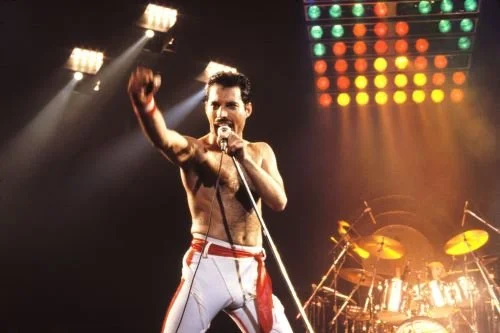
IN THIS PHOTO: Hannah Peel

There are many others who do not want to be a musician but still want to produce. Not enough is being done to encourage that; to keep Music on the national curriculum and provide production courses. There are production courses in higher education - but how easy is it for young women who take those courses to get into studios when there is still this feeling it is male-dominated and the environment may not be that supportive to them? To positive things! Marks has produced award-winning and acclaimed albums through the years. An album that is sure to be GRAMMY-nominated and has got to number one in the U.K., boygenius’ the record is my favourite of the year so far. It is a magnificent album that she produced alongside the trio (Phoebe Bridgers, Lucy Dacus and Julien Baker). Prior to explaining why Marks is so important, I want to bring in one of the many hugely positive reviews for the record. It gained so many five-star reviews – and is already one of the best-reviewed albums of the year. CRACK had this say about the amazing the record:

Back in January, Julien Baker, Phoebe Bridgers and Lucy Dacus, the three members of the indie rock supergroup boygenius, appeared on the front cover of Rolling Stone to announce their debut album, the record. Their deadpan poses and pinstripe suits paid homage to a photoshoot in the same publication almost three decades earlier, featuring another lightning rod American three-piece: Nirvana.

The reference, of course, was not an incidental one, the inference being that boygenius are, as Nirvana were, one of the most significant bands of their time – even if the record is an album that alternately subverts, embraces and side-eyes the canon. Leonard Cohen, on a track named after the revered artist, for example, is described as “an old man writing horny poetry”. But two songs earlier, on Not Strong Enough, the band unashamedly deal in shimmering stadium rock, showing us that even as their eyebrows are wryly raised over the deification of guitar music’s “boy geniuses”, they can also play – and beat – them at their own game.

Just as Cobain, Grohl and Novoselic captured a pervasive mood with Nevermind – that is, the restless and destructive boredom of the American teenager in the early 90s – on the record, Baker, Bridgers and Dacus do the same for the 2020s. Together, they distil the particular blend of neuroticism, romance and irony that tends to infect the brains of their young, internet-addled fanbase, in a way that feels generationally definitive. Dacus self-describes as “a winter bitch” on True Blue, while Baker’s “half my mind/ I keep the other second guessing” line on Not Strong Enough is a pin-point description of how it feels to be a young person in such an anxiety ridden time.

As such, the record lives up to the expectations that have been placed on it since boygenius released their self-titled EP in 2018, and just as before, each band member brings her own unique sensibility to the table. Baker’s winsome vocal sparkles on Cool About It, the grounded dignity of Dacus’ alto makes We’re in Love the most affecting song on the album, while Bridgers drives it home with closer Letter to an Old Poet, stirringly interpolating the standout 2018 boygenius track Me and My Dog. This new song is a sort of sequel to the earlier one, wherein Bridgers denounces its once-exalted subject. “You made me feel an equal/ But I’m better than you and you should know that by now,” she sings over piano, backed by harmonies from Dacus and Baker, as the familiar refrain lurches back in.

Thematically, there is a focus on the personal and romantic that we expect from these three songwriters, but there’s also a special dimension that we don’t hear in their solo projects: their love for each other. This is most touchingly expressed on We’re in Love, on which Dacus movingly addresses her bandmates (“If you rewrite your life/ May I still play a part?/ In the next one, will you find me?”), but it’s also there in the fun they seem to be having just playing together.

Indeed, the record’s real fireworks go off when boygenius switch on their rock star mode. Self-consciously leaning into their place in the pantheon of great guitar bands, and giving a nod to the last great heyday of US alternative music in the 90s, boygenius skewer this subculture in a loving sort of way. Satanist has a fun, MTV-era slacker riff that cosplays Mellow Gold-era Beck; $20 sees Bridgers vamping, Cobain-like, when she screams blue murder at its climax; and Not Strong Enough, with its simple but soaring chorus (“I don’t know why/ I am the way I am/ Not strong enough to be your man”) evokes Sheryl Crow’s 1993 single Strong Enough, eliciting the sort of written-for-performance anthem you’ll remember seeing live for years afterwards”.

It is true that some of the best albums of the year by women are produced/co-produced by the artist themselves. Caroline Polachek is a producer on Desire, I Want to Turn Into You, Billie Marten is on Drop Cherries, boygenius obvious are on the record, and Lana Del Rey is on Did you know that there's a tunnel under Ocean Blvd. So many major female artists also produce. Taylor Swift is a producer on Midnights. RAYE co-produced (as Rachel Keen) on My 21st Century Blues this year. It is great to see. Female artists taking ownership and showing their production brilliance. There is that other world. One where women like Catherine Marks are particularly important. In terms of production as a standalone profession, there are far fewer women than men in studios. Even if there is that great knowledge that so many female artists self-produce, you see so many other albums without women credited as producers. There is definitely a desire from women to get into the profession. I still think that studios are not flexible enough when it comes to providing a supportive environment, taking into consideration issues like childcare and maternity concerns. A report from 2012 suggested that many women aren’t interested in being a producer. That they would need a certain swagger in such an intense environment. This article from 2021 is about musician Helen Reddington’s book,  She’s at the Controls. The book not only explains how many female empowerment songs you hear on big Pop albums are produced by men. She details that, when it comes to music education, women are not as encouraged as men. Many studios are quite hostile, which means there are few visible female role models inspiring the next generation.

I think Catherine Marks’ ongoing success and the acclaim her work has received on boygenius’ the record is going to be a turning point. Not only will it encourage many female producers to produce themselves, but also hire female producers. I feel it is a sign that we need to support women who want to be producers. I don’t think it is the case that they are not interested and their focus is in other areas. I think that supposed apathy stems from a sense that they will not be supported and the studio environment is not going to be flexible and collaborative. Catherine Marks’ brilliance and continued influence is going to rub off on the next generation. Whilst we may never get to a point when there is gender equality in terms of producers in studios, Marks points out that many women are producing their own music. This too is inspiring a new generation. Marks has created her own studio space, but she has worked with so many different artists and her experiences have been largely positive. That was not always the way. Like any women wanting to produce, she has faced discrimination and barriers, but her determination and passion is clear. From here, there will be so much demand from other artists who want to work with Marks. As she has just worked with an American group, I can well see major artists like Taylor Swift calling on her services. I do feel the record’s wonderful sound and enormous quality will underline why we need to encourage more women into production. Even if boygenius themselves are producers, the input and guidance of Marks adds so much. There is no doubt that she is…

ONE of the best producers in the industry.