FEATURE: Movvvvvinnnnnggggg… Kate Bush’s Busy and Important May and June, 1978

FEATURE:


Movvvvvinnnnnggggg…

IN THIS PHOTO: Kate Bush in Tokyo, Japan in June 1978/PHOTO CREDIT: Koh Hasebe/Shinko Music/Getty Images


Kate Bush’s Busy and Important May and June, 1978

_________

I have marked a couple of Kate Bush…
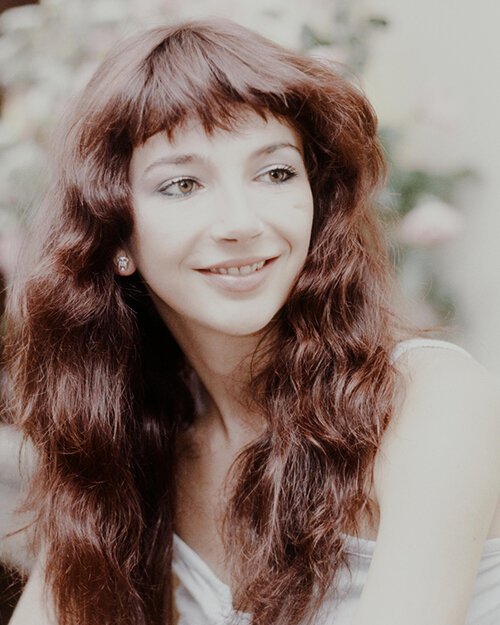
 IN THIS PHOTO: Kate Bush in Tokyo in 1978/PHOTO CREDIT: Koh Hasebe/Shinko Music/Getty Images

anniversaries that happen this month. In fact, they both relate to singles released from her 1978 debut album, The Kick Inside. Them Heavy People (released in Japan) and The Man with the Child in His Eyes turned forty-five. Very different but amazing songs, I am sticking with this time period. With her debut album released in February of that year, Bush experienced this hectic and almost whiplash promotional circuit. I think that May and June of 1978 was a period that was both packed and important. In terms of expanding her influence to other nations, these spring/summer months were pivotal. Thanks to this invaluable website for their Kate Bush timeline. For a bit of context, 4th April is where we start. Wuthering Heights, released in January 1978, had been at number one. By that April date, it slipped to three. The Kick Inside got to number three, so it was this time when Bush had an incredible and unique debut single holding steady on the charts (when it got to number one, she set a record as the first British female artist to enjoy a self-written number one single), in addition to an album that clearly provided a lot more depth and appeal than the one track! Bush headed off to Europe to promote both her single and album. In addition to heading to West Germany and France, she was in the Netherlands. In a twenty-five-minute promotional film for the new De Effeling gothic amusement/theme park in Kaatsheuvel, she performed six songs from The Kick Inside. Bush also performed on the Voor De Vuist Weg television programme.

Many people associate Bush with being a bit distant with the U.S. early on. In fact, Bush did visit in April 1978 on a brief promotional jaunt. I can’t find many details about this or whether any interviews took place. It seems that May 1978 was perhaps when she visited America. Bush also appeared on Saturday Night Live (introduced by Eric Idle) in December 1978 and sang The Man with the Child in His Eyes. Even by April 1978 – with one album down -, there were plans and talks of a possible tour. This early travel and international exposure was motivation to broaden the ambitions and visuals. As we know, The Tour of Life happened in 1979. I think it would have been impossible to realise a tour in 1978, as she released two studio albums (her second, Lionheart, came out in November) and promoted her music throughout the year – with barely a moment to perform! She did promote in the U.S. and Canada in May 1978. Even though there are no T.V. appearances here, it was a chance for the still-teenage Bush to experience the different rhythm and pace of North America. Whereas Wuthering Heights got to number one in the U.K., it did not impact North America. It got to eight on the US Bubbling Under Hot 100 Singles, but I am not sure how much recognition Canadian and U.S. audiences had of Bush in 1978. Regardless, it was a valuable trip and an opportunity for her to get better known there – even if Bush resolutely stated that she did not dream of cracking America. It is a strange that the past couple of years has been the first time when you feel her music has been widely and truly embraced by a number of generations there!

If there was a bit of U.S. jaunt from April 1978, it seemed like Bush had a short break following her North American trip. A rare opportunity to briefly breathe, I can only envisage how Bush was feeling at this point! A few months off her twentieth birthday, it was a vastly different experience to what her old schoolmates would have been going through! It was her dream to make an album, but I don’t think in her wildest dreams she would have pictured how frantic and globe-trotting her first full professional year in music would been. After Bush fought determinedly to have Wuthering Heights released as her first single – EMI wanted the more conventional and accessible James and the Cold Gun -, she was given reign to select her second single. I suppose EMI would have favoured Them Heavy People (a success in Japan) or a song like Kite to be the next release – or even a return conversation around the merits of James and the Cold Gun. Intuitive and the best judge of her own music, The Man with the Child in His Eyes was the next single. That came out on 26th May, where it reached six in the U.K. Maybe because of some U.S. promotion, it actually got to eighty-five on the Billboard Hot 100! You can see why Bush felt The Man with the Child in His Eyes should be a single. Recorded in June 1975 – alongside The Saxophone Song -, it won an Ivor Novello in 1979. Demonstrating her incredible lyrical talent, her instincts proved right. Less of a novelty than Wuthering Heights, there was a nice contrast and balance – The Man with the Child in His Eyes more of a standard; more tender and almost soulful. In Japan, the U.S. and elsewhere, the follow-up later in the year was EMI's first choice, Them Heavy People. Even though that Kate Bush timeline says The Man with the Child in His Eyes was released on 28th May, 1978, I have 26th May down as the release date. I am not sure who can break the tie, but I am going with the latter date, as that is the one that seems to be most common elsewhere. As is the problem when it comes to getting accurate release dates from so far back, there is often no definite answer or single authority who can verify and make that ruling.

Regardless, by the end of May 1978, a lot had been achieved. Remember, The Kick Inside was released in January. Two singles down, chart success around the world, and so many people knew who Kate Bush was. She had visited multiple nations, and that was just the start of things! As I get a chance to visit Kate Bush’s visit to Japan in June 1978, I wanted to contextualise it forty-five years down the line. Maybe Bush’s most itinerant two-month period, from the U.S. and Europe in April/May, Japan came calling! Moving has been released in February 1978 in Japan. As I wrote recently, Them Heavy People was released as a single only in Japan. Retitled Rolling the Ball, it reached number three there - its only release worldwide as an A-side. I have written about Bush’s Japan trip of June 1978 (I don’t know if she ever returned to the country after that) before, but not in the context of that period where she recently visited America. Someone who was not a fan of flying from the off, there must have been some nerves and fear about going somewhere so far from home! I am not sure whether it was a decision EMI made to really bolster and boost her profile in Japan, but Bush was thrown into a very deep end with the 7th Tokyo Song Festival. On 18th June, Bush performed Moving live before an audience of 11,000 at the Nippon Budokan. Consider the fact that her biggest gig prior to that would have been a pub booking in England to around a roomful of folk, this was next level! That Japan performance was viewed by over 35 million people! Although it was a weird and inexplicable promotional angle, the gamble clearly paid dividends! Bush won the Silver Prize jointly with American group The Emotions. Moving reached number one in Japan. For someone who was unknown in the country at the start of 1978, she was now a chart-topping artist there! Even though she did not release Japan-only singles past Lionheart, it is amazing that she made such an instant impression there. Though perhaps not that weird. There were mixed blessings to this Japan success…

I wonder why there was such a divide between the East market and those in North America. Is it a language thing? Did the sounds of Moving and Them Heavy People/Rolling the Ball translate more effectively in Japan than Wuthering Heights did in North America? It would be interesting to get some theories and feedback on that. If the U.S. and Canada trips were not synonymous with television performances and that much eventfulness, that is not true when we consider Japan. Perhaps a market more fertile in terms of opportunity and commercial appeal, Bush also appeared on the T.V. show, Sound in S, taped at Tokyo's TBS G Studio. She made her only television advertisement, and her only endorsement for a commercial product - a spot for Seiko watches. Whether slightly coerced or something that was part of an early international career plan – Bush doing adverts and something more akin to what a mainstream Pop artist might do -, I am not too sure. I do like the fact Bush didn’t do more advertising, as her Seiko spot finds her slightly uncomfortable and uneasy. In a country that Bush was not familiar with and was a million miles away from the feel and fabric of her East Wickham Farm home in the U.K., there were moments of awkwardness, cultural appropriation and translation issues – which are understandable as Bush was never exposed to this way of life and language before! Regardless, I think that she was a true professional and stoic presence there. After only a brief holiday following her time in North America (which followed close on the heels of European promotion), she was jetted to a nation that would embrace her music more heatedly and instantly than most – though you wonder how much of it was understood and translated. Her natural charm, hard work ethic and raw talent put her in a very healthy and exciting position by June 1978.

 IN THIS PHOTO: Kate Bush during her trip to Japan in June 1978/PHOTO CREDIT: Koh Hasebe

One would hope that EMI would offer their young prodigy a break before considering any new steps (and I would advise people to read this excellent feature about Bush’s Japan trip). I hope at least she got her twentieth birthday off (30th July, 1978) and enjoyed some family time! Not long after getting home from Japan, Bush was ordered to get ready for album number two. If that promotional blitz resulted in success and international exposure, it gave EMI the proof they needed that Kate Bush was indeed a star. One feels that money and commercial acclaim were outweighing allowing their tired artist to pause after promoting her debut album so diligently and without complaint. Of course, Bush did not relish the very short amount of time she was given to deliver songs for a new album. As such, only three of the ten that would appear on Lionheart were newly written. Despite the fact the majestic and gorgeous Symphony in Blue was among them, she couldn’t have gone into recording Lionheart in the best of spirits! That was the only album recorded outside of the U.K. (in France), but she had to revamp and rework seven older songs perhaps not considered strong enough or right-sounding for The Kick Inside. She demoed the songs in a studio designed by her brother Paddy (who appeared on all of her albums bar her most recent, 2011’s 50 Words for Snow). That studio was paid for from the royalties Wuthering Heights amassed. I guess the deadlines and way of working were good practise when it came to the foundations for 1979’s The Tour of Life. There, with Bush taking more command and control (and using a lot of her own money to realise her vision and execute the tour), it was a lot of long days and decision making all over the place. It would have been quite a tough time…so you can imagine Bush would have had some retrospective sympathy with EMI.

It is staggering and dizzying considering the amount of growth and work done less than a year after Bush was called into the studio in London to record The Kick Inside. That happened in August 1977. Prior to that, Bush was touring pubs and clubs around the south as part of the KT Bush Band. With bassist Del Palmer, guitarist Brian Bath,  Vic King (who did not feature on her debut album and contact was lost after that, even though he played with The KT Bush Band for some live dates in 2016). I think the original idea for the band, from Paddy Bush, consisted of Del Palmer, Brian Bath and Charlie Morgan playing with Kate Bush. I am not sure whether that line-up played gigs past rehearsals and talk, but it is clear that the one of Bush, Palmer, King and Bath did play a string of dates together. Anyway. I digress! What I mean is that Bush started working in the KT Bush Band in August 1977 (about seven months after she passed her driving test). The Kick Inside gets completed by in August 1977 (though there may have been some additional input in September), and Wuthering Heights arrives in January 1978. If that five months or so seemed like a real leap, that was nothing compared with the five months that followed her debut single coming out! It was a really intense and escalating period where Bush was getting ever busier and known. No wonder what she wanted to tour and step away from album promotion and recording through most of 1979. As it was forty-five years ago, I wanted to revisit and explore an intense and memorable time in Kate Bush’s career. Even if it was quite exhausting and, at times, strange, it was very important. Bush was gearing some real-world exposure beyond the U.K. If it took a while for North America to connect with her music, that trip to Japan helped get her to number one there. It was a mind-broadening and interesting couple of months! I wonder how Bush would reflect on that time now. If it did not yield terrific commercial reward, and she came to dislike flying more than she would have done previously, it showed that there was a market and life for her music…

BEYOND the U.K. and Europe.

FEATURE: Spotlight: Kali Malone

FEATURE:


Spotlight


Kali Malone

_________

I am featuring an artist…

who has released one of this year’s most interesting and wonderful albums in the form of Does Spring Hide Its Joy. It is a longform drone piece by on sine wave oscillators alongside cellist Lucy Railton and Sunn O))) guitarist Stephen O’Malley. For those new to her, Kali Malone is an American composer and organist based in Stockholm. Her works implement unique tuning systems in minimalist form for analog and digital synthesis often combined with acoustic instrumentation. Born in Denver, Colorado, this is an artist that everyone should know about. I am fairly new to Kali Malone’s work, but she is an exceptional composer and musician. I shall end with a review for Does Spring Hide Its Joy. Before I get there, I want to bring in a few interviews where we discover more about Malone and her background. In 2018, Tiny Mix Tapes spotlighted a phenomenal musician who was on the rise:

Kali grew up in Colorado and lived there until she was 16, after which she spent time in Western Massachusetts before relocating to Stockholm in 2012. She has been there since and is currently pursuing a Masters degree in electroacoustic composition at The Royal College of Music.

So far in 2018 she has released a cassette, Organ Dirges 2016-2017 (Ascetic House), and an LP, Cast of Mind (Hallow Ground). A triple CD of organ music is coming later this year from iDEAL Recordings, as well as the debut album from her new project with Acronym and a vinyl reissue of Organ Dirges 2016-2017.

PHOTO CREDIT: A.M. Rehm

I know a bit about the music scene in Western Massachusetts, but what is happening in Colorado and Stockholm?

The music scene in Denver, Colorado has changed a lot the past few years. Mostly because Denver has been gentrifying so rapidly and the housing crisis has made a lot of people move, and it’s difficult to acquire venue spaces for underground music. Especially since the Ghost Ship tragedy, which triggered a cascade of repercussions throughout the whole country, some of our most important DIY spaces have been shut down and some of our heroes have fallen, so it’s been a really tumultuous couple of years.

But growing up there, I remember shows happening everywhere always and all extreme musics were bound into a night, so from a very early age, I was exposed to a lot of different extreme expressions. The shows were mostly all ages and happening in people’s homes or warehouses rather than in bars; it was a pretty inclusive community.

In some ways, I’ve found that sort of community in Stockholm for sure. In Stockholm, we have many shared resources and shared spaces, like state-funded studios and venues, so it’s kind of hard to avoid ending up in a community there. A lot of those are institutionalized communities, so people aren’t necessarily choosing each other, but you get a lot of diverse expressions through that also. The thinking is kind of like, “We happen to share this space together, we happen to share these resources, let’s get along and do something.”

You have Fylkingen, which is an 85-year-old artist-run society and venue for experimental music and art. And there’s EMS, a state-funded studio for electroacoustic music that houses very-well-cared-for Buchla and Serge modular systems. At these places, you’re working with many different generations of people at once, so you can really learn a lot and keep certain traditions alive. Outside of those more institutional and formal communities, my friends and I have our own studio called Tropiska Föreningen, and we put on more DIY shows and exhibitions.

Great venues in Stockholm have also shut down since I’ve been there, but that’s kind of the nature of doing underground music — nothing is ever permanent, and you always have to be working at it and readjusting to the circumstances. The minute you get too comfortable with it, you lose it. You always have to live with that anxiety of not knowing what’s going to happen next, which is why it’s so important to have that community around you.

Why did you decide to stay in Sweden?

Well, I went there initially because of Ellen Arkbro. I met her in New York when I was 16 at a house show, and a year later I went to visit her in Sweden and she introduced me to EMS and Fylkingen. I started playing music with a bunch of people there, and I never wanted to leave. It was a really formative and groundbreaking experience, especially for my exposure to improvised music. When I first heard Swedish improvised music, I noticed that it was very careful and considerate of the other musicians, and it inspired a different sort of listening in me. Up until that point, when I’d played improvised music, it was a lot about taking space and blasting sound, even though I wasn’t quite sure what I was trying to articulate yet.

After that, I moved to Sweden really naively when I was 18 with just my Fender Blues guitar amp and some pedals, and I’m still there six years later.

How did you begin to play the organ?

One of my first friends in Sweden is an organist, and I would go to the church and watch him practice. But I never really thought of it as an instrument for me because, in my mind, it was still so connected to the traditions of the church; it wasn’t yet sonically liberated from that particular setting and culture for me. Then Ellen Arkbro and my other friend Marta Forsberg put on an incredible organ concert in a church, and that was kind of the first time I heard live, contemporary pieces on the organ that really resonated with me. It was inspiring, but I still wasn’t thinking “I’m going to write for organ.” But then I met the organ tuner Jan Börjeson for some research I was doing for my thesis. I’m very interested in tuning systems and temperament systems, and so I wanted to talk to an organ tuner about their experiences with that because they are often tuning in many different temperaments. I went for a 10-minute interview with him, which turned into us tuning the organ for eight hours, and now I’m his apprentice. So, I actually started playing the organ through tuning it”.

In 2020, as Kali Malone was performing as part of Re-Imagine Europe (she was commissioned by INA GRM), François Bonnet spoke with her. In this fascinating interview, we learn more about Malone’s extraordinary talent and musicianship. She is someone that you need to listen to. Hearing her music and performances is a real gift and wonderful experience:

FB: Your music has an ‘anti-romantic’ approach. Its expression is not a musical gesture summoned by a genius but by rules and structure that help build a ‘selfless expressivity’. Had you already explored this legacy of Cage and Feldman in the US or is it something you developed in Sweden?

KM: Thanks for that interpretation, I’d say it’s a fair evaluation of some of my work. This approach grew over time while in Sweden. It’s not something I’m entirely bound to, although the more I commit to it the more difficult it is to transition to other forms of expressivity. Applying a rational and generative structure to the organisation of sound challenges my willpower and ego. It submits my chaotic nature to a discipline based on concept rather than emotion. Interestingly, the music ends up projecting something much more emotional and personal than if it had been composed without a predetermined structure.

FB: You create acoustic and electronic music. What are the differences, if any, in the approach to these two modalities?

KM: I love to combine synthesis and acoustic instruments in my work. There’s an incalculable beauty to an acoustic timbre’s organic quality and the human sensibility’s delicate obscurity. There’s also a component in the process of recording acoustic instruments that demands more commitment and clarity from my part, making the whole thing feel more humbling and significant. The idea of ‘the recording’ is quite different when I’ve set up the studio, borrowed microphones, and reserved time with live musicians than when I’m spending hours at my leisure on a new synth patch. There’s an implied scarcity and urgency in the former recorded sound, which might be why my latest works use so much acoustic material.

FB: You’re creating a new work in the context of the Re-Imagine Europe project, which you’ll present at the Sonic Acts Academy and INA GRM’s The Focus Concert Series with a loudspeaker orchestra. Will you develop something specifically for a 360-degree diffusion of your music?

KM: Yes.

I am going to move things to the present time. Bandcamp featured an interview with Kali Malone in promotion of Does Spring Hide Its Joy. I think I first heard her music last year. I have been intrigued ever since. I don’t think that there is anyone quite like her in the industry. I am really curious to see what direction she takes next, and what how she follows the sublime and immersive Does Spring Hide Its Joy:

You give all of your trust to the music and let it guide your attention rather than anticipate what’s around every corner,” says composer Kali Malone. Malone creates drone meditations that gradually unfold through layered tones. Her latest project Does Spring Hide Its Joy presents three different versions of the finished piece, each of which blossoms from the same score.

Malone found kinship with like-minded artists Lucy Railton, a cellist she met in Sweden who was often working in the Electronic Music Studio at the same time as her, and Stephen O’Malley, a guitarist she met by chance while going through the metal detectors at Ina GRM in France. In the spring of 2020, the three artists were locked down together in Berlin. During that time, they began to make music at Berlin Funkhaus and MONOM and ended up making Does Spring Hide Its Joy, which features Malone on 72 sine wave oscillators, Railton on cello, and O’Malley on guitar.

The music on Does Spring Hide Its Joy is non-linear yet structured. Five-minute blocks link together, forming a ladder the three players move up and down; in total, the work can last anywhere from 15 to 90 minutes. As the trio plays, they react to each other in real time, matching one another’s notes or falling away and leaving empty spaces. It’s about trusting each other and the process and embracing the failures that lead to successes along the way.

Much of Malone’s work employs rhythmic patterns like canons or tuning systems that guide the music in a certain direction. Within these confines, she finds space for creativity and change. “When you have a bunch of restrictions, you lose control because there’s some sort of agency that is given to the composition that you submit yourself to,” she says. “It’s a big puzzle. And then when it does fit together, the piece is so much more perplexing than I could have really imagined or linearly composed.”

 The ideas Malone explores across the album, and her discography, stem from interests she’s held for a long time. She was a musical child; one of her earliest memories is of sitting at the piano, where she quickly fell in love with the sound of the black keys. But it was an experience she had conducting a piece by Pauline Oliveros at 19 that shaped her artistic trajectory. Oliveros established the practice of deep listening, breaking open new ways of actively engaging with sound and each other. The piece Malone conducted, To Valerie Solanas And Marilyn Monroe In Recognition Of Their Desperation, plays with the social dynamics of an ensemble. Through this work, Malone began thinking more about relationships that exist between each player and how you may submit your will to the collective or rebel against it.

Throughout Does Spring Hide Its Joy, the three artists each explore submission and assertion, attentively listening to see when they should play or recede. When performed live, this dynamic shapes the listening experience of the audience. Depending on the space, the piece will take on different forms: If they’re seated in different positions, they may hear different sounds from each other, and different acoustics will create different qualities of sound. For Malone, live performance is where all of the elements come together—and where deep listening thrives. “It’s the moment I can really just completely be present and in the music,” she says. “If I’m able to listen and just enter that zone, then it also opens up a doorway for the other people in the space to go there with me.”

Malone estimates the group has spent 24 hours performing the music live to audiences in 60 or 90-minute concerts. She’s met people who have seen them play it more than once and often think it’s something different. But it isn’t—it’s just that every time, there’s still something left to be unearthed. “It’s so exciting because it just keeps on giving and giving and teaching us new things,” Malone says. “I feel like it’s a musical practice rather than a piece that we can continue and that I would love to continue forever”.

Before getting to a review for Does Spring Hide Its Joy, I just want to highlight parts of an interview from The Guardian. They spoke with Kali Malone in January (when the album was released) regarding her search for the sublime. It is yet another window into the incredible mind of a stunning composer:

“Malone grew up mostly in Denver, where she sang in state choirs, studied classical vocal music, then discovered gigs age 13. “I was a very independent kid, with not so much supervision, and very adventurous,” she says. She moved to Massachusetts alone to study music, then boldly to Stockholm, aged 18, after becoming friends with Swedish avant-garde composer Ellen Arkbro. “I just knew I needed to go,” she says, “I was naive enough to arrive with just an amplifier and my guitar, but the first week I got a job, got my visa, an apartment – I somehow figured it all out.”

She studied electroacoustic composition at Stockholm’s Royal College of Music, where she found a fertile cohort including Arkbro, synth musician Caterina Barbieri and Maria W Horn (with whom she ran the label XKatedral) among others. Stockholm provided access to rare synths at EMS, and she began working as a technician at experimental venue Fylkingen (to sound poetry what New York’s CBGB was to punk). During this intense creative time, she made much of what became 2018’s Organ Dirges 2016-17 and Cast of Mind, and The Sacrificial Code: “I would roll all the microphones and mic stands across the building where the organ was every day,” she says. “I was the last one to leave school every night – I’d often get locked in.”

Malone’s organ fixation started when she interviewed organ tuner Jan Börjeson while studying. She began apprenticing with him, climbing inside the bellies of these mechanical whales. She was fascinated by their clacking, wheezing physicality, but also by the possibilities of tunings. “Holding down two notes, the beating patterns that then occur reminded me of what I was searching for in my electronic music,” she says.

She becomes visibly excited explaining the technicalities of how historical organs have been retuned through a process of harmonic standardisation. Grappling with terminology, I ask if this means some are essentially wearing clothes that don’t fit? “That’s a good way to put it,” she says, kindly. She elaborates about wolf tones and commas, and I am utterly lost. “I don’t understand why more people don’t know about harmonics,” she says. “We learn about chemistry, about colour – the science of sound doesn’t just apply to musicians – we experience sound every moment of our lives.”

She mentions a less sublime environmental sound. “There’s a leaf-blower that wakes me up every morning,” she says. “I remember once sprinting outside with my recorder because five guys were leaf-blowing together – it was one of the best sounds I’ve ever heard.” This is the mindset of a musician who is as much receiver as composer: “There’s so much beautiful sound out there – it’s all just your perception whether you experience it as music”.

I will wrap up with a review for Does Spring Hide Its Joy. This is what Pitchfork offered when they sat down and listened to one of this year’s most atmospheric and important albums. Even if it is not the sort of music you normally listen to, I would urge you to give it a try:

Endurance is a longstanding element of Malone’s music, but Does Spring Hide Its Joy makes it a central component. Each of the three presentations of the piece featured on this release are an hour long (subdivided into 20-minute movements), and, anchored by a shared tonic drone, they easily melt into one sprawling three-hour epic. The music breathes in slow motion, with massive exhalations of bass ceding to stretches of quiet consonance before the next yawning gasp. Change is omnipresent and can be dramatic, but there’s a veneer of stillness that makes listening feel like observing the swirl of a nebula; the spectacle exists on a scale that’s difficult to grasp in one sitting. The most effective way to ground oneself in the piece is to be with the music as it exists in the moment, listening for incremental shifts as they unfold.

What Malone describes as “hold[ing] time together” involves a process of letting go of traditional musical demarcations of time and forming new ones. Drone music is often perceived to lack rhythm, but Does Spring Hide Its Joy is abundant with it, just on different scales than many listeners might be used to. You can mark time with the moments when Railton runs out of bow and changes direction, which don’t occur at regular intervals. The constant ebb and flow of volume, intensity, and dissonance, which takes place in cycles of dozens of minutes, offers another rhythmic viewpoint. But the most fascinating occurs on a much smaller spectrum of time: As the trio builds up microtonal harmonies, warbling beats caused by harmonic interference contract and expand as the frequencies fall in and out of phase with one another. Depending where the listener’s attention rests, clock time, geological time, and quantum time each become observable.

This precise and harmonically dense requires superhuman concentration, and it’s clear from these recordings how closely the three musicians are listening and reacting to one another. Rather than conjure impressions of solitude, the spontaneous decisions the trio makes—to dig into coarse dissonance, to let the glorious simplicity of an open fifth ring out, to fade into oblivion—speak to the joys of building something collectively. In a recent interview with Bandcamp, Malone discussed how working on a score by Pauline Oliveros, the composer and Deep Listening pioneer whose methods were championed in 2020 as a balm for isolation, has affected how she thinks about working within and composing for an ensemble. Out of the singular nature of sustained tones emerge entire worlds of sound that arise from each member of the trio understanding not only their own role, but how to mold their contributions around the distinct personalities of their collaborators.

There’s something utopian about music driven by an attention to understanding those around you, music that pushes listeners to expand their understanding of how time is experienced and demarcated. In a period of upheaval, letting go of expectations of how things should be, beginning with how music should move or present itself, can be a powerful step toward reimagining the future. Rejecting escapism and celebrating invention, Does Spring Hide Its Joy is equally compelling and uncompromising. The music and the feeling of being absorbed in it is its own reward. Just beneath the surface of Malone’s composition lies an alternate path forward: one that is malleable, defined by change and the mysterious complexities of sound”.

An incredible talent that should be known by all, I think we are going to hear a lot more singular and moving music from Kali Malone. Make sure that you check her out. I am not sure if she is going to be playing in the U.K. in the future, but she was here earlier in the month. If you can catch her performing, then I would definitely recommend it. Do go and immerse yourself in…

HER remarkable musical world.

__________

Follow Kali Malone

FEATURE: Spotlight: Kito

FEATURE:


Spotlight


Kito

_________

AN amazing producer artist, songwriter, and D.J…

Kito is someone that is very much at the forefront right now! Her groundbreaking new track involving an AI replication of Grimes’ voice has caused a lot of discussion and excitement. Kito (Maaike Kito Lebbing), is an Australian multi-talented innovator residing in Los Angeles, California. She debuted in 2009 on Skream's record label, Disfigured Dubz. After Lebbing independently released a 2018 E.P., Haani, she debuted under Astralwerks/Capitol. An amazing producer, Kito has created amazing remixes for Beyoncé's Run the World (Girls) (2011), Broods' Too Proud (2019), and Wafia's Flowers and Superpowers (2019). In addition, she has produced music for Mabel, Jorja Smith, Banks, and Ruel. An acclaimed and hugely respected and admired producer, she was nominated for the Breakthrough Songwriter of the Year (Los Angeles) at the 2020 Global APRA Music Awards. I have grabbed some background from Wikipedia but, in truth, I am keen to get to some interviews. I have put all of Kito’s social media links at the bottom, so do go and follow her. I have written about the imbalance in studios when it comes to female producers and how women often feel unseen or unheard in studios. How the environment can be hostile or inflexible. Kito is definitely a huge influence in terms of the importance and immense talent coming from some brilliant women! She will help to provoke change and conversation; breaking down barriers for women coming through. I will work my way to a recent interview she was involved in regarding AI and her ‘collaboration’ with Grimes.

I am going to go back to last year when it comes to the first interview. Seemingly fuelled and inspired by coffee, a great team, and authenticity (possibly not in that order!), it is exciting seeing this hugely important and inspiring producer and artist come through. She collaborated with BANKS on Sad Girl Music last year. That was one of my favourite songs of the year. I can imagine her working with other enormous artists very soon. I have a list that I could see coming to fruition – as I am sure Kito herself does! The Fade In: talked with the influential Australian. Someone who I think is going to go on to change the industry and really make her mark, it is fascinating reading interviews from a year or two ago. Contrasting that to here and now. What she is currently creating and how important her recent AI work is! I have enormous respect for what she does:

You have a very outstanding personality that is noticeable both in your music and your look, and we know female artists have always played an important role in raising other girls’ voices and becoming a source of inspiration in many respects. How would you describe the power and/or responsibility of being a female musician nowadays?

Thank you! I find my power in making stuff that I’m excited about. My team is mostly made up of women which I love, plus I also work with so many talented female identifying musicians. I just wanna make good music and make people feel good and hopefully that resonates and inspires others.

How does your creative process usually look like?

Drink lots of coffee then bounce around between different ideas before focusing on one thing and forgetting to eat dinner because I get so engrossed! (I do always eat dinner, just sometimes not until 11pm if I’m really into something I’m working on haha).

When was the most remarkable moment of your career?

I think each time I feel power in my abilities or learn something new. Also the last 2 years have been amazing – finding a great team to work with has changed everything for me (in such a positive way!)

What are your biggest dreams for the future, and what would you like to say to yourself when they come true?

I want to continue making music I’m passionate about, working with artists I love, and one day build my dream studio at the back of my house. I guess I’ll say “you did that” and give myself a pat on the back, and then most likely just continue doing the same ol stuff I’m doing now haha”.

I will see if I can interview Kito one day. I would like to know more about her experiences getting into production and what it was like. How her experiences differ to that of other women in the industry. I want to go back a little further to the start of last year. A few months or so after the release of her E.P., Blossom, Flaunt were eager to spotlight the remarkable Kito:

Kito is a whole vibe, and it shines through in her music. Here to put on for all the aspiring female producers, songwriters, DJs in the world, the Australian-bred, London-raised, Los Angeles-based recording artist sees her music as an intimate party everyone is invited to, touching the masses on an international scale. From her romantic lyrics to her uptempo production to her catchy hooks, Kito knows a thing or two about hit records.

Last year, Kito received her first Gold record for her song “Bitter” with FLETCHER, which currently hails over 200 million streams and counting. And let’s not forget about her all-star catalog of remixes for the likes of Beyonce to Saweetie & Doja Cat, creating her own lane of futuristic pop.

Fast forward to 2021, Kito unveils her highly-anticipated new EP titled Blossom, reminiscent of a bouquet of flowers and how her mixture of sounds, tones, and emotions are intentionally picked and arranged. Coming into fruition during the COVID-19 lockdown, the 7-track project hails guest appearances from Bea Miller, VanJess, Channel Tres, ZHU, Jeremih and more.

Flaunt caught up with Kito via Zoom, who was posted in Echo Park with her friend’s kitten in her lap. Read below as we discuss her background, being self-taught, being influenced by her friends, the turning point in her music career, the meaning behind Blossom, how she got her features, favorite songs, studio essentials, playing Art Basel, and more!

What was it like being from Australia and growing up in London?

I grew up in a really small town south of Perth in West Australia, really isolated. I got into music through online forums and through friends. I found that community of electronic music when I was pretty young. I also loved collecting records. I then learned to produce, kind of self-taught. It was finding a lot of friends online, sending stuff back and forth and learning in that way.

How did you teach yourself how to produce?

A lot of tutorials. A lot of people, myself included, try to copy something that you hear that you like. At that stage, you’re not very good at being able to mimic something so you end up doing your own thing through good mistakes and trying to copy whatever it is that you’re into. The style of music or even songs, trying to figure out how people made something.

Blossom EP out now, how are you feeling?

I feel great! I feel really happy to tie a bow at the top of that project. That project was mostly done during the pandemic and a lot of time spent on my own at home, so it reflects that musically a little bit. It’s not necessarily club music, but it’s been really fun.

Where did you get the inspiration for the Blossom EP?

I didn’t start the EP like “I’m going to make an EP,” it wasn’t a conceptual idea. It was more so piecing it together from the work I’d already done, then finishing all the songs that tied it together and fit within that project. Also, this EP came from a place of more feminine energy than the past music I’ve made - there are many female collaborations on the EP.

You say the project helps soothe your anxiety. How often are you in front of the computer screen?

I’m in front of the computer way too much. It is important to get outside - it’s as simple as going for a walk, getting coffee, seeing friends... just taking a break so you’re not staring at your screen all day. I’ve learned to find a bit more balance than I used to, especially since during the lockdown we communicated with people on our devices so much more than we were doing before. It’s nice to give my eyes a break from the screens”.

Before getting to the most recent interview with Kito, I want to include an interview from Metal. They highlight how she is a self-taught producer (after watching hours of videos on YouTube) and in a position where she is working alongside some of the biggest artists in the world. Obviously, there is more to her story than that. A natural passion and intuition for crafting and producing the best and most compelling sounds, there is nobody in the industry quite like her. I know many will look up to her and want to follow her lead:

Right now, you have millions of streams on Spotify and a ton of monthly listeners. What would you say now to that Kito who started producing years ago?

Have fun with it and be less precious. It’s not that serious!

You have collaborated with renowned artists such as Trevor DanielLudacrisJeremih or Jorja Smith. What other names would you like to work with?

I’d love to work with Pink PantheressPrincess NokiaAmaaraeDoja Cat070 Shake and so many more.

Sad Girl Music, your latest release with Banks, talks about the sadness of an infidelity from the perspective of the cheater. The track proposes being consistent with our actions but also knowing how to forgive ourselves. Do you usually forgive yourself after making mistakes?

I’m insanely hard on myself – usually when work is involved – and I’m definitely learning to break that pattern as it’s not a healthy one! In the case of infidelity, some remorse is probably a good thing depending on your arrangement (laughs).

By the way, how was this collaboration with Banks born?

Mnek wrote the song, so it was really about finding the right home for it! Banks has been a friend ever since I worked on her song Gimme with Hudson Mohawke, and I just felt like this one was perfect for her. I think she really brought it to life.

Of all your songs, which is your favourite?

I have different favourites for different reasons! My favourites to play in a DJ set are Wild Girl and Recap.

To finish off, do you have any other future projects in mind?

I’m always working on stuff! Whether it’s for my own project, or for other artists’ projects. Last year I did music supervision for a short film called Femme that won a BAFTA and it was such an amazing learning experience. I’d love to further explore music supervision and maybe even scoring at some stage”.

Cold Touch might seem like an apt title for a song that uses AI. This is Kito using an AI version of Grimes – getting her vocal pattern and sound – and putting it on a new song. Grimes was very interested and happy to have this done. It expands the debate about AI and how it is used in music. I feel that other artists will follow Kito regarding using existing artists’ voice in the form of AI-generated sounds. It will change how we perceive music. The Face discussed Cold Touch with Kito, and they were curious about the software used to get this remarkable and almost life-like vocal sound:

Have you heard? Grimes has a new song out. Cold Touch, a collaboration with the Los Angeles-based Australian producer Kito, is an icy, propulsive dance track, a two-minute blast of energy that pairs big-tent EDM and hazed out d’n’b with Grimes’ signature ethereal vocals. But Kito’s collaborator is credited as GrimesAI, which is a different entity to the human born Claire Boucher.

If you heard Cold Touch in a club or on the radio, you’d recognise the voice as Grimes’ instantly. But actually, the vocals were provided by Scottish vocalist Nina Nesbitt, then fed through Grimes’ new AI platform Elf.Tech, which allows anyone to input their own vocals and download a new version of the track, redone as Grimes.

Grimes unveiled Elf.Tech a few weeks ago and, since then, innumerable musicians have been posting their own songs featuring Grimes’ vocals on social media. The technology, which is similar to Holly Herndon’s Holly+ vocal deepfake, was trained using raw audio of Grimes’ voice. On the day Elf.Tech launched, Grimes proclaimed: ​“Grimes is now open source and self-replicating.” She’s said she will split royalties 50/​50 with any successful AI generated song that uses her voice.

When you first heard about Elf.Tech, what was your reaction?

I think it felt very predictable that Grimes would embrace the experimentation of using AI for creative expression. I’m a fan of Grimes, so the idea of trying to make something that would sound like a Grimes/​Kito collaboration was really exciting to me.

What was it like working with the software?

I was in London a couple of weeks ago and I did a session with two people that are good friends of mine and amazing writers – Nina Nesbitt and Fred Ball. I pitched the idea to them to try and write a Kito/​Grimes song using Elf.Tech. So we wrote it together and it’s Nina’s voice that was then transformed into Grimes.

It’s kind of funny, because obviously AI is new for everyone and everyone’s a little confused about what involvement AI has in a song. There’s talk about lyrics being written, but obviously for something like this [Grimes has] trained her AI platform to know her voice. I think it did a pretty good job and it helped that Nina sang the way she thought Grimes would sing it. I think it’s probably harder if you have a really deep voice or something – it might not catch it.

Did Grimes have any tips on how to make it sound more like her?

She did give me some pointers [after she heard Cold Touch] on how she processes her voice. But we talked about lots of different things we could do – we were being very indecisive about, like, should we work on this further and then fully collaborate on it? Or is it a thing of the moment that we put out and this is Kito’s version, and then we work together on a Grimes version – which, I would hope that we do do that. It’s a funny conversation to have because it’s new for both of us.

A lot of people are a bit iffy about AI in music. What was your first impression of AI’s impact on the industry and how do you feel about it now?

I think it’s a bit scary because, for everyone witnessing it – how fast everything moves and the amount of versions of songs popping up without artists’ consent – it feels like it’s threatening our livelihood. I do think it’ll be a mess for a lot of artists! So much is attached to a voice – a story and an identity. Taking a very recognisable voice that we’ve grown to love and recognise, and having someone else take control of that is scary. Grimes was embracing [AI] and wanting to be part of this experiment. I would never put something up copying another artist’s voice unless they were embracing AI, because I do think there’s a bit of a danger to doing that. I would tread carefully in that respect, for sure.

[But] I actually think [AI] is going to be a tool for us. I don’t think it’s going to be a hindrance for creativity at all. I think it’s probably changed the way I’m gonna work on music this year, just because it was so creatively freeing for me to do something off the cuff and release it so quickly after making it. That in itself feels quite inspiring for me”.

Undoubtably one of the most remarkable producers in the business, she is a brilliant and compelling artist and producer who is going to have a very busy and long future! I can see her working alongside other major artists, whether that is producing for them or pairing with them on various tracks. If you have not heard of Kito, then go and check out her work and follow her. She is someone who is pioneering and astonishing. I think that she is one of the most compelling and interesting producers…

IN the industry.

___________

Follow Kito

FEATURE: Diamonds and Pearls: Prince at Sixty-Five: Inside the Legendary ‘Vault’

FEATURE:


Diamonds and Pearls

IN THIS PHOTO: Prince, Under The Cherry Moon, 1986/PHOTO CREDIT: AJ Pics/Alamy Stock Photo 


Prince at Sixty-Five: Inside the Legendary ‘Vault’

_________

FOR a run of features…

 IN THIS PHOTO: Inside of Prince’s famed Vault at his Paisley Park Studios home

I am going to mark what would have been Prince’s sixty-fifth birthday. We lost him in April 2016. As The Purple One would have been sixty-five on 7th June, I wanted to explore his amazing career and legacy from a number of different angles and perspectives. I have a couple of other features to go. For this one, I wanted to look to the past and the future. Most artists record everything that they can whilst they are alive. You will get posthumous material. In some cases, this can be controversial. The artists might not have wanted demos or non-album-quality material getting out there. Others might have been working on stuff before they died and it never saw the light of day. Estates have this choice whether to keep these things hidden or put it into the world. In a lot of cases, this material is not overly-strong. It might have been set aside for a reason - but I guess it is nice to still feel that this artist is with us. It is new material at the least. Prince had no idea when he would go. As he died of an accidental overdose of fentanyl, he might have been working on something in the days before his death. That drug is highly potent. Prince was unwell in the days leading up to his death. The fentanyl that led to his overdose was contained in counterfeit pills made to look like a generic version of the painkiller hydrocodone/paracetamol. It was a tragic accident that many feel could have been avoided (not because of Prince, but why he was prescribed it). Regardless of the circumstances and what-ifs, it was a monumental loss of a legend who was only fifty-seven! You sort of ask what could have been. Maybe Prince would never repeated his golden run of albums in the 1980s that started with Controversy in 1981 and ended (in terms of quality) with Lovesexy in 1988. He was a true genius, one of the all-time great guitar players, and such a prolific artist. It is that prolific nature that we can see in his Vault (I am putting a capital v in there because I see it as a place and historic site, rather than a mere vault). Most artists have an archive but, in the case of Prince, there is almost this entire career’s worth of stuff in there.

Aside from album reissues where we have had some rarities, there have been a few posthumous albums. Piano and a Microphone 1983 (2018), Originals (2019), and Welcome 2 America (2021) have reached us so far. I wanted to figure what else might be in the Vault, but I also wanted to introduce some features about this amazing treasure trove. There is one album definitely in there but has not seen the light of day. I am grabbing this information from Wikipedia:

The album was originally recorded in 1986 under the pseudonym Camille, a feminine alter ego portrayed by Prince via pitch-shifting his vocals up to an androgynous register. Prince planned to release the album without any acknowledgement of his identity. The project was initially scrapped several weeks before its planned release, with rare early LP pressings eventually surfacing for auction in 2016; several tracks recorded for Camille were instead included on various other projects, most prominently Prince's 1987 double LP Sign o' the Times.

In March 2022, Third Man Records announced that they had received the rights to release the album, with Ben Blackwell (co-founder of the label) saying "Prince’s people agreed – almost too easy." While the label indicated plans to release Camille, no release date or method of release has been announced yet. There have been no updates on the release since July 2022”.

I am not sure when Camille will get to us, but it does seem like it will be the next posthumous release from the Prince Vault. I am excited by this because it is s shame it was not released in 1986 or 1987. There has been a lot of talk and focus on the album through the years. Maybe there will be an announcement to coincide with his sixty-fifth birthday next month? Although most of this material has been released in some form or other, the fact that we get this new persona is the most exciting aspect.

What about the legendary Vault? What is it? There is an invaluable Prince Vault website that gives you news, album details and information about the iconic artist. In terms of distributing the material in the Vault, because Prince left no will, I guess it is quite complex! Sorting through all of this music and deciding what should go out and when is something his estate are wrestling with. Consequence looked inside his Vault in 2018:

Located in the basement of Prince’s Paisley Park estate is a bank vault full of unreleased music. As part of their investigation into the musician’s tragic death in 2016, the Carver Country Sheriff’s Office recently released a number of photographs from inside the vault, offering our first peek at the treasure trove of material amassed by Prince over the course of his 57-year life.

According to Prince’s former sound engineer, Susan Rodgers, the vault pre-dates the release of 1984’s Purple Rain and was already at capacity she left three years later. “When I left in 87, it was nearly full,” she explained in an interview with the Guardian. “Row after row of everything we’d done. I can’t imagine what they’ve done since then.”

As Prince’s death was unexpected and he left no will, his estate had no way of accessing the vault as only Prince knew the door’s key code. After drilling it open, the estate’s archivist discovered enough unreleased music to release a new album every year for the next century.

The first batch of this discovered material has begun to see release, including a reissue of Purple Rain, the 1999-era “Moonbeam Levels”, and the original version of “Nothing Compares 2 U”, which surfaced last week. The estate has also struck distribution deals with Warner Bros. Records and Universal Music with plans for more unreleased music to be unearthed in the months and years ahead. An early draft of Prince’s handwritten memoir is also on the way”.

Back in 2021, it was announced that Prince’s Vault – which must have been quite chaotic and disorganised when he died in 2016! – was getting updated and organised. Esquire highlighted a 60 Minute segment that dove into the Vault. This was ahead of the release of the acclaimed Welcome 2 America:

Death is not an end, but a beginning. Prince Rogers Nelson believed that in his bones. So it was that the night Prince died, a new era, the era of the vault, began.

By the time Prince was 40, he had written and recorded more songs than any artist could possibly release in a lifetime. Material, it seems, is the musical genius’s burden. To house all of his unreleased recordings, Prince constructed a vault in the basement of his Paisley Park complex in the suburbs of Minneapolis. Legend has it that as many as 8,000 songs are stored in the vault. For diehard Prince fans, the vault has been like an insurance plan — a way of guaranteeing the artist’s eternity, despite his premature death. At the same time, the vault has been frustratingly impenetrable and almost impossible to make sense of, especially considering the legal battles that have enveloped it ever since Prince died without a will in 2016.

On Sunday night’s episode of “60 Minutes,” correspondent Jon Wortheim dug into the vault’s status with a brief segment tied to the upcoming release of Welcome 2 America — the first release of a standalone Prince album that is comprised of new and original material. Previously, Prince’s estate only put out deluxe versions of some of the artist’s biggest albums, like 1999 and Sign o’ the Times, or compilations like Originals which was made up of Prince’s recordings of hits that he wrote for other artists.

The segment revealed that in its current state, Prince’s vault is more of a minefield than a treasure chest. The challenge, Wortheim summarized, is “monetizing the catalogue while still trying to do right by Prince.” That enormous task has been left to Troy Carter, a former Spotify executive and Lady Gaga’s previous manager. Since joining Prince’s estate in 2018, Carter has overseen the relocation of the majority of the vault’s contents from Paisley Park to Iron Mountain, a climate-controlled storage facility in Los Angeles, and created a team of archivists whose job it is to propose new releases of vault material.

Carter joked with Wortheim about the pressure of the job. “I want to make sure that Prince isn’t somewhere in heaven giving me the side eye.” In that spirit, the upcoming release of Welcome 2 America is an important first test, and according to Carter, the judges will be the Prince fans who think they have heard everything.“Whenever we can find things that the fans haven’t heard, it’s like a victory,” explained Carter. With it’s 10 previously unreleased tracks, Carter is hoping Welcome 2 America is a win”.

It is lucky that there is access to the Vault. Obviously, because of the sudden nature of his death, details about the code or how to access the Vault died with Prince. He did not leave details of how to get into the locked safe-like unit. Prince hid the code, so when he died and people found the Vault locked, it created a headache! Dave McOmie, a professional safecracker based in Oregon, came into to the rescue and opened the safe. He knew the exact model of Prince's vault - a Mosler American Century - when Prince's estate contacted him.  At six and a half feet tall, several feet wide and 6,000 pounds, it was a job getting in there! Prince was not messing around when he had that thing installed! Whereas many artists would prefer to keep unreleased material private in the event of their death – if they did not deem it good enough to be released commercially –, but that was not the case with Prince. Even if Paisley Park was his home studio, the music he recorded there was not for his mere pleasure – it was for the entire world! In 2021, Brianna Holt wrote for Rolling Stone about the almost holy Vault. She spoke with Prince’s younger sister, Tyka Nelson. Prince would have wanted all of this material out in the world. To honour her brother’s wishes, that is what she is going to do:

Since Prince’s death in 2016, Tyka Nelson, the musician’s younger sister, has been tasked with helping preserve the Purple One’s legacy. She shares one-sixth of Prince’s estate, with thousands of unreleased songs reportedly stowed away in Prince’s vault. Fans have eagerly demanded a taste of what the artist never got the chance to release on his own. Tyka, along with others who Prince trusted with his most prized collection, has spent the last four years uncovering and preserving treasures that only an artist as transcending as Prince could create. For Tyka, it’s an opportunity to fulfill her brother’s wishes, which he shared with her three years before his passing: “I won’t get off this planet until he gets every single solitary thing he worked so hard for and preserved for all of the world to hear.”

This week, the estate announced the upcoming release of Welcome 2 America, an album Prince recorded in 2010 but never released. It’s just one example of how much of his music the world has still never heard. Prince was notably skeptical of the music industry’s benevolence and, in a prescient move, fought to wrestle back ownership of all of his masters. Now, as his legacy lives on, the careful work of preserving these creations unfolds.

With four albums under her belt and a chart-topping single (“Marc Anthony’s Tune” reached Number 33 on Billboard‘s Hot R&B/Hip-Hop Songs chart in July 1988), Tyka is no stranger to overcoming hurdles and obstacles in the music industry. The 60-year-old singer and songwriter spoke with Rolling Stone about how Prince’s legacy has been preserved since his passing. She discussed what he saw in the music industry at large and why he had the foresight to archive and document his entire collection.

It’s widely known that Prince taught himself to play instruments and that you guys grew up in a very musical family. At what moment did you realize Prince was becoming a star?

To me, for a long time, he wasn’t of the caliber of Michael Jackson and Madonna, but the world thought he was. Of course, I thought it was great, it was wonderful, but it was all surreal. Especially going to the Purple Rain movie premiere and seeing Eddie Murphy and all these stars sitting around and I’m still sitting there going, “Why did they show up? What are they doing here?” My brain really never caught up, and if I’m totally honest, I didn’t catch up until about four years before he passed. That’s when I realized my brother was actually a star. That man was cold-blooded.

How has Prince’s legacy been preserved and not preserved since his passing?

Fortunately, it’s one of those easy jobs with a legacy who’s already said, “This is what’s going to happen and this is what I’m doing about it.” He kind of pre-planned everything and I don’t know where it started or why he began to put all these tapes, and movies, and scripts, and music together and preserve it. After Paisley Park was purchased, I thought it was going to be a soundstage, but it ended up being kind of a rehearsal hall, soundstage, and party place. So then he started planning the museum for it. All of these things were already told to everybody, so they knew what to do. All we had to do is kind of pick it up, put it down, and release the vinyl or CD, or help get the picture a little better, or make the audio a little clearer. But Prince did the work for us, he preserved it himself. Prince was always preserving his own legacy.

IN THIS PHOTO: Prince's sister Tyka Nelson poses for photographers in front of Purple Rain era costumes at the My Name is Prince exhibition at the O2 Arena in London on Thursday, 26th October, 2017/PHOTO CREDIT: Frank Augstein/AP

Prince once told Michael Howe, a former record-label executive, “All these recordings in the vault at some point would see the light of day after I’m gone.” His archive is known to have “thousands and thousands” of unreleased recordings, should fans ever expect to hear more of them like ‘Piano & a Microphone’ in the near future?

Prince always wanted people to hear his music. How dare I not do what this man broke his back to do all his life? There would be no way that I let one note of his music not ever be heard. I would not allow that museum to never open and not let people see what he envisioned. That man put this mess in motion and I won’t get off this planet until he gets every single solitary thing he worked so hard for and preserved for all of the world to hear.

Unfinished work has been said to remain with the family, have you found any things in the vault to be super surprising or exciting to you on a personal level?

Definitely not surprised. Definitely amazed. I guess I’m just so happy that he put his life down like this. Cicely Tyson, I heard, wrote a 400-page book before she passed. And to me that’s exactly what Prince did through his music. This is his life. Prince had old reel-to-reel tapes documenting his life. There’s just so much wonderful stuff in there, and Michael’s been brilliant at going in there and grabbing it all. But you also find these pieces of music that are just the beginning of a song or a chorus and all of the sudden there’s no other half to the song and it’s like, “Oh man, you stopped singing.” So for me personally, as one of the heirs, I can’t speak for all of them, I don’t mind if people hear the small stuff — the little stuff where he’s just sitting there playing with the piano and how he put it together. That might teach some little boy that wants to learn how to put a song together. We never know. Anything and everything, get it out there. If I live 100, 200 years, I would definitely be there helping to oversee getting it out. But Prince’s music will outlive me for sure.

In a 2018 interview, Howe also mentioned that Prince was working right up until the time he passed away and that there are recordings in the vault that are about as close as you can get to the end of his life as possible. Did Prince ever have any plans to retire?

That is not a word in the Prince vocabulary. Not that he wouldn’t use it, but he would never describe himself that way. In his last concert, which was at Paisley Park, he told everybody to come out and announced he was going to stop playing the guitar because he wanted to get better at the piano. That to me is because Judith was kicking his butt on that piano and I think he thought if he didn’t hold his game on the piano — because he was too busy on his guitar — that he would lose it. He wanted to get better at the piano, he wasn’t thinking of stopping. Retirement for him — no way”.

There is going to be a lot of sadness and remembrance on 7th June. Prince would have celebrated his sixty-fifth birthday in style, I am sure! Maybe he would have spent some of the day in the studio, but then he would have tore it up! He missed his sixtieth birthday. It is especially sad when we know he is not around for these big, milestone birthdays. Regardless, we will also share memories and happiness at the phenomenal music he gave to us! In terms of the future, you know there are going to be books and articles written about him. I recently speculated whether we will ever see a biopic about him. Maybe a film that features his music via a coming-of-age-style film. Perhaps we will get a Moonage Daydream-like film about Prince? That 2022 Bowie film – directed by Brett Morgen – was a dazzling and mesmeric feast for the senses! I would like to think at least something filmic or televisual surfaces soon, as the man has been under-represented on the screen since his death! We are safe in the knowledge that we’ll get years’ worth of music from the Vault. I guess Camille will be the next album out but, as Tyka Nelson seems to be the one who will see what is released and when, it will be a steady stream of albums and songs. Maybe quite a bit of it is not up to the high benchmark Prince set at his career best - but the fact that he recorded so much music is to be applauded and appreciated. We give him our thanks for that magical Vault! We also offer him our thanks and love…

FOR everything he gave to the world.

FEATURE: Drink Scotch Whisky All Night Long… Inside the Remarkable Quantum Criminals: Ramblers, Wild Gamblers, and Other Sole Survivors from the Songs of Steely Dan

FEATURE:


Drink Scotch Whisky All Night Long…

IMAGE COURTESY: University of Texas Press


Inside the Remarkable Quantum Criminals: Ramblers, Wild Gamblers, and Other Sole Survivors from the Songs of Steely Dan

_________

ONE of the most exciting music book releases…

 IN THIS PHOTO: Alex Pappademas

of this year comes from writer by Alex Pappademas and artist Joan LeMay. Quantum Criminals: Ramblers, Wild Gamblers, and Other Sole Survivors from the Songs of Steely Dan is not only a must-read for all Steely Dan fans: this book is great and accessible to anyone who has not really traversed the catalogue of the American duo (founded by Donald Fagen and Walter Becker, the played and recorded with a cast of rotating musicians). Released in the U.S. already, this essential book is available in the U.K. from tomorrow (23rd). I would everyone to seek out a copy! I know there are a few Steely Dan books on the market, but I think this is the most immersive, detailed, informative and vivid. You are drawn into the songs of the legendary if underrated group/duo. I think that there is this contrast and curiosity regarding Steely Dan. Most people know several of their songs, yet I feel they are not as embraced and played on radio as much as they should. Perhaps they are seen as too experimental or musical – their songs not as accessible as other artists’. Perhaps it is actually quite cool that they are not overplayed or overexposed. It is almost a secret treasure that fans can discuss…and others might not understand or know! I am going to drop in a couple of pages and images from Quantum Criminals: Ramblers, Wild Gamblers, and Other Sole Survivors from the Songs of Steely Dan, just as a taster and incentive! I will end up with a review of the book, but I want to open with some overview and promotional interviews.

IN THIS PHOTO: Joan LeMay

To start, University of Texas Press (who is the publishing house) let us know what you can expect when parting with your money. This is a beautiful and wonderfully evocative book that you need to have in your collection. I am really looking forward to my copy arriving:

A literary and visual exploration of the songs of Steely Dan.

Steely Dan’s songs are exercises in fictional world-building. No one else in the classic-rock canon has conjured a more vivid cast of rogues and heroes, creeps and schmucks, lovers and dreamers and cold-blooded operators—or imbued their characters with so much humanity. Pulling from history, lived experience, pulp fiction, the lore of the counterculture, and their own darkly comic imaginations, Donald Fagen and Walter Becker summoned protagonists who seemed like fully formed people with complicated pasts, scars they don’t talk about, delusions and desires and memories they can’t shake. From Rikki to Dr. Wu, Hoops McCann to Kid Charlemagne, Franny from NYU to the Woolly Man without a Face, every name is a locked-room mystery, beguiling listeners and earning the band an exceptionally passionate and ever-growing cult fandom.

Quantum Criminals presents the world of Steely Dan as it has never been seen, much less heard. Artist Joan LeMay has crafted lively, color-saturated images of her favorite characters from the Daniverse to accompany writer Alex Pappademas’s explorations of the famous and obscure songs that inspired each painting, in short essays full of cultural context, wild speculation, inspired dot-connecting, and the occasional conspiracy theory. All of it is refracted through the perspectives of the characters themselves, making for a musical companion unlike any other. Funny, discerning, and visually stunning, Quantum Criminals is a singular celebration of Steely Dan’s musical cosmos”.

One says that you should never judge a book by its cover. In the case of Quantum Criminals: Ramblers, Wild Gamblers, and Other Sole Survivors from the Songs of Steely Dan, that beautiful artwork by Joan LeMay entices you into the book where her unique and fascinating images almost soundtrack Alex Pappademas’s writing. NPR chatted with LeMay and Pappademas about a book that clearly comes from two people who are incredibly passionate and devoted to the music of Steely Dan! Rather than generally write about songs and do something ordinary, they spotlight the characters and figures mentioned in the tracks. That is used as a jumping off point to explore the albums and intricacies of the unmistakable music of Steely Dan:

Steely Dan is a paradox. As writer Alex Pappademas puts it, it's a "cult band whose catalog ... includes at least a dozen enduring radio hits" — two guys who continually found a way to "embed blue-ribbon misanthropy in music designed to go down as smooth as creme de menthe." And like many great paradoxes, there's more to learn about the band the longer you spend considering it. This is true even if you only know a few of those enduring hits. You might recognize the chorus of "Dirty Work," for example — but did you know that the man singing lead vocals on that track, David Palmer, once played a high school show alongside The Velvet Underground — its first under that name? Did you know that "Rikki Don't Lose That Number" was written for the wife of a faculty member at Bard College, where Steely Dan's Walter Becker and Donald Fagen studied? Or that one of MF Doom's earliest solo tracks samples the opening song on Aja?

In the new book Quantum Criminals, Pappademas and artist Joan LeMay give a roadmap to the Steely Dan extended universe through the lens of the characters at the heart of the band's songs. Alongside Pappademas' explorations, LeMay's paintings render touching portraits of Steely Dan's influences and inheritors, and speculative illustrations of the personalities who populate its world. Their book uncovers the vast constellation of lyrical references, artistic influences and social and political contexts surrounding the band and its music. In this interview, Pappademas and LeMay answered a few questions about their personal histories with Steely Dan and how Quantum Criminals came to be.

ART CREDIT: Joan LeMay/Courtesy of the University of Texas Press

Marissa Lorusso: In one of the book's opening chapters, Alex details his evolving relationship with Steely Dan's music, from mild distaste to somewhat ironic engagement to sincere appreciation — a path he says has been followed by many Millennial and Gen Z fans. Joan, what's the story of your relationship with Steely Dan — did your fandom follow a similar road?

Joan LeMay: Listening to Steely Dan is, honest to God, my first musical memory. Growing up, my parents had a very limited record collection — a stack about five inches wide or so. In it was the entire Steely Dan discography (later to include [Donald Fagen's solo debut] The Nightfly; no other Fagen solo records nor any Becker records made the cut), plus lots of Linda Ronstadt, a couple of James Taylor records, The Best of the Doobie Brothers Vol. II, Carole King's Tapestry and Jethro Tull's Thick as a Brick. At 2 years old, I was what one would call a tall baby. I would reach for things. And I'd get 'em, too. I clearly remember the day I was able to reach the turntable, my tiny arms at full stretch above my head, and heft an LP upon it until the peg snapped into the hole. That LP was Can't Buy A Thrill. I liked it the most out of all of my parents' records because of the colors on the cover. I plopped down on our diarrhea-brown shag carpet and was pleased. It seems unlikely that I would remember this so clearly, but I was reading the newspaper at that age — I peaked early.

ART CREDIT: Joan LeMay/Courtesy of the University of Texas Press

Steely Dan's lyrics are famously somewhat cryptic, and Walter Becker and Donald Fagen were quite averse to having their lyrics read as straightforward personal narratives. It's clear that so much research went into illuminating these songs, but there's also a healthy dose of creative speculation, too, both in how the subjects of the songs are described and how they're depicted.

LeMay: The only characters I painted that weren't 100% creative speculation (and really, less speculation and more my personal interpretation) were those having to do with actual, living people, like Cathy Berberian, Jill St. John and G. Gordon Liddy. I had a folder on my computer called "DAN CASTING GALLERY" full of images of people in my life, found photos, '60s and '70s fashion catalogs, advertisements and sewing pattern packaging. I painted from a melange of those images mixed with things that had been in my head forever, as well as from a ton of photos of my own body posing in different ways for reference. The most important thing to me was getting the humanity — the profoundly flawed humanity — of these characters right.

Pappademas: And it works — I try to get across that humanity in the text, but having Joan populate this world with real human faces made the finished product into something greater than I could have gotten to on my own.

IMAGE CREDIT: Courtesy of the University of Texas Press

Anyway, my answer to the question above is that when I'm writing criticism, for sure, but also when I'm writing reported pieces, I feel like there's always an element of creative speculation in what I do. It's just more or less constrained by facts depending on what kind of piece it is. Even if you've sat in a room with somebody for hours you're ultimately imagining their inner life based on what they've told you, and sometimes on what they haven't told you. In terms of Quantum Criminals, yeah, Steely Dan definitely tried to discourage any attempt to read these lyrics autobiographically — and the fact that all their lyrics were composed by (or at least credited to) two writers was their first line of defense against that kind of reading, because even when they're writing in the first person you're conscious that the "I" in every Dan song is to whatever degree a fictional character and therefore a distancing device. But I think it's human nature — or at least it's my human nature — to intuit the opposite and look for places where the art seems to correspond to what we know to be the contours of an artist's life. Because the other thing about Steely Dan is they liked to obfuscate; the fact that they rarely owned up to their music having an autobiographical component (with certain exceptions, notably "Deacon Blues," which they admitted was pretty personal) doesn't mean it wasn't autobiographical. And at times — as with "Gaucho," a song about a duo torn apart by a third party who might be the personification of drugs or other forms of hedonism, recorded for the album Donald made mostly without Walter because Walter's addiction issues had pulled him away from the band — the correspondences became too tempting to not explore. Which is what happens when you write cryptically; it's human nature to decrypt.

I don't know; I guess I'm doing the same thing Taylor Swift's fans do when they decide that some opaque lyric is an Easter egg about this or that relationship of hers, or what A.J. Weberman was doing when he decided "The sun isn't yellow, it's chicken" was Bob Dylan confessing to faking his own death, or what the people who think The Shining was Stanley Kubrick exorcizing his guilt over faking the moon landing. The difference is that I think I'm right and I think those other people are all nuts, because I'm in my bubble and can't imagine the view from theirs”.

For Rolling Stone, Rob Sheffield spoke with Alex Pappademas. Sheffield notes how Steely Dan are weirdly timeless. Maybe they were peaking in the Seventies and Eighties; maybe there was a slight dip in awareness and popularity after that. He notes how they are very much on trend and in vogue right now! Perhaps Steely Dan were so ahead of their time; that they had to wait for the world to catch up with them:

YOU COULD FILL a book with all the shady characters you meet in Steely Dan songs. Quantum Criminals is that book. Journalist Alex Pappademas and artist Joan LeMay take a deep dive into the genius of Steely Dan, and the strange world that Donald Fagen and Walter Becker built together. LeMay illustrates her favorite Dan characters, from Rikki to Kid Charlemagne, from Dr. Wu to Peg, all the way to the El Supremo in the room at the top of the stairs. Pappademas gives a mind-bending guided tour of the Steely Dan universe, exploring their songs, their legend, their negative charisma, their decadent love affair with L.A. Quantum Criminals is one of the sharpest, funniest, and best books ever about any rock artist.

People are more obsessed with these Seventies jazz-rock cynics than ever these days. As Pappademas writes, “Around 2020 an ongoing groundswell of semi-ironic Dan appreciation became a full-fledged revival.” Dan culture keeps growing, with newsletters like Expanding Dan, podcasts, and the brilliant Twitter account @baddantakes. Pappademas theorizes, “Steely Dan are an endlessly meme-able band because they’re a hilarious concept on paper—two grumpy-looking guys obsessed with making the smoothest music of all time.”

But maybe this revival also means they were ahead of their time. Pappademas writes, “If more people are ready for Steely Dan in the Twenties than they were in the Nineties—or even the Seventies—it’s because our fast-warming world is more Steely Dannish than it’s ever been.”

Pappademas spoke to Rolling Stone about the weirdly timeless appeal of Steely Dan, the current Danaissance, the “yacht-rock” question, the “Deacon Blues”/Star Trek connection, his favorite drum solo, and how ironic fandom can lead to the real thing.

IMAGE CREDIT: Courtesy of the University of Texas Press

How did you begin your personal Steely Dan journey?

It all started with an ironic purchase. At the moment I was coming of age, Steely Dan’s stock was pretty low. I was a young man who consumed a lot of older rock-critic opinions, and I assumed this band was not for me, which is funny because it’s clearly SO for me. I would ignorantly make fun of Steely Dan and then go listen to Pavement, which is in the same vein—musical sophistication meets irony. But I bought Katy Lied because the Minutemen had covered “Dr. Wu” and I wanted to know what the original sounded like. I remember everything I bought that day: a Tortoise remix 12-inch, Miles Davis, Isley Brothers. But I thought, “Yeah, let’s take a flyer for a buck on a Steely Dan album.”

And that’s how the seed gets planted. Because you can try to ironically enjoy Steely Dan, but they’re already ahead of you on that. They were the first yacht-rock parody before yacht-rock existed. A song like “Any Major Dude” has more in common with the Blue Jean Committee or the fake Steely Dan song in Oh, Hello. It’s like they’re already making the parody version before the genuine article existed. And a lot of yacht-rock I think is just Steely Dan with like one less chord and a lot less irony.

 Your origin story is just like mine. For me, it was ironically buying Pretzel Logic within days of turning 30. Totally stereotypical.

Yeah, that biological clock starts ticking and you gotta get a Steely Dan album. They are always waiting for you on the other side of 30. But with the Dan revival that’s happening now, it’s a product of the internet, where those prejudices don’t exist. They’re not something that people have to overcome in order to get into Steely Dan. So the 19-year-olds are into it. There was a post on the Steely Dan Reddit asking people for their age, and it was remarkable because they were all in their 20s. It’s not boomers making those Steely Dan memes we’re all passing around. Something has happened. It’s airborne and contagious, in a way it never was back in the day.

Why is this Steely Danaissance happening now? Why do they speak to our moment?

We’re more cynical. We’re all looking out at the world with a Donald and Walter-ish kind of dismay. So they make a lot more sense now. What seemed cold and remote and jerky about them back in the day—now, that’s just the way people talk. They’re also also writing apocalyptically about their time, and our time now seems so unavoidably apocalyptic. It really does feel like California is sliding into the sea along with the rest of America. So the time is is finally right for them. It only took 50 years”.

How did you two devise the format for this book—Joan LeMay illustrates the song characters, you write about them?

This was two projects that merged into one. Jessica Hopper started working as an editor on the American Music Series and asked me, “Is there somebody you could write a music book about?” So I thought, “Who am I never tired of thinking about? Steely Dan.” Meanwhile, Joan was gonna do a zine where where she drew every character in every Steely Dan song. Jessica said, “Joan, this is not a zine. This is a book.” So these two things came together. But we didn’t try to define these characters. Anything I wrote that felt like fan-fiction got cut immediately. You don’t wanna be filling in the holes in these stories too much.

Time to draft your all-star team. Your favorite drum break on a Steely Dan record?

I have to go with “Aja,” the amazing Steve Gadd. If I could play drums, just sit down like Garth from Wayne’s World and do any drum break, it would be that “Aja” break, including the little stick clicks in the middle of it. That song is peak after peak, with Wayne Shorter just blowing it out. But my favorite Steely Dan drummer has to be Bernard Purdie, playing the “Purdie shuffle” on things like The Royal Scam, when they came back to New York.

Best sax solo?

I don’t wanna say Wayne again, but it’s hard not to. Wayne’s the greatest. That’s the truest jazz moment—it’s like a cosmic wind is blowing through that song at that moment. But I might give it to Pete Christlieb on “Deacon Blues,” the sax player that they recruited from the Tonight Show band to play on this song. They were watching the Tonight Show, heard him, and said, THAT guy. He’s a working musician who happens to work on the song about learning to work the saxophone. In that moment, he IS Deacon Blues. He’s had an amazing long career—he ends up in the Star Trek orchestra, on The Next Generation”.

If you need more conviction to get this book, then the reviews should tip the scales! Even though Forward incorrectly assert Steely Dan have not aged that well (the Rolling Stone interview and huge acclaim for Quantum Criminals: Ramblers, Wild Gamblers, and Other Sole Survivors from the Songs of Steely Dan proves otherwise!), they note how essential the book is. In terms of that phenomenal artwork, and the originality of the writing. It is far more compelling than a dry and formulaic telling of one of music’s greatest and most fascinating stories:

Quantum Criminals — which gets its title from Becker’s wry, physics-derived explanation of a taxi accident that put him out of commission during the making of 1980’s Gaucho — dives deep into that well of weirdness and realness, with the author using the denizens of the Dan-iverse as his springboard. Steely Dan’s discography is so populated with seedy, venal and delusional characters that it would be easy enough for Pappademas to just list them all on a track-by-track, album-by-album basis, with a few lines of explanation and some humorous asides.

But the approach he takes here — zeroing in on a particular song’s subject, and then toggling back and forth between Dan past and Dan future to illustrate what, say, The Expanding Man or The Dandy of Gamma Chi really represent — is a far more engaging and illuminating way of telling the band’s history (and examining Becker and Fagen’s gleefully jaundiced outlook) than such a straightforward rundown would have been.

ART CREDIT: Joan LeMay/Courtesy of the University of Texas Press

Further fleshing out the sleazy parade are Joan LeMay’s colorful and often hilarious paintings, which depict both imaginary characters from the songs — like the pot-smoking Lady Bayside of “The Boston Rag” or the gun-toting Bookkeeper’s Son from “Don’t Take Me Alive” — and real-life characters from the Steely Dan story.

Erstwhile band members like Jeff “Skunk” Baxter and Michael McDonald receive appropriately hirsute portraits, while The Eagles (whom Becker and Fagen would make fun of in “Everything You Did” before inviting them to sing backup vocals on “FM”) are humorously depicted as disembodied heads wafting out of a record player wearing self-satisfied leers. But LeMay also illustrates items like the Coral Sitar used on “Do It Again,” or “WENDELL,” the primitive 12-bit drum sampler developed by engineer Roger Nichols in an attempt to provide Becker and Fagen with perfect beats — because Steely Dan’s tools are ultimately just as important to their story as the fools who come alive in their songs”.

An essential addition to the Steely Dan world that I have been excited to own arrives on U.K. bookshelves tomorrow. It is, in my view, the go-to book for any diehards or new followers!! Make sure you grab your copy, as so much attention and love has been put into Quantum Criminals: Ramblers, Wild Gamblers, and Other Sole Survivors from the Songs of Steely Dan by Alex Pappademas and Joan LeMay. This is a gorgeous and engrossing book that you can enjoy and learn from…

FOR years to come.

FEATURE: The Digital Mixtape: Amazing Work from Incredible Female Composers

FEATURE:


The Digital Mixtape

IN THIS PHOTO: The Ivor Novello-winning composer Hannah Peel


Amazing Work from Incredible Female Composers

_________

MAYBE there is more recognition…

 IN THIS PHOTO: Hildur Guðnadóttir/PHOTO CREDIT: Antje Taiga Jandrig

and awareness as there was a few years ago, but I don’t think the music industry highlights the incredible and innovative female composers in music. Rather than saluting and supporting the brilliant women with unique and powerful voices, there is still too much focus on their male counterparts. I was thrilled that the amazing Hannah Peel recently won an Ivor for Best Television Soundtrack for her work on The Midwich Cuckoos’ soundtrack. I think we often think of composers as being Classical. Peel is someone who uses analogue synthesisers, tape manipulations, drones and woodwind. She is able to summon and convey these imaginative and wonderful sonic worlds one can immerse themselves in. Such nuanced and stirring music, you can tell her work because it is so distinct (as a side note: check out her series for the BBC, Night Tracks, which she hosts with Sara Mohr-Pietsch). I wanted to use her recent win as a jumping off point to celebrate other female composer. Whether they are brilliant female composers who have released studio albums, or their work is primarily in film and T.V., this is a playlist celebrating female composers – as opposed traditional artistry and songwriting. Emphasis is on their amazing compositions and textures. You will hear an array of stunning work from women that you need to know about. These are awesome and hugely inspiring talents composers who are transforming the industry and influencing women coming through. If a 2021 survey showed that there was still huge gender disparity and inequality when it comes to Classical concerts, there are these phenomenal female composers who are helping to change things. More does need to be done by those in power. Recognising forgotten women is also vital. This beautiful and captivating music below is enough to…

MOVE the senses.

FEATURE: Spotlight: The Last Dinner Party

FEATURE:


Spotlight

PHOTO CREDIT: Press


The Last Dinner Party

_________

EVEN though they have released…

PHOTO CREDIT: Press

the one single, Nothing Matters, there is a certain irony in that title – as everything matters about the group and their rise. The Last Dinner Party comprises vocalist Abigail Morris, bassist Georgia Davies, keyboardist Aurora Nishevci and guitarists Lizzie Mayland and Emily Roberts. They gained huge excitement and acclaim from their live shows. Even though they are the genuine article and a group that are going to get far, there has been a lot of backlash and cynicism. Many accusing the group of being industry plants, given their very slick and sudden rise. The truth is that this professional, talented and tight-knight group are slick and almost too good to be true because they have experience and a natural ability. They have had to face comments and doubts – and they have done so with grace and calm. The truth is this: Why should a great and genuine group of women have to defend themselves when a male group in the same position would not have received the same flack and lack of respect? Writing for The Independent, Jessie Thompson exposed a double standards in the industry:

If you haven’t heard of The Last Dinner Party, or heard anyone arguing about them, then they have been compared, variously, to Kate Bush, Sparks, Florence and the Machine, Queen and Abba. They dress like extras from Pride and Prejudice (the 2005 version), tearing about the countryside in floaty white dresses in their music video, and they feel like the kind of band tailormade for over-crammed basement gigs with sticky floors and sweaty dancing. I encountered the discourse before the buzz, which was discombobulating, but when I actually listened to “Nothing Matters”, my verdict was swift: total banger. “It just sounds like Abba,” my boyfriend said, before telling me to stop playing it so much. (In fairness, I did get self-conscious about singing a chorus that goes “and I will f*** you, ’til nothing matters” in earshot of my nice neighbours.)

PHOTO CREDIT: Press

I’m not a “music person”, and in the past that’s made me self-conscious about my taste. I’ll never forget the time a man sneered at me for wearing a band T-shirt to a gig (I was happy to be there!) and imagine how I felt when, aged 12, I learnt that Avril Lavigne was “a poseur”? Complicated, indeed. I was even, for a while, hesitant to admit I really liked The Last Dinner Party’s song. Am I, I pondered, simply tacky, gauche and basic? Yes, but the point I’m trying to make is that music world snobbery about “authenticity” can be just as oppressive as the PR-confected hype about hot young things that it is so affronted by. But not only does it make people – often women – feel as though the things they love should be looked upon with disdain, it also regularly results in something more depressing: female artists having to defend themselves.

The Last Dinner Party have already addressed accusations that they were put together by a label, saying on Twitter that “this is just a nasty lie. We weren’t put together like a K-pop girl group, we’ve known each other since we were 18 as we met during freshers week, there are videos of us playing live as an unsigned band all last year and we got signed from those.” For whatever reason – the mind-blowing sight of, I don’t know, women out of the house late at night playing musical instruments? – it is female artists who are most often accused of not really being successful on their own merits, or in command of their own creativity. Wet Leg faced similar criticisms as The Last Dinner Party, while Scandi pop star Sigrid last year admitted questions about her verisimilitude had upset her. “That feels like I’m being discredited, both for my talent but also for all the f***ing hours I’ve spent at the piano working,” she said.

PHOTO CREDIT: Press 

What’s even more frustrating about the pushback to The Last Dinner Party, though, is how it undermines recent – justified – outrage at the ongoing lack of women getting festival headline slots. That, and the fact that no female artists were nominated for this year’s Artist of the Year award at the Brits. Many agreed that the problem was structural – not that women aren’t good enough, but the industry isn’t doing enough to develop them to the heights of their male counterparts. And yet, The Last Dinner Party have been given its backing, and that’s not seen as a positive thing.

Anyway, no number of slick, glossy PR campaigns or media hype can really make people like something. I’ve watched enough heavily trailed “voice of a generation!” debut novels sink without a trace to know that you can lead the public to your heavily publicised product, but you can’t make them buy it. Whether The Last Dinner Party’s second song is as good as their first, we’ll have to wait and see. But a young, talented female band, having to justify their existence in a landscape where female artists already find it hard to get heard? Nothing matters, they say – but I think perhaps that does”.

Even though the debut single has only been out a short time (it came out on 19th April), there is talk of a debut album. The group have said it is coming, which will further add to the excitement and buzz around their music. Normally, when you get a group of women in a group, they are called a ‘girl band’. That is a distinct sound and type of music. The Last Dinner Party are less Pop and R&B-driven - and they are more Indie. I want to get to some interviews – and a live review – with the group. The London group of sisters (in the friendship sense, rather than the literal) are putting down their mark and announcing themselves as worthy of all the hype that has come their way. Expect them to release one hell of a debut album! Before getting to the first interview, CLASH wrote about the attention surrounding The Last Dinner Party. They highlight at some industry truths that affect a lot of artists – and they also discuss how there is definite sexism being the ‘industry plant’ claims:

In hype terms, however, what goes up must come back down. With plaudits fluttering underneath their wings, cynics emerging online to bring the band back down to Earth. The rollout was all too slick, too planned, too finessed – something must be amiss. “Aha – they’re an industry plant, don’t you see…?”

The case – or so the naysayers believe – is open and close. The Last Dinner Party are managed by a huge company – Qprime, who also look after a plethora of rock gods, from Metallica to Muse, and back again. They’ve just signed to Island Records. They gained the front page of BEAT without releasing a single note of music – surely a sign of Machiavellian conversations. And they supported the actual Rolling Stones last summer.

This last point is the easiest to refute. The Last Dinner Party were booked to play BST Hyde Park, which is in essence a festival. They were bottom of the bill, and appeared alongside such heavyweights as Vista Kicks, JJ Rosa, and Kelly McGrath. It’s an opportunity a lot of other groups have grabbed with both hands – Clash saw sleaford mods play a very similar support slot to The Who in 2015, and nobody calls Jason Williamson an industry plant. Plus, who goes to a Rolling Stones show to see a bottom-of-the-bill support act? You spend half the day queuing at the bar.

PHOTO CREDIT: Press

It’s all part of a wider conversation on privilege, one amplified by the lack of opportunities. Recent statistics showed that around 75% of musicians lose money on their releases – from just-about-breaking-even to thoroughly bankrupting themselves in pursuit of a dream. Media outlets have tumbled – PAPER Magazine shuttered overnight, for instance – meaning that there simply isn’t the press landscape required to filter all this music. It’s no surprise that people are angry – they’re losing money hand over fist, while some seem to rise effortlessly out of the darkness. It is – absolutely – a broken system. The Last Dinner Party received a much-needed hand of assistance from their management company, and most don’t.

And perhaps this is the part that sticks. For many bands, spending 12 months touring, rehearsing, working on your music is a dream almost beyond belief. For most musicians, the art becomes something they attend to in the wee small hours, when the hustle and grind of the day-to-day has been dealt with. It’s working shit jobs, on low pay, and trying to find an affordable rehearsal room with electrics that actually work which becomes the issue.

Some poked fun at their rise, and the associated social media bluster. Yet others aren’t as charitable. Some of the vitriol and venom aimed at The Last Dinner Party by online accounts feels woefully over the top, long since detached from facts. Indeed, the term ‘industry plant’ itself is hopelessly vague, and more a criticism of opaque marketing, and a general, undefinable sense of inauthenticity, than any actual intersection with the music. It’s reminiscent of old rockist thinking – we mean it, man! – and as such it’s little wonder that this libel is so frequently lobbed at young female musicians”.

Around the release of Nothing Matters, there was a lot of press interviews and spotlighting. Releasing one of the best and most original singles of the year, The Last Dinner Party could be on a trajectory that sees them win awards and headline festivals! DAZED spoke with the group around the release of their debut single:

Despite the pressure of the hype machine, the group – who all met at university in London – remain confident and undaunted. Their long-awaited debut single “Nothing Matters” is a seductively crude and unashamedly vulnerable love song, produced by Last Shadow Puppets’ James Ford, who has previously collaborated with the Arctic Monkeys and Florence and the Machine. In the captivating accompanying music video, directed by Saorla Houston and the band themselves, they invite us into their world of gothic high drama, complete with masterfully placed references to Sofia Coppola’s The Virgin Suicides and Mulholland Drive. It’s a lavish, theatrical insight into the depths of the feminine psyche.

Following the release of “Nothing Matters,” we caught up with The Last Dinner Party vocalist Abigail Morris to discuss the new single, the importance of styling, and what the future holds for the band.

Firstly, you guys sound like you were born to make music together. How did you all meet each other?

Abigail Morris: We all met in our first year of university and bonded over our obsession with the London live music scene. Our friendship and the genesis of the band formed over many nights of going to gigs together.

PHOTO CREDIT: Press 

You recently released the music video for “Nothing Matters”. How did you come up with the concept for the video?

Abigail Morris: It was inspired by a lot of our favourite films; The Virgin Suicides (1993), Daisies (1966), Black Swan (2010), Mulholland Drive (2001). We wanted to create something visually striking, rich and decadent to go with the music.

How important are fashion and styling in the identity of your band? Do you have any style inspirations at the moment?

Abigail Morris: We’ve always known that our visuals as a band are just as important as the sound, so that’s something we put a lot of care and effort into. At the moment we love Chloë Sevigny and the medieval-core wave.

You’ve been in the studio working alongside James Ford. How has that been?

Abigail Morris: Incredible. It was a complete honour and experience of a lifetime to work with someone who is not only absurdly talented, but immensely kind and encouraging.

You have had such a sudden, electric emergence in the music world. Are there any big dreams in particular that you are working towards?

Abigail Morris: One day we’d like to make a concept album with a short film to go with it – something in the folk horror realm. And to tour Australia!”.

PHOTO CREDIT: Patrick Gunning

NME are big fans and champions of The Last Dinner Party. With a remarkable debut out in the world, there are eyes on the stunning group. I think they are going to have a very busy next year or so. Let us hope that there are no more doubts about their authenticity and place in the industry:

You mentioned you’ve been recording quite a bit. Is there a finished album hidden away somewhere?

Abigail: “I don’t know if we’re at liberty to answer that question. It’s coming, you know, it’s alive. We did it in Church Studios in Crouch Hill, with [Arctic Monkeys and Foals producer] James Ford, who’s a fucking wonderful, kind, talented man, who really just understood us in a way that no one else has musically. It was just a complete dream come true. There’s been so much intensity around us for so long, so it was nice to have that month of peace.”

Georgia: “We’ll have more music by the end of the year.”

Aurora: “Some things that we play now are not on there, but they might come back in the future.”

Abigail: “I feel like the album, in its state now, wouldn’t be the case if we hadn’t been playing live for so long. We were really able to do a lot of experimenting and feeling the emotion of the songs live, and I think that’s informed it.”

PHOTO CREDIT: Press

We’re right around the corner from The Windmill, where you played one of your earliest shows. What kind of role has that venue and the scene around it played in the journey of The Last Dinner Party?

Abigail: “When we first moved to London, we would go every week. Something felt exciting and alive about it, especially with bands like Black Midi and HMLTD. They were also doing it in this way that started with playing live first, and there’s this whole mystery around it”.

Georgia: “I feel like The Windmill scene is going to be looked back on as this musical ethos, and its own genre and scene. It felt like being part of something going to those gigs. We didn’t really realise it at the time, but it was like conducting research.”

Abigail: “I wouldn’t say we’re a south London Windmill band, per se, but I think it’s definitely informed our history. Our M.O. is maximalism, having fun, trying really hard, at all times.”

That sense of fun seems to be the total anthesis of a lot of very earnest indie bands, whose whole schtick is being very nonchalant and accidentally talented, almost…

Abigail: “Nonchalance is a dirty word! We just want to have fun. We want to be happy. And I think that’s what we want people to take away when they come.”

Aurora: “And not being apologetic about it!”

Georgia: “People are always going to try and drag you down for trying hard, but so be it”.

PHOTO CREDIT: Press

Before ending with a live review of one of their shows, I am going to turn it over to DORK. They put them on their cover in April. I didn’t realise that The Last Dinner Party were sort of coming together and starting out during lockdown. Through that time, there must have been frustration about not being able to launch their music into the world:

Nothing Matters’ is, according to Abigail, “the truest love song I could have written at the time. I wanted to capture that sense of unbridled, untamed love that’s also a little perverse. I set out to write the best love song I could, and this is what we ended up with.”

Full of “Americana vibes”, the band liken the track to Nicolas Cage film Wild At Heart. “It’s got that energy of a runaway horse in a desert,” says Abigail. What about musical influences? “The songs take more inspiration from cinema and how they feel than bands,” says Georgia. “It’s more nebulous than saying ‘let’s do a shoegaze song’.”

As for that absolutely ridiculous guitar solo which Abigail calls “fucking iconic” and “definitely one of the best live moments of the show,” that came about after a producer put a load of glitch stuff over the original classic rock-inspired solo”.

“I realised that might be a sign that it wasn’t good enough,” says Emily, who went away over Christmas and worked on it. “I knew what I didn’t want to do. By eliminating those things, I found the thing I did want to do.”

The Last Dinner Party formed like a lot of groups do – five friends attended a bunch of gigs and wanted to do something similar. “We wanted to look like we were having more fun than some of the bands we’d seen at the Windmill, though,” says Georgia with a smirk while a formative moment for Abigail came while watching Lucia And The Best Boys. “I was in awe of her,” she explains. “Seeing this really fucking powerful woman who was also incredibly kind and joyful was really inspiring.” 

Lockdown meant that the first couple of years of The Last Dinner Party’s existence were a bit of a struggle. “It was so demoralising having one practice, then not being able to see each other for three months,” says Lizzie. There was also a period where the band would just play ‘Burn Alive’ over and over because they “couldn’t get past that first song.”

They persevered, though, and now “everything really feels like it’s in its right place,” says Georgia. “After the tumultuous beginnings, it feels like things have come together.”

“Oh, something’s going to go wrong,” warns Lizzie with a smile. “It’s going to be chaos.”

The Last Dinner Party are speaking to Dork the morning after a commanding headline show at The George, which just so happens to be the same venue where they played that very first gig in November 2021. “We’re a lot more confident now,” says Georgia.

“Every time we’ve played since that first gig, we’ve just added more things,” adds Abigail before listing off five-part harmonies, guitar solos, mandolin, and flute sections. “We just keep trying to step everything up.”

“We’ve become a lot closer as friends,” she continues. “We’re more comfortable onstage, more intuitive of how everyone’s feeling and know what everyone can bring to the band. That’s really just done wonders for our sound.” 

So why have The Last Dinner Party waited until now to release music?

“We wanted the interest to build up a bit more organically. We wanted the live show to be the centre of what we were about, rather than a song or two we’d released on Spotify,” says Abigail. The idea was that by the time it came to actually releasing music, “it would be more meaningful for us and the people who’d seen us live.”

After keeping people waiting, the band aren’t fazed by the hype. “People talk about us being this buzzy thing, but no one’s saying it to our faces,” says Lizzie, who prefers it that way. “We do our shows, we hang out, we make music. It doesn’t feel like too much pressure. Hopefully, the song will get a good reaction, and people will care about it. That’s good enough for me.”

“We’ve worked so hard on it and feel so good about the whole album. We do just feel confident, peaceful and ready to put it out,” adds Abigail. “We’re not worried about living up to anything because this is just what we love to do. There’s no other reason we’re doing this than pure joy.

“Come back to us after we’ve dropped a few singles, though – we’ll be so fucking jaded,” she adds with a laugh.

“Our own expectations are the most important thing to match,” continues Georgia. “And we surpassed those fucking ages ago when they were ‘it would be nice to play some gigs’.”

The Last Dinner Party’s ambitions now involve “keep going, keep getting bigger and Wembley”.

 PHOTO CREDIT: Jamie MacMillan for NME

On 25th April, The Last Dinner Party played in Camden. With many people watching them to see if they would be able to translate their incredible music and chemistry to the stage, NME extinguished all doubts with their review. It was a triumphant, electric and memorable gig that showed that The Last Dinner Party are very much here for the long run:

A glut of fancy dress costumes wouldn’t typically raise an eyebrow in any one of Camden’s characterful venues, but the attire on parade at the Assembly this evening (April 25) is quite extraordinary. Glittering eye masks refract against a giant mirrorball, which twirls around above a sea of giant pearls, bowler hats, corsets, and steampunk goggles. Hell, even the roaming photographer is decked out in black tie.

But at The Last Dinner Party’s biggest headline show to date, costume isn’t so much encouraged, but practically obligatory. The five-piece have crafted an aesthetic that drips with a level of dark excess, donning Renaissance-period gowns for all of their press shots and using gothic font for their visuals. Their arrival on stage is already foreshadowed by expectation; on paper, the band have had just one track out, but this 220-capacity room is sold-out, likewise every UK date they have announced for this spring.

Last week, after a year of building word-of-mouth buzz from touring the London circuit – and opening up for, er, The Rolling Stones at Hyde Park – the band put out their hotly-anticipated debut single, ‘Nothing Matters’. A lightning-in-a-bottle hit, the track has dominated timelines and caused a press furore; tonight, it is greeted with eye-wateringly loud screams, to the point lead vocalist Abigail Morris resorts to singing through laughter, momentarily pausing to cover her mouth in disbelief.

A level of intensity was to be expected. The Last Dinner Party’s earliest gigs were recorded professionally and uploaded to YouTube last year, offering fans an early taste of their Sparks-indebted pop melodrama, which is accentuated in a live setting by surprise flute solos and meticulously rehearsed arrangements. Resplendent in a black leotard, Morris plays up to the poorly-hidden film cameras tonight, acting out the lyrics to the brooding ‘Burn Alive’ with her hands, and blowing kisses to the crowd while the band indulge in some monastic chanting on ‘Beautiful Boy’. She’s a wickedly confident leader, unflinching as she embodies the group’s commitment to fun.

Even better is ‘Portrait Of A Dead Girl’, a storm of forthright sexuality and humour. Morris’ voice rings out, lustful and carnivorous, while the rest of the band seem to have devised a way of creating a faintly preposterous – and yet undeniably lively – racket that could have been ripped straight from Fantasia. They can sound composed and majestic, or conjure up wild masses of noise, often within the space of the same chorus.

The Last Dinner Party’s ability to go straight from something as potent and wrenching as slow-burning ballad ‘Mirror’ to hamming up the theatrics of ‘Lady Of Mercy’ is a hugely impressive skill: even this early on in their career, on stage, they prove to be masters of contrast. It’s impossibly beautiful, ecstatic and ridiculous all at once”.

I am going to end it there. Go and follow The Last Dinner Party. They are making their first steps but, following the reaction to Nothing Matters and their live clout, this is a group that are going to deliver a lot more remarkable music. Abigail Morris, Georgia Davies, Aurora Nishevci, Lizzie Mayland and Emily Roberts are so tight and close. You can tell their friendship is pure and unbreakable! This connection and chemistry comes out in the music and their live gigs. If The Last Dinner Party send out their invitation, be sure that…

YOU accept it.

____________

Follow The Last Dinner Party

FEATURE: Put Yourself In Our Skin: Opening Up Discussion About Transgender Artists in the Music Industry

FEATURE:


Put Yourself In Our Skin

IN THIS PHOTO: German-born Kim Petras is an inspiring and hugely successful transgender artist who announced in 2008 that her gender-confirmation surgery was complete


Opening Up Discussion About Transgender Artists in the Music Industry

_________

I am ending with a playlist…

 PHOTO CREDIT: Vectonauta via Freepix

of songs from transgender musicians, because I feel that there should be celebration and recognition of their incredible work and relevance. At one time, there was not a huge wave of acceptance and recognition towards the L.G.B.T.Q.I.A.+ community in music. Things have changed - but I still think there is a way to go when it comes to embracing and normalising these wonderful and inspiring artists. Before going on, this website provides some really helpful resources. There is still a lot of hatred, ignorance and misunderstanding aimed at the transgender community (including sexual assault against trans women). In terms of discussions and comments, my timeline often has some of the most regressive, stupid and nasty comments made about trans people. I follow musician and LGBT rights advocate, Katy Montgomerie. As a trans woman, she has to deal with more than her share of trolling and hatred. She deals with it with great dignity and calm – often educating and informing ill-informed and horrible people in the process -, but the point is that the trans community should never receive anything but acceptance and love! That applies to music. Whilst I am not seeing a lot of comments aimed negatively at trans artists, neither is there a lot of discussion and celebration of them. I know that there are artists that are trans who have not come out in revealing this through fear of persecution and vitriol. Not from the industry or fans, but maybe the wider social media community. I wanted to use this feature to not only highlight and celebrate some remarkable trans artists, but also open up discussion and thoughts regarding a relative lack of features highlighting and celebrating the trans community. 17th May was the International Day Against Homophobia, Transphobia & Biphobia. I know there are many artists I might have missed out. I have found examples of great trans women being spotlighted, but if anyone can guide me to some trans men who are making big waves, then that would be amazing!

Many might know about modern legends like Kim Petras or innovators and icons like the late SOPHIE, but there are so many other trans artists who are breaking moulds and inspiring the next generation. From Petras, and SOPHIE, through to Laura Jane Grace (born Thomas James Gabel, she is the lead of Against Me!, and became one of the first prominent Punk musicians), there are these artists who are helping and inspiring fellow trans artists and the wider community who might feel unheard, unloved or misunderstood. There are invaluable articles that list transgender artists that we need to know. I am going to try and include as much music and information as I can in this feature. Trans Day of Visibility happens every 31st March; Transgender Day of Remembrance (TDOR) on 20th November. There are opportunities for the music industry to proudly highlight artists, but also to wide discussion, because I don’t think the trans community are as visibly promoted and truly embraced as they deserve to be. I want to skip back and forth a bit. I am going to get to a couple of 2020 articles that focused on some amazing trans artists. Last year, for WECB, Stephanie Weber listed important trans artists to coincide with Transgender Day of Remembrance (TDOR):

Sam Smith (they/them) and Kim Petras (she/her)

“Unholy,” the 2022 collaboration between Sam Smith and Kim Petras, is something that I didn’t know I needed until it was released. It’s a pop ballad about being sexy, using themes of infidelity and non-monogamy to describe two parents “getting hot/ at the body shop/ doing something unholy.” Smith, who publicly came out as non-binary and genderqueer in 2019, was discovered while singing on Disclosure’s “Latch,” and rose to popularity. “Unholy” is a lead into their fourth studio album. All of their songs are full of love and light, like the 2019 song “Dancing with a Stranger” with a feature by Normani or an earlier Smith class “Money on My Mind” released in 2014. Smith’s work is uplifting with fabulous collaborations and danceable tracks. Kim Petras has a similar stylized music presence. Categorized under EDM, pop, and dance-pop, Petras’ bubbly personality fits with her party-tracks. She came out at a young age while independently releasing music since 2017. Prior to her music career, Petras made a debut with the play One Piece of Tape in 2011, being regarded as a queer icon ever since. She’s been nominated and recognized at the British LGBT Awards, GLAAD Media Awards, and most recently the MTV Europe Music Awards for the “Unholy” collaboration with Smith. Both artists remain idols in the queer community by providing representation across the world and making fun music together that speaks to the lived experiences of both Smith and Petras.

Girlpool

Duo Avery Tucker (he/him) and Harmony Tividad (she/her) makeup Los Angeles indie band Girlpool. They’re best known for their cover of Radiator Hospital’s “Cut Your Bangs” and their own “Before The World Was Big.” Much of their earlier music deals with growing up as a young girl in a world that isn’t tender despite valiant efforts towards securing girlhood. In 2014, Girlpool released their first self-titled album on Bandcamp but would later release their music on most music streaming platforms, amassing over eight million streams on “Before The World Was Big” and over 12 million on “Cut Your Bangs.” They have released four studio albums, with Forgiveness (2022) being their final release. A band announcement this last year saluted the end of the Girlpool’s existence, due to both artists going in different directions in their respective solo careers. Yet, they leave fans with a plethora of music to sustain any mood. Their earlier indie music deals with being young and growing up in a foreboding world of misogyny and harm. The xylophone opening of “Before The World Was Big,” with harmonizing lyrics about wearing dresses walking home from school, is young at heart. Their later music is rooted in moody dream pop and is quite emotionally charged. 2022 songs like “Faultline” and “Lie Love Lullaby” deal with heavier subject matters, such as  complex relationships with others and oneself, with lyrics like “I hold my body like a butcher knife/ Smiling for the camera eyes closed,” on “Faultline.” This shift, in part, comes from Tucker publicly identifying as trans, grappling with being in a band called Girlpool but not being a girl. Sonically and lyrically the band started changing to match with his transition. It is clear from social media postings that for Tucker and Tividad Girlpool was a passion project and served a purpose for themselves and their fans. Yet, despite this breakup, Girlpool is one of the most tender bands and talented vocalist duo of the last ten years.

Dreamer Isioma (they/he)

With “Sensitive” trending on TikTok last year, Dreamer Isioma has gained rightful popularity in the indie and R&B scenes. Isioma is a 21-year-old, first generation Nigerian-American musician breaking binaries with both gender and music. Delving into R&B, afrobeats, indie, and hip-hop since 2019, Isioma’s discography is well-breathed for having only started releasing music the last few years. His first album was The Leo Sun Sets (2020) but previously released many singles including “Sensitive” earlier in the year. All their songs are danceable and groovy, like “Cookout,” a light and boppy song. With lyrics like “I don’t sip Robbitussin but I keep these functions bussin’” and “You want beef I want smoke/ It’s a cookout,” Isioma connects their many identities together. On “Huh,” Isioma sings “And I will not stop with this gay shit, nah/ Haters mad ‘cause I'm young, black and famous.” I love Isioma’s music and their ability to sing about themself, bringing in all areas of personality and identity into his music.

Cavetown (he/they)

Robin Daniel Skinner, better known as Cavetown, has risen to fame among Generation Z and fans of cute, queer music. At 23 years old, Cavetown has amassed over eight million monthly listeners on Spotify, allowing him to harness this fame into his own headlining tours. Cavetown blends indie rock and bedroom pop with acoustic stylings, creating a versatile and individualized music genre. They’ve been releasing music since 2015 with the single “This Is Home” and self-titled album in the same year. Their album Lemon Boy (2018), however, is a masterful collection of cute and young songs that represents Skinner in an album. In 2019, “Boys Will Be Bugs” was released on the collective album Animal Kingdom (2019) featuring similar artists like Chloe Moriondo, Simi, and Sidney Gish. “Boys Will Be Bugs” is heartfelt and endearing with lyrics “I’m a dumb teen boy/ I eat sticks and rocks and mud/ I don’t care about the government/ And I really need a hug.” In this song, Cavetown details living as a “boy bug,” possibly a metaphor for feeling like an outsider in a vulnerable world. My favorite line is “Don’t mess with me, I’m a big boy now, and I’m very scary.” Cavetown has a gift of combining themes of youth, intimacy, and love through his signature ukulele and acoustic guitar accompaniment.

Ms. White (she/her)

Although not as popular as SOPHIE or Sam Smith, Ms. White is a hidden gem trans musician. “Full Grown” was Ms. White’s first release in 2017, a jazz single about being in a first relationship featuring the repeated lyrics “I don't want to say it’s love/ If I don't know.” “Stone Street” was released the same year, telling the classic narrative of hook-up culture with rich Wall Street men in New York City, detailed with the lyrics “If you need me/ I’ll be where the rich men go.” Jade (2017) is her first EP, debuting Ms. White’s talented vocal range and tone. Marina (2019) is her only album, featuring the fan favorite “Arizona,” a song about being the other woman. Lyrics “And I’m just a bleach bitch/ She’s that tan on the beach bitch” and “If I had a pussy it’d be mine you’re railing” are moving yet delicate. Ms. White describes the particular challenges of dating as a trans woman, but ultimately sends the message that trans women, like any one, deserve love. She meshes indie and jazz with these lyrically genius moments, making her an uber talented artist”.

Them opened their feature by explaining how trans women have been instrumental and influential in the music industry for years. They went on to write about transgender artists that should be in everyone’s minds – those who have already helped to change the world:

Trans women have enjoyed a long history in the music industry, and an equally long history of pushing that industry forward. In the 1960s there was the legendary Jackie Shane, an openly trans Black soul singer who made waves across Canada with her hit “Any Other Way” and her unapologetic, unashamed live performances. Europe has had stars like Coccinelle and Amanda Lear, who worked as models and singers in mid-century France. More recently, artists like Anohni, Laura Jane Grace, and Katey Red have found success in genres from art pop to punk to New Orleans bounce.

Today, a new generation of young trans women are rising up and taking over the pop music game. Beyond being relatable to an increasingly queer Gen Z, these stars are by and large bringing a vulnerable, honest approach to their music, a perfect salve for a daily news cycle full of liars and abusers. And whether they’re hitting magazine covers or Times Square billboards, writing top 10 hits or working with A-List producers, this new class is quickly proving that they’re among the new vanguard of pop. Below, we rounded up seven rising trans pop stars you need to know.

TEDDY GEIGER

Pop fans might already be familiar with Geiger’s name; the former pop idol came out as trans last year, but before that, Geiger had already seen major success as a songwriter for acts like 5 Seconds of Summer, Tiësto, One Direction, and Shawn Mendes. Geiger is perhaps best known for writing a string of Mendes’ hit singles, and was nominated for a Song of the Year Grammy just last week for Mendes’ “In My Blood.” That major achievement came on the back of a new, nine-song album released under the name teddy<3 last month, LillyAnna (named after a handle she used online before coming out). Her music has evolved into a lovely dream pop sound that brings to mind the likes of Grimes, Ariel Pink and Perfume Genius, and she’s quickly showing that coming out has powered an interesting new chapter in her musical journey.

AH-MER-AH-SU

The Oakland-based songwriter Star Amerasu (also known as Ah-Mer-Ah-Su) is creating some of the dreamiest indie electronic pop around these days. And with the release of her self-titled debut album, Star, earlier this year, the artist is hitting her stride and singling in on the kind of beautiful, flowingly catchy music she’s always wanted to make. Her single “Klonopin” is a hazy trip through a dream-like afternoon, one that doubles as a confessionary look at her very real struggle with addiction: “I pop my Klonopin in the morning/I pop my pills to keep me going/I think that I might have a problem/But I still ain't hit rock bottom,” before a dreamy loop at the word “Klonopin” comes in for her to sing over. Her music may sound like a beautiful dream, but it’s also filled with deep and relatable truths — songs that tackle her hopes and fears, and ultimately, the strength she needs to be herself in today’s society”.

Even if there are amazing trans women and men who have helped to open doors and emphasis how valuable, important and vital the trans community is, you do not get many mainstream playlists, features and discussions around trans artists. When researching, the playlists I found were from fans. I don’t know if Spotify have compiled a trans playlist. In terms of podcasts, there aren’t many relating to artists I cannot find many recent features either about trans artists and their significance. I know there is a lot of negativity and toxicity being generated online about the transgender community. Perhaps a time when many trans artists feel invisible, prejudiced against or spited, there does need to be more in the way of promoting and promulgating their stories and music! Elevating their voices. I want to flip back to 2020, as there were a few articles written about trans artists. A year before we lost the beloved SOPHIE, it is great that she was mentioned as a leader and iconic trans artist. Insider were among those to write about trans artists that are creating phenomenal work and speaking to a lot of people who are still seen as marginal by many:

In 2009, Kim Petras made headlines as she battled to become one of the youngest people to get hormone therapy in Germany. After that, Petras worked on her music, sharing it on YouTube. In 2017, she released her song "I Don't Want It At All," which became a hit. In the short amount of time since then, Petras has released a lengthy discography. In fact, her music has over 2 million listeners on Spotify and over 16 million streams.

Some of her hit songs include "Heart to Break," "Hillside Boys," and her most recent single, "Malibu."

"I don't care about being the first transgender teen idol at all," Petras told the New York Times. "I just want to be known as a great musician. On the other hand, that would be totally sick."

SOPHIE got her start in the music industry producing for notables like Charli XCX and even Madonna. Eventually, the Scottish artist started producing her own experimental music that mixed voice distortion with mechanical sounds on singles like "Lemonade" and "Bipp." The unusual pop music became popular among fans, earning the artist a cult-like following. But for the majority of the time, no one knew much about the person behind SOPHIE until she released "It's Okay to Cry" with her face and voice at the forefront, officially coming out as transgender.

"Transness is taking control to bring your body more in line with your soul and spirit so the two aren't fighting against each other and struggling to survive," SOPHIE told Paper magazine. "On this earth, it's that you can get closer to how you feel your true essence is without the societal pressures of having to fulfill certain traditional roles based on gender."

“Shea Diamond spent the early 2000s in prison after she said she robbed a convenience store to get money for gender reassignment surgery. During those years, she worked on her singing and songwriting, so that when she finally got out, she jumped into the music scene. In 2016, she released her first single "I Am Her," which defined what type of music she would create. Two years later, she released her first EP, "Seen It All." Her other top songs include "American Pie" and "Don't Shoot."

"To be a 40-year-old woman, a trans woman, to make it to that age it's not really heard of. We get killed off before we're 25," she told Variety. "The only type of entertainment you want from us — no shade — is Jerry Springer. People don't want to see the struggle of what it takes for a trans woman to survive. It's more comfortable for people — for everybody now — for entertainment purposes to see a drag queen. That's a person who can take it off. The trans experience is a person who isn't doing it for entertainment purposes. Everything this person does is for survival. What does survival look like? It looks like [me]."

Lucas Silveira's career began when he created his band, The Cliks, in 2004. Their music was featured in the lesbian drama series "The L Word," bringing the band widespread attention. Just two years later, he made history becoming the first transgender man to sign with a major record label. Since then, Silveira and his band have released several popular songs, including "Complicated," "Dirty King," and "Oh Yeah."

"Something that I would like to do [as a public figure] is to bring some aspect of normalcy to people like me," he told HuffPost. "We're a very, very diverse community — I've never met two transgender people who've had the same experience".

It is clear that there are so many influential and inspirational trans artists in the music world. Mainstream artists like Kim Petras are helping when it comes to making the industry more visible for transgender artists. I think there is a long way to go for the industry as a whole to emphasis the importance of trans artists. In the sense that they should naturally be on their radar; their stories need to be heard; their music should be much more commonly discussed and highlighted. As I said earlier, there probably are quite a few transgender artists who are wary about getting into the industry, or else are under-played and have to fight to be heard. It is a time when there is so much anti-trans rhetoric and abuse online. It is not only from anonymous and low-key Internet trolls. Figures such as comedy writer Graham Linehan and author J.K. Rowling have shown that there are huge and well-known public figures who are adding fuel to a hateful fire. I can only imagine the sort of fear, upset and anger that many in the trans community feel, whether they are directly targeted, or they see their community is being degraded and disrespected. There is still so much ignorance around that needs to be corrected. A lot of the defence, educating and fighting back is from trans people themselves. I think we all need to do more to support them. There are annual remembrance and celebration days, but I look at the music industry, and there is not the level of support and discussion as there should be. In a rich, diverse and wonderful music industry, trans artists are integral and crafting some of the best music around. If there are articles emphasising this, is the industry doing enough to celebrate trans artists?

IMAGE CREDIT: Freepik

I am going to round off with a few interview and words. To start, The Guardian spoke with one of the most influential transgender artists, ANOHNI (of ANOHNI and the Johnsons) about her experiences in the industry. ANOHNI and the Johnsons release the album, My Back Was a Bridge for You to Cross, on 7th July. ANOHNI spoke about the new music, but we get insight into her experiences as a transgender artist/L.G.B.T.Q.I.A.+ pioneer:

The title is a pointed reminder of the sacrifices made by LGBTQ+ pioneers such as Johnson. “A lot of the people that have done the most heroic work for the culture have done it at great cost for their own wellness and their own comfort,” says Anohni. “As queer-bodied people, it’s easy to relate to that. Kids in the 70s and the 80s were still often getting thrown out of their houses before they finished high school. You find yourself fleeing to a big city where you can find an alternative to the family structure that you weren’t welcomed within on account of your gender variance.” There can be a hard-won upside to this, she recognises. “In a weird way, that experience becomes a gift, because it gives us a path out.”

Anohni’s last album, 2016’s Hopelessness, was an unsparing condemnation of systemic injustice. Over grinding electronic beats, it conjured barren landscapes pockmarked with graves. But My Back …, with its gorgeous bed of pastoral folk and 70s acoustic soul, casts a more empathic gaze. Lead single It Must Change addresses suffering the blows of prejudice and trying to relate to those who wish you ill. “I always thought you were beautiful in your own way,” Anohni sings gently over laid-back guitar and lush strings, “that’s why this is so sad.” The video stars author and LGBTQ+ activist Munroe Bergdorf.

“The song is wider than just trans rights,” Bergdorf tells me. “But as a trans person at the epicentre of the movement, it really spoke to my experience, wherein ‘the way you talk to me, the things you do to me’ – it must change.” She adds that she wanted to communicate a serene confidence in her performance. “The conversation around transgender rights is chaotic. But the community is calm, resilient, and strong.”

While Anohni’s themes have not wavered, she says, her approach has become more tender. There is a lot more forgiveness in a song like It Must Change, she says, “an almost impossible necessity for forgiveness that, paradoxically, we’re going to have to move through in order to resume any agency to make change”. In part, she credits this shift to her age. “As you get older, one’s approach does subtly shift,” says Anohni, now 51. “And I keep circling different themes, trying to find different ways to [approach them]”.

IN THIS PHOTO: Taylor Swift onstage for the opening night of the Eras Tour in Arizona on 17th March/PHOTO CREDIT: John Shearer/Getty Images

There is also the question today as to whether artists are doing enough to speak up for trans rights and against laws that discriminate against them. Are artists in the U.S. for instance using their platform to react against the wave of anti-trans legislation? The Guardian highlighted why Taylor Swift should do more to speak for her L.G.B.T.Q.+ fans. Are we expecting too much of modern mainstream artists? Are there commercial risks if they take a stance like that?

But the issue of pop and politics goes beyond Swift, raising questions about our expectations of pop stars, figureheads who have by and large become more politicised over the past decade. Should artists use their platforms to speak out on social issues, and if so, how often and to what extent? (The current calls for Swift to denounce past controversies by her rumoured boyfriend, Matty Healy of the 1975, for example, are both misogynist – expecting a woman to account for her partner’s behaviour – and demonstrative of fan entitlement.) Do we expect them to understand and respond to all the hot-button issues going on around the world? Which countries (or states, for that matter) is it OK for them to perform in?

Now more than ever, these are valid questions to ask of pop stars. Major pop tours are watercooler events akin to sports games, Succession and Eurovision: one of the biggest platforms around, speaking directly not only to young audiences who look to their idols for support, but the wider public who might be influenced by their views. And queer fans can reasonably expect to see support for their causes because today’s pop spectacle was built on the backs of trailblazing queer icons, to whom every star owes a spiritual debt. (In 2017, Swift’s Reputation tour paid nightly tribute to the 19th-century US dancer Loie Fuller, a gay woman who pioneered modern dance and theatrical lighting and fought for artists to own their work.)

It’s understandable that many stars are wary about speaking out, particularly when on stage. Audiences have come for a show, not a political rally. Perhaps that’s why some stars opt for softer actions, such as Harry Styles waving a Pride flag or Beyoncé making venue toilets gender-neutral on her current Renaissance tour. These gestures of support can mean so much for a young queer or questioning fan. But Madonna put her career on the line in the 80s and 90s with her HIV/Aids activism, including a card detailing The Facts About Aids enclosed with 1989’s Like a Prayer album. Considering we’re living through an era of humanitarian and climate crises with a growing backlash against the rights of women, people of colour and LGBTQ+ people, today’s pop stars aren’t taking radical enough action”.

At such a tough time for so many in the trans community, there need to be interviews, playlists and documentaries made about trans artists – the struggles they have faced, what they bring to the music industry, and the people they are inspiring. It is blindingly clear that they are…

SO important to the music industry.

FEATURE: The Digital Mixtape: The Queens of 2023 Mix

FEATURE:


The Digital Mixtape

IN THIS PHOTO: Samara Joy/PHOTO CREDIT: UW Union


The Queens of 2023 Mix

_________

I am always keen to spotlight…

 IN THIS PHOTO: Sarah Close

amazing women in music. Away from the legends and icons, I look out for those coming through that are going to change music and make a real impact. I have shouted out the best ten albums made by women this year so far – which I shall add to and update in a few months -, but I wanted to collect together amazing singles from female artists from this year. There are some huge artists in the pack, but there are so many emerging artists that you need to keep an ear out for. If you need to know about the women in music making waves right now, then have a listen to the playlist below. I think that there are going to be some astonishing albums and singles coming from female artists before the end of the year. They are dominating and creating the finest and most original sounds in my opinion. It has been a pleasure compiling incredible singles from this year from some truly amazing women. I hope that you enjoy listening to the…

 IN THIS PHOTO: Billie Marten

CREAM of 2023.

FEATURE: Time for Music’s #MeToo! Making Women in Music Feel Safer

FEATURE:


Time for Music’s #MeToo!

PHOTO CREDIT: MART PRODUCTION/Pexels 


Making Women in Music Feel Safer

_________

THERE have been a couple of cases…

PHOTO CREDIT: Kat Smith/Pexels

where male musicians (or those in the industry) have been accused of sexual assault and rape. D.J. Tim Westwood, and artist slowthai are both in the news for the wrong reasons. They are not isolated cases in terms of men in music being accused of sexual assault or abuse. I am not sure how each case will play out, but it does bring to the spotlight an ugly and horrible problem that has existed for decades. It is not only sexual abuse and assault that are making women feel unsafe. I am reminded of Emily Atack’s powerful documentary, Asking for It?, she discusses her experiences with daily online sexual harassment. Even though she is an actor and presenter, this is something that a lot of women in music can relate to. That is a reason why the documentary is so powerful. From high-profile people like Atack, through to rising artists, so many women can share their experiences of sexual harassment and abuse online. It is also threats of violence and general nastiness that seems to be on the rise. I know that raising awareness – women talking about their experiences – is helping, but it should not only be down to them to bring about change. A couple of rather unsettling cases of sexual assault have made me think widely about something I wrote about fairly recently. At gigs, safegigs4women provide advice to those attending gigs. How they can be more aware and help if they see any women being harassed. They have recently partnered with The Anchoress for her tour. She (Catherine Anne Davies) is someone who has been on the receiving end of abuse and sexual harassment online.

One might say that it is a bit repetitive me revisiting something I wrote about only recently. There is one big reason why I am doing so: because nothing has really changed. Organisations and women themselves are tackling and illuminating the extent of the problem; the industry itself and those in power are not doing enough. I want to look further at sexual harassment and assault in the industry - though online bullying and sexual harassment is rife. So many women feel fearful about speaking out and maybe fearing further attacks and criticism. There is also a thing where many women do not feel supported or believed. Emily Atack shared her experiences in a recent documentary. We do need something music-based where we can hear and see just what so many women go through on a daily basis. It is sickening and completely unacceptable! I want to look at a number of articles from the past year that show, through various genres and sides of the industry, sexual harassment, abuse and assault are still very much alive and relatively unchallenged. I will end by reigniting the thought and desire many have is that, like in Hollywood, the music industry urgently needs its own #MeToo movement (in a recent feature, The Times erroneously stated that there is a #MeToo movement in music happening/starting). I don’t think one can say there is a visible, organised or active #MeToo movement in music. Although there are women raising awareness and trying to affect change, it takes the mobilisation of a lot more people and sectors of the industry. There is such a toxic and unrelenting problem at the moment, that it requires something huge! If steps are being made to make women feel safer, one can definitely not say the industry is clean and has things handled. From anonymous trolling and abusive messages to women being harassed and assaulted, why is his not right at the forefront?!

 PHOTO CREDIT: Dragana_Gordic via Freepik

I will continue on that thread. First, there is proof and writing that backs up the hard truths. Many women do not feel safe or like they are being heard. The brilliant Musically published a feature earlier this year that showed it is not only women feeling harassed or unsafe – there is still gender equality and gulfs when it comes to opportunities and equal pay:

TuneCore and Believe have published their latest ‘Be The Change’ study of gender equality in the music industry, timed to come out on International Women’s Day.

It offers the latest stats on some of the challenges facing women and gender expansive people in music, based on a survey of 1,656 industry folk and musicians.

34% of women surveyed said they had been sexually harassed or abused at work in the music industry, and that percentage rose to 42% for trans people and 43% for nonbinary people.

58% of the people surveyed disagreed with the idea that ‘everyone has an equal opportunity to succeed in the music industry’, with pay gaps, mental health, a lack of access to professional training and development, and being passed over for promotions among the challenges explored.

“We need more change. We, as individuals and as an industry must heed the calls to action and do just that – take action,” said TuneCore CEO Andreea Gleeson.

“Small changes add up and if we each do something different each day, week, month, year, we will see a sea change in the industry.”

You can read the full study, which this year was a partnership with research firm Luminate – here”.

 IN THIS PHOTO: Keke Palmer/PHOTO CREDIT: Unique Nicole/Getty Images

Before getting to a more general feature, actor and musician Keke Palmer discussed her experiences in the music industry. There is a lot that needs addressing and tackling, that is for sure. So many women are reporting such shocking things – and there are many more who have not spoken about it yet. It is clear an organised movement needs to happen sooner rather than later:

Keke Palmer is opening up about her experience in the music industry and the change she wants to see.

While talking with People magazine, in an interview published online Friday, about her new album Big Boss and its self-written accompanying film, which follows her journey within the music industry, the Nope actress said the #MeToo Movement “hasn’t happened in music, and it should.”

“Bad shit happens in all industries, obviously, but specifically entertainment,” Palmer, who has been in Hollywood for more than two decades, added. “We know bad things happen in all of them, but it’s almost like the acting world represents a union and the music industry represents non-union.”

The #MeToo movement, which brings awareness to sexual harassment and abuse in the workplace, grew to prominence in 2017 following multiple allegations of sexual harassment and abuse against former movie mogul Harvey Weinstein. He was later convicted in a New York and Los Angeles trial.

“It’s happening in the actor world but eventually, it’s going to come to a damn halt,” the singer said. “Somebody’s going to get called out. Something’s going to happen. At some point, we’re going to come to some kind of understanding. With music, it’s like everybody is being paid, and everybody’s a crooked cop. So, it seems like nothing will ever really come to a head.”

When discussing her personal experiences in the industry, Palmer said she has learned to stand up for herself over time, but that the “sad thing is that you learn these things from being in bad situations. It almost feels like it’s a coming-of-age story for a woman.”

“Being a woman is like, ‘Damn, the biggest mistake you can make is trusting somebody.’ Damn, I just shouldn’t have trusted someone?” she told the outlet. “I wish that there was more that we could do, but it seems like we can’t even really expect for people to respect our boundaries.”

When asked if she’s ever considered moving away from the music industry, given all the setbacks, she said, “Yeah, all the time. All the time I’ve thought about stepping away and somehow would find myself back again”.

Musicians such as Ashanti have discussed their experiences. It does give confidence and impetus to other women to come forward, knowing they will have the understanding and support of their peers. Although there are a lot of men also asking for change, there is not enough constructive and positive action from higher up. How long before the ongoing and horrifying realities of sexual harassment and abuse in music becomes serious enough to warrant something huge?! One musician I am a big fan of is Jaguar Jonze. The Australian-based artist has shared her experience of sexual assault. This article from The Guardian explored sexism and discrimination in the Australian music industry. It uncovered – via The Raising Their Voices report – that there was an alarmingly high degree of sexual harassment and assault too:

More than 50% of respondents to a long-awaited report on sexism and discrimination in Australia’s music industry have experienced sexual harassment or harm in the workplace, with the report’s authors describing their findings as confronting, but not unexpected.

The Raising Their Voices report was released on Thursday, the result of more than 1,600 interviews and survey questionnaires that asked musicians, technicians and record label employees about their experiences of sexual harassment, bullying and discrimination in the industry.

The independent investigation was commissioned last year after a roundtable of music industry professionals was called to address mounting allegations of sexual harm, sexual harassment, alcohol and drug abuse and systemic discrimination in the industry.

Fifty-five per cent of respondents alleged they had experienced some form of workplace sexual harassment and sexual harm in their career. The report defines sexual harm as “behaviour which constitutes sexual harassment, sexual assault, indecent assault and rape. It also includes attempted sexual assault, attempted indecent assault and attempted rape.”

More than one-third said the alleged sexual harassment or harm had occurred within the past five years.

Three out of four perpetrators of alleged sexual harassment were men. The most common places where the harassment occurred was at music venues (45%) followed by the office (21%) or work-related events (17%).

Almost 80% of respondents said they had experienced some form of “everyday sexism” in the course of their career, and just as many – the vast majority being women – said they had experienced workplace bullying.

The report concluded that women do not thrive to the same extent as men within the Australian music industry, and that young people and people of diverse backgrounds, particularly First Nations people, were at higher risk of harm and poor employment practices.

The report also found that women were being kept out of “key decision-making arenas that determine what music gets played and who gets signed, supported, nurtured and profiled”, affecting the industry more broadly.

MusicNSW managing director, Emily Collins, said the findings revealed a strong appetite for widespread and sustainable cultural change across an industry where outdated models of behaviour were still largely tolerated.

“Every workplace, no matter what part of the Australian workforce you’re in, should be safe and respectful,” she said.

“One of the findings is that some parts of the music industry aren’t obeying [workplace] regulations. This report provides a watershed moment for the industry. Despite the findings of the review, the fact that the review exists is a good sign.”

The 76-page report includes multiple first-hand, anonymous accounts of music industry employees’ experiences.

“No one looks at your CV, they look at your chest and your bod,” one respondent said.

“As a young single woman, you are immediately objectified and othered,” said another.

“It’s an industry built on the idea that women are entertainment … women have to work 10 times harder to prove themselves,” said another.

“I can’t progress here because I’m good at making my male manager look good. I’m too useful to him,” said one respondent.

“There is no career path. 100%, there is a very low glass ceiling. There are heaps of women at mid-tier levels, then further up, it’s mainly men,” said another.

Multiple female performers reported being mistaken for a girlfriend of a male bandmember, the report said, with many women saying they felt pressured to appear sexy, accept being paid less and put off having children, in order to succeed.

“Until the people who have been there for [many years] are gone, there’s only so much that can change, because they are the most powerful and they are set in their ways. They’re gonna have their boys’ lunches, they’re gonna have their golf days … It’s habitual almost,” one respondent said.

In July, the newly appointed arts minister, Tony Burke, told Guardian Australia he would leverage his position as employment and workplace relations minister to tackle sexual harassment and discrimination within Australia’s cultural industries.

He cited the 2021 allegations of sexual assault by singer songwriter Jaguar Jonze, and the workplace culture at major recording label Sony Music, exposed by Guardian Australia, which resulted in its long-serving chief executive Denis Handlin being removed after more than 25 years leading the Australian arm of the global corporation.

The Raising Their Voices report found that only 3% of survey participants had made a formal report alleging sexual harassment in the past five years.

The perceived lack of accountability for perpetrators was cited as a major barrier to formally reporting misconduct, the report concluded, and an overhaul of reporting and investigation mechanisms in the industry is one of the inquiry’s 17 recommendations”.

Jaguar Jonze will begin a new show at Sydney Opera House, Vivid LIVE, from 1st June, which she hopes will put the audience in her shows regarding her experiences. It has just been featured by ABC in Australia. It will be a moving, extraordinary and possibly cathartic show that you should see if you can:

It's something she has been reckoning with ahead of her Sydney Opera House debut for Vivid LIVE, part of the Sydney-wide Vivid festival.

The genre-bending performance will blend music from her debut album BUNNY MODE and two earlier EPs with film and shibari, a Japanese rope bondage practice. Titled The Art of Broken Pieces, the show is a reclamation of bodily and artistic autonomy for Jonze, who has been unable to speak freely about her alleged assault and has found herself increasingly defined by her advocacy over her artistry”.

I have sourced this article before, but VICE investigated the issue of sexual assault in clubs and bars affected female D.J.s. A campaign was started off of the back of DJ Rebekah’s experiences. It makes me think that this is a good catalyst for something bigger and industry-wide:

When DJ Rebekah read about the allegations of sexual assault surrounding fellow DJs Erick Morillo and Derrick May in 2020, she saw the same instances of sexism and harassment that she experienced early in her career. “I just realised shit, this stuff hasn't changed,” Rebekah told me. “I've been around this industry for over 20 years and nothing's changed.”

As a survivor of sexual abuse in the industry herself, Rebekah set up #ForTheMusic, a campaign to expose the music industry’s sinister underbelly and was inundated with stories from people who left the industry. “I've had many women contact me and say their experience has pushed them out and they've lost so much confidence,” says Rebekah. “There's cases of women DJs having residences in clubs and bars and suffering from harassment, and then they've just stopped their residences.”

The cases Rebekah found align with industry reporting that points to an alarmingly widespread issue that has yet to be fully dealt with. In a 2019 report, the Musicians’ Union, which represents 31,000 musicians in the UK, found that 48 percent of respondents said they had experienced workplace harassment, and the union were aware of cases where artists left the industry completely after experiencing sexism or abuse. The prevalence of abuse in the industry was so widespread that according to John Shortell, Head of Equality, Diversity and Inclusion at Musicians’ Union, many people saw sexual harassment as an “occupational hazard” that was “part and parcel of the job”.

 IN THIS PHOTO: Sarah Hildering

Many in the industry believe these figures are a lowball estimate. “I think it's higher,” says Sarah Hildering, the Director of Dance & Electronic at Ingrooves Music Group. In 2020, she helped write the code of conduct on sexual harassment for the Association for Electronic Music. “Women discount sexual harassment for themselves, because they know there will be repercussions.”

Over the last few years, music fans have had to come to terms with allegations of sexual misconduct and abuse directed at some of the biggest names in the industry. These include the late Morillo, who was accused of sexual assault by numerous women; techno DJ May, who was accused of assault by four women and Def Jam co-founder Russell Simmons, who has numerous allegations of sexual misconduct against him detailed in the HBO Max documentary On The Record. In 2021, actor Evan Rachel Wood and four other women named Marilyn Manson as their abuser; in 2022, multiple women came forward to accuse former BBC Radio 1 DJ Tim Westwood of sexual misconduct. Westwood, Manson, Simmons and May have all denied the allegations against them.

Women may be starting to come forward, but the music industry still seems behind the times when it comes to tackling abuse. Why are people leaving the industry and what can be done to stop this exodus?

Stories of artists who quit music after being harassed are commonplace at Good Night Out, an organisation that helps bars and venues better respond to sexual harassment – so much so that many have questioned the mark such a loss has made on the industry. “You mourn the lost potential of the survivors who've been harmed to the extent that their creativity just ended there,” says Kai Stone, the head of communications and partnerships at Good Night Out. “All of those records and gigs that didn't happen because of somebody else's abusive choices and us not having the set up in place to either prevent that or respond to that”.

IN THIS PHOTO: Nomi Abadi

I will finish with an article from Rolling Stone published back in February. Melissa Schuman (an American singer and actor) spoke at a press conference in the U.S., calling out predators and abusers. Let’s hope that this helps keep a ball rolling that needs cooperation and pledges from labels, heads and, of course, men in the in the industry:

NOMI ABADI HAS been a piano prodigy since she was three years old and has toured around the word as a classical pianist, releasing numerous albums and EPs. But as she stood at a podium in a downtown Los Angeles hotel conference room Friday afternoon, she wasn’t there to talk about her accomplishments.

“I dream of the music industry where there are no sexual predators of women,” the advocate and founder of the Female Composer Safety League said at the press conference ahead of Sunday’s Grammy Awards. “I dream of a music industry where no little girl will ever encounter a sexual predator again … The time for sexual predators in music is over. The time for respect for all women begins now.”

Abadi and other sexual assault survivors gathered to call out the music industry for what they see as a pattern of enabling and profiting off sexual predators.

Jeff Anderson, the lawyer who for decades has filed suits against the Roman Catholic Church over sexual abuse of children and raised widespread awareness of the scandal, organized the press conference and is representing women suing Steven Tyler and Marilyn Manson for sexual assault of a minor. (Tyler and Manson have denied the accusations.)

“We’re here today because this is a time for a reckoning,” Anderson said. “It’s a time for us and the survivors and their allies to call the industry to account. The entertainment industry and the music industry has [permitted], and continues to permit, sexual violence. It continues to protect those that commit it and it continues to profit from [it].”

Anderson went on to compare the music industry to the Catholic Church in terms of what he feels is widespread abuse and protection, with speaker and advocate Alexa Nikolas adding, “Mark a survivor’s words: the music industry is the Catholic Church on steroids.”

“Predators will come and go, but as long as institutions like the music industry enable and participate in the abuse and silencing towards survivors, then it won’t matter if ‘one bad apple,’ as they love to say, gets let go,” she added”.

With each passing month, we hear of men in the industry accused of sexual assault or harassment. There is a big issue on social media where women feel threatened and abused. From live gigs through to events behind closed doors, there are far too many incidents of women being assaulted. If individuals are called out, found guilty and punished, what are the consequences?! I am aware that there are men falsely accused, but the majority of those accused are found culpable. They are not banned from the industry, nor is there an uprising and call for change from those who hold power – or those men in executive positions. There does need to be a #MeToo movement in music that matches that we saw in Hollywood – which, in turn, has brought about change and greater awareness of a massive problem. Things have been bad for so long, so it is long overdue that the industry needs to galvanise and create their #MeToo. Let us hope that…

 IMAGE CREDIT: GLAMOUR

THIS happens soon.

FEATURE: Second Spin: Donald Fagen – Kamakiriad

FEATURE:


Second Spin


Donald Fagen – Kamakiriad

_________

ONE great music tragedy…

 IN THIS PHOTO: Donald Fagen in 1993/PHOTO CREDIT: Geraint Lewis

is that we may never get another Donald Fagen solo album! The co-creator of Steely Dan alongside the much-missed Walter Becker, his most recent was 2012’s Sunken Condos. I hope that we do get more music from Fagen. He is one of those writers and singers that you can distinguish from anyone. Although Steely Dan did reform and release new albums after 1980’s Gaucho, the two-album return was more, I think, of two friends saying things unfinished - rather than them entering this second phase. The most interesting work post-Dan is Fagen’s solo material. Even if many would rank 1993’s Kamakiriad as the least spectacular of his four solo albums, it still has so many gems and highlights! It has come to mind, as the album was released on 25th May, 1993. Thirty years down the line, and I am still listening to tracks from this brilliant work. Whilst his debut, The Nightfly, came out in 1982 and is seen as his finest solo work (and up there with the best of Steely Dan), it took him eleven years to follow it! One great thing about Kamakiriad is that it was his first collaboration with Walter Becker since 1986. Becker played guitar and bass and produced the album. The album is an eight-song cycle about the journey of the narrator in his high-tech car, the Kamakiri (Japanese for ‘praying mantis’). It was nominated for a Grammy Award for Album of the Year 1994. Although it was a commercial success around the world and was award-nominated, it did not resonate with all critics. If you place the Donald Fagen albums that got most critical love, The Nightfly would be top; Sunken Condos second; Morph the Cat (2005) might just top Kamakiriad.

I do think that Kamakiriad is underrated. If it is not as cool, rich and eclectic as Morph the Cat, and it lacks the genius highs of The Nightfly, people need to check out Donald Fagen’s second studio album. I think that it must have been hard releasing an album in 1993. Sounding like nothing around him, it is testament to his popularity and brilliance that Kamakiriad was a commercial success! I want to bring in a couple of perspectives regarding Kamakiriad. This is what AllMusic said in their review:

Donald Fagen's second solo album is a song cycle of sorts, following the adventures of an imaginary protagonist as he travels the world in his car, a brand-new Kamakiri. It is an odd concept, and one that is not obvious to the listener, but reflection upon Fagen's liner notes while listening to the album does tend to evoke a vision of a non-apocalyptic near future, where swingers sip cocktails and fresh vegetable juices as they groove to synthesized jazz-rock. Evocative or not, this is not Fagen's best effort. The songs on Kamakiriad are mainly static one-chord vamps, with little of the interesting off-beat hits or chord changes that characterized most of Steely Dan's corpus (although, it must be said, Two Against Nature isn't too far conceptually from what Fagen is doing here). There is a slightly antiseptic feeling to Kamakiriad. Although the drum tracks are not synthesized, they sure sound that way, and even the horns sound electronic at times, a far cry from the lush arrangements of Aja. Another shortcoming of this record is the fact that the verse melodies don't sound very developed. The choruses are as catchy and cryptic as you would expect from Donald Fagen, but the verses are less than memorable. Walter Becker, who produced the record, as well as contributing bass and guitar, also co-wrote "Snowbound." Perhaps not surprisingly, it does the best job at evoking classic Steely Dan. Kamakiriad is pleasant as background music, but in the end it doesn't provide enough interesting moments to rank as a must-have. The static grooves, coupled with the long song lengths, and general lack of dynamic movement makes this record one of the least essential of Fagen's recorded output. However, Steely Dan completists will certainly find enough here to keep them happy”.

I am going to round up soon. Ahead of the thirtieth anniversary of Kamakiriad on 25th May, I think that people should connect with an amazing Donald Fagen. Albumism explored the under-appreciated and terrific Kamakiriad on its twenty-fifth birthday in May 2018. I am excited to see if there will be fresh inspection of this album in the coming days:

Fagen’s second solo foray Kamakiriad is an examination of aging, heartache, writer’s block and redemption via a sci-fi roadtrip in the steam-powered Kamakiri. Produced by Walter Becker (who also played bass and guitar), the recording of the album re-ignited rumors of a Steely Dan reunion, and the two treated us to one of the hottest-selling concert tours of 1993.

“Countermoon” brings the funk back in, but it’s got a sneer on it, as all the women (Snakehips, perhaps?) turn on their boyfriends and husbands, leaving them weeping in payphones and pleading for a second chance against a nighttime force of nature. It’s got that wry, quirky charm we’re starting to see emerge as the hallmark of Fagen’s solo work, leaving the darker stuff to Becker. The bright, full melody serves as a precursor to songs like “Cousin Dupree” and “Gaslighting Abbie” on Steely Dan’s Grammy-winning Two Against Nature in 2009.

The Laughing Pines of “Springtime” pull a pretty neat trick—starting out sounding like you’re about to go to your death with a smoky drag, but quickly slipping into something a little more comfortable as our narrator relives some of his old romances, enjoying them even more this time around. The keyboard opens right up and Becker’s guitars come along for the ride, and although the threat of nostalgia is a dangerous one, the music never quite suggests that our narrator is in for anything but a little fun before setting off on the journey again.

“Snowbound” is one of those songs that gets better with every listen, especially in the wake of Becker’s death from esophageal cancer last September. Becker and Fagen have always exuded a quiet sort of male intimacy, what the kids today might call a “bromance” and this song really solidifies that. That’s Becker (with a co-writing credit) on guitar, reviving a song the two of them had written back in 1985. But more than that, as Snakehips and the other women have dropped off, it’s just our narrator and an unnamed friend alongside him in a frozen city. “Let’s stop off at the Metroplex / that little dancer’s got some style” is probably not something you’re going to say to your girlfriend.

This song also contains what Fagen says is his favorite line in the whole album, “We sail our IceCats on the frozen river / some loser fires off a flare, amen / for seven seconds it’s like Christmas day / and then it’s dark again.” It’s a bittersweet image, one I think about in late December as each year winds to a cold and quiet close.

The transition to “Tomorrow’s Girls” is somewhat jarring. Although the song is heavy on the sci-fi themes that populate the album, there’s a certain ‘60s sensibility that threads throughout (the hyper-suburban video, starring Rick Moranis, may be contributing to this feeling) that might have fit a little better on The Nightfly than on Kamakiriad. That being said, I love this song forever and his wire-tight inflection on “A virus wearing pumps and pearls” is one of my turn-ons.

The second co-writing credit on this album goes to Fagen’s wife, Libby Titus, on “Florida Room.” I swear Legend of Zelda ripped off some of this intro for the Fortune Teller’s intro in A Link to the Past. It’s a sweet enough tune, somewhat reminiscent in tone to “Lazy Nina,” which Fagen wrote for Greg Phillinganes’ Pulse in 1984. I passed a bar called the Florida Room while on vacation in Portland, Oregon this past February, and took great delight in texting it to my friend (and fellow Steely Dan fanatic) Matthew.

The album ends with Fagen’s best closing track, “Teahouse on the Tracks.” Flytown doesn’t sound much better than “On the Dunes” (Flytown exists “where hope and the highway ends”) until he discovers a place where he finds old friends and good tunes waiting for him. The horns are at their hottest here, Fagen’s keyboards simultaneously crisp and flexible, each turn of melody delightful and unexpected.

I don’t think there’s a single other song in Fagen’s catalogue—or perhaps even the entire Daniverse—that makes me feel the sort of joy that this one brings me. It makes me think of my wedding, college parties, future plans for having all of my friends in one place for one more night of music and dancing and good times. “Someday we’ll all meet at the end of the street” is how I like to think of Heaven, although I still want to know what he means by “bring your flat hat and your ax”.

On 25th May, Donald Fagen’s Kamakiriad turns thirty. GRAMMY-nominated and a commercial hit, that kudos was not mirrored by a lot of critics. It is unfair, as his second solo album has some brilliant moments! I would recommend any music fan to go and listen to it. Let us hope that we have not heard the last of Donald Fagen when it comes to music. His incredible songs make the world…

A much better place.

FEATURE: The Digital Mixtape: Paul Weller at Sixty-Five: His Finest Solo Cuts

FEATURE:


The Digital Mixtape

IN THIS PHOTO: Paul Weller in 2010/PHOTO CREDIT: Andy Willsher ©


Paul Weller at Sixty-Five: His Finest Solo Cuts

_________

I am going to start with some general biography…

 PHOTO CREDIT: Nicole Nodland

about Paul Weller, as it is important to get some background to an artist who turns sixty-five on 25th May. As part of The Jam, and The Style Council, Weller enjoyed much acclaim and success. I think some of his greatest work came from his solo career. From his eponymous 1992 album to 2021’s Fat Pop (Volume 1), Weller has released some truly incredible work. He is one of the greatest and most influential artists of his generation. Rather than do a career-spanning playlist that includes music from The Jam, and The Style Council, I am going to focus on the best of Weller’s solo work – ahead of a sixty-fifth birthday that will draw celebration from fans around the world. First, I want to bring in AllMusic’s of the mighty Modfather:

Paul Weller began his musical career as an angry teenage punk obsessed with old records. Throughout his long career, he thrived in the place where the past meets the present, creating forward-thinking music with deep roots. When he led the Jam, the most popular British rock band of the punk era, he spun his love of the Beatles, the Kinks, and the Who into vital punk rock, spearheading the mod revival of the late 1970s. During the final days of the Jam, he developed a fascination with Motown and soul, which led him to form the sophisti-pop group the Style Council in 1983. As the Style Council's career progressed, Weller became increasingly infatuated with jazz and house music, interests that helped push the group toward the fringes of pop by the dawn of the 1990s. Weller went solo soon afterward, combining classic soul with the hippie prog rock of Traffic, coloring the margins with tasteful electronica influence. His creative rebirth coincided with the rise of Britpop, a movement rife with rockers who considered Weller a formative influence. Stanley Road, his 1995 album, turned into a multi-platinum blockbuster that gave him popular momentum for another decade, after which time he experienced another artistic renaissance with 22 Dreams. The 2008 double album sparked a series of adventurous records that blended rock, soul, and electronic music, a hybrid that could be as spacy as 2020's On Sunset or as vibrant as 2021's Fat Pop, Vol. 1.

Weller's climb back to the top of the charts as a solo artist was not easy. After Polydor rejected the Style Council's house-influenced fifth album in 1989, Weller broke up the group and lost both his record contract and his publishing deal. Over the next two years, he was in seclusion as he revamped his music. In 1991, he formed the Paul Weller Movement and released "Into Tomorrow" on his own independent label, Freedom High Records. A soulful, gritty neo-psychedelic song that represented a clear break from the Style Council, "Into Tomorrow" reached the U.K. Top 40 that spring, and he supported the single with an international tour, where he worked out the material that comprised his eponymous 1992 solo debut. Recorded with producer Brendan Lynch, Paul Weller was a joyous, soulful return to form that was recorded with several members of the Young Disciples, former Blow Monkey Dr. Robert, and Weller's then-wife, Dee C. Lee. The album debuted at number eight on the U.K. charts, and was received with positive reviews.

Wild Wood, Weller's second solo album, confirmed that the success of his solo debut was no fluke. Recorded with Ocean Colour Scene guitarist Steve Cradock, Wild Wood was a more eclectic and ambitious effort than its predecessor, and it was greeted with enthusiastic reviews, entering the charts at number two upon its fall 1993 release. The album would win the Ivor Novello Award for Outstanding Contemporary Song Collection the following year. Weller supported the record with an extensive tour that featured Cradock as the group's leader; the guitarist's exposure on Wild Wood helped him successfully relaunch Ocean Colour Scene in 1995. At the end of the tour, Weller released the live album Live Wood late in 1994. Preceded by "The Changingman," which became his 17th Top Ten hit, 1995's Stanley Road was his most successful album since the Jam, entering the charts at number one and eventually selling nearly a million copies in the U.K.

By this point, Weller decided to stop attempting to break into the United States market and canceled his North American tour. Of course, he was doing so well in the U.K. that he didn't need to set his sights outside of it. Stanley Road may have been greeted with mixed reviews, but Weller had been re-elevated to his status as an idol, with the press claiming that he was the father of the thriving Britpop movement, and artists like Noel Gallagher of Oasis singing his praises. In fact, while neither artist released a new album in 1996, Weller's and Gallagher's influence was felt throughout the British music scene, as '60s roots-oriented bands like Ocean Colour Scene, Cast, and Kula Shaker became the most popular groups in the U.K.

Weller returned in the summer of 1997 with Heavy Soul, and Modern Classics: Greatest Hits followed a year later. Heliocentric -- which at the time of its release he claimed was his final studio effort -- appeared in the spring of 2000. The live record Days of Speed arrived in 2001, and he released his sixth studio album, Illumination, in 2002. A collection of covers called Studio 150 came out in 2004, followed by an all-new studio release, As Is Now, in October 2005 on Yep Roc. Released in 2006, Catch-Flame! Live at the Alexandra Palace preceded Yep Roc's mammoth Hit Parade box set. It was followed in 2008 by 22 Dreams, a two-disc studio epic that managed to touch on all of Weller's myriad influences. His tenth solo album, Wake Up the Nation, was released in 2010 and it proved another success, earning a nomination for the Mercury Music Prize.

His next album, Sonik Kicks, arrived in the spring of 2012; it debuted at number one in the U.K. and was eventually certified silver. The summer of 2014 brought More Modern Classics, a second solo hits compilation that rounded up the singles Weller released after Heavy Soul. The next spring, he returned with his 12th solo album, the lush, spacy Saturn's Pattern; critically acclaimed, it went to number two in the U.K. and was also certified silver. He added another string to his bow in 2017 with the release of his first motion picture score, for the low-budget drama Jawbone, a biopic of former British youth boxing champion Jimmy McCabe. Not long afterward, Weller delivered his 13th album, the soulful A Kind Revolution, which featured cameos by Robert Wyatt and Boy George.

Paul Weller quickly followed A Kind Revolution with True Meanings, an acoustic-based, orchestrated album that appeared in September 2018. He promoted True Meanings with a series of concerts at Royal Festival Hall, orchestral shows that later became the basis for the 2019 live album Other Aspects. He kicked off 2020 with In Another Room, an experimental four-song EP on the Ghost Box label, then he returned to Polydor for On Sunset, an adventurous soul-electronic hybrid that found him reuniting with Jan Kybert, who had co-produced Saturn's Pattern. Ever industrious, Weller completed his next album shortly after On Sunset's release. That record, the eclectic Fat Pop, Vol.1, featured Weller's daughter Leah, and appeared in May 2021. Right around that time, Weller presented a special concert of classic songs taken from all eras of his long career. Arranged by Jules Buckley and performed by the BBC Symphony Orchestra, along with Weller's longtime guitarist Steve Cradock, the show was first broadcast over the airwaves by the BBC, then released in December under the name An Orchestrated Songbook”.

On 25th May, Paul Weller turns sixty-five. I know that the legend will continue to release music for a very long time to come, as he has passion and love for what he does. I think we will see some original new music this year. Before that – and ahead of his sixty-fifth birthday -, below is a playlist with his most popular solo material and some interesting deeper cuts from his wonderful discography. Whether you are a big Paul Weller fan or not, there is no denying that the man’s solo material (and his work with The Jam, and The Style Council) is…

TRULY exceptional.

FEATURE: The Digital Mixtape: Confide in Me: Kylie Minogue at Fifty-Five

FEATURE:


The Digital Mixtape

PHOTO CREDIT: Warner Bros. Records

Confide in Me: Kylie Minogue at Fifty-Five

_________

WITH 2020’s DISCO

PHOTO CREDIT: Erik Melvin

still ringing in the ears and buzzing in the brain, we have another Kylie Minogue album on the way. DISCO was remixed and got a special edition (Guest List Edition) with extra songs featuring well-known artists. It was an album that deserved this treatment. It showed that the Australian music icon was not somebody who is in any danger of dropping the quality! Minogue announced on social media that another bold-type album, TENSION, will be out on 22nd September (most have put the album title as lowercase, but Minogue uses all upper case on her Twitter feed, so I am going with that!). Here is the news via Music Week:

Kylie Minogue has confirmed details of her new studio album, Tension, which will be released on September 22.

The album continues her successful relationship with BMG, who helped Kylie Minogue secure No.1 peaks in the UK with her two previous studio albums, Golden (2018) and Disco (2020), as well as the collection Step Back In Time (2019).

According to the Official Charts Company, Golden has UK sales of 166,699 and Disco is on 176,116. BMG managed to grow global streaming on Disco compared to their first release with Minogue.

According to the announcement, Tension is a record of “euphoric, empowered dance floor bangers and sultry pop cuts”, which should delight her fanbase.  

Padam Padam, which opens the album, will be the first single to be released from the record.

Kylie Mingoue said: “I started this album with an open mind and a blank page. Unlike my last two albums there wasn’t a ‘theme’, it was about finding the heart or the fun or the fantasy of that moment and always trying to service the song. I wanted to celebrate each song’s individuality and to dive into that freedom. I would say it’s a blend of personal reflection, club abandon and melancholic high.”

Minogue has worked with a number of producers on the album with seven of the tracks being produced and co-written with her long-time collaborators, Biff Stannard and Duck Blackwell. 

Discussing the recording process, Kylie Minogue said: "I loved being back in the studio with my collaborators but was also able to benefit from remote recording, which we have all got used to – my mobile studio never left my side for a year and a half! The album is a mix of songs I have written and songs which really spoke to me. Making this album helped me navigate challenging times and celebrate the now. I hope it accompanies listeners on their own journeys and becomes part of their story.”

Tension tracklisting: 

Padam Padam
Hold On To Now
Things We Do For Love
Tension
One More Time
You Still Get Me High
Hands
Green Light
Vegas High
10 Out Of 10
Story
”.

If DISCO was very much what the title implies in terms of sound, then TENSION seems to be something a bit more modern. DISCO was modern in a lot of ways, but it nodded back to the past. Minogue’s sixteenth album is shaping up to be something special. It has no theme, but it continues DISCO’s Dance and Disco-themed direction. In a year already dominated by female artists, one of music’s legends looks set to keep the standard sky-high and full of gold! The first single from the album, PADAM PADAM, was released this week to huge acclaim and ecstatic reaction online! I am not sure what else TENSION will offer when it comes to flavours and themes, but we are enjoying this run of different-sounding albums that show that you cannot predict Kylie Minogue – and she is definitely not the same artist that released her debut album in 1988. That album, Kylie, is thirty-five in July. From the days of Kylie, the Melbourne-born queen has come a very long way! There is another reason that I am putting out a playlist spanning her entire career. On 28th May, Kylie Minogue turns fifty-five. It is a big birthday and, coupled with this new album news, it is as good a reason as ever to compile her songs into a playlist! To mark her upcoming birthday, and the new single and exciting album coming along in September, below are Minogue’s singles and some great deeper cuts (a massive thanks to Charlotte Bond for her advice and guidance when it came to the best Minogue songs to include!). It shows that there is nobody in music who has a catalogue like her! Let’s hope that we see many more albums from an artist…

WHO has redefined Pop music.

FEATURE: Inspired By… Part Ninety-Seven: Charli XCX

FEATURE:


Inspired By…


Part Ninety-Seven: Charli XCX

_________

AS the extraordinary…

 IN THIS PHOTO: Charli XCX with the Visionary Award with Amazon Music, at the Ivor Novello Awards 2023 on 18th May, 2023 in London/PHOTO CREDIT: PA

Charli XCX was awarded the Visionary Award with Amazon Music at the Ivors this week, I wanted to include her in Inspired By… She has no doubt inspired other artists, and is rightly considered one of the most pioneering, forward-thinking and exceptional artists of her generation. Just over a year since the release of her fifth studio album, CRASH, this award-winning and lauded artist has the world in her hands. The Cambridgeshire-born icon is someone who will release albums for many years more. I am going to come to a playlist at the end consisting of songs from artists inspired by Charli XCX. Before that, AllMusic provide us with some biography about this wonderful and hugely original artist:

Straddling the most experimental and mainstream sides of pop with ease, Charli XCX is just as comfortable working with cutting-edge producers like A.G. Cook as she is touring with Taylor Swift. As a songwriter and collaborator, she helped create some of the biggest pop singles of the 2010s, including Icona Pop's 2012 smash "I Love It" and Iggy Azalea's 2014 chart-topping hit "Fancy." As an artist in her own right, her work spanned the edgy sounds of her 2013 debut album, True Romance, to the more straightforward territory of 2014's follow-up Sucker, which featured the U.S. Top Ten single "Boom Clap." As the decade unfolded, she only became more prolific and eclectic. Along with founding her own label, Vroom Vroom, she issued EPs and mixtapes, including 2017's Pop 2, that allowed her to combine the different sides of her music in a fittingly freewheeling way -- a direction she continued on 2020's acclaimed how i'm feeling now and 2022's Crash, which revisited '90s and 2000s pop foundations of her style.

Born in Cambridge, England, to a Scottish father and a Gujarati Indian mother, Charlotte Aitchison began writing songs when she was 14. By 2008, she was posting her tracks online and performing at raves, taking her MSN Messenger user name as her alias. That year, she released a pair of singles, "Emelline/Art Bitch" and "!Franchesckaar!," and recorded her first album, which she sold at concerts but was never released officially. She returned in 2011 with the singles "Stay Away" and "Nuclear Seasons," both of which were produced by Ariel Rechtshaid, and appeared on Starkey's "Lost in Space" and Alex Metric's "End of the World." She also issued the mixtapes Super Girls, Super Love, and I Like Boys Who Cry, which respectively gathered the female and male artists who shaped her music.

Charli XCX's first original mixtape, Heartbreaks and Earthquakes, arrived in May 2012 and was followed by her U.S. debut EP, You're the One, and another mixtape, November's Super Ultra. Later that year, she scored her biggest hit to date when she appeared on Icona Pop's single "I Love It," which she co-wrote. It became one of the year's biggest songs, hitting number seven on the Billboard Hot 100 and topping the U.K. singles chart. Her debut album, True Romance, arrived in April 2013. Featuring production by Rechtshaid, Joakim Åhlund, and Blood Diamonds, the album reached number 85 on the U.K. Albums chart, was a top 20 hit in Australia, and reached number five on Billboard's Heatseekers chart.

Though True Romance earned critical acclaim, Charli XCX was already working on her next album later that year, with collaborators as diverse as Weezer, Stargate, and Vampire Weekend's Rostam Batmanglij; she issued the single "Superlove" in December. Her big break came in 2014, when she collaborated with Iggy Azalea on the single "Fancy." The song became both artists' first number one on Billboard's Hot 100 that May (Aitchison also co-wrote "Beg for It," which appeared on Azalea's Reclassified and featured Danish singer/songwriter MØ). Also that month, XCX released the single "Boom Clap," which introduced a more straightforward pop sound. Featured on the soundtrack to the film adaptation of the young adult novel The Fault in Our Stars, it charted in the Top Ten in the U.S., the U.K., and Australia, becoming her biggest solo hit to date. The single also appeared on the pop-punk influenced full-length Sucker, which arrived that December. Along with "Boom Clap," the album spawned several more singles, including "Break the Rules," "Famous," and 'Doing It," featuring Rita Ora. Sucker reached the Top 30 on the U.S. Billboard 200, and peaked at number 15 on the U.K. albums chart.

During this time, Charli XCX further established herself as a songwriter and collaborator, penning the Iggy Azalea/MØ track "Beg for It," as well as songs for Gwen Stefani and Rihanna. In 2015, she appeared on Ty Dolla $ign's single "Drop That Kitty" alongside Tinashe and collaborated with Mr. Oizo on his Hand in the Fire EP. Early in 2016, XCX launched her boutique label, Vroom Vroom, releasing an EP by the same name that featured Hannah Diamond and SOPHIE, and singles by RIVRS and Cuckoolander. That year, PC Music's A.G. Cook became Charli XCX's creative director. In October 2016, she released the single "After the Afterparty," the lead track from her scheduled third album; peaking at number 29 on the U.K. Singles Chart, it received silver certification from the BPI. Along with writing two tracks for Blondie's album Pollinator ("Gravity" and "Tonight"), in 2017 XCX released the Number 1 Angel mixtape, which featured contributions by MØ and CupcakKe that March. Around that time, she also appeared on Mura Masa's single "1 Night." Later in the year, the songs from her upcoming third album leaked, leading XCX to cancel the project entirely. A second mixtape, Pop 2, followed that December, and included the single "Out of My Head," featuring Alma and Tove Lo.

In 2018, Charli XCX joined the star-studded single "Girls" with Rita Ora, Cardi B, and Bebe Rexha, later releasing her own singles "5 in the Morning," "Focus," and "Girls Night Out." She also joined Taylor Swift's Reputation Stadium Tour as an opener. To close out her year, she issued the single "1999," a collaboration with Troye Sivan that became a Top 40 hit in the U.S. and climbed into the Top 20 around the globe. The song appeared on Charli XCX's third album, which also featured Lizzo, Christine and the Queens, Sky Ferreira, and Yaeji as well as producers including PC Music's A.G. Cook, Easyfun, and Stargate. The simply named Charli arrived in September 2019, and debuted at number 14 on the U.K. charts; in the U.S., it appeared in the Top 50 of the Billboard 200. In addition, she collaborated with BTS' Jin, Jimin, and Jungkook on "Dream Glow," a song from the soundtrack to the group's mobile game BTS World.

Early in 2020, Charli XCX collaborated with Galantis and 100 gecs and was working on her next album, but when the global COVID-19 pandemic required her -- and much of the world -- to shelter in place starting in March 2020, she changed gears. Along with conducting live chats with artists including Orville Peck and Rina Sawayama on her social media platforms, she used her fans' input to test out a new set of songs for an album she completed during quarantine. With production assists from Cook, BJ Burton and 100 gecs' Dylan Brady among others, how i'm feeling now arrived in May 2020 and evoked the spontaneous feel of her mixtapes. The album reached number 33 in the U.K. and was shortlisted for the Mercury Prize. In 2021, XCX collaborated on the track "Spinning" with No Rome and the 1975 before releasing her own stand-alone song, "Good Ones." For her final album with Atlantic Records, 2021's Crash, Aitchison drew upon an expectedly long list of guest features, including A. G. Cook, Caroline Polachek, Christine and the Queens, and Oneohtrix Point Never. The album reached number 33 on the U.K. Albums chart, and its widespread acclaim included a place on the Mercury Prize shortlist. Along with co-writing and performing on Jax Jones and Joel Corry's single "Out Out," in 2021 XCX also appeared on No Rome's "Spinning" with the 1975 and a version of Elio's "Charger." That September, she issued "Good Ones," the first single from her album Crash. Arriving in March 2022, it also included the Rina Sawayama collaboration "Beg for You" and "New Shapes," which featured Christine and the Queens and Caroline Polachek, as well as production work by Cook, Rechtshaid, and Oneohtrix Point Never”.

In honour of the recipient of the Ivor Academy’s Visionary Award, I wanted to spotlight and celebrated the influence of Charli XCX. She is one of the world’s biggest artists, but she is someone who very much has her own direction and does not do what is considered ‘mainstream’ or ‘commercial’. The playlist below is a salute to Charli XCX. There is no doubt that she is…

A hugely influential visionary.

FEATURE: Leisure, to The Ballad of Darren… Ranking Blur’s Album Lead Singles

FEATURE:


Leisure, to The Ballad of Darren


Ranking Blur’s Album Lead Singles

_________

NOBODY at the start of this week…

 IN THIS PHOTO: Blur in 2023: Alex James, Graham Coxon, Damon Albarn and Dave Rowntree/PHOTO CREDIT: Reuben Bastienne-Lewis

expected that we’d get news from Blur that they have a new album coming out! They have played a gig at Colchester Arts Centre last night - where it was rapturously received and reviewed! The band are preparing for gigs at Wembley Stadium in July. Their new album, The Ballad of Darren, is out on 21st July. The lead single, The Narcissist, was premiered on Steve Lamacq’s BBC Radio 6 Music show on Thursday. The single went out just before 5 p.m. It was an amazing revelation from the band! Before I get to the point of this feature, NME were among those who reported the news of Blur’s new phase and album:

Blur have announced details of a surprise new album ‘The Ballad Of Darren’ and shared the first single ‘The Narcissist’.

The returning Britpop legends first announced their comeback back in November with news of a huge Wembley Stadium show – before going on to reveal a second date at the venue before a run of European festival shows and an intimate UK warm-up tour,  which kicks off in their hometown of Colchester tomorrow (Friday May 19).

Now, the band have revealed that the 10-track ‘The Ballad Of Darren’ will arrive on 21 July via Parlophone, and is available for pre-order here. The band’s first album since 2015’s ‘The Magic Whip‘ comes previewed by the single ‘The Narcissist’ – a moderately-paced bittersweet track reminiscent of the alt-rock leanings of 2003’s ‘Think Tank’.

The band’s ninth album was produced by James Ford (Arctic Monkeys, Foals, Depeche Mode) and recorded at Studio 13 in London and Devon. Speaking about the making of the record, the band said that it found them taking a stock of their relationship

Frontman Damon Albarn described ‘The Ballad Of Darren’ as “an aftershock record” loaded with “reflection and comment on where we find ourselves now”, while guitarist Graham Coxon said: “The older and madder we get, it becomes more essential that what we play is loaded with the right emotion and intention. Sometimes just a riff doesn’t do the job”.

You can pre-order The Ballad of Darren. Following 2015’s The Magic Whip, this will be the group’s ninth studio album. I am excited to see what comes from that album. Their first gig since announcing the album went down a storm! Preparing for the Wembley shows, all eyes are on the sensational Blur. Because The Narcissist is out and is different to any other lead single they have released, I wanted to order them. Here is my ranking of Blur’s…

ALBUM lead singles.

__________

NINE: Go Out (The Magic Whip)

Single Release Date: 19th February, 2015

Producers: Stephen Street/Graham Coxon/Damon Albarn

Album Release Date: 27th April, 2015

Labels: Parlophone/Warner Bros.

Highest Chart Position: 64 (Belgium (Ultratip Bubbling Under Wallonia)

Critical Reception:

Its fair to say that the return of britpop heroes Blur caught just about everyone off guard. The news of a headline spot at this year’s British Summer Time festival and the impending arrival of their 8th studio album ‘Magic Whip’ seemed almost spontaneous, but finally brought an end to a lengthy period of speculation over the band’s future.

While ‘Go Out’ is merely a tasty morsel of what’s to come, it gives us a reminder (as if we needed one) of why this announcement is cause for celebration. Coxon’s guitar wails and groans before collapsing under its own weight into a bubbling swamp of futuristic synth. A chorus of ‘o-o-o-ohs’ ushers proceedings forwards before Damon interjects with his distinctive estuary swagger. Throughout, it treads the line between grunge and post punk, but splateered with just enough whimsy to keep your attention.

It’s far from their most elegant work but that’s not to say it’s flimsy. Every chiming guitar stab, every howl of screeching feedback has been meticulously placed and to intriguing effect. Rough and ready it might be, but one thing is for sure – it’s inimitably Blur. Welcome back, gents. It’s been too long” – The Indiependent

EIGHT: Country House (The Great Escape)

Single Release Date: 14th August, 1995

Producer: Stephen Street

Album Release Date: 11th September, 1995

Labels: Food/Parlophone

Highest Chart Position: 1 (UK Singles (OCC)

Critical Reception:

You can see why Country House winds people up. Thanks to the 1995 chart battle with Oasis's lumpen Roll With It, it was released on a tidal wave of hype unrivalled in British pop. Added to that, it's got oompah-brass, cor-blimey vocals, Damon Albarn's pleased-with-himself lyrics and a video seemingly set inside Alex James's head. Even the band didn't seem to like it – once they moved on to to the noisier fare of 1997's Blur album, Country House was banished from the live set, much to the relief of Graham Coxon who'd been attempting to "turn it into thrash metal" on a nightly basis.

It's worth another look, though. Far from being a knocked-out knees-up, Country House is deceptively complex and completely bonkers. It's the second chorus where things get weird – Albarn's chirpy hook about "a very big house in the country" is backed by a falsetto counter, "blow, blow me out I am so sad, I don't know why", both disconcerting and wonderfully melancholy, leading into Coxon's queasiest guitar solo, a discordant, seasick riff of scarttershot notes and fractured scales seemingly beamed in from Sonic Youth or Pavement. The effect is a splash of genuine art-school creativity oddly absent from Damien Hirst's accompanying video, and totally at odds with what Britpop was supposed to be about by that point. Shed Seven could never have done it. The "Blow, blow me out"s return for the breakdown, underpinned by Coxon's chiming guitar to create a ghostly harmony that's more Pink Floyd than Lily the Pink. Even the late arrival of a Madness brass section can't wreck the magic.

When you read Liam Gallagher's famous dismissal of Blur as "chimney-sweep music", this is the track that comes to mind and you can see what he meant. But Country House has everything that made (and makes) Blur fascinating: the common touch, the terrace chorus, the arched eyebrow, the weirdness, the art-school sound, the desire to annoy and to fit in and to lead the field, to be the outsider and the everyman, all at once. It's never completely satisfying, but it's the confidence and the contradictions that save it” – The Guardian

SEVEN: She's So High (Leisure)

Single Release Date: 15th October, 1990

Producer: Steve Lovell

Album Release Date: 26th August, 1991

Label: Food

Highest Chart Position: 48 (UK Chart Singles)

Critical Reception:

Besides the title track, the CD version contained one other cut also appearing on the 12" release, "I Know." Instead of "Sing," though, "Down" was the third song that appeared here. Designed as a more or less open homage to My Bloody Valentine, Coxon's guitar takes on some of the low-end surge and sprawl familiar from Kevin Shields' own efforts at blowing out speaker stacks. James and Rowntree aim for head-nodding vibes more immediately familiar from, say, early Loop at half the volume or intensity, while Albarn's woozy vocals suit the general air of psychoactive reaction. Compared to real mind melters from, say, Spacemen 3, this is pretty light going, but it's still a worthy listen and one of the better Blur B-sides” – AllMusic

SIX: Girls & Boys (Parklife)

Single Release Date: 7th March, 1994

Producer: Stephen Street

Album Release Date: 25th April, 1994

Label: Food

Highest Chart Position: 4 (US Alternative Airplay (Billboard)

Critical Reception:

AllMusic editor Stephen Thomas Erlewine described "Girls & Boys" as "undeniably catchy" and "one of the best (songs) Blur ever recorded", praising the band for making the song "feel exactly like Eurotrash", and stating that the chorus was "an absolutely devastating put-down of '90s gender-bending, where even ambi-sexuals didn't know whose fantasy they were fulfilling." Larry Flick from Billboard wrote, "Alternative band takes a detour into clubland with an amusing, word-twisting ditty fleshed out with a trance-like synth energy and a hard, syncopated beat, courtesy of the Pet Shop Boys. Way-hip single's primary selling point is the brain-numbing refrain "girls who want boys like boys to be girls who do boys like they're girls who do girls like they're boys." Try saying that three times fast. A good bet for dancefloor action, track should also get a crack at pop/crossover radio." Troy J. Augusto from Cash Box felt that "this track will light up dance floors first, with top-40 and even some experimental urban radio stations close behind. Not what we've come to expect from this quirky guitar-pop combo, which is part of the appeal here. And don't be surprised if RuPaul records a cover of this tasty gem." Chuck Campbell from Knoxville News Sentinel wrote in his review of Parklife, "That great song, "Girls & Boys", is a twisting, slapping, lusty and instantly satisfying neo-disco track featuring Graham Coxon's teasing guitar and Damon Albarn's endearing vocals." He added, "Those who allow Parklife to continue playing after the conclusion of "Girls & Boys" will be disappointed initially, because nothing else on the album is so acutely infectious."

Steve Hochman from Los Angeles Times praised it as a "delightfully sly single". Pan-European magazine Music & Media viewed it as a "comical pastiche on '80s "new romantics"." Martin Aston from Music Week gave it four out of five, complimenting it as "an irresistibly feisty pop bite and, as such, a probable Top 10 hit.” John Kilgo from The Network Forty described it as an "outstanding, infectious" tune. Paul Evans from Rolling Stone felt it is "echoing '80s synth pop". Sylvia Patterson from Smash Hits rated it four out of five, writing, "An organ-grinder of synth pings and guitar perks which sounds just like Elastica (whose singer Damon snogs). It is the sound of Now! (ie 1982) which was a good sound so that's all right. Sort of." Rob Sheffield from Spin described the song as "a scrumptiously sleek Duran-gänger, sounding exactly like the Fab Five circa "Planet Earth" and "Hungry Like the Wolf"." He added, "Over a Eurodisco bass line, vocalist Damon Albarn croons about a beach full of teenagers stewing in their own auto-erotic juices: "Nothing is wasted / Only reproduced / You get nasty blisters / Deep obsession, but we haven't been introduced"."[28] James Hunter from Vibe called it a "brilliant turn on new wave disco that boasts the year's best bent guitars. They bounce all this into a great English, um, blur” – Wikipedia

FIVE: Beetlebum (Blur)

Single Release Date: 20th January, 1997

Producer: Stephen Street

Album Release Date: 10th February, 1997

Label: Food

Highest Chart Position: 1 (UK Singles (OCC)

Critical Reception:

The question “what happens after Britpop?” wasn’t just an urgent one for the music press and the new bands courting it. It was also fairly pressing for the Britpop bands themselves, Blur in particular. Whoever’s idea it had been, the marketing triumph of Summer ’95 had a lingering and unexpected consequence: once conjured, the Blur/Oasis rivalry could not be easily controlled. The two bands were now bound together as if by some dreadful oath – each liable to be measured on the other’s latest achievements, however irrelevant the comparison.

In 1996 this had done Blur no favours. Sales of The Great Escape would have stood solidly alongside any contemporary LP – except the only one it would actually be compared to. The band, once fawned-over, found themselves exposed to less generous readings from critics – their Britpop-era work a trilogy that had dragged on too long and failed to stick the landing.

“Beetlebum”, when it first appeared, was pressed into this storyline too. Taking some faint clue from the harmonies (and, to be fair, the title) I remember some critics positioning it as a landgrab on White Album-era Beatles: the knotty, raw, arty part of the Beatle legacy that Oasis would never touch. Sense prevailed when the LP came out, and it became more obvious that the band were playing greedy catch-up with all the ideas that had come out of American indie rock in the 90s. They came to bury Britpop, not to extend it.

From this point, the Oasis link began to work in their favour, even as they played it down. Nobody would deny that in the fallout of Britpop, Damon Albarn embraced his magpie side and started hopping across projects and genres with liberated abandon. But because the band most easily linked with Blur became such a byword for bloody-minded non-invention, Albarn’s experimentation within that band was cast in a particularly friendly light. If the most readily-recalled alternative was a shambolic living museum, it’s easy to look at experimenting with indie rock, post-rock or gospel as good things by definition, rather than ask “OK, what does he actually do with them?”

So, on “Beetlebum”, what does he do with his inspirations? On a structural level, it’s rather good: Blur are writing a song using standard post-Nirvana dynamics, with surly, choppy verses that ought to flare into rage on the chorus, but instead bloom into sleepy, burnt-out neo-psychedelic harmonies. Two different parts of the alt.rock landscape, brought together on a Number One hit. It’s admirable and effective, but I also find “Beetlebum” extremely hard to like.

My problem with it is Albarn himself. As well as the social observation songs, and the character songs, he’s always built tracks around ennui and exhaustion, and often they’re his best (“To The End” and “This Is A Low” for instance). As his songwriting seemed to get more personal later in the 90s, though, I found less of a way into these songs. Perhaps because he’d been an effective observer, or perhaps just because he’d been a callous one, I could never get invested in hearing Damon Albarn bare his soul. “Beetlebum” is supposedly written to capture Albarn’s experiences with heroin, which might justify its sullen, self-enclosed feel, but even given that unpromising topic there’s no rock junkie whose drug memories I’d be less interested in. As I said on the “Country House” thread, empathy was never his strong suit – and that goes for eliciting it as well as feeling it.

However unusually-crafted “Beetlebum” is, or however odd seeing it at No.1 was (odd, though not unexpected – this is a fanbase record in an era friendly to them), I find listening to it a cold, unrewarding experience. Or I would, if not for one thing: Graham Coxon’s aggressive guitar work. Competing with Albarn’s listless vocal for too much of the song, he still gives “Beetlebum” its two highpoints. There’s that purposefully ugly, stabbing intro, his guitar scraping at a fixed point like a compass into wood. And there’s the coda, where his plaintive closing riff struggles to keep its bearings on a tide of hostile, skronky overdubs. These parts are thrilling where the rest of the song is sulky, and point to a way out of the Britpop trap that’s spurred by invention, not hurt pride.

Score: 5” – Freaky Trigger

FOUR: Out of Time (Think Tank)

Single Release Date: 14th April, 2003

Producers: Blur/Ben Hillier

Album Release Date: 5th May, 2003

Label: Parlophone

Highest Chart Position: 5 (UK Singles (OCC)

Critical Reception:

Out of Time" was met with positive reviews from music critics. Alex Needham from NME called it the band's "most straightforwardedly touching single for ages", while Paul Moody from the same magazine praised the song too, stating that Albarn "sings in a voice so pure, clear and welcoming you want to have a shower in it", and "suddenly 'Songbird' doesn't sound so clever after all". Sal Cinquemani from Slant Magazine thought that "Out of Time" is "lovely", whereas Barry Walters from Rolling Stone called it a "gorgeously mournful single". Kitty Empire of The Observer called it an excellent example of Blur's emancipation, being "saturated with new sounds but faithful to melody". She also deemed the song "a great ballad, intimate and live-sounding, in the tradition of great Albarn ballads like 'Tender' or 'To the End'". According to BBC Music's Dan Tallis, the song is "a perfect pop song and the band struggle to better it". He continued saying that "you only have to listen to 'Out Of Time' a couple of times for it to become embedded in your brain; the dreamy vocals and gentle African drum beat soothe and calm your mind". Andy Greenwald from Spin claimed that "Out of Time" is "the album's highlight", describing the song as "failure-soaked" and "heart-stoppingly lovely".

Devon Powers of PopMatters described the track as "a much more straightforward, apace ballad" compared to the previous song on the album, "Ambulance". Rob Brunner from Entertainment Weekly commented that Albarn's "heartfelt vocals" make up for "sappy" lyrics, while Paste's Jeff Elbel called the track the finest moment on Think Tank. Andrew Future of Drowned in Sound commented that the song "is content to swoon around the string-laiden waves of its own longing beauty, but only reveals its full worth after repeated visits". Similarly, Jeres from Playlouder noted that it "is the best Blur single in ages, but it requires more than a few listens". Brent DiCrescenzo of Pitchfork called the song a "majestic, snaking" song, but noted that it "relies less on the lugubrious, Gibraltar-docked solo than the vast, four-dimensional environment surrounding it". Alexis Petridis from The Guardian deemed it a "doleful and world-weary on" song. In a less positive review, Stephen Thomas Erlewine of AllMusic called the track a "hushed, melancholic elegy in the same vein as 'To the End' and 'Tender', though not as good as either" – Wikipedia

THREE: The Narcissist (The Ballad of Darren)

Single Release Date: 18th May, 2023

Producer: James Ford

Album Release Date: 21st July, 2023

Labels: Parlophone/Warner Bros.

Chart Position: T.B.C.

Critical Reception:

There are two sides to Blur’s sporadic reunions. There are the live shows – Glastonbury in 2009, a trawl around the world’s festivals in 2012, a global arena tour in 2015, an unexpected one-off performance at one of Damon Albarn’s Africa Express events in 2019 – which are reliably rapturously received: a chance, as Graham Coxon recently put it to “revisit all those great songs”, complete with a distinct emotional charge driven by nostalgia and the evidence that the once-fractured relationships within the band have been mended. And then there is the issue of recording and releasing new material.

By far the most adventurous band among Britpop’s big league, willing to change and push forward in a way their peers seldom were, it doesn’t fit Blur’s profile to reconstitute purely as a heartwarming exercise in nostalgia. But their actual recording process has been fraught since re-forming in 2008. Blur were reported to have made three attempts to record a new album, but only three songs emerged, as limited edition singles; Albarn apparently called time on album sessions in 2012 midway through recording, much to the chagrin of producer William Orbit. Albarn likewise suggested that the tracks recorded at impromptu 2013 sessions in Hong Kong would constitute “one of those records that never comes out”, before Coxon completed the music in secret and invited the singer to add lyrics: Albarn looked faintly surprised to be at the hastily arranged press conference that announced 2015’s acclaimed The Magic Whip.

Perhaps the issue is the weight of expectation, and not merely because of the music they made in the 90s. Blur’s two chief protagonists have pursued impressively eclectic solo paths; Albarn in particular has made a career out of refusing to stand still, so the standard reunion album practice of warming over former glories, creating a memory-jogging simulacrum of the past, won’t cut it. Under the circumstances, you can see why Blur chose to record a new album in secret, suddenly announcing it months after another set of reunion shows went on sale. Entitled The Ballad of Darren and being released on 21 July, Albarn has called it rather gnomically “an aftershock record; reflection and comment on where we find ourselves now”.

The first track to be released from it, The Narcissist, is both less understated than the singles they released in 2012, and less confounding than Go Out, the largely tune-free, feedback-drenched track that heralded the arrival of The Magic Whip. It’s also more straightforward than that album’s more experimental moments (Pyongyang or Thought I Was a Spaceman), chugging along on a two-chord Coxon riff and a metronomic, vaguely motorik rhythm track, before rising into a gently anthemic chorus. If you were forced at gunpoint to compare it to a 90s Blur single, you’d probably pick Coffee and TV” – The Guardian

TWO: Tender (13)

Single Release Date: 22nd February, 1999

Producer: William Orbit

Album Release Date: 15th March, 1999

Labels: Food/Parlophone

Highest Chart Position: 2 (UK Singles (OCC)

Critical Reception:

The song was awarded “Single of the Fortnight” in Smash Hits, writing: “At seven-and-three-quarter minutes, Tender is at least two too long, but it’s still the best skiffle-folk hymn of the year so far!” Chuck Taylor of Billboard called it a “huge departure” for the band and a “stellar piece of work,” whose sound is reminiscent of the late-‘60s and early-‘70s. He wrote: “it’s simply a polished, well-produced tip of the hat to a time when British pop stars could sing… and play tinny guitar solos without irony.[12] Sarah Davis of Dotmusic called it a “breath of fresh air” and a “beautiful hymn of consolation,” while noting its similarity to “Give Peace a Chance” by John Lennon. “Tender” was nominated in the category of Best British Single at the 2000 BRIT Awards. However, the award was won by Robbie Williams for “She’s the One”Wikipedia

ONE: For Tomorrow (Modern Life Is Rubbish)

Single Release Date: 19th April, 1993

Producer: Stephen Street

Album Release Date: 10th May, 1993

Labels: Food/SBK (U.S.)

Highest Chart Position: 28 (UK Single Chart)

Critical Reception:

The lead single ‘For Tomorrow’ is a microcosm of the whole project. Rightfully the opener, the track carries a glam rock edge with Albarn’s vocal delivery reminiscent of David Bowie circa 1971-72, with lush strings that colour the song, heightening its melodic grandeur. It’s a delightful presentation of the sickening humdrum of an ordinary day where boys and girls are “holding on for tomorrow”, a better, brighter tomorrow” – The Indiependent

FEATURE: The Mother/This Woman’s Work: How a Recent Jennifer Lopez-Fronted Film Has Put a Kate Bush Classic Back in the Spotlight

FEATURE:


The Mother/This Woman’s Work


How a Recent Jennifer Lopez-Fronted Film Has Put a Kate Bush Classic Back in the Spotlight

_________

THERE has been a lot of recent development…

in the Kate Bush world. Unfortunately, a couple of members of a couple of musicians who played with her in the past have died - Seán Keane and John Giblin. The latter played with Bush during her live residency, Before the Dawn. It is always tragic and heartbreaking when a musician associated with Kate Bush dies, as you think of them when hearing the music and their part. Aside from some sad news, there has been some success and recognition. Maybe it will not have the same sort of impact as Stranger Things created when they used Running Up That Hill (A Deal with God), but a recent film starring Jennifer Lopez has created new success and popularity for one of Kate Bush’s best songs. This Woman's Work has had a huge surge in popularity on iTunes charts after it was used for the Netflix film, The Mother. Bush’s song is played over the closing moments of the film. On 15th May, it was the second-most searched for song in the U.S. on the Shazam app. That is quite an achievement! I guess there is something quite appropriate about that song featuring in a song called The Mother. Even if This Woman’s Work is about the father of a newborn having to grow up and face responsibility as it breaches and things look bleak, there is that sense of protection and having to deal with an uncomfortable situation. In The Mother, Jennifer Lopez’s titular character gives birth to a girl prematurely in a hospital. The girl is given to foster parents, but she is kidnapped. Lopez’s Mother then tracks down the kidnappers and reunites the girl with her foster parents.

You do get this new meaning from This Woman’s’ Work. If people have always thought of that song as being about the mother and the fear she experiences, it is more about the father having an awakening and being dealt a big blow. I do like when songs are used in films, as you can get them out to more people, and you can get fresh layers from it. For The Mother, there is this powerful ending that is quite touching. Even if The Mother has received mixed reviews, the fact that it has Kate Bush’s classic at the end is another sign that her music is getting recognition beyond the U.K. It is the second big U.S. nod in fairly recent succession. I am not sure how long the momentum will last, but it is unlikely that we will see this song released as a single again and shoot to the top of the charts. Originally, This Woman’s Work featured in a film. She’s Having a Baby was released in 1988. That John Hughes film used Kate Bush’s song to emotional effect. Bush then included it on The Sensual World the following year. The song was released as a single on 20th November, 1989, where it got to twenty-five in the U.K.. It has charted since, in 2005, 2008, 2012, 2014, 2021, and 2022. I think that, given the recent resurgence and celebration Bush has received, maybe The Sensual World could crack the top ten. Compared to Running Up That Hill (A Deal with God), it is slightly more sombre and challenging listen. More emotive and downbeat, it is also very beautiful and stirring! When it comes to charting songs, I feel more spirited and upbeat tracks tend to fare better. Even so, it would be great to think that This Woman’s Work would get a new lease of life off of the back of its inclusion in The Mother.

Even though Bush is selective when it comes to where her songs are used in film and T.V., she has given permission in the past. Film such as Palm Springs have benefited. Look at T.V. shows like The Simpsons, Happy Valley, The Handmaid’s Tale, and Ashes to Ashes. U.S. series GLOW even used Running Up That Hill (A Deal with God) – although it didn’t really lead to a big push and worldwide chart success in the same way as Stranger Things’ usage did. I think, given all the success in 2022, more filmmakers will approach Bush to use her songs. She will have standards but, as she has seen how her music can reach new generations this many years later, perhaps we will see it happen more. Every time a film like The Mother uses Kate Bush’s music, it makes people more aware of that song – and, in turn, the album it is from gets recognition. Whereas most of the time people use singles and well-known Kate Bush songs, you cannot rule against deeper cuts being featured. Regardless, it is great news that This Woman’s Work is back at the forefront. With award nominations and chart recognition happening, it means that Bush is speaking to young listeners and showing how relevant she is. I think we will see other Bush classics on the small and big screen soon. It is marvellous that we get to still talk about her amazing catalogue this many years later! The fact that material released decades ago is finding new lease and meaning. Long may it continue! Go and see The Mother if you can and, obviously, stick around to hear This Woman’s Work feature at the end! You never know. Maybe The Sensual World will get increased sales and get back into the charts. As we all guess whether Kate Bush will release another album soon, it is very clear that her existing music…

 IN THIS PHOTO: Kate Bush in 1989/PHOTO CREDIT: John Carder Bush

IS hugely popular.

FEATURE: Prince at Sixty-Five: The Five Essential Albums from the Much-Missed Genius

FEATURE:


Prince at Sixty-Five

IN THIS PHOTO: Prince during the Sign o’ the Times era (1987)/PHOTO CREDIT: Jeff Katz/The Prince Estate 


The Five Essential Albums from the Much-Missed Genius

_________

ONE of the greatest tragedies…

 IN THIS PHOTO: Prince performing during the 1984 Purple Rain Tour/PHOTO CREDIT: Richard E. Aaron

the music world has ever witnessed is when Prince died unexpectedly aged fifty-seven on 21st April, 2016. It was an enormous shock to say goodbye prematurely to a musician whose genius and legacy is unlike anyone else’s. Born on 7th June, 1958, I wanted to do a run of features (maybe five or six) that explore his music and what he gave to the world. I did a few recently when marking the seventh anniversary of his death. To start with, I want to highlight the five essential, must-buy albums from someone who released thirty-nine in his lifetime. Because of his famous Vault, we are getting all this unreleased material. That very much keeps his memory and music alive. Before getting to that, I have pulled some information from Wikipedia relating to Prince’s incredible success. In future features, I might look at underrated albums, the man behind the moniker, in addition to the ways in which he changed culture and society forever:

After signing with Arista Records in 1998, Prince reverted to his original name in 2000. Over the next decade, six of his albums entered the U.S. top 10 charts. In April 2016, at the age of 57, Prince died after accidentally overdosing on fentanyl at his Paisley Park home and recording studio in Chanhassen, Minnesota. He was a prolific musician who released 39 albums during his life, with a vast array of unreleased material left in a custom-built bank vault underneath his home after his death, including fully completed albums and over 50 finished music videos. He also released songs under multiple pseudonyms during his life, as well as writing songs that were made popular after being covered by other musicians, most notably "Nothing Compares 2 U" by Sinéad O'Connor and "Manic Monday" by the Bangles. Estimates of the complete number of songs written by Prince range anywhere from 500 to well over 1,000. Released posthumously, his demo albums Piano and a Microphone 1983 (2018) and Originals (2019) both received critical acclaim.

Prince sold over 100 million records worldwide, ranking him among the best-selling music artists of all time. His awards included the Grammy President's Merit Award, the American Music Awards for Achievement and of Merit, the Billboard Icon Award, an Academy Award, and a Golden Globe Award. He was inducted into the Rock and Roll Hall of Fame in 2004, the UK Music Hall of Fame in 2006, and the Rhythm and Blues Music Hall of Fame in 2016, and was inducted twice into the Black Music & Entertainment Walk of Fame in 2022”.

To start off with a remembrance and celebration ahead of Prince’s sixty-fifth birthday on 7th June, below are five albums from the master that everyone should own. A few might be quite obvious if you know his work, but there are one or two surprises that are thrown into the mix. If you are new to Prince’s work, or you need a reminder of his peerless brilliance, then below are albums that…

YOU really to need to hear.

___________

1999

Release Date: 27th October, 1982

Label: Warner Bros.

Producer: Prince

Buy: https://www.roughtrade.com/gb/product/prince/1999-deluxe

Standout Tracks: Little Red Corvette/Delirious/Lady Cab Driver

Review:

1999 is a sprawling double album (“D.M.S.R.” was cut from initial CD pressings to make it fit on a single disc) on which Prince indulged his curiosity in new technology, but what’s remarkable about it is how tightly-wound it feels, even on the more far-flung jams. “Something in the Water (Does Not Compute)” is claustrophobic and tense, Prince’s pleas to a lover who’s left him behind made even more frantic by the cacophony of digital sounds ricocheting around the mix. (It’s the song that probably brings Prince’s admitted influence of Blade Runner to mind the most.) “Lady Cab Driver” unfolds like a movie playing on fast-forward in Prince’s dirty mind, with a request for a “ride” turning into a bit of slap-and-tickle play before fading back to reality—as evidenced by scritching guitars and the reprise of the song’s feather-light hook.

Then there’s “Delirious,” one of Prince’s most unbridled offerings, its wheezing keyboards sounding like a mind left alone to whirl, propelled by a dizzyingly upbeat drum track and Prince’s half-sneeze vocals. The one-two punch of that track and the Erotic City staycation “Let’s Pretend We’re Married” is enough to drive even the most buttoned-up listener to their own personal brink—one that arrives even before Prince murmurs, “I’m not sayin’ this just 2 be nasty/I sincerely wanna fuck the taste out of your mouth/Can U relate?” Well. When U put it like that…

It’s not all fun and sex games, of course; even though “1999” makes the idea of impending apocalypse alluring, the planet still goes kablooey when all is said and done. The piano ballad “Free” presents Prince in tender mode, smearing the personal and political together as he sings “Be glad that u r free/Free 2 change your mind.” The music grows increasingly stirring, with militaristic drums and fiercely slapped bass fighting for supremacy as Prince sings of creeping clamp-downs. And “All the Critics Love U in New York” takes the self-regard exhibited by the city and its more pretentious inhabitants and mashes it into a ball. But those forays into the wider world only give the more pleasure-minded tracks on 1999 more urgency and lightness.

Prince played with different toys on 1999—new synths, new sexual frontiers, new paranoias. He bent them to his will, though, and this 11-song opus was the result. Balancing synth-funk explorations that would reverberate through radio playlists’ ensuing years, taut pop construction, genre-bending, and the proto-nuclear fallout of lust, 1999 still sounds like a landmark release in 2016; Prince’s singular vision and willingness to indulge his curiosities just enough created an apocalypse-anticipating album that, perhaps paradoxically, was built to last for decades and even centuries to come” – Pitchfork

Key Cut: 1999

Purple Rain (As Prince and The Revolution)

Release Date: 25th June, 1984

Label: Warner Bros.

Producer: Prince and The Revolution

Buy: https://www.roughtrade.com/gb/product/prince-and-the-revolution/purple-rain-lp

Standout Tracks: When Doves Cry/I Would Die 4 U/Purple Rain

Review:

Prince designed Purple Rain as the project that would make him a superstar, and, surprisingly, that is exactly what happened. Simultaneously more focused and ambitious than any of his previous records, Purple Rain finds Prince consolidating his funk and R&B roots while moving boldly into pop, rock, and heavy metal with nine superbly crafted songs. Even its best-known songs don't tread conventional territory: the bass-less "When Doves Cry" is an eerie, spare neo-psychedelic masterpiece; "Let's Go Crazy" is a furious blend of metallic guitars, Stonesy riffs, and a hard funk backbeat; the anthemic title track is a majestic ballad filled with brilliant guitar flourishes. Although Prince's songwriting is at a peak, the presence of the Revolution pulls the music into sharper focus, giving it a tougher, more aggressive edge. And, with the guidance of Wendy and Lisa, Prince pushed heavily into psychedelia, adding swirling strings to the dreamy "Take Me With U" and the hard rock of "Baby I'm a Star." Even with all of his new, but uncompromising, forays into pop, Prince hasn't abandoned funk, and the robotic jam of "Computer Blue" and the menacing grind of "Darling Nikki" are among his finest songs. Taken together, all of the stylistic experiments add up to a stunning statement of purpose that remains one of the most exciting rock & roll albums ever recorded” – AllMusic

Key Cut: Let’s Go Crazy

Sign o’ the Times

Release Date: 30th March, 1987

Labels: Paisley Park/Warner Bros.

Producer: Prince

Buy: https://www.roughtrade.com/gb/product/prince/sign-o-the-times-remastered

Standout Tracks: Housequake/U Got the Look/If I Was Your Girlfriend

Review:

Part of Prince’s drive was that he was keenly aware that hip-hop was rising up and shifting the sound of music. Rap was entering its “golden age,” and its mix of gritty storytelling and dope beats had to be reckoned with. (Michael Jackson would release Bad, his own answer to hip-hop, six months later.) So the title cut, with Prince’s commentary on the issues of the day (“a big disease with a little name,” mentions of crack and gang violence) and minimalist Run-DMC-styled production, made clear that Prince had his ear to the street. The song functions as Prince’s version of “The Message,” and, as crazy as that sounds, it works.

Prince wasn’t just wrestling with fresh energy from the streets on Sign o’ the Times, but with the twin pillars of carnality and spirituality that had defined his career and that of black popular music for decades. For this Minneapolis native, it wasn’t so much a battle between sin and salvation, as it was how the warring desires could become one, synthesized through innovative arrangements, seductive yet fraught lyrics, and that remarkable voice.

“Forever in My Life,” for example, has the sincere melody of early Sly and the Family Stone. It sounds ready made for optimistic sing-a-longs. At first, you think it’s a simple love song, but there’s a devotional quality (“You are my savior/You are my life”) that makes it a chant of piety. At the same time, songs like “Hot Thing” and “It” are aggressively sexual, but in the context of the electronic, oddly-pitched sounds around the words, they seem more like the search for human connection and transcendence rather than a roll in the hay.

The album’s two ballads, “Slow Love” (co-written by singer-songwriter Carol Davis) and “Adore,” are both showcases for Prince’s vocal prowess. The man was an encyclopedia of vocal styles, able to croon like a 1950s pop star on the nostalgic “Slow Love” and do ’60s soul style on “Adore.” Though equally adept at showy vocal riffs and screaming in tune, Prince’s lower, cooler register seems to express his truest self.

Prince’s ability to move between genres made him a unique musical chameleon with Stevie Wonder and Paul McCartney his only peers at the highest levels of pop. While he was often compared to Wonder, especially early in his career, it’s the ex-Beatle who seemed to have the most enduring influence. McCartney’s story-song sketches on The White Album helped define his career. For Prince, they were just one of many tools. His whimsical profiles of an odd elementary school classmate (“Starfish & Coffee”) and a quirky lover with the name of a celebrated New Yorker writer (“The Ballad of Dorothy Parker”) are lovely stories supported by surreal sounds and beats, suggesting you are on psychedelic journey through Prince’s memories.

Sign o’ the Times is difficult to grapple with because there’s so much going on in each track. The up-tempo “Play in the Sunshine” drops in jazz fusion riffs and choral voices just when you think its winding down. “The Cross” starts as a mournful song of devotion to Christ with acoustic guitar and sitar before exploding into a huge rock anthem with military drums and fuzz guitar. “Play in the Sunshine” opens with the sound of kids at play, becomes a rockabilly song, transitions midway into a guitar showcase, and then, with a marimba, a different drum pattern, and cleverly arranged backing voices, it ends a musical world away from where it began.

“Housequake” is, perhaps, the most obvious songs on the album, a funk jam that would have been a hit single if he’d allowed it to be released as such. But the care of the track’s construction belies any shallow analysis. It starts with a cartoony voice (maybe a Camille reference), a synthesized drum heavy with echo, then adds bass, keyboard stabs, and rhythm guitar. The synth drum and snare drum merge while there’s a double-beat on the kick. Live horns come it and the bass line moves as there’s both a synth bass keyboard and a live bass doing playing different lines. Various backing vocals float in and out with Prince doing his James Brown impersonation as singer/MC. Compared to the simple loops of your average club banger, “Housequake” is a symphony of syncopation. The beat moves even as it grooves” – Pitchfork

Key Cut: Sign o’ the Times

[Love Symbol] (As Prince and The New Power Generation)

Release Date: 13th October, 1992

Labels: Paisley Park/Warner Bros.

Producer: Prince and The New Power Generation

Buy: https://www.discogs.com/sell/release/619546?ev=rb

Standout Tracks: Sexy MF/The Morning Papers/7

Review:

To backtrack a little, Love Symbol's strength lies in this comedic romance and its sleaze. The moments that are the strongest are definitely the album's more subdued moments. One of Prince's strongest skills as an artist, or rather more as a producer, was that in his prime, he very much underproduced his music and it really jumps out at you on early highlights like "The Morning Papers." A slow ballad that makes prominent use of piano and brass motifs and is one of the best examples of romance that you just can't take seriously. Detailing rather charmingly a scandalous forbidden love brewing between Prince's character in the story (named Prince, as the opener will have let you know) and a young maiden (who I take to be Mayte Garcia's character). The even more subdued and sensual "Sweet Baby," is a very different side to Prince's music, a reassuring slowdance with beautiful shimmering synthesisers, subtle piano and a soft performance from Prince really goes to show that Love Symbol is a jack of all trades, even a master of a couple of them.

The album has strengths outside of its charming more sensitive numbers, the anthemic "7" manages to make a very strong initial impression despite not really giving itself much to work with outside of the repeated chorus, which uses the same musical progression as the verses. While "7" in theory should collapse under its length considering how repetitive it is once you click that the verses and the choruses are pretty much identical outside of the Prince's vocal melody and phrasing, but interestingly enough it seems to be one of the songs that lends itself best to repeated listens. A number of the album's more hot-blooded club tracks, such as the aforementioned opener "My Name is Prince" and the succeeding track "Sexy M.F." are infectiously catchy. Albeit, these comically sexual dance anthems, particularly the ridiculous "The Continental", which I dare you to listen to with a straight face, essentially serve to make the fact that Love Symbol is supposedly a concept album virtually impossible to take seriously.

Love Symbol's weaknesses lie more or less in a couple of songs that just didn't need to be on the album, rather than any incoherence in the album's various musical adventures. The track that was inserted onto the album at the last minute "I Wanna Melt With U", which resulted in Prince having to cull most of the segues, absolutely does not justify this decision. It's an endorphin driven funk jam, designed to grind to, which as mentioned several times earlier, Love Symbol is not lacking in. While head and shoulders above possessing the most banal lyrics on the album, it also comes complete with a very aesthetically displeasing electronic sample reminiscent of a wet fart (listen to the song and you'll know I'm not kidding). There's also the bizarre "3 Chains O' Gold," which begins like a cheesy 80s stadium rock anthem and slowly morphs into an incoherent mess of ideas, suddenly going from a ballad not too dissimilar to the ones from earlier, back to a stadium rock track and then through a couple of Queen-type pseudo-opera sections.

A few duds from a 75 minute album, where Prince was working with a brand new backing bands and considering his lack of consistency on releases of similar length in the past (1999, Graffiti Bridge) is not surprising. With any pretense that Love Symbol is a perfect album out of your mind, it's far easier to anticipate what it has to offer and what it delivers. Featuring some of Prince's most spectacular vocal performances, from the acrobatic closer "The Sacrifice of Victor," the controlled, calm and collected "Sweet Baby" and the falsetto madness at the end of "Love 2 the 9's" that would put plenty of divas to shame, while there's not a lot to take seriously, there sure is an awful lot to be impressed by and plenty to enjoy.

Potentially one of Prince's most underrated releases, there's just something… charming, about Love Symbol's quirky presentation and its baffling lack of sincerity as a serious idea. Its uniqueness within Prince's discography, despite more or less musically being a natural development of previous outings and it's goofy themes make this album a seriously good time. It's rather hard to describe the sensations that this album gives off and in that sense it couldn't have a more fitting title. It could give it names, I could call it "quasi-romantic" I could say that aspects of it make it feel "spiritual" I can refer to it as being sensual, but in the same way you can think of this album as being called "Love Symbol" or "O(+>", it's actually just an unpronounceable symbol and at the end of the day there are a number of things you could call it. But the main thing is, despite its initial impression, there's something really intriguing about it and it works, you can't tell whether or not you should be thinking, not thinking at all or some weird combination of the two” – Sputnikmusic

Key Cut: My Name Is Prince

The Gold Experience (As ‘Love Symbol’)

Release Date: 26th September, 1995

Labels: Warner Bros./NPG

Producer: Prince

Pre-order: https://www.roughtrade.com/gb/product/prince/the-gold-experience

Standout Tracks: We March/I Hate U/Gold

Review:

Prince changed his name to an unpronounceable symbol in 1993, but it wasn't until 1995 that he actually released a record credited to that symbol. During those two years, he released a greatest-hits collection, an official version of his much-bootlegged Black Album, and a final Prince album, the lackluster Come. Throughout 1994, he pressured Warner to release another album, The Gold Experience, but the company refused and he staged a public protest in the media, calling himself a slave to the label. By the summer of 1995, the artist and the company had made amends and the record was released in the fall. In a way, The Gold Experience lives up to the manufactured hype created while it languished on the shelf. More of a creative rebirth than a change in direction, the record finds Prince and the New Power Generation running through a typically dazzling array of musical styles, subtly twisting new sounds out of familiar forms. Much like The Love Symbol Album, it follows a loose concept, interweaving a variety of pop, funk, rock, soul, and jazz styles into a vague story. Song for song, The Gold Experience is slightly stronger than its predecessor, as Prince's melodies are more immediate, especially on the Philly soul tribute "The Most Beautiful Girl in the World" and the pure pop of "Dolphin." Also, the band's performance is lively and confident, bringing an effortless virtuosity to funk workouts ("P Control"), and fuzzed-out rockers ("Endorphinmachine"), as well as ballads like "Eye Hate U." The Gold Experience is somewhat weighed down by interludes that attempt to further the story but wind up interrupting the flow of the music, yet that doesn't stop the album from being Prince's most satisfying effort since Sign O' the Times” – AllMusic

Key Cut: The Most Beautiful Girl in the World

FEATURE: She Will Not Be Silenced: The Rebirth, Revelations and Renaissance of Kesha’s Gag Order

FEATURE:


She Will Not Be Silenced


The Rebirth, Revelations and Renaissance of Kesha’s Gag Order

_________

ONE of this year’s most anticipated albums…

 PHOTO CREDIT: Vincent Haycock

comes out tomorrow (19th May). We all know Kesha (previously Ke$ha). A brilliant artist who is preparing to release her fifth studio album, her sound has undergone quite a transformation. Early albums such as 2010’s Animal (her debut) and 2012’s Warrior were more synonymous with Auto-Tune and vocoders. Lyrically, she explored ex-lovers, partying and excess. Maybe something genuine from a very young artist, you can feel a real maturation and awakening on her recent material. Letting her natural (and excellent) voice come to the forefront without it being digitised, disguised and distilled, her lyrics have also dug deeper and seem more genuine to where she is now. 2020’s High Road was her previous album. As executive producer, she worked alongside some excellent collaborators to reveal one of her best albums to that point. Whilst there was some kindness and positivity when it came to her addressing her partying past, there was also some reality check – there was danger and a sense of recklessness at times. I am glad that we are about to receive another Kesha album. One reason why Gag Order is such an important album is that this is Kesha speaking freely and personally. If the title refers to legalities and restrictions about what she can say, the album is about death, control, and the battle for truth. Her most intimate and honest album yet, the anxieties she (and so many) experienced during the COVID-19 pandemic all goes into this very stirring and different album. Many won’t recognise the artist we hear in 2023 compared to the one in 2010. I know that is a thirteen-year period, but there is a stark difference in terms of the sound and feel of the albums. I do like Kesha’s earliest work, but here we find an artist reborn and entering a new phase of her career.

I have a particular admiration and respect for Kesha (Kesha Sebert). Her past has been extremely hard and filed with obstacles. She checked into a rehabilitation centre in 2014 and began work on her third studio album, Rainbow. She dropped the ‘Ke$ha’ name for her birthname of ‘Kesha’. In June 2014, Kesha claimed a seat as an expert in the American television singing competition Rising Star, alongside Brad Paisley and Ludacris. In October 2014, Kesha sued producer Dr. Luke for sexual assault and battery, sexual harassment, gender violence, emotional abuse, and violation of California business practices which had occurred over ten years working together. This lawsuit ran for a year before Kesha sought a preliminary injunction to release her from Kemosabe Records. On 19th February, 2016, New York Supreme Court Justice Shirley Kornreich ruled against this request (I am paraphrasing from Wikipedia). Gag Order seems to be Kesha addressing the past (both recent and longer), but also looking ahead. I want to bring in a couple of recent interviews before round up. The Guardian spoke with Kesha earlier this month. They sub-headlined the interview by saying that this former party girl had been in limbo about speaking out against her former producer, Dr. Luke. A sense of catharsis comes through in her new album:

In April 2020, months after the release of her fourth album, High Road, Kesha had a “beautiful and terrifying” spiritual awakening. Having spent the early lockdown months paralysed by anxiety and consumed by the weight of both personal and global trauma, she suddenly felt “overwhelmed by so many things I hadn’t taken the time to stop and think about”. One night, after weeks of looking for answers, she started hearing “what some might call God, what some might call your higher consciousness” via a two-hour-long, completely sober encounter she initially mistook for a psychotic break.

“I woke up in the morning and called all my healthcare workers and explained what happened, and they all said: ‘Oh that’s a spiritual awakening, congratulations.’” She shakes her head. “I was like: ‘What the fuck are you talking about? You’re saying what I’ve been doing therapy for, and meditating for, and searching for, was to have an incredibly surreal, terrifying, nearly psychedelic experience?’ They were all, like: ‘Yep, that’s the goal.’”

That night inspired Eat the Acid, the deeply hallucinatory, minor-key lead single from her Rick Rubin-produced fifth album, Gag Order. “I searched for answers all my life / Dead in the dark, I saw the light,” she sings over wheezing synths and a distant bass rumble that eventually breaks like a clap of thunder. It heralds an album quite unlike anything the 36-year-old LA-native, born Kesha Rose Sebert, has released before. “With this album I actually got to get really intimate and expose the sides of myself that I’m not the most proud of,” she says, shuffling for a comfy spot on her bed, her laptop wobbling as she lays down on her side. “The ones that I want to never talk about, that I never want to share with the greater public. The ones that are more scary, and more vulnerable, and more insecure. I share a lot of ugly emotions on this album.”

Having blazed a trail through the pop cosmos in late 2009 via messy, hedonistic banger Tik Tok, all smeared glitter, sexual liberation and talk of brushing her teeth “with a bottle of Jack”, Kesha (or Ke$ha as she was then) was the perfect soundtrack for a disfranchised generation pepped up on post-recession nihilism. Critics hated her while her fiercely loyal fans, or Animals, connected to her outsider spirit, and the hits – all of them made with Pink and Katy Perry producer Dr Luke – kept coming. Then, in 2014, the party stopped: Kesha dropped the dollar sign from her name and checked herself into rehab for an eating disorder. Later that year she filed a lawsuit against Dr Luke (real name Lukasz Gottwald), claiming he had sexually and emotionally abused her over a 10-year period. In 2016, Kesha’s case was dismissed, and Gottwald – who has always denied the allegations – sued for defamation.

Creatively, Kesha was left in limbo. Still signed to Gottwald’s label, Kemosabe Records, an imprint of Sony, she eventually released her third album, the rockier, more inward-looking Rainbow in 2017. Muzzled in interviews for fear of jeopardising her ongoing legal case, she managed to hint at her emotional state on the album’s lead single, Praying. “When I’m finished, they won’t even know your name,” she sings at one point. But Kesha’s early, defining songs were pushed through a default filter that read as “fun and numb”, a sound she felt compelled to return to on 2020’s muddled High Road, with its partial reclamation of her party girl persona.

In stark contrast, the tellingly titled Gag Order – a plain-speaking, minimal record that touches on death, depression, emotional exploitation, control, hope and a battle for the truth – sheds so many layers that only the core remains. “I realised that I, almost to the point of toxic positivity, was trying to really amplify that [playful] side of my personality,” she says, utilising, as she does throughout our interview, the language of therapy and self-help teachings. “I was doing a disservice to the whole of my being. As the woman who wrote Tik Tok and ‘the party don’t start until I walk in’, I didn’t think anyone needed or wanted that side of my psyche. I also realised that there’s an element of people-pleasing in just trying to give people what they want from me.”

Kesha credits the zen-like Rubin for creating an environment where she felt comfortable enough to reveal herself emotionally. “After a decade of feeling like I’d become a caricature of myself in some ways, he was like: ‘I really want to know what’s going on deep inside of you,’” she says. “So he just made this super cosy space where instead of thinking about what other people want, or what other people expect, or what’s going to make other people happy, it was about what truly needs to be excavated from inside of me”.

I am going to finish with an interview from Rolling Stone. With Rick Rubin executive producing alongside Kesha, you have this artist taking control. She also worked closely with a legendary producer who helped bring a new sound and direction to her music. It seemed that there was a distinct turning point for Kesha in terms of her music. Rainbow (2017) was an album where we saw that shift from the party girl and someone living life to the full (which was sometimes unwise), to a human who was realising what risks and damages can occur from those choices:

At the time, she didn’t think the song would ever see the light of day, but in the end, that track became the genesis of her fifth studio album, Gag Order, out on May 19. The album was produced by Rick Rubin, a fellow Pisces who bonded with Kesha over the spirituality that she’d tapped into while not dropping acid.

“I feel like I’m giving birth to the most intimate thing I’ve ever created,” the singer says, sounding as jittery as a high school student at her first recital. It’s a stark contrast to the Ke$ha of 2012, who cheekily extolled the virtues of the “lady-wang” to Rolling Stone (sample sentence: “My lady-wang is becoming increasingly moist by the minute”). Gone is the bravado, the “fuck it” attitude; Kesha is laying it all bare, and she seems genuinely nervous about the world seeing this side of her. “I really dug into some of my uglier emotions and sides of myself that are less fun,” she adds. “It’s scary being vulnerable. The fact that I have compiled an entire record of these emotions, of anger, of insecurity, of anxiety, of grief, of pain, of regret, all of that is so nerve-racking — but it’s also so healing.”

You probably think you know Kesha by now. Whether it’s Ke$ha, the 22-year-old who boasted about brushing her teeth with a bottle of Jack back in 2009, or Kesha at 30, who ostensibly grew up and found herself on 2017’s Rainbow, which came a few years after she checked into a treatment center for mental-health issues and an eating disorder. Thirty-six-year-old Kesha is yet another evolution — which makes sense, because as she says, her twenties were “strange and interesting,” while her thirties have been about self-exploration. “I wrote ‘TiK ToK,’ and ‘the party don’t start ’til I walk in,’ so I almost felt like I was becoming a caricature of this toxic positivity,” she says. “We live in a culture where I feel like we always show our best side. But Rick Rubin created the most beautiful, safe space for me to really dive into these emotions.”

PHOTO CREDIT: Magdalena Wosinska

While Rainbow and its follow-up, 2020’s High Road, feature both introspective songs and tracks perfect for getting amped before going out, Gag Order is a true about-face. There’s not much to dance to here, but there’s plenty to chew on. “Living in My Head,” which Kesha says she wrote in the middle of another panic attack, is a painful listen in the tradition of John Lennon’s “Cold Turkey.” “Every time I listen to ‘Living in My Head’ I just want to curl up in a ball and hide,” she says.

Then there’s “Eat the Acid,” which she and Rubin wrote over Zoom early on in the pandemic, her vocals lagging behind the music like her hero Captain Beefheart yelling the lyrics to Trout Mask Replica through the glass of the recording booth. Rubin chose that take — which she recorded on her phone next to her cats’ litter box — for the album. Although they’d go on to record most of the album in professional studios, Rubin kept a lot of Kesha’s iPhone scratch vocals in the mix. “Rick Rubin has access to the nicest microphones known to mankind,” she says. “But the purity and genuine nature of just recording something with what you are holding in your hand on the fly, in the moment, it just captures the magic that was not re-creatable.”

“Fine Line,” which she’s teased on social media, comes the closest to addressing her current legal predicament, which, of course, is echoed in the title of the album. “I feel as if there has been an implied gag order for a very long time now,” she says. “With my ongoing litigation hanging over my head, I have not been able to speak freely because I know everything I say is scrutinized.” Kesha first filed suit against her producer and label owner Dr. Luke in 2014, alleging an extended period of sexual, physical, and emotional abuse and attempting to extricate herself from her contract. Luke, real name Lukasz Gottwald, countersued that same year, vehemently denying all her allegations and claiming that the singer had defamed him. A judge dismissed Kesha’s claims in 2016, largely on the grounds that they were too old, but Luke’s defamation suit continues to this day, despite several appeals. That case is set to go to trial this summer.

Kesha’s anger is palpable in “Fine Line,” in which she rants at “all the doctors and lawyers [who] cut the tongue out of my mouth,” culminating with the line: “But hey, look at all the money we made off me.” It’s a striking statement, given that this reportedly could be the last record in her contract with Dr. Luke’s Kemosabe Records. It’s also a way for her to get a word in edgewise before the trial. (Prior to the interview, RS was instructed not to ask Kesha about the trial since the case is still pending, and her team could not confirm the current status of her contract.)

There’s a lot of fight on this record, with Kesha comparing herself to a demon on more than one track — notably on “Only Love Can Save Us Now,” which kicks off with the most Ke$ha line on the record: “Tell a bitch I can’t jump this Evel Knievel.” It’s also got its share of pain and loss: She wrote “Too Far Gone,” she reveals, after ending her secret engagement to a boyfriend she won’t name, who she says is still a friend.

She says the bittersweet love song “All I Need Is You” is not about her ex, as you might expect, but Mr. Peeps, who almost died in 2022. “I had to go into ninja mode and find medication and learn how to inject him,” she says. “I wrote that song in the middle of him being really sick. It is about loving myself, and it’s also a love song to my highest form of consciousness and to some sort of God. But the seed of that song is about Mr. Peeps, the true love of my life.”

Spirituality has always been a constant in Kesha’s music, even in her wilder Warrior days. But on Gag Order, it’s woven into the fabric of every song. The late Be Here Now author and guru Ram Dass gets a whole interlude (an ex gave her a copy of the book while she was in rehab), Indian philosopher Osho is sampled on “All I Need Is You,” and Oberon Zell, an 80-year-old wizard she met while making her podcast Kesha and the Creepies, appears on the last song, “Happy,” proclaiming: “Sometimes, you think you’re doing the magic, and sometimes you realize the magic is doing you”.

I would recommend people check out Gag Order, and you can pre-order the vinyl ahead of its release in June. If there was a sense of Kesha losing control or having it taken from her in the past, Gag Order sees the Los-Angeles born songwriter…

TAKING it back.

FEATURE: Spotlight: HotWax

FEATURE:


Spotlight


HotWax

_________

SIGNED to Marathon Artists…

PHOTO CREDIT: Alice Denny for NME

the mighty HotWax are one of the most exciting young bands coming through. They have recently got a huge nod of acclaim from the likes of NME. I have known about their music for quite a while (here is an interesting interview from a couple of years back) but, until relatively recent, there wasn’t a lot in the way of interviews. Now that a few have come up, I wanted to present and spotlight the phenomenal HotWax. Here is what you need to know about one of the most promising acts of the moment:

Raw punk powerhouse HotWax are ripping up the template and ripping up stages across the UK. With a handful of self released tracks, and barely out of school, Tallulah Sim-Savage (vocals and guitar), Lola Sam (bass) and Alfie Sayers (drums) are already confirmed to share festival stages with Queens of the Stone Age, Yeah Yeah Yeahs and The Strokes this summer and their rarified live energy and sound has already won them the support of Nova Twins, Wolf Alice and Jack Saunders. Forging post-punk, grunge and alternative rock, HotWax have created a sound that is both unique and familiar, from the expressive, explosive snarl of vocalists like Karen O and Courtney Love, to the youthful, irreverent zest of Wet Leg, and the unruly, down-low guitar sound peddled by grunge greats Nirvana and Mudhoney. HotWax will be taking their show on the road throughout 2023 with a mini tour in March then supporting Pearl Hearts across UK and Europe in May. This summer they’ll be appearing on high-profile bills including London’s All Points East (alongside The Strokes and Yeah Yeah Yeahs), as well as releasing their first EP ‘A Thousand Times’, a blistering hit of searing riff-led rock. HotWax harness the firepower of the grunge pioneers, with great songwriting and musicianship, they possess the imaginative brilliance to stake out a new landscape in guitar music”.

A lot of articles and interviews are declaring HotWax and the hottest new band around. Proclaiming their brilliance and originality, it does seem that we are seeing a very special trio emerge. This is what Maximum Volume Music  wrote about HotWax back in March:

Raw punk powerhouse HotWax are ripping up the template and ripping up stages across the UK. With a handful of self released tracks, and barely out of school, Tallulah Sim-Savage (vocals and guitar), Lola Sam (bass) and Alfie Sayers (drums) are already confirmed to share festival stages with Queens of the Stone Age, Yeah Yeah Yeahs and The Strokes this summer and their rarified live energy and sound has already won them the support of Nova Twins, Wolf Alice and Jack Saunders.

Forging post-punk, grunge and alternative rock, HotWax have created a sound that is both unique and familiar, from the expressive, explosive snarl of vocalists like Karen O and Courtney Love, to the youthful, irreverent zest of Wet Leg, and the unruly, down-low guitar sound peddled by grunge greats Nirvana and Mudhoney.

HotWax have been building their stagecraft since their early teens, delivering high-energy and dynamic live performances with a powerhouse of a rhythm section, bass lines that twist and turn, and superfuzz guitar. Having cut their teeth locally in Hastings, and later in Brighton’s punkier scene, HotWax’s earliest incarnations began when Tallulah and Lola were 12, both from musical families they were thrown together to form a band so they could take part in a competition in their hometown.

Fast forward to 2023 and they’re a fully formed trio with huge riffs and dynamite lyrics that pull from Tallulah and Lola’s relationship and their own experiences and thoughts about guilt, love, contraception, global warming, teenage years and womanhood. Tallulah and Lola hope to be known first and foremost as musicians who “love playing live”. Tallulah explains, “I can’t think of anything that makes us feel more excited. I really really change. I completely feel like a different person.”

HotWax will be taking their show on the road throughout 2023 with a mini tour in March then supporting Pearl Hearts across UK and Europe in May. This summer they’ll be appearing on high-profile bills including London’s All Points East (alongside The Strokes and Yeah Yeah Yeahs), as well as releasing their first EP ‘A Thousand Times’, a blistering hit of searing riff-led rock.

HotWax harness the firepower of the grunge pioneers, with great songwriting and musicianship, they possess the imaginative brilliance to stake out a new landscape in guitar music”.

The group’s E.P., A Thousands Times, is out on Friday (19th May), and I will get to a review soon. You can buy it here. I would suggest that you flow HotWax on social media. In readiness for the E.P. being huge and crowds wanting to see them live, HotWax are touring the U.K. In terms of dates - 19th May – Bristol, The Lanes (Pearl Harts tour); 20th May – Hastings, Printworks (support from Snayx and Borough Council DJ set); 1st June – Manchester, 33 Oldham St (Alien Chicks support); 2nd July – Newport, Rebel Fest; 7th July – Madrid, Mad Cool Festival; 22nd July – Hackney, Visions Festival; 25th August – London, All Points East Festival; 9th September – Torquay, Burn It Down Festival – they are pretty busy, and more will be added soon I know – as HotWax are one of the best and most sought after live acts in the country right now. It is amazing that the same question comes up on numerous artists: Are HotWax the hottest new band right now? There is slightly different wording maybe but, rather than declare that they are, there is that query. Of course, most are firmly asserting that HotWax are something very special! I am going to come to that NME interview in a bit. Before that, an article from The Independent observed how there is this new resurgence of quiet-loud songs inspired by groups such as Hole, Pixies, and Nirvana. Maybe a nod back to Rock and Grunge brilliance of the 1980s and 1990s, a young wave of groups are clearly finding flexibility, meaning and truth in a sound and dynamic that is compelling media and listeners alike:

Courtney Love’s voice vaulted rasping and raw from the speakers and, for an instant, Tallulah Sim-Savage forgot she was breathing. “My mind was blown that a woman was singing that sort of music,” says Sim-Savage, frontwoman of up-and-coming indie band HotWax.

The singer and guitarist was just 11 when her mother introduced her to Love’s group, Hole, and their angst-packed 1994 album, Live Through This. Released in the shadow of the suicide of Love’s husband, Kurt Cobain, the record was a pile-driving mix of trauma and rage. That blend of quiet and loud had a life-changing effect on Sim-Savage, growing up in Hastings, East Sussex, and, seven years later, as she and her bandmates prepare to release their effervescent, punchy debut EP, A Thousand Times, she remains devoted to the 1990s indie aesthetic.

A Thousand Times is a zinging calling card from a trio just out of school – their GCSEs were interrupted by Covid – and going places in a hurry. It also marks HotWax as part of a wider movement of Gen Zers who have fallen hard for that classic early 1990s indie template of detonating hooks and whispered verses – a formula pioneered, from the late 1980s onwards, by underdogs such as Pixies and then turned into a commercial steamroller in the following decade by Nirvana.

It is an ever-expanding club. Alongside HotWax, there are American artists such as Soccer Mommy, Beach Bunny and Snail Mail – and, with her new LP, Blondshell’s Sabrina Teitelbaum, who also name-checks Courtney Love as an influence”.

Last month, NME’s Sophie Williams  caught up with HotWax. With a sub-headline that reads, “The Hastings-via-Brighton trio's electric debut EP encapsulates their journey from early, DIY gigs to supporting The Strokes”, this is a trio that are going to be headlining festivals soon. I do like the fact that we have these bands with real grit, power and potency. With inventive and fresh riffs blending old-skool Grunge/Indie with something of the moment, HotWax are going to go far! Tallulah Sim-Savage, Lola Sam, and Alfie Sayers sat down with NME:

Unfurling their origin story in conversation with NME, HotWax are like live wires off stage too, exuding a frenzied blend of mild anxiety and excitement as they talk over each other. When we broach their upcoming slot at The Strokes’ All Point East show in London this August, all three members rush to speak in wide-eyed bursts. “We almost feel guilty for being on the lineup poster,” says Sayers, laughing. “But equally, we want to relish the challenge: we’re currently unknown, and need to prove ourselves.”

Sayers has been drumming before he learned his times tables, having been taught by a childminder at a young age. Sim-Savage and Sam, meanwhile, are childhood friends who have always had a firm grasp on their narrative. Before they met Sayers at music college in Brighton, they grew up in tandem, plotting local gigs, analysing YouTube videos of their heroes Karen O and Starcrawler’s Arrow de Wilde, and immersing themselves in Hastings’ tight-knit creative scene. “We literally had each other, and no one else,” affirms Sim-Savage.

PHOTO CREDIT: Alice Denny

Their bond would soon strengthen in the face of adversity; the pair were bullied in high school and had food thrown at them during lunch breaks, but continued to focus on pursuing their dreams as soon as they finished their studies. Today, they radiate an inseparable, sisterly dynamic, often directing their answers to each other rather than NME. “Many people leave school with nothing, but we knew we had something really special with our band,” Sim-Savage says. “We just needed to work out how we were going to get out there.”

The fact that HotWax have never really had a plan – only a lot of vim and dedication – has been written into their own folklore. At college, they bonded over a shared resentment for the hyper-critical nature of their classmates, many of whom had learned their instruments via a more traditional musical education. “You can’t be taught something that you know you want to do in your own way,” says Sayers. “There’s no way we could have followed their critiques and what they had to say about what we’re doing.”

Fed up with the “narrow-minded environment” of her bass guitar course, Sam eventually quit her degree and encouraged her bandmates to start channeling their frustrations and nonconformist spirit into their songs. “I don’t have anything else in my life besides music,” she says with a trace of pride, flicking her orange-red hair behind her. “So, when we started the band, we made a commitment to each other. It’s amazing that we are willing to give up our lives so that we can work together.”

PHOTO CREDIT: Alice Denny

It’s clear, then, that HotWax have taken their friendship and set it to music. The resulting ‘A Thousand Times’ EP feels perfectly attuned to the conflicting uncertainties of young adulthood, all skittish, fierce, Wolf Alice-style guitar breakdowns and growled vocals that are immediate without being repetitive. The entire EP was written before they landed a deal with Marathon Artists [Pond, Lava La Rue], and there’s a delicious, no-pressure energy to it; before they began songwriting sessions, they’d already fostered an informal network of local promoters and industry heads off the back of their incendiary live show.

Yet HotWax’s ascent has been so fast and steep, that whenever Sim-Savage tries to describe it, she circles back to the same mantra: this is a band built solely on self-belief, and they’ve had to learn how to unlock the uber-confident, extroverted performers deep within them in order to survive. “I used to be so shy, but now, when I see someone in the crowd that looks like they aren’t interested, I’ll make sure that I look right into their eyes. I want them to listen”, she says, allowing a smirk to slowly curl across her face. “And for them to feel uncomfortable”.

I am going to wrap up soon. There are going to be a lot of reviews out there for HotWax’s A Thousand Times. It is the best debut E.P. of the year, and proof that all the hype and buzz around the band is warranted and hardly an exaggeration! Being so young and with their bets years ahead, they have the potential, stamina and legs to be one of the major bands of their generation. This is what Louder Than War wrote when they sat down to investigation the five-track beast that is A Thousand Times:

HotWax finally release their first EP and it’s a five song romp of modern grunge that is surely the best debut of the year reckons Wayne AF Carey…

Just to bore you from the start… LTW discovered this band way before the so called big boys got their hands on them. With a little help from my friends (Beatles shit quote there) Evil Blizzard, I was nudged into the direction of this: Stay Cool. Boss man John Robb was a little slow on the uptake but caught up here. But it’s not about us. It’s about the best new band around and we have a little review.

Fuck me! This is a twat to the ears from the start! A proper grunge attack from the opener Treasure which has what it says on the tin. A massive riff with sensual vocals that drag you in. It’s got some of best drumming and riffs I’ve heard for a while. A fuck off unit I’ve not heard for a while. Think Throwing Muses, Hole and a massive crunch of arena rock that could shit all over you’ve heard. Accomplished musicianship from a band that are slaying it. All I Want is a psychedelic grunge romp that kicks you in the nether regions like a horses hoof with a fury that commands attention.

Mother has the dirtiest mental riff I’ve heard for a while with a sleazy bass line and some tight as fuck drums from the elusive Alfie crunching throughout. Lola and Tallulah are an immense two piece that are going to wreck your heads with their mental minds that meld into the best thing I’ve heard for ages. Check out that enticing guitar riff in the middle of the song! Huge as fuck! They make Hole sound like the fucking Carpenters! A Thousand Times is amazing. One of my favourite albums ever is The Real Ramona and this could have slotted in as a highlight. A beautiful slice of grunge that sounds elephantine massive!

Last track Rip It Out is a slow groover that turns into a proper Riot Grrll number that goes ape shit with a skill that most bands can’t match. A massive grunge assault that fucks up everything you can listen to on your daily boring commute”.

This is only the start of things for HotWax. With a wonderful and highly anticipated E.P. about to come out, they will be looking ahead. They have some great live dates in the diary. I am sure that they will push forward and already have foundations for a debut album. Rightly hailed as one of the hottest and most important bands coming through, do go and follow HotWax. I hope that this exciting and exceptionally talented trio’s light…

BURNS bright for years.

__________

Follow HotWax

FEATURE: The Age of Reckoning: Why Radio Stations Who Target Younger Audiences Need to Spotlight ‘Older’ Female Artists

FEATURE:


The Age of Reckoning

PHOTO CREDIT: George Milton/Pexels


Why Radio Stations Who Target Younger Audiences Need to Spotlight ‘Older’ Female Artists

_________

I have said before…

 IN THIS PHOTO: Madonna/PHOTO CREDIT: Frazer Harrison/Getty Images

how ridiculous it is that there are radio stations that have age demographics and limits when it comes to their playlists. I can understand how the presenters on a station might be younger or older: so that listeners can identify more readily. Even that seems a bit much. Whilst a station can have younger-sounding music, that does not necessarily mean that the artist is going to be younger. It does seem that there are age barriers and especial ageism against women on some stations. I have said before how BBC Radio 1 has ignored and cast aside some female artists from its playlists because they are over thirty-five. I am not sure if that is a specific case, or there is a limit on how many female artists over the age of thirty-five are on their playlists. I know a station like BBC Radio 1 does not deliberately exclude women over the age of thirty-five. They have Beyoncé on their playlist at the moment – and she is forty-one. That said, it is not often that you get that many female artists over thirty-five/forty. There is still that attraction to younger artists. One might say that is because these are upcoming artists and, because of that, they will be younger. It is good that Nicki Minaj is on the playlist too. There are legends mixing with the new generation. It shows that there is still relevance and a place for female artists.

 IN THIS PHOTO: Kylie Minogue

Whilst I would admit that any accusations of widespread ageism can be refuted by looking at weekly playlists, I still think there is not enough flexibility when it comes to certain artists and age. I would like to think that Rita Ora – an artist who reported was taken off BBC Radio 1’s playlist a while ago because of her age -, would be back on the playlists when she releases new music. She is only thirty-two, in fact. With a new album, You & I, out soon, one hopes that a hugely relevant artist is going to be on there. I was surprised that Ellie Goulding, who is on the BBC Radio 1’s A List as a featured act alongside Calvin Harris on Miracle is not there in her own right as a solo artist! It makes me wonder whether stations are reluctant to play certain artists of a particular age (she is thirty-six). Maybe they feel that spots should be given to more rising acts. It does seem to be an issue that afflicts more female artists than male. Goulding’s new album, Higher Than Heaven, is perfect for a station like BBC Radio 1. So too is Caroline Polachek’s Desire, I Want to Turn Into You. Kylie Minogue has a new album out in September called TENSION. A legend and highly influential artist who has inspired so many younger artists, I hope that she makes her way onto BBC Radio 1’s playlist. Same goes for Jessie Ware. Is there still this element of ‘cool’ and ‘relevance’ when it comes to selecting which artists to play? Stations do have a problem with gender balance in general and, for women, there s still this danger that their music will only be played on certain stations once they pass thirty/thirty-five/forty.

I have huge admiration for artists like RAYE, Mimi Webb, and Taylor Swift! Maybe thirty is too young an age to write off many female artists, but you would like to think that thirty-five is not seen as a little ‘past it’ or ‘old’. I do wonder why particular female artists who are producing such brilliant, fresh and exciting music do not appear much on playlists of stations with a younger demographic. I think there is still this assumption that playlists need to have this age cut-off. Giving spotlight to rising artists is vital but, when it comes to legends and older artists who are still so contemporary, there are definitely those being excluded. It does not only apply to female artists, but there is ageism skewed against them. I have chosen BBC Radio 1 (who I love) as an example. I am not going to highlight them as a scapegoat or sole offender. I recently wrote how figures from a report in 2022 showed that there was gender inequality across majors stations. There are small signs of improvement, but there is still a way to go. Not only are women in music having to fight harder than men. Women over thirty-five have such a hard getting onto playlists widely. This idea that, when you get to a certain age, that you can only be played on a particular station is nonsense. I know Madonna is releasing new music later in the year (or next). Would she, someone who has inspired countless artists, be denied access onto stations’ playlists with a ‘younger’ vibe?!

 IN THIS PHOTO: Mimi Webb

It has come back to my mind, because I some of the very best albums of the past couple of years have been created by women thirty-five or over. I do think there is still this hang-up and confusion when it comes to what younger audiences really want. For a start, I don’t think stations should really specifically aim for an age demographic. There is particular pressure and scrutiny on women over a certain age – that applies to every sector and side of modern life. If an artist has enormous commercial appeal, then maybe things are a little different. Even if a station targets, say, 18–24-year-olds, it is clear that the music cannot stick to such narrow confines. Even if it does not apply literally with every female artist, it is clear that there are more than a few that are not considered for inclusion because of age. I don’t hold that the reason is more to do with commercial appeal or ‘relevance’. It seems like a subject measure that, in many cases, is not true! Findings soon will show whether major stations have done any better when it comes to gender and balance. Whereas we are not going to see equality across all stations, one hopes things are improved since last year! How about age? It is an irrelevant number that should not apply to musical relevance and significance. As we can hear from some of the music coming out, older female artists are delivering incredible uplifting, fresh, fascinating and original music that needs to be heard by as wide an audience as possible.

It is also true that, if asked, many listeners to ‘younger’ radio stations would welcome a wider spread when it comes to age. There does need to be reform and reconsideration. It keeps circling back to this thing of importance and relevant. Why is it the case that a female artist is perhaps past their best or not commercial enough when they are at a certain stage or age?! Even if the songs they are making are as captivating and cool as anything from an artist in their twenties/early-thirties. I do look through radio playlists regularly, and you still get these patterns. I guess we are never going to prove that stations are removing certain female artists because of their age, but it is clear that there is very little consideration given to women – on particular stations and not all of them – when they are over forty. Let’s hope the new music Kylie Minogue is teasing gets onto the A List at BBC Radio 1. Same goes for the brilliant Rita Ora. I would love to see more Jessie Ware music make it onto playlists. Beyoncé  is a rare example of a female artist over forty who is still being played on a mainstream station with a younger demographic. Although I cannot sweep across every station and say that ageism is rife, one cannot naively say that it does not apply at all! Of course there are stations that have age limits and restrictions when it comes to artists featured. There are once-loved artists who are taken off playlists as they are seen as a little out of step or ‘softer’ – that the music they produce now is not as interesting and energetic as the stuff they used to put out! So many listeners are being denied this incredible music by women who have inspired those that are currently on the playlist. Age should not be an issue when it comes to playlist. The only consideration should be the quality of the song and whether the listenership would enjoy it! Whereas the fear of ageism and being seen as irrelevant when you get past thirty-five or forty does apply to some men, unfortunately it is something that applies to…

ALL women.