FEATURE: You Still Get Me High: Kylie Minogue: Indie Music, a Possible Biopic, and a Look Ahead to the Remarkable TENSION

FEATURE:


You Still Get Me High


Kylie Minogue: Indie Music, a Possible Biopic, and a Look Ahead to the Remarkable TENSION

_________

THERE are a few…
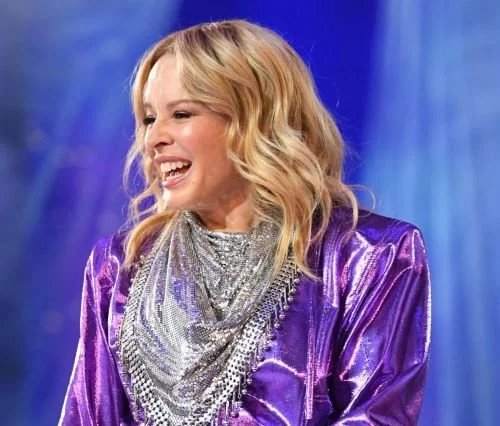
 PHOTO CREDIT: James D Morgan/Getty Images

Kylie Minogue-related things that I want to discuss and pour over. I know I written about her a lot recently but, as she is awesome and about to release an incredible album, it is worth coming back to her one more time. Recently, I reacted to the news that Minogue will begin a residency in Las Vegas later in the year. It will be the first time she has done that. A chance not only to expand her American fanbase, it will give her this consistent and stable live setting where she can do a career-spanning set. I am not sure what form her shows will take when it comes to setlist and feel, but it is going to be amazing. I have returned to Kylie Minogue so soon because she has recently revealed a couple of things that caught my eye. I shall come to those. First, as it is out on 22nd September, make sure that you pre-order your copy of Minogue’s upcoming album, TENSION:

Kylie’s brand new studio album, Tension, a record of euphoric, empowered dance floor bangers and sultry pop cuts. Tension is eleven tracks of unabashed pleasure-seeking, seize-the-moment, joyful pop tunes with the hypnotic electro of ‘Padam Padam’ opening the album.

Discussing ‘Tension’, Kylie says, “I started this album with an open mind and a blank page. Unlike my last two albums there wasn’t a ‘theme’, it was about finding the heart or the fun or the fantasy of that moment and always trying to service the song. I wanted to celebrate each song’s individuality and to dive into that freedom. I would say it’s a blend of personal reflection, club abandon and melancholic high”.

I have been thinking about Kylie Minogue’s 2023. She scored massive chart success with the lead single from TENSION, Padam Padam. It was played on BBC Radio 1 (eventually!), and she is going to deliver this amazing and near-career-best albums. She recently turned fifty-five and, whereas that may signal that the industry will sideline her or show less love, I think the opposite will happen. The music industry generally does marginalise women when they get past forty. Minogue is so busy and producing this music that is urgent and wonderfully memorable, it is going to be impossible to ignore the legend. I was struck by an NME article, who were reacting to an interview Minogue gave to E! Online. I would usually not parlay that into a feature but, as Minogue talked about Indie music and who she would like to play her in a biopic, I have come back to her feet – I will write about her one more time next month when TENSION comes out:

Kylie Minogue has spoken about her “love” of indie bands and said she’d most like to collaborate with The Killers.

The singer, who has previously worked with the likes of Nick Cave and Manic Street Preachers, has said she would love to get into studio with the Las Vegas band.

She told E! Online: “I’ve always loved more kind of indie bands, like The Killers. Most collaborations I’ve done have come to me so I haven’t had to make that decision. But whoever I work with, I think there’s always something to learn from people I work with.”

Minogue also said she would like to team up with Beyoncé and Rihanna and reckons Barbie star Margot Robbie should play her in a biopic.

It comes after Cave recently spoke about his 1995 collaboration with Minogue ‘Where The Wild Roses Grow’.

He said: “It was a murder ballad that ends with the character killing his beloved… It was quite something at the time for Kylie to take on.”

“I certainly wasn’t in showroom condition,” he continued. “Her management were like ‘This is a bad idea’ because we were a bunch of dark drug-addicted monstrosities… but she was determined to do that.”

The pair performed the track on Top Of The Pops live but Cave said he struggled to “remember much” about it because he was “high”.

Minogue most recently announced her first-ever Las Vegas residency at the new Voltaire nightclub at The Venetian between November and January.

Minogue’s sixth studio album, ‘Tension’, will be released on September 22 via Darenote/BMG. You can pre-save and pre-order the album here.

The Killers’ Brandon Flowers meanwhile, recently teamed up with Elton John to perform ‘Tiny Dancer’ during his final ever UK gig at Glastonbury”.

 IN THIS PHOTO: The Last Dinner Party

There is a lot to unpack there. Kylie’s ‘Indie’ period is one of my favourite. I especially love her 1994 album, Impossible Princess. Even though she is more Disco, Dance and Pop-focused now, I can see Minogue either collaborating with Indie artists on their singles, or the follow-up to TENSION might be more Indie-based. Her working with The Killers might be as good thing, though there are other bands and artists people would love to see her play with. I would welcome a reunion between her and Nick Cave on a new song. There a few bands that I think Kylie would fuse well with. I have always imagined her recording with Blur and Radiohead. Maybe not strictly Indie, I feel that there is something intriguing and different Minogue could bring to their music. I think that new bands would get a real boost from Kylie Minogue’s endorsement. The Last Dinner Party are an incredible new group that I could also see Minogue joining with and producing something amazing! That remark she made about Indie music is going to open up a lot of requests. I think that we will see Minogue performing with some amazing artists. Even though I am not a fan of The Killers, it would still be a good hook-up. That comment she made about teaming with Beyoncé and Rihanna. This would be really tantalising! I think a Kylie Minogue and Beyoncé partnership would be particularly special. Maybe Bey could remix a track from TENSION. At a time when we are seeing joint-tours – two acts/bands going on tour together -, maybe Minogue and Beyoncé could tour together.

 IN THIS PHOTO: Margot Robbie/PHOTO CREDIT: Getty Images

I will end with Minogue suggesting Margot Robbie could play her in a biopic. I am surprised we have not yet seen a Kylie Minogue one. I have suggested Margot Robbie’s name when thinking of two other biopics – she could play Debbie Harry in a Blondie biopic; suit the role of Stevie Nicks for a Fleetwood Mac biopic. Margot Robbie would be great. She does not do too many film roles where she gets to keep her Australian accent. This would be a rare opportunity! Even though she is taller than Minogue and, at thirty-three, would probably portray Minogue during her Fever/Light Years period (2000-2001) regency, it would be fascinating to see that brought to the screen. In an already big and triumphant year for Kylie Minogue, there is the business of TENSION. I think that the album will get a load of positive reviews. Following that, there are gigs and her Las Vegas residency. I was hooked by what she said about Indie music and a biopic. Let’s hope that this all comes to fruition. It is going to be a very busy next year or two for Minogue. In addition to a biopic, I wonder whether Minogue has ever thought about briefly returning to the big screen. I feel she could bring her talents to film. Cast in a green film, there are so many fans of hers that would really like to see that! I shall leave it there. An iconic, multitalented and chameleon-like talent, there is no telling…

WHERE she heads next.

FEATURE: Levitating or Lifted? Why a New Copyright Claim Around Remixes of Dua Lipa’s Hit Song Is All Talk

FEATURE:


Levitating or Lifted?

IN THIS PHOTO: Dua Lipa photographed for DAZED’s Summer 2023 edition/PHOTO CREDIT: Thibaut Grevet


Why a New Copyright Claim Around Remixes of Dua Lipa’s Hit Song Is All Talk

_________

SOMETHING that has been featured….

 IN THIS PHOTO: Missy Elliott (far left) and Madonna (far right) featuring in The Blessed Madonna’s (centre right) remix of Dua Lipa’s Levitating

more in music news is copyright claims and intellectual theft. Artists such as Ed Sheeran, Katy Perry and Taylor Swift. Have faced challenges regarding the authenticity and originality of their huge songs. These cases were either all won or dropped, so it seems suspicious that various smaller songwriters and artists launch these claims against huge songs that have made a lot of money and been streamed millions of times. You don’t hear of two many album cuts or smaller songs being challenged and spotlighted as containing lifted hooks, melodies or similar phrasing. In most cases, there is a very slight similarity between songs. Given the number of songs written and released each year, it is always going to happen. You will get songs unintentionally sounding he same. Major artists do not lift or nick bits of other songs deliberately. That is a major risk. What one does find is that a major hit by, say, Ed Sheeran has some familiar edges to it. You play it against another song someone says Sheeran pinched something from and it is never really compelled or too blatant. Without too much evidence and substantiality to the copyright claim, they are dropped or the claimant is defeated – and you wonder whether cashing in and exploiting an artist is motivation over protecting their intellectual property and songwriting.

 IN THIS PHOTO: Ed Sheeran/PHOTO CREDIT: Kate Green/Getty Images

I mention this because, like Ed Sheeran (as per The Guardian “…the heirs of Marvin Gaye’s co-writer Ed Townsend had previously sued Sheeran, his record label Warner Music Group and his music publisher Sony Music Publishing, alleging that Thinking Out Loud infringed on Let’s Get It On’s copyright”) Dua Lipa has been challenged more than once regarding copyright claims. In fact, the song Levitating which was a hugely successful single from her second studio album, Future Nostalgia (and has been streaming on Spotify nearly two billion times), has been brought to a courtroom more than once. This article from The Guardian explains more:

Dua Lipa faces third lawsuit over Levitating

Multimillion-dollar lawsuit claims the singer unlawfully used a talk box recording from her smash single on subsequent remixes

A multimillion-dollar copyright claim filed in Los Angeles on Monday by musician Bosko Kante claims the singer and Warner Music Group unlawfully used a recording made with his talk box in remixes of the single, the most popular track off her 2020 album Future Nostalgia.

The suit cites a spoken agreement between Kante and creators of the song that his talk box recording could only be used in the original recording, but not subsequent remixes. Kante seeks more than $20m for alleged copyright infringement on several remixes, including one with The Blessed Madonna, the smash remix featuring rapper DaBaby and a performance by Lipa at the American Music Awards.

Kante has yet to comment on the matter, but Billboard reported that lawyers for the musician claim he “made numerous attempts to resolve this matter short of litigation, but such efforts were unsuccessful, due to Defendants’ unwillingness to cooperate or accept responsibility for this blatant infringement of Plaintiff’s copyrights”.

“All three remixes sampled and incorporated a greater amount of plaintiff’s work than that used in the original version,” the suit claims. “Defendants did not seek or receive any authorization or permission to use the composition or sound recording of plaintiff’s work from plaintiff.”

Representatives for the 27-year-old British-Albanian singer were not immediately available for comment.

Kante bills himself as one of the world’s top artists on the talk box, which allows musicians to modify the sound of an instrument and apply speech sounds. He has contributed talk box performances to Kanye West and Big Boi, and in 2014 founded a company called ElectroSpit to sell a proprietary digital version of the tool.

This suit is the third legal action brought against the song Levitating. In March 2022, the Florida-based reggae band Artikal Sound System claimed Lipa stole Levitating’s core hook from their 2017 song Live Your Life. The band dropped their case in June 2023 after a judge ruled there was no evidence the creators of Levitating, including Lipa, had “access” to the earlier track – a key element of a copyright infringement suit.

Another 2022 lawsuit by the songwriters L Russell Brown and Sandy Linzer remains in limbo but faces a similar “access” argument from Lipa’s lawyers. The songwriters claim Lipa lifted the melody of Levitating from their lesser-known 1979 song Wiggle and Giggle All Night and 1980 track Don Diablo. Lawyers for the singer claim she had never heard either track before creating Levitating”.

 IN THIS PHOTO: The Blessed Madonna

I don’t expect this third lawsuit will lead to Dua Lipa and her label suffering any defeat or having to pay royalties. I am not sure what ownership and copyright laws are but, if it was allowed to feature on Levitating, why would it also not be permitted to appear on remixes? It is a grey area, but I don’t think that Warner or the producers of the remixes were trying to dupe or misleads him at all. Normally, when one song gets so many different people claiming it was stolen from them, you tend to find it is more about money-making rather than there being any substance to their lawsuit. I would expect this to go the way of Lipa but, if not, it will be a worry for artists. In terms of the remixes, talk box recording(a) from Bosko Kante would not have been stolen or used deliberately I’d imagine. It does put undeserved negative focus on Dua Lipa who, to be fair, would not have known about the original deal or been looped into the ins and outs of the remixes’ deals and conversations between the Warne label r and Kante. It does seem like a complicated case, but I don’t think that the remixes deliberately defrauded him or intended to steal his innovation. It seems unlikely that any early talks fell through unless he was asking for substantial payment for his recording to be used. I assume Kante would have been paid and signed on his talk box recording being used on the original.

What would the motivating be for suing because the remixes might not have cleared it? If it is a sake of fair payment then that is fair enough. It does seem quite opportune and suspicious granted the amount he is seeking - and where did such a ridiculously high figure come from? It seems a bit odd that Levitating, which was released several years ago, is being taken to court still. The remixes are comparatively fresh but, still, why the delay?! Now that the original track has got almost two billion streams and the remixes are doing pretty well in that respect - and Dua Lipa is an even bigger artist than she was in 2020, having appeared in films like Barbie and accruing even more followers online -, there is this element of opportunism. It seems very suspicious that there is a claim that has no real conviction to it. Any claims of theft and unauthorised use of talk box recordings seem a little weak – and I would expect the court to see that and rule in favour of Dua Lipa. It makes me wonder how many other people will try and claim Levitating took something from another song/sound. Will another Dua Lipa song be targeted?! Most major artists have to worry that multiple artists and sources will come after their songs.

IN THIS PHOTO: Bosko Kante

I do respect artists and estates protecting their rights. Also, if you sign one deal and it is left there, it is duplicitous going around someone’s back and taking advantage of their recording and permission. It isn’t on if an artist knowingly rips from them and makes a lot of money. That happened a lot in the past, especially with Hip-Hop, but things are very different today. Very few artists would hear a song they liked from the past and graft that into their track without crediting and asking for permission. It is too risky to do so and, with these often-prolonged court cases, it can be very damaging and take a lot of time away from the artists accused.  I am not sure what the upshot will be from the new Levitation remixes copyright claim but, with Bosko Kante asking for $20 million, that has almost worked against him. Such a ludicrously high amount – Dua Lipa hasn’t earned that much from the song or the remixes herself! – is disproportionate and greedy! That argument as to whether the claim is trying to capitalise on Lipa’s fortune or it is a genuine musician who wants to ensure that they are credited is easy to answer here: it is another person grasping at straws! I would suspect that the issue of whether the recording could be used on remixes was not raised. It might have been part of that original clause. Even though it is a distinct and he may have helped to pioneer a particular sound and distinction, I can’t see anyone involved with the case ruling in his favour – especially for the amount of money he is trying to get from this! That said, if the new court claim does end in defeat for the treasured British-Albanian artist, then it could be a big worry…

FOR every major artist out there.

FEATURE: Spotlight: CHINCHILLA

FEATURE:


Spotlight


CHINCHILLA

_________

HAVING released….

some awesome music in 2023, I am embarrassed it has taken me until now to discover the magnificent CHINCHILLA. The alias of Daisy Bertenshaw, the London-based artist is someone that everyone needs to watch. Released in April, Little Girl Gone, is her most recent track. I know there will be new music really soon. Even though CHINCHILLA has been on the scene for a little while now, I think that this and next year will be her most successful and busy. She released her debut album, Awakening, in 2020. I know there are a lot of people out there who will be looking forward to a new album. Truly one of the most impressive and important artists out there right now, I wanted to spotlight CHINCHILLA here. I am going to come to some 2023 interviews soon. Before that, Our Culture Mag spoke with the tremendous CHINCHILLA in 2020. This was early during the pandemic. Not an ideal time for an artist who was trying to make an impression and get her music shared, I wonder whether she thought, three years later, she would be talked about as this incredible artist with a hugely bright future. Being played on stations like BBC Radio 6 Music:

Firstly, how are you, and how have you been coping with the current COVID-19 crisis?

‘How are you’ – the question which means SO MUCH MORE in lockdown… I’m alright! Ups and downs. Thriving and surviving. Focusing on music and checking on friends a lot. Trying not to be glued to my phone and stay hydrated… easier said than done.

You recently released a new single named ‘The Lockdown Getdown,’ how did the idea for it come about and what was the goal of the piece?

Me and one of my best friends Boonif wrote and produced this together, purely as a bit of fun to be honest. We were chatting all things quarantine and he said, ‘have you written a lockdown song yet?’ Which I hadn’t, and we went from there, listing off all the things we’d been doing in lockdown and were sick of. We’d both been having trouble sleeping and burning lavender oil to try and help us sleep, which is where the first lyric ‘lavender on my sheets, but I still can’t get to sleep’ came from. We really just got bored of the mundane new reality and thought ‘fuck this I’m gonna be fabulous’ – just wanted to spread some joy I think.

Were there any challenges making the song?

There are always challenges, Lockdown didn’t make things easy, and actually in the lead up to this single I’m pretty sure I had some sort of version of corona virus, was stuck in bed for 2 weeks which prolonged this song coming out… how ironic. But, in saying that, with this song in particular it really just felt like fun. We had such joy writing it, producing it, recording it, shooting the cover for it, etc. All of it just felt… really fun? I’m lucky to have that kind of team around me. I think you can hear that joy in the song.

If you could give any advice to somebody who wants to become a musician, what would it be?

I’d say trust your instincts. Take in the knowledge of those around you but also know that a gut feeling about something can be powerful as fuck and level out years of experience. Try to stay in the present – not think too much about the future, the past, or compare yourself /your progress to others around you”.

Despite the fact she has released so many terrific songs, Little Girl Gone has taken on a life of its own. It may be the song that most associate with CHINCHILLA. It is definitely one of the best songs of this year. I am keen for as many people as possible to investigate the exceptional CHINCHILLA. Why Now spoke with CHINCHILLA around the release of Little Girl Gone. A song that resonated so quickly, it shows that we have a very special artist in our midst:

CHINCHILLA’s story, in many ways, epitomises the current climate for emerging artists. Making what she terms ‘feisty pop’ – which traverses between RnB and alt-pop and bears her signature powerful vocals – the London-based artist was previously signed to major label Sony, before the desire for greater artistic freedom proved too great.

Leaving such a backing is never easy, but the artist, writer and producer now finds herself riding a wave of support on TikTok for her latest track ‘Little Girl Gone’, which got its full release today.

With many resonating with the lyrics that tap into a feeling of “feminine rage” – generating millions of views for CHINCHILLA’s videos on the platform in the process – we speak to the artist about her present success, her tour support for McFly, and how Nicki Minaj unknowingly blessed her with her artistic moniker.

CHINCHILLA, it seems things are taking off for you right now, especially on TikTok. How’s that going?

Insane. Last year I said I was going independent and planned all these things. I didn’t have it in mind the first single would completely blow up and basically turn my life upside down. So now I’m trying to manage all the things I already had going on, which was already busy, and then do all this new stuff.

You’ve described ‘Little Girl Gone’ as a comeback song. Where have you been? And what have you been up to?

I had a while where I wasn’t really able to release any music. A lot was going on in the music industry for me, which was super shit, and it was very hard. I had a lot of times when I thought I couldn’t do it anymore, I was really down. The music industry’s hard enough for an artist to break through when you’re doing well. I split with, and lost, a lot of my team, and a lot of my support, and was going through a lot of legal stuff. It’s very hard to be motivated and write your best music when you’re feeling so low.

Then I found anger, which was the next stage. So that’s why I call this my comeback single. This is a really new era for me, and I feel more empowered than I’ve ever felt, especially within the music industry. It’s so nice this song has done well. I love the song, but never expected this kind of reaction.

Does it feel like a vindication in your decision to go independent?

I think it does. And that’s not to say I won’t work with teams of people again, in terms of management and label. But now I’m in a position where I know I can do this myself better than with anyone else. It’s proven that doing this by myself for a bit, and finding that empowerment, being a one-man band, has done the best for me. So if I’m going to bring anyone else on my team, it needs to be people who are enthusiastic; I don’t have the time or energy to be making anyone else feel that about my project – otherwise I’ll do it by myself.

Do you feel part of a community – that “female rage community”, as you put it – trying to turn the tide on all of that?

Definitely. I feel like it’s always been in me, that’s why the people this track has reached couldn’t be a better group of people. That’s the underlying theme of all my songs: some sort of empowerment. Every time I write a ballad, I never want to feel sorry for myself. If someone suggests a lyric in a co-writing session, I’ll say if I don’t like it. Or if it’s too based on another person, I’ll try and make it say something more about me. I think it’s in my DNA that I have this female empowerment thing in my in my bones. I just love boss women.

Why the name, CHINCHILLA?

It’s funny – I don’t have a very good story for this – but I was choosing between names. I always used to wear big faux fur coats, and I have my nails that are usually long. I loved the sound of the word, and always came back to it. I was picking between a couple names in an Uber, because I felt I really needed to pick one at that stage. A Nicki Minaj song was playing; I just wanted a sign and then she said ‘Chinchilla’ in the song [‘Letcha Go’], as I was thinking it”.

I am going to wrap up very soon. There are a couple of other interviews that I want to get to. Spindle celebrated Little Girl Gone – declaring this a new era for a wonderful artist. The incredible Moon Maintenance for Dummies was released in 2021. A brilliant E.P., it further cemented the fact that CHINCHILLA is an artist with a massive future. Despite the fact she is not a ‘rising’ artist as such, she is someone who has not reached all ears yet. I wanted to concentrate on her, because I think that she is on the cusp of something amazing:

It’s been a couple years since your last EP, ‘Moon Maintenance For Dummies.’ How do you feel you’ve changed as an artist in the last two years?

I think I just feel like this is a big comeback. I feel different in myself; I don’t feel desperate for the music industry’s approval anymore, I just want to make music that I love and that the people who listen to it would love. I feel more connected to the people who listen to my music than ever. And I just feel proud of myself, I’ve really worked on myself and I’m protecting this energy.

You’ve had a pretty amazing journey so far from supporting legends like Sting and McFly, and playing the main stage at Isle of Wight Festival — do you have any goals you’d like to achieve, either in the near future or in general?

I have so many, I have them all written out in a book which no one will find! They say to keep your goals to yourself… right?

Let’s take it back to the beginning — have you always been drawn towards making music? What were your influences growing up?

Definitely, yeah, I loved huge female powerhouses like Beyoncé, Janis Joplin, Christina Aguilera, Aretha Franklin. Big voices I always looked up to and specifically in big boss women. I also always loved the creative artistry of everything, like Katy Perry and the candy cane worlds she made, Paloma Faith’s stage shows, and Lady Gaga’s red carpet looks. I just love breaking rules and getting creative with stuff. Recently I really love Ashnikko, Lil Nas X, and Raye – people who are doing something a bit different and creating their own worlds…

You have such a unique and distinct style, both sonically and also with your outfits. Do you have any major style inspirations, and have you always had an interest in fashion as well as music?

I’ve always loved fashion, yes, I think it’s the only other thing I can think of that I’d do if I didn’t do music. I love a glue gun, and I love making my own hats and things. I really like drawing inspiration from different places like steam punk, the artful dodger (form Oliver!), Willy Wonka, the mad hatter, to Prince to, Rihanna to Helena Bonham Carter! I really like grabbing inspiration from everywhere”.

I am going to finish with another interview around the release of Little Girl Gone. Headliner Magazine chatted with the remarkable CHINCHILLA about a smasher of a single. We also learn more about an artist that people seriously need to follow and show some love for. There is nobody quite like her on the scene at the moment:

Accent aside, her self-deprecating sense of humour (and choice use of F-bombs) immediately gives away she’s a Brit, although a lot of people assume she’s from the US. Maybe it’s her big hat energy, or the sheer bravado, Headliner suggests?

“Everyone keeps saying this,” she says, delighted. “I’m kind of loving it, I’m not gonna lie. I quite like being this enigma. But yeah, I'm totally British,” she grins.

‘The CHIN’ – as she calls herself – has been releasing music for years, but something hit different with this comeback song, which lands like a gut punch thanks to lyrics which are literally screamed into your ears: ‘Say that again, I didn't quite hear you / Messed with the wrong bitch in the wrong era / I been at work and I got my badge of honour / Honey, I've changed so much since I last saw you.’

The empowering song spits out all the words CHINCHILLA has been bottling up after having it up to here with people-pleasing and being underestimated. She says it’s the most ‘me’ song she’s ever written. It’s pure, feral venom – (‘I like your blood on my teeth just a little too much / So bite me, slap me round the face / Now I'm twisting your arm 'til I hear it break’) – “I didn’t want the lyrics to be glamorous, I wanted to draw up chaos,” she explains.

 I've never had a response or reaction like I’ve had to this song.

Aside from being an absolute banger, Little Girl Gone is a call to arms. It’s a war cry for the broken, the abused, the downtrodden and those fed up of being told to smile.

It’s for every woman who’s had to bite her tongue after being talked down to or underestimated, had to make an excuse after a new bruise appears, for everyone who walked away humiliated after not standing up for themself who wins a new version of the argument in their head later on. People will be screaming this in their cars at full volume after a bad day at work. Forget sad girl music, Little Girl Gone is where to go to channel your rage.

“I write a lot of songs, and every song that I've put out into the world, I'm obsessed with, otherwise I wouldn't have put it out,” says CHINCHILLA.

“So I feel that every song I write has the potential to do really well. Some will do better than others, but I've never had a response or reaction like I’ve had to this song. When I wrote it, my mind was blown and I loved it instantly.

"I was dancing down the street to it on the way home from the session – I don't do that,” she stresses, explaining that the music video immediately came to life as she was getting the words down.

 “I could see the music video in the session,” she nods. “I was writing the song and also writing the music video concept – literally storyboarding the music video while I was not even finished writing the song. I had two documents open on my laptop: one for the music video, one for the song,” she laughs.

“I felt like this song was a bit different. You always hope that it's going to have the reaction that you want it to have, but it's mind blowing what's happened with it?” She poses this as a question rather than a statement, as if at any moment the song’s trajectory could be revealed to be an elaborate hoax.

TikTok exists in its own social media bubble; does CHINCHILLA worry that people will only show her love in the app?

“Yeah, definitely,” she admits. “It can happen where people love the song, but it doesn't go as far as loving the artists. I think because I have a big image, people bought into that, which I'm so grateful for. I think people can see me as an artist, and not just for one song.

"There's also a lot of personality in the song, and people resonate with that – it makes them feel authentic, raw emotions. I was worried about it getting the same kind of numbers on Spotify, but then I was also kind of confident because I really think that people would want to listen to this song. I don't think it's just a TikTok fad, but you never know,” she shrugs.

It isn’t. CHINCHILLA has already been contacted by fellow artists – “musicians that I love are contacting me, there’s some crazy names being thrown around and I've been in some really exciting sessions,” – and she’s just announced a headline show in London this summer, where fans are encouraged to wear their finest hats.

And on those hats, which are as big of a statement as her all-caps name and unapologetic CHIN ethos. CHINCHILLA is not only self-styled, as an independent artist she self-funded Little Girl Gone and its ass-kicking music video.

“I did have a terrible year last year in the music industry,” she shares. “I split with my management, I split with my label. It was very hard to work out my path. I decided to go independent and just went into turbo. I needed to do the independent thing for a bit. I needed to do this myself.

"It really changed me; I made a switch that was basically, ‘I'm not doing this for the music industry's approval anymore.’”

She explains: “I had tons of meetings with new managers last year and I felt so susceptible to being told, ‘This is a hit. This isn't a hit. This strategy won't work. This strategy will work. You can't be too personable, but you can't be too standoffish. You can't show too much of yourself on social media, but you have to show loads of yourself on social media”.

Go and follow the one and only CHINCHILLA. Daisy Bertenshaw has created this wonderful musical persona that is responsible for music that has changed people’s lives. I am excited to see where she goes next. I know there will be an announcement soon enough when it comes to future plans. Championed as a major talent, there is no denying the brilliance of CHINCHILLA. Make sure that you go and check her music out…

WITHOUT hesitation.

______________

Follow CHINCHILLA

FEATURE: Kate Bush: The Deep Cuts: Heads We’re Dancing

FEATURE:


Kate Bush: The Deep Cuts

PHOTO CREDIT: Guido Harari


Heads We’re Dancing

_________

I have written about….

 IN THIS PHOTO: Kate Bush during the photoshoot for The Sensual World’s cover/PHOTO CREDIT: John Carder Bush

this amazing and underrated Kate Bush track before. I am revisiting it, as it is relevant and related to the new Christopher Nolan film, Oppenheimer. With J. Robert Oppenheimer inspiring Bush’s Heads We’re Dancing, it is a good time to come back to an amazing, imaginative and compelling song I don’t think I have ever heard on the radio. Featuring on her 1989 album, The Sensual World, Heads We’re Dancing is a song that everyone should hear. Thanks to the Kate Bush Encyclopedia, we get Bush discussing the inspiration behind Heads We’re Dancing:

That's a very dark song, not funny at all! (...) I wrote the song two years ago, and in lots of ways I wouldn't write a song like it now. I'd really hate it if people were offended by this...But it was all started by a family friend, years ago, who'd been to dinner and sat next to this guy who was really fascinating, so charming. They sat all night chatting and joking. And next day he found out it was Oppenheimer. And this friend was horrified because he really despised what the guy stood for. I understood the reaction, but I felt a bit sorry for Oppenheimer. He tried to live with what he'd done, and actually, I think, committed suicide. But I was so intrigued by this idea of my friend being so taken by this person until they knew who they were, and then it completely changing their attitude. So I was thinking, what if you met the Devil? The Ultimate One: charming, elegant, well spoken. Then it turned into this whole idea of a girl being at a dance and this guy coming up, cocky and charming, and she dances with him. Then a couple of days later she sees in the paper that it was Hitler. Complete horror: she was that close, perhaps could've changed history. Hitler was very attractive to women because he was such a powerful figure, yet such an evil guy. I'd hate to feel I was glorifying the situation, but I do know that whereas in a piece of film it would be quite acceptable, in a song it's a little bit sensitive. (Len Brown, 'In the Realm of the Senses'. NME (UK), 7 October 1989)

It's a very dark idea, but it's the idea of this girl who goes to a big ball; very expensive, romantic, exciting, and it's 1939, before the war starts. And this guy, very charming, very sweet-spoken, comes up and asks her to dance but he does it by throwing a coin and he says, ``If the coin lands with heads facing up, then we dance!'' Even that's a very attractive 'come on', isn't it? And the idea is that she enjoys his company and dances with him and, days later, she sees in the paper who it is, and she is hit with this absolute horror - absolute horror. What could be worse? To have been so close to the man... she could have tried to kill him... she could have tried to change history, had she known at that point what was actually happening. And I think Hitler is a person who fooled so many people. He fooled nations of people. And I don't think you can blame those people for being fooled, and maybe it's these very charming people... maybe evil is not always in the guise you expect it to be. (Roger Scott, BBC Radio 1, 14 October 1989)

Like Mick Karn's bass on 'Heads We're Dancing' puts such a different feel to the song. I was really impressed with Mick - his energy. He's very distinctive - so many people admire him because he stays in that unorthodox area, he doesn't come into the commercial world - he just does his thing. (Tony Horkins, 'What Katie Did Next'. International Musician, December 1989)”.

A song that ends the first side of The Sensual World, I wonder whether many Kate Bush fans know about Heads We’re Dancing. Because of its Oppenheimer links, I am curious whether Christopher Nolan knew about the song and would have used it on the soundtrack. In any case, it is one of those songs that only Kate Bush could have written! That idea of dancing with evil and not being aware of it. Rather than it being a historical fantasy (or nightmare), I have always felt it relates more to curt governments and regimes. The fact that you do almost blindly go into their arms and are then caught aware. With a beautiful composition featuring cello from Jonathan Williams, viola from Nigel Kennedy, and orchestral arrangement from Michael Kamen, we get something lush, sweeping and tender in equal measures. Whereas Bush based the song on an experience of someone dancing with J. Robert Oppenheimer and not knowing who he was, she used Adolf Hitler as the central figure in her masterful 1989 tracks. Some of the lyrics put you right in the song: “You talked me into the game of chance/It was '39, before the music started/When you walked up to me and you said/"Hey, heads we dance."/Well, I didn't know who you were/Until I saw the morning paper/There was a picture of you/A picture of you 'cross the front page/It looked just like you, just like you in every way/But it couldn't be true/It couldn't be true/You stepped out of a stranger”. A gorgeous track from the truly remarkable Kate Bush, I thoroughly recommend people check out this deep cut. It really does deserve to be…

KNOWN far and wide.

FEATURE: A Modern-Day Icon: Greta Gerwig: Celebrating a Phenomenal and Inspiring Filmmaker

FEATURE:


A Modern-Day Icon

PHOTO CREDIT: Jody Rogac/Trunk Archive


Greta Gerwig: Celebrating a Phenomenal and Inspiring Filmmaker

_________

APOLOGIES if this….

 PHOTO CREDIT: Clement Pascal for The New York Times

is a return to film. I sort of said I would step away from non-music stuff for a bit. I did not know that it was Greta Gerwig fortieth birthday tomorrow (4th August). It seems timely going back to her and one more celebration of Barbie. There is news to share about that, an interview regarding the film I will share. I will not source interviews relating to all of her films, but I want to spend a bit of time with 2017’s Lady Bird. Barbie is her most recent film, though she has co-written the screenplay for an adaptation for Snow White, slated to arrive next year. I do wonder whether there will be a Barbie follow-up. It is interesting to see which way her career will go. If Gerwig wants to return to Indie films or is interesting in making bigger-budget pictures. I am going to come to interview soon. Before that, here is some brief Wikipedia biography – just to give you an overview of Greta Gerwig and her incredible success and influence:

Greta Celeste Gerwig (/ˈɡɜːrwɪɡ/; born August 4, 1983) is an American actress, screenwriter, and director. She first garnered attention after working on and appearing in several mumblecore movies. Between 2006 and 2009, she appeared in a number of films by Joe Swanberg, some of which she co-wrote or co-directed, including Hannah Takes the Stairs (2007) and Nights and Weekends (2008).

PHOTO CREDIT: Leeor Wild/The Observer

Gerwig collaborated with her partner Noah Baumbach on several films, including Greenberg (2010) and Frances Ha (2012), for which she received a Golden Globe Award nomination, Mistress America (2015), and White Noise (2022). She also appeared in Woody Allen's To Rome with Love (2012), Rebecca Miller's Maggie's Plan (2015), Pablo Larraín's Jackie (2016), Mike Mills' 20th Century Women (2016), and Wes Anderson's Isle of Dogs (2018).

As a solo filmmaker, Gerwig has written and directed the coming-of-age films Lady Bird (2017) and Little Women (2019), both of which earned nominations for the Academy Award for Best Picture. For the former, she received Academy Award nominations for Best Director and Best Original Screenplay, and for the latter, she was nominated for Best Adapted Screenplay. Gerwig was included in the annual Time 100 list of the most influential people in the world in 2018. Her third directorial production, the fantasy comedy Barbie, which she co-wrote with Baumbach, was released in 2023 to critical acclaim and box office success, becoming the biggest debut in history for a film directed by a woman”.

Lady Bird is the first film of Greta Gerwig’s that I saw. Marking her out as a hugely influential filmmaker, it starred the magnificent Saoirse Ronan as the titular lead. A huge box office success (it made nearly $80 million), Gerwig was nominated for two Academy Awards – for Best Director and Best Original Screenplay. One of only a few women who had been nominated as Best Director at the Oscars, Lady Bird was also up for Best Actress for Ronan, and Best Actress in a Supporting Role for Laurie Metcalf. It is a huge oversight that it went away empty-handed! Considered one of the best films of the 2010s, it is a masterpiece that showed just how inspiring and truly phenomenal Gerwig is as a writer and director. She had written and directing a lot before, but this was the first major feature I guess. The breakthrough as it were. I admire hugely filmmakers who are also distinct and successful actors. Greta Gerwig has appeared in a lot of wonderful films – including recent 2018’s Isle of Dogs and 2022’s White Noise. I want to get to the first of a couple of interviews related to Lady Bird. Variety chatted with Greta Gerwig and Saoirse Ronan in 2018 about how they found the voice of Lady Bird:

Fusing their voices and talent, “Lady Bird” represents a seminal moment in the careers of Gerwig, the mumblecore actress-turned-indie It Girl-turned-screenwriter-turned-director, and Ronan, the 23-year-old Irish-American star whose performance has made her an Oscar front-runner for best actress.

This is the first movie Gerwig has written and directed, and just as she has emerged from the indie world, at 34, as a titanic filmmaking talent, Ronan, after a series of highly revered performances, raises her game to a new peak of emotional purity. There have, of course, been plenty of acerbic hipster high-school girls in movies, but none with this popping-off-the-screen intensity of searching, stubborn passion.

Ronan, as a stringy-red-haired parochial-school semi-misfit named Lady Bird (née Christine McPherson), occupies the furious center of a movie that looks outwardly small-scale. Yet “Lady Bird” possesses an uncanny quality, one that you saw in the New Hollywood films of the ’70s and the indie classics of the ’90s. It has a powerfully distinctive voice — bold, darting, sneaky and new.

Gerwig calls Lady Bird a character who makes no apologies. “She’s a young woman who’s able to stand inside her own desires,” she says. “She is lustful; she wants things. Not to get too gender studies about it, but she’s not waiting for anyone to look at her. She’s the person doing the looking.”

There’s a way to read the current moment that connects “Lady Bird” to a new world of opportunity for women filmmakers. Gerwig came of age admiring directors like Claire Denis, Agnès Varda (Gerwig on Varda: “You’re just as good as Truffaut, or Godard, or your husband!”) and Kathryn Bigelow (when she won the Oscar for director, it said to Gerwig, “This is a job available, to you”). And in a year ruled by the pop gender explosion of Patty Jenkins’ superheroine blockbuster “Wonder Woman,” and one that has ended with nothing less than a paradigm shift in the issue of sexual harassment, “there’s something coalescing,” says Gerwig. “Every year they come out with the numbers. You know, out of the top 100 films, by gross, 4% are directed by women. I think those numbers are going to shift. And it seems like it’s going to be less and less its own category. There are just going to be … directors.”

In the two months since “Lady Bird” was released by A24, the indie maverick behind 2016’s Oscar-winning “Moonlight,” Gerwig’s film has become the rare independent feature that’s a crossover hit ($30 million and counting), a critical darling (99% fresh rating on Rotten Tomatoes) and a major awards player. Showered with praise from critics groups, and with four Golden Globe and three SAG Award nominations, the film is now being talked about as a serious contender for best picture at the Academy Awards. Yet what all the success adds up to — and can’t entirely measure — is that “Lady Bird” has become a touchstone, a generational movie landmark hailed for its declaration of a bold new way of seeing.

“I’ve had girls, really smart girls, come up to me, and they’re so excited that they’ve finally got their movie,” says Ronan. “A lot of them say, ‘That was me! I was Lady Bird.’ The film has actually made them understand that whole period a bit more. You feel like it’s almost a photo album you’re looking back on.”

Gerwig has always wanted to direct movies, going back to when she got her start in indie films like “Hannah Takes the Stairs” (2007), which were openly collective efforts. “When I was acting in those little movies,” she recalls, “I was also able to write while I was acting, because we had the characters and the plot devised, and we were speaking improvisationally. It felt like a way of sort of testing what worked as a writer.”

She didn’t dive headfirst into screenwriting until the two films that she co-wrote with her partner, the filmmaker Noah Baumbach. The first, “Frances Ha” (2012), is a remarkable little movie, and watching it you can see the formative stage of the Gerwig aesthetic: It, too, is a film that finds its truth in the flow of moments.

Gerwig constructs her scripts that way, but it’s more than a matter of stringing together anecdotes. “It almost feels like weaving,” she says. “I’ll put everything out in front of me when I’m writing, and I’ll almost arrange it like a quilt. And I feel like I’m pulling things through. As you move from moment to moment, it doesn’t feel like anything’s signposted for you, but a third of the way through you realize it’s starting to catch under you”.

 PHOTO CREDIT: Norman Jean Roy

Even though it is paywalled and it is a very long interview – it should be made free, as it is essential reading, but I can understand why they want to monetise it -, Vulture’s in-depth chat with Greta Gerwig from 2017 is really revealing and deep. There is more about Lady Bird but, as we look ahead to tomorrow and her fortieth birthday, the interview takes us back to her teenage years and young adult life. I will get to that part, but I was particularly struck too by the first part of the interview:

Dave Matthews Band is generally not considered cool anymore. Almost certainly, it never was in the downtown New York world of which the actress and writer Greta Gerwig has become a cool-girl-real-girl avatar in recent years. But in a time and place (America’s vast, yearning middle-class suburbs, in the cultural desert of the Clinton and early Bush years) and to a certain kind of person (such as a teenager aching for the jazz-adjacent cred that jam-band fandom could provide but more comfortable with white ball caps and lacrosse than ponchos and hallucinogens), Dave Matthews Band was Bob Dylan in Greenwich Village in 1966. And so there is a crucial moment in Lady Bird, Gerwig’s solo directorial debut, in which the title character, a Sacramento high-school senior in 2003, confronts the cruelest heartbreak imaginable to her by blasting the band’s ballad “Crash Into Me”: “Sweet like candy to my soul / Sweet you rock and sweet you roll.” The result is both sympathetic, and very funny.

“There was no other song it ever was going to be,” Gerwig said. “In preproduction, I realized I didn’t know what I was going to do if Dave said no [to its use]. I wrote him a letter. ‘Dear Mr. Dave Matthews … ’ ”

Gerwig was sitting at a small corner table near the window at Morandi in the West Village, not far from where she lives with the filmmaker Noah Baumbach. “I thought it was a really romantic song when I was a teenager. I would listen to it on repeat on a yellow CD player,” she said. “I couldn’t imagine a world in which a guy would feel that way about me.”

Maybe it was because of her sexy dirndl skirt of a name, maybe because of her squinting physical resemblance to indie Gen-X avatar Chloë Sevigny, maybe simply because of her distinctive delivery. But since the very beginning of Gerwig’s career, she has been a generational lightning rod of sorts. As what the New York Observer once called “the Meryl Streep of mumblecore” — the hyperlow-budget late-aughts movie movement led by directors like Joe Swanberg and the Duplass brothers — Gerwig was near-instantly labeled an “It” girl and invested with all sorts of theories about what her success and acting style meant. Her brand of hipness was confusing — was she really that earnest? Were they all that earnest? How could that possibly be cool? Critics, especially those of an older generation, were suspicious.

When Gerwig was young, her parents made a point of taking her to local Sacramento theater — she proudly ticks off the names of the companies, and the playwrights whose work they put on, and even the directors. At Barnard, where she studied playwriting, she became a Kim’s Video devotee, methodically working her way through the director-organized shelves. (It was Claire Denis’s film Beau Travail, she said, that made her shift her focus from theater to movies.) She rejected traditional paths like law and medicine. “Chekhov was a country doctor, spent all his time with people and in their homes. I was like, Well, that’s good, and then I was like, Well, I’m not interested in it, and also I don’t like blood, and there are no country doctors anymore,” she said. “The idea that I would become a doctor to become more like Chekhov is a pretty circular route.”

PHOTO CREDIT: Norman Jean Roy

After college, Gerwig lived all over Brooklyn — East Williamsburg, Prospect Heights, deep Park Slope, or “Park Slide,” as she says fondly. She had odd jobs, including at the Box, the Lower East Side cabaret, and began working with Swanberg, whom she had met through a college boyfriend and who was making interesting movies that were unlike anything that had been done before, for almost no money.

Mumblecore was a big deal, for a small movement, in part for what it seemed to reveal about a certain slice of young, college-educated, mostly white people trying to figure out how they related to the world. It was hailed in the Times as something that “bespeaks a true 21st-century sensibility, reflective of MySpace-like social networks and the voyeurism and intimacy of YouTube. It also signals a paradigm shift in how movies are made and how they find an audience.”

Gerwig now physically cringes at the mere mention of the word mumblecore. “I just hate it,” she said. “It feels like a slight every time I hear it. Because of the improvisational quality of those movies, and the fact that everyone was nonprofessional, I have had a bit of an uphill battle just to say ‘I know how to act.’ I didn’t stumble into this. I wasn’t just a kid.” But she credits her roles in those films — Nights and Weekends, Hannah Takes the Stairs, Baghead — with helping teach her to write. “We called them ‘devised films,’ because we’d know the characters and what was supposed to happen in the scenes but not the words. It was a way of writing while I was acting.”

PHOTO CREDIT: Norman Jean Roy

It was also that set of films — which made a bigger splash in the indie-movie scene than in the culture at large — that put her on Baumbach’s radar. (He actually recommended her to his agent before the two had ever met.) When Baumbach cast her in 2010’s Greenberg, released when she was 26, it was her big break. Shortly after he divorced his wife, the actress Jennifer Jason Leigh (Gerwig had trained for the role, in part, by working as an assistant to Leigh’s mother), the two began their romance. Baumbach and Gerwig turned an email correspondence into a project: The duo co-wrote Frances Ha and Mistress America, both starring Gerwig and both markedly sweeter than anything Baumbach had worked on in the past. “I liked what she was writing so much that it made me work harder with my own to impress her,” Baumbach said.

This collaboration led to a spate of headlines referring to Gerwig not as a partner on the works but as their muse. “The actress Greta Gerwig has had the same liberating effect on Noah Baumbach as Diane Keaton had on Woody Allen: she has opened him up, lending his films a giddy sense of release,” went one typical summation in the Economist.

“I did not love being called a muse,” said Gerwig bluntly. “I didn’t want to be strident about it or say, ‘Hey, give me my due,’ but I did feel like I wasn’t a bystander. It was half-mine, and so that part was difficult. Also I knew secretly that I was engaged with this longer project, and wanted to be a writer and director in my own right, so I felt like the muse business, or whatever it was, was a position that I didn’t identify with in my heart. But I think one thing I learned early because of the group of movies that are called mumblecore” — she slowed down, a little archly, over the word, to acknowledge again her discomfort with it — “is not to attach too much to the moment you’re living through from a press perspective. I also had this sense of, Well, they’ll just eat their hat one day”.

I might wrap up with songs from Greta Gerwig’s films (ones she has written and/or directed). There are a few Barbie bits that I want to continue with. I will start with an interview that I sourced a couple of times when I was concentrating on Barbie and the buzz around it. Rolling Stone’s incredible interview takes us inside a box office-busting film that must rank alongside the best of the past decade. It is certainly one of the funniest and most important (and discussed/dissected) of the past decade or two:

Well before Barbie, Gerwig had one of the most fascinating careers in 21st-century Hollywood. First, she brought a new kind of daffy comedic naturalism to screen acting, from early mumblecore triumphs like Hannah Takes the Stairs to a string of brilliant collaborations with her partner, Noah Baumbach, including Greenberg, Frances Ha, and Mistress America. She co-wrote the last two movies before shifting gears to auteurdom in 2017, writing and directing the exquisite coming-of-age comedy Lady Bird, and 2019’s revisionist take on Little Women.

Barbie, which stars Margot Robbie and Ryan Gosling (and was co-written with Baumbach), is her biggest and most mainstream project. But she insists it doesn’t feel that way. “I’ve never been part of anything like this,” she says. “But in a funny way, it feels like the fundamentals are the same. Even though it is Barbie and it is an internationally known brand, the movie feels very personal. It feels just as intimate as Lady Bird or Little Women.”

PHOTO CREDIT: Ellen Fedors for Rolling Stone

I know you tend to resist autobiographical interpretations, but when Barbie says, “I don’t wanna be an idea anymore,” something about that really reminded me of your transition from a much-discussed actress to a writer-director.

You know what? It’s so funny. That did not occur to me at all. But now that you say it, of course! When you’re directing something, you have to be a bit stupid about yourself, or a little bit unconscious. And, yes, you’re totally right. And also, I had no idea. But that’s true. It’s completely true.

There are things like I grew up in Sacramento, and Ladybird takes place in Sacramento. But so many of the things that are personal that come through your movies are never the things that are the most obvious to you. The things where you really feel unconsciously seen are things like that, where you realize, “Oh, man, I didn’t hide anywhere.” And that’s always part of the joy of making art for people, is sometimes they understand it more than you do, which is unsettling.

Sorry!

No, but it’s good.

How did you come to decide on Barbie’s arc in the movie?

I hope two things made that journey feel surprising but inevitable. I started from this idea of Barbieland, this place with no death, no aging, no decay, no pain, no shame. We know the story. We’ve heard this story. This is an old story. It’s in a lot of religious literature. What happens to that person? They have to leave. And they have to confront all the things that were shielded from them in this place. So that felt like one thing.

There’s a lovely scene where Barbie sees an older woman — a sight she’d never encountered in Barbieland — and tells her she’s beautiful.

I love that scene so much. And the older woman on the bench is the costume designer Ann Roth. She’s a legend. It’s a cul-de-sac of a moment, in a way — it doesn’t lead anywhere. And in early cuts, looking at the movie, it was suggested, “Well, you could cut it. And actually, the story would move on just the same.” And I said, “If I cut the scene, I don’t know what this movie is about.”

The feminism in this film comes out so naturally, just by placing Barbie and Ken in the real world. It starts the moment they arrive in Venice Beach. Ken feels that people are suddenly looking at him with respect, and Barbie doesn’t have the words for it, but she feels she’s being objectified. Did that flow out as naturally as it seems?

I think of the film as humanist above anything else. How Barbie operates in Barbieland is she’s entirely continuous with her environment. Even the houses have no walls, because you never need to hide because there’s nothing to be ashamed of or embarrassed of. And suddenly finding yourself in the real world and wishing you could hide, that’s the essence of being human. But when we were actually shooting on Venice Beach, with Margot and Ryan in neon rollerblading outfits, it was fascinating because it was actually happening in front of us. People would go by Ryan, high-five him, and say, “Awesome, Ryan, you look great!” And they wouldn’t actually say anything to Margot. They’d just look at her. It was just surreal. In that moment, she did feel self-conscious. And as the director, I wanted to protect her. But I also knew that the scene we were shooting had to be the scene where she felt exposed. And she was exposed, both as a celebrity and as a lady. To be fair, Ryan was like, “I wish I wasn’t wearing this vest.” [Laughs.] But it was a different kind of discomfort.

When I hear you use the word “humanist,” I feel like I need to gently push back on behalf of the fans who are going to love this movie and perceive its message as unabashedly feminist.

Of course, I am a feminist. But this movie is also dealing with [the idea that] any kind of hierarchical power structure that moves in any direction isn’t so great. You go to Mattel and it is really like, “Oh, Barbie has been president since 1991. Barbie had gone to the moon before women could get credit cards.” We kind of extrapolated out from that that Barbieland is this reversed world [where Barbies rule and Kens are an underclass]. The reverse structure of whatever Barbieland is, is almost like Planet of the Apes. You can see how unfair this is for the Kens because it’s totally unsustainable”.

 IN THIS PHOTO: Greta Gerwig had the cast and crew of Lady Bird wear name tags to create a warm atmosphere on set/PHOTO CREDIT: A24 via TIME

Before wrapping up, there are a couple of other articles I want to put in here. I will also drop in videos of interviews with Greta Gerwig, as I want to give you a big and wide an impression as I can – even if I am scratching the surface here. The Atlantic is the next interview that I will come to. You do not often get films where people dress up (in pink for Barbie, of course!). There is this whole scene and world. One of the most-discussed and people-connecting films of this generation, it is no wonder Barbie became the first studio comedy to gross more than $100 million in its first weekend, as well as scoring the highest opening in North America ever for a female director:

Shirley Li: There are big ideas in this Barbie movie about self-worth and how what we consume—or play with, in the case of dolls—affects who we become. I noticed a little girl at my screening asking lots of questions during the film; she seemed a bit confused by the headier themes but was having a good time, especially when the dolls sang and danced. So I’m curious: When you and Noah were writing the film, who did you picture as your viewer?

Greta Gerwig: I don’t really have a strong sense of, Here’s stuff for kids; here’s stuff for adults. I know there’s stuff that is more heady, but when I look back at my viewing experiences as a kid, it was often the things that were just beyond me that were the most compelling, because they felt like a little window into a world that I was emerging into.

Li: Like what?

Gerwig: This is a very strange, very specific memory, but when I was 5, my dad was working in New York, and my mom and I got rush tickets to Gypsy. I didn’t understand most of it, but when Gypsy is performing in a burlesque club, there are these strippers wearing old-timey stripper outfits with sparkles, and I loved it. I didn’t understand half of what had gone on, but we got one of those big commemorative books, and I remember just studying the pages where all the strippers were, because I thought they were so beautiful. I didn’t have any sense of them being objectified. I just loved that they wore these beautiful, glittery outfits and big headdresses. There’s probably a ton of memories I have like that.

Li: Lady Bird is based on your own experiences, Little Women is a book you loved growing up, and you played with Barbies when you were young. Has using your films to revisit the touchstones of childhood been an intentional choice for you?

Gerwig: Honestly, it’s something that’s been somewhat hidden from me in the making of them, because on the surface they look so different. But now that I’m through this one, I can see that they’re all circling this idea. [Laughs.] You’re interested in what you’re interested in, and I’m interested in women. But I also think—and this sounds kind of silly—one of my obsessions, as it were, is that I truly kind of can’t believe that we live in linear time. [Laughs.] It’s a shocker. Obviously, when you have a kid, you’re extremely connected to that, but you can be connected to it within your life as well. 

And I think that in trying to pull it together and understand where you are and where you’ve been, there’s always an ache in it. Clearly that was the way in which I approached adapting Little Women, because I saw the characters as adults, suddenly, in a way that I had never seen them when I was young. And with Lady Bird, it’s a story with a high-school student, and there are certain things that you feel it’s important to hit, like the prom, but actually it’s about your mother, and your leaving. It’s something I return to because cinema is inherently a time capsule anyway, so it already deals in time. It’s what I’m intellectually and artistically interested in, and the medium itself seems to have that already embedded in it.

Li: This is such a massive movie, and it’s a high-pressure moment in your career. You hold a lot of power as a filmmaker now, and I have to ask, what do you intend to do with it?

Gerwig: [Laughs.] What do I intend? Being a filmmaker is an amazing thing, because movies are hard, and you’ll never really get on top of the mountain. Because whatever you’re making next, you haven’t made—so then you’re going to learn what you don’t know about this movie, you know? It’s difficult, and that’s part of the appeal. But then, also, you’re only going to make a movie, if you’re lucky, once every two, three, four years. So if you start doing the math of a life, you realize, What am I going to do, make 15 movies? You know, not too many. But if I’m lucky, I can get to a life that will feel as meaningful as anything I could hope to do. I do want to make movies in my 60s and my 70s, and God willing, maybe I’ll make some extremely strange ones in my 80s.

Li: Now that you’ve done the big-budget studio tentpole, how do you envision your storytelling evolving? I imagine that you haven’t always been doing the math of a life.

Gerwig: I want to be able to make movies at all scales. I like having the skill set to make something tiny, and I like having the skills to paint with the biggest brushes. It’s always about what’s going to give you the most freedom creatively, and that can mean different things”.

Let’s finish things off. A very happy fortieth birthday to Greta Gerwig for tomorrow. I know it is uncouth and a little ungentlemanlike to mention her age, but it is a milestone. I do the same for artists, because you get a sense of how far they have come in that time. As Gerwig approaches her fifth decade of life, she will be looking at new opportunities. Now considered one of the most talented and distinct directors and writers (and actors) around, I guess some future plans might be impacted by the writers’ and actors’ strike in Hollywood. It is a shame that Gerwig cannot instantly build on the momentum of Barbie. Let’s hope things are resolved soon. On 25th July, The New York Times published an interview with Greta Gerwig. They asked her about the early success and box office receipts of a film that has been on everyone’s mind. It is obvious, after Lady Bird and Little Women, this will be Gerwig’s third film in a row (as writer and/or director) that is going to be nominated for Oscars:

You just had one of the most consequential weekends of your life. How are you feeling?

I’m so grateful. I’m so amazed. I’m at a loss for words, really. I’ve been in New York City and spent Thursday and Friday just spot-checking different theaters, listening to the levels and making sure the picture looked nice and trying to relinquish control, which is difficult. But honestly, it’s been amazing to walk around and see people in pink. Never in my wildest dreams did I imagine something like this. It’s just … it’s … sorry, I’m just disintegrating into noises.

What specific things helped you get a grasp on how much the film was resonating?

I think part of the reason I was so fixated on volume levels was because it was a thing I could concentrate on. But mostly, it’s been running into people on the street who are excited and happy and exuberant, because so much of this movie was an attempt to create something that people would want to experience together. So it’s the little things.

My producer David Heyman sent me an email from someone who lives in a tiny Scottish town, and there’s a movie theater there that has been struggling, and they had sold-out shows all weekend for “Barbie.” He was like, “The town is showing up!” And my brother and his sons and his wife all went in Sacramento and sent a picture, then they sent a text saying their oldest son was going back the next day with his friends. These 15- or 16-year-old boys from Sacramento are sending me texts saying, “It was great! We loved the Porsche joke!” Those are the things that feel so amazing. I’ve never quite had anything like this.

The thing I keep hearing from people in Hollywood is “I don’t know how she got away with it.” When a theatrically released movie is made at this budget level, anything idiosyncratic or challenging often gets whittled down by studio notes. How were you able to preserve your sensibility the whole way through this process?

I was originally meant to just write it with Noah, and then we finished the script and that was the thing that made me want to direct it. It felt so clear to me: If they didn’t want to make that [version], I didn’t need to make it. Margot, as the producer and star, was really the first person to line up and say, “I want to do it her way.” And then as we started adding collaborators and gathering more cast, suddenly there was a large number of people who were excited to do something that was this, excuse the pun, out of the box.

Part of me thinks that because it was all so idiosyncratic and so wild, it was almost like no one really knew where to start taking it apart. Like, where are you going to start hacking away at how strange it was? Maybe because there was this sense of sheer joy behind it, it was this hard thing to say, “Oh no, we don’t want that thing that’s sheer joy.” People wanted it to exist, in all its weirdness.

In your mind, is this movie the start of a franchise, or do you feel “Barbie” is a complete story with a definitive ending?

At this moment, it’s all I’ve got. I feel like that at the end of every movie, like I’ll never have another idea and everything I’ve ever wanted to do, I did. I wouldn’t want to squash anybody else’s dream but for me, at this moment, I’m at totally zero”.

A very happy birthday to Greta Gerwig! It is a good reason to celebrate someone who has helped create one of the best films I have ever seen. It brought people together, led to these conversations about feminism and the patriarchy and, more than that, it highlighted the incredible talent and visionary mind of Greta Gerwig. The Sacramento-born, New York-based writer, actor and director is going to be giving the world outstanding films for decades more. From her T.V. and film acting roles to her directing and writing, there is a very distinct Greta Gerwig style and feel. She puts so much character, intelligence, humour and, when required, emotion, into her work. It has been a pleasure, for the last time for a little while, to salute…

THE fabulous Greta Gerwig.

FEATURE: The Digital Mixtape: Whitney Houston at Sixty: Her Incredible Songbook

FEATURE:


The Digital Mixtape

IN THIS PHOTO: Whitney Houston performing on stage during the I’m Your Baby Tonight Tour in 1991/PHOTO CREDIT: The Estate of Whitney E. Houston

Whitney Houston at Sixty: Her Incredible Songbook

_________

A music icon….

who we very much miss, the fantastic and legendary Whitney Houston would have celebrated her sixtieth birthday on 9th August. We sadly lost her in 2012. During her lifetime, the New Jersey-born sold over 220 millions records. Like many established and legendary Soul and R&B singers, Whitney Houston sang in church as a child. She became a backing vocalist in high school. This year, Rolling Stone named Houston as the second-best vocalist ever. Having won a slew of honours (including eight GRAMMYs and 16 Billboard Music Awards), she has been inducted into the Rock & Roll Hall of Fame, and twice into the GRAMMY hold of Fame. I am going to end with a career-spanning playlist to mark her upcoming sixtieth birthday. First, AllMusic provide biography about one of the greatest artists we have ever seen:

Whitney Houston was inarguably one of the biggest pop stars of all time. Her accomplishments as a hitmaker were extraordinary. Just to scratch the surface, the mezzo-soprano powerhouse became the first artist to have seven consecutive singles hit number one, from "Saving All My Love for You" (1985) through "Where Do Broken Hearts Go" (1988). Her version of Dolly Parton's "I Will Always Love You" (1992) became nothing less than the biggest hit single in rock history. Whitney Houston and Whitney, her first two albums, each went diamond platinum, followed by a string of additional multi-platinum LPs including the likewise diamond-earning soundtrack for The Bodyguard. Houston was able to handle big adult contemporary ballads, effervescent, stylish dance-pop, and slick contemporary R&B with equal dexterity. The result was an across-the-board appeal that was matched by few artists of her era, and helped her become one of the first Black artists to find success on MTV in Michael Jackson's wake. Like many of the original soul singers, Houston was trained in gospel before moving into secular music. Over time, she developed a virtuosic singing style given over to swooping, flashy melodic embellishments. The shadow of Houston's prodigious technique still looms large over nearly every pop and R&B diva who has followed. A six-time Grammy winner, Houston was inducted into the Rock and Roll Hall of Fame in 2020, eight years after her tragic death.

Whitney Elizabeth Houston was born in Newark, New Jersey, on August 9, 1963. Her mother was gospel/R&B singer Cissy Houston, and her cousin was Dionne Warwick. By age 11, Houston was performing as a soloist in the junior gospel choir at her Baptist church; as a teenager, she began accompanying her mother in concert (as well as on the 1978 album Think It Over), and went on to back artists like Lou Rawls and Chaka Khan. Houston also pursued modeling and acting, appearing on the sitcoms Gimme a Break and Silver Spoons. Somewhat bizarrely, Houston's first recording as a featured vocalist was with Bill Laswell's experimental jazz-funk ensemble Material; the ballad "Memories," from the group's 1982 album One Down, placed Houston alongside Archie Shepp. The following year, Arista president Clive Davis heard Houston singing at a nightclub and offered her a recording contract. Her first single appearance was a duet with Teddy Pendergrass, "Hold Me," which reached number five on the R&B chart in 1984.

Houston's debut album, Whitney Houston, was released in February 1985. "You Give Good Love," its second single, became Houston's first hit, topping the R&B chart and hitting number three on the Hot 100. Houston's next three singles -- the Grammy-winning romantic ballad "Saving All My Love for You," the brightly danceable "How Will I Know," and the inspirational "The Greatest Love of All" -- all topped the Hot 100, and a year to the month after its release, Whitney Houston hit number one on the Billboard 200. It eventually sold over 13 million copies in the U.S., making it the best-selling debut ever by a female artist. Houston cemented her superstar status on her next album, Whitney. It became the first album by a female artist to debut at number one, and sold over ten million copies in the U.S. Its first four singles -- "I Wanna Dance with Somebody (Who Loves Me)" (another Grammy winner), "Didn't We Almost Have It All," "So Emotional," and "Where Do Broken Hearts Go" -- all hit number one, an amazing, record-setting run of seven straight. In late 1988, Houston scored a Top Five hit with the non-LP single "One Moment in Time," recorded for an Olympics-themed compilation album.

Houston returned with her third album, I'm Your Baby Tonight, in 1990. A more R&B-oriented record, it immediately spun off two number one hits in the title track and "All the Man That I Need" and sold over four million copies. Houston remained so popular that she could even take a recording of "The Star Spangled Banner" (performed at the Super Bowl) into the Top 20 -- though, of course, the Gulf War patriotism had something to do with that. Appeal across mediums fueled Houston as she began focus on an acting career, which she hadn't pursued since her teenage years. Her first feature film, a romance with Kevin Costner called The Bodyguard, was released in late 1992, just after she married singer Bobby Brown. It performed well at the box office, helped by an ad campaign that seemingly centered around the climactic key change in Houston's soundtrack recording of the Dolly Parton-penned "I Will Always Love You." In fact, the ad campaign undoubtedly helped "I Will Always Love You" become one the biggest singles in pop music history. It set new records for sales (nearly five million copies) and spent weeks at number one (14), later broken by Elton John's "Candle in the Wind 1997" and Mariah Carey and Boyz II Men's "One Sweet Day," respectively. Meanwhile, the soundtrack eventually sold an astounding 18 million copies, and also won a Grammy for Album of the Year. "I Will Always Love You" itself won Grammys for Record of the Year and Best Pop Vocal Performance, Female.

Once Houston had stopped raking in awards and touring the world, she prepared her next theatrical release, the ensemble drama Waiting to Exhale. A few months before its release at the end of 1995, it was announced that she and Brown had split up; however, they called off the split just a couple months later, and rumors about their tempestuous relationship filled the tabloids for years to come. Waiting to Exhale was released toward the end of the year, and the first single from the soundtrack, "Exhale (Shoop Shoop)," topped the charts. The album sold over seven million copies. For her next project, Houston decided to return to her gospel roots. The soundtrack to the 1996 film The Preacher's Wife, which naturally featured Houston in the title role, was loaded with traditional and contemporary gospel songs, plus guest appearances by Houston's mother, as well as Shirley Caesar and the Georgia Mass Choir.

In 1998, Houston finally issued a new full-length album, My Love Is Your Love, her first in eight years. Houston worked with pop/smooth soul mainstays like Babyface and David Foster, but also recruited hip-hop stars like Missy Elliott, Wyclef Jean, Lauryn Hill, and Q-Tip. The album went quadruple platinum and received Houston's most enthusiastic reviews in quite some time. Moreover, it produced one of her biggest R&B chart hits (seven weeks at number one) in the trio number "Heartbreak Hotel," done with Faith Evans and Kelly Price. Additionally, it yielded the Grammy-winning "It's Not Right But It's Okay." She also duetted with Mariah Carey on "When You Believe," a song from the animated film The Prince of Egypt.

Arista released the two-disc compilation Greatest Hits, a multi-platinum anthology that featured one disc of hits and one of remixes and included new duets with Enrique Iglesias, George Michael, and Deborah Cox, in 2000. It was also announced that year that Houston had signed a new deal with Arista worth $100 million, requiring six albums from the singer. The self-styled comeback album Just Whitney arrived in 2002, followed by One Wish: The Holiday Album in November of the following year. Two years later, her private life became more public through the 2005 reality television series Being Bobby Brown. She eventually divorced her husband and went into intense rehabilitation for drug addiction.

An album of new material was initially set for release by the end of 2007, but delays pushed it -- titled I Look to You, featuring collaborations with Alicia Keys and Swizz Beatz, R. Kelly, Akon, and Diane Warren -- back to September 2009. It became Houston's first number one album since the Bodyguard soundtrack. She toured the world in 2010, and talked about beginning recording for her next album, but entered outpatient rehab in the summer of 2011 for continuing drug and alcohol problems. That fall, Houston filmed a role in a remake of the 1976 musical film Sparkle, starring alongside Jordin Sparks. In early 2012, rumors swirled that Simon Cowell was courting Houston for a mentor spot on The X Factor, but before anything came of it, tragedy occurred. On February 11, the day before the 2012 Grammys, Houston was found dead in her bathroom at the Beverly Hills Hilton. The cause of death was found to be accidental drowning caused by heart disease and cocaine intoxication. The Grammy ceremony paid tribute to her life with a Jennifer Hudson performance of "I Will Always Love You." Houston was posthumously inducted into the Rock and Roll Hall of Fame in 2020”.

On 9th August, the world will remember Whitney Houston on her sixtieth birthday. A chance to play her music and explore her remarkable albums. I don’t think we will see another artists quite like her again. Her fans around the world will…

ALWAYS love her.

FEATURE: Misery Business: Why Hayley Williams’ Recent Comments Around Sexism Highlights Yet Another Issue in Music

FEATURE:


Misery Business

IN THIS PHOTO: Hayley Williams is the lead of the superb Paramore


Why Hayley Williams’ Recent Comments Around Sexism Highlights Yet Another Issue in Music

_________

IT might not seem like a major deal….

 PHOTO CREDIT: Zachary Gray

but something caught my eye. I saw an NME article, where Paramore’s lead Hayley Williams was criticised online for delaying and shelving gigs because of illness. It was not a massive wave of people providing sexist comment, but there were enough that provoked anger from Williams. You wonder how many major male artists would get the same sort of condescending and insulting comments from men online if they were injured or ill and had to cancel gigs. This article explains more:

Last week, the band delayed their concert in San Francisco just hours before they were set to perform. They shelved three further gigs on their North American tour in Seattle, Portland and Salt Lake City “in the interest of our health and the ability to put on a show you all deserve”.

Ahead of the tour resuming in Tulsa, Oklahoma last Saturday (July 29), Williams shared a statement in which the singer revealed that she had fallen ill during a Houston gig earlier this month.

She went on to explain how her “body just gave out” after continuing with the dates regardless. “Touring is different at 34 than it was at 16, when leaving home felt like the greatest escape,” Williams said.

This week, the frontwoman took to Instagram Stories to call out someone who had criticised Paramore for pulling the shows. “Metallica manage .. Iron Maiden manage,” the person in question wrote (via Stereogum), “all of which are much older than you love.”

Williams wrote above the screenshot: “Neither James [Hetfield] NOR Bruce [Dickinson] are gonna suck your dick for this, LOVE.”

Elsewhere, another person mentioned the time Dave Grohl broke his leg during a Foo Fighters concert but returned to finish the set. The Twitter user said that Williams “bitches about how hard [touring] is at 34”, before calling her a “whiney hypocrite”.

Hayley Williams of the group Paramore performs onstage during night one of the Bud Light Super Bowl Music Festival at Footprint Center on February 09, 2023 in Phoenix, Arizona CREDIT: Aaron J. Thornton/WireImage

In response, the singer posted: “I have a lung infection you soft shit! Not a broken limb. One you can sing with for 2 hours, another you cant.

“But worry not! The shows weren’t cancelled, merely postponed a week.”

She continued: “Maybe you should come out to one of them… like Dave did.”

Sharing a longer message, Williams wrote: “Internet bros have been pressed by my proximity to rock music and all its subgenres since 2005. The only thing that’s changed is the platform from which they spew their ignorance.

“Don’t think for a second your fav bands – metal or punk or otherwise – endorse your weird incel ass lifestyle.”

She added: “So many of these bands have stood side stage at our shows and treat us with respect. Why? bc they aren’t threatened by a strong woman front[ing] a great band in a completely diff genre of music”.

 PHOTO CREDIT: Peyton Fulford for The New Yorker

In addition to it being condensing and disrespectful to Hayley Williams – who handled it in her typically uncompressing and  impressive way! -, it shows there are different attitudes when it comes to men and women in music. It is a fair point that artists are not as resilient and indefatigable in their thirties than teens or twenties. The realities of touring are different. It can be tougher in general but, to be fair, an artist of any age can get an infection or virus! The fact that someone pointed out that Dave Grohl performed with a broken leg and Williams was whining and whinging (sexist men online’s thoughts and not mine) shows that there is this attitude and opinion that men in music are tougher – whereas women are softer or weaker somehow. Hayley Williams has had to face a lot of sexism during her time with Paramore. This latest case just shows that so many women in music constantly have to defend themselves or answer to idiots online. One reason why this story riled me is because it is hard enough for women to get recognised and taken seriously. There are so few opportunities out there, and festival bills are still imbalanced. When a major band like Paramore emerges, fronted by an incredible female musician, she is then subjected to sexism and misogyny. The thought that, if they show they are human and fallible, then they are open to much more scrutiny and dismissive comments compared to men.

 PHOTO CREDIT: Laura Stanley/Pexels

Sadly, we are going to continue to see a lot of this happening in music. It all adds up to this toxic and depressing landscape where women are continually criticised and held to different standards. Hayley Williams comes out swinging and tackled sexist and misogyny. She shouldn’t have to. I know not all male music fans are culpable of sexism, but it is clear that there is still a massive problem. Whether it is some people’s view that women are less or weak; their music is not good enough for festivals or women playing guitar on stage are faking it or not as good as men, it is incredibly insulting and misogynistic. Everyone wishes Hayley Williams good health! She is going to be back strong very soon. Going forward, she and every other woman in music deserves a lot better! Even if it is a relative minority of trolls and bros online throwing out their crap and ignorant views, it is completely unwarranted and stupid. Criticising someone for cancelling gigs because of an illness that means they are physically incapable of continuing is bad enough. The worst of the critique and hate is still aimed at women. You wonder when it will stop! Artists come into contact with so many people. Touring can be brutal and energy-draining. Musicians develop some sort of tolerance, but they are still fallible and human. The amazing women in music need to be put on the same equal ground as men. Continued and seamlessly undiminished sexism is doing so much amazing and completely unreasonable. They are phenomenal and vital artists who…

DESERVE much more respect.

ALBUM REVIEW: Iraina Mancini - Undo the Blue

ALBUM REVIEW:


Iraina Mancini

COVER PHOTO Dora Paphides

Undo the Blue


9.8/10


RELEASE DATE:

18th August, 2023

PRE-ORDER HERE:

https://needlemythology.tmstor.es/

LABEL:

Needle Mythology

MASTERED BY:

John Webber at AIR Studios

LYRICS:

Iraina Mancini (except Do It (You Stole the Rhythm) (Iraina Mancini and Ed Phillips), and Take a Bow (Iraina Mancini and Ian Barter)

MUSICAL COMPOSITION:

Iraina Mancini, Jagz Kooner, Paul Cousins, Charles Turner, Simon Dine, David Bardon, Oscar Robertson, Ranald MacDonald, Wolfram Brunke, Ian Barter

PRODUCTION:

Jagz Kooner, Oscar Robertson, David Bardon, Jean-Baptiste Pilon, Ian Barter, Erol Alkan (additional)

TRACKLISTING:

SIDE ONE:

Deep End

Cannonball

Sugar High

Undo the Blue

Do It (You Stole the Rhythm)

SIDE TWO:

My Umbrella

Shotgun

What You Doin’ (Featuring Miles Kane & Kitty Liv)

Need Your Love

Take a Bow

_________

I am writing this review….

PHOTO CREDIT: Jason A Miller

on the morning of Thursday, 27th July. In mere hours, we will find out which twelve albums have been selected for consideration for the Mercury Prize. In fact, by the time that this review is online, we will already know the beautiful dozen! I mention this because I think that Iraina Mancini’s debut album, Undo the Blue, is one that should be considered for next year’s Prize – as it has every chance of being shortlisted. I heard the album in digital form before getting a physical copy on vinyl. There is something classic and wonderful when you get the vinyl. Earlier this month, the world said goodbye to the iconic Jane Birkin. A musician and actress that Mancini cites as an influence, you get the feeling that some of Birkin’s effortless and legendary cool seeps through the music of Undo the Blue. It definitely goes into the album artwork and design. James at Schein is responsible for design and art direction. Dora Paphides shot the photos. With an excellent and supportive team at Needle Mythology proudly raving about the album, you know something special is coming into the world on 18th August! The photos of Mancini on the album remind me of Jane Birkin. That same sort of style, seduction and allure shines through and gets into the heart. The colour palette – shades of purple and pink – are perfect. Warm and cool at the same time, you are struck by the tactile wonder and immersive qualities of the physical album! Unlike many albums where you get the credits and track breakdowns in the liner notes, Undo the Blue proudly puts them on the back cover. It is amazing knowing where each track was recorded and who played on it. Who produced and wrote the music. Apologies for any miscrediting above, but with Mancini writing the lyrics (eight solo and two co-writes), she composed alongside some phenomenal people. It is a real treat getting the physical album and admiring its colours, text and photos! It is about time to get down to the business of sharing my thoughts about Iraina Mancini’s debut album. Let’s do some quick housekeeping first. You can follow Iraina Mancini on Twitter, Spotify, Facebook, Instagram and TikTok.

Having seen her perform live a couple of times – at The Social, and The Lexington in London -, I can attest as to how tight her band is; the amazing chemistry and connection between them. How good she performs live. An extraordinary artist who has incredible stage command and this incredible ability to leave a crowd both spellbound and enraptured after a single song, I would recommend you go and see her live if you can. Undo the Blue is an album that has some studio gloss to it, but it actually comes across like a live album. Something quite intimate and raw through some of the songs. Like you are in the room with Mancini and her band! I love the sequencing of Undo the Blue. Rather than lead-off with one of the newer or more regularly-spun songs such as Cannonball or Undo the Blue, the wonderful Deep End opens proceedings (released as a single back in 2021). I sort of saw the album as a concept piece. Something filmic. There have been videos released of the videos but, if you listen to the stirring and quite epic opening to Deep End, you do think of opening credits. It is almost like a Bond theme. Our heroine says that she always tries to hold back but, invariably, she “always falls off the tracks”. With some standout Farfisa organ playing from Mancini and hornet-buzz and awesome guitar from Charles Turner, Undo the Blue opens with a serious bang. The ‘deep end’ of the song seems to refer to a relationship that is special and addictive - yet it seems to offer up its obstacles and dangers. Maybe some sense of self-regret and reflection: “It's you I adore/Black cherries stains on the floor/I'm over my head/Can't catch my breath/And all of the things that I promised to you/I always managed to undo”. Mancini is brilliant at talking about the relatable and universal…but doing it in a very personal and original way. Her lyrics are so evocative and poetic! Her vocal phrasing and delivery is different on every song. That gives each tracks its own skin and colour scheme – through it is distinctly the sound of Iraina Mancini. With a sound and vibe that places it somewhere in 1970s Italian cinema and some modern-day thriller, it is a wonderful start to an album that offers only solid gems. It was Needle Mythology head Pete Paphides said (of Undo the Blue) that it is an album that has all singles; every track could be a single and succeed. Such is the consistency and brilliance of the songwriting and performances, you cannot argue against that!

I have already reviewed the sublime and unforgettable second track on the album, Cannonball. Suffice to say it is an early highlight. If I had to list my favourite three Iraina Mancini songs, Cannonball would be second – the album’s title track is still at the top of the pile! A musical nod to the whole band, but I am especially fond of Oscar Robertson’s drum work. When I reviewed Cannonball when it came out as a single earlier this year, I noted how there were elements of The Beatles circa. 1966. Before continuing with that train of thought, and keeping with the narrative/film arc, Cannonball seems like having jumped into the relationship and now fully committing. If Deep End was a little nervous and self-reflective in terms of intent and reality, Cannonball is more of an awakening and revelation – “Lost in the floodlights/Hot like a cannonball/Don't let me fall”. The physicality of passion and love shines through already. From the loss and potential disaster of the opening track to the cannonball-hot fall and fly of the sophomore cut, this is one of our finest artists at her very peak. The percussion does remind me of The Beatles’ Rain in addition to And Your Bird Can Sing. That Revolver-period regency where they were untouchable as a band. It is genuine and high kudos to a song that you will revisit time and time again. The sway of the chorus’s start (“So stay true/I’ll be your brand new…”) to the bang and pummel of the end of the chorus (“Don't let me fall/Let me fall/Let me fall!”), it is a magnificent song! Sugar High is a track that Mancini seems to particularly enjoy playing live for eager crowds. A natural stand-out single contender, we are now relaxed into this romance – if we, just for now, continue the story of the film - with this lush and sweeping song. If the first two tracks have a rawness and punch to them, Sugar High has this beautiful and elegant beauty. Like a piece of music one might hear in a French film from the 1970s, Jane Birkin did come to mind when hearing Sugar High. Mancini did say Deep End was influenced by Ye-Ye singers of the'80s, France Gall, and the brilliant Françoise Hardy. I hear some of that influence here too. As a lyricist, there are few who can paint such dream-inducing and smile-widening pictures as Iraina Mancini! A sugar-filled world of deep kisses, sticky fingers, and some candy-rich scents, sensations and colours, this is a sublime song that, like the heroine, lifts you off of your feet – and solidifies Pete Paphides’ claims that Undo the Blue is so good every song could be a single (if I am remembering right, did Mancini say this might be the next single?!).

Three tracks in, and we have already seen our heroine fall wild and doubt her feelings; fall madly for someone very special, now she is enraptured and seduced by this perfect world. Undo the Blue changes directions and adds to the story. Already released as a single, many are familiar with the album’s title track. My favourite single of last year…and my favourite of Mancini’s full stop, I adore this track! Sugar High’s strings came from Clementine Brown. I believe here they come courtesy of Jagz Kooner (one of the album’s producers). Not only are there nods to French and Italian cinema, but I hear elements of the sort of smooth and electric Soul and R&B you’d hear from The Temptations back in the day. Maybe some of the Stax sound with the horns. If this relationship is the same as the one mentioned in Sugar High (or it relates to a former sweetheart), things are more strained and unsure here (“…It burns through the energy/Wade through your mistakes/Oh, I feel it all over/I'll reach up for that remedy”). Again, with such a vibrant, vivid, poetic, beautiful and imaginative set of lyrics backed by one of her lushest and most enticing vocals, you are helpless to resists or question the rush power of Undo the Blue! There is so much detail in the song. From wordless vocal hold and coo to the blend and balance of acoustic guitar and Fender Rhodes, it is a sumptuous and divine offering! The first side ends with the magical Do It (You Stole the Rhythm). A  fan favourite that was released as a single back in 2021. Produced by Jagz Kooner, this gorgeous introduction really brings you into the song. So immersive and spine-tingling, Mancini has said about the song “I wrote this about that feeling of pure joy when you are surrounded by people you care about and there is music, sunshine, laughter and great energy. There is almost a magic in the air when all those things are combined, an electricity that makes you feel truly alive. I tried to capture that in this song as I thought now more than ever we are craving togetherness and joy”. What I said about sequencing. This is a perfect way to end the first side! You have this optimistic note to end on. One of two of the ten songs on the album where Mancini shares lyrical duties (the other is Take a Bow), Ed Phillips is credited here.

Whether flipping the vinyl, letting the C.D. run or allowing a streaming platform to transport you to the second side, it is always hard to both keep the quality high, offer some new dynamic and also keep this sense of flow and balance just right. The perfect second side-opening song comes from My Umbrella. Like Deep End, this might be new to some fans. Kudos for not opening the first or second side with the bigger or more recognisable songs. My Umbrella, though, is a diamond that could be another single. Coming into the song, you have this rush and busyness that sort of places you on the street. Like the heroine is on a street in Paris or New York or Rome. In fact, when hearing the vocal and composition, I got nods to Japanese Disco music of the 1970s or'80s– unless I need to clear my ears out, there are some shades of that. Again, with her pen as sharp and genius as ever, Mancini draws you into the tracks and makes you envisage the scene. A track that has a lot of different elements rushing and entwining (like rain, birds and the wind), shout-out to David Bardon and Oscar Robertson!

IN THIS PHOTO: Iraina Mancini deep in thought during a soundcheck/PHOTO CREDIT: Dean Chalkley

With additional production from Erol Alkan, what a treat and brilliant way to pen the second side of the majestic and flawless Undo the Blue! Shotgun is one of the ‘older’ tracks on the album. Released as a single in 2020, its music video was directed by Iraina Mancini. Inspired by'60s and'70s film scores and soundtracks with hints of Jazz, Funk, Cinema and Soul, there is a 1971 sample from Soft Wind by Gary Pacific Orchestra. I imagine, again, maybe a Bond film themes. Perhaps a 1960s film with this very smoky, cool and slinky sound. Combining something ice-cool, hot, sexy and dangerous, Mancini said this about the track: “Shotgun is sexy and seductive. It’s about being wildly and dangerously in love. You know that moment when it’s unhealthy and dangerous, but it’s just too late, you are under their spell and in too deep. Inspired by the album Histoire de Melody Nelson by Serge Gainsbourg, Iraina and collaborator Jagz Kooner (Primal Scream/Oasis) have created something that is simultaneously playful, naughty and wildly romantic. Shotgun could be the title track for a 70s porno, found playing in a late-night Smokey jazz cafe in Paris or the soundtrack to a wild night out in the seediest parts of Soho scored by Quentin Tarantino. “Like an old movie scene we drove for miles in summer rain, I took a chance and left it all and my heart it smiled again“ The accompanying video was made by Iraina at home using an iPhone and 8mm footage. Inspired by vintage film titles for James Bond, Old B Movie’s and live at the Fillmore posters, Iraina involved the artist Grigory Grebennikov and animator Russell Agro to make her vision come alive”. I did get a lot of Quentin Tarantino in the song. A cut you could see in Pulp Fiction or even Jackie Brown, it is another remarkable sonic shift with wonderful arrangement from Iraina Mancini and Jagz Kooner.

The final three tracks of Undo the Blue keep the quality high and offer plenty of variation. The current single, What You Doin’, features Miles Kane’s incredible guitar chops and some phenomenal harmonica work from the wonderful Kitty Liv. The only track to really bring in other musicians (not in her band/crew), it is nice that Undo the Blue offers this consistent band and backbone, but it also has one track offering a couple of new faces to the mix. A stomper that has aspects of Glam, I get impressions of classic T. Rex, David Bowie during his imperial and majestic Aladdin Sane period, with some Goldfrapp. The second single released through Needle Mythology, Mancini has said of What You Doin’: “I wrote about someone not being able to see what’s right in front of them, and If they don’t act soon, then you’re not waiting around! It’s got a lot of attitude and confidence. I love the live feel the song has, it was great to have Miles Kane (guitar) and Kitty Liv (harmonica) come down to the studio to jam on the track. Their parts added an extra sprinkle of magic to the song”.

PHOTO CREDIT: Dora Paphides

I am not sure where we are in our film/story in terms of the rollercoaster. Maybe a new love has renewed her spirits and got her heart beating, the opening lines are wonderfully rich: “Take a little bit of my heart too/Open up I’m in front of you/The bloods spinning round my head/So reach out and touch me instead/Oh if you ever want take a chance/I’ll be waiting here with open hands/Your buzz is so sweet all around me/I'll give you my loving up for free”. With the song’s title repeated like a chant or call, it is an instantly catchy track that goes down a storm when she performs it live! The video, shot at Abbey Road Studios, sort of visualises the lyrics and flavour of What You Doin’. There are nods to 1970s Glam and Funk. But there are also bits of Queens of the Stone Age too. Such an original and standout song that does stop you in your tracks, you have to bow down to Mancini’s incredible ability to blend different sights and sounds and make it all hang together! So much variation on Undo the Blue and yet, as I said, it is distinctly the production and sound of one artist.

Need Your Love is the penultimate track. Twanging and sauntering almost like an Italian Western film, again this could be a film score. It is a truly stunning track. I keep coming back to James Bond (my apologies!), but such is the incredible potency and lustre of the song, it could be on the big screen! I sort of see this, sonically at least, as a companion to Undo the Blue. There is that similar haziness and dreaminess in places. In the chorus, I love the backing vocals (from Mancini) that repeats the song’s title. It adds a beautiful layer. With some excellent talk-singing at the two-thirds point, our heroine says: “I’m strong like a lion/Got a fire in my chest”. I keep saying every song could be a single, but this really could be! I see Mancini in darker red lipstick, maybe in a (purple) suit. Almost like a spy or femme fatale, you get something new from the song each time you pass through. This is a song most people would not have heard. It ensures that you get some more familiar favourites with deeper cuts that will instantly stick in the mind and builds a bigger picture of a superb artist.

PHOTO CREDIT: Dora Paphides

Like Madonna’s 1994 album, Bedtime Stories, Iraina Mancini’s stunning debut ends with a song called Take a Bow. If Madonna’s song was sweeping ballad where she compared a cruel lover to an actor who is asked to take a bow after he took her love for granted, then that is not the case here. One of the simpler songs in terms of musicians – Mancini is credited alongside Ian Barter (piano, guitar and bass) -, it is the perfect end. Some might say end with Undo the Blue or What You Doin’, but I think that Take a Bow is a brilliant finale! Also, I do think Mancini had a story or order in her head that means Take a Bow is the ‘end credits’. You get a real sense of credits rolling as Mancini calls out to this unnamed figure. Asking if their “heart is near”, maybe this is someone who has gone through a lot and needs something new. Asking her other not to make things harder, perhaps we are dealing with a break-up. Ian Barter co-wrote the lyrics. Ghostly, atmospheric and seductive at the same time, this is a remarkable song where Mancini and Barter compose, write and mix.

There are a few excellent different producers through the album so, rather than miss any out at the top of the review and it being quite glaring, Needle Mythology write: “Simon Dine (Paul Weller) Jagz Kooner (David Holmes, Oasis, Shakespear’s Sister) and Sunglasses For Jaws (Miles Kane), who have all produced the record along with additional production from Erol Alkan (The Killers, Duran Duran, Ride)”. This is also worth quoting: “Speaking about the album Iraina comments “The songs on my album are all about reinvention and following your dreams. I really felt like the hero in my own movie, creating a fantasy world were anything’s possible. My album is a huge reflection of my passions, filled with references from my favourite music, films and art. I’m thrilled to be finally putting it all together and sharing it with everyone“. A while ago, I listed my top three albums. At the top was boygenius’ debut, the record. Undo the Blue was my favourite single of last year. Cannonball is my favourite of this year. I think that Undo the Blue might have leapt to the number one spot when it comes to my favourite albums of this year – it is very close to the record at least! Lauren Laverne (BBC Radio 6 Music) has already professed her love of Iraina Mancini. Her songs have been played and backed on the station by the likes of Chris Hawkins.

There is so much goodwill and passion out there for a staggeringly talented artist (and a very modest and warm human who has such a bright future ahead). Mancini is preparing for her U.K. tour. I think we will see her tour internationally soon. There would definitely be a lot of love for her in nations like the U.S. At such a hard and strange time for us all, we, as a people, are dealing with so much scary stuff. Music is an escape and way to make like seem better and more hopeful. On her tremendous debut album, Undo the Blue, Mancini offers ten tracks of glistening and glorious gold. A banquet; jewellery box. So many wonderful and diverse sounds, sung by an astonishing singer with an incredible emotional and dynamic range. Iraina Mancini is a wonderful and versatile red-hot-cool and iconic queen with one of the sharpest, richest, multifarious, and most intriguing pens in modern music. Undo the Blue is an album to buy, cherish, surrender yourself to, and revisit time and time again. Its fabulous and dreamy title track will undo the blue. It is an album that we all…

IN THIS PHOTO: Iraina Mancini mid-performance and in her element at a spellbinding gig at The Lexington, London on 13th July, 2023/PHOTO CREDIT: Lloyd Winters

SERIOUSLY need right now.

FEATURE: "As Long As the Band Behaves Appropriately..." Why The 1975 and Muse Have Made Huge Errors Playing in Malaysia

FEATURE:


"As Long As the Band Behaves Appropriately..."

IN THIS PHOTO: Muse/PHOTO CREDIT: Sarah Lee/The Guardian


Why The 1975 and Muse Have Made Huge Errors Playing in Malaysia

_________

WHILST one….

 PHOTO CREDIT: Thilipen Rave Kumar/Prexels

would never necessarily look to bands such as The 1975 and Muse as being moral guardians and those who fight for the rights of the oppressed around the world, you do expect better of them. Show some basic common sense, decency and dignity. I have seen two stories within as many weeks that shows both of these groups in a very bad light. It is not only really them that are at fault. This feature regards festivals in Malaysia, and the fact that this is a nation that oppresses homosexuals and those in the L.G.B.T.Q.I.A.+ community. Capital punishment is a possible consequence for homosexuals in the country. This barbaric system and code of morals is something that other nations follow. I have recently written a feature about The 1975 playing the Good Vibes festival in Malaysia. They apparently were not aware of the fact that the country considers the L.G.B.T.Q.I.A.+ community have no rights. I was going to leave it there. The 1975 played some of their set and, upon finding out about Malaysia’s lack of morals, they caused controversy. Matty Healy kissed the band’s bass player, so the rest of the festival was pulled. The London-based artist and performer bones tan jones (who is queer) wrote for The Guardian about why Matty Healy’s reaction and lash out against Malaysia’s anti-L.G.B.T.Q.I.A.+ practices and rights:

In Malaysia, there are no LGBTQ+ rights, with a penalty of up to 20 years in prison for sodomy; Global Trans Rights Index ranks Malaysia as the second worst country in the world for transgender rights. And a privileged white man – the lead singer of British band the 1975 – has inadvertently made this situation worse.

Speaking on stage at Good Vibes festival in Kuala Lumpur, Matty Healy – a champagne bottle in his hand – told the Muslim majority crowd: “I do not see the point of inviting the 1975 to a country and then telling us who we can have sex with,” before kissing his male bandmate, Ross MacDonald. “I’m sorry if that offends you, and you’re religious … If you want to invite me here to do a show, you can fuck off. I’ll take your money, you can ban me, but I’ve done this before, and it doesn’t feel good.” The band were indeed banned within half an hour, and the next two days of the festival were cancelled.

Condemnation has been swift from Malaysia’s music scene – friends close to the scene tell me the cancellation has robbed local musicians of the chance to perform on a major stage, and festival vendors of cashflow – and also taken from the LGBTQ+ community, as the Guardian has reported.

IN THIS PHOTO: Matty Healy performing with The 1975/PHOTO CREDIT: Kristy Sparow/Getty Images

Healy’s terrible misjudgment was to steam into this highly complex and historically fraught situation without due care, or seemingly enough research. The British LGBTQ+ rights campaigner Peter Tatchell has argued in these pages that Healy “succeeded in drawing global attention to Malaysia’s persecution of its queer citizens”, and “simply wanted to show solidarity … That strikes me as perfectly valid.” But one queer Malaysian producer and DJ has argued to me in recent days that “careless displays of ‘activism’, in the form of a conceited performance, damage the work of grassroots activists”. Another queer Malaysian has told me that Healy’s behaviour will make rightwing politicians “more paranoid”, and give them more ammo to further anti-LGBTQ+ and anti-music narratives. The fear is that queer artists will find it harder to secure spaces for their events.

To Healy and his fans: if you want to actually help LGBTQ+ people in Malaysia, please consider funding the aforementioned organisations. And to other western artists whose intentions come from a place of solidarity: if we want to stand with causes that affect cultures other than our own, we must think deeply about our position of privilege, utilising our voice in a meaningful, respectful way. Listen to the folks in the countries you want to stand with, the ones whose real experiences are affected by these issues, and think about the repercussions of your actions. No one person is a representative of a whole community, but if we can weave our voices together and put our egos aside – rockstar or otherwise – we can slowly make meaningful change”.

 PHOTO CREDIT: Steve Johnson/Pexels

Muse also made a big mistake by playing in Malaysia this weekend. As misguided as they were (even though The 1975 had the gall to sort of criticise Muse for playing), it alarms me that groups are not researching before playing in countries like Malaysia! It seems like they have little concern when it comes to L.G.B.T.Q.I.A.+ rights in various nations. So long as they get paid and can fulfil their responsibilities then they are not bothered either way. Is this the sort of message we want to send to people?!

Muse are still set to perform in Kuala Lumpur, Malaysia this weekend despite the cancellation of the country’s Good Vibes Festival recently over controversies relating to The 1975.

Last Friday (July 21), while headlining day one of Good Vibes, The 1975’s Matty Healy had criticised the country’s government for anti-LGBTQ+ laws. Healy – who was drinking onstage – also smashed a festival-owned drone and kissed bassist Ross MacDonald onstage, before announcing just seven songs into their set that they had been banned from Malaysia and had to leave.

The following day (July 22), the country’s communications minister announced that he had ordered the rest of the festival cancelled.

Now, concert promoter Hello Universe has confirmed that Muse’s concert will go ahead as planned, sharing set times on social media, as well as queueing details. However, Adam Ashraf, one of Hello Universe’s three founders has revealed in an interview that Muse are altering their set list for the Kuala Lumpur show to better fit the country’s guidelines.

IN THIS PHOTO: Muse's Matt Bellamy/PHOTO CREDIT: Nina Westervelt/Getty Images

Speaking to Rojak Daily, Ashraf shared that following the cancellation of Good Vibes over controversies stemming from The 1975’s headlining performance on July 21, Muse have taken preventive measures to ensure a smooth-sailing show.

“They called us shortly after the incident went global. After discussions, they decided to pull one song out of the setlist due to the title of the song. It’s nice to know they’re eager to entertain while also respecting the guidelines,” he said. Ashraf did not reveal which song has been scrapped for the upcoming Malaysia concert.

When asked if Hello Universe was afraid that the show was going to be cancelled following Good Vibes, Ashraf said: “Of course we were worried. Who wouldn’t be? But thankfully, we got assurance from authorities that the show will go on and as long as the band behaves appropriately, everything should be smooth”.

Ashraf went on to say that he thought the Good Vibes team did they best they could have given the situation: “I personally believe the Good Vibes team has done their best, the authorities did too. No one’s happy that the festival got cancelled. It’s a risk they took and unfortunately, it backfired”.

This article from The Guardian also criticised Matty Healy of The 1975. Matt Bellamy’s Muse have made a mistake by playing in Malaysia without any protest or condemnation. These two experiences need to act as a warning to the rest of the music industry. Artists have no excuse when it comes to not researching. As I wrote previously, if you are going to a new country or city, then you need to know whether there are going to be moral conflicts and issues. Whether that is an anti-L.G.B.T.Q.I.A.+ stance or a lack of abortion rights, artist need to take a stand and avoid these places. Blame cannot be shifted to anyone else, as it is the artist’s duty to make sure they are not going to cause controversy and make things worse. We are living through a time when there is still massive oppression around the world. The fact that countries like Malaysia are so regressive and show no real compassion for gay rights is a big red flag. I am stunned that the country was even on the radar of bands like The 1975 and Muse! For a start, no artist should ever go and play in Malaysia or any nation that has similar prejudices and prehistoric attitudes. It is angering that something constructive could have happened but didn’t. The bands could have cancelled or not played, protested against the country’s laws, and raised awareness of charities and organisations that support the L.G.B.T.Q.I.A.+ communities in Malaysia and are there to bring about change. Instead, there has been this anger and backlash. The 1975 and Muse have not set progress back or made it impossible for change to happen, but they have needlessly muddled into a situation and quicksand that could have been avoided. If artists do support L.G.B.T.Q.I.A.+ rights – which you hope Muse and the 1975 do -, then they have to absolutely make sure that they do it…

THE right way.

FEATURE: On a Night Like This: Inside Kylie Minogue’s Voltaire Residency

FEATURE:


On a Night Like This

IN THIS PHOTO: Kylie Minogue at the announcement of her Voltaire residency/PHOTO CREDIT: Matt Winkelmeyer/Getty Images for The Venetian Resort Las Vegas


Inside Kylie Minogue’s Voltaire Residency

_________

THIS year….

has been a busy and successful one for Kylie Minogue. An iconic Pop artist who has been transforming and shaping music since her 1988 debut album, her new release, TENSION, comes out on 22nd September. I think that this album will be among her very best. The first single from it, Padam Padam, was a chart success around the world. It was eventually played on BBC Radio 1, but it was delayed because the station were reluctant at first. Ageism is still very much alive when it comes to featuring artists. The success and huge wave of love Padam Padam showed that it doesn’t matter how old an artist is – quality is quality and is the only real metric stations should focus on. Going forward, Minogue is looking forward to the arrival of her sixteenth studio album. Whereas 2020’s DISCO and 21018’s Golden had themes, TENSION will not. In terms of sound, TENSION is going to be fairly close to DISCO, in the sense there is abandon, dancefloor celebration and embracing a Disco/Dance sound. It is a musical blend that is very popular and in demand at the moment. In addition to a new album, Minogue is preparing for a residency in Las Vegas. The BBC explained what the residency will involve and when it begins:

“The hugely popular singer has announced her first exclusive residency in Sin City, following in the footsteps of Adele and Celine Dion.

The 55-year-old has not toured in North America since 2011, so her shows at the Voltaire nightclub at The Venetian in Las Vegas will be a major US return.

Minogue has promised extravagant costumes and dances, saying that at this point in her career she has "earned the right to" play Las Vegas.

"I've performed a couple of times at Vegas, but as part of a tour, and particularly when I did the Showgirl tour in 2004 - at that time we said, 'oh, this feels like a Vegas show', the Australian pop star said at a Los Angeles news conference.

Her later Aphrodite tour had featured "so many waterworks in like precision fountains," she continued. "My team at the time kept saying, 'Why isn't this in Vegas? We've got to do it at some point.'"

The show promises to be one of its kind for Vegas: based in a smaller venue that allows Minogue to give guests and fans a more personal show.

"I want it to be the kind of essence of what a Kylie show has become, enough glamour and abandon. I've got some versions of songs that have not been heard, like reinterpretations of songs, which is exciting. Live bed dances, amazing costumes.

"That's the base and then we'll see what surprises we can come up with," she revealed.

And it's finally something she can check off her career bucket list.

"I was thinking years ago I want to do it when I'm younger like, I don't want to do it when I'm at the sunset of my career. So, I think I've got it right somewhere in the middle where I feel like I've earned the right to and have the experience to really enjoy being there."

She will perform tracks from her forthcoming album Tension, alongside many of her greatest hits including Can't Get You Out Of My Head and All The Lovers.

Dubbed the Princess of Pop, Minogue has sold over 80 million records worldwide, won a Grammy and three Brit Awards.

She recently scored her biggest solo hit in more than a decade with the song Padam Padam.

It's the star's first song to break into the UK top 10 since All The Lovers peaked at number three in 2010.

That means Kylie is one of only four women to reach the UK's top 10 in five separate decades, alongside Cher, Lulu and Diana Ross.

For the past 20 years, Minogue has sold out stadiums across Europe, Asia, and Australia, but has a more modest following in the US.

But this residency could bring unprecedented success for the pop singer in America.

In a previous interview with top reality host Andy Cohen, she said she was thrilled that her recent single was doing so well in the States.

"It feels good, 'cuz as we know it's not my main market," Minogue said. "But I would love it if it was to become one of them. I think 'Padam' has really given me a chance to reach everyone."

Minogue's Vegas residency will begin on 3 November 2023 and is expected to include about a dozen shows. Tickets go on sale on 9 August.

While Minogue hopes that the show will bring international visitors, UK fans unable to make the trip across the pond will be able to see her in 2024 when she embarks on her arena Tension tour.

The pop star also headlines Radio 2 in the Park in Leicester this September”.

This is a good move from Minogue. Whilst some artists seem ready-made for residencies – Cher and Elton John spring to mind -, maybe people hadn’t pictured Kylie Minogue going to Las Vegas and doing this sort of thing. Her tour diary is going to be busy this year. I think that this residency will not only get fans around the world traveling to see her but, crucially, it will get her a new generation of fans in the UI.S. America is a nation that has not really embraced Kylie Minogue as much as the U.K. or her native Australia. That said, DISCO did get into the top forty there. Looking at her albums before then; it has been a case of mixed results regarding chart positions in the U.S. I think there is this conscious move to establish Minogue as a vital artists that the country cannot miss out on. At a time when established artists like Kate Bush are only now being truly recognised by America, this residency is going to make Minogue much better known there. I wonder whether there will be other U.S. dates before or after the residency starts. She has moved back to Australia now, so it might be strange relocating for a while when she is playing in Las Vegas. In terms of the set, I do not know whether it is going to be a greatest hits selection, a different set each night, or whether Minogue is focusing on her newer material – with an emphasis on TENSION.

I think many people who are unable to go to Las Vegas to see one of Kylie Minogue’s nights hope that there is a DVD release. I think we will see trailers and some videos closer to the time, but I am not sure about the rights and whether the Voltaire nightclub are going to be quite protective. The venue is actually pretty amazing. I am going to round off with some details from the club’s website as to what we will expect:

Launching this November at The Venetian Resort Las Vegas, Voltaire Belle de Nuit answers the call for a theatrical venue that offers Las Vegas a pre-party, headliner concert, and after party. Themed for daring voyeurism, Belle de Nuit is quite literally a flower that blooms in the night.

Pop sensation Kylie Minogue will be the first headliner to grace the stage at Voltaire. Blurring the lines between an intimate club, concert, and non-stop entertainment venue, Voltaire will usher in a new destination nightlife scene with Minogue at the forefront in an exclusive U.S residency that comes on the heels of her smash hit “Padam Padam” and upcoming “Tension” album release.

Voltaire is the uniquely inspired vision of producer Michael Gruber: an interactive night out with some of the world’s biggest superstars in an intimate, 1,000-seat setting where anything can happen and no two evenings are the same. Voltaire is the pregame, main event, and late-night after party rolled into one – an experience currently unmatched in Las Vegas that unlocks a new evening out that is elevated, transformative, but most of all, fun.

Promising an evening that never has to end, Voltaire will be filled with non-stop entertainment including top DJs, cabaret, burlesque by an incredible cast of performers and headline talent.

The venue’s opening on November 3 kicks off the Australian pop icon’s first Vegas Residency where she will perform tracks from her highly anticipated release “Tension,” alongside many of her greatest hits including “Can’t Get You Out Of My Head” and “All The Lovers.”

“The spirit of Voltaire is one of pure, authentic fun. It’s one I resonate with as a pop artist. My new album “Tension” is all about the space where the intimate and universal come together and Voltaire represents just that,” shares Minogue. “The creative team has designed an environment where people can get up and dance at their tables and revel in the night – that’s what Voltaire is and I can’t wait to perform in this intimate and exciting setting.”

Some of the most creative minds in fashion and design were tapped to bring the concept to life. With couture costumes from stage to floor developed by a world-class designer who has created looks for stars from Beyonce to Mariah Carey and of course, Kylie Minogue herself. The heavy couture influence lends the entire evening an unforgettably glamorous lens.

 The space itself brings to life an immersive key-hole themed room design, centered around modern-day art deco fantasy by Emmy and Tony Award winning production designer Derek McLane, who has an incredible array of credits for shows such as the “Moulin Rouge” and “MJ on Broadway,” the Academy Awards, and most recently as designer for the 2023 Met Gala.

Capping at 1,000 people, it’s a venue to come out and lean in. The prevailing theme, Belle de Nuit, or Beauty of the Night is evocative of veils and mystery, of come-to-play, and dress-to-express. A simple but memorable table service includes select indulgences from fine spirits and champagne to caviar and cookies - and an atmosphere where guests can truly connect.

Tickets, tables, and packages for Kylie Minogue’s opening show and ongoing residency go on sale August 9, 2023, and are available for purchase at voltairelv.com”.

Another huge chapter for the amazing Kylie Minogue, this Pop sensation and queen will wow American audiences. Where does she go from there? Based in Melbourne, there is perhaps less flexibility to tour too much, but we will get a lot more albums and music. Many hope that Minogue will be invited back to Glastonbury next summer, and there is definite scope for other projects (a naturally great actress, a brief return to film would be welcomed). A winter treat for Kylie Minogue fans, those at Voltaire in Las Vegas are going to be stunned and moved. It is going to be captivating seeing Minogue in such a terrific venue…

ON a night like this.

FEATURE: Spotlight: Christina Chong

FEATURE:

Spotlight

PHOTO CREDIT: Scarlett Warrick


Christina Chong

_________

THERE are a few different ways….

PHOTO CREDIT: Scarlett Warrick

that I usually get introduced to artists. It might be the case they are brand-new and this is their first steps into the public spotlight. There are those who have been around a little while, but they are quite new to my ears. There are those artists that come from another discipline. Christina Chong sort of fits into categories one and three. The London-born actress is currently appearing in Star Trek: Strange New Worlds. She is an amazing actor and tremendous screen presence. I have written about how actors go into music and it can yield mixed results. Some are naturally assured and confident; others can be a little shaky and take their time to feel their way. When it comes to Christina Chong, she is someone who has come into the music industry and released some tremendous singles. Twin Flames and No Blame came out earlier in the year. The third, Can’t Show Love, arrived on 28th July. I get the feeling that she is working her way to an E.P. Maybe that will come out later in the year. At the moment, she is building this really impressive and passionate fanbase right across social media. I do hope that there are more interviews and photoshoots with her regarding the music side of her career, as it would be fascinating to know more about Chong’s musical upbringing and her plans for the future. At the moment, she produces a sound that is stirring, epic and almost James Bond theme-worthy one moment. There is also tenderness and calm in her sounds. She is someone who wants to instil passion and movement in the listeners. She also wants to soothe and balm the soul. Her latest track, Can’t Show Love, is perhaps her most impressive to date. Someone that everyone should keep an eye out for, Christina Chong is going to enjoy a long career in music.

Like I say with any actor who comes into music, they have this natural ability to shift between moods and moments. That ability to display a wide array of emotions with potency and power, Christina Chong is a vocalist who really brings you into the songs alongside her. It does seem, reading interviews, that a Twin Flames E.P. is coming soon. Chong is also considering an album, perhaps. I want to start with an Untitled interview from last month. We learn more about Christina Chong’s musical influences and what comes next:

You grew up in different parts of England, including Broxbourne, Longridge, and Enfield. Can you tell us what your childhood was like and how it informed you creatively?

I was one of those kids who was always outside – playing with friends, getting grubby building dens in the woods, riding bikes, catching little fish in the brook, and playing games in the field until that infamous “Dinner time!” call from Mum. It would be that or dance class. I studied ballet, tap, and modern dance from the age of about four. I guess the outdoor experiences fed my imagination, and dance nurtured my musicality and physical expression!

What are some of your earliest memories of performing?

My earliest memory is probably when I was about four. I wore a long sleeve blue leotard, silver sparkly gloves, and black tap shoes with white ankle socks. It’s the gloves that make that a standout memory, and I think we wore silver chokers, too. I would often perform songs and dances for my family at home. I’d sit them all down and charge them two pounds each. They’d pay it, and then I’d give the same renditions of “She’ll Be Coming ‘Round the Mountain” and “Daisy” that they’d heard a million times before, for free!

PHOTO CREDIT: Scarlett Warrick

You’ve also recently made your debut as a recording artist! What inspired your path to music?

I studied musical theatre, so it was always something I wanted to do. I was just waiting for the right time! Star Trek gave me the platform and means to feel like the time was now.

Your first single, “Twin Flames,” reflects on the end of a personal relationship. Can you tell us more about the inspiration for the song and its title?

[The inspiration] was an amazing relationship, just the right person at the wrong time. I was told by a psychic that we are twin flames – two parts of the same soul who meet roughly every four lifetimes. Apparently, the last time we were together was in the 1800s in a fishing town in Sicily, Italy. “Twin Flames” is about our meeting and our love and passion for each other. It was super strong and amazing, but when you have something like that, there’s also a deep fear that it all could burn out and disappear.

How much inspiration did you get from your own life for your EP? Are other songs similarly personal?

The one rule in my music journey is that it has to be authentically me. Every song is based on a personal experience and every word has significance and means something to me. The whole EP is about that twin flame relationship, hence why Twin Flame is also the title of the EP.

PHOTO CREDIT: Scarlett Warrick

What are some of the themes you explore on the EP?

As I mentioned, “Twin Flames” is about passion and love, “No Blame” is about our breakup, but understanding it’s nobody’s fault. It just is. “Can’t Show Love” is about healing and understanding why, and “I Get To Choose” is about finally realizing that I can be happy on my own again. It’s the full circle of emotions that any romantic relationship will take you through. We’ve all been through those stages and know you have to be happy on your own to be ready to fall in love again, hence why “I Get To Choose” is the last track.

Who have been some of your biggest musical influences and why?

Amy Winehouse has definitely been a big influence because of the rawness and authenticity of her lyrics. I love how she’s really being herself, warts and all. In a similar vein, I want my music to continue to be very personal.

As a new recording artist, how did you go about crafting your sound?

Ask me in a year! I’m still working on it. It’s a lot of trial and error and, of course, guidance from Jake [Gosling] and Nuuxs”.

 PHOTO CREDIT: David Reiss for Los Angeles Confidential

I think there is crossover regarding Christina Chong’s acting and music. I am not sure how who have seen her in Star Trek: Strange New Worlds are streaming her music - but you can imagine quite a few fans have come across. The buzz and excitement her singles have generated so far mean that a lot of eyes and ears are trained in her direction. I want to come to this Screenrant interview from last month. Chong discussed the popularity and success of Twin Flames.

Of course, I have to congratulate you on "Twin Flames." Your song is available on Spotify, iTunes, and wherever you stream your music. Let me just do a little plug for you. It's a beautiful James Bond-like song. Everybody's saying it. What are the next steps for you and your music?

Christina Chong: I'm doing this during this whole journey because I love it, and it's fun, and I'm passionate about it. So I don't have this, "Oh, I need to do this with it. I need to do that with it." I'm going with the flow. See what happens. I've got my EP dropping on August 11th. "Twin Flames" is the first of four tracks on the EP. There are plans to potentially release acoustic versions and a club remix of "Twin Flames". Potentially a Christmas song... (laughs)

And I have lots of material, lots of tracks that are ready to go and release, which are completely different to the EP. I basically wanted to try different styles. I trained in musical theater where we had to train in all different kinds of genres. So I just wanted to touch on as many as I could. So yes, I have a lot of music in the bank to release. Just when, how, and where I'm not sure yet, but we're gonna go with the flow. I think it's more about seeing how this feels, how people respond to the rest of the EP, and then potentially, we're talking about live things. So we'll see. It's all up in the air at the moment. Nothing confirmed.

Everybody compares "Twin Flames" to a Bond theme. The Bond movies are rebooting. Could being a Bond Girl be in your future?

Christina Chong: That was always one of my dreams as well! I always wanted to be a Bond Girl. I mean, come on! If I could even just get a song in a Bond movie, that would be amazing. Oh, we're also thinking about doing physical releases, limited physical releases, as well. Signed CDs, wallet things, autographed. There'll be a limited edition type thing”.

PHOTO CREDIT: Scarlett Warrick

There is one more interview that I want to round off with. I was going to feature Christina Chong in my Spotlight feature because of the amazing music she has put out. Until last month, there were not really that many interviews pertaining to her music career. Now that this has changed, it is great highlighting her talent. Platinummind.net chatted with Chong at the end of July and asked her about her music start and some of her influences:

Congratulations on the release of “No Blame” how does it feel?

It feels quite surreal actually. I’m not sure it’s fully landed with me that it’s materialised. Less than a year ago it was just a thought in my head, and now it’s out there.

What’s the story behind the song?

The song is about coming to terms with a break up with someone I consider to be my ‘twin flame’. It was an amazing relationship but for reasons that I won’t go in to right now, we could no longer be together. The sad thing is, there was no wrong doing, no one was to blame – hence the title and meaning behind the song.

You worked with NUUXS, Jake Gosling and Matt Brettling on this what was your favourite part of the process?

To be completely honest the whole thing. I was absolutely in my element. As an ex-dancer, I loved seeing the vibe of the song come to life and I’m still blown away by how you can go into the studio at 12pm with nothing, and walk out at 6pm with a virtually completed song.

You’re a singer songwriter with quite a background how did it all begin?

I started dance class at the age of 4 and went to performing arts school as a teen (Italia Conti), where you take vocational classes alongside the academic curriculum. The original dream was to play leads in musicals in the West End, but when I realised how long it would take me to work my way up the ladder I decided I’d try and fast track myself, by building a profile through TV and Film. It’s only after booking my current show, that it felt like now might be the time to go back to my musical roots. I’d also quietly said to myself that I would one day put out a single, and I guess I’ve already surpassed that so anything from here on in is a huge bonus. The only thing that would make it perfect, is tif I get to play the lead in something like Chicago, on Broadway.

What did you listen to growing up?

A lot of 70s disco, Whitney Houston, Kylie, Madonna, Michael Jackson. At Italia Conti you’re exposed to a huge array of musical genres so I studied classical music, different musical theatre styles, Motown and in general music through the ages.

What are you listening to at the moment?

I’m really into an artist called Grae. She’s Canadian, from Toronto. Very smooth silky sounds and I love her vibe and lyrics.

What are you looking forward to next?

I’m looking forward to continuing to let life lead me. I’m looking forward to the AMPTP offering us a serious and fair deal, so we can all go back to work, and I’m excited to see where my music will take me. Maybe an album is next up?”.

An E.P. will come soon. After that, who knows how far she can go. There is a lot of love out there for Christina Chong. I think she has a really distinct and interesting sound, so there is no reason why she cannot enjoy a verry long and successful career. Keep your eye out for this amazing talent who is going to release awesome music for many years. Once you hear her music, it does not take long until it lodges…

IN your head and heart.

_________

Follow Christina Chong

INTERVIEW: Bibi Lucille (Actress, Writer and Co-Creator of Meat Cute)

INTERVIEW:

PHOTO CREDIT: Chiara Fulgoni

Bibi Lucille (Actress, Writer and Co-Creator of Meat Cute)

_________

BEFORE I get to….

PHOTO CREDIT: Chiara Fulgoni

an amazing and detailed interview with the wonderful and enormously talented Bibi Lucille about her acclaimed play, Meat Cute, I wanted to set the stage as it were. I do not interview too many non-musicians for my site. I am especially interested in Bibi Lucille because, as writer, star, and co-creator of Meat Cute, she has confirmed herself as one of the most innovating, excited, naturally gifted comic/dramatic writers and performers in the country - and someone I can see acting and writing in huge productions for the screen very soon. A brilliant writer who has brought to life a wonderful production with director and producer Anastasia Bunce, this one-woman play is fascinating and very timely. I shall come to some details about it soon. Seriously, everyone who is capable of catching it needs to! I am thinking about how the film world has recently seen a wave of wonderful female directors and writers create films that are fresh, vital, wonderfully funny, emotional, thought-provoking and challenging. From Raine Allen-Miller (director of Rye Lane) to Greta Gerwig (co-writer (with Noah Baumbach) and director of Barbie), Adele Lim, Cherry Chevapravatdumrong and Teresa Hsiao (director Lim alongside screenwriters Chevapravatdumrong and Hsiao of Joy Ride) and Bottoms (Emma Seligman is director and co-writer with Rachel Sennott; Elizabeth Banks is one of the producers on the film), there is this new wave of pioneering and brilliant women. As someone who is obsessed with Barbie now and prostrates at the feet of Greta Gerwig, it has been a delight seeing women dominate big screen comedy in 2023. I think we are seeing this on the stage too – and I could well imagine the charming and utterly entrancing Bibi Lucille having a wider career arc that includes big television and film roles/writing credits. The play-text for Meat Cute was launched at Books on the Rise in Richmond on Tuesday, 24th July. I would urge you to grab your copy. It is an exciting time for a tremendous talent.

PHOTO CREDIT: Chiara Fulgoni

I am going to say a bit more before getting to the interview but, with the help of the excellent Broadway World and Blair Ingenthron, here are some essential details about a play that is headed to the Edinburgh Fringe Festival (at the iconic Gilded Balloon) from 2nd to 27th August. It is a real must-see for everyone. I think it will be one of the picks of the Fringe:

A one-woman comedy that follows 25-year-old Lena who is on a mission to veganise her tinder dates. The show was a finalist for an Offest Award in 2021 and explores themes of identity, self-realisation, feminism and belonging in today's world.

A woman is on a mission to find the perfect match. Tinder, vegans, apple juice. Will she ever swipe right? 14 days later, a broken family, a Pomeranian named Mozart and an eviction notice, is this rebellion or simply a cry for help?

'Meat Cute' raises questions about identity, activism and the overwhelming responsibility many feel when presented with the state of the world through comedy, farcical use of props and costume, eccentric pop music, and by incorporating Brechtian storytelling devices.

Writing for the BBC on comedy's significance as a genre, Mary O'Hara says "A good joke packs a harder punch than many other forms of dialogue, and it can reach people who would otherwise be unwilling to listen." Although the protagonist's particular path focuses on animal activism, this is intended to reflect on other issues that inspire young people today to be a force for positive change, such as environmental awareness and feminism.

Meat Cute aims to use its platform to invite audiences to find familiarity with the subject matter presented through an entertaining, relevant and comedic lens, and allow them to reflect and digest challenging ideas in a non judgmental space.

Writer and Performer Bibi Lucille thinks "Meat Cute is a huge passion project for me, something that gives a humorous take on what is quite a dark and controversial topic. I aim to not only shed light on veganism, but to give a fresh and relatable voice to young women living in a man's world."

Director Anastasia Bunce said, "Things like empathy, why we maybe shouldn't eat animals, the call to question our own apathy and investigate our pre-judgments of each other- well it's heavy stuff. That's why a highly farcical comedy like Meat Cute that pokes fun at absolutely everything and everyone, is an exciting way to invite audiences to contemplate the important themes that it investigates. Meat Cute is silly, fast-paced, absurd, bright, loud, eccentric, and hopefully, a way to spark conversation about pressing topics. Meat ain't always cute."

Patch Plays, founded in August 2020 by Anastasia Bunce and Maria Majewska, is a company devoted to exploring the role of theatre in addressing issues surrounding animal rights and environmental sustainability. The company is particularly interested in telling personal and engaging stories which explore these themes. Their main goal is to create space for audiences to reflect on their place in our neglected, divided and complicated world and to inspire public discourse on these topics. The company also hopes to provide reassurance and inspiration for a better future ahead”.

I think now is a time when we should be celebrating, embracing and highlighting phenomenal women bringing such interesting and, yes, hugely important work to stage and screen. I know I have used the word ‘important’ before. Even though Meat Cute is incredibly funny, it also has darker elements and real stirring emotion. Its themes and narrative is so important and relevant right now. I am a bit in awe of Bibi Lucille’s passion for the play and how engaging she is as a writer and performer. It has been a pleasure discussing Meat Cute with Bibi Lucille, and finding out about its origins and themes. I ask her what comes next after the Edinburgh Fringe Festival run. Meat Cute is a truly stunning, discussion-worthy, eye-opening, mind-expanding and already-celebrated play that…

PEOPLE need to witness in the flesh!

______________

Hi Bibi. Tell me more about Meat Cute. Congrats on it being a finalist for an Offest Award in 2021! Where did the original seed of the idea spring from?

Thank you! The original seed grew from 2020, planted in my cousin (and director-to-be, Anastasia Bunce)’s garden during a socially distanced, wine-fuelled evening. She was talking about putting on a climate-themed scratch night when restrictions eased. She asked me if I would write something, to which I replied, ‘what would I even write about?’. Everything I had written up to that point remained in a folder on my laptop, intensely labelled ‘PRIVATE’. Anastasia suggested I write about the way I eventually turn all my boyfriends vegan, after I had given her an update of trying to veganise my latest romance.

That morning, I woke up suddenly at 5 am. My first thought was, ‘I need to stop getting drunk.’ Which I found hilarious at the time, so pulled out the notes app on my phone and started typing. Before I knew it, I had drunkenly written the first ten minutes of the play.

From the satisfying audience reaction during the scratch night, a post-grad producer approached us, suggesting we create a full-length play out of the extract. With plenty of time on my hands during the pandemic, Anastasia and I were keen to take on the challenge. After several re-writes and many zooms, ‘Meat Cute’ was born.

How much of Lena (the protagonist) is in you would you say? Perhaps not literally, but how close to her experiences and worldview can you associate with personally?

They say write what you know, so as this was my first piece of writing, I decided to draw a lot on my own feelings and experience. Lena is an exaggeration of everything I was trying to express; no matter how angry I felt about the meat industry, Lena was angrier. However passionate I felt about animal rights, Lena was more passionate. She was louder, messier and crazier. I can’t say I made it my mission to turn every tinder date vegan, but I would certainly bring it up to the men I was dating.

The attempt to belittle her, tame her and ultimately turn their back on the cause to get back at her

That idea of Lena trying to convert her dates to veganism, but things going wrong. The veganism, I guess, is a starting block, but it also relates to empathy and toxic masculinity too? Asking the audience to show empathy and challenge their apathy. By asking men to go vegan, it seems, in addition it being the right thing (morally and health-wise), is a way for them to unlock something inside of them and treat the world around them with more kindness?

Yes, yes, yes. Exactly! You get it. Arguably, the entire thing could be a euphemism for trying to communicate with men, attempting to be heard and having to use sexuality to feel seen. Lena is so desperately trying to make the world a better place but nobody will listen… until she takes out her tits. Women for centuries have felt as though they are unimportant and even invisible if they haven’t sexualised themselves or abided by beauty standards that the patriarchy has set.

Toxic masculinity certainly comes into play too when (slight spoiler) the men she dates feel entitled to more after she has inevitably ignored them post vegan conversion. The attempt to belittle her, tame her and ultimately turn their back on the cause to get back at her.

I have seen a play called I Killed My Ex (written and directed by the sublime and tremendous Emilie Baison) which concerns toxic masculinity and female friendship. It is a two-woman production that is really powerful and brings a lot of the outside world into this small space. As Meat Cute deals with multiple characters and quite strong and contrasting emotional moments, how easy was it to balance and switch?

Firstly, that sounds brilliant and I will definitely be getting tickets! And in terms of balancing the fast turnaround of emotions, there was definitely a lot of rehearsing to get the tone just right. The director, Anastasia Bunce, coached me through all these moments. Meticulously studying where the comedic beats came in and how they complimented the darker, more intense moments.

There have been many times in my career where I have intensely felt the imbalance of genders and the overwhelming feeling of being outnumbered

On the subject of brilliant women writing and producing remarkable, timely and hugely memorable work, we see that happening in film, especially with films like Rye Lane, Barbie, Joy Ride and the forthcoming Bottoms. Do you think women as writer, directors, producers and actors are undervalued on stage, film and across the arts? Do you think the narrative is changing in any way?

Yes, I truly believe women have been undervalued and most of all, underestimated across the arts. Male characters appear to be seamlessly written, with rich backstories and complexities. I have always been far more drawn to wanting to play the male characters whenever I’ve read a script; sheerly due to how much more nuanced they are. Women appear to be a vehicle for male stories to be told. Looking behind the camera, film sets are still dominated by men. There have been many times in my career where I have intensely felt the imbalance of genders and the overwhelming feeling of being outnumbered.

There is still a great imbalance, but I do have hope that there is a massive shift happening. Greta Gerwig’s ‘Barbie’ shows that there is a space being carved for women to tell their stories on a massive scale.

There is, unfortunately, no end to toxic masculinity and issues like sexual assault and harassment, not only through acting but music too. How important is it to highlight productions like Meat Cute and sort of challenge and shine a light on more difficult topics?

It is so incredibly important to shine a light on the difficult topics. The arts creates a space for people to empathise and look outside of their own experience of the world. By addressing difficult and often upsetting themes, we are opening the conversation for change and ensuring that these topics are not swept under a rug or forgotten.

 IN THIS PHOTO: Director Anastasia Bunce with Bibi Lucille (and Mozart the dog)/PHOTO CREDIT: Chiara Fulgoni

I understand you first performed this production during the pandemic. Was Meat Cute written around that time, and what has it been like going through that period and now performing it in a different climate two years later?

Yes! We performed the first ten minutes at a socially distanced scratch night when restrictions eased. We then performed the full-length show throughout 2021 when things were slightly going back to normal. Performing it back then was a lot of fun because I think so many people were keen to see live art again and theatres were building themselves back up. Doing the show again two years later has been an even more exciting experience; theatre feels as though it’s fully back to the way it was with packed audiences and festivals in full swing. Being at the VAULT Festival this year was amazing because it really felt everyone was coming back together and theatre was recovering.

You are taking the show to the Edinburgh Festival Fringe. How are you feeling about that? What can audiences expect who might not be familiar to your work or this type of comedy?

I definitely feel a mix of excitement and nervousness. I’ve done the Fringe a couple of times before as a performer, but never with my own show. I feel very lucky to have even had the opportunity and the funds to perform at the greatest fringe festival in the world!

Audiences can expect a fast-paced, quick-witted farce. With constant action throughout the entire hour and multi-rolling 16 characters, ‘Meat Cute’ will have you on the edge of your seat.

Anastasia Bunce is nothing short of a genius. Her vision and hard work is what brought the text to life

Apart from the title being awesome and really clever, the promotional images and way Meat Cute is being marketed is innovative, standout and eye-catching. How important, in addition to capturing the imagination, was it to present a strong visual image?

I think the visual aspect of marketing any show is the benchmark for the rest of the production. When a poster is the first thing people see, you need something that’s going to stand out and be bold, different and interesting. We were lucky to have a very talented photographer on board, Chiara Fulgoni, who understood exactly the kind of vision we were after and used her own creative genius to make the image stand out.

I will wrap up in a minute, but I wanted to know what it was like being directed by Anastasia Bunce. What was it like working alongside her, and did any advice/particular note or direction stick in your mind above the rest?

Anastasia Bunce is nothing short of a genius. Her vision and hard work is what brought the text to life. She was able to craft and sculpt the piece into something slick and seamless, with many nuanced moments throughout. A particular note she gave (which I will not be able to articulate as well as she did), was when she told me to really listen to each line as I said them. It was at a point during the 2021 shows when I was stuck on autopilot and couldn’t seem to find fresh moments for myself within the play. When she said that one sentence, my entire performance changed. Really listening to what I was saying, despite having said it a million times, allowed me to find new moments in the play.

IN THIS PHOTO: Megan Thee Stallion photographed for Elle in April 2023/PHOTO CREDIT: Adrienne Raquel

As I run a music website, I wanted to ask about Megan Thee Stallion. Her songs sort of ‘score’ the production. What was it about her music that seemed to be a perfect fit, and do you know if she is coming to see Meat Cute?

What we loved about her music was that it was openly very sexual and sensuous, which creates the tone for the play and alludes to Lena using her sexuality to get what she wants. It also helps that Megan Thee Stallion is a vegan herself! Megan, if you’re out there, please come and see our show, you’d love it!!

What comes next for you? Will Meat Cute go on an extended run - or are you looking to television or film for your next project?

My dream now is for ‘Meat Cute’ to become a television series. We created a short film version recently and watching other actors bring the story to life felt like having a whole new perspective on the tale.

We’d also LOVE to do a run at Soho Theatre, so hopefully we can schmooze them enough during the Ed Fringe!

FEATURE: Second Spin: Sinéad O'Connor - Universal Mother

FEATURE:


Second Spin


Sinéad O'Connor - Universal Mother

_________

AN album….

 IN THIS PHOTO: Sinead O’Connor photographed in 1994/PHOTO CREDIT: John Stoddart/Popperfoto via Getty Images

that was a moderate success sin the U.K. and U.S., I wanted to suggest that people check out Universal Mother and give it a spin. Go and buy it and investigate it. There is another reason why I want to focus on Sinéad O'Connor. The icon unexpectedly died earlier this week - and it sent the world into shock. Someone who fought for what is right; fought against injustice and, because of it, was often vilified and ignored. She reived so many emotional and heartfelt tributes when her death was announced. Because of that, there has been this new appreciation of her albums. We all know classics like the debut, The Lion and the Cobra (1987), and her tenth and final album, I'm Not Bossy, I'm the Boss (2012). Released on 13th September, 1994, Universal Mother has a lot of emotion and pain running through it. O’Connor trying to discover and explore what was under the anger of her previous albums. There are albums of hers that have received massive acclaim; a few (such as 1992’s Am I Not Your Girl?) that get mixed reviews, and those that got positive reactions but are still underrated. I think that Universal Mother is an album that everyone should check out – even though it can be quite a tough listen at times. I am going to bring in a couple of positive reviews. I did not do any tribute features for Sinéad O'Connor just after she died, as I did not feel like I know her life and music as much as I should or other do. There was so much raw sadness and shock together with beautifully-written pieces about her, I did not feel like I could match them or do O’Connor justice. I think that it is important, now, to spotlight her incredible albums. Many might have missed out on them the first time around.

Universal Mother is one of her best releases, and yet I do not often hear songs from it played on the radio. There are a lot of fascinating and insightful reviews and features about Universal Mother. I think, in 1994, there was still this perception of her being a trouble-maker or petulant. In fact, many contemporary tributes to her have been ironic, considering the press castigated and insulted her a lot. When she performed on SNL in 1992, she tore up a photo of The Pope. Protesting the horrifying sexual abuse of children by the Catholic church, she was mocked and condemned. Now, tragically too late, people owe her a huge apology – as she was right all along and so far ahead of her time! In 1992, she was promoting her third studio album, Am I Not Your Girl?. It did not get that many great reviews, as it was a collection of covers (mostly Jazz standards). 1994’s Universal Mother was the first album since then, and it was a reversal and sort of return to form – even though she never lost any form or brilliance! Maybe processing some of the fall-out from the SNL incident and a slight dip in acclaim, Universal Mother is a powerful and must-hear album where she is soul-baring and sublime. I am going to start with a review from Golden Plec. Reviewing Universal Mother in 2018, this is what they had to say:

Artistic indifference is certainly something Sinéad O’Connor can never be accused of. We have watched O’Connor emulate, discombobulate, self-destruct and reconstruct throughout the years. However, it is her knack for tearing down societal taboos that is her plenitude.

One may think that Ireland has emerged socially since the late '80s when O’Connor first appeared on Top Of The Pops bellowing Mandinka, shaved head in situ. Certainly, we have come a long way from bearing the shackles of shame and silence instilled by the clerical elite, yet certain aspects have remained largely sacrosanct; that of the role of women and motherhood within our society.

Released in 1994 ‘Universal Mother’ is an unflinching exploration of female identity and motherhood in all its tender and terrible glory.

A migration from her previous albums ‘The Lion And The Cobra’ & ‘I do Not Want What I have Not Got’, ‘Universal Mother’ is a classic to behold not only for its deeply personal lyrics but for its timeless relevance.

Initiating the album is Germaine Greer’s uncompromising take on gender politics, whereby she contends “The opposite to patriarchy is not matriarchy but fraternity”.

This leads us into the first track of the album, the powerful and indignant Fire On Babylon that eschews the traditional narrative of the nurturing mother but hallmarks a destructive and painful relationship between mother and child.

Reverberating base and percussion remain throughout as O’Connor’s voice triumphs like a war cry; “She's taken everything I liked, She's taken every lover oh, And all along she gave me lies, Just to make me think I loved her”.

The album takes a decidedly different shift in tone with the lilting John I Love You.  Pure and softer vocals, along with melodic piano showcase the nurturing and protective sentiments of motherhood. On the track’s conclusion, O’Connor cannily replaces the title with “Child I love you”, alluding to understanding that motherhood can be both maternal and fraternal in nature.

My Darling Child and Am I Human continue along this vein. Both tracks are cooingly lullaby-esque in nature, if not a little self-indulgent. A little like a parent gushing with adoration over their new addition, much to the boredom of everyone else in company.

Before the listener falls asleep, the brilliant Red Football launches like a kick in the guts. An anthem for the reclamation of the female body that is both aching and riotous, O’Connor’s voice demands gravitas with hallowing words “My skin is not a football for you, My head is not a football for you. My body's not a football for you, My womb is not a football for you”.

Accompanied only by a barely strummed guitar, O’Connor’s cover of Nirvana’s All Apologies serves as a statement of head held high defiance. O’Connor will not apologise for her position nor imposition.

The inclusion of the heart-wrenchingly tender Scorn Not His Simplicity, masterfully composed by Phil Coulter, adds another layer to the album. Her voice lends a renewed intensity to Coulter’s lyrics as she articulates an aspect of parenting we don’t often hear about, the perspective of a parent whose child is born with special needs. “See him stare, Not recognizing the kind face, That only yesterday he loved, The loving face, Of a mother who can't understand what she's been guilty of".

In sharp relief to the menacing and sombre All Babies is the acapella In This Heart, a song with ebullient harmonies that are finely calibrated on versus such as “There are rays on the weather ,Soon these tears will have cried, All loneliness have died, My love, My love, My love”. Soothing and healing with lyrics abound with hope for a better future.

Famine is a clap-trap rap spoken word piece that borrows the chorus from The Beatles’ Eleanor Rigby. O’Connor savages the belief that the Irish famine was inflicted on us by mother earth and takes aim at patriarchal power structures and their impact on modern Ireland “The highest statistics of child abuse in the EEC, And we say we're a Christian country” she sneers.

With impeccable manners the closing track Thank You is signature Sinéad O’Connor. Poignant, haunting and candid in its sincerity, the closing song is force of thanks for allowing a woman’s voice to be heard and joining her on the journey.

Radical and progressive, ‘Universal Mother’ is a uniquely Irish album delivered with gusto by a uniquely Irish voice. As relevant in 1994 as it is 24 years later, particularly on the 25th May 2018”.

I am going to round off with a review from Rolling Stone. Reviewed upon its release in 1994, it could have received unnecessary criticism following  a lot of the controversy still attached to Sinéad O'Connor. Instead, the brilliance and purity of the album cut through and demonstrated why she was so celebrated and important:

On Universal Mother, Sinéad O’Connor tells us more about herself than we probably should know. It’s record making as therapy, the byproduct of feelings still only half worked out, a bundle of self-revelations left suspended, twisting in the wind. It wobbles between being an awful record and a remarkable one, and maybe that’s why it works: It swings so wildly that it never sinks into that deathly muddy middle ground.

More than half the songs on Universal Mother sound so tenderhearted, you could almost close your ears to the rage marbled through them. The most openly rancorous songs are actually the least affecting: The simmered wrath of “Red Football” is botched by an unintentionally goofy beer-hall-from-hell chorus, and the political rant “Famine” can’t match the charring intensity of “Black Boys on Mopeds,” from O’Connor’s I Do Not Want What I Haven’t Got (1990).

But O’Connor isn’t just draining her wounds here. The record is raw but in a buffed, alabaster way: It’s built largely on delicate piano-based arrangements, with an occasional lanky groove worked in. What’s more, O’Connor fights against fixating too much on her own troubled psyche. A handful of songs deal squarely with the kind of cruelty a mother can inflict on her child (“She’s taken everything I liked”), but an even bigger handful reinforce O’Connor’s protectiveness of every child’s childhood. The lullaby “My Darling Child” threatens to turn treacly, but when O’Connor addresses her kid as both “me little street fighter” and “me little lamby,” you realize how desperately she’s trying to arm him for battle with a terrible world.

Junior psychoanalysts will have a field day with Universal Mother, trying to untangle lines like “You were born on the day my mother was buried” as if they were Chinese puzzles. But less important than what O’Connor says is how she says it. Her rage is distilled in droplets, finding its way through her tissue-fragile voice like blood seeping through gauze. She’s not falling apart on this record — she’s holding herself together — and it’s infinitely more terrifying that way”.

The heartbreaking death of Sinéad O'Connor revealed a couple of truths. The fact is that the music industry who hated on her and did not believe her truths about the Catholic church means she is owed a posthumous apology. So far ahead of her time, her wonderfully warm, witty and kind personality has been brought to the fore. This goes alongside a unique and extraordinary body of work that I hope will continue to be discovered and enjoyed for decades to come. As we say goodbye to a legend, I wanted to spend time with one of her albums that is not as known or played as much as it should be. If you can find a copy, go and snap it up and give it a spin. It is a work of brilliance from a phenomenal human that we are all…

GOING to miss so much.

FEATURE: Express Yourself, Something Like That: N.W.A’s Straight Outta Compton at Thirty-Five

FEATURE:


Express Yourself, Something Like That


N.W.A’s Straight Outta Compton at Thirty-Five

_________

WITHOUT question…

one of the most important debut albums – though there was a mixtape released before this album – in Hip-Hop history, N.W.A’s Straight Outta Compton is thirty-five in August. It is weird that is came out on the eighth day of the eighth month of 1988! I am not sure if that was deliberate, but it looks pretty cool written down! The iconic group, led by Eazy-E, formed in Los Angeles County's City of Compton in early-1987. The incendiary and hugely influential Straight Outta Compton was produced by group members Dr. Dre, DJ Yella, and Arabian Prince, with words written by members Ice Cube and MC Ren, together with Ruthless rapper The D.O.C. At a time (1988) where Hip-Hop was producing phenomenal albums from the likes of Public Enemy and Beastie Boys, N.W.A provided something different and equally important. If some of their lyrics promoting attacks against the police – in retaliation to their racism and brutality -, might seem problematic today, it was a call to action at a time when the Black population were being attacked and victimised. Because of the lyrical content, Straight Outta Compton did not get a lot of radio play beyond L.A. That said, it went platinum (one million copies) by July 1989. In just under a year, this phenomenal debut album was a major commercial success. N.W.A helped to move the genre’s players towards Hardcore and Gangsta Rap. Straight Outta Compton has been reissued before, so I am not sure whether there will be another one ahead of its thirty-fifth anniversary. In 2015, there was the theatrical release of the biographical film, Straight Outta Compton. Sales of the album boomed again. Inducted into the Grammy Hall of Fame in 2016 (the first Rap album to achieve that), in 2017, the Library of Congress included Straight Outta Compton in the National Recording Registry – for work that is deemed it to be ‘culturally, historically, or aesthetically significant’.

Probably best known for its eponymous opening track and Express Yourself, there are some great songs on Straight Outta Compton that might have passed you by. That is fair enough, as it is very hard to get many of the songs on the radio. I especially love If It Ain't Ruff and Quiet On tha Set. One big reason the album is so important and popular is because of its use of samples. A golden age where many of Hip-Hop’s finest combined samples of older songs into something new, N.W.A even included Beastie Boys on 8 Ball – Remix (You Gotta) Fight for Your Right (To Party!), The New Style, Girls, Paul Revere and Hold It Now, Hit It). Before getting to some reviews for Straight Outta Compton, there is a retrospective feature I want to bring in. Albumism revisited this 1988 landmark album on its thirtieth anniversary:

Straight Outta Compton is one of the rare albums that changed the direction of hip-hop music. As a group, the history of N.W.A (aka N***az With Attitude) has been well-documented, subject to countless interviews, articles, books, feature films, and documentaries. They are probably one of the most studied rap groups ever, and Straight Outta Compton, released 30 years ago, is the central reason for their fame.

It’s not accurate to say that N.W.A created “gangsta” rap. Its origins date back to the mid-1980s with artists like Philadelphia’s Schoolly-D and fellow Los Angeles rapper Ice-T, among others. But it is accurate to say that with Straight Outta Compton, N.W.A took gangsta rap and sharpened it into a weapon. Or more accurately, turned it into a heavy cudgel to beat their critics into submission.

In retrospect, N.W.A’s lineup was practically a murderer’s row of creative rappers, producers, DJs, and innovators. Made up of Eric “Eazy-E” Wright, Andre “Dr. Dre” Young, O’Shea “Ice Cube” Jackson, Lorenzo “MC Ren” Patterson, Antoine “DJ Yella” Carraby, and Mik “Arabian Prince” Lezan. Of those six, Eazy-E was the certified gangsta. While other members of the group were known to get into a little trouble, Eazy was a dope dealer that took his ill-gotten gains and funneled it into a record label, Ruthless Records, so that it could release music recorded by himself and his friends.

By all accounts, none of the members of the group truly realized the impact that Straight Outta Compton would have. Dre has said it took him only a few days to put together all the beats for the album. Studio sessions were fueled by liquor and weed. But what emerged was perhaps the most influential hip-hop album ever recorded. It started Dr. Dre down the path toward becoming an influential industry mogul and the most recognizable hip-hop producer ever. It helped make Ice Cube the powerful pop culture presence he is today. And it got the group inducted into the Rock & Roll Hall of Fame back in 2015.

Back when Straight Outta Compton was first released, N.W.A began calling themselves “The World’s Most Dangerous Group.” Whether or not that’s completely legitimate, it gets to the heart of N.W.A’s appeal and what made them so different. In 2018, rap music is ridiculously mainstream, but 30 years ago, most people didn’t know what to make of it. Hip-Hop was dismissed as noise created by guys who didn’t know how to play instruments. And into that environment stepped N.W.A, six young Black men, decked out in all black, cursing, calling themselves “n***as,” brandishing firearms, and showing a total lack of respect for any of the traditional institutions of the day. It made their music seem threatening. Uncomfortable. Dangerous. It’s this sense of danger that’s sorely missing in the rap music of today.

Straight Outta Compton spawned a surge in the West Coast sound, both in Southern and Northern California, and rappers from throughout the country have continued to draw on the album consistently as a source of inspiration. It’s hard to imagine rappers like 2Pac, Migos, or Kendrick Lamar around without N.W.A to lead the way.

It’s safe to say that N.W.A never set out to be a “revolutionary” group. In fact, I’m pretty sure if you time-traveled back to 1988 and told Eazy-E and Dr. Dre that N.W.A was revolutionary, they probably would have laughed in your face. But the group was revolutionary in their own subversive way. Their music wasn’t always pretty, and it was often extremely antagonistic, but it fundamentally changed the way hip-hop music was recorded and received”.

At a time when nothing like N.W.A’s debut exists in Hip-Hop, I wonder what its lasting legacy is. If it is difficult picking up direct influences in new Hip-Hop, it definitely inspired those going forward. Because there are a lot of misogynistic lyrics through Straight Outta Compton is worrying, but it was (sadly) a problem that existed right throughout the genre – and it still pervades towards. If some of the lyrics should definitely not be followed or taken to heart, there is a lot in this seismic album to love. Its sense of humour and inventiveness is to be admired. I hope that a new breed of Hip-Hop artists feel influenced and inspired by 1988’s Straight Outta Compton. Pitchfork reviewed the album when it was reissued in 2003. One cannot ignore the controversial lyrical content. Its mix of playfulness and brutality is a major reason why it created such shockwaves:

Last week I was buying some detergent at a local laundromat in rural Nebraska. This is what was occupying my mind: "See, I don't give a fuck, that's the problem/ I see a motherfuckin' cop, I don't dodge him." Now, based on my limited experience with law enforcement, I've found most cops to be cordial, beneficent protectors of the law. Yet, at that moment, I didn't just want to fuck tha police, both physically and figuratively; I wanted them lynched, drenched in gasoline, and burnt alive. It's one thing to get a catchy couplet stuck in teenagers' heads; it's another to convert half the nation into murderous psychopaths hell-bent on riot and rape. N.W.A. accomplished the latter.

Straight Outta Compton was not the first gangsta-rap album, nor was it the first album to use such disconcerting and scabrous blasts of sound, but the music was revolutionary for two reasons. First, Dre and Yella took the vitriolic, cacophonous rampage of Public Enemy and discarded all the motivation and history behind the anger; second, they sampled laid-back jazz, psychoastral-lovetron p-funk, sweetly romantic soul, naïve doo-wop, Martha Reeves, Charles Wright and Marvin Gaye, and proceeded to lay it under the most gruesome narratives imaginable, dead ho's and cop killers. This is tantamount to using a "Happy B-Day, Grandma" Hallmark card to inform a family you just slaughtered their grandmother. It's cruel, duplicitous, perverse, horrifying, hilarious.

In some ways, Straight Outta Compton is the archetypal rap album, the one you would send into space if you wanted to ignite a stellar holocaust. It unites the paranoia of It Takes a Nation of Millions with the chill of The Chronic, while still retaining an old-school, Run-DMC-style playfulness. The opening squall of "Straight Outta Compton", "Fuck tha Police", and "Gangsta Gangsta" is still as confrontational and decimating as it was at the dawn of the 1990s. The bass throttles, the funk combusts, and the sirens deafen as Eazy-E dispenses with tired romantic clichés: "So what about the bitch who got shot? Fuck her!/ You think I give a damn about a bitch? I ain't no sucker!" And this is the least misogynistic of N.W.A.'s albums.

In the remaining ten tracks, the group depicts a paranoid, conspiratorial wasteland where cops "think every nigga is sellin' narcotics," where they often are selling narcotics to buy gats to kill cops, where bitches have two functions in life-- to suck dick and get shot when they stop-- and where there are two only professions: bein' a punk and shootin' punks. The mind itself is a ghetto, and the ghetto is universal. A lot of people, for whatever reason, take offense to such ideas. William S. Burroughs writes the same thing and gets hailed as the greatest writer of the twentieth century. There is no hope, no messages, no politics, rarely an explicit suggestion of irony. The only respite is "Express Yourself", the sweetest anti-drug song to ever take place in a correctional facility. Musically, the rhythm pummels and the scratches are strong but sparse; lyrically, Dre says it best: "It gets funky when you got a subject and a predicate." For all the genius, there are some tracks that simply can't compare to the classics. "If It Ain't Ruff", "8 Ball", and "Dopeman" are triumphant rap songs, but they consist of minimalist beats and the silly battle raps that N.W.A. helped eliminate”.

I will finish off with an AllMusic review. Whereas other Hip-Hop and Rap albums of that era has bigger or slicker production values, they note how things on Straight Outta Compton are more bare-boned and simplistic. N.W.A creating this fairly inexpensive and unshowy debut. With one of the best and most powerful opening three songs – Straight Outta Compton, Fuck tha Police, Gangsta Gangsta – in music history, Straight Outta Compton is a landmark album that will be studied for generations more:

Straight Outta Compton wasn't quite the first gangsta rap album, but it was the first one to find a popular audience, and its sensibility virtually defined the genre from its 1988 release on. It established gangsta rap -- and, moreover, West Coast rap in general -- as a commercial force, going platinum with no airplay and crossing over with shock-hungry white teenagers. Unlike Ice-T, there's little social criticism or reflection on the gangsta lifestyle; most of the record is about raising hell -- harassing women, driving drunk, shooting it out with cops and partygoers. All of that directionless rebellion and rage produces some of the most frightening, visceral moments in all of rap, especially the amazing opening trio of songs, which threaten to dwarf everything that follows. Given the album's sheer force, the production is surprisingly spare, even a little low-budget -- mostly DJ scratches and a drum machine, plus a few sampled horn blasts and bits of funk guitar. Although they were as much a reaction against pop-friendly rap, Straight Outta Compton's insistent claims of reality ring a little hollow today, since it hardly ever depicts consequences. But despite all the romanticized invincibility, the force and detail of Ice Cube's writing makes the exaggerations resonate. Although Cube wrote some of his bandmates' raps, including nearly all of Eazy-E's, each member has a distinct delivery and character, and the energy of their individual personalities puts their generic imitators to shame. But although Straight Outta Compton has its own share of posturing, it still sounds refreshingly uncalculated because of its irreverent, gonzo sense of humor, still unfortunately rare in hardcore rap. There are several undistinguished misfires during the second half, but they aren't nearly enough to detract from the overall magnitude. It's impossible to overstate the enduring impact of Straight Outta Compton; as polarizing as its outlook may be, it remains an essential landmark, one of hip-hop's all-time greatest”.

On 8th August, 1988, an album arrived that changed the face of Hip-Hop! With just over an hour of the most urgent and eye-opening lyrics ever committed to paper, N.W.A’s Straight Outta Compton is as much a documentation of the present as it was a warning for the future. Sadly, like so many Hip-Hop albums, the lyrics are relevant today. If it influenced a lot of other artists and created positivity in that respect, how many world leaders and people in power have responded and reacted to N.W.A’s songs?! A Hip-Hop masterpiece, there is no doubting the fact that N.W.A’s Straight Outta Compton is…

ONE of the genre’s most important works.

FEATURE: I’m on Now: The Ups, Downs and Side to Side of Kate Bush’s Rubberband Girl

FEATURE:


I’m on Now

 IN THIS PHOTO: Kate Bush in 1993 during the filming of the short film, The Line, the Cross and the Curve/PHOTO CREDIT: Guido Harari


The Ups, Downs and Side to Side of Kate Bush’s Rubberband Girl

_________

EVERY year or so…

  IN THIS PHOTO: Kate Bush in 1993 during the filming of The Line, the Cross and the Curve/PHOTO CREDIT: Guido Harari

I do return to particular Kate Bush songs for reinspection. It is a nice way of introducing them to people who may not be aware. Today, I wanted to come back to Rubberband Girl. It has its anniversary in September so, ahead of that, I thought it might be worth digging into the sign and getting to know it better. There are a few reasons why the track is significant. For one, it was Bush’s first release in thirty-nine months. On 6th September, 1993, Bush returned with a song that took her to twelve on the U.K. Her pervious single, Love and Anger, was the last from The Sensual World (1989). Bush did record an Elton John and Bernie Taupin cover, Rocket Man (I Think It's Going to Be a Long, Long Time) in 1991. In any case, there was this speculation what had happened to Kate Bush. That was the story after any gap between albums. There was this four-year period between The Sensual World and The Red Shoes. Taking more time to record albums, I think there was this growing reluctance to embrace promotion or go through that cycle too regularly. Even if Rubberband Girl did do well, it is a track with a bit of a complicated history. Bush wrote the song quite quickly in the studio one day. She wasn’t someone who did that often but, maybe with a particular stress or feeling weighing heavy on her mind, she was compelled to ger this song out. Bush has dismissed it sort of a silly Pop song. Something almost throwaway. It is, in my view, one of her best tracks. I don’t think it is one that people should dismiss.

I am going to come to more thoughts about the song. First, this fascinating article looks at one of the gems from The Red Shoes. Bush has said that she quite liked the original – I will talk about updating the track for 2011’s Director’s Cut -, but there is always this impression from her that it is silly and quite lightweight. There are people that dislike the bouncy and brilliant Rubberband Girl:

Rubberband Girl” was the first single released from The Red Shoes. Most people don’t think much of it, for a couple reasons:

  • It’s the most dated-sounding track on the album. The Red Shoes doesn’t age as badly as people say – parts of it could even pass for retro cool. (I harp on this a lot, but if “Constellation of the Heart” was released by Annie or Jessie Ware tomorrow there’d be confetti.) But “Rubberband Girl”’s production betrays its release date everywhere, canned drums on down. (If anyone else’s a Throwing Muses fan, it’s the same reason I can’t listen to Hunkpapa: the drums.)

  • The concept is easy to dismiss or mock if you go in trying to do either – the chorus goes “I want to be a rubberband girl!” Nor does the metaphor give you many easy emotional ins, either. It’s possible to relate – we’ll be doing this shortly – but it’s subject to what I guess I’ll call the OAT-FREAKING-MEAL Principle: it requires you to suspend the fact that you’re trying to pluck meaning out of a fucking rubber band.

  • The entire outro is an extended Kate Bush vocal-acrobatics gig akin to “Violin” that, again, is easy to dismiss or mock if you want to do that or if you’re not used to it.

  • It was the pop single, and it sorta-kinda-almost sounds like a pop song. See entry: “rockism.”

Fair points all, but “Rubberband Girl” is more interesting than people give it credit for. A few ways:

See, I Try To Resist

Pop song it may be; but “Rubberband Girl” breaks all the rules of how pop songs work. Even the most ardent poptimists would admit they have a formula: the verse should sound like this, the chorus should pummel you like that, the middle eight should be, well, a middle eight. There are standards.

This is how Kate Bush approaches the verse of her big pop crossover: “SEE THOSE TREES! BEND IN THE WIND! I FEEL THEY’VE GOT A LOT MORE SENSE THAN ME. See, I try to resist!” Voice at full throttle (sing it like she does; receive nodes probably), pacing basically nonexistent. VERSE: OVER.

The choruses arrive mostly like choruses should – though the backing vocals are a little more leering than most – but then they disappear so Bush can imitate a bungee cord for several minutes over electric guitar and sax solos. Again, nothing unheard of, for rock or jazz or “Mirrors”; but it’s more like a jam session where all the players are on laughing gas than something consciously calculated – if not by Bush, certainly the label – to get airplay. Every part of it is distorted, stretched past its breaking point; but nothing breaks.

It’s also a lot of fun.

If I Could Learn To Give

But what about the premise? It’s certainly a little silly. Kate Bush is one of the few artists who can put out a song like “Rubberband Girl” and literally be singing about wanting to be a rubberband, with no metaphor whatsoever; and she’s certainly drawn to arch whimsy. But I think there’s more.

This is where The Line, the Cross and the Curve is helpful. In the plot, “Rubberband Girl” is the I Want song: the first track, the precursor to the Red Shoes story and a microcosm of it. It works on a literal and figurative level. The literal is simple enough – Bush’s character, a dancer, wants to be a natural: sprightly and supple, but it’s not quite working. Note the choreography: Some is the kind sort of pas de deux you saw from Shearer, but more often Bush plays clumsy, exaggerated, large steps as if she’s got clown shoes. The lighting is dim, the conditions dingy, probably true to real-life rehearsals but not the stuff of magic. By the end Bush is dancing in a straitjacket or bouncing off padded walls (filmed from her perspective, one of many nods to Powell and Pressburger) as the musicians gawk. It’s a cautionary tale within a cautionary tale. What she wanted was abandon; what she got was driven mad. (And yes, if “Rubberband Girl” were released today people would – rightly – find it a little insensitive or ableist. I bring this up because when we get to “Eat the Music” we’re going to need stronger adjectives.)

The figurative stuff is a little trickier. What the hell is a “rubberband girl”? It’s never quite clear. (It’s a wonder more people didn’t drag “Cornflake Girl” in their Tori-comparison frenzy; both songs sling hyperpersonal metaphors you’ve got to think for.)

The closest explanation I’ve got is that a “rubberband girl” is resilient: she gives, she bends, she’s breezy and stoic in the face of crisis, if she ever faces crisis at all. She A+ student, the yoga-goer: the girl who has it all. It’s a rather Buddhist notion, as some have identified, this idea of bending with the wind; but for a certain sort of personality, bending is basically antithetical to their entire way of being. They do not let go or go with the flow or be one with the platitude; they plant their feet and try to resist. Meditation is basically impossible. Zen does not exist. Crises are forever. She sets out of their catapult, and her feet splay and her body splats. And she’s downed, there’s no bouncing back to life; no amount of straining or trying seems to get her back on her feet. She might try to imitate the well-adjusted girls, but it’s a groaning, heaving parody. That’s the point, after all; she's trying, when from all she can tell she shouldn’t even have to. (The Dreaming again: can she have it all yet? It’s working for them, but when she tries to join in….)

Note, too, that Bush is talking about girls. It’s in the title, it’s in the way the backing vocals go “A rubberband girl, she?” The sort of role model she’s made for herself is gendered: for lack of a better phrase, the good girl. She’s put-together in a certain wholesome way, not given to despair or – again, for lack of a better word – hysterics. She doesn’t wear the dull drab of Bush in rehearsal nor the red-and-black carnival regalia we’ll see later on; she’d probably go for cardigans and Lilly Pulitzer, say.

IN THIS PHOTO: Kate Bush in 1993/PHOTO CREDIT: John Stoddart

And Bush goes for every connotation of “hysteria,” including the sexual ones. The tendency with writers on Bush is to creepily sexualize everything that doesn’t need to be – leer over “The Sensual World” and that leotard photo, that sort of thing – while ignoring what she’s actually got to say on the matter. But The Red Shoes comes inherent with those undertones – thanks, Andersen’s diaries! – I don’t know how else you can hear the two juxtaposed lines “A rubber band, hold me trousers up; a rubber band, ponytails” – i.e. not letting her hair down – except to bring her love life into the lament. Of all the possible images she could put front and center, over and over, she chose these two. Depending on how you hear the outro, arguably she keeps choosing them.

(Curiously, Director’s Cut changes the former line to something more innocuous. It’s not the first time Director’s Cut completely changes the meaning of songs – more on that shortly – but it’s one of the instances where I have no idea why it happened here.)

Twang Like A Rubberband

But speaking of gender, check out that instrumental mix! Withers: “The combination of these [electric guitar and tenor sax] sounds communicates culturally naturalised ideas of male-defined genius." There’s one aspect of "Rubberband Girl” I’ve never seen mentioned anywhere, despite it being rather blatant: "Rubberband Girl,“ for all its Stock-Aiken-Waterman production, is Bush’s attempt to make a Led Zeppelin song. It’s not out of character at all: for all writers make of Bush being essentially feminine, the guys she hung out with and her musical idols were mostly male. (How Not To Write About Kate Bush?) Right before The Red Shoes, she’d just exhausted a long Peter Gabriel phase, for instance. And once you get this notion in mind, you can’t stop hearing it. The outro might signify madness, but it signifies classic rock just as much. When Bush sings "if I could learn to twang…” it’s with a twang.

This all becomes clear when listening to the Director’s Cut version. Bush dispenses with the ‘80s entirely, gets a full band – you know, what the dudes in the video were supposed to be playing, directs them to go the Full Authenticity, and spends the whole song, well, twanging. It’s a little awkward to hear, in the way that any dour 50-something white woman imitating the blues is going to be. It’s not the better version by a long stretch. But given the entire point of Director’s Cut –do-overs, basically – this is what Bush heard in her head. Huh”.

I like Rubberband Girl for a number of reasons. I feel it has gained more love and appreciation since its release. As it is thirty in September, people need to pick it up. The opening track and lead single for The Red Shoes, it was a confident and compelling first taste of that new album. The Sensual World’s Love and Anger – where she left us in 1990 – was quite energetic and spirited, but it is not the same as Rubberband Girl. Even if Bush’s Elton John cover was Reggae-like and has plenty of energy, I feel Rubberband Girl was Bush doing something funkier and Prince-nodding. I could have seen the two working brilliantly together on the track. As it was, Prince appeared on the penultimate song from The Red Shoes, Why Should I Love You?. I am going to wrap things in a minute. Even if Bush was not a fan of the song when she revisited it in 2011, I do feel that the original got some proper respect. Two music videos were released. The one for the U.S. market meant that it charted with the Billboard Hot 100. With some incredible performance from the likes of Danny McIntosh on guitar and John Giblin on bass, Rubberband Girl is a triumph1 The U.S. video is Bush wearing a cool leather jacket and some shades. In 1993, Bush directed, wrote and starred in the short film, The Line, the Cross and the Curve. It got a little bit of praise, but many felt it could have been better – maybe Bush taking on a bit too much at a difficult time. Bush’s direction is great. I love the video for Rubberband Girl and how the U.K. version – the second video was for the U.S. release came in December 1993 – finds her in a straitjacket and bouncing on a trampoline. Maybe her feeling that she was spiralling a bit and needed to bounce back to life!

The lyrics talk of this desire to get back on her feet. maybe being affected by life and the demands of her career, it was strangely apt. In 1993, Bush was still death the death of her mother (who died in February 1992). Her relationship with Del Palmer was all but over, through she did find new love in the form of Danny McIntosh (who she is still with today and they have a son together, Bertie). There was burnout and this artist throwing everything into her work, perhaps to distract from other things. Direct and spirited, some preferred the dreamier side of Kate Bush, so they were not that taken with Rubberband Girl. Others were shocked Bush was doing something more Pop than we were used to. Funkier and different to anything before, the media were a bit mixed. When Bush came to re-examine it for Director’s Cut, she made it slower and more contemplative. This is what The Independent made of the new version in 2011:

This is largely due to her re-doing all the lead vocals, which has imposed a warmer, more reflective tone on proceedings. The most striking change is on the closing "Rubberband Girl", where she sounds oddly muffled: the original stratospheric yelps are gone, along with Jeff Beck's flashy guitar, replaced by an understated harmonica groove that aims for more hypnotic impact – as too does "The Red Shoes" itself, whose mesmeric mandola groove is nudged along by softly pulsing drums. Ironically, though less flamboyantly abandoned, Kate's vocals here better evoke the sense of possession in the dance”.

I will leave it there. Because The Red Shoes’ lead single, Rubberband Girl, is thirty next month, I was eager to explore this song once more. I will do another feature closer to the anniversary. Whether the title and idea of the song comes from The Spinners’ The Rubberband Man of 1976, I am not sure. Clearly, Bush would know the song and would have been struck by the title – even if the two tracks are very different lyrically and have their own meaning. On this underrated and largely underplayed jewel from 1993, Kate Bush was…

A Rubberband girl, she.

FEATURE: Spotlight: waterbaby

FEATURE:


Spotlight

PHOTO CREDIT: Nemo Hinders Sasaki


 waterbaby

_________

IT is a pity…

 PHOTO CREDIT: Erik Pousette

that waterbaby is not more known and present on social media. I cannot find the Swedish artist on Twitter on TikTok, so I have included the sites where she is present. It is also unfortunate that she shares her name with a Pop duo. Regardless, there has been a lot of positive press and buzz about an artist who is among the most promising rising talents. I am going to get to some interviews soon enough. First, here is some detail about a stunning musician signed to Sub Pop:

Artists have always had a knack for understanding the strange psychological sorcery that comes with crushing on someone. Stockholm-based artist waterbaby - intimately knows the tiny nuances between love – which is to say, the bond between two people – and the one-sided, up-and-down feelings of infatuation: the plaintive longing, the shifty wanting and the not-wanting, and all the luxuriously intrusive thoughts that come with them. If you’re at all familiar with the patterns of this (il)logic, you’ll find a welcome home in the world of waterbaby’s rhapsodic, technopastoral crush songs.

With the Foam EP, her Sub Pop debut, waterbaby’s auto-tunelets work like this: there’s the confessional of sisterly, guitar-assisted warmth infused with humane, sticky lyrics that surface in your head like bubbles floating to the top of an aquarium. Along with producer and collaborator Marcus White, waterbaby creates a mystic sort of blend – the songs feel spell-like, but they honor the feelings of what it’s like to love, or at least to want to feel loved.

The chief love in waterbaby’s life has always been music, of course. It’s infused in her blood: her great-grandad was a jazz pianist; her uncle worked in clubs and arranged concerts, and that Stockholmian syndrome of preternaturally knowing how to craft the perfect song – it’s a part of her that’s palpable in everything she writes or touches.

 It could be because she’s got a choir-school upbringing that’s done something to her voice – made it familiar with Pythagorean melodies and spare, delicate ideas that sound simple at first but really get into the spiritual in their own way. “My parents hated the music I listened to,” she laughs, talking about her private love of the megastars of R&B that she’d sainted as paragons of sounds and feelings that accessed the full range of emotions that she was getting familiar with.

On Foam, those emotions range from sad to empathetic, from hopeful to cocky, from doleful to ecstatic. “Airforce blue,” with its tones as liquidly bright as a fish whipping through the ocean, gives form to the feel of the latter sort of pain. “I still miss you” goes the chorus over and over again, if that’s any help. Crushes and longing seem to map her life over with meaning and joy.

“911” – with the whee-oo whee-oos – moves with an even more doleful indulgence. “Call me when you need someone / I could be your 911,” she sings, like a lovelorn operator on the other end of the line.

On the glistening “Wishing well,” swirling vocal effects, and lyrics of unrequited love – “Yeah, we tried to feel it all, wanted to see it all / Wanted to be it all / So why don’t you need my love? / I-want-you-to-need-my-love” – ride waves of piano arpeggios that swell, break, and crash into themselves.

With Foam, waterbaby gets it: loneliness and love aren’t mutually exclusive ideas– they’re sometimes part of the same thrust of feeling. Believing in that idea seems to be her governing motive. Because like faith, like a crush, her music is a quick and deep way of reaching beyond yourself”.

I am going to get to a recent interview that NME published about waterbaby. Before I get there, The Face fired ten questions at an artist that everybody needs to watch out for. She is an exceptional talent that I think is going to dominate the scene soon enough. Songs like 911 show that she is hugely talented and original:

waterbaby has had a bit of a nightmare this week. Just a few days ago, she had to have emergency dental surgery; the morning of our interview, dogs were called to her building in Stockholm to sniff out bed bugs.

“Can you believe they have dogs for that? Luckily I don’t have any bed bugs, but I haven’t been able to stop scratching my body since,” she says, shuddering over Zoom. ​“As for the surgery, the pain is starting to creep in, but I got to keep the teeth!”

All is well, then, not least because waterbaby is also gearing up for the release of her debut EP, Foam, a gorgeously constructed five-track project exploring the trepidation of new love. ​“I could be your last love and you could be my first /​For you, I’d do the things that I said I’d never do for no other”, she sings on stand-out track 911, before melodically emulating an ambulance siren in the chorus: ​“We-ooh, we-ooh, we-ooh”.

“Foam has grown slowly but surely over a three year span,” the 25-year-old says. ​“I worked with [producer] Marcus White and it took us a while to find ​‘it’, but I think we did. Before, I would have described myself as a very open person, but I’ve come to learn I’m not at all. Music helps me express my embarrassing feelings – love, that kind of stuff.”

Growing up in Stockholm’s suburbs, waterbaby was hugely influenced by her grandfather, a jazz pianist. When she was nine, her mum encouraged her to apply to a classical music school. waterbaby wasn’t so keen – she wanted to be in Destiny’s Child, not sing in a choir. ​“I really grew to love that kind of music in the end, though, because all I’d ever known was R&B, garage and neo-soul,” she continues. ​“Then I started writing my own stuff, which I’ve been doing ever since.”

Has she still got her eyes set on Beyoncé-level stardom? For now, waterbaby just hopes her EP elicits some kind of emotional reaction in her listeners, whatever that may be. ​“It doesn’t really matter how they feel – I just want them to feel something, to relate,” she says. ​“When someone can put words to your feelings or thoughts that you can’t quite figure out for yourself, that’s amazing.”

10% Where were you born, where were you raised and where are you now based?

I was born in… Where the fuck was I born? Somewhere in Stockholm. I was born and raised here, and I’m still here. I think I’ve lived in thirteen different places, literally on all sides of Stockholm. I’ve been around!

20% What’s a bad habit that you wish you could kick?

Oh my God. Do you want a fucking list? I’m addicted to ice, but I love it so much that I don’t want to quit. So I’m not gonna say that, even though it fucks up my teeth from crunching on it. I haven’t admitted it to myself yet, but vaping is a bad habit I wish I could kick. I can stop. I can quit.

30% What’s a piece of advice that changed your life?

My friend said the other day: ​“Never expect or assume that people have their shit together”. I’m such a messy girl, so I always assume that I’m the worst and that no one else is messy, that they all have their shit together. But people literally don’t and that’s fine.

40% If you were cooking food to impress someone, what would you make?

I actually made my mum a menu today for her birthday. So, I would probably make some sort of pasta, with chicken, mushroom, garlic, lemon and parsley. Or fufu, the way my dad makes it.

50% If you ruled the world for a day, what would go down?

How much can you really get done in a day? I’m really indecisive. Fucking hell, there’s just too much to fix, I don’t even know where I would begin. I’m worried that whatever I say, in some alternate universe it’ll become true and have some kind of butterfly effect that’ll fuck everything up. So I’m going to say nothing.

60% Love, like, hate?

I love my family and my younger siblings – I’m obsessed with them. I like the Swedish summer. I hate toothache.

70% Number one holiday destination?

I’ve been dreaming of the French Riviera for a really long time. I’m actually going in the summer!

80% What’s the most pointless fact you can share?

I was recently in Singapore doing back-up singing and apparently it’s illegal to sing in the streets in front of people.

90% If you could travel back in time to see an iconic music act perform, who would it be?

Maybe The Jackson 5 or just Michael Jackson.

100% What can artists do to save the world?

This goes for everyone and not just artists specifically, but I wish that people would be nicer and less judgemental. If you don’t have something nice to say, shut up. That’s all”.

I am going to finish off with that interview from NME. As I said before, I hope that she does get onto social media sites like Twitter, as there are a lot of people waiting to discover her wonderful music. There is a tonne of competition and choice out of there. I feel waterbaby is in the upper tiers and has a very long future ahead:

When Kendra Egerbladh, AKA Swedish singer-songwriter Waterbaby, walks through her native Stockholm, she is overcome with heartache, stunned by the beauty of the city where she was born and raised. Each street transports her back to the past and suddenly, she’s 18 again and heartbroken, planning how to turn that pain into art. This misty-eyed nostalgia was the driving force behind her debut EP as Waterbaby, released this week (June 14).

The ‘Foam’ EP is burdened with feelings of intense longing yet there’s a quiet hope bubbling just below the surface. On ‘911’, each line speaks of possibility and, in a playful chorus, Egerbladh’s imitation of an emergency services’ siren becomes her catchiest hook. The record R&B, folk and alt-pop in a hazy sonic voyage through Egerbladh’s influences which range from Frank Ocean to Fleet Foxes.

In the lead up to releasing her own music, Egerbladh has garnered a following through collaborations with fellow Swedish artists, alt-popstar Seinabo Sey and folk singer Hannes, the latter of whom she released velvety folk R&B track ‘Stockholmsvy’ with, which has garnered more than 27 million streams on Spotify. Yet she has remained somewhat of an enigma, rarely giving interviews and quietly crafting her EP over a three year period. She speaks to NME on a Zoom call from her bedroom in Stockholm after recovering from an illness that forced her to cancel her first London show.

“Hope, to me, is a constant,” she says. “I would say I’m a hopeful person, but the EP was also about going back to whatever emotional space I’d been at during different times and shadowing that on the record.” A choir school education prepared the singer for a musical career where she followed in the footsteps of her mother who would sing in gospel choirs while Egerbladh was growing up.

NME: Your debut EP, Foam, depicts a hopeful yet melancholy sense of yearning. What headspace were you in when you were making it?

“Literally every single headspace because it was created over a three year period. Some of the songs are me going back to being 18-years-old and heartbroken, but at the same time, I’m very hopeful. Hope, to me, is a constant. I’d say there’s a sad hope and a longing to feel that links all the songs on the record.”

R&B is experiencing a revival right now spearheaded by artists like FLO, No Guidnce and Sam Austins.  Do you feel like a part of any genre based movements?

“I feel like I have R&B in my bone marrow. I connect with that genre, but when it comes to my music, I have a really hard time putting myself in any box. I know that other people are gonna put my music in a box anyway. People have such different perceptions. Someone literally said that I make Afrobeats the other day, so I’m just trying to let the whole genre thing go and let the music sound like whatever it sounds like. I truly just want the music to speak for itself and let it land however it lands with each and every listener. It’s gonna sound the same no matter what I or someone else calls it, but I definitely grew up with R&B so I connect with it.”

Sweden is one of the largest exporters of pop music in the world with artists like Zara Larsson and COBRAH coming out of the country in recent years. How do you think the Swedish pop scene is evolving?

“I think, like with everything, the lines are very blurred right now. I think it’s going to continue to get more blurred and more mashed up. It’s interesting to see what’s happening and it’s also fun because it means that people don’t have to stick to their one thing as much. They can be a bit freer when it comes to creating stuff”.

If you have not discovered the sensational waterbaby, then make sure that you correct this. I think she has a bright and golden future ahead. I am quite new to her music, but I have spent a lot of time listening to Foam. It is a brilliant E.P. that ranks alongside the best of this year. I would urge everyone to check that out. Even those these are early days, I think that the world will be hearing a lot more music from…

THIS incredible artist.

__________

Follow waterbaby

FEATURE: In the Moment: Returning to the Brilliant Bellah

FEATURE:


In the Moment


Returning to the Brilliant Bellah

_________

I have covered this artist before….

in the form of an interview and a Spotlight feature. Today, I want to come back to the amazing Bellah (Isobel Akpobire), as she is getting serious attention right now. Being hailed as a superb British artist that is helping to bring R&B to the mainstream, I want to spend a bit more time with her. Make sure that you go and follow her. The London-born, Essex-based artist is one of our greatest treasures. Before coming to a couple of different interviews, including a recent feature in NME, here Bellah gives us some introduction and background:

Introduce for yourself for those who don’t know you, who is Bellah?

Bellah is an Rnb Artist from the Uk! Born in North London living in Essex. Just a black girl making music I think is cool.

How would you describe your sound in 3 words?

Conversational, sweet, heartfelt

When did you realise that music was something that you could take seriously?

When I was 17. I met my management and they helped me actualise my dreams. They really helped me make sense of everything.

What were you listening to when you were growing up?

Michael Jackson, Destiny’s Child, ABBA, Luther Vandross, Lauren Hill, Stevie wonder - All the best people really x

And what are you listening to now?

I’m listening to a lot of SZA, Victoria Monet, Asa, Savannah Rè

Your fave artists in the UK and worldwide?

Tiana Major 9 and SZA

What can we expect from you in the next few years and beyond?

More music and more looks hopefully! I want my supporters to grow with me as I’m figuring all this life stuff out”.

Prior to getting to that recent interview, there is a 2022 interview from The Line of Best Fit that I want to focus on. It was great getting to interview Bellah a while back. Since then, she has released so many terrific songs that see her go from strength to strength. Her Adultsville long-E.P./album was released last year and received acclaim. I wonder whether she is planning an album soon. In any case, this is someone that everyone needs to know more about. A wonderful artist with a very bright future, she spoke to The Line of Best Fit about how challenging it is to get an R&B noticed when it is not the most trending or popular genre. There is an extra pressure when you are British – as R&B is seen very much as an American genre:

Listening to people such as Frank Ocean, SZA, Brandy, and Daniel Caesar unlocked a world of alt-R&B that soon became integrated into her new sound, along with a new philosophy: “It’s just about putting out good music, and the people will decide and the people will let you know,” she says. “In a time where we can't dictate what a hit is. Now that I'm comfortable in that realisation, I'm just making whatever makes me feel good.”

Though R&B is close to Akpobire’s heart, it’s a uniquely difficult genre to make music in these days. UK R&B artists have made a concerted effort to uplift and support each other, but she cites two main challenges in making R&B. “It just goes back to the fact that we are very small island and R&B is not the number one genre here and it's not ours,” she explains.

“We are small, we have a crabs-in-a-barrel mentality. We’re all in such close proximity, that when someone is ascending, it’s hard to support because automatically, there’s comparison. We think that only one person can make it, or one person can make it at a time, when there's so much space.”

Another issue, she believes, is that as R&B originated from America, artists there are naturally better at it. “They just do it better because they own it – it like, we do grime better because it’s ours, they can’t do it,” she says. “In order for R&B artists to really go there, I think they need to study. We have a song problem here. It's not that you don't sound great, the song’s not great and can't connect. I think a lot of us need to work more with writers and get out of our own way because it's not about you doing everything yourself. Collaboration is the best.”

Funnily enough, Akpobire claims that American artists are now turning to the UK for their source of R&B. “There's a comment under my colours that says London right now is like New York in the nineties where there was just so much fresh talent coming. That's crazy for an American to say about our scene!”

Akpobire has also found support outside of the UK scene. She recently met Temz and SZA, the latter of which she saw at Wireless, where Akpobire herself was performing, too. “Every time I meet my idols, it humbles me and energises me at the same time because I'm like, there was probably a point where you were literally where I am.”

PHOTO CREDIT: Garry Jones

SZA in particular has been a core influence for Akpobire; meeting her was incredibly nerve-wracking. “I was shaking before I went into the room and then I saw her face. She's so lovely and she's so incredible. She’s so normal! Just knowing that incredible music comes from her very incredible mind, but she's just a normal girl. It’s an inspiration; there's nothing that separates you from this woman, apart from the fact that she's just making incredible music and you too are making incredible music and one day, the world will know it.”

Akpobire hopes the world will know it with Adultsville, which she has tried to make more conceptual and coherent than previous releases. “I had the name of the EP before I had any songs on the project, so the music has been curated, the sound, what we wanted to do, how we wanted it to come across, how we wanted it to feel,” she says. “What's amazing is I'm simultaneously living the experiences that I've been singing about, it’s no longer in hindsight. This is where I am at.”

Right now, Akpobire is in a transitory stage most of us in our twenties find ourselves in: wanting to change yourself for the better, and having absolutely no idea how to. But for Akpobire, change was almost a product of circumstance: “In my head, I was like, I want to mature my sound, mature my music, I was focussing on the music so much. I just feel like God said, ‘oh, you need to go through it for you to actually write about it, babe!’ So here you go – bam! Here’s the song! I was like, okaaaay! Cool!”.

I am going to finish off with that interview with NME. It is one that brought Bellah back into my mind. As we discover in her chat with NME, Bellah is R&B through and though. She has this new and palpable confidence that will see her make British R&B worldwide and talked about. She is also a magnificence screen presence. Someone who could have a long career in acting too:

Bellah is leading a double life. The London songwriter has recently been filming for Channel 4’s adaptation of Candice Carty-Williams’ bestselling novel Queenie, where she plays Kyazike, the titular character’s friend. It’s her first on-screen role – and she hadn’t read the book prior to filming, “but as I’m reading the script, I’m like, ‘Oh, this is fantastic’,” she tells NME over lunch in north London. Filming has involved a lot of long days, made tougher by the fact that Bellah is working on new music alongside acting, with plans to release before the end of the year. “When this is all done, I’m going to throw my hat like it’s graduation,” she says.

The 26-year-old has a lot to celebrate, especially when it comes to music. Her initial breakthrough moment came in 2021, when she released a performance of her smoky R&B hit ‘Evil Eye’ on the COLORS platform, quickly racking up over a million views. That same year, she was nominated for a MOBO award for Best R&B/Soul Act. Since then, she’s supported Nigerian superstar Tems, and has received nods from her “personal heroes” SZA and Ella Mai. But 2023 is shaping up to be her biggest year yet. So far, she’s landed on the NME 100 and played SXSWThe Great Escape and Glastonbury, and collaborated with FLO on their recent track ‘Suite Life (Familiar)’ – all without any backing from a major label.

PHOTO CREDIT: Fiona Garden

or Bellah, there is a distinct process to the way she makes music. When asked about how she writes songs, Bellah points at the plate of mango and lime chicken in front of her and says, “Food… and conversation.” She continues: “I never go into a session and say ‘Let’s write a song’.” Instead, she starts by asking questions like, “‘How’s your day been? What are you going through? Who’s hurt you?’

“I want to say what you’ve never said out loud on the songs so that you feel seen. The worst thing in life is loneliness; not necessarily being alone but feeling lonely,” she adds. She points to SZA’s seminal ‘Ctrl’ as a key reference point; the 2017 album also inspired many of Bellah’s peers, from Baby Rose to Dreamer Isioma. “I was like, ‘This is the most vulnerable shit I’ve ever heard in my life,’” she says of hearing the record for the first time.

“We’re individuals but none of our experiences are unique. If you’ve been through it, a hundred people have been through it,” Bellah says of her own songwriting. This approach carries over to her live shows, during which she aims to “build a community” with her burgeoning fanbase, having recently sold out a headline show at London’s Lafayette. “Who here is too broke to afford therapy? ” Bellah asked her audience at The Great Escape in May. “That’s why you write songs guys!”

She’s also inspired by the close-knit nature of this current cohort of modern British R&B acts, including her friends Shaé Universe, Mnelia and Jvck James; they are all supportive of one another, Bellah explains, and regularly attend each other’s performances. “What excites me is that we can coexist and have our own individual take on what we think the genre is,” she says.

Looking towards the future, Bellah says she’d like to see this culture-blending approach used in a way to expand what R&B means in the current landscape. “We’re diaspora kids,” she explains. “We’re kids that have moved around a lot, and have seen a lot of things. We’re kids that have different cultures infused in us, so Afro-R&B is a thing, R&B and drill [crossover] exists. I think it’s time to widen the lens on the stories that can be told underneath the umbrella of R&B”.

I have loved Bellah’s music for a long time now. It is amazing seeing her come through and be hailed as a modern-day R&B queen. I am excited to see where she goes next and where her music takes her. I can see Bellah playing in the U.S., in addition to balancing that with some big acting roles. A sensational talent, the mighty Bellah should be on everyone’s radar. She might be a name new to you at the moment but, soon enough, Bellah will conquer. She is truly…

A legend-in-waiting.

INTERVIEW: Tally Spear

INTERVIEW:


Tally Spear

_________

I have been following and supporting….

the music of Tally Spear for a few years now. She is a brilliant artist who everyone should have on their radar. She is back with her powerful and instantly memorable track, Imposter. I ask her about the song’s inspiration and what it was like making the video (which she directed and edited). I also ask her about the support her music has been given by the BBC, whether there are going to be tour dates, and who are the artists who have inspired her. It is good to chat with Tally Spear once again as she embarks on the next phase of her career. The London-based artist is one of our very best and brightest. She proves that on Imposter. I think it is her strongest song yet. If you do not know about her at the moment, then make sure that…


YOU correct that.

_________

Hi Tally. How are you? How has your week been?

Hey! All good so far. I’ve just finished working on my music video which comes out TODAY!

I have been following your music for a few years now. How do you think you have evolved and changed as an artist since your earliest tracks?

I’ve probably changed beyond recognition to be honest, haha. I mean, I have, and I haven’t. I’ve changed and learnt a lot as a person and my music has evolved with me and will continue to evolve. It’s been a process of trying lots of things in my writing, seeing what feels most like me, seeing what I enjoy sharing and performing the most. I feel like I’m only just starting to figure these things out right now…

The brilliant Imposter is your latest track. Can you remember how it started life and what inspired it?

I was laying on my bed, in silence, and just started singing the first line of the song: “I don’t know what I’m doing…”. I put it into a Voice Note on my phone and the rest of the verse just flowed out there and then too. I took it to Jon (Cass), and we started recording it soon after, and I wrote the chorus there in the studio during the recording process. We’d pretty much finished the song by the time I left that evening. The inspiration behind it was really just me saying to myself: Be honest. What are you scared of right now? Put it down and don’t worry about how it sounds, don’t worry about being cringey or cheesy or whether or not people will like the song; just write it as you feel it.

You edited and directed the video. I really love its feel, vibe and colour palette! It really does leave an impression and stays in the mind. What was it like bringing the video together?

Thanks so much! My first job out of uni was a junior video editor in an independent production company, and I’m very grateful for the skills I learnt during the years I spent there. I edited and directed this one in my usual ‘D.I.Y.-just-sort-of-winging-it’ style. I had some concepts and metaphors I wanted to experiment with, but I wanted to keep it all quite simple too. We filmed it in like three hours. Shot by Jessie Rose in a theatre my friend works at… I’d bought some random stuff on the Internet like a roll-up mirror and farming netting, lol, it was fun.

Take me back to your earliest years. I hear elements of ‘90s and ‘00s Indie and Pop in your sound. Which artists did you admire and bond with growing up?

I used to really try and steer clear from any ‘90s or ‘00s references in my music: this is the stuff I grew up listening to and I thought it would be uncool nowadays to reference it. But I’m embracing these original influences now for the first time and it feels really good. I listened to a lot of different music styles growing up – I was obsessed with Avril Lavigne, Hilary Duff, Blink-182 and NOFX. My big brother was in a Punk-Rock band, so I grew up surrounded by a lot of that sort of style. I also loved Bob Dylan and The Beatles (from my dad). I think there’s a real amalgamation of all my influences in my songs today.

I have a mixtape concept in mind that I’m working towards right now which I’m super excited for! “ 

Might we hear new material or an E.P. later in the year? What are your thoughts and plans regarding next steps?

All I know is I want to keep sharing new songs and not go quiet for too long. I like the feeling of momentum, and I want to be consistent with myself. I have a mixtape concept in mind that I’m working towards right now which I’m super excited for!  

I am sure there are many fans out there who would love to see you on the stage. Are there are plans to tour soon?

No touring plans yet, no. Gigging, yes! I have some exciting London shows lined up for later this year, especially autumn.

Your previous single, alone again, gained support from some incredible radio stations in London. What was it like to get a nod from broadcasters like Jess Iszatt?!

I’m honestly so glad and so grateful that Jess and the BBC Radio 1 presenters have been supportive. Jess said on the show that she felt I’d ‘found my voice’ with alone again, which I really appreciated and resonated with.

I think that music has been dominated and made so much stronger by female artists for years now. Still, the industry is slow to create gender balance and larger opportunities for women. What do you think of this, and do you think the industry needs to do more?

There are and have been some incredibly powerful female, trans and queer artists and producers in the industry that have been really paving the way. I hope that they inspire other new talents to step forward. There’s still a way to go in all of these areas of minority, but I feel hopeful…

Finally, and for being a good sport, you can choose any song you like (from another artist) and I will play it here.

Thanks so much for the interview!

TASH - When the Lights Cut Out.

___________

Follow Tally Spear

FEATURE: It's Apropos of Everything… Sheryl Crow’s Amazing Debut Album, Tuesday Night Music Club, At Thirty

FEATURE:


It's Apropos of Everything…


Sheryl Crow’s Amazing Debut Album, Tuesday Night Music Club, At Thirty

_________

WHEN it came out…

 IN THIS PHOTO: Sheryl Crow circa 1993/PHOTO CREDIT: Karjean Levine/Getty Images

on 3rd August, 1993, Sheryl Crow’s debut album, Tuesday Night Music Club, introduced me to an artist I have loved ever since. As the singles from the album were released after 3rd August, I think my first exposure was the entire work. All I Wanna Do is the best-known cut from the album, but it also has the majestic Run, Baby, Run and Leaving Las Vegas. Perhaps not as celebrated and heralded as Sheryl Crow’s eponymous 1996 follow-up, Tuesday Night Music Club is still one of the very best debut albums of the 1990s. I have been a Crow fan ever since. All I Wanna Do eventually reached number two on the Billboard Hot 100, propelling the album to number three on the US Billboard 200 albums chart. I think that moment (in 1994) was when Sherly Crow became a household name.  The album that started it all, she has continued to put out terrific music since. Her latest album, 2019’s Threads, might be her last - but we really hope it is not! Ahead of the thirtieth anniversary of her sublime debut album, I wanted to spend some time inside Tuesday Night Music Club. The album’s title comes from the name for the ad hoc group of musicians including Crow that played on Tuesdays to work on the album. They share songwriting credits with her. Even if they started as a loose collective, when the debut album arrived, they were this vehicle for Crow. I think that they sound terrific through Tuesday Night Music Club. The band - David Baerwald, Bill Bottrell, Kevin Gilbert, David Ricketts, Dan Schwartz and Brian MacLeod – bring so much love, swing, passion and colour to Sherly Crow’s incredible 1993 debut album!

There was wrangle and fall-out when the album came out regarding songwriting credits. Her relationship with Kevin Gilbert strained. Crow claims to have written the songs, but both Gilbert and David Baerwald called out Crow regarding a lack of credit given to the band. Bill Bottrell was interviewed in 2008 and said it was all a bit vague. There is a lot of his sound and vision in the album. In truth, it is hard to say for sure who wrote what and which songs were entirely Crow’s. I think there is more harmony between the band members. Regardless, you can see the credits for each song and realise that it is a collaborative album. What strikes me most is Crow’s vocals. I had not really heard any Country-inspired artists by 1993. There is Blues and Pop in the mix, but there was something very different about Tuesday Night Music Club. Casting my mind to Las Vegas or Texas, it has this shifting scenery and evocative nature. I have always loved Crow’s voice, but discovering it new as a ten-year-old blew me away! Tuesday Night Music Club went on to sell some 7.6 million copies in the U.S. and U.K. during the 1990s. The album earned Crow three Grammy Awards in 1995: Record of the Year, Best New Artist, and Best Female Pop Vocal Performance. It is a remarkable achievement for such a modest and un-showy album. It is the catchiness, rich songwriting and incredible band connections that make it so successful and enduing. It still sounds so thrilling after thirty years! I am going to come to a review for the amazing Tuesday Night Music Club. Prior to getting there, I am going to bring in a couple of retrospective features.

I think that Tuesday Night Music Club is underrated. It has won some positive reviews, though there were quite a few mixed one. It deserves retrospection ahead of its thirtieth anniversary. This feature from earlier this year finds Paul Sexton casting his mind back to a time when a fresh and relatively unknown Sheryl Crow was making her first moves. The world was about to open their arms to a true star and phenomenal songwriter:

On Tuesday nights in 1992, a group of musician friends took to gathering to share and jam creative ideas at Toad Hall, the living room-cum-studio of producer Bill Bottrell in Pasadena. One of the collective was a former music teacher who grew up in the three-stoplight, one-high-school town of Kennett, Missouri, and whose recent first attempt at a debut album was already hitting the buffers. Her name was Sheryl Crow, and those informal experiments became Tuesday Night Music Club.

Crow, the wider world would later learn, had sung backing vocals on Michael Jackson’s BAD tour and become a voice for hire with the likes of Rod Stewart and Stevie Wonder in her adopted California. The record she made as her supposed arrival as a solo talent, with esteemed British producer Hugh Padgham, was never released, a fact that didn’t become widely known until after her career went stratospheric.

As it did when her de facto debut slowly grew via word of mouth, a great gigging reputation and a succession of compelling hit singes into a multi-million-selling behemoth. Tuesday Night Music Club took a year to go gold and platinum in the US, but then shipped another six million copies in America alone in the next two and a half years. It won three Grammys, for Best Female Pop Vocal Performance and Record of the Year for its breakthrough single “All I Wanna Do,” and for Crow, 31 at the time of the album’s release, as Best New Artist.

In her sleeve notes for the album, Crow wrote of those nights in Pasadena: “By the end of the evening or the beginning of the morning, something special would have been composed and recorded, (or not), with each of us picking up the nearest instrument or open mic. Thus, the Tuesday Night Music Club was born, creating the impetus for my album.”

She went on to credit the key fellow members of the club, with special thanks to Bottrell and Kevin Gilbert, the latter also her boyfriend of the time. Both had songwriting credits along with David Baerwald, guitarist and erstwhile member of A&M duo David & David, bassists David Ricketts and Dan Schwartz, and drummer Brian MacLeod. A collective

indeed, especially with further lyrical contributions from Kevin Hunter and Wyn Cooper. Bottrell was producer, assisted by Schwartz, with Blair Lamb engineering.

Speaking to me for the same publication late that year, as she opened on European shows for Joe Cocker, she said that the album sessions took place with an attitude of “‘close the door, order some food, crack open the Jack Daniels and let’s go.’ I was really left to my own devices, weirdly enough. When I handed the record in, I felt, they’re either going to say ‘forget it, this is rubbish’ or send me back in and say ‘we need singles, this thing’s not focused,’ but they didn’t, they just took it and ran with it.”

Crow also confessed to the emotional single-mindedness that helped make the album such a memorable listening experience. “I’ve never had very many friends, I’m definitely introspective and my friends tend to be those moments when I escape to writing,” she mused. “For me, the road is a much more comfortable place than being home. I always suffer identity crises when I’m at home, because you walk into your living room and you’re supposed to feel normal, and it’s like ‘this is foreign to me.’ It’s always been that way”.

I will move on to a future from Albumism. They reviewed Tuesday Night Music Club on its twenty-fifth anniversary in 2018. I am not sure whether there is a special reissue of the album for the thirtieth. Let’s hope that something is planned, as I would be fascinated to hear any early takes with Crow and the band working through these amazing songs:

The 1987 Wyn Cooper poem “Fun” begins, “’All I want is to have a little fun / Before I die,’ says the man next to me.” That meager request, the beginning of a poem exploring ennui, capitalism, and mortality, would become the signature line of one of the ‘90s biggest pop songs. This ironic turn would be Sheryl Crow’s first big hit. “All I Wanna Do” was nominated for a Grammy award and pushed Crow straight into the spotlight.

Cooper, not the most famous of contemporary poets, was rewarded with royalties and recognition of his work. But besides sharing existentialism buried in barroom banter, the two have more in common. In 1993, Cooper and Crow were two artists plugging away to little applause, rarely in the spotlight but steadfastly dedicated to their passions. They peddle the down-home, Middle America aesthetic, one with record-label backed easily listening, the other with small poems in independent journals.

The theme of collaboration (and the issue of creative ownership) runs deep in Crow’s debut album Tuesday Night Music Club. The title of the album comes from the shorthand used to describe the group of songwriters who came together in producer Bill Bottrell’s studio weekly. Once initiated into the group, Crow found a new direction for her debut album, originally too slick and commercial, now rooted in a country and blues sound missing from the Top 40 charts.

Tuesday Night Music Club was released in 1993, the same year similarly shaggy-haired rocker chicks like Melissa Etheridge and Liz Phair were climbing the music charts. But Crow’s deep commercial roots (she started her career writing jingles, and her first big music industry break was performing as a backup singer for Michael Jackson) helped her stand out from the pack, and ride the wave of “All I Wanna Do”’s immense popularity to a successful music career.

25 years later, the standout of the album is the ballad “Strong Enough.” The defiant refrain “nothing’s true and nothing’s right / so let me be alone tonight” introduces a song wrestling with self-doubt and self-love. The man in question seems to be an afterthought, the focus instead on whether or not Crow is deserving of love. It’s lilting, slow tempo and relatively simple guitar chords have spawned multiple covers, the track finding a niche in the empowered female arena.

With Tuesday Night Music Club, Sheryl Crow helped to usher in the new genre of coffee shop music. Adult contemporary with a rock edge, she became an alternative to the alternative scene. With her self-titled follow-up album, Crow introduced a little more grit to the formula, but returned to her pop roots in the subsequent years. Tuesday Night Music Club is an impressive debut album, regardless of the amount of studio musicians it took to craft, and sparked the career of a woman savvy enough to take a sparse country poem and create one of the biggest hits of the ‘90s”.

I shall finish with one of the more positive reviews for Tuesday Night Music Club. AllMusic noted how there was a mix of the vintage and contemporary in Sherly Crow’s debut album. It is fun and accessible, but it is also smart and layered. You get this album that is still being played and discussed almost three decades after it came out. I know that we will be admiring Tuesday Night Music Club for decades to come:

Sheryl Crow earned her recording contract through hard work, gigging as a backing vocalist for everyone from Don Henley to Michael Jackson before entering the studio with Hugh Padgham to record her debut album. As it turned out, things didn't go entirely as planned. Instead of adhering to her rock & roll roots, the record was a slick set of contemporary pop, relying heavily on ballads. Upon hearing the completed album, Crow convinced A&M not to release the album, choosing to cut a new record with producer Bill Bottrell. Along with several Los Angeles-based songwriters and producers, including David Baerwald, David Ricketts, and Brian McLeod, Bottrell was part of a collective dubbed "the Tuesday Night Music Club." Every Tuesday, the group would get together, drink beer, jam, and write songs. Crow became part of the Club and, within a few months, she decided to craft her debut album around the songs and spirit of the collective. It was, for the most part, an inspired idea, since Tuesday Night Music Club has a loose, ramshackle charm that her unreleased debut lacked. At its best -- the opening quartet of "Run, Baby, Run," "Leaving Las Vegas," "Strong Enough," and "Can't Cry Anymore," plus the deceptively infectious "All I Wanna Do" -- are remarkable testaments to their collaboration, proving that roots rock can sound contemporary and have humor. That same spirit, however, also resulted in some half-finished songs, and the preponderance of those tracks make Tuesday Night Music Club better in memory than it is in practice. Still, even with the weaker moments, Crow manages to create an identity for herself -- a classic rocker at heart but with enough smarts to stay contemporary. And that's the lasting impression Tuesday Night Music Club leaves”.

A phenomenal debut album from one of the all-time great artists, Crow would build on this promise for Sherly Crow (1996) and The Globe Sessions (1998). The album’s opener, Run, Baby, Run, might look at a woman who runs from life’s problems. When it comes to Sherly Crow’s beautiful and instantly enchanting debut album, you will put it on, turn it up loud and…

STAY right where you are!

FEATURE: Madonna at Forty: No Borderlines: The Introduction of a Maverick Pop Queen

FEATURE:


Madonna at Forty


No Borderlines: The Introduction of a Maverick Pop Queen

_________

ON 27th July…

 IN THIS PHOTO: Madonna in 1983/PHOTO CREDIT: Richard Corman

a lot of stations in the U.K. might be distracted by the announcement of this year’s Mercury Prize shortlist. It is one of those unfortunate clashes. I joked that this shortlist announcement falling on the same day we celebrate Madonna turning forty is a clash that rivals the cinematic battle between Barbie and Oppenheimer! Of course, those films are not in competition. It is the case that two blockbusters are opening on the same day. Similarly, there is not a lot of people putting the Mercury shortlist against a classic album’s fortieth anniversary. I do hope that Madonna’s exceptional debut album gets played across radio on 27th July. That Thursday will be an exciting one! In a year where the Queen of Pop has been preparing for a worldwide tour, only to have to delay it because she almost died because of a severe bacterial infection, I hope that she also gets a moment to post to her fans what it means to look back at Madonna forty years down the line. I have been thinking about that summer day in 1983 when Madonna arrived. To many, especially outside the U.S., the debut album might have been the first time many people heard of her. Of course, she had released singles prior to this, but it was not until the album came out that she was cemented into the minds of the world. That was confirmed when Holiday came out in September 1983. I just think about the albums that were released around that time. Arriving a few months after terrific albums by, among others, R.E.M., The Police, Eurythmics, and David Bowie, there was nothing quite like Madonna’s debut.

Pop was a big force in 1983, but I think that most of the more popular albums of the year were from other genres. Maybe Culture Club’s Colour By Numbers (which came out in October 1983) added to the pile. Madonna was a breath of fresh air. At a time when the weather was fine and there was this real gap in the market, the Michigan-born icon delivered a sensational debut that mixed Pop with Post-Disco to mesmeric effect! Thinking about similar albums that were out in 1983, a few months after Madonna arrived, Cyndi Lauper released her debut, She’s So Unusual. I often think that Madonna inspired that album in some way when you compare the two. I am going to come to a review and feature for Madonna. In 1983, I don’t think you could have called the album ordinary or beyond her best. It is one of the most confident and original debut albums ever. I know some have placed Madonna low when ranking her albums. Maybe not as epic or ambitious as Like a Prayer (1989) or Ray of Light (1998), Madonna was both of its time and ahead of its time - though it also looked to the past. She would not have thought of an album such as Like a Prayer in 1989, as her influences changed and she worked with different people then compared to her debut. What I have pointed out and remains extraordinary as this twenty-four-year-old artist wrote most of the songs on her debut. Perhaps the most notable exception of a song which Madonna did not write is Borderline. That was written by Madonna’s producer, Reggie Lucas. Holiday was also written by other people (Curtis Hudson and Lisa Stevens), but listen to Lucky Star, Burning Up, Think of Me, and Everybody. Also, the underrated I Know It is a Madonna solo write. These incredibly fresh songs that heralded this new Disco diva. At a time when Disco was considered dead, Madonna arrived and freshened and revitalised it. Dipping back to the 1970s but adding in modern touches, Madonna instantly made her a household name.

 IN THIS PHOTO: Madonna in 1983/PHOTO CREDIT: Richard Corman

If there was a lot of celebration around her debut, there was also a lot of undue criticism. Many dismissing her voice as helium-enhanced or squeaky. It is the same sort of thing Kate Bush had to deal with five years earlier. Both these artists, born within a few weeks or one another, created wonderful debut albums that should have got nothing but love. Madonna was also labelled as chubby by some! That she was a one-hit wonder and would not last. Not only is that insulting and devastating for an ambitious and bright young artist to read and hear. In years since, she actually posed in photos with Mickey Mouse. She was not someone who took criticism lying down. Bold and strong, this truly incredible Pop artist was instantly iconic. I am going to write a lot more about Madonna in the coming weeks, as she celebrates her sixty-fifth birthday on 16th August. I had a few thoughts about her stunning 1983 debut. There has not been a fortieth anniversary reissue. It would have been great to have new vinyl issues. Maybe different-coloured sets with photos from 1983 and some introductory notes from Madonna herself. I don’t think there has been a book written about her debut album and the time before it. I am fascinated in that period between 1980 and 1983. The rise of Madonna and the immediate period after the debut was released. Learning more about the earliest days of this Pop icon would be fascinating. I have previously asked whether photos from 1983 could come to an exhibition. Fans would love to see a gallery of photos from an amazing time!

I also have suggested whether a few of the music videos from her debut album – including Holiday and Lucky Star – could be given a 4K HD remaster. Burning Up, Everybody, and Borderline look great, but those other videos could do with some shine and touching up. I am going to finish with a review of the incredible Madonna. First, the New York Post wrote about Madonna’s earlier this month. They noted how this album changed the face of Pop music:

Months before Madonna took off into the stratosphere with “Lucky Star” and other hits from her self-titled debut album — released 40 years ago on July 27, 1983 — the then-24-year-old hopeful had received some clairvoyant reinforcement regarding her future as the Queen of Pop.

“She had actually gone to a psychic, and she told me, ‘Just watch what’s gonna happen,’ ” Paul Pesco — who played guitar on both “Lucky Star” and “Burning Up”  — told The Post.

“She told me this in rehearsals one day, and it was like the equivalent of Bette Davis saying, ‘Fasten your seatbelts …’ I mean, she kind of knew it.”

That would give prophetic meaning to “I Know It” — one of five songs that a young Madonna Louise Ciccone of Michigan wrote by herself for an eight-track classic that would get generations of future dance-pop divas into the groove.

Possessing neither the gospel grandeur of an Aretha Franklin or the folky feels of a Joni Mitchell, Madonna — who was set to commemorate the 40th anniversary of her debut with her “Celebration” tour launching on July 15 until the Material Girl, 64, was sidelined by a serious bacterial infection two weeks ago — made her own path, as the mother of a pop reinvention.

IN THIS PHOTO: Madonna posing for a photo in New York in late-1982/PHOTO CREDIT: Peter Noble/Redferns/Getty Images

After the so-called death of disco as the ’70s twirled to an end, Madonna reclaimed the dance floor in a whole new way.

“We really felt that if we were to combine disco and R&B and new wave, we would have something really cool,” said Michael Rosenblatt, Madonna’s original A&R man at Sire Records. “We invented a format.”

“Madonna had a dance background. Dancing was her baby,” added her longtime publicist Liz Rosenberg, who repped Madge from the beginning of her career, all the way until 2015.

“She wanted to be a dancer. She went to Martha Graham [School] and Alvin Ailey American Dance Theater. And so, in looking back, you can understand how the dance [music] world embraced her first.”

After moving from Detroit to New York in 1978 — “with her tap shoes and $30,” as Rosenberg describes — Madonna got her big break at the influential club Danceteria, where she met DJ Mark Kamins in 1982.

“I used to go to Danceteria all the time … as a young A&R guy trolling the clubs looking for artists,” said Rosenblatt. “At the time, one of my best friends in life was Mark Kamins. And Mark told me about this girl who kept coming by trying to get him to play her demo.”

After picking a magnetic Madonna out of the crowd on the floor at Danceteria one Saturday night, Rosenblatt had her come by his office two days later to play her demo, which included her self-penned tunes “Everybody” and “Burning Up” as well as the Stephen Bray-written “Ain’t No Big Deal.”

“It wasn’t, like, magic, but what was magic was I had a star sitting in my office just radiating,” he said. “She was a f – – king star … And I always ask any artists I work with, ‘What do you want? What are you looking for?’ The best answer I ever got was from Madonna when she said, ‘I want to rule the world.’ ”

And that global takeover began when Rosenblatt took Madonna to meet Sire Records co-founder Seymour Stein, who was in Lenox Hill Hospital for open-heart surgery at the time. But he made sure that she came prepared with more than her demo.

“I told her, ‘You gotta come by with some ID because I don’t believe your name is Madonna,’ ” recalled Rosenblatt. “And she said, ‘It is! Why don’t you believe me?’ I said, ‘Because it’s just too good to be true. It’s perfect.’ ”

Madonna seized her moment — even if it had to happen by a hospital bed. “She was, like, all in. She was like, ‘This is my chance to get a record deal,’ ” said Rosenblatt. “And Seymour got it.”

The video for "Everybody," Madonna's first single, had a $1,000 budget, according to director Ed Steinberg, who ended up spending his own money to finish the project.

A couple weeks later, Madonna signed a deal for three singles — including a $15,000 advance for each —  with an option for an album.

IN THIS PHOTO: An outtake from photographer Gary Heery, who shot the cover for Madonna at his SoHo studio just weeks before its release

Sight unseen, Rosenberg, Madonna’s soon-to-be publicist — who had been working with the likes of Fleetwood Mac at Sire parent company Warner Bros. Records — had a totally different impression of her new artist upon first hearing her demo.

“What I remember very specifically is Michael coming into my office and playing this singer from Detroit who I thought was black,” she said. “And I liked her sound.”

But Rosenberg knew that Madonna was something special when she actually met her budding star for the first time.

“I remember her coming into my office and falling in love with her,” she said. “You know, she was fantastic. She was a lot of fun, and she was very ambitious and knew what she wanted … And I think some of the company was very hard on her — they were much more of a rock ’n’ roll company.”

But Madonna quickly found her tribe in the New York club scene after her debut single “Everybody” — an electro-pop bop produced by Kamins — was released in October 1982.

The singer’s image was not featured on the cover of the single — a shrewd move, made in the nascent days of MTV, so that her race would not be a factor in her getting played on black radio stations.

“A lot of it had to do with Freddy DeMann,” said Rosenblatt of Madonna’s former manager. “Once we got Freddy involved, he was really crucial to that mix at the time [because he] was managing Michael Jackson. So Freddy had a lot of juice in the R&B world.”

But Madonna’s identity wouldn’t remain a mystery for long: Bobby Shaw, then national dance promoter at Warner Bros., took the diva-in-training around to perform at some of the hottest NYC nightspots — most of them attracting predominantly black, Latin and gay crowds.

And, in an early display of her business savvy, Madonna even asked Shaw to attend his weekly meetings with key DJs.

“Let’s face it — she was trying to be a star,” Shaw told The Post. “She worked it. She worked her personality to a T — and sex. It helped … I said, ‘She’s a smart cookie.’ But she did listen to me. And I don’t think she listened to too many people.”

Indeed, it was Shaw who helped Madonna feel right at home at Paradise Garage, the legendary underground club where she shot the low-budget “Everybody” video.

“They said you have $1,000, which is basically for me to go shoot at Danceteria with two shitty cameras,” said director Ed Steinberg, who spent about $3,800 of his own money to upgrade the performance video at Paradise Garage.

Once her full album deal was sealed, Madonna wanted a more experienced producer than Kamins, hand-picking Reggie Lucas, who had worked with female R&B singers such as Stephanie Mills and Phyllis Hyman. And Lucas’ songs “Physical Attraction,” which was the B-side to second single “Burning Up,” and “Borderline,” which would become Madge’s first Top 10 hit, were included on her debut LP.

But the album was still missing something.

Rosenblatt put out the call for a killer track to complete the LP and found “Holiday” through the Fun House DJ John “Jellybean” Benitez, who, after meeting Madonna through Shaw, had begun dating the singer. The tune was written by ex-spouses Curtis Hudson and Lisa Stevens-Crowder for their own group, Pure Energy, but their label had passed on it.

 IN THIS PHOTO: Madonna in 1983/PHOTO CREDIT: Richard Corman

Now, after having been hired to do some remixes for the album, Benitez was about to produce the defining dance anthem from Madonna’s debut.

“I remember calling Quincy Jones just saying, ‘Hey, I’m doing this record. Any advice you can give?’ ” Benitez recalled. “And he said basically, ‘Trust your instincts. Go make something that you’re gonna play.’”

And after “Everybody” and “Burning Up” failed to make the Billboard Hot 100, “Holiday” would become Madonna’s breakthrough hit on that chart, reaching No. 16 in January 1984.

Forty years later, photographer Gary Heery — who shot the “Madonna” album cover just a few weeks before the LP’s release at his SoHo studio — told The Post he’s proud to have been part of the birth of a pop legend.

“It does get called the iconic image of her,” Heery said of his famous black-and-white portrait. “She had a great street look. And the album was great, wasn’t it?”.

  IN THIS PHOTO: Madonna in 1983/PHOTO CREDIT: Richard Corman

I think there will be new articles written about Madonna closer to 27th July. There have been a few framed around the fortieth anniversary, but I thought there would be more attention already! I am going to end with a review. Pitchfork revealed their thoughts about Madonna’s debut album back in 2017. I think that this is an album that the world will be discussing and adoring decades from now:

Sire Records founder Seymour Stein was lying in a hospital bed the first time he heard Madonna. It was 1982, and the man who’d signed the Ramones, Talking Heads, and the Pretenders had one of his usual heart infections. Listening to his Walkman, Stein perked up when he heard a bass-heavy demo of Madonna’s first single, “Everybody.” He called the DJ who’d given him the tape, Mark Kamins of New York’s anti-Studio 54 utopia Danceteria, and asked to meet Madonna, a Danceteria regular and waitress. Hours later, the 24-year-old dancer-turned-musician from Bay City, Mich. was in that hospital room, hoping Stein was well enough to draw up a contract.

Stein did sign her, and the following year put out Madonna, a cool and cohesive debut that helped resituate electronic dance-pop at Top 40’s apex with hits like “Holiday,” “Lucky Star,” and “Borderline.” But the suits at Warner Bros., which had acquired Sire a few years earlier, didn’t quite know what to do with the former punk who was writing and performing muscular R&B for the club. Their early inclination was to work her at black radio stations, favoring a cartoonish urban collage for the “Everybody” cover instead of Madonna’s already perfected thousand-yard stare. Listeners weren’t sure what to make of the singer cooing those pleading vocals on the rising dance hit, but it wouldn’t be long before Madonna did something about that too.

At Madonna’s convincing, the label let her shoot a chintzy performance video for “Everybody,” followed by a more polished video for her striking second single “Burning Up.” In it, she tugs at a thick chain looped around her neck and rolls around in the street while singing lines like, “I’m not the others, I’d do anything/I’m not the same, I have no shame,” her panting underscored by Hi-NRG beats and raunchy rock guitar solos. A man drives towards Madonna, but at the end, it’s her behind the wheel—the first great wink to her signature subversion of power through sex. Though her 1984 MTV Music Video Awards performance is now considered erotic lore on the level of Elvis’ censored hips, that writhing set to “Like a Virgin” would have had little context without the slow, sensual burn of Madonna throughout ’83 and ’84. It was a record that seemed quirky but innocuous enough based on the feel-good wiggle of its initial crossover hit, “Holiday,” but the driving force of Madonna remains its palpable physicality—a mandate to move your body, in ways both public and private.

 IN THIS PHOTO: Madonna in 1983/PHOTO CREDIT: Richard Corman

Part of what gives Madonna such affecting rhythm is its use of electronic instruments that sounded like the future then and typify the ’80s sound now—instruments like the LinnDrum and the Oberheim OB-X synthesizer. Disco had brought dance music to pop’s forefront, where producers like Giorgio Moroder traded its saccharine strings for robotic instrumentation, but by the early ’80s, the genre had cooled off. People still danced to synthesizers, but their positioning was crucial—both within culture and musical compositions. The Human League and Soft Cell scored two of 1982’s biggest and most synthetic smashes, but back then the gulf between punk-derived new wave and bygone disco seemed wider than it ever really was. Disco and disco-adjacent stars like Donna Summer and Michael Jackson still were programming their hits, but the overall focus was back on a full-band sound. There’s no shortage of organic instruments on Madonna’s debut—“Borderline” wouldn’t be the same without the piano’s melodic underscoring, standout album cut “Physical Attraction” without its funky little guitar line—but the slinky digital grooves often take center stage. Through this, Madonna is able to achieve an almost aggressive twinkling that still feels fresh: the effervescent fizz at the start of Carly Rae Jepsen’s “Cut to the Feeling” seems cribbed straight from “Lucky Star.”

Madonna vaguely criticized her debut’s sonic palette while promoting its follow-up, 1984’s Like a Virgin, but its focus is part of what makes the album so memorable, so of a time and place. She would soon become known for ritual pop star metamorphosis, but with a clearly defined musical backdrop, Madonna was able to let shine her biggest asset: herself. The way Madonna’s early collaborators talk about her—even the ones who take issue with her, like Reggie Lucas, who wrote “Borderline” and “Physical Attraction” and produced the bulk of the album—often revolves around her decisiveness, her style, the undeniability of her star quality. Some of these songs, like the self-penned workout “Think of Me,” aren’t all that special, but Madonna telling a lover to appreciate before she vacates is so self-assured, the message carries over to the listener. And when the material’s even better, like on “Borderline,” the passionate performance takes it over the top.

Maybe the New York cool kids rolled their eyes at the Midwest transplant after she blew up, but she had effectively bottled their attitude and open-mindedness and sold it to the MTV generation (sleeve of bangles and crucifix earrings not included). Innocent as it may look now, compared to the banned bondage videos and butt-naked books that followed, Madonna was a sexy, forward-thinking record that took pop in a new direction. Its success showed that, with the right diva at the helm, music similar to disco could find a place in the white mainstream—a call to the dance floor answered by everyone from Kylie to Robyn to Gaga to Madonna herself. After venturing out into various genre experiments and film projects, when Madonna needs a hit, the longtime queen of the Dance Songs chart often returns to the club. This approach doesn’t always work, as her last three records have shown, but you can’t fault her for trying to get back to that place where heavenly bodies shine for a night”.

Ahead of its fortieth anniversary on 27th July, I wanted to celebrate the brilliance and impact of Madonna. Without boundaries or borders in 1983, this legend exploded onto the scene. Reaching the top ten in the U.K. and U.S., Madonna was an instant success. Since 1983, she has evolved as an artist. Changing her sound and growing in confidence, Madonna has appeared in films and mounted some of the most groundbreaking tours in Pop history. Even though her Celebration Tour has been delayed due to illness, she will be on the stage soon to mark forty years of her debut album and the impact of Holiday. Some critics took shots at her voice and looks, but there were plenty who were prostrate with admiration for this infectious and brilliant music. The mighty Madonna deserves…

ALL the love it has received.