FEATURE: Saluting the Queens: Catherine Marks

FEATURE:


Saluting the Queens

PHOTO CREDIT: Mix with the Masters 


Catherine Marks

_________

IN addition to features…

spotlight great female artists in music, I am also running a feature where I highlight those women in the industry who are inspiring and creating change. Those who are icons and doing phenomenal work. I will look at those running labels, broadcasters, D.J.s, engineers and pioneers. First, and one of a few producers I am keen to include, is someone I have included before. Catherine Marks produced (with the group) boygenius’ the record. One of my favourite albums of the year, you only need to look at her official website to see what a résumé she has! A phenomenal producer and engineer, Marks recently featured in an edition of Sound on Sound. Fronting and leading ‘The Change Makers’, as a skilled and hugely respected mixer, engineer and producer – and she is the Executive Director of the Music Producers Guild -, Marks wanted to create visibility for those killing it in the industry. To show there is a wide and diverse pool out there. Whilst the issue did not mention women and non-binary professionals, it was male-free. Showcasing the incredible women and non-binary people in studios and in the industry who are there for all the decision makers to see. I am going to slightly detour before getting to some interviews with Catherine Marks. I think that Marks is one of the best and most important producers in the world. Billboard recently ran an article that showed how there is dismal representation across all genres when it comes to women and non-binary producers/engineers:

The authors of a new report that paints a dismal portrait of gender diversity in recording studios are calling on major labels to step up their efforts to hire more women producers and engineers.

Published by Fix the Mix — an initiative launched in 2022 by nonprofit We Are Moving the Needle and official music credits database Jaxsta — the first annual report, created in conjunction with Middle Tennessee State University and Howard University and released Tuesday (April 11), found that women and non-binary people are drastically underrepresented in audio producing and engineering roles in recording studios.

PHOTO CREDIT: Pixabay

Analyzing 1,128 songs from 2022, the report (Lost In The Mix: An Analysis of Credited Technical Professionals in the Music Industry Highlighting Women and Non-Binary Producers and Engineers Across DSP Playlists, Genres, Awards, and Record Certifications) found that only 16 of the 240 credited producers and engineers (6.7%) on the top 10 most-streamed tracks of 2022 across five major digital service providers (Spotify, Apple Music, Amazon Music, YouTube and TikTok) were women and non-binary people.

The levels of representation varied across genres. Among the top 50 songs across 14 genres examined in the report, metal had the lowest percentage of women and non-binary people credited in key technical roles at 0.0%, with rap and Christian & gospel coming in at 0.7% and 0.8%, respectively. On the other end of the spectrum, electronic stands out for its relatively high representation of women and non-binary people in producer roles, accounting for 17.6% of all producer credits on the top 50 songs of 2022, while folk & Americana was close behind at 16.4%.

“While this research notes the genres that have the best and worst gender representations, it is important to note that every genre needs improvement in representation of women and non-binary people,” said report co-author Beverly Keel, dean of Middle Tennessee State University’s College of Media and Entertainment, co-founder of Change the Conversation and co-founder of Nashville Music Equality. “It is difficult to fathom that representation remains so pitifully low in 2023. In any other industry, these low percentages of the genres that have the best gender representation would be an embarrassment, so I hope these ‘high achievers’ are not resting on their laurels.”

PHOTO CREDIT: Hendrik B/Pexels

Analyzing data from streaming services that report assistant credits, the report also found that women and non-binary people are better represented in assistant roles, which have 12.6% percentage points more women and non-binary people on average than key technical roles. The report suggests that, “while this higher concentration of women and non-binary people in assistant roles may indicate a growing pipeline of these contributors rising into key levels, it could be indicative of a glass ceiling preventing this demographic from an upward trajectory.”

This year’s Grammy Award nominees didn’t fare well in terms of representation either. Of all winning albums in the 28 “best in genre” categories in 2023, 17 credited zero women or non-binary people in the key technical roles of producer and engineer. A total of eight projects listed women and non-binary people as producers (representing 11.5% of all producers) and three projects listed women and non-binary people as engineers (representing 3.9% of all engineers). The total number of women and non-binary people credited in technical roles was 19 out of 249, or just 7.6%. Across the eight Grammy Award categories that honored people in technical roles, only one woman was recognized versus 30 men.

To offer a wider look at the music industry, the report also analyzed the RIAA diamond-certified list (songs that have achieved 10-times-platinum status) and the Spotify “Billions Club” (songs that have received 1 billion streams on the streaming platform). Of the top 50 songs on the RIAA diamond-certified list, there are a total of 248 key technical roles credited. Of those, 224 (98.4%) are filled by men while just 4 (1.6%) are filled by women or non-binary people. Of the four women and non-binary individuals credited, three are producers (two of which were the main artist on the track), while one is an engineer. Among the top 50 songs included on Spotify’s Billions Club, women and non-binary people make up only 2% of key technical roles”.

 PHOTO CREDIT: Wallace Chuck/Pexels

Back in October 2021, Professional Sound suggested ways that real change could be affected. There are amazing women and non-binary people in studios. There is still this culture that excludes them. Many professional studios still male-dominated. What are some of the reasons why there is this massive gender imbalance? The article posited some theories and explanations:

The next obstacle women face within this industry, which likely deters many from entering or staying, is the continual presence of sexism. Of course, environmental and social obstacles are not uncommon in any workforce, but when someone's qualifications and abilities are dismissed daily due to their identity as a woman, there’s clearly an issue. Imagine you're doing your job as a producer when someone walks in and rudely points you out, asking if you're the girlfriend or wife of the studio owner. It’s not only incredibly upsetting, but also unbelievably common, even today. It, of course, doesn’t end there. Several women have also shared stories of being considered studio secretaries and cleaning ladies. Pangsaeng sums up the experience, explaining when a man walks into a recording studio everyone looks to him, thinking of course he’s the producer or engineer.

“If I'm there, the first thing people look for is a man in a room. They’ll just sit there and wait for the engineer, while I’m right there asking if they’d like to get started,” says Pangsaeng. “So, when I wanted to be taken seriously, even though I wasn't aware of it at the time, I began to bury my gender and my sexuality. I think especially as a woman, you instinctively just stack the odds in your favour.”

Sadly, the display and effects of sexism in the industry don’t stop there. Many women comment on how the hostile environment for women breeds a sort of disdain between women in the studio.  “We're really conditioned to accept that there's not a ton of space for more than one woman in the room,” explains Pangsaeng. “Looking back, I definitely made that normal and acceptable in my mind, sometimes even taking pride in being the only woman in the room. That's problematic. However, normalizing women's presence in the studio will change that perspective.”

Winston furthers this point, adding, “There is damage this environment has created and I feel sad, because I know they have weathered an enormous amount of sexism, so I remind younger folks, they're doing it to survive as they have more to lose.”

Another unavoidable issue can be found in the social qualities of a very male-dominated field. In Rogers’ past observations of women starting in the business, she comments on the absence of the pervasive competitive spirit commonly seen in men. “When I teach at the Berklee College of Music, some young female record-makers, engineers, mixers, producers, hit the wall hard trying to interact with men in a competitive environment. We need to model that more for young women – how to continue in the face of that competitive drive. Of course, sometimes due to a lack of self-confidence they’ll feel reluctant to express their opinions and keep up. But other times they're perfectly competent and it's just intolerance from a guy”.

I think Catherine Marks is someone who is genuinely affecting change and progress. From her continued amazing work through to the recent Sound on Sound issue that saluted these change-making women and non-binary icons, Marks is an example of the immense talent out there. Studios do need to be more inclusive and diverse. If recent findings show that only 5% of music producers are women, I do feel that we will see that figure rise (improve). Even so, toxicity and a lack of support is holding back real and quick parity. You can read more about Marks’s background here. Marks won for Best Producer in the prestigious MPG Awards in 2018. I am returning to Marks’s feet, as she continues to grow in stature and importance. Before coming up to date, I actually want to go back to an interview from 2014. Marks, then, was a rising and promising producer. In almost a decade since, she has established herself as an industry leader. Tape Op spoke with someone who was an Australian architecture student that bumped into the legendary producer/engineer Flood while studying in Ireland. She returned home to start playing in bands, before eventually moving to London and become an in-demand engineer and producer. It is an incredible story:

You'd studied classical piano when you were younger?

Yeah, from like four to 15. I'm not really that good anymore, but I think it helps to be able to communicate notes and chords, at the very least.

I heard that you studied architecture in Melbourne.

When I did architecture at Melbourne uni, I had to do a compulsory year at a firm before I went on to finish my degree. For some reason, I thought it would be a good idea to do it in Ireland, because my mum's Irish. Dublin was full of amazing musicians, at the time. I started going to see bands, which I'd never done before. I met Flood maybe halfway through the year of my time there. It was at a Nick Cave concert, and we got along really well. Someone had mentioned that he was a music producer. I don't think I understood what that was, at that point. I think at my going-away dinner I asked him if he'd produce me, and he said no. I think he was working on a U2 record at the time. He said, "I won't; but if you are really serious about working in music, I'll help you. Go back, finish your degree, and work out if you want to do what I do. It's a big sacrifice."

It's overwhelming. So you went back to Melbourne to finish your degree?

Yeah, I joined a couple of bands playing keyboards. The first band I was in was called The Wreck. I would say it was kind of ethereal indie-pop. Then The Wreck broke up, and I joined this band called The Harlocks.

Was there kind of an open invitation to come to London and work with Flood?

No. In his mind he thinks I pestered him, but in my mind I think that he called me regularly to make sure I was still coming. Either way, we had stayed in contact over those four years. When I eventually moved to London, I became the assistant to the assistant engineer, Andy Savours. But I didn't know what it was to work in a studio. I'd never personally recorded anything. I was not technically savvy, at all. But I was so excited about making music, and being involved in making music. Even the things that I found difficult I was determined to figure out. There's a real dynamic in the studio, which I definitely know now and it's incredibly crucial, but I really didn't understand it then. I'd been working at an architecture firm, and I had people who were working underneath me.

How did you approach learning some of the technical side?

I asked a lot of questions; probably annoyingly. I still constantly apologize to Flood now for the way I was. But Flood and Andy also had this thing they called the "war of attrition." I'd ask a question when I thought it was the appropriate time, but it obviously wasn't. They'd reveal a little bit of information, which of course made no sense to me, at all, because it had no context. I'd ask, "What does compression do?" They'd go, "Well, it does this... but this is all we're going to tell you, for now." I still joke to Alan Moulder that I think I've finally worked out the difference between attack and release. He knows that I know things, but we don't have those kind of discussions. He laughs at me because I don't profess to be overly technical, but I do actually know all this stuff. The technological side of things is, like, 25 percent of it.

How did you get up to speed though?

After three months of shadowing Andy, Flood gave me the keys to this project studio up in Kilburn, which he called The Boys Bedroom. It was a mess. All his mates had been using it. I started sorting things out and repatching. I slowly started teaching myself all the equipment. He just kept throwing me in the deep end. "There's a session here, and the band wants to record 25 tracks, in six days." Things would break down; I'd just stay calm and work it out.

I agree that the technical is a small percentage of what you have to do to get a record done.

I say all this stuff, but recently I engineered the Foals' Holy Fire record for Flood and Alan. I was really nervous about doing that, because you're working with two of the greatest producers and engineers in the world. It was an amazing opportunity, because they rarely work together, and Foals is an incredibly talented band. It was not only keeping the ship running, but also managing the technical side of things as well.

PHOTO CREDIT: Headliner

How much do you end up editing and tuning material?

I don't think I'm particularly fond of comping drums or Auto-Tune. I'm very reluctant. I don't think it's out of laziness, but it's much easier to get them to play again. It saves time. All that stuff is really time consuming. But I know that everyone has a different process. I was talking about it with a band yesterday who was asking if I was going to comp the drums. I said that I'd like to not have to do that, unless they want it to be a creative thing where they'd like things to sound cut-up, or to sound like a drum machine. They said that they worked with people before who just did one drum take and then spent hours cutting it up. I can understand that. It's a process that some people might have to go through. When I'm mixing, the last thing that I do is draw out the esses on the vocals; whether it really needs it or not. It's these things that people do to make them feel like they're doing their job.

You've gone back to Australia and produced and engineered since moving away. How did that come about?

I think that people had heard of me; they heard about this "young Aussie chick" who'd gone to London. I'd gone back to Australia and asked my manager, Karen [Ciccone], to organize some meetings. Because I've worked with Flood and Alan, that opened a lot of doors. I would love to eventually make more records in Australia, and to be close to mum and dad. Through those meetings, I found people who had particular things that I could do. I worked on a Buchanan album. I worked with Paul Kelly, who's an Aussie hero — an incredible musician and songwriter.

What do you see in the future?

I'm working so much at the moment that time is just getting compressed, more and more, into ridiculous schedules. I feel like I'm now coming back to working around the clock. I have a couple of weeks off coming up, which I'm really excited about. I'm just going to sleep. But I don't know what's next. Hopefully I can maintain the interest there is, with the people who want to work with me. Some of the productions I've been doing over the past few years are coming out now, which is exciting. I don't get offended if I don't get chosen for a job though. I think it's so much about personalities, and the dynamic that you have with the band. You're going to be spending loads of time with them, so they need to respect and trust you”.

Apologies if I repeat myself here at all regarding any details and biography. I think that the 2021 interview with Kerrang! provides some great insight into how Marks’s career has bloomed. She gives useful advice to women looking to get into production. Published at a time when the pandemic was restricting movement and work for many in the music industry, Marks was able to keep going. She is definitely one of the most determined, defiant and influential producers and engineers in music:

In the last decade Catherine has become one of the most in-demand producers, mixers and engineers in the recording industry. In 2018, she won the prestigious Music Producer Guild award for Producer Of The Year, becoming the first woman to do so. The following year she triumphed at the GRAMMYs for her work as a mixer when St. Vincent’s Masseduction won Best Rock Song.

Catherine’s love affair with music stems back to her school days, and her recent successes are the result of a 20-year journey, which began with a chance meeting in 2001 with producer Flood at a Nick Cave show in Dublin. An introduction to Flood’s collaborator Alan Moulder followed later. The pair – who’d helped define modern production aesthetics from the ’80s onwards through their work, both individually and collectively, with the likes of U2, Depeche Mode, Nine Inch NailsSmashing Pumpkins, PJ Harvey and Thirty Second To Mars – became Catherine’s mentors.

Learning her craft as an assistant engineer, Catherine worked alongside Flood on PJ Harvey’s White Chalk in 2007 and its 2011 successor Let England Shake. A slew of further engineering projects followed involving Foals and The Killers, a number of them initially at Flood and Alan’s Assault And Battery Studio in Willesden, North West London, where she was instrumental in rebuilding Studio 2.

Since then, the Melbourne-born producer has worked at a relentless rate. Her key charges include Wolf Alice and The Big Moon alongside the likes of Frank Carter & The RattlesnakesThe Amazons and Frank Turner – Catherine producing the latter’s 2019 concept album, No Man’s Land, which celebrated the lives of a number of women whose work was overlooked by history due to their gender. Last year Catherine produced Alanis Morissette’s first album in eight years, Some Pretty Forks In The Road, and completed work on the Manchester Orchestra’s forthcoming album, The Million Masks Of God.

As the fourth subject of our We Run The Scene series of short films – an extension of our celebration of International Women’s Day – Catherine is a gregarious and often self-deprecating individual. While she may be slow to boast about her own achievements, she comes armed with sage advice for those looking to follow in her footsteps. We begin our conversation by discussing her unlikely route into the production world…

You didn’t start out wanting to be a producer, did you?

“No, I started as an architect. Coming out of school there was no clear path to working in music and I really loved art, maths and science, so architecture seemed like a natural fit. I was into music and I’d played a lot at school, so in the back of my mind I wanted to be involved in music, but I had stage fright so it couldn’t be as a performer.

“Through my architecture degree I moved to Ireland and I worked in a firm as an intern. In my year there, I met so many wonderful musicians, producers and engineers – the kind of people I hadn’t been exposed to in Australia. I also went to see a lot of live music, which I hadn’t done living in Melbourne.

IN THIS PHOTO: St. Vincent/PHOTO CREDIT: Chad Wadsworth

You’ve worked with some genuinely pioneering and strong women, too: PJ Harvey, St. Vincent, Alanis Morissette and Ellie Rowsell from Wolf Alice. What unique qualities do they bring to what they do?

“That’s a good question. I first worked with Ellie from Wolf Alice on an early EP [Creature Songs in 2014]. We were hyper-aware of the fact that women in music – or the lack of women in music – had become an issue in the press and we were getting asked a lot of questions about that. It was not something we had thought about. We were both very driven, determined and at the start of our careers. The fact that we were women was not going to stop us and we were not aware that we were some kind of rarity. As we thought about it more and more, we discussed it, and we realised that we did have to do a bit more to prove ourselves, but we both agreed that being women was not going to be something that was going to get in our way.

“When I worked with PJ Harvey, that was different. When I first worked with PJ Harvey, I was more in awe of her at the end of the project than I was at the start. I had known her work before I worked with her and I was a big fan. Watching her in the studio and seeing how clear she is with her ideas, how free she is with her expression, I found that so inspiring. Her strength and her vulnerability were two things I really took away from my experience of working with her. It’s something that I’ve carried with me. Having strength and vulnerability is a real asset in the studio." 

That’s maybe because you’re trying to balance time pressure with the creative process, and you’re trying to capture something unique.

“Yes. To me, the most exciting thing about making a record is feeling that ‘thing’ that's in the room and trying to capture it. If I’m successful in capturing that then I feel as if I have made a great record, whether anyone likes it or not. If that feeling is coming through the speakers or you can capture the fact that the air in the room has heated up, or there’s that little air of tension, or complete emotional collapse – if you can capture those things in the room, that’s what matters and makes the difference.

“It’s about creating an atmosphere and capturing it. With The Big Moon record, there is a sense of joy about [it] because we made it quickly and we made the studio feel as if we were on holiday. We had [inflatable] flamingos and palm trees, and we wore Hawaiian shirts and lays to make it feel like we were on holiday. We laughed heartily during the making of that record.”
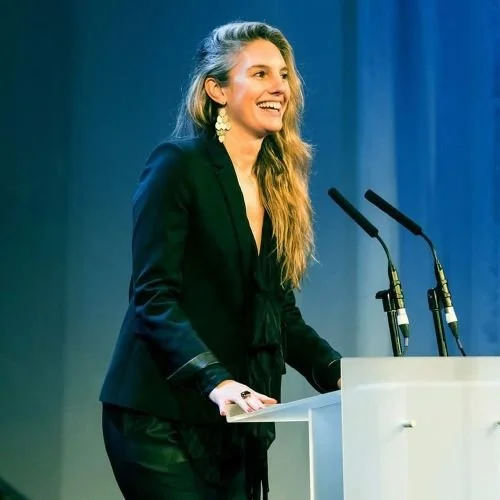
IN THIS PHOTO: Catherine Marks giving her speech at the 2017 #MPGAwards

What advice would you give a young woman wanting to become a producer?

“There’s still no obvious path for any job in this industry. A lot of things are built around who you know and building your reputation. Having said that, technology is changing and it is very easy now to get hold of technology where you can start making music and producing your own music. It’s like anything creative: there’s always going to be difficult moments, but if it’s something you really want to do then it’s also really rewarding so you should just do it. No matter what barriers are in the way, you should just climb over them. That’s kinda what I did but I never saw them as barriers… it was more of a little obstacle course (laughs). Little mini challenges that I needed to overcome to get to the finish line. And I still experience that. That’s what’s so great about this career: there is no end point. Every day is a constant learning experience. If it’s something you really want to do, you should just do it.”

So what needs to change in order for more women to enter in the world of making records?

“I feel there are certain elements of the industry that need to change, but I think that we’re experiencing and living through the change right now. One of the biggest things I’ve noticed – and I think is incredibly encouraging – is how women are supporting other women in the industry. When I started there was no-one I could look up to or talk to who was a woman in the world of production. There is a wonderful community of female mixers, producers and engineers who I’ve got to know recently, and I feel like we’re supporting the next generation that’s coming through, and to me that’s very exciting. I’m sure there’s a lot more that needs to change and I understand that the conversation needs to continue. But to me that is very positive”.

I am going to end with an interview from this year. Speaking to Music Business Worldwide, Catherine Marks spoke about what she wish she’d known. Those lessons that she has gained from her many years of experience:

But, actually, it’s about making your own opportunities, working hard and having the right attitude. Had I been more conscious of that, I probably would have stuck to my guns a bit more. When people were telling me, ‘This is the way things are’, I should have said, ‘No, I’m going to explore all of these opportunities that I have’. There was an element of waiting for the big thing to come along to help create my success.

When I was assisting, there would be long chunks where I wasn’t in session. I’d do writing sessions instead and was offered a publishing deal as a songwriter. Someone said, ‘No, you’re Flood’s assistant, that’s not your discipline, you can’t explore that avenue’. I took heed of that and thought, perhaps they’re right, perhaps I do need to focus on learning the craft of engineering and being a good assistant before accepting those kinds of opportunities.

I was 25 at that point and so brand new to the industry. I was learning how it worked and didn’t have the confidence to say, ‘Actually, this is something I would like to do’.

I often look back on that and wonder if I missed an opportunity. It was at the time when there was a transition in the way the industry was working; budgets were getting smaller and the defined roles of a producer, engineer and writer were being blurred. Often, I would be working with people who wore all those hats and I felt that was something I needed to learn, not just the specific role of my mentor, who was a producer/engineer.

At that time, I didn’t want to step on anyone’s toes or seem overconfident. I would often play a little bit of the bumbling idiot in order to not come across as being a particular way. I never behaved like that with the men I worked with and I think that had a lot to do with the culture of women in the industry.

There were a lot of female producer managers or songwriters and there was a culture back then, around 2005, of women not necessarily supporting other women and having to fight for their positions. I regressed and didn’t assert myself in the way I would now, to make myself seem unthreatening. That culture has changed drastically — there is a lot more generosity, solidarity and support amongst other women in the industry.

Taking control of my career came with experience and confidence. Ultimately, this is my business and I have to stand by my decisions. It’s not about someone telling me what I should do, it’s about taking advice and making an educated decision on what I think is best for me.

The final thing I wish I’d known is to trust your instincts. Early on, if something didn’t feel right, I would carry on in that situation because I felt like I had an obligation to someone. Now, if a project doesn’t feel right, we’ve created a situation where we’re able to test the waters. Even if it has the potential to be the most successful thing ever, I just say, ‘I don’t think I’m right for that’. That’s totally okay — I don’t have to say yes to everything.

I’d rather enjoy my experience every day, which is not to say that there aren’t some shitty days, of course. But I’m more conscious of what my gut is telling me now and I think that comes from confidence and experience”.

A queen of the music scene; a change maker and icon, I wanted to start this series with Catherine Marks. With one of the most diverse and impressive C.V.s in music production and engineering, she is someone inspiring a new generation of women coming through. I did start with the stats. They are still quite grim regarding equality and opportunities for women. Things will change. I think people like Catherine Marks are helping bring about progress. When it comes to pioneering and go-to producers, Marks is…

ONE of the world’s very best.

FEATURE: The Smuggler’s Defiance: Kate Bush’s Night of the Swallow at Forty

FEATURE:


The Smuggler’s Defiance

 IN THIS PHOTO: Kate Bush in 1982/PHOTO CREDIT: Steve Rapport 


Kate Bush’s Night of the Swallow at Forty

_________

ONE of the truly great ‘lost’ singles…

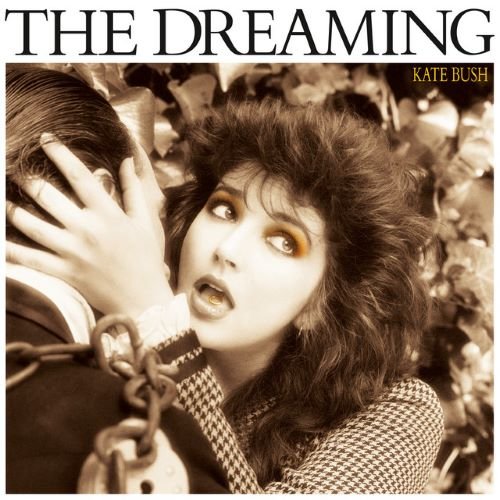
from Kate Bush, Night of the Swallow is from her fourth studio album, The Dreaming. It was the final single released from the album. Only released in Ireland, the song is one of the finest from that album. I think that it should have got wider release. It has a quintessential Kate Bush angle when it comes to the story. The type of song no other artist was making, I feel we get a glimpse into the Irish sounds that would come into future albums like Hounds of Love (1985) and The Sensual World (1989). Working with Liam O’Flynn (uilleann pipes, penny whistles), Seán Keane (fiddles) and Donal Lunny (bouzouki), this is Bush letting her imagination take flight, though it is also her nodding to her Irish heritage. There were hints of it prior to Night of the Swallow, though this is the first song where it really comes to the fore – future tracks, Jig of Life (Hounds of Love) and The Sensual World (The Sensual World) would put the Irish sound heavily into the mix. I am going to continue in a minute. First, and thanks to the Kate Bush Encyclopedia, here are some interview snippets where Kate Bush discussed the inspiration behind Night of the Swallow:

Unfortunately a lot of men do begin to feel very trapped in their relationships and I think, in some situations, it is because the female is so scared, perhaps of her insecurity, that she needs to hang onto him completely. In this song she wants to control him and because he wants to do something that she doesn't want him to she feels that he is going away. It's almost on a parallel with the mother and son relationship where there is the same female feeling of not wanting the young child to move away from the nest. Of course, from the guys point of view, because she doesn't want him to go, the urge to go is even stronger. For him, it's not so much a job as a challenge; a chance to do something risky and exciting. But although that woman's very much a stereotype I think she still exists today. (Paul Simper, 'Dreamtime Is Over'. Melody Maker (UK), 16 October 1982)

Ever since I heard my first Irish pipe music it has been under my skin, and every time I hear the pipes, it's like someone tossing a stone in my emotional well, sending ripples down my spine. I've wanted to work with Irish music for years, but my writing has never really given me the opportunity of doing so until now. As soon as the song was written, I felt that a ceilidh band would be perfect for the choruses. The verses are about a lady who's trying to keep her man from accepting what seems to be an illegal job. He is a pilot and has been hired to fly some people into another country. No questions are to be asked, and she gets a bad feeling from the situation. But for him, the challenge is almost more exciting than the job itself, and he wants to fly away. As the fiddles, pipes and whistles start up in the choruses, he is explaining how it will be all right. He'll hide the plane high up in the clouds on a night with no moon, and he'll swoop over the water like a swallow.

Bill Whelan is the keyboard player with Planxty, and ever since Jay played me an album of theirs I have been a fan. I rang Bill and he tuned into the idea of the arrangement straight away. We sent him a cassette, and a few days later he phoned the studio and said, "Would you like to hear the arrangement I've written?"

I said I'd love to, but how?

"Well, Liam is with me now, and we could play it over the phone."

I thought how wonderful he was, and I heard him put down the phone and walk away. The cassette player started up. As the chorus began, so did this beautiful music - through the wonder of telephones it was coming live from Ireland, and it was very moving. We arranged that I would travel to Ireland with Jay and the multi-track tape, and that we would record in Windmill Lane Studios, Dublin. As the choruses began to grow, the evening drew on and the glasses of Guiness, slowly dropping in level, became like sand glasses to tell the passing of time. We missed our plane and worked through the night. By eight o'clock the next morning we were driving to the airport to return to London. I had a very precious tape tucked under my arm, and just as we were stepping onto the plane, I looked up into the sky and there were three swallows diving and chasing the flies. (Kate Bush Club newsletter, October 1982)”.

It is a shame that this is a song that was never played live or given much of an outing. Without reading too much into it, I think the heroine’s need for freedom and that defiance. That wanting to break free. I get a feeling Bush felt a bit like this by 1982. Wanting to establish herself as a producer and an artist without constraint, I feel there is some personal projection from Bush through Night of the Swallow. Maybe this artist who is seen as diminutive or bird-like it terms of her fragility, I always sense this track is Bush maybe talking with herself. This article explores the track in more detail:

"Night of the Swallow" by Kate Bush is a song that delves into themes of escapism, rebellion, and the desire for freedom. The lyrics present a narrative of a person who is determined to defy authority and take flight, symbolized by the imagery of a swallow. The song's protagonist seems to be addressing someone who disapproves of their plans, possibly a lover or a figure of authority.

In the verses, the protagonist expresses their determination to prevent the other person from doing "what they want to do." There is a sense of defiance in their refusal to let the other person proceed with their actions. The refrain, "I won't let you do it," reinforces this resistance.

The chorus further develops the theme of escape and rebellion. There is mention of a planned flight, orchestrated with secrecy and anonymity. The hired plane and absence of names emphasize the covert nature of the operation. The protagonist confidently states that they will be over the water like a swallow, indicating a swift and liberated journey.

Throughout the song, there are references to Malta, suggesting a specific location for the flight. Swallows are seen as migratory birds, capable of crossing borders effortlessly, which reflects the protagonist's desire to defy boundaries. They aim to free the guilty, symbolized by catching a swallow. The wings beating and bleeding could represent the sacrifices made to achieve liberation.

The bridge reveals a plea for freedom and a desire to break free from the monotony of life. The protagonist seeks something meaningful to justify their existence and yearns for a chance to fly, paralleling the swallow's ability to soar through the sky.

In the final repetition of the chorus, the protagonist directly asks to be released, emphasizing their longing for escape. The mention of pigs flying serves as a metaphor for the impossibility of their true identity being discovered. The song concludes with a realization that the other person is not capable of embracing the same liberation.

Overall, "Night of the Swallow" explores themes of rebellion, defiance, and the longing for freedom. It emphasizes the desire to break free from constraints, both external and internal, and to pursue a life of independence and autonomy”.

With the incredible B-side of Houdini, you wonder why Night of the Swallow did not make a bigger impact. This is a song that means a lot to Bush. Her mother was Irish. There was a lot of traditional Irish music played in the family house. Her brother Jay (John Carder Bush) had a love of Planxty (of which Dónal Lunny and Liam O'Flynn were members). Their music no doubt influenced that decision to use Irish music in her own. Not something that was common or especially mainstream. One of the first two songs to be recorded for The Dreaming, Bush put this down at Abbey Road Studios in the spring of 1981. Bush travelled to Ireland – like she did for Hounds of Love – and recorded those musicians there. Showing dedication and passion for the song, she quickly travelled back to London (after spending the night recording in Ireland; what she would have given for Zoom and the Internet back then!) and completed mixing the song in London. The fact that it was two years after she recorded it that it was released must have been a bit frustrating. I wonder what would have happened if Night of the Swallow was released wider. Rare that the song has no music video and was barely promoted, it is one of those singles that just fell away. The Dreaming was an album where the singles struggled. I feel Night of the Swallow might have been a bit esoteric and Folk for the Pop mainstream to appreciate in 1983. As it is forty on 21st November, I wanted to spend some time with an amazing song. Night of the Swallow is a gem that warrants…

MORE love and attention.

FEATURE: Smoke and Mirrors: Why Are There Fewer Political and Protest Songs At Such a Divisive and Dark Time?

FEATURE:


Smoke and Mirrors

PHOTO CREDIT: Chris LeBoutillier/Pexels


Why Are There Fewer Political and Protest Songs At Such a Divisive and Dark Time?

_________

THIS is such an intense time…

 PHOTO CREDIT: Alfo Medeiros/Pexels

where there are conflicts around the world that are horrifying to hear about and see. Regarding Palestine and Israel, there are so many opinions being expressed online. Which side people support, and who is to blame for latest casualties and attacks. It is a very divisive and scary time. It can be complicated getting into the debate and sharing a take. Of course, the right one is to show support for the Palestinians who are being killed and displaced. It does seem that there are so many different voices attacking or coming under attack. There is the war between Ukraine and Russia. Ongoing fears around climate change and what damage that is doing – and what impact it will have in all of our lifetimes. A tonne of anti-trans sentiment and hatred still swirling. That is having a really harmful effect on the community. A time when a lot of awful stuff is happening, there is not really that common voice or wave of change and hope. Maybe it is impossible to easily affect a ceasefire and end to hostilities. Regarding bigotry and misinformation, how easy is it to affect some quick, real and long-lasting change?! In any case, there are subjects and stories that are being discussed and argued online on a daily basis. It is coming into music a little, though there is not really a political or social wave of awareness and debate. Maybe it is hard for artists to say something quite big on political issues. Even when it comes to something as universal as climate change, one does not hear as many songs about that as you should.

The same goes with trans rights and the L.G.B.T.Q.I.A.+ community as a whole. Again, perhaps there is a worry that there would be backlash or some fans would not agree. That is always a risk an artist has to take. I do think that, with so many big issues at the fore, there needs to be more mobilisation and activation from the music community. I am aware I have beat this particular drum a few times now. An artist does not need to take a firm stance regarding which side to sympathise with when it comes to Israel and Palestine. It is about expressing a dismay and disgust that is out there. Perhaps a feeling is the music will be quite heavy and grim. Once more, it is a sacrifice that an artist has to make. It would also put the message out there memorably and clearly. The composition and tone, whilst serious, does not have to be matched with an incredibly serious or morbid composition. There is flexibility and scope to ensure that the message is one of support/outrage – depending on what is being talked about –, whilst the music can be lighter and more flexible. I feel, the more we see on social media and the news regarding conflict, climate change, sexual abuse, anti-L.G.B.T.Q.I.A.+ attacks and violence, the more there needs to be something in the way of musical response and documentation.

 PHOTO CREDIT: RDNE Stock project/Pexels

I guess music is mostly personal. In the sense the majority of artists will write about their lives. What they know. Plenty write about global causes and concerns, yet that continued risk of criticism and ‘getting on the wrong side of the argument’ can create repercussions and damage. The more I see vitriol thrown at L.G.B.T.Q.I.A.+ people and the more we see the news and all the horror going down, the more it compels me to seek out artists who are discussing it. There are not a huge amount doing it. Not at the moment anyway. Protest and shining a light on some dark truths has always been a part of music. Whether Hip-Hop artists discussing violence and brutality against the Black community, or Folk artists writing about war, artists compelled to react to something that needs be addressed. The power and influence music has can make people aware of what is happening in the world and what we need to do. It also allows insight into a community. Issue affecting particular people. Whether social media, in a way, has taken on some of music’s role in terms of protest and highlighting ills and big issues. I am hearing a few songs on the radio and playlists where artists look at climate change and trans rights etc., though they are few and far between. Not quite enough focused anger and essential songs that remain in the mind and help provoke change. In a social media age, there is that instant and widespread reaction to music.

 PHOTO CREDIT: Shane Aldendorff/Pexels

Are artists wary of the feedback they might get?! If they talk about war and gender issues, is that going to create a storm and harsh reaction from some?! We are living through one of the darkest periods of modern history right now. I think music can heal and guide in addition to teach and act as a political voice. It needs to react to what is happening in the world. Give a voice that those whose voices are being ignored and vilified. I think that the music community should be a bit more vociferous and visible standing up to injustice and alongside those in need of allyship. If there was a lot of protest songs in 2020, some asked whether protest and political songs are affective anymore. I am not suggesting that music alone and the power of a song will change the word and inspiring immediate change. The role that these songs have always played is to educate and touch listener. Change starts with the listeners. Music, as a great and universal communicator, has that relevance and role today. I don’t think people are less willing to listen to these songs or take anything away from them. Maybe the songs are too oblique or indirect. Perhaps artists are holding back slightly. Whatever the reason, this is a moment when more artists need to address big themes and darker subjects.

I want to end with a 2019 feature from the Washington Post. In a year where American artists especially might be motivated to rally against corrupt politics and a President (Donald Trump) corrupting the country, they argued how protest music of the year was stuck in the past:

These are wild and anxious times for our wild and anxious planet. So why do the most visible protest songs of the Trump era feel so inert? From the numb thud of “This Is America” to the woke winks on the new Taylor Swift album, contemporary protest pop feels increasingly prominent, deeply unimaginative and embarrassingly insufficient.

As it stands, the two most widely applauded protest anthems of Trump’s presidency are “Love It If We Made It,” by the British band the 1975, and “This Is America,” by Childish Gambino, the nom-du-rap of Hollywood polymath Donald Glover. The former was named the best song of 2018 by Pitchfork in December. The latter won record and song of the year at the Grammys in February. “Love It If We Made It” recites the ugliest global headlines of the past few years while flashing a hopeless smile. “This Is America” holds a mirror up to our violent, racist, violently racist system, then gives a blank shrug.

What are these songs trying to achieve? Both offer hyper-topical verses, flanked by titular refrains that radiate heroic despair — and by setting those feelings of total powerlessness to such patently urgent music, the effect becomes strangely self-canceling. You feel seen, but you also feel small.

During the civil rights movement — our country’s most sterling model of social change — marchers sang “We Shall Overcome,” a larger-than-life gospel song that promised victory just over the horizon. The watchword of Trump-era protest aspires only to a stalemate: “Resist.” It’s a defensive posture, a declaration of inertia, and it feels apt for these times. In a society so profoundly stuck in its own cultural nostalgia, it’s become impossible to envision what tomorrow should look like.

PHOTO CREDIT: SHVETS production/Pexels

This paralysis of imagination is the crisis of our century. It poisons everything from our politics to our pop culture. You can see it in every Hollywood franchise reboot, every MAGA hat, every episode of “Friends” on Netflix, every hour we spend online celebrating the 20th anniversary of everything we refuse to let go. Even Beyoncé, with all of her vision and political power, chose to spend her summer shoring up the immortality of a 25-year-old Disney franchise.

“American glory faded before me,” Swift sings. “Now I’m feeling hopeless.” Her message — that our democracy is not living up to its promise — is painfully basic, and yet the song has been greeted with reflexive star-worship. Variety recently ran a headline: “Taylor Swift’s ‘Miss Americana’ May Be the Great Protest Song of Our Time.” What a joke. A great protest song can’t just surf the waves of dissent. It has to help create waves of change.

The other great protest song of the century doesn’t have an expiration date. It’s Kendrick Lamar’s “Alright,” an anthem from 2015 that asserts that (black) people must first survive this world in order to change it. At the height of the Black Lives Matter movement, activists sang its astonishing refrain in the streets — “We gon’ be alright!” — proof that a protest song could still synchronize a crowd and consecrate a movement.

That’s how every protest song should be measured — by its empathy, its imagination and its utility. It has to be compassionate enough to get inside your head, visionary enough to help you dream up what’s possible, powerful enough to shake the public airspace. It can’t just turn the tides inside your mind. It has to get your body out onto the street.

Songs don’t change the world. Listeners do”.

We look at the news and social media and it is very scary and confusing! There are so many artists out there who are either keeping their music personal and too narrow, or they are writing about subjects like climate change and war, yet the messages and lyrics are either buried slightly or there is some camouflage and holding back. Even through the world of Hip-Hop and Rap, there is not the same rage and range of incredibly potent songs that awaken a generation and bring politicians and world leaders to task. I do feel there is a time now where music can play a role. So many things that need to be tackled and spoken about. With so much misinformation, division and hatred, there is a common sense, potency, passion, guidance and revelation…

ONLY music can provide.

FEATURE: Awake and Unashamed: The Case of Lauren Mayberry, and Band Members Who Embark on a Solo Career

FEATURE:


Awake and Unashamed

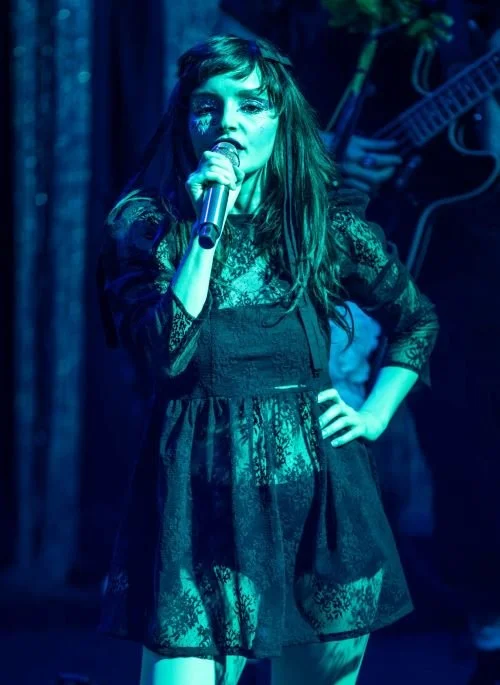
IN THIS PHOTO: Lauren Mayberry (lead of CHRVCHES and now solo artist)


The Case of Lauren Mayberry, and Band Members Who Embark on a Solo Career

_________

YOU get plenty of cases…

 IN THIS PHOTO: Hayley Williams (Paramore)/PHOTO CREDIT: Lindsey Byrnes

where leads/members of bands go solo and embark on their own careers. There are some bands that go on hiatus and comes back together (like Paramore and their lead Hayley Williams after she released solo material). Think about those artists who cut their teeth in groups and then went solo and found a new level of success. Perhaps the best-known examples are Beyoncé (Destiny’s Child) and Harry Styles (One Direction). Notable in their first incarnation, they then found space and a new voice going solo. Sometimes you get artists who need to do something by themselves and step away from a group but then return. It can be a difficult situation. Look back at The Beatles. They had members planning and releasing solo material before they split. Maybe sensing the end, that awkward timing and balance did result in some dispute and hostility. One can appreciate how there is a certain commercial commitment and pressurise to stay in a group. It can be healthy doing solo work alongside band material. There are modern-day examples. Supergrass are an ongoing concern. You have Gaz Coombes releasing solo material. Same with Blur and their members. Radiohead too. These are legendary and established bands, I know, though it is far from rare. From Gwen Stefani (No Doubt) to Belinda Carlisle (The Go-Go's) through to, well…this artist who is going her own way. The Scottish band CHVRCHES formed in 2011. Their most recent album is 2021’s Screen Violence. They are hugely successful and celebrated. Their lead, Lauren Mayberry, is releasing solo material.

I will come to an interview recently where she has talked about this new venture and forthcoming solo album. I do feel like it can be restrictive or defining being in a group. Different voices and directions. You might have to play in a particular way. Write about certain things. A solo career allows for personal direction and versatility. In the case of Lauren Mayberry, she is letting her voice and perceptive come to the fore. CHVRCHES did allow for some of that though, as part of a trio, there is only so much independence she could have. You can check out her official website. I am going to bring in an interview she recently gave. A couple of live reviews too. Some group members might feel nervous or guilty about going solo. Rather than a betrayal to fans or a sign of unhappiness, it is an awakening and quite natural for some. Being in a group is pretty tiring and can get routine and uninspiring. There are no plans for CHVRCHES to call time. I feel Lauren Mayberry, instead, needs to write and perform in a different way. Let a different voice and narrative come to the spotlight. I will start with some live reviews. It must be a bit odd not having her usual crew around her. Being on stage but not being part of CHVRCHES. With singles like Shame and Are You Awake? under her belt and winning acclaim, there will be a lot of anticipation for the album. This is what The Skinny wrote when they caught Mayberry play at SWG3, Glasgow, on 5th October:

“Introduced by Liza Minelli’s Maybe This Time squawking through the sound system, the rolling synths of Bird rumble forward, and Mayberry comes to stage, tee emblazoned with ‘Safety, dignity and healthcare for all trans people’. The combination of sound and visuals command urgency, Bird’s chorus ending ‘When I burn down the house / You’ll know why I did it’. It’s musically familiar given the performer, but when the synths largely drop out as she and her band move into the chorus, it becomes clear why it’s the set opener: there is absolute focus on Mayberry, in identity and in voice.

This feels like the show’s main thesis: the musical inspirations and aspirations of Mayberry’s exploration, without the tether of her associated band's musical diplomacy. A choice of cover at the midpoint of the set is a signifier of this; Madonna’s Like a Prayer provides some aspect of familiarity that the audience can sing back to Mayberry, whilst also acting as intended pastiche. Changing Shapes and Crocodile Tears embody the 80s pallet absolutely, both audibly and visually (purple and yellow spotlights spinning from the ceiling of the compact stage) recalling Madonna's 1984 performance of Holiday on Solid Gold, while directing the audience to a clear difference between the artist being presented and the identity as frontwoman that we previously knew of Mayberry.

Genre and mode vary: Mayberry takes to a stage riser for Mantra, dark and bubbling, infinite repetitions of ‘I want it’ becoming increasingly, meditatively sinister. Sorry, Etc. brings the rage, a screaming Mayberry invoking the electro-backed anger of Peaches or Karen O, the song somewhat reminiscent of Yuk Foo/Play the Greatest Hits-esque Wolf Alice. Second single Shame is a highlight; angular electronic pop interpolated by an earworm guitar riff.

PHOTO CREDIT: Allan Lewis

It is unavoidable that the CHVRCHES ethos is echoed in both the audience – it's there in the audience wearing the band's T-shirts, and has brought in and cultivated the wall-to-wall crowd – and in Mayberry, though no CHVRCHES songs are found here; a conscious choice of hers to separate ‘her solo era’ from the band’s past and future. She states early in the show that dualism in this instance is possible: there can be love and support for the collective and the individual in parallel.

The hometown environment is palpable. Mayberry’s feelings about the current Conservative government and their deplorable actions this week creates a sweeping, resounding ‘Fuck the Tories!’ chant; all of this before an ovation of adoration, prior to the final song, renders Mayberry emotional. It feels like the only unrehearsed moment; Mayberry is a consummate professional whose shows run like clockwork, and, despite a smaller stage than she would usually inhabit, her spins and silhouettes mark the familiar iconography of her decade fronting CHVRCHES, with humorous asides as topical and wry as ever. All of this contributes to a performance that is ephemeral but genuinely exciting, and a preview of the second form of one of synth-pop’s most consistent songwriters and performers”.

 IN THIS PHOTO: Lauren Mayberry at KOKO, London on 9th October/PHOTO CREDIT: Emma Swann

On 9th October, Lauren Mayberry played KOKO, London. NME were in attendance. Even, understandably, as her sets are short at the moment – I guess she can’t really do a load of CHVRCHES numbers! -, Mayberry is displaying the fact that she is an impactful and stunning solo artist:

It’s rare to come to a show of this size and not have a clue what to expect. It’s a big room to fill for an artist with just the one single out, and as Chvrches’ frontwoman turned solo star Lauren Mayberry tells the packed-out KOKO herself: “This is very generous of you, because I know no one knows any of the songs at all.”

After a playlist packed with Madonna and the fittingly cinematic intro of ‘Maybe This Time’ by Liza Minelli, the darkness lifts to show Mayberry dramatically poised centre stage under the spotlight. She begins with ‘Bird’, a slow-burning earworm, much less sugary than Chvrches and with more of a sinister but electro-noir grit.

Each song is presented between clean scene changes. The set is framed by spoken word narrative from Mayberry telling of the horrors and pitfalls of body image in the “paranoid parade” of the social media age. Speaking to NME pre-show, she promised of a “more theatrical” concept, and one “born out of things that I couldn’t or wouldn’t write in the band” with men. We enjoy the spoils of Mayberry’s new universe – from surefire future single of ‘Change Shapes’ (driven by the energy Sugababes at their most streetwise via some pop-pomp ‘80s glory days Depeche Mode) and the industrial glam-stomp of ‘Shame’.

PHOTO CREDIT: Lorne Thomson/Redferns

She promises ‘Under The Knife’ will be a “depressing banger” to appease the “99 per cent Chvrches fans” in the room, and while a sombre and slow-revealing gem, the bangers are elsewhere: namely in the Billy Joel meets Tears For Fears ‘Crocodile Tears’ (the kind of jam of that should come with a single fingerless leather glove) and the Nine Inch Nails ferocity of “shouty, screamy, angry” closer ‘Sorry Etc’. While the tender piano ballad of launch single ‘Are You Awake’ goes down a treat, Mayberry wasn’t lying when she told us that it couldn’t be less representative of what else she has in the bag.

She chucks in a mega and bombastic rendition of Madonna‘s ‘Like A Prayer’ to “pad out” the setlist, and keeps up her tradition of a new cover for each city she visits with a gorgeous outing of Spice Girls’ ‘Viva Forever’, as well as teaching us that saying “space ghetto” with an American accent is the easiest route to the Scottish pronunciation of ‘Spice Girls’… ensue the KOKO crowd having a go at a mass elocution lesson.

It’s a thrilling reminder of her beginnings: “I did a Google and found a Chvrches show from 2012 where we only played seven songs,” she offers. The eight new originals on offer tonight pack one heck of a punch, and if this is just a test drive then we’re in for one hell of a ride”.

I am going to wrap up with a bit more about group members who go solo. It is an interesting phenomenon that yields mixed results. Your Robbie Williams (Take That) types can be successful and even outshine their group. Same with Peter Gabriel (Genesis). If solo success from various Spice Girls members has been mixed, others in successful groups can add their own stamp. CHVRCHES have a huge reputation and fanbase. I can completely see why Lauren Mayberry wants to do her solo thing. I can see many albums coming from her. There is a debut solo album in the works. With no set release date yet, I know that many are going to be really excited to hear that. Earlier this month, NME’s Andrew Trendell spoke with Lauren Mayberry ahead of a run of U.K. and European tour dates. She talked about what to expect from a solo album - in addition to a freedom of writing and working outside of her band:

There’s always nervousness,” she told NME. “For any frontperson in a band, but especially a woman, as soon as you say the words ‘solo material’ people get very upset with you. I feel like every second sentence is, ‘I’m not breaking up the band, guys, however…’

“But we’re lucky enough to have fans that care so much that they don’t want it to break up. I feel grateful, but I’m trying to be reassuring to them – ‘Just give us a couple more years guys, it’s going to be fine’.”

With experience that’s often “very different” to that of her bandmates Iain Cook and Martin Doherty, Mayberry explained that she would often be left feeling that the things she wanted to write about from a female perspective were unlikely to “resonate with them”.

PHOTO CREDIT: Press

“There are a lot of specific things about the female experience that won’t apply to Iain and Martin,” she told NME. “Obviously they have been very supportive of some of that making its way into Chvrches’ music, but sometimes I don’t want to sing about certain things or perform in a certain way when I’m on stage with men – if that doesn’t sound terrible. They’re the nicest men, but sometimes it’s not a conversation that I’m comfortable having fully in that context.”

Explaining her inspiration across her upcoming debut solo album, the singer revealed how she was looking to make sense of the “isolating” experience of being a woman in a male-dominated music industry.

“I was 23 when Chvrches started, and from minute one it felt like all anyone wanted to talk about was my gender,” she said. “A lot of the narrative was around what I looked like, what the guys didn’t look like and how that fit into the context. It felt odd, and it gives you quite a strange psychological separation from your physical self.

PHOTO CREDIT: Scarlett Casciello

“Everyone was having this conversation about me, at me, and I wasn’t really involved in it. If you spend most of your formative years in those environments, how do you psychologically stitch that back together to have a more connected experience with yourself, your life and your writing?”

While Mayberry “very much enjoyed being part of that touring circus”, she said she had always imagined what that world would have been like if genders were “code-switched”.

“Since I was 15, I’ve been in bands with boys and men,” she said. “That’s been wonderful most of the time, but it would be quite weird if a male musician was in an environment where they were only surrounded by women all of the time. So much of the time, people talk about Chvrches and they talk about feminism, but I was still the only one in most of those rooms in most of those experiences.”

She added: “To me, it was about trying to zoom in on the things that I wouldn’t if I wasn’t standing next to two guys in a band. That was the brief to myself.”

Beyond the lyrics, Mayberry’s newfound “freedom” has always inspired the look, aesthetic and live show of her solo outing to be “more theatrical”.

“Especially on the last Chvrches album [‘Screen Violence‘], we went into that more with the aesthetic and the live shows,” she said. “Even then, it was trying to fit it into a pre-existing format. I used to find the performance stuff so uncomfortable and unpleasant because I felt like I didn’t know what I was doing. I had been a drummer and keyboard player and never a singer, then all of a sudden I was in this position where I was 23 and being looked at and told I wasn’t very good at it.

IN THIS PHOTO: Lauren Mayberry captured performing at August Hall in San Francisco, California on 28th September/PHOTO CREDIT: Steve Jennings/Getty Images

Fans have had an early taster of the upcoming album at Mayberry’s US dates, which included support slots with Death Cab For Cutie and The Postal Service celebrating the 20th anniversary of their seminal albums ‘Transatlanticism’ and The Postal Service’s ‘Give Up’, respectively. “This tour offer came through and it seemed too good to be true,” she explained. “Obviously I love both those bands, both those records, and I love Jenny Lewis and Rilo Kiley. I feel like a bit of a creep because I’ve been lucky enough to be in and around the Death Cab cinematic universe for a while now.”

She admitted tat it was “quite poetic” that she should launch her record on the road with The Postal Service as they were a band that “Chvrches talked about a lot right in the beginning” when they were forming. The trio are currently celebrating the 10th anniversary of their debut album ‘The Bones Of What You Believe‘ with an expanded reissue, but Mayberry said that fans shouldn’t expect any further Chvrches activity for a while.

“Everybody has things that they’re working on,” she said. “It would be weird to be in any job for 12 years and not do anything else. Four albums in a row is pretty solid, so it’s important to get new stuff into our brains. Then, as and when we come back for the fifth album, it has to be moving the conversation forward – it can’t just be a different version of the same thing.

“After 10 years and four albums, this is a good time to take a minute. Everyone go on your own adventure so when we come back we’re not just having the same musical conversations over and over”.

 IN THIS PHOTO: Robbie Williams

Being in a band gives you that support, community and sense of togetherness. It can seem less isolating…though there is also less flexibility when it comes to a member putting their print on things. Having to work to the same end, many do feel that they need to go solo. It can be met with a lot of expectation and criticism. Some lambasting that artist for leaving a band – even if they are still together and this is a side-step for now. Others get a lot of support behind them and come up with something magnificent. It is an odd dynamic and moment. That adaptation from working in a group to being on your own. I am really interested seeing how Lauren Mayberry’s solo career goes. CHVRCHES will be back in a couple of years or so but, for now, their incredible lead needs to write and deliver songs that seem more truthful and meaningful to her. That desire for her to write in a more female way. Tell the experiences of her and other women. So far, live and single reviews have been really positive! When an album does come out, that will give more of an impression of what Lauren Mayberry the solo artist is about. I know that there will be other groups who will see one or more of their members go solo soon. Perhaps that will spell the end of the group. Some groups like Little Mix are on hiatus and there are solo works from current or former members. It can be a disastrous adventure for some. In the case of Lauren Mayberry, she has already proven herself to be an incredible songwriter. This is continuing into her solo career. The CHVRCHES lead is…

WIDE awake and ready.

FEATURE: Angels and the Wild Man: Kate Bush’s 50 Words for Snow at Twelve: Ranking the Tracks

FEATURE:


Angels and the Wild Man

 IN THIS PHOTO: Kate Bush in a promotional photo for 50 Words for Snow/PHOTO CREDIT: John Carder Bush

Kate Bush’s 50 Words for Snow at Twelve: Ranking the Tracks

_________

THERE are no weak moments…

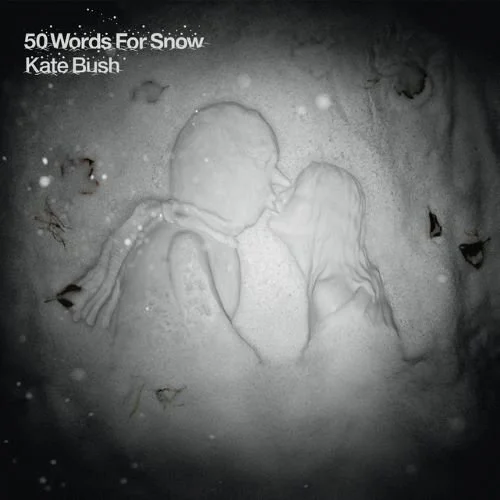
on 50 Words for Snow. But, as I am doing an anniversary feature, I thought I would use this opportunity to rank the seven songs. I am going to come to that in a minute (thanks to the Kate Bush Encyclopedia for information about each song). Released on 21st November, 2011, I am looking ahead to twelve years of a masterpiece album. The most recent Kate Bush studio album, we all hope something else comes soon. Reaching number five in the U.K., it ranks alongside her very best. I think all the tracks, which are set against the backdrop of snow (except Among Angels), are magnificent and so rich. With fewer tracks that other album, the emphasis is on mood and detail. It is an album where songs unfurl and go on this quest. As such, the listener can get really immersed. I think people should check out the album and explore it for themselves. You may be new to it. For those who do know about 50 Words for Snow, you may have your own idea regarding song rankings and which are the best. Below are my opinions when it comes to…

THE very best of the best.

__________

SEVEN: Snowed in At Wheeler Street


Position on the Album: 5

Track Details:

Kate about 'Snowed In At Wheeler Street'

The idea is that there are two lovers, two souls who keep on meeting up in different periods of time. So they meet in Ancient Rome and then they meet again walking through time. But each time something happens to tear them apart. (...) It’s like two old souls that keep on meeting up. (John Doran, 'A Demon In The Drift: Kate Bush Interviewed'. The Quietus, 2011)

Credits

Featured vocal: Elton John

Drums: Steve Gadd

Bass: John Giblin

Guitars: Dan McIntosh

Piano, keyboards: Kate

Interview Snippet:

Now, ‘Snowed In At Wheeler Street’ features the vocal talents of Sir Elton John and I was wondering, was the track written with him in mind?

KB: Yes. Absolutely.

How long have you known him?

KB: Oooh. I’ve known him for a long time. He used to be one of my greatest musical heroes. He was such an inspiration to me when I was starting to write songs. I just adored him. I suppose at that time a lot of the well-known performers and writers were quite guitar based but he could play really hot piano. And I’ve always loved his stuff. I’ve always been a fan so I kind of wrote the song with him in mind. And I’m just blown away by his performance on it. Don’t you think it’s great?

Yeah, he really gives it his all.

KB: He sings with pure emotion.

It’s good to hear him belting it out. Back when you were 13 years old and practicing playing the organ in your parents’ house and just starting to write your own songs and lyrics, what was the Elton John album that inspired you?

KB: Well, I love them all and I worked my way through them but my absolute favourite was Madman Across The Water. I just loved that record. I loved the songs on it and the production. It’s a really beautiful album” – The Quietus

Standout Lyric:When we got to the top of the hill we saw Rome burning/I just let you walk away/I've never forgiven myself/I saw you on the steps in Paris, you were with someone else/Couldn't you see that should've been me?/I just walked on by

Mark Out of Ten: 7.7

SIX: Wild Man


Position on the Album: 4

Track Details:

Formats

Despite being released as a single from the album, it was never issued on any format other than digital download. However, promotional CD-singles exist and are changing hands at the collectors market.

Music video

There was a short (2 minutes and 24 seconds) animation to accompany a segment from 'Wild Man'. It was published on 16 November 2011 as part of the promotion of the album.

Versions

There are three versions of the song: the album version and a radio edit were released in 2011, whereas a version with 'remastered shimmer' appeared on the album The Art Of Peace: Songs For Tibet II in 2015.

Kate about 'Wild Man'

Well, the first verse of the song is just quickly going through some of the terms that the Yeti is known by and one of those names is the Kangchenjunga Demon. He’s also known as Wild Man and Abominable Snowman. (...) I don’t refer to the Yeti as a man in the song. But it is meant to be an empathetic view of a creature of great mystery really. And I suppose it’s the idea really that mankind wants to grab hold of something [like the Yeti] and stick it in a cage or a box and make money out of it. And to go back to your question, I think we’re very arrogant in our separation from the animal kingdom and generally as a species we are enormously arrogant and aggressive. Look at the way we treat the planet and animals and it’s pretty terrible isn’t it? (John Doran, 'A Demon In The Drift: Kate Bush Interviewed'. The Quietus, 2011)

Standout Lyric:From the Sherpas of Annapurna to the Rinpoche of Qinghai/Shepherds from Mount Kailash to Himachal Pradesh found footprints in the snow

Mark Out of Ten: 8.2

FIVE: Snowflake


Position on the Album: 1

Track Details:

Song written by Kate Bush. Originally released on her tenth studio album 50 Words For Snow in 2011. The track details the birth of a snowflake in the clouds until it falls down onto the ground or into a person's hand. It features Kate's son Albert on lead vocals.

Credits

Lead vocals: Albert McIntosh

Chorus vocal: Kate

Drums: Steve Gadd

Bass: Del Palmer

Guitars: Dan McIntosh

Piano, basses: Kate

Interview Snippet:

The album’s opening track, Snowflake, sets the scene with flurries of meditative piano and sparing, hushed percussion and strings. Written from the perspective of a falling snowflake, it features a vocal from Bush’s then 13-year-old son, Albert McIntosh.

Bush told Jamie Cullum that she had always intended to have Albert sing the song. “When I wrote the song it was something that I wrote specifically for him and for his voice, and I guess there was a very strong parallel in my mind between the idea of this transient little snowflake and the fact that Bertie at this point… still has a really beautiful high, pure voice which soon he will lose… there seems to be this sort of link between the brief time that his voice will be like this and the brevity of the snowflake.

“I think his performance on this is really powerful, and obviously I’m quite biased because I’m his mother,” she continued. “But it’s interesting how many people have reacted so powerfully to his performance, it’s, you know, I think it’s really something.” Bush’s simple, soulful chorus, “The world is so loud/Keep falling/I’ll find you,” offers calm and reassurance in the blizzard” – Dig!

Standout Lyric:We're over a forest, it's midnight at Christmas/The world is so loud, keep falling, I'll find you

Mark Out of Ten: 8.7

FOUR: Lake Tahoe


Position on the Album: 2

Track Details:

Music video

Kate wrote and directed a short animated video to accompany Lake Tahoe, entitled Eider Falls at Lake Tahoe. It features five minutes from the 11 minute track, and contains elegant shadow-puppetry.

Kate about 'Lake Tahoe'

It was because a friend told me about the story that goes with Lake Tahoe so it had to be set there. Apparently people occasionally see a woman who fell into the lake in the Victorian era who rises up and then disappears again. It is an incredibly cold lake so the idea, as I understand it, is that she fell in and is still kind of preserved. Do you know what I mean? (John Doran, 'A Demon In The Drift: Kate Bush Interviewed'. The Quietus, 2011)

Credits

Featured vocals: Stefan Roberts, Michael Wood

Drums: Steve Gadd

Piano: Kate

With special thanks to James

Standout Lyric:No-one's home/Her old dog is sleeping/His legs are frail now/But when he dreams

Mark Out of Ten: 9.0

THREE: Among Angels


Position on the Album: 7

Track Details:

Versions

There is only one studio version of this song.

A live version appears on the album Before The Dawn.

Performances

The song was performed live as the last encore on Kate's Before The Dawn shows in London, 2014.

Credits

Prof. Joseph Yupik: Stephen Fry

Drums: Steve Gadd

Bass: John Giblin

Guitars: Dan McIntosh

Keyboards: Kate

In the Spotlight:

50 Words For Snow ends with Among Angels, a spare and celestially beautiful solo performance that was the first song written for the album. Immediately ranking among the best Kate Bush songs, it’s also the only track from the record to be performed live, during encores for her 22-night Before The Dawn residency at London’s Hammersmith Apollo in 2014. 

Over a decade on from its release, 50 Words For Snow is the last collection of new music we’ve heard from the pioneering singer, songwriter and producer, who remains one of the most influential female musicians of all time. There are still not enough words to describe its beauty” – Dig!

Standout Lyric:I can see angels standing around you/They shimmer like mirrors in summer/But you don't know it

Mark Out of Ten: 9.3

TWO: 50 Words for Snow


Position on the Album: 6

Track Details:

Song written by Kate Bush. Originally released on her tenth studio album 50 Words For Snow in 2011. Features the voice of Stephen Fry for the 50 words for snow.

Kate about '50 Words For Snow'

Years ago I think I must have heard this idea that there were 50 words for snow in this, ah, Eskimo Land! And I just thought it was such a great idea to have so many words about one thing. It is a myth - although, as you say it may hold true in a different language - but it was just a play on the idea, that if they had that many words for snow, did we? If you start actually thinking about snow in all of its forms you can imagine that there are an awful lot of words about it. Just in our immediate language we have words like hail, slush, sleet, settling… So this was a way to try and take it into a more imaginative world. And I really wanted Stephen to read this because I wanted to have someone who had an incredibly beautiful voice but also someone with a real sense of authority when he said things. So the idea was that the words would get progressively more silly really but even when they were silly there was this idea that they would have been important, to still carry weight. And I really, really wanted him to do it and it was fantastic that he could do it. (...) I just briefly explained to him the idea of the song, more or less what I said to you really. I just said it’s our idea of 50 Words For Snow. Stephen is a lovely man but he is also an extraordinary person and an incredible actor amongst his many other talents. So really it was just trying to get the right tone which was the only thing we had to work on. He just came into the studio and we just worked through the words. And he works very quickly because he’s such an able performer. (...) I think faloop'njoompoola is one of my favourites. [laughs] (John Doran, 'A Demon In The Drift: Kate Bush Interviewed'. The Quietus, 2011)

Credits

Prof. Joseph Yupik: Stephen Fry

Drums: Steve Gadd

Bass: John Giblin

Guitars: Dan McIntosh

Keyboards: Kate

Standout Lyric:19 phlegm de neige/20 mountainsob/21 anklebreaker/22 erase-o-dust/23 shnamistoflopp'n

Mark Out of Ten: 9.5

ONE: Misty


Position on the Album: 3

Track Details:

Music video

There was a short (2 minutes and 24 seconds) animation to accompany a segment from 'Misty', entitled Mistraldespair. It was published on 25 November 2011 as part of the promotion of the album.

Kate about 'Misty'

Well, I think in that particular song obviously there is a sexual encounter going on… (John Doran, 'A Demon In The Drift: Kate Bush Interviewed'. The Quietus, 2011)

It's a silly idea. But I hope that what has happened is that there's almost a sense of tenderness. I think it's quite a dark song. And so I hope that I've made it work. But in a lot of ways it shouldn't because... It's ridiculous, isn't it, the idea of the snowman visiting this woman and climbing into bed with her.

But I took him as a purely symbolic snowman, it was about...

No John, he's REAL (laughs). (BBC4 Radio, Front Row, 2011)

Credits

Drums: Steve Gadd

Bass: Danny Thompson

Guitars: Dan McIntosh

Piano: Kate

Special thanks to Joel for his guitar

Standout Lyric:And his creamy skin/His snowy white arms surround me/So cold next to me/I can feel him melting in my hand

Mark Out of Ten: 9.7

FEATURE: The Digital Mixtape: The Best New Music from October

FEATURE:


The Digital Mixtape

IN THIS PHOTO: Nadine Shah


The Best New Music from October

_________

IN a new feature…

 IN THIS PHOTO: IDLES/PHOTO CREDIT: Tom Ham

I am going to end each month with a playlist of the best singles. Pulling in selections from my Weekend Mix playlists, below is all the great and good from this month. It has been an extremely strong month for music. If you have missed out on all the musical happenings from October, then I think that this inaugural Digital Mixtape ‘best of the month-specific’ collection should give you a good idea about what awesome music has come out. I am looking forward to seeing what we get in the run-up to Christmas. Maybe December will be a little less quiet than other months – though I know there will be plenty of great tracks from this month. Covering a range of genres and artists, this is a chance to acquaint (or reacquaint) yourself with all the awesome music that has come this month. From the mighty Nadine Shah through to The Last Dinner Party, it has definitely been a packed and varied October. Let’s hope that November offers…

 IN THIS PHOTO: The Last Dinner Party

THE same degree of treats and gems.

FEATURE: Revisiting… Snoh Aalegra - Ugh, those feels again

FEATURE:


Revisiting…


Snoh Aalegra - Ugh, those feels again

_________

I have been following the career of…

 PHOTO CREDIT: Jillian Sollazzo/WWD

the wonderful Snoh Aalegra for years now. I was especially interested when she put out her second studio album on 16th August, 2019. Following her 2017 debut, FEELS, - Ugh, those feels again is a really accomplished and memorable album that I think should have got more attention. Her latest album, and possibly her most acclaimed, is 2021’s TEMPORARY HIGHS IN THE VIOLET SKIES. Cinematic, sweeping and soulful, maybe some people have not heard of - Ugh, those feels again and Snoh Aalegra. The U.S.-based artist was born in Uppsala, Sweden. She is an artist who has named the likes of Brandy, Prince and Whitney Houston as influences. Someone everybody needs to follow. I want to spotlight -Ugh, those feels again, as this is an album that I really love. It peaked at number three on the Billboard R&B Album Sales chart, number six on the Billboard Top R&B Albums chart, and number seventy-three on the Billboard 200 chart in the U.S. I am going to come to a couple of the positive reviews for -Ugh, those feels again. I want to come to a couple of interviews around the time first. I will start with an interview from Elle in September 2019:

Last month, the Iranian-Swedish singer-songwriter returned with -Ugh, Those Feels Again, the follow up to her 2017 debut, FEELS. Over gleaming, jazzy melodies and somber piano arrangements, Snoh spills her guts in a smoky, feather-soft voice that walks the line between Amy Winehouse and Sade, soaked in a vintage VSCO filter-Ugh's fourteen tracks capture, by turns, the wavy adrenaline of a crush, the weightlessness of love that's fully matured, and pit-in-your-stomach agony of heartbreak. Her self-described "cinematic soul" sound is deliciously dramatic and, to me, it's already the unofficial soundtrack to Sad Girl Fall.

Snoh Aalegra laughed when I told her this, shortly after -Ugh's release. “I’m Sad Girl Queen?” she said, “I’ll take it.” Talking from her home in Los Angeles, where she is on doctor-ordered voice rest, Snoh, 32, explained that she views making music as "scoring [her] own life." “I’m heavily into movie soundtracks," she said. "I'm very involved with production—live instruments, the arrangements and every little sound that you’re hearing. I'm in the mixing room tweaking every little sound." Her influences include the movies of her childhood—The Neverending Story, Aladdin, Beauty and the Beastand the choir arrangements, strings, and synth pads of Michael Jackson.

Those filmic sounds get paired with Snoh's heart-wrenching lyrics, which are so intimate it feels like she's handed over her iPhone passcode. "I know that I don’t make things clear," she sings on the breezy lead single, "I Want You Around. "I fall for you every time I try to resist you." The next track finds Snoh stuck in a "Situationship," with lyrics that sound like wine-drenched, late-night texts that you'll regret sending in the morning. "The moments that I’m with you I forget about the issues," she pines. Other songs offer catharsis, like when Snoh chucks up her middle finger to a former lover on "Nothing To Me" and "Njoy."

Heartbreak feels vivid and fresh on -Ugh, but Snoh said it took a long period of self-reflection to get there." The previous album, Feels and the EP Don't Explain were about this one relationship I was in that ended over a year ago. On this new album, I just took my time being on my own, just becoming my own best friend in a way," she explained. "Writing about the feelings I've been having and reflecting back on the old relationship made me feel really great. I feel good."

Ahead, Snoh Aalegra opens up about her upbringing, heartbreak and how to stay optimistic about love.

When did you fall in love with music?

I want to say I was six or seven years old. Music always made me feel so emo. I think I was very young when I started to feel these emotional, deep feelings. I've always been a sad girl—I'm just going to own the title now. I very vividly remember how Whitney Houston made me feel when I saw The Bodyguard and when I heard "I Have Nothing." I was glued in front of the TV, just watching and dreaming away that one day I would make other people feel that way that music made me feel.

You grew up in Sweden and were raised by Iranian parents. What was it like melding these two worlds together?

The Iranian culture is very warm and lush and 'more is more,' and they love beauty; the language is so warm and poetic and the culture very welcoming. It's very open. But the Swedish culture is very 'less is more,' very simple. I get my taste from both. I love simplicity. I love simple cuts even in how I dress. My taste is more Swedish. Coming here to US, I really embraced this culture here because here I feel like no dream is too big or too crazy. In Sweden, you're not allowed to dream big.

Did you find it difficult to find your own sound and identity in music or did it just come organically?

I had a hard time. Maybe it was my upbringing and culture but honestly, I was very naive when I was younger. I was a big dreamer and I always love to see the good in people. I got a bit used when I was younger by people that said they were trying to help me out, but they really didn't. It was a long journey for me to really find my real sound and really trust myself and stop being a people pleaser. I was scared to say no.

You sing about all the stages of love, from the honeymoon phase to the rocky periods, to heartbreak. Did one relationship inspire this album or a mix of experiences over the years?

They're about a few different experiences and different people, but mainly about my previous one-and-a-half-year relationship. Once that relationship ended, I started to talk to people. Love became fun again because the first phases are always exciting. That's how songs like "I Want You Around" and "Situationship" came about. I started seeing somebody and, literally, he tried to kiss me and I told him, "I don't want to kiss you yet. I just want to feel you." We were out in a club. He jokingly said, "You should put that in a song," and I did. If I'm seeing somebody, even if it's just a flirt, whoever it is, they become my muse.

On other songs—"Whoa," and "Find Someone Like You"—I wasn't writing about anybody. Those songs were the first time I was imagining what I want for myself, which is a mix of my love for love and my love for music, how music makes me feel. I've never put the same effort into visualizing what I want from a man in a relationship [the way I do with music]. I've always been in toxic and bad relationships and been with the wrong type of person. I decided one day I had enough and I was like, "Let me just visualize what I actually want and grab onto that feeling”.

PHOTO CREDIT: I.P.W

I am going to move on to Wonderland. from August 2019. They asked Snoh Aalegra how she wanted people to feel when they heard the album. – Ugh, those feels again was undoubtedly one of the best albums of 2019. I am glad that it got a bit of press, though I feel more sites and sources should have tuned into it. A beautiful and evocative work from a remarkable artist:

Congratulations on the album release! Does its title – Ugh, those feels again follow on from your previous project FEELS?

Yeah, it’s definitely a continuation of my last album. It just felt right, and it was a little bit funny at the same time…

What’s changed for you since then?

When I did FEELS and the project before, I was in this really long relationship with one guy for about three years and now that relationship is over. So this whole year of being single, I took time to do some soul searching and really analyse myself, kind of trying to understand why I took so much shit in the past. I’ve found myself in some really toxic situations when it comes to relationships. I really took the time to become more at one with myself.

Is that reflected in the new music?

My music is like a time capsule – you really know where I am in life and what I’m going through. I’m making music the way I usually do, but I just noticed I’ve never been more free. I’ve been having so much fun in the studio and laughing so much making this music. Two of the three singles I [first] put out are happy and more positive, and that’s because I’ve been in a more positive place. I’m also going to touch on other subjects in the album, so it’s not all jolly and happy.

Is it intimidating to put such personal material out into the world? Or therapeutic?

It’s therapeutic to me to reveal more and more layers about myself. I’ve had panic attacks for ten years that I live with, severe anxiety that started when my Dad passed away. That’s something I never really talked about, so I talk about that on the album as well and express those feelings. Its a mixture of everything.

What inspired the track “Find Someone Like You”?

When I wrote “Find Someone Like You”, I was in the really toxic relationship and I kind of had enough one day. I wanted to do something I’ve never done before, which is to visualize what I actually want in a relationship. I’m so good at visualizing what I want out of my career, but I’ve never really visualized “what do I do deserve from a guy in a relationship?” So the song is basically about meeting the opposite guy of what I usually attract. “Find Someone Like You” is dedicated to that future man that I haven’t met yet. It’s not that I’m with someone now and I’m super in love, because that’s what people seem to think…

What do you want people to feel when they listen to the album?

When I listen to music, I love something that I can cook to, that I can listen to in bed, that I want to have on when I do my makeup, or when I’m out. My own taste is very broad, I love everything. But as a musician, I like to think “ok, what should a fan take away from it?” Hopefully it will help them in some kind of way. It will make them feel something, just like the title… Hopefully it makes you feel good or you can relate to something I wrote about; it can comfort you or help you. Honestly whatever you take away from it, I appreciate it. People can do their own thing.

PHOTO CREDIT: I.P.W

What’s your process for creating the visuals?

Most of my videos – almost all of them – are shot on real film. Texture is always important to me, that’s where I go from. Also, what will make the song feel better when you watch a visual for it? How do you make the song come to life even more? I think like that, and don’t overthink it much more. Sometimes you can just keep it super simple.

Are you excited to perform the album live on your upcoming tour?

Absolutely, yeah. I can’t wait.

What else have you got planned next?

Preparing for tour! Hopefully I get to go to Sweden soon to visit my family really quick before I start touring. Swedish summers are so beautiful. And I have a dream that I want to visit Japan this year, I want to go to Tokyo”.

Let’s finish off with a couple of reviews for - Ugh, those feels again. I really am fond of this album, and I would confidently recommend it to anyone, regardless of your tastes. CLASH had their say about an engrossing and wonderful album from Snoh Aalegra:

Snoh Aalegra’s sophomore release, ‘Ugh, those feels again’, probes further into the forward-facing synthetic soul of her 2017 debut ‘FEELS’, better expounding her emotional psyche post-relationship. The heady high and fragrant evocations of love in full bloom are tempered by a charged melancholy, with interdependency, isolation and self-worth coming into play as a breakup looms. On ‘Ugh…’ Snoh humanises her feelings, her experiences and ingratiates the listener to her brand of heartbreak soul, hence the album title.

Aalegra and long-time collaborator No I.D. – at the helm as executive producer and label head – keep the beats bare and distilled, an augmentation of Snoh’s virtuosic, versatile voice. Yearning has never sounded more heartrending and Aalegra knows which strings to tug at.

From the one-two guttural punch of the intro ‘Here Now’ seamlessly transitioning into the velvet majesty of ‘I Want You Around’, the strength of this set is that succeeds in meticulously threading together doo wop, nu jazz, neo soul and gauzy R&B, all the while foregrounding the delicate contours of Snoh’s incredible voice.  Sparse, low-slung number ‘You’ – where Snoh can best express and emote her angst through a lattice of galactic chords and strings – encapsulates the overarching soundscape of the record, threaded together by UK’s Joel Compass.

‘Ugh, those feels again’ isn’t a maudlin affair, however. ‘Toronto’, the strongest track on offer, reins in the heartfelt elicitations, instead ramping up the sexual tension as Aalegra vocally climbs the octaves to mirror her climax, on the brink of overflowing. ‘Nothing to Me’ is a much-needed placeholder for Snoh’s feistier side, where internal affirmations come by a confrontational takedown of an ambivalent ex, a snarling Snoh listing all the areas he came up short. It’s a Snoh we need more of.

What’s most admirable about ‘Ugh, those feels again’ is that Aalegra isn’t seeking dominion over the charts. Creative self-sufficiency and artistic integrity, instilled in her by her mentor, Prince, has meant she’s eschewed big label money and payola deals. Her output speaks for itself; authenticity is her calling card. With adistinct indie sheen, Aalegra navigates her way out of starry-eyed amorousness into self-cultivated autonomy, where a sense of permanency has to come from within.

Album closer, ‘Peace’, embodies the appeal and evolution of Snoh Aalegra – a bridge between the referential sounds of monolithic icons with the corporeal face of contemporary R&B. She’s past and future, concurrently. With that in mind, the Swedish-Iranian singer may have released one of the definitive breakup records of the year - 8/10”.

Highlighting the insightful lyricism and Aalegra’s reflections on commitment and the ambiguity of complex relationships, there is a blend of the very personal and universal that runs right through - Ugh, those feels again. If the album’s title suggests that reluctance to fall in love or go through a potentially difficult relationship and tough commitment, there is plenty of endeavour, openness and searching through the album from our heroine. The Line of Best Fit said this when they sat down and reflected on the strength of - Ugh, those feels again:

The Iranian-Swedish singer-songwriter first broke out with 2017’s FEELS, an exploration of identity that encouraged praise from critics and musical contemporaries alike, one shining example being Prince who mentored her before his passing away. Two years later, she returns with a collection of songs that conjure the image of an outsider coming into their own and learning to love oneself while others slip away.

The album’s title says it all: - Ugh, those feels again is an immediately relatable sentiment, a reluctance to put oneself through the difficulty of falling in love once more. Aalegra vocals are characterised by sultry tones and an old-school R&B husk, paired with an effortless coolness. Yet there’s a vulnerability to her lyrics from the beginning, as filtered vocals open the album with the line, “Even if we catch the sunrise/ It's only a moment passing us by.”

This theme of uncertainty carries throughout. The track “I Want You Around” features smooth jazz instrumentals while Aalgra’s voice glides through singing, “All I wanna hear is Innervisions on replay / And sit right next to you, you / I try not to show how I feel about you / Thinkin' we should wait, but we don't really want to.” The anxiety of letting a guard down seems echoed in “Situationship” which draws on images of ambiguity, and not wanting to make a wrong move, “The moment I met you, I knew I would let you down/ And so many times you and I made love in my mind, don’t wanna regret you.”

Nevertheless, there are moments of strength that shine through. “Nothing to Me” acts a conversation, as she reassures herself, “Why you always say you ready for me? That ain’t it / When you know you ain’t ready for me. That ain’t it / We aint friends, if we fucking homie. That ain’t it / Come around and don’t do nothing for me. That ain’t it.” Playing with repetition and stop-start pacing to really, she creates an anthem of consolation and self-worth.

With buttery vocals and perfectly-paired suave jazz instrumentals, - Ugh, those feels again is slick in its depiction of enigmatic love. While it may not be breaking boundaries sonically, the album’s saving grace is Aalegra’s thoughtful lyricism in which she encapsulates fear, loss, heartbreak and self-growth with tenacity and an empathetic tone”.

I was eager to spotlight - Ugh, those feels again. It got some deserved acclaim and attention when it came out in 2019. Some of the songs did appear on radio playlists, though I feel there are plenty of tracks on the album that should be played today. Some really incredible cuts that would enrich any playlist. - Ugh, those feels again is Snoh Aalegra near the absolute peak of her powers. Such a staggering talent who I have been a fan of for years now. Her second studio release is…

SUCH a brilliant album.

FEATURE: Spotlight: Delilah Bon

FEATURE:


Spotlight


Delilah Bon

_________

A queen and bona fide bad-ass…

Delilah Bon is an artist I have respected and loved for a long time. As the lead of Hands Off Gretel, I first heard her incredible talent years ago. In her new incarnation, Delilah Bon (Lauren Tate) is someone everyone should know about. I love her mix of influences, her amazing songwriting, in addition to her incredible voice and passion. She is an artist who warrants mainstream exposure and big stages. I am going to come to some more recent interview. I want to take things back in a second to a 2021 interview. First, and in her own words, here is what you need to know about a truly magnificent and empowered (and empowering!) artist:

Who the f*ck is Delilah Bon?

#hiphop #alternative #newmetal #rap #punk

Delilah Bon began her venture into Punk-fuelled Hip Hop in the summer of 2020. 'I was touring with my punk band at the time (Hands Off Gretel) and night after night I was hearing stories from young girls getting harassed in my crowds. When I spoke out online I was met with resistance and it infuriated me. I had all of these words flowing out of me too fast to write down, I programmed a beat and started rapping for the first time; it was my motivation during a dark time.'

Taking to her home studio to write and self-produce her music, Delilah began writing about social issues, in particular how women are treated within today's society. 'I'd be walking down the street paranoid some guy was following me, holding my hand over my drink in the club, worrying my friends wouldn't make it home. it's all been said before, women have been fighting since way back before I was born but the same issues remain and we've got a long way to go'.

Coming from a Punk Rock background Delilah fuses Nu-Metal guitar riffs and screaming vocals with Melodic Rap and trashy Hip Hop beats, creating a sound that's hard to categorise. 'The music I make is like Cardi B fronting Slipknot, it's a mesh of all the styles that have influenced me leading up to now. I flow between two personas - sometimes I'm sweet and sassy, sometimes I'm screaming at you with an axe'.​

SO WHO ARE YOU DELILAH BON?

I'm the singer-songwriter, producer, rapper, artist, all round boss b*tch DELILAH BON! Creating music & empowering all your daughters to take no sh*t in this world, that's who!

& HOW WOULD YOU DESCRIBE YOUR MUSIC?

I call it Brat Punk influenced Hip Hop. Fusing Punk & Rap together, with driving fuzz bass, rapping & throaty screaming. My lyrics address womxns' issues with female empowerment as a main theme throughout my songs!​

WHO ARE YOUR INFLUENCES?

I'm influenced by Y2K Nu-Metal, Pop & Hip Hop. Think Korn meets Salt N Pepa or 2000's P!nk meets Otep. I love the fashion and glam of Y2K Pop which I blend with my love for everything gritty & gross in metal!

WHAT IS YOUR MUSICAL HISTORY?

I've fronted the alternative rock band 'Hands Off Gretel' since my teen years, playing hundreds of punk shows and releasing multiple albums that I also wrote & co-produced. Alongside that I've released multiple alternative rock/pop solo albums under my name 'Lauren Tate' before creating Delilah this year, all of which I wrote & self-produced.

My music career began at 12 years old on YouTube performing rock and pop covers that quickly became viral, gaining millions of views worldwide.

IS THIS PROJECT JUST ALL YOU?

I write, record and produce all of my own music and edit my own videos. I also design all of my merchandise & artwork. It's a small team here at Delilah HQ!”.

Let’s get to that 2021 interview from Guitar.com. Undoubtably then one of the most potent, original and striking women in modern music – I don’t think that is an over-exaggeration! -, Delilah Bon was this phenomenal voice breaking through and putting out absolutely awesome music. I think that 2024 will be her most successful year yet:

How does your song writing differ as Delilah Bon from Hands Off Gretel?

“Every idea of my Delilah songs start as hummed basslines or hooks into my phone before I even pick up an instrument. It’s really transformed my writing style, being able to visualise the track before I even write it. Sometimes it starts with a topic, or a music video idea, then I hum a riff and pick up my short-scale Fender bass to bring it all to life. Producing as I’m writing means I can layer many different instruments to create unique sounds for each song which sets it apart from recording as a band. The sound I make is a mesh of all my influences; old-school Salt N Pepa girl gang vocals, fuzzy nu-metal guitars with occasional metal-style scream vocals, Rico Nasty style snarl and Eminem sarcasm.”

What was the experience of self-producing the entire album like?

“I’ve always had an ear for production. Many times, producers have found my input to be annoying. I’ve had to push for a lot in the studio, particularly with effects and how I like to hear my vocals. Producers tend to use a lot of auto-tune and reverb, aiming for that perfect, smooth vocal and it’s always a battle having to fight for any creative input. Naturally, I had no intentions of involving a producer when I created Delilah, it was my chance to really see what I could achieve without them. I hope to work with the right producers eventually, I wouldn’t rule that out, I just need to prove to myself and the many people that have doubted me throughout the years.”

What influenced the fuzzed out tones on the record?

“My teenage years were Nirvana and Hole, Babes In Toyland and Mudhoney; the grungier the better. I loved the chaos of their guitar tones, the offsets and Big Muff pedals. Meeting Sean, the guitarist of my band, really made me fall in love with fuzzy guitar pedals even more. The Boss DS-1 was the first I owned because of Kurt, then the Way Huge Swollen Pickle and of course Sean’s favourite, the Electro Harmonix Big-Muff. In my studio set up right now I have the Positive Grid Bias FX 2 guitar preset which I use for heavier tracks, but mainly I use the standard Logic presets and tweak the crap outta them!”

Tell us about your main guitar and pedal set up…

“Over the years I’ve had a Squier VM Jazzmaster, a Fender HH Mexican Jazzmaster, a Squier VM Mustang… Now I mainly use my relic’d American Stratocaster with a Suhr humbucker in the bridge and two Fender Texas Special single coils. I mix it up between the Swollen Pickle by Way Huge and the Boss DS-1 on tour with my band, though lately after upgrading to my Fender Twin amp I tend to just use the clean and drive channels.”

Tell us about a guitarist who inspires you…

“Kurt Cobain, obviously, but I’d like to mention Kat Bjellend from Babes In Toyland, too. Her playing style is ferocious and just bonkers, I love it so much. The way she holds her guitar, up on her tip toes as she screams, made me want to play when I was a teenager, seeing a woman as wild as that.”

What’s interesting about your approach to playing guitar?

“What I always loved about Nirvana songs was the fact I could actually play them when I started out. I try to keep the riffs simple and fun, especially with my bass lines. I imagine young girls starting out and buying their first guitar, I wanna be the first songs they learn and play with confidence. I’ve never been interested in playing solos or learning to shred, my style of guitar sits alongside the vocals, doesn’t distract, just acts as fuel to the vocal fire when I need it. I love stomping on that fuzz pedal and blowing up the chorus. Thank you, Mr. Cobain.”

Which song off the new album are you most excited about playing live and when can we see you play next?

“I’m so excited about playing Chiquitita live. Whilst writing and producing this album I’d take breaks every few hours to just hit play and dance around the room, fantasising a crowd in front of me. I wrote Chiquitita about an older woman who wants to let her hair down and go wild but feels held back by her husband. I get shivers just thinking about what the live show will be like when I eventually hit the road. I’m touring the UK with my band this year but hopefully after that Delilah can have a turn.”

What does the future look like for Delilah Bon?

“There’s just so much music to come as I evolve as an artist and continue to scare and challenge myself every day. I want to do a horror project, star in my own movie, create the Delilah comic book series, tour with my own Delilah Bon circus of boss babes… the list is endless. I’m so grateful thatI have so many ideas, the future is mine!”.

 PHOTO CREDIT: Courtney Turner

There are some good 2022 interviews you should check out. I will finish with a few from this year. On the radar of some particularly big names, it is obvious that Delilah Bon is someone you cannot ignore. Get her on your playlist as soon as possible! Hard Beat spoke with Delilah Bon in August. There are bits of the interview that struck me and I wanted to bring in. It is particularly relevant and interesting what she says about her relationship with social media:

Speaking of your lyrics, are they usually all based on real-life events?

Yes, I think most of my songs are personal. The only time it’s not personal is if I’m talking about trans rights or something like that. I sing about other people, I sing about my friends. When I first started Delilah Bon, my lyrics were personal to me, but then it’s from conversations I’ve had with friends during sleepovers, and we’ve spoken about how it feels to be a woman walking down the street, and holding the keys between your knuckles, just dreading the worst and living afraid of men. The music I make is personal, but it’s also about so many others, I think so many of us feel the same.

You blew up on social media, which can feel like marmite at the moment, how do you feel about social media and how do you use it for your music?

I can enjoy social media, and I can hate it aswell – it depends what mood I’m in. Sometimes I love it, and I love that I can connect with people, especially since I grew up not having many friends at all. Now I’ve found a community, and I wouldn’t have that without social media, so there’s a plus! And obviously, when my music started to do really well on TikTok, I’d never seen so much engagement before, when a video blows up it’s the most exciting feeling. You can always feel like you’re in competition with people, or you’re in competition with yourself. I try to keep the blinkers on, not look at what anyone else is doing, and I don’t compare myself to anyone else. I compare myself to myself, so that’s the hard part of social media. When you look back and you’d think ‘a year ago my videos were doing better than they are now’. That’s hard, and I think my relationship with it is, while it serves me and I’m enjoying it, I’ll stay on social media. As soon as it’s not fun anymore, I just put my phone down and do something to distract myself.

I think that’s the best way to be! There’s a real mix of genres within your music, what do you listen to for pleasure?

Well I mainly listen to music when I’m in the gym. I listen to a lot of nu-metal, I mainly listen to Slipknot and Korn. Angry songs! I’ve always listened to Pink, she’s my comfort. My favourite artists right now, I’d say are Cassyette, Nova Twins, Alt Black Era, those kinds of artists that are new-ish that I enjoy listening to, whenever I have a chance to! I’m usually listening to myself, my demos. I’d be walking around, and I’d just be listening to me!”.

I want to come to an interview from Messed Up Mag, where we get to hear from the two other queens in Delilah Bon’s live-set up – the amazing Ruena and Hela. One of the most exhilarating, close-knit and amazing live acts out there, there are parts of the August-published interview I wanted to spotlight:

Opening the first day of Sheffield’s biggest music festival, TramlinesDelilah Bon brings the wake-up energy needed. ‘Brat punk influenced hip-hop’ is the genre coined by Lauren Tate, the creative mind behind the artist, which is substantially unique in the sea of indie and Brit-pop that festival goers usually expect from Tramlines. Her appearance certainly caught my eye, as Delilah Bon’s three-piece live act exuded fearlessness in their midday performance, unafraid to dance and twerk and scream Delilah’s defiant feminist lyrics to the event’s first arrivals. Up against the barrier, young people grooved and headbanged along.

Lauren Tate is well known in punk and alternative circles for previously fronting the band Hands Off Gretel. However, Delilah Bon was born after Lauren wanted to pursue the more overtly political side of her personality and has since enjoyed success on her landmark tracks ‘I Wish A Bitch Would‘, ‘I Don’t Listen To You‘, and of course, ‘Dead Men Don’t Rape.’

Delilah Bon is decidedly unapologetic in her songwriting and on stage, alongside her bassist Ruena, and DJ and general hypeman (I use that term gender-neutrally) Hela. Yet, talking with her reveals someone carefully sensitive to the issues that her audience faces, and her love for being creative beyond the goal of fighting misogyny and hate.

You’re connecting with those people through your music, but do you have any advice for those who maybe want to come out of their shells but are struggling?

Delilah: “For me, speaking about things that have happened in my life, writing has been the best thing. I wrote a zine – which is like a mini book – just about things that had happened and things that I felt too shy or too embarrassed to open up about. Or things that I still felt shame about. Things that I didn’t want to tell my mum. I wrote about it. It’s so much easier to write it all down and let someone read it, sometimes. And words are scary – I’m bad at talking, that’s why I sing.

I struggle with interviews because they want me to speak about my songs, and that’s the part I struggle with, that’s why I sing. So, when I sing, I can really think about my words, and I think, in music, in art, and all those kinds of areas, that’s where you can express yourself in your own little bubble, and when you’re ready, you can share it with people.”

PHOTO CREDIT: Courtney Turner

I suppose some people can do it non-verbally, as well, like through painting. Do you write stuff down by hand? Or do you type?

Delilah: “A bit of both.”

Do you find that matters?

Delilah: “Erm…”

Ruena: “I like writing in pen.”

Delilah: “See, I’ve been cheating lately.”

Ruena: “Have you been on the computer?” (laughs)

Delilah: “No, no – worse: phone notes!”

Ruena: “Voice notes – that’s another one.”

Delilah: “I used to write my lyrics on my laptop. So, when I’m recording myself in my studio, I’d have my laptop. But then my eyes would be killing me because I’d be trying to look down at my laptop and sing like that. So then, I’d put them on my phone notes so I can hold them when I’m singing. I don’t always sing while reading, but sometimes if I’ve just written something I’ll read it in front of my face.”

You have a lot of positive stuff going on as well, especially in your performance. I like the bubble gun. I can tell you’re having fun with it, as well.

Hela: “I mean, we just go and have fun. Like, if we’re having fun, then everyone else is going to have fun!”

Ruena: “It’s a big part of it.”

Delilah: “There’s obviously the punk element of it, which is the politics and the anger that I’ve got in my voice and my lyrics, but then I want to make it accessible. So, if people are not really into punk, and if they’re not really that angry about politics, they can come in and have fun. There are songs where we’re like, ‘We’re going to give it a break now, and we’re going to have fun on this song.’ “

Ruena: “You need a bit of everything. When you’re aging and catharting all this time, you need a bloody break!” (laughs)

Delilah: “You do need a break. It keeps it fun for us as well. It’s not too straining on my voice, either.”

You did an interview a while back and the magazine described you as a ‘guitarist’, but you do everything. You’ve already talked about the songwriting and production. What do you consider yourself?

Delilah: “I started as a singer. That’s all I wanted to be, a singer. I never wanted to be a songwriter, I just wanted to sing other people’s songs. [Ruena stage-whispers ‘What!’] I know! I know! Crazy! I didn’t really care about songwriting, and then this guy started writing songs for me, and I thought ‘I hate these songs.’ I thought ‘Crap! I need to write my own because this doesn’t represent me at all! It’s totally the wrong style.’ And so I started writing my own songs.

And then, when it came to production, other men would then produce my songs and I wouldn’t like them. And I would think ‘I need to now produce my own songs.’ All I wanted to be was a singer, but I’ve ended up a singer, a songwriter, producer”.

The latest interview is a biggie. Speaking with Kerrang! no less, Delilah Bon was discussing her new single, WITCH. In collaboration with ALT BLK ERA, this single is one of the best things Delilah Bon has ever put her name to. I think she is going to be a massive name - and I am confident that she will get to Glastonbury. Maybe headline tours around the world. Who knows. She deserves all the success in the world:

You’ve said that WITCH is about the ‘forgotten women in history that were killed on suspicion of witchcraft during the 14 – 17th century witch trials’. What inspired you to tackle that subject?

“I knew around Halloween I wanted to release something Halloween-themed. And I had been watching a [YouTuber] Bailey Sarian episode on witches, and reading about them. I never knew it was across the UK and America – I had heard of the Salem witch trials, and that was it. I started going down this rabbit hole, reading everything I could, and thinking, ‘Why have I never learned about this huge crime that happened to so many women?’ People seem to think a witch is just on a broomstick, so I wanted to channel the anger that you would feel, because it really happened. I put myself in the position of if that were happening to me, or to people I knew, and put the rage behind the words if I were a witch.”

What do you hope that people will take from it?

“I hope it’s cathartic, because you can apply it to modern times. When you listen to it, it’s also about the witch-hunt of women, and I hope that women will really connect with it. The song touches on misogyny and white supremacy, as well. Although it is about witches, it is about women now. Now, women are blamed, not believed, and accused. Back then, women were accused of witchcraft, and now they’re accused of lying when it comes to sexual assault. I feel if [the system] could have their way, and they could burn you at the stake, and get rid of women because they’re becoming too powerful, they would do it. They’re afraid.”

How did you come to work with ALT BLK ERA?

“First of all, because I love them. I found them on TikTok, and they supported me on my tour last year. I think they have something so special, and with this song, I wanted to work with women, like Nyrobi, whose voice is so angry. And with Chaya’s voice, it’s the mixture of ethereal and angelical. I thought the textures between our voices, and lyrically, they brought a lot to the song. It’s been on my bucketlist – it’s my first collab, I’m glad it was with them.”

How have your messages as an artist changed or developed between Hands Off Gretel and now?

“The entire time with Hands Off Gretel, I was held back. And now I’m free to speak about what I want to speak about, and get angry because I think women are afraid of being angry. We’re told to be pretty, be approachable – and I tried to be… ish. Not really – I tried to be pretty, and then I did Hands Off Gretel. At shows there were usually lots of men, between the age of 50 to 70. I used to look out and wonder why there were no girls in my crowd. And when there were, they would go away feeling uncomfortable, or they’ve been groped. It felt horrible. How can I get up there and sing and be a voice for women, but then look into my crowds, and not see any women? When I started Delilah Bon, I wanted my message to be so clear: I wanted to scare men away who think they can come to my shows and grope girls. Now, I’m unapologetic, and loud, and scary.”

You recently supported Scene Queen in the UK. Both of you are incredibly powerful women, and are part of a rising group of impassioned artists. How does it feel to be sharing a stage with someone who shares your mission?

“I’ve followed Scene Queen for years, and I think it’s a perfect match. When she announced me [as her opener], our mutual fans got so excited. I had played two shows with her before, last year, it was a last-minute thing, and she had been saying she wanted to get me back as an opener. Our messages are so similar. It’s perfect!”.

The majestic and inspiring Delilah Bon is someone who, as I say, I have loved for years now. I know that she is fairly new into her solo venture. We will get albums and a lot of highlights from the Yorkshire-born icon. If you have not discovered her music then make sure you get onto it and…

HEAR her loud and clear!

_____________

Follow Delilah Bon

FEATURE: These Women in Us: Britney Spears’s Extraordinary Memoir, and Why There Is Sexism When It Comes to Expectation and Levels of Revelation

FEATURE:


These Women in Us

IN THIS PHOTO: Britney Spears/PHOTO CREDIT: Michelangelo Di Battista/Sony/RCA via Getty Images


Britney Spears’s Extraordinary Memoir, and Why There Is Sexism When It Comes to Expectation and Levels of Revelation

_________

I hope that debate is sparked…

when we consider the celebrity memoir. Britney Spears’s The Woman In Me is out tomorrow (24th October). It is one of the most anticipated memoirs in many years. Maybe it affects some male public figures too. Prince Harry’s SPARE was met with some criticism. Like he was cashing in or bad-mouthing The Royal Family. I think any backlash was to do with his status and the somewhat awkward and divisive subject of saying anything bad – or honest it seems – against such an esteemed and loved institution. It seems different for women. Jada Pinkett Smith has released Worthy. At a time when we hear that her and her husband Will Smith have been living separately for years, some see this memoir as salacious, opportunistic or capitalising on that news – coupled with continued controversy Will Smith caused when he slapped Chris Rock at the Oscars last year. Even though it doesn’t mine any trauma for cheap celebrity and money, there is, instead, something deeper there. The memoir poses big questions – and sets the record straight regarding her marriage to Smith. It has received some kind words and attention, though others have viewed (the memoir) as too gushy and lacking any gritty and juice.

 IN THIS PHOTO: Jada Pinkett Smith/PHOTO CREDIT: Erik Carter for The New York Times

Something I am especially interested in is how the world reacts to Britney Spears’s The Woman in Me. Extracts have been released already. I think many expected the memoir to be Britney trying to regain fame and credibility. Maybe a way of reviving her career and getting some attention. Many have framed The Woman in Me as something that is going to dish the dirt and be controversial. Exerts relating to Spears getting an abortion when her then-boyfriend Justin Timberlake didn’t want children; her shaving her head as an act of defiance and clarity, rather than it being this tabloid juice and scandal…it is her being very honest and open about some traumatic events. Ones that the press have skewed and misrepresented. I think that many women in the public eye, when they write a memoir, are expected to be explicit, revealing and give the paying public something tawdry. In the case of Spears, The Woman in Me is the first time she has been able to write honestly and without pressure from her family or a level. As TIME noted in their review: Britney Spears is suspended between childhood and adulthood. Someone who was deprived of a childhood and any normal structure and space. Los Angeles Times commend the self-resurrection of the memoir. The New York Times discussed the glimmer of optimism that Spears reveals amid the darkness and harrowing details:

Throughout the book, Spears repeatedly portrays her relationship to creativity as a kind of pure soul connection, a private communion with godliness independent of outside forces and opinion. Details on the actual salient process of music-making, though, are scant: a little nugget early on about listening to Soft Cell’s “Tainted Love” the night before recording “…Baby One More Time”; high praise for the kindness of collaborators like Elton John and the Swedish producer Max Martin.

The mostly linear narrative in “The Woman In Me” tends to treat these moments and many other well-documented highlights of her career as passing or ancillary, a distant cacophony muffled by the much louder noise of her personal struggles. Still, the facts of it are presented so cleanly and candidly that “Woman” seems designed to be read in one sitting. It’s nearly impossible to come out of it without empathy for and real outrage on behalf of Spears, whose admitted bitterness over the dire circumstances of the last decade-plus of her life — she no longer speaks to her family, and says she has no immediate plans to return to recording — is tempered by an enduring, insistent optimism”.

Edward Helmore, writing for The Observer noted how juicy revelations are required when it comes to celebrity memories: “To produce a bestseller, stars must hold back on confessional social media posts and save explosive details for the page”. This is something I think applies more to women. They are held to a different standard. It got under my skin because, you can see from the reviews, Britney Spears is not using her memoir as a way of being revealing and scandalous! She is active on Instagram and connects with her fans in a very open way. She is always pretty frank with her followers. Although there is a limit as to what she can reveal and what she can say as an artist and someone in the public eye, it is not the case that she was holding all these controversial bits back for a memoir and is now reaping the rewards. Instead, she has this platform when she can tell her true story for the first time. There are section of that article from The Observer that caught my eye:

Britney Spears drank daiquiris with her mother in Biloxi, Mississippi, aged 14. They called the cocktails “toddies”. Jada Pinkett Smith sold crack on the streets of Baltimore and her marriage to Will Smith was over long before he got to know about it. Barbra Streisand did her own makeup for the screen test for Funny Girl. Julia Fox says dating Kanye West was “unsustainable” because it felt like having “two babies”.

All these things and more are contained in memoirs hitting the shelves this month and into next. The publishing industry is hoping they will fly off the shelves – the equivalent of summer box-office hits – or at least recoup their advances. But will they?

Sales of non-fiction books since the pandemic peak have been soft, so publishers want more authentic and newsy memoirs. The market is crowded, and stars are able to speak directly – and with ever greater personal transparency – to fans via social media. The celebrity memoir is in a tough spot, say authors’ agents, and celebrities are being pushed by publishers to go further, in part because of pressure from social media.

IN THIS PHOTO: Julia Fox/PHOTO CREDIT: Amir Hamja

Before the release of Spears’s The Woman in Me next week, several excerpts have been released. We’ve learned that she and Justin Timberlake agreed not to have the baby after she became pregnant. “It was a surprise, but for me it wasn’t a tragedy,” she writes. The singer of Baby One More Time and Oops! … I Did It Again also shared glimpses of what’s to come. “There’s a lot that people don’t know that I want them to know,” she said in a video posted on X.

“That’s the perfect set-up,” says Robert Thompson, media professor at Syracuse University. For a tell-all memoir to be relevant it has to offer something that hasn’t already been given away for free. “Social media is a promiscuous medium, so celebrities are on a minute-to-minute basis trying to maximise their audience. So they have to do something they’ve held back and that’s a tough thing to do,” says Thompson.

Publishers were given a wake-up call by memoirs that hardly made it out of the gate. They include comedian Amy Schumer’s 2016 The Girl with the Lower Back Tattoo, which perched on the US bestseller list for two weeks, but not long enough to warrant a $9m advance.

The book’s Amazon page was targeted by trolls delivering one-star reviews, the New York Post reported, angering Schumer so much that she cancelled promotional events. Publisher Simon & Schuster denied that, saying the cancellations were because of illness, and said the book was ultimately profitable.

Earlier this month, Hidden Gems star and former dominatrix Julia Fox released Down the Drain, a memoir previewed in the inside cover with the words: “Sometimes you have to say f*ck it and throw your life down the drain just to see where you’ll come out on the other side.” Fox is currently selling $100 tickets for her book launch/show at a Times Square theatre next week.

Many celebrity autobiographies also have the helping hand of a ghostwriter, although they are equally able to advance or destroy the exercise. Pamela Anderson’s autobiography manuscript is said to have been much better before a ghostwriter intervened.

Either way, says one New York publisher, the next few weeks will tell who is successful – and who less so – in the constructed authenticity of the memoir. They’re celebrities, they want attention, and they’re doing what they can to get it, but the field is more crowded, and the bar is higher, because of social media, they say”.

I know that Britney Spears’s The Woman in Me will sell a huge amount. Her fans supporting her. People, rather than seeking juice and gossip, actually have followed Spears and know how trapped she has been. Having lived under a guardianship agreement for thirteen years, it was a harrowing time where she was living under extreme pressure and control. As an artist, she could not speak about her trauma and secrets. I don’t like any perspective or expectation that frames a memoir as money and fame-chasing. There has been some of that around Britney Spears. Again, it seems to impact and apply to women more. That perception of them as attention-seeking or victims. I am glad that reviewers have seen The Woman in Me for what it is: this brave and important memoir that sees Britney Spears sets the record straight. Maybe it is more the publishers and this need to get something headline-grabbing to make them money. Women like Britney Spears, Julia Fox, Jada Pinkett Smith or, as The Observer also mention, Barbra Streisand (My Name Is Barbra is out on 7th November), seem to get a different ride and deal compared to men. There is this sexist culture where women need to reveal their psychic, physical and spiritual pain. The fact of the matter that a new breed of memoirs are brilliantly-written. Some previous celebrity memoirs were quickly written or used ghostwriters. The first-person voice is demanded now. Something that reads well and is personal - as opposed something that is spun as a tell-all or cash-grab. There is one more section from that Observer article that seems relevant to finish on:

There’s definitely a big appetite for celebrity memoirs, but I think there’s been a correction in recent years after some publishers paid huge advances based on a name that haven’t earned out as anticipated,” says Eve MacSweeney, a principal agent with Calligraph. “It’s clear that the quality – and level of disclosure – needs to be strong, and you’re seeing that in this new round of memoirs in which addressing the difficult stuff is a big selling point.”

“Three hundred pages is a long time to spend being addressed individually in the celebrity’s first-person voice,” says media studies professor Hannah Yelin, who notes the demands on women for personal revelation are appreciably higher than for men.

“Audience appetite, genre convention and economic formula all conspire to demand juicy revelations, and this is especially so in our sexist contemporary media culture which demands women’s exposure whether psychic or physical,” she says”.

Really positive reviews are coming in for Britney Spears’s The Woman in Me. It is out tomorrow. It will fly off of the shelves! I think a lot of people going in assumed there might be a lot of anger. This being Spears rallying and railing against her past. Quite the opposite! The exerts we saw gave a false impression. They were among the most revealing and ‘tantalising’. More to do with shock and something quite tabloid. If you read the book, you learn that there is so much more than that. It is Spears displaying such bravery and focus. Balancing the lows and horrible moments with some optimism and hope for the future. This new strength that she has acquired from being free of a conservatorship and the shackles of the past. Whether there will be new music coming I am not sure – though the two most-recent images on her Instagram seem like they might be tied to a song or new album. With incredible and inspiring women like Britney Spears, Jada Pinkett Smith, Julia Fox, Barbara Streisand being very thorough and open with their memoirs/autobiographies, I hope the narrative changes. That women in the public forum are not there for headlines and scandal. That their voices and experiences should be treated with respect and support. Britney Spears’s The Woman in Me is a memoir that is personal, yet it also speaks for so many other women who have had to live under a shadow or had their voices taken away. Living in darkness for so many years, the world is glad and grateful that Britney Spears has told her story…

IN her own words.

FEATURE: Right By Your Side: Eurythmics’ Touch at Forty

FEATURE:


Right By Your Side


Eurythmics’ Touch at Forty

_________

ARGUABLY one the best album by Eurythmics…

 IN THIS PHOTO: Eurhythmics in 1983

the stunning Touch turns forty on 14th November. Featuring classics Right By Your Side, Who’s That Girl?, and Here Comes the Rain Again, it is an album that ranks alongside the very best of the 1980s. To make its forthcoming anniversary, I wanted to dive a bit deeper. The third studio album by Annie Lennox and David Stewart, Touch became the duo's first number-one album on the U.K. Albums Chart. It peaked at seven on the U.S. Billboard 200. It has since been certified Platinum in both the United Kingdom and the United States. Touch was listed 500th on Rolling Stone's The 500 Greatest Albums of All Time in 2003, and again on a revised list in 2012, at number 492. I think it deserves an even higher place. It is an album that arrived in the same year as Sweet Dreams (Are Made of This). The fact that this Eurythmics album is so cherished and celebrated might take something away Touch. I do feel that Touch is a slightly more accessible and stronger album. In any case, there are not as many features online about Touch than you’d hope for. I am going to bring together some reviews that give us some context and insight. In 21017, SputnikMusic gave their take on an album that, whilst not the very best from Eurythmics, has plenty of wonderful moments:

When last we left Annie Lennox and Dave Stewart (collectively known as Eurythmics), they had survived a stint in the failed British band The Tourists and a mostly-ignored debut album (In the Garden) (1981) to release Sweet Dreams (Are Made Of This) (1983), the LP that put them over the top. Touch, released late in 1983, was the album that would make sure they'd stay there for the next decade and beyond. It was a #1 album in the U.K. and a #10 album in the U.S., and was eventually certified as Platinum in both countries, also going Double-Platinum in Canada and Gold in Germany. Additionally, it was named as one of Rolling Stone magazine's Top 500 Greatest Albums of All Time in 2003, and again in 2012 when they revised their list. Touch made Eurythmics international superstars.

The sound here is a continuation of the direction they moved in on Sweet Dreams, mixing Lennox's dominating R&B voice and her various yips, grunts and vocal sound effects with Stewart's textured synthesizers, programmed drums and understated guitars. When I reviewed Sweet Dreams, one Sputnik reader commented that that album was "bereft of soul, devoid of depth", and while I wouldn't state it that harshly, he has a point. Eurythmics as a band was a triumph of form over feeling. Stewart wanted to take advantage of the new technologies of the time to reimagine and remake pop rock music, while Lennox was in many ways as much an actress as a singer, trying on personas and characters the way a young girl might try on the clothes in her mother's (and father's) closet. When the band toured in support of Touch, Lennox had herself carried onto the stage on a litter by several burly men like a modern Cleopatra, and during the course of the show, she engaged in various wig and costume changes, her singing all the while supported by a pair of impressive female backup singers. The music on Touch is fun and interesting. What it isn't is packed with emotions, or with big thoughts, unless we're talking about thoughts regarding instrumental structure and expression.

There are only nine songs on Touch, but three of them were hit singles, all of which are still pretty well known today almost thirty-five years later. "Here Comes the Rain Again", the first track on the LP, is one of my favorite Eurythmics songs. It opens with swirling synthesizers that somehow evoke the feeling of rain, and contains one of Lennox's best, if most understated, vocals, as she continuously pleads with her lover to "Talk to me/Like lovers do". Of the three singles, "Here Comes the Rain Again" was the most successful in the U.S. However, the highest charting single in the band's native Britain was the one exception to that "form over feeling" thing I talked about, "Who's That Girl?". While the video for the song was playful, featuring Lennox portraying both male and female characters while Stewart cavorts around with a gaggle of beautiful women on his arm, the lyrics tell the story of a woman deeply hurt by her lover's insincerity and infidelity: "Dumb hearts get broken/Just like china cups/The language of love/Has left me broken on the rocks". (I don't know if the lyrics were written from personal experience or not, but it's worth noting here that Lennox and Stewart were once a couple, although by this time, they had been broken up for several years.) The third single was the most whimsical of the three, "Right By Your Side". This one features a calypso music background, complete with synthesized steel drum and marimba sounds, as Lennox whistles, tweets, barks and plays the jungle girl who needs to "swing from limb to limb" as she explains to her lover how much she needs "to be right by your side".

Most of the other tracks are pretty solid as well. "No Fear, No Hate, No Pain (No Broken Hearts)" is one of Eurythmics' most underrated songs. It's a slow, ominous number that really lets Lennox cut loose with those powerful tonsils of hers. "Paint a Rumour" and "Cool Blue" are also particularly strong tracks. The first features some of Stewart's most interesting synthetic percussion, as Lennox plays call and response with herself: "I have heard a whisper/(What did it say?)/I have heard a whisper/(Make it go away)". "Cool Blue", on the other hand, boasts a higher-pitched synth pattern layered over some nice bass, and even gives Stewart a chance to showcase some popping guitar and bass during the break.

Touch was one of the more preeminent albums of the 1980s. It was also the culmination of Eurythmics' synthesizer period. Although they would continue this experiment for one more album, 1984's 1984 (For the Love of Big Brother) soundtrack album, that LP was less successful and less consistent than either Sweet Dreams or Touch. Having established themselves as one of the most successful bands in the world by then, their sound evolved to more of a straight R&B sound on 1985's Be Yourself Tonight. But that's a tale for another day. In any event, if you are someone who likes their music steeped in emotional depth, chances are that Touch will leave you cold. But if you can live without that, there are a lot of treats to be had in this album, ranging from Lennox's compelling vocals and theatrical presentation to Stewart's various experiments in musical architecture. Touch continues to be Eurythmics' highest-rated album on this website, and for good reason”.

I do think there needs to be more evaluation of Touch. More David Stewart’s (or David A Stewart as he is listed) has some of the worst hallmarks of the time in terms of some cheesy and sickly compositions. Without the same New Wave thrills, chills and sultriness as Sweet Dreams (Are Made of This), I think that Touch is still fascinating and has more than enough to recommend. This is what Classic Pop offered when they listed and dug into the catalogue of Eurythmics back in 2019:

The Sweet Dreams album spawned a phenomenon, with Annie and Dave swept away in the eye of a pop hurricane. Now one of the most iconic duos on the planet, Touch was written on the road during Eurythmics’ global Sweet Dreams Tour, then recorded and mixed in just three weeks at their London studio, The Church.

If this was something of a rush job when compared to the leisurely pace of its predecessor, then the pair made it look easy. Their lo-fi approach meant that the synths and drum machines needed in the writing process were easily transportable; hotel rooms around the world became their new testing grounds.

Always the masters of starting albums on a stand-out track, opener Here Comes The Rain Again was no exception. With dramatic stabbing strings courtesy of arranger Michael Kamen, the lyrics were inspired by an argument that Dave and Annie had while on a songwriting retreat at the Columbus Hotel in New York.

The wriggling electro groove of Regrets is fleshed out with slap bass and, gradually, the introduction of bursts of Latin brass; the duo’s sonic horizons were changing as they took on influences gleaned from traversing the globe on tour.

Similarly influenced by their live work is the joyous Right By Your Side – a departure for the duo – which incorporates calypso elements including synthesized steel drums, a marimba and a horn section.

Dub textures add interest to Cool Blue although the song is dwarfed in statue and relegated to relative filler when measured against next track Who’s That Girl?, a gorgeous, poised synth ballad with Lennox cast in the role of a jealous lover interrogating her cheating partner. The First Cut is an exercise in sinewy 80s white funk and the detached Aqua another example of an eviscerating Annie laying bare a relationship in crisis or decay. Lennox’s inimitable vocals pair wonderfully with the Kraftwerk electronica of epic closer Paint A Rumour. Despite the pressures of writing to such tight schedules, Annie and Dave rarely drop the ball here. A strong effort”.

I will round off with a review from AllMusic. Touch is definitely worthy of a new audience. You do hear songs from it on the radio. They tend to be the singles. That is fair enough! I feel a few of its deep cuts, that never get played, should be given more exposure. Cool Blue and Aqua come to mind. In any case, as it turns forty on 14th November, I think it is only right we spotlight a mighty work:

Eurythmics followed their 1982 breakthrough album Sweet Dreams with the superior Touch, which yielded three hit singles and kept the innovative duo at the forefront of the 1980s British new wave explosion and MTV phenomenon. Mixing cold, hard, synthesized riffs with warm, luscious vocals, the duo crafted some of the most unique and trendsetting music the 1980s had to offer. Subsequent albums found the duo leaning heavier toward straightforward rock -- this album found them at the height of their electronic incarnation. The lead single, "Here Comes the Rain Again," is a melodramatic opus, complete with pre-techno beats, sweeping strings, and Annie Lennox' rushing, cool vocals. The soulful "Who's That Girl" is an icy, steamy throwback to the torch songs of yesteryear, with Lennox oozing sensuality from every syllable emitted from her lips. The final hit, "Right by Your Side," finds the duo in a cheerful, Caribbean-inspired mode. Other standouts include the seven-and-a-half-minute disco trance of "Paint a Rumour," the driving "The First Cut," and the icy, spellbinding, and sparse "No Fear No Hate No Pain (No Broken Hearts)." The cool, sophisticated musical experimentalism all over Touch cemented Eurythmics' reputation as one of the most innovative duos of their time; the hit singles solidified their reputation as dependable 1980s hitmakers and MTV mainstays. Touch is a testament to what Eurythmics were at the height of their electronic-techno phase and, without doubt, is a milestone in 1980s pop music”.

The brilliant Touch is an album that I first heard when I was a child. Songs such as Right By Your Side made an impression straight away. It took a while longer for the rest of the album to reveal its charms. I have a lot of love for Touch. Maybe not as celebrated as Be Yourself Tonight (1985), I feel Touch is a lot stronger than it has been given credit for. If you have not heard Touch in a while, then do make sure that you…

LISTEN to it today.

FEATURE: Spotlight: METTE

FEATURE:


Spotlight


METTE

_________

HAVING just…

appeared on (and completely stormed!) Later… with Jools Holland last night (22nd October), there are even people looking the way of METTE. She has some November dates in the U.K. It is a chance for us here to catch a sensational artist definitely on the rise. The moniker of Minnesota-born actress (she was the Barbie Video Girl in Greta Gerwig’s recent film), dancer, artist, songwriter and future icon, Mette Towley is someone who is going to blow up! Perhaps previously best-known as the dancer for Lemon by N.E.R.D. and Rihanna, METTE is now stepping out solo and embarking on a solo career. In fact, her stunning E.P., METTENARRATIVE, came out last month – and it won more than its share of acclaim. I will come to one of those reviews at the end. I am keen to get to some interviews with an amazing and hugely promising artist. If you need some background on the mesmeric METTE, then the below should be of assistance:

For METTE, the route to music was circuitous, but destined. In 2023, she has found herself ready to emerge with music that explores tender emotions, complex feelings, and her life’s narrative.

Growing up, she railed against the small town monoculture of Alexandria, Minnesota. The daughter of two ‘army brats’ (both of her grandfathers served in the U.S Army), her familial home instilled in her not only a disciplined work ethic, but a passion for music. Anita Baker, James Taylor, Chaka Khan, Pink Floyd, Lauryn Hill, and The Delfonics were the soundtrack to METTE’s younger years. With an eclectic musical taste, METTE began taking musical theatre classes, learning to play the bassoon, and attending youth choir, where she felt the first firm draw towards performance. It quickly became clear that performing was the end game. “I didn’t have the confidence to do music straight away, but dance just came more quickly to me,” she says. Identifying as a Black woman of mixed-race heritage, METTE didn’t see herself often mirrored in the live performance space growing up. But suddenly in 2014, with one single phone call inviting her to audition as a dancer for Pharrell, her direction started to change.

After traveling the world with Pharrell performing concerts all over the globe, METTE won the coveted starring role in the N.E.R.D and Rihanna ‘Lemon’ video. This opportunity hurtled her towards fame. After years of grueling touring, METTE found herself in London working on a film project and was inspired to explore her musical dreams. And then Covid hit. “I was going through something when lockdown hit. I hadn’t seen my mom for 18 months, and out of my longing came a song about mothering, birthright, and her legacy… a celebration of imperishable bonds.” The outcome was what would later become her single, Mama’s Eyes; a track that has filled dance floors across the world with its syncopated dance beat that gradually heats up into a celestial gospel choir preaching the chorus.

METTE has been having a standout 2023 since the release of ‘Mama’s Eyes’. The track hit #1 in the UK Club Chart, amassed over 3 million streams, and garnered key tastemaker support from BBC Radio 1, Clara Amfo, The Face, NME, Clash, Elle, The Line of Best Fit, DIY, The Fader, The Guardian and more. Not stopping there, 2023 has also seen METTE grace the covers of Notion, BEAT and Hunger.

Away from dance and music, METTE recently played as ‘Video Girl Barbie’ in the box office record breaking, star studded cast of Greta Gerwig’s ‘Barbie’. If that wasn’t enough, she also partnered with Alexander McQueen for the Sprint Runner and SS23 campaigns, by Grammy Award winning directors, Sophie Muller and Jonas Åkerlund, respectively.

METTE’s most recent single ‘VAN GOGH’ came out August 10th and is poised to propel METTE another bold leap forward on her artistic journey. Co-produced by Mike Sabath (Raye, Lizzo) and Jonny Lattimer (Rina Sawayama, Joy Crookes), ‘VAN GOGH’ fuses catchy pop melodies with danceable funk and R&B grooves to create an upbeat feel. Lyrically, METTE cites icons like Janet Jackson as she sings of finding creative inspiration through a muse. The accompanying music video, directed by Camille Summers-Valli, puts METTE’s stunning dance and movement talents to the fore, evoking a continuous feel with synchronized moves whilst switching between various eye-catching characters throughout.

METTE’s music is sensual and sweaty – music to move your body to. Unrestricted by the need to align with one genre, she finds her sound at the crossroads of dance music and a myriad of possibilities. Her fans will undoubtedly want to see her dance and express herself through movement, and they can and will get that. But METTE has been on a journey – and with the ability to tap into these creative outlets – she has found the true essence of herself. And not only is she dancing to that essence, she’s turned it into music, too”.

I am not sure whether METTE is in London continuously until her November dates and will head back to the U.S. – or whether she is going back home briefly in-between -, but it is clear that she does feel a sense of comfort here. She has a lot of fans in the U.K. As such, press here have reacted to her and tuned in. The Line of Best Fit spoke with METTE about her (as-then) forthcoming E.P. This is someone caught at a time (September 2023) when she was ready to strike and reveal something she has been working on for a long time. The revelation of a wonderful artist who is making this quest for independence and self-expression:

Being alone during the pandemic proved hard for Mette, specifically in the absence of her mother over 18 months. That time inspired “MAMA’s EYES”, her breakout single that captures the tenuous love between two strong willed women that is as instinctive and honest as it is rhythmic and celebratory. “I’ve always found a mirror in her; I have her eyes but I have her spirit, so I feel that sense of mirroring with her. Not being around her, I felt very lost, so I wrote the song from this place of hollow longing and turned it into celebrating the closeness of the relationship. It’s the ultimate respect that I have for her.”

While her mother proved her muse in “MAMA’s EYES”, Mette turned inward for latest single “VAN GOGH”. The videos for the two represent two sides of her journey, from the family home videos of her dancing as a child in the former to the stylised, multi-character experience of the latter. “I have a lot of the family archive videos on my computer and sometimes I do look back at these videos just to make sure that my authentic voice is still resonating in the work that I’m doing now.” With “VAN GOGH”, Mette was at a loss for inspiration before she found it within herself; the end result is a carefree and buoyant ode to the multitudes one person can embody. “All humans are multi-faceted, and sometimes putting myself in a box has been some of the saddest of my life. I truly want to live fully self-expressed.”

 The video for “VAN GOGH” sees Mette embodying a range of different characters, from a yuppie banker with a black eye to a femme popstar, a Lover God and many in between. “Those are all qualities that exist within me. Some days there’s a duality.” She references the pop-star at the beginning of the video. “Femininity and sex appeal is an amazing tool, but sometimes it comes from playing up certain archetypal roles to get what we want. I’m interested in that intellectual femininity and how we use make-up or clothes to carve out spaces for ourselves and distort the male gaze a bit. Fluidity is in my work, and I’m very much interested in dismantling my own ideas about femininity.” Mette turns to the masculine character in baggy jeans and a goatee. “I was so into the king look and what attributes of my own character come out when in costume. I can be handsome too; it’s within me. When I took off the moustache, my stature changed, and then I was giving ultimate femme with a 17-inch ponytail - these are all sides of me and I want to live in harmony with every facet of my being. I’ve admired a lot of different kinds of people in my life,” she adds. “People that codify themselves in different ways, and gender in terms of performance has always been something that I enjoy playing with.”

That’s not to say Mette hasn’t been on the receiving end of critical comments online for her multitudes of gender expression within the video. “It’s crazy to me that folks will employ some of the darker sides of themselves in order to tell people what they can and can’t do with their bodies. Right now we’re talking about my performance, but there are a lot of folks that are going through some incredibly challenging periods because there’s so much hate in the world, and that’s in their real life.” She is clear to honour the distinction between her exploration of gender expression and others lived experience.

Whether it be performance or expressing her vulnerability in songwriting, Mette is on an ongoing quest for self-expression and learning how to be her most authentic self. “The goal in life for me is to be in that sweet spot where anything is possible and all can coexist, but also being comfortable in the in-between spaces and being fluid in terms of that I’m going to discover more about myself as life continues to unfold. I still have questions. The unknowing, to me, is the greatest adventure”.

I will take it back to August and an interview from British Vogue. In each case, I am selecting parts of the interview that add something new. Apologies if there is any repetition! This triple-threat (or more, even!) was back and very much ready to conquer the big leagues:

The journey to reach this sense of self-assurance has been a long one. It began, of course, in childhood, growing up in Minnesota, where Mette “was in band choir, I went to musical theatre camp, all of that”. After moving to Los Angeles, she auditioned to become one of Pharrell’s backing dancers, and spent over five years on the road with him, absorbing everything she could. “I actually got to watch them work in the studio, and it was because I could see the process in real time that I realised I could identify with musicians,” Mette says. “Before, I would write poetry for songs, and make voice memos, but I didn’t know how the collaborative process in the studio worked, so that was a huge influence for me. Seeing how whole worlds of inspiration could flow through an artist, vocally and lyrically, and it can become real.”

It was this same sense of freedom that she tried to channel when she first entered the studio in 2019 to write her own music, not long after she decided to retire from dancing professionally. “I was literally just chucking everything at the wall,” she says. “I’ve always wanted the studio to feel like a place where anything was possible.” Still, given the extraordinary rigour it took for her to reach the heady heights of her career as a dancer, it’s not difficult to imagine that her approach to music is driven by a similarly fierce dedication. “I take it very seriously,” she confirms. “I have a set of habits, and I make sure to stay disciplined. But you also have to find the freedom and the risk within it all, because that’s what makes things interesting. If I want to be creative, I also have to be unbounded. Discipline can’t get too in the way – it has to be a balancing act.”

PHOTO CREDIT: Terence Bikoumou

With “Mama’s Eyes” and “Van Gogh”, the fruits of that balancing act are finally coming to light. (When we speak on the day before the release of the latter, Mette is all but ecstatic about finally being able to share this long-gestating project with the world.) It was also announced that she’s been signed to RCA in both the US and the UK, and the unveiling of her tour dates in the fall is imminent. “There’s nothing like being on stage and being witnessed in that moment,” says Mette. “I can’t wait to be back on stage and have that feeling again.”

Now, all of the moving parts of her varied career – the dancing, the acting, the songwriting, the performing – are coming into laser focus. “I have nothing to prove,” she adds, smiling from ear to ear. “Only to share”.

 PHOTO CREDIT: Pascal Arnaud

I guess METTE will always be labelled as a ‘triple-threat’. Often implied as something slightly negative I think – as if she is showing off -, as she explains, she is just being herself. If she happens to be multi-talented, then that is a real asset and credit to her! It is clear that music is her main drive and focus. The British press particularly has been really invested in METTE. The Standard spoke with her last month and got a better understanding of an artist who I feel is going to release a lot of acclaimed and rich studio albums:

You’re already a successful dancer and actress, was pop star always part of the plan?

It’s always been a part of the dream. I actually had a friend of mine message me on Instagram and he was like, ‘You’re doing everything you said that you were gonna do!’ There’s still impostor syndrome, that happens every once in a while, but I’ve been working toward this goal for over a decade. So it’s tangible now. It’s finding its way into my reality, but it’s always existed in my consciousness.

What was the moment that you knew you wanted to be a dancer?

Justin Timberlake’s Future Sex/Love Sounds tour. The dancers were amazing.

How has training as a dancer influenced the music you make today?

My music is an amalgamation of a few different genres. But at its core, I must be able to dance to it. I must be able to have the music lift me and lift my spirit. I also think the discipline of dance gave me a decent amount of discipline to step into my artistry. For me, it’s finding the ways in which my music can near my experience as a dancer, and then just build, build, build, build physical and aural language together. ​​Any music I listen to I have to be able to move to. That’s imperative.

Did you ever feel pressured to be good at everything?

Oh, absolutely. I’ve even had people in my life say ‘just pick something!’ I’m not trying to do everything. I’m just trying to be myself. I was never one for competition. I lose myself when trying to compete with others, I lose myself and my essence. I really struggled when I was in dance competitions because I just couldn’t get it. If I’m just myself there’s no winning and there’s no losing. There’s this availability to be free. And that is why I’m an artist.

What’s something you can’t do that you wish you could?

I really wish I had better hand eye coordination. I would love to play tennis.

Snog, marry, avoid: dancing, acting, music?

Wow, my three children. Ok. I would say snog dancing - if we’re talking about the best physical movement in the world. That’s hot. Marry music. Music is my love forever and through dance I can become closer to it. And I would avoid acting at the moment because I’m a SAG-AFTRA member.

What’s something you learnt from working with Pharrell?

I shadowed him in the studio and I watched him make music. That was one of the most amazing experiences that I’ve ever been gifted. Because before that, I didn’t know how records were made, or how people collaborate in the studio. So he kind of gave me a little gaze into what my life as an artist would entail. And also how to have grace in the studio with other artists and collaborators. I watched him create time and time again. Bring whole worlds from his mind into the world for us to experience in tandem. That was probably one of the most amazing experiences of that time for me.

Who’s someone that you’ve never worked with who you’d like to?

Oh, gosh. I would really love to work with Christine and the Queens. Charli XCX would be really cool. Daniel Caesar. Jacob Collier. Robyn. Andre 3000. I would love to work with Janet Jackson.

Do you feel nervous about being in the spotlight now rather than dancing backup?

I think nerves are good. Because they give me this kind of inkling that I’m doing something that’s challenging myself, or something that is exposing me, or teaching me something. So I like that. Right now is such an exciting time because I am learning so much about myself and what I want to say to the world. I don’t feel nervous like, ‘can I do this?’ I don’t feel that. I know I can do it. But that’s also something that I didn’t always believe. So it feels like a success for me to even say that to you right now.

What can we expect from you over the next few months?

The EP, METTENARRATIVE comes out today, then I have my own live show. On the 28th of September at The Lower Third here in London. Next year, I really want to go out and meet the people who listen to MAMA’S EYES, VAN GOGH or CHOCOLATE CITY [another track from the EP]. Like, who are the folks that make those songs the soundtrack to their life? Those are the people that I want to meet and perform for. So next year I really hope to tour a tonne”.

There are other interviews - such as this one - that I think are worth digging out. The final interview actually takes us back to May. I want to do that as, five months later, we can see how far METTE has come. HURS caught up with METTE as she was about to take centre stage. I know, in the coming months, there will be a whole new wave of fans coming her way:

Mette Towley was a force long before she starred in the video for the Rihanna and N.E.R.D song “Lemon.” The American triple threat singer, dancer and actress was a member of Pharrell’s dance group The Baes since 2014, starred in Hustlers alongside J. Lo, will be in the upcoming Barbie Movie and recently walked the runway for British luxury house Alexander Mcqueen.

Under her artist name METTE, Towley is ready to enter the music industry on her terms. After years of being cast into other performer’s narratives, she’s had the time – and experience – to develop one of her own. Determined to redefine what a female pop star is and the image of perfection that often goes with it.

Her single ‘Mama’s Eyes’ was released earlier this year, followed by a music video directed by artist and fashion photographer Camille Summers Valli. “Camille is always working at the intersection of dismantling archaic structures which we as women live under,” METTE told HURS. The partnership between the two women makes for an ideal starting point to share METTE’s message as an artist. And an opportunity for us to speak with the fearless performer.

The video for your single Mama’s Eyes launched on the 3rd of May, right?

Mette: Yes, I chose a woman to direct it. Obviously Camille [Summers Valli] is incredible and I don't want any of her work or POV to lay solely on her gender. However, to be seen through the female gaze felt like such an opportunity as much of the work I've done in the past has been through a male gaze. Luckily as an actress – out of the four projects I've done – three of them have been [with] female directors. That's unheard of.

Absolutely, that’s special.

Mette: Moving into this video was pretty astounding in the sense of self that I felt because I have creative control. I love to play on standard gender roles in terms of what I wear. The first scene in the video is really at an intersection of gender. I feel like I've always lived at intersections

In what way?

Mette: I’m from a small town in Minnesota. I moved there when I was young from a more suburban area around Baltimore. I grew up with a multicultural background. I grew up with a lot of different influences. I never saw myself as one-dimensional. Now being able to put that into my work is incredible for me.

Completely. It seems like there’s more opportunity to build that full universe around yourself as an artist now.

Mette: Human beings I don't think are one-dimensional in any way. It's part of our evolutionary journey to learn to accept all sides of ourselves and the influences that we have. My musical and visual influences are quite broad. I'll listen to James Taylor, Tina Turner, Robyn, I love Underworld.

 We're moving away from a place where you have to fit into this one box or one genre. I don't think that works anymore.

Mette: It doesn't work. When people ask me what kind of music I make, I just have to press play and say welcome to my world.

You mentioned before about being casted for certain roles. Has it been difficult to develop your own identity as an artist and what you want to say within this new ‘role’?

Mette: My call to action right now is to stay so true to myself. Creating art is full of effort, and that's not to be taken lightly. I make a lot of mood boards and video references. I draw from these folders on my laptop that are filled with things I adore. It could be a particular video clip of a dancer at Prince's tour that moved me but it doesn't need to be a moving body or a performer. It can also be art, sculpture, a sunrise. I start to pull it into my editing app, and then I'll make these edits around the song so I can build the world based off of things that influence me. It has to come in the moments where I'm not under pressure to deliver a reference. In the quiet moments where I can sit with an idea, is where I choose how to articulate it to the world.

Going back to Camille. How did you find out about her work?

Mette: It was pretty serendipitous. It involved two Kats, one who works at the label and a friend of mine who’s a director in Paris. I had initially been speaking to my friend about the video. I told her I wanted it to be something unique, something that questions what a female pop performance is. And my friend suggested Camille, who was on the initial list Kat from the label shared. Camille and I got on the call and we instantly clicked.

And what was the starting point for creating the video?

Mette: We wanted to draw out this idea of what mothering is and how many ways we mother ourselves. How we accept mentorship and motherhood but also mothering through art making or conceiving an idea.

I love that. A couple of months ago Santigold, Lykke Li and Arlo Parks spoke out about the music industry’s grueling schedule. Have you ever felt the pressure to keep up with the pace of the industry

Mette: The “seizing of the moment” narrative, is a real narrative. As a backup dancer, if you're one of the dancers of the moment and you're getting booked on a ton of jobs, burnout is most likely going to happen. After five years, I asked myself: What am I even saying anymore when I step on stage? I lost what I loved about dance, which was putting myself at the forefront of the politics of representation. I felt more like an accessory. I was in this hamster wheel of getting on stage, looking hot, wearing something skimpy and shaking my bum. I took time away from dance and got re-grounded in my point of view. That’s when ‘Lemon’ came along. I know how important it is to say: let me take a beat and let me reconnect. There's so much inspiration we can get when we're not working.

You can’t keep going constantly. Rest is undervalued in the society we live in.

Mette: The American dream is propped up by this constant we must do more. If we're not doing actively, pressing ourselves to the limits or truly hurtling over a boundary, then we're not doing enough. But I also really want to go on tour and have those moments of being on stage consistently and meeting fans. To be witnessed and seen in the moment in real time, unedited. That's a part of live performance that I love”.

I am going to finish off with a review of METTENARRATIVE. HASTE. were keen to have their say about a remarkable talent. Someone, as I have said, who is going to put out some great albums. With support coming in from her native U.S. and her adopted second home – commercially and musically anyway – of the U.K., there is a lot of love out there for METTE:

With the release of her dance evocative album ‘METTENARRATIVE’, Minnesota-born Mette Towley moves away from her dance troop days and departs on her next solo endeavour. Having made her name as the star of N.E.R.D and Rihanna’s ‘Lemon’ music video in 2017, Mette has continued to dominate the dance world since. Now using her faculty as a dancer turned actor turned musician, her upcoming album is set to soundtrack club dancefloors and conquer the music sphere. Taking inspiration from powerhouses like Prince, Janet Jackson and Robyn, Mette also credits ‘spaces’ as being an integral part of the process for this release. From festivals to bars and clubs, ‘METTENARRATIVE’ embarks on creating a forum, born in the depths of the 2020 lockdown, for where her music can live.

Opening with the humbling sound clip of a young Mette and her father introducing her name to the world, the album’s first track is the leading single ‘FOR THE PEOPLE’. Combining afrobeat rhythms with hauntingly powerful vocals, Mette initiates ‘METTENARRATIVE’ as an album with movement and energy at the forefront. Following this is the second release ‘VAN GOGH’, a pop-dance ballad with an infectious beat that will ensure a lively audience, thanks to the production of Mike Sabbath and Johnny Latimer. As she chants out her motif “I could be Van Gogh’, she reflects the true artistry and skill that has gone into this hit. Accompanied by the camp and eccentric music video, she demonstrates her “multifaceted” and “multi fabulous” range of personas. Next up is ‘CHOCOLATE CITY’, a homage to her heritage as a mixed-race American performer. This track departs from the upbeat pop tone of the album and functions as a thoughtful break, while still maintaining the overall dance aesthetic of her work. ‘PSYCHO’ embodies the it-girl power of Mette, as her dominant and bold attitude evokes a confidence and reclamation of “crazy” that assures to empower women alike. As the album launches into ‘ACID RAIN’ with the chorus’s refrain “I Can Feel Love”, she augments this idea of harmony, both emotionally and physically, as womanhood and dance combine to create a symphony of unity. Finally, Mette closes the album with the first single of ‘METTTENARRATIVE’, “MAMA’S EYES’. Fusing the themes of empowerment, movement and vigour heard across the album, this song defines Mette as a sophisticated talent writing from both the heart and the dancefloor. It’s no wonder it has already hit No.1 on the dance charts.

After 3 years in the studio, ‘METTENARRATIVE’ has been born out of pure emotion and grind, coming together in a moment of triumph for Mette. Her voice as a solo artist has been found and presented to the audiences, and is assured to get everyone through the coming winter months”.

Following a remarkable appearance on Later… with Jools Holland last night, I am seeing more people online talking about METTE. She is on a path to superstardom! An astonishing dancer and actress, I know we will see her on the small and big screen more in years to come. For now, and with METTENARRATIVE out and some tour dates ahead (where she supports Jessie Ware), it is a very big and busy time for METTE. As of now…

ALL eyes are on this amazing artist.

_______________

Follow METTE

FEATURE: Spotlight: Leigh-Anne

FEATURE:


Spotlight


Leigh-Anne

_________

KNOWN better…

as Leigh-Anne Pinnock, you will know her as a member Little Mix. The girl group achieved nineteen top-ten singles and five number-ones on the U.K. singles chart. They went on a hiatus in 2022. Many girl group members embark on solo careers (as do, obviously, boyband members). They have varying success. It can be hard stepping away from a group with a particular sound and dynamic and doing something alone. Fans might find it unusual and a bit of a transition. It is a little strange, I guess, isolating girl group members. Thinking Little Mix are best when harmonised, each member has extraordinary talent and unique promise. Leigh-Anne is someone I am tipping and highlighting as a solo artist. She (Pinnock) is noted for advocating for various racial issues and for racial equality. This has earned her a National Diversity and Visionary Honour Award. Her extraordinary 2021 documentary, Leigh-Anne: Race, Pop & Power, was nominated for Best Authored Documentary at the 26th National Television Awards. Two extraordinary singles from Leigh-Anne, Don’t Say Love and My Love, mark her out as an incredible solo talent. The latter track found her hooking up with Ayra Starr. I am not sure when her debut solo album is coming out. Despite her previous success with Little Mix, I see Leigh-Anne as a brand-new solo venture – so she is someone more than worthy as being highlighted as a new artist and someone kind of starting with a blank canvas. Of course, Leigh-Anne will take that experience from Little Mix and bring it into her solo material. I am really looking forward to a solo E.P. or album from the wonderful artist. Someone loved by so many people already.

I am going to move to some interviews with Leigh-Anne. One from The Guardian this week particularly caught my eye. There are five different interviews I want to source from. I will keep it as brief as possible. There has been a lot of interest around Leigh-Anne post-Little Mix – if, indeed, they have called time and parted ways. One of the inspiring things I have seen is from this article from The Independent. As a Black artist, Leigh-Anne Pinnock has faced isolation and fewer opportunities compared to her peers. The majority of her creative team is Black:

Leigh-Anne Pinnock has spoken out about her choice to make her solo creative team “60 per cent Black” after previous experiences of feeling isolated in the music industry.

The singer’s rise to fame came as part of her time in Little Mix, the 2011 X Factor-winning girl group that achieved five UK No 1 singles and won three Brit Awards.

After Jesy Nelson’s departure from the group in December 2020, Pinnock, Perrie Edwards and Jade Thirlwall continued as a trio before going on an indeterminate hiatus in 2022. Pinnock released her debut solo single, “Don’t Say Love”, in June, and is slated to release her debut album next year.

In a new interview with Rolling Stone UK, Pinnock spoke about how her Blackness is a central part of her output as a solo artist, following years of being the “only Black person in the room”.

“Now I’m on my own, I have the control to make sure 60 per cent of my team is Black, ’cos why not?” she explained.

“Music is so heavily influenced by Black culture, so why are all the people at the top white? I can control these little things. I don’t have to be the only Black person in the room now, that just doesn’t have to be my reality.”

In 2021, Pinnock fronted the BBC Three documentary Leigh-Anne: Race, Pop & Power, in which she expressed her struggles as the only Black member of Little Mix.

Among discussions of industry colourism (the preference for lighter skin tones) and racism from fans of the group, Pinnock opened up about insecurities she felt when not seeing people who looked like her in powerful positions in the music business.

In the Rolling Stone UK interview, published online on Thursday (31 August), Pinnock also discussed how the group’s decision to take a break was the catalyst for her wanting to perform alone.

“It wasn’t really until we started having those conversations about bringing this to an end where I was like, ‘I can do this.’ I wasn’t ready to not sing,” she explained.

“And once upon a time, my dream was to be a solo pop star. I went into something else, and I had the best time of my life, and I don’t think I could have done it any other way. But I feel like I owe this to the younger me. I owe her more”.

Such a beautiful and inspiring artist, I think that all eyes should be on a Pop/R&B artist who is going to make changes and affect change – not just in her music and on the stage, behind the scenes and right across the industry. I will move to an interview from Rolling Stone from earlier this year. I guess, with Little Mix, Leigh-Anne Pinnock was unable to explore Black music and create something original and personal. Part of this bigger machine and organism, a solo career offers her room to breathe. By using her first name only, you can hear how important identity and distinction is to her:

At the end of 2021, almost a decade after their debut album was released, Little Mix announced their hiatus. Nelson had left the group in 2020, and the remaining trio felt that it was time to pause, recharge and focus on solo projects. And so, for Pinnock, it was her time. “When I got in the group, that’s all I ever saw; I didn’t ever see beyond it, because I just wanted us to be massive, I wanted us to be huge,” she says of those early years. “It wasn’t really until we started having those conversations about bringing this to an end where I was like, ‘I can do this.’ I wasn’t ready to not sing. And once upon a time, my dream was to be a solo pop star. I went into something else, and I had the best time of my life, and I don’t think I could have done it any other way. But I feel like I owe this to the younger me. I owe her more.”

Of Jamaican and Bajan heritage, Pinnock grew up with parents who were incredibly supportive of her ambition, with her dad driving her to stage school at the weekends. “He really put his time into that for us,” she smiles. “He just wanted us to be able to do whatever we wanted to do.”

PHOTO CREDIT: Mariano Vivanco

Maybe this is why Pinnock has always been determined: she had been surrounded by people who encouraged her and told her there were no limits. Though she was shy as a kid and battled with her confidence, she never saw that as something that should hold her back.

British pop music is a notoriously difficult space for Black women, and it is only in the past few years that attention has been drawn to how disproportionately white and male the British music industry – and the pop world, especially – is, particularly at a senior level. In turn, that often impacts how young people of colour are treated in these spaces, with countless stories of artists being dropped by labels because the predominantly white teams just haven’t known what to do with them. Even with plenty of examples of singers who have had a few hit singles or a successful album, it is genuinely difficult to think of any Black and British female pop artists (especially darker-skinned women) who have achieved longevity in their music careers.

She asserts that much of the music she’s been working on is a celebration of her Caribbean roots – particularly her long-standing obsession with romantic reggae aka Lovers’ Rock, cemented by her cousin in Jamaica burning CDs for her when she was younger. When she decided she wanted to start working on her own material, Pinnock joined a song-writing camp in Jamaica, a country she affectionately describes as her second home. “My grandad lived there, so we used to go to see him every year,” she recalls. “It’s a part of me, it’s my favourite place in the world; it’s somewhere I can go and just breathe and be. So, the fact I got to make music there – and make music inspired by my culture – was just an amazing feeling.”

PHOTO CREDIT: Mariano Vivanco

Her celebration of her Blackness is not bound to the islands either. Aesthetically, this new era finds Pinnock experimenting with her hair. “Beautiful styles like braids and locs and up-dos, and whatever, hair is a massive thing for me,” she says, and this is displayed to full effect in her Rolling Stone UK shoot.

“I think it’s interesting how eclectic my upbringing has been in terms of music styles and where I’m gonna go with that,” says Pinnock. In a reflection of that, her songwriting team includes Tayla Parx, Khris Riddick-Tynes, Kassa, Abby Keen and Dyo (known respectively for their work with the likes of Ariana Grande, Rick Ross, Stormzy, Normani and Nao). “Musically, I think I just wanted to be able to explore Black music in a way that I’ve never been able to do in the group before,” she says. “It’s music that I love, that I love to listen to, and that is me. I want to create something that is unique to me.”

One of the tracks she’s most excited about is her effervescent, euphoric second single, ‘My Love’. Featuring Nigerian star Ayra Starr, it pays homage to Pinnock’s love of Afrobeats – she’s a particularly big fan of Asake, she notes. “I remember messaging my A&R being like, ‘We’re doing something insane in the studio right now, it’s folky with Afrobeats. I don’t know what’s going on but it’s so good!’ It just sounded so different – it was the first time I got this feeling that something really incredible was happening. Like, something clicked: ‘This is Leigh-Anne.’” Her love of the single was reaffirmed by her kids: “At the minute, the babies are loving ‘My Love’, and they keep saying ‘See mama dancing!’ and I have to keep playing the video for them. Honestly, they are obsessed, so that’s how I know this is the one, ’cos they just love it so much”.

In an interview last week, Glamour  chatted with Leigh-Anne. Even though she misses the sisterhood and camaraderie of Little Mix, this is very much her time now. Someone ready to step out and put her own stamp on the music industry. It is going to be a huge deal when her solo album does come out:

“Leigh-Anne’s excitement is palpable, a giddy enthusiasm often seen when artists step out on their own after years as a cog in the pop-band machine. Understandable, given that her solo venture is backed by the same record label behind Dua Lipa and Cher, and producers such as Hit-Boy, who works with Beyoncé and Rihanna.

“I’m putting out work that I’m so proud of and that I’m so happy with. I absolutely loved the music we made in the band, but there was always that little thing inside of me that was trying to get out but couldn’t; that was held back. But now she’s unleashed, you’re getting the full Leigh-Anne experience,” she laughs.

It’s difficult to disagree with her. In her new music, beneath her characteristically honeyed vocals, is a diversity of musical textures woven with catchy tempos that perhaps wouldn’t have been embraced by the bubblegum-pop group powers-that-be. “I’m bringing in all those genres that make me me – reggae, R&B, we’ve had a bit of garage as well,” Leigh-Anne explains. Then there’s My Love, an anthemic Afrobeats-inspired track featuring Nigeria’s up-and-comer Ayra Starr. The video was filmed on the bustling streets of Lagos with a cast of (mostly female) local dancers and actors. Was it important to Leigh-Anne to pay homage to Black culture and talent?

PHOTO CREDIT: Rasharn Agyemang

“Definitely. I think not being able to explore my culture fully in the group has made me…” she pauses, considering her words carefully. “I want to show people who I really am. A lot of my fans might not realise how beautiful that side of the world is, so it was important to me to show that. I’m so grateful for the old [Little Mix] fans who have come along, but with the type of artists I’m going to be working with and the type of music I’ll be releasing, I think it will lend itself to a new fan base,” she says. “I’m excited to gain a bigger Black fan base, because it wasn’t something we really had in the group.” In the white- and male-dominated mid-2010s UK music industry, Leigh-Anne tells me she became used to being one of the only Black faces in the room.

While Leigh-Anne and I discuss her time in the band in relation to the music industry and everything she endured as a result, it’s easy to forget that at the heart of Little Mix were four – later three (more on Jesy Nelson’s departure coming up) – young women whose undeniably close bond resonated with and brought great comfort to millions of girls around the world. The band announced their hiatus in December 2021, with Leigh-Anne signing to Warner Records in February 2022. I wonder if she’s missing anything about being in the group?

“We did so well; it was definitely a security blanket,” she muses. “Going from that to now being on my own… If I get No.1s or I’m high on the charts, then great. But at the same time, I’m a new artist, and I’m OK with just releasing good music and being proud of what I’m doing. It’s a hard transition and I definitely miss the security of it. But this is my time now.”

PHOTO CREDIT: Rasharn Agyemang

And does she miss the girls? “Of course, I miss them, Jade and Perrie are my sisters,” Leigh-Anne smiles affectionately. “There is something to be said about being in a group and just laughing all the time. Doing it on your own can be quite a lonely thing. We always felt so lucky to have each other and go through it together. No matter what, you always felt supported because you had each other. I’m able to express more of who I am now, but at the same time, I do still miss that sisterhood.”

Before the Leigh-Perrie-Jade trio, the Little Mix sisterhood was a quartet. I’m sure almost all GLAMOUR readers will remember Jesy Nelson’s shock departure in December 2020, citing the toll that being in the band had had on her mental health.

“It felt like a breakup, to be honest. It was really, really sad,” Leigh-Anne says. “I think that was normal, after us all being in the group together for so long. It was definitely something that took a lot of getting used to. It was a really hard time,” she says with a matter-of-factness that surprises me. Leigh-Anne is normally extremely reticent about her strained relationship with Jesy after a widely publicised feud in 2021. Leaked Instagram messages allegedly from Leigh-Anne accused Jesy of blackfishing in her solo music video for Boyz, which resulted in Jesy partaking in a scathing Instagram Live with collaborator Nicki Minaj, who seemingly accused Leigh-Anne of only speaking out at that time because Jesy was no longer helping Little Mix make money, and repeatedly referring to her – albeit without naming her directly – as a ‘f*cking clown’”.

Two more interviews before I round off. British Vogue spoke with Leigh-Anne in the summer. In addition to discussing motherhood, she revealed her confidence and desire to forge this meaningful solo career. It is clear that love, community, visibility and acceptance drives her. That sense of control that she did not have in a girl group. Making a difference in the music industry. Reaching as many fans as possible with her solo work:

The pop industry is very white, we did have a predominately white fan base. It took me so long to understand why I was feeling so undervalued. I just blamed myself. My family would be like, ‘Oh, Leigh, you’re getting the same money. It’s fine.’ I just couldn’t accept that.” A tour stop in Brazil, where Black fans told her how big an impact she had had on them, changed her life. “Fans were chanting my name – I’ve never had a response like that and we’d been in the group for nine years,” she says.

This new record – which mixes R&B, amapiano, garage, and afrobeats into pop – gets into rediscovering her confidence, solo. One song, “I Did That”, reflects on her accomplishments. “I had these incredible girls around me, holding me and even though sometimes they might not have understood, they still had me,” she says, her voice wobbling as she tears up. “Oh, here she goes again getting upset, I knew it was going to happen!” The album will also discuss the trials and tribulation of motherhood and her relationship with Andre Gray. “Things aren’t perfect, and I get a bit deep with that.” But, building this family has grounded her. “It puts it all into perspective and changes you. Things don’t phase me as much, in a good way,” she smiles. “Now I feel so resilient.”

PHOTO CREDIT: Yiğit Eken

Your first three singles are about love. What do I need to know about them?

The first single, “Don’t Say Love” is about wanting to be loved wholeheartedly, [like] the love that I have for myself. If it’s not that, then I don’t want it. That’s a journey, getting there. Within the group and in my career, I really felt like a lot of the time I was overlooked and undervalued. I really wanted to get that emotion across in the video: frustration, sadness, anger. I wanted to get that across in my first single, so I could just leave that girl and that feeling in the past. “My Love” is a celebration of every type of love: owning who I am and stepping into my solo career and this new being, who gained all of her confidence back and knows who the fuck she is.

What about “Stealing Love”?

With the album, I really wanted to be as honest as possible with everything: motherhood, the highs, the lows, my relationship. Everything on Instagram looks perfect and nothing is. I wanted to show that in my relationship. It’s about somebody stealing love away from you – you give so much and they’re taking it and not giving enough in return. There’s stuff that I’m going to be unveiling about our relationship that’s scary. I’m getting married, he’s the love of my life, but we’ve been through shit. Fully showing something for what it is is a really vulnerable thing to do and that does petrify me, but at the same time, it’s life. Relationships are frickin’ hard work. If something is good enough to fight for then that’s the main thing.

PHOTO CREDIT: Yiğit Eken

Is it nerve-wracking to start again, without that security blanket or safety net?

Yes! Yes! It’s so nerve-wracking. [When I did a] release with them, I had their hands to hold, we all were in it together. If it didn’t get number one, it was okay because we were going through it together. But as I said before, I’m so confident with the music. I’m proud and happy, so I’ve already won in that sense – that’s what I have to keep reminding myself of. Yeah, there’s a lot of pressure on it when there’s so many voices that want it to be a success and it’s all on me to make that happen. And nobody knows what a hit is anymore, it can be anything. But I think as long as you have the passion behind it, confidence, you work hard and persistence, anything’s possible in this industry.

What are your dreams for your solo career?

I just want to make music that people are inspired by and people are empowered by and to continue to use my voice and platform. Because I just think, why am I here otherwise? I would love to have my own tour. I don’t care if it’s two people in the audience – knowing that they are there because they love and value me and love what I do, I will be happy with that. I’m excited to have my babies there as well to witness it. They’ll be at an age where they understand it. That’ll set me right off”.

I am going to round off now. Actually, and apologies, there are two more. I know this will be an epic and very long feature. Such is the status that Leigh-Anne already has, this is a more detailed Spotlight than normal! Chatting with Matthew Whitehouse for THE FACE podcast (which I have included above), Leigh-Anne talked about life after Little Mix:

OP: What has it been like being in the studio on your own and without being in a band? How have you found that?

LP: It just was a compromise, as I say. Just being able to write about my feelings and my experience is just very liberating. Yeah, so I did a big camp in, my first camp was in London actually, in Portobello.

MW: And a camp, for listeners at home, you’re not literally going camping, just to clear it up for the listeners at home.

LP: Yeah, so a camp is I guess, at a writing camp, you can gather as many or as little writers and producers as you want. Then you just all make music, but it’s good because it’s not forced. The creative juices just flow and people can go into different rooms, and everyone’s hanging out and relaxed. It’s better than having a one-off studio session because everyone is just chilled and getting on. Yeah, I prefer them to doing one-offs.

PHOTO CREDIT: Hugo Comte

MW: And what a liberating experience, I bet, as you say, after so many years in the group, to be doing this for your own project and for yourself. It must’ve felt absolutely incredible.

LP: It really does and this is why I still feel like I’m still on this cloud, because I’m promoting my song and it’s just, to me, it’s like my mind is just blown. I don’t know, I guess that comes from literally being in something for so long and now stepping into something that is so different, like this is my world now and my creation and it’s all on me as well. Before, if a song didn’t do well in the group or whatever, we’d have each other to lean on or it wouldn’t really matter as much, if that makes sense, because we’re going through it together. But I think that’s the hardest thing to deal with, knowing that it literally is just me. As much as they’re on the other end of the phone, it’s just different.

MW: How much have you kind of shared with them about what you’re working on and how much have you wanted to keep for yourself?

LP: I feel like we’ve all kept things close to our chest just because we’re all perfectionists – I think that’s why anyway. We are, we knit-pick everything, so I think we probably wanted to save it until it was done. I actually played Jade stuff on my hen-do for the first time”.

PHOTO CREDIT: Hugo Comte

OP: Yeah, given you also did your documentary Race, Pop & Power and you had Keisha Buchanan on it and people like Raye. Do you feel like the industry has actually changed since that moment that so many people were putting out these promises? And do you feel like you have the power, now that you’re a soloist, to be more vocal about those situations?

LP: Do I think anything has changed… I definitely think that there is more awareness, for sure. But I don’t think enough has changed, no. Even after the documentary, I remember when we were doing some of our videos and I was still walking into just all white rooms. I’m like ​“Why?” Like, I’ve spoken about this, I literally like said to everybody involved this has to happen, it has to be diverse. There is no reason as to why it wouldn’t be, so just do it. And for the couple of videos after, it just wasn’t. It was just so infuriating, because it was just like… it’s just frustrating. I guess it got better towards the end. I think it’s going to be interesting just navigating it on my own and seeing the changes, and seeing what still needs to be done.

MW: And presumably now, as Olive said, as a solo artist you can now kind of shape your career in that light, and surround yourself with the people that you want to surround yourself with.

LP: Yeah, definitely. I do call the shots now. I have the ability to be able to make sure that a certain percentage of my team is Black. Even for me, I wonder how I would’ve felt in the group if I would’ve had more Black people to turn to, if that makes sense? Because how could I go for so long not understanding why I felt the way that I did. Like, it was just like how could it be so long and I just don’t know. It was really rare for me to be around other Black creatives. It wasn’t [there in] spaces that we would ever be in. But I found so much comfort when I was in that space, just because I could relate and we could talk about experiences. I guess that’s why in the documentary, with all the artists in the room, Keisha and Alex[andra Burke] et cetera, that was so important because I would’ve never been able to do that before. I wasn’t ever in a situation to do that. But I took a lot of comfort from it, I guess”.

As we await news of a solo debut album release date and future plans, enjoy the music Leigh-Anne has already dropped. Grace Medford, writing for The Guardian, spoke with Leigh-Anne this week (the interview was published yesterday). It takes us right up to date. An artist going solo, she is looking ahead to the next stage in her career:

Today, Pinnock is in a new phase of life, personally and professionally. In 2021 she and her then fiance, footballer Andre Gray, welcomed twins – the couple were married in Jamaica this past summer. After Nelson left the band in 2020, the three remaining members of Little Mix went on indefinite hiatus after wrapping up a sold-out arena tour in the summer of 2022. Earlier this year, Pinnock signalled a new musical direction by launching her solo career, with the garage-influenced Don’t Say Love.

Like many pop group members who have struck out on their own, Pinnock is relishing the fact that she no longer has to compromise with other people. “Five years ago we had no plans to go solo. We loved the group, we thought we were going to be in Little Mix for ever,” she says. “But after so long, you do start to wonder what it would be like to do something of your own, I guess. I can write whatever I want to and do whatever I want to do.”

Understandably, Pinnock is now keen for fans to hear “different sides” of her artistry. She is immensely proud of her latest release, My Love, a dynamic, Afro-pop anthem produced by PRGRSHN and frequent Ariana Grande collaborator, Khris Riddick-Tynes. The song also features Nigerian artist du jour – and Little Mix fan – Ayra Starr.

PHOTO CREDIT: Lucy and Lydia

“I was listening to the radio the other day and [My Love] really does stand out. I feel like I’m carving something out here,” says Pinnock. The video for the track, shot in Lagos, Nigeria, is a riot of colour and movement with Black people front and centre throughout – a marked difference from Pinnock’s time in Little Mix, where she was often the only Black person in the room. “I went through so much of my career not being able to be around other Black creatives, not being able to offload or relate,” she says. “I felt like I was alone a lot of the time. That’s why it’s so important to me now.”

Although she has made great effort to re-establish her roots, Pinnock is now struggling with a new kind of disconnection. She recently learned that decision-makers at a major UK radio station had deemed her solo efforts “too pop”, and declined to add her single to their playlists.

@leighannepinnock For anyone who needs to hear this right now 👏🏽 #blackgirlmagic ♬ original sound - Let’s Goal Up

Once again, she finds herself adrift. “Where do I sit now?” Pinnock asks. “I’m still a pop girl at heart, but I want to explore the music that I love – music I grew up listening to, that is a part of me – and incorporate that into my work. I want the Black community to know me, and I want to be accepted in those spaces, without being put in a box.” Her story is a vivid illustration of the unavoidable race trap – how it limits and constrains Black people, and our society at large. “I want to be able to speak about it because it needs to be spoken about, but I don’t know if we’re gonna see a change in our lifetime. That’s what’s tiring about it,” Pinnock says.

Fortunately, everything Pinnock has endured so far has set her in good stead to face the future. The confused young woman who contorted herself into impossible shapes, trying to fit into the mould, is far more inclined to break it these days than agonise over why it doesn’t accommodate her. “I know that not everyone is going to love me, or buy into me as an artist and that’s fine, because I’m so proud of what I’m doing,” she says. “I feel like I’m owning who I am more than ever. I wouldn’t be able to do what I’m doing now if I wasn’t”.

Someone who warrants a lot of respect and airplay, I know future singles and tracks that will form her debut solo album are going to cross into different sonic territory. Maybe more R&B edge and swagger. It is a shame some major stations deem her ‘too Pop’. I feel that Leigh-Anne is tremendous and distinct. She is walking her own path. That needs to be respected! When the Leigh-Anne solo album arrives, the results are going to be…

SIMPLY extraordinary.

_______________

Follow Leigh-Anne

FEATURE: Christmas Brandy and the Holiday Spirit: The Importance and Choice of Original and Interpreted Festive Music in 2023

FEATURE:


Christmas Brandy and the Holiday Spirit


The Importance and Choice of Original and Interpreted Festive Music in 2023

_________

AS we are heading into November…

 IN THIS PHOTO: Mariah Carey in the 2019 video for All I Want for Christmas is You (Make My Wish Come True Edition)

the intensity and regularity of holiday music played in stores will be notable. That will translate to radio by December. I know it is a way of making people think about Christmas and get them to buy stuff early. My thoughts always go out to stores and the employees who have to hear the holiday classics countless times before we even get close to the big day! I do love Christmas classics from Slade, Wizzard, Paul McCartney and, of course, Mariah Carey. One of the ultimate Christmas songs, All I Want for Christmas Is You, there are some that are timeless and you do not mind hearing them – though there is that element of overkill considering stores around the world are already playing these on rotation! I mention these songs, because we are also going to get holiday albums coming along. Every year gives us a range of Christmas records. They either have original holiday-themed songs from that artist. Normally, they are either covers of Christmas songs – normally classics prior to the 1970s -, or there is a mix of interpretations and new songs. One that was announced recently that I am excited about is from Brandy. She is one of my favourite artists. Her first holiday album, Christmas with Brandy, arrives on 10th November. VIBE are among those who reported on the news. It is going to be fascinating to see what she gives us (in terms of her interpretative instincts). With a soulful and powerful voice, there are some traditional standards and less-known songs all mixed with a warming and beautiful shot of Brandy. It seems like a project she is really invested in:

Brandy is set to release her first holiday album, Christmas With Brandy, just in time for the festive time of year.

The 11-track LP will debut on Nov. 10 and is her first release since 2020’s B7.

Her new offering will include Christmas classics such as “Have Yourself A Merry Little Christmas,” “Santa Baby,” “The Christmas Song,” “Jingle Bells,” “Someday At Christmas,” and “Deck The Halls.”

However, fans will be most thrilled about the Vocal Bible‘s original tunes like the album opener, “Feels Different,” which is described as a “holiday breakup anthem,” in addition to “Somebody’s Waiting,” and the album’s sole feature — “Christmas Gift,” a duet with her daughter, Sy’Rai.

Fans can hear a preview from the project in the visual teaser Brandy shared on Instagram late Thursday night (Oct. 19). When making the formal announcement after a month’s worth of speculation, the 44-year-old expressed, “I feel so blessed to be able to create an album surrounding joy, Family, love and quality divine time with the ones you love.”

The project was first hinted at back in September when A&R executive Jaha Johnson wrote on his Instagram stories, “One of my favorite things to do is sequence the album. Christmas will never be the same.” The post included a handful of songs with Brandy’s rendition of “The Christmas Song” playing in the background.

Christmas With Brandy comes the week before she stars in the Netflix original film, Best. Christmas. Ever. Brandy stars as Jackie who reunites with her longtime frenemy, Charlotte (Heather Graham), during the holidays in a comical twist of fate”.

I do like a Christmas-themed album! Maybe it can be a little samey if artists cover the usual songs. I think, more than that, it is a way of getting a new perspective from a traditional studio album. Rather than play the same holiday songs, you get these new compositions and fresh takes on familiar songs. One of last year’s best Christmas albums, Santa Baby by Alicia Keys, saw her take on songs like Happy Xmas (War Is Over) and Ave Maria. It is always curious which songs artists select. There are so many Christmas-themed and scented songs to choose from. It can be harder covering a song that doing an original one, as so many people know the original. I am writing this feature on 21st October, so I am not yet sure which song Brandy has selected for single/teaser release. Her selection of album songs looks to balance well-loved festive tracks and some rarer/more personal ones. A few artists are embarking on their first Christmas album. Cher’s Christmas was released on 20th October. Thirteen tracks where Cher duets with some iconic artists – such as Cyndi Lauper on Put a Little Holiday in Your Heart -, you can feel the pride and passion in her voice! For artists like Cher and Brandy, there is a realisation of a childhood dream. Something that means they can connect with millions of fans at an important time of year. That need for togetherness and happiness is more needed this Christmas than any in recent memory! The festive treats will continue to come in the lead-up to December.

You can see other Christmas albums that have been announced. They are a mix of reissued ones, plus some originals by a variety of artists. Samara Joy’s new Christmas E.P., A Joyful Holiday, is one that I am especially interested in – as she is a wonderful artist who has a magical voice. Quite a fertile and eclectic market, the festive/holiday/Christmas albums/E.P.s are going to appeal to so many people. If you do not like an album purely where carols are covered, then you are going to be catered for in some other way. I think that Brandy’s upcoming Christmas with Brandy is among the must-hear festive albums of 2023. Releasing these albums with weeks to go until Christmas, it does get you in the mood! I know more will be announced soon. Having offerings from Brandy, Cher, Samara Joy and, as we can see here, Gregory Porter is going to be a real festive treat! I am going to check out Brandy’s album. I am intrigued to see what Gregory Porter offers too. I guess there is this wishlist of artists we’d love to see release a Christmas album. Personally, The Staves or boygenius putting out Christmas albums would be heavenly. Perhaps some left-field with Björk. It would be interesting to explore how an artist such as Father John Misty or John Grant might fare on a holidays album.

Whatever promotes a festive spirit at a difficult time is all fine by me! As The New York Times wrote in their feature from last year: “Holiday albums are more than background music played in the weeks between Thanksgiving and New Year’s Eve. They offer artists a chance to recontextualize themselves, play around in a nostalgic format, reinvent traditions and even strike gold in what’s become a lucrative season for the music business”. These Christmas albums do mean that entrenched songs that we all know are being given a new take – even if there is a proliferation of artists tackling Silent Night and those kinds of songs. It is a chance for lesser-known holiday songs to get into the cannon. So future generations get to hear them. I think it is a chance to make people aware of Christmas tunes that might have passed them by or are from another generation. There are so many carols, classics and other Christmas-themed songs that have not really been given a proper modern reinterpretation. It seems that there are some gold options already when thinking about Christmas albums this year – with more likely to come to fruition very soon. Maybe not as profitable as a standard studio album, it is a nice opportunity for an artist to take a different approach and have this nice sorbet between studio releases. Christmas with Brandy sounds like it is going to be a perfect album to enjoy by the fire as it snows outside. As gifts are being opened, or you are watching people in the street sing carols. It seems to have a romantic and traditional heart; with a modern twist and contemporary takes on older tracks. It is an album that many of her fans will want…

IN their Christmas stocking.

FEATURE: Second Spin: Slade – Slayed?

FEATURE:


Second Spin


Slade – Slayed?

_________

AN album that you can get on vinyl

 IN THIS PHOTO: The classic lineup of Slade in November 1973 (left to right: Jim Lead, Don Powell, Noddy Holder and Dave Hill)

rather than put this in Vinyl Corner, I wanted to highlight Slade’s Slayed? as a Second Spin candidate. The 1972 album from the mighty Slade, I have been reminded of it following the news that their lead, Noddy Holder, was diagnosed with cancer five years ago. Produced by Chas Chandler, Slade’s third studio album ranks alongside their very best. This amazing album reached number one in the U.K. It remained on the chart for thirty-four weeks and was certified Silver in early-1973. Even though Slayed? is an amazing album, I don’t think it is known and played as much as it should be. I wanted to put it back in the spotlight for a bit. With one of their biggest songs, Mama Weer All Crazee Now, in the mix, Slayed? is an album that will connect with fans of the band - and those who might not know much about them. If you want to get Slayed? on C.D. then you can buy it here. I can’t see any making of features or anything that looks at the background of an album that came out on 1st November, 1972. I am going to come to a review of the reissue of the album in 2021. First, this is what AllMusic wrote about the stunning Slayed? It is surely near the peak when we think of the Midland band’s cannon:

Slade might have built its everywhere-but-America fame upon a succession of gut-tearing hit singles, but the band's true rocking credentials were on display elsewhere, in the second to none stage show that had already been preserved on the epochal Slade Alive! earlier in 1972 and across the chain of storming B-sides that had accompanied the smashes so far. Slayed? may have been only the band's second studio album in four years, but it reinforced that barrage with enough mighty stompers that the band could have taken the next year off and still not run out of steam. Even if one excises past hits "Gudbuy t' Jane" and "Mama Weer All Crazee Now" from the equation, Slayed? is a nonstop party, from the riotously self-fulfilling prophecy of "The Whole World's Goin' Crazee" to the down-key but still eminently stompalong-able "Look at Last Nite," the latter a reminder that, even at its loudest, Slade was still capable of some fetching balladry.

Or should that be the other way around? The tomahawk riffing of "I Won't Let It 'Appen Again" is another highlight -- a similar arrangement was later borrowed, to excellent effect, for sometime support band Blue Öyster Cult's version of another Slade favorite, the rocker anthem "Born to Be Wild," while "Gudbuy Gudbuy" lurches like a battalion of tanks and matches a stirring Dave Hill guitar break to one of Noddy Holder's coolest-ever vocals. A couple of covers break the Holder/Lea songwriting domination. A bass-heavy blues boogie through Janis Joplin's "Move Over had graced a Slade BBC session earlier in the year, and provoked such a great response that they had no option but to re-record it, while the closing medley of "Let the Good Times Roll" and "Feel So Fine" was the closest you could come to the mania of a Slade live show without actually going out and buying a ticket. Of course, listeners don't have that option today. But stick on Slayed?, crank the volume well up -- and the whole world will be going crazee all over again”.

The Guardian reviewed Slayed? when it got a reissue in 2006. I was not aware of that. In their five-star review, they heralded the influence of the album. How it impacted bands like Oasis. Echoes and Dust discussed the 2021 reissue that introduced Slade’s Slayed? to a new generation. I think that more people need to investigate the album and spread its brilliance far and wide:

BMG gave a reissue to Slade’s 1972 album, Slayed? on splatter vinyl last month. It’s yellow and black and looks like a giant squashed banana, perhaps a suitably tragi-comic coincidence.

Slayed? was the band’s third album and it went straight in at Number 1 when released that November and remained in the charts for 34 weeks. Of course at the time Slade strode across Europe like a tartan-trousered Godzilla, blasting out hit singles and albums like the giant reptile’s fiery breath after a particularly heavy night on the sake. And yet despite Slayed? being just one of three chart-topping albums, and the band being a cherished institution for any rock fan over a certain age, you’ll never see any of their studio album’s listed in Top 100 Best Of’s… so beloved of the music press. My teenage son is familiar with the works of Nirvana and Led Zeppelin, but he’d never heard of Slade and the only tune he seemed to recognise was the Christmas single. I’m sure many a keen young rock fan has been lead to Spotify to check out the ‘canon’ of albums; Led Zep IV, Exile on Main Street, Nevermind, The White Album, Back in Black etc etc. – but it’s unlikely many have been encouraged to check out Slade’s back catalogue by their peers. Why is that? Well, I suspect it’s partly that Slade made, maintained and even resurrected their reputation as a live act. Slade were the good time had by all. The original album liner notes on the back by music journo states as much…

Also main songwriter Jim Lea had a genius for penning catchy melodies to the extent that virtually every song the band put out in the early seventies could have been a Top 40 smash. As a consequence the band’s studio albums can feel like single collections or slightly cleaned up documents of what the band were playing live at the time. That’s certainly the case with Slayed? which by the end abandons any pretence of being a self-contained piece of art and barrels out with a medley of ‘Let the Good Times Roll/Feel So Fine’ which I imagine is as near as dammit to seeing the band encore in a club at that time. A studio album feels like second prize to the main event of witnessing the Black Country boys tear it up amidst a sea of sweat, denim and beer.

There are, however, some great songs on Slayed? – the boisterous, groovy opener ‘How D’You Ride’, the Motown meets psych rock of ‘I Won’t Let It ‘Appen Agen’, and the sardonic and downbeat ‘Look at Last Nite’, a song already forecasting the bands fall from the heady heights of fame. Then of course there’s the actual hit singles – ‘Mama Weer All Crazee Now’ and ‘Gudbuy T’Jane’. To these ears ‘Mama…’ is now rather stale and conjures grisly images of Oasis, but ‘Gudbuy…’ is still a corker, a sort of Status Quo meets The Rolling Stones in Wolverhampton Town Hall knees up, with Dave Hill providing some lovely Stonesy licks throughout.

‘Super Yob’ guitarist Dave Hill, (now the only remaining original member since the controversial dismissal of Don Powell) looms large in the legend of Slade, but what is surprising is how restrained his appearances are on this album. In fact on the opening numbers it’s Jim Lea’s bass that leads the songs and adds the heavy, thumping atmosphere to the darker, less glam numbers. Although Slade’s lyrics seldom match their knack for a tune, with the songs mostly being classic rock life on the road and woman-done-me-wrong laments, there are some subtler moments found in ‘Look at Last Nite’ and ‘Gudbuy Gudbuy’. It’s these, less familiar songs that will draw you in if you’re now immune to the big singles.

Ultimately though, these songs were written to be performed and enjoyed live and now that the classic line-up of the band’s heyday is an ever-fading memory, that’s what the purpose of Slayed? is – a chance to hear one of the UK’s greatest musical acts at the top of their game. Turn it up loud and Feel the Noize”.

If you have not heard the superb Slayed? then go and check it out! Slade were in my mind when I heard about Noddy Holder and his cancer diagnosis. I am not sure whether there is going to be any new music from Holder in some form in years to come. It is the time of year when we will hear Slade’s classic Christmas song, Merry Xmas Everybody. That song was released not long after Slayed? Written by Holder and bassist Jim Lea, it was produced by Chas Chandler. It was the band's sixth and final number-one single in the U.K. It won them the U.K. Christmas number one slot in December 1973. It beat another Christmas-themed song, Wizzard's I Wish It Could Be Christmas Everyday. If you are in the mood for a great album that is celebrated but not heard that much, go and seek out Slade’s 1972 gem, Slayed? It is an album that will definitely…

LEAVE impressions in the mind.

FEATURE: Bandwidth: The Longevity and Passion of Our Best Broadcasters

FEATURE:


Bandwidth

 IN THIS PHOTO: Steve Lamacq/PHOTO CREDIT: Jason Joyce


The Longevity and Passion of Our Best Broadcasters

_________

YESTERDAY saw the departure…

 PHOTO CREDIT: BBC/Ray Burmiston

of one of Britain’s greatest and most respected broadcasters from BBC Radio 6 Music. To be fair, Steve Lamacq is coming back to the station in January. Rather than working a six-day week, Lammo is doing a weekly Monday show (from January). It was an emotional final weekly show for someone who has backed and championed so many bands. Such a variety of artists! Through his twenty years there, Lamacq has been at the forefront of modern music. Ensuring that some incredible artists reach us. It is his passion and commitment to the role which is inspiring! Radio seems to be one of those professions where you see this decades-long commitment. I am going to carry on in a minute. First, The Independent reported the news of the grand Steve Lamacq’s departure (full-time) from BBC Radio 6 Music:

Steve Lamacq, a BBC stalwart known for discovering and championing new music, is quitting his Radio 6 Music drivetime show after almost two decades.

The broadcaster and tastemaker, 57, has hosted the slot since 2005, and his final broadcast for the weekday show will fall on Friday 20 October.

Lamacq has taken the decision to step back to spend more time with his family – he is married to psychologist Dr Jen Wills; the couple share one daughter.

Instead of his daily show, Lamacq will return in January 2024 with a new programme, Steve Lamacq’s Teatime Session, which will air weekly on Mondays.

Lamacq said: “It’s been terrific doing six shows a week, but what with all the prep work for the programmes and the ever-increasing volume of new music to listen to, there’s not been nearly enough time left over for my family. And to be honest, after nearly 40 years at the coalface of new music, I think I need a bit of breather.

“Plus, there are other things I’m keen to do. Not least seeing if there’s a more practical role I can play in supporting the live music circuit and the venues across the country that I owe so much to.

“But of course, my heart still lives for discovering and nurturing new bands, so I’m really pleased that these changes mean I can stay at 6 Music, while allowing more time to go searching for emerging artists, who I’ll be channelling into the new Monday show. There’ll be live sessions, interviews, some amazing archive and fingers crossed, at some point, the future of rock and roll.”

BBC radio regular Huw Stephens, who is replacing Lamacq, called taking over from the presenter “an honour”, adding: “Steve has been a music mentor to all of us, his recommendations, thoughts and guidance in music is a huge part of who I am today and to call him a friend as well as a colleague means a great deal.

“I look forward to spending time with the 6 Music listeners every day, sharing new music and celebrating the music we love. So to everyone who’s asked me over the years, ‘When are you getting your own show on 6?’, the answer is, ‘Soon!’ See you on the airwaves!”

The BBC described Lamacq’s move as a “well-deserved” change.

Lamacq, who started out as a journalist at NME, has presented on Radio 1, Radio 2 and 6 Music. He has played an instrumental role in the careers of many artists over his career, including Blur, Pulp, PJ Harvey, Coldplay, Florence + the Machine and Fontaines DC”.

 IN THIS PHOTO: Radio pioneer and BBC Radio 1 mainstay, Annie Nightingale/PHOTO CREDIT: David Levene/The Guardian

Look across the airwaves and we see that there are so many broadcasters who have been at the station for decades. Tony Blackburn, Zoe Ball, Annie Nightingale, and fellow BBC Radio 6 Music stablemates of Lamacq, Chris Hawkins, Lauren Laverne and the weekend duo of Mark Radcliffe and Stuart Maconie, have been there for many years. All phenomenal talent who could work at any station, it is clear that they find comfort in the bandwidth they get regarding recommending music of multiple genres. The chances to expose some terrific music. What is clear, when listening to Steve Lamacq speak, is how much is means having the listeners connect! How meaningful it has been for him to discover all these amazing artists through the years. Maybe it is something specific to broadcasting. I have found that there is this passion and sheer dedication to what they do. It is sad that Steve Lamacq is not going to be such a regular fixture on BBC Radio 6 Music! As he has spent so long working all week listening to music, attending gigs and championing music around the country, he does need to spend time with family and take a step back. The fact he remains at the station and will keep broadcasting proves that that desire never goes away. His Monday show will see him return with eagerness, a new perspective and fresh energy. I listen to stations like BBC Radio 6 Music and BBC Radio 2 and I am amazed by the energy and continued desire and commitment broadcasters have still. From Lauren Laverne’s weekday breakfast show on BBC Radio 6 Music to Zoe Ball’s breakfast show on BBC Radio 2, you have these legends still going strong. Ken Bruce going from BBC Radio 2 to Greatest Hits Radio. It seems radio is an industry where you get this endless and undying passion. Whether it is simply the listeners and the relationship formed with them, or the great music new and established, it is always inspiring to hear – and kind of heartbreaking when an iconic broadcaster steps back or is not in our lives in quite the same way after so long!

 IN THIS PHOTO: Shaun Keaveny/PHOTO CREDIT: Press via GQ

Another legendary broadcaster – and an erstwhile colleague of Steve Lamacq on BBC Radio 6 Music – is Shaun Keaveny. He is a classic example of someone who has that unquenched thirst and passion. At BBC Radio 6 Music for over a decade, he has appeared on BBC Radio 2, BBC Radio London, and Greatest Hits Radio. He has his own independent radio station, Community Garden Radio, that has been on air for almost one hundred editions. Set up with producer Ben Tulloh, it is a more liberating and less restrictive way of broadcasting compared to the BBC. A bit more freedom in terms of the music choices and what he can say on the air. Keaveny does a Wednesday afternoon show on the station, in addition to a daily podcast, Shaun Keaveny’s Daily Grind for Radio X. In a recent interview with Jessie Atkinson for GQ, Keaveny discussed his latest venture:

Daily Grind, like your former BBC Radio 6 show, is all about celebrating the mundane moments in life. What do you think the value in that is?

It goes without saying that the news cycle gets more upsetting everyday, and we don’t want to pretend stuff like that’s not happening, but we do want to look at smaller aspects of life and try and bring some pleasure out of them. It’s this lower stakes business that we’re interested in the most.

What are the pedestrian minutiae of your mornings?

I’ve got a load of kids to get out of the house, so I’ve got to get the dependents out of the way first before I can concentrate on anything else. Our youngest, she has a little owl alarm that lights up, so the first thing I always hear is her flutey little four year-old voice saying: “My owl’s awake, daddy.” The central crank of my getting out of the house and making it a good day is making stovetop coffee. And then I’m going to come to the studio…

What’s it like?

It’s a proper place. My only stipulation was the light had to be quite low. Not off but really toasty and moody like an elderly gentleman’s front room.

No big lights!

People think I’m mad at home; I go around flicking all the big lights off. I understand you need them in an operating theatre — you can’t have smoky lamplight when you’re having a heart bypass — but the rest of the time when you’re just sitting around having a glass of wine you’ve got to turn them off.

Do you have any middle-aged shout outs?

My life is just one long middle-aged shout out. The most obvious recent example is that almost overnight, my eyesight went shitter. The next step for me, I think, is to make the writing bigger on my iPhone. Then I’ll be in the pantheon of late middle-age.

How are you preparing for daily recording again?

I’m not good at giving up things that are bad for me. I’m not Slash in 1993 or anything, but I do like to nip out for a couple of pints here and there. Burn the candle at both ends. Stay up watching music documentaries when I should be in bed. All of that wild and crazy stuff. But in recent times, I’ve been trying to save up my energy a bit because I can instinctually tell that the next few weeks and months are going to be an onslaught.

What will you be drinking while recording?

I’ve got to be careful that I mitigate and limit the amount of caffeine that I drink because otherwise it could be very destructive to my career. But the problem is that I’ve got no willpower at all and the other problem is that there’s a decent coffee machine next door with the Clooney-style pods.

What music have you been listening to lately?

On Community Garden Radio I choose an hour’s worth of music. We just played a fantastic young artist called Lola Young. Glass Beams are really good, and the new Stones album is bloody good, too. People like Young Fathers blew me away at Glastonbury. CMAT: she’s absolutely fantastic as well.

Is there anything you’re convinced people are just pretending to like?

The latter albums of Bob Dylan. And cold brew coffee: I’ll never understand that.

Hopefully you won’t be on a similar list for too many people.

I think sometimes you’ve got to keep doing something until either people accept and enjoy it or leave it and move onto something else”.

 IN THIS PHOTO: Lauren Laverne (centre) photoed with Annie Macmanus and Nick Grimshaw/PHOTO CREDIT: BBC

I have the utmost respect for broadcasters who have been where they are for years. Some of my absolute favourites – from Chris Hawkins, Lauren Laverne, Shaun Keaveny, Steve Lamacq, Annie Nightingale, and Zoe Ball – have been in the industry for decades. Radio seems to have this allure that makes it near-impossible to say goodbye to step away from! I think it is the endurance that these broadcaster have that amazes me the most. In a role that is tiring and takes up a lot of your time, they remain there. Always committed to their craft and audience! It is that knowledge that there is a loyal audience listening to them that fuels them. Unlike most professions, you get that direct connection with the audience. I think it is that chance to bring new music to people. The thrill of uncovering a small band who will then go on to be a big thing. Maybe, as Steve Lamacq has said, that band might not go anywhere. That does not mean they are no good. They mean something to someone! We get the impression that music discovery and radio is about the big artists. A lot of it is about the underground sounds. Catching an artist in their first phases. It seems almost like a duty. I can understand why it is so hard to step away from that! I wanted to salute the brilliant Steve Lamacq and his tireless service to radio. I also wanted to nod to some of the country’s most respected broadcasters and the years they have already committed to radio. We offer huge thanks to these amazing broadcaster who…

MEAN so much to us.

FEATURE: Hackneyed or Diamond? Can The Rolling Stones’ New Studio Album Help Shine a Light on the Value of the Compact Disc?

FEATURE:


Hackneyed or Diamond?


Can The Rolling Stones’ New Studio Album Help Shine a Light on the Value of the Compact Disc?

_________

FEW people would have expected…

 PHOTO CREDIT: Mark Seliger

The Rolling Stones to put out a late-career gem in 2023. Not that it ranks with their very best albums, though Hackney Diamonds has received some rave reviews. Most sources I have seen give it a four-star nod of approval. Quite fresh in some ways, there are moments that they hark back to their 1970s peak. It is a fun and at times edgy album that shows there is plenty of life in them. There is no decision as to whether it will be their final album. If it is, it is a hell of a way to depart! The Guardian shared that view; Variety felt that The Rolling Stones produced something magnificent; The Independent got the impression Hackney Diamonds was a career closer; MOJO gave a positive verdict when assessing the band’s twenty-fourth (British) album. The Times gave Hackney Diamonds five stars; The Telegraph also did. In a year where the most essential, memorable and impressive Rock has been made by younger and newer artists, The Rolling Stones – whose debut album came out in the early-1960s – show that you can never write off artists based on their age and past. Hackney Diamonds will nestle alongside the best albums of 2023 when critics publish their lists in a couple of months or so. You can buy Hackney Diamonds here.

Rather than write a feature about the album, its success, or even the endurance of iconic bands and artists – though I may do that in a few weeks -, I wanted to pick up on something that appeared in a Music Week about C.D. sales. There is always talk that the format is in decline. I think that it may be exaggerated slightly: there is a stable hold at the moment but no real upturn and boom like we are seeing with vinyl. It is a format that will always struggle when we pit it against vinyl. The chart success of Hackney Diamonds undoubtably will boost C.D. sales for this month. Many of The Rolling Stones’ fans have got the album on that format. I wonder whether at least the appeal of the fantastic C.D. version of Hackney Diamonds will at least put the decades-existing format in a more positive public headspace. That it has value. I will continue on that thought soon. Here are parts of the feature and interview with Polydor’s head of marketing Ali Tant (who was discussing the long-term ambitions for Hackney Diamonds):

Polydor’s head of marketing Ali Tant has spoken to Music Week about the the Rolling Stones’ campaign for Hackney Diamonds – their first album of original material in 18 years.

The Stones played a surprise show in New York last night at Racket NYC. The album launch featured a guest appearance by Lady Gaga during the encore.

The band have just unveiled their huge partnership with Spotify for the Stones lips logo on Barcelona shirts. It’s just one of many components to a global campaign that includes DSP partnerships, branding deals and international pop-up stores.

The Rolling Stones revealed their comeback plans with a Hackney Empire launch event last month, which was broadcast globally on YouTube. Lead single Angry became their first Top 40 hit since 2005.

Within the huge global campaign, there will be a lot of attention on the week one UK sales. The Stones’ 2016 covers album Blue & Lonesome was released in December that year and opened at No.1 with sales of 105,830.

Hackney Diamonds has been released alongside Polydor and Universal Music’s catalogue campaign for the band, following the release of 40 Licks on DSPs in the summer. It’s all part of a wider strategy to boost streaming for the band with big DSP partnerships set to roll out for the campaign.

With 12 tracks over 48 minutes, it’s a substantial new body of work…

“Yeah, you've got the more single tracks, Angry, Mess It Up, Depending On You, which is a really strong track that feels a little more fragile in terms of subject matter. It's about relationships, it's about friends, it's about the relationship that they've had with each other. When we sat down and heard the album in full, I wasn't sure what to expect. You go into these situations and you're nervous because you want it to be brilliant. You're also conscious that you're being looked at because your reaction to the songs is being monitored. But yeah, it was just incredible. I came out smiling for about four days.”

In terms of a career highlight, what was that like listening to the record with the band?

“It just didn't feel real. I've met a lot of people in my career, and I never take it for granted. I came back and told my wife, ‘I've just been sat in the studio listening to the record [with the Stones] and I can't tell anyone!’”

The UK is actually leading on this campaign, which is fantastic for an iconic British band. How are you working with international partners?

“The UK has, historically, always led on the Stones. The UK isn't necessarily the biggest market for the stones – arguably the US and Germany are bigger, Germany's a massive market for the Stones. The work that Victoria [Fonfe] and Nickie [Owen] do in the international team is incredible to make sure that everyone feels super-served and gets what they need. It's just been an absolute honour to work on this one. When Tom [March] went over to Geffen, it was a very natural place for the Stones to go. The Stones have been with Interscope anyway, so Tom, Adrian [Amodeo], Steve Berman [vice-chairman] and John Janick [CEO/chairman], are incredible and bring a huge amount to the campaign in terms of partnership activations.”

 Although you said it’s not just a week one record, what ambitions do you have for the opening result, particularly with the vinyl?

“We’ve made sure that we've got a really good suite of products. Each key retailer has got their own exclusive, be it Amazon, HMV, indies, e-commerce, they all have exclusive products. I'm very intrigued to see how CDs sell on this record. Whatever people say about the CD market going into decline, the Stones audience always buck that trend. Yes, vinyl is going to do well on this record, but the CD is going to do very well. So we  needed to make sure that we had good products for both vinyl and CD.”

What do you think is going to be key to keeping this album going into next year? It sounds like the band are hungry for success as well…

“Yeah, they expect the best. They expect us to work really hard on it. They're working really hard as well. We're sort of getting into the plans for next year. But the plan really is that this is 18 months [of activity] that will keep this album buoyant – but not just the album it’s the catalogue as well. The Stones’ catalogue has ticked over nicely, it's done well. We've had moments like the Goats Head Soup reissue and Tattoo You reissue, where we've seen spikes and brought new audiences in. But if you take Blue & Lonesome out of the equation, this album is the first time in 18 years since they have put out a studio album. It’s the first time in the streaming era that they have put out a proper studio album. I genuinely think this album is going to be a rocket for the catalogue. This album will bring new fans in, but everything we’re doing is not just about this album. The Spotify-Barcelona partnership is about exposing the Stones and their iconic branding to a billion people. It’s not just going to be all focused on the new album, it’s going to be focused on everything”.

 PHOTO CREDIT: cottonbro studio/Pexels

The fact is that artists really do have a love for all physical formats. It is not only the case that they want to put stuff out on vinyl. I think the success of The Rolling Stones’ Hackney Diamonds on C.D. will show that there is an appetite out there. Fans of all ages are still buying them. Even if they cannot realistically compete with vinyl, it is not only an act like The Rolling Stones helping to boost C.D. sales. They, at the very least, show that there is very much life left in them. The C.D. version of the album is less than half the price of the vinyl equivalent. The Stones released a £50 Limited edition boxset, which includes the standard album on C.D., a Blu-ray disc with hi-res 24/96 audio and Dolby Atmos versions of the album, plus a 64-page book with exclusive essays and photos of the band, and lenticular cover art. It shows that they really want to get people invested in compact discs! I do hope that there will be this debunking around attitudes where people feel C.D.s are obsolete or crap. Even, if by their sheer lack of size and physical presence, few are going to say they are more appealing than vinyl, they still provide the cheaper alternative. I do not know how many units Hackney Diamonds will shift on C.D., as I this feature is going out two days after the album was released. It is expected to be very high numbers. The label and marketing team would not put so much effort into pushing the C.D. and providing multiple versions if they felt it would fail. Even though there is more of a push on the various vinyl options, you can see that the C.D. is very much there too. I am surprised they did not put out a cassette option. Maybe feeling that would be overkill and too expensive considering how many options there are already!

I guess vinyl always does well and unites people because of the browsing experience. You have these big items that you can hold. Scanning through the shelves and racks. There is this tangible and sensory experience. The physical product itself is satisfying and has that sense of feel and value. C.D.s are different. Not quite as exciting and on the same level, fewer people have the technology and means to play them on too. I do think there will be more of a revival soon. If a major band like The Rolling Stones helps to increase C.D. sales and there is a lot of thought into giving various price options, I feel this could continue with other acts. In fact, look at kylie Minogue and Tension. Not only did she provide a range of different C.D. options with some extra tracks on one, there was also a real push for cassettes. Having different colours helps, though there are other ways to make C.D.s appealing and engaging. Various tiers in terms of prices where you get slightly more the more you pay; the ways you can add something cool to the packaging (a holographic cover or something interactive makes it quite engaging and cool). Including a detailed booklet too. The combination of range and lower price (compared to vinyl) will mean the C.D. is an essential alternative if you want an album but can’t spring for a vinyl. Artists who are really proud of their albums and want them to be as accessible and available to as many people as possible will have C.D.s in mind. Maybe a lot of smaller acts will not have the chance to do as many versions and coloured options. Although I sound like a broken record, the only way C.D. sales cannot only hold on and even see a steady increase is to make sure there are the means to play them on. Artists are making them available and offering a range of C.D. choices for fans. This needs to be met with commitment and drive when it comes to manufacturing devices to play them on. The C.D. has a lot of value and longevity. There will never be a huge boom, yet I think that recent examples like The Rolling Stones and Kylie Minogue really making the format attractive and accessible means they can never be seen as hackneyed or old-fashioned. I think that the compact discs is…

A pure diamond!

FEATURE: Joni Mitchell at Eighty: The Gallery: Five Essential Books By or About the Icon

FEATURE:


Joni Mitchell at Eighty

IN THIS ILLUSTRATION: Art by Joni Mitchell, from Morning Glory on the Vine (2019)/ILLUSTRATION CREDIT: Houghton Mifflin Harcourt 


The Gallery: Five Essential Books By or About the Icon

_________

THIS is my final feature…

 IN THIS ILLUSTRATION: Art by Joni Mitchell, from Morning Glory on the Vine (2019)/ILLUSTRATION CREDIT: Houghton Mifflin Harcourt

about the wonderful Joni Mitchell. She turns eighty on 7th November. I have covered her best albums and influence on other artists. I am going to end this run by recommending books about Mitchell. Whether they are by the legend or written about her, diehards and new fans alike might want some guidance or suggestions as to which books are worth getting. I suppose more Joni Mitchell books will come to light in the next year or two – as she is turning eighty; there is a lot of fresh interest around her following her recent live performances. If you want an insight into Joni Mitchell’s genius, there are articles and feature online that are worth digging into. Visit the official Joni Mitchell website, as there is a great archive that you can access. There have been a few Joni Mitchell books published through the years. I am linking to Waterstones for most recommendations (except for Amazon for the final choice). Ones you can order online through them – though you can also collect in-store. In all cases, you can search other book sellers and shops if you struggle to order a copy. Below are five Joni Mitchell-related books that everyone needs to check out. They give you a lot of detail and depth about…

A beloved and fascinating artist.

___________

Morning Glory on the Vine: Early Songs and Drawings

Author: Joni Mitchell

Release Date: 22nd October, 2019

Publisher: Cannongate Books

Buy: https://www.waterstones.com/book/morning-glory-on-the-vine/joni-mitchell/9781786898586

Synopsis:

A beautifully detailed reproduction of a Christmas present that Joni Mitchell created for her close friends, Morning Glory on the Vine is a tantalisingly intimate snapshot of the great singer-songwriter circa 1971. Bursting with some of her earliest lyrics and illustrations from her sketch books, this is an eminently collectable volume to treasure forever.

In 1971, as her groundbreaking album Blue emerged as a singular commercial and critical success around the world, Joni Mitchell puzzled over what gift to give her friends that Christmas.

The result was a handmade book, with only one hundred copies produced, filled with Joni's hand-written lyrics and reproductions of many of her stunning drawings - portraits, abstracts, random concertgoers, and more. Each was given to a friend and, until now, the edition has remained private.

Today, with Morning Glory on the Vine, Joni's long-ago personal Christmas present is a present to us all”.

Review:

Like most anything Mitchell touches, her book is a stroke of genius. Fans will find enthralling the opportunity to see some of Mitchell’s most famous songs outlined in her handwriting—some already having been recorded by the time of the book’s creation, and others still in developmental stages. Newcomers to Mitchell’s oeuvre will find similar inspiration in the same words, absorbing the artist’s creations in a melody-free forum that may lead to closer first-listens of her music than if never before read on paper.

Each page manifests a life of its own—from culturally-omnipresent images (i.e., the famous Court and Spark album artwork), to random but undoubtedly sumptuous diversions, such as an abstract portrait of Georgia O’Keeffe, or a still life study of Mitchell’s sun-dappled Laurel Canyon dining room. Content and form operate in revelatory ways. The arid, sun-soaked palette of which Keeffe’s visage is comprised, rendering the artist inseparable from the desert landscape that surrounds her, speaks volumes of the inseparability between “creator” and “creation”. This is a quality integral to Mitchell’s own work.

This visual smorgasbord is anchored effectively by her writing, which begins in 1960 with the poem “The Fishbowl”. It’s about Mitchell’s disdain for show-business, and continues through the advancing stages and albums of the artist’s lived experience.

There is an ethereal confluence about the material, which aligns all of Mitchell’s skills into a single, unfettered platform for expression. The music couldn’t exist without the poetry, and the poetry couldn’t exist without the art, and the art couldn’t exist without the music. In fact, and unbeknownst to many, they have been inseparable all along. Legendary songs (i.e. “River”, “Ladies of the Canyon”, and “You Turn Me on I’m a Radio”), whose lyrical exceptionalities lend them an artistic wholeness that would seem stifled by any kind of supplement, are granted drawings that provide the layers of comprehension and complexity we didn’t know we needed. It is a mosaic equal parts fulfilling and thrilling, Mitchell’s canon inhabiting a newer, more tactile life before our eyes.

But Morning Glory on the Vine is not only a book of synthesis; it, too, is a work of deft confessionalism akin to an album like Blue. Some of the art validates our deepest contemplations about certain songs, like “Blue”. long believed to be Mitchell’s tragic love letter to James Taylor. One cannot help but recognize Taylor’s silhouette in the lyrics’ accompanying drawing—a long-haired guitarist, bedside, head bowed, staring at ocean waves through the window. It is in these moments that we feel Mitchell has brought us full circle, and that we may never have understood “Blue” in its entirety without this missing puzzle piece” – PopMatters

Joni Mitchell: Lady of the Canyon

Author: Michael A O'Neill

Release Date: 17th September, 2020

Publisher: Danann Media Publishing Limited

Buy: https://www.waterstones.com/book/joni-mitchell/michael-a-oneill/9781912918249

Synopsis:

"This is the story of one of the most important female recording artist of the last 50 years. Joni Mitchell began singing in small nightclubs in her hometown of Saskatoon, Saskatchewan before busking in the streets and nightclubs of Toronto, Ontario. In 1965, she moved to the U.S. and began touring. Settling in Southern California, Mitchell, with popular songs like "Big Yellow Taxi" and "Woodstock," helped define an era and a generation. Mitchell's fifth album, For the Roses, was released in 1972. She then switched labels and began exploring more jazz-influenced melodic ideas, by way of lush pop textures, on 1974's Court and Spark, which featured the radio hits "Help Me" and "Free Man in Paris" and became her best-selling album. With roots in visual art, Mitchell has designed most of her own album covers. She describes herself as a "painter derailed by circumstance" – Jonimitchell.com

Joni: The Lyrical Life of Joni Mitchell

Author: Selina Alko

Release Date: 16th April, 2020

Publisher: HarperCollins Publishers Inc

Buy: https://www.waterstones.com/book/joni-the-lyrical-life-of-joni-mitchell/selina-alko/selina-alko/9780062671295

Synopsis:

Colors burst across each page, with layers of collage-work emphasizing the richness of Mitchell’s influences and imagination. Will speak to readers just starting their own exploration of artistic expression." —Booklist (starred review)

Celebrate the captivating life of Joni Mitchell, the world-famous songbird who used her music to ignite and inspire an entire generation, in this stunning picture book biography from award-winning author and illustrator Selina Alko. This nonfiction picture book is an excellent choice to share during homeschooling, in particular for children ages 4 to 6. It’s a fun way to learn to read and as a supplement for activity books for children.

Joni Mitchell painted with words.

Sitting at her piano or strumming the guitar, she turned the words into songs.

The songs were like brushstrokes on a canvas, saying things that were not only happy or sad but true.

But before composing more than two hundred songs, Joni was a young girl from a town on the Canadian prairie, where she learned to love dancing, painting, birdsong, and piano. As she grew up into an artist, Joni took her strong feelings—feelings of love and frustration, and the turbulence that came with being a young woman—and wrote them into vivid songs.

Brought to life by Selina Alko’s rainbow collages and lyrical language, this heartfelt portrait of a feminist and folk icon is perfect for parents, children, and music lovers everywhere.

Back matter includes a letter from the author and Joni’s full discography.

“An inspired and creative ode to the inimitable Joni Mitchell.”—Kirkus

“Layered mixed-media collages featuring cut paper, found images, and colorful smears of paint effectively evoke the richly rendered emotional landscapes of Mitchell’s songwriting.” — Publishers Weekly”.

Review:

Selina Alko (Why Am I Me?, Can I Touch Your Hair?) introduces readers to Roberta Joan Anderson “before the songs” in Joni: The Lyrical Life of Joni Mitchell, the first picture book biography of the folk music icon.

Living in a small town in Canada, young Joni felt like “an upside-down bird on a wire” in a family who didn’t share her creative ambitions. The book chronicles her bout with polio at age 10; her interest in painting and poetry; her discovery of music and songwriting in art school; her marriage to and subsequent divorce from folk singer Chuck Mitchell; and the launch of her career in Greenwich Village. Alko sketches brief stories of the inspirations behind several of Mitchell’s most beloved songs and albums, including “Big Yellow Taxi” and Blue. She also includes portraits of the handful of musical luminaries who were contemporaries to Mitchell—Bob Dylan, Mama Cass, Leonard Cohen and more.

The illustrations, rendered with acrylics, collage, found objects and even wildflowers, are busy with occasional skewed angles, but Alko always keeps Joni their focus. Vivacious colors swirl in melodies, music notes and lyrics that undulate across the pages in banner-like waves. A wing motif dominates with birds, butterflies and winged insects. The final spread notes that the truth Joni shared in her music gives us freedom, and “freedom gives us wings to fly”—here, Joni herself is painted in flight. The color blue dominates, perhaps a nod to Joni’s most iconic album.

Alko, who in the backmatter relates a personal anecdote of having first heard Joni’s music at age 9, shares Joni’s life story with affection and drive” – BookPage

Joni Mitchell On Track: Every Album, Every Song - On Track

Author: Peter Kearns

Release Date: 24th September, 2020

Publisher: Sonicbond Publishing

Buy: https://www.waterstones.com/book/joni-mitchell-on-track/peter-kearns/9781789520811

Synopsis:

In her long career, Canadian songstress Joni Mitchell has been hailed as everything from 1960s folk icon to 20th century cultural figure, artistic iconoclast to musical heroine, extreme romantic confessor to outspoken commentator and lyrical painter. While some criticised what they viewed as her seeming dismissal of commercial considerations, she simply viewed her trajectory as that of any artist serious about the integrity of their work. But whatever musical position she took, she was always one step ahead of the game, making eclectic and innovative music

Albums like The Ladies Of The Canyon, Blue , Hejira and Mingus helped define each era of the 1970s, as she moved from exquisitely pitched singer songwriter material towards jazz. Her past influence was obvious in the 1980s when hoards of assuming successors (some highly respectable) gathered her exotic breadcrumbs with a view to distilling their illusive compounds, while Joni simultaneously forged ahead.

This book revisits her studio albums in detail from 1968’s Song to a Seagull to 2007’s Shine, providing anecdote and insight into the recording sessions, an in depth analysis along with a complimentary level of lyrical and instrumental examination”.

Review:

Joni Mitchell may have limited prog-rock credentials but during the 1970s her albums were essential listening, regardless of musical preferences. Although I lived on a staple diet of prog in those days, the 1975 The Hissing Of Summer Lawns album is one of my personal favourites from the period. Fish was similarly smitten, when a decade later, he adapted lines from the title song for Marillion's Lavender (which isn't mentioned in this book). When Joni started out in the 60s, her acoustic songs were inevitably tagged as "folk", but over the years she's embraced various styles including world music and jazz.

Author, journalist, musician and producer Peter Kearns hails from New Zealand and has two previous On Track books to his credit; on Elton John and 10cc. At 158 pages, plus a 16 page colour section, this is one of the longest books in the series and discusses all of Joni's studio albums up to and including Shine from 2007. This is followed by a single page Epilogue, which brings things almost up to date. I say almost because the book was completed before the October 2020 release of Archives - Vol. 1: The Early Years (1963 - 1967) therefore missing out a good deal of previously unreleased material.

Unlike many books in the On Track series, separate chapters listing live recordings and compilations are not included, although these are referred to in the general narrative. For American artists of a certain vintage, orchestral re-recordings of familiar songs have become very much in-vogue of late but Joni was ahead of the game. Accordingly, individual chapters are dedicated to the Both Sides Now and Travelogue albums from 2000 and 2002 respectively.

Kearns is clearly musically literate, with an almost academic approach when discussing the music with references to tritones, keys and chords. This will undoubtedly appeal to the serious musicians out there, although fundamental aspects of the songs like melody, mood and tempo are sometimes sketchy. Instead, the lyrics and the stories behind the songs are the main focus of attention, which is not surprising given Joni's often autobiographical approach to her song writing. To support his analysis, Kearns includes extracts from the lyrics for many of the songs.

This is a book that will appeal to Joni Mitchell devotees who will appreciate Kearns' analytical approach and erudite writing. Even die-hard fans may discover something new about a favourite song that may have otherwise passed them by. As such, it's recommended reading” - Jonimitchell.com

Reckless Daughter: A Portrait of Joni Mitchell

Author: David Yaffe

Release Date: 17th October, 2017

Publisher: Sarah Crichton Books

Buy: https://www.waterstones.com/book/morning-glory-on-the-vine/joni-mitchell/9781786898586

Synopsis:

Joni Mitchell may be the most influential female recording artist and composer of the late twentieth century. In Reckless Daughter, the music critic David Yaffe tells the remarkable, heart-wrenching story of how the blond girl with the guitar became a superstar of folk music in the 1960s, a key figure in the Laurel Canyon music scene of the 1970s, and the songwriter who spoke resonantly to, and for, audiences across the country.

A Canadian prairie girl, a free-spirited artist, Mitchell never wanted to be a pop star. She was nothing more than “a painter derailed by circumstances,” she would explain. And yet, she went on to become a talented self-taught musician and a brilliant bandleader, releasing album after album, each distinctly experimental, challenging, and revealing. Her lyrics captivated listeners with their perceptive language and naked emotion, born out of Mitchell’s life, loves, complaints, and prophecies. As an artist whose work deftly balances narrative and musical complexity, she has been admired by such legendary lyricists as Bob Dylan and Leonard Cohen and beloved by such groundbreaking jazz musicians as Jaco Pastorius, Wayne Shorter, and Herbie Hancock. Her hits—from “Big Yellow Taxi” to “Both Sides, Now” to “A Case of You”—endure as timeless favorites, and her influence on the generations of singer-songwriters who would follow her, from her devoted fan Prince to Björk, is undeniable.

In this intimate biography, drawing on dozens of unprecedented in-person interviews with Mitchell, her childhood friends, and a cast of famous characters, Yaffe reveals the backstory behind the famous songs—from Mitchell’s youth in Canada, her bout with polio at age nine, and her early marriage and the child she gave up for adoption, through the love affairs that inspired masterpieces, and up to the present—and shows us why Mitchell has so enthralled her listeners, her lovers, and her friends. Reckless Daughter is the story of an artist and an era that have left an indelible mark on American music” – Amazon.co.uk

Review:

Reckless Daughter” takes us from the Canadian town — Fort Macleod, Alberta — where Roberta Joan Anderson, born into a conventional household in 1943, loved nature and hated school. Childhood polio damaged her left hand, a handicap that would later inspire her to use the open guitar tunings that became her trademark. Her family moved to Saskatoon, and she attended art school in Calgary, where she performed in folk clubs, and where she became pregnant after a brief affair. She married a singer, Chuck Mitchell, who agreed that she should surrender her infant daughter for adoption, a decision that would haunt her. Still in her 20s, she outgrew Mitchell after their move to Manhattan, where she played in downtown clubs and had her first major hit when Judy Collins recorded her song “Both Sides, Now.” Professional and artistic triumphs followed, as did love affairs with, among others, Cohen, Graham Nash, James Taylor, Sam Shepard, Jackson Browne and Jaco Pastorius.

We hear about the influences that included Dylan, Piaf, Nietzsche, Brando, Mingus and Mitchell’s seventh-grade teacher, Mr. Kratzmann. Yaffe, a music critic and a professor at Syracuse University, has immense respect for his subject’s stamina (“Joni became Joni through the ten-thousand-plus hours she put in on the road”) and for the talent that Cohen recognized even in the speed with which she tuned her guitar: “Just to hold all those tunings in her mind indicates a superior intellect. I remember being overwhelmed by the fertility and the abundance of her artistic enterprise, because it was so much more vast and rich and varied and seemingly effortless than the way I looked at things.”

As “Restless Daughter” tracks Mitchell’s musical development and her battles for creative control on tour and in the recording studio, its readers come to understand how much integrity was required for her to allow her love for jazz (never the most lucrative genre) to exert an increasing influence on her work. Equally admirable is her resilience in overcoming setbacks — dimwitted reviews, disappointing sales, an unproductive flirtation with 1980s synth-pop — and her struggles with substance addictions, among them a four-pack-a-day cigarette habit that affected her voice.

In a preface, Yaffe describes the enchanted night, in 2007, when he stayed up talking to Mitchell for an interview for The New York Times — and the ensuing warmth that stopped cold when the article appeared. “There were things about it that felt to her like an invasion, a betrayal.” Years later, a mutual friend brokered a rapprochement, and throughout “Reckless Daughter,” one senses Yaffe’s reluctance to make the same mistake twice. I can’t think of another biography in which I felt so strongly that the writer was worried about preserving the good opinion of his subject.

Perhaps as a consequence, Yaffe declines to question some problematic choices, such as Mitchell’s appearance in blackface on the cover of her 1977 album, “Don Juan’s Reckless Daughter,” and dressing as a black pimp for Halloween. While admitting that “what was troubling was that her desire to be the black man on the street superseded the unsettling history,” he ascribes it to her innocence of the “historical baggage” of minstrelsy. This sounds a little dubious. I was alive in the 1970s, and no white person with any brains was unaware of the “baggage” of blackface. Yaffe assures us that “Chaka Khan, who, as a teenager, had been a member of the militant Black Panther party, had no problem with the cover of the album for which she provided vocals.” And Yaffe manages to make things even worse when he attempts to explain Mitchell’s behavior by quoting W. E. B. Du Bois on the “double consciousness” experienced by black people: “Joni in her own way was pushing back against the limitations of a society that didn’t know quite what to do with her mix of creative muscle and distinctly feminine sensibility.”

Yaffe staunchly defends his subject from criticism; Rickie Lee Jones’s accusation that Mitchell “didn’t walk on the jazz side of life,” Yaffe writes, prompts an outraged rebuttal: “Rickie Lee Jones sang with a fake black accent. Wasn’t that pretentious?” Only at rare moments does the biographer let Mitchell’s dark side — evident, for example, in how pitiless she can be toward former lovers and spouses — speak for itself. Chuck Mitchell was a “major exploiter,” Leonard Cohen a “phony Buddhist” and “the high prince of envy.” Mitchell’s second husband, Larry Klein, was one of several “puffed-up dwarfs.” James Taylor “was incapable of affection. He was just a mess.”

Uncritical admiration can make “Reckless Daughter” seem like a 400-page fan letter, though one certainly prefers Yaffe’s approach to that of biographers who despise their subjects. Championing Mitchell, right or wrong, and trying to stay on her good side is not exactly the same as taking her seriously as a composer and performer. Ultimately, it hardly matters. The person who wrote and sang “Blue,” “Court and Spark” and “Hejira” doesn’t need protection from readers who, decades after those albums appeared, remember Mitchell’s songs. Anthems not only of restlessness and heartbreak but also of intelligence, insight and courage, they are tributes to the power of music to imprint itself indelibly on the consciousness of its listeners” – The New York Times

FEATURE: Inspired By… Part One Hundred and Four: Peter Gabriel

FEATURE:


Inspired By…

PHOTO CREDIT: Nadav Kander


Part One Hundred and Four: Peter Gabriel

_________

AS far as I can tell…

 PHOTO CREDIT: Felix Clay for The Guardian

I have not included Peter Gabriel in my Inspired By… feature. I am correcting that now! There is a big reason why I am doing that. He has announced that a new album, I/O, is coming soon. It is his first since 2011’s New Blood. Pitchfork share details about one of the most exciting bits of album news this year:

After releasing a string of singles throughout 2023, Peter Gabriel has revealed the release date for I/O, his first album of new material in over two decades. The new album is out December 1 and features contributions from Brian Eno, XL Recordings owner Richard Russell, guitarist David Rhodes, bassist Tony Levin, drummer Manu Katché, pianist Tom Cawley, and others. Find the album art and digital tracklist for I/O below.

Gabriel shared his first I/O single, “Panopticom,” back in January, marking his first new song since 2016. He continued by issuing a new I/O cut with each month’s full moon.

“After a years-worth of full moon releases, I’m very happy to see all these new songs back together on the good ship I/O and ready for their journey out into the world,” Gabriel said of his new album in a press release. He has reportedly been working on I/O for the past 20 years. It is his first album of all-new material since 2002’s Up.

The new album was predominantly recorded between Real World Studios in Bath, England, and Gabriel’s home studio. Each I/O song got separate stereo mixes: the “Bright-Side Mix,” handled by Mark “Spike” Stent, and the “Dark-Side Mix,” executed by Tchad Blake. A third Dolby Atmos mix—aka the “In-Side Mix”—was handled by Hans-Martin Buff, and will be included with the three-disc version of I/O”.

I am keen to explore the legacy and influence of Peter Gabriel. One of thew most innovative artists of his generation, it is no surprise that so many other artists have been influenced by him. I am going to come to a playlist with songs from artists who have definitely been impacted by Peter Gabriel’s music. First, AllMusic provide a detailed biography about the master:

As the leader of Genesis in the early '70s, Peter Gabriel helped move progressive rock to new levels of theatricality. He was no less ambitious as a solo artist, but he was more subtle in his methods. With his eponymous debut solo album in 1977, he explored dark, cerebral territory, incorporating avant-garde, electronic, and worldbeat influences into his music. The record, as well as its two similarly titled successors, established Gabriel as a critically acclaimed cult artist, and with 1982's Security, he began to move into the mainstream; "Shock the Monkey" became his first Top 40 hit, paving the way for his breakthrough So in 1986. Accompanied by a series of groundbreaking videos and the number one single "Sledgehammer," So became a multi-platinum hit, and Gabriel emerged as an international pop star. Instead of capitalizing on his sudden success, Gabriel founded the Real World label, which proved an invaluable channel for international artists of every stripe to ply their trade. All this and his shepherding of political causes such as Amnesty International gained him a reputation as a true nobleman of the pop world, a role he has continued to fill well into the 21st century. In early 2023, Gabriel issued the lead single from i/o, his first album of new material since 2002.

Following his departure from Genesis in 1976, Peter Gabriel began work on the first of three consecutive eponymously titled albums; each record was named Peter Gabriel, he said, as if they were editions of the same magazine. In 1977, his first solo album appeared and became a moderate success due to the single "Solsbury Hill." Another self-titled record followed in 1978, yet received comparatively weaker reviews. Gabriel's third eponymous album proved to be his artistic breakthrough, however. Produced by Steve Lillywhite and released in 1980, the record established Gabriel as one of rock's most ambitious, innovative musicians, as well as one of its most political -- "Biko," a song about a murdered anti-apartheid activist, became one of the biggest protest anthems of the '80s. "Games Without Frontiers," with its eerie chorus, nearly reached the Top 40.

In 1982, Gabriel released Security, which was an even bigger success, earning positive reviews and going gold on the strength of the startling video for "Shock the Monkey." Just as his solo career was taking off, Gabriel participated in a one-shot Genesis reunion in order to finance his WOMAD -- World of Music, Arts and Dance -- Festival. WOMAD was designed to bring various world musics and customs to a Western audience, and it soon turned into an annual event, and a live double album was released that year to commemorate the event. As Gabriel worked on his fifth album, he contributed the soundtrack to Alan Parker's 1984 film Birdy. His score was highly praised and it won the Grand Jury Prize at Cannes that year. After founding Real World, Inc. -- a corporation devoted to developing bridges between technology and multi-ethnic arts -- in 1985, he completed his fifth album, So.

Released in 1986, So became Gabriel's commercial breakthrough, largely because his Stax homage "Sledgehammer" was blessed with an innovative video that combined stop-action animation with live action. So climbed to number two as "Sledgehammer" hit number one, with "Big Time" -- featuring a video very similar to "Sledgehammer" -- reaching the Top Ten and "In Your Eyes" hitting the Top 30. As So was riding high on the American and British charts, Gabriel co-headlined the first benefit tour for Amnesty International in 1986 with Sting and U2. Another Amnesty International Tour followed in 1988, and the following year, Gabriel released Passion: Music for The Last Temptation of Christ, a collection of instrumentals used in Martin Scorsese's film. Passion was the furthest Gabriel delved into worldbeat, and the album was widely acclaimed, winning the Grammy Award in 1989 for Best New Age Performance. In 1990, he released the hits compilation Shaking the Tree.

Gabriel labored long on the pop music follow-up to So, finally releasing Us in the spring of 1992. During the recording of Us, Gabriel went through a number of personal upheavals, including a painful divorce, and those tensions manifested themselves on Us, a much darker record than So. For various reasons, not the least of which was the fact that it was released six years after its predecessor, Us wasn't as commercially successful as So, despite positive reviews. Only one single, the "Sledgehammer" knockoff "Steam," reached the Top 40, and the album stalled at platinum sales. In 1993, Gabriel embarked on the most ambitious WOMAD tour to date, touring the United States with a roster including Crowded House, James, and Sinéad O'Connor, with whom he had an on-off romantic relationship. The following year, he released the double-disc Secret World Live, which went gold. Later in 1994, he released the CD-ROM Xplora, one of many projects he developed with Real World. For the rest of the decade, Gabriel concentrated on developing more multimedia projects for the company and working on a new studio album.

Up was released in 2002, a full decade after Gabriel's last studio effort. Dense, cerebral, and often difficult, the record peaked at number nine but failed to sell well in America. It fared slightly better in Canada, where it went gold. He then turned his attention to a host of different projects, although the release of Big Blue Ball -- a compilation of collaborative performances recorded at Real World Studios during the '90s -- helped placate fans while Gabriel focused his energies elsewhere. He eventually returned to the studio for another album, 2010's Scratch My Back, which featured orchestral covers of songs originally performed by Radiohead, Arcade Fire, Paul Simon, David Bowie, and others. Gabriel uncharacteristically delivered the sequel to Scratch My Back quickly, releasing New Blood -- a collection of orchestral reinterpretations of his own songs -- in the fall of 2011. The following year, Gabriel held a lavish celebration of the 25th anniversary of So, releasing several deluxe editions of the record -- the largest being a four-CD, two-DVD, two-vinyl box -- and launching the Back to Front tour, where he played So in its entirety.In 2014, Gabriel was inducted into the Rock & Roll Hall of Fame as a solo act, joining Genesis, which had been inducted four years earlier. He also released the concert album Back to Front: Live in London that year. Gabriel rounded up a bunch of his stray songs in 2019 via the compilations Rated PG and Flotsam and Jetsam; the former contained songs he gave to films, the latter focused on B-sides and non-LP tracks. After a 2022 appearance on the Blue Note-issued Leonard Cohen tribute, Here It Is, Gabriel kicked off 2023 with "Panopticon," the first single from his next studio album, i/o”.

With I/O a matter of weeks away, it will be a fascinating new release from Peter Gabriel. An undeniable genius who has been at the top of his game since the 1970s, it is amazing that he is still putting out music of the highest order! So many artists have elements of Peter Gabriel in their own music. Below is a playlist of songs from those who have a touch of Gabriel…

IN their work.

FEATURE: Spotlight: Lily Williams

FEATURE:


Spotlight

PHOTO CREDIT: Bryce Glenn


Lily Williams

_________

IN March…

Lily Williams released her debut album, How the Story Ends. Originally from London, she moved to Los Angeles. Her latest single, Learning Curve, was released on 18th October. I think that Williams is an artist that should be on everyone’s radar. I am going to come to some interviews with Williams. Maybe an artist you have not heard, I think that she is terrific. With elements of Dream Pop, Folk and a truly beautiful and captivating voice, you are drawn into her stories. Before continuing, here is some detail about the exceptional Lily Williams:

Lily Williams is a singer and songwriter from London. She has been writing songs for over ten years and has enjoyed collaborating with many talented musicians from all around the world. She recently graduated from Berklee College of Music and has been releasing music for the past couple of years, influenced by the likes of Nina Nesbitt, JP Saxe, Bruno Major and Norah Jones. Lily spent the past year split between sessions in Norway and London, and has been mentored by the likes of Fred Ball, Emily Warren and Sarah Hudson. After a great year she has just moved to LA to continue pursuing her songwriting and artistry.

Last year, Lily Williams teamed up with Euan Allison to release “Lego Bricks” via Frequency Recordings, a tender ballad that has since amassed over 1 million streams on Spotify. Her music has been featured in a large number of Spotify editorial playlists, among them The Most Beautiful Songs in the World, Easy, NMF Deutschland, NMF Switzerland and more”.

I shall bring in a few interviews where Lily Williams discussed the extraordinary How the Story Ends. With a couple of singles out since the album was released earlier in the year, it is clear that she is looking ahead to the next chapter. I feel that How the Story Ends is one of the best and most impressive debut albums of this year. Hazze Media spoke with her about moving from the U.K. to U.S. and the differences between the two nations:

How would you introduce yourself in one sentence?

I'm Lily. I feel very British in who I am. I think my British roots despite living in California plays a huge part in who I am. My heart feels like it's in England. 

I read that you grew up outside London and came to study here. What was it like transitioning from England to America? Do you think the industry is different between the two places or even the type of audience?

I came straight from the UK to come to Berkeley in Boston to go to college. That was definitely a big transition. Also, I hadn't done a lot of music. I did classical music in school, so I'd played a lot of orchestras, but I really wasn't in the songwriting artist world very much. Going to Boston was really my first exposure to the industry. It was definitely scary and big but also it was just very exciting. That's where I discovered my passion, and my desire to really pursue music as a career. Just growing up, I had no idea whether it was possible and whether I would do it or not. I just loved music in every form. I was really exposed to the industry once I moved to the US and then even more moving to LA.


Do you like music culture in the US or would you rather later on in life go back to the UK to pursue music? 

I honestly love living here. California is just such a beautiful place to live, except for the rain, which we've been having for three months straight now. It reminds me too much of England. I feel very grateful to live here. I do love London as a city. It just trumps LA every time. Maybe in the future I could see myself moving back to London. No plans to move back yet, but in the future it's definitely something that could be on my mind.

Who is your biggest inspiration? Are there any artists you would love to collaborate with?

My dad loved The Beach Boys growing up, so I loved their songwriting. Then, I loved writers like Joni Mitchell, Billy Joel, and Randy Newman. Honestly, Randy Newman is one of my biggest inspirations in terms of the way that I write. Right now, I'm listening to Layvey all the time. I'm just obsessed with everything she does. Collaborating with her would be so fun. Her artistry is beautiful, and I love what she creates. She's definitely someone that I look up to and inspired by.

You were recently signed to Overall/Atlantic Records. How has that journey been? Did you expect that? Has it changed the way you create your music?

Honestly, it really came out of the blue. I'd been out in LA for about a year and 10 months when that happened. Pursuing music is such an up and down journey. I have had meetings with labels and different A&Rs and publishers before. I learned you can't really expect anything. You just gotta go see what happens. When we had our first meetings, I really had no expectations. As things just kept moving forward, it just felt like the door opened at the perfect time. I'm just really grateful that I got that opportunity. I really couldn't have imagined that would've happened. I don't think it's changed the way I create. They're really great in giving me a lot of creative freedom. I pretty much had this whole project, “How the Story Ends”. When we signed, it was almost done. Moving into what's coming next, I'm excited to see how the relationship develops and figure out what project is coming next.

Recently, I’ve been searching for new music to listen to. I listened to the whole project, How the Story Ends. I love all of it. It’s totally what I listen to. What was the creative process for this project?

It was a really crazy process because when I began, I was still living in England. I had moved back to England because of COVID. I began really just writing songs and having no idea that some of those would end up on like this 10 song project. I think I kind of just wanted to release a small EP. As time went on, I hit a lot of obstacles. I moved out to LA, and things were moving really slowly with the EP. I was frustrated. It turned out to be a blessing in disguise because in 2022, at the beginning of the year, one of my songs, “I Hope You Think of Me”, kind of had a moment on TikTok. That's what really brought my audience to me. That's what spiraled us into our first release. The project to me feels like it is one story. It's really cohesive but the process was not really well planned out. It was very like changing and moving. Honestly, I just felt like I had to really go with the flow. When we wrote “How the Story Ends”, the title track is really telling the whole project. It's just a kind of serendipity. It just came together perfectly”.

EUPHORIA. featured Lily Williams in March. Heralding the debut of one of the finest lyricists around, it is clear that storytelling is key to her. Painting pictures and writing these incredibly evocative and powerful songs for the listeners. Even though there are a lot of artists in the Singer-Songwriter and Folk genres, Williams definitely stands aside and distinguishes herself:

If people read one question from this interview, let it be this. Tell me about your album How The Story Ends. What’s the story behind it? Why listen?

My gosh, so it’s actually been a two-year process. When I started it we were still in COVID, and the first songs I wrote came during that time of uncertainty. Along the way, there had just been a lot of setbacks, which at the time were frustrating. This was originally meant to be a four-song project that was going to come out, but then due to delays and different things happening, things were actually a blessing in disguise.

In 2021, I started posting my music on TikTok and my listeners found me and the song “I Hope You Think Of Me”, which then basically started this whole project of How The Story Ends. It really began to unfurl and it all just came together. I’m so grateful for my listeners because they actually shaped this project into what it is today, and so many more songs were added because it had been so much time since I started writing it. So now it’s a ten-song project, but it’s one story, which is what I love. And even though it was a very chaotic and stressful process, it’s been so cool to see how cohesive it is, how much I just really believe it to be one story, and that the timing is perfect. It’s really cool how it all just worked out.

If we put all songs you’ve ever written into a single room. what do you think How The Story Ends would tell your older music?

I almost feel like it’s like an older sister of the stuff I used to release, and I feel as a person, that I’ve grown. There’s that TikTok trend at the moment of having that little girl still living inside you–the one with the photo of you when you were younger–and I’m so grateful for the people I get to work with and the music I get to create. I think it just shows how much I’ve grown since then. And I think I would have my song “How The Story Ends” tell my younger songs, ‘look where we got to.’ I feel that the core element of who my older songs are is still inside How The Story Ends. I don’t think the core personality has changed, but it’s evolved. There’s more collaboration and more depth to the production and to the overall feeling of the song.

The single “How The Story Ends” came alongside a video. I thought it was super cute and super creative, similar to a romance movie, so I want to touch on that. What was the process of creating the video like? How does it visually aid what you aim to communicate in the song?

Yes! I loved creating the video! I got to go back to Boston where I met my husband. We went to Berklee, we had actually met there, and I hadn’t been back since I left school. And going back, I feel like it gave the whole project this nostalgic feeling. Probably just because I’m such a nostalgic person, honestly. It, to me, has this nostalgic emotion to it and I felt like the whole project had an East Coast vibe.

I also feel like the train played such a big role in the songs. And growing up in England, we were on the train all the time. It’s where I would think and look out the window. There’s a really big line in “When All the Love Is Gone” which is talking about love: “Where did all the love go? / Is it sat on the orange line staring blankly out the window?” So I wanted this video to be in Boston with the orange line playing a huge part. And also we wanted to create the idea of alternate endings. The song “How The Story Ends” does end in heartbreak, but the very last line of the song is, “I don’t regret how the story ends.” So we wanted to create with the video this feeling of, “oh, did they really break up? Or is there, like, some hope at the end?” So the very last scene of the video creates this mystery Was that all in her head? Was she making it up? I wanted the listener to feel like they had some say in that.

Love that! I also think vulnerability is a really big takeaway thematically from your recent releases. What is the most important thing that you’ve learned on your own journey toward finding a voice amidst being so raw and vulnerable? How had vulnerability given you power?

Oh my gosh, I think vulnerability just gives you so much power in life in general. Being able to share your story with your friends just lets you know that you’re not alone. And that’s something that I’ve seen with posting my music online too, especially with the heartbreak. “What If I Still Miss You?” has a line about crying in CVS, and the cool thing was that so many people started commenting, ‘Oh my gosh, I cried so many times in a CVS parking lot too!’ There’s just solidarity in sharing your most vulnerable and hardest moments with people, and you just realize we’re all human. And actually the more vulnerable you are, the more people will connect to your music because they feel that it’s true and authentic. I think vulnerability brings you a lot of power in your life and it just frees you.

Totally agree! So when you think about the album, how do you hope it makes people feel? What do you want them to take away once they’re done listening?

I really wanted it to tell one story. I love reading, I love the highs and lows, and the journey it takes you on. I wanted it to feel like a book, and to feel like you start with the crush and then the falling madly in love, and then the ending. The project does end with heartbreak as I said, but the last two songs, I think they provide a glimmer of hope. I don’t want people to leave just feeling utterly heartbroken. I more want people to feel like they just experienced this whole love story. Even if things end in heartbreak, there is still a little good left to find and hope in the hardest situations”.

There are a couple of other interviews I want to highlight before wrapping up. Unclear Mag put her in the spotlight earlier in the year. Soothing and dreamy, Lily Williams’s music can score a film. Maybe a hazy summer flick or a coming-of-age flick. It has that potent quality that seeps into the skin and stays in the head. Williams is definitely one of our best young songwriters:

Who inspires you the most to songwrite?

Lily: “This is such a hard question because there are so many people! However if I had to just pick one person I'd have to say myself!!! At the end of the day, I started writing as a way of processing hard and beautiful things that happened in my life. And I think that even if no one else ever listened to one of my songs again, I would still be songwriting for myself (and for my mum, so maybe it's her!).” 

Do you have a favorite song/lyric you’ve written so far? Why?

Lily: “I feel like this changes all the time! In ‘A Little Good Left’ the last line says, ‘If you're still feeling, there's some type of meaning, in these days that number life. And I'm convinced there's still a little good left to find.’ I wrote this song in the middle of a Covid lockdown, I was feeling so hopeless and stuck. This song reminds me that no matter what, there is always a reason to keep going and a little good left to find!” 

Are you planning anything else for yourself this year? Touring?

Lily: “I'm so excited about working on my next project! I'm also looking forward to performing more and hopefully at some point doing an opening run for someone on tour!” 

Life outside of music is surely different, what does yours look like?

Lily: “I live a little outside of LA, in Huntington Beach! My husband is a worship pastor so we spend a lot of time at church (first ones in, last ones out type of deal) which I honestly love! We have such amazing friends and love hosting people for dinner (where I do none of the cooking aha), going to the beach (all year round), grabbing coffee, and I am obsessed with reading! Being born and raised in London, I love the weather here, so when I'm not working you will probably find me somewhere laying in the sun!” 

Is there any advice you would give to young artists up and coming?

Lily: “My main advice would be to keep going! Pursuing a creative career isn't always easy, and honestly there were so many times that I felt like giving up. But I truly believe that if you keep going and keep working hard the right door will open at the right time”.

I am going to finish with The Luna Collective and their interview. Published this month, the interview revolves around a recent single, Things That Fall. It is a tender and personal song that talks about the pains and ups of love. The vulnerabilities and realities. It is one that resonates with a lot of different people. Lily Williams has that innate ability to open her heart through song, in addition to discussing universal truths. How there is fragility in things that seem so pure and powerful:

GRAVITY MAKES FALLING INEVITABLE — and on her latest single, “Things That Fall,” Lily Williams sings about love being just as grasping.

The British-born, Southern California–based singer-songwriter, composer, and multi-instrumentalist wrote “Things That Fall” with Dan Gleyzer. Among the various images within the song, audiences fall for a joke and the sun falls into the sky at the end of the day, both of which act as brilliant metaphors describing what it means to fall in love. The music video, directed by Lisa Morel, places Williams in a tranquil domestic environment as she hangs up laundry in sunlight. It’s utopian, reinforcing the dreaminess of the track itself.

At the same time, a great strength in Williams’ songwriting is her honesty about both the pleasures and the pains of romantic love. In “Things That Fall,” she introduces a flash of uncertainty in the final verse: “If you break my heart then we’ll fall apart / And it all ends too soon / Still none fell as hard as I did for you.”

While the song is sonically reminiscent of a perfect dream world, Williams creates space for a whole representation of relationships. Still, her songwriting has a promising quality that can bring belief to any reverie.

“I hope this song reminds you of late summer, new beginnings, novels, sunsets, and falling in love,” Williams says.

Luna chatted with Williams about the new track, how literature inspires her, and what it was like to film the music video. Read the interview below.

PHOTO CREDIT: Andrew Barajas

LUNA: How are you feeling about the release of “Things That Fall”?

WILLIAMS: I’m so excited. This is sort of the beginning of a new chapter and it’s the start of getting ready for the next project. It was really cool to turn the page and start something new. I’m just so excited for all the songs I’ve been writing. [“Things That Fall”] really feels like the start of that.

LUNA: “I Hope You Think Of Me” was a viral moment. Now, after having released your album How The Story Ends, do you feel that the experience of that viral moment informed your songwriting in any way going forward?

WILLIAMS: It definitely did, especially in that first project, [How The Story Ends], because “I Hope You Think Of Me” was just something I wrote on the piano one day. [I] posted it on TikTok and it had this viral reaction, but [the song] wasn’t even planned to be part of the first project. Obviously it informed that whole project and … moving forward, I [thought] about what my fans connect to and what the people that listen to my music love and connect to. Seeing what resonates definitely informs some of what I do now. But mostly, I think what that moment did is it made me more confident to trust my gut and to release the things that I love. I loved [“Things That Fall”] from the moment I wrote [it]. I guess it helped me … really trust my vision and go for it.

LUNA: Also on social media, you shared a poem from Pinterest that inspired your new release. Morgan Harper Nichols’ writing also inspired your song “July (Later On).” Do you often seek inspiration in literature?

WILLIAMS: All the time, and I definitely always try to make sure the authors are credited. Someone commented on “Things That Fall”: “I love when art inspires art.” I thought that was such a beautiful way to put it because it’s so true. Art inspires me all the time. Even when I’m on TikTok and I see a beautiful, cinematic video [that has] nothing really to do with songwriting … it could inspire a song in me. Or when I’m on Pinterest reading quotes, or when I’m reading fiction. I’m always absorbing. It definitely inspires what I write and how I write.

Seeing that poem on Pinterest, I immediately was like, “That’s how I feel, and it would be such a good song.” As soon as I saw that, I was making my own list of things that fall and thinking about the song after I saw it.

LUNA: There’s definitely a unique filter that artists have when looking at the world. They pick up on things that other people don’t store the same way in their minds.

WILLIAMS: I agree. Even when I hear conversations, I’m like, “That would be such a good lyric.” It inspires my mind to start thinking of a concept, and I love that. I love just using things that come up in my real life as inspiration for my music.

LUNA: I love the lyric “It’s funny how the city lights make you fall for a dream.” There’s inspiration there again, but this time in one’s environment, rather than in literature. I know certain places have informed your songwriting, like Boston, where you studied and met your husband. Do you often find yourself in a moment of inspiration where you pause to note down some images for your writing? Or are you first present, then reflect later?

WILLIAMS: I try to be present, but I’m always taking photos. I’m a very nostalgic person so I’m always looking [at the photos] when I’m sitting by myself or I’m traveling. I look back and think about the memories. I think having those images in my mind, and taking so many pictures solidifies all those little images that I have.

I love that line, too. And it actually makes me think of Boston and also of LA, because when I first moved out [to LA], you meet everyone chasing a dream, which is beautiful and scary. But it’s the city of dreams — it’s where everyone comes to pursue their dreams. So I love that line, too. I’m really glad it stuck out to you.

PHOTO CREDIT: Andrew Barajas

LUNA: The music video for “Things That Fall” was filmed at Kindred Spirits Care Farm in California, which creates a serene atmosphere in the video. What was the filming experience like?

WILLIAMS: Oh my gosh, it was so cute (laughs). Initially I had thought of laundry. I had [on] Pinterest [saved pictures of] shadows, the image of laundry falling off the line, or the image of the sun falling into the sky. That was kind of my vision — it was just going to be sort of simple. Then Lisa Morel and the amazing team that made the video scouted the location and saw the little lambs, the horse, and the train tracks. It was such a dreamy place, so they were like, “Whatever you’re comfortable with, but we would love to film you with the lambs and the horses to create this world of falling in love.” It was just so cute.

The most interesting moment was when I was walking with the horses and they were getting a little close. One of the horses sneezed all over me, and black stuff came out of its nostrils! [I was in a] white dress and I was so scared, but we got the shot so it was worth it. I’m not too much of a farm girl, but it all worked out fine!”.

If you are new to Lily Williams then go and listen to her music. I am not sure where you can get a physical copy of How the Story Ends. It is an album that would sound incredible on vinyl - so I hope that it does come to that format soon. In any case, the U.K.-born, U.S.-based artist is one that warrants a huge audience. With Learning Curve out there, it shows the consistency of a fabulous young artist. Things will only get better for her from here! It will be exciting what next year holds in store. Even though she is based in the U.S., here music belongs…

TO everyone.

___________

Follow Lily Williams

FEATURE: Queens of the Scene: Highlighting the Music Week Women in Music Awards 2023

FEATURE:


Queens of the Scene

IMAGE CREDIT: Music Week


Highlighting the Music Week Women in Music Awards 2023

_________

THERE is an important ceremony approaching…

IN THIS PHOTO: Claire McAuley (EVP, Global Rights Management, Warner Chappell Music) is included in the Roll of Honour at this year’s Music Week Women in Music Awards/PHOTO CREDIT: Jonathan Weiner

that recognises and highlights important and inspiring women in music. In an industry brimming with amazing women, it is encouraging that there is a moment to recognise those across the industry doing incredible and important work. That is not always the case where you look across the industry. I will come to Music Week’s Women in Music Awards. You can follow Music Week on Twitter and Instagram.  I am going to come to that in a minute. Why the WIMA are really important. There is particular interest on this year’s Roll of Honour. These are exceptional women across music who are game-changers. Women (including anyone who identifies as a woman) celebrated because of their essential work and progress that has resulted because of them. Look at particular areas like women in studios and they are still hugely underrepresented. When it comes to women behind the scenes too, there is definite work to be done. Look at this report from 2019 to see the issues present and still visible today. In 2021, these figures showed the percentage of women in positions of power across the industry. The industry remains biased across women and female creators. There are small steps being made. One would look at the statistics we get each year and feel that a pipeline issue is to be blame. There definitely should be greater opportunities for an exposure of vital female talent. From inspiring artists and producers through to label bosses and campaigners, much more needs to be done. That is why the Music Week Women in Music Awards is truly essential. It gives tangible evidence of the inspiring and incredible women across music that are making change.

 IN THIS PHOTO: Alice Levine/PHOTO CREDIT: Hanna Hillier

The host of this year’s MWWIM Awards is Alice Levine. An award-winning presenter and hugely respected broadcaster and D.J., she has won acclaim across comedy, podcasts, entertainment and documentaries. An incredible and influential figure across music, radio and beyond, Levine returns for the eighth edition. Before coming to the Role of Honour for 2023, here are some details about Women in Music and how the award ceremony came to be. It recognises a wide range of women in various areas:

We launched “Women in Music” in 2014 and we were overwhelmed by the reaction we received. Our aim was to shine the spotlight on some of the most inspirational and influential execs in the music business – who just happened to be female.

We also wanted to showcase the full range of roles that women were tackling within the business: highlighting how vital they are to the industry overall. The event has gone from strength to strength since its launch, with new categories and new supporters added every year.

Music Week works with our Founding Committee, The Association of Independent Music & UK Music to put the event together, and we have succeeded in building a place for the music industry to gather and celebrate the most important and influential women from all sectors of this vibrant business.

The Music Week Women In Music Awards, staged in association with The Association of Independent Music and UK Music, returns on Friday, November 10, 2023 at the Park Plaza Westminster Bridge, London.

The awards recognise the great careers of women and female-identifying people in the music business. We are proud to be trans and genderqueer inclusive.

Music Week aims to showcase the full range of roles that women and female-identifying people are tackling within the business: highlighting how vital they are to the industry overall.

The categories are broad and acknowledge women through live music, business and broadcasting (you can see last year’s winners here). There are new categories this year. It is an opportunity to show the wealth of female talent that is already in the industry. Encourage growth, acceptance, celebration and parity when it comes to women and ensuring their voices and contributions are recognised - and it helps lead to change and balance:

“Rising Star

Music Champion

Music Creative – Spirit Of The Studio sponsored by Downtown

Campaigner sponsored by Spotify

Live Music Inspiration

NEW: DE&I Initiative of the Year

Businesswoman Of The Year

Entrepreneur Award

International Woman Of The Year

NEW: Special Recognition sponsored by YouTube

Women In Music Roll Of Honour in association with TikTok

Inspirational Artist (no nominations taken) sponsored by Vevo

New Artist Award (no nominations taken) sponsored by PRS for Music and PRS Foundation

Outstanding Contribution (no nominations taken)

Overarching criteria:

The Judging period for this year’s Women In Music Awards is from  August 2022 - June 2023

All nominees / businesses must be based in the United Kingdom (except for International Woman of the Year)

We welcome all women and female-identifying people. We are proud to be trans and genderqueer inclusive.

Rising Star

Nominees for the Rising Star award will be under 30 years old and have been working fully in the industry (as a whole) for seven years or less (inclusive of full time internships). The Rising Star award serves to highlight emerging female talent in the music business, across all disciplines and functions, except artists, who will be recognised via the New Artist Award.

Nominations should include details regarding:

-  Exceptional Achievements: Please provide examples of exceptional achievements as part of this person’s role.

-  Consistent Contribution: Please include details of projects the nominee has contributed to, with examples of how their input ensured success.

Nominations should include case studies/examples of the above, and testimonials from her colleagues and/or clients in support of the nomination.

Music Champion

The Music Champion Award shines a light on women working in a public-facing capacity who encourage the use of music as a force for change, inclusion, education or improvement. Nominees will successfully occupy the space between the industry and the consumer, influencing the perception of the music industry by the rest of the world.

In particular, nominations should include details regarding:

-  Positive promotion of music: The nominee’s involvement in positively promoting the music industry in the mainstream media via multiple channels and mediums

-  Force for change: Evidence of the contribution of the nominee’s efforts to use music as a force for change, inclusion, education or improvement

Nominations should include case studies/examples of the above, and testimonials from colleagues and/or clients in support of the nomination.

Music Creative – Spirit Of The Studio

The Music Creative Award recognises a woman who has made a significant contribution to the making of music behind the scenes, through songwriting, studio production, or studio technology.
                 This nominee should have demonstrated a commitment to the following ideals throughout their career/the qualifying period from August 2022 - June 2023:

-  Exceptional Achievements: Please provide examples of exceptional achievements as part of this person’s role

-  Consistent Contribution: Please include details of projects the nominee has contributed to, with examples of how their input ensured success.

-  Campaigner: Proven examples of encouraging equality and changes in the culture towards women in the music industry on a global scale.

IN THIS PHOTO: A musician, broadcaster and chair of BPI, YolanDa Brown won the Music Champion award last year

Campaigner

This is a special award for either an individual woman or women co-founders working for, or with, a music related charity or similar organisation, or who has dedicated themselves to pushing for change, inclusion and acceptance within the music industry.

In particular, nominations should include details regarding the nominee’s commitment to:

-  Campaign cause/impact: Evidence of a public commitment to raising awareness and impact of their campaign through a variety of platforms.

-  Courage, dedication & passion: nominees should embody the values that they are campaigning for in their personal behaviour and brand.

Nominations should include case studies/examples of the above, and testimonials from colleagues and/or clients in support of the nomination.

Live Music Inspiration

The Live Music Inspiration Award recognises a woman who has made a significant contribution to the live music industry in the UK. 

Nominations for individuals working across all disciplines and functions within the live/touring sector will be considered, but entries must demonstrate the nominee’s commitment to at least three of the following ideals throughout their career, and with particular reference to the qualifying period from August 2022 - June 2023:

-  Exceptional Achievements: Please provide examples of exceptional achievements as part of this person’s role.

-  Consistent Contribution: Please include details of projects the nominee has contributed to, with examples of how their input ensured success.

-  Role Model: Mentoring, succession planning, pushing boundaries, ability to motivate others, relationship building with colleagues/employees, especially for other women.

DE&I Initiative of the Year

Replacing the Company Award, this category focuses not on an overall business but a specific initiative from a business or organisation that has gone the extra mile to champion diversity and inclusion both internally and externally.

Nominated initiatives must be able to show evidence of demonstrable results to the following:

-  Widespread Diversity – evidence of initiatives and policies that actively promote diversity, equality and inclusion of all kinds, including gender parity

-  Equal Opportunities – evidence of a commitment to diversity and equality at all levels within the company, from board level through to entry level

-  Education & Evangelism – examples of how the initiative is leading the way in highlighting the benefits of diversity in business
Whichever aspect of diversity this nomination focuses on, the initiative must have delivered proven and demonstrable results towards improving diversity, equity and inclusion.

Nominations should include case studies/examples of the above, and testimonials from employees and/or clients in support of the nomination.

PHOTO CREDIT: Music Week

Businesswoman Of The Year

The Businesswoman Of The Year category is open to senior women working in the music industry in a commercial capacity. This is defined as someone who regularly brokers and concludes partnerships and deals involving the exchange of money for goods or services. They should have enjoyed considerable commercial success through the qualifying period from August 2022 - June 2023.

They should have direct budget control of at least £500,000.

This woman should have demonstrated a commitment to the following ideals throughout the qualifying period from August 2022 - June 2023;

- Entrepreneurship: Founder/leader of a business, driving force behind success through pioneering approach, business acumen, dynamism, innovation, audacity, tenacity

- Financial Success: Sustained profitable business growth and healthy balance sheet with a minimum turnover of £3M in the most recent completed financial year.

Nominations should include case studies/examples of this woman’s commercial success, and testimonials from her colleagues and/or clients in support of the nomination.

Entrepreneur Award

The Entrepreneur Award recognises a woman or women co-founders who have been the driving force in founding and/or building a business, displaying considerable innovation and success. Nominations for individuals/co-founders working in any sector of the music industry and at any stage of their career will be considered, but entries must demonstrate the following throughout their entrepreneurial career, and with particular reference to the qualifying period from August 2022 - June 2023.

- Entrepreneurship: Founder/leader of a business, driving force behind success through pioneering approach, business acumen, dynamism, innovation, audacity, tenacity

- Success: Identifying or developing a new market or generating considerable new value in existing markets through innovation, and evidence of substantial impact on that market.

- Vision: Evidence of understanding and capitalising on opportunities, taking risks, overcoming challenges

Nominations should include case studies/examples of this woman / women’s entrepreneurship and success, and testimonials from colleagues and/or clients in support of the nomination.

IN THIS PHOTO: Hazel Savage (VP, Music Intelligence, SoundCloud, Musiio by SoundCloud) received the  Entrepreneur Award at last year’s Music Week Women in Music event

International Woman Of The Year

The International Woman Of The Year Award recognises a woman* who has made a global contribution to the music industry over the course of the qualifying period from August 2022 - June 2023.

This woman must be able to demonstrate a commitment to at least three of  the following ideals throughout their career/the qualifying period:

-  Entrepreneurship: Founder/leader of a business*, driving force behind success through pioneering approach, business acumen, dynamism, innovation, audacity, tenacity

-  Financial Success: Sustained profitable business growth and healthy balance sheet with a minimum turnover of £500,000

-  Corporate Social Responsibility: Genuine commitment to responsible and sustainable business practices such as environmental policies, employee benefits, workforce diversity, and community schemes/relationships

*Nominees/businesses must be based outside the United Kingdom

NEW: Special Recognition Award

The industry has many unsung heroes, and we want to celebrate those whose roles may not always take centre stage in the industry or necessarily be covered by the other categories at our ceremony.

New for 2023, then, is the Special Recognition Award, which has been conceived to honour an individual who has excelled in their chosen field – spanning any job in any sector of the industry – over a long period of time and who has made a critical and palpable difference to their company. 

Women In Music Roll Of Honour

The Women In Music Roll Of Honour was established in 2014, and now has over 100 members. Every year more women are inducted into the Roll Of Honour in recognition of their work for the music industry. Nominees for any of the above awards are automatically also considered for the Roll of Honour, however nominations can also be made solely for the Roll of Honour.

The Roll Of Honour aims to highlight the breadth, depth and variety of individuals who are ‘game changers’ in the music industry, with one common theme; they are either female, or their activities consistently benefit women, or focus on female empowerment/gender disparity

IN THIS PHOTO: Last year’s winner of the New Artist Award, Nova Twins

Inspirational Artist

(no nominations taken)

sponsored by Vevo

The Inspirational Artist award is for an artist who has had a stellar career over a long period of time. The winner of this category will have, or have had, a record deal, and will be a recognisable public face through both their music and their commitment to equality and female empowerment in music.

Nominations will not be taken for this category; the winner of the award will be selected by Music Week, AIM, WIN and UK Music.

New Artist Award

(no nominations taken)

The New Artist award is for an up-and-coming artist who is using their initial success to draw attention to female empowerment and equality. The winner of this award does not have to have a record deal.

Nominations will not be taken for this category; the winner of the award will be selected by Music Week, AIM, WIN and UK Music.

Outstanding Contribution

(no nominations taken)

The Outstanding Contribution category aims to recognise a woman who has been working in the music industry for 10+ years, with considerable success and profile. The recipient will have demonstrably pushed the boundaries within their chosen field, and will have contributed positively to driving change and equality in music throughout their career in the music industry.
                    
Nominations will not be taken for this category; the winner of the award will be selected by Music Week, AIM and UK Music in consultation with the expert judging panel
”.

The Roll of Honour lists the women who will be added to the over one hundred. Those who are part of a prestigious group. Taking its names from across music, we can see the seventeen women who will join other inspiring figures. 2022’s Roll of Honour recognised queens like broadcaster, D.J. and new music champion, Mary Anne Hobbs:

ROLL OF HONOUR

Music Week's Women In Music Roll Of Honour was established in 2014 and now has over 100 members. It aims to highlight the breadth, depth and variety of individuals who are ‘game changers’ in the music industry, with one common theme; they are either women or female-identifying, or their activities consistently benefit women, or focus on female empowerment/gender disparity.

Music Week Women In Music Roll Of Honour

Music Week’s Women In Music Roll Of Honour aims to highlight the breadth, depth and variety of individuals who are game-changers in the music industry, with their activities consistently benefiting women and non-binary people, or focusing on empowerment/gender disparity.

This year’s event will see the continuation of our Women In Music Roll Of Honour, which was established in 2014 and now has over 100 members.

2022 ROLL OF HONOUR

Stephanie Achigbu, marketing director, AWAL

Deborah Annetts, chief executive, ISM

Charisse Beaumont, chief executive, Black Lives in Music

Vicky Dowdall, founder & CEO, VDM Music

Shani Gonzales, EVP, managing director, UK & head of international A&R, Warner Chappell

Claire Haffenden, director of artist relations and events, Universal Music

Mary Anne Hobbs, broadcaster, DJ, curator, Mentor, writer

Eve Horne, founder, campaigner, songwriter, producer, creative mentor & advisor,

PeakMusicUK & We Are The Unheard

Jennifer Ivory, senior vice president, Warner Records UK

Yasmin Lajoie, A&R executive, manager and activist (posthumously awarded)

Meenal Odedra, founder, The Music Assistant

Christine Osazuwa, chief strategy officer, Shoobs; UK director, Shesaid.so; founder, Measure of Music

Ellie Prohan, DJ, presenter, radio host

Sarah Slater, vice president, music & festivals, Ticketmaster”.

I wanted to highlight the annual Music Week Women in Music Awards. It is a time of year (10th November this year) where there is a dedicated evening for women throughout music who are making change and hold that influence. Some might say an award ceremony that only recognises women is exclusionary and sexist. Consider the industry as a whole and the fact that is it sexist and is slow to recognise women. How many other occasions are there to spotlight talent that would otherwise be ignored?! I started by dropping some article links that show imbalance across the music industry. With the likes of MWWIM in the world, it is actually motivation and impetus for recognition. Not only of the female talent out there. Also, the incentive to be more inclusive and change aspects that keep leading to imbalance and a lack of parity. It is obvious that there are so many game-changing women in the industry. Thinking about them all together under one roof at the Park Plaza, London is…

REALLY inspiring and amazing.