FEATURE:
Modern-Day Queens

JADE
__________
AS we await her…

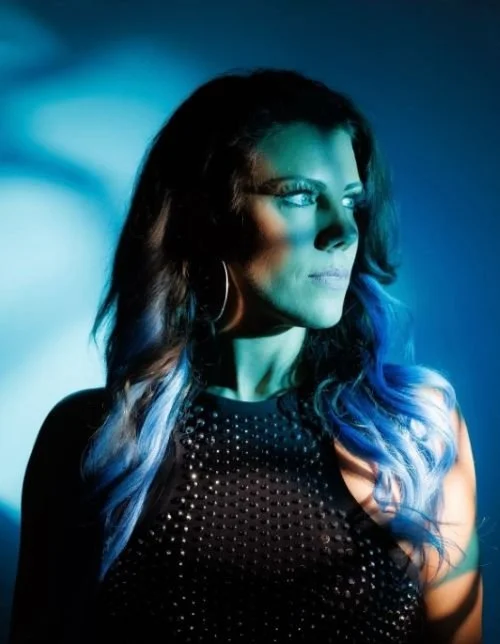
PHOTO CREDIT: Harry Carr for Rolling Stone UK
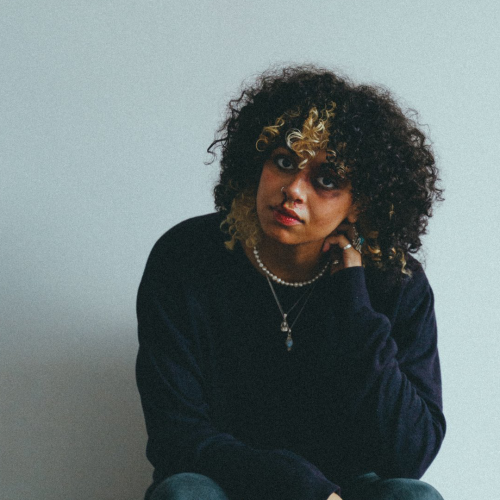
debut solo album, there is a lot to listen to from JADE. Formerly of Little Mix, her solo career brings out new sides to her talent. Having collected the Pop Act trophy at this year’s BRIT Awards, there is no doubt that she is one of the finest and most popular artists around. Each single she releases get this wave of love, respect and support. I am looking forward to an album and seeing what she delivers. I am going to start out with an interview from Rolling Stone UK from November. JADE is this singular artist who is always going to be associated with Little Mix but she is this amazing solo act who deserves recognition for that. Forging her own path:
“Her mother was a Motown fan who looked like Diana Ross, while her dad listened to 80s power ballads and VH1 classics. Her big brother — who she aspired to be like as every younger sibling does — was deeply into the happy hardcore-clubland classics era of the 90s and 00s. It was a happy childhood, in part due to the fact that there’s a strong Yemeni community in South Shields (Thirlwall is half Arab: one-quarter Yemeni, one-quarter Egyptian). “I have a lot of memories of my grandad cooking curries or waiting for him outside the mosque,” she remembers. “I listened to his prayer and Arabic music, too.” It wasn’t until she went to a Catholic secondary school, where she felt alienated, that she began to struggle with racist remarks and her feelings of anxiety. She was bullied by other girls, hence her initial reservations about being in a girl band.
While she was in Little Mix, she didn’t understand that she could have spoken out more about her race. “I’d only ever seen negative stereotypes of Arab people in the press, so I was scared to promote my heritage,” she says. “I feel sad for my younger self that I could’ve been the representation I needed back then. I try to make up for that now.” Thirlwall has been outspoken about issues close to her heart. Whether it was attending Black Lives Matter protests and pro-Palestine rallies or becoming an LGBTQ+ rights ambassador for the UK charity Stonewall, she stands out among many of her peers for her political verve.
Each of the girls knew a year ahead that Little Mix were disbanding, so they individually spent that period preparing in the studio. “It took me a long time to figure out how to not write a Little Mix song because that’s all I’d done for a decade,” admits Thirlwall. Panicked about the idea of having so much stillness after the group, she made an abundance of music in a bid to find her sound as soon as possible. This became an advantage: so sure of what she wanted to do, Thirlwall was able to approach potential labels with a fully formed vision. After signing with RCA of Sony, they assured her she could take her time to release her solo music, which came as a surprise: in the pop world, two and a half years is a long time to disappear. “In hindsight, I was freaking out about existing without the group and thought I had to jump on the hype of us just disbanding. If I’d released then, I would’ve been anxious and have put so much pressure on myself to be as big as [Little Mix] was.”
Nerves were amplified because it was her first time striking out alone. “I always associated Little Mix with my womanhood as I spent my whole adult life with the girls,” she says. “I didn’t know how to be a woman in my own right. When we first stopped, I was lost because I was like, ‘Fuck, every decision I’ve made over the past decade hasn’t been my own.’ It took me a minute to get my independence back.”
Does that feel codependent now looking back? “100 per cent, we were codependent,” she says resolutely. “Any relationship can become a bit toxic, or the boundaries aren’t necessarily there, but we were family and joined at the hip. After the group, I was terrified to even go to an event on my own because I had to talk to people. We’d go to an event and just talk to each other in the corner. You feel safe when you’re in a group because if something doesn’t go well, you can say, ‘Oh, it wasn’t all me.’”
While each member was planning their solo material, they were supportive of each other but kept their future careers highly confidential. This wasn’t a collective decision but an unspoken rule to not talk about music or ideas. “We knew we needed the space to figure out who we were without feeling influenced by one another. I didn’t want to compare or hear their music and think ‘God, am I doing the right thing?’ I just didn’t want to know. Fans and critics will compare our work, so I don’t think we should be doing it, too.” While that is true, it’s impossible not to make comparisons when the other members of Little Mix have pursued a more straight-forward pop route.
If Thirlwall was in charge of the music industry, it’d look different. Sure, it’s improving for artists because social media means “you can’t get away with as much bad shit”, but there’s some way to go. When I ask her how she’d change it, she sits up in a businesslike manner and adopts an Elle Woods from Legally Blonde tone. Before she’ll answer that, she’ll take me back to the nagging feeling she had that something wasn’t right with Little Mix. The four girls were presented with different contracts and told who their team was, and she didn’t feel she had a choice.
To all intents and purposes, Thirlwall and her fellow Little Mix band members were child stars. She agrees with this assessment. “I almost think you shouldn’t be allowed to be a star until you’re 18. I’m so glad I was turned away and didn’t get put in Little Mix until I was 18 — and even then, I feel like that was too young,” she says.
Previous X Factor winner and South Shields born-and-bred Joe McElderry had warned Thirlwall of his negative experiences in the industry. “I remember him saying make sure your mum’s there when you’re doing all these important signings. But I was too young to understand what he meant, and I made the same mistakes as him.”
It wasn’t until halfway into their career that the young women looked around and wondered who that person in the room being paid to be there was or why their peers and friends were making more money than them. Thirlwall and bandmate Leigh-Anne Pinnock helped to write the Little Mix music but weren’t signed into a publishing deal until 2019. Unfortunately, it was a “really shit deal” that they were stuck in but at least she was finally recognised as a songwriter, financially speaking. (For her solo career, she has not signed a publishing deal because she now finds it hard to trust the entire framework.)
If she were queen of the industry, her first decree would be to introduce a comprehensive course that artists take as soon as they’re signed by a label (if not sooner), that teaches them what a label deal is, how royalties work and how they make their money. That would prevent the type of situation that Little Mix got into when they were first signed. “When you come from a working-class background, you get your advance and think you’ve made it, but you have to recoup everything back. You’re getting all these lavish cars and making them wait for ages, but you’re footing that bill eventually,” she laughs drily. She would also introduce the sort of mental health care she’s managed to negotiate as a solo artist with her new label: a substantial pot of money that she can use if she needs therapy”.
I am going to move to a couple of other interviews before wrapping things up. I will get to a 2025 feature soon. Before that, there is another interview from late-2024 that I am keen to explore. CLASH spotlighted JADE. Someone who said how they want to push boundaries, CLASH wrote how the “South Shields siren is encoding her history in artful songs that explore the paradox of fame. Buckle up, we’re heading to the pop destination of the year”:
“Jade had been working on solo material for over a year, much of her time spent between London and LA. Bouts of homesickness coupled with a trusted label exec announcing their departure from her label, led to a frustrating but fateful recording session with powerhouse collaborators Mike Sabath, Pablo Gorman and Steph Jones of ‘Espresso’ fame. Together they looped a sample from Sandie Shaw’s ‘Puppet On A String’, with a generous smattering of modulated vocal and allusions to Clubland classics. Once Jade laid down the vocals, she set about trying to convince her team ‘Angel…’ would be her definitive primer. They didn’t take much convincing. “Everyone loved it!” she says nonplussed. “I really didn’t think they’d be on board. We weren’t going for a radio-friendly hit because I was adamant that it had to be different. It didn’t go number one but it didn’t have to.”
“‘Angel’ really helped get the ball rolling,” Jade continues, “so many doors have opened.” One of those doors is a portal to the high fashion world, with the singer fast becoming a go-to muse for designers. Two days prior to our chat, she was in New York, sat front row at Off-White’s Spring presentation. “It was so fun but chaotic. I feel for the people organising these shows because you’re dealing with so many egos. It must be a logistical nightmare,” Jade says endearingly, as if she’s a tier lower than the A-listers she’s rubbing shoulders with. For the first time in her career, Jade is able to play the protagonist in her own self-styled story. “It’s a harder space to navigate when you’re in a girl group. Designers don’t always want to work with everyone. Now, I can push the boat even further. It’s liberating doing your own thing. Now I’m in it, it feels quite nice.”

PHOTO CREDIT: Florence Mann
Jade has the aura of someone who has spent a long time processing the psychological toll that comes with navigating the reality competition/big label industrial complex. ‘Angel…’ melds her childhood aspirations with lyrical lashings of industry reckoning; no homegrown pop song released this year manages to shatter the illusion whilst arriving at a new epiphany. Honouring her past has meant exposing the lurid reality of coming-of-age on screen, of being morphed by a corporation that demands regular appearances and a regular flow of content. “I liken it to a relationship because it gave me so much but also took too much,” she says with a hint of trepidation. “It’s a show that says as a 25-year-old you’re too old to be a pop star. That seems like the perfect age to go into this. You don’t have the tools to express yourself when you’re 17. I wouldn’t do it that way again.”
CLASH gets a preview of a future single, titled ‘That’s Showbiz, Baby!’. It captures the hardwired, industrial-pop energy of a vintage Richard X production, only grimier and more febrile. I ask who the acidic line at the end – ‘It’s a no from me’ – is aimed at. “I’ll let you read between the lines,” she retorts with a grin. The song is a decadent homage to RnB-pop provocateurs – a “melodramatic” anthem whereby Jade purges her own experience being exploited as a pliable, young female artist. “It’s ‘Angel’s’ cunty little sister,” Jade describes. “She goes bigger, harder and deeper. ‘Showbiz’ was an easier one to write because I knew what I wanted to say. It’s what pop should be: playful, confrontational but still a bop.”
Jade is editorially-precise. She has an ear for recontextualising samples, and knows at what opportune point to throw a sonic curveball in the listener’s face. In the hands of a lesser musician, the intricate mesh of references would implode, but with Jade, subversion is the point. That’s where her reframing of “the machine” and “the show” comes in. She toys with personas, shifting vantage points between the star, the voyeur, and the master puppeteer. The era’s iconography further illustrates how emboldened Jade feels creatively; her visual moodboard a Frankenstein patchwork of prime Britney, Madonna, Hun culture, comic books, musical theatre and an overarching tribute to the anarchic spirit of Brit progenitors.
Jade is in a creatively fertile, high-yield chapter of her life. There’s an abundance of music she’s drip-feeding to the public, the anticipation mounting in a prolonged but carefully-staged build-up to a debut solo album landing next year. “I’m fine-tuning everything and thinking of possible collaborations as we speak,” she shares. “But I’m eager to get back into the studio again. I’m feeling energised.” It took some adjusting, but she’s embracing being a mutable pop star in a functional, fan-centric era. “Back then, it was all about the singles, and they had to do well. Now, there’s a certain freedom about releasing because you can drop when you want. If something doesn’t land, that’s fine, just drop something else.”
In her ever-evolving, shifting reality, Jade is staking her claim as our next solo pop star. And she won’t settle for anything less than doing the absolute most. “The entire process of making this album has been about honouring who I truly am,” she concludes. “I want the listener to feel empowered the way I’ve been empowered. I want them to feel you can be multiple things at once. I’m an outspoken pop girlie, I want to prod the bear and push boundaries. I want people to feel it’s safe here, to truly be themselves”.
I am going to end with an interview from Wonderland. Very much at the forefront of modern Pop, JADE has won high-profile support from Stormzy, Addison Rae, and Fontaines D.C. I think that the next year or two is going to see her climb to the top of the Pop mountain. I love her Instagram feed, as you get a real insight into her world. The videos and photos bring you closer to her music. There is no denying the fact that her recent trajectory signals that she is very much here for the long-run. Anyone who has been reluctant to embrace JADE or was perhaps not a massive Little Mix fan, you really need to check out her music. It is its own thing. Songs that, once heard, stay in the head and will be there fir a very long time:
“The 32-year-old, born Jade Thirlwall but known mononymously as JADE since emerging solo from Little Mix last year—the world’s most successful girl group of the 2010s—has a penchant for excess when it comes to home interiors too. She dials in from the zany library-meets-study of her newish house, in London’s leafy South-Eastern fringes, which she shares with her boyfriend, the musician, writer, and podcaster Jordan Stephens, as well as dogs Spike and Mimi. “Let me give you a mini tour,” she says, pointing her camera firstly upward to the azure sky mural wallpaper that covers the roof. “We’ve got a sky ceiling,” she confirms. “Why not? Do you know what I mean?” A busy photo collage decks the forest green walls behind her. “This is the one room where I wanted it to be a little bit chaotic, but in a calming way. You know how Ariel in The Little Mermaid [surrounds herself with] all her little treasures…?” This is JADE’s secret grotto.
The South-Shields native moved here 18 months ago from her apartment in Canary Wharf that served as the base for much of Little Mix’s nine-year tenure atop the charts. Her former address’ proximity to London City Airport saw her ideally placed for the country-hopping the group required, “but as we know, [Canary Wharf ] is super grey,” she says. “I didn’t realise until I moved how healing it is to be around green [space]. I’ve never been one to believe in all of that, but I shit you not, the first day I arrived, I felt like I could breathe better.”

PHOTO CREDIT: Thom Kerr
Respiratory ease is matched by the simplicity with which she can navigate her new neighbourhood, largely flying under the radar as “it’s a bit of a yummy-mummy area,” she explains. Cutting out the noise around her was vital in accommodating the noise she wanted to make when she reintroduced herself to the world as a solo artist last summer. Her opening statement would be “Angel Of My Dreams”, a three-minute 17-second Pop assault course, charting her bittersweet relationship with fame and the music industry originating with Little Mix’s 2011 The X Factor victory when JADE was just 18. It opens with a sample of British singer Sandie Shaw’s 1967 winning UK Eurovision entry “Puppet on a String”, before a summons to her producer Mike Sabath (also behind the buttons on RAYE’s breakout “Escapism”) to “Let’s Do Something Crazy.” What follows is indeed nuts, but artfully so. A power ballad chorus, which could have made for tearjerker-X-Factor-audition repertoire if it was birthed in the noughties, segues into a sketchy electro verse driven by a petroleum bassline, before the refrain returns, but this time pitched up into melodic candy-floss, coming together in something not far from a Happy Hardcore banger…but cooler. The track’s been noted for sounding like multiple songs in one, with lineage in the quirky Pop engineering of Xenomania, the British writing and production powerhouse made famous for splicing nuggets of different songs into hits, chiefly for Little Mix’s noughties British girl group predecessors—Girls Aloud. “I do really love Frankenstein-ing influences together to fuse the JADE sound,” she tells me, “because I think now, more than ever, there’s so much music out there in the world and it’s becoming harder and harder to be original.”
Ingenuity has been achieved in the eyes of critics, at least. “Angel of My Dreams” finished 4th in The Guardian’s 20 Best Songs of 2024—an embrace you might expect for a member of, say, The xx gone solo, but less so for a former member of a manufactured band, the kind that once had a kids’ plastic doll line made in their likeness”.
I will wrap up now. For this Modern-Day Queens, I wanted to show support and respect for one of modern Pop’s greatest artists. Keep an eye on her social media channels and official website for news about a debut album. Something expected to be released later in the year. Until then, go and explore the wonderful music of…
THE stunning JADE.
_____________
Follow JADE