
FEATURE:
Kate Bush: Something Like a Song
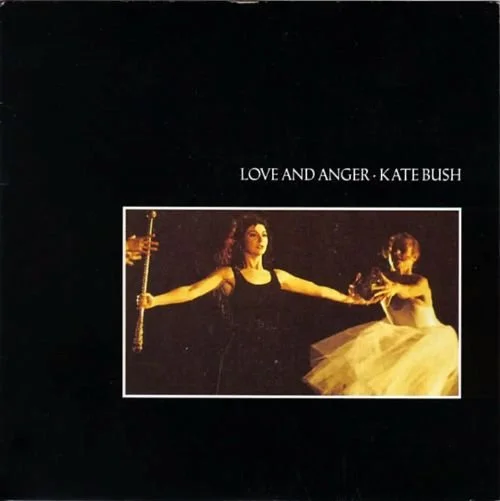
Love and Anger (The Sensual World)
__________
SOME might see this song…
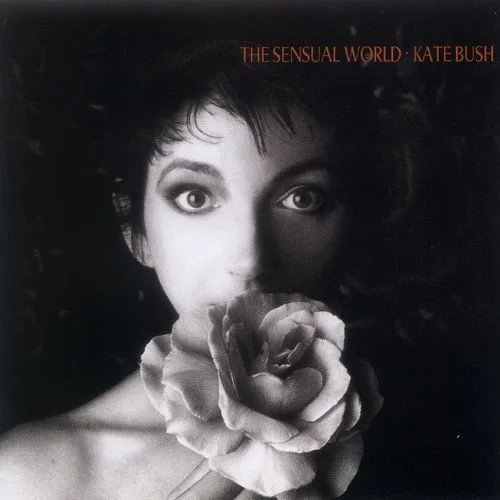
as the opposite of what one would associate with The Sensual World. Kate Bush’s sixth studio album was released in 1989. Many would associate the album with something sensual, romantic and positive. Songs that are of a particular vibe. However, it is a varied and complex album where Kate Bush addresses a number of different themes and stories. However, in terms of love and romance, Kate Bush is notable for being very positive. Love and Anger is a song that suggests recriminations, doubts and the actual realities of a relationship. A sense of loss and defeat (“If you can't tell your sister/If you can't tell a priest/'Cause it's so deep you don't think that you can speak about it/To anyone/And you tell it to your heart?/Can you find it in your heart/To let go of these feelings/Like a bell to a Southerly wind?/We could be like two strings beating/Speaking in sympathy/What would we do without you?”). If not the first time a love song from her was more negative or balanced, it was a window into her romances and relationships of the time perhaps. It is a fasting song. I want to take a closer look at Love and Anger. It is one of the standouts from The Sensual World, though it is not often talked about. There are some features/reviews that I am going to drop in. It is a fascinating song. One of the most-streamed from The Sensual World, I think that its popularity is more the fact it is the second track and follows The Sensual World’s title track, more than the fact people go after the song and know it. I never hear this song played on the radio, and it is really not discussed much. In terms of sequencing, I would have thought Love and Anger would be fourth or fifth down, though Bush put this song right near the top. The third and final single from the album released on 16th October, 1989, Love and Anger was released on 26th February, 1990 and reached thirty-eight in the U.K. More notably, Love and Anger charted on the US Billboard Modern Rock Tracks chart that December at number one - it was Bush's only chart-topper on any U.S. chart until 2022 (when Running Up That Hill (A Deal with God) was revitalised and reintroduced to a new audience after appearing In Stranger Things).
We forget how well-received The Sensual World was. It has received so many positive reviews and love, in spite the fact it came out at a time when other genres were popular. It was sort of Rave, Club music and the second Summer of Love (1988-1989). U.S. Hip-Hop was taking hold and bands like Pixies, Nirvana and New Order were more popular. In terms of female solo artists, U.S. giants such as Madonna and Janet Jackson were more in vogue. The Sensual World was like nothing else around in 1989, which is perhaps why it charted so well and was acclaimed. Audiences wanted something genuinely alternative at a time when Alternative bands were perhaps not; Pop somewhat too stagey, showy or commercial. I love how the B-sides of Love and Anger include Ken, One Last Look Around the House Before We Go, and The Confrontation. Walk Straight Down the Middle on the U.S. cassette version. Be Kind to My Mistakes for the Canadian cassette. The first single on the U.S. label, Columbia Records, it is great that audiences there connected with the song! It was a period where she was getting more recognition in America. Hounds of Love was perhaps her first album to properly get some love and respect there – though reviewers were mixed and interviewers occasionally clueless -, even though The Dreaming got some focus. However, The Sensual World and 1993’s The Red Shoes were a success. The latter reached twenty-eight on the Billboard 200. Love and Anger’s success is all the more amazing, as it is a track that Kate Bush was not sure what she was trying to say. A hard and inorganic writing process, I do wonder why it was chosen over a single over, say, Never Be Mine, Rocket’s Tail or even The Fog. The U.S. reaction was genuinely more effusive than the homegrown critics’.
Consider the range of reviews and how there was a sole U.K. moment of praise; U.S. critics much more tuned in and aware of a brilliant song when they heard it! Thanks to the Kate Bush Encyclopedia for providing these useful resources. Baffling why U.K. press were so unkind and nasty to Love and Anger I suspect they were much more into what they thought was cool at the time: Grunge, Alternative and even Dance and Rave. Something with more sophistication, depth and beauty sort of passed them by and went over their heads:
“Is it too late to take back all those gushing hymns of praise we wrote in homage to Kate’s recent LP? [This is] pretty dispensable, fairly orthodox pop-rock listening.
Paul Lester, Melody Maker, 3 March 1990
Kate seems to have lost the plot… all middle without a beginning or an end… lost in an unfocused mire…
Tim Nicholson, Record Mirror, 3 March 1990
Dynamic understanding and depth that is quite untouchable. Bloody fantastic.
Phil Wilding, Kerrang!, 3 March 1990
Remarkably, US reviews were much more positive:
Bush recalls her ‘Big Sky’ in this lively introspective number from the hit album… already a no. 1 smash with modern rock programmers.
Bill coleman, Billboard (USA), 9 december 1989
This bristles with vigour electricity and life… fuelled by cascades of crashing guitars and a huge chanting chorus of background vocals… captures the power and sweetness of Kate Bush’s voice and music.
College Music Journal (USA), November 1989”.
Kate Bush spoke to U.K. and U.S. journalists/broadcasters about Love and Anger. Sometimes in exasperated tones! This challenging song, the fact again it was a single meant that she either felt it would be successful or EMI were pushing to put it out. I have dropped this information in before, but I want to come back to the Kate Bush Encyclopedia and their great work including these interesting interviews:
“It’s one of the most difficult songs I think I’ve ever written. It was so elusive, and even today I don’t like to talk about it, because I never really felt it let me know what it’s about. It’s just kind of a song that pulled itself together, and with a tremendous amount of encouragement from people around me. There were so many times I thought it would never get on the album. But I’m really pleased it did now.
Interview, WFNX Boston (USA), 1989
I couldn’t get the lyrics. They were one of the last things to do. I just couldn’t find out what the song was about, though the tune was there. The first verse was always there, and that was the problem, because I’d already set some form of direction, but I couldn’t follow through. I didn’t know what I wanted to say at all. I guess I was just tying to make a song that was comforting, up tempo, and about how when things get really bad, it’s alright really – “Don’t worry old bean. Someone will come and help you out.”
The song started with a piano, and Del put a straight rhythm down. Then we got the drummer, and it stayed like that for at least a year and a half. Then I thought maybe it could be okay, so we got Dave Gilmour in. This is actually one of the more difficult songs – everyone I asked to try and play something on this track had problems. It was one of those awful tracks where either everything would sound ordinary, really MOR, or people just couldn’t come to terms with it. They’d ask me what it was about, but I didn’t know because I hadn’t written the lyrics. Dave was great – I think he gave me a bit of a foothold there, really. At least there was a guitar that made some sense. And John [Giblin] putting the bass on – that was very important. He was one of the few people brave enough to say that he actually liked the song.
Tony Horkins, ‘What Katie Did Next’. International Musician, December 1989”.
Whilst people have reviewed the song, there is a bit of a mixed reaction. However, I want to bring them in, as I really admire Love and Anger and think it was a worthy single. One that should have done better in the U.K. Maybe genres popular in the U.S. fitted the song and so the press connected better – and, in turn, people were inspired to buy the single. It was a different sound in the U.K., so maybe critics were cynical and more jaded here. I am going to get to a more mixed reaction of Love and Anger. This Substack is an interesting read:
“Lyrically, the song matches a lot of Kate Bush’s themes of love, friendship, deep thoughts and introspection. In “Love and Anger,” she reflects on how difficult it can be to express one’s innermost thoughts or concerns if you don’t know for sure who you can rely on to be a confidant. She talks about how she has something buried so deep, she “doesn’t think she can speak about it.”
It could take me all my life
But it would only take a moment to
Tell you what I'm feeling
But I don't know if I'm ready yet
My kids are like this. Granted, not everything they keep to themselves is a deep, introspective thought unwilling to be dredged up to the surface; sometimes it’s because they felt bad about breaking something or forgetting to do something. But the point of the song is, regardless of what it is you might be holding inside, you need to be sure you’re ready to release it, and that you can confidently express that emotion to someone willing to listen.
After that struggle, Kate Bush’s narrator conceded that yes, eventually, you should be able to connect with that person or people:
You might not
Not think so now
But just you wait and see
Someone will come to help you
We’re all built like that. There’s no one alive that can get through their days without finding an outlet for their emotions and feelings, but it’s the risk of being hurt that creates the confusion. Kate Bush infuses an intensity to that moment in her performance, coupled with a wide range of musical influences coming together to create that sense of simple chaos. It’s a well-arranged piece of music.
Despite the success of this song on the MRT charts, it never made it on to the Hot 100 and ultimately faded from the U.S. charts entirely in the early weeks of 1990. It took another 15 years for Kate Bush to reach the top 10 of the British charts, hitting #4 with “King Of The Mountain” in 2005. It did not chart in the U.S.
Kate Bush might not be your cup of tea artistically. I know her songs, even “Running Up That Hill,” are not really in rotation on my typical playlists. But she is definitely an interesting and talented artist, with a very unique and powerful voice. “Love And Anger” wouldn’t have been a legacy hit for her even before her resurgence in 2022, but it’s a decent part of her extensive catalog.
Rating: 6/10”.

IN THIS PHOTO: Kate Bush in 1989/PHOTO CREDIT: Kevin Cummins
In 2023, for their Alternative Number Ones feature, Stereogum provided a passionate and very positive analysis of Love and Anger. If the U.K. press were somewhat cold and distant, Love and Anger has got this retrospective admiration and intrigue. People looking at deeper cuts after the resurgence with Stranger Things and Running Up That Hill (A Deal with God). Love and Anger feels more relevant or fits in better today than 1989’s U.K. music scene:
“In The Alternative Number Ones, I'm reviewing every #1 single in the history of the Billboard Modern Rock Tracks/Alternative Songs, starting with the moment that the chart launched in 1988. This column is a companion piece to The Number Ones, and it's for subscribers only. Thank you to everyone who's helping to keep Stereogum afloat.
A couple of weeks ago, Kate Bush was inducted into the Rock & Roll Hall Of Fame, and she surprised exactly zero people by neglecting to show up. Kate Bush doesn't show up to things. It's a key part of her mystique. Bush has toured exactly once, in 1979. She's performed in the US exactly once -- musical-guest duties on a 1978 Saturday Night Live episode with Eric Idle as the guest host. Whenever Kate Bush leaves the house for any reason, it's a five-alarm story in the music press. She wasn't going to no damn Hall Of Fame induction ceremony. I wonder if she even watched Big Boi give her induction speech and St. Vincent cover "Running Up That Hill."
"Running Up That Hill," as you probably already know, is the reason that the Hall Of Fame inducted Kate Bush after all of her years of eligibility. In 2022, that song caught a sudden and glorious surge of attention after being featured heavily on the most recent season of Stranger Things. (Winona Ryder, one of that show's stars, says that she pushed for the song's inclusion, which absolutely tracks.) "Running Up That Hill" suddenly became a global smash, topping charts around the planet and coming very close to the apex of the Billboard Hot 100. It was one of the most beautiful feel-good stories of the past few years of pop music, and Kate Bush didn't have to do a single thing to set its wheels in motion. "Running Up That Hill" was already her biggest hit before Stranger Things, and the song was just sitting there, waiting for entire new generations to notice.
Pre-Stranger Things bump, Kate Bush was already a creature of legend. In her homeland, Bush was a giant pop star from jump street, finding huge success before she was even out of her teens. She built a career entirely on her own terms, producing her own records and directing her own videos. Then, she essentially disappeared, going off to live in her castle and only reemerging for bafflingly weird and reliably fascinating projects at irregular intervals. Her absence is central to her mystique, and it's never stopped her music from resonating. Before the Stranger Things thing happened, my daughter discovered Bush's batshit 1980 single "Babooshka" via TikTok. I have to imagine that there will be more Kate Bush resurgences, and that Bush herself won't need to do anything to spur them on.
Kate Bush songs tend to sound like they're echoing up from some hidden, mystical cavern. She's been a ghostly presence for so long that it's almost hard to remember the period when she was an active recording artist who was trying and mostly failing to break into the American market. (Admittedly, she wasn't trying that hard. She doesn't like to fly, so she wasn't going to physically come over here.) In 1989, Kate Bush had only made a few minor inroads on the Billboard charts, partly because there was no radio format where her music made a ton of sense.
Kate Bush didn't even entirely make sense on Modern Rock radio, though her lush sonics and romantic maximalism weren't too dissimilar from the arch and mopey British rock bands who were all over those playlists at the time. Her flowery, indulgent orchestrations had more to do with prog and art-rock than with the punk that influenced most of the other acts on those stations. But Bush had taken a long break after Hounds Of Love, her most successful album to that point, and her return was an event. That event was enough to turn "Love And Anger," the wild and twisty and gorgeous single from her album The Sensual World, into Bush's only #1 hit on the Modern Rock chart. I'm glad it was enough, since it means that I get to write about an extremely cool career.
Catherine Bush, the daughter of an English doctor and an Irish nurse, grew up in an ancient farmhouse on the outskirts of London. She was an artistic kid who taught herself to play piano and violin, and she started writing songs very young. Her parents paid for her to record a 50-song demo tape when she was 16. No labels were interested, but a family friend connected Bush with Pink Floyd guitarist David Gilmour, who became a regular collaborator over the years. Gilmour paid for a new demo tape, and Bush recorded it with big-deal producer Andrew Powell. That was enough to convince EMI to sign Bush, who was still a kid.
EMI actually kept Kate Bush on the shelf for a couple of years, and she used that time to study interpretive dance and mime. She also formed a group called the KT Bush Band and played London pubs; anyone who saw them back then can now drop this anecdote at a party and make everyone else violently jealous. Finally, Bush released her debut album The Kick Inside in 1978, a few months before her 20th birthday. Her debut single "Wuthering Heights" went all the way to #1 in the UK. It was the first time that a female artist topped the singles chart over there with a song that she'd written herself. In the UK alone, The Kick Inside sold a million copies, which meant that something like 2% of the population bought the record.
"Wuthering Heights" didn't do any business in America, but another single from The Kick Inside, "The Man With The Child In His Eyes," scraped the bottom of the Hot 100, peaking at #85. It would be seven years before Kate Bush landed on the Hot 100 again. Bush rushed her sophomore album Lionheart out a year after The Kick Inside, and it wasn't anywhere near as successful as her first. In 1979, she developed a theatrical, elaborately choreographed spectacle, and she took her Tour Of Life out on the road. Except for a few televised single-song performances here and there, Bush wouldn't play another live show for 35 years.
Kate Bush recorded her first two albums with Andrew Powell, the same guy who'd produced her demo. For 1980's Never For Ever, Bush started to take over as producer, sharing credit with audio engineer Jon Kelly. After that, Bush produced every one of her albums on her own. 1982's The Dreaming is the first LP that Bush produced entirely by herself, and it's a wild ride. Bush got really into drum machines and into Fairlight synthesizers, but she didn't use them for the mechanical rhythms and sleek textures of that era's synthpoppers. Instead, Bush let those sounds unlock some strange, expressionistic new textures. Her voice had always been wispy and eccentric, but parts of The Dreaming are downright freaky, in the best way. She sounds delightfully unconstrained, free to yelp and howl and screech about her undying fascination with Victorian femininity.
Kate Bush followed The Dreaming with her masterpiece. 1985's Hounds Of Love uses the experimental electro-organic textures and proud indulgence of The Dreaming in service of alternate-universe pop songs -- some of which worked, and continue to work, as pop songs in this universe. In the UK, "Running Up That Hill" was Bush's biggest hit since "Wuthering Heights." Other Hounds Of Love songs, like the title track and "Cloudbusting," immediately entered the music-nerd canon. In the US, "Running Up That Hill" was a bit of a fluke hit, going all the way to #30 on the Hot 100. The whole album is absolutely astonishing, and I would encourage anyone to carve out some time and just disappear into it.
From the very beginning, Kate Bush won the admiration of her peers, especially among veteran British art-rock types. David Gilmour was an early fan, and so was Peter Gabriel; Bush learned about the magic of Fairlight synths while singing backup on his self-titled 1980 album. (Gabriel, who will eventually appear in this column, has a bunch of self-titled albums, but this was the melty-face one. She's the echoing trill on "Games Without Frontiers.") In 1986, Gabriel wrote a beautiful song called "Don't Give Up," and he hoped to record it as a duet with Dolly Parton, which would've doubtless been cool. Dolly passed on the track, so Gabriel recorded it with Kate Bush instead. I love the idea that he heard some similar serene tenderness in those two radically different voices.
Peter Gabriel's So album became a gigantic hit, and "Don't Give Up" went top-10 in the UK. "Don't Give Up" also made it to #72 on the Hot 100 -- Bush's third time on that chart. After Hounds Of Love and "Don't Give Up," there must've been a ton of anticipation for another Kate Bush record. Bush didn't release The Sensual World until four years after Hounds Of Love. Bush worked hard on The Sensual World, and she followed her muse to some unexpected places. The title track’s lyrics are a reworked version of Molly Bloom's speech from Ulysses. (The Joyce estate wouldn't let her use his words verbatim.) She sings another song, "Heads We're Dancing," from the perspective of a woman who spends a romantic 1939 evening dancing with a dashing stranger who turns out to be Hitler. Any label execs who hoped that she'd go fully pop after Hounds Of Love must've been pounding their heads on their desks.
A year before The Sensual World came out, John Hughes used a remixed version of Bush's then-unreleased song "This Woman's Work" to soundtrack a montage from his movie She's Having A Baby. (Kate Bush, incidentally, has some random-ass soundtrack songs on her resume, including one for the the 2000 CGI cartoon Dinosaur and another for 2007's leaden YA-fantasy flop The Golden Compass.) These days, "This Woman's Work" is by far the most popular song from The Sensual World, thanks in part to a stunning version that her fellow art-pop enigma Maxwell sang on his 1997 MTV Unplugged EP. (That Maxwell cover did better on the Hot 100 than almost any actual Kate Bush song. It peaked at #58.) But the Sensual World song that took off on American alt-rock radio was the song that Bush had the hardest time writing.
In her all-too-rare interviews, Kate Bush never even liked to talk about "Love And Anger"; she evidently regarded the song as a massive pain in the ass. Bush had the music for "Love And Anger" first, and it took a year and a half for her to figure out the lyrics that she wanted to write. After the song came out, Bush said that she still didn't know what it was about. Bush's lyrics are often deliberate and exacting, rife with literary references. With "Love And Anger," she just wanted to get the damn thing done. But I like the idea that her frustration forced her to work on sheer instinct.
I don't know what "Love And Anger" is about, either, but its vast and overwhelming swirl of emotions is powerfully evocative. Since Bush can't or won't say what the song is about, you can come up with your own reading. I hear a lot of pain and regret in "Love And Anger," and also hear a certain nurturing warmth. Bush seems to be encouraging someone to stay strong through a painful period, much as she did on "Don't Give Up." There's a lyric that I hear as a reference to childhood abuse -- "If you can't tell your sister/ If you can't tell a priest/ 'Cause it's so deep you don't think that you can speak about it to anyone/ Can you tell it to your heart?" Maybe that's not what Bush meant, but authorial intent isn't everything, and that shit hits me hard.
The sound of "Love And Anger" is certainly self-indulgent -- all those drums and massed backup vocals and hammering pianos and flinty guitar notes swirling and building, without anything resembling a stick-in-your-head hook. But Kate Bush is the kind of artist who can turn self-indulgence into a strength rather than a liability. Bush said that she had a hard time recording the song, getting the musicians to play the right things, but her perfectionism paid off. "Love And Anger" plays out like a gathering storm, and I love the way the sheer sound of the thing can swallow a room.
Kate Bush's old buddy David Gilmour played guitar on "Love And Anger" and gets a few guitar-face close-ups in the video. Plenty of the bands on the late-'80s Modern Rock charts had some level of Pink Floyd influence, but none of them had access to actual Pink Floyd guys. That's just a Kate Bush thing. The wheedly, choppy guitar bits at the end of "Love And Anger" have a bit of late-'80s studio cheese on them, but they still come out rough and sharp, and I love the power chords that Gilmour plays early in the track. But despite the superstar guest, the guitars don't really overwhelm "Love And Anger." Instead, they're simply part of the whirlwind, along with the busy pianos and thrumming bass notes and some kind of zither, maybe? And the drums. There are so many drums on "Love And Anger," booming and whapping and crunching and bubbling and thundering.
Over all that music, Kate Bush sings about the need to let go of your feelings, and she sounds like she's letting go of hers. She starts off soft and welcoming, but pretty soon, she's yowling and trilling and yipping with efflorescent exhilaration. She turns her multi-tracked voice into a reverb-soaked choir on the backups. She also does this wobbling-hum thing that I just love. At the end of the track, she whispers "yeahhhh" and then laughs uproariously. She's just gotten through all this emotional heaviness, and she sounds positively exultant.
All of Kate Bush's self-directed videos are strange and singular, and the "Love And Anger" clip is a total hoot -- gold-dust showers, whirling Sufis, glowing scepters, a phalanx of ballet dancers, Bush staring straight into the camera with a playful sort of pride. As the clip ends, Bush is up on a soundstage with her band, showing the kind of dance moves that she almost never bothered to attempt in front of a paying audience. Bush's dancing has a drunk-aunt-at-the-wedding quality, and I love it. It's not terribly graceful, but she is in it. She's fully focused, man.
"Love And Anger" never crossed over to the Hot 100, but The Sensual World eventually became Kate Bush's biggest-selling album in the US, going gold four years after its release. (That's still Bush's only RIAA certification, though "Running Up That Hill" has probably done multi-platinum numbers by now.) In 1990, the title track of The Sensual World reached #6 on the Modern Rock chart. (It's an 8.) Then, in 1990, Bush covered Elton John's "Rocket Man" on the Elton John/Bernie Taupin tribute album Two Rooms, and her version of the song reached #11. It slaps.
It's pretty wild to try to figure out Kate Bush's reputation in the late '80s and early '90s. Bush was never an overwhelming critics' favorite, though both Hounds Of Love and The Sensual World did decently on the Village Voice Pazz & Jop critics' poll. (Critics put The Sensual World at #26 for 1989 -- not great, but still a few steps up from Rhythm Nation 1814 and Disintegration.) SPIN’s review of The Sensual World gets stuck on Bush's "kitteny stuff": "Her father-fixation, her little giggles and mews, and her hairdos are the stuff Playboy reps scout college campuses for" -- exactly the sort of terribly sexist and dismissively snarky tone that rock critics work hard to avoid today. (In fairness to writer Don Howland, of the garage punk bands Bassholes and Gibson Bros., that review also contains this phrase: "She likes to stretch her voice into the sort of Minnie Riperton-esque tweets that tend to appeal to people who like cats more than dogs but otherwise have good senses of humor." That's just good writing.)
Kate Bush followed The Sensual World with a record that critics definitely did not like. 1993's The Red Shoes was about a sleek and commercial as a Kate Bush record could be, and it wasn't really suited to the alt-rock moment in which it came out. In America, grunge was ascendant, but Kate Bush was collaborating with Prince and Eric Clapton, artists who were nowhere near that zeitgeist. Lead single "Rubberband Girl" peaked at #7 on the Modern Rock chart, and the Bush didn't return to that chart for another 29 years. ("Rubberband Girl" is an 8.)
After The Red Shoes, Kate Bush became a mom, and she left music behind entirely until returning with the 2005 double album Aerial. Great record. Since then, there's only been one more Kate Bush studio album: 2011's bugged-out 50 Words For Snow, which has an eight-minute Elton John duet and a 14-minute song about a night of passion with a snowman. Wild shit. That's a great record, too. In 2014, Kate Bush returned to the stage for Before The Dawn, a three-week London residency that might mark the last time that she ever performs live. If you got to see one of those shows, I congratulate you. Good job. You handled that situation well.
GRADE: 9/10”.
I will leave it there. I have included the B-sides for Love and Anger, as I feel they are also important and show that Bush had all these incredible songs that were not well-known or big hits. A modest success in the U.K., but a much bigger one in the U.S., Love and Anger is a Kate Bush track that should be played and talked about more. The third single and second track from The Sensual World, it turned thirty-five earlier in the year. After all of these years, it still…
SOUNDS truly fantastic.