
FEATURE:
When I Think of You
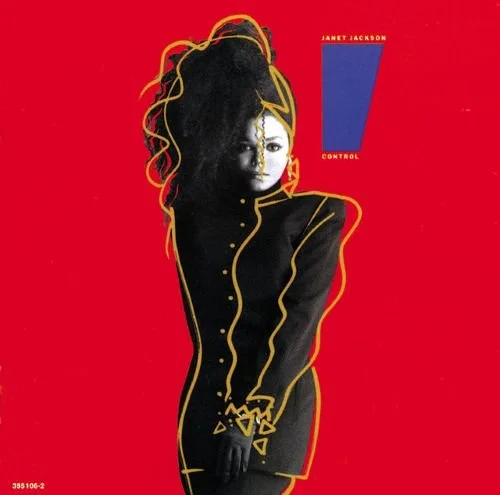
Janet Jackson’s Control at Forty
__________
ONE of the best albums…
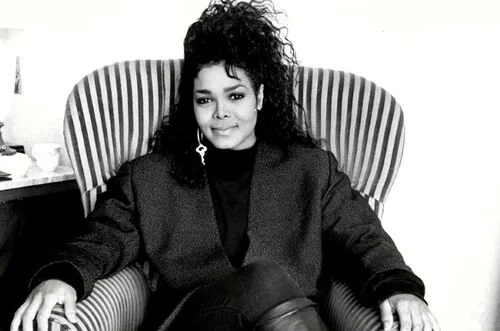
IN THIS PHOTO: Janet Jackson in 1986/PHOTO CREDIT: Bill Lovelace/ANL/REX/Shutterstock
by Janet Jackson turns forty on 4th February. Control was the follow-up to 1984’s Dream Street. Control was the first album of this golden run that continued with Janet Jackson’s Rhythm Nation 1814 (1989), janet. (1993) and The Velvet Rope (1997). One of the most fascinating sequence of albums ever released, Control was the start of it. I think it is underrated and deserved to be talked about more. Because it turns forty on 4th February, I want to spend a bit of time with Control. Reaching number eight in the U.K. and number one in the U.S., Control features the huge singles, What Have You Done For Me Lately, Nasty and The Pleasure Principle. I want to start out with Classic Pop and their assessment of Control. If there was a sense of Janet Jackson living in the shadow of Michael Jackson in terms of success and recognition, Control contains so many anthems and boasts this sense of independence and self-worth. A terrific production team and these amazing performance, Control is without doubt one of the best albums of the 1980s:
“The years since 2019 have seen Janet Jackson’s career undergo something of a major reappraisal thanks to an induction into the Rock & Roll Hall Of Fame, a Las Vegas residency, a Glastonbury performance and a vinyl reissue of her most successful albums, giving long overdue credit to a woman whose legacy has been unfairly overshadowed during the past two decades by the Super Bowl and a sibling scandal.
While the general consensus from retrospective reassessment of her work has deemed 1989’s social commentary Janet Jackson’s Rhythm Nation 1814 her magnum opus, Janet wouldn’t have been qualified to address the state of the world had she not got her own house in order first, which is exactly what she did on 1986 breakthrough, Control.
Although she kicked off her music career at the insistence of her father/manager Joe Jackson four years earlier (her eponymous debut album was released two weeks before her brother unleashed the biggest-selling LP of all time), her first two records were unremarkable, indistinct and unsuccessful, leaving Janet still known primarily as a TV actress from shows such as Good Times, Diff’rent Strokes and Fame, and as the youngest member of pop’s royal family rather than for her musical output.
That was all to change in 1985 when Janet, having eloped with singer James DeBarge a year earlier, annulled the problematic marriage (allegedly due to his voracious drug habit), and took stock of her life and career to establish herself as successful recording artist in her own right. The Janet Jackson and Dream Street albums had proven that the public wouldn’t shell out for something just because it had her name on the front, so Janet was intent on creating her own sound and identity.
It was the brainchild of John McClain, A&R executive of A&M Records, to team Janet with Jimmy Jam and Terry Lewis. The duo had previously been members of Prince protégés The Time and had gone on to achieve great success writing and producing hits for the SOS Band, Alexander O’Neal and Cherrelle among others. They’d originally been scheduled to work with former Atlantic Starr singer Sharon Bryant, but when that failed to happen, were offered any other artist from the A&M roster by way of recompense. They chose Janet.
“Nobody was checking for Janet at that point,” Jimmy Jam later explained to Red Bull Music Academy. “We just felt something. First of all, she had talent. She had a great voice, but she also had a great attitude and we thought that the attitude was never being brought out of her. We thought as producers and writers, we could do that.”
Jam & Lewis met with Janet, her dad Joe and label bosses to play them their previous record, the strings-laden The Heat Of Heat by Patti Austin, a collaboration with Quincy Jones. Janet baulked at the idea of using strings on her songs while Joe Jackson was concerned that the pair would douse Janet in the ‘Minneapolis Sound’ and make her sound too much like Prince.
Although Janet was excited by the opportunity to be working with Jam and Lewis – she had been a big fan of The Time and had seen them in concert when she was 15 years old – she wanted to make her album in Los Angeles. Jimmy and Terry refused on the basis that they always made their records in their own Flyte Tyme Studios.
Realising that the message she wanted to convey was one of growing up and doing things without the help of her family, Janet agreed to swap the sun and security of the Jackson estate in California for the cooler climes of Minneapolis, an experience which turned out to be something of a culture shock for the sheltered superstar.
Arriving in Minneapolis with eight suitcases and her best friend Melanie, Janet’s first surprise came when she was met at the airport, not by the expected limousine, but by a rental car Jam and Lewis had arranged for her. Forced to be self-sufficient, Janet relished the challenge and rose to it.
“She came to Minneapolis, no bodyguards, no nothing… she brought a friend of hers, Melanie,” Jimmy recalled to RBMA. “We required that they put her in our hands, far from the glitter and distractions of Hollywood and the interference of her manager/father. We rented her a car – a little Chevy Blazer – and she had to find her own way around; this was before GPS. There were maps and all kinds of Stone Age stuff, and she had to find her way to the studio, the hotel, all those kinds of things. It had to be on our turf, with no bodyguards, no star trips and none of Joe Jackson’s people hanging around making suggestions.”
“They told me that they didn’t want me to have somebody doing everything for me and I told them that wasn’t how I lived anyway,” Janet later told Rolling Stone. “I told them my whole story, what I wanted to do. I spoke about things that happened in my life and what I really wanted this album to be about. I said, ‘I need you guys to help me express how I feel, to help me put my feelings out”.
In 2016, The New York Times argued how Control is underrated. I would agree with that. Not talked about as much as other great albums of that decade and maybe not viewed as highly as some of her other work. This article observes that we need to reconsider Control more and discuss it, because Jackson’s worth as an artist does not get enough oxygen:
“Control” is a work of confidence, cleverness and justifiable irritation. It’s also full of weird, amazing sounds that, 30 years later, it’s easy to take for granted as the way latter-day pop music has always been: polished in a factory to a gemlike gleam. But most of the nine songs on this album — nine songs! — weren’t just factory-generated; they were performed by almost entirely aggressive, attitudinal heavy machinery that was new for both Top 40 and the outer limits of mainstream R&B. Meanwhile, for any number of reasons (that Super Bowl scandal, the long shadow of other stars, our cultural amnesia), the woman behind the wheel has been demoted to the back seat. And that, of course, warrants a correction.
Ms. Jackson was around 20 when she entered the recording studio after a stint as a sitcom star (poor Penny on “Good Times,” richer Charlene on “Diff’rent Strokes”), an annulled marriage and a split from her notoriously oppressive father, Joe. So a decree was in order: “When it’s got to do with my life/I want to be the one in control.” That’s from the opening song, “Control,” which begins with a spoken proclamation of self-emancipation: “This is a story about control.” Jimmy Jam and Mr. Lewis orbited Prince, and that opening has always sounded like a counterpoint to the mania of “Let’s Go Crazy,” which had just completed devouring America the year before. In the face of collapse, Prince demanded chaos. Ms. Jackson’s idea of anarchy was, well, control.
It makes sense to admire “Control” as an album about independence. It’s a compelling tale of freedom in which Ms. Jackson liberates herself from the demands of suffocating men to make her own demands. She granted herself permission to define her sexiness. Even now, the excitement of “When I Think of You” is the sight of a cherubic Janet Jackson dance-walking across a soundstage in a silky, tricked-out jacket and bustier, matching pants, heels, that hoop earring with the key on it, and the mane of three lions. That was also the summer of Madonna’s “Open Your Heart” video, in which she seduced with just the bustier, some fishnets and a peep show. Despite, or more likely because of, all those clothes, Ms. Jackson’s dancing seemed all the freer.
One reason to revisit “Control,” aside from its general excellence and a milestone anniversary, is to consider Ms. Jackson’s value as a pop artist, which doesn’t happen often enough. Her most recent album, “Unbreakable,” hit No. 1 last fall, but the gleam of her stardom never recovered from that evening in 2004 when Justin Timberlake ripped open her costume, exposing her breast at the Super Bowl. The logistics and intent of the moment are still ambiguous; Ms. Jackson publicly apologized. It didn’t matter. The stain had set. She went from a steady maker of big hits to some kind of postlapsarian has-been, seemingly overnight. But it still feels less like she’s fallen and more like she was pushed.
Thirty years of “Control” is a useful, if contrived, excuse to argue for Ms. Jackson’s necessity, especially as someone who knew the power of an image. Take that hoop earring with the key. It was as iconic as L L Cool J’s Kangols, George Michael’s stubble and Steven Tyler’s scarves. It was the perfect symbol for both a project called “Control” and a woman whose guard has gone down and up over the decades. People thought that key was a potential invitation, something sexy. But what if it was just self-affirming? What if she was never looking for someone to give it to? What if she was her own lock?”.
I will end with a couple of features. Albumism celebrated thirty-five years of Control in 2021. I am not bringing in the whole thing. I want to start by dropping in a quote from producer Terry Lewis, who makes a very good point as to why Janet Jackson’s Control endures and is so extraordinary. This is an album that still sound incredible forty years later:
“I think Control is timeless, because it was basically the coming out of a budding flower,” Lewis reflected during a 2015 conversation with Idolator. “That was when Janet found her voice. Prior to that record, people just gave her songs to sing. But on Control she really had the opportunity to figure out who she was musically and what she wanted to say. That was the beginning of everything, in terms of success.” Effectively her declaration of creative freedom and independence, Control is a fierce, self-assured and vibrant record that laid the groundwork for what has proven to be one of the most durable and dynamic pop music careers of the past thirty-five years.
Balancing its undeniable urban appeal with its unmistakable crossover-friendly foundations, Control is the whole package, the epitome of a pop album masterpiece. Jam & Lewis’ big, bold, and powerfully percussive soundscapes, coupled with irresistible melodies that completely envelop the senses, were innovative within the context of mid ‘80s R&B, and directly influenced the sonic blueprint of the new jack swing era that emerged a few years later.
Of the album’s nine tracks, seven were released as official singles—a sure-fire testament to the album’s broad accessibility and an incredulous ratio by today’s standards, whereby the majority of albums, including the most successful ones, yield three to four singles tops.
The album kicks off with the propulsive wallop of the high-octane title track, which explores Janet’s transition from adolescence to adulthood. It’s an unequivocally empowering message of reclaiming ownership of her life that, as Jimmy Jam once explained to the BBC, “turned out to become an anthem for young women who were striking out on their own.”
Most notably evidenced on a trio of unforgettable tracks, the theme of self-empowerment pervades the entire album. A not-so-thinly-veiled message to her ex-husband, the GRAMMY-nominated first single “What Have You Done for Me Lately?” calls out a lazy lover who refuses to pull his share of the weight in their romance-depleted relationship. A similar biting, “I’m done taking your shit” tone is heard on the danceable “The Pleasure Principle, as Janet laments “It's true you want to build your life on guarantees / Hey, take a ride in a big yellow taxi / I'm not here to feed your insecurities / I wanted you to love me.” Featuring the notorious refrain “No, my first name ain't baby / It's Janet...Ms. Jackson if you're nasty,” the anti-chauvinism paean “Nasty” finds Janet aggressively asserting her will to repel the more patronizing elements among the male species.
Other standout moments include the ebullient, synth-horn soaked love song “When I Think of You,” which is arguably the most dancefloor-friendly track of the set. The two ballads that close the album are top-notch. The sweet, sincere serenade “Let’s Wait Awhile” extols the virtues of patience and level-headedness when it comes to matters of love and lust, with Janet committing herself to “saving more for later so that our love can be greater,” while confidently explaining in the song’s closing moments that “I promise, I’ll be worth the wait.”
Sampled nearly a decade later by hip-hop duo Camp Lo for their chilled-out 1997 single “Coolie High,” the lush torch song “Funny How Time Flies (When You’re Having Fun)” concludes the album on a smoothly subdued note. The remaining non-singles are passable-enough fare, with the buoyant groove and youthful yearning of “He Doesn’t Know I’m Alive” the slightly more worthwhile listen than “You Can Be Mine.”
Nominated for Album of the Year at the 1987 GRAMMY Awards (Jam & Lewis won for Best Producer), the many-times multi-platinum Control solidified Janet’s musical identity and set the stage for even greater commercial and critical success, beginning with the release of Rhythm Nation 1814 three and a half years later in 1989. Whereas her brother ruled the pop music world for the first half of the ‘80s, Janet—together with Madonna—asserted her female pop star power in the decade’s latter half, providing inspiration to the next generation of pop prodigies, from Mariah Carey to Mary J. Blige to Beyoncé to Rihanna and beyond.
Nearly three decades after Control’s arrival, Janet released Unbreakable (2015) her eleventh and most recent studio LP, the eighth featuring production by Jam & Lewis. The stellar album is yet another dazzling effort in an amazing career that was destined to endure, due in large part to its creator seizing Control thirty-five years ago and never looking back”.
I am going to finish with a review from AllMusic. If Janet Jackson’s first two albums are largely overlooked – her debut, Janet Jackson, was released in 1982 -, Control was the moment when she truly arrived. A stunning work from a legend-in-the-making. As I opened with, Control started this run of incredible albums that saw Jackson’s status and star rise:
“Although Janet Jackson had released two records in the early '80s, they were quickly forgotten, and notably shaped by her father's considerable influence. Janet's landmark third album, 1986's Control, changed all that. On the opening title track, Jackson, with passion and grace, declares her independence, moving out of the gargantuan shadow of her brother Michael and on to the business of making her own classic pop album. The true genius of Control lies in the marriage of her extremely self-assured vocals with the emphatic beats of R&B production wizards Jimmy Jam and Terry Lewis. The duo was already well established in the music industry, but the practically flawless Control showcased Jam and Lewis' true studio mastery. For the better part of two years, Janet remained on the pop chart, with two-thirds of the album's tracks released as singles, including the ever-quotable "Nasty," the assertive "What Have You Done for Me Lately," the frenetically danceable "When I Think of You," and the smooth, message-oriented ballad "Let's Wait Awhile." Jackson achieved long-awaited superstar status and never looked back”.
I am going to leave things there. On 4th February, we celebrate forty years of Control. A politically-driven feminist album that was the breakthrough for Janet Jackson, Control is now viewed as one of the defining albums of the 1980s. Even so, I do feel it is underrated, so do go and listen to the album. Control is the earliest glimpse of genius from…
A music icon.