
FEATURE:
Kate Bush: The Tour of Life
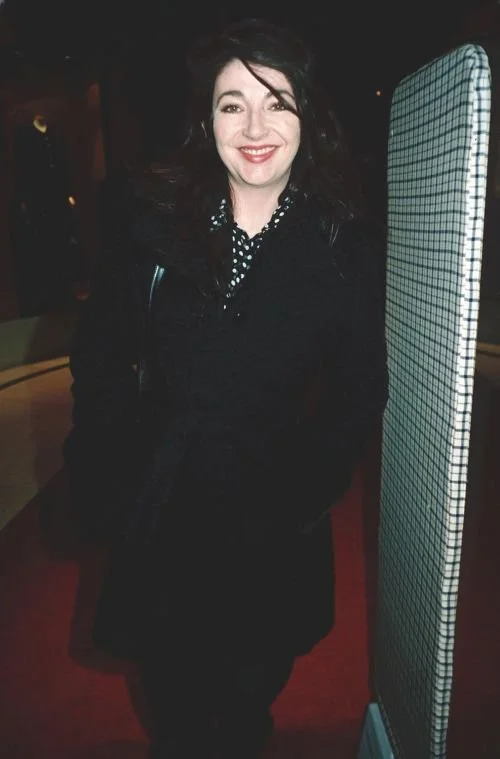
IN THIS PHOTO: Kate Bush photographed in 1995/PHOTO CREDIT: Shutterstock
1996: Rest, Rebuild…and the Start of a New Chapter
__________
I could not find…
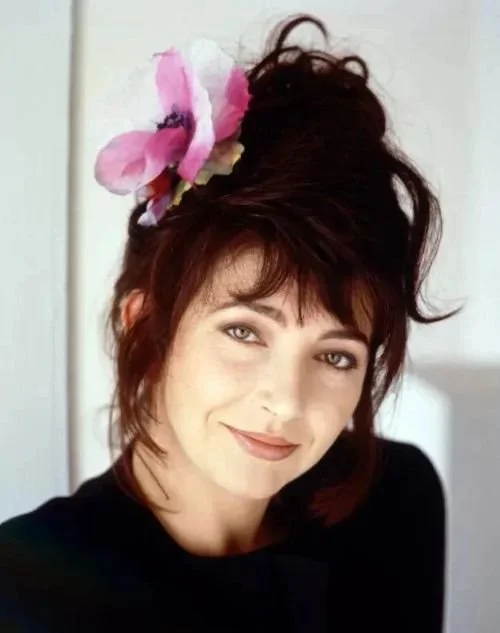
IN THIS PHOTO: Kate Bush in 1993
a clear photo or high-quality of Kate Bush from 1996, so I have had to make do with what is out there (though the one chosen that was taken in 1995 is a nice shot!). Kate Bush’s 1990s is a fascinating chapter. I will explore this more for a future feature. It is one that was marked by a sad loss two years into the decade, when her mother died. A birth two years from the end, when her son, Bertie, was born. 1993’s The Red Shoes is her only album from the decade. One cannot really imagine Bush as a '90s artist. It is common with a lot of legends who started out in the 1960s or 1970s. Maybe not really slotting into the decade. David Bowie as a classic example. Not really producing a truly great album during the 1990s. The Red Shoes is brilliant, though it is considered one of her weaker albums. The short film she wrote, directed and pretty much did everything for, The Line, the Cross and the Curve, seemed like a struggle. Frequently getting headaches and not balancing things well, it was a lot to take on at this period in her life. The decade did begin promisingly enough. After releasing The Sensual World in 1989, there was curiosity as to how Bush would adapt or blend into this exciting new decade. Releasing a cover of Elton John’s Rocket Man for a tribute compilation in 1991 – and it was also released as a single; Bush directed the video -, she did see to be pretty active in the first half of the 1990s. In 1994, even when she was exhausted and there was this need for a break, we got her phenomenal cover of George and Ira Gershwin’s The Man I Love for another tribute album. Curious how she provided a song for two albums celebrating songwriting duos. Elton John and Bernie Taupin in 1991 and George and Ira Gershwin in 1994. Clear that Bush wanted to do other projects. The Man I Love showcased this side of her voice that was not really explored more. As I have written before, that is a huge shame.
Even so, there was not a huge amount of career activity from 1994 until the end of the decade. She was writing for 2005’s Aerial later in the 1990s. However, 1996 was a year when she started writing for it. I believe that is when the album’s sole single, King of the Mountain, was written. Amazing that it did not appear on an album until nine years later! I am not sure whether Kate Bush wanted to release it as a standalone single or an album was going to come sooner. Perhaps the idea of a single album, I do think that 1996 was an interesting year. Thirty years ago, the music scene had moved on a lot, even since Kate Bush’s last album. Beck’s Odelay and Manic Street Preachers’ Everything Must Go among the biggest albums of that year. Britpop perhaps was past its peak. However, bands like Suede, Blur and Oasis were still active. The latter two would release albums a year later. Both were very different. This peak of Britpop had past and you could feel a transition. Maybe American influences coming more to the fore. Alternative and Rock a bigger influence than 1960s Pop and what was ruling a year previous. Kate Bush must have been looking out and wondering what was going on. It was a fascinating time! I am curious if she was tempted to release anything that year. After the mixed reception to The Red Shoes and how exhausted she was by 1994 especially, it was too soon to come back and do anything. Instead, there was some curious movements from her. As I say, the early seeds of Aerial were being planted. I think that Nocturn was written in 1996 or shortly after. Appearing on BBC Radio 2 in July 1996, songwriter Don Black recalled a recent meeting with Kate Bush, where he asked her what her favourite singers were. She said it was the blackbird and thrush! This year was about transformation and rebuild. It is clear that home and nature was influencing her a lot. Natural sounds. One thing that marks out The Red Shoes is it that it feels a little tinny and plastic. In terms of the production, maybe a bit too 1990s – in a bad way.
Aerial was marked by this cinematic, warm and natural sound. Beautifully produced and immersive, Bush was weaving the fabric as early as 1996. No surprise she was being influenced by the garden and its inhabitants. Bush had purchased a house in Theale near Reading. Whereas the press might have perceived this as Bush retreating into reclusiveness and misery, it was her essentially thinking more about future family and getting away from the buzz and busyness of the city. However, this being Kate Bush, she modified it and spent money installing a studio, and there was this fantastic and huge garden. Bush was living a home life. It was a crucial year that would be the start of this new chapter. I forgot to mention that 1994 was a year when she was commissioned to write some short instrumental pieces for a new Coca-Cola drink, Fruitopia. As I have mentioned in a feature about 1994, that year and 1995 was a period of isolation and some depression. It did seem to be brief. 1996 was less about recovery and hiding. It was Bush thinking about her next moves. 1996 is fascinating, because it was one where Bush blended the professional and personal in a really interesting way. King of the Mountain was put down in 1996. As Graeme Thomson notes in his book, Under the Ivy: The Life and Music of Kate Bush, Bush was not writing in this pressured and frantic way. There was a more leisurely pace. Writing when an idea struck, it was a more natural and less forced process. In terms of the chronology, King of the Mountain came in 1996. 1997 is when she wrote Sunset and An Architect’s Dream. That was the year when she feel pregnant. So 1996 sort of was this vital year. Making sure home and hearth were set up. Starting work on what would be a new album. There was this brilliant interruption for a bit that added new layers to Aerial’s songs. Bush becoming a mother. Not long after losing her own mother, she would welcome a new son.
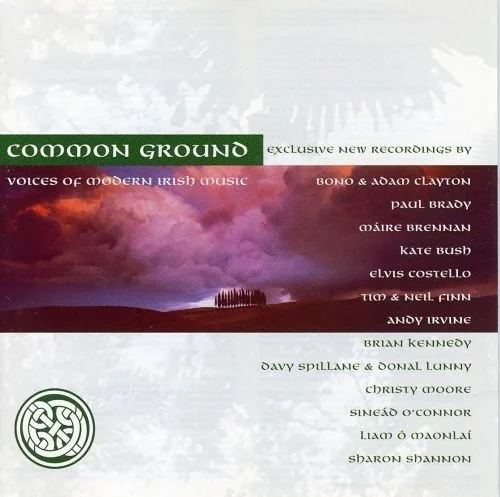
Fantastically, Bush spent some time in 1996 sculpting an artist who was very special to her. That was Billie Holiday. Making this bronze sculpture at the Royal College of Art in London, she called it Strange Fruit and donated it to War Child. As we learn from the Kate Bush Encyclopedia: “The work was sold at an auction during a charity dinner at the Saatchi Gallery in North London on 4 February 1997 and apparently sold for 600 pounds”. If the finished sculpture did not sell for too much - it would raise thousands now if it was auctioned! -, it was a loving tribute to an artist that meant a lot to Kate Bush: “Billie Holiday is one of my favourite singers. She is still a great inspiration. I sang with a band when I was eighteen and always wore a flower behind my ear to be like her: I felt it brought me luck. This sculpture shares its name with one of her favourite songs. I’ve tried to depict her mouth in mid-song growing among the flowers like “Strange Fruit”. Another occasion – and not the last – when Bush would donate work and time to raise funds for this charity. Even though it is not the most splendid thing (it has its charms!), it is interesting that Bush did that. I was not aware. On 23rd May, 1996, Common Ground: Voices of Modern Irish Music was released. Kate Bush contributed to that. A third occasion in the ‘90s where Bush recorded a song for an album other than hers. Recording Mná na hÉireann, Dónal Lunny, who collaborated with Kate Bush (most notably on 1985’s Hounds of Love), recalled approaching her to contribute for a very special album:
“1995 found Kate taking a year off from work, something that she had mentioned in an interview in Q magazine in November 1993: “…..there’s a few things I’d like to be doing with my life. I’ve spent a lot of time working and I’d like to catch up. Over the next few years I’d like to take some time off” At that time Kate was approached by Donal Lunny to take part in an album of Irish music and to record a song with Irish lyrics, Mná na hÉireann. In a May 1996 interview with Donal in the Irish music paper Hot Press, the writer Liam Fay comments that; “for Lunny, the agreement of Kate Bush, with whom he had laboured before (most notably on her Hounds Of Love album), to come aboard was crucial to the realisation of the whole undertaking”. In the interview Donal recalls how Kate got involved;
“Kate had, via Bill Whelan, assembled a group of Irish musicians to play on a number of her albums. I know Bill developed a close friendship with her which is more than I’ve had time or opportunity to do. But Kate and I did have a couple of very nice phonecalls since we last worked together. When I rang her up about this, her interest was immediate. That was very gratifying. She had taken a year off from work of any kind and this was bang in the middle of it. She opened herself to several weeks work by taking it on, maybe more than she bargained for. I knew she’d be good and she didn’t give up until it was right. She’s a real joy to work with. She is exceptionally considerate and thoughtful with people. Add to that how much she cares about what she does and the fact that she will not do something unless she feels she can give of her best. Hats off. She’s a wonderful woman.
She was very excited with the idea of singing the Irish in a way that Irish speakers would understand, and of conveying the meaning of the song through the sounds of the words. I helped as much as I could. She had Seán Ó Sé’s recording of Mná na hÉireann as reference. She was as faithful to the pronunciations as she could possibly be. It was with characteristic care and attention that she approached it. She did not stint one bit. Of course you’ll get people saying, `Oh, you’d know she doesn’t talk Irish straight off’. You wouldn’t know it straight off. I would defend her efforts as being totally sincere. No matter how perfect she gets it, she’s not an Irish speaker. This may rankle with some people.”
Kate commented in the December 1995 Kate Bush Club mailout: “It was fun and very challenging …..I will eagerly await comments from all Irish-speaking listeners in particular. I’m sure Ma gave me a helping hand !” (“Ma” refers to Kate’s mother Hannah, who very sadly died in 1992. Hannah Bush (née Daly) came originally from Co. Waterford in Ireland.)”.
Busier and more active than many might think, 1996 was an important year. Three decades ago, when there was so much change happening in music, Kate Bush was enjoying not being at the forefront. From sculpting to appearing on a compilation album to working on material for Aerial, it was a time when she was also in this new home. Not long until she would become a mother and there would be this further huge shift. I am still intrigued what could have come from Kate Bush in 1996 if she put out another album. I guess a scaled-back version of Aerial or a bridge between The Red Shoes and Aerial. I guess she did need time to recuperate and rebuild. 1993, 1994 and 1995 were especially challenging. 1996 was the first year arguably in her entire career when she could take things easier and was not subject to label demands and writing a lot of new music. Whilst many might think Bush was relatively quiet in the 1990s, she was still busy in private. 1996 is a really interesting year of…
HER remarkable life.