
FEATURE:
No Man’s Land
PHOTO CREDIT: Mikhail Nilov/Pexels
Thinking About a Vital Documentary on Misogyny, Sexual Violence and Reform
__________
I have been thinking…
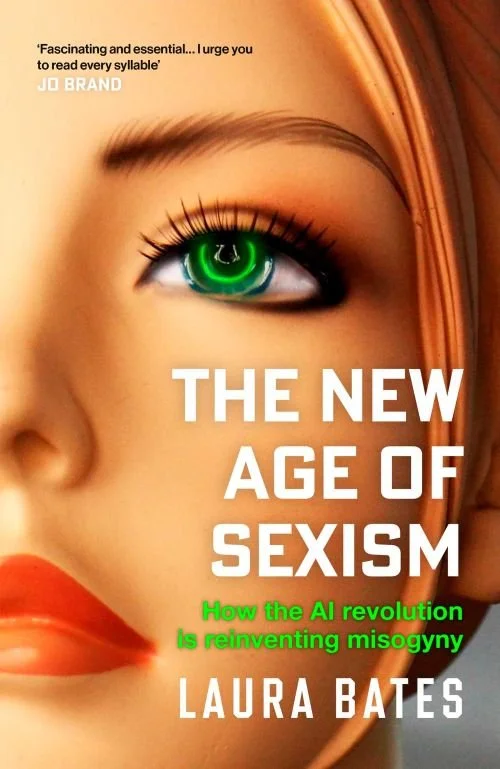
about some of my favourite books from last year and the ones that made the biggest impression. Laura Bates’s The New Age of Sexism: AI Revolution & Misogyny and Jess Davies’s No One Wants to See Your D*ck: A Handbook for Survival in the Digital World are two that made a huge impression on me. Tackling masculinity, misogyny and sexual abuse and exploitation in the digital world and how there is new threat to women and girls’ safety online, they are shocking reads. These powerful and thought-provoking books that are so timely and important. Talking about the rise of toxic masculinity and influencers like Andrew Tate, it is a terrifying and horrible time. Violence against women and girls is at an alarming level, and you do hope that this year is one where there is real change. What is evident is that misogyny, sexism, sexual abuse and violence is rising. Women online feeling more unsafe and exposed as they have ever been. It is an epidemic and an issue that is leading to the government attempting to tackle this at school level. School-age boys being sent on courses as part of their efforts to tackle misogyny:
“Teachers will be given training to spot and tackle misogyny in the classroom, while high-risk pupils could be sent on behavioural courses as part of the government's long-awaited strategy to halve violence against women and girls (VAWG) in the next decade.
The plans for schools in England - which focus on preventing the radicalisation of young men - have been unveiled as part of a wider strategy which had been delayed three times.
Teachers will get specialist training around issues such as consent and the dangers of sharing intimate images.
Responding to the announcement, the domestic abuse commissioner for England and Wales, Dame Nicole Jacobs, said the commitments did "not go far enough".
She said while the strategy recognised the scale of the challenge, the level of investment "falls seriously short".
The £20m package will also see teachers get training around how to identify positive role models, and how to challenge unhealthy myths about women and relationships.
It will include a new helpline for teenagers to get support for concerns about abuse in their own relationships.
The government hopes that by tackling the early roots of misogyny, it will prevent young men from becoming violent abusers.
Under the new plans, schools will send high-risk students to get extra care and support, including behavioural courses to tackle their prejudice against women and girls”.
It is a long-overdue measure that you hope will lead to some sense of progress when it comes to misogyny and violence against women and girls. It is an issue that we need to address among boys rather than teens and adults, as young boys are online and exposed to influencers, sites and videos that can lead to sexual violence, threats and misogyny. The issue around online porn and boys being exposed to this. Feeling that is what sex is, this then shapes how they think about girls and how they should be treated. I don’t think there will be instant changes. It will take a long time before things really improve, as there is such a wide-ranging and large-scale problem. I have mentioned a couple of brilliant authors who are also campaigners. Jess Davies is on Instagram, and her content is always so important and illuminating. Highlighting gender inequality, digital abuse and discrimination against women and girls, I can see another book arriving from her. Maybe a documentary. This is something that I want to explore more in a minute. Laura Bates is also on Instagram. She is this feminist activist and prolific author. There are many other brilliant women raising awareness and discussing the growing issue of online abuse and violence. Sexploitation, sexual images being sent to girls. Even if you feel there will be progress in years to come, the truth is that, in the short-term at least, the reality for girls and women is bleak. Both online and on the streets (and in homes), it is hugely distrusting and upsetting. I am a member of The Trouble Club, and they have hosted brilliant women who have talked about issues around misogyny, online abuse and many of the most pressing issues facing girls and women. Led by CEO and owner Elle Newton, being a member and going to these events has inspired me to become more activated and engaged with some truly shocking statics and stories.
There were some documentaries from last year that revolved around the rise in male violence against women and girls and the tidal wave of sexually explicit and abusive photos and videos that women are girls are inundated with. Threats of violence and rape. It has made me think about a documentary and something that could come this year. There might already be something in the works at the moment. Bringing together women like Jess Davies and Laura Bates. Other campaigners and activists who could contribute to a one-hour/ninety-minute documentary for the BBC. I have been thinking about Zara McDermott and her documentary work. I have written about her before for a similar piece. I know there are a lot of great female documentary makers, but McDermott is one of the prominent. Also, her most recent documentaries, To Catch a Stalker, finds her meeting women who have been stalked in person and subjected to online stalking. As reviews have highlighted McDermott’s empathy and presenting, but maybe there are still questions unanswered. Powerful viewing at least. I do think that the fact McDermott has recently presented documentaries about rape culture and revenge porn make her more than qualified and experienced enough to tackle a documentary that would highlight the rising tide of toxic masculinity, online abuse and whether the government making schoolboys take courses to help tackle misogyny. McDermott has shared her experiences of revenge porn, and revealing her own stories. She is an amazing documentary maker and presenter, and I think that her best work lies ahead. Maybe not for BBC Three, I do think there is a demand for a documentary that spoke to women like Zara McDermott, Laura Bates and Jess Davies. I also heard Caitlin Moran speak for The Trouble Club last year about toxic masculinity and misogyny and her hopes for the next wave of feminism.
Of course, it will take more than a documentary to truly cover such a wide-ranging, complex and epidemic issue that we have. However, whilst many documentaries fall down for some reason or the other, I do think that a new one, if judged and balanced right, could make a big impact. Zara McDermott is a compassionate and intrepid interviewer and I have been thinking about her 2021 documentary. How relevant it is now. A documentary that also talks to those who follow online influencers like Andrew Tate and why that is. There is also a rise in domestic abuse, so that is also something that needs to be covered. Maybe ending with an optimistic note. In terms of activism and how the young generation are doing so much to highlight the issues through social media; share their stories and call for change. Artists who are covering subjects like misogyny and sexual violence through their songs. Campaigners and books that are opening people’s eyes to the true scale of the issues affecting women and girls, not just in the U.K., but around the world. Another reason why a documentary is so timely is that Elon Musk’s Grok AI is being used to digitally remove women’s clothes. Leaving them dehumanised and violated, the BBC reported on a freelance journalist, Samantha Smith, was one of many women whose have experienced this:
“A woman has told the BBC she felt "dehumanised and reduced into a sexual stereotype" after Elon Musk's AI Grok was used to digitally remove her clothing.
The BBC has seen several examples on the social media platform X of people asking the chatbot to undress women to make them appear in bikinis without their consent, as well as putting them in sexual situations.
XAI, the company behind Grok, did not respond to a request for comment, other than with an automatically-generated reply stating "legacy media lies".
Samantha Smith shared a post on X about her image being altered, which was met with comments from those who had experienced the same - before others asked Grok to generate more of her.
"Women are not consenting to this," she said.
"While it wasn't me that was in states of undress, it looked like me and it felt like me and it felt as violating as if someone had actually posted a nude or a bikini picture of me."
A Home Office spokesperson said it was legislating to ban nudification tools, and under a new criminal offence, anyone who supplied such tech would "face a prison sentence and substantial fines".
The regulator Ofcom said tech firms must "assess the risk" of people in the UK viewing illegal content on their platforms, but did not confirm whether it was currently investigating X or Grok in relation to AI images”.
I do feel this year will see some depressing and appalling statics released around online abuse, revenge porn, misogyny and violence against women and girls. The ongoing fourth wave of feminism (that started in 2012) is about digital activism, tackling sexual harassment, rape culture, body shaming, and using social media (#MeToo, #TimesUp) to demand justice and challenge patriarchal norms with an emphasis on intersectionality, inclusivity for all women (including trans women), and confronting online misogyny. It has definitely helped make a difference, though you feel more allyship is needed. Men getting more involved. Until that happens, it is women on their own fighting for their own protection and safety. Documentaries can go a long way to raising this question and providing answers and possible ways forward. I think that this sort of documentary is needed…
MORE than anything else.