FEATURE:
Groovelines
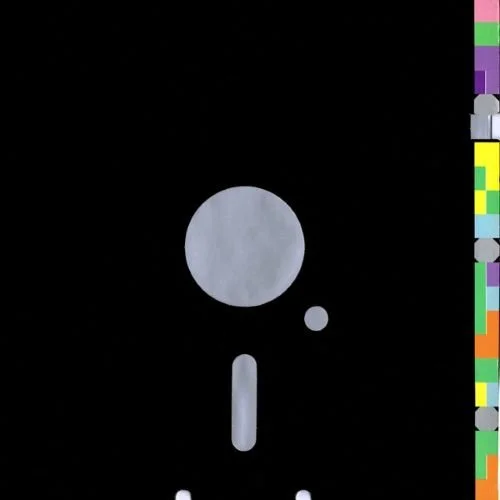
New Order – Blue Monday
__________
BECAUSE the superb Bernard Sumner…

IN THIS PHOTO: Bernard Sumner
turns seventy on 4th January, I am featuring a classic New Order song in this Groovelines. Released as a single on 8th March, 1983, Blue Monday is viewed as one of the greatest songs ever released. So instantly recognisable and timeless, it has spanned the generations and it is amazing that it was not originally an album track! Blue Monday featured on certain CD and cassette versions of New Order’s second studio album, Power, Corruption & Lies. That came out in 1983. The track was written by Gillian Gilbert, Peter Hook, Stephen Morris and the legendary Bernard Sumner. Sumner is the lead of New Order. The band’s most recent album is 2015’s Music Complete. I am going to come to some features and reviews about Blue Monday in honour of the upcoming seventieth birthday of Bernard Sumner. Whenever looking out for features about Blue Monday, many of them talk about how the song changed music forever. Such was the impact of this track. I want to start out with a 2024 feature from Music Radar, where they spotlighted the kit and technology that helped when it came to the creation of this classic. New Order were perhaps a bit naïve in terms of how easily the song could be made and what they would have to do. As it turned out, it was a pretty complex and difficult thing to pull together! However, the fact that it is so revolutionary and influential makes it all worth it:
“It seems the track was a practical solution to a gigging problem. "We didn't play encores," recalled New Order's Bernard Sumner in 2012, "and we were getting into a lot of trouble over it.
"Rather naively, we thought we'd write a song that could be played by machines and all we'd have to do was press the button. They'd get what they wanted and we'd get what we wanted.
"It was an exploration into pure electronic music, so we took the machines to the limit to see what we could do with them. What we could do with them was very basic at the time, so it was making the most out of what little gear we had.
While we respectfully disagree, Sumner puts the track's longevity down to subsonic, rather than songwriting: "It's not really a song. It's more of a machine that sounds good on club systems.
Sumner was assigned vocal duties on the basis that he could comfortably alternate between singing and playing his guitar.
There are a couple of other features that I want to cover off. Produce Like a Pro highlight how Blue Monday helped reinvent and re-establish New Order. Perhaps people had a perception of them before that. Even though this was their second album, Blue Monday was like nothing that they had produced before. New Order emerged from the dissolution of Joy Division. A massive step away from anything Joy Division produced:
“On March 7, 1983, New Order released the single “Blue Monday.” In addition to its massive commercial success, charting in the top 10 in several different countries, the single established New Order’s reimagined voice, distinct from the raw emotions and haunting melodies of Joy Division, and launching the world of dance music into a whole new era. As John Bush declared: “‘Blue Monday’ cemented New Order’s transition from post-punk to alternative dance with vivid sequencers and a set of distant, chilling lyrics by Bernard Sumner”
At first, in the time between Curtis’ death, and “Blue Monday”, New Order struggled to find their identity as a band. Their first single” (“Ceremony” with “In a Lonely Place”) were tracks they had written with Curtis before his passing, and their first album (Movement, 1981) followed in the same vein of dark, haunting ytacks, as their work in Joy Division. What “Blue Monday” offered, instead, was a startling break away from that emotionality and into the mechanized sound of drum machines and synthesizers. As Sumner reflected in 2015: “I think ‘Love Will Tear Us Apart’ connects with people because of the emotional content within the song, and I think ‘Blue Monday’ connects with people because of the startling lack of emotional content within the song. It’s kind of contradictory, really.”
While the sonic shift seemed to be a drastic change, there are several lines of influence that can be drawn between the track and the band’s earlier work. The impact of a band like Kraftwerk on New Order should come as no surprise; however, it was actually Ian Curtis who introduced the electronic music pioneers to his bandmates. As Hook explained:
“My earliest memory of Kraftwerk was being given an LP by Ian Curtis. He gave me ‘Autobahn’ and then later ‘Trans Europe Express’. I was absolutely mesmerised by both. Ian suggested that every time Joy Division go on stage, we should do so to ‘Trans Europe Express’. We did that from our first show, until nearly our last […] Joy Division were very tied to Kraftwerk, but it wasn’t until we got to New Order and were able to afford the toys that our primary source of inspiration became, ‘Let’s rip off Kraftwerk’. Their music was beguilingly simple, but impossible to replicate.”
Other influences on the song include the pulsating bass line of Donna Summer’s “Our Love” and the rhythm of “Dirty Talk” by Klein & M.B.O.. Hook’s bassline even pulls its melody from the legendary Italian film composer Ennio Morricone and his soundtrack to the Clint Eastwood movie, “For a Few Dollars More”
Bringing all of these influences together was the band’s comfort with the recording studio and production technology, which they had picked up during their time working on their first album. Some of the track’s brilliance comes from carefully calculated creative choices, while others were a little more unexpected. The timing of the synthesizer, for example, came out of a mistake that Gilbert had made when programming the part. She explained:
“The synthesizer melody is slightly out of sync with the rhythm, […] This was an accident. It was my job to program the entire song from beginning to end, which had to be done manually, by inputting every note. I had the sequence all written down on loads of A4 paper Sellotaped together the length of the recording studio, like a huge knitting pattern. But I accidentally left a note out, which skewed the melody.”
As Gilbert points out, this was a time of manual programming and emerging technology. Sumner also reflected on this exciting time, saying: I remember just being turned on by the latest technology that was becoming available. It was pre-computers, pre-MIDI, and I’d built this sequencer from an electronics kit. We programmed everything in step-time using binary code digital readouts. It was… complicated. […] Rob [Gretton, New Order manager] thought it was witchcraft. He really did! That sounds weird now in the age of the internet, but he really thought it worked by magic.”
In addition to the “magic” of the song’s cutting edge production, its release has also become a source of what sounds like legend. Despite its massive popularity and success, the label actually lost money on the single at first. This was due to the cost of production for the album sleeve. Hook told NME in 2015: “…it’s absolutely true. Factory sold it for £1, and it cost £1.10 to make because of the sleeve – which had to have three die-cuts, all individually – the cost price to make it actually cost more than that. […] Tony ended up having those wonderful brass awards cut for us to celebrate 500,000 sales, when what we were actually celebrating was a loss of £50,000. […] They did rectify it later by having a normal sleeve, but that only came after a massive amount of copies had been sold.” The track has since gone on to become the best selling 12” record of all time”.
The Guardian marked forty years of New Order for a great future in 2023. They looked at the songs and artists that were inspired by it. However, they also spotlighted the music that you can feel helped to shape one of the most important songs ever. Blue Monday still sounds radical to this day. It has this incredible power that I don’t think will ever dim. This is a song that will be talked about for generations more:
“Ennio Morricone – For a Few Dollars More (1965)
Peter Hook had pioneered his bass-as-lead-instrument approach while in Joy Division but New Order’s increased use of sequenced bass lines caused him to refine his methods further: he claimed the sparse riffs of Blue Monday were inspired by the twanging lead guitar in the score for Sergio Leone’s classic spaghetti western after watching it in the studio.
Kraftwerk – Uranium (1975)
Given Blue Monday’s sample from one of its interstitial tracks and OMD’s evident obsession with its Orchestron-heavy sound, Radio-Activity – the least commercially successful album of Kraftwerk’s imperial phase – wielded a striking influence over British pop in the early 80s. Gillian Gilbert claimed New Order had previously tested their sampler by recording their own farts.
Sylvester – You Make Me Feel (Mighty Real) (1978)
Whenever influences on Blue Monday are discussed, someone will mention the synthesised riff of Gerry and the Holograms’ supremely irritating post-punk novelty track Gerry and the Holograms. Bernard Sumner has denied ever hearing it – in fairness, New Order have hardly been coy about the song’s other steals – suggesting it instead rooted in the octave-leaping bass line of Mighty Real.
Donna Summer – Our Love (1979)
The most famous aspect of Blue Monday is probably its stuttering rhythm track, borrowed wholesale from Our Love – also surely an influence on Temptation – from Donna Summer and producer Giorgio Moroder’s 1979 masterpiece Bad Girls. Intriguingly, that album’s final two tracks, Lucky and Sunset People, carry something of Blue Monday’s atmosphere – dancefloor-focused electronics topped with distant-sounding melancholy vocals.
Klein & MBO – Dirty Talk (1982)
Sumner has said that New Order were lifted out of their despondency following Ian Curtis’s death by listening to tapes a friend had compiled of Italo disco. By the time of Blue Monday, its sound had seeped into New Order’s own: listen to the chattering synths of Italian/US duo Klein & MBO’s biggest hit, a favourite of Sumner’s”.
The final piece I am bringing in is from NME. The original article they published came out in 2013. Thirty years after its release, they discuss how Blue Monday changed music forever. It really did! If New Order didn’t realise at the time, they had recoded a piece of music history! I am not sure when I first heard it. Perhaps in the 1990s.
“It might just be the happy conjunction of timing and opportunity, but Blue Monday’ feels like a fulcrum. Take that ‘Our Love’ loan – the last days of disco are fading into this dour, rainy Manchester funk and what’s emerging on the other side is something entirely alien. Bernard Sumner cites Sylvester’s immense disco classic ‘You Make Me Feel (Mighty Real)’ as a touchstone too, another slice of joy going into the machine and coming out blank. Blankness is ‘Blue Monday”s overwhelming quality, from Sumner’s pale, robotic vocal to Peter Hook’s desolate bass melody, and it’s the merest flick of the pencil to draw a line from this to forbidding early techno, or Phuture’s ‘Acid Tracks’. The disco loop keeps going around too – five years later Quincy Jones was releasing the ‘Blue Monday’ reissue on his own Qwest label.
In the pop world, the 12″ single was all about zero imagination. The average extended mix consisted of the 7″ with an extra minute of drum fills stuffed in the middle or the intro played twice over or – if the boat was really being pushed out – a spoken-word interlude. ‘Blue Monday’ realised the possibilities of the form: you could bankrupt yourself with a die-cut sleeve! But you could also write a song fit for purpose, a sprawling monster that could only be accommodated on a massive slab of vinyl. Yep, Flowered Up’s ‘Weekender’ could never have existed without ‘Blue Monday’. New Order took a practical clubber’s format and turned it into an artistic statement.
Even the gloomiest overcoat-sporting rockist could cut a rug to ‘Blue Monday’ without risking indie points – and that might be its greatest achievement. It took one hell of a long time to filter through though.
Indie-dance, baggy, whatever, it’s entirely in hock to New Order’s game-changer. ‘Blue Monday’ set the parameters and its Manchester scions filled the space, welcoming sequenced beats into their repertoire and getting sexy. As sexy as the Happy Mondays could ever be, that is. Spreading further afield, crossover artists Primal Scream, The Prodigy, LCD Soundsystem and The Chemical Brothers all benefit from ‘Blue Monday”s visionary fusion as its tendrils continue to spider across the pop landscape”.
There have been remixes of the song. Some interesting adaptations. However, the 1983 I feel remains the most powerful and pure. As Wikipedia state: “its total sales stand at 1.16 million in the United Kingdom alone, and "Blue Monday" came 69th in the all-time UK best-selling singles chart published in November 2012. As of March 2023 total consumed units across all formats have reached 2 million units sold in United Kingdom”. The wonderful Bernard Sumner is seventy on 4th January. To commemorate and celebrate that fact, I wanted to shine a new light on a titanic track that revolutionised music. Blue Monday remains this work of genius…
NEARLY forty-three years later.