FEATURE:
Oh, Sister
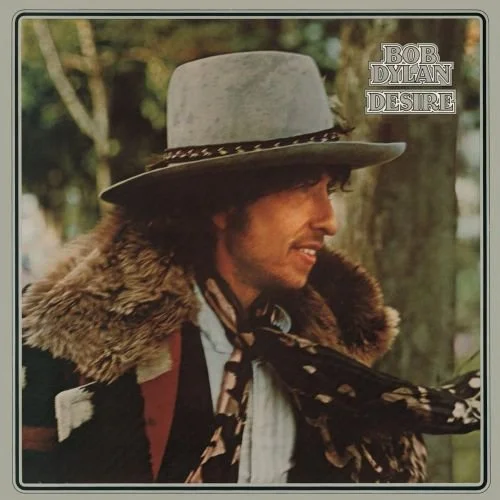
Bob Dylan’s Desire at Fifty
__________
DESIRE is the incredible…
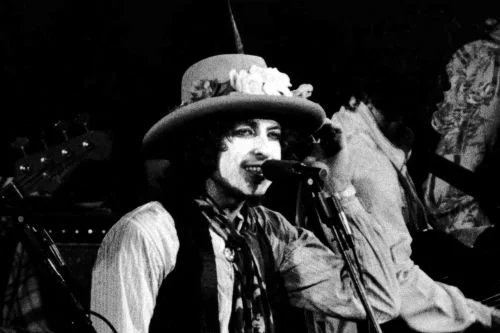
IN THIS PHOTO: Bob Dylan performs at the Rolling Thunder Review Concert on 8th December, 1975 at Madison Square Garden in New York City/PHOTO CREDIT: Ron Galella, Ltd./Ron Galella Collection/Getty Images
seventeenth studio album from Bob Dylan, released on 5th January, 1976. It is one of his more collaborative efforts. One associates Bob Dylan’s albums with him being at the forefront pretty much on every song. Not quite the case in terms of the cast of musicians he employed for Desire. All songs were written by Bob Dylan and Jacques Levy, except Sara and One More Cup of Coffee, which were solo Dylan compositions. To mark fifty years of a classic, I am going to come to some features and reviews. So that can better understand and appreciate an album that reached number one in the U.S. There were legal disputes between Dylan and Levy’s estate. The estate argued that they were entitled to compensation over the 2020 sale of Dylan's song catalogue. That was against Universal Music Group. It was ruled that Levy’s estate were entitled to royalties only and no further payments. Not a black mark against the album, it does at least add additional context and layers to Desire. I am going to start off with Classic Rock & Culture and their 2016 examination of Desire:
“Coming off the comeback success of the recently released Blood on the Tracks, the greatest singer-songwriter of his generation ushered a huge band into the studio to record its follow-up in July 1975. More than two dozen musicians were initially gathered – a violin player, an accordion and mandolin player, even Eric Clapton at one point – to work on Desire, but by the time it was released on Jan. 16, 1976, its scale had lessened by quite a bit.
But it's still one of Dylan's most ambitious records, built around two sprawling narratives (co-written with Jacques Levy, a New York-born psychologist who also was a theater director in addition to being a lyricist). If that wasn't enough, Dylan framed three of the record's other songs around a screenplay based on a forgotten Joseph Conrad novella. After the highly personal Blood on the Tracks, Desire was a return – concerted or not – to the type of songs he was writing back when he was building his legend more than a decade earlier.
The album's centerpieces were rooted in real-life drama. The album's opening track and highlight, "Hurricane," was based on the plight of boxer Rubin Carter, who was charged with three murders in 1966. A decade later, his case was protested by activists, who claimed that racism drove both his arrest and trial. Dylan picked up on Carter's story and wrote an eight-and-a-half-minute song about him, which was both controversial and eye-opening. (In 1985, Carter was released after a judge found that he didn't receive a fair trial 20 years earlier.) It also – surprisingly, given its subject matter and length – became a Top 40 hit, Dylan's second-to-last ("Gotta Serve Somebody" went Top 25 in 1979).
The other track, "Joey," which opened side two, told the story of mobster Joey Gallo, who was murdered in 1972. And like he did on "Hurricane," Dylan paints a compassionate portrait of his subject. But this one was a bit more troubling, given Gallo's violent past. Still, Dylan lays out a defense over 11 winding minutes, and like some of his songs from an earlier era – most notably "The Lonesome Death of Hattie Carroll" – he lets his vivid storytelling set the scene.
It helped that the band – stripped of its huge origin to a quintet that included Dylan, singer Emmylou Harris and violin player Scarlet Rivera, who gives the album its distinctive sound – locked into the grooves. The nine-song set – which also features the great "Mozambique" and the album-closing "Sara," a love letter of sorts to his crumbling marriage – ended up being his last great album before a period of mediocre shrugs, slight rebounds and embarrassing disappointments left him dangling until a career resurrection at the end of the '90s.
Like the two albums before it, Blood on the Tracks and Planet Waves, Desire hit No. 1. It would be his last chart-topping record until Modern Times reached the spot in 2006. Shortly after recording the album, Dylan took most of the group, along with many of his friends and other guest musicians, on the road for the Rolling Thunder Revue, a caravan of sounds that picked up Desire's gypsy troubadour aesthetic. It would be a while, a long while, before his music would contain this much spirit again”.
Prior to coming to a review for Bob Dylan’s Desire, I want to source a Rolling Stone article from 2016. It frames Desire as this exotic masterpiece. It is an album that contains “a gangster, a boxer, and one of Dylan's most personal songs”. I am not as familiar with this album as other Dylan works, but I have been listening a lot to it recently:
“Dylan thrived on chaos and chance while making Desire, a process that was a far cry from the heavily labored recording of his prior LP, 1975’s Blood on the Tracks. One night, Dylan was walking around Greenwich Village and was approached by Jacques Levy, a playwright and director who had previously written songs with Roger McGuinn of the Byrds. Dylan invited Levy to hang out that night at the Other End, a long-standing folkie haunt; later on, at Levy’s apartment, they wrote “Isis.” “He said these magic words, ‘I’d like you to write some stuff for me,'” Levy recalled before his death in 2004. They continued work at Dylan’s summer home in the Hamptons, writing songs with a much different flavor than the reflective tone of his last album. “I guess I never intended to keep that going,” Dylan said. “Sometimes you’ll get what you can out of these things, but you can’t stay there.”
Instead, these were sprawling narratives of outlaws and wanderers, with clearer storylines than anything Dylan had written in more than a decade. They included the cowboy-on-the-run tale “Isis” and “Joey,” the 11-minute saga of fallen gangster Joey Gallo. “I thought ‘Joey’ was a good song,” Dylan said in 1981. “I know no one said much about it.” Perhaps it was overshadowed by “Hurricane,” the story of former boxer Rubin “Hurricane” Carter, who had been convicted of triple murder in 1966. “I read his book and it really touched me,” said Dylan. “I felt that the man was innocent.” Though Dylan and Levy’s lyrics were riddled with factual errors (as was “Joey”), the song helped turn public attention to Carter’s case; his conviction was overturned in 1985.
The album’s atmosphere was also affected by a trip Dylan had taken to the South of France, where he had gone to a “gypsy festival” on his birthday. The gypsy imagery marked songs like “One More Cup of Coffee” and “Durango.” “I think ‘exotic’ is a good word to put on it,” said Levy. The only personal song on Desire is perhaps his most personal ever: “Sara,” a plea to his then-estranged wife, Sara Lownds, to return to him. According to Levy, Lownds showed up at the studio the night they recorded the song. “You could have heard a pin drop,” said Levy. “She was absolutely stunned by it.”
During recording, Dylan kept several studios going at once, filled with musicians (including Dave Mason and Eric Clapton) and non-musicians. Says bassist Rob Stoner, “They had opened up all the adjacent studios to accommodate all these hangers-on and buffet tables. It was just like a huge party. And it wasn’t conducive to getting any work done.”
Eventually, the rooms were cleared and a core group cut the entire album over two long nights. “There was just a level of excitement,” says Stoner. “Sessions were called for 7 p.m., and we only stopped at seven in the morning because that’s when they tow your car on that street. We didn’t want to lose the vibe. No drinking, no drugs, no nothing. It was pure adrenaline”.
Last year, Pitchfork wrote this extensive and incredible review of Desire. Revisiting a “wild slice” of Bob Dylan, Desire is “an album whose air of magic and misdirection remains utterly unique in his catalog”. It is arguable it would be a while until Dylan followed something as brilliant as Desire. Blood on the Track in 1975 and Desire in 1976. Two masterpieces. Arguably, it was not until 1989’s Oh Mercy when he regained some of that form:
“Desire is not a subtle album, and it does not commence on a subtle note. “Hurricane”—an audacious eight-and-a-half minute recounting of the 1966 arrest and conviction of the middleweight boxer Rubin “Hurricane” Carter on charges of triple homicide—begins with the interweaving and insinuating strains of Dylan’s acoustic guitar and Rivera’s violin. One of seven songs on Desire co-authored with the playwright Jacques Levy, it employs stage directions to set its scenery: “Pistol shots ring out in the barroom night/Enter Patty Valentine from the upper hall.” Intentional or not, the effect of the dramaturgy is to suggest a not-strictly-speaking-literal recounting of events, introducing the queasy sensation that we are being carried along by storytellers whose commitment to the facts is secondary to their impulse to thrill and desperation to deliver a higher truth.
Indeed, Dylan and Levy take considerable liberties with Carter’s biography and the case against him. He was never the “number one contender for the middleweight crown”; by the time of his arrest, he was circling boxing’s drain toward journeyman status. Neither did his long history of violence outside the ring comport with the beatific “Buddha” portrayed in the lyrics. Still, the song is one of Dylan’s greatest. The story’s grim particulars take root in your imagination: the ultra-violent crime, the summer heat and police lights, the racist cops and all-white jury sealing his fate. The band rolls along, a runaway sea of conga fills and furious energy. By the end no reasonable person could doubt Carter’s innocence, questionable though it may be.
Desire follows one epic with another: “Isis,” a bluesy slow-burn odyssey that considers the relative plusses and minuses of stealing from the dead for a living, like Marty Robbins’ “El Paso” by way of Leonard Cohen’s early frozen-song landscapes. Its account of a two-man grift gone wrong and the women caught in between post-dates Humphrey Bogart and pre-dates Better Call Saul, making for a perfect mid-point in that continuum of heroic losers.
Then the weirdness starts in earnest. “One More Cup of Coffee” and “Oh, Sister” are solemn and prayerful, filled with Old Testament dread and the echoes of an antiquity reaching further back still. “One More Cup of Coffee” seems to describe the morning after a confused night of romance, the narrator asking his erstwhile paramour for a shot of caffeine before he disappears into “the valley below.” “Oh, Sister” is one of several tracks on Desire sung in haunting harmony with Emmylou Harris. With its passionate interpolation of sibling and spiritual mandates, it’s one part Freudian fever dream and one part plea for familial oneness—Neutral Milk Hotel invented in four gorgeously unsettling minutes. “Oh sister, when I come to lie in your arms,” goes the first verse, “You should not treat me like a stranger.” I’m no psychologist, but it’s clear Dylan is dissociating here. The music’s leisurely grandeur only heightens the creeping horror.
[Scene 2: Marin County, CA, 1987. The legendary songwriter, now at a commercial and creative low point, rehearses with an iconic group from his 1960s heyday for a joint tour.]
The union of Dylan and the Grateful Dead was auspicious, but the context was strange. Riding an improbable wave of commercial excitement following their MTV hit “Touch of Grey,” the Dead were playing to the largest crowds of their career. Following a run of desultory ’80s-era albums, Dylan was decidedly not. Without the Dead as his backing band, there was no chance he would be playing stadiums at this dysfunctional juncture. During practices, the Dead requested old Dylan songs they might want to try their hands at playing. Dylan, for once in his life, wasn’t in much of a position to refuse. Preposterously, perfectly, and for all to hear on 1989’s live LP Dylan & The Dead, Jerry Garcia requests “Joey.”
A straggling Gemini-twin to “Hurricane,” Desire’s most indulgent composition whinges on interminably and borderline incomprehensibly about the gangland slaying of an objectively psychotic mafia figure named Joey Gallo. Dylan famously coined the aspirational phrase “to live outside the law you must be honest,” a formulation that “Joey” undermines in every way possible. If you wanted to make the case for “Joey” as his worst song, you might begin with the demented portrayal of Gallo as some manner of saint, whose ahistorical indulgences might be more persuasive had Dylan bothered to string them together with a shred of narrative logic. You might move on to the torpid melody, one of the least memorable he’s ever written. But hey, at least it’s 11 minutes long. The twist is, in the nimble, gleefully amoral hands of the Grateful Dead, this dismal composition became supple and agreeable. Somehow the Dead brought “Joey” back to life. There’s your graverobbers right there.
Desire’s final third leans further into Dylan’s obsessions with love, death, ecstasy, and the liminal spaces between. “Hot chili peppers in the blistering sun!” he exclaims on the opening line of “Romance in Durango,” a legitimately goose-skin inducing Tex-Mex boogie replete with the thrill of adventure and the promise of violence, an invigorating update to his 1973 soundtrack to Sam Peckinpah’s Pat Garrett & Billy the Kid. Its lyrics cross the distance between total fantasy and something like a true accounting of events. By the time of the lead cowboy’s inevitable sacrifice-by-desperado, he is so discombobulated that he begins interrogating the libretto itself: "Was it my hand that held the gun?” and “Can it be that I am slain?”
“Black Diamond Bay,” another long story song on an album full of them, is remarkably tuneful, ruefully ominous, and utterly batshit. I have been listening to it for two decades, and I still have no clue what is happening. There is a Greek man, a woman in a Panama hat, a soldier, a tiny man, a volcano. Portends of suicide and disaster percolate: scheming gamblers and sunken islands, betrayals and broken bonds, the kind of Book of Revelation stuff Dylan would get into full-time soon enough. Through some mysterious alchemy, its incoherence yields real beauty, abetted by an incredibly committed performance from his ace backing band—led by bassist Rob Stoner, another musician who figured prominently in Dylan’s career and then seemed to disappear. Try to grasp the details of “Black Diamond Bay,” or just let the imagery carry you away. Like everything on Desire, it’s all misdirection and magic anyway.
[Scene 3: Columbia Records recording studio, midtown Manhattan, 1975. An estranged wife watches her husband sing the song that he thinks will make all the difference. Will it matter?]
Album closer “Sara” is by orders of magnitude the most explicitly biographical song the notoriously private Dylan has ever released. He recounts in forensic detail the fraying of his union to Sara Lownds, his longtime wife and the mother of his children. Even by the contemporary standards of full-frontal psychic nudity, its oversharing is extremely uncomfortable. He conjures their babies playing on the beach. He marinates in his own mythology: “Stayin’ up for days in the Chelsea Hotel/Writin’ ‘Sad Eyed Lady of the Lowlands’ for you,” name-checking the sprawling closer of 1966’s Blonde on Blonde. He howls her name again and again: “Sara, Sara/Whatever made you want to change your mind?” Talk about blood on the tracks”.
I do hope that there are plenty of retrospective features about Desire ahead of its fiftieth anniversary on 5th January. Undeniably one of Bob Dylan’s greatest albums, it has this cinematic, surreal and sometimes personal narrative. A slight shift in terms of sound and direction, perhaps the greatest moments come from the collaborations with Jacques Levy. Black Diamond Bay and Isis being particular highlights. Fifty years later, and Desire still stands out as one of Bob Dylan’s most distinct and extraordinary albums. For those who feel it is one of Dylan’s lesser or less significant albums, I would say to you that Desire is…
WORTH a listen.