FEATURE:
Spotlight
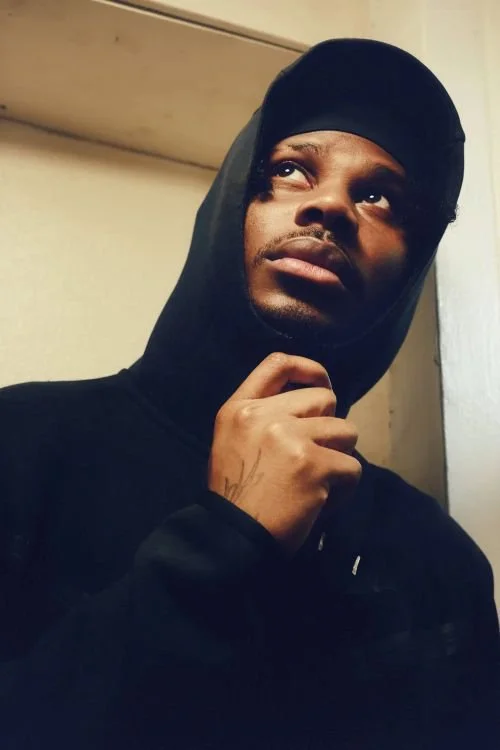
the amazing Jim Legxacy on my site before. It is omission, as he was declared the runner-up in Radio 1’s Sound of 2026 poll. Skye Newman – who I have covered before – was the winner. I am going to come to some interviews with Jim Legxacy. However, before that, the BBC spoke with one of our very best young artists. His mixtape, black british music, was released last year and was met with huge acclaim:
“Legxacy (the x is silent) was born James Olaloye in Lewisham. The child of Nigerian immigrants, he paints a bleak picture of the south London borough. He once rapped about growing up "afraid of the block", where he was surrounded by "deportations, prison sentencing [and] stabbings".
Money and opportunities were scarce but there was a "a good sense of brotherhood" in his friend group, and he has fond memories of riding bikes and playing basketball.
His mum "tried hard to shelter me" and filled the house with feel-good music – gospel songs, Bob Marley, Michael Jackson.
But as a child, "I was never interested in it," he has said. "Maybe because of how intense it made me feel."
It wasn't until he was 17 that he let his guard down.
Friends at school introduced him to rap, specifically Kanye West's head-spinning The Life of Pablo, and his world opened up.
"That's the first rap album I sat through top to bottom," he told Brick The Mag, external.
"For that to be my first one is insane because a lot [of albums] have structure and organisation… But the first one that I found was the most chaotic Kanye album ever.
"It had no cohesion, and no real sense of identity outside of the fact that it's chaotic, and I think that has shaped so much of what I do."
Sensitive side
Inspired, he started making his own beats, stitching together samples and genres to create a sonic collage reflecting his tumultuous London existence.
It's an approach that was inspired by his university course in graphic design.
"My teacher would always make me make something and then she'll be like, 'All right, cool, now that you've made this, cut this up then try and make it into something completely new'," Legxacy told the New York Times, external.
Even so, the initial results weren't great.
"I started off really bad," he admitted, "but I'd send a voice note of me rapping to my boys every week and they'd critique my technique, delivery, beat selection, etc.
"After a few months I was rapping like it was second nature."
He uploaded his first song, Plethora, to TiKTok in 2019 and was "gassed" when it received 1,000 plays in a day.
But as his music took off, he found it difficult to keep up. For a period, Legxacy was homeless – the byproduct of a legal situation his father found himself in – sleeping on friends' floors and (in one case) in their office.
He addressed the situation on his debut mixtape in 2022. "No silver spoons in my hood, just empty pockets," he mused.
Yet the majority of the songs were concerned with a broken relationship, hopelessly dissecting what went wrong.
Led by the subject matter, he started singing more, his dewy-eyed timbre adding emotional depth to the fragmented, impressionistic soundscapes.
"What music in London has been missing for a long time is vulnerability, because I think a lot of us are trying so hard to come across a certain way," he told Kids Take Over.
"Everyone falls into that cycle, especially when you grow up where you grow up. But I just always try to emphasise in the music that there is a sensitive side. I'm trying to integrate as much honesty into things."
Fans hope the musician will release his first full-length album in 2026
As his reputation grew, Legxacy was invited to collaborate with Dave and Central Cee, producing their chart-dominating hit Sprinter in summer 2023. But family tragedy delayed his own music.
"Sorry the mixtape is takin soo long," he wrote on X in November 2024. "My momma had a stroke so I've spent the past couple weeks lookin after her."
When he returned, it was with the standalone single Aggressive, external. Despite its title, the track's central message was about combating negativity.
"I feel like everyone's kind of going through difficult times right now... so I wanted to make something that doesn't ignore that," he told Radio 1.
"But I think trying to be optimistic with the things that we're making is important”.
Last July, The New York Times interviewed Jim Legxacy about his new album, black british music. Although he released CITADEL in 2021 and homeless n*gga music in 2023, black british music is his crowning achievement and finest work to date. Saluting an artist who makes music that sounds like memory, The New York Times spoke with a hungry and enormously talented artist whose new mixtape is a “homage to the last two decades of Black British music”:
“Being able to bring one of England’s biggest stars to a quiet street in southeast London would suggest that Legxacy — born James Olaloye — already has capacities far beyond the circumstances of his raising.
“I truly believe in myself and I truly believe that I am doing and I will do super-incredible things — I don’t even think we were purely at the precipice of whatever I’m going to end up doing,” Legxacy said. “But that being said, that’s only going to happen if I work hard. And I just think thinking things like that might inspire complacency.”
There is no evidence of that on “Black British Music (2025),” an elegant and affecting album that’s clearly the product of an active mind and a wistful spirit, blending raw emotional vigor and easeful song construction.
“How do I make a futuristic version for the present based on what has existed in the past?” Legxacy wondered. That productive tension manifests as a unifying patina on songs that hopscotch among myriad genres, from hip-hop to folk, engaging with several recent currents in Black British music while perfecting a sound not particularly beholden to any of them. Legxacy’s true palette is history and memory, and the way that personal experience can metastasize in unexpected creative ways.
Much of the album was forged in the fire of familial crisis: He said his mother had suffered a stroke, his older brother was being treated for psychosis, and his sister died from sickle cell anemia. Though he was derailed emotionally, he took solace in knowing he had a way to process.
“I was like, it’s calm, because I get to work on this,’” Legxacy said. “There’ll be a day I’ll get to show people that they can overcome anything.”
But “Black British Music (2025)” is the product of Legxacy finding community, one in which he is quickly becoming a lighthouse. He maintains an active Discord channel full of fans and, increasingly, musical collaborators.
“I’ll start something and I’ll screen share it and be like ‘What do you think, guys?’ Send it to like four different people and they’ll send something completely different back, all of them,” he said. From those, he’ll pick a direction, then piece together a new work from the disparate options. “They would push it in a way that I wouldn’t see and I would take what I like and cut and then do the same.”
Legxacy said he’s been comfortable with online friendship going back to his teenage days playing Xbox Live. “They’re all so respectful,” he said. “I’ll be like, yeah, guys, I’ll show you a song, please no one screen record. I won’t see no leaks. I won’t see nothing on YouTube.”
By evening, he was in an Uber heading to the Catford district, where he sneaked into Tasty African Food a few minutes before closing. En route, he learned that diligent fans had discovered that Dave would be featured on the album, which had previously been a secret. Legxacy was sanguine and sympathetic to their eagerness, because he’s eager, too.
“I’ll do anything to preserve my imagination,” he said. “Even though I say a lot I’m still holding back. There’s still so much more I want to say.” Most nights, he said, he stays up until sunrise, or later, his brain racing”.
I will finish with a couple of reviews and assessments of Jim Legxacy and what he created with black british music. The Culture Crypt crowned the mixtape their album of the year 2025. They went deep with the sound and artwork of this generation’s production wiz and how he “blends brainrot, Blackness and Britishness to create a landmark sound”. This is an artist who is going to have a massive year:
“Jim's sonic palette includes brief and broken synth lead melodies, which never seem to find resolution. His mixtape (widely mistaken for the scope of an album) embodies this ontological insecurity of an identity in stasis—never quite Black, never quite British—but instead grappling constantly between the two.
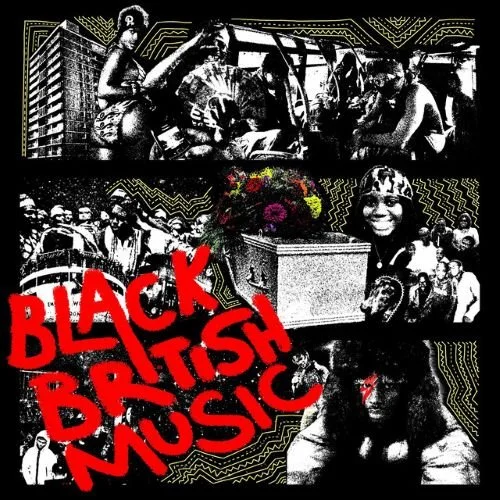
In Jeffrey Boakye's book Black, Listed, this contradiction is emphasised within a rigorous history of Black dejection in Britain. Tastefully, the project's artwork for Black British Music (2025) alludes to this very book with its red spray-painted typography atop black-and-white photography.
Interpolating J Hus on Afroswing-forward track "Sun" featuring Fimiguerrero injects euphoric bursts of nostalgia. This moment on the project runs counter to the idea that we should reject the Black British mantle and inspires joyful memories of our youth's cultural contributions to the country's heritage, joy and identity. As the host exclaims on the intro of the standout earworm, "Father": "We've been making arses shake since the Windrush".
While it felt like the UK had encountered a cultural void following the heyday of Afroswing, drill and UK hip-hop, recent successes of acts like Jim as well as YT, Len, Fakemink and more have proved that they are the descendents from the veterans who established the sounds of our childhoods.
The sceptical comments on Twitter that were aimed at the UK underground during their appearances at Wireless this year prove that there is still a long way to go before the British public accepts this succession. However, co-signs from Dave, Skepta and Headie One hint that this is the new vanguard.
Jim's approach to addressing this discussion is intriguing. It builds upon the style of his 2023 release, Homeless Nigga Pop Music, which read like a palimpsest commemorating a South London upbringing filled with both imaginative awe and anxiety. While Black British Music expands its focus to a much broader terrain, it offers a less direct portrayal of its subject. It allows its production to reflect his world, while he wanders on lyrical escapades about hedonism, grief and self-betterment.
Given the amount of attention he devotes to representing Black British culture through this LP's production, rollout and art, this may be confusing. However, the opener "Context" elucidates this choice. Jim explains that this album is about escapism, losing sight of oneself and rebuilding after the tribulations he encountered while making it. The Black British soundscape is a vector for Jim's personal expression: the fractures and attempts of self-determination from Black Britain mirroring his own personal conflicts.
This joyful communication also heavily mirrors brainrot humour—a style of internet comedy characterised by reducing joy or misery into a blur of whimsical reproductions and distorted representations of contemporary culture. This sense of humour is embedded in BBM's production through the use of cultural references to the effect of satire, irony and a distinct tongue-in-cheek quality. Black British Music in particular abstracts and disrupts our perception of Black Britain, addressing it insightfully, in jest but with creativity.
This distinct style of chaotic collages, random noises and distorted presentations can be traced back to the 1930s Dadaism movement. A reaction to the horrifying aftermath of the First World War, the Dadaism movement found artists creating works that had no explicit meaning or purpose—a nihilistic response to the failure of human ideology to make the world a better place.
The prevalence of a Black British Music summer in 2025 then—the season in which this tape stimulated the imagination of Britain's creative youth and invigorated the sounds of their leisure—was a bittersweet period of reckoning. Through dance and play, this project made its listeners rethink their position in the world, confront their beliefs and repackage them.
It's reminiscent in some ways of Charli xcx's brat, whose discombobulating, raucous and playful production connoted limitless self-indulgence. The party goes on and on and on… with very little prescience for hangovers and come-downs. Dadaism, while much more sober, similarly rejects the solemn tone of philosophy and intellectualism because humanity has gotten to where it is—a permanent state of warfare, inequality and dejection—in spite of aeons of supposed enlightened thinking.
Jim comes across equally as disassociated with the tribulations of the human experience, but he exercises more restraint in his nihilism. And rightly so. The weight of the previously acknowledged racial themes demands cultural sensitivity: Black music that bears the mantle of its people as boldly as this one does requires a tactful awareness.
Additionally, the singer-songwriter's internal battles with grief, trauma and poverty push him to search for meaning as a way to escape those ills. And so, Black British Music represents a prudent engagement with style: it carefully uses Dadaist caricature and collage to deconstruct masculinity, race and identity while acknowledging the fact that these elements exist within the tectonic turbulence of postmodernity.
This is why Jim can retell (alleged) stories of sitting in the trap on "New David Bowie"—evoking the hypermasculine imagery attached to this setting—while making himself sound tender, vulnerable and hysterical on tracks like "Issues of Trust".
I am ending with CLASH and their take on black british music. I think that runner-up spot on Radio 1’s Sound of 2026 is the start of a new chapter. It will put Jim Legxacy’s music more into the mainstream. Even if he has been around for a few years now, he is starting to release his best music and make his biggest moves right now. I feel he will grow even stronger:
“A lot of shit happened… it weren’t just her death… my mum… had two strokes. My brother had psychosis.” Jim Legxacy candidly speaks on top of pulsing euphoria, crunchy-warm guitars and MIDI synths at the opening of ‘black british music (bbm)’.
“’Candy Reign’ got taken down,” he continues, referring to his 2022 single that was subject to a copyright strike. The former confessional is a testament to the pure soul that he will pour into the 15-track album. But the latter, a sign of just how all-in he is and has been for years.
There’s more candid emotion to come. It’s given time on songs like issues of trust, which finds Jim’s voice wilting on a trellis of acoustic guitar as he contemplates being truly vulnerable. There’s the modestly flowering ‘dexters phone call’, featuring Dexterinthenewsagent, where chugging guitar and a solemn hook – “Life’s not been easy” – are lifted by chittering vocal samples and school-music-room chords turn to distorted licks.
But Jim happily fits true emotion into the more buoyant tracks, too, like the angsty single ‘3x’. He offers another reference to his late sister – a vein of melancholy running through ‘bbm’ – as heavy-hitting feature Dave reassures Jim he’s done her proud. But this candid performance plays out over infectious dancehall-adjacent beats. Grief and good times swirl together, as they often do, like the first wistful swig of drink at a get-together at the start of a long phase of sadness.
The artist offers an explanation of his ability to bring these disparate moods together on skippy phone-speaker banger ‘father’: “I was on the block listening to Mitski.”
The image of her, and a demonstrably large range of music blasting through the headphones of a young Jim in Lewisham; ‘father’s accompanying video featuring UK-centric Frutiger Aero imagery; the proliferation of Blackberry phones and crunchy 280p resolution in his visuals; indeed, the album title’s reference to the phone’s messaging platform. All of these present Jim as someone who grew up and nurtured a love for music in the late 2000s.
The dying days of playlists cobbled together from BeeMP3 rips and Bluetooth. When you’d chase your YouTube-ripped dj_boonie_whenitwasme.mp3 with the squelchy bass of T2’s ‘Heartbroken’. Where saccharine emo sat in the same file as abrasive grime instrumentals. Where Limewire offered avid music fans access to any music they wanted.
‘’06 wayne rooney’ reaches back to its titular year for a serving of emo-indie with a yearning momentum – one can almost see the FIFA 06 team select screen. Quick-step collage ‘new david bowie’, with its LG Chocolate pitched-up vocals, dives suddenly into dubby ad libs as Jim delivers trappy bars between breaths, switching his focus away from the distractions of technology for a moment: “Put my phone on DND.”
In a week where the UK vs US discourse reached a fever pitch – a debate simultaneously invigorating and fatiguing – Jim Legxacy is busy on the bus flicking through his Blackberry, assembling a sonic patchwork of disparate influences over a nucleus of Black London musicality, and imbuing each thread with an undeniable protagonist energy.
9/10”.
I was waiting a bit to feature Jim Legxacy and see what interviews were published last year. It has been a bit of a long wait, though I think it is a perfect time to spotlight this incredible artist. Someone who we will be talking about for years. One of our most important voices. Such a superb songwriter and visionary, we have not seen an artist like him for a very long time. No wonder there is so much excitement around him. I think that Jim Legxacy is an artist that we…
NEED right now.
____________
Follow Jim Legxacy