FEATURE:
Tell Me How Have You Been?
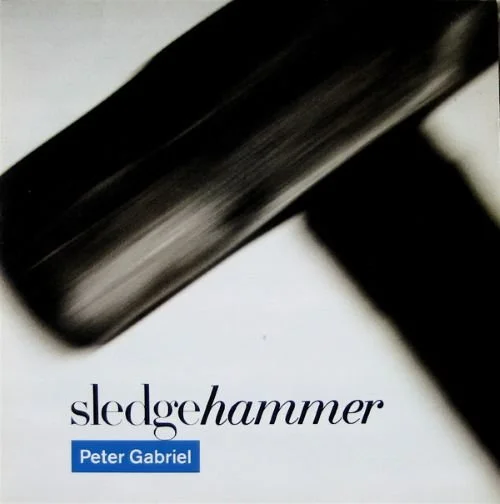
Peter Gabriel’s Sledgehammer at Forty
__________
I am casting forward…
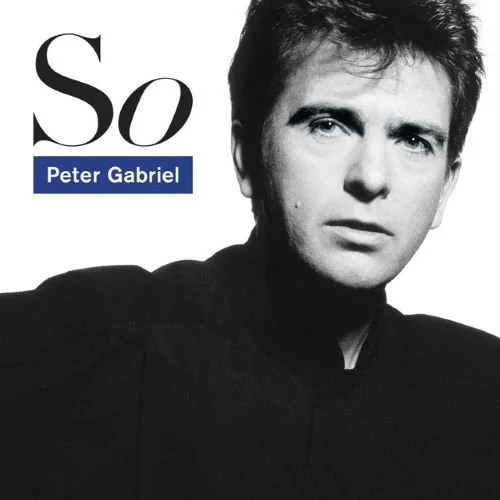
to 14th April. That date marks forty years since Peter Gabriel’s Sledgehammer was released. The lead single from his fifth studio album, So, it was a number four success in the U.K. It reached number one in the U.S. People talk about Sledgehammer as much for its iconic video as they do for the song itself! Directed by the late Stephen R. Johnson, it won nine MTV Video Music Awards in 1987 and is considered one of the greatest music videos ever. In terms of its brilliance and innovation, I would say it is the greatest achievement in music video-making ever. Forty years later, and it still looks mind-blowing. This stop-motion video that must have required a lot of patience from Peter Gabriel, I wanted to explore the song and video ahead of its fortieth anniversary. I am starting out with Sound on Sound in 2014. Sledgehammer was produced by Daniel Lanois and engineered by Kevin Killen and David Bascombe. Killen discussed the background of the track. How it came together and the technology and equipment used. I have selected sections from the interview:
“The words to Peter Gabriel's most commercial song and biggest international hit aren't exactly subtle. Sonically drawing on some of his previous numbers, like 'Games Without Frontiers' and 'Shock the Monkey', as well as 1960s American soul records by the likes of Otis Redding, 'Sledgehammer' is chock full of sexual innuendo: a steam train, an aeroplane, a big dipper, a bumper car, you name it.
Still, thanks to its infectious groove, contributions by the likes of legendary Stax house musicians the Memphis Horns and an iconic music video, it topped the American chart in July 1986 and climbed to number four in the UK.
'Sledgehammer' was the second track on So, Gabriel's fifth solo studio album and the biggest seller of his career, hitting the top spot in his native Britain where it was certified triple platinum and number two in the US where it went five-times platinum. Produced by Canadian musician Daniel Lanois, it melded Gabriel's world-music sensibilities and love of experimentation with Lanois' own ambient leanings to create a stone-cold classic.
"Peter would immerse himself in anything rhythmic, whereas Dan was very soulful as a producer,” says Kevin Killen, who took over as the album's engineer after David Bascombe — who'd recorded the basic tracks — left the project to work with Tears For Fears. "Beforehand, they'd worked on the soundtrack of the Alan Parker film, Birdy, re‑purposing and overdubbing on existing material that Peter had in his catalogue, and this had given them an interesting view into how they might work on So, enabling things to unfold naturally”.
"The basic tracks had mostly been recorded in long form, so the arrangements that we now hear weren't necessarily on the multitracks when I got involved. Some of them were almost the same, but others were really elongated; 'Sledgehammer' was close to 10 minutes, as opposed to the five minutes that ended up making it onto the single and the five minutes, 16 seconds on the album version. When they were tracking, they'd do these extended sections and extended vamps, because at the time Peter just had basic chord arrangements that he'd wanted to pursue. That also allowed the musicians freedom to explore new ideas, which sometimes ended up in the next take of the song.
"Lyrically, Peter likes to ponder his choices over a long period of time and he will play around with various ideas. Initially, he would come up with sounds for the basic track and try to fit key words into those sounds — he describes this process as Gabrielese — and then the lyrics would develop from there. When people came in to record overdubs, they might be playing to something that was still only partially formed or completely blank vocally. As a result, even if they came up with a great part, there was no guarantee it would stand the test of time. Peter was constantly upgrading his ideas, and so original parts would have to be replaced to accommodate the new arrangements.”
"The first song I heard on my arrival was 'Sledgehammer'. The drums, bass, guitar and keyboards had been recorded in their most basic form. Peter was working on a lyrical idea and he was trying to cement a melody for those lyrics. There was no lead vocal, no backing vocals, no horn parts, no organ. Even the bass part changed, going from a slightly different tone to what it became with Tony Levin's Boss octave pedal. In its extended version, it sounded like a really cool track that needed to be edited down into a more manageable form so that its great ideas could be presented in a more concise fashion, possibly with a view to being a single.
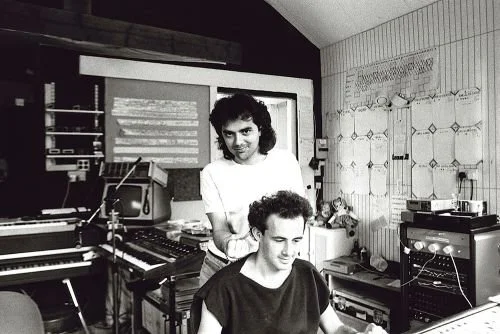
IN THIS PHOTO: Daniel Lanois and Kevin Killen in the Ashcombe House control room
"Peter recorded complete takes of the vocal and then we compiled. That wasn't true for all songs, but for 'Sledgehammer' we created a comp track. Shortly after I arrived, we'd started setting up for vocals and he had told me he normally sang through an SM57. Dan said, 'OK, we'll set up an SM57 but let's set up other microphones as well and do a blindfold test.' Peter was game enough to do that, so we had about six different mics set up in the control room, he put on the blindfold outside and walked in. He wasn't allowed to touch the microphones, and all the gains were set the same so that he couldn't tell which was which in terms of level. He went through each one, walking from one to the other, and the one he ended up picking was the Neumann U47.
"This particular Neumann had a really great, silky high end, but it didn't have as much bottom as Dan and I had expected. It had an unusual tone, and Peter has that lovely little rasp in his voice as well as a certain airiness. We thought the U47 sounded really good on him and then, just before we ready to record, our tech Neil Perry said something was shorting out in the cable connecting the mic to the power supply. After fixing the cable, we had Peter step back up to the microphone and it sounded different; much more full‑bodied. We liked that, but we pined for the airiness of the pre‑modified version. We asked Neil , 'Is there any way of mimicking that response? He did by removing the shield on a patch cord. Then he said, 'We should plug the microphone's input into a mult on the patch bay, take a regular patch cord out of that mult into a fader, and mult the dropped shield patch cord into a secondary fader. You'll have the normal 47 response with the modified 47 response on separate faders. You can use that to balance between the airiness and roundness of Peter's voice.'
"That became the way in which we approached the vocals. Peter likes to sing in the control room and to not be totally isolated with headphones. We had small NS10 monitors and a pair of Tannoys as well. So, we'd flip the phase on them, placing the U47 at the apex position from the speakers while monitoring at a moderate level, and then Peter would sing with a pair of Sennheisers around his neck. Afterwards I'd record a track at the same monitoring level of just the backing track minus the vocal. Then I'd comp with that backing track out of phase with the vocal to see if we could get it to cancel.
"In terms of vocal performances, Peter would usually take three, four, five passes to get a great end result. He's an incredibly great vocalist. It's rare that Peter sings out of tune and he's really got the most soulful sounding voice. It might take him a long time to arrive at a finished lyric that he's comfortable with, but once he gets there his delivery is impeccable...
"Personally, it was a life‑changing experience. Dan was gracious to invite me onto the project, and the challenges it presented allowed me to grow exponentially as a person and as an engineer. Meanwhile, Peter was incredibly gracious both as a person and as a performer, and he made me feel welcome from the first day. We were a competitive group, and this manifested itself in our daily games of boules, as well as our runs to Solsbury Hill with David Rhodes, PG and myself. There was exceptional humour and compassion, and enough creative tension to help maximise our contributions. I cannot imagine my life or career without that experience and the friendships that ensued”.
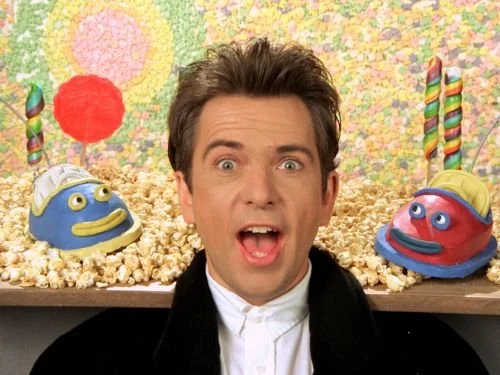
It is worth discussing the video for Sledgehammer. One wonders if this song would have such a huge and important legacy were it not for the video. Would it have charted as high, especially in the U.S. if the video were different? There is no doubting the brilliance of the song itself, yet the video tips it over the top! Music Radar reproached Sledgehammer last year. Peter Gabriel recalling how it was quite an intense process. He had to lie under glass for sixteen hours in one section of the video! However, the dedication and patience paid off. It is a masterpiece visual:
“Directed by Stephen R. Johnson and featuring the animation talents of the Brothers Quay and Aardman Animations, the video makes for compelling yet sometimes uneasy viewing - with Gabriel singing the track in a disjointed, frame-by-frame style as a whole manner of objects such as an orange and a model train orbit his head.
Shot one frame at a time, this required Gabriel to lie under glass for a total of 16 hours.
“It took a lot of hard work,” Gabriel recalled. “I was thinking at the time, ‘If anyone wants to try and copy this video, good luck to them’.”
In many ways, the Sledgehammer video is a fitting reflection of the song it sets out to evoke – striking, innovative and, as ever with Peter Gabriel, wholly unique.
Sledgehammer is the song on which the former Genesis singer shifted from prog to pop, albeit with left-field sensibilities to the fore. It’s also a track that would become his most commercial song and his biggest international hit.
Sledgehammer is the second track on Gabriel’s fifth studio album, So, and was the last one to be recorded.
The album was produced by Daniel Lanois and recorded at Gabriel’s home, Ashcombe House, near Bath.
The musicians on the album were actually packing up their gear to leave when Sledgehammer was presented to them. Drummer Manu Katché had just ordered a taxi on his return journey to Paris when Gabriel coaxed him back into the studio.
Katché nailed his drum part in one take and Tony Levin recorded his part on a fretless bass with a pick.
Soul music was a huge influence on Gabriel when writing the song, particularly the music that had come out of Stax in Memphis.
He recalled having seen Otis Redding in London and remembered the passion and excitement of Redding’s performance and his trumpet player that night, Wayne Jackson, a member of the Stax house band and one of the Memphis Horns.
“I began as a drummer, a pretty bad drummer,” Gabriel told Ray Hammond of Sound On Sound magazine in January 1987. “I used to play in a soul band and we used to do a lot of this type of material. It's still very exciting for me.
“The best gig of my life was when I went to the Ram Jam Club in Brixton to see Otis Redding in 1967. That hasn't ever been surpassed for me, it was an amazing night.”
Almost 20 years after that night, Gabriel contacted Wayne Jackson and asked him to assemble a horn section to play on Sledgehammer. Jackson recruited Mark Rivera on saxophone and Don Mikkelsen on trombone.
Gabriel wanted Jackson and the horn section to capture some of the intricacies of brass playing that were not possible to achieve on a synth. He highlighted as an example the slow brass swells in the second verse as the kind of feel that he required.
For Gabriel, the inclusion of musicians such as Wayne Shorter and Manu Katché was integral to Sledgehammer.
“I think there's still something magical that happens when you get the interaction between live players,” he said. “No amount of good programming can replace that.”
Lyrically, Sledgehammer is rich in sexual innuendo. As Gabriel sings: ”You could have a steam train/If you'd just lay down your tracks".
The euphemisms were acknowledged by Gabriel and he noted that many of the ’60s soul and R&B songs that inspired him also feature such references in the lyrics. “Sometimes sex can break through barriers when other forms of communication are not working too well,” he is quoted as saying, on the Songfacts website”.
Before getting to some critical reviews and impressions of how Sledgehammer is viewed, Stereogum wrote about this 1986 single for their The Number Ones feature. Even though it was number one for a single week in the U.S., its popularity and success was immense. One of the defining singles and videos of the 1980s. Perhaps Peter Gabriel’s most revered and loved song, it still sounds fresh forty years later! The video is not dated at all. How many artists would commit to a video like this in 2026?! Even though So has other classics on it – Don’t Give Up, and Red Rain among the others -, Sledgehammer is the standout:
“Before making that "Sledgehammer" video, director Stephen R. Johnson had made the similarly wild clip for the 1985 Talking Heads song "Road To Nowhere." That video, in particular its stop-motion sequences, were what attracted Gabriel to Johnson. Johnson, in the oral history I Want My MTV: "I didn't even like ['Sledgehammer'], frankly. I thought it was just another white boy trying to sound Black. But Peter Gabriel took me to dinner, got me drunk on wine, and I agreed to do it." With the "Sledgehammer" video, Johnson just went nuts, and Gabriel did everything necessary to bring Johnson's visions to life.
In making the video, Johnson enlisted the help of the groundbreaking experimental stop-motion animators the Brothers Quay. At Gabriel's behest, he also brought in Aardman Animations, the British production house that would later make the Wallace & Gromit films. Nick Park, who went on to create Wallace & Gromit, personally animated the bit in the "Sledgehammer" video where the two chickens dance. Park used real chicken carcasses, and they started to rot and stink while he was working on them. (Later on, Park co-directed the 2000 hit Chicken Run, so the experience apparently didn't put him off working with chickens.) In working on the video, Gabriel himself had to spend 16 hours laying underneath a sheet of glass, and he got a bunch of electric shocks while wearing a Christmas tree costume. It all worked out. Gabriel, Johnson, and all their collaborators made something immortal.
A spectacle as outsized and surreal and popular as the "Sledgehammer" video makes for a fitting peak of Peter Gabriel's career. Gabriel had been building to something like that for a long time. Gabriel, in his mid-thirties when he scored his one #1 hit, grew up in the English town of Surrey, and he became one of the founding members of Genesis as a teenager. From the very beginning, Gabriel was an unconventional frontman. On Genesis' early albums, he played flute and oboe. Later on, he started wearing outlandish costumes onstage, something that he never cleared with his bandmates beforehand. Gabriel was the one who had the big ideas that led to absurd, ambitious concept albums like the 1974 album The Lamb Lies Down On Broadway.
While Genesis were working on that album, William Friedkin, director of The French Connection and The Exorcist, approached Gabriel about working on a a screenplay, and he temporarily dropped out of the band, pissing off his bandmates in the process. After Genesis finished touring behind the LP, Gabriel announced his departure from the band, kicking off the chain of events that would lead Genesis drummer Phil Collins to unlikely global pop stardom. Soon afterward, Gabriel started off a solo career, releasing his first album in 1977. On his early albums, Gabriel played around with synths and textures and ideas.
All of Gabriel's first four solo albums were self-titled -- not exactly the kind of decision you make if you're aiming for pop stardom. Still, Gabriel's early singles did pretty well on the UK charts. In the US, Gabriel was less of a presence. A couple of tracks charted: 1977's "Solsbury Hill" at #68, 1980's "Games Without Frontiers" at #48. But Gabriel was more of a culty, esoteric figure until the advent of MTV made him harder to ignore. 1982's "Shock The Monkey" reached #29, largely on the strength of its memorably freaked-out video. Still, a song like "Sledgehammer" represented a real and self-conscious turn towards the pop mainstream.
Gabriel co-produced his 1986 album So, his first album with an actual title, with Daniel Lanois, a producer whose work will appear in this column again. Lanois and Gabriel had worked together on the soundtrack of the 1984 movie Birdy, and they made So together at Gabriel's Bath studio. Gabriel obsessed over the record's sound, spending hundreds of thousands of dollars to painstakingly put it all together. For "Sledgehammer," he had an unlikely inspiration: Previous Number Ones artist Otis Redding.
In 1967, Gabriel had seen Redding play the London club Ram Jam, an experience that made him want to become a full-time musician. (Imagine how much confidence it must take for a 17-year-old white British kid to look at Otis Redding and think to himself that he could do that.) "Sledgehammer" is Gabriel's conscious attempt to salute Redding and his '60s soul contemporaries. That's why "Sledgehammer" is basically nothing but clumsy sex metaphors. Gabriel figured that he was working within a lineage. In the So press release, Gabriel wrote that the song was his attempt to replicate "the spirit and the style" of '60s soul: "The lyrics of many of those songs were full of playful sexual innuendo, and this is my contribution to that songwriting tradition. It is also about the use of sex as a means of getting through a breakdown in communication." (Gabriel's first marriage would end in divorce a year later.)
Judged as a '60s soul song, "Sledgehammer" is an abject failure, a total boondoggle. In its lyrics, Gabriel essentially compares the following things to his dick: a steam train, an airplane, a big dipper, and a bumper car. (I'll admit: I am now very curious what Peter Gabriel's dong looks like.) Gabriel also sings that you should show him 'round your fruit cage because he will be your honeybee. He wants to be your sledgehammer. Won't you call his name? It's all very dumb and silly, mostly in an endearing way.
As a singer, Gabriel is obviously no Otis Redding, but he's still pretty effective. His voice is a strained, chesty baritone grumble, and he pushes it hard on "Sledgehammer." Purely as a vocalist, Gabriel never had the effortless grace of his old bandmate Phil Collins, but that works out fine for him, since a song like "Sledgehammer" should be effortful. I like the interplay between Gabriel and the backup singers at the end of the song. He's not a soul singer, but he tries.
But "Sledgehammer" doesn't work because it's a soul song. It works because it's a slick, loud, fun '80s club song. The mix is huge and overwhelming, full of noises and tones that drop in out of nowhere. The opening flute-tootle has an uncanny sort of echo on it; it's an intro that lets you know you're about to be swept away. The sound came from an E-mu Emulator II sampler; Gabriel took it from a sound-test demo. Much of "Sledgehammer" is just as digital as the sample: The airless sheen, the giant drum sound, the Fairlight and Prophet synths that Gabriel plays on the song. But there's a nice mix of the electronic and the tangibly organic.
For the song, Gabriel brought in Wayne Jackson, the great Memphis trumpeter who played on tons of Stax Records tracks and who backed up Otis Redding that night that Gabriel saw him at the Ram Jam, along with Jackson's group the Memphis Horns. Gabriel has dismissed the notion, but it seems likely that Gabriel had noticed how much success his old bandmate Phil Collins was having when making records with Earth, Wind & Fire's Phenix Horns. On "Sledgehammer," the Memphis Horns do the same kind of work that the Phenix Horns had done on Collins' "Sussidio" the year before, and they give the song a similar adrenaline charge.
Gabriel has acknowledged that "Sledgehammer" owes much of its pop success to the video. It's one of those songs that's impossible to hear on its own, without visions of that video dancing across your brain. But on its own, "Sledgehammer" is a charmingly goofy dance-pop song with production that makes it sound fucking huge, like a spaceship taking off. Even without the video, it would've been a hit. Even without the video, it's a lot of fun.
"Sledgehammer" is by far Gabriel's biggest chart hit. Only one other Gabriel single, the ironic yuppie-clowning dance-funk follow-up "Big Time," even made the top 10. ("Big Time" peaked at #8. It's an 8.) Other Gabriel songs have lingered longer in the popular consciousness, though, mostly because they also pair nicely with other images. "Solsbury Hill" was in so many movie trailers that it became a meme in the early-YouTube days, while the So ballad "In Your Eyes" earned teen-movie immortality when Cameron Crowe used it in the climactic scene of 1989's Say Anything... ("In Your Eyes" peaked at #26, but it's by far Gabriel's best-known song today.)”.
There is a great and fascinating blog post that I want to highlight, which analyses the musical structure of Peter Gabriel’s Sledgehammer. I would urge people to read it, as it unpicks the track. Many might see it as a simple song that is all about the video. However, the sounds and musical elements of Sledgehammer are so unusual for the time. I am going to end with this 2022 article about the genius Sledgehammer. A song about sex that has all this depth and a truly awe-inspiring video, I am going to be interesting to see how people approach it close to its fortieth anniversary on 14th April:
“One of the things – among many – that make the song so uniquely fascinating was the use of a synthesized shakuhachi flute (a Japanese and ancient Chinese longitudinal, end-blown flute made of bamboo), generated with an E-mu Emulator II sampler. Gabriel said that the “cheap organ sound” was created from an expensive Prophet-5 synth, which he called “an old warhorse” sound tool. (Wikipedia) The great backing vocals were sung by P. P. Arnold, Coral “Chyna Whyne” Gordon, and Dee Lewis, who also sang backup on “Big Time”.
Ironically, “Sledgehammer” (which was Gabriel’s only song to reach #1 in the U.S.) replaced “Invisible Touch”, by his former band Genesis, at the #1 spot on the Billboard Hot 100 (which was their only #1 hit in the U.S. as well). In a 2014 interview with The Guardian, Phil Collins remarked “I read recently that Peter Gabriel knocked us off the #1 spot with ‘Sledgehammer’. We weren’t aware of that at the time. If we had been, we’d probably have sent him a telegram saying: ‘Congratulations – bastard.'”
You could have a steam train
If you'd just lay down your tracks
You could have an aeroplane flying
If you bring your blue sky back
All you do is call me
I'll be anything you need
You could have a big dipper
Going up and down, all around the bends
You could have a bumper car, bumping
This amusement never ends
I want to be - your sledgehammer
Why don't you call my name
Oh let me be your sledgehammer
This will be my testimony
Show me round your fruitcage
'Cos I will be your honey bee
Open up your fruitcage
Where the fruit is as sweet as can be
I want to be - your sledgehammer
Why don't you call my name
You'd better call the sledgehammer
Put your mind at rest
I'm going to be - the sledgehammer
This can be my testimony
I'm your sledgehammer
Let there be no doubt about it
Sledge Sledge Sledgehammer
I've kicked the habit, shed my skin
This is the new stuff, I go dancing in, we go dancing in
Oh won't you show for me and I will show for you
Show for me, I will show for you
Yeah, yeah, yeah, yeah, yeah, I do mean you, only you
You've been coming through
Going to build that power
Build, build up that power, hey
I've been feeding the rhythm
I've been feeding the rhythm
Going to feel that power build in you
Come on, come on, help me do
Come on, come on, help me do
Yeh, yeh, yeh, yeh, yeh, yeh , yeh, yeh, you
I've been feeding the rhythm
I've been feeding the rhythm
It's what we're doing, doing
All day and night”.
The stunning and world-conquering lead single from So, Sledgehammer turns forty on 14th April. Few songs are talked about mainly because of their video. So groundbreaking and innovative was the Stephen R. Johnson-directed video that we are still talking about it today. Few videos since 1986 have matched the brilliance of Sledgehammer! However, you can play the album and listen to Sledgehammer without the video and be swept away. The big vocal and incredible horns. The catchy and memorable chorus. The joy that it brings. That entire So album is so rich, varied and astonishingly nuanced and stunning. A masterpiece album from…
A songwriter in his own league.