
FEATURE:
Shortlist
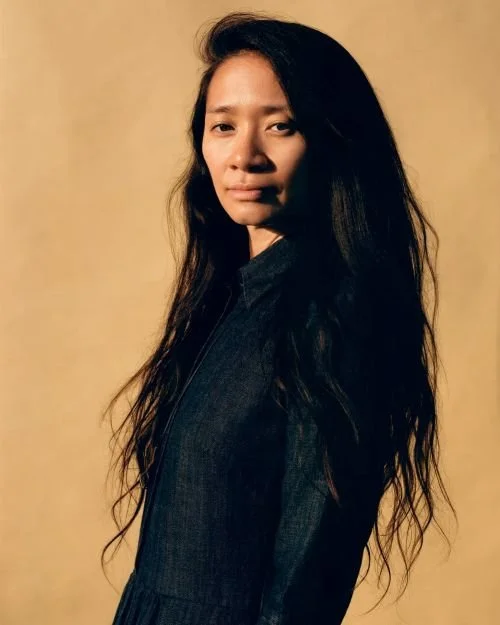
IN THIS PHOTO: Chloé Zhao is one of only three women - the others are Kathryn Bigelow and Jane Campion - who have won the Best Director Academy Award. She won in 2021 for Nomadland and is the second women (the first is Jane Campion) to get two Best Director nominations/PHOTO CREDIT: Pat Martin
Reacting to the Academy Awards 2025 Nominations: Saluting Amazing Women and Highlighting Ongoing Gender Divides
__________
I will tie this to music…
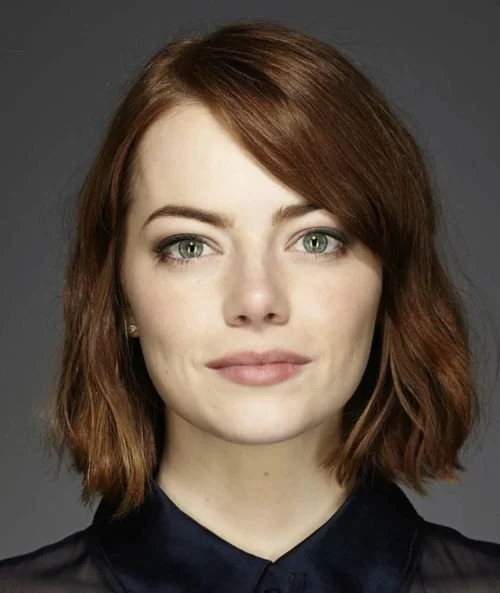
IN THIS PHOTO: Emma Stone has picked up her seventh Academy Award nomination. She is nominated for Best Actress for Bugonia
because there is an incredible songwriter who has been nominated again for an Academy Award but has never won one. You do hope that she finally gets one after being overlooked for so long! The nominations can be seen here. There are some takeaways from the shortlist. Hosted by Conan O’Brien (after his triumphant debut hosting last year) on 15th March, the best and brightest from Hollywood will be in attendance. Some truly stunning cinema is represented at this year’s ceremony. The Best Picture category divided people. Popular choices like Bugonia, Hamnnet and Marty Supreme alongside less obvious choices like F1 and Frankenstein. Although these films have female producers, they are still outnumbered by men. It is great that amazing actors like Jessie Buckley (Hamnet), Rose Byrne (If I Had Leg’s I’d Kick You) and Emma Stone (Bugonia) are up for Actress in a Leading Role. It is going to be a wonderful night! In terms of nominations, there are some new and younger actors sitting alongside legends of the screen. One of the most incredible things is seeing Emma Stone nominated once more. She is the youngest woman ever to earn seven Oscar nominations in her career. At age thirty-seven, she received two nominations for Bugonia, one for Best Actress and one as a producer on Best Picture, bringing her total to seven. Winning the Actress in a Leading Role for 2017’s La La Land and 2024’s Poor Things, there are many feeling she will win her third Academy Award. One of the world’s greatest actors, I feel like Stone is going to be nominated multiple more time through her career!
I am going to end with the Directing category which, every year, throws up the same problem. It is one that is not improving. In terms of huge gender inequality. Almost tokenistic to include one woman in the category a year! However, before getting there, it is worth concentrating on the music side. I will include an album from the Music (Original Score) category for a feature. However, look at Music (Original Song). One of the lesser-highlighted and discussed categories, it is notable because it once again features Diane Warren. The song Relentless from Dear Me has lyrics and music by Warren. This is a songwriter who is an Ivor Novello Award-winning genius who has written huge hits for the likes of Cher and Aerosmith. In terms of the Academy Awards, this is someone who is a fixture. This Billboard feature spotlights the Diane Warren-written Academy Award-nominated songs. Not to say it is sexism, but is it telling that someone as wonderful as Diane Warren has not won an Academy Award. It seems strange that someone who has been nominated so often has been ignored. Maybe it is just bad luck. In any case, I think this year is the one where Warren is richly deserving and should get that allusive award:
“Diane Warren is now way up there on the all-time list of top Oscar nominees for best original song. Her nod this year for “Dear Me,” sung by Kesha in the documentary Diane Warren: Relentless, is her 17th — a tally equaled by only two other songwriters in the 92-year history of the category. Sammy Cahn leads with 26, followed by Johnny Mercer with 18.
Moreover, this is the ninth year in a row she has been nominated, which enables Warren to set a new record for the most consecutive nominations in the history of the category. She surpasses Cahn, who was nominated eight years running from 1954 to 1961.
If you’re looking for a common denominator among Warren’s best original song nominees — besides quality — good luck. Three of them reached No. 1 on the Billboard Hot 100, but several others didn’t even crack the chart. Three are from blockbuster action films, but several others are from smaller indie films that barely made a dent at the box office.
She’s rarely been part of an Oscar-magnet film that racked up multiple nominations. “Dear Me” is her 12th nominated song that originated in a film that received no other nominations besides hers”.
The biggest reason for writing this feature is to note that, as of this ceremony, only eleven women have been nominated for the Best Director in the history of the Academy Awards. Out of these nominations, only three women—Kathryn Bigelow, Chloé Zhao, and Jane Campion—have won the award. I think over 260 directors have been shortlisted in its history. It took until 2010 for Kathryn Bigelow to win the award for The Hurt Locker. Nominated for Hamnet, Chloé Zhao makes Oscar history for her second Best Director nomination. In 2021, Nomadland won Zhao her first Academy Award/Oscar. She could well receive her second, though I have seen sites tipping other directors this year. Hollywood Reporter ran a feature where the running order for each category was predicted. In terms of Best Director, Chloé Zhao was placed third behind Paul Thomas Anderson for One Battle After Another and Ryan Coogler for Sinners. With many also agreeing that Paul Thomas Anderson will win, it means that possibly it will be another year where men dominate. Although Zhao won an Academy Award five years ago, we are not far from the one-hundredth Academy Awards. In 2028, when that historic ceremony occurs, will it be the case that only three women would have won the coveted Best Director award?! It seems shocking that there is this continued gender inequality. Rather than these statistics reflecting quality and merit, it is misogyny. Women across the cultural sector are paid less than men. From music to cinema, women are dominating and producing, I think, the best and most enduring work. However, there is still this sexism. Whilst the gatekeepers are men and there are not enough men across these industries calling for change then nothing will! Whilst there have been improvements since the bleakest days, it is insane we live in a time when there are any pay gaps in any creative industry. Not to lame men for this, but you do not often read of actors protesting or asking for a pay cut in order for their female counterparts to be paid equally.
Although women are nominated more in mixed-gender categories, there are still gulfs across many categories. The most glaring one is Best Director. This is arguably the most important category. The director is the person who brings out the wonderful performances from the actors that are nominated. They create these pictures that get nominated too. Of course, films are a collaborative effort, though the director is key. What we see year in and year out if this assumption that men are far exceeding women. As I say, it almost seems tokenistic or an afterthought to include women. Like they need to include one to not be accused of being all-male and misogynistic. Nobody can defend or rationalise the astonishing gap. One could say that there is limited room in that category. Here’s the thing: widen the category, then! Best Picture includes ten films. It is insane that the Actor and Actress categories only have five names in each, as you would think ten is more suitable. Even if you have five, you cannot say it is a case of eighty percent of the best films each year are directed by men. Look at articles such as this, that highlight great films of last year directed by women. How about If I Had Legs I'd Kick You?! Directed by Mary Bronstein, the fact that she directed such a commanding and mesmerising performance from Rose Byrne – who is nominated for Best Actress -and the film holds a 92% rating on Rotten Tomatoes shows that it is acclaimed. I know many say that site has a bad metric and is not reliable. Okay. Look at this review, or this or this, that commend the film and or Mary Bronstein. The performance of Rose Byrne, one of the most lauded in many years, is in many ways down to Bronstein’s direction and instincts. When Greta Gerwig was not nominated for 2023’s Barbie – she was twice-nominated for Best Director but never won -, it was a baffling snub. Kelly Reichardt’s The Mastermind is another award-worthy film. When people talk of the most notable Academy Awards snubs, it is about men not nominated or films directed by men. How many are looking at this year’s Best Director category and asking why only one woman was nominated?!
Even if you (wrongly) assume there are not enough talented female directors in the industry that warrant nominations, that reflects shockingly on an industry that is to blame. Even if the Academy Awards are not as all-male as they used to be when it comes to Best Director, this 2018 article from The Guardian asks questions relevant in 2026. How can this bias – let’s just call it what it is: misogyny – be fixed? It is a subject once again under the spotlight:
“The numbers haven’t changed significantly for the last two decades because at the highest levels of the business, people do not hire women to direct movies,” says Melissa Silverstein, founder/publisher of Women and Hollywood. “Studies have shown that when people in the industry think about a director, they picture a white male with greying hair – basically Steven Spielberg. That’s the default because that is what people have seen.
And it may be what voters are seeing, too. Greta Gerwig’s film Lady Bird picked up the Golden Globe for best motion picture (musical or comedy) as well as best actress (musical or comedy) for Saoirse Ronan. But who won the all-male best director category? Guillermo del Toro, for The Shape of Water. “A film like Lady Bird can have an almost perfect critical response, yet not get nominations,” laments Silverstein.
While it’s true that the best picture and director winners aren’t always awarded for the same film, for Gerwig not to be even nominated for an acclaimed feature speaks volumes. Del Toro’s fellow nominees demonstrate Silverstein’s point clearly: Ridley Scott, Christopher Nolan, Martin McDonagh and yes, Steven Spielberg, for a film (The Post) that went home empty-handed, and wasn’t even nominated for a Bafta.
Spielberg, diplomatically, has since made optimistic comments about the chances for a female director nominee when the Oscar contenders are announced on 23 January. “This is a pretty incredible year, and I think you’ll be seeing some nominations, I’m predicting at the Oscars this year for a woman director, if not several.”
Silverstein says steps have been put in place that may help redress the imbalance. “Over the last two years, the Academy have completely remade the directing branch and have added many more women directors from all across the world. This will give women directors a fighting chance, one they really didn’t have previously when the branch was pretty much all men.”
Other less high-profile awards ceremonies have also offered hope: Gerwig has already won best director at numerous critics’ awards, while Dee Rees, the director of the racially charged Mudbound, has also been honoured, though less resoundingly than pundits predicted. Other awards are finding different ways to honour female film-makers. The Los Angeles Online Film Critics Society recently decided to split the best director award into male and female categories, but segregation can’t really be the answer. While it may have been done with the best of intentions – to give credit to talented women – might it not seem a little patronising to put them in a different category, as if they can’t compete with the big boys? Surely the way to show the industry that great directors can be any gender is to nominate them alongside each other.
What we need is an industry that welcomes all applicants for crew positions, whether they’re in sound, editing, cinematography or directing; and whatever their gender, race or sexuality. The Time’s Up campaign is raising awareness of the imbalance of power in every industry, and let’s hope film is making up for lost time by leading the way. Says Silverstein, “As a culture we need to shift away from our stories being about white men and by white men. That is how more women will receive the deserved honours.” Let’s hope the Academy takes note”.
In 2023, Sarah Polley, Gina Prince-Bythewood, Maria Schrader and Charlotte Wells were snubbed but, as Variety highlight, they were worthy. This article from 2024 talks of the long and complicated history of the Academy Awards and ignoring female directors. Women were shut out in 2020, and whilst two women were nominated in 2021, they still made up only forty percentage of the nominees. It is like a festival such as Glastonbury. The first time they included two female headliners on the Pyramid Stage was 2024 when Dua Lipa and SZA were booked. The festival had been running over fifty years before they booked more than one female headliner! It should not be news that two women are nominated for Best Director at the Academy Awards. It should be common. However, if Hollywood and award ceremonies continue to overlook women and fewer women are being hired to direct, then how is the issue going to be rectified? I feel there are genuinely one or two female directors alongside Chloé Zhao who could have made the shortlist. women directed only 16% of the top 250 grossing films in 2024. Gender gaps seem to be widening. Even when you have a director like Mary Bronstein who should have been shortlisted this year, her name is left out. This article from 2017 asks how to fix Hollywood’s toxic gender exclusion in Hollywood. Barely any progress in nearly a decade! This 2015 article that reveals 99% of women – again, 99%! – in film and T.V. have experienced sexism. It is not only an issue with women not being nominated for awards as directors or having progress thwarted. Think about films in general and speaking roles for women. How this article from last year highlights the following:
“The discussion over women in films, it turns out, was only beginning to gather steam in the industry, and the numbers that have turned up are damning.
In a survey of movies from 2007-2012, the New York Film Academy (NYFA) found that only 31 percent of all speaking characters in film are women. Nearly 30 percent of all women in movies wear revealing clothes or become partially naked, versus less than 10 percent of men. Women characters tend to be younger than men and ancillary to them.
Gena Davis, star of "Thelma and Louise" and other female-driven films, points out that in family films the percentage of speaking female roles is even lower (28 percent) and the female roles are often stereotypical.
In animated films, in which the production company can include as many females as desired, women compose only 17 percent of crowd scenes! Are they that much harder to draw?
Black women have particularly difficult problems getting roles or visibility. By overwhelming numbers, black women in films are homeless, powerless, abused, or alone. Even when they achieve recognition, it’s often for a menial position. Two of the six academy awards won by black females in 88 years were for servant roles, Hattie McDaniel in 1941 and Octavia Spencer in 2011.
The lack of roles for women translates into a lack of leverage for paychecks. NYFA found that men took home the top 16 biggest paychecks in Hollywood. The highest salary for a woman, Angelina Jolie, was equal to the lowest two salaries for men on the list.
Nancy Myers, the acclaimed director of movies about women, said in a New York magazine interview in Sept. 2015 that, except for a “couple” of bankable female stars, most women are fighting over the same small number of roles. This gives them less negotiating power than men. She also said it’s hard to get male movie stars to play in a movie if a woman is the lead”.
Whilst this year’s Academy Awards is a celebration of golden talent across the film industry, it also has to be held responsible for once again excluding women largely from the Best Director category. You feel next year has to be one where female directors’ work is celebrated and included more. I feel Olivia Wilde is a director who could be on the Academy Awards shortlist next year for the hugely praised The Invite. This year is not only a missed opportunity but a plain disregard for award-worthy films from female directors. Natalie Portman was on the interview trail at the Sundance Film Festival as Variety write. Portman noted how The Testament of Ann Lee was directed by Mona Fastvold; Eva Victor directed Sorry, Baby. Both films critically acclaimed, popular with audiences and worthy of Academy Awards discussion:
“Natalie Portman hit the Sundance Film Festival press circuit for “The Gallerist” wearing “ICE Out” and “Be Good” pins, just hours after a man was fatally shot by federal agents in Minneapolis. Portman’s “Be Good” references Renée Good, who was killed by ICE in Minneapolis earlier this month. During an interview at the Variety Studio presented by Audible, Portman openly blasted ICE brutality.
“This is such a joyful community celebrating film here and we’re so excited to be showing ‘The Gallerist,’ but we’re also at a moment in our country’s history that is quite devastating,” Portman said. “It’s really impossible not to talk about what is happening right now and the brutality of ICE and how it has to stop immediately. But also, there’s a beautiful community that Americans are showing right now. They’re showing up for each other, protecting each other and fighting for their freedom. It’s a bittersweet moment to celebrate something we’re so proud of on the backdrop of our nation in pain.”
Portman’s interview took place ahead of the “The Gallerist” world premiere at this year’s festival. The movie, directed by “Birds of Prey” helmer Cathy Yan and co-starring Jenna Ortega, centers on a desperate gallerist who conspires to sell a dead body at Art Basel Miami. Portman heaped praise upon her younger co-star.
“She’s such a fucking great actress and so knowledgeable about film,” Portman said of Ortega. “She’s so on and in it. It is rare. I think you’re very focused and in tune with everything. You’re not there to mess around.”
Portman went on to call Yan “a brilliant leader,” adding: “She has a specificity of vision. All the work ahead of time and her precise leadership leads to the possibility of spontaneity. Balancing this very specific tone that is satirical but also true emotion in it, which is almost impossible to create, she knew how to do it and guide us to it.”
With “The Gallerist” being one of Sundance’s biggest movies from a woman director and the premiere taking place just a few days after the Oscar nominations, Portman also took a moment during the interview to call out the Academy for snubbing a handful of female-directed movies this year. While Chloe Zhao’s “Hamnet” scored 8 nominations, including best picture and best director, many other movies directed by women were shut out.
“So many of the best films I saw this year were made by women,” Portman said. “You just see the barriers at every level because so many were not recognized at awards time. Between ‘Sorry Baby’ and ‘Left-Handed Girl’ and ‘Hedda’ and ‘The Testament of Ann Lee’… Extraordinary films this year that I think a lot of people are enjoying and loving, but are not getting the accolades they deserve.”
In terms of all the categories and the extend of gender exclusion, you can see the figures here. It makes for distributing reading! The film industry needs to really take a long look at the statistics coming out and work hard to address issues and why women are excluded, not provided opportunities in terms of directing; being given important roles. Underpaid and undervalued. It is a paramount concern that they…
NEED to answer.