
FEATURE:
What I Do
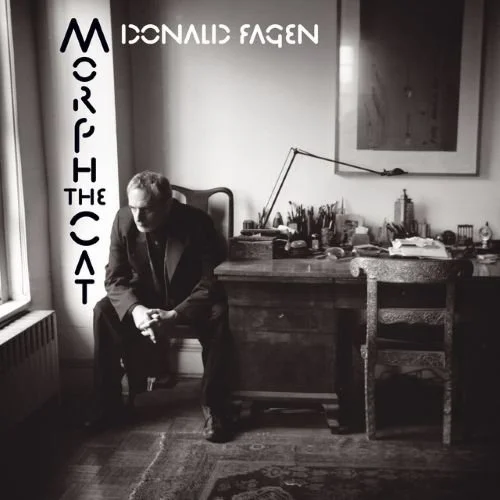
Donald Fagen’s Morph the Cat at Twenty
__________
IN terms of artists I would love to…
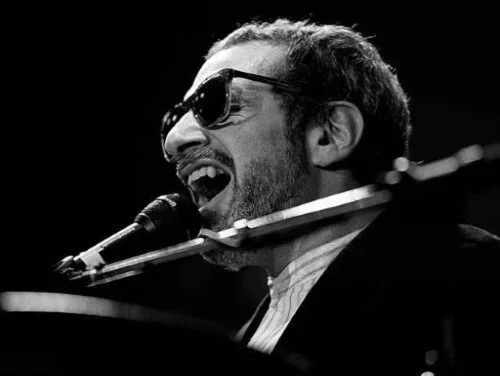
IN THIS PHOTO: Donald Fagen in 2006/PHOTO CREDIT: Rick Diamond
hear an album from, there is this shortlist. I feel, because it has been quite a while, Donald Fagen is near the top of that list. His most recent album, Sunken Condos, was released in 2012. I do wonder if he will release another solo album, as there is nobody out there like him. Many might know him as the co-founder of Steely Dan alongside the late Walter Becker. The final Steely Dan album was 2003’s Everything Must Go. Donald Fagen had a solo career after the group/duo went on hiatus after 1980’s Gaucho. Morph the Cat was his first solo album of the 2000s. On 7th March, 2006, this incredible album came out. Whilst not quite up there with Sunken Condos, I feel Morph the Cat is an extraordinary work that needs to be highlighted. I am going to come to a few reviews. Many note how it was business as usual for Donald Fagen. In terms of it was not a huge break from his previous solo and Steely Dan work, though it is was still extraordinary and better than a lot of what was out there. It is strange that Fagen saw Morph the Cat as his ‘death album’. He was only fifty-eight when it was released, so I wonder how he feels twenty years later. The fact Morph the Cat is recorded and written in the wake of the September 11 attacks and the devastation in New York and the shockwaves caused gives Morph the Cat this idea of being very serious and a hard listen. Maybe not as witty and light as Sunken Condos or even The Nightfly (1982), there is plenty of dry humour, sarcasm and fascinating characters. The eponymous Morph the Cat is this spirit and shadow that hovers over New York. Maybe this symbolism for foreboding or a black cloud, it is a song that is full of interesting and humorous ideas. I love the eponymous H Gang, Security Joan and the fella who is a more multicoloured version of Death. He is the unnamed lead of Brite Nightgown. It is an album that takes its time to unfurl. Longer songs that many Donald Fagen/Steely Dan albums, maybe that slight lack of economy is a fault.
However, I really like how the music occasionally wanders and you get longer to spend with these great tracks. If mortality and a certain dread following the 2001 terrorist attacks and the danger the world faced in the first decade of this century, I feel you could adapt Morph the Cat today and apply it to Donald Trump, genocide, domestic terrorism and fears in the U.S. That is why a Donald Fagen album would be much needed. Reacting to ICE, Donald Trump’s dictatorship and the situation in the U..S., maybe even he feels reality is too bleak to bring into the studio! I think anyone who has not heard Morph the Cat should give it a play. My favourite track is the opening title cut, as it has a truly funky riff and a great Fagen vocal as he watches this ominous-but-cute Morph float above Manhattan. Before getting to some reviews, there is an interview from The New York Times from 2006 that I want to spotlight. Donald Fagen discussing the album, but also displaying his trademark humour and sardonic edge:
“THIS is my death album," Donald Fagen said in his office on the Upper East Side of Manhattan. "It's about the death of culture, the death of politics, the beginning of the end of my life." Then he mock-sobbed, "Boo hoo hoo."
Mr. Fagen, best known as the vocalizing half of the rock band Steely Dan, turned 58 years old in January. His new CD, "Morph the Cat," is his first solo album in 13 years, and he's kicking it off with an 18-city concert tour, starting this Wednesday -- his first live shows with his own band ever.
He wrote "Morph the Cat" in the wake of Sept. 11, and it's an album about fellow New Yorkers dealing with the aftershocks -- tales of love and dread in a time of terror.
One of its eight songs, a ballad called "The Night Belongs to Mona" is about a woman who stays cooped up in her Chelsea high-rise. At one point, Mr. Fagen, playing one of Mona's worried friends, sings, "Was it the fire downtown/ that turned her world around?" It's the album's only reference to the World Trade Center. But the attack lingers as a constant backdrop.
"The Great Pagoda of Funn" is about two lovers who stay together as shelter from the world's horrors, itemized by a choir of background singers: "Poison skies/ and severed heads/ and pain and lies "
"I wrote that after several beheadings in Iraq," Mr. Fagen said. "You can thank Mr. Zarqawi for that song."
"Security Joan" is a comic blues about a man who swoons for an airport guard while rushing to catch a plane.
When I felt her wand sweep over me
You know I never felt so clean
Girl you won't find my name on your list
Honey you know I ain't no terrorist
The album's finale, "Mary Shut the Garden Door," sounds like the score for a spooky political thriller. Mr. Fagen's liner notes describe it: "Paranoia blooms when a thuggish cult gains control of the government."
"I wrote that song right after the Republican Convention took over New York," he said. "I'm afraid of religious people in general -- any adult who believes in magic." It's a gloomy number -- the doo-wop background singers chant, "They won/ Storms raged/ Things changed/ Forever" -- but it holds out a thin hope in its last line: "This ballad is for lovers/ with something left to lose."
That's a contrast to the most recent Steely Dan album, 2003's "Everything Must Go." It too was produced in the shadow of 9/11, but it responded to catastrophes with mordant retreat ("the long sad Sunday of the early resigned") or down-with-the-ship partying ("Let's switch off the lights/ and light up all the Luckies/ Crankin' up the afterglow").
All nine Steely Dan albums over the past 34 years -- which Mr. Fagen wrote with Walter Becker, his musical partner since their undergraduate days at Bard College -- dwell to some degree on destruction and doomsday, but usually with black humor or a diffident shrug. "Morph the Cat" has the familiar Steely Dan sound: the dense chords, jazz vamps, laser backbeat, skylark guitar riffs and sly lyrics -- polished narratives of insouciant irony and cryptic allusions -- sung by Mr. Fagen in a nasal troubadour's wail. But this time, he's staring at the darkness with open apprehension.
"Part of the difference," he said, "is that Walter's more snarky than I am. He's more realistic; I'm more of a fantasist, a romantic. Walter has that side, too. But when we write together, we assume this collective guise -- this guy you could call Dan -- who isn't either of us, really. Dan's a much colder dude. Or maybe he just seems cold. Maybe he's afraid to show his emotions; that's more likely."
Cut loose from Dan, Mr. Fagen writes songs that are "more personal," he said, "and, as it turns out, more autobiographical." The keys to this chapter of his chronicle are not just the attack on his city but also the death of his mother, in January 2003, after a long bout with Alzheimer's disease.
"It was a horrible death, very agitated toward the end," he recalled. The album is dedicated to her. "In memory of Elinor Rosenberg Fagen, a k a Ellen Ross," the liner notes read. "Ellen Ross was her stage name," he explained. "She was a professional singer from the age of 5 years to 15. She was the Shirley Temple of the Catskills. Her mother would take her up there in the summers to sing in a hotel. One time, the guy who owned the hotel took her over to an amateur-hour radio show. She had an anxiety attack. That was the end of her career."
While Mr. Fagen was growing up in the New Jersey suburbs, his mother sang show tunes around the house, encouraged him to play piano, and took him into Manhattan on weekends to see Broadway musicals. "I got most of my musical theory from her," he said.
"Morph the Cat" begins with the title song, which sounds like an R. Crumb cartoon theme about a cat named Morph who flies above Manhattan and seeps into apartments, spreading good cheer. But when the tune is reprised at the end of the album, after the songs about severed heads and so forth, Morph (as in Morpheus, god of dreams?) seems more menacing.
"Yeah, the cat is narcotizing the citizens," Mr. Fagen said. "I observe it in people, this mind-death, these layers of brain-washing that's gone on for so many years. It's in the techniques of political machines, the unbelievable stupidity on television." He stopped and raised his eyebrows. "Hey, maybe Morph is television."
Then he backed away, chuckling. "I refuse to take responsibility for any interpretation," he mumbled.
Last week, he was busy rehearsing for his tour. Steely Dan gave up live performance in 1974. "I burned myself out quickly, my voice was getting tired, I was in my mid-20's, my lifestyle wasn't very healthy." Mr. Fagen recalled. After he and Mr. Becker broke up the band in 1980 (a split that lasted 16 years) , "I didn't have the confidence in myself to organize a band and a tour without him."
In the late 80's, he met a producer, Libby Titus, whom he later married. "She was putting together what she called these 'horrid little evenings,' " he said, concerts with several big-name pop singers, performing one after another. Mr. Fagen joined them. At first, he just played piano; then, under her prodding, he sang again, too. "So," he said, "I got back into it a bit."
Still, his element is the studio. Last August, he sat in a booth at Avatar Studios, in Midtown, with his engineer, Elliot Scheiner. Mr. Fagen had spent a year recording the album's tracks. Now it was time to mix them. He and Mr. Becker were notorious perfectionists in mixing the Steely Dan sessions. That part hasn't changed.
"Mmmm, bring the snare down in those two bars by one-tenth," Mr. Fagen said, listening to the rhythm tracks of "Mona." He meant one-tenth of a decibel, a minuscule adjustment in volume.
Later, listening to the horn tracks, he said, "After the first bop-bop, you've got to bring up the da-bop."
Then the vocal tracks. Hearing himself sing the line, "To see how the story ends," he said, "The first syllable of 'story' is a little hard; bring it down two-tenths." Another line, "When you're already dressed in black," was a little soft. "Bring up the whole line one-tenth." He listened again. "Maybe only the end of the line -- "dee dressed in black" -- bring just that up one-tenth."
After five hours mixing, he said, "I'm wearying of this," in a stentorian tone. He got up, stretched, sat down, and went back at it for two more hours.
Soon, Mr. Fagen hopes to remix his previous solo disc, the 1993 "Kamakiriad." His voice on that album was buried: too soft and indistinct. "I was in my self-loathing period," he said.
The remix will be part of a three-disc box-set, which Reprise Records plans to release later this year, of all three Fagen solo albums, starting with "The Nightfly" (1982), his wistful look back at his cold-war adolescence. "I see them as Youth, Middle Age and Death," he said with a crooked smile.
But if "Morph the Cat" is "Death," what will he do for an encore?
In an e-mail note, Mr. Fagen replied, "just one of those cringe-worthy duet albums: you know, me and gwen stefani, me and tony bennett, me and gladys knight also some tricked-up duets with dead people: nat king cole, tiny tim, mae west, etc."
But those aren't booked. What is likely, he said, is another tour with his new band this summer and probably some gigs with his musical companion of youth and middle age, Mr. Becker. Just because you've done death doesn't mean you're done with Dan”.
There is one more interview that I want to source before getting to some reviews. In 2006, MP3.com’s Chris Rolls spoke with Donald Fagen about Morph the Cat. They also discuss Steely Dan, literature, and lyrical inspirations. A Donald Fagen interview is always fascinating!
“Chris: Do you often draw upon literature for inspiration?
Donald: Well, when Walter and I met, we — aside from having some musical favorites in common — we were both jazz fans as, really as kids, which is kind of very unusual, especially for that time, you know, like since we were 10 or 11 years old, type of thing. But we also had some literary tastes in common, particularly what they used to call black humorist, which is not African American books so much but a dark humorist like Kurt Vonnegut and Thomas Berger, Philip Roth, and Vladimir Nabokov. And although these represent a wide variety of authors, they were kind of … in those days kind of categorized as a type of literature, which before that time really … no one had really categorized them that way, but it was very big in the early ’50s and the early ’60s.
Chris: Were you a fan of Philip K. Dick?
Donald: Yeah also…well, science fiction writers were part of that in a way, although in those days they didn’t make science fiction with what they would call literary fiction. But indeed, Philip K. Dick as well as the books of Fredrick Pohl, C.M. Kornbluth, and…Alfred Bester is another one I remember, and some of the Theodore Sturgeon stories. And just, a lot of science fiction writers really are satirists — they just use the forum to satirize the present, really.
Chris: And those literary themes have carried over very well into your lyricism, both in your solo work and with Steely Dan, and that really seems to be something that’s absent from contemporary popular music. And I’m just curious what your take is on…?
Donald: Oh, you know, reading is absent from a lot of popular culture altogether.
Chris: It is, and I feel it’s reflected in popular music, and I’m just curious how you feel about the popular music industry?
Donald: You know, I don’t have that much contact with it really. You know, I recently have been talking to some people from Warner Brothers… I’ve been in Warner Brothers since The Nightfly in 1982, and I think between… I guess in between albums I never get one phone call from Warner Brothers. Like, I have no contact with the company whatsoever unless it’s to do something specific. So when an album comes out, there’s a whole new bunch of people there because everyone else has been fired, and they’re all young, you know much younger, increasingly younger than I am and don’t even know who I am, so I have to reintroduce myself. It’s, you know, that shows how alien I am to the whole process really.
Chris: The sort of “man on the hill.”
Donald: Exactly.
Chris: Do you listen to any contemporary music?
Donald: Not that often. I mean, there’s a few things I like if someone brings it to my attention, but I only listen to the same 40 jazz records I had in high school pretty much.
Chris: It’s funny that you say you sort of have to reintroduce yourself. Your music has remained a constant over the years; it’s instantly recognizable.
Donald: Oh, well thanks.
Chris: And I’m curious do you — well it sounds like maybe you’ve answered this — but do you consciously sort of shut out anything that’s going on with contemporary music trends or…?
Donald: It’s not really necessary, because I don’t think anything has happened for 30 years or so.
Chris: Really.
Donald: Not really. You know there’s a new kind of… you know they have different names for like crunk and stuff like that, or there’s this kind of music, but you know aside from some fairly subtle things, and like, maybe they use a drum machine instead of drums or something. But that’s really kind of the opposite of evolution as far as I can say so. It’s really… I don’t think there’s anything really… I don’t see any sort of major thing that’s happened since maybe reggae music in the ’70s that’s really different.
Chris: So you wouldn’t consider, say, rap music to be new?
Donald: Well, I mean it’s more of a theatrical forum really… or poetry with music type of thing, which certainly isn’t new. And the beats are basically funk, or something else, only played by machines, it’s really not… it doesn’t sound new to me. I mean, what’s new about it?
Chris: Well…
Donald: I mean, they use sampling technology to put out a blip of sound, but it’s really like an orchestral hit will be sampled and then so… you know and maybe they do… like if they appear very rapidly, that’s something maybe an orchestra couldn’t do, because it happens faster than an orchestra could play it but… it’s not what I would call a really significant change or anything.
Chris: So no real validity to the art of sampling, in your opinion?
Donald: Well it all sounds so canned that it’s basically… since they use drum machines and sequences for even the ballads now… people are used to it now, but to me, it also sounds like the kick drum comes in the wrong place, or it sounds wrong. You know like it’s… there’s really something wrong with the groove. Although, they’re getting better at mimicking real grooves. To me there’s always something, and the fact that it’s unchanging makes it sound, it may be hypnotic, but it has no dynamics, and it has no shape.
And what’s more, if you want to continue with the technical thing, as far as the other instruments are concerned, if you use synthesizers for all the keyboards and stuff like that, they’re always out of tune, technically, and I can hear it. It’s like the top end is always a little flat, and the bottom end is always a little sharp, because the keyboards aren’t what they call “stretched.” Like, when a piano tuner tunes a piano, aside from being tempered, they’ll stretch the tops of the harmonics so they aren’t flat on the top and sharp on the bottom. So they’re… there’s no groove and they’re out of tune.
Chris: Have you adopted… well, I assume you haven’t adopted modern synthesizers then into your work?
Donald: Well, I sometimes use synthesizers, but only in special situations… I’ll play a Rhodes piano, which is tunable, or some other kind of, like a Wurlitzer piano, which is also tunable by a piano tuner, because I just can’t take the out-of-tune quality of synthesizers.
Chris: What about in your recording process? Have you adopted any of the modern recording techniques?
Donald: Yeah I think Pro Tools for instance, the digital technology is really helpful at times, just because you can maneuver around easily and quickly.
Chris: Where was the bulk of Morph the Cat recorded?
Donald: Mostly in Manhattan . My wife and I went on a vacation to Hawaii in the middle of it, but I got bored and, you know, rented this studio and did some of the vocals there as well.
Chris: Did Walter Becker help out with this particular record?
Donald: Not on this one.
Chris: OK, I know the two of you tend to work outside of Steely Dan together.
Donald: Yeah, sometimes, but we were just on a kind of a break.
Chris: Are you going to be touring in support of this?
Donald: Yeah I’ll be out in March and — with my own band — and then in the summer, I’m going to go out again, and then maybe toward the end of the summer, Walter and I will hook up and do some Steely Dan gigs as well.
Chris: Oh really! Oh that’s very exciting. What could someone expect from your live performance of solo material? Will there be theatrics involved?
Donald: Yes, smoke bombs, the usual kind of — no, I’m kidding. Usually Steely Dan, when we play, it’s pretty basic, in fact we’ll be probably … my show will probably be even more stripped down, like usually, Steely Dan has a kind of fairly deluxe-looking stage set, and lights and stuff — I’ll probably have something a little more economical.
Chris: Interesting. Well I wanted to say that I grew up listening to Steely Dan in the ’70s and listened to many of the albums. Well, my mother would play them for me. But it seemed like when I was a child, you were releasing albums quite often…
Donald: Yeah, that’s right.
Chris: And I would sit and stare at the records, and I found myself pulling them out again as I became an adult. And there’s this quality about your music that really sort of manages to transcend whatever is happening at present.
Donald: Oh, thanks a lot.
Chris: What do you personally feel it is about the music that gives it a timeless quality?
Donald: Don’t know, it’s hard to say. You know, I think as far as the lyrics, I think we’ve always tried to be honest and address problems like aging and you know…I think we didn’t even start out pretending we were adolescents or anything like that, so we didn’t have to keep that up. You know, maybe coming out of adult traditions like jazz and literary tradition kept us honest, I think, and so … but on the other hand, the Rolling Stones still pretend they’re adolescents, and they’re in their 60s, and they survived very well, so I’m not sure.
Chris: Well you seem to be surviving well. Two Against Nature brought home a Grammy.
Donald: I saw the Rolling Stones the other day. They were great. You know, I mean, Mick Jagger was in incredible shape, he was actually very inspiring … not only was he pounding around for two hours, but he seems to sing just as well doing that, as if he was standing still, which is quite miraculous.
Chris: You saw them live?
Donald: Mm hmm, in Madison Square Garden .
Chris: Are you friends with them?
Donald: No, I met Keith Richards a couple of times, but I’m not really friends with anybody, no.
Chris: With anybody?
Donald: Well, with any, you know, any like celebrity-type people for the most part.
Chris: Did the continued success of Steely Dan into this millennium, has it surprised you at all?
Donald: Yeah….when we got nominated for the Grammy and all that stuff — it was quite unexpected.
Chris: So, back to Morph the Cat . What are the themes that dominate this particular record?
Donald: Death.
Chris: Death.
Donald: Mm hmm.
Chris: Is that something that, well, is on your mind?
Donald: Well yeah. I’m 58 as I say, and so you start thinking about, you know, I have so many years left, and so what am I going to do, what’s important. My mother died a couple of years ago, so that was interesting, and then I’m a New Yorker, so 9/11 I think was particularly … had a fairly intense effect, and I think it still does on all New Yorkers. You know, this kind of underlying paranoia in the city that was never there before, and I think it also tends to eroticize the society a little bit more, in that it’s kind of a reaction to the imminent extinction.
Chris: Of the self or society?
Donald: Well just, you know, both. If they think … when people think they don’t have that much time left, and when there’s a threat of war, or during wartime, I think it’s kind of sexy.
Chris: And do you feel the same way about the sort of omnipresent paranoia and fear that’s been injected into the American mind?
Donald: Mm hmm, yeah sure.
Chris: It certainly plays upon a lot of the literary themes that you mentioned earlier.
Donald: Yeah. I think especially like, for instance, in Milan Kundera’s work, when he talks about Czechoslovakia during the communist regime he makes a point of saying, “I kind of eroticized the society,” and that’s different in many ways from what I’m talking about, but I think there’s a parallel somehow”.
The first of three reviews I want to drop in is from Popmatters. Awarding it eight-out-of-ten, maybe those not a fan of Steely Dan or familiar with Donald Fagen might have felt cold towards Morph the Cat in 2006. Consider albums released in that year – including Lily Allen’s Alright, Still, Arctic Monkeys’ Whatever People Say I Am, That's What I'm Not, Joanna Newsom’s Ys, and Amy Winehouse’s Back to Black – and it is a harder sell. It does stand out. A sophisticated, rich and occasionally bleak album, there is stunning musicianship, world-class harmonies and lyrics from Donald Fagen that brings in humour and intelligence but addresses terrorism, death, and subjects many artists would not be able to elevate beyond the basic or heavy-handed:
“Morph the Cat is the latest product from the Dan imprint. And though it is a solo album written and produced only by Donald Fagen (The Dan’s singer and co-composer), it is inarguably a Steely Dan album in musical approach. Recorded by the very nearly the same band as Two Against Nature and Everything Must Go (particularly, Jon Herrington on guitar, Keith Carlock on drums, Walt Weiskoff on saxophones, and many others), Morph brims with tight but light funk grooves, astonishing harmonic twists going into choruses or bridges, and creepy, funny, mad lyrics that tell stories too dark for most pop music. The guitar and saxophone solos are serpentine and brilliant, and the singing — both Mr. Fagen’s flexible but sneering lead and the gorgeously layered backgrounds — is pitch-lovely.
The question of whether you’ll like this music will be based almost wholly on your gut-level feeling about Steely Dan as a whole. If you’re one of those in-my-DNA Steely Dan-haters (you know who you are: you are under 40, think Steely Dan sounds like smoove jazz with vocals, and find the whole thing contrived and plastic, utterly without soul), then this is a big-time PASS for you. It is slick-o-rific. But for those who love The Dan’s bop-cum-funk mixtures juxtaposed with sick stories, well — you’re in for the usual treat.
Lyrically, Morph the Cat is a logical successor to the first two Donald Fagen solo albums, The Nightfly and Kamakiriad. While Nightfly was set nostalgically in the 1950s and ’60s of Mr. Fagen’s youth, Kamakiriad and Morph are present tense missives from middle-age and late middle-age, respectively. The one significant difference between “Steely Dan” and “Donald Fagen” is the personal cast to the stories Mr. Fagen chooses to tell on his own. This time around, our narrator faces mortality on his home turf of 9/11-shaken New York City. The Old Bastard Death hangs around many of these songs like a bad smell, mixed whenever possible with the usual Dan/Fagen sense of creepy horniness.
Thus, in “Security Joan”, a slippery blues with all manner of harmonic elaboration, the narrator tries to explain to the alluring airport security officer both that “I’m not a terrorist” and that she is more than welcome to confiscate his shoes and perhaps his other clothes too. “The Night Belongs to Mona” describes a “child of the night” who’s become a hermit in her 40th-floor New York apartment, likely because of “the fire downtown / that turned her world around.” The couple in “The Great Pagoda of Fun” also cloister themselves “inside this house of light”, hiding from “psycho-moms / and dying stars / and dirty bombs”. No doubt, it’s an album of nightmares wrapped in crystalline music — particularly “Brite Nightgown”, a series of three dreams of Donald Fagen’s meetings with the Grim Reaper: a deadly fever, a sucker’s mugging, and an overdose. Fagen dresses this tune in a jumpy vocal that sounds as much like Prince as it does like Steely Dan — a falsetto octave syncopatedly set against the funk.
The title track is about a ghostly feline who floats over the whole city, visiting upscale apartments, playground basketball courts, and even Yankee Stadium, maybe a cousin to the devil who pads about the Russian novel The Master and Margherita cutting deals and promising a reprieve from the hardest thing there is. And Morph offers a few reprieves of its own. The “single” is “H Gang”, a story of a charismatic band that rises and then fades into MTV obscurity — perhaps the opposite of Steely Dan. It bops with fine pop pleasure. Better, though, is “What I Do”, a dastardly clever conversation between the ghost of Ray Charles and a young Donald Fagen seeking romantic tips. “I say, Ray, why do girls treat you nice that way?” Brother Ray replies: “It’s not what I know, what I think or say / It’s what I do.” You won’t find a better description of Ray’s music than this: “Well, you bring some church, but you leave no doubt / As to what kind of love you love to shout about.” This one is also a blues, but a gorgeous catchy blues with tasty stop-time for the piano and guitar.
Despite the craft in this music — no, because of the craft in this music — most younger fans will run from Morph like it carried the very plague. No question, this album sounds uniform and rather overpleasant — engineered to a sheen of perfection by Elliott Scheiner. If that makes baby-boomers nostalgic and cozy, remembering cruising in their 1974 Camero listening to Aja, it’s not really Donald Fagen’s fault. He is still making — unapologetically — some very beautiful and very weird music that comes through the gate like a Trojan Horse and then explodes with disturbing imagery.
Indeed, “Mary Shut the Garden Door” is about that very topic: “They came in under the radar / When our backs were turned around / In a fleet of Lincoln Town Cars / They rolled into our town / Confounded all six senses / Like an opiate in the brain”. Morph the Cat works very much the same way. At first it sounds perhaps too much like Two Against Nature or Gaucho, but it insinuates. The melody of “The Night Belongs to Mona” is unique and sturdy as rock, the intimacy of “What I Do” is as vulnerable and intimate as anything on The Nightfly, and the death-groove of “Brite Nightgown” is sung and played with good nastiness. All this great stuff creeps out of the belly of Morph at midnight. My recommendation: keep your eyes — and ears — open”.
The penultimate review is from the Steely Dan Reader that makes some compelling observations about Morph the Cat. It is an album that I did not hear back in 2006. However, as a massive Steely Dan and Donald Fagen fan, it is one I listen to a lot now. I would recommend it to anyone:
“So Morph the Cat is the title and apparently it is the third part in a highly personal trilogy. The Nightfly about youth, Kamakiriad about midlife and Morph the Cat about endings or as Fagen himself puts it, “I’m starting to get older and began to think about mortality a little more. My mother died in 2003 and that was a big shock. When your parents start to die off, that’s going to be a revelation. So for me, this album, although it might sound quite cheery, is really talking a lot about death.” There are plans to release the trilogy as a separate box set, no doubt with extra tracks so we have to buy the albums again.
The first single from the album is “H Gang” and it’s just perfect. I am sure it will be and probably already is a radio smash and is just indicative of the album — it really is just perfect. I want to take you through my own personal mindset when I get a new album from the Steely Dan boys. Initially I really want it to be the best thing I’ve ever heard.
It starts with the CD arriving, then the anticipation about the first hearing, then strangely, disappointment as it can never live up to my non-realistic expectations. First listen over, phew, pressures off, now I can relax and really start to get into it. Every time this has happened and with repeated listens the albums just get better and better!
Well, it’s here and in my life, a new solo album from Donald Fagen and I can’t stop playing it, over and over. Those “right in the pocket” grooves, heavenly harmonies, strange lyrics and subject matters, fantastic musicianship, Fagen’s strained but powerful vocals, it’s everything you could want and more. It’s not jazz, not soul, and not rock but is infused with the spirit of all these genres. It is unique and in possession of that x factor so missing in today’s money, fame and power obsessed music industry, much like Mr Fagen himself. A true original musician who has lived his life and reacted to it through his music, including long periods of writers block and inactivity, times that must have been incredibly frustrating.
I haven’t got any sleeve notes to help me try and dismember the subject matter on hand but despite its upbeat sound the album is dark and serious and I can only hazard an educated guess about some of the songs. “Mary Shut the Garden Door” seems to be about fighting or hiding from aliens and has probably got some political agenda. “Security Joan” is another great character created for the purpose of one of life’s patience building experiences, the airport security routine, especially since 9/11.
“It’s What I Do” is a song he has had for a while, as Fagen says to explain this piece, “I think I didn’t accept myself as a performer until recently. I always thought I had this sort of fake job. Like a lot of people of my generation, I didn’t quite sink into my actual profession, so it was difficult to take myself seriously in any given role. So I had this song that concerned itself with that concept. Then when Ray Charles died, I realized it would be much better if I addressed it to Ray Charles rather than just have it about me because he was such a great role model. So that one’s really a younger version of myself addressing the ghost of Ray Charles.”
Here we have the essence of Donald Fagen, an ability to blend jazz, soul and other musical influences with extended grooves and changing musical landscapes, in fact not unlike Ray Charles! He has no problem if this album echoes our troubled times, it is the reason for his own longevity, the instinct to reflect what’s going on both in his own life and the world at large. As to the real nitty gritty I’ll leave the last word to the great man himself: “I like it when songs develop in some way and four minutes usually isn’t enough time for something to develop. I’m still kind of plugged into that Duke Ellington model – something akin to classical music – where you start something, you develop it a little bit and stick with it and when you get a groove going, time flies.”
I found out two interesting pieces of information when writing this review, firstly both Donald Fagen and Walter Becker attended Bard College along with actor/comedian Chevy Chase and the three of them played together in a band known as Leather Canary! If you have ever wondered about the meaning of some of the crazy and exotic words used in Steely Dan/Becker & Fagen songs then you will be very pleased to discover www.steelydandictionary.com where you will find out things you probably didn’t even want to know but are so glad you did. Enjoy this new album from one of music’s great original craftsman and let’s hope he tours the UK very soon”.
I am going to wrap up with this review from AllMusic. Most people share the same point that it is not a big break from any previous Steely Dan/Donald Fagen album. Even if the same hallmarks are there, the lyrics themes and players are different:
“There are no surprises in sound and style on Morph the Cat, Donald Fagen's long-awaited third solo album, nor should any be expected -- ever since Steely Dan's 1980 masterwork, Gaucho, his work, either on his own or with longtime collaborator Walter Becker, has been of a piece. Each record has been sleek, sophisticated, and immaculately produced, meticulously recorded and arranged, heavy on groove and mood, which tends to mask the sly wit of the songs. When it works well -- as it did on Fagen's peerless 1982 solo debut, The Nightfly, or on Steely Dan's 2001 comeback, Two Against Nature -- the results go down smoothly upon first listen and reveal their complexity with each spin; when it doesn't quite succeed -- both 1993's Kamakiriad and the Dan's 2003 effort Everything Must Go didn't quite gel -- the albums sound good but samey on the surface and don't quite resonate. Morph the Cat belongs in the first group: at first it sounds cozily familiar, almost too familiar, but it digs deep, both as music and song.
Sonically, at least superficially, it is very much a continuation of the two Steely Dan records of the new millennium -- not only does it share Fagen's aesthetic, but it was recorded with many of the same musicians who have shown up on the Dan projects. There are slight differences -- without Becker around, there's a greater emphasis on keyboards and the songs stretch on a bit longer than anything on Everything Must Go -- but this, at least on pure sonics, could have functioned as a sequel to Two Against Nature. But Morph the Cat is very much a solo affair, fitting comfortably next to his first two solo albums as a conclusion to what he calls a trilogy. If The Nightfly concerned the past and Kamakiriad was set in a hazy future, Morph the Cat is rooted in the present, teeming with the fears and insecurities of post-9/11 America. Fagen doesn't camouflage his intent with the gleefully enigmatic rhymes that have been his trademark: his words, while still knowingly sardonic, are direct, and in case you don't want to bother reading the lyrics or listening closely, he helpfully offers brief explanations of the songs (for instance, on "Mary Shut the Garden Door," he writes "Paranoia blooms when a thuggish cult gains control of the government," a statement that's not exactly veiled). On top of this unease, Fagen faces mortality throughout the album -- he talks with the ghost of Ray Charles, borrows W.C. Fields' phrase for death for "Brite Nitegown," writes about attempted suicides -- and every song seems to be about things drawing to a close.
It's a little disarming to hear Fagen talk so bluntly -- although he came close to doing so on the deliberately nostalgic The Nightfly, the fact that he was writing about the past kept him at a bit of a distance -- but despite the abundance of morbid themes, Morph the Cat never sounds dour or depressing. In large part this is due to Fagen's viewpoint -- he never succumbs to mawkishness, always preferring to keep things witty and sardonic, which helps keep things from getting too heavy -- but it's also due to his smooth jazz-rock, which always sounds nimble and light. This, of course, is how Fagen's music always sounds, but here, it not only functions as a counterpoint to the darkness creeping on the edges of the album, but it's executed expertly: as spotless as this production is, it never sounds sterile, and when the songs start stretching past the five-minute mark -- two cuts are over seven minutes -- it never gets boring, because there's a genuine warmth to the clean, easy groove. More so than on Kamakiriad, or on the tight Everything Must Go, there is a sense of genuine band interplay on this record, which helps give it both consistency and heart -- something appropriate for an album that is Fagen's most personal song cycle since The Nightfly, and quite possibly his best album since then”.
If you have never experienced the brilliant Morph the Cat then you need to go and listen to it. It turns twenty on 7th March, and I am not sure whether there will be much new discussion or whether anyone will wrap about it. We definitely need a new Donald Fagen album. However, having not lost his wife, Libby Titus, and things in America being so bleak, it may be a while until his next solo album. In the meantime, we have works of genius like Morph the Cat. I think that it is a masterpiece…
YOU definitely need to hear.