FEATURE:
Modern-Day Queens
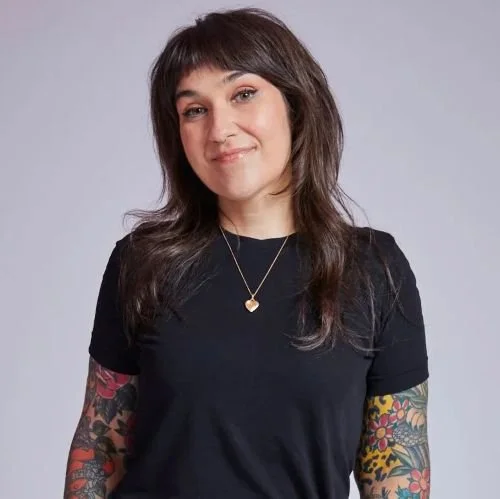
Deb Grant
__________
ONE of my favourite…
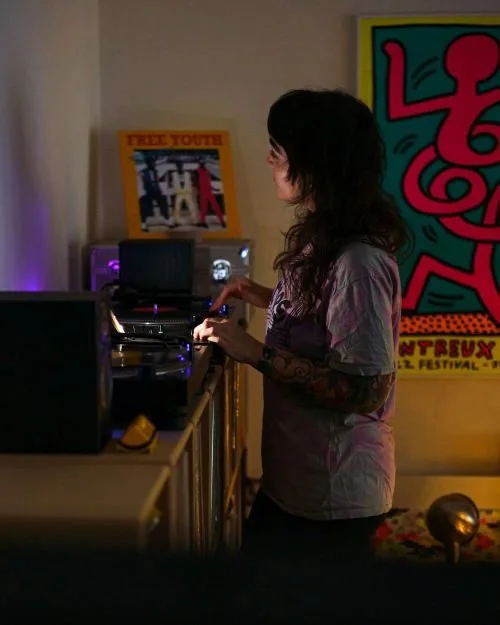
broadcasters and D.J.s, the simply brilliant Deb Grant can be heard on BBC Radio 6. She also writes for the Big Issue. I have written about her before, though not really in as much detail as I should have. I am going to drop in some interviews, as Deb Grant is a champion of new music. Someone who has this deep and passionate love for music and is a staple of the BBC Radio 6 Music schedule. I love the shows she presents and I hope that she is there for many more years. Such a warm, funny, and hugely knowledgeable music fan who has turned me on to so many great new acts, classic albums and some great Jazz artists/albums, she is someone I have huge and boundless respect for. I will end with a recent Big Issue article she wrote concerning this year in music. I am going to start out with some biography from her official website. You can follow and find Deb Grant on Instagram, and Twitter (though she is more active on Instagram):
“At the heart of the best DJs craft is a commitment to digging – dusty-fingered dives in dingy basements and obsessively combing through every corner of the bargain bins. Deb Grant’s restless search for the perfect beat enables her to interlace the most mind-blowing tracks to move people physically, emotionally and spiritually. At this point Deb’s breadth of knowledge and arsenal of secret weapons ranks her in the upper echelons of headsy selectors operating out of London, but it’s the vibe she creates in the mix that makes her so effective at bringing a get-down to life.
Whether on air or playing a heavyweight club session, Deb knows what she likes – her palette is broad but focused, with an emphasis on foundational disco, P-funk and soul, and the natural bedfellows of 80s boogie and early rap. The narrative she deftly weaves between those genres is as buttery smooth as the tunes themselves, and she’ll as likely drop a well-timed classic as a private press holy grail when the moment calls for it.
Growing up in Dublin, Deb was buying records from an early age and started DJing when she was just 15. Her career has been a consistent pursuit of exciting opportunities to share her favourite records with a crowd ready to get down. She’s spun at major festivals (Field Day, Green Man, Love Supreme) and sizzling hot club nights in NYC, and been called upon by MGMT and Beth Ditto to play after-parties for people who take their party music very seriously. Beyond her commitment to the club, she’s also a prolific broadcaster on BBC6Music, where she hosts the New Music Fix Daily show with Tom Ravenscroft, hunting down and sharing the freshest new releases every Monday to Thursday evening.
Such an active life in music means Deb is always pushing herself forwards, discovering fresh sounds that fit into her formidable repertoire. It also means her selecting is imperiously tuned up and tuned in, drawing on a life immersed in digging culture to deliver unforgettable experiences where heart and soul, funk and groove move in perfect harmony across the floor.
Alongside her club and radio work, Deb has been part of the judging committee for the Brit Awards, hosted and compered many industry panels and events and writes a regular music column in the Big Issue”.
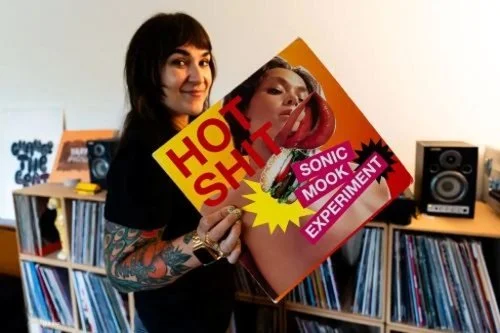
The point of this feature series is to spotlight and celebrate amazing women in music. I have written features about and interviewed incredible D.J.s. I think that Deb Grant is one of the best out there. In addition to being this supreme voice on radio. I am excited to see where she heads on BBC Radio 6 Music. As the station turns twenty-five next year, I hope she gets even bigger a role and gets some many great opportunities. I especially love her columns for Big Issue. Always so fascinating and informative. I want to move to an amazing and really deep interview from January last year from Dust and Grooves. It is one where we dig deep into Deb Grant’s vinyl collection. The wax she loves and some of the most treasured albums. We get a great insight into Grant’s music route and background. She is someone that definitely has this love for physical music and the tangibility and purity of vinyl:
“As an erstwhile mod, and atheist Irish Jew who grew up in Dublin before being wooed by the bright lights of London, Deb Grant isn’t your average record collector or your average DJ. Her star has risen rapidly over the past few years as the club DJ and vocalist formerly known as Anne Frankenstein (she dropped the moniker post-pandemic when radio became her main artistic outlet) moved from London indie radio station Resonance FM, to be picked up by Jazz FM, and then taken on by BBC 6 Music to host the New Music Fix Daily with Tom Ravenscroft, son of the legendary John Peel.
Deb gravitates towards the unknown, the weird in the vast plains of music out there. For her, the quest towards oddities is fueled by musical authenticity. “Anything that was made by someone who sounds like they have no connections whatsoever to popular music, and very authentically makes the music that’s inside of them with no real thought about how it’s going to land—that’s my absolute favorite thing.”
So how did this sometime folk singer, voice-over artist, and self-confessed lover of “outsider music” come to be one of the most recognizable voices and future light entertainment legend on one of the Beeb’s most popular radio stations? In the following, we’ve managed to find out…
Deb, how do you normally introduce yourself and what you do?
I’m Deb Grant, I’m a DJ, writer and broadcaster and I currently host the New Music Fix show on BBC6 Music.
Firstly, what does vinyl mean to you? Why is it important when listening to music??
I really struggle to listen to music passively. I’m not really into background music. I’m either out, listening to music in my headphones, or I’m sitting down with a record player, picking out a record and listening to it. It’s very rare that I’ll have dinner with a record playing in the background. To me, it’s an active thing.
So, listening to records is part of that. It’s like switching on the TV and watching something, or more like taking a book off the shelf—so having a record library is crucial to that too. In terms of having records to DJ with, I like the idea that I have to curate something out of a limited selection of music. I find the thought of having any possibility open to me when I’m DJing simply dull! In fact, it makes me panic a little bit. I love the concept that there’s only one or two places I can go next. I enjoy that challenge. There’s also, of course, the physicality and tactility of it as well.
In terms of your journey, was it vinyl from the beginning for you?
The records came first. From a really young age I was really into 1960s and ‘70s mod stuff and completely obsessed with that whole era. So listening to vinyl was a part of that. At the age of eleven or twelve, I had my grandad’s old record player set up in my room and borrowed some of my parent’s old records to listen to on it.
Aside from records, I was also making tapes for the car and I always enjoyed forcing people to listen to my selections. So that’s where the idea of DJing came from I guess. I was buying records from all genres and building up my collection. My friends were really into records too, especially the BritPop movement of the time, which was such a throwback to the ‘60s and ‘70s, and that was part of the reason I was so interested in it.
And what about your rarest, or most treasured, esoteric piece of wax?
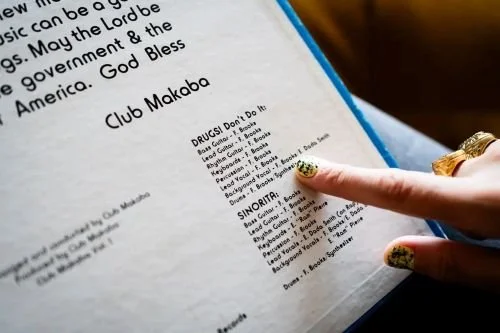
I think that has to be Drugs Don’t Do It by War On Drugs. A super obscure, self-published, private press record from the US. I picked this up when I was in Baton Rouge. I was in a record store where everything was sealed and there were no listening stations, but this record was playing and I was thinking “what the fuck is this? I need to know what this is!” I was also intrigued by the blurb on the back of the LP that goes into all these details about how drugs are a scourge of US culture. I often play it out and people will ask me what it is without fail. It’s a really gentle Afrobeat track with sort of rapping over the top of it and also lots of airplane noises. It’s got pretty much everything! And no, it’s not that War On Drugs, obviously.
Your work, especially as a radio DJ, is increasingly taking you around the globe. What might be the most random or “out there” purchase you’ve made in a far-flung country?
That could very well be Jazz Dance: Introductory by Mari Tachikawa. It’s a recording of exercise instructions and gentle jazz. It’s basically a woman giving out instructions in this soft voice in Japanese while this mellow jazz plays in the background. I picked it up when I was in Japan (for the first time) a few years ago. Japan is a somewhat overwhelming place for buying vinyl. There are so many records that are from Japan that just look amazing, but there’s no indication of what they are. I made the mistake when I was in Tokyo of picking up a load of random vinyl I thought would sound amazing and then bringing them home and that was simply not the case! But fortunately, this was one record that didn’t disappoint. I think it was in the “Exercise Jazz” section in a little niche record shop, ha!
Radio must also have put you in the same room as your idols in recent years. Is there a record in your collection that connects a particular meeting that stands out in your mind?
I would have to say Solo Piano Volume Two by Cameroonian legend Manu Dibango. I picked it up when I was working at Flashback Records in Shoreditch, East London. I was already a fan and he’s obviously very well known for his funky Afro-jazz material, and I already really loved him for that, but I really gravitate towards solo piano music, so this was a perfect meeting of those two things for me. I put it on the deck (at the shop), listened to it, and was completely blown away. It’s so stunning! He’s not known as a piano player, but he’s such a great pianist and these are such gorgeous simple tunes, put together so beautifully. It’s probably one of my favorite records of all time.
And yes, I had the chance to meet him before he died, and he was like this lovely warm grandad. I said to him, “I love your music so much, but I have this album of yours of piano melodies” and his response was “that’s one of the worst albums I ever made!”
Finally, is there a record collector or DJ you’d like to see be part of Dust & Grooves?
WrongTom. A DJ and dub reggae producer, radio presenter, and journalist. He’s a bit of a dub legend with an amazing record collection and incredible musical knowledge. He’s like a one-man musical encyclopedia! Tom is a dub producer but what he works on goes way outside of that scene from indie to pop to jazz to punk—just the way I like it!”.
Joyzine spoke with Deb Grant last year. Presenting New Music Fix (now with Nathan Shepherd), she is this amazing and committed champion of new and rising artists. Filling floors as a D.J. and inspiring people as a broadcaster, Deb Grant is one of my favourite people. I love everything that she does. I will wrap with her great Big Issue article, where she looks to what this year in music will look like:
“Who was your inspiration growing up?
I grew up in Dublin and listened to a pirate station called Spectrum 101, which became Phantom FM. I used to phone up and chat to the DJs, they were kind to me and I couldn’t believe they were so accessible. I also loved John Kelly, who had a show on RTE radio called the Mystery Train, where you’d here everything from Phillip Glass to Patti Smith to contemporary electronica to 1920s calypso. He made it seem possible to find a place to play whatever I wanted on the radio.
How do you prepare for your ‘New Music Fix’ show?
Constant listening! I get sent so much music and I try to listen to everything. The show is prepped on the day of broadcast so I’ll pick out my favourite tracks in the morning to be played on the show that evening. I usually arrive in the studio an hour before we go live and gossip with Tom before we go on air.
How important is radio when it comes to breaking an act?
Given how much more agency artists have in terms of putting themselves out there these days, radio still seems to be very important. The show just feels like Tom and I casually sharing our favourite music, but often we’ll hear of a band selling out a tour or getting booked for major festivals after we play them on the radio. I think people listen to BBC6 because they trust the DJs to introduce them to their new favourite artists and help them to keep on top of what’s worth listening to – that’s why haven’t been replaced by the algorithm. Yet.
What advice would you give to any budding DJ’s out there?
Just do it as much as you can and have conviction in your own taste, and don’t treat liking music like a competition, it’s not, it’s something that helps people to connect, not a tool for one-upmanship.
Dream festival line up?
Manu Dibango, Grace Jones, Jonathan Richman, Blackhaine, Dead Kennedys and a goodnight set from Ivor Cutler and Raymond Scott”.
Jumping ahead to last month, and Deb Grant’s article from last month for Big Issue. She discussed things that she is looking forward to. Her writing is so personal, yet it brings readers in. Someone who is perhaps a bit more outsider, esoteric and more original with her music choices and recommendations compared to some – perhaps me included! -, I always get something from reading her columns and listening to her radio shows:
“Wordplay Magazine returning to print, for example, is a welcome course correction. Wordplay has always been good at holding jazz, rap and soul in the same conversation without smoothing off any edges. After four years as a purely online enterprise they relaunched at the end of November 2025 with Lord Apex and Emma Jean Thackray on the covers, and will be rolling forward into 2026 as an object that lives on coffee tables, filling homes with that inimitable freshly printed magazine smell.
I’m also looking forward to holding Madra Salach’s debut EP It’s a Hell of an Age (out 23 January) in my hands. A buzz has been gathering around the Dublin six-piece owing to their brilliant live shows and singles blending post-rock and traditional Irish references, particularly the lyrics and delivery of frontman Paul Banks, with a voice reminiscent of Luke Kelly’s forceful tenor. Their debut single “Blue & Gold” attracted much enthusiasm both on air and in print, and the band will be touring the UK in March.
Belgian electronic duo Charlotte Adigéry and Bolis Pupul are rumoured to be releasing a new album, finally following up 2022’s Topical Dancer, a record hailed around the world for its lush, dynamic production and satirical lyrics covering everything from cultural appropriation to sexual awakenings. The record still sounds like nothing else and has had many of us on tenterhooks, nearly four years later, anticipating whatever they’re planning next.
This year also presents a long-awaited opportunity to read Flyboy in the Buttermilk, Greg Tate’s dispatches from the edge of US culture, featuring notes on jazz, hip-hop, politics, fashion, art and African American identity, as it comes back into print in early February. Originally published in 1992, this new edition will feature an introduction by Hanif Abdurraqib and a foreword by Questlove. Tate, who passed away in 2021, wrote extensively for theVillage Voice, Vibe andSpin during the ’80s and ’90s and was known for his humour as much as for his candour. He was posthumously awarded a Pulitzer Prize in 2024.
More reading material arrives in May as Daniel Dylan Wray’s history of independent music in Sheffield, Groovy, Laidback and Nasty, is published by White Rabbit. It promises a sweep of nearly seven decades, more than 150 interviews with some of the architects of the city’s world-renowned music scene, from Cabaret Voltaire and The Human League through Pulp and Arctic Monkeys, Self Esteem and Richard Hawley. I am curious to hear the consensus on what makes the city such fertile ground for such a broad range of sounds.
When I’m finished hibernating, I have a few festivals in my sights, although one of them I am loath to mention as its low key intimacy is a large part of its appeal. Krankenhaus, a festival curated by Sea Power in the stunning grounds of Muncaster Castle on the west edge of the Lake District, was set to take a break this year but the team have fortunately been forced by popular demand into returning at the end of August. I do mean intimate; the tickets are limited to around 2,000 people and the whole event takes place between one small barn, one smaller outdoor stage and various atmospheric, high ceilinged, slightly spooky rooms within the castle itself.
Sea Power will play, although no one else has been confirmed for the line-up yet. Last year featured Stewart Lee, Arab Strap, Throwing Muses and Jane Weaver along with the annual dog show, curated walks and falconry. It was the highlight of my summer.
This year I’m also determined to finally attend We Out Here festival in Dorset, Gilles Peterson’s four-day gathering celebrating jazz, soul, hip-hop, house and all the liminal spaces in between. Stereolab, Yazmin Lacey, Mulatu Astatke and Arthur Verocai are already confirmed for 2026, but the music is almost beside the point; everyone I know who has attended mentions the energy as being unlike any other festival, a sort of lucid dream where you discover your new favourite band while also making new friends for life. I’m hoping it meets my expectations. Regardless, it’s something else to look forward to”.
Go and listen to Deb Grant, read her work in Big Issue and…I almost recommended you go read her book, without realising there is not one out there! I feel there is a music book in her, though I am not sure what it would concern! There is no doubt she is one of the world’s best broadcasters and D.J.s. When it comes to her commitment to new music, her eclectic range of favourite artists, her passion for vinyl and how completely engrossed she is in music, there are few out there as impressive and dedication! Such a magnetic and compelling voice, Deb Grant is someone that is…
ALWAYS fascinating to listen to.