
FEATURE:
Mysterious Ways
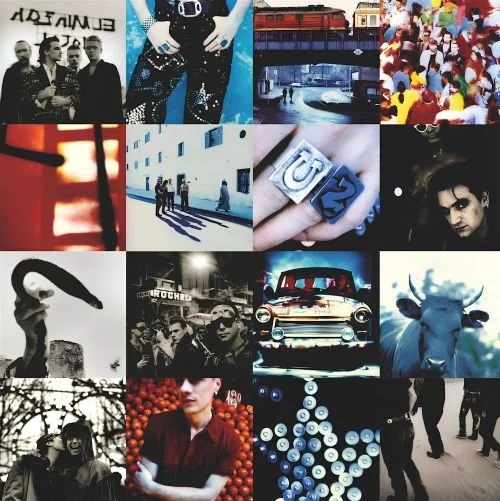
U2’s Achtung Baby at Thirty-Five
_________
THE Irish band recently…
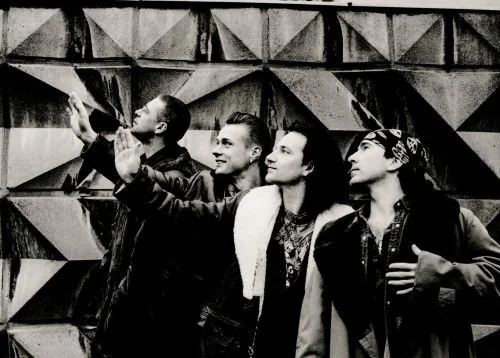
PHOTO CREDIT: Anton Corbijn
marked fifty years since they formed. It has amazing to consider how long U2 have endured. They are still going strong and release their sixteenth album, Carnaval de Luz, on 16th November. One of the longest-running bands currently recording, I did want to go back to 18th November, 1991. That is when their seventh studio album, Achtung Baby, was released. It is considered by many critics to be the best U2 album of them all. So many of their biggest songs are on it. The Fly, Even Better Than the Real Thing, Who’s Gonna Ride Your Wild Horses, Mysterious Ways, and One. Ahead of its thirty-fifth anniversary, I did want to spend some time with this incredible album. Perhaps their heaviest to that point, there is so much to discuss and spotlight. In 2016, when marking twenty-five years of U2’s Achtung Baby, Ultimate Classic Rock examined how the band reinvented themselves in 1991. It was a big turning point in their career:
“Up until the arrival of Achtung Baby, U2 had been all about evolution, not reinvention. But with their seventh album – released on Nov. 18, 1991 – they changed all that.
From their 1980 debut LP, Boy, and their MTV breakthrough War in 1983 to their mainstream No. 1 The Joshua Tree four years later and the half-live, half-roots-digging Rattle and Hum the following year, a line can be connected through each of the band's first six albums.
But Achtung Baby sounds little like what came before it. There are songs, here and there, that can be traced to The Joshua Tree's grander moments, and the atmospheric use of keyboards that drives so many of the tracks goes back to 1984's The Unforgettable Fire. Still, Achtung Baby has more in common with David Bowie's heralded Berlin Trilogy than anything found in U2's growing catalog at the time.
This is no accident. Early sessions for the album were recorded in the same German studio, and made with the producer who helped shape Bowie's most daring work: Brian Eno. And like with Bowie's trio of late-'70s albums, U2's project came from the artist's desire to move on from a dark period.
Following the global success of The Joshua Tree, U2 became one of the biggest bands in the world. They were celebrated for their arena-sized songs, political acumen and earnestness. The record led to a massive world tour that was partly folded into Rattle and Hum, which mixed live recordings with the group's attempts at an Americana album.
Suddenly, the things that U2 were praised for – namely, their big, earnest songs – became a strike against them, as Rattle and Hum was derided for its self-seriousness, lack of humor ... and what right did an Irish band have to explore American roots music anyway?
They took it to heart. For the first time in their career, U2 didn't move forward in an expected way. Instead, they walked away from their comfort zone and started from scratch, using electronic, alternative and industrial musics as their new building blocks. They got as far away as they could from America, embracing end-of-the-century European music and its varying shades of electronica.
It wasn't a smooth transition at first. The Berlin sessions stumbled, as band members fought for stability and direction – and with each other, with Bono and the Edge on one side, and the rhythm section of Adam Clayton and Larry Mullen, Jr. on the other – over their new sounds.
So, they went back to Dublin, and with Eno and Daniel Lanois (both of whom had worked on The Unforgettable Fire and The Joshua Tree) behind the boards, they slowly began to piece together the record that would become Achtung Baby.
When the album surfaced more than a year after work first started, it sounded little like the U2 fans had embraced just a few years earlier. The opening track, "Zoo Station," begins with distorted squelches that sound an awful lot like someone just turned on a busted synthesizer that hadn't been plugged in for a decade, and somehow that loud, abrasive noise found its way onto the album”.
Apologies to repeat anything. However, I did want to come to a 2012 features from Guitar.com. They note how it is possibly U2’s best album, though it is also one that nearly split them. Thirty-five years after Achtung Baby was released, and you can feel the strength and bond within the band. There was a period when U2 nearly split. Quite shocking to think! I would argue that Achtung Baby helped shape and define the sound of Rock music in the 1990s:
“As guitarist Edge later reflected, the “traditionalism” of Rattle And Hum was the exception in the U2 canon. “My view,” he told this author in 1996 “is that Rattle And Hum, for all its traditionalism, is actually our ‘experimental’ record. Achtung Baby got us back to our normality – making dark, very European music with experimental sounds.” That said, this new normality meant the band U2 imposed new rules for the making of Achtung Baby, the band’s rebirth.
Bono: “Buzzwords on this record were trashy, throwaway, dark, sexy and industrial (all good) and earnest, polite, sweet, righteous, rockist and linear (all bad).” All that was good was the opposite of the “bad” U2.
One step at a time
But the sessions, in Berlin’s Hansa Studios, nearly collapsed completely. U2 had booked Hansa hoping to capture the “greatness” of two of their favourite albums that happened to be recorded there: David Bowie’s Low and Heroes. But when they turned up, they couldn’t even write a song. “The greatness,” Bono laughed about their creative block (in the U2 documentary movie From The Sky Down), “had left the building.”
Bassist Adam Clayton admitted in Bill Flanagan’s biography U2 At The End Of The World, constant touring in each other’s pockets had taken its toll: “We had to decide how much we liked each other… I’m not saying that was easily resolved.”
The song that rescued them? One. U2 were struggling to come up with anything all four felt was good enough to keep them moving forward and were hammering away at a demo called Sick Puppy (that later morphed into Mysterious Ways), when the Edge hit on an off-the-cuff chord progression that would become One.
“At the instant we were recording it, I got a very strong sense of its power,” Edge told Irish journalist Neil McCormick. “We were all playing together in the big recording room, a huge, eerie ballroom full of ghosts of the war, and everything fell into place. It was a reassuring moment, when everyone finally went: ‘Oh great, this album has started.’ It’s the reason you’re in a band – when the spirit descends upon you and you create something truly affecting. One is an incredibly moving piece. It hits straight into the heart.”
Daniel Lanois was the main “sonics” producer on Achtung Baby, and the Canadian told Sound On Sound magazine: “When I started work on Achtung Baby, U2 were interested in creating a more hard-hitting, live-sounding record. I myself had also grown rather tired of polishing details on records and pursuing the kind of perfection that has become commonplace in much rock music today. So what I did was push the performance aspect very hard, often to the point of recklessness. I think that musical recklessness goes a long way on records. You don’t hear enough of it.”
But, crucially, Brian Eno acted as co-producer… and more in a strategic role. Eno would not listen hard to anything in progress, but every few weeks would “come in and erase anything that sounded too much like U2.” He started using in his fabled Oblique Strategies cards on the group to push them away from predictability, so he’d be surprised at what he heard at his next visit: “Use an old idea”. “Change instrument roles”. “Work at a different speed”. “(Play in) total darkness, or in a very large room, very quietly”, and so on…
Even so, U2 still gave themselves maximum options – throughout the sessions, they played relentlessly and kept tape constantly running to capture spirited moments. Yet despite the connotations of the title, U2’s Hansa studio sessions barely lasted two months: most of Achtung Baby was eventually recorded in Ireland, in a rented house by the sea, then Dublin’s famed Windmill Studios”.
There are a couple of reviews that I want to come to before finishing off. XS Noize revisited Achtung Baby in 2021. There are some observations and insights that I had not considered. I do wonder whether U2 are doing anything special to commemorate the thirty-fifth anniversary of the world-conquering Achtung Baby:
“Achtung Baby would inculcate the sonics of emerging Alternative, Industrial, Electronica and Dance genres and married them to U2’s distinct already, established sonic. The band would capture the end of the century Zeitgeist and turn a mirror on the era. They would deal with current events like the end of the Cold War and Germany’s reunification while utilizing ideas from Nihilism, Existentialism, and Absurdism. The band known for voicing their political opinion would somehow turn away from the “Politics” capital letter to a more personal and introspective take on the events and movements that influence the person. Topics would cover; love, spirituality, faith, betrayal, confusion, loneliness, and feelings of inadequacy when coping with the larger world. The underlying personal events that would inform the album would be Edge’s impending marital breakup, Bono’s daughters’ births, how to deal with the aftermath of the success from The Joshua Tree era, and confronting the vitriol and criticism of the Rattle and Hum movie. This entire stew of ingredients would be the aegis that would produce a masterwork.
In some ways, Achtung Baby’s success seemed like a reward for the band’s trial-by-fire experience in the studio. U2 would create one of their most successful and critically acclaimed works. The album would debut at #1 on the US Billboard top 200, See five single releases become chart successes, win a Grammy and sell over 18 million + copies. Achtung Baby would also launch a worldwide tour that would quickly become the decade’s multimedia/sensory overload event, the Zoo TV tour.
Achtung Baby would start intentionally with sonics that was nothing like anything attached to U2 in the past. “Zoo Station” was like someone opened the lid to Hades. Filled with distortion, the sound was trippy, hallucinogenic and intense. I cannot fully explain how groundbreaking this opener was at the time, as it was a total departure from everything U2 had done in the past. The album and this track’s success are now taken as a fait accompli, but this song was a tremendous risk as an opener. The reason being it was a million miles from what fans had come to expect. The song became instantly addictive with vocal modifications, punctuated drums, throbbing bass and schizoid guitar work. The band had sledgehammered their beliefs before; on this song, and throughout the album, they were more subtle and clever yet delivered the same overall impact. On “Zoo Station”, lyrically, the train motif and almost insane ebullience were unsettling and intriguing. The song’s narrative took hits of laughing gas while letting go of the steering wheel in unbridled madness, yet it all made sense and was ever so alluring. The song captured all the madness found at the end of the 20th Century and the fall of Communism.
Paralleling the first side again, we see a song that releases some of the over-the-top ebullience of the prior two tracks with “Trying To Throw Your Arms Around the World”. This is the next day walk of shame and hangover from the ecstatic night before, personified by the lyrics, “Sunrise like a nosebleed, your head hurts and you can’t breath”. The song’s narrator stands in for Bono and returns home to his wife and kids after a night on the town or tour. The narrator falls on the mercy of his loving partner to make it all better. The narrator/Bono realizes the enormity of his wife’s love and what a paragon she is holding his life and family together. He, in the end, pledges his fidelity to her as he realises he needs her more than she needs him, “and a woman needs a man like a fish needs a bicycle.” Sonically, the trip-hop slower pace of the song allows the listener to catch their breath. The song is clearing its throat before the final triads of songs bring home the album’s message.
“Ultraviolet” (Light My Way) is my absolute favourite track on this album. This track continues examining the difficulties of marriage in our modern age and realising that marriage or any relationship is not all cotton candy, hearts and rainbows. There are angry silences and sleepless nights filled with doubt, struggles and setbacks. But if you can hang on through the bad, the good resonates so much more. It is made clear Ali is Bono’s rock and the person who keeps him sane, “Feel like trash, you make me feel clean, I’m in the dark can’t see or be seen.” … “When I was all messed up, and I had an opera in my head, your love was a light bulb hanging over my head.” The song ends with a recommitment to the relationship. To me, this song is one of the best sonic moments of the album. The selection is a stream-of-consciousness narrative put to a dance track. The perfect accompaniment of explosive drums, driving bass and jangling guitar is sonic perfection. All these elements combine for a song that you cannot help dancing to counter-intuitively while weighing a committed relationship’s demands. That is a hell of an accomplishment.
“Acrobat” offers up an internal dialogue turned into advice and is the most like C.S. Lewis’ Screwtape Letters. In that book, Lewis used a literary device where Satan advises an up-and-coming demon. Here is a take on that format the elderly narrator is giving sage advice and warning to a youngster on how the world will wear your good intentions down. It also discusses all the hypocrisy we commit to getting through life. The key refrain is “don’t let the bastards grind you down”, encouraging everyone to stay true to their good intentions through all the cant of the world. It is calling for perseverance in the face of adversity. The song begins on a low ebb and builds magnificently with aggressive drums and an incendiary guitar solo. All of the sonic ingredients make for a galloping miasma of intense anger and confusion that personifies the world we much each face. It is an extraordinary track.
“Love is Blindness” reveals that love requires a mad kind of sightlessness to maintain a relationship. It attempts to convey the mystery of love and questions how such a delicate thing can endure. There is both awe and fear defined in love and how it is given. The track ends with an understanding that one must be blind to each person’s faults in the relationship for love to work. Sonically the track is elegiac with its slow movements and funereal churchlike atmospherics driven by Edge’s guitar solo, a painful accompaniment to his failing marriage. The track’s brilliance is not Bono being emphatic about the value of love but his pondering so eloquently the cost of love and leaving the whole question with no definitive answer. A change from U2 in the past, having all the answers to the world’s ambiguities. This change in approach would stretch over the subsequent two studio releases.
Achtung Baby would broaden U2’s musical palette and show a band that was not as sure as they had been in their youth about the answers to the questions that face humankind. The album would turn inward, focusing on personal relationships. It would examine our societal and individual needs for instant gratification and asks big unanswerable questions. The album would display each member’s disappointment with the overall cultural malaise and look to overcome and embrace the world’s challenges. The album would warn that the path to hell would be and was paved with good intentions for them. It would be part of Psalms and Ecclesiastes questioning the relationship between God and man. Achtung Baby would capture the band taking an extraordinary leap of faith with no safety net to become “The Biggest Band in the World”, a title that they still have a right to claim in the present day.
U2 with Achtung Baby proved that bands could reinvent themselves that far into their already successful career, delivering a masterpiece. They would bring this to fruition by creating an album that sounded nothing like U2 yet was remarkably easy to identify as their work. Finally, Achtung Baby would set the band up to continue their success as the Alternative music scene took its baby steps into popularity. The album would allow them to reinvent themselves rather than plod off to the tar pits as many of their peers from the ’80s declined and gave up. The risk of upturning all that the listening public had identified as U2 paid off with their most enduring and brilliant masterwork, Achtung Baby, as it is truly one for the ages”.
Back to 2008 for the final review. Treble posted their review of Achtung Baby. I think I first heard the album not long after it came out in 1991. I knew about U2, though I had not heard a lot of their music. I think Achtung Baby switched me onto the band. The singles especially hit me and stuck in my head:
“Achtung Baby is arguably U2’s best album, depending on your mood. After the downright sober seriousness of The Joshua Tree, U2 surprised everyone with an album of electronic experimentalism, incredible hooks and songs of love, sex and passion, though with a sense of fun. One of the four Achtung Baby producers, Brian Eno, combined with the recording location of Berlin, made some think this U2 album would reach the sonic mastery that was Bowie’s Berlin trilogy, and while these assessments weren’t exactly wrong, it wasn’t that fair of a description of what U2 accomplished.
It was the album that almost wasn’t, as some of the band members’ penchants for electronica and a new direction was too much for other members. U2 nearly broke up, which would have created an alternate universe that I wouldn’t want to imagine, other than the absence of Coldplay’s Viva La Vida. But the writing of a particular song got the foursome back on track, and that song was “One,” quite possibly U2’s best and most recognizable composition. But that was only one of five singles released. I remember purchasing “The Fly” before the full-length album came out, and being both puzzled and excited at once. But, as other songs were revealed, including the sinewy “Mysterious Ways” and the charging “Even Better Than the Real Thing,” U2’s new direction was coming into focus, and people were digging it. In fact, at this point, they’ve been digging it to the tune of eight million copies and counting. Though not really even close to the sales of The Joshua Tree, it was still an incredibly significant number.
Though the singles are strong, and among U2 fan favorites, some of the best tracks on Achtung Baby are the non-singles. “Ultraviolet (Light My Way),” the opener “Zoo Station,” “Acrobat” and the slow organ backed closer, “Love is Blindness” all mesh so well with the rest of the album tracks, that I actually forgot which songs were singles, and which were not. In the end, that’s the stuff of which great albums are made. From start to finish, Achtung Baby finds U2 in fresh and exciting territory, with some of the Edge’s best guitar work, Bono’s best lyrics (with the lyrics of “One” garnering a vote for the best song lyrics ever written) and an establishing band’s embrace of a new style, incorporating it into their own arena ready sound.
It took three years to recover from the commercial disappointment of Rattle & Hum, a trip to Berlin, and the help of four producers (Eno, Flood, Daniel Lanois and Steve Lillywhite), but U2 found themselves on top yet again with Achtung Baby. Although it’s hard to argue with the majesty of The Joshua Tree, I might have to say that Achtung Baby has aged better. “One” is timeless, but other tracks have certainly become the blueprints for nearly every band to follow, including Radiohead and Coldplay, just to name two of the highest profile groups. U2 would experience a similar rebirth / resurgence with All That You Can’t Leave Behind, but since they had done it before, it was less of a surprise. Achtung Baby didn’t revolutionize the music world, but it reminded everyone that U2 was not only relevant, but worthy of being called one of the best bands in the world”.
I am going to finish off there. Achtung Baby turns thirty-five on 18th November. That is two days after their latest album arrives. I do hope that there is discussion and new articles written about this phenomenal album. One of the greatest ever released, it is being discovered by young music fans. Those who were not alive when it came out in 1991. Achtung Baby is inarguably a work of genius. From the amazing U2, go and spend time with Achtung Baby now. Whilst some classic albums have one or two tracks that are not quite as good as people make up, Achtung Baby is a rare example where there is gold in…
EVERY track.