
FEATURE:
Cloud 9
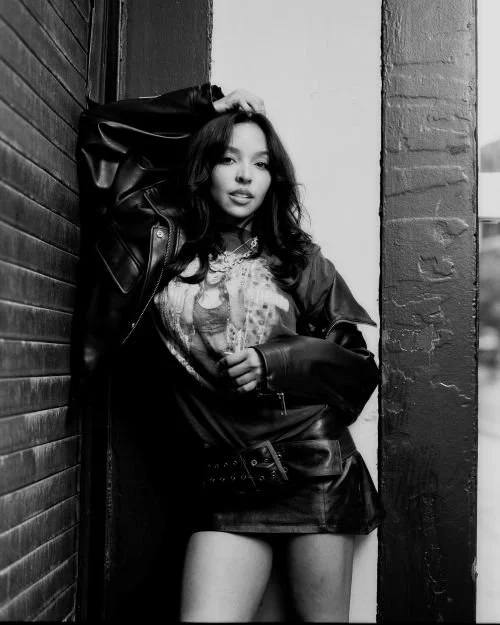
PHOTO CREDIT: Myesha Evon Gardner for The New York Times
Is Tinashe’s Popstar the Best Album of 2026?
_________
GIVEN the critical acclaim…
I think a lot of websites will vote Tinashe’s Popstar as the best album of this year. It has received such a huge reaction. An artist who has released her eight album, arguably at her peak and most free. It goes to show that artists do need to time to reach that peak. I think there is pressure on them, especially women, to conform or to write in a particular way. Artists expected to be brilliant and at their purest right away or they are forgotten about. That constant expectation for new material. Popstar proves that artists can very much take a few albums or more until that golden moment comes. That said, so many of Tinashe’s previous albums have been acclaimed. Though nothing quite like Popstar. Even if Phoebe Bridgers’ Lost Weekend and Beck’s Ride Lonesome might also be up for album of the year, I think that Tinashe’s Popstar will top most critical lists. I will come to a couple of the many positive reviews. However, I did want to get to some words with Tinashe. The Kentucky artist is one of the best songwriters in the world right now. Popstar is this modern masterpiece. Her eighth album is her most confident. You can feel that throughout the album. Tinashe wants to challenge the Pop star label. Popstar is brave and ambitious. The Hollywood Reporter spoke with Tinashe earlier this month:
“The Popstar universe has been building in my mind for a while now,” Tinashe says.
The 33-year-old, one of pop’s most forward-thinking acts, is speaking about her latest album, Popstar, which dropped on Sept. 25 and features sixteen tracks. It’s the type of album that Tinashe, who’s been working in the entertainment industry since she was a child, could only make now.
“I’ve just reached a place in my life, personally and professionally, where I feel very self-assured and confident in my position,” she tells The Hollywood Reporter on a Zoom, pacing around what appears to be an outdoor patio as she excitedly talks about this next chapter. “Both in the industry and just I guess as an individual.”
Tinashe wanted Popstar to feel “real and raw and empowered.” The singer left the major label system in 2019, finding success in pursuing the music and creative she wants. It’s been a journey of growth and learning, she admits, but it’s been seven years, so growth is to be expected. Realizing she was able to do this on her own restored the confidence in creativity that she felt she had been losing.
Despite the album’s name, she wasn’t trying to box herself into a genre. She’s never wanted to limit herself to one of anything, and she feels her music has always been reflective of that. “The categorization was definitely probably the biggest hindrance to how I think I was perceived to the public and the world,” Tinashe says.
Letting go of genre might sound confusing when the album’s named Popstar, but to Tinashe, a pop star is so much more than a genre label. “It’s an energy, it’s an embodiment, it’s an ownership of a space that I want to take up in the world,” she says.
Tinashe wants to expand what people think of when they think of being a pop star. From a technical genre perspective, she’s hoping that pop can continue to feel more expansive. “People, when they think of the genre of pop, they have a very watered down and narrow-minded point of view of what that sounds like and looks like,” she says. “I hope to challenge that.”
Do you find it frustrating ever, for pop music in particular, there’s this idea that it’s something made in a factory and it’s just given to artists? In reality, all of the women like yourself that are in this space are actively involved in creating the music.
One hundred percent. That’s one of the things that I’m exploring visually in concept with this album, poking fun at the machine of it all or the perfection. We obviously know the cliches that are involved with being a pop star and being a part of that machine. But I also think people can see behind the curtain now a bit more, and that’s another layer to me of what this album means. By embodying what a pop star is, I can both lean into the spectacle and the show of it all, and I can also reject it and be like, “Fuck you, I am who I am. I might not fit this mold or expectation, but this is still what a pop star is because I said so.”
Does it feel nice to be able to take that back into your own hands to decide?
A million percent. That was really important for me, just where I am in my life, because when I wanted to write this new project, I really wanted to embody that energy. That was the North star of how the creative came together in my mind.
How do you feel about the industry now versus when you were first getting started?
It’s changed a lot. I think, to be fair, I’m very optimistic about it at this point because I’ve seen how many iterations there are of it. And that leads me to believe that whatever’s happening now will not remain the same. That’s exciting in a way. Where music is going, and how people are going to continue to experiment and try new things, I think that’s really fun. I can’t predict it, and being part of that conversation is fun. Obviously, there’s bad things about it all, but there’s always bad things about it. It’s like, it’s the music industry, man. It’s the wild, wild west”.
Even though we are in October, you can’t see many albums coming along before the end of the year that can challenge Popstar. I have seen few albums arrive that have instantly connected. That has gained this enormous love. What makes it special is that Tinashe has been releasing music for so many years. Popstar takes Tinashe from this cult favourite or underrated artist to this chart-topping success. A huge breakthrough moment. Prior to getting to a couple of reviews, The New York Times spent time with Tinashe. You can feel how genuinely amazed and humbled she is by the reviews. Whilst some albums this year have scored similar high critical praise – I refer you back to Beck and Phoebe Bridgers -, there is this extra element and layer to Tinashe’s Popstar and its success:
“In the past 14 years, Tinashe has released seven studio albums, four mixtapes and enough viral hits to steadily establish herself as one of the most compelling, quietly radical artists working today. It took some effort.
Like her idol, Janet Jackson, the singer has pushed at the genre’s boundaries with forward-thinking beats and full-bodied choreography. Her voice, which can leap from pillow-talk intimate to stadium-size belting, is a flexible instrument, which she has used to map pop hooks onto even the most experimental of tracks.
But even with a catalog of critically acclaimed music, Tinashe has found herself in the frustrating position of perpetually being deemed “underrated.” Expectations from early on in her career, that she might be as world-conquering a performer as Rihanna or Beyoncé, have sometimes blunted the public’s ability to appreciate her success.
That seems poised to change with her eighth album, “Popstar,” released late last month on Nice Life/Atlantic. The record has not only received some of the strongest reviews of her career and stoked a massive outpouring of support for her online, but also resulted in her highest-charting Billboard 200 position to date. After years of hard work, it feels as though audiences may finally be coming around to recognizing Tinashe as the kind of wide-ranging pop star she always sought to be.
When we met in Downtown Brooklyn on the evening “Popstar” released, New York City was bracing itself for a storm, and that, combined with the neon-pink-orange sunset on the horizon, added to the feeling that something dramatic was about to shift. In the gap between one launch event and another, we sat together at an Italian restaurant, picking at the ravioli her team sent over.
“It’s been an up and down kind of journey for my career,” Tinashe, 33, said.
“I don’t think I’ve ever seen a response so positive for my work right out the gate,” she added, beaming, “and it’s kind of funnnnn.”
The reviews, which include “Popstar” sharing Pitchfork’s highest score this year, have been validating. “For years I felt misunderstood, overlooked, the butt of the joke … but I just kept going,” she wrote in a social media post sharing an image of the review, adding: “That’s why this means so much to me — because after all of these years, to finally be here in this moment and seeing the praise for this project and finally feeling seeeeeen and heard is unbelievably touching.”
Born to professor parents in Lexington, Ky., Tinashe (pronounced tin-AH-shay) Kachingwe spent her early years in DeKalb, Ill., before the family settled for good in La Crescenta, just north of Los Angeles. She showed talent as a performer early on, appearing in the 2000 television movie “Cora Unashamed” and working on the 2004 animated film “The Polar Express.” Since the release of “Popstar,” fans have put together their own retrospectives of Tinashe’s life and career in supercuts, circulating footage of her belting at age 5, being praised by Roger Ebert at age 10, debuting with the girl group the Stunners in her teens and sharing the stage with another idol, Britney Spears, in her 20s.
One of the central themes of recent pop music has been performers asking themselves how to square their dreams of stardom with the pressures and demands of a show business that no longer seems geared toward supporting musicians as artists. On recent releases, singers like Charli XCX, Kim Petras and Jade (formerly of Little Mix, who, like Tinashe, came up in a more centralized music industry) have treated the act of making pop like an existential question: weighing whether to blow up their careers in pursuit of a scruffier authenticity. After years of acquiescing to major-label demands, they have cultivated audiences willing to meet them on their own terms, challenging them with avant-garde production and from-the-heart lyrics that grapple with the thorny relationship to art and life.
“Popstar” is both an interrogation of the term and a demonstration of its avant-garde potential. Pulling from silky R&B, breakneck club music and knotty experimental beats, the record explores themes of love, sex, partying and fame and its discontents. On the title track, the singer conveys her journey into the spotlight with a sweeping chorus book-ended by booming handclaps. “Empty Stadium” dramatizes the anxiety of not being heard as Tinashe’s voice levitates over dreamy strings and a restless, anxiety-tinged drum break.
If the earlier stages of her career resulted in misunderstanding and misdirection, Tinashe had found meaning in it nonetheless.
“My mission is to just expand the understanding of what [pop] means, so that more, especially women, but especially Black women, don’t feel like they’re made to be stuck in a box. I feel like there was so much of that in my early career days,” she said, recalling the labels — “confused, unfocused, directionless” — that were often applied to her.
“I just never subscribed to that,” she said. “But I did feel that it created a place where I didn’t feel like I had a space to land. I hope that I can help create more space for people to just make whatever they want”.
NME shared their five-star review of Popstar. They note how Popstar is the sound of an artist who is no longer chasing approval. She is very much “bold, unpigeonholeable and certain of who she is as a person and artist”. Rather than Popstar being a one-off and future Tinashe albums are less remarkable, I feel this is the start of a new era. One where she delivers these world-class and adored albums for years more. That might sound like a lot of pressure, though you can feel that intent through Popstar:
“When Tinashe released ‘Too Easy’, the lead single of her eighth studio album ‘Popstar’, the internet was lit aflame, hallmarking and revisiting the 33-year-old’s continued influence on other artists, particularly K-pop’s moodboards, visuals and wider discographies. But Tinashe’s impact spans much further; she also helped to spawn the alt-R&B renaissance of the 2010s – alongside peers including Jhené Aiko, The Weeknd and Miguel – and recent singles like ‘Crash Out’ re-centred a signature brand of west coast bounce and trap that leaps out across her discography (see 2020’s ‘Hopscotch’). Fundamentally, the singer has always been an all-encompassing pop and wider musical reference.
On ‘Popstar’, Tinashe silences the chatter, refusing to play into any debate surrounding her worth. Instead, she uses the record to embrace and hold space for multifaceted stardom and womanhood. “Blacked out sunglasses / nothing else in the world even matters”, she hisses on album opener ‘Sunglasses’. “Speakers so loud / Music my religion”. A deliberately busy, instrumental-heavy soundscape is quelled by ghoulishly pitched vocals; make no mistake, she’s the architect of her reality. ‘Too Easy’ and ‘Melatonin’ dart past the ear in quick succession, urging listeners to move with their hyper-pop, EDM, dance, acid-house and synth-doused compositions.
But not all parts of fame are as easy as Tinashe insists. Doubt, imposter syndrome and paranoia can threaten everything, she warns on ‘Empty Stadium’. Nocturnal in both its pulse, and the singer’s recollections, she waxes on the journey to her current destination; the result is a tender reflection on the mental trauma associated with fame and fortune. But by ‘Twentyfive Eight’ we’re all made clear of Tinashe’s stance on chasing numbers. “If you win the rat race and you come in first place, then you’re still a rat”, she notes.
Over deep house and funk-laced acoustics, the multi-hyphenate refuses to place value in perfectionism: “There’s more to you than what you achieve”. In fact, on the album’s balmy title track, Tinashe embraces the mess, calling herself pretty amongst the chaos. It’s always felt this way with the singer – from ‘2 On’ and ‘Superlove’, ‘Nasty’ to ‘No Broke Boys’ – Tinashe’s appeal lies in her multifaceted, immersive and unstructured approach to success. There’s not a linear formula to her breakthroughs or artistic statements. It speaks to her boundless appeal. That’s what compels you to press play, not quite knowing how she’ll hook the ear next.
‘Popstar’ manages to centre the person behind the mystique too, as Tinashe is equally assertive in her personal endeavours. “Put your hands on my body”, the Aquarius commands on the piano-baked “Flashbacks” – in her hard-work, Tinashe makes space for play, demands it, in fact. But beyond the lust, Tinashe is cognisant enough to know when to walk away. Over sobering electric electric guitar riffs on ‘I’d Rather Be Alone’, she places value in singlehood over broken scenarios with former lovers.
‘Popstar’ is an equilibrium of confidence and introspection on which Tinashe lets the world in – not to vie for their approval, but to showcase the trials and tribulations of a Black woman in Hollywood. To get to this firm, sacrosanct form of self-worth, one must shed and rebuild one’s armour. On ‘Popstar’, Tinashe doesn’t run from the headlights, she realises that she’s always been her own one”.
I am going to end with Pitchfork’s review of Popstar. It is an absolute gem of an album. If you have not heard Tinashe’s latest album then do go and listen to it now. One of the defining moments of this year. In terms of the conversations around it and what its success represents. I do feel that people will talk about Popstar for months to come:
“Maybe you’ve noticed recently how evergreen pop-song subjects like love and fantasy have been supplanted by the “reality” of hustle and a meta-narrative. The inspirations and tribulations of life as a full-time entertainer are the subjects of many a recent female pop album, from debutantes and establishment icons alike: ADÉLA’s PRIMA; JADE’s THAT’S SHOWBIZ, BABY!; Ariana Grande’s petal; Taylor Swift’s The Life of a Showgirl; every Charli xcx album since Crash. I think this emergent phenomenon is like fifty percent a function of late-capitalist anxiety and fifty percent stan culture wagging the stars, but maybe it’s one and the same thing. “The American Dream is outdated/Now they sittin’ on the internet hatin’,” as Tinashe puts it on “Crash Out,” one of the dozens of brilliant little moments on Popstar, her new pop meta-narrative album to end pop meta-narrative albums. After this, hang it up.
Popstar really is that good: top-shelf material with a sense of purpose—a compulsion, even—about connecting sounds circulating in pop, electronic, and dance music right now. Its rhythmic sensibility works both song-to-song and as a full-album listen. It’s fresh in the best way—immediately accessible, a little bit avant-garde. And it’s super recognizably Tinashe: her voice, taste, points of reference, backed by the kind of producer lineup a creative director would probably call “directional.” She’s got Arca and Machinedrum on the dial-up modem (“Sunglasses”) and Kingdom’s crazy “Closer”-meets-bassline production for “Nobody Wanna Dance Anymore” is in the lead for dancefloor makeout track of the year. She’s playing into the self-aware theme by interpolating herself and the pop era she came up in. She knows when to step on the gas, and she will make the song too short before she ever gets bored.
One of those recognizably Tinashe things is the hooks with a facility for zeitgeist phrases that would embarrass another artist. You could go the rest of your life without hearing the word “brainrot”? Me too, but not when I hear Tinashe sing “Brainrot,” or “Crash Out” (a rather belated addition to Merriam-Webster this month), or “It gets to a point,” or “We live in a society.” It’s not just her line readings or her longstanding knack for getting in on the joke: Somehow she’s singing a little less than on past albums, not just when she’s sing-rapping but because the Popstar toplines are so integral to the beats. It’s as much about the melodies as the way their percussive qualities factor into the whole (brainrot, brainrot, brainrot)—this is something she’s worked toward for a long time, really being part of the rhythm. On “Pillow Fight”: “I was never innocent,” with an echo on “innocent” that sounds like it’s coming through the Britney mic; straight into a threat to whack you into bed that makes her sound like a featherweight Pusha T; then she says “tussle” so it sounds like “tesselate,” there’s a gorgeous harmony section, and it’s over so fast.
There are no bad Tinashe albums, but Popstar is more focused, more ambitious, more self-contained, and more broadly appealing. It’s daring while still maintaining a universal power of public attraction shared with records like FutureSex/LoveSounds, Blackout, ANTI, and, more recently, Oklou’s choke enough and FKA twigs’ Eusexua. It pays homage to classic pop-album format with distinct first- and second-half arcs (which Tinashe upgrades by making the B side even stronger than the A side—record execs hate this one weird trick) and its sweet acoustic closing track (you may find this trope cloying but I like dessert; it’s also a Britneyism). Popstar is so fashion-forward that there’s already Nick León and umru remixes to fit in your going-out purse. It’s going to land on the runway and on your favorite niche pop star’s warm-up playlist within 48 hours”.
I have been following Tinashe for years. However, as much as I love her previous albums, there is something about Popstar that has blown me away. And so many other stop. Without doubt the best Pop album of the year, I think it may also be the best of any album. You can see it winning GRAMMYs next year. Where does she go from here? Tinashe is currently on tour in the U.S. - https://www.tinashenow.com/. I hope there are plans to come to the U.K. next year. Popstar a spellbinding album that is the best of this year. An artist in full bloom and at her very best, we all need to show love and respect to…
THE great Tinashe.