FEATURE:
No Fillers
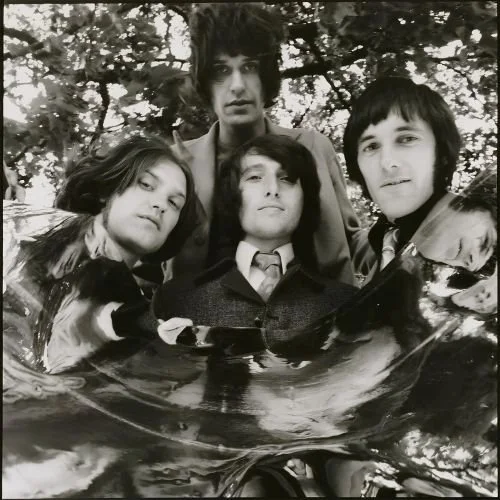
IN THIS PHOTO: The Kinks in 1968/PHOTO CREDIT: Peter Rand
Which Artist Has Produced the Best Run of Golden Albums?
_________
IT may be a hard question to answer…
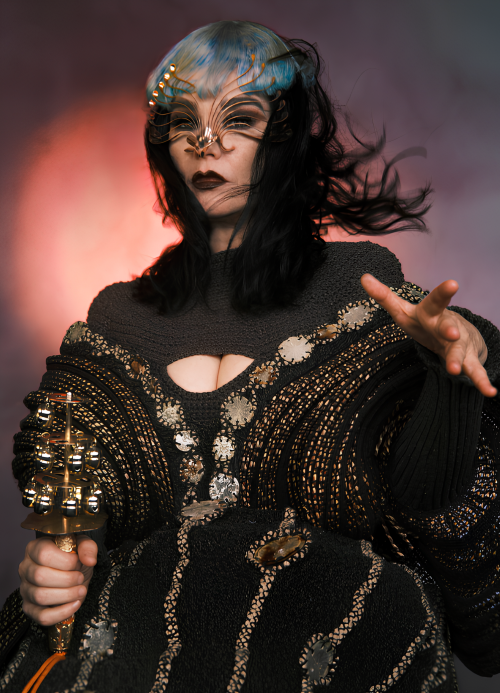
IN THIS PHOTO: Björk in 2022/PHOTO CREDIT: Vidar Logi
but there are these artists who have brought out wonderful albums. A whole run without a break. People will have their own opinions. I think maybe David Bowie or Prince could be considered. They had runs where they were definitely in form and there was this huge quality and consistency. The Beatles maybe should be included. Joni Mitchell. In terms of a career were there have been very few flaws or faults in terms of the recording material, who could claim to have the best run? I think that my two choices would be between The Kinks and Björk. The former had this run that started with The Kinks Kontroversy in 1965 and ran until 1971’s Muswell Hillbillies. That was their regency and golden period. A total of eight albums. Not all of the albums perfect, though there was this consistency throughout. Ray Davies’s songwriting not breaking its stride. I am not sure how many other artists can claim to have that sort of run. The best album of The Kinks’ run might be 1968’s The Kinks Are the Village Green Preservation Society. I want to come to a review of the album from AllMusic:
“Ray Davies' sentimental, nostalgic streak emerged on Something Else, but it developed into a manifesto on The Village Green Preservation Society, a concept album lamenting the passing of old-fashioned English traditions. As the opening title song says, the Kinks -- meaning Ray himself, in this case -- were for preserving "draught beer and virginity," and throughout the rest of the album, he creates a series of stories, sketches, and characters about a picturesque England that never really was. It's a lovely, gentle album, evoking a small British country town, and drawing the listener into its lazy rhythms and sensibilities. Although there is an undercurrent of regret running throughout the album, Davies' fondness for the past is warm, making the album feel like a sweet, hazy dream. And considering the subdued performances and the detailed instrumentations, it's not surprising that the record feels more like a Ray Davies solo project than a Kinks album. The bluesy shuffle of "Last of the Steam-Powered Trains" is the closest the album comes to rock & roll, and Dave Davies' cameo on the menacing "Wicked Annabella" comes as surprise, since the album is so calm. But calm doesn't mean tame or bland -- there are endless layers of musical and lyrical innovation on The Village Green Preservation Society, and its defiantly British sensibilities became the foundation of generations of British guitar pop”.
You can claim that The Kinks are hard to beat when it comes to this run. They had periods after 1971’s Muswell Hillbillies where there was this quality and strength. It was patchier. You could argue that the golden runs happen because of momentum or the times the artists were recording in. Do we measure a run by the total number of albums or the quality of the albums in that run? Some might say that if an artist has four or five albums where they are exceptional, then that is more impressive than one who has seven or weight albums but not all are near perfect. I feel that The Kinks could claim to be in the former camp. These albums all different too. You cannot claim that 1970’s Lola Versus Powerman and the Moneygoround, Part One is similar to 1967’s Something Else by the Kinks. In terms of breadth and variety, The Kinks were always innovative and fresh. The albums have endured to this day. Which other artists would you say could match them? Arguably there are other artist that could challenge them. Though I have been thinking about the alternatives. I think The Kinks’ 1960s and 1970s albums were released in a time when there were other bands releasing superb albums. That sense of inspiration around them. Though maybe it is Ray Davies and his genius shining bright. At a time when he was in particularly inspired mood. I have seen some say that David Bowie could top The Kinks. Twelve albums released between 1971 and 1980. However, there are a couple of weaker ones that break the run. 1973’s Pin Ups. Led Zeppelin between 1969 and 1975 were brilliant, though that was six albums. Six seems to be the number for a lot of groups. The Beatles’ run from Rubber Soul in 1965 to Abbey Road in 1969. The Kinks had eight albums in their chain, but I feel there are very few that can match that. Anyone in the modern era who has that same run as The Kinks?!
The only other artist that comes to mind that could equal the consistency and sheer wonder of The Kinks is Björk. You could say that her entire career has been wonderful. No album has been weak. She has released ten studio albums. Every one of them has won critical praise. Has she received quite the same adulation as The Kinks? The best of the London band surpasses the Icelandic innovator, though Björk has released ten albums that are all excellent. You could say that 2007’s Volta did not get quite the same reaction as her other albums. That is fair. So she has nine albums that have been incredibly well received, but one not so much. It may be subjective. I am judging my opinions on what critics say. People could say Stevie Wonder or Joni Mitchell or Madonna could be up there. Even the mighty Kate Bush. If we look at things from a critical and commercial standpoint, Björk is a fine challenger. Like The Kinks, all of her albums are very different but they are genius. I know she is recording an album at the moment. Her most recent album is 2022’s Fossora. This is what The Guardian wrote in their review:
“Biophilia may have been the title of her 2011 seventh album, but the Icelandic composer’s penchant for irrepressible life forms has had an ongoing life of its own in her work. Fossora, she says, is a feminisation of the Latin word for “burrower” (badgers are “fossorial” mammals). The life of the soil, nesting and burial are just three themes that grow directly out of this fertile loam. Terroir is another. Conceived during lockdown, when anyone in their right mind would have hastened back to their native island home, Fossora found Björk on Icelandic turf for an extended period, hosting micro-raves in her house. All she wanted to play was gabber – the pounding 90s Dutch variant on techno.
So Fossora has proper beats on it, a kind of holy grail for longtime Björk fans who remember her clubbier past. And you can, just about, dance to some of these songs – although it would probably look more like headbanging. The title track offers up a particularly extreme cocktail of punishing percussion and swirling vocals. The beats throughout come in association with Indonesian gabber merchants Gabber Modus Operandi.
Björk’s intention was to react against the airy themes of her previous album, Utopia (2017). Many wind instruments remain, but these tend to be bass clarinets – often six of them – alongside trombone, oboe and cor anglais, hooting and groaning.
Where Björk occasionally breaks with this lower tone palette on tracks such as Allow, it’s to let an army of flutes unleash a ravey melody to lub-dub beats. Part of this album is devoted to new romantic relationships, fantasias in which love can take root again after 2015’s anguished Vulnicura, which dealt with the breakdown in Björk’s relationship with her daughter’s father. The slight downside is that, like some Walt Disney cartoon bluebirds, these trilling flutes and whimsical clarinets break the mood of majestic ache that makes Fossora one of Björk’s hardest-hitting albums.
Björk’s mother died in 2018 after a long illness; a number of these songs are tributes to Hildur Rúna Hauksdóttir. Ancestress is explicitly billed as an epitaph. Forgoing the more rigid Icelandic tradition in which a priest lists facts about the deceased, Björk celebrates her mother’s idiosyncrasies – her dyslexia, her homeopath’s cantankerous disregard for doctors. Details such as the smell of her passing are set to brittle strings and dissonant beats, with Björk’s son, Sindri, on backing vocals. An epic video follows a funeral procession that re-enacts Hildur’s death in fantastical form, a “matrimort” with the earth.
When Björk describes her mother, she is often also describing herself (“She had an idiosyncratic sense of rhythm… she invents words and adds syllables!”). There’s more mother-daughter slippage, too, on the elegiac Her Mother’s House, the closing track. Björk describes her mother’s voice, and likens her house to the chambers of her heart. The guest here is Björk’s own daughter, Ísadóra Bjarkadóttir Barney, whose move away from home at 19 is reflected upon here, another crank along the gearwheel of life.
If it’s possible, Sorrowful Soil is even more emotional. In this eulogy for Hildur, set to a distant bassline, massed choirs follow Björk’s lead as she sings about the quantity of eggs produced by a woman’s body, her “emotional textile”. The way she sings “emotional” recalls the “emotional landscapes” of 1997’s Jóga.
“You did your best, you did well,” insist the voices, digitally persistent: “did, did, did!” It’s pretty much the best thing a child can say to their mother – or vice versa – particularly when the two women didn’t always have an easy relationship.
Less obviously, the exquisite Atopos finds Björk emphasising the importance of persevering with relationships; it also partially addresses her mother. The track captures the wonders of Fossora in miniature – hammering beats, a thicket of tense clarinets, and Björk’s unmistakable vocal in didactic mode, upfront and emphatic”.
I am thinking if there are artists I have left out. Bruce Springsteen had a run of albums between 1973’s The Wild, the Innocent & the E Street Shuffle and 1987’s Tunnel of Love. Though one or two albums were not that brilliant. Not that it is especially important or meaningful if an artist has this phenomenal run of albums. It is just a subject that popped into my mind. I think I have written about it before, but I can’t recall which artists I mentioned. I have been listening to a lot of legacy artists. So many of them embarked on this run of albums that saw them grow bigger and bigger. All commercial and critical successes. When critics decide on the best music run, they usually cap things are six albums. That is fair enough. Six is a lot of albums. Though I feel we can take it beyond that. The Kinks’ eight albums between 1965 and 1971 is supreme. All of them were acclaimed. You could say that 1971’s Percy broke the run. That is fair enough. That would be seven out of eight albums in that run were magnificent. It then begs the question as to whether any artist ever has released more than six albums consecutively that are of the highest quality. I would go back to Björk, as Volta received better reviews than The Kinks’ Percy. However, others might say that some of the artists that produced six consecutive brilliant albums released ones either side that are pretty decent. The Beatles, Bob Dylan, Led Zeppelin and Prince. Also, we need to consider the impact and legacy of the albums. You can have four, five or six albums in a row that have all been adored and inspired legions of artists, compared to an artist who has had a longer run but the albums are not as brilliant. Also, we need to consider the reputation of the artists. I would name Nick Cave and The Bad Seeds. They have released eighteen albums. Not too many that have received anything less than glowing reviews. I do think that Nick Cave’s opinions about the genocide in Gaza does sort of muddy the waters for me. I can admit the band have this brilliant run of albums, though I don’t think they are quite up there with The Kinks or Björk. It is an interesting discussion, and I wonder if anyone else has any other thoughts. It would be good to hear. Which artist has the longest run of…
TRULY brilliant albums?