
FEATURE:
The Digital Mixtape
Remembering the Great Eva Cassidy
_________
AT the moment…
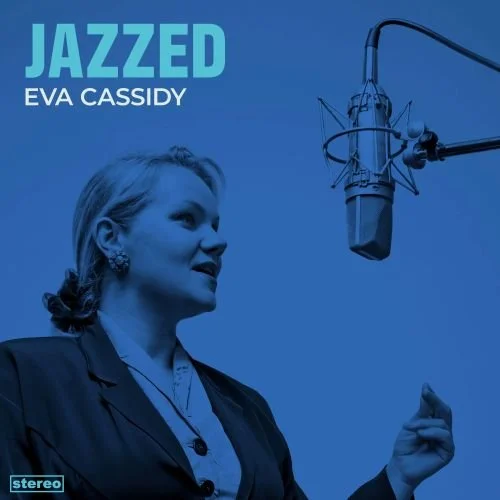
I am writing some features which might seem a bit morbid. Remembering great artists who are no longer with us. Rather than it being grim, it is a chance to celebrate their legacy and work. On 2nd November, it will be thirty years since we lost Eva Cassidy. She was only thirty-three when she died. Here is an artist who I don’t think gets as much recognition as she deserves. To be fair, a lot of the attention around her arrived after her death. Born in Maryland, there was this local recognition and fanbase, though perhaps not the wider U.S. Posthumous songs and albums helped to push her music further. I think she is one of the greatest singers ever. Even though she mainly interpreted other people’s works, she did it like nobody else. I am going to end this feature with a mixtape that pulls together some of her best recordings. There is an album, JAZZED, which is coming out on 13th November. I am not a fan of the cover, which is an A.I. image, but what can you do?! You can pre-order it here. Rough Trade provide some more details:
“Jazzed gathers the jazz side of Eva Cassidy into one beautifully focused set, highlighting just how effortless she was with the American Songbook. Across ten songs written over six decades, her voice reshapes familiar standards with real character, nuance and warmth.
Four new arrangements from composer Christopher Willis bring extra sparkle, especially on It Don’t Mean A Thing (If It Ain’t Got That Swing), Blue Skies, Cheek To Cheek and At Last. There’s a clear nod to the classic vocal jazz sound of the fifties and sixties, drawing on Nelson Riddle and Billy May.
Elsewhere, You’ve Changed and Ain’t No Sunshine lean into the deeper, more reflective side of the record, with the London Symphony Orchestra beautifully capturing the emotional richness associated with Gordon Jenkins. A timeless celebration of great songwriting, arranging and interpretation”.
Eva Cassidy could deliver these tender and spine-tingling vocals on songs such as Autumn Leaves and Over the Rainbow, but also deliver these gutsy and powerful vocals on tracks like Blues in the Night (which is featured on JAZZED). It is a case of what could have been. If Cassidy had received great international acclaim in her lifetime and released more albums. What she might have done. Prior to getting to an extraordinary mixtape where we get to hear Eva Cassidy’s multiple gifts and versatility in full flight, here is some biography about a sorely missed artist:
“Eva Marie Cassidy (February 2, 1963 in Washington, DC – November 2, 1996 in Bowie, Maryland) was an American vocalist described by the British newspaper The Guardian as “one of the greatest voices of her generation.” She had a diverse repertoire of jazz, blues, folk, gospel and pop. Cassidy remained virtually unknown outside of her native Washington, DC, when she died of melanoma (which had spread to her bones) in 1996. Her posthumously released recordings have since sold in excess of 12 million copies, and in early 2001 the compilation album Songbird reached #1 on the UK album charts.
Eva Cassidy was the third of four children born to Hugh and Barbara Cassidy. From an early age, she displayed artistic and musical talent. When she was nine years old, her father taught her to play the guitar, and she began to play and sing at family gatherings.
While a student at Bowie High School, she did sing with a local band, called Stonehenge, and received considerable praise.
At the age of eighteen, Cassidy began her professional career, singing and playing guitar in a Washington, D.C., area band, called Easy Street. This band performed in a variety of styles, at weddings, corporate parties, and pubs.
During the summer of 1983, Cassidy sang and played guitar, six days per week, at Wild World, in Maryland. Her brother Dan was also a member of this working band.
Throughout the 1980s, Cassidy worked with a number of other bands, including the soul and Motown-oriented band The Honeybees, and the techno-pop band Characters Without Names, later called Method Actor.
During this period, Cassidy also worked as a propagator at a plant nursery and as a furniture painter in Annapolis, Maryland. In 1986, she met (bassist and recording engineer) Chris Biondo, who encouraged her and helped her find work as a backup singer for various acts. In 1990, Biondo and Cassidy hired the so-called “Eva Cassidy Band”, composed of Chris Biondo, Lenny Williams, Keith Grimes and Raice McLeod, and she began to perform frequently in the Washington area.
In 1992, Biondo played a tape of Cassidy’s voice for Chuck Brown. Best known as the “Godfather of Go-go”, Brown is also a jazz and blues vocalist. This led to the first commercial recording of Cassidy, the duet album with Chuck Brown, The Other Side; which featured performances of classic songs such as “Fever”, Billie Holiday’s “God Bless the Child” and Cassidy’s signature tune “Over the Rainbow”. The album was released and distributed by Liaison Records, the label that also released Brown’s Go-go albums. The duet CD attracted the attention of various record companies, but the offers all required Cassidy to pigeonhole herself within a single style (e.g., pop or jazz), something she adamantly refused to do.
In 1993 Eva Cassidy was first honored by the Washington area music community when she was awarded two Wammie awards for “Female Vocalist Roots /Traditional R&B” and “Vocalist Jazz/Traditional.” The next year she was chosen to perform for the awards ceremony.
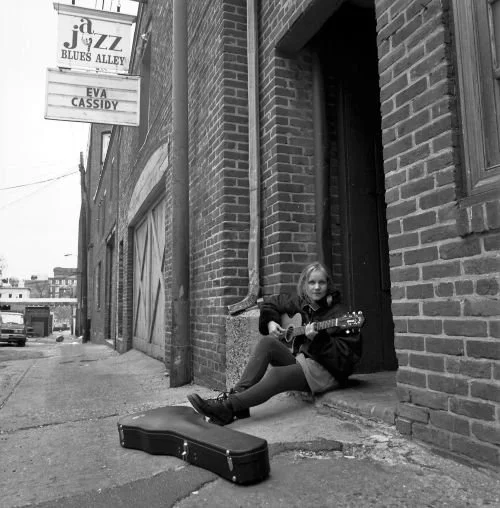
In January 1996, Cassidy recorded the album Live at Blues Alley, about which The Washington Post later commented that “she could sing anything and make it sound like the only music that mattered”. Cassidy was unhappy with her singing on the album, because she had a bad cold on the night of the recording; she began recording a studio album which was eventually released as Eva by Heart posthumously in 1997.
During a promotional event for the Live at Blues Alley CD in July 1996, Cassidy noticed an ache in her hips, which she attributed to stiffness from painting murals. The pain persisted, and, a few weeks later, Cassidy was diagnosed with melanoma. By the time of her diagnosis, the cancer had spread throughout her body. Cassidy’s health rapidly deteriorated, and her final performance was in September 1996. At the performance, she had used a walker to reach the stage, sang “What a Wonderful World” in front of an audience of friends, and was subsequently admitted to Johns Hopkins Hospital.
Eva Cassidy died on November 2, 1996, at the age of 33. She was posthumously inducted into the Hall of Fame of the Washington Area Music Association.
A new edition of the biography Behind the Rainbow, the story of Eva Cassidy was published by Omnibus Press London in 2023”.
I did want to remember Eva Cassidy, as 2nd November will be thirty years after she died. Through posthumous releases, her music has reached more and more people, though we cannot overlook the incredible work she made when she was alive. Even if she was more of a local sensation and maybe wasn’t someone who toured widely, she has won praise from Paul McCartney, Adele, and Leona Lewis. Katie Melua counts Cassidy as a huge inspiration. This eternally wonderful voice that will ring out through time and touch people’s lives, do go and check out JAZZED and dive into her music. You will quickly discover why she is seen as one of the all-time great voices. Though you can compare Eva Cassidy to a few legends (such as Etta James), I believe that there is…
NOBODY quite like her.