FEATURE:
Here Comes the Sun
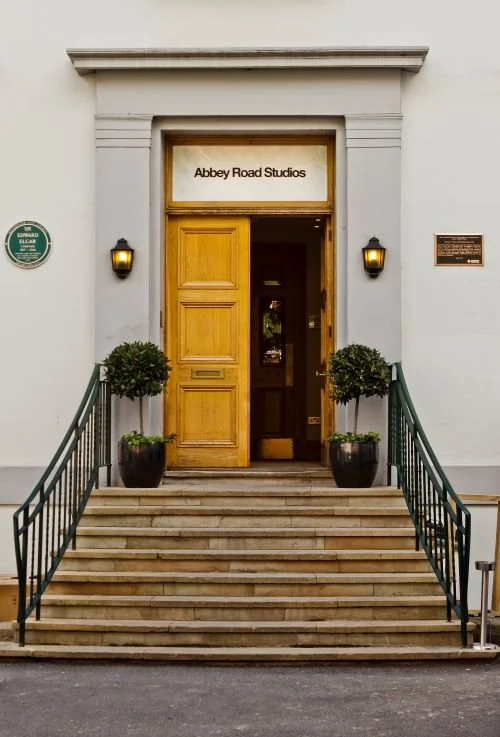
The Iconic Abbey Road Studios at Ninety-Five
_________
I guess, technically, that…
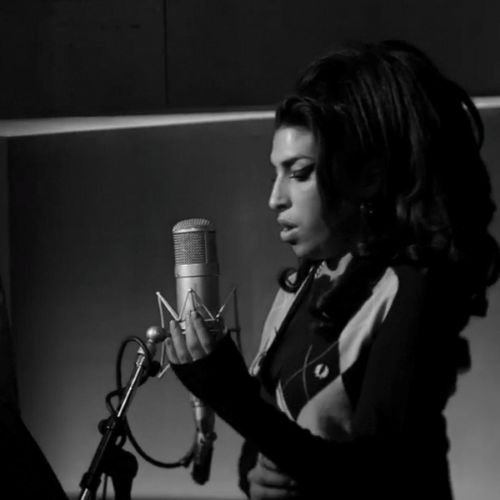
IN THIS PHOTO: Amy Winehouse recording at Abbey Road Studios
EMI Studios turns ninety on 12th November. Though they were renamed in 1970. Some say 1976. In any case, the inspiration came from The Beatles’ album of the same name. The final one they recorded as a band. On 12th November, 1931, these iconic spaces were opened. At the opening, Sir Edward Elgar conducted the London Symphony Orchestra in a performance of Land of Hope and Glory. It is only five years until Abbey Road Studios celebrates its centenary. I do hope, as I have said in previous features, that Paul McCartney and Ringo Starr are with us still so they can mark it. I would advise people watch the Mary McCartney-directed 2022 documentary, If These Walls Could Sing. It does give us a sense of how hallowed the studios are. How many artists have passed through the doors. Still, it is seen as a treat and honour to record there. Even if the hundredth anniversary is five years from now, the ninety-fifth anniversary is pretty special. A chance to celebrate a space where everyone from Kate Bush to Oasis have recorded in. Published in 2022, I would advise people to purchase David Hepworth’s book on Abbey Road. As we look toits ninety-fifth anniversary, we should look back at the story of this world-famous and adored studio. Who better to tell the story than Abbey Road Studios themselves:
!The World's First Recording Studio
The story of Abbey Road Studios is the story of recorded music. In 1929, when recordings were still being captured acoustically with a large wooden horn and a wax disc, The Gramophone Company saw an opportunity and began the search for a location to support the new industry of electrical recording. They found a nine-bedroom house with a large garden for sale in St. John’s Wood, NW London, and bought it for the total of £16,500 before spending two years building the world’s first recording studios.
By the time of our opening ceremony on 12 November 1931, which saw Sir Edward Elgar and the London Symphony Orchestra give a rousing performance of Land of Hope and Glory, the Gramophone Company had merged with the Columbia Graphophone Company to become the famous Electrical and Musical Industries (EMI).
A Home for Artists and Maestros
EMI’s new recording hub featured three main studios, all of which remain as magical and profound today as the when they first opened. Our largest space, Studio One, began hosting legends of the classical and orchestral world including Sir Thomas Beecham, Pablo Casals, Elisabeth Schwarzkopf, Sergei Prokofiev, Maria Callas, Igor Stravinsky, Yehudi Menuhin and later Geoff Love, André Previn, Jacqueline du Pré and Daniel Barenboim. As well as icons of big band and jazz like the indomitable Fats Waller and Glenn Miller.
Over the last 40 years, Studio One has become one of the world’s go-to places for film scoring, with projects including Raiders of the Lost Ark, The Lord of the Rings trilogy, Star Wars and Harry Potter films,1917, Avengers: Endgame, Wonka, Wakanda Forever, Spider-Man: Across The Spider-Verse and Oscar-winners like The Last Emperor, The Shape of Water, Gravity, Black Panther and Barbie. With the addition of a Dolby Atmos Premier accredited Mix Stage in 2017, Abbey Road became the only place in Europe to offer both scoring and film sound post-production.
Studio One’s connection to the screen doesn’t end there. Ever since the very first video game score recorded at Abbey Road (Richard Jacques’ Headhunter in January 2001), the grand acoustics of our largest studio have been called upon to match the grand narratives and visual landscapes in today’s games. Projects include Halo, Call of Duty, Final Fantasy, World of Warcraft, Genshin Impact, the Academy Award-nominated and Ivor Novello-winning Marvel’s Guardian’s of the Galaxy and Academy Award-winning Star Wars Jedi: Survivor. Game sessions are massive undertakings, it can be like recording multiple film scores in one. Often five, six, seven hours of music is needed to create a unique soundtrack for each potential game pathway. As composers and engineers push sonic boundaries with ambisonics and new surround technology, the world of video game sound continues to evolve.
Studio Three, the smallest of our original three studios, welcomed Abbey Road’s first published song into the world (recorded nearly two months before Elgar’s opening ceremony); a cover of Hoagy Carmichael’s Rockin’ Chair by American bass-baritone, Paul Robeson.
Studio Three has long been a home for ground-breaking music: The Beatles’ Tomorrow Never Knows, George Harrison’s All Things Must Pass, The Zombies’ Odessey and Oracle, Syd Barrett’s The Madcap Laughs, Pink Floyd’s The Dark Side of The Moon, Deep Purple’s In Rock, Ravi Shankar and Yehudi Menuhin’s East Meets West, Donovan’s Sunshine Superman, Fela Kuti’s Afrodisiac, Radiohead’s The Bends, Florence + The Machine’s Ceremonials, Amy Winehouse and Tony Bennett’s Body and Soul, Lady Gaga’s Born This Way, Frank Ocean’s Blond and Brockhampton’s Iridescence. Creatively unleashed and then artfully captured within its walls.
To date, it is our only studio to have had some major interiors changes. Its control room has moved from one side to the other and back again, while the most recent (and dare we say it, best) renovation came in 2022. It even housed a mirrored drum room in the late 1980s where the large iso booth now stands. It wasn’t until 1980 that Abbey Road built its next studio, the Penthouse, and in 2017 adding the Gatehouse and the Front Room as more accessible, flexible and intimate spaces built to accommodate new ways of working.
The legendary Studio Two became the birthplace of British rock ‘n’ roll in the late '50s with the emergence of groups like Cliff Richard and The Shadows and Johnny Kidd and The Pirates. However not before EMI engineer Alan Blumlein led the very first stereo recording there in 1932 and popular dance bands like The Joe Loss Orchestra made it their home through the 1940s. As bombs rained down on London during World War II, Abbey Road’s doors remained open, hosting sessions including American bandleader Glenn Miller’s final recordings in 1944. In the ‘60s, bells and whistles and raucous laugher echoed in Studio Two as comedy records by the likes of Peter Sellers and Morecambe and Wise were captured. Then, it became the recording home of the Merseybeat scene with artists like Cilla Black, Gerry and the Pacemakers, The Swinging Blue Jeans and Billy J Kramer & the Dakotas.
The ‘60s were buzzing with creativity and vibrance, as a stream of hits flowed from our studio doors. Songs by Shirley Bassey, Cliff Richard, Ella Fitzgerald, Little Richard, Gene Vincent, Helen Shapiro, Eartha Kitt, The Hollies, Manfred Mann, Peter and Gordon, The Pretty Things, Billy Preston, Jeff Beck and of course, The Beatles.
We can’t underplay the importance of The Beatles and their impact on our house. They recorded 190 of their 210 songs here between 1962-1970, working with Parlophone Records producer George Martin. Before naming their last album after the street they’d spent the better part of a decade at, The Beatles changed our culture forever. The strict three-hour session times turned into all-nighters, the technical engineers’ formal white coats disappeared, and both the engineers and artists pushed experimentation and creativity to the limits.
In the ‘70s came the next wave of rock ‘n’ roll and plenty of mullets; Wings, Plastic Ono Band, Badfinger, Roy Harper, Elton John, Al Stewart, Pilot, John Miles and The Alan Parsons Project. In the ‘80s, glorious experimentation by the likes of Kate Bush, The Fall, Duran Duran and Pet Shop Boys. In the ‘90s, world-moving anthems from Massive Attack, Nick Cave and The Bad Seeds, Oasis, Blur, Muse, Spiritualized, Manic Street Preachers, Travis and Buzzcocks.
93 Years of Sonic Innovation
As the birthplace of stereo, innovation has always been at the heart of Abbey Road. Alan Blumlein, a master inventor way ahead of his time, patented ‘binaural’ (literally meaning ‘relating to two ears’) on 14 December 1931 and oversaw the very first stereo recording here in 1934, though it took until the 1950s for stereo recording to be fully adopted
Blumlein also developed early microphones like the EMI HB-1, a moving coil unit used on recordings at the studios through the 1930s. Check out photos of Paul Robeson or George Formby singing at Abbey Road, and you’ll see the HB-1. Other rare EMI microphones like the RM-1B, as well as a huge range of Neumanns, AKGs and RCAs, make up what is one of the most expansive microphone collections in the world. For over 50 years up until his retirement tin 2024, our microphone conservator Lester Smith lovingly maintained all our microphones. Thanks to Lester, every mic is available for daily use.
Back to 1955, with the rise of stereo, EMI engineer Len Page creates the Record Engineering Development Department (REDD) in response to what artists and producers want and need. They developed some of the first mixing desks as well as custom speakers, outboard gear and anything else either requested by the studio team or dreamed up by the technical geniuses at the EMI research facility (The Old Vinyl Factory) in Hayes, Middlesex.
Engineers at Abbey Road have always pushed technological boundaries, building some of the first echo chambers in the ‘50s, lacquering the hammers of pianos to get new, distinct sounds, or in the case of former technical engineer Ken Townsend, inventing techniques like Artificial Double Tracking (ADT). That pioneering spirit forged by the REDD department continues today through Abbey Road REDD – making sure that artists and engineers have access to the best ways to make music, whether that’s through timeless tech from the past, the latest ideas of today, or something not quite invented yet. Abbey Road REDD includes Europe’s first music-focused technology incubator, on a mission to find and progress the best in music-making innovation.
Facing the future
The magic within our spaces, instruments and gear is meant to be shared. That’s why our Audio Products team has worked for years to find ways to bring Abbey Road to you. They meticulously re-engineer, sample and emulate the sound of spaces like Studio One, the control room in Studio Three, the long-standing echo chamber in Studio Two, gear like the TG12345 desk or RS56 Curve Bender, and instruments like the legendary Mrs. Mills and Challen pianos.
Our mastering team continues to push the limits of what’s possible in this vital part of the creative process. Upstairs from the studios, discs are still cut every single day as the latest and greatest artists master their tracks in one of six specialist mastering suites. Across stereo, stem and surround, we combine an unrivalled selection of classic analogue and modern digital gear with the golden ears of our engineers, to bring out the best in each track.
Recent mastering projects include Yussef Dayes, Travis Scott, Olafur Arnalds, Dua Lipa, Fontaines D.C., Aurora, Frank Turner, Orla Gartland, Brian Eno, Self Esteem, Glass Animals, Black Midi, Louis Tomlinson, Ruthven and Royel Otis. While the old and the new collide with recent remasters and archive restorations for ABBA, Sade, Paul McCartney, Roxy Music, Amy Winehouse, The Beatles, Queen, The Who, New Order, Cat Stevens, Elton John, Cymande, Dorothy Ashby, Sam Smith, The Rolling Stones, The Police and Morrissey.
A New Generation of Music Makers
The next part of our story is all about you. Our learning programmes and events combine almost a century of knowledge with the latest techniques and expertise. We do it through accredited courses at Abbey Road Institute, at festivals like Amplify and Equalise and with filmed series like Lock-In, Live Cuts and After Hours.
Through our events, we’re collaborating with artists, brands and festivals to show how Abbey Road can add its magic, bring people together and curate an unparalleled experience.
Abbey Road Studios is not only a pilgrimage for music fans, but a rite of passage for the music makers of today. A place with a unique and iconic history that can bring out the greatest potential in your music. There’s a whole world of possibilities inside, just waiting to be brought to life. Come on in, and be part of the next chapter of the Abbey Road story”
A global icon, Abbey Road Studios has continued to lure legendary and new artists alike. Though it might be an expensive space to record in, there is something you get here that no other studio provides. Maybe it is its history or something in the air. It has this magic and lure. You always worry that a place like this may be removed or built over, but it is a Grade II listed historic building. I hope that it remains where it is for decades more. I am not sure whether Abbey Road Studios have anything special planned for their ninety-fifth anniversary/birthday or will wait five years. Each year, they hold their own photography awards. There is a lot going on beside recording there. I have never been inside Abbey Road Studios, though I hope to one day for an event or something special. On 12th November, it will be ninety-five years since the first purpose-built recording studio in the world opened. If we associate it mainly with The Beatles, we cannot ignore the countless other artists who have recorded there. So many classic albums were laid down there. When it comes to legacy, reputation, history and popularity, Abbey Road Studios…
HAS no equals.