
FEATURE:
I Use the Enemy
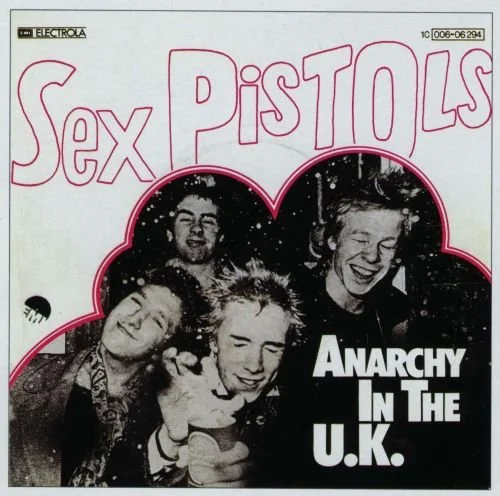
Sex Pistols’ Anarchy in the U.K. at Fifty
_________
IN terms of songs…
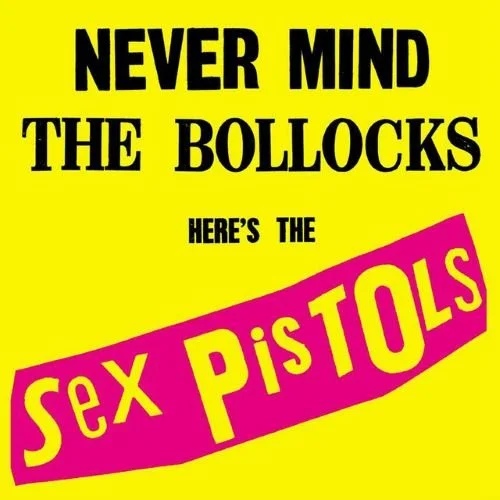
that kickstarted or defined a genre, I think we associate Sex Pistols’ Anarchy in the U.K. with igniting Punk music. Anarchy in the U.K. was rebased on 26th November, 1976. Ahead of its fiftieth anniversary, I wanted to explore the debut single the London-based Punk band. Featured on their 1977 album, album Never Mind the Bollocks, Here's the Sex Pistols, the track was number fifty-six on Rolling Stone magazine's list of the 500 Greatest Songs of All Time in 2004. This is what they wrote: “Written by: Paul Cook, Steve Jones, Glen Matlock, Johnny Rotten. Produced by: Chris Thomas, Bill Price. Released: Nov. '77 on Warner Bros. This is what the beginning of a revolution sounds like: an explosion of punk-rock guitar noise and Johnny Rotten's evil cackle. The Sex Pistols set out to become a national scandal in the U.K., and they succeeded with their debut single. Jones made his guitar sound like a pub brawl, while Rotten snarled, spat, snickered and ended the song by urging his fans, "Get pissed/Destroy!" The Pistols' record label pulled the single and dropped the band, which just made them more notorious. "I don't understand it," Rotten said in 1977. "All we're trying to do is destroy everything." Even though Anarchy in the U.K. reached thirty-eight in the charts, it is considered one fo the best and most important songs ever. Sex Pistols are touring at the moment, minus Johnny Rotten. There is anoministy between Rotten and the other members. Frank Carter is leading the band now. I wonder if Paul Cook, Glen Matlock and Steve Jones will mark fifty years of Sex Pistols’ debut single. There have been some interesting articles written around Anarchy in the U.K. There are going to be a wave of news ones on its fiftieth anniversary. I want to start with a 2004 feature from Sound on Sound. They looked inside this classic. Produced by Chris Thomas and engineered by Bill Price, we do get to learn the story of this massive explosion. A moment in music history that is so important:
“After getting together in 1975, the quartet of Rotten, drummer Paul Cook, bass player Glen Matlock and guitarist Steve Jones quickly attracted a large and virulent fanbase on the live circuit, and by May of the following year they were recording demos produced by guitarist Chris Spedding. Two months later Dave Goodman produced some more demos, one of which, 'I Wanna Be Me', quickly ended up as the 'B' side of the Pistols' first and only EMI single, 'Anarchy In The UK'. Produced at Wessex Studios in October of that year by Chris Thomas and engineered by Bill Price, 'Anarchy', with its simple structure and defiant, in-your-face attitude, basically defined punk, and it caused an immediate furore following its release on Friday, November 26, 1976.
This, in addition to the firestorm generated by the group's expletive-filled live television interview with Bill Grundy seven days later, as well as reports of similar antics at Heathrow Airport en route to a tour of Holland, prompted EMI to pull the plug on January 6, 1977. A&M followed suit after a stormy seven-day relationship, and when CBS pulled out of negotiations it was Virgin who finally stepped in and released the next single, 'God Save The Queen'. By then, Sid Vicious had taken Glen Matlock's place in the line-up and the band had returned to Wessex to record their seminal album, Never Mind The Bollocks Here's The Sex Pistols.
Primarily an engineer since beginning his apprenticeship at Decca Records in 1962, Bill Price had worked with Eric Clapton, John Mayall, the Moody Blues and Tom Jones before moving to AIR Studios in 1970, where he helped with the design and was involved with projects by Mott The Hoople, Pink Floyd, Stan Getz, Stevie Wonder and Paul McCartney. When Chrysalis Records purchased both AIR and Wessex in 1976, Price joined the latter where, as at AIR, he was appointed chief engineer. At the same time he was also made studio manager and befriended Chris Thomas, for whom he engineered productions of records by Elton John, Pete Townshend and the Pretenders, while Price himself would go on to produce anyone from the Clash and Jesus & Mary Chain to the Waterboys and Big Audio Dynamite.
Having just produced an album by Ian Hunter, as well as another by a soft-rock outfit named Racing Cars who enjoyed chart success with the single 'They Shoot Horses, Don't They?', Bill Price experienced a little bit of culture shock when first encountering the Sex Pistols.
"They were a bit of a snotty bunch to start with," is his diplomatic understatement. "They treated the studio like the BBC Home Service and looked at me as if I was wearing a white lab coat that had a pocket stuffed full of Biros. It was as if they had walked into the arms of the Establishment, and there was also a general reluctance to comply, although that didn't last long. Johnny was the main protagonist, acting like he was consorting with the enemy, so I had a little chat with him, telling him the artists I'd worked with, what the job was, and that we were there to help, and after that the attitude completely changed. It was only an act, treating both Chris and I as if we were Bill Grundy, and it wasn't going to get them in the newspapers. All it was going to do was make the record worse, so they quickly became very pleasant, easy people to work with."
Having heard the demoed material, Price and Thomas were impressed by its raw energy as well as its commercial appeal. Melodic, no; catchy, yes. "By then there was already a lot of music biz buzz about the band," Price says, "and if you played any of the demos you would recognise they were by the Sex Pistols, not least because Johnny's voice is so distinctive. They might have had slightly different tempos and slightly different arrangements, but there was nothing too drastic... There weren't harps or violas! The energy was largely the same. I mean, it's pretty hard to make Steve Jones sound tame."
The layout of Wessex Studios for the recording of 'Anarchy In The UK'. The drums were placed near the centre of the 15 x 10 metre live room, with two pairs of ambient mics used to capture the room sound."For the kit itself I had a standard setup: an AKG D12 on the bass drum, a Neumann KM86 on top of the snare, a Shure SM57 underneath the snare, an AKG 451 on the hi-hat, and a Neumann U67 for the tom-toms — this was before we had the Sennheiser 421s. The main effect inspired by Chris's 'dustbins being kicked downstairs' comment involved me keying different ambience mics off the drums as they were being hit, using the old-fashioned Kepexes. These were the earliest American gates available, and using them was pretty much an integral part of the sound. Chris's suggestion that we could shorten the ambience with gates, providing more without it sounding too distant, all made total sense to me.
"Paul Cook started off only just able to play drums, yet by the time we were halfway through the album he was really solid. It was definitely a good idea that he took up playing the drums, although it was also unfortunate that when we started recording the Sex Pistols he hadn't been doing this for very long. He'd only had a kit for a matter of months. He certainly hadn't been knocking around with other bands for several years. Still, within a couple of months he was 10 times the drummer he had been when we started the sessions.
"On 'Anarchy in the UK' we're hearing him at the start of this whole process. He'd often have a problem keeping time when it came to a drum fill or changing from hi-hat to a cymbal; all of the things on which learner drummers tend to skip time. However, we managed to get around that. Chris Thomas would insist on getting pretty perfect rhythm tracks, so, particularly on those early sessions, there was a lot of multitrack editing of what was ultimately used as just the drum track — although the whole band would be playing for the vibe, the bulk of the day would be spent doing a lot of takes and these would be edited together purely for the drum track. Then the guitar, bass and vocals would be overdubbed onto the resulting patchwork."
Price recalls that, in line with the rest of the band's equipment, Cook's drum kit was "pretty crappy and beaten-up. Steve Jones had a Fender Twin that had lost the benefit of its front grille, meaning that you could see the loudspeakers. People would say that made it sound better, but when I asked Steve what had happened to the grille he said 'Oh, I had to get rid of that. The name of the band I nicked it off was written on it.' And that was probably quite true!"
A couple of other features to get to before finishing off. Ultimate Classic Rock marked forty-five years of Sex Pistols’ Anarchy in the U.K. in 2021. I do wonder which artists and bands today are influenced by that song. In terms of what its legacy is today, I am not so sure. It definitely had a massive impact in the 1970s, though perhaps it wasn’t instant:
“What’s often overlooked is the 3-minute 31-second song itself. It had a difficult gestation as Rotten, Steve Jones, Glen Matlock and Paul Cook – Jones was 21 at the time, the others were 20 – struggled to crystallize their intent. The song began to take shape in the summer of 1976, as bassist Matlock told Rolling Stone in 2018. “I had half an idea for a big overture, and I just started playing that descending chord progression and everybody picked up on it and said, ‘Where’s it go next?’ And I sort of geared it as we went along. John, it happened, had a bag of lyrics – just sheets of paper in a plastic bag – and he pulled something out and he said, ‘I’ve been waiting for you to come up with something because I’ve got this idea.’”
Rotten said his lyrics had been inspired by the Pistols’ own “despondencies and discrepancies” as they attempted to secure success. “I felt under serious pressure – and so did others, I think – and was trying to coin phrases and write words that would unite us as a band, as we were so bitterly opposed to each other,” the singer recalled in 2016. “’Anarchy In The U.K.’ was the end result. The ideas in that song had been rattling around in my head for years, but I had never had an outlet. Then there I was all of a sudden, a singer in a band.”
He continued: “The people running the country at that time were running it into the ground… Young people were constantly being told that they had no future. They certainly had no money. I had to bunk on the subway just to get to rehearsals. There would be trash everywhere, it felt like the downfall of Western civilization – we’re talking race riots, the National Front. It was a society facing imminent collapse, so I threw ‘anarchy’ into that mix, even though there weren’t that many anarchists running around at the time.”
The recording was “quite a lengthy process actually,” Matlock told Songfacts in 2018. “Initially, we went in with a guy who was our live sound engineer, Dave Goodman, who was kind of good enough. He had never really produced anybody properly, so he didn't have enough clout or wherewithal to tell Malcolm McLaren not to be in the studio. And Malcolm was like the devil at his ear, going, ‘It’s not exciting enough – it's got to be faster.’ And it was getting faster and faster, and losing all its groove. In the end, we effectively went on strike, and said, ‘No, it's fine,’ and we got a different guy in, Chris Thomas, who has done some fantastic work over the years. We set up, started playing, and he said, ‘I think we've got it now.’”
Matlock – who reported that he’d been trying to channel Motown session bassist James Jamerson on the track – recalled that they’d had to wait for Rotten to arrive and record the vocal. “He didn't rush down because he was like, ‘You're useless, you can't play. You’ve been in there for weeks.’ And we said, ‘No. We've done it.’ We were right all along – we just needed the right person to realize it. And then Steve loaded up the guitars over the next few days.”
In 2017 Rotten told Rolling Stone how challenging it had been to perfect the opening words. “It took me time,” he said. “They would be telling me to count the beats, and I didn’t know what the fuck they meant – what are beats? Paul would always be very helpful with me, but at the same time it was infuriating because I wouldn’t know the terminology.”
The song would also change in the studio. “On the original demo, at the start of the song, I sang ‘Words of wisdom’ before ‘right now’ … I removed it because there is no point of overdoing it," Rotten explained. "I always thought if I over-aggrandized it, it wouldn’t mean much. When we were rehearsing we always tried to remove what was superfluous; we took out all the extra guitar flurries – Steve willingly did that most sensibly – and Paul would cut a song down to its simple roots.”
Matlock, whose tenure in the band didn’t last much longer, rejected the suggestion that he’d “hated” the song’s lyrics. “The only line that always made me wince was, ‘I am an antichrist/I am an anarchist’ – they don’t rhyme, and it always gets me,” he admitted. “Songs that don’t rhyme properly gets me somehow. It had nothing to do with the sentiment. But if you then want to go onto a whole sociopolitical argument about whether it is a good thing to have real anarchy in the U.K. and whether that’s ever going to happen is another matter. But I was quite proud to be onstage singing that song”.
I do want to finish with UNCUT. Coinciding with Sex Pistols playing a series of fiftieth anniversary shows with Frank Carter, Glen Matlock, Steve Jones, Paul Cook and producer Chris Thomas reflected on making Anarchy in the U.K. It is an incendiary and fierce anthem that many might say has relevance today. In terms of its spirit of anarchy and protest, can we apply it to the U.K. in 2026? It is going to be interesting to see what is written about the single ahead of its fiftieth anniversary:
“JONES: When we first started and we’d play up north in these working men’s clubs, everyone hated us. They’d sling bottles at you and it was terrifying. But as the year went on, with gigs like the Screen On The Green [in Islington], there was a vibe because people came to see you, they wanted to be there.
MATLOCK: We played “Anarchy…” as our first number in Manchester. I’d finished writing it earlier that week.
JONES: We recorded the version that’s on [fabled bootleg] Spunk in Denmark Street when we demoed the songs we had with our sound man, Dave Goodman. Then once we got a deal with EMI, we attempted to do “Anarchy…” properly with Dave. But he was way too stoned on weed.
COOK: Dave went through the song time and time again and we just lost ourselves. When we heard the final mix in Malcolm’s office, we thought, ‘Oh, no. Is this how we sound?’ Another factor is The Damned had just released “New Rose”. We listened to that and thought, ‘We’ve got to do something really special here.’ Steve and me were both Roxy fans and suggested Chris Thomas as producer. He’d worked with The Beatles and all sorts and we never thought he’d do it.
CHRIS THOMAS: Malcolm contacted me. They came over to my house for me to listen to the demos, minus John, because Malcolm didn’t want him there. “Pretty Vacant” stuck out. I thought that could be a fantastic record. The fuss around them made me nervous, but the material was there. They were already in Wessex, so we stayed there for “Anarchy…”.
COOK: Wessex was a cavernous old priory with a big ceiling. I wasn’t in a booth, it was all open, the guitar was too, so it felt like we were doing a gig. We just set up and whacked it out.
THOMAS: Wessex was horrific because there’s frigging carpet everywhere, dead as a bloody dormouse. We gated the drums to give them ambience.
MATLOCK: The third and fifth take are spliced together. It finishes the way it does because the tape ran out.
THOMAS: When John turned up, I would imagine he was very angry for being excluded. We put him in a little vocal booth and he just screamed. I thought, ‘Oh my God.’ I went in there and said, “I can’t really understand what you’re singing.” He said, “You’re the one with a track record. You sort it out.” I thought, ‘Oh, Christ. Let’s go to the pub.’ He walked behind me, gobbing in the street all the way, and I thought, ‘Oh no, what is this?’ He had quite a few pints of Guinness and came back and got a few takes, and then I did a comp, editing between the takes, literally going through it line by line. It still wasn’t there, so pretty soon afterwards, we went to Ramport, The Who’s studio in Battersea. We did an afternoon there on the vocal. We did Wessex, Ramport and then Wessex at least once more, doing more takes then taking the original comp and always upgrading it: “Oh, that line’s better there”, or, “That little snigger’s nice.” Then finally we had a vocal track.
COOK: Every line was fantastic. You can go through the whole song, with its confusion and anger, and “I don’t know what I want, but I know how to get it”, “I want to destroy passersby”. Every line’s brilliant and we could relate to it all – especially the last verse, with what was going on at the time with IRA bombs going off everywhere.
THOMAS: It was essential that you heard every syllable. That was the whole point of being so precise in editing and comping, because there is so much character in John’s extraordinary voice. I wanted to make sure that I got every little piece of it. It was really, really important. It pays off because it ends up in the most fantastic performance.
JONES: We built on the backing track with my guitar overdubs. That was my favourite time in the Pistols, making “Anarchy…”, and Never Mind The Bollocks… later. I could barely play then. They spent time on me. It wasn’t work. It was creative and fun.
THOMAS: I wanted to keep some of the stuff that I heard on the demo, like a bit of feedback that comes in accidentally, a nice touch worth repeating. Bits of guitar were orchestrated and threaded on quite carefully. Then on the third day we mixed it. Steve and Paul were asleep upstairs where there was a pool table. John was in the control room. I went, “OK, it’s time to turn it up now and play it loud.” John stood up and he went, “That’s our anthem.”
MATLOCK: It sounds heavier because the tempo’s just right, it’s not too fast. It’s got a majesty to it. When it came out, Melody Maker’s Caroline Coon called me up and said, “How would you describe the music?” I said it’s like an overture and she used that in her review.
COOK: I was coming out of the Marquee and they played “Anarchy…” over the speaker. Everybody in the crowd started singing along with the chorus. That’s when I first realised it was a significant song.
MATLOCK: Was the Grundy debacle a week after “Anarchy…” came out bad luck? If all that hadn’t happened, I don’t think we’d be sitting here now. But we were just on the cusp of being a proper touring band when we couldn’t play on the Anarchy tour and they tried to ban us. It became quite intense and the band started devolving into factions. That was the end of my tenure. I’d only just turned 20. Did “Anarchy…” contribute to the assault on us? Yeah. It wasn’t “Love To Love You Baby”.
COOK: It was never the same after the interview and when Sid joined, he was into the chaos. But the joie de vivre we had before came across in the records, especially “Anarchy…”.
JONES: I appreciate it more than ever when we do it live now. Obviously it’s a bit different with Frank, but you’ve got all ages singing along and it’s a beautiful thing. I couldn’t care less about politics, and my whole idea is when we do a show, I just wanna make people happy and forget the nonsense in the world. You can see the joy in people’s faces. Have I got that joy Paul talked about back? Yeah, I have”.
The rebellious and righteous Anarchy in the U.K. turns fifty on 26th November. Sex Pistols’ members are all now in their seventies, so their relationship with the song is different to what it was when they were twenty. Johnny Rotten’s vocals on this 1976 song are so raw and exciting. It must have been such a thrill and shock hearing this song. Despite not being a big chart success, it certainly resonated with a generation who bonded with the song’s messages. Whilst some see it as being a product of the 1970s and a reaction to the politics and society of the time, I do feel that it contemporary in terms of relatability. In 2026, this Punk gem is…
SO relevant and fresh.