
FEATURE:
Spotlight
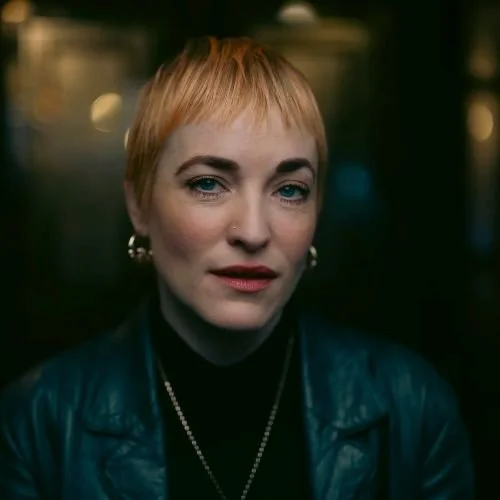
PHOTO CREDIT: Dave Smith
Radie Peat
_________
I did write about …
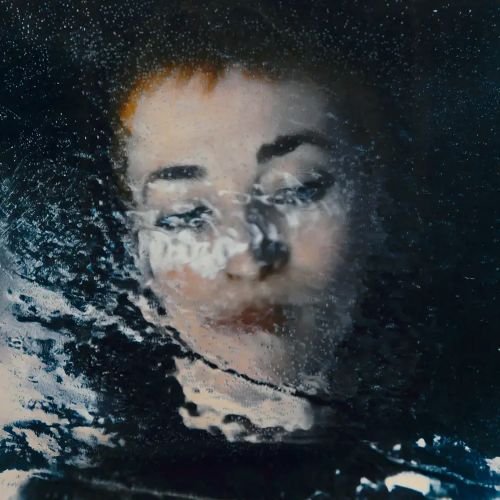
LANKUM a while ago. However, I am spending time with their incredible member, Radie Peat. She is primed to release one of the best albums of this year with No Human Tongue Can Tell. Radie Peat is an artist with one of the most astonishing voices in all of music. Lankum released their most recent album, False Lankum, in 2023. It was shortlisted for the Mercury Prize. I am not sure if the Dublin band are going to record more music together. Radie Peat’s debut is an essential listen. Rather than source the entire interview, I did want to look at Songlines and their conversation with Peat. This is a long-awaited solo album that is rightly getting a lot of praise. No Human Tongue Can Tell is “a collection of old songs reclaimed for the women in them”:
“Radie Peat’s first formal encounter with music was rather unintentional. “I have three sisters, all of them older than me, and they were going somewhere on Tuesdays,” she says. Unwilling to be left behind, she asked to tag along: “I was like, ‘I want to go, too.’ I didn’t actually know what I was asking to go to. Then someone put a tin whistle in my hand, and I was like, ‘Oh. OK. This is what
this means.’”
Peat tells me this in North Dublin, where we are settled in the boardroom of Bohemians FC on a mizzling August day. Next door is Lankum’s rehearsal space, currently occupied by band member Ian Lynch. Peat’s partner, Daniel Lambert, the club’s COO, has made this alternative space available for us to talk about the launch of Peat’s new album. Peat, her hair cropped short, sits beside me in a black rain jacket with the word ‘FENIAN’ printed on the back in bright red lettering – a cast-off from Irish rap group Kneecap, whom Lambert manages.The boardroom is a strangely corporate setting in which to talk about folk music, but Peat is a warm and thoughtful interviewee, and the aesthetics of the room soon fall away.
Not long after the tin whistle was handed to her, Peat was playing a range of instruments, with concertina (which her father also plays) becoming central. “There were always multiple instruments lying around the house,” she remembers, “which is how I picked up most of them. If it’s there, you play it.”
She was sent to an Irish-language school known for its focus on music, where she met aspiring musician Cormac Mac Diarmada. After a sojourn in Sicily where she started playing nylon-string guitar – the only instrument she could find – she returned to Ireland and began attending a session involving Mac Diarmada. The brothers Ian and Daragh Lynch, who had a duo called Lynched, were also present. They invited Peat and Mac Diarmada to play on their Cold Old Fire album in 2014 and eventually asked them to join the group. Two years later, the band officially changed their name to Lankum. Their dark blend of folk, drones and doom crystallised and reached wider and wider audiences through Between the Earth and Sky (2017), The Livelong Day (2019) and their Mercury-nominated False Lankum (2023). The latter, in particular, made Lankum central in a ‘new Green wave’ of Irish music alongside Fontaines DC, Gilla Band, Kneecap and The Mary Wallopers. It is hard to go to any Dublin folk gig without being in sight of at least three Lankum T-shirts at all times. Peat also formed gloom-folk group ØXN with Katie Kim, Eleanor Myler and Lankum’s producer John ‘Spud’ Murphy, releasing their debut album, CYRM, in 2023. Now, she is finally dropping her long-awaited full-length debut: No Human Tongue Can Tell.
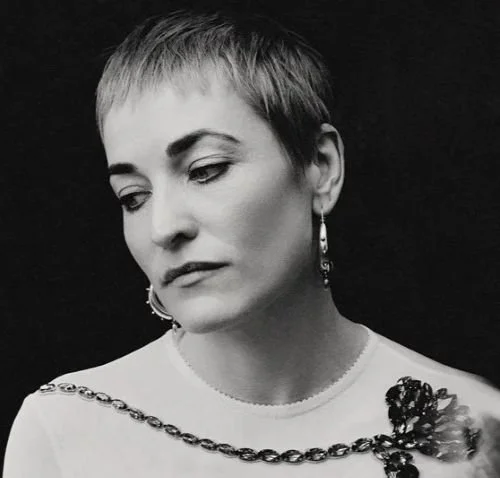
“I watched a documentary on Mike Oldfield making Tubular Bells in my mid-20s, and I was fascinated by the idea of writing all the parts yourself and playing them all yourself,” she says about the genesis of the album. “You’re totally limited by your own ability and the instruments you play, the way your brain sees the music.” She was also inspired by her ØXN bandmate Katie Kim’s solo work, Enya (whose vocal layering Peat wanted to emulate) and her friend, the musician and performance artist Andy the Doorbum. “He makes all his albums [himself],” Peat explains, “and I had a lot of chats with him and became more determined that I wanted to record like that.” So she did, layering her vocals, adding mellotron and playing almost every instrument, with only a few contributions from other musicians and producer Murphy at her side. “I forced myself into this kind of opposite-of-collaboration area,” she says. “My intention was to make it sound like its own thing, that it couldn’t sound too much like anything else I’d done before because that was with other people.”
After so much collaboration, I wonder if going solo brought doubts. “You’re shining a big spotlight on what you know and what you don’t,” she agrees. “What you can do and what you can’t do. There were times where I was like, ‘Oh my God, why am I so bad at this?’” She lays her hands palms-up on the table in front of her and looks up at me, smiling. “Look, making an album can be like that anyway. You tend to question everything. I have yet to make one where I don’t have a musical existential crisis, but I think maybe that’s part of putting in enough effort. It’s that you care a lot.” There were moments of lightness, too. “I didn’t have to explain myself to anybody,” Peat reflects. “I could put abstract ideas in there, feelings and memories that I don’t even have to explain now. That was exciting and fun and easy.”
It was the songs themselves – mainly old Irish and English folk songs – that ultimately led to it being a solo album. “There were songs that I was finding and starting to sing but I thought, this doesn’t suit Lankum and I don’t think it suits ØXN,” says Peat. She was finding herself “drawn to songs where the female person in the song has a more active role, where they’re not just the victim of something, or an object of lust. As a woman singing the songs, you need a bit of female empowerment in there.” They lent themselves to a more personal project.
The album has been a long time coming. Peat might have put it off for years, but pregnancy gave her a deadline. “I went in and started tracking stuff at five months pregnant”, she states. Before I can ask when that was, she already has the answer: “My daughter is now four and a half. It turns out doing all the layers yourself takes a really long time – and much longer if you take time off to have a baby.” The result is a complex, richly storied album.
No Human Tongue Can Tell opens with ‘Hares on the Mountain’, a beguilingly simple song about temptation and wisdom. Peat first heard it on Folk Roots, New Routes, Shirley Collins’ 1964 album with Davy Graham. She is a huge admirer of Collins, both as a singer and as a collector who travelled with Alan Lomax. “It’s scandalous that the Lomax collection is not [named after] Lomax and Collins,” she says. “[Shirley] obviously has a fascination with the Appalachian versions, same as I do.”
Peat first recorded the song with her Lankum bandmate Daragh Lynch for Myles O’Reilly’s video series This Ain’t No Disco, putting it together in two days when they needed an extra song. They pitched it down from Collins’ version, because “she had an extremely high voice and I don’t,” Peat laughs. That stripped-back performance, with Lynch’s rich, deep guitar rhythm and Peat’s raw voice, is well worth a watch on YouTube. For the album, though, she wanted to move away from an arrangement that was so close to the original. Instead, she looked to Shirley’s recordings with her sister Dolly, “where they’re these interlocking, busy arrangements”. Reverb-soaked rhythm guitar is backed by long, climbing notes. A few verses in, Peat’s low self-harmonies enter and a Mellotron’s wobbling strings ebb and flow, giving the busier arrangement a rumbling poignancy.
The other song from Shirley Collins’ repertoire on the album is ‘Bonnie Boy’, which also draws on Anne Briggs’ well-known version. It tells of a woman who sees the man she loves with someone else, and ends with her resolving: ‘And whether he loves me / or whether he don’t / I’ll walk with that boy now and then.’ That tenderness, twisted up with hurt, returns on ‘Still I Love Him’, which Peat’s friend John Francis Flynn found in the Irish Traditional Music Archive and set to a melody of his own. After each increasingly ugly encounter with her abusive husband, the song’s narrator insists she loves him still, and always will. Peat layers her voice into a soaring choral refrain, and the clash between the song’s cruelty and its joyous chorus is deliberate. “People don’t stay in unhealthy relationships without a lot of love for the person,” she says. “Those two things are true at the same time. [The song] is absolutely not a call to stay with somebody just because you love them, but I think sometimes there’s this narrative of, ‘why didn’t you just leave him?’ That’s not really painting the full picture of how much it takes for someone to leave someone”.
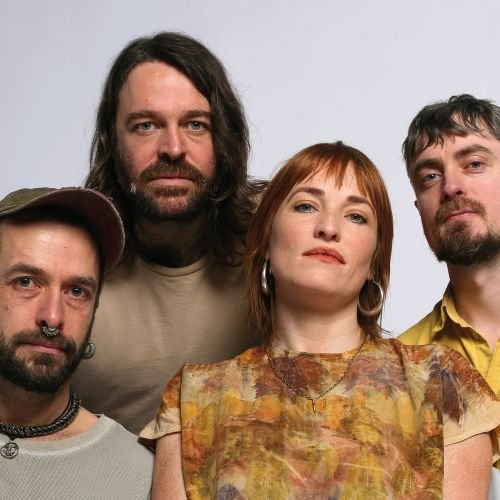
IN THIS PHOTO: Lankum
Prior to ending with The Guardian and their five-star review of No Human Tongue Can Tell, there is another fantastic interview I am keen to explore. No Human Tongue Can Tell is out on 13th November. You can pre-order it here. Peat plays Union Chapel, London on 3rd November and Vicar Street, Dublin, on 20th November. I live near Union Chapel, but I think tickets are gone now (or will be soon). I want to come to The Observer. It is a U.K. publication, but there is also Irish coverage too. I do hope that there are interviews in more publications prior to the release of No Human Tongue Can Tell:
“Don’t go combing through her new album, No Human Tongue Can Tell, for answers. For one thing, none of the nine tracks were written by her, but are interpretations of existing folk songs that Peat has been collecting over the years. Like costumes, she has tried on several of them in different contexts, including with Lankum. Here, she doesn’t merely do the songs justice with her formidable contralto voice, which expresses anger and longing to often staggering effect. She remakes them outright so that it feels – though they’ve been passed down through generations – as if they’re being performed for the first time.
“I always knew I wanted to do it, but I never prioritised it,” she says of making a solo record. Her main focus was on Lankum, whose soaring popularity as purveyors of intense, drone-heavy folk had taken its members by surprise. “We never imagined this amount of people would want to listen to the really weird music we make,” Peat tells me. She finally got down to recording the LP in 2021, between Lankum’s third and fourth albums, but became pregnant not long afterwards. “My plan was to finish the whole thing before I had the baby,” she smiles. “But, obviously, that didn’t happen – it took a few more years.”
The delay had as much to do with her ambitious creative process as starting a family. “I got the idea for how I wanted to do it partly from watching a documentary on how Mike Oldfield had made Tubular Bells, which I thought was fascinating because he has all these recordings of himself layered on top of each other. And that takes more time.”
More often, Peat was drawn to songs told from a female perspective. “I just found those very interesting,” she says, “especially where the woman in the song is not just an object of desire, but has actual agency. Some of the songs are really old, so you’re talking about a time where women would have had way less rights than I do currently. [But] what I found is that these songs are surprisingly progressive.”
Why, I wonder, did she decide to work entirely with songs from the past rather than writing any of her own?
Well, first of all, she says, “when you write the arrangements, you’re bringing it into a different world, anyway”. But de-emphasising the self is part of the point of folk music, she goes on. “For me, it’s an egoless medium, because the songs have travelled through generations and they’ve been changed by so many people over the years. There’s something about that that I find very comforting, because it’s this universal human experience. It’s not limited to just your experience and view of the world – you have this collectiveness there too.”
But, she adds with a smile, lest she erase herself from the picture completely: “I do change them a lot as well.”
Peat sees Lankum’s rise, and the concurrent resurgence of Irish folk music, as part of a broader cultural revival “where people are learning Irish again, they’re getting interested in our folklore, clothes designers are referencing traditional Irish textiles. Although,” she adds as a caveat, “‘revival’ implies that that happened before, whereas I’m not sure Irish people have ever been this comfortable with their culture. We’re looking at it and not recoiling, and being like, actually, there’s some good stuff here.”
There’s a shadowy flipside, however. “Talking about cultural revival, it makes me uncomfortable that, at the same time as this very valid and necessary revival of interest in our own culture, there’s also the rise of rightwing ideology that is just really racist and xenophobic and – I’m ashamed of it, to be honest. I’m ashamed that the tricolour has become a symbol for hate, I’m ashamed that people are feeling threatened and unwelcome in Ireland. I think we’ve really gone astray there, especially for a country [from which] so many millions of us have emigrated. It makes me very sad.”
She acknowledges that class divides are playing into hostilities, exacerbated by countrywide housing and healthcare crises. ”People are feeling marginalised, and especially in working-class areas, they are being pushed to the side. I just think they’re directing their anger in the wrong direction. They should be annoyed with the government for mismanaging. But, unfortunately, a lot of people seem to think that it’s the people who live next door who look a bit different …” She breaks off, looking uncomfortable. “I hope that all makes sense. I’m not a politician.”
Perhaps that discomfort is one reason she prefers to channel other people’s words in her music rather than writing her own. The most impassioned song on the album, Dark Horse of the Wind, was written by Irish folk singer Liam Weldon in 1966. Half a century on from the 1916 Easter Rising, it reflected on the failures and corruptions of the Irish state in no uncertain terms: “Now charlatans wear dead men’s shoes, aye and rattle dead mens’ bones / Ere the dust has settled on their tombs, they’ve sold the very stones.” Sung by Peat another 60 years later, the words have lost none of their bite.
That makes the album sound forbidding, but there’s a gentleness to it as well, and a spaciousness that contrasts with the intensity of Lankum’s sound. And there’s an alchemy in how she is able to transform disturbing subject matter, such as the abusive relationship on lead single Still I Love Him, into achingly beautiful music.
Then there’s the murder ballad that emulates the feel of Valium. It’s not the first blood-soaked number Peat has played in her career. What draws her to such dark material?
“The drama!” she intones, laughing. “Obviously, they’re about extreme states of human emotion and behaviour, but I find them interesting as well. Why do people write ballads about murder? I suppose, like, why do we make films about murder? It’s so morbid.”
She watches a lot of crime dramas, she says. “I’m not sure why, but I do. I find them interesting. And in a way, songs are almost like newspaper headlines – the ones that survive are the ones that fascinate the most.”
That sounds like a good encapsulation of her new album. Next, she plans to make new music with both Lankum and ØXN. She’s already started the process with the former, and if their recent single, an incantatory, electronic-curious cover of the Specials’ Ghost Town, is any indication, it could spell a very new direction for the band.”
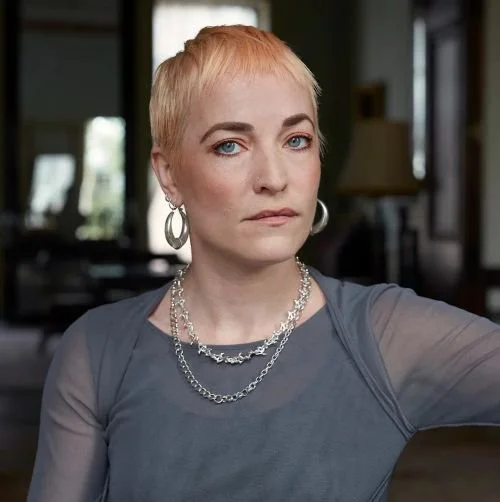
PHOTO CREDIT: The Observer
Let’s end with Jude Rogers’s review of No Human Tongue Can Tell. This review in The Guardian declares this the best Folk album of the year. Hard to argue against that! I am excited to hear it. What is available so far is absolutely transfixing. You listen to the songs in a state of bewilderment. Amazed by what you are hearing! I imagine there will be so many positive reviews for it. Do not bet against No Human Tongue Can Tell being shortlisted for next year’s Mercury Prize:
“Lankum singer Radie Peat’s extraordinary debut album begins without frills or ornament: just her voice, stark and low, each breath like air vibrating through the metal reeds of a harmonium. Singing Hares on the Mountain to the tune Shirley Collins arranged for 1964’s Folk Roots, New Routes, Peat accompanies herself subtly on Fender Rhodes piano before adding layers of Mellotron and Wurlitzer. Her simple, quiet approach is consistently startling and profoundly moving.
No Human Tongue Can Tell collects songs of female struggle, suffering, strength and endurance, although Peat only realised this, she writes in her liner notes, after limiting her choices by her “own mind and abilities” and “personal preferences”. Epic statements clearly aren’t her bag; her gut-deep connection with songs she’s sung live for years clearly matters more, with many delivered in new versions, pulsing with urgency.
Willow Garden, performed in a major-key chorus by Lankum in 2017, becomes a reverb-heavy, haunting elegy, with Peat’s handling of the lyric “poor little girl” buckling with sadness. She paints the woman “hanging out the wash” vividly against rolling guitar arpeggios in Same Old Man, and summons oceans of yearning in the frightening Still I Love Him, a song found by fellow contemporary Irish singer John Francis Flynn, in which a woman savagely beaten by her husband remains emotionally bound to him.
Just as arresting is Peat’s take on Dark Horse on the Wind, Liam Weldon’s 1966 lament for the lost dream of the Irish republic, written on the brink of the Troubles. “Now the warriors spring from the earth / To maim and kill their own,” Peat sings against a solid drone. John “Spud” Murphy’s production brilliantly brings out earthy, granular details, from the sucking-in of air through Peat’s concertina bellows on Cailín Deas to the disruptive thwack of Eleanor Myler’s drums. How staggering for traditional songs to taste so like fresh blood: stunning, brutal and unforgettable”.
I will leave things here. The exceptional Radie Peat is an artist you need to connect with. I am looking forward to more albums from her. I am not sure if there is more work with Lankum coming or whether Peat is focusing on her own work right now. There are a couple of U.K. dates in December, before Peat heads to Europe. Interesting she plays Tower of London on 2nd December! If you can get a chance to see her then do so, as hearing songs from No Human Tongue Can Tell on the stage will be an experience to remember. I was keen and excited to spotlight…
THIS treasured artist.
___________
Follow Radie Peat
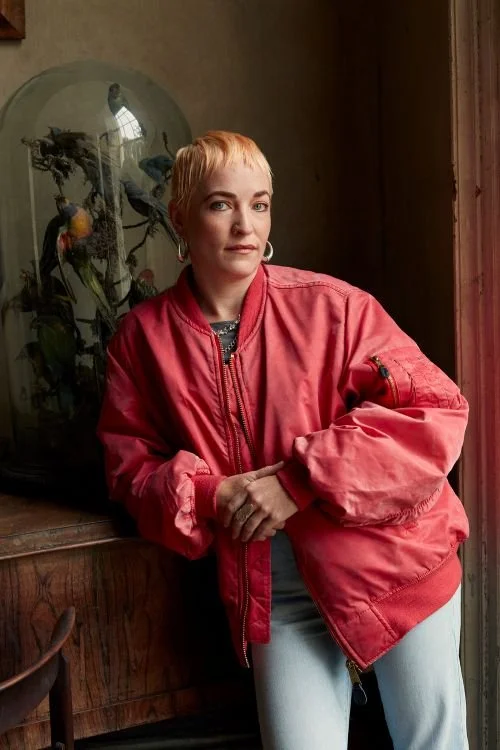
PHOTO CREDIT: The Observer
Official:
Instagram:
https://www.instagram.com/radiepeat
YouTube:
https://www.youtube.com/@RadiePeatMusic
Spotify:
https://open.spotify.com/artist/2HzXwEzn6g3waLTIufC1Ji?si=XlwGBhmkSe6fShcHVQUnhA