FEATURE:
The New Style
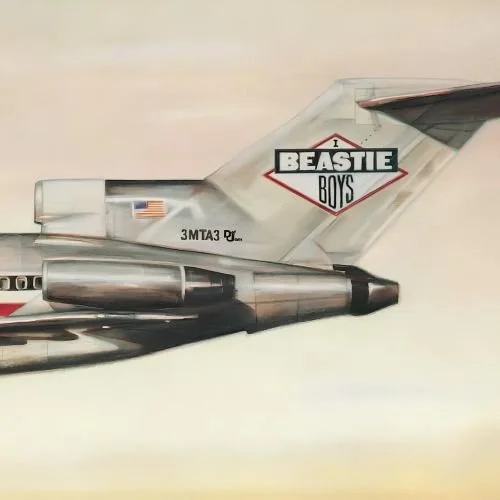
Beastie Boys' Licensed to Ill at Forty
_________
IT is hard to believe…
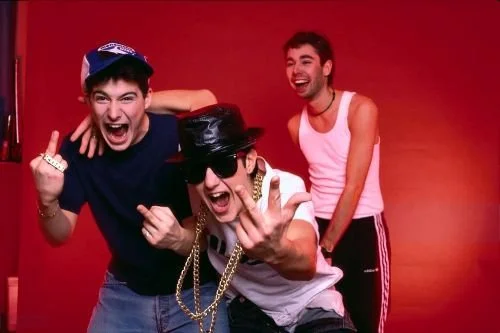
PHOTO CREDIT: Lynn Goldsmith
that Beastie Boys' Licensed to Ill turns forty on 15th November. The extraordinary debut album from MCA, Mike D and Ad-Rock. Whilst some consider 1989’s Paul’s Boutique to be the best Beastie Boys album, there is no doubting the importance of Licensed to Ill. It was this massive success. So many singles released and a load of critical love, it reached seven in the U.K. and one in the U.S. I am writing this (on 9th October) ahead of the release of a book that celebrates forty years of a classic. An insight into Hip-Hop classic. This article gives us more details:
“This November, it will be 40 years since the world was introduced to Beastie Boys, one of the most influential hip-hop groups ever formed, via their debut album, Licensed to Ill. To celebrate the anniversary of the groundbreaking LP, The Great Albums book series is releasing Beastie Boys: Licensed to Ill – 40 Years, an in-depth retrospective featuring fresh interviews, candid photos, and more.
Coming from author Ben Merlis (who also penned to recent Consequence Cover Story Mike D: Time for Living around the Beastie Boy member’s debut solo album, Thank You), the 176-page hardcover book is packaged in a slick slipcase. Featuring a forward by Prince Paul, the tome includes over 200 images, a track-by-track examination of Licensed to Ill, and new interviews with producers, collabroators, and cultural critics.
The official logline reads: “When Licensed to Ill hit the Billboard charts in 1986, it didn’t just make history — it rewrote it. The Beastie Boys’ mix of punk energy, streetwise humor, and Rick Rubin’s hard-hitting production propelled the album to become the first rap LP to top the Billboard 200 and one of the fastest-selling debuts in history. Beastie Boys: Licensed to Ill – 40 Years invites you into the creative chaos that produced classics like ‘No Sleep Till Brooklyn,’ ‘Girls,’ and ‘Brass Monkey.'”
“When I was asked by the publisher to write this book, I had to say yes because there is no other story that wholly encompasses my two biggest passions: hardcore punk and hip-hop. Beastie Boys were a total anomaly and I wanted to explain step-by-step how a first generation NYHC band transitioned into being a full-fledged rap group, and then into arena-headlining pop stars with a number one album within a few short years,” Merlis said in a statement. “The whole relationship between the band, their producer/label founder Rick Rubin, and their manager/label co-owner Russell Simmons ran full speed into the side of a cliff, with the Beasties crawling out of the wreckage triumphant. It really is a tale of defying expectations and reinvention. Licensed to Ill still knocks, forty years later.”
Beastie Boys: Licensed to Ill – 40 Years arrives on October 13th, and you can pre-order it here.
Read Merlis’ interview with Mike D about Thank You here. For more on Beastie Boys’ classic discography, see where Paul’s Boutique landed on our list of the 100 Best Sophomore Albums of All Time”.
I want to get to some features and reviews of Licensed to Ill. Whilst it is one of the most influential Hip-Hop albums ever, we need to address a complicated legacy. Controversial aspects of the debut that the trio addressed for its follow-up, Paul’s Boutique. In terms of the sexist and homophobic content. There was (and still is) a lot of it in Hip-Hop in the 1980s. However, that is no excuse for a trio so much smarter than their peers. There is a slight sour taste to some of the songs. This article from 2016 discussed the legacy of Licensed to Ill thirty years later. Whilst homophobia and sexism is tied to Beastie Boys’ debut, “so is their maturity and repentance”:
“The album lives in the shadow of their later works, but was just as innovative
Whenever people talk about how important Licensed to Ill was, it seems to have less to do with the music itself. Instead, everyone focuses on the group’s personalities and their commercial appeal. And so far I’ve done the same thing. But because of the hype and popularity, this album doesn’t get its due when placed next to their later material.
To many fans and critics, Licensed to Ill was the debut that, despite being a commercial sensation, is really just a product of its time. It’s a fun — yet dated — mid-80s Def Jam record. Then out of nowhere, they split from Def Jam’s control and matured into true artists by dropping their frat boy schtick and hooking up with the Dust Brothers to create a wildly creative masterpiece in Paul’s Boutique. And as the story goes, the band would continue experimenting for the rest of their career, never to return to the generic and immature style of Licensed to Ill.
In many ways, it makes sense why the album has become thought of as just a product of its time. Rick Rubin’s beats often sound like any other album that he produced from that era, most notably LL Cool J’s Radio. And although “No Sleep Til’ Brooklyn” and “Fight For Your Right,” were groundbreaking in the sense that they brought hip-hop to a new fanbase, creatively speaking they were really nothing new — Run DMC had already been using metal riffs for a few years on songs like “Rock Box” and “King of Rock.” This only feeds the narrative that the group was artistically riding Run DMC’s coattails, popularizing the Hollis, Queens trio’s style for a white audience.
But if we look beyond the surface, Licensed to Ill was actually a really innovative album — only a few hip-hop artists like Doug E. Fresh and Mantronix were making such experimental hip-hop at the time. There’s the amazing “Hold it Now, Hit It,” one of the strangest hip-hop singles of the period; “Paul Revere,” a fake western origin story propelled by a backwards sampled loop; and “Rhymin’ and Stealin,’” which contains the legendary, yet super-random bridge that has the group screaming “Ali Baba and the Forty Thieves” over and over. This is by no means a normal hip-hop album.
Licensed to Ill doesn’t get looked at as a creative breakthrough because it’s unfairly judged against the rest of the band’s catalogue and not appreciated on its own terms. Of course, Paul’s Boutique was creatively groundbreaking, but that doesn’t mean that what preceded it is therefore generic. Both albums were extremely progressive in their own ways, but because hip-hop as a whole progressed by leaps and bounds between 1986 and 1989, Licensed to Ill looks basic in comparison. But they didn’t simply go from immature idiots to musical geniuses by the time Paul’s Boutique came out, like many would have you believe. Ad Rock, MCA and Mike D were always extremely creative and simply took the experimentation they learned on Licensed to Ill to another level as they moved on from Def Jam.
The album lives in the shadow of their later works, but was just as innovative
Whenever people talk about how important Licensed to Ill was, it seems to have less to do with the music itself. Instead, everyone focuses on the group’s personalities and their commercial appeal. And so far I’ve done the same thing. But because of the hype and popularity, this album doesn’t get its due when placed next to their later material.
To many fans and critics, Licensed to Ill was the debut that, despite being a commercial sensation, is really just a product of its time. It’s a fun — yet dated — mid-80s Def Jam record. Then out of nowhere, they split from Def Jam’s control and matured into true artists by dropping their frat boy schtick and hooking up with the Dust Brothers to create a wildly creative masterpiece in Paul’s Boutique. And as the story goes, the band would continue experimenting for the rest of their career, never to return to the generic and immature style of Licensed to Ill.
In many ways, it makes sense why the album has become thought of as just a product of its time. Rick Rubin’s beats often sound like any other album that he produced from that era, most notably LL Cool J’s Radio. And although “No Sleep Til’ Brooklyn” and “Fight For Your Right,” were groundbreaking in the sense that they brought hip-hop to a new fanbase, creatively speaking they were really nothing new — Run DMC had already been using metal riffs for a few years on songs like “Rock Box” and “King of Rock.” This only feeds the narrative that the group was artistically riding Run DMC’s coattails, popularizing the Hollis, Queens trio’s style for a white audience.
But if we look beyond the surface, Licensed to Ill was actually a really innovative album — only a few hip-hop artists like Doug E. Fresh and Mantronix were making such experimental hip-hop at the time. There’s the amazing “Hold it Now, Hit It,” one of the strangest hip-hop singles of the period; “Paul Revere,” a fake western origin story propelled by a backwards sampled loop; and “Rhymin’ and Stealin,’” which contains the legendary, yet super-random bridge that has the group screaming “Ali Baba and the Forty Thieves” over and over. This is by no means a normal hip-hop album.
Licensed to Ill doesn’t get looked at as a creative breakthrough because it’s unfairly judged against the rest of the band’s catalogue and not appreciated on its own terms. Of course, Paul’s Boutique was creatively groundbreaking, but that doesn’t mean that what preceded it is therefore generic. Both albums were extremely progressive in their own ways, but because hip-hop as a whole progressed by leaps and bounds between 1986 and 1989, Licensed to Ill looks basic in comparison. But they didn’t simply go from immature idiots to musical geniuses by the time Paul’s Boutique came out, like many would have you believe. Ad Rock, MCA and Mike D were always extremely creative and simply took the experimentation they learned on Licensed to Ill to another level as they moved on from Def Jam”.
It is this album that has so much to love. However, its more problematic elements mean it is perhaps not as lauded and regarded as later albums. Also, the group have this kind of love-hate relationship with it. A couple of features to cover before ending with a review. Albumism covered Beastie Boys’ debut in 2021. Marking thirty-five years of an album that has garnered a lot of discussion and debate. Where does it rank in terms of their best work? Maybe not their very best work, it is definitely stronger than a lot of their albums:
“They are musical royalty. Comprised of Adam “King Ad-Rock” Horowitz, Mike “Mike D” Diamond, and the late Adam “MCA” Yauch, they are one of the most iconic groups to ever record music. They earned vast commercial and critical success. Seven of their albums went platinum or better. They also boast one of the most distinctive and creative sounds of any group in the last 50 years.
The contrast of Ad-Rock and Mike D’s nasally tones contrasted well with the gruffness of MCA’s voice. Musically, they were always interesting, setting trends for how they approached and recorded rap music. In 2012, they became the second rap group ever to be enshrined into the Rock & Roll Hall of Fame. And they are one of the few groups that managed to hold themselves together for close to three decades without ever breaking up or having one of the core members leave the group.
And, not to put too fine of a point on it, they are credited with introducing hip-hop music to a white audience, making it acceptable for young white kids and teens to listen to this form of music that was created within the Black and Latino communities of New York City in the late ’70s. And their influence began with their first album Licensed To Ill, released thirty years ago in November 1986.
In 1984, the Beastie Boys made the transition from punk band to rap threesome, and signed to Def Jam Records at the behest of their DJ, Rick Rubin, the NYU student who, along with Russell Simmons, co-founded the label. The trio started making moves right off the bat, securing a spot as the opening act on Madonna’s Like a Virgin tour. Soon thereafter, they hit the road with Run-DMC, Whodini, LL Cool J, and Timex Social Club on the Raising Hell tour, all before releasing their first Def Jam album.
Licensed To Ill remains an extremely enjoyable album, but it’s also an odd duck. Though it has enjoyed monumental success over the years (it eventually earned Diamond status from the RIAA for sales exceeding 10 million) and was immediately hailed as genius by magazines like Rolling Stone, at the time some viewed it as insincere. Yauch, Diamond, and Horowitz were ostensibly outsiders to the hip-hop scene, and some argued that Licensed To Ill was lampooning hip-hop music. For their part, the trio never denied their lineage, and argued that their respect for rap was deep and abiding. That outsiders like the Beastie Boys were able to create such an enduring album is part of what makes Licensed To Ill a classic.
A big part of the group’s appeal was the musical backdrop that they rapped over. To say the beats were “sampled” is inaccurate, since the album was recorded before the first samplers were widely commercially available. Rubin holds that the music was provided either by the DJ spinning the original records “live,” or through looping of the beats on tape in the studio. No matter what the means, the musical sources for much of Licensed To Ill came from records by hard rock and heavy metal groups like Led Zeppelin, AC/DC, and Black Sabbath. And there were copious amounts of live electric guitar, even more so than the early Run-DMC records. It resulted in a sound palette that was different than the vast majority of hip-hop records released up to that point, as many of their hip-hop contemporaries did not gravitate towards rapping over these so-called “white” records.
In the Beastie Boys book, Mike D wrote about how the song, produced by Ad-Rock, was formative in helping the group come into its own. “Instead of trying to act and sound like someone else,” he explains. “we were just being ourselves, writing from our own lives and experiences … We figured out how to piece together different elements from what we loved … and turn them into a song.”
“Hold It Now…” was also the source of one of the first sample clearance lawsuits, as Jimmy Castor sued the Beasties and Def Jam for using large elements of his “Return of Leroy” record without his permission. The group settled out of court, and agreed to give Castor some percentage of the profits from Licensed to Ill.
When most people speak of Licensed To Ill’s more juvenile nature, they’re usually referring to “Girls” and “Fight For Your Right To Party,” the final two tracks on side A (tracks 6 and 7 for those of you out there who only know this album from the streaming version). They are probably the two worst tracks on the album, but both decently enjoyable.
The Beasties may have a complicated relationship with Licensed To Ill, recognizing that they both like and hate it. They eventually made peace with the legacy of “Fight For Your Right To Party” on Hot Sauce Committee, Pt. 2 (2011), referencing it extensively on “Make Some Noise,” one of the album’s singles. Other songs from Licensed like “Slow And Low,” “New Style,” and “Time To Get Ill” remained staples of their live performances. However, it’s never been clear whether the Beastie Boys ever made peace with Simmons and Rubin.
In the Beastie Boys’ long and decorated career, Licensed To Ill is an interesting first step. Yes, it’s absurd and silly in all the ways that you’d expect a largely ironic frat-rap album from the mid-1980s would be, but it still possesses a lasting charm that’s impossible to shake. It’s kind of beside the point whether or not the album was ever meant to be taken seriously, because much of it is firmly rooted in solid, old school hip-hop sensibilities, and the music stands on its own. “Fight For Your Right To Party” may have become a standard of Bar Mitzvahs, weddings, and bad cover bands, but it’s “Paul Revere” that rides forever”.
Even if you prefer other Beastie Boys albums, you cannot dispute the influence and importance of Licensed to Ill. Last year, uDiscoverMusic examined this remarkable debut. “The first hip-hop album ever to top the Billboard 200, ‘Licensed To Ill’ saw Beastie Boys lay the groundwork for the hip-hop world we now live in”. For anyone who has never heard Licensed to Ill, ahead of its fortieth anniversary, do go and play it:
“Ahead of its time
What might get overlooked in retrospect is how advanced Licensed To Ill sounds. Hip-hop was evolving fast, but nothing else by the end of ’86 had such complex structures, where songs would pause halfway through and go in entirely different directions, like “The New Style,” which was subsequently sampled on over 250 records. Beastie Boys proved themselves to be more than just another copycat rap act, but something else altogether, coming out with a unique and diverse musical palette.
The sample selection spread across the album’s 13 tracks (technically only 10 of which contain samples) are really an amalgam of four distinct cultures: hip-hop (The B-Boys, Joeski Love, Mantronix, Kurtis Blow, Doug E Fresh, Schoolly D, etc), old soul, disco and jazz records that hip-hop adopted as its own (Cerrone, The Jimmy Castor Bunch, Barry White, Bob James, Kool & The Gang), hard rock (Led Zeppelin, Black Sabbath, AC/DC) and punk (The Clash).
Beastie Boys came up believing that stadium rock was the enemy; they started out as a skateboarding hardcore punk band and shared bills with groups the likes of Necros and Millions Of Dead Cops, before being bit by the rap bug and switching gears around 1983-84. That is until fellow punk turned hip-hopper Rick Rubin – who’d initially been raised on rock music out on a rock called Long Island, where being cool didn’t matter as much – introduced the three city slickers to that feathered-hair and denim-clad genre.
Even a doo-wop influence can be heard in the melody on “Girls,” which is reminiscent of the 1962 hit “Remember Then” by The Earls. Where Rubin’s work on LL Cool J’s debut full-length, Radio, was sparse and direct, Licensed To Ill took far longer to create – two years, in fact, in an effort to build an entirely self-contained universe. In this dimension, bragging about using angel dust or rapping about comedian Phyllis Diller over the theme songs for Mister Ed and Green Acres is not normal, but in Beasties’ dimension, it was par for the course.
On March 7, 1987, Licensed To Ill topped the Billboard 200, the first hip-hop album ever to do so. It then stayed there for seven straight weeks, Bruce Hornsby And The Range, Genesis, and Janet Jackson be damned. We were well on our way to living in a hip-hop world. By 2015, Yauch, Horovitz, and Mike D were certified diamond, with 10 million in sales – an accomplishment shared by no other hip-hop record released in the 80s.
History has been kind to the album in this respect. By simultaneously appealing to the mainstream music fans, the upper echelon of music critics, and all echelons between, the masses were – and continue to be – enthralled by Beastie Boys”.
I am going to end with a review from Pitchfork that was published in 2004. Although there are reviews that focus more on the songs and are perhaps more relevant and informative, I do like how they approached Licensed to Ill. I wonder if the group’s two surviving members – Ad-Rock and Mike D – will share some words about their 1986 debut album. It must have been this hugely exciting time for them:
"Look, I don't know why, but George Wagoner is going to kick my ass today. Don't laugh, bitch, I'm serious! I never should have told that slut that skins were assholes."
"Haha, you're dead, man."
"Shut up, bitch, I'm telling you I can't wait for the bus because they know where I catch it. You have to try to get Mr. Davis to drive around to the side like he sometimes does for Chris. I'm gonna go out the back, from the cafeteria. And I already talked to Nick, but he just said he didn't know if he could do anything. Which, that doesn't even make any sense because I thought they were supposedly best friends."
"Hey man, I think you're gonna get killed today. You know Tracy's sister?"
"Yeah, fool, that's the one who I told about skins. That's what I was talking about."
"Yeah, she's crafty and she's just Dom's type. Hahahaha!!!"
"She is a crafty bitch."
Poltergeists and Licensed to Ill: Some things only make sense to kids. Too many years removed from junior high, they tend only to reveal themselves in annoying bursts of violence, confusion and rhymes like Abe Vigoda. And it's not even because their appeal is particularly juvenile, but rather that they operate in a realm only comprehensible to the innocent; those untouched by the brutal reality of the real world, where everyday injustice skews our perception to the point that what might have been common sense to us as adolescents now seems mystifying. To little Carol Anne, Ad-Rock simply is another child.
New York brats-cum-activists Beastie Boys have gone to great pains to explain the error of their 80s ways. This is not to say they've been apologetic, but only too keen to emphasize the arcs of their characters over the years. Licensed to Ill, like Cooky Puss and the underrated Rock Hard EP before it, were indeed both impressively ahead of their time, and rudimentary to the extreme. How a city that already had ESG felt it needed the Beastie Boys in the mid-80s is a question that confounds the ages; yet, Ad-Rock, MCA and Mike D could hardly have predicted the slacker generation better if they'd tried (which they didn't). Chalk it up to NYC eclecticism, perhaps. Chalk it up to Run-DMC and Madonna, who helped showcase them to the most economically and culturally powerful generation of kids since the boomers. Chalk it up to Russell Simmons and Rick Rubin. And MTV. Most of all, remember that at their worst, these guys got thrown out of White Castle for being too loud.
Licensed to Ill is given a lot of credit for predating the whole rap-rock thing of the 90s. Bad news for the Beasties: History appears to contradict that assessment. First of all, their cornball Cali cousins the Red Hot Chili Peppers had already graced the earth with two LPs prior to Ill, not to mention beating them to the 70s funk revival by working with George Clinton. Secondly, contrary to most rock writers' beliefs, white guys + guitars do not necessarily = rock. Had they released Ill even four years later, it would have been a novelty record. It's dated remarkably badly, while Rick Rubin's skill with the mixer (and drum machine) is entirely questionable. The rhymes... well...
"I got franks and pork and beans/ Always bust the new routines."
"Spent some bank, I got a high powered jumbo/ Rolled up a wooly and I watched Colombo."
"I keep a pistol in my pocket so you better be cautious/ Fly around the world but it makes me nauseous."
"Get ready/ 'Cause this ain't funny/ My name's Mike D and I'm about to get money."
Okay, so it isn't the music or all the rhymes that translate beyond the scene of the crime. What, then? Probably just that the Beasties didn't give a fuck-- AND AMERICA DESPERATELY NEEDED TO BE SHOWN HOW NOT TO GIVE A FUCK. And it sort of still does. Licensed to Ill demonstrated that you could be "groundbreaking" and "important," and still have no goals beyond getting drunk before 6th period. Think about that. It meant that you could live life as one giant inside joke, speaking in tongues and making hilarious references to Chef Boyardee with no one outside your circle of jerks the wiser. Sorry ma, forgot to take out the trash, but that's okay because I drink Brass Monkey and I rock well. "What?" "Nothing."
In light of this information, it almost seems pointless to recap the highlights. Does anyone really care that "Rhymin' and Stealin"" witnessed Rubin's genius for exposing the sample-ability of Led Zeppelin? No, because, "My pistol is loaded, I shot Betty Crocker/ Deliver Colonel Sanders down to Davey Jones' locker" is awesome, and if you don't get it then what-the-fuck-ever. Does it matter that "Fight for Your Right" actually does kind of invent rap-rock? No, because everyone has their best porno mag, and these guys are just telling it like it is, and rap is the CNN of rock. Do you know what "I did it with my whiffleball bat" means? Has anyone ever even been to Brooklyn? Who in their right mind is sampling Creedence? Is "I should have probably guessed her gay" the best line ever, or is it when they brag about having more rhymes than Phyllis Diller?
Despite its seeming defiance of respectable society, there is no shortage of folks who would canonize Licensed to Ill-- hence this new edition, replete with commemorative DVD. For Miller's sake, it's the Beastie Boys' worst record. (Even though we all secretly know it's their best.) Yet, there's something impressive about tapping into the secret language of the immature and terminally slack. All these years later, with every listen, it becomes clearer to me that you can never really outrun your inner idiot”.
Because Licensed to Ill turns forty on 15th November, it is important to shine a light on it. The legacy of this seismic Hip-Hop debut. But also address the controversy and problems with it. How we view it forty years later. In spite of its immaturity, homophobic and sexist lyrics and this sense of some aspects being outdated and inexcusable, the innovation and brilliance throughout is undeniable. How Licensed to Ill helped shape modern Hip-Hop and inspired so many others. You cannot overlooked that. The immense and simply brilliant Licensed to Ill is…
A landmark creation.