
FEATURE:
Modern-Day Queens
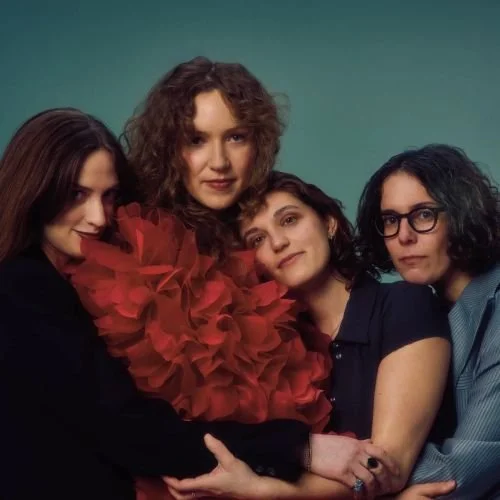
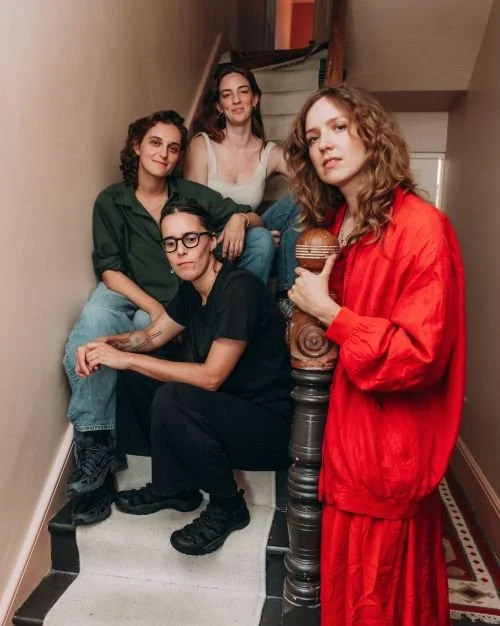
favourite groups, and one I have been following since their 2017 debut album, Love in the 4th Dimension. I am going to finish with a review of The Big Moon’s latest album, Forever. I have done this for one or two artists lately, but I think that Forever could well be nominated for the Mercury Prize next year. It may be their finest album yet. Before I get to that review, it is worth spotlighting some interviews with the London band. One that I have so much affection for. Their career and lives has changed since 2022’s Here Is Everything. I did want to lead off with The Line of Best Fit and their interview with Jules Jackson. Their lead vocalist and songwriter “tells Alex Dewing about finding freedom in the future’s eternal uncertainty”. I do think that Forever is a remarkable album. The Big Moon are on tour at the moment. You can check the dates here. They play London’s O2 Academy Brixton on 27th November:
“Jackson didn't set out to make an album about this uncertainty. The title only began to take shape towards the end of the writing process, when she recognised a thread connecting the songs. “I don't know if it's something I decided to write about. I think it's just something that came out,” she explains. “I realised as I was sort of coming to the end of writing it that I was constantly singing about, like, eternity and foreverness, and what's next. Then it all kind of made sense.”
The album's search for a happy ending began somewhere more immediate. The past couple of years had brought a significant readjustment for Jackson, who was diagnosed with a cholesteatoma in 2024. The benign but destructive cyst required surgery to remove and left her with almost no hearing in one ear. During this difficult period, she found herself writing songs that reflected how she felt, but weren't helping her feel any better. “I found myself writing really sad songs, and I was just like, ‘Who's this for? Like, I'm not enjoying it. It's not making me feel any better.’”
Instead, she decided to imagine what 'feeling better' might sound like. “I just did a full turnaround and was like, ‘Let's just write some songs for when I feel better.’” A type of manifestation, the future she pictured wasn't one of grand achievements, but simply being back on stage with the band and well enough to enjoy it. In that sense, Forever became a way of writing towards a life she hadn't quite returned to yet.
The songs themselves can take similarly unexpected turns. “Gravity” began life as a power ballad, complete with multiple tempos and key changes, before Fern Ford suggested turning it into a disco track. Drawing on the drums of the Yeah Yeah Yeahs, Ford found a way to give the song more bite. “The drum beat in Gravity changed the whole song,” Jackson recalls. “After you came up with that, we were like, okay, let's go down that road.”
It's a reminder that, despite the personal ideas underpinning Forever, The Big Moon's music remains a collective effort. Jackson leaves room for the others to reshape her demos, with the band developing songs together before taking them into the studio. Ford's own production work has also opened up new possibilities. On “Sounds”, she used tape loops recorded on a four-track machine, capturing the other members singing into separate channels and embracing the imperfections. “It was out of time, which is what made that moment work,” she explains. “I'm just absolutely chuffed the tape loop's gone onto the new record.”
Jackson, meanwhile, has grown more confident writing with people outside the band, learning to make up melodies and lyrics in front of strangers. It's not always comfortable. “You have to really embarrass yourself to do that,” she laughs. “There's no, like, magic way to do it. You just do it in this really dumb way. Even Taylor Swift.” It’s a willingness to keep learning that comes in handy in an industry that has changed considerably since the band's early days, when touring meant sleeping on sofas and playing small venues wherever they could. They now have more freedom to choose which tours to take on, although Jackson, a parent of two, jokes that life on the road can feel like a break from cleaning porridge off the floor”.
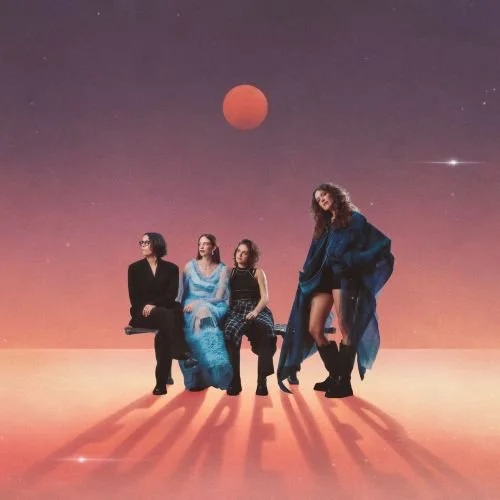
The penultimate interview I am including is from DORK. I hope that what I am including in this feature adds something. In terms of illuminating The Big Moon and providing context and background to Forever. I am keen to interview them one day, as their story is fascinating. Almost a decade from their debut and they are as bonded and brilliant as ever. I can see them recording together for many more years:
“Manifesting is a term which inspires a grimace from both Jules and Soph – and, admittedly, us too – but it is, in a way, what happened.
"It's more like inventing," Jules states, "I was inventing this happy ending that I imagined would be in a year or two years, and I'd be like, 'Yay, I'm alright now, so I want to sing about these things instead'."
Soph adds, "That's an amazing way of handling it rather than being stuck in it. Then you get to that point, and it's like, you got yourself there by getting yourself there."
Jules smiles and says, profoundly, "You have to find your hope from somewhere, don't you?"
As much as the world that the band create across 'Forever' is a fictional, fantasy world, it nonetheless takes its cues from the more everyday but no less special moments from Jules' everyday life. She is now a mother of two young kids, a transformational experience for anyone, and is ticking off other milestones that grown-ups have to face; when we chat to the band, she is in the unenviable position of trying to pack up and move house.
"Once I decided to write something that was kind of a fantasy or for this future happy ending, I just started really enjoying writing, and it became really fun.
"When you're tricking yourself into the headspace of a different character, everything's so much easier because then you don't feel like you're giving yourself away and you don't have to be incredibly real and deep to your truth."
She continues, "You can sort of skim over it a bit, but then even through writing and pretending you're someone else or somewhere else, everything you come out with is still you. You're only tricking yourself that it's not real. Everything that comes out is still totally real, and the songs are all about real things in my life. I just enjoyed writing them a lot more."
Soph chimes in: "Music can often be escapism, and I think it's cool that you're able to do that for yourself. I feel like a thing that people seem to like about The Big Moon is coming to shows and having some sense of escapism and a lot of fun together; it's always this celebration. There is nostalgia and sadness in there, but mostly it's celebratory."
Looking forward, past the mechanical stuff that they conversely clearly do not love – namely, fighting the algorithm to make sure their fans hear their music – their hopes and dreams for the band don't extend all that far: they don't want anything as much as the band.
"I want it to continue and this thing to keep building," Soph says. "We've been getting lots of messages from people about being back and being able to have that connection with people, and you're like, it's all there and exists."
Jules smirks: "Yeah, we just want to do the band."
As the chat comes to a close, it ends with a quote from Soph that is as fittingly cosmic as it is wholesome: "The Big Moon, forever. That's the tagline”.
The final interview is from Rolling Stone UK. They spoke with The Big Moon’s Juliette Jackson about her health challenges and trying to find joy in the midst of pain and struggle. It has been about twelve years The Big Moon have been operating. It is brilliant they are still so connected and inspired. They are one of our greatest groups. One that I was eager to shine a light on here:
“Tell me about how the surgery impacted your relationship with music.
It means I’m hearing things in mono, kind of. It has affected my enjoyment of music, actually. I still enjoy going to shows and seeing music live, because it’s really fucking loud, but I don’t listen to music on headphones anymore. When you’re listening to music, you can turn it up really loud and you can feel if it’s right… I’ve lost that ability. In the studio, I’m always talking to my bandmates – like, “OK, we recorded all the bits, but does it feel good?” So I’m trusting them now. Luckily, they know what they’re doing!
There’s also a lot of happiness and hope in the album – how did you reach that point?
When I was really ill and couldn’t hear anything, I was in pain and isolated because I couldn’t communicate with people very well. I was writing all these sad songs because I couldn’t really hear or sing in tune. Usually, writing songs is a cathartic thing, but writing sad songs about a sad thing, it felt too real. I was like, ‘You know what? At some point, I’m gonna get better. I don’t know what form that’s gonna take, but I’m gonna be playing with my band again, and I’m gonna want to be playing a song that is really fun and upbeat.’ I painted this picture of a happy ending in a year or two’s time, when we’d be playing at a festival and it’d be really sunny, and I was like, ‘Those are the songs I want.’ I feel like I tricked myself into being hopeful, and it worked.
On the song ‘Fun’, you sing: “Fun is as complex as misery” – what informed that lyric?
When I was writing this album, I wanted to write very short pop songs. I got really bored of verses; I got impatient. Maybe that’s something to do with my hearing as well, but I was like, ‘Give me the big juicy bit of the sandwich – I don’t care about having a starter!’ ‘Fun’ is a song about how you’re supposed to suffer for your art, and that’s how you make “real art”, but it’s just not true. Having fun is an integral part of life… it’s not a stupid way to spend your time. I feel like pop music gets put down for not being dark or mysterious, but it’s just as real and it’s just as juicy and important”.
I am finishing with a review of Forever. The Guardian wrote a four-star review. In their header, they note how “the hell of hearing loss inspires a defiantly hopeful pop-disco marvel”. If you are new to The Big Moon, I would compel you to go back to their debut and work forward. However, make sure you do not miss Forever, as it could be their most important album yet. It will be interesting hearing what comes next and what the coming years offer:
“From the outside, it looks as if things have gone swimmingly for the Big Moon. Fronted by Juliette Jackson, a former waitress who dreamed big, they have been active for 12 years, a success in itself in these days, notching up four albums including this latest. They have enjoyed a Mercury nomination (for 2017 debut Love in the 4th Dimension), decent chart positions, good-sized gigs and streaming figures in the hundreds of thousands, or millions in the case of 2019 single Your Light.
Delve beneath the surface, however, and things haven’t always been so sunny. After their debut’s ramshackle wide-eyed pop, second album Walking Like We Do detailed the travails of contemporary womanhood, and Your Light found Jackson bemoaning her generation’s lot with a weary resignation: “We were promised the world, but so was everyone else”. 2022’s Here Is Everything was conceived during Covid and processed Jackson’s life-changing experience of becoming a mother, including the disorienting experience of lack of sleep. Tricky stuff, if nothing that made Jackson’s concerns much different from vast swathes of the population.
Forever, though, has a much more troubling backdrop. In 2024, the singer was diagnosed with a cholesteatoma – a destructive cyst inside the middle ear that requires surgical removal. It caused her to lose most of her hearing on one side, which would be an alarming and unbalancing experience for anyone, never mind someone whose life and livelihood centres so much on sound. As she admits: “It was pretty much existential, because writing songs is my job and my identity.” When she was even able to think about writing songs, she understandably found herself writing material so throughly miserable she didn’t like it. At which point she did a complete volte face, and began writing songs not just to cheer herself up but actively imagining “a happy ending that didn’t exist yet”.
There are historical precedents for such a sudden pivot from agony to ecstasy. One thinks of New Order throwing off the bleakness of Ian Curtis’s death, and their grand but morose debut Movement, to blissfully reconfigure for Temptation and Power, Corruption and Lies; the Cure’s mid-80s pop rush after years of magnificently anguished albums, or Bon Iver’s move from the melancholy For Emma, Forever Ago, recorded in an isolated log cabin, to the lush, more celebratory Bon Iver, Bon Iver. Here, Jackson’s personal shift results in a collection of joyous, uplifting, ethereally classy pop-disco tunes that have an extra frisson because they have come about through sadness. Shimmery opener Gravity clings to the simple joy of picking up your child from nursery, an unlikely but effective launchpad for a rapturous pop song with shades of Dreaming-era Blondie.
Three Things celebrates youth and pop (“My whole life imminent / I remember living inside the songs on the radio”), the wistful undercurrent carefully smothered in bouncy, MGMT-style keyboard riffs and juddering sequencers straight out of new wave and disco. The universally relatable Fun imagines a life beyond constraints – “I’ll slip away and take my brain on holiday” – the dreamily summery sounds recalling Haim and, appropriately, Madonna circa Holiday.
If Jackson’s lyrics have a recurring theme, it’s of relishing – rather than fearing – life’s transience. Delicate harmonies, Fleetwood Mac production gloss and Soph Nathan’s big guitar twangs power recent single F.O.R.E.V.E.R, a rather poetic song about grabbing moments and milestones while we can, because “some day the ocean will include the drinks that we spill / And rain that used to be red wine will fall on this hill”. The yearning, classic 60s pop-tinged Can I Get a Reading Please picks up the theme: “Life’s not long, regret is though / Can you tell me something I don’t know?” The slightly country Sounds gets even darker – “I’m going to lose something very dear to me, if not now eventually” – but such shadows are more than banished by the overall musical sunniness and loveliness.
The Bananarama-ish I See You, Honey seems to celebrate the comfort of being loved (“There’s no need to say ‘I love you’, it’s everywhere to me”). Other songs celebrate the power of determination as Jackson is “pushing through” obstacles in Speed Bump or insisting “I can give a good life / As long as I’m still on my feet” during Sounds. The album’s sense of finding joy in sometimes difficult circumstances crystallises on the wonderfully titled You Remind Me That I’m Dying (And That It’s Good to Be Alive), those words providing what may well be this year’s most bittersweet euphoric chorus. “Happy endings that don’t exist yet” or not, the song is an absolute banger, which suggests Jackson and her band really do have a lot to smile about”.
The mighty and beautiful The Big Moon are a group I feel will have a busy summer next year. Lots of festival appearances. Forever has received a lot of positive reviews. Learning about the background and especially Jules Jackson’s struggle makes it an even more impactful listen. It is a remarkable album from a group who are so strong and united. This comes through in their albums and live performances. I have not seen them live, but I will try and correct that at some point. The admiration and love they are receiving right now. It is great to see, and long may…
IT continue.
__________
Follow The Big Moon
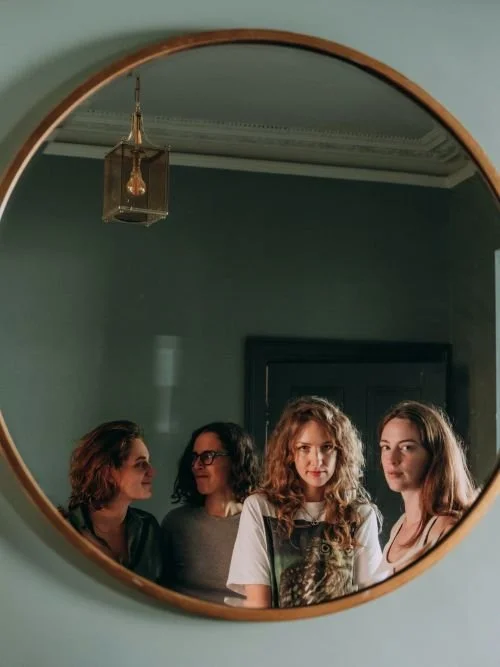
PHOTO CREDIT: Jessie Morgan
Official:
Instagram:
https://www.instagram.com/thebigmoon
Twitter:
Facebook:
https://www.facebook.com/thebigmoon/
TikTok:
https://www.tiktok.com/@thebigmoonuk
Spotify:
https://open.spotify.com/artist/0KU55rzxAihPhi27MAuz9O?si=oRHczDwbRLypZV6E8SxnQg
YouTube: