FEATURE:
Spotlight
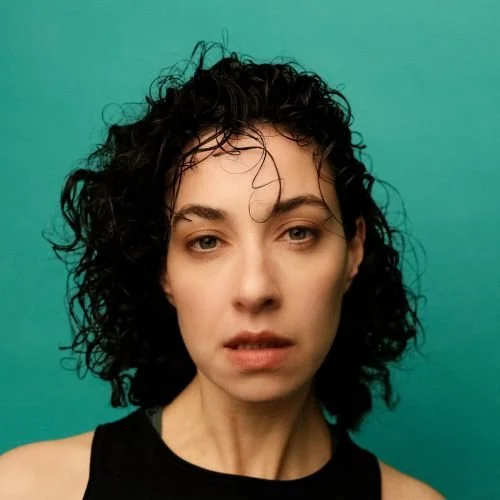
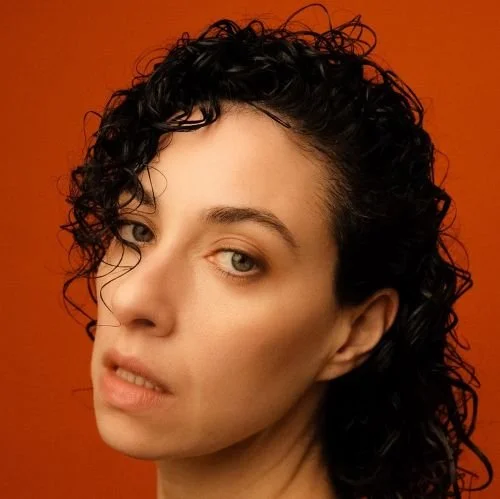
who do not know about the brilliance of SHHE. Her new album, THALASSA, is one I would encourage people to listen to. SHHE is the musical moniker of Su Shaw, a Scottish-Portuguese artist and producer based in Dundee, Scotland. There are some interviews with her that I want to get to. I will end with a review of the tremendous THALASSE. I am starting out with Magazine Sixty and their fascinating interview with SHHE. I am a new discoverer of her music, so it has been amazing learning more about this wonderful artist:
“Welcome to Magazine Sixty, Su. Tell us about your relationship with the label One Little Independent, how it happened and why it continues?
Hello Magazine Sixty, thanks for the invitation.
My relationship with One Little Independent began in 2018. I had just returned from a residency in Iceland, where I had started research on a new project. In one way, the residency had been a failed experiment – I had attempted to sonically ‘map’ the Dýrafjörður fjord in the Westfjords of Iceland – but an unexpected storm meant that it was impossible to leave Þingeyri, the village that I was based in. So, I left Iceland with lots of ideas but very little material, knowing that I needed to find a way to return immediately. While I was there, I self-released Eyes Shut, which went onto become the first track from my debut album. A friend – wondrous Davie Miller from the band, Finitribe – shared the track online, and OLI contacted him to ask if we could be introduced. A few weeks later, I met the label in London, and we began working together soon after. As you know, their roster is deeply embedded in Iceland, which made it possible to keep developing my project, which years later became my second album, Dýra – which was released by OLI in 2024. So that first meeting felt very serendipitous in many ways. I’m grateful that the relationship continues – I can’t think of another label where I would feel more at home.
What drew you to electronic music in the first place? Was there a lightbulb moment via a certain record or hearing a performance?
I grew up in a small village in the countryside and spent a lot of time outdoors, listening to natural rhythms and patterns, so perhaps my interest in electronic music was born then, subconsciously. When I was a kid, I would ride my bike in circles around the same cul-de-sac for hours, losing perception of time, until it got dark and my parents called me home. I can’t remember the first record that drew me in – some of my favourite records I have only discovered in the last few years – but perhaps those feelings of losing track of time, are synonymous with the feelings I experience when I listen to certain records now.
When you perform live, how does it feel different to recoding music? What instruments do you use to accompany performance?
I’m always trying to find ways to bring the process of recording and performing closer together. Performing with my modular encourages me to let go of control. As nothing is programmed in advance, no two performances feel or sound the same. To me, performing live should feel as alive as possible. Working with modular and voice encourages me attune to the environment that I’m performing in, to work with the space, instead of simply performing in it.
Outside of music, are there any particular artists, writers, cinema, etc., that have inspired you the most over the years?
Rachel Carson’s writing was a huge inspiration to me during the creation of THALASSA. I was first introduced to Carson through David Horvitz’s Last Billboard project, in 2016. I carried a copy of Carson’s seminal book, The Sea Around Us, around with me for three years during the album’s development and had a chance to visit some of the locations she wrote about so beautifully, including St. Malo in France – home to the largest tidal range in Europe. I was thrilled to find an early print of The Sea Around Us in the Rare Books sections of the historical Bibliotheca Alexandrina”.
Let’s come to The Skinny and their chat with SHHE. There are so many tremendous artists out there that are maybe not as discussed and spotlighted as much as they deserve. I feel more should be written about SHEE and THALASSA. This has been a busy year for SHHE. I wonder what she has in store next year in terms of shows and new music. I wonder whether we would class THALASSA as an album or E.P. As it has six tracks, I guess it is an E.P. In any case, it is this body of work that is utterly entrancing and immersive. You close your eyes and lose yourself in the songs. Perhaps its opener, Pneuma, is my favourite track, though every one of them is captivating:
“It’s not the first time water has been at the heart of your work. What is it that you find so fascinating and inspiring about water, and the sea in particular?
I have lived on either side of the River Tay my whole life. When I’m in Dundee, visiting the river is part of my morning routine. I always need to be in proximity to water; wherever I go, I always seek it out. But I’m also fearful of it. I’m fascinated by our relationships to water – especially the tensions between our dependency on it, disregard for it, and the sense of being drawn to it; especially at a time of ecological and political crisis.
I love the way you use your voice on THALASSA to capture the unpredictability of the sea, from its unsettling calm to its dramatic urgency, and believe some of that came from breathing techniques you learned when freediving. It really does feel full of emotion, so I’m keen to learn more about the process and how you went about giving a voice to the Mediterranean?
When I was in Alexandria, I had the chance to visit CMAUCH (Centre for Maritime Archaeology and Underwater Cultural Heritage), an institution/diving centre which is dedicated to preserving and documenting Egypt’s underwater artifacts. I contacted them looking for sonic documentation of their dives, as I was interested to hear what the Mediterranean sounded like. They didn’t have any, but it opened up conversations about the sonics they encounter when doing their research – both passive sounds and profoundly important ones for ensuing their breathing apparatus is working properly. I wasn’t able to dive myself, but I spent a lot of time researching freediving and breathing techniques as a means of physical boundary pushing – bringing this into the studio.
Of course, THALASSA isn't solely made up of your voice; you designed a custom-built modular synthesiser, developed alongside Ben Chatwin. What was it about your design that made it different from a pre-existing modular synthesiser?
I had no experience of working with modular synthesisers, so it was important for me to learn from the beginning. Soon after Ben and I began to develop ideas together, one of the decisions I made was to work with analogue modules as much as possible, which welcomed in a level of uncertainty and unpredictability into the work. Another decision was to remove the safety net, and to perform live using only the modular and my voice. As the analogue modules naturally respond to their environment, this means that every performance is different.
Finally, what does the rest of the year look like for SHHE?
Alongside album launches at the end of May, THALASSA will be presented at IKLECTIK in London, alongside a performance at Glasgow’s Sonica festival later in the year. It’s been an honour to work alongside Cryptic to programme part of Sonica this year, and a dream to invite artists who I believe are making some of the most exciting and crucial work today. I’m also thrilled to be working with Hospitalfield, to curate Ecologies of Listening, a study day on sound, this July. The programme will bring together artists from diverse genres and geographies, exploring deeper modes of listening, and broader forms of sonic inquiry across performances, discussions and workshops”.
I did want to source quite a bit of CRACK’s interview with SHHE. Su Shaw travelled to Egypt to record the Mediterranean Sea for THALASSA. The E.P. “turns underwater recordings and unstable electronics into a meditation on water, climate and our changing planet”. I find everything about SHHE fascinating. In terms of how far and wide she has travelled to devote time to exploring bodies of water through sound. This incredible human has “self-exiled to Icelandic fjords, tracked Brazilian rivers and staged exhibitions about drought in the Kurdistan region of Iraq”:
“THALASSA was conceived as a response to pollution and limited access to water in parts of the MENA region. During the recording process, Shaw was based in Alexandria, a city defined by its relationship to rising sea levels. “There are two Alexandrias already underwater,” she says. Shaw initially intended to conduct a series of sound walks across the area, but the region’s militarised coastline made this impossible. “That was the first time I was standing in front of a body of water but unable to hear it,” she says. Shaw had to record the sea covertly, slinging her microphone into the water on an arranged boat trip while pretending to listen to music on headphones.
“I think because Alexandria is such a cacophony of sound, that was the part that was so surprising to me: this relationship, or lack of relationship, with a sea that is right there,” she says. “The idea for the whole project was: how do you give voice to this perceived silent water body?”
The restrictions meant that the only material Shaw came away with was the shrimp recordings. The rest of the project was created with a modular synth, developed in collaboration with Scottish musician Ben Chatwin, that was built to generate random instabilities and unpredictable voltages.
For Shaw, themes of randomness are a way of representing the natural world. On tracks like Pneuma and Anodos, she implements near-rhythmic breathing sounds that evoke the feeling of being submerged in the Mediterranean, while also humanising the water. The record’s title, THALASSA, which relates to both the Greek word for sea and a primordial Greek sea goddess, speaks to this idea too. “I wondered that if you personify something, i.e. a water body,” she says, “do we think about it differently? Do we care for it more?”
With ever-divisive global politics distracting from the climate crisis, the interconnectedness of Shaw’s music and broader worldview feels vital. “Everything is connected,” she says, “especially with water bodies.” The estuary in her home city, Dundee, is part of the same network as the Mediterranean. Shaw’s art makes a wider call for ecological action, with its central message: simply hearing the planet isn’t enough. It’s time to start listening”.
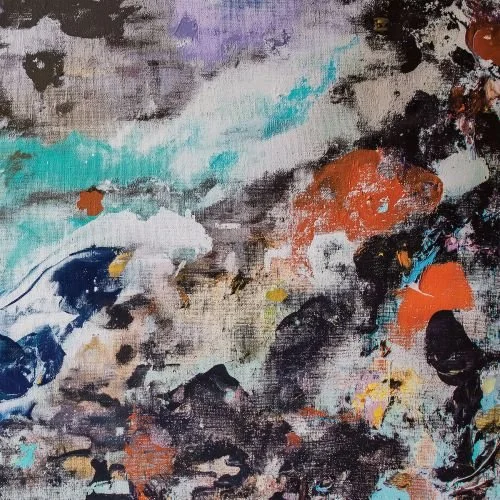
Somewhat more important than calling this an E.P. or project, THALASSA seems to be this mandate or statement. Not in a preaching way. It is just that it is seems to transcend music and sound. Higher Plain Music delivered a hugely positive review of THALASSA. Anyone new to the genius of SHHE really needs to find her music. It is astonishing. I am looking forward to seeing where her career takes her:
“The album is a six-part narrative built around SHHE’s breath and the idea of sinking, submergence, and eventually emergence. SHHE is Scottish-Portuguese, and in their hometown of Dundee, Scotland, parts of it are expected to be underwater in the coming decades. Dundee’s plight mirrors that of Alexandria in some ways, a city twice sunk and expected to be partially sunk again by 2050. With this context in mind, ‘THALASSA’ is like a sonic scuba dive.
‘Pneuma’ opens the album with a beautifully haunted soundscape of slow, deep breaths that give way to tonal vocal notes. They sound cavernous and never-ending. At times, the higher-pitched vocals remind me of the ringing in the ears you can get when pressure changes. The sounds are dramatic but left with space to echo. There’s a gothic enchantment about it that fans of dark folk music will enjoy. ‘Katávasi’ takes over seamlessly, introducing a pulsing kick drum, strange slow-motion synths, and an elegant chorus of SHHE’s vocals. The opening few minutes allude to a majesty and grandeur… like a shoal of fish that dance effortlessly. As the bass and more synthetic instruments creep in, the elegance grows in power, and the tone shifts towards a dangerous majesty. It’s still slow and plodding, but now each kick drum thumps in with a gulp rather than a flutter. It is a fantastic example of subtle tonal shifts creating a world of imagination.
By the time ‘Katávasi’ ends, we’ve hit a tense and sharp cut from gnarly bass into micro sounds with ‘Allásso’. Watery, icy bubbles fizz and crackle under sparks of vocalisation that cut in and out like a cry from another world. Lacking immediate melody, the track embodies the emotions of a cinematic last cry from a dying civilisation. The second half transitions into unsure, glitchy beats and synth hues, but the air of mystery never leaves. The taut, constricted density of submergence comes into full effect with ‘Emfánisi’. At seven and a half minutes, the track has several phases. Its opening introduces a downward trickle of synths over swooshing waves of distortion. Hypnotically, this cascades lure the listener into a numbing emergency before other thick, bulbous synths take over with a cyclic chord progression that builds tension and danger. ‘Emfánisi’ then loses its bulbous sound and becomes like sandpaper. Chords, keys, and voice are gargled razors as yet again SHHE balances beauty and danger with aplomb. This is a track that rewards patience.
Clocking in at close to eight minutes, ‘Peras’ is the most outwardly melodic track on the album. Evoking the endless depths of the sea, the track leans into modular synth trappings. Short melodic buzzsaws slowly twist their form through lots of knob twiddling and filter tricks. The first three minutes ramp up each synth engine before SHHE pitch bends different parts of the soundscape, like we’re experiencing either the bends or an escalation back up to the surface again. I love how the track shifts from small sizzles to bleeding metallic chasms via bleep bloops without changing its melody. ‘Peras’ shapeshifts every few seconds, making it a dynamic and expansive piece. With our dive back at the surface, ‘Peras’ ends with a huge gasp, before ‘Anodos’ brings us back full circle to the breathwork. There are moments in ‘Anodos’ that are almost entirely silent except for the last trickles of oxygen. Whilst the track mirrors the ideas of opener ‘Pneuma’, the sounds and vocalisations are clearer, more urgent, and carry stains of previous songs with them.
SHHE has created a clever narrative with ‘THALASSA’. The ambient soundscape is an inviting, unsettling metamorphosis. By subverting the obvious and using strange sound samples and synths to create a sonic dive into the unknown, it lets the listener layer their own interpretations on top. This is an album that I find endlessly fascinating, and I recommend playing it in the dark or with an underwater screensaver on. You’ll find the audio more immersive, but you may just have a metamorphosis of your own, too. Fabulous”.
I really love SHHE. Maybe she does not want the sort of focus and hype that mainstream artists get. Yet I feel that her music and what she is doing warrants greater applause and affection. A magnificent producer and artist, make sure that she is on your radar. A wonderous and awe-inspiring woman who I have so much respect for. The stunning THALASSA needs to be…
HEARD by everyone.
__________
Follow SHHE