
FEATURE:
Winter
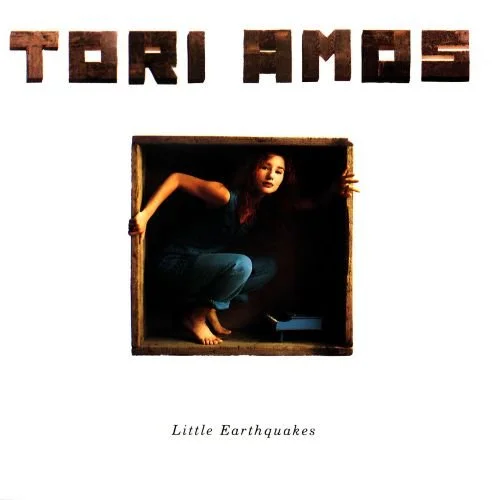
Tori Amos’s Little Earthquakes at Thirty-Five
_________
IN terms of big…
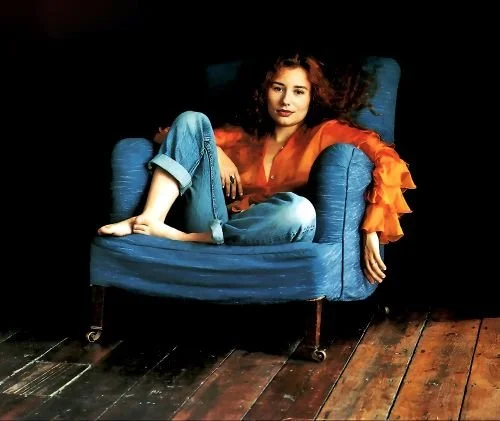
PHOTO CREDIT: Cindy Palmano
album anniversaries, many of them happen in the spring and summer. You get some autumn ones too, though very few in the winter. Tori Amos’s debut album, Little Earthquakes, was released on 6th January, 1992. I wanted to mark thirty-five years since the release of one of the greatest debut albums ever. Even though it was not a massive chart saves upon its release, it did receive positive reviews. Its legacy is huge. In the way Little Earthquake started and guided the female singer-songwriter movement of the 1990s. The soul-baring album was a highpoint for Amos. Even if future albums were hugely acclaimed, there is something about her debut that stands out. To celebrate thirty-five years, I am going to get to some features and reviews about Little Earthquakes. Before getting to them, there is a 1992 interview with Anil Prasad that I want to bring in:
“Was writing Little Earthquakes a cathartic experience for you?
[long pause] I used it as a way to completely reconstruct the way that I think. So, if you want to call that cathartic... I just feel, that for me, having a pizza can be cathartic, you know? So, what I did was try to recondition myself. I have to try to work on that every day, but we're brought up to think a certain way and we're not even aware of it. There's always a subtext running beside the conversation that's happening at the same time. Like right now, both of us at this table are trying to plant our positions. This is not normal. We're trying to find enough self-worth to come to the table, me included, but it's a bit different, because you can interview me, and I understand that relationship. But what happens, everytime you have dinner with somebody, you think you're having a date and there are many things going on at that table. This is with absolutely everything, so, writing these songs, believe it or not, taught me what it is that I'm really thinking and it gave me the keys to my subconscious.
The subconscious is where we mostly work from, but yet, none of us really know how to get to the subconscious, so what you do is bring your little credit cards of how you want me to view you and I bring you mine of how I want you to view me. That's not necessarily who you really are, because we've decided what we want people to see of us, so we're not really dealing with "How do I know who you are?" I don't know who you are! I'm sitting here trying to have a conversation with this person that maybe I'm on the road with for two weeks. Maybe they come and jump on the road, but if they can't admit they're a control freak, if they can't admit that what they're trying to do is break everybody down... the real war is with thoughts these days. The weapon is distraction. You can get your blood and your skin ripped off, but the real war is breaking you down here, and here [points to her heart and head], so that's what I've tried to do—write so I know what I'm really thinking. So, if I want to strangle you, I know why I want to strangle you instead of just "what is it you've said that could be affecting me so much?" I have to go deal with me instead of strangling you.
You spoke about getting in touch with your subconscious. Describe the process.
There are some wise women that I've run into who have given me some tools, but one of the biggest tools that started it was, 15 minutes a day—that's how it started. When my first record bombed, I had to deal with a self-worth problem. It's very easy to feel good about yourself when you have your job and you have your friends and girlfriend and all that stuff, but if you had it all stripped away from you, it would be interesting to see what your view of yourself would be. So, I was stripped of many things. So, [long pause] I ended up on my kitchen floor really and I was told that the first step in finding out how you think is to spend 15 minutes a day, because you can't handle more than that at the beginning of honesty with yourself. Fifteen minutes is a lot of time to be honest with yourself when you've rarely done it in your life. So, it usually would be in the bathroom, because that's the most intimate place—much more so than the bedroom. I mean, if you can be in a bathroom with somebody, and really be in it, that says a lot more than being in the bedroom. So, I would spend the time in the bathroom for 15 minutes being honest, no censorship—that means not how you should think, not what you think you think, because we don't really think what we think—almost anybody could be broken down if somebody is good and you have them in a room alone, especially for two days. You can have them talking circles around themselves because so few of us really say "I'm scared, yes, I have the potential to be violent."
Very few people are willing to admit anything that in their mind is a weakness. So, I started being honest for 15 minutes a day and it was excruciating—how I really felt when I felt like I was strong and being clever, what I was really doing was being totally intimidated, trying to make another person feel bad about themselves. I mean, I would rationalize everything. You can justify anything. So, that's how it started and then after the first six weeks of that 15 minutes of honesty, I was shocked to see what I was really thinking and really feeling. That means if you don't want to talk to your mother on the phone, you say "I'm so sick of my mother calling me" or whatever it is. No censorship! [animated and emotionally] If you feel like you want to jump somebody's bones, I don't care how old they are, I don't care what sex they are, if you're turned on, you say, "I had these feelings" and you might be so horrified! But you must admit things to yourself because they don't necessarily mean what you think they mean. You have to start thinking and open up this tunnel and it's very scary because we suppress what we feel with such judgement and once I worked through that I would start asking questions—but not at first, you don't question anything, not at first and I did this alone. So, it was almost as if I was my own teacher—I was my own conscience. And that's how it started.
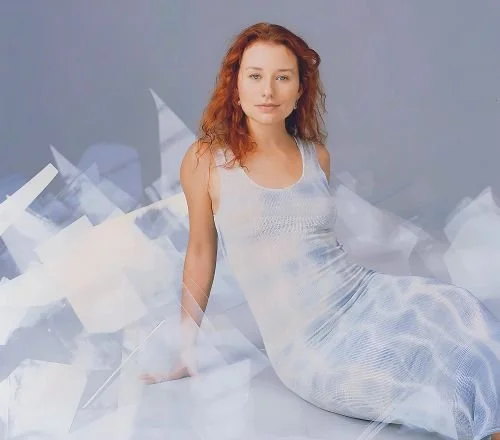
PHOTO CREDIT: Cindy Palmano
You once said "your life went wrong when you stopped talking to the fairies and lost the magic." How did you get it back?
[long pause] When I'm really the person that I feel I am without trying to be what those around me want, then I am closest to things that aren't in body. I believe in things that aren't this. [points to her stomach] I think they're all around us. I think it's kind of arrogant to think that just because you have a body, that's the only consciousness there is—that's really small-minded. And if you wanna look at mythology from the Celts to the Native Americans, to the Native peoples here, you can go to any culture where they believe in the spirit world and if you don't believe it, you don't believe it. How can you even comment on it if you don't believe? But if you do believe, then you're rewarded, because you're working off instinct. It's not just what you see—what we see with our own eyes and hear with our own ears is very limited. We don't see far, we only hear so much.
If we didn't have microscopes, we wouldn't know what was going on with the whole other world that's smaller than what we can see with our own eyes. But that doesn't mean that it doesn't exist. That whole thing about "if a tree falls in the forest and you don't hear it, does it make a sound?" A head of a record company said to me "Of course it doesn't!" And I just smiled, because there you go... [starts yelling] Of course it doesn't—500,000 people get blown up and you don't know about it? Does it mean they didn't get blown up? It's the same thing! [long pause as she calms down] The world just doesn't revolve around you and me. There are so many universes and that's so exciting, but what happens in here [points to her head] is a reflection of what I'm capable of understanding out here. You don't have a shit planet because you have clear thinking people—it doesn't happen. And you don't have shit people and a healthy planet. It will not happen. We're reflections of each other. That's all that is.
Your songs have brought some social and political issues to the forefront that many choose to ignore.
You speak well. You'd make a good politician. And where are the real visionaries today? Everybody is encouraged to listen to our dying leaders, dying meaning their ideologies are dying. Instead of running to Christianity or running to Islam or running to whomever, we have to move forward. You bring the truth, you glean it like you separate the pits from the fruit and you take with you what you've learned. We don't know how to think for ourselves or how to reason. [starts yelling] What this generation needs to do is stand up and instead of passing the sickness to our kids, because, please tell me—what is the difference between us and our great grandparents? Believe me, when we're 50 years old, there's gonna be a young generation going "those fucking old farts, they're so closed minded!" [resumes normal tone] Where's the new thought going to come from? When are men and women instead of blaming each other going to look at ourselves? You see, what happens with blame is, if we're married [she grabs Innerviews' shirt and pulls closer] and you withhold from me, I'm gonna get you back if you can't honor me! [starts yelling] I'm going to get you back if you can't honor me! You know how I'm going to get you back? I'm to get you back sexually! I'll withhold there! [resumes normal tone] So, what happens is, we have a son and I put certain things into my son—my relationship that allows he and I to develop something.
How many men have a relationship to their mother that's very involved? With four out of five men I run into, it's very involved. There's so much going on in this dynamic, and then what happens? That son marries a girl, they go and have a son. We have to stand up and say "Hang on a minute!" We have to look at the sickness—what have I taken on from my parents, from the teachers, from those that are running the media? I have to make my own belief system, my own ideology. I have to stand up and say "I have to admit that I'm basically sick" and I have to find my own thoughts. When you go to Alice Miller—the student of Carl Jung who wrote The Drama of the Gifted Child and The Untouched Key—you see how to go in there and not become our parents. We've all become our parents who have become our parents who have become our parents. We just have Manolo Blahnik shoes—that's all that changes. We put it into a different slant. What have the '60s children become? Let's be fair about this. [starts yelling] I don't give a shit that they all smoked pot in 1968 or did mushrooms! I don't care! Half of them are right wing now! You see, it doesn't matter what you did when you were 22! Where do you stand today? These parents now—many of them—they look at their kids and it's "win the swim team competition" or this, that, the other thing. They have become—many of them—that which they were fighting against when I knew them as teenagers. And we'll become the same thing!”.
In 2022, Merry Go Round Magazine looked inside Little Earthquakes thirty years after its release. It is one of the most impactful debut album ever. I wonder if Tori Amos will mark thirty-five years. She is still recording and touring, and songs from her debut album feature in her sets:
“Born Myra Ellen Amos to a Methodist minister in Maryland, Amos performed under her middle name until taking her new one from a friend who told her that she looked like a Torrey pine tree. Her abilities had been evident from a very young age—she taught herself to play piano and could recreate songs by ear as a toddler, composing her own material by the age of three. She was accepted into the Peabody Conservatory of Music at John Hopkins University as a five-year-old, studying classical piano before being asked to leave when she was 11 due to “musical insubordination.” Even as a child, her artistic personality was plainly apparent: prodigiously talented, uncompromising, unwilling to play by the rules of others. After spending her teenage years playing in piano bars around D.C. and stockpiling demo tapes, Amos eventually landed a six-album record deal with Atlantic, moving to Los Angeles to pursue her career.
Despite having “made it” in a sense, things still did not come easily to her. Her career got off to an ignominious start, with her first venture, the atrociously named synthpop group Y Kant Tori Read, floundering commercially to the point of being abandoned by the label after just a couple months. The early days of her contract with Atlantic held no shortage of friction between Amos and the label, with the ever-headstrong Amos constantly fighting for her own creative vision. And not long after moving to California, she was approached by a stranger for a ride home, and after obliging the request, was raped at knifepoint, an event that she has said she feels lucky to have survived.
Out of this extended period of personal adversity and creative conflict eventually came LITTLE EARTHQUAKES, a record that channels all of her pain and growth into a single richly nuanced and explosive package. “Crucify” sets the tone perfectly, a powerfully reflective take on faith and self-examination that features more than a few breathtaking musical moments—the descending phrase that accompanies the word “chains” at the end of each chorus still never fails to send me into a stupor. Even more importantly, it established Amos as utterly unafraid to tackle any subject in any way she chooses, trafficking in outright blasphemy before we even reach the first hook: “I’ve been raising up my hands, drive another nail in / Just what God needs, one more victim.” Of course, as with any Amos song, it’s never so simple as just one thing, as her relationship with Christ vacillates between resentful and restorative with every line: “I know a cat named Easter, he says ‘Will you ever learn?’ / ‘You’re just an empty cage girl, if you kill the bird.’” Her imagery is vivid, literary, and just a little bit surreal, transporting the listener into a realm where even the most self-loathing thoughts are expressed with a romantic and cutting flair.
She only doubles, triples, and quadruples down on her unabashedly contradictory femininity in the subsequent tracks, from the rueful refrain of “Girl” (“She’s been everybody else’s girl / Maybe one day she’ll be her own”) to the righteous fury of “Precious Things” (“He said you’re really an ugly girl / But I like the way you play / And I died / But I thanked him / can you believe that?” or “So you can make me come / That doesn’t make you Jesus”). The topics she chooses to address, the intensely direct manner in which she addresses them, and the multi-dimensional expressiveness of her vocals provide the blueprint for an entire generation of alternative singer-songwriters that would follow throughout the course of the ‘90s. It’s impossible to hear the venom dripping from Amos’ voice when she sings “So you found a girl who thinks really deep thoughts / What’s so amazing about really deep thoughts? / Boy you best pray that I bleed real soon / How’s that thought for ya?” in “Silent All These Years” and not imagine that the Alanis Morissettes and Liz Phairs of the world were paying attention.
For as visionary as the rest of the album is, its last two songs are perhaps its most affecting. “Me and a Gun” is a harrowing retelling of Amos’s sexual assault, performed entirely a capella to strip her voice of any and all affectation or room to hide. It’s nothing short of a songwriting masterclass and a profound depiction of the various ways in which one processes immense trauma, with paranoia, rage, and deflective dark humor, all simmering underneath the surface of her unaccompanied and even-keeled, almost numb, vocals. The record concludes with its title track, a shifting and slow-burning song that renders personal turmoil on the grandest possible scale. Using images of birds being shot from the sky, vampires dancing in graveyards, immolation and disintegration, Amos meditates on the fragility of interpersonal relationships and the nature of hatred, a cleansing and forceful final word that helps to contextualize the remainder of the record. LITTLE EARTHQUAKES is nothing less than a divine exorcism, the banishment of meekness and restraint, the embracing of one’s own voice and vision, an all-time great charting a course for her future on her own terms.
Of course, the story only begins here. Never one to rest on her laurels, Amos embarked into even more structurally adventurous ground with UNDER THE PINK just two years later, the more experimental and entirely self-produced BOYS FOR PELE two years after that, and the daringly electronic FROM THE CHOIRGIRL HOTEL after, you guessed it, another two years. Always pushing her sound into unexplored territory, Tori Amos was a defining voice of the ‘90s, but often saw far more critical resistance than many of her contemporaries. Reading through old reviews of Tori Amos records can be an infuriating venture; you’ll see her lyrics described as “attention-seeking” and “indulgent,” her vocals described as “girlish” and “overly sexualized,” her songs described as “precious” and “melodramatic.” It’s long past time to leave the gendered pretension behind and re-examine her body of work to appraise it for what it really is: one of the most ceaselessly creative and exploratory discographies of our time”.
There is another interview I want to include. In 2015, Tori Amos spoke with Sound & Vision about the legacy of Little Earthquakes, and her follow-up album, Under the Pink (1994). How she thinks about them all of these years later. I do think that Little Earthquakes is one of the best albums that has ever been made:
“Tori Amos has always been an artist who knows what she wants, and knows how to get it. “Music was always first,” she says. “The records you hear, whether you like them or not, you can blame me for, because I was fighting all the time that the songs were represented in the right way.” For Tori, the “right way” meant staying true to the core of her quite personal songwriting, piano-driven arrangements, and unique vocal character, all of which are on fine display on the just-issued two-disc Deluxe Editions of 1992’s Little Earthquakes (1992) and 1994’s Under the Pink (both on Rhino). Songs like Earthquakes‘ emotionally raw bookends “Crucify” and “Silent All These Years” and Pink‘s drolly dramatic “Pretty Good Year” and hard-charging “Cornflake Girl” show Amos’ conviction for how best to get across her artistic message. “I’ve taken a pretty firm stand about being a woman in control of my destiny — for good or ill, you know?” she admits. “People know that I fight for the art, and the music. I’m not going to back down.” That unbridled spirit is also well in evidence on her most recent studio project, 2014’s Unrepentant Geraldines (Mercury Classics).
Here, Amos, 51, and I discuss the hard-fought genesis of Earthquakes and Pink, how her sound-quality goals shifted in the transition from the ’80s to the ’90s, and how she forged her artistic identity. She may have once been everybody else’s girl, but today, she’s her own. You bet your life she is.
Mike Mettler: I have to say, it’s been quite satisfying to revisit the legacy of both Little Earthquakes and Under the Pink all these years later to see just how well they hold up.
Tori Amos: It’s been enjoyable. Jon Astley remastered them. We made a complete representation of the time, adding the B-sides and some live performances from that time to make it an honest time capsule.
Mettler: I like that phrase, “honest time capsule.” In terms of the sonic qualities of Little Earthquakes, which took a number of years for you to get together, what was your overall intent for how you wanted this record to sound? What was most important?
Amos: Well, we were coming out of the ’80s, which, as you know, had a lot of experimenting going on from the electronic side of things. Synthesizers really were being explored in all kinds of ways. For quite a long time, they replaced pianos, Hammonds, Rhodes — even though sampled Rhodes started to happen, and things like that.
Mettler: With the Fairlight, and all that kind of stuff.
Amos: Yeah, all that stuff. Oberheim [synthesizers] and the Yamaha DX7 [digital synthesizer] started to come into being. From the technical side, all of my demos were made on a [TASCAM] Portastudio. I’d been working with that since I was a teenager. Everybody had a Portastudio in L.A. at the time, producing their own stuff with their own drum machine. A lot of things started out that way.
In ’88 or ’89, after Y Kant Tori Read [Amos’ ’80s synth-pop band that released an ill-fated self-titled album in 1988], I started to move things over to a Yamaha CP80 [electro-acoustic grand piano], which Eric Rosse, who I was working with on the demos, had. And then I got an upright piano, and started to realize a lot of things needed to be tracked on the piano. When [co-producer] Davitt Sigerson got involved with Little Earthquakes, he felt that acoustic piano needed to be the center. When he was producing, that was very much what was going on.
Mettler: I agree that having your piano at the center of the arrangements gave those songs additional weight. In general, your albums are known for having a high standard of sound quality, which we audiophiles really appreciate.
Amos: Thank you. People who are audiophiles — I welcome them, because that excites me. In the studio, we’re checking things on the PMCs [studio monitors] and then we switch over to the Genelecs. So I’m open to audiophiles and people who love high-quality sound — those who really care about the sound. And then you realize, too, though, that sometimes people are listening to their boxy little speakers on their computers. That’s how some people are choosing to listen to music. You have to say to yourself, “Well, we still have to be able to breathe when we’re coming out of the different forms that people listen to.”
In the early and mid ’90s, a lot of people would listen in their cars. We would make sure we were checking our mixes in the car, making sure we were aware if the speakers were hyping the bass. I don’t usually check records in the car anymore. Instead, I’m checking them on different sets of headphones, being cautious that if a certain make of headphone is boosting something, then we have to go back to the PMCs, which are sometime vicious — vicious as in, naked. You really need to hear what’s coming out of the speakers. You hear what music you’re making, without the hype of a certain type of speaker or headphone.
Mettler: What was the reaction to Little Earthquakes the first time you played it for other people?
Amos: [Co-chairman and co-CEO of the Atlantic Recording Group] Doug Morris, his first reaction was, he didn’t get it. People had advised him to take all the pianos off and put electric guitars on.
Mettler: Well, that wasn’t going to work for this music.
Amos: No. But to his credit, he and I had a long conversation, just the two of us, and we cut a deal. If I would turn in four more songs that had more production on them — with the piano not being the center but them being more synth-based — then we would talk again. Fair enough. So I had four tunes, which were “Precious Things,” “Girl,” “Tear in Your Hand,” and “Little Earthquakes.” He had since gotten the original [intent], but we both agreed by then that we couldn’t turn back, so these songs became part of the next step of the album.
Mettler: Right from the outset of the record, “Crucify” is the perfect template and statement for you as an artist and how the record is going to sound. The emotionality comes from you, the piano, and the lyrics all working together. Without capturing it that way, a lot of it might have been lost.
Amos: You’re right. This is before the Internet, so I think it’s difficult for people now, growing up in a world where piano is much a part of the palette in commercial records, to understand how you had to get signed by a record label, really, to get out there. An acoustic piano was not something A&R guys or record heads felt would be embraced by the commercial market. They felt that it was left behind in the ’70s with Elton John, Billy Joel, Carole King, and all that.
Nothing against those people, but they were superstars, and it’s very different when you have Elton and Billy touring in the early ’90s, and you’ve also got the grunge movement happening. It was very different to try to fit in with the grunge movement. You’ve got Mother Love Bone, Pearl Jam, and Nirvana, and you’ve also got PJ Harvey and Bjork — and then I turn in this record. They did not feel that it was fitting in anywhere, so Doug had to be very brave. He looked me in the eye after I had turned those next four songs in and said, “Ok then. If you’re going to do this, then we need to make sure somebody is really the quarterback of this record. There needs to be somebody on the day-to-day who we feel will get it.” He believed it needed to be somebody from the European side. The reason this is important is that’s when he brought in the head of East West, their sister label in England. He said if Max [Hole, East West’s managing director] gets it, we need to bring him in as part of the think tank.
When Max did come into the picture and in the frame, he felt a lot of the songs needed to be remixed. A lot of them were, and I don’t think that hurt them. He brought in Jon Kelly, who had worked with Kate Bush, and a few other people, like Ross Cullum, a British remixer, and Ian Stanley, who had worked with Tears for Fears. Ian came in and did a version of “Crucify,” that was the single, not necessarily the album version.
The next stage began to happen with the album with Max’s stamp on it, which is how you hear it today. And I would say to you that it was Doug Morris and Max Hole who embraced it and said, “Ok, we’re going to stand behind you all the way, but you have to be able to deliver this live!” (laughs) “And you have to do it all on your own, because we can’t afford to get a band behind you for this.” And I said, “Oh, I can do this by myself. I’ve been playing clubs since I was 13.” If those guys hadn’t supported it, this music probably would have been lost.
Mettler: I’m glad you got their support, then, because Little Earthquakes sounds like what you wanted it to be, where you were able to juxtapose the character of your voice and the piano in the studio, and how it all came across in the final mix. In some cases, there aren’t even any effects on your vocals at all, like the a cappella stuff with “Me and a Gun.” But occasionally, you have an echo on a line like “Where I stand” in “Silent All These Years,” which is kind of stark and drives the point home even more. Did you make the choice as to how your vocals had effects or no effects?
Amos: We were in conversation about it. I played live for Max, and he sort of demanded that before he’d take it onboard. He believed the mixes had to represent what I could deliver live. They had a little more sparkle to them. I mean, there is compression on the record and they did use electronics, but in a way that didn’t overshadow the performance”.
I am going to end with this article from 2021. British artist Eliza Shaddad. Ahead of the release of her album, The Woman You Want, Shaddad reflected on an album that shaped her understanding of music. I do think that we will get more features around Little Earthquakes ahead of 6th January. The introduction of a singular and extraordinary artist:
“I was introduced to Tori Amos by my sister; she listened to loads of great music which became absolutely seminal for me. Mostly it was a lot of powerhouse female singer-songwriters – the likes of Tori Amos and, Jewel and later bands like Hole, and The Cranberries. Little Earthquakes was the artist’s debut and an absolute triumph in my opinion, and that record in particular was one we would sing along to at the top of our lungs in her room on family holidays, getting out every bit of emotion needed during the ups and down of growing up.
I love that you’re into full drama within 3 seconds of the first song Crucify – and after about a minute it’s pretty clear the combo of melodic piano, stark drums, and clever winding melodies sit devastatingly with the utterly confessional lyrics. It’s a mix of poignant vignettes and acerbic one-liners. Barbs like ‘Just what God needs – one more victim.. and later ‘got enough guilt to start my own religion’ – are sprinkled throughout and this album contains some of my absolute favourite songwriting lyrics.
Silent All These Years is the third track in and possibly my favourite on the record – that first line ‘Excuse me but can I be you for a while’ hit me so hard as a teenager and the song is barely a whisper but has such gravitas. Precious Things is the driving song for me – from the mad breathy intro.. I just feel like you’re immediately caught up in the excitement – it’s just such a dark mood – and again led by lyrics set to make you kind of uncomfortable but utterly engaged with the songs.
A favourite line in that song is ‘So you can make me cum that doesn’t make you Jesus’ – Ha! Again as a teenager this was just a complete blaster of a line to hear. I sung this song at a school function in front of 4000 people and nearly laughed as I sang it wondering if they could make out what I was singing at them. :-)
Writing and listening now I realise there were a actually a couple of songs I usually used to skip – Happy Phantom, and Leather – but somehow that didn’t ever detract from the brilliance of the whole. I think those two struck me as extra-theatrical and less cutting – or I just identified less with them maybe.
Mother is another song that blew me away and that I used to sing in school music competitions – haha they must have thought I was taking the piss when everyone else was singing Brahms but I just loved singing acapella and a lot of Tori’s songs suit that – they’re so full of melodic intrigue and tangible lyrics. Clearly demonstrated by the acapella song on the album; Me and a Gun – a devastatingly raw account of rape, which again, and especially as a teenager – completely stopped me in my tracks.
It’s so interesting to listen to this record after 10 years of working in music and studying jazz …t’s kind of theatrical pop but with all these undertones coming through, from classical to grunge. And I think it sound like she’s always having fun with her voice, pushing it to it’s extremes – using weird turns of melody and vocal techniques; I adore the vocal production which is ever changing and the harmonies that flit in and out are so subtle but effective.
I just love it. It’s been a constant companion to me over the years and I think her work has had a big effect on the kind of music that I make, and want to make. If somehow you’ve missed it, and especially if you need to blow off some emotional steam – I highly recommend listening. Thanks!”.
On 6th January, the stunning Little Earthquakes turns thirty-five. If you have not heard the album, then I would strongly encourage people to do so. It is definitely one of my favourite albums from the 1990s. So powerful still. The songs have endured through the years. I wanted to write some words about…
THIS debut masterpiece.