
FEATURE:
Faith

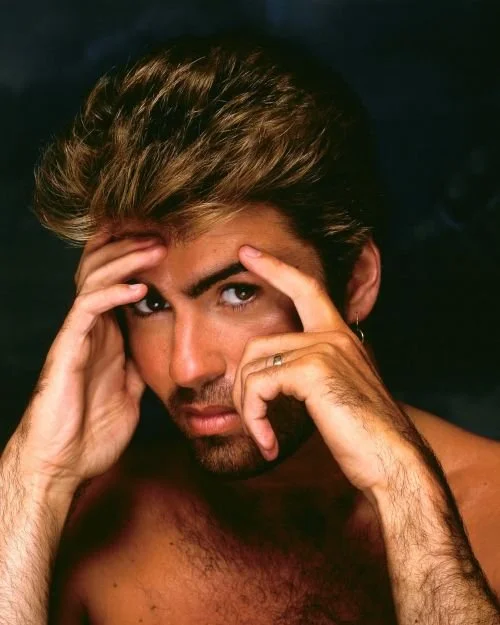
IN THIS PHOTO: George Michael in 1987/PHOTO CREDIT: Brian Aris
Remembering the Incredible Legacy of George Michael, a Decade Since His Death
_________
ONE of the greatest albums…
1980s turns forty on 30th October next year. That is George Michael’s Faith. A new film, George Michael: The Faith Tour is directed by Andy Morahan and David Austin. It documents the Paris shows during the European leg of the Faith Tour (1988–1989), Michael's first headlining solo concert tour. I will come to the focus of my feature. However, I will start with Rolling Stone UK’s four-star of a remarkable and must-see documentary-film:
“Never got to see George Michael perform live? This new big-screen concert film might be the closest you can get. Recorded at two gigs in Paris, 1988, it’s an impressive showcase of the late musician’s singing, showmanship and stamina as he toured with his debut solo album, Faith.
The film opens with Finding Faith, a new short from Mary McCartney, featuring interview audio over behind the scenes footage and photographs by Herb Ritts. It’s an intimate way to set the scene, especially if you’re not familiar with his book Bare, which these interviews were for. Then it’s time to join the 20,000 strong crowd in the Palais Omnisports de Paris-Bercy, where the former member of Wham! bounces around the stage with vigour and vocal prowess of a man at the top of his game. What’s also impressive is that this was never intended to be a full concert film: footage was being shot for the promo for the single Monkey. But Michael and his team didn’t hold back, hiring 14 camera people to shoot on 35mm (his personal preference, over the video that record companies used as standard). They shot over two nights, all over the auditorium, and – as luck would have it – the entire audio was captured by a radio station.
The shoot’s original director was Andy Morahan, George Michael’s frequent collaborator. Having rediscovered the footage, Morahan teamed up with Michael’s friend and manager David Austin to co-direct this restored and remastered version. By the time he’d reached Paris, 24-year-old George had performed the show many times and his choreography was well practised. This helped with the edit, and it’s also tangible as an audience member as he and his backing band move seamlessly between arrangements of one banger after another. ‘Father Figure’; ‘Everything She Wants’; ‘I’m Your Man’; ‘Faith’; ‘Monkey’… the hits keep coming. No matter how much he dances and races around, Michael’s voice never wavers: his breath control is staggering.
It’s a reminder of how extraordinary that voice was: so pure and clear, however suggestive the lyrics were – though physically, this is a very sexual performance. Dressed in those trademark tight jeans, he bumps, grinds and thrusts like a world-class stripper who doesn’t need to hustle for tips anymore. This is a full decade before Michael publicly came out, and it’s fascinating retrospective viewing. His performative flirting with Lynn Mabry during ‘I Knew You Were Waiting (For Me)’ might now raise an amused smile, but it’s a barnstorming rendition.
Whatever he does, the audience is riveted in rapture. They want his sex. And when he invites them to sing along, this is also a reminder of how much George Michael appreciated his fans. Nearly 10 years after his passing, this might win him a few new ones”.
I have included a mixtape at the end of this feature so that we can see the musical legacy of George Michael. He sadly died on Christmas Day last year. This Christmas Day, we remember George Michael a decade after his death. I did want to look beyond his music legacy. I have talked about this before, but Michael’s charitable and philanthropic side was largely revealed after his death. How many people he helped anonymously. In terms of current and future generations, there is The George Michael Fund: “George Michael created The Mill Charitable Trust in 2009. Its unassuming name represents how he gave during his lifetime, often anonymously, under the radar and without fanfare. After George's death, his family and executors quietly continued his charitable work, until 2024 when they decided to establish THE GEORGE MICHAEL FUND. This is managed by The Talent Fund on behalf of The Mill Charitable Trust and proactively gives grants to organisations and issues which were close to George's heart and which he would have been proud to support”. I don’t think we talk enough about George Michael in general. Definitely not his charitable nature. You can appreciate how he wanted to keep it private and secret as not to attract attention. He did not want it to be about him. However, the stories that emerged after his death highlighted how generous he was. The Guardian’s feature from 2016 gives examples of his remarkable philanthropy:
“George Michael was no stranger to the headlines. His private life was often offered up for public consumption. But his philanthropy was not as widely reported.
Since his death, stories have emerged that reveal his generous, often spontaneous, acts of kindness.
The star often kept aside tickets for NHS staff at his concerts and once gave an entire special concert free of charge for nurses as a thank you for the care they had given his mother a decade earlier.
When she died of cancer in 1997, Michael described his mother as a “woman of great compassion”, adding: “She felt much as I do, that we were living in a world that was gradually being drained of that.”
Lynda Thomas, the chief executive of Macmillan Cancer Support, said: “We are extremely grateful to George and send our condolences to his family, friends and fans.”
Singer and activist Billy Bragg said: “His support for the LGBTQ community, the NHS and the miners marked George Michael out as an activist as well as a great artist.”
Childline’s founder and president, Dame Esther Rantzen, revealed that Michael had given the royalties from his 1996 number one single Jesus to a Child to the charity.
Thanks to the “millions” he had given, hundreds of thousands of children had been helped, she said.
Michael was among the stars who produced the original Band Aid single Do They Know It’s Christmas? which sold more than 2 million copies worldwide and raised more than £19m for famine relief in Ethiopia.
He donated the royalties from Last Christmas/Everything She Wants to Ethiopian famine relief and proceeds from Don’t Let the Sun Go Down on Me went to the London Lighthouse Aids hospice and the Rainbow Trust children’s charity.
But it was the revelation that he was given to carrying out unplanned acts of generosity that gave fans comfort in the hours following his death. TV presenter Richard Osman revealed in a tweet that Michael had contacted a woman who appeared on Deal or No Deal to quietly give her the money she needed for IVF treatment”.
As we remember George Michael a decade after his death, we also need to discuss the music. This it the time of year when we listen to Wham! and Last Christmas. It is a shame is not with us today to see how popular this song remains. His own solo material so influential. When George Michael appeared on a coin for the first time (in 2024) as part of The Royal Mint’s Music Legends collection, they discussed his incredible legacy:
“George Michael publicly came out as gay in 1998. A LGBTQ+ pioneer and activist, he campaigned for gay rights and helped pave the way for future LGBTQ+ artists. He also supported and donated a huge amount of money to HIV and AIDS charities, and formed a friendship with fellow AIDS ambassador Diana, Princess of Wales.
George Michael suddenly passed away on Christmas Day in 2016 at the age of 53. In the days after his death was announced, Spotify streams for George Michael’s songs increased by more than 3,000 per cent. Since then, stories that show the extent of his compassion and generosity have come to light, including working at a homeless shelter, donating large sums of money to strangers in need, and the performance of a free concert for NHS nurses.
In November 2023, George Michael was inducted into the Rock & Roll Hall of Fame. During the induction ceremony, a video of George Michael was played in which he was heard saying: ‘Most of us want to leave something, want to have something that will be remembered. I want to leave songs. I believe I can leave songs that will mean something to other generations.’ George Michael’s remarkable legacy as one of the most admired and respected icons of British music lives on”.
I guess we also need to discuss Last Christmas. How this holiday classic has had this legacy all of its own. In 2024, George Michael Forever look at the legacy of Last Christmas. This song finally made it to number one Christmas 2024. It was another moment that you wish George Michael was here for. A track that should have got to number one when it was released, it shows the power and popularity it held that, four decades after its oriignal release, it reached the top of the U.K. singles chart. A testament to the brilliance of this song:
“Released in 1984 as part of Wham!, “Last Christmas” quickly became one of the most beloved Christmas songs of all time. Written and produced by George Michael, the song perfectly encapsulates the bittersweet emotions of love lost during the festive season. Its timeless melody, poignant lyrics, and Michael’s soulful voice have ensured its place in the hearts of listeners for nearly four decades.
Despite never reaching number one on the UK Singles Chart at its initial release (it was held off by Band Aid’s “Do They Know It’s Christmas?”), “Last Christmas” has only grown in popularity over the years. The song’s music video, featuring Wham! members and friends celebrating Christmas in a snowy chalet, has also become an enduring image of 1980s holiday cheer. In 2020, 36 years after its release, “Last Christmas” finally claimed the top spot on the UK chart, a testament to its timeless appeal.
In 2024, ‘Last Christmas’ has claimed the Official UK Christmas Number 1 for the second year in a row! Making it the first song to ever get the Christmas No.1 two consecutive years in a row! According to the social media post from the George Michael Estate, “George had his heart set on the Christmas No.1 in 1984 and would never have believed it would get it not once, but twice a mere 40 years later.”
Reflecting on the competition with Band Aid’s charity single, George Michael said, “If you’re going to lose out in that particular year, there’s no better record to lose to than ‘Do They Know It’s Christmas?’ I mean, it was a fantastic record for a fantastic cause, so you couldn’t really feel anything negative about it.”
Here are some interesting facts about “Last Christmas”:
George Michael wrote the song in his childhood bedroom at his parents’ house. Despite the humble setting, the track became a global phenomenon.
The song’s royalties have been donated to charity since its release, contributing millions to various causes. In 2024, the song’s royalties will be distributed to “some 20 organizations raising money for causes close to George’s heart,” according to the Christmas message of his family.
The iconic snowy chalet seen in the music video is located in Saas-Fee, Switzerland, which has since become a destination for fans.
The track was recorded in August 1984, with fake snow added to create a wintry vibe for the video shoot”.
There are a couple of features I want to come to. Both from Music Week. The first is from 2017. Coinciding with the reissue of the classic Listen Without Prejudice Vol.1, “which would go on to make chart history when it reached No.1. The album was combined with the Channel 4 broadcast of the documentary the singer had been working on at the time of his death”. It is heartbreaking to think that Michael was embarking on a new project and unaware of his death. In the sense it was so sudden. As devastating as it is, it is clear from this article what a legacy he left behind:
“December 23, 2016. George Michael is working on a documentary that will take a remarkably candid look at his life and career, particularly the Listen Without Prejudice Vol.1 era that defined him as a musician of substance and a man of principle.
The final talking head, Chic’s Nile Rodgers, completed his interview just hours ago. And George and his childhood friend, songwriting partner and manager, David Austin are applying the final tweaks to an edit of the film – produced to help promote the long-awaited, lavish Listen Without Prejudice reissue – that the pair had been working on, long into the night, for months on end.
“George was delighted that, having stepped back out of the limelight for a period of time, he was coming back and had something really fantastic and constructive and positive and beautiful to look at,” smiles Austin, sitting in the Hampstead, North London office where many of the discussions and editing sessions took place. “He was delighted with everything.”
Tragically, two days later, on Christmas Day, Michael was found dead at his house in Goring-On-Thames. His death prompted an enormous outpouring of public grief and affection, as people around the world mourned the loss of one of the most successful singer-songwriters of the modern era, and celebrated his remarkable musical career.
He was coming back and had something really fantastic and constructive and positive and beautiful
David Austin
Understandably, a devastated Austin and Sony put all their plans for Michael’s music on hold. Only now, 10 months on from his untimely death, are they ready to, as Austin puts it, “open the curtains and let a bit of light in”.
And Austin – speaking to Music Week in a rare interview – is undoubtedly the man for that task. His and Michael’s mothers were friends in Bushey back in the day, meaning they first crossed paths “in the pram”.
They became great friends, spending hours together singing and playing along to the hits of Queen and Elton John before forming their first band together, alongside Michael’s future Wham! cohort Andrew Ridgeley, ska act The Executive.
Superstardom seemed a long way away but, even then, Austin says Michael stood out.
“I tell you what I did recognise as a kid; how commercial his voice was,” says Austin. “That was quite special. My mother had this reel-to-reel [tape recorder] so I used to record everything.
"While making the film, I came across a box of cassettes, and one of them was us messing around in his bedroom.
"George is singing with [1975 Elton John album] Captain Fantastic [And The Brown Dirt Cowboy] in the background and he’s copying all the inflections that Elton is singing. You’ve got Elton on one side and him on the other.
"It was incredible; his timing, the inflections, everything was amazing. He was about 13, 14. And yet he always doubted himself as a singer in the early days…”
Despite Michael’s talents, The Executive didn’t get anywhere. But, when Wham! got their break, singing Young Guns (Go For It!) on Top Of The Pops after a last-minute call-up, Austin was there miming guitar and, after a brief bid for his own pop solo career, he stayed with Michael on his journey.
He became a regular studio presence alongside programmer James Jackman and engineer Niall Flynn, and the co-writer of such songs as I Want Your Sex, Look At Your Hands, You Have Been Loved, John And Elvis Are Dead and December Song (I Dreamed Of Christmas). He was also Michael’s manager for the last few years of the singer’s life, becoming more involved with the business side after producing the film for the 2014 Symphonica project.
“Was it very different to when we were kids?” muses Austin of management. “Well, the stakes were obviously a lot higher, but not really.
"With George and I, it’s always been about a really honest exchange. I’ve seen stars all over the world and I’ve watched how teams around them work and there are very few artists that have that.
"A lot of people will step up and say, ‘Oh, I was honest with him’, but that’s all bullshit. We both knew what we wanted to do and for me it was an amazing opportunity.
"With Symphonica, he said to me, ‘If you want to do this, do it – but don’t come back if it’s not a No.1’. His very words! Well, luckily…”
Having got that No.1 with Symphonica, Michael was persuaded to back the reissue of Listen Without Prejudice, the album that made his reputation as a serious artist but shattered his relationship with Sony, to the point that he took them to court over his recording contract, famously alleging he was kept in “professional slavery”.
But, while Michael gave his blessing to the reissue, he declined to get personally involved, so – after a lunch with Sony UK chairman/CEO Jason Iley – Austin and Sony conceived the film project to boost the campaign.
When the project began to snowball, Michael decided to muck in and remained hands-on right up until the end.
That end, of course, turned out to be more final than anyone would have wanted. Now, when pondering whether he’s any closer to coming to terms with his friend’s untimely death, Austin can only say: “I just don’t know. Do you ever? I often wonder if I’ve used the film and the enormity of this project to immerse myself in, as something of a coping device.
“Sometimes, when you’re so immersed, you don’t see the wood for the trees,” he continues. “I was in New York, walking down Madison Avenue, headphones on. Praying For Time came on from Symphonica, and it stopped me in my tracks. I know every increment of that album, it was a labour of love. But I stepped back from it and listened and… This sounds really weird, but I thought to myself, ‘God, he really can sing, can’t he?’ And it’s been a bit like that lately. There are all these wonderful surprises…”
And, indeed, while the grief of Michael’s passing still hits hard, both for fans and those who worked with him, there is much to celebrate in the story of his life and career.
Few – including Michael himself – expected his solo career to rival Wham!’s success. And yet 1987 solo debut Faith, sold over 20m copies and turned him into a worldwide superstar.
“Wham! was nothing like this,” says Austin. “It took everything to the next level. It changed all our lives.”
Austin knew from being in the studio that Faith was a special record. So did Sony – or CBS, as it was then still known.
CBS CEO Walter Yetnikoff, CBS UK CEO Paul Russell and Epic UK MD Andy Stephens monitored the sessions at Puk in Denmark and SARM and Metropolis in London, and liked what they heard.
“They knew what they had, or they realised pretty fast watching George craft in the studio,” says Austin. “George was an old head on young shoulders.
"They knew that, so they were opening the doors and avenues to let him develop. To some extent, it was a risk, but he’d served his apprenticeship with Wham! and, by the time tracks like Faith and Father Figure were coming out, the execs were going, ‘Fuck me, this is serious’.”
Austin says Michael was “fully intent on becoming the biggest star in the world” but when he finally joined Michael Jackson, Madonna and Prince at the top of the ‘80s tree, he didn’t like the view.
“It was an extraordinary experience where there were bucketloads of records being sold, fortunes being made by the label and artist, it was full-on 24/7, in-your-face – and the windburn was extraordinary,” says Austin.
“Towards the end of the Faith period, he was exhausted. He realised how unhappy he was but, at the same time, he realised he’d achieved what he was going for at the time.”
Unusually for a white artist at the time, Michael had enjoyed huge support from American urban stations. But when he won two R&B awards at the American Music Awards, there was a backlash that would prove the catalyst for widespread changes in Michael’s life and career.
“He’d achieved beyond his wildest dreams and, all of a sudden, he had the carpet pulled from under his feet,” says Austin.
“It shocked him. And for a period it put him on the back foot. There was that, the exhaustion from the over-exposure, the touring, the relentlessness of it all. George was always able to step back, look at a situation for what it is and he felt that, if he could come up for air and let the music speak for itself, he’d get himself to a better place.”
So Michael got real on Listen Without Prejudice, crafting serious, introspective songs such as Praying For Time and Heal The Pain, paying homage to Lennon and McCartney in a way that drew a line under his frothy pop days.
Meanwhile, the single Freedom ’90, literally set fire to his past, as the video – which Michael declined to appear in, sending a bevy of supermodels instead – torched his Faith-era leather jacket and sent a clear message to “the boys on MTV” that he was no longer going to play ball.
The same new rules applied to his label, with Michael refusing to do any promotion or even have his name or photo on the (now iconic) album sleeve.
“We didn’t anticipate [the furore] because he’s always been one of those people where less is more,” says Austin. “He truly believed that the label would support him. We all knew how amazing the album was. We never questioned that they would let him do what he wanted to.”
Although Listen Without Prejudice outsold Faith in the UK (where it’s now four times platinum), in America it was a comparative flop, something Michael blamed on the US label’s lack of support.
With Michael also devastated by his lover Anselmo Feleppa’s HIV positive diagnosis (Feleppa died, tragically, in 1993), things came to a head quickly.
“The situation with the label was deteriorating on a daily basis,” says Austin. “He was incredibly angry that the label were not prepared to support him. You don’t back George into a corner. When the writ was issued, they were shocked because by the time it gets to that, it’s game over with the label really.”
Michael filed his suit on October 30, 1992 and, many hearings later, Justice Jonathan Parker ruled against him on June 1, 1994, rejecting all of Michael’s claims.
Not that it did Sony much good; with the relationship in tatters, they allowed him to transfer to David Geffen’s DreamWorks Records (Virgin in the UK) for 1996’s Older, although Michael did return in 2004.
“He didn’t win the case but he won the war,” says Austin. “What a lot of artists don’t realise is, he was fighting on restraint of trade, but really he was taking on the standard recording contract. I know that was something he felt strongly about.”
Indeed, while Michael’s case may have ultimately been unsuccessful, you can bet every subsequent major label contract erred on the side of caution when it came to keeping their stars happy.
And, 27 years on, Sony have come to terms with it to the extent that they gladly financed Freedom, the 90-minute film made by Austin and Michael that looks at the whole period and beyond.
The movie will debut on Channel 4 on October 16, just ahead of the Listen Without Prejudice reissue on October 20, and then roll out internationally. The interview with Kirsty Young from which Michael’s voiceover was taken will also be broadcast on Radio 2.
Austin has worked closely on the project with the Sony Music Commercial Group triumvirate of Phil Savill (MD), Jon Cauwood (marketing director) and Joanna Kalli (head of marketing).
“I’ve got to say hats off to the label,” says Austin. “It’s all water under the bridge. Most of the people in the label were huge George Michael fans and it was an administration of the company in the US back in the day where the problem was.
"When I talked to [Sony Music Entertainment CEO] Rob Stringer in New York and Jason [Iley] and Nicola [Tuer, Sony Music UK & Ireland COO] and these guys, everybody was massively supportive. This is all part of our history.”
“That’s the way we viewed it,” insists Savill. “It’s part of our history and it would be disingenuous and laughable if we tried to rewrite it and insist that bit was edited out. If anything, I’d say Sony come out of it looking good because, to go through that traumatic experience, but then have the artist bless a reissue and participate in it shows how strong the relationship is now.”
Even so, it’s been a project more than four years in the making. Originally slated for release to tie in with LWP’s 25th anniversary in 2015, it was about to launch this time last year when Kalli took a call from Austin saying Michael wanted to wait until there was “a big radio record to launch the campaign”.
“I called Jo and said, ‘Are you sitting down?’” remembers Austin. “I’ve just had George on the phone and we’re going to hold off. The world was ready to go but there was a conversation going on with Nile [Rodgers] and we wanted this record.”
That record was, of course, Fantasy, originally slated for LWP and then used as a US B-side. Michael worked with Rodgers on his funked-up remix of the track and it was used to launch the reissue project back in September on Chris Evans’ Radio 2 Breakfast Show.
While sales to date (10,569, according to the Official Charts Company) have been modest, the song has been an airplay hit, so far peaking at No.18 on UK Radio Airplay.
“I don’t give a fuck what you’ve got to say: TV and airplay make a campaign,” declares Austin. “We knew we’d covered ourselves as far as television was concerned but we were still lacking something. And Nile made an absolutely blinding record.”
“George was right, as he always was,” says Kalli. “The single has played a massive part in how we reach a younger audience and focus on streaming. Spotify have been behind it 100% and to be in that position at this point in the campaign is crucial to us. It sends out a really clear message to people that consume their music on those platforms: this is where George should be, this is his prominence and relevance.”
Sony and Austin are working with specialist marketing companies, including Trailer Park, to target new fans as well as Michael’s incredibly loyal fanbase. And they anticipate the film – which features everyone from Sir Elton John to James Corden to Stevie Wonder to Liam Gallagher paying tribute to Michael’s genius (“Modern day Elvis,” declares Gallagher) – will cause a surge of interest across Michael’s considerable catalogue.
“We have a focus product, there’s a new album in MTV Unplugged [released for the first time with the LWP reissue], there’s a great box set for fans, but we’ll see that upsurge in streaming that we did on Christmas Day,” says Cauwood. “It was naturally a massive surge and that’s been maintained, it hasn’t dipped, it’s carried on.”
With Michael’s demand for a No.1 album – not easily achieved for a reissue project, particularly in Q4 – ringing in their ears, Sony is rolling out what Savill calls “the biggest international campaign to come out of the Commercial Group in years”.
“George communicated to David that he wanted this album to be No.1,” says Savill. “That objective was said to us very early on and that’s what we intend to deliver.”
But more than that, Sony and Austin want the project to kickstart a 10-15 year plan that will secure Michael’s legacy in the same way Warner has with David Bowie.
“It’s the first of a variety of projects that we’ll work,” says Cauwood. “There are things we could talk about with Wham!, there’s a lot we could do with vinyl, but we want to do it at the right time.”
“There is a strategy there,” says Austin. “It’s a long-term game. It’s not like we’re going to go out and make new records, I hate that kind of stuff.”
“His legacy is so vast and so far-reaching that we can do some really amazing stuff that really does maintain that integrity,” says Kalli. “It’s so important.
Sadly he’s not here and that’s an absolute tragedy, but we’ll all find it very easy to continue working with this catalogue, because there’s so much to work with.”
Austin says his friend deserves to be remembered as “an artist who had true integrity”, words echoed by Michael himself, who in the Freedom film declares: “I hope people think of me as someone who had some integrity. I hope I’m remembered for that,” before adding, with that self-deprecating humour for which he was famed: “It’s very unlikely. It’s all been a waste of time.”
For once, George Michael was wrong. He may be gone, but his legacy lives on”.
I did want to bring in the entirety of that article, as I think it is all very important when we think of George Michael’s legacy. With the George Michael: The Faith Tour documentary-film out there, how has that reframed his legacy? What about his music rights going forward? This Music Week feature explores protecting Michael’s legacy is bringing his music to new fans. I do hope that a new generation is discovering his music. One of the most distinct and greatest songwriters ever:
“Faith was a seismic moment in George’s life,” David Austin, Michael's ex-manager, co-director of the concert film, and creative advisor to the George Michael Estate, told Music Week of the tour’s significance. “[It was] the record where he boldly claimed his artistic independence and connected with audiences on a truly global scale.”
“Reliving those concerts, and that iconic era, through the film and soundtrack has been a really special experience, and it’s one we couldn't be prouder to share with his fans," Austin continued. "It's been a joy to partner with Warner Chappell Music on this project. They care deeply about protecting and celebrating George’s songwriting legacy.”
Here, Ashley Winton and Olivia Nelson, SVP and VP respectively in the publisher’s creative services team, dig into this latest project in an exclusive chat...
How did The Faith Tour and the Paris concert become earmarked for release?
Ashley Winton: “We work really closely with the George Michael team, and it was a special moment for George Michael. He had such vision – not only with the songs, but with the style, the fashion and the music videos. So it's a really great moment to celebrate him and his vision for himself. We're really focused on not just looking at his icon status as an artist, but how we can amplify his legacy as a songwriter. It's been great to have found this footage from the original tour. Whenever there are things that have never been explored before, it makes a great conversational moment for everyone. This whole project has allowed us to find ways to talk about George as a songwriter. Our creative services team at Warner Chappell is unique for a music publisher; we really believe in proactively being a partner for our writers. We’ve really leaned into how the next generation of fans discover George Michael through the songwriter lens.”
Olivia Nelson: “We were excited when we found out about this film, and the idea of this being a multi-year campaign/the 40th anniversary of the Faith album being next autumn. It’s an opportunity to really focus in on George’s songwriting legacy.”
What have you been able to do through the film and live album?
ON: “We’re engaging with new audiences as well as his superfans. To kick this off, back in May, we created a lyric mural in Shoreditch featuring lyrics from Father Figure. It was a really cool photo opportunity, but it also encouraged people to think about the song and stream it. We wanted to get George even more in the forefront of people’s minds ahead of Faith’s anniversary. In the past few days, we've had a lot more activity around George. In New York, we had a playback, which was really a nice moment. And then we did a similar focus event in London, targeted towards superfans. We had about 70 fans come out and experience the album in spatial audio and did a Q&A with David Austin and Andy Morahan, who both directed the film, and Chris Porter, who mixed the album. It was just really special getting to hear from them about the process of finding this footage and turning it into this amazing IMAX movie. Our role as the publisher is to find the songwriting lane in this, so the Q&A also discussed how George took that leap from Wham! into this solo project through the lens of his songs and lyrics.”
AW: “Songwriting is very personal. When you listen to lyrics, it's like snapshots of what people are experiencing in their lives. George talked about how Faith was particularly personal to him. It was a very special moment in his career.”
In terms of bringing new audiences to George Michael’s songs, how would you say the film helps?
AW: “We're in an era, especially coming out of COVID, where people are looking for experiences. With concert films – particularly when you, sadly, don't have the talent around – it’s a great way for fans to experience their work. We find a lot of fans are bringing their children to an artist they love through a film. It can be a family-friendly way to spend time together. But we look at a lot of different ways to connect to the next generation of fans with activations and strategic partnerships. A sync really helps too. A moment in a TV show or in a film can take off on TikTok, so we'll do a lot around that to tie it back to the song and the songwriter. We work across the board to find ways to convert casual fans into listeners through storytelling and explaining who these people are, so, yes concert films can really help. But there are a lot of different ways, and we're also always looking at what's happening next. You have to meet new fans where they are; you can't expect them to just come searching for you.”
ON: “We’ve been thinking about content creators and tastemakers from younger audiences that we could bring in, so we're constantly asking: who are the music commentators for those generations? Who is into fashion and might know George that way? We’ve engaged people with appreciation for the time period and everything George stood for – whether they were there at the time or are coming to it now. At both playbacks, we saw multiple generations.”
With the anniversary of Faith itself coming next year, is a previously unheard live album useful for galvanising the hardcore fanbase?
AW: “The biggest thing with any release is: ‘why do people need to know about this now?’ So finding this footage and having something new to work around is very exciting."
Presumably, it is the start of the 40th anniversary celebrations for Faith?
AW: “There’s nothing we can announce yet, but there’s a lot in the works that we're looking at with the estate and the label. This is a great way to kick it off.”
ON: “Without being able to go into detail, we're always thinking about that fan engagement piece. With a catalogue like this, with superfans all over the world, it's always a multi-pronged approach. So we'll continue to think about what we can do in the digital space and potential partnerships, especially knowing we have this amazing milestone coming up and this new release taking us into next year.”
David Austin praised your role as a publisher, particularly “protecting and celebrating George's songwriting legacy.” What principles guide that?
AW: “We really look at publishing as an active relationship, not just passive income. When you're looking after a songwriter's life's work, it does feel like a moral responsibility. We say often that we are like custodians of these catalogues, and we want to grow them to be around for the next 40 years and beyond. The magic of music publishing is that there are lots of ways that you can reintroduce songs to people time and time again. But it has to be authentic; it's not about exploiting songs for the sake of driving revenue. We've been very lucky to have partners like David Austin. There's a real interest to innovate, but it’s also about not losing the artist’s or the song’s identity. It’s a new world out there, and there's so much that can be done as long as you're in it for the right reason. Part of protecting the legacy is making sure people continue to hear the music by bringing in new fans.”
ON: “One of our biggest principles is trust. We’ve been the proud publishing partner of George's catalogue for four decades, so we really do take that seriously. For this project in particular, the amount of trust that David has shown in us has been earned through our commitment and dedication to really finding those opportunities. With David, I think we have got to such an amazing place where he empowers us to promote George and his legacy as a songwriter. It's been incredible, especially with this project, to bring the songwriting side to the forefront, and we'll continue doing that going into next year.”
The end of the year has become a very George Michael time thanks to Last Christmas. Does that help you with the timing of this solo release?
AW: “We’ve done a lot over the last three years around Last Christmas. Last year it hit No.3 in the US for the first time, so as long as people are talking about George, it all helps. They’re all entry points; we have to help with discovery.”
ON: “If we can connect for listeners the writer of Last Christmas as the writer of Careless Whisper, and the icon at the centre of this release, then that's kind of the dream for our team. It's all an extension of George Michael and his catalogue, so it always helps”.
I will end there. I have dumped in quite a lot of information, but I think it is important to discuss and spotlight George Michael’s legacy, a decade after his death. We will remember him on Christmas Day. I am writing this in November, so I am not sure whether Last Christmas will get to number one again. This Wham! classic might be what we associate with George Michael at this time of year. Buit his enormous musical contribution can’t be overlooked. The huge generosity he showed. His philanthropic nature. Such a generous man, there is never going to be anyone like him again. A decade after this incredible human left us, it is clear that his genius and incredible legacy…
BURNS bright.