
INTERVIEW:
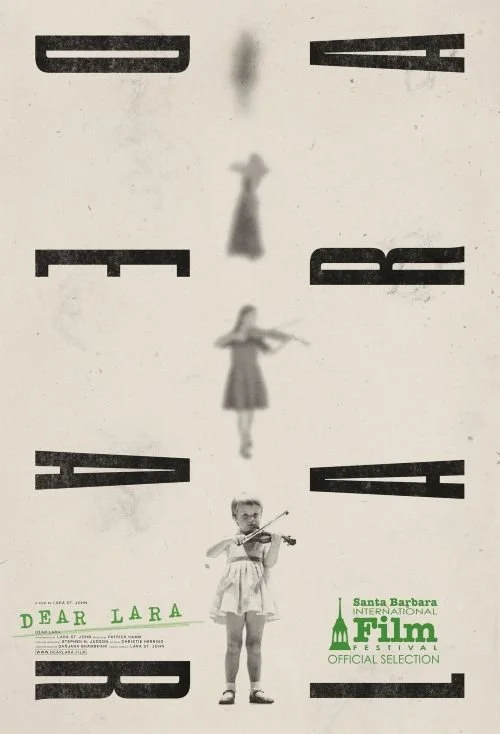
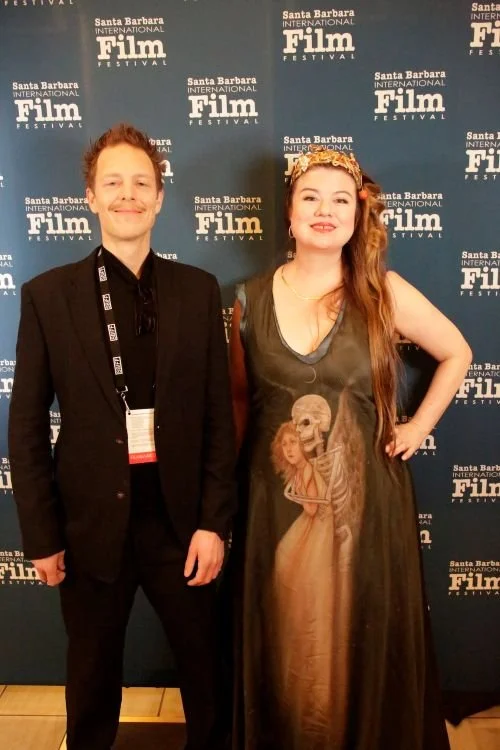
PHOTO CREDIT: Annie Jeeves
most important and urgent interviews I have ever conducted. For decades, there has been an often-overlooked crisis of sexual abuse in the classical music space. There have been multiple instances of conservatory students, many of whom were minors at the time, experiencing abuse at the hands of instructors, only for faculty to be more concerned with protecting their school's image than holding perpetrators accountable. Dear Lara is an award-winning documentary directed by acclaimed violinist Lara St. John. The documentary came to be after St. John publicly disclosed the abuse she experienced while attending the Curtis Institute of Music. Among the multiple alleged perpetrators covered by this film are Jan Repko of Chetham's School of Music and Duncan McTier of the Royal Northern College of Music. I have been speaking with its director Lara St. John and producer Patrick Hamm ahead of the film's U.K. debut at the Women and the World International Film Festival on 5th November. Dear Lara has been screened at multiple festivals throughout North America and Europe, an and has received the following accolades: Best International Documentary from the Brittany International Film Festival, Best First Time Filmmaker from the LA Independent Women Film Awards, and the Courage Award from Cinema d'iDEA in Rome. More screenings will take place in the coming months, with a commercial release planned for 2027. For those in the U.K., you can book tickets and see the documentary on 11th November. I have been finding out more about a phenomenal, powerful and hugely affecting documentary that…
EVERYONE needs to see.
_________
I have been a music journalist for fifteen years now and have written about sexual abuse rife throughout the music industry. Do you think there has been change and progress at all? In reality, what would progress look like? It does seem like a #MeToo awakening or reckoning is overdue…
Patrick: Classical music had a #MeToo moment, but never a #MeToo reckoning. There have been revelations, and some perpetrators have faced consequences. But classical music has been painfully slow to confront the structures that allowed abuse to continue for decades. Allegations are still treated as isolated scandals rather than signs of a broader problem. Teachers and conductors are often elevated to almost godlike status. Young musicians depend on them for recommendations, opportunities, and careers. Institutions, meanwhile, have repeatedly put their reputations first. Real progress would mean investigating past abuses, holding perpetrators and the institutions that enabled them accountable, and changing the law so survivors have a fair chance to seek justice. Students also need to be able to report misconduct without risking their careers. I would judge progress by something quite simple: can a student report abuse without paying a professional price for it? And can a perpetrator, or an institution that protects one, still get away with it?
Lara: The change has been glacial at best. I don’t think that most of the schools in the U.K. care, until they get found out. In 2020, I wrote to the Royal College in London, for example, asking to speak to their Head of Strings, Mark Messenger, about sexual abuse (I was meaning to give him the translated complaint about Jan Repko from Amsterdam). I was informed that he had no time for promotional activities (!!) Shortly afterwards he was removed from his post for “gross misconduct”. It made me quite sure that these men protect each other.
Dear Lara is a documentary that everyone needs to see. The crisis of sexual abuse in the Classical music space has been largely under-highlighted. Why do you think that might be compared to, say, other areas of music?
Patrick: Part of the answer lies in the image classical music has cultivated of itself. It is associated with refinement, intellectual achievement, and cultural prestige. People don't particularly want to hear about its dark underbelly. We are also remarkably willing to excuse the behavior of celebrated artists, with some teachers and conductors becoming almost unassailable. There is a remarkably cavalier attitude toward allegations of abuse in parts of the industry. Classical music is a small world, where careers depend on recommendations and access to powerful people. Speaking out can jeopardize everything a young musician has worked for, while institutions have their own reasons for looking the other way, especially when the person accused is someone prominent. What struck us while making Dear Lara was the gap between public perception and what people in the industry already knew. Outsiders are often shocked by these stories. Professional musicians tend to recognize the names and the patterns immediately. The problem isn't that nobody knew. It's that far too many people knew, and far too few were willing to do anything about it.
Lara: Other areas of music, while they certainly have their own problems, do not have men being given preposterous, practically messianic, amounts of power over small children. That is our classical music problem, and we have parallel situations in the Catholic Church, for example. Because we have been so totally silenced and have not been allowed to say anything at the price of our careers (I sacrificed my own to make this movie) Dear Lara is the first ever film which really examines the huge problem for children and women and some young men in the industry.
“However, I decided I was finally in a position to become public and force a reckoning, and every step of the way and slap in the face and punch in the gut has been worth it”
Lara, you went public about your experience in 2019 in The Philadelphia Inquirer. How difficult was it to do that, and what did it feel like to be flooded with letters from fellow survivors telling their stories?
Lara: As you might expect, it’s very hard to make public the worst moment of one’s life, and in my case, how I lost my virginity as a child in a truly disgusting manner. However, I decided I was finally in a position to become public and force a reckoning, and every step of the way and slap in the face and punch in the gut has been worth it. As every single survivor who becomes public says: I just don’t want this to happen to another child/woman/man. And, I think I am making real-life change to prevent this horror from happening to yet another generation.
It is horrifying how the sexual assault of children in Classical music is almost normalised. The abusers are often protected by statutes of limitations and institutes shielding them. I cannot imagine how difficult it is for survivors to bravely tell their stories. It must have been quite humbling but also so moving….
Patrick: When I joined the project, I was struck by how many people had experiences similar to Lara's, often decades and thousands of miles apart. Many had spent much of their lives believing they were alone. Speaking publicly about abuse takes tremendous courage in a small, interconnected field where the professional consequences can last a lifetime. Several people we spoke with had already lost their careers, or their love of music, because of what happened to them. Lara was able to establish a kind of trust with survivors that an outside filmmaker would have struggled to earn.
She understood what they had been through, and as a team, we felt a serious responsibility to honor that trust.
Lara: I was in a very unusual position, because I wasn’t reaching out to folks like a reporter or journalist might - they all reached out to me. And they already knew my story and my history, so it was almost comfortable for the survivors to speak to me because they knew I understood, in every sense. We hung out, talked before the cameras went on, became friends, ate dinners, drank wine, and I am in touch with everyone to this day.
Many people will be interested in the documentary but feel uneasy or like it will be pretty ‘intense’ or ‘heavy’ – which, I guess, is sort of the point. What would you say to people who are hesitant in terms of why they absolutely do need to see Dear Lara?
Patrick: Dear Lara is certainly not a comedy. We deal with difficult stories, and we don't shy away from describing abuse and what it can do to people's lives. But audiences are often surprised by the humor, strength, and defiance they find in the film. At its heart, the film follows people who refused to stay quiet, challenged powerful institutions, and kept fighting even when the odds were stacked against them. There is anger in it, but also a great deal of determination. You don't have to be a classical music lover to connect with these stories. Power, complicity, loyalty to institutions, and the cost of speaking out are hardly problems confined to music. We also worked hard to make a film, not simply an exposé. After screenings, people often stay to talk, sometimes for a long time. They are upset by what they've seen, and they want to know what can be done.
Lara: Well, documentaries are almost always intense and/or heavy. It’s not a film type one goes to for comedic relief from real life, because they are real life. I would certainly encourage parents and musicians to see it because they need insight into why and how this has happened for so long, and how they can avoid it and hold the people and institutions accountable. We don’t have magic answers, but this is a first step towards shining light on dark places. Also, for certain folks hesitant to see it, I would ask: “What’s in your closet?”
“We knew the film needed to connect those experiences and ask why the same failures kept recurring”
There are bright and positive moments. Dear Lara examines efforts at the Conservatorium van Amsterdam to make a clean break with the past, to denounce past misdeeds and build a culture of transparency and intolerance for abusers. Survivors sharing their experiences will definitely lead to bigger, consistent conversations. What have been some of the more rewarding or positive elements of making Dear Lara?
Patrick: Bringing the survivors' stories together was enormously rewarding. Many had felt isolated for years or believed that what happened to them was somehow unique. Hearing these experiences side by side makes the recurring patterns impossible to ignore. The Conservatorium van Amsterdam provided another important part of the story. It shows what can happen when an institution is willing to acknowledge past failures and confront them openly. The way music schools have traditionally handled abuse isn't inevitable. Administrators can choose to do things differently. We have also seen the film produce results. After our sold-out Toronto screening, a petition calling for accountability at the Royal Conservatory of Music gathered thousands of signatures. The institution subsequently announced an independent investigation into historical allegations of abuse. We could hardly have hoped for a more consequential response.
Lara: The Amsterdam Conservatory is a shining beacon of hope. They have repeatedly shown that they care a lot about the well-being of the students, and in so doing have created the most transparent (literally) building ever, with no locks on any doors, they have brought in team teaching, and they disallow any teaching at the homes of teachers. Conversely, the Royal Conservatory (Toronto) made us survivors and our allies work way too hard every step of the way towards getting an external investigation. They dug in their heels, and only when public opinion started to sour considerably, thanks to the film and various petitions, they finally acquiesced to getting an external investigation. It seems as though that investigation, now ongoing, will not be made public. Therefore we all question why on earth they would have re-traumatized victims for nothing. Our work there is not yet done, and as I’ve said, half-jokingly, I’ll be borrowing some signs from my American friends which say: “RELEASE THE FILES!”.
I am interested in how it came together in terms of who you featured and the direction the documentary took. How long did it take to bring everything together, as it were? Did you face any challenges along the way?
Patrick: Lara began filming in 2019, shortly after going public with her own story. For the first three years, she worked largely on her own, interviewing survivors and following leads without knowing where the project would ultimately take her. I joined as producer in 2022, and we gradually assembled a team, including our wonderful editor Christie Herring and associate producer Sanjana Bhambhani. We finally completed the film in 2026, seven years after Lara recorded her first interview. The story took shape as Lara spoke with more survivors. Across different countries, institutions, and generations, she kept hearing similar accounts of abuse, cover-ups, and retaliation. We knew the film needed to connect those experiences and ask why the same failures kept recurring. We had a hard time getting the film made. We received no documentary production grants and very little support from the established funding system. Private supporters and a deeply committed team kept us going. Once the film was finished, the first round of festival responses wasn't particularly encouraging either. Making a film about people challenging powerful institutions turned out to require a fair amount of stubbornness on our part as well.
Lara: There have been giant challenges, and it’s been a very rocky journey. Countless times along the way, I came within a hair’s breadth of giving up, and it has literally taken blood, sweat and tears of mine to make. Things got somewhat easier when I met Patrick and he assembled the team, of course, in 2022 - but before that it was me, alone, against the world of these predators and their enabling institutions. I once broke down in Schipol airport after one of the Dutch interviews, a particularly heavy one. The kind folks there nearly carted me away, but I managed to explain something in time. I was treated very badly in England during some of my forays there. I remember yelling into a phone “Why the hell am I the one caring about England’s girls and women if they themselves don’t give a rat’s ass?” (fair enough).
Also, I have sacrificed a lot. I had to halt my music career to be available for my film. I used to own an apartment on Manhattan’s Upper West Side, and now I have a documentary. So be it, it’ll be worth it if even one child avoids my fate.
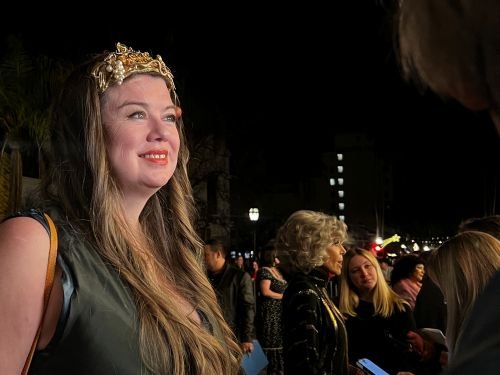
PHOTO CREDIT: Sanjana Bhambhani
I know that Dear Lara is available to universities, conservatories, and other educational and cultural institutions throughout North America. Why was it particularly important to show the documentary in these spaces? Are there plans to show it in universities and conservatories in other parts of the world?
Patrick: For us, screenings at music schools and conservatories are a priority. This is where young musicians learn what behavior is acceptable, whom they can trust, and whether their institutions will protect them. Our early test screenings confirmed something we suspected: people outside classical music reacted with disbelief, while people inside the field often recognized the behavior immediately. Their response was outrage and a demand for change. We have seen how productive it can be to put students, teachers, and administrators in a room together. We have also recently begun outreach to educational institutions in Europe.
Research data from this year highlighted how there are challenges inherent in addressing the issue of sexual abuse and harassment. Whilst studies have been published in other countries, they also “highlight a broader gap in systematic research within the American orchestral field”. With hurdles still in place – students fearing career repercussions naming their abusers -, how do you think we can overcome this and avoid issues such as pressure placed on musicians, especially women, to remain silent?
Patrick: Two things need to happen: accountability for past abuse and prevention of future abuse. First, institutions need to investigate historical allegations rather than simply waiting for the problem to disappear. Survivors also need stronger legal rights, including reforms to statutes of limitations that currently prevent many from pursuing justice. We need to make it possible to hold not only individual perpetrators accountable, but also the institutions that protected or enabled them. There must be serious consequences for both perpetrators and institutions that shield them. If covering up abuse carries little legal or financial risk, the temptation to protect the institution's reputation remains strong. Criminal prosecution and civil liability can change that calculation. Prevention matters just as much. Music schools and orchestras need independent reporting channels, protection against retaliation, credible investigations, and less dependence on the unchecked authority of any one teacher or conductor. Students are right to worry about retaliation. In this field, one influential person can derail a career. We cannot solve that by asking young musicians to be braver. The professional risks of reporting have to change. The research highlighted by Unbound Symphony is important. We need better data, especially in the United States. But there is already ample evidence of the problem. More research cannot become a reason to postpone action.
Lara: (seems like Patrick answered this one pretty thoroughly). I would just add: schools and conservatories are just a few places which need to be seeing this film. I would love for lawmakers, especially in the U.S.A., to have some screenings (and I think we’re on the way). The Statute of Limitations, which gets discussed in the film, protects perpetrators and their enabling institutions in many states, including Pennsylvania. This emboldens child abusers and the institutions who protect them because they are perfectly aware that their victim is so disempowered it’ll be years before they can speak out. At the risk of sounding blunt, I’ll just say that I managed to get raped as a child in the wrong state. I have never had any possibility of justice. Only when there is a lookback window or when the statute falls, will I ever see any.
And to echo Patrick a bit, every musician who sees it says to me “AT LAST!” with varying amounts of emotion. Non-musicians are shocked. The silence has been so entrenched, they had no idea.
Dear Lara has won, among other honours, Best International Documentary from the Brittany International Film Festival, and the Courage Award from Cinema d'iDEA in Rome. How does it feel to receive that kind of acclaim and recognition?
Patrick: The awards mean a great deal. We spent seven years making this film, often with very limited resources and no certainty that it would find an audience. It's gratifying to have the work recognized, especially after such a difficult path to completion. The messages from audiences have affected me even more. Survivors have told us they felt seen by the film. Others have shared experiences they had never spoken about publicly. We also hear from people who say the film started conversations in their own institutions. Toronto stands out. Thousands signed a petition demanding accountability at the Royal Conservatory of Music after our screening. The conservatory subsequently announced an independent investigation. That response means more to me than any award.
Lara: Actually, we just won another one! The Impact Award at Naples (Florida) Film Festival. Yes, it’s of course really nice to get these prizes and awards, but the whole point is to get it out to as many eyes as possible. If these awards can help that, great.
We have intentionally disqualified the film from, say, the Oscars, because various countries have bought broadcast rights and some have aired it. One producer at a film festival told me that it takes about a million dollars for an Oscar campaign, and I thought, well, if I had that kind of dough (I do not) I’d much rather spend it to get it in front of loads of folks than in front of the thousand or so that vote in the academy. It was an easy decision.
“What stays with me most are the conversations after screenings. People linger to speak with Lara, tell us about their own experiences, or ask questions about the film”
Dear Lara is getting a wider release next year. It no doubt will speak to those who have survived abuse. It also shines a light on Classical music and abuse that has been rife for years. What do you both want to happen in the coming years in terms of the toxic culture and distributing statistics? What can and should the industry do to ensure that there is greater accountability, repercussions for abusers, and a safer environment for Classical students?
Patrick: I hope that in five or ten years we'll look back at some of the practices that are still accepted in classical music and find them astonishing. For too long, artistic talent has been used to excuse terrible behavior. People who speak out can lose their careers while those responsible carry on. Accountability has to extend beyond individual perpetrators. Schools and orchestras need to stop quietly passing problematic teachers from one institution to another. They need proper scrutiny when allegations arise, and they need to make it safe for people to report what they know. The deeper problem is cultural. Classical music has long romanticized the authoritarian teacher, the brilliant but difficult maestro, and the idea that suffering is somehow part of becoming a great artist. We need to challenge those assumptions. Artistic excellence doesn't require cruelty. I'd be delighted if Dear Lara eventually felt like a record of a bygone culture, rather than a description of the one we're still living in.
Lara: There are still well-known abusers allowed to perpetrate their predilections in many corners of the world. The only way we’re going to make significant change in such a backwards-looking profession is if we talk about these things, report the abuse (by making it possible for people to do so without losing everything) and name the institutions who allowed this to go on for so very long, and in many cases, still do. I’ve started to see many schools start to clean house of their own accord, though. That, to me, is a hopeful sign! Also, about 50 schools have already asked to screen Dear Lara, also hopeful.
Obviously, it has been an intense and busy period for you both getting Dear Lara made and seen. That is still ongoing. However, with a little breathing room, what are your abiding emotions and memories, either in terms of feedback from survivors or how it has been received in general?
Patrick: What stays with me most are the conversations after screenings. People linger to speak with Lara, tell us about their own experiences, or ask questions about the film. Sometimes they've been carrying these stories for decades. When someone tells you something that personal, you feel the responsibility of having helped put the film into the world. I'm also struck by the number of musicians who say some version of "We all knew." That is deeply troubling. But we're meeting students and teachers who no longer seem willing to accept that silence. I'm proud of Lara and our small team for getting the film finished and in front of audiences. Lara started on her own, with a camera and a determination to make people listen. It's remarkable to sit beside her at a screening now and hear what people have to say afterward.
Lara: I won’t have breathing room, per se, for some time, since I am determined to go and be the face of my film as many places as I can! And I won’t deny that it’s heavy and tough to speak to people after such a movie, but it’s what I signed up for by first speaking out, then making the film and now travelling with it. No regrets here. We have now been selected at over 20 festivals on four continents and won six awards. We’ve been playing at schools, conservatories, libraries, musicians’ union theatres and we have or will be broadcast in three countries. That is all since the World Premiere in February.
Classical Music World, we’re a-comin’ atcha. Look out.