
FEATURE:
Break on Through (To the Other Side)
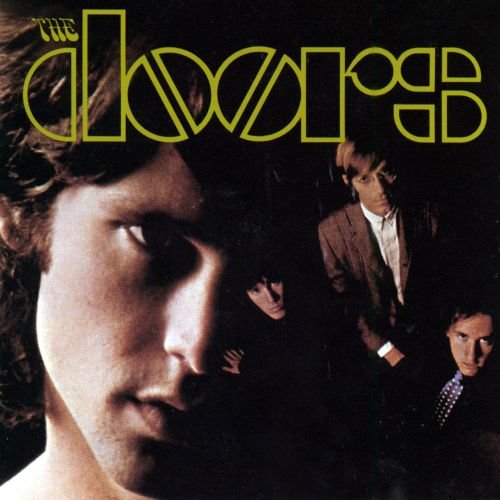
The Doors’ Eponymous Debut Album at Sixty
__________
THIS may sound odd…
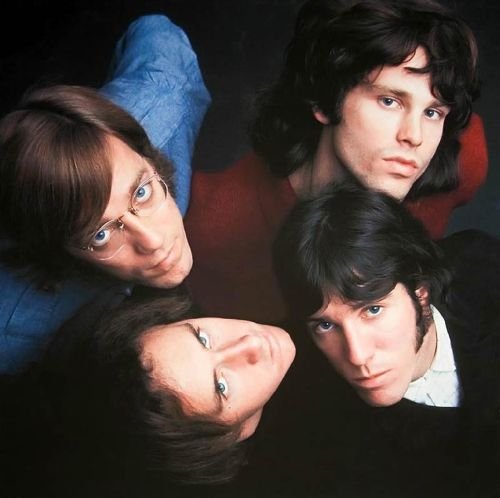
IN THIS PHOTO: The Doors in 1967/PHOTO CREDIT: Joel Brodsky
but I am not a big fan of The Doors. However, I do appreciate how important their debut album is. The Doors is sixty on 4th January. On 8th January, a sixtieth anniversary edition of the album is being released, loaded with extras. I did want to bring in some features about it. I am thinking what sort of music would have been in the U.K. at the start of 1967. The Beatles released Revolver the previous year. Bands like The Kinks and The Rolling Stones either starting out or still not at their very best arguably. There was nothing like The Doors in the U.K. It is a very America style of music. Perhaps more common in years since, it must have been strange to hear the band. Even so, it sold well in this country. Though nothing compared to the U.S., where is has exceeded five million copies. I love the album because of its ambition. I still associate 1966 and 1967 with Pop. There was Psychedelia coming in, but still a reliance on shorter Pop numbers. Progressive bands more niche and not considered as radio-friendly. On The Doors, the final track, The End, runs at nearly twelve minutes. Light My Fire runs over seven minutes. Unusual, because almost every other song on the album clocks in at two-and-a-half minutes or so. The Doors able to pen these quick and impactful songs. A couple of epics in the mix. The End, and Light My Fire constantly ranked alongside the best songs from The Doors. Let’s get to some features about a classic. I think what makes The Doors so radical is that it came shortly before the first Summer of Love. That was in 1967 in Haight-Ashbury, San Francisco. The Doors is as far removed from that as you can imagine. Foreboding, raw, sexual and dangerous, I want to source the whole of a feature from The Observer from 2017. Marking fifty years of The Doors, I do love their writing, as it perfectly introduces this unusual and brilliant band who enjoyed a brief-but-extraordinary career. No frontman quite like Jim Morrison:
“One glance at the cover of The Doors’ debut album and you knew the summer of love was over and the flower children were headed straight for the sanitarium. These Doors, as drummer John Densmore later quipped, were clearly “unhinged.”
Ray Manzarek carried the stern countenance of a Protestant preacher, hunched over the keyboard driving Jim Morrison into new, uncharted realms as he delivered psychedelic sermons. Manzarek’s studied glare behind his rimless glasses and stiff, formal appearance (preferring suits to the colorful ad-hoc hippie esthetic) gave him the air of a tidy yet maniacal schoolmaster while guitarist Robby Kreiger resembled a frazzled Venice Beach ragamuffin. And Densmore just seemed like that guy in high school you knew you had to keep away from your little sister. Well, they all did, but none more so than the self-proclaimed “Lizard King,” Jim Morrison.
True rock ‘n’ roll seethes with danger, bordering, at times, on madness, whether Jerry Lee Lewis pounding his piano like a man possessed by the devil he feared, or Jimi Hendrix’s feedback melting your face as he nonchalantly asked, “Are you experienced?”
Released on January 4, 1967, The Doors’ self-titled debut presented the peace and love crowd with a strange invitation. Like some crazy stranger you just met, Jim stands on a precarious precipice, arm stretched out beckoning you to leap with him into the great unknown.
In honor of the album’s 50th anniversary, we present you with a song-by-song synopsis of one of rock’s most enduring debut albums.
“Break On Through (To The Other Side)” kicks off with Densmore’s hard-grooving Latin beat and an electric piano vamp reminiscent of Ray Charles’ “What I’d Say.” If one song sums up the Doors’ take-no-prisoners philosophy, its “Break On Through.”
Like Welsh poet Dylan Thomas’ metaphorical manifesto “Do Not Go Gentle into that Good Night” or James Dean’s tortured teenager in Rebel Without A Cause, the song stands as a testament against societal complacency, challenging you to forge your own individual path through life, no matter the risk or how emotionally messy it may get. “I’m interested in anything about revolt, disorder, chaos,” Jim Morrison once proclaimed, apparently even at the price of his own self-preservation.
From the first notes of Ray’s eerie organ on “Soul Kitchen,” you know something strange is cooking on the other side of that closed door. Robby Kreiger’s guitar moans and sighs as he bends bluesy notes, elastic and slippery, as the beat sneaks up on you, slinky and sleazy while Morrison bellows fragments of surreal poetry as he goes, “Stumblin’ in the neon groves.”
Later in the song Jim repeatedly chants “learn to forget” over and over like a zombie mantra. Years later when Manzarek discovered and produced L.A. punk rockers X, they would reinvent “Soul Kitchen,” giving The Doors’ tune a new, nihilistic edge.
The dreamy atmosphere of “The Crystal Ship” swells like glassy waves, carrying the mythical vessel loaded with its cargo of “a thousand thrills, a thousand girls.” Morrison’s teenage fantasy evokes the amethyst visions of French symbolist poets Arthur Rimbaud and Charles Baudelaire.
“Twentieth Century Fox” was the Doors’ original “L.A. Woman,” a portrait of a Hollywood bombshell, an ode to the “queen of cool” that Morrison croons over a pumping sexy strut.
“Alabama Song (Whisky Bar)” reflects the grim and decadent era of Kurt Weill and Bertolt Brecht’s Berlin in the 1920s. The music creeps along, staggering and delirious as a clutch of drunks whose only mission is to throw another log on the fire consuming their lives.
Debauched as it may be, the original lyric sung by Lotte Lenya, “show us the way to the next little boy,” proved too much for the aggressively hetero Morrison. (Lou Reed’s sleazy salute to sexual ambiguity, “Walk on the Wild Side,” was still five years in the future.)
The shimmering, exotic sound of “Alabama Song” was created by Ray Manzarek playing a two-octave fretless zither known as a Marxophone. Its haunting tremolo is reminiscent of the gypsy hammer dulcimer known as the cimbalom, which gives the tune a similar sonic texture as Anton Karas’ classic “The Third Man Theme” (title song to the 1949 film The Third Man starring Joseph Cotton and Orson Wells).
“Light My Fire,” The Doors’ first and most successful single, was an intoxicating sonic cocktail blending Ray’s Bach organ fugues with Robby’s Flamenco-style guitar while Jim, the psychedelic Sinatra, crooned, and bellowed such provocative lyrics as “You know that I would be a liar.”
Over seven minutes long, the original track not only contained one of the Door’s most memorable lyric hooks but was the perfect vehicle for Ray Manzarek’s swirling climactic organ work, which gave way to Robby Kreiger’s slinky midnight Arabic tent dance.
“The first thing that impressed me about Ray was that he played organ and bass at the same time, which is no mean feat!” exclaimed legendary organist Al Kooper. “He was unique in that he didn’t play a Hammond organ, which nearly everybody used at the time. But he had played my lick from ‘House in the Country’ in one of their songs [‘L.A. Woman’]. Once we were on a plane when he came down the aisle and I said, ‘Hey, you stole my lick!’ He said, ‘I was paying tribute to you!’ I said, ‘I wish you were paying money!’ Ray was a nice guy. I thought he was very good and appropriate for what the band was doing. Other than stealing my lick he was pretty original.”
The Doors’ seemingly unique instrumentation actually mirrored that of the Rascals, comprised of a lead singer who occasionally jangled a tambourine, organ/keyboard player, guitarist and drums. While both bands hired bassists to beef up their recordings, they performed live without them, relying on their keyboardists (Felix Cavaliere in the Rascals’ case) to provide the bottom end.
Up-and-coming rock singers looking for some cred routinely borrowed the bluster of bluesmen like Howlin’ Wolf and Willie Dixon, as the Doors did with their enthralling cover of “Back Door Man.” (The Rolling Stones’ first hit was the Chicago bassist/songwriter’s “Little Red Rooster,” while the Animals conjured Lead Belly for their covers of “House of the Rising Sun” and John Lee Hooker for “Boom, Boom, Boom”).
When Howlin’ Wolf croaked “I can eat more chicken than any man’s ever seen,” there was no doubting him for a minute. “Three hundred pounds of heavenly joy,” as he described himself, the Wolf was a man of voracious appetite, whether hungering for delectable drumsticks and wings or “the little girls,” who, unlike most men “understand” as he sang in Dixon’s “Back Door Man.”
But The Doors made Willie’s “Back Door Man” their own. Side Two bursts wide open with one of Jim’s best feral screams. Morrison sounds dangerous and unpredictable, like a wild animal suddenly freed from its cage, while Robby Kreiger’s fuzz-tone guitar soars and swoops around Jim’s every word like a maniacal bumblebee.
“I Looked At You” is Jim’s breezy valentine to the eternal yin/yang, girl/boy dance of attraction, a menacing variation on Doris Troy’s R&B hit “Just One Look (That’s All It Took).”
But Morrison’s celebration comes with a warning: “It’s too late,” he moans, knowing all too well that once you trip love’s trigger there’s no turning back, as his bandmates sweep us away on a brief joyride, buoyed by Ray’s keyboards and punctuated Densmore’s riveting drum fills.
“Some are born to sweet delight; some are born to endless night,” wrote the great 18th-century romantic poet/painter William Blake in his classic “Auguries of Innocence,” lyrics Morrison brilliantly lifted for the Doors’ classic “End of the Night.”
You could learn a lot from Jim Morrison, intoxicated as he might have been much of the time. But whenever Jim wasn’t fully igniting his senses, he managed to read—a lot—passing on the inspiration he found in poetry, plays and avant-garde film to his audience.
“Jim Morrison was one of our great poets and unique performers,” Patti Smith told CBS’ On Sunday Morning. “His body of work will always endure.”
Smith wasn’t alone in recognizing Morrison’s enigmatic verse as literature. Following Jim’s death 0n July 3, 1971, Beat poet Michael McClure would collaborate with Manzarek, reading Morrison’s lyrics (and thereby giving them more credence) as Ray improvised on the well-known melodies he once helped forge.
“The End” opens gently with Robby’s meandering guitar riffs, like a strange dawn rising, until it sweeps us along on a cathartic journey as Morrison leads us down the dark corridors of his psyche, exploring the ultimate taboo, the Oedipal fantasy of killing his father and making love to his mother.
The late Judith Malina of New York’s experimental Living Theater recalled Morrison in an interview shortly before she passed away: “Jimmy used to come to see us. He was so sexy. He picked up a lot of things from us that wound up getting him into trouble, when he started doing them on stage.” (The Living Theater was forced to leave America in 1962, and was later were driven out of Holland, a bastion of progressive/liberal culture at the time, and later Brazil, where many members were arrested and jailed. Jim would later bail the Living Theater out of jail in 1968 after they returned to the U.S. and began performing once more.)
“Yeah, I’d say there was a similarity, definitely,” Morrison said regarding the connection of his song to the Greek myth. “But to tell you the truth, every time I hear that song, it means something else to me. I really don’t know what I was trying to say. It just started out as a simple goodbye song…Probably just to a girl, but I could see how it could be goodbye to a kind of childhood. I really don’t know. I think it’s sufficiently complex and universal in its imagery that it could be almost anything you want it to be”.
There was new investment in The Doors when it was released to coincide with its fiftieth anniversary. Some interesting 2017 features. Hi-Fi Choice shone a light on the incredible 1967 debut album from The Doors. Even though I sort of can only dip in and out of their albums past that, I understand and appreciate how revolutionary they were. So different to what was happening around them, perhaps not a surprise it was a commercial success. In years since, The Doors has featured in lists of the best albums ever:
“At a time when most of their contemporaries were wearing flowers in their hair and warbling about peace and love, The Doors explored the darker side of the human condition and sang strange, apocalyptic songs about sex and death.
On one level, their music was undoubtedly of its time, inspired by the hedonism, energy and experimentation of the late sixties, an era when old certainties were being challenged and anything seemed possible. Yet the music of The Doors was not confined or defined by those times – which is why it has remained impervious to changes in fashion, exercising an endless fascination for successive generations of musicians and fans not even born when Morrison’s mojo was first rising.
“I can’t really think of anyone who has done anything like it since,” The Doors’ organist Ray Manzarek remarked in his final interview before his death in 2013. Listening to the likes of The End and Light My Fire from the group’s debut album half a century on, it is impossible to disagree. The Doors’ music has not only stood the test of time, but the group continues to inhabit a category in the rock pantheon that is all its own. Many have tried to copy them. Yet nobody has really come even close.
Much of that uniqueness was down to Morrison’s shamanic presence and the vivid imagery of his lyrics. “Jim as a spoken poet was not that good on his own,” Manzarek once observed. “He needed the music behind him. He felt a security and a sense of abandon when the music existed around him”.
The other side of The Doors’ partnership was that the music of Manzarek, guitarist Robbie Krieger and drummer John Densmore lost much of its potency when stripped of Morrison’s dramatic songwriting and charismatic persona. This became cruelly evident when, after the singer’s death, the three remaining members of the group signed a five-record deal to continue without him. After two insipid albums on which Manzarek and Krieger shared the vocals and which swiftly ended up in the cut-out bins, the contract was cancelled by mutual consent.
One of the band’s showpiece songs was titled When The Music’s Over – and for The Doors it effectively came to an end on the fateful day of 3 July, 1971 when Morrison died from heart failure in his bath in his apartment in Paris. He was just 27– a number that has become notorious in rock folklore, for with gruesome coincidence it was the same age at which Brian Jones, Janis Joplin and Jimi Hendrix also died within the space of two years. Later, Kurt Cobain and Amy Winehouse were among other tragically wasted talents to join the notorious ‘27 Club’.
The Doors were formed in Los Angeles in 1965 when Morrison and Manzarek, both film students at UCLA, met by chance on Venice Beach. Morrison was a 21-year-old wild child, the son of a naval officer who, at the time his son was tuning in, turning on and dropping out, was commanding warships in the Gulf of Tonkin as part of the US offensive in Vietnam. Manzarek was five years older and playing keyboards in a band called Rick And The Ravens with two of his brothers.
Morrison played him a song he had written called Moonlight Drive and they agreed there and then to work together. Rick And The Ravens, however, was hardly an appropriate name for the kind of mind-expanding visions Morrison had in mind. They found the answer in the title of Aldous Huxley’s book The Doors Of Perception, which in turn took its name from William Blake’s line in The Marriage Of Heaven And Hell: “If the doors of perception were cleansed everything would appear to man as it is, infinite”, a reference which appealed to Morrison’s poetic sensibility.
Manzarek’s brothers left and in their place Krieger on guitar and Densmore on drums were recruited from a band called The Psychedelic Rangers and by autumn 1965 the classic lineup of The Doors was in place.
With no bass guitarist, Manzarek played the bass parts on his keyboard pedals and the group spent the next year honing its act in the clubs along Sunset Strip, Los Angeles, with residencies as the house band first at the London Fog and then Whisky A Go-Go.
By the time they signed to Elektra in late 1966, they were ready to spring fully formed with one of the most strikingly original debut albums of all time.
Marrying the acid-tinged imagery of Morrison’s lyrics to a soundtrack that drew on such diverse sources as the blues of Howlin’ Wolf and the surreal theatre of Bertolt Brecht, the group’s self-titled debut appeared in 1967 to instant success – although surprisingly, its best-known song, Light My Fire was not the first single from the album. At seven minutes long it was considered too long and was only released as a 45 after Break On Through (To The Other Side) had failed to chart. Edited to three minutes, Light My Fire topped the charts and conferred on The Doors the unlikely status of being an ‘underground’ group, but one with teen appeal as Morrison shook his leather-clad hips and tossed his cascade of Byronic curls. A Dionysian icon who made the little girls scream, at last, in Jim Morrison, ‘the Lizard King’, it seemed America had at last found a sex symbol to rival Mick Jagger.
Yet much of the music on the album was of an all-together darker hue, particularly the apocalyptic, Oedipal drama of The End, 12 minutes of Morrison at his most extreme, chanting his disturbing visions over a sinister and atmospheric raga-like backing. The Doors were, he said, not pop stars at all but “erotic politicians”.
By the time Strange Days, the band’s second album, appeared towards the end of 1967, The Doors were established as the most significant new rock band in America. Chart-topping outlaws, their status as countercultural heroes was enhanced when the group was banned from The Ed Sullivan Show after Morrison had been told he could not sing the line “Girl we couldn’t get much higher” from Light My Fire on live television. Telling the singer he couldn’t do something was the surest way to ensure that he did it: confrontation was all part of his art”.
I will end with a 2011 review from the BBC. If The Doors seems a bit dated or less seismic sixty years later, we cannot overlook the impact it made in 1967. In terms of the most influential and revolutionary albums of 1967, perhaps we jump to The Beatles’ Sgt. Pepper’s Lonely Hearts Club Band or The Velvet Underground & Nico’s eponymous album. The Doors arguably takes the crown:
“Sgt. Pepper’s bestrode 1967 like a kaleidoscopic colossus, but another album arguably even more revolutionary appeared that year. The eponymous debut of The Doors took popular music into areas previously thought impossible: the incitement to expand one’s consciousness of opener Break on Through was just the beginning of its incendiary agenda.
The Doors were those most dangerous of revolutionaries: populists. Their hooky melodies and the tousle-headed Greek God looks of lead singer Jim Morrison opened gates and hearts that their intellectualism and frequent musical exoticism might otherwise have caused to be closed to them. Meanwhile, that they made a concession to The Man they loudly despised by cutting down their awe-inspiring percolating anthem of lust Light My Fire from seven minutes to three for single release set them on the path to being Hit Parade regulars.
Light My Fire is the highlight of this set, but there are several other gems, particularly the glittering, stately The Crystal Ship and the playfully sensual Twentieth Century Fox. Though often excellent, The Doors is never warm. Icicles seem to hang off its organ-dominated music, however beautiful, while Morrison’s bombastic baritone is never going to lend intimacy.
Willie Dixon’s Back Door Man, covered competently herein, is a song of insinuation but the shocking innovation going on in epic closer The End inhabits a realm beyond innuendo. At a time when frank discussion of sex is still taboo, Morrison gleefully and comprehensively explores Freudian theory and Oedipal myth. That rock had never heard anything as daring gave The End a feeling of quality by default at the time, but the track has not dated well. Liberalisation of media content made it seem banal, then even ludicrous, surprisingly quickly. The End’s transition from radical to risible was rather unfortunate for the original vinyl side two of the album: much of it consisted of songs that seemed like the watery dregs of side one’s flavoursome casket.
The best parts of The Doors remain remarkable even where their revolutionary nature has been obscured by time. In fact, time has provided a disappointment of a different sort: subsequent corrected remasters have revealed we were enjoying The Doors all these years at – Ye Gods! – the wrong speed”.
I will be interested to see what is written about The Doors ahead of its sixtieth anniverssary on 4th January. I do wonder if younger generations know the band and have listened to their debut. If it was seen as revolutionary in 1967, I think it would stand out today if it were new. Though not in the same way. Perhaps an album important as part of the 1960s scene, it has enough wonderful songs on it to endure. Go and listen to The Doors’ 1967 debut album…
AHEAD of its sixtieth anniversary.