FEATURE:
Spotlight
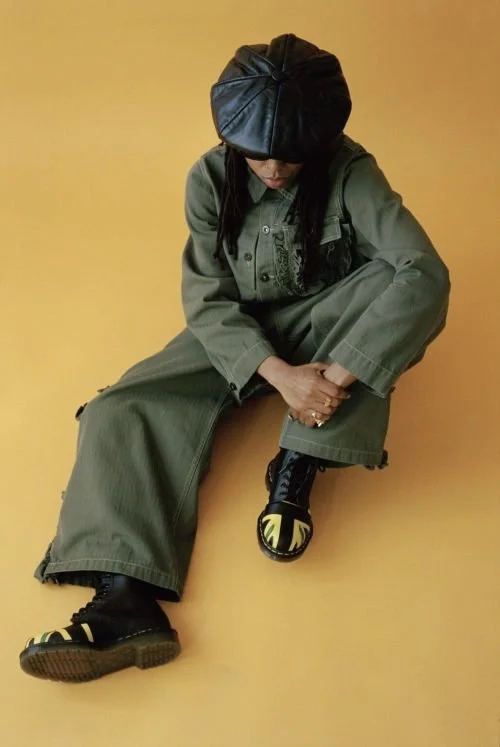
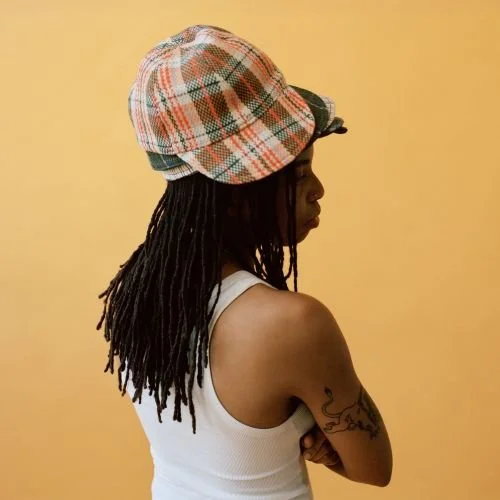
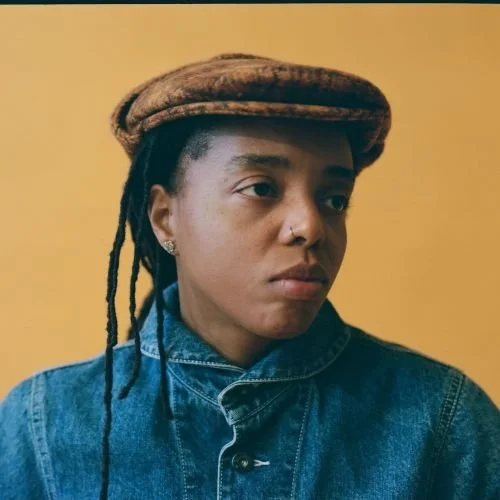
on my radar for a while, but I have not spotlighted Shy One yet. I am correcting that now. A London-based D.J. and producer, her album, Mali, was released in March. I want to come to a few interviews from this year with Shy One. In March, CLASH spoke with this amazing producer, artist and D.J. around the release of Mali. We get to know more about her upbringing and background. If you have not listened to the music of Shy One yet, then do make sure that you check it out now. Shy One has been on the scene for a long time, though with a new album out, it was a good moment to spotlight her. Mali arrives fourteen years after her debut, Bedknobs & Broomkicks:
“Growing up in a musically-inclined household in Harrow, Shy One’s trajectory is that of a seasoned selector, developing an ear for soul-nourishing grooves, but also gritty, grime-inflected deep cuts. As a child, she’d stretch her three-pound-a-week dividends at local record shops (the likes of Uptown, Dark and Cold and Black Market) before cutting her teeth in community radio aged just fourteen. At university, Shy One would form a deeper understanding of her sound and communal spaces, while chipping away at her debut project, ‘Bedknobs and Boomkicks’, released via Scratcha DVA’s record label in 2012.
Years on Shy One is ready to reintroduce herself on her self-titled album ‘Mali’, reflecting on her origin story, the relationships she’s cultivated and the crowd she communicates to. It’s a cohesive testament that has a clearcut club identity; it echoes the strength of her earlier work but builds on its premise by integrating broken beat, jazz, house and more. Shy One’s honed tastemaking and curatorial touch sees her amplify and weave in the voices of James Massiah, George Riley, Steve Spacek and Private Joy into her self-styled tapestry.
Take us back to the very beginning growing up in Harrow. In what ways did Northwest London shape your understanding of the world around you?
It was the people around me who shaped my outlook on the world. My mum and I lived in Harrow, but the HQ of our family was in Kensal Green, Wembley and Harlesden; these are the places where I spent a bit more time. Caribbean Northwest London raised me, and I learned a lot of life lessons from these people and the culture.
With both of your parents being musically inclined, did you ever see yourself going down a different route? Or was producing and DJing your only calling?
I wasn’t even supposed to go down this route. I didn’t actually think it was possible, despite one of my parents having a whole career in it. I was doing IT! No one in my family really went to university, so there was all this pressure on me to go, and to be real with you, my dad didn’t want me to pursue a career in music. It was completely unintentional and I never thought I could have it.
In 2023, you were able to dedicate yourself to music full-time. What was on your mind, ahead of taking that leap?
I only took that leap because I had to. My last job that I had working in retail, I barely worked any days anyway, so my holiday time was really minimal. It got to the start of the new financial year, and I needed to request pretty much all my holiday time off, so I just had to quit. I didn’t want to, I didn’t want to rely on music and place that pressure on it and make it a money-making thing. I’ve always been very worried about changing my relationship with music, so I reluctantly went full-time with it. But it was also a great thing because there are two sides to that coin.
For a long time, I thought so many of the DJs and producers I looked up to were already full-time, but they weren’t: they had jobs. I’d put all this pressure on myself: Why am I not getting enough gigs? Or making enough through ba? In actuality, the rest aren’t either. I think it’s good to have a bit of balance, as you have a bit more control over your direction. You won’t have to compromise and you can have a bit more artistic integrity.
Fourteen years after the release of your debut you return with another full-length ‘Mali’. What made now feel like the right time?
It’s well overdue to be honest with you. My discography, considering how long I’ve been making tunes, is really sparse. But it’s the right time because of who I’m releasing it with (Touching Bass), where they’re at, and where I’m at mentally.
At this point, what’s your favourite dancefloor that you’ve played to? What made it special?
I think it’s Nowadays in New York. That was my last gig, two weekends ago. There’s something about that place. We’re increasingly seeing people banning phones from the dance floor, which is great and has an amazing impact on a night. Nowadays is one of those spaces where you’re not going to get any dickhead bros coming in. It’s a queer safe space, and you’re given an education on the door before you step into it. There’s actual care for the people coming into the space and the people playing, which is reflected on the dance floor and the energy that you get from the crowd.
What’s one key lesson you’ve learned in the last decade? And how does it dictate your future steps?
Not to get too comfortable or complacent in this career and to be more intentional, to have a plan and take a bit more control, steer the ship a bit more. That’s something I’ve learned, and I’ve had to check myself on and readjust in my mind”.
I think I will get to one more interview and then end with a review of Mali. Her new album, as DJ Mag, say, established her as a tastemaker. Their new interview with Shy One is fantastic, so I did want to bring it in here. They write how “the Harrow-born DJ and producer reflects on identity, musical lineage, and protecting the love that drives her craft”. I might be a little late to her genius, but with Mali out and it getting a lot of love, I do feel like many others may be connecting with her for the first time:
“Named after herself, ‘Mali’ sits in direct contrast to Shy One’s debut album ‘Bedknobs & Boomkicks’, a title she now refers to, affectionately, as “slightly cheesy,” but one that reflected the sense of freedom she felt at the time. The difference between the two records also mirrors a shift in her life. ‘Bedknobs & Boomkicks’ was made largely on a laptop while studying at university outside London, long before the touring and festival circuits had become a daily reality. ‘Mali’, by contrast, comes out of an intense period of studio work, shaped by constant immersion in music culture and a growing public profile.
“I made the record surrounded by music constantly,” she says. “I used loads of hardware, spent proper time developing things, and there was definitely more pressure because more people were paying attention.” Still, there’s a looseness to her approach that feels guided by intuition. “I just try to tune into what something feels like,” she adds. “It’s just me, isn’t it?”
Beyond the music, Shy One is just as intentional about how she presents herself. Early in her career she deliberately obscured her image, moving from fragmented artwork to partially hidden portraits, rarely showing her face in full. “The first EP was a mosaic of my face, kind of like putting the puzzle together,” she says. Even now, on the cover of ‘Mali’, she turns away from the camera — a subtle boundary within increasing visibility. “It’s a slow reveal,” she explains. “A very slow blossoming... I want longevity. I want to do this for the rest of my life, so I don’t feel any need to rush into full exposure.”
She holds up a recently repaired classic iPod, remarking, “especially since not being on Spotify again... I’m pretty much just Bandcamp or my iPod. I’ve got 953 gigabytes of music on iTunes. Forty-one thousand tracks.” The device, bought on eBay three years ago, is now a daily fixture, but even in that vast digital archive, physical formats still hold different weight. “When I buy a record, I remember it,” she notes. “There’s something about physically owning music that changes your relationship to it.”
There’s a contained satisfaction when Shy One talks about collecting — and what it means to finally be able to buy records she once couldn’t afford. “I’m not saving for a house,” she shares plainly. “I don’t think I’ll ever own one. But it means a lot that if I come across a rare record now, I can actually buy it.” She is equally candid about the city’s growing hostility towards artists trying to survive in it. “Creatively, London definitely fuels me because of the sounds that were born here,” she says. “But the city itself? Increasingly, it’s been more of a hindrance.”
“There were many years I should have been honing my craft when I was just depressed and working minimum wage,” she continues. “The highlight of my day was having a spliff after work.” We touch on DIY venues like Rye Wax, a record shop, café, workspace and club rolled into one, and the kind of ecosystem it represented. “That was a proper hub,” she says, smiling. “You could spend your whole day there.” Large-scale club spaces, on the other hand, hold little appeal. “We don’t need huge 15,000-capacity spaces,” she argues. “The greatness comes from small venues”.
I will end with a review of Mali from CLASH. There are a lot of highlights and standouts from Mali. I think Shy One’s collaboration with George Riley on I Can Tell is my favourite, though it is one of those albums where certain tracks reveal different elements and strengths the more you hear it. It is great that there is going to be a London headline show in March. Amazing hearing Mali on the stage. So many people will be at Village Underground to see that set:
“‘Mali’ is a love affair, tangled in Shy One’s signature concoction of London’s very own mingling sounds of house, jazz, UK breakbeat, and club scene’s tireless enticing baselines. Titled ‘Mali’, as Shy One’s first given name, the highly anticipated album lands as her multi-layered ode to London as a city and its vibrant, manifesting nature, curating a cohesive story, celebrating the history and lineage of Black British electronic music. It blissfully follows her creative intuition after a phase of mental and physical decluttering.
As a pirate radio DJ debutant, Shy One opens ‘Mali’ with ‘Evidence Of My Love Affair,’ talking about her early passion for radio. Introductory to her lifelong devotion, it quickly progresses into the pulsating breakbeat of ‘I Can Tell’ featuring George Riley, calling out delusion, ending with the classic defeatist night-out line, “it is what it is”.
‘Loosen Up’ fuses hints of the 80s with chords of funky piano and multiple simultaneous rhythms, forming an electronic jazz simulation that smoothly melds into the second feature, Private Joy, on the soulful ‘Moonlight,’ dazing in the seductive reflections. Though it is ‘Full Circle,’ which glimmers with trickling questions on life’s purpose, as a night-out halfway point tradition.
The brilliantly vibrating beat of the focus track featuring 90s trailblazer, Steve Spacek, ‘Driving On Sand’ lures you in on sweet talk, and promises, until the filthy edge of ‘Nort Wess’ throws you into a sexy, thrusting baseline of the album’s most anthemic club moment, of no limits and no inhibitions. James Massiah’s weight on ’16 Hours’ is the album’s collaboration highlight, soundtracking the inevitable elusion of the endless after party and whatever comes after. For the closing, ‘Live Dis Ting (Belt Drives),’ Shy One reverts the tempo to soft afro house, serving as a melodic canvas for days of reminiscing about records, drifting into the abyss of the night with residual echoes.
Across ten tracks, Shy One’s ‘Mali’ successfully embodies a mandatory sonic guide to the heart and soul of London’s club scene, which she will commemorate with a headline show at Village Underground on March 14th.
8/10”.
I absolutely love Shy One. Such an incredible and versatile D.J. and artist, I think that Mali is an album that is up there with the best of this year. I have said that about a few albums lately, but it just goes to show the breadth and wealth of talent out there. As she wraps up a busy 2026 and thinks ahead, there is a lot to reflect on. A new album after fourteen years. A big headline show in the spring. Shy One can look forward to…
A wonderful year ahead.
__________
Follow Shy One