
FEATURE:
Pray You Catch Me
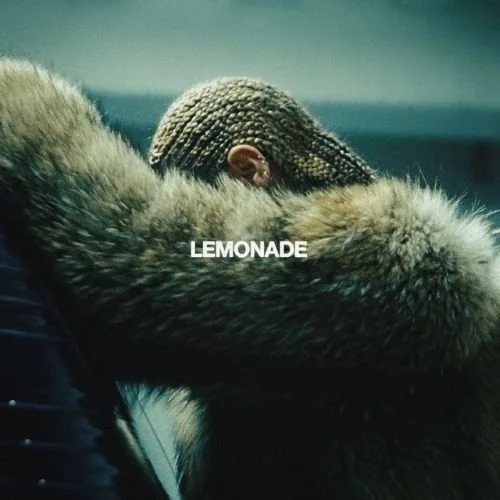
Beyoncé's Lemonade at Ten
__________
IT is not an exaggeration to say…
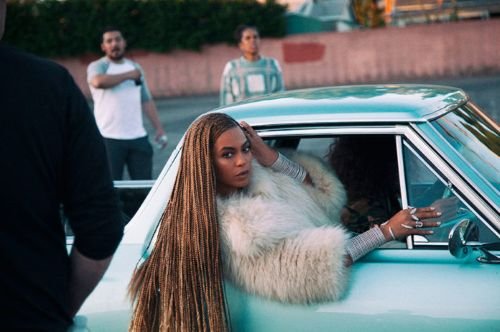
that Lemonade is one of the greatest albums of all time. Beyoncé's sixth studio album is one of the most Grammy-nominated albums in history, Lemonade won Best Urban Contemporary Album and Best Music Video (for Formation) at the 59th Grammy Awards. It also won a Peabody Award in Entertainment at the 76th Annual Peabody Awards and received four nominations at the 68th Primetime Emmy Awards. A number one album around the world (including in the U.S.), it turns ten on 23rd April. I am going to end with some reviews for Lemonade, as it is also one of the most important and powerful albums of the past decade. Imperious, seismic and utterly beguiling, I do wonder how others will approach Lemonade ten years after its release. I am going to start out with an interview from ELLE by Melissa Harris-Perry. A look at the symbolism, power and pain of Lemonade. “The call-and-response tradition is so deeply embedded in black cultural practice, so to help understand the meaning of this moment I sent out a call of my own to writers and thinkers who centre black women and girls in their work”:
“I think it's some of Beyoncé's best work—it's honest and open, and much of it is beautiful (especially the piano ballad "Sand Castles." But if I have to pick a favorite, it would be a tie between "Hold up" and "Don't Hurt Yourself," the song with Jack White. I have to admit I'm a fan of Angry Beyoncé, liberating herself and giving people hell. I also love that she weaved reggae and funk/rock riffs into those songs, and tried other innovative things on the album, including a really good country song in "Daddy Lessons."
—Joy Ann Reid is MSNBC national correspondent and author
I'm glad she continued to tell her story from her own point of view. She created a whole album talking about what SHE wanted to talk about. Love, infidelity, intuition, anger, rage, redemption, black women's lives and losses. And none of this looks like a get the Coin 101. She looks like an artist willing to lose some fans to say what is really on her mind. It looks like an artist having her say and making it plain. Folks always want to say that Beyoncé isn't smart, but this is smart. She's given us weeks worth of material to think about. And as the co-chair of the academic wing of the Beyhive, I'm thankful. This is boss stuff right here.
—Blair LM Kelley is Associate Professor of History at N.C. State University
I was most struck by the images in several sections of the visual album of black women and girls, of all hues and dazzling hair textures and shades, in period clothing evoking antebellum Louisiana but infusing it with modern girl power. Those images were so visually rich, because they are so divorced from modernity, but the women themselves were thoroughly modern in their obvious strength and attitude. I also loved the way the gorgeous water sequences in the "Denial" section that erupts into a frenzy of jubilant, bat-wielding destruction in "Hold up." And of course the women with faces painted in a send-up to Yoruba culture adds to the notion of that inextricable link between Africa and the American slave narrative.
—Joy Ann Reid, MSNBC national correspondent and author
Beyoncé is centering the South and also connecting this to the Black global South. She is unapologetic in her Blackness, her woman-ness, and her Southerness. Lemonade is an archive of Black womanhood/girlhood honed in the South. The South emerges as the past, present, and future of Black womanhood. The visual album rejects the holding of the South as solely a place trapped in history. The project asserts a complex, variegated, and infinitely generative space of Black kinship, creativity, resistance, and freedom dreams. This is incredibly valuable intervention, as it contributes to a tradition of southern Black women writers, artists, performers, and mothers/aunties/grandmothers/godmothers sustaining families and our communities through their creative genius and unbound imagination.
—Treva B. Lindsey is Assistant Professor of Women's, Gender, & Sexuality Studies at The Ohio State University
What I love and will continue to love about Beyoncé is that she has always pulled from her southern Black culture. Even when others weren't aware of what she was pulling from music (New Orleans bounce, screw, and certain kinds of flow) or just choreography or even aesthetic (B'Day era), she's very much a southern Black girl and keeps all of those mores and customs out front. I find it valuable in that there's no one on her level who has managed to include so much of that culture in their work and have this kind of global appeal.
—Michael Arceneaux is a columnist at Complex”.
I am going to move to The New Yorker and their take on the globe-conquering Lemonade. A defiance of spirit and one of the most remarkable and powerful albums ever released, I feel like it is still resonating and creating shockwaves today. In terms of its legacy, it remains hugely important and relevant. Many argue that Lemonade is Beyoncé’s finest statement:
“But while the album is Beyoncé’s most naked and personal yet, “Lemonade” is also a collage of collaborative artistic effort. Even more so than her last record, she draws from every corner of popular music, new and old, to make a rich potpourri of songs. She also combines sounds and imagery from many eras to salute black life, invoking the antebellum South, Malcolm X, and the young victims of police brutality over the last three years. But, while the material is heavy, the production is often feather-light. Among her collaborators here are Diplo, the Weeknd; Ezra Koenig, of Vampire Weekend; Jack White, The-Dream, Animal Collective, James Blake, Kendrick Lamar, and the Yeah Yeah Yeahs. She samples Soulja Boy and Led Zeppelin; she sings the blues. In the past, Beyoncé has sparked controversy by lifting images and ideas from other pieces of art; when the Internet takes its collective close read in the coming days, “Lemonade” will certainly generate more. Once again, she has compiled a long list of video directors to help execute the project, in addition to recruiting a number of actresses and friends to appear in the video (none of whom distract from the star for a moment). One cameo is made by Serena Williams, who appears during a fierce celebration of a song, “Sorry,” on which Beyoncé sings, “Me and my ladies sip my D’USSÉ cup / I don’t give a fuck / Chucking my deuces up / Suck on my balls / Pause / I had enough.” Beyoncé, the only woman on Earth who can rebuff her husband with a smirking reference to his own brand of cognac.
Although Beyoncé has called on a diverse group of collaborators, her younger sister Solange is notably absent from “Lemonade.” This is a curious fact, given that Solange is responsible for the most damning mark on Beyoncé and Jay Z’s public record. In 2014, she was captured by surveillance film in an elevator after the Met Gala unleashing a mysterious fit of violence at Jay Z. The footage is chilling not only because Solange is so physically explosive—kicking, punching, clawing, screaming, and resisting a bodyguard—but because Beyoncé stands by and watches the whole scene, eerily placid. Solange may not appear on “Lemonade” but her spirit looms large. Some collaborators are Solange’s friends; some of the footage was shot in New Orleans, where Solange moved, in 2013. There are shots of a group of solemn black women dressed in fanciful white dresses, calling to mind the photographs taken at Solange’s wedding. Most crucially, the project channels the rage that was on the display in the elevator that night, the footage that prompted the world to speculate about the state of Beyoncé and Jay Z’s marriage—and presumably caused Beyoncé to go into a self-imposed partial media exile for years. Last night, Beyoncé finally responded to the questions that went unanswered after that night. She seems to be saying: Yes, Solange had good reason to unleash herself on my husband like that. She did not explode in vain.
And yet “Lemonade” is not so simple as a tale of a woman scorned. At some point the project turns away from Jay Z and toward the broken marriage between Beyoncé’s parents, making you wonder whether she was talking about her mother and father the whole time. She builds a striking image of marital strife as familial heritage, refers to her father’s arms around her mother’s neck, and presents footage of both herself and her daughter, Blue Ivy, with her father, Matthew Knowles. “My daddy warned me about men like you,” she says, drawing a complicated line of pain and distrust that bridges generations.
As the project unfurls, you cannot help but wait for the tone to shift from despair to hope. And, because she is Beyoncé, whose perfectionism extends to the bonds of her personal life, it does. Jay Z, the subject of so much spite and fury, enters the frame about two-thirds into the project. We see the back of his neck, his hands stroking Beyoncé’s bare calf, he and his wife in a cautiously loving embrace. The project shifts quickly toward redemption; there is a heavy-handed image of a baptism, along with footage of Jay Z and Beyoncé getting matching tattoos on their fingers. “My torturer became my remedy,” she says, “so we’re gonna heal.” This moment is designed to signal relief. But there is a spirit of defeat here—love and hope cannot hold a candle to what she has shown us with her pain. There is a sense that Beyoncé is yet again pulling the curtain closed after letting us see so much. Healing means retreating back into herself, her soul made elusive once again”.
Before getting to a critical review, I want to move to Medium and their feature about Lemonade. They write how the 2016 album is “A Celebratory Reflection on Beyoncé’s Impactful Album on Black Women’s Healing”. I first heard the album when it came out, and I was instantly struck by it:
“Throughout the album’s visuals, Beyoncé adorns Black women in Southern gothic Antebellum attire of the 1800s and Yoruba traditional face paint and imagery. Setting the film in the south, particularly in Madewood Plantation House in Louisiana (a former sugarcane plantation), Beyoncé reimagines these spaces as sanctuaries for Black women to exist and live in harmony. She creates a world that centers Black women and our stories being placed at the forefront of history, including notable pop culture figures like Zendaya, Chloe x Halle, and Ibeyi, as well as the mothers of Trayvon Martin, Michael Brown and Eric Garner, whose sons were victims of police brutality. Beyoncé gives a voice to the Black women who bear the brunt of the injustice that plagues black people in America every day, while simultaneously making clear that the album is for black women from all walks of life.
Lemonade remains heartbreak’s most enthralling album because it encourages us to return to love even if it has hurt us in the past. Her message contradicts what has overly infiltrated today’s society: messages that encourage hate, resentment, and bitterness as a response when one has experienced heartbreak, betrayal, pain, and loss. Lemonade is a reminder that there is no shame in choosing love every time because “true love never has to hide.” In her Grammy speech, Beyoncé said, “We all experience pain and loss, and often we become inaudible. My intention for the film and album was to create a body of work that would give a voice to our pain, our struggles, our darkness, and our history. To confront issues that make us uncomfortable.” Further saying that “I feel it’s vital that we learn from the past and recognise our tendencies to repeat our mistakes.” This album sheds light on the complexities of Black people’s interpersonal relationships, highlighting that our history of racial trauma is something that can not be easily separated from us. This lesson is especially poignant coming from a figure like Beyoncé — someone understood by the public to “have it all.” Yet even with her “having it all,” it can never separate her from the effects and experiences of her parents, grandparents, and their grandparents.
The title, Lemonade, is about how we heal. We are the healers and the alchemists: turning something sour into something sweet, turning loss into healing and reconciliation. The album pushes us to question ourselves and say, how do we heal ourselves?
It would be a grave mistake to only think of this album as a confessional tale of infidelity. With the lens of an intersectional feminist, Lemonade is an album about working in community with other Black women, healing, reconciliation, and owning one’s heritage. As previously stated, the album serves as a reminder that the personal cannot be separated from the political. Reflecting on this, I recall the remarks of author and scholar Naila Keleta-Mae from the University of Waterloo–she stated that Lemonade is an album that displays the work of a seasoned artist, one who is thinking about her musical legacy. Lemonade is a radical album because it is an album for Black women by a Black woman–and pop stars don’t make music for Black women”.
I will end with Pitchfork and a terrific and detailed review of Lemonade. Marking this big anniversary on 23rd April, this is an album that everyone needs to listen to. Following 2013’s Beyoncé, this was another step up in her career. An album that arrived at a time when U.S. politics was shifting. A year when Donald Trump became President and there was racial tension, police violence and abuse across the country, Lemonade made an impact and resonated. An album that also addresses Black womanhood, intergenerational trauma, and forgiveness, this masterpiece will be discussed decades from now:
“If you’ve ever been cheated on by someone who thought you’d be too stupid or naive to notice, you will find the first half of Lemonade incredibly satisfying. If you have ears and love brilliant production and hooks that stick, you'll likely arrive at the same conclusion. The run from “Hold Up” to “6 Inch” contains some of Beyoncé’s strongest work—ever, period—and a bit of that has to do with her clap-back prowess. The increasingly signature cadence, patois, and all-around attitude on Lemonade speaks to her status as the hip-hop pop star—but this being Bey, she doesn’t stop there. Via the album’s highly specific samples and features by artists like Jack White and James Blake, Lemonade proves Beyoncé to also be a new kind of post-genre pop star. (Let us remember a time, not very long ago, when Bey and Jay attending a Grizzly Bear show with Solange made headlines.)
Both of these attributes—a methodical rapper’s flow, an open-eared listener’s frame of reference—meet on the slowed-down stunner “Hold Up,” where Beyoncé borrows an iconic Karen O turn of phrase via Ezra Koenig, a touch of Jamaican flavor via Diplo (again), and a plucky Andy Williams sample to fight for her man while chiding him for doing this to her (!), of all people. From there, Bey’s just like, “fuck it—big mistake, huge” and gets (Tidal co-owner) Jack White to join her in dueting over a psychedelic soul jam and a Zeppelin sample as she scowls, “Watch my fat ass twist, boy, as I bounce to the next dick, boy.” As she accuses her husband of not being man enough to handle all of her multitudes, fury frays her voice. Even on an album stacked with some of Beyoncé’s best recorded vocal performances to date, “Don’t Hurt Yourself” has her belting to a whole other dimension—specifically, that of Janis Joplin and late-’60s Tina Turner. This won’t be the last time Bey dips into the classic vinyl on Lemonade, either: see “Freedom,” which manages to both: A) speak poignantly to Civil Rights as much as personal plight, B) sound like an Adidas commercial; this means it’s the logical choice for next single, assuming Beyoncé is still releasing those.
Bey’s genre-hopping doesn’t always sound quite as transcendent as “Don’t Hurt Yourself,” however. Though certainly memorable (not least because it finds her name-checking the Second Amendment), “Daddy Lessons”—where a country guitar-line meets New Orleans brass in service of her Southern roots—is the least interesting chapter sonically, though the parallels it draws between Jay-Z and Beyoncé’s own cheating father still make it crucial in the context of Lemonade’s narrative. It’s hard to see how Beyoncé could have done without any of these scenes to tell the story (not even “Formation” in the end-credits), and though the specific sounds may not be as forward-thinking as those of her 2013 self-titled, there are clear reasons for every musical treatment she has made here. Lemonade is a stunning album, one that sees her exploring sounds she never has before. It also voices a rarely seen concept, that of the album-length ode to infidelity. Even stranger, it doesn’t double as an album-length ode to breaking up.
Yes, after Beyoncé makes nearly half an album’s worth of glorious rage songs directed at an unfaithful partner, she gives it a little time and remembers that she was raised to value hard work and spirituality. And so, she can’t give up on her marriage, the same one she spent her last two albums (mostly) celebrating. Beyoncé even kind of sells it, surmising with a tear-inducing sincerity on relaxed-fit soul jam “All Night” that “nothing real can be threatened.” It’s an easy platitude to make, but it’s also an extremely Beyoncé way of looking at things. For a perfectionist who controls her image meticulously, Beyoncé is obsessed with the notion of realness. That’s the biggest selling point of an album like Lemonade, but there’s a quality to it that also invites skepticism: That desire to basically art-direct your own sobbing self-portrait to make sure your mascara smears in the most perfectly disheveled way. But who cares what’s “real” when the music delivers a truth you can use”.
As this seismic album celebrates ten years on 23rd April, I want to shine a light on Lemonade. It is one of the most astonishing albums ever released. I do wonder whether Beyoncé will mark it or she will have anything to say about Lemonade. It is a stunning release from one of music’s greats. A timeless masterpiece from a music queen, Lemonade is one of the most important albums…
WE have ever heard.