
FEATURE:
The Art of Hating
PHOTO CREDIT: Gwen Trannoy
Focusing on a Recent CLASH Article Around Olivia Dean’s GRAMMY Success
__________
WHILST there was a lot…
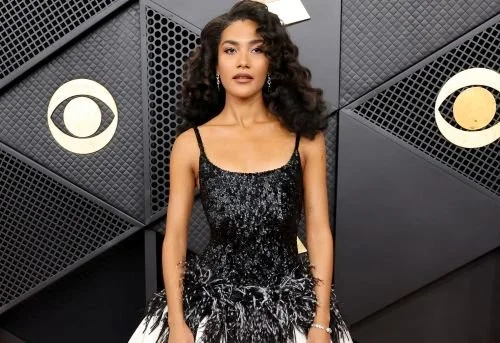
IN THIS PHOTO: Olivia Dean attended the GRAMMY Awards on Sunday, 1st February at the Crypto.com Arena in Los Angeles, where she won the Best New Artist award/PHOTO CREDIT: Etienne Laurent/Getty Images
of celebration around Olivia Dean winning the Best New Artist at this year’s GRAMMYs, there was this worrying online backlash and narrative. I am interested in an article Amelia Thompson wrote for CLASH. There is no denying how Dean is one of the world’s best talents. Her latest album, The Art of Loving, is a phenomenal release. Olivia Dean is such an interesting songwriter who is doing something new. Her music is engaging and engrossing. She has a soulful and wonderful voice and she is humble, charming and someone whose voice is necessary and vital. It seems incomprehensible that anyone would take against her or her music. It does seem that, especially when women in music are recognised and awarded, there is this negativity and criticism:
“What was striking was how little of this backlash addressed her actual music. Songwriting, vocals and performance were barely mentioned. The criticism stayed vague, emotional and easy to share, and once it took hold, the pile-on followed.
Much of the backlash focused around a comparison with Addison Rae, whose GRAMMYs performance leaned heavily into pop camp and visual excess. One post praised Rae for “going full girly pop camp” and avoiding a “boring acoustic version” before concluding, “The girls that get it, get it. Those that don’t are named Olivia Dean” (monalisaney81). The contrast was blunt and familiar. Rae’s performance was framed as fun, smart and self-aware, while Dean’s stripped-back approach was dismissed as safe or empty. It seems acoustic performances were treated as pandering to the GRAMMYs, while spectacle was positioned as the only valid form of authenticity. What went largely unacknowledged was that both artists were making clear, intentional choices. Only one of those choices, in this moment, was treated with suspicion.
In 2026, it remains striking how quickly women with entirely different sounds are pushed into competition with one another.
As the conversation spiralled, the criticism turned noticeably more gendered. Suddenly, Dean wasn’t just being called boring or safe, but accused of pushing a “trad wife” agenda, based almost entirely on how she looks and the kind of songs she writes, rather than anything she’s actually said or done. One post claimed she makes music to “perpetuate the ideals of trad wife to modern day youth” (FENDIANASTARRR), reading political intent into dresses, softness and love songs. Others were quicker to clock the problem, with one user pointing out there was “something deeply misogynistic” about labelling a woman conservative simply because she wears dresses and writes about romance (foreverwintertv). That cuts right to the heart of it. Femininity gets treated as a belief system; romance becomes a red flag; softness is framed as submission. And when a woman isn’t cloaking her work in irony or provocation, even existing in that space starts to feel, to some people, suspicious.
Class-coded language played a big role in how her music was dismissed too. One reply calling her sound “whole foods ass music” racked up more than 18,000 likes (rainsblog), reducing her work to supermarket playlist fodder instead of engaging with it on its own terms. Dean isn’t really being criticised for the music she makes, but for how readable and non-confrontational her femininity is, in a cultural moment that seems to demand constant disruption, irony, or provocation just to be taken seriously”.
Olivia Dean has spoken out against sexism and misogyny in the music industry. She has discussed the issue with the lack of women and non-binary artists on festival line-ups. This continues today, especially with headline slots. Dean also works with female directors for her music videos so that she is not objectified and there is this male gaze. I think that artists like Dean should be heralded and seen as inspirations. I do think that there is this impression that women in music should be sexualised and designed for men. That they should flaunt their bodies and that their music should be brash or explosive. There are artists who are like that and are independent and empowering, but this perception that women should write a particular type of music and look a certain way. Anything out of that seen as boring or conservative. I do feel like any backlash against Olivia Dean winning a GRAMMY is misogyny. Her music is personal and spectacular, though this idea of pitting women against each other is sickening. Of course the vast majority of the feedback for Olivia Dean’s music is positive and nice. However, this perception that when music is not in your face or it is not sexual or whatever people think it should be is hollow or unimportant is something women have to face. Not that all female artists do this, but is there this culture that means women cannot be successful or stand out unless they are sexualised or they dress a particular way?! Any criticism against Olivia Dean because she does not flaunt her body or fits into this cliché and misogynistic stereotype of what women should be is appalling. Deep-rooted and enduring sexism that needs to end! It must be disheartening for an artist being honest and herself being criticised or insulted because she is not seen as uninteresting or sexy.
I think I have sourced this article before, though I feel it is relevant to bring it back in. Last year, author Sophie Gilbert wrote a book, Girl on Girl: How Pop Culture Turned a Generation of Women Against Each Other. I heard her speak about the book. This still happens today. Women compared and thrown together as rivals, rather than them being celebrated and allowed to have their own careers and work harmoniously with each other. In this article from Sophie Gilbert, we get an idea of a huge issue that spreads beyond music:
“It hasn’t always been this way. Feminism has never been perfect, but during the second half of the 20th century, activists fought for a culture in which women raised each other up, congregating in groups to discuss each other’s needs, and endorsing the idea of a shared sisterhood. The movement made real gains, as more women entered the workforce in record numbers, gained reproductive rights, and made art that powerfully documented their experiences and their struggles.
But then the 2000s happened. I’ve spent three years researching the entertainment of the 21st century for my book, Girl on Girl: How Pop Culture Turned a Generation of Women Against Themselves, and one thing that was truly striking to uncover was how insistently this era taught women that they had to fight with each other to win. The inclusive, intersectional thinking of 1990s third-wave feminism was shunted out in favour of a more individualistic ethos of Me First. The new genre of reality television set up women as competitors scrapping over the “prize” of a man. Shows such as Who Wants to Marry a Multi-Millionaire?, The Bachelor, Flavor of Love and Wife Swap turned female conflict into ratings gold.
Other forms of culture followed the same pattern. The women musicians of the 1990s – the Riot Grrrls and rock artists who made protest music about inequality and sexual violence, and who worked collectively to establish festivals such as Lilith Fair – were edged out of the industry for a new generation of sexualised teenage solo artists. And as the internet became much more of a presence in people’s lives, a new kind of celebrity gossip industry was born – one that invented female rivalries, obsessed over the minutiae of stars’ lives and was ruthlessly cruel to women in the public eye.
The culture of the 2000s asserted the idea, ripped right out of Jane Austen, that women are competing for limited resources and should go to any length necessary to secure their own success. The phrase “I’m not here to make friends” captured the ethos of reality shows where contestants regularly insulted one another, fought and established rival friendship groups with arcane pecking orders. Gossip magazines and tabloids sold millions of copies on the backs of projected female rivalries: Britney and Christina, Jen and Angelina, Paris and Lindsay. Meanwhile, the movies of that era celebrated male friendship, male bonding, and male rites of passage, while positioning women as shrews, scolds or vacuous sex objects.
We’ve long since evolved in ways that let us see how toxic this era was, and how damaging it was to women in particular. Studies have found that when women are encouraged to compete with one another, their own careers and relationships tend to suffer. But the spectacle of women pitted against each other – competing for fame, male attention and mass approval – is deeply rooted in media, and even in our own minds. These days, competition culture is more likely to wear a progressive or a faux-feminist guise. The girlbosses of Selling Sunset, peacocking in absurd glam while sniping and backstabbing, mostly sell themselves as strivers hustling for commissions. Meanwhile, wellness influencers and women shilling for MLM recruits propagate impossible standards and unrealistic goals under the spectre of celebrating sisterhood.
But there is still another option. If we look back to the decades when the feminist movement had its most powerful impact, it did so by persuading women that they were stronger together. Girl-against-girl culture is less a trap than a minefield. Navigating it requires resisting the urge to judge other women, calling out people who build careers on stoking female conflict, listening to and elevating other women’s voices and being conscious while engaging with media, understanding that much of it is intended to get attention in ways that make things harder for women. Influencers and storytellers who encourage, rather than indict, each other help to support an environment set up for everyone to thrive, making it easier for each of us to be empowered in turn. There has never been a better time to fight for rather than with other women, making space to imagine what might be possible when we aren’t perpetually being persuaded to work against each other”.
That CLASH feature from Amelia Thompson is fascinating and eye-opening. That online reaction to Olivia Dean’s GRAMMY win slightly tarnished. It was a hugely deserved recognition of her talent. This blossoming young London artist with a massive future ahead! However, because she is not dressing, performing and looking a certain way, her music and her diminished and insulted. This is something that needs to stop. Every year we see examples of women in music being compared and pitted against one another. How women have to be there to serve the male gaze or they need to be revealing, flesh-baring or in your face. Not something applied to male artists to the same extent, women are often not given respect or the same opportunities if they step away from that ‘ideal’. At the end of the day, Olivia Dean is a phenomenon and someone we should be very proud of. The Art of Loving is a wonderful album and we are all excited to see where she goes next. If some have offered derision or misogyny, this artist is deserving of…
NOTHING but love.