FEATURE:
Spotlight
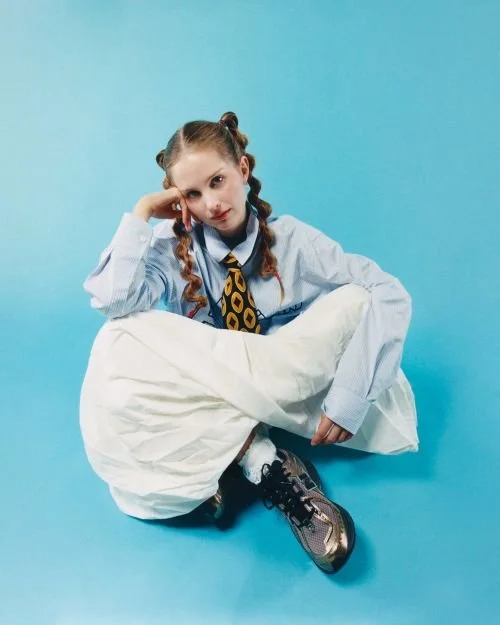
Maddie Ashman
__________
THIS is a perfect time…
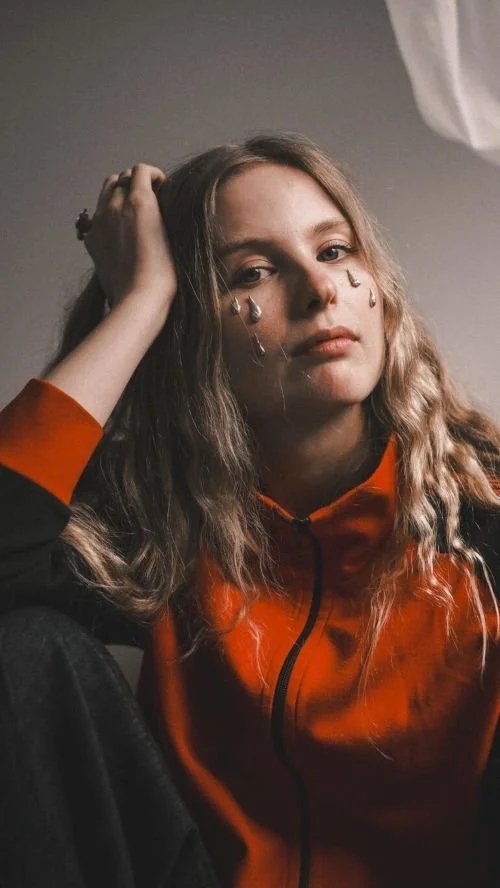
to spotlight Maddie Ashman, as her wonderful and engrossing E.P., Her Side, was released on 6th February. This genius artist and composer is someone who I am really excited about. I have just discovered her music, though I know there has been a lot of interest around her for a while now. I am going to come to some recent interviews from an artist that nobody can really afford to overlook. In the sense that she is definitely primed for a gilded and extraordinary career. Her Side has laid down a marker as the best E.P. of this year so far. This is an artist I am very keen to see on the stage. I am going to start out with an interview from last year. Kiyi Muzik who spoke with a very special artist. As they write: “Cellist, guitarist, songwriter, tuning experimenter, avant-pop artist, and more. Maddie Ashman is lately on the Instagram feed of many people with her songs that explore new possibilities within the microtonal music realm. She released her Otherworld EP on Bandcamp on March 28, and her new song “ Toffee ” is out on May 30”:
“I want to start off with a basic introduction question. Can you give our readers some context of your background and how you developed your connection to music?
Maddie Ashman : Well, I started the guitar when I was 7 and I already loved music a lot. I used to write songs on the recorder, and I would sing as well. I started playing the guitar because my mum played it a little bit. I really enjoyed it. I started writing little songs and then when I was 9 at school, someone came in and played the cello, and I said “I want to play that.” My parents were supportive, so I had lessons in cello. I thought, “Yeah, I want to be a musician.” So that was decided there. When I was 11, I started playing piano, then bass guitar. I played in lots of orchestras and local music events. When I was a little older, I played electric guitar. I really got into rock music and started buying music. I played in a band at one point. Also wanted to be in a metal band. I tried to learn to scream, but I lost my voice, and didn't try again. (laughs) I was playing classical music and metal music when I was a teenager. And then when I moved to London, I really enjoyed playing classical guitar more because I never got to play it before, you know, not really. It's such a lonely instrument. I started playing cello in bands. I was playing cello like the electric guitar, and the guitar like the cello. I did lots of touring with pop musicians, and session work. Then a couple of years ago, I got really into microtonal research and decided this is what I'm really passionate about.
How did you first encounter microtonal music?
I was in a rehearsal one day. My part was only the harmonics on the cello. I realized that the harmonics didn't match the piano, and something just clicked in my brain. I was like, “Whoa, why?” I just went down a big rabbit hole reading about equal temperament and tuning. I was listening to a lot of Michael Harrison, and I came across Tolgahan Çokulu's guitar music. I bought his book a few years ago. He got in touch with me a year later about my cello, having no idea that I was really into microtonal music. I just found the research really fascinating and it really satisfied my brain, because I've got perfect pitch, and it made me listen and experience music differently. I would think about the quality of the music, how the intervals feel, the color and the resonance. I wouldn't just think about notes.
How is your relationship with technological developments and possibilities within music production?
I think I'm inspired by technology, but I also think because technology evolves so fast and it feels like anything is possible, I really like to combine it with something that is organic and natural. So something about singing and just playing the guitar is really exciting. But then equally, I've written loads of unreleased music which is all moving through pitch space, in which there is a lot of coding, and a lot of technology that I rely on that is incredible. Though I'm more interested in how I can apply that as a human. I want to perform with that technology rather than only involving it.
Technology is confusing, because there's often things which are inaccessible. A piece of equipment costs thousands. I think there's amazing companies. There's the Lumatone, they make this instrument which is amazing for microtonal music. I would love to have it because the technology is great, but it also costs a lot of money. I'm very interested in how we can explore music without that technology.
Do you have an active dream life? Do you think your dreams penetrate your songwriting to a degree?
I wish, but sadly I feel like my dreams only play to my anxiety. (both laugh)
Does your anxiety shape your songwriting then?
I have abstract thoughts in the daytime and in my bedroom, you know, nowhere particularly exciting. I can find inspiration and think of fun things, but in my dreams only bad things seem to be happening. I remember them because I feel embarrassed, because I see them when I'm nervous about something. So it's very unromantic.
When you check your streaming platform's history, what are the last three things you listened to?
(laughs) “Daily Vocal Workout For An Awesome Singing Voice” from Jacobs Vocal Academy. That's a practice that I often do. Then there is “Besties” by Black Country, New Road. Also “Broken Biscuits” by English Teacher”.
Prior to getting to a new interview from NME, Youth Music spoke with Massie Ashman recently. Again, I want to bring in what they write in their introduction: “Maddie Ashman is bringing fresh ideas to music with her project, 'Three Microtonal Lullabies'. Supported by the Youth Music NextGen Fund, Maddie explores microtonality and just intonation - complex concepts made simple and emotional through her songwriting”. The way that she creates her music is astonishing and fascinating. She is this exceptional composer. Bridging songwriting and composing, I feel she stands out from so many of her peers. A flexible and eclectic talent who I feel will write for the screen a lot in the future:
“How do you balance your roles as composer, producer, and performer in your creative process?
I don’t really see them as separate roles, because often I’m composing while I’m performing/improvising, or producing while I’m composing. It all blurs into one! If I think about each role too much I panic haha. I just do my best and pull in people to help where I need it, often with the production and mixing at the end of the process.
What role did visual elements like artwork and live videos play in expressing the music’s themes?
The artwork and live videos played a huge role in finding connections between the songs, and helped to build a wider sense of my ‘world’ as an artist. Working with visual artists has allowed me to learn much more about myself and how I want the music to be perceived.
You’ve transitioned toward relying more on commissions and performances - how has that shift impacted your career?
It’s been exciting to focus more on my voice as a composer and songwriter and with each project I learn something and feel more confident about my strengths as well as what I also need to work on. I’ve gradually built my portfolio and live videos and now I have the opportunity to gig more internationally at festivals and on support tours, and I’ve also had opportunity to write for other ensembles. Although it’s challenging having this transition and relying less on income from session work and teaching, I’m having a lot of fun and trusting in the process.
What have you learned about your sound and artistic identity through this project?
I’ve learnt that I love making music that is uncanny. I’ve learnt to not worry about making music that’s too ‘weird’, if it feels exciting to me! And I’ve learnt that although the microtonal research is very niche, I love collaborating with other artists, whether it’s for additional production, visuals or anything else.
What advice would you give to other artists considering applying for the fund?
Trust in your ideas! Do it! Plan it out as much as you can so you can envision it fully, even if the timeline or end result change (inevitably)”.
Maddie Ashman is generating a lot of love and praise. One of our most exceptional and impressive talents, the Hampshire-born songwriter and composer is someone I feel will have this incredibly long-running and successful career. Her Side is an E.P. that I really love. NME spoke with an innovator who is seeking to “provoke and delight with emotionally intelligent songs that attack convention”. I can only imagine what a live set from Ashman would be like. I do hope she adds dates to her diary. Such a thoroughly engaging and brilliant young artist:
“Ashman’s EP is already eliciting uneasy reactions with some listeners telling her about some moments, ‘It feels like I’m high. I don’t trust myself right now.’ “Other people really melt into it,” she continues. “In a world where everything is very convenient, it feels very exciting to do something that’s incredibly inconvenient.”
Ashman is, perhaps unsurprisingly, a classically trained musician. She is eye-openingly proficient across guitar, piano and cello and studied music at Goldsmiths. Branching off from this background, ‘Her Side’ was part-funded by several organisations as an investigation of microtonal techniques.
If that makes it sound fusty or inert, it’s not. It’s fizzing with possibilities – these songs clatter and whirr with melodic energy, but their ace is the manner in which Ashman sharpens her esoteric combination of mathematics, musical theory and virtuosity into something capable of uncovering emotion.
On ‘Waterlily’, she pulls apart societal pressure to conform; the track’s lilting, rolling instrumental eventually cut apart by a cello countermelody that feels like an intrusive thought. It’s a fascinating marriage of form and meaning, with the how and why of music-making meeting in the middle. “The whole thing is very perception-versus-reality,” she says of its thematic focus. “We all live in our little inner worlds, and they can feel more like reality than reality.”
“In a world where everything is very convenient, it feels very exciting to do something that’s incredibly inconvenient”
Throughout, as it moves from synapse-scrambling rhythms to choral reflection, there is also the feeling that ‘Her Side’ is a thrilling statement of pop intent released at an opportune moment. If Charli XCX, a dyed-in-the-wool weirdo, can be one of the biggest stars on the planet, then there’s space for Ashman’s sonic excursions to exist in close proximity to the mainstream, perhaps even right at the heart of it. “Rosalía’s album [‘Lux’] is so out there and controversial, it caused a lot of discussion,” Ashman says. “That’s really exciting. I do feel like it’s a good time, while everyone’s being inundated with AI, to be doing something a bit more challenging.”
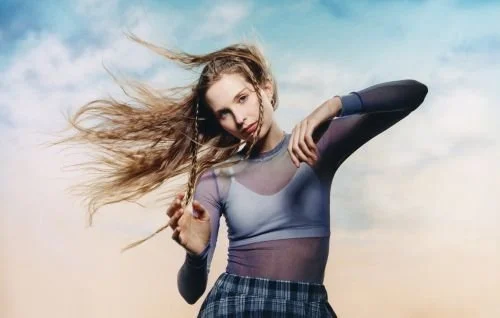
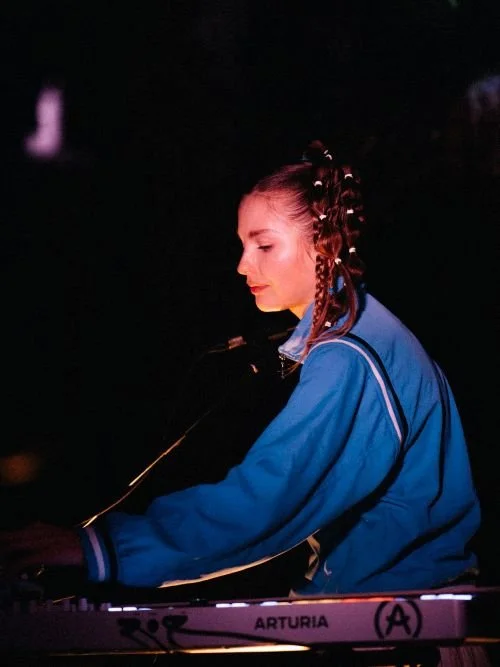
PHOTO CREDIT: Sandra Ebert
For better and worse, discussion has been part of Ashman’s story since the start. As she wandered further out into the microtonal hinterland, she began uploading short clips of herself playing at home to social media, the domestic scene behind her remaining constant as her music became unmoored from convention.
Quickly, she racked up millions of views and hundreds of thousands of followers, helped in part by a reel of her playing ‘Dark’, an abrasively free-spirited guitar-and-voice experiment, going viral last spring and co-signs from industry luminaries including Anthony Fantano, Caroline Polachek and Sampha. On the other side of the coin, though, you don’t have to scroll too far through the comments to find dissenting voices who want Ashman to know that she’s freaking out their cats.
“I find that really exciting,” she says. “That’s what art is about, you know? It’s not necessarily what commercial music’s about, but art definitely is. I found that I enjoyed having people give their own takes on it. That made it easier to be like, ‘Actually, I can explore these concepts and package them in ways that people might understand.’ That’s important to me. I want people to see it through my eyes, rather than having this vision of what microtonal music is. I like the idea that the way I’m presenting it is very aggravating for some people because it changes the narrative. It keeps it away from this technical, gate-kept thing. It’s actually a whole universe.”
Backing up this philosophy, Ashman is continually refining her methods, with zero concessions coming the way of anyone who’s finding it all a bit much. Having already collaborated with King Gizzard & the Lizard Wizard, Jon Hopkins and ‘Her Side’ mixer Leo Abrahams in performance settings, she is building towards incorporating live drums into her own show, upping the energy while revelling in the fact that there’s no skip button available to her audience once the house lights go down. “If you have headphones on, in the uncomfortable bits you can always be like next,” she says. “But in a live environment, you really have to sit with that”.
Go and show love for Maddie Ashman. I feel she is going to be among the artists defining the scene this year. I really love her music. The video for the extraordinary Behind Closed Eyes is one I keep coming back to. So arresting and enormously talented, you know Maddie Ashman is going to from strength to strength. A talent we should treasure, she is a remarkable…
COMPOSER and songwriter.
______________
Follow Maddie Ashman
Official:
TikTok:
https://www.tiktok.com/@maddieashmanmusic
Instagram:
https://www.instagram.com/maddieashman/
Bandcamp:
https://maddieashman.bandcamp.com/
YouTube:
https://www.youtube.com/@MaddieAshman
Spotify:
https://open.spotify.com/artist/0kUfq7dUYNktJeT3OgFhtO?si=vh5tZMLYSPe0AutKfiCzQA
Facebook: